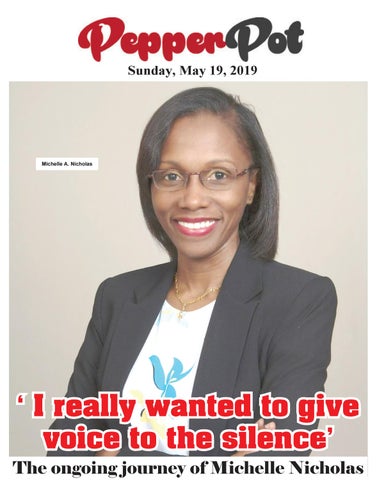
Sunday, May 19, 2019
Michelle A. Nicholas
‘ I really wanted to give voice to the silence’ The ongoing journey of Michelle Nicholas
II
Chronicle Pepperpot May 19, 2019
A tale of two Guyanese Diplomats By Francis Quamina Farrier
TWO Guyanese Diplomats who are serving in two major countries are scheduled to be in their native Guyana shortly. They will be here to receive the National Award of the Cacique’s Crown of Honour (CCH), which will be bestowed on them for their sterling service to the Cooperative Republic of Guyana in Business and the Diplomatic Service. The two diplomats are, His Excellency Mr. Hamley Case, CCH and His Excellency, Dr. Riyad Insanally, CCH, both former students of Queen’s College. Mr Hamley Case was appointed Guyana’s High Commissioner to the United Kingdom, as well as Non-Resident Ambassador to a number of other Eastern European countries. They are Russia, Iceland, Estonia, France and Latvia. Dr. Riyad Insanally is Guyana’s Ambassador to the United States of America and Permanent Representative to the Organization of American States (OAS). Born in January 1945 in Georgetown, British Guiana, High Commissioner Hamley Case received his first formal education in Antigua in 1948. Back in British Guiana, he continued his education at the Broad Street Primary School (now the Dolphin Primary). That was followed at the Johanna Cecelia Primary on the Essequibo Coast and the Kitty Methodist Primary (now the J.E. Burnham Primary), all before his teen years. He then entered Queens College in Georgetown where he was a student from 1954 to 1959. So it is safe to say that Hamley Case was unwittingly being groomed to be an important and competent functionary in Guyana’s Foreign Service from a very young age. Ambassador Dr. Riyad Insanally also attended Queen’s College in Guyana. He later pursued studies in Modern Languages and Latin American Studies and holds an
High Commissioner Mr Hamley Case, CCH, inspecting the Guard of Honour at the Palace in Estonia, Europe, during his accreditation ceremony
MA and MPhil from Cambridge University in England. He also pursued studies and gained a PhD from Harvard University in the USA. A career diplomat, Dr. Riyad Insanally joined the Ministry of Foreign Affairs in 1990 and was later appointed the Senior Trade Advisor at the Guyana High Commission in London, England. Dr. Insanally
Ambassador Dr. Riyad Insanally and Deputy Chief of Mission, Ms. Lesley Dowridge-Collins at the Guyana Independence Celebration in Maryland in 2017 (Photo by Francis Q. Farrier)
also served as the OAS Representative in Trinidad and Tobago from 2008 to 2016. He was then posted to the United States in 2016 and represents Guyana in Washington, D.C. The career diplomat is also Guyana’s Permanent Representative to the Organization of American States (OAS). He presented his Letter of Credence to President Barack Obama at the White House in Washington, D.C., on September 16, 2016. Hamley Case is the son of one of Guyana’s most celebrated Educationists, Frederick Case, whose career in the Public Service includes being a Principal of the Teachers Training College, (now the Cyril Potter College), and Chief Education Officer. He has had a long career in businesses in Guyana, Africa and Asia. They include being Managing Director of Case Timbers Limited and UNAMCO, also Atlantic Services Limited among others. Since his arrival in Washington, D.C., Ambassador Insanally has built on the work of his predecessor by upgrading the physical
structure of the Embassy building and the relationship with Guyanese living in the Washington, D.C., Maryland and Virginia area. They include Mr Aubrey Stephenson, AA, President and CEO of Federal Management Systems, Inc., who has sponsored many of the projects of the Embassy over the years. This year, Ambassador Insanally has also included Guyana in the Annual DC Passport Cultural Tourism Event for the first time. It is an event at which Embassies in the USA Capital open their doors to the public and showcase their country’s arts and culture. Guyana has had diplomats stationed in both London and Washington, DC, ever since becoming an Independent Nation on May 26, 1966, and has been host to both British and American diplomats during the same period. High Commissioner Hamley Case, CCH and Ambassador, His Excellency Dr Riyad Insanally, are continuing to serve their native Guyana with distinction as their Tours of Duty in two important countries, continue.
Chronicle Pepperpot May 19, 2019
‘I really wanted to give voice to the silence’
III
The ongoing journey of Michelle Nicholas Michelle A. Nicholas (Photo credit: Stuart Ramson/AP Images)
By Gibron Rahim THERE are many Guyanese success stories. We are a resilient and hardworking people who stop at nothing to achieve our goals. Even when the odds may seem insurmountable, we persevere. Michelle Nicholas’ story is one of perseverance. Nicholas, founder and CEO of The Nico Consulting (TNC) Inc. and co-founder of the ‘25 Influential Women Leaders’ Award, took time to sit down with the Pepperpot Magazine to share her story. Nicholas was born in Georgetown but was raised primarily in Linden, along with her three older siblings. First attending the Christianburg Wismar Secondary School in Linden, she was eventually transferred to St. Stanislaus College in Georgetown. She then attended the University of Guyana where she pursued a first degree in economics followed by a second degree in social work. Initially employed at the Ministry of Foreign Affairs, Nicholas related that she was put in charge of handling bilateral agreements between Guyana and our South and Latin American neighbours. She was given the responsibility to travel on behalf of the government just two months after being employed. “I was new to the department. I was young, but the fact that I was trusted to travel, just being two months in, that spoke volumes to me I think,” she said. STRENGTH AND GUIDANCE Nicholas’ parents played a significant role in shaping her life. “My mother is beyond important to me,” she said. Her mother was at one time an assistant librarian and sign language teacher at the developmental centre in Linden. Nicholas related that she and her family lived on a hill in Linden. She
and her siblings had to go down the hill to fetch water before and after school. When her mother heard that pipes were being laid nearby, she decided that they needed access to water as well. Nicholas’ mother coordinated with the other people of the village and, after discussions, the villagers came together and dug up ground so that pipes could be placed. This was even though Nicholas and her family’s house would be the last in the street to get pipes. Nicholas said, “That commitment to community and service beyond self, there’s no place else I would rather be than in the shadow of my mom because of what she has taught me and because of what she did there.” Her father was a deacon who taught her the value of active listening, among other leadership traits. TROUBLING TIMES Inspired by her mother’s advocacy, Nicholas became involved in helping others in her high school years. She recalled that in Linden there were high rates of teenage pregnancy and domestic violence. The victims were often blamed in those situations. Unfortunately, Nicholas became involved with a young man and the relationship became abusive. “At a teenage age I was in a partner violent relationship and I didn’t want to say anything about it because I didn’t want people to look down upon me,” she related. The situation led to Nicholas’ first and only attempt at suicide. “I did not want to die but the situation as it was made you feel as though you had no other choice.” That experience led to her deciding to reach out and speak to individuals who she knew were struggling with an abusive relationship, suicidal thoughts or the effects of sexual assault. She noted that she undertook all of these efforts quietly. It was when she moved to the United States and started a non-profit organisation that Nicholas realised she could not be quiet any longer. Many of the individuals with suicidal thoughts who reach out to her identify as LGBTQ, according to Nicholas. “We have parents who say that if their children ever identify like that they will never talk to them and all of these things happening,” she said. She noted that there are also individuals who are young and are in domestic violence relationships but do not feel as if there is anywhere they can go because they have been shunned by family or are unaware of the necessary resources available to them. There are also those who have been sexually assaulted and feel that seeking justice is futile. Nicholas related that these cases are among the reasons that led her into activism. SOMETHING NEW Nicholas’ devotion to helping others led to her founding The Nico Consulting Inc. The name was inspired by her father’s construction company, The Nico Construction, which he had founded in St. Maarten. The idea for the firm’s logo came from her 13year old son who believed that it should be an evergreen tree to show longevity. When Nicholas left Guyana she went to work for J.P. Morgan where she was as-
signed to wealth management. She related that she was able to look back and recognise that all her life experiences up to that point had led her there. Her experience in negotiation from working at the Ministry became invaluable to her. While Nicholas was working at J.P. Morgan, the opportunity to work at UNICEF came along. A childhood dream for her, Nicholas took the job and continued the work she had been doing at J.P. Morgan – raising money for those in need. Unfortunately, both of Nicholas’ parents were diagnosed with different forms of cancer. Her love for her parents moved her to resign from her position at UNICEF and join the Samuel Waxman Cancer Research Foundation. “Because I needed to understand everything about cancer so that I could help my parents,” she explained. “That was important for me, to not just understand cancer, but to be a support for my parents,” Nicholas said. “I believe that we all need a shoulder and so being a caregiver to my parents is just part of me.” Honouring her father’s wish for her to work at a healthcare organisation, Nicholas then left the Cancer Research Foundation and went to work for HealthCare Chaplaincy Network. There she spent a significant amount of time educating individuals and fundraising for individuals who were struggling. Eventually, Nicholas decided that she wanted to do more within her community while remaining close to home and her son. She joined Family Services of Westchester,
an organisation that focuses on providing services to individuals throughout their lives. Most recently, Nicholas accepted a position as the Executive Director of Girls Inc. There is a lot of need for firms like The Nico Consulting Inc., right here in Guyana, according to Nicholas. She noted that there are cases where individuals do not know how to write a business plan or grant application and do not understand personal branding. “And it’s not for the lack of want, it’s just that in some cases they don’t know the resources available to them,” she related. TNC, she said, provides that needed boutique of services in marketing, communication and strategy. “Because I’ve been in it for this long that I believe in the importance of sharing and giving back at every step for me.” Nicholas has also founded Sexual Assault and Family Education (SAFE) Guyana Inc. She explained to the Pepperpot Magazine, “I really wanted to give voice to the silence.” While she has been counselling for a long time, she wanted to provide an avenue where people could reach out to her even if they were not referred. “When I created SAFE Guyana the only thing I did was create a Facebook page and an email address because confidentiality is especially important to me, especially in these times,” she related. Nicholas collaborates with many nonprofits in Guyana and overseas to help individuals dealing with domestic violence, sexual assault and mental health issues.
Michelle volunteering with the American Red Cross (Photo credit: American Red Cross Westchester)
IV
Chronicle Pepperpot May 19, 2019
A look at the Diamond Diagnostic Centre practitioner require inpatient care, that patient is then transferred to the Georgetown Public Hospital Corporation (GPHC). In late September 2018, it was announced that the DDC is one of five health facilities to be upgraded to a “Smart” Hospital, an initiative that will see the facility being able to function optimally, particularly when faced with threats and occurrences of man-made and natural disasters. Apart from resilience, the aim was for the facility to become one where the services are provided in such a manner that there is no cumbersomeness in terms of patients accessing the services and the staff being able to provide those services. It was noted, that not only new doors were being opened for medicine, but that the delivery of health care in the country is being redefined through improvements in infrastructure and operational procedures. A billboard identifying the DDC as part of the “Smart” Healthcare Initiative to proDr Marina DelaTorre, Head of the Cuban vide upgraded and environmentally friendly Brigade at the Diamond Diagnostic Centre services was subsequently unveiled.
Pharmacist Ms Ena Harding in the well-stocked bond
By Wendella Davidson THE Diamond Diagnostic Centre (DDC) was established in 2017 to function as a Level Three health facility, where some services, inclusive of minimum in-patient service, are being offered at the institution. At the time of its establishment, the Diamond community which the DDC serves, along with its environs, was not as developed as it is today. Then, the daily patient roll at the hospital was 117 compared to the 400plus that obtains today. But as the population in that area grew exponentially to around 104,000, residents were of the perception that the centre was a hospital, hence the Ministry of Public Health is making every effort to upgrade the services being offered, says Deputy Medical Superintendent , Dr Ericka Kirton. This, she noted, is one of the reasons behind the facility not being able to offer in-patient services, as when it was constructed, the idea was not to house inpatients. But, should a patient after being examined by a
DAILY OPERATIONS The DDC has a current staff complement of 26 general medical practitioners; 11 specialists, two of whom are Guyanese and the others Cubans, an emergency medicine specialist who manages the emergency department and nurses, etc. On a daily basis, particularly during the day shift, about five to 10 doctors are on call, handling an average of five emergencies, ranging from ectopic pregnancy, injuries as a result of vehicular accidents, gunshot wounds, attempted suicide, suicide, and severely decompensated chronic diseases such as a diabetes with kidney failure, or with a stroke. Dr Anisa Yearwood, who works within the regional health office and also functions as the supervising medical doctor for the East Coast corridor, said that it is important for the public to understand that the GPHC is the national referral hospital of the country. She explained, “Should patients from the different regions, let’s say suffering from
The Diamond Diagnostic Centre at Diamond, East Bank Demerara
the simple cough and cold, continue to flock the GPHC, then definitely the system will be overloaded, and that is what we are trying to do, to decentralise the services. Patients need to visit the health centres in their respective communities, as those facilities are well equipped with medication and can treat any illness unless it is of a serious nature. I see no need for people to join the long queues at the GPHC for the treatment of simple ailments, the common cold, diabetes, hypertension. Even if it is a patient suffering from a chronic disease, it can be treated there.” She added that at the time of visiting, a patient might be unfortunate because of an emergency coming from as far away as Region 10 (Upper Demerara-Upper Berbice) and suffering from a serious condition. She sees the need for patient -education and awareness as it relates to certain illnesses, adding that a doctor upon examination of a patient will be able to determine if specialised attention is needed and where to send the patient to access same. And, if an illness warrants that the patient be transferred to the GPHC, that patient is prepped and stabilised
first. RANGE OF SERVICES Dr Kirton, meanwhile, reiterated that the services offered are wide-ranging, from treatment of chronic disease cases, such as persons suffering from high blood pressure, diabetes or any other chronic illness; dentistry, with patients being able to access cleaning, extraction and filling services; treatment for skin conditions, along with paediatricians to attend to children suffering from any kind of illness; while an OB-GYN (obstetrician-gynaecologist) is there to address women’s issues. Dr Mark Vyphius, the medical superintendent, pointed out that under the current upgrading phase, only a few more pieces of equipment are needed, such as a non-stress test (NST) machine to which an expectant mother is hooked up, to a belt that will measure the baby’s heartbeat and movement and assess the well-being of the foetus; delivery beds and cardio monitors. Turn to page VI►►►
The newly established High Dependency Unit (HDU)
Chronicle Pepperpot May 19, 2019
V
Guyana readying for blind cricket tournament in August
Manager of the local blind cricket team Theresa Pemberton ( centre) and President of the Guyana Society for the Blind Cecil Morris (left) met with Director of Sport Christopher Jones recently
By Telesha Ramnarine THE twelfth Regional Blind Cricket Tournament of the West Indies Cricket Council for the Blind and Visually Impaired (WICCBVI) will be played in Guyana this year, with local players already starting to gear up for participation. In fact, more than a dozen persons who are blind or visually impaired have started practising for the game, and from these, 14 players from all across Guyana (Berbice, Essequibo, Linden and Georgetown) will be selected to form part of Guyana’s team. The Guyana Society for the Blind is still in the embryonic phase of planning for the game and has since met with the National Sports Commission (NSC) which has promised to lend a helping hand as far as the Society’s $5.4M budget is concerned. Manager of the local team Theresa Pemberton, who is also a strong advocate for the blind and visually impaired,
told the Pepperpot Magazine that she is confident that things will go well for the game this time around. In the past when the Society was receiving little or no support for these games, Pemberton had always remained optimistic and gone out of her way to make things happen for the local players. This time around, though, Director of Sport Christopher Jones has pledged the NSC’s support for the game, scheduled to be played from August 26 to September 2. While the Society is currently writing to arrange sponsors for the game,
the NSC has pledged to provide whatever funds remain outstanding. The game is a four-country tournament, consisting of Barbados, Trinidad and Tobago, Windward Island, and Guyana. Pemberton related that those persons from the French-speaking Caribbean countries who are interested in playing blind cricket are expected at the games. Meanwhile, the NSC has also committed to providing two Guyana National Cricket coaches, and to stand the transportation expenses for those not only playing in the game but whoever would like to come to Georgetown to see the games, irrespective of where they may be living in Guyana. They would first need to contact the Society to indicate their interest. “The significant thing about this is that it will provide an opportunity to blind persons from all across Guyana,” Jones expressed. Blind cricket is played with a hard plastic ball, a special ball that makes a very strong sound. The stumps are laid out like conventional cricket but without bails on them. The umpire usually guides the blind persons back to the stump, which they use as a gauge to bowl. The bowlers bowl underhand style and when they are about to bowl, they ask: “Batsman, are you ready?” When the batsman replies in the affirmative, the bowler then says, “Play!”
VI “We are looking to fully attain the capacity of doing caesarian sections. At the moment, apart from doing emergency RPOC( retain products of conception), the DDC does a few other surgeries such as the removal of fibroids, warts and the minor cases. We are upgrading the ward, so that it can soon function to its full capacity, as should a fully established maternity wing,” he added. Other key sections at the DDC, are the emergency outpatients department, the triage area, a trauma bay that deals with (motor vehicle accidents and mass casualties, the nurses’ station and a newly established High Dependency Unit or ward with seven beds that will be used for the observation of patients who having been stabilised need to be under observation for an average of 24 hrs. There is too an optician department , along with clinics for general surgery, dental, scheduled and emergency ultrasound, paediatrics, medical clinic, orthopaedics, Ophthalmology According to Matron Sabrina Phillips, the DDC on a daily basis is very busy with each department having its own mechanisms. She added that one of the challenges at the facility is that there are general wards, so it is very hard to facilitate that kind of workload
Chronicle Pepperpot May 19, 2019
◄◄◄ From page IV
The administrative team who oversees the day-to- day operations of the facility, from left, Dr Anisah Yearwood, Primary Health Care Supervising GMO, Region Four; Dr Ericka Kirton, Medical Superintendent (Ag); Matron Sabrina Phillips; Dr Mark Vyphius, medical superintendent and Ms Rosemarie Terborg Davis, hospital administrator (seated);
with an observation ward which has seven beds. As a result, sometimes patients are dissatisfied because of the inability of the facility to facilitate inpatients, but reminded that once a patient has to be kept for prolonged man-
agement, those cases are referred to the city. She is of the view though, that the construction of a new hospital, preferably within the Diamond housing scheme itself, would help to lessen the patient load at the DDC.
Creating recreational places for youths Chronicle Pepperpot May 19, 2019
VII
‘G’ Division Police Youth Groups adopt sports grounds through Open Space Project and stay away from drugs and alcohol,” the Commander said. He thanked the Region’s Regional Executive Officer, Denis Jaikarran, for partnering with the Division in helping to upgrade the groups. He said the cleanliness of the grounds will be maintained by the Force’s Youth groups.
Youths at the Henrietta Sports ground
By Indrawattie Natram IN an effort to provide recreational spaces for Youths and residents living within various communities in Region Two, police in the ‘G’ Division have adopted 10 community grounds. The Open Space Project is a collaborative effort between the Guyana Police Force, ‘G’ Division, the business community and the Region Two Administration. According to ‘G’ Division Commander, Khalid Pareshram, it is the Division’s desire for the grounds to be utilised by all residents and the facilities be used to foster partnerships with the communities. Pareshram said the Open Space Project is done by the Guyana Police Force with the vision of keeping residents, particularly the youths, meaningfully occu-
pied during their free time. “We want to keep the youths out of the streets. Instead, they can be engaged in games, recreational activities
TRANSFORMING SPORTS GROUNDS The adoption of the sports grounds has thus far had a positive impact on youths in Region Two, especially in the evenings. Scores of youths are seen playing football and cricket since the spaces were adopted. Some of the youths are even helping to maintain the grounds. Recently the Anna Regina Legend and Scout Police Youth Group had adopted the Henrietta Sports ground with the main intention of transforming and maintaining the recreational facility. Community Leader of Affiance, Pandit Kaydar Persaud, said he is particularly happy to see the youths in-
Commander Khalid Pareshram recently receiving sporting gear for the Force’s Youth Groups
volved in positive activities in the evening at the Affiance community ground. He said that the initiative fosters community-related partnerships and commended the efforts of the Commander for ensuring that the grounds are upgraded and maintained. Residents in Good Hope
Youths helping to clean up a sports ground
The Good Hope Ground being rehabilitated
Pomona are also very happy that their community ground was rehabilitated. When this newspaper visited the Affiance Ground one youth, Subash Persaud said that he usually visits the ground in the evening to play a game of cricket with his friends. He said after a hard day it is quite refreshing to be involved in a game that is being played in a pristine environment. Meanwhile Retired (retd) Commissioner of Police, Seelall Persaud had initiated the establishment
of Police Youth Groups on the Essequibo Coast which has since grown over the years. Youth groups are now located in several areas such as Suddie, Capoey, Dartmouth, Anna Regina, Onderneeming, Lima Sands, Charity, Affiance, Good Hope and Zorg. Over the years, the ‘G’ Division Police Force through its youth groups has been quite active involving youths and also planning activities to get them meaningfully occupied.
VIII
Chronicle Pepperpot May 19, 2019
Chronicle Pepperpot May 19, 2019
IX
Pharmacists and mental health TODAY I am continuing the discussion of overlooked professions which can play major roles in the mental health field within our community. Most people associate pharmacists with physical health issues, to simply know which over the counter pill produces the best results or how/when to take medication prescribed by doctors. I think that the education of pharmacists unconsciously creates a wide gap in knowledge that can effectively lower the onset and progression of mental health issues within our community. We take them for granted to the point where I think even pharmacists are not aware of the unique position they are in. Pharmacists play a crucial role in patient treatment. What most people forget is that the neighbourhood pharmacist sees a patient more than any other health professional. Furthermore, they are the most accessible health care providers. Pharmacists see patients before, during and in the maintenance stage of treatment. Patients tend to selfmedicate before seeking professional help, typically using a pharmacy to do so. They are seen during treatment when picking up their prescription medication and after seeing a doctor for some time, most are put on repeat medication and therefore only see the pharmacist during this time. Pharmacists also have conversations with patients that even doctors don’t have. I’ll tell you something from personal experience, when you do something every day, especially in health services, it becomes so natural and second nature that we forget this may be a whole new concept to some. Doctors tend to casually run through what many may find difficult to understand. Patients often leave with
unasked or unanswered questions and then go ask their pharmacist. I’m definitely not encouraging anyone to leave their doctor without fully understanding the situation and instead go ask their pharmacist. However, this often happens and therefore pharmacists can help patients to understand the reality of
their illness, progression and treatment. If our neighbourhood pharmacists were educated in mental health issues such as signs and symptoms, the onset and progression of mental health issues would decrease. They can be society’s main screening tool for illnesses that may go unnoticed within our community. They don’t necessarily need counselling skills (although it couldn’t hurt) but just brief intervention skills to approach and then guide the individual to an appropriate place. Pharmacists have a wide range of connections through the health system as they are in constant contact with nurses and doctors. However, this could easily be extended to social workers, psychologists and psychiatrists. Adherence to medication for mental health issues remains low and therefore, drug monitoring is very important. Pharmacists can improve adherence through medication education and side-effect
monitoring of repeated patients. Through talking about the medication, they can help to reduce certain biases that a patient may have before filling their first prescription. This can be done by discussing or reaffirming not just how to properly use the medication but what exactly it’s being used for and the duration of use before effects are felt. Full disclosure on side effects and when to return if they become overwhelming will also be beneficial. Pharmacists study medication and they are very good at what they do. What they lack is hands-on experience in the mental health field. I believe they should be doing hospital rounds like that which is required for almost all other mental health professionals. Having this experience, a pharmacist can now question why a particular person keeps buying over the counter pain medication. Do they often have head or back pain? Or is it a daily hangover cure where they may need some intervention for their substance abuse? If pharmacists knew the signs and symptoms for depression, anxiety or substance abuse – which people typically buy over the counter medication for before
seeking professional help, it would make a huge difference within our society and in the lives of the people who need further attention. Pharmacists are university educated like all health professionals so why not add mental health training to their curriculum? It’s not as though Guyana has an abundance of mental health professionals so training one more profession to be better equipped in the field would release some of the pressure on other professionals who are already overworked in our society. It also leaves another, more accessible option for those with these issues. Until there is a proper educational system in place, pharmacists can self-educate on signs and symptoms of mental health illnesses. Paying close attention to what medication regular customers are taking as well as mood changes can and will make a difference. Simply asking someone how they are feeling would also potentially open a dialogue that they may not have felt comfortable sharing with others. Keep a list of all nearby help available within the mental health field which includes contact information. If you see signs that trouble you, it couldn’t hurt to pass this information along. Print materials and posters on mental health issues and put
these up on the walls in your pharmacies. I have only ever seen advertisements or public service announcements about physical health care issues
in pharmacies. If you are a patient on medication, try and stick to one pharmacy or pharmacist that knows your medical history as this will serve you both. In my humble opinion, it does not even make sense that someone with that much contact with a potential mental health patient isn’t trained to talk to them or identify further issues. Pharmacists can make a massive difference in keeping patients well within the community while providing unique and meaningful care. Can anyone think of any other professions not being fully utilized in the mental health field? Thanking you for reading. Please keep sending any topics you’d like to talk about to caitlinvieira@gmail.com Suicide Prevention Helpline numbers: 2230001, 223-0009, 623-4444, 600-7896. Say Yes to Life and No to Drugs! Always
X
Chronicle Pepperpot May 19, 2019
The crisis of incitement vocabulary - that translates to hate and murder, uttered by opinion makers OUR search for social balance and accountability, especially in respect to those political and social personalities who have excessive access to media and have mesmerised sections of society into believing half-truths with dangerous subliminal messages, is a complex one that does not match our laws in respect to demanding accountability through the courts. The vocabulary of incitement is in most cases not descriptive in the actions that follow, whether resentment, social conspiracies and unspoken laws of deceptive conduct in respect to persons defined as the other, the language is subliminal and is left to the imagination of each listener- at times a mob- to process and interpret what is said and how to apply it. Our own John Orr, the famous Angel Gabriel, with fanatical hatred for Catholicism had returned home to British Guiana to preach specifically to his folk on the evils of Catholicism in the 1850s. But he came at a time when the foundation of the Catholic church was made up of the Portuguese indentured, and they were inveigled by the Euro planter-controlled colony administration into a conspiracy to destroy the business sector of the emancipated African Guianese citizens/ British colonial subjects. John Orr was an African man of mixed heritage. His father was said to be a Scottish planter, while his mother an Afro-Guianese woman. Based on already strained feelings of injustices, his preaching ignited the largest riots and lootings against the Portuguese ever, though he did not instruct anyone to do so. Propaganda, coupled with the body language and tone used to deliver what is said to transmit a message through human conduits of different capacities, thus varied outlet expressions. I have relatives who lived in Mahaicony during the ‘60s and they
were saved because a participant in a close political meeting where their family home was identified to be burnt while they slept, came and warned them to leave immediately after he was safely out of the area and could not be identified as having warned them. They hurried and departed with what they could, and as warned, the house was burnt. There is no document I could put my hands on, or witnesses, to verify that this political leader had instructed his armed supporters to do what they did in that area in the days that followed. But something had to have been said that construed that fatal extremities were to be executed. Here again the indirect ‘Vocabulary of Incitement’ was most likely in effect, and more likely interpreted at the bottom-house level. The vocabulary of incitement is real, and it has to be placed within our laws as a functional paragraph, to shift to beyond while relevant to Guyana. I wish to relate to the elements of cultivated prejudices inserted through religion, pseudoscience as with the eugenics champion Charles Davenport and his fraternity, and mythologies that demonise others within superstitious borders of provincial consciousness that becomes innate and fossilised. The vocabulary can become even more enticing to this alternate reality of suspicion and hate, not supported by bad experiences but by doctrines of prejudices. The only duel methods to unmask and diffuse the vocabulary of incitement lie with the understanding that cultural differences are tied to the sensibilities of individual and group freedoms. In this respect, there must be definitions of what constitutes ‘the national culture’ in its plural form with a frank discourse on differences that are encouraged to harbour prejudices, as these differences resonate different private group languages, and have constructed a different vocabulary.
After WWI with the defeat of Germany, France stationed some colonial troops along the Rhineland area. Most were West Africans from Senegal, (Tirailleurs Senegalaise) in the years leading to WWII Goebbels concocted a line of propaganda that these soldiers were violating German women. This was untrue, but it was a propaganda that appealed to where the European and White American consciousness was at the time. When WWII started, these soldiers when captured faced execution based on the assumption that there was an order from Hitler to shoot all West African prisoners of war. The assumption was not true, “Major General Hans Hube, distributed a pamphlet to the men of his unit specifying how they should respond to French officers asking about the German treatment of Black POW’s “ The deployment of black and coloured troops against the German army contradicts the conception of the white race’s master role towards the coloured peoples. We perceive it as a shame and dishonour, all the more so because our division has had to wage the hardest fights against Negroes” Raffael Scheck-‘HITLER’S AFRICAN VICTIMS’. The condition that prevailed was facilitated by the mythical dogma of vilifying another human variation through racist political cult fictions. In Guyana, a similar foundation of religious tales exist, coupled with an allowed transference of group guilt to the other between political groups which also carry identifiable abbreviations that define political parties, but are also collective inferences of an ethnic group. During the last elections in Guyana in 2015, a senior minister made an announcement that members of his constituency upon passing Afro Guyanese villages in Berbice were pelted, upon investigations by the police it was found to be not so. The members of his
constituency denied his claim, but he never apologised. Defamation of character is enshrined in our laws, thus, collective defamation must be held accountable. The ‘Vocabulary of incitement’, must become a character with clearly identifiable features, and it must include all of what it implies. No falsifications and mythologies must be allowed to develop unchecked, freedom of speech must be treated as a responsible right, our laws must envelop both utterances and narratives. Henry Jeffrey wrote in Stabroek News on November 14, 2018: “Guyana has never been the home of all Guyanese.” The perspective of the article was based on a certain logic of balance, but failed to acknowledge that the political leadership of one side was rooted in a political perspective of irrational racial entitlement that included the stealing of the other’s transported lands, other blatant violations, even murder with an expectation of a blind eye to these activities by the law, because their perceived government is in place. Of the varied humanity that constitute the population of CARICOM only one group in the modern history of this former colonial group of nations that held an international conference -2005 hosted by a credited academic to determine how the group should relate to biracial children, this is the acknowledgement of a deep seethed problem driven by a vocabulary of hate. What must accompany legislation on the ‘Vocabulary of Incitement’ is a functional Heritage Commission that must facilitate for researching minds as an alternative for ‘dual national loyalties’ let us begin the conversation. It is obvious that Guyanese are moving forward in a conservative movement away from cultic indoctrinations, the State must support this movement.
ocus F Chronicle Pepperpot May 19, 2019
XI
on the Village
Acting Region Six REdO pushes support for education in region body and through that, we are hoping that schools where we do not have such strong PTA bodies, we will be able to advocate so that if not all or most of our schools will have vibrant PTAs,” La Cruz said.
Acting Regional Education Officer, Bhagmattie La Cruz (Adrian Narine photo)
THIS week our team took to the Ancient County of Berbice, bringing you stories from New Amsterdam and East Canje. We hope you enjoy! Stories are by Michel Outridge and Shirley Thomas. Photos by Adrian Narine. WITH 32 years in the education sector under her belt, Bhagmattie La Cruz, who started out as a secondary school teacher, has amassed vast knowledge. As such, she ‘is in the know’ when it comes to overseeing the operations of schools in the region. She is the acting Regional Education Officer (REdO), Bhagmattie La Cruz of Region Six (East Berbice-Corentyne) whose task is humongous but is optimistic that students in that region will outdo their fellow students at examinations. La Cruz told the Pepperpot Magazine that her job is to ensure that schools in the region are supervised, among other responsibilities. She related that since February this year, they have been doing well, especially during the period leading up to the second quarter, as regards their work programme. “We had good participation in the 2019 Mashramani activities and an incident-free National Grade Six Assessment and the commencement of Caribbean Secondary Education Certificate (CSEC) [Examinations] of the May-June sitting. This year, at the end of the first quarter, we were able to implement about 85 percent of our workplan and we have been moving apace in the second quarter,” La Cruz said. The senior official added that she is optimistic that they would attain a high level of implementation by the end of this quarter. VISION/PLAN FOR REGIONAL EDUCATION “It is our vision that we are going to continue to improve our community alliances while that is, I would like to see more persons being involved in the support of education in this region and recently we have launched out regional Parent-Teacher Association (PTA) body. We subsequently, had the sub-regional launching, followed by the regional PTA
WELFARE She pointed out that they have the Welfare Unit of the Department of Education, which is a little understaffed at this point. The welfare officers, however, have been working assiduously because there are many schools in the region and there are issues; some of these at times are much to deal with, but they have been doing a good job. La Cruz said, “In relation to having our agents in schools, we have also had our truancy campaigns where we look at these children not going to school. We have had reports, as well and when we receive such reports we visit the homes of children who are not going to school. They have been doing very well in that area, but the downside is that sometimes when they get these children back into the schools, another few weeks they are out of school again and then we have to start all over again to bring them back.” WORK-STUDY PROGRAMMES La Cruz noted that after students sit the CSEC exams, they have the start of workstudy, which is done in two phases and they have since sent out correspondence asking organisations to facilitate students from the various secondary schools in the region. She stating too that, to some extent, they place learners who belong to the region but go to schools outside the region into the work environment as well. In Region Six, she disclosed that they have 129 active schools which comprise 57 nursery schools, 52 primary schools, 17 secondary schools and two Practical Instruction Centres. PERFORMANCE FOR GRADE SIX ASSESSMENT “I am hoping it will improve in 2019; last year it remained relatively constant, because prior to 2017 the results were not that good, but we saw a significant increase in 2017 and the region was able to maintain that. We are on average at this level. I think our parents need to emphasise reading at an early age too. Much emphasis is being placed on gadgets; yes, those are all educational gadgets, children can truly learn, however, I feel strongly that it does not replace the value of books and reading. So I think that while our children are fortunate they have access to gadgets, at the same time we need to ensure that they sharpen their reading skills in order to read to learn,” La Cruz said. REPAIRS TO SCHOOLS She told the Pepperpot Magazine that one of the things they have going in the region is the Department of Works, tasked with fixing schools -- that is, the buildings, the sanitary
facilities and other infrastructure. “But it is a challenge, however. There is only one department responsible for all the schools in that region with staff constraints. She is of the view that they can overcome this issue. We would be in a better position attending to the needs of the schools as they arise. But I must give credit to the Department of Works, they are able to do these in the face of challenges,” La Cruz said. ALLIED ARTS AND SUPPORT Allied Arts are very much active in the Department of Education manned by the coordinator, who is very competent and reliable,
so much so that they were able to participate in all the regional and national events. When it comes to support, La Cruz said that in the technical and vocational areas, while the ministry has programmes in place, one of their difficulties in this region is the inadequate number of qualified teachers to tutor in this area. She noted that the region is an agriculture-based one and technical and vocational expertise are required to boost education in Region Six. La Cruz has spent about 32 years in the education sector and started as a temporary qualified teacher at Central Corentyne Secondary.
XII
Chronicle Pepperpot May 19, 2019
Sheet Anchor
The forgotten village ‘Under the Bridge’ The Canje Bridge (Adrian Narine photos)
THE village of Sheet Anchor, East Canje, Berbice, which is tucked away under the Canje Bridge is somewhat forgotten and neglected. It is home to about 600 residents, most of whom are unemployed and according to Andy Crawford, a resident, the youths have absolutely nothing to do and pilfering is necessary for survival. “We are not bad people here, but we have to eat and you find they will take things that belong to other people and sell just to get food on the table, because other than fishing there are no jobs to provide a steady income. We are forced to do things that we do not want to [do], but we have to because our needs are much greater,” Crawford said. When the Pepperpot Magazine visited the area, a few villagers were under the Canje Bridge, drawn to a lively game of dominoes, while a vendor stood nearby and some young men had converged outside a small shop. Residents stated that they feel stifled down there, because there is nothing going. It was observed that the roads in the small village were in a deplorable state and basic infrastructure was lacking. “You know this place isn’t all that bad like people say it is. We are regular folks and we are home to some of
the best cricketers, a game which is a feature in the community; endless matches are played right on the streets” Crawford said. The 22-year-old added that he is willing to work, but jobs are hard to find, since New Amsterdam is like a town that is in ‘slow motion’ and nothing much is happening in terms of employment. “Since morning I sitting here playing dominoes with nothing to do and I wish I had
a job, because I need to earn to make a living like other folks; but for now, we must make do,” he said. FISHING IS MY LIVING Compton Persaud, a fisherman, has been fishing in the Berbice River for more than 40 years and had encountered engine trouble with his boat; he was hoping to get it fixed so he can resume fishing.
Fisherman, Compton Persaud at Sheet Anchor village ‘Under the Bridge’
This father of three added that during the rainy season fish is plentiful, but on dry days, the catch is quite limited; but, he added, he is a patient man. Persaud said that with the sugar estates being closed, like other communities, they are experiencing the ripple effects; things are not always as they seem, he said, because it is difficult to make ends meet on a daily basis. In Sheet Anchor, the main source of income is fishing. It is the place where there is a makeshift area for fishing boats to load and offload before and after their fishing expeditions. LIFE UNDER THE BRIDGE Kiloutie Katwaru, has been a resident under the Canje Bridge for the past 14 years when she got married, but when her husband passed away she migrated to Trinidad and Tobago; there she worked for 17 years. She, however, returned to Guyana in 2014 and is still looking for work, since she needs to sustain herself financially. “Them ain’t doing nothing here. The place is overrun with mosquitoes and as you can see, the roads are in need of repairs and we feel neglected under here, because nobody comes here at all,” Katwaru said. The 61-year-old told the Pepperpot Magazine that they are a forgotten people and it is time they get some attention. She related that when her husband died eight years ago, she did not know what to do, as such, she migrated. “Right now I doing nothing. My daughter and granddaughter live with me and this place is in a terrible state with discoloured water and we have to purchase drinking water; so life here is hard as you can see,” she said. Sheet Anchor is next to Fort Canje and is located in East Berbice-Corentyne; it is the last village in East Canje before New Amsterdam.
Residents of ‘Under the Bridge’ (Sheet Anchor)
Under the Bridge (Sheet Anchor Village)
He told the Pepperpot Magazine that he usually goes fishing at the mouth of the Berbice River and would have a catch of seabob and banga mary which he sells it at the Port Mourant Market, Corentyne. This Sheet Anchor resident said fishing has maintained his family and ‘put food on the table’ and it is the only job at which he is proficient. “Some days I get a good catch and others it is not so good. The fact is, things are deteriorating like less fish, while at the market, the price keep dropping, owing to the poor circulation of money in the county. Things are very slow and if people ain’t get money they can’t spend, which means we are operating at a loss,” Persaud said.
Chronicle Pepperpot May 19, 2019
XIII
Multi-talented Berbician leads by example …empowers women and children
Imogen and her pool
IMOGEN Pydanna Ferdinand is doing a lot of community work behind the scenes by empowering women through counselling and utilising her house and pool to teach children how to swim. Ferdinand is the daughter of former West Indian cricketer Robert Milton Pydanna. The Pydannas are a family of athletes, who came from humble beginnings. Imogen told the Pepperpot Magazine that she was motivated by the simple fact that she came from humble beginnings and growing up not having much; they lived simply and
which 300 children drawn from depressed areas will benefit. “We are hoping that someone would see it fit to assist, because no non-governmental organisation has teamed up with us yet. We have just one Peace Corps volunteer and our policy is that each student must teach another, that is, become a mentor; so our youngest student can teach you to swim,” she said. As regards the Caribbean Secondary Education Certificate (CSEC) students, Imogen pointed out that she has been in contact with officials from the ministry and they promised to assist this year with their
they see this space here as an oasis. For me, I want to see sports develop, I see sports as a tool for personal, community and national development and I am just hoping that as I am young, the government can utilise me more,” Imogen said. She stated that oftentimes children have the potential, but complain that the sports gear are expensive; with that in mind, she established a sports store which is located in New Amsterdam, where gear is sold at reasonable prices. “Eventually, I had to let my son, who is a cricketer, manage the sports store because I ended up giving away more sports gear than I actually sold. Because I know what it’s like having nothing, I remember going to the Inter-Guiana games in Barbados and I competed bare-footed, because I could not afford sports footwear. I also competed in the Inter-Guiana
like for athletes to have potential, but are unable to put it out anywhere. HEALTHY MINDS SWIM SCHOOL “I also have a passion for youth development and after my husband built this pool and none of my kids wanted to use it, I decided to team up with a Peace Corps volunteer, a friend, and we started teaching children how to swim, utilising the very pool in my yard. It is more of an empowerment activity and it started growing. As we trained the children, we found that we
Adult aerobics class done at Imogen’s pool
Students in their swimming training session at the pool
games in French Guiana, where I jumped on turf track without shoes and I still broke records; and when I could afford to, I bought only one-side because it was so expensive,” Imogen said. This former flight attendant added that she wanted to meet the needs of regular sports people and opened a sports store and now she sits as director, while her son is on the ground running that business, owing to his knowledge of cricket and its gear.
good moral values were instilled in them at a tender age. “My parents are simple people and we were raised the same [way], but we managed to ‘walk in Christ’ and they have always taught us that ‘to whom much is given much is required’ in honour of my granny. I want to remain here as long as possible to contribute to the development of children, sports, women and my country,” she said. Imogen related that she grew up in Cumberland, Canje and she knows what it is
had to move on to a club and have competitive levels,” Imogen said. She admitted that from her pool they have produced athletes who have gone to ‘nationals’ to compete and the Healthy Minds Swim School -- which it was named -- is growing. Imogen told the Pepperpot Magazine that they take 20 students per class, but for the summer programmes, they will expand a bit to accommodate about 100 children. She explained that this year they will be embarking on their summer programme, in
summer swim programme. She added that assistance is necessary because last year they had to use their own vehicle to transport children to and from several depressed areas as well as preparing meals and having people on the ground to ensure the children had showered and so on. “We had a whole lot of success stories coming from this little pool – seeing the development of another person is always good, and on weekends, we accommodate students and teach them how to swim, since
SOCIAL WORK Imogen hopes to see more sports disciples in the county and to empower youths, because they seem to have so much idle time on their hands and she has recognised more can be done to draw these young people. She noted that when the children are in the kitchen and she is preparing meals, it is the time you hear all the stories of what they are going through and what is happening in their homes and get a sense of how to talk to them. The multi-talented Imogen is also a social worker by profession and that training comes in handy when counselling women and children, who are in stages of crisis in their lives. Imogen is a natural homemaker and a firm believer in Christ and wishes to see all women escape their crises, adding that they need to talk to someone and she tries to engage women in ‘pep talks’ in an effort to empower them to overcome difficulties. Although she is a Christian and goes to church, she doesn’t believe in denominaTurn to page XIV►►►
XIV
Chronicle Pepperpot May 19, 2019
◄◄◄ From page XIII
tions and would show up in a temple or mosque just to talk to women but doesn’t get too involved in ‘church dealings,’ all because she doesn’t like the feeling of confinement and prefers to serve. EARLY LIFE Imogen credits her success to her mother and grandmother, who were instrumental in moulding her into the person she is today. “I chose to stay here in Guyana because all my siblings are abroad; for me it’s better to be here. I wanted to develop my country. I am freer to do whatever I want in my time and to also contribute to the personal development of children and women in Berbice. This life here suits me more and my aim is to ensure that the next generation is better,” she said. She attended New Amsterdam Multilateral School, then went on to the University of Guyana some 10 years ago, but Imogen’s swim club logo
The Guyana Football Federation national team visits the pool
where she has a little office. Imogen meets with a group of women at her house every Friday and they sit and talk about what is happening in their lives and how they can help each other.
back then it was a struggle because of their financial constraints. She is presently a resident of Prince Elizabeth Road, New Amsterdam, and has been so for the past seven years and does a lot of counselling with women and children at her home,
A TYPICAL DAY A typical day for Imogen starts very early and even though busy, she tries not to be exceedingly busy, because she doesn’t want to lose focus. “Growing up in Cumberland, Canje, the home of cane-cutters, we used to wake early and that habit is still in me where I can no longer sleep after 3:30 am,” she said. Imogen noted that she has her ‘power hour’ of working out and would take a run across the Canje Bridge. She would then return home to perform her wifely duties of chores and prepare the children for school. From 10:00hrs she would do some work in her little office at her home and at 15:30hrs daily, she is ready to teach swimming classes at the pool.
She explained that after some time of parents approaching her to assist with their children’s performance in school, they came together and formed a group called the Swimmers Association, which is tasked with raising funds to help needy children. Imogen also teaches life-saving skills to all students in an effort to empower them to save themselves and others from drowning. “I am doing what I can and really like helping people, because some people do not see the need to help others; they are only concerned about making money and as [sic] is we are behind in helping people,” she said. Imogen’s father Robert Pydanna, better known as Milton Pydanna, was a cop, a cricket coach and a West Indian cricketer. He lives in the U.S. and coaches a U.S. junior teams there. Pydanna played three One Day Internationals (ODI) for the West Indies. A middle or lower-order right-handed batsman and wicketkeeper, Pydanna played first-class cricket for Guyana for 17 seasons from 1970–71, and also successfully captained Berbice in domestic cricket. He made two overseas tours with the West Indies cricket team as the reserve wicketkeeper: in 1980–81, he was understudy to David Murray in Pakistan and in 1983–84, he was second string to Jeff Dujon in India. On the first tour, he played in two One Day Internationals, hitting the winning runs in the second match, the only time he batted in his three international matches. In India, he played just once in the ODI team.
Ten-year-old int’l athletic champion elated over promised Berbice athletics facility
THE news that work is continuing apace on construction of a synthetic track for East Berbice and should be completed by year-end was greeted with great enthusiasm and anxiety, not only by residents of East Berbice, but by the entire region as well. Minister of Social Cohesion, Dr. George Norton, recently expressed being impressed with the progress achieved so far. But beaming with enthusiasm and scarcely able to control his emotions is 10-year-old Orlando Carrington, a national under-nine champion, who is already the winner of about three trophies and 12 medals, including a gold and a bronze won during the CARIFTA Games in Bermuda in 2018. With a passion for athletics in 2017 at age eight, Orlando Carrington, a Grade Four pupil of St Theresa’s Primary School, New Amsterdam, had made a name for himself, being declared a national under-nine Champion Boy. By 2018, he had represented Guyana in Bermuda and continued his winning streak, winning gold and bronze medals. Elated at such a performance, the young Carrington has continued to show remarkable zest and vitality, this time aiming for the stars. And ironically, he’s the only one in his family running at that level. He is grateful to his teacher, Melissa Fraser and Coach Colly Mickle for their support and inspiration. But above all, he is grateful for the support given by his family. In fact, Orlando, who has been running and going to
Orlando Carrington centre, flanked by fellow award-winning athletes
‘Nationals’ for the last four years and ever since he was in nursery school, says he has a natural love for being an athlete and will not stop until he reaches the top. “I want to be a champion, not only in Guyana, but a champion internationally,” he told the Pepperpot Magazine. Residents of Berbice agreed that a synthetic track for the region would be a good thing; there are lots of athletes in the two regions who need the facility to practise for
athletic meets, but who have to travel all the way to Leonora to get such practice. Additionally, they claim, having to travel such a tall distance is both expensive and places a physical strain on the athletes. Commenting on Orlando’s performance and achievements, a relative proudly declared: “He’s been running ever since he started going ‘Nationals’ and has a lot of medals – about 12 medals and three trophies. Among them are one medal from the Minister of Social Cohesion, the Hon Dr George Norton on his return from Bermuda; one from St. Theresa’s; as well as other trophies from ‘Nationals’ and Inter-Schools.” Meanwhile, mature residents of New Amsterdam who understand what it takes to prepare for athletic championships, say it would be a good thing for the private sector to start pitching in their lot as an incentive for good performances by the athletes who have ‘made their name’ and ‘claim to fame.’ After all, sporting gear is very expensive: gear such as running shoes and running tights. These are things the poor people of Berbice can hardly afford. “We would say when you spot talent in young people , we as a community should encourage them wherever possible, and this goes for both girls and boys,” the concerned residents declared. Meanwhile, others expressed the view that the government should put more into sports for the local athletes, citing other areas not necessarily in Berbice, but needing support.
Chronicle Pepperpot May 19, 2019
XV
NATI introduces Shade House Project
Agricultural Machinery Lecturer, Dinesh Roopnarine
AS the New Amsterdam Technical Institute (NATI) prepares for yet another graduation in Agricultural Machinery in October, the programme has moved to another level, this New Amsterdam Technical Institute’s pilot Shade House under construction at the institute’s compound (Adrian Narine photos) time incorporating the construction of shade houses and affording the students another “We try to not teach them agriculture machinery skills love the programme; they’re passionate about it and very valuable skill with which to graduate. only. We expose them to the science department, where they enthusiastic.” Speaking with the Pepperpot Magazine last Tuesday, are involved in soil testing; Business – both practical and theOn completion of their studies in Agriculture Mechanics, Agricultural Machinery Lecturer, Dinesh Roopnarine, excited ory,” he said, adding that most of the practical work is being the principal said, the students would move on to the Guyana at the very thought of what the project is likely to yield, ex- done by the agricultural machinery department. “We insist School of Agriculture (GSA) where they pursue Agricultural claimed: “We see the Shade House as a big plus for us. It is a that they must be well-rounded. We do not want them to be Science. “I think it’s because of an intrinsic passion they pilot project and the only shade house of this size constructed involved in just mechanics. They should be able to take care would have generated for crop husbandry while here, and so on campus by both students and staff in the Caribbean.” of the farm; plant; [tend to] animals; shed for storing; build they move on to another level -- the Guyana School of AgriHe outlined that the New Amsterdam Technical Institute fences; work in the welding department,” he said. culture -- and pursue a Diploma in Agricultural Science,” the offers a Craft Certificate in Agricultural Machinery, where Roopnarine pointed out that the Shade House Project is principal said. the focus is on the agricultural component of agricultural me- funded mainly by the Canadian Chapter of the Alumni AssoMeanwhile, heartened by the students’ response to the chanics. There, the students are exposed to dealing with heavy ciation of the New Amsterdam Technical Institute (NATI). He programme, Roopnarine explained that the programme does equipment such as tractors, the plough, and whatever comes speculated that once the programme gets going in a big way as not capture only the Agricultural Machinery subjects, but the under the Agricultural Machinery programme. And since this anticipated, utilising the combined efforts of the students and sciences as well, since they have an active science department. is all animal husbandry, that is where the Shade House Project staff, the Shade House Project can turn out to be an income Construction of the shade house commenced around comes in, Roopnarine said. generator, which can see money being pumped back into the September 2018 in a very spacious environment , where Noting that shade houses promise to be the wave of the programme for development of the school. there is adequate space for another project. So far, the future, Roopnarine outlined that within the school’s compound Asked what is the students’ perception of the programme cultivation of citrus has been identified, the lecturer said. there is a 30’ x 60’ steel structure which is already nearing and what is their response to the programme overall, Principal The agricultural machinery programme has 20 students – completion. Mavene Thompson said: “The response is good so far. They 19 boys and one girl.
XVI
Chronicle Pepperpot May 19, 2019
FILES E S A C T R U O C Judge’s bail order for murder accused suspended …Conservatory Order granted DPP
JUSTICE Diane Insanally (yesterday) suspended Justice James Bovell-Drakes’s Order granting bail to murder accused Trion Sumner and ordered that the prisoner be joined in the proceedings brought by the DPP, as an interested party.
Defence counsel Mr Basil Williams, who claimed that although present he was not allowed to take part in the ex-parte proceedings, is alleging that the judge did not have jurisdiction to hear the matter. The judge granted the suspension of the Bail Order at the
By George Barclay
hearing of an ex-parte application by the director of public prosecutions (DPP) for a Conservatory Order, staying and or suspending execution of the Order made on the January 28, 2010, for granting bail for the capital offence of murder. Leading lawyer for the applicant was Mr Mohabir Anil Nandlall and included Mr Euclin Gomes & Mr Manoj Narayan. Attorney-at-Law Basil Williams, who invaded the meeting in chambers, told the Chronicle that he was not given an opportunity to be heard; but according to him, his client was joined as an interested party to the proceedings. The matter was adjourned to February 15, 2010. The affidavit in answer for the Conservatory Order was made by Prosecutor Miss Prithima Kissoon of the DPP Chambers. In her affidavit, Miss Kissoon, who was presenting another murder case instead of that of Trion Sumner as previously been ordered by Judge Bovell-Drakes, when the controversial bail order was made, had given an history of the law as it related to the DPP and her authorities. According to her, the judge had wanted her to present for trial the case of the State v. Squinter Mc Lennon and Trion Sumner for murder, because of the length of time the accused had been incarcerated without trial. She added, “That notwithstanding my representation that the State was not in a position to do so and that I was not in possession of the file thereof, the said judge, in open court issued threats to me leading me to conclude that His Honour will hold me in contempt for disobedience of an Order which His Honour contended he made on the 12th January 2010, compelling the Director of Public Prosecutions to present the indictment State –v-Squince Mc Lennon and Trion Sumner indictment for murder. “That thereafter, His Honour proceeded to order me to present the indictment against the aforesaid accused persons notwithstanding my repeated applications for an adjournment, since I was not in a position so to do, and thereafter His Honour made an offer granting bail in the sum of $300, 000 with like surety to Trion Sumner but did not grant bail to Squires Mc Lennon “That I am advised by the director of public prosecutions and do verily believe that she is the sole authority to determine the order in which indictments are presented before the Assizes, save and except, upon an order of court made pursuant to proceedings filed in that behalf and served upon the State as a Respondent thereto and/or an order made by the court under section 14 of the Criminal Law (procedure) Act, Chapter 10:01. In her Conservatory Order yesterday, Justice Insanally declared, upon reading the Ex-parte application by way of affidavit for Conservatory Orders on the part of the director of public prosecutions, the above-named applicant filed herein on the 29th day of January 2010 and upon hearing Attorney-at-law for the Applicant, it is ordered that a Conservatory Order is hereby granted staying and/or suspending the execution of the Order of the Honourable Mr. Justice James Bovell-Drakes made on the 26th January 2010, at the Demerara Assizes, granting bail to Trion Sumner, indicted for the capital offence of murder, until the hearing and determination of the Notice of Motion filed herein. “And it is further ordered that leave be and is hereby granted joining Trion Sumner as an interested party to these proceedings. It is further ordered that a copy of these proceedings be served upon Mr. Basil Williams, attorney-at-law, within five days. The matter is adjourned to the 15th day of February, 2010 at 09:00hrs in Bail Court.
Chronicle Pepperpot May 19, 2019
XVII
ADJUSTMENTS BEFORE THE 2021 BAN ON SINGLE-USE PLASTICS THE use of plastics for a variety of activities has become a feature of human existence that would be very difficult to change. Plastics are used to make telephones, computers, refrigerators, motor engine parts, crockery and cutlery which would be in use in the same way their steel equivalents were, cloth and a vast array of other products which modern human beings would find it difficult to forego. The plastic products we use could be classified into those which have a long usage life and those which are single - use. Single-use plastics include packaging for a variety of goods and this forms more than half of plastic usage together with the ubiquitous plastic bags used by shops and stores (‘the black bags�), the bottles used for aerated drinks and juices, drinking straws, cups, cutlery and numerous other such items. Plastics are made from a petroleum and natural gas base and are not biodegradable, that is, they do not disintegrate and go back into the earth, like say, cotton cloth or cardboard. The single-use plastics which are more than half of the 3,000 tons of plastics produced annually are the plastics which are most in use. They are light, easy to transport, very useful and cheap and so are quickly disposed of as rubbish. The main problem of these single-use plastics is that since they are non-biodegradable, they could remain intact forever. As
such, they clog up the drainage systems and cause floods, they are strewn on agricultural land which hampers the growth of crops, they could often be the catchments for rain and other waters providing breeding grounds for mosquitoes and they also find themselves in the rivers and seas. In the rivers and seas, they are a danger to marine life since larger marine creatures such as turtles, larger fish, sharks and even whales mistake such plastic wastes as food and swallow them, destroying their digestive systems and leading them to a slow and painful death. Even land animals which live near to human habitations such as domestic animals and pets could sometimes eat these one-use plastics causing them to become sick and even die. And they form a growing part of rubbish dumps. Single-use plastics, though they have become so useful and necessary to modern Man, also have even more serious deleterious effects on human life. When the balance is made between the usefulness of single-use plastics and the dangers they cause to human and animal, especially to marine animals existence, most countries have decided that single-use plastics must be curtailed and finally phased out from human usage. In Guyana, we have suffered from the use of single-use plastics in that they have helped to cause destructive and costly floods in a country which is flood-prone and have been
destructive to the fauna, in particular, marine life. Many countries have already banned the use of single-use plastics and Guyana would be doing so in 2021. 2021 is really not very far away and so Guyanese will have to learn to live without single-use plastics. Before the widespread use of single-use plastics, Guyanese people instead used cloth, paper, woven coconut branches, and mukro and bamboo containers and baskets and glassware and enamel plates and stainless steel cutlery. The restaurants and food shops also used such cutlery and crockery. To revert to the usages we had before the single-use plastics would not be difficult, once people realize that this is the best alternative. Fortunately, most Guyanese understand why the single-use plastics are banned In reverting to the era before single-use
plastics, several industries could be revived such as making paper bags, making cloth and canvas shopping bags, and production of mukro and bamboo baskets. In the schools, basket making and other related crafts should again be taught. Important, scientific and technological research has to be done to produce biodegradable replacements for the single-use plastics. Such research is on-going in several countries and in time there would be biodegradable equivalents of the single-use plastics. For example, biodegradable food boxes are now being imported and the local company, Caribbean Containers had been producing biodegradable food boxes. We are confident that in due course, biodegradable equivalents to the single-use plastic products would be available in the market.
XVIII
Chronicle Pepperpot May 19, 2019
Chronicle Pepperpot May 19, 2019
Discoloured teeth
THERE are a number of reasons that teeth stain. Foods, beverages, and medications may discolour teeth. Smoking or forgetting to brush and floss on a regular basis may also lead to staining. In other cases, discolouration may be the result of genetics or disease. Microcracks caused by chewing ice or other hard objects can trap stains and are difficult – or more often impossible – to clean. Cut back on coffee to reduce stains. Even with frequent cleanings, stains due to drinking large amounts of coffee may rapidly return. If your teeth are stained or discoloured, chances are you have gone to some lengths to achieve a whiter, brighter smile. Perhaps you have experimented with the variety of toothpaste on the market today, purchased some of the home bleaching kits sold in drugstores and supermarkets, or, in an attempt to draw attention away from your teeth or accentuated your hairstyle or clothing. But unfortunately, many of these efforts ultimately fall short. Today, however, there is no need to suffer from social embarrassment or psychological trauma because of stained or discoloured teeth. Suitable cosmetic dental treatment can provide both predictable and positive long-
stains, referred to as soft deposits. This is usually the result of inadequate oral hygiene (brushing and flossing). Surface stains occur primarily between teeth and on surfaces of crooked teeth. They are typically dark brown and are caused by strong discolouring agents such as coffee, tea, and tobacco. It can usually be managed with daily oral hygiene combined with regular visits to your dentist for professional cleanings. It may be trapped in microcracks and require a more aggressive treatment than professional cleanings alone. Although bleaching can cause the microcracks, teeth become even whiter than or a different colour than the rest of the teeth. Mouthwashes which contain chlorhexidine can contribute to staining. Soft deposits are caused by plaque – a sticky film that builds up on teeth over time – or tartar (calculus) – a cement-like substance that forms when plaque is not removed. They are often bacterial in origin and may be the by-product of ineffective oral hygiene. It can appear as dark or whitish areas around the gum line, most often on the lower front teeth and typically disappear after thorough dental scaling and polishing. It is useful to use a plaque disclosing agent to know if you are
term results. What stains teeth? Stained teeth can be caused by drinking cola, coffee, and tea; consuming other stain producing foods such as betel nuts, blueberries, curry, greens coloured drinks or red wine. Smoking is bad in every way. The nicotine deposits on the enamel are a very common source of discoloured teeth. These stains are called surface stains. Stop staining your teeth by Limiting the amount of coffee and tea in your daily diet Avoid smoking Make regular visits to your dentist for professional cleanings Brush and floss regularly and properly. Some kinds of toothpaste have compounds that can help remove minor stains for a whitening effect. Plaque can build up on teeth can cause
brushing and flossing effectively. Intrinsic stains are part of the tooth structure itself. This may be a result of genetics, disease, or the use of medications such as tetracycline. Intrinsic stains include white spots on the enamel surface and bands of brownish grey across the teeth. It may be caused by faulty hardening of the tooth before birth or the interruption of normal enamel formation by medications or disease. It often appears in people who were treated with the antibiotic tetracycline before the age of eight years or whose mothers took the drug while pregnant. It can also result from the use of the antibiotic minocycline or may be caused by advanced decay or by old or defective silver fillings (brown or grey stains). Treatment for intrinsic stains include laminates, veneers and bonding.
XIX
XX
Chronicle Pepperpot May 19, 2019
Preparing for the impending ban on single-use plastics: Part 1
Chronicle Pepperpot May 19, 2019
XXI
Remembering a ‘Cancer Thriver’ THE fragility of this thing called life really hit me when I found out that one of the strongest persons I have ever encountered succumbed to her cancer. Devika Tinsarran was diagnosed with stage-four breast cancer in 2016. She was told that she had just about one year left to live, and naturally, that was devastating news for her and her family. I met Devika in 2017, during the month of October as Breast Cancer Awareness activities were underway. She came to my school to speak at an event the Interact Club had organised to raise awareness on Breast Cancer and to stand in solidarity with those persons who were affected by the ailment. We invited representatives of the Cancer Institute to make presentations, and a ‘Cancer Survivor’ was slated to present as well; that ‘survivor’ was Devika. I can recall that we were (low key) worried when we started the programme and Devika had not shown up as yet. Just a few minutes before she was slated to speak -- quite literally in the nick of time -- Devika walked into the auditorium. I can recall, too, that I greeted her and asked if she was the cancer survivor that was slated to speak (I had not met her prior to this). Her response was something that I will never forget. “No, I’m not a cancer survivor, I’m a cancer thriver,” she said. If you knew her, or even if you had just heard about her, you would know that after receiving that fateful news in 2016, Devika was on a mission to use her voice in
every imaginable way possible to raise awareness on cancer and champion the cause of early detection. She got up on that stage and recounted her journey-- all the pain and challenges she faced and how no matter what, she continued to fight. The cancer spread to other parts of her body. Chemotherapy took its toll on her. And, she had to change much of her lifestyle, down to her diet (going completely vegan). But did that dampen her spirits? Maybe it did, at times. But for the most part, she was a cham-
pion of her cause, always keeping incredibly upbeat and vocal. And she spoke highly of her family and support system that helped her along the way. After that programme had concluded, a few students approached her to speak with her. Many of those students (myself included) shared with her our own experiences with loved ones who have been diagnosed with cancer. She stayed to talk to each and every one of us. She was there for us, listening earnestly and being that pillar of support needed at the time.
During her presentation too, she shared with us that she has an Instagram profile: “The Guyanese Vegan.”. On that profile, you would find snaps of her garden and the meals she prepared for herself, that made veganism seem like the coolest thing in the world. When I found out about her passing, I posted a photo of her online. And so many of my friends from school reached out and spoke about how inspiring she was. I think she would love to know that she was able to inspire so many persons, by just being herself and sharing her truth. Medical professionals in 2016 said Devika had just about one year to live. She passed away a few days ago, in 2019. Devika’s life has truly been one that has inspired me, and so many others. I think this is a good time as any to remind people that early detection is one of the keys to beating cancer. Over the past few years, greater emphasis has been placed on offering screening services; get screened, get tested, get a checkup. These services are available at many health centres and Non-Governmental Organisations (NGOs). And specifically for breast cancer, which was reportedly the leading cause of cancer deaths in Guyana, early detection can really help to save lives. Common signs of breast cancer include the swelling of all or part of a breast (even if no distinct lump is felt as yet), skin irritation, breast or nipple pain, nipple retraction (turning inward) and some nipple discharge (other than breast milk).
Taking to the skies with good vibes and lyrics FROM dealing with the greasy parts of a plane to enticing listeners with his vocals and lyrics, 23-year-old Kristoff Azariel Sauns is reaching for the stars. Sauns, an aeronautical engineer, has been living his dream by doing both of things that he loves as a profession and as a pastime. “I’m a licensed, type rated aircraft maintenance engineer employed with BK Aviation inc. located at Eugene F. Correia International airport, however, I also have a passion for making music,” he said. He found his love for music at a tender age. Growing up, he was drawn to soca music because of the influence of local artistes such as Jumo Primo and Adrian Dutchin.
His preference changed during his years at the St. Joseph High School where he found more interest in the dancehall genre. “I now do both soca and dancehall music…Vybz Kartel is my biggest musical influence. He is King in my book…I still listen to the other dancehall artistes because I learn from them all, even other genres, I get inspiration from a wide range of artists,” said Sauns. Sauns goes by the stage name Azariel aka the lwlss boss, on all social media: IG, Twitter, Facebook, SoundCloud, and YouTube. All of his music is available for download on GtRiddim.com. One of his songs that are trending is called “Real Guyanese”, a song which he did for Guyana’s Independence. Sauns’ music was recorded and
produced by Adrian Johnson aka AJ, owner of “AjRecords home of legends.” “I plan to keep doing both engineering and music and see where it goes from there. Because of my job, music sometimes takes a backseat but I’ll never stop doing music. I love it. I simply can’t choose one, mostly because of fear of one not working out,” he said. As he continues to contemplate his next move, he urged young people to explore all possibilities and though they might be talented, it’s imperative to seek education, that way there’s always a contingency plan. Sauns said he draws his motivation and support from his mom, Marsha Browne and his dad, Colin Sauns who funded all his studies and supported his art.
Kristoff Azariel Sauns
XXII
Chronicle Pepperpot May 19, 2019
Developing youth through education COMPREHENSIVE education for the next generation cannot be achieved through the efforts of one person, group, or organisation. While Guyana’s children continue to improve through the holistic approach to learning implemented by the Ministry of Education, children across this great nation have become regular beneficiaries of education initiatives birthed through the efforts of our very own First Lady. In this edition of Government in Action, we explore the efforts Mrs. Sandra Granger has made to ensure Guyana’s children are properly armed with knowledge. YOUTH DEVELOPMENT INITIATIVE In 2016, prompted by a discussion with leaders in Buxton and Friendship, East Coast Demerara, Mrs. Granger launched the Youth Development Initiative (YDI), a remedial education programme designed to combat poor academic performance rates in the area. The YDI was piloted at Lusignan and Friendship Primary schools and also caters for students attending Company Path Primary School. “It started just after my husband was elected… I had a meeting with some of the leaders in Buxton/Friendship area. I said you tell me what is the most important thing and they said education… They expressed concern about the children who were dropping out of school as a major problem in the villages… and that is how we came up with the Youth Development Initiative,” the First Lady said. The programme, which follows the primary school curriculum, is complemented by a meal plan, which helps increase the children’s focus during lessons. “Another thing the teachers raised was that a lot of the kids were hungry. So, I said okay, and this absorbs a large part of my budget, let us give these kids something nutritious to eat; a snack, meal, whatever before they start classes. So, that is what we started in
Lusignan,” she said. Over the past two years, the YDI coordinators, who are based at each primary school, have seen significant improvement in academic performance. “I know last year in Buxton the Headmistress reported that literacy had gone up in Friendship Primary School from 57 to 83 per cent. We looked at the kids who were passing for high school [and] Lusignan [Primary] had more kids passing for high school… I have to thank the coordinators and the teachers because the stipend we give them is very little
compared to what I imagine they can work for if they did lessons at home… They sit down and work with kids from Grade Two to Grade Six and we encourage the children by giving the two best students and the most improved in each grade book vouchers so their parents can get some [ease] when they’re getting their school supplies and books for the children,” Mrs. Granger said. Coordinator of the Youth Development Initiative at Lusignan Primary School, Ms. Nicola Halloway said that the programme has improved reading skills at earlier grade levels. “We are seeing improvement, especially in the lower level where lots of phonics is being done… that’s great… Sometimes we overlook the little things. Sometimes we look for a great improvement but everything takes time… Over time… we can say, yes, this child was about to move from Point A to Point B and that’s something to rejoice about. At least improvement would have taken place… I must extend gratitude to Madame First Lady, Mrs. Sandra Granger for placing so much emphasis on education and [specifically] for adapting Lusignan Primary School to have this programme,” she said. ICT AND STEM ROBOTICS In this day and age, the integration of technology can help shape a child’s academic and professional future. Mrs. Granger’s vision for a technologically literate population complements that of her husband, President David Granger, who believes tech in the classroom helps provide the skills and knowledge students need to become active contributors in the economy of the future.
“We have to get very enthused about this because this is where the jobs will be… It is estimated 90 per cent of the work women do will become obsolete because they’ll either have it online or some gadget will be doing it. Robots will be taking over. I mean, already you have drones in agriculture. You have artificial intelligence in medicine, in [manufacturing] in everything. So, if we’re not forward thinking especially when you think of where Guyana is now and where we want it to be, I think we owe it to our young people to train them so that they know. They can be very comfortable in the world of ICT and this is something I want to encourage,” the First Lady said. Ensuring that the participants are exposed to a rounded education, the ICT workshops also feature courses in literacy, numeracy, soft skills, and sexual and reproductive health. The latter, Mrs. Granger said, ensures participants are made aware of the proper personal and sexual health practices that will foster better decision-making in their personal lives. “Young people are growing up with the mistaken belief… that you’re teaching the children about sex, but it’s not that. You’re teaching them about how their bodies perform… This [happens] not only in Guyana but also in parts of the Caribbean where people don’t want to acknowledge that… If you teach your children about… sexual and reproductive health, they understand and can avoid sexually transmitted diseases.; they can delay initiating sexual intercourse… until they’re older, which has happened and has been proved by the data in places like The Netherlands [where] kids are waiting two
Chronicle Pepperpot May 19, 2019
extra years,” she said. Although the participants tend to be shy and reserved at the workshop openings; at the graduations, most report that they are now confident they will be assets in the world of work. Best Graduating Student, Ms. Raedonna Peters, of the May 2018 workshop, conducted for participants in Melanie Damishana, said: “It was a wonderful programme. I thoroughly enjoyed it. At times [it was] a bit challenging, I would say, but, nevertheless, we had very good trainers who really helped us… iron out [the material]… They really were able to help us understand the subjects better… We’re living in… the world is all about technology and the importance of being relevant in this society. That’s very, very important. So, the fact that we were able to be given a free course where we were able to learn how to be relevant in today’s society, in the world of work, [and] be given a better opportunity to function in the world of work… I definitely would tell anyone, if ever you get
a chance to do this programme, go right ahead. It’s a wonderful opportunity,” she said. Recognising that STEM will play a major role in the economy of the future, Mrs. Granger, in collaboration with Mrs. Karen Abrams of Science, Technology, Engineering and Mathematics (STEM) Guyana, have hosted workshops throughout the country that introduce young people to Robotics and coding. The Robotics camps have focused largely on students living in Guyana’s coastal areas, but just last week, Mrs. Granger took the Robotics Camp to Fairview Village, Upper Takutu-Upper Essequibo (Region Nine). Toshao Martin Carter expressed his excitement in seeing the children of Fairview exposed to this new level of learning. “I’m very happy because they said we’re the first village for 2019 to be having this workshop… and that is really good because this would give our school children a much open experience and, like [the First Lady] said… they will be having competitions… It is very good because a lot of times Fairview is … left out; we’ve never had… these kinds of things happening in the village and it’s really good. This will [inspire] the students to go out into different areas and… be more exposed. And since we’re the first village for this year; I’m really happy and I just hope that this will continue,” he said. Head Teacher of Kurupukari Primary School, Mr. Quado Vancooten said that some students have already expressed interest in STEM. He hopes this workshop will open new opportunities for them. “[The students] are very good with electronics, they try to fix their own stuff when it gets broken. So when we heard [that] the STEM workshop was coming, we were very excited because we were thinking of the ways in which we could push what they already know and add it to their experience, so that they would gain a richer experience. I’m happy that the First Lady, Mrs. Sandra Granger decided to pick here… I’m seeing this as a plus and I think that somewhere in the future… one or two of these children get a chance to even go further in it… We don’t get radio. We don’t get TV but, we try. Whatever [newspaper] we gather, we show it to them [and say]
XXIII this is Guyana. Guyana’s team was [overseas], we got tenth and those things excite them. So, we’re looking forward to going as far as we can in STEM,” he said. Mrs. Granger also spearheads education initiatives for adult learners. The Early Childhood Development and Care for the Elderly workshops targeting day care workers and caregivers also provide First Aid training, training in the use of the Automated External Defibrillator (AED) and Cardiopulmonary Resuscitation (CPR) certification and is accredited by the Ministry of Social Protection’s Board of Industrial Training (BIT). The Self-Reliance and Success in Business workshop, targeting small business women and some men, teaches basic entrepreneurial skills and is recognised by the Small Business Bureau. Our First Lady certainly does her part to ensure Guyanese keep apace with global education.
XXIV
Sandy Loam Soil
Chronicle Pepperpot May 19, 2019
NAREI in Focus has been focusing on soil management for the benefit of our farmers. This is owing to the importance of soil for the harvesting of healthy high yielding crops. Readers were exposed to information about sandy soil last week. This week focus is being placed on sandy loam soil. Sandy loam is a type of soil used for gardening. This soil type is normally made up of sand along with varying amounts of silt and clay. Many gardeners prefer sandy loam soil for their gardening because this type of soil normally allows for good drainage. Sand particles are often larger and more solid than other types of particles found in soil, and for this reason, there is normally more room for water to move freely through it. If water cannot drain well, plants are often at greater risk of becoming oversaturated, which might increase the likelihood that they will rot and develop diseases or fungus. Many gardeners are fortunate enough to have sandy loam soil in abundance in their geographic areas, and because of this, it may not be necessary for them to try to alter their gardening soils before planting. Gardeners who do not have favourable sandy loam soil for gardening might have to do quite a bit of work before they can begin to plant. If the soil is not sandy enough, sand can typically be worked in. It is important not to add too much sand.
Most gardeners consider it a good rule of thumb to have even amounts of silt, sand, and clay for the perfect gardening spot. All sandy loam is not necessarily considered equal because sand particles tend to differ in size. Sand particles can be extremely fine as well as large, and sand that is very fine usually doesn’t offer superior drainage to the average garden. The majority of sand found naturally in the soil is not considered fine, but there are some gardeners who might buy a bag of very fine textured sand to work into their gardens. Gardeners may need to regularly test the pH levels of their soils to ensure that it does not get too acidic. Sand is typically acidic in nature, and if too much sand is worked into the soil, a garden could become too acidic. A pH tester should be able to accurately tell a person whether or not their pH levels should be lowered. In most cases, lime can be worked into the soil that is too acidic to reduce the high levels of acid.
Chronicle Pepperpot May 19, 2019
XXV
#SupportCreativity
By Subraj Singh
‘Game of Thrones’ Season 8
Promotional Poster, HBO, 2019 – Image via: IMDB
IT might not be regarded as such a drastic decision to give up on the world’s mostloved show this late – with “Game of Thrones” (GOT) – being its final season. However, it is because the final season was supposed to be one of such dramatic importance, the season that was supposed to beautifully culminate every character arc and storyline that had been established in the seven prior seasons, that makes the disappointments so magnified and meaning more at this juncture in time than they would have at any other point in the show’s history. As a reader of George R. R. Martin’s “A Song of Ice and Fire” (ASOIAF) series on which the show is based, I enjoyed the show tremendously, as much as any of the other millions of people around the year who tune in to watch the show on Sundays, and for the first few seasons, when the show kept up with the book, it was of a superb standard. However, once the show surpassed the books, the show-writers had no choice but to make assumptions on what a neat and tidy ending would be for the whole thing. For the most part, their decision-making and writing have been of a fine standard, even after the moved past the ASOIAF series, but not much of that seems to have transferred over in this final season of GOT – which, undoubtedly is the most poorly-written season of the eight that have been made. It is so disappointing that I have decided to not watch the last two episodes of the series, despite the fact that the previous seasons contain some of my favourite show moments of all time and allow GOT to rank high in my list of the greatest TV shows I have ever seen. While there are various aspects within the final season to highlight as weak points, I think the one glaring factor that stands out to me is how underused the character of Bran Stark is. You have a character who can travel to the past and future, a character who can influence some change in events that have come to past (as seen when he
blurs the timeline and destroys the mental framework of young Hodor by exposing him to the horrors of the undead), and yet, for some reason, he does absolutely nothing in any of strategic planning moments or battle-moments that have happened in the show thus far. Why can Bran not go back and counsel Daenerys so she can make better decisions? Perhaps Bran has seen and knows what will happen and it is necessary for all of the threads to converge in the manner that they have in order to ensure that his idea of what the future of Westeros is comes to pass, but I doubt that is the case. It feels as if it might have been too cumbersome to incorporate the range of Bran’s potential because they were unable to control their own writing, by imposing limits on the character’s abilities or in some other way. The other example of flawed writing comes when one observes Daenerys’ transition into the “mad queen.” It is obvious that the development of this character was poorly organised throughout the season, and it definitely feels like there is a great hurry to turn her into a villain in order to emphasise that the shock value that Game of Thrones has become known for is still very much there. The loss of character development – a similar flaw to rushed development – is seen in Jaime’s character. Here we have a man whom the audience had believed to have learned the error of his incestuous ways. Yet, despite the reversal of Jaime’s character throughout the seasons, we end up seeing that he really has not changed at all. He is still the character we met in the first season, which is problematic considering that characters are supposed to change rather than remain static. How else does one show growth, development, and the effect of the environment on the character? Once upon a time, killing off well-loved and primary characters used to be something that Game of Thrones was well-known for. However, it seems that in this last season, the creators are attempting to give us the shock value by killing off characters for no particular reason. For example, did Lyanna Mormont have to die? Did Beric? Theon? Truly, the only satisfactory death that came this season was Melisandre’s (in a rare poignant and beautiful moment for the season) – and it was beautiful not because of the shock value (Melisandre herself says that she will die before the dawn in the episode), but because it was well-written and well-executed. Although it truly does seem as if the elements that once brought the brilliance and beauty to Game of Thrones are now the very same ones weighing it down, there are a few aspects that can be appreciated. The acting work, for example, remains at the highest level – with Lena Headey, Emilia Clarke, and Alfie Allen standing out this season, and the directing is good, but such sparks are not nearly enough to end the night that seems to have taken hold of the season. It is an okay season, but not a great one as many of the predecessors were. Lastly, I’m rooting for Sansa Stark to be queen – the only remaining character whose arc has not been ruined, and the only one who actually deserves the Iron Throne.
XXVI
Chronicle Pepperpot May 19, 2019
How divorce affects children WHEN all other measures fail and divorce is the only option for a married couple, they second guess it most of the time because of their children. Maybe, it stems from past childhood experiences with divorce and them not wanting their children to go through the same -for religious reasons or to avoid embarrassment. The dissolution of marriage, AKA divorce, has been seeing declines in its number, from 50 percent in the 1980s to 38 percent today out of all marriages in the United States. This is due to many factors, such as better commitments from partners and a deeper understanding of vows. While a divorce is a major life-changing event, I really do believe it is the events leading up to and after the divorce that really affect children the most. The causes of divorces vary: from adultery, abuse, lack of finance, non-effective communication, less intimate attractions and a whole host of other reasons. In most cases, couples will be constantly arguing over these issues while the children are present. For younger children, it may be a bit difficult for them to understand; but for those eight years and older, they may feel frustrated, angry, anxious, and they may have a hard time adjusting to their new lifestyles and schedules (living with one parent at a time, etc.). This usually occurs for the first year or two for many children with divorced parents. We humans are resistant to change most of the time. We find it hard to step out of our comfort bubbles. Hence, it will take some time to adjust. Then, there are those cases where the children are happy about the divorce or separation, because it means fewer arguments, no more abuse, etc. Studies have also shown that depression, anxiety and very impulsive behaviour are at their highest amongst children who have divorced parents. If by chance a parent decides to remarry, the success rates of second marriages are less than first marriages, so if that does not work out, children will have a second separation to deal with. The effects may even extend to their adult years, affecting their social and romantic relationships, their self-esteem and even their views on marriage. Our behaviour reflects our environment and the minds of children can be easily shaped. I know of many peers who cringe at the thought of marriage and commitment to a partner, because of their childhood experiences with ‘nasty divorces.’ My advice to those parents who are already divorced or those who are about to get a divorce is to practise healthy and peaceful co-parenting with your ex-spouse; do not blame the children for the divorce and seek counselling for yourself and child if necessary. In Guyana, it might be a strain in certain societies (mostly Catholics and Indians) to be a divorcee, because of beliefs and traditions. I find the phrase, ‘broken family’ quite distasteful, as I do believe that if something is broken, then it cannot be fixed and in return, cannot be used. The marriage may be dissolved, but that does not mean your relationship with your parents should be as well. As mentioned before, children who grow up in homes with constant arguments have a higher chance of developing a mental illness. “Divorce is a journey that the children involved do not ask to take. They are forced along for a ride where the results are dictated by the road their parents decide to travel,” said Diane Greene. Make your children’s journey with you and your ex-spouse (their other parent) worthwhile.
Chronicle Pepperpot May 19, 2019
XXVII
Overseas-based Guyanese donate to Linden students
STUDENTS that are accommodated at the Linden Student Dormitory, who are attending the Linden Foundation Secondary School (LFSS), benefited from a donation of personal hygiene and beauty supplies from overseas-based Guyanese Group. The students hail from riverine and hinterland communities located in Region 10 but attend school in Linden. The members of the group making the much-needed donation to the students who often experience financial difficulties are Brenda Blair, Lawrence Griffith and Marie Hubbert. Blair in her short address to the students encouraged them to listen to their teachers, stay in school and to not do drugs. In motivating them to heed these encouragements, she said that more will be done for them in the future. While they are away from their parents for long periods, she urged the students to find a friend in their teachers, dorm mothers or fathers and to confide in them, when the need arises. In a teary address, Blair said she grew up in Mackenzie and it is a great feeling to be able to help those who are now in the shoes she once wore. “It is so important to help the ones coming behind you,� she said. She urged the students to never forget where they came from and to always lend a helping hand to those in need. Giving appreciation for the group’s continuous support towards the students was Head Mistress of the Linden Foundation Secondary Miss Verlyn Pitt.
Miss Brenda Blair and students of the Linden Student Dormitory
XXVIII
Chronicle Pepperpot May 19, 2019
Guyana Foundation Sunrise Centre pampers Essequibo mothers for Mother’s Day
Females getting themselves pampered on May 8 at the Anna Regina Car Park, compliments of the Guyana Foundation Sunrise Centre
By Indrawattie Natram SCORES of mothers living in the Pomeroon-Supenaam region came out looking polished and refined on May 8 after they were treated to a makeover. According to
Another mother being pampered for Mother’s Day
Manager of the Guyana Foundation Sunrise Centre, Ms. Meenawattie, the cosmetologist class of the foundation decided to extend its services to mothers in Essequibo for Mother’s Day. Meenawattie said the students came up
A mother getting her nails done
with the idea to offer free facials, manicures and pedicures. She said that was the first event of its kind aimed at creating a “fresh, glowing” look for mothers. Ladies were treated to a special facial, pedicure and manicure by students of the foundation. Meenawattie said that the participants of the cosmetologist course are currently conducting their assessment/final for their certificate and the outreach will prepare them for their future. “We at the foundation are trying to equip females with a special skill. This batch of females are taught cosmetology, then we have catering classes ongoing on the island of Wakenaam, Tie-Dying at Mashabo and soon we will offer sewing. These skills- training programmes are all geared at empowering women, so that they can operate their own businesses and earn for themselves,” Meenawattie said. The woman stated that she can see the joy in the faces of the females who were pampered. She also thanked the participants of the course for volunteering their services to the community. Facilitator of the course, Gem Britton, said she is proud of all her students. At the moment she said the cosmetologist class has approximately 24 females enrolled. The classes commenced in February and will conclude sometime in June. The cosmetologist teacher said she admires the zest and determinations of the young ladies who are always eager to learn. She also encourages other females who have a passion for cosmetology to enrol for the next class, which will commence in June. The certificate course usually lasts for three months. Participants of the class and budding cosmetologists Nafeeza and Natasha Silly said that the experience they gained from the
A mother enjoying her facial
course is truly life-changing. Both explained that they already have their salon, but whatever knowledge they have gathered will help them in the future with their businesses. A very excited mother, Priya Singh from Hibernia, related that she was very satisfied with the facial, pedicure and manicure she received. She commended the participants of the course for the initiative and said that she felt very special. Singh came out smiling after her special treat. Another mother, Uraina Success, was very happy also. When asked how was the feeling she said, “I feel all polished and renewed; this is my first facial and it was so good I felt like sleeping on the chair. It was good to have the ladies pampering me, this is very memorable for me.” Scores of ladies were pampered from 10:00 to 16:00hrs on May 8. All of them singing high praises to the Guyana Foundation Sunrise Centre for reaching out in such a meaningful way to the community.
Chronicle Pepperpot May 19, 2019
St. Marks Church resuscitates farm POPE Emeritus Benedict XVI was once quoted as saying, “It is necessary, then, to point in a truly unified way to a new balance between agriculture, industry and services, so that development be sustainable, and no one goes without bread and work, and so that air and water and the other primary resources be preserved as universal goods.” Members of the St. Marks Church, who are part of a Parish comprising four churches, are putting action to this notion shared by Pope Benedict XVI. The church is situated in Enmore, East Coast Demerara, where members recently resuscitated another crops farm with assistance from the National Agricultural Research and Extension Institute (NAREI). Last year, 25 elderly members of the Church formed a farmers’ group. To become a member of the group one needs to acquire the age of retirement. Even though farming may be deemed mostly a man’s job, the group is dominated by women. According to Michael Gittings, lay minister of St. Marks Church and the group’s coordinator, the land which is now converted into a viable farm was once deserted. The old trees and overgrown bushes had erased evidence of a farm that once produced fresh fruits and vegetables. With permission from the church leaders, the group began land preparation. “We had to remove old trees, plough and partition the land...NAREI assisted by provided technology and technical support during the process,” he added. The one and half acre farm comprises both cash crops and permanent crops. Boulanger, tomato and bora are being intercropped with coconut while callaloo, pak choy, celery and cabbage are on another section of the farm. While, members of the group are the primary caregivers of the farm, from time-to-time the services of two labourers are required. “There is no fixed time for the group to meet. We offer whatever available time we have to maintain the farm. Working on the farm is a good form of exercise to get rid of the aches and pains for persons our age,” Gittings said. The group has started reaping the fruits of their labour. Some of the crops were distributed free of cost to some church members. Others were given the opportunity to purchase fresh produce from the farm at affordable prices Sunday last. Gittings noted that the seniors of the church are proud of this accomplishment, which is being viewed as a legacy for the youths.
XXIX
XXX
Chronicle Pepperpot May 19, 2019
Chronicle Pepperpot May 19, 2019
XXXI
XXXII
Chronicle Pepperpot May 19, 2019
Chronicle Pepperpot May 19, 2019
XXXIII
XXXIV
Chronicle Pepperpot May 19, 2019
Chronicle Pepperpot May 19, 2019
XXXV
XXXVI
Chronicle Pepperpot May 19, 2019
Chronicle Pepperpot May 19, 2019
XXXVII
XXXVIII
Chronicle Pepperpot May 19, 2019
Chronicle Pepperpot May 19, 2019
XXXIX
XL
Chronicle Pepperpot May 19, 2019
Chronicle Pepperpot May 19, 2019
XLI
English
XLII
STUDY SUCCESS Dear Student, Upgrade your skills and self-proficiencies; keep reviewing the often-used short story model called the pyramid plot, of which you know. The upward slope establishes setting and characters and builds tension,
the tip or climax the high point, and the downward slope the resolution or declaration. Review all your personally produced beloved short stories. Are all characters and settings believable, dialogue purposeful, and diction specific, active and concise? Check. There is always a place for upgrading. Be wise.
Love you
Chronicle Pepperpot May 19, 2019
THOUGHT FOR THE DAY
THE PASSAGE Understanding meaning The old order changeth, yielding place to After the scooter competition that had taken place in the new, And God fulfils Himself I many ways, abandoned airfield, the judges Lest one good custom should corrupt didn’t know what to do. The the world. ALFRED, LORD TENNYSON rain had been so thick that they (1809-1892) The Passing of Arthur, I.408.. couldn’t possibly tell who was first. So, they decided to ask three competitors what they had case when it is the predicate complement seen. Each of them, Stephen, Barton and after the infinitive to be if the subject of the Randolph, made two statements but unfor- infinitive is expressed. tunately one of the three boys lied. The Gwendoline thought Gertie to be her. other two told the truth. Here is what each Petronella thought me to be him. of them said. The me (objective case) is the subject of Can you help the judges to find who the the infinitive to be; the objective him, not first three competitors were? the nominative he, is needed as the predicate Stephen said, “I was first. The last was complement. Randolph! If the subject of the infinitive to be is Barton said, “Stephen wasn’t first. The not expressed, the complement is in the second was Randolph.” nominative case. Randolph said, “I was just before SteIt proved to be he. It proved to be she. phen. Barton was second.” 2. A noun or pronoun is in the objective Respond to the following questions to case when it is the objective complement. solve the problem. An objective complement noun follows the a) Can both Stephen and Barton tell the direct object and renames it. truth about Randolph? They called their first son Staple. He b) Therefore, can you tell whether Ran- named his pet cat Buddy. dolph lies or tells the truth? In the first sentence, son is the direct c) Now that you know whether Randolph object; Staple the objective complement. tells the truth or not, consider his statement The same truth applies to cat in the secand compare to what Stephen and Barton ond sentence. said. Who told the truth: Stephen or Barton? d) Now consider the information in the SOMETHING TO DO statements of the competitors who told the 1. When you write, try to use the kinds of truth. Who was second? Who was after sentences you were just reminded of. him? Therefore, who must have been first? 2. Write the patterns more often; speak them more often, and keep on the lookout GRAMMAR for them when you are listening to speakers 1. Sentence Fragment in formal situations. There are many types of sentence fragments, but basically each fragment falls into COMPREHENSION one of the following classifications: Find the correct answer for each ques1. A group of words without a verb or tion. predicate Tom sprang at Betsy and swung his hand The group leader working hard to com- at her, but she was able to avoid him. She plete the project. dodged and ran off shrieking. He dashed af2. A group of words without a subject ter her and followed her through every twist Certainly was ill-informed. and turn that she tried. She was panting with 3. A group of words lacking both predi- exhaustion and ready to give up, when he cate and subject suddenly scampered off in another direction. Depending upon the class attendance He had just reached Barbara, who had been and the opinions of the teachers of the paper sitting on the grass, smiling at this chase. craft classes. Her smile disappeared as Tom plunged to4. A group of words forming a dependent wards her, and she uttered a scream when his clause swinging arm touched her sleeve. Before she gave birth to her first child. 1. WHAT IS HAPPENING? SOMETHING TO DO a) They are fighting. b) They are Which of the following groups of words hiding. c) They are playing a game. d) are fragments? Tell your study partner what They are feeling happy. is lacking in each fragment. 2. Are these people crazy? 1. Basil Stephenson, having visited the a) Yes. b) No. c) Slightly. d) None forest range innumerable times and being of the above. thoroughly tired of warning irresponsible 3. What is Tom trying to do to the two woodcutters. girls? 2. The deranged teenager running madly a) Beat them up. b) Frighten them. down the country avenue. c) Make them become excited. d) Catch 3. Insists upon praising the impeccable them. etiquette of his British born mother. 4. Why did Barbara scream? 4. There was such a person in our debata) She was excited. b) She was ing team last Christmas season. frightened. c) She wanted to make him 2. Objective case in the noun or pronoun turn away. d) She was preparing to do 1. A noun or pronoun is in the objective battle.
Chronicle Pepperpot May 19, 2019
Coconut Ice-Cream
INGREDIENTS
2 coconuts, grated 4 pt milk 2 oz custard powder 4 eggs sugar to taste 1 tsp almond essence METHOD
1 Heat 1 1/2 pints milk, pour it over the coconut and leave to stand for 5 minutes. 2 Squeeze thoroughly to extract flavour, strain. 3 Blend custard powder with 4 tbsp of plain milk. 4 Heat the remaining milk in a saucepan. Remove from heat and add custard powder. 5 Blend well, return to pan and stir constantly until mixture thickens. Remove from heat. 6 Whisk eggs lightly with sugar, add essence, pour hot custard on and whisk well. 7 Add coconut milk and mix well. 8 Cool and freeze as usual. Serves 10-12 Note: Milk which has been flavoured with coconut should not be heated.
XLIII
XLIV
Chronicle Pepperpot May 19, 2019