Sunday, August 11, 2019
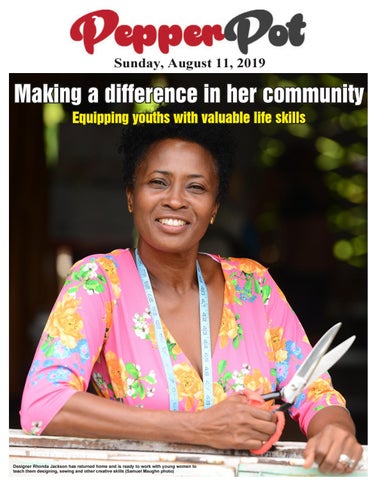
Making a difference in her community Equipping youths with valuable life skills
Designer Rhonda Jackson has returned home and is ready to work with young women to teach them designing, sewing and other creative skills (Samuel Maughn photo)
II
Chronicle Pepperpot August 11, 2019
Comfort in the country life The Berbice Inn Guest House By Lucria Rambalak and Jared Liddell IN the Ancient County of Berbice, just a few minutes away from the Berbice River Bridge, you can find New Amsterdam’s little paradise, the Berbice Inn Guest House. The two stunning pieces of architecture consist of colonial and modern styled buildings nested at 28-29 Princess Elizabeth Road, Queenstown, New Amsterdam. The western half of the lot, numbered 28, was defined and designated on a diagram made by James Bone--- a Sworn Land Surveyor--- dated November 6, 1840. The same building that stands today was erected on July 26, 1849. This charming guest house would leave one standing in awe just looking at the amazing architecture. With details of pineapple, yellow-lined with fern green trimmings, it is indescribable. When you hear Guyanese describe somewhere saying, “home away from home”, you instantly get that sense of comfort and warmth. That’s exactly the ambience you feel when visiting there. Upon your arrival, there is a signboard to let you know that you have reached your destination. A friendly security officer greets you at the gate and attends to your secured parking. Welcoming us with a kind smile
was the longest-serving staff member Carlene Blair. She is the manager, who has been working there for over 32 years. We termed her the “house mother,” because she is the go-to person. As she sat down with us she took us back on a little history and updated us on what’s new with the place. She said: “It was down for a while but it’s coming again. We are working on it right now. It’s becoming a home again.” The Berbice Inn was previously owned by the Berbice Mining Enterprise Ltd (BERMINE). In 2003, NICIL/PU took over management of the then guest house and the name was subsequently changed to Berbice Inn. Upon the dissolution of BERMINE in October 2004, the property was transferred to NICIL via the BERMINE (Dissolution and Transfer of Assets and Liabilities) Order 2004 and went into operation on October 15, 2004. Under the former management, the building located on the eastern half was known as the residence of the chief executive officer. The guest house, situated on the western half was originally set up to offer accommodations to government officials primarily on a shortterm basis. Blair went on to say: “I have been here through the good times and the bad times and I have learned from every little thing. Meeting
Exterior of the Berbice Inn Annex (Delano Williams photos)
with the guests, I think that’s one of the things that I love the most. You know, from the time that they come and you meet them, you give them a smile, you become so friendly with them that you always want to be there.” NICIL transformed and expanded the services to include government officials, private individuals or business people who are travelling through the area and will need lodging for a night or more. In addition, it is also convenient for business retreats involving overnight activities. The layout Currently, the inn has three suites and an apartment which is suitable for families, while the annex has four suites, with an extension of three more suites, a reception area and a back veranda to be added. The suites range from small, medium to large rooms, with a price that suits your pocket. Guests always express how beautiful the scenery is
and the scenic picture the countryside always captures. There is a kitchen where the preparation and cooking of meals normally take place. You can either order what you desire or simply leave it up to the chef. According to the “house mother,” a favourite Guyanese dish which most guests enjoy is the steamed fish with provisions and stir-fry. Another delicious meal would be the bake and salted fish for breakfast. Their “Buxton spice” mango juice is normally made fresh from the handpicked mangoes in their back yard. Apart from providing meals for its guests, it also offers a restaurant service to the public and a catering service for small or large orders. With the newly redesigned model, one of the pieces that really stood out was the “dutt” designed bed frame. All of the beds are made from local locust wood, which is known for its strength and durability. Turn to page XIII►►►
Chronicle Pepperpot August 11, 2019
III
Young entrepreneur’s sweet potato cake mix rivals popular imported brands By Wendella Davidson STARTING one’s own business can be both challenging and exciting as one would undoubtedly encounter many obstacles along the path to success. Also, the most successful business startups are founded by people who are passionate about what they do. Cognisant of this, Kelshine Griffith, 21, a budding young entrepreneur originally from the West Bank of Demerara, and who currently resides at Tucville, Georgetown, has been
School, on the East Bank of Demerara. Upon completing her secondary education, Kelshine said she landed a job at the Massy Supermarket, Providence, East Bank Demerara, but soon realised that that was not what she really wanted to do. So she called it quits and enrolled and participated in a one-week Youth Empowerment crash course, organised by the Government of Guyana (GoG), and held at the Guyana School of Agriculture (GSA), Mon Repos, East Coast Demerara (ECD). Kelshine credited her Aunt Denise for
The young entrepreneur & her product : Kelshine Griffith, the young entrepreneur, exhibits her attractively packaged `Sweet Potato Cake Mix’
patiently dotting the Is and crossing the Ts in her pursuit of becoming one of this country’s leading young agro-processors. For now, her main focus in on marketing her Sweet Potato Cake Mix that rivals popular imported brands. In an exclusive interview with the Pepperpot Magazine, Kelshine, who was a student of the Guyana School of Agriculture pursuing a course in agro-processing and will be graduating shortly, said “I Iove doing things with my hands and I have a penchant for agro-processing, so I am always trying local produce to see if they can be substituted for some of the stuff we import. I am also a lover of cakes.” According to Kelshine, who said that she always wanted to be her own boss, she spent her formative years at Goed Fortuin, West Bank Demerara (WBD) with her grandmother, her single-parent mother and five other siblings. She attended the Goed Fortuin Primary School before moving to Tucville in the city to live with an aunt, Denise Miller, in order for her to attend the Houston Secondary
assisting her in signing up for the course, a decision she said she never regretted, as the course taught the participants how to add value to raw materials and seasonal fruits, so that they can have a longer shelf life, along with the benefits of agro-processing. “We produce a variety of fruits and vegetables in this country, so getting into the area of agro-processing can become a very lucrative venture,” she added. It was during the Youth Empowerment course that the young lady said she fully embraced agro-processing and her interest in becoming a full-time student at the institution piqued. She added, too, that she also started cultivating a small kitchen garden at her aunt’s residence that continues to thrive. Kelshine further related that her eagerness to become a full-time GSA student had a setback, as she did not have the required subjects for acceptance and so her applications were constantly rejected. Despite this, the young lady said she never gave up, adding, with a
smile “I persevered and continued to apply until I finally got through.” She recalls feeling ecstatic the day she received news that her application was given the green light and vowed to grab hold of the opportunity with both hands. New creation Kelshine said she began classes as a fulltime agro-processing student at the GSA, in September 2016, adding that the programme requires each student to create a product using local ingredients, is 100 per cent Guyanese and acceptable on the market. “I gave the assignment much thought and initially came up with the idea of using breadfruit flour as a replacement for the [imported] cake mix; however, the moisture content in that ingredient made it unsuitable for the purpose. My next best bet was to try out the sweet potato flour and that proved successful,” she added. According to her, in addition to the GSA agro-processing facility, Kelshine said she received invaluable assistance from GSA
Principal Grace Parris, other staffers Stacy Mc Donald and Akeem Williams and Miss Patricia, as well as her aunt Denise and cousin Leam Davis in arriving at what she believes is a final product that can compete with the imported one. So purposeful is this young woman in establishing her own business, that once the sweet potato flour proved to be an excellent substitute, it has been getting good market reviews, and she said that she immediately started to think about the next steps towards the process. Next steps That help came when, in 2018, she undertook an Entrepreneurship and Work Readiness Course in 2018 that was organised by the FAO/Sydar /Youth Empowerment. The participants learnt the rudiments of putting together a business plan, how to find a business name, the art of labelling to attract buyers and marketing strategy. Turn to page X►►►
IV
Chronicle Pepperpot August 11, 2019
GMC grasping at new opportunities By Hugh McLean The Guyana Marketing Corporation (GMC) is a government corporation established under section 46 of the Public Corporations Act, Cap 19:05 of the Laws of Guyana that has been working assiduously over the years to promote the cultivation and export of Guyana’s non-traditional crops to Regional and Extra-Regional markets. The GMC believes that if they continue to support local and eat local, they would be able to create job opportunities and have a healthy Guyana. Their local manufacturers utilise their local fruits and vegetables which produce value-added products for them. They will also continue to support and market products for their farmers, exporters and local manufacturers of non-traditional agriculture produce. Shevon Nedd, Public Relations officer, shared with the Pepperpot Magazine that the local manufacturer can have their product s “shelved” in their Guyana Shop. “We have over 700 local products in our local supermarket, such as wine, pepper sauce, honey,” said Nedd. “ We also have a brokerage department for our exporters, since we work closely with them, when they are exporting to a different country, they can go to our brokerage officer who will prepare all the documents for them.” They also have an extension department where officers will go to see the farmers and what they have on the ground. There are extension officers in almost all of the regions. “ We help them get their produce or products marketed as long as they have their requirements, such as having their food and drug license, their product is of good quality and their business registration, their products will be shelved in our Guyana Shop,” posited Nedd. “ This helps them because they have somewhere to put products and don’t have to go looking far and beyond for a place to market their products. We even help them get into other supermarkets such as bounty, survival and other supermarkets.” The GMC also attends events and on those events, they showcase these agro-products which give them exposure. They also have their “market day” and this is where they showcase almost all of their products. The organisation also observes “Agriculture Month” which is in October, where they have a list of activities occurring such as their, Guyana Shop Opening Anniversary and possibly another “market day”. Kevin Macklingam, the Guyana Shop manager, said that the Guyana Shop was mandated about six years ago and that their job is to partner with other local supermarkets within the
The Guyana Marketing Corporation (Delano Williams photos)
regions. “Specific supermarkets that have come aboard with us, in the assistance in promoting local products, we supply them local products at the manufacturer’s cost so that they will have it accessible to the public or in their community,” he said. “ Some persons are reluctant because it is a very difficult job to get Guyanese to buy local because they got this tendency that ‘once it’s foreign, it’s better’ but our products are much healthier and most of them don’t have the MGO[Magnesium Oxide] in them and it’s fresh.” They have approximately 70 agro-processers ranging from very small manufacturers to the industrial ones such as Banks DIH, Sterling and Twins. The industries in Guyana have to source their equipment, such as the bottle, caps, glass to put their condiments in; it increases the cost of the product. “While foreign producers get theirs at a lower cost, our local manufacturers have to import almost everything, which increases the cost for the product and everything has to be certified by the Food and Drugs Department and the license has to be renewed annually,” he said. Celestine Butters, Packaging Manager, said that they will continue to support local businesses and also eat local foods and create job opportunities for a healthy Guyana. “With our fruits and vegetables, our farmers would be planting, he would create a job for himself and others and then we take it to the local and foreign markets and taking it to the
GMC’s PRO and the Guyana Shop Manager pose for a photo
foreign markets, we will receive foreign exchange currency,” she said. The GMC is seeking to expand its markets and hopes to do so through a World Trade Day event. This event, which is planned for the near future will be held in Antigua in an aim to “spread their wings of opportunity” in that country.
Chronicle Pepperpot August 11, 2019
98 years of helping families honour the lives of loved ones
Lyken Funeral Home By Wendella Davidson THE Newburg Funeral Home, popularly known as the Lyken Funeral Home, is in its 98th year of existence and is on record as one of the oldest, established funeral homes, in the history of funeral services in Guyana. The Funeral Home is functioning as a well-established business and managed by Gordon Lyken and his wife, Dr Dawn Stewart- the latter is a trained nurse whose studies involved death and dying, psychology and counselling. Their 19-year-old daughter Really is also currently undertaking studies to walk in the footsteps of her parents. With her wanting to become a mortician, one can say that prospects of the family business in the future, looks positive. A simple start The idea of a funeral parlour was birthed in the year 1921, when Robert Lyken (Snr), then a carpenter who had gained popularity in the making of furniture, defied his parents and started making boxes in which people would place their dead loved ones for burial. Turn to page XII►►►
The senior Robert Lyken
Robert Lyken’s mother who gave him support in his funeral parlour venture
V
VI
Chronicle Pepperpot August 11, 2019
Joylyn Conway’s journey to
Miss World Guyana 2019 By Marissa V. Foster IN our childhood, we experience teachable moments and are taught values and morals that seem harsh at the moment but when we mature, we gain an understanding and appreciation of those moments. As a child, Joylyn Conway always enjoyed the presence of her family and the sounds of hearty laughter, singing and rocking to funk or oldies whenever taking a drive out, and she recalls being reminded of the importance of education and receiving pull-ups in moments whenever she lapsed. There were always valuable reminders of the importance of good manners, respect, speaking well and keeping God in the centre of your life. All such valuable and impactful moments have shaped her into the young woman she is today. Joylyn attended the Berbice High School where she managed to graduate as one of the top 10 students at the Caribbean Secondary Education Certificate (CSEC) examinations in 2014. She later attended the University of Guyana, where she read for a degree in Chemistry and graduated as the youngest graduate of the year 2016, as well as the second-best graduating student with the highest GPA; she was also president of the University of Guyana’s Chemistry Club for the year 2017-2018. The choice in this field of studies later influenced her platforms for the Miss World Guyana Pageant. Joylyn is a Rotaractor attached to the New Amsterdam Rotaract Club, where she currently serves as the secretary and is also the club’s president-elect for the year 2020-2021. Apart from being the Miss World Representative for the Land of Many Waters, she was also the Miss World Guyana Second Princess for the year 2018.
Joylyn Conway being crowned as Miss World Guyana 2019 by Ambika Ramraj, Miss World Guyana 2018 at the Pegasus Hotel Guyana.
Joylyn Conway
Growing up, she always saw young ladies who participated in beauty pageants as brave women. Women who in return use their titles to be a voice for problems faced in society, while indirectly empowering young women like herself. “I too wanted to be brave; to use my voice to bring awareness of issues that are prevalent in society; to be the change that I so dearly would like to see within my community, country and world at large and most importantly, to empower young women and girls,” Joylyn told the Pepperpot Magazine. Joylyn’s past influenced her first Beauty with a Purpose project: STEM Girl Glow. Once upon a time, she allowed the stereotypes surrounding girls in Science to influence her decisions, perception and beliefs– STEM was only meant to be for boys; it’s nerdy and boring. Thankfully, over the last five years, she has encountered women along her academic journey and even within her own home. Her mother was the person who motivated her that she can embrace who she truly is and still glow with confidence. Women shared their stories and experiences, which gave her hope and through the influence of their impact on her life, she shares her story as well. She shares it with the hope of making an impact in our younger generation of girls by encouraging them to embrace their glow with confidence, despite the stereotypes. Joylyn described her journey thus far as being “supercalifragilisticexpialidocious,” one filled with teachable moments. It’s a journey that entails self-exploration, the evolving into a better version of oneself and the opportunity to work with and meet outstanding individuals – for this, she is grateful and looks forward to all this journey has in store. A battle with self and mind is a challenge she has faced in the past. Joylyn always envisioned being able to do more, but the belief and confidence weren’t always there. Today, Joylyn Conway is a 20-year-old young lady with an amiable personality and hearty laugh to complement it. She’s a family-oriented individual, communicant Methodist, Natural Science enthusiast that holds a Bachelor’s of Science Degree in Chemistry (Biology Minor), and works as a lecturer at the New Amsterdam Technical Institute and Lab Instructor at the University of Guyana. She also holds an immense love for volunteering, community service and assisting the less fortunate. Turn to page XV►►►
Chronicle Pepperpot August 11, 2019
VII
No matter your taste in wines Pandama’s got you covered By Wendella Davidson “PANDAMA represents all Guyanese; we are everyone and it is something I am very proud of. And what I love is that we are a Guyanese business and product; something that all Guyanese should be proud of,” asserted Mrs Tracy Douglas, who, along with her husband, Warren, established the Pandama Winery and Retreat some 10 years ago. This unique business, home to some 200 flavours of wines made from local fruits and barks, is nestled amongst trees at Madewini, a mere 10-minute drive just off the Soesdyke-Linden Highway. According to Warren, he and his wife cherish this type of life away from the bright lights and hustle and bustle in the city, so, for them, the investment is a gratifying one. He noted that daily, and especially at weekends, the business is home to visitors, be it for a day, overnight, or to spend the entire weekend. And this has been the trend ever since he and wife opened their doors and word began to spread of their existence. For Warren, 54, a Buxtonian by birth who also lived in South Ruimveldt Park, on the outskirts of the city before migrating to the United States at the tender age of 15. He recalled that it was during a visit here in 2007 to watch the Cricket World Cup (CWC) that his interest in obtaining a plot of land piqued. It was, however, Tracy’s first visit to her husband’s homeland; something she’d always longed to do, and just as she’d anticipated, she immediately fell in love with Guyana, to the extent that by 2009, the couple was ready to relocate to the `Land of Many Waters’. Warren said that he and Tracy developed the business in the semi-jungle from scratch to the extent that it now boasts cabins and treehouses that can cater for up to 16 persons and for any occasion, be it a day or overnight visit, or a weekend stay for guests. The cabins, though comfy, give one the experience of a semi-rustic jungle life. Recently, the couple was forced to extend the canopy of the lounge area, so that guests can be more comfortably accommodated and relax and enjoy lunch and dinner in an air of camaraderie. And just recently, a group of 100 persons were hosted there.
On their first visit to Pandama Winery and Resort are, from left, Ingrid Giovanna Rosero and Andres Morales (husband and wife from Colombia); Antoine Morillon, a French native, and Maria Alejandra Gonzales, from Colombia, enjoying themselves at the creek
Turn to page XIV►►►
Pandama proprietors, Warren & Tracy Douglas
A treehouse at the Pandama Wines location
VIII
Chronicle Pepperpot August 11, 2019
ocus F on the Village
Number Five Village A thriving, peaceful community
By Michel Outridge ON your way to Berbice, there are a few roadside pit stops that many travellers make to grab some good home-style creole food and cold beverages. That’s when you know that you have reached Number Five Village, home to many friendly faces and much more. While on a visit to the village, the Pepperpot Magazine met a resident, Lealand Johnson, who is passionate about development of the community.
Reviving the traditional “Village Day’ Johnson related that he will not rest until the customary ‘Village Day’ is revived in the community, because it used to showcase their rich culture, talent and usually brings people together in celebration. He explained that the ‘Village Day’ stopped abruptly about three years ago and he is making preparations and mobilising fellow villagers to get on board to revive the event. Johnson added that the ‘Village Day’ used to be a ‘big’ thing and he would like to see it like that again. He noted that they also A paved street in No. 5 Village
have plans to invite President David Granger to the village soon and hopes that his request will be granted. “The ‘Village Day’ will be a three-night event, which will start from Friday night featuring folk songs sung by villagers accompanied by drumming. The Saturday night will be the road lime, where all local foods will be on sale and on Sunday night a cricket match will bring down the curtain on the Village Day celebrations at the ball field,” he said.
along this corridor, because its first inhabitants were the Dutch and it is a place of a lot of talented people. It is a working village where people find things to do to upkeep themselves and families,” he said. Johnson noted that even though they have seen much-needed development in the community, the villages of Number Three, Four and Five need to be regularised in order for them to get their land titles. Johnson and his wife operate the roadside Uprising Annie’s Restaurant, that very famous ‘pit stop’ that many persons make while travelling to Berbice. Johnson told the Pepperpot Magazine that the village has produced some homegrown folk, who have retired as officers and is home to the top striker of the Guyana football team, Kevin Layne. The community has a lot of other talented young men and women who are nurses, soldiers, cops, cooks, and farmers and they are also good at cricket and football. The businessman related Businessman Lealand Johnson (Samuel Maughn photos) that this year’s Emancipation was not celebrated in that community; however, he went to Union Number Five Village Village, Corentyne, Berbice and was proud Johnson stated that Number Five Village of the activities they put together for Preshas about six churches, a nursery school, a ident David Granger and other invitees. primary school, a health centre and one of Johnson added that although they don’t the best playfields on the West Coast Berbice. have a village leader, they would come to He told the Pepperpot Magazine that the gether and make things happen when needed. village does not have a secondary school, but He added that they are a resourceful people, the nearest one is located at Number Eight who believe in having their own livestock, Village and the other at Rosignol, about a cash-crop farms and shops. 10-minute drive away. He pointed out that some villagers are Johnson reported that over the past few employed at the Blairmont Estate and others years, Number Five Village has seen some have jobs in offices, as well as their own infrastructural developments: where they homes as seamstresses and cooks. had some streets –- which were previously “Main thing we don’t get no thieving mud dams --- paved, as well as the con- here, it is practically a safe place to live, struction of a wooden bridge which joins where everybody knows each other and it is the villages of Numbers Four and Five, a very peaceful place to be,” he said. among other internal infrastructural works However, the resident voiced the need within the community. for a lecture hall within the village, where “This village is one of the oldest villages events such as weddings and other events
Chronicle Pepperpot August 11, 2019
IX
Making a difference in her community By Michel Outridge AFTER residing in England for many years, Rhonda Jackson returned to her homeland and is now doing her bit to enhance the lives of youths in her community of No.5 Village, West Coast Berbice. She has established her own small business at her uncle’s place, Simplicity Touch, where a sewing shop and showroom were created and there too, she does fashion designing, makes plant pots from fabric (cloth) and cement, arts and craft. Jackson left Guyana many years ago, first moving to Suriname before venturing to England, where she got married. She settled there for some time before deciding to return to her homeland, Guyana. “I am back since last November for good, because I want to empower young women with a life skill, so they can become gainfully self-employed. For free of cost, I want to teach them to do stuff like sewing, making plant pots from cloth and cement, fashion designing, arts and craft and so much more,” she said. Jackson stated that she did so many things, even working as a part-time chef back in England and today she is still at it because she likes to work with her hands to create things and beautify the place. She disclosed too, she was also a certified social care worker in England, where she interacted with mental care patients and vulnerable adults and children. The mother of six told the Pepperpot Magazine that with time she will transform her uncle’s place into what she wants in terms of decorating it and is hoping her sewing classes with the youths in the village kicks off soon enough. “I like to create stuff, I don’t like to sit down; I teach myself via the Internet and when I see how it looks, I would start making my own. I started making plant pots in England and sold it there and now my husband is making and selling it in Linden. I am not promoting it as
Rhonda Jackson showcasing a piece she made
much, but it sells from right here at my home,” Jackson said. Depending on the size and colour, the plant pots are reasonably priced and can withstand the weather conditions in Guyana. The small plant pots can be used as a vase, since it can be sprayed in gold paint or whatever colour the customer requests and serves as décor for any home or surroundings. Jackson added that she also covers shoes to match outfits and can sew and design clothes for all. “My passion is to work with my hands, learn on my own to do things. I don’t watch television because I like to watch videos on how to make things and I try it afterwards. I am also an interior decorator and I try many things in an effort to spruce up the environment and as long as I am healthy, I will continue to do things with my hands,” Jackson said. Her dream is to host a street fashion show in No.5 Village. Jackson told the Pepperpot Magazine that her dream will become a reality in the near future when the community revives the traditional ‘Village Day’. She is one of many women in the community who are self-employed and she is making a difference in her community, a place that has a lot to offer.
Rhonda Jackson’s plant pots made of fabric and cement
X
Chronicle Pepperpot August 11, 2019
The joys of being self-employed
Vanetta Small operating one of her printers
By Michel Outridge IT IS with the wish to not have to work for people for the rest of her life that motivated Vanetta Small to save and opened her own small business in her village of No.5 Village, West Coast Berbice. Small opened her business, Vzz’s Document Centre, Stationery Supplies and Internet Café located at Lot 14 No.5 Village, West Coast Berbice. She specialises in photocopying in both colour and black and white, laminating, bookbinding, tickets, flyers, funeral programmes, invitations, laser printing, report booklets, textbooks, certificates among other things. The business opened its doors about a month ago, Small said as a result of the assistance of a very good friend. She saved up some money and constructed a little shop to accommodate her printers, books, computers and other things she sells.
The enterprising Vanetta Small
“I was working in town, doing the same thing and was able to save some money and with help from a very good friend I managed to get this building and there is nothing like working with yourself,” she said. Small related that everything takes time because she had a vision and worked towards it and today her dream of working with herself is a reality and for that, she is very pleased. “I live right here so having my business in front of my house is very convenient and I feel good working on my own,” she said. The 30-year-old added that the business opens from 08:00hs up until 21:00hrs and when school re-opens she will go later to accommodate school children with their assignments and research. Small’s shop has everything under one roof and her prices are pocket-friendly and she is very helpful and friendly, just what every business needs, a pleasant attitude and a willing hand. In addition, to ‘beat the heat’ the little shop has cold beverages on sale. “Anything is possible and I am a true of reflection of that because I worked for many years in an internet café and stationery place and today I am self-employed and that’s the way to go,” she said. ◄◄◄ From page III
Young entrepreneur's... The business was named and registered as Shines Agri Manufacturing and the product is available in an attractive package that bears the instructions for baking and other important information on the back of the package. And while Kelshine is exuding confidence in her ability to move forward and establish her own business, she is aware that being at such a tender age appears to have its own challenges and disadvantages. Kelshine is currently undertaking a work-study student attachment at the Banks DIH laboratory and is also in the process of accessing finance to purchase the appropriate agro-processing equipment. Noting that the equipment: a flour mill, dehydrator, and a processor are very costly, Kelshine said she nevertheless is determined to prove that young entrepreneurs, once give the right inspiration and guidance, can succeed. She reasoned what could be better than being one’s own boss and ringing in your passion project to the world.
Chronicle Pepperpot August 11, 2019
‘Master’ of her craft Catering to her community's needs
Jameka Gordon, Kimberly Johnson and Annie Gilford (Samuel Maughn photos)
Gilford preparing a fresh batch in her kitchen
By Michel Outridge ANNIE Gilford is one of many women in No.5 Village, West Coast Berbice, who are self-employed and coincidentally, she is the ‘black pudding lady’ of that community and is noted for her culinary expertise in making the traditional local dish. Gilford makes time to manage a restaurant which happens to be located on the public road, an ideal spot for the food business. When the Pepperpot Magazine visited the community, she was as usual, busy in the kitchen tending to many pots on the stove as well as in the process of making black and white puddings for customers --- a daily routine. Gilford said she started in the cooking business about five years ago, but back then she had four employees and now she has two persons in her employ.As such, she is tasked with making the black and white puddings, an undertaking she has mastered over the years. “It’s a simple process once you are organised and practice makes perfect, so it takes about half an hour for the black pudding to be prepared,” she said. All the essentials for the black and white puddings are sourced from the butcher at No.4 Village, a short distance away. Gilford said most of her time is spent in the kitchen making sure all dishes are ready in time for customers. “We start selling from midday up until 14:00hrs and we have a wide array of dishes, including vegetables, cook-up rice, fried rice, chowmein, baked chicken, fried fish and fried chicken among other foods,” she said. Gilford added that they also make roti, dhal puri, curry chicken and fish, plus salads and to go with the dishes. She disclosed that her day-off is on Wednesdays, they do not open and on that day she would attend church and do whatever she has to. Gilford said a roadside spot is good for business and it is the place customers stop to get black and white puddings every day at 14:00hrs; she tries to make it on time daily, regardless of what is happening in the kitchen. “Being in the kitchen is time consuming, it is hard work, and the heat combined with the humid weather conditions, it is very hot at times and food preparation takes a lot of effort,” she said.
XI
XII
◄◄◄ From page V
Liverpool’s Homestyle Diner
98 years of helping...
Liverpool Homestyle The ‘one-stop Creole Food Shop’ By Shirley Thomas RUSHANNA Homestyle is a budding ‘one-stop Creole Food Shop’ located in the heart of Number Five Village, West Coast Berbice. Owned and operated by Quason and Rushanna Liverpool, the business which started about 10 years ago has moved from strength to strength and is now serving the needs of not only the people of Number Five and outlying areas, but also persons passing through --- going either deeper into Berbice or to Georgetown. Some customers call it a ‘lifesaver’, explaining that when persons have to make early runs either out to Georgetown or are coming from the capital city to East or West Berbice, they have that assurance that they can stop and pick up something hot and tasty from Liverpool Homestyle. More recently, the business has ventured into catering and the report is that they are doing well. When the couple opened up their business in front of their home on Number Five Public Road 10 years ago, they started small, selling cakes and salted fish, egg balls, channa, roti and curry, then moved on to chicken burger, fish and float bakes and eggs. Over time, they diversified and took on the preparation and selling of bigger stuff such as metemgee, a variety of cook up rice: black eye; split peas; callaloo cook-up; fried chicken and in various preparations; vegetables; macaroni pudding and pie and the list goes on. An ardent Christian, Rushanna, is a member of the “Family Tabernacle of Worship” located next door to her home in Number Five Village. She plays a very active role in the church, where she is also a worship dancer and lead dancer.
Chronicle Pepperpot August 11, 2019
Observing that it is a truism that “A family that prays together, stays and thrives together,” Rushanna recalled that even though she was a member of another Church when she met her husband, Quason Liverpool, she was so impressed with his worshipping, his attitude towards her and the things of God, that she made a decision to join him at his place of worship. “ It was one of the best decisions I’ve ever made, and now we have three wonderful children – one girl and three boys and together we are worshipping and living for the Lord.” And what’s more? He’s now in the business together with her – giving all the support she needs. The birth of Rushanna Homestyle Reflecting on the road they trod, Rushanna said: “I’ve been in the business for the last 10 years consistently and with each passing day I see that it is worth the while.” After graduating from Rosignol Secondary School, she was contemplating career options, but catering wasn’t one. “But it’s amazing what prayers can do… and so, today I must not say ‘I’, but ‘ we’ [My husband and I] have a thriving business that is moving from strength to strength,|” she proudly announced. Commenting on the strides they’ve made over time, she admitted, “ It wasn’t like this from the beginning, but thank God for the progress we have made. It progresses as it goes along and has certainly put us in a better position to provide for ourselves and three children.” Even with a focus on serving ‘take away,’ the snackette owners have now constructed an attractively designed building in front of their home under which they have seating and eating facilities that can adequately seat 12 to 14 persons.
At the time there were no funeral parlours and it was a norm for people to keep the bodies of their dead relatives on ice at home. Robert used to ply his furniture trade from under a friend’s bottom house that was next to a stable with horses. He soon devised a plan whereby the box with the dead would be placed on a horse-drawn transport and taken to the cemetery for burial. As the demand for boxes grew, so did the demand for space, and Robert subsequently moved to a section of his parent’s bottom-house at Norton and John Streets. Robert’s father believed that the demand was for furniture, so when he learnt the true nature of the business, Robert was forced to seek refuge with his business at a friend’s house. When his father passed away, Robert was able to gain the support of his mother and she allowed him to move the business back at the family premises. Robert later upped his game from building the regular box to that of coffins. He got the help of his sisters: Doris, Olive and Dorothy, in sewing the trimmings to decorate the coffins. Robert also got help from his brothers Joseph and Arthur and Arthur’s two sons, Joe and Gordon. The two boys left Guyana to study mortuary science to become professional morticians in the United States. But Gordon, even though he qualified as a mortician, focused more on mechanical engineering, And, while Joe returned home, Gordon remained in the US where he pursued a lucrative career. He was still of great help to the family, as it was he who handled the purchasing of materials, especially for embalming. Joe was credited with building the first coffin which was then called the “break-neck coffin”. But with his younger brother’s death, shortly before the September 11 tragedy in the US, Gordon came home to take up the mantle and continue his grandfather’s legacy. History The Newburg Funeral Parlour offers professional embalming and the facility was where the bodies of US Congressman Leo Ryan and other senior officials, who were victims of the Jim Jones massacre at Port Kaituma, North West District, were taken to be embalmed and then exported. The process of embalming is very expensive and meticulous, and unlike in the United States where all bodies are embalmed before it is viewed, here in Guyana, embalming is only done if a body is to be exported. For years. the parlour through a contract it has with the government handles the bodies of people whose deaths involve with police investigations. But according to Dr Stewart, the business has over the years had its fair share of trials, with the infamous `touting for dead’ phenomenon, but the couple remains resolute that they will continue to serve the people to the best of their ability. Fate Commenting on their union, Dr Stewart with a glowing smile said it appears to have been predestined even before they were born and can be likened as a script for a love movie. Ironically, the veterinarian at the stables and who was responsible for the horses was her grandfather; both she and Gordon’s fathers were veterans in the army; Gordon’s father started the Legionnaires of America in the US, and Dawn’s father later became the president, and both she and Gordon’s moms were nurses. As teenagers, she and Gordon attended college in the United States and dated, however, they went their separate ways and got married to different people and had families. But as fate would have it, Gordon and Dawn got together when they both were single again, began dating and got married a few years later. The union brought forth “Really”, a daughter who is really treading in her parent’s footsteps.
Chronicle Pepperpot August 11, 2019
XIII
Residents of West Berbice excited about new health centre
By Shirley Thomas RESIDENTS of Number Five, West Coast Berbice, are among other near-by communities currently benefitting from the services of a spanking new health centre commissioned at Cotton Tree, also on the West Coast of Berbice, in June 2018. The residents are excited and have expressed gratitude to the administration for providing them with the updated and stateof-the-art facility, which is now offering maximum health care within its reach. The facility, which threw its doors open to the public in June 2018, is under the purview of the Department of Public Health. It is staffed by a team of 12, including a medical doctor; a midwife; two community health workers; three nursing assistants; two pharmacy assistants; and two clinic attendants. Communities benefitting from the services offered by the Cotton Tree Health Centre include D’ Edward; Harbour Spoon; Numbers 4, 5, 6 and 7 Villages. Services provided The services routinely delivered include: Patients’ education in areas such as: Sexually transmitted infections; Chronic illnesses (including Diabetes, Hyper-
tension, cardiac conditions; among other things); ante-natal clinic for expectant mothers; Child health (including BCG ; Yellow Fever and MMR vaccines ; Men’s health, including sensitisation on cancers and Sexually transmitted infections. School visits and immunisation (such as administering the HPV vaccines are also administered to teenagers at school after the medical staff would have held sensitisation sessions with parents and received their consent to vaccinate the students. Response by the public Residents of the communities served have been commended for their attitude of cooperation with the health workers, both within the facility and during home visits within the community, conducted by medical staff. One health worker who has served the Cotton Tree Clinic for a considerable period had this to say: “I enjoy working here. The community is really nice. We do not have problems with the patients. They are health-friendly; willing and eager to learn and follow instructions given to them by the medical staff .” The Pepperpot Magazine learnt that the facility usually gets a high turnout and residents willingly attend clinics. Those who are not able to attend – such as shut-ins and wheelchair cases, are provided home visits
The new health care centre at Cotton Tree, West Coast Berbice (Samuel Maughn photo),
by staff who ensure they are visited each clinic day. Some residents are of the view that it would help if the services of an HIV Counsellor/ Tester could be made avail-
◄◄◄ From page II
Comfort in the country...
Exterior of the Berbice Inn Guest House
“We were supposed to go to Georgetown and hang out with some family, but we are going to stay here,” said one of the current guests, Sharon Mckenzie-Chin. She spoke about how impressed she was, how secure she felt and that her stay so far has been nothing short of excellent. “This is my first time at Berbice Inn…my friend did some research online and found the Facebook page which she then recommended it to my husband and I. We decided to stay for 14 days because we were concerned about good air conditioning, cleanliness, hot water, internet and comfort. The staff are amazing, they are very helpful with giving information, directing me where to go and how to get there. I’m like a newbie, even though I was born here, I left when I was a little girl,” McKenzie-Chin said. “I’m such a picky person and I have no complaints. There aren’t any mosquitoes, we don’t even need a net; the air conditioning works really well. There was a blackout and the generator popped on right away, I just love it here…They are
different types of people who like different things. Some may want the posh hotel, some prefer quiet with this real natural kind of look, experience and going into the backyard. You have the overseas guests or people from other places in Guyana. They want to have this, it is so quiet, so peaceful. Meanwhile, Blair said that the hotel provides a unique experience for everyone. “They should come and stay because it’s a home away from home, it’s always clean and tidy, we have good meals. Apart from that, Berbice Inn is a real special place, when people come into Berbice Inn it’s a memory. They keep coming back or they tell others to come and visit, come and see it for yourself,” Blair told the Pepperpot Magazine, as she expressed her gratitude and appreciation to all the guests whom she now considers family. You can contact Berbice Inn on (592) 333-3344 and email them at nicilguesthouses@gmail.com. Also, you can follow Berbice Inn Guyana on Facebook and berbiceinn_guyana on Instagram.
The dining area
Dutt design bed frame
able at the centre to facilitate testing for persons wishing to know their status. Until such time, they will continue to access HIV-related interventions and care from the Rosignal facility.
XIV
Chronicle Pepperpot August 11, 2019
HIV and AIDS Education I RECEIVED an email from a reader who disclosed to me their HIV positive diagnosis. I was asked to discuss how this diagnosis may affect their mental health and what can be done to better it. However, due to the lack of understanding which typically creates added stigma, I think it best that I first talk about HIV and AIDS specifically and debunk some common myths about the condition. Human Immunodeficiency Virus (HIV) is a sexually transmitted infection which attacks cells that help the body to fight infection. After years of self-neglect or absence of medication, HIV develops into Acquired immunodeficiency syndrome (AIDS), a chronic, life-threatening condition that consistently attacks one’s immune system, basically interfering with your body’s ability to fight disease. HIV destroys CD4 T cells — white blood cells that play a large role in helping your body fight disease. The fewer CD4 T cells you have, the weaker your immune system becomes. The symptoms are pretty universal. HIV typically starts (a month or two after the infection) with what feels like the flu which is known as the primary or acute HIV infection. The symptoms of this can consist of head and muscle aches, rashes or sores and swelling of the lymph nodes in the neck. The next stage is known as the Clinical latent infection (Chronic HIV) which can last up to 10 years without the appropriate treatment. As the virus multiplies and simultaneously destroys immune cells, more chronic symptoms and infections arise such as fever, blurred vision, diarrhoea, oral yeast infections and overall weakness to name a few. Left untreated, this is the progression to aids. However, it is important to understand that with the right treatment, HIV does not necessarily have to develop into AIDS. If AIDS is developed, the immune system is severely damaged and there are additional infections such as tuberculosis and meningitis which are common to victims. It is also possible to develop some organ damage and various forms of cancer.
Absolutely anyone is at risk of developing HIV but some factors make one more likely. These include unprotected sex, especially with multiple partners, untreated sexually transmitted infections that to doinproduces open sores which are gateways for transmission as well as sharing infected needles. Some studies also show that uncircumcised men who have unprotected sex are more likely to develop HIV than circumcised men. I think there are a few misconceptions of how HIV is spread from person to person. HIV is spread through sexual contact –vaginal, anal or oral- due to potential blood, semen or vaginal secretions. It can be spread through blood transfusions (donating or receiving infected blood), by sharing contaminated needles and can also be spread from mother to infant during pregnancy or gbreast- feeding. HIV DOES NOT spread through ordinary contact such as shaking hands, dancing, hugging or kissing. HIV also does not spread through objects such as cutlery or toilet seats. It does not spread from sharing food or drinks. It does not spread through water or the air, for example tears or swimming with or in small confined spaces with infected individuals. It is also not spread through animals such as mosquitoes. There are also some urban myths about prevention of HIV such as virginity, showering just after or having sex in water. There is also no preventive vaccine or medication for HIV and AIDS. The only prevention methods are safe sex- using a new condom every time you have sex, telling partners that you may be infected with HIV, using clean needles and getting treatment right away if you are an expectant mother. It is also a common belief that if two sexual partners already have HIV, there is nothing to worry about and no need for protection. However, there are many strains of HIV and different strains would still require protection in order to prevent further infection and diseases.
If you think you may have been infected with HIV, it is advised to take a test at your local health centre right away. However, there is an HIV window period which is the time between exposure and detection which can take up to six months. The initial test may show up negative but the virus can still be transmitted. This means repeated testing is required for an official diagnosis during this period. While there is no cure for HIV or AIDS, there are medications which can ease potential symptoms as well as slow the progression of the disease. Treatment for HIV typically includes Antiretroviral therapy (ART). People on ART take a combination of HIV medicines (called an HIV treatment regimen) every day. It is recommended for everyone who has HIV as it prevents HIV from multiplying, which reduces the amount of HIV in the body and therefore protects the immune system and prevents HIV infection from advancing to AIDS. ART can’t cure HIV, but HIV medicines help people with HIV live longer, healthier lives. It also reduces the risk of HIV transmission. This can be from sexual partners as well as mother to infant during the pregnancy and birth process. There are also some myths about herbal medications aiding and curing HIV. This is dangerous for a few reasons. Herbal medications do not protect your immune system from infection and they may also interact poorly with antiretroviral if you are taking them. The only way you can stay healthy when living with HIV is to take medication prescribed by your health care provider. Once this is done, people with HIV and AIDS can live normal and healthily lives. Next week I will discuss how those living with HIV/AIDS can protect their mental health. Thanking you for reading. Please keep sending any topics you’d like to talk about to caitlinvieira@gmail.com Suicide Prevention Helpline Numbers: 223-0001, 2230009, 623-4444, 600-7896 Say Yes to Life and No to Drugs! Always!
◄◄◄ From page VII
No matter your taste... According to Warren, the idea behind establishing Pandama Winery and Resort was to attract nature lovers; couples who want to spend some quiet time together as they bond, or families who like to enjoy a jungle-like outdoors setting. To this end, the sprawling grounds are ideal for bird-watchers to hone their hobby. For camping, while a stone’s throw away is a creek with its black but somewhat clear water is invitingly tantalizing-looking waters and a rustic, spacious deck for relaxing. The couple’s residence is a mere walking distance from the lounge, where they prepare meals for guests. Meals and a complimentary glass of wine is part of the package. INTERESTING DÉCOR The ambience at the lounge is quite welcoming, with locally-made furniture and an interesting décor put together by Tracy, herself an artist and expert in batik work and other creative arts. The local fruits that produce a variety of exotic wines with quality and provenance to excite the taste buds, such as jamoon, anti-Desmond, carambola, sorrel, mango, boulanger, cashew, pepper, pear, cherry and soursop, are sourced from local farmers. Other wines are made from honey and barks and are all bottled, neatly labelled and put on display at the
Pandama Winery. In 2012, Pandama Wines received the Tourism & Hospitality Association of Guyana (THAG) President’s Award for “Best New Product” in Guyana, and in 2014 was awarded “Tourism Entrepreneur”. With the motto of the business being, ‘Wine should be enjoyed and not analysed’, the Douglases have indeed made a name for themselves with the over 200 varieties of novel wines that can be had at affordable prices at local supermarkets. The prices may vary though, because of specialty or production costs. Warren said he ensures that he is never out of stock of the various wines for which he gets orders for weddings, birthday parties, anniversaries, staff parties and conferences. The manufacturing process, which includes the bottling, corking and sealing, is handled by both parties; the only aspect that Tracy handles singlehandedly is the designing of the labels. For Tracy, she likens her business to emancipation, or freedom to create things that she likes. Elaborating on the word emancipation, she said, “Descent is one thing, and is something I am very proud of; To be of African descent, whether it is African Guyanese or African American, my spiritual base, and it brings some magic into my life.
“I think that when I am creating something, is not even putting myself in any box of Africanness but just good business practice. We just do us. If you appreciate, it’s good; if you don’t, it’s ok. “Everything I create is something that is coming out of us; we are not thinking who’s gonna like this. We like it, and what we do is for everybody; we love the support, and it is for all Guyanese - Chinese, Portuguese, Africans- we have all races visiting our business. Upon our arrival at the location, Warren was in the process of welcoming a group of about eight guests, and not long after a group of four, comprising of three Columbians, Maria Alejandra Gonzales, Ingrid Giovanna Rosero and Andre Morales; and Antoine Morillon, a French native arrived. It was their first visit, and, evidently excited, they wasted no time in seeking out the creek. In invited comments, they spoke of the location being “heavenly, and exactly what we as visitors want to experience for an adventure; awesome, and indeed nature in a beautiful form and magical.” Meanwhile, Tracy reiterated that all of the ‘Pandama Wines’ are affordable, with prices ranging from between $2,000 to $5,000. With a mischievous smile on her face, she added, “The bark wines, like the ‘Pulse’, are specifically for libido enhancement. It is not a man’s wine; it is a human wine; it makes everybody perky and happy.”
Chronicle Pepperpot August 11, 2019
XV
FILES E S A C T R U O C
Larceny/forgery convictions by jury quashed by Federal Supreme Court
By George Barclay
Three accused freed in 1961 IN 1961 the Federal Supreme Court sitting in then British Guiana had set aside three larceny/forgery cheque convictions and sentences by a Demerara Assizes jury, because the trial judge had among other things, put forward for the jury’s consideration the last of three statements that was a complete denial of the other two versions. That ruling resulted in the jury returning a verdict of guilty in relation to a statement that was truly not free and voluntary, the Federal Court had ruled. The accused had successfully appealed. As a consequence, the appellants, Thomas, Meerabaux and Seals, were freed by the Federal Appellate Court. The facts of the case disclosed that the appellant Meerabux was indicted for larceny of a cheque book. The indictment also contained counts against him and the two other appellants for forgery and uttering of two cheques, and obtaining money upon the forged cheques. He was acquitted on the charges of uttering and obtaining money, but was convicted of larceny and forgery. The police intercepted a sum of money which he handed to Jean Chan. He was taken to the police station and questioned and he told the police that R. had given him the money for safekeeping. He was detained at the station. The following morning he gave another statement in which he repeated that R. had given him the money to keep. He was still kept in custody. On the following morning, he was again questioned. He was then confronted with R, who denied that he had given the appellant money to keep; the appellant was further questioned but made no admission. A recording machine was then brought on and a conversation between the appellant and R., six days previously, was heard when the machine was switched off. The appellant then
admitted that the two statements he had given were untrue. Subsequently, the appellant gave a statement admitting guilt. This was accepted by the trial judge as a free and voluntary statement and It was used by the jury to return a verdict of guilty. The Appellate Court held that the appellant must have given the third statement to secure his release. “It was not free and voluntary and was therefore inadmissible,” the Federal Court had ruled. At the hearing of the appeal, Senior Counsel Mr. Fred Wills represented the appellant Meerabux, while Mr. E.A. Romao and D. Singh appeared for the Crown. Delivering the judgment of the court, Chief Justice Gomes noted that the three appellants were tried on charges arising out of the disappearance of a cheque book containing 187 cheque forms from the Medical Department of the Government of British Guiana on July 25, 1959, and the subsequent presentation to the bank for payment on August 26, 1959, of two cheques which the evidence revealed came from that book. The appellant Meerabux was convicted on a charge of larceny of the cheque book, a charge preferred against him alone, and on two charges of forgery, and in respect of each of the two cheques presented for payment. He was found not guilty on two charges of uttering the cheques and two charges of obtaining money upon a forged instrument; these charges being in respect of the presentation of the two cheques for payment at the bank. The other two appellants, the chief justice said, were jointly indicted and tried with Meerabux on all these charges, except the charge of larceny. The appellant Thomas was found not guilty of the two charges of forgery but guilty on the charge of uttering and of obtaining money. The appellant Seales was found guilty of all six charges brought against him.
According to the chief justice, all these appellants have appealed against their convictions and sentences on several grounds, some of which were not pursued before the court. The evidence established that the cheque book was kept in the custody of one Benjamin, a clerk in the Medical Department, who in 1959 was a cashier in the Mosquito Control Section of the department. He was issued with the cheque book in connection with his duties as a cashier and kept it in a safe. Benjamin stated in evidence that, on the morning of July 25 on arrival at work, he opened his safe, checked the contents and saw that the cheque book was there. He then locked his safe again. He said that at about 08:30hrs, the appellant Meerabux came to him and told him that he had heard Benjamin was to be transferred and Meerabux named as his successor. Meerabux asked Benjamin to show him his work. In the course of doing this, Benjamin opened the safe in the presence of the appellant and the two checked the contents. At one stage, Benjamin left the appellant alone at the safe for a short period. While Benjamin was showing the appellant other aspects of his work, according to Benjamin, the appellant told him not to look around as he (the appellant) did not want others to know that he the appellant was being taught. The facts leading to the taking of the statements are as follows. On the afternoon of December 8, 1959, the police intercepted a sum of $500 which the appellant handed to one Jean Chan. He was then invited or taken to the police station where he was questioned about the money and at about 19:00hrs, he gave a statement to account for the possession of the money, stating that it had been given to him by one Rodrigues for safekeeping. He was detained at the station and on the evening of the following day, December 9, he gave a further statement along similar lines.
On the following evening, he was questioned by the Assistant Commissioner of Police Mr. Rose, who had reason to believe that what the appellant had said in the two statements was untruthful. Mr. Rose asked the appellant if he was quite certain that the two statements concerned the truth. Upon the appellant replying that they did, Mr. Rose caused the man Rodrigues to be brought into their presence. Rodrigues, on arrival, denied the claim by the appellant. Following further information from a recording machine previously made, the appellant made a third statement implicating himself, the chief justice had said. He added, “In these circumstances, we fail to see how it can be maintained that the statement was admissible as a free and voluntary statement. In our view, it was not. “Agreeing as we do with the submission of counsel for the appellant in regard to the conclusion or inference to be made from the jury’s verdict, there only remains for consideration the question whether there is sufficient evidence to support the conviction for larceny. “We have carefully examined the remainder of the evidence that was adduced on the count of larceny of the cheque book and we have also considered the facts and circumstances which were advanced in argument by counsel for the Crown in support of the conviction, and we have come to the conclusion that while they amount to a strong suspicion that the appellant was the thief, the facts proved do not in our view establish that convincing degree of proof which is necessary for a conviction, and, of course, a person cannot be convicted on suspicion alone. “The conviction for larceny must, therefore, be quashed and, as the reasons which we have given above apply equally to the charges for forgery, the conviction for forgery must also be set aside. Appeal allowed, “ the Federal Supreme Court had ruled.
◄◄◄ From page VI
Joylyn Conway's journey... This beauty with a passion for girls in STEM hopes to one day obtain a Master’s Degree in Forensic Science. By continuing the works of her platform, she also hopes to establish a foundation that carries on the legacy of “STEM Girl Glow.” Joylyn’s advice to other young girls who might be inspired by her story is to, “Never allow the school you went to; the grades you obtained; the colour of your skin; your position in society, your past or mistakes you’ve made, to define who you are or what you can accomplish in this life – only you can define this. Find you, find your purpose, find your motivation and put in the work.” Her challenges and journey all led to her success and most of it can be attributed to the love and support from her family. Today, Joylyn is not only a queen, but hopes to inspire other young girls that they too cannot only be a queen, but they can also still believe and strive for the things they believe in.
Joylyn Conway as Miss World Guyana Second Princess 2018, alongside teachers and students who were awarded books at the closing ceremony of her STEM Girls Glow Programme.
XVI
Chronicle Pepperpot August 11, 2019
TOWARDS THE SUBVENTION FOR CULTURAL INDUSTRIES A bio-chronicle of trial and turbulent awakenings, Part I
LIKE most children growing up in Guyana, there was a fascination with picture magazines and comic books. But the first challenge or gesture thrown at me came in 1973 when the Kuru Kuru Co-op College was officially opened (some years ago Robert Persaud, then a PPP Minister, referred to that facility as a political-orientation centre – it was never that). It was an institution that saw students from the Caribbean and the resurgence of the local co-op movement. We (pioneers) had worked on the construction of the college. We lived in spartan barrack rooms, and when the beds and stuff came up to complete the dormitories, none came our way. I constructed a cartoon page and gave it to the now-late Madam Dorothy Fraser, our Co-op representative as an act of protest. It was not ignored and the Minister of Co-ops, William Haynes, brought our bunks and mattresses. On the official opening day, we were gathered and Prime Minister Burnham was speaking while we were whispering, then he asked who had done the cartoon about the concentration camp pioneers? I wanted to be somewhere else badly. Eventually, I stood up and he said to me what was weird at the time: “Young man, use your talents to tell the stories of our heroes.” I had no idea whom he was talking about, or what he meant. I forgot that moment but years later, I developed an interest in my art, inspired by new works that took our interest in the 70s from the international scene and in the local newspaper. By then I had a selection of poetry and had become aware of the worldwide struggles and hard-earned achievements of especially Afro peoples across the planet, especially South Africa and North America. My first poetry book ‘VOYAGE’ supported by artwork was published by curriculum development in 1978, headed by Oswald Kendall. The first illustrated story (comic strip was published in 1981 in the Chronicle, ‘The Shrouded Legacy,’ based on an inherited family encounter with a ‘Masacurraman’ in Bartica). The story was liked by all, but the art wasn’t ready, and I prayed for it to end. I had found a niche, now I had to bring myself to the level of mastering what seemed easy, but unfolding its dimensional compositions set by its competing standards, required tremendous and daunting inputs. I must mention that the first official I would meet on the road seeking directions after Kuru Kuru was no other than a younger Alan Fenty at the Ministry of Information. This was an angry young man, who mocked my bad spelling, then instructed me that Guyana did not need artists and writers (I’ve heard this story repeated by two other persons). I was very depressed going down the stairs when I heard a “Pssst!” Turning, a lady came to me and told me not to worry with Alan. It was she who directed me to the Queen’s College compound and to Curriculum Development. Turn to page XXII►►►
Chronicle Pepperpot August 11, 2019
XVII
Do you floss?
BECAUSE germs are so abundant under the gums and are so intermingled with sloughed-off epithelial cells from the gingival tissue wall of the sulcus, it is important to do what we can to keep this toxic mixture to a minimum which will consequently reduce the chances of early-stage gum infections (gingivitis) or the more advanced stages of infection and destruction associated with periodontal disease (gum disease). Properly done, flossing can be very effective at dislodging accumulated plaque and cellular debris from the spaces between the teeth, allowing this plaque to be ultimately removed from the mouth, usually by expectoration (spitting it out).
Besides all the health benefits of flossing, one further motivator could be that flossing makes breath fresher. Fresh breath is difficult to achieve when loads of necrotic, stinking plaque is left under the gums and between the teeth for long periods. Since patients with bad breath seldom smell their own halitosis, they may not even be aware their breath is offensive. A simple test to see if you have a problem is simply to floss, then smell the floss. The odour, if present, will become worse as the plaque dries. One thing is for certain, flossing and fresh breath go hand in hand. If you floss and he material smells all right, you are on the right track. One has never had bad breath worsen by having a cleaner mouth.
Flossing delivers several important health-maintenance benefits. Since microorganisms (germs), both living and dead, build up between contacts where the teeth touch each other, flossing is important for reducing the possibility and incidence of cavities between the teeth (“interproximal decay” in dentistry terms). Microorganisms at the contacts can process the foods we eat, such as carbohydrates and starches, and in this processing can produce acids that dissolve enamel. So for those who are susceptible to these types of cavities, flossing is exceedingly important in helping to keep decay between the teeth under control. Additionally, for those who have had their fillings, or other types of dental restorations on tooth structure, lost to decay between the teeth, it is imperative to effectively and frequently cleanse the surfaces between the teeth to reduce the incidence of new decay in these areas. How do we floss properly? The first step is to choose a brand and type of floss that works for you, one you can, and will, use. There is a confusing array of flosses available waxed and unwaxed, dental tape (wider than floss and easier on the fingers for those with tight contacts), flavoured flosses, and even floss in a handheld device that allows flossing to be done with one hand. Although dentists and hygienists have been known to draw swords over the relative merits of waxed versus unwaxed floss, the best floss is ultimately the one that you will use every day. Start trying out various flosses until you find one you like. Whatever self-motivation it takes to include flossing as an everyday component of your oral-cleansing activities do it. I’m sure I’d approve of your choice.
If you still need encouragement to floss daily, consider this: the words floss and heart both have five letters. While this observation may seem silly, flossing can keep the inflammation caused by gum disease at lower, safer levels. So if you aren’t flossing for fresh breath and healthier gum tissue, or working to keep your cavities and decay between your teeth under control, then floss for better heart health. Poor oral hygiene is associated with heart attacks. How do you go about flossing safely, easily, and effectively? You’ve chosen your floss already, so the following is the same information I pass on to my patients. Hopefully, it will work for you. I instruct my patients to take a nine-inch section of floss and wind it around the middle fingers of each hand until the index fingers or the thumbs on each hand are close enough to touch. This allows the floss to be directed and controlled, by using both thumbs to direct the floss if flossing the upper teeth, or by using both thumb to direct the floss if flossing the upper teeth, or by using the index fingers when flossing the lower teeth (making sure to use only gentle motions throughout the flossing). With one to two inches of floss in between, start by flossing the front of the last tooth on the upper right. By using a system, you won’t miss anything, and by starting in the same place every time you floss, you flossing will become a habit. Keep the floss taut with your fingers and with your thumbs, direct it between your upper teeth, then guide it through the contact and scrub the front of the last tooth, up and down, with just a slight amount of rocking motion, until you feel the surface of the tooth is clean. You have just
flossed the front of the tooth and cleansed the part of the sulcus at that tooth. The next step is to lift the floss over the gum tissue between the two teeth and floss the back of the next tooth, the one directly in front of the first one you flossed. Remove the floss from between the teeth and insert it into the next contact forward. Floss the front of one tooth and the back of the next tooth and move on to the next contact. Please remember you are not just cleaning the front of one tooth, but you are cleaning the back of a next one, as well as cleaning a bit of the debris from both sides of the gum tissue in between the teeth (the interdental papillae). Then, move on to the lower teeth, again
systematically flossing to ensure that no surfaces will be missed. You can floss effectively between the lower teeth by keeping the floss taut and directing it between the teeth using your index fingers. If the floss tears or frays from the effects of really tight contacts, rough fillings, or sharp edges between the teeth, just release one wind of floss from one middle finger and take up the slack by winding it onto the other middle finger. Assuming you have a full complement of teeth, you can do a very effective job in about a minute and a half, so the potential reward in improved health will be a good enough reason to include flossing as an important part of your daily health maintenance regimen.
XVIII
Chronicle Pepperpot August 11, 2019
#SupportCreativity
By Subraj Singh
Fan-casting the New ‘Mortal Kombat’ Film A NEW live-action film based on the beloved fighting game, ‘Mortal Kombat,’ is in the works. The fact that this video game had legions of fans in Guyana, from the nineties to now, is a testimony to how popular it is since it is an element of Western pop culture that managed to infiltrate into local mainstream consciousness several decades ago, in a time before the internet had come to Guyana. Such is the thrill and power of the game, which allows players to choose characters with specialised costumes, abilities and storylines, and compete in duels. ‘Mortal Kombat’ has spawned several editions over the years, with the most recent game, ‘Mortal Kombat 11,’ continuing to hold up the game’s place as an important one in the legacy of video games. When I was a child, before I got my own video game system, there were several
‘video game parlours’ in and around the Charlestown/Albouystown areas, where I would spend the summer and Christmas holidays with my grandparents. These socalled ‘parlours’ were just someone’s yard or bottom-house, with a television, a video game player, controllers, and a group of neighbourhood boys. In the late afternoons or early evenings, for a small sum, you were granted the opportunity to play ‘Mortal Kombat’ (and other games, but mostly ‘Mortal Kombat’) where you could compete against the game, the other boys, or anyone else really. Girls were hardly ever around, but I do remember my sister being present a few times. These sessions constitute some of my favourite childhood memories. There was just something about being around boys your own age, something about the competitiveness that ‘Mortal Kombat’ brought out in all of us,
Poster for ‘Mortal Kombat 11,’ NetherRealm Studios, 2019 – Image source: Wikipedia
something about the vibrant characters and their lethal and magical abilities that makes this period of my childhood one that stands out now, so many years later. Being a fan of the game as a child, it was only a matter of time before I found my way to the first live-action film that was based on the game. However, besides the popular theme song, the film had very little else of substance and I was more than disappointed that one of my favourite games had not been represented on celluloid in a way that I thought befitted it. Thankfully, there is another opportunity for ‘Mortal Kombat’ fans on its way. This new live-action film, produced by James Wan, has already started to gather a cast – with Indonesian superstar, Joe Taslim, set to play Sub-Zero, the ninja with ice-based abilities. This particular casting decision got me thinking about other characters and who would play them in the film, which got me further thinking about who I wanted to play them in the film. So, while my opinions mean very little and will not get anywhere close to the people behind the film, it is still wildly fun to speculate. Here I will be focusing on the characters from Mortal Kombat I. Andrew Koji as Liu Kang – Koji is doing a stellar job in “Warrior” on Cinemax. He definitely looks the part of an Asian hero worth rooting for, while having the good looks and martial arts skills necessary for the character. Tom Hardy as Kano – I can think of no one else better suited to play the part of the laser-eyed scoundrel named Kano than Tom
Hardy. His acting abilities can definitely help to bring the grit, mischief and sinister energy needed for this villain. Takeshi Kaneshiro as Scorpion – The Taiwanese actor would make a great Scorpion against Taslim’s Sub-Zero. I do not think I have ever seen him play a character as serious or dark as Scorpion and seeing his nice-guy persona fall away for this character would be most interesting. Ken Watanabe as Raiden – The God of Thunder is a complex and powerful figure in the ‘Mortal Kombat’ universe, playing god, leader, father-figure, teacher, mentor, and other noble and authoritative roles in the games. Watanabe is one of a handful of actors who can do this role justice. Margot Robbie as Sonya Blade – There were many talented actresses I thought of for this role. Charlize Theron, Amber Heard, and Blake Lively were some who came to mind, but I feel that ultimately Robbie would be the best choice because ‘action heroine’ is a title that is still to be given to her and I know it is one that she can definitely earn. Ultimately, while compiling this list was fun, I think it is obvious that everyone will have their own ideas about who should play these iconic roles, and that the actors are only one component of film making, and also only one component of everything that is needed to make this new ‘Mortal Kombat’ film better than its predecessor. Yet, the bar is not a very high one to scale and, therefore, I truly hope that this film will be enough to make the fans of the game happy.
Chronicle Pepperpot August 11, 2019
XIX
Recreational Art vs. Educational Art Preparing for the transition from primary to secondary school HAVE you ever observed the joy and intense concentration children expressing themselves through markings? Many parents consider this to be art. Thankfully I can safely say that it is NOT art but merely a means of self-expression. According to Viktor Lowenfeld’s Creative and Mental Growth 1978, children use markings that quickly develop into drawings as a means of expression and exploration of the world around them. This takes place in several stages. These are the scribbling stage, pre-schematic stage, schematic stage, gang age and the stage of reasoning. It is from the stage of reasoning where art is taught. Anything that was created before then would not be considered art. In today’s column, I will explain these stages as to means of helping both parents and students to understand the transition process of art as a recreation versus art education.
Creative items by students of the art camp
Creative and Mental Growth The scribbling stage occurs between 18months – four years. This is when a child simply starts to gain control of the muscles in the hand, wrist and arm. They tend to use circular movements, interspersed with lines as a means of collaborating their mind and body; challenging their perception, memory and coordination of hand and eye movement. The pre-schematic stage is when the child makes representational attempts. This happens between four-seven years and the use of colour is more emotional than logical. The drawings will show that the child perceives the most important part of the subject. Over time this will improve as the child perception skills increases. Between the ages of seven to nine, children go through the schematic stage where form concepts are
achieved. The concept of space, the relationship between objects and colours reflected as they appear in nature.
Turn to page XXII►►►
XX
Chronicle Pepperpot August 11, 2019
Preserving Guyana’s culture:
Eid Ul Adha THE Government of Guyana values the contributions of every ethnic, religious, and racial group. The subcultures, values, and customs of these groups all add to the diverse and rich tapestry that is Guyana and Guyanese culture. Together, the people of this nation have sacrificed ignorance for education, segregation for inclusivity, and discrimination in the name of unity. In keeping with the theme of sacrifice, this edition of Government in Action explores the Festival of Sacrifice, Eid Ul Adha. In unity with Guyana’s Muslim citizens, we learn how each one of us can make small sacrifices for the greater good of Guyana. SACRIFICE AND OBEDIENCE The first ten days of the last month on the Muslim calendar, the month of Zulhijjah, are set aside as a time most sacred and beloved by God. Muslims are encouraged to fast, seek Allah’s forgiveness, and practice righteous deeds. This sets the stage for the Festival of Sacrifice, a story which may be more familiar to most Guyanese than expected. Shaykh Moeenul Hack of the Central Islamic Organisation of Guyana (CIOG) explains the story, as told in the Quran. “Prophet Abraham saw in a dream that he had to sacrifice that which he loved best… He made sacrifices of animals [for] two nights [but] he continued to [have] this dream [with] a command
from the Lord, sacrifice that which you love most’. Therefore, he then approached his son, who was his only child at that time… which he got
our faith… So, sacrifice is not meant only for one day per year and one particular ritual. It encompasses our entire living and fulfilling
of the society, he refused to conform, choosing instead to build his own household elsewhere. This, Shaykh Moeen said, is an important lesson
urged Guyanese to understand that the sacrifice is meaningless if the intention is not acceptable to God. “The real meaning behind
President David Granger sharing a light moment with Head of the Central Islamic Organisation of Guyana (CIOG), Shaykh Moeenul Hack and his wife, Director of Public Prosecutions, Mrs. Shalimar Ali-Hack
at the age of 86 years. That is Ishmael and it is this attempted sacrifice, this tradition, which we continue to observe today,” he said. The Shaykh explained that sacrifice is one of the main principles of the Muslim faith. “We know about sacrificing for something that has worth and something that has value. So, in the religion of Islam, we find this principle in every aspect of
our obligations to the Creator as well as the creation. In this regard, we must state also that as believers in God Almighty, it is required of us that we do not sacrifice our morals, our good habits, our good attitude, and our principles. And this is one of the important lessons we learned from Prophet Abraham and Ishmael,” he said. The Prophet Abraham was brought up in a lawless time. Despite the immorality
in Islam. “He taught us that we abstain from wrong even if everyone is doing it and we do that which is right even if no one is observing it. This sometimes is a lonely road for us to travel, but when we know better, we must do better. This is one of the lessons we learn from this particular prophet of God Almighty and [his] sacrifice,” he said. Quoting a verse from the Holy Quran, Shaykh Moeen
the sacrifice can be cited in a verse of the Holy Quran which states, “It is not the meat nor the blood, which reaches God Almighty, but it is your piety, your sincerity, that is what reaches the Almighty…” Before the animal sacrifice is accepted by God Almighty, we have to sacrifice and slaughter those evil desires, those egos, remove the hatred from our hearts, remove the animosity, the greed and the malice, etc.
otherwise, this animal sacrifice will become an exercise in futility,” he said. Abraham and Ishmael are prominent characters of Islam, Christianity, and Judaism. Shaykh Moeen said that this is proof of a similarity between human beings that far outweighs the differences. “In one of the chapters of the Holy Quran, God Almighty says, “Definitely those who purify themselves, that is internally and externally, will succeed, but many of you prefer this material life, which is transient. It is temporary. The hereafter is better and lasting. This information you will find in the previous scriptures, the scripture of Abraham, the scripture of Moses.” These are verses I translated into English from the Holy Quran… So, we have a strong relationship. We believe in all the prophets of God Almighty, including Prophet Abraham, including, Prophet Jesus and, therefore, we have more in common and… we must emphasise what we have in common instead of our few differences,” he said. EID UL ADHA IN GUYANA On Monday, August 12th, Muslims across Guyana will go their Masjids and participate in an animal sacrifice that is a reflection of the obedience and sacrifice of the Prophet Abraham. Head of the Political Division at the Ministry of the Presidency, Mr. Frederick McWilfred, a devout Muslim shared with us his favourite traditions during Eid Ul Adha. “On a typical day in
Chronicle Pepperpot August 11, 2019 Guyana, we start the day with the Eid Prayer… It is preferred to be done in the open… but most Muslims across the country do it in the Masjid… So, we go for the Eid Prayer and immediately after the Eid Prayer, we have the performance of the sacrifice. Next Monday, if you go to the various Eid grounds and masjids around the country… you can see all the Muslims there, who can afford to do the sacrifice, dividing up their meat. The part I love the most about this is the distribution of the meat to the poor,” he said. Mr. McWilfred particularly enjoys the chance to encourage those who are underprivileged and in need of the food.
Guyana’s plural society should be protected and celebrated as persons in other countries are persecuted for their religious beliefs. “We have a unique situation in Guyana where we appreciate each other. You see more non-Hindus, for example, at Phagwah time throwing abeer and water… I think, mutual respect across religions and that’s a very good thing and I hope and pray that God Almighty will… continue to bless us in this way to have this great, great blessing... When you look at other countries where people are slaughtered for their beliefs; where people have to hide just to practice
XXI
Head of the Political Division of the Ministry of the Presidency, Mr. Frederick McWilfred.
their religion, where people are being persecuted… In Guyana, we don’t have that and I’ve not known of a single instance under any Government [here] where there has been any attempt of religious persecution,” he said. The beauty of Guyana’s diversity is exemplified and celebrated in his own life. “My doctor is a pastor who had a long Hindu name and now he’s known as Pastor Peter - so, it’s quite interesting to me and I see this all from an Islamic position - and what is good is that he is a Hindu turned Christian pastor, but I trust him with my life as my doctor. That
PTO “I have a favourite place in Georgetown where I do my Qurbani - Mandela Avenue in La Penitence. I go there because I feel a great sense of affinity with the people in the neighbourhood. If you were to come there on Monday, you’d see hundreds probably [of] non-Muslims who would just come there for a piece of meat and I’m so happy to be a part of that process to give that piece of meat to them and to encourage them… by our example, demonstrate goodness and to urge [them] toward goodness and away from evil and wrongdoing,” he said. Mr. McWilfred said
for me is one of the beauties of our culture and our life in Guyana,” he said. Mr. McWilfred shared his hope for Guyanese during this time of reflection and festivity. “On behalf of His Excellency… David Granger and the Government of Guyana and on my own behalf, [I] wish the Muslim community Eid Mubarak, Eid Saeed, Eid Kareem and to wish that good will prevail and that we will promote the true values of Qurbani, of sacrifice, and that we’ll be an example for the wider community in our practice of goodness and in our forbiddance of evil. I would also like to extend those greetings to the wider Guyanese community and to ask you to understand our practice as we try to understand other practices as Muslims… Eid Mubarak,” he said. The Government of Guyana continues to uphold and support the right of every Guyanese, as enshrined in the Constitution, to practice his or her religion freely without fear of persecution. We as Guyanese can learn from the celebration of Eid Ul Adha. Let us all welcome the Festival of Sacrifice for the betterment of our country.
Butchers share meat after performing the sacrifice in observance of Eid Ul Adha.
This year's CIOG Hajj Pilgrims land in Madinah, Saudi Arabia.
XXII
Towards the subvention... It took years for me to understand Fenty’s disillusionment. After the political arson that destroyed ‘Grandma,’ as employment at the Guyana Rice Marketing Board (GRMB) was termed, many of us still etched out immediate work along the nearby waterfront with immediate expenses to meet. I was known as an artist at the GRMB and it was the now-late Hubert Archer, ‘Fat Boy’, the poet from Newtown that with a lot of noise took me to Denis Williams’s office; I had to return with my ad hoc portfolio and he gave me a literary test of diverse questions to be executed immediately. With my art, he recognised that I had done some technical drawing since unlike Rudy Seymour, I had drawn backgrounds with recognisable local architecture. I was employed to be trained by Tyrone Doris in pre-press book layouts and by Dr. Williams as a scientific illustrator (SI) in the field of archaeology, with an allowance that was half of what I was making on the waterfront, and the latter turned out to be my Achilles heel. This however led to a tremendous shaping of understanding contracts and terms with respect to publishing. The first contract
Chronicle Pepperpot August 11, 2019
◄◄◄ From page XVI
was with the Chronicle for ‘Shrouded Legacy.’ Then came the time when I was supposed to go to Scotland to complete the animation component of the S.I. Dr. Williams called me into his office and explained it to me and told me that there was a consensus that I should not be allowed to go because I would not come back. I was disappointed, angry and soon hocked up a freelance arrangement with the GNNL as a commercial artist. I intended to balance both gigs. I was unaware at that time of how many Guyanese had left on overseas scholarships and had not returned, and that the ‘brain drain’ was a tactical weapon in the Cold War era. There were things about Guyana that its founder-leader and his support colleagues understood that I was heading towards. At the Chronicle, I was urged by Claudette Earle and Godfrey Wray to create the cartoon strips Bugs and Times of Vincent. They thought that I was too tense and serious, and I did. The strips were great therapy. But then I had found some essential trade books in the discarded Imported ‘Stock Clip Art’ file about syndication of serious and funny strips; the intent to start a
business around my work had taken root. I had looked at Rudy Seymour’s work and realised that the preacher was always fighting ‘Big Mama.’ Both my father and Godfather didn’t approve of it: they said that if he didn’t do the colonial thing the rich people wouldn’t publish his comics. True, but Rudy Seymour is still the father of illustrated storytelling in Guyana and he did other commendable work in the field. Based on an old story, Mrs Pascal had told me I began to write a script and created a character based on the old poetic, mystical stick fighters that existed in creole urban and rural life. The character, ‘The Elder,’ was born. The story was called ‘The Price.. Frank Pilgrim liked it, Adam Harris carried it. Then I was selling ads for the new Stabroek News on the side, when the manager called me to her office and showed me a letter written by a popular Cartoonist family. He was accusing me of teaching ‘occult theory’ with the strip in the Chronicle, The ELDER in The Price. I started defending it. She laughed and said that the letter had nothing to do with that, then she pointed to the bottom of the letter, where it was indicated “Braithwaite should be told that his talents should be used to create comedy.” At the Chronicle, the daily Editor George Baird and I had a similar conversation. His surprising remark was, “These people in the colonial times.” That was surprising, because this man was conservative with his compliments. I had created a physically strong, psychiatrist and mystic, not ideal for an Afro-independent image to exist back then was the lesson I learned. ◄◄◄ From page XIX
Recreational art...
Students of the E.R. Burrowes School of Art summer camp program
In this stage shapes and objects are easily definable. The gang age, 9-11, years is when children attempt realistic drawings. It is a period of self-awareness to the point of being extremely self-critical. Drawings display an awareness of perspective and leave little to no room for subject-object interpretation. The pseudo-naturalistic stage is the stage of reasoning. From 11-13 years the product becomes more important to the child. Marked by two psychological difference; visual and non-visual. Visual: the child’s artwork has the appearance of looking at a stage presentation. The work is inspired by visual stimuli. On the other hand, nonvisual: the child’s artwork is based on subjective interpretations emphasising emotional relationships to the external world as it relates to them. These are the stages of creative and mental growth. Art Education Based on the aforementioned information it would be safe to conclude that from toddlerhood to the tween stage of a child’s development art is merely used to express oneself. Without specific guidelines, children are given materials and in some cases a topic in which they create art using their imagination. At this point, art is fun. It is not being taught as a subject but merely treated as a recreational activity. Over the summer vacation, many children attend classes where art is done for recreation. However, this is not the same mindset they should have about the subject once they enter the secondary school system. When a child enters the secondary school system art takes an entirely new form. Visual art becomes a subject. Unlike other taught subjects whereby students are accustomed to its learning processes, visual arts teachers face a greater challenge in changing student’s perception of the subject. When art education takes place students learn the elements, principles, history and the various expressive forms used in visual art. So, as students prepare for their new academic journey in secondary education both parents and students should be mindful that visual art is no longer a recreational activity. Rather, it is the subject that involves theory and practical work. It is important to approach art with an open mind and be ready to learn and grow. I believe if persons are aware of the difference between recreational art and educational art prior to entering secondary school the transition process would be made easier.
Chronicle Pepperpot August 11, 2019
Turn to page VIII►►►
XXIII
Free education is a must PRESIDENT David Granger, on Emancipation Day, made it known that he intends on restoring ‘Free Education’ in Guyana from Nursery to Tertiary levels. His commitment came weeks after the Prime Minister, Moses Nagamootoo had also affirmed that it is something the incumbent coalition government would work towards if elected to office again. What President Granger has promised, is really only in keeping with the nation’s constitution. Article 27 of the Constitution of Guyana states: “Every citizen has the right to a free education from nursery to university, as well as at non-formal places where opportunities are provided for education and training.” Education from nursery to tertiary was made free for all citizens in 1976 when the People’s National Congress (PNC) had been in government. This lasted until the 1990s when fees were introduced. More importantly, Article 27 falls in Chapter II, which connotes the principles and basis of the political, economic and social systems. Also detailed in this section is every person’s right to sovereignty, the right to own personal property, the right to free health and social care, inter alia. Clearly, education and free education for all across all these levels was seen as quite important by the framers of our constitution way back when, and subsequently, our government.
Now the Bureau of Statistics, in a recent report, detailed that just over two percent of Guyanese possessed Bachelor Degrees. For developed countries, that figure stands at about 30 percent, which means that Guyana is lagging. When it comes to technical skills, particularly for the emerging oil and gas sector, we know that there is a dearth of those. I believe that free education will encourage more Guyanese, on their own volition, to become educated. And an educated population will only serve in the best interest of the country at large, promoting the development of the human resource potential which in turn has a multiplier effect for all other sectors. I’ll be the first to admit that I may very well be biased when it comes to free education because I am about to pursue tertiary education myself. But as a self-funding student, I can tell you, tertiary education is very costly no matter where you go or what you study. I think that implementing free education at home would persuade more persons to study, and more importantly, I think it would allow for greater standards and more accredited programmes to be fostered at UG. I don’t have much knowledge or training in this area, but I do believe it is logical to assume that if there is a greater population seeking out tertiary education, then more avenues to education will be fostered in response to that demand. The other factor to be looked at is the use of oil revenues to fund this venture of making tertiary education free again.
Looking at UG, since fees became attached to tuition, the university has had that source of income. Even though the university receives a yearly subvention from the government, many things would need to be adjusted when you have that source of income changed. This would allow students to spend the money they would have spent on tuition, in other areas- such as transportation. And that would only function to augment access to education. That being said, if there is one thing that has been agreed on by every expert and every “expert” in the oil and gas sector, it would be that education is one of the sectors where revenues should be plugged into. And I don’t think that investing in tertiary education will be anything short of a worthwhile long term investment. In fact, I believe it is a stepping stone in ensuring that Guyana has the requisite capacity to efficiently and effectively manage the imminent transformation of Guyana. Finally, I would like to point out that before the announcement was made by the President, students began agitating for this. The ‘Free UG’ movement, a student-centred informal pressure group came into being, calling for UG to be free. The University’s Student Society, which spans both campuses and caters to about 7,000 students, also joined in to call for ‘Free UG’. So, much like myself, there are scores of students who are interested in tertiary education and who are interested in free tertiary education. Free Education will be one of those drivers of development for Guyana.
Seeing life through the lens of her camera Fareeza Khan BEING able to see the wonders of life is even better photography events and workshops,” she said. when you can do so through the lens of a camera and She was later advised about the New York Institute even capture the moments which may live on in an al- of Photography through which she is doing an online bum or, these days, on social media. course. Twenty-year-old Fareeza Khan has been seeing life Her days go from juggling studies, a part-time job and through her camera for the past few years. She said she planning photoshoots to build her portfolio. realised her passion a few years In five years or less, she ago during the Christmas holsees herself as a professional iday. photographer with some of the "You don’t need the top “My parents helped me best unusual shots which will realise my interest…they prebe captivating to many. brands and pricey equipment sented me a beginner’s camKhan expects to have more to create good photographs; era, a Kodak brand, which I satisfied clients, more jobs and still use today,” said Khan. to help other budding photogit’s the skills of the photograPhotography allows persons raphers, like her, to establish pher that make good phototo express their creativity and their skills. Khan enjoys sharing the art She intends on doing it, not graphs” which she creates through her just for the money, but to see camera. She explores all areas the pleased faces of her clients. of photography, but mostly enIn later days Khan hopes to be joys people portraiture and animal photography. of great help to young photographers by passing on her The young photographer was so enthused by the art knowledge and skill. that she resigned from her work as an auditor to pursue Aspiring photographers were urged to do what they photography. love and they will become good at it. She encouraged them “At present, I work part-time with my parents who are to explore their creativity and show it. very supportive of my photography interests. This begun “You don’t need the top brands and pricey equipto develop even more after I completed a beginner’s ment to create good photographs; it’s the skills of the course at School of the Nations after which I attended photographer that make good photographs,” said Khan.
XXIV
Mangroves
DID you know that the National Agricultural Research and Extension Institute (NAREI) is responsible for mangroves research in Guyana? This week NAREI in Focus
will enlighten you about our Mangrove Restoration and Management Department. Prior to the formation of the department, it was the Guyana
Chronicle Pepperpot August 11, 2019
Mangrove Restoration Project. This project was executed during 2010-2013 under NAREI. Following the completion of the Project phase and given the importance of mangroves to Guyana’s coastal defences, mangrove restoration and management was integrated into NAREI in 2014. Mangroves contribute substantially to sea defence in Guyana by damping wave action and reducing wave energy, trapping sediments and stabilising shoreline substrates while playing an important role in carbon sequestration.
Guyana’s remaining standing mangrove forests are threatened by a range of natural and man-made factors. Natural threats to mangroves in Guyana include natural erosive and accretive cycles characteristic of the coastline of the Guianas (Amazon river to the Orinoco river) and large scale mud bank movements. These patterns have been well documented by researchers in Guyana as well as neighbouring countries of Suriname and French Guiana. Originally, the Guyana mangrove belt appears to have been wide enough to recover after erosion periods (a minimum width seems to be about 200m) but the introduction of man-made factors as a result of the intensive settlement of Guyana’s coastline has allowed erosion cycles to wipe out some of the mangrove belts. Man-made factors affecting mangroves in Guyana include the direct loss of mangrove habitat as a result of land development for housing and urban development, agriculture and aquaculture and infrastructure development (e.g. canals, sea defence infrastructure, power lines etc) and widespread loss as a result of overharvesting of mangroves for raw materials such as firewood and bark and the effects of fire. Recognition of the values of mangroves, threats and the increased risks to Guyana’s low lying coastline posed by predicted rises in sea level and the rising cost of maintenance of the sea defence structures, have prompted a commitment on the part of the Government of Guyana to the conservation, restoration and protection of the mangrove. WHAT ARE OUR OBJECTIVES? * To establish the administrative capacity for the management of mangroves in Guyana * To promote sustainable management of mangrove forest * To establish and complete a legal framework for mangrove ecosystem management which encourages community-based participation. * To support research and development of Guyana’s mangrove forest * To develop effective protection and/or rehabilitation of mangrove ecosystems * To increase public awareness and education on the benefits of the mangrove forests Turn to page XXVII►►►
Chronicle Pepperpot August 11, 2019
XXV
EPA bringing hazardous waste under control
IMPROPER waste management is a significant issue in Guyana that is engaging the attention of the EPA. In fact, 14 percent (17) of new and recurring complaints received between June-July 2019, were related to improper waste management. From time to time, complaints are received in relation to solid and liquid waste being disposed of in sensitive environments such as creeks and rivers thus compromising the health of those ecosystems and the people who use them. An even greater area of concern is the safe management of hazardous waste. Hazardous waste means waste or combination of wastes which, because of its quantity, concentration or physical, chemical or infectious characteristics, may pose a substantial hazard to human health and the environment. Such waste may be flammable, oxidising, poisonous, corrosive, infectious, ecotoxic, etc., and may include substances such as metal carbonyls, arsenic, mercury, lead, organic and inorganic cyanides, asbestos (dust and fibres)\Organic phosphorous compounds, organic cyanides, ethers, halogenated organic solvents, etc. Hazardous Waste Regulations and the Basel Convention The EPA under the Environmental Protection Act, Chapter 20:05, Laws of Guyana, and the Environmental Protection (Hazardous Waste Management) Regulations 2000, is mandated to oversee the management of hazardous waste. Guyana is also a signatory to the Basel Convention on the Control of Trans-boundary Movement of Hazardous Wastes and their Disposal, and the EPA is the National Focal Point in the country for the Convention. This means the EPA will be the lead Agency in coordinating national actions in Guyana towards meeting the obligations under the Convention.
Notice of Activity – Getting Authorised According to the Hazardous Waste Management Regulations, anyone who operates or proposes to operate a facility that generates, transports, treats, stores or disposes of hazardous waste, is required to submit a Notification of Activity and an application to the Agency for an Environmental Authorisation. The Notice of Activity will inform the Agency of the nature of the activities at the facility and will aid in guiding its decision on whether or not Environmental Authorisation is required. Application forms for Environmental Authorisation are available on the Agency’s website and at our Georgetown and Berbice offices. Here is what should be submitted in the Notice:
* Name, address, email, telephone number and fax number of the applicant; * Generators of the waste and the site of generation; * Disposer of the waste and size of disposal; * Designation and physical description of the waste and its composition and information on the special handling requirements including emergency provisions in case of accidents…; * Types of packaging envisaged (e.g. bulk, drummed, etc.) for storage, accumulation etc.; * Estimated quantity weight and volume; * Process by which waste is generated;
* Information concerning the contract between the transporter, disposer as the case may be; and * Information relating to insurance. Offences and Penalties Notifying the Agency of your plans to generate, store, handle or dispose of hazardous waste is the first step in the right direction. It is an offence store, treat, transport, dispose of in an open dump, import hazardous waste or cause contamination from such waste, with penalties ranging from $30,000 to $2,000,000 Turn to page XXVII►►►
XXVI
Chronicle Pepperpot August 11, 2019
SNAKE KILLING IN RISK AREAS TO BE BALANCED BY ECOLOGICAL RESTRAINT ELSEWHERE RECENTLY, the news media carried the report of a small child in the North West District who had died from a scorpion's bite. Several people die each year from bites by venomous snakes but such deaths are rarely reported in the media. Some statistics have however been kept by the Health Authorities of patients who were treated for snake bites and deaths from such bites. For instance, in the five-year period (2010 - 2014), 1,190 cases of snakebite patients were recorded of which 95 had died. The number of persons who had suffered snake bites countrywide is believed to be much greater and the number of deaths is also believed to be higher than 18 per year, since a good proportion of snakebite victims are unable to access hospital facilities. Guyana’s economy still largely depends on agriculture, forestry and mining and snakes are common in the sugar and rice fields and food farms. The loggers in the forests are always open to the risk of being attacked by venomous snakes and so are those engaged in mining for gold and diamonds. In other words, a good proportion of the country’s workforce is each day open to the risk of being bitten by snakes. In Georgetown, people are less aware of the danger of snake bites since the City is snake-free. This was not always so. Two or three generations ago, in the 1940s and 1950s, snakes, centipedes and scorpions were common in the City and it was a custom to ascertain that no centipedes or scorpions had secreted themselves in one’s shoes before putting them on. Guyana is known to be home to a wide variety of snakes but the five most known and deadly are the Bushmaster, the
Labaria and Carpet Labaria which are found in most parts of the country, especially in the moist coastal plains, the rain forests and the arid grasslands; the other two types are the Rupununi Rattler mostly found in the savannahs and the Coral Snake which is found everywhere since it moves around to find its food supply. The snake risk has been addressed in various ways. In the first place, there was medication. A generation or two ago, the most common treatments were folk remedies such as trying to suck the venom from the bite or widening the wound so that blood and venom could be squeezed out. Indian indentured immigrants had brought many treatments used in India such as the snake stone and various herbs but by the beginning of the 20th century all these self-help treatments were forgotten or fell into desuetude. For many years, the medical profession has been using various anti-venom serums or other drugs imported from abroad. Of recent years, the Georgetown Public Hospital has acquired an anti-venom treatment from Costa Rica which is reported to be an effective treatment for snake bites. The Hospital has also built up skills to deal with complications such as allergic/anaphylactic reactions as side effects of the treatment. The relevant staff from the Regional and District Hospitals are accorded training by the Accident and Emergency Unit of the Georgetown Public Hospital to render immediate help to patients in the Regions. Farms, forested areas, woodlands, grasslands and the newly developed housing schemes are high-risk areas for
snakes. People who live or work in such areas are recommended to do many things to protect themselves: They should eliminate dumping and heaping up of vegetation waste such as branches, cuttings, weeds, coconut shells since such dumps and heaps provide breeding grounds for snakes. In their yards and around their habitations they should remove all excess and overgrown vegetation since such vegetation in the high-risk areas not only attract snakes but could also accommodate breeding areas for them. Throwing about food or food materials carelessly on the ground or in drains attract both rats and snakes. Persons who live or work in these high-risk areas should ensure that they have at hand personal protective equipment such as sturdy long boots, sharp cutlasses, appropriate heavy sticks and even shotguns. Teachers in the schools and social workers in the countryside and other high-risk areas should be educated as to the habits of snakes, what should be done on encountering them and precautions to be taken against them. Some elementary first-aid treatment should also be taught to them. Such “training” should take an hour or two and could be illustrated with videotapes. In all civilisations, snakes have been regarded ambiguously - either as an enemy to be killed on sight or with some protective reverence as, for instance, the snake emblem the medical profession uses which is associated with the Greco-Roman God Apolo. Modern Man, influenced by Ecology, know that snakes should not be killed except they are a threat or nuisance
IMPROVING MY LEADERSHIP LID
Beyond the Runway with Dr. Sonia Noel ... Inspiring lives through fashion
FOR the last month, I have been paying close attention to the content of messages people were sending me or saying to me in person. A feeling of optimism filled my mind because of the interest persons are demonstrating regarding personal and professional matters. They constantly refer to my social media content, my books or content from this column. When I took two weeks off from writing this column because of my brother’s death, persons sent messages asking where is their Sunday inspiration, lol. That ignited my passion, knowing that people missed BEYOND THE RUNWAY because it added some value to their lives. I must mention that the readership goes beyond Guyana and that is encouraging. I was introduced to someone visiting Guyana and he said: “I know that name” and started to search his memory which came up with my column. When Ambassador Michael Ten-Pow, Permanent Representative of Guyana to the United Nations met me, he also mentioned the column while commending me on my positive contribution to society. I am striving to be a better person and leader every day. I am far from where I know this journey is taking me, but I am making progress because I am intentional about my growth. I am re-reading the 21 Irrefutable Laws of Leadership (by John C Maxwell) because these kinds of books you have to read a few times to have the desired impact. I am digesting the Laws again and the Law of the Lid is still one of my favourites. The number one leadership Guru John Maxwell often opens his leadership conferences by explaining the Law of the Lid, because it helps people to understand the value of leadership. “If you can get a handle on this law, you will see the incredible impact of leadership in every aspect of life. So here it is: leadership ability is the lid that determines a per-
son’s level of effectiveness. The lower an individual’s ability to lead, the lower the lid on his potential. The higher the individual’s ability to lead, the higher the lid on his potential. To give you an example: if your leadership rates an eight, then your effectiveness can never be greater than a seven. If your leadership is only a four, then your effectiveness will be no higher than a three. Your leadership ability—for better or for worse—always determines your effectiveness and the potential impact of your organisation” he says. They say the greatest investment is in yourself and I can attest to that, because over the years I have invested and still am investing in myself so I can be more effective adding value to others. We are registering for the new confidence becomes you class and introducing Developing The Best you 2 and Living With Intention. One of the other things I learnt from my mentor John Maxwell is to never say an event or programme is great until you have learnt the effect it had on people. I can safely say that these programmes have been effective because I witnessed the transformation from people from varying backgrounds. Please allow me to share a few testimonials with you. “Before attending the confidence becomes you programme, I would say I did not have any idea about knowing your purpose in life and living intentionally to fulfil that purpose. Attending the programme has helped me to have a mindset that is constantly working on being the best me that I can; understanding my weaknesses and my strengths. I believe that attending that programme has helped me to do a 180ndegree turn in the path I want to take in life, and up to this day I am still having that urge to do more and to continue growing and spreading my wings.” Latoya Barton “The Confidence becomes You has taught me so many things about me. Turn to page XXVII►►►
Chronicle Pepperpot August 11, 2019
XXVII
◄◄◄ From page XXVI
Improving... I have learnt to be more interactive with people ...whether it be customers, clients or just friends. I have also learnt to be brave in taking that step into things I want to do ...either to build my business or just build me as a person. Thank you, Sonia, for helping in building my confidence. Every day I try to be a better me. “ Vanda Allicock, Entrepreneur “The courses built my confidence and helped me reignite flames that had been long buried by circumstance. In a nutshell, it aids in discovering who we are truly meant to be.” Maryam Haniff, Entrepreneur “The Confidence becomes You and Developing the Best You programmes are probably the most love I have ever given to myself by attending just two sessions. My entire outlook on life has changed completely over a period of just 10 months. Although, this may seem like a long or even short time for some, I’m just really humbled and grateful for the experience. These classes, coupled with Dr Noel’s books are the basic tools on finding and winning with who you really are and who you need for you and by extension, who the world needs.” Candacee Lowe, Assistant Manager. ◄◄◄ From page XXIV
Mangroves WHAT ARE SOME OF OUR PROJECTS? * Mangrove Restoration: * Planting * Monitoring * Installation of structures * Community Based Mangrove Management * Public awareness and education * Geographical Information System (GIS) database * Use of mangrove forest for alternative livelihood How can this department help you? * Monitoring of mangrove forests * Provide education on the importance of mangroves * Facilitation of Mangrove Heritage Trail tours ◄◄◄ From page XXV
EPA bringing...
and imprisonment up to five years. Penalties may be doubled in the case of corporate bodies. Challenges and the way forward Some of the key challenges have been insufficient data of quantities and streams of hazardous waste generated in Guyana and the provision of suitable disposal sites for hazardous waste. Interim recommendations include the exportation, neutralisation and safe storage of such waste as guided by the Agency until a suitable approved disposal site can be determined. Currently, the Agency is working towards strengthening compliance assistance and enforcement for the safe handling, storage and disposal of hazardous waste at medical facilities such as hospitals and health centres, pharmacies, mortuaries, funeral homes and parlours. The activities at these facilities may result in the generation, accumulation, storage and disposal of hazardous waste such as bodily fluids, body tissues, non-anatomical waste infected with communicable diseases, sharps and effluents. As such, depending on the nature of the said activities, the facilities may require Environmental Authorisation from the EPA. Further, a waste management steering committee was formed between the EPA and Ministry of Communities to: address waste-related matters and to assess controlled dumpsites across Guyana to determine suitability for the development of engineered landfill sites; regularise waste collectors and operators in the ten Administrative Regions; and to strengthen collaboration between the two Agencies for environmentally sound waste management throughout the country. You can share your ideas and questions by sending letters to: “Our Earth, Our Environment”, C/O ECEA Programme, Environmental Protection Agency, Ganges Street, Sophia, GEORGETOWN, or email us at eit. epaguyana@gmail.com or follow us on Facebook and Instagram.
I am blessed to be given the opportunity to do something I love and I must thank everyone who supported me. If you feel the urge to join us for the programmes, give
us a call on 6848129/6644851 or livingwithintention11@ gmail.com as we continue to celebrate this beautiful journey called life BEYOND THE RUNWAY.
XXVIII
Chronicle Pepperpot August 11, 2019
Chronicle Pepperpot August 11, 2019
XXIX
XXX
Chronicle Pepperpot August 11, 2019
Chronicle Pepperpot August 11, 2019
XXXI
XXXII
Chronicle Pepperpot August 11, 2019
Chronicle Pepperpot August 11, 2019
XXXIII
XXXIV
Chronicle Pepperpot August 11, 2019
Chronicle Pepperpot August 11, 2019
XXXV
XXXVI
Chronicle Pepperpot August 11, 2019
Chronicle Pepperpot August 11, 2019
XXXVII
English
XXXVIII
STUDY SUCCESS Dear Student, People have wide differences in ability to work effectively late at night or early morning. If you are a typical student, three or four hours of work in an evening is likely to be as much as you can effectively tackle. But, however your constitution, it would certainly not be advisable to work very late or long the night or early morning before an examination. Always use an ef-
fective self-monitoring system to check on actual study progress. Be careful! Love you
THE PASSAGE Spring for bees and so for beekeepers as well, has nothing to do with the calendar. In protected hallows even in the Missouri winter, bees can find a bit of springtime in flowers with enough pollen to feed the first young bees growing from the eggs the
Chronicle Pepperpot August 11, 2019
THOUGHT FOR THE DAY
queen has begun to lay. Various aspects of maples, all members of the genus, Acer, with their delicate blossoms ranging from yellow-green to red, are one of the Teach thy necessity to reason thus; earliest to bloom. Maples are tall There is no virtue like necessity. trees, and their blossoms are bourn WILLIAM SHAKESPEARE high in the crowns, where they are often not seen by humans. The (1564-1616) Richard II, 1 .iii.277 bees, of course, have no trouble in finding them. The American hazel, 1) Here are some coined adjective modifiCorylus americana, is a smaller tree – hardly more than a shrub – that is another ers: third-ball duck; credit-rating intervenearly source of pollen, and easier for us tions; child-sex abuse 2) Here are some coined adverb modifito see. It grows wild throughout most of temperate North America and produces the ers: stood tight-lipped; groped blindfolded; nuts we call filberts. In late winter and early remained tongue-tied 3) Here are some nouns used as adjective spring when most other plants are at rest, hazel generously produces pollen on long, modifiers: village crier; short story critic; dangling catkins. In the winter, I like to stop baby cradle Sometimes possessive nouns are used as on my walk down to the mailbox and draw one of the yellowish brown catkins between adjective modifiers as well: Simon’s bakery; my thumb and forefinger and watch the pow- mother’s milk; God’s house; children’s dery golden pollen collect in my palm. On minibus Something to Do days warm enough, bees, having declared it Read the following sentences, and then springtime, will be on the catkins collecting list the adjectives found in each. Do not inpollen…. More adult bees are carbohydrate feed- clude definite and indefinite articles (the; a / ers. They live on nectar and honey, which are an). Underline the adjective and its noun. If almost exclusively carbohydrate in compound the adjective is a noun used as an adjective, except for a few traces of minerals, vitamins follow the pattern of the immediate example. Example: In the early 1900s there were and other materials. But young and developing bees need protein to grow muscles, glands few persecutions against child-sex abuse. Answer: early (adjective); few (adjective); and other tissues, and it is pollen – variously rich in protein, depending on its sources – that child (noun). 1. The magazine’s success in Charlesprovides it…. town was due largely to a sensational style (Sue Hubbell’s “A Book on Bees”) of writing. What to Work with 2. A small army of youngsters peddled Read the passage again and do the folthe monthly magazines in downtown Georgelowing things: 1) Observe from the passage how the town. 3. These so-called magazinemen were just writer reaches out to her readers as she guides them through her writing. a) Do you see her above school age. 4. The magazinemen who succeeded had calling upon you at any time, how? b) Have you walked with her through the rows of ha- a good business sense and an aggressive sales zels down to her mailbox? What got on your pitch. 5. Most of them ended up as successful thumb and forefinger? That was good. 2) Write down whatever other pointers business executives because of the work ethic appeal specifically to you on a personal level. they developed on Georgetown streets. ANOTHER PASSAGE 3) Ask your study partners to do the same Most people have different jobs in my at a) and b). Discuss these together. 4) How can this exercise help you as a village. First of all, there are cane-cutters writer? Put your responses in a personal who, for the most part, are people who simply decided to follow the footsteps of their notebook to be reminders. parents. Then here are the people who sell GRAMMAR Today we will look at coining of modi- garden produce at the side of the road. These gardeners make a great deal of money from fiers. First of all, modifiers are adjectives and the vegetables they cultivate in the open areas adverbs that tell more of nouns, verbs, adjec- of our village. Our village also has fishermen tives, and other adverbs. They are boundaries who make this kind of living from selling fish to meanings and pictures. As you become caught in the numerous streams and ponds conscious of writing language carefully, and around. It is a common sight to see strings of doing so with a special purpose, you will be- fish hung up on the roadside for sale. Then there are teachers. They are the educated gin to understand how modifiers work. On second, the coined modifier is a ones who dress differently from all the others. tailor-made modifier that is formed to suit a They wear ties and shirt-jacks. What to Do particular subject, circumstance or situation. 1. Use this simply expressed passage to It can be interesting to make. Find choice help you write some information about your parts of speech to make it. But have you been using coined mod- own hometown, village, or settlement for ifiers in your writing? Yes? Well you can young children to enjoy. 2. Pretend you are a school children’s help tell your study group how exciting it is to come up with a modifier with the desired minibus driver. Write about your bus route. effect. Warn them about your effort at using Let your young reader see, hear, smell, and too many modifiers; how it defeats the pur- possibly taste something special on the route collecting your children in the morning. pose and stifles your effort.
Chronicle Pepperpot August 11, 2019
Pepperoni Pizza
INGREDIENTS This is for one 12 inch Pizza so you will need one 12 inch Pizza Pan 2 cups all purpose flour 1 tsp. yeast 1 tsp. sugar 1/2 tsp. salt 1 cup warm water 2 tbsps. cooking oil 100 ml pizza sauce 2 mushrooms ( optional ) 5 sweet peppers 125 grams mozzarela cheese grated ( half of a large slab ) any toppings you like approx. 75 grams pepperoni METHOD 1. to a mixing bowl add flour, yeast, sugar and salt, mix together 2. add some water mix a bit and add the cooking oil 3. by adding water gradually, knead into a dough similar texture to bread dough 4. roll out the dough to the size of your pan ( 12 inches ) or close, add some flour to your pan before placing the dough 5. make sure to spread the dough and bring the edges up against the side of the pan to keep the ingredients in once it is baking 6. fork some holes in the dough. 7. cover and let rise for 20 mins. 8. once risen, press down dough to the original shape at the beginning 9. add sauce then a layer of cheese, then the other toppings of your choice and less cheese at last at the top 10. bake for 15 - 20 mins. at 480 F REALNICEGUYANA.COM
XXXIX
XL
Chronicle Pepperpot August 11, 2019