
Sunday, May 31st, 2026

Sunday, May 31st, 2026
Joro Dance School Director says growing cultural celebrations and tourism are creating new opportunities for young performers in Guyana
By Michel Outridge
BORN and raised in Guyana, Jamella Chesney is an environmentalist, career coach, and poet who writes about women’s experiences and her West Indian identity.
“I’ve had a curiosity for storytelling since childhood. I remember staying up on school nights past my bedtime with a torchlight under the sheets, reading Nancy Drew, Animorphs, and other book series,” she said.
Chesney’s parents always encouraged reading from a young age. She would borrow novels from the library or purchase them from book-
stores, and developed a habit of reading. She loved it; reading became her passion. Silently, she did not mind at all.
Her rich imagination and love for world-building bloomed into a passion for creative writing, specifically poetry.
Once she became engrossed in books, there was no stopping her, since it had become more than a hobby or a pastime for her.
At that point, it did not matter how much time she spent with her books, reading and writing poetry, among other pieces; it added meaning to her life. The small writings, the books, became a
part of her own identity.
She saw herself investing time to become more than she ever envisioned, and, with a steady pen and a learning mind, she was learning to portray herself through poems, among other things.
Although her poems have been published by Kinsman Quarterly, Gemini Magazine, and adda, the online literary magazine for the Commonwealth Foundation, Chesney notes that her biggest accomplishment to date was being awarded Third Prize for Poetry at the 2024 Guyana Prize for Literature.
“Winning the prize was such an unforgettable achievement. The recognition

gave me a confidence boost by validating the quality of my work. If accomplished judges could see the merit of my manuscript, then I knew that I had created something worthwhile,” she said.
Chesney’s debut anthology, Indignation, which means anger or annoyance provoked by perceived unfair treatment, offers a powerful reflection on the upbringing of girls in Christian Caribbean households.
The collection is threaded by undertones of religious dogma, defiance, and self-discovery — shaped by the poet’s own personal experience as well as the collective realities of West Indian women across generations.
“The collection was written in honour of my late maternal grandmother, Cilene English, who was the matriarchal anchor of my family, but also for the village in which she lived all her life.
When I relive my memories of her, I am continuously in awe of her strength and leadership. Owing to her in-

dustriousness, resilience, and spiritual guidance, I found the courage to embark on this
journey. I know she would be proud of the fact that I’ve TURN TO PAGE X

By Shaniya Harding
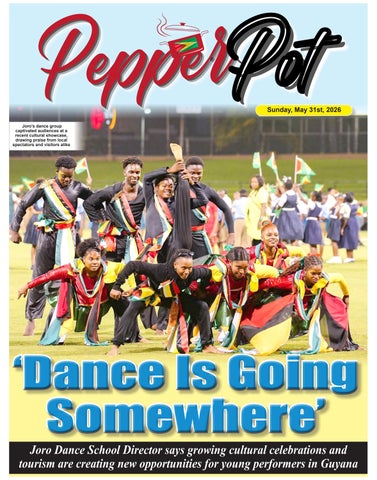
NATALIE Adams, director of Joro Dance School and Company, has watched dance transform from a pastime to a profession.
As Guyana’s cultural calendar continues to expand, now marked by bigger Independence celebrations, cultural events and a growing tourism scene, groups like Joro are at the centre of that shift.
This week, Adams spoke to the Pepperpot Magazine about the economic opportunities performance now offers young dancers, the therapeutic power of movement, and the glowing reviews the group has received from Guyanese and tourists alike.
As Guyanese dance and creativity make their way to the international stage, Adams says she looks forward to more cultural exchange, more exposure, and a creative sector that finally gets the recognition it deserves as Guyana builds its orange economy.
Founded on June 6, 2021, Joro Dance School has rapidly become a well-respected
name in the Guyanese dance community.
With a student body of more than 100, the school caters to a wide range of dancers, offering structured classes for all skill levels: Starter, Preliminary, Intermediate, Advanced, and Company.
Led by Adams, an experienced and passionate choreographer, alongside Assistant Director Latonyah Asim, Joro’s dance group has become a staple at cultural events and showcases.
While founded on African dance, the group also collaborates with other cultural dance groups through uniquely curated choreographies.
As Adams shared, “We play the role of the Africans. We normally do the choreographies. We do coordinate, as in working along with other teams to create that cohesion, when we do the finale, bringing the races together. And I think the collaboration is very good as well.” But more than presence, Adams noted that dancers can now see the art form as more than a pastime.
Dance, she explained, is being given more attention and recognition than ever
before. With greater state support, creative ventures like Joro’s can pursue dance as a profession.
As Adams explained, “Under the government, dance has played a significant role for our youth. To me, it created job opportunities. This is more like a second job for the young people. There are young dancers ranging from age three, but then 30 years old also.”
She added, “These young people are being given a stipend every time they perform. Years ago, dance was just dancing. But now it is not just dancing because when you perform, you are being given a little stipend.”
While many dancers pursue dance alongside other jobs and professions, Adams noted that keeping dance alive is also important on social and emotional levels.
She explained that many dancers use the art form as creative expression, and the opportunity to showcase that creativity offers more than financial support; it is fundamentally rewarding to them as dancers.
Speaking on this, she
said, “A lot of these young people come with their issues. And it constrains them. Dance constrains them because they are being given the opportunity to perform at so many events. I do not think they have the time to think about what exactly is happening to me at home or where else.”
She added, “It is more like a safe space for them. So they get to vent through that. It not only created jobs for them, but it is also like a therapy for the dancers.”
The development of dance has also had a ripple effect on how the art form is perceived. As Adams explained, dance, like most other art forms, was not seen as a viable career path for years.
With the support it has seen in recent years, however, the art form has moved from being seen as only a pastime to something young people pursue, something more parents support, and a part of Guyanese cultural celebrations that people look forward to.
As Adams told the Pepperpot Magazine, “For years, TURN TO PAGE X



BEING disabled isn’t a major setback for Ivory Duncan-Ragbeer, who is a people person. Coupled with a pleasant personality and infectious smile, she is well-suited for her role as an assistant cashier/public relations officer at the Guyana Shop.
The 34-year-old told the Pepperpot Magazine that she had an accident when she was just 14 years old and lost her right leg.
It was difficult at first to accept that she was an amputee because she was young and could not understand her plight, but as she matured, she knew it was a part of her life she had to accept and move on with the reality.
Duncan-Ragbeer added that for the past three years she has been the cashier at the register of the Guyana Shop, a delight to meet, so helpful and sprightly to everyone she encounters. She had worked in the office of the Permanent Secretary of the Ministry of Agriculture (MoA) for 7 years, then returned to the Guyana Marketing Corporation (GMC) last September.
Currently posted at the Guyana
Shop as part of the Permanent Secretary Secretariat, she has also assisted in regular duties from 2018 to 2026.
Duncan-Ragbeer is outfitted with a prosthetic leg and does things normally, just like any person with real limbs, and, if it wasn’t for her slight limp, you wouldn’t know she is an amputee who uses a cane as an aid to walk.
For the past 20 years, she has been living as a person with a physical disability and is a member of the National Commission on Disability (NCD) and is engaged in activities to foster awareness.
She first started as a volunteer, gaining her first work experience, after which she was elected President of the group “Young Voices Guyana”, which she thoroughly enjoyed and became very involved in. This led her to travel overseas to spread awareness and also benefit from training opportunities.
As a person living with disability, she related that some things normal people would do are a challenge for her, but as a determined individual, she doesn’t let that disadvantage disrupt her life in any way.
As someone who deals with customers daily, she has the kind of personality well-suited to her job. She is the kind of person who would say the right things to cause you to smile and, for a minute or two, forget all your real-life troubles.
Duncan-Ragbeer added that being a customer service representative comes naturally, so the role isn’t a burden for her, and she operates normally.
She is the face you meet when making purchases at the Guyana Shop located at Robb and Alexander Streets, Georgetown, and she is ever so helpful when you ask for advice in buying products or where to find certain items.
At check-out, she is just a happy person who takes pride in her job and is kind to all despite her challenges.
Duncan-Ragbeer graduated in 2014 after successfully completing her degree in Communications
from the University of Guyana (UG), and she chose that field because she loved writing, working with people, and the idea of journalism.
However, in an effort to establish a side business from her home, she recently launched an online venture, Gleeful Gems, where people can place online orders, and the products are sourced and delivered to them at pocket-friendly prices that won’t break the bank.
Gleeful Gems is an online side hustle for Duncan-Ragbeer, offering ladies’ accessories and clothing at reasonable prices.
Duncan-Ragbeer is a resident of Belle West, West Bank Demerara. She is married and basically enjoys her life to the fullest.
“As a person living with disability, I like to advocate for others living with disabilities and their rights, and she has represented them both locally and overseas with the NCD group called ‘Young
Voices Guyana’,” she said.
The NCD plays a coordinating role in a multi-sectoral approach to helping persons with disabilities live full and productive lives.
To influence policy changes and the enforcement of laws that protect the rights of persons with disabilities.
To be a major source of information on disability issues in Guyana. The National Commission on Disability (NCD) is appointed by and accountable to the President of Guyana.
It was officially launched on December 10, 1997. The Commission, by an Act of Parliament in June 2010, is now governed by the Guyana Persons with Disabilities Act 2010 (Act No. 11 of 2010), which was assented to by President Jagdeo on November 2, 2010. It comprises 12 members appointed by the Cabinet and selected by agencies and organisations.

By Shaniya Harding
ON May 27, Muslims across Guyana observed Eid al-Adha (Eid –ul- Adha) and Imam Halim Khan, the spiritual leader of Meten Meer Zorg (East) Masjid, shared
Prophet Ibrahim’s willingness to sacrifice in obedience to Allah and serves as a reminder of the importance of humility, generosity and service to others.
As Imam Khan shared, Muslims in Guyana traditionally mark
includes observing important acts of Sunnah from the beginning of Dhul Hijjah.
Traditionally, Muslims who plan to perform the sacrifice do not cut their hair, shave or trim their nails
TURN TO PAGE IX
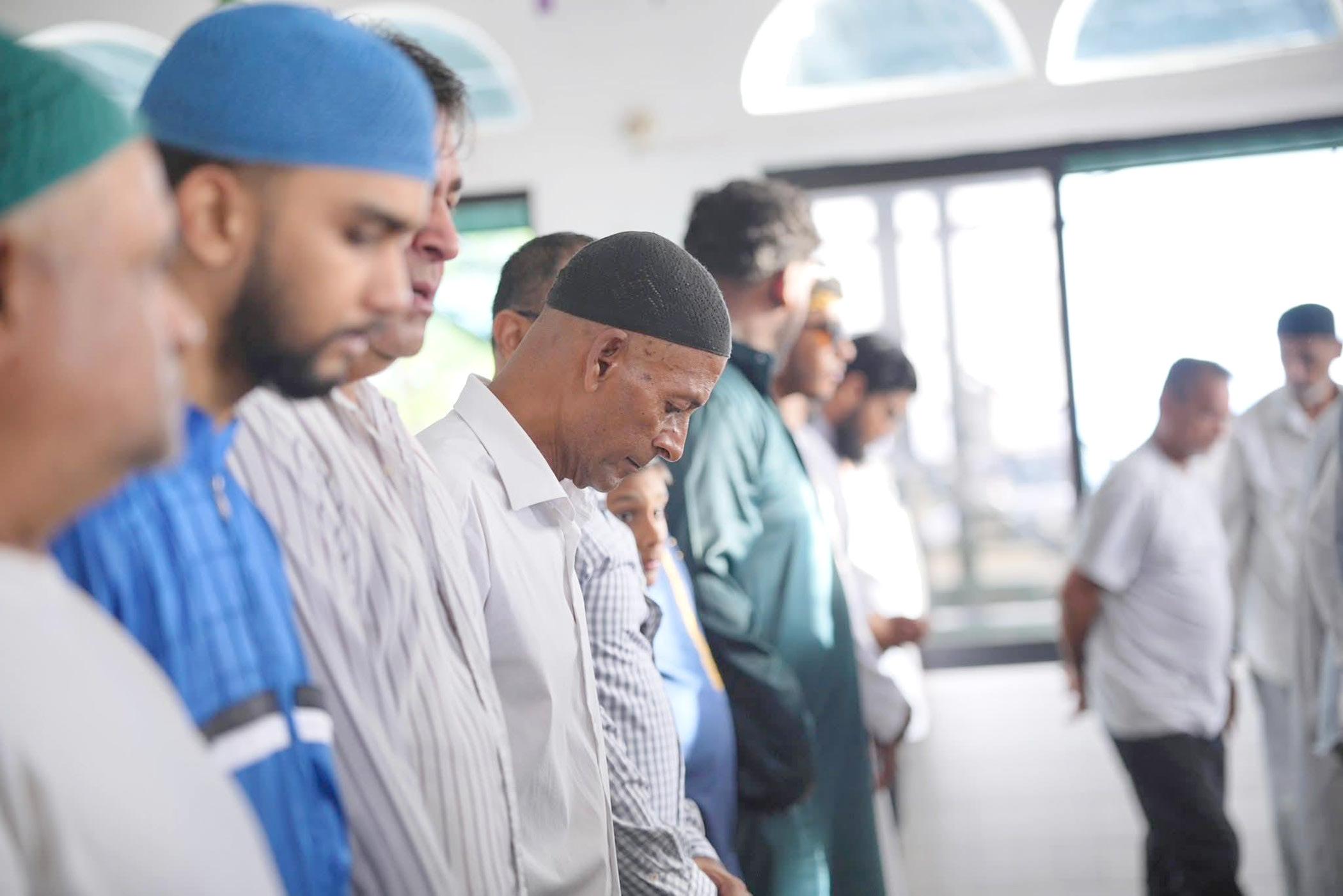
a message to citizens to reflect on the values of faith, sacrifice, compassion and national unity during and beyond the sacred occasion.
From the sighting of the moon and the preparation of sacrificial animals to family gatherings, prayers and charitable giving, the annual observance remains deeply rooted in both Islamic tradition and Guyanese culture.
Speaking to the Pepperpot Magazine earlier this week amid the religious atmosphere of Eid, he explained that while celebrations have evolved over the years, with larger gatherings, increased community outreach and the influence of social media, the spiritual meaning of Eid remains unchanged.
Behind the celebrations and community spirit of Eid lies a deep, religiously significant story.
The festival commemorates
the beginning of Eid-ul-Adha with deep spiritual devotion, family gatherings, charity and community unity. He noted that when the holy month of Dhul Hijjah commences, many Muslim families would make spiritual and practical arrangements to celebrate the festival. Among the most important traditions is the selection of an animal to be sacrificed, also referred to as Qurbani.
Speaking on the significance of this, Imam Khan said, “Since the offering is considered an act of devotion and gratitude to Allah, great care is taken to ensure that the animal is free of defects and well nourished. In many Guyanese communities, the selection of the animal becomes a family and community affair, as relatives discuss arrangements and
or markets together.”
Preparing for the sacrifice also



ELECTRICITY is a form of energy that powers the majority of our modern technology. It is a necessity for many to live, work, or even study.
I believe that where it is readily available, it can be considered a privilege, because many people around the world live without energy. This is completely different from people wanting to live intentionally “off grid”, without access to electricity.
From air conditioning and heating to refrigeration, charging our mobile devices, joining online classes, or cooking in an air fryer, it all depends on electricity. These can all be considered “simple luxuries” most of us enjoy, but not everyone has access to them.
In particular, people living in rural areas or in poverty/low-income areas are unable to access electricity.
As such, there is a gap that creates inequality in accessing electricity.
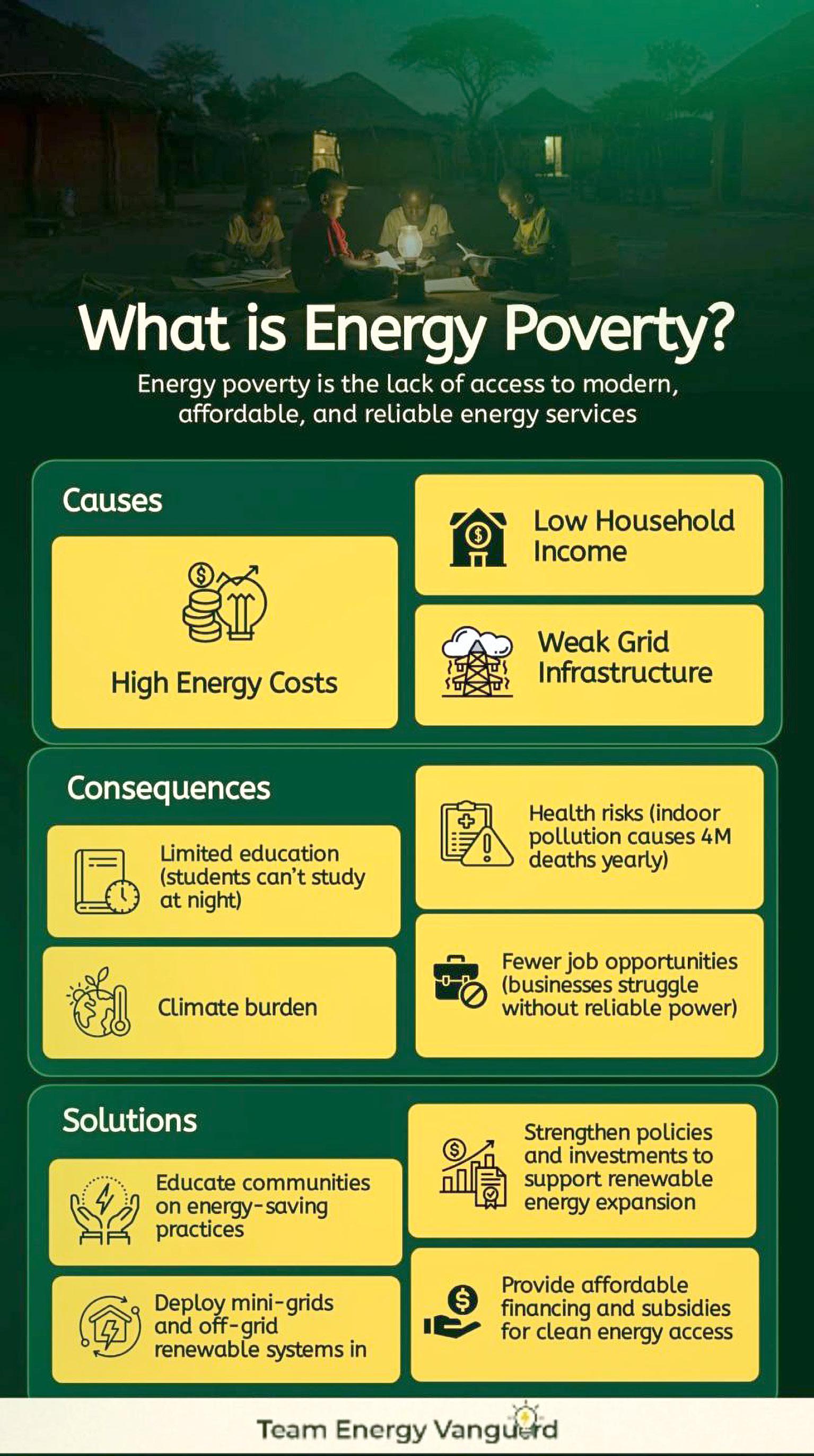
The term “energy poverty” refers to the inability to access or afford adequate energy for daily living.
I want to highlight an important point on how expensive electricity can be.
The global average for household electricity is around $0.18 per kWh. The total cost per month can range from 15 USD to hundreds or thousands of USD.
Energy poverty does not only include people without
full access to electricity. It also includes people with limited access who need to constantly conserve and save.
This includes people using unsafe fuels to cook, constant blackouts, the inability to own certain basic electrical appliances, and students purchasing dimmed light bulbs, even though they need brighter ones to study.
While this phenomenon is often observed in developing countries in the Global South, it exists almost everywhere on Earth. Where there is a large financial gap, there is most likely energy poverty.
Many low-income families in developed countries also face difficulties due to limited access to energy.
In my experience abroad in developed countries, I observed families unable to turn on their indoor heating because of the cost, even when their house was freezing cold.
Some local and small businesses even close during the wintertime in some countries because they cannot afford heating bills.
The inability to access stable electricity output deeply affects opportunities and productivity.
Unfortunately, children without stable electricity might experience many difficulties with their schoolwork.
It can affect public offices and the delivery of public services such as healthcare or infrastructural maintenance.
Energy poverty quietly
reinforces wider cycles of poverty.
This issue is further exacerbated by climate change.
Many governments and international institutions are advocating for a transition to renewable, cleaner energy.
I acknowledge and agree that it is necessary for environmental sustainability. However, a suggestion of conversion is only the first step towards the transition to affordable and clean energy.
This transition can expose the existing inequities and even widen the gap.
Electric cars, solar panels, and eco-friendly appliances are still expensive and remain inaccessible for many low-income families.
If an initiative, such as converting to renewable energy, creates another hierarchy of access and exacerbates inequality gaps, then I think it defeats the purpose of being a sustainable option.
Wealthier countries consume more energy than developing, lower-GDP countries.
Ironically, the countries contributing least to global emissions are often the most vulnerable to climate disasters and energy instability.
I believe both private and governmental sectors have a responsibility to ensure that energy remains accessible to all. It requires relief programmes, investments, and policies to protect people against high costs.
I also think that, geographically, access to electricity is difficult, especially in Guyana’s interior regions. While it will be costly to first provide access to these areas through transportation and roadways, I believe it is

a necessary expense to ensure all Guyanese have equal access to energy.
The conversation around energy often focuses on innovation, green transitions, and billion-dollar industries.
But beneath those headlines are ordinary people wondering whether they can afford to keep the lights on. Until that reality changes, energy poverty will remain one of the clearest examples of inequality hidden in plain sight.

OPERATING a small business is challenging but rewarding. To establish themselves and their businesses, entrepreneurs must follow all the required steps.
Notably, however, many business owners struggle to secure sufficient funds, which can stymie their businesses’ growth. Also, as a business grows, certain aspects become more complex; for instance, a business that used to require only a few employees may now need a dozen or so.
Business owners must be aware of these changes and alter their business plan accordingly. By surrounding themselves with a strong team and following all relevant rules and regulations, entrepreneurs will be on the right track to running a successful business.
Success is never guaranteed, but by arming themselves with the proper tools, business owners can increase their chances of achieving success.
Indeed, to launch a lucrative small business, entrepreneurs must learn to manage their finances, oversee their employees, record all financial transactions and acquire and sell inventory.
Being an entrepreneur is by no means easy, but if you put in the necessary work, you can create a solid business plan that, in turn, will increase your chances of running a profitable business.
1. Registering the business
Starting a small business requires the owner to comply with certain legal requirements. Within the first few weeks or months after the business is started, some legal requirements may not be mandatory, as the business owner is experimenting. However, as the owners
continue to run the business, they are expected to manage it professionally.
When the business is incorporated, the owners will be identified by their names on the business’s registration form. In some small businesses, there may be one owner or several owners. Each owner must provide their full name and address when registering the business.
In some small businesses, one person may be the primary operator. For other small businesses, each owner may provide equal support to the business while utilising their different skills in finance, resources, and knowledge.
With large businesses, there may be executive or non-executive directors who manage the business. Once directors change, such information must be submitted to the relevant authorities so that external records will be properly updated.
When a person or group wants to open a business, they are expected to provide a name for it. A business name provides a unique identification for the business. Sometimes, through the business name, people know what the business will be doing.
Let’s use “Geary Reid Pharmacy” as an example. Given the name mentioned, it is clear that the business was registered under an individual’s name. For another example, let’s use “PJA Hardware Store.” The name of this business is represented by three letters: “PJA.” Those letters stand for Patricia, John, and Ariel. Those three individuals are the owners of the business or represent the names of the owner’s children or family members. The name also indicates the type of business; in this case, it is a hardware business.
Therefore, it may be easy to identify certain types of businesses by looking at their names. There are other businesses whose names are not adequate to identify their type. For the direction and success of the business, a business plan is needed. The business plan can be drafted by the owners or by a professional.
The business plan provides brief information about the business’s future direction and operations. Some aspects of the business plan will be adjusted as the business continues. However, it is important to have a starting point for owners and employees to work with.
Business owners seeking financing to start their business may need to present a business plan to a financial institution for consideration and approval. The business plan will be evaluated by representatives from the financial institution. Once it provides evidence that the business will be viable, then part or all of the finances will be provided.
Sometimes, the business plan is created to attract investors, especially when the business needs additional financing or wants to expand.
The business plan will provide many of the business strategies and objectives. Some businesses may have separate documents specifying financial and strategic objectives, if those objectives are not included in the business plan.
2. Regular and effective communication
There must be vertical and horizontal communication within the business. Managers will give instructions to their subordinates, and they must receive in -
structions from the business owners. Suppliers will communicate with business managers and other representatives. Employees will have to communicate with
customers. Communication never ceases in a business, even if the owners do not want to communicate. Some businesses continue to operate even when their owners are dormant. Employees may sometimes mention that they rarely see the owners. In some businesses, TURN TO PAGE X


MOST of the time, we misjudge because we neglect to explore. I have had friends and relatives, too, who have declared this or that based on enthusiasm rather than on the nature of the endeavour, grasping at another person’s success, or another’s failure.
It is, in many cases, the crisis of not being too sure about your own direction. Today, there are too many discussions about hope -
ful possibilities, based on guesswork about probabilities and unseen occurrences, which brings me to a youngster I met some years ago, who honestly wanted to become an illustrator.
He was a former student of the Burrowes School of Art. I invited him to my home and pointed out that when you’re building characters, you have to build them through research and the use of models.
He indicated that the art school back then had models, but when you’re selecting models today, you have to pay because they don’t look the way you need them to for your project. It didn’t just happen; it took housekeeping to get there.
He was polite, confessing that he had one child and another was on the way, so he would shelve the idea for a while. I advised him that there were other related
things he could do along the way. So far, I haven’t seen him since.
The era of the suitcase traders is gone, and I can’t telegraph an alternate employment in this age, where a beginner platform will not be saddled with challenges. Yet I advised him not to ignore his natural gifts.
I assured him that the world is a strange place and opportunities are best hunted, but they do come when
you least expect them.
Every area is challenging. True, there are too many proposals to get rich, but with each comes a challenge. One requires sleepless nights and betrayals from people you trusted.
When you double-check yourself, it always comes back to the fact that you must first explore the possibilities and folk that you trust, then how you will manage the dream into re-
ality with those you trust on their merit, including your ‘inner-self’ that could also become the enemy within, most times confronted too late.
Betrayal at any level can destabilise; thus, it requires that you be convinced of the steps you take from the discipline you have developed.
You need to evaluate the advice you get before you close the door to satisfaction.
until the Qurbani is complete, once the moon is sighted and the Islamic month begins.
As the Imam explained, this reflects spiritual discipline and a symbolic connection with the pilgrims performing Hajj at Mecca.
The sighting of the moon is of particular importance to Muslim communities throughout Guyana.
Islamic authorities and organisations sight the new crescent moon to mark the official beginning of Dhul Hijjah and set the date for Eid al-Adha.
This marks the start of the holy days leading up to Eid, when families begin their preparations.
Sharing insight into these preparations, Imam Khan stated, “In the lead-up to Eid, houses are cleaned from top to bottom, new clothes are bought and special meals and sweets are prepared. Charity is a large part of the observance, so families also
arrange donations for those in need. Muslims congregate in mosques and open spaces for prayers and sermons on the day of Eid al-Adha. The sacrifice is then made in accordance with Islamic principles after prayers.”
In Guyana, the meat from the sacrifice is traditionally divided into three portions: one for the family, one for relatives and friends, and one for the poor and vulnerable.
Imam Khan noted that sharing food is intended to build family bonds and foster a sense of compassion and solidarity within the community.
“From villages to communities, families visit each other, exchange greetings and share meals, curries, roti, rice dishes and traditional sweets,” he added.
The celebration of Eid al-Adha in Guyana is one of faith, sacrifice, generosity and togetherness, keeping religious traditions alive while
strengthening bonds within families and communities across the country.
Sacrifice and charity are major themes of the observance, as Imam Khan noted:
“The sacrifice is more than a physical act. It is the believer’s readiness to place faith, morality and service to humanity above personal desires and material interests. It reminds people of the value of sacrifice for the greater good of family, community and nation,” he added.
While the observance remains deeply rooted in religion and scripture, Eid al-Adha in Guyana has evolved over the years alongside the country’s social and cultural development, according to Imam Khan.
He noted that today the observance is more widely recognised nationally, with larger congregational gatherings, greater community outreach and broader participation across regions and

communities.
“Modern communication and social media have also kept families and diaspora Guyanese connected throughout the celebrations, sharing greetings, prayers and cultural traditions across the globe.
At the same time, Muslim organisations, mosques and community groups have ramped up their charitable initiatives during Eid, including food distribution drives and support for vulnerable families,” he said. He was keen to note, however, that these changes do not alter the spiritual meaning of Eid al-Adha, adding:
“The observance focuses on prayer, sacrifice, charity, thankfulness and remember-
ing the example of Prophet Ibrahim (peace be upon him).
Eid remains a strong expression of faith, family values, cultural heritage and national unity in Guyana’s multicultural society.”
While Eid al-Adha remains a deeply religious aspect of the Muslim faith, Imam Khan noted that, similar to countless other faiths, the values of peace, compassion, tolerance and mutual respect remain its central pillars.
Speaking to the Muslim community and Guyana at large, he observed that Guyana’s greatest asset is its rich cultural and religious diversity, with people from different backgrounds living, working
and celebrating in harmony.
He shared, “Eid is a reminder that, despite our differences, we share common values of humanity, kindness, understanding and collective responsibility. As our country continues to grow and advance, we must continue to strengthen the bonds of unity and national solidarity that make us one people and one nation.”
He added, “This occasion should serve as an inspiration to all citizens to foster goodwill, reject division and work together for a peaceful and prosperous Guyana, where every individual is respected and valued, irrespective of race, religion or background.”

dancers have been complaining, they feel as though it is worthless. Parents would have said, ‘dancing does not take you nowhere.’”
Adams noted today, however, that tone is changing along with the development of the arts, adding, “Dance is going somewhere. And finally, that space is there for us so that people can see us. Tourists can see us and they recognise our potential. They are happy to be a part of what we have to offer.”
The support for dance does not end with Guyanese audiences. The simultaneous growth of tourism means more international eyes are on Guyana’s dancers.
Highlighting the feedback the group received following last week’s Diamond Jubilee Celebration, Adams says Guyanese, people from the diaspora and tourists alike have praised the group.
Citing the high praise received, Adams says supporting art is about more than a good show; it is also the kind of tourism spectacle that bolsters the sector and supports
FROM PAGE III
new generations of dancers. As she stated, “We creating that spectacle will bring more tourists to our country because one person will go and spread the news to others from their country, telling them, ‘I have been to this event, this is what I saw.’ There were little obstacles here and there, but I think this dimension was in the spectacle.” The support, both state and private, local and international, has significantly impacted Joro’s dance group. As Adams told Pepperpot Magazine, the group has grown and has been able to offer new opportunities to Guyana’s young people.
As she shared, “Now we have over 100 students. I must say we are grateful to the government because through them, we were able to give so many young people exposure and also created job opportunities for some.”
Moving forward, Adams says she would like to see more of what made Joro’s and other Guyanese dance groups captivating in the first place: collaboration.

As she said, “I would like to see that we have the opportunity to go to other countries, experience their culture, to have more cultural exchange. If we can bring Chinese, they can train us a little, or we go to them; because it must mean that we are doing something for tourists to say, ‘this piece was super, it was awesome.’”

proudly embraced my talent and shared it with the world,” she said.
Exploring themes of shame, silence, and migration, Chesney’s upcoming book dissects the duality of an outspoken, opinionated young woman who manoeuvres and breaks free from conservative belief systems. What makes her collection unique is that it spans time and space — over a decade of experiences captured in the U.S.A., Costa Rica, South Korea, London, and Guyana.
Although she believes poetry writing to be her God-given talent, Chesney underscores that any craft requires training and refinement. “I am intentional about
personal development and always seek out workshops or courses on creative writing. There weren’t many opportunities for skill development after the Guyana Prize, but I try to take advantage of resources available by joining local writing groups and reaching out to notable authors for critique and guidance on my work,” she said.
She told the Pepperpot Magazine that she looks forward to self-publishing her first poetry collection later this year.
Her hope is to inspire other young women to find their voices, be authentic in their truth, and be audacious in pursuing their dreams.
Chesney has experienced inspiring personal growth,
career development, and creative expression through her poetry and her habit of reading as many books as she can get her hands on. She is an environmentalist and mentor with a passion for sustainable development, youth empowerment, and creative writing. She specialises in developing climate adaptation policy and implementing environmental projects with a specific focus on agriculture, biodiversity, and land-use sectors in the Caribbean and abroad.
Chesney provides personalised career coaching to help young professional women overcome challenges, find their purpose, and invest in their passions for a life of fulfilment.
some employees never see the owners, but the businesses continue.
When business owners put most systems in place, they do not have to be there to provide detailed instructions to all employees every day. Most owners will be delighted if their business can operate effectively without them having to say much.
Those owners will occasionally receive reports on the business’s performance, which they can use to evaluate the business.
What is communication, and why is it necessary?
An individual may decide not to communicate and lock themselves in a room, staying there without any communi-
cation devices for the day. At the end of the day, they can achieve their target by not communicating.
However, for businesses, it is a different story. Even if businesses close for the weekend, communication still occurs. People may send emails to employees on weekends. The security guards may have to report any situation at the business. The mechanics may service the vehicles on weekends when they are not in operation. Utility companies will issue bills even on weekends. Maintenance personnel may be repairing the building during the weekend.
Communication will allow information and data
to pass from one person to another. The business owners will not be communicating every hour, but the information received from managers and other employees may keep them thinking for hours.
A simple instruction from business owners often keeps employees occupied for a long time.
For more information about Geary Reid and his books, please use the contact information below: Amazon: http://www.amazon.com/author/gearyreid Website: www.reidnlearn. com

THE sunset - a collusion of brilliant, rich colours, a backdrop to stately coconut palms and smooth-flowing black-water creek in the conservancy backlands.
A stunning tropical scene!
Vahin sat in the anchored engine boat, in the middle of the expansive creek, camera in hand, captivated by the beautiful scene.
In the quietness of dusk, with only the soft sounds of the wind and the emerging nocturnal animals, he felt as
grandfather was a young boy: of sugar plantations and of pineapple and citrus farms.
There was always a yearning in the old man’s voice whenever he spoke of his homeland, and Vahin had always listened with interest.
“I will visit one day,” he had told him, not sure at the time that he would, but it had brought a comforting smile to his ageing relative. It came as a great surprise to Vahin when the old man passed and left him one of

though he had found his own little world. The untouched natural exhibits of his surroundings astounded him, for he had lived almost all of his life in Europe, away from such raw beauty.
Since leaving as a young boy, his travels had taken him to several different countries, but never once back home.
All he knew of the tropical South American country was stories told by his grandfather, stories of colonial rule under the British when his
the family homes and some acres of land.
“What would I do with that?” he thought to himself.
“My life, my future is in Europe.”
The pain of losing his grandfather was great, and time did little to alleviate it. There was still an emptiness in his heart months after the funeral, which prompted Vahin to return home.
He had planned his visit to his birth home with doubt in his mind, wondering if it
would be worthy of his time.
Could he relive his grandfather’s adventures, or were things too different?
Now, as he sat there in the boat, in the embrace of beautiful nature, he understood his grandfather’s deep love for this place.
He smiled and said, “Bless your dear old heart, Grandpa, you have gifted me something of heaven.”
Vahin was about to put down his camera as the shadows of dusk descended when he heard the distant barking of otters and saw them on the
horizon coming his way.
“This is amazing!” he exclaimed, capturing them on camera.
Then something so unexpected happened, it stunned him!
In the otters’ midst, like an illusion, a girl emerged
from below, long black hair cascading down her shoulders, with water glistening on her smooth, dark skin.
For one mesmerising moment, he saw something of pure beauty, but as quickly as she appeared, she
TURN TO PAGE XVI


THERE is something deeply unsettling about watching human beings destroy themselves over things that were never truly valuable, while someone else profits from the destruction.
That is the beating heart of The Comb.
Yet above them stands another man untouched by the dirt, untouched by the blood, calmly selling bandages to heal injuries born from a fight he never had to join.
If you can picture this, just know that it is not a metaphor. It is political philosophy, economic truth, and
Two men tear through mud for something cheap, fragile, and replaceable. Their anger is real, their wounds are visible, and their desperation feels justified in the moment.
social psychology wrapped into one uncomfortable reflection of human behaviour. History repeatedly proves that power rarely needs to strike first when division can do the labour on its behalf.
Some of the most damaging battles in society do not begin between rulers and the ruled. They begin between people standing on the same broken ground; workers com-

pete with workers, communities fracture within themselves, families split under ideology, citizens attack one another while larger systems of wealth, policy, influence, and institutional control remain mostly untouched.
The mud changes shape over time, but the struggle remains familiar. Sometimes it is race, sometimes class, sometimes religion, sometimes politics, and sometimes pride.
Human beings often exhaust themselves fighting sideways while power moves upward.
Former U.S. President Abraham Lincoln understood this with painful clarity when he said, “A house divided against itself cannot stand.”
Lincoln spoke in a national crisis, but the principle extends far beyond the Civil War. Division weakens stability. Conflict within a people often protects the very structures that benefit from their fragmentation.
When a society spends more energy tearing itself apart than understanding the architecture above it, power grows cleaner while struggle grows dirtier.
This is a truth that is evident in political systems throughout history. Empires ruled through fragmentation. Colonisers frequently sustained control by deepening internal differences.
Class hierarchies survived because the lower tiers often fought each other for access, scraps, or recognition rather than challenging the framework itself.
Even today, emotional outrage often travels faster than structural analysis. People argue fiercely over symbols while policies shape lives in boardrooms, parliaments, and economic centres far from public rage.
The comb in the poem
represents something deceptively small. It is not really about an object. It is about perceived worth.
Human beings rarely bleed over material value alone; they bleed over what that value represents — perhaps pride, identity, status, recognition, control, dignity, loss, or ego — which often turns small things into sacred territory.
A cheap object becomes a battlefield when identity attaches itself to possession.
Psychologist Leon Festinger explored this through Social Comparison Theory, which explains that people naturally evaluate themselves by comparing their lives, status, and worth against those of others.
Comparison creates pressure, pressure creates resentment, and resentment often creates conflict.
Many battles begin not because something is essential, but because losing feels symbolic. A person may not need the comb. He may need to prove he cannot be seen without it.
This is how societies stay trapped in mud.
Poverty itself often reflects this deeper tension, and scarcity often reshapes behaviours.
When people feel deprived, whether financially, emotionally, or socially, the brain narrows its focus towards immediate survival or immediate threat.
Behavioural economists and psychologists, such as Richard Thaler, have repeatedly shown that limited resources affect judgment, emotional control, and longterm planning.
Scarcity does not simply reduce access; it often compresses thinking.
Under pressure, people become reactive, while fear makes narrow decisions look
like urgent wisdom.
This explains why poor communities often fight among themselves while larger economic systems remain intact.
Desperation is really exhausting.
When people are emotionally bruised, socially neglected, or financially strained, anger becomes easier than reflection.
A struggling worker may resent another struggling worker. A frustrated citizen may blame another citizen rather than questioning policy, corruption, or imbalance.
A divided public often becomes easier to manage than a united one.
This is where the poem becomes politically sharp.
The wealthy man in The Comb does not push anyone into the fight; he simply profits from it.
This is perhaps the cruellest observation. Exploitation is often unrecognised, and power often survives through distance.
Some systems do not create every wound directly; they normalise conditions where wounds become predictable, then profit from healing, repair, dependence, or repeated need.
The world offers endless examples.
Pharmaceutical industries profit from chronic illness, war economies profit from prolonged conflict, and the media profits from outrage because fear and anger keep eyes fixed longer than peace ever will.
Predatory lending profits from desperation, labour imbalance feeds wealth concentration, and political campaigns often feed emotional division because outrage mobilises attention more effectively than nuance.
The bandage, therefore, TURN TO PAGE XV

THE title of The Fire Next Time, James Baldwin’s 1962 collection of essays, functions as both admonition and warning. It draws from an old Negro spiritual, “I Got a Home in That Rock,” whose haunting refrain declares: “God gave Noah the rainbow sign, no more water, the fire next time.”
The line is at once theological and apocalyptic, invoking a promise and hinting at its terrifying limit. The spiritual is more than its refrain; its line encapsulates the essence of “doing right”, or else:
I got a home in that rock, well, don’t you see?
Way between the earth and sky
I thought I heard my Savior cry
Well-a poor Lazarus poor as I
When he died he had a home on high
He had a home in that rock don’t you see?
The rich man died and lived so well
When he died he had a home in Hell
He had no home in that rock, well, don’t you see?
God gave Noah the rainbow sign
No more water but the fire next time
He had a home in that rock, well, don’t you see?
The spiritual itself situates salvation and damnation in stark moral contrast: the poor Lazarus finds a home “on high”, while the rich man, who “lived so well”, is consigned to hell.
Its culminating warning gestures towards Book of Genesis 9:12–17, in which God establishes the rainbow as a covenant with humanity: never again will the world be destroyed by flood. This promise follows the annihilation of life in the Great
Flood, a divine act of total destruction.
The consolation is profound, but it is also conditional in its silence: the covenant forbids water, not destruction itself.
The genius of the spiritual lies in recognising this omission. If not water, then what? Fire becomes the implicit answer, a symbol of judgment unrestrained by covenant.
“No more water” is not mercy in any absolute sense; it is merely a shift in method.
Baldwin seizes upon this ambiguity. His title transforms a religious refrain into a secular prophecy, suggesting that America, if it fails to reckon with its racial injustices, courts its own conflagration.
The book contains two essays; the first is a letter to Baldwin’s nephew. Deprived of children of his own, Baldwin writes with an intimacy that is at once familial and prophetic.
The letter is not comforting. It is an education in harsh realities — truths that wound even as they illuminate. Baldwin does not shield his nephew from the world; he insists that he see it clearly.
The Fire Next Time stands as a seminal meditation on the Black experience in America. It is both historical and immediate, capturing the conditions of its moment while echoing a long, largely unchanged past.
At the time of its publication, Black Americans were still subjected to lynching in the South and systemic degradation elsewhere. Baldwin writes with a striking assurance, diagnosing a condition that had proven stubbornly resistant to change.
The first essay, in particular, carries a palpable sense of dread. It reads as a litany of historical and ongoing horror:
discrimination, ghettoisation, police brutality, and countless daily indignities.
Baldwin offers no clear roadmap for overcoming these injustices. His warning is stark: these conditions exist, and you will encounter them.
His sole prescription is love — a remedy that feels at once morally profound and tragically insufficient, especially given his scepticism that white America is capable of offering it.
The resulting tone approaches despair. Ordinarily, such despair might be mitigated by religious faith, by the hope of divine justice or intervention. Yet Baldwin dismantles that possibility.
The “white God”, as he portrays Him, is not merely indifferent but complicit, an ideological construct that has sanctioned and sustained racial oppression. Appeals to such a deity are therefore futile.
This God appears to take sides, and history suggests those sides are racialised.
The implication is devastating: there may be no higher authority to correct these injustices, no invincible or invisible means of support.
This despair is most evident in Baldwin’s account of a pivotal moment in Black childhood — the realisation of one’s social condition.
There comes a point when Black children understand what their lives will mean within the structure of American society. That realisation shatters earlier dreams. It imposes a grim self-awareness: they are not free.
They exist, rather, within the confines of an open prison, where the boundaries are enforced not by walls but by custom, law, and violence.
Though Baldwin does not explicitly use the term, the cumulative effect of these
conditions resembles psychological terrorism. The persistent threat of violence conditions behaviour, instilling a survival-based deference, particularly in encounters with the police.
Even when in the right, Black citizens learn to act as though they are not, because the consequences of asserting that right can be fatal.
As Baldwin suggests,
the police often operate as though Black people possess no rights that must be respected.
In such a context, the Black body becomes a target — a site upon which power is exercised with impunity. It is subjected to surveillance, restraint, and violence.
Baldwin’s most shocking insight is that much of this violence is gratuitous. It is
not merely excessive but unnecessary, unprovoked, and without justification. That is its deepest horror.
Subsequent history has borne him out. The names accumulate: Amadou Diallo, Eric Garner, George Floyd, among many others.
The circumstances differ, but the pattern remains disturbingly consistent — TURN TO PAGE XIV

unarmed individuals killed in encounters that escalate without sufficient cause.
What distinguishes the present from Baldwin’s era is not the violence itself but its visibility. It is now recorded, replayed, and widely disseminated, leaving less room for denial.
Baldwin attributes this violence to an absence of love within white society for Black people. It is a claim that resists easy dismissal.
The act of killing — especially in such circumstances — suggests not merely fear or prejudice, but a profound failure of recognition. It is exceedingly difficult to harm someone whom one truly loves.
The idea of a “gratuitous” killing of a beloved person is almost incoherent.
The dread Baldwin describes persists. Encounters
with police remain fraught with uncertainty and fear.
Ordinary activities — walking through one’s neighbourhood, driving, shopping — can become sites of anxiety.
The suspicion lingers that protection is not guaranteed, and that presence alone can provoke suspicion or violence.
This raises an urgent question: in what meaningful
ways does 1963 differ from the present regarding police brutality?
There have been changes — racism is often less overt, and public accountability has increased in some cases. Yet the underlying structure Baldwin identified remains largely intact.
Victim-blaming persists. Political equivocation endures. Racism adapts, but it does not disappear.

Its persistence is striking. It survives evidence, moral argument, and public outcry.
Baldwin’s proposed solution — a transformation rooted in love — can appear idealistic. Yet the continued absence of such love, particularly among those who wield power, may explain the problem’s endurance.
One does not detect love in acts of brutality: a knee on a neck, a chokehold sustained beyond necessity, bullets fired into unarmed bodies.
Such actions strain the very definition of the human.
Humanity, in any meaningful sense, must involve more than biological existence.
It requires empathy, reason, and compassion — qual-
ities that restrain violence by insisting on the shared value of human life.
To kill an unarmed person, especially in situations devoid of threat, is not only cruel. It is a collapse of moral awareness — a failure to think, to recognise, to care.
Baldwin’s essays endure as indictments of a racial order deeply embedded in American life.
His insistence on love as the only viable path forward remains both necessary and unsettling.
It raises a difficult question: is such a transformation possible, or is racism so entrenched that its eradication would demand nothing less than the remaking of the world itself—or its end?


becomes business.
Former U.S. President Franklin D. Roosevelt once said, “The liberty of a democracy is not safe if the people tolerate the growth of private power to a point where it becomes stronger than their democratic state itself.”
Roosevelt understood that concentrated power can shape outcomes without being noticed.
Influence rarely needs violence when dependency, division, and economic imbalance already exist.
Yet the poem is not simply political criticism; it is philosophical.
It asks a harder question: why do human beings willingly enter avoidable conflict even when they understand the cost?
The answer is because pain often reaches for reaction before reason.
When the soul is bruised, the first instinct is rarely peace. Emotional injury seeks proof, defence, retaliation, or control.
This is deeply human. A wounded ego wants restoration, a threatened identity wants resistance, and hurt often confuses victory with noise.
Modern society repeatedly glorifies this.
Aggression is framed as strength, dominance is framed as confidence, competition is framed as virtue, and endless striving is framed as ambition.
Yet many forms of ambition are simply polished desperation wearing expensive shoes.
That sounds politically incorrect because it unsettles people who worship conflict as achievement.
Still, wisdom more or less begins in restraint.
The strongest person is not always the loudest one. Intelligence reveals itself in refusal.
Refusal to chase meaningless competition, refusal to bleed for symbols, refusal
to become emotional labour for systems designed to profit from division, and refusal to confuse bait with purpose.
This lesson matters deeply today.
Social media has turned millions into unpaid fighters.
People defend strangers, parties, opinions, and ideologies with the fury of holy wars while corporations harvest clicks, advertisers harvest attention, and outrage becomes profitable.
Many arguments are not civic engagement. Many are emotional theatre.
The comb has become digital while the mud remains human.
Philosophically, The Comb speaks to the idea of restraint as liberation.
Keep in mind that peace is not passive surrender; peace can be strategic clarity. Choosing not to fight every insult, every comparison, every symbolic loss protects dignity.
A person who understands what truly matters becomes harder to manipulate.
That is why education, critical thinking, emotional regulation, and historical awareness remain revolutionary acts.
A reflective mind questions systems, a grounded person resists bait, and a united people challenge imbalance more effectively than divided individuals chasing pride.
In the end, The Comb is not about two men at all.
It is about civilisation repeatedly mistaking struggle for purpose.
It is about how pride can trap people in battles beneath them.
It is about how systems often stay clean while ordinary lives get dirty. It is about how emotional wounds make people more easily provoked.
And it is about the difficult wisdom of asking whether the fight itself was ever worth the blood.
Some things will always deserve courage. Some things will always deserve resistance. Some things will always deserve sacrifice.
And some things are only bait scattered in the mud, so people stay busy fighting while someone else keeps ownership of the well.
The moment a person chooses clarity over pride, the moment a people choose unity over distraction, the moment we stop asking who won the comb and begin asking who sold the bandage, is where we start to act from wisdom rather than ignorance.
Here is that poem.
The Comb
I saw two men in the mud one day,
Tearing their hands for a comb of clay. They cursed, they clawed, they wouldn’t see How small that prize could ever be.
Their anger burned, their faces bled, While wealth stood smiling overhead,
A man in black with bandages near,
Selling the cure to every tear.
And I thought, my God, how strange we live, To fight for scraps the market gives.
To break our bones for things so small, While someone profits from it all.
The comb was cheap, the mud was deep, The wound was wide, the poor must weep. They wrestled hard, they fought like hell, And fed the hands that owned the well.
So many lives look just like this,
A little pride, a little fist, A little rage, a little shame, Then someone else collects the gain.
We bleed for things we could ignore,

Then beg for mercy from the store.
And all the while, the one who sells
Keeps counting blessings in his tills.
I wanted to shout, just let it go!
But pain makes fools of even those
Who know the cost, who know the game,
Who still get pulled into the flame.
Because when the soul is bruised and raw, It reaches first for fight, not law.
It wants to win, it wants to prove,
Even if victory is a bruise.
And maybe that is how we
stay
Trapped in the mud from day to day,
Not by the wound alone we bear,
But by the hunger to compare.
What little thing are we defending?
What pride are we refusing bending?
What battle keeps us on our knees
While someone profits from our grief?
The wealthy man did not need to shove, He only stood and sold the love
That comes in rolls and strips and thread,
To bind the hands that tore and bled.
And I kept thinking, This is man,
How often we destroy our plan
To prove our worth, to hold our name, Then buy the healing from the same.
So let me learn a wiser song; Not every fight is worth being strong.
Not every insult needs a war, Not every loss means keep score, some things are bait, some things are dust. Some things are made to break our trust.
And somewhere near the mud and rain,
Peace waits for those who choose restraint.
Romella Dasratt


disapppeared. “What the ---” he exclaimed, scrambling for words, almost dropping his camera in the process.
He attempted to follow the otters in the hope that the girl was nearby, but they had disappeared as well.
She surfaced slowly, her head barely above water, behind a huge fallen coconut palm as she watched him leave.
“Who is this handsome stranger? Why is he here?”
She was a simple farm girl, and the black-water creek with the aquatic animals was her playground.
In his room that night, Vahin could not sleep; the vision of the girl was imprinted on his mind, but he questioned himself, “Was she real?”
His grandfather had told him that in the wild, there are untold riches and that if he had ever found a “flower of the wild”, he needed to keep it in his life forever.
“What did he even mean by that?” Vahin wondered. “What flower in the wild?”
The family house Vahin inherited overlooked the creek, with an inlet running behind it, en route to the citrus and pineapple farms. The forest stood on one side as a silent guardian, and the caretaker’s house on the other. It had been a guesthouse in colonial times. His grandfather, an astute businessman, had bought the property when it went on the market.
Vahin looked at the house and pondered, “It’s an important part of history, maybe I can restore it as a vacation home.”
He stayed that night at the house to get the feel of a place he had never lived in, one that he now owned.
The caretaker and his wife, an Indigenous couple, made sure he was comfortable.
The next morning, sitting on the veranda, sipping a cup of herbal tea and watching the sunrise, he thought: “The peacefulness and natural beauty of this place are priceless.”
Hours later, he was
dragged away from his thoughts of balancing his life between Europe and Guyana by the sound of a loud splash in the creek. He stood up in a flash and looked across the water, only to be disappointed to see young boys playing.
He exhaled slowly, disappointed that it was not the mystery girl.
For the next few days, he travelled across the creek from the house to the mainland as he began formulating restoration plans, but he never saw the girl again.
He was beginning to think that maybe she had been an illusion, and just to be sure of that, he anchored his boat once again in the creek and waited for the sunset.
The crimson glow seemed to glitter across the water, and from a distance, he saw the otters coming, but she was not with them.
He shook his head silently, deeply disappointed.
He turned to start the engine, and his hand froze as he saw her sitting on a sandbank, looking at him.
The world stopped for him at that moment as he looked at her.
Was she one of the riches of the wild his grandfather had spoken about?
He started the engine and turned the boat, wanting to talk to her, hoping she would not swim away and disappear again.
As the boat drew closer, she stood up on the bank, poised to plunge into the water.
“Wait!” he called out to her. “I just want to talk to you.”
She stopped and turned, and when he was close enough to talk to her, he said, “I am new here, don’t quite know anyone, and I would really like for you to be my friend.”
She looked at him for a long moment, and then she smiled a little with a slight nod of her head.
He smiled, happy for this small start, for he had found something unique that he knew he would never want to let go.
His flower in the wild.















































Dear student,
Welcome. If you are taking the English examination early next year, try not to worry about whether you have fully covered the syllabus. Instead, be clear and specific about what you have studied. Revise every day. Understand why each topic needs review and how it connects to your overall preparation.
Take breaks without feeling guilty. Relax with a favourite meal, a television programme, a refreshing exercise, or a healthy discussion. Remember that effective study requires balance.
Be wise. Best regards.
Developing a fictional narrative
Reminder: Like any narrative, a fictional narrative tells an imagined story rather than a factual one. It draws on human themes and emotions to express the writer’s message or truth. Its plot is designed for characters to move through a central conflict, challenge, or problem that drives the story forward.
Fictional narratives appear in many forms, including novels, short stories, fairy tales, fables, narrative films,
television shows, graphic novels, and comic books.
Use the story extract below for good measure. Carefully note its characters, the setting, the conflict and events that drive the plot, and point of view. Note that one character is not using standard language. This is permitted.
When you write, use enough standard language so the examiners can see how well you can handle written English.
The story extract: They went out from the house. The sun turned the sweat of Durante to hot water and then the sun dried his

May 31st, 2026
skin so that his clothes felt transparent.
“Tony, I gotta be mean,” said Durante. “Stand right here where I can see you. Don’t try to get close. Now listen. This Sheriff’s gonna be along this trail sometime today, looking for me. He’ll load up himself and all his gang with water out of your tanks. Then he’ll follow my sign across the desert. Get me? He’ll follow if he finds water on the place. But he’s not gonna find water.”
“What you done, poor Dick” asked Tony. “Now look, I can hide you in the old wine cellar where nobody –”
“That Sheriff not gonna find water,” said Durante. Its gonna be like this.”
He put the rifle to his shoulder, aimed, fired. The shot struck the base of the nearest tank, ranging down through the bottom. A semi-circle of darkness began to stain the soil near the edge of the iron wall.
Tony fell on his knees, “No, no, Dick! Good Dick!” he said. “Look, the vineyard. It will die. It will turn into old, dead wood, Dick.”
“Shut your face,” said Durante. “Now I’ve started, I kinda like the job.”
(Max Brand’s “Wine on the Desert”)
About the fictional narrative
If you look carefully at the writing above, you will not help but notice that in this story someone is fleeing from someone else. This forms the basic action as in countless fictional narratives, both short story and novel.
The evidence of this is right in the first paragraph without any dilly-dallying, the reader is told.
One character is clearly ruthless and single-minded. He confronts the other who is kind, trusting, Tony. It is a struggle between good and evil. Read to find out this.
Other elements are just as
all you can; it’s a mistake not to HENRY JAMES
important as plot, characters, setting, and point of view. As Jon Franklin, a feature writer, explains, every story centres on a problem or complication and its solution, or resolution.
The complication is often the most engaging part of the story, while the resolution solves the characters’ problem and should grow naturally out of the events.
What to Do: Try doing a short story along the lines of dynamic writer, Max Brand, and complete it with advice from feature story writer, Jon Franklin.
Let your confidence be high and sure as you write. Engage your study group.
Making Inference
Read the selection. Then answer the questions based upon it.
My small sister Cheryl and I always bragged about our Sioux grandpa, Joe Iron Shell.
Our friends who had always lived in the city and only knew about Indians from movies and TV, were impressed by our stories. Maybe we exaggerated and made grandpa and the reservation sound glamorous, but when we returned home to Iowa after our yearly summer visit to Grandpa, we always had some exciting tale to tell.
We always had some kind of authentic Sioux article to
show listeners. One year Cheryl had new moccasins that Grandpa had made.
(Virginia Driving Hawk Sneve’s “Medicine Bag”)
1. What can you infer about the narrator?
A.. He knows how to make moccasins.
B.. He does not like the reservation.
C.. He has pride in his Sioux heritage.
D. He does not like living in Iowa.
2. What is probably true about the narrator’s grandfather?
A.. He always wears moccasins. B.. He led a glamorous life.
C.. He makes up exaggerated stories.
D.. He carries on Sioux traditions.
3. What can you infer about the narrator’s friends?
A.. They are envious of the narrator. B.. They too are part Sioux.
C.. They are interested in the Sioux way of life.
D.. They want to know how to make moccasins.
4. Which of the following is probably not a logical inference?
A.. The grandfather is a teacher of the Sioux heritage.
B.. The grandfather is proud of his Sioux heritage.
C.. The narrator likes his resourceful grandpa.
D.. The children dislike visiting the Sioux reservation.


IN dentistry, the term prophylaxis means “to prevent”, which in turn refers to professional cleaning, scaling and polishing of the teeth by a dental professional. The purpose of prophylaxis is the prevention of gingivitis, chronic periodontitis (gum disease) and tooth decay. Notwithstanding, it should be made clear that an occasional professional prophylaxis cannot substitute for adequate daily personal oral hygiene.
Some types of primary prevention require professional intervention. Poliomyelitis, smallpox, and diphtheria can be prevented by vaccines that stimulate the production of antibodies in the blood to combat the invading organisms when we are later exposed.
Yet there are no effective vaccines to fight the multitude of bacteria and viruses that cause common oral diseases.
Instead, we rely on preventive measures such as personal oral hygiene and periodic dental prophylaxis.
Additionally, the purpose of prophylaxis is to eliminate deposits on the teeth that cannot be removed by diligent brushing and flossing. It consists of scaling the teeth to remove tartar and coronal polishing to remove stains. Stains themselves present no significant problem other than that they may detract from your appearance.
It is the tartar and plaque on the crowns and roots above and below the gum line — supragingival and subgingival deposits — that pose a health risk unless removed. This is because you can lose the tooth if it is not eliminated.
Plaque begins to form almost immediately after a prophylaxis, but it takes about three months for toxic products in retained deposits to mature to the point that tissue damage begins. In a healthy mouth, this time is extended by daily brushing and flossing. Nonetheless,
plaque creeps down along the sides of the teeth into the gingival sulcus.
Since plaque cannot be completely removed from the sulcus by personal effort, periodic professional treatment, as often as every 3 months for patients with periodontal disease, is necessary to remove the remaining deposits.
Thus, removal of soft and hard subgingival plaque, not stain removal, is the significant function of prophylaxis.
Thorough tooth brushing and flossing every day removes food debris and newly formed plaque, and minimises tartar formation.
But once plaque and tartar are firmly established beneath the gum tissue, professional scaling and root planing are necessary to remove them and to maintain periodontal health.
Coronal polishing is usually performed with a rubber cup mounted on the dental handpiece, which most people refer to as “the drill”. A small amount of polishing paste, like toothpaste but more abrasive, is placed in the rubber cup, which is then rotated against the exposed tooth surfaces to remove stains.
Stains within the recesses of tiny cracks, pits, and fissures have to be scraped off with picks and scalers or blown away with a mildly abrasive air jet. Coronal polishing of all the teeth can be accomplished in a few minutes.
Stains come in a variety of colours, from green to brown to black. Green stains are usually found on the upper front teeth of young children — the incisors. When these teeth first come into the mouth, they are covered by a thin cuticle, a remnant of the surrounding sac in which the teeth develop.
This cuticle, which is stained by bacteria and fungi normally present in the mouth, usually wears off in a few years, but sometimes professional coronal polishing is necessary to remove it.
I am always reluctant to
clean children’s teeth because of the potential damage to the enamel, which, by the way, can never grow back. Similarly, in adults, the more the teeth are polished, the more yellow they become due to the wearing away of the opalescent white enamel with the dental abrasives used by the dental professional.
Some black and brown stains are caused by pigments produced by bacteria. Most stains in adults come from tobacco, coffee, tea and co-
loured food and can usually be removed easily.
However, not all stains can be removed by coronal polishing.
Tobacco stains can permanently discolour teeth in heavy users. Teeth of miners exposed to copper and iron dust may be permanently discoloured green or brown.
Drugs containing similar metal salts have the same effects. But by far the worst medically induced discolouration results from im -
proper prescription of tetracycline, an otherwise exceptionally safe antibiotic. Tetracycline staining occurs when the drug is administered during the last half of pregnancy and the first eight years of childhood. During the period when the crowns of the permanent teeth are developing, tetracycline produces a grey, yellow, or brown discolouration that ranges from mild to severe.
Because most physicians and dentists are now aware
of this danger and substitute other antibiotics, tetracycline staining in children is no longer as common as it used to be.
The condition is not damaging to the teeth, other than their appearance. In many cases, a dentist can bleach the teeth to a natural light yellow-white hue. If repeated bleaching fails, then the teeth can be resurfaced with composite or laboratory-fabricated veneers.