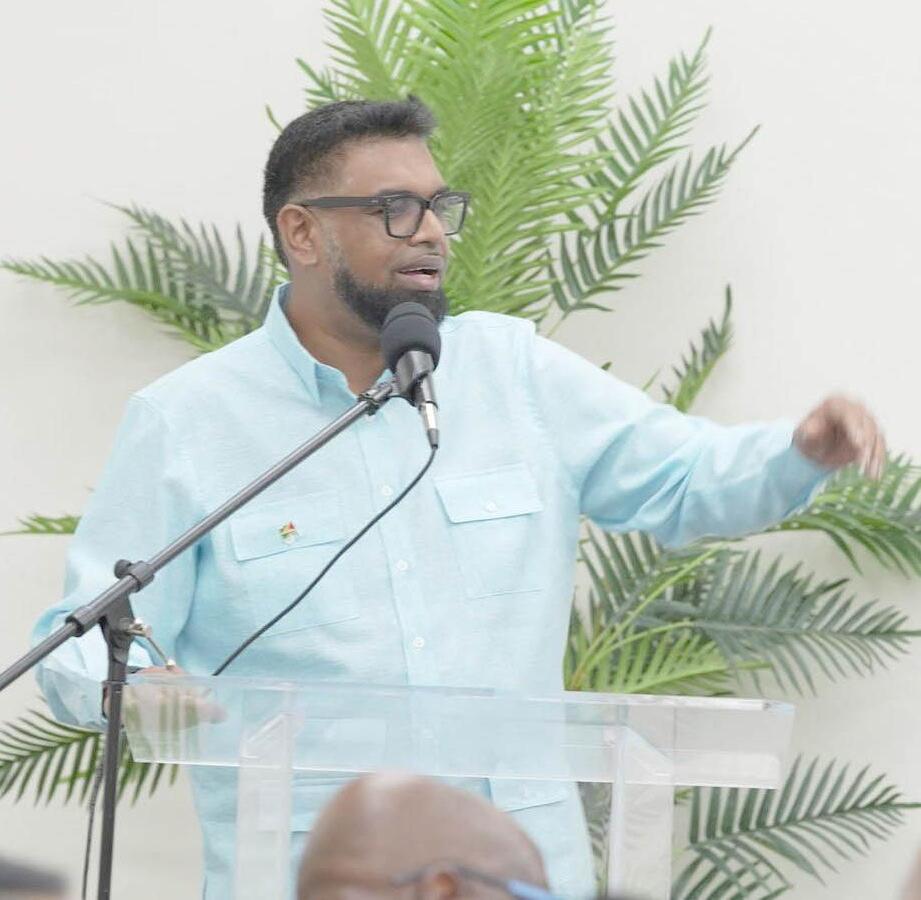
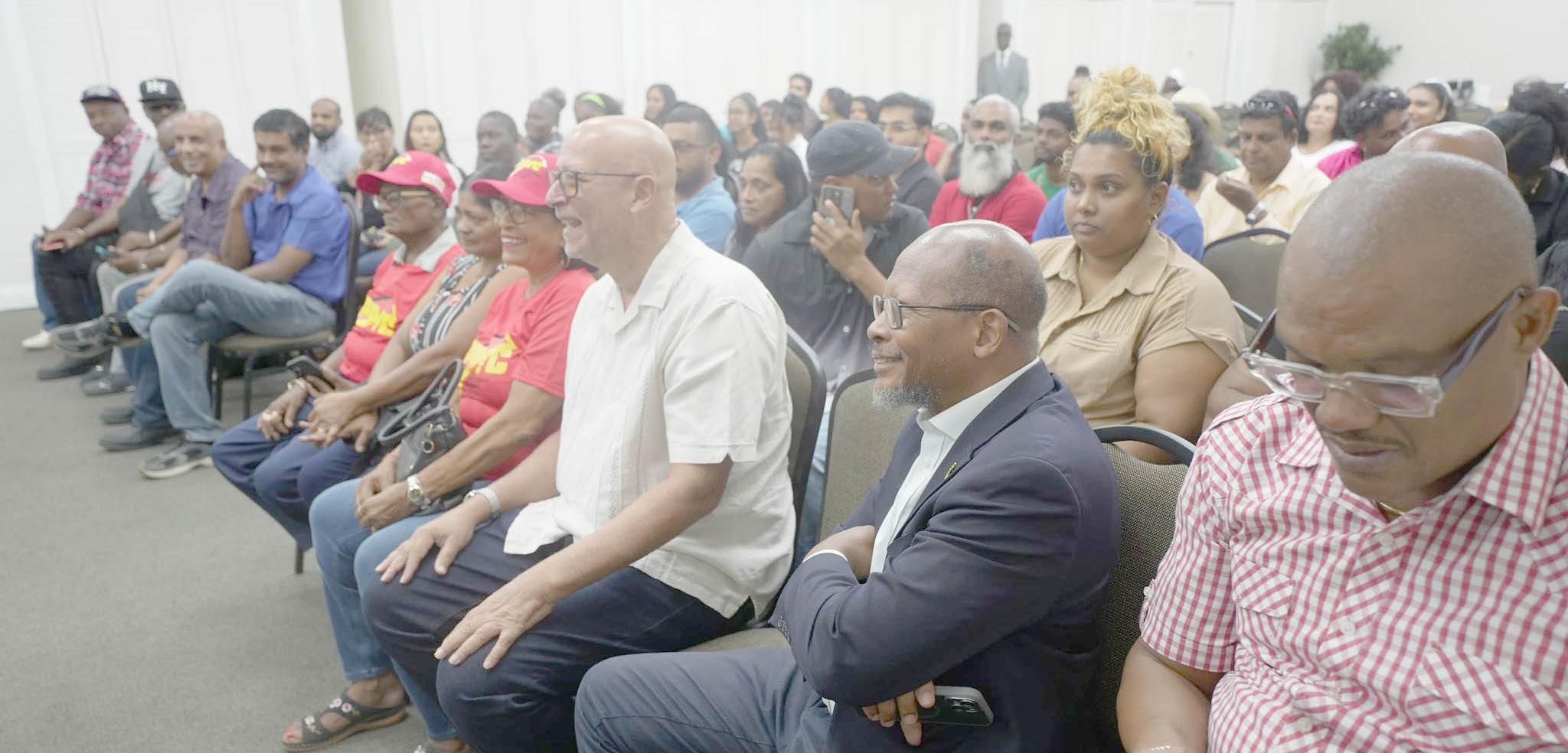
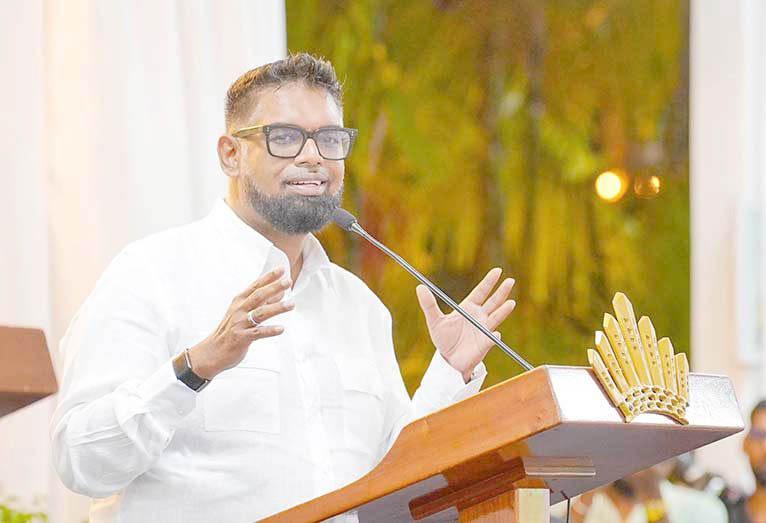
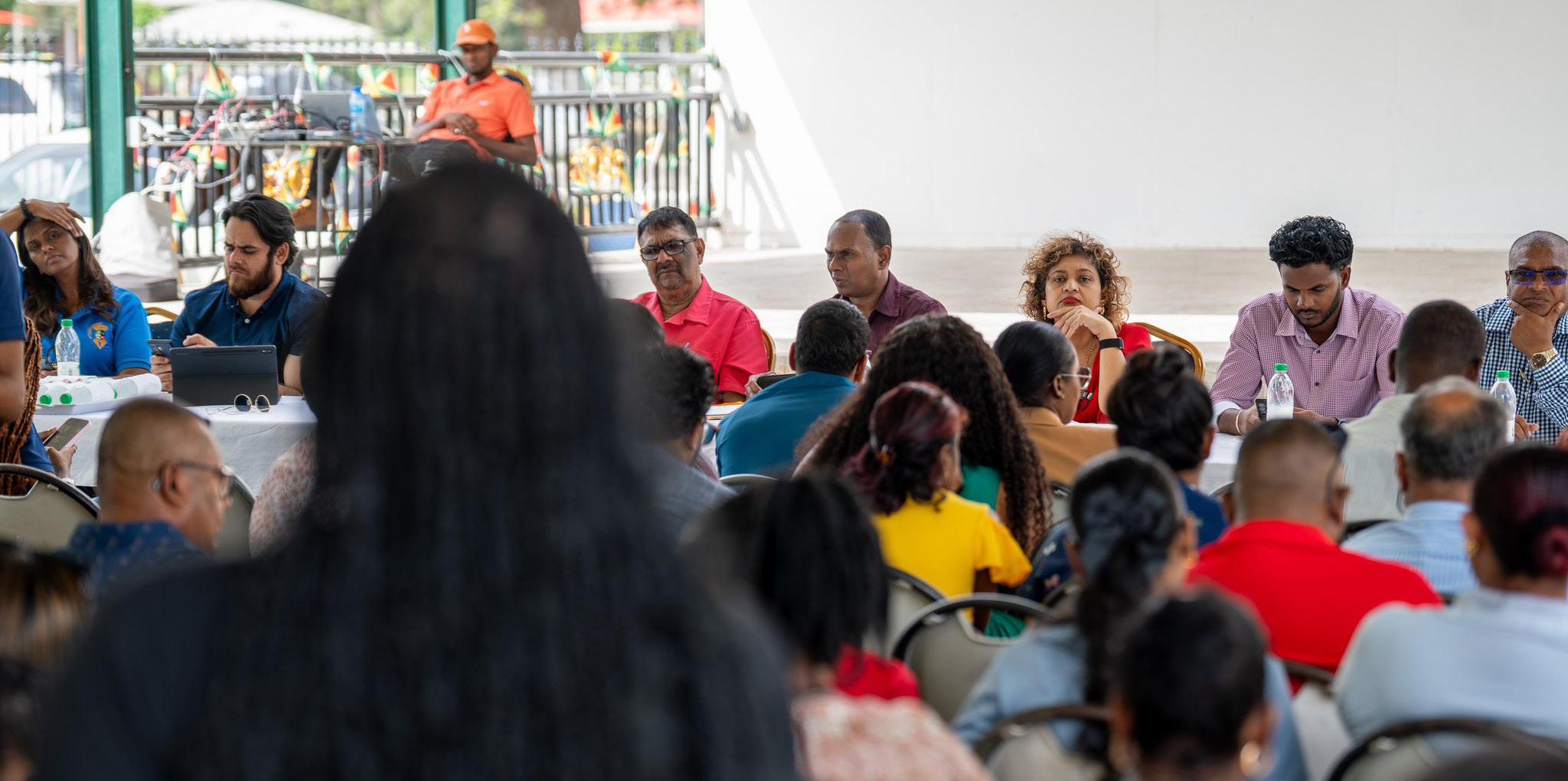
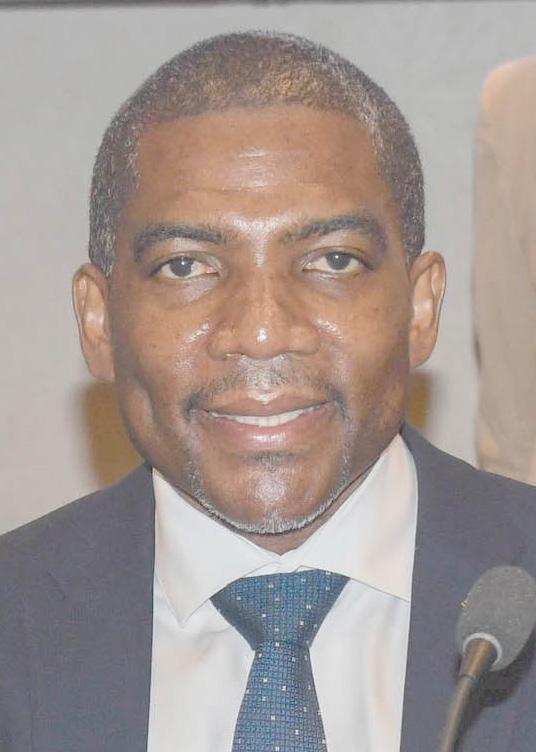
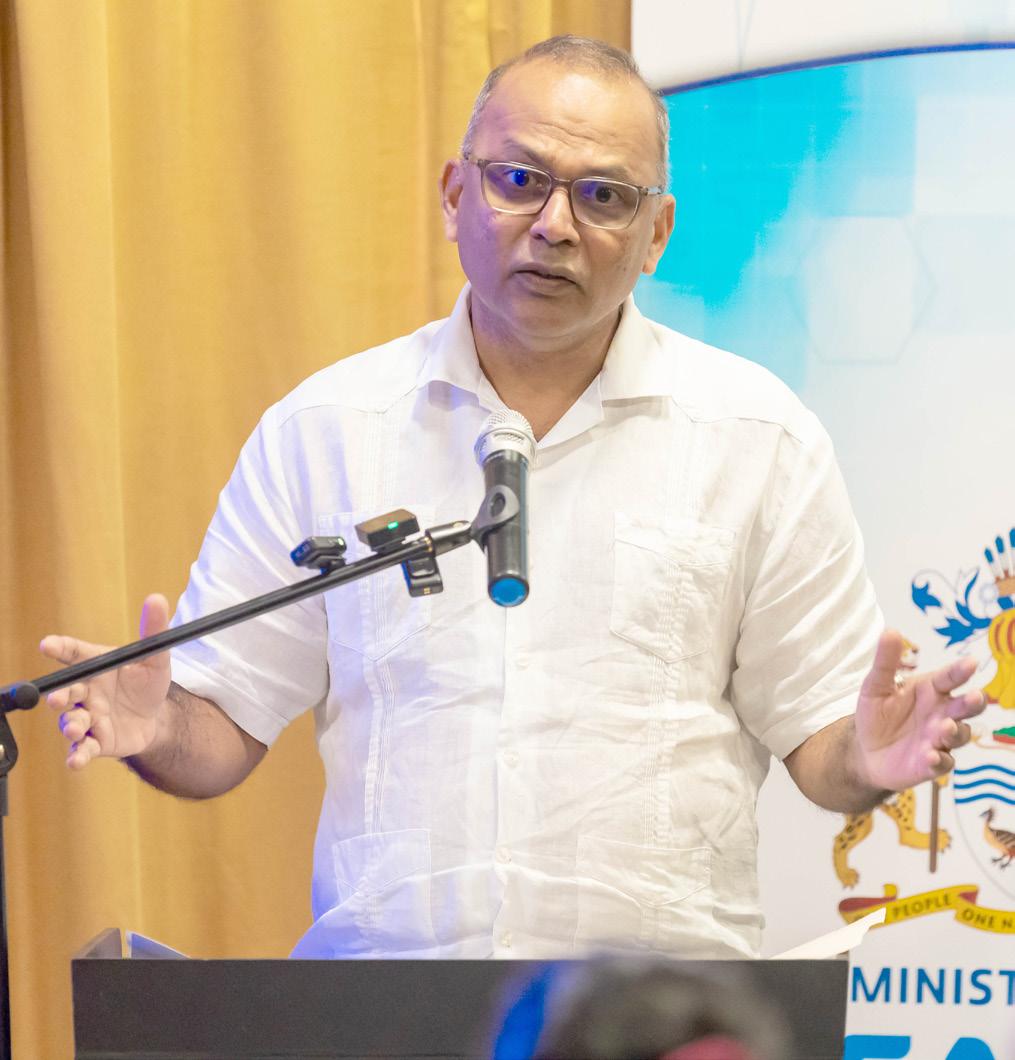
On Friday, President, Dr Irfaan Ali held a meeting with members of the Guyanese Diaspora living in St Kitts and Nevis. During the meeting, the Head of State shared his government’s development plans for Guyana and ongoing collaboration between the two CARICOM nations. President Ali also spoke of the many investment opportunities for persons who may want to return to Guyana to live or invest. Several issues were also raised by members of the community, and some of them were addressed on the spot. St Kitts and Nevis Prime Minister, Dr Terrance Drew and Guyana’s Minister of the Public Service, Government Efficiency and Implementation, Zulfikar Ally were also at the meeting
President Ali to speak at offshore tech conference in Texas
GUYANA will take centre stage at the 2026 Offshore Technology Conference (OTC) in Houston, Texas, in May, as President, Dr Mohamed Irfaan Ali has been identified to speak at the opening ceremony.
President Ali will deliver the opening address, marking the formal commencement of one of the world’s premier offshore energy conferences.
It attracts thousands of
global energy executives, professionals, investors and policymakers from more than 100 countries.
This invitation is significant, reflecting Guyana’s growth from a new energy-producing nation to a global energy voice.
President Ali will be joined by his delegation, including the Minister of Natural Resources, Vickram Bharrat.
“President Ali’s acceptance of our invitation to
open OTC 2026 is a tremendous honour for the conference and a meaningful recognition of the role OTC plays on the world stage,” said Chairman of the OTC Board of Directors Dan McConnell in a press release.
He further stated that “Guyana has established itself as a major offshore producer and an important voice in the global energy landscape, and we look forward to welcoming
President Ali and his delegation to Houston as we explore the technologies and partnerships shaping the future of offshore energy.”
According to the OTC,
Guyana’s ascent as a major offshore energy producer has drawn multibillion-dollar investment, accelerated offshore infrastructural development, and deepened collaboration with international energy companies and technology partners. The conference will take place from May 4-7 at NRG Park in Houston, Texas. [DPI]
President, Dr Irfaan Ali
‘Serve your communities’
– Manickchand urges Region Six NDCs
–– presses councils to be responsive, proactive and to submit clear plans for $30M subvention
MINISTER of Local Government and Regional Development, Priya Manickchand, on Friday charged officials of the various Neighbourhood Democratic Councils (NDCs) in Region Six to remain focused and proactive in
without having people go to Georgetown every time… instead of making somebody come out of Mara or come out of Black Bush Polder and go searching,” she stated.
The minister urged councillors to be attentive
events and remain aware of issues affecting residents at the street level.
“It is not to walk around like a big boy or big girl, it is to be a servant of the people… to help them, to protect them, to guide them, to show them the
are not effectively carrying out their responsibilities, adding that the aim is to build well-functioning neighbourhoods across the region.
Looking ahead, she disclosed that the ministry will soon launch a website
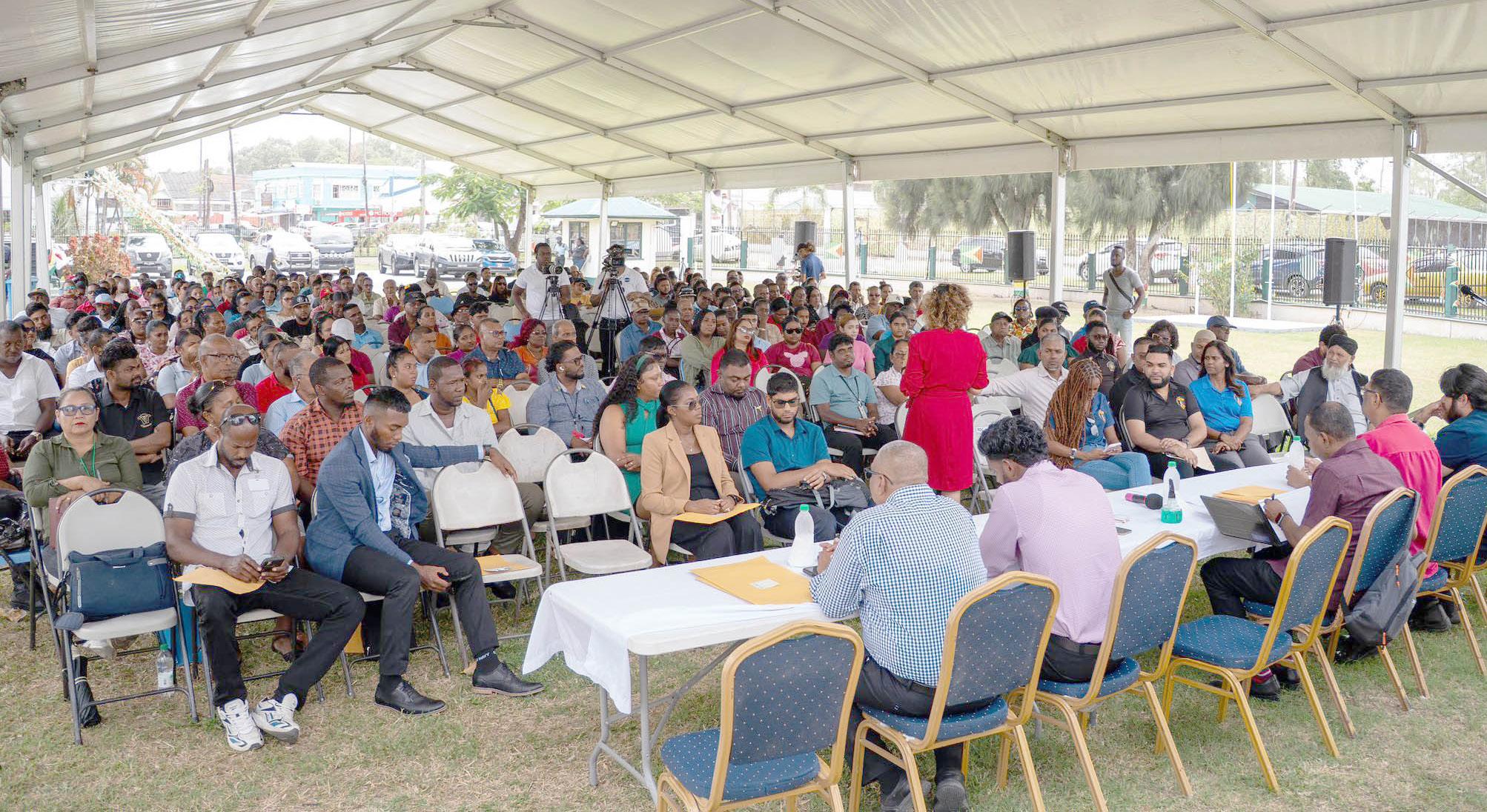
Minister of Local Government and Regional Development, Priya Manickchand, on Friday met with members of the Neighbourhood Democratic Councils (NDCs) of Region Six (East Berbice–Corentyne), underscoring the critical role local leaders play in advancing governance and service delivery within their communities
serving their communities, stressing that effective local governance is critical to residents’ well-being.
Addressing the officials at State House in New Amsterdam, Berbice, the minister reminded them that their primary responsibility is to meet the needs of residents through responsive and accountable service delivery.
“You accepted this role to serve and you are here serving,” Manickchand said, underscoring the importance of dedication and purpose in executing their duties.
She emphasised that local government exists to provide accessible governance within communities, eliminating the need for residents to travel long distances to access basic services.
“You understand the purpose of local government, it is to provide governance, localised governance
to issues affecting residents and to make themselves available, noting that communities expect a government that is reachable and responsive.
“You are us in your villages, when people tell you something is wrong you have to listen, have to respond and serve, and you have to make yourself available,” she said.
Manickchand also instructed that all NDCs submit, before mid-March, detailed plans outlining how they intend to utilise the $30 million subvention allocated to them. She encouraged councils to set clear six-month development targets and review progress regularly to ensure direction and accountability.
She further called on councillors to stay closely connected with their communities, suggesting they acknowledge major life
way and to seek further help when needed,” the minister stressed.
Manickchand warned that failing to stay informed about community issues would indicate that officials
Minister of Local Government and Regional Development,
to the internet to enhance service delivery.
providing key information and services, while residents can also lodge complaints or issues via hotline 762-2431 for immediate response. She added that all NDCs will be connected
During the engagement, officials raised concerns including the need for new NDC buildings in certain communities and the development of a dumpsite for the Whim/Bloomfield NDC.
Manickchand expressed optimism about strengthening governance in Region Six, noting that the ministry looks forward to working closely with councils to deliver improved services and development outcomes for residents.
Priya Manickchand
WIN’s claim of hiring US lobbying firm sparks more questions
as alleged documents surface linking party’s reported lobbying filing to ISA Islamic School address
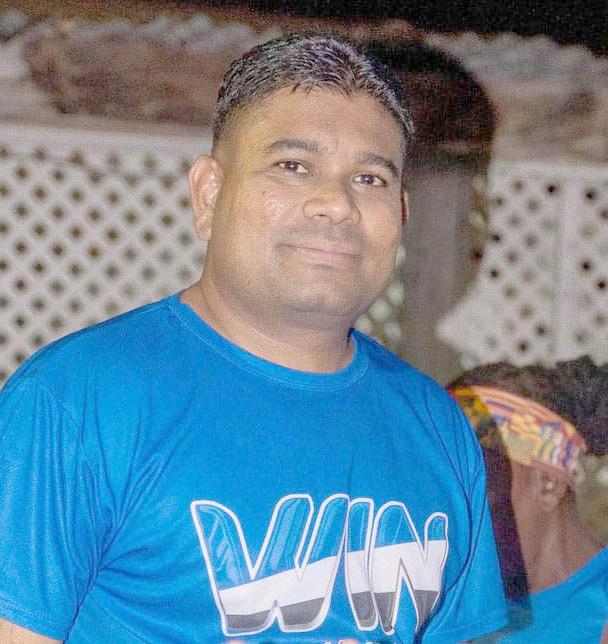
DOCUMENTS now circulating online, purporting to be a United States Foreign Agents Registration Act (FARA) filing, have raised more questions after listing an address associated with the ISA Islamic School in Georgetown as the location for the foreign principal identified as We Invest in Nationhood (WIN), founded by US-sanctioned businessman Azruddin Mohamed.
If authentic, the filing places the address at 307 East Street, Cummingsburg, publicly linked to the ISA Islamic School, at the centre of a widening web of unanswered questions surrounding the political party.
The party’s claim that it retained a United States lobbying firm for US$250,000 is drawing more scrutiny,
with mounting questions over the source and legality of the funds used for the engagement.
According to documents filed with the US. Department of Justice (DoJ) on February 24, lobbyists
Stephen Payne and Logan Somera of Wyoming-based LGS LLC were contracted to advise the party in “developing and cultivating its relationships within the United States government and private sector.”
However, this has now placed the spotlight squarely on WIN’s leadership, particularly its founder, Azruddin, who has repeatedly said he is the sole financier of the political movement.
The issue has become more contentious given that Mohamed, his father Nazar Mohamed and several asso-
ciated businesses have been sanctioned by the US Department of the Treasury’s Office of Foreign Assets Control since 2024.
Those sanctions prohibit US citizens from doing business with designated individuals and warn that institutions or persons engaging in certain transactions with them risk enforcement
action or exposure to secondary sanctions.
Local financial analysts are questioning how such a substantial payment could have been executed under those restrictions, especially as sanctioned individuals typically face severe limitations on banking and cross-border financial transfers.
One expert, speaking anonymously, noted that conventional financial channels would be constrained and queried whether the transaction complied with international sanctions regimes.
“The banks have severed ties. How did they move that money? Was it smuggled in suitcases to the US?” he asked.
Against this backdrop, controversy is further compounded by ongoing legal troubles facing the Mohameds in the United States.
In 2025, a federal grand jury in Miami indicted Azruddin and Nazar Mohamed on multiple counts, including money laundering, mail fraud, and wire fraud. Extradition proceedings related to those charges remain before the Guyanese courts.
Prior to the announcement of the sanctions, international news agency Reuters had reported that the Mohameds were being investigated by the Drug Enforcement Administration (DEA), the Federal Bureau of Investigation (FBI), the Department of Homeland Security, and other US agencies on suspicions of smuggling Colombian
cocaine and illegally mined Venezuelan gold to the United States, Europe, and the Middle East.
The report stated that the Mohameds were also suspected of laundering money for drug traffickers and criminals, including sanctioned Russian nationals and are linked to the Middle East terror group Hezbollah.
Two US Congress officials had also expressed concerns about Azruddin Mohamed’s links to the Maduro regime in Venezuela.
“In the U.S. Congress, we are alarmed by the regime in Venezuela’s attempt to undermine Guyana through its pro-Maduro puppet candidate Azruddin Mohamed, who is sanctioned by OFAC,” Congressman Carlos Gimenez wrote in a post on X (formerly known as Twitter).
The Guyana government subsequently received an extradition request signed by US Secretary of State Marco Rubio.
The Mohameds are currently before the court, where the extradition hearing is ongoing and they have been accused of witness intimidation and other delay tactics.
We Invest in Nationhood (WIN) leader US-sanctioned businessman Azruddin Mohamed
Grove truck-stop project progressing to support traffic management
WORKS are progressing on the dedicated truckstop and parking facility at Golden Grove, East Bank Demerara, a key intervention aimed at improving traffic management, protecting public infrastructure and supporting the country’s expanding construction sector.
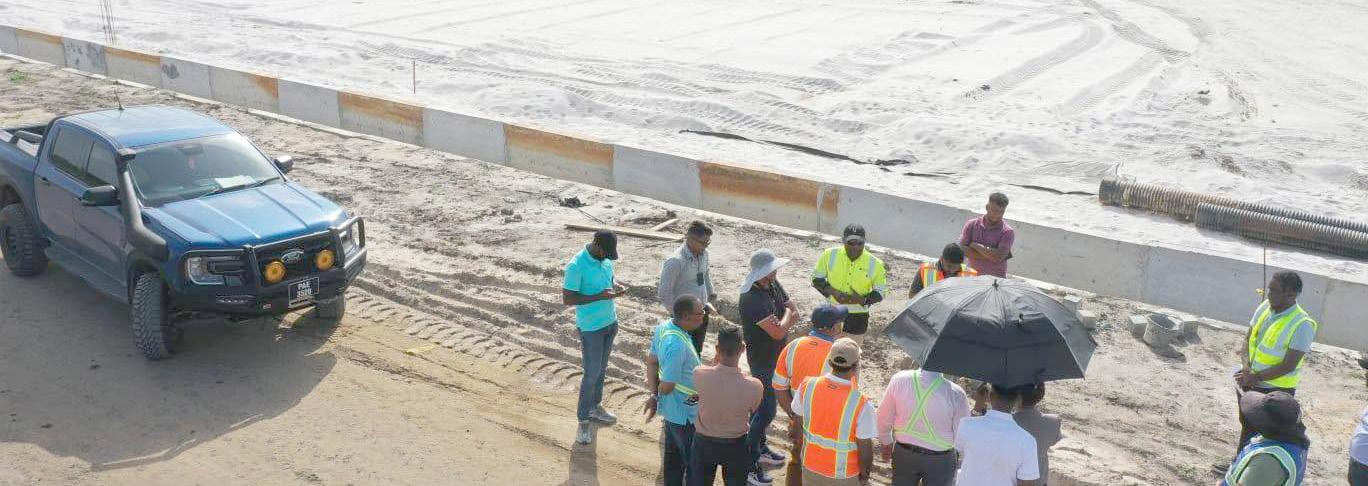
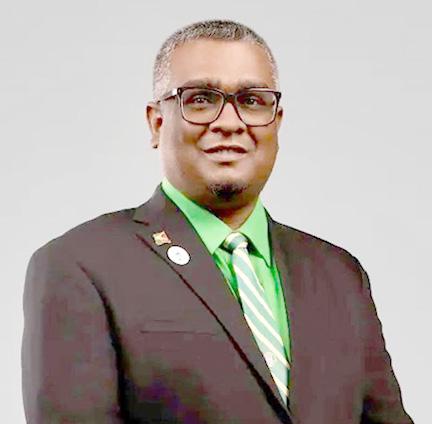
Housing Minister, Collin Croal along with Minister within the Ministry, Vanessa Benn, on Thursday met with contractors and inspected ongoing works
at the approximately 14acre site, which is currently undergoing sand-filling and levelling.
They were accompanied by Deputy Director of Central Housing & Planning Authority (CH&PA) Projects Department, Intakab Indarjeet and engineers.
The developing facility will provide a designated space for heavy-duty vehicles, addressing the growing concern of trucks parking along public roadways and within residential corridors
as construction activity accelerates nationwide.
Minister Benn underscored the importance of the project, noting that its advancement is critical to safeguarding recent investments in road infrastructure and ensuring safer, more orderly use of the road network.
“The intent is to provide a space […] so that they do not park on the roads, damaging the road shoulders and the edges of the roads where so much investment is being
made to improve the road networks for our fellow citizens,” Benn stated.
With Guyana’s construction sector recording 25 per cent growth in the previous year, the demand for organised parking and staging areas for heavy-duty vehicles has intensified. The Golden Grove facility is therefore being positioned as a timely solution to ease congestion, enhance road safety, and prevent deterioration of road shoulders caused by improper parking.
Contractors on site were reminded to maintain required standards and adhere strictly to project timelines to ensure the timely delivery of the facility. Upon completion, the ministry will engage truck owners and operators interested in utilising the space, particularly those without suitable pri-
vate parking arrangements. Minister Benn highlighted that the project’s steady progress reflects government’s broader commitment to coordinated development and sustainable infrastructure planning to match the country’s rapid economic expansion.
The approximately 14-acre site at Golden Grove, East Bank Demerara, is currently undergoing sand-filling and levelling works
The team inspecting ongoing works on Friday
AS regional leaders gathered this week for the 50th Regular Meeting of the Conference of Heads of Government of the Caribbean Community (CARICOM) in St. Kitts and Nevis, a familiar but unresolved issue returned to the forefront of regional discourse: the promise of Caribbean integration versus the reality of restricted trade.
President Irfaan Ali used the sidelines of the summit to deliver a message that deserves serious regional reflection, that the Caribbean cannot speak of unity while maintaining bureaucratic and “artificial” barriers that slow the movement of goods among member states.
His remarks, particularly in relation to trade with Trinidad and Tobago following bilateral discussions with Prime Minister Kamala Persad-Bissessar, highlight a long-standing contradiction at the heart of the regional integration project.
For decades, CARICOM has promoted the vision of a seamless regional market, one in which goods, services, and capital move freely across borders.
Yet, exporters across the region including
Guyanese producers, continue to encounter lengthy approvals, sanitary and phytosanitary delays, licensing hurdles, and administrative red tape that effectively undermine the spirit of free trade.
President Ali’s call is therefore not merely diplomatic rhetoric; it reflects growing frustration among regional private sectors that have invested heavily in expanding production capacity but remain constrained by uneven market access.
Guyana’s position carries particular weight at this moment. The country’s rapid economic expansion, driven by energy development alongside agricultural and infrastructural growth, has transformed it into one of the Caribbean’s fastest-growing suppliers of food and construction inputs.
While regional businesses have benefitted significantly from opportunities in Guyana’s booming economy, Georgetown is now asking for reciprocity, a level playing field for Guyanese exports entering neighbouring markets.
The issue extends beyond commerce.
CARICOM leaders have repeatedly pledged to reduce the region’s massive food-import
bill and strengthen food security, a goal made more urgent by global supply disruptions, inflation, and climate-related shocks.
Guyana has positioned itself as a central pillar of this strategy, expanding agricultural output with the stated aim of supplying regional demand.
However, that ambition cannot succeed if agricultural products face avoidable delays at ports or inconsistent regulatory requirements once they leave Guyanese shores.
If CARICOM is serious about achieving food security, removing non-tariff barriers must become an immediate priority rather than a recurring talking point at annual summits.
President Ali’s broader argument, that Guyana has maintained an open investment environment welcoming Caribbean businesses, raises an uncomfortable but necessary question: can regional integration survive if openness flows largely in one direction?
The Caribbean faces mounting external pressures, from climate change and global economic volatility to shifting geopolitical alliances.
In such an environment, deeper intra-regional trade is not optional; it is essential for resilience. Stronger economic linkages would reduce dependence on distant markets, stabilise supply chains, and create shared prosperity across small island and mainland economies alike.
CARICOM has never lacked vision. What it has often lacked is implementation. The repeated calls for freer trade, stronger food systems, and collective economic resilience must now translate into measurable policy changes, harmonised standards, faster customs procedures, and genuine political will to dismantle protectionist practices disguised as regulation.
Regional integration, as President Ali rightly noted, is no longer a lofty aspiration. It is an urgent necessity.
The question confronting Caribbean leaders today is whether they are prepared to move beyond declarations and finally allow the Caribbean Single Market to function as it was always intended, not as an idea, but as a lived economic reality for businesses and citizens across the region.
Removing Barriers CARICOM is we own
To the Editor,
THE recent statements by the Prime Minister of Trinidad and Tobago concerning regional diplomacy, CARICOM’s reliability, and the region’s posture towards Cuba require a frank but respectful response, for the issue at stake extends far beyond a single administration. It concerns the credibility, consistency, and future relevance of Caribbean diplomacy itself.
CARICOM has historically articulated a principled foreign policy grounded in sovereignty, non-interference, and regional solidarity. These principles have allowed small Caribbean states to exercise influence in international affairs far beyond their material size. However, principles retain value only when applied consistently. When they become conditional, they cease to function as principles and instead become instruments of convenience.
Recent criticisms suggesting that CAR-
ICOM has failed in the face of external tensions, overlook the community’s longstanding diplomatic achievements attained through sustained dialogue, mediation, and collective judgment.
CARICOM has worked to reduce tensions within the hemisphere and has consistently supported negotiated outcomes rather than confrontation. For small states, diplomacy is not passivity; it is the primary mechanism of security. The alternative alignment with external military actors or unilateral foreign policy departures risks transforming the Caribbean into an arena of geopolitical competition rather than preserving it as a zone of stability.
If CARICOM is to be described as an unreliable partner, such a characterisation would more accurately reflect the persistent trade imbalance that exists between Trinidad and Tobago and several fellow member states.
In Guyana, beyond the local business community and the recognised Chinese commercial presence, Trinidadian enterprises occupy a
significant portion of the domestic market. Additionally, the Republic Bank of Trinidad and Tobago holds substantial influence within Guyana’s financial sector. These realities underscore not regional exclusion, but rather the depth of regional economic integration and opportunity that CARICOM has facilitated.
Equally concerning is the dismissal of the Caribbean’s historic relationship with Cuba. This relationship is not incidental history. On 8 December 1972, Barbados, Jamaica, Guyana, and Trinidad and Tobago jointly established diplomatic relations with Cuba despite considerable external pressure. That decision represented a defining moment of Caribbean political independence and is commemorated annually as CARICOM/Cuba Friendship Day.
It affirmed that the region would conduct its foreign relations according to its own judgment, rather than external instruction.
Since that time, Cuba has moved beyond the RHETORIC and has maintained one of the most sustained records of practical
co-operation with the Caribbean. Thousands of Caribbean nationals including Trinidadians who have been educated in Cuban universities, particularly in medicine, and many practising physicians across the region today are Cuban-trained professionals.
During the COVID-19 pandemic, Cuban medical brigades entered several Caribbean states and worked directly within hospitals, healthcare centres and intensive-care units when health systems were under severe strain. Their contribution was not rhetorical; it was lifesaving. Cuba has already been more than a friend to the Caribbean, it has been family.
Cuba now faces a profound humanitarian crisis characterised by shortages of food, fuel, electricity, and essential medicines.
Whatever one’s political assessment of the Cuban state, humanitarian suffering among civilian populations cannot be treated selectively. CARICOM has consistently
From page 6
CARICOM is we ...
advocated human security and opposed measures that harm ordinary people. Silence or distancing in this context risks appearing less like prudence and more like inconsistency.
It is therefore both appropriate and timely for the Caribbean Community to renew, in a clear and unified voice, its longstanding call for the lifting of the decades-long economic embargo imposed upon Cuba. Prolonged comprehensive restrictions that contribute to hardship among civilian populations cannot be recon-
ciled with the humanitarian principles the international community professes to uphold. From a moral and humanitarian perspective, the continued maintenance of measures that materially affect the welfare of ordinary people is neither constructive nor justifiable. Respectful engagement and co-operation, rather than isolation, remain the more humane and effective path.
The Caribbean/ CARICOM has never required ideological uniformity in its diplomacy. The region maintains active econom -
ic and diplomatic relations with states of varied political systems, including countries that are not liberal democracies. Caribbean governments engage commercially and strategically with partners such as China, Saudi Arabia, and others in pursuit of development financing, energy co-operation, and infrastructural support. It would therefore be inconsistent and quite frankly very hypocritical to single out Cuba for exceptional treatment based solely on political structure while simultaneously maintaining normal relations elsewhere.
Sovereignty requires respect for differing political systems, whether or not one shares them.
The Caribbean owes Cuba neither uncritical endorsement nor political alignment. It does, however, owe recognition of shared history, mutual assistance, and adherence to its own declared principles. Criticism of any government is legitimate; selective moral diplomacy is not. A region that invokes solidarity, sovereignty, and moral authority in global negotiations on climate justice, development financing, and
international equity must apply those values consistently or risk weakening its negotiating credibility.
CARICOM states should therefore support humanitarian access, encourage medical and pharmaceutical co-operation, and utilise diplomatic channels to ensure assistance reaches the Cuban people, our affected family.
When the Caribbean faced its own crisis during the COVID-19 pandemic, Cuba responded in practical and immediate terms. The present moment offers the region an opportunity to
demonstrate that its foreign policy remains guided by principle rather than expediency.
Supporting humanitarian assistance to Cuba is not an ideological position. It is an affirmation of Caribbean gratitude, diplomatic consistency, and respect for sovereignty. To defend these principles is to defend CARICOM itself. “Who vex lose.”
Yours faithfully, Jermaine Figueira Former Member of Parliament
Kamla Bissessar, Eugenia Charles and anticipating Rupert Roopnaraine
RUPERT Roopnaraine died at the wrong time. He did not live to see what Trinidad’s Prime Minister negatively said about Cuba. Rupert, intimately involved with the Grenadian revolutionary government, detested what Dominica’s Prime Minister and Barbados’ Prime Minister had to say about the Grenadian Revolution and her support for the American invasion of Grenada.
I would have liked to read what Rupert thought about what Kamla Bissesar, the Prime Minister of Trinidad, had to say about Cuba’s lack of democracy. The “Trini” PM reminds me of Ms. Charles. She was an ideological believer in Western-style democracy and was incapable of understanding why revolutions come about.
She was against the revolution in Grenada in 1979 and she accepted the American invasion of 1983. At the time, Barbados’ Prime Minister Tom Adams condemned the revolution and also supported the invasion. Both Charles and Adams were post-colonial leaders who, at the ideological level, were politicians who were intellectually incapable of understanding what colonialism had done to the psyche of the colonial subject.
Here is a quote from the current Chancellor of the University of Guyana and prominent Caribbean diplomat, Sir Ron Sanders: The quote is offered within the context of Caribbean leaders both past and present who still think that our big, rich, traditional Western allies are generous countries: “The 14-nation independent states of the Caribbean Community have been at the bottom of US official development assistance for decades. In 2019, for instance, total US foreign assistance globally was US$47 billion, of which collectively, CARICOM countries
received US$338 million or 0.7 percent. For emphasis, that is less than one per cent of the global total. Haiti alone received US$268 million of that US$338 million intended for all 14 CARICOM states, leaving the other 13 to share US$70 million only. For 9 of the 13 countries, the sum provided did not amount to US$1 million.”
The intra-CARICOM quarrel over both the revolution and invasion still constitutes the deadliest disagreement among CARICOM Heads that almost weakened the integration movement. It was a moment when Guyana became the most anti-imperialist nation in the Caribbean. President Burnham was the largest voice in CARICOM, both in support of the Grenadian Revolution and rejection of the American invasion of Grenada.
How uncanny we could be writing about the Grenadian Revolution and Burnham’s support for it at a time when Rupert has just died. There is a page in Rupert’s book, “The Sky’s Wild Noise,” in which President Burnham complained to Prime Minister Maurice Bishop about his embrace of the WPA when he, Burnham, had given tangible support to the Grenadian Revolution.
I worked at a sensitive level with the Grenadian Government and had access to information which showed me how helpful Burnham was to the revolutionary New Jewel Movement in Grenada. There is something about Burnham that has not been made public up to this day.
This column here is the first time it will be made public. President Burnham had sent a contingent of GDF officers to train soldiers of the Sandinista Government of Nicaragua. The contingent was headed by a lieutenant who is in his 70s today and lives in Guyana. He worked for the APNU+AFC government.
He has declined to be interviewed about his life on the Freddie Kissoon Show. I know him and I say without even an ounce of contradiction that he is a pleasant, modest, nice gentleman.
So, can we anticipate what Rupert would have said about the “Trini” PM’s condemnation of Cuba? Two reflections he would have made. He would have cited Cuba’s phenomenal anti-imperialist record and its huge liberating impact on Africa and the Caribbean. Cuba’s anti-imperialist balance sheet is extraordinary. This was a small island in the Caribbean with 10 million people and it sent its troops thousands of miles to Africa to confront and defeat the imperialist domination of Africa and to weaken apartheid in South Africa.
Secondly, Rupert probably would have asked Mrs Bissessar if Cuba does not have democracy and can’t be offered protection by CARICOM, then why Trinidad has
ongoing relationships with countries that not only colonised the West Indies, but also offer formal independence, but still colonise us and whose imperialist genetics roam all over the world.
Syria, Libya and Iraq are all living tragic lives made so by the former colonial empires that are still clinging to their empires. I end by bringing attention to readers what a former Opposition Leader in the UK, Jeremy Corbin reflected on. He said former imperial powers are continuing their quest for global dominance. That dominance was curtailed in certain parts of Africa by the anti-imperialist bravery of Cuba. Cuba should have a special place in the heart of each Caribbean citizen. For me, it has.
DISCLAIMER: The views and opinions expressed in this column are solely those of the author and do not necessarily reflect the official policy or position of the Guyana National Newspapers Limited.
Anna Regina Stadium nears completion
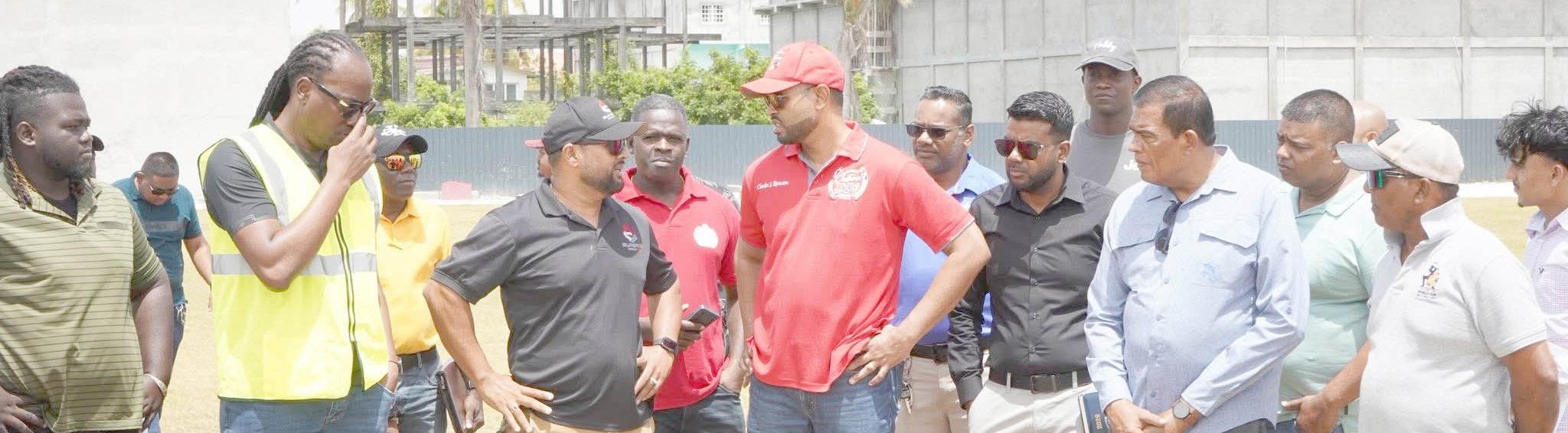
WORKS on the Anna Regina Stadium in Region Two are nearing completion, following a comprehensive inspection on Friday by Minister within the Ministry of Public Works, Madanlall Ramraj, alongside Minister of Culture, Youth and Sport, Charles Ramson Jr., and Minister within the Ministry of Culture, Youth and Sport, Steven Jacobs.
During the visit, the ministers reviewed ongoing works and received updates on the project’s progress, as the facility moves closer to being delivered as a modern sporting venue for the Pomeroon-Supenaam region.
The upgraded stadium is being outfitted with a modern players’ pavilion to provide improved changing and preparation areas, along with fully equipped commentators’ booths to support professional broadcasting.
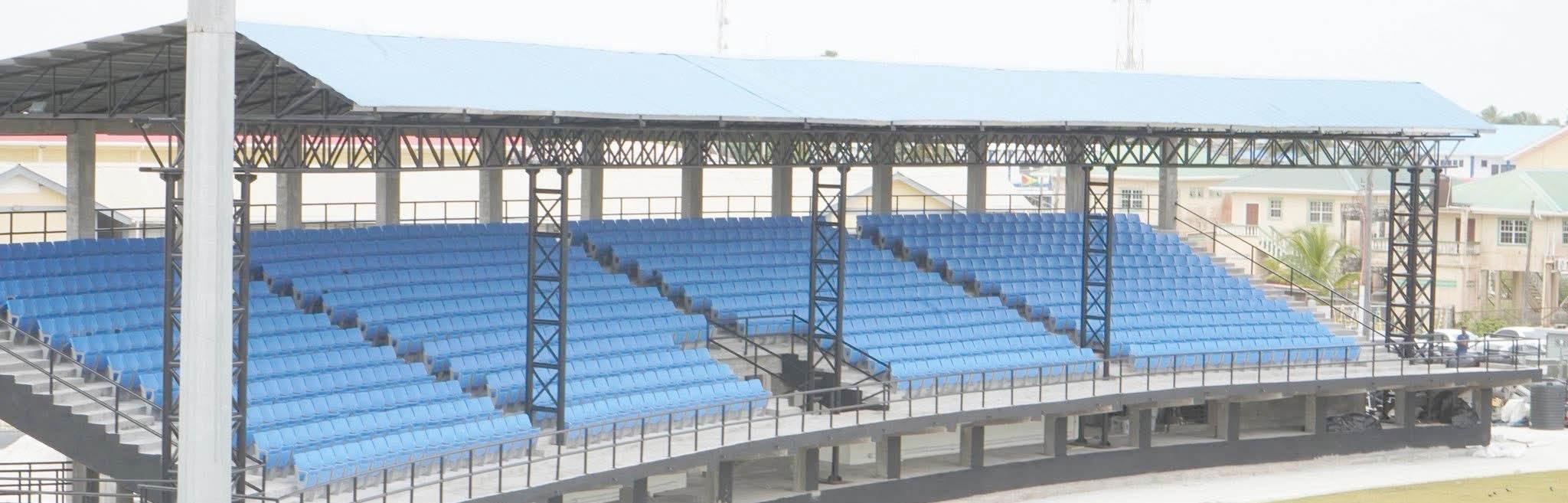
Expanded seating arrangements are also being installed to accommodate larger crowds, while upgraded sanitary facilities and improved access and circulation areas are expected to enhance safety and overall user experience.
Upon completion, the state-of-the-art cricket facility is expected to host regional and national competitions, creating more opportunities for athletes in the region to develop and showcase
their talents. The venue is also intended to serve as a multi-purpose space for community events and cultural activities.
Minister Ramson, during the consideration of budgetary estimates earlier this month had said that the facility will be opened in March, noting that the project forms part of the government’s aggressive nationwide sports infrastructure drive.
Five stadiums are scheduled to be commissioned this year, along with additional indoor facilities.
The Bayroc National Stadium was commissioned in Linden earlier this month by President, Dr Irfaan Ali.
Minister within the Ministry of Public Works, Madanlall Ramraj, alongside Minister of Culture, Youth and Sport, Charles Ramson Jr., and Minister within the Ministry of Culture, Youth and Sport, Steven Jacobs, during the visit on Friday
A section of the Anna Regina Stadium
Electoral fraud trial adjourned to March 27
—as court sets new hearing schedule
VOIR DIRE proceedings
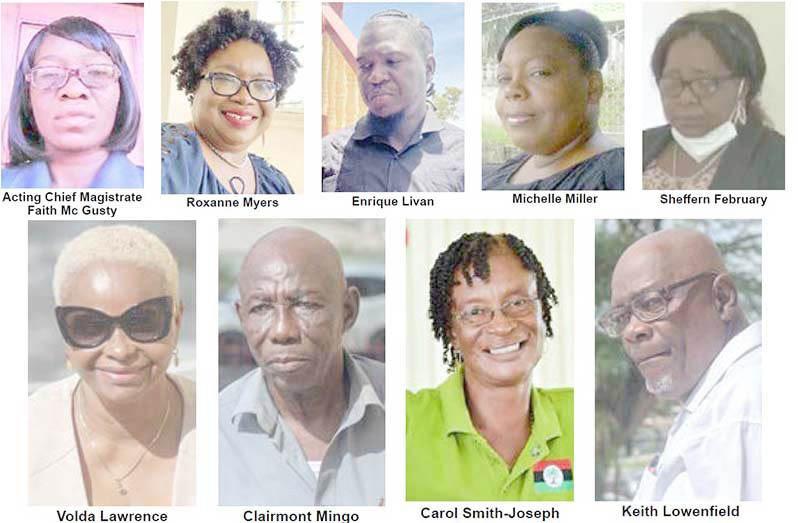
were conducted on Friday in the ongoing election fraud trial, focusing on evidentiary issues related to accused persons Sheffern February and Denise Babb-Cummings, who are among several defendants before the court.
During the hearing, a number of police ranks were cross examined by defence attorney Eusi Anderson as part of the voir-dire process. The police witnesses included Nigel Stephens, Komal Pitamber, Rodwell Sarrabo, Mitchell Caesar, and Devon Benjamin.
The court also granted approval for accused Enrique Livan to appear virtually after it was disclosed that he is suffering from pneumonia in both lungs and that the courtroom’s air-conditioning environment is not suitable for his condition.
Meanwhile, former Guyana Elections Commission (GECOM) Commissioner and former Minister of Home Affairs, Robeson Benn, now serving as a Senior Adviser within the Ministry of Home Affairs, was unavailable on Friday to continue his testimony after having given evidence on Thursday.
At the close of proceedings, Acting Chief Magistrate Faith McGusty outlined a revised timetable for the continuation of the matter at the Georgetown Magistrates’ Courts.
The trial is scheduled to resume on March 27 for continued voir-dire proceedings and will continue on March 31.
Additional hearing dates were also fixed for April 20 and 24, followed by sittings from April 27 to 30. The court further scheduled hearings for May 18, 20, 21 and 22, and for June 15 to 26, with final dates set from June 22 to 26 as the case continues.
Those charged include former Chief Elections Officer (CEO) Keith Lowen-
field; former Deputy CEO Roxanne Myers; former Region Four Returning Officer Clairmont Mingo; former Health Minister Volda Lawrence; and People’s National Congress Reform (PNCR) member Carol Smith-Joseph.
The list also includes former Guyana Elections Commission (GECOM) staffers Sheffern February, Enrique Livan, Denise Babb-Cummings, and Michelle Miller.
The defendants collectively face 19 charges, including conspiracy to defraud and misconduct in public office. Each has entered a plea of not guilty and was released on significant cash bail.
Since the allegations arise from the same set of events, the cases have been consolidated for trial. In addition to Anderson, other defence lawyers involved in the case include Nigel Hughes, Darren Wade, Ronald Daniels, Dexter Todd, and Tifaine Rutherford.
The prosecution, headed by Darshan Ramdhanie, KC, with attorneys Latchmie Rahamat and Madana Rampersaud, alleges that each of the accused played a significant role in attempts to inflate votes for the A Partnership for National Unity and Alliance For Change (APNU+AFC) coalition while suppressing support for the PPP/C.
In the weeks that followed the contentious March 2, 2020, vote, Guyana’s judiciary was inundated with multiple applications and appeals filed by various political actors over the electoral process.
The saga lasted five months before a national recount, led by GECOM and a delegation from the Caribbean Community (CARICOM), confirmed the PPP/C’s victory and ultimately led to the swearing-in of President, Dr Irfaan Ali on August 2, 2020.
The recount confirmed that the PPP/C won the elections with
233,336 votes against the APNU+AFC coalition’s 217,920.
The initial elections results, announced by former CEO Lowenfield, had claimed an APNU+AFC victory.
The APNU+AFC coalition received 171,825 votes, while the PPP/C received 166,343 votes, according to Lowenfield’s election report.
Criminal charges were filed against the defendants following the PPP/ C’s return to office in August, 2020.
GECOM made the decision to terminate the contracts of Lowenfield, Myers, and Mingo in August 2021, after the allegations of fraud came to light.
The Presidential Commission of Inquiry (CoI) into the events of the 2020 General and Regional Elections have found that there were collusion and collaboration between senior GECOM officials to divert votes to the APNU +AFC instead of safeguarding and preserving the integrity of the electoral system.
Chairman Stanley John and commissioners — former Chancellor of the Judiciary, Carl Singh and Senior Counsel Godfrey Smith made these findings based on evidence from the many witnesses who testified along with the reports of the international observers.
“…our inquiry reveals that there were, in fact, shockingly brazen attempts by Lowenfield, Myers and Mingo to derail and corrupt the statutorily prescribed procedure for the counting, ascertaining and tabulation of votes of the March 2nd election, as well as the true declaration of the results of that election, and that they did so – to put it in unvarnished language of the ordinary man – for the purpose of stealing the election,” they said in their report.
Paramedic Tishana Douglas to launch community medical outreach
PARAMEDIC Tishana
Douglas of Paramedic 592 will today (February 28, 2026) launch a Medical Outreach initiative at 9596 Nismes Old Road, West Bank Demerara, under the theme, “Assess. Assist. Activate.
Building Healthier Communities Together.”
Douglas, who made history nearly two years ago as Guyana’s first paramedic to complete the Advanced Diploma in Emergency Medical Services (ADEMS) programme at the Emergency Training Institute of Trinidad and Tobago (ETITT), said the initiative reflects her commitment to empowering citizens with life-saving skills.
later completed the National Examination Board in Occupational Safety and Health (NEBOSH) programme in England. She now serves as a Health and Safety Coordinator with CEMCO Inc., working through E & A Consultant for Kalpataru Power Transmission Limited on the gas-to-energy project transmission line and substation in Guyana.
across the country with practical training on how to respond to medical emergencies, particularly road accidents and other critical health-related incidents.
Since achieving that milestone, she returned briefly to Trinidad and
Sharing details about her “passion project,” Douglas explained that the outreach, which will be conducted alongside a team of eight volunteers, will target communities
The aim of the outreach, according to Douglas, is to provide Guyanese with the basic knowledge of non-invasive emergency practices such as Cardiopulmonary Resuscitation (CPR), splinting, bleeding control, head immobilisation, safe movement of injured persons, the essential information to provide when calling for Emergency Medical Services (EMS) among other areas.
With this, she stressed the importance of calling for direct EMS through the Guyana Fire Service
on 9-1-2, for faster responses in these scenarios.
Douglas said, “So, it’s basically teaching the average person what to do and what not to do because as we know it, bystanders are always the ones who actually witness these things or family members, before the actual trained person comes to help.”
Utilising the power of
social media, Douglas said she does plan to post educational content weekly, for persons to view online.
Noting that this is not for profit, Douglas stated that on the day of the launch, she will be giving back to the elderly, distributing food hampers, as well as giving blood pressure machines to three elderly persons.
Tishana Douglas
Guyana among top filers at CCJ as new report shows increased appellate activity
GUYANA remained one of the major contributors to cases filed before the Trinidad-based Caribbean Court of Justice (CCJ) during the 2024–2025 judicial year, according to the court’s latest Annual Report covering the period from 1 August 2024 to 31 July 2025.
The report shows that a total of 27 new matters
cia for four, and Dominica for one. Guyana’s continued high level of participation places it among the court’s most active users of the appellate system for the year under review.
In terms of court operations, the CCJ held a total of 40 sittings during the reporting year. These included 10 case-management conferences, 19 hearings, and 11 judgment
ing, meeting the court’s established performance benchmarks for both special-leave applications and appeals.
In its Appellate Jurisdiction, the CCJ functions as the highest court of appeal for both criminal and civil cases in Caribbean Community (CARICOM) states that have formally adopted it. At present, five countries fall under this
were filed in the court’s Appellate Jurisdiction during the reporting period, representing a slight increase from the 26 matters recorded in the previous year. Of these filings, approximately 78 per cent were civil matters, while the remaining cases involved criminal appeals.
The 27 new matters filed, including 10 Applications for Special Leave and 17 Appeals, represent a modest increase compared to the 26 matters recorded in 2023–2024.
A country-by-country breakdown indicates that Belize filed the highest number of matters with nine cases, followed closely by Guyana with eight filings.
Barbados accounted for five matters, Saint Lu-
deliveries. The court continued to rely heavily on technology, with 92.5 per cent of its sittings conducted virtually. A smaller number of proceedings were held in person or through hybrid arrangements.
The report also highlights the court’s efficiency in disposing of matters. Case-resolution times showed that 14 per cent of matters were concluded within 90 days, while 29 per cent were resolved within 91 to 180 days. A further 43 per cent were disposed of within 181 to 270 days, and the remaining 14 per cent were completed within 271 to 360 days.
Notably, all recorded matters were concluded within one year of fil -
and the CARICOM Single Market and Economy (CSME).
Through this jurisdiction, the CCJ plays a central role in safeguarding the legal framework that governs regional economic integration.
All 12 CSME member
states, along with their citizens, businesses, and governments, are entitled to bring matters before the court to ensure that their treaty rights and obligations are upheld.
The CCJ’s bench is composed of a group of experienced jurists, led
by its President, Justice Winston Anderson. Other members of the current bench include Justices Arif Bulkan, Maureen Rajnauth‑Lee, Denys Barrow, Peter Jamadar, Chantal Ononaiwu, and Chile Eboe-Osuji.
jurisdiction: Barbados, Belize, Dominica, Guyana, and Saint Lucia.
By acceding to the agreement establishing the court, member states have affirmed their intention to replace overseas judicial bodies with a regional final court of appeal. The CCJ therefore represents not only a legal institution, but also a powerful symbol of Caribbean sovereignty, self-determination, and regional maturity.
Under its Original Jurisdiction, the CCJ operates as an international tribunal with sole authority to interpret and enforce the Revised Treaty of Chaguaramas (RTC) and to resolve disputes that arise under that treaty. The RTC created the CARICOM
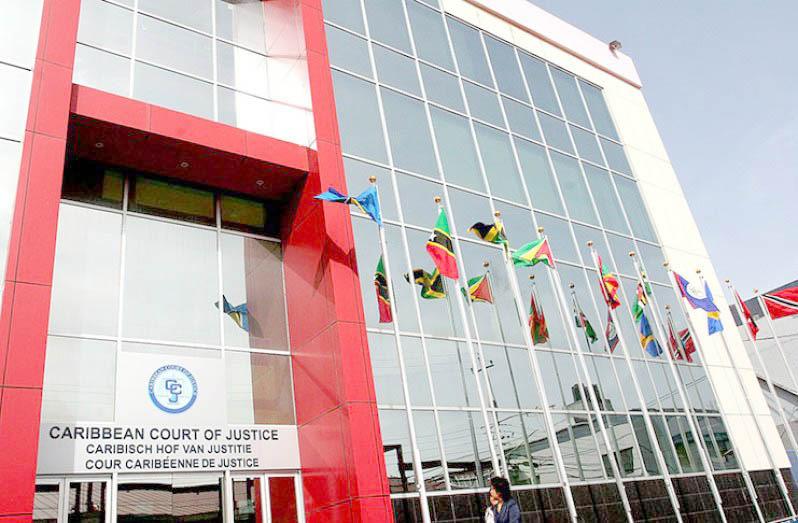
The Caribbean Court of Justice (CCJ), in down-town Port of Spain, Trinidad and Tobago
APNU cannot be blamed for WIN’s, Sarabo-Halley’s ‘lacklustre engagement, inexperience’
–– Mahipaul
A PARTNERSHIP for National Unity (APNU)
parliamentarian Ganesh Mahipaul has rejected
lashes back as WIN accuses APNU of locking party out of
claims that his party collaborated with the ruling People’s Progressive Party/Civic (PPP/C) to side-
line We Invest in Nationhood (WIN) councillors, arguing instead that the party’s failure stemmed
from “lacklustre” engagement and inexperience in political procedure.
Mahipaul was responding to allegations made on Friday by WIN’s Tabitha Sarabo-Halley, who accused APNU of engaging in “coordinated voting” at the regional level to block WIN from securing positions in local government structures.
In an invited comment to the Guyana Chronicle, Mahipaul dismissed the claims as unfounded and said APNU could not be blamed for what he described as WIN’s failure to proactively secure representation.
regional committees
“I cannot be held accountable for a whole lack of experience in the process and as a returning Member of Parliament and someone who has been in politics for a long period of time… Ms Sarabo-Halley clearly is looking for some degree of relevance as to their lacklustre in being proactive in terms of ensuring that they are represented at the regional committee level and even in the National Assembly,” Mahipaul said.
He maintained that there has been no alliance between APNU and the government, and reiterated his support for proportional representation in both parliamentary and regional structures. Citing Standing Order 94(1) of the National
Assembly, Mahipaul noted that committee composition must reflect the strength of parties in Parliament, explaining that in a 10-member committee the PPP/C holds six seats, while APNU and WIN each hold two.
Sarabo-Halley had told reporters that WIN believes that in regions where it held the majority, there were “coordinated voting combinations” that prevented the party from securing initial leadership positions.
Mahipaul said any future collaboration with WIN, whether at the regional level or in parliamentary procedure, must be firmly grounded in proportional representation and not what he described as attempts at “bullyism.”
He further accused WIN
of seeking a disproportionate share of shadow ministerial portfolios ahead of the 2026 budget, claiming the party had proposed taking 13 of 20 shadow positions, leaving APNU with six and another party with one without proper consultation.
APNU, he said, refused to accept such an arrangement and instead chose to highlight its influence through parliamentary debates and scrutiny of budget estimates, where he believes the party “did extraordinarily well.”
Mahipaul had previously accused the WIN party of making no effort to establish a collective opposition in Parliament.
Meanwhile, Sarbo Halley told reporters that there have been no discussions on the party’s position should their leader, United States–indicted Azruddin Mohamed, be extradited to answer to fraud and other serious charges.
Azruddin and his father, Nazar ‘Shell’ Mohamed, have been indicted by a federal grand jury in the US District Court of the Southern District of Florida on 11 criminal charges, including wire fraud, mail fraud, tax evasion, and money laundering.
The US had made a request for the Mohameds to be extradited to face the indictments.
Those extradition proceedings are currently pending in the local courts.
WIN’s Tabitha Sarabo-Halley
APNU’s Ganesh Mahipaul
Three-bedroom houses at Leonora 65% complete
CONSTRUCTION
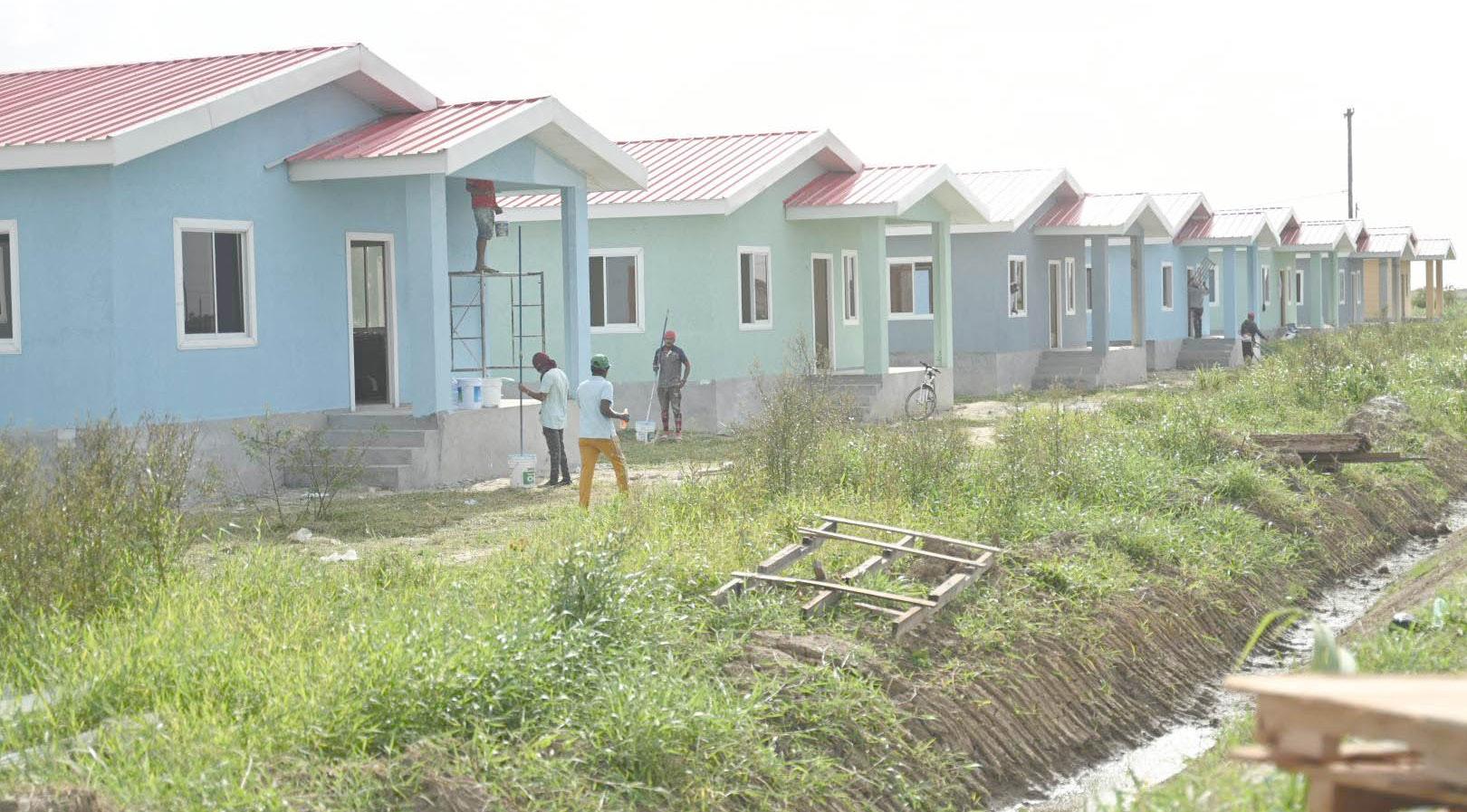
of three-bedroom houses at the Leonora/Groenveldt Housing Scheme, Region Three, has reached approximately 65 per cent completion, as the Government presses ahead with its national housing programme.
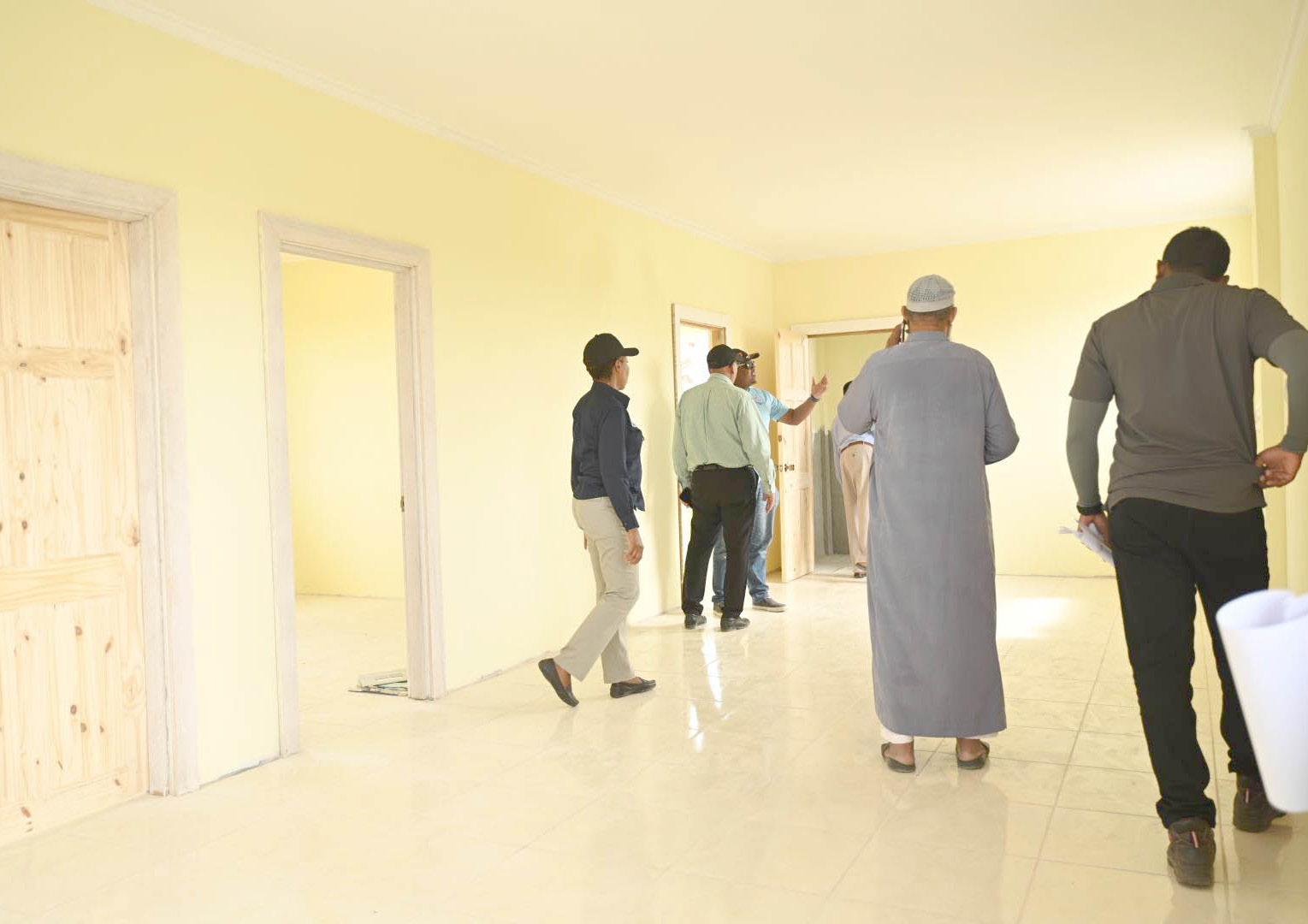
Minister of Housing, Collin Croal, on Friday led a site visit to assess the progress of works and engage contractors executing the project. He was accompanied by Minister within the Ministry, Vanessa Benn; Permanent Secretary, Bishram Kuppen; Senior Engineer, Randolph Hunte and other technical staff.
During the visit, Minister Croal disclosed that 115 flat, three-bedroom concrete houses are currently under construction by a pool of 19 local contractors from Region Three. The units, each measuring 1,013 square feet, are being outfitted with living, kitch-
en and dining areas, one bathroom, and both front and back patios.
He expressed satisfaction with the pace and quality of work, noting, “We are particularly pleased with the progress and the improved quality of work being delivered by this pool of local contractors.”
The minister urged contractors to sustain the momentum and adhere strictly to established timelines to ensure timely completion for allottees awaiting their homes.
Croal emphasised that Region Three remains a critical focus area under the Government’s broader plan to deliver 40,000 homes nationwide over the coming years.
In addition to the concrete three-bedroom houses, the scheme also includes the construction of young professional homes and modular housing units to cater to varying income
groups and housing needs.
“Region Three, alongside Region Four, will see some of the largest investments under the housing programme,” the minister said, adding that the initiative encompasses new allocations, the clearing of existing backlogs and the construction of a substantial number of housing units.
He further highlighted the rollout of modular and prefabricated housing solutions, many of which are being undertaken by local builders.
According to the minister, the continued expansion of housing developments along the West Coast of Demerara, coupled with largescale projects at Wales, is expected to create employment, stimulate the construction sector, and expand access to home ownership for Guyanese families.
Construction of three-bedroom houses at the Leonora/Groenveldt Housing Scheme, Region Three, has reached approximately 65 per cent completion
Rice farmers impacted by heavy rains to access insurance
RICE farmers along the Corentyne who were recently impacted by heavy rainfall are set to benefit from compensation through the government’s crop insurance programme, Agriculture Minister Zulfikar Mustapha has announced.
Speaking during the launch of the ‘Farmer Connect’ agri mobile application earlier this week, Minister Mustapha said approximately 85 per cent of the country’s rice farmers
ed dry periods resembling droughts, and in other cases, intense rainfall that has caused widespread flooding.
Once losses due to drought or flooding are verified, compensation will be deposited directly into farmers’ bank accounts, allowing them to recover quickly and return to cultivation.
Minister Mustapha had indicated that he will soon meet with affected farmers to further assess the recent impact and ensure eligible persons access the support
have already registered for the scheme, making Guyana the first in the Caribbean to introduce such an initiative.
“When we had the heavy rainfall a few weeks ago, especially in the Corentyne, I learned that some of the farmers living in those areas would receive compensation from the insurance company for that kind of heavy rainfall. That is the kind of benefit we are bringing to the farmers,” Mustapha said.
The insurance project, launched in July through collaboration among the Ministry of Agriculture, UPL Costa Rica, Philip Morris International and the Guyana Rice Development Board (GRDB), aims to protect farmers from losses caused by extreme weather events such as floods and droughts.
Guyana typically experiences two wet seasons and two dry seasons because of its equatorial location, a longer wet season from May to June, and a shorter one from late November to January. But recent reports from the Hydrometeorological Service show extend-
available under the insurance programme.
This publication had previously reported that registration will be continuous for each crop cycle.
Ten new weather stations were to be installed across major rice-growing regions and integrated with the existing hydromet network, creating a more accurate and comprehensive weather-monitoring system.
The data collected will determine whether a region has experienced rainfall outside of the normal threshold. If so, farmers in that area will be eligible for payouts to help them return to their fields.
During a previous interview, Travis Pilgrim, an extension supervisor at the GRDB, had explained that at the start of each registration period, extension officers visit farming regions to conduct outreaches and collect basic bio-data, including banking information.
Once there is verified loss due to drought or flood, payouts are triggered and deposited directly into farmers’ bank accounts.
Agriculture Minister Zulfikar Mustapha
GBTI records $4.5B
after-tax profit driven by loan and deposit growth
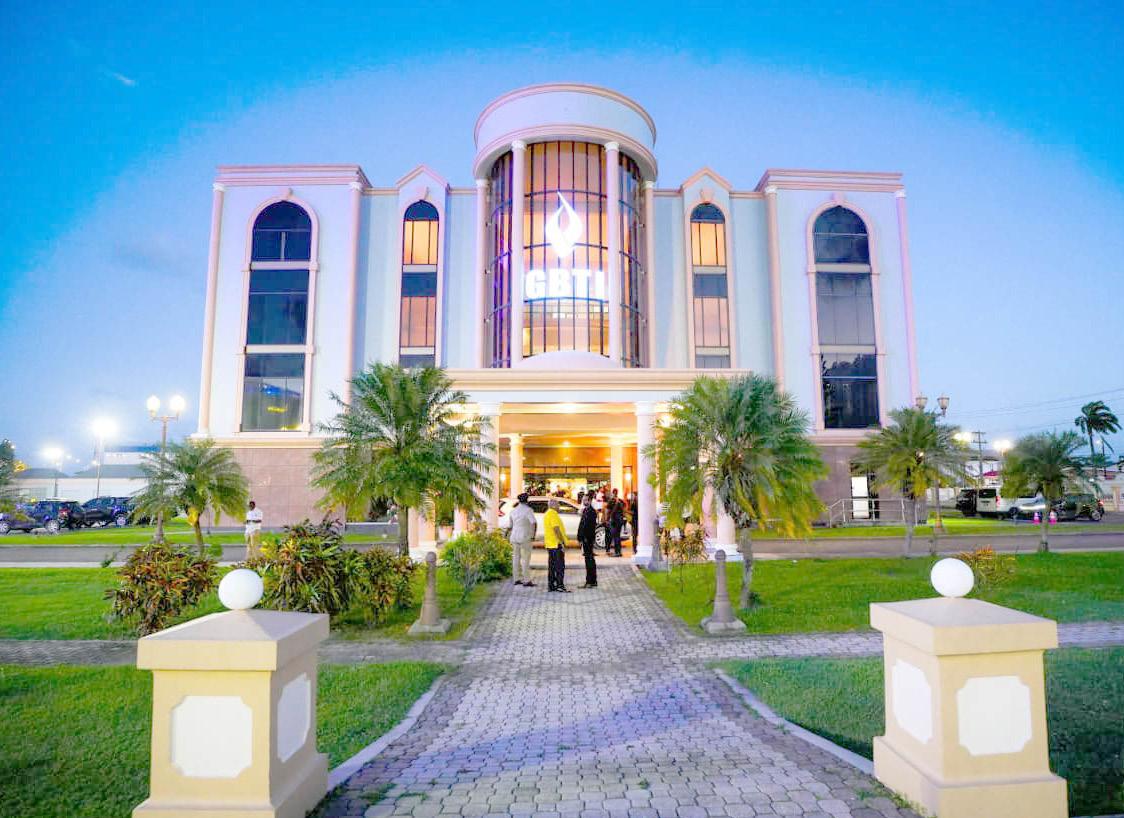
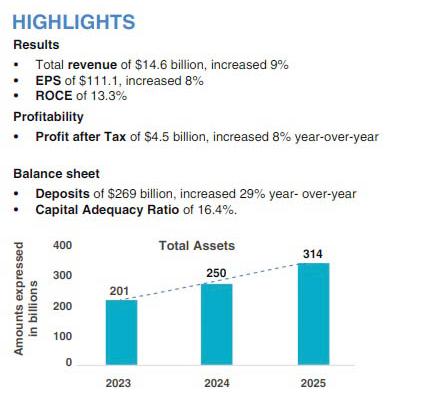
THE Guyana Bank for Trade and Industry Limited (GBTI) has reported a strong financial performance for 2025, posting profit after taxation of $4.5 billion on the back of expanding lending activity, increased deposits and continued digital transformation initiatives.
According to the bank’s audited summary results released on Friday, total revenue climbed to $14.6 billion, reflecting a nine per cent increase year on year, while earnings per share rose to $111.1, up eight per cent. Customer deposits rose sharply by 29 per cent to $269 billion, underscoring sustained confidence in the institution’s stability and service delivery.
The results also show a capital-adequacy ratio of 16.4 per cent, signalling continued financial resilience and prudent risk management, even as the bank expands its lending portfolio and digital-banking footprint.
Chairman Suresh E Beharry, in his commentary, highlighted that the performance was driven by “robust loan-portfolio growth of 17% and a 29% increase in customer deposits,” while maintaining strong capital buffers and operational strength.
He underscored that the
institution remains strategically aligned with Guyana’s rapidly expanding economy, noting that the bank continues to focus on small and medium-sized enterprise (SME) financing, cybersecurity, and governance as key pillars for sustainable expansion.
The chairman further pointed to major strides in the bank’s digital-transformation agenda, including the rollout of digital account opening and retail-loan onboarding, as well as the expansion of ATM and point-of-sale networks to improve access to banking services nationwide.
“Beyond numbers, GBTI continues to champion nation-building,” Beharry stated, emphasising that initiatives in financial inclusion, employee development and community engagement reflect a forward-looking institution committed to both innovation and national growth.
He added that with ambitious plans for digital expansion, regional growth and sustainable banking, the bank is positioning itself as a trusted partner for businesses and communities, while redefining the future of banking in Guyana.
The full 2025 financial statements are expected to be released following the conclusion of the bank’s Annual General Meeting.
Guyana Bank for Trade and Industry Limited (GBTI) Headquarters at Kingston, Georgetown
CARICOM reaffirms support for Guyana’s sovereignty in border case
HEADS of Government of the Caribbean Community (CARICOM) have reaffirmed their unequivocal support for Guyana’s sovereignty and territorial integrity amid the ongoing border controversy with Venezuela.
The disclosure was made by CARICOM Chairman and Prime Minister of St Kitts and Nevis, Dr Terrence Drew, during the closing media conference of the 50th Regular Meeting of the Conference of Heads of Government, where regional leaders received an update on the case currently before the International Court of Justice (ICJ).
The Prime Minister stated, “Heads of government reaffirmed their full support for the ongoing judicial process as the means for resolving the controversy peacefully, finally and in accordance with international law.”
Against this backdrop, he added that leaders of the block reiterated their “unequivocal and unwavering” support for the maintenance of sovereignty and territorial integrity of Guyana.
The ICJ is expected to begin hearings on the merits of the border controversy case between Guyana and Venezuela in May 2026, as parties were notified of this at the end of January last.
In August 2025, Venezuela filed its rejoinder in the ongoing case concerning the Arbitral Award of October 3, 1899.
The Government of Guyana had welcomed Venezuela’s filing, stating that it ensures the court will have “all the factual and legal arguments of both parties” before rendering its judgment.
This, the government noted, will make the ruling “fully authoritative and incontestable.”
Guyana reaffirmed its commitment to resolving the long-standing border controversy peacefully and in accordance with international law.
The case before the ICJ concerns Venezuela’s contention that the 1899 Arbitral Award, which established the boundary between the two countries, is null and void. Guyana has maintained that the award is a valid and binding legal instrument that settled the border over a century ago.
In accordance with the Geneva Agreement, Guyana and Venezuela engaged in over two decades of Good Offices efforts on the border controversy under United Nations’ (UN) Secretaries-General auspices, in an attempt to find a peaceful diplomatic resolution.
CARICOM chairman and Prime Minister of St Kitts and Nevis, Dr Terrence Drew (SKNIS photo)
However, on January 30, 2018, after the process failed to produce meaningful progress, the UN Secretary-General concluded that the Good Offices-initiative had run its course.
In accordance with Article IV (2) of the Geneva Agreement, he exercised his authority and selected judicial settlement by the ICJ as the next method of resolution.
Guyana, in accordance with the Secretary-General’s decision, filed an application with the ICJ on March 29, 2018, seeking a ruling on the validity of the 1899 Arbitral Award and the boundary it established.
Venezuela, rather than co-operate, challenged the court’s jurisdiction, once again arguing that the Geneva Agreement did not allow for judicial proceedings.
After receiving extensive written submissions from both parties and holding oral hearings in June 2020, the court issued its judgment on jurisdiction on December 18, 2020.
The court found that:
“Guyana and Venezuela mutually conferred upon the Secretary-General the authority to choose the means of settlement of the controversy, and on 30th January, 2018, the Secretary-General exercised this authority by choosing judicial settlement before the Court.”
The court affirmed its jurisdiction to hear Guyana’s application regarding the validity of the Arbitral Award and the related issue of the definitive settlement of the land boundary controversy between Guyana and Venezuela.
Guyana has gained international backing, with CARICOM, the Commonwealth, the European Union (EU), the Organisation of American States (OAS), and other global partners reaffirming support for its position.
Region Six’s ‘brightest years ahead’
–– Minister Singh says
Region Six (East Berbice-Corentyne) is preparing for an unprecedented wave of industrial expansion, as government advances plans for a second gas pipeline, a deep-water port, new training institutions and major infrastructural upgrades, according to Senior Minister within the Office of the President with responsibility for Finance, Dr Ashni Singh.
In an interview broadcast on Thursday evening on the National Communications Network (NCN) Berbice, Dr Singh said the region is on the cusp of transformation over the next five years, with energy-led development expected to unlock new industries and large-scale investment.
A major catalyst for transformation is the proposed second gas pipeline, which is expected to land at the mouth of the Berbice River. Dr Singh said the impact of such a development would be far reaching.
“One can only imagine the level and scale and scope of economic activity that will be triggered once that gas pipeline, or even in anticipation of that gas pipeline landing at the mouth of the Berbice River,” he said.
The project is expected to mirror the similar industrial momentum seen at the Wales gas-to-energy (GtE) plant.
Guyana’s industrial vision for Berbice requires a reliable, long-term supply of natural gas, not just associated gas from oil fields. Longtail, set to start production in 2031, will be the country’s first non-associated gas development, but its volumes will need to be supplemented with what Haimara and Pluma could supply. Those fields are expected to represent the backbone of the Berbice industrial development strategy
The emerging plan involves laying a subsea pipeline from these fields to Berbice, creating a reliable, high-volume gas supply that can support power generation, heavy industry, petrochemical processing, and the proposed 2-GW data centre.
President, Dr Irfaan Ali has stated plainly that he is
“not willing to push monetisation beyond 2030,” indicating that his administration expects the gas-development decision to be made within his constitutional term, which ends in 2031.
“You’re going to have over the course of the next five years, you will have an entire wave of industrial activity taking place in Region Six and in Region Five, including, like I said, the generation of enough power, potentially to process bauxite, potentially to have data centres, to have major agro-processing activities, and any other industries that are dependent on electricity and on energy,” he said.
Additionally, Region Six will continue to undergo infrastructural upgrades and it is on that note that the minister explained the benefits, including bolstering connectivity, that will result from the new Berbice River Bridge.
He explained that the construction of a new bridge is crucial in matching the capacity that will stem from the impending major industrial activity in the region. Funds have been earmarked in budget 2026 for the construction of that bridge.
The new Berbice River Bridge will be a massive, modern structure quite similar to the new Demerara crossing. The new bridge is expected to replace the floating structure built in 2008.
Additionally, farm-tomarket roads are being upgraded throughout the region, minister Singh said, noting that the intention is to open up 10s of 1000s of acres of new agricultural land.
Dr Singh further highlighted ongoing collaboration between Guyana and Suriname on the long-anticipated Corentyne River Bridge, which is expected to significantly boost cross-border trade, tourism and connectivity.
“We are keen to do it, and we believe our counterparts in Suriname are also keen to build a bridge across the Corentyne River that too will generate economic activity,” he said.
These projects aim to
––
highlights plans for second gas pipeline, deep-water port, bridges as new economic hubs to drive expansion in Berbice
connect the Berbice River to Linden and Lethem, ultimately linking Region Six to northern Brazil and deepening cross-border trade.
Last year, President Ali and Suriname’s President, Dr Jennifer Geerlings-Simons met in Nickerie, Suriname, to discuss bilateral initiatives
aimed at strengthening trade, tourism and regional connectivity.
At the centre of discussions was the long-anticipated bridge over the Corentyne River, a project the two leaders described as transformative for both nations.
During a press briefing
following the meeting, President Ali underscored the bridge’s “timely advancement of the transformative potential for trade, tourism, connectivity, and people-to-people exchanges.”
He emphasised that both governments are committed to close collaboration to resolve remaining legal, technical, and financial matters.
The Guyana-Suriname bridge, once completed, is expected to be a key link in fostering stronger ties among South American and Caribbean nations, boosting trade flows and unlocking untapped tourism opportunities. China Road and Bridge Corporation (CRBC) is set to construct the US$236 million project over the Corentyne River.
Designed to last 100 years, the bridge, which will span approximately 3.1 ki-
lometres, is set to connect Moleson Creek in Guyana to South Drain in Suriname, with a landing point on Long Island in the Corentyne River.
Dr Singh also pointed to major development plans for Palmyra, which he described as a future economic hub for Region Six. Planned investments include a major stadium, commercial mall, international hotels, housing schemes, a national cultural market and a new airport to support business and tourism growth.
“Palmyra is going to be a major hub of economic activity,” the minister stated, underscoring government’s commitment to balanced national development and the creation of new growth poles beyond the coastland centres.
Senior Minister within the Office of the President with Responsibility for Finance, Dr Ashni Singh
Guyanese
Ron Fanfair cops
Terry James Trailblazer Award
GUYANA-born Ron Fanfair was the recipient of the Terry James Trailblazer Award presented at the Jamaican Canadian Association centre on February 24.
James was instrumental in starting the Black History Month celebrations at the Toronto Police Service in 1994. Promoted to Sergeant in 2001, she retired in September 2010 after 30 years on the job.
To mark her contribution in making the service more inclusive, a Trailblazer Award was established in her name two years ago.
In his acceptance speech, Fanfair thanked James for leading the way and laying the foundation for a legacy of recognition, inclusion and pride that continues to honour the contributions of Black officers and the broader community within the Toronto Police Service.
“It is truly an honour to
receive an award that bears the name of such a remarkable trailblazer,” he said.
“However, I do not see myself as someone who has blazed a trail. I stand on the shoulders of those who came before me, women like Toronto Police first Black female officer Gloria Bartley and men like the Service’s first Black male officer Larry McLarty, whose courage, sacrifice and vision paved the way, allowing me and others to stand where we are today.”
Prior to migrating to Canada in 1985, Fanfair freelanced for the Guyana Chronicle, the defunct Citizen mid-week newspaper and was a senior sports reporter with the Guyana Broadcasting Corporation.
Among those attending Tuesday’s ceremony was Honorary Consul Mani Singh who is attached to the Guyana Consulate, Toronto.
New school boats to serve Wakapoa, St Monica and Jacklow
By Indrawattie Natram
THE Department of Education has handed over a number of school boats to improve transportation for students in riverain communities across Region Two, reinforcing efforts to close access gaps in the hinterland and coastal riverain belt.
The vessels will serve Wakapoa, St. Monica and Jacklow, where daily travel to and from school has long been a logistical hurdle for families.
The ceremony was attended by Regional Chairman Devin Mohan, education officials and community representatives. The initiative underscores the department’s ongoing commitment to ensuring that every child, regardless of geographical location, has improved access to education.
For many families in these riverain areas, daily transportation poses a significant challenge. The addition of these vessels is expected
to positively impact attendance, punctuality, and the overall learning experience of students.
Regional Education Officer, Shondelle Hercules, expressed sincere appreciation for the initiative, noting that the boats will make a meaningful difference in the lives of students within these communities. She emphasised that improving access to education remains a top priority and extended gratitude to the Regional Democratic Council for its support in making the project a reality.
She further highlighted that access to education should never be restricted by geography, stating that strengthening transportation services is a direct investment in students’ futures and a reaffirmation of the region’s commitment to equal opportunity for all.
Toshaos for the communities expressed gratitude to the Department of Education for such intervention.
Regional Chairman Devin Mohan handing over one of the boats
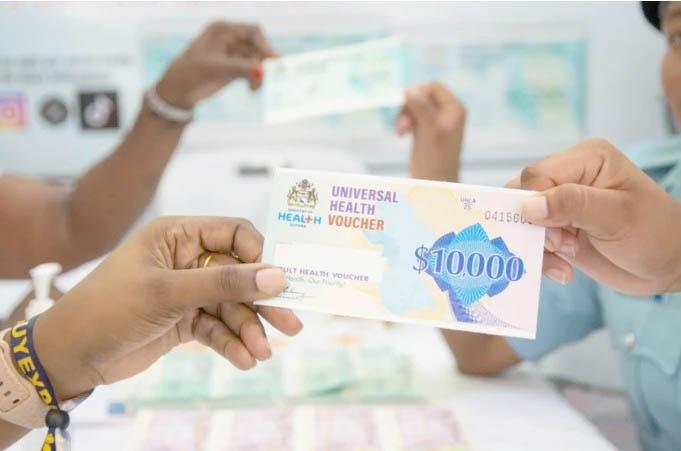
144 per cent year-on-year increase in health-voucher utilisation
THE national health voucher programme has recorded a 144 per cent year-onyear increase in utilisation, with more than 461,000 vouchers processed over two years, which signals a strong public uptake of the measure.
This was disclosed by Minister of Health, Dr Frank Anthony, during the recent MoU signing with healthcare service providers participating in the initiative, which he described as a very successful one.
“We started this programme in 2024, and we were able to do 134,152 tests,” Anthony said. “By 2025, we saw that number jump, and we went up to 326,868 vouchers that were used. That accounts for a 144 per cent increase year on year, and I think that’s significant.”
According to the minister, the vouchers cover services including eye testing, spectacles, and Human papilloma-
virus (HPV) screening and a universal health voucher with 461,020 vouchers processed across 2024 and 2025.
Over the same period, he indicated that 175,200 eye tests were conducted and 160,282 spectacles were distributed nationwide.
Added to this, laboratory services also showed substantial uptake, with 91,501 adult tests and 13,112 child tests completed, while some 20,852 women accessed HPV screening through the programme.
The health minister noted that the data demonstrates both demand for affordable testing and the programme’s role in early disease detection.
“These vouchers are very important because from the results, we are able to understand what is going on in our population… We can bring people into care and manage the problems that they have,” he said.
He noted that screenings have already identified thousands of cases of diabetes,
high cholesterol and other metabolic conditions, many involving patients who were previously unaware of their status, while eye-care screenings have also led to the identification and treatment of cataracts and glaucoma.
Against this backdrop, Dr Anthony highlighted that the growing volume of data generated by the programme has strengthened the ministry’s ability to analyse disease trends by region, sex and age group, allowing for more targeted public-health interventions.
“This is not just a transactional relationship… The utilisation of what we test and how we use that information is also very important,” he told providers at the signing ceremony.
Health Minister, Dr Frank Anthony
Human capital investment central to Guyana’s transformation – Dr. Ashni Singh says
–– as gov’t scales up schools, digital learning and UG programmes to ensure world-class training for all Guyanese
SENIOR Minister within the Office of the President with responsibility for Finance, Dr Ashni Singh, has underscored that sustained investment in education remains the most critical pillar of Guyana’s longterm development strategy, as government accelerates school construction, digital-learning access and new University of Guyana (UG) programmes nationwide.
During a recent interview aired on the National Communications Network (NCN) Berbice, Dr Singh said the administration’s education agenda is geared towards equipping citizens with world-class skills to match the demands of a rapidly transforming economy driven by energy, infrastructural and industrial expansion.
“There’s no investment that is more important than building human capital [and]
than training people. What we want to achieve is worldclass education for all Guyanese and at all levels,” he said.
He explained that a key focus is ensuring universal access to basic and secondary education through an aggressive nationwide school-construction programme, particularly in hinterland and riverain communities that previously lacked adequate facilities.
“We are building schools where they did not previously exist to make sure that everybody can go to school and can complete at least a basic secondary education,” Dr Singh noted. For instance, he pointed to the ongoing construction of a secondary school in Orealla, which previously had none.
Located at Orealla, a riverain village along the Ber-
bice River, this project represents a major investment in the local education infrastructure, with a total project value of G$198,866,010, a press release from the ministry said.
The new Orealla Secondary School will feature six modern classrooms, four specialised laboratories and a well-equipped library, aimed at providing a high-quality learning environment for approximately 180 students.
Dr Singh also pointed to financial interventions aimed at easing the burden on families. He said the restoration and successive increases of the ‘Because We Care’ cash grant have provided tangible support to parents across the country.
“When we came into government, we said we will restore the cash grant that had been taken away. We have done that. We said
we will increase it, and we have increased it. And in this year’s budget, we have further increased it. So now every single parent is going to be getting a larger cash grant for their child to support their child’s educational endeavours,” he said.
Beyond infrastructural and financial support, the minister emphasised improvements in the delivery of education through digital platforms and enhanced teacher training. He highlighted the Guyana Digital School as a transformative initiative, enabling students nationwide to access learning resources from their homes.
“Every single Guyanese child in their own home can stay home and be able to access the Guyana Digital School,” he stated.
At the secondary level, government has also re -
moved financial barriers by funding up to eight Caribbean Examinations Council (CXC) subjects for students, thereby expanding opportunities for academic advancement.
He also highlighted the major expansion of the University of Guyana (UG)’s academic offerings, with the launch of new high-demand degree programmes in the medical, engineering, and marine sciences fields.
This initiative aims to provide increased access to education and address the nation’s demand for skilled professionals across multiple sectors.
The expansion includes a new Pre-Medical Sciences programme, as well as Civil Engineering and Construction and Infrastructure degrees, which will initially be offered in Regions Two, Three, Six, and Nine, out-
side the capital. The move is intended to allow students to pursue critical career pathways closer to their homes, while supporting regional development.
He also encouraged citizens, particularly in Region Six, to take advantage of technical and vocational training opportunities that are being expanded to align with the region’s anticipated industrial growth.
“I’m appealing to people to please take advantage of these training opportunities. They’re available, they’re for you, and they are intended to benefit the young people of Guyana and even the not so young who may be willing and interested in retraining themselves or upskilling themselves and acquiring new skills,” Dr Singh urged.
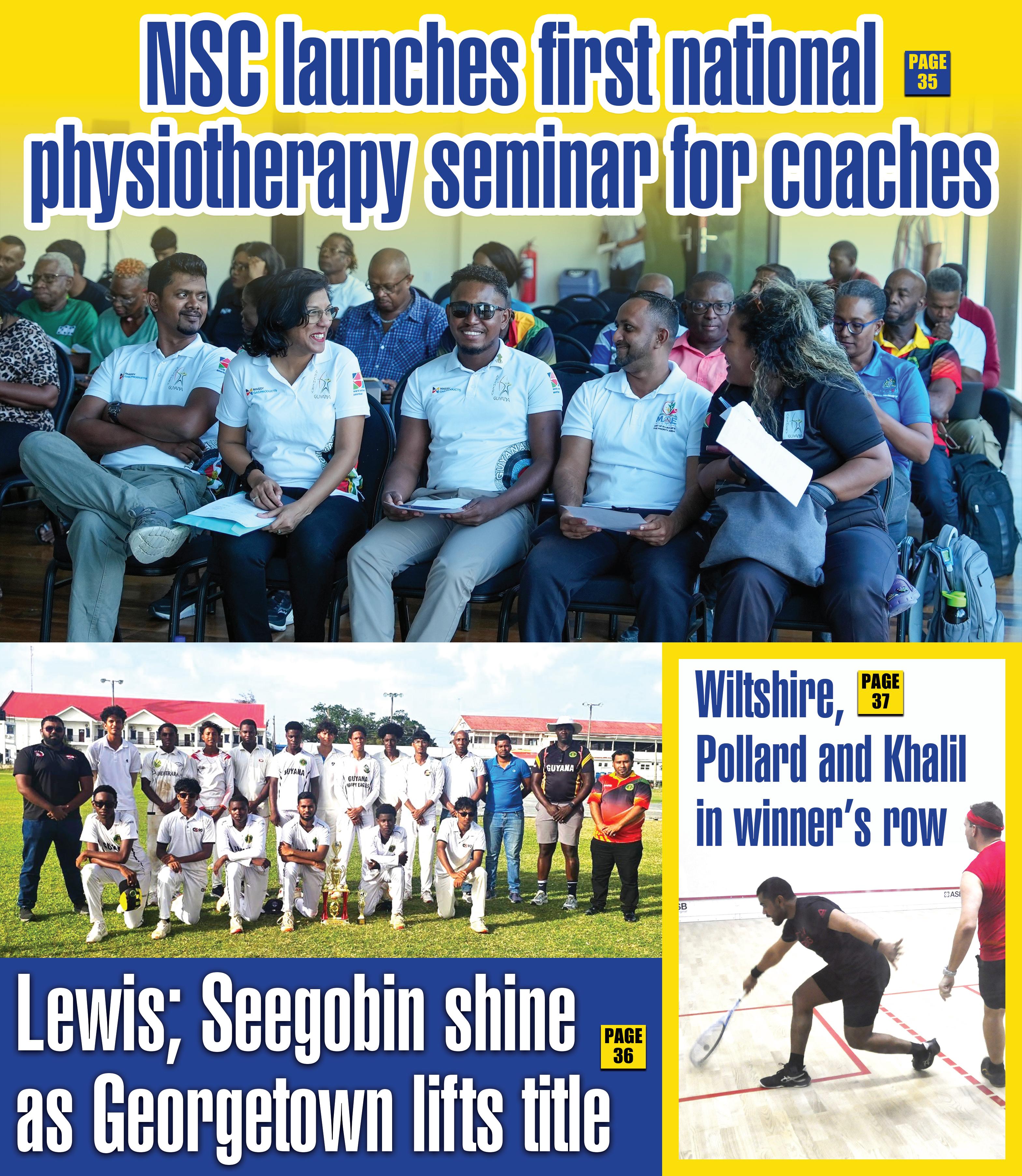
Coaches upskilled at NSC’s physiotherapy seminar
THE National Sports Commission (NSC), in a strategic partnership with
the Ministry of Health, convened a first-of-its-kind physiotherapy seminar on Friday at the Cliff Anderson Sports Hall.
The programme, which drew nearly 90 registered coaches, represents a Stateled response to the historical lack of integrated athlete welfare protocols in the developing sporting nation.
The government’s push to professionalise the sector comes as Guyana seeks to
elevate its performance standards on the international stage.
“The mission is to bridge the gap between the doctor’s clinic and the dugout,” said Director of Sport Steve Ninvalle.
The one-day intensive programme transitioned away from basic first-aid, and focused instead on complex physiological risk management.
The government aims to
ENGLISH RACING TIPS
DONCASTER
09:25 hrs Coolanna
09:55 hrs Mighty Bandit
10:30 hrs King’s Threshold
11:05 hrs Kefir D’oudaries
11:40 hrs The Resdev Tyke
12:15 hrs Ike Sport
12:50 hrs Ivor Bear
NEWBURY
09:35 hrs Queenie St Clair
10:10 hrs Brentford Hope
10:40 hrs Scorsese
11:15 hrs Torn And Frayed
11:45 hrs Vincenzo
12:23 hrs Huffin And Puffin
12:58 hrs Malina Road
LINGFIELD
09:00 hrs Damascus Steel
09:30 hrs Escape Plan
10:05 hrs Captain Fox
10:35 hrs Richie’s Rocket
11:10 hrs How’s The Guvnor
11:52 hrs USS Constitution
12:30 hrs Jake Loves Laura 13:05 hrs Oman
IRISH RACING TIPS
NAVAN
09:18 hrs Hygge
09:50 hrs Galoleo Dame
10:25 hrs Showurappreciation
11:00 hrs San Hilario
11:35 hrs Jacob’s Ladder
12:08 hrs Found A Fifty
12:43 hrs Savante
SOUTH AFRICA RACING TIPS
KENILWORTH
08:15 hrs Queen Regent
08:50 hrs Swiatek
09:25 hrs Outlaw King
10:00 hrs Star Major
10:40 hrs Captain West 11:15 hrs Prince Of Tibet
AMERICAN RACING TIPS AQUEDUCT
Race 1 Bounty Banker
Race 2 Paradise
Race 3 Queens Over Three
Race 4 One None Hundred
Race 5 Jours In A Day
Race 6 Sugartown Sweetie
Race 7 Calling Card
Saturday, February 28th, 2026
CUMMINGS ELECTRICAL COMPANY LTD83 Garnett Street, Georgetown (Tel: 225-6158)
Answers to yesterday’s quiz:
(1) No Result (NZ vs PAK) (2) Nil
Today’s Quiz:
(1) What has been the result of the ENG/SL Super 8 game of the current T20 World Cup? (2) Who won the Man of the Match award?
Answers in tomorrow’s issue.
position coaches as a “first line of defence”, making them directly accountable for athlete safety and injury prevention through evidence-based decision-making.
Led by a team of clinical experts, the seminar addressed the region’s high-performance hurdles.
The NSC confirmed that the medical drive is part of a multi-phased “revolution” in sports administration.
Plans are underway for a dedicated Sports Psychology Seminar and specialised programmes targeting female athletes, athletes with disabilities, and master’s categories.
The next phase of the policy shift will focus on implementing a national injury-tracking register, and a formalised medical referral system to ensure comprehensive data collection and longitudinal health tracking for athletes.
Elite League Cup
Slingerz to battle Monedderlust tonight at NTC
ELITE League champions Slingerz Football Club will be back in action tonight as the Guyana Football Federation Elite League Cup continues with their game against top rivals Monedderlust at the National Training Centre Ground.
The contest is set to kick off at 19:00hrs.
Slingerz led their group after opening their campaign with a win against Ann’s Grove United, while their opponents, Monedderlust, also beat Ann’s Grove United to be level on points in Group A.
Meanwhile, in the latest round this week, Police Football Club whipped Santos FC 5-nil.
It was an all-round good showing from Police’s squad, with Makayah Jervis recording a double to lead the way with goals in the 34th and 54th minutes.
Also getting on the score sheet was Nicholas MacArthur and Randy Roberts, with the other goal coming by way of own goal.
In Group B, Police FC led with two wins on 6 points after defeating Santos and Den Amstel, with Santos second on the table after beating Den Amstel as well.
The feature clash proved a scorcher, with Guyana Defence Force stopping Western Tigers 5-1.
Shemar Scott gave GDF the game’s first goal in the 22nd minute before William Europe equalised for Western Tigers.
Scott quickly came back to give them the go-ahead goal to make it 2-1 heading into the second half.
Second-half goals from Stephen McDonald (51st), Chris Macey (64th ) and Jeffery Pereira in the 88th minutes sealed the contest for GDF as they took an emphatic win, 5-1.
The win puts GDF on 6 points from two outings after also getting the better of Fruta Conquerors to top their group with Tigers 2nd, after also getting the better of Fruta Conquerors.
The competition is made up of 9 elite league teams divided into three groups of 3, with the top three and the next best team advancing to the semifinals.
GFF
DCB 50-over Inter-Association U-19 Cricket
Lewis; Seegobin shine as Georgetown lifts title
By Sean Devers
ON a day blessed with glorious sunshine yesterday, Georgetown continued their unbeaten streak to beat West Demerara by seven wickets to lift the DCB 50-over Inter-Association U-19 Cricket trophy at the Police Sports Club ground.
In a match-up of the two top teams watched by a small but vocal crowd, West Demerara batted first, and made 149 all out in 40.3 overs.
The home side replied with 150 -3 in 27.1
to win in their own backyard to the unadulterated delight of their fans.
West Demerara lost Arvin Sukhnandan (2), bowled with a beauty from Emmanuel Lewis at 16-1 as the game got going.
Pameshwar Ram and Tashant Argyle consolidated the position with sensible batting, with the former doing the heavy lifting.
No sooner was the 50 posted than Lewis struck again when he removed the set Ram at 54-2, the batsman scoring a flamboyant 31-ball 35 decorated with six well-timed boundaries.
Robin Seecharran buckled down to bat long, and together with Argyle carried the score to 76, before leg-spinner Reyaz Latif got rid of the former for who faced 59 balls in his eight with a single four.
Navindra Sankar joined Argyle, and the pair batted in an ultra-defensive fashion before pacer Shane Prince sent Argyle’s stumps flying after; that partnership adding 49 for the fourth wicket stand to leave the score on 1254. Argyle’s 31 lasted 79 balls, and included two boundaries, including a six.
When Danvir Seegobin bowled Sankar for 23 from 59 balls, his demise triggered a dramatic collapse as the last five wickets tumbled for 24 runs.
Seegobin ripped through the lower order to finish 4-15, with support from Lewis (3-19) and Prince (2-56).
When the city began their reply, Kush Seegobin and Kishan Silas had built a solid foundation for their team.
Seegobin took the attack to the bowlers, while Silas played second fiddle, as the 50 partnership was brought up in the seventh over.
At 62 in the 10th over, Sankar removed Seegobin, three short of a half-century. His aggressive 47 included three fours and four sixes, and just 27 balls.
Silas and Lewis added 63 runs in the next 11 overs, before Silas was dismissed for 31 from 69 balls with two boundaries at 125-2. Lewis reached the boundary seven times as he launched a vicious attack on West Demerara bowlers, before Argyle had Jonathan Mentore for a duck. But by then, victory was just eight runs away.
Lewis faced 51 balls, hitting seven fours in his unbeaten 50 before West Indies U-19 left-hander Shamar Apple (5) finished off the game with a boundary.
Meanwhile, in the third-place play-off at the LBI ground, home team East Coast quickly disposed of Upper Demerara by nine wickets.
Upper Demerara were dismissed for 102 despite 33 from Nathan Bishop, and 26 from Tyric Henry.
Arun Gainda had 4-20, while Vijai Kalpu and Kaylan Callender took two wickets each for East Coast, who coasted to 104-1 in nine overs. Yannick Newton hit seven fours and two sixes in his 57 not out, and 35 from the second over, bowled by Errol Alder.
Munesh Outar, the other not-out batter, made an unbeaten 32 with five fours and a six. The pair joined forces when Trilok Nanan (4) was LBW to Alex Ragubeer at 41-1 in 2.1 overs.
Lubrex and Parsun golf tournament tees off at Lusignan on Sunday
Golfers will converge at the Lusignan Golf Club on Sunday, March 1, for the Lubrex and Parsun Outboard Golf Tournament, presented by Crown Mining.
The 18-hole medal play event tees off with a shotgun start at 8:30 a.m. and will be contested across three handicap divisions: 9 and under,
10–18, and 19–36. Players will compete for Overall Best Gross and Overall Best Net titles, along with prizes for Nearest to the Flag and Longest Drive. Trophies will also be awarded to the top three finishers in each flight.
The tournament is sponsored by Crown Mining and features its brands, Lubrex Lubricants and Par-
sun Outboard Engines. Registration closes on Saturday, February 28 at 1:00 p.m., with interested players required to confirm participation through the Lusignan Golf Club. Organisers expect strong participation as corporate-backed tournaments continue to support competitive golf and the sport’s development locally.
Man-of-the-Match Emmanuel Lewis had three wickets, and made 50 not out for GT yesterday.
Man-of-the-Match for the third placed game Yannick Newton hit seven fours and two sixes in his 57 not out yesterday for East Coast.
Bounty Farm Handicap Squash Tournament
Larrissa Wiltshire (foreground) plays off the glass as she beat Steven Xavier 15-11, 15-14. (Sean Devers photo)
Wiltshire, Pollard and Khalil in winner’s row
By Sean Devers
THE National Racquet Centre on Wolford Avenue was the venue for the third of the six-night Bounty Farm Handicap Squash tournament on Thursday when 29 matches were contested.
Larissa Wiltshire, Regan Pollard, and Jason-Ray Khalil were among the big guns
n RESULTS OF MATCHES ON THURSDAY:
Rising: Tyler Rahaman def. Krystal Sami 15-10, 12-15, 15-11
Emma Singh def. Zayne SAMI 15-13, 15-14
Layla Rahaman def. Ana DaSilva 15-12, 15-6
[6] Danté Atkins def. Skai Sukhai 15-14, 15-11
Jadah Hughes def. [7] Omar Shariff 15-7, 15-12
[1] Nicholas Mohamed def. Nikisha Allen 15-12, 15-12
Averi Simon def. Zendaya DeFreitas 15-6, 15-11
[8] Aderemi Simon def. Aaran Sargeant 15-12, 15-7
Open: Jibril Alli def. Kalani Howard 15-5, 15-12
Giovanni Grant def. Kristina Cheeks 15-5, 15-12
Maxwell Viapree def. Zahara Belle 13-15, 15-7, 15-10
[1] Miguel Wong def. Reagan Rodrigues 15-4, 15-4
Nijad Bacchus def. Azariel Maison 15-8, 15-6
[4] Emily Fung A Fat def. Teija Edwards 15-8, 15-7
who won their matches that night in the Elite category. Wiltshire defeated Steven Xavier 15-11, 15-14, Pollard got the better of Kirsten Gomes 4-15, 15-11, 15-11, and Khalil beat Jonathan Antczak 0-15, 15-11, 15-14 as the action heated up at the halfway stage of the Tournament.
It will climax tomorrow night at the Georgetown Club on Camp Street.
[2] Jason-Ray Khalil def. Jonathan Antczak 0-15, 15-11, 15-14
GFF launches youth ensemble programme
THE Guyana Football Federation (GFF) has officially announced the launch of its inaugural Youth Ensemble Programme, a landmark initiative designed to overhaul the seasonal calendar for club football, with a structured and strategic focus on youth competitions.
Approved by the Federation’s Congress, the programme will introduce national competitions at the Under-13, Under-15, and Under-17 levels, commencing May 2, 2026. The initiative represents a central pillar of the GFF’s long-term development strategy aimed at providing young players with more structured and competitive matches per season, expanding the national scouting pool,
strengthening early talent identification, and increasing participation levels across the country.
The Youth Ensemble will be played in two distinct phases: Intra-Association Phase, where each Regional Association will organise competitions in a league format, with all eligible and properly registered clubs invited to enter teams within the respective age groups.
The National Championship Playoffs is where the top two teams from each association will advance to the National Phase, where they will compete for the honour of being crowned National Club Champion in their respective age division. • Continues On Page 38
THE 2026 National Chess Championship Qualifiers begin today, Saturday, February 28, at the Cliff Anderson Sports Hall from 09:00hrs.
The Guyana Chess Federation and Diamond Fire and General Insurance are the main sponsors of the Open and Female categories, respectively.
The first four rounds of the eight-round classic tournament will take place this weekend, Saturday, February 28, and Sunday, March 1 before concluding the following weekend on March 7 and 8, 2026.
The eight-round Swiss tournament features a classical time control of 90 minutes per player, plus a 30-second increment per move, will see intense battles over the board as chess players vie to secure a spot and challenge reigning National Champions CM Taffin Khan in the Open Championship, and WCM Aditi Joshi in the Women’s Championship for the coveted titles.
In the Open Category, a formidable line up featuring players like FM Rawle Allicock, FM Anthony Drayton, Kyle Couchman, CM Sachin Pitamber, CM Ronuel Greenidge, and Keron Sandiford are expected to lead a diverse field of senior players seeking the top nine spots, while,
GFF launches youth...
• From Page 37
The competition’s calendar has been deliberately aligned with school holiday periods and the build-up to international youth tournaments. This strategic scheduling allows for early scouting, extended preparation periods, and streamlined national team selection processes.
In accordance with their Concacaf, CFU and GFF Club Licensing obligations, the ten Elite League clubs will be required to field teams in the designated youth age groups, reinforcing the Federation’s commitment to building a comprehensive player development pathway. Child Safeguarding will remain a compulsory component of all Youth Ensemble activities, consistent with the Federation’s Memorandum of Understanding (MOU) with the Rights of the Child Commission. The programme is also aligned with the global safeguarding framework established by FIFA through its FIFA Child Safeguarding Strategy, which outlines clear standards for prevention, reporting, risk management and education across all Member Associations.
At the national level, implementation will be guided by the Guyana Football Federation Child Safeguarding Policy, ensuring that every Regional Association and club adheres to established protocols designed to protect young players from harm, abuse, discrimination and neglect. Together, these frameworks reinforce the GFF’s unwavering commitment to creating safe, inclusive and development-focused football environments for every child.
The success of the Youth Ensemble Programme depends heavily on the proactive engagement of Regional Associations and their registered clubs. The Federation is urg-
the rising wave of talent of the juniors, including U12 Champion Aidan Tinne, U14 Champion Abel Fernandez Ciria, Vir Narine, and Javier Davenand, among others, will challenge the more experienced ones as they attempt to break into the top nine spots.
Meanwhile, in the Women’s Category, former champions WCMs Jessica Callender and Sasha Shariff are expected to battle it out against a highly-competitive field. The top players will face a strong challenge from seasoned players like Treskolé Archibald, Ciel Clement, Chelsea Harrison, Rebha Lachhman, and Parnita Kishun, and from rising stars such as U14 and U16 Girls’ Champion Kataleya Sam, U12 Champion Divya Persaud, among others, all vying for one of the top 9 spots.
The top nine finishers from each category will earn a stake to participate in the National Chess Championship 2026 set to begin on March 14th, 2026.
The top eight boards for the Open Category and the top four boards for the Women’s Category will be live streamed on lichess. org by John Lee, FIDE Arbiter and Technical Director for the GCF. Results and pairings can be viewed on chess-results.com
ing all stakeholders to ensure timely player registrations, administrative compliance, and effective coordination so that no young player is denied participation due to avoidable administrative delays or procedural oversights.
The GFF will conduct consultations with each Regional Association to support operational planning and to ensure alignment from the national level through to the more than 200 affiliated clubs across Guyana.
GFF President Wayne Forde described the Youth Ensemble Programme as a defining step in modernising Guyana’s youth football ecosystem:
“This initiative will streamline planning from the GFF, through our Regional Associations, and across more than 200 clubs throughout Guyana,” Forde said, adding: “It represents the blueprint for youth competition at the club level and a major shift toward a more structured and predictable football calendar.
“I am confident that this programme will strengthen our development pathway and significantly expand opportunities for talent identification nationwide. I urge every Regional Association and every club to go above and beyond to ensure that no child who wants to play football is denied that opportunity because of late registration or avoidable administrative shortcomings. Our collective responsibility is to ensure that every young player has a fair and meaningful chance to participate and grow in the game.”
With its structured format, mandatory participation standards, integrated safeguarding framework, and alignment with international development principles, the Youth Ensemble Programme marks a new chapter for youth football in Guyana—one built on access, organisation, competitiveness and opportunity.
Scenes from the last National Chess Qualifiers.
Slingerz sign three Africans to boost CFU Club Shield campaign
Slingerz Football Club has intensified its campaign in the ongoing Guyana Football Federation (GFF) domestic season while strengthening its squad ahead of the Caribbean Football Union (CFU) Club Shield, with the signing of three players from Africa in a clear statement of intent.
The club has officially announced the arrival of Cameroonian defender NJoh Motutu, who joins from Fako United FC.
Motutu, who plied his trade in the Southwest Division of Cameroon’s football pyramid, is widely regarded as a disciplined, hard-nosed defender known for his physical presence and strong reading of the game.
He is set to make his debut tonight when Slingerz face Monedderlust in the GFF Elite League Cup at the National Training Centre, Providence, from 19:00hrs. His inclusion is expected to add steel and experience to the club’s defensive unit as they seek to add another trophy to their already extensive cabinet.
Further bolstering the squad, Slingerz have secured the services of Kalifa Jallow from The Gambia, who currently plays with Gambia Ports Authority FC, and Yusifu Kargbo from Sierra Leone’s FC Kallon-Freetown.
Both players are scheduled to arrive in Guyana over the weekend and are expected to integrate
MCYS and NSC National Schools Volleyball Tournament
St Stanislaus, CPCE are top winners after day one
THE Cyril Potter College of Education (CPCE) and St Stanislaus were big winners last Sunday when action served off in the National Schools Volleyball Tournament.
The two-day competition, organized by the Guyana Volleyball Federation is sponsored and run by the by Ministry of Culture Youth and Sport and the National Sports Commission.
In the male category Annandale Secondary came up against Queen’s College with QC winning
quickly into the team’s setup.
In a statement, the club described the overseas recruitment drive as a worthwhile investment, particularly given the evolving landscape of football in Guyana.
With increased competition and higher performance standards across the region, Slingerz believe strategic acquisitions are necessary to remain competitive both domestically and in the wider Caribbean.
The club also moved to strengthen its local core, securing goalkeeper Sese Norville from Police FC, and promising young winger Samuel Garnett from Western Tigers. According to Slingerz, these additions complement an already balanced squad that blends youth and senior experience.
The aim, the club noted, is not only to dominate the local football scene but also to provide a strong representation of Guyanese football at the CFU level.
Slingerz enter the new season with unfinished business.
They completed the GFF Elite League campaign unbeaten to win the title but were stunned 1–0 by Western Tigers in the final of the GFF Super 16 Year-End tournament.
With reinforced depth and renewed ambition, the club appears determined to translate its domestic consistency into silverware and make a meaningful impact on the regional stage.
in straight sets 17-13 and 17-12.
Next, St Roses played CPCE, winning in dominating fashion winning the first set 27-4 and the second 17-6.
‘Saints’ also got past President’s College ‘A’ team 17-14 and 17-10. President College ‘B’ team won when they clashed with the Bishops High school 17-10 and 17-9.
The distaff side also saw heated action, ‘Saints’ getting things going with a 17-11 and 17-8 victory over President College ‘A’. Saints also defeated St Roses to complete a
double victory, winning 17-11 and 17-2.
In other encounters CPCE battered St Rose’s high school 17-5 and 17-2 while Bishops High also grabbed their lone win of the day against President’s College ‘B’ team in a tight contest 17-15 and 17-11.
The Schools Volleyball Competition features the likes of The Bishop’s High, St Rose’s High, President’s College, St Stanislaus College, Annandale Secondary School and Cyril Potter College of Education.
Rebel Tennis Club awards and fundraising cocktail party set for tonight
By Sean Devers
REBEL Tennis Club, which was founded in February 2015 by Head Coach Andre Erskine, celebrated its 11th Anniversary with a packed month-long programme of activities.
Those celebrations will climax tonight with its annual end-of-year awards and fundraising cocktail party.
They started the celebrations with their Anniversary Tournament, which saw players competing in various categories: U8, U10, U12, U14, U18, U25, and an internal parent competition.
They will be taking the streets to assist the homeless this weekend. The Club had a weekly tennis trivia where followers had an opportunity to win prizes.
Results of the tournament:
n Boys U8 Winner (Javier Fraser), Runner Up (Malak Bacchus)
n Girls U8 Winner (Kelly Doris), Runner Up (Alexandra Singh)
n U10 Red Ball Meddley Winner (Brielle Paul), Runner Up (Kiarra Goodluck)
n U10 Orange Ball Boys Winner (Rahul Narayan), Runner Up (Stephon Bristol)
n U10 Orange Ball Girls Winner (Liza Singh), Runner Up (Khloe Andrews)
n U12 Boys Winner (Zion Hickerson), Runner up (Hayden Chan)
n U12 Girls Winner (Mia Bullen), Runner up (Monalisa Graham)
n U14 Boys Winner (Rafeeq Prince), Runner up (Ryan Persaud)
n U14 Girls Winner (Samara Siland), Runner up (Nandica Arjune)
n U18 Boys Winner (Nathan DeNobrega), Runner up (Akil Semple)
n U18 Girls Winner (Paula Kalekeyzi), Runner up (Kimora Erskine)
n U25 Men’s Winner (Gerald Scotland), Runner up (Denzel Luthers)
n Male Parent Winner (Kelsey Andrews), Runner-up (Warren Chan)
n Female Parent Winner (Oshea St. Kitts), Runners-up (Salima Hinds)
Players show off their trophies after the tournament.
President’s College Men vs Bishops High.
Slingerz FC’s Head Coach, Jamaal Shabazz, welcomes Cameroon’s Njoh Motutu to the club.
Some of the coaches at the seminar on Friday. (PHOTO: News Room)
Jason Ray Khalil (left) defeated Jonathan Antczak 0-15, 15-11, 15-14. (Sean Devers photo)
We are the Champions! The Georgetown team with officials after winning the tournament yesterday.