
Sunday, April 26th, 2026
Sunday, April 26th, 2026
By Michel Outridge
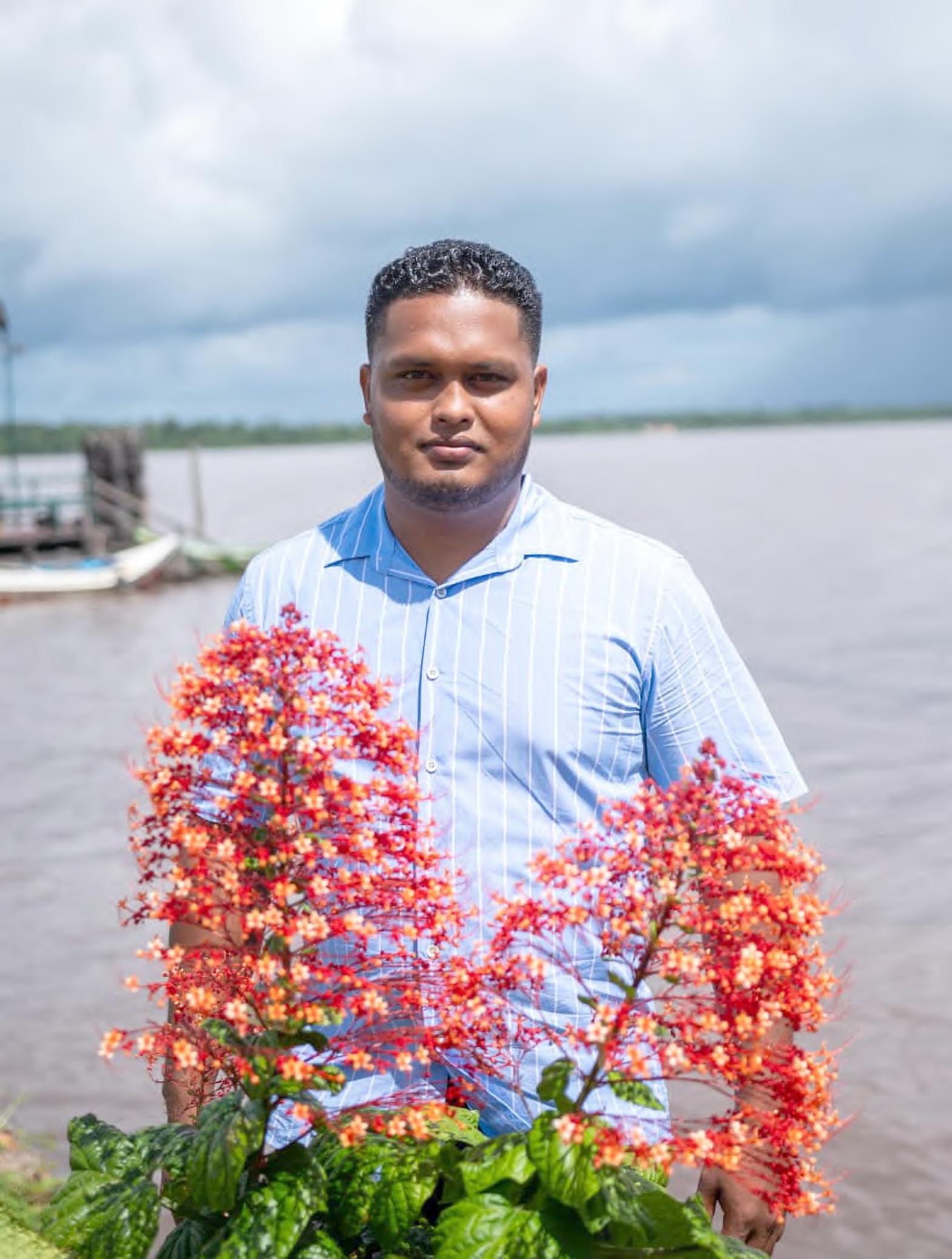
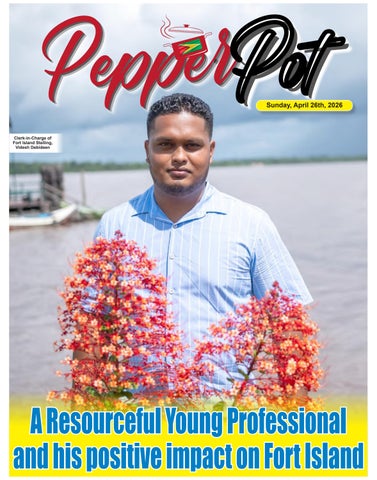
VIDESH DEBIDEEN is a dedicated committee member and public servant from Fort Island, Essequibo River, Region Three (Essequibo Islands–West Demerara), widely recognised for his contributions to the island’s infrastructure, tourism, operations at the Fort Island Stelling, and social welfare.
The 26-year-old has been serving as Clerk-in-Charge of the Fort Island Stelling, attached to the Transport and Harbours Department (T&HD), for the past four years.
The rehabilitated Fort Island Stelling in Guyana was officially commissioned in May 2022 following G$82 million in rehabilitation works. Executed by the Ministry of Public Works, the project enhances safety for residents and boosts tourism and economic activity for the island, with regular, improved transport links, including stops from boats travelling to Bartica.
The Fort Island Stelling re -
placed a dilapidated structure and connects islanders to the mainland, fostering tourism and trade. The project included significant rehabilitation to improve the timber structure and ensure its longevity. The stelling is crucial for the estimated 95-plus residents of Fort Island and the surrounding catchment areas. The improved stelling supports enhanced boat services to the island, particularly on weekends.
Following the commissioning, it was announced that the elderly and vulnerable on the island would receive a golf cart to assist with transportation, as noted in reports from the Ministry of Public Works. The project was delivered through the Transport and Harbours Department to prevent the island from being cut off and to boost economic development.
“As a ‘son of the soil,’ I have spent my life on Fort Island, witnessing and driving gradual development with this administration, which is backing locals for even more development on the island,”
he said.
For this year’s 60th Diamond Jubilee Independence, Fort Island has been selected for the national flag-raising ceremony, and infrastructural and other beautification works are currently underway to transform the island in time for that event.
Residents of Fort Island welcome this transformation. Over time, the island has benefitted from a new stelling, solar-powered lights, new walkways, among other developments that are improving the lives of its people.
Debideen is a prominent figure in the local administrative landscape and a vocal advocate for the island’s unique historical significance, overseeing projects while also promoting tourism on the island.
Career and Public Service
This young man is a key member of Guyana’s Transport and Harbours Department, serving as the Clerk-in-Charge of the Fort Island TURN TO PAGE XI


FOR the past five decades, the Burrowes School of Art has been Guyana’s premier creative institution, honing the talent of many of the country’s leading artists, creatives, and teachers. Last year, the school celebrated its 50th anniversary with a captivating exhibition at Castellani House, held to commemorate the milestone.
Artist and educator Dominique Hunter, who entered the institution at 16, told Pepperpot Magazine that the school’s legacy is deeply embedded in Guyana’s education and creative systems, with generations of art teachers, practitioners, and cultural workers tracing their roots back to its classrooms.
Now, as Guyana’s art landscape shifts, with emerging artists increasingly launching independent exhibitions, public art projects, and digital platforms, Hunter said that, with institutional training from Burrowes coupled with social media and technology, young creatives now have more visibility and are reshaping how their work is seen and engaged with by audiences both locally and internationally.
Hunter is one of the many artists produced by the Burrowes School of Art. After starting at the institution at just 16 and graduating in 2007 as the top student of her year, she launched her first solo exhibition at Castellani House in 2010.
Since then, Hunter has expanded her studies and worked as a full-time artist from 2017 to 2022. In 2022, she returned to teach at the school, starting with research methods and eventually taking on duties as Director of Studies and Registrar. For Hunter, the exhibition not only marks a milestone but also highlights the school’s

reach and impact. Originally planned for last year to coincide with the anniversary, the exhibition puts the scope of Guyana’s creative field into perspective.
Speaking to the school’s wide influence, Hunter emphasised that Burrowes has served as the foundation for most of Guyana’s artists and teachers. She shared, “Most of the students who pass through Burrowes are attached to secondary and primary schools across the country.
Every art teacher you come across more than likely passed through Burrowes,”
she said. “Fifty years is a long time, and the school has gone through tremendous transformation,” she added. “Over the years, we’ve had artist residencies, external examiners, workshops, art camps, and sketch tours. We even took students to Suriname for a week, which was a great experience.”
In those fifty years, and in the years since Hunter was a student, the school has evolved significantly. As she explained, the institution’s structure has changed tremendously, with expanded systems designed to better teach, accommodate, and
support student growth. “There are also many more courses now. We did not have access to these when I was a student. Now we offer pottery, fashion, modelling, entrepreneurship studies, computer graphics, costume design, and Caribbean studies,” she said. This, she added, is something to celebrate, as it opens new doors for young creatives entering an evolving art world.
The growth and diversification of Burrowes also reflect wider changes in Guyana’s art landscape. While Hunter said the community of creatives has grown signifi-
cantly, the field has also seen new trends emerge. Major institutions such as Burrowes have helped shape a closeknit, supportive network of artists. “There is a group of formally trained artists, but the community is very closeknit. Everyone meets at exhibitions and shares ideas, so it is a healthy ecosystem,” she said. At the same time, there has been a rise in private and self-taught artists.
As Hunter added, “There are also more private initiatives now. Past and current students are identifying gaps and stepping up to fill them, organising pop-up exhibitions, mural projects, and other creative initiatives.”
Whether the local art landscape continues to see more traditionally trained artists versus self-taught creatives, or more pop-up exhibitions alongside contemporary showcases, Burrowes will continue to facilitate the growth of art regardless of shifting trends.
As Hunter explained, art in Guyana, despite its growing diversity, remains an interconnected and supportive space. She noted that the sector is now better able to build stronger links among artists, their work, and audiences through evolving art forms and growing support from both public and private sectors.
“There are different pockets in the art community, but they all intersect. The sector is now bridging the gap between practitioner and audience. More artists are engaging sponsors and receiving support, which is very positive. Artists are dependent on audiences, whether public or private, to engage with their work and sustain their practice,” she said.
Hunter added that, as the market expands, embracing corporate partnerships is one way to bridge that gap and eventually tap into regional
and international markets.
She is also optimistic about the future of art in Guyana and what it holds for the next generation of young artists. The future of art in Guyana is backed by Burrowes but also continues to see growing support from other vital institutions.
Noting the shift in government support, Hunter shared that bodies such as the Ministry of Education are not only supporting but promoting the arts as a viable career choice for young people, which is vital for the sector’s development. “There are so many areas young people can explore in the arts. The Ministry of Education did a really good job with their career fairs, highlighting different fields such as animation, film, photography, writing, and digital art. They showed that there are many paths beyond just teaching,” she said.
But the future of art in Guyana goes beyond traditional ways of showcasing work. As Hunter shared, art in Guyana, like the rest of the world, is being reshaped by technological and social media developments. “Social media and technology have also helped artists become more visible and access wider markets.
The younger generation is doing a fantastic job building and nurturing the art community.” Institutions like Burrowes remain the foundation and heart of Guyana’s creativity, and it is because of the work it has done, and continues to do, that art as a career is now more of a possibility than ever before.
As Hunter expressed, “There is no single path anymore. Technology has made it possible to reach goals in multiple ways. That is important for students to understand—that a career in art is broad and full of possibilities.”
IN 2019, Michelle A. Nicholas and Lyndell Danzie-Black asked a question that would change the national conversation about women’s leadership in Guyana: what happens when you shine a light on the women already changing this country? Six ceremonies and 150 women honoured later, with over 1,000 nominations received, the seventh ceremony on 9th May 2026 is poised to carry that legacy to 175 women and a defining new chapter.
The 25 Influential Women Leaders Award (25IWLA) was born of the recognition that Guyana had no dedicated platform to honour women leaders across all sectors simultaneously. Not one industry, not one discipline, but the full breadth of women’s contribution to Guyanese society.
Its co-founders, Michelle A. Nicholas, Founder and Chief Executive Officer of The NICO Consulting, and Lyndell Danzie-Black, Managing Director of Cerulean Incorporated, have known each other since 2016. What brought them to the 25IWLA was not a single moment of inspiration, but years of shared conviction—a mutual recognition that the women leading across every corner of Guyana deserved to be seen clearly, celebrated loudly, and connected deliberately.
When the platform launched in 2019, the co-founders described their founding question as deceptively simple. As they have reflected: “We asked ourselves, what happens when we shine a light on the women already changing Guyana? The answer has been extraordinary.” When the global disruption of 2020 forced a pause on public gatherings, the platform did not falter. It adapted, deepened its work, and returned with renewed purpose—a resilience that mirrors the very quality it celebrates in every woman it honours.
The Women Behind the Movement
Michelle A. Nicholas has built her career at the intersection of strategy, service, and transformation—from the halls of JPMorgan and the US Fund for UNICEF to the boardrooms of Westchester, and back to the communities
Finance by Crain’s NY Business, and honoured with the Woman in Business Award by 914Inc Magazine, she brings a record of impact that crosses sectors and borders. She currently serves as Vice Chair of the United Way of Westchester and Putnam and the PCSB Community Foun-
aging Director of Cerulean Incorporated, a premier corporate training, project management, and business consulting firm established in 2012, she has transformed institutions across the Americas and the wider Caribbean, advising multinational corporations, governments,

of Guyana, she has never stopped serving. She has served as the Senior Vice President and Chief Diversity and Community Development Officer at PCSB Bank, credited as the architect of its Diversity, Equity, and Inclusion policy, and as the Executive Director of Girls Inc. of Westchester County.
Recognised as one of Westchester’s Power 100 by NY City & State, a Notable Diverse Leader in Banking and
dation, on the M&T Bank Directors’ Advisory Council, and on the board of the Westchester Medical Center Foundation. She is the founder of SAFEGuyana, supporting victims of domestic violence and sexual assault in Guyana and the diaspora. Lyndell Danzie-Black, MSc, BA (Hons), is a globally recognised business strategist, governance advisor, and architect of inclusive economic growth. As Man-
the region. In November 2025, she received the Global Recognition Award, and in 2022, was honoured with the Women4Africa International Change Maker Award in the United Kingdom. She currently serves on the UN Global Compact Network
Guyana and the diaspora evaluates nominees on professional achievement, community impact, ethical leadership, and alignment with the Award’s core values of leadership, innovation, integrity, impact, influence, and collaboration. Since its inception, the award has received

academia, and multilateral agencies on leadership capability, organisational performance, and ESG strategy. More than 1,000 business leaders and entrepreneurs have been directly shaped through her mentorship.
A co-founder of the Women’s Chamber of Commerce and Industry of Guyana, the first of its kind in the Caribbean, she has redefined the landscape for women’s economic leadership across
Caribbean Regional Advisory Board for 2026/27 and previously mentored youth leaders across Guyana, St. Vincent and the Grenadines, and Dominica through the Queen’s Young Leaders Programme.
A Platform Built on Rigour and Reach
The selection process is rigorous and transparent. Each year, an independent panel of judges drawn from
over 1,000 nominations from across Guyana; from that pool, only 25 are selected each year—a ratio that speaks to the rigour with which the platform approaches its mandate. To date, 150 women have been honoured across nine sectors, including business, education, healthcare, technology, public service, and the creative industries— leaders whose collective influence now extends far bey TURN TO PAGE XVI
By Michel Outridge
SELWYN Robertson, one of the main driving forces behind the newly commissioned climate-controlled smart tunnel houses in Guyana that rear chickens on a large scale, is also a swine and poultry farmer.
He told Pepperpot Magazine that, as an overseas-based Guyanese, he returned to Guyana from the United States of America (USA) in 2016 to invest in business through farming.
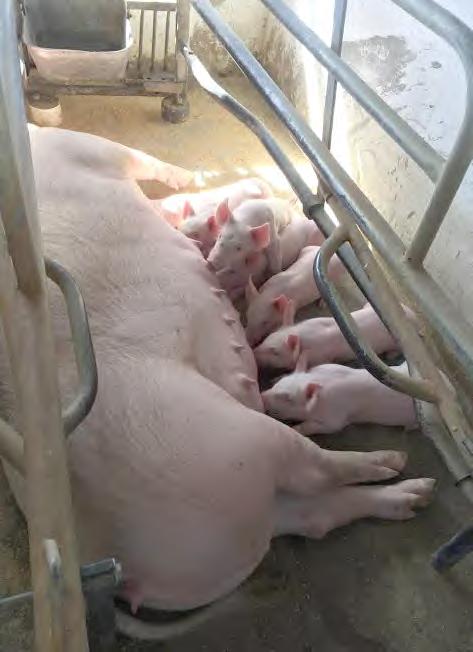
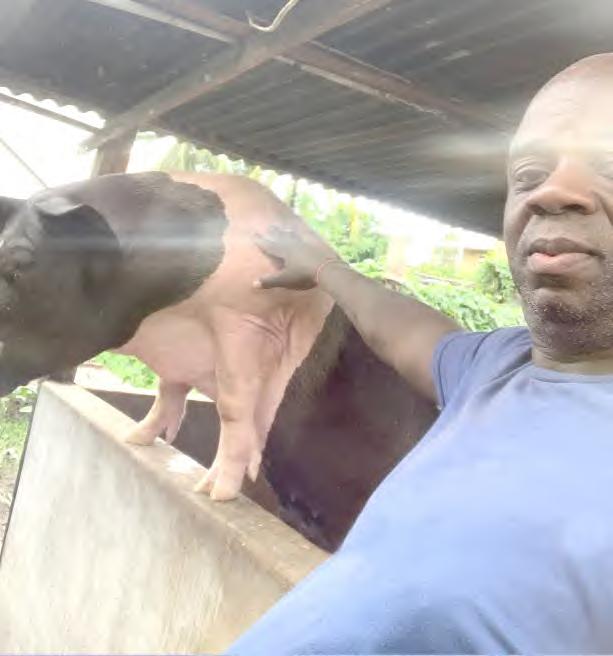
Robertson added that in 2018 he returned to these shores—his homeland—to develop a swine farm with six pigs, and today his farm has grown significantly, housing more than 100 pigs.
While he is not physically present on the farm on a 24-hour basis, he has two permanent employees who oversee the general upkeep of the swine farm located at Bachelor’s Adventure, East Coast Demerara.
Robertson disclosed that he rears swine on a large scale for both meat and breeding stock.
He resides in Campbellville Housing Scheme, Georgetown, and is responsible for the day-to-day operations of the climate-controlled tunnel house at Mon Repos, East Coast Demerara.
Robertson’s stock of pigs consists of Large White, Hampshire,
Duroc, and Landrace breeds at his state-of-the-art farm.
“I was to rear chicken firstly, but I was advised to try rearing some pigs too, and it went well, so I kept on doing it and became successful at it,” he explained.
The swine farmer and businessman added that, in addition to rearing pigs, he also has ducks on a large scale.
Robertson’s input was instrumental in the successful operation of the first of nine climate-smart tunnel houses for poultry production—a transformative project aimed at modernising the local poultry industry.
The first climate-smart tunnel house for poultry production at Mon Repos, East Coast Demerara, opened with its first batch of vaccinated chickens in its trial period earlier this year.
Local entrepreneur Robertson reported that he is a farmer and a retired sportsman—a soccer veteran—who now rears pigs, ducks, and chickens for a living.
He disclosed that, following a meeting with His Excellency President Irfaan Ali last year, the idea of the state-of-the-art tunnel house project was born to empower retired sportsmen to contribute to the local poultry industry.
Robertson stated that seeing the project through took more than a
year, but they have made it thanks to President Ali and his contributions across sectors. They managed to get it off the ground, despite a lot of behind-the-scenes work.
He explained that, before the tunnel house project, the 29 retired sportsmen were not engaged in productive activity in their spare time. Now, they are part of history, embracing modern poultry farming through technology introduced through public and private partnerships.
Robertson said President Ali ensured all land preparations were completed and that all agencies were on board to make the tunnel house project a reality.
“I was surprised because I raised 10,000 chickens, so I know what that can do. Thirty thousand to forty-three thousand birds in one go as an offering is something beyond extraordinary—President Ali’s vision for us,” he said.
On Sunday, during a training exercise, stakeholders witnessed a trial run in which 12,000 broiler chicks were introduced to the Mon Repos facility.
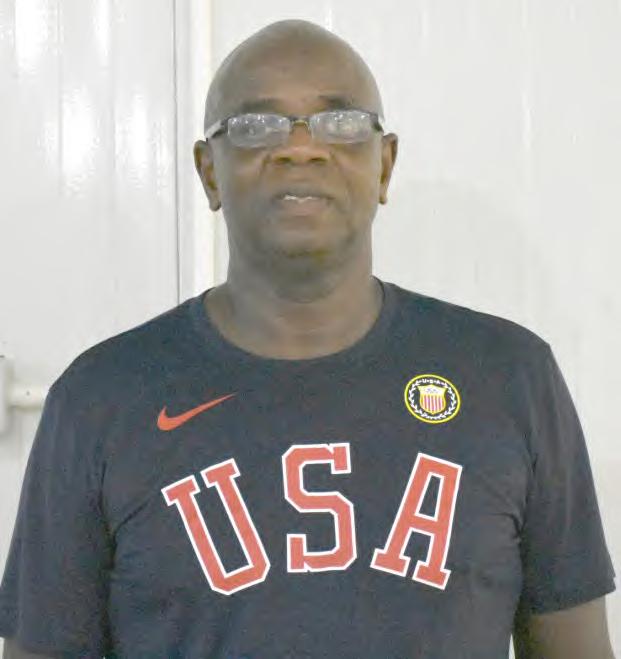
Robertson, an investor, told Pepperpot Magazine that by mid-year, the other eight tunnel houses should be completed and fully operational, each accommodating 33,000 chickens. He pointed out that each tunnel house is equipped with automatic water systems and feeders, and that they will be rearing broilers for the local market.
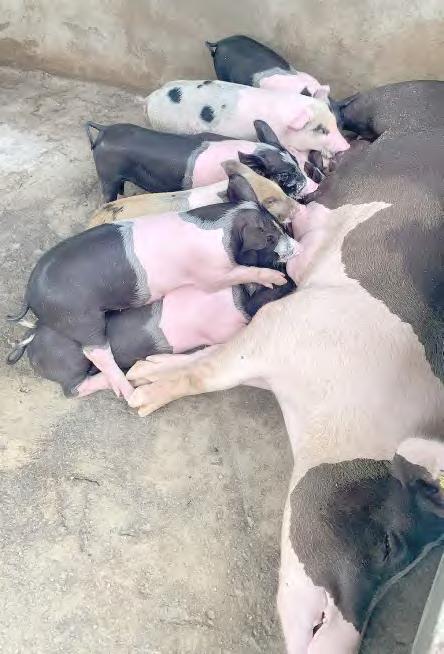
Robertson added that, collectively, the 29 sportsmen will take turns and maintain a presence at the facility 24 hours a day to ensure its smooth operation.
“This is a dream come true for us. We are very happy to see this project materialise, and we are very grateful for the input of the government, especially President Ali, who TURN TO PAGE XXI
WHAT began as a simple act of compassion in her community has grown into nearly two decades of dedicated social work, as founder Juanita Burrowes continues to lead United Bricklayers in supporting some of Guyana’s most vulnerable groups. Established in 2008, the non-governmental organisation has evolved from its early focus on HIV prevention into a broad-based support system addressing issues ranging from child abuse and mental health to youth reintegration and family counselling.
Speaking to the Pepperpot Magazine as Guyana and the rest of the world observe Sexual Assault Awareness and Prevention Month, Burrowes said the work has always been driven by what she witnessed growing up. Over the years, United Bricklayers has expanded its reach, removing hundreds of children from the streets, assisting families with essential services, and working closely with state agencies.
United Bricklayers was founded on the same principles that it holds today. As one of the oldest non-profits in Guyana, it began with the simple mission of creating a non-discriminatory, educational, safe space for those facing social hardships and challenges.
Sharing insight into the role of the NGO, Burrowes stated, “It is a non-profit, non-discriminatory, non-governmental, membership-based organisation which advocates for social structures that address every social issue, providing care, support, and prevention, working in partnership with relevant organisations and the broader community at large,” she said.
Founded on 9th May 2008 under the Friendly Society Act, the organisation still operates under the same mission. As Burrowes added, “Our vision is a society which acts to support, empower, and defend the rights of vulnerable groups, allowing persons to enjoy equal opportunities and develop their full potential,” she said. Helping people through
a wide range of social challenges, United Bricklayers offers several services. Burrowes explained that the organisation provides HIV prevention education, voluntary counselling and testing, and HIV counselling and testing.
The foundation also works on the reintegration of children and families through psychosocial counselling, dealing with issues such as sexual abuse, child abuse, and mental health. “We work with in-school and out-ofschool youths, youths who come in contact with the law and youths who come into conflict with the law—teenage pregnancy, job readiness, birth certificates, and applications. We assist persons, especially young people, who have never had the opportunity to obtain a birth certificate,” she said.
The organisation works to help people gain access to proper documentation and information so they can move forward. United Bricklayers also works closely with law enforcement, the Ministry of Education, the Ministry of Human Services and Social Security, and other govern-



ment agencies, as well as the wider community. This collaboration has helped the organisation build a strong referral system, allowing a wider reach to connect people to services they may not be able to provide directly.
United Bricklayers was originally founded at a time when Guyana and the rest of the region were grappling heavily with HIV awareness and prevention.
Today, however, that is no longer the sole focus, as the organisation has grown and shifted with changing social realities. As Burrowes explained, “After we started with HIV prevention programmes, people began coming forward with issues like violence, sexual abuse, and family issues. That shifted our work from just HIV to working more with vulnerable children and broader social issues,” she noted.
That shift led to an expansion of programmes over
the years. The organisation moved beyond prevention work into more direct intervention and support systems. “We expanded our programmes. We started with HIV prevention projects and then moved into larger programmes. We also started feeding programmes where children would come and receive breakfast, lunch, and dinner,” she said. These programmes also included educational support, psychosocial care, and structured engagement for children who were previously on the streets or in unstable home environments.
Today, however, she noted that the social landscape has changed significantly, and new challenges continue to emerge. A major concern remains teenage sexual behaviour, substance use, and increasing reports of abuse and violence affecting young people. “We are seeing a lot TURN TO PAGE XVII

I SPENT the last few days travelling, and while I have travelled to a few countries in the past, I was not fully aware of how much one’s passport—and even nationality—influences one’s ability to travel and move around freely. I stood in certain queues and observed how some travellers could move past freely simply because they had a certain type of passport.
I watched as some people were stopped, asked questions, and sidelined, compared to others who were not required to utter a word to pass through.
For some people like myself, travelling means taking extra documentation, remembering dates and itineraries, or preparing an online folder with backup soft copies of documents.
As I reflect on this reality of travelling with a passport from a “developing” country, I can’t help but ponder how contradictory the concept of globalisation can be in times like these. In one instance, globalisation is meant to connect us all through equal access and means, but at the same time, it seems as if borders are drawn more tightly and explicitly for some. Unfortunately, certain nationalities and backgrounds are marginalised and discriminated against at airports, border control, and immigration. We are meant to use our passports as proof of residency and access to certain places whenever we travel. It is meant to be nothing more than a document used during local or international
travel, whether for vacation, business, or personal reasons.
However, the function and purpose of a passport have expanded beyond their simplistic origins. Instead, I now view passports as a marker of power, politics, and stratification. While our passports are not descriptors
of who we are as individuals, they can sometimes lead to assumptions about our identities that people make without even knowing who we truly are.
The freedom of mobility is often emphasised—until the topic of “the type of passport you have” comes
up. I sometimes feel a degree of mistrust from people when they look at my passport because of the layers of scrutiny that often follow whenever I decide to travel.
As minuscule as it sounds, I decided to write on this topic because I believe the Global South, including Guyana, has been subjected to these perceptions for far too long.
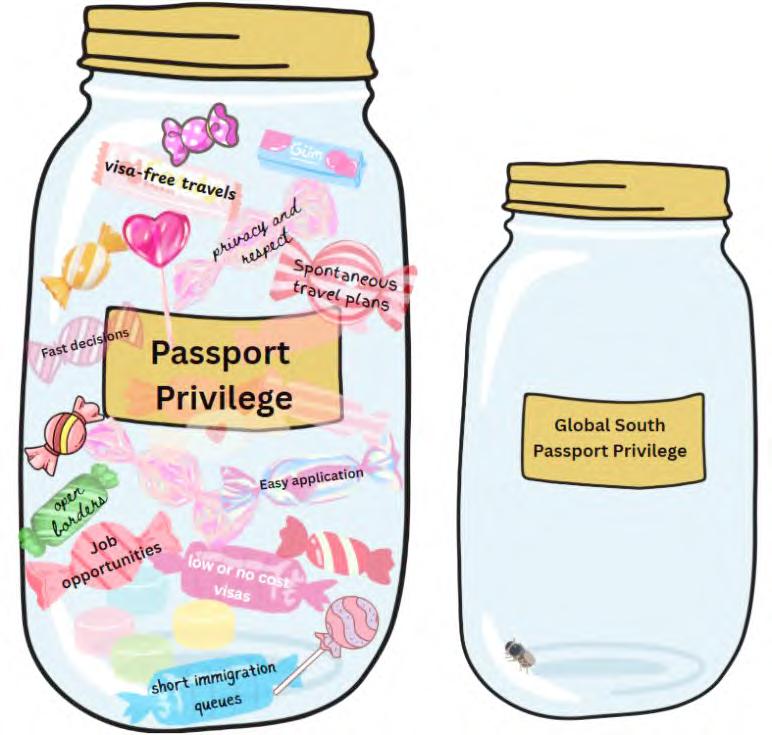
Have you ever scrolled through the list of countries the Global South can travel to versus the list of countries that allow entry without extra restrictions? I can assure you that the list of countries we can travel to is usually shorter than the list of countries that can visit us in return.
Unfortunately, the cost is high for most Global South passport holders—from hefty visa fees and insurance to additional documentation. Apart from the financial cost, there are also emotional and mental effects.
I can recall wanting to apply to certain international conferences or forums in the past, but after seeing the cost or the process required to obtain a visa, I was deterred, sad, and disappointed. In certain cases, some Global North passport holders can freely choose to live or take up residency in countries they see fit without scrutiny
or a hefty cost. Can we say the same?
There is a silence on this topic, and I hope it can be discussed further in this column as I continue to research it more thoroughly. While globalisation connects us, that does not necessarily imply equality. As I converse with people from the Global North, I realise that not everyone understands their privileges and disadvantages equally.
I am currently studying abroad, and even as a temporary resident in another country, my international friends could not fathom how difficult it is to move from one country to the next—especially if a visa is required. I realised our passports create a silent system of stratification among us.
It is “silent” because it is not discussed or debated until the topic of freedom of mobility arises. Only then did I become aware of how “stuck” I am, even while studying abroad.
I intend to break that silence.
It’s a shame that these challenges still exist in a world that “celebrates” the strength of global communities, freedom to explore and travel, and the ability to seek refuge when necessary.


FREEDOM is a word that takes multifaceted forms. For some, freedom is the ultimate goal. It is something that is of equal value to their very lives, and it is worth making any sacrifice for. For others, it is a yearning, a mirage that shimmers at the edge of their darkest days, tempting them to be-
lieve that it is the answer to all of their problems. Regardless of how the meaning of freedom changes from one person to the next, it is something we all universally desire, even if we do not realise it. From the moment we are born, every transformation we undergo is, in a way, meant to help us
become independent and free. Every growth comes from a heartache for freedom.
In today’s era, there are scarcely any closed societies where labels that precede our existence will define us as soon as we are born. Instead, we get to choose our own destinies. Our passions and our own skills will shape

our futures, not an arbitrary assignment within an unjust hierarchy or system. In a world like this, when many of us are not facing enormous societal obstacles, it becomes a little easier to believe that we no longer yearn for freedom. It can feel like there is truly nothing limiting us, and that we need to fight against nothing to be the best version of ourselves. This, however, is not true.
We still must fight against many forces to be our truest, freest selves. It is only that these forces have now taken on a different form from the ones they used to take on. They are present, but hidden. The greatest challenge in overcoming these obstacles does not lie in the time and energy it takes, but rather in noticing their presence and eradicating them before they leave damaging marks on our lives.
So, what are those things that prevent us from being as free as we can?
We can first answer this question by deciding where
our final destination in life is. Every journey takes time and the mental strength to endure its different stages. More importantly, we must have a sense of direction to understand whether the things we experience throughout the journey are indicative of whether we are going in the right direction. If we find ourselves struggling and suffering, we must be able to identify whether we are simply undergoing a transient, difficult period in the process of achieving our goals, or whether we are moving in a direction that is not meant for us.
By identifying the answers to these questions, we can also identify what is limiting us from being as free and as happy as we possibly can be.
The search for freedom also begins with bravery. Finding our freedom involves shedding certain things that prevent our identities from metamorphosing, even as we experience growth and change. Often, parts of our-
selves begin to define us not because they represent who we are, but because we have grown used to them and are afraid to give them up.
These parts become analogous to the labels once forced onto oppressed groups. Sometimes, they are nothing more than names or titles, but they are enough to prevent an individual from finding the freedom that they so desperately need. Being brave enough to leave behind those parts of ourselves can help us find our freedom.
Every day of growth is a day when questions may arise about who we are meant to be. Although our instinct is to look to our elders for answers to these questions, it is important to remember that the world may not have been the same as it is today. So, the answers to our questions might have also changed over the years. Sometimes, the things we desire most must be found through the effort of our own unique journeys.


MORE workers than ever are leaving jobs due to burnout, and it needs to stop.
Burnout happens slowly, over time, when workers feel underappreciated, undercompensated, and overworked. Managers and leaders help prevent workplace burnout by recognising the factors that lead to it.
When leaders get more in touch with employees’ needs and their emotional and mental health, they will begin to realise the importance of training workers, providing time off, and taking an interest in important milestones in workers’ lives.
Author Geary Reid offers critical advice for HR and employee management, identifying solutions and proactive measures business leaders can take to prevent burnout. Business leaders will learn how to outsource work and provide the benefits needed to keep their workers happy and healthy. When employers go the extra mile, they will have loyal, hardworking employees and ultimately experience more success.
1. Workplace burnout is real
Some people think that once employees are paid, they must work all day, every
day. Many people work long hours under much strain and are counting the days until they can go on vacation, while others are thinking about when they will retire.
While employment provides people with the opportunity to earn, leaders of every organisation must remember that their employees are human and need time to rest. The work some employees do is very strenuous; therefore, employers must consider investing in machinery and technologies to achieve the same results.
1.1 Manual systems
While technology is available to help many organisations increase productivity, some still lag in its use or even operate manual systems. Such organisations can be very labour-intensive, and employees have to work under strenuous conditions daily.
When most of the work employees do is manual, they may become tired, and while they want to rest, they may have to continue working until tasks are completed.
1.2 Poor leadership Sometimes, due to poor leadership, employees become burnt out. Leaders must coordinate their resources and make the best use of them while preserving their human capital. Leaders must
prioritise workload distribution. If the workload is not properly distributed, then some employees will be overworked while others may be underworked.
Overtime hours may be incurred to complete urgent work. However, most employees should not regularly work overtime, as their performance soon declines.
1.3 Little or no enforcement of vacation policy
In organisations without a vacation policy, employers must consider implementing one, as employees are entitled to rest. Employees must be given time away from the office to remain effective for the organisation.
In the absence of a vacation policy, employees may overwork. Some employers are happy when their employees work almost every day, but that can be dangerous, since humans are expected to rest after hard work.
For organisations that do have a vacation policy, leaders must enforce it by ensuring employees take vacations periodically. When some employees are on vacation, other employees can take on different duties and develop their skills.
1.4 Few skilled employees
Some leaders want to keep employment costs very
low. However, if a small number of employees must complete many tasks in a limited time, they will experience burnout. Many employees become skilled at what they do, especially if they have held the same job for a long time and enjoy it. However, leaders must assess the workforce and not cause a few employees to become burnt out.
Hiring a few more employees may prevent workplace burnout while also enabling the organisation to meet customer demands. Whenever a few employees consistently work beyond their normal hours, they may make mistakes that go undetected because no one is reviewing their work.
1.5 Limited investment in machinery and advanced technology
While leaders may think that investing in machinery and advanced technology is too expensive, they must not overwork their employees. The absence of machinery may cause employees to work long hours to constantly meet customers’ demands. However, when machines are acquired, they can easily perform some tasks that would otherwise be done manually.
Information Technology and Information Systems are designed to help organi-
sations complete their work and deliver accurate, timely outputs. Information systems can eliminate duplication of work by retaining data for long periods and enabling leaders to make strategic decisions. When employees are away from work, leaders do not need to contact them for information, as it will be readily available through these systems.
Some employees return to work unrefreshed because, while on vacation, they were frequently contacted by colleagues for basic information. However, when more employees are trained to perform the same work and have access to an integrated information system, employees on vacation can be properly rested.
Everyone deserves to be well-rested when on vacation. Investing in machinery and information systems will enable an organisation to maintain continuity even when experienced, knowledgeable employees are away.
2. Job rotation
Managers and supervisors need their employees to do more, but they must create opportunities for employees to learn more and to practise what they have learned. Leaders must remember that they have a responsibility
to properly coordinate the organisation’s resources so that there is continuity and employees do not become overwhelmed by their work. Employees can become weary of doing the same thing repeatedly. After a while, the work becomes monotonous, and they lose interest in performing the same tasks every day. Because some employees lose focus when doing the same work day after day, they may begin operating without thinking and make simple mistakes. The joy that some people once had for their work is lost, and they attend work only because they need to earn a living.
In mitigating workplace burnout, leaders may observe signs in certain employees and recognise that they are losing interest in repetitive tasks. Many employees may not complain because they fear being replaced. Therefore, leaders need to assess their employees and look for signs of burnout.
For more information about Geary Reid and his books, please use these contact information, Amazon: http://www.amazon.com/ author/gearyreid, Website: www.reidnlearn.com, Facebook: Reid n Learn, Email: info@reidnlearn.com, Mobile #: 592-645-2240.


OUR human world is indeed a living realm of hunter-gatherers. Copyright, as a cultural ethic, is a law that balances hard work with the awakening reach of the prowling human creatures who adhere to no law placed before them. Copyright is not to be feared; it is to be respected and protected. We all would like to enjoy,
with passion, that which may be the natural entitlement of an inherited or natural gift that, when matured, can assist us in enjoying a comfortable life through adding the dispensation of a new expression in science, art, or the upliftment of the natural fabric that envelopes us.
From our ancestors, the statute that embodies a past warrior king
or queen merits the course of war if defiled by the enemy; thus, in our history, the harsh rules apply when sacred art or sculpture is stolen. Likewise, in our balancing civilised world, copyright is a ‘route watch’ that summons, sustains legitimate exchange, and inspires continuity, because the value of copyright embraces the attention of several levels of usage by other
interests who may recognise another interpretation of an artistic expression you may have done, that will require legal agreements towards income. Thus, the value of ownership, established through copyright, will invoke the contract and, through its legitimacy, allow the creative force to earn.
Even with our modern systems, copyright is defied, but
determined creatives eventually prevail. Read about the Terminator movie controversy as homework on the subject. Explore the real world, copyright your stuff, and let your concepts develop from inspiration. Explore through your research when necessary, and, like everything else, it will take its necessary perspiration.
Ferry Stelling.
“My work is vital to the island’s connectivity, as the stelling serves as the primary gateway for both residents and the growing number of tourists visiting historic sites like Fort Zealandia and the Court of Policy,” he said.
In addition to his professional duties, he is deeply involved in community health and education.
He works closely with the Fort Island Health Committee, assisting in organising
initiatives such as “Health Days” to provide medical services and screenings to residents. Debideen is also regarded as a local historian. He often leads educational segments, sharing the island’s rich 200-year history with visitors and youth.
Community Impact and Personal Philosophy
Debideen is well known for his philanthropic efforts alongside his mother, Pretty Debideen, a local Commu-

nity Health Worker (CHW).
Together, they host significant annual events, including the Fort Island Christmas Tree Light-Up and Children’s Party, which provides gifts and festivities for over 150 children from Fort Island and surrounding riverine communities such as Lanaballi, Aliki, Morashee, and Bonasika.
Debideen is frequently cited in local media as a symbol of Guyanese hospitality.
He maintains a strong vision for the island’s future, advocating for continued improvements in drainage, irrigation, solar lighting, and education to ensure that Fort Island remains a vibrant and sustainable community.
For Guyana’s 60th Diamond Jubilee Independence Anniversary in May 2026, Fort Island, a historic site in the Essequibo River, is highlighted as a key location for celebrations.
Preparations include a flag-raising ceremony as part of a national “Homecoming” theme featuring heritage tours and cultural events.
Fort Island, known for Fort Zealandia, represents Guyana’s Dutch colonial past and serves as a significant site for the 2026 celebrations.
The 60th Anniversary (“Diamond Jubilee”) is centred around “Homecoming,” featuring heritage tours, culinary showcases, and fami-

FROM PAGE II
ly-friendly activities.
The Ministry of Culture, Youth and Sport, led by Minister Charles Ramson Jr., has conducted site visits to Fort Island in preparation for the official flag-raising ceremony.
In addition to independence celebrations, the location previously hosted its first-ever Mashramani (Republic Day) parade for children from nearby riverine communities in 2019, highlighting its role in local culture. The 2026 celebrations officially launched in early April with a grand cultural showcase, leading up to the main Independence Day activities on May 26, 2026.
The 60th anniversary aims to highlight Guyana’s development over the years, with a nationwide celebration.






PEOPLE worry a lot. Humans have perfected worry into an art form that makes anxiety look almost industrious. People worry about all kinds of things: whether someone likes them, whether they are doing enough, whether the future will resemble a dramatic movie trailer instead of an ordinary morning.
Then there is that viral idea, the simple, hilarious hierarchy of worry. If you are healthy, you have nothing to worry about. If you are sick, you worry about whether you will get better or worse. If you get better, you have nothing to worry about.
If you get worse, you worry about whether you will live or die. If you live, you have nothing to worry about. If you die, you worry about heaven or hell. And if you go to hell, the only thing left to decide is whether you want your experience original or extra crispy.
The structure is funny because it is honest. It feels like someone peeled back all the layers of fear and reduced life to something absurdly simple, but underneath the humour lies a truth that rarely gets spoken in such clear terms. Worry occupies mental space only when nothing pressing demands engagement. The mind fills silence with imagined catastrophe because imagination always seeks involvement. In other words, the mind loves participation.
Psychologically, worry functions like a habit. The brain learns patterns of focus and builds neural pathways that support repetition of those patterns. A person who worries constantly becomes good at imagining catastrophes because the brain receives daily practice and reinforcement. The more a person anticipates disaster,
the more the brain becomes fluent in disaster thinking. The worry itself does not make outcomes more predictable; it simply creates familiarity with fear.
Abraham Maslow explained that human beings prioritise basic needs first. When basic needs such as food, safety, and health are met, the mind moves on to higher aspirations, such as connection, creativity, and meaning. A person who remains obsessed with fear is unconsciously stuck in the lower layers of the need hierarchy. The body and mind cannot focus on growth when they interpret their environment as uncontrollable or threatening.
That is why health sits at the very top of the worry hierarchy. When the body functions, the mind relaxes. When the body is disrupted, the mind begins to speculate. People become emotional detectives, looking for clues that confirm the worst. A headache becomes a headline, and a delayed message becomes a breakup.
But the truth hidden in plain sight is this: most worry never becomes reality because they were inventions of the imagination.
Consider something else. Deepak Chopra teaches that true well-being is not the absence of discomfort but the presence of harmony between the body, mind, and spirit. A person who operates from a sense of integrated wellness does not spend life scanning for threats. Their attention shifts toward what feels expansive: connection, purpose, growth, and meaning. This kind of shift changes the brain’s neural map and the body’s hormonal chemistry, thereby altering life experience itself.
So here is the first deep truth hidden behind the hu-
mour: worry is not a predictor of danger; it is a habit of attention. Whatever you pay attention to gets stronger. That is not a mystical statement; it is psychological, neurological, and experientially observable in everyday life. So let us talk about how people interpret life events when they worry. If someone is healthy, they go about their day without cataloguing every slight symptom. They eat, breathe, walk, work, and live. If someone becomes sick, they activate the part of their mind that tries to predict outcomes. They assess information rapidly. They
look for patterns. They try to influence events they cannot control. That behaviour creates tension in the body, which feeds back into the mind, which sharpens worry even further—and this is where a cycle begins.
But here is the twist: worry does not solve problems; it intensifies interpretation. It makes every uncertain possibility feel like a looming disaster. It fuels anxiety and depletes presence. People become so preoccupied with what might happen that they miss what is actually happening. This is where human psychology and human humour intersect.
Life offers a finite set of real worries—health, survival, meaning—but the human mind invents infinite worries from thin air. People worry about social standing, personal narratives, imagined slights, and future memories that do not exist yet.
So what is the antidote?
The antidote begins with awareness. Awareness redirects attention from hypothetical fear to present reality. It invites curiosity rather than panic, and reflection rather than projection. Awareness is not the elimination of concern; it is the regulation of focus. This is where spirituality
and psychology meet. The moment a person recognises that worrying does not solve anything, the mind loses its eager audience for fear. The brain still has imagination, but imagination begins to serve a purpose rather than panic—and so the experience changes.
People often think that they should panic because fear feels natural. It feels like responsibility, preparation, and care, but worry is energy invested in outcomes not yet real. When the mind learns to move from anticipation to presence, the nervous system stops rehearsing disaster
TURN TO PAGE XIX


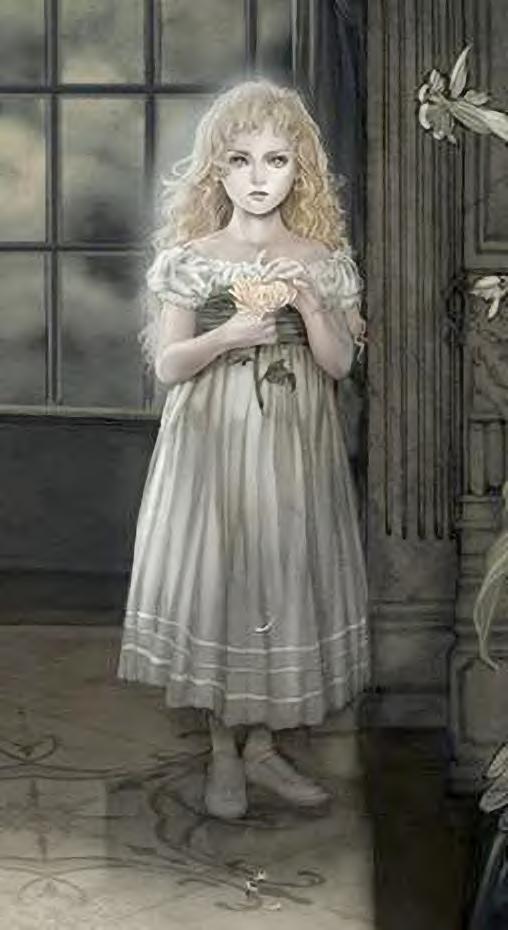
THE little girl sat on the garden swing, her head bent, her hair falling loosely over her face. She waited as little unholy creatures danced and played around her. They sang songs and chanted her name, but she was unmoved, for soon they would be gone as night retreated. In the day, as they slept, she would leave the throne they had designed for her, their princess, a throne she hated, for it held her captive to live in their world.
The sun’s rays filtering through the overgrown trees and thick, wild shrubs touched the child sitting
alone in a place that seemed to have been abandoned a long time ago. The little girl raised her head and, as the sunshine brought colour to her pale cheeks and warmth to her cold skin, she opened her eyes and smiled. She was dressed for church in a pink frilly dress, stockings, shoes, and her little pink bag. She slid off the swing and, walking to the foot of the stairs, called, “Mom, Dad, I’m ready.” No one answered. No one had been answering for a long time.
“Where are you?” she asked quietly. “Why have you left me here all alone?”
She couldn’t cry, for she had no more tears, just sadness on her pretty little face. It had been such a long time since that cold, dark night when the light from her eyes faded, and her cheeks became pale.
“Where are you, Mom?” she whispered. “Please come for me.”
She passed through the rusted wrought-iron gate and waited for the neighbours, walking with them to church, but no one knew she was there. No one could see the little girl who had died twelve years ago from a mysterious illness none of the doctors could diagnose.
People had spoken about strange voices and presences in the dead of night, but Madeline’s family, unbelievers in the supernatural, had dismissed those tales.
As her heartbeat slowed and she grew paler, she had whispered incoherently about strange little creatures with piercing eyes, dancing and laughing around her. The family had sat at her bedside in the hospital, praying until the last moment, but could not save her.
Broken by grief at the loss of their little girl, they had drifted away one by one.
A house that was once filled with love, light, warmth, and comfort was now empty,
dark, and cold. Things—not human—continued to live there, holding captive the little girl’s soul so she could not ascend to heaven.
If only her family had believed. If only her grandfather had not adopted those beings to prosper and become wealthy from their evil magic.
He had passed away, taking his secret with him, not knowing that it was something that had to be passed on to the younger generation.
The family, unaware of the ungodly entities the grandfather had dealings with, eventually paid a heavy price for their ignorance and reluctance to believe.
The little girl—the darling of the family—was the price.
She played alone in the house with her Barbie dolls, with no one to invite to her tea parties and fashion shows, and in the afternoons, she stood on the street corner, the ghost child, watching everyone pass by, hoping someone could see her so her family could know she was still there.
No one did, and at dusk, every day, she would return to the house, for they were always waiting.
Close to December, on a tepid afternoon, standing at the street’s corner, she heard a voice behind her call her name in a surprised tone.
“Madeline.”
Madeline spun around and stared unbelievingly at the beautiful woman standing there with dark brown hair.
Did she just call my name? She wondered.
Madeline glanced back to see if there was someone else the woman was talking to, but no one else was there.
“Madeline,” she called again. “How is it you’re still here?”
“You can see me?”
“Yes, I can.”
“How can no one else see me all this time, and a stranger can? Are you a ghost, too? Did the evil creatures get you?”
“I’m not a stranger. I’m your friend, Anjalie.”
Madeline looked at her more closely. “You can’t be. Anjalie is little like me.”
“Yes, but you died, Madeline. I did not. That’s why I’m grown up.”
Woman and girl stared at each other for a long moment, agony in Anjalie’s heart. Opening her palm, she showed Madeline a white turtle dove.
“You gave me this for Christmas.”
Madeline gasped.
“Anjalie… oh, it’s really you, my best friend! Where TURN TO PAGE XVIII

CLOCKING in at nearly nine hundred pages, Joe Hill’s new horror–fantasy novel, with a strong vein of dark academia—King Sorrow (William Morrow, $20.00)—feels very much like a magnum opus. Arriving nine years after his last novel, The Fireman, it stands as a major addition to Hill’s already formidable body of work.
Though he is less prolific than his father, Stephen King, the two share an instinct for narrative momentum and atmosphere that keeps readers fully engaged, always leaning forward for what comes next.
Hill’s earlier novels, Heart-Shaped Box, Horns, and NOS4A2, along with his short story The Black Phone, have all made successful transitions to the screen; King Sorrow further demon-
strates why his storytelling adapts so well.
The novel resists tidy summary, but at its core is the story of six college friends who, in a desperate attempt to rescue one of their own from a dangerous situation, summon a being from the “long dark.”
The entity, King Sorrow, solves their immediate problem, but at a terrible and enduring cost.
Spanning more than three decades, the narrative follows the group as they live, fracture, and ultimately reckon with the consequences of their bargain. What King Sorrow gives, he also takes away, burdening and corrupting them, and in some cases transforming them into reflections of the very monster they conjured. The result is a sustained, gripping work of storytelling that rarely
loosens its hold.
Hill peoples the novel with monsters of many kinds, most of them human. There is a sociopathic tech billionaire, a drug-addicted pimp capable of selling her own sister, a monstrous mother beyond the reach of her children’s love, and even an internet troll whose ambitions are as petty as they are corrosive. Moral gradations collapse quickly here; the world of King Sorrow is populated by the bad, the worse, and the irredeemable.
At the apex stands King Sorrow himself: a dragon— and a deeply malevolent one. He is no whimsical creature of fantasy but a figure of cunning cruelty, his speech and actions steeped in venom, fire, and deception. Hill gives him a layered backstory that straddles history and myth, suggesting his pres -
ence in the fiery destruction of cities across real-world conflicts.
This blending of the historical and the fantastical lends the creature a chilling plausibility.
Particularly unsettling is the relish King Sorrow takes in tormenting his victims. He toys with them before destroying them, evoking comparisons to Smaug from The Hobbit, though with an even sharper edge of dark, mordant humour. His domain is death, and the novel does not shy away from depicting it in abundance.
Central to the plot is the grim bargain the friends must uphold. Each year at Easter, they are required to offer King Sorrow the name of someone he may claim.
The responsibility rotates among them—Arthur, Gwen, Collin, the twins Van
and Donna, and Allie—but the choice is never clean.
The dragon is indiscriminate in his methods; to reach a single target, he may destroy many. Inevitably, suspicion, fear, and betrayal seep into the group, culminating in the unthinkable: one of them naming another.
Structurally, the novel is ambitious and largely successful.
Moving swiftly across thirty years, it shifts perspectives among the friends, allowing each character’s arc to unfold with depth and variation. Hill’s pacing is assured, and the narrative never feels stagnant despite its scope. Among the ensemble, Arthur Oakes stands out—a bookish, inventive, and ultimately tragic figure whose research offers the group its only hope of striking back.
What makes King Sor-
row particularly compelling is its balance of terror and readability.
It is undeniably frightening, yet never so oppressive as to repel; instead, it draws the reader deeper. The set pieces are vivid and memorable—most notably a harrowing scene aboard an aeroplane under attack from the dragon mid-flight. The tension rarely abates, and the novel is unflinching in its willingness to place every character at risk.
Relentless, inventive, and richly imagined, King Sorrow ranks among the stronger entries in contemporary horror–fantasy. It is both a sprawling character study and a dark fable about consequence, desire, and the price of survival, and it confirms Joe Hill as one of the genre’s most compelling voices.

ond Guyana’s borders. The annual gala, held at the Guyana Marriott Hotel in Georgetown, draws more than 400 leaders from across Guyana and the diaspora. Sponsors, including ExxonMobil, IDB, M&T Bank, GTT, Massy, and TechnipFMC, have aligned with a platform that corporate Guyana recognises as a genuine demonstration of commitment to gender equity. The
United States Ambassador and the British High Commissioner are among those who have spoken from its stage, affirming the 25IWLA’s place within the broader international commitment to women’s advancement.
Beyond the ceremony, the co-founders launched the Women’s Leadership Programme (WLP) in 2022—a nine-month executive leadership experience described
as “a community, not a classroom.” Open to all nominees and awardees, the WLP provides mentorship, peer coaching, networking, and community-building, ensuring the platform’s relationship with its women extends well beyond a single evening of recognition.
Honourees also participate in the quarterly Changemakers Series, a dedicated forum that keeps the network
active, connected, and advancing their impact throughout the year.
Leadership at a Defining Moment for Guyana
The 25IWLA has always understood that it operates within a national context, and that context has never been more significant. Guyana’s emergence as one of the world’s fastest-growing economies has placed the country

at a defining crossroads, and the platform has consistently held that women’s leadership is not peripheral to that moment; it is central to it. The mission has always been clear: creating an empire of women leaders—not a moment, not a movement of convenience, but an empire deliberately built, sustainably grown, and unshakeable in its purpose.
Nicholas captured the full weight of that mission:
“The strength of any nation lies in the leadership and contributions of its people. These women do not wait to be invited into rooms. They build the rooms.
They do not wait for tables to be set. They set the tables and hold the seats for the women coming after them. That is what this award has always been about—not just recognising excellence but unleashing it. Creating an empire of women leaders, one cohort at a time, until Guyana can no longer imagine itself without them.”
“What makes this recognition award especially significant this year is the world and the time in which it happens. Globally, the United Nations and women’s rights leaders are raising urgent alarms. Hundreds of millions of women now live in or near active conflict. Women still hold only 64% of the legal rights of men in most parts of the world. The UN Commission on the Status of Women convened under the theme of ‘women’s access to justice’, a reflection of how much ground is still being contested. Across peace tables, boardrooms, and legislatures, the strides of women for decades are under pressure, and locally, our women continue to suffer at the hands of the people they love,” cited Lyndell Danzie-Black.
That vision is reflected in the Award’s evolution across seven years. From early emphases on visibility and representation through cycles that confronted systemic barriers head-on, each year’s theme has been a statement about where Guyana is and where it must go. The platform has never reflected the national conversation; it has helped shape it.
The Seventh Ceremony: A Milestone for the Nation
On 9th May 2026, at the Guyana Marriott Hotel in Georgetown, twenty-five women will be inducted into the 25IWLA network, carrying the platform’s cumulative total to 175 honourees and
marking the most significant milestone in the award’s history. They are: Dr Aartie Devi Somwaru-Jhagru, Bonita Lowenfield McDonald, Chandrowtie Sarran, Christell Chesney, Christine Samwaroo, Dellon Patricia Adams, Doneeta Ramlakhan, Jacqueline Cummings Johnson, Jessica Nathalia Callender, Dr Kamela Bemaul-Sukhu, Kimbely Yearwood, Lenise Morgan, Madonna Ghanie, Marisa Morgan-Bonie, Munirah Reedon, Dr Nandishaw Ramsingh, Dr Pamela Rose, Dr Renuka Tewari, Rhonda Maxius-Lansiquot, Salome Marina Ann Henry, Savitri Tularam-Kaulesar, Sonja Sampson, Dr Theresa Sarju, Upasna Mudlier, and Younica Sanchara.
Each of these women joins a network that is among the most formidable concentrations of women’s leadership in the Caribbean and the diaspora. Each will gain access to the Women’s Leadership Programme and the Changemakers Series, ensuring that the platform’s relationship with its honourees extends well beyond a single evening of celebration.
On 9th May, the seventh ceremony will carry the weight of everything the 25IWLA has built—six years of operation, over 1,000 nominations, 150 women already recognised, and a growing ecosystem of programmes shaping the next generation of executives. When the evening concludes, 175 women will stand in that network. This is the legacy that the two women, who first recognised their shared conviction a decade ago, have built for their country.
The question Michelle A. Nicholas and Lyndell Danzie-Black asked in 2019 has been answered compellingly, repeatedly, and with the full weight of Guyana’s most powerful women behind it. What happens when you shine a light on the women already changing Guyana? Guyana sees itself more clearly. And its women lead more boldly.
The 7th Annual 25 Influential Women Leaders Award ceremony will be held on Saturday, May 9, 2026, at the Guyana Marriott Hotel, Georgetown. Tickets are available via Eventbrite at https://bit. ly/3IAPJ8Z or via MMG to +592-743-1144. For further information, visit www.25iwla.com or follow @25InfluentialWomenLeaders on Facebook, LinkedIn, and Instagram.
of teenage sexual behaviour and substance use in our society,” she said. She also highlighted concerns about violence within households and peer environments, as well as increasing gang activity and substance abuse, including vaping. “There is a breakdown in values and respect. Parents are focused on daily survival, and children are not getting the moral guidance they need,” she added.
This is why Burrowes believes that continued collab-
oration between government, NGOs, schools, and communities is essential to addressing these issues. “We need government and NGOs to work together to address the behaviour of young people,” she said.
Looking ahead, United Bricklayers is placing greater focus on schools, which Burrowes sees as a critical entry point for early intervention.
“Our main focus right now is to work more in schools, with teachers and students. We want to work on substance
use and sexual education among young people, starting from nursery level,” she said. For Burrowes, the work remains deeply personal, rooted in lived experience and a long-standing commitment to community service. What began as small acts of helping children in need has grown into an organisation that continues to respond to some of the most pressing social issues facing Guyana today. Despite the challenges, she remains committed to continuing that work, one
FROM PAGE VI
person at a time. Members of the public seeking support or intervention can access help through the United Bricklayers Organisation, Lot 25 Charles Place, New Amsterdam, Berbice, or via contact numbers 693-1775, 6986580 (Mr Jamaul King), 696-9803 and 683-0283 (Ms Juanita Burrowes), and Ms Roxan La Rose on 683-0283. National support services are also available through Guyana’s emergency helplines 914 and 915.


did you go? I missed you.”
“I’m so sorry, Madeline. I couldn’t bear that you died and were gone, and I cried until I fell ill.”
Anjalie had fallen sick after the tragedy because of her deep grief, and her family, afraid she might meet the same fate as Madeline, had sent her overseas.
Now she was back for the first time.
She had visited her
friend’s grave, still grieving her untimely death, and coming to her old home, she was stunned when she saw her ghostly form at the street corner.
“How come you’re not afraid to talk to me?”
“I don’t know. Maybe it’s because I missed you so much and I’m so happy to see you.”
No one else was at the street corner for those few
moments to witness the strange reunion of two best friends—each in their own world.
They talked for a long while more as Madeline related her story to Anjalie.
“I’ve been waiting so long. Can you find my family and tell them?”
“Sure, I will,” Anjalie promised.
The creatures were very angry. They knew. That

night, they vented their anger with screams—horrible screams that sent shivers down the spines of those who heard them. Madeline could not leave anymore, not even in the day, for not even a ray of sunlight shone through the trees anymore.
People gathered in front of the house, talking in low whispers. They had known all along that evil lived in that manor, now secluded by thick, non-flowering trees.
Anjalie found her friend’s family, and two days later, they showed up, visibly disturbed by the story of evil in their home spreading like wildfire—and by their little girl’s ghost.
After twelve long years, the child now saw her mother and father, who had aged
so much, and her sister and brother, now adults. But no one could enter. The creatures wouldn’t allow it. It was now their home, and the child was repayment for their grandfather’s debts— she now belonged to them.
“Madeline,” her mother called. “We’re so sorry, my baby, so sorry we didn’t believe. We have come now to free you.”
“Thank you, Mom,” she whispered in her mind, and at her father’s request, she kicked her ball, which hit the gate so they could know that she had heard them.
To exorcise the evil that had been living there so long was not easy, but days and nights of prayer sessions by renowned pastors defeated and banished the creatures.
Madeline’s soul was now free to ascend to heaven with the angels, and sunlight streamed through the trees as she bid her family goodbye. They would not leave again, but stay and restore the old house in her memory.
She smiled at her friend.
“If you hadn’t returned and couldn’t see me, I would still be in those creatures’ captivity.”
“It was God’s will, Madeline,” Anjalie said, tears in her eyes.
“Thank you so much, my friend. Goodbye.”
“Goodbye, Madeline.”
Madeline took the hands of the angels and, looking back one last time at the people she loved so much, she ascended to heaven.

scenes.
This does not mean ignoring reality. It means balancing awareness with engagement and paying attention to what matters—again, health, relationships, meaning—and releasing attention from what does not matter: imaginary catastrophe, imagined rejection, and future blame. People worry about things they cannot control because they confuse attention with influence.
At the end of the article, you will find a poem titled Two Things to Worry About. The structure of the poem is not random; it is a mirror of human experience. At each stage, life offers a choice: focus inward or outward; engage with reality or with fear. At each point where worry appears, there is an alternative called presence. If someone gets better, their attention shifts from survival to living. If some-
one faces mortality, their attention shifts from future panic to present meaning. If someone contemplates the spiritual unknown after death, their attention turns to legacy, values, and peace.
The human mind always searches for meaning. Worry often feels like meaning, but it is an illusion of urgency rather than depth.
When a person learns to shift energy toward awareness, compassion, presence, curiosity, and clarity, the brain rewires itself. Thoughts that used to activate fear begin to activate exploration. The nervous system moves from fight-or-flight into rest-and-receive. The shift feels like peace because it is peace—the absence of self-generated threat.
I personally ask myself every day how to stop worrying. The only thing I can do is just smirk and stop rehearsing life like it is a rehearsal for
terror and start to pay attention to what is real, what is present, what is happening right now—that is, to notice the breath, notice the body, and notice what I can actually influence. Worrying about the future feels like effort, but it rarely produces useful results. Caring about outcomes feels like accountability, and that is very different from fear. Accountability invites action, whereas fear invites panic.
When you are healthy, life feels expansive. Your body is alive, your mind is clear, and your options feel real. But when you become ill, life becomes pressing and immediate, and the choices become more urgent: get better or get worse, live or die, peace or panic, and so on. So, at every stage, fear narrows the mind while awareness widens it.
And the funniest part of all of this is that people wor-

ry more about what might happen than what actually is happening—and that choice defines their experience far more than the circumstances ever do.
Life eventually invites you into a place where you realise that worry was never about survival. Worry was about trying to feel in control while reality kept unfolding anyway. The final choice— heaven or hell—becomes a punchline because life’s real question was never about destination, but about presence. Where were you standing while life was happening? Were you inside fear, or were you inside awareness?
The answers reveal themselves in how you live, laugh, breathe, and respond. So let us close with that poem I mentioned earlier.
Two Things to Worry About They say in life there’s just a few,
Small things that trouble me and you, Not endless fears that crowd the mind, Just simple choices, neatly lined.
If you are well, then rest your head, No storm to fight, no tears to shed,
But if you’re sick, then here’s your cue, There’s only two things left for you.
You’ll either heal, rise up again, Or drift a little deeper in, And if you heal, then worry ends, Your body mends, your spirit bends.
But if it worsens, don’t despair, There’s still just two things waiting there, You’ll either stay, or you will go,
And both are paths we come to know.
If you remain, then breathe with ease, Life grants you time, a chance to be, But if you go, then once again, Two doors appear beyond all pain.
To heaven’s gates or depths below, Two roads that every soul will know, And if it’s light you walk into,
Then peace is all that waits for you.
But if it’s heat you wander through, Well, here’s the part they never knew. You’ve just two choices left to tell, Original or crispy hell.
Romella Dasratt
































































Welcome, dear friend. When your personal range of experiences cannot provide for good writing, get into quick action. Borrow from the experiences of others. Read novels by good authors and books across the curriculum; concepts abound in them. Record peculiar circumstances, incredible events, and mysterious happenings; what-
ever appeals to you. Use your caché to its advantage; juggle and mix ideas. This technique creates credible writing with a flavour that binds what your story offers. Try it for good results. Be wise.
Love you.
Understanding an excerpt
Read the excerpt and then attend to the questions based
upon it. When I was growing up in Pittsburgh in 1950, I would not go to bed willingly because something came into my room. This was a private matter between me and it. If I spoke of it, it would kill me.
Who could breathe as this thing searched for me over the very corners of the room? Who could ever breathe freely again? I lay in the dark.
My sister Amy, two years older, was asleep in the

26th, 2026
other bed. What does she know? She was innocent. She was innocent of evil … an innocence I needed but couldn’t muster. Since Amy was asleep, furthermore, and since when I needed someone most, I was unafraid to stir enough courage to wake her, she was useless.
I lay alone and was almost asleep when the thing entered the room by flattening itself against the open door and sliding in. It was a transparent, luminous oblong. I could see the door whiten at its touch; I could see the blue wall turn pale where it raced over, and see the maple headboard of Amy’s bed glow. It was a swift spirit; it was an awareness. It made noise. It had two joined parts, a head and a tail, like a Chinese dragon. It found the door, wall, and headboard; and it swiped them, charging them with its luminous glance. After its fleet, searching passage, things looked the same, but weren’t. …
Every night before it got to me it gave up. It hit my wall’s corner and couldn’t get past … I heard the rising roar when it died and left. Sometimes it came back, sometimes it didn’t. …
(From “An American Childhood” by Annie Dillard)
This excerpt dwells upon a child’s handling of information. A child does not always think connectedly like adults. The careful but stunning description of the frightening thing the author experienced as a child certainly shows she could not interpret the information coming at her at night at that age. But then looking back at how little she slept, see how she presents it with an adult kind of description.
This excerpt is one example of how real-life happenings can be written into good stories. You, too, as young writers, can produce good writing only if you try hard enough at this art form.
1. read the excerpt once more and put an interpretation to each of the following phrases and sentences:
a) “It was a private matter between me and it.”
b) “She was innocent of evil.”
c) “flattening itself against the open door and
Great wits are sure to madness near alli’d,And thin partitions do their bounds divide.
JOHN DRYDEN (1631-1700)
sliding in”
d) “After its fleet, searching passage, things looked the same, but weren’t.”
e) “I heard the rising roar as it made when it died and left.”
2. What meaning would you put to the following words?
something (para. 1), luminous oblong (para. 4), Chinese dragon (para. 4)
3. Underline some details the author included clearly to entertain readers in her description of her fear. Discuss them with your study partners.
4. Think about a fear in your childhood years which you now consider very silly. Write the fear down clearly. List skills how you were able to overcome that fear in more ways than one.
5. Upon examining the author’s description of her childhood fear, what do you think was her bedroom monster? Discuss with your study partners.
►Looking at what you should have mastered in the uses of the colon (:)
Note: Sentences are provided as illustrations.
1. Use a colon after a complete sentence, followed by a list of items.
a) Doctors carry around many things these days: manuals, notebooks, and cellphones.
b) In the dead man’s briefcase were found these curious objects: a pair of small needlework scissors, two sizes of nail clips, a bottle of blue nail polish, and a half-finished bottle of crab oil.
2. Use a colon to separate two complete sentences when the second sentence explains,
amplifies, or illustrates the first.
a) Today’s single-parent fathers often find themselves with double jeopardy: they have low-paying jobs and disciplinary problems with their teenage children.
b) The young heirs of today often find themselves with a great unsolvable problem: they have property and no financial support mechanisms.
3. Use a colon to introduce a long or formal quotation.
a) Article 1 of the Constitution of the United States reads as follows: “All legislative powers herein granted shall be vested in a Congress of the United States, which shall consist of a Senate and a House of Representative.”
b) I am reminded of the words of Shakespeare: “This was the noblest Roman of them all; all the conspirators save only he, did that they did in envy of great Caesar.”
4. Use a colon after the greeting of a formal or business letter.
a) Dear Sir or Madam: b) Dear Ms. Johnson:
►Looking at your progress in Subject-Verb Agreement
Choose the correct verb in each sentence, then compare with your study partners’ responses. Justify your choice of verb form.
1. His dress suit, as well as her earring set and crown, (has, have) newly arrived.
2. Are you certain that Spenser Tracy’s parents (was, were) expecting his young daughter to win a prize in the Teeny-Weeny sundress category?
3. There (was, were) very many of her rivals’ parents seen shopping late on the evening before the event.

WE have always been told— and it is a proven fact—that flossing delivers several important health-maintenance benefits. Since microorganisms (germs), both living and dead, build up between contacts where the teeth touch each other, flossing is important for reducing the possibility and incidence of cavities between the teeth (“interproximal decay” in dentistry terms).
Microorganisms at the contact can process the foods we eat, such as carbohydrates and starches, and in this process can produce acids that dissolve enamel. So, for those susceptible to these types of cavities, flossing is exceedingly important for keeping decay between the teeth under control.
Additionally, for those who have had their fillings or other dental restorations on tooth structure lost to decay between the teeth, it is imperative to effectively and frequently clean the surfaces between the teeth to reduce the incidence of new decay in these areas.
Because germs are so abundant under the gums and are so intermingled with sloughed-off epithelial cells from the gingival tissue wall of the sulcus, it is important to do what we can to keep this toxic mixture to a minimum, which will consequently reduce the chances of early-stage gum infections (gingivitis) or the more advanced stages of infection and destruction associated with periodontal disease (gum disease).
Properly done, flossing can be very effective at dislodging accumulated plaque and cellular debris from the spaces between the teeth, allowing this plaque to be ultimately removed from the mouth, usually by expectoration (spitting it out).
Besides all the health benefits of flossing, another motivator is that it makes breath fresher. Fresh breath is difficult to achieve when loads of necrotic, odorous plaque are left under the gums and between the teeth for long periods. Since patients with bad breath often do not notice their own halitosis, they may not even be aware that their breath is offensive. A simple test to
see if you have a problem is to floss, then smell the floss. The odour, if present, will become worse as the plaque dries. One thing is for certain: flossing and fresh breath go hand in hand. No one has ever had bad breath worsen by having a cleaner mouth.
How do you floss safely, easily, and effectively? You’ve already chosen your floss, so the following is the same information I share with my patients. Hopefully, it will work for you. I instruct my patients to take a nine-inch section of floss and wind it around the middle fingers of each hand until the index fingers or thumbs are close enough to touch. This allows the floss to be directed and controlled—using both thumbs when flossing the upper teeth, or the index fingers when flossing the lower teeth—while using only gentle motions throughout.
With one to two inches of floss in between, start by flossing the front of the last tooth on the upper right. By using a system, you won’t miss anything, and by starting in the same place every time, flossing will become a habit. Keep the floss taut with your fingers and, with your thumbs, direct it between your upper teeth. Then guide it through the contact and scrub the front of the last tooth up and down with a slight rocking motion until you feel the tooth surface is clean.
You have just flossed the front of the tooth and cleansed part of the sulcus at that tooth. The next step is to lift the floss over the gum tissue between the two teeth and floss the back of the next tooth—the one directly in front of the first one you flossed. Remove the floss from between the teeth and insert it into the next contact forward. Floss the front of one tooth and the back of the next tooth, and move on to the next contact. Remember, you are not just cleaning the front of one tooth, but also the back of the next one, as well as cleaning some of the sulcular debris from both sides of the gum tissue between the teeth (the interdental papillae).
Then move on to the lower teeth, again flossing systematically to ensure no surfaces are missed. You can floss effectively between the lower teeth
by keeping the floss taut and directing it between the teeth using your index fingers. If the floss tears or frays due to tight contacts, rough fillings, or
sharp edges between the teeth, release one wind of floss from one middle finger and take up the slack by winding it onto the other middle finger.
Assuming you have a full complement of teeth, you can do a very effective job in about a minute and a half, so the potential reward
in improved health is a good enough reason to include flossing as an important part of your daily health maintenance regimen.