
Sunday, May 24th, 2026



Sunday, May 24th, 2026
By Michel Outridge
FOR over 25 years, Daniele Hicks-Burnett has built a career grounded in discipline, professionalism and service.
A chartered accountant with the prestigious FCCA designation from the Association of Chartered Certified Accountants, Daniele has spent most of her professional life working in finance, accounting and auditing. Her career has taken her beyond Guyana’s shores, allowing her to work in several countries and territories, including Guyana, St. Maarten, St. Kitts and Hong Kong.
She also spent time in the United Kingdom, where she pursued her ACCA studies, an experience that helped shape her global outlook and professional foundation.
Beyond her professional work in finance and auditing, Daniele has also contributed to business leadership and international exchange initiatives.
She serves on the Board of Directors of the Black Entrepreneurial Association of Guyana, where she supports efforts focused on entrepreneurship, business development and empowerment within the local business community.
She was also selected to participate in the prestigious U.S. International Visitor Leadership Program (IVLP) on Finance and Trade, an opportunity that exposed her to international perspectives on economic development, trade and leadership.
Frances & Co.
But in recent years, she has also embraced another calling: entrepreneurship. Over the past five years, Daniele ventured into business ownership with the establishment of Frances & Co., a prominent store in Guyana known for its focus on linen and cotton fabrics, resort


fashion and accessories.
The store caters especially to mature women and women who appreciate modest, elegant dressing.
Frances & Co. also carries male attire, handbags, accessories and locally made pieces, including products created by women in Guyana.
For Daniele, Frances & Co. is more than a retail business; it has evolved into a space for community, empowerment and impact.
The store regularly hosts events centred on health, wellness, personal development and entrepreneurship,
creating opportunities for women to connect, grow and be inspired.
Through Frances & Co., Daniele has also supported numerous organisations and initiatives, including Girl Stand Up, The Georgetown International Academy American School, Guyana Golden Lives, cycling clubs, the BDO Annual 5K/10K, bodybuilding competitions, Guyana Teen with Purpose and several other community causes.
Her vision extends beyond fashion, focusing strongly on uplifting people,
supporting local talent and contributing meaningfully to the wider community.
“I believe women should feel beautiful, comfortable and confident in what they wear,” she says. “Frances & Co. allows me to serve women who want elegance without losing their sense of modesty and grace,” she said.
Girl Stand Up
Yet, when Daniele speaks about the proudest part of her life, her heart quickly turns to Girl Stand Up, the organisation she co-founded TURN TO PAGE VIII
- MGIG Franchise holder says preparations underway for Jamaica Pageant this September, as Duncan gears up to represent Guyana on the international stage
By Shaniya Holder
FOR Keri Duncan, pageantry began as a personal challenge, a way to overcome insecurity and prove to herself that being “slim and petite” was never a limitation. Today, that journey has carried the 27-year-old Georgetown native to the title of Miss Global International Guyana 2026, placing her on the road to Jamaica this September, where she
will represent Guyana at the international competition.
In an exclusive interview with the Pepperpot Magazine, she discussed balancing life as a physiotherapy student at the University of Guyana, a full-time clerk with the Guyana Police Force, and now the demands of pageantry. Duncan says that the experience of becoming Miss Global International Guyana has already tested her discipline,

resilience and commitment. Still, she believes those very challenges are shaping what she hopes to bring to the international stage: determination, authenticity and a strong sense of Guyanese pride. Selected as Miss Global International Guyana 2026, Duncan, is a self-described extrovert with a passion for dancing and animals. The 27-year-old began her journey into the world of pageantry by first competing in Miss Guyana Culture Queen. At the time, she knew very little about pageantry and competed to challenge herself.
As she told Pepperpot Magazine, she competed to combat her insecurities and soon found that she loved pageantry.
“I never particularly knew anything about pageantry at first. I saw it as a challenge for myself: how far I would get in overcoming insecurity. At the time, I was insecure about being slim. Being petite carries a stigma in certain groups, so I thought, ‘Okay, this is a perfect opportunity to show what I can do and to challenge the thoughts I had about myself.’ So I signed up.”
That first step would develop into something that Duncan truly enjoyed. While she walked away from the competition as third runner-up, Duncan knew that she wanted to grace the stage again.
As she shared, “I realised this is something I truly enjoy, despite everything in life coming with challenges. It was not an easy path at first. I placed third runner-up in that pageant, and since then, I said, ‘I need to go for the crown.’ I didn’t accept third runner-up as my final place, so I applied to other pageants. That’s where my pageantry journey started.”
That journey would lead

her to compete in Miss Global International Guyana 2024, where she placed first runner-up to Arian Richmond who went on to become Miss Global International that same year. Now, the 2026 titleholder for Guyana, a thankful and excited Duncan noted that these are some big shoes to fill.
“I am still fairly new to pageantry, but I am sure I can
see success,” she said.
Duncan has already begun the work to see that success, but for her, the major challenge has been striking a balance.
As she told the Pepperpot Magazine, finding time for work, school and pageantry has not been easy.
“In becoming Miss Global International Guyana, I faced challenges in balancing
school, work and preparing for this title. It was not easy.
I am a physio major student at the University of Guyana, and my course is full-time. On top of that, I have a fulltime job at the Guyana Police Force. So, I found it very difficult to make the necessary sacrifices,” she said.
Describing just how hectic her days can be, Duncan TURN TO PAGE VII
By Shaniya Harding
GUYANA’S literary landscape continues to grow, with more writers publishing more works than ever before, from award-winning books to captivating poetry gaining international recognition. That momentum has brought a new training opportunity through the Introduction to Story Craft Workshop, a fully funded fiveweek programme facilitated by award-winning Trinidadian writer, Celeste Mohammed.
The initiative aims to bring together beginner and emerging writers from across Guyana to strengthen their storytelling abilities under Mohammed’s guidance. Supported by the Creative Culture Fund, the programme combines guided exercises, small-group sessions and personalised mentorship, aimed at helping participants complete an original short story while developing long-term writing skills.
Five local writers selected
Following more than a month of applications, five young women were chosen from a pool of Guyanese writers. While applicants were not required to have prior experience, Makeda Braithwaite was among the more experienced of those selected.
Having already published work in magazines, blogs, and similar platforms, Braithwaite shared that she sought out the workshop to develop her skills as a short-story writer and to evolve into a professional writer.
“Workshops such as these are great fundamental tools to gear towards this goal. Seeing an award-winning fiction writer from the region attached is even more motivating, as the locale offers relatability for story development from our perspective for a wider international market. It is a career any emerging writer would hope to emulate.”
With the workshop slated to begin in the coming weeks, Braithwaite is looking forward to learning from Mohammed in what she calls a once-in-a-lifetime opportunity. She is particularly eager to engage in the skill-building activities and gain a stronger
understanding of the structural requirements of writing, something she has been seeking in other mentored spaces.
Braithwaite aims to walk away a better writer than she walked in, with skills that will serve her long after the five weeks.
As she shared with the Pepperpot Magazine, “At the end of this workshop, I hope to have a well-crafted short story. I hope this workshop will give me the necessary tools to develop a wellthought-out story beyond the five weeks, letting me have transferable skills and discipline.”
Jonelle Tamara Gilbert, though she describes herself as a beginner, has long loved writing. An avid reader since childhood, that passion grew into a love for literature and creative writing over the years. Now, Gilbert hopes to turn that interest into real, grounded creative work.
“With this workshop, I hope to develop those interests into solid, recognisable work.”
This step also represents a shift from passion to practice, as she added, “I have been existing in the shadows of that dream far too long, and I desire to bring my ambition of writing professionally to life, to present my ideas, the characters that have lived inside my mind, or alongside me, for the past years, to life.”
Gilbert aims to give her characters a voice and bring to life the creativity that reflects her intent as a serious writer. She hopes to gain skills from published, recognised writers, and says she will use this opportunity to pursue writing intentionally.
As she told the Pepperpot Magazine, “What I hope to gain from this experience is guidance and mentorship that help me stay true to storytelling culture, and to acquire the knowledge and expertise from mentors that help me to hone this craft. Not just the assembly of words that shape a page, but what captures my intent as a writer, every character, in every moment, that will reflect what is meant to be conveyed,” she said.
Rickeisha Perreira has some experience in writing and is no stranger to Guyana’s literary com-
munity. A vibrant poet, she sees the workshop as a way to challenge herself by bringing the same creative vibrancy to an entirely new style of writing.
Speaking on this shift and the importance of workshops like this to Guyanese writers, she said, “I mostly write poetry, but I wanted to challenge myself in another genre of creative writing. I think creative writing workshops like these are important to Guyanese writers.”
While poetry remains Perreira’s first love, she is excited to explore how the two genres differ and overlap. She is equally excited about the community surrounding the workshop, saying that learning alongside established Caribbean writers and fellow participants is a unique opportunity.
As she added, “We have the privilege of learning from an established writer, and not only that, but also the encouragement and the sense of community, meeting other writers, engaging and learning together. That is important. I hope to walk away with what it offers: guidance and the opportunity to develop my story-writing skills, and hopefully have a finished story at the end of it. I’m willing to take up that challenge and put my best foot forward with the guidance and knowledge that will be shared with us.”
Vanisha Ramnauth is a self-published writer who says writing has never been simply a hobby for her, but rather how she makes sense of the world and offers something back to it.
The Guyanese author has released her debut novel, A River of Endless Grace, a work rooted in resilience, identity and the female experience, and is currently preparing it for traditional publishing, a process she says has taught her as much about craft as the writing itself.
Vanisha aims to leave the workshop not just inspired but technically stronger, developing craft skills in structure, pacing, point of view and the discipline of revision. She is also continuing work on her second novel, The Last Sun Over Guyana, a story that tackles race, identity and unity in Guyana through the eyes of a child.
As she told the Pepperpot Mag-
azine, “Beyond technique, I hope to gain perspective, to sit alongside other writers, hear how they solve problems I have been circling alone, and understand how stories like mine can find their place in the wider literary world. I also carry my students with me into every room I enter. What I learn here will find its way back into my classroom, into the young writers I teach, and into the literary culture I am trying to help build in Guyana.”
Longlisted for the Commonwealth Short Story Prize, Natasha Williams says she is heading into the Storycraft Workshop to gain guidance and real-time feedback.
Describing a feeling all writers know too well, Williams says that learning among other writers will help her move past the creative wall she hits from time to time.
Like the others, she is also seeking to sharpen her skills.
As she added, “Through this workshop, I hope to be able to see where my writing needs improvement, to see what isn’t working in my stories and how to fix that, and how to tell a story that carries a punch. I’d love to improve my writing and continue growing as a writer. After some time away from writing, I’ve started getting back into it, so I’m hoping this workshop helps me develop further,” she said.
Like her counterparts, Williams is also determined to become a fixture in Guyana’s creative space.
Supporting Guyana’s Talent in Literature
Speaking with the Pepperpot Magazine earlier this week, Workshop Facilitator and Award-Winning Trinidadian Author Celeste Mohammed told the Pepperpot Magazine, “Guyana has a tremendous literary past and, having been a Fiction Judge for the Guyana Prize for the last few years, I can say that the country has a fruitful literary present. The natural talent exists locally. What’s necessary is the training and mentorship to hone that talent. Hopefully, this introductory course will begin to build out that pipeline,” she said.
While training and mentorship have long been central to her work, Workshop Coordinator and Guyanese Author Jasmaine Payne sees
this workshop as a way of fulfilling a commitment to capacity building for Guyanese writers.
“Since publishing my first novel, one of the commitments I have made is to bridge the gap in capacity building for Guyanese writers. Since finding the right resources at home is not always possible or affordable, we need to ensure that we capitalise on the resources and opportunities within our reach when we encounter them,” Payne said. The workshop reflects the sustainable, collaborative literary community both writers would like to see in Guyana, with Payne expressing gratitude to Mohammed and the Creative Culture Fund for the financial support that made it possible.
About Celeste Mohammed Trinidadian lawyer-turned-writer Celeste Mohammed is one of the voices bringing Caribbean stories to the international stage. She holds an MFA in Creative Writing from Lesley University and is the author of the novel-in-stories Pleasantview, which won the 2022 OCM Bocas Prize for Caribbean Literature and the 2022 CLMP Firecracker Award for Fiction, while also being shortlisted for the UK Society of Authors’ McKitterick Prize.
Her short fiction has earned several prestigious accolades, including the PEN/Robert J. Dau Short Story Prize, the Virginia Woolf Award for Short Fiction and the John D. Gardner Memorial Prize. In 2024, she was shortlisted for the Commonwealth Short Story Prize.
Mohammed’s more recent work includes her nonfiction debut, A Different Energy: Women in Caribbean Oil & Gas (2024), and her second novel-in-stories, Ever Since We Small, released in 2025 through Jacaranda Books. Most recently, in 2026, she won the international Hope Prize for her short story “Plenty Time”, further cementing her reputation as a major Caribbean literary voice. Alongside her writing, Mohammed is a champion for Caribbean literary development. Immersed in Guyana’s literary field, she says the talent is present; what is needed is the training and mentorship to shape it.

Award-winning Trinidadian

Workshop participant and emerging




Guyanese writer, editor and communications professional says the workshop fulfils her commitment to bridging the capacity-building gap for Guyanese writers by capitalising on resources within reach


By Michel Outridge
MEDINO Felician Abraham is originally from Santa Rosa Moruca, Region One (Barima-Waini), who utilised tertiary education to upgrade himself and become a beacon of hope for others, especially Indigenous youths, as an educator in Region Nine.
He attended Santa Rosa Primary School and obtained his secondary education privately outside of his hometown.
Abraham would later secure a degree in Pedagogy and a Master’s in Society and Frontiers from different universities in Brazil.
He was once a member of the Jesuits, a religious organisation within the Catholic Church, but he decided to leave one year ago.
“I am grateful for the learning experiences and opportunities they offered me, but I had other things I wanted to pursue outside of that,” he said.
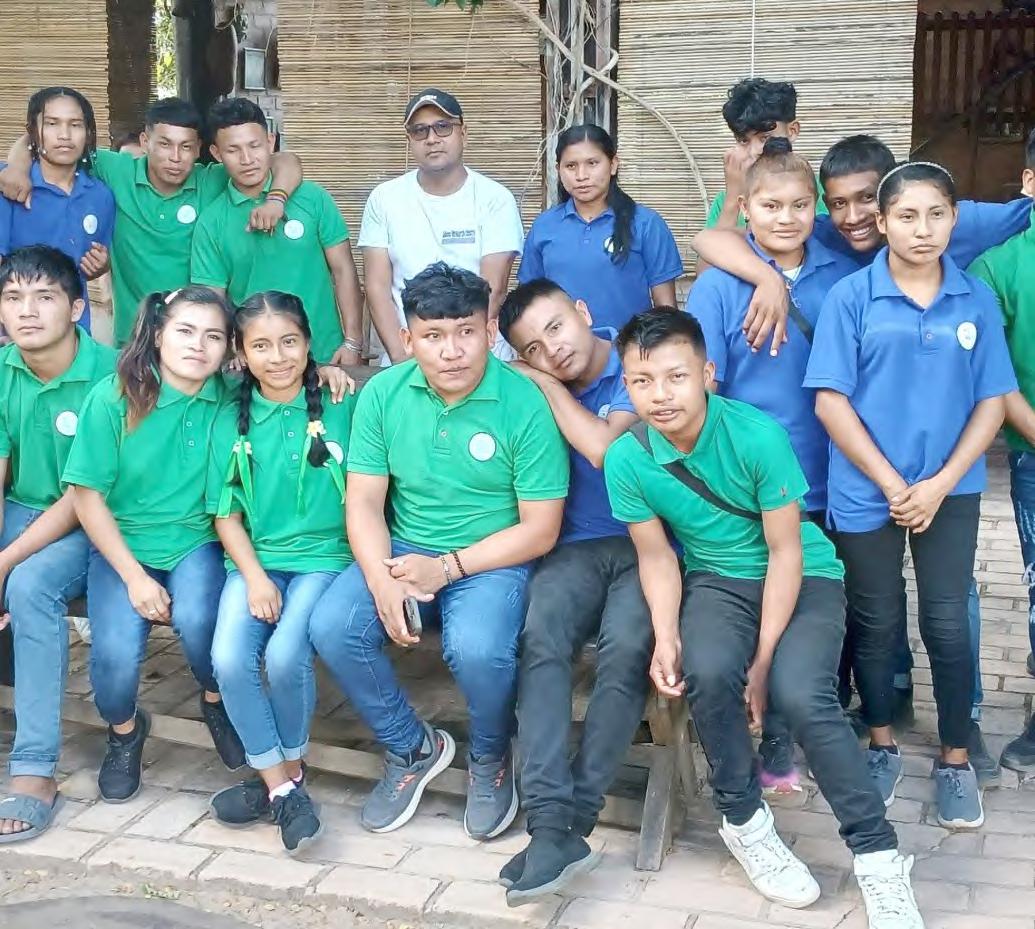
Since then, Abraham has become the principal of the Bina Hill Institute, located in Annai, North Rupununi.
He told the Pepperpot Magazine that the Indigenous tertiary institution is one of its kind in Guyana and offers students a second chance at opportunities in their lives.
“I’ve been in the role for
nine months. The experience is both new and challenging for me, as I have never had such responsibility before, even though I previously worked with teenagers and young adults. Nevertheless, I am learning a lot in this position about how to lead and guide young people to become responsible citizens who contribute to the development of their communities and the country as a whole,” Abraham said.
He reported that in Guyana’s rich cultural landscape, where resilience and heritage intertwine, individuals who dedicate themselves to education, language preservation, and community em-
powerment stand as beacons of hope.
Among these emerging voices is Medino Abraham — a passionate advocate for Indigenous knowledge, environmental care, youth development, and the preservation of Guyana’s linguistic and cultural identity.
Abraham’s journey resonates deeply with many Guyanese who understand that success does not always arrive early, but often emerges through perseverance, faith and determination.
Described as “a blueprint for late bloomers”, his story reflects the inspiring reality that growth and achievement can flourish at any stage of


life.
Abraham’s path demonstrates that education is not merely about certificates or titles, but about transformation, purpose and service to others.
Through his work in education and community engagement, he has continued to inspire young people, particularly those from Indigenous and rural communities, to pursue learning with confidence while remaining proud of their heritage and identity.
One of the most signif -
icant aspects of his work with a team has been his involvement in promoting and incorporating the Wapichan language in nursery and primary schools in the South Rupununi.
At a time when many Indigenous languages face decline due to globalisation and cultural assimilation, Abraham and others have recognised the urgent need to protect the linguistic heritage of Indigenous peoples. His efforts to encourage TURN TO PAGE VII
the use and appreciation of the Wapichan language, along with his team, reflect a broader commitment to cultural survival and intergenerational knowledge transfer.
For Abraham, language is more than communication — it is memory, identity and connection.
But he also believes in using English, the national language, which is part of our identity, to communicate as bilingual citizens of Guyana.
Abraham believes in the concept of interculturality, in which one culture meets another with respect and mutual interaction, creating a new shared cultural space.
Nevertheless, for him, the preservation of Indigenous languages, which safeguards oral traditions, ancestral wisdom and the worldview of Indigenous communities, is paramount.
Engaging with his previous team’s advocacy in the South Rupununi, therefore, represents not only educational work but also cultural preservation and empowerment.
This commitment to Indigenous language revitalisation was further grounded in Abraham’s role as the princi-
pal of the Bina Hill Institute, which he describes as “a living centre for Indigenous language promotion.”
He explained how students from Regions One, Seven, Eight and Nine actively celebrate and practise their mother tongues, including Macushi, Wapichan, Akawaio, Lokono and Patamona.
He noted that weekly assemblies at the institution include students sharing phrases in their native languages, while structured instruction in the Macushi language forms part of the curriculum.
Abraham also highlighted the powerful symbolism of hearing the National Pledge and National Anthem recited in Macushi — an act that reinforces the place of Indigenous languages within Guyana’s national identity.
His commitment to literacy and Indigenous education has also expanded into children’s literature.
Last November, Medino, as he is well known, was recognised for launching a children’s book about Stephen Campbell, one of Guyana’s most significant Indigenous leaders, first ministers and parliamentarians.
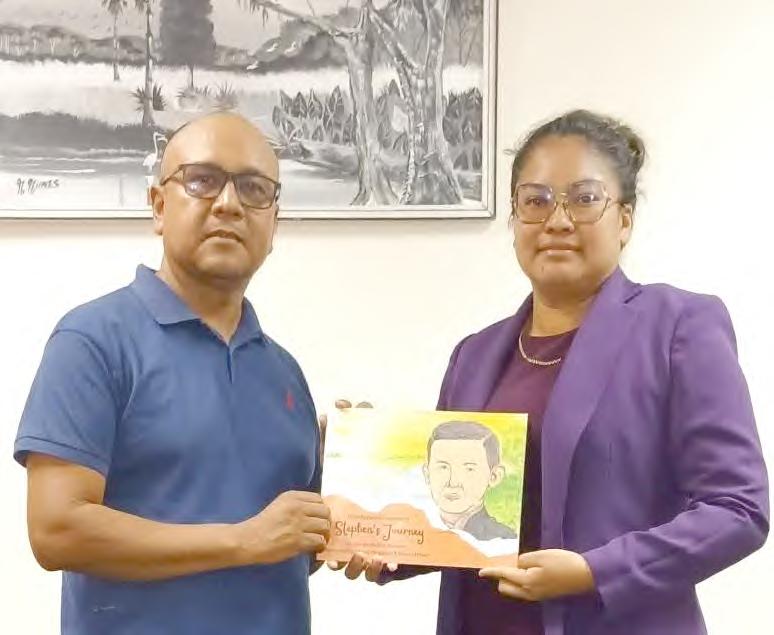
The initiative reflected his dedication to ensuring that young Guyanese learn about Indigenous history, leadership and national heroes from an early age.
The children’s book project also underscored his
shared that she had postponed university assignments to continue preparing for the pageant.
While maintaining balance has been difficult, Duncan says she has learned a great deal from the resilient women around her. Citing her mother and Renee Chester, the franchise holder for Miss Global International Guyana, as major inspirations, she shared that they have shown her it is possible to achieve balance and success.
“I have been surrounded by resilient women. My mother, with whom I hold a close bond, has told me over the years: even when you’re not well, and even when you accept that you’re not well, if you still have things to get done, try your best to do them.”
She added, “Also, Renee recently became a mother and now has to balance work, the franchise, motherhood and her family life. I’m being taught, using these two women as examples, because I hold them dear and close, that despite having many areas of your life
pulling at you, you can still push forward. It’s not impossible.”
Heading into the international leg of the competition, slated for September 14 to 20, 2026, Duncan says she expects a journey that will require hard work, dedication, and long hours. However, she does expect the full support of her team towards Coronation Night in Jamaica.
Looking ahead, she shared, “I know we are going to have to put in many hours making sure I’m well-prepared for interviews and whatever questions they might have. I also know that despite our best efforts, sometimes things don’t always go as planned.”
While she does have some fears heading into the competition, Duncan says she remains inspired by the women around her and by her own resilience, and that this is the message she would like to share with other women. “Despite the fact that we don’t give ourselves enough credit for what we accomplish, whether small or large, women
belief that storytelling and education are powerful tools for cultural preservation.
By introducing younger generations to the legacy of Stephen Campbell, Abraham helps build national pride and a deeper appreciation of
FROM PAGE III
are resilient. I’m going to use this title to remind women, and particularly our young girls coming up, that yes, you may face challenges in life, but you will overcome each one.”
For entrepreneur and franchise holder Renee Chester, the work of getting Duncan ready for Jamaica is just beginning.
Speaking to the Pepperpot Magazine, Chester shared that while the groundwork is being laid, including interviews and securing sponsorship, the more intensive preparations, such as coaching, are still ahead.
Chester added that while there will be challenges, she is confident in Duncan’s ability to bring Guyana another crown.
The Miss Global International pageant is scheduled to take place from September 14 to 20, 2026, returning to the Grand Palladium Resort in Lucea, Hanover, Jamaica, a milestone Chester says she is very much looking forward to and one she intends to see Duncan walk into fully prepared.
Indigenous contributions to Guyana’s development.
His dedication to both spiritual and academic growth has earned him respect among those who value holistic development.
The ex-Jesuit has been
portrayed in the media as one of humility, discipline and service — qualities that continue to define his work today. Beyond academics, Abraham embodies determination among young Guyanese men. His journey serves as a reminder that setbacks do not define a person’s future.
Instead, persistence, self-belief and commitment to one’s purpose can open doors that once seemed distant.
“In a rapidly changing world, voices like Abraham remind us that progress should never come at the expense of heritage. True national development is strengthened when culture, environment, education, spirituality and identity walk hand in hand,” he said.
As Guyana continues to evolve on the global stage, individuals such as Abraham stand as examples of how dedication to education, Indigenous language preservation, literature and community upliftment can leave a lasting impact on future generations — proving that sometimes the most inspiring journeys are those that bloom later, but shine the brightest.


IN Greek mythology, when the demigod Hercules committed a great sin, the only way he could find peace again was to seek redemption. Redemption was the only thing that Hercules needed, and it did not matter to him how difficult the path was to attaining it.
In fact, the story of Hercules atoning for his wrongdoing becomes all the more powerful exactly because the path to its completion was so arduous. For him to attain it, he had to complete 12 impossibly dangerous tasks, risking his very life at each one. When he did finally finish them, he found the redemption that he had always been seeking, and the story comes
to a satisfying end. Although it is a classic, the myth of Hercules is not the only time we learn the importance of weathering impossibly stormy seas with nothing but the end goal in mind. It has been ingrained in our hearts that if something is important enough to us, we should be willing to travel the most difficult roads to achieve it.
Yet, how can one guarantee that the most difficult paths are always the right ones? How can one say for sure that just because we are willing to endure suffering, the things we desire will always find their way to us?
Those objects we attain by traversing difficult paths
indeed become all the more valuable to us. However, the universe is not always just. There are many moments in our lives when we may have put in the work, persevered, and endured every obstacle, yet still not reach the destination we badly wanted to. Sometimes, there is an element of sheer luck or chance in an outcome, regardless of how much work we put into achieving it. As human beings, we eventually have to learn to accept this fact.
As bitter as it is to come to terms with this, it is the truth. Placing effort into achieving a goal is not like plugging values into an equation — the result is not always predictable.
Yet, despite this, we have all seemed to evolve to live by the method of suffering in the present, with the hope of a bright future.
We do not realise that by doing so, we are essentially sacrificing our happiness in the present moment for a potentially bright future, rather than for the certainty of a perfect outcome.
We believe that success is an unbelievable joy and ecstasy that lies at the end of a dreadful path, but in reality, success lies in the peace we find in every simple experience. Success lies in our ability to select the right type of journey, where, even if we do not arrive at the destination we intended, we do not lose
with her high school friend Colette Venture. Now in its 11th year, Girl Stand Up was created with a clear mission: to help girls, especially those in Linden, build self-esteem, confidence and a strong sense of identity.
Daniele believes that confidence and self-worth are not luxuries; they are essential foundations for success in life. Over the years, Girl Stand Up has impacted hundreds of girls through workshops, boot camps, online sessions and mentorship opportunities.
The organisation covers topics such as self-esteem, confidence-building, the importance of identity, mental health awareness, physical movement, emotional intelligence, financial literacy, entrepreneurship, vision boarding, leadership, and personal development.
Through Girl Stand Up, Daniele and her team have created safe and inspiring spaces where girls are encouraged to dream bigger, speak boldly and understand their value.
“We started Girl Stand Up because we wanted girls to know that they matter,” Daniele shares. “When a girl understands her worth, she begins to make
better decisions, dream differently and carry herself with confidence, thereby changing her circumstances,” she said.
Daniele is also deeply grateful for the many facilitators and volunteers who have contributed to the organisation’s work over the years.
Many of them are professionals from Guyana and overseas who freely give their time, knowledge and encouragement to help develop the next generation of young women.
“Our facilitators and volunteers are a major part of this journey,” she says. “They give from the heart, and because of them, we have been able to reach and inspire so many girls.”
Awhe Guyana
Even with a full professional and entrepreneurial life, Daniele continues to dream and build. Her newest venture is Awhe Guyana, a tiny gift shop and café with a strong focus on Guyanese pride and culture.
The space is being created as a place where people can purchase gifts, souvenirs and locally inspired items, enjoy a good cup of coffee, and have snacks in a
warm, welcoming environment.
FROM PAGE II
Awhe Guyana represents Daniele’s love for country, creativity and community. It is another expression of her desire to create spaces that celebrate local talent, support small producers and give people a reason to feel proud of Guyana.
From finance to fashion, from entrepreneurship to youth empowerment, Daniele continues to live a life marked by purpose.
Her journey reflects the power of reinvention, discipline and service. She has built a professional career of substance, created businesses that serve her community and devoted more than a decade to helping young girls grow in confidence. For Daniele, success is not measured only by titles, businesses, or achievements. It is measured by impact.
“I want my life to show that you can be professional, entrepreneurial and still serve others,” she says. “At the end of the day, what matters most is the difference we make in people’s lives,” she said.
Daniele is originally from Linden, attended McKenzie High School and is married with two children.
anything important to us.
We must not learn to accept suffering and difficulty as the norm. Although some sacrifice and hard work are necessary to achieve certain goals, they are not the only factors that control the outcome of our lives. In fact, if we make the right choices, even the paths built through hard work and perseverance do not feel like suffering, but rather a transformative journey. As we move forward, we must ensure that the growth we experience is not an illusion created by the feeling of struggle, but rather true development.
When we build our lives, we must not make choices based on other people’s ex-
periences or even our own preconceptions about what a journey should hold.
Instead, we must make choices with the understanding that every one of them has a specific consequence — some of which can be predicted and many of which cannot. In the same way that success, happiness and accomplishments look different for everyone, the roads to these destinations are also different for everyone.
Perhaps the Greek demigod Hercules was able to attain his goal only by risking his life in a long, labour-intensive journey. However, our happiness and success may be as easy to find as opening a door!


TOO often, couples let the romance die in their relationship and don’t understand why. Couples can express their love for one another verbally and non-verbally. When couples can enjoy recreation and relaxation together and learn to live together well, they will keep the initial spark of love alive.
One of the biggest roadblocks in a relationship is busyness. Partners need to make time for one another intentionally. Every person needs to be acknowledged, appreciated and celebrated. When partners learn to appreciate each other, they will be on their way to a happier and healthier relationship.
Section A. Non-verbal communication
The success of many relationships is not always dependent upon the words uttered, but on the non-verbal communication between partners. Nonverbal communication in relationships is powerful and often makes one partner respond in ways the other anticipates. When one partner extends their hands, the other may quickly stretch out their hands for a hug. The gentle touch of one partner
can lead to many great things in the relationship.
Often, people learn the messages conveyed by their partner’s eye contact. They do not have to attend a university to know what some types of eye contact mean.
Eye contact may indicate yes or no, so each person must read their partner’s expression and decide what course of action to take.
Oral and physical hygiene are two things couples must practise daily. When they keep themselves clean, they may spend more time together than apart. Bathing frequently and using cologne can set the stage for romance. If couples can afford it, they should each purchase fragrances that will attract their partner.
A smile from one companion can be a great thing that their partner expects to see. Some smiles may turn into laughter when couples are comfortable with each other.
Styling the hair and haircuts can also add to a couple’s romantic life. For wives, there are many hair accessories they can use to appear more romantic.
Talking is very good for all relationships, but people
in a relationship sometimes need to be quiet. In their silence, they will internalise what their partner is saying. A romantic relationship does not require one partner to be a journalist; sometimes it just requires both partners to be quiet and enjoy each other’s presence.
Section B. Physical activities
In a couple, each person expects that their partner may treat them to good meals. Some couples will spend time dining at home or at their preferred places. As they dine together, they have time to look at each other and express their appreciation.
Some couples like to dance. As they dance and feel their companion’s gentle hands, it may stir their sensuality.
Keeping in shape is something that every couple must do. This may require them to attend a gym or purchase gym equipment. With regular exercise, each person may get the body shape that attracts their companion.
The clothing worn by persons can be appealing to their companions. Therefore, they must know their companion’s taste and what clothes will
cause their companion to feel the need for closeness. The clothes people wear to work will be different from the clothes they wear in the bedroom.
Section C. Things to avoid
There are certain things that couples must avoid. For example, people should not have many lengthy phone conversations with their partner. Couples must set aside time for each other, since time is a great investment that will build a relationship. When a partner sees their companion making time for them, it may draw them closer together.
Couples who are too busy with work and friends will not have enough time to build their relationships. While people would like to accomplish many things, they must not put their accomplishments above the time they need to spend with their companions.
Busyness robs companions of time to spend together. Couples with children must teach their children early to help with domestic activities to reduce their parents’ workload, allowing them to spend more time building their romantic life.
Section D. Relaxation and investment in your partner
Relaxation is important for every couple. Couples must carefully plan their vacations together so that they get time to learn more about each other.
They can visit places they have never been to, which will be exciting for them. Some of these places will be within their own country, so they will get to learn more about it. Taking vacations in other countries is also important for couples.
Investing time and money in each partner can add to the quality of the relationship. Time must be set aside to interact with the children, but also for partners to talk with each other and share ideas.
Couples may also set aside time to visit and interact with family members outside the household, which will allow them to learn more about their partner’s background and know what they should and should not do to their partner.
The theatre may be a good place for couples to strengthen their romantic life. At the theatre, they will watch plays that will make them smile and laugh. When couples are at home, they
can watch family movies or series to gain more insight into romance.
When some couples first come together, they may not be aware of some things that will enhance their romantic life, but the movies can give them important ideas they can soon practise.
Celebrating birthdays and anniversaries helps couples to show more appreciation for each other. When they are celebrating these events, they can invite friends and relatives to join them.
The bedroom is a private place for couples. Therefore, not everyone must be allowed to visit a couple’s bedroom. If the bedroom and bed are welcoming, then great things will happen in the bedroom for each partner. So, they must invest in their bedroom and have a happy romantic relationship.
For more information about Geary Reid and his books, please use the contact information below: Amazon: http://www.amazon.com/author/gearyreid Website: www.reidnlearn. com
Facebook: Reid n Learn
Email: info@reidnlearn. com
Mobile #: 592-645-2240


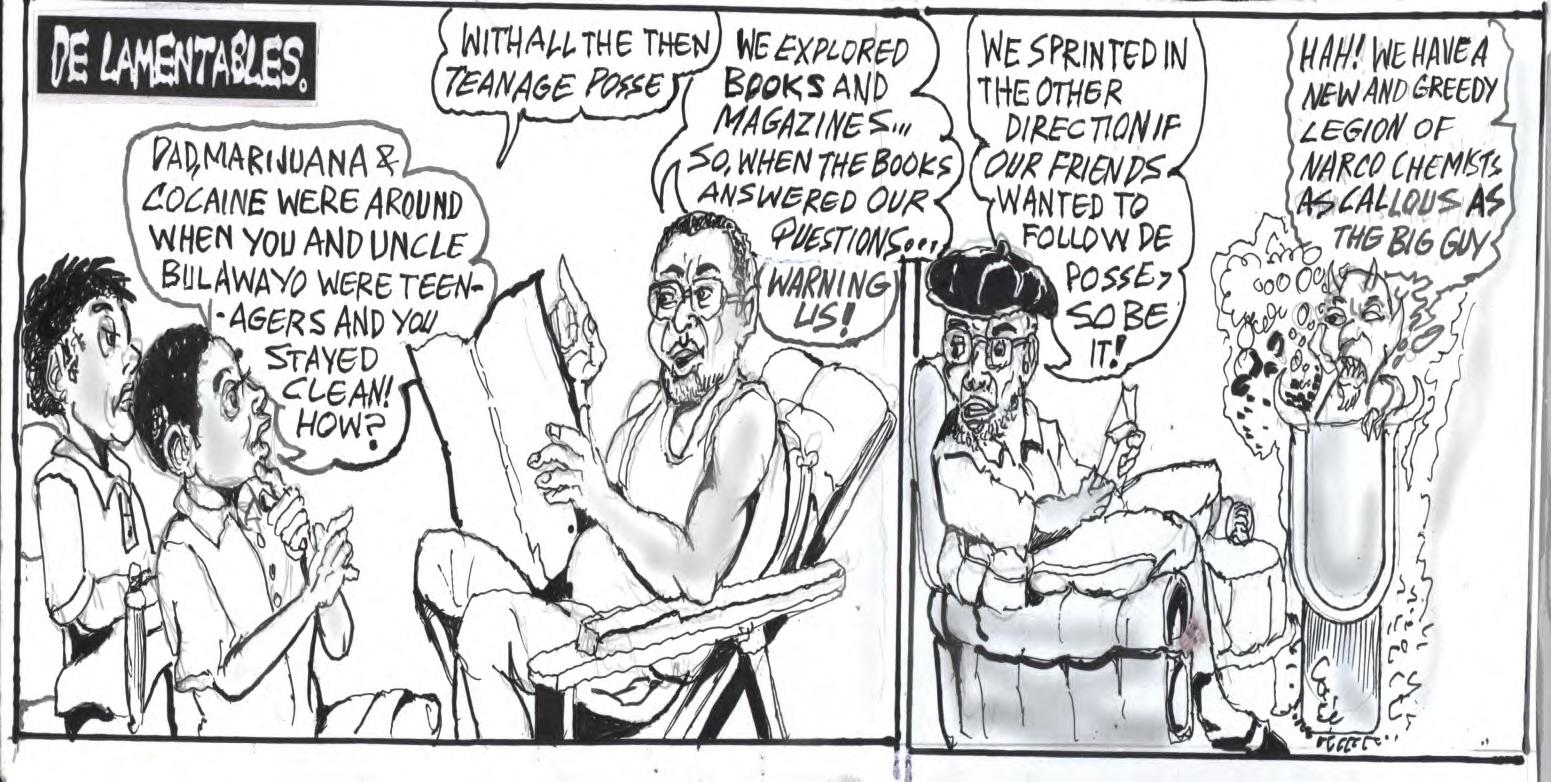
I KNEW when certain men were called out, including my godfather, that Uncle Fred had consumed red rum and was in full speed to the forty feet, and that no one man could halt him in his quest.
Some say a water spirit summoned him.
The men who were summoned to save this man, who under normal circumstances was a jovial adult, a husband and father, were tough men, sportsmen,
and tradesmen whose muscles were visible.
They would jump into the forty feet, grab Uncle Fred and tumble with him before pulling him onto the forty-foot road.
So far, I do not know what red rum constitutes to generate such actions.
Likewise, what is the force of the chemical content of crack cocaine that overpowers the current victims of this terrible affliction that affects our land? We interpret
them to be the controversial term of “JUNKIES”. Unlike in our childhood, there seems to be no urgency in encroaching on the sinister cause of the captive souls we identify as “JUNKIES”.
As a parent who has endured the weird challenges of wrestling with a child in the morbid embrace of this artificial pestilence, I can only conclude that the ancient men who concocted terrible belief systems to justify their right to be savage and to infest the
consciousness of genocide and the subjection of bondage in the course of thievery of all manifestations are still with us.
If we discuss the logic behind the justifications for the follies we commit, we, as normal humans, cannot rest.
Thus, we must brandish our shortcomings and ascribe them quietly to requiring the aid of things that are forbidden, or otherwise kneeling in service to things and habits we should
not embrace on the judgement of so-called kin of the shadows. NARCO addiction is FRIENDLESS, and it may emerge as too many things that cannot be easily tempered.
Whether what we believe is whispered by what you may never interpret, stay strong and be aware of what you do not understand. Step away from friends. We living fuh truth in a strange world, worse for the foolish.



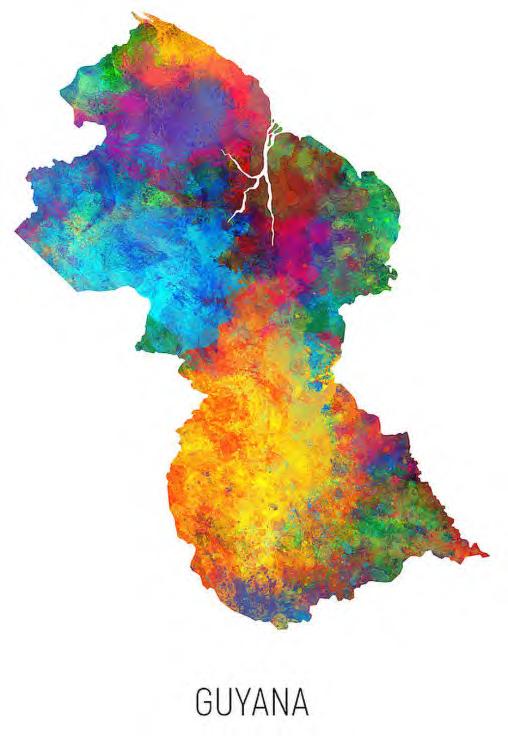
IN a land on the north-eastern coast of South America, once a lost world, a hidden paradise, the eyes of the world have now been opened to its astounding beauty and uniqueness that enthral the mind and captivate the heart.
Guyana – the land of many waters.
Kara inhaled deeply as the plane reached its destination.
had taken her to many countries across the world, but the thought never left her mind that one day she would return to the land of her birth.
It was late at night when the plane landed, and as she stepped out of the airport, the cool breeze sent a warm thrill through her. She stopped and closed her eyes, embracing that moment, and announced, “I’m home, dear Mother.”
“Home, after twenty years.”
Her family had migrated to England when she was just eight years old, and she had never returned, Europe becoming home for her. But deep within her heart, as she grew from a child to an adult, the connection to a place that had once been home remained unbroken.
“It’s kinda strange,” she mused. “Or maybe it’s because the bond between mother and child is never broken.”
Her career as a journalist
The hotel had sent a cab for her, and on the drive to the Princess Hotel on the East Bank, she was quite impressed by the improvements to smooth double-lane roadways and streetlights.
She smiled, a happy feeling within her as she checked in at the hotel and said to herself, “From tomorrow, I will become acquainted with you again, dear land.” Kara awoke late the next morning and went downstairs to the restaurant for a scrumptious brunch with two of her cousins from the TURN TO PAGE XVIII

THE Environmental Protection Agency (EPA) welcomes the Guyana Court of Appeal’s recent unanimous ruling on financial assurance requirements for offshore petroleum operations.
The Court of Appeal overturned an earlier High Court ruling that had directed the EPA to require an unlimited Parent Company Guarantee and/or an unlimited Affiliate Company Guarantee from Esso Exploration and Production Guyana Limited (EEPGL), failing which the environmental permit would remain suspended.
The Court found that neither the
Environmental Protection Act nor the environmental permit expressly requires an “unlimited” financial guarantee. The Court further held that the EPA, as the lawful environmental regulator, is the body responsible for determining the appropriate form and level of financial assurance required under the law.
The EPA wishes to make it absolutely clear to the public that the Agency has always maintained,
both publicly and through permit conditions, that permit holders remain fully liable under the law for any environmental harm, pollution, damage, or loss caused by their operations.
This principle is already embedded within Guyana’s environmental legal framework and is separate and distinct from the issue of financial assurance.
Under Section 14 of the Environmental Protection Act, Cap. 20:05, the law states:
“Where any person causes or permits any contaminant to be discharged into the environment in vi-

olation of this Act or any regulations made thereunder, and the discharge causes damage to the environment, that person shall be liable for the cost of any necessary restoration or remedial measures.”
The EPA notes that, in law, liability refers to a legal responsibility or obligation for environmental harm and may include:
• clean-up and restoration costs;
• compensation where applicable;
• enforcement action;
• penalties;
• prosecution; and
• any other legal remedies available under the laws of Guyana.
In simple terms, this means that if a company causes environmental harm, it can be held accountable to the fullest extent of the law.
FINANCIAL ASSURANCE IS NOT THE SAME AS LIABILITY
The EPA further clarifies that financial assurance and liability are separate legal concepts. Financial assurance is a regulatory safeguard or financial mechanism required by TURN TO PAGE XVII


PEOPLE speak about rock bottom like it is some dark, dramatic basement where life chains you to a radiator while sad violin music plays in the background. Reality, however, carries far less poetry and far more unpaid bills, emotional exhaustion,
awkward silences, panic attacks in supermarkets, and staring at the ceiling at two in the morning, wondering exactly how everything turned into a psychological crime scene.
Rock bottom rarely announces itself politely. One
day, you are functioning normally, posting motivational quotes, pretending you have emotional maturity, drinking iced coffee with confidence, and giving relationship advice to friends like a spiritually enlightened guru. Then suddenly life humbles you
with impressive accuracy.
A relationship collapses, money disappears, someone betrays you, your health shifts, your career stalls and your identity cracks. The version of yourself you carefully built over the years suddenly looks like unstable furniture

from an online tutorial, and, strangely enough, that collapse sometimes becomes the beginning of a real transformation.
Psychologist Carl Jung once said, “There is no coming to consciousness without pain.” Jung understood something modern society spends enormous energy trying to avoid. Human beings evolve through confronting themselves, and growth enters through discomfort, while awareness often arrives dressed as disaster.
That truth irritates people because everyone enjoys the idea of transformation until transformation starts rearranging their ego like a hurricane inside a storage room. Still, rock bottom serves a purpose.
A human being operating entirely from comfort rarely examines life deeply. Comfort creates routine, routine creates identity, and identity creates attachment. Then life arrives with its beautiful spiritual sarcasm, removing the very things people thought they needed to survive. Suddenly, the person who once said, “I could never live without them,” is alive — traumatised perhaps, confused certainly, but alive.
Psychology refers to part of this process as “post-traumatic growth”, a concept explored by psychologists Richard Tedeschi and Lawrence Calhoun. Their research found that many people experience profound psychological development after crisis, trauma, grief or emotional collapse.
Individuals often emerge with a deeper appreciation for life, stronger emotional resilience, spiritual awakening, greater self-awareness and more meaningful priorities. In simpler language, life sometimes destroys the performance so the person can finally meet themselves honestly.
The process feels ugly while it is happening. No -
body sits in emotional devastation saying, “Wow, what a beautiful opportunity for nervous system expansion.” Human beings usually cry first, panic second, stalk social media third and seek enlightenment somewhere around month six. People become philosophers after enough suffering. This is practically a universal law.
Rock bottom strips away illusion with terrifying efficiency. It reveals which relationships carried depth and which ones survived entirely on convenience, distraction, attraction or emotional dependency. It reveals coping mechanisms, emotional wounds and insecurities people covered beautifully with humour, achievement, relationships, money, sex, spirituality or productivity. Once the illusion breaks, awareness enters. This is why spiritual teachers repeatedly speak about surrender.
Teacher Eckhart Tolle explains that suffering intensifies when people resist the present moment psychologically. Resistance creates additional mental pain because the mind continuously argues with reality. Human beings spend enormous energy saying internally, “This should not be happening,” while life continues happening anyway. Reality remains undefeated in those arguments. Honestly, the ego hates that.
The ego enjoys control, certainty, validation, predictability and the illusion of permanence. Rock bottom removes those comforts aggressively. Suddenly, the person who once planned every detail of life is sitting quietly, learning that certainty is basically a myth, wearing office clothing.
Yet something fascinating happens during emotional collapse: people become real. Masks fall away, performance weakens and pretending becomes exhausting. The soul finally gets tired of TURN TO PAGE XVI

BY
MUCH has been written about Samuel Selvon’s mastery of Caribbean Creole in his novels and stories. It remains the most frequently celebrated aspect of his work, perhaps even a defining poetic principle of Caribbean literature itself. There is a remarkable naturalness to Selvon’s use of Creole that feels at once intimate and estranging.
His characters do not merely speak Creole; they inhabit a linguistic continuum in which the attentive reader discerns a subtle, artful fusion of vernacular speech and Standard English.
In this, Selvon achieves something akin to what V. S. Reid accomplishes in New Day: the faithful rendering of rhythm and tonal integrity — the lilting, singsong cadence of dialect — sustained with remarkable consistency. Yet Selvon rarely resorts to phonetic spellings of Creole. One might argue that his gaze was partly directed towards non-West Indian readers, but whatever the motive, the technique — the careful calibration of linguistic registers — is executed with extraordinary finesse.
The music of a Caribbean lingua communis hums beneath the surface of his prose. This is no incidental feature of his writing; it is one of its central achievements.
To read Selvon is, inevitably, to encounter a reflection of how Caribbean people sound — or rather, the most thoughtful literary approximation of that sound. His prose is at once simple and lyrical, imbued with a quiet pride in the idioms and cadences of everyday speech. Selvon made literature out of our language.
For writers of his generation, this must have been nothing short of revelatory: the realisation that one could write not in imitation, but
in the full authority of one’s own voice. In A Passage Back Home: A Personal Reminiscence of Samuel Selvon, by the distinguished Barbadian writer Austin Clarke, Clarke captures this quality with precision:
“In Sam’s interpretation, there was not supposed to be this severe, psycho-literary interpretation, riddled with symbolism. It was the mastery of the man’s usage of language that, through its easy comprehension, we — the reader, the critic, and the academician — were able to understand clearly what he was saying. We read into his words, so clear and single-minded, all the underlying serious implications they suggested.”
It is therefore striking to encounter V. S. Naipaul’s dismissive treatment of Selvon in A Writer’s People, a work notable for its limited generosity towards the writers it surveys. Figures such as Anthony Powell, Derek Walcott, Edgar Mittelholzer and Selvon himself are subjected to brisk, often caustic dismissal. Readers are, of course, entitled to their preferences; yet Naipaul’s reading of Selvon appears neither especially attentive nor particularly generous.
A current of personal animus seems to run through his prose — its origins uncertain, whether rooted in private grievance or in temperament alone. Throughout his career, Naipaul displayed a marked inclination towards provocation.
Selvon wrote many novels, some more accomplished than others — an observation that could be made of any prolific writer. One might similarly argue, for instance, that Walcott’s The Prodigal does not attain the imaginative breadth of Another Life, The Star-Apple Kingdom, Omeros or Tiepolo’s Hound.
In The Prodigal, there is a certain insularity — a retreat into subjectivity that resists the expansive universality of Walcott’s finest work. Yet even at his least compelling, Walcott surpasses much that passes for excellence elsewhere.
In Naipaul’s assessment, Selvon is scarcely granted the status of a writer at all. Instead, emphasis falls on the fact that his books had slipped out of print, with the implication that they lacked the merit to endure. But literary reputation is rarely stable. Writers drift in and out of prominence, subject to the vagaries of taste and critical fashion.
Herman Melville endured decades of obscurity before Moby-Dick came to be recognised as the masterpiece it had always been; indeed, much of his reputation is posthumous. Greatness is neither guaranteed by visibility nor diminished by neglect.
To dismiss Selvon on such grounds is to overlook the substance of his achievement. He was a novelist of genuine insight and craft, and by most accounts a man of warmth, generosity and wry humour. Something of his personality emerges in Clarke’s memoir, as well as in the letters included therein.
This prelude leads to a brief consideration of Selvon’s I Hear Thunder, a work through which one may observe another of his distinctive gifts: his fidelity to the quotidian textures of colonial and postcolonial West Indian life. Selvon possesses an acute sensitivity to the rhythms of the everyday, and from these he fashions a quiet but persistent poetics.
This quality is evident even in lesser works such as Those Who Eat the Cascadura, with its evocative rendering of cocoa estates and the memorable scene of women
“dancing the cocoa”, as well as in A Brighter Sun and its sequel Turn Again Tiger. His rum shop scenes, in particular, bear the stamp of lived reality: convivial,
sensuous and grounded in observed detail rather than imaginative excess. The smells, sounds and cadences — the easy banter, the bursts of laughter — are rendered
with an authenticity that transcends any single island and becomes recognisably Caribbean.
I Hear Thunder is one TURN TO PAGE XVII

carrying identities that no longer fit. A person who spent years trying to appear strong suddenly admits fear. Someone obsessed with external validation begins to crave peace rather than applause. Someone who chases status begins to value stillness, honesty, rest, connection, health, and meaning. Rock bottom, therefore, rearranges values, and perhaps that is why some of the wisest people carry sadness gently in their eyes. The pain expanded them while suffering deepened perception. Loss forced awareness, and life humbled them enough to understand what matters finally.
Now, let us add humour because emotional breakdowns without humour become unbearably dramatic.
Human beings truly believe they are in control until
one breakup, one betrayal, one health scare, or one bank notification turns them into unpaid philosophers staring out a window during a rainstorm, as if they are auditioning for a spiritual documentary. Life possesses incredible comedic timing. Still, beneath the sarcasm lies something deeply important: human beings carry extraordinary resilience. The nervous system adapts, the brain rewires, and emotional wounds heal gradually through awareness, support, reflection, behaviour changes and time.
Neuroscientist Andrew Huberman frequently discusses neuroplasticity, the brain’s ability to reorganise and form new neural pathways through repeated thought patterns, behaviours and emotional experienc -
es. This means that people are not permanently trapped inside old versions of themselves. The brain changes through repetition, attention, environment, emotional processing and conscious practice.
This is where the idea carrying enormous hope comes in.
A person can hit rock bottom emotionally and still rebuild psychologically. A person can lose relationships and still develop healthier attachments. A person can experience betrayal and still learn to trust wisely. A person can fail publicly and still create meaning privately.
Human beings rebuild themselves every day while pretending they are “just tired”.
And spiritually, many traditions describe collapse
as preparation rather than punishment. The old identity dissolves as consciousness expands beyond it. The breakdown becomes initiation. The suffering becomes an invitation, and the pain becomes an interruption powerful enough to wake someone from emotional autopilot.
Rock bottom transforms from evidence of failure into evidence of transition. In the same way, the seed enters darkness before becoming a tree, muscles tear before growing stronger, and the nervous system recalibrates after stress.
Stars themselves collapse before becoming something new. This demonstrates that nature repeatedly shows that destruction and creation often arrive together. Human beings panic more dramatically during the process.

And perhaps the most powerful thing about rock bottom is this: once someone survives their deepest fear, fear loses some authority. The person realises survival exists beyond devastation. They stop worshipping external stability as if it guarantees peace. They begin to build something deeper internally, where wisdom and clarity grow. Self-respect grows there too.
A person who rebuilds themselves consciously carries a different kind of energy afterwards. They stop chasing shallow validation. They stop forcing connections that drain them. They stop performing happiness while quietly collapsing inside. They begin to value peace over image, alignment over approval, and authenticity over perfection.
To me, this transformation deserves massive respect because, again, rock bottom teaches lessons comfort never could. It teaches humility, emotional truth, resilience and discernment, and it teaches people that identity survives loss.
And perhaps most importantly, it teaches that endings often become beginnings, wearing darker clothing.
So if life has collapsed recently, if plans shattered, if identity cracked, if loneliness arrived, if grief entered, if uncertainty consumed the room, remember this:
The ground beneath you may feel like destruction, but foundations are built there, too. And once a person reaches the bottom, something strangely beautiful happens — there is finally space to rise.
“You look tired,” the old man said, “Like hope climbed out of your chest and fled. Like life sat down beside your door And said, ‘You don’t get peace anymore.’”
I laughed the kind that hides a scream, The kind that kills a younger dream.
“I had it all,” I said with shame, “Then watched the fire consume the frame.”
He nodded slow. “That’s how it starts.
Rock bottom cracks illusioned hearts. It strips the ego, pride, disguise, Till only truth survives the rise.”
“But what,” I asked, “if all feels done? What if the dark outweighs the sun?
What if the soul grows cold from loss
And every road feels lined with cost?”
He smiled like someone grief had taught, Like pain and peace together fought.
“My child, the earth receives the seed
Before the roots become the tree.”
“The mountain only scares the proud.
The broken pray the deepest now.
And people drowning in despair
Still find that breath is hidden there.”
The silence wrapped around the air.
No rescue came, no magic prayer.
Just one strange truth beneath it all; There’s nowhere left to go but up from fall.
So if your world has split apart, And life has punched straight through your heart, Remember this when shadows bloom; The deepest graves can birth rebirth too.
Romella Dasratt

the EPA to help demonstrate that a company has the financial capability and resources to meet environmental obligations if necessary. Liability, however, is the underlying legal responsibility for environmental harm or damages caused.
The Court of Appeal’s ruling addressed the issue of financial assurance under the environmental permit. It did not remove, reduce, or weaken the legal liability of permit holders under Guyanese law.
CONTINUED REGULATORY OVERSIGHT
The EPA continues to regulate petroleum operations through environmental permits, monitoring requirements, inspections, reporting obligations, and enforcement mechanisms established
FROM PAGE XIII

under the Environmental Protection Act. The Agency remains committed to ensuring that permit holders comply with all environmental obligations and that the polluter bears responsibility for environmental harm in accordance with the law.
EPA REMAINS COMMITTED TO THE RULE OF LAW
The EPA reiterates its commitment to transparent, evidence-based, and legally sound environmental regulation.
The Agency will continue to carry out its mandate to protect Guyana’s environment, marine ecosystems, coastline, and communities while ensuring that environmental laws and permit conditions are fully enforced.
of only two Selvon novels to focus on the middle class, the other being An Island Is a World. In his own summary, Selvon describes it as the story of a Black doctor returning to his community with his English wife, attempting to reconcile past and present, and ultimately failing both in marriage and in self-definition. Yet this account understates the novel’s complexity. At its emotional centre lies the fraught relationship between Mark and his friend Adrian, a creolised East Indian entangled with Mark’s wife, as well as the parallel narrative of Polly, whose pregnancy introduces further tension. There is, undeniably, an element of melodrama.
And yet, what endures is not the plot but the texture — the small, luminous details of island life. Consider Selvon’s description of kite flying:
FROM PAGE XV
“Suddenly, there was a loud screaming: ‘Io! Io!’ as an armed tail crossed another’s string.
Mark watched the kite stagger, shudder, and spin awry, struggling in fantastic contortions as string and tail became entangled — at the mercy of the wind, wild as a man unmoored.”
Such moments exemplify Selvon’s gift: elevating the ordinary into something vivid and memorable. I Hear Thunder may be regarded as a minor work, lacking the resonance of The Lonely Londoners or The Housing Lark, yet it remains engaging, often poignant, and distinctly marked by the archetypes and humour that define his oeuvre. Even at its most modest, Selvon’s writing sustains a quiet, enduring charm.

city. She had met them twice in New York and London when they were on vacation, and it was a happy moment seeing each other again. They had arrived earlier at the hotel, waiting to drive her to her old home in the ancient county of Berbice.
After the brunch, which Kara quite enjoyed, her cousin Vinita asked, “Are you ready?”
“Yes,” Kara answered excitedly. “Looking forward so much to this trip.”
The long drive was a journey to remember. Kara was awed by the green, lush landscapes, the grandeur of modern architecture, and the impressive housing schemes.
“New chapters of economies that have opened new frontiers of development,” she observed. “A third-world
country on the rise.”
But what she loved even more were the food stalls along the roadway, selling tasty Guyanese delicacies, fresh fruits, sugarcane juice, and thirst-quenching coconut water.
“This is marvellous,” she exclaimed, sitting on a wooden bench under the shade of a huge flamboyant tree, relaxing in the ambience of the peaceful countryside.
They had stopped at a roadside stall, and she was enjoying the tasty cassava balls with hot mango sour that brought tears to her eyes.
The journey continued with a few stops for Kara to take pictures of old colonial churches and houses they saw along the way, priceless pieces of history. Soon they reached Rosignol, a commu-
nity Amar said had come a long way, boasting some fabulous houses that were real showpieces and the Berbice River Bridge.
“Remarkable accomplishment,” Kara expressed.
They bought tasty, crispy cassava, plantain and sweet potato chips with mango sour from vendors who rushed to the car.
It was afternoon as they drove along the Palmyra/ No. 2 Road and turned into Canje to Kara’s old home in a sprawling settlement on the western side of the main road. The streets were paved, and she exclaimed in surprise, “This is wonderful!”
She asked Amar to stop the car so she could walk to get a feel for the street that held childhood memories, like falling off her bicycle on
the then-bad road. She looked at the houses as she walked past, beautiful country homes with a variety of fruit trees and blooming flower gardens.
She saw faces she could not remember, who looked at her curiously, knowing from her outlook and accent that she was a foreigner. So she introduced herself, recognised by her father’s name, and soon the modest home she had lived in saw a steady flow of neighbours and extended family. It gave her such a wonderful feeling to be home again, and she listened, fascinated, to the Creole spoken, a unique mix of languages.
Kara was nudged awake early the next morning by soft devotional songs, the aroma of breakfast in the

air and the creole fowl-cock crowing. She began her day with a splendid Indian breakfast of dhal, roti, steamed callaloo and stewed dry fish.
“Oh darn,” was all she could say after that meal, her eyes misting from the spiciness.
Later in the morning, she shared candies with the children in the neighbourhood who were thrilled by her British accent, and one young boy boldly remarked,
“You like wan ah dem James Bond 007 gyal friend.”
“What!” she said, laughing, surprised they knew the Scottish actor.
“The children these days,” Vinita told her, “know everything because every home has a television now.”
“That’s great.”
And in a moment of reminiscing, she said quietly, “Growing up as a child here, we had radio and storytelling nights.”
The next day, she took a walk along the streets where she used to play games and ride her bike. She had the names of some people her father had given her to get acquainted with, but most of them were no longer there.
“Where has everyone gone?” she asked, a bit perturbed.
“Migration,” was the answer.
“Oh yes,” Kara acknowledged. “My family was a part of that exodus.”
Looking at the list of names in her hand, a tinge of regret touched her heart. A separation that left a deep yearning where hands could not touch anymore, distanced from loved ones by thousands of miles, for life had created more journeys other than across the Kala Pani.
That night, she took some family members and neighbours out to New Amsterdam. The town had risen to greater heights with television stations, hotels, supermarkets, restaurants and nightclubs. It was a night of fun, laughter and great food, Banks Beer and El Dorado rum, when the troubles of the world were forgotten.
A couple of days later, she went on a trip to the Corentyne, another wonderful experience for her because this place she had no memory of. Vinita, a regular visitor to Corentyne, described to her the developments over the years, leaving Kara truly impressed. But what impressed her more
was the University at Tain, a world of opportunity for the young people striding with the great advances of tertiary education.
“It had some problems, though,” Amar stated.
“What doesn’t?” Kara responded. “Problems are a norm all over the world, but it’s how you address issues to find solutions that make a difference.”
“Totally agree with you,” Vinita said. “But right now I’m hungry.”
They stopped at a Chinese restaurant, and Kara surprised her cousins by saying she could speak Chinese, having completed a few assignments in China. The proprietor was quite pleased with his new customer, and even more so when she told him she had once eaten at his uncle’s restaurant in Zhi Jian.
“Talk about a small world,” Vinita expressed. “And you’re quite an amazing woman.”
After quite an enjoyable lunch, they drove further up the countryside through Springlands, an established township; the impressive Skeldon Market; the historical sugar estate; the beautiful community of Line Path; and into Crabwood Creek. This was an area that was remarkably developed through farming, business, and trade with neighbouring Suriname. The ferry crossing at Moleson Creek was another great accomplishment and the end of the visit.
Kara felt a deep sense of satisfaction as they left Corentyne, back to Canje to relax for another day. Everywhere she went, and everything she saw was beyond her expectations, leaving an indelible mark on her mind. So when it was time to leave, she felt sad saying goodbye to a place where a piece of her heart had always been.
“So you know what,” she declared, “this is not ‘Goodbye’, this is ‘See you again later’.”
There were many places left to visit, so many more amazing things to see that she knew she would definitely make more visits.
And as she left her beloved land at the end of her vacation, the thoughts in her mind were:
“I came back after such a long time because my identity was not lost, my legacy of belonging not broken, and with that I can paint a rainbow in the sky.”
























































Dear student,
Keeping a diary or notebook can be very useful in studying. With it, you can monitor your learning progress, and note points of which you wish to be reminded. Note-making is a very important skill that fits hand-in-glove with notebook keeping. Notes that are easily read, brief, clear, easily understood, organised the way you can learn from them, and relevant to your study needs are good notes to go by. Always keep a notebook or diary handy. Be wise. Kind regards.
My mother made all the clothes we wore, even my brothers’ overalls. She made all the towels and sheets we used. She spent the summers canning vegetables and fruits. She spent the winter evenings making quilts enough to cover all our beds.
During the “working” days, she laboured beside – not behind – my father in
the fields. Her day began before sunup, and did not end until late at night. There was never a moment for her to sit down, undisturbed, to unravel her own private thoughts; never a time free from interruption – by work or the noisy enquiries of her many children.
And yet, it is to my mother - and all our mothers who were not famous – that I went in search of the secret of what was fed, what muzzled and often mutilated, that vibrant creative spirit that the black woman has inherited, and that pops out in wild and unlikely places to this day.
But when you will ask, did my overworked mother have time to know or care about feeding the creative spirit?
The answer is so simple that many of us have spent many years discovering it. We have constantly looked high, when we should have looked high - and low.
(Alice Walker’s “In Search of Our Mothers’ Gardens”)
Thinking About the Pas-
sage:
1. When you read the title of this reflective essay, what experience or idea do you expect the writer to reflect on? Explain.
2. What words does she repeatedly use to suggest the essay’s main idea?
3. What did Walker admire in her mother?
4. Describe briefly the home and other settings in which Walker grew up.
5. In what ways do you think Walker’s mother represent women in general?
6. Write a reflective essay about any person or situation this passage brings to your mind.
Let your study partners read and speak about your language. i) Do they see it conveying an attitude toward the character(s) or situation, and your reader? ii) Can they hear your voice as they read about your perso nal experience? iii) Have you spoilt it somewhat with overdoing the technical and abstract terms and thoughts?
iv) Let them point out your tone (created by setting,
May 24th, 2026
choice of vocabulary, and other details) by using one or two terms from the list below, or finding other adjectives of their choice: joyful, serious, sad, humorous, threatening, informal, pessimistic, optimistic …
GRAMMAR
Punctuation
Reminder: Punctuation is the term for all the marks (like comma, question mark, etc.) used to indicate how a sentence should be read. It gives an overall view of understanding the form of sentences and passages. Its proper use helps prevent errors like comma splices and run-on sentences. It clarifies meaning. Punctuate the three passages below adhering to rules of types and purposes of punctuation marks.
First unpunctuated passage: where you are going my lad said the older man is a question that does not interest us what we want to know is where you were on Tuesday night at seven o’clock when as you know mr bunbury the butcher was killed if you tell
I believe it is peace for our time … peace with honour.
us the exact truth it may help us I should like to the young man replied but how can I it isn’t my secret
Second unpunctuated passage: one day as he was walking along the street a friend of whom I shall call james tattlington met a complete stranger was carrying a large clumsy clock staggering along as best he could under its enormous weight mr tattlington paused eyed the stranger questioningly and then with a smile did you never he asked think of wearing a wrist watch the stranger’s reply is not part of

the joke
Third unpunctuated passage: Can you answer useful questions asked the Red Queen how is bread made I know that Alice cried eagerly you take some flour where do you pick the flower the White Queen asked in the garden or in the hedges well it isn’t picked at all Alice explained its ground how many acres of ground asked the White Queen you mustn’t leave out so many things. Poor Alica may never get the idea across every word she says seems to be taken the wrong way.
Summary writing
Summary writing is a useful skill for keeping information in a diary or notebook. The process consists of formulating a significantly shorter statement that presents the main ideas and points or the core ideas expressed in an original piece. It helps you to review and understand what you read or listen to. To write a summary, you need to first read critically to analyse the longer passage: Jot down the writer’s overall message and purpose. Identify the main points. Omit minor details, examples, and personal opinions as you distinguish between what is important and what is unimportant in the text. Draft an accurate introductory statement. Paraphrase all information into your own words. Avoid copying sentences wholesale. Maintain order and flow as you present the summary in the same logical order as the original key points and important details. Keep your personal ideas out of the summary. Proofread your draft for grammar, spelling and clarity of expression.

IT never ceases to amaze me how the cause and solution for some problems hide in plain sight. For example, many of the problems I see in my patients are related to electrical currents caused by dissimilar metals in the mouth. Any chemical engineer can tell you that when you put two different metals together in a salt solution, the metals act as a battery, and depending upon which metals you combine, the amount of electricity generated can vary.
The amount of current produced in the mouth by having different metals intra-orally would seem quite small. Dentists refer to such conditions as “battery mouth” or oral electricity. But when you consider that a very small electrical current manages your entire nervous system, you would readily understand the significance.
In fact, the five metals in amalgam (silver filling), when placed in saliva, could generate enough current to interfere with your brain or heart function. When you begin to realise the impact of even a subtle electrical charge on your nervous system, it is surprising that this link has remained so elusive. A Scandinavian country banned amalgam fillings years ago, and I stopped using them years ago as well.
Every action you take, every thought you have, is propelled into bodily function by tiny electrical impulses jumping across the synapses in your nervous system and across cell membranes. These electrical messages are a form of language that the nervous system decodes and relays, for example, from your brain to your hand. Some of these are conscious, like when you decide to turn the pages of a book.
Every hour, billions of electrical impulses create an automatic messaging system that keeps your body functioning as a highly sophisticated series of processes.
Everything from the pro-
duction of blood cells to the rate at which your bones deteriorate is controlled by the network of electrical impulses in the nervous system. The electrical ‘messages’ emanating from the metals in your mouth may be in disharmony and interfere with your normal electrical signals, and it should hardly seem remarkable that this current could make you ill. So, whenever patients attend my clinic complaining of a tooth that “shocks”, I first check for dissimilar intra-oral metals if dental work was done recently.
Studies from Europe indicate that it is acceptable for teeth to emit electricity at levels below 100 millivolts and 3 microamps. Many of my patients’ fillings exceed the norms, especially when gold or other metals are in the mouth along with amalgams. In my experience, excess current floating around your body can have a very serious impact. Because the current flows through the path of least resistance, it is very difficult to predict the effects or where the resulting problems will occur.
Diagnosing the impact is difficult, and much research is needed in this area. But interestingly, more than 50 years ago, the American Dental Association journal published studies on the systemic effects of these galvanic currents. The article noted the symptoms of galvanism as being:
1. Metallic or salty taste.
2. Increased salivary secretion.
3. Burning or tingling sensation along the tongue.
4. Occasional nerve shocks and pulp sensitivity from connecting restorations or by connections made with a spoon or fork.
5. Pathological changes in the blood, kidney or organs, probably caused by absorption of ionised toxic metals.
6. Generalised discomfort in the mouth, irritability, indigestion, loss of weight,
and in some cases, reflex radiating neurologic pains through branches of the fifth trigeminal nerve.
When I see a problem clear up instantaneously or within a few hours, then I
can logically assume it was electrical in nature. Mercury does not leave the body this quickly.
At least half of the improvements my patients report fall into this category.
When 60 Minutes did a story some time ago about dental amalgams, one of the people interviewed described how she got out of her wheelchair in a few hours.
The ADA said this could not have happened so quickly if she had been mercury toxic. In any event, your dentist should evaluate and advise you when you have different metals in your mouth simultaneously.