‘Giving Up Is Not an Option’
How one Guyanese father refused to let adversity steal his greatest achievement

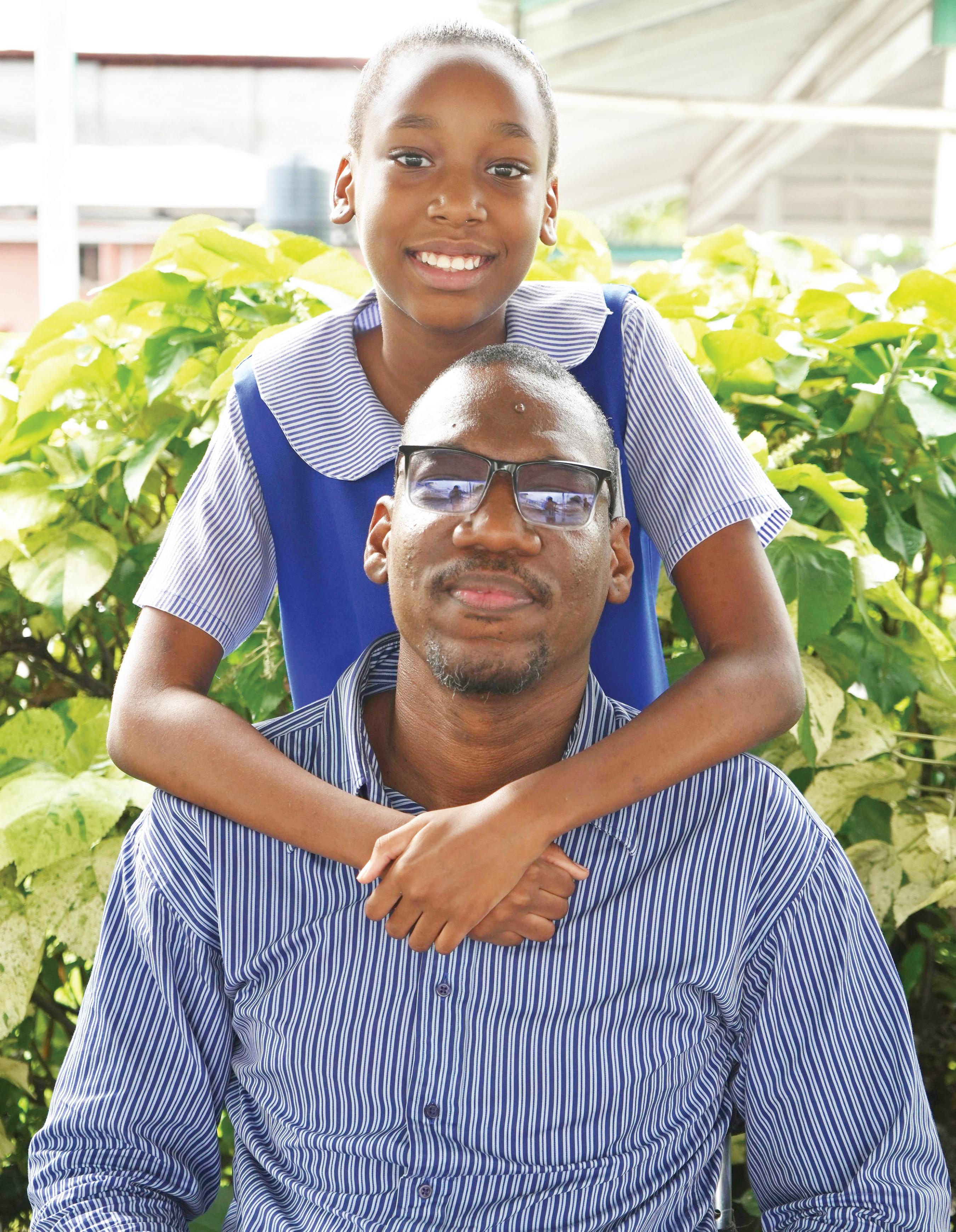
Eric Shepherd and his daughter. Despite life-changing challenges, Shepherd says fatherhood remains his greatest source of pride and purpose
How one Guyanese father refused to let adversity steal his greatest achievement
By Frederick Halley
GUYANA-BORN Dilon
Heyliger was recently awarded the Guyanese-Canadian 60th Independence Anniversary Sports Excellence Award “for his outstanding contributions to cricket in both Canada and his birthland, Guyana.”
Unfortunately, Heyliger, who is currently in Guyana, was unable to attend the prestigious gala dinner and dance, held at the Grand
Cinnamon Banquet Hall and Convention Centre in Toronto, which saw five other Canadian-based Guyanese being recognised for their contributions in business and community leadership – Winston Kassim, Community Excellence; Dr Narine Dat Sookram, Business Excellence; Eric Rodrigues, Outstanding Philanthropy; and Dhaman Kissoon.
Heyliger started his cricketing career on the Essequibo Coast, where he represented his village
team, Santos, and, before long, he was a member of the Essequibo Under-15 and Under-19 teams, and subsequently represented Guyana at the Under-15 level in 2005.
His progression continued three years later, when he was selected to play for his country at the regional Under-19 tournaments in 2008 and 2009. In 2006, Heyliger was already a member of the Essequibo senior team and, despite his sojourns in the

Caribbean, United Kingdom and Canada, was part of the Cinderella County side, which he last played for in 2013.
In the interim, he also turned out for the Guyana Defence Force (GDF) at the First Division level in the Georgetown Cricket Association (GCA) competitions.
Strong all-round performances at the First Division level subsequently earned him a place in the 2011 Guyana T20 squad and, despite not being part of the

playing XI, Heyliger said the experience was quite electrifying and satisfying.
“I decided to build on the success of Guyana’s cricket and move on to gain some international experience.”
Heyliger went on to play cricket for teams in Trinidad and Tobago and Antigua, and, moving farther afield, for Basingstoke in
the Hampshire League in England.
With success and recognition in the United Kingdom, he earned a spot in the Middlesex League with a Uxbridge team, further developing his knowledge, skills, and career on the international level.
Heyliger’s cricketing stint in Canada started in
TURN TO PAGE VI

By Shaniya Harding and Andrea Hendricks
When Eric Shepherd’s daughter was born, he remembers feeling overwhelmed with pride as he held her in his arms for the first time. Years later, a devastating accident left him with spinal injuries that changed the course of his life and threatened the independence he once cherished.
Yet, through grief, physical challenges and personal struggles, Shepherd refused to give up. Motivated by a promise to his late mother and a determination to remain present for his only child, he has continued to push forward, embracing fatherhood from a wheelchair while pursuing higher education, managing a household and finding joy in watching his daughter grow into a bright young woman.
As Guyana joins the rest of the world in celebrating Father’s Day 2026, the Pepperpot Magazine sat down with Shepherd as he reflected on the resilience, sacrifice and the enduring responsibility of being a father.
Recalling the moment he held his daughter for the first time, Shepherd called the moment magical. Like most new fathers, he remembers heading to the hospital, nervous yet excited.
As he told the Pepperpot
Magazine, the moment he first held his daughter was the proudest moment of his life.
As he shared, “My wife put her in my arms, and I felt like crying. I felt, oh my God, wow, this is so surreal. To have her in my arms, and she give me a yawn. That felt so wonderful. I placed her in the bed next to her, and she looked at me,” he added, “That was the proudest moment. And from the same day until now, I'm getting up, this is my achievement, pride and joy.”
For Shepherd, fatherhood has remained largely the same since that day in the hospital more than a decade ago.
Sharing insight into what being a father means to him, Shepherd noted that for him, being a father means actively participating in his daughter's life, celebrating her milestones, and offering guidance that will benefit her future.
As he shared, “I see myself in her, in every step of the way. As it is right now, when I look at her, I see a 10-year-old me. And what a 10-year-old me would have wanted, I try to bring that to her, because I didn't grow with my father,” he added that his main goals in raising his daughter are to support her for who she is, and be the stability he did not have, to pursue her dreams, as he added, “I am there to support all of her dreams, all of her aspirations,
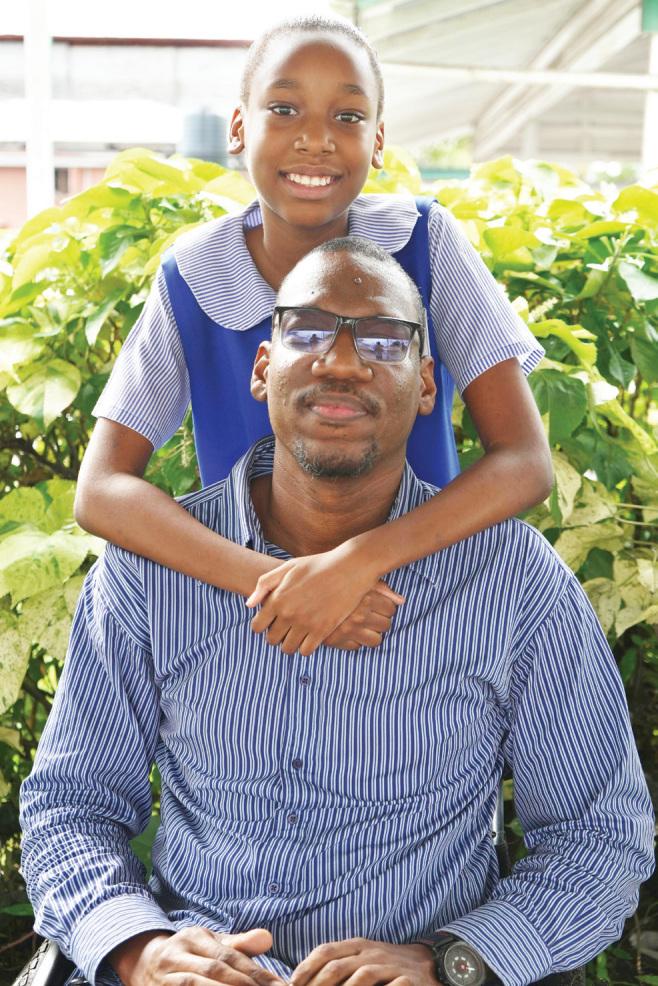
all of everything that she needs in life. I want her to have stability, to grow with pride, and to take pride in the things that she does, and just to have the best possible life that she can.”
While his understanding of what it means to be a father has not changed, Shepherd’s life did.
On a night like any other, he was involved in a near-fatal
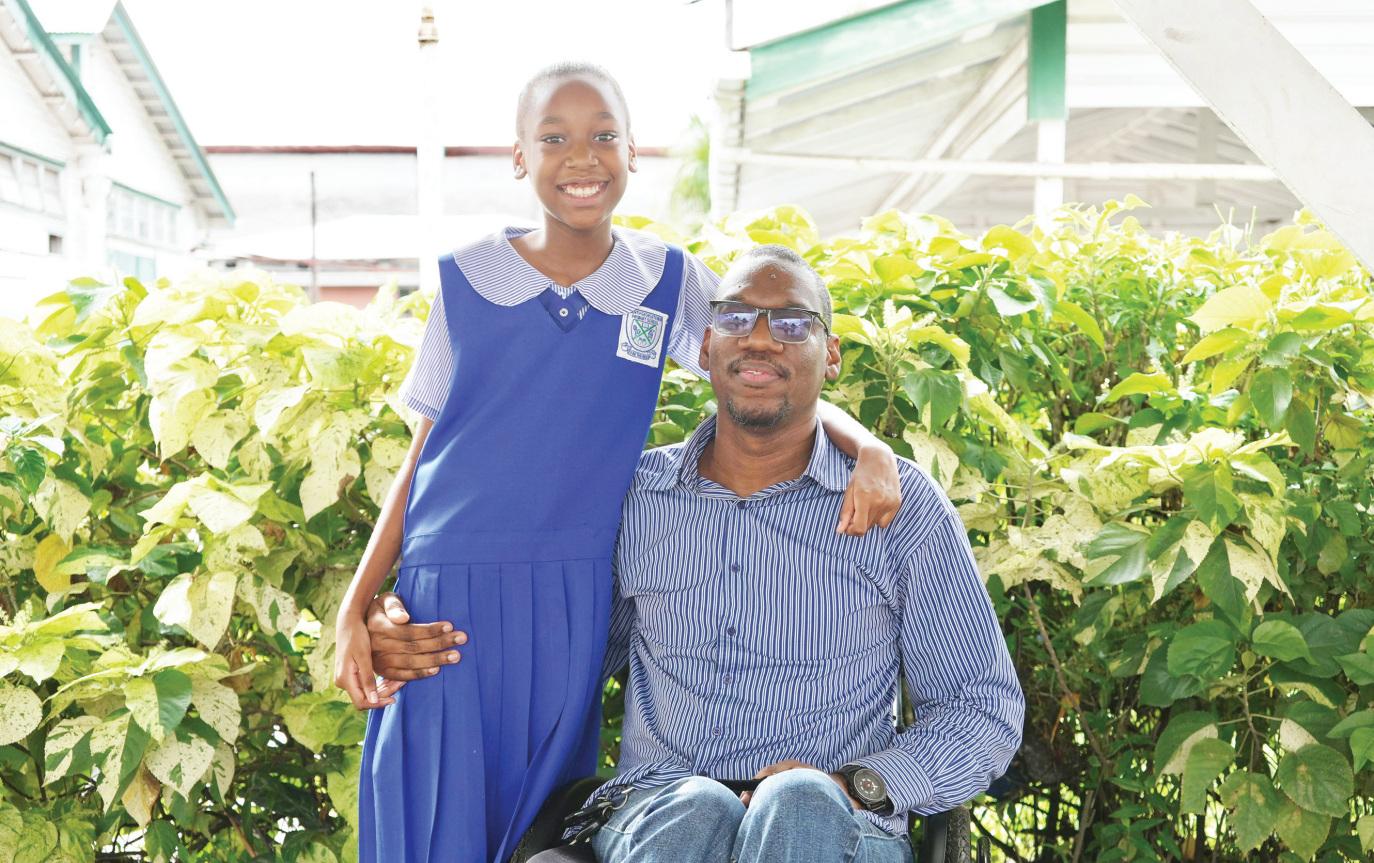
accident that took his ability to walk. A combination of a sharp turn, another reckless driver on the road, and Shepherd’s brakes not being able to make it in time caused him to flip his vehicle.
Even that night, however, turned upside down and trapped in his car, Shepherd thought of his family.
Recounting that night, Shepherd shared, “The vehicle lost control. I lost control of the vehicle at the time. I skid off the road. And that was it. Hit a pole, thrown into a tree, hit a fence, and ended up in somebody's yard. Damaged my spine, hip, and dislocated shoulder,” he added, “In that moment, what's going to happen to me? Because I didn't know. I knew what happened to me then. I knew it. This is it for me. So, that's what happened to my family.”
Learning to live life again without the ability to walk was difficult for Shepherd.
Describing it as the most challenging time in his life, he shared that the shift from someone who valued his independence to someone who now had to relearn life with the help of loved ones was particularly hard for him.
As he told the Pepperpot Magazine, “Someone who is active, and somebody like myself… I don't depend on people to hold my hand. I'm a very independent person. I like to do things myself, hands-on. I don't depend on people to do things for me. It's a really hard thing. A really, really hard thing to shift accustomed to. That was a really hard thing,” he said.
During this time, Shepherd also lost his mother. The loss, coupled with the fact that he could not help her as much as he wanted to, caused what Shepherd called his “greatest hurt in life.”
However, even in the face of great adversity, Shepherd remained committed to his duty as a father.
While grieving and relearning to live, Shepherd said he found the greatest motivation in his daughter.
As Shepherd shared, “I knew that I needed to be strong for my child at least. She's looking. She doesn't have siblings. I don't have a huge family. Normally, to lose your father at such a young age, it's going to be really, really tough. So giving up for me is not an option. It's definitely
not an option. I thought about it, I honestly thought about it, contemplated it, but I just can't do that.”
Shepherd also made a promise to his mother while she was dying, and he was recovering. This, too, he added, was vital to him not giving up, adding, “One of my last promises to my mom is that I'll stay with my family. It was the last conversation we would be having.”
While Shepherd’s journey is inspiring, he notes that he is not unique.
Speaking on the challenges faced by men at large in society, Shepherd said that networking, sharing and connecting with other men is vital, especially in times of hardship. He noted that the stereotype of the ‘macho men that don’t cry’ does more harm than good to men going through difficult situations.
As he shared, “Men human too. We have emotions. We cry. We feel pain. We suffer. We have joy. We have a lot of these other emotions just because we're human as well. And so we network together. We can share ideas. We can talk. We can share our struggles…Physical limitations. Our emotions and pride. All of these things we can share together,” he added, “A lot of times we suffer in silence because of our own foolishness. Just find that inspiration, whatever it is, to keep on pushing through.”
Most days for Shepherd now consist of him taking and picking his daughter up from school, making breakfast together and building a relationship he never had with his father.
While Shepherd does have a few things he is proud of, his job, pursuing a degree and making it through one of the hardest hurdles life can throw at someone, his daughter remains his biggest accomplishment.
As he stated, “Just seeing her grow is satisfying for me. Seeing her growing every day. I am actually seeing a reflection of myself. I'm watching her grow. That is satisfying for me. Watching her grow. And the conversations that we carry to and from school. That's satisfying for me. Knowing that she's growing so well and she's very observant. And I'm glad that she has a brighter future than I ever had.”
By Shaniya Harding
Young people across Guyana are beginning to pick up the mantle of leadership through community initiatives, collaboration and change. Among the most impactful of these young leaders are the people behind Project New Nation.
such as school dropout rates, gender-based violence, domestic abuse and limited access to services in rural communities, he and other young volunteers set out to create practical solutions tailored to the needs of residents.
Just a few years later,
organisations, working around the country. Even in the capital, there are lots of initiatives, but some of the problems that I'm recognising in my community remained.”

ing became a collaborative effort towards addressing these concerns of the communities,” he said.
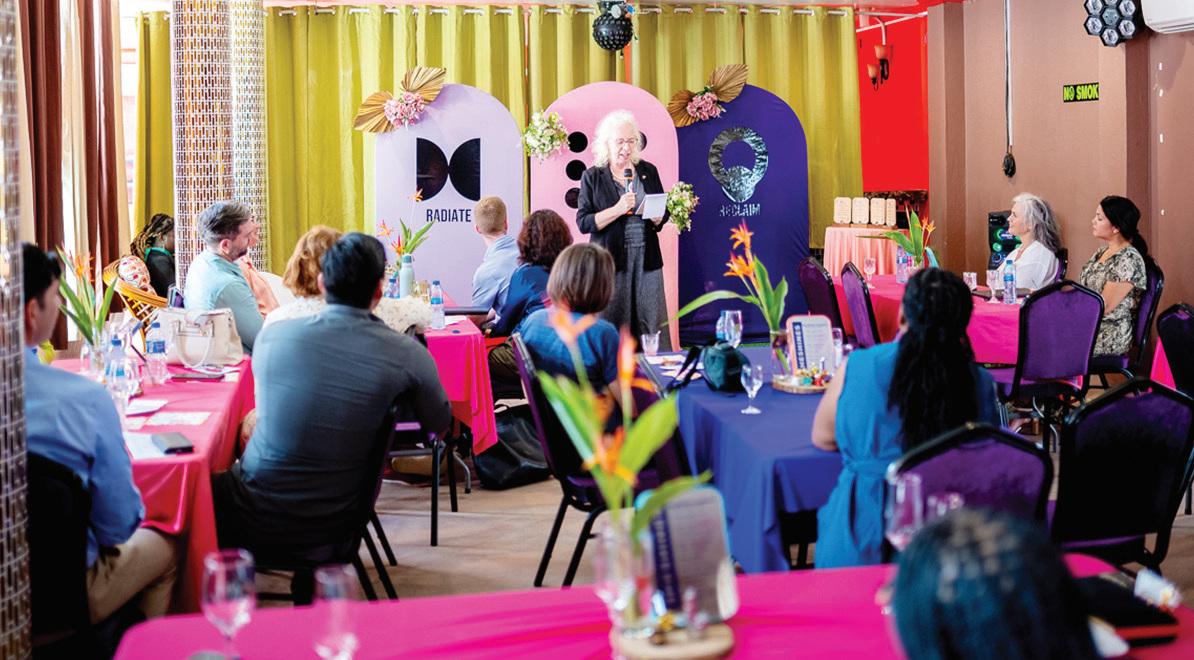
What began as one young volunteer’s effort to connect his community with much-needed services has grown into a youth-led organisation transforming lives across hinterland and mining communities in Guyana.
In a recent interview with the Pepperpot Magazine, the organisation’s founder and Executive Director, Magaiva Gonsalves, shared that Project New Nation was born out of a desire to bridge gaps he observed while volunteering with various organisations across the country.
Recognising issues
the organisation has partnered with other agencies to launch several initiatives aimed at addressing these concerns.
At its core, Project New Nation is a youth organisation with a key focus on bringing needed services to underserved and rural communities.
The backbone of the organisation is its work with youth, women and other vulnerable communities.
Started in Region Seven, Gonsalves noted that the venture was sparked through his volunteer work with other agencies, adding, “Project New Nation started for myself. I am somebody who has been a volunteer with multiple
Initially, the venture started with Gonsalves trying to link the villages in Region Seven.
Through collaboration among communities, Gonsalves worked on developing initiatives targeting the areas he thought needed the most attention, with school dropout rates, gender-based violence and domestic abuse being among the major areas he and his small team focused on.
While the organisation started small, Gonsalves stated that he soon realised that, to make a greater impact, a better organisation was needed, as he added, “It was quickly realised that in order to get even more serious in that support, it needed to become more organised. What started as volunteer-
Since developing the grassroots effort into an NGO, Project New Nation has been able to reach more communities and make a far greater impact.
As Gonsalves shared, the organisation’s first project was supported by a USAID grant.
“Our first project as an organisation was a grant supported by the U.S. It was $600,000 to fund the very first project that we agreed as a group of young people to implement, which is our literacy learning programme,” he said.
Since the launch of the successful programme, Project New Nation has improved its research and later secured funding from the Greater Guyana Initiative to expand and sustain it.
Through the success of this programme and a community-led approach, the organisation set out on its next venture, the SheShines initiative.
Launched through community discussions, the initiative focuses on addressing the concerns and issues women face.
Since 2024, the SheShines initiative has been supporting women in rural communities by collaborating with larger organisations to address the challenges of gender-based violence.
As Gonsalves shared, “We have a gender-based violence initiative, which was funded by the European Union and implemented in partnership with the Council on Gender and Gender-Based Violence,” he added, “We want to be able to bring awareness
TURN TO PAGE IX
By Romella Dasratt
For many women rebuilding their lives after experiencing domestic violence, recovery involves much more than securing a safe place to stay. It requires restoring confidence, rebuilding self-worth, strengthening mental health, and developing the financial independence necessary to create a new future.
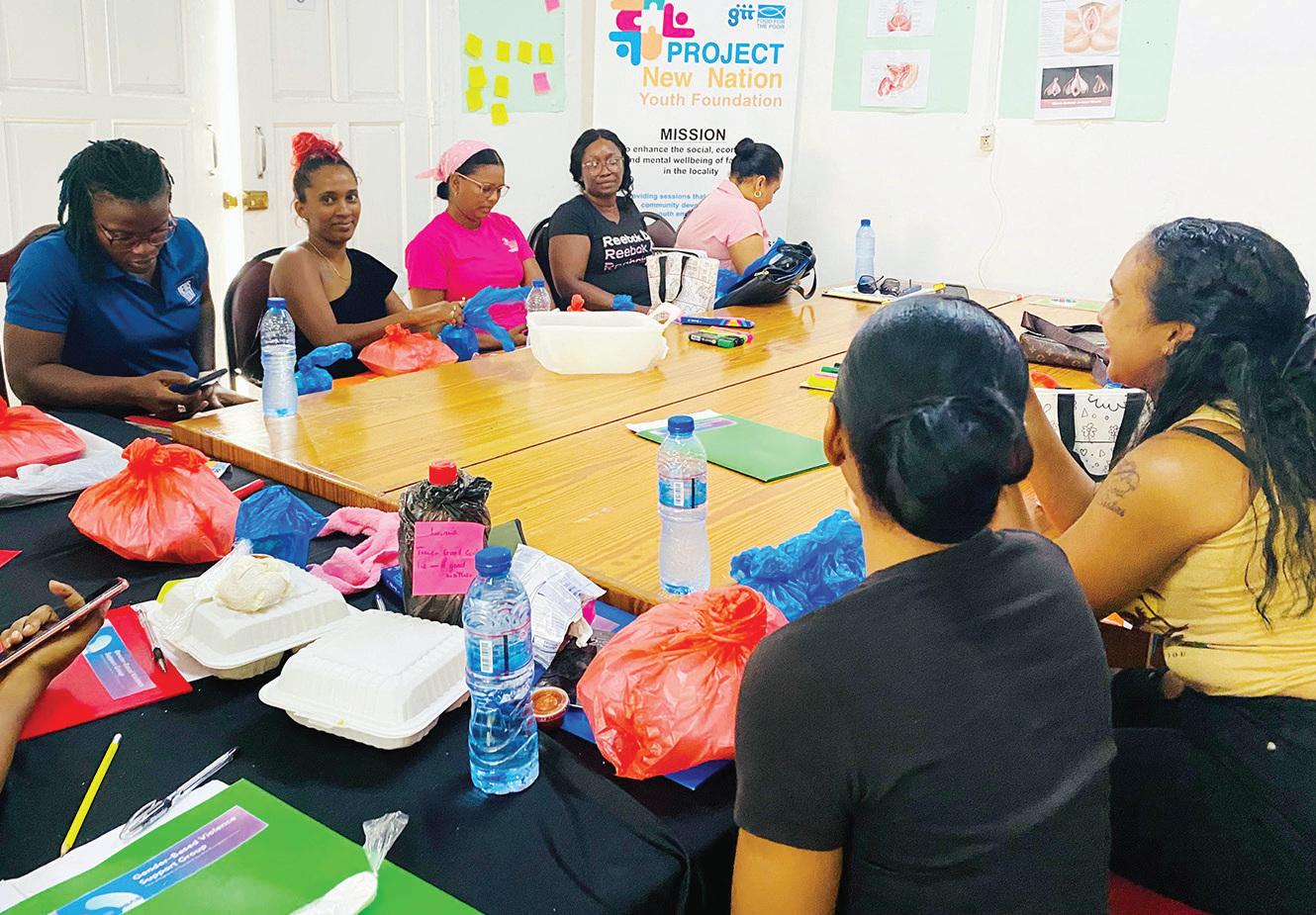
Recognising these realities, the Rotary Club of Stabroek recently facilitated a two-day workshop on selfcare and financial independence at Help and Shelter, bringing together women residents and participants for practical training designed to support personal growth, healing, and economic empowerment.
The initiative formed part of the club’s ongoing commitment to community development and social impact, particularly in areas affecting women and vulnerable populations.
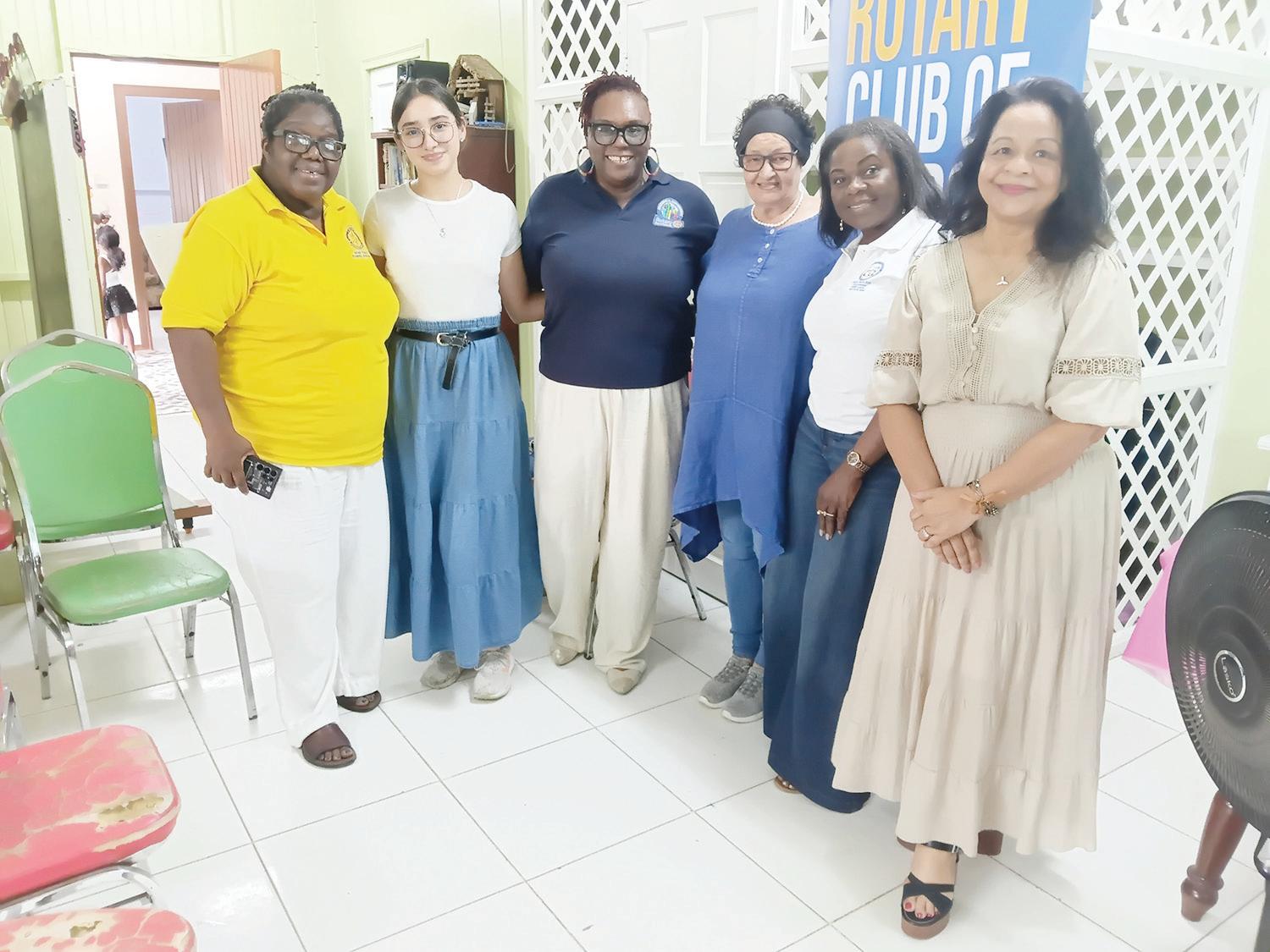
Leading the programme was outgoing President of the Rotary Club of Stabroek, Dr. Karen Boyle, whose longstanding passion for women’s health and women’s rights helped shape the intervention.
“Independence is the backbone for a woman to be able to rebuild her life when she finds herself in a situation where she has lost and had to walk away from everything,” Dr. Boyle said during an interview.
“For her to get back out there and rebuild her life, she has to have financial independence, at least to some degree.”
A Legacy of Service Rotary is one of the world’s largest and most respected humanitarian service organisations.
Founded in 1905 by attorney Paul Harris in Chicago, the movement began as a small gathering of professionals who wanted to use their skills, resources, and influence to improve their communities.
Over the decades, Rotary has grown into a global network comprising thousands of clubs and more than one million members worldwide.
Guided by the motto “Service Above Self,” Rotary clubs address pressing social challenges through volunteerism, partnerships, fundraising, and community-based projects.
Rotary’s areas of focus include promoting peace, fighting disease, providing clean water and sanitation, supporting maternal and child health, advancing education, protecting the environment, and strengthening local economies.
In Guyana, Rotary clubs have become synonymous with community service. Through health outreach programmes, educational initiatives, youth development projects, environmental campaigns, and infrastructure support, clubs across the country have consistently sought to improve the lives of ordinary citizens.
The Rotary Club of Stabroek has been no excep-
tion.
Throughout the years, the club has implemented projects focused on health, education, youth empowerment, social welfare, and community development.
Its members have worked alongside government agencies, civil society organisations, and community groups to identify needs and provide sustainable solutions.
For Dr. Boyle, however, one issue has remained especially close to her heart: supporting women affected by domestic violence.
Dr. Boyle’s connection with Help and Shelter did not begin with this workshop.
She explained that years earlier, while serving as President of the Inner Wheel Club of Georgetown Central, she had been involved in improvement work at the facility, including refurbishing furniture, enhancing the living room, and carrying out electrical upgrades.
The experience left a
lasting impression.
“One of the things that I’ve always been passionate about is women’s health and women’s rights,” she said.
“I’ve always wanted to come back.”
That opportunity emerged through collaboration with a fellow Rotarian, who maintained connections with the facility and helped facilitate renewed engagement.
Following a walkthrough of the building, members of the Rotary Club of Stabroek identified several areas requiring attention.
Renovations and improvements were subsequently undertaken in the kitchen, bathrooms, stairways, and living spaces.
The club also addressed practical issues affecting residents’ quality of life, including the lack of wardrobes and storage facilities in bedrooms.
Yet, for Dr. Boyle, the improvements extended beyond physical repairs.
She believed the environment itself played an
exposure, and overall mental well-being.
The goal was to help women recognise that rebuilding their lives begins with rebuilding themselves.
“The very first thing we did was focus on yourself and your own mental health, looking inwardly and asking yourself, ‘What do I need to become whole again?’” Dr. Boyle said.
The sessions emphasised that self-care should not be viewed as a luxury but as a necessity.
Women are often socialised to prioritise the needs of spouses, children, relatives, and others before their own.
While caring for loved ones remains important, the workshop challenged participants to recognise the value of caring for themselves first.
important role in healing.
“As we shared, for you to be mentally healthy, you have to be in a healthy, vibrant environment. A woman needs to have a home-like environment to feel valued and whole,” Dr. Boyle explained.
This philosophy guided many of the renovation decisions. Even details such as colours, furnishings, and finishes were selected to create a brighter, more uplifting atmosphere for residents.
“It’s the little things that make the place feel more like a home. My dream is to leave with you guys a place that feels like home,” she noted.
The workshop itself reflected a holistic approach to empowerment.
Rather than beginning with business planning or income generation, facilitators first focused on personal wellness and self-care.
Participants explored topics including sleep habits, exercise, nutrition, stress management, social support systems, sunlight
“I think as women we’re brought up to take care of everybody else. You keep giving and giving and giving, and at the end of the day, you have nothing left to give. You have to fill your own cup first, and from that overflow you can take care of everybody else.”
Participants were encouraged to view adequate sleep, exercise, social interaction, and personal wellness as essential building blocks of recovery and resilience.
Facilitators also discussed the connection between physical health and mental well-being, highlighting how regular exercise can improve mood, strengthen posture, boost confidence, and support overall health.
Building Financial Independence
The second major focus of the workshop centred on financial independence.
For women leaving abusive relationships, financial vulnerability often represents one of the greatest barriers to achieving longterm stability.
Without income or ac-
FROM PAGE II
2014 when he turned out for Islanders Sports Club in the Toronto & District Elite Division tournament.
He, however, switched to the Vikings in the 2015 season, when he enjoyed a very productive season, making 707 runs with a highest score of 89, while his best bowling figures were 4 for 29.
Heyliger has made rapid strides since his entry into the Canadian national side in 2018, competing in the 2018–19 ICC World Twenty20 Americas Qualifier and the Regional Super50 tournament in the West Indies that same year.
In April 2019, he was named in Canada's squad for the 2019 ICC World Cricket League Division Two tournament in Namibia.
He made his T20I debut against the Cayman Islands in August 2019, finishing the tournament as the leading wicket-taker, with 11 dismissals in five matches.
In October 2019, he was named in Canada's squad for the 2019 ICC T20 World Cup Qualifier tournament in the United Arab Emirates.
In October 2021, he represented Canada in the ICC Men's T20 World Cup Americas Qualifier tourna-

ment in Antigua.
In November 2021, Heyliger became the first Canadian bowler to take a five-wicket haul in T20Is, achieving the feat against
Argentina.
In February 2022, he was named in Canada's squad for the 2022 ICC Men's T20 World Cup Global Qualifier A tournament in
Oman.
In July 2022, Heyliger donned Canadian colours in the 2022 ICC Cricket World Cup Challenge League A tournament and, in the open-
ing match against Denmark, took his first five-wicket haul in List A cricket.
In April 2023, he made his One-Day International (ODI) debut against Namibia in the Cricket World Cup Qualifier Play-off.
In May 2024, he was named to Canada’s squad for the 2024 ICC Men's T20 World Cup.
In the meantime, Heyliger hasn’t forgotten his roots and has consistently donated cricket gear to clubs in his hometown of Suddie, Essequibo, and, more recently, to the Guyana Police Force.
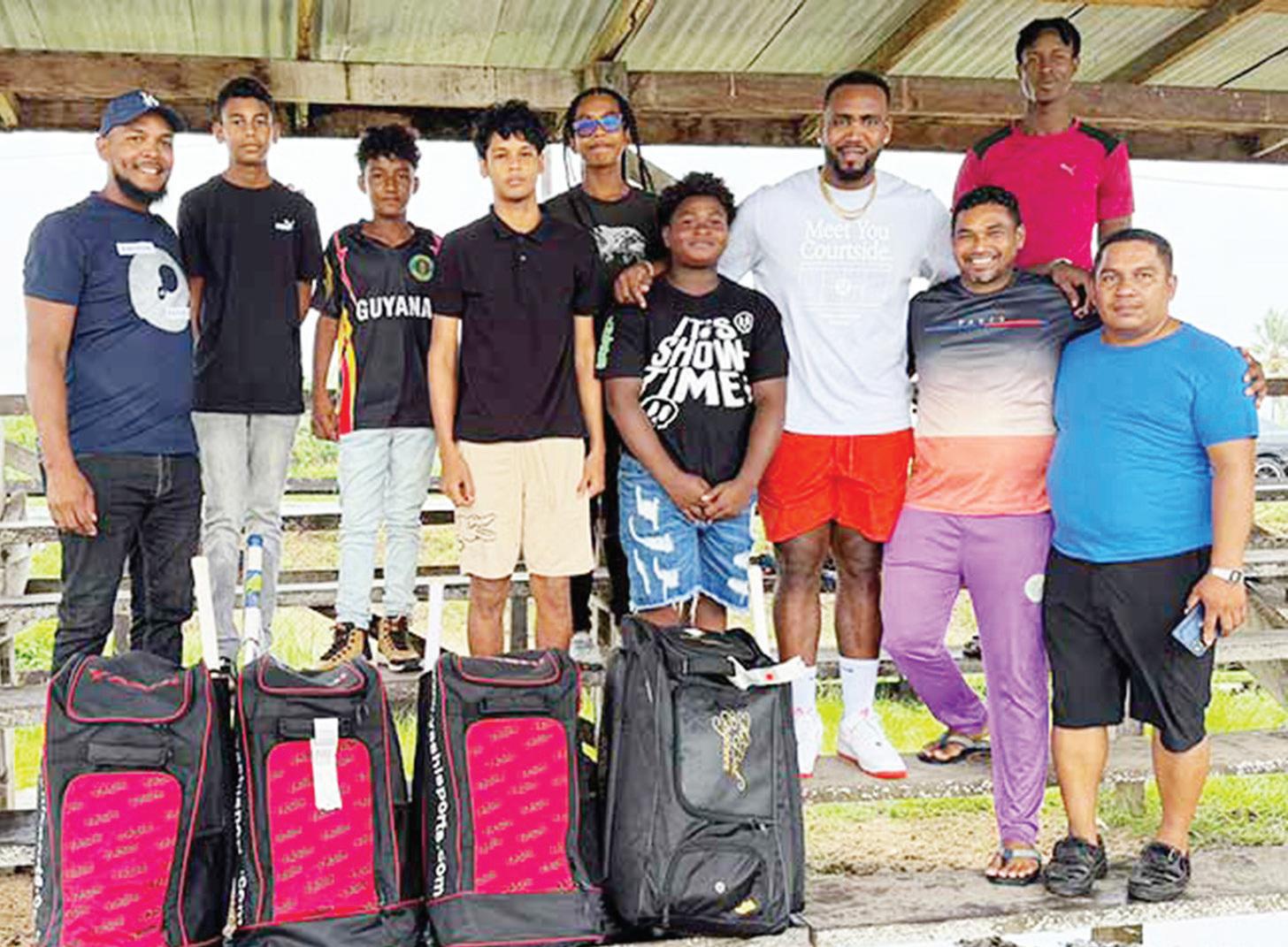
Earlier this year, Heyliger completed a personal mission that hit closer to home than any international wicket: delivering five fully equipped cricket gear bags to the next generation of Essequibian talent.
The donation was made during the bilateral series against Barbados, where Heyliger presented the first kit bag to Aaron DeCosta, a rising star in the national Under-13 setup.
Following the conclusion of his international duties, Heyliger returned to his childhood home to personally hand over the remaining four bags.
For a young cricketer in rural Guyana, the cost of a
complete kit, including bats, pads, gloves, and helmets, can often be the deciding factor between pursuing the dream or leaving the game entirely.
Heyliger also padded up for the Guyana Police Force (GPF), donating a collection of cricket jerseys to bolster the law enforcement agency’s sporting department.
The gear was handed over to Deputy Commissioner ‘Administration’ Ravindradat Budhram, who serves as the captain of the Officers’ Cricket Team.
Heyliger noted that the gesture is a direct investment in the game's development within the Force.
While his teammates are currently involved in an ongoing tournament, which forms part of the ICC Men's Cricket World Cup League 2 competition and the qualification pathway for the 2027 ODI World Cup, at King City, Canada, Heyliger hasn’t been part of the squad.
Speaking from Guyana, where he says he’s currently recuperating from an injury, the 36-year-old Heyliger insists that his playing days for the Canadian national team are far from over.

I WAS a youth upon hearing the term ‘Drug Addiction’, in respect to the use of drugs used by nations to undermine the population of other nations, which was at first still a mystery, until the literature became available.
Then, with the music of the day, two ideals emerged: the music of Rastafari and, next, the vicious horrors of
hard drugs, as an option to escape inherent poverty and its violent gang conflicts, at times interpreted as piracy, etc. Today, we are subdued by fallen humanity, mostly youth and adults that we knew in a better time. But as a parent, uncle, etc., I have witnessed the onslaught of addiction for over some thirty years, when, upon visiting certain old areas, with
hesitation, I make enquiries about some folk because I may have seen that soul while coming through other locations, leaving little for guesswork. Simply, if you frequent certain locations, sections of streets included, there’s little to guess. The obvious faces you, you grumble to yourself, and you lament that you lack the power to make a change because
the evil has invaded your Borders. I have an offspring who, without any inspiration from his closest environment, has ventured into the labyrinth of addiction. I’ve paid attention to his change of career pursuit, a change of hope, to be resurrected from mankind’s darkest.
Yards and twisted logic, reaching a stage of self-enslave-
ment. The funny thing in this country is the twisting of facts to satisfy the feeling that one is ahead in choosing the right substances, which are subject to questioning. For example, the drug lorazepam is helpful if administered by a physician, but there is a warning that if misused, it can lead to overdose and dependency. Some of the
people who use these medications cross the barrier of overdose due to the obsessions of those who indulge and become dependent. Ignoring medical directions becomes dangerous. A more effective medical relationship with the public, especially parents and young adults, should form a branch of adult education.
cess to economic opportunities, many women find themselves trapped in cycles of dependency.
To address this challenge, participants were encouraged to identify existing talents, skills, and interests that could potentially be transformed into income-generating activities.
Whether through entrepreneurship, freelance work, vocational skills, or small business development, the training aimed to
help women recognise their own potential.
The objective was not merely employment but empowerment.
Participants examined ways to generate additional income, manage finances responsibly, save for future goals, and begin rebuilding economic security.
According to Dr. Boyle, true recovery involves both emotional and financial restoration.
“If I see one of these ladies a year from now, I want a smile on her face. And I want her to be able
to tell me that she has some amount of financial independence, that she can generate her own funds and manage them herself.”
Sustainable Impact
One recurring theme throughout the programme was sustainability.
Dr. Boyle emphasised that meaningful change cannot be achieved through one-time interventions alone.
Community organisations, she said, must remain engaged long after projects are completed.
“You don’t get to be

impactful from a one-off intervention. You have to keep coming back.”
This philosophy has shaped the Rotary Club of Stabroek’s broader approach to service.
Rather than viewing projects as isolated acts of charity, the club seeks to build relationships, monitor outcomes, and respond to evolving community needs.
The workshop itself provided another opportunity for members to spend time at the facility, observe daily realities, and identify additional improvements that may be required.
ings and equipment.
The club has also facilitated the purchase of an industrial washing machine and dryer for the centre, demonstrating its commitment to improving residents' living conditions.
As Dr. Boyle prepares to hand over leadership responsibilities to a new president, she remains hopeful that support for Help and Shelter and similar initiatives will continue.
information.
It provided encouragement, practical tools, and a reminder that rebuilding is possible.
For the Rotary Club of Stabroek, it represented another step in its ongoing mission to strengthen communities and improve lives.
While future club leaders may choose different areas of focus, she believes the values underpinning Rotary’s mission will endure.
“The mere fact that the ladies are willing to listen and learn,” she reflected, “that’s all I need to give me hope.” FROM PAGE V
Among the issues noted were maintenance concerns affecting restroom facilities, as well as the need for further upgrades to furnish-
And for Dr. Boyle, success can be measured in simple but meaningful ways: women who feel valued, women who feel whole, and women who possess the confidence and financial independence to shape their own futures.
For the women who participated, the programme offered more than

to gender-based violence to multiple communities, as well as provide aid and survivor support.”
Speaking on what has made the organisation able to reach more women in other communities, Gonsalves shared that a community-led approach has been vital, adding, “We basically have conversations with the community, with villagers, with stakeholders, and understand what the challenges are based on surveys, assessments, and community consultations.”
While the organisation has been receiving great support, Gonsalves noted that the upcoming SheShines Summit, slat-
ed for June 26th at the World Trade Center, aims to highlight the work done throughout the year, empower the women who have participated in the initiatives and bring attention to possible partners.
As Gonsalves shared, “The summit is there to highlight the work that we've been doing as an organisation to address concerns faced by women in rural areas. Not only do they get to see the work that we've been doing, but they get to be introduced to the issues and interact with communities.”
He added, “They get to see from the top what's happening at the grassroots level, such as restoring the lives of women in these far-flung places. It
also works as a vehicle for beneficiaries.”
As Gonsalves and his team head into this year’s summit, the hope is to have everyone leave with something new and inspiring.
The aim is for potential donors to walk away with new information about the organisation's work, for the public to have a better idea of its grassroots efforts, and for beneficiaries to leave knowing they have been empowered and inspired.
As Gonsalves added, “The idea is that these things are to be implemented. The women who have benefited and who are part of the SheShines Foundation would be able to provide insight in terms

of empowerment initiatives, capacity building, and what opportunities are available.
There are also some informative booklets that will be made available through the Ministry of Human Services. They would be able to interact with persons who understand how they are able to benefit from them and what is available to them.”
Gonsalves shared that the role of key international partners in strengthening the reach and sustainability of the SheShines initiative cannot be under-
stated.
He pointed to collaboration with diplomatic and development partners who have helped advance work in rural and hinterland communities, particularly on gender-based violence awareness and women’s empowerment.
“So far, we have had tremendous support from the British High Commission, as well as the Belize High Commission and the Belize Embassy. We’ve also partnered with the delegation of the European Union,” he said, adding that these stakeholders
have played a crucial role in highlighting and propelling the work that the organisation does with the SheShines initiative.
According to Gonsalves, such partnerships continue to open doors for broader outreach, technical support and visibility for the programme’s beneficiaries.
Gonsalves and his team of young, passionate volunteers are showcasing how grassroots work can build something lasting through community and collaboration.


IN many societies and cultures, fathers are expected to lead their families. Men should therefore not ignore that great responsibility but be guided accordingly. They must be able to establish standards to discipline their children when needed, so their children will live their lives with purpose. The discipline meted out to the children must be administered in love to help them become better.
Discipline is something that many people may have some concerns about. Still, it is often used to bring a person into conformity with accepted norms and values, making them better people in
society and allowing them to fulfil their purposes.
Many mothers are usually happy when the father leads the family. It prevents mothers from having to endure a certain level of stress, allowing them to focus on other important aspects of family life.
The discipline, direction, and care a father provides may take the family to its full stride in life. Whatever standard the father establishes for the family, he is expected to keep it.
Section B: Activities For Fathers
Being a father is not a fashion show or a statement to make a father famous.
Fathers must be involved in carrying out many duties. Those things they do should be necessary and help build themselves, their family, and many others.
So, men who want to become fathers, please keep in mind that you have activities to be involved in; carefully consider them, then make a choice.
Many fathers may feel there is no need to improve their academic skills. That has been a sad reality for many men. Many of them spend much of their lives engaged in intensive labour, working for little compensation, always under leaders who make their lives diffi-
cult.
Father, if you can improve your academics and work diligently, there may come a day when you can lead people instead of always being led.
Your family will expect you to have an increase in compensation, which must not be linked to union negotiation, but rather to a promotion.
Some of the work fathers do may soon change as many organisations work to reduce expenditures by investing in modern technology, and some fathers' roles may no longer be needed. Therefore, help yourself now by increasing your knowledge.

A father must be able to love others beyond his immediate family. He cannot be concerned only about his family. When fathers have children, they also sometimes have to see other children as they do their own children. The way some fathers treat other people’s children may be the very way they treat their own children.
Section C: Fathers Need the Support of Society Fathers are not robots. They need everyone's support to accomplish their purpose. The more support fathers receive, the more they may be able to achieve than many people will anticipate.
Too many fathers are being ill-treated by society. Some fathers who are doing wrong things need to be told about their errors and that they must change. However, all fathers are not the same. Therefore, treat each father accordingly.
Help fathers to be the people they are destined to be. Try to be a source of encouragement rather than pointing out all their faults.
Take opportunities to encourage and celebrate fathers. Many fathers receive only negative reviews. However, people in society can create that positive change by celebrating them when it is appropriate.
If they have made a mistake, offer a shoulder to lean on so they will stop making those mistakes and know a better life lies ahead.
Men face challenges but are unsure who to share their concerns with. Fathers are important and like to know it.
In addition to their challenges, look for their strengths and compliment them. People are also encouraged to pray for fathers, as they need prayers.
Society can help some fathers by creating employment opportunities for them. Not all fathers may have the resources necessary to be -
come entrepreneurs, but they may need assistance from someone.
For those you can help, do so, as you are helping some fathers take care of their families.
Whenever fathers do wrong, people must discourage them, since their negative actions will affect their families and the society in which they live.
People must encourage fathers, as far as practicable, to build great relationships with their families.
Fathers may be facing relationship challenges, but do not offer them advice to leave their relationships first, unless there is danger or other compelling reasons.
As a society, we should point fathers to the Creator, which may help many avoid wrongdoing.
Fathers, before you leave this wonderful planet, invest in your family. You must leave an inheritance for them. Your life might not have started with certain blessings, but you must make a positive change in your family. Invest in them and help them enjoy many years of joy and financial success.
If you are a hard-working father, try to take care of your family and then take some rest.
Your family needs you, so work hard and take some rest too. If you overwork, you may miss time with your family and be unable to enjoy all the great things you planned and worked for.
Rest is important. As a father, you are important, so do the right things.
For more information about Geary Reid and his books, please use these contact details:
Amazon: http://www.amazon.com/author/gearyreid Website: www.reidnlearn. com
Facebook: ReidnLearn
Email: info@reidnlearn.com Mobile #: 592-645-2240

AMELIA stood at the port in Georgetown, looking beyond the expansive waters of the Atlantic Ocean to the far horizon. She stood there, a pretty young girl in a floral dress, with a white rose in her hand. There was a sad look in her eyes, hope in her heart, and she looked up at her mother, who nodded her head with a comforting smile.
Amelia kissed the rose gently and, with a tremor in her voice, she said, “Happy Father’s Day, Dad,” and threw the rose into the water. She stood for a while, watching the rose riding on the rippling waves, further and further away.
“Please take it to my dad,” she whispered.
Her mother took her hand, and they walked home, slow and steady.
It had been six years since her father had disappeared at sea, leaving her grieved, hoping with each new day that there would be word received of those on board.
Amelia had been just five years old at the time of her father’s disappearance, and each year that passed could have dimmed her hope, but in the little girl’s heart, she felt he was alive out there somewhere.
On Father’s Day, after church, her mother brought her to the port to whisper his name that would ride on the wind, across the ocean, and the water would take the rose to him, and he would know it was from his little girl.
He had been a dad, special in so many ways, often lifting her up on his strong shoulders and ask-

ing her, “Can you see the world?”
“Yes,” she had always
laughed, thrilled, for he was a tall man and she could see so much.
She was his little princess, and he had said to her, “Daddy will work hard to ensure you have a good life, a good education, and build a fairytale home for you.”
So, with that in mind, he had taken a job to work on a cruise ship. He had felt it was a great opportunity to give his family a better life, but it had saddened their hearts that he would be away for many months.
He had kissed her and her mother’s tears away on that early morning and had comforted them with the promise that he wouldn’t be away for too long.
The tragic news came four months later that the ship had been caught in a terrible storm and was lost at sea with everyone on board.

Amelia’s mother had cried so much that it was as though day became night, and sadness and tears took the place of joy and happiness in their lives.
For every day that passed without a word from the ship or the survi-
vors, the pain grew deeper.
Her mother, a primary school teacher, had to find the strength to keep working so she could pay the bills and provide for their needs.
For Amelia, on Father’s Day, she always
TURN TO PAGE XII

felt her hopes rising that he would return, that she would hear his voice calling her name.
Today, that feeling was deeper for her.
“Have I lost you, Dad?”
He had wanted so many good things for her
and, in his memory, she had worked towards it, excelling in the NGSA examinations to earn a place in the top school of the country.
She was soon to begin high school, a new phase in her life, with change, opportunities, and no strong hands to hold her, to guide her.
They walked away from the port, two lonely people, the ocean silent, not a word of anyone found.
It was a quiet day once more for Amelia. A scrumptious meal she could not enjoy, nothing on the television interested her, nor any new songs on the airwaves.
“I guess I’ll just read a book,” she mused, and that she did.
Twilight descended on the small, quiet neighbourhood, and as Amelia closed her pet bunnies’ hutch and bade them good night, she noticed a tall stranger walking up the street. His hair and beard were long, and he walked

with a slight limp.
“Another vagrant,” she muttered sympathetically. “I wonder what befell him.”
There was something vaguely familiar about him, but it was starting to get dark, and she couldn’t be sure.
She turned to go inside the house when a familiar voice called her name.
“Amelia.”
Her heart almost froze, and she turned around, but only saw the bearded stranger. She looked beyond him but saw no one else on the street.
“Am I imagining things?”
The tall, bearded stranger walked up to the gate, and as Amelia turned and began walking towards the house once more, the same familiar voice called out to her.
“My little princess.”
Amelia turned swiftly, her heartbeats quickening, but still saw no one until her eyes were drawn to the vagrant at the gate.
He smiled and said, “You have grown up from six years ago.”
Amelia’s hand flew to her mouth, and she screamed, “Mommy! Mommy!”
Her mother ran out of the house, fearing something was wrong, and Amelia pointed to the man at the gate with a trembling hand.
“It’s Daddy,” she cried.
Her mother looked at the man, astounded, and took hold of Amelia’s hand.
“What are you saying? How can that person be---”
“Andrea,” his voice interrupted her, and she gasped, recognising his voice but still standing there, uncertain because of his appearance.
“Who are you and how do you know my name?”
The stranger smiled and stepped forward into the glow of a nearby streetlight,, which illuminated his familiar features, and answered, “I’m your husband.”
Amelia pulled her
hand away from her mother and ran to the gate, hugging the father she had hoped to see again after six years. He caught her and swung her up into his arms.
It was a heart-touching moment for father and daughter on Father’s Day.
The mother stood there, as though in shock, and walking up to her, he took her hand and said, “It’s okay, take your time.”
She broke down crying, and he hugged her, saying, “I’ve come back home to my family.”
That night, after they had settled down, their emotions now under control, he told them that the ship had indeed sunk after it ran into a terrible storm, but he had survived by clinging to a piece of debris and drifting for days until he was picked up by a fishing boat and taken to a small, unknown island. A hit to the head and the trauma caused him to lose his memory.
So, he stayed on the island, not knowing who he was or where he belonged, until one day he saw a mother and daughter who looked like him and his sister, and it jolted his memory.
“But why didn’t you call, and why the change in appearance?”
“I had felt like a tired, broken man. I didn’t want media attention; I just wanted to come home quietly. The hair and beard are how I had looked whilst livin g on the island, so I decided to keep them on my journey here, not sure if my family was still here.”
Andrea took his hands, tears spilling from her eyes.
“We never gave up waiting for you, living with the hope of getting a call that you survived.”
“I knew it in my heart that you would return,” Amelia said to him.
And her feelings hadn’t been wrong – after six years, she could now celebrate Father’s Day again.

I WAS recently called “little miss ambitious” and I was told that I need to live life at a slower pace. From studying, to travelling and grasping every opportunity that’s possible, it’s safe to say that I’ve been occupied and busy.
While those comments might sound harsh, they were very much needed. I needed to be told to stop and smell the roses. I needed to know whether I am perhaps not appreciating the little things at a manageable pace.
Unfortunately, I fell into the trap of be-
lieving that success is measured by living at a faster pace, collecting “accomplishments” like infinity stones. We live in a world that celebrates ambition, with social media glorifying accolades and productivity. While this is a current reality, ambition becomes an unhealthy obsession rather than a motivating force.
Many of us, like myself, become the “little miss big ambitions” by chasing our goals and dreams one after the next. We constantly seek the best promotions, the next award,
the next opportunity to achieve.
In a way, we remind ourselves that we will “rest” later and work hard now. We try to bargain with ourselves that we will even stop or slow down after the deadline or graduation has passed.
Do you think that often happens?
Most of the time, when people post their success stories on social media, we only get to see the end results. We rarely see the hidden costs of being highly ambitious, especially in very competitive environments.

We do not see the anxiety, the tears, the family issues, the financial burdens, the burnout or the exhaustion that sometimes accompany success.
There is pressure to always achieve more, with little room for joy and reflection.
I think ambition is good. It feeds our personality with a drive and willingness to grow, innovate and develop our skills and values.
However, ambition becomes a weapon against us when our value and self-esteem become tied to our pro-
ductive output.
In a previous column, I stressed that we should not feel guilty about rest and rejuvenation. We should not overshadow the celebration of one accomplishment with the next objective outlined.
The truth is that slowing down does not mean giving up. Rest is not laziness. Taking a break does not diminish our potential; it sustains it.
Some of the most meaningful achievements come not from constant movement but from knowing when to pause, reassess, and
protect our well-being.
Perhaps success should not only be measured by what we accomplish, but also by how we feel while accomplishing it.
After all, what is the value of reaching the top if we are too exhausted to enjoy the view?
In a culture obsessed with doing more, maybe the most radical act is allowing ourselves to slow down.
Sometimes, the strongest thing “Little Miss Big Ambitions” can do is give herself permission to rest.



THE corpus of any poet’s work gradually accumulates into autobiography. How could it be otherwise? The poet is inseparable from his craft, from his people, from the place where he lives, from his politics, his loves, and his lovers. Metaphor and allegory may disguise these attachments, but they do not erase them.
Often, too, the poet writes with no audience in mind except himself; he is always, in some sense, addressing his own consciousness. The “emotion recollected in tranquillity” is his own before it belongs to anyone else. When he chooses to share it, the act is either brave or hubristic, perhaps both at once.
The poet wonders whether readers will feel what he feels when encountering the poem, or whether emotion itself can compel recognition. He can guarantee neither. Yet he continues writing, shaping an autobiography without naming it as such, unless, of course, he does.
Leaves of Grass is unmistakably autobiographical, a distillation of Walt Whitman’s lived experience; so too is Another Life by Derek Walcott.
Admittedly, few poets openly concede the apparent vanity of making themselves the central subject of verse, and so they employ disguises: invented personae that stand close enough to their creators to function as mirrors rather than masks.
When there is no persona at all, no fictional veil between poet and poem, ambiguity disappears. What remains is naked autobiography: the poet’s life and everything within the compass of his gaze rendered directly onto the page.
Here we arrive at Life Studies by Robert Lowell, whose title itself announces its intentions. It is poetry of startling sincerity, sometimes uncomfortable in its candour, confessional and unfiltered in its distillation of experience.
Sturge Town (W.W. Norton & Company, $15.99), the newest collection by the prolific Jamaican-Ghanaian poet Kwame Dawes, is not confessional in the strict sense, but it often approaches that territory.
The book reads as an excavation: of memory, ancestry, history, and place. Dawes, now more than twenty collections into an astonishing literary career, is also a critic, novelist, anthologist, essayist, documentary filmmaker, and editor of the African Poetry Book Series. He serves as the current Poet Laureate of Jamaica, and throughout his career has remained deeply attentive to the intersections of history, geography, and personal inheritance.
At the centre of the collection is place itself.
Sturge Town, a historic village in St. Ann established in 1839 as one of Jamaica’s first free villages for formerly enslaved people after emancipation, becomes both subject and symbol.
Named after the Quaker abolitionist Joseph Sturge and founded through the efforts of Baptist missionary Reverend John Clarke, the village offered land and autonomy to newly emancipated families attempting to build lives beyond plantation society.
This layered history saturates the poems. The opening poem of the col-
lection announces these concerns immediately:
Seeded by “the scenes of a village” from my father’s
In Sepia, chronicle of his making as a boy—
This before Walcott’s In a Green Night—
Every imagining of a return is a myth.
In the forensics of art, it is not hard
To trace the borrowed thing,
The stolen things: my father’s village, thick
With the scent of rum, where the ghosts
Of slaves inhabit the heavy-leaved Guinep trees.
Every thought of return
To the ancestral ground begins at night,
In an airport hotel, waiting for the next flight—
The lines of a city. Tomorrow, the green,
The incessant green, the worn-down building,
The broken tombs, the legend of my making.
The poem establishes one of the collection’s central tensions: return as both longing and impossibility.
This is not merely the exile’s dilemma or an obligatory meditation on homeland. Rather, it is the reality of living elsewhere while remaining psychically tethered to the place one left behind.
Home survives as memory, promise, and unfinished conversation.
The references to Neville Dawes’s In Sepia and Walcott’s In a Green Night serve as literary signposts within a larger Caribbean tradition of excavation and return.
Throughout Sturge Town, Dawes pursues what he elsewhere calls “the legend of my making”.
The poems are granular, attentive to detail, and deeply invested in the textures of lived experience: buildings, tombs, trees, weather, gestures, and family histories.
A few poems in the collection concern the
Clarkes, descendants of the village’s founder, to whom Dawes is related through family lineage.
His father, the novelist and poet Neville Dawes, also hovers over the collection as both presence and inheritance.
Dawes’s poetry succeeds most fully when it narrows its focus: a remembered incident, a fragment of conversation, a fleeting encounter, a sharply rendered portrait.
These poems possess the intimacy of close observation.
Across five sections and nearly 150 pages, the collection offers a remarkable breadth of emotional and historical terrain.
Section V, subtitled “I close my eyes to push / away the darting light…”, is especially poignant, gathering together some of the collection’s most reflective and emotionally resonant poems.
Though Dawes’s work differs greatly from Lowell’s confessional mode, there remains a comparable intimacy in the poems, a sense that the reader is encountering the mind of the poet at close range.
There is little here to confess, but much to reveal.
The title poem, “Sturge Town,” may be the collection’s emotional centre precisely because of its directness.
Dawes abandons elaborate metaphor in favour of a plainspoken meditation on departure and belonging:
Far too long I spoke of return, a kind
Of prodigal fantasy, although, face
Set against the sun, I had abandoned
The waywardness of the failed son.
My father is long dead, and I was
Faithful to the last. Still, postcolonial
That I am, I built my own myth
Of departure, set aside the romance
Of the exile
Dawes is a literary poet without succumbing
to the excessive density of allusion and metaphor that burdens some contemporary poetry.
His lines move with the rhythms of actual thought: pausing, reconsidering, restarting, arriving slowly at understanding.
Reading these poems often feels like witnessing consciousness at work in real time.
One senses the poet discovering his ideas even as he writes them.
Among the questions animating the collection is how the deeply local, this village in St. Ann, Jamaica, might become legible and emotionally resonant to readers elsewhere in the world.
There are no flashy pyrotechnics in these poems, no needless displays of virtuosity.
The lines are assured, patient, and emotionally lucid.
Their power emerges not from ornament but
from precision and sincerity.
Dawes captures those subtle emotional states for which ordinary language often seems inadequate.
Most importantly, Sturge Town resists nostalgia.
The poems repeatedly interrogate the temptation to romanticise home, questioning whether “home” exists anywhere outside memory and invention.
As Dawes writes in
the title poem, home may itself be “a fantasy”.
Several poems suggest that belonging may ultimately reside elsewhere, in movement, estrangement, or reinvention rather than rootedness.
In this sense, Sturge Town becomes not merely a meditation on Jamaica or ancestry, but a broader philosophical inquiry into the nature of place, identity, and return.


AT the edges of our lives, there are many things that serve as sentinels, watching over us and reminding us of who we are. They might be memories that hold a special place in our hearts, or people who occupy a permanent
place in our identities. When life gets stormy, we might look at the horizon and see these memories and people standing with a silent permanence, like stone soldiers, frozen in time. When the hands of change shape these sen-
tinels, we experience anticipation more intensely than we experience hope. Eventually, we learn to accept that change is not something we can control. We become both the subjects and authors of change, as fate determines, and not as we
choose to become.
One day, we might wake up and find that the seemingly permanent sentinels that guarded us have suddenly disappeared, or that we have suddenly stopped needing to look towards them to be comfortable. When

we do come across such a discovery, we may feel unsettled, but we cannot reverse the change that has occurred. The only thing we can do is learn to live with the shifts that have taken place. As we grow, one of the most difficult lessons we learn is that change cannot be controlled, or even predicted.
This is a lesson the world has learned in many ways, including through the story of an island in the Indian Ocean called North Sentinel Island. The island is heavily protected by the Indian Government to prevent outsiders from entering or interacting with its inhabitants. It is part of an archipelago, but its inhabitants have no connection to the other islands in the group or to the remainder of the population.
It is estimated that the island and its inhabitants have remained isolated from the remainder of the world for approximately 60,000 years.
As a result of their isolation, they developed their own language that no one outside the island can understand or even begin to learn. Nearly every attempt at interaction with the islanders has led to hostility, even to the extent that outsiders have been killed with arrows.
Eventually, the island was secured to protect both outsiders who might attempt to visit and be met with violence, and the islanders themselves, whose immune systems may not tolerate potential diseases carried in by those from the ‘outside world’.
Today, it is estimated that there are anywhere from 39 to 400 people living on the island. They still continue to isolate themselves.
The Sentinelese are
people who have, in a strange way, learned to control the unpredictable movements of change. By sheer force, they have stopped themselves from changing and, at the same time, stopped the outside world from growing or changing because of them. They seem to be exceptions to the rule that one cannot control change.
To this day, many mysteries remain about the people, their history, and their culture. Yet, despite the curiosity their story evokes and the potential knowledge they may hold, it has become the right choice to simply leave them alone.
Like the sun, which by itself may not seem to move but shapes seasons and time in the planets around it, the Sentinelese will remain anchored to the lives and community that they have built while the remainder of the world ebbs and flows around them.
The people who attempted to visit and change the Sentinelese, despite their evident resistance, never achieved a productive outcome. Nevertheless, there are other parts of the world that yearn for a hand of change. In such places, where even the smallest efforts can have an impact, change is a choice that can transform lives. With everything that we learn about life and the world, it may seem like the unpredictability of change makes it impossible to achieve. The secret, however, to achieving change when necessary is learning to distinguish between what can be changed and what cannot.
What we choose to change is the key to achieving it.




















































STUDY SUCCESS
Dear student,
Welcome. Your prayers have been heard, and now you can rest after your hard work and late nights of study. For those on next year’s list, do not panic if year-round devotion is your study motto. Develop your own learning tools, adjust your timetable each study season, and become familiar with your syllabus and the format of the examination papers. Be clear about your needs based on past performance and how they fit into your overall
revision. Be wise. With love.
THE PASSAGE
Reading fiction shapes your personal aspirations
Note: Reading fiction can shape your personal development and goal-setting by building empathy and flexible thinking, helping you imagine possibilities you may not have considered before.
Read the passage and respond to the questions set on it.
I first met Lamar Dodd over fifteen years ago in Athens, Ga., at the Georgian Museum of Art that
was hosting an exhibition of his paintings.
For years I had worked as a management trainer at the state university, but the routine and the bureaucracy had begun to stifle me.
Now I faced a crossroads in my career. I could return where I was, secure but without hope for growth, or I could open my own business, which had long been my secret ambition.
I watched confident achievers chatting firmly in the exhibition room. I felt out of place. Dodd stood

21st, 2026
surrounded by admirers. He was not a big man, but he commanded attention. He leaned on a gold-topped cane.
I was struck by the brilliance of Dodd’s light-blue eyes and his manner which made me feel strong and included. The artist’s concepts and powerful movements were as audacious as the exploits they celebrated.
He invited my husband and me to see sketches for a painting and talk about his work at his house. There he guided us to his studio…. Dodd wanted to portray in his painting the emergence of the soul from illness. He talked about how to best create a vision of turmoil, trial and healing that is at the heart of human existence. He and my husband discussed the images that might capture the vision. “And what do you think, my dear?” he asked me…
He so naturally included me in the discussion that later, over coffee, I found myself talking about my dream of starting a business that would allow me to teach and write, the two things I loved most...
(“A Special Sort of Stubbornness” by Joan Curtis)
About the Passage
As you read, did the writer help bring into focus the aspirations raging in your own young mind? Consider how many persons wanted a release into a new phase in life or a realm in career.
The text illustrates how the brilliant professor was toying with a new and specific idea of his own. He found the right person to appeal to. Look how brilliantly he solicited help!
From this meeting, in the passage, you should discern that there is a strategy in the meeting of minds. It teaches you to discuss your work and problems with people of concern and ideas, and you will succeed. What to Do
1. Read each of the thoughts extracted from the story, and then explore the language of the writer. Why did the writer express
Necessity gives the law without itself acknowledging one. PUBLILIUS
her ideas in the way she did; what was her purpose? State your observations in each case.
a) “I first met Lamar Dodd fifteen years ago in Athens”
b) “(I noticed) his manner which made me feel strong and included.”
c) “He invited my husband and me to see the sketches for a painting”
d) “He talked about how to best create a vision of turmoil.”
e) “I found myself talking about my dream of starting a business…”
2. Do you think that the other admirers of Lamar’s works were also an influence in his career? State your opinion clearly.
3. Write a fitting ending to the story. Say how you think the writer birthed her idea after airing it in the presence of Professor Lamar Dodd.
THE PASSAGE
Drawing logical conclusions when reading
Note: You draw logical conclusions by combining facts and clues from the text with your own prior knowledge and experience.
Directions: Read the selection. Then answer questions 1-4.
As we came into town, I could see that many things had changed over the years. The huge trees that once shaded the streets were gone. The houses looked smaller to my adult eyes. Many small stores along High Street were empty, with “For Rent” signs in the windows. There was no work-day bustle – people going to lunch and shopping. At the end of the street was a brand-new shopping mall. But even its parking lot was
only half-full. I wondered what on earth I would do here!
1. Why would you conclude that the town was no longer prosperous?
(A) High Street and empty stores
(B) people shopping and going to lunch
(C) no trees and a new shopping mall
(D) “For Rent” signs and a new shopping mall
2. Which conclusion is most logical?
(A) The narrator had never visited the town before then.
(B) The narrator is excited about what he sees.
(C) The narrator is thinking about starting up a business.
(D) The narrator had known the town years before.
3.What can you conclude from the statement – “The houses looked smaller to my adult eyes”?
(A) The narrator is holding a child in his arms.
(B) The narrator is thinking about buying a house in the town.
(C) The narrator was a child when he lived there.
(D) The narrator is an architect.
4. Which conclusion is most logical?
(A) The narrator is visiting his grandmother’s.
(B) The narrator is planning to move back into town.
(C) The narrator is passing through his old town.
(D) The narrator prefers to walk through High Street.

ALMOST every time someone has dental treatment, the dentist uses a drug or material characteristic of dentistry. This is obvious. But ask yourself this: are they safe?
We are all conditioned to trust our dentist to do their best, even me recently at Aspen Dental in Florida, USA. But then, are there any side effects of dental materials? Since these substances are not generally known to the public, how can one make a biological evaluation of them? This is especially true for Guyana, where 100 percent of the dental materials used are imported.
For many years, the dental profession worked mainly with rather inert (stable) materials that had limited contact with living tissue. The exception was dentures. The opportunity for local
and systemic complications was therefore quite minimal. Now, materials and devices are being treated more like drugs. They must meet the safety and efficacy requirements of drugs and medical devices. For example, the Swedish government banned the use of silver (amalgam) fillings. This was after the whole world was using them for two centuries. We in Guyana are fortunate in that we are relatively protected by restrictions on the manufacture of dental materials in countries like the United States and Britain. This cannot be said of dental materials originating in many Third World countries, including China, where the standardisation system does not require protracted testing before laboratories can release the materials to the market.
Since every dental drug and material is imported and local legislation does not currently regulate the use of any of these substances, dentists should be careful in their utilisation.
Certain dental materials, such as composite resin (used for anterior teeth fillings), are chemically active compounds and may have a detrimental effect on the pulp. Amalgam (silver filling material), because of its mercury content, and impression materials, because of their former lead content, also stimulated considerable interest.
Endodontic (root canal) therapy involves the most dangerous drugs in dentistry. Many of the medications used are very poisonous. The procedures require canal obturation with drugs and materials that remain in constant
contact with living tissues.
The most common drug used in dentistry is lidocaine, which is used as a local anaesthetic mainly for extractions. The active ingredient is chemically similar to the illicit drug cocaine, but the part of the molecule which is toxic and causes addiction was removed.
Cocaine was discovered by the Incas, an indigenous tribe of South America, who used this extract from the coca plant to numb wounds on the skin. However, it was not until 1884 that Dr Carl Koller used cocaine medicinally as the first local anaesthetic.
It is interesting to note that even after nearly a century in which a weak solution of cocaine ceased to be used as an anaesthetic, Guyanese remain the only people that I know who refer to dental
anaesthetic as cocaine.
Although we do not manufacture dental materials and drugs, there is a need to legislate and regulate their use. Biocompatibility is the keyword.
The history of the development of controls, standards, and guidelines began almost 500 years ago and is detailed chronologically to the present. An outline of the latest revised draft of the international document (ISO Technical Report No. 7405), completed recently for the harmonisation of human standards within the EC, has been presented.
The Bureau of Standards needs to include dental materials in its list of controlled drugs because “dental quacks” have a field day importing sub-standard materials from questionable sources. In fact, a way to eliminate
these illegal practitioners is to restrict the availability of dental materials by making their possession illegal for people without a licence to practise dentistry.
There is such a law here in Guyana, but its implementation is difficult.
No amount of experimental study can guarantee absolute safety for any substance. However, toxicological investigations provide data from which reasonable projections and predictions can be made about the conditions under which the product can be safely used.
In today’s world, in which the development of a country is measured by how seriously it views standards, it would be a boost in this context for the authorities to examine this question.