
Sunday, May 17th, 2026
Shabana Abdool-Bhojedat
Sunday, May 17th, 2026
By Frederick Halley
Dat
is an inspiring example of what determination, education and resilience can accomplish. Through his book, Rising Above: My Path to Outstanding Achievements, he shares a deeply personal journey that begins in Guyana and continues in Canada, where he built a remarkable life dedicated to service, academic excellence and uplifting others.
The book is more than an autobiography — it is a motivational guide that encourages readers to pursue greatness regardless of their circumstances.
Born and raised in a small town in Guyana, Dr Sookram experienced many of the hardships that often accompany limited opportunities. Yet, instead of allowing challenges to define him, he used them as motivation to move forward. His life story reflects the power of persistence and the belief that education can transform lives.
After immigrating to Canada in 1993, he embraced every opportunity to grow academically and professionally.
His journey demonstrates that success is not determined by where a person starts, but by the determination and discipline they maintain along the way.
One of the most remarkable aspects of Dr Sookram’s life is his commitment to higher education. Over the years, he earned more than a dozen university degrees, including a doctorate in social work. His dedication to lifelong learning reflects his belief that education is a powerful tool for personal growth
and social change.
Rather than viewing education merely as a means to gain credentials, Dr Sookram treated it as a pathway towards understanding people, strengthening communities and creating opportunities for others. His academic achievements have earned widespread admiration and have positioned him as one of Canada’s most accomplished individuals.
In addition to his educational accomplishments, Dr Sookram is widely recognised for receiving over 200 awards and honours, making him one of the most decorated individuals in Canadian history. These awards reflect his commitment to community service, mentorship, leadership and professional excellence.
However, what makes his story especially inspiring is that he does not focus solely on awards or titles. Instead, he emphasises the importance of helping others succeed.
Throughout his life, he has remained committed to empowering people around him, especially newcomers, young people and individuals facing adversity.
In Rising Above: My Path to Outstanding Achievements, Dr Sookram discusses the importance of resilience and maintaining a positive mindset. He explains how obstacles can become opportunities when approached with determination and self-confidence.
His experiences as an immigrant adapting to a new country are especially meaningful because they resonate with many individuals who leave their homeland in search of a better future. The transition to a new culture, education system
and professional environment can be difficult, but Dr Sookram’s story demonstrates that perseverance and hard work can lead to extraordinary achievements.
Another important theme in the book is community involvement. Dr Sookram has consistently dedicated his time and energy to helping others. From supporting youth groups to mentoring individuals in need of guidance, he has shown that true success includes serving the community.
His career in social work aligns perfectly with this philosophy. As a member of the Ontario College of Social Workers and Social Service Workers, he has worked to improve the lives of those he serves and encourage personal development. His professional and personal values both centre around compassion, kindness and empowerment.
Dr Sookram’s accomplishments also extend into the field of writing. In addition to Rising Above: My Path to Outstanding Achievements, he authored a poetry collection titled The Teenage Years.
Through his writing, he communicates personal experiences, emotional reflections and practical lessons designed to inspire readers. His ability to combine autobiography with motivational guidance allows readers to connect with his journey on a personal level.
Rather than presenting success as something unattainable, he shows that ordinary individuals can achieve extraordinary results through consistent effort and determination.
What makes Dr Sookram particularly inspiring is his humility and desire to connect with people
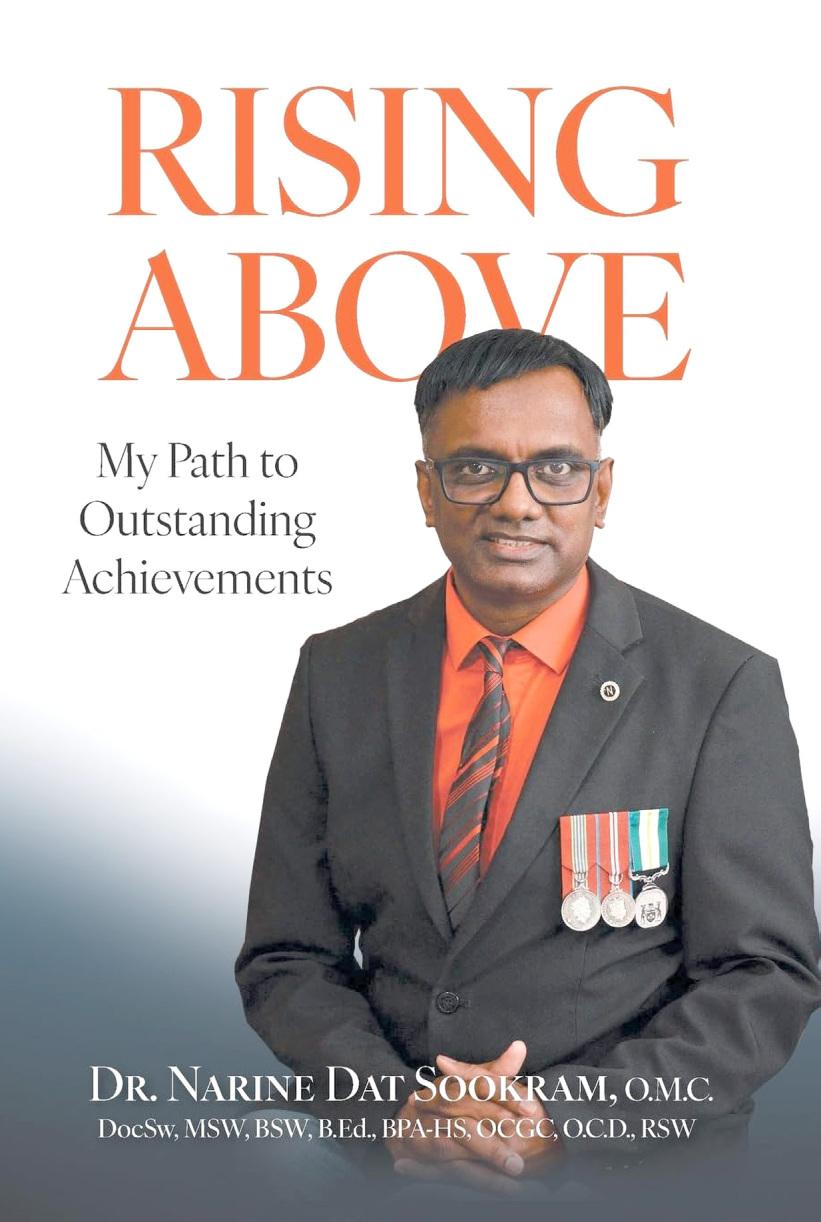
from all walks of life. Despite his many accomplishments, he continues to emphasise the importance of kindness, gratitude and supporting others.
His story is not simply about personal achievement; it is about creating opportunities for others and demonstrating that success should be shared. His dedication to family, community and mentorship reflects strong values that resonate deeply with readers seeking inspiration in their own lives.
The title Rising Above: My Path to Outstanding Achievements perfectly captures the essence of Dr Sookram’s journey. He rose above economic hardship, cultural adjustment, academic challenges and social barriers to create a life defined by excellence and service. His experiences offer valuable lessons about persistence, self-belief and the importance of maintaining a forward-thinking mindset. Readers are encouraged not only to admire his accomplishments

but also to reflect on their own potential and ability to overcome obstacles.
In today’s world, stories like Dr Sookram’s are especially meaningful because they remind people that success is achievable through discipline, resilience and compassion. His journey from Guyana to Canada serves as a powerful example of the immigrant experience and the possibilities that emerge when determination meets opportunity.
Through his book and his life’s work, Dr Narine Dat Sookram continues to inspire students, professionals, immigrants and anyone striving to achieve their goals.
Ultimately, Dr Sookram’s life demonstrates that outstanding achievements are not simply measured by awards or degrees, but by the positive impact a person has on others.
His story is one of hope, perseverance and service.
By sharing his experiences in Rising Above: My Path to Outstanding Achievements, he encourages readers to believe in themselves, work hard and never allow obstacles to define their future.
His message is clear: with determination, education and kindness, it is possible to rise above challenges and achieve greatness.
By Shaniya Harding
AT 19, Verian Mentis-Barker did not yet understand she was part of a historic turning point.
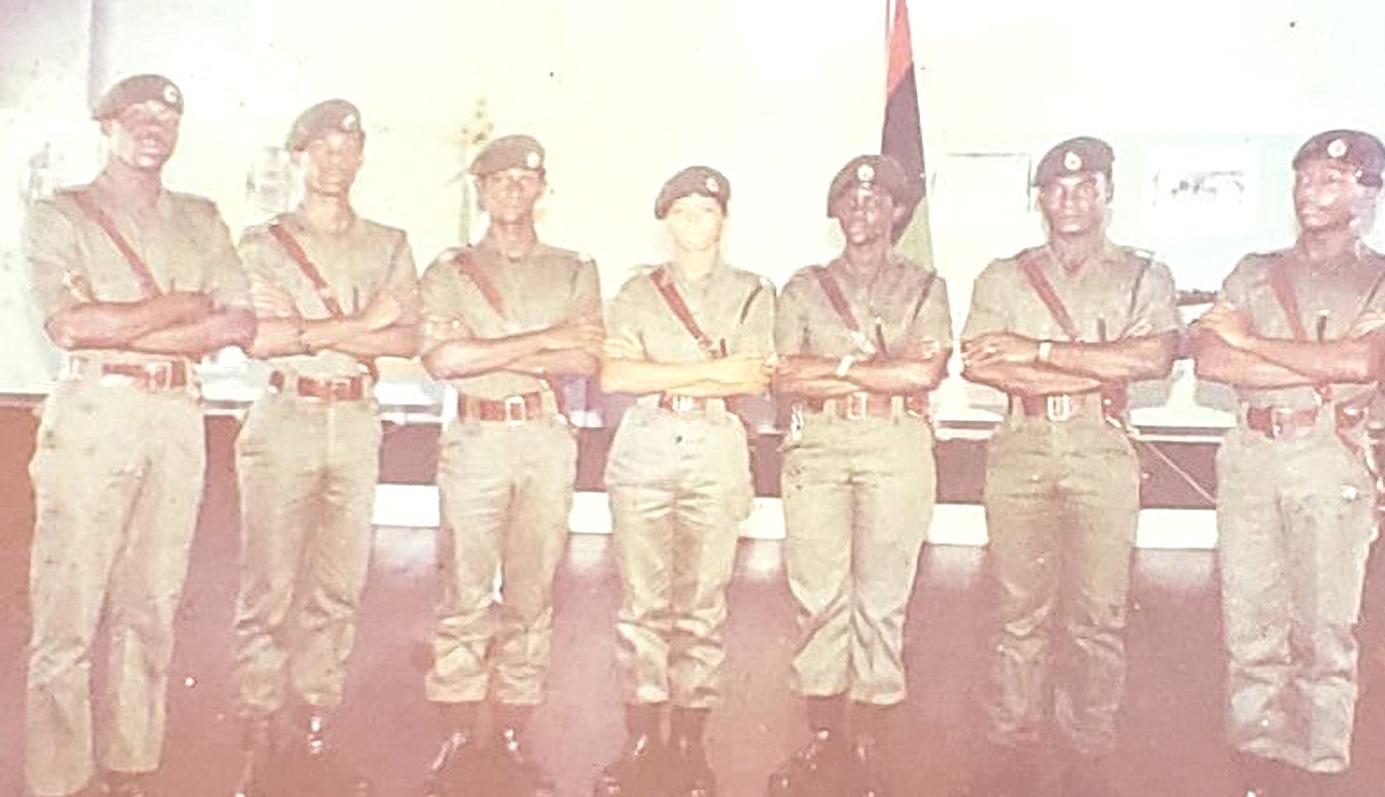
She only knew she wanted to continue her studies when she entered what would become the Guyana Defence Force’s Course Number Six, the first officer training programme to place men and women under the same standards.
Fifty years later, that experience stands as a defining moment in Guyana’s military history, one that broke long-held gender barriers and reshaped discipline, identity and service in the GDF.
Beginning this weekend with a series of commemorative events, Course Six alumni are coming together to mark a golden jubilee that is as much about national pride as it is personal triumph.
Speaking to the Pepperpot Magazine, Mentis-Barker reflects on a journey that began in uncertainty but ultimately helped set a precedent for women in uniform across Guyana and the Anglophone Caribbean.
Born in the township of New Amsterdam, Mentis-Barker was making history even before she joined
the military. Fresh out of high school, she was among the first batch of students to attend the University of Guyana under a contract that provided payment. She first heard about Course Six through a simple notice posted at the university. While it caught her attention, it was not something she saw as monumental at
the time.
“We learned that somebody had put a notice up. Of course, that was no official information; that was just a conversation at lunch. That was 1976,” she told the Pepperpot Magazine.
Even when she joined the course, she was not immediately aware of its significance. When asked whether
she had any idea she was part of history on her first day of training, she said, “No way. I was 19, and all I wanted to do was get back to school.”
It was not until she ventured deeper into the journey that she realised this was more than a shortcut back to school; it was a profession, one she said she had to adapt to.
“At the time, as a younger person who was not very exposed or experienced, that was not something I looked forward to. In retrospect, it is one of the best things that has happened in my life.”
In May 1976, Guyana was at a major turning point in history. As a brand-new independent state among larger counterparts and neighbouring states that were strengthening their military capacity, the new nation of Guyana was forced to enhance its deterrent and defensive capabilities.
The government embarked on enlarging the GDF, providing it with more workforce. More officers and men were needed, and Course Number Six became the largest Officer Cadet Course ever assembled by the GDF.
While it was a landmark step, Mentis-Barker noted that it came with challenges. Among the biggest challenges for her was learning to take orders and adapting to the discipline that accompanied them.
Reflecting on that journey, she stated that at just 19, the importance of the training was not clear to her.
“Learning to take orders, learning to support yourself, your emotions and your per-
sonality, and understanding that there is a force of guidance that requires you to do a specific thing for a specific end — you do not have that kind of vision at 19,” she reflected.
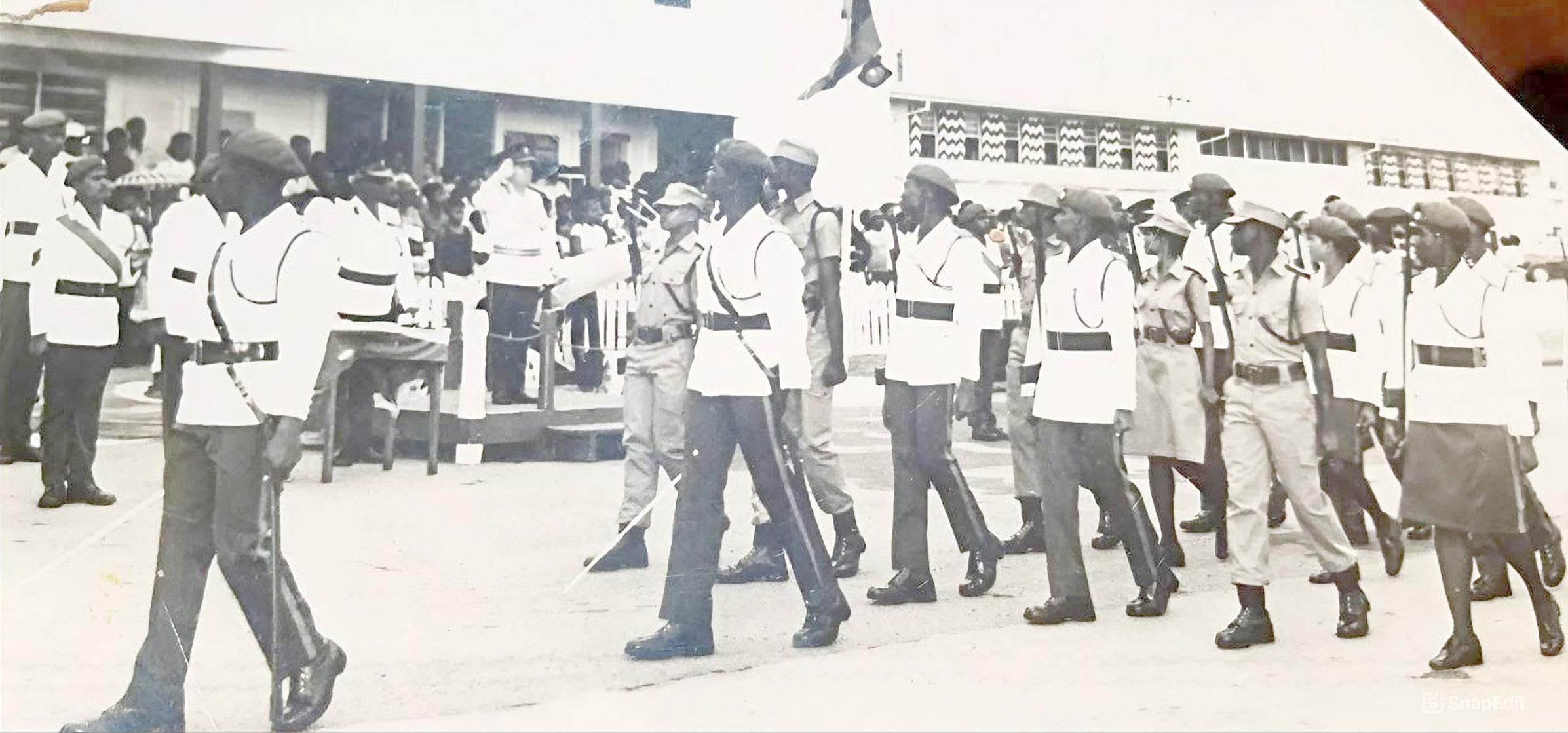
On Sunday, May 16th, 1976, Officer Cadet Course Number Six reported to the Guyana Defence Force Headquarters at Camp Ayanganna. Sixty-six cadets were in attendance: nine female and fifty-seven male. It was to become a historic course. Not only was it the largest Officer Cadet Course ever assembled by the GDF, but it was also the first to have men and women training together in Guyana and across the Anglophone Caribbean.
Co-ed training is now the norm in the GDF, but fifty years ago, these women were the trailblazers.
This milestone, however, came at the cost of considerable physical exertion. Mentis-Barker shared that the strenuous training, which unfolded over several months, was as challenging as it was rewarding.
“I would say that for women overall, it was physical. But that’s the charm in the whole thing, because in TURN TO PAGE XI
By Shaniya Harding
FROM the quiet village of Peepra in Bihar, India, to the sugar estates of British Guiana, and across generations that now span continents, Harry Rickheeram’s latest work is more than a family history; it is a reconstruction of identity itself.
In his most recent book, A Story of Indenture, Survival and Legacy, the author pieces together fragmented records, ship registers and oral memory to trace how one family’s journey aboard the ship Syria in 1875 became part of Guyana’s wider indentured story.
Speaking with the Pepperpot Magazine from his home in Florida earlier this week, Rickheeram recounted how what began as a search for personal roots evolved into a deeply researched account of migration, separation and survival, and into a story that still echoes through Guyana’s cultural landscape today.
Rickheeram, now in his eighties, is a Guyanese US-based author born and raised in one of Guyana’s oldest communities, Fyrish Village.
Brought up in a very large family, Rickheeram was the third of thirteen children. At the time, his father was the sole breadwinner of the family, and with so many mouths
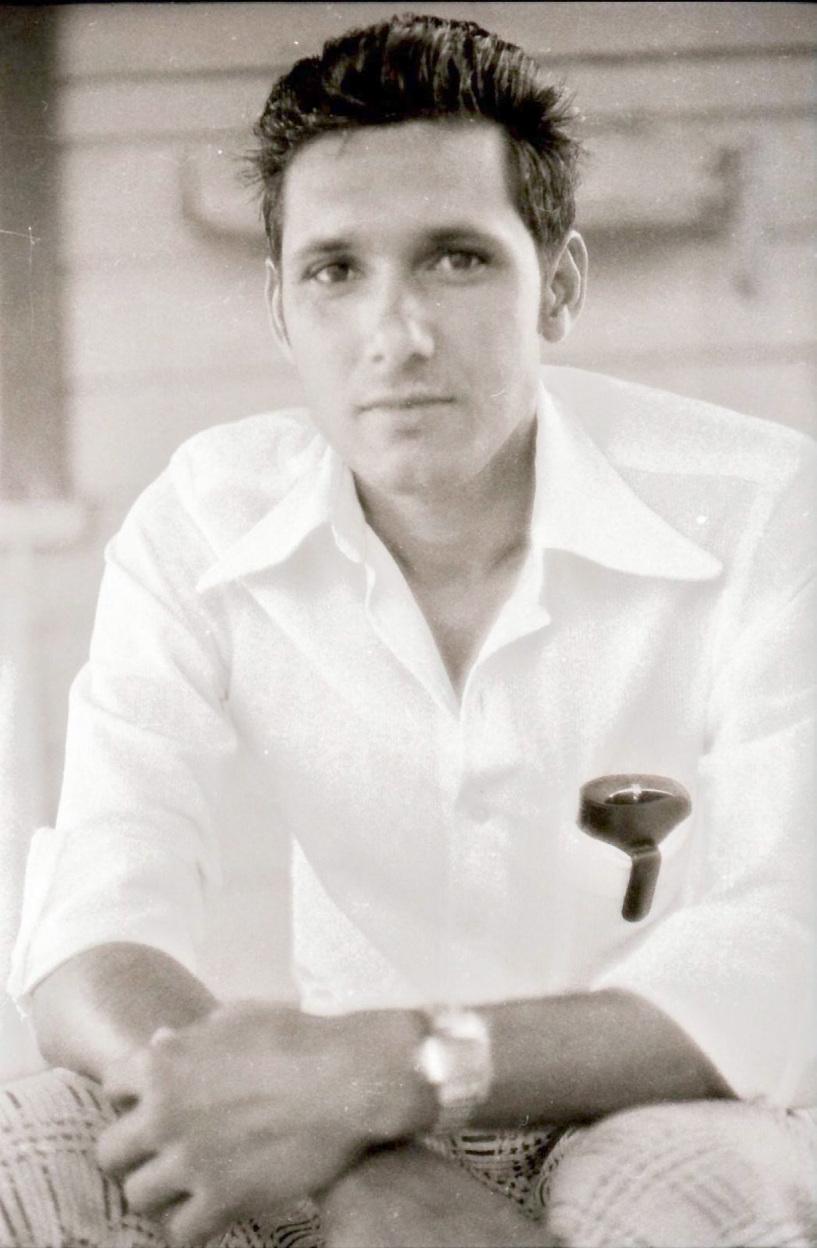
to feed, extended family included, Rickheeram, as one of the older young men in the household, took on responsibilities early to provide for the family.
Recounting his childhood, he shared: “My father was the only breadwinner within the family, and we had to assist in other ways of sustaining the family,” he added.
“As a young boy, I had to struggle with farm duties, taking produce and things like that. We lived about a mile from the public road to go to the market. I had to take that produce for my mother, go to the market, come back, take the cattle, and then go to school.”
Rickheeram grew up during the British colonial era in Guyana. His early years included Congregational school, run by the Congregational Church, a British curriculum and salutes to the Union Jack.
He witnessed Guyana gain its independence, and when he entered high school, he began studying, for the first time, in a newly renamed Guyana.
But this chapter, too, was filled with challenges for a young man coming from the sugar plantations of the Corentyne coast.
As he shared: “After I finished primary school, I went to high school in Guyana. It was a challenge as a child. My father did not want to send me to high school because he said he couldn’t afford it. We had to pay school fees back then.”
Rickheeram worked with his father in the mornings before school to earn extra income for the family, which would cover school fees.
Although he finished high school, Rickheeram noted that it was still difficult for him to find work outside of the sugar industry.
While still a teenager, he began working in Guyana’s then-blossoming sugar industry.
As he shared: “I decided to start from the bottom in the sugar industry, a high school boy with a couple of subjects in GCE. I worked my way from running sugar cane to the fertilising department, planting cane, and I ended up in the factory as well. I eventually got a better job because of my experience,” he said. Eventually, Rickheeram gained
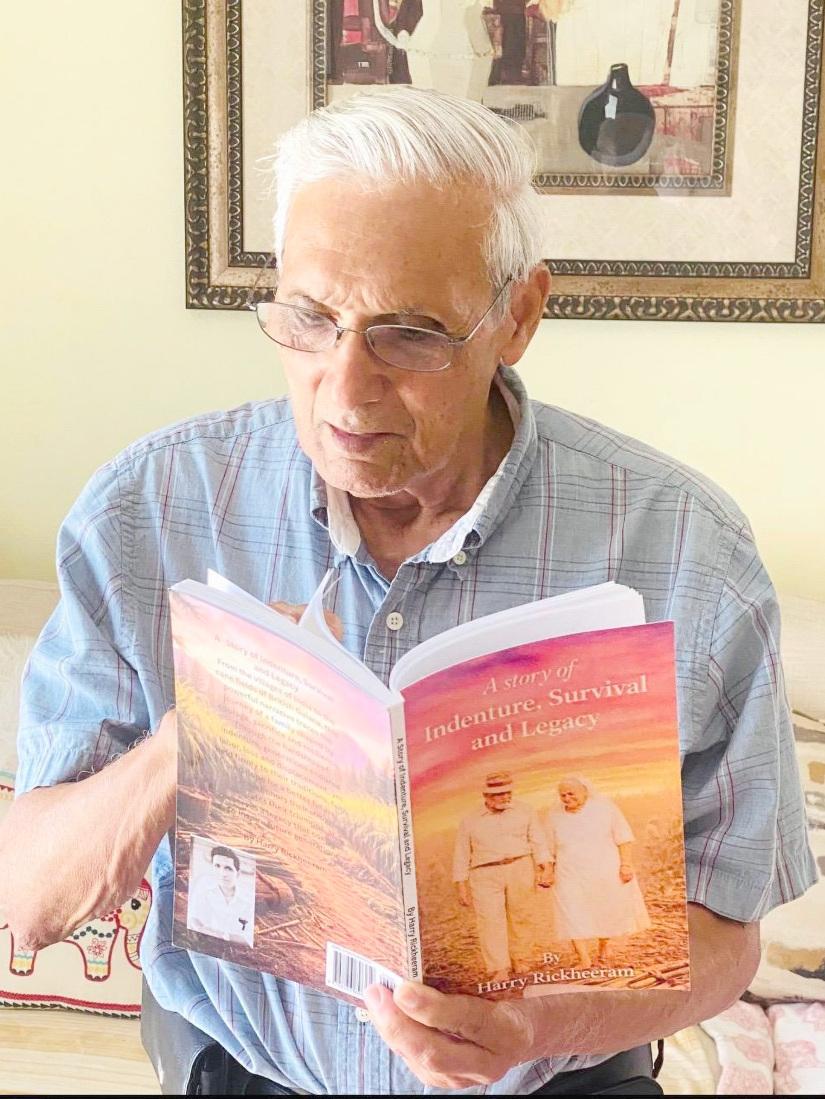
Guyanese-American author Harry Rickheeram displays his latest book, A Story of Indenture, Survival and Legacy, which traces his family’s journey from India to British Guiana.
enough through hard work and dedication to migrate to the United States, where he continued working and studying.
That hard work paid off, as he shared: “I worked and went to school at the same time. That was my ambition, to further myself. I went to school while I was working. I ended up working with one of the biggest technology companies in the United States.”
While most writers begin their careers in their early years, Rickheeram did not write his first book until he retired.
He shared that he began writing to keep himself occupied, and with his life now centred around his family, he decided to trace his roots.
His research led to the creation of five books over the last few years: Life in British Guiana, Son of an Indo-Guyanese, Across the Oceans- In for Lost Love, An Indo-Guyanese Experience, Finding Lost Love Across the Oceans, an autobiography called Life is More
than a Struggle, and most recently, A Story of Indenture, Survival and Legacy.
His most recent work, published just weeks ago, tells the story of indentureship in Guyana, tracing the steps of a family from India to the sugar plantations of British Guiana through a journey of hardship, resilience, and hope, and ultimately to the rebuilding of a new life.
Rickheeram notes that his most recent book required months of research and took years to complete.
It was sparked by a document he received from his grandfather’s youngest sister. That piece of history became the foundation for A Story of Indenture, Survival and Legacy.
As Rickheeram shared: “That document had so much information, the ship’s name that her father came on, all of that,” he said.
The document listed the names of Rickheeram’s ancestors, their places of origin in India, and the TURN TO PAGE IX
By Michel Outridge
IT was through her deep love of volunteerism and community-based involvement that Leotha Greene-Watson gained recognition and was placed in a position she was best suited for.
When Dr Mohamed Irfaan Ali was sworn in in August 2020, six days later, Greene-Watson was appointed the Regional Community Development Officer for the Community Development Council (CDC) in Region Three. It is a role she takes great pride in, given her leadership qualities and her strengths. She is a people person and was placed in an area she loves.
The Regional Community Development Council (CDC) is an arm of the Ministry of Local Government and Regional Development.
The CDC’s position is to develop every village in which it is formed through its members, who often host their own activities to
raise funds for community beautification and self-help initiatives.
These groups receive additional assistance, though not monetary, for community enhancement through the Neighbourhood Democratic Councils (NDCs), the ministry and fundraisers for other projects.
This position galvanised her unwavering love for community-based work and her investment in human resources and capacity building, especially projects involving women, many of whom are abused.
Greene-Watson told Pepperpot Magazine that being the Regional Community Development Officer is not new to her because she has been “on the ground” at the grassroots level for many years, serving the people.
During that time, she developed good relations with the communities where she worked and volunteered, and gained hands-on experience interacting with the public through face-to-face interactions.

She stated that, as a mother of three and a grandmother of two, balancing a full-time job and handling other extra projects was never a burden for her because she loved doing that type of work.
Helping others is part of her life, and she would respond to calls to assist at any time, a true patriot who does a lot behind the scenes without being in the limelight.
Greene-Watson explained that she is originally from Bagotville, West Bank Demerara, but relocated to Tuschen, East Bank Essequibo, after acquiring a plot of land and building her house there.
She noted that the transition was not easy, but she had to make it happen and is very happy she did.
Growing up in Bagotville Village, she was raised to be involved in group activities, such as promoting African culture through drumming, song, fashion, and community-based events.
It was how her passion for community-based work evolved into something that would shape her career today.
Greene-Watson told Pepperpot Magazine that she fully got into volunteerism in 2020, and after that, there was no stopping her. It was something she loved, and she enjoyed spending time with others.
Today, she is responsible for the active CDC groups within the region. Although 60 were established, only half of them are still functioning.
Greene-Watson added that community-based work was her way of giving back to society, and she did not mind the time she had spent assisting vulnerable groups.
As a victim of domestic violence, she knew she had to lend support to women who were in the same situation, and that she did with ease at the community level.
Greene-Watson reported that her office is located at the Regional Democratic Council (RDC) building at Vreed-en-Hoop, West Coast Demerara, and she has only one support staff member, Shaniya Stevens.
As part of her duties, she goes into villages and meets with locals, listens to their concerns and issues, and seeks to have them resolved through legal means via the CDC.
Greene-Watson is also responsible for hosting consultations within the CDC groups to ensure their smooth operations and liaison with the communities.
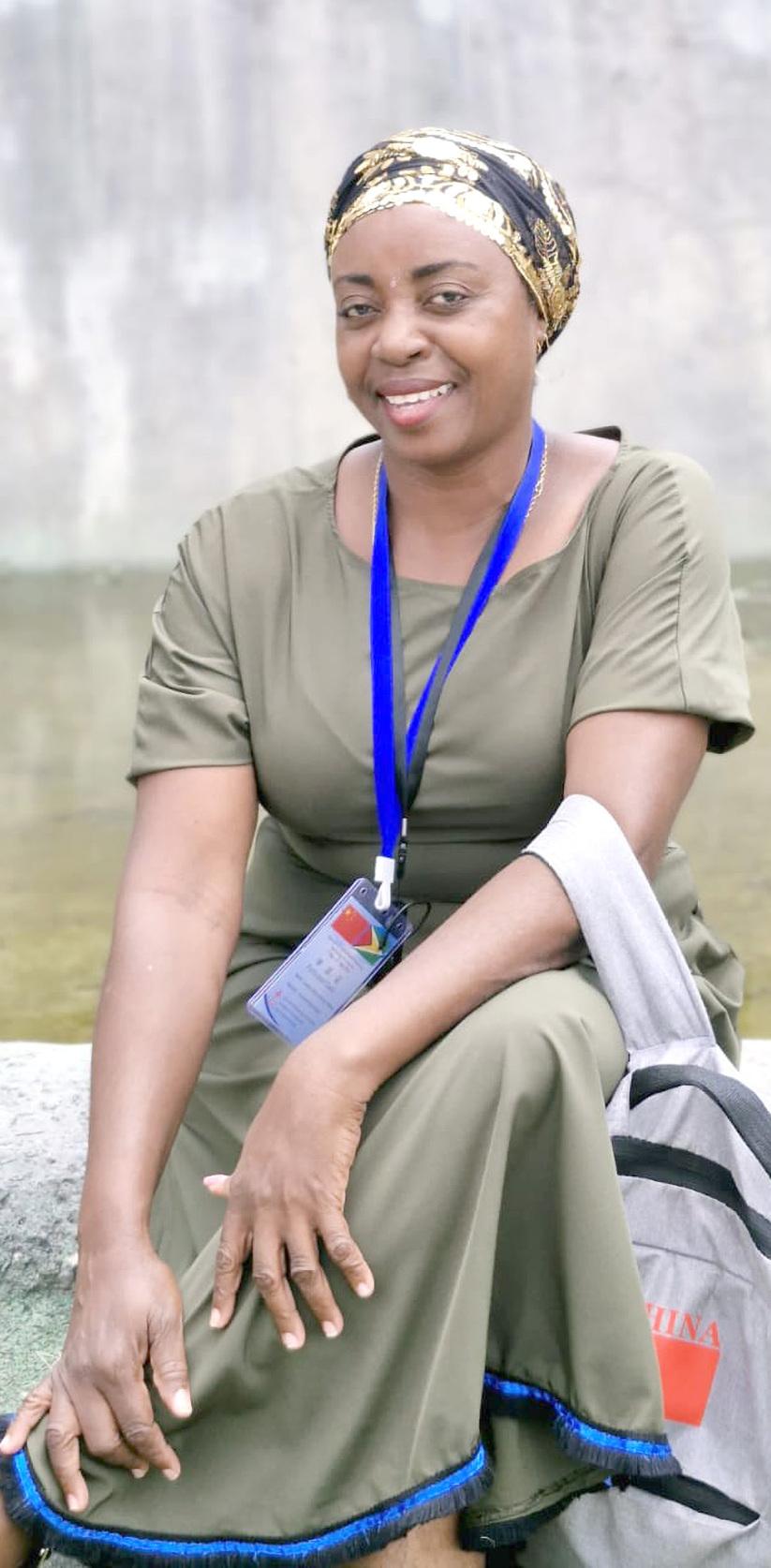
In addition to her community-based work and volunteerism, she is a religious woman who is a member of Israel United in Christ Guyana. She is involved in all church-related activities, and, as a sign of her faith, she is modestly dressed at all times and even wears a head covering. Greene-Watson is a member of the Women’s Progressive Or-
ganisation, a regional councillor, involved in politics, and sits on two governors’ school boards and one technical and vocational institute board.
She is a devoted woman who hardly has time to sit idly by, as her work schedule is tight and her projects often involve on-site visits and community interactions.
By Michel Outridge
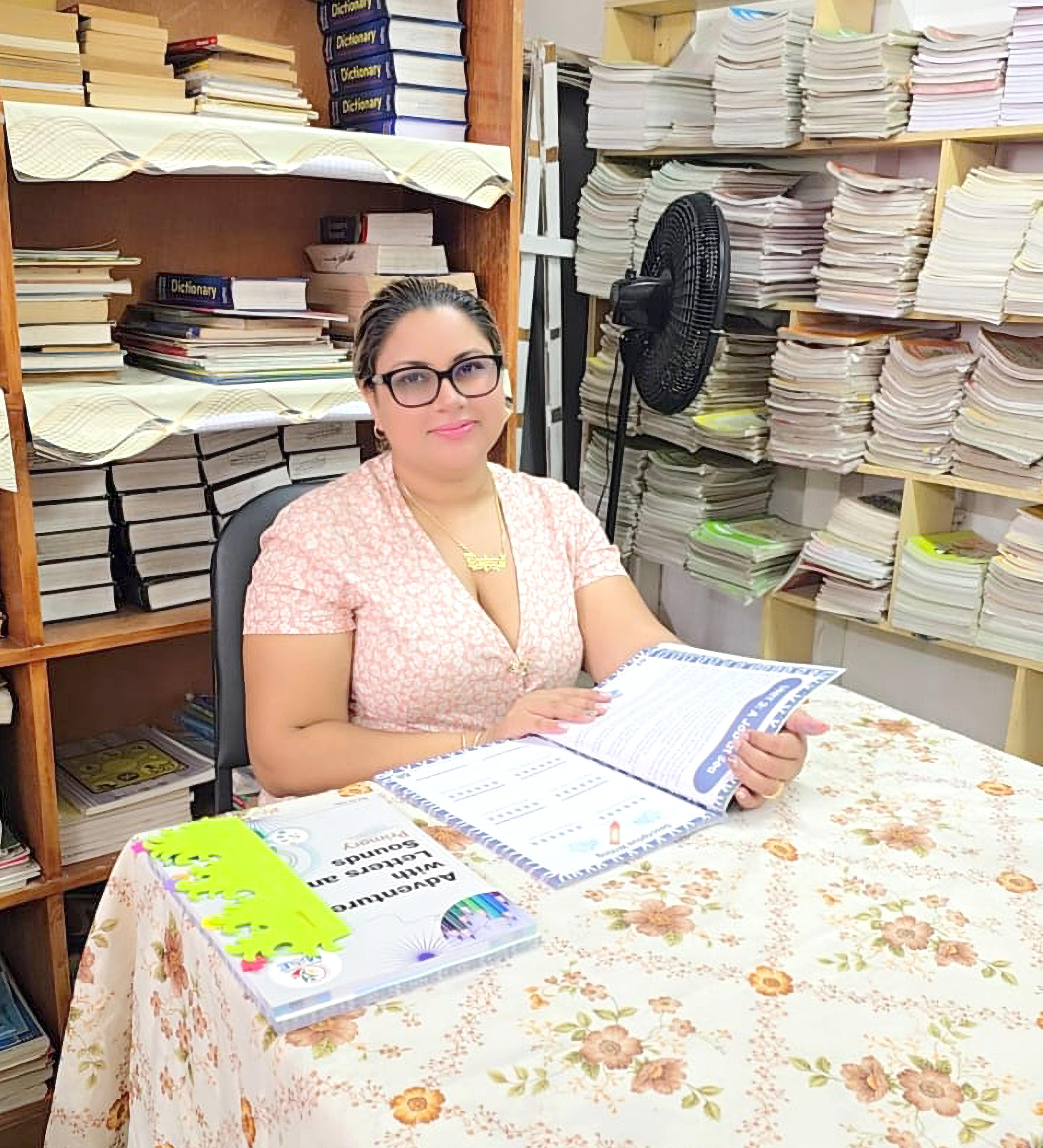
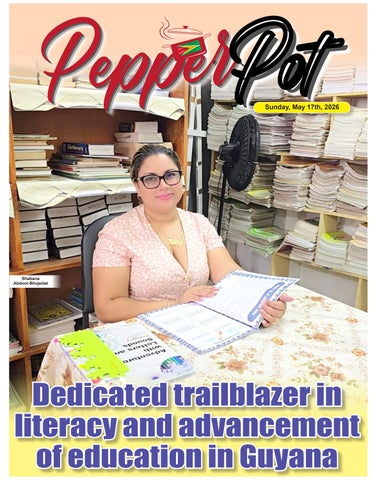
IT was with great enthusiasm to upgrade her tertiary education, coupled with an unbridled need to take her life to the next level, that Shabana Abdool-Bhojedat became all she wanted to be — an educator.
She is a dedicated educator and literacy advocate in the country, based in Region Five (Mahaica-Berbice), who has devoted many years to advancing education.
From humble beginnings, she worked tirelessly to make something of herself and also to make her parents proud as a way of showing gratitude for their hard work in raising her.
It was with true motivation and the gift of multitasking that, while being a mother of three, Abdool-Bhojedat propelled herself to work and study to become qualified in her field.
Born and raised on the beautiful island of Wakenaam, Essequibo
River, Region Three (Essequibo Islands-West Demerara), she began her educational journey at Zeelandia Nursery School, then moved on to Zeelandia Primary School, and later attended Essequibo Islands Secondary School.
Driven by her passion for teaching and learning, Abdool-Bhojedat pursued professional training at the Cyril Potter College of Education.
She later continued her academic advancement at the University of Guyana, where she earned a Bachelor’s Degree in Education.
Her commitment to lifelong learning further led her to complete a Postgraduate Diploma at Indira Gandhi University.
She is currently pursuing a Master’s Degree in English at Jain Deemed-to-be University.
Abdool-Bhojedat has served in the field of education for more than 13 years at Novar Primary School and previously worked for one year at St. Cuthbert’s Primary School.
She currently serves as a Lit-
eracy Committee Member for Region Five, where she continues to contribute significantly to literacy development and educational improvement.
In addition to her work within the primary education sector, she also serves as a part-time lecturer at the CPCE, where she assists in the training and development of future educators.
Outside of her professional life, she enjoys travelling, spending time with her family, and giving back to society in subtle ways she deems appropriate.
Growing up
Life on the quiet island of Wakenaam was simple yet meaningful. Surrounded by nature, rice fields and the close-knit village community, Abdool-Bhojedat enjoyed a happy childhood filled with memorable experiences.
Her father was a rice farmer who worked tirelessly to provide for his family. As a child, she admired his dedication and strong



work ethic.
One of her favourite childhood memories was riding on the combine during rice harvesting season. She enjoyed spending time with her father in the rice fields and watching the hard labour he put into farming as part of his everyday job.
Abdool-Bhojedat related that those experiences helped her appreciate the value of perseverance, determination and honest labour.
Growing up with four brothers also made her confident and independent. She often joined in activities that many girls her age would avoid.
Being around her brothers encouraged her to become brave, adventurous and outspoken. From a
young age, she developed a love for driving and learned to drive early while living on the island. This experience gave her a sense of responsibility and confidence that remained with her throughout her life.
During her school years, she developed a strong passion for learning and helping others. Her love for education inspired her to pursue a career in teaching and literacy development.
During her final year at the CPCE, she met the love of her life, Caleb Bhojedat.
Their relationship quickly grew into a strong bond built on love, understanding and support. The couple TURN TO PAGE XIV
By Chevon Lim
AS the vessel glides across the dark, shimmering waters of the Essequibo River beneath the night sky, with the Golden Arrowhead mightily mounted on the mast, the words of Guyanese cultural icon Dave Martins will undoubtedly echo powerfully in the hearts of all aboard: “Not a blade of grass.”
For generations, those four words have represented far more than a patriotic refrain. They have stood as a declaration of Guyanese pride, sovereignty, and unwavering love for country — especially during moments when the Nation’s territorial integrity has been challenged. Now, as Guyana prepares to celebrate its 60th Independence Anniversary — a Diamond Jubilee marking six decades of freedom, resilience, and nationhood — there may be no more profound place to commemorate this milestone than in the heart of the Essequibo itself.
The Diamond Odyssey Cruise, scheduled for May 25–26, 2026, will offer patrons a rare and deeply meaningful opportunity to participate in one of the most symbolic Independence observances in Guyana’s modern history.
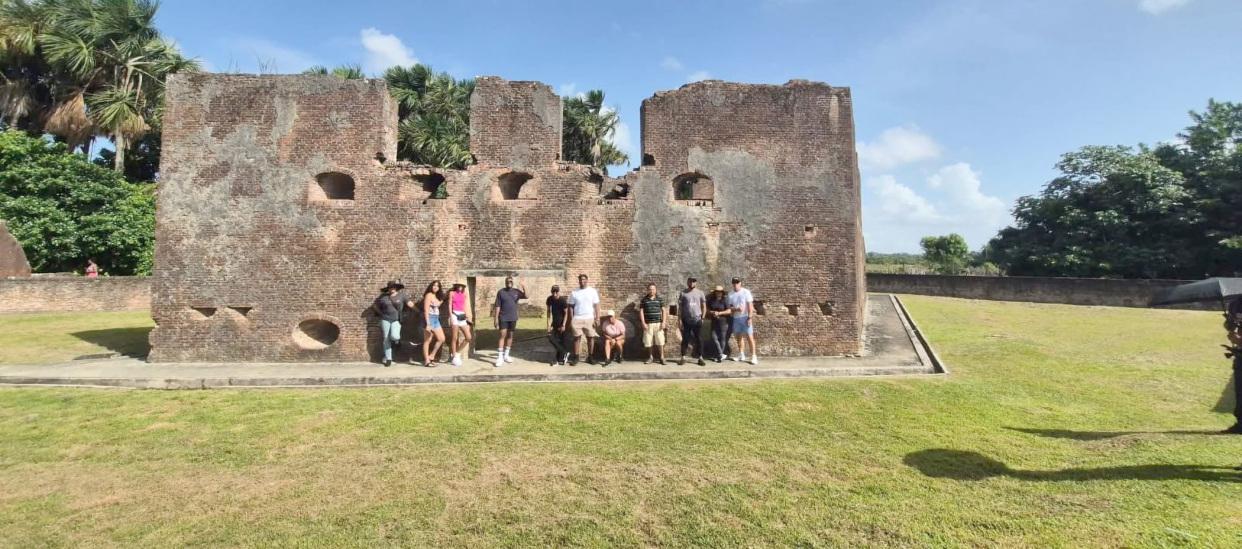
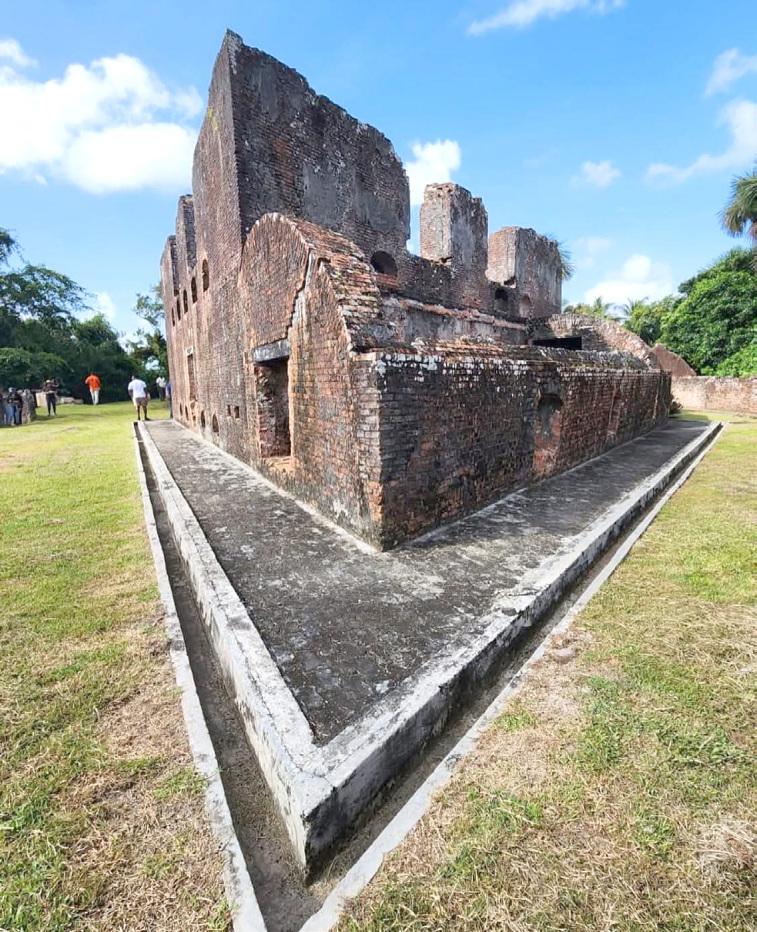
The official 60th Independence Flag-Raising Ceremony will be held on historic Fort Island in the Essequibo, a location rich in Guyanese heritage and identity. The decision
to host the ceremony in Essequibo serves as a powerful reaffirmation of the Region’s place within Guyana’s history, culture, and sovereignty. Against the backdrop of the ongoing border controversy with Venezuela, the ceremony will carry extraordinary National significance. Gathering in Essequibo to raise the Golden Arrowhead transcends ceremonial and stands as a visible declaration of unity, patriotism, and National resolve.
For those participating in the Diamond Odyssey Cruise, this will not simply be an overnight celebration. It will be an act of patriotism—a voyage into the soul of the nation.
As the Golden Arrowhead rises over Fort Island at midnight, illuminated by fireworks and reflected across the waters of the Essequibo River, attendees will become part of a defining National moment — one that will honour the sacrifices of our ancestors, celebrate the achievements of the Guyanese people, and reaffirm the Nation’s commitment to protecting and preserving every inch of its homeland.
To stand in Essequibo during Guyana’s Diamond Jubilee celebrations will be an honour few will ever experience. Passengers aboard the Diamond Odyssey Cruise will not only witness history, but will help create it. The experience will combine culture, celebration, heritage, and patriotism in a way few
TURN TO PAGE VIII




HAVE you ever wondered how some people are so incredibly skilled? They may perhaps be talented musicians or skilled sportsmen. They might be great at writing, reading and retaining knowledge. Sometimes, they have an unconventional skill that is so unique that we do not even notice it until it appears in a new situation.
For example, some people are extraordinarily charismatic and persuasive, while others are great with numbers. When we witness these individuals utilising their skills, their competence in that specific area is wonderful to observe. To them, practising their talent is as natural and easy as breathing.
The art of competence is not just about mastering a skill or doing something better than others can. It is about finding something to be passionate about and utilising that passion in the most productive way possible. Those who become competent in a certain area develop the sort of confidence that helps them build their identities. They are truly lucky, as the passion they hold becomes a part of who they are and manifests itself in every important choice they make. There is no obstacle they may fail to overcome, and no outcome that could lead to a state of complete hopelessness. There is always a new door that opens for them
and something else to try, as long as they hold on to their passion.
The art of becoming competent in a special area is a wonderful gift that can serve as a beacon in even the most difficult parts of our lives. So, it is no wonder that we all seek to discover our passion and purpose as soon as we enter the world.
Unfortunately, finding this passion or skill can sometimes be just as difficult as practising it. After all, how is it possible for us to find something that is hidden so deeply within us that we may never notice its existence throughout the course of our lives? How do we find our special talent amid the sea of skills and
national events ever could. Guests will enjoy an unforgettable overnight experience featuring music, entertainment, cuisine, fellowship, fireworks, and the historic midnight flag-raising ceremony itself.
From the rhythms of Guyanese culture to the raising of the National flag in the Essequibo, every moment aboard the Diamond Odyssey Cruise will serve as a reminder that patriotism is not only spoken — it is action. And on the waters of the Essequibo, it will also be profoundly felt.
About the Diamond Odyssey Cruise
FROM PAGE VII
The Diamond Odyssey Cruise will be a special Independence Jubilee overnight experience commemorating Guyana’s 60th Independence Anniversary.
The cruise will depart on May 25, 2026, from the Marad Boat House, Stabroek, and will include participation in the historic Fort Island Flag-Raising Ceremony, cultural entertainment, meals, accommodations, and Independence festivities aboard the vessel.
For bookings and information, contact Trailmaster Adventure Tours: 592-6208687

activities we are exposed to every day?
Depending on how we choose to see it, the answer to our concern can create both optimism and sadness at the same time.
It is unfortunate, but true, that not every individual is born with a special, natural talent. In fact, one could go so far as to say that most people do not have a special talent they are born with. Passion and talent are not qualities that often exist within individuals even before they are born. They are not predestined, as we tend to believe.
Instead, they develop within us as we interact with the world and find things in it that we love. Although it is a
little saddening that we may not have an inbuilt ‘talent’, it does mean that if we place the right amount of effort into the right things, we can become skilled at anything in the world.
It is comforting to know that our identities are not defined for us — we get to make our own choices. In a way, this fact makes our skills more valuable, as the things we work to acquire tend to be far more important than those we discover or come across by accident.
The art of competence is not luck or chance; it is the beautiful union of hope, perseverance and sheer love for a certain field.
As we go through our lives, we may find ourselves
being bombarded by the stress of making important choices and meeting crucial milestones. As we navigate these things, it is easy to forget to explore what we love.
To become fiercely competent in a specific area, we must first select something to practise and devote our time to. The skill we select should be something that contributes to us becoming a better version of ourselves — something that we know we will stick to, even when it becomes difficult to practise or utilise. Eventually, as our passion for the field metamorphoses into skill and competence, we will inspire those around us to follow in our footsteps.


Section A: Girlhood
DURING the stage of girlhood, each parent should understand that girls will experiment with many things, which will give them personal life experiences and various valuable lessons. This is a critical stage at which every parent needs to train and develop their daughters. Imparting good values, morals, manners, and other key training to daughters in the early phase of their lives is important, as it lays a solid foundation for their future.
Girls need guidance. While external people can provide some guidance, it is often good for them to receive guidance from their parents and siblings.
Parents are often able to identify their children’s strengths and weaknesses and know how to help them. Proper guidance and encouragement can help children quickly overcome weaknesses and become valuable resources to their parents and society.
Educating girls is essential for ensuring that they play important roles in our societies in the future. Education is gender-neutral, so parents must constantly ensure that their daughters are properly educated.
Sports and games are also important for girls, as they learn dis-
cipline and co-operation. Through sports, girls will learn team spirit and accountability, and they can bring those qualities into their relationships when they become wives.
Parents must train their children to respect everyone. Girls may sometimes show some resistance to this, but as parents constantly remind their daughters, many of them will respect everyone, and people will begin to talk about how mannerly they are.
Girls may learn about sex from schoolmates, neighbours and other persons, but the information they learn is sometimes incorrect. Therefore, parents must be among the major teachers of sexual education within their homes. The experience parents have is sufficient to guide their daughters.
Parents should guide their daughters on being in relationships, emphasising that there are more important things than sex in a relationship. This guidance is especially important for adolescent girls. Both daughters and sons must be aware of family planning before entering into relationships.
When daughters move from girlhood to womanhood, they have entered another important phase in their lives. They are expected
to demonstrate many of the things their parents taught them.
During this phase of womanhood, women will put to the test the things they have learned from their parents and friends. Sometimes they want to explore life.
They are willing to take on new challenges, even if they fail. Gaining experience for oneself may lead to either success or failure. Those who want to be successful must be willing to try rather than spend most of their time thinking about what it might be like.
There are many employment opportunities available for those who want to work. Some women must be willing to seek employment because they cannot rely on their parents or partners for financial support.
Many parents provide for their children in their younger years, but when girls become women, they must show their independence. Being employed has many challenges and advantages.
The money women earn must be used wisely so that when they are ready to establish their own families, they have their portion of savings. In managing money, people need to increase their earnings, make investments and carefully manage their spending.
When women manage their
money during their single life, they may become good stewards within their new families.
After women have their own families, some of them may still need to support their parents. The sacrifices some parents make for their children’s development may leave them without finances in the future. When parents reach retirement age, their pensions may not be substantial enough to meet their needs.
Women must always strive to advance their knowledge and skills. When girls leave school, there are many more opportunities for them to develop their academic qualifications and life skills. These developments will be important for future promotions or opportunities for them to own businesses.
When a woman is looking for a companion, she may look for a man who knows how to do domestic activities. While she does not expect him to be the only one doing domestic tasks at home, at least his contribution will bring great relief to the family.
Finding a companion may not be as easy as finding a job. Those seeking companions must share values and look for those with the potential to help the family grow.
There are many places to find a suitable companion. Once a person
finds a companion and is reasonably satisfied with that individual, then it should be time to consider marriage.
Section C: Motherhood
Having a family is not a task for girls, but for women who are committed and want to make a positive contribution to society. Some women are running away from family life, while others are running towards it. Not everyone understands the great commitment required for those who want to live with a companion and children.
When people are single, they have much freedom and are accountable only to themselves and, probably, their parents. However, when a person chooses to have a family and children, then they are accountable to their companion and children as well.
This change in accountability is very great and may cause uneasiness for some people. However, there are many benefits to having a companion and offspring.
For more information about Geary Reid and his books, please use the contact information below:
• Facebook: Reid n Learn
• Email: info@reidnlearn. com
• Mobile #: 592-645-2240
ships that brought them to Guyana. Through further research, Rickheeram compiled as much of his family history as possible, adding: “They came from a small village named Peepra, in the district of Arrah, in the Bihar area of India.
“The document I received from the archive also had his father’s name on it, which helped me go further back into the ancestor history. His name was Gunga Roy. His wife Rookmin’s father was also listed; his name was Dookhit. They sailed
on a ship called the Syria on the 19th of October 1875.”
Rickheeram’s research took years and saw him collaborate with people across the world to piece together the story of his family, which had grown increasingly complicated over time.
Lost documents and changed names, along with communities bearing new titles, made the search difficult.
Eventually, Rickheeram recreated his family’s history — a
captivating story that includes his great-grandmother Ratnie, who was born aboard the ship during the very journey to Guyana, and his great-grandfather Mohabir, who came to British Guiana twelve years later at the age of 22 from the village of Sundarpur in the district of Pratapgarh, Uttar Pradesh.
The two were married in 1895 and lived to see the end of indentureship in 1917.
They were among the 238,979 indentured immigrants who made
the crossing, and among the 173,466 who chose to stay and call Guyana home. As Guyana marks its 60th year of independence this May, Rickheeram’s work arrives at a deeply meaningful moment.
The journey of his great-great-grandparents, from the villages of Bihar and Uttar Pradesh to the cane rows of British Guiana, is not simply a family narrative.
The sacrifices made by tens of thousands of indentured immigrants, who arrived on strange
FROM PAGE IV
shores with little more than their resilience and their names, helped build the Guyana that stands today.
In tracing their footsteps, Rickheeram has done what historians and archivists hope for but rarely see: he has given those people their names back, their stories back, and their rightful place in the nation’s memory.
Sixty years on from independence, that story of indentureship is also, in many ways, the story of Guyana itself.

SUPPOSE we step back, use our imagination, and see the ‘Ego, the Crowd and the Individual’ as ‘The Companions’ — intelligent characters that are part of a single living organism or energy field attached to us. Because we humans are born with the faculty of awareness, we desire to go further, and we recognise that understanding the dispositions of this particular group of ‘companions’ will help us through learning from them, about them, and most of all, how they want ‘Awareness’ to see them.
The fact is that we are already in dialogue with them because we began that journey with these ‘companions’ as babies, when we recognised ourselves in the mirror, made faces at the reflection, and began our innocent journey of higher, more complex awareness.
We also awakened to the cautioning balance of the inner voice of ‘Principles’ that remains with us, either to deceive or define, either way, assertive enough to say no with a gesture to what the baby doesn’t like.
Our self-awareness has always been drawn to one or the other of
these companions, and over time, we come to understand that each has an agenda and can easily take us to extremes if we surrender and follow heedlessly, deserting the balance of ‘Principles’ and its assuring tenets of trust.
One of the unique gifts that comes with self-awareness is the ability to question or reason through everything, most times privately, to feel the vibe and explore the vibe. But the companions have been around longer. They probably were the first to witness the cosmic cooling that was the cradle for all that is said to have been brought together as being ‘Created’ or, as argued, ‘Evolved’.
Recently, I listened attentively as a Stabroek Market Water Street vendor argued with others about parents’ guilt and responsibility for the paths children take. In fact, I paused for the moment as he asked his companions: “Ninety per cent of parents do try to give their children the best they can afford, and instead they turn out to be drug dealers, junkie, whore and dishonest without conscience, sometimes even against their own parents. Is wuh mek duh happen?”
Some of us have indeed witnessed those actions within our own families and among our relatives. I have, on more than one occasion, credited dominance by one or the other of the ‘Companions’ to painful domestic or public actions.
Therefore, our very awareness is the best record to define ‘The Companions’.
Now here I go, using the human gift of symbolic language to create a mythical realm governed by the unique trinity of our discussion, beginning with ‘the Ego’.
To enter this space of admiration and praise, all else are adoring subjects. An act of disagreement is a violation before the ‘inflated throne’ of the egotist. A questioning expression or restrained applause signals an enemy rather than an engagement of ideas or opinions. Even if you are unjustly dismissed, you ought to know your place.
But many frailties lie concealed beneath the egotist’s crown. We all have an ego — we must have one to pursue goals and envision success at the end of hard work. It is the balance of this inner self with ‘Principles’ that is important.
Next comes ‘The Crowd’. You
live in a social environment with laws that say you must believe in this or that. To belong, to be at one with the street, the village or the nation, implies who is sacred without saying it, who is above the rules and beyond anyone’s agreement, and you live within it and again must seek balance.
The rules of the crowd did not just happen. They have roots and origins rooted in past experiences and present recurring similarities.
But that is not all there is. A quiet voice whispers a path forward. There is the ‘Individual’ seeping into the pool of the ‘Crowd’ to offer interpretation, not to deny what is, but to understand and undo probable lapses of self-responsibility towards readjusting and correcting the origin of the roots, with a new and greater task that requires understanding how the ‘Origins’ were formed and created the roots of the doctrines of the ‘Crowd’.
The individual of change must ascend from the ‘Crowd’ to witness and identify the simple double standards, the positive attributes of the ‘Crowd’, for within the crowd there is the ‘Egotist’ and the deceiving ‘Individual’. But the balanced in-
dividual who steps onto the stage must understand: “By your works shall a man be known.”
Therefore, as we mould those who desire to learn, they must understand ‘The Companions’, especially in our world of social media influences and spellbinding idols that seek to replace the balance between extremes with a logic that was frowned upon only yesterday but is described today as, “Duh’s how it’s going now.”
The essence of change, however, lies with the age-old reality, the saving grace and the creed of ‘Principles’ that belong to the quiet voice whispering “sensibly” to redeem self by seeking to recognise what is fearsome, but similar, in the encroaching world we are aware of by being at the borders of the world we know.
There are, and will always be, double standards and the fake of the best you know, but with greater honesty and awareness, you can make a difference that stretches further, as a positive influence so badly needed.
Remember always that the exploring mind is a portal of awareness…
the end, with women and men working together to achieve one goal, the discipline I didn’t know I had, or was capable of showing, came out,” she said.
“Having to listen, having to be shouted at, and responding not back, but in kind with commitment to the exercise — that is what came out of being in one of those organisations.”
During the late 1960s and into the 1970s, Guyana faced several territorial and security challenges along its borders, contributing to heightened regional tensions and an evolutionary period for the GDF.
Course Six was a central part of that evolution. An unprecedented, unplanned camaraderie developed among the cadets, a togetherness born not of choice, but of necessity.
“I had to depend on you, and you had to depend on me. We were receiving instructions to do things that we were not accustomed to being spoken to about,” she noted.
By the course’s end, men and women were not only working together but also on par.
“In the end, men and women worked together to achieve one goal. Mr Man could not be faster than me, and me, the physically weaker woman, had to step up so as not to disappoint the males on the course.
“The males were very gracious in the end. There was no man running ahead of a woman, and no woman claiming she could not keep up because she was female. We came to understand our strengths and our weaknesses.”
Course Six concluded on Friday, December 17th, 1976, with forty-five of the initial sixty-six cadets completing the programme.
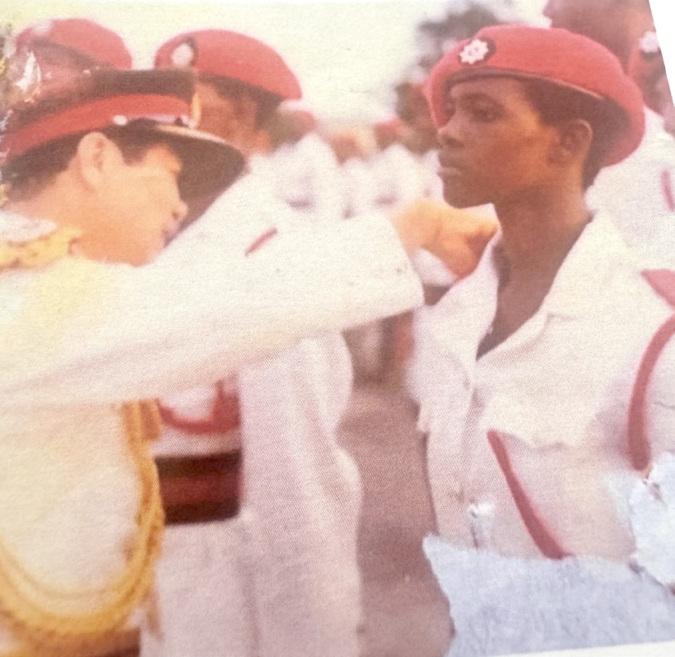
Six of the initial nine female cadets graduated as Second Lieutenants: Jasoda Kishun, Verian Mentis, Paulette Pollard, Brigette Smith, Joyce Smith, the first Indigenous female officer of the GDF, and Marlyn Telford.
These six women made history and will forever hold the distinction of being the first female cadets to complete an Officer Cadet Course conducted by the Guyana Defence Force.
Speaking on this legacy, Mentis-Barker said that Course Six was more than a first; it was the blueprint that helped build the defence force Guyana knows today.
“Working with men, working with women, we established a blueprint,” she added.
“In those days, women were not permanent secretaries or holding any high-level ministry roles. Women largely were typists. In the GDF, women were largely in

domesticated roles that were prescribed from the outset. With Course Six, we broke that mould,” she said.
This golden jubilee is being marked in a manner befitting its significance.
Celebrations commenced on Saturday, May 16th, 2026, with a private cocktail reception, followed on Sunday, May 17th by a thanksgiving church service at the Christ
Church Anglican Church on Waterloo Street, Georgetown, open to the public.
Also on Sunday, the Course Six alumni will be guests of the Chief of Defence Staff, Omar Khan MSS, at a Military Tattoo at Base Camp Ayanganna.
A full calendar of activities spanning the next seven months is expected to be released shortly.
For Mentis-Barker, the celebrations carry a deeply personal weight.
She says she has no regrets, noting that the experience laid the foundation for success both at home and abroad.
“It catapulted us to a level of maturity we were not even aware of until, like me, when we migrated and realised that that exposure and discipline
was like a handbook you carried in your top pocket every day,” she said.
Her time in Course Six showed her what it meant to set goals and see them through, no matter the cost.
“You had a goal, and nobody was going to fulfil it but you. So you knew what you had to do not to derail your steps. In that respect, I have no regrets.”


AMBER stood in the drizzle by the old white picket gate and looked across the lawn at the white house that stood so forlorn in the shadows of the overgrown trees and shrubs — creepers clinging to the wall like tentacles—something once so beautiful, now so old, worn and faded by time.
It had been six years since she had walked out the
gate with her little bag and her puppy — a ten-year-old girl, tears rolling down her cheeks. It had been a day like today, when it had rained all morning, and she had stood on the porch waiting for it to stop. There had been a deep ache in her young heart because there was no one left to take care of her, and she had to leave a home she loved so much.
She pushed open the gate, which fell away on one hinge, and walked up the overgrown path, almost expecting to see her white terrier, Snow White, bounding towards her, her mother at the door greeting her with a smile, and her father appearing from nowhere, swinging her up on his strong shoulders as she screamed in delight.
How wonderful life had


been for them living in that beautiful little white house, filled with love and laughter, until that horrible accident on the highway on a rainy morning snatched her father away from them. That tragic loss had changed their lives, and nothing was ever the same again.
The grass had grown tall, and wild shrubs had trespassed into every corner of what had been a beautiful garden, a small place with so many precious memories. She walked up to the front door and stood there for a short moment, tears gathering in her eyes. She turned the shiny key in the rusted lock, her hand trembling, for it had been such a long time, and taking a deep breath, she pushed the door open.
Amber stared in wonderment, for instead of cobwebs and dust that would have taken over a house closed for six years, there was light, and everywhere seemed the same, as though the house had been taking care of itself while waiting on their return.
A soft cry escaped her lips as she looked at the piano standing alone in the corner, and she closed her eyes as tears flowed down her face, trying to stop the aching in her heart. A soft voice called her name, and, opening her eyes, she saw her mother, such a beautiful woman, walking down the stairs in an elegant off-white gown, and her father, tall and handsome, waiting for her at the bottom. It was their anniversary; a special dinner had been planned that night.
A lovely couple they were, so in love with each
other, a sublime kind of love, so that day when he could no longer kiss her, laugh with her and dance with her, darkness stepped into her life and she lost the will to live.
Amber wiped her tears and opened a few of the windows, the breath of fresh air helping to clear her mind a little. A few birds flew up from the garden, and it brought a little smile to her lips, for they were her friends, whom she used to talk with, and at that age, she always felt they understood what she was saying.
She looked around the house, the furnishings, the décor, everything so beautifully decorated in gold and white, her mother’s favourite colours. The few pieces of antique furniture her father had bought for her and the crystal globe with a dancing prince and princess she had wound over and over to listen to the sweet musical sounds.
Until she lost her mind.
She had left Amber, not in life, but in mind, for the loss of her husband had been too much for her, and she had lost the fight to stay sane, lost the desire to live, even for her little girl.
She had been taken away to an institution, and Amber had had to leave to live with another family, waiting weeks, months and years for the psychological treatment to bring her mother back to her. Each time she saw her on visits, she had read the little poems she had written for her, hoping, bit by bit, it would help her lost mind find its way.
Years went by, and the poems were compiled into a
book, her personal collection. She did a lot of reading on mental health and decided to further her studies in psychology.
“It’s not easy to lose a loved one,” she had said to herself. “Not by death nor mentally.”
The doctors were confident she would come back, and Amber had lived with that hope, seeing glimpses of her mother’s true self sometimes during her visits.
Just one day before her sixteenth birthday, as she sat alone in the park, the hospital called to say her mother was asking for her and wanted to go home. Amber sank on her knees and cried — cried for everything, for the years she had ached for her mother. Now her waiting was over. Her mother had found her way from the darkness.
A car pulled up outside, and she ran to the door, knowing who had arrived. The door opened, and her mother walked in, as beautiful as ever, just a little older, wet from the rain.
Mother and daughter stood for a moment looking at each other, for after six years they had returned home.
She stretched her arms out and cried, “I’m sorry, my baby!” and they hugged each other, crying and laughing for all the joys they had shared and all the sorrows they had borne.
They were together again in the home where there had been so much love and happiness, a home just waiting for their return.
And outside, the rain stopped.

SILENCE is a real state of intelligence within human experience. It is definitely not passive or empty. Silence is the condition in which the human system recalibrates itself without external instruction. It is the environment in which thought becomes observable rather than controlling.
When silence becomes
steady, the mind begins to notice its own activity. It becomes aware that thinking is something happening within awareness and not something that defines awareness itself—the entire structure of inner experience changes with this recognition. Neuroscience supports this shift. Reduced sensory input and sustained quietness move the brain into low -
er-frequency states associated with integration and restoration. Alpha and theta patterns increase, and the brain’s default narrative activity decreases. The prefrontal cortex, which is responsible for constant interpretation and mental projection, becomes less dominant. In this state, internal systems begin to reorganise themselves naturally. Silence, therefore, creates

coherence.
Spiritual teachers across disciplines have consistently pointed towards this same phenomenon, each describing it in their own language but referring to the same lived experience.
Eckhart Tolle states that silence is not the absence of experience, but the presence of awareness itself. He explains that when attention
rests in silence, thinking loses its dominance and consciousness becomes still, yet fully alert. This describes a shift from identification with thought to identification with awareness.
Michael A. Singer describes silence as the moment when inner resistance stops shaping experience. He explains that human suffering is sustained through resistance
to what is present, and when that resistance releases, consciousness returns to its natural state of openness. In that openness, experience flows without internal conflict.
Joe Dispenza explains this from a neurological and biological perspective. He describes how sustained internal stillness allows the body to stop running familiar
TURN TO PAGE XVII

fell deeply in love and got married in the very same year.
In 2012, they tied the knot. Together, they have three children: Kiara Bhojedat, Siara Bhojedat and Caden Bhojedat.
Through her dedication, academic achievements and commitment to education,
Abdool-Bhojedat continues to inspire both her colleagues and learners while making meaningful contributions to the educational sector in Guyana.
Since then, Caleb has remained one of her greatest supporters throughout her educational journey and professional career.
Her children are her pride and joy, and she works hard every day to provide them with love, guidance and a positive example to follow. Despite her busy schedule as an educator and lecturer, she always makes time for her family and values the importance of creating strong family bonds.
FROM PAGE VI
Throughout her years of service, she has remained committed to improving literacy and supporting both teachers and students in their educational journey.
Despite life’s many challenges, including the loss of both of her parents, Abdool-Bhojedat remains grateful for the strong foundation


they provided for her.
Today, she continues to serve her community with pride, passion and dedication.
Her journey from a small village girl on the island of Wakenaam to an educator and lecturer is a true reflection of hard work, determination and perseverance.
Her life story serves as a reminder that humble beginnings can lead to meaningful achievements through faith, dedication and the willingness to work hard for one’s dreams.
Shabana Abdool-Bhojedat was born in the little village of Zeelandia on the island of Wakenaam to her parents, the late Rafeek Abdool and Marian Abdool.
She is the only daughter in her family and grew up alongside her four older brothers, all of whom played an important role in shaping her childhood and values.
Growing up in a large family taught her the importance of love, unity, respect and responsibility from a very early age.


ISHION Hutchinson is a Jamaican poet of rare skill and intellectual depth, a reputation secured by his three acclaimed poetry collections: Far District, The House of Lords and Commons, and School of Instruction, each of which has garnered major awards and nominations.
Born and raised in Jamaica, Hutchinson now teaches literature at Cornell University in New York.
His latest book, Fugitive Tilts, is an expansive collection of essays that ranges across the esoteric and the literary. At nearly four hundred pages, the title evokes the notion of “side pursuits” — works undertaken obliquely or in passing yet animated by larger artistic ambitions.
It recalls Odd Jobs (1979), John Updike’s collection of literary essays; like Updike, Hutchinson proves himself an exacting observer and a deeply attentive reader.
Fugitive Tilts is wide-ranging in both form and subject, bringing together personal reminiscence, literary criticism, travel writing, interviews, reviews and reflective essays. The collection comprises nearly thirty pieces of varying length.
Among the most substantial is Hutchinson’s extended engagement with The Guyana Quartet — the first four novels of Wilson Harris: Palace of the Peacock, The Far Journey of Oudin, The Whole Armour and The Secret Ladder.
In this essay, Hutchinson offers a striking interpretive framework for Harris’s dense, highly metaphoric fiction. He reads the novels through the conceit of a lost Eden: Guyana becomes a symbolic origin from which the characters are estranged and to which they futilely attempt to return.
These figures exist in a perpetual state of flight — pursued or pursuing — and are thus “fugitives” in both literal and metaphysical sens-
es. Their repeated failures, their cycles of death and rebirth, suggest that the Eden they seek can only be apprehended at a remove, beyond conscious grasp.
Hutchinson extends this fugitive quality to the landscape itself, which shifts and eludes stable meaning through Harris’s language and imagery.
The opening essays — “Treasure Island and Me”, “First Reading” and others — are more personal in tone, tracing Hutchinson’s early encounters with literature.
“Treasure Island and Me” is especially affecting, linking Robert Louis Stevenson’s imagined geographies to Hutchinson’s own sense of his island home.
Another piece, “An Exquisite Simulacrum: Remembering Philip Levine”, reflects on the poet Philip Levine, Hutchinson’s teacher at New York University, and stands as a meditation on influence, mentorship and poetic craft.
In the densely argued “Birds of Prey”, Hutchinson turns to Claude McKay’s sonnets, offering a sustained analysis of the word “surrender”. His reading traces its tonal and semantic variations, connecting McKay’s usage to the rhetoric of James Baldwin and the poetry of Kamau Brathwaite.
The essay is intellectually ambitious and often illuminating, demonstrating Hutchinson’s ability to draw unexpected connections across literary traditions. At times, however, its density risks obscuring its central thread, demanding careful attention from the reader.
Another standout essay examines the well-known feud between Derek Walcott and V. S. Naipaul. Hutchinson is less interested in rehearsing their antagonisms than in exploring the deeper affinities in their work. He approaches the subject obliquely, resisting the temptation to take
sides, and instead probes the shared concerns that underlie their writing. Both authors, he suggests, grapple with the problem of representing the Caribbean without reducing it to spectacle or despair.
While Walcott’s vision is
often marked by a wary sensitivity to the dangers of aestheticising poverty, Naipaul’s outlook tends towards a more sweeping pessimism, echoing colonial critiques such as those of Anthony Froude.
Yet Hutchinson complicates this binary, arguing that Walcott’s scepticism is not wholly distinct from Naipaul’s, even if it leads to
different artistic conclusions.
Across these essays, Hutchinson emerges as a versatile and exacting critic. One senses the deliberation behind his prose — the careful shaping and reshaping of ideas as he works through them.
His approach is marked by a kind of subterranean rigour, an almost “molelike” excavation of literary
texts that reveals their hidden structures and resonances.
The result is a collection that testifies to a profound engagement with literature and to the pleasures of close reading. Fugitive Tilts rewards patient readers, inviting them to share in Hutchinson’s sustained, thoughtful encounter with the written word.


emotional patterns. When attention is no longer bound to repetitive thought loops, the brain begins to form new patterns of coherence. The body follows the mind’s new state of order.
Bruce Lipton adds another dimension through cellular biology. His work demonstrates that perception directly influences biological expression. When perception changes, cellular behaviour changes. This establishes a direct link between consciousness and physical reality at the biological level.
And Gregg Braden describes the same alignment as coherence among the heart, brain, and energetic systems. He explains that when internal systems operate in synchrony rather than fragmentation, human experience becomes stable, clear and adaptive.
These perspectives converge on a single principle: silence is not inactivity but regulation. When silence deepens, the nervous system shifts out of chronic states of activation. Breathing becomes slower and more efficient, heart rate variability improves, and muscular tension reduces. The body moves into a parasympathetic state that supports restoration rather than survival-driven reactivity.
In this condition, identity begins to soften. The internal sense of self is no longer maintained exclusively through mental narration. Roles, labels and self-definitions begin to lose rigidity.
The mind often resists this transition at first because it associates thinking with existence. It assumes that without constant mental activity, there is no continuity of self. This assumption is a learned pattern, not an inherent truth, because, in silence, it becomes observable.
Awareness remains present even when thought activity slows. This is the fundamental discovery reported across contemplative traditions and supported by direct meditative experience. Awareness does not depend on thinking to exist. Thought arises within awareness, but
awareness does not arise from thought.
This distinction is central to understanding silence. Silence reveals that identity is not fixed within mental activity. Identity is experienced through awareness that can observe mental activity without becoming absorbed in it.
This creates a shift from identification to observation. In that shift, a deeper stability emerges. The internal system no longer relies on constant interpretation to feel coherent. It begins to operate from presence rather than narrative construction.
This is why silence is often experienced as grounding rather than empty. It stabilises perception by removing internal distortion created through overthinking.
In neuroscience, this correlates with increased integration between brain regions responsible for emotional processing, memory regulation and attention. In contemplative science, this is described as coherence. In spiritual language, this is described as presence. All three describe the same lived phenomenon from different angles.
Silence, therefore, is not something to be achieved. Silence becomes available when internal resistance decreases. It is already present beneath mental activity. It becomes noticeable when attention is no longer fully absorbed in thought.
When that happens, perception becomes direct, experience becomes immediate, and awareness becomes self-evident. The human system is no longer fragmented between thinking and being. It operates as a unified field of experience. And in that unity, clarity arises without effort.
Let’s close with a poetic conversation.
The Power of Silence
Mind:
“What happens here in this space? No sound to track, no thought to chase, No data stream, no clear control, How does this stillness serve

a role?”
Soul: “It is where the noise dissolves its claim, Where you step back from the name and frame, Where did you learn to hold tightly Begins to loosen, fold by fold.”
Mind:
“But thinking drives what I become,
Without it, I am left with none, No structure, no identity, Just absence where I used to be.”
Higher Self:
“You are not lost, you are refined, Coherence forming through your mind, As breath and body realign, You shift from chaos into design.”
Soul:
“Your breath descends through deeper planes, Unwinding loops, releasing chains, The nervous system finds its ease, Not forced to fight, but free to be.”
Mind:
“And what of self? What do I hold When roles collapse, and names grow old?
What stands when all I knew is through, What part of me is truly true?”
Higher Self:
“Awareness stands, untethered, clear, Not bound to thought, yet fully here, No mask to wear, no part to prove, Just a silent truth that does not move.”
Romella Dasratt
























































Dear student,
Let’s focus on the paragraph. It often starts with a lead sentence that introduces the main idea. The sentences that follow add details and support. The lead sentence is usually first, but not always; it still shapes how the other sentences fit together.
When phrases and sentences are well arranged, the paragraph reads smoothly and stays centered on one clear point. Several paragraphs then combine to form a longer text, and sometimes a single sentence can stand as a paragraph. Be wise.
Kind regards.
THE PARAGRAPH
Finding the main idea of a paragraph
To find the main idea of a paragraph, you must be able to distinguish the main idea or thought from the supporting details.
The process becomes a little harder when the main idea is not actually stated. This happens when there is a topic idea and not a physical topic sentence. You still need to read well to hit at the general impression. Here is a paragraph, read it thoroughly and find out its main idea. Respond to the
questions at the end.
The first agent Leamas lost was a girl. She was only a small link in the network; she was used for courier jobs. They shot her dead in the street as she left a West Berlin cinema. The police never found the murderer and was at first inclined to write the incident off as unconnected with her work.
A month later a railway porter in Dresden, a discarded agent from Peter Guillam’s network, was found dead and mutilated beside a railway track. Leamas knew it wasn’t coincidence no longer. Soon after that two members of another net-

May 17th, 2026
work under Leamas’ control were arrested and summarily sentences to death. So, it went on remorseless and unnerving.
(J. LeCarré: “The Spy Who Came in from the Cold”)
The main idea of the paragraph is that:
a) The police couldn’t stop the murders of Leamas’ men.
b) Leamas couldn’t understand why so many people were killed.
c) Leamas knew someone was killing his agents.
d) The murders of Leamas’ agents were savage and cruel.
Example of good writing in stories
Note: To write strong stories, choose words carefully and write with purpose. Engage the reader - evoke real emotion, and create an authentic, memorable experience. Grammar matters, but so do clear thinking, effective characterisation, and a compelling plot.
Read the following excerpt from a dazzling story and, afterward, deal with the questions that follow.
The boy’s name was Patsy Barnes; he was a denizen of Little Africa.
In fact, he lived in Doulas Street. By all the laws governing the relations between people and their names, he should have been Irish – but he was not. He was coloured, and very much so.
His mother wanted him to go to school. She wanted him to learn.
She had the notion that he might become something better, something higher than she had been. But for him school was the cool stalls in the big livery stable near at hand; the arena of his pursuits, its sawdust floor; the height of his ambition, to be a horseman.
Either here or in the racing stables at the fairgrounds he spent his truant hours. It was a school that taught much, and Patsy was as apt
The Glory of the Garden lies in more than meets the eye.
“The Glory of the Garden”
a pupil as he was a constant attendant.
He learned strange things about horses, and fine sonorous oaths that sounded eerie on his young lips, for he had only turned into his fourteenth year.
A man goes where he is appreciated; then could this slim black boy be blamed for doing the same thing? He was a great favourite with the horsemen; and picked up many a dime or nickel for dancing or singing, or even a quarter for warming up a horse for its owner.
He was not to be blamed for this, for, first of all, he was born in Kentucky, and had spent the very days of his infancy about the paddocks near Lexington, where his father sacrificed his life on account of his love for horses.
(“The Finish of Patsy Barnes,” by Paul Laurence Dunbar).
About the passage: Patsy Barnes is described in some appreciable detail. Patsy loves his mother who is steeped in poverty and tries to find some means of support for them both.
1. Read the passage again to follow the author’s construction of Patsy’s character. Note weighty, specific words and phrases that speak of his characteristics. You and your study partners discuss in what order the author constructed his lead character.
2. What made you want to learn more about Patsy as you read on?
3. Write a short story which shows carefully cho-
sen characteristics of your main player, making him/ her portray the type of character you intended. Allow your partners to give studied opinions. Do the upgrading.
THE PASSAGE
Reading to find details
Before the mid-1800s, most families sewed clothes by hand. It took about fourteen hours to sew one shirt. Then, in 1845, Elias Howe invented his sewing machine. By 1877, there were half-amillion sewing machines in the United States. With a sewing machine, a person could make a shirt in only one hour. Clothes could now be mass-produced and sold in stores.
Some people think the telephone, or the gasoline engine, is the invention that most changed people’s lives from endless drudgery of sewing and gave ordinary people choices in what to wear. Free time and pride in their appearance gave people more confidence and more opportunities to achieve their dreams.
Questions:
1. What kinds of details establish the author’s purpose in the first paragraph? (A) facts (B) reasons (C) images (D) characters
2. What is the author’s main purpose in the first paragraph? (A) to entertain (B) to inform (C) to complain (D) to persuade
3. What do you determine is the author’s purpose in the second paragraph? (A) to entertain (B) to inform (C ) to complain (D) to persuade


ANY discussion of the dentist-patient professional relationship must begin with one singular but critical observation. There is an unfortunate tendency in the dental literature to assume that there is only one kind of dentist-patient relationship.
Such conceptualisation has limited the kinds of research carried out and compromised the relevance of the reported findings, because successful treatment in the healing arts is not attributed exclusively to the administration of an appropriate remedy.
Notably, once there is person-to-person interaction, a certain degree of understanding must prevail. In the dentist-patient relationship, the concept of success after treatment should be balanced when both parties have systematically analysed the results.
The fact is that there are three types of relationships which vary according to the relative amounts of responsibility required of the dentist and patient. The importance of being aware of these explains the doubts about whether there is any guarantee of dental work done by the dentist.
In one model, the dentist assumes full responsibility for the patient’s care. In its most extreme form, the patient is incapable of reaction; that is, they are unconscious or in a coma, etc.
The second type of relationship is that of the guidance-cooperation model. The dentist gives advice, direc-
tion or instructions, and the patient is expected to carry them out. This type of relationship is probably the most traditional and familiar one.
The third type of relationship is that of mutual participation. In this model, both dentist and patient share equally.
The patient is expected to take responsibility for his welfare and to promote his own health. Only here can he engage in preventive and health-promoting behaviours or adhere to prescribed regimens to control chronic disease.
Studies done have described the “good patient” as obedient, conforming and willing to assume the role of the patient. According to researcher E. F. Borgatta, the degree to which the patient poses little risk or threat to the professional and the extent to which he readily conforms define the patient in positive terms.
In addition, individuals characterised as “good patients” are described as agreeable, likeable, warm and attractive, according to T. A. Wills writing in the Psychological Bulletin (1999).
The psychiatric and social work literature has demonstrated that the professional’s first impression of the patient, as measured by the dimensions discussed above, significantly affects treatment outcome.
Patients who are cooperative and behave well tend to get the better of the dentist. In fact, studies show that the patient’s professional image on the first visit is significantly

related to treatment outcome.
Findings of Horning and Massagli (2001) indicate that as professionals become more specialised, there appears to be an increased emphasis on the patient’s negative characteristics, with a tendency to label them as negative persons who exag-
gerate small ailments and are headstrong.
It is conceivable that patients who challenge professionals’ integrity tend to receive labels which place them outside of the professional’s area of expertise or define them as untreatable.
A survey conducted some
years ago in the USA reported that, for dentists, the ideal patient was a female between the ages of 25 and 55, well-educated and at the upper end of the social scale.
This aspect further proved the physical appearance dimension in relation to treatment.
Also, almost half the
dentists surveyed had lost patients due to poor interpersonal relationships. On the other hand, patients believe that critical factors in choosing a good dentist include their personality, ability to reduce fear and anxiety, and technical ability.