


This Valentine’s Day Weekend, counselling psychologist Raiza Khan urges couples to know themselves, set boundaries, and heal before seeking lasting love.
By Frederick Halley
VALENTINE’S Day is celebrated in Guyana and
the world over mostly for love and chocolates, if not love of chocolates, but not if Dr Vivian Rambihar, a
Guyanese cardiologist in Toronto, has his way. He is trying to change this to make Valentine’s a day for


health and heart health, and to continue it year-round. He invites everyone to be part of this change and to think heart and think health every day, with Valentine’s Day being a day to celebrate and remind us of this.
He says, what better day to think of heart health than Valentine’s Day, when you think and see heart images everywhere and hear songs of the heart played all day?
Dr Rambihar is a 1969 Guyana Scholar who attended and taught mathematics at Queen’s College before studying medicine at the revolutionary new McMaster University Medical School in Canada, graduating 50 years ago. He specialised in cardiology at McMaster and the University of Toronto, and was in Guyana in 2025 to share his experience and attend a QC Reunion.
Dr Rambihar has looked after many Guyanese who emigrated to Canada and recognised high rates of heart disease and premature heart disease among them, especially in the Indian community. He did research on this, followed by community outreach for health promotion.
He recognised the complex and changing dynamics that lead to health and disease, and developed this approach to advocate for change in favour of better health, with a holistic, all-of-society approach. This included recognising and addressing factors outside the usual practice of medicine that cause heart disease, such as advertising, systems, pol-

icies, access to care, culture, and customs, and the need to work on these to achieve change for improved health.
Because of this, he went outside his office to churches, temples, schools, and community centres in Canada and the Caribbean to promote health, trying to understand people in their communities and environments, and to overcome barriers to health at the personal, community, system, and policy levels.
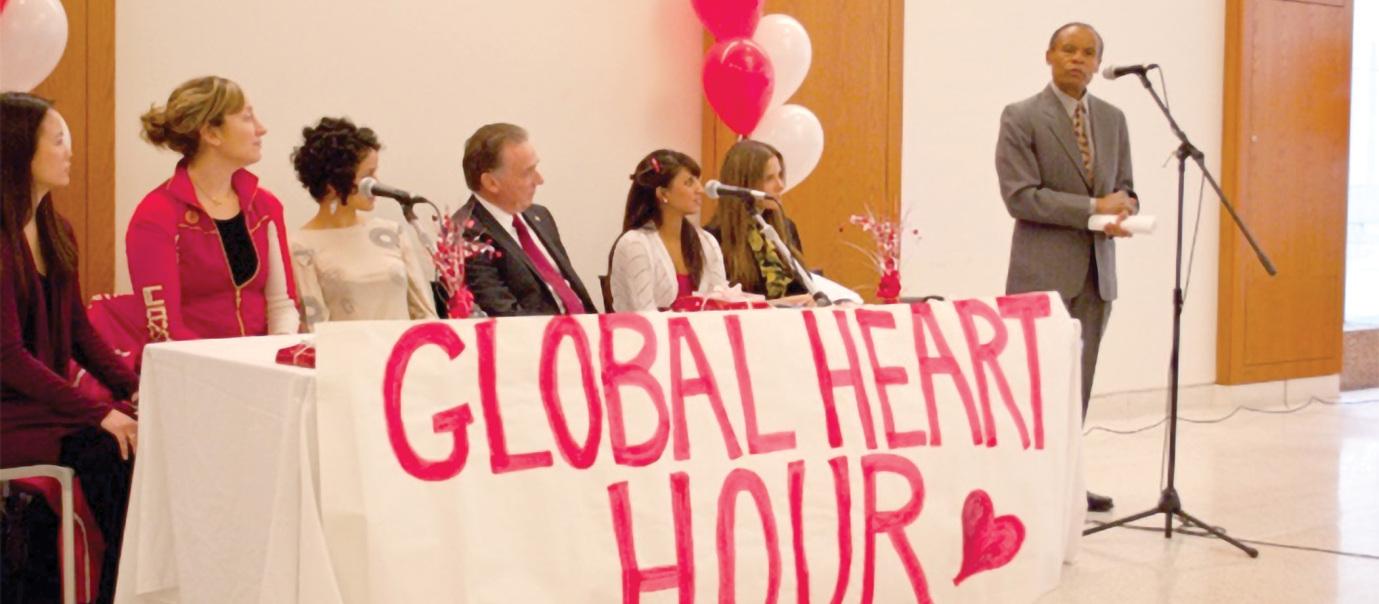
This is why he started Valentine’s Day for Heart Health in 1983 as community outreach, with an inspirational interdisciplinary team
at the Scarborough General Hospital, running for over 25 years, and why he hopes everyone would join him in this, here and globally. The team included his daughter, Toronto cardiologist Dr Sherryn Rambihar; Toronto paediatric cardiologist Dr Joe Jagdeo, who grew up in Guyana and attended Queen’s College; and many other health professionals. Together with this team, Dr Rambihar extended this concept beyond heart health to a Global Heart concept,
at a Valentine’s Day for Heart
TO PAGE VII
By Shaniya Harding
AS roses and romantic dinners take centre stage for Valentine’s Day weekend, counselling psychologist Raiza Khan is encouraging couples to look beyond the surface of love and focus on the foundation beneath it. In a candid conversation with Pepperpot Magazine, Khan shared insights drawn from nearly a decade of practice, working with hundreds of clients navigating relationship challenges, family wounds, anxiety and depression. Khan says that the majority of the clients she sees, up to 65 per cent, seek help for romantic-relationship issues. When family dynamics are added to the equation, that
number climbs even higher.
According to her, many of the struggles couples face in adulthood can be traced back to childhood experiences, attachment styles, and a lack of healthy boundaries. From people-pleasing and poor communication to unresolved trauma and mismatched life’s goals, Khan explained that lasting relationships require more than chemistry. They require self-awareness, emotional regulation, and the courage to communicate needs clearly. This Valentine’s Day, her message is simple but powerful: before you can build a healthy partnership, you must first understand and heal yourself. Khan has been in the field of counselling psychology for almost a decade, focusing on
talk therapy and psychotherapy. Her work has been extensive and varied; during her internship in Barbados, she worked at a battered women’s home, where she witnessed first-hand the impact family life can have on individuals. While her current day-to-day practice at Anira Counselling and Psychological Services does not include many cases of this nature, social issues, particularly those in relationships, remain her most common focus.
“Over the years in Guyana, a lot of what I see relates to social issues, relationships, job dissatisfaction, identity, and understanding why people do what they do,” Khan said.


Her approach is person-centred: “I use per - son-centred therapy, cognitive behavioural therapy, and humanistic approaches. I do a lot more clinical work than maybe just a counselling psychologist may.”
Most of Khan’s clients are grappling with romantic relationship issues. When familial challenges are included, the numbers rise even further.
“I would say about 65 per cent of all my clients come for romantic-relationship issues. If we include familial relationships, that goes up to about 70 to 75 per cent,” she stated. This trend highlights how family dynamics shape relationship behaviours and beliefs. This is why Khan emphasises that the first step to a healthy relationship is a healthy you.
“If our foundation is tricky, later romantic relationships can also be complicated or unhealthy. When people say they don’t feel like they know themselves or they don’t trust people, we start to uncover that it is based in childhood and formative years.”
But knowing yourself is just step one. Khan explains that understanding personal habits, likes, and goals is key to forming healthy relationships—not just romantic ones, but every relationship we have.
“One of the first things
people should do before entering a romantic relationship is get to know yourself. You can only present yourself and be loved upon those points if you are authentically showing the best version of yourself.”
She adds that entering a relationship with a false sense of self can create instability.
“Find out who you are so you can find the person that is for you. Knowing yourself is key,” she said.
Boundaries, rules, and expectations are the next most important aspects of a relationship. But more important than simply having them is discussing and setting them together. Without collaboration, unrealistic expectations can develop, leading to conflicts when unspoken needs are unmet.
“Learn boundaries, rules, and expectations. People say, ‘He or she is supposed to know.’ How are they supposed to know? Did you convey that at the beginning of the relationship? If not, how were they supposed to know?”
Building a healthy relationship also requires understanding the other person’s long-term goals. Khan emphasises that while compatibility, shared interests, and boundaries are vital, aligning life’s goals is a defining factor. “Once you have invested
time in someone, you should be able to say, ‘I like where this is going. This is where I see my life in a year or two. How do you feel about that?’ It’s hard to be with someone if you don’t have similar values. Knowing your convictions and standards helps you dodge people who are not for you. Life goals are important. You cannot want to stay in Guyana and your partner wants to live abroad. Those things matter.”
While she cannot ensure the perfect relationship, Khan says stable, supportive partnerships are vital, not just for romance, but for overall mental health.
“People come for anxiety, depression, divorce, and transitional issues. But once someone is coming for depression, it is not just a biochemical feature. People are coming with depressive feelings because life kind of sucks. Your job, you are not happy with it. Bills are due. Your relationship is not supportive. You don’t feel bonded with anybody.”
According to Khan, the simplest way to gauge if a relationship is healthy is to consider how it makes you feel.
“If someone does not bring you calm, comfort, support, or make you feel heard, that might not be the relationship for you.”
By Shaniya Harding
GUYANESE music producer and artiste Kinx Milliyon, real name Shamar Grant, is a 28-year-old multi-genre producer from Meadowbrook, now taking a bold step into the world of soca just in time for Mashramani celebrations. Known for his innovative electronic dance music (EDM) productions that blend dance, afro, reggae, and folk influences, Grant has spent years building a reputation as a mixer, master, and engineer, creating beats that resonate both locally and online.
While EDM has long been his first love, he is now exploring soca for the first time, fusing it with his signature electronic sound to create high-energy tracks designed to get listeners moving. His latest single, Jump Di Fence, combines the risers, claps, and chants of EDM with traditional soca rhythms, reflecting his commitment to crafting music that is both vi-
brant and modern. Grant says his approach is guided by creativity, vibe, and dedication, an ethos that has earned him support from local music stalwarts and a growing fan base. As Mashramani draws near, the producer is poised to bring something fresh to the celebrations, inviting music lovers to experience his unique sound that bridges genres while keeping the party energy alive.
Born and raised amid the vibrancy of Meadowbrook, Grant says music has always been a part of him. Reminiscing about his childhood, he recalls tapping his foot to music and singing along with his family for as long as he can remember. He began his career at just 18, building a foundation alongside other local music creatives and drawing inspiration from the legacy of talented producers in his community. His first real step into the limelight came as a teenager, when he secured his first placement on a show, eventually getting the opportunity to DJ at a major
event.
“I had my first placement with a guy, and the feeling that I got, I was like, yeah, I would like to experience this every day. I think this is the field I really want to be part of. This is something that I really want to do. I was probably like 18, 19,” Grant recalled.
That feeling never left him and marked the birth of a successful music production career, earning Grant a place among Guyana’s best-known music creatives. While he has collaborated with big names in the industry and even crafted his own musical genre, Grant says there were challenges along the way. The biggest challenge, he told Pepperpot Magazine, was getting placements and traction as a newcomer.
“The most challenging part was getting placements. It wasn’t getting into the industry because I have a crazy system that supports me. No matter what I put out, they’re there. Getting placements was the hard part.”

The hurdle of placements did not last long, as Grant’s talent was soon recognised with the song Ease Off, a collaboration with Kush, another notable industry name.
“I got my second placement on the radio with the song that me and Kush had, Ease Off. I was producing that song. After I got that placement, seeing people walking on the road playing the music, I was like, this is crazy. They didn’t even know I made this beat. That moment was a peak at the time. After that, I was like, music. Nothing else.”
That beat, the song, and the support it garnered became a defining factor in making music not only his career, but also his passion.
“That was when I felt like now I am a professional. I have reached that standard. I am sure this is what I’m going to do for the rest of my life.” Since then, Grant has made a name for himself with his unique sound. As a DJ, mix master, and sound engineer, he has even created a new genre, fanto, a blend of the well-known sounds of shanto and folk music.
Grant has what many call a unique style, blending elements of EDM and traditional Caribbean sounds. This blending requires an equally unique creative process. Talking about how he turns a sound in his head into a track played on the radio, Grant says: “It could be a morning where I just wake up, open my laptop, and do something crazy. Or I have an idea where I hum melodies into my phone and transfer that over to the software. It is just a vibe. If the vibe is right, the vibe is right. I do not try to force being creative. If I force being creative, it just does not sound good.”
He adds that his music style, unique to him, is a blend of sounds:
“I’m a multi-genre producer, but the main focus is EDM. I mainly blend dance, afro, reggae, anything that sounds good to my ear, with EDM to make it a new sound, a modern house-type

of sound.” Grant’s love of EDM began in high school. After being introduced to the genre as a young teen, he taught himself to create bold, energetic EDM sounds.
“I first got introduced to EDM through my real good brother. From what I heard, I really wanted to know how to make it, so I tried to recreate the sound. I spent two months locked in my room, watching YouTube tutorials, watching shows, and just eating. That was my routine. I made sure I learned how to make EDM.”
Alongside EDM, Grant has mastered other genres, though EDM remains his first love. In his early career, he often tailored beats to suit popular demand, producing dancehall and hip-hop tracks to gain placements.
“In the early years, I was trying to fit in. I used to make beats tailored to what people like because placement is
something that I wanted. But my first true love was EDM.”
This year, Grant returns to his first love with his newest song Jump Di Fence, made in collaboration with Change The Artist. The track blends Caribbean soca rhythms with high-energy EDM elements.
“This is the first time ever making anything soca-related. Soca blended with EDM. Added elements like the risers, the claps, the build-ups, the chanting. Those are the EDM elements to the song. Everything else is purely soca,” Grant explained.
“I make high-energy music. I love vibes. I don’t like to sit down too long. I love high energy, and that is this song.”
While he hopes the track will feature in this year’s
By
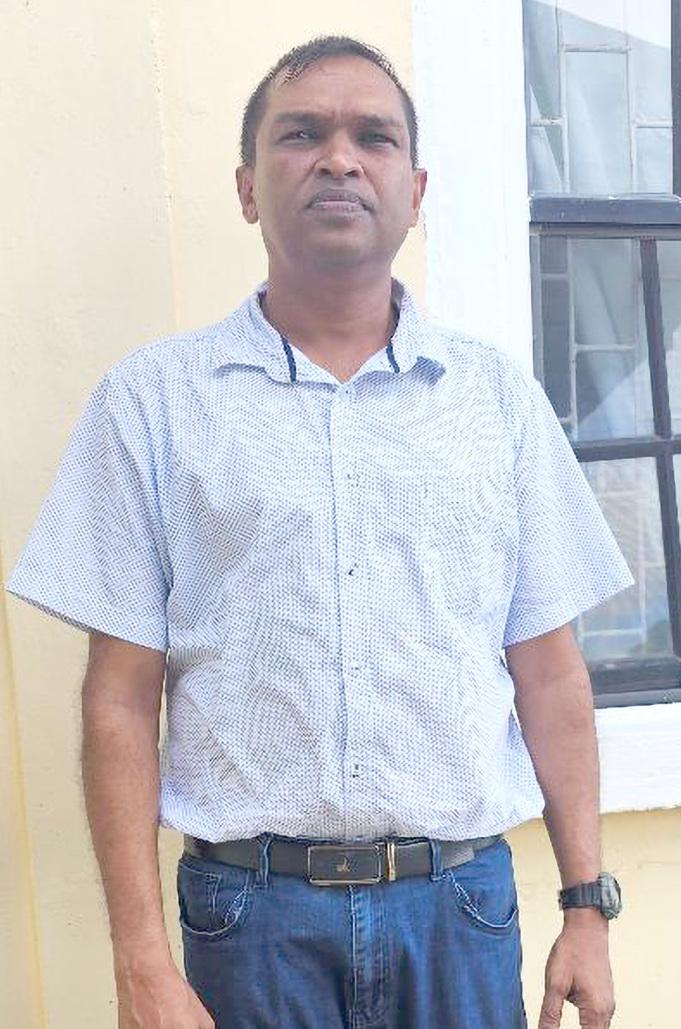
RAJENDRA Khemraj, Overseer of the Number 52 to 63 Neighbourhood Democratic Council (NDC), told Pepperpot Magazine that over the past years, the Council has engaged the community in various aspects, including interpersonal relations and enhancement projects.
During a recent sit-down interview, Khemraj candidly stated that they have embarked on a community enhancement project in collaboration with the National Drainage and Irrigation Authority (NDIA) using a mini excavator to desilt drains, trenches, and canals within their catchment areas.
He also explained that they have responsibilities to clean the Number 63 Beach and Park, and that they have employed pathway workers within the NDC who work 5 days per week.
Khemraj stated that the cleaning exercise targets all parapets and walkways within the #52 to #63 road reserves and streets daily.
The Overseer explained that they have divided the pathway workers into three groups to be fully effective. But their challenge lies in
the lack of reliable workers, since some do not show up on the days they are supposed to work, and mostly women do the work; there is a no-
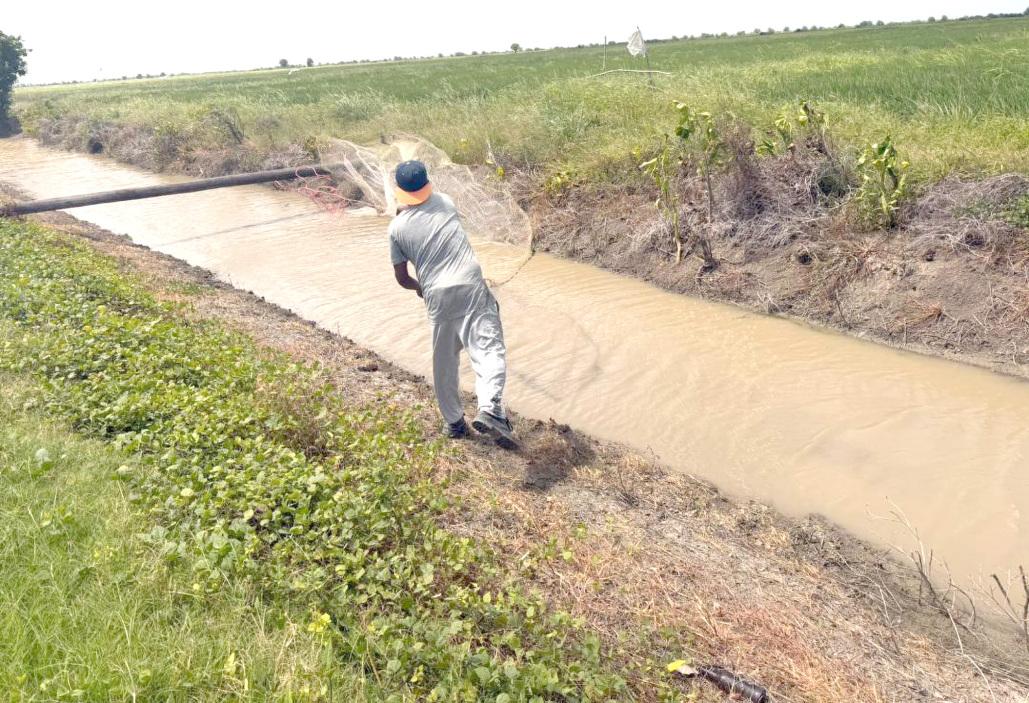
houses owned by people overseas, which are overgrown with bushes, among other things.
Khemraj related that they have no contact with the owners of these properties, yet they have to fulfil their mandate in cleaning those lots since it affects the neighbours.
table scarcity of men in the NDC workforce.
He noted that, in batches, pathway workers weed the house lots of abandoned

“They do not pay rates and taxes, and there are no contact numbers for them, so the NDC would go ahead and clean it anyway, because it affects the neighbours with snakes, bees, and insects that infest the homes of others. Fees are attached, so when you come to pay rates and taxes, you also have to pay that fee too, but no one is paying for that service at all,” he said.
He disclosed that the collection of rates and taxes is poor because people are not paying, especially those who own local properties and live abroad.
Khemraj added that close to 50 per cent of those not paying rates and taxes reside overseas, and that they have accumulated about $40M in arrears.
Khemraj told Pepperpot Magazine that the NDC would normally pick up garbage for free within #52 to #63 villages every Monday and Tuesday.
But there are setbacks
with the workers; some of them do not show up for work on the days they are scheduled, so they would have to extend that time to Wednesdays and Thursdays as well for garbage collection.
He pointed out that within #52 to #63 they have a population of about 4,500 locals, many of whom are farmers, fishermen, entrepreneurs, business owners, among others, who hold regular jobs.
Khemraj disclosed that the NDC encompasses 13 villages from #52 to #63.
He explained that the area is better managed than before. At first, it was #52 to #73, one of the largest NDCs in the country.
But they have simplified it, making it smaller due to rice cultivation. It had three NDCs: #52 to #58, #59 to #66, and #66 to #74. They have since split it up, making it easier to manage now, he said.
The Overseer added that they have a total of 48 pathway workers in three groups that clean the #63 Beach/ Park, abandoned and overgrown house lots, parapets and reserves, and clean within the community on a daily basis.
“We still have to provide the equipment with gloves, masks, detergents, etc. In addition, we have to also do
vector control services and education via house-to-house visits, and conduct scheduled fogging exercises in villages,” he said.
Khemraj told Pepperpot Magazine that they do walkabouts from #52 to #63 villages as often as they can to listen to the concerns of residents and try to assist in a timely manner to foster good relations.
In addition, he noted that they also have quarterly meetings with locals to address concerns and complaints. Khemraj revealed that so far, they have received assistance from the ministry and the region collectively in the form of a $30M subvention last year.
He reported that they utilised the money to custom-make a scrape box attached to the NDC tractor to clean the #63 Beach/Park, constructed sheds at all cemeteries, built a shed at the NDC compound for the parking of vehicles of staff, and carried out repairs to garbage trucks and tractors which are used to pick up refuse for the NDC.
Khemraj stated that for this year’s subvention, they plan to purchase weeder machines to de-weed all school, park, and government compounds in the #52 to #63 villages, as part of their proposal.

By Michel Outridge
ONE of the first major motion picture productions in Guyana in more than 50 years, Secrets in the Rupununi, written and produced by a Guyanese and filmed in Guyana, will soon take centre stage both locally and overseas.
A Bollywood–Hollywood Motion Picture Production! Guyabai Media Inc. (Guyana), in co-operation with Kalingo Inc., USA, and Alliance Studios, USA, presents Secrets in the Rupununi.
Secrets in the Rupununi, written by Guyanese author Geeta Autar-Sirjoo, is a sweeping love story and drama set against the breath-

taking landscapes of the Rupununi.
The first major feature film production in Guyana in over 50 years. This is a Guyanese film production.
The production is scheduled to begin in May/June 2026, with casting anticipated for March/April 2026.
The production team consists of Mohamed F Khan, Executive Producer, and Ed Ahmad, Co-Executive Producer.
The executive production team consists of Mohamed F Khan, Executive Producer and Founder of Kalingo TV, and Ed Ahmad, Guyanese businessman and entrepreneur.
Together, they have joined forces to help


build and elevate Guyana’s and the wider Caribbean’s movie industries.
Mohamed F Khan, Executive Producer of Secrets in the Rupununi, expressed his excitement in partnering with Ed Ahmad to launch this production, along with a slate of additional film projects in Guyana.
Khan stated that he is proud of the worldclass production team assembled for this film,


bringing together extensive experience from both Hollywood and Bollywood.
The goal is to deliver a feature film that meets the highest international production standards, impressing critics and audiences alike.
The team will work closely with local talent and production crews to promote sustainable growth of film and creative industries in Guyana and the Caribbean.
Mr Khan encourages all relevant film academies in Guyana to contact their offices in Guyana to discuss strategic partnerships and collaborative support for the successful production of this film. He also offers support TURN TO PAGE XV
2005. This was just after the devastating South Asian tsunami of December 2004 that took 250,000 lives, one of the worst natural disasters ever.
This idea is described in his book Tsunami Chaos Global Heart: Using Complexity Science to Rethink and Make a Better World, available free online by searching the title, with sections on preventing heart disease and on chaos, complexity, and complex systems in medicine and health.
Global Heart was also launched at the University of Toronto Medical School by his daughter Dr Vanessa Rambihar, a Toronto family doctor and a U of T medical student at the time, who volunteered in Sri Lanka for a month soon after the tsuna-
mi. Also instrumental in this initiative was U of T medical school student adviser Diana Alli D’Souza, a community activist and honorary Guyanese who lived and worked in Guyana, and who was featured in a recent Guyana Chronicle Pepperpot magazine article for one of many awards she received for her community work.
Dr Rambihar is part of the continuing effort by many to improve the health and heart health of Guyanese at home and abroad. He gave a well-received talk in Guyana in March 2025 on heart health, along with two of his daughters, cardiologist Dr Sherryn Rambihar and physiatrist and sports medicine specialist Dr Nadira Rambihar. The conference was opened by Minister of
Health, Dr Frank Anthony, with speakers from Guyana, including Dr Gaitri Satram, Dr Karishma Jeeboo, and Tarlika Persaud, manager of conference sponsor Chirosyn Inc.
Dr Rambihar also gave a Zoom talk for the Indo-Caribbean Cultural Centre (ICCC) during Christmas 2025 on Health and Wellness During the Holidays, sharing a virtual podium with Dr M Raizada (US), Dr M Bahall (Trinidad and Tobago), and Dr Sawan Jagnarain, a well-known doctor and public health advocate in Guyana.
Dr Rambihar followed this with another Zoom talk for the ICCC to start off 2026 on heart health and diabetes in general, and across the Indian diaspora, together

with Dr Mahendra Carpen, a Toronto-trained and wellknown Guyanese cardiologist and electrophysiologist and adviser to the President of Guyana, as well as cardiologists Dr V Kapadia from Fiji and Australia, and Dr P Narayan from Fiji and New Zealand.
They discussed the global trend of increasing heart disease, diabetes, and other illnesses and risks, including mental health, smoking, vaping, alcohol, substance abuse, and increasing premature heart disease, heart attacks, and diabetes in Guyanese, especially among Indians, and hypertension and diabetes are also increasing in other ethnic groups.
The reasons for these were discussed, including biological, social, environ-
mental, commercial, and other determinants, such as increasing obesity, fast-food restaurants, screen time with reduced physical activity, and more, which are predicted to become even more challenging with rapid development in Guyana.
Recommendations for changing this and creating health across Guyana, all ethnic groups, and globally were discussed, requiring change from many directions, levels, and approaches, with a holistic and complex systems approach, in addition to community and individual change.
The speakers all recognised the tremendous efforts being made locally and globally for health, including awareness and prevention programmes,
vaccinations, community strategies for creating health, such as more physical activity, healthy eating, and school programmes for fitness and health, the opening of hospitals, the use of technology and AI, volunteerism, and much more.
In the spirit of this transformational effort in Guyana and the world, to create health and a culture of health as part of Guyana’s development, Dr Rambihar invites everyone, on Valentine’s Day and after, here and globally, to think heart and think health.
And to take it even further, to think Global Heart—caring for each other, humanity, and the planet, and what that can achieve—but that’s a story for another day.


THE Monarch Butterfly is extraordinarily unique amongst its species. Unlike any other kind of butterfly, it takes on the arduous task of a two-way migration every single year. During the colder months, it travels about 3,000 miles south to hibernate. There, they will remain in clusters throughout the winter period.
Then, when the warmer months arrive, they once again begin their journey towards the north. Only this time, they will not com -
plete the entire journey back home. Instead, they will stop at different points to lay eggs on milkweed plants, after which they will eventually die. The eggs will then hatch and grow into adult butterflies who will complete the journey on behalf

of their mothers. In a sense, it is a sort of ancestral relay race taken up by each new generation of butterflies. Strangely, the newly hatched butterflies seem to have a biological compass built in that guides them along the remaining length of the journey.
It is remarkable to think that a creature as small and delicate as a butterfly could be born with such an enormous task. Yet it is quite true that each is the key to the survival of their individual lineages. Collectively, their successful achievement of the journey is also the key to the survival of their species as a whole.
Human beings are rarely born with such a biological map that directs them along a sacred journey upon which the survival of their bloodline depends. In fact, it may often seem that we spend the beginning of our lives feeling rather lost and confused.
However, we are all born with some natural inclinations and skills that can inform us on who we are capable of becoming. For the butterflies, the directions for their lives are given in the form of a map. For us, it is presented in a tightly wrapped gift. It thus be -
comes our responsibility to unravel it and discover the answers to the questions about our identities.
Whether we realise it or not, every human being is born with a gift. Sometimes, these gifts are recognised as traditional talents such as singing, dancing, painting, or playing a sport. Other times, the gift can be something as inconspicuous as the ability to speak charismatically, or to connect with others and make them feel seen.
While the more obvious talents are usually detected at a young age and adequately fostered, many hidden gifts are not as easily noticed or nurtured.
This, in turn, means that so many people who are genuinely gifted may live their entire lives believing that they have nothing to offer to the world.
Of course, there are also those who are aware of the gifts that they have, but do not take the time to practise and nurture them. This would result in them losing the talents that they have before they have a chance to make an impact on the world with them.
Our journeys are rarely laid out before us like a
well-lit path. Unfortunately for us, we are not as lucky as the well-informed Monarch butterflies. For many people, the journeys are filled with obstacles and unjust hindrances that they are destined to overcome.
However, we must not ever mistake ourselves into believing that we do not have a journey to make at all – that we have already reached our final destination, with nowhere else to go. The responsibility for unravelling the mystery of our individual journeys lies in our own hands, and it often begins with discovering our strengths and nurturing them.
If you ever find yourself believing you have no gifts or talents, it simply means you have not yet discovered them. It is never too late to try new things or discover new facets of yourself. Most importantly, it is never too late to develop the parts of yourself that have been hidden for a long time.
There is potential hidden within you, waiting for you to unwrap it and celebrate it. All it takes for you to find it is the hope that you can be a better version of yourself tomorrow than you are today.


WE all have problems, but not all of us have the right solutions. Too often, we continue in patterns that have given rise to the challenges we face, but sometimes we can take proactive measures to avoid getting into these negative situations. The more you can reach solutions for the problems that plague you, the easier you will find it to remain calm in difficult situations.
Section 1. Working persons
People who work will face many problems, even those who are properly prepared.
All employees must know that even though they will face numerous problems, they must find ways to remain calm. When employees do not address their problems, they can cause more harm to themselves and others.
Those who are employed will be reporting to someone. Sometimes, even when both intend to have a good conversation, something said or done can make one person uneasy with the other. As mature employees, they must make every effort to prevent their situation from escalating and find ways to remain calm.
All employees must make it their practice to be at work on or before the required time. When employees are late, it makes customers behave unpleasantly, which can create many distractions.
Each employee, whether junior or senior, must take responsibility for their actions.
More employees must seek to remain calm rather than creating problems for others.
Section 2. Travelling
From time to time, people will have to move from one location to another. Travelling can be an enjoyable thing for some people. However, when some people have to travel, they encounter many problems.
On some public transportation, drivers play songs to help passengers relax. However, there are other drivers whose choice of songs makes passengers uncomfortable throughout their journey and for the rest of the week.
Some people who use public transportation have a few drivers whom they will use frequently. These drivers understand their passengers and often do things to make them feel relaxed, including selecting songs that motivate them and driving within the speed limit.
Most people who want to reach their destination on time must leave home early. Those who leave home early can avoid rush-hour traffic and any potential accidents. Travelling on time requires some discipline from the driver and the passengers. Those people who travel on time often have a calm day.
Section 3. Within your family
Family members must try to maintain peace with one another. Each family member needs the others.
In some families, if each family member contributes to the household activities, then
there will be peace within the family. While everyone wants to have a clean house and food on the table, they must be prepared to make their own contributions.
Families may have their conflicts, as each person has their own value systems. However, family members must seek to resolve their problems as they live as one.
When family members are having problems, they often need someone to assist them. In some families, there may be one or two family members who motivate the others. Those who need help can go to them for assistance.
For family members who need help, they must show interest and be respectful when asking for help. When people need help, they must be willing to work with those who can guide them.
Section 4. Religious institutions
Those who embrace religion have often seen that whenever they are having difficult days, they can seek divine help. Some people will worship or pray to have a calm day.
Within many religious institutions, there are teachings for the followers that guide them in remaining calm in troubling times. Even religious leaders and followers will have troubling times, but when they seek the Creator’s help, they often have a blessed season.
Remaining calm is not always about human strength or intelligence. Those who embrace religion know they are successful today because

of the divine assistance they have received, especially during troubling times.
Section 5. Personal positive responses to remain calm
Each individual must be intentional about remaining calm. They must make it their duty to remain calm despite everything that is happening. Too many people are dying
from stress-related problems, and many of the problems people have to deal with can be avoided or reduced.
One reason some people get themselves in trouble is that they say too much without giving enough thought to what they will say. When people say less and think more, they can avoid some of the problems that arise when uninformed people choose to speak. Everyone needs friends. However, they must choose to build good friendships. It is through these friendships that many people find answers to their problems. People who are open to ideas and suggestions will create opportunities to overcome their problems. Many people have positive TURN TO PAGE XIII


OUR journey begins with the Roman quest to master the new worlds of the Khemetic realms (Egypt, Nubia and Kush), and Rome had sent its best, knowing not what they would confront.
Emperor Augustus was confronted at one stage by the Ethiopians, who had raided towns that Rome had regained.
The Romans then entered the
borders of KUSH, but witnessing this, the Kushites invited the Romans to give audience before the Kandake [queen] – ‘Amanishakheto’, to question whether there would be war or common interests between Rome and KUSH.
Records have not been discovered to state that statues of Kushite royalty or gods were included; however, Maximinus
Daia [Rome’s Caesar of the Orient 305–313] had established good relations with the KUSHITES.
The Kandake did respond to Rome’s request for an amicable relationship, with both kingdoms benefitting.
Rome’s request included Meroitic participation in the ISIS mystery at Philae. Thus, the rituals that enveloped the gods of that
time embodied collaboration rather than outright war.
In our time, in 1806, Napoleon Bonaparte took the Quadriga from the Brandenburg Gate in BERLIN. This act followed a continuous grievance into WWI and WWII. What is obvious is that art, when its expression embodies the character of a nation, can evolve into an influential being of its own worth,

sometimes compelling.
Today, there have been humane acts of returning works of art taken during the age of colonisation to African nations, fostering a glow of new understanding upon glancing back at the past and bridging the future through a new dialogue and a new vision to consider.
I have covered over the past years the phenomenon of art, even in the eyes of an artist turned dictator: the art collected for destruction by Adolf Hitler, which he and his followers determined as inferior art, and thus, of inferior people, during his reign.
Yet when the ‘Third Reich’ folded, much later, these paintings, in our time, were found not destroyed as was intended and believed to have perished; they were concealed in so-called respectable locations, intact.
Thus, words are spoken to sustain perspectives of vexations, whether good or evil, but founded on the fallacies of the day, of fictions to suffice greater and more grim indulgences.
If you have read this article and are awakened to the functions of human interaction to the value of the painted, sculpted or written arts, use your search engines after you have interrogated the library on the quarrels of stolen arts recorded, especially from the tombs of the royal dead of the ancient world, particularly the African and South American realms, and you will be much wiser when you explore and see our world and those value systems, and why the past is also important.
This article revolves around the concept of rising beyond the mundane to find common purposes with one’s talents—talents that can enable us to navigate the changes of the times.







THERE is sometimes a misconception that people in helping professions do not require the same assistance they provide. We hardly consider doctors who require medical care and assistance, or social workers who require social services themselves. It is as if we see these helping professionals only by their titles. We view them as a separate entity—away from their humanity. That view can be very damaging for these professionals and for our society.
You might be wondering, well, what is stopping these helping professionals from accessing the same services that they often provide to others? There are often systemic barriers or social deterrents that prevent the use of services.
The issue of confidentiality always surfaces, limited access to resources remains a concern, and there is even a stigma attached to helping professionals seeking access to certain services. It is time we tell a different story. It is time we change this ugly narrative.
Quite often, there are no laws or policies that prevent helping professionals from accessing services. In fact, if there were such laws, I
would be appalled, as they constitute a clear violation of their human rights.
However, it can be quite difficult to access certain services. In the case of social services, social workers might avoid accessing them out of fear of being judged by their peers.
There can also be an issue of how to access them and what to do. Sometimes, the rules for accessing these services as a helping professional are not clear-cut.
Supervisors or employers might also argue informally against access to certain services—even if they are available to everyone. That by itself can be a deterrent. In the case of mental health providers, what happens when all of the service providers are your colleagues, and you do not feel comfortable sharing certain details with them?
As an educator, an advocate, a nurse, a psychologist, and any other helping professional, one is often expected to be very resilient. It might even be “out of character” for them not to be.
I believe this is unfair and unjust. I want to assure all helping professionals reading this that asking for help is not a sign of weakness, nor should it be used against
you. The reality is that many helpers suffer quietly. As someone who is considered a professional helper myself, I can attest to this. It is not usually a conversation starter; however, these issues persist in many fields. It is time we develop a new approach that is sustainable and healthy for all. I believe helpers receiving the help they need should be considered an ethical priority. The helping professionals themselves should be aware that they need help, but it is also important for institutions to provide pathways that ultimately lead to recovery and care.
I wrote in the past about the detrimental effects of heavy caseloads, unrealistic expectations, and toxic workplace conditions. These issues should be addressed simultaneously as well.
I think it’s important we, as helpers, resist the urge to always be a “saviour”. I believe it’s imperative we remember that before we are helpers, we are human beings. No matter how skilled, strong, or experienced you are, there might come a time when you need the same services you offer. The question is, will you be courageous enough to access them?
information and ideas that will be useful to those facing problems. Not everyone has to go through all of the challenges in life to find solutions.
Every storm has a beginning and an end. While no one knows when the end of a storm will come, they must be confident that if they can remain calm during the time of the storm, they may soon have victories.
When storms come, they make people stronger and help them become overcomers.
For everyone going through a storm, rest assured that it will be over. No storm is destined to stay forever. However, those who are prepared for the storm will be
able to endure it, since they know it will end and they will continue to accomplish what they set their minds to.
In many boxing matches, one person will have an advantage over their opponent. They sometimes believe that they will bring the fight to an end very soon by landing a Technical Knockout (TKO) against their opponent. However, the opponent may allow their challenger to become tired, and then, when that time comes, the opponent begins to throw punches that may seem simple but can be damaging enough to result in a TKO.
However, what is important is to never give up when many problems confront you. Those people who have
FROM PAGE IX
great success now will indicate that they went through many challenges. On many occasions, they thought of giving up, but they decided against it.
Those who give up may have been near to their victory. Sometimes, it is important to change strategy to win the battle.
For more information about Geary Reid and his books, please use these contact information: Amazon: http://www.amazon.com/author/gearyreid Website: www.reidnlearn. com
Facebook: Reid n Learn Email: info@reidnlearn. com
Mobile #: 592-645-2240





and resource exchange to assist with productions that may be part of their current or future slate.
Immediate plans are also underway to establish production schools and training programmes in Guyana in the coming months.
In addition, the team is planning the first Bollywood film to be produced in Guyana, featuring local Guyanese talent and original Bollywood songs.
Discussions are also under way to remake the classic Guyanese film, Anmol Bandhan, originally produced by Leonard Beharry in 1975. The production schedule is set to begin in March with Casting and Scouting with Prodution planned for May-June and Post-Production to run from July to October (subject to changes).
Mr Khan also emphasised the launch of Kalingo TV, a global streaming platform created to give Guyanese and Caribbean creators easy access to content distribution, helping make film production and content creation in the region more profitable.
Kalingo TV is a worldwide streaming app with a niche focus on Guyana and the Caribbean. Kalingo’s programming will feature live television channels from the Caribbean and around the world, along with an extensive movie library comparable to other major

streaming platforms.
The cinematography team will include a cinematographer from India and an award-winning Canadian cinematographer, ensuring Guyana is showcased on film like never before.

Actors and actresses will be cast from Guyana, the Caribbean, and the United States, with the hero’s role to be played by a wellknown Guyanese actor. Casting calls will be announced soon in Guyana.
For More Information: Guyabai Media Inc., Guyana
Tel: (+592) 698-2591
Email: contact@guybaimedia.com
USA Contact:
Mohamed F. Khan
Email: mo@kalingo.tv
Tel/WhatsApp: +1 (561) 987–3979
MOVIE SYNOPSIS
Returning to the Rupununi at first fills Reuben and Mariam with a deep sense of renewal.
The wide, open savannahs, the familiar hush of dusk, and the comforting rhythm of village life feel like healing.
But beneath the surface, a quiet ache begins to grow between them.
Meet the Direction and Production Team:
Mohamed F. Khan, Executive Producer
Ed Ahmad, Co-Executive Producer
Suneel Sawant, Production Advisor
Carl Weyant, Director, Alliance Studios, Michigan, USA
Bill Horneck, Assistant Director, Emmy®

Award-winning producer, filmmaker, and Chief Creative Officer at Minds I No Limits Corp., Florida, USA
Chandra Shekar Dosala, Assistant Director, India
Josh Lopez, Production Manager
Mahadeo Shivraj, Actor and Production Advisor, Guyana
Writer: Geeta Autar-Sirjoo









“SUCH a long time, it has been,” Alvin mused as the plane started its descent at the Cheddi Jagan Airport in Guyana, South America.
“Home again,” he said, with a happy thought and sense of relief.
He had left home ten years ago, at 18, to study for a Master’s degree in Architecture in Europe and had planned to return home after completing his studies, but instead he stayed for a further 2 years, working to gain some experience. The real reason for his change of plans, though, was that he didn’t want to return home just yet, something he kept to himself.
His mother and father’s marriage had developed problems whilst he was at high school, studying for his ‘A Levels’, and it kept getting worse. The deep tensions in the home and verbal conflicts his young mind had borne reached a point where he couldn’t take much more of it; leaving to study overseas then was a reprieve from it all.
He had hoped things would get better by the time he was ready to return, but close to that time, his parents’ marriage crashed, culminating in a bitter divorce that created an enmity between the mother’s and father’s side of the family. He had felt his mind wasn’t strong enough to deal with that problem, and he enlisted in the Navy, taking comfort in the fact that his mother was in the good hands of his elder brother and sister, who were mentally stronger. He had written letters regularly to her, detailing his life as a soldier and how good the training and duties were for him,
so she wouldn’t worry. His father, he wasn’t so much in contact with, but often he had thought of him.
Today, Alvin had become a mature young man, tall, brave, and strong, with a cool, suave personality, not to mention his classic good looks. His mother cried with joy and, hugging him, she said, “I am so happy to see you again, son, and I am so proud of you.”
She did not speak of his father, and he did not ask to avoid reopening wounds. Alvin decided he would speak to his father later, since he had been informed his father was on a business trip in Panama, so he spent that week reuniting with family and friends. So much had changed; many of his friends had gotten married, and he could find none of his old girlfriends.
“I guess we will have to find you a new girlfriend,” his old high school buddy, Kevin, who had been so shy, said with confidence.
“Nah man, I’m good,” Alvin said and looked at his old friend, bemused. “Since when have you become so brave with girls?”
They were standing by the water coconut vendor at Bourda Market, enjoying the cool, delicious water, something they had done regularly as schoolboys, and Kevin answered a bit ruefully,
“Since my best friend left, I had to find my own way in life.”
That hit Alvin because he hadn’t realised his friend would have needed his support so much, and he said with regret, “I’m sorry, bro. Staying away so long hadn’t been in my plans.”
“I understand,” Kevin TURN TO PAGE XIX
said. “That’s life.”
“I have a lot to make up for,” Alvin said.
That night, lying sleepless in bed, he thought of his father, who had been blamed for all the problems in the family because of his infidelity, but Alvin couldn’t find himself hating him. He had managed to keep an open mind because his father, at one time, had been his hero, a smart and astute businessman with a strong personality.
“We somehow lost that bond,” Alvin said with deep regret.
The scattered, broken pieces would be hard to find and piece back together, so maybe something new could begin.
His father, his sister told him, had remarried and when Alvin questioned her, his sister told him candidly, “You’ll see when you visit him.”
He would be seeing him on Sunday, so Saturday night was good to go out with Kevin and a couple of friends. A great night it was for Alvin, experiencing Georgetown’s nightlife at different entertainment spots – Hard Rock Café, Giftland Strip, Bistro and winding it down at Palm Court at 2:00 am. The party was in full swing and, as the second round of drinks came around, three beautiful women walked in, sass, style and breathtakingly chic.
At the different spots that night, Alvin had seen and spoken to some astoundingly beautiful girls, but only now was his interest caught by one. She was wearing a chic little black dress that accentuated her slim, stunning figure. He looked at her, liking the way she laughed, the light reflecting off her reddish-gold hair, and just as he decided to approach her, three guys walked up, asking the girls to dance.
“Slow,” Kevin teased him.
“It happens,” Alvin said casually.
He looked back minutes later and saw she had come back alone to the table, and he did not hesitate a second time, approaching her in his usual cool and casual manner.
“Hey, can I join you?”
She looked at him, smiled a little and shook her head.
“I’m here with friends.”
“Can I buy you a drink then?”
Before she could answer, the guy she was dancing with came back, and Alvin saw the smile fade from her face.
She said to him, “You can sit and I’ll have that drink.”
He sat down and signalled the waiter as the guy stopped, stared angrily at him and walked away.
“I guess I’ll sit here and be your bodyguard until your friends return.”
She laughed a little, and after a few drinks, she was ready to dance. She was a wonderful dancer, moving with the flow of the music, elegant and sensuous, but not long after, she left with her friends.
When Alvin woke up later in the day, he lay in bed for a long while, thinking of her, and said quietly, “She’s so beautiful, I wonder if I will see her again.”
He had felt that incredible rush in his heart when he was with her and he wondered, “Is this falling in love?”
That evening, he went to visit his father, who lived in a smaller house with modern luxuries in an upscale area. Alvin was directed to the study where his father stood looking out the bay window. He turned, and father and son stood looking at each other, neither saying a word until Alvin broke the silence.
“It’s good to see you again, Dad.”
His father nodded and, pouring a long shot of whisky, he lifted his glass and said to Alvin, “It’s been a long time, son.”
He finished the drink and, walking towards Alvin, he held him by the shoulders and said, his voice a little unsteady, “You’ve grown into a man. I am so proud of you.”
Alvin nodded, his emotions a bit shaken, and they sat and talked for a while, then his father said,
“I’m sure you heard I remarried.”
“Yes…” Alvin answered.
“Come,” he said with a pleased smile, “let me introduce you to her.”
He stood at the bottom of the stairs and called for his new wife, but Alvin did not look up the stairs until his father said, “Here she comes, my new bride.”
Alvin turned and looked at the young woman as she came down the stairs, beautiful, simple and yet stunning in a royal blue dress. The shock he felt at seeing her left him speechless.
His father’s bride was the young woman he had met and was dancing with last night.
The woman his heart spoke for.




ELTONSBRODY (Secker and Warburg, 1960) is the eleventh novel by the distinguished Guyanese writer Edgar Mittelholzer. It stands as a literary horror classic in the vein of his better-known ghost story, My Bones and My Flute, a haunting and deeply unsettling tale.
In that earlier novel, suspense is heightened by an oppressive Gothic atmosphere: creeping shadows, sudden darkness, inexplicable nocturnal sounds, and flute music without a visible flautist. Mittelholzer masterfully compresses these elements within tight parentheses of mystery and dread.
Eltonsbrody is brewed from a similar metemgee of Gothic ingredients. It is a macabre tale. At its centre stands one of Mittelholzer’s most grotesque and unforgettable creations: the death-obsessed Mrs Scaife, a matron saint of morbidity who takes mordant pleasure in the demise of others. She is a chilling presence, a character whose relish for death borders on the devotional.
The novel teems with strange figures, not least among them the unfortunate Malverne, an unapologetic exhibitionist who displays her perfect breasts to nearly everyone she encounters. Malverne serves as maid at Eltonsbrody, a large Barbados house presided over by the aforementioned harridan, Mrs Scaife.
She is the widow of Dr Scaife—repeatedly described as “very ugly”, as though that single trait exhausts his identity. Mrs Scaife rules the house with a malevolent will. She has a son and grandson living in Bridgetown, the capital, though she harbours
no affection for her son. Indeed, she would prefer him dead.
She would prefer many people dead. When death does not arrive naturally, she conspires with a former servant, the sinister Borcham, to hasten its coming. Mrs Scaife has a philosophy of death that is quaint and underlies her violent tendencies.
Mittelholzer employs here a device that served him well in the acerbic and darkly comic Shadow Moves Among Them: the introduction of an English outsider into a Caribbean setting. In Eltonsbrody, that outsider is Woodsley, a painter and tenant of sorts at the house, who recounts the bizarre and increasingly horrifying events he witnesses.
The novel is fiercely suspenseful and, at times, difficult to endure. Blood flows freely; there is a shocking death and a grisly dismemberment. The narrative occasionally veers towards excess, mirroring the extremity of its characters, yet it remains gripping entertainment—rich in mystery and propelled by mounting tension.
Mittelholzer’s descriptions of the natural world are especially vivid. His island landscapes shimmer with metaphoric intensity; the environment feels mesmeric, lush, and faintly menacing. The story moves at breakneck speed towards a conclusion that is both dramatic and satisfying.
Yet an unfortunate aspect of Mittelholzer’s substantial oeuvre cannot be ignored: a palpable Negrophobia which, if expressed by a white writer, would likely be labelled racism. Black characters in TURN TO PAGE XXI
his novels are frequently portrayed as ugly, ignorant, foolish, or—like Malverne in Eltonsbrody—hypersexualised.
This tendency is troubling, particularly given Mittelholzer’s own racial background (though he resisted such designations). In his author biographies, his appearance or heritage is sometimes referenced in ways that seem unnecessary, as though to position him uneasily in relation to blackness itself.
This strain of racial discomfort is accompanied by an incipient colourism that
mars some of his finest work.
Characters are rarely described without reference to race and complexion, markers that in Mittelholzer’s fictional universe often double as indicators of class and worth.
The pattern appears as early as Corentyne Thunder, his first published novel, and becomes especially pronounced in A Morning at the Office. In the opening volume of the Kaywana Trilogy, the suggestion that slave revolts were motivated by a desire for white women is particularly dismaying.


Such moments of black contempt jar the modern reader. Moreover, the satirical “put-downs” often rely on a vocabulary and tonal register aligned with colonial sensibilities.
In this, Mittelholzer occasionally resembles V. S. Naipaul, whose work can
display a similarly uneasy, sometimes scathing, attitude towards blackness—an irony sharpened by their shared colonial inheritances.
Elements of this tendency appear in Eltonsbrody. Dr Scaife’s repeated reduction to “ugliness” diminishes him to a caricature. Malverne,
too, remains insubstantial—a paper-thin figure whose exhibitionism is unexplored and whose purpose seems limited to comic spectacle before she is rendered broken and mute. Such portrayals weaken what is otherwise a compelling Gothic narrative. Despite these flaws, El-
tonsbrody remains a thrilling and fast-paced novel. It is dark, disturbing, and compulsively readable— another testament to Mittelholzer’s formidable storytelling power, even as it reveals the troubling contradictions embedded within his imaginative world.









































Welcome, reading friend. Cultivate decent study habits now. They will further support you sturdily at college and university levels. Consider these useful hints: a) Know how you study best and consciously use it. b) Always aim to understand what you learn; rearrange your study material, question the ideas, and link new ideas with those learned before. c) Sleep well and exercise regularly. d) Utilise useful learning aids, especially study cards. e) Still keep close with your study group(s). Be smart. Love you.
Showing understanding of the matter
On the outskirts of a little town upon a rise of land that swept back from the railway, there was a tiny cottage of white boards, trimmed vivid-
ly with green blinds. To one side of the house there was a garden neatly patterned with plots of growing vegetables, and an arbour for the grapes which ripened late in August. Before the house there were three mighty oaks which sheltered it in their clean and massive shade of summer, and on the other side there was a border of gay flowers. The whole place had an air of tidiness, thrift, and modest comfort.
Every day, a few minutes after two o’clock in the afternoon, the limited express between the two cities passed this spot….
Every day for more than twenty years, as the train had approached this house, the engineer had blown on the whistle, and every day, as soon as she heard the signal, a woman had appeared on the back porch of the little house and waved to him…. The engineer had grown old and grey in service. He
had driven this great train, loaded with its weight of lives, across the land ten thousand times.
His own children had grown up and married, and four times he had seen before him on the tracks the ghastly dot of tragedy converging like a cannon ball to its eclipse of horror of the boiler head – a light spring wagon filled with children, with its clustered rows small stunned faces; a cheap automobile stalled upon the tracks, set with the wooden figures of people paralysed with fear; a battered hobo walking by the rail, too deaf and old to hear the whistle’s warning; and a form flung past his window with a scream – all this the man had seen and known….
(Thomas Wolfe’s “The Far and the Near”)
What the excerpt says:
This excerpt vividly tells a story about a train engineer’s life. Note how its author chooses to write it with
February 15th, 2026
a strong sense of time and place; clues which enable the reader to predict upcoming events and outcomes.
Every day, a few minutes after two o’clock in the afternoon, the limited express …. passed this spot.
With this neat exemplary writing before you reader, try to write your own thoughtout stories with helpful details for your reader to predict where the action is headed.
See how Thomas Wolfe, the writer, used his wide background of experiences to create vivid and realistic descriptions; and to present a deep understanding of the human condition.
Why not use more of your experiences with the people, the community, and the country known to you immediately, and see your writing take on a more enjoyable turn? Check with your diary which should be particularly useful had you

Four be the things I’d be better without: Love, curiosity, freckles, and doubt.
DOROTHY PARKER (1893-1967)
been faithfully recording in it.
Try doing These: Respond to the following questions on the passage to extend your understanding of it. 1. Does the routine of “every day” have a positive effect on your expectations of the story? Tell about its effect on you. 2. Something happens every day a few minutes after two o’clock. What is it? 3. The passage is about the engineer’s daily experience for the last twenty years. Compose a good paragraph about his experience?
THE PASSAGE
Henk flew home that day to tell me. It was June 3, 1945. He ran into the living room and grabbed me. “Miep, Otto Frank is coming back!”
My heart took flight. Deep down I’d always known that he would, that the others would, too. Just then, my eyes caught sight of a figure passing outside our window. My throat closed. I ran outside.
There was Mr. Frank himself, walking toward the door.
We looked at each other. There were no words. He was thin, but he had always been thin. He carried a little bundle. My eyes swam. My heart melted. Suddenly, I was afraid to know more. I didn’t want to know what had happened. I knew I would not ask.
We stood facing each other, speechless. Finally, Frank spoke.
“Miep,” he said quietly. “Miep, Edith is not coming back.”
My throat was pierced. I tried to hide my reaction to his thunderbolt. “Come inside,” I insisted.
He went on. “But I have great hope for Margaret and Anne.”
“Yes. Great hope,” I echoed encouragingly. “Come in.”
He still stood there.
“Miep, I came here because you and Frank are the ones closest to me who are still here.”
(From Miep Gies’ “Anne Frank Remembered”) About the passage: Anne is the daughter of Otto Frank, a war refugee. She recorded her family’s life during their two years of hiding in a secret annex from the Nazis. Otto appeared at the home of Miep Gies, the non-fiction author, during WWII.
What to Do: 1. What is meant by the term ‘non-fiction’? Name two other non-fiction authors. Say what form(s) of writing they use.
2. Follow these points closely to discover how Miep wrote her book: a) Miep uses ‘first person’ narration: My heart took flight. Deep down I’d always known that he would…. (Note the use of ‘My’ and ‘I’.) Look carefully for two more first-person statements and underline them.
b) See how the author’s writing is simply worded. Note how it is geared to a wide readership. Example: “We looked at each other. There were no words. He was thin, but he had always been thin. Find other short sentences running one after the other to demonstrate her strategy of simple wording.
c) Find samples of how grammatically correct and complete the writer allows the sentences of her conversation pieces to be? Note how her characters do not use the vernacular.

IN recent times, the relevance of syphilis has reasserted itself so much that the Government has been giving its prevalence a degree of priority, with reasonable justification, since it is estimated that the prevalence is about 8 percent of the most vulnerable groups.
Since the advent of HIV and later COVID-19, there has been a global tendency to de-emphasise the previous role of syphilis in the gamut of chronic diseases, and Guyana is no exception.
Syphilis is a venereal disease (sexually transmitted) caused by a spiral-shaped germ that can move about like a tadpole. Someone can either acquire the disease or be born with it. The untreated acquired form has three easily recognisable stages:
1. The primary lesion, called ‘the chancre’ or ‘sore’ is usually solitary.
2. The secondary lesions are numerous reddish patches or nodules.
3. The tertiary lesion called gumma (like chancre) is found in the mouth.
On some occasions, patients attend the dental clinic with signs and symptoms depicting the oral phenomenon of an STD (sexually transmitted disease). While gonorrhoea of the throat is sometimes encountered, syphilis is seen more often. It is well established that HIV infection is linked to syphilis as well as tuberculosis. Our experience shows that none of these patients had prior knowledge of the actual cause of their condition at any time.
Ten percent of syphilitic patients manifest ulcers on the lining of the mouth. These correspond to the site of inoculation, where there is a defect in the surface continuity of the skin or mucosa lining. The germs are transferred by direct contact with primary or secondary lesions of an infected individual. The chancre develops about 3 weeks after inoculation and persists for 3 weeks to 2 months.
Syphilis increases the risk of both transmitting and getting infected with HIV by up to five times. Having HIV at the same time can change the symptoms and course of syphilis.In addition, syphilis is an important predictor for becoming HIV infected because it is a marker for behaviours associated with HIV transmission.
While chancres on the genitals are characteristically painless, oral lesions become painful soon after they ulcerate because of contamination by oral fluids and naturally occurring bacteria. Also, certain areas of the person’s neck usually become tender and painful to touch.
The primary lesions occur most often on the lips, tip of the tongue, in the tonsillar region, and on the gums. They start as small red boils which get bigger and eventually ulcerate. The fluid coming from these nodules is extremely infectious; at this point, the disease can easily be transmitted to another person through the so-called French kiss.
Mature chancres measure from 0.5 to 2 centimetres in diameter and have narrow, copper-coloured, slightly raised borders with a reddish-brown base (centre). The lesions are ulcerated over nearly their entire surface, with a base that is shiny and usually clear of rotted material and debris. Chancres occurring on the border of the lips are usually crusted.
When it is initiated during the primary stage of the disease, penicillin injections over a period of seven days will successfully eliminate syphilis in most cases.
The multiple secondary lesions of syphilis appear five to six weeks after the disappearance of the chancres and undergo spontaneous remission within a few weeks, but recurrences may be manifested periodically for months or even years. Sometimes the disease involves the brain, causing madness and death. Children who were born with syphilis
develop teeth with jagged edges and a somewhat pointed shape.
Although a variety of lesions may occur in different parts of the body
during the tertiary stage of untreated syphilis, gumma develops in half of such cases. They are the most common syphilitic lesions seen in the oral cavity.