From Bonasika Creek to building communities across the Caribbean
How education, healthcare and service shaped an entrepreneur’s journey
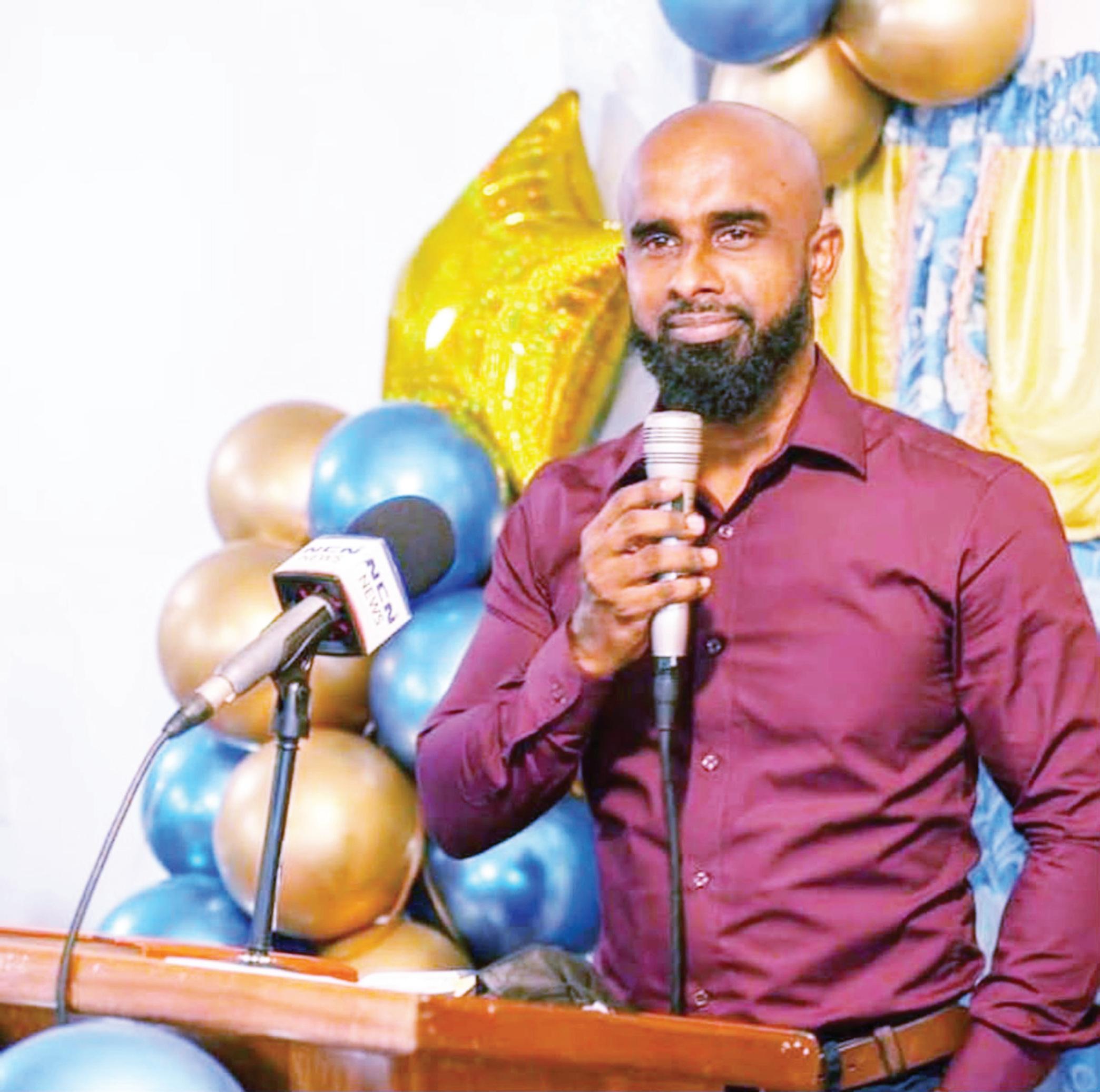

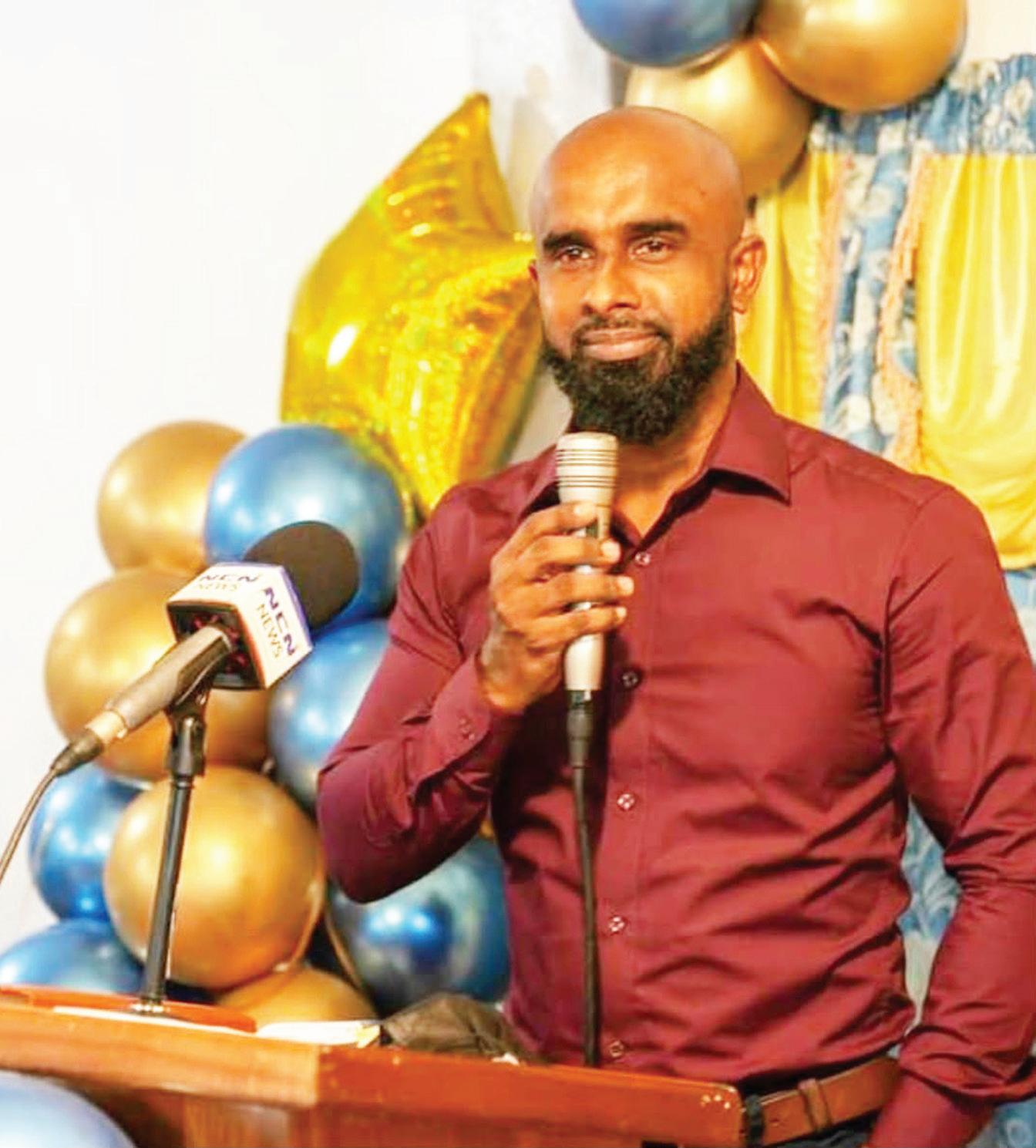
Davendra Rampersaud during an event where he was the motivational speaker
How education, healthcare and service shaped an entrepreneur’s journey
By Michel Outridge
DAVENDRA Rampersaud is living testimony that hard work, sacrifice and dedication prove that giving up is not an option, and that consistency pays off, no matter how long it takes to accomplish goals and make dreams a reality. His journey began with an opportunity
combined with determination. The entrepreneur, microbiologist and community advocate defied the odds of growing up in a riverine village where there wasn’t much to do.
Rampersaud’s journey began in the quiet farming community of Bonasika Creek, Essequibo River, Region Three (Essequibo Islands-West Demerara),
where life was simple, resources were limited and success was never taken for granted.
Growing up in a farming family shaped much of who Rampersaud would become. His parents worked hard to provide for their family and instilled the values of discipline, humility, honesty, perseverance and respect for others.
TURN TO PAGE VI


-
By Shaniya Harding
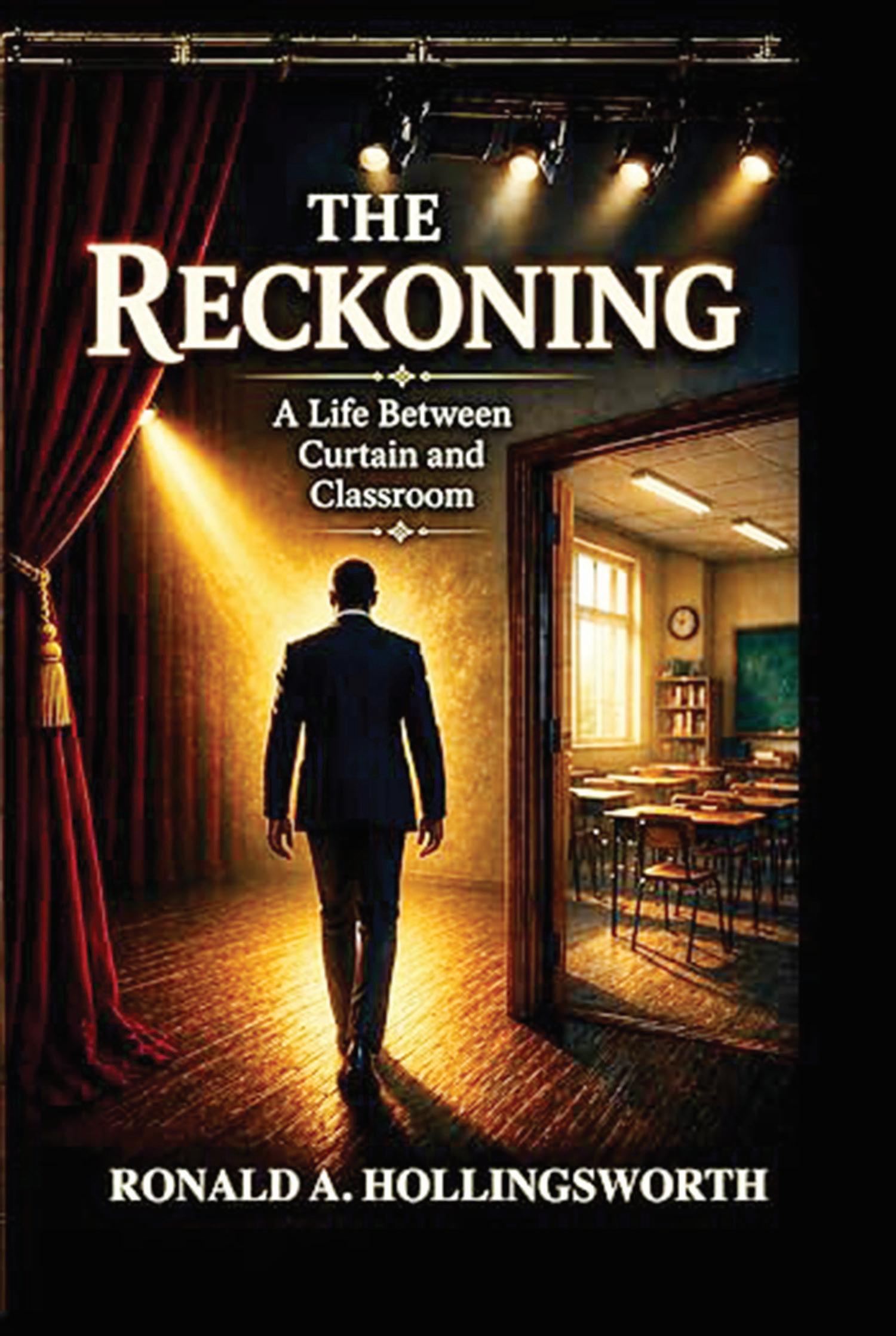
FROM overcoming academic struggles in Guyana to becoming an assistant principal at one of the largest high schools in Dallas, Texas, veteran educator, playwright and theatre practitioner Ronald Hollingsworth has chronicled a lifetime of triumphs, setbacks and personal growth in his newly published memoir, The Reckoning: Between the Curtain and the Classroom.
A detailed and dynamic recounting of his achievements, the book offers a look at the challenges that shaped his journey, from navigating professional hurdles and family struggles to caring for his late wife as he documented their shared experiences. Published just over a month ago, the memoir also explores Hollingsworth's lasting contributions to Guyanese theatre, his transition to the United States and the educational philosophy he calls "teaching
from the middle". He hopes the book will inspire young people, particularly those who struggle academically, to recognise that perseverance, resilience and a willingness to embrace failure can lead to extraordinary success. The inspiration for writing the memoir was not sparked by Hollingsworth himself, but rather took root among his colleagues. Sitting down with the Pepperpot Magazine earlier this week, Hollingsworth recalled how a fellow administrator repeatedly hinted that she knew about his work before he entered teaching. As he explained, the memoir was born after the school's principal uncovered old coverage in Guyanese newspapers and spoke to Hollingsworth about his history in education and theatre. Colleagues who discovered his past pressed him, again and again, to put it in writing. As he shared, "They said, 'No, you need to write a book.' They kept saying it over and over, 'Holly, you need a book. You need a book,'" he said. While the idea began as a casual suggestion, it turned into a serious project by December of the same year. Howev-
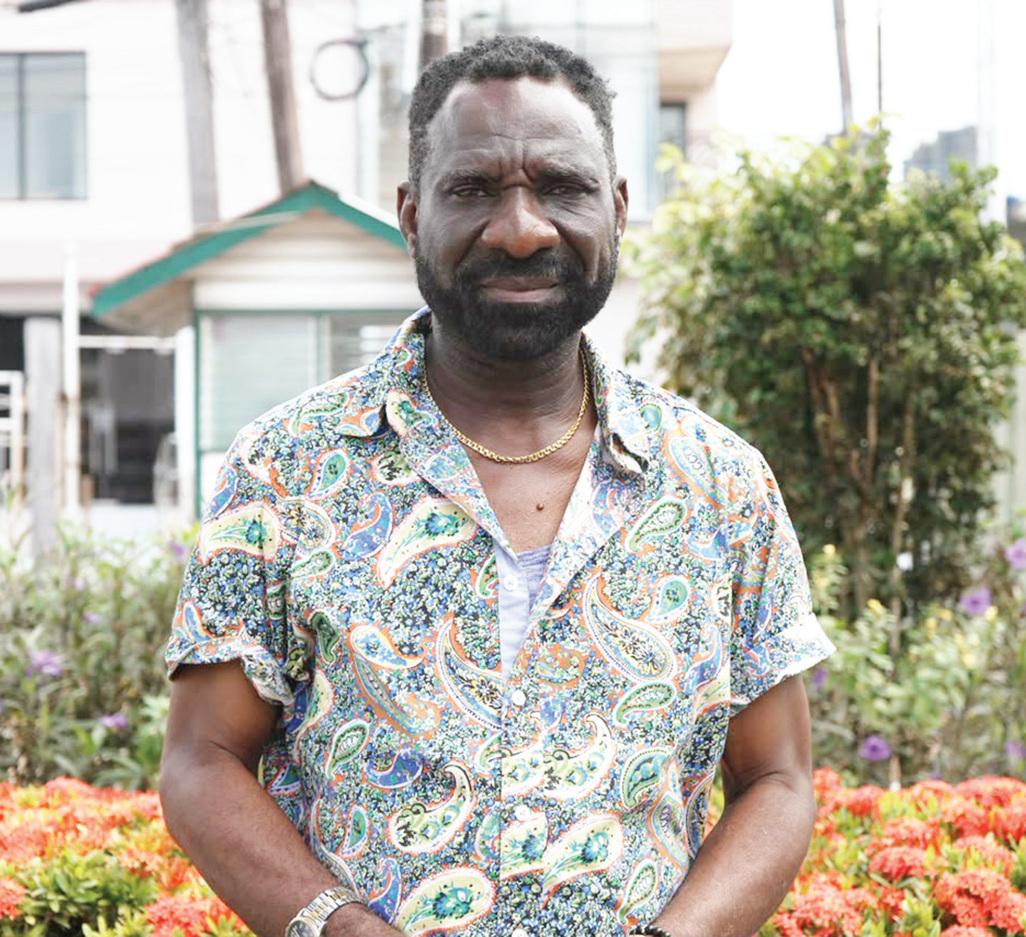
er, Hollingsworth was soon dealing with a family crisis as his wife suffered a stroke. Now his wife’s full-time caregiver, Hollingsworth still continued working and writing. The book, born out of necessity during a time of grief, stretched across two years and was completed only after her passing in Jan-
uary of this year.
While much of Hollingsworth’s work has highlighted the lived Guyanese reality and its challenges, writing his memoir led him to confront painful chapters of his own past.
Speaking candidly, Hollingsworth noted that the book includes insight into the marital hurdles he faced during a time when he was most prominent in Guyanese theatre and education. He describes one chapter in particular, detailing domestic strife and a daughter born of an earlier relationship, as especially difficult to put on paper. Uncertain how his late wife would react, he read the book's drafts aloud to her rather than leaving her to discover them alone. Her positive response not only settled his nerves but reshaped how Hollingsworth approached the rest of the manuscript.
As he noted, "When I wrote it, I asked her if
TURN TO PAGE VII

- Through regional collaboration and storytelling, Unique Arts is preserving tradition while creating new opportunities for Guyanese performers.
By Shaniya Harding
WHAT began in 2009 as a favour to choreograph a graduation performance for a group of primary school pupils has evolved into one of Guyana's leading creative arts companies, carrying the country's culture to audiences across the Caribbean and beyond. Under the leadership of educator, choreographer and Chief Executive Officer Kelton Jennings, Unique Arts Entertainment has grown from a small group of dancers into a platform that uses dance, drama, music and spoken word to tell stories rooted in Guyanese and Caribbean culture.
Coming off a recent successful cultural exchange in Jamaica and with performances planned for Suriname and New York, Jennings says the company's mission is to go beyond entertainment by preserving and promoting Caribbean identity through artistic collaboration.
Speaking with the Pepperpot Magazine earlier this week on how Guyana's creative sector continues to expand, Jennings shared that the arts are finally gaining the recognition they deserve, creating new opportunities for performers while showcasing the country's rich cultural traditions on the international stage. Jennings, who balanc-

Educator, choreographer and Chief Executive Officer of Unique Arts Entertainment, Kelton Jennings, says the company remains committed to promoting Guyanese and Caribbean culture through the performing arts
es his role at Unique Arts with teaching Physical Education, Theatre Arts and Dance at Queen's College, has been doing impactful work on multiple fronts in recent months.
A team of more than 20 performers recently travelled to Jamaica to take part in the CSME programme, an initiative he counts as one of the organisation's major achievements. That trip followed the release of a UNESCO-funded dance film, and the company is now preparing for a second regional tour that will take performers from Guyana to Suriname.
As Jennings told the Pepperpot Magazine, "This was a major accomplishment of Unique Arts," he said.
The organisation's origins were modest and, like most things Jennings does, were rooted in education.
Unique Arts was
sparked after he choreographed a dance, drama and song piece for a school graduation in 2009 as a personal favour to a colleague. However, Jennings did not anticipate that the performance would become the foundation of a company and dance school.
Parents who saw how the pupils responded to the experience encouraged him to keep working with them, and what started as a one-off graduation performance gradually grew into a creative arts company.
Jennings' own training through the National School of Dance eventually pushed the company towards a stronger focus on dance, using the art form as its central storytelling medium.
As Jennings noted, "I was encouraged by the parents to continue working with the students
because of the development process and how they started to express themselves more through the art form," he added. "Because of my knack for dance, and my training through the National School of Dance, we leaned more towards the dance side because we tell stories through dance and poems."
That growth and creativity have carried Unique Arts beyond Guy-
ana's borders, with the company travelling to Suriname, Trinidad and Jamaica for productions and workshops.
Jennings credits much of this expansion to deliberate efforts at regional collaboration, which he describes as central to his own development as an artist and educator.
Working alongside other Caribbean creatives, Jennings says, has exposed him to new talent,
new traditions and new perspectives that have shaped his approach to storytelling through dance. He points to shared cultural similarities across the region, including Masquerade traditions and Emancipation observances, as evidence of a common heritage found throughout the Caribbean. He shared, "I like to venture out and learn
TURN TO PAGE VIII

By Michel Outridge
CARLYNE Can -
dayce Stewart is a Guyanese executive leader, operations strategist and customer experience professional serving
as Managing Director and Chief Experience Officer (CXO) of Clarke's Productions Inc.
In this role, she integrates executive leadership, operations, finance and customer
experience to drive organisational excellence, sustainable growth and measurable impact across the private and public sectors.
A graduate of the University of Guy -
ana (UG) with a background in public management, Carlyne has built a distinguished career spanning frontline customer service, financial management, operations and public-sector administra-


tion.
Her leadership is defined by a commitment to continuous improvement, innovation and developing systems that enhance performance, strengthen organisational culture and deliver exceptional client experiences.
At Clarke's Productions Inc., Carlyne leads the organisation's customer experience strategy, financial management, operational systems and business development initiatives.
She oversees the planning and execution of high-impact training programmes in leadership, customer service excellence, budgeting, team building, workplace performance and organisational development.
Guided by her personal mantra, "No Opportunity Wasted," she cultivates a culture of accountability, excellence, innovation and purposeful growth.
Carlyne is also the
Lead Organiser of Beyond the Wheels 2.0, a Transportation and Safety Forum, slated for October 6 and 7 at the ACCC.
The forum focuses on advancing road safety, transport leadership, workplace wellness, and sustainable mobility.
Recognised for her meticulous planning and operational discipline, she is known for "building the room before opening the door", creating the strategic partnerships, systems and stakeholder engagement necessary for successful, high-impact initiatives.
She has consistently championed the importance of mental health within the transport sector, including through Clarke's Productions Inc.'s men's mental health programme, which encourages open dialogue, resilience and Carlyne Stewart
FROM
PAGE II
Those lessons became the foundation of both his personal life and business philosophy.
At age nine, his family relocated to MetenMeer-Zorg, West Coast Demerara, where he attended Zeeburg Secondary School before studying Laboratory Sciences at the University of Guyana (UG), specialising in Microbiology.
he managed diagnostic facilities, including the Rima Diagnostic Clinic, before becoming a Caribbean Sales Manager serving healthcare institutions throughout the region.
In 2011, he returned to Guyana to build businesses that strengthen healthcare, create employment and expand regional trade.
Today, he leads Caribbean Medical Supplies Inc., DADAS
lifelong learner.
Outside of business, he invests his time in mentoring staff, supporting community initiatives, spending time with family and developing projects that create long-term social impact.
What motivates him to volunteer is deeply personal. Remembering his own humble beginnings, he believes many people simply need someone to encourage
mentoring, feeding programmes and personal development initiatives, all behind the scenes.
His work with Save R Kids Children's Home reflects his commitment to helping children believe in their own potential.
He has partnered with the Vergenoegen Community Development Council and other organisations on elderly appreciation programmes, environmental clean-up
ilies.
Family remains central to everything he does. He believes the greatest legacy he can leave is not only successful businesses but children who understand integrity, compassion and service.
He intentionally involves his family in community initiatives because he believes leadership is measured by the lives we improve.
Reflecting on his
stronger communities left behind.
This volunteer has been actively involved in recognising academic excellence among young students, supporting youth through football and mentorship, partnering with community organisations to strengthen Region Three, providing long-standing support for children's homes through education and mentorship, serving the elderly through com -
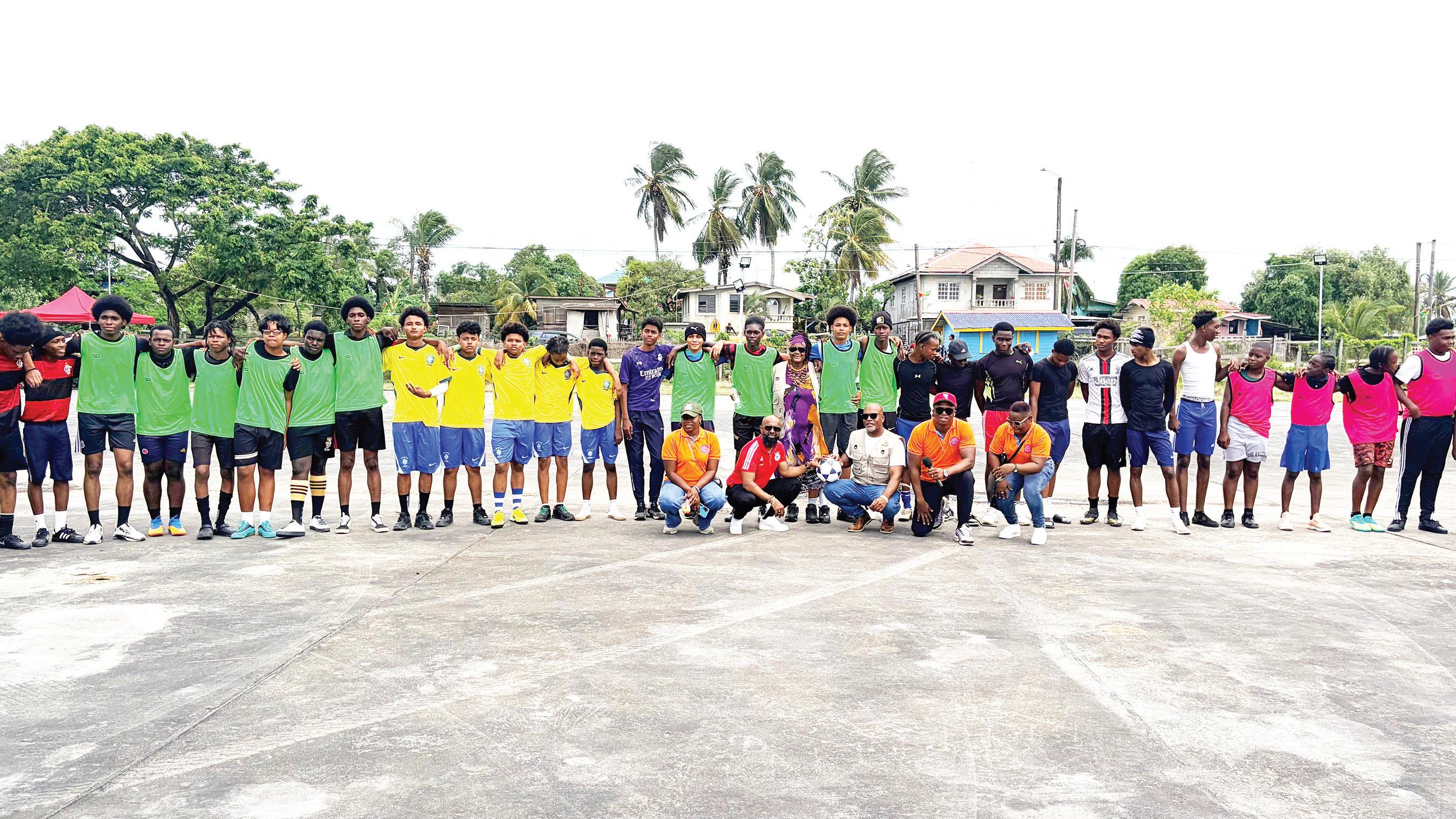
Donating towards the advancement of sports in Guyana and supporting youths through football
He credits education as the turning point in his life.
After graduation, he worked as a Medical Technologist and later in quality management at Georgetown Public Hospital Corporation (GPHC) and St. Joseph Mercy Hospital.
His career expanded to Barbados and Trinidad and Tobago, where
Group of Companies, and affiliated regional operations that serve customers across nine Caribbean countries.
Professionally, Rampersaud is a microbiologist by training and a healthcare entrepreneur.
Personally, he describes himself first as a husband, father and
them or create an opportunity.
Because education transformed his own life, he feels a responsibility to help open similar doors for others.
For more than a decade, he has quietly supported children's homes, schools and community organisations through educational support,
campaigns, tree planting, youth football competitions, motivational speaking, educational awards, and neighbourhood development projects.
Through DADAS Grill and his wider business network, he has also supported community feeding initiatives and assistance to fam-
journey, he says: "Bonasika Creek gave me humility. Education gave me opportunity. Healthcare gave me purpose. Entrepreneurship gave me a platform. Service gives it all meaning."
For Rampersaud, success is measured not only by businesses built, but by opportunities created for others and
munity outreach, and leading environmental clean-up and tree-planting initiatives.
His name is synonymous with giving back to society through volunteerism, community-based activities and human capacity building.
she could come and listen to everything I had written. I was waiting for pushback. And all she said was, 'Wow, you remember all of that?' I felt forgiven." Hollingsworth added that, from that point on, his wife became an active listener throughout the writing process.
However, beyond the personal history, The Reckoning also speaks to the vibrant richness of Guyanese theatre and the value of resilience. Hollingsworth’s work has been vital in the development of Guyanese theatre, with his productions seeing major success and many critics viewing them as pillars of theatre in Guyana. Among the most notable are Till Ah Find A Place, along with a planned sequel, Till Ah Find A Place 2: She’s Back, which had to be shelved, and Watch De Ride.
As Hollingsworth told the Pepperpot Magazine, the memoir speaks less about achievements and more about tracing how a student once written off in school could rise through both theatre and education, first in Guyana and later as an administrator in the United States.
Speaking on what he hopes readers will gain from the book, Hollingsworth stated, "It is a blueprint for kids who struggle in school and think that that is the end of it," adding that the book was written to serve as motivation rather than simply an autobiography.
The pivotal move to the United States came only after a more than decade-long wait, delayed by a number of family-related and immigration-related complications. During that time, Hollingsworth completed his university studies before leav-
ing Guyana at the age of 40. His first American teaching post, however, proved to be the hardest stretch of his career. Assigned to special education classes in Maryland with students spanning a wide range of disabilities, Hollingsworth was without guidance or support. Through trial and error, however, he found ways to reach the students, eventually drawing on his theatre background to stage classroom performances and channel disruptive energy into structured activity.
He explained, "I said, 'Look, they have a way of saying you act up in class. You know what? I am a theatre person. Y'all want to act? I will be the director,'" he said.
Central to the memoir is the philosophy Hollingsworth calls "teaching from the middle", an idea he plans to expand upon in a keynote address when the school year resumes in August.
The concept grew out of his observation, both in Guyana and Texas, that most teachers come not from elite institutions but from ordinary, overlooked backgrounds, and that this same "middle" group ends up educating students across the full spectrum, from the gifted to those with the greatest needs.
Hollingsworth argues that policymakers and communities continue to direct attention and resources towards the extremes of the student population while the majority, or "middle", goes without recognition or attention, even though they later become the teachers, nurses and professionals who, as Hollingsworth puts it, "run the world."
Hollingsworth traces the birth of the philosophy back to his own
challenging time as a young Queen’s College teacher who had come from Alleyne's High School, which he noted was not among Guyana’s prestigious schools.
The book's reception since its launch in
Texas just a few weeks ago, where colleagues and fellow Guyanese g athered to celebrate its release, has been enthusiastic, with readers responding well to its deeply personal chapters.
While the memoir
speaks about his creative success in theatre and his impactful work in education and administration, Hollingsworth says the core of the book is the undeniable importance of persistence in the face of repeated failure.
As he shared, "I
want people to walk away with perseverance. Perseverance. And be willing to fail over and over and over again. When you fail, you have got to get up and push. Failure is not the end of the world."
FROM
PAGE IV
new talents, new cultures, eat different foods. This is why the Caribbean is home to me, working along with different cultures," he added. "After Mashramani, there's Masquerade in every Caribbean country, and also Emancipation in every Caribbean country. These are things we have similar cultural backgrounds with, and when you understand the different origins, it's just one objective, one reason why we're doing what we're doing."
Jennings has also seen the broader environment for artistes in Guyana shift drastically since he began his career, moving from a period when creative work offered little sustainable income to today, when performers can build a livelihood through music or dance.
He hopes that continued growth in tourism will create further opportunities for visitors to engage with Guyanese culture through performance.
He also sees the growing visibility of the country's African and Indian cultural influences, and their fusion within contemporary productions, as a sign of how far the local arts scene has come.
As he shared during the interview, "The arts have grown from where they were to where they are today, and they're highly appreciated by the artistes around Guyana because we're able to showcase our dance, and you'll see more of the cultures coming out—African culture, Indian culture—and it's a fusion," he added.
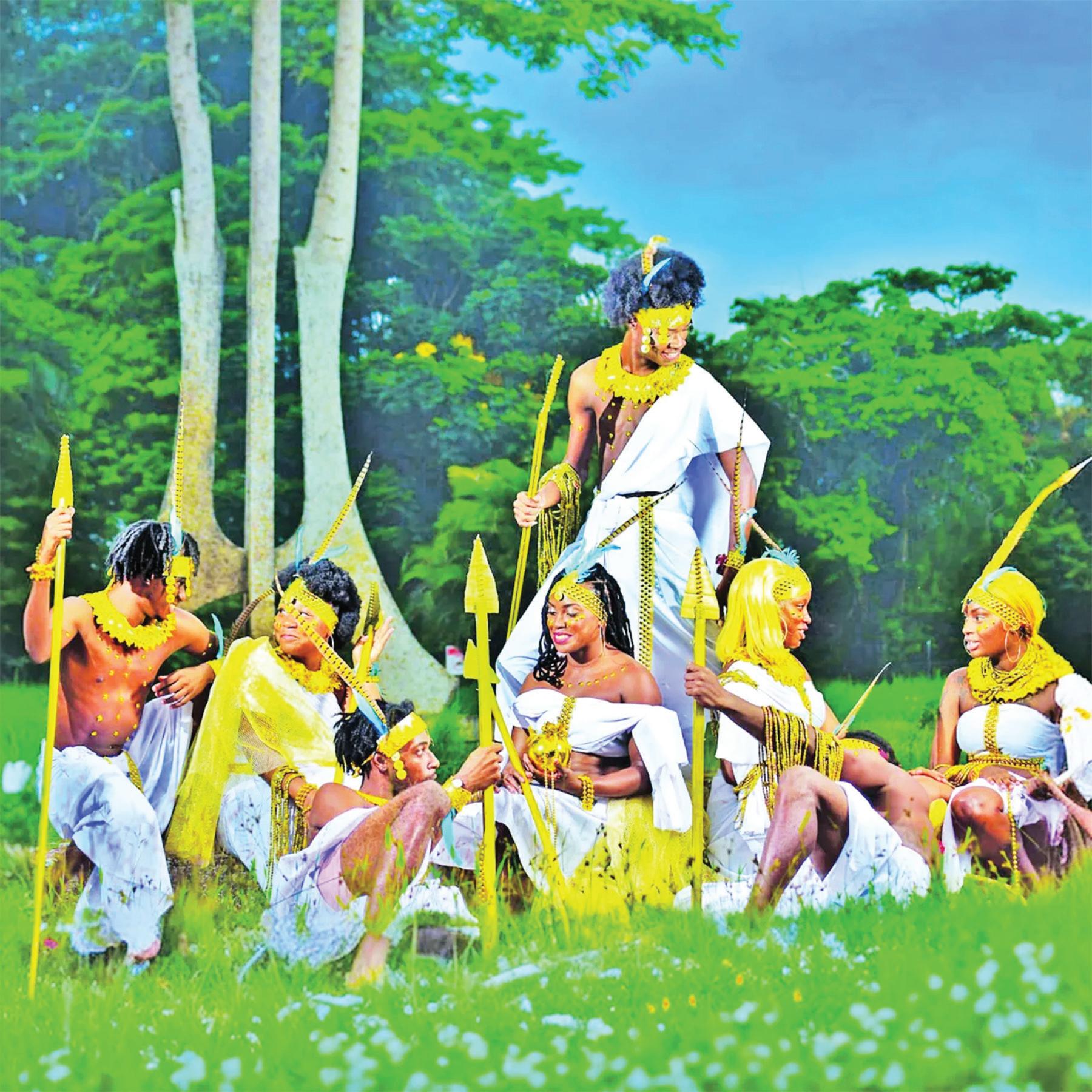
That fusion was on full display in the company's latest production, which brought Guyanese and Jamaican performers together on a single stage.
Titled Kaya, a word Jennings says translates
to "home" in both African and Caribbean contexts, the show blends dance, spoken word and folklore from across the Afro-Caribbean tradition.
The production, staged at the Queen's College Auditorium, served as a preview of the performance the company will later take to Suriname and New York.
Speaking on the vibrant cultural richness of the production, Jennings added, "We are fusing from Jamaica to Guyana, from Guyana to Suriname, then from Suriname to New York. You will see performances and different cultural folklore stories being told through dance on that stage on Saturday. This is what we want to do—to fuse
Caribbean culture."
Among the performers who took part are two company members whose personal histories highlight the production's cross-cultural work.
One dancer relocated from Jamaica to join Unique Arts and has spent two years training and working with the company, using the recent show as his first
major production on a Guyanese stage.
Another performer spent four years living and working in Jamaica, eventually becoming a citizen and starting a family there before returning to Guyana to share what he had learned.
Their work, Jennings says, reflects the kind of exchange the company
hopes to continue across the Caribbean.
Speaking on the aim of Unique Arts moving forward, Jennings noted, "Our aim as Unique Arts is to continue collaborating, continue travelling to different Caribbean countries, and sharing our knowledge about our culture through dance, through music, through food."

THE phenomenon of distraction is not a helpful process because it ignores where it is leading, regardless of what it means when those who sleep come awake. Most likely, they will still be unawake and refuse to attribute the cause of falling asleep to anyone except themselves. The imposition of the adult
world, absorbed across human expression worldwide, cannot be merely a matter of things carried that fail to be anticipated, with protection offered to the more and less vulnerable.
Facts brought to the feet of perceived authority are put aside. It is not those who bring them that err,
but the structure of the human environment, where secrecy envelops self-interest, prevailing over justice and self-preservation, has to be taken into consideration in understanding why the lessons to be taught are not taught swiftly.
The alternative rests, in many ways, with the arts and public activists. When I
ran a small institution with some colleagues, directed at schools, it was incredible what we learnt. Co-operation spurred us on. We spread anti-drug concepts against the walls of not knowing.
A former Police Commissioner advised us to widen our scope, but what we learnt required more input from data. When we
acquired it, it required intense additional research. We were a small group with families, and with incidents that visited us.
The horrible things we learnt from parallel institutions compelled us to dig deeper. Home economics and an offspring entrapped by addiction commanded attention at home for me, and this intruded
on much of what we were doing.
I was excited when the Drug Court came into being, but there are still valid areas that require serious intervention.
As an artist and writer, I envisage much more to be done. Stay strong, families. No one said that it would be easy…

the reduction of stigma surrounding men's emotional well-being.
Beyond her corporate leadership, Carlyne serves as Secretary of the Women’s Chamber of Commerce and Industry Guyana (WCCIG) for 2025, the Caribbean's only women's chamber of commerce.
In this capacity, she contributes to corporate governance, strategic planning, stakeholder engagement and organisational development, helping to advance WCCIG's mission of empowering women entrepreneurs, strengthening strategic partnerships and increasing women's participation in Guyana's expanding economy.
Passionate about leadership, service excellence and community development, Carlyne continues to inspire individuals, youths (through our yearly First Aid/CPR programme for children) and organisations to achieve operational
excellence, embrace innovation and transform opportunities into lasting impact.
Carlyne grew up in Agricola and attended St. Ann’s Nursery School and Christ Church Secondary School.
She always had a passion for helping others and became active in church activities and the choir, which brought her great joy.
Even though she did not grow up with her parents, she was raised in an extended family setting and, after writing her CXC examinations, pursued studies in accounting.
While studying for the ACCA, she got a job, married, and moved to Berbice, where she attended the University of Guyana and successfully pursued management studies.
Carlyne, however, got a job at Guyana Water Inc., where she spent 15 years working her way up from a data entry clerk to an acting manager before resigning and moving into a
different field.
She later partnered with her husband, Adrian Clarke, who founded Clarke’s Productions, a consultancy company focused on training and capacity building.
One of the areas of focus is defensive driving, an area that was previously untapped, and they took advantage of the opportunity to launch their driving training programme.
"As a child, I was part of the road safety unit in school, so I was familiar with it. I was in a road accident that made me develop a passion for road safety on a wider scope and, in any room I enter, I try to encourage persons that safe driving starts with them. Practise safety to arrive alive on our roads," she said.
They also recognised the need for mental health training among men, and a course was developed to address that area within their business.
With her love for children, Carlyne


ing, which is expected to be fully utilised. FROM PAGE V
also launched their in-house life-saving First Aid and CPR training programme
primarily for children, and like-minded persons can sponsor a child for that train-


THE old people had a saying that could empty an argument quicker than a bucket of cold water: “The chickens will always come home to roost.” They never needed a university degree to explain cause and effect. They had gardens, children, neighbours and enough life experience to know that every action eventually sends a postcard back to its author.
These days, however, we have become collectors of effects while pretending the causes arrived by courier from somewhere else. We curse inflation but applaud waste, we mourn corruption while celebrating shortcuts, we lament broken families while applauding every habit that
chips away at commitment, then we scratch our heads and ask, “How did this happen?”
The Hermetic Principle of Cause and Effect states, “Every Cause has its Effect; every Effect has its Cause.”
It sounds profound until you realise your grandmother had already said the same thing decades ago. She simply used fewer words and a sterner look. The principle is less about punishment and more about participation. We are forever planting something: a thought, a word, a habit, a kindness, a lie, a discipline, a neglect and so on. Time keeps careful records, even when we do not.
The apostle Paul wrote in the book of Galatians,
“Whatever one sows, that will he also reap.” This verse has endured for centuries because it continues to sustain us. Human beings have invented faster aeroplanes, smaller computers and cleverer excuses, yet the law remains stubbornly unchanged.
The legendary Hermes Trismegistus expressed the same truth in a different language, stating that effects are never random. They emerge from causes, whether visible or hidden. We spend far too much energy arguing over consequences while investing very little in understanding their origins, and perhaps that explains modern life. We prescribe medicine for stress while feeding the habits that manufacture it.

We demand honesty while rewarding deception whenever it benefits our side, and we expect peace after sowing division. Somewhere along the line, logic is applying for an early retirement.
The Roman emperor Marcus Aurelius observed, “The happiness of your life depends upon the quality of your thoughts.” It is an elegant reminder that invisible causes often become visible destinies. Thoughts become choices, choices become habits and habits draft tomorrow's biography.
Science, interestingly enough, refuses to quarrel with this principle.
Isaac Newton famously described his Third Law of Motion: for every ac -
tion there is an equal and opposite reaction. Physics speaks of forces, Hermetic philosophy speaks of causes, and spiritual traditions speak of sowing and reaping. Three different languages, one remarkably similar conversation. Even modern psychology joins the chorus.
Swiss psychiatrist Carl Jung remarked, “Until you make the unconscious conscious, it will direct your life, and you will call it fate.” How many times have we blamed fate for patterns we rehearsed ourselves?
Cause and effect never sleeps. It does, however, possess undeniable patience. Imagine planting a mango seed today and returning tomorrow with a lawyer because there are still no mangoes. Simply ridiculous! Yet we perform similar acts every day. We spend years cultivating impatience, envy or indifference, then expect generosity, stability and peace to bloom on schedule.
The scientist Albert
Communities operate exactly the same way. Prosperity rarely appears by accident; neither does decline. A nation inherits the accumulated choices of its citizens, its institutions and its leaders. For example, roads crumble after years of neglected maintenance, trust evaporates after repeated dishonesty, and excellence grows where discipline receives daily attention.
TURN TO PAGE XII

FROM PAGE XI
Einstein is often credited with saying that insanity is doing the same thing repeatedly while expecting different results. Whether the quotation belongs to him or evolved through popular culture, the wisdom remains difficult to argue with because different harvests require different seeds. It sounds obvious until someone insists on harvesting respect after planting arrogance.
The beauty of Cause and Effect is that it carries hope alongside responsibility. If causes create effects, then new causes can create new futures. Yesterday explains today; it does not imprison tomorrow. So, a single act of forgiveness interrupts generations of bitterness, one honest conversation repairs years of misunderstanding, one disciplined
hour each day eventually embarrasses a lifetime of procrastination, and the list goes on. Tiny causes often produce astonishing effects because consistency compounds while spectators remain distracted. Farmers understand this, teachers understand this, parents understand this, and musicians certainly understand this. Nobody applauds the scales; audiences applaud the concert, forgetting the lonely repetitions that made the beauty sound effortless. The same principle governs character. Character grows in private before it performs in public.
Our age, unfortunately, has developed an unfortunate affection for instant everything. Instant fame, instant wealth, instant opinions and instant outrage. We have microwave expectations and slow-cooker realities. Reality, though,
refuses to rush merely because social media has a deadline. This may be one of life's greatest mercies. Imagine if every careless remark produced an immediate disaster. Parliament would adjourn permanently, family reunions would require emergency services, and election campaigns would last approximately twelve minutes before civilisation surrendered. Instead, consequences often arrive, giving us enough time to mistake delay for escape. They are wonderfully punctual in the end, however. Perhaps that explains why wisdom repeatedly asks us to examine ourselves before examining everyone else. Blaming another person can be emotionally satisfying, but self-examination is infinitely more productive. Mirrors have achieved more lasting reform than megaphones.
The invitation of the Hermetic sages was never merely to observe universal laws; it was to cooperate with them. They were saying that if you plant generosity, you will harvest goodwill; plant discipline, harvest competence; plant integrity, harvest trust; plant compassion, harvest community. The same applies to the opposite side of the equation: plant resentment and, well, prepare for a crop nobody enjoys harvesting.
The truth is that life continues offering fresh soil every sunrise. Yesterday's mistakes may explain today's landscape, yet today's choices are already designing tomorrow's horizon. The future is rarely delivered; more often, it is cultivated.
And so, to encourage every reader, here is a poem for perspective.
Enjoy.
We Never See the Seed
We plant the thorn, then curse the prick,
As though the thorn just learned the trick;
We throw the stone with all our might,
Then blame the bruise by morning light.
We poison streams with careless hands,
Then mourn the loss of fertile lands;
We choke the root beneath the tree,
Then ask, “Why won’t it shelter me?”
We feed our pride, our spite, our greed,
Then pray for love to bloom with speed;
We scatter tares from shore to shore,
Then beg for wheat, and nothing more.
We mock the truth, embrace the lie,
Then ask the heavens, “Tell us why?”
As if the sky had made the choice
To put such folly in our voice.
Old Cause keeps quiet, calm and still; Old Effect climbs every hill.
One plants the seed and walks away,
The other comes on harvest day.
So laugh at life, but laugh with care;
The Judge is hiding everywhere.
Each word, each thought, each deed we breed,
Becomes tomorrow's growing seed.
The lesson isn’t hard to read,
Though few of us will ever heed;
The fruit we hold, the cup we drain, Is yesterday come back again.
Romella Dasratt


MOST good love stories are tragic. Indeed, they are often better when one of the lovers dies before reaching the promised "happily ever after". Or, short of death, some catastrophe intervenes, a misunderstanding, a betrayal, or an accident of fate that separates them forever.
Romeo and Juliet remains the archetype. Their love survives precisely because it is denied fulfilment. They never live long enough to become ordinary, never endure the disappointments of divorce, the melancholy of sitting across from one another on a veranda thinking, I could have done better, or the quiet despair of sleeping in separate rooms.
Perhaps one lover loses their memory and forgets the love of their life entirely, with no remedy for the amnesia. Perhaps they
become like the couple in Ian McEwan's On Chesil Beach, incapable of consummating their carefully nurtured love, condemned instead to a lifetime of regret and longing. Whatever form it takes, the obstacle is essential. Love stories thrive on impossibility.
Love, after all, is not a romance novel or a formulaic romantic comedy, where the ending is visible from the first page. In such stories, nothing short of reader fatigue can prevent the inevitable declaration of love, accompanied by tears, embraces and swelling sentiment. Every reader becomes a prophet upon opening a conventional romance; every twist of the narrative road is visible long before it arrives.
What truly makes a love story memorable is loss. Death casts a shadow over the lovers' hopes and lends their passion gravity. Emily
Brontë kills Catherine in Wuthering Heights; Erich Segal kills the beloved Jenny in Love Story; Tolstoy sends Anna Karenina beneath the wheels of a train. Even when death is absent, yearning serves the same purpose. Scott Spencer's lyrical Endless Love sustains itself on obsession, separation and unattainability. The finest love stories rarely offer satisfaction. Instead, they leave behind hope, longing and an enduring belief in the impossible.
Curdella Forbes's A Tall History of Sugar belongs to this tradition. Like On Chesil Beach, it is a sensitive and deeply affecting novel about the collision between love and reality. Its central concern is not romance fulfilled but hope frustrated. The novel understands that love often runs counter to circumstance and that the desires of lovers
TURN TO PAGE XV



AN internship is not
just a line on a résumé or an opportunity to repost on social media. Many young people view internships as a gateway between stud- ies and employment. This is very practical for gaining experience and learning beyond the theoretical approaches offered in classrooms. It is a chance to build a strong network in a student’s or graduate’s area of interest, yet for many students, internships can be out of reach.
In Guyana, there are usually “work-study” opportunities at govern- ment agencies after the CSEC examinations. However, these slots are limited and are usually filled quickly. Many of the internships that might be readily available are unpaid. As such, finances can be a very difficult barrier to attending in - ternships. Unless your parents or guardians are able to provide you with the financial assistance to attend your internship, you might not be able to do so because of this reality. Students from low-income families often face a dilemma. Do they attend the internship to gain experience, or do they simply find a job and start working to earn an income? Talent and ambition should never


TURN TO PAGE XVI

are frequently undone by forces beyond their control. Good love stories do not indulge the romantic fantasies of their protagonists; they subvert them. They reveal hope itself to be a form of blindness, corrected only by experience.
The gulf separating Forbes's lovers is too wide to bridge. What remains is love, but not its fulfilment. Their affection persists, yet it cannot settle into permanence. One of the novel's most compelling insights is that there is no perfect moment, no ideal set of circumstances that will resolve the impasse between them. More realistically, there never could be.
The novel's historical backdrop is equally significant. Its narrative parallels Jamaica's journey from the colonial era through independence and into the uncertainties of the post-imperial world. Forbes traces the social and political transformations that accompanied what she describes as "the fall of the empire", connecting them to the anxieties and dislocations of the present. Through the lives of her protagonists, Moshe Fisher and Arrienne Christie, these sweeping historical changes become intimate and personal. Forbes pays careful attention to the markers of each era—the attitudes, aspirations, prejudices and contradictions that define everyday life. The result is a novel with a powerful sense of place. The Jamaica depicted here is vibrant, textured and fully realised.
At its heart, how -
rative gains additional suspense from the possibility of a reunion after a separation spanning decades.
ever, A Tall History of Sugar is a love story, one of the better recent examples of the genre, because it understands that love is not always rewarded. Sometimes it is simply experienced. It is, in many ways, a fairy tale without a happy ending. The lovers do not receive their forever after. Instead, they endure separation, disappointment and unforeseen tragedy.
The relationship between Moshe Fisher and Arrienne Christie unfolds over more than fifty years. They first meet as children in a rural Jamaican village. Moshe, an albino orphan found abandoned in a basket near a river and raised by an adoptive mother, occupies the margins of village life. Arrienne, by contrast, comes from a prosperous Jamaican family. From childhood, she became his protector, shielding him from ridicule, insults and physical abuse. Their bond is immediate and enduring.
Their story is, as the title suggests, "tall" in every sense. It spans decades of personal and political upheaval, tracing a stubborn, resilient love that survives despite overwhelming obstacles. The question that animates the novel is not whether they love one another—they clearly do—but whether circumstances will ever allow that love to flourish.
What makes the novel particularly engaging is the emotional investment it generates in its characters. Moshe and Arrienne are rendered with remarkable sympathy and complexity, and the reader becomes deeply invested in their fate. The nar-
Forbes writes in lyrical prose distinguished by its careful attention to Jamaican patois and the rhythms of local
speech. The dialogue captures the music, cadence and texture of everyday language without sacrificing accessibility. Her descriptions of the island are vivid and evocative, and her characters possess the kind of authenticity that
makes them linger in the mind long after the novel has ended.
The novel leaves its readers with neither certainty nor satisfaction, but with something rarer: a sense of love's endurance in the face of time, history and impossibility. FROM PAGE XIII
A Tall History of Sugar succeeds because it understands a fundamental truth about love stories: fulfilment is often less interesting than longing.

FROM PAGE XIV
be limited by financial circumstances.
There is also concern among Georgians who have access to the internship locations.
For international opportunities, there are barriers to travel and cost. Local opportunities are usually available in urban centres. As such, rural students
would have to travel to these areas or even relocate for a few weeks. This can disrupt their routine and comes at a hefty cost. As such, these young people
would have to miss out on these opportunities simply because of where they live.
While these points are important to note, accessibility is about

more than just money or location. There are also social and cultural barriers to consider, such as inclusivity for people living with disabilities, gender discrimination, racism and other forms of social exclusion. An internship should be a place where young professionals are encouraged to learn and contribute, not where they are excluded because of circumstances beyond their control.
I am writing this column with young people in mind. I was once in that position where I felt helpless, with little to no opportunities to gain work experience in a world that demands it for almost any position. Internships should be accessible and beneficial to everyone. I believe the government, private institutions, and universities all have a vital role and obligation to provide more internship opportunities and make them accessible. There should be more opportunities for paid intern-
ships; travel and accommodation support; greater use of remote and hybrid placements where appropriate; and agencies should recruit through processes that are transparent and inclusive.
Internships should not be viewed as privileges reserved for the fortunate. They are investments in the next generation of workers, leaders and innovators. Every student deserves the opportunity to apply their knowledge, develop practical skills and discover their potential, regardless of their financial situation or where they come from. If we truly believe in equal opportunity, then we must ensure that internships are accessible to everyone. The future of our workforce depends not on who has the most connections or resources, but on creating opportunities for every young person with the talent and determination to succeed.


IN a certain manner, water flows, relationships connect one person to another. Like solitary islands bound by an ocean, our alliances and connections prevent us from drifting apart from the substrate that drives the motions of our world and keeps us bound to our natural purpose. We might be
able to survive without forming friendships or sharing love, but we cannot fulfil our roles or leave a significant footprint unless we form true bonds with one another. We may not need the help of others to write the story of our own lives, but what use is a story that will not be remembered
by anyone long after its author is gone?
As digital spaces have bloomed in this modern era, connections have taken extraordinary new forms. Not only has the manner in which we interact evolved, but it has also increased in magnitude. It is no longer strange for one individual to have the
power to connect with millions of people with a single message. It is no longer unthinkable for one person to hear the thoughts of a hundred people within the span of an hour. In fact, these are expected parts of the normal way younger generations live today.
Nevertheless, the significance of hu -
man relationships is an understanding that predates many generations. It is something we discovered at the very beginning of history, when we realised that depending on one another when help is needed, and providing for one another at the risk of personal loss, is the only right way for us to live. Today, the
role of relationships and connection is still recognised as important, but its meaning has changed almost entirely. Relationships of every nature break and form as easily as the wind changes, and the individuals who once shared a bond often continue with their lives as if nothing has
TURN TO PAGE XXI


A LITTLE girl in her pink floral dress skipped around the garden, barefoot, with her little basket, picking flowers and fallen ripe fruits, chasing colourful butterflies and playing with her bunny rabbits.
Her mother, washing clothes at the standpipe, watched her, a sweet child dear to her heart. She would often imagine how beautiful she would be when she grew up, and the special wedding celebration she would have for her when it was time for her betrothal.
That was twenty-two years ago to this day, a dark day.
A storm had been brewing for the past few days, and tonight it unleashed its fury with screaming winds, deafening thunder and frightening lightning. The roads were desolate, except for two black sedans that drove cautiously along the dark country road to a modest house standing almost in isolation.
Four strange men stepped out into the rain, men with steely looks and stone-cold eyes, on a mission commanded by their superior officer, a Lieutenant General.
What would the military be doing deep in the countryside, in the farming backlands?
What illegal activities, gathered by an intelligence network, merited the presence of army personnel from a neighbouring Spanish country?
A small farming family, in deep slumber as the storm drowned the farmlands, was awakened by the armed invaders and forcibly taken away before they knew what was happening.
The abductors drove to a secluded army reserve off the highway, and the family was roughly hauled into the base. The mother, father and brother were bound to chairs in one room, and the younger ones were locked into another room with an armed guard.
They stared at their abductors, terrified beyond their limits.
What would foreign soldiers want with a simple farming family?
The soldiers left the room and returned after a long while, dressed now in black clothes and leather gloves. They said not a word. The look in their eyes was so cold that it sent shivers down the family's spines.
The duct tape was ripped from their mouths, and they inhaled deeply, tears welling in the mother’s eyes.
“Why have you

brought us here?” the father asked hoarsely. “We’ve done no wrong.”
A fist hit him so hard it rocked his head back, and the mother cried, “Please, why are you doing this? We are farming people!”
One soldier straddled a chair, and two specialists in torture stood by. The soldier
sitting said to the father, “Investigations have proved that you are involved in an illegal trade.”
“I don’t know anything about that.”
A fist thudded against his jaw, drawing blood from his mouth.
“You have been under surveillance for some time now, and
tonight you will have to disclose your part in this trade if you value your life and your family’s. Do you understand?”
The father nodded, scared and confused, and the soldier continued his questioning.
“How often have you met with mysterious traders in the backlands?”
“Twice,” he answered.
“Did you take any of your children there with you?”
“No,” he answered hesitantly.
A thunderous fist hit him, knocking him down with the chair.
The mother screamed, “Please, don’t!”
“Quiet!” a voice boomed, silencing her.
The question was asked again, and the same answer was given.
The questioning line was then changed.
“How many children do you have?”
“I have two sons.”
He was hit to the floor now, blood trickling from his mouth and nose. The son, unable to witness the torture, shouted, “Why do you want to know that?!”
The soldiers turned on him like angry pit bulls until he was left crumpled on the floor, gasping for breath.
“Why aren’t you asking me?” the mother sobbed.
“Because we can’t hit you; their pain is your suffering.”
Father and son were hauled upright and given a brief moment to breathe before the interrogation resumed.
“We know of the boats that docked in the

FROM PAGE XVIII
ocean and the people who came to the back-
lands with whom you did business.”
The father didn’t answer, afraid now to say anything.
“You have two sons, and you’re sure you don’t have another
child you sold to be used as a drug mule?”
“No,” the father groaned. “I didn’t do that.”

“We have evidence that you did. You wanted to be rich, to become powerful.”
“No!” he shouted, his voice cracking. “I did not sell my daughter!”
A sudden hush fell over the room and the soldier in the chair rose to his feet.
“So you have another child, a daughter?”
“Yes,” he sobbed. “I had a daughter.”
“Where is she?”
“I don’t know,” he continued to cry. “I gave her away a long time ago.”
“How old was she?”
“She was six.”
“You gave away your little daughter to be used as a drug mule?”
“No, I didn’t want her anymore. I couldn’t look at her.”
The soldiers looked at the glass partition beyond, where a silent figure watched and listened to every word — the General who had ordered the abduction to find answers from the family in that room.
“She was violated, and her impurity became a shame to the family, something I couldn’t live with, so I sent her away.”
“On a stormy night like this, you wrapped a sleeping child in a blanket, ignored the mother’s pleas and gave her away, not caring what happened to her because of traditional beliefs?”
He said nothing, his head bent, and the soldier said to the son,
“You became the golden child because of your lies. You were supposed to watch her while your parents were away at the market,
but you were so engrossed in gambling that you didn’t hear her call for you to help find her bunny, and she wandered too far from home, where bad boys saw her. You didn’t hear her scream for you until she found you, much later, her dress torn, her face streaked with tears, her bunny in her arms.”
The mother stared at the son, shocked and angry.
“All these years you’ve been living a lie. How could you? Your heartless father took away my baby, and you helped with your lies!”
The son was so choked with guilt that he couldn’t answer.
It was then that the father realised something and cautiously asked the soldier who had been interrogating them,
“How do you know about all this that happened to my daughter twenty-two years ago?”
The soldier stared at him, not answering for a long moment. Then he said,
“She told me all about it.”
The mother gasped and asked, her emotions rising, “You know her? You know my daughter?”
“Yes,” he answered, glancing at the glass partition. “She has been seeing and hearing everything that transpired in this room.”
There was a shocked silence. Then the mother asked, her voice trembling,
“Can I see her?”
The soldier did not answer.
After a long moment, the door slowly swung open…
To be continued.
FROM PAGE XVII
changed.
Human connection is not meant to be easily made or easily broken. It is something that cannot be forged by a façade, but once established, cannot be broken even by the greatest force. To build relationships of this quality, one must be willing to be vulnerable. One must be willing to make the silent sacrifice of letting one's guard down, knowing that there is a possibility of being hurt. At the same time, one must know the right person to trust when opening up to a real friendship or bond. The most important aspects of building strong bonds are knowing who to
trust and, once we choose those people, never allowing external factors to change the trust and loyalty that we hold in each other.
When we are still growing, it is difficult to understand the true importance of strong relationships—the peace that comes from knowing that even if we were to fall to our lowest point, there will be hands around us to help us up and guide us. Friendships and bonds among young people often bloom and fade as we transition from one phase of growth to another. Strangely, when we reach a certain age, we stop prioritising building friendships. Even if we do, it is often for

the sake of our careers or education.
We must remember that there is no age limit on reaching out to another person, whether for our own support or to offer them strength. We do not lose the ability to make friends, share love or give af-
fection when we reach middle adulthood.
Sometimes, wounds from our past can cast a shroud over our future, so that even the paths that hold beauty and brightness seem dark to us. We might have suffered pain or grief
in the past. We might have tried and failed to find a trustworthy person to share our burdens and our joys. This does not mean that no one in the world can share our journey with us. It simply means that we need to place a little
more effort into our search. We must not give up on connecting with the people around us. After all, even when our lives eventually come to an end, our love and our loyalty are the only treasures that shall remain intact.



LIKE a prosthetic leg, dentures allow you to chew, while an artificial leg allows you to walk. The problem in both instances is the performance quality of the artificial replacement compared with what nature originally provided. Quite simply, the artificial replacement will never function as well as your natural teeth, no matter how good it looks. Some people get excited when a laboratory advertises a beautiful, neat and shiny denture and are convinced that it looks better than their own natural teeth. Well, that’s an excellent example of “Looks
are deceiving.” When my paternal grandfather took out his total upper dentures and showed them to me at the age of six, I remember running away and screaming with fright, believing he had removed his upper jaw. Eventually, when my parents calmed me down, it was explained to me that when people lose all their teeth, they are replaced with fake ones. My young mind remained perplexed for a long time afterwards, and I was afraid to ask the many questions that plagued me. For instance, what kind of accident would make someone lose
TURN TO PAGE XXIII

FROM PAGE XXII
all their teeth and not cause physical damage to their face and lips?
Dentures are not maintenance-free; they need adjustments. It is not that the denture changes; it is the tissues under the denture that change. A denture adjustment is necessary when denture material must be removed to relieve pressure at pressure spots caused by bone and tissue shrinkage. Since tissue shrinks as it heals, dentures placed immediately after teeth are extracted sometimes need to be relined once the tissue has healed. All dentures need relining periodically to adjust for normal tissue changes. So, a denture is not a one-shot cure. It is very important to see your dentist once a year so the tissue under the denture can be monitored.
With this overview, let me offer a word of caution. Your dentist may offer you options on the types of tooth replacements possible in your case. Offering you treatment options
is part of your dentist’s obligation. This is where you need to become a wise, informed dental consumer so you can discuss with him the best decision for your situation.
There are many advantages to immediate dentures, besides the immediate aesthetic considerations. Apart from allowing you to continue your public life without anyone seeing you with missing teeth, they protect sensitive extraction sites, help control bleeding from the tooth sockets, and protect the surgical area by covering it, thus keeping food and debris out of the extraction sockets.
An additional advantage that you might consider worth the extra expense of the immediate denture is that your dentist knows how your “natural” teeth appeared. Thus, he is likely to be able to construct a denture that more closely resembles your natural teeth. This makes the transition easier when you see your friends and family because your ap -

pearance has changed minimally. The other option is that, if you want, you can change your appearance with new dentures.
More denture adjustments are needed when immediate dentures are placed, and these den-
tures sometimes need to be relined shortly after they are seated. The reason is that the tissue, including the bone in the area, shrinks during the healing process after the teeth are removed. The healing process lasts about six
months. This shrinkage causes the denture to become loose, altering its fit. Relining is not needed as soon for conventional dentures fitted on ridges where time has lapsed after the teeth are extracted.
Usually, immediate
dentures are no more expensive than conventional dentures. However, because immediate dentures must often be relined as soon as the ridges have healed, the reline is typically an additional charge.


















































STUDY SUCCESS
THE PASSAGE
Improving writing –
Dear student, Welcome, dear friend. Do you lack confidence in achieving examination success? Yes? Confidence relies on a combination of strategic mental conditioning, consistently smart study routines, and efficient test-day techniques. Steps include positive thinking, improving areas of weakness, and especially for testday practise - using allotted time wisely, reading each question carefully, planning answers, and presenting ideas clearly. There is enough time for you to improve and enter the examination room calm, focused, and ready to do your best. Be wise. With love.
taking care of grammatical presentations
Note: The best of thoughts written down can be marred by careless grammar.
1. Possessive Personal Pronouns
Good writing involves the proper use of possessive forms of personal pronouns. How ugly it looks when “its” and “it’s” are mixed up!

(A) “Its”, “it’s”: The possessive pronoun “its” means “of it” or “belonging to it.”
The contraction “it’s” is a shortened possessive form of “it is.”
Examples:
a) We prefer the Magnet Printer because of its ability to handle all standard paper sizes. (Its ability, or the ability of it.)
b) It’s essential that we increase our production.
(B) “Whose”, “Who’s”: Whose is a possessive pronoun meaning “belonging to whom.” “Who’s” is a contraction for “who is.”
Examples: a) Do you know whose scissors these are? (Scissors belonging to whom?)
b) Who’s in charge of the hospital security staff? (Who is in charge?)
Note: Test the sentence by reading it aloud with the full form of the contraction. If the sentence makes sense, then the contraction is correctly used.
Something to Do: In the following sentences, find all the errors in the use of possessive pronouns.
1. One benefit of this vegetable slicing machine is that its easy to operate.
2. Barry, who’s signature is on this cheque?
3. No, its not too late to order the “Short Story Writing” training programme for your new class of young writers.
4. Who’s voice is that on the microphone?
2. Possessive Compound Nouns - Special Uses
Possessive Compound Nouns: Here are some important rules for using the apostrophe with compound nouns to show possession. They are interesting. You need to study them carefully to write them correctly. But first, let us look at information on various forms of compound nouns.
Compound nouns are made from various combinations of prepositions, verbs, adverbs, and nouns. You will need a dictionary to verify the compound nouns you formulate for they do not always carry a hyphen. Compound nouns are written in three distinct
“All places shall be hell that are not heaven.”
CHRISTOPHER MARLOWE (1564-1593), “Doctor Faustus” Act 1, Scene 5
ways:
i) Closed/Solid Compounds: (Two words written as one – e.g. keyboard, homework, goalkeeper, sunflower)
ii) Open/Spaced Compounds: (Words written separately – e.g. bus stop, swimming pool, ice cream, post office)
iii) Hyphenated Compounds: (Words joined by a hyphen – e.g. fatherin-law, great-grandmother, runner-up, check-in)
(A) We form the possessive of a compound noun on the last word of the compound.
Examples: a) My mother-in-law’s dresses –(the dresses belonging to my mother-in-law). Because “law” does not end in “s,” add as apostrophe and “s”, to form the possessive. b) Both are general vine dressers’ assistants – (both assistants are general vine dressers).
Because “vine dressers” is a plural compound ending in “s,” only add an apostrophe.
c) an editor-in-chief’s budget (the budget of an editor-in-chief). Because “chief” does not end in “s,” add an apostrophe plus “s”.
(B) Compound Nouns in Joint Ownership. When two or more “owners” possess something jointly, place the apostrophe (or the apostrophe plus “s”) on the last owner’s name.
Examples: a) Marva and Joylyn’s country house is on a large farm. (Marva and Joylyn own the house jointly, that is, they share it as owners.) Place the apostrophe plus an “s” on the latter owner’s name –Joylyn’s.
b) Janette and Hazel’s assistant is a highly
qualified industrial sewing machine operator. (Jeanette and Hazel share the same assistant, as indicated, by only placing the apostrophe plus “s” on “Hazel”.)
(C) Compound Nouns in Separate Ownership. When two or more owners possess things individually, place the apostrophe plus, or the apostrophe plus “s” on the name of each owner. That is, make separate possessives to indicate separate ownership.
Examples: a) Marva’s and Joylyn’s country houses are on Gluck Island and Bernard Hill respectively. (In other words, Marva’s country house and Joylyn’s country house have separate ownership, hence separate possessive forms.)
b) Janette’s and Hazel’s assistants are industrial sewing machine operators. (That is, Janette’s assistant and Hazel’s assistant – both are highly qualified sewing machine operators. Separate ownership, separate possessives.)
Note: The key to using possessives correctly to show joint ownership, and separate ownership, is to analyse the context of each sentence they are in.
Something to Do: Select the correct word in brackets for each of the following sentences. 1. Ask for a copy of (Franklyn and Simon’s, Franklyn’s and Simon’s) report to their supervisor on projected sales for next year. 2. The estimated income for my (fatherin-law’s, father’s-in-law) business next year is $130,000,000.00. 3. (Sarah’s and Simon’s, Sarah and Simon’s) country house is on the Essequibo coast.