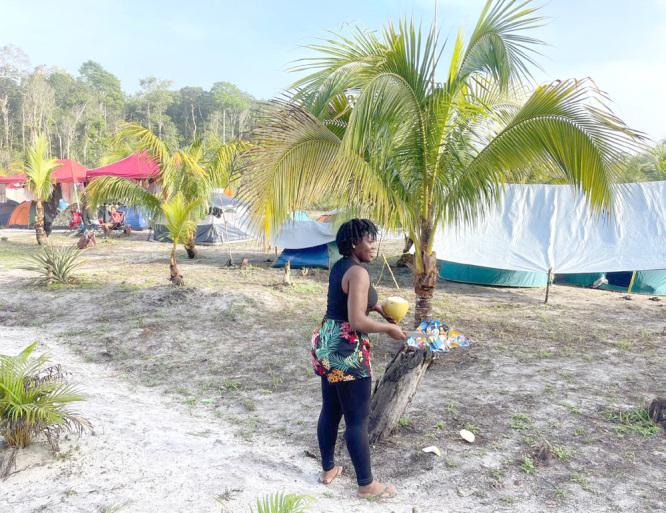
puts Lethem’s landscape and culture in the spotlight
- After years in music, Guyanese creative Courtney Noel turns to cinema with a culturally grounded Western
Singer and filmmaker Courtney Noel, the man behind ‘Bushmaster: A Modern Day Pepperpot Western’
Plans for Production of ‘Beyond the Seawall’ in Advanced Stages
- USA-based Guyanese filmmaker Mason Richards is aiming to shoot the Guyana leg this year
By Frederick Halley
FOLLOWING the completion of the Queens, New York, “Little Guyana” segment of his highly antici-
pated feature film, Beyond the Seawall, USA-based Guyanese award-winning filmmaker, professor, and creative producer Mason Richards is aiming to shoot
the Guyana leg sometime this year.
According to Mason, who was in Guyana a few months ago, production plans are well advanced, with the main
Richards, left, serving as moderator for a special screening of Jordan Peele’s sci-fi western, Nope. Others in the picture are Harmony Holiday – writer and artist, Nicole Miller – filmmaker, and Jared Sexton – cultural critic and educator.
actors being Guyanese-born CCH Pounder and Joseph David-Jones.
Beyond the Seawall is being filmed in Guyana and Brooklyn, New York, with
some scenes also shot in Shreveport, Louisiana.
Mason disclosed that “shooting will take place in Georgetown and Linden and obviously on the Seawall.”
He also noted that Kaieteur Falls will be included, since part of the script tells the story of Chief Kai to highlight the diversity of Guyana, TURN TO PAGE VII
Guyanese filmmaker Mason Richards
New film ‘Bushmaster’ puts Lethem’s landscape and culture in the spotlight
- After years in music, Guyanese creative Courtney Noel turns to cinema with a culturally grounded Western
By Shaniya Harding
FOR Guyanese filmmaker and musician Courtney Noel, known for the Guyanese classic, ‘I Love My Golden Arrowhead’, the journey to the big screen is less of a departure and more of a return. Long before music, before stages and accolades, his first passion was film. Now, years later, that passion is taking shape in an ambitious new project: ‘Bushmaster: A Modern Day Pepperpot Western’, set against the sweeping landscapes of Lethem.
Drawing from personal experience, cultural identity, and a deep appreciation for Guyana’s evolving story, Noel’s film seeks to do more than entertain; it aims to reflect. Speaking to the Pepperpot Magazine this week, Noel said that while he is most known for his music, his love for film is equally vibrant. Growing up in the heart of Guyana, Noel was fascinated by film from an early age. Music, however, seemed to run in his family, and he soon found himself invested in it, becoming one of the most well-known voic-
es in Guyanese music. “Film was actually my first love, film before music. As I got older, I started singing because my sister sang, and I was trying to play catch-up. Eventually, God blessed me with something that resembled a voice, because before that, I was a horrible singer. When I hit my teens, I just
started finding my voice.”
After venturing to New York in his early years, Noel continued making music, gaining several accolades both in and out of Guyana. While he gained popularity for his music, Noel remained drawn to film, and in 2019, he took his first step onto the big screen, landing a small
role in the film ‘See You Tomorrow’. Noel worked with some notable names in film, including the legendary Spike Lee. Sharing his experience, he stated, “In 2019, I finally made the jump to the screen. I was involved in a film called See You Yesterday, directed by Stefon Bristol and produced by Spike Lee
for Netflix. That experience was incredible. Being on set, seeing how everything works up close, and even contributing small cultural insights was very rewarding. The film ended up reaching millions of households, and even though my role was small, it allowed me to really understand the process and get inspired.”
His experience in film sparked Noel’s passion for creating his own film. During some downtime following the release of See You Tomorrow, Noel watched several Western films, becoming increasingly captivated by the genre.
While he had long wanted to create a Western film of his own, the idea of basing it in Guyana came to him while he visited Lethem. “I had written screenplays before, but I always wanted to make a Western. Lethem, for me, is a ready-made Western set. You don’t have to build anything, the cattle, the vaqueros, the ranches, the scenery, the Kanuku Mountains, it’s all there.” Ahead of writing the film, Noel immersed himself in the culture, community, and life in Lethem. “I went to Lethem to really experience it for myself. I ate there, I drank there, I slept there, I met the people. And right away, the characters started coming to life. The words started jumping off the page. I realised I knew these characters, and I brought that into the screenplay.”
That idea, born almost two years ago, has been under development since. The film’s plot revolves around
a ruthless Guyanese cattle baron who, while seeking redemption, is visited by a childhood friend who falls in love with his bitter wife, who has been plotting her escape for years.
The film asks: Will desperate lovers fulfil their romantic desires before tragedy strikes? Vibrant, captivating, dramatic, and immersive, the film aims to move its audience. As Noel explained, the film is largely set in Lethem, with a few scenes shot elsewhere. “The film will be shot primarily in Lethem, with some scenes in New York and Georgetown. Lethem provides a unique setting with its own rhythm, discipline, and way of life, and I want to showcase that authentically,” he said.
More than the theatrical emphasis, ‘Bushmaster’ seeks to express the essence of Guyanese culture and community. As Noel explained, the production will be brought to life by an entirely Guyanese cast and backed by a truly Guyanese soundtrack. “The idea is to show the world what Guyana looks like, specifically Lethem. When people think of Guyana, they think of Kaieteur Falls or oil and gas. Before, they thought of Jonestown. But this is a new Guyana.”
Reflecting on his time in Lethem, Noel noted that Guyana is more diverse than most would think, and his goal is to showcase that diversity, coupled with what it means to be Guyanese. “What I saw in Lethem was TURN TO PAGE VII
Singer and filmmaker Courtney Noel, the man behind ‘Bushmaster: A Modern Day Pepperpot Western’
The film features some of Guyana’s best in acting, including Mark Kazim and Sonia Yarde
Local entrepreneur establishes ‘Creative Carvings’
Adds value to a family-owned business via advanced technology, creativity
By Michel Outridge
KENNY Mangal, who came from a family of logging, sawmilling and lumber sales, wanted to add value to an already solid family-owned business.
He, however, found a unique way to establish a meaningful venture through advanced technology, creativity, skills, and suitable equipment, right from the start of their sawmill.
Mangal is the youngest son of sawmiller/owner Krishna Mangal and Sons Sawmills and Lumberyard, and is a multi-talented young father of one, whose interests lie in creativity and making new things through research and in-depth practice via technology-driven equipment.
It was after he graduated from the University of Guyana (UG) as an electrical engineer that he realised he wanted to add value to the family-owned business by infusing advanced technology.
Mangal worked at Demerara Distillers Limited (DDL) for two years before deciding to devote his time fully to building the family business. He attended the Leonora Secondary School, then earned a diploma in electrical/mechanical engineering at the Government Technical Institute (GTI).
Mangal was not satisfied with his level of education, so he decided to upgrade his skills and was awarded a Degree in Electrical Engineering (Distinction) from UG. Mangal told Pepperpot Magazine that he resigned from DDL in 2018 to join the family-owned business in sawmilling, logging, and the sale of lumber.
He later sought out his cousin, Deon Mangal, to assist him in building a business, “Creative Carvings,” from scratch, which operates out of the sawmill at Plot 2A Lookabu, East Bank Essequibo, in Region Three (Essequibo Islands-West Demerara).
Mangal related that he benefitted from a training
programme hosted by the Guyana Forestry Commission (GFC) through a conference on value-added wood, which led him to seek machines that can add value using modern technology.
After conducting some research and establishing a link in China, he began importing high-end machines, amounting to G$15M invested, funded by the family business.
Mangal pointed out that he started with a US$300 table machine in his backyard, and today the workshop is worth G$20M , since he has added two Computer Numerical Control (CNC) router machines, which do wood, plastic and soft metals such as aluminium and other composite materials, and one CNC plasma cutter to do all the metal work alone.
The electrical engineer related that the first machine he imported from China was a mini prototype model, which he learned to use. After he mastered it, he started making a few things such as Hindu altars, and advertised them on his personal WhatsApp, which became a hit.
He said people were interested in the products and started placing orders, so the small business developed and was fully established to meet the demands of customers who wanted specialised products.
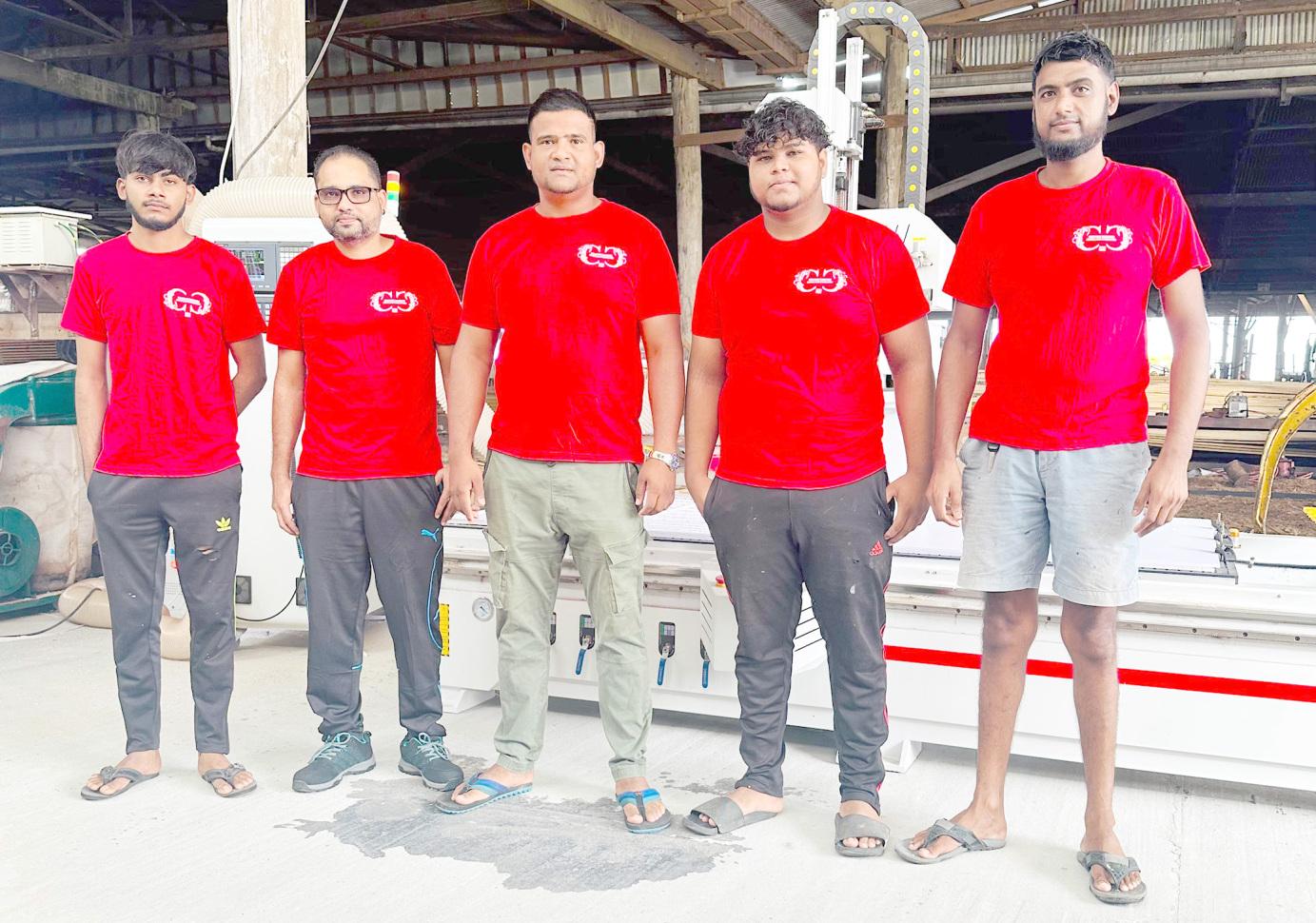
Mangal told Pepperpot Magazine that “Creative Carvings” has three full-time employees and is a registered business that is becoming known for its creativity, skills and specialised designs.
In addition, they do 3D channel-letter signs, logos for businesses, among other things, which are laser-etched—work they cannot do by hand; the machines do it for them.
Mangal explained that “Creative Carvings” is a product-based business which he founded in January 2024.
He
From Classroom Lessons to Culinary Creations
- Combining a love for education with the culinary arts
By Michel Outridge
AT just 23 years old, Zishel Anthonia Williams thoughtfully intertwined two lifelong passions, education and the culinary arts, into a purposeful and inspiring life’s journey.
What began as childhood memories filled with the aro-
mas of home-cooked meals and the joy of shared family recipes has evolved into a promising catering enterprise she established shortly after leaving high school.
A trained Home Economics educator, Williams graduated in 2023 from the Cyril Potter College of Education (CPCE) with an associate
degree in Home Economics.
She now serves as a fulltime teacher at Westminster Secondary School in Region Three (Essequibo Islands-West Demerara), while simultaneously pursuing a bachelor’s degree in education at the University of Guyana (UG).
Her professional pathway, however, was shaped long before she entered a formal classroom.
Raised in a household where cooking was a cherished family ritual rather than a routine task, Williams
grew up in an environment that nurtured creativity, discipline, and togetherness.
The kitchen was a space of learning and bonding, experiences that quietly laid the foundation for both her teaching career and her entrepreneurial ambitions.
Her mother, Ziska Williams, herself a Home Economics teacher and Headmistress of the Agricola Practical Instruction Centre, played a pivotal role in cultivating these interests.
From an early age, Zishel was encouraged to explore food preparation and understand the value of culinary competence.
After school, she often accompanied her mother to work, where she developed an early fascination with teaching. She fondly recalls arranging empty desks after classes and persuading the cleaner’s daughter to act as her student as she “played school.”
While attending the North Ruimveldt Multilateral School, Williams pursued the Home Economics stream, where her interest in food and nutrition deepened significantly.
Despite her natural talent, she had never initially considered turning her culinary skills into a business venture.
It was family members and those who regularly enjoyed her meals who first
recognised her gift and encouraged her to share it more widely.
Further inspiration came from observing her mother’s after-school Home Economics classes for school dropouts, conducted at their home to equip young people with marketable life skills.
This example helped Williams to view cooking not only as a passion, but also as a means of empowerment and enterprise.
In 2019, from her family’s residence at Lot 491 La Parfaite Harmonie, West Bank Demerara, she estab-
lished Z’s Delights Catering Service.
What began as a modest home-based initiative has steadily grown into a respected catering service known for its quality, taste, and presentation. Z’s Delights primarily caters to pre-orders during the week and is particularly popular for its Saturday lunch specials.
The menu includes cakes, pastries, cross buns, finger foods, desserts, natural fruit juices, traditional creole dishes, and seasonal snacks. Breakfast specials are TURN TO PAGE XIII
An order of cook-up-rice made by Zishel Williams
Zishel Williams, an empowered young teacher
The logo of Zishel Williams’ catering business
- Locally
Guyanese tech team launches platform to transform business reviews
IN a rapidly evolving digital landscape, a new Guyanese-made platform aims to change how businesses and customers interact.
“Review It,” developed by local tech company Luge Tech, is more than just a review site; it is a structured space that brings transparency, accountability, and balance to customer feedback.
At a time when most interactions play out informally across social media, the platform offers something different: a centralised hub where experiences can be shared, managed, and meaningfully addressed. For its creators, the goal is not simply to highlight complaints, but to create a culture where good service is recognised, and businesses are empowered to respond, improve, and grow.
Built in Guyana, for Guyana, “Review It” reflects a broader push towards digital innovation, while staying grounded in local realities.
“Review It” and the company behind the platform are backed by a few young Guyanese. The company has been working in the background for more than a decade, developing platforms and resources to improve the local business landscape.
As the Chief Executive Officer of Luge Tech, Andre Blair told Pepperpot Magazine that over the years the company has developed several other tools to improve how businesses interact with customers and vice versa.
“One of the unique things about Luge Tech is that we really want to enhance the technological landscape in Guyana, which we know is a major focus locally,” he added. “In doing that, we have been developing products that we see as necessary to improve how businesses interact with technology.
“Review It” is one of those
products.” “Review It,” he added, was developed over two years. Launched just last year, “Review It” was inspired by the traditional way that businesses interact. As Blair shared, the idea came from seeing the countless informal ways that businesses and customers engage.
built platform, ‘Review It,’ is reshaping how businesses and customers connect
story being told,” he said. He added, “We wanted to create a space where people can share their experiences, both positive and negative, and where businesses can demonstrate customer-service excellence in how they respond.”
Built in Guyana for Guy-
It allows businesses to show how they handle issues, resolve misunderstandings and engage with customers. It becomes a visible conversation between businesses and their customers. We also introduced features such as the business-resolution centre, where disputes or
is no local management or customisation for the Guyanese market,” he added.
“With Review It, businesses can actually benefit more in terms of visibility, even with search engines, because the platform is designed with the local landscape in mind.”
Since its official launch
Places such as Facebook comment sections have largely been how most businesses hear from their customers and are often the only places where customers can have their voices heard;
“Review It” aims to change that. “The idea for “Review It” came from observing how businesses and customers interact locally. In many cases, businesses go above and beyond to resolve issues, but there’s no real way for them to showcase that. At the same time, customers may voice dissatisfaction publicly, and that perception spreads without the full
businesses because of the negative perception associated with reviews. However, we believe they are missing an opportunity to showcase their customer-service excellence.”
Blair and his team say they understand these challenges and misconceptions, which is why Review It has been designed with measures to ensure trust, fairness, respect, and transparency. Even one of the major concerns of businesses, negative feedback, is handled in a way that promotes professionalism.
“We have built-in systems to ensure trust and fairness on the platform. For example, we have moderation tools that prevent inappropriate language from being posted. Profanity and certain terms are automatically filtered out, encouraging users to communicate in a respectful and constructive way,” he added. “This helps ensure that feedback is meaningful, professional, and can be addressed properly by businesses.”
ana, the platform enables users to share authentic reviews, photos, videos, and ratings based on real customer experiences, while providing businesses with tools to manage their reputation and engage with customers in a transparent digital environment.
An entirely free platform, Blair said, the idea is to strengthen the relationship between businesses and customers, with a focus on more than complaints. “It is not just about complaints, it’s also about highlighting great service and positive experiences,” he added. “Review
concerns can be mediated and resolved in a structured way, with outcomes that can be shared transparently.”
Review It is not only unique to Guyana’s business landscape, but is made for it. As Blair explained, the platform was developed with the needs and strengths of the local environment in mind, ensuring that it meets the needs of both Guyanese businesses and consumers.
“One of the major advantages of the platform is that it is built in Guyana, for Guyana, and managed locally. Unlike platforms such as Google Reviews, there
last year, “Review It” has gained support, with many businesses and consumers taking to the platform to express both positive and negative opinions. However, there have been some challenges with the pace of uptake. Speaking on why he believes this is the case, Blair said the platform is challenging both habits and perceptions. “What we have noticed is that “Review It” challenges an existing habit.
People are used to using Facebook for everything, so shifting that behaviour takes time,” he said. “There is also some hesitancy from
More than a simple addition to the landscape, “Review It” also reflects a technological shift. As more businesses seek to grow their online presence and convenience through digital interaction, platforms such as “Review It” represent the next step in connecting customers to businesses.
“We believe technology like [sic] this can improve service standards across the country by making customers’ interactions more transparent and accountable,” Blair said. He added that beyond connection, “Review It” also sets a standard for both businesses and customers. “Whether it is a small street vendor or a high-end restaurant, everyone has a space to showcase what they do and how well they do it.”
By Shaniya Harding
CEO of Luge Tech, Andre Blair and his team, Ken Taylor, Clint Eastman, Ivana Tonic and Sunaika Adolphus
Plans for Production of ‘Beyond...
including Indo and ethnic diversity, such as Amerindian villages.
The writer/director/producer, with 20-plus years’ experience in the entertainment industry, revealed that Beyond the Seawall builds upon his short film The Seawall.
Mason Richards’ narrative short, The Seawall, captures a poignant moment in Georgetown as a grandmother prepares her 10-yearold grandson for his migration to America. The film gained significant acclaim after being featured in the Liminal Space exhibition, curated by fellow Guyanese-born scholar Grace Aneiza Ali, who described the work as “poetic in every sense.”
Building on this creative synergy, Ali—whose curatorial work centres on global migration—has joined the producing team for Richards’ upcoming feature-length expansion.
The duo is currently inviting strategic investment and philanthropic support to scale this resonant narrative of the Guyanese diaspora for a global cinematic audience.
The cast and crew of the short consisted of local Guyanese non-actors, non-professionals, and students from the University of Guyana who worked alongside Mason and his Los Angeles crew. The
film offers a rare glimpse into the day-to-day lives of a Guyanese family, and stunningly captures how emigration affects those left behind.
Mason disclosed that, although heartbreaking, The Seawall is a fundamental story about hope and optimism. In addition to being Mason’s graduate thesis project at the renowned Film Directing programme at CalArts, the film allowed Richards to return to his home country, Guyana, to share what he has learned about filmmaking and tell a story “in the community – with the community… Guyana is a beautiful country with good people. I wanted to make a tonal film that captures the essence of a few people’s experience in the country I love so much.”
The Seawall short film can be streamed on YardVibes, part of the Caribbean Creativity initiative, on Vimeo On Demand and on YouTube.
Richards is the recipient of the 2012 Sony Pictures Entertainment Fellowship, presented as part of Film Independent’s Project Involve, a donor-named award designed to provide critical financial and professional support to an outstanding filmmaker with the potential to impact the film industry through global-minded new films from a new perspective.
He earned his MFA in Film Directing from CalArts, where he wrote and directed several narrative short films, including his thesis, The Seawall, which had its world premiere at the 2011 Festival de Cannes and has gone on to screen at the Havana International Film Festival in Cuba (2014) and several festivals around the world.
Mason’s immersion in the arts began as a teen growing up in Brooklyn, working as a professional actor in NYC’s theatre scene, and attending City-As-School—the legendary Manhattan alternative high school known for its experiential learning model and a radical alum roster that includes Jean-Michel Basquiat, Mos Def, and Julia Fox. He directed his first play, For Colored Girls Who Have Considered Suicide When the Rainbow is Enuf, during his freshman year at Vanderbilt University while earning his undergraduate degrees (BA in English, BS in Human Development). The production received rave reviews and marked Mason’s transition from being onstage to offstage and ultimately behind the camera.
A professor of film directing and screenwriting, Richards has curated several Community Outreach Programmes in collaboration
New film ‘Bushmaster’ puts Lethem’s landscape and...
the warmth of the people, the camaraderie, the resilience, that is the Guyana I know. That’s what I want to highlight. Even with all the development and change, those human qualities remain the same, and I don’t want to see that part lost,” he said.
The film is still in development. After the release of the production’s trailer, which featured some of Guyana’s best in theatre and acting, Noel said the film is now being shaped. Admitting that it is a slow process, he added that progress has been made and that people have expressed their interest. The trailer for Bushmaster was shown at a rodeo and received positive reviews. This support, Noel shared, is what has pushed him to continue production. “We are not coming in to change anything. We are coming to respect the culture, to
engage, to learn, and to tell a story that is authentic to Lethem. The film will reflect real language, real experiences, and real people,” he said.
As production continues with the help of new partners and sponsors, Noel and his team at Golden Arrowhead Productions remain motivated and dedicated to completing the project, despite the challenges. While hurdles in finance, logistics, and resources have caused some delays, Noel said that he and his team remain committed to making the story of ‘Bushmaster’ a reality.
“Producing something like this is not easy. But I have a small, highly motivated team that is pushing this vision forward. We are reaching out to companies, banks, and sponsors because the project requires significant resources, transportation,
with BAFTA-LA (British Academy of Film & Television Arts), Actors4Autism, The Young Storyteller’s Foundation, The Bill Duke Foundation, Tina’s Angels/Richard’s Warriors at the WACO Center, Hands4Hope-LA, and The Actor’s Fund, providing film courses and workshops to communities often underrepresented in terms of identity, gender, and ability.
Mason is an affiliated faculty member at Emerson College-Los Angeles and a regular ‘Filmmaker in Residence’ at Ithaca College. Mason also works as a Creative Consultant, Speaker, and Facilitator of cross-cultural communication for numerous non-profits, colleges, and universities internationally, and produces digital content and mini-docs around inclusion and intersectionality.
FROM PAGE III
accommodation, aviation. But I believe people will see the value, especially in terms of tourism and cultural promotion.”
While Noel and those involved in the film continue to work towards making it a reality, he noted that at its core, Bushmaster is about telling a Guyanese story. The aim, currently, is to secure a guest appearance by an international actor of Guyanese heritage; however, this requires funding. Regardless, he said production will continue as long as his vision remains alive.
“This project is groundbreaking. People have shot content in Lethem before, but not a feature film like this. It’s both a challenge and an honour to do something of this scale and to present Lethem and Guyana to the world in this way.”
The A.M. Creative Agency recently announced that international recording artist Juke Ross, the Guyanese-born singer-songwriter hailed by Rolling Stone for his “aching” and “soulful” sound, released the official music video for his latest single, Coffee Love.
Directed by Richards, the project marks a historic milestone for the nation’s burgeoning film industry as the debut production from The A.M. Creative Agency Guyana. The video is currently premiering on all major streaming platforms, launching on April 10.
Mason is also the co-founder and owner of The A.M. Creative Agency, a full-service creative agency and production house based in Los Angeles with associates in Guyana, New York, Miami, and London— creating inclusive content globally—and works as a consultant on brand marketing, utilising his expertise in both organisational and brand development through the lens of creative storytelling.
The Coffee Love production functioned as a hands-on masterclass, featuring local cinematographers mentored by Richards.
This marks the first official project produced by The A.M. Creative Agency Guyana, an extension of Richards’ U.S.-based firm. In tandem with the agency, Richards is launching The AM Creative Academy. This professional training arm is designed to empower local writers, directors, and production designers with the technical skills necessary for direct employment within the agency, ensuring Guyanese stories are told through an authentic Guyanese lens.
According to the agency, “Filmed entirely on location, Coffee Love serves as a vibrant visual love letter to Guyana’s capital. The production blends the historic elegance of the Herdmanston Lodge Hotel in Queenstown with the raw, authentic energy of the Tiger Bay district. This cultural collaboration was made possible through the dedicated support of Clinton Urling of the iconic German’s Restaurant and Guyanese superstar Timeka Marshall, both of whom served as key champions for the project.”
The Trap of Comfort in Mediocrity
IF time were a resource that could be owned and transferred, it would be the most valuable one in the universe. In fact, time is already extraordinarily valuable right now, when no one is truly in control of it. The very meaning of our lives lies in the things we choose to spend our time on. Every second and every minute quickly adds up to lifetimes.
When we look back at the end of our lives, we may not see a large picture that represents who we have become, but rather small pieces of a puzzle that tell the story of the choices we have made.
Ironically, even though we know time is a valuable resource, we are forced to spend much of it on seemingly trivial things. For instance, did you know that we spend approximately one-third of our lives just sleeping? Or that we spend around 11% of our lives simply waiting in queues, on hold over the telephone, for food to cook, etc.? Of course, most of these things, although annoying, are necessary for our day-to-day lives.
After all, even sacrificing one night of sleep to use that time for our work or our education can have detrimental effects on our health.
Nevertheless, these facts do lead our minds to wonder: what do we really spend our time doing, and are those things worth it?
This is a question we might be asking ourselves in several forms. Sometimes, we may ask ourselves whether we are fulfilling our inherent purpose through the things we do each day. Sometimes, we may ask ourselves if we are finding happiness through them. We may even wonder whether we are comfortable with ourselves.
All of these questions ultimately boil down to one important question: are we doing the right things every day?
Human beings are rather strange. We seek comfort and peace, but not the kind that is deep and wholesome. We often seek comfort in mediocrity.
Although we know that making sacrifices and persevering through difficult tasks can lead us to a better part of our lives, we choose to settle for a place that might not be the best we can do, but gives us comfort most immediately. By doing so, we not only miss crucial opportunities to fulfil our dreams but also lose valuable time we could be using to shape our futures.
If we take a few calculated risks, we might be able to start the business we
have always dreamed of, but we would rather stay in an unfulfilling job because it offers at least some stability. If we live a little uncomfortably for some time and save up money, we might be able to purchase the car or home we have always wanted to own, but we would rather live in the moment. Even in our relationships, if we make a few compromises where possible, we might build the kinds of partnerships or friendships that could change our lives. Yet, we would rather quit on a connection than spend any energy on it.
Soon, this willingness to settle for what we have rather than working for what we want bleeds into our outlook on the world in general. As a generation, we will become accustomed to accepting ideologies and aspects of our societies that we should be working to abolish.
We will allow ourselves to become desensitised to instances of injustice and disparity simply because standing up to speak against them will put us in a position of discomfort. In essence, our time - our most valuable resource - will become a mere token we exchange for a temporary state of comfort. It will no longer be an opportunity to grow and become better.
So, the next time we choose to put off something that could change our lives for the better, let us ask ourselves what we would like to look back on when we approach the end of our journeys. Let us vow to ourselves to place more effort into spending our time intentionally, even if it means giving up some comfort or making sacrifices. Before we realise it, our lives might change for the better.
CHILDREN, MAKE YOUR PARENTS PROUD
MAKING your parents proud is an admirable goal, but if you have trouble finding the path to a fulfilling life your parents will approve of, seize this opportunity to rely on the guidance of author Geary Reid. He knows better than anyone how difficult it can be for children and their parents to find common ground.
This guidebook offers practical steps to communicate effectively with your parents and build a strong bond based on mutual respect and love, along with additional advice on living a healthy lifestyle.
1. Understanding Your Parents
As children move from one stage of development to another, they tend to believe they are at the same stage as their parents. They may sometimes be reluctant to follow their parents’ guidance, since they think they understand many things.
There is a long journey that children must take to understand their parents and to gain some of their parents’ experiences. A child’s height and weight do not necessarily match those of their parents. The experience of some parents may be a great asset, so children should spend time learning from them. Learning from parents has no cost, but learning by trial and error can be very expensive.
Many young people feel they do not need to consult with their parents so that they may think and act differently from them. Some parents choose not to remind their children about the same matter regularly. Therefore, these parents may allow their children to gain first-hand experience because they refuse to take parental advice.
There are several ways to learn from and understand parents. Most parents share
certain ideas with their children whenever they are available. One of the challenges with some children is that they do not want to listen to their parents.
Once children become young adults, they come to understand that they are mature enough to make all of their decisions independently. Parents who wish to help their children must be willing to continue communicating with them.
On some occasions, parents may only provide instructions to their children, rather than engage in a flow of ideas with them. As children grow older, it is important to get their inputs on certain matters. Some children are willing to communicate with their parents, but they are sometimes afraid that it will be a monologue.
Parents must remember that they have a responsibility to keep their children informed and educated. Oftentimes, the home is a learning institution, and if children follow their parents’ advice, then they will have fewer challenges.
2. Observing Parents’ Actions
Understanding parents is not a one-day task. Children must first try to get close to their parents and then observe their parents’ actions. Not all parents like to talk about how things affect them, but their actions can speak volumes. Keeping a close eye on parents will provide many valuable lessons that help their children to appreciate their parents’ decision-making processes. Children can sometimes believe that their parents will make a decision just for their own benefit. However, parents sometimes make decisions based on what is flowing through their minds, external factors, and the information provided by
their children.
Many children may know that if they underperform, they cannot ask their parents for any favours. That child may have to choose another moment when it is most appropriate to communicate with their parents to seek a favour from them.
Parents! It is important to note that children must not be mandated to do good deeds to receive the benefits they are due. Parents have an obligation to provide for their children. Therefore, children should not have to negotiate for their parents to do the right thing. For example, it is essential and legally required for all parents to provide shelter and food for their children.
Some parents may have a private or quiet lifestyle. However, this must not stop their child from reaching out to them. Just because a parent does not say much does not mean they are not concerned about their child. In some families, one parent may do most of the talking, while the other may remain quiet or support the other parent. When both parents give different instructions to their children, it creates confusion. However, some children enjoy hearing conflicting views from their parents, as they choose not to act and blame their parents for giving conflicting instructions.
3. Financially Supporting Parents
Not every parent needs their children’s help. However, some parents will need some financial support. A parent doesn’t need to depend upon their children. Some parents abuse the opportunity to seek financial assistance. Parents who frequently seek their children’s support may cause their children to stay away from them. There is no harm in a
parent seeking financial assistance from their children. Parents have their own financial struggles and may need their children’s help. If the need is small and it can be addressed quickly with little effort, children should lend assistance.
Some parents may face significant financial challenges due to the number of family members and the level of investment they have previously made in the family. Not every parent will want to report their financial challenges to their children, since most parents think it is their sole responsibility to provide for them.
When parents decide not to rely solely on their children for financial assistance, it makes their children happy. Some children are willing to help, but continuous help may not be acceptable.
Many children will consider establishing their own families. Each person with a family will need most of the money they can earn. Therefore, they will want to minimise their expenditures. If they have to lend money, then it may be in the short term, rather than a long-term arrangement.
Children sometimes have a plan to help their family have a better life, so they save their money or use it wisely. Those children with families may incur expenses such as school fees, vehicle maintenance, and utility bills. With many of these expenses, these children may have many areas of expenditure to address on a regular basis and may not be willing or able to assist their parents very often.
Parents cannot depend on their children for financial assistance, as they may put
their children in an uncomfortable position of having to find money for their parents from the little they have.
When children have their own families, they may have to seek permission from their companions before making any financial decisions. Not all companions will agree to be the primary supporter of any parent, since they may think they have their own expenses to cover. When children constantly help their parents, they may create some challenges in their relationship.
For more information about Geary Reid and his books, please use this contact information: Amazon: http://www.amazon.com/ author/gearyreid, Website: www.reidnlearn.com, Facebook: Reid n Learn, Email: info@reidnlearn.com, Mobile #: 592-645-2240.
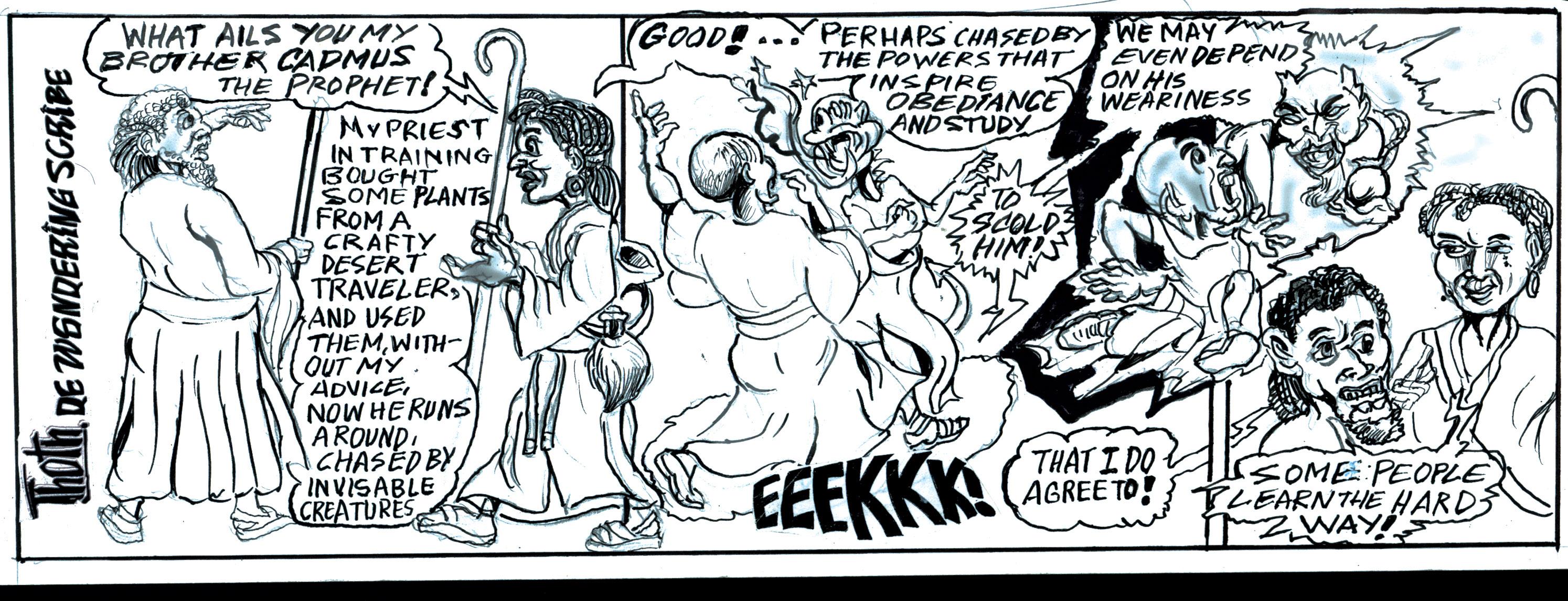
THE MYSTERIES OF OUR YESTER YEARS WHISPER TO US IN QUIET TONES
SOME thoughts linger in our imaginations, erasing today’s conversations.
Our world is draped betwixt the whispers of suspicion and the distrust of kin and all, the conversations that speak of things we have not been taught, so the mystery is awake, and we are too vulnerable, timid, and unsure to enquire of.
We humans are linked to the
mysteries of the past; no, not the historic past of plantations, etc., but the past of mysteries, and the possibilities of whispers of healing, and memories of elders who tell of the talents of past ancestors, who, through their kinship with the forests and choice plants, cured us, teaching even the masters of the day.
Slowly, and in our modern times, against the sinister planted
viruses of the day, a humble fruit boiled together with another was able to liberate many, including myself.
We have heard many tales of olden botanicals and used them, but the old ones were not anxious and took their time in applying their soups and, at times, their nottoo-tasty health potions.
We have to be cautious; with the hustlers of our day, survival
has defied patience and caution, so we must return to the counsel of the elder souls.
This will also call for the current generation to pay attention to and explore books we did not pay attention to not too long ago. We are discussing the entheogens of our era.
Seek in the study of anthropology and medicine, but do work at home also; learn from those who
stayed closer to the old folk and learnt a thing or two that those who strayed did not hear. The study of healing is both modern and ancient.
There are things that they call cultural practices; take no heed of the ‘high’ fantasies of artificial poisons that have placed so many on the streets, as the wise would say in warning, “Deh pon yuh heights and live wise”.
Who Pays the Price: The Woman Who Takes or the Woman Who Feels Who Pays the Price: The Woman Who Takes or the Woman Who Feels
I FEEL this is a topic we don’t talk about much, or at least we don’t even think about it enough, so let’s have a discussion. Some women treat relationships like a financial arrangement with emotional bonuses. They receive, they secure, they position themselves so that the man provides, protects, and invests, while they remain detached enough to walk away without emotional damage. Their system works because they never overextend, their feelings stay regulated because their expectations stay practical, and when and if they leave, they leave with their peace intact, their needs met, and their dignity untouched.
Other women approach connection from a completely different place. They lead with emotion, they invest in presence, honesty, and depth. They expect love to be real, mutual, and meaningful. They do not measure every gesture or calculate every return. They give because they feel, and they stay because they believe in what they are building.
This set of women leaves with questions, with emotional residue, and sometimes with the kind of exhaustion that requires healing. So the question is very clear. Why does one woman walk away untouched while the other needs therapy?
Psychology answers this without hesitation. Dr Ramani Durvasula explains that emotional detachment creates a protective barrier. People who maintain distance regulate their nervous system more effectively because they do not tie their identity or stability to another person’s behaviour.
Their investment stays controlled, which means their emotional risk stays low. This type of control creates a predictable outcome: less attachment leads to less emotional fallout.
On the other hand, Dr Thema Bryant discusses how emotional investment activates deeper psychological patterns. When someone shows up fully, they engage their attachment system, their expectations, and their sense of self-worth. The experience becomes meaningful, and meaning increases emotional impact. That depth creates an outcome in which greater attachment produces greater emotional consequences. Now, let us remove the romance from this conversation and look at it clearly.
A woman who treats a man like an ATM operates from a strategy. She understands leverage, she understands positioning, she understands that access to her presence holds value, and she exchanges that value for security, comfort, or lifestyle. Her focus stays external, her reward stays immediate, and her emotional exposure stays minimal.
A woman who seeks love operates from experience. She values connection, depth, and emotional alignment; she invests in the intangible aspects of a relationship, and she expects those same qualities in return. Her focus stays internal, her reward feels meaningful, and her emotional exposure increases. Both women receive results that match their approach, but here is where the conversation becomes uncomfortable. Using someone for provision creates a dynamic where respect becomes conditional. The
interaction may feel smooth, beneficial, and even enjoyable, but it lacks depth. Over time, that lack of depth limits fulfilment, even when the external benefits remain attractive. At the same time, giving emotionally without discernment creates vulnerability without protection. That openness allows connection, but it also allows disappointment when the other person does not match the same level of investment.
So both approaches carry a cost. One sacrifices depth for stability, and the other risks stability for depth. The difference shows up in the aftermath.
Carl Jung spoke about the unconscious patterns that drive behaviour. People repeat what feels familiar, even when it produces mixed results. A woman who prioritises security may have learned early that stability matters more than emotional expression. A woman who prioritises love may have learned that connection defines value. These patterns do not make one woman better than the other. They explain the choices.
Now let us talk about balance, because this is where power actually lives. A high-value woman understands both worlds. She understands her worth and her heart. She brings value into the space, brings presence, emotional intelligence, and the ability to build something meaningful. She nurtures, she supports, and she contributes in ways that go beyond surface-level exchange.
At the same time, she expects provision, stability, and leadership from a man who is capable of holding that role. She allows him to lead without surrendering her
standards. She receives without guilt and gives without losing herself. She does not operate from extraction or overextension. She operates from alignment, which creates a different kind of experience. She feels secure without being dependent, feels connected without being consumed, and feels valued without needing to prove it. This is where peace and fulfilment meet.
Now the original question answers itself. Who walks away free? The woman who protects her emotional investment walks away lighter. Who ends up needing therapy?
A woman who understands her patterns, her value, and her emotional tendencies gains the ability to choose differently. She creates relationships that reflect balance instead of extremes. She no longer needs to choose between being untouched and being overwhelmed. She chooses something better. She chooses herself. Join me next week, where we discuss the men’s side of the equation, but for now, let’s close with poetry as usual.
Have You Noticed?
“Have you noticed,” she said with a sigh, “how some women never break, never cry? They love with limits, measured and smart, Never confusing a man with their heart.
They read what he brings, not what he says, They count his effort in tangible ways, They walk away clean, untouched, unaware
Of the weight that comes with actually caring there.
Then there are women who give without cost,
Who don’t keep score till everything’s lost,
Who ask for nothing but presence and truth,
And pay for it later in lessons and proof.
They stay for the feeling, the bond, the belief, They nurture the man, then swallow the grief, They pour and they pour till there’s nothing to spare,
Then sit with a stranger called pain in despair.
“Tell me,” she paused, “who really wins,
The one who calculates, or the one who gives in?”
For one walks away with her peace intact,
While one needs healing to piece herself back.
It isn’t about who is wrong or right,
But what you value when love’s in sight,
For some choose comfort, detached, in control,
While some choose depth, and pay with their soul.
“And maybe,” she whispered, steady, aware, “it’s not that one is more or less fair,
But loving without knowing who can receive
Will always cost more than you believe.”
Romella Dasratt
Local entrepreneur establishes ‘Creative Carvings’
Owner/Chief Executive Officer and that Deon Mangal, the Chief Operations Officer, co-founded it.
Mangal added that it is a business that heavily depends on social media to advertise and interact with customers.
The business can be found across most social media platforms (Facebook, TikTok, Instagram and WhatsApp).
Mangal reported that they
have a showroom at Tuschen Public Road, in the upper flat of Builders Choice Lumberyard, and he also has displays at two other stores owned by Aresha’s Fashion at Farm, East Bank Essequibo, and at Meten-Meer-Zorg, West Coast Demerara.
He said “Creative Carvings” utilises modern technological equipment to develop products with superior quality and exquisite style.
“We are known for many different types of products we make, but the product that has managed to really put us ‘on the map’ is our crafty, stylish and modern Hindu altars. We are now known to some as the ‘Altar Boys.’ We aim to create custom-built masterpieces to suit each cus-
tomer’s space, style and, of course, their budget,” he said.
Mangal added that the material used to make the altars is mostly kiln-dried pine lumber and Celuka (PVC board). Both are durable materials and yield quality work.
“We do site visits to take measurements and to get a
greater understanding of customer requirements. We also offer delivery and after-sales services.
We can be contacted via call or WhatsApp on +592695-0538 (Kenny Mangal) or +592-687-7848 (Deon Mangal) or any of the social media platforms,” he said.
Electrical Engineer Kenny Mangal and the staff of “Creative Carvings”
From Classroom Lessons to Culinary Creations
also offered on Mondays, Wednesdays, and Fridays. Every item is prepared from ‘scratch,’ and Williams places great emphasis on freshness, portion size, presentation, and careful garnishing to ensure an appealing culinary experience.
Her decision to start the business was partly influenced by the limited availability of high-quality, readily accessible food options on the West Bank of Demerara.
Recognising this gap, she positioned her service to meet a genuine community need. Through strategic use of social media platforms and strong word-of-mouth recommendations, her customer base has continued to grow
steadily.
Balancing her responsibilities as a full-time teacher, university student, and entrepreneur demands exceptional discipline and time management.
Williams attributes much of her success to the unwavering support of her family, including her father, Sheldon Williams, a Major in the Guyana National Reserve/ Guyana Defence Force and Operations Officer at the Civil Defence Commission, along with her mother and her brothers Sheldon Jnr and Daniel, who frequently assist with the business.
“Running a catering service while being a teacher and attending classes at UG
is by no means an easy feat,” she shared. “But I do it anyway because I do not believe in giving up easily.”
Her journey has required considerable sacrifice. Much of her limited free time is devoted either to her studies or to her business, as she believes idleness is not an option for a young entrepreneur with a vision.
Currently, Williams is further expanding her production system to automate a few aspects of her operations to meet the growing demand, which she is grateful for.
For her, this step, especially with the introduction of commercial equipment, will improve the efficiency of her kitchen, another practical
step towards expanding her operations and enhancing productivity.
A firm advocate for food safety and quality, Williams remains committed to delivering products and services of the highest standards.
She believes that, as Guyana’s economy continues to expand through tourism, oil and gas, and other extractive industries, this is an ideal time for Guyanese entrepreneurs to invest and capitalise on emerging opportunities.
Looking ahead, she also intends to establish a cosy café at her La Parfaite Harmonie location, designed to embody the warmth of traditional Guyanese hospitality, while offering authentic local
cuisine.
Over the longer term, she plans to explore the untapped potential of street food within the framework of gastronomy tourism by introducing branded food caravans in Region
Three, all operated in strict adherence to established food- safety standards.
She takes pride in sourcing fresh, wholesome, local ingredients and maintains that hygienic food preparation, coupled with excellent customer service, are the hallmarks of her operations.
These planned initiatives, she believes, will create meaningful employment opportunities by recruiting and training graduates of the
Carnegie School of Home Economics, thereby contributing to job creation and skills development within the community.
Zishel Anthonia Williams’ story is a testament to the influence of family, the value of practical education, disciplined time management, and the courage to transform passion into enterprise.
As she continues to inspire her students in the classroom and delight customers from her kitchen, she exemplifies the spirit of a new generation of Guyanese youth, skilled, determined, and unafraid to create their own opportunities.
On The Chocolate War by Robert Cormier
ROBERT Cormier’s 1974 novel The Chocolate War stands among the indelible classics of young adult American literature, alongside works such as J.D. Salinger’s The Catcher in the Rye, Judy Blume’s Are You There God? It’s Me, Margaret, Paul Zindel’s The Pigman, and S.E. Hinton’s The Outsiders and Rumble Fish. Later contributions to the genre—Adam Rapp’s 33 Snowfish, Stephen Chbosky’s The Perks of Being a Wallflower, and Laurie Halse Anderson’s Speak—continue this tradition.
Caribbean counterparts may be found in Michael Anthony’s The Games Were Coming, Jan Carew’s The Wild Coast, Oonya Kempadoo’s Buxton Spice, Berkley Wendell Semple’s Kipling Plass, and Dwight Thompson’s My Own Dear People.
What unites these novels is their unwavering commitment to the realities of adolescence. They confront mature themes—sexuality, politics, alienation, and personal trauma—with honesty and urgency. Embedded within them is a prescient insistence on self-examination.
Yet arguably no writer has depicted teenage reality with the same unflinching directness as Robert Cormier. His body of work—including I Am the Cheese, After the First Death, Fade, and The Rag and Bone Shop—represents a sustained engagement with teenage angst, anomie, and moral ambiguity. Of particular importance is The Chocolate War, a powerful and unsettling novel that operates not only as a comingof-age story but also as an intense, politically resonant critique of society and its discontents.
At its core, Cormier’s novel articulates a clear po-
litical ideology—one that closely resembles authoritarianism. Authoritarianism is characterised by strict obedience to authority, the suppression of dissent, and the enforcement of social control through coercive means. It emerges from the presumption that those in power possess an exclusive understanding of what is right, coupled with an intolerance for opposition.
Dissenting voices are not merely ignored but often treated as threats to the collective good and are therefore silenced.
Cormier’s fiction, often described as “dark”, consistently explores the struggle of the individual against powerful, frequently malicious systems. Indeed, Cormier himself framed his work as depicting “the individual versus the system”. The Chocolate War, perhaps his darkest novel, exemplifies this conflict with striking clarity.
This ideological framework is evident in the novel’s characters, narrative structure, and symbolic language. The story is set at Trinity High School, a boys’ Catholic institution temporarily under the control of the manipulative and morally bankrupt Brother Leon.
Leon enlists Archie Costello, the sadistic and calculating leader—or “assigner”—of a secret student society known as The Vigils, to enforce participation in the school’s annual chocolate sale, upon which Leon’s reputation depends.
The Vigils operate through intimidation, coercion, and psychological manipulation. Their “assignments” include pranks, disruptions, and acts designed to humiliate or control others. Freshman Jerry Renault is assigned to refuse to sell chocolates for ten days. The
true conflict begins when Jerry continues his refusal beyond the assigned period, transforming a temporary act into a genuine stance of dissent. What follows is his systematic persecution by The Vigils, the student body, and Brother Leon himself, culminating in a brutal and deeply unsettling climax.
On the surface, the novel appears to recount a simple act of defiance and its consequences. Beneath this simplicity, however, lies a disturbing allegory of authoritarian control. Trinity functions as a microcosm of a repressive state, mirroring the structures, behaviours, and psychological mechanisms of authoritarian regimes. The novel is unmistakably political in both theme and execution.
The poet and Nobel laureate Joseph Brodsky argued that fiction reflects reality— that even the most imaginative narratives possess real-world counterparts. This principle is clearly borne out in The Chocolate War, where the parallels between Trinity High and authoritarian systems are both deliberate and compelling.
Within this framework, Brother Leon and Archie Costello emerge as embodiments of state power. Their authority is maintained not through consensus, but through fear, manipulation, and division. Like many authoritarian regimes, their system thrives on secrecy, hierarchy, and the suppression of individuality. Trinity becomes a closed society in which conformity is enforced, and dissent is punished.
Jerry Renault’s refusal to sell chocolates represents a direct challenge to this system. His act of defiance undermines the culture of obedience upon which the school depends. In response,
the system mobilises against him, employing tactics that mirror the “divide and conquer” strategies of authoritarian rule. Students are encouraged—implicitly and explicitly—to isolate, ostracise, and ultimately destroy
the dissenter.
Archie’s philosophy encapsulates this worldview. He understands human nature in terms of weakness and exploitation, believing that people are fundamentally driven by greed and cruel-
ty. This cynical perspective enables him to manipulate others with precision. Similarly, Emile Janza, Archie’s chosen enforcer, embodies the regime’s brutal arm. His insight—that most people TURN TO PAGE XXIII
A RAINY DAY IN APRIL
SHE stood at the car park, huddled under her umbrella from the steady, heavy drizzle, hoping for a car to pull up soon. There were none at the park at that mid-afternoon hour, most likely because of the rain. It had been raining continuously for the past three days, and the young woman shivered a little from the chilly wind.
“I don’t want to reach home late,” she said to herself.
A few other passengers were waiting also, and about half an hour later, two cars pulled into the park. She managed to get into one and heaved a sigh of relief.
She was slightly wet, and as she settled into the front passenger seat, she took a small towel from her bag and dried her arms and face.
The driver, a young East Indian guy, got into the car at the same time and, looking at her, said with a slight smile, “Refreshing fragrance.”
She looked at him and smiled a little as he turned to the other passengers in the back seat, one woman and two gentlemen.
“Is everyone good there?”
“Yes,” they answered.
“Okay, let’s go.”
“This weather is bad,” the middle-aged woman said. “Please take your time, driver.”
“I always do,” he assured her.
Melissa sighed a little and relaxed against the seat during the drive home. She had just come from the Corentyne after visiting her grandmother. It was something she did once every two months to make sure her
health was good, refill her medications, and restock her kitchen with groceries.
“Bless your heart, child,” her grandmother always said to her. “You have been taking such good care of me.”
“It’s nothing compared to what you did for me,” Melissa had told her. “You took me in after my parents went their separate ways, and you took great care of me.”
It always gave Melissa a good feeling for all she could do for the woman who
had been her world. Today, though, she was returning home with just a few dollars that couldn’t pay the car fare, but she had called her boyfriend, telling him to take the money from the emergency fund at home and stand by to pay the driver. She always carried extra money in her purse, but that late morning, as she was leaving her grandmother’s house, a single mother from the neighbourhood approached her, asking for assistance for
her young children.
She smiled to herself, remembering the relief on the mother’s face, and came back from her musing when the driver asked her, “Do you like Bollywood music?”
“Yes,” she answered, for though she was an African girl, she loved Bollywood music and dance.
He played songs from the hit movie Kuch Kuch Hota Hai, and she said with a pleased smile, “I saw that movie twice.”
The African woman at the back quipped, “I saw that movie too, let’s hope you don’t stop the car and we have to go dance in the rain.”
Everyone in the car laughed, and the driver shook his head, quite amused.
“Well, that’s a good one.”
He seemed like such a pleasant guy with a warm personality, something that Melissa liked in a person.
She reached her destination at Non-Pariel on the East Coast, just as the rain had eased up, and said to the driver as he handed her her overnight bag, “Just give me a moment, please, to collect the money.”
“Sure,” he responded.
Her boyfriend, Trevor, was outside the yard under a makeshift tent playing cards with a few friends. Melissa signalled to him, “The money, please.”
“Just now,” he responded.
“I can’t leave this game.”
She turned to the driver to say, ‘Just now,’ but Trevor continued with the card game, and Melissa signalled him again: “I can’t have the driver waiting.”
“All the emergency money is in this game,” he said to her under his breath.
“What?!” Melissa exclaimed in disbelief.
The driver approached her and said, “The other passengers can’t wait any longer.”
“I’m sorry,” she apologised. “I asked him to stand by with the money, but he’s gambling with it.”
“Darn,” the driver said. “I can’t wait for that game to end, but you know what, you can pay me whenever you see me again. Take care.”
That left Melissa feeling so embarrassed. She went into the moderate flat concrete house she shared with Trevor and sat wearily on TURN TO PAGE XXII
Nature’s Tranquil Escape and Farm
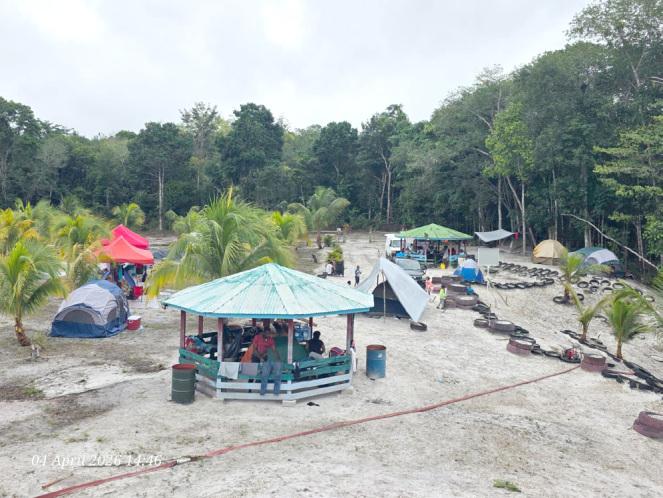
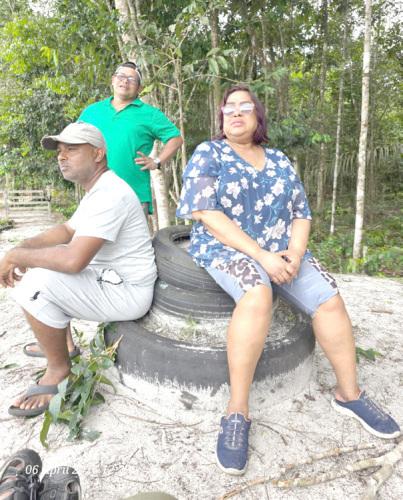
MORE than 50 members of the Great Diamond New Testament Church of God enjoyed a memorable and spiritually uplifting Easter weekend retreat at Nature’s Tranquil Escape and Farm, located at Long Creek, Tigerbone Banakari, Soesdyke-Linden Highway, from Good Friday, April 3, to Easter Monday, April 6, 2026.
The visit brought together members of the church for a period of fellowship, reflection, rest and
spiritual renewal during one of the most sacred periods on the Christian calendar.
Among those present were Pastor Sahadeo and Senior Magistrate and Bishop Clive Nurse, whose presence added to the significance of the occasion.
Set in a peaceful natural environment, the retreat provided an ideal setting for worship, togetherness and meaningful interaction away from the demands of daily life. Throughout the stay, members
Great Diamond New Testament Church of God enjoys Blessed Easter Weekend retreat at Nature’s Tranquil Escape and Farm
were able to share in the true spirit of Easter while enjoying the calm and refreshing atmosphere of the location.
Despite periods of challenging weather, the gathering was regarded as a success, with those in attendance expressing appreciation for the warm hospitality and overall experience. The visit was described as both refreshing and fulfilling, offering an opportunity for members to bond, reflect and celebrate the Easter season in a tranquil setting.
Proprietor of Nature’s Tranquil Escape and Farm, Mr Jairam Ramlakhan, expressed pleasure at having hosted the group and extended sincere appreciation to Pastor Sahadeo, Magistrate Clive Nurse, and the members of the Great Diamond New Testament Church of God for choosing the location for their Easter weekend retreat.
He noted that it was a privilege to accommodate the church group during the observance and expressed gratitude for the respect
shown to the property throughout their stay. He also conveyed his satisfaction that the visitors were able to enjoy the hospitality, serenity and overall atmosphere of the venue.
The Easter weekend retreat stood as a meaningful occasion of faith, fellowship and renewal and further highlighted Nature’s Tranquil Escape and Farm as a welcoming destination for peaceful gatherings and wholesome experiences.
A RAINY DAY IN APRIL
the sofa. He came in fifteen minutes later and threw a wad of notes in her lap.
“I told you the money was in the game.”
She sat up, took the money, and put it down on the centre table.
“Do you know how embarrassing that was for me?”
“It wouldn’t have happened if you hadn’t spent all your travelling money on helping people.”
“I can’t believe you said that,” she said, displeased. “It was our emergency fund, suppose you had lost?”
“I don’t play to lose,” he smiled with confidence.
That night, sitting alone on the sofa, not focused on the TV, she sighed a little, disheartened. She and Trevor had been living together for three years now, with a plan to work and save to acquire their own home and get married. She had a small catering business, and he worked in construction, but there were days when he didn’t go to work, and now he had started gambling.
It began raining again, and she closed her eyes. “Should I worry?”
She went to bed with the thought that she may have to have a serious talk with him about the gambling, but she didn’t get to address the issue because he went to work all week, and life returned to normal, but not for long.
Two weeks later was one of his close friends’ birthdays, an all-night celebration at one of the top clubs in the city.
Melissa did not go with him because she had to work late that night to deliver a big order the next morning.
In addition to that, she wasn’t much of a party girl or club girl; she liked simpler things like a beautiful dinner at a classy restaurant. Trevor blew two weeks’ salary at the birthday, leaving Melissa to cover the bills for that month.
“How are we going to build for a future like this?” she asked herself, a deep worry in her mind, but she did not say anything to him because it was starting to make less sense to her to remind him a bout their plans to build for their future.
Two weeks later, Melissa received a message that her grandmother wasn’t doing too well.
“Dear Lord,” she prayed silently as she travelled down early the next morning, “Please help her get better.”
It was raining again, and at the New Amsterdam park, she looked around for the driver to whom she owed a fare. He wasn’t at the park, and she asked two other drivers there for his description.
“Oh, it’s Nikhil,” one of them answered. “He hasn’t come to the park as yet.”
“I owe him some money,” she said.
The rain came down heavier, and one of the drivers called Nikhil, “Bro, there’s a beautiful girl here looking for you, says she owes you some money.”
After a short while, the driver told Melissa, “He’s on his way,” and quietly said, “I wish a beautiful girl could owe me some money.”
Melissa heard him and said quietly, “Oh boy.”
About fifteen minutes later, Nikhil arrived at the park and approached Melissa, surprised. “In all the rain, you’re waiting to pay me?”
“Well,” the driver who had made the call said, “her description of you was, ‘He’s quite good-looking.’”
Nikhil looked at her, pleasantly surprised, and she hurriedly explained, “That has nothing to do with it. I really felt bad about what happened that day.”
“It’s okay,” he assured her. “Anyway, come in the car, it’s raining too heavily.”
He opened the car door for her, and once she was settled, he asked, “Where are you going in this bad weather?”
“To the Corentyne, I received a message that my grandma is unwell.”
He looked at her, the worry on her face, her halfwet skin. Then he looked at his watch and said, “I have an airport trip in half an hour, but I will take you to your grandmother. Can’t leave you here in the rain.”
“Thanks, that’s kind of you.”
“Well, I like to help as much as I can.”
“That makes two of us.” She looked at him and smiled, a strange warmth surging through her being, and on that rainy day, something changed for her.
To be continued…
FROM PAGE XV
On The Chocolate War by Robert Cormier
avoid conflict at any cost— becomes a tool for domination, allowing him to exploit fear and enforce compliance.
Even within The Vigils, dissent exists, though it remains suppressed. Characters like Obie and Carter experience discomfort and moral conflict, yet ultimately conform. Their internal resistance highlights a key feature of authoritarian systems: dissent may exist privately, but it rarely manifests publicly due to fear of reprisal. Goober’s quiet withdrawal from participation represents another form of resistance, yet it too proves ineffective in altering the system. Individual acts of defiance remain isolated and ultimately futile.
The absence of moral authority within Trinity further reinforces the novel’s bleak vision. Despite being a religious institution, the school lacks spiritual guidance or ethical grounding. God is conspicuously absent from the consciousness of both students and faculty.
This absence suggests a world in which moral accountability has been eroded, leaving only power and self-interest.
Critics such as Anita Tarr have argued that the novel’s lack of moral agency renders it nihilistic. While this perspective has merit, it may also be argued that Cormier’s realism necessitates such bleakness. In portraying a world where justice does not prevail and resistance is crushed, the
novel reflects the harsh realities of authoritarian systems. Its refusal to offer comfort or redemption is precisely what gives it its power.
Religion, which might otherwise serve as a counterbalance to authoritarian control, is rendered ineffective within the novel. This mirrors real-world regimes in which religious institutions are either suppressed or co-opted by the state. At Trinity, religious symbolism persists in name only; its ethical substance has vanished.
Ultimately, The Chocolate War is a profound exploration of the individual’s struggle against overwhelming systemic power. Jerry Renault’s failure is not a narrative flaw but a deliberate statement: in authoritarian systems, the individual rarely triumphs. His brutal defeat underscores the cost of dissent and the resilience of oppressive structures.
The novel’s enduring significance lies in its unflinching portrayal of power, conformity, and resistance. Through the microcosm of Trinity High School, Cormier exposes the mechanisms of authoritarian control and challenges readers to confront uncomfortable truths about human nature and society.
In doing so, The Chocolate War transcends the boundaries of young adult fiction, establishing itself as a work of lasting political and literary importance.
STUDY SUCCESS
Welcome, fellow reading friend. During your time of revising and sitting examinations, try to develop a degree of positive anticipation. This good expectation keys you up and makes you ready to work. It promotes your alertness, attentiveness, and concentration.
It boosts your energy;
increases your work speed effectively; helps you to be more attentive to detail; and sharpens your examination performance. No student should ever get tired of examination preparations. Your strategy today will determine your success tomorrow. Be wise. Love you.
IMPROVING WRITING
Direct speech and conversation in story writing (Cont’d)
1) Reminder: To use direct speech and conversation - vital tools in story writing – is to use enablers to move a narrative from a simple retelling of circumstances and occurrences into an engaging, immersive experience. When writers quote their characters directly, they can
April 12th, 2026
show – rather than tell – the story and make scenes more immediate and dynamic for you, its readers.
2) Here is what happens: a) Character personality and emotion are revealed which help create distinction between characters so readers can even distinguish between them without dialogue tags.
b) Plot gets advanced smoothly.
c) Reader gets to witness and appreciate live scenes in real time.
d) The What, How, Where, and Why things that are said by characters make them more memorable and engaging.
e) Speech types create immediate drama and emotional impact on readers.
f) Direct speech intensifies tension and conflict, but deep silences are sometimes more powerful than spoken words.
g) It creates what is unsaid and have readers resolving to read “between the lines” to get more engaged with the narrative.
h) It develops relationships between characters so that the readers can see how and why characters speak like they do to one another.
Study the passage below and respond to the two questions that follow it:
“Do you see those white threads?” I said to Kouyaté.
“I can see them. They are always there after the ceremony in the clearing.”
“Who puts them there?”
Kouyaté shrugged his shoulders.
“That’s where they come from,” I said, pointing to the distant bombax tree.
“Someone must have climbed up.”
“Who could possibly climb up a bombax tree?”
“I don’t know.”
“Could anyone possibly get his arms around such a huge trunk?” I said. “And even if he could, how could he hoist himself up on a bark covered with all those thorns? You’re talking nonsense. Can’t you imagine what job it would be, just to reach the first branches?”….
“How should I know any more than you?” said Kouyaté.
“But this is the first time
There are only two families in the world, as a grandmother of mine used to say: the haves and the have-nots.
MIGUEL DE CERVANTES (1547-1616) “Don Quixote”
I’ve attended this sort of ceremony. Whereas you ….”
“The swallows tie them on,” said Kouyaté suddenly.
“Swallows? Are you crazy?” I said, “Swallows do not fly by night.”
I questioned one of the older boys who was walking beside us.
“It is our great chief who does it,” he said. “Our chief turns himself into a swallow during the night. He flies from tree to tree and from hut to hut, and all these threads are tied on in less time than it takes to tell.”
“Does he fly from tree to tree?” I asked. “Can he fly like a swallow?”
“Why, yes, of course! He is a real swallow. He can fly as swiftly as any swallow. Everybody knows that!”
“There! What did I tell you?” said Kouyaté.
I did not say another word….
(Camara Laye’s “The African Child”)
1 Discuss in detail how Laye’s artistry of much dialogue in this part of the story attracts readers to the work.
2. Write a short story intended to attract a wide, inquisitive set of readers. Pay attention to speech types and characters; and plot to create immediate drama and emotional impact on the reader.
GRAMMAR
Making verbs agree with their subjects
A verb should agree in person and number with its subject. Sometimes we get misled by a phrase that follows a subject. Phrases beginning with such expressions as: ‘accompanied by,’ ‘as well as,’ and ‘together with,’ are especially troublesome. Not one of these
phrases affects the number of the subject. Once you have found the subject, pay no attention to phrases following it.
[But if the subject is “all, more, most, part, some; a fraction; or a per cent” and is followed by an “of” phrase, use a verb that agrees with the object in that phrase.
NOTE: This second rule is not being dealt with today.]
Examples:
1. a) A long line of ex-workers was awaiting the employment clerk since 8 o’clock. (‘Line’ is the subject; the singular verb ‘was’ is needed.)
b) A string of tilapias now hangs across the right shoulder of the village fisherman. (‘String’ is the subject; the singular verb ‘hangs’ is needed.)
2. a) Bartholomew, as well as Priscilla, his wife and Gertrude, his sister-in-law, is watching the 6 o’clock local news. (The sentence structure has ‘Bartholomew’ as its subject; ‘is’ is the correct verb.)
b) Onion, as well as garlic, is used in home remedies to fight difficult strains of influenza. (Here ‘onion’ is the subject; the singular verb ‘is’ is needed.
If the singular verb sounds awkward to you, recast the sentence: Onion is used in home remedies to fight difficult strains of influenza, as is garlic.)
c) Beef, as well as pork, is the main ingredient for a wide range of stews and soups in Guyana. (Here ‘beef’ is the subject; the singular verb ‘is’ is needed. Sentence recast: Beef is the main ingredient for a wide range of stews and soups in Guyana, as is pork.)
Correct Dental Care
EVIDENTLY, most people have been misinformed about brushing, flossing and using some advertised products; they all still fall short of what’s required for genuinely effective oral (systemic) health maintenance, by far, even though together they make up the current standard for oral care. Consequently, dentists frequently encounter these grievously misled patients, much to our chagrin.
What makes home-care efforts so vexing for the dentist, and so frustrating for their patients who find out their efforts aren’t working, is that many people think that state-of-the-art home care is basically just brushing well two or three times a day and flossing at least once a day. Most people now know how to brush and floss after every meal, three times a day, and floss thoroughly at least once a day, probably because this message has been drummed into their heads over the years by toothpaste and mouthwash advertisements that encourage them to buy and use certain products.
Let’s begin with the shortcomings of brushing. One must obey the Rule of Thoroughness. This Rule states that the total time spent cleaning the mouth over 24 hours must be equal to the number of natural teeth, in minutes. For example, if a person has 20 teeth, they should spend at least 20 minutes every day brushing and flossing. Compounding the frequently ineffectual homecare regimen is the notion that flossing somehow cleans under the gums. It does, but only so far as the soft tissue on the tongue side and cheek of the tooth will let it.
The depth below this level is where most of the disease occurs (gingivitis excepted). While flossing has definite benefits for many who practise this important task, it has been reported that only 2 per cent of the population flosses every day. Even doubling that to 4 per cent still leaves 96 per cent of the
public not flossing even once a day. And those who floss can’t clean the bacterial stew out from under the gums. In fact, although flossing does move the plaque and food debris that builds up between the teeth and does dislodge some of it so it can be cleansed out of the mouth, the balance of the debris is forced into the sulcus (crevice between tooth and gum).
Appropriate oral health cannot be best achieved by exclusively using healthy products and techniques. I want to make it clear, just for the record, that I am all for brushing and flossing.
Both activities are fundamental oral health procedures, and both offer benefits when done frequently (brushing and flossing must be done often enough to keep plaque and other debris removed by these activities at sufficiently low levels to ensure that the gum tissue remains healthy).
I especially want a patient’s brushing and flossing efforts to be effective and non-injurious, but unfortunately, I often see just the opposite. It is extremely common for dentists to see toothbrush abrasion caused by improper brushing or by using the wrong kind of brush. As I said in previous articles, hard and medium brushes should only be used for cleaning small motor parts and boots, not teeth.
As far as flossing is concerned, gingival clefts (cuts) are also inflammatory injuries to the gums. This not only allows microorganisms into the body but also causes gum and bone recession, and even occasional tooth loss (For some reason, I’ve seen moderate to severe flossing damage almost exclusively in women, some of it requiring surgery to repair the damage!) These are very poor rewards for such vigorous efforts intended only to improve health. Both brushing and flossing can be performed effectively and without injury.