

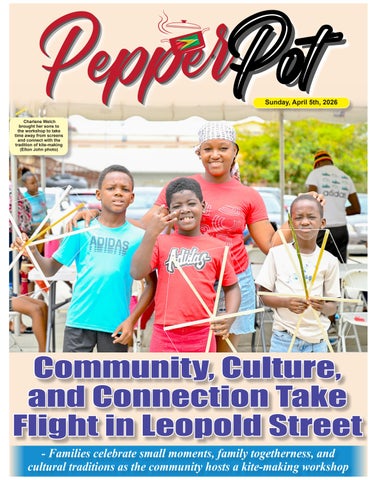
- Families celebrate small moments, family togetherness, and cultural traditions as the community hosts a kite-making workshop




By Shaniya Harding
AS Guyana prepares for the Easter season, a time often marked by both religious observance and festive activities, gospel minister Loiden Henry is urging citizens to pause and reflect on the true meaning of the occasion. While acknowledging the cultural traditions and celebrations that have become synonymous with the holiday, Henry emphasised that Easter remains rooted in the sacrifice and resurrection of Jesus Christ, an event he believes is increasingly overshadowed by modern distractions.
Speaking to the Pepperpot Magazine this week, Henry reflected on his decades-long journey in church and gospel music. While he has not been in the studio for some time, he is now calling for a return to introspection, gratitude, and reverence, reminding believers that Easter is not merely a long weekend, but a powerful reminder of faith, redemption, and hope that continues to define the Christian experience.
At age 40, and having spent most of his life in gospel music, Henry is one of the more familiar voices in Guyana’s gospel landscape. Recounting his early years, he shared that as the son of a pastor he began singing in the church choir at just two years old. By the time he was 10, Henry knew he loved music and wanted to pursue it as he got older. By the time he had finished high school, he was leading worship services in his father’s church.
“From being one of the backup singers, I quickly was placed to lead worship, and that is where my gifting started to flourish. “People would come to me after services or message me to say how much they appreciated the songs and the way I ministered.” While he does not describe himself as a pastor, Henry identifies as a worship minister, and more than a decade ago, he took his first step into organised music through a band. “I saw myself as a worship minister, and that is how I described myself. After I started working, a good friend and I formed a band around 2014. That is where music took on a different light for me, and I really began to enjoy the gift that God gave me.”
As a youngster, his talent was undeniable. However, Henry said he was never truly interested in monetising his craft. Over the

years, he has worked with some of the biggest names in local gospel music, including collaborations with Samuel Medas, and has been part of the line-up for many major gospel events.
Despite this, Henry said he has taken a step back from music. “I believe everybody is gifted differently. Some people know from early on that this is what they want to do as a career, and they pursue it fully. I have seen many artistes now leaning towards monetising their craft because those before them paved the way. For me, it was never fully about money.”
He admitted, however, that when he was younger, he considered music as a full-time option. Today, he no longer shares that sentiment, adding that challenges in mentorship and guidance were also a hurdle. “In the past, I may have considered doing this as a
full-time career, but I did not have the mentorship or guidance to move from simply singing at concerts to building a sustainable career.”
Following his shift away from music, Henry stayed tied to the church, where he said the traditions and practices remain largely unchanged, including those surrounding Easter. Highlighting Holy Week, he described it as a solemn observance that begins with the Friday of Sorrows, one week before Good Friday, continues through Palm Sunday, and culminates on Easter Sunday. These celebrations, he noted, remain consistent across churches in Guyana, including the observance of Ash Wednesday, Good Friday, and Resurrection Sunday.
“In the Christian community in Guyana, I do not believe Easter has changed much. We still observe Ash Wednesday, Good Friday, and
Resurrection Sunday. Churches still adhere to those traditions.” These traditions, he explained, form the backbone of Easter, recounting what many consider the most significant events in the life of Jesus Christ.
For Henry, the holiday is a blend of scripture and personal reflection during Holy Week. Today, he views Easter as a time for thought and introspection, using the life of Christ as a guide for Christian values. “Easter is about the sacrifice that Jesus Christ made on the cross. It is a time for introspection, to be thankful and grateful. We sometimes take that for granted and treat it as just a holiday, when it is really a time to reflect on that sacrifice.” This understanding of Easter has evolved. As a child, he particularly enjoyed the plays his church would stage to commemorate the season. “Growing up, one of the things I looked forward
to was the skits during concerts, re-enacting the journey of Jesus, his suffering, crucifixion, and resurrection. That helped bring the message to life,” he said.
Henry has, however, observed changes in how Easter is celebrated outside of the church. Each year brings new additions to the festivities, including parties, concerts, and other activities, many of which, he said, do not align with the true meaning of the season.
“When it comes to the secular side, Easter has become commercialised. Many people see it as a long holiday to make money or promote events, parties, and activities, bringing in international artistes that [sic] have nothing to do with Easter.” While not dismissing the idea of celebration, Henry stressed that the core message of Easter should not be lost. “We have to be mindful of the reason for the season. It should not just be about revelry, but about reflection and gratitude.”
At the same time, he acknowledged that certain Guyanese traditions contribute positively to the spirit of Easter. Activities such as kite-making and flying, along with sharing cross buns, help foster family bonding and reinforce the values of sharing and kindness. “At the same time, there are traditional elements like hot cross buns and kite flying. While they are not inherently religious, they have become part of the culture. I participate in them, but I am not distracted by them. I remain mindful that Easter is about the death and resurrection of Jesus Christ, which brings hope to Christians,” he added.
As Guyanese move into the Easter season, Henry is urging that reflection and introspection remain at the centre of the celebrations. “I would encourage people to focus on the reason for the season, which is Jesus Christ and the sacrifice he made so that we can live in freedom and worship freely,” he added.
Amid the smell of cross buns and the sight of vibrant kites taking flight, Henry is encouraging Guyanese to remain grounded in the message of Easter and what it represents. “I would encourage people not to be distracted by everything happening around the season, but to take time to reflect on their lives, to think about how good God has been, and to give thanks, give homage, and be grateful.”
By Michel Outridge
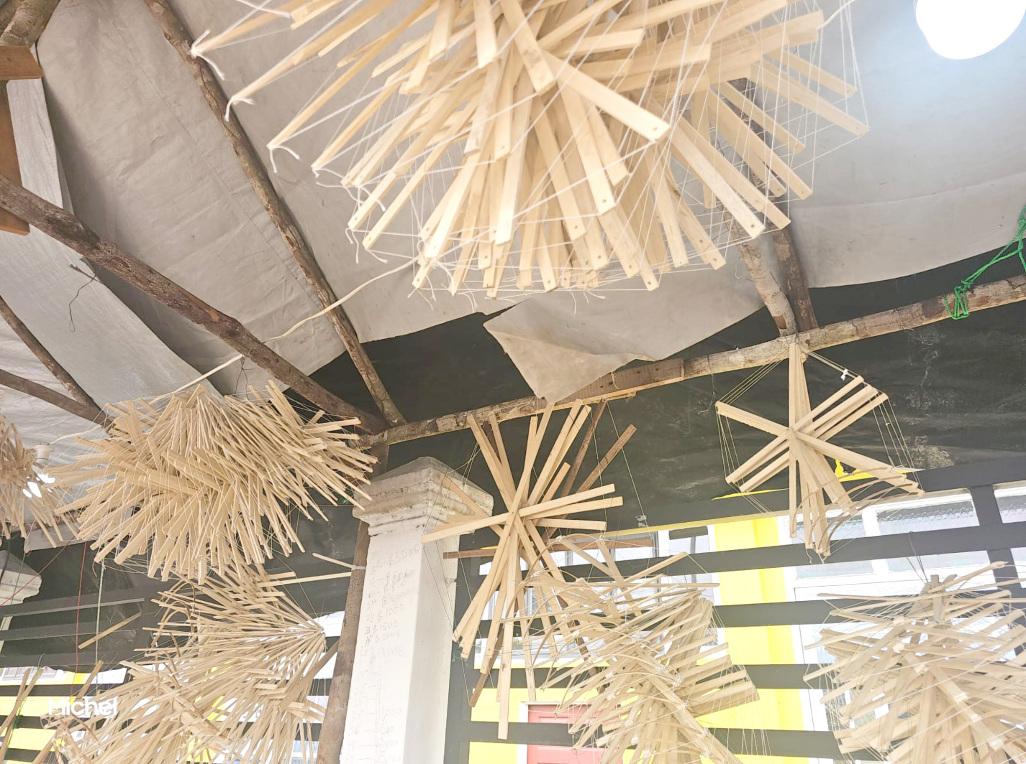
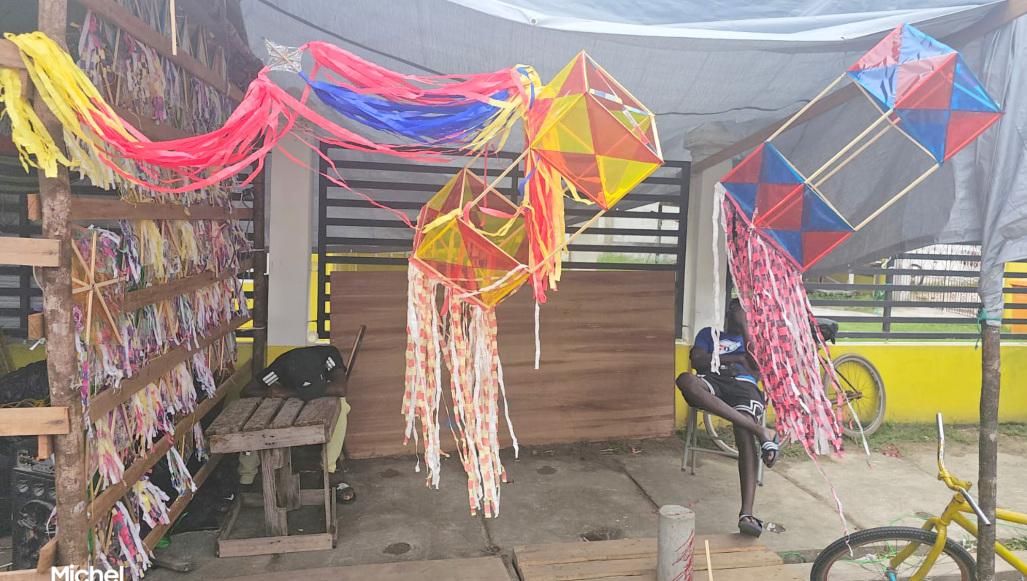
QUALITY, affordable kites can be had at the Buxton Kite Camp, East Coast Demerara, an annual set-up by locals headed by Marvin Cole, who specialises in kites for the Easter season and this year, it is no different.
Cole, who has a full-time job as a Senior Lab Technician with the Ministry of Public Works, would dedicate time after work to overseeing the smooth operations of the Kite Camp on the Buxton Public Road.
He was born on November 1, 1976, and grew up at Lot 30, Buxton Village, and later relocated to Lot 150, Vigilance North, on the East Coast of Demerara, his current address. Cole told the Pepperpot Magazine that he developed a love for kite-making in his boyhood days as he would sit and watch his father make kites from scratch at their home. He added that he started making kites on a small scale in 1988
after he was gifted a fancy eagle kite by an aunt visiting from the United States of America (USA).
And he went out all excited to fly that kite, but his joy was shortlived when that kite refused to go up at first, and when it did, it fell and flew away before it broke apart as well. That incident left Cole traumatised, and he soon realised that those imported, fancy-looking kites were no good.
He then decided that he would no longer be disappointed and started to make his very own kites, kites that were strong and would last through the season of kite-flying, so children would truly enjoy their time outdoors.
This Vigilance resident said the need for him to make proper kites was further galvanised when his father migrated to Trinidad and Tobago in 1986.
Cole related that when he started back then, it was just him, his brother and eight others; they had a little makeshift tent they used to make

kites to sell. Today, at his kite camp, he employs 40 young men and women from Buxton, who put in hours upon hours of work to make hundreds of kites daily, an event that started just after Christmas.
He reported that everyone has a role to play in kite-making; they have different tasks to complete before a kite is finished, and they are all aware of their responsibilities.
Cole stated that kite-making started with a plan, a meeting with all employees first, even before materials were bought, which included the wood to make the kite frames, kite paper, twine, tail, bamboo sticks and paste.
He noted that a group of young women from the community would also play their part by making kites at home to earn money, and that the money is paid equally.
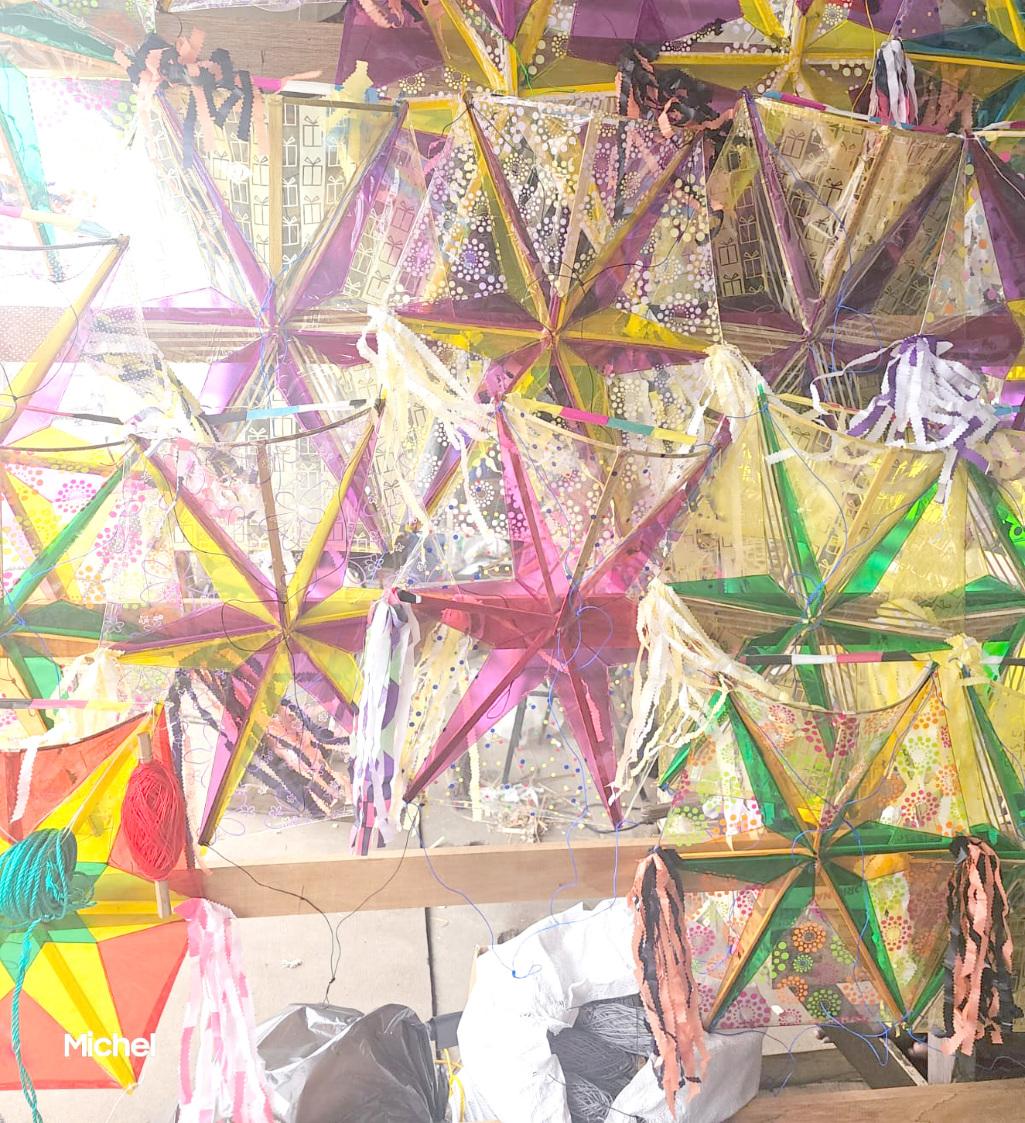
Cole explained that they make all types of kites, including star point, hassar, diamond, seven-point, star, round-the-world, seven-point, seven-diamond, six-point, six-diamond, box kites, star kites, and bird kites in both plastic and paper.
He pointed out that they made a Guyana flag kite, a large bird kite that has already been sold, and, in addition, a One Guyana six-foot kite and a five-foot Guyana kite, both of which were ordered and sold.
Cole revealed that, per week, they could collectively make 100 fully outfitted kites with tails, twine, and balla for as low as $2,500 per kite, depending on style and size.
He disclosed that last week they made 280 kites to fill an order, and the design was simple; they usually meet their customers’ targets.
This seasoned kite-maker told Pepperpot Magazine that his preparations began at the start of January this year with his team, and so far, they are doing well, as everyone is doing what they are supposed to.
The five-foot plastic kite on display was very pleasing to the eye, as was the six-foot One Guyana-themed kite, which sold for $30,000. Cole explained that he also made 200 kites for the Office of the President and varying amounts for other companies and agencies in both the private and public sectors.
“This kite camp will be opened daily and will close and this tent taken down on Easter Monday, the last day of kite-flying, so I urge you to come and get your kites early because, as you can see, it goes fast. We can barely keep up with the demand,” he said.
He added that the Buxton Kite Camp will be open daily, including Good Friday, Easter Saturday, Sunday, and Monday, which will
be the busiest days for selling and completing kites.
Cole pointed out that they also make tiny kites and have those
in stock, especially suited for the ‘regular girls’ who won’t want to carry around a big kite on Easter Monday.





By Michel Outridge
IN Guyana, we look forward to many things, these include our national holidays, and for children and families, they anticipate spending time together, flying kites for Easter.
This year it is no different: people will plan, arrive at a location of their choice early, erect tents, bring their coolers with beverages and food, and spend the day outside just so the children can have a good time flying kites.
For children, kite flying happens long before the actual holiday, that is, Easter Monday, when Guyanese turn out in their numbers to parks, the seawall, beaches, and other places with wide open spaces for them to en-

gage in safe kite flying. As a people, we do not sleep through certain things such as the Easter weekend; this period is utilised to get together with family,
friends and others to spend time outdoors and reconnect over good food, drinks and much-needed conversations.
After the Lenten period, Good Friday is a day of no


work for many, a national holiday, somewhat sombre in remembrance of the significance for Christians around the globe, but on Easter Saturday, Sunday, and Monday, these days are spent flying kites, especially for children.
Children would have their parents or guardians buy a kite or two of their choice, especially the pre-made ones, in both plastic and handmade varieties, to take to the skies.
Mostly men would invest money and time to make specially designed kites in star-point and other colourful designs in different sizes, some are made to order, while others can be bought at roadside stalls at Buxton Public Road, where there is an annual kite camp set up for on-site kite making by local men of that village.
The children of today hardly make their own kites from scratch as we did when we were children. We used paper book pages to make our own ‘caddy ole punch’ kite, which was basic; all
you needed were thread, tree paste, twine, and pointers from hand-made brooms used in the home.
After we spent some time making the simple kite, we would go to the nearest open space to raise that kite, and then when it was finally up in the air, it would swiftly come back down as fast as it went up, and usually it would fall right into a trench or pool of water.
When that happened, as often as it did, we would go back home, make more kites, and repeat the process as long as we wanted until curfew and our parents came looking for us.
The worst part of kite flying back then was when the kite was soaked; often, no one wanted to risk going into a trench for it, or we used to put razor blades on the tails of those simple handmade kites to cut others down just for fun.
When my grandfather was alive, as a child, he would spend days making a very colourful star-point kite
for my brothers and me. It was about five feet, and we would take turns holding on to it once it was airborne.
It was usually tied to a tree or post for stability and left overnight to sing as loudly as it could, and that was the way Easter was celebrated back in my childhood days.
We would spend days running behind kites till we were tired, and the kite refused to go up or just didn’t come back; it was all considered part of kite flying then.
Today, it is very different; it is more of a social event than what Easter should be, where people consume alcohol publicly and loud music replaces quiet, turning it into a spectacular outing.
Easter Monday in Guyana is observed in many ways. Most people participate in kite flying for their children to have that experience and to spend time with loved ones at specific locations, be it parks, open fields, grounds, beaches, seawalls, and other places.
By Shaniya Harding
FOR the children of Leopold Street, Easter has historically been more than just a holiday; it has been a time to connect, celebrate, and create memories. However, tradition has changed in recent years, with many parents saying today’s festivities are not what they used to be. This is why the community is working to revive some popular Guyanese Easter traditions.
Through a collaboration with the community’s Werk-en-Rust Transformation Project Youth Group and several government agencies, the community saw one of its first kite-making workshops earlier this week. Speaking to a few of the mothers who came out
with their children, they told the Pepperpot Magazine that their Easter was vastly different from what their children celebrate today. Three mothers from the community, Amy Gonsalves, Charlene Welch, and Malika Boxhill, shared why these simple activities matter so much. In efforts to continue the traditions of kite-making, cross buns, and community togetherness, their voices capture Easter’s deeper meaning: family, culture, and connection. Born and raised in the community, Amy Gonsalves says she takes every opportunity to have her children participate in activities like kite-making. Speaking on the importance of keeping these traditions alive, Gonsalves shared that events like these not only preserve the craft of kite-making but also give
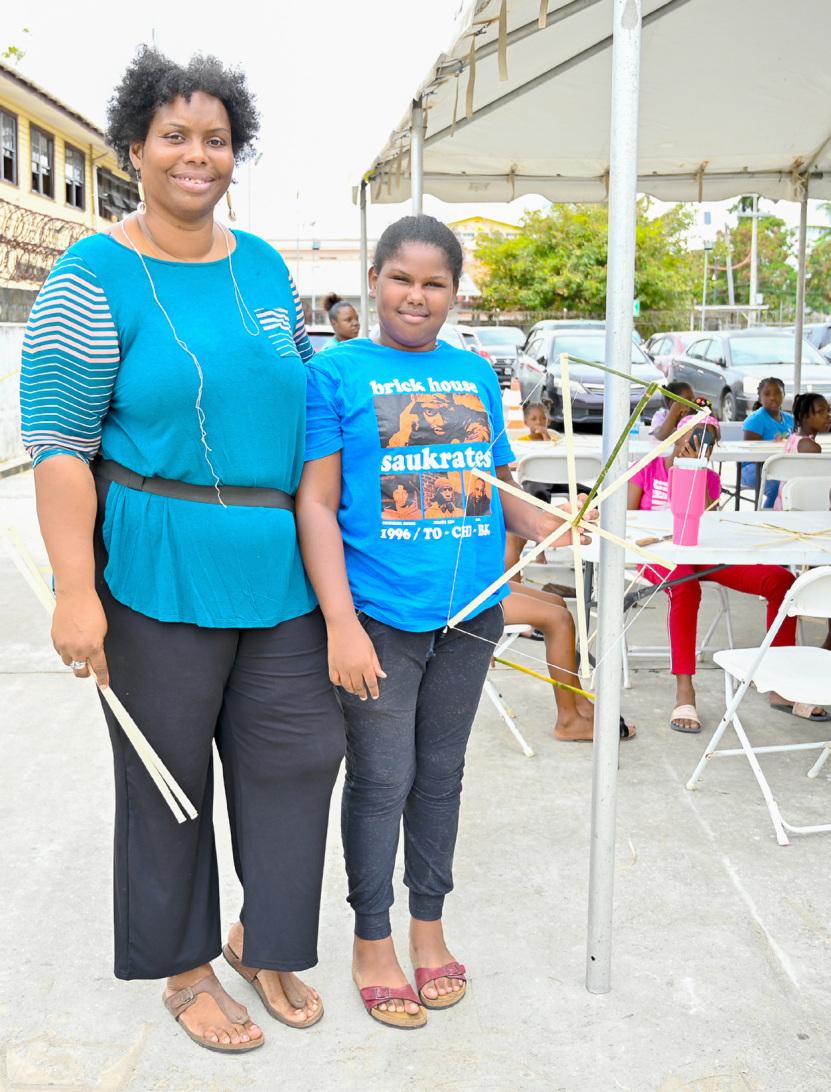
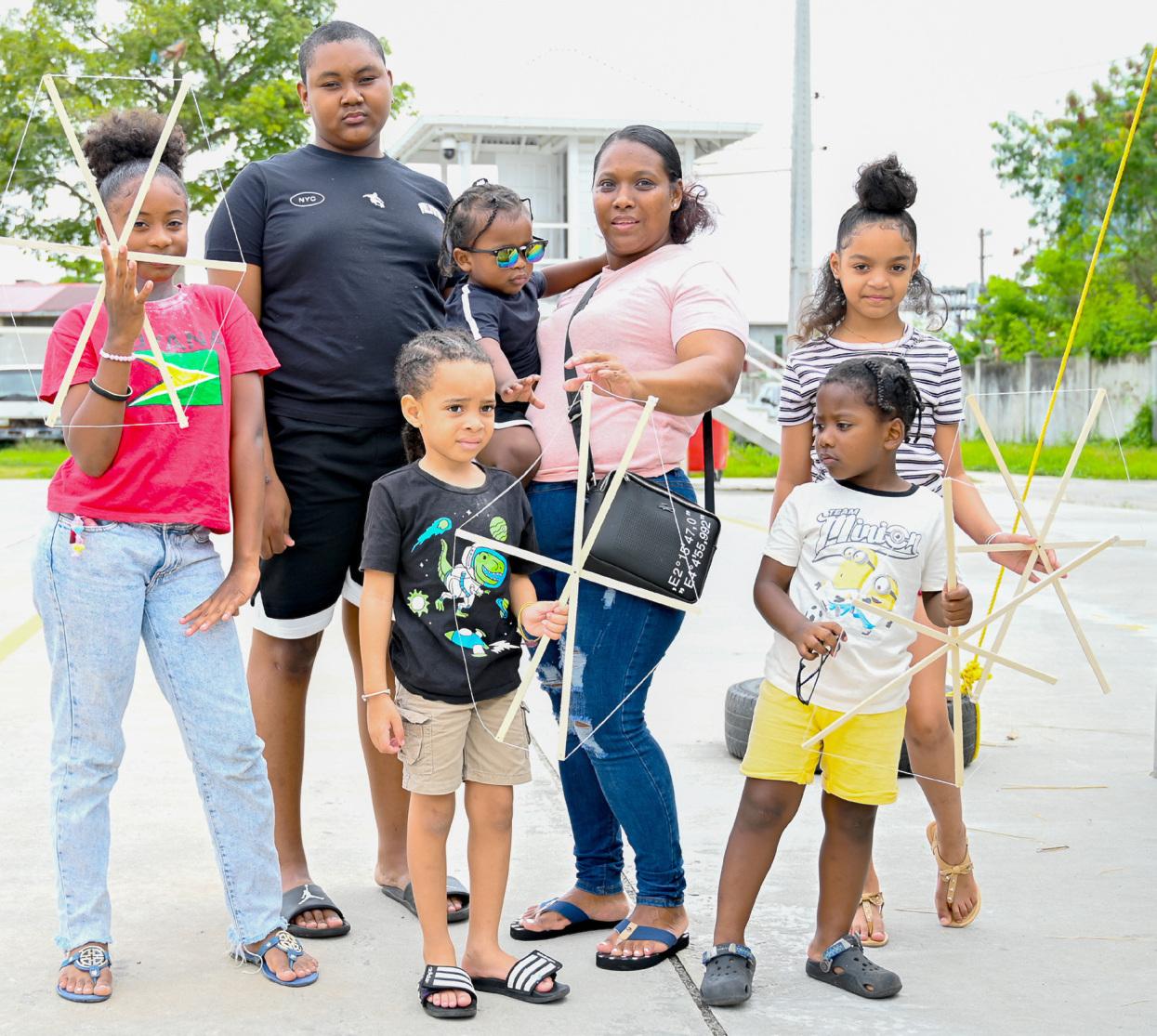
children a new and exciting experience. “I came out today to bring my children so they could have a great time at this event. I usually bring them out to activities like these. They always have a fantastic time,” she added. “I do not know why more parents do not take part in these activities and bring their children out. It gives them a chance to socialise, enjoy themselves, and just be children. It is really a great event.”
Recounting her childhood days in Leopold Street, Gonsalves said it was an authentic Guyanese Easter celebration. Retelling an Easter that many Guyanese are familiar with, she said it included making kites, with children finding creative ways to play, connect, and make memories. “Easter, growing up, was lovely. It was about friends, family,
and neighbours. It used to be something really special. Back then, we did not have all these fancy things our children have now, so we had to be creative and make our own fun.”
For Gonsalves, Easter is above all a time for family. “Easter is definitely a time for family and friends to come together. Children need that love and attention, especially in this fast-paced generation. Even small outings like this mean a lot to them. Teaching them how to make kites and spending time together may seem simple, but it really matters to them.”
Sharing a similar retelling of Easter in the community, Charlene Welch said she remembers it as a time when every child rushed to make small paper kites and get them in the air, often weeks ahead of Easter. “I have been living on
Leopold Street for about fourteen years. Growing up, things were really good. Easter was always exciting. We used to make kites, even simple paper ones, and everybody would be rushing out to fly them. It was something everyone looked forward to.”
Today, however, the mother of three boys said that children are not as captivated by kites, noting that electronics and the internet now capture much of their interest. “Today it is very different. Children today are not as excited about flying kites like we were. A lot of them prefer to stay on their phones or tablets, playing games like Minecraft instead of coming outside.”
While it may be difficult for parents to take away phones and tablets completely, Welch believes TURN TO PAGE XVII

I DID not pay much attention to the way I spoke, how I pronounced words, or what that said about my character until moving abroad for a while. I realised that your accent is part of your culture — it is the “tongue” of your ancestors, and the way you speak is an identity marker that helps people easily identify your origins.
As a Guyanese, I’ve been labelled as a “native English speaker”. While we are fluent in English in Guyana, our accents and even the mix of
Creole dialects can sometimes be difficult to understand. Does this then make us “inferior” to other English speakers? No. However, do people sometimes assume that you are? Absolutely. I have been giving it much thought lately and decided to
write this column to explore these concerns further.
We often look for overt signs of discrimination. However, discrimination comes in all forms, and it is not always obvious or “loud”. In some instances, discrimination can present itself in the form of

quietly “socially acceptable” thoughts and beliefs, where it can be disguised. In a way, I believe “accent bias” also shows up as a disguised form of discrimination within societies.
People would often start forming assumptions in certain settings, such as classrooms, interviews, networking events, public speaking spaces, and even casual conversations. As someone who has many international friends and colleagues, this does not only apply to the English language.
Many people from various languages and dialects also face discrimination due to how they speak or what they say. If you have an accent from the Caribbean, Africa, Asia, or even Eastern Europe, people often use it as a scale to balance your competence, abilities, and capabilities.
It is absolutely horrendous to think that the quality of your debates, speeches, or statements does not matter. It is simply the “standard” English that some people consider. Imagine not being taken seriously simply for how you pronounce words.
Accent bias operates subtly. It rarely appears as outright exclusion. Instead, it shows up in interruptions, in polite requests to “repeat that”, in assumptions about intelligence, or in the quiet preference for those who sound more “standard”.
It is the raised eyebrow, the slowed-down response, the unspoken doubt. And because it is so easily dismissed as a misunderstanding or a habit, it often goes unchallenged.
There is a hierarchy of accents that creates “elitism” in speech. It might sound like a “reach”, but it really is not because there is a power imbalance. Certain accents are associated with global power or dominance, such as the accents associated with
former colonial dominance. These very accents are often associated with “professionalism” or “authority”.
In contrast, other accents are often associated with being “different” or “difficult”. It is not by coincidence that there is a hierarchy for the way in which we speak. Have you ever considered whose words most people regard with more weight or merit in certain international settings?
The hierarchy shows whose voices are valued and whose aren’t. As an international student, I felt pressure to adapt — not just linguistically, but culturally. Code-switching becomes a survival skill. People soften their pronunciation, slow their speech, or avoid speaking altogether to minimise judgement.
Over time, this constant self-monitoring can erode confidence and authenticity. What makes accent bias particularly insidious is that it is often internalised.
People begin to question their own voices, seeing their accents not as markers of identity but as obstacles to overcome. In trying to belong, they are subtly taught that who they are is not quite enough.
This phenomenon requires us to recognise that communication is a shared responsibility. The burden should not fall solely on the speaker to conform, but also on the listener to engage with openness and patience. In a world that is more connected than ever, the ability to understand different accents is not a barrier — it is a necessary skill.
Perhaps the real question is not why some people speak differently, but why we have been taught to value some voices over others.
Until we confront that, accent bias will remain what it has always been: a quiet gatekeeper of opportunity, hiding in plain sight.

LEARN how to take care of your parents and the elderly. Once you live long enough, you will want someone to care for and respect you.
Author Geary Reid feels that too many senior persons are struggling. He sees many younger people quickly placing elderly people in care homes and moving on with their lives. Elderly people can live long, happy lives, but someone must be there for them.
If you are helping an elderly person, congratulations! If you are not caring for and respecting an elderly person, then read this book and make that change quickly, as they really need someone to be there for them.
When many people reach an advanced age, they have the will but not the strength to do many of the things they once did or would like to do. Therefore, they need some help. Not every elderly person will make a public announcement that they need help, but from your observations, take note and provide whatever assistance they may need.
There are times when it may be most appropriate to recruit the services of an individual to be the caretaker for your parents or another elderly person in your life. There are many factors to consider before hiring such a person.
When you sense that the elderly person does not need much assistance and is in reasonable health, you may want to consider recruiting an individual to provide basic services, such as ensuring they eat on time and guiding them to the bathroom. This individual will probably visit
once per day or just a few days each week, since the elderly person can handle most of their needs.
Children can consider having a caretaker visit their home to care for their parents or other elders while they are at work or school. There are some families where most people are engaged in professional work, studying, or other important activities. Sometimes, the grandchildren may not have the skills or constant patience to care for their grandparents.
It must be noted that while not every human may have the same level of patience, this does not stop them from exercising at least some patience. Nevertheless, if the children agree that a caretaker will be needed to assist their parents or other elderly persons, then they can arrange for that person to visit the house to provide the required assistance.
Sometimes, the caretaker is provided with a separate dwelling area within the house or in the yard. If the children do not have adequate facilities to house the caretaker, then the caretaker will travel daily to provide whatever assistance is needed. Over time, depending on the caretaker’s personality and qualities, they may almost become a member of the family. Not all caretakers will be accepted into families, however, because some do not possess personality traits the family approves of.
Children, if your parents need help and you are able to provide it, do so wholeheartedly. They have made enormous sacrifices for you, and it is your responsibility to help them at this stage of their lives.
1.2 Home for the elderly
In cases when the children are unable to allow a caretaker to visit their house
and attend to the elderly person, some children will arrange for that person to be placed in a care home. Sometimes it hurts children’s hearts to place someone they love and care for in a home for the elderly.
It is not that the children do not care; they may not have the resources or skills to care for that person. For example, if the parent or another elderly person needs daily medication, therapy, or specialised treatment, those services may not be available in the family home. In addition, the family home may not offer a caretaker the option to visit or stay over.
Children, remember that if you can keep your parents with you, let that be your priority; if it is not practicable, carefully consider a home for the elderly. Never try to isolate your parents because you do not want to be by their side to assist them. Remember, many of your successes today may be directly linked to the unwavering sacrifices made by your parents and other elderly persons in your life.
When choosing a home for the elderly, ask yourself whether the place you’re considering is one you would love to be in if you were in this situation. Some elderly persons are grieving because of the choice of home that has been selected for them.
Always remember to sow good things towards your parents, as your children may do similar things to you if you live to an advanced age. Treat everyone well, as they all deserve great treatment.
If your parents or another elderly person has to be placed in a home for the elderly, then you are expected to visit regularly. Do not drop them off at that new home and think that’s the end of your interaction with them.
1.3 Cost for the service
The cost of caretaking services, whether provided at your house or at a home for the elderly, must be carefully considered. You must
decide what you and your family members can afford to pay for the service. Nevertheless, do not look for the lowest-cost service, as cost may reflect quality.
Just as people will shop around for various products and services, they will be willing to do some research to find a service that meets TURN TO PAGE XV


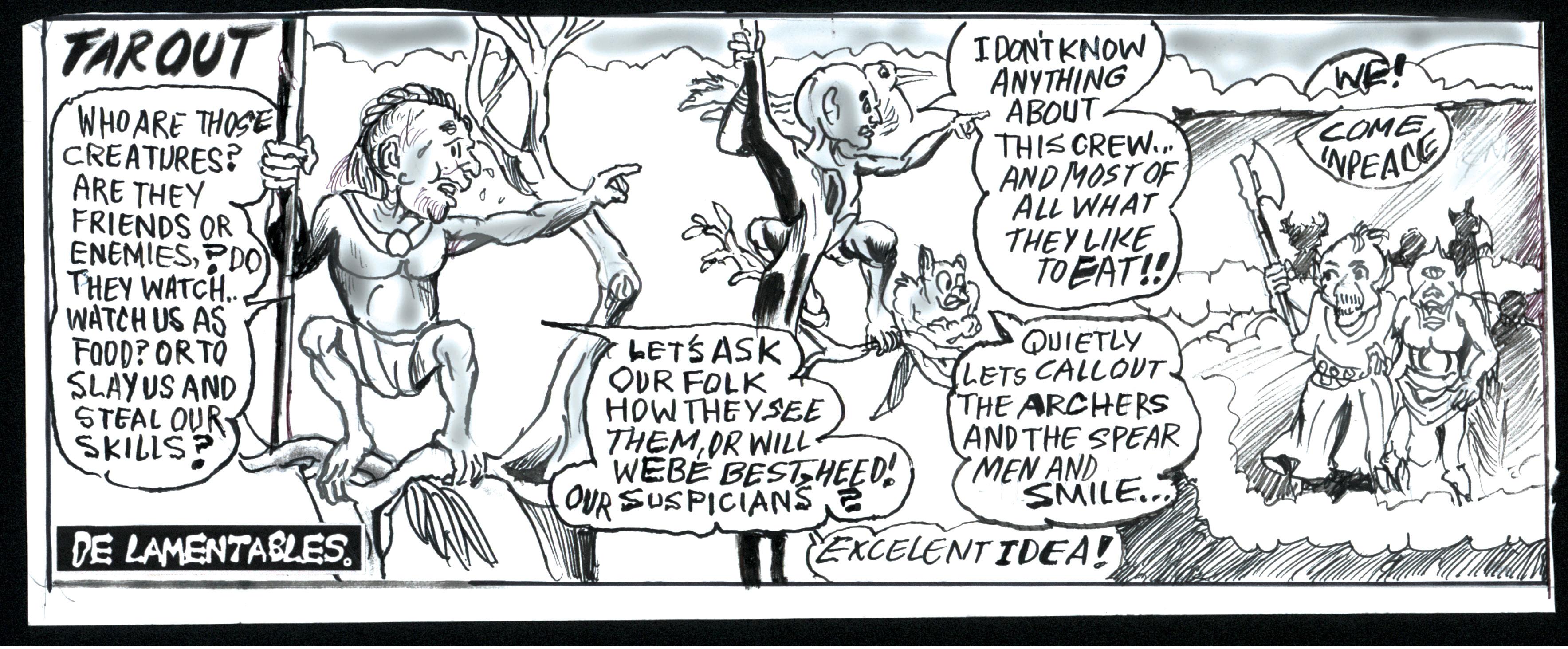
OUR personal human world is not a condition to mock or to derive utterances of mockery, or to compare with one’s own challenges; each of us competes with challenges that we did not all create by our own doing, but by circumstances created because we did not pay enough attention.
I was taught that one
must pursue a given talent, not on charity, but by the efforts of one’s yearning, because… yuh got to feed yuh self in this life, -all of yuh self…
Talents are given to us all, because realms are reminiscent of our early manifestations on this sacred ground we call our own, which was hostile, and populated by other creatures, hungry and piti-
less, much like how we adapted, except that survival imposed upon us the bond of tribe and enough awareness to recognise that we were weaker yet, thus always needed the tribe, thus we planted traps, created sacred places to enforce a SENSE OF A RIGHT TO SURVIVE, even to the destruction of the other, some at lesser penalties, but nevertheless,
thus; that we found Gods to blame… unaware that we plant seeds that will judge us one day.
We must understand that the gift of scholarship is a human gift as much as is the memory of the elephant, or a dog stoned one day, but attacks the perpetrator in a week.. while his friend runs away, to explain later; you wonder why this dog came at
you, when you have both captured your breath, then your buddy who ran ahead before you, will remind you, “You de pelt that dog fuh nothing two weeks ago.” Deh don’t forget, boy, neither do we, yuh see how fast I run?
That’s why we mustn’t forget who de mek we wuk, then didn’t pay we, we got fuh find a way fuh punish them too, deh’s
how de world does wuk. Read dem science books about them prehistoric “like-people.”
Sometimes people nowadays do behave just like cavemen, without principles… suh yuh got fuh deh pon yuh heights. Suh, dog got bad mind, like people? It looks like they do pick and choose? I ent know, and I ent gon experiment.






LIFE itself is a strange and unpredictable metamorphosis. Every milestone we cross is like stepping into a strange pool of coloured light. Before we have a chance to blink, we find ourselves getting drenched in a new hue, surrounded by people and things that should be familiar to us, and yet are as different as those which we see for the very first time.
The most difficult part of this metamorphosis is glimpsing your own reflection and realising that you seem as unrecognisable as the disappearing silhouette of a stranger walking in the distance. In those moments, you may feel bitter grief at losing the image of yourself you once had. At the same time, you may also feel hope for everything you will one day get a chance to become.
Being human is beautiful because there is always a sacred optimism within us that our lives will be different tomorrow than they were today.
Strangely enough, while the beauty of difference carries hope within it, differences are also seemingly the foundation for hatred and prejudice. Why do human beings despise differences so much when they are the joy and serendipity that fuel us through every moment of life?
Maybe it is because we have been conditioned to view each other in a certain way and feel disconcerted when our expectations and understanding of others are challenged. Perhaps it is more simply because we seek
comfort in familiarity. As we progress through life, certain behaviours, cultures and norms become a routine part of our days. Without realising it, we depend on these factors for stability and comfort. So, when we meet someone who challenges our ideas of normalcy, we feel unsettled, but it is not necessarily wrong to feel this way. However, it is certainly wrong to respond to the feeling by engaging in prejudice, hatred and discrimination.
For the longest time, many people believed in an odd myth. There was a myth circulating, especially online, that touching or petting young wild animals, specifically young birds, was akin to placing a death sentence on them. It was believed that touching young animals would alter their natural scent and lead their mothers to fail to recognise them as their own offspring. Because the mothers believed the animals were not their own offspring, they would stop caring for them and abandon them. Eventually, the young animals were said to die from starvation or weakness. This was later found to be a myth. In fact, birds are said to have a very weak sense of smell, so it would be rather difficult for a mother bird to detect something as minor as a human’s touch on her chicks. Of course, the myth, most likely circulated to stop people from touching or handling wild animals, did serve its purpose. It also teaches us that sometimes, the differences that we find
TURN TO PAGE XVI


RICCARDO stared at the sketch pad in front of him, his mind blank, seeming lost in a desert place. He sighed in exasperation and, putting down his pencil, he wheeled over to an open window overlooking the garden. It was where he would sit on those days and nights when his spirits were low, looking at the night sky or sunrise, listening to the birds singing and feeling the cool breeze on his face.
he would never walk again, and gradually he turned his interests to art and chess. He won many trophies in junior chess tournaments but kept his art as a private collection.
Nothing seemed in spring today as he looked through the window, and, sighing deeply, he wheeled his chair to the back veranda where he could see the playfield a short distance away.
Kite flying had already begun, and boys were shout-

Those scenes of life inspired him as an artist, for art had given him a new lease of life after the accident. Each day, he lived with the hope of a miracle that would make him walk again.
His young life had been turned upside down when a speeding minibus had skidded off the wet road on the highway and crashed into his father’s SUV. A horrific accident that crushed his dreams of becoming a cricketer – a mesmerising spin bowler like the greats of the past. He couldn’t even go back to school but became homeschooled, so he hardly had any friends. Time had passed slowly and painfully for him after the doctors concluded
ing, laughing and running with their kites as they took to the air.
Riccardo watched, an ache in his heart, and he whispered, as he had done so many times before, “I wish I could walk again.”
He sat there watching the fun, as kites rose and fell, the string of a butterfly-designed kite bursting and flying over the tall palms, high in the cloudless sky. Riccardo watched the kite sail away, and a light shone in his eyes.
“Yes!” he exulted, an idea just born.
He wheeled his chair back to his desk and, picking up his pencil, his fingers
TURN TO PAGE XV



JOYCE Saricks, in her wonderful primer for librarians, Reader’s Advisory Service in the Public Library, argues that the primary appeal factor of literary fiction is its writing style and language. Saricks describes literary language as elegant or “lyrical”, suggesting prose that approaches poetry in its rhythm and beauty.
She also characterises literary language as “layered”, implying syntactic complexity and stylistic richness reminiscent of writers such as Nabokov or García Márquez. Such prose is pleasurable to read for its metaphors, wordplay, and allusions, much like the dense and playful style found in the works of Thomas Pynchon.
However, a refined prose style or complex syntax is not the sole defining feature of literary fiction. Literary works are also distinguished by their subject matter and thematic depth. Often, these novels grapple with profound questions about human existence, morality, and history.
Gabriel García Márquez’s One Hundred Years of Solitude, for example, presents the genesis and destruction of an entire world through the mythical history of the Buendía family.
Cormac McCarthy’s Blood Meridian offers apocalyptic and brutal visions of violence and human depravity. Pynchon’s Mason & Dixon, by contrast, combines ribald humour with dense historical and literary allusion. These works illustrate how literary fiction engages readers through both stylistic sophistication and thematic ambition.
The appeal of language in literary fiction differs from that of genres such as mystery or horror. Readers of those genres may not necessarily seek lyrical prose or stylistic complexity as primary sources of enjoyment. Instead, they often value elements such as plot, suspense, and pacing. Yet the boundary
between literary fiction and genre fiction is not always clear. Many mystery writers, for example, display considerable literary craftsmanship. The novels of P. D. James and Ruth Rendell combine intricate plotting with refined prose, while Raymond Chandler and Ross Macdonald bring a kind of gritty urban poetry to the detective genre. Language, therefore, remains a central appeal factor of literary fiction, and it plays a dominant role in Nicholas Shakespeare’s political thriller The Dancer Upstairs.
The novel is reminiscent of the sophisticated espionage fiction of John le Carré—particularly The Constant Gardener and The Tailor of Panama—as well as the politically charged narratives of Graham Greene, such as The Quiet American and Our Man in Havana. These works share another appealing element: their vividly rendered exotic locations. Through such novels, readers can vicariously experience distant cultures and political landscapes—Cuba, Vietnam, Panama, and Peru—while following gripping narratives of intrigue and conflict.
The nationality of these authors may also contribute to their appeal. British writers such as Greene, le Carré, and Shakespeare have long excelled at combining political insight with narrative suspense. Similarly, one might prefer the mysteries of P. D. James or Ruth Rendell not only for their literary quality but also for their distinctive British sensibility.
Nevertheless, the fundamental appeal of suspense novels remains suspense itself. This is certainly true of the works of le Carré and Greene, and it is equally true of Shakespeare’s The Dancer Upstairs. Beyond its poetic prose, reviewers frequently describe the novel as “nail-biting”, “chilling”, “tension-filled”, “exciting”, and “compelling”. These TURN TO PAGE XVI
brought the blank paper to life. That night after his mother had helped him into bed and they said the Lord’s Prayer together, he asked her, “Are there angels on earth, Mom?”
She kissed him on the forehead and said, “Angels are everywhere we are, in our hearts and our minds.”
He smiled and closed his eyes to sleep. His mother looked at him, an ache in her heart, but proud also, and she whispered to the heavens,
“A brave child he is, and he believes so much in you, dear Lord.”
Riccardo worked on his sketch all day until it was perfect. Now all he needed was the construction, which his big brother was good at. Easter Day drew closer, and even though he knew he couldn’t run and play any more, he could still make the day special with his uniquely designed kite. Papered in pure white with gold trimmings, he called it ‘Wings of an Angel’.
On Easter morning, he awoke with pure excitement in his heart, and as he entered the park with his family, he felt that something beautiful was going to happen. His kite attracted a lot of attention, and after a few tries by his brother, the kite took off into the sky. He sat in his wheelchair holding the string, thrilled at the strong pull as it danced in the wind.
Riccardo did not take his eyes off the kite; suddenly, something white flew across, then another, and another. He gasped and looked around to see if anyone else had noticed, but no one did. He looked back up at the sky,
thinking maybe it was his imagination, but it was real.
There were angels in the sky, flying with his kite!
Riccardo was overjoyed beyond words at such a wondrous vision, and they came down one after the other to the disabled boy, took his hand, and pulled him up to his feet.
“Go run and play,” they said, “God has answered your prayers.”
Riccardo laughed and ran across the park with his kite.
“Ricky, wake up,” a gentle voice was saying, and he awoke with a start.
“I’ve got you some food to eat,” his mother was saying. He looked up at the sky, the kite was there, but no angels.
“It was just a dream,” he said, sighing in disappointment. “What were you dreaming?”
His mother asked.
He smiled and said, “Angels.”
She smiled a little. Nothing needed to be said, and as she handed him the box of food, the kite string slipped from his fingers. He jumped up, ran, and caught it in one flowing motion.
All those around gasped in shock at the miracle that had just happened in the blink of an eye.
“It wasn’t a dream!” Riccardo cried, “It’s real!”
His mother was crying and praising God, and his brother hugged him, tears in his eyes.
“Angels are indeed among us.”
Riccardo ran and played as more kites were raised on that blessed Easter day.
their expectations and is priced appropriately. Most of the time, when service quality is high, the cost may be high as well. Remember, you are looking for value for money while also believing that your parents and the elderly deserve good treatment.
1.4 Who pays for the service?
In some families, there are constant conflicts over who will pay for services for elderly family members. Children are sometimes unable to find common ground on who will contribute to this payment.
Children should sit down together and remember that their parents or an elderly person took care of them when they were unable to help themselves. Therefore, it should be everyone’s re-
FROM PAGE IX
sponsibility to contribute to the cost of providing the service needed. Children must not consider their contribution greater than that of other family members. There is no need to compare what you are doing for the elderly people with what another family member is doing. Everything done for your parents must be done from the heart, not out of competition. For more information about Geary Reid and his books, please use these contact details: Amazon: http:// www.amazon.com/author/ gearyreid, Website: www. reidnlearn.com, Facebook: Reid n Learn, Email: info@ reidnlearn.com, Mobile #: 592-645-2240.
Email: info@reidnlearn.com, Mobile #: 592645-2240.

adjectives highlight the importance of pacing and dramatic tension in shaping the reader’s experience.
A professional review clearly illustrates these appeal factors. Drawing inspiration from political turmoil in Peru, Shakespeare crafts a literary thriller in which a detective’s pursuit of a terrorist leader unfolds into a complex narrative of politics, violence, and personal relationships.
The story is framed through a British journalist,
John Dyer, who encounters Agustín Rejas, a former police colonel responsible for capturing a notorious Maoist insurgent known as President Ezequiel. This character is modelled on Abimael Guzmán, leader of Peru’s Shining Path movement.
Through Rejas’s recollections, the novel explores both the psychological toll of political violence and the intimate details of everyday life within a nation plagued by ideological conflict.
Shakespeare builds tension gradually and with remarkable precision. Rejas recounts chilling episodes— from the manipulation of children into acts of violence to the constant threat that shadows daily life in a society caught between a repressive government and revolutionary insurgents.
Although the journalist narrator functions primarily as a framing device, the novel ultimately offers a powerful examination of the motiva-
tions and moral dilemmas faced by individuals living through turbulent historical events.
The language used in such reviews reveals much about the vocabulary of appeal. Words like excruciating, deadly, powerful, struggle, tension, gripping, and terrorised point to key elements of plot and pacing.
Tension suggests not only the speed at which the story unfolds but also the conflict between opposing forces—

often framed as good versus evil. Similarly, the term compelling conveys a book’s “page-turner” quality, implying narrative momentum and believability.
Readers and librarians often rely on such descriptive vocabulary when selecting books. Terms like gripping and chilling frequently appear on book covers or promotional materials to signal excitement and danger.
The phrase many-layered, meanwhile, suggests complexity—either in the plot structure or in the richness of the prose. These descriptors form part of what Saricks calls the language of appeal, a set of terms used to describe pacing, characterisation, storyline, and narrative frame in ways that readers and librarians can understand consistently.
In practice, however, a single word may evoke multiple aspects of a book simultaneously. Descriptions such as “vivid” or “lush” can refer to both the prose style and the richness of narrative detail. In The Dancer Upstairs, for example, Shakespeare’s vivid, lush language creates an immersive portrait of both the characters and the setting.
Notably, readers do not necessarily need to read the novel itself to understand its appeal. Book reviews often provide sufficient information to identify similar works. After reading a review of The Dancer Upstairs, several potential read-alikes come readily to mind: Mario Vargas Llosa’s Death in the Andes and Who Killed Palomino Molero?, V. S. Naipaul’s Guerrillas, John le Carré’s The Constant Gardener, and Graham Greene’s Our Man in Havana. Recommendation
tools such as NoveList and Amazon frequently suggest similar titles, demonstrating how shared appeal factors guide reading suggestions. These appeal descriptors often become the blurbs featured on book covers and promotional materials. Publishers selectively highlight the most flattering descriptions from professional reviews. The paperback edition of The Dancer Upstairs, for instance, prominently features terms such as tension-filled, suspenseful, exciting, compelling, excruciating, chilling, riveting, haunting, violent, gripping, and frightening. Collectively, these words encompass a wide range of appeal factors.
Librarians and readers may also be influenced by endorsements from other authors working in similar genres. Such blurbs reinforce the novel’s literary and thematic qualities.
One reviewer describes the book as “a fascinating and wholly compelling novel, lucidly and expertly told and ringing with unmistakable authenticity”. Another praises Shakespeare’s prose as “clean and precise as a coroner’s scalpel”, while emphasising the vitality of his characters and the intensity of their political environment.
These endorsements serve not only as praise but also as guides for readers seeking comparable works. In this case, the comparison to Graham Greene’s The Third Man provides yet another potential read-alike. For librarians engaged in readers’ advisory work, such connections can be invaluable in helping patrons discover books that match their interests.
so unacceptable in one another may not be as consequential as we believe.
The idea of a young chick being abandoned and allowed to starve because of a change in scent is a brutal one. Yet when we first heard it, we were not quick to question its validity. To us, the idea of someone being excluded or left behind because of their differences is unfortunate, but not unrealistic. We have unfortunately grown accustomed to accepting the stigmatisation of people and ideas that differ from those we are used to.
As we bloom into the generation that takes responsibility for our world, let us
FROM PAGE XII
try to allow new ideas and changes to influence the way we think. Let us accept that even if a new thought makes us uncomfortable, it can add value to our society if fostered in the right way. Let us also keep in mind that every time we fail to accept a new concept without spending some time trying to understand it, we are automatically rejecting the people who hold those concepts as critical parts of their identities or lives.
In this new era, failing to understand and accept each other’s differences is not only an injustice, but is also a guarantee that we will not face holistic growth.
it is vital to keep the tradition of kite-making alive. Speaking directly to parents, she urged them to pass on these traditions actively. “I think it is important for parents to take them away from the screens and bring them out to activities like this. It helps them reconnect with our culture and understand what Easter really represents.” She added that it also fosters family bonding and connection. “I want to encourage parents to stay focused on their children and bring back some of the traditions we have grown up with. Take them off the phones and tablets, spend time with them, and let them experience these moments. It can really make a difference for them.”
More than family, and perhaps even more than tradition, Easter fosters community. A major part of the Werk-en-Rust Transformation Project Youth Group, Boxhill said, activities like these help bring the younger generation closer together. Citing the strong support the initiative received, with community members, leaders, families, newcomers, and lifelong residents all coming out, Boxhill said the event reignited the community spirit of Leopold Street.
“It is great to see parents, community members, and youth leaders all working to-
gether with the children. The kids are interacting, learning how to make kites, and enjoying themselves with each other. That is what makes it special,” she added. “Easter has always been a fun time in the community, with different groups and ministries coming in to support the children. Even from the time I came to Leopold Street as a teenager, it has always been a place where people come together, and it is still beautiful to see that continue.”
Leopold Street is one of many Guyanese communities seeking to reintroduce and reignite the vibrancy of a traditional Easter. With workshops like this continuing across the country, Guyana is celebrating Easter at the national level, with leaders placing renewed emphasis on the holiday celebrated in the homes and hearts of all Guyanese.
A Guyanese Easter is poised to live on. As Boxhill emphasised, Easter and its traditions are more than pastimes; they are a reflection of who we are and who we will continue to be as a people and nation moving forward.
“As a parent, it means a lot to have my child out here interacting with others, meeting new people, and spending time in a positive environment. Activities like this allow children to

connect not just with each other, but with adults in the community as well,” she added. “This Easter, I just want to encourage everyone to share love and hope. We have a bright future ahead.”



PEOPLE give relationship advice with the confidence of experts and the track record of chaos.
They say things like, “protect your heart” and “stay detached,” and it sounds wise until you realise it often comes from fear wearing a motivational outfit.
People love deeply every day. People also love unevenly every day. That imbalance creates most of the heartbreak we pretend to analyse.
One person shows up like a full-time employee. That person invests time, attention, and effort. That person remembers details, checks in, adjusts, and gives consistently.
The other person shows up like a guest appearance. That presence feels occasional, effort feels light, and accountability stays on holiday.
The person doing all the work eventually asks a very familiar question. “What am I doing wrong?” The answer feels simple and slightly offensive.
You are investing fully in someone who participates partially. The realisation stings because effort creates expectations and effort builds an internal story in which reciprocity feels natural and inevitable, but reality sometimes delivers a very different script.
John Bowlby explained that human beings develop attachment patterns early in
life. Some people form secure bonds and move through relationships with balance. Some people develop anxious patterns and give more in search of stability. Some people lean avoidant, maintaining distance while still enjoying connection. These patterns create very predictable dynamics.
The anxious partner increases effort. The avoidant partner increases distance. The anxious partner increases effort again.
The avoidant partner increases distance again. This loop builds intensity without building stability. People often rename this experience. They call it patience. They call it loyalty. They call it fighting for love.
A clearer description exists, though. One person overfunctions while the other underfunctions. Human beings adapt quickly to what they receive consistently.
Generous effort, repeated over time, becomes normal in the eyes of the receiver. That shift happens quietly and efficiently.
Esther Perel explains that relationships thrive on mutual engagement, presence, and reciprocity. Energy flowing in one direction creates an imbalance, which slowly erodes the connection. In everyday language, a one-person performance eventually feels exhausting. The deeper layer sits beneath behaviour.
The pain comes from expectation meeting reality.
Expectation builds a version of the other person. That version carries consistency, effort, and emotional availability. Reality sometimes delivers someone with a completely different operating system. That gap creates disappointment, and disappointment feels personal. The feeling convinces you that something went wrong.
Clarity brings a different understanding. Alignment determines outcome more than effort. People often search for the right move.
Should you stay, should you leave, should you speak, etc.
A simpler approach works better. You communicate clearly and express your standards with calm and confidence. You describe what you value and what you expect in a partnership, then you observe. Behaviour reveals everything that words decorate.
Consistent action creates clarity while inconsistent action creates confusion. Clarity simplifies decisions. Many people believe that more effort creates more love. But a more accurate truth exists. Balanced effort creates sustainable love. Overgiving teaches people how to receive without responding. Repetition of this reinforces that pattern, and over time, the imbalance feels normal
to one person and draining to the other.
The pattern explains why one-sided love feels so heavy. The emotional weight comes from carrying more than your share. People wake up with different emotions every day; that’s a reflection of reality. Mature connection operates through choice rather than mood.
Consistency grows from a decision, not from a temporary feeling. That difference separates attraction from commitment. Real love looks steady and mutual. Real love reflects two people choosing each other repeatedly, even when life feels ordinary. Grand gestures entertain while consistent effort sustains.
So when you find yourself giving more, bending more, and adjusting more, pause for a moment, look at the dynamic with honesty, and ask a simple question: “Does this feel balanced?”
That question brings clarity quickly. A balanced relationship feels supportive. An imbalanced one feels draining and confusing.
Your expectations reflect your standards, and your standards reflect your self-respect. That connection matters. You deserve effort that matches your own, consistency that feels natural. You deserve a presence that feels real; that standard makes you selective, and that selective-
ness creates alignment, which creates peace. It is a cycle that runs on autopilot until you become aware.
Remember too that self-respect changes the entire experience of love. It shifts the focus from proving your worth to honouring your value. It creates standards that feel natural instead of forced. It allows you to show up fully while still expecting to be met halfway. You begin to recognise that your time carries weight, your energy carries value, and your presence carries meaning. You stop pouring endlessly into places that only know how to receive. You start choosing spaces where effort flows both ways.
Love begins to feel lighter and steadier. It feels like something shared instead of something carried. You begin to understand that giving remains beautiful, and receiving becomes equally important. You stand in a space where love reflects you rather than draining you, and from that place, everything changes. Here is poetry for perspective.
They warned me once, in hushed advice, “Don’t love too hard, don’t pay that price. For hearts can change like shifting seas, And silence falls without a breeze.”
But love is not a timid art, It does not tiptoe through the heart.
It blooms, it burns, it dares to stay,
Even knowing it may decay.
For people wake with altered minds,
New thoughts, new moods, new unseen tides.
What felt like truth the night before, May not feel right by morning’s door.
So one may give with open hands,
While one just takes, but never stands.
One builds a home in shared embrace,
The other drifts from place to place.
And when the quiet takes its seat, Where once was warmth, now cold repeats, The ache you feel is not their crime,
But love you gave before its time.
For expectation dressed as care
Can plant its roots in empty air.
You watered hope, you fed the flame,
Yet still expected it the same. So love, but know what love must be,
A gift, not bound by guarantee.
For hearts may change, and people too,
But what you give should still be true.
Romella Dasratt























































Welcome, fellow reader.
Preparing for exams is widely acknowledged as a major source of stress that impacts students’ mental and physical health. Studies show that listening to study materials and reading lighter texts silently — with an intentional rather than passive approach — can significantly reduce stress.
Just six minutes of daily reading has been found to lower blood pressure, enhance heart rate, and ease muscle tension. This method
delivers more immediate and noticeable benefits compared to traditional relaxation practices. Be wise.
Love you.
Direct speech and conversation in story writing
To use direct speech and conversation - vital tools in story writing – is to use enablers to move a narrative from a simple retelling of circumstances and occurrences into an engaging, immersive experience. When writers quote their characters directly, they can
show – rather than tell – the story and make scenes more immediate and dynamic for its readers.
Here is what happens:
a) Character, personality and emotion are revealed.
b) Plot gets advanced smoothly.
c) Reader gets to witness and appreciate live scenes in real time.
d) What, how, where, and why things are said by characters make them more memorable and engaging.
e) Speech type creates immediate drama and emotional impact on readers.

April 5th, 2026
f) Link speech patterns to character traits.
Study the passage below and respond to the two questions that follow it:
The guard entered the prison shoe-shop and took him to the front office. …
“Now Valentine,” said the warden, “You’ll go out in the morning. Brace up, and make a man of yourself. You’re not a bad fellow at heart.
Stop cracking safes, and live straight.”
“Me?” said Jimmy, in surprise. “Why, I never cracked a safe in my life.”
“Oh, no,” laughed the warden. “Of course not. Let’s see now. How was it that you happened to get sent up on that Springfield job?” Was it because you couldn’t prove an alibi for fear of compromising somebody extremely high [in] society? Or was it simply the case of a mean old jury that had it in for you? It’s always one or the other with you innocent victims.”
“Me?” said Jimmy, still blankly virtuous. “Why, warden, I never was in Springfield in my life!” …
Disregarding the songs of the birds, the waving green trees, and the smell of the flowers, Jimmy headed straight to a restaurant. From there he proceeded leisurely to the depot and boarded his train. Three hours set him down under the state line. He went to the café of one Mike Dolan and shook hands with Mike, who was alone behind the bar. … “Got my key?” … He got his key and went upstairs. …
Pulling out from against the wall a folding-bed, Jimmy slid back a panel in the wall and dragged out a dust-covered suitcase. He opened this and gazed fondly on the finest set of burglar’s tools in the East. It was a complete set, made of specially tempered steel, the latest designs in drill, punches, braces and bits, jimmies, clamps, and augers, with two or three novelties invented by Jimmy himself, in which he took pride. …
(From O. Henry’s “Retrieved Reformation”) 1 Discuss in detail how
What
this writer’s style attracts his readers to his work.
Consider what happens when direct speech and conversation are used in story writing.
2. Write a short story intended to attract a wide, inquisitive set of readers. Pay attention to speech types and characters to create immediate drama and emotional impact.
Note-making and utilising notes
1. Special time: Put purpose and mastery into your note-making and employ it in conscious practice daily. Look here: a) Note-making acts as the scaffolding for story writing because you can transform those scattered ideas into a structured, rich, and cohesive narrative. b) It captures your fleeting thoughts in many subjects and real-life areas.
c) It aids you in conducting necessary research, and d) It organises your points before you commit to a full draft, effectively moving from passive brainstorming to active creation.
2. What it involves: Are you aware that active note-making (not just transcribing) involves asking questions about the story or other situation, deepening your understanding of it, and forcing you to express the core of your narrative? Be careful now with your response and way forward.
3. A bank: Create a knowledge bank, a permanent record of ideas that can be drawn upon later, so you can move from a wealth of information rather than emptiness in your persuasions.
Something
1. Imagine you are to participate in a television programme about the changes in your life during the present period preparing for CXC examinations. You now drive a new vehicle. The producer of the programme has asked you to supply her with information you intend to use. Produce the information explicitly for her by trying the following technique:
i) On your writing desk you have a picture of your new car against the old wall of your late grandfather’s house. Use that scenario to help you concentrate better.
ii) Construct a series of notes that will inform the producer of the points you will be pursuing. Word them in a way to stimulate recall when you find yourself confronted for the first time by the interviewer and the camera.
2. Write a report for a company or government department that is considering developing an existing large, but neglected expanse of land. It needs serious clearing and drainage work. As a concerned citizen with appropriate qualification, you are to comment on its potential for a thriving business centre as the site lies halfway between two overpopulated small towns.
3. You have done much note-taking on how to enhance short-story writing. You have also written three excellent short stories so far. Use this rich background to write three multiple-choice questions and one short-answer question, along with an answer key on short story writing.

A HIGH percentage of people lose their natural teeth during their lifetimes due to accidents, tooth decay, gum and bone disease, or other causes. But never has the reason been that they “have grown old.” And although there are numerous solutions for replacing several teeth, dental implants are an excellent alternative, despite their relatively high cost. With missing teeth, even if the person is not aware of it, there is a collapse of facial form, accompanied by an appearance of being older than they really are.
Although not as severe as the potential facial changes caused by loss of all teeth, losing a few teeth also produces a sunken facial look, and the appearance of a smile with a few missing teeth is considered unacceptable by most people. In fact, in most societies, people who present an appearance with missing teeth are considered uneducated and poor.
When a few teeth are removed, there is bone shrinkage, in which the supporting bone diminishes from then on, leaving a defect in contour in that area. This results in reduced eating efficiency, which is directly related to the number of teeth lost. After the removal of many teeth, chewing efficiency is significantly reduced, but the removal of one or a few teeth does not appear to cause a major loss of chewing effectiveness. The smile’s appearance is a negative characteristic caused by the removal of a few teeth.
However, if for whatever reason you have had numerous teeth removed or otherwise lost, you have other alternatives, which include a Traditional Fixed Partial Denture (Bridge), which essentially attaches to the contiguous teeth remaining in the mouth. You cannot remove this type of prosthesis. Then there is the traditional removable partial denture, which rests on, but does not attach to, the remaining teeth in the mouth. You can remove this prosthesis for cleaning at will. It is called a removable denture and is the cheapest and therefore most common means of replacing lost teeth. A more advanced variation of this type of pros-
thesis uses mini-implants, which are the ultimate solution for loose dentures.
Then there is a more sophisticated and expensive partial denture. These involve implants, which are basically removable partial dentures that rest on and are retained by implants and the remaining natural teeth. You can remove this prosthesis for cleaning at will. These dentures stay in the mouth more firmly, appear more natural (there are no wire clasps) and are usually removed less often than the regular removable dentures. Finally, there are fixed partial dentures that are attached to implants alone or to the remaining teeth. You cannot remove this prosthesis. They are referred to as bridges.
If you elect to do nothing to correct the problem of losing one or more teeth, your remaining natural teeth will continue to move, and your bite will usually collapse and degenerate further. This is not a good alternative in most cases for more than a short time.
Two situations can occur after the removal of a tooth. An unsightly appearance is created when a front tooth is removed. When a back tooth is removed, the cosmetic appearance is not apparent, and patients may not be motivated to have the affected area examined until certain changes have occurred.
First, the movement of the surrounding teeth and the collapse of the bite occur rapidly. Often, within weeks, the surrounding and opposing teeth begin to collapse toward the space created by the tooth removal, making an acceptable replacement difficult. The contacting areas of teeth near the space may open, and food may become impacted between the teeth.
Consequently, if you have one or more missing teeth, you have the following alternatives:
1. Traditional Fixed Bridge. A traditional fixed bridge attaches to the teeth adjacent to the space, or you can place it on mini-implants. You cannot remove this prosthesis.
2. Removable Partial Denture. A removable partial denture fills the space left by missing teeth and improves appearance and nearly normal
function. There are also total dentures (whereby the person has no natural teeth on the jaw). This can be stabilised with mini-implants, with the
dentures being removable or not.
3. Mini-Implant followed by Crown (cap). After you place an implant, a crown
is cemented over the implant head a few days later, thereby creating near-optimal function and appearance.
Repetition check: No
line-by-line repetition, though some concepts are repeated for emphasis, especially around removable prostheses and implants.