mm
a
mm
mm
mm
mm
a
a a a ► a
a
Sff'SS mm a
a
a
a
a ► a a
a
a
a
a ► a a
m M
a
m.
❖
£3 S3
txte
a
s% M
m W
4v^
S3
£3
£3
❖
a
a
a
a
a
a
a
a
a
a
a
a > ¥
a
a
a
a ► a
a a a
a
a
a
a a a a
a a
a
a a
a
a
a
a 1 >
si
\
a
a
>1 a
a a
a
a
a a
a
a a
a
a
a
a a
a
a
a
V
a
a ► a
a
a a a a ^-^mm a^lP^a a) I a
a
a a
a
a
a) (a mm
a
a
a
a.) (a a ► a
a
a
a
5^ mm
a
4rvx
a (a a
mm
7:
a
9
a
a a
a
a
a
a *
a
a mm
a
a) I a ■;
a
a a
a ^v. a
a
a
a ► a a
a
a
a
a ► a
a
a
a
a
a
a
a
a a a
a
a
a
a a
a £a
a a
a a
a
a a
a
a
a a a
a
a
a) i a a h:r*
a
a
L 1 SH
a a
a
a) (a a
a V
a
*
¥
a a ► a
a a
a
a
a
a a
a a
a
a
a
❖ a
»(W
a mm a
M, £3
A 'AW
f, AW
w^X
i £3 Jx^S,
.. a
a
a
a a vdK a
II
GUYANA CHRONICLE Tuesday August 1, 2017 ^ ^j AOA
\^
^I^/OA V^ ^7 /OA^^.^PI/Cyv Vr^ ™i /*2\ \(rj,^w AO\
*1/ aOa
/Kf^ v«l?vV\vn1?V/
yKf^
\«la/ y^l^
a 2L8 TKi®
D
^Hlatsa-aa
-A celebration By Gib ron Rahim
55$ 0
*1
D
a
D
a
D
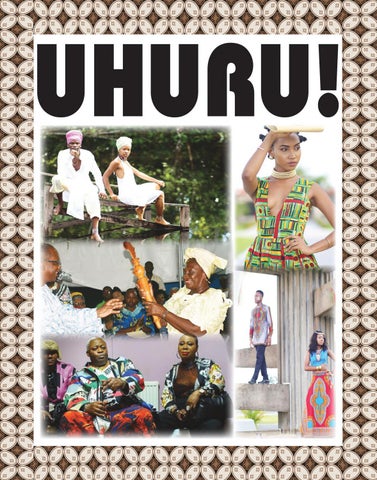
THE African contribution to the world of fashion is undeniable. African styles, designers and fabrics today cross oceans and continents towards global appeal. People the world over are discovering the timeless beauty of African fashion, even as that fashion extends its designs into modernity. Guyana is not exempt from this suige. At the forefront of tlie local African fashion movement is the Makeda boutique. Located at 146 Albert & Regent Streets, Makeda recently celebrated its first anniversary, and its owner, Aisha Haynes, is overjoyed at the response from tire public. "It lias been surprisingly 'fantabulous", as we say at Makeda," she said "People from all backgrounds, walks of life have embraced tire store and tire Makeda experience. "They have been very supportive and enthusiastic about tire array of fabrics, shoes, and accessories we carry." According to Aisha, tire experience over this past year lias been an enjoyable one, and Makeda lias welcomed different categories of customers during this time. "We have had fun meeting a range of fashion enthusiasts and customers who know exactly what they want," sire said, adding: "And seeing tire expression of satisfaction on their faces, and dien trying to figure out what tire uncertain, modest or timid customers want and seeing them light up when they find something they love lias been priceless." Tire road lias not been w ithout a few bumps, however. "Being new and unique, we have had a few learning experiences," Aisha said. "We are still
of African
SsffesyM^vna^
culture through fashion than simply offering solely traditional styles though, Makeda goes a step further. According to Aisha, "Hie beauty of what we do, the customisation, allows us to add tlie touch of the Diaspora, while we attempt to push our own local styles and designers." She was also sure to add, "Culture is ever changing; it adapts with time, and at Makeda, we offer some more traditional styles, but we also offer modem mixes and variations to really capture, in what tittle way we can, tlie beauty and diversity of tlie Airican continent."
tiy ing to feel our w ay in tliis market in our attempt to detennine what our customers would respond well to. It is a challenge, as there is not really a comparative," she added. But despite the difficulties, she and Makeda remain undaunted. "We are excited, as we have a range of ideas which we plan to roll out," Aisha said. "We are tapping into our 'kuumba" (creativity), and have a few collaborations in the pipeline; we are committed to the customer experience, and being young in this we can only grow." A RANGE OF POSSIBILITIES The sheer variety of African cultures that influence African fashion undoubtedly provide Makeda with a range of possibihties for readymade and designed pieces. Indeed, Aisha was sure to acknowledge that the African continent is comprised of 54 countries, and a total population of over a billion people, with hundreds of 'Kingdoms and Queendoms" and thousands of ethnic groups, behefs and religions. "At Makeda," she said, 1 "we try to feature styles from North, South, East and West Africa in the best way we can, as genuine African fashion is labour-intensive and expensive." m She went on to explain that a lot of the material available at Makeda are West African-influenced, since a majority of Guyanese of African Descent have roots there. Besides, Makeda also features styles, sandals andbeadwork fiomEast African countries such as Kenya, and handwoven cottons and linen styles from places like Ethiopia and Morocco. This range of styles being featured is really a part of Makcda's mission. "From the laces, sequence pieces, cottons, gold thread ov erlays, we tiy to represent the glory and beauty of material and styles from all across Africa," said Aislia. Rather r
ne nevelation of THOUGHT TAKeS MFN OUT OF SFRV/TUDF INTO FReeDOM.
THE ANKARA ■ Among tlie textiles popularly used in Maked a" s
kI
fabric, and acSc. cording to Aia* slia, there lias been a growing global interest in it. -■-A Ankara prints have been featured on tlie runways of Paris, Milan and New York for tlie last two years, she said. African designers have also been receiving recognition, and appeal that also extends to Guyana. "People come into tlie store daily with styles they found Online or through social media that they hope we have or can create for them," Aisha said, adding: "There is a clear resurgence of Ankara fabrics; tlie fact that I cany over 30-plus brands of fabrics, and I am very selective of tlie brands I cany, I am yet to tap tlie surface of Ankara fabrics and varieties." Aisha notes, too, that there are persons who Turn to Page XVII ■W
HAPPY
f .
EMANCIPATION DAY TO ALL GUYANESE
ij mmmiwm FROM THE MANAGEMENT AND STAFF OF
AGRO INDUSTRIES LTD. Tel. 225-4230, 225-8278 rr—r E-mail: ricksari@networksgy.com 40 Station Street, Kitty (Railway Line)
i
EDOM
t yf i . r vi ' T X T WAS BECAUSE rT " ' ^ 7. (CHOCEWAS TO suRm ) mmo '8i m'
WIETING 8 RICHTEr 10-13, Water Street, Georgetown. Tel; +592-226-6150 +592-226-6151 / 592-226-6152 / +592-226-6153
FROM THE MANAGEMENT AND STAFF OF: B O P I I CA L Lot 40 Croal Street Stabroek, Georgetown Guyana Tel:592-223-5865. Email: lenscraftoptical@gmail.com "A different frame of mind"
GUYANA CHRONICLE Tuesday August 1, 2017 ■"Sj fAII kinds of everything (g^ alia
Q >
N in ^
N
N f ra >
N ' a. ^
N Ta ^
(« > N
N ia ^
N ia ^
m
fa > N
a)l(s
EVERY year, without fail, the African Cultural Development Association (ACDA) sets the tone to the format the year's Emancipation celebrations will take, particularly in terms of what African country and local community it will honour and highlight to mark the occasion. As the oigamsation has said time and again, the reason it chooses an Afhcan counhy to call attention to eachyear "is because most Guyanese of African Descent cannot trace their ancestral roots to a particular Africa nation" And in choosing that counhy. the oiganisation says what it tries to do is not only to tell a lithe something about it but to also let people know that Africa is not just aiy old place on the map but a continent of 54 countries, each with their own individual language, or languages in some cases, and cultmal mores. And so. in keepingwith that age-old tradition, this year they've decided to go with the Democratic Republic of the Congo. 'DRC for short as not only is it the second laigest country in Africa with a very rich history and culture, but also, like Guyana, it has vast natural resources among other similarities we happen to share. But what is of more importance, it is said, is thatthe 'Congo Naya'people that reside here are a direct descendant of a group of Congolese settlers who came to these shores as indentured labourers after the abolitition of slavery. As such, taking our cue from ACDA, as has been ourwontwhenputtingtogether our Emancipation Supplement the accentthisyear. of course, is on the DRC. However, we'll be the first to admit that this was no easy task, given all the negativity associated with that largely Francophone Central African country, what with all the internal strife and concomitant political instabihty. not to mention the atrocities and grinding poverty. But if one were to look hard enough, there are some gems, and this is what we tapped into in bringing you our subscribers this year's offering. One such gem, we found, is the interesting life of the sapeur what we here in Guyana would have called in the days of yore "a presser-foof". which is essentially a man who likes nothing better than to dress up in all the latest fineries just so he could "cut style" and impress the ladies. What we found, however, is that this thing they have going on in the Congo is taking this "presser-foof" business to a whole new level as you will no doubt find out. We also stumbled upon quite a few notables who made it big in the field of music, like the legendary Papa Wcmba. whom people speak of with the same reverence they do Nigeria's Fela, Mann Dibango of the Cameroons. Youssou N'Dour of Senegal, or South Africa's HughMasekela And. ever mindful of the old adage that "Charity begins at home", we've also focussed a bit on the local village of choice this year, which is Union orNumber 53 "Village as it is more popularly called, located some 34 miles from the township ofNew Amsterdam in the County of Berbice. For the fashion-conscious, we've brought you what's hot in the line of couture, given the trend more and more these days to go ethnic, and bearing in mind as well the time of year this is for Guyanese and, by extension. Peoples of African Descent And there's Uncle Francis who we got to take us on a trip down memory lane to the days when Emancipation Day was plain of August Monday, and evenbefore that when it was called First of August There's so much more we would have liked to talk about but Alas! Space does not permit us to do so. But take heart! There's always next year. God willing! Meantime, do have a swell Emancipation Dav! fyo-Wti- ttulcf
P
e
iB *
nr 0ia
al •i
'First
of
fluqust
By Francis Quamina Farrier YOU will have obviously noted the twin dovetail in my headline, "First of August" and "August Monday", because, in one way or the other, the two are actually the same: Guyanese People of African Heritage of the past, celebrating the Emancipation of Slavery in the British Empire, which included British Guiana, now known as The Cooperative Republic of Guyana. During the years immediately after Emancipation (1838). the First of August was the day on which the celebrations were held. Many of us who are in our Golden Years can recall the elders singing that song. "First of August Come Again. Hurrah me Ginga". Somewhere along the way. the celebrations were also held on the first Monday in August. Whether it is celebrated as "First of August" or "August Monday" depends on the time and area of the counfry you are focusing on. As a senior citizen. I have experienced many "First of August/ August Monday" celebrations in a number of communities across the country. Of course, there are some years when August Monday is actually on the First of August. Whatever the case. Guyanese of African Descent have, for over 180 years, celebrated the anniversary of their freedom from enslavement in grand style, paying homage to their ancestors who worked and died building Emopean Empires: British, Spanish, French, Dutch and Portuguese. "All roads now lead to the National Park, but in my time, it was to the Promenade Gardens." 90-year-old John Benfield told me regarding Emancipation celebrations of yore. A man with a most distinguished look, many would hardly try to wonder what he did as a boy on "First of August Monday", and that he. and many of his young relatives and friends at that time, attended "First of August Monday" celebrations which were held in the Promenade Gardens in Georgetown back in the day. "First of August Monday" was not only a day of celebrations and jollification for Africans in Guyana, whose ancestors had laboured for centuries in this Land of Many Waters, and made tremendous contributions to the early building of this country, albeit forced, and without any monetary rewards. PRAYER AND REFLECTION "First of August Monday" was also a Day of Prayer and Reflection, recalling the hundreds of miles of canals and dams their ancestors dug and constmcted; the sweat, blood and tears which were shed and which helped to make many Emopean countries wealthy. So on that special day every year. "First of August Monday". Guyanese of African Descent rose very early and headed for their houses of worship, where they prayed and sang songs of rejoicing to God for the freedom which were centuries incoming. Services commenced in the pre-dawn darkness, and concluded as the sun rose over the horizon and brightened the land. Then off they would go to wherever was the specific venue to continue with music and singing and dancing and eating and drinking. It was the day of each year to celebrate one's FREEDOM in a very
special
1
Mr John Benfield
Mondaij'
Revellers would pack their lunch baskets with all sorts of goodies, which certainly included conkee. cook-up. pepperpot. mauby and ginger beer among other treats. In riverine communities such as Marlborough and Martindale on the Pomeroon River which have large populations of Peoples of African Descent, they would travel up-river to Charity, where, with others, they would celebrate the freedom gained by their ancestors. In more recent decades, residents of the lower Essequibo Coast. Wakenaam and Leguan travel to Tiger Island (the northern-most island in the Essequibo River) and there have the time of their lives celebrating Emancipation. There is. however, an interesting element to the Emancipation celebrations on the eastembeach of Tiger Island: Over 70% of those celebrating Emancipation at that venue are Guyanese of Indian Heritage! Another element of note is that the Emancipation celebration on Tiger Island is always on the "First of August". I've had the pleasure of attending that Tiger Island "First-of-August" Emancipation celebrations twice, and observed at first hand Guyanese engaged in "Social Cohesion" without political insttuctions. As Guyanese continue to celebrate "First of August Monday" and other holidays of ethnic background, especially the way we observe Phagwah, Diwalli, Mashramani and Emancipation, one can say that we are slowly but surely going "Onward, Upward" to Social Cohesion and a Land of Genuine Happiness.
way. Men. worn en and children would already have been wearing their most creative and special attire, which was mostly of African design. Friends and enemies together rejoiced. That was not the time for rancor or bitterness; it was the time for singing, dancing, playing their African music, especially the drumming, singing their African songs and dancing their African dances. Some told stories of the bitter times of slavery, and stories of Africa even before they were sold into slavery, sadly, by their own brothers back in Africa, in the same way the biblical Joseph of the Book of Genesis was sold into slavery by his very own brothers. However. "First of August Monday", although about torture, trials and tribulations. was mainly about triumph and togetherness; about an enslaved people who were determined to become free, and were even supported by some Europeans who expressed the view that slavery was an injustice which had to be put to an end. <vr. During the post-EmancipaV' V tion colonial era. the celebrations for "First of August Monday" developed as transportation facilities increased.
&
Z- * THE EXCURSIONS So. for example. train excursions became very popular. British Guiana had the very first railway system on the continent of South America. The Transport and Harboms Department (T&HD) railway systems from Georgetown to Rosignol. and from Vreed-enHoop to Parika were utilised by Peoples of African Descent for Emancipation excursions on "First of August Monday".
*
I
r
N
r s Packed and ready for "First of August" celebration back in 1917 "BG" (Photos courtesy of Francis Quamina Farrier)
IV
GUYANA CHRONICLE Tuesday August 1, 2017 -A,
-As
^7 —^4/1 increasingly hard sell, unless... By Barrington Braithwaite
I
I
►>
<<
^7^Xiw\7 oHC-OKo
VLV ^
I
I
►>
<< ^bv
^7-dCjvV /\.-«pryv
7 ^ V_^ JN
I
I
►>
<<
I WAS asked by a senior media operative what I thought, from experience past and present and through my interaction with my younger offspring and their friends and my 'grand', about how this generation perceives 'Emancipation'. Truth to tell, the historical events of emancipation, in itself, and on a national scale has been a recent invocation into the active consciousness of Guyanese generally. Two items have championed the resurgence of this awareness, the first of which was when the African Cultural Development Association (ACDA) petitioned the then Guyana Broadcasting Corporation (GBC) to release their 'Folk Festival' on August Monday and allow it to develop the annual Emancipation Festival. The other is the iconic publication by then Ret. Brigadier David Granger of the Emancipation Magazine. While ACDA familiarised the audiences with African fashions, foods and booths on books, craft and West African imagery, with international guest performances, local talent presentations and a general celebration atmosphere. the Emancipation Magazine and other publications of The Free Press documented the history and times of Emancipation, which was not just the historic purchase of the villages. but the tremendous challenges that were thrown at the freed African as they grappled with their right to exist and shape ideals to boast self esteem against doctrines aimed at stealing their very sense of humanity. Young Guyanese will learn the very way all young people gather information: From edutainment documentaries. The inquisitive mind of young folk in a world of accelerated and myriad media expressions has to be competed for. through the alternative support of dramatic museum displays, theatre and movie dramas, school skits and comic books. Neither ACDA nor The Free Press had the finances to expand into those areas with the consistency required to compete for the attention necessary to tell the emancipation story. The Free Press did publish illustrated booklets of 1763 and 1823. but these never were part of alternative reading in schools during the past administration, nor are they in the current. As a matter of fact, the institutional interest in developing displays of this nature for any area of Guyanese social anthropology were only explored at the Walter Roth museum. by way of a children's programme that was headed by Jennifer Wishart. LIMITED PRECEDENTS That is not to say that limited precedents did not exist. The model of the pork-knocker at the National Museum and his Amerindian counterpart have both excited and terrified young Guyanese over the past 50-odd years; but these museum displays were limited, and ad hoc in respect to their greater uses as edutainment tools, because of the absence of a comprehensive display which was impossible in the space of the museum and all that was supposed to fit therein. But as memories, they
have excelled. Where does emancipation rest in the minds of our youth will entail a study of the period between the year 1790 to 1918. which will capture a workable pageant of the Atlantic Slave Trade; plantation life under the Dutch and English; maroon communities and their interaction with plantations and the colony towns; the rise of Stabroek. then Georgetown; slavery in Berbice and the immediate social existence between 1838 to 1856; the Indentureship Period; and the rise of the first political movement of trade unionism. Such a period cannot be narrated in lecture mode, outside of the teaching mechanisms that have made us aware of El Cid. Biblical epics. Space Travel or Forensic Science. Regardless of how biased and inaccmate some of those dramas were, they left interactive characters and a mental archive of imagery of that past age. An attractive drama has to be created that would entertain, intrigue and teach. This concept is not ahen to Guyanese over 50. who were teenagers and young adults when GBC's James Sydney narratedMittelhozer's "My Bones and My Flute" and held our attenhon with a brilliant myshcal stoiy with historical insights. EMANCIPATION AS A CONCEPT Emancipation as an event and concept that deserves a profound effort, or the memory of Emancipation in the 12-year-olds of 2017 will be as follows: 'De Emancipation BBQ'; 'The Emanci-
pation SOCA bash'; the fun-day at the park while wearing African Print clothes and so on. The meaning will escape them, and least of their adult conversations on the subject in another decade will reflect a relevant memory of the straggles and lives of their ancestors, and how they coped with the social war that was declared against them, upon evacuating the plantations; the schemes to destroy their businesses, both rural and in the townships; and how the taxes they paid were utilised to aid the interests of the planters, resulting in the flooding of their cultivated lands. Libations to the efforts of those past folk that endured the tests to survive will not be realised in the future; they will grow incognisant of what ACDA and 'The Free Press' have attempted through their efforts to inform them of. We live in a dynamic age of communication technology. To reach our children; to sing ballads to their consciousness will require our digging deeper for the rhythmic iconography and artefacts that will hold their attention and kindle the fires to explore and realise that the sagas of past eras will repeat itself in different circumstances, if they are unaware of the same landmarks attired in familiar garb. Africans created the first Dynasties of Khemet [Pharaonic Egypt], and the epic of the Gods were dramatised in full costume some 4000 years ago. The Greeks first, then all Mankind inherited the principle of their sacred Carnival, so it is erroneous that we cannot attempt to follow in their footsteps today as evervone has.
As
7 ^
I
I
►2 A
A,
7 ^ NT. ^ N
LI
I
I
I HI
<< A
A,
Wy S7
N7
7 V NT. V N
zMmcwwrioyi of SLAVERY "Tfle dawn of the formative years; the Genesis of Modem Guyana''.
m I
I
>>
<<
GUYANA CHRONICLE Tuesday August 1, 2017
V
ShaSha Designs, Pieces and Things present...
MVscT:
Wecircibte
«rt
TION like-minded spirit to create and —For the fashion-forward and the brave "It is bigger than just Emanciproduce such awesome wearable art in celebration of who we ate is pation Day; 'Asa" says it's okay to FROM the creative mind of Keiwoman in the fashion industry brings pay homage, and you can be sexy powerful," Ashaka said. sha Edwards and the marketing much meaning to who she is. doing it; dare celebrate your cultuie genius of Ashaka King, comes the "As a young black woman; beyond just one day. It's the sound Afro-Caribbean, Carnival-inspired strong and unapologetic about her BIGGER THAN EMANCIPATurn to Page XIX collection, 'Asa' from ShaSha Deblackness, collaborating with a signs. The collection, which was launched on July 10, is available Online at piecesandthings.com as well n as at the Pieces and Things location on North Road, Georgetown, and features an array of wire bras made of African print fabric (Ankara). Asa _w (pronounced "Asha"), is a Yotuban word which means culture, and according to the collaborative team, the collection was "designed to serve as a •w, fashion-forward, modem celebration of African culture and Emancipation" ...toall Guyana In an interview, Keisha Edwards told the Guyana Chronicle that she made her first wire bra for herself, and wore it earlier this year while taking part in Trinidad and Tobago's Carnival celebrations. "I love using kente print because in certain African countries, the royal family would wear kente. So, it is a form of royalty," Keisha said. From the w "I wanted to make a modem interpretation of African clothing using GTM Group of carnival cultute." Later on, Ashaka V saw Keisha's post on social media and SOUND, SOLID Insurance Companies & RELIABLE expressed an interest in collaborating to develop a collection of the wire A Tradition of Superior Insurance Service bras. "Asa is inspired by Afro-Carib- brand, given the reptation that Sha- years, but conflicting schedules kept bean Cultute and Caribbean Carnival Sha Designs has developd over the getting in the way. Cultute, and is a celebration of who years both at home and abroad. "But this time; this year, we we are," Keisha said. "It's a very spcial feeling to made it happen and it was seamless," Meanwhile, Ashaka said that know that she felt comfortable with she said. c collaborating withKeisha is a "badge us, and we actually did it. We've been Moreover, Ashaka said that her of honDitr for the Pieces and Things talking about working together for collaboration on this project as a black
"For to be free is not merely to cast off one's chains, but to live in a way that respects and enhances the freedom of others."
■r
- Nelson Mandela
r HAPPY
EMANCIPATION The only prison we mi
DAY
he is prison of our mind. —lailah GiftyAkfta From The Management And Staff Of: from the Georgetown Mayor and City Council CAMPBELL AVENUE AND DELPH STREET, CAMPBELLVILLE, V 223-2218 / 223-2219/226-4190 9 121-123 Regent St & Avenue of the Republic
f ©CityCouncilPR
GEORGETOWN. TEL: 225-9052 /231-6763 ALL FOREIGN FRUITS & VEGETABLES IMPORTERS & DISTRIBUTORS
GUYANA CHRONICLE Tuesday August 1, 2017 I
mill, mite
mL'M m
"Without emancipation we would not have a nation. I would like to say emancipation is the birth of a nation. It was because of emancipation the Indians, Chinese, Portuguese and Europeans came to our land" lljS tn H.E. President D. Granger V V
1: THE Democratic Republic of the Congo is the second largest country in Africa. It borders nine countries: Angola, Burundi, the Central African Republic, the Republic of Congo, Rwanda, South Sudan, Tanzania, Uganda, and Zambia. 2: The people of the DRC represent over 200 ethnic groups, with nearly 250 languages and dialects spoken throughout the country. Kin-
imk3. m
shasa, the capital is the second largest French-speaking city in the world. 3: Since the 1960s, the Congolese have endured over two decades of armed conflict with over 5.4 milhonpeople dead due to war-related causes, making it the deadliest conflict since World Warn. 4: Congolese armed groups and elements of the army have a long, brutal history of recruiting child soldiers. The United Na-
\
jjhon
Kinshasa rvr i M l^
. .V—-7
GUYANA RICE DEVELOPMENT BOARD
OFFICIAL NAME: Democrahc Republic of the Congo CAPITAL: Kinshasa SDUHTI
Congo
\ l/AC" HB nXB
supply chains. 11: Former NBA All-Star. Dikembe Mutombo was bom in the Democratic Republic of the Congo. In 1997. he founded a humanitarian foundation to improve the health, education and quality of life for the people in the DRC. (DoSomething.org)
African Repubhc
Cameroon
m
U'm NSW m(mn
DR Congo
X Uganda o Ij Kgn"Eila Rv:aida Burundi
A t
T
afc. 116-117 Cowan Street, Kingston, Georgetown. Angola
Tel: 592 225 8717 Fax:
592-225-6486 Email: infoffl)grdb.gv Website: www.grdb.gv
E^onMobil
i.. i
■. > A
iN. y
> '■
CELEBRATING
> EMANCIPATION DAY
lions report at least 1.000 cases of child soldier recruitment between January 2012 andAugust 2013. 5: The oldest national park inAfrica is the Congo's Vmmga National Park. It is home to rare mountain gorillas, lions, and elephants. The park is curtenfly under threat by the UK oil company. Soco. which has begun oil explorahon there. 6: In the DRC. only 1.8% of existing roads are tarred and less than 10% of the population has access to electricity today. Recently, there have beenpushes to improve, including the announcement of a $ IB package from the World Bank for inftastructure. 7: The Democratic Republic of the Congo hosts the United Nations' largest peacekeeping mission in the world with over 21.000 soldiers from approximately 50 different countries. 8: Due mainly to the ongoing instability in the eastern part of the country, about 450.000 refugees from the DRC remain in neighbouring countries, pardcrrlarly Burundi. Rwanda, Tanzania, and Uganda 9: The DRC is among the most resorrree-rich countries on the planet with an abundance of gold tantalum, tungsten and tin. all minerals used in electronics such as cell phones and laptops. Yet it conlinrres to have an extremely poor population 10: Tin, tungsten, tantalum, and gold have been dubbed "conflict minerals". Armed groups use the profits from sales for campaigns ofviolence. Some companies are becoming more accountable by tracing their
4 Zambia
* POPULATION: 69.6 milhon * AREA: 2.34 milhon sq km (905.354 sq miles) * MAJOR LANGUAGES : French, Lingala, Kiswahili. Kikongo. Tshilrrba * MAJOR RELIGIONS: Christianity. Islam * LIFE EXPECTANCY: 47 years (men). 51 years (women) ' * CURRENCY: Congolese fianc PRESIDENT JosephKabila JosephKabilabecame president when his father. Laurent was assassinated in 2001. He was elected in2006. and secured another term in controversial elections in 2011. His second and final term officially ended in December 2016. but elections failed to be held. Pro-govemment and opposition groups agreed to a deal brokered by the influential Roman Catholic Church that sought to avert a firll-fledged crisis. Under the deal. Kabila would remain in office until elections in late 2017. ruling in tandem with a transitional watchdog and a new premier chosen from within the ranks of the opposition MEDIA: The Congolese media operate against a backdrop of political power struggles and violent unrest. Reporters Without Borders says media workers face arrest threats and violence. Reporters Turn to Page XXII
GUYANA CHRONICLE Tuesday August 1, 2017 f
-M t ILi
►
i
►
i
►
i Before the
►
dawn of
i
Emaneipation I
►
BOOKS were
i
an integral part of the
i
►
family From the management (■ & Staff of We accept all major credit cards: VISA, MASTERCARD, AMERICAN EXPRESS
r
From the Management and Staff of C / Mines Services Limited
190 CHURCH STREET, (between Waterloo & Camp Sts.) Tel 227 7395 : 226 7350 Fax: 227 7396 "EXPANDING THE FRONTIERS OF EDUCATION"
Lot Q1 Providence, East Bank Demerara, Guyana Tel: 592-265-7445. Fax: 592-265-7360 Website: www.fmlgy.com E-mail: msl@fmlgy.com
r
M?
7
S7 .
K7 .
^7 t
c
1^1 OA 0 0
* J
> orno
Gnmmsi 0
3
o v0 i
(9 0 or < io a
*3
♦
♦
♦
♦
♦
♦ ♦
-Y . .. i vY/
T
m
► 7 I For to be free is not merely to cast off one's chains, but to live in a way that respects and enhances the freedom of others Nelson Mandela
► ►
♦
♦
♦
♦
♦
♦ ♦
>
r From the Management and Staff fSArSAArSrSrWWSrSrSA IfTTtTifl
VIM
GUYANA CHRONICLE Tuesday August 1, 2017
Happu D
/
Emancijaafaon
Day
O Wwl
i
tr
T
(l
y
■s
m
m
^"111 HI w T^iviuiiiw *mmHti.i •til
• •
•«
'
//
lit
Li J-wm the ffiuaxci afi iDlxecton Mxmagement dC Staff of
liMlillill AUTHORITY ^SVELOP^
ONMER^OTGiTAWC B%Ti E g!528?2^9f1
Hano-sn-HanD Group of Companies t'X:X'S'X'X-X-S'S'X'S'X:X'S-S:Jt!X'X-X'S'S'XiX-S'S!S S'X-S'X'X'X'X'X'X-S'S'X'X:X'] mm&
X
.4 ►
*
» »
k k
CS SSSSSSSS SSSSSSXSSSS XSSSS «SSSX XS X SS SSS S1
/
On this occasion of Emancipation Day
/ that brought freedom to our African Ancestors, we join with all Guyanese is
to celebrate their rich historical
1
and cultural contribution to Guyana
o
IH/xJiil
from the management and staff of cw a
FASFAN& MENDES LTD
I
GUYANA CHRONICLE Tuesday August 1, 2017
IX
SOS
S&zS
#
r I 'ZIUll
n
iK*
A
d m
&
r Guyanese society B\' Ravena Gildharie
M
LESS than five years since Guyana and the Caribbean Community (CARICOM) committed to reparations for slavery, much has been done to build a compelling case for compensatory payment from those who enforced the Trans-Atlantic Slave Trade Increasingly, as reparation activists pursue their agenda, the undertaking is assuming a wider role to promote history, cultural identity and development among Africans and other groups, despite trekking on very saisitive grounds. In Guyana, the National Reparations
local body meets eveiy Thursday with about 3040 members at the Museum of African Heritage in Geoigetownto review; discuss and implement its work programme. The committee has planned a Reparation Youth Rally and Relay, beginning at the 1763 Monument and culminaling at the National Paik, for the launch of Emancipation 2017. A booth with exhibits, books, fliers and other reparation materials would also be at the National Paik during the August 1 observances. A special television programme is slated for August 29 on the State-owned National Communications Network (NCN) with a
;*4
P
r% mr
l " :• 1
"
/
-7
SOS The CARICOM Reparations Commission when it met at UWI Mona in 2014 BankDemerara. Commiltee is spearheading a busy schedule that encompasses claims for reparatory justice with focus on, among other issues, land ownership; youth and entrepreneurial growth communal cohesion; remedies for cultural losses; researchanddoaimenlalionofhistory; and education and awareness for a national 'buy-iri of the reparations concept The local both was established in 2013 after CARICOM Heads of Government agreed to adv ance the reparations process. Representatives from each National Commiltee sitonthe CARICOMReparaions Commission (CRC), which aims to establish the moral, ethical and legal case for the paymentofreparalions by the governments of all the former colonial powers, and the relevant inslititionsoflhose countries, to the Caribbean and its people forthe following crimes against humanity: Native genocide, the Trans-Atlantic Slave Trade, and a racialised system of chattel Slaveiy. Earher this month the Commission presented a status report to the regional leaders, who reafhrmed their commitment to the movement. Chairman of Guyana's commiltee and regional representative, Eric Phillips, said the
panel of historians and activists, and a special focus on youth involvement. There will be a live audience, where the youths can ask questions and join the national reparations discussions. Othertelevised programmes are planned, and accoiding to Phillips, all are intended to share with the public the progress, ongoing activilies, and plans of the National Committee. These are in addition to ongoing community outreaches and youth entrepreneurial conferences being held countrywide. There have alreadly been four outreaches for 2017 in Berbice, Linden, Essequibo and East
7
--.
Many enslaved Africans died at the hands of slave masters during capture or during the exhausting march to the coast and their future in chains (CRC photo)
*■<
y
:
LAND OWNERSHIP Cultural development and land ownership and its value as a means of generating wealth have been among main topics discussed in the communilies. Several others are planned for later this year. Further, there's to be a lecture series at the National Library on reparations led by Dr Rudly Guyan, while an additional 10,000 copies of the first volume of the 'Graana Reparations Stoiy'would be printed and distributed to students and others.
The publication, a compilation of four books that capture the missing pieces of slaveiy in Guyana and makes a case for reparativ e justice, was launched last December The first book, 'In the begriming', promotes Africa as the birthplace of human existence, while Book Two focuses on 'Africa before Chattel Slavery', with examples of African life, significance and achievements as well as contributions to Mathematics and technology. Book Three, 'The African Guyanese Holocaust', notes the building of Guyana on the blood of over 450,000 Guyanese African slaves, while the last book is titled, 'The African Guyanese Reparations Claim'. This collection lists several claims for reparations, and states that it is "the process ofrepairing the consequences of crimes commilted, and the attempt to reasonably remov e debilitation effects of such as crimes upon victims and their descendants." In an exclusive interview, Phillips said that efforts are focused on finalising the book and claims, after which the Committee would write to the Guyana Government seeking a resolution in the National Assembty on reparations for African slaves and their descendants. The committee plans to plead, too, for the establishment of a national commission to research and document the histoiy of Guyana, as Turn to Page XX
~
^
nn^ir ¥ EES
>--== DAY 10 /tJlJl $7iWKSSS
We mTisI beetle not because we claim freedom,
ement and staff of Wa
M
Wa
i-rom the management & statt ot:
^v/
,
SINGH'S SPARE PARTS 60 R0BB STREET B0URDA (5 BUILDINGS FROM CRICKET GROUND) TEL:225-6759
158 REGENT STREET R0URDA. TEL:226-6246 SOLE DISTRIBUTORS OF; JOHN DICKINSON, CROXLEY PAPER AND OTHER STATIONERY! |
X
GUYANA CHRONICLE Tuesday August 1, 2017
'KM m
P
gm
mmIKM\ IKMIKM SB
Umm smm» dhe
IKMIKM (KM
like
mmt
sE9l
ks SOS f
kejfiml
® ■p
ml
as
~
Guyana celebrates yet another Emancipation Day
By Shirley Thomas
Km
Km
THE Village of Union, at Number 53, Corentyne last evening came alive like never before to the beat of the Conga drums and dancing and singing of good old folk songs amidst a general air of joie de vivre. The occasion was the community's being singled out by the African Cultural Development Association (ACDA) to be the 'Belle of the Ball" this year as Guyana celebrates yet another milestone since the abolition of slavery. And turn out villagers did in their numbers to mark the occasion with a memorable candlelight parade, marching around the village and just having a jolly good time, before heading on down to Fyrish/ Gibraltar for the traditional Libation Ceremony that attends such functions, and much later in the day the Berbice Mega Event, billed for the Gibraltar/Courtland Primary School at Number 1, Farm.
The Parade, which started at 20h00 sharp, was preceded by a Church Service at the St. Colombus Church, beginning at 19h30, while the "Mega Evenf' is scheduled to start at noon, and see President David Ganger delivering the main address. UNION IN HISTORY History has it that the village of Union was purchased by four friends, who, as freed slaves, had travelled to British Guiana, or "BG" as Guyana was also known back then, in search of cotton. On arrival here, they pooled their resources and came up with enough money to buy the village, which was then an abandoned cotton estate. Together they would build, with just shovels as tools, what was known back then as a "Middle Walk", which is today the village's main street, as well as other major developmental works. Situated some 34
miles from the Berbice capital of New Amsterdam, Union has traditionally been the hub of African culture in Berbice, and the villagers, called "Congas" to this day, have over the years managed to maintain their cultural identity. It's also known for being the birthplace of the "Conga Drums", which, according to ACDA, "are the sound tracks to the rhythm of life in a village that
maintains most of the small, close-knit, communal way of life that harks its origins even to this today." Named to reflect the unity portrayed by its founders. Union is known to produce ground provisions of all kinds, such as eddoes, cassava, sweet potatoes, plantains, yams, turmeric and ginger. Fruits are also produced in abundance, and include mangoes, bananas, citruses, cher-
ries, sapodillas and papaws. There is even a bit of rice, which is cultivated in the Sandy River area, while the nearby Atlantic Ocean has always been a ready source of fish.
-S-
> Ms Jean Wavenie Dorsett, Union's Chief Community Activist
REUBEN T.N.WELCH ORJVg UNION CULTURAL COMPLEX No. 53 HEALTH CENTRE Ntgfo J1cs5-sS b<*,, paymi:n *' : " s9 A f? | "-.l t co-
m 3m rnvvfKi. OK m mm .M
9
The Reuben Welch Driveway, one of the many landmarks in Union Village (Photos courtesy of the villagers of Union)
Km
M •LI1 iill m
' I
kls ;»» fiJ r<r . ' k
s» s/s r« Hi im Mill com
UNION SPORTS 9m
I
44 The Union Sports and Cultural Complex, built by the people of Union and presented to the government
(m&m\ (mm
(m&k K&k K&k wh
(m&k ImM m&lh Km]
K&k
COPTIC INFLUENCE The Ethiopian Orthodox Church reportedly gained a foothold in the village around the 1940s and 1950s when a group of Ethiopian eunuchs came by to spread the word. Some even tried teaching the children in the village Amharic, as the Ethiopian language is called, while another sect established a branch of the Negro Progress Convention, one of the many Afro-centric organisations that were started and became popular back in the day. Throughout the years. Union is said to have been blessed with having dedicated community leaders with a passion for promoting the development of the community. Some of those cultural icons are: Ms Phylis Hope; Mr Samuel Chisolm; Auntie Belle Douglas; Kathy and Reuben Welch; Ms Susan George; Ms Ingrid Harvey; Ms Josephine Johnson and Ms Elsie Williams. Ms. Jean Wavenie Dorsett, a retired headmistress and renowned community activist, continues to organise developmental programmes for the village, and encourage the youths to become meaningfully involved in community development as well as sporting activities.
9m
9m
Vm
km
km
km
f&k wm [I^H
GUYANA CHRONICLE Tuesday August 1, 2017
XI
CELEBRATING FREEDOM DAY
CELEBRATING EMANCIPATION
ST .
* .
\
-wr.. V
V-
E 0
I I Of GU U NA
o o
Freedom would be meaningless without security in home and in the streets. (Nelson Mandela) ■ '-V
FROM THE MA NAG IMG DIRECTOR & STAFF OF: JSfel C omfo^^'lpe'p 949 Eccl<,e5s92-233-2457 Industrial Estat592-233-3013 e, East Bank Demerara, Guyana, 592-233-3024 ■ coml o rt s l e eo49i 3 gmal l . c om ■s www.comtortsleep.gy
y.
NATIONAL INSURANCE SCHEME
Remember to inform NIS of any changes made to your name, address or employment status. GEORGETOWN HEAD OFFICE BRICKDAM AND WINTER PLACE, STABROEK, GEORGETOWN. TELEPHONE: 225-2793 - 5 Check your contribution online at www.nis.org.gy
<a.
CELEBRATING EMANCIPATION DAY
-V 5^
"v
1
ic
EMANCIPATION
m
fc.
Greetings TO ALL GUYANESE
P¥ Tl
s
"FOR TO BE FREE IS NOT MERELY TO CAST OFF ONE'S CHAINS BUT TO LIVE IN A WAY THAT RESPECTS AND ENHANCES
4r L
LGw Liberty has never come from the government. Liberty has always come from the subjects of it. The history of liberty is a history of resistance." -Woodrow Wilson
THE FREEDOM OF OTHERS." -Nelson Mandela
FROM THE MANAGEMENT & STAFF OF: THE GUYANA OIL COMPANY GUYOIL | 191 CAMP STREET SIC/BURG.
CQXXJ V ^^energy inc j
LIMITED GEORGETOWN TEL: 225-1595 FAX: 225-2320
XII
GUYANA CHRONICLE Tuesday August 1, 2017
N/N vx y\y yVi .■n jr, o
L? o \xv ysy vy\ •4-
0 y\yov/v n/N ✓\y vyv >y> /V yyyj [?j o •V
V/N \yN yvy yvy cr o
By Eugenio Giorgianni IT'S half past midnight at a North London community centre, and a group of men in flashy hats and shiny trousers are explaining what it means to be a sapeur: "To be a sapeur is a state of mind, un etat d'esprit. It's not about the money you spend: You must have the 'eye', taste in coordinating clothes, sensibility in matching the colours. "The outfit reveals the personality: Thus, a man must be clean, presentable, and properly dressed. This is our art; we
ov-rv syv
vn /V 0 >y> yvy L?2 gj o
iS
o ✓NX /\y N/"V vyv tS
«L N/N ■vyN yv jr o
L1S o yv syv y\y \yv lb
VN yvy 0 \y> yi y U2 L?5 a
all are artists. La Sape is our glory, and makes us proud to be Congolese." The men. who are aged betw een 25 and 49. are originally from inner-city Kinshasa, the capital of the Democratic Republic of Congo (DRC). They wear flamboyant clothing made by world-class fashion designers. Their clothes reinforce the message: Enjoy life and show the world that you do. Behind the clothes, however. La Sape (the Societe des Ambianceurs et de Personnes Elegantes or The Society of Ambiance-Makers and Elegant People) implies an entire life
o y\y vyv vy\ tS
SL m o U>2 /vy vn /v /%/ vyv VN VN y\y VN yv yVi o o L?J tS -ML
o /\y /s/ vyv ts
—Talking Sapologie late
J
# 4
Freedom
has given us limitless potential
:
instead of a limited past. *
1
r
*
*f
m ww
Vi
BANKS
Emancipation Day Greetings to all Guyanese
Committed to excellence
philosophy: Sapologie. It is both the ideology of the movement: About being happy and elegant even if you haven't eaten enough; cosmopolitan. non-violent, mostly apolitical; and the colourful, exuberant manifestations of its members. This compulsive obsession with fashion and elegance has its centre betw een Brazzaville, in the Republic of Congo, and Kinshasa, tw o African capitals facing each other across the Congo River. But it has also followed the Congolese Diaspora all over Africa. Europe and America. With La Sape's origins dating back to French and Belgian colonial times, the movement's adherents were politically repressed by Central African governments, in particular by President Mobutu Sese Seko's authenticite campaign in Zaire (now the DRC) during the 1970s and 1980s. But La Sape is more than a sub-culture; it is a significant feature of Congolese culture which permeates mainstream politics, art. economy and communication. Politicians and musicians respect the movement, while the sapeurs. in turn, look to the outfits of public figures and performers for sartorial inspiration. And as a night out with London's sapeurs reveals. Congo's Diaspora often debate what their fashion movement really stands for. J BARBERSHOP VIBES My journey with London-based ambience-makers begins at 11pm on a Saturday night in Tottenham, where the majority of the city's Congolese community live. The first stop is a local barbershop, which shares its premises with the atelier of a Congolese tailor. The sapeurs stop here before embarking on the rest of their night, obeying the commandment to be impeccably groomed. They pay homage to Papa Wemba. the superstar of Congolese ramba and "King of La Sape". who died on April 24. 2016. when explaining the ritual. Papa Wemba taught us so. they say. quoting lyrics from the 1980s song. Aisa na Zoe. one of La Sape's anthems in which Wemba describes the features of a perfect playboy: "Well-shaved, well-styled hair, nicely scented and well-dressed." Wemba himself would often repeat this maxim in interviews.
GUYANA CHRONICLE Tuesday August 1, 2017 -> sys ysy sys ysy o
o y\y syv
N/N y\y /sy ' syv Tj zr m a
o yv/ ysy N/V syv
XIII
SL syv sys ysy ysy 75 jr o
o ysy s/v sys ■
SL VN ysy sys /Ny m o
o ✓vy /sy syv sys
syv sys ysy ysy o
•s-
1% o y\y ysy \yv sys
«L
0 ysyosyv y\y N/\ ysy sys sys ysy * jr. m & o
views on this as their beards are trimmed. "I don't want to say how expensive my clothes are. People in Congo are starving; someone could get mad at me." Charlie says. "When I go back to Kinshasa, it's so sad to dress nicely among people who are suffering in poverty, and still admire me. and want to be like me. Sometimes I feel I don't want to dress like that anymore, but if I don't, they would laugh at me as someone who emigrated and failed." says Aime Champagne, who is originally from Kinshasa. Aime and
night in North London
SL >y\ sys /vy o
o /sy \yv s/v
SL N/N s/s y\y ysy o &2
o y\y /sy s/v s/v
others still maintain ties with home, travelling for holidays or business. "We the Congolese are exaggerated; we push things way too far. We should just eat as much as we can buy. and forget about competing among us and judging people for what they appear. Everyone has the right to be what he wants. To me. La Sape is just about being clean; I feel comfortable in my Ozwald Boateng suit, so I wear it." Aime says. What has La Sape done for Congolese society? The saTurn to Page XVIII
*1
■
r
\ * v %
'/ PL
£ y
.i tr-
\
Charlie Schengen. who is in his late 40s and a veteran of London's Sape scene, welcomes us with a short defile, the traditional way to display the elegance of an up-to-date outfit. He alternates slow, long strides with rapid sequences of heel-toe steps, loudly knocking his J.M. Weston triple-sole shoes on the salon floor. He concludes by standing in the middle of the room with his arms wide open, taking in the admiration of the audience while a younger sapeur turns the lapel of his jacket to reveal the original Dolce & Gabbana label, in case there was any doubt. "La Sape is not easy; there are only two options with it: If you feel it. you have to spend money on it; really big
fc r r
:
•*
3
/ >
-rf
if
i jrt rz9 mia money. If you don't feel it enough, you'd better give up. especially if you are responsible for your house and family. Otherwise, your life can be destroyed; it can drive you crazy." says Charlie, who considers himself a retired sapeur but still dresses up. The older ones warn the younger about the risks of fashion fanaticism, expressing a mixture of lust for luxury, pride for being able to make it. and regret for the shallowness of their societe. as a waste of time and money. It's this contradiction that baffles outsiders. The sapeurs at the barbershop ~ always a good gauge of public opinion ~ are concerned with Congo's political turmoil and poverty. La Sape has its own part in this, with its focus on spending money on luxury clothing. Some of the men share their
Freedom is a state of mind "Man is man because he is free to operate within the framework of his destiny. He is free to deliberate, to make decisions, and to choose between alternatives. He is distinguished from animals by his freedom to do evil or to do good and to walk the high road of beauty or tread the low road of ugly degeneracy." - Martin Luther King, Jr. Republic Bank joins with Guyana in celebrating Emancipation Day. Visit us on republicguyana.com or email us at email@republicguyana.com
Republic Bank We're the One for you!
XIV ■< >" ■< ► <> <> <► <>
"Glte
»A<
<«>> A P jAAKKK .W. K>vs
><>kKV W m
kegendetp#
PAPA Wemba is such an important figure in Congolese music that it is nearly impossible to compete with him. Regardless of the popular hits and artists of the moment, the first name that comes to mind when thinking about Congolese music and rumba is Papa Wemba. With songs such as
"Analengo". Papa Wemba is not only one of the most popular artists in Africa, but also a prominent figure in world music. Born Jules Shungu Wembadio Pene Kikumba on June 14. 1949. Papa Wemba. was a rebellious, prolific, style icon. At times notorious, but always innovative, he was
GUYANA CHRONICLE Tuesday August 1, 2017 ^yyy >v< ■< ► ■< ► <> <► < ►■ < >><>K>VV W. KAS
'Papa
IfJemba'
singer." he said. "I would like people to say just 'singer'. "Because that's what I am: A singer. Full stop." Papa Wemba entered the competitive world of Congolese music in December 1969. ten years after his country gained independence. It had been a traumatic era of civil war. assassina-
well known as one of the pioneers of modern Congolese soukous music. But he was very clear about how he wanted to be remembered. according to the sleeve notes from his 1995 album. "Emotion". "When people talk about Papa Wemba. I don't want them to say I am an African singer, or a world music
m
r
a LE1
FREEDOM
RE
GN
k
.
*
* * *
THE SUN NEVER SET ON SO GLORIOUS A
t X X
p.
99 9
tions and political instability. Yet the music created there, a potent blend of Cuban. Latin American and traditional African sounds, made Kinshasa the music capital of the continent. Rumba was all the rage; it crossed boundaries and swept across Africa with the likes of Franco and TPOK Jazz. Tabu Ley Rochereau and Dr Nico driving its popularity, their big dance orchestras harking back to the euphoric days of independence. Then Papa Wemba and a group of forward-looking high school kids formed Zaiko Langa Langa. a band that was to revolutionise rumba music and lay the foundations for the new era of soukous to come.
pop and rock combos of the 1960s and no doubt a lack of money to buy instruments. Zaiko Langa Langa went against form; they stripped out the horn sections prevalent in the rumba orchestras of the time and pushed the electric guitar and snare drum to the fore. The band was hip rebellious and became legends of the genre. They featured several singers singing in harmony. and tinkered with the sebene. the fast improvised instrumental section of soukous music. The name Zaiko is a contraction of "Zaire ya bokoko (the Zaire of our ancestors)"; the langa langa refers to an ethnic group from the equatorial region. How prescient. President Mobutu Sese Seko was to change the country's name to The Republic of Zaire in 1971. The officially sanctioned authenticity movement which followed also directed the band to look more into African heritage for musical inspiration. In 1974. a month after Muhammad Ali and George Forman fought in Kinshasa's "Rumble in The Jungle", artistic differences and money squabbles prompted Papa Wemba. along with fellow
HIP REBELLIOUS Influenced by Western
Turn to Page XXI
mmmi mm
HUMAN
ACHIEVEMENT MELSON MANDELA
muwMm
M amm EDUCATE A MAN AND YOU EDUCATE AN INDIVIDUAL . EDUCATE A WOMEN AND YOU EDUCATE A FAMILY
EWOmBiHtATl! GBTI Ifowi tytueswi, Ijowi Rasuk. www.gbtibank.com I banking@gbtibank.com
m SUPPLIER OF bmzf&iiiixiMTMi«\L CVJUII-IVICIN EQUIPMENTI FOR DOMESTlM&'i. QXJSTRIAL USE 146 REGENT STREET, LACYTOWN, GEORGETOWN. GUYANA TEL: (592) 227-2200, 227-3688, FAX: (592) 227-8652 Email: Kamkan(S)bbav.com
Vox pop reveals... H Feelings
Si —on
»
5
IT's been 179 long years now, so one cannot help but wonder, given what is happening in the world today, particularly among Peoples of African Descent, whether it was all for nought; whether those of our ancestors who waged a relentless war so that we their descendants can enjoy the freedoms we often take for granted would have died in vain. It is with this thought in mind that our reporter took to the streets to find out. particularly from his peers, what are their thoughts on the subject of Emancipation. And. we were pleasantly surprised! As what they had to say was priceless!
»
P^ii ■~-r i
n f
tf r
Towanie Thorn
%
deep
Emancipation outfits would kiss my skin as I passed. "I always felt that the colours and patterns on the African print spoke strongly about bondage and freedom. "Whenever I'm dressed in any African attire, the feeling of pride would run through my veins. For me. Emancipation isn't only related to physical freedom, but also to the freedom of whatever may be holding us in bondage from within." DIANA CRUICKSHANK: Coordinator of The Roraima Institute and Vice-Chair of SASOD Women's Arm Guyana (SWAG), Co-Founder of Student Society Against Human Right s Violations (SSARVHI) "When I think of Emancipation, I remember Ernestine Rose, when she said. 'Emancipation from every kind of bondage is my principle. I go for recognition of human rights, without destraction of sect, party, sex or colour' "I strongly embrace her statements here, because it is very applicable to our world and our country today. Personally. I would go on to add that Emancipation means Freedom of the Press, which is still in question presently; freedom of dress; and freedom of minority groups like the LGBTQ community. "It means uniting people and destroying polarities that separate us socially, economically and politically. Emancipation is showing respect and
P3
' ** *
TOWANIE THOM: Supervisor "My eyes can't be compared with the tearful eyes of my ancestors. My kinky-fibred hair represents the hardships they bore; my full plump hps signify the uniqueness of my kind. "As Afro-Guyanese growing up. I would anticipate the excitement on August 1: The way the cultural aroma of conkee. metemgee and cook up would caress my nose; the way the heat from mom ironing our
CM -
Nkofi Hodge
1 love to one another despite our ethnic makeup, and working together to make Guyana a truly free and progressive nation."
(r
*
Diana Cruickshank
.
NKOFI HODGE: Student and Consultant "Emancipation, in my opinion, is freedom from physical and psychosocial limits that were (and in some cases still are) implemented to restrict the growth and development of an individual, organisation or country.
%
* Ml
-TR..
GABRIELLE MOHAMED: Scribe for the University of Guyana "It was my assumption, as a young female Guyanese dat dis e-man-ci-pa-tion woulda lift de curse ah imperialism, thus washing away all traces of patriarchal and colonial DNA that has been embedded into our memories. "However, this assumption has been proven, thus far. to be false, and as such we as a Guyanese whole should have entered a period that would have facilitated the restoration
--y
m
m Aisha Haynes bolicalfy. it means... The Sankofa Bird, which, according to Ghanaian culture, is a mythic bird that flies fonvard while looking backward with an egg. symbolizing the future, in its mouth. "... it teaches us that we must go back to our roots in order to move forward; we should reach back and gather the best of what our past has to teach us. so that we can achieve our full potential as we move forward. "Whatever we have lost, forgotten. forgone or been stripped of can be reclaimed, revived, preserved and perpetuated."
ANDREW HUTSON: Medical Doctor, Writer, Proud Guyanese "I tend to be ideal, in all regards, when asked about Guyana. Emancipation represents freedom to me. and I don't mean dust curling, iron Ackeeni Bentinck shackles falling; that long breath of fresh air after the sudden thud and of the individual's mental self, in recoil from the ground. addition to the formation of the Guyanese Nationalist Identity. "Instead, we are faced with a society that rejects the idea of freedom, thus denying us the possibility for L . our stories to be heard, and to enable us with the power to vocalise these traumas. "I swim in the honey swirls of my diluted eyes, and have come to the realisation that Guyana, although physically free, is still being mentally controlled by the imperialist's ideology. "I stand still in crowd of my fel6 low Guyanese and recognise the sight of confusion in their eyes; their thirst for wholeness is blatantly ignored. Lisa Williams Perhaps, this is a period of colonialisation." AISHA JEAN-BAPTISTE HAYNES: ACDA Events Coordinator and Entrepreneur "Your question made me think immediately of the Sankofa Bird; and the W.E.B. Learning Centre's description is my favourite and I would like to share it with you as I always refer to it during this time. "Emancipation, for me. is a time of celebration and reflection. Sym' (VVA' iff 1 mill
,■
youth
r
"Being emancipated gives me the ability and the right to live a free, limitless life however I see fit."
r
i
IsMX I
among
the subject of Emancipation
if
«
run
"t« ■
:r
-
I'm,
■ j •a?
"And I don't mean the clinking of the rounds in the chain link in the fit of that great adrenaline rash either. "I mean the pursuit of a Guyanese dream; one. in my humble opinion, that I think is poorly defined; one that I feel is owed to us by our artists; a portrait, rather, that every Guyanese can lose themselves in awe of." ACKEENI BENTINCK: Turn to Page XIX
si
Hi 'il •
mm \ liii ITm
4
i
kr» i k *
!
\ Iw
XVI
GUYANA CHRONICLE Tuesday August 1, 2017 M
Embracing
African
Culture
—Young entrepreneurs push Yogasthenics and Wrap Century By Jasmaine Payne
_____
,
FOR Sa-Ra Yawoada and Nise-Akuosua Oduyefo, embracing their African culture plays a paramount role in their lives. It is this lifestyle, in turn, that not only provides for them an enlightened sense of consciousness, but also forms the foundation for their entrepreneurial endeavours. The young, vibrant pair, who are also extremely connected to their Guyanese heritage, strive to. therefore. be shining examples of what it is like to be proud Afro-Guyanese in the way they dress, the way they speak, and how they live their lives overall. "Wherever we go. we receive compliments from people of all races and cultures." Sa-Ra said. He and his partner are both dressed in traditional African wear, complete with head wraps and other accessories, and not just as part of the Emancipation observances, but because it is part of their everyday lives. "People give us the utmost respect; some may even tip their hats to us. They respect us because it is rare to see young people embrace their traditional culture as much as we do." he said. Sa-Ra describes himself as an "ancient futurist", a millennial with an old soul, and his choice to live his life in the traditional African way stems from his own family. "I was raised in Guyana where I saw my family represent the culture whenever they can. and I see how the rest of the world treats people of African descent who do not have a sense of self. They treat them as next to nothing." Sa-Ra said. "So I made sure l le ' way my parents viewed me ~ they always called me Tion cub', and my aunts called me 'prince' ~ is what I represented. I wanted to make sure that we are not represented as 400 years of slavery but as Kings and Queens. More so. there has been a resurgence of consciousness, and I want to represent consciousness; I don't want to preach, but I want to embody it and inspire others." For Nise. her reason for reverting to her roots was a bit different, but meeting Sa-Ra helped to reaffirm a belief that had been growing inside her that she needed to get in touch with her heritage. "My parents didn't have much African culture influence in the household. But I moved to New York at age six. and I fell into
V& 5SS
y
i
*V ■*6 ■Wi *
-
Wrap Century is another of Sa-Ra and Nise's ventures, and features traditional African prints and accessories (@Chaz60795 Photo) the American standard and society: The way they lived; the way they eat canned foods; the way they 'permed' hair, and it started to consume me. and I became of their culture and I lost everything about me as a trae Guyanese woman of African descent." she said. It was this sense of losing herself that drew her back to Guyana. "Then I met Sa-Ra. and he was already part of that culture and I was able to embody an African woman one day at a time." ENTREPRENEURSHIP The young couple are the owners of the Morocco & Co. Production Company, and are currently working to build their empire to promote African culture. One such venture is seen in their brand. Yogastehics. which specialises in a combination of Kemetic Smai Tawi and Calisthenics.
and promotes healthy T-TaT diets and meal preps. "The idea came about in 2015 on a trip from Linden to Georgetown. I was sharing the idea with my cousin in that car ride, and he gave me the blessings and said it was a great idea." Sa-Ra said. Later that same night, he met Nise and. taking it as a sign, they embarked on their journey to start the business together. "Nise already had experience in childcare. health and nutrition, and I have similar experiences. "So we fused our resources together, and we were able to solidify the gameplan. working with doctors (who were also very close friends), getting insightful information on nutrition health, diet etc. "And that led to us to being able to make the brand." he said. Smai Tawi is the oldest form of yoga ever practised, and was invented by the ancient Egyptians. It is a
Kemetic (Ancient African) phrase, meaning the 'The Union of Two Lands'. It is symbolic of the Higher and Lower Consciousness coming together to balance and keep the mind, body and spirit as one. Sa-Ra and Nise have conducted their Yogasthenics classes in Brooklyn and Manhattan, and are now looking to bring the classes to Guyana. So far. they have held one class in Guyana to test the response to the practice. The pair intends to have a formal launch of Yogasthenics in September. 'WRAP CENTURY' Coming off of their success with Yogasthenics. the idea for their other business. "Wrap Century", was bom. The brand itself was actually adopted by a business partner who sought out Sa-Ra ~ who is also a professional print and runway model ~ to model some of her pieces. "But she used to just distribute the pieces; she didn't know how to make wraps, so I used my expertise to help her to start making them. I contacted people I know that can sew to make a product." Sa-Ra said. The woman later handed the brand over to Sa-Ra. seeing its growth and his interest in taking it further. Then, in 2016. Sa-Ra and Nise brought Wrap Century home to Guyana. Thus far. they have seen great response from the Guyanese market. which loves their head wraps and other pieces. As they promote African culture through their work, both Nise and Sa-Ra are aware that their way of life and their products will therefore be shared even beyond the African race, and they have no problem with this, so long as the use of the African culture is handled in a respectful manner. "I feel, with the acknowledgement of what has inspired you. you can do as you please. Just don't degrade or diminish the creators of what you are emulating; it is important to know the history of it. "Anyone can wear anything, but some people just do it because it's a new trend. But everything should be done with purpose and intention." Nise said. "Some people do it for the likes, we do it for the love; self-love and Turn to Page XX
|||||||||
^
^
GUYANA CHRONICLE Tuesday August 1, 2017
XVII
From Page
are interested in unique Ankara pieces, and have tried shopping and stripping them in They have had mixed results, in tenns of quality and fit, as well as uniqueness, as tire method is becoming a popular one. "They begin to turn to, and appreciate, places like Makeda to make them something that no one else would have," Aisha said. Cultural appropriation is an issue that comes into the conversation when African fashion, or indeed any fashion based in a culture not one's own is involved. Aisha did not shy away from addressing tire issue. "Guyana is a country of six races, so you will
have intermingling, and people appreciating items from various cultures. And that is fine, as long as you acknowledge the source," she said. "Anyone can wear and rock African prints, as long as they acknowledge they are African," she added. A TIME TO CELEBRATE Emancipation is a time to celebrate fieedom and African culture. African fashion is an important part of African culture, and at Makeda's, it is celebrated every day. There are readymade pieces created by designers from tire African continent
and from tire Diaspora. And custom tailoring by Ghanaian designer Richard Tarn, who is based out of Makeda, is also available. Whether choosing from tire array of ankaras, laces, kente, embroidered laces, ohetnaa, seersuckers, wedding laces and jeweled embellished materials or from accessories, dolls, cards or "pretty much anything African", an authentic African fashion experience is tire intent. And indeed, all are welcome to celebrate it. "Everyone and anyone can wear African clothing proudly," Aisha says, "as it is not just 'African clothing'; it's fashion!"
>.5)
ifi nA>
) \
<i" ' ,
iTT/iO .if ii* M p
/
■
I? ~ (mm
ua
■ as ♦
CELEBRATING A 6* k
*:
FREEDOM EMANCIPATION DAY 2017
0 P %'
«
Jmnrn
w
K
l Hi
XVIII
GUYANA CHRONICLE Tuesday August 1, 2017
From Page XIII Talking Sapologie late night... V peurs often refer to famous fashion designers by their first names ~ Yohji. Coco. Vivienne ~ as though they were old friends, but become critical when the conversation turns to what La Sape has brought to Congolese society. "Zero! Nothing but stupidity! No one wants to go to school; people just want to spend on clothes, even the shegey [a Lingala term to denote young men often belonging to gangs] who live in the streets. "Plus, other African people don't feel shy to dress in their traditional costumes, while in Congo, this is still seen as ridiculous. We lost Congo to the foreigners because of La Sape." Charlie says, referring to the movement's political disengagement. Congolese people who are sceptical about La Sape define it as an obsession; an addiction you can't quit even if you feel it's wrong. Yet. sapeur Cedrick Golden defends the ideology, and sees it as empowering: "To me. clothes are like food. If you are elegant, people treat you on a different level. La Sape turns you into a strong person; gives you the courage to wake
up in the morning and work hard to make yourself better." THE CHRISTENING The highlight of our Saturday night is. unexpectedly, a christening party. The father is a Grand Sapeur. or a Yaya (meaning "elder one" in the Lari language of Brazzaville) from Kinshasa, so the cream of England's sapeurs has gathered for the occasion. It's past midnight when we get to the venue, and the aristocracy of Congolese elegance (both women and men) are solemnly eating dinner. Members of the company pose for the camera with an indifferent air ~ a sly look behind sunglasses ~ and then go back to sipping their dark lagers. They are used to the media, having been the subject of dozen of films, documentaries and photography shoots from the 1987 film. La Vie est Belle starring Papa Wemba to a 2014 Guinness 'ad' which fabricates Brazzaville, but was filmed in South Africa. When it comes to fashion, the Kinshasa, or Kinois. version of La Sape is wilder than the original one from Brazzaville: Leather, jeans, reptile skin, metal inserts and men's
m
V/,
ft
4 a-
,'1
Oh, man! The shoes! Ooh, la la!(Photos by Eugenio Giorgianni, anthropologist and filmmaker) skirts are widely used, and the no-more-than-three-colours golden rale is gleefully infringed. Among the guests there are the parlementaires. outstanding sapeurs chosen by Papa Wemba in every country where Congolese live to represent the international movement. There are also important members of Les Combattants. a radical movement which systematically boycotts Congolese musicians performing abroad. They have blocked venues and attacked musicians, and have completely stopped them from performing in Europe, as punishment for many performers' open support for the government of President Joseph Kabila and perceived indifference to the DRC's hardships and brutalities. Yet. at the party, they dance to the hits of Papa Wemba and his Viva La Musica band, the same live music they have targeted in Europe. Party rales are different. I suppose. PAPAWEMBA'S LEGACY Many sapeurs remain emotional about Wemba's recent death. "Bokul [one of Wemba's nicknames] is our icon; we are never going to have another one like him. He was our papa; we turned into sapeurs because of his music and his example." says sapeur Gauthier Mudiata. "People focus on the bad side of La Sape. and of Papa as well. They say it's about thug life, but real sapeurs don't steal. First of all. La Sape is an education, a code to manage family and friends' relationships, and to improve yourself; it's not just about clothes. In any case, we don't have to copy every aspect of our model. "Now. we'll keep up the work of Papa; may his soul rest in peace. He's still with us! Look at how I'm dressed! This is thanks to Papa!" Other sapeurs point to what the greater visibility of their fashion movement as a result of Papa Wemba has done for the Congolese people as a whole. "We African people are still extraneous to the domains of media and fashion, so we still straggle to be in control of that." Aime says. "Thanks to La Sape and Papa Wemba's music. Congo is today well-known worldwide for something else than war and poverty." add two parlementaires at the party. "When we go downtown London, people point at us saying: 'Look how elegant they are! They must be Congolese!'" (AUazeera)
m m
Ssers ÂŁ) Vision Centre "The New Way To Buy Eye Wear"
p
mcmeipmioit ,
ft
All Guyana
/.
Si
v EYE TEST Jrom the Board of Directors,
GPL
Management and Staff of:
//YNW/ZX \ /
///\\W//\ \ / />fe54
m
f f
GUYANA CHRONICLE Tuesday August 1,2017
XIX From Page v
T Feelings
run...
From Page XV Teacher 'There is more to Emancipation that just physical liberation. To be emancipated is to be emotionally, spiritually. and mentally free and no longer suppressed to believe what our oppressors brainwashed us to believe. "To me. it's more than just a 'proclamation', but an emblem of our forefathers' strength, sacrifices and desperation for freedom, which paved the way for future generations. Emancipation is a continuous cycle. "To me. Emancipation is perpetual, for we must continue to overcome and conquer that which suppresses us
MM 111
that's permeating the wave lengths of our modem day generation and we've contributed, beautifully to that song," she added. The use of African print in fashion, has in recent times become quite popular in the fashion industry, with many designers opting to use the prints for non-traditional clothing as well. And because they're available on the global market, African prints ate often worn by persons of other races too, sparking some concern from the African coimnunity about cultural appropriation, an issue which has been the subject of much debate in the wider world. Asked about her thoughts on the subject, specifically whether cultural appropriation is an issue in Guyana, a multi-cultural society which has for decades pushed for its people to come together and celebrate its diversities, thereby sparking a unified nation, Keisha concurred that it is not necessarily so. "We ate a post-colonial, multi-cultural Caribbean society where we
ate encouraged to not only know, but understand and celebrate the different aspects of our heritage, f believe that it is very important for us as Guyanese," sire said. Like Keisha, Ashaka agrees that in Guyana, cultural difference is celebrated rather than tolerated, and she thinks that that is part of what makes Guyana beautiful. "Seeing Amerindian faces in Shalwars and Indian girls in comrows, embracing and celebrating and slaying, if s a beautiful thing,'' she said, adding: "I've been very vocal socially about my views on Cultural Appropriatioa For me, the notion is silly, and I was met with stark opposition because of that. "Apparently, it's a very teal issue; one that we're blessed not to have. My lack of empathy and ignorance is a direct result of being raised in a multi-ethnic and cultural society." So, regardless of race, "Asa" is available for the fashion-forward and the brave, particularly those looking to stand out in style this Emancipation Day and beyond.
IV J Andrew Hutson not based on conscious reflection of my ancestors, but Emancipation Day is a sensory reminder of where I came from; and in that way. I reconnect with it and teach my children to appreciate their roots and work hard not to repeat the mistakes of the past. "It is also a time to have fun with exploring the Guyanese adaptations of African traditions in art. music, dance and drama, and realising anew that I am a living example of this unique adaptation."
Happy ,K-i
t
)Tfi ÂŁ K
Day
A Esther Hamer on a daily basis." ESTHER HAMER: Dancer and Choreographer "There are many trees of African ancestry: They are deeply rooted, and their branches spread to support a wide canopy. "I feel privileged to be a fruit of one of these trees. I firmly believe in learning from history my past. "Emancipation is about history, legacy, sacrifice. Most of my actions are
LISA WILLIAMS: Teacher "For me. Emancipation is a time to celebrate the heritage of the African people: Our strength, resilience and beauty. It reminds me to exploit the opportunities before me. "Like my ancestors, I can work hard. Unlike them, I can reap the fruits of my labour. Emancipation reminds me that the stride and struggle towards success is not only for myself, but for my people; African descendants and Guyanese."
Emancipate yourselves from mental slavery, none but ourselves can free our minds! -Marcus Garvey
from the Board of Directors, Management and Staff
*
|K Citizens Bank Gabrielle Mohammed
ft*4 Vl&tAJt VeK*
XX
GUYANA CHRONICLE Friday August 1, 2014
From Page IX l^watiotis
and
Phillips claims lhat Ihe group 's rosearch uncovered several pieces of historical and important information previously undocumented, w hich can ulti match affect reparatory claims in Guyana and the region One of the claims has to do with land ownership, but the issue had raised some concerns among the Indigenous Peoples, who own about 13.9 per cent of Guyana's lands. According to Phillips, the Commission ofhrquiry (COI) on Land Ownership would begin work in September to inv estigate these and other land matters. He highlighled that the Amerindians asked fortheir land ownership matter to be dealt with separately. Phillips observed that "most of the lands boirght by the fiBedAfricans are still under communal ownership, and this is an issue, since mam individuals, including descendants, can't use the land as collateral for investment" The COI would tackle this matter, however, Phillips noted that reparatory justice is beyond payment and compensation, as there are both physical and emotional aspects to it The latter, he pointed out, deals with the effects of slavery; the arltrre that was taken away from Africans and the current lack of cohesion among the group which contributes to the national divide, something
its • ••
Phillips feels still exist. With this in mind, he said the National Committee, while seeking to resonate its message, is promoting cohesion among Africans and with other groups. The National Committee was intended to ensure Guyana's representation in CARICOM's reparation debates, disarssions and negotiations; and to serv e as well-rounded groups with the experience and knowledge to engage in the complex process. The committee has a mandate to ensure "full and informed consullation" with all the stakeholders in Guyana, and to perform research, and compile an international library of documents that are relevant to the reparations process. Further, it has to interact with representatives of all Caribbean Reparations Committees. REPARATIVE JUSTICE Meanwhile, Guyana is one of four countries that has completed it Terms of Reference mandated by the region These addressed correctiv e history of Africans, the inequality that stemmed from slavery, and the mechanisms that still perpetuate such disparity in today's society, according to the Guyana
% fi
Yj
Reparations Chairman Speaking days ago at the National Rastafarian Conference at the University of Guyana Turkeyen Campus, President David Granger- stressed reparative jirstice as being necessary and to be pursued steadfastly. He trade it clear that "reparative jirstice is not a rase for development finance or intemalioral handouts (but) a demand aimed at ensuring recompense for crimes against humanity, enslavement and native genocide, and forthe atrocities of indentured immigration" Guyana and other Caribbean nations maintain the call for Britain to make due payments to descendants of African slaves traded between the 16lh and 19th Centuries. When they met earlier this month in Grenada, the regional leaders were informed that most of the European nations had responded in the same way to letters sent from the Caribbean staling claim for reparations. The responses hav e not been endearing to the ears of the Caribbean heads. Barbadian Prime Minister Freundel Stuart, who heads the Regional Sub-Committee on Reparations, say s the bodjy is likely to meet sometime in September and decide on how to treat the replies from Europe. CARICOM represenlaliv es hav e vowed that if their pleas are ignored, they will take each individual case to the hrtematioral Court of Justice in The Hague. Back in 2014, Caribbean leaders approv ed a 10-point plan to seek reparations from the former slave-owning states of Europe. It seeks a pubhe apology as opposed to "statements of regrets" issued by some nations; repatriations underscoring the legal right of the descendants of more than 10 mrlhonAfricans, who were stolenfrom their homes andforceflilty transported to the Caribbean, to be able to return to their homeland; an Indigenous Peoples Development Programme to rehabilitate native survivors; cultural institutions to express the stories of victims and descendants; attention to the Caribbean's public health crisis where chronic diseases stem from nutritional experience, emotional bmtality and stress of slav ery, genocide and apartheid; eradicating illiteracy within the African community; an African knowledge programme to teach descendants about their roots; psychological rehabihtationfor healing withinAfrican populations; technology tiansferfor greater access to world science and technology; and debt cancellation to a addicss the "fiscal entrapment" facing Canbbcan gov ernment cmcrgingfi om slav ery and colonialism. When the CAMCOM Commission meets later this year to review its strategy, it would also launch the Reparations Research Institute in Jamaica ^////////////////////////////////////////////^^^^
9
h /
(Embracing African...)
I
I I | | | | | |
From Page XVI the love of our history. Sa-Ra added. The young entrepreneurs are also encouraging other young people not to run away from their culture, or their country, adding that they should seek knowledge and use that knowledge and expertise to invest in Guyana.
| I | | | | |
x
% kJ r •> * i m. ' Emancipation from every kind of
m
ilUM/M m fmrflJ///' r m m,j » WMJ
bondage is my principle.
m m
% w
I go for recognition of m
human rights^ ,:
m I'L
—1
without distinction of >
sect, party, sex, or color.'
gK ...
— Ernestine Rose
& v ■
:;5
a
From the Management & Staff of ANSAMcAL Trading Ltd.
M ^ Sa-Ra and Nise practise Yogasthenics and teach classes | | in both the US and Guyana (A Darius Creations photo) | %/////////////////////////////////////////^^^^
GUYANA CHRONICLE Friday August 1, 2014 S.
m
m K\f/
^.0 a
wins
wins
€Al9iS £3
IN 9f ARCH OF THE COOD if
UK
—inPost-Emancipation 'BG' By Shirley Thomas AFTER months of planning, the time had finally come, and O'Neil Augustus Fitzgerald LaGoudoue, son of Augustus O'Neil LaGoudoue, his two brothers and a cousin, set sail from French Guiana for British Guiana in search of coffee, cocoa and cotton. They were optimistic about making such valuable finds, since word was rife that such plantations in Guyana were abandoned by European planters following Emancipation. It was in the early 1930s, and faced with the Great Depression, farming communities and rural areas suffered, as crop prices fell significantly and there were few alternative sources of jobs. And even though gold was discovered in 1855 and there was evidence of petroleum and other mineral deposits, exploitation was hindered by inadequate transportation and a scarcity of labour. Even plans to increase production in agriculture and forestiy were rife with challenges. The crisis affected France a bit later than other countries of the world, hitting hard around 1931. The Depression would have drastic effects on the local French economy, including that of French Guiana. Arming themselves with supplies of galvanized buckets, cutlasses, shovels and hoes and cash they had accumulated over time. O'Neil and his compadres enthusiastically made their journey, arriving weeks later in British Guiana, which promised to be a land of opportunity in the circumstances. They moved around, quickly made friends, and enquired about their chances of "making it in Guyana". There were challenges along the way. alright, such as the language barrier. but their flexibility and willingness to leam saw them through. LIVING BY PARABLES
But the overarching solution to winning friends and influencing people. O'NeiFs grandchildren related, were the parables taught them by their grandfather. Augustus O'Neii. And applying those theories, the men managed to overcome even volatile situations. Some of the parables converted from French Creolese to English were: "Yuh come hey fuh drink milk, nah fuh count cow; When yuh go to Rome, yuh gat to do as the Romans do; Rome was not built in a day; Better days are coming; Aim high, pursue your dreams; Don't play tantalize, it could escalate into violence; and Trust in the Lord, for with God all things are possible." And that was their recipe for success. Applying the parables wherever needed, the four, in the midst of adversity, remained prayerful whilst working tirelessly to achieve their goal. And in record time, they were able to acquire lands on which coffee was previously grown, and Augustus O'Neil LaGoudoue bought a coffee estate called "Palm Grove", previously called "Old Good Rat Grove" by the Dutch. And so they were able to generate assured income and live a fairly good life. Thereafter. Guyana became their home and they raised families, leaving quite a pedigree behind. Augustus O'Neil LaGoudoue. the team leader whose son was Guyanese-born O'Neil Augustus LaGoudoue. fathered a son. Willett Fitzgerald LaGoudoue. Willett. on growing up. got married to Eunice Alma Jones, a Berbician. Together, they brought forth ten children: Nine boys and one girl named Melba. The brothers were named Gerald. Hugh, Marcel. Hilary. Haydock. Shawn, Agroy. Willett and Slater. Both Willett Snr and Eunice are now deceased, but the Guyana Chronicle was able to visit with the family, tour their facility, and have discussions with them. Willett. they said, always
m
band members Bozi Boziana and Evoloko. to leave the band and form the successful "Isifi Lokole" and later "Yoka Lokole". But it was when he put together his band. "Viva La Musica" in 1977 that Papa Wemba really came into his own. Always innovative, he introduced the lokole into the mix. a traditional instrament made out of a hollowed-out tree trank and hit with sticks. There was more emphasis on his distinctive mournful falsetto vocals which were inspired by his greatest musical influence, his mother, a professional funeral dirge singer. He was amazingly popular at home, where his house became a hang-out for the cool youth who followed his music and style. LA SAFE
m
,£3
£3 mm
Michel (left) with brother Hugh at right and his daughter, who's visiting from the United States instilled good values for life in them. His watch-word was: "Be strong!" And being very industrious, he always advised his children and grandchildren that regardless of what job they have, to seek to set up a business of their own, on which they could fall back in times of adversity. BERBICE'S FIRST GYM This was probably what led him to set up a gym in Berince. which earned the reputation of being the oldest largest and most equipped gym in Berbice. There are approximately ten gyms in Berbice. according to his granddaughter Melba who now runs their facility located at Lot 49 Stanleytown. The facility was refurbished, extended and new equipment brought in. Melba in consultation with her brothers, was made manager of the gym, which means that she oversees its day-today operations. And with the help of Haydock, who now lives in the United States, stocks of new equipment were bought and shipped to Guyana. Between 2004 and 2008. they have hosted a few 'Mr and Ms' Competitons. with Mr. Donald Sinclair officiating in 2006. Those were moments of great excitement with members of the community being ever supportive in diverse ways.
m
And in keeping with Papa LaGoudoue's specific advice that they should be multi-talented and aim to acquire multiple assets, his grand-daughter. Melba LaGoudoue. a science teacher at Vrymans Erven Secondary School in Berbice. is a small- scale businesswoman who has repeatedly emerged Award-winning Craft Producer. representing Guyana around the Caribbean and further afield. Melba is currently in Barbados preparing and getting sorted out to participate in the CARIFESTAXIII to be held in August. Meanwhile, the family is waging a war on obesity, educating members of the community on proper eating habits and the disadvantages to which you expose yourselves when you do not eat right. And in light of being a science teacher, with so many people becoming A obese. Melba sees the need to take a a is health-friendly approach to gy m activities. She has a health comer in which #) (£3. she has prominently post health and nutrition charts detailing 'Do's 'and 'Don'ts'. and advising them on proper £3 dietary tips. £3. 1 £3 And so today, the family can say that their parents and grandparents have left a rich legacy for them to rsm pursue.
m m
He became the leader of La Sape. short for Societe des Ambianceurs et des Personnes d'Elegance or Society of Ambiance-ists and People of Elegance, whose members, the sapeurs. were known for their elegant style of dress. "The Sapeur cult promoted high standards of personal cleanliness, hygiene and smart dress, to a whole generation of youth across Zaire." Papa Wemba was once quoted as saying. "When I say well-groomed, well-shaved, well-perfumed. it's a characteristic that I am insisting on among the young. I don't care about their education, since education always comes first of all from the family." To his dismay, the movement that started out as a means of establishing an identity for the youth at home and abroad was taken to extreme lengths, and sapeurs begged, borrowed or stole to buy designer clothes they
could not afford. When he formed "Viva la Musica". he began to source and nurture a steady stream of the most talented musicians, including the young Koffi Olamide and Reddy Amisi. who would become household names in the world of soukous. Papa Wemba was hugely ambitious but conflicted; he wanted to break into the World Music genre, and sought the stature enjoyed by the likes of Youssou N'Dour and Salif Keita. But at the same time, he wanted to preserve the sound he had worked hard to develop, so he maintained a band in the Democratic Republic of Congo to play his trademark brand of soukous so as to keep his African fans happy. He did later find global recognition, and his 1995 "Emotion" album, released by Peter GabrieFs Real World records, sold more than 100.000 copies; but it was just one of his more than 35 recordings. On the morning of Sunday, April 24, 2016, Papa Wemba, the King of Rumba Rock, died on stage in Abidjan, Cote d'lvoire, doing what he loved best. He was 66. And the last thing he heard as he lay dying was his own music being played. (Excerpted from BBC)
XXII
GUYANA CHRONICLE Friday August 1, 2014
H^A n^ft IMk
lyi H^l im&M lt&m\ ffl^ft]
lm&K\ (m&Kl /m&Hl KMi |I^A|
/A^M^^nX (m&m\ iH&mi m&k WW [1^1
IPK
By Eric Phillips
M
1@K
I^K
EMANCIPATION was the term used for the abolishment of slavery resulting from the Trans-Atlantic Slave Trade, which lasted from the 16th to 19th Centuries. Captured Africans were forced to labour on coffee, tobacco, cocoa, cotton and sugar plantations, toil in gold and silver mines, in rice fields, the construction industry, timber for ships, or in houses to work as servants. Slavery was the first 'nuclear bomb' the world has ever experienced. Slavery annihilated Africa. African culture. African family stracture. African institutions. African commerce. African growth. African history. African pride and African economic development. Slavery stole Africa's light, and replaced it with darkness. The slave traders were, in order of scale: The Portuguese, the British, the French, the Spanish, the Dutch and Americans. Slavery was officially abolished in most of the British Empire on August 1. 1834. This was legally done through THE SLAVERY ABOLITION ACT 1833 of the Parliament of the United Kingdom. In practical terms, only slaves below the age of six were freed in the British colonies, as all former slaves over the age of six were re-designated as 'apprentices'. Emancipation was. therefore, legislated to have an "Apprenticeship Period" of four to six years before
Bp
rv\,&0ir\A' total freedom was achieved. RIGHT OF COMPENSATION The Emancipation Act also included the right of compensation for slave owners who would be losing their property. The amount of money to be spent on the compensation claims was set at "the Sum of Twenty Million Pounds Sterling". Under the terms of the Act. the British government raised ÂŁ20M to pay out in compensation for the loss of the slaves as business assets to the registered owners of the freed slaves. In all. the government paid out over 40.000 separate awards. The ÂŁ20M fund was 40% of the government's total annual expenditure. In the United States of America, slavery was abolished through THE EMANCIPATION PROCLAMATION which was an executive order issued by United States President. Abraham Lincoln, on January 1. 1863. during the American Civil War. using his war powers. It proclaimed the freedom of slaves in the ten states then in rebellion, thus applying to 3.1 million of the 4 million slaves in the US at that time. The Proclamation immediately freed 50.000 slaves, with nearly all the rest of the 3.1 million slaves being freed as Union armies advanced. The Proclamation did not compensate the owners; did not itself outlaw slavery; and did not make the ex-slaves.
m nsi nsi mmiSm
Bp
called freed-men. citizens. The Portuguese, who were the initial creators of chattel slavery, and who started the slave trade in 1550. did not end slavery in Brazil until 1888. Brazil received 35 - 40% of captured Africans during the TransAtlantic Slave Trade. Slavery was a mainstay of the Brazilian economy, especially in mining cotton and sugar cane production. There was never any formal Emancipation associated with the Arab Slave Trade from East Africa, which predated the Atlantic Slave Trade by 700 years. ARAB SLAVE TRADE It has been claimed that over 25 million Africans were enslaved during the Arab Slave, compared to 16 million for the Atlantic Slave Trade. The Arab Slave trade lasted for 11 centuries. starting in 650 AD. Wrote one historian: "The most common and enduring purpose for acquiring slaves in the Arab world was to exploit them for sexual purposes. One particularly brutal practice was the mutilation of young African boys, sometimes no more than nine or ten years old. to create eunuchs who brought a higher price in the slave markets of the Middle East. Slave traders often created "eunuch stations" along the major African slave routes where the necessary surgery was performed in insanitary conditions. Gordon estimates that only
(B^B
Bp
one out of every ten boys subjected to the mutilation actually survived the surgery." Emancipation came about for tw o main reasons: Advocacy and slave rebellions, even though some would make the tainted argument that slavery had become unprofitable. Quakers played a major role in the abolition movement against slavery. The Quakers were the first whites to denounce slavery in the American colonies and Europe. Quakers began denouncing slavery as early as 1688. when four German Quakers started protesting near Philadelphia. In 1823. the Anti-Slavery Society was founded in England. Members included Joseph Sturge. Thomas Clarkson. William Wilberforce. Henry Brougham. Thomas Powell Buxton. Elizabeth Heyrick. Mary Lloyd. Jane Smeal. Elizabeth Pease and Anne Knight. After the formation of the Committee for the Abolition of the Slave Trade in 1787. William Wilberforce led the cause of abolition through Parliamentary campaign to abolish the slave trade in the British Empire with the Slave Trade Act 1807. He continued to campaign for the abolition of Slavery in the British Empire, which he lived to see in the Slavery Abolition Act 1833. Emancipation ended centuries after chattel had been created through the Atlantic Slave Trade. Today, in the former British colonies, August 1 is a national holiday. It is called Freedom Day in some of these countries. (Reprinted from the book, "Know Thyself A-Z)
mm
To All GUYANA Commemorating a 'significant milestone in the growth of our nation
r "Sil HOUSEHCMX) PLUS
From the management & Staff Of A
HOUSEHOLD PLUS PROVIDING GOODS & SERVICES BEYOND 131 REGENT &CUMMINGS STREET, BOURDA TEL: 226 3786
Mai
s
PATION
r
f&k
exposing connption are at particular risk The press is able to criticise government bodies, and some publications serve as mouthpieces for opposihon parties. The DR Congo has around 175 newspapers and magazines. 300 radio stahons. and 50 TV stations. Radio France Internationale (RFJ). which is widely available on FM. is the most popular news station, according to the US-based Committee to Prolccl Journalists. The authorities have been known to suspend RFl's local relays over the station's coverage. TIMELINE Some key dates rn DRCongo's hislory:
1200s: Rise of Kongo Empire, centred in modem northern Angola and including extreme western Congo and temtories round lakes Kisale and Upemba in central Katanga (now Shaba). 16TH-17TH CENTURIES: British. Dutch. Portuguese and French merchants engage in slave trade through Kongo intermediaries. 1870s: Belgian King Leopold II sets up a private venture to colonise Kongo. 1908: Congo Free State placed under Belgian rale following outrage over treatment of Congolese. 1960: Independence, followed by civil war and temporary fragmentation of country.
1965: Mobutu Sese Seko seizes power. 1997: Rebels oust Mobutu. Lament Kabila becomes president. 1997 - 2003: Civil war. drawing in several neighbouring countries (Africa's first world war). 2003 - 2016: Conflictpersists in the east where there are still dozens of armed groups. 2006: First fiee elechons in fom decades. Joseph Kabila wins the nm-off vote. 2015: At least 30 killed in protests against proposed changes to electoral law, which the opposition says are designed to allow President Kabila to remain in power in violation of the constitution. (BBC)
XXIII
GUYANA CHRONICLE Friday August 1, 2014
aMsraiiiiaia
IK-#♦
„
K'
from the Board of Directors, Management and Staff of
from the Board of Directors, Management and Staff of L U
m ©NSC
GUYANA NATIONAL SHIPPING
We Care \5ur Cargo
CORPORATION LIIVIITED
CORPORATION INC. A member of the Hand-in-Hand Group of Companies 62-63 Middle Street, North Cummingsburg, Georgetown, Guyana Tel: (592) 226-9781-4. Fax: (592) 226-9971 Email: trustco@gol.net.gy | Website: www.handinhandtrust.com
5-9 Lombard Street, La Penitence, Georgetown Tel: 226-1732 | 225-0850 | 226-1247 Email: gnsc@guyana.net.gy Website: www.gnsc.com
Freedom cannot be achieved unless the women have been emancipated from all forms of oppression. (Nelson Mandela)
GUYANA GEOLOGY &
mines Commission °l0GYS,
UPPER BRICKDAM STABROEK, GEORGETOWN
TEL: 225-2862
D 'Ry.k'lfc
XXIV
GUYANA CHRONICLE Friday August 1, 2014 m
CD
mi AFRICAN CULTURAL & DEVELOPMENT ASSOCIATION PRESENT v
". - ■ hi
1
FlCD/J .y2Sei»kj»r>^-, .-•-v .
3 ©6
O
*} <S>
A © ^ I G> <S> G>
© <5> d«
G> CP
© O <
11 TUESDAY 1stAUGI NATIONAL PARK Theme:
Moving
forward;
Building
Guyana through
Ujamaa!
Local & International groups, folk & children games^cook-up & drumming competitions, fashion displays, food, sporting events & African information booths.... many prizes to be won!!! for Vendors
infdrmatidn
& forms
W,^
AND OR ANY QUERIES ^ . Everton Blender
Contact ACDA tel: 2 2 5-B42C COMPLIMENTS
OF
KARES
ENGINEERING
INC
*
i1 il
a
§ vX
% a
T>
X
V
*• ' )
l always seems impossiOle until i n (yielson Wlandela)
MASSY _ tTM INDUSTRIES
|M MASSY |f"^| GAS PRODUCTS
tkA MASSY distribution
From The Management And Staff Of: MASSY MASSY MASSY | SECURITY I SERVICES M MASSY A FORCE FOR GOOD
MASSY STORES
MASSY ■r-**! TRADING
ts MASSY TECHNOLOGIES