


By Frederick Halley
FOLLOWING its overwhelming success in Canada, philanthropist
Dr Stanley Ngui is set for a take-off in Guyana in November.
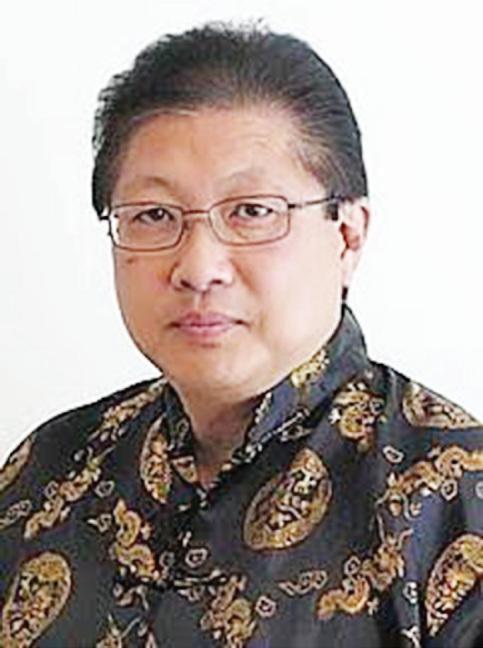
According to the founder and owner of NGUISTYLE Integrative Medicine Clinic and Qigong Studio, Canada, Dr Stanley Ngui, a team headed by Dr Celeste Thirlwell is already in Guyana overseeing the smooth transition and expansion of the process, which includes training several Guyanese to empower them with the technique.
Peter Willems is the Guyanese-Canadian Liaison, and Lori Smith is
Project Coordinator.
Humanitarian outreaches are also planned for Essequibo and Berbice.
Qigong Studio offers a holistic approach to health and wellness and has helped clients with a variety of issues, including injuries, kidney problems, sleep difficulties, and mental imbalance. Their knowledgeable staff explain treatment plans thoroughly and provides guidance throughout the process. Nguistyle has also been successful in helping clients with difficult fertility issues.
According to Ngui, "the application and knowledge of generations, the traditional roots of Chinese Medicine, can
be applied with modern electromagnetic frequency healing tools such as laser light, bio-photon light and vibrational

technology. This modern toolset, paired with ancient medicine, produces strong healing results in mental, physical and
emotional systems in the body."
According to the Nguistyle Integrative Medicine Clinic and
Qigong Studio website, "Nguistyle Integrative Medicine applies the diagnostic insight of Applied Qigong and Chinese Medicine through the precision of brain science, biomedical physiology and quantum mechanics. Its main modality, Ngui Mind Body Matrix, uses various forms of energy, such as light, sound, pressure, and electromagnetic frequencies, to activate the body's meridians, restore balance to the organ systems, and help resolve both conscious and unconscious stresses. By alleviating the underlying tensions and anxieties of the mind, we can then free up the body's energy and resilience so that it
TURN TO PAGE VII

By Shaniya Harding
FOR many families raising children with disabilities, the challenges extend far beyond medical care. Daily transportation struggles, financial pressures, social stigma and the demands of round-the-clock caregiving can leave parents exhausted and isolated.
At the Ptolemy Reid Rehabilitation Centre Dormitory Day Care, however, care is built around both the child and the family. Through a range of services that include 24-hour residential care, temporary weekday accommodation, respite care and after-school support, the centre has become a vital source of assistance for dozens of families across Guyana. Sister-in-Charge Candace Kewley said the facility's approach goes beyond nursing, with staff viewing themselves as surrogate parents who provide not only medical attention but also love, stability and encouragement.
In an interview with the Pepperpot Magazine earlier this week, Kewley, a registered nurse, registered midwife and rehabilitative nursing educator, explained that the Ptolemy Reid Rehabilitation Centre is part of the National Rehabilitation Complex, which houses the Dormitory Day Care among its services. Speaking about how the facility operates, she shared that its offerings are designed to meet the needs of families of children with disabilities at the point of need, with each service addressing a distinct yet interconnected challenge.
Sharing insight into the day care services, Kewley added, "We have children that come on a daily basis, and they get cared for between 07:00 hours and 17:30 hours. We also have children who come Monday to Friday; we call that the temporary resident service, where they come on Mondays and they get cared for until Fridays. This is provided because we find that we
have parents, especially single mothers, who have difficulties with transportation."
Another hurdle the day care works to address is the difficulty of travelling with children who have disabilities, a challenge made harder by a lack of public awareness about disabling conditions and the children who live with them. Unpredictable behaviour or the possibility of a seizure mid-journey can make public transportation a stressful experience for families. The financial burden of daily taxi fares from outside the catchment area is also something the day care works to ease through the temporary resident service.
Explaining this, Kewley noted, "To save our parents that, and also the financial constraints of taking a taxi back and forth out of the catchment area, we said to these mothers and parents: you can bring the child on Monday, we will take care of the child through the week, and you can pick the child up on Friday." She added, "While the child is here, we liaise with all the other departments so that they can have their treatments. They get their medication and everything while they're here. If they attend school, we also prepare them for school."
Moreover, for children entering the public school system, the aftercare service bridges the gap by working with both children and their parents to ensure that all their needs are met as they learn and integrate into a traditional school setting. As Kewley added, "Our children who are being integrated into the public-school setting come into us to get their hygiene needs met, diapers changed, they get their meals if they're on special meals, they get their medication. We understand our children, and we say, half day, you can send them back to us, we will take care of them," she said.
Furthermore, for those with nowhere else to go—children left at
hospitals with no known relatives, or whose home circumstances are not suitable—the centre becomes something more permanent, with Kewley noting, "Those residents
check-up, or a day to just go to the spa and relax and unwind, so they can be refreshed to continue their care. You bring the child, we take care of the child, and you pick the child up.
in the centre's care today. As Kewley explained, "Those babies are still with us because they do not grow chronologically. We have children who are adults, 27 and 28 years
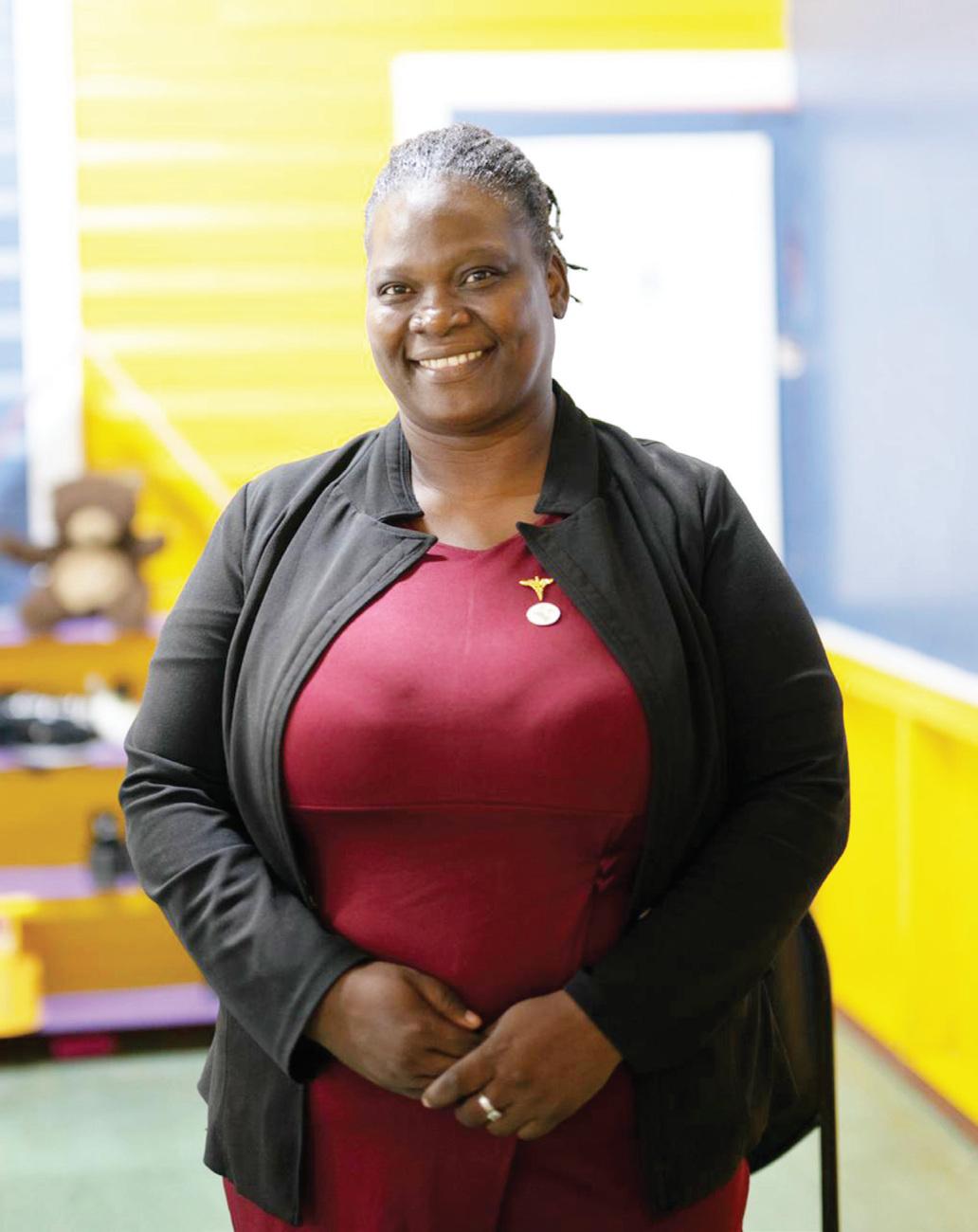
Sister-in-Charge Candace Kewley says the Ptolemy Reid Rehabilitation Centre is committed to caring for both children and their families
are always here, our young adults," Kewley said.
The respite service, meanwhile, is built on a different but equally important recognition: that the caregiver, too, needs care. As Kewley highlighted, "It takes a community to raise a child, and when you're looking at the community, you look at the parents, you look at the caregivers as well." She added, "There is a mother who is taking care of this child 24-7. Maybe she needs a day to get her documents in order, or a day to get her medical
That is our respite service," she said. Approximately 70 per cent of the children in the centre's care have cerebral palsy, with the remaining 30 per cent presenting with conditions including microcephaly, hydrocephalus, Down syndrome, spina bifida, epilepsy and, in rare cases, Kabuki syndrome. The 2016 Zika virus outbreak left a lasting mark on the facility's population, with the surge in microcephaly admissions that followed still reflected in the children, now young adults, who remain
her interview, "We do not view ourselves as nurses; we view ourselves as surrogate parents, surrogate mothers. I am a parent of this child, and I give the child the best care I can," she said.
This approach is backed by continuous staff education and training, as well as close observation and attention to the children. "We constantly keep educating ourselves and keeping ourselves abreast of new treatments and changes. It's constant intervention. When you notice any changes, you keep observing them— constant observation and intervention," she said.
Rehabilitation Week saw the centre take this work well beyond its walls. Staff visited health centres across communities on paediatric and outpatient clinic days, conducted outreach, followed up with patients, and made referrals where needed. Workshops, including sessions on 3D printing, were held alongside a health fair and a community walk.
Speaking to parents of children with disabilities, Kewley offers both practical and compassionate guidance. Adequate folic acid intake, appropriate birth spacing, prenatal awareness and community information-sharing are all tools she urges parents to embrace.
old, but stuck in infancy. You have a child roughly the size of a three-yearold but with the age of an adult because they are developmentally delayed." While the facility works to meet medical, dietary and health needs, care remains equally central to its mission, as Kewley shared, "All they need is just love and care."
That philosophy underpins every aspect of care at the centre, with Kewley noting that staff are not simply trained to treat, but encouraged to love. As she shared during
As she shared, "If you have a child with a disability, don't give up. There is so much advancing technology out there. Arm yourself with the knowledge, arm yourself with the necessary resources. Research and see what your child needs. If you're not sure, find out." She added, "Share information parent to parent. If you have a child with a disabling condition and you notice another parent has a child with the same condition, share information."
At the Ptolemy Reid Rehabilitation Centre, that spirit of shared purpose is not just advice; it is the foundation on which every service, every shift and every act of care is built.
By Shaniya Harding
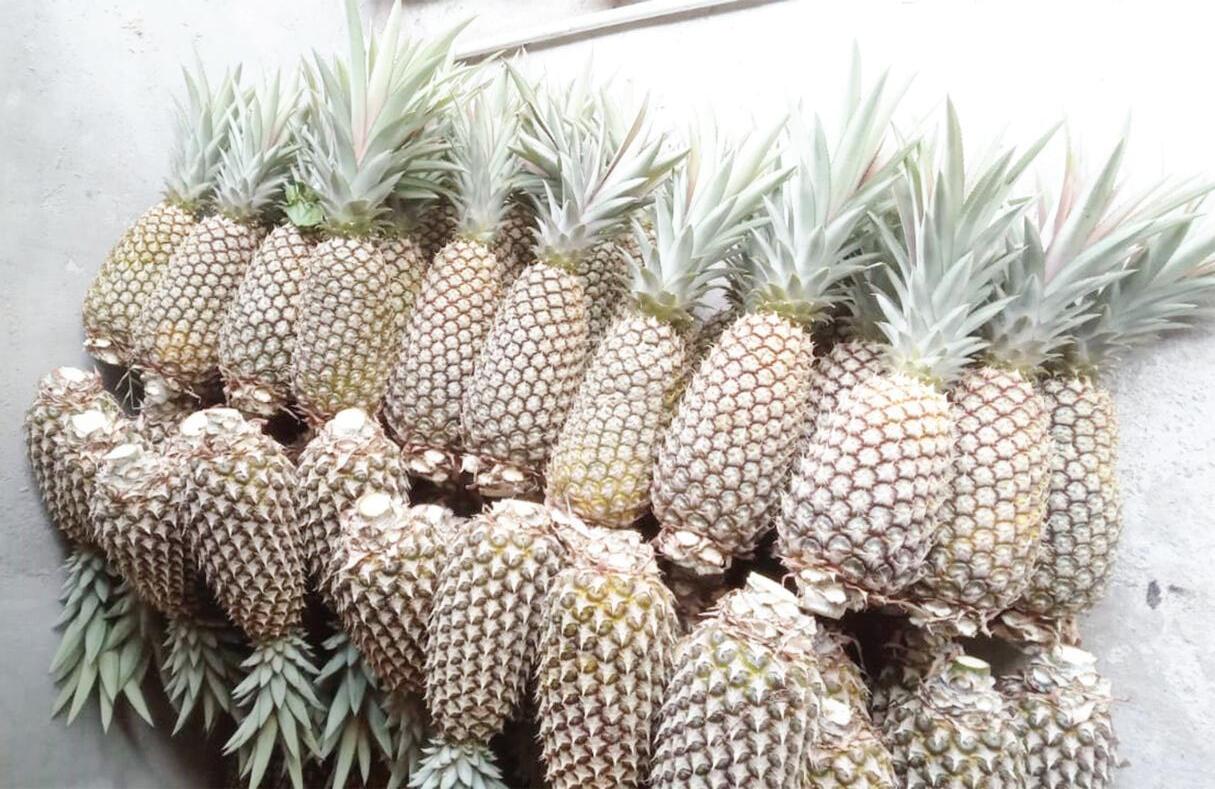
FOR many young people, a childhood playground becomes a distant memory. For Kezyah Bhola, it became the foundation of a growing agricultural enterprise. From her family's farm in Hauraruni Village, just off the Linden-Soesdyke Highway, the young farmer is building on a legacy that stretches back to the 1950s, when her great-great-grandparents cultivated pineapples and produced charcoal on the same lands.
Today, Bhola is steering the family operation into a new era, balancing traditional crops with ambitious projects involving dragon fruit, black pepper and cinnamon through partnerships with the National Agricultural Research and Extension Institute (NAREI) and the Guyana Livestock Development Authority (GLDA). Managing logistics, customer relations and farm expansion alongside her mother, she views agriculture not simply as farming, but as a business with vast potential. With more than 16 of some 35 acres under cultivation, Bhola is determined to prove that Guyana's agricultural future can be driven by a new genera-
tion of entrepreneurs.
During an interview earlier this week, Bhola shared that the farm has been in her family for generations. Owned by her great-great-grandparents since the 1950s, the farm originally grew pineapples and charcoal, with the Hauraruni Creek that flows through the land used to transport crops and produce down the Demerara River.
Today, Bhola and her mother run the farm together, with some of the same crops originally planted on the land decades ago, alongside new ones soon to enter the market.
As Bhola shared, "By the time my mom and I were farming, we were still doing pineapples but focusing more on fresh crops, some light softwood and a lot of citrus. We got the attention of GLDA and we have been doing some projects with them as well. I see the farm as a multi-generational project for me because what I am doing is not just for me. Like the generations before me, I am working for the future," she said.
Bhola and her mother work as a team to manage the farm, with Bhola handling the logistics, management and supply chain aspects of the business,
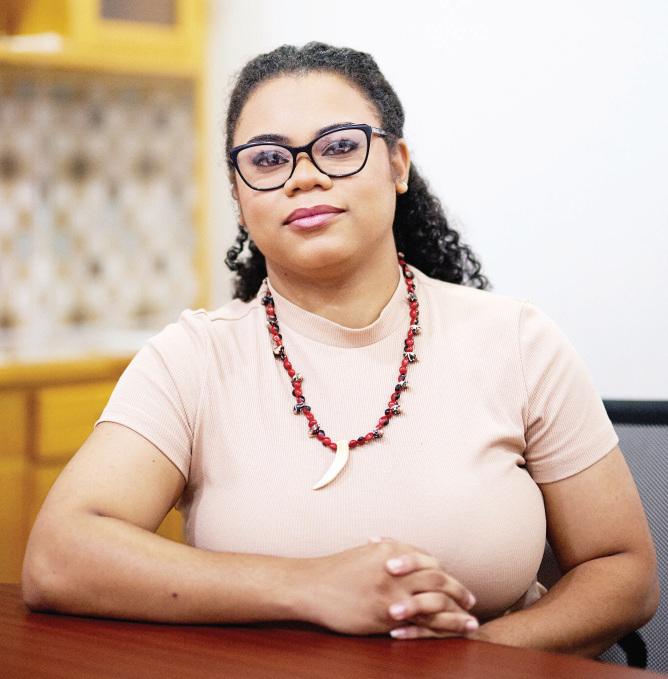
while her mother, whom Bhola calls the backbone of the farm, takes care of the hands-on work with the crops, ensuring their health and overseeing the farm's workers. This collaboration has made the farm a success and a prime candidate for cultivating some of Guyana's most unique crops.
Through their work with NAREI and the GLDA, Bhola has ventured into planting cinnamon and black pepper alongside a dragon fruit project. As she shared, "We have taken on a cinnamon project where we just got 150 cinnamon trees. We also just got the
go-ahead to get some black pepper plants, so we are going to have a big row of black pepper. In addition to all that, we are doing a dragon fruit project where they are providing the plants and we will prepare the farmland, look after and manage the crop. We are then going to set this up to create a market for it."
Although the new crops are still in their early stages, Bhola notes that challenges remain, some she has already encountered and others she is working to mitigate in collaboration with NAREI. As she shared, "Agriculture is a very unsta-
ble sector because you cannot control everything. We have droughts, we have periods with no rain, and then we have very high rainfall. NAREI is putting things in place to help, such as ensuring the creek is accessible and doing dredging work to improve soil conditions for the crops," she stated.
But beyond the new crops, Bhola's farm is diverse. As she explained, while just 16 of the 35 acres of land is currently under cultivation, some of the land houses coconuts, pineapples and a number of other crops being intercropped alongside the new additions. As she told the Pepperpot Magazine, "We are supposed to put down about five acres of coconuts, and of course we have the projects I mentioned. I like to do intercropping, but with these primary projects I like to give them their own space, so I have mapped out the entire farm into sections," she said.
The introduction of these new and interesting crops to Bhola's farm and a number of others comes amid the dramatic development of the sector. As she explained, with Guyana having earned the title of the world's only food-self-sufficient country, there is a push to continue building on that achieve -
ment. Using dragon fruit as an example, Bhola noted that it came onto the market at a very high price. What NAREI and the Ministry of Agriculture are now working to do is make it more affordable by growing it locally. Guyana is closer than ever to achieving its food security goals, and young people can play an integral role in this.
As a champion for youth in agriculture, Bhola noted that misconceptions about the sector persist. "I think people hear agriculture and they immediately think about hard labour, and I feel that has definitely put off a lot of people. But farming is not what it used to be; it is not just a physical, stand-up game. I see farming and agriculture as a whole as more of an industry now," she said. Bhola noted that agriculture is a developing industry, adding, "Agriculture is not just working in the field; it is a growing industry and there are several jobs attached to it. There are so many sections within it that people ought to explore. I would definitely suggest a lot of people look into it as a new form of employment because food security begins when people invest in it."
By Michel Outridge
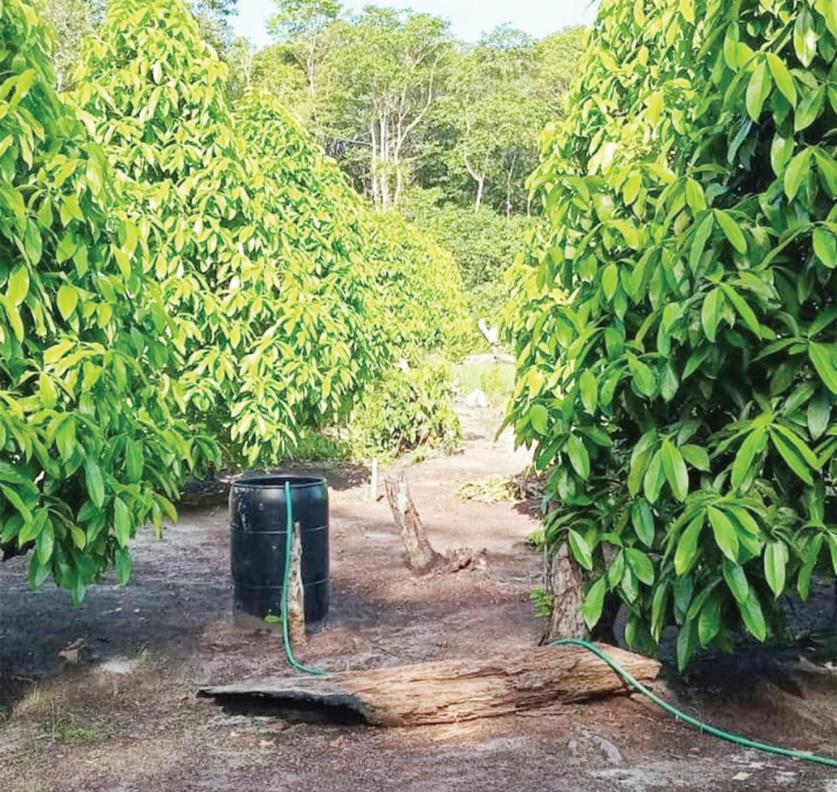
WHEN the odds were stacked against Olivia David, a self-made young woman who was taught to rely on her inborn skills, she utilised the opportunities she had to become an entrepreneur who provided for herself and her family.
This is the kind of woman who gets up well before the crack of dawn to cook, clean and invest time and effort into a small business she started from her home as an agro-processor.
David was born and raised
Over the years, she has earned certificates in agro-processing, beekeeping, soap-making, catering, décor management, cosmetology, and several other areas, demonstrating her commitment to lifelong learning and self-improvement.
She is a passionate advocate for her community who has consistently worked to uplift and support those around her.

in the historic community of Bagotville, West Bank Demerara, a village renowned for its rich African heritage and culture.
As the youngest of three siblings in a single-parent household, she learned the values of hard work, resilience and determination from an early age.
Driven by an entrepreneurial spirit, David has dedicated herself to personal growth and community development.
Her love for Bagotville Village and its people has inspired her to contribute positively to community development and create opportunities for others.
David's mother passed away when she was 15 years old and left her with life skills so that she could become resourceful and make a living as an entrepreneur.
Before her passing, Olive Hinds did everything she could to teach her daughter to do things with her hands and become industrious so that she could earn a living after she was no longer around.
David stated that her mother was a talented woman who used the resources she had to make a living, including rearing chickens, cooking, baking, and sewing, among
made sure she would be able to take care of herself even after she was gone. Today, she is grateful for those life lessons.
She recalled being among the youngest students at Carnegie School of Home Economics in the night classes alongside her mother, memories she treasures these days, which stand as a reminder that life does not stay the same all the time.
It was at Carnegie School of Home Economics that she received her first certificates and moved on to more advanced courses, which upskilled her considerably.

Above all, David is a devoted mother to six children, three girls and three boys. She is determined to build a lasting business legacy, establish a respected name and create a meaningful history that will inspire her children and future generations.
Through her dedication, perseverance and service to others, she continues to be a positive role model and an example of strength and ambition within her community.

as a woman," she said.
David related that, as part of her volunteer work, she used to sew at 16 for the Bagotville group.
She was solely responsible for sewing all the outfits for the young ladies' performances overnight, and it would take her all night to complete them, but she had fun doing it. The very next day, she would be out supporting them in every way po ssible, and it was those things that brought her
other things.
Although David benefitted from a secondary education, she had to prematurely drop out of school when finances became tight.
But these setbacks did not deter her from realising her true potential. They actually motivated her to become the best version of herself as a self-employed woman, ready to take on a small business.
David credits her success to her late mother, who was wise beyond her years and
David told Pepperpot Magazine that those life skills helped her make things to sell and earn money, which she used to upgrade her education so she could also empower others, especially vulnerable groups in the community.
"Life skills became my lifeline, making salted fish, rearing Creole fowls, among other things. I did what I knew to survive, got children and I used my hands to make things to earn. These are the things I did to see myself through life
so much joy in those days.
David stated that volunteerism is more than having your name called at meetings. It is much more than that; it is all about uplifting others and playing a vital part in community-based development.
"We are here, vibrant, and at every opportunity we get we try to do something to uplift others in the village since Bagotville has two CDC groups and she is a part of the Outer Bagotville CDC group."
David added that, as a mother of six, she would also like to pass on her life skills to her children so they, too, can become empowered to lead successful lives on their own entrepreneurial paths.
"Community work is a passion for me, to help others. I don't just want my name to be called. I do training courses to teach others teddy-bear mak -
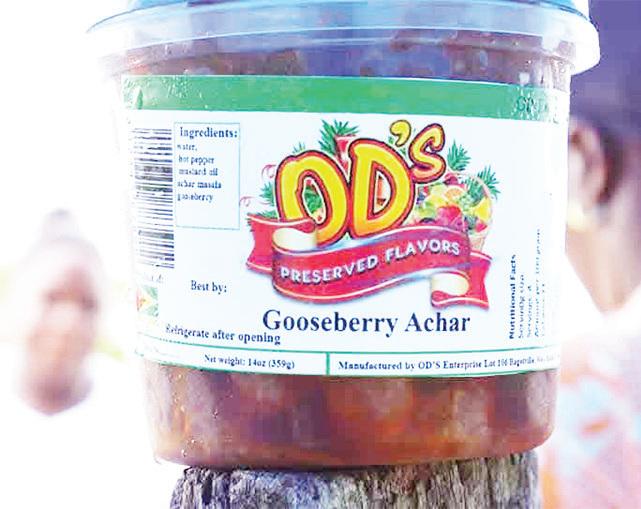
ing, cake making, floral arranging, sewing, baking and cooking at the community level to empower them. Life skills were my form of survival, and they gave me a sense of purpose and belonging when people I cannot remember come up to me to say thank you for passing on life skills to them because they too have small businesses that they earn from. So my purpose is to help others," she said.
By Michel Outridge
KAREN Bacchus-Hinds possesses a passionate entrepreneurial spirit that applies to both her business and her dayto-day life, a practice she instilled in her routine as a secretary who later became a successful businesswoman.
Bacchus-Hinds spent years building the foundation of a business that is today a household name for quality literature and books.
She is the owner of New Era Business Enterprise, which has two branches, one at the Courtyard Mall, Robb Street, Georgetown, and the other at Cheddi Jagan International Airport (CJIA) at Timehri, East Bank Demerara.
Bacchus-Hinds is a very kind and passionate woman with a friendly, approachable demeanour and is easy to talk to.
She has a wealth of knowledge about books, including our very own authors and their locally produced books about Guyana, among other things.
Bacchus-Hinds was born on September 15, 1965, in Berbice, Guyana. She attended St. Winfried's Primary School and then Indian Educational Trust College, Georgetown, Guyana.
Midway through her years at the Indian Educational Trust College, she transferred to Coltress Secretarial School in hopes of becoming a secretary.
Shortly after finishing secondary school at 17, she began working as a clerk at Twiga Construction Company Limited.
Birth of New Era Business Enterprise
Bacchus-Hinds
stated that she wanted freedom and control over her own business and finances. She established New Era Business Enterprise on January 1, 1996. In addition to her passion for books, she saw a need to improve the education sector and eventually decided to sell educational items.
Bacchus-Hinds wanted to fulfil her personal ideals, centred on shaping young minds and, by extension, contributing to a culture of early childhood education; the best way to do that is through a bookstore.
In the beginning, the business was based at her home, where she wholesaled trade books and children's stationery to stores and libraries.
The books she sold included cookbooks, cake-decorating books, floral-arrangement books and all books related to trade.
The stationery comprised Crayola crayons, drawing books, modelling clay and paints. She then recruited a team of outdoor sales agents to sell the items door-to-door.
In 2001, with three daughters, she established her first retail outlet in Georgetown, Guyana, where she continued to sell the same products.
The business started off with a small workforce of three people, including a cashier and two indoor sales agents.
From there, her business expanded to a workforce of nine people, selling many more education-related products.
She also opened another outlet at the Cheddi Jagan International Airport in 2007, where souvenirs, crafts and books were sold.
In 2007, her husband, Orin Hinds, accepted a job opportunity in Trinidad, so she migrated there with her family of five.
Despite the move, she still had control over the finances, important decisions and the day-to-day operations of the business.
Bacchus-Hinds possesses several key traits that would make a person an entrepreneur. She can be described as highly motivated, proactive, innovative, opportunity-oriented, a persistent problem solver and someone with strong team-building skills.
She is not solely motivated by money but understands its importance in business.
The businesswoman spends most of her time proactively tending to the business, making sure everything runs smoothly.
Bacchus-Hinds can be seen making calls to her business associates and suppliers daily.
In addition to being highly motivated and proactive, she is also innovative and opportunity-oriented.
Additionally, her business is one of the few in Guyana that is fully managed and staffed by females, with males later employed as the business grew.
She has even created a customer request book that allows her customers and clients to request specific products.
Furthermore, Bacchus-Hinds is a persistent problem-solver with strong team-building skills.
She stated, "In business, every day there is a problem and you have to solve it in a manner where everyone is satisfied."
Overcoming chal -
In 2005, a large flood covered the entire East Coast of Guyana. Unfortunately, her business was one of the places that was flood-
Industry Inc. in 2006. After 10 years of hard work, New Era Business was recognised for its benefits to Guyana's local community.
The award was pre-
This expansion generated additional income and revenue, but there were many challenges in running both businesses. The issues her business encoun -

ed, filling the space with about four feet of water. Thankfully, there was inventory on the second floor of the building. She noted that the business was ultimately negatively impacted, as people were not shopping for non-essential items as much as they had before.
On the bright side, New Era Business received an award from the Georgetown Chamber of Commerce and
sented in recognition of the company's pioneering efforts in developing the education sector and for conducting business with social responsibility.
In 2007, VAT (Value Added Tax) was introduced in Guyana for the first time, which led businesses to slow down. In the same year, Bacchus-Hinds decided to expand her business and open a store at the Cheddi Jagan International Airport.
tered also affected her personally. Besides minor financial problems, Bacchus says she did not face many major problems. She has successfully run her business for more than 20 years and credits her staff and a strong support system for helping her do so. Amid the trials and tribulations, she and her business have helped to create a better community in Guyana.
can be directed to where it needs it most."
Guyana-born Professor Ngui, who hails from Sisters Village, West Bank Demerara, and who migrated to Canada in 1971, is an advisor to the WORLD NATURAL MEDICINE ORGANIZATION (WONM), where he is the Dean of Traditional Chinese Medicine and Qigong. As a professor-at-large for WONM—University of Humanitarian Medicine Federation (WONMUHMF), his co-authored books include the internationally recognised Sleep Your Way to Wellness.
Ngui is the founder of the NGUI MATRIX System, which he teaches internationally. The NGUI MATRIX teachings are certification credits at WONM and UHMF. He is also the Chief Integrative Medicine Doctor at the NGUISTYLE Inte -
grative Medicine Clinic Inc.
A past principal of the Academy of Acupuncture and the president of Beyond Abilities Centre (a charitable organisation), Ngui is the 23rd generation of the Ngui family and is a member of the North American Martial Arts Hall of Fame.
Ngui is also a knight in the Sovereign Orthodox Order of the Knights Hospitaller of St John. As a clinician for over 40 years, he has helped thousands of patients with many health issues. He has been a speaker on radio and television shows, both nationally and internationally. As a Doctor of Humanitarian Science, he supports Clinics for Humanity.
art of Qigong, he founded the Academy for Chi Kung Studies and became the founding director of the Kung Fu Federation (Toronto, Canada).
In 2010, Ngui travelled to Haiti as the team leader on a mission to care for earthquake survivors and to educate frontline professionals (university nursing students) on natural ways of treating emergency disaster survivors. Another humanitarian mission was in Peru, where members also taught at a local hospital.
Prior to migrating, Ngui attended Central High School in Georgetown. Married to Feeza, the union bore two children—a boy and a girl— who are both integrative medical doctors.
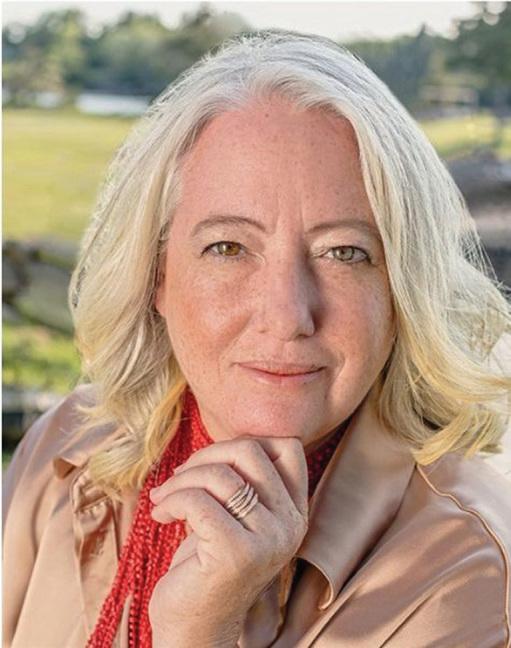
Dr Thirlwell, who is currently overseeing the transition in Guyana, is a Sleep Medicine Specialist and Psychiatrist with a background in neurosurgery and neuroscience research. She is an international authority on the treatment of PTSD and concussion with cutting-edge bioelectric frequency modalities. She is a diplomate of WONM with a designation of Doctor of Humanitarian Services.
vides comprehensive, multimodal treatment for sleep/wake health issues. She has presented nationally and internationally on insomnia, Post-Concussion Syndrome (PCS), Post-Traumatic Stress Disorder (PTSD), Fibromyalgia Syndrome/ Chronic Fatigue Syndrome (FMS/CFS), Pulse Electromagnetic Field Therapy (PEMF).
field modalities such as Pulse Electromagnetic Field Therapy (PEMF) and photobiomodulation (PBM), as well as the NGUI MATRIX System, into her practice.
In 2006, Ngui was recognised for his contributions to the martial arts community and inducted into the North American Martial Arts Hall of Fame. As a Grandmaster in the
As the Chief Integrative Doctor at his clinic, he uses a multitude of traditional Chinese therapies, such as acupressure massage, Qi Gong, moxibustion, herbology, and nutrition, in conjunction with his modern toolset. Some of his clients consist of players from the NHL, NBA, Lacrosse, PGA, and Olympic teams.
Dr Thirlwell completed her medical degree and psychiatry speciality training at McMaster University and is the founder and director of the Sleep Wake Awareness Programme (SWAP), which pro -
Dr Thirlwell has also worked extensively with refugees and military veterans suffering from traumatic brain injury (TBI), insomnia, PTSD, chronic fatigue, and chronic pain. She continues to search for innovative neuroscience-based strategies to optimise the care of her patients and is incorporating innovative approaches such as yoga, Mindfulness-Based Stress Reduction (MBSR), Eye Movement Desensitisation and Reprocessing (EMDR), image rehearsal therapy, electromagnetic
She has a lifelong commitment to optimising the health and well-being of patients and their families. Her current collaboration with the NGUISTYLE Integrative Medicine Clinic and WONM to bring Integrative Healing and Wellness Tourism to Guyana and CARICOM is an outgrowth of her drive to serve humanity.
As a Guyanese, Dr Stanley is looking forward to establishing Wellness Tourism in Guyana. Doing so will promote Guyana as a hub for CARICOM and South America. It will also empower the Guyanese people to use the technique and become a healthier and happier nation. FROM PAGE II


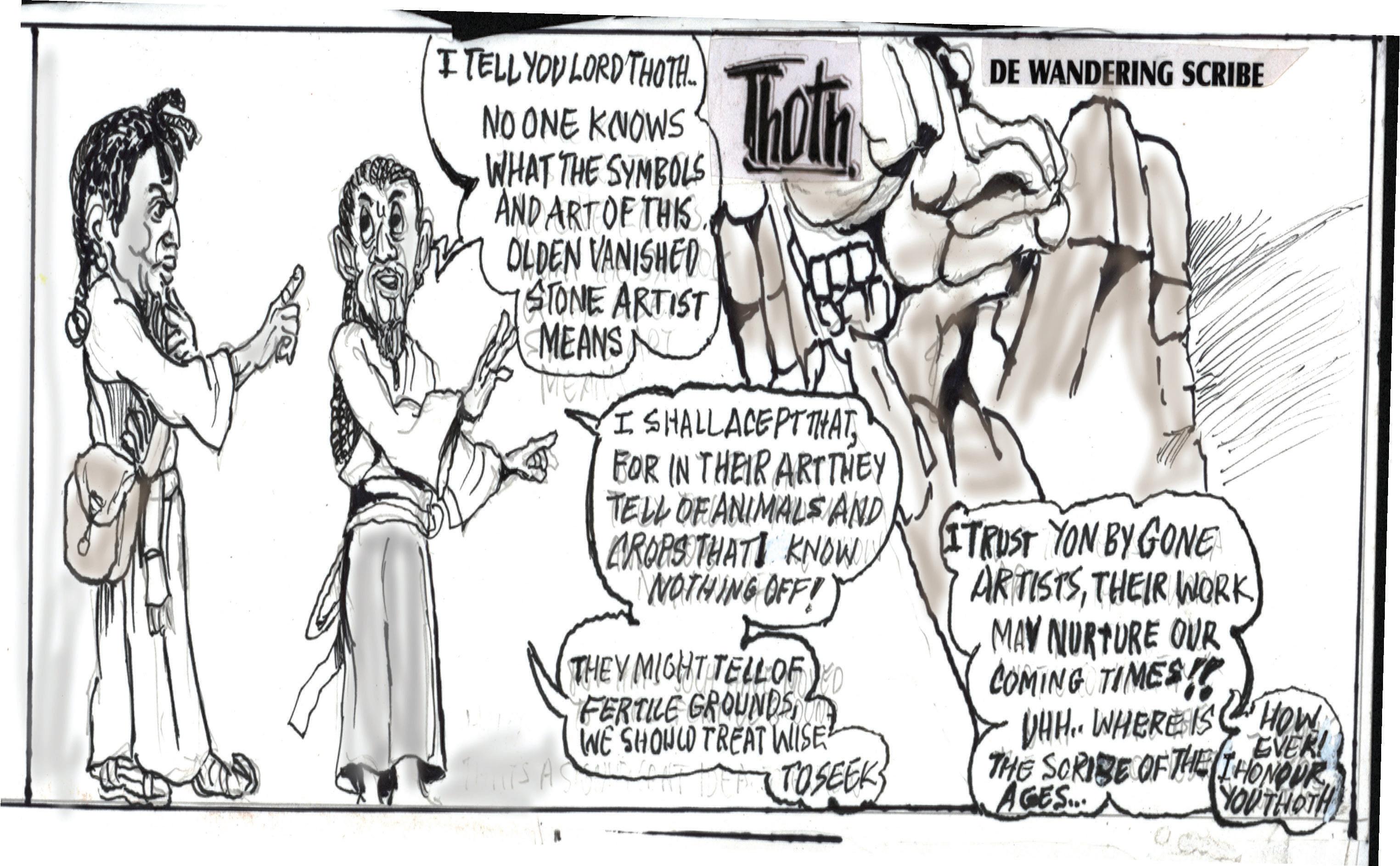
BASED on the family request to brush up my working area in the crib, I unearthed some interesting stuff that carried some old work of my own and other artists and recognised that I had put in a file with the intent to explore back then, WAS revisiting once more in the
present, sensibly, with relevance to the present and, obviously, with relevance to the important questions on the mindset of the future, knocks at your mental door, that shares similar ideas all relevant then and now, has initiated this issue of Talking Culture. I called Michael Jordan to ex -
plore whether this piece was written by him. At first, in describing it, he believed it might be his. I was relieved to have a writer I could affix to the piece. Mike called back after compiling the text and pics I had outlined to him and informed me that the article wasn't his. We had no phone
number for my onetime media tutor, Adam Harris, and proceeded to place the content of March 6, 2017, into the relevance of a continual debate projection. What was in this article was the issue of taking the arts seriously to convey, first, a meeting with Guyana's creative folk
and a projection of interest and exchange based on past and currently prevailing issues affecting the Arts and artists and their OUTLINE OF LIVELIHOOD AND THE IMAGERY OF LIVELIHOOD. Because the creative fields have rarely engaged artists in discus-
sions, not much evolves from them. Productive engagement places a wide platform of understanding open that embodies a deeper perspective, leaving no shadows of misinterpretation to drown rational reasoning… rather than evolving… into a worthy national engagement.
FROM PAGE VI
New Era Business Enterprise has ultimately added value to the education system and the local community of Guyana.
In her store, located in Georgetown, they sold books and innovative materials that were not previously available on the market. Items such as nursery school books and teaching aids were sold. Soon after, they began selling more children's items.
They sold educational toys and quality games from brands such as Mattel, Lego, VTech and Hasbro, which were rarely sold locally.
In the store located at the airport, they mostly sold locally made products and souvenirs. This gave local artists and craftsmen an opportunity to sell and showcase their craft.
Unlike their competitors, they listen to the public and supply products as needed. Her business is very adaptive and changes its products throughout the years to keep up with technology and the ever-changing market.
Currently, the business continues to sell souvenirs, books and teaching aids and has started selling maga -
zine subscriptions. She does not expect any major challenges in the years to come, but she says that business is unpredictable, so she is prepared to deal with any issue that may arise.
Ten years after the founding of New Era Books, however, she has become one of the best-known female faces in the local business community and, as Auntie Karen, a popular figure with children.
Her vision was not always as well-defined as it is today. It began, she said, with a love of books, an entrepreneurial spirit and a determination to grasp the business opportunities that emerged with the growth of the private sector in Guyana.
Earlier this year, Bacchus-Hinds hosted an exclusive book exhibition, titled Voices of Guyana, featuring books about Guyana and by Guyanese authors, at the Four Points by Sheraton Hotel. More than 100 books were on display and for sale.
Bacchus-Hinds told the Guyana Chronicle that she recently realised that Guyanese need to read more books written by local authors and about Guyana.



I ONCE lived in a nice little home with a loving family, the children always cuddling and petting me. As a calico kitten, they said I was very cute. As I grew older, I made friends with the neighbour's dog, Brutus, and cat, Ebony. We often played in the garden, and I was happy and contented, but then something terrible happened. My dad left, saying he would never return, and my distraught mom had to go to work and was out all day. She always came home tired and stressed, sometimes forgetting to feed me, and when I meowed to remind
her, she got angry and yelled at me. She often scolded the two little children, causing them to cry, and it made me sad that she had changed from a loving mother to someone harsh and irritable.
Time passed, and Dad came sometimes to pick up the children for the weekend, which always caused a fight. I would hide under the cherry trees until they had quietened down.
I don't know why Dad left because I am just a cat, but I know I did not like the new man who came to live in the home. From day one, he said he didn't like cats. A few days later, my warm bed and
food bowl were put outside on the porch. Mother did not object, and that made me even sadder. I wondered, as I lay there in the chilly night, "Does she not love me anymore?"
The children sneaked me into their room when the man wasn't home, but one night he caught them, and they screamed at him to leave me alone. The man growled in a low tone that I would have to go, and at the time, I did not understand what that meant.
Then, one late night, when Mother was asleep, and the children were with their father, he picked me up from the porch and drove a

long distance. I did not know what was happening and felt scared, crying for the children to save me. The car
and I cried, "Where am I? I want to go home."
Moments later, I heard dogs barking, and I ran, jumping over a
houses and lights all around, but I saw no one who could help a poor, abandoned kitty. It started to drizzle,
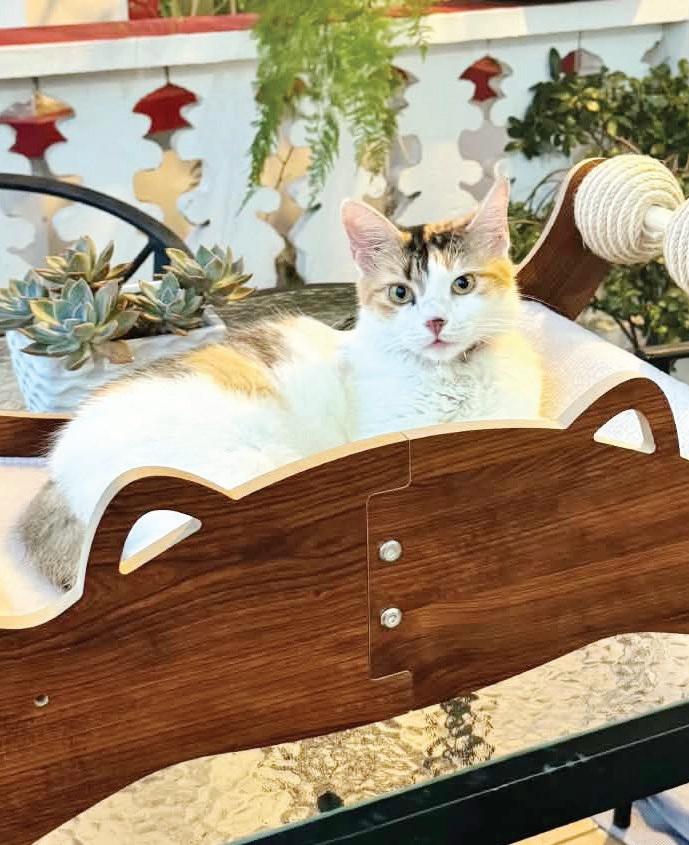
drove into a very quiet place and, stopping, he took me out.
"No," I cried, struggling, but with an evil grin on his face, he threw me down on a grassy parapet and drove away. I stayed there, my little heart thumping in my chest,
drain into a field. The grass was thick, which was a good thing because it hid me, but the barking dogs did not come closer. I raised my head to peer above the grass, trembling and frightened.
"Where am I?"
There were big
and I walked unsteadily through the thick grass to a small shed, where I curled up, hungry and alone.
Morning came with the sound of birds in the field, but I was too weak and unhappy to chase after them. I
FROM PAGE X
stayed under the shed for a long time, then decided to walk, hoping to see someone familiar. I rested under the shade of trees when my legs got tired until I reached a house at the end of the field where there were some people, and I meowed weakly until someone saw me and exclaimed, "Hey, look, it's a stray cat."
I was given some food, but the lady said, "We can't keep you because I don't want cats in the house."
The little hope I had was dashed away, and I stayed cuddled under a bench outside in the yard. I fell asleep and was awakened by children's voices. There was a children's play area nearby with swings and slides, where some children were playing.
I came out from under the bench, and it
was a while before I was noticed.
A little girl squealed, "Kitty!"
The children stopped playing and surrounded me, wanting to know where I came from. They liked me and stroked my fur, but none of the adults wanted to take me home with them. One little girl, who lived close by, insisted she wanted to keep me, and the mother reluctantly agreed. I was given a box on the porch to sleep in and a bowl of food that gave me some comfort. I slept but awoke at different times during the night, thinking of my family.
"Are they missing me? Will I ever see them again?"
In the days that followed, the little girl and her friends played with me, and that helped to soften the grief in my
heart, but then the family went away on vacation and I was alone again.
A kind neighbour brought food in the morning and afternoon, which he pushed through the gate. I stayed on the porch, but there was nowhere else to go. Many days passed, and I wondered if the family with the little girl was coming back. It was so quiet and lonely, so I decided to walk around the community looking for what was missing from my life: love, warmth, laughter and cuddles. I did not find it anywhere because no one seemed to care about a wandering cat, except for the kind man. Every time I wandered away, he searched for me and brought me back to the house.
Then, one morning, as I was coming back

from one of the streets, I saw the kind man talking to the lady next door. I knew he was probably telling her he couldn't find me. At that moment, the lady spotted me and said, "Hello, sweetie, how are you?"
The sound of her voice, a beautiful, gentle tone, lifted my low spirits, and I asked myself, "Is she the one to fill my life with what's missing?"
She took the food from the man and called me to eat, speaking to me in a loving tone. She didn't take me with her because the man took me back to the house with the porch, for it was that family who had rescued me, but who hadn't yet returned. When the man left, I walked over to the lady's house next door and climbed through the fence, but her two
dogs barked at me, scaring me.
She came out and cautioned them, "Hey, stop that!" and to me she said, "Go back to the house, sweetie, I will feed you later."
I came out in the afternoon, and she gave me food, then lifted me into her arms and hugged me, saying,
"She's so little and soft."
Her two dogs, standing at the gate, looked on disapprovingly, and she said to them, "Look, guys, you have a new friend."
They barked, unwilling to accept me, but I persisted in trying to jump over the fence. The big dog was more unaccepting than the smaller one until the lady scolded him.
"Stop that, be nice. Remember when you were on the streets too
and I took you in?"
He walked away to the front of the house, most likely understanding what she had said to him, and she picked me up.
"What's wrong, sweetie? You don't want to stay alone over there?"
I meowed in a desperate kind of way and she laughed.
"Okay, you can stay with us."
And that's how I found the forever home I wanted, with a loving, caring family, warmth and laughter.
I know I will always be safe because the lady was an animal lover who often rescued strays.
My little heart no longer grieved, for it was filled with happiness, and, of course, the two dogs and I became friends.


WHEN someone is “stressed out”, they tend to eat unhealthily. They are likely to consume more sugary foods, for example. While the main causes of periodontal disease are stress and poor oral hygiene, another factor that may contribute to gum disease is a poor diet. I overemphasise the point because it is the missing link to the prevention and treatment of gum disease, and it is almost always ignored.
Diet is important in controlling periodontal
disease because bacteria in the mouth use sugars for energy and reproduction. When stress causes your oral hygiene to become poor, and your diet is high in sugar, more bacteria are produced. The higher bacterial level will then inflame the gums and may increase plaque formation in gum disease. If we consume a high-sugar diet, the body will produce more bacteria in the mouth. Stress, combined with such a sugary diet, adds acid to our saliva, which can lead to gum disease. Studies have shown that eating
sugar-containing foods between meals is more harmful than eating them with meals. And we know that stress can make us want to snack more often.
We need vitamins and minerals in our diet. Vitamins help regulate our metabolism. A diet high in fibre, fruits and vegetables will help naturally reverse gum problems. Most importantly, we need the fats and proteins that provide the energy that helps build the cells of our body. To reverse gum disease naturally, we must alter our diet and discipline ourselves to

maintain healthier eating patterns.
In isolated areas where groups of Amerindian people live, it is known that their teeth and gums are in a healthy state. I worked in both the North and South Rupununi for a long time, and I know that these groups do not follow what we consider proper oral hygiene, yet they have healthy mouths. Why? They eat live foods and basically lead simple, stressfree lives. If these people came to live here in the city, their teeth and gums would start to show disease states that would be due to the processed foods that we eat.
People who are obese and eat sugary foods have a higher susceptibility to gum disease than those who eat a balanced diet. Soft and sticky foods (like nutrition bars), which tend to remain in the grooves of the teeth, are also a culprit and can lead to tooth and gum problems. It is not the vitamin content but the natural sugars, such as honey, in these nutritional bars that get stuck in the grooves of your teeth.
The bone surrounding the teeth needs the same attention as other bones in the body. Vitamin A is needed for the formation of this bone.
Vitamin A deficiency in the mouth can show up as thin enamel, chalky patches on your teeth, decreased tooth growth, retarded eruption, malpositioned teeth, soft teeth, dry mouth, and defective
dentine formation because it can decrease the activity of new cells. On the other hand, excessive consumption of vitamin A can result in a toxic condition characterised by itching skin, gum disease (gingivitis), and irritability.
Too much or too little can affect your teeth and gums. Eating the following foods in moderation will help you heal your mouth and reverse your gum condition. The soft foods containing vitamin A that are easier on the teeth are foods like apricots and cantaloupes. Harder foods include carrots, broccoli, and celery. Additional foods rich in vitamin A include butter, cabbage, chives, egg yolk, and milk.
If you have a vitamin B deficiency, your tongue may show some early symptoms of enlarged taste buds (bumps on the side of your tongue) at the front and the side, with the taste buds at the back of your tongue becoming enlarged later. You may also notice deep fissures and grooves down the centre of the tongue. Various foods fit into different vitamin B groups. Foods that are high in vitamin B include mushrooms, algae, yeast, sunflower seeds, and sesame seeds.
Thiamin was the first vitamin discovered; hence, it is designated vitamin B1. Symptoms of a severe deficiency of vitamin B1 include a burning sensation on the tongue, loss of taste, un-
usual sensitivity of the inner lining (the cheeks and soft tissue) of the mouth, and cracks and sores in the corners of the mouth. Cracks in the corners of the mouth, called “angular cheilosis”, are common. Foods rich in vitamin B1 that can help you avoid such symptoms are wheat, oatmeal, legumes such as peanuts and peas. Meat, fish, fruit, and milk also contain thiamin. Vitamin B2 is involved in the production of energy through the conversion of nutrients in food. Common symptoms of vitamin B2 deficiency include cracked, painful, and ulcerated lips. They may appear redder or whiter than usual. The corners of the mouth may also crack. Contact with food or drink may cause pain or a burning sensation on the tongue. Antidepressants decrease the positive effect of this vitamin, so be especially watchful if you are being treated for depression.
Niacin (vitamin B3) is involved in the metabolism of carbohydrates and fats. It acts as a coenzyme (catalyst) in the process that requires energy for normal cell function. Vitamin B3 deficiency results in pellagra, a disease characterised by a swollen tongue, mouth inflammation, diarrhoea, and small red eruptions on the backs of the hands. Good sources of niacin are meats, turkey and other poultry, fish, and peanuts.

IT is an exciting thing to love and to be loved. From the most fundamental biochemical building blocks to the most abstract emotions that guide how we think and act, love has an enormous influence on who we become. It has a way of taking us in its clutches long before we realise how deeply we are affected by it. It gives people a reason to keep moving when there seems to be no way to do so.
At the same time, it takes away all reason and rhyme from the lives of those who may previously have depended on structure and logic to make their decisions.
To love is human, and without love, there is no way to be completely and entirely human. This is a fact we learn very early in our lives. Even if it is not literally taught to us, it is a lesson we absorb from observing the things we encounter in the world around us. The childhood fairy tales that end with a princess finding her true love, and the millions of people who celebrate every time a celebrity finds a perfect match, create the message that finding love is one of the most important facets of life. This means that if one has not done so in the early years of adulthood, then they are facing a great loss.
This message, however, shrinks love into something that is quite two-dimensional. Love does not have a time or a place, and it most certainly does not have a specific form. Strangely, it seems we have reduced
a very complex concept to nothing more than romantic relationships, when it takes many other forms. Love takes form in the relationship between parents and their children. It takes the form of a relationship between siblings, relatives, or friends. It even takes form in the passion someone has for the work they do. The world gives us many messages that we may misinterpret or notice at the wrong time in our lives. Love may be necessary and important, but it does not always mean the same thing for everyone. Some people may find their happiness and fulfilment in romantic relationships, but others may find themselves being completed by living a lifestyle that reflects the deep sense of love they have for themselves.
Most importantly, love takes shape in how we learn to perceive ourselves. There is often an unspoken pressure on young people to find partners before they have fully formed an identity. This means that they learn to love another person long before they learn to love themselves. They are, essentially, frightened into relationships for which they are not ready, or made to live with a sense of lonely incompleteness, believing they are missing out on something everyone else already has.
This fear of missing out that is created among our generation turns its members' energy away from pursuits that could help them become complete individuals with
hopes and passions of their own. Instead, they are often left looking for something they probably do not need and may not find at the moment.
Love is not something we need to find so that we can finally be complete. It is something that we already have right
within us. It is woven into the fabric of humanity, like stars shimmering in the silky night sky. It runs inside us, like water beneath fertile soil.
Instead of looking for love every day, treat it as something to give to the world. Love yourself by doing things that
help keep you healthy and happy. Love your work or education by choosing to spend your time only on what you are truly passionate about. Love your family and your friends by giving them the respect and loyalty that they deserve. You can even
love strangers by showing them unexpected kindness in unexpected moments! We must not let ourselves feel like we are losing out on love when we have so much of it right within us, waiting to be noticed and used properly.



DURING boyhood, each parent should understand that boys will experiment with many things, which will give them personal life experience and teach them various lessons. This is a critical stage for every parent to train and develop their sons. Imparting good values, morals, manners, and other key lessons to sons during the early phase of their lives is important, as it lays a strong foundation for their future.
Boys need guidance. While external guidance can be helpful, it is often better for them to receive guidance from their parents and siblings. Parents often recognise their children's strengths and weaknesses and know how to help them. Proper guidance and encouragement can lead children to change quickly and, therefore, become valuable resources to their parents and society.
Educating boys is essential for ensuring that they play important roles in our society in the future. Education is gender-neutral, so parents must continually ensure that their sons are properly educated. Sports and games are also important for boys, as they help them learn discipline and co-operate with others. Through sports, boys will learn team spirit and accountability, and they can carry those qualities into their relationships as husbands.
Parents must train their children to respect everyone. Boys may
sometimes show resistance to this, but as parents constantly remind their sons, many of those boys will respect everyone, and people will begin to talk about how mannerly those boys are.
Having a relationship with the Creator is important for adults and children alike. The example set by parents in this regard is one their children will follow. Many children go on to maintain a continuous relationship with the Creator and eventually assume major roles within religious institutions. Moral values must be taught within the home. Both boys and girls must learn important moral lessons so that, when they have their own families, they can teach these values to their own children. Most boys will learn about sex from schoolmates, neighbours, and other people, but the information they learn is sometimes incorrect. Therefore, parents must be among the primary teachers of sex education in their homes. The experience parents have is sufficient to guide their sons. Parents should guide their sons on being in a relationship, emphasising that there are more important things than sex in a relationship. This guidance is especially important for adolescent boys. Family planning may be taught mainly to girls, but this practice must change, and both sons and daughters must become aware of it before entering into





relationships.
Section B: Manhood
When sons move from boyhood to manhood, they have entered another important phase in their lives. They are expected to demonstrate many of the things that their parents taught them. There are some areas in which these men will still need to improve, since no parent can teach a child everything.
During this phase of manhood, men will put to the test the things they have learned from their parents and friends. Sometimes, they want to explore life. They are willing to take on new challenges, even if they fail. Gaining experience for oneself will include both failure and success.
Those who want to be successful must be willing to try, rather than spend most of their time thinking about what it might be like.
The money earned by men must be used wisely so that, when they are ready to establish their own families, they have their portion of the money. In managing money, people need to increase their earnings, invest, and manage their spending carefully. When men manage their money during their single life, they may be good stewards within their new family.
When a woman is looking for a companion, she may seek a man who knows how to do household tasks. While she does not expect him to be the only one doing domestic work, at least his
contribution will have a significant impact on the family. Men who were taught by their parents to be involved in domestic activities must make great use of those skills, which will help their family to have more time for love and laughter.
Finding a companion may not be as easy as finding a job. Those looking for companions must have values and seek those with the potential to help the family grow. There are many places to find a suitable companion. Once a person finds a companion and is reasonably satisfied with that individual, then it should be time to consider marriage.
Section C: Fatherhood
Having a family is not a task for boys, but for men who are committed and want to make
a positive contribution to society. Some men are running away from family life, while others are running towards it. Not everyone knows that there is a great commitment for those who want to live with a companion and children.
Fathers are expected to be good fathers to their children. Every child wants a father who sets a good example, and many children look to their fathers as role models. Fathers must also be willing to take their children to the clinic, watch movies with them, and play with them. When fathers attend Parent-Teacher Association meetings, they send a positive message to teachers that they are interested in their children's educational development.
Protecting the family
is a job given to fathers, not to security companies, and the protection they provide goes beyond their physical strength.
Women sometimes marry men because they need someone to protect them, and children love to know that they have a father who can protect them. Fathers and mothers can provide for the family. When fathers can be the primary source of financial support for their families, they must be delighted to do so.
Fathers must be firm but gentle with their children, though children do not always like their fathers to be firm. When fathers are firm, it helps boys desist from doing wrong and from following people who will not contribute to their success.
For more information about Geary Reid and his books, please use this contact information:
Amazon: http:// www.amazon.com/author/gearyreid Website: www.reidnlearn.com
Facebook: ReidnLearn
Email: info@reidnlearn.com
Mobile #: 592-6452240
Children must learn to respect their parents, friends, and neighbours. The respect shown to people will help those children win friendships and achieve great success. Parents, teach your children to respect everyone, and teach your sons to be responsible fathers so that their families will be happy thereafter.






“Compassion without accountability encourages harmful behaviour.”
COMPASSION ranks among humanity's greatest virtues; it comforts the grieving, strengthens the struggling, and reminds people that they matter. Compassion creates connection, builds trust, and helps people endure difficult seasons. It also achieves its greatest power when it walks alongside accountability.
A recent experience I had has focused me on re-examining my entire thinking process and my purpose in this life, as well as some goals and projects I want to work on in the long run. Life introduces us to many kinds of people. Some carry extraordinary burdens and continue moving forward with much determination, some transform hardship into wisdom, some discover strengths they never knew they possessed, and others gradually build an identity around the very thing they hope to overcome. The process fascinates me because it unfolds so subtly. For example, when a challenge arrives, support arrives, understanding arrives, accommodation arrives, but then familiarity arrives too. Human beings grow attached to what feels familiar. We become accustomed to certain stories about ourselves. We repeat them, we reinforce them, and we eventually begin living inside them.
Psychologist Alfred Adler believed that human behaviour serves a purpose. Adler observed that people continue behaviours that provide some form of value. The value may appear as attention, security, belonging, protection, sympathy, comfort, or relief. The be-
haviour remains because the outcome remains rewarding. The observation, though, carries very strong implications. It shifts the question away from blame and towards understanding. The conversation shifts from judging behaviour to understanding what sustains it. Human beings repeat patterns that work for them, even when those patterns ultimately limit growth.
Psychology describes one aspect of this phenomenon through the concept of secondary gain. Secondary gain refers to the benefits that sometimes accompany a struggle. Those benefits may include increased attention, reduced expectations, additional support, relief from responsibility, or protection from criticism. The concept acknowledges an important reality: human beings respond to incentives. It is because the mind learns quickly and the brain remembers what produces results.
Children learn this lesson, adults as well, and entire organisations learn this lesson; every system teaches people what it rewards.
B.F. Skinner built much of behavioural psychology around this principle. Skinner demonstrated that rewarded behaviours tend to increase. Behaviours connected to desirable outcomes become stronger through repetition. The principle influences healthy and unhealthy habits, productive and destructive behaviours alike. It operates quietly, too. When a person receives attention for a particular behaviour, that attention reinforces the behaviour, which becomes familiar, and then familiarity becomes identity. It is useful if the identity serves us and those around us for the greater good, since it
becomes difficult to let go of. At some point, the story itself becomes more comfortable than change.
Martin Seligman's research on learned help -
lessness provides another valuable perspective. Seligman observed that people sometimes develop expectations of powerlessness after repeated experienc -
es of difficulty or rescue. The expectation gradually influences behaviour, so now effort, initiative, and confidence decrease. The individual begins relating
to life from a position of limitation rather than capability. The most interesting part of that process is how often it develops with good
TURN TO PAGE XXI


THERE are close to 120 books in Akashic Books' groundbreaking Noir series—123, to be exact. The anthology series was launched in 2004. These collections of stories, written by a variety of authors connected to a specific geography, are always

enjoyable because of the sheer diversity of their contents, which is designed to appeal to a wide range of readers. Contributors are either born in the location named in the title or have some significant connection to it. The stories themselves are all set in the featured locale, whether Belfast or Brooklyn.
I am particularly partial to the international volumes, Istanbul Noir, for example, or Brussels Noir, exotic locations of the mind that the body has never visited. There is no Guyana Noir as yet, but the closest the series comes to the Caribbean archipelago are the wonderful and wildly entertaining two volumes of Haiti Noir, edited by novelist Edwidge Danticat; Trinidad Noir, edited by Lisa Allen-Agostini and Jeanne Mason; and Trinidad Noir: The Classics, edited by Earl Lovelace and Michael Antoni. The latter volume presents work by many of the canonical writers of the Caribbean, including V.S. Naipaul, Ismith Khan, Elizabeth Nunez, and Lovelace himself. Kingston Noir, edited by Colin Channer, and Havana Noir, edited by Achy Obejas, round out the Caribbean entries in this consistently beautiful anthology series.
The newest entry in the series, Virgin Islands Noir (Akashic, $17.95), is edited by writers Tiphanie Yanique and Richard Georges. Like its predecessors, it presents a strong sense of place in every story, populated by indelible characters and animated by a vividly realised Caribbean ethos.
Over the years, the series has evolved from a strictly genre-focused anthology into one that is more inclusive of a variety of literary approaches, although it remains tethered to the "noir" aspect of its title, suggesting mystery, suspense, crime, a strong sense of place, and atmosphere: the darkness and light of human action.
There are fifteen original stories in Virgin Islands Noir, encompassing the islands in their totality, including both the British and American Virgin Islands. Among the standouts is the brutal horror tale "The Vanishing at Neltjeberg" by Cadwell Turnbull, a story that may frighten any tourist away from a nighttime beach excursion in the Virgins. Eugenia O'Neal's "An Untimely Death" most clearly exemplifies the traditional noir ethos. It is a well-written and engaging procedural of sorts, one that resolves
FROM PAGE XIX
intentions. Support enters because support is needed, compassion enters because compassion is appropriate, and understanding enters because understanding is valuable. Every one of those responses reflects the best parts of human nature. The challenge emerges when support replaces growth, when accommodation replaces responsibility, and when rescue becomes permanent.
A gardener understands this principle intuitively. Water, sunlight, and nutrients help a plant grow, but healthy growth also requires strong roots. Strong roots develop through engagement with the environment, through adaptation, and through participation. Human beings follow a remarkably similar pattern: people flourish when support encourages capability, responsibility, confidence, and growth.
Accountability often receives an unfair reputation. Many people associate accountability with punishment, criticism, or judgement. Healthy accountability serves a completely different purpose. Healthy accountability communicates belief. It says, "I believe you possess strength." It says, "I believe you possess capability." It says, "I believe you can participate in your own growth." The strongest teachers, parents, leaders, and friendships understand this. So now, it is safe to say that support and accountability belong together, just as compassion and accountability belong together, like empathy and accountability belong together. One provides encouragement, the other provides direction, and together they create resilience.
Aristotle understood this centuries ago. He viewed character as something developed through repeated action. Strength emerged through practice, responsibility through participation, and excellence through consistent engagement with life. This piece of wisdom remains relevant today. Human beings grow through use, just as confidence, capability, and resilience grow through use. Life continues presenting challenges because challenges reveal strengths that comfort alone cannot reveal.
The goal of compassion
involves healing. The goal of accountability involves growth. The goal of both involves helping people become more capable versions of themselves. This was the perspective that compelled me to change the way I thought about helping others. A person can carry someone for a season, a person can encourage someone through a difficult chapter, a person can provide support during genuine hardship, but the greatest gift eventually becomes something much stronger. The greatest gift involves helping another person recognise their own strength, trust their own capability, and participate in their own recovery, growth, and development.
Every human being possesses untapped reserves of resilience. History demonstrates that fact repeatedly. Ordinary people survive extraordinary circumstances, rebuild after devastating losses, and discover remarkable courage when life asks it of them. In other words, the human spirit contains tremendous capacity for growth and compassion, while accountability helps strengthen it. Together they create something beautiful. They create people who know they can stand, people who know they can grow, and people who know they can heal. Perhaps that is the deeper lesson hidden within every act of genuine care. Compassion opens the door, and accountability helps people walk through it. Growth begins when both arrive together.
The Crutch
“Tell me,” she said, “why some remain Inside the shelter of their pain?
Why every road that leads them through Returns them to the same old view?”
The old man watched the evening fall,
As shadows stretched along the wall.
“Because,” he said, “a wound may start Within the flesh, then reach the heart.”
“But surely healing calls us near,
With gentle words and patient care.
Surely love can light the way,
And help a weary soul each day.”
He nodded slowly. “Love is true, And mercy has its purpose too.
Yet every hand that lifts a load
Must help a traveler walk the road.”
She looked away. “I often find
That kindness leaves the giver blind.
Some people take, some people stay,
And some make suffering their way.”
The old man smiled. “The soul can learn That sympathy arrives in turn.
A pattern practiced long enough
Can make dependence feel like love.”
“Then what is wisdom?” she replied, As moonlight spread across the tide.
He pointed where the stars shone bright, Their distant fires alive with light.
“Wisdom walks with heart and spine. It offers grace and draws a line.
For healing grows when people see The strength they hold internally.”
The night grew still, but the lesson stayed.
The waves rolled in, the darkness swayed. And somewhere in the air, I learned that love and truth can share.
For every life we choose to aid Deserves the chance to stand unafraid. Compassion helps the spirit start, While accountability builds the heart.





FROM PAGE XX
itself neatly. The story shares certain qualities with Johanna Gibson's "Eos and the Copper Coast."
In Gibson's story, there is a death and a murderer, but no real crime. It is a tale in which grief for the victim is largely performative; what the mourners truly feel is, in the old Caribbean style, "good riddance—we glad you dead." The victim, after all, was not a particularly pleasant person.
Celeste Rita Baker's "Pass Through Mangrove" is one of the anthology's most enjoyable and unusual stories. It deftly employs myth, magic, and Virgin Islands patois. The characters are engaging and likeable, while the setting—Sugar Estate, St. Thomas—is vividly rendered. The story is also quite funny. More magic, memorable characters, and richly sketched landscapes can be found in the sad and tragic "Beach" by Tiphanie Yanique, a story about music, memory, and family trauma. It reads like a much longer work, so much is packed into its pages. Though melancholy, it remains deeply engaging.
Vince Omni's "Mine Own" is equally tragic and suspenseful, a story in which the islands' history of slavery and buried secrets has devastating repercussions in the present. It is difficult to forget.
The attentiveness to place, culture, and the particular milieu of the Virgin Islands is a constant throughout the collection. The dayto-day existence of islanders, their struggles, conflicts, and relationships with the United States and the United Kingdom is significant. Yet what comes across most powerfully is the unmistakable Caribbean-ness of the people and their shared culture, rooted not in the former colonial powers but in the wider archipelago.
This is especially evident in the "Hard Head" section of the anthology. Tobias S. Buckell's hard-hitting "Off the Rock" is a story about the past haunting the present, the lure of crime, and its consequences. Buckell's "Nazi Gold" adventure, set on Norman Island in the British Virgin Islands, is a picaresque tale that gives readers a thorough and immersive depiction

of sailors, sailing, and hustlers. It is a crime story, but a distinctly literary one. Richard Georges's "What Dread Hand" is a poignant post-hurricane narrative with the same depth and emotional resonance found elsewhere in the collection.
This is a consistently
strong anthology. The stories are uniformly well written, entertaining, and illuminating, offering readers a rich portrait of the Virgin Islands and the people who call them home.
One of the collection's particular strengths is its keen representation of the islands' racial and
cultural diversity, with its many communities, classes, and traditions vividly rendered. This multicultural masala is especially evident in Nisha Khiana Savara's "Jellyfish" and Sophia Aubin's "Romancing the Fish Trap," stories that highlight the South Asian and French in -
fluences that form part of the islands' complex social fabric.
Virgin Islands Noir, like the other entries in the Noir series, is an engaging and rewarding read, one that combines compelling storytelling with a nuanced sense of place and culture.










































STUDY SUCCESS
Dear student, Welcome, dear friend. If your temporary study space is not helping you work as well as usual, remember that temporary conditions need not become obstacles. Make studying easier by working in short bursts and setting clear, manageable goals, such as summarising two pages of notes on
a revision card or some such activity which you can complete before friends or family members interrupt. Stay flexible, keep going, and study wisely. With love.
THE PASSAGE
A friendly letter
A friendly letter is an informal personal message sent to someone you know well, such as a friend, fami-
ly member, or pen friend. It is often used to share news, express feelings, extend an invitation, or show appreciation.
A friendly letter has five main parts: the heading, which includes only your own address and date in the top right-hand corner; the greeting, which usually begins with “Dear [Name],” followed by a comma; the

body, which contains the main message and often has three paragraphs, one with a closing thought; the closing is a polite expression followed by a comma; and the signature, is your name written directly below the closing.
Its tone should be warm and conversational, allowing the use of contractions like ‘I’m’ or ‘doesn’t,’ informal language, and personal anecdotes.
For the layout, the closing, and signature may be slightly indented to the right or kept aligned to the left. The recipient’s address is not needed on the actual letter. Adhere to the standard CXC word-count.
Here is a letter from a boy (slightly younger than your age) to his mother. For the benefit of a rounded education, he had been sent to live on a farm with his aunt some distance from his home.
Dear Mother, I am sorry that I am not able to get home before your birthday, but I am looking forward to seeing you then. Shall we have a party on that day as usual? I hope you will let me have a little of my money in advance so I can make some presents.
I am very happy here now that I have gotten used to the strange surroundings. It seems so funny to me that when I get up to go to school everybody on the farm is already hard at work. They start very early, and sometimes wake me up. I don’t think I’ll be a farmer when I grow up, although I should like being out in the open air. The country round here is lovely.
The other day a large combine came in to harvest paddy, because, as the farmer told me, he thought that later on the machine would be hard to get, and the paddy would spoil. Yesterday I helped him collect the eggs from the hens, and this morning I saw the little chicks out of their shells in the incubator.
I am learning a lot of things about nature that I never knew before, and am enjoying myself immense-
You may drive out nature with a pitchfork, yet she’ll be constantly running back.
ly down here. I wish you could be here.
Yours affectionately, Grosvenor
NOTE: This letter is by no means perfect, but it has very many good points which are worth considering following suit.
Check the following aspects of it: a) His spelling and punctuation; b) The arrangement of what he had to say; c) His sensible paragraphing; d) His letter setting, and e) His ending as a young boy writing to his mother.
1. You have just spent a month living in a foreign country participating in an exchange programme. Write a letter to your best friend back home. Describe the exciting sights, the local food, the people you have met, and one humorous cultural misunderstanding or adjustment you had to make while there.
2. You recently overcame a major challenge in handling a personal hardship, and a specific mentor played a crucial role in helping you succeed. Write a heartfelt letter to this person. Thank him (or her) for his guidance, cite specific ways he helped you, and explain how much his support means to your future goals.
THE PASSAGE
Author’s purpose
Note: An author’s purpose is the reason for writing and the effect the writer wants to have on the reader. Authors usually aim to persuade, inform, or entertain. Understanding purpose helps readers see what the writer wants them to know, feel, or do, while critical reading helps them identify the main idea, recognise bias, and uncover deeper
meaning.
Read the selection. Then answer questions 1-3. A turning leaf stays partly green at first, and then reveals splotches of yellow and red as the chlorophyll gradually breaks down. Dark green seems to stay longest in the veins, outlining and defining them. During the summer, chlorophyll dissolves in the heat and light, but it is also being steadily replaced. In the fall, on the other hand, no new pigment is produced, and so we notice the other colours that were always there, right in the leaf, although chlorophyl’s shocking green hid them from view.
(Diane Ackerman’s “Why Leaves Turn Colour in the Fall”)
1. What is the author’s general purpose?
(A).. to entertain (B).. to inform (C).. to persuade (D).. to surprise
2. Which statement expresses the point of the passage?
(A).. Heat puts stress on leaves (B).. Chlorophyll hides other colours that are always there.
(C).. Dark green colouring lasts longest. (D).. Chlorophyll gives a shocking green appearance.
3. Which statement best describes the author’s specific purpose?
(A).. She is comparing summer and fall.
(B).. She is describing various shades of green.
(C).. She is explaining why leaves turn colour.
(D).. She is describing chlorophyll in photosynthesis.