Charged MV Barima suspects receiving psychosocial support – PM
dismisses Mohameds’ final appeal, clears way for extradition proceedings to resume
regional court finds no actual or apparent bias in Minister Walrond’s issuance of ATP
concludes Azruddin Mohamed cannot rely on political attacks to establish bias after provoking similar exchanges himself
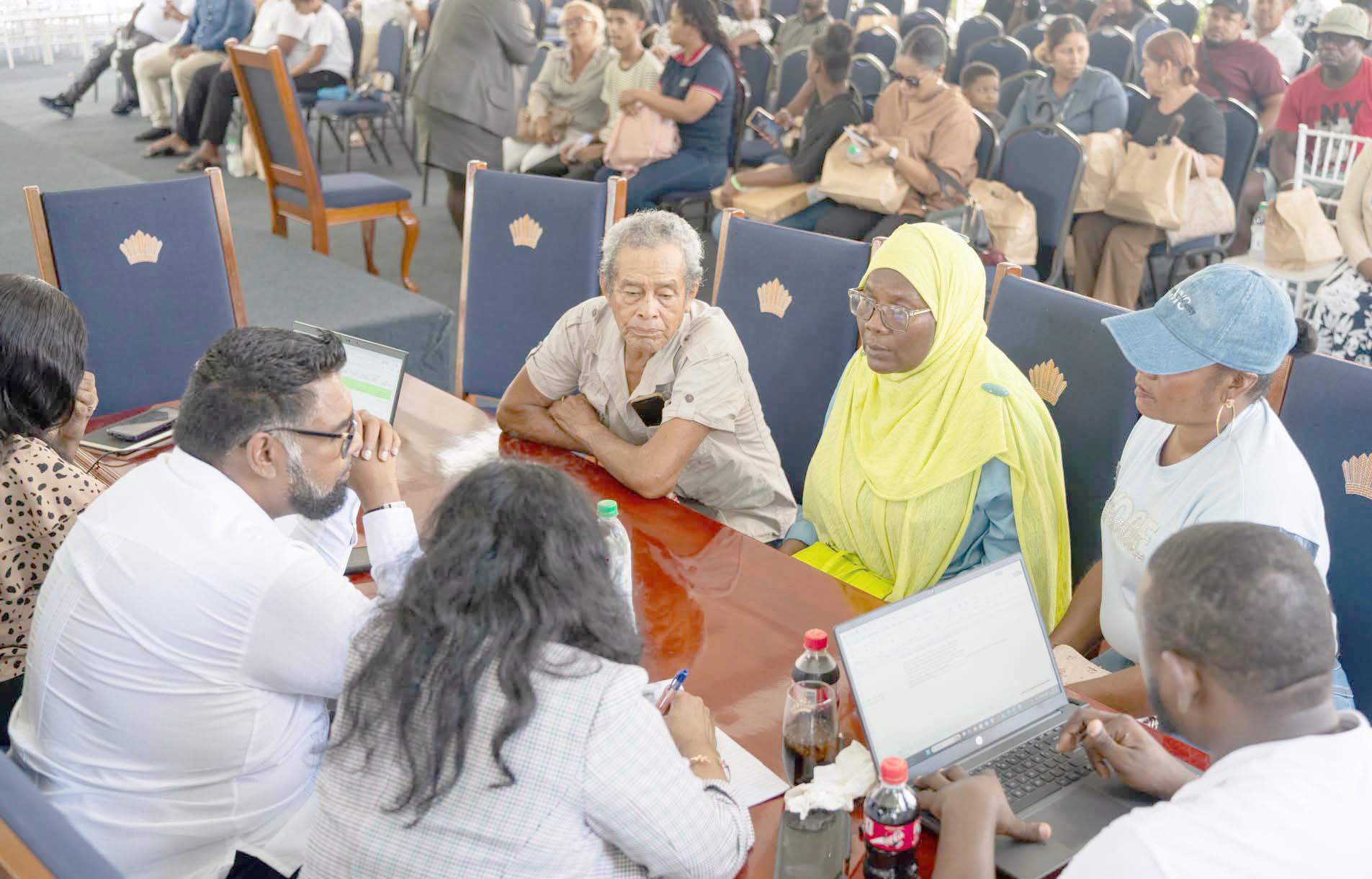
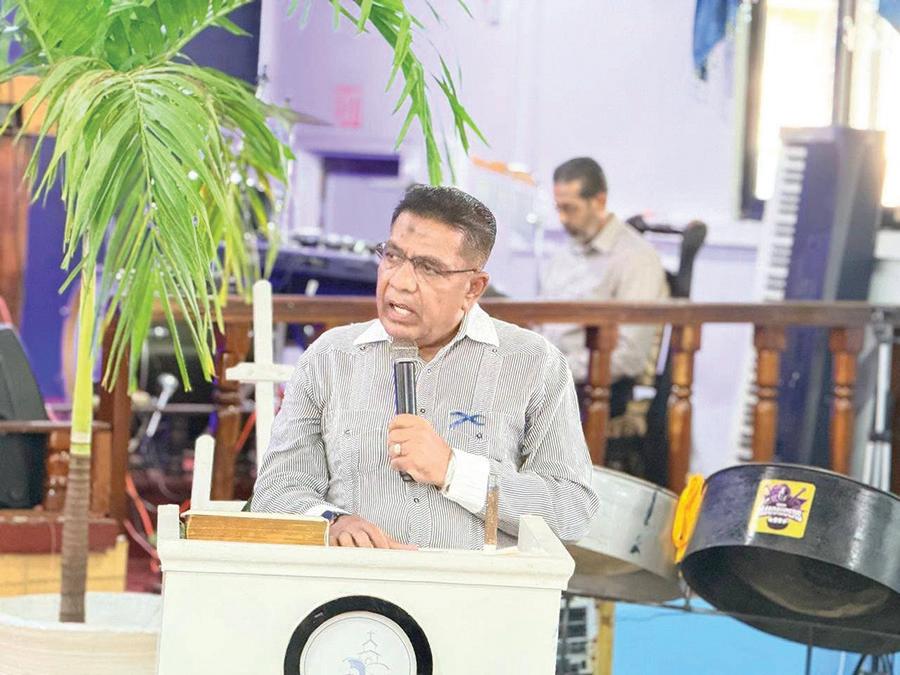
President Dr. Irfaan Ali, on Wednesday, continued his one-on-one engagements with survivors and families affected by the MV Barima tragedy. In keeping with his earlier commitment, he will remain closely engaged with every family impacted by this tragedy, ensuring they receive the care, support, and assistance they need—not only in the immediate aftermath, but throughout their journey toward healing and recovery (Office of the President photos)
Development Bank to unlock economic opportunities for Indigenous communities – Shuman GDF, Florida National Guard advance drone capabilities through joint exchange CXC to engage stakeholders on reformed SBA framework today
Health Ministry, PAHO/WHO sign agreement to strengthen Guyana’s One Health capacity
US$1.78M to support laboratory upgrades, disease surveillance and emergency preparedness CARILEC delegates tour Trafalgar Solar Farm as Guyana showcases renewable energy progress
CARILEC delegates tour Trafalgar Solar Farm as Guyana showcases renewable energy progress
–
Regional energy professionals gain firsthand look at 4MWp facility under GUYSOL programme
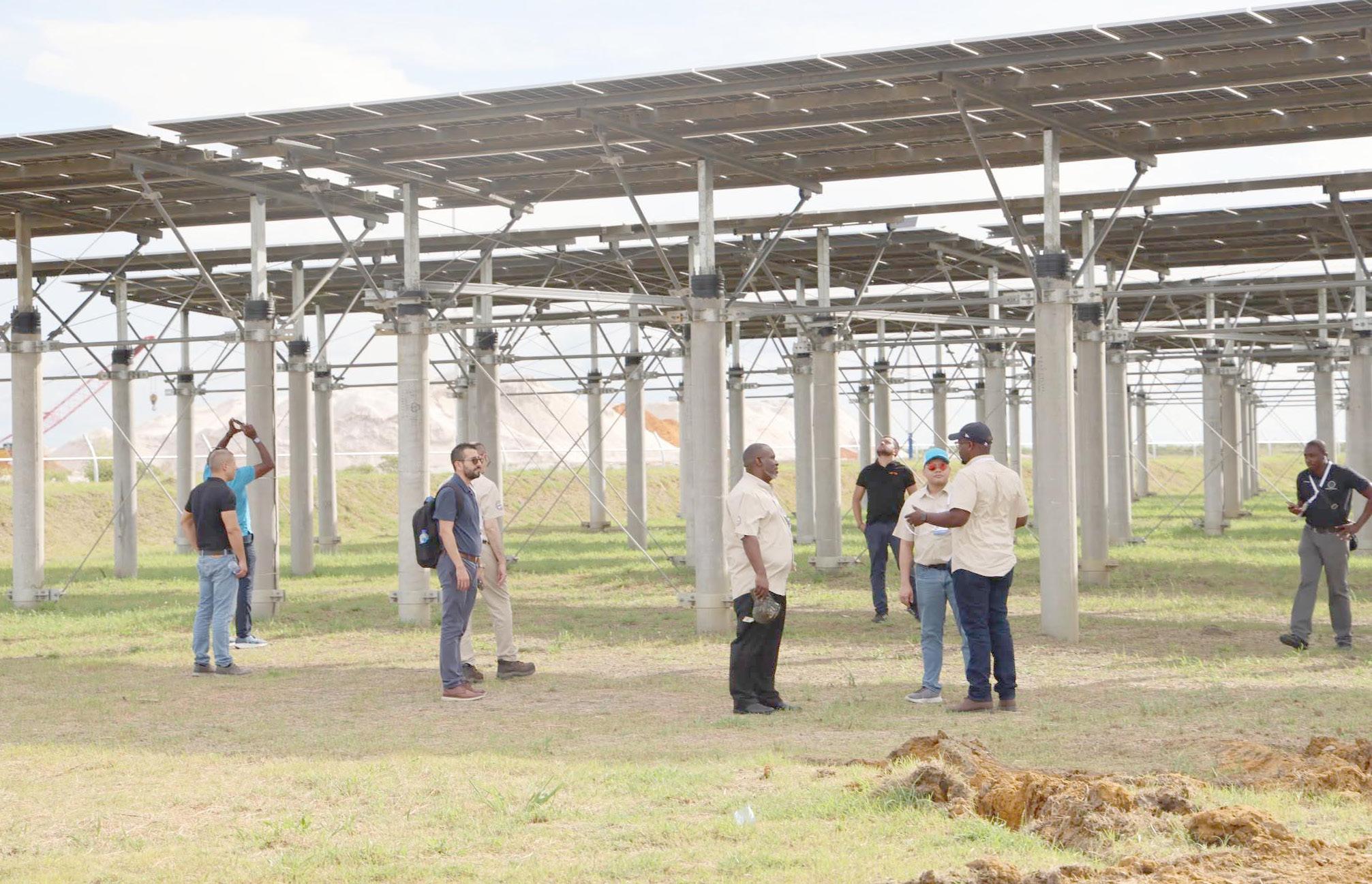
APPROXIMATELY 60 regional energy professionals attending the 2026 Caribbean Electric Utility Services Corporation (CARILEC) Engineering and Procurement Conference and Exhibition received a firsthand look at Guyana’s expanding renewable energy infrastructure during a visit to the 4-megawatt-peak (MWp) Trafalgar Solar Farm.
The facility, located in Region Five, is one of the flagship projects being developed under the Guyana Utility-Scale Solar Photovoltaic Programme (GUYSOL), a national initiative aimed at diversifying the country’s energy mix, reducing dependence on fossil fuels and strengthening the resilience of the electricity sector.
The delegation was
led through the facility by GUYSOL Programme Coordinator, Amir Dilliwar, who provided an overview of the solar farm’s design, operations and contribution to Guyana’s transition towards cleaner and more sustainable energy.
Participants were also briefed on the role of utility-scale solar generation in improving energy security and supporting the development of a more reliable and environmentally sustainable electricity system.
The visit formed part of the 2026 CARILEC Engineering and Procurement Conference and Exhibition, which brought together utility executives, engineers, procurement professionals, policymakers and industry partners from across the Caribbean to examine issues
affecting the region’s electricity sector.
The five-day conference, held in Georgetown from July 26 to 30, was organised by CARILEC in collaboration with Guyana Power and Light Inc. (GPL) and the Guyana Energy Agency (GEA). The event focused on strengthening regional co-operation, modernising electricity networks and improving the resilience and sustainability of Caribbean energy systems.
During the tour, Dilliwar highlighted the technical features of the Trafalgar facility and shared insights into the implementation of large-scale solar projects in Guyana.
He explained how the integration of solar generation is helping to diversify the country’s electricity sup-
Participants were also briefed on the role of utility-scale solar generation in improving energy security and supporting the development of a more reliable and environmentally sustainable electricity system
ply while supporting efforts to reduce greenhouse-gas emissions and improve the long-term sustainability of the energy sector.
The Trafalgar Solar Farm forms part of the wider GUYSOL programme, which is being implemented by GPL and supported through the Guyana-Norway partnership.
The programme is expected to deliver approximately 33MWp of solar
generation capacity and battery energy storage across Regions Two, Five, Six and Ten. The initiative is intended to strengthen energy security, reduce fossil-fuel consumption and support Guyana’s transition towards a low-carbon and climate-resilient energy system.
The Trafalgar facility is among several solar farms being developed under the programme, alongside proj-
ects at locations including Hampshire and Prospect in Berbice and sites in the Essequibo and Linden electricity systems.
The wider programme represents a significant investment in renewable energy infrastructure and is expected to support lower electricity-generation costs while improving the
CCJ dismisses Mohameds’ final appeal, clears way for extradition proceedings to resume
––– concludes Azruddin Mohamed cannot rely on political attacks to establish bias after provoking similar exchanges himself –– regional court finds no actual or apparent bias in Minister Walrond’s issuance of ATP
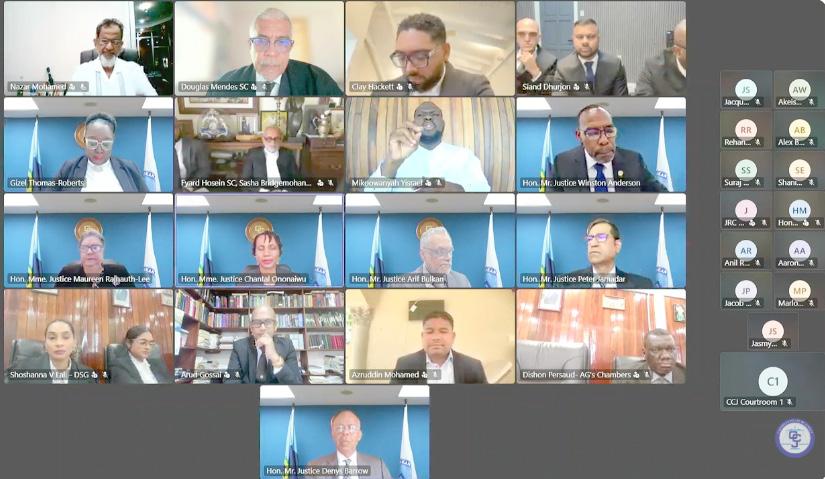
THE Caribbean Court of Justice (CCJ) has cleared the way for extradition proceedings against Opposition Leader Azruddin Mohamed and his father, businessman Nazar Mohamed, to resume after all the presiding judges unanimously dismissed their appeal challenging the legality of the process initiated against them at the request of the United States.
The ruling brings to an end the Mohameds’ legal challenge, following the full hearing of arguments on April 21, and clears the way for extradition proceedings to continue before Chief Magistrate Judy Latchman at the Georgetown Magistrates’ Courts.
The two men are wanted in the United States to face an 11-count criminal indictment in the United States District Court for the Southern District of Florida.
The CCJ’s lead judgment, written by CCJ President Winston Anderson and Justice Denys Barrow and delivered by Justice Barrow, upheld the earlier decisions of the High Court and the Court of Appeal. Both lower courts had rejected the Mohameds’ argument that the ATP was invalid because it was tainted by actual or apparent bias on the part of the Minister of Home Affairs.
The CCJ rejected arguments that Minister Walrond’s consultation with the Attorney General Anil Nandlall, SC invalidated the ATP. Justice Barrow noted that while “the Attorney-General, as Chief Legal Advisor to the Government, must necessarily be circumspect in any comment on extradition requests upon which his advice may be sought,” the statutory decision rested with the minister.
“The decision to issue the ATP was statutorily vested in, and was, as a matter of fact, exercised by the minister, with very minimal advice from the Attorney-General.” Accordingly, he said, “determination of whether the Attorney-General was biased served no probative value.”
The court noted that the
allegation of bias stemmed from the ministers’ affiliation with the governing People’s Progressive Party/Civic (PPP/C).
The Mohameds argued that senior party officials, including the President, Vice-President and Attorney General, had publicly described them as criminals and used other derogatory language during the election campaign, giving rise to actual or apparent bias.
In a separate opinion, Justices Chile Eboe-Osuji and Chantal Ononaiwu, said the second appellant [Azruddin] “does not have clean hands,” finding that he had “provoked verbal attacks against him by his own early attacks against government officials or his own willing participation in a general brawl of political calumny.”
Beyond determining the Mohameds’ appeal, the CCJ issued important guidance for future extradition cases across the Caribbean region.
Justice Barrow said he and Justice Anderson were of the view that, except where extradition proceedings are plainly defective from the outset, challenges to an ATP should generally not interrupt ongoing committal proceed-
ings.
In a significant clarification of the law, the CCJ disagreed with the lower courts’ conclusion that the rule against bias did not apply to the minister’s decision to issue the ATP.
Justice Barrow said the court held that “the rule against bias does apply to the ministerial grant of the ATP,” but emphasised that the issue had to be examined within the statutory context in which the decision was made. “In the instant case, the judges found that the ATP process does not import the full panoply of procedural rights available in judicial proceedings,” he said.
“There was no general right to be heard prior to the issuance of the ATP. There was no requirement for the minister issuing the ATP to be free from political bias.”
Instead, Justice Barrow explained that the law required only that “the minister engage in a process that allowed for consideration of the factors contemplated by the Act.”
The CCJ found that the Mohameds never alleged that the Minister Walrond ignored relevant considerations or took irrelevant matters into
account.
Justice Barrow noted, “The applicants [the Mohameds] had not challenged the process that led to the issuance of the ATP, save for the allegation that the minister was politically biased. There was no allegation that the minister omitted to consider a relevant factor, or that she considered an irrelevant one.”
“Their Honours expressed
the considered view that it should become the practice in all courts, except where it is manifestly clear that the extradition proceedings must fail, as, for example, where the ATP was issued by the wrong person, that while challenges to the issuance of the ATP may be brought at any time, such challenges should only be heard after the completion of the committal proceedings.”
“The second appellant (Azruddin Mohamed) does not have clean hands. He provoked verbal attacks against him by his own earlier attacks against government officials, or his own willing participation in a general brawl of politics,” Justice Denys Barrow.
According to the court, such an approach would be “consistent with the international framework for extradition, encourage prompt performance of extradition treaty obligations, and provide a reasonable balance between the interests of the person whose extradition is requested and that of the state.”
The two judges further observed that this approach aligns with the procedure contemplated by Parliament under Sections 17 and 21 of the Fugitive Offenders (Amendment) Act.
Having concluded that
the allegation of bias failed, the CCJ said it was unnecessary to determine the Mohameds’ second ground of appeal—that the minister and Attorney General ought to have delegated their statutory responsibilities because of the alleged political conflict.
Nevertheless, the court observed that it had “grave doubt that there could properly be delegation of the powers under the Act to issue the ATP to any person who was not a minister.”
Likewise, because it found no bias in the issuance of the ATP, the CCJ said it was unnecessary to consider arguments raised by Minister Walrond in her cross-appeal concerning waiver and the doctrine of necessity.
The CCJ delivered three separate judgments. Apart from the lead judgment authored by Justices Anderson and Barrow, separate opinions were delivered by Justices Maureen Rajnauth-Lee, Peter Jamadar and Arif Bulkan, and by Justices Chantal Ononaiwu and Chile Eboe-Osuji.
Ultimately, the regional court unanimously granted special leave to appeal but dismissed the substantive appeal.
The interim stay of
See page 5
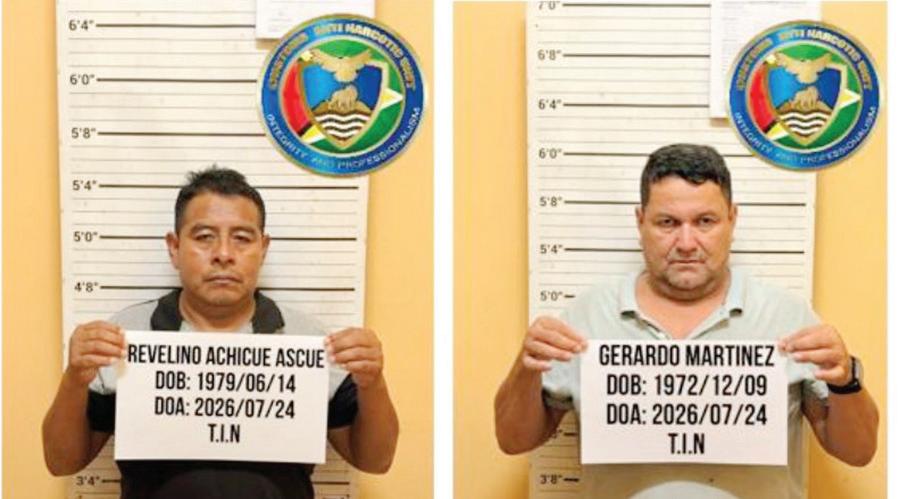
Nazar and Azruddin Mohamed
GO-Invest, British High Commission explore new avenues for trade and investment
–– discussions focus on export-ready products, strategic financing and stronger Guyana–UK economic ties
THE Guyana Office for Investment (GO-Invest) and the British High Commission have explored opportunities to strengthen investment, expand trade and support strategic development projects, as Guyana continues to position itself as an increasingly attractive destination for international investment.
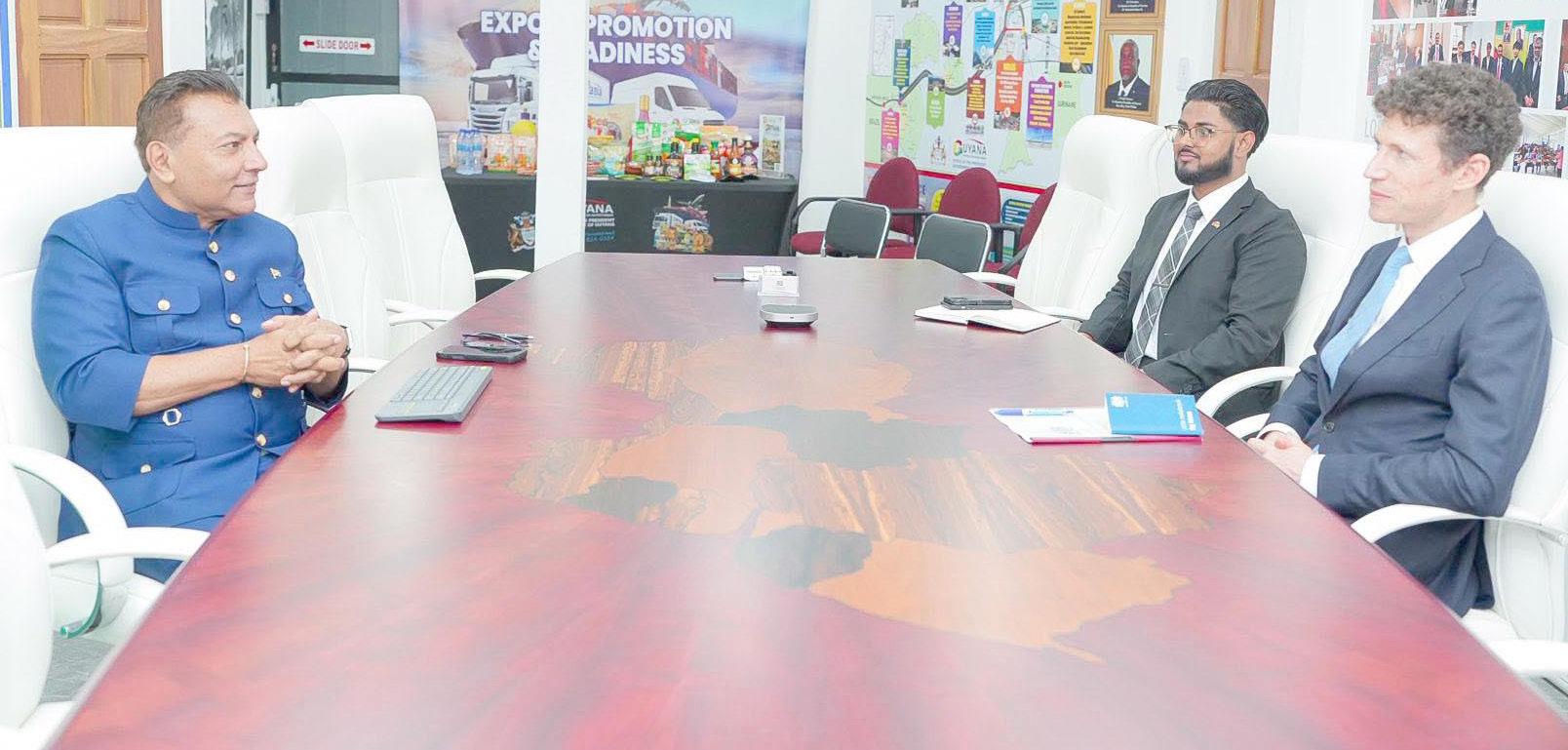
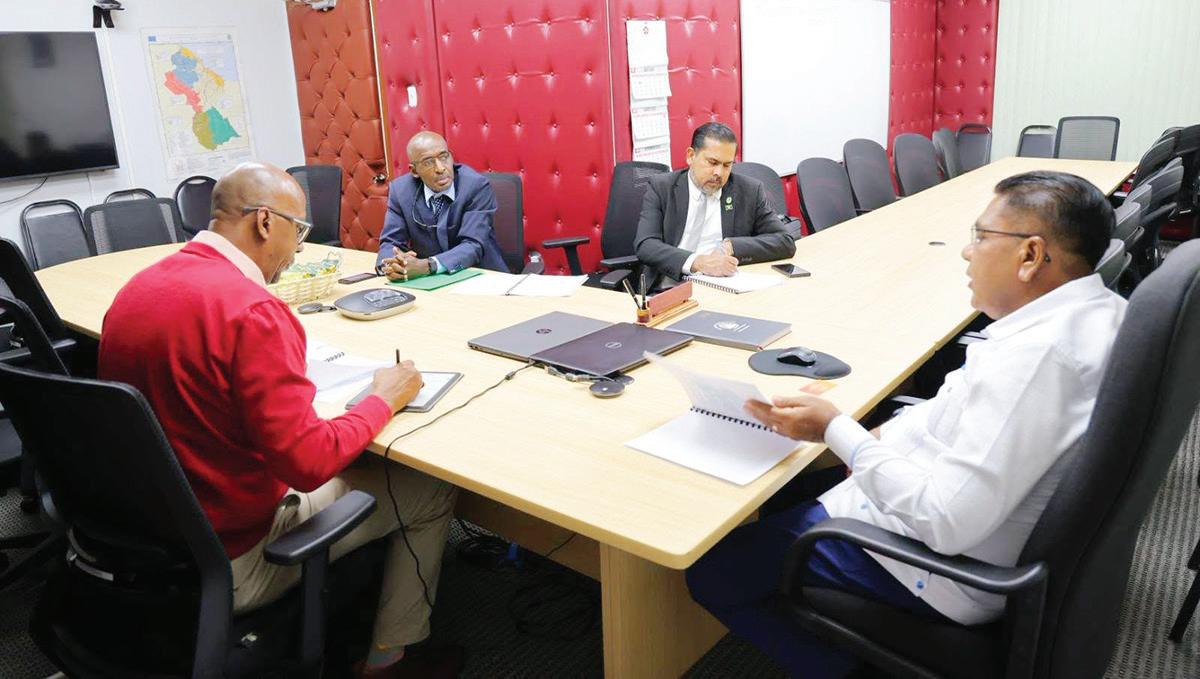
The discussions took place during a meeting between GO-Invest Chief Investment Officer Dr Peter Ramsaroop and the British High Commissioner, during which officials reviewed Guyana’s evolving investment landscape and the country’s growing portfolio of export-ready products.
The engagement also examined opportunities available through UK Export Finance (UKEF), the United Kingdom Government’s export credit agency, and how its financing and insurance solutions could support investment, infrastructure development and increased
commercial activity between Guyana and the United Kingdom.
UKEF provides government-backed financing, guarantees and insurance to help UK companies secure international contracts, fulfil export orders and manage risks associated with overseas trade. Its support can also facilitate financing for international buyers and projects that involve the procurement of goods and services from the United Kingdom.
The financing mechanisms could create additional opportunities for Guyana to access UK expertise, technology, equipment and services in areas linked to infrastructure and national development.
Dr Ramsaroop said the engagement formed part of GO-Invest’s continuing efforts to build strategic partnerships that can unlock new opportunities for businesses, strengthen exports and support sustainable economic growth.
The discussions took place during a meeting between GO-Invest Chief Investment Officer Dr Peter Ramsaroop and the British High Commissioner, during which officials reviewed Guyana’s evolving investment landscape and the country’s growing portfolio of export-ready products
As Guyana undergoes rapid economic transformation, he noted that stronger international partnerships can help attract investment, develop new industries and create opportunities for local businesses to participate in expanding regional and global markets.
The meeting also focused on Guyana’s export potential, with discussions examining ways to promote
locally produced goods and support businesses seeking to expand their international reach.
The United Kingdom remains an important economic partner for Guyana. Official UK trade data shows that total trade in goods and services between the two countries reached approximately £1.8 billion during the four quarters ending in the final quarter of 2025,
representing an increase of 8.7 per cent compared with the corresponding period a year earlier. UK exports to Guyana totalled approximately £1.1 billion during the period.
The continued growth in trade reflects expanding commercial links between the two countries and provides a foundation for further co-operation in investment, infrastructure, energy, technology and other sectors.
Through its financing programmes, UKEF can provide guarantees to lenders, support loans to overseas buyers and offer insurance against certain risks associated with international trade. Its services are intended to complement private-sector financing and help make commercially viable projects more attractive to investors and lenders.
The discussions between GO-Invest and the British High Commission come as Guyana seeks to broaden its economic base, strengthen non-oil industries and increase the competitiveness of local businesses.
GO-Invest said partnerships of this nature can help create new commercial opportunities, increase exports and support development that delivers longterm benefits to Guyanese businesses and communities.
The engagement also underscored the importance of continued dialogue between government agencies, diplomatic partners and the private sector in identifying financing opportunities and translating Guyana’s economic growth into sustainable and inclusive development.
CCJ dismisses Mohameds’ final appeal, clears ...
From page 3 extradition proceedings previously granted by the CCJ was lifted. The court further ordered that there be no order as to costs before the CCJ and reserved its decision on the costs in the courts below.
With the appeal dismissed, the interim stay discharged and no order made as to costs, the extradition proceedings against the Mohamed will now continue before Chief Magistrate Judy Latchman in the Georgetown Magistrates’ Courts, where the United States is seeking their surrender to stand trial on the charges contained in the indictment.
The Mohameds were represented by Fyard Hosein,
CARILEC
delegates tour
Trafalgar Solar ...
From page 2
reliability and sustainability of power supplies in the areas served.
The visit provided delegates with an opportunity to observe the operation of one of Guyana’s landmark renewable energy projects and exchange knowledge on the deployment of clean-energy technologies.
It also created a platform for regional energy professionals to discuss common challenges and opportunities associated with renewable-energy integration, grid modernisation and the development of more resilient electricity systems.
As Caribbean countries continue to pursue cleaner and more secure energy sources, the Trafalgar Solar Farm offered a practical example of how utility-scale renewable-energy projects can support national development while contributing to broader regional efforts to reduce dependence on imported fossil fuels.
The tour further underscored Guyana’s growing role in regional discussions on energy transformation and highlighted the value of technical co-operation and knowledge-sharing in advancing sustainable energy solutions across the Caribbean.
SC, Roysdale Forde, SC, and attorneys -at-law Sasha Bridgemohansingh, Siand Dhurjon, Damien Da Silva and Aadam Hosein.
The First Respondent, the Minister of Home Affairs, was represented by attorneys-at-law Douglas Mendes, SC, and Clay Hackett.
The Second Respondent, the Attorney General, was represented by Attorney General Anil Nandlall, SC, Solicitor General Nigel Hawke, Deputy Solicitor General Shoshanna Lall and attorney-at-law Dishon Persaud.
The Third Respondent, Chief Magistrate Judy Latchman, was represented by attorney-at-law Arudranauth Gossai.
BACKGROUND
On the morning of October 31, 2025, the businessmen were taken into custody in Georgetown following an extradition request from the United States, which had been transmitted the previous day.
The father, 72, and son, 39, are the subject of an 11-count indictment filed in
the United States District Court for the Southern District of Florida.
The indictment was handed down by a grand jury in October 2025.
They are jointly charged on 10 of those counts, while Azruddin Mohamed faces an additional charge relating to the importation of a 2020 Lamborghini Roadster SVJ into Guyana.
Court filings allege that the two conspired to commit wire fraud, mail fraud, money laundering, and customs-related offences, including conspiracy, aiding and abetting.
The most serious charge carries a potential maximum sentence of 20 years in prison. The allegations are linked to what investigators describe as a US$50 million gold export and tax evasion scheme. According to the documents, Nazar Mohamed holds a 90 per cent stake in Mohamed’s Enterprise, while his son owns the remaining 10 per cent.
In June 2024, both men and their associated companies were sanctioned by the Office of Foreign Assets
Control (OFAC), a division of the United States Department of the Treasury, over allegations of gold smuggling and large-scale corruption.
The sanctions announcement also referenced claims that more than US$50 million in taxes owed to the Guyanese state had been evaded.
United States authorities are believed to have begun investigating the Mohameds as far back as the mid-2010s.
The probe reportedly involved intelligence sharing and law-enforcement cooperation between Guyana and the United States.
Several American agencies were involved in the investigation, including the
Drug Enforcement Administration, the Federal Bureau of Investigation, and the Department of Homeland Security.
Prosecutors allege that between 2017 and 2024 the two businessmen participated in a scheme to export large quantities of gold from Guyana to the United States using falsified customs declarations and reused government export seals.
Investigators claim the operation enabled the shipment of more than 10,000 kilogrammes of gold while avoiding the payment of taxes and royalties owed to the Guyanese state.
The indictment also references a shipment of gold val-
ued at approximately US$5.3 million that was seized at Miami International Airport during the course of the investigation.
Following the indictment, the United States formally sought the surrender of the two men under the extradition arrangements between the two countries, giving rise to the ongoing committal proceedings before the Georgetown Magistrates’ Courts.
They each remain on $150,000 bail as the hearing continues, with conditions requiring them to surrender their passports and report to the Ruimveldt Police Station every Friday.
Investing in prevention, building resilience Development Bank to unlock economic opportunities for Indigenous communities – Shuman
ANOTHER important step in Guyana’s effort to build a stronger, more responsive and resilient public health system is the signing of a Service Delivery Agreement between the Ministry of Health and the Pan American Health Organization/ World Health Organization (PAHO/ WHO).
At its heart, the Guyana One Health Project acknowledges a reality that modern public health can no longer afford to ignore: the health of people is intimately linked to the health of animals and the environment. The One Health approach demands collaborative action among these sectors to prevent, detect and respond to threats that may cross traditional institutional boundaries.
This is particularly so in a country like Guyana with its extensive forest cover, diverse ecosystems, expanding economic activity and dispersed population. Public health risks do not begin inside the walls of a hospital, nor are they confined to one sector.
A disease outbreak can involve human health, animal populations, environmental conditions, food systems and community practices all at the same time. So, good preparedness means sharing information, coordinating expertise, and acting with urgency.
The Service Delivery Agreement puts that principle into practice.
The Ministry of Health and PAHO/WHO will collaborate on laboratory strengthening, disease surveillance, emergency preparedness and response, workforce development and multi-sectoral co-ordination, supported by some US$1.78 million in financing from the Pandemic Fund Grant and an International Development Association (IDA) Credit provided through the World Bank. These are not just administrative objectives. They are critical elements of national health security.
The COVID-19 pandemic has illustrated the huge human, social and economic costs
MEMBER of Parliament, Lenox Shuman, believes the newly passed Guyana Development Bank Bill will mark a turning point for Indigenous communities by expanding access to financing and creating greater opportunities for entrepreneurship and economic participation.
Shuman made this known while giving his contribution and throwing his support behind the bill during the debates earlier this week ahead of its passage. The former deputy speaker stated that the legislation
of being unprepared for a major health emergency.
It also found that the strength of a country’s response depends largely on what is in place before a crisis begins: reliable laboratories, trained personnel, effective surveillance systems, clear emergency protocols and strong co-ordination among institutions.
The Guyana One Health Project aims to strengthen the country’s capacity to prevent, prepare for and respond to health emergencies through an integrated approach that includes human, animal and environmental health systems.
The wider project was approved as a $22 million programme to increase Guyana’s health resilience.
The importance of laboratory capacity is especially critical. Strong laboratory systems enable health authorities to accurately and rapidly detect threats, confirm diagnoses and support evidence-based decision-making. Testing delays or weaknesses in diagnostic capacity can allow an emerging threat to spread before appropriate public health measures are in place.
Better disease surveillance can also give the early warning needed to detect unusual patterns, identify outbreaks and guide a timely response. Surveillance is not just the gathering of data. It is the gathering of data that leads to action.
It is also important that the project aims to strengthen Guyana’s core capacities under the International Health Regulations. These capacities are meant to assist countries in detecting, assessing, reporting and responding effectively to public health risks that may have national, regional or international implications.
Guyana has already taken steps to bolster its pandemic preparedness, including the completion of a National Action Plan for Health Security and efforts to enhance its International Health Regulations capacities. The new agreement should build
addresses one of the most significant barriers preventing many Indigenous people from accessing credit and growing businesses.
He noted that the issue was raised by Indigenous leaders during the recently concluded National Toshaos Council (NTC) Conference, where village representatives called for greater integration into Guyana’s rapidly growing economy.
According to Shuman, the establishment of the Guyana Development Bank will provide the financial framework needed to support Indigenous entrepre -
neurs and allow them to participate more meaningfully in the country’s economic transformation.
“The Amerindian Act in itself prevents Indigenous peoples from leveraging their lands for benefit. You cannot take land to the bank, you can’t take resources to the bank, and to a great extent, it has excluded us from the economic framework and integration of Guyana,” Shuman told the House.
He explained that because Indigenous communities cannot use communal lands as collateral under existing laws, many aspir-
on that foundation and help turn plans into sustained institutional capability.
Equally encouraging is the government’s recognition that infrastructure and technology alone will not be enough.
Training and recruiting personnel is one of the most important ingredients for longterm success and that is where the focus of Minister of Health Dr Frank Anthony lies. Labs require experienced scientists and technicians. Surveillance systems need trained epidemiologists, data specialists and public health workers. Emergency-response plans depend on experts who understand what they are supposed to do and can perform under stress.
Therefore, the investment in human resources must remain at the centre of the project.
Training should not be treated as a one off and certainly should not be judged by the number of workshops held. The real test will be if Guyana can build and keep a workforce skilled enough to work in all areas, including the hinterland and remote communities, where distance and access can make it hard to find a disease and respond to an emergency.
The collaboration with PAHO/WHO also adds valuable technical expertise and international experience to the initiative. Such collaboration can help to ensure that Guyana’s systems are aligned with recognised standards whilst remaining responsive to local realities.
But external support should increase national ownership without creating longterm dependency.
The goal must be to develop sustainable Guyanese institutions and capacities that continue to function well beyond the completion of individual grants and project cycles.
Also, the One Health approach requires effective collaboration beyond the Ministry of Health. Active partners must be the agen-
cies responsible for agriculture, livestock, wildlife, environmental protection, food safety and disaster preparedness. Information sharing mechanisms must be reliable, responsibilities clearly delineated and co-ordination maintained even in the absence of an emergency.
Hence, the project’s success will not only depend on funding but also on implementation, accountability and measurable results.
The public should see improvements in laboratory turnaround times, disease surveillance coverage, workforce capacity, emergency preparedness and co-ordination among the relevant sectors. Having clear targets and reporting on a regular basis would help demonstrate how resources are being used and if the intended benefits are reaching communities across the country.
The signing of the agreement is thus more than a ceremonial milestone. It is an investment in prevention and preparedness, areas that often draw less attention than emergency response but can save lives and reduce disruption in the event of a crisis.
As Guyana continues to develop, new opportunities will emerge, but so will the importance of strong institutions that can mitigate new risks. Strengthening a resilient health system should remain a national priority not only during times of crisis but as a key component of the country’s development agenda.
The Guyana One Health Project presents an opportune moment to shore up the systems that safeguard the population before threats turn into crises.
If sustained with commitment, effective co-ordination and a strong focus on developing local expertise, the initiative can help ensure that Guyana is better prepared not only to respond to the next public health challenge, but to detect and contain it before it grows into a national crisis.
ing entrepreneurs have been unable to secure financing through traditional commercial banks.
Shuman said the Development Bank is expected to help bridge that gap by providing access to capital that would enable Indigenous people to establish businesses, pursue investment opportunities and build long-term wealth.
He also highlighted the potential impact on young people, many of whom, he said, possess innovative ideas but lack the financial resources needed to turn them into viable enterprises.
“What we are doing in this process of bringing the Development Bank to reality is to give all of those communities and all of those people an opportunity to meaningfully build their financial wealth,” he said.
The MP stressed that while Indigenous communities stand to benefit significantly, the legislation is intended to create opportunities for all Guyanese by ensuring wider participation in the country’s expanding economy.
He described the bill as a major step towards inclusive economic devel-
opment and commended Senior Minister in the Office of the President with Responsibility for Finance, Dr Ashni Singh, for piloting the legislation
The Guyana Development Bank Bill was subsequently passed in the National Assembly, paving the way for the establishment of a specialised financial institution aimed at supporting sectors and entrepreneurs that have traditionally struggled to access affordable financing, including small businesses, agriculture and Indigenous enterprises.
Ferry tragedy and lines unforgivably crossed
THE apogee of political opportunism was reached on Tuesday when WIN parliamentarians and family members of Azruddin Mohamed brought children connected to the ferry disaster to enter Parliament.
It was a sad sight to see.
The children had lost loved ones – parents and siblings – in the ferry tragedy.
Some of those children looked like they were not familiar with what was taking place. You could tell from the ambience that these children were being architectured for a purpose. This should never have happened. Mohamed was there with the children, his two sisters and WIN parliamentarians.
Why were the children there? For what purpose? This was a line crossed by Mohamed that should remain unforgivable. You do not do this to children. They should never have been put through that ordeal. They were in the sun for hours and parliamentary security refused to allow them in and rightfully so. There is an age limit for persons from the public.
Parliament is open to members of the public to witness its debates. But children are not allowed. What is the purpose of having children in the public gallery when the House is in session? It is unheard of in the world. In which country has that happened?
On this occasion in Guyana on Monday, July 27, 2026, Azruddin Mohamed revealed his crass mentality and so did his WIN party. What Mohamed did was so simple to understand but so morally unforgivable. He used those children for political purposes. He used those children to score political points
against the government.
I said in a previous column a few days ago, the country was sleepwalking into Adrianna Young 2.0. And it has happened. The dead that lies at the bottom of the ocean is not a crucial factor in determining political focus on the ferry tragedy by the opposition, anti-government civil society groups, and the anti-government media. The determining factor is political capital; to exploit the ferry tragedy to either weaken the government, expose the government, make the government look bad but never is the preoccupation with the victims a consideration. Guyana is dead in the middle of Adrianna Young 2.0.
James Bond, while in Parliament, sent out a video clip of the opposition protesting in the House on Monday and he noted that many of them were on their mobile phones. And what may that have been about? Sending images of their presence in the protest. Indeed, Monday was one of the lowest points in Guyanese politics when you saw how those children were cruelly exploited. Mohamed, his two sisters and WIN parliamentarians who were trying to get the children into the National Assembly have an obligation to tell this nation what was the purpose of having the children in the House. His action will not be questioned by other opposition parties, civil society groups and the private media. But there is a line that cannot be crossed, and Mohamed crossed it last Monday.
We have activists in this country that on each day shout from the rooftop that the ministers of government are undemocratic. But there
are no shouts when anti-government folks stoop far below what is morally acceptable in this country. Wait to see if Kaieteur News, Kiskadee Watch, Janet Bulkan, GHK Lall, Demerara Waves, Guyana Human Rights Association, Transparency International- Guyana Chapter, Red Thread, and those of their ilk will pen even a paragraph about the abuse of those children. What about Amanza Walton. As a mother does she approve of what Azruddin did with those children? Ganesh Mahipal is a parent. Terrence Campbell has several children. Are they going to draw the line and chastise Mohamed and his WIN party? What do you think? I can tell you what I think. Those children will not count in the political configuration of those who hate the government. Why should they discipline Mohamed when they need him? They need him because he is part of their bandwagon. They need him because he has the money to fight the government. This is indeed a political
tragedy. Little children who do not understand the meaning of life itself because their thought patterns are yet to be formed are herded like sheep on front of Parliament for the purpose of getting political mileage out of their tragedy.
These little children will never see parents, siblings, aunties and uncles and cousins again, and instead of looking after their mental health, Mohamed parades them in front of the cameras for his ego and those of his party leaders. This country must have the worst opposition benches and morally depraved civil society activists in the entire world. Arthur Koestler was right – the Homo sapiens species is intrinsically flaw ed.
DISCLAIMER: The views and opinions expressed in this column are solely those of the author and do not necessarily reflect the official policy or position of the Guyana National Newspapers Limited.
Guyana Development Bank sparks optimism among entrepreneurs
THE passage of the Guyana Development Bank Bill in the National Assembly on Monday has been met with optimism from entrepreneurs, who believe the legislation will reshape access to financing and create new opportunities for business expansion.
The landmark legislation paves the way for eligible small business owners to access loans of up to $3 million without collateral or interest, addressing one of the most persistent challenges faced by entrepreneurs seeking to invest in or grow their enterprises.
For small business owner Boris Mitchell, the initiative represents a practical solution for many Guyanese who have struggled to secure financing through traditional
lending institutions.
“It’s a great initiative by the government. It’s going to help a lot of people…small business owners like myself. It’s an initiative whereby you don’t have to put any collateral down or pay any interest. It’ll be good for society, and I encourage everybody to apply,” Mitchell said.
He said the bank has the potential to widen economic opportunities by making capital more accessible to those with viable business ideas but limited financial resources.
Plant entrepreneur Bibi Halima Shameer also welcomed the initiative, saying the financing would help transform her small venture into a larger operation.
Operating a business that specialises in flowering and
non-flowering plants, she hopes to use the support to construct a bigger greenhouse and increase production.
“It’s a good initiative for small businesses, and I will take the opportunity to move forward and see if I get a loan and expand my business more. I want to open a bigger greenhouse,” Shameer stated.
She noted that the programme offers opportunities for young entrepreneurs as well as older Guyanese seeking to establish or strengthen their businesses.
For Keon Hatton, the new financing model could ease the burden of acquiring essential equipment.
“With the bank and the loan that they offer, I will be able to purchase more equip-
ment to expand my work so the business will grow,” Hatton said.
He said the initiative gives entrepreneurs confidence that meaningful financial support is now within reach, allowing them to focus on building stronger and more competitive businesses. (DPI)
Keon Hatton
Plant entrepreneur Bibi Halima Shameer Boris Mitchell
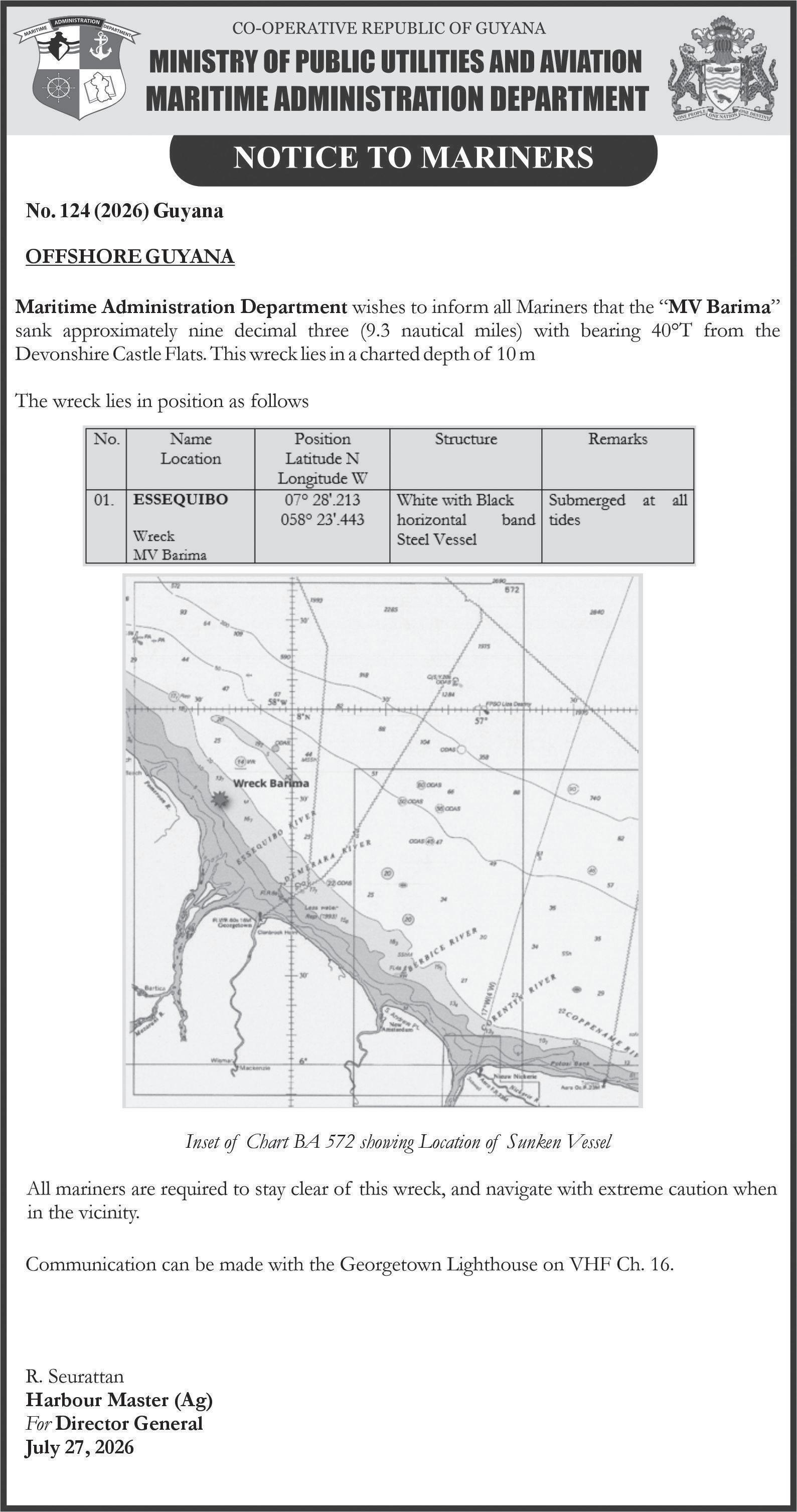
Charged MV Barima suspects receiving psychosocial support – PM
PRIME Minister, Brigadier (Ret’d) Mark Phillips, has assured that the three men charged in connection with the MV Barima tragedy are continuing to receive psychosocial support, noting that they remain registered as survivors of the maritime disaster despite the criminal proceedings against them.
The Prime Minister made this disclosure during Tuesday’s press conference where he provided members of the media with an update on the MV Barima incident.
He stated that the government has taken a non-discriminatory approach in providing counselling and other psychosocial services to everyone listed as survivors of the July 18 tragedy.
“The persons who are
charged, they are also listed as survivors, and they are also listed on the survivors register,” Phillips said.
He explained that all persons on the survivors’ register are receiving counselling regardless of whether they have been charged in connection with the incident.
“We do not differentiate between whether you are charged and you are a survivor or whether you’re a survivor and you’re not being charged. Everybody listed on that register receives counselling,” he stated.
Addressing questions
about how the accused are accessing the services while on remand, the Prime Minister said counselling is being provided in prison.
“They are receiving [it] in prison. You have welfare officers who work in prison, so whether they are detained and have passed through the court and they’re in prison, they will still have access to all the necessary psychosocial care, counselling, etcetera. I can assure you of that,” Phillips said.
He made this known as earlier on Tuesday, three men were remanded to prison
after being jointly charged with murder in relation to the sinking of the MV Barima.
The July 18 tragedy claimed dozens of lives after the vessel, which was travelling from Georgetown to Port Kaituma, capsized off the Essequibo Coast, making it the deadliest maritime disaster in Guyana’s modern history. Since the disaster, the government has deployed teams to provide counselling and psychosocial assistance to survivors and grieving relatives as part of the national response to the tragedy.
Government invests in young entrepreneurs
OVER 65 students from five technical and vocational institutions have completed the inaugural Tertiary Entrepreneurship Award Programme, an initiative designed to equip young Guyanese with the knowledge and skills needed to establish and grow successful businesses.
The programme, implemented by the Small Business Bureau (SBB), in collaboration with the Ministry of Education, provided participants with practical training in marketing, financial management, record-keeping, business proposal writing and small business management.
With more than $8 million invested in the initiative, participants developed business proposals and pitched their ideas before a panel of judges. The 15 most viable proposals each qualified for grants of up
to $400,000 to support the establishment of their businesses.
During the award ceremony at the Arthur Chung Conference Centre in Liliendaal on Wednesday, Minister of Tourism, Industry and Commerce, Susan Rodrigues, said entrepreneurship requires discipline, resilience and continuous learning.
She encouraged participants to treat their businesses professionally and remain committed to longterm success.
“Today doesn’t end our journey with you. We’re only just beginning. This is the start,” Minister Rodrigues told the graduates, assuring them that government agencies will continue to provide training, mentorship and financing opportunities.
The minister highlighted several measures imple -
mented by the government to improve access to financing for entrepreneurs, including the Small Business Bureau’s Loan Guarantee Programme, the Security Interest in Movable Property Act, and the recently approved legislation establishing the Guyana Development Bank.
She reiterated that the new development bank will provide collateral-free, interest-free loans of up to $3 million, creating greater opportunities for entrepreneurs to expand their businesses. The inaugural programme trained students from the Government Technical Institute, Guyana Industrial Training Centre, Carnegie School of Home Economics, Mahaicony Technical and Vocational Training Centre and Leonora Technical and Vocational Training Centre. (DPI)
Prime Minister, Brigadier (Ret’d) Mark Phillips
RASSR programme nurturing Guyana’s next generation of STEM leaders
The Regional Accelerator for STEM Students Readiness (RASSR) Programme has retained 79 per cent of its participants in science, technology, engineering and mathematics (STEM) fields, while 98 per cent have remained engaged in the programme overall, signalling the growing impact of a University of Guyana-led initiative aimed at nurturing the country’s next generation of scientists, engineers, researchers and innovators.
Now in its fifth year, the programme was conceived by University of Guyana Vice-Chancellor Professor Paloma Mohamed Martin, whose reflections on the futures of exceptionally gifted students she encountered through her work with the Caribbean Examinations Council (CXC) prompted questions about how their talents were being developed after they left secondary school.
UG Vice-Chancellor, Professor Paloma Mohamed Martin, addresses the second cohort of students at the opening ceremony of the Regional Accelerator for STEM Students Readiness (RASSR) Programme
Those questions eventually led to the creation of RASSR, which was established in 2022 through a partnership between the University of Guyana and the Greater Guyana Initiative (GGI), comprising ExxonMobil Guyana, Hess Corporation and CNOOC Petroleum Guyana Limited.
The programme identifies high-performing secondary school students from all 10 administrative regions and provides them with intensive learning experiences in STEM disciplines, while helping to ensure that talented students are recognised and supported regardless of their geographic location or background.
“I honestly believe that we have geniuses among us. We spend a lot of time, as we should, dealing with vulnerable kids, but there’s the other side of the spectrum, the ones who are really, really talented and gifted, who I think we also need to find and nurture,” Professor
Mohamed Martin said.
RASSR focuses on areas such as Mathematics, Chemistry, Biology, Physics, Integrated Science, Technology, Engineering, biodiversity and environmental stewardship. Participants are also exposed to activities designed to strengthen critical thinking, leadership, teamwork and problem-solving skills.
Professor Mohamed Martin said ensuring equitable access was among the programme’s central objectives, particularly for students living outside traditional centres of opportunity.
“I’m always very interested in making sure that not only children who are in an easyto-reach geographic area could
benefit, but also students from everywhere. Once they had the talent and they showed the scores, then we could try to do it,” the Vice-Chancellor said.
She explained that RASSR was also intended to help build a sustainable pipeline of young people pursuing STEM careers by exposing participants to the range of professional opportunities available in those fields.
“We were trying to find a way with GGI to direct resources straight to communities and to build a pipeline of new scientists who would stay in STEM,” Professor Mohamed Martin said.
“If they showed an interest in it at an early age, we wanted to see if we could help them to understand all of the careers that could be there, but also to help them to stay,” she added.
The programme’s development required the support of a broad network of university personnel, volunteers, mentors and other stakeholders, particularly during its early stages, which coincided with the COVID-19 pandemic.
“The first year we did this, it was COVID, it was 2021,” Professor Mohamed Martin recalled, noting that the initiative was built largely on the
commitment, passion, belief and courage of people within the University.
She credited staff members and support personnel from the Department of Events, Conferences and Communications (DECC), the Vice-Chancellor’s Office, the Partnerships and Advocacy for Community Engagement (PACE) unit and the University’s custodial staff, among others, for helping to transform the initial concept into a national programme.
Since its establishment, RASSR has continued to evolve, with each cohort contributing lessons that have informed improvements to the initiative.
“We’re now into our fifth year. Year after year, we learn, we iterate, we upgrade, we change,” Professor Mohamed Martin said.
She noted that the programme’s success depends on a wider network of academics, mentors, volunteers and support personnel who work behind the scenes to support participants throughout their experience.
“It’s joy, not pride,” she said, referring to the progress of former participants.
“To see that we actually have students who were accelerated, who came into this University at 14 and 15, and who are still here... To also see that they could feel the sense of service and commitment to come back, those who have graduated and work with the younger ones,” she added.
With several cohorts now progressing through secondary and tertiary education, RASSR is beginning to demonstrate the long-term value of investing early in high-achieving students.
For the University of Guyana, the continued participation of students in STEM disciplines and the willingness of graduates to return as mentors and supporters are among the clearest indications that the programme is fulfilling its objective of developing a new generation of skilled professionals committed to advancing Guyana’s scientific and technological future.
For the Vice-Chancellor, however, the most meaningful measure of success lies not only in the opportunities students receive during the programme, but also in the educational and professional paths they pursue afterwards.
Junior Officers’ Course records 100 per cent pass rate as 31 graduate – Regional law enforcement officers complete intensive leadership and management training
ALL 31 participants in the Guyana Police Force Academy’s Junior Officers’ Course No. 1/2026 successfully completed the programme, recording a 100 per cent pass rate at the graduation and closing ceremony held on Wednesday at the Police Officers’ Mess Annexe.
The graduating cohort comprised officers from the Guyana Police Force and other local disciplined and law enforcement agencies, as well as participants from several Caribbean and regional jurisdictions.
The programme was designed to strengthen leadership, supervisory and management competencies while equipping participants with the knowledge and practical skills required to lead effectively within their respective organisations.
Participants underwent intensive academic and practical training aimed at improving their leadership, decision-making and operational capabilities.
The graduation ceremony was chaired by Commandant of the Guyana Police Force Academy’s Georgetown Campus, Superintendent Jeanette Prince.
Course Coordinator, Superintendent Delon Fraser, presented an overview of the programme, outlining its objectives, training components and the participants’ overall performance.
Director of the Guyana Police Force Academy, Senior Superintendent Sonia Herbert, also delivered brief remarks.
In his feature address, Commissioner of Police Clif-
The cohort also included regional law enforcement officers from Antigua and Barbuda, The Bahamas, Belize, Dominica, Grenada, Jamaica, St Kitts and Nevis, St Vincent and the Grenadines, Suriname, and the Turks and Caicos Islands
ton Hicken said the Junior Officers’ Course has been conducted over the past three years as part of the Guyana Police Force’s continuing investment in developing competent and effective leaders.
Quoting leadership expert John C. Maxwell, Commissioner Hicken told the graduates: “A leader is one who knows the way, goes the way, and shows the way.”
He encouraged the officers to lead with integrity and professionalism, stressing that the true value of the course would be reflected in how they apply the knowledge and skills gained in carrying out their daily responsibilities.
The Commissioner also highlighted the importance of collaboration in addressing contemporary security challenges, noting that effective policing requires strong partnerships among law enforcement agencies, public institutions, civil society organisations and the communities they serve. He said policing cannot be conducted effectively in
isolation and emphasised that integrity, professionalism and meaningful partnerships remain essential to strengthening public trust and improving public safety.
Following the Commissioner’s address, the graduates were presented with certificates in recognition of their successful completion of the programme.
The graduating class included officers from the Guyana Defence Force, Guyana Prison Service, Guyana Fire Service, Customs Anti-Narcotic Unit (CANU) and the Guyana Revenue Authority (GRA).
The cohort also included regional law enforcement officers from Antigua and Barbuda, The Bahamas, Belize, Dominica, Grenada, Jamaica, St Kitts and Nevis, St Vincent and the Grenadines, Suriname, and the Turks and Caicos Islands.
Several participants were recognised for outstanding performance during the programme.
Woman Inspector Ester Cal
of Belize was named valedictorian, while Assistant Superintendent Lawrence Smith of The Bahamas secured second place and Inspector Tyree Gardiner of the Turks and Caicos Islands placed third.
Woman Inspector Cal and Assistant Superintendent Doodnauth Chaitram of the Guyana Police Force shared the award for Best Academic Paper.
Senior officers and junior ranks of the Guyana Police Force, along with representatives of the participating agencies, attended the ceremony and joined in celebrating the successful completion of the Junior Officers’ Course No. 1/2026.
Nation mourns as final farewell held for MV Barima victim Paul Seepersaud
FAMILY members, friends and well-wishers gathered at the Wesleyan Church in New Amsterdam on Wednesday to bid a final farewell to Paul Ian Seepersaud, one of the victims of the tragic MV Barima incident, as they remembered his life and mourned his passing.
During the funeral service, Minister of Agriculture, Zulfikar Mustapha, extended condolences on behalf of President Dr Mohamed Irfaan Ali, the Gov-
ernment and people of Guyana, and on his own behalf, assuring the bereaved family that they would not face their grief alone.
Minister Mustapha acknowledged that while the days ahead would be difficult, the family had the support of the nation during their period of mourning.
“Every Guyanese who heard of the MV Barima tragedy felt a deep sense of shock and sadness. Every prayer that was offered, every tear that was shed, and
every message of sympathy reflected one simple truth, that Paul and every life lost in this tragedy mattered,” Minister Mustapha said.
“They were not just names in the news. They were our brothers, our sisters, our sons, our daughters, our friends. They were members of our national family,” he added.
The Minister said the loss of Seepersaud and the other victims of the MV Barima tragedy
family that they would not face their grief alone
had touched citizens across the country, with many joining in prayer and expressing solidarity with the affected families.
He encouraged the family to draw strength from the support being offered by the wider Guyanese community and reiterated the Government’s commitment to standing with those affected by the tragedy.
Minister Mustapha was accompanied at the service by Minister of Natural Resources, Vickram Bharrat, Member of Parliament, Zamal Hussain and Regional Chairman, Junior Basant.
The funeral service formed part of the continuing national mourning following the MV Barima incident which claimed the lives of several passengers and crew members and left families across the country grieving the loss of their loved ones.
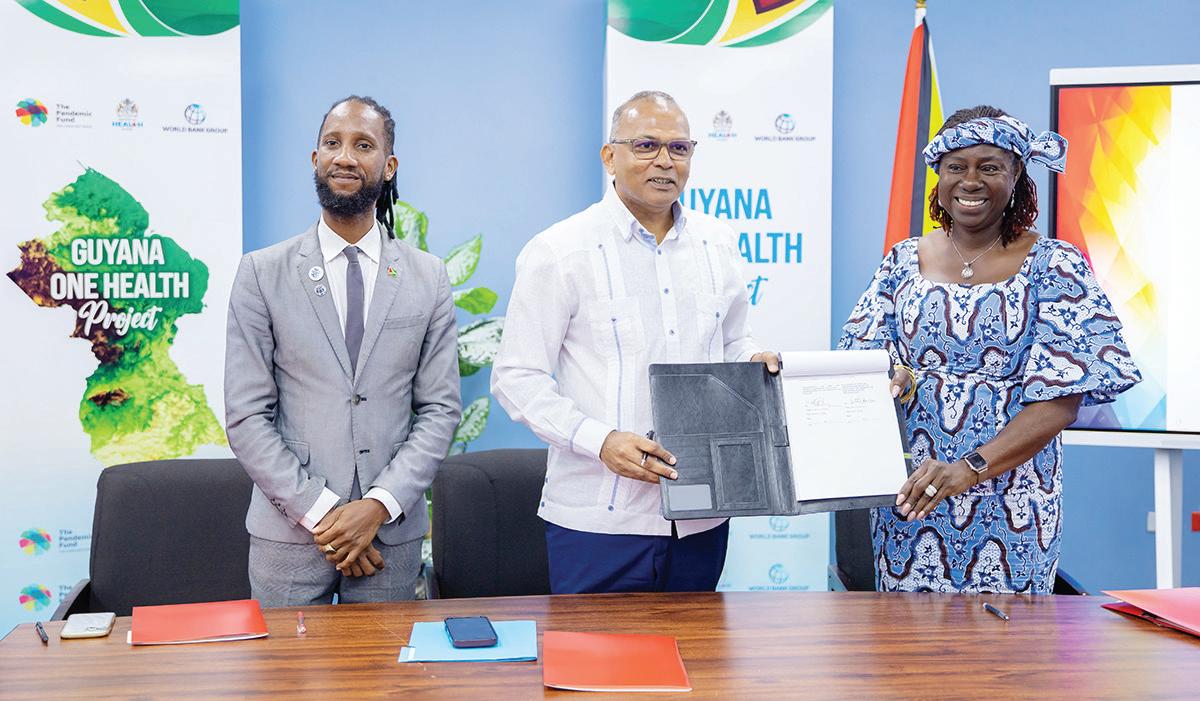
Health Ministry, PAHO/WHO sign agreement to strengthen Guyana’s One Health capacity
– US$1.78M to support laboratory upgrades, disease surveillance and emergency preparedness
THE Ministry of Health has signed a Service Delivery Agreement with the Pan American Health Organization/World Health Organization (PAHO/ WHO) to advance the implementation of the Guyana One Health Project, strengthening the country’s capacity to prevent, detect and respond to public health threats.
The agreement will support targeted activities in laboratory strengthening, disease surveillance, emergency preparedness and response, workforce development and multisectoral coordination across the human, animal and environmental health sectors.
Approximately US$1.78 million will be provided through the World Bank’s Pandemic Fund Grant and an International Development Association (IDA) Credit to the Government of Guyana.
The Guyana One Health Project is designed to strengthen national systems for identifying and responding to health threats, particularly zoonotic and emerging diseases, while improving coordination among agencies responsible for human, animal and environmental health.
The initiative will also support the strengthening of Guyana’s core capacities under the International Health Regulations (IHR) and enhance the country’s overall resilience and preparedness for future public health emergencies.
Under the Service Delivery Agreement, the Ministry of Health and PAHO/WHO will col-
Speaking at the signing ceremony, Minister of Health, Dr Frank Anthony, welcomed the continued support of the Pandemic Fund, the World Bank and PAHO/WHO, emphasising that human resource development will be a major component of the project
laborate on the delivery of technical activities aimed at improving laboratory systems, expanding disease surveillance, strengthening emergency response mechanisms and developing the country’s public health workforce.
Speaking at the signing ceremony, Minister of Health, Dr Frank Anthony, welcomed the continued support of the Pandemic Fund, the World Bank and PAHO/WHO, emphasising that human resource development will be a major component of the project.
“We will train and hire new people under this project because, to achieve what we intend to do, we currently do not have all the human resources that are required,” Minister Anthony said.
“This project will provide us with the opportunity to recruit and build that capacity,” he added.
The Minister said Guyana has made significant progress in strengthening its public health system but noted that the project will help to transform existing systems and build greater capac-
ity to respond to future health threats.
“This technical component that we will be working on with PAHO is extremely important, and I hope that the staff and all of our partner agencies will take this very seriously,” Dr Anthony said
The One Health approach recognises the close connection among human, animal and environmental health and promotes coordinated action across sectors to prevent and manage health risks.
The signing ceremony was attended by World Bank Country Office Representative, Hubert Forrester; PAHO/WHO Representative for Guyana, Dr Kim Eva Dickson; and Technical Lead for the Guyana One Health Project, Dr Anand Persaud.
The agreement represents a further step in strengthening Guyana’s public health infrastructure and improving its ability to prepare for, detect and respond to infectious disease outbreaks and other emerging health threats.
During the funeral service, Minister of Agriculture, Zulfikar Mustapha, extended condolences on behalf of President Dr Mohamed Irfaan Ali, the Government and people of Guyana, and on his own behalf, assuring the bereaved
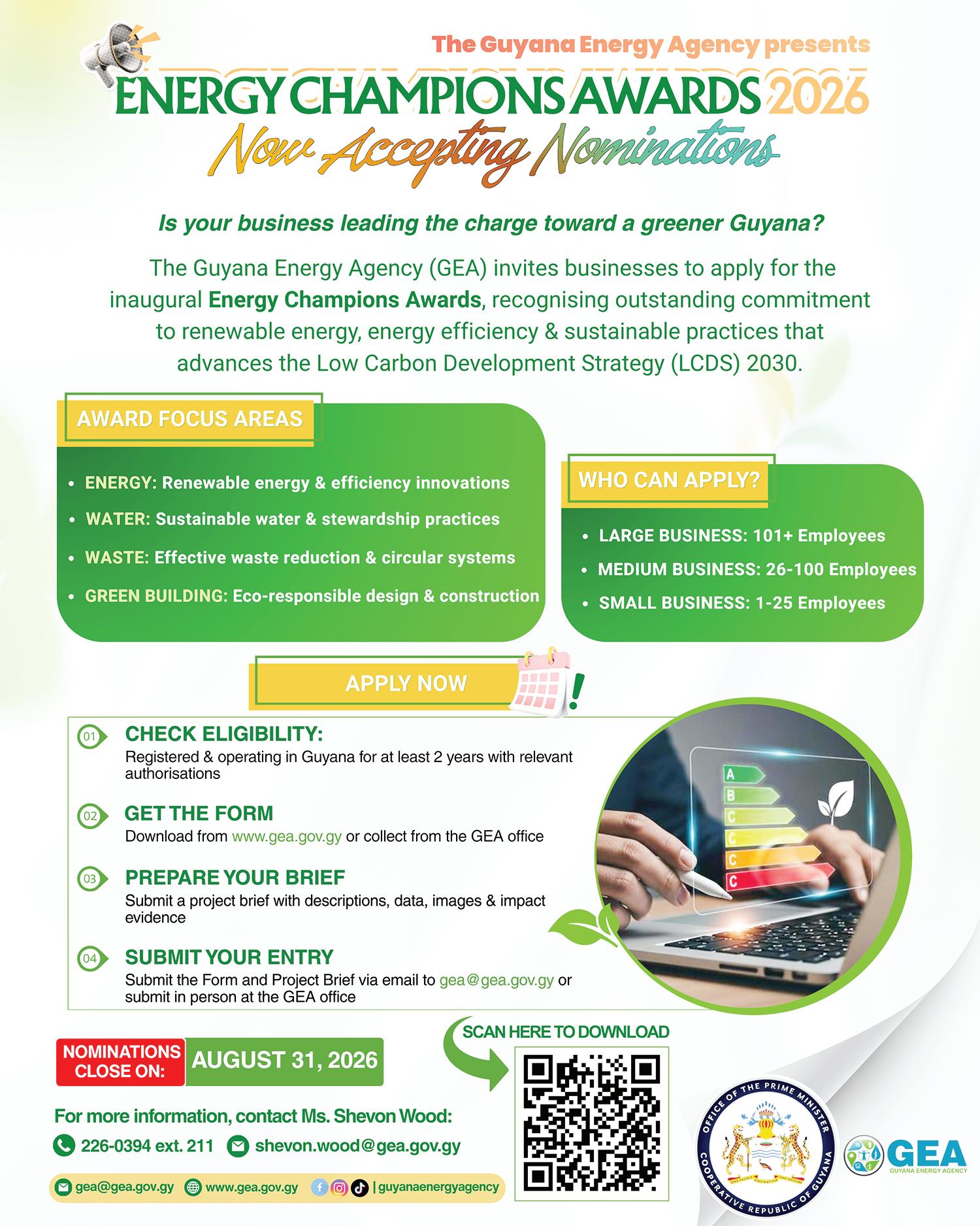
GEA launches inaugural Energy Champions Awards
- businesses invited to showcase sustainable energy and environmental initiatives
THE Guyana Energy Agency (GEA) has launched its inaugural Energy Champions Awards, opening nomi-
nations for businesses across the country that are advancing renewable energy, energy efficiency and en -
vironmentally sustainable practices.
The initiative will recognise small, medium-sized and
large businesses demonstrating measurable progress in renewable energy adoption, energy conservation, water stewardship, waste management and green building practices.
Nominations are open until Monday, August 31, 2026.
According to the GEA, the awards are intended to celebrate businesses that are improving operational efficiency and productivity while reducing their environmental footprint and contributing to Guyana’s transition towards a greener, more resilient and low-carbon economy.
The initiative is aligned with the objectives of the Low Carbon Development Strategy (LCDS) 2030 and is expected to highlight the role of the private sector in supporting sustainable development and green growth.
Businesses will be recognised across four main focus areas: Energy, Water, Waste and Green Building.
The Energy category will recognise businesses that have adopted renewable energy technologies and introduced energy-efficiency innovations aimed at reducing energy consumption while improving operational performance, comfort and productivity.
The Water category will highlight responsible water conservation and stewardship practices, including initiatives
that promote the efficient use and effective management of water resources.
Under the Waste category, businesses will be recognised for implementing waste-reduction measures and circular systems that support sustainable waste management through practices such as reducing, reusing and recycling materials.
The Green Building category will focus on environmentally responsible approaches to the design, construction, operation and maintenance of buildings.
The awards are open to businesses of all sizes operating in Guyana. Applicants will be assessed within three business classifications based on the number of employees: small businesses with between one and 25 employees; medium-sized businesses with between 26 and 100 employees; and large-scale businesses with 101 or more employees.
To qualify, applicants must have been registered and operating in Guyana for at least two years and must possess the relevant authorisations.
Each applicant is required to submit a completed application form and a project brief outlining the sustainability initiatives undertaken by the business.
Applications must be supported by relevant descriptions, data, photographs and
other evidence demonstrating the impact of the renewable energy, energy-efficiency or environmental initiatives implemented.
Application forms, project brief templates and guidelines are available through the Guyana Energy Agency’s official website. The documents may also be collected from the GEA’s office at 295 Quamina Street, South Cummingsburg, Georgetown, or accessed by scanning the QR code featured on the official promotional flyer.
Completed application forms and project briefs must be submitted by email to the GEA or delivered in person to the agency’s office on or before the August 31 deadline.
The Energy Champions Awards form part of the GEA’s continuing efforts to advance Guyana’s sustainable energy transition while recognising businesses that are promoting innovation, environmental responsibility and sustainable business practices.
The Agency said the initiative is expected to encourage wider private-sector participation in efforts to build a competitive, sustainable and low-carbon economy.
For further information, interested persons may contact Ms Shevon Wood at 226-0394, extension 211, or via email at shevon.wood@ gea.gov.gy.
Guyana, CARDI explore expanded collaboration in agricultural research and innovation
AGRICULTURE Minister, Zulfikar Mustapha, has reaffirmed the Government’s commitment to strengthening its longstanding partnership with the Caribbean Agricultural Research and Development Institute (CARDI), as discussions continue on
expanding co-operation in agricultural research, innovation and agri-food development.
The Minister recently received a courtesy call from CARDI’s newly appointed Guyana Country Representative, Barry Joefield, and the Institute’s
Executive Director, Ansari Hosein.
During the engagement, the officials discussed several areas of mutual interest, including opportunities to deepen collaboration on agricultural research, technological innovation,
development initiatives and support for Guyana’s expanding agri-food sector.
Minister Mustapha welcomed the continued partnership between Guyana and CARDI, highlighting the institution’s longstanding role in supporting agricultural development and strengthening research capacity.
He noted that greater collaboration could further support initiatives aimed at improving productivity, promoting innovation and advancing sustainability
across the agricultural sector.
The discussions also focused on identifying areas in which CARDI’s technical expertise and regional experience could complement Guyana’s ongoing agricultural development agenda.
CARDI has worked with regional governments and agricultural stakeholders to support research, technology transfer and the development of sustainable agricultural practices.
The engagement un -
derscored the shared commitment of Guyana and CARDI to advancing research-driven solutions and strengthening the capacity of the agri-food sector to respond to emerging opportunities and challenges.
The Ministry of Agriculture said continued co-operation is expected to support efforts to improve agricultural productivity, encourage innovation and promote sustainable growth within Guyana’s agriculture sector.
Development bank to expand opportunities in agriculture, tourism & manufacturing – Minister Ally
THE Guyana Development Bank will primarily focus on investment in agriculture, tourism and manufacturing as it seeks to support entrepreneurship and expand opportunities across key sectors of the economy, according to Minister of Public Service, Government Efficiency and Implementation, Zulfikar Ally.
Speaking during an interview, Ally said the bank’s financing and support services will target sectors that have been identified by the government as critical to Guyana’s economic development.
“The primary focus of the bank will be in sectors such as agriculture, agro-processing, especially manufacturing, new crops, non-traditional crops,” the minister said.
He noted that tourism will also be a major area of focus as Guyana continues to position itself as a unique destination, pointing to the country’s rainforests, cultural diversity and national celebrations as attractions with significant economic potential.
“We want to focus on tourism as well, because we’re building a very niche market in the tourism space.
We have beautiful tropical rainforests. Our culture alone is something that people from all over the world would like to come and experience,”
Ally stated.
The minister also highlighted opportunities within the Orange Economy, an initiative being promoted by President Dr Mohamed Irfaan Ali to strengthen the country’s creative industries.
He said the sector presents opportunities for a wide range of entrepreneurs, including artistes, hairdressers, makeup artists and other creative professionals looking to establish or expand their businesses.
According to Ally, the Development Bank is intended to provide both financing and business support to help
entrepreneurs build sustainable enterprises in priority sectors.
“We want you to be part and invest in sectors like tourism, agriculture and manufacturing. Those are three big areas where the Government of Guyana wants to support every single Guyanese who wants to be a part of building out those sectors in Guyana,” he said.
The Guyana Development Bank is expected to provide eligible entrepreneurs with access to zero-interest, zero-collateral loans, along with business development support, as part of the government’s broader effort to stimulate investment and economic growth. (DPI)
Agriculture Minister, Zulfikar Mustapha, recently received a courtesy call from CARDI’s newly appointed Guyana Country Representative, Barry Joefield, and the Institute’s Executive Director, Ansari Hosein
CXC to engage stakeholders on reformed SBA framework today
THE Caribbean Examinations Council (CXC) will, today, host a virtual stakeholder engagement session on its reformed School-Based Assessment (SBA) Framework, as the regional examining body moves to strengthen assessment integrity and respond to challenges posed by the growing use of generative artificial intelligence (AI).
The Ministry of Education has encouraged teachers, principals and other education professionals across Guyana to participate in the online session, which is scheduled for (July 30) today at 16:00 hours Guyana time via the Zoom platform.
The engagement will also be livestreamed on CXC’s official YouTube channel (youtube.com/@ MyCXC).
During the session, a team from the Council is expected to outline the key changes under the reformed framework, explain implementation requirements and address questions from stakeholders.
Participants will also receive an overview of the revised assessment approach and its implications for SBA requirements across various subject areas.
For decades, the SBA has been a distinctive feature of CXC’s examination system, allowing students to demonstrate their knowledge, skills and competencies over time through practical activities and assignments conducted in school and community settings.
CXC said it has worked closely with regional governments over the years to strengthen the administration of SBAs across Caribbean schools. However, concerns have emerged in recent years regarding the extent to which some assessments accurately reflect students’ individual capabilities.
In response, the Council has progressively strengthened its monitoring and moderation systems.
In 2020, CXC expanded its SBA moderation to include 100 per cent moderation across all examination centres. In 2022, the Council increased scrutiny
of the quality of SBAs, transitioning from centre-based moderation to teacher moderation and providing additional feedback on assessment outcomes.
The Council also reminded stakeholders in 2024 of the importance of ensuring that candidates submit their own original work, in accordance with CXC’s Regulations for the Conduct of the Council’s Examinations.
In 2025, CXC introduced its Responsible Generative AI Policy Framework for the Regional Secondary Education System, along with standards and guidelines governing the use of AI in assessments.
The guidelines included adapted scale levels and descriptors under the AI Assessment Scale, which outline the extent to which AI may be used, provide guidance for designing assessments within the SBA process and establish mechanisms to help teachers validate candidates’ work where generative AI may have been utilised.
In a recent video message to students and teachers, CXC Director of Operations, Dr Nicole Manning, said the changes being introduced to the SBA framework are significant but necessary to preserve the credibility and integrity of the regional examination system.
She noted that the SBA was created to give stu-
“For subjects that are truly practical in nature, subjects like Agricultural Science, Visual Arts, Music, Physical Education, Technical Drawing, Food, Nutrition and Health, the SBA will remain,” Dr Manning said.
“These are subjects where hands-on, project-based assessment still gives us something that an examination room cannot replicate.”
She explained that the SBAs in those subjects will be retained, while moderation procedures
will be strengthened.
However, for non-practical subjects, including Mathematics, English, Caribbean History, Social Studies and Principles of Business, CXC will transition away from the traditional SBA model.
Under the revised approach, candidates will instead be required to complete Paper 032, the Council’s existing alternative assessment conducted under examination conditions, with adjustments to reflect the new framework.
D r Manning assured students that the reforms are intended to ensure that the qualifications and grades awarded accurately reflect what candidates have learned and can independently demonstrate
“Reforming the SBA is about ensuring that what you are recognised for is what you have learned,” she said, adding that CXC remains committed to upholding its standards “firmly, fairly and always in service of the region.”
dents an opportunity to demonstrate what they know and what they can do over time within the real-world contexts of their schools and communities.
“That was and remains a powerful idea,” Dr Manning said.
However, she noted that the assessment system has come under increasing pressure in recent years, with generative AI emerging as the most significant challenge.
“AI tools are widely available. They can generate text, essays, research papers and analysis in seconds. AI is part of our world and it will be part of our future. We are not seeking to prevent the responsible use of AI,” Dr Manning explained.
Instead, she said, CXC intends to harness AI’s capabilities to support students as they prepare for SBAs and written examinations.
The key distinction, she added, is that while AI may be used to support preparation, students must demonstrate their own competence under controlled examination conditions without the use of AI.
Following consultations with stakeholders across 21 territories, CXC approved the reformed SBA Framework, which will retain and strengthen practical assessments in subjects where hands-on and project-based work remains essential.
Minister Manickchand pledges swift action on
Yarrow, Sideline dams’ drainage and garbage concerns
- ‘Big Lift’ clean-up exercise set for August 3
MINISTER of Local Government and Regional Development, Priya Manickchand, has pledged immediate action to address garbage accumulation and other pressing infrastructural concerns affecting residents of Yarrow Dam and Sideline Dam, following a community walkthrough on Tuesday ahead of the Government’s ‘Big Lift’ waste collection exercise.
During the visit, residents accompanied the Minister and ministry officials through sections of the communities, highlighting concerns over poor drainage, non-functioning streetlights and disruptions to regular garbage collection.
Residents said heavy rainfall had worsened existing drainage challenges, while interruptions in waste collection by the previous service provider had resulted in the accumulation of garbage and improper disposal practices, further contributing to drainage problems.
Responding to the concerns, Minister Manickchand said interim measures would be implemented to clear the immediate garbage backlog, including the deployment of a canter before the end of the week.
“You will see changes,” the Minister told residents. “That’s changing before this week is out.”
The walkthrough also provided an opportunity for ministry personnel to assess conditions on the ground and engage directly with residents ahead of the ‘Big Lift’ exercise, which is scheduled to take place in the communities on Monday, August 3.
The initiative will allow residents to dispose of bulky household waste free of cost, including old furniture, appliances, mattresses, tyres and other oversized items that are not ordinarily collected through regular garbage collection services.
Residents raised concerns that the accumulation of bulky
waste has contributed to unsanitary conditions and created potential breeding grounds for disease-carrying vectors and rodents.
Through the exercise, the Ministry aims to reduce illegal dumping, remove accumulated waste and improve environmental conditions within participating communities.
The initiative will also engage labourers and team leaders from surrounding communities, providing residents with an opportunity to participate directly in the clean-up and physical transformation of their neighbourhoods.
The Ministry of Local Government and Regional Development said the exercise forms part of the Government’s wider efforts to strengthen environmental management, improve community sanitation and work collaboratively with residents to build cleaner and better communities.
During the visit, residents accompanied Minister of Local Government and Regional Development, Priya Manickchand and ministry officials through sections of the communities, highlighting concerns over poor drainage, non-functioning streetlights and disruptions to regular garbage collection
CRFM report charts path for stronger food security, fisheries trade and blue economy growth
– research highlights fish-waste recycling, stronger sanitary standards and expanded regional processing capacity
THE Caribbean Regional Fisheries Mechanism (CRFM) has identified major opportunities to strengthen regional food security, expand fisheries trade and accelerate sustainable blue economy growth through improved sanitary standards, circular-economy initiatives and greater investment in fisheries and aquaculture processing.
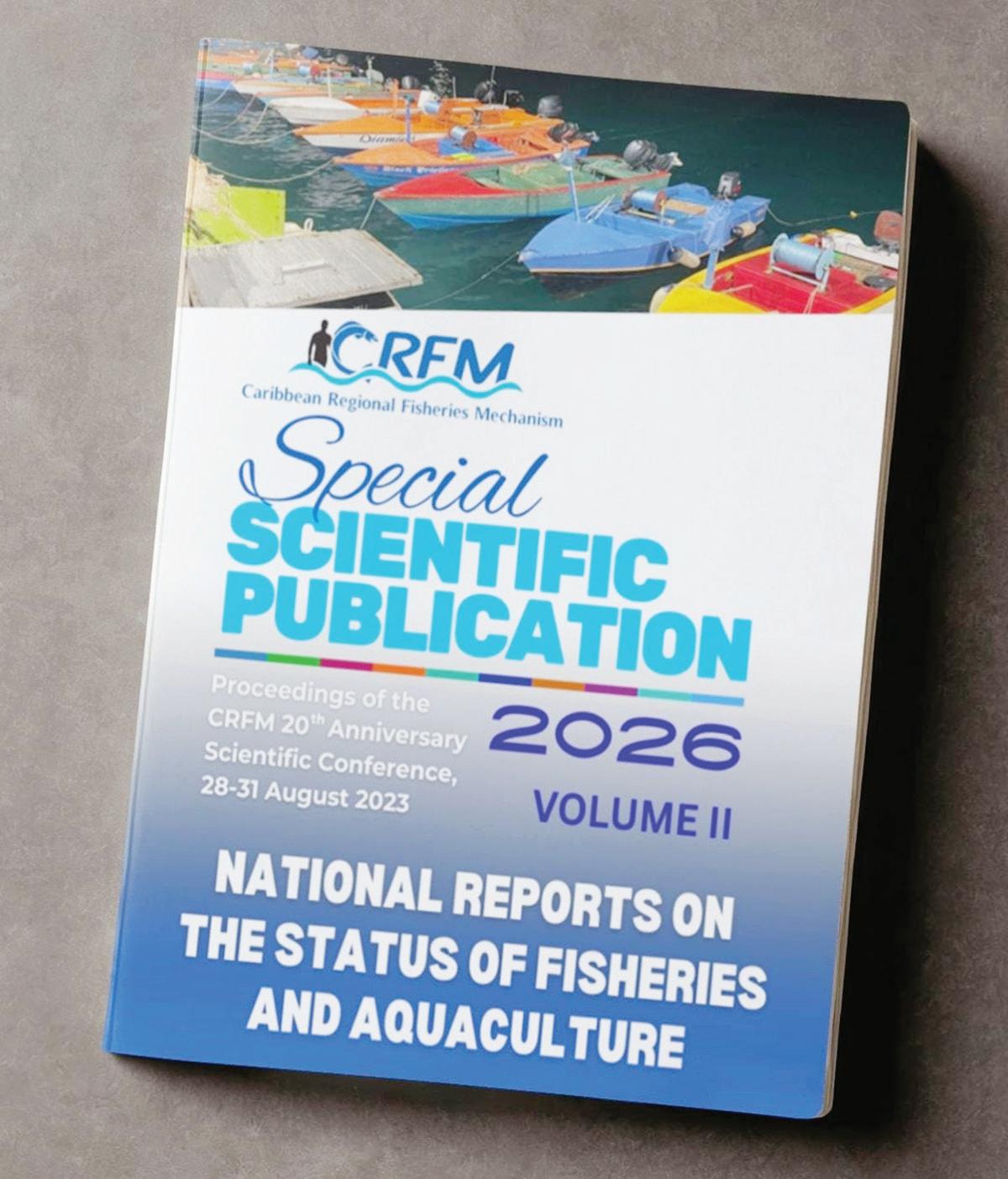
The findings are contained in a comprehensive 626-page technical publication produced by the CRFM Secretariat following the organisation’s 20th Anniversary Scientific Conference.
Titled CRFM Special Publication No. 37: Volume I — Technical Papers, the report brings together peer-reviewed research and contributions from regional scientists, policy analysts and international development partners.
The publication examines several challenges and opportunities affecting Caribbean fisheries and aquaculture, with particular attention to food security, sustainable production, sanitary and phytosanitary (SPS) compliance, circular-economy models and regional processing capacity.
Among the initiatives highlighted is a Barbados-based pilot project that converts fish-processing waste into animal feed and organic fer-
tiliser, providing a potential solution to waste-management challenges while reducing dependence on imported livestock feed.
Researchers found that approximately five tonnes of fish offal are discarded in Barbados each day, much of it ending up in landfills. The disposal of organic waste contributes to methane emissions and places additional pressure on limited landfill space in Small Island Developing States.
Under the pilot initiative, researchers used a low-cost fermentation process involving fish waste, molasses and effective micro-organisms to produce a stable liquid fish silage.
The resulting product can be used as a liquid bio-fertiliser or combined with locally available forage and processed into nutrient-rich livestock feed for animals such as rabbits, sheep and pigs.
On-farm feeding trials found that feeds produced from fish silage performed as well as, and in some cases better than, imported commercial feeds.
Rabbit farmers participating in the initiative were reportedly able to transition their animals completely away from imported commercial feed within six months, generating savings and demonstrating the potential for greater use of
locally produced inputs.
The report noted that expanding the initiative to process one tonne of fish waste per day could reduce Barbados’ daily fish-waste landfill burden by nearly 20 per cent while supporting efforts to lower the region’s dependence on imported animal feed.
The initiative also supports CARICOM’s wider objective of reducing the region’s food-import bill by 25 per cent.
The publication further underscores the need for stronger SPS systems to enable Caribbean fisheries and aquaculture producers to take greater advantage of regional and inter-
national market opportunities, including those available under the CARIFORUM-European Union Economic Partnership Agreement.
Although fisheries remain among the highest-value export commodity groups for CRFM member states, only seven of the 15 CARIFORUM countries currently meet the sanitary requirements needed to export fisheries products directly to the European Union.
A cost-benefit analysis conducted through the European Development Fund found that every US$1 invested in strengthening national SPS infrastructure and compliance
systems could generate an estimated US$3.14 in direct economic returns.
To address gaps in regional food safety and aquatic animal health systems, the CRFM and its partner agencies have developed model legislation, upgraded regional testing laboratories and established the Fisheries Food Safety Hub.
The hub is intended to support standardised food-safety training across the fisheries value chain and improve compliance with international market requirements.
The report also provides an inventory of fisheries and aquaculture processing facilities across CRFM member states, aimed at supporting policy coordination, commercial partnerships and regional trade.
Researchers identified 216 active processing facilities, including 179 marine fish-processing plants and 37 aquaculture-processing facilities.
Small facilities measuring less than 5,000 square feet account for 41 per cent of the sector, while medium-sized facilities represent 34 per cent.
Large facilities account for 24 per cent of the regional processing industry.
The report found that 61 per cent of the facilities maintain official food-safety certification, with Hazard Analysis Critical Control Point (HACCP) certification being the most commonly used standard.
To strengthen commercial links and facilitate cross-border co- operation, the CRFM has also introduced an online Contact Management System
for Processors, designed to connect suppliers, processors and distributors throughout the region.
Based on the findings across the report’s thematic areas, technical experts recommended several policy measures to strengthen the fisheries and aquaculture sectors.
These include establishing dedicated regulatory frameworks for aquaculture, separate from those governing wild-capture fisheries, to encourage investment and support the sector’s expansion.
The report also recommends redirecting selected small pelagic fish species, including flyingfish, towards local human consumption rather than their use as low-value bait in longline fisheries.
Such a shift could increase the availability of locally produced protein and reduce dependence on imported food products.
Additionally, researchers recommended formalising partnerships among fisherfolk organisations, livestock farmers and government agencies to support the sustainable collection of fish-processing waste and the expansion of locally produced animal-feed systems.
The CRFM said the research provides a technical foundation for coordinated regional action aimed at improving food security, increasing the competitiveness of Caribbean fisheries and aquaculture, reducing waste and advancing a more sustainable and resilient blue economy.
New housing communities closer to Georgetown to ease Region Four demand
The region continues to record the country’s highest demand for house lots, with a backlog of 50,375 applications as of December 2025.
MORE housing communities are being created within a 25- to 30-minute commute of Georgetown as part of the government’s agenda to meet growing demand for house lots in Region Four (Demerara-Mahaica).
A total of 1,569 house lots have been allocated up to the end of April 2026, reducing the revised backlog to 48,806, while another 1,090 lots are currently available for allocation.
During a live social me-
dia video recently, President Dr Mohamed Irfaan Ali explained that while the government continues to acquire land for housing development, existing acquisitions will only address about half of the current backlog by the end of 2027.
“The amount of land being acquired in Region Four currently can only clear 50 per cent of this backlog by the end of 2027,” the President said.
To meet the remaining demand, his government is expanding housing development beyond traditional areas through major investments in new highways and emerging communities.
“That is why we are investing heavily in Silica City. And we are building out all these new highways to open up new housing areas along the Soesdyke–Linden
Highway, new housing areas in Silica City and beyond, so that they can create new opportunities to clear this backlog in Region Four.”
The President said the objective is to ensure new homeowners can continue to enjoy easy access to Georgetown while benefitting from modern housing developments.
He explained that Silica City, Guyana’s planned smart urban centre, is expected to play a key role in achieving that vision. The development is expected to expand significantly over time.
When completed, the new urban centre is projected to accommodate approximately 60,000 residents, creating thousands of new housing opportunities while supporting the continued growth of Region Four.
The announcement builds
on the government’s broader housing strategy for the region, where major investments continue in new residential communities, road infrastructure and utilities to support population growth.
Silica City has been identified as a flagship development designed to integrate housing, commercial, educational and recreational facilities while easing development pressures on Georgetown and its surrounding communities.
In recent years, the Ministry of Housing has accelerated infrastructural works and house lot allocations across Region Four, while expanding development along the Linden-Soesdyke corridor to create new opportunities for homeownership and sustainable urban growth. (DPI)
Housing scheme being developed along the East Coast Demerara
GDF, Florida National Guard advance drone capabilities through joint exchange
THE Guyana Defence Force (GDF) and the Florida National Guard have strengthened security co-operation through a Subject Matter Expert Exchange focused on Unmanned Aerial Systems (UAS), an initiative expected to support Guyana’s military modernisation and enhance its capacity for national security and disaster response.
The recent engagement allowed personnel from both forces to share advanced operational concepts, technical knowledge and best practices related to the use and integration of drone technology.
The exchange forms part of ongoing efforts to strengthen the GDF’s operational capabilities through the adoption of modern technologies and expanded co-operation with international security partners.
According to information released on the engagement, the integration of unmanned aerial systems is expected to improve Guyana’s domain awareness by strengthening the ability of security forces to monitor and assess activities across the country’s vast and diverse territory.
The Florida National Guard and the Guyana Defence Force recently partnered for a highly successful Subject Matter Expert Exchange focused on Unmanned Aerial Systems (UAS)
The technology is also expected to support national security operations and improve the country’s capacity to respond to emergencies and natural disasters. Through the exchange, personnel gained exposure to technical insights and operational approaches that could assist the GDF in advancing the use of drone technology across a range of security and humanitarian applications.
The Florida National Guard and the GDF have indicated their commitment to continuing similar strategic engagements as part of broader efforts to deepen security co-operation.
The partnership is also expected to contribute to regional stability by strengthening interoperability, promoting knowledge-sharing and supporting the development of modern defence capabilities.
Colombian sentenced to four years
A FOREIGN national has been sentenced to four years in prison and fined more than $82 million following a major drug bust along the Providence Public Road on Friday, July 24.
Officers from the Customs Anti-Narcotic Unit (CANU) intercepted a motor vehicle in the Providence area, uncovering 50 brick-like parcels of cocaine with a total weight of 55.296 kilograms.
Two foreign nationals caught in the vehicle— Revelino Achicue Ascue, a Colombian national, and Gerardo Martinez, a Venezuelan national—were arrested on site and sub-
- Venezuelan remanded after CANU seizes over 55kg of cocaine
sequently brought before Magistrate Bess at the Diamond Magistrates' Court. Ascue entered a guilty plea during his court appearance. In addition to his four-year prison sentence, Magistrate Bess handed down a fine of $82,944,000. His co-accused, Martinez, entered a plea of not guilty and
was remanded to prison pending trial.
CANU confirmed that the operation remains active, noting that several other suspects— comprising both foreign and Guyanese nationals—are currently in custody as investigations into the network continue.
Gov’t carefully assessing request for temporary importation of chicken
THE Government is considering a request for the temporary importation of chicken as local production declines amid rising demand, with Agriculture Minister, Zulfikar Mustapha, assuring that any decision will balance the interests of consumers, poultry producers and the long-term sustainability of the industry.
The matter was discussed on Tuesday when Minister Mustapha met with representatives of the Guyana Poultry Producers Association (GPPA) at his office to review current developments and challenges affecting the local poultry sector.
During the engagement, representatives
of the Association reported that recent market trends have shown a decline in local chicken production alongside an increase in consumer demand.
The GPPA subsequently sought the Government’s assistance in facilitating temporary chicken imports to help address
the supply gap and ensure that the market remains adequately supplied.
According to the Association, the proposed measure could help prevent significant price increases during the period of reduced local production by supplementing available supplies and
- to consider consumers, other factors before decision is made, Minister Mustapha says
on
maintaining greater market stability.
The representatives indicated that the request was intended as a short-term intervention and that continued importation would not be necessary once local production returns to normal levels.
Minister Mustapha said the Government
would carefully assess the request before making a decision.
He noted that any action taken must be in the best interest of consumers while also taking into consideration the needs of local poultry producers and the continued development and sustainability of Guyana’s poultry industry.
The Agriculture Minister’s engagement with the GPPA forms part of ongoing efforts to monitor developments within the sector and respond to challenges that may affect local production, consumer access and market prices.
Agriculture Minister, Zulfikar Mustapha
The matter was discussed
Tuesday when Minister Mustapha met with representatives of the Guyana Poultry Producers Association (GPPA)
Fifa offers $40m if nations back...
petition Fifa puts together would be far less valuable if its members were not involved.
Fifa’s argument that it is compelled to look at proposals that would help it grow the game globally has led to fears about expansion at a time when proposals for a 64-team World Cup in 2030, which will be hosted by six countries in three confederations, are gathering pace.
That would have huge implications for the football calendar, which is already squeezed, partly because of the expansion of European club competitions.
One senior source within the English game told BBC Sport that the threat posed by Fifa’s plan is one of the biggest the game has faced and is on a par with the proposed European Super League, which created such controversy in 2021 and was scrapped within 48 hours.
It seems unlikely that Fifa will back down in the same manner over this.
This latest escalation extends a difficult relationship between Fifa and Uefa, which responded angrily to attempts to host the World Cup every two years when the idea was floated by former Arsenal manager and Fifa’s current chief of global football development Arsene Wenger in 2021.
Uefa president Aleksander Ceferin boycotted the World Cup final this month in protest over a number of controversial moves, including US President Donald Trump stepping in to help turn USA forward Folarin Balogun’s one-match ban into a suspended ban, allowing him to play in the last-16 encounter with Belgium.
How has rest of football world reacted?
Uefa is not the only organisation unhappy with the situation.
Concacaf, which covers
North and Central America and hosted this year’s World Cup, said in a statement: “We are deeply concerned by the lack of due process.
“We share the disappointment of many within our region and the game that this level of detail has been designed and shared publicly before any discussion with the relevant governance bodies and stakeholders has taken place.
“As leaders within football, we are the custodians of the game. Collectively, Fifa, the confederations and every member association have a responsibility to always act in the best interests of the sport.”
The French Football Federation said: “It obviously raises many questions, particularly since we, the member federations, were not involved and we lack the specific information needed to weigh in on matters that are clearly fundamental to the future of football.”
La Liga president Javier Tebas accused Infantino of trying to buy votes before the next Fifa Congress in March.
“It doesn’t seem like a reform. It seems like an electoral campaign financed with the future of football,” Tebas said.
“Development cannot be used to buy votes or silences. The competitions and commercial rights of Fifa are not the personal patrimony of Infantino.
“Whoever mixes politics, discipline, money and power without transparency cannot lead anything.
“Infantino is not the solution to Fifa’s governance. He is the problem.”
The Asian Football Confederation (AFC) said: “While the AFC recognises the importance of exploring innovative approaches that can strengthen the future of global football, initiatives of
CRICKET QUIZ CORNER
(Thursday July 30, 2026)
CUMMINGS ELECTRICAL COMPANY
LTD-83 Garnett Street, Georgetown (Tel:225-6158)
Answers to yesterday’s quiz:
(1) Courtney Walsh-63 wkts (18 Tests)
(2) Imran Khan-80 wkts (18 Tests)
Today’s Quiz:
(1) Which WI player has the highest Test score against PAK to date?
(2) Which PAK player has the highest test score against the WI to date?
Answers in tomorrow’s issue
(From page 28)
this scale and consequence must be founded upon the principles of good governance, transparency and meaningful consultation.”(Gianni Infantino is expected to win a fourth term as Fifa president at the Fifa Congress in March
Hans-Joachim Watzke, vice-president of the German Football Association (DFB) and president of Borussia Dortmund, told Kicker magazine that Fifa’s plans are an “absolute attack on football”.
He said: “A line has been crossed here. If European football stands united against these plans, that carries a great deal of weight.”
Infantino’s predecessor Sepp Blatter said: “The close relationship between the Fifa president and the US president has reached a financial dimension that is deeply damaging football. No-one has the right to sell our game.”
European Football Clubs (EFC), an organisation representing more than 850 clubs, said it would have been “appropriate” for Fifa to consult them on “a proposal of such magnitude”.
It added: “We urge for calm and thorough consultation on all topics affecting the football ecosystem, together with more rigorous and transparent governance processes put in place to protect the game for the long term.”
The Football Associa -
ENGLISH RACING TIPS
GOODWOOD
08:50hrs Ciarrai Abu
09:26hrs Flann Sunna
10:00hrs Enceladus
10:35hrs See The Fire
11:10hrs Manatee Mehmas
11:45hrs The Bookkeeper
12:20hrs So Lovely
WOLVERHAMPTON
11:35hrs My Mate Mackley
12:10hrs Between Me And U
12:47hrs Pyramid
13:22hrs Supreme Star
13:57hrs Jungle Drums
14:32hrs Si White
15:07hrs African Spirit 15:42hrs Oh So Perfect
EPSOM DOWNS
12:30hrs Golden Cricket
13:05hrs Out Of This World
13:40hrs Imperial Cult
14:15hrs Chantelle
14:50hrs Credit Forgedd It
15:25hrs Lady Gormire
tion of Wales (FAW) said it has “not yet received any substantial details from Fifa concerning the reported proposals” and that it “is concerned that such matters have become public prior to being shared with Fifa’s member associations”.
However, there was support for the plan from a Uefa member in the shape of Czech Republic FA president David Trunda.
He told Sky News he could “see the pragmatic benefits for Czech football”.
“Of course, we need more details but my personal point of view is that I can see the positive impact of Fifa’s intentions,” he said.
Global players’ union Fifpro called on Fifa to “reconsider its proposal without further delay”.
It said it had “noted with deep concern the proposal to transform the World Cup and other Fifa competitions into investable assets for private capital”.
It said such a move “would fundamentally and irreversibly reshape the incentives underpinning the competitions” and that it was “particularly troubling that a project of this magnitude has been developed largely behind closed doors” when it had “potentially far-reaching implications for player welfare, the international match calendar and the future governance of the game”. (BBC Sport)
SOUTH AFRICA RACING TIPS
VAAL
08:20hrs Frangipani
08:55hrs Play With Fire
09:30hrs Itsnowornever
10:05hrs Twentytwentyvision
10:40hrs Satyagraha
IRISH RACING TIPS
GALWAY
09:10hrs Margot Mae
09:45hrs Black Caviar Gold
10:20hrs Wild Bill Hickok
10:55hrs Midnight Jet
11:30hrs El Cairos
12:05hrs Pink Oxalis
12:40hrs Jujubella
13:12hrs Dieux Diligence
AMERICAN
Fifa offers $40m if nations back controversial plan
FIFA president Gianni Infantino has written to all 211 member associations saying they will receive
$40m (£30m) if they back his controversial plan to sell off stakes in its major competitions.
Infantino has set a deadline of 19 September for football federations to accept his plans if they want to ac-
cess an initial $20m (£15m).
Football’s world governing body has said it wants to create a commercial subsidiary to run its main events, including the World Cup, and external investors will be able to buy stakes in it.
Uefa, European football’s governing body, accused Fifa of using football “to enrich themselves and their friends”.
The incentive to nations comes less than 24 hours after the bombshell statement rocked football’s foundations, quickly leading to condemnation from Europe, Asia and North America.
It is understood Infantino even left some of Fifa’s eight vice-presidents in the dark about his plan, which it is claimed could raise $10bn (£7.5bn).
Infantino has signed a five-page letter, seen by the BBC, outlining the merits of his proposal.
The letter states that if member associations respond positively by the deadline, $20m will be “available immediately” from 1 January.
In a statement on Wednesday, Uefa said: “We have learned of Fifa’s deadline to associations to support their proposals or have the one-off payout offer withdrawn. This says everything you need to know about this plan.
“But having held discussions with many stakeholders across the game, Uefa knows there is significant and growing opposition to Fifa’s scheme.
“Fifa cannot continue to use our sport to enrich themselves and their friends. We can grow the game correctly.
“It’s time to prioritise associations, clubs, leagues, players and fans.”
In a video released by Fifa later on Wednesday, Infantino defended the plans, calling them “an offer, not an obligation”.
“It’s part of a democratic process - a consultation process - and, above all, it is an opportunity but not an obligation,” he added.
“It is a golden opportunity to turbocharge the development of the game globally.” FA ‘completely unaware’ of proposals
Fifa says the money will come from “liquidating a minority portion” of its stake
on Fifa Forward Enterprise, a subsidiary company set up to maximise commercial revenue that will include private investors.
Although Fifa suggested Infantino gave a broad outline of his proposal at a council meeting just before the World Cup final this month, others who were present rejected this strongly. They say Infantino merely offered an aspirational vision for the future around maximising revenue streams.
They now believe they were duped, with the events of the past 24 hours leading them to conclude negotiations have all been completed and now they are being presented with a fait accompli.
“It is my duty and responsibility as Fifa president to present such game-changing opportunities to you, our members,” said Infantino.
“It is equally my duty and responsibility to ensure such proposals are sufficiently complete and feasible, replete with substantiated figures and clear terms to assist you in the decision-making process.”
Opposition to the plan has been fierce, with many citing the lack of due process as the first point of their anger.
A Football Association spokesperson said: “We were completely unaware of this proposal and have no substantive details, including what the proposition actually is and what conditions are attached.
“Based on the limited information, we are deeply concerned about the lack of process and governance to get to this point, and the apparent substance and principles involved.
“When the proposal is shared in the full and trans-
parent way now promised by Fifa, we will make our views clear and comment further.”
Former FA and Manchester City Chairman David Bernstein said England must “withdraw” from the World Cup if Infantino’s proposals go through.
“The whole thing is absolutely dreadful,” Bernstein told BBC Radio 4’s World at One programme.
“It’s totally unacceptable. It feels [like] cronyism, nepotism. It sort of stinks, frankly.”
He said that if critics of the plans want to try and save football from this “dreadful situation”, they must “have the guts to really follow it through” and refuse to play in the World Cup.
Uefa to hold emergency meeting
Uefa took the remarkable step of issuing a response to Fifa’s plans before they had been published on Tuesday, responding to initial newspaper reports.
It condemned the plans, saying they “crossed a line”. It intends to hold an emergency meeting of all 55 members this week to work on a plan of action.
Given the strength of feeling, it would be a surprise if the possibility of a boycott was not at least raised.
For Uefa, the situation is complex.
While the confederation only accounts for a quarter of Fifa’s 211-country membership, it does include most of the world’s most successful teams.
Six of the eight quarter-finalists - including winners Spain - at this summer’s World Cup were European. In the 2022 and 2018 editions, the figures were five and six respectively.
Uefa knows any com -
(Turn to page 27)
Gianni Infantino is expected to win a fourth term as Fifa president at the Fifa Congress in March
Fifa opens disciplinary proceedings against Argentina
FIFA has opened disciplinary proceedings against Argentina over their behaviour after their World Cup final loss to Spain and throughout the tournament.
Last week, the world governing body appointed a disciplinary and ethics prosecutor to assess what happened after the final whistle at the New York New Jersey Stadium, with multiple Argentina players and backroom staff involved in altercations with Spain players following their 1-0 loss in July.
On the recommendation of the prosecutor, Fifa will investigate Argentina players Nahuel Molina (two counts) and Leandro Paredes
(three counts), and Argentina assistant coach Roberto Ayala (one count) for alleged assault under article 14 of Fifa’s disciplinary code.
Molina may also face disciplinary action for one count of alleged unsporting behaviour under article 14.
Team-mate Thiago Almada and Spain midfielder Gavi are also accused of the same breach.
Under Fifa’s disciplinary code, players and officials face at least a one-match suspension for unsportsmanlike conduct and at least three matches for assault.
The Argentinian Football Association is facing disciplinary proceedings for potential breaches across multiple matches, includ -
ing using a sports event for demonstrations of a non-sporting nature (article 13), team misconduct (article 14), discrimination and racist abuse (article 15), and breaching order and security at matches (article 17).
The latter relates to discriminatory chants and gestures, late kick-offs, the team and spectators displaying inappropriate messages, and spectators throwing objects.
Argentina’s players celebrated their semi-final win over England with a banner in support of their country’s claim to the Falkland Islands. It read “Las Malvinas son Argentinas”, which translates as “The Falklands are Argentine”. (BBC Sport)
FIFA Talent Development scheme builds foundation for Guyana’s Football future
– as U14 squad prepares for CFU Challenge Series
THE Guyana Football Federation (GFF) continues to strengthen its youth development pathway through the FIFA Talent Development Scheme (TDS), a long-term programme designed to identify, develop, and prepare the country’s most promising young footballers for regional and international competition.
Launched in April 2026, the FIFA Talent Development Scheme forms part of FIFA’s global strategy to ensure that every talented player has access to a structured development pathway.
Through technical guidance, funding, resources, and ongoing monitoring, the programme supports member associations in building sustainable systems that strengthen the competitiveness of their national teams.
In Guyana, the TDS programme brings together the nation’s top boys and girls for a year-round training under the supervision of the GFF’s National Coaches Pool. Players participate in six to eight hours of weekly training, focusing on technical ability, tactical awareness, physical conditioning, and personal development in a professional, high-performance environment.
The programme currently comprises a core group of approximately 24 players, with a wider training pool
of around 30. While most participants are drawn from the coastal regions, the programme also creates regular opportunities for talented players from the hinterland and other parts of the country to be identified and integrated into the national pathway.
Supporting the programme is the GFF’s National Coaches Pool, made up of eight youth coaches who deliver a consistent player development curriculum. Their work is complemented by the GFF Youth Ensemble Programme, which has expanded talent identification across Guyana and strengthened the scouting network, ensuring that promising players from every regional association can enter the academy.
The progress of the Talent Development Scheme will be on display next month when the programme’s beneficiaries represent Guyana at the Caribbean Football Union (CFU) U14 Challenge Series in Punta Cana, Dominican Republic. The competition serves as the first major international test for players who have been training within TDS structure since its launch, providing an oppor-
tunity to translate months of structured preparation into competitive performances against regional opposition. Guyana will compete in Tier II, Group C, opening its campaign against Montserrat on Sunday, August 16, before facing Anguilla on Monday, August 17, and The Bahamas on Wednesday, August 19.
Participation in the CFU U14 Challenge Series represents an important milestone in the Federation’s long-term player development strategy. Beyond the results on the field, the tournament will allow players to gain valuable international experience while giving coaches an opportunity to assess their progress in a competitive environment. The lessons learned will feed directly back into the Talent Development Scheme, ensuring the programme continues to produce technically sound, tactically aware, and internationally competitive footballers.
As the GFF continues to invest in structured youth development through the FIFA Talent Development Scheme and the Youth Ensemble Programme, it is laying the foundation for a sustainable national talent pathway, one that will prepare the next generation of Golden Jaguars to compete with confidence on both the regional and international stage.
AFTER the Los Angeles Lakers were eliminated in the second round of the 2026 postseason, superstar LeBron James wrote that he was “done,” but on Monday, the Philadelphia 76ers officially welcomed the four-time MVP and four-time NBA champion into the fold.
James, who turns 42 in December, signed a two-year deal worth $8 million to join a star-studded Sixers roster that includes former MVP Joel Embiid, former NBA Finals MVP Jaylen Brown, All-Star Tyrese Maxey and Rookie of
the Year runner-up VJ
The NBA’s all-time scoring leader, James will enter his 24th season with the goal of helping the Sixers win their first title since 1983. Like the Lakers, the Sixers were bounced in the second round, falling to the eventual champion New York Knicks. Philadelphia has not advanced past the second round since 2001.
“I cannot wait to see LeBron alongside Jaylen Brown, VJ Edgecombe, Joel Embiid, Tyrese Maxey and our talented roster as we work to deliver a championship for
Philly,” team owner Josh Harris said.
Despite his age, James remains one of the league’s best players, coming off a season when he averaged 20.9 points, 7.2 assists and 6.1 rebounds over 60 games. Over his 23 seasons, the 22-time All-Star has averaged 26.8 points, 7.5 rebounds and 7.4 assists in 1,622 games.
“There is no doubt LeBron is one of the greatest players to ever play the game of basketball and there are no words to measure the impact he’ll have on this organization,”
team president Mike Gansey said.
Among James’ numerous accolades, he is a four-time NBA Finals MVP, a 21-time All-NBA selection, a threetime All-Star Game and a member of the NBA’s 75th anniversary team. He is also the first player to earn NBA Finals MVP honors with three teams (Lakers, Miami Heat, Cleveland Cavaliers).
Drafted No. 1 overall by the Cavaliers in 2003, James played seven seasons before taking his talents to South Beach with the Heat, winning his first
two NBA titles in Miami. He went back home to Cleveland and helped end a 56-year title drought in 2016. In 2018, he joined the Lakers and led them to a championship in 2020.
James and Gansey, who have ties going back to their Ohio high school basketball days in 2001, will reunite in Philadelphia. Gansery took over GM duties after Daryl Morley was fired in May.
Gansey, who starred at Olmsted Falls High School, was runner-up for Ohio’s Mr. Basketball in 2001 to James, who won the award three times
at St. Vincent-St. Mary High School before going straight to the NBA in 2003.
“I have had the pleasure of knowing LeBron since high school and have seen the highlevel impact he’s produced at every stop of his basketball journey,” Gansey said. “He is a consummate professional, the ultimate competitor and a tireless worker. But he is also an incredible person with natural leadership traits, a family man, and someone who possesses unwavering commitment to community and those around him.”
A fracas erupted following the final whistle after Spain clinched their second World Cup
Sport Ministry to conduct capacity-building sports seminar
Guyana’s Ministry of Culture, Youth and Sport, alongside the National Sports Commission (NSC), has joined forces with Australia’s Deakin University and the ExxonMobil Guyana Global Super League (GSL) to host a two-day sports seminar aimed at elevating the country’s sports management ecosystem.
Scheduled for July 3031, 2026, at the Arthur Chung Conference Centre in Georgetown, the seminar features an intensive curriculum delivered by facilitators from Deakin University’s Department of Sports Management—home to the world’s second-ranked Sports Management Master’s programme.
The initiative aims to equip local sports federations, administrators, industry professionals, and
students with practical tools in governance, workforce development, and event management.
The opening ceremony on Day 1 sets the stage for a comprehensive programme.
Following opening remarks from Director of Sport Steve Ninvalle, GSL Director Jamie Stewart, Minister within the Ministry Steven Jacobs, and Subject Minister Hon. Charles Ramson Jr., Deakin University Professor Campbell Jamieson will outline the workshop’s core objectives.
“One of our core objectives at the Ministry is building capacity across the sports sector by connecting governance, workforce development, and event leveraging into an integrated understanding of sports administration,” Minister Ramson noted ahead of the launch.
“Sports development to-
– in partnership with Deakin University and Global Super League
day is far bigger than just athlete performance, and to achieve the national objective of a premier destination for world-class events, it requires big-picture thinking at all levels.”
Echoing those sentiments, Minister Jacobs stressed that structural growth must parallel talent discovery. “This initiative forms part of the construc-
tion of a stronger sports ecosystem in Guyana, one that facilitates talent development for athletes and administrators alike. Sport must be seen not only as competition, but as a pathway for discipline, opportunity, national pride, and long-term development.”
The academic framework will be led by Professor Pamm Phillips, an internationally recognised sports management scholar with over 25 years of global experience across Australia, the United States, and Asia. Designed as a progressive, integrated exploration of sports development, the agenda steers clear of isolated concepts, guiding attendees through four core thematic pillars:
Building an Ecosystem for Sport Participation and Development: Moving from grassroots engagement through to elite performance
Litton Das named Bangladesh’s new ODI captain
LITTON Das has been appointed captain of the Bangladesh ODI team, taking over from Mehidy Hasan Miraz who was in charge for little over 12 months. The decision, which leaves Litton in charge of the whiteball sides in both formats, comes shortly after Bangladesh lost the ODI series against Zimbabwe earlier this month. Najmul Hossain Shanto will continue in his role as Test captain. BCB President Tamim Iqbal, who made the announcement on Wednesday, said that they appointed Litton for his leadership qualities but also because they wanted to free up Mehidy as a player. Mehidy led Bangladesh to consecutive ODI series wins
comprising Blackstone, Bolt Ventures, the Aditya Birla Group and the Times of India Group acquired the franchise at a valuation of US$1.78 billion, also became the first cricket team to surpass the US$300 million mark in brand value.
Mumbai Indians, with a brand value of US$264 million (up 9.1 per cent from US$242 million in 2025), are ranked second. Kolkata Knight Riders are third with a brand value of US$245 million, a 7.9 per cent increase from US$227 million
against West Indies, Pakistan, New Zealand and Australia.
“The board believes that we should have two captains for the white-ball and red-ball format,” Tamim said. “Litton Das will be the white-ball captain, and Shanto will continue as the red-ball captain. While making this announcement, it is also important to note that Miraz was an exceptionally successful captain. He led Bangladesh to series wins in four out of the last five series.
“We are quite impressed with his leadership quality. The way he looks into cricket, the way he plans. He has been playing ODI cricket for a number of years. The T20I team has done very well under him. These were the factors considered when we took
last year, while Chennai Super Kings are ranked at fourth place with a brand value of US$244 million, representing year-on-year growth of 3.8 per cent.
“We were actively engaged in the processes for both the RCB and Rajasthan Royals, and both are great assets,” says Satyan Gajwani, co-owner of RCB and chairman at Times Internet. “Across the league, however, RCB’s fanbase intensity and connection are unparalleled, which made this
the decision about Litton,” Tamim said and added that he has spoken in depth with Mehidy about the reasons for this change of guard.
“I had a discussion with Miraz. He understands the point. We made this decision after mutual agreement. I have full respect for Miraz. He might get the leadership opportunity again,” Tamim said.
“We appreciate his service as a captain. He has given his all, and we have only love and respect towards him. We wish the new white-ball and the red-ball captain very well.”
Tamim explained that the BCB wasn’t in favour of having three captains for the three formats. “There have been a spate of injuries to our fast
a special opportunity. Overall, we are strong believers in the growth potential of cricket as a global sport, and exposure at both the media level and the IP level fits that thesis.”
Ness Wadia, co-owner of Punjab Kings, says, “The way people look at IPL franchises has changed completely. They’re no longer seen as cricket teams that play for two months every year. They’re increasingly being viewed as long-term sports and entertainment businesses, and I think
bowlers. Each captain would want the best pace bowlers in their respective format. These are some of the issues that you have to face when you have different captains. I think the white-ball and red-ball captain can plan according to their format, and then go forward.”
Tamim said that he hasn’t grilled the Bangladesh team for losing the one-off Test and ODI series in Zimbabwe, rather asking them to come up with a half-yearly plan to get them back on track.
“I met the players and coaching staff after the Zimbabwe tour. We told them that they should have a six-months plan, to determine where they want to see Bangladesh after six months. I think there is a
that’s exactly how they should be viewed. The numbers speak for themselves. In less than two months, the IPL delivers extraordinary audiences, sponsorship value, and fan engagement.”
“On a per-match basis, its media rights already compare with some of the biggest leagues in world sport, and that’s remarkable for a competition that’s only 18 years old. The NFL is over a hundred, the NBA close to eighty. Put next to that, where we already
pipelines.
Governance: Frameworks and structural considerations for sustainable organisational leadership.
The Sport Workforce: Cultivating human capital, volunteers, and administrative personnel across regional networks.
Sport Tourism and Leveraging Events: Capitalising on major international fixtures to drive broader socio-economic impact.
The initiative comes backed by the Global Super League, whose Chairman, West Indies legendary captain Sir Clive Lloyd, highlighted the importance of empowering local administrators. “GSL is a proudly Guyanese event that seeks to engage the world and celebrate our wonderful country,” Lloyd said.
“The latest GSL campaign celebrates the ‘Super
distance between the board and players. Both the team and board must buy into the plan.
“Otherwise, we will celebrate like anything when we win a series, and then the second they lose the series, we ask them questions. I am not in favour of this. We will work towards their six-month plan.”
“He has done well, but I have always believed Miraz as a cricketer for Bangladesh is more important than any [one else]. We are not seeing Miraz as a performer, especially with the bat. He is doing well with his bowling though. As soon as he is back in his full rhythm, Bangladesh will win a lot of games.”
Bangladesh are yet to see the best of Litton in ODI cricket, where he averages 30.84 after 104 matches.
stand is remarkable. That gives owners the confidence to invest for the long term rather than simply think about the next season.”
Wadia’s Punjab Kings are ranked seventh with a brand value of US$158 million, up 12.1 per cent year-on-year.
Among the remaining franchises, Sunrisers Hyderabad occupy fifth place with a brand value of US$168 million, a 9.1 per cent increase. Rajasthan Royals, who were acquired by the Mittal family and Adar
We’—our greatest strength, which is our people. This workshop, I hope, provides our sporting people some tools for expansion and excellence.”
Day 1 kicks off at 09:00hrs with the ceremonial opening and executive addresses, before transitioning directly into Session 1 (Building an Ecosystem for Sport Participation) and Session 2 (Governance). Following afternoon deliberations on workforce strategies, the day concludes with interactive discussions applying international case studies directly to the Guyanese context.
Day 2 shifts toward practical output, featuring dedicated sessions on event leveraging and sports tourism, culminating in a strategy session designed to map out Guyana’s longterm sporting blueprint.
He has, however, led well in T20Is, winning 16 out of 31 games in the last two years. Tamim said that Litton’s leadership qualities won him the full-time white-ball job. (Cricinfo)
Poonawalla at a reported valuation of US$1.65 billion, are ranked sixth with a brand value of US$161 million, up 10.3 per cent from last year.
Gujarat Titans are ranked eighth with a brand value of US$157 million, up 10.6 per cent, followed by Delhi Capitals in ninth place at US$156 million, representing a 2.6 per cent increase. Lucknow Super Giants rank 10th with a brand value of US$122 million, unchanged from last year. (Cricbuzz)
Director of Sport Steve Ninvalle
Litton Das was already Bangladesh’s T20I captain (AFP/Getty Images)
Chase: Historic win over Pakistan in honour of Sir Garry
PORT OF SPAIN, Trinidad, (CMC) – West Indies captain Roston Chase has dedicated his side’s historic Test victory over Pakistan to the late Sir Garfield Sobers, who would have celebrated his 90th birthday on Tuesday.
Coincidentally, the West Indies defeated the visitors by 90-runs on the fourth day of play, to record the first Test win at the Brian Lara Cricket Academy.
Speaking in a post-match press conference, Chase said the result was in honour of Sir Garry, who passed away on July 17 and is widely regarded as the greatest cricketer of all time.
Sir Garry was laid to rest after a state funeral in Barbados on Wednesday.
“This is a good feeling. Obviously the first match at the Brian Lara Stadium, so to come and get a win here is very good for us and also the passing of a legend, the great Sir Garfield Sobers, coming and beating the Pakistanis in four days, especially on his birthday as well, it’s a
good sendoff to him as well and a really good feeling,”
Chase said.
“…I think that it would be a good gesture, it would be a great privilege and an honour for me to go home and attend the funeral of the great Sir Garfield Sobers, so if it’s available for me, I’ll be there.”
Following the press conference, Chase and whiteball captain Shai Hope, along with fellow Barbadians Justin Greaves, Joshua Bishop and Jomel Warrican, returned home with the as-
sistance of the Government of Barbados to attend the funeral. They will be part of a Cricket West Indies (CWI) contingent that will also include President Dr Kishore Shallow, Chief Executive Officer Chris Dehring, along with CWI Directors Enoch Lewis, President of the Leeward Islands Cricket Board; Bissoondyal Singh, President of the Guyana Cricket Board; and Clement Marcellin, President of the Windward Islands Cricket Board.
Competition will be fierce for Guyana Cup - Pierce
MASTER Z and Jumbo Jet trainer Robert Pierce is confident of the top trio from his stables ahead of the Guyana Cup.
Dataman and Anthem King are the favorite horses for many fans but Stat reminded everyone how good he is at the CARICOM Cup defeating Dataman and Olympic Kremlin.
The Barbadian, Pierce, signaled his warning early about Stat and he delivered, but come August 23 at the Guyana Cup, the competition will be on a different level.
“They have to watch Stat. Anthem King and Dataman are going very well. They are doing exceptionally well, and they are all special in their own right.”
Dataman is preparing very well going into the Guyana Cup. I am pleased with how he is riding. The competition in Guyana Cup will be more competitive for Dataman but the other horses have to come good,” Pierce said.
They will have her horses, new jockeys now that Guyana is legal (having legislation).
A total of 14 races will be running at this year’s Guyana Cup and more than
G$ 66 million in cash and prizes will be paid out.
The feature race which will be the Banks Guyana Cup will fetch a purse of G$22 million. Logistical plans are already in place for a plethora of new horses and jockeys to showcase their skills at Guyana Cup.
The races for Guyana Cup 2026 are:
Banks Guyana Cup (One Mile)- Total purse
G$22,500,000
Peter Lewis Guyana Cup Sprint (5 ½ Furlong)- Total purse G$7,500,000 Forrester’s Imported Derby (One Mile)- Total purse
G$7,500,000
Mohamed’s Excavating Sir Balaji Derby (One Mile)Total purse G$5,625,000
J’s Imported Juvenile Fillies Sprint (5 ½ Furlong)-
Total purse
G$3,750,000
BM. Soat Locally Bred Dash (5 ½ Furlong)- Total purse G$2,812,500
P. Jagdeo E-Class (One Mile)- Total purse
G$2,812,500 Jagmohan F-Class (One Mile)- Total purse
G$1,875,000
ARONCO H-Class (One Mile)- Total purse
G$1,875,000
C.I. H3 N.W.3 (One Mile)Total purse
G$1,875,000
Avinash Local Maidens (One Mile)- Total purse
G$2,812,500
Big G’s J-Class (One Mile)Total purse G$1,875,000 Garen Pro K-Class (One Mile)- Total purse
G$1,875,000
Sawh L Class Sprint (One Mile)- Total purse
G$1,875,000
San Francisco Unicorns through to qualifiers after beating Lahore Qualandars
SAN Francisco Unicorns are through to the qualifiers in the ExxonMobil Guyana Global Super League (GSL) T20 after beating Lahore Qalandars by seven wickets on Wednesday at the Guyana National Stadium, Providence.
The outcome means Unicorns, who finished second on the table with four points, will play third placed Desert Vipers in Friday’s qualifier from 7pm. Despite also finishing on four points, Qalandars ended fourth via net run rate.
The winner of the qual-
ifier will face defending champions Guyana Amazon Warriors- atop the table on six points and unbeaten after three games- in Saturday’s final from 7pm.
In Match Nine, Qalandars opted to bat first and made 152-6, a total that proved inadequate as Unicorns won with 28 balls to spare.
Skipper Hassan Khan led the successful run-chase for Unicorns with a responsible, unbeaten 53 featuring five towering sixes and two fours from 33 balls.
Unicorns got the chase cracking with a steady, 45-
run opening stand between Connor Esterhuizen and Tim Robinson scoring 29 and 21 respectively.
Khan and Oliver Peake also kept the momentum going with their 49-run partnership before Peake was comprehensively bowled by Shamim Hossain for 27 at 116-3 in the 12th over.
Hammad Azam helped formalise the result with 18 not out, hitting two fours and a six.
Earlier, Qalandar’s prolific opener, Shayan Jahangir, struck a blistering 61, his second fifty of the tournament, to set up a solid
foundation
The right-hander struck four maximums and two fours in his 50-ball innings.
His opening partner, Shamyl Hossain, contributed 36 before left-arm spinner, Callum Stow, picked up four of the six wickets to fall to halt Qalandars’ progress towards the end.
Mohammad Naeem (18), Parvez Hossain Emon (9) and skipper Michael Bracewell (10) departed in quick succession as Stow ended with spectacular figures of 4-25 across his four overs to cop the Player-ofthe-Match award.
West Indies captain Roston Chase
Trainer Robert Pierce
skipper, Hassan khan, during his match-winning innings
Sir Garfield Sobers died on 17 July, 11 days short of his 90th birthday
SIR Garfield Sobers was called the “greatest allround cricketer the world has ever known” by former team-mate Sir Clive Lloyd at the legendary West Indies player’s state funeral in Barbados.
Lloyd described all-rounder Sobers, who died aged 89 on 17 July, as “a man who lived in the hearts and minds of Caribbean people and who became a source of inspiration to millions throughout the world”.
An entertaining left-handed batter and bowler of seam and spin, Sobers played 93 Tests between 1954 and 1974, scoring 8,032 runs and taking 235 wickets.
Lloyd pays tribute to ‘greatest’ Sobers at funeral
The funeral was staged at the Kensington Oval in Bridgetown, the principle ground in Barbados and home to a pavilion named after Sobers.
Lloyd and fellow West Indies legends Brian Lara and Desmond Haynes were among those who spoke at the state service of thanksgiving, which was also attended by Barbados president Jeffrey Bostic, prime minister Mia Mottley and Barbadian music superstar Rihanna.
West Indies Test captain Roston Chase, who comes from Barbados, vice-captain Jomel Warrican and the current side’s Barbadian players
were also in attendance, having completed a Test victory over Pakistan on Monday, winning by 90 runs inside four days in Trinidad.
“Sir Garfield Sobers was not merely the outstanding cricketer of his generation,” Lloyd added. “He brought to the beautiful game a rare combination of brilliance, imagination, courage and joy.”
Sobers’ coffin was draped in the flag of Barbados and set off from the Parliament Buildings in Bridgetown on a gun carriage for a formal procession through the nation’s capital.
On arrival at the stadium, the carriage passed through
Fleming expected to be named England Test coach
FORMER New Zealand
captain Stephen Fleming is expected to be appointed as England Test coach after the sacking of Brendon McCullum.
McCullum was fired earlier this month following a string of poor results and several off-field incidents, but remains in charge of England’s white-ball sides.
Former England coach Andy Flower subsequently ruled himself out of the running to replace McCullum.
As first reported by the Telegraph, external Fleming, 53, has emerged as the leading candidate to succeed his former international teammate.
If appointed, Fleming will have a say - alongside director of men’s cricket Rob Key and national selector Marcus North - in the appointment of a new Test
Stephen Fleming has held several coaching roles in T20 franchise cricket since he retired from playing in 2009
captain, following the shock retirement of Ben Stokes from international cricket. He would inherit a side which saw its momentum falter after a breathtaking start to the McCullum era.
McCullum won 10 out of 12 Tests in his first year in charge but since then, England have lost 18 and won 17 of 37 Tests. They have not won a
(Turn to page 31)
a guard of honour of raised cricket bats.
“This is not a sad moment,” Lara said of his mentor. “This is a moment for us to celebrate and I hope you feel the same. Today we celebrate the remarkable life of the greatest all-round cricketer.
“We celebrate a man who gave so much to his family, to Barbados, to the West Indies and all of us who had the privilege of knowing him.”
Sobers scored 365 not out against Pakistan in 1958 - an effort which stood as the record Test score for 36 years. He was also named one of Wisden’s five cricketers of the 20th century.
During his stint at Nottinghamshire in 1968, Sobers became the first player to hit a six off all six balls in an over in a first-class match.
Mottley described Sobers as “a man who if he had not achieved any of those great feats on the cricket field would have been immortalised by his community as a good man and a great man”.
Reverend Canon Guy Hewitt read out a message from King Charles during the service.
“History is distinguished with sporting champions whose records have rightly commanded respect across generations,” the message read. “There have been far
fewer however whose name along brings a smile to people’s faces across Barbados, the Caribbean and the Commonwealth.
“Sir Garfield Sobers belongs very firmly in the latter category. I send my deepest sympathies to Sir Garry’s family as they come to terms with this great loss.”
Sobers’ body lay in state at the Barbados parliament on Monday and at the Kensington Oval on Tuesday, with national dignitaries and members of the public able to pay their respects. He was laid to rest at Coral Ridge Memorial Gardens in the south of Barbados.
RCB becomes first IPL team with USD 300 million brand value
ROYAL Challengers Bengaluru (RCB) continue to be the most valuable franchise in the Indian Premier League (IPL), with a brand value of US$312 million, even as the league’s business value has risen to US$20.6 billion over the last 12 months.
According to the latest report by US-based global investment bank Houlihan Lokey, Inc. (NYSE: HLI),
RCB, the two-time defending champions, have recorded a 16 per cent increase in brand value from last year’s US$269 million.
The report estimates the value of the IPL has gone up by 11.4 per cent – from US$18.5 billion a year earlier to US$20.6 billion, marking the league’s second consecutive year of double-digit growth in business value.
“Cricket’s evolution into a globally owned, institutionally backed asset class has accelerated further in 2026, with the IPL continuing to redefine the global sports landscape,” says Harsh Talikoti, director in Houlihan Lokey’s Financial and Valuation Advisory business.
RCB, which underwent a change in ownership four months ago after a consortium
(Turn to page 30)
RCB Men won back-to-back IPL titles in 2025 and 2026