

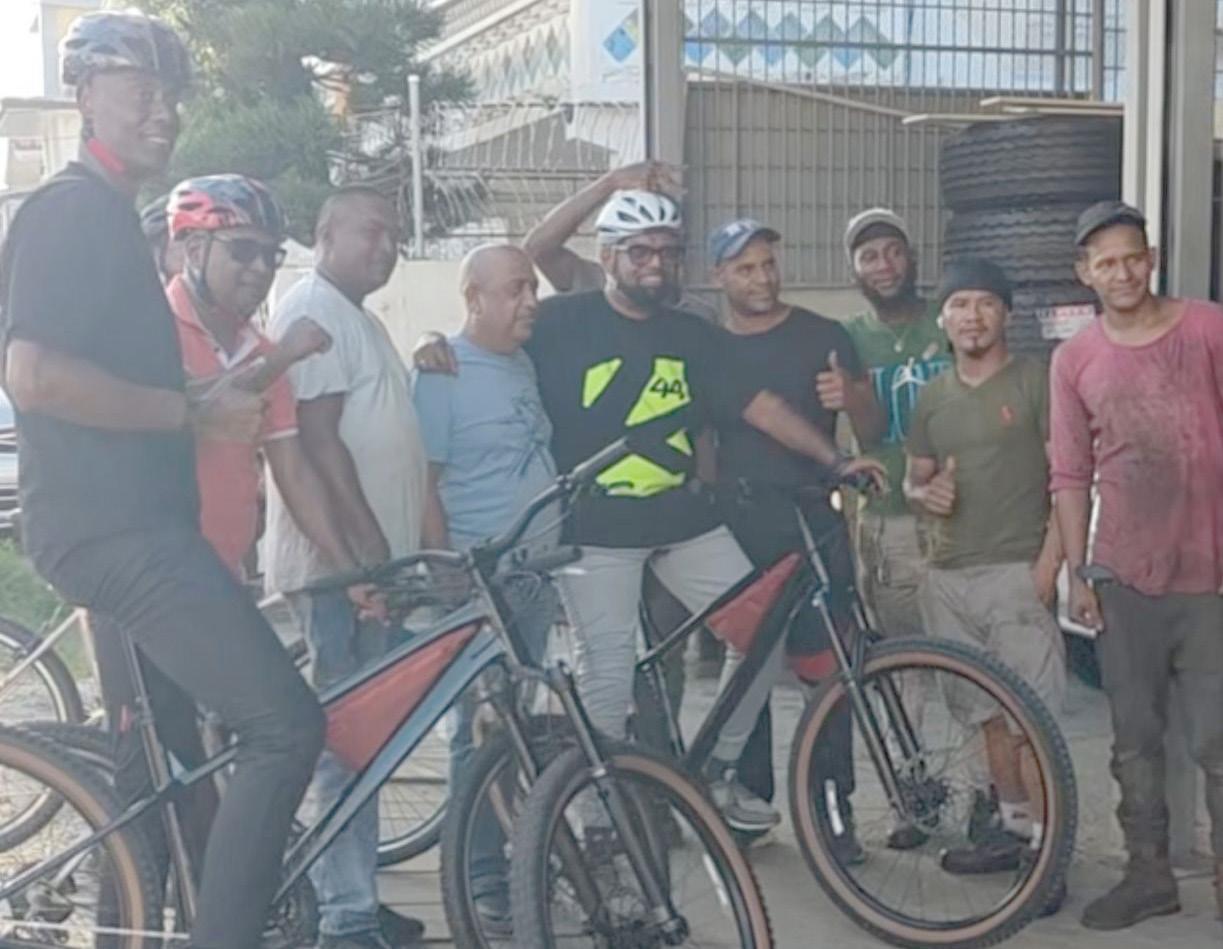
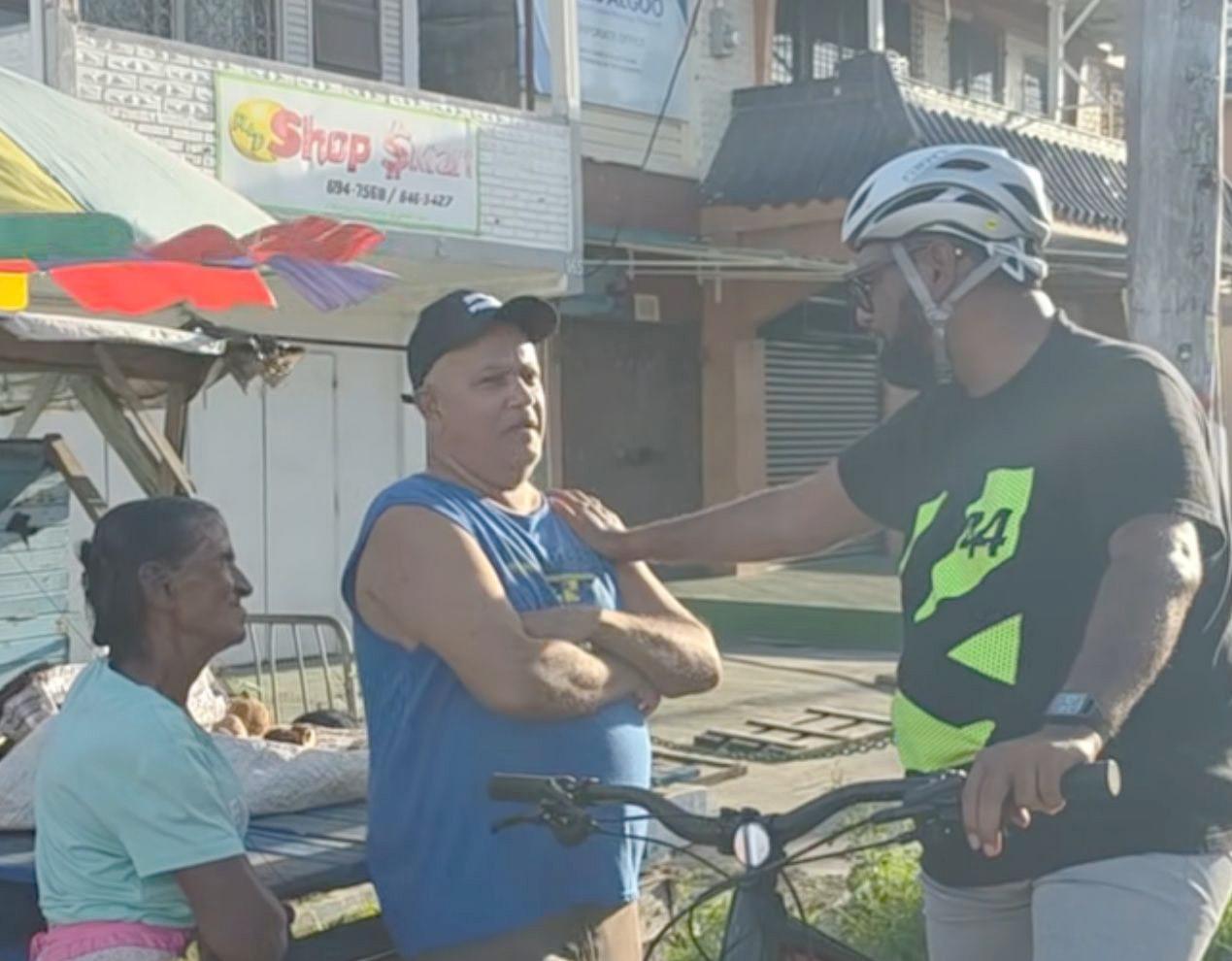



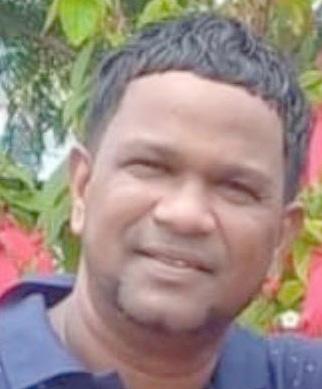
PRESIDENT Dr Irfaan Ali has led national tributes following the death of Georgetown City Councillor Jai Narine “Don” Singh, describing him as a man whose contributions to public life were marked by candour, wit and a genuine commitment to serving citizens.
Singh, a People’s Progressive Party/Civic (PPP/C) councillor on the Georgetown Mayor and City Council (M&CC) and elected President of the Georgetown Cricket Club died on Saturday after being hospitalised after suffering a massive stroke.
In a statement, President Ali said he was “deeply saddened” by Singh’s untimely passing and recalled hoping and praying for his recovery.
“Don Singh will be remembered as someone whose presence in civic life carried both substance and character,” the President said.
He noted that while Singh came from a family with a strong legal background and a long-standing involvement in Guyana’s political life, he carved out his own identity through his energetic and distinctive approach to public service.
“He brought energy to his work as a Councillor of the Georgetown City Council. He could be excessively witty but also brutally frank. That candidness gave voice to concerns in a direct and unvarnished manner, reminding all that municipal politics exists to respond to real, everyday problems,” President Ali said.
The Head of State added that Singh understood public life should never lose its humanity, noting that his interactions were often characterised by humour, warmth and an unwavering engagement with the people he served.
“Fate has robbed him of making a more substantive contribution to national life. But he will be remembered not only for what he did but the infectious spirit in which he did things,” the President stated as he extended condolences to Singh’s family, friends and all those mourning his passing.
The People’s Progressive Party also expressed profound sadness at the loss of one of its long-serving activists.
In a statement, the PPP described Singh as a dedicated party member who served both the organisation and the people of Georgetown “with commitment and humility.”
“His passing is a significant loss not only to his family and loved ones, but also to the Party and the wider Georgetown community,” the statement read.
The party also extended sympathies to Singh’s family, friends, fellow councillors and everyone who had the privilege of working alongside him.
Georgetown Mayor Alfred Mentore said the city had lost a fearless advocate whose contribution to municipal governance would not be forgotten.
“He will be missed by the entire City family for his brazen, bold and courageous approach to municipal gov-
ernance,” Mentore said in a Facebook post.
He described Singh as “a special dude” who left an indelible mark on the municipality and would be mourned by many both locally and abroad.
“On behalf of the Mayor, Councillors and administration of the Georgetown Municipality, we extend our heartfelt condolences to his family, friends and loved ones during this time of immense grief. Rest in peace my brother. Gone too soon,” Mentore added.
Meanwhile, the Georgetown Cricket Club reflected on Singh’s lifelong devotion to the institution, noting that for most of his 56 years, his life was inseparably linked to the historic Bourda club.
According to the GCC, Singh’s love for cricket began in 1975 when, at just five years old, his father took him to Bourda to watch his first cricket match—an experience that sparked a lifelong passion for both the sport and the club.
From an enthusiastic supporter in the stands, he went on to become one of the club’s most dedicated members before being elected President in January this year.
The club said Singh accepted the role “with humility, purpose, and an unwavering determination to serve.”
An avid cricket enthusiast, Singh was deeply committed to developing the game and believed the time was right to lead the advancement of Guyana’s most iconic cricket club.
Among his priorities as
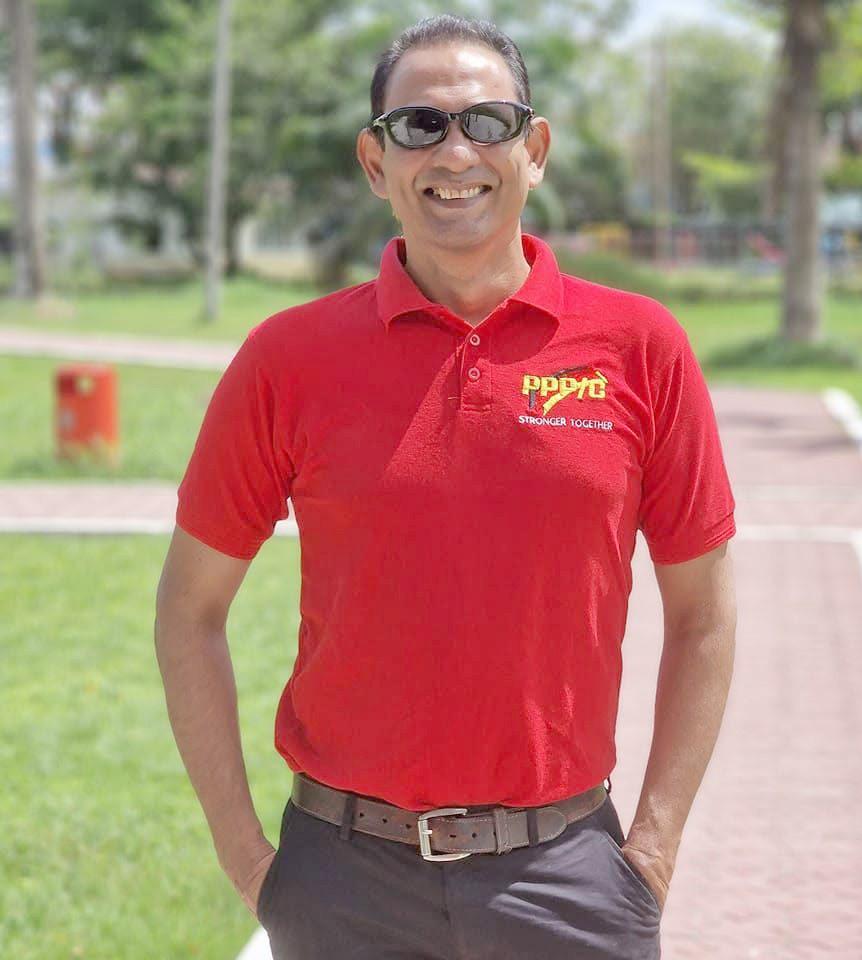
President was creating an environment where players could develop their skills and reach higher levels of performance.
The GCC described him as “a candid and benevolent leader” whose honesty, generosity and genuine concern for others earned him widespread respect and admiration.
“Although his tenure as President was far too brief,
Don’s vision, enthusiasm, and commitment inspired everyone who worked alongside him.
His legacy will endure in the values he championed, the aspirations he instilled, and the love he had for the club that was such an important part of his life,” the club said.
Singh was widely known for his outspoken contributions during statutory
meetings of the Georgetown Mayor and City Council, where his wit, candour and unwavering advocacy on municipal matters often drew public attention. He is survived by his family, friends, colleagues and the many lives he touched through public service and cricket administration.
Funeral arrangements are expected to be announced by his family.

—President Ali announces national-relief effort as CARICOM, private sector and security services unite to deliver emergency aid
AT least 100 containers of emergency-relief supplies are being mobilised in Guyana for earthquake-ravaged Venezuela, with the first shipment expected to depart on Friday aboard an 8,000-tonne cargo vessel, as President Dr Irfaan Ali launched a national humanitarian response in collaboration with CARICOM, the private sector and national-security agencies to assist thousands affected by one of the region’s deadliest natural disasters.
The announcement came during a live national briefing on Saturday, when President Ali, Prime Minister Brigadier (Ret’d) Mark Phillips, representatives of the Private Sector Commission (PSC), the Civil Defence Commission (CDC), the Guyana Defence Force (GDF) and members of the Venezuelan community outlined Guyana’s emergency response to one of the deadliest natural disasters in the region’s recent history.
According to preliminary reports, at least 1,430 people have been killed, more than 3,200 injured and thousands remain missing after two powerful earthquakes measuring magnitudes 7.2 and 7.5 struck northern and central Venezuela just 39 seconds apart on Wednesday evening.
The earthquakes, centred near San Felipe in Yaracuy State, caused catastrophic destruction across several regions, particularly in the coastal state of La Guaira, where widespread building collapses have been reported. More than 430 aftershocks have since been recorded, complicating rescue and recovery efforts.
Against that backdrop, President Ali said Guyana could not remain indifferent to the suffering unfolding across its western border.
“Our neighbours, the people of Venezuela, today we are responding to one of the greatest humanitarian needs as a result of a disaster in Venezuela at a scale and magnitude that is unimaginable. As good neighbours, we must reach out,” the President said.
He noted that Guyana had already communicated its willingness to assist Venezuelan authorities through both public statements and
direct engagement.
The Head of State said Guyana’s response would focus on the immediate humanitarian needs of those most severely affected, particularly vulnerable groups.
“Our immediate concern is the children, especially the children, the women and the families who have suffered,” President Ali said.
He explained that Guyana’s assistance will include food supplies, pharmaceuticals, medical support, sanitation items, recovery materials and equipment, along with other critical humanitarian necessities for babies, the elderly and displaced families.
The President announced that Prime Minister Phillips will lead and coordinate every aspect of Guyana’s humanitarian operation, working alongside the CDC, GDF, Guyana Police Force, the private sector and representatives of the Venezuelan community living in Guyana.
“The private sector is critically involved in this support and critically involved in the planning and execution of this,” President Ali said.
He also acknowledged the significant Venezuelan community residing in Guyana, noting that many nationals had already joined Guyanese citizens in contributing to the relief effort.
“We are also a country with a large number of Venezuelan nationals who work here and who live here, and that community, along with the general Guyanese population, would have reached out and are responding in an unbelievable way,” he said.
President Ali revealed that Guyana had already secured a cargo vessel through private-sector support to transport emergency supplies to Venezuela.
“We have been supported with a vessel capable of taking 8,000 tons of support to Venezuela,” he announced.
Because of the vessel’s carrying capacity, Guyana has also extended the humanitarian operation to accommodate assistance from other CARICOM member states.
“We have extended the operation to include CARICOM support, and we are going to have that support coming in during the com-

ing days,” the President explained.
He said the intention is for the vessel to depart Guyana by Friday, carrying the first shipment of emergency supplies.
According to President Ali, approximately 100 containers of relief supplies have already been mobilised.
“So far, we have mobilised close to 100 containers,” he disclosed.
Those supplies include five containers of urgently needed pharmaceuticals, along with containers of rice, milk products, diapers and other essential relief items.
Despite the scale of Guyana’s response, President Ali stressed that the humanitarian needs remain overwhelming.
“The need is immense,” he said.
Providing details of the operation, Prime Minister Phillips announced that the government has established the Muslim Youth Organisation (MYO) facility on Woolford Avenue, Thomas Lands, Georgetown, as the central collection point for relief supplies.
The facility will be managed in collaboration with the Guyana Defence Force and the Civil Defence Commission, with logistical support from the private sector to ensure donations are sorted, packaged and

By Indrawattie Natram
OLD Christana Chattergoon, originally from Hampton Court on the Essequibo Coast, Region Two, has earned the prestigious title of Valedictorian at Brooklyn Scholars Charter School in New York, marking another remarkable milestone in her academic journey.
Christana began her education at Hampton Court Nursery School before graduating and moving on to Hampton Court Primary School, where she completed Grade One. After migrating to the United States with her family, she continued to excel academically, consistently demonstrating dedication and a passion for learning. Despite the change in geographic location,
Chattergoon continued to excel, making her family and country proud.
Throughout her years in school, Christana maintained an outstanding 4.0 Grade Point Average (GPA) while also earning the highest score on the NWEA assessment, highlighting her exceptional academic performance.
She is now preparing to begin the next chapter of her education at the high school level, carrying with her an impressive record of excellence. Her future ambition is to become a paediatrician.
“To the younger students, never stop believing in yourself. Work hard, stay humble, and don’t be afraid to make mistakes—they help you grow. Choose friends who inspire you, be kind to everyone, and always respect those who guide




you. Most importantly, put God first, trust His plan, and remember that today’s effort shapes tomorrow’s success. I hope to see one of you standing here as the next valedictorian,” Chattergoon said.
Her proud parents, Angie and Anthonio Paul, have commended her unwavering commitment, discipline and determination, expressing confidence that she will continue to achieve even greater success.
“We are so proud of our child’s academic per-
formance, and we always ensure that she has the resources she needs. Her next step is to continue her studies and pursue a career in the medical field as a paediatrician,” Angie said.
Her mother said she is extremely proud of Christana’s accomplishment, describing it as a proud moment for her family, the Hampton Court community and Guyana, as she continues to make her homeland proud through academic excellence.

prepared for shipment.
“We will be establishing a collection point at the MYO facility on Woolford Avenue,” the Prime Minister said. “That facility is being assisted by the Guyana Defence Force and the Civil Defence Commission.”
He said donated items would be organised and loaded onto the cargo vessel identified by the President, with the first shipment expected to leave Guyana on Friday.
Prime Minister Phillips said the government is appealing for donations of pharmaceuticals, bottled drinking water, dry-food supplies, mattresses, cutting equipment and other emergency relief items required by communities
devastated by the earthquakes.
“The intention is for the ship to depart Guyana on Friday with pharmaceuticals, water, foodstuff, mattresses and equipment, cutting equipment and dry groceries... rice, peas and other essential supplies that will be needed by the people of Venezuela at this time of need,” he said.
The nationwide ‘Humanitarian Aid Donation Drive for Venezuela’ is calling on members of the public, businesses, non-governmental organisations and community groups to contribute relief supplies.
According to the official advisory, donations will be accepted from June 27 to July 1, with the MYO compound serving as the main drop-off location.
Authorities are requesting donations of non-perishable food items, including rice, beans, canned foods, cooking oil and other essentials; personal-hygiene supplies such as soap, toothpaste, diapers, sanitary napkins and toilet paper; sleeping items including blankets, sheets and sleeping mats; drinking water; and lighting and energy supplies such as flashlights, batteries and solar chargers.
Officials have advised that all donated items should be unopened, unexpired and in good condition, with easyto-prepare foods and pop-top canned goods especially encouraged.
Members of the public seeking additional information can contact the Civil Defence Commission on 6007500, 226-1114 or 226-1117, while enquiries regarding the
MYO collection point can be directed to 624-3362
Prime Minister Phillips added that contact numbers for his office would also be made available to coordinate the national relief effort.
Representing the Private Sector Commission, businessman Komal Singh appealed to businesses across Guyana to support the humanitarian exercise by donating through their respective sectoral organisations or directly through the PSC and the CDC.
“To all the private-sector members across the length and breadth of Guyana, please reach out to your respective sectoral organisation within your area and donate whatever you would like to donate,” Singh urged.
He said businesses could either coordinate donations through their industry associ-
A MAN lost his life while another remains hospitalised following a collision on the Reliance Public Road, Region Two.
Dead is Satesh Persaud of Reliance, Essequibo Coast.
According to preliminary reports, the accident occurred when Persaud, who was riding a motorcycle, and the driver of a motor car were travelling in opposite directions along the
Fire tender collides with ministry vehicle at National Stadium
THE police are investigating an incident involving a Guyana Fire Service fire tender and a Ministry of Housing and Water vehicle at the Guyana National Stadium, Providence, East Bank Demerara.
The incident occurred at about 11:41hrs on Saturday, June 27, 2026.
According to the police, a 50-year-old Leading Fireman was driving the fire tender when, while attempting to exit a gate on the eastern side of the tarmac, the vehicle came into contact with a portable light pole.
The impact caused the light pole to strike a Ministry of Housing and Water vehicle that was parked on the eastern side of the tarmac.
The police said the ministry’s vehicle sustained damage to its right-side driver’s door and fender.
Investigators further reported that a commotion broke out at the scene involving the driver of the fire tender, police ranks and other members of the Guyana Fire Service.
The disturbance reportedly arose as the police attempted to have the driver accompany them as part of the investigation.
The situation was later de-escalated. Investigations are ongoing.
roadway.
Eyewitnesses said they heard a loud impact and rushed to the scene, where they found Persaud lying in a pool of blood.
He was rushed to hospital but was pronounced dead on arrival.
The driver of the motor car also sustained injuries and was taken to the Lima
Regional Hospital, where he remains admitted while receiving medical treatment.
Relatives have expressed shock and grief over Persaud’s sudden passing.
The police have launched an investigation into the circumstances surrounding the fatal accident.


ations or directly through the Private Sector Commission.
Prominent businessman Brian Tiwari also pledged additional shipping support, announcing that his company would make one of its 1,000ton vessels available from Wednesday to strengthen the relief operation.
“We also have a lot of employees from Venezuela. We will make one of the 1,000-ton vessels available from Wednesday morning and, if possible, we have another 1,000-ton vessel on standby just in case we get more containers so that we can send two vessels at the same time,” Tiwari said.
President Ali thanked Guyanese citizens, Venezuelans residing in Guyana, the private sector and CARICOM governments for rallying behind the humanitarian initiative.
“I want to thank our Guyanese brothers and sisters, Venezuelans living here, the members of CARICOM and all the CARICOM family for the strong support at this hour and time of need as a result of a disaster of a scale and magnitude that is unimaginable to the people of Venezuela,” the President said.
“We continue to have you in our thoughts and prayers and know that we are here in support of all the efforts.”
The first shipment of relief supplies is expected to leave Guyana by Friday as the country joins regional partners in delivering life-saving assistance to thousands of Venezuelans affected by one of the worst natural disasters in the country’s history.
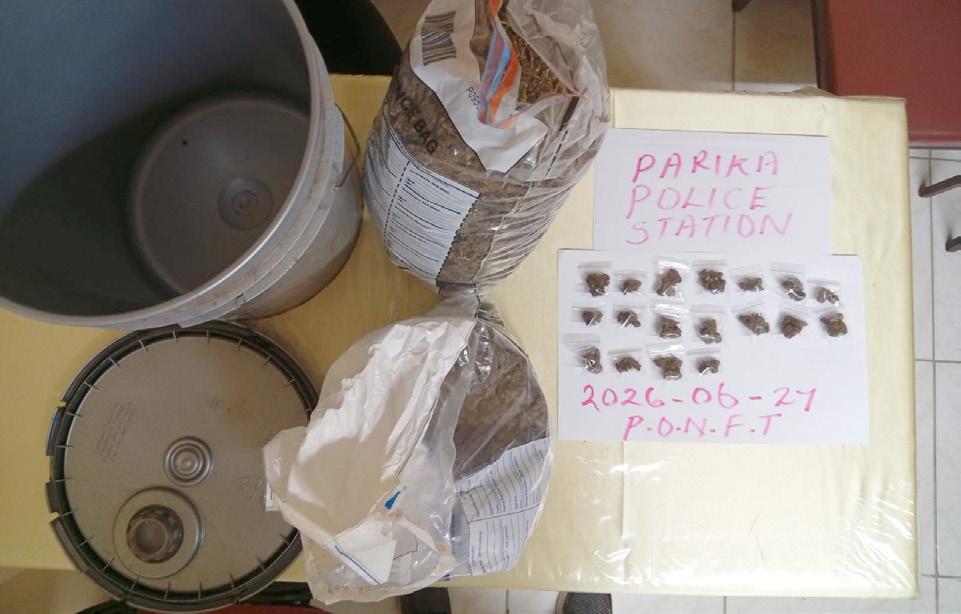
Parika labourer arrested with over five lbs of cannabis
A 37-year-old labourer of Parika Sea Dam, East Bank Essequibo, is in police custody after ranks allegedly discovered five pounds of suspected cannabis during an operation on Saturday morning.
The police said the discovery was made at about 08:30hrs after ranks, acting on information, went to the Parika Sea Dam area.
According to investigators, the suspect was contacted and a search was conducted, during which several ziplock bags and a plastic bucket containing leaves, seeds and stems suspected to be cannabis were found.
The man was arrested and escorted to the Parika Police Station along with the suspected narcotic.
The police said the suspected cannabis, before it was lodged, was weighed in the suspect’s presence and amounted to five pounds.


THERE is an old saying that a neighbour’s fire is never too far from your own doorstep.
This week, that fire is burning in Venezuela.
Two powerful earthquakes, measuring 7.2 and 7.5 in magnitude, struck just seconds apart, leaving behind scenes of unimaginable devastation. Preliminary reports indicate that more than 1,400 people have lost their lives, over 3,200 have been injured, hundreds remain missing and thousands have been displaced. Entire communities have been reduced to rubble, while rescue teams continue searching through collapsed buildings amid hundreds of aftershocks.
Faced with such destruction, there are moments when politics must give way to humanity.
Guyana’s decision to mount what is shaping up to be one of its largest humanitarian missions in recent history deserves recognition, not because it is extraordinary, but because it reflects the kind of nation we aspire to be.
Within days, the government, working alongside the Private Sector Commission, the Civil Defence Commission, the Guyana De-
fence Force, CARICOM partners, businesses and ordinary citizens, mobilised close to 100 containers of emergency-relief supplies. An 8,000-tonne cargo vessel has already been secured to transport food, pharmaceuticals, drinking water, hygiene supplies, mattresses and other essential items, with the first shipment expected to depart this week.
The response has also grown beyond Guyana’s borders. By opening the initiative to CARICOM member states, Guyana is helping to coordinate a regional humanitarian effort at a time when solidarity matters most.
That is leadership.
But perhaps even more encouraging has been the response from ordinary Guyanese. Across the country, businesses, religious organisations, community groups and citizens have begun donating what they can. Equally moving has been the participation of the Venezuelan community living here. Many have families directly affected by the disaster, yet they too have joined the effort to help others.
It is a reminder that compassion knows no nationality.
This humanitarian mission comes at a defining moment in Guyana’s own history.
The country is no longer viewed simply as a small developing state. By the end of 2026, Guyana is expected to produce more than one million barrels of oil per day, placing it among the world’s fastest-growing oil producers. The International Monetary Fund projects that Guyana’s economy will continue to outpace every other country in the Caribbean through 2027, following growth of 43.8 per cent in 2024 and 19.3 per cent in 2025.
Those numbers are impressive.
But they are not, by themselves, the measure of national greatness.
Economic growth gives a country capacity. Character determines how that capacity is used.
There was a time when Guyana depended heavily on the goodwill of others. Floods, economic hardship and national emergencies saw regional neighbours and international partners extend assistance when we needed it most.
Today, history has placed Guyana in a different position. Today, we have the ability to help. That ability brings responsibility.
This is not about foreign policy. It is not about diplomacy. It is about recognising that
when thousands of families lose everything overnight, the only meaningful response is to extend a helping hand.
The Caribbean has always understood that disasters do not respect borders. Hurricanes, floods, earthquakes and pandemics remind us that no country is insulated from tragedy. Today’s victim may well become tomorrow’s responder.
As Guyana continues its remarkable transformation, it must never lose sight of the values that have long defined its people: generosity, empathy and a willingness to stand with those in need.
Roads, bridges, hospitals and oil production will all shape the country’s future. But history is often kinder to nations remembered not only for what they built, but for how they treated others along the way.
There is an old Caribbean saying that has endured because it speaks to a universal truth: ‘today for me, tomorrow for you.’ None of us knows when tragedy may come knocking at our own door, but when it does, we can only hope that someone will be willing to do for us what we chose to do for our neighbours today.
Dear Editor,
THE public celebration and mockery by Opposition politicians surrounding the passing of Don Singh is not merely distasteful; it is a pathetic, cowardly display that exposes their utter lack of moral fibre and basic human decency.
While these small-minded individuals attempt to weaponise a tragedy for cheap political points, they only succeed in highlighting their own irrelevance. Don Singh was a giant compared to the politicians
now gloating in the shadows. He was a man of fierce conviction, razor-sharp wit, and an unyielding determination to secure and protect democracy in Guyana. When democratic institutions faced threats, Don stood on the front lines, refusing to be silenced or intimidated.
His passion for his country was matched only by his dedication to its capital. As a relentless advocate for the renewal of Georgetown, Don fought tirelessly to elevate the standard of life for city residents. He demanded better infrastructure,
accountability from the Mayor and City Council, and a city that its people could finally be proud of. He saw the potential for greatness in our capital, and dedicated his energy to making that vision a reality.
To those Opposition politicians who think his passing is an occasion for celebration, your vitriol only confirms how deeply his truths cut. You feared his wit, you were threatened by his conviction, and you could never match his determination.
Don Singh’s legacy is etched into the
struggle for a democratic Guyana and a better Georgetown.
It is a legacy that will outlast the petty malice of his detractors. I condemn these repulsive actions in the strongest possible terms and demand an immediate, public retraction and apology from those responsible.
RIP my brother, Don! Guyana is poorer with your passing!
By: H.E. Sasenarine Singh, Ambassador to the Kingdom of Belgium and Netherlands and Permanent Representative to the European Union
THAT July afternoon in 2022, the sun hung low and heavy, spilling gold across the lands on the retired Ogle Sugar Estate.
But these weren’t the cane fields I remembered that were neat, obedient rows of sugar cane marching toward the horizon, from my boyhood days when we used to roam searching for “gamma cherries” at Easter time. The bushes we saw in 2022 had taken over in a quiet rebellion. Cane stalks stood here and there like forgotten soldiers, but the trees had pushed through, and the grass rose high, swaying lazy in the warm breeze that came off the backlands. It was a wild, beautiful mess of green and gold, the kind of place that made you feel like you’d stepped into something older than yourself. Along the dam, the heliconias burned bright (Parrot’s Beak, people call them). Hundreds of them, orange and red, like the earth had caught fire and decided to stay that way.
My wife walked ahead, her voice drifting back to me on the wind. She was laughing about something, but the words got mixed in the open air. Every now and then she’d turn and point—”look there, that bend, I used to ride my bicycle right there”. Her eyes were bright with it, the way they get when you stumble back into a place that once held your whole world. And I understood. We both came from sugar. Our fathers had spent part of their lives in the industry, and maybe that’s why this land tugged at us the way it did, when we lived at Twin Palms. We wanted to fix things.
But this isn’t a story about GuySuCo, about balance sheets and income statements. I’ve done my time with those numbers. No, this
one’s about the land itself. About what happens when the future shows up and asks for a seat at the table where memories have been sitting all along.
It didn’t take long for things to change. The Mahindra trucks came first, rumbling in from somewhere far away, driven by men from a company called “Ashoka”. Then the bulldozers, the graders, the endless dumping of truckloads upon truckloads of loam and sand happened.
The three-coconut tree in the distance from our bedroom window and the little forest we had grown fond of were swallowed up by the noise and the dust. “Trenches” got filled. Canals disappeared. The earth was being reshaped, flattened, made ready for something bigger.
Those engineers worked like they were chasing something. We would fall asleep to the growl of their machines and wake up at four in the morning to the same sound, still going. Sundays were the only break. That’s when we’d see them at the Ogle Temple, or down in Plaisance Market, moving through the crowd like they belonged there. And in a way, they did. They’d become part of the place, part of its rhythm. They came to build something.
I remember meeting Dr Jaishankar, India’s External Affair Minister right there in that old GuySuCo bond at Ogle, which the Team from “Ashoka” started renting it for their offices and storage bonds. Strange how the world shrinks like that, how a man from India ended up in a dusty corner of Guyana, and it all makes sense somehow.
What got me, though, was the method. I’d never seen anything like it— “wick” drains, they called them. Long columns shoved deep into the soft clay to squeeze the water out, to make the ground strong enough to hold the weight of what was coming. It was patient work. Then came the “kentledge test”, those
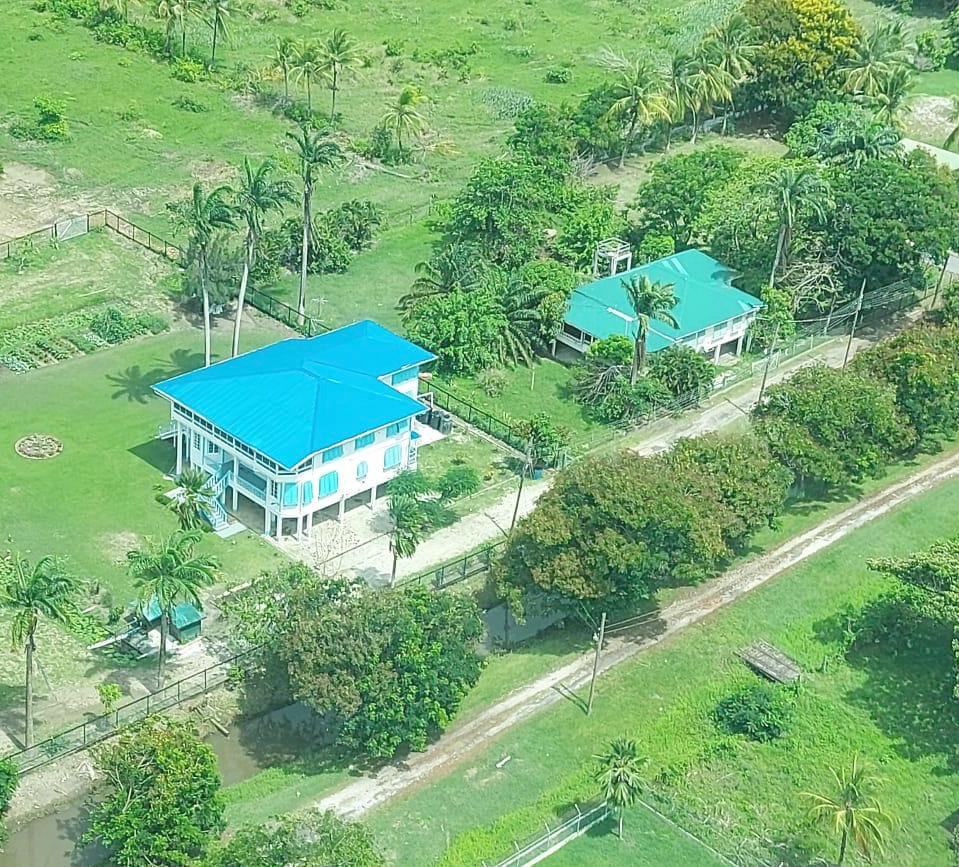
heavy concrete blocks piled on top of the earth to see if it would hold. And it did. Every step of it was a lesson in advanced engineering. Our walks became a kind of classroom, watching mud turn into something solid, watching memory make room for progress.
It wasn’t just a road anymore. It was a sign of what we could do when we stopped looking back and started looking forward.
These days, when I drive that bypass from Ogle to Eccles, I can hardly recognise the place. The wild fields are gone. The heliconias, the tall grass, the forgotten cane—all of it paved over and the adjoining lands are being developed currently under the leadership of President Irfaan Ali. In its place is that long ribbon of asphalt, smooth and certain, carrying people from the East Coast of Demerara to the East Bank of Demerara in minutes instead of hours. I see houses going up, and new life crawling along the edges. It’s the kind of development you’d see anywhere in the progressive world, and here it is, right here, on ground our fathers were once associated with and we also travelled.
We ought to stop and think about that sometimes. About how much has changed in just five years under President Ali. This road isn’t concrete and aggregate alone. It’s a promise kept. A door that was swung open.
Well done, Guyana. Well done!
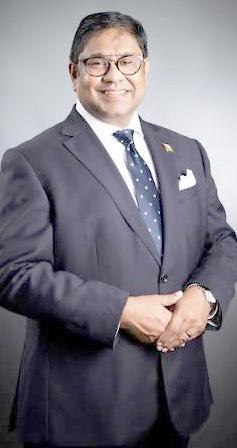

THE New York Times journalist, Maggie Haberman, who has just authored a book on the Trump Administration titled “Regime Change”, recently said something curiously interesting. In an interview on the television programme, The Daily Show, she said access to President Trump is easier in his second term than in his first. She said the reason being that Trump normally gives out his cell number to journalists who call him and he would talk to them. She says some of the journalists would say, “Wow, I have the president’s number and I can speak to him directly.” Mr. Trump was a media person, so he knows the PR thing. When Irfaan Ali became president, he retained his old cell number. That is the one I knew he had before he became president. That is the number he uses and he has given it the way Mr. Trump has done and the core of the media grouping in Guyana knows his number. President Ali does not refuse to give his number to people he knows would not abuse the privilege that he has bestowed on them.
For the President of Guyana to do this is an enormous break with tradition not only in Guyana but the world. Presidents and Prime Ministers as an ingrained proclivity, do not give out their private cell number and they confine it to Cabinet members and state intelligence chiefs.
In Guyana, people who are millions times below the importance of the president see their mobile number as a colossus thing of importance and do not give it out. Remember the infamous incident which contributed to
the derailment of the political future of Cathy Hughes. When she was a Minister in the APNU+AFC government, her fellow AFC executive, who at the time was in charge of the Leonora athletic track and the D’Urban Park project, Trevor Williams, asked her for the cell number of Volda Lawrence. According to Williams, Mrs. Hughes said: “I cannot give you the cell number of a Minister.”
Speaking for myself, I have always published in my columns my mobile number, my land line and email address. Here they are again - 614-5927, 222-1615, 222-1616 and fredkissoon@yahoo.com. I do not use Facebook or other social media platforms except my podcast, The Freddie Kissoon Show.
The question is – is it politically correct for the president to do so, or does it have negative implications? I guess Presidents Ali and Trump should tell us that. I cannot write competently on the usefulness of such a policy for President Trump, but as someone who knew Irfaan Ali before he entered politics, I know that reaching out to people and the need to be in contact with the citizens is part of his persona.
That kind of approach to politics has set Dr Ali apart from the rest of Guyana’s previous presidents. Please see my last Sunday column, “Affability: Comparing Presidents Ali, Jagan and Burnham.” I believe the success of this type of leadership can be seen in the results of the last election. Leaving out the rigged national elections of 1968, 1973, 1980 and 1985, Irfaan Ali to date is the only Guyanese president that has discernible, statistical data to his election politics that

proves the acquisition of cross-over voting.
Here is a theory of mine. It starts with the admission of VP Bharrat Jagdeo at one of his press conferences that WIN got votes because people who did not want to vote for the PPP chose not to vote for the PNC either and thus they gave their vote to WIN.
I am theorising that if there wasn’t WIN, then those persons who crossed over to WIN would have decided days before the vote to give their ballots to Ali instead of the PNC.
I do acknowledge there would have been a state of mind that said: “no PPP, no PNC, we are staying home”. But there would also have been a sizeable crossover to Dr Ali. What we will never know if there wasn’t WIN whether Dr Ali may have secured a two/ thirds majority.
Dr Ali goes out in the next election
because of term limits, and thus Guyana will never know if in 2030 if he could have achieved the unachievable and secure a two/thirds majority. In my analytical thinking, had there been no WIN, Dr Ali would have picked up a two/thirds majority. The factors lie in his differences as a political persuader. The telephone number thing, the constant direct embrace of the populace, the placating father figure, etc have created a huge legacy for Mohamed Irfaan Ali. We have to wait and see if a future CARICOM leader can surpass him.
DISCLAIMER: The views and opinions expressed in this column are solely those of the author and do not necessarily reflect the official policy or position of the Guyana National Newspapers Limited.

A WHILE ago, I wrote about the ability of sport to bind us together and nowhere is this more apparent than at the ongoing World Cup.
Involving teams from around the world and supported by fans of all ages, nationalities, genders and ethnicities, this international football competition is held every four years in elected countries.
This year, the United States, Mexico and Canada share that honour and supporters of the various teams gather in their hundreds of thousands at packed stadiums to cheer on the players and share in the reflected glory of the winners.
Whether football fans or not, many have heard the name Lionel Messi, and many more will now become aware of the historic achievement of this Argentinian star player.
During a televised match between Argentina and Algeria, the stadium erupted when Messi scored a hat-trick (three goals).
Then, against Austria, I saw a group of Chinese spectators join the thunderous applause when he scored the second goal of the match and the fifth goal in two matches. This brought his overall total to 18 goals, making him the highest scorer in World Cup history.
But while this legendary player has become famous for his thrilling exploits on the field, others have also been enjoying widespread support and making their mark on a sport followed by a significant portion of the world’s population.
French striker, Kylian Mbappe and Norwegian, Erling Haaland, have also brought their own brand of exciting play and their names feature high on the list of top scorers behind Messi.
Famed Portuguese forward Cristiano Ronaldo is there too, scoring his first goal within minutes of play against Uzbekistan and the second a short while later during the first half of the match. He is now not only the second oldest player to ever take part in the competition, but the first male footballer to score in six World Cups over a 24-year span.
These players have the ability to garner support not only because of their tremendous skill and agility on the field, but also their unwavering dedication to the sport, earning accolades from all who appreciate great sportsmanship.
But while the World Cup provides these big names with a golden opportunity to showcase their ability, it also gives lesser-known teams and players a chance to gain international exposure.
In my son’s home, where I am currently babysitting my latest grandchild, my visiting teenage grandson amazes me with his knowledge of the sport and even the more obscure players.
He and his uncle are informed football fans, who engage in entertaining discussions about the merits and problems of the various teams and players.
As I listen, realising that we three are also bridging the generation gap through football, I imagine similar talk taking place in homes, on street corners and at social venues the world over.
Football (also known as soccer in some regions) is the world’s most popular sport, with an estimated 250 million players and billions of fans worldwide. And the World Cup is the premier tournament in the sport, with players representing different countries travelling to compete.
Interestingly, ten years ago, during the European Football Association (EUFA) competition, an estimated 10% of Iceland’s 330,000 population travelled to France to watch their team play.
The United Nations (UN) says, “Football’s broad appeal and accessibility make it a potent tool for promoting health and well-being. It has also served as a vital platform for advancing gender equality and empowering women and girls, both on and off the field.”
The UN also touts sport in general as being instrumental in promoting peace globally. And like all sports, football fosters unity, breaks down barriers and “...pro-

vides a space where individuals from various backgrounds converge to promote mutual understanding, tolerance, respect, and solidarity.”
Sameer Jha, award-winning youth activist and author, painted a poignant picture of what sport can do when he described a scenario of two people whose paths would not normally cross, standing side by side watching a match.
“They instantly bond over their shared love of the sport and their distinct world’s blur, united by the thrill of victory, the agony of defeat and at times the mutual sigh of resignation that comes with a close loss.”
DISCLAIMER: The views and opinions expressed in this column are solely those of the author and do not necessarily reflect the official policy or position of the Guyana National Newspapers Limited.
FOR many people, oil exploration is often understood in simple terms: a company drills a well, finds oil, and eventually production begins. But the process is not always that straightforward.
Between discovery and development, there is another important stage that helps determine what comes next. That stage is appraisal.
This is why recent comments from Guyana’s Minister of Natural Resources, Hon. Vickram Bharrat, are important. Speaking about ExxonMobil Guyana’s proposed 35well offshore campaign, the Minister clarified that the wells are appraisal wells, not exploration wells. In other words, the purpose is not simply to search for new resources, but to better understand discoveries that have already been made. That distinction matters.
An exploration well is usually drilled to find out whether oil or gas is present in a particular area. An appraisal well comes after a discovery. Its role is to help determine the size, quality, structure and commercial potential of that discovery. It provides the information needed before a company can decide whether a project is strong enough to move toward a field development plan. For Guyana, this is a natural part of the country’s next chapter in oil and gas.
Over the past decade, Guyana has moved from a major offshore discovery to first oil, and then to becoming one of the world’s fastest-growing oil producers. The Stabroek Block has already delivered major producing
projects and billions of barrels of discovered resources. But not every discovery automatically becomes a producing project. Some require more study, more drilling and more technical assessment before decisions can be made. That is where appraisal becomes important.
It helps answer practical questions. How much oil or gas is there? Can it be produced safely and efficiently? What type of development would be needed? How much investment would be required? What infrastructure would support production? What environmental and technical considerations must be examined? These are not small questions. They help determine whether a discovery can become a future development and whether that development can deliver long-term value.
This discussion is especially important now because the global exploration environment is changing. Westwood Energy’s latest State of Exploration analysis shows that high-impact exploration drilling has fallen to a record low. Around the world, fewer major high-impact wells are being drilled, and companies are becoming more selective about where and how they invest. That global context makes Guyana’s position stand out.
At a time when major new discoveries are becoming harder to capture globally, Guyana has already converted several major offshore discoveries into large-scale production. This gives the country a strong production base, but it also makes the next phase of planning even more important.
Guyana’s future growth will not depend only on finding more oil. It will also depend on how well existing discoveries are studied, understood, and developed.
This is why appraisal should not be seen as a minor technical issue. It is part of responsible resource development. It helps companies and regulators make better decisions before billions of dollars are committed to new projects. It also helps the country understand which resources may support future production, revenue, jobs, business opportunities, and infrastructure.
For the public, this is also useful to understand. When a proposed drilling campaign is announced, it does not always mean a company is simply going out to look for more oil. Sometimes, the work involves assessing what has already been found and determining whether it can be part of Guyana’s future development pipeline.
That matters because each new development has wider implications. It can influence government revenue, local-content opportunities, demand for services, shore-base activity, marine logistics, training needs, and long-term planning. Before those benefits can materialise, however, the resource itself must be properly assessed.
Appraisal also supports stronger oversight. Before a field development plan is submitted for review, the operator must gather sufficient information to explain how the resource could be developed. That process allows for more informed decision-making by companies, reg-
ulators, and government agencies. In a sector as complex as oil and gas, good decisions depend on good information.
Guyana’s rapid rise as an oil producer has understandably drawn attention to production numbers, export earnings, and new projects. But the less visible technical work is also important. Behind every major development is a long process of exploration, appraisal, planning, review, and investment.
The proposed 35-well campaign should therefore be understood within that broader context. It is part of the work required to determine what Guyana’s next phase of offshore development could look like.
As global high-impact exploration slows, countries with proven discoveries and strong development potential are likely to remain important. Guyana is one of those countries. But maintaining that position requires more than early success. It requires continued discipline, careful appraisal, strong project planning, and a clear understanding of how each resource can contribute to national development. For Guyana, the next chapter in oil is not only about what has already been found. It is about what can be responsibly developed, how those decisions are made, and how the country continues turning resource potential into longterm value. That is why appraisal matters.
DISCLAIMER: The views and opinions expressed in this column are solely those of the author and do not necessarily reflect the official policy or position of the Guyana National Newspapers Limited.
OIL can build roads, bridges and hospitals, but who will run them?
President Irfaan Ali’s answer has been clear: invest in people. Last Tuesday, the Guyana Online Academy of Learning (GOAL), one pillar of his approach, celebrated the graduation of hundreds of proud students.
Since 2021, the government has poured billions of dollars into more than 39,000 fully funded online schol arships, with tens of thousands more in the pipeline.
At the same time, the policy com mitment to free education from kin dergarten right through university means that schooling is being treated not as a privilege for the few, but as a constitutional pathway for many. This is not just social policy; it is economic statecraft, and Guyana is not the first oil‑rich society to go this route.
In the 1960s, the United Arab Emir ates, Qatar and Saudi Arabia were poor, sparsely populated territories with very limited formal schooling and high adult
illiteracy. When oil revenues began to flow, their leaders could have settled for rentier comfort, importing expertise indefinitely while citizens stayed on the margins of the modern economy. Instead, they made a deliberate choice to convert oil money into an education revolution.
The founding father of the UAE, Sheikh Zayed Bin Sultan Al Nahyan, framed education as “pivotal” to state building and moved quickly to ensure his annual budgets reflected his vision. Public spending on schooling jumped from tens of millions of dirhams in the early 1970s to hundreds of millions within a few years, financing free schools, stipends, transport, meals, uniforms and stationery, so that poor families could actually send their children to class. Because the country lacked its own universities, Emiratis were fully funded to study abroad, with the understanding that they would return to build national institutions. The point was simple: use oil revenue to build a generation capable of running


the country.
Qatar followed a similar arc but added a bold institutional experiment. Recognising that its traditional, rigid system no longer matched a global ised economy, Qatari leaders invited RAND, a prominent non-profit Ameri can think tank, to help design “Educa tion for a New Era,” a comprehensive K‑12 reform launched in the early 2000s. They also created a Supreme Education Council to set policy, an Education Institute to oversee inde pendent schools and teacher training, and an Evaluation Institute to track performance.
Oil and gas revenues then funded Education City, a cluster of branch campuses from leading US and Euro pean universities, intentionally using foreign capacity to accelerate local skills, research and innovation. More recently, Qatar’s Education Strategy 2024‑2030 has doubled down on early childhood, STEM, vocational training and life long learning, tying education tightly to labour‑market needs.
Saudi Arabia’s Vision 2030 places education at the centre of its effort to diversify away from hydrocarbons. The Kingdom has committed to curriculum modernisation, digital classrooms, expanded pre school, support for spe cial needs students, and large‑scale human‑capital programmes to equip youth with the skills required in a knowledge‑based economy.
In Guyana, education is a sensible economic policy. GOAL is not a char ity; it is a mechanism for producing the teachers, nurses, engineers, ICT specialists, public administrators and entrepreneurs who must manage a rap idly evolving oil economy.
Guyana is consciously removing access barriers for historically excluded groups, just as the Gulf states did. The UAE’s early stipends, transport and meals were designed to pull poor, rural children into schooling. GOAL’s fully funded, online programmes similarly reach working adults, women, hinter land residents and those who could never afford overseas study or even
local campus life. The principle is iden tical: if you want a diverse, competent leadership, you must start by democra tising access to quality learning.
Guyana is leveraging foreign ca pacity while building local ownership. Qatar imported university branches and Western curricula, then gradually embedded them in a national vision guided by QNV 2030 and successive development strategies. Saudi Arabia and the UAE have done likewise, blending global partnerships with do mestic institution building.
Guyana’s decision to partner with international online universities through GOAL echoes this pattern. The strategic challenge now is to ensure that those acquired skills stay anchored in Guyanese institutions, industries and public service, rather than simply feed ing global labour markets.
Lasting gains in the Gulf states came because education spending was backed by serious governance structures, data‑driven evaluation and political commitment over decades. Guyana may need its own versions of a Supreme Education Council and Evaluation Institute, robust bodies that align curricula with industrial and social priorities, monitor quality, and track outcomes in employment, entre preneurship and innovation.
President Ali has repeatedly told GOAL graduates that “Guyana’s future rests in you.” The Gulf states show that this is not rhetoric. When oil revenues are invested in classrooms, universities and human capability, they can outlive the wells themselves. In that sense, every GOAL certificate, every child entering a free kindergarten, every young Guyanese accessing university at no direct cost is part of a larger wager: that our true resource is not the crude beneath the seabed, but the educated minds capable of deciding what we do with it.
DISCLAIMER: The views and opinions expressed in this column are solely those of the author and do not necessarily reflect the official policy or position of the Guyana National Newspapers Limited.
PRIME Minister Andrew Holness’ address at the International Building Expo was more than diplomatic courtesy.
It was a thoughtful endorsement of Guyana’s development trajectory, and an unmistakable call for a deeper partnership between two of CARICOM’s most influential nations.
His praise for Guyana was significant because it came from the leader of a country pursuing its own ambitious development agenda. Holness described Guyana’s transformation over the past eight years as “fantastic”, applauding the People’s Progressive Party/Civic (PPP/C) Government’s vision in integrating housing with roads, drainage, utilities, digital infrastructure and community planning.
His recognition that Guyana has reduced housing approval times from years to months, while embracing technology to improve governance reflects growing regional acknowledgment that efficient government can be a powerful driver of national development.
More importantly, Holness identified an opportunity that extends well beyond diplomacy. Guyana possesses land, expanding infrastructure and unprecedented investment, while Jamaica has decades of experience in construction, manufacturing, finance and skilled technical services.
Together, the two countries could establish a mutually beneficial partnership that strengthens housing delivery, construction technology, labour mobility, engineering services and investment across the Caribbean.
This is exactly what CARICOM should represent. It is not merely a political institution that meets periodically, but a practical economic alliance where member states leverage each other’s strengths to solve common challenges.
Housing alone illustrates the possibilities. Guyana’s massive housing programme continues to generate demand for contractors, engineers, architects, building materials, logistics, financial services and technological innovation.
Jamaica, facing its own housing deficit, could collaborate through technical expertise, contractor partnerships, workforce exchanges and shared innovations in modern construction methods.
Such cooperation would benefit busi-
nesses and citizens in both countries while helping to reduce regional dependence on external expertise.
The opportunities do not stop there.
Closer Guyana-Jamaica cooperation could stimulate trade, tourism, agriculture, manufacturing, education, renewable energy, digital services and disaster resilience.
Holness’ heartfelt appreciation for Guyana’s assistance following Hurricane Beryl demonstrated that regional integration is not simply an ideal.
It is solidarity expressed through action. Guyana sent both building materials and members of the Guyana Defence Force to help Jamaica rebuild. That gesture strengthened more than bilateral ties; it reinforced the spirit upon which CARICOM was founded.
Holness also challenged an old Caribbean mindset that slow government means better government. His observation that today’s world demands “the speed of thought,” supported by artificial intelligence and modern technology, should resonate throughout the region. If Caribbean governments embrace innovation while maintaining accountability, they will be better positioned to compete globally.
Guyana’s rapid transformation has attracted international attention. But perhaps its greatest achievement is demonstrating that bold planning, political will and efficient execution can coexist.
Jamaica’s interest in learning from Guyana should encourage broader regional collaboration rather than competition.
Ultimately, stronger Guyana-Jamaica relations represent something much larger than two governments signing agreements. They represent an opportunity to redefine CARICOM as a community that builds together, innovates together and prospers together.
The Caribbean’s future will not be secured by declarations alone. It will be secured by partnerships that create jobs, expand opportunities and improve the daily lives of ordinary citizens.
The question is whether this moment becomes another diplomatic milestone or the beginning of a new Caribbean model of shared development.
There are five questions worth asking. Can Guyana and Jamaica become the model for a more economically integrated



and action-oriented CARICOM? How can both countries translate political goodwill into measurable investments, jobs and opportunities for their people? Will the private sectors of Guyana and Jamaica seize this opportunity to build lasting commercial partnerships across construction, manufacturing and technology? Can CARICOM transform regional cooperation from conference rooms into tangible projects that improve citizens’ lives? If Guyana and Jamaica can build together today, what is preventing the wider Caribbean from achieving the same level of
collaboration tomorrow?
Barbados, Trinidad and Tobago, and Grenada have stepped forward and joined Guyana in this period of enlightenment, bold and decisive action. Will other Caricom nations join them to redefine their destiny and what it means to be Caribbean or small island state in this global age?
DISCLAIMER: The views and opinions expressed in this column are solely those of the author and do not necessarily reflect the official policy or position of the Guyana National Newspapers Limited.

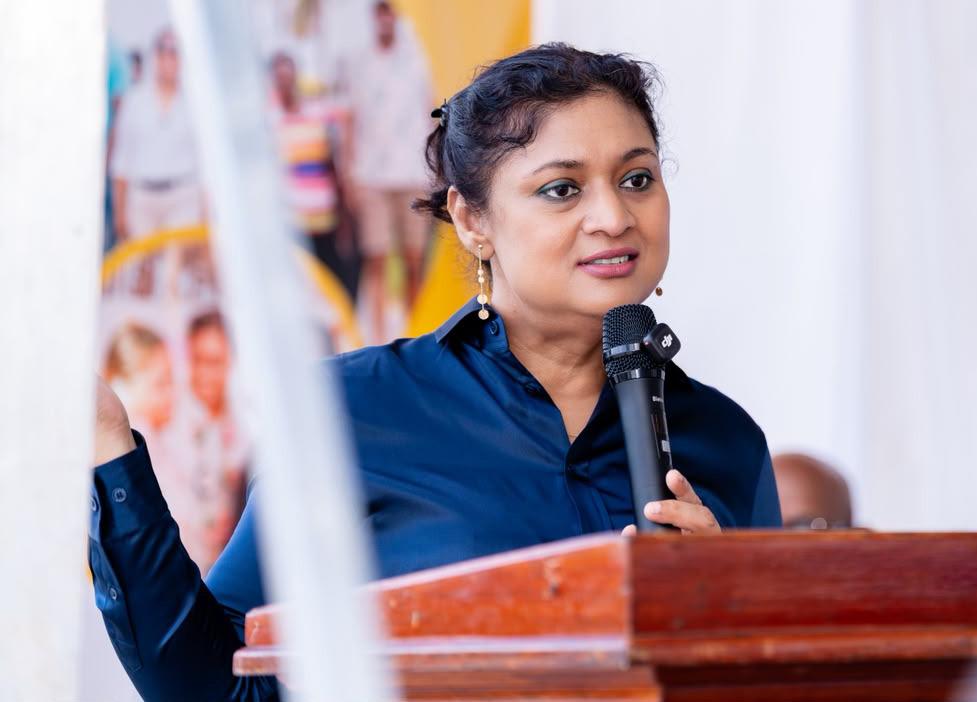
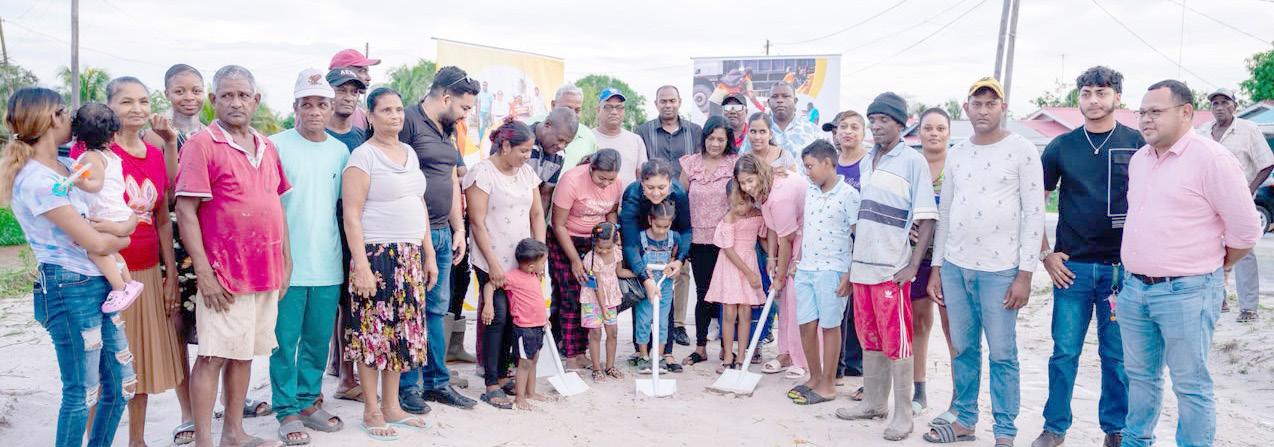
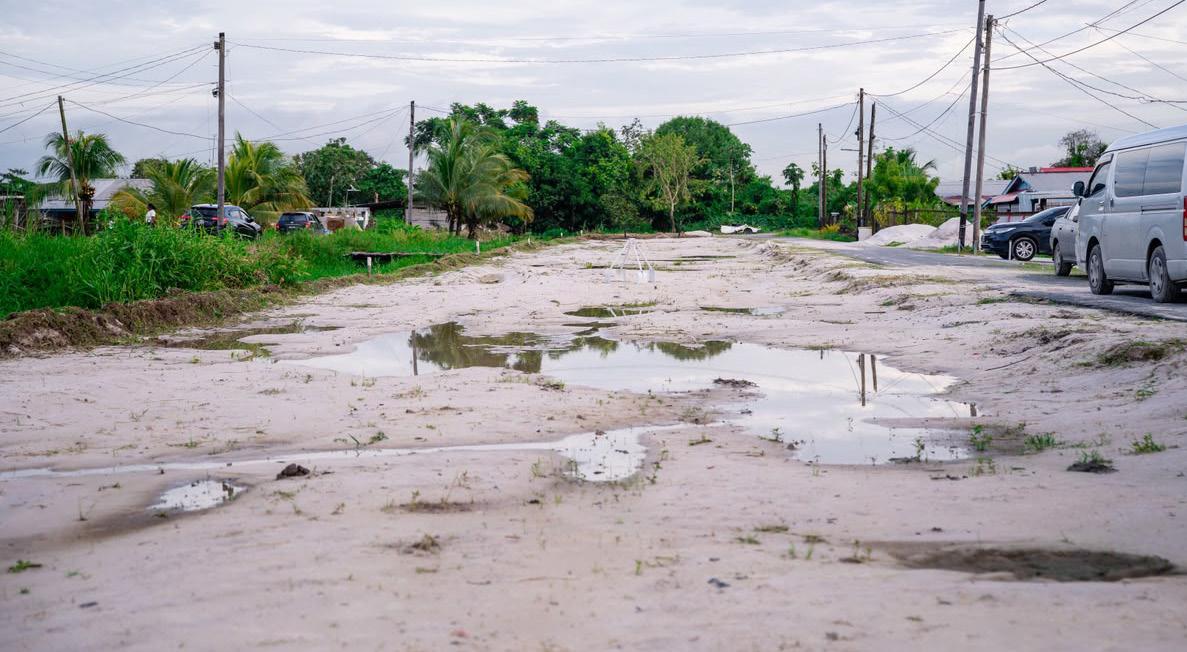
RESIDENTS of Skull City and Area L, Patentia, Region Three, are set to benefit from their first recreational park following the official sod-turning ceremony conducted by the Ministry of Local Government and Regional Development on Friday.
The project also marks the commencement of the first recreational park to be developed under Minister of Local Government and Regional Development, Priya Manickchand, who described it as “the first of scores” planned for communities across Guyana. Minister Manickchand, while speaking at the ceremony, said the investment demonstrates the Government’s commitment to building stronger communities by
creating public spaces that promote healthier lifestyles, social interaction and community pride.
“Our belief is that community development extends beyond roads, bridges and buildings,” the minister said, noting that thoughtfully designed recreational spaces contribute not only to physical health but also to mental
well-being and stronger social cohesion.
She emphasised that the significance of the park goes beyond recreation, explaining that it will become a place where residents gather, build relationships and create lasting memories.
“There will be a day when you’ll be able to sit in this park and ‘gyaff’ about

long ago, discuss the happenings of the present, make important decisions through conversation and learn about one another,” Minister Manickchand told residents.
She added that the value of such public spaces increases over time as they become woven into the history and identity of a community.
According to the minister, investments of this nature are central to national development.
“These spaces help us to develop stronger families, communities and a nation,” she said.
Linking the initiative to Guyana’s wider development agenda, Minister Manickchand noted that while the country continues to modernise through major infrastructural projects, equal attention is being given to improving the daily lives of citizens and building what she described as “a people-centred country.”
She urged residents to take ownership of the facility and work collectively to preserve it for future generations.
“You will always have the distinction of being the first,” she told the gathering, adding that the park would serve as a lasting symbol of the community’s development.
Chairman of the Uitvlugt/Patentia Neighbourhood Democratic Council, Mark Khan, welcomed the initiative, describing it as an-
other example of the Government’s continued investment in communities.
“This is our park. We’re going to care for it, we’re going to beautify it, and we’re going to make sure everyone has a part in it,” Khan said.
Project Manager responsible for Parks, Recreation and Public Spaces, Saeed Zameen, underscored the broader purpose of recreational facilities.
“At the Ministry, we recognise that parks are much more than open spaces. They are places where children can play safely, where families can gather, where young people can engage in healthy recreation, and where communities can come together to build stronger social connections,” Zameen said.
Concluding her address, Minister Manickchand called on residents to work alongside the Government to ensure the park remains a source of pride for the community.
“Partner with us as we do this. We need each other,” she said.
The recreational park forms part of the Ministry of Local Government and Regional Development’s ongoing programme to expand community infrastructure that promotes healthier living, strengthens neighbourhood ties and creates safe, welcoming public spaces for citizens across Guyana.
H EALTH, Safety and Environmental Manager at the Central Housing and Planning Authority (CH&PA), Sunil Gopaul, has underscored the urgent need to strengthen occupational safety and health standards across Guyana’s construction sector, warning that safety culture, training and worker awareness remain the industry’s greatest weaknesses.
Delivering a presentation titled “Building a Safe Guyana: Strengthening Occupational Safety and Health Performance in Infrastructure Construction” during the second day of the International Building Expo, Gopaul outlined the measures needed to improve safety performance as Guyana continues its rapid housing and infrastructural expansion.
He explained that the CH&PA oversees an extensive portfolio of housing and infrastructure projects, making occupational safety and health a critical component of every development undertaken by the agency.
According to Gopaul, one of the most important factors in achieving high safety standards is the commitment of senior leadership.
Gopaul expressed that when top management understands the importance of occupational safety and health, it can go a long way in improving overall performance.
According to the manager, one of the early initiatives undertaken by the CH&PA was the development of an Environmental and Social Management System under an Inter-American Development Bank (IDB) programme.
As a result, he said, there has been a cultural shift in Guyana, with contractors moving from paying little attention to occupational safety and health to now setting aside funds to ensure workers have the necessary personal protective equipment (PPE).
He defined occupational safety and health as a multidisciplinary field that focuses on preventing work-related illnesses, deaths and injuries.

It also aims to safeguard the mental, physical and social well-being of persons who work in these environments.
“Before we can actually talk about occupational safety and health performance, we really need to understand, from a global perspective as well as a national perspective, what this sector really, really needs,” Go-

accounting for around seven per cent of total employment worldwide.”
Gopaul said the construction sector is responsible for 23 per cent of air pollution, 50 per cent of climate change impacts, 40 per cent of drinking water pollution and 50 per cent of landfill waste.
He said the CH&PA conducted a study to reevaluate infrastructural projects under the agency.
The findings from the study were used to identify strengths, weaknesses and opportunities for improvement in order to enhance the agency’s performance within the construction sector.
paul said.
He added: “Let’s look at the construction industry from a global perspective. Economically, it is among the most significant industries in terms of its contribution to GDP in most countries, accounting for about 30 to 50 per cent. From a social perspective, it is the largest industrial employer in many of those countries,
“We looked at four different things: the procedures, the regulations, the policies and the accident prevention methods. We looked at the inadequacy of the health and safety measures on these construction sites. We examined the roles and responsibilities of both employers and employees, and we looked at recommendations to improve performance,” he said.
Gopaul said the key
message from the study is that the greatest deficiencies are related to safety culture, training and worker awareness.
He noted that there are many recommendations that need to be taken into consideration, including the need for proper planning, risk management and regulatory compliance.
“Ensuring that environmental and social assessment studies are conducted and occupational safety and health (OSH) plans are implemented, among others. We also need to ensure there is continuous monitoring and improvement. You need to monitor trends in occupational accidents and incidents. You need to conduct regular OSH audits to determine whether your system is performing as it should. You need to establish systems for tracking and closing corrective actions and improve PPE and emergency equipment.
This will result in reduced workplace accidents, improved compliance and safer project execution,” Gopaul remarked.

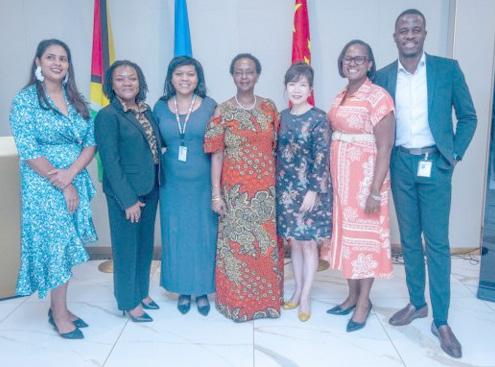
YOUNG women were motivated to continue striving towards their career in diplomacy as they attended a TED-style discussion in honour of International Day of Women in Diplomacy.
It was hosted by the United Nations, the Ministry of Foreign Affairs and Inter -

national Cooperation, along with the Embassy of China, on Friday.
At the Royal International Hotel, fourth-year International Relations student Mya Kendall said hearing directly from experienced diplomats gave life to the concepts she has been studying in the class-

room.
“I learned so many things from women who experience what I study and really put into practice what I work so hard to learn,” Kendall said.
Kendall further stated that the insight she gathered today, spanning from fashion to culture, was inspiring in


how they intertwine with diplomacy.
Similarly, for Keandrea Daniels, the discussions reinforced to her that women bring unique perspectives to international leadership and decision-making.
“It’s an empowering way for women to speak on global platforms,” Daniels said.
She said that one message that really stuck with her was that women can lead in different ways, and having women on global platforms means diversity and better decisions being made.
Meanwhile, Kiara Muridall said the forum reshaped her understanding of diplomacy, showing that it is ultimately about serving people.
“I learned that diplomacy is more than travelling to represent your country on a global stage. It is about building and protecting people and using empathy and the resilience of women to help build a better nation,” she said.
Delivering remarks on behalf of the Ministry of Foreign Affairs and International Cooperation, Ambassador and Director of the Frontiers Division, Donnette Streete, said the forum’s theme reflected the many roles women continue to play in advancing diplomacy.

She noted that Guyana proudly co-sponsored the United Nations resolution establishing the International Day of Women in Diplomacy and remains committed to promoting the full and meaningful participation of women in international decision-making.
Ambassador Streete also highlighted Guyana’s rich multicultural heritage, noting that the country’s diverse cultures are a powerful example of soft power in action.
Chinese Ambassador to Guyana, Yang Yang, underscored the importance of cultural exchange in strengthening international co-operation.
She said diplomacy extends beyond formal negotiations, with women helping to build trust through understanding, dialogue and people-to-people connections.
United Nations Resident Coordinator, Jean Njeri Kamau, echoed that message. The
UN coordinator described diplomacy as fundamentally about people, relationships and listening across differences.
She encouraged young women to pursue leadership roles in diplomacy. She noted that their voices, experiences and ideas are essential to building a more inclusive and peaceful world.
The forum provided participants with an opportunity to engage directly with experienced women diplomats while exploring how culture, soft power and inclusive leadership continue to shape modern diplomacy. [DPI]
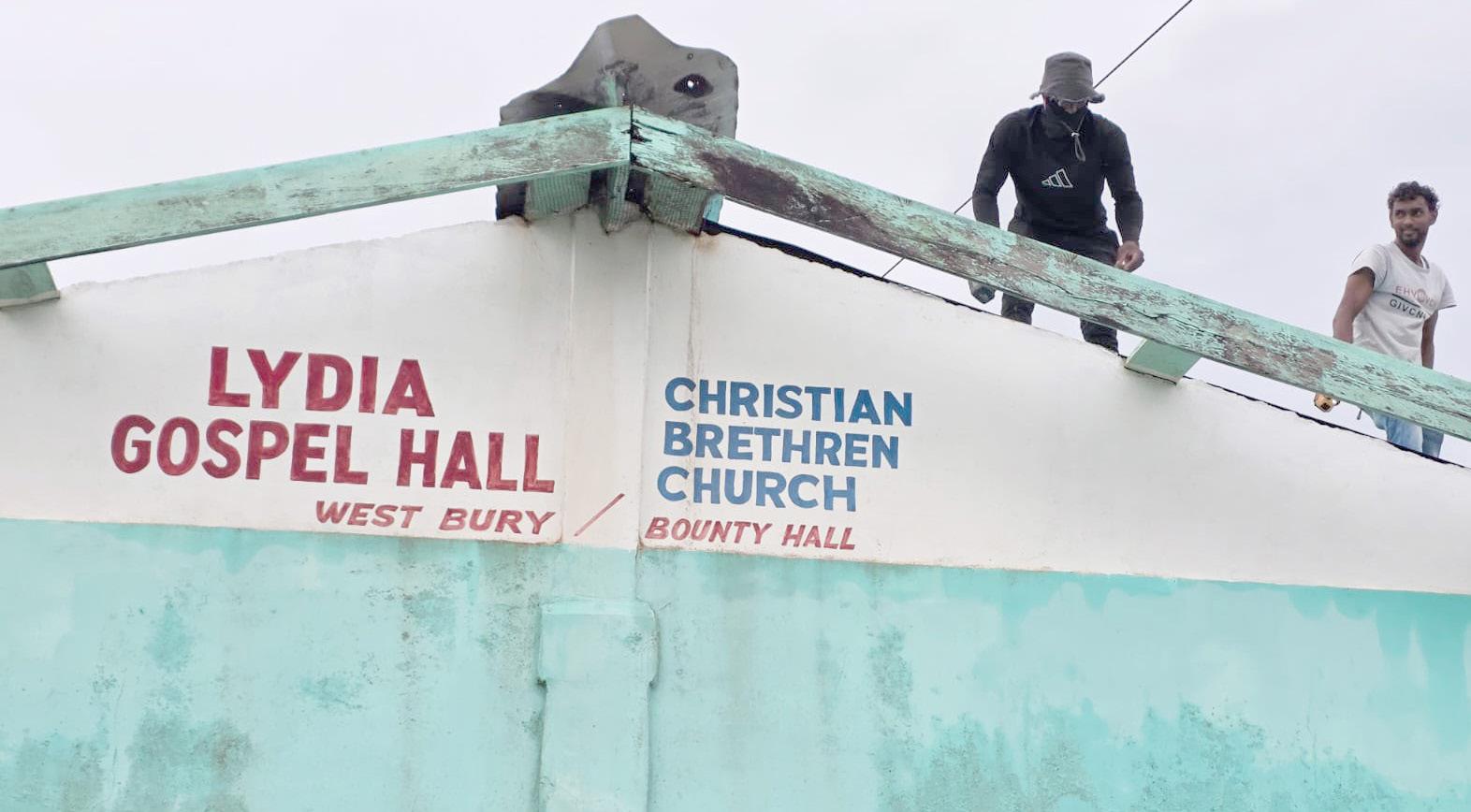
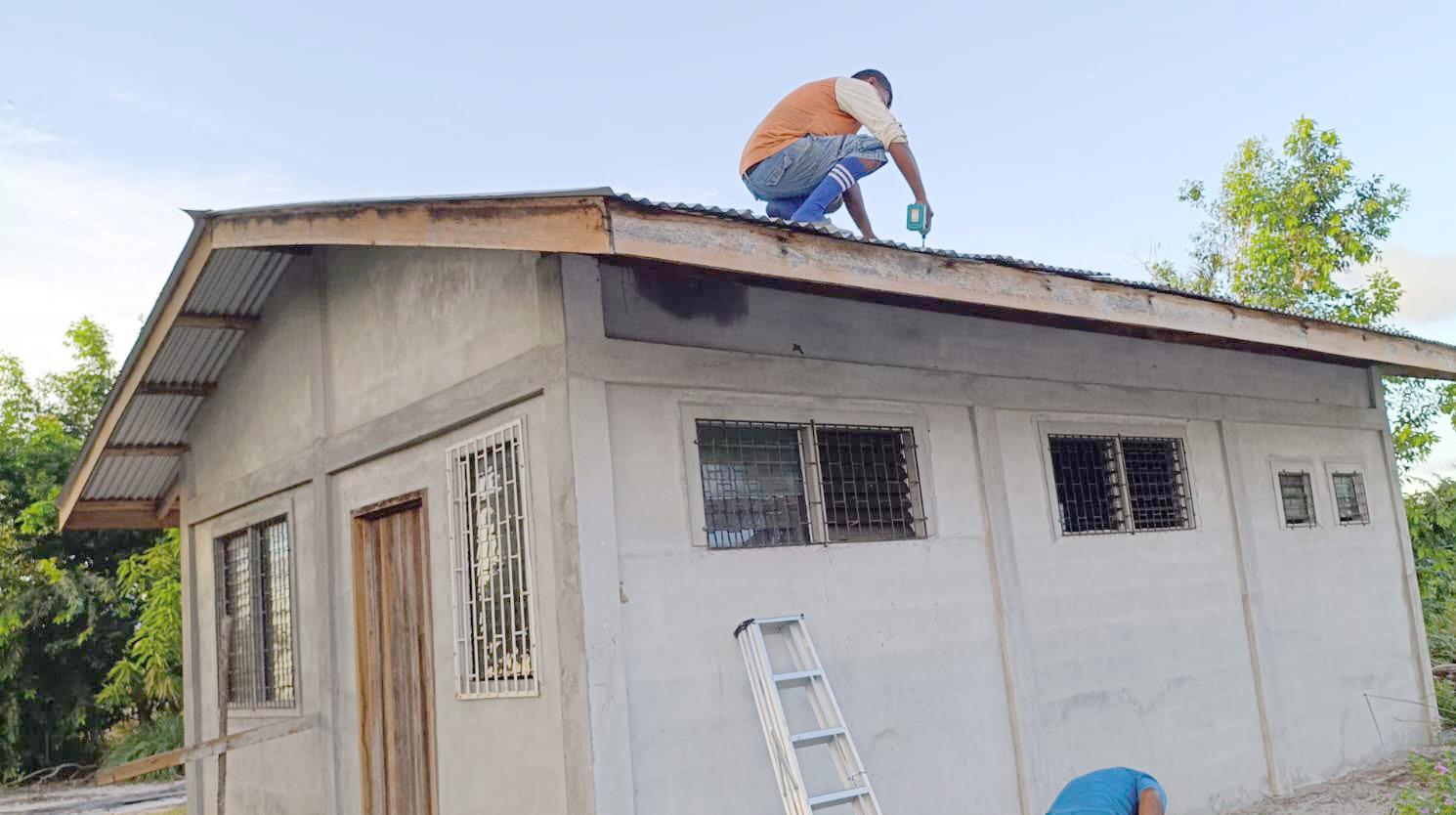
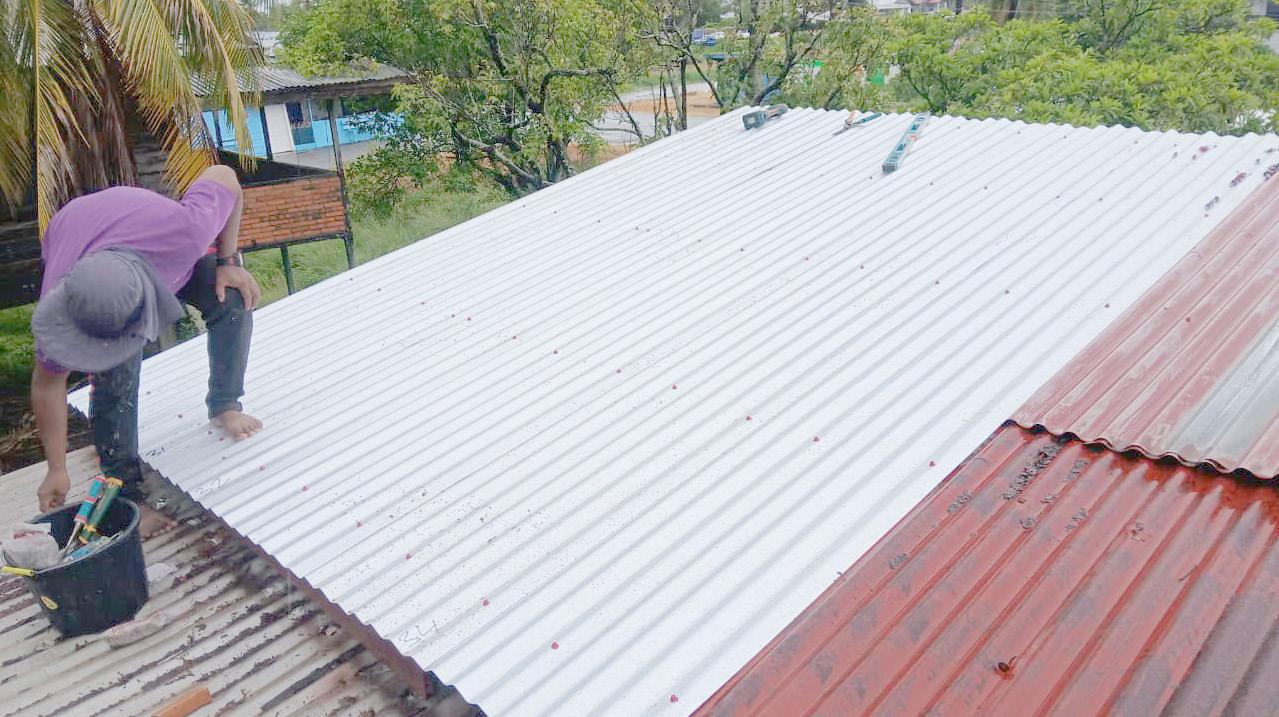
MORE than 130 households across Region Two have already benefitted from an extensive government-led relief and recovery initiative following a freak storm that caused unprecedented damage not previously recorded in the region, leaving roofs torn off and utility poles and trees uprooted across several communities.
In addition to residential properties, several public spaces and government buildings sustained damage from the powerful winds.
Among the structures affected were the Anna Regina Fire Station, the Department of Education building, and the Anna Regina Library. A section of the roof of the yet-to-be-commissioned new Anna Regina Stadium was also ripped off during the severe weather event.
Within hours of the incident, President Dr. Irfaan Ali travelled personally to Region Two, leading a se -
nior inter-agency government team to assess the damage, engage with affected residents and mobilise an immediate response.
Following the President’s visit, a regional task force was established to coordinate relief operations under the leadership of Minister within the Ministry of Public Works, Madanlall Ramraj.
The task force brought together representatives from the Guyana Defence Force (GDF), the Civil Defence Commission (CDC), the Ministry of Local Government and Regional Development, the Regional Democratic Council (RDC), the Guyana Police Force (GPF), Essequibo Civil Society, and several other key stakeholders. Relief efforts commenced on Wednesday, immediately following the President’s visit, and continued into the weekend with some emergency teams working well into the evenings to ensure that af -
fected families could return to safe and secure homes in the shortest possible time.
The operation encompassed damage assessments, the distribution of roofing materials and the completion of emergency roof repairs across several communities.
Speaking on the impact of the initiative, Minister Ramraj underscored the government’s steadfast commitment to the people of the Essequibo Coast.
“His Excellency President Dr. Irfaan Ali made it clear from the very beginning that every affected family must receive the support they need. That clear vision has guided every decision we have made over the past few days. We have worked around the clock because our priority has always been the people, and we will continue until every affected household receives the assistance it deserves,” the minister said.
Minister Ramraj add -
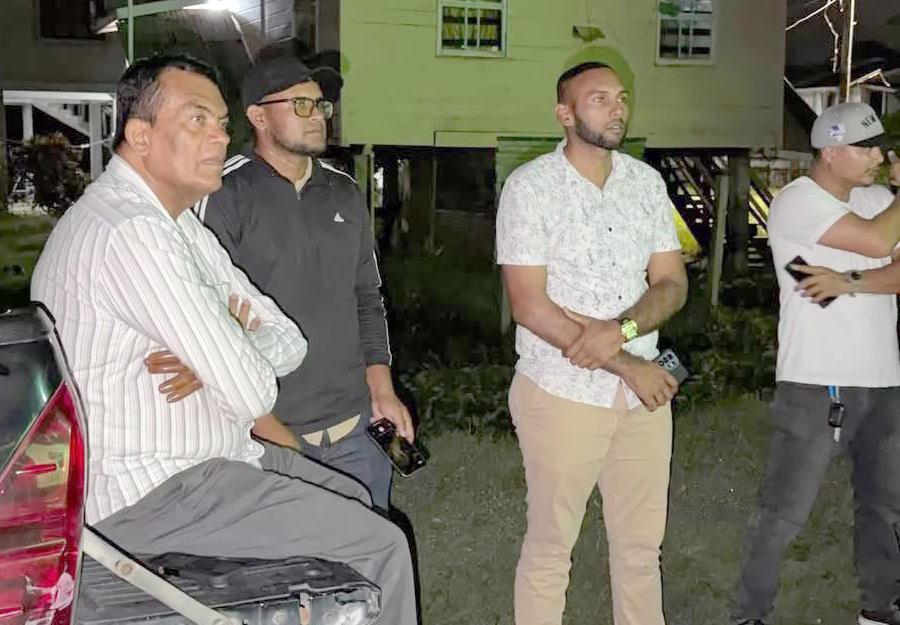
Following the President’s visit, a regional task force was established to coordinate relief operations under the leadership of Minister within the Ministry of Public Works, Madanlall Ramraj
ed that direct engagement with residents on the ground shaped the strategic direction of the relief effort.
“Being on the ground and hearing directly from residents allowed us to make the best decisions possible to assist those affected. We spoke to elderly persons, single mothers and even persons with disabilities and were able to make strategic decisions on prioritising resource distribution.
“Family after family has shared how much this response has meant to them. For many, it was the difference between spending another night under a damaged roof and sleeping safely in their homes. That is the impact we set out to make, and it is exactly what
this government is committed to delivering,” he added.
The operation drew on a broad coalition of support, including Regional Chairman Devin Mohan, Regional Vice Chairman Humace Oodit, the Prime Minister’s Regional Representative Arnold Adams, ranks of the GDF’s Infantry Battalion and 4 Engineer Battalion, Guyana Police Force recruits, regional officials, community volunteers and several businesses across the Essequibo Coast.
Regional Chairman Devin Mohan commended all parties involved, highlighting the critical role played by the private sector.
“This response is a clear demonstration of strong coordination and government’s
commitment to its people. We are grateful to all agencies, volunteers and partners and I especially want to thank the 12 private contractors who volunteered their services and crews to support the relief efforts. Their contribution has been invaluable in reaching affected households in such a short space of time,” Chairman Mohan said.
As recovery works press forward, the government has reaffirmed its commitment to ensuring that every affected resident in Region Two receives the necessary support, while full restoration of homes, public infrastructure and essential services across the Essequibo Coast continues in the days ahead.
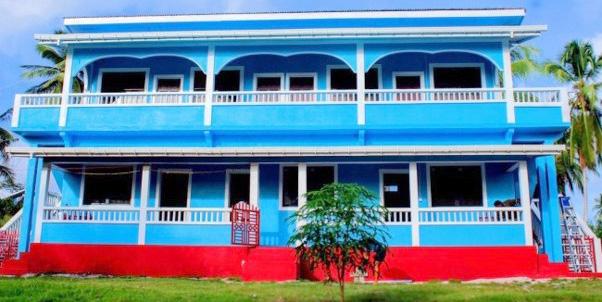

A $37 million investment in a modern guest house is creating new opportunities for tourism and community development in Waramuri Village in the Moruca sub district, Region One, with the project expected to generate revenue and strengthen the village’s long-term growth.
The guest house was financed through a capital grant from the Ministry of Amerindian Affairs (MOAA) and completed using funding from the Low-Carbon Development Strategy (LCDS), making it one of the village’s most significant development projects.
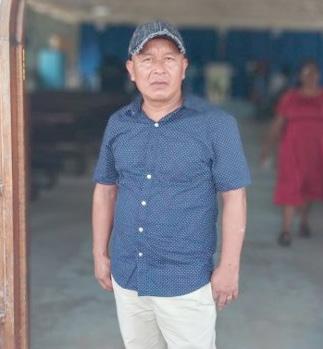
During an interview with the Department of Public Information (DPI) on Saturday, Toshao Vivan Edwards described the facility as a major milestone for the community.
“This is one of the greatest achievements for our community. We never had a guest house before, and now we can accommodate visitors and generate revenue for our village,” Toshao Edwards said.
The guest house was constructed by skilled workers from within the village, showcasing the community’s capacity to successfully deliver major infrastructure projects.
According to the Toshao, while the guest house may not provide direct employ-
ment on a consistent basis due to the current number of visitors, the revenue generated will support village development, emergency assistance for residents, and the maintenance of the facility.
A committee of four Community Service Officers oversees the management and upkeep of the guest house, with additional CSOs assisting whenever necessary.
The fully equipped facility includes a modern kitchen that guests may use for an additional fee, providing added convenience for visitors while creating another source of income for the village.
Toshao Edwards said residents are proud of the completed project, noting that many returning community members have expressed admiration for the quality of the facility.
He also expressed gratitude to the government of Guyana for making the project possible through the LCDS programme and encouraged other Amerindian communities to carefully plan projects that will deliver lasting benefits.
“We are grateful to be among the beneficiaries of the LCDS programme. With careful planning and community support, villages can undertake projects that bring lasting benefits to their people,” the Toshao stated. [DPI]
AS the Government continues to expand free skills training, residents of Sophia and surrounding communities are gaining practical knowledge through the Board of Industrial Training (BIT) electrical installation programme.
A father-son duo hailing from Sophia took advantage of this life-changing opportunity.
The electrical installation
pects of everything….and the fun part is that we get to do this together,” he said.
The father further explained that the training helped him recognise the importance of proper methods and safety when carrying out electrical work.
“You thought you were the do-it-at-home guy and whatever you did was the correct way, but when you came here you get a whole
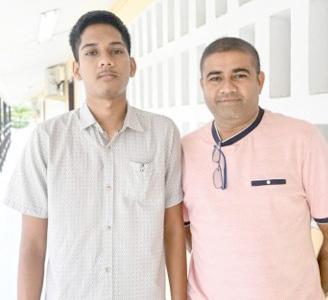
programme offered by the Board of Industrial Training (BIT) at the Sophia Training Centre, saw 15 persons being equipped with a new technical skill.
For Devendranath Jawahir this opportunity has been a bonding experience, allowing them to learn at their pace. The training itself has provided an opportunity to improve their knowledge and better understand proper electrical installation.
“So far participating in the programme has been a good experience. You learn new things, meet different people and get different as-
different idea. You realise what you were doing wrong and how you can operate on a better level,” the father said.
He said that he had encouraged his son to join after learning about training programme at a job fair and exhibition early this year.
“I told him he was near to finishing school and I didn’t want him to be at home just playing video games and wasting his time. I wanted him to do something with his life,” Jawahir added.
His son Rahul said the experience has been beneficial. “It has been very
educational and fun…This is a stepping stone. When I finish the course, I will seek employment,” he said.
Police Officer Joel Newton shared that he chose the programme after previously completing another BIT course in heavy-duty machinery operation.
programme, described the training as a life-changing experience.
“My experience is life-changing. I am learning a lot and growing. The programme is very practical and hands-on,” she said, stating that, “This is to help me get the practical knowledge. If I am dealing with something that has to do with electrical installation, I know exactly what I am looking for and what I have to do,” she said.
learn about electrical and moving forward from there. I plan to start my own business after the electrician course,” she said.
themselves and their communities.
Eighteen-year-old Mumtaz Hatton said the programme has introduced him to a new area of learning. “It has been very informative because I never really did electrical work before. It is a great learning system,” Hatton said.
He said the training

“I think that nothing is too much for oneself when it comes to skills. I am grateful for the opportunity and it has impacted me a lot,” Newton said. He explained that the training has helped him gain confidence in handling simple electrical tasks.
“I had a point at my home that was broken for about a year. Because of coming here and getting the opportunity to learn, I was able to change it…If I am able to give a helping hand to any neighbour or friend, I will do the same. In the future, I might be able to get my own job or go directly into the electrical field,” he said.
Participant Cadene Reid-Nelson, one of the two females who enrolled in the
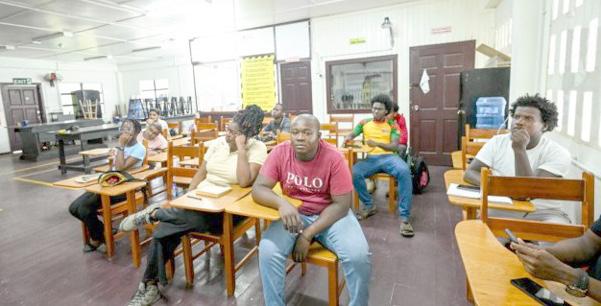

Meanwhile, other participants, Marvin Layne and Jaunetta Walters, also highlighted the importance of gaining skills that can support their future goals.
Layne shared that the training has allowed him to become more independent.
“Before the training, to get certain electrical jobs done within the home you had to pay someone. But now that you have the knowledge, you can actually do it yourself,” he said.
Additionally, Walters said she hopes to use the skills gained to support her entrepreneurial plans.
“I have intentions to

has encouraged him to continue advancing his skills. “After this, I would like to go to Government Technical Institute (GTI) so I can further my studies and get my licence for contracting,” he said.
Hatton also encouraged other young people to take advantage of available training opportunities. “Get into training. Take advantage of these opportunities,” he urged.
BIT Training Officer, Joshua Burnette, later shared that programmes like these are helping participants develop skills that can benefit
“Training like this for young people is very good because they can do things at home. They can look after an outlet, a switch, put up lights and even assist their neighbours,” Burnette said, explaining that, “It helps the young people get an opportunity to learn a skill and better their lives. It gets them occupied and doing something productive,” he said.

Moreover, Burnette explained that many participants go on to further their studies, gain employment or pursue additional training after completing BIT programmes.
“Some students move on to GTI where they further their studies, some get employment and some come out to do more programmes,” he noted.
The BIT electrical installation programme continues to equip residents with practical skills aimed at improving employment opportunities and encouraging entrepreneurship. [DPI]
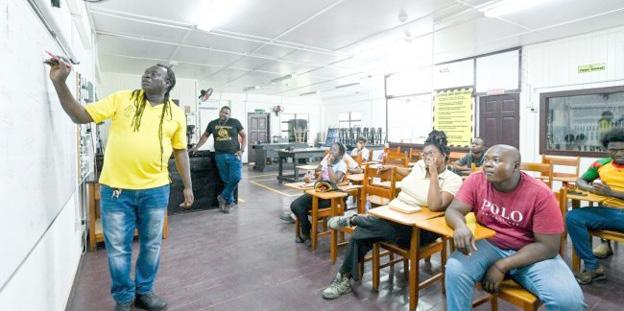
By Shaniya Harding
GUYANA’S creativity continues to reach new heights and larger stages, most recently with the growing success of the Origins Guyana Fashion Festival. What began just a year ago as an initiative by the Government of Guyana has returned in 2026 with new themes, greater participation and overwhelming anticipation ahead of the event, which will be held from July 3–5 at the Railway Courtyard.
Now in its second year,
theme, ‘A Diamond Legacy: Fashioning 60 Years’, each of the three nights carries its own distinct theme, aimed at highlighting Guyana’s creative history, current expansion and future trajectory.
As Ferguson noted, “Day one is Golden Threads of Time. That night is a beautiful mix of diasporan, experienced and emerging designers all coming together on one stage.”
She added, “Day 2 is Ancestral Threads. Again, we are bringing together diaspora and emerging designers, and every night we really try
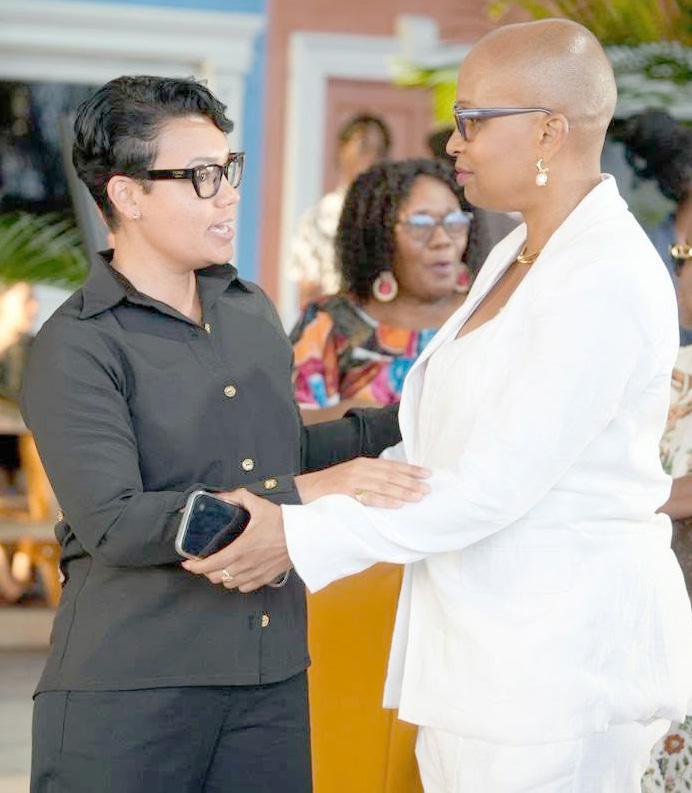
the festival aims to pay homage to Guyana’s creative history under the theme, ‘A Diamond Legacy: Fashioning 60 Years’ , backed by the energy of 31 designers from both Guyana and the diaspora, and more than 80 models ready to showcase the country’s creativity and unique fashion flair to the world.
In a recent interview with the Guyana Chronicle, Secretariat Director Lourdeth Ferguson said the event has grown considerably over the past year, with more designers and models participating, greater public interest, and a clear message being sent that Guyanese creativity is very much on the rise.
While the event is being celebrated under the broad
can be proud of.”
This year’s event is also seeing strong participation from designers and models alike. Each night will feature approximately 10 designers, with the line up drawing from both Guyana and the diaspora, a mix Ferguson described as bringing something unique and valuable to the stage.
“This year we have 31 designers in all, so every night we have approximately 10 designers showcasing their work. Of that 31, we have nine designers coming in from the diaspora, and
tion for Origins has absolutely grown. I mean, we only started last year, but this year the response has been nothing short of phenomenal. It has really been something to witness,” she said.
Public interest has translated directly into ticket demand, with Ferguson revealing that seats were nearly gone a week before opening night.
“Tickets are available online and they are free, but one has to register, just as we did last year. Registration is being done through a Potsalt link, and as of last week
istered before it’s too late.”
By supporting creatives and strengthening Guyana’s creative community, Origins is giving local talent a platform to showcase their work at the highest level.
Ferguson noted that the festival has brought significant attention to Guyana’s fashion landscape.
“Origins brings immense attention to Guyana on so many levels. It sends a message to Guyanese people that, first and foremost, the government is paying attention, the government is genuinely concerned about
visibility and opportunities.
As Ferguson stated, “Origins sends a message to the creatives themselves: that we have to step up our game, take stock, and truly take advantage of the opportunities that are being laid before us.”
Origins’ ambitions and impact stretch well beyond Guyana’s borders. Through government support, creative involvement and the development of the orange economy, Origins is positioning Guyanese creativity on the international stage.
As Ferguson put it,
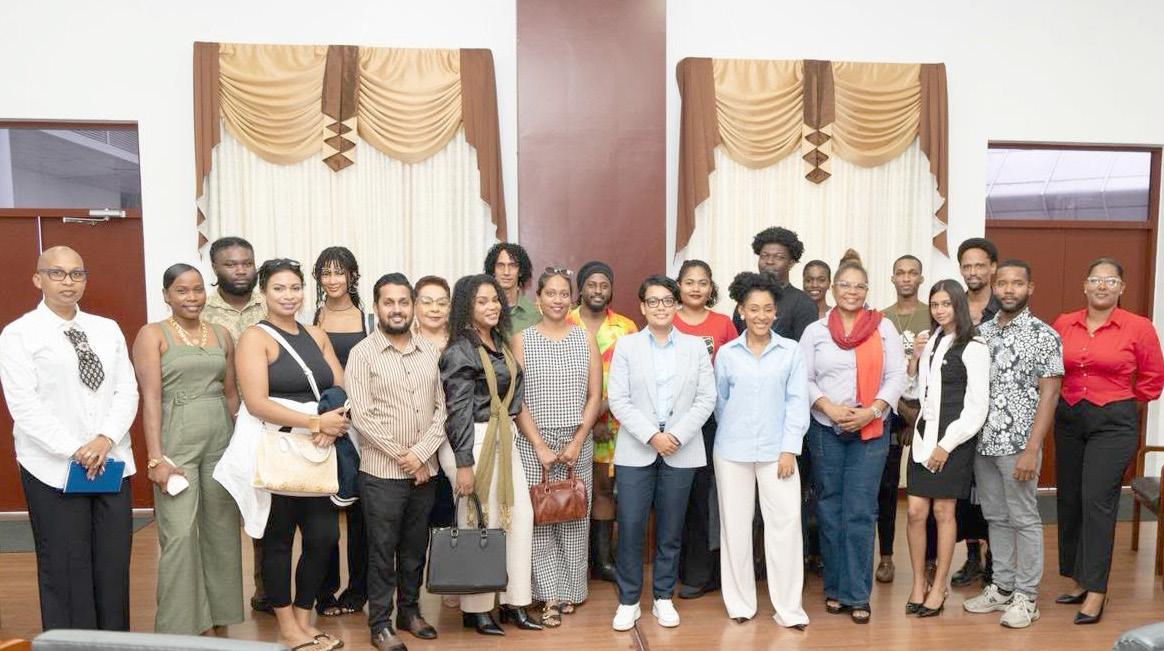
to create a different feel, a different energy, so the audience experiences something fresh each time they walk through those doors.”
The closing night is expected to be particularly compelling. Celebrated under the banner of fashion and innovation, it gives Guyana’s creatives the opportunity to think outside the box and move beyond conventional ideas to create something truly captivating.
As Ferguson explained, “Day three is Fashion Meets Innovation, which is all about threads, fashion, and innovation. That one is more futuristic in its approach. It gives designers the space to push past the norm, to really reach, and to put something on that runway that the world
they are here to support and complement what our local designers are doing,” she said.
Beyond the designers, interest among Guyana’s models has been equally significant. While 85 models will grace the stage in July, Ferguson noted that more than 400 people participated in casting calls held earlier this year.
As she explained, “In terms of models, we have 85 on board, which is incredible when you consider that number came out of a casting call that drew over 400 responses. The interest has been extraordinary.”
That enthusiasm extends to the general public as well. Ferguson noted that interest in the event has grown significantly since its announcement earlier this year.
“The response and attrac-
there were only about 18 tickets remaining,” she said.
She added, “The tickets are truly being swallowed up. We encourage anyone who wants to be there to move quickly and get reg-
creatives and is actively investing in them,” she said.
The festival also works to raise the standard of Guyana’s creative industry, pushing designers to compete on a larger stage with greater
“Beyond our borders, Origins sends a message to the Caribbean and to the world, a very clear message that says, watch out, because Guyana is coming up.”

BEFORE the runway lights come on, before the music swells and models glide across the stage, there are the designers cutting, stitching, and pouring every fragment of their personal histories into fabric.
The Origins Fashion Show, set to take place July 3–5, 2026, is by every account of the people behind it, a declaration that Guyana has a creative voice, and it is ready to be heard.
The Origins Series, hosted by Arian Richmond, sat down with the designers preparing to take the stage.
Their stories are as varied as the collections they are building: a child sewing out of necessity, a woman who discovered clay jewelry during a pandemic, a young man who built his entire identity around the question of how to live creatively.
But woven through every conversation is a single, unmistakable thread: a fierce pride in where they come from, and a determination to show the rest of the world what Guyana looks like when it dresses itself.
With Origins just days away, here is what they had to say:
Natalya Thomas started out drawing silhouettes of dolls and outfits on the back step of her home. Her mother eventually noticed and told her daughter she needed to get her into fashion.
Natalya's mother then spoke with her aunt, who was already a designer and an artist. According to Thomas, when her aunt saw that she had the "passion for fashion", she began

to mentor her.
According to Thomas, the hard-working women who do not necessarily have the time to "look the part" have been a central inspiration for her work. She explained that these women carry enormous responsibilities — caring for their families, maintaining careers, and sometimes functioning as both parents.
"I'm inspired to help those women fit in directly with looking their best, even though they have a lot on their shoulders," Thomas said.
Thomas also spoke candidly about a challenge that has long affected designers from the region: a lack of respect for the craft.
"I think that because of that, we undervalue ourselves, and we're afraid to call our prices. We're afraid to showcase in a big way, because we don't have that kind of support. Well, right now we're getting the support from the government, which I really applaud. But, of course, at the time when I started designing with my aunt, the support wasn't there as it should have been. So a lot of designers would have given up at that point, and now that the
support is here, we're reinventing ourselves," she remarked.
Thomas said she wants the audience at Origins to understand what she and her fellow designers stand for.
"We are all about bringing the world to Guyana, because we will be taking our designs, our collections, overseas to definitely demonstrate Guyana's beauty, flora, and fauna. You name it — we're about promoting Guyana."
KIM BOODAN
For Kim Boodan, the path into design was anything but conventional.
After COVID-19 hit, she quit her job to stay home. Her starting point came after she saw someone make handmade clay jewelry online.
"I tried it, and from the very first attempt it was a success, and I still have that piece up
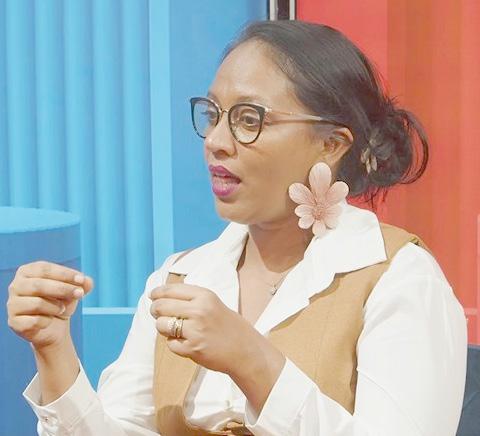
to now," she said.
In her role as a creative, Boodan said she is showing women that she believes they are capable of anything. For this year's Origins, she drew her inspiration from growing up on the Essequibo coast.
"I grew up around a lot of nature — flowers, especially. So you'll see me doing a lot of flowers for this collection. When I was a little girl, people used to come to me to make garlands with fresh flowers for their religious functions, so it comes from that. I've dealt with so many different types of flowers, and I've gathered that love for them. Basically, that's my inspiration," Boodan stated.
She added that from her collection, she wants people to remember the story — and to feel it — when they shop the items showcased on the runway.
LYDIA HINDS
Emerging fashion designer Lydia Hinds

described Origins as an amazing opportunity — not only to showcase her craft and talents, but to reach the right audience, gain more clients, and earn regional and international recognition.
Lydia shared that what keeps her grounded and true to herself is her commitment to originality and her distinct creative standpoint, among many other factors.
Reflecting on her beginnings, the designer said her journey started years ago while she was still in secondary school.
"I would scribble at the back of my exercise book, I would draw sketches, and the girls of the different races — that's where it started. And then I figured I should make this a career. I went to Carnegie, studied garment making for a year, then we had a work attachment where they would put us in an environment to learn, and that's where it started," Hinds said.
Lydia shared that her collection was inspired by Guyana, focusing specifically on the country's journey from slavery to an independent nation.
ANDREA BRAITHWAITE
A well-recognised name in local fashion, Ms. Braithwaite said she is looking forward to the show this year — particularly to promote her designs and receive feedback from the audience.
Braithwaite said that what she is bringing to the stage in July is simply a further extension of what she has been producing over the last 35 years.
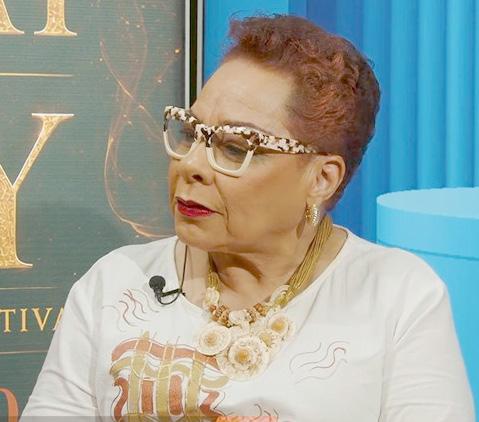
Origins, she noted, is more than a fashion show. It is a learning experience for the designers participating this year, offering them a broader understanding of the industry.
"So it's an opportunity for me to once again showcase what I have to offer, and so most people can understand what the word means — timeless treasures. Any time they can take it out of their wardrobe, wear it, and they'll have a host of admirers," Braithwaite said.
For Ms. Braithwaite, her journey into fashion came years later in life, after she had her children and other responsibilities.
"I had my family and friends initially. Your friends are sort of your first guinea pigs, and it evolved — one tells one, that kind of thing. So in this industry, you have to have determination, because there are so many setbacks that could easily make you say, 'No, I'm not going to bother with this.' But once you have that drive and you have the encouragement, you're going to make it," Braithwaite said.
She underscored that through her collection, she is trying to highlight Guy-
ana — particularly through the colours of the national flag, incorporated into her fashion.
From the age of 13, Faaziah Hackim has been at the sewing machine. Her father was a tailor, and her aunt and grandmother are seamstresses.
Growing up, she was surrounded by that

creativity.
At 13, she did not fully grasp what fashion was, but at 16, after graduating from high school, she decided to pursue a course in sewing. She met her mentor at Seduction by CIM, whose owner saw her potential and hired her to work alongside her.
Looking ahead to Origins 2026, Hackim said she has found the workshops hosted thus far to be invaluable.
"They've helped me so much, especially the one on fashion entrepreneurship. That one helped me so much, because when I'm sewing, I don't have a way to give myself a salary. When I went to that workshop, they were explaining how to do proper bookkeeping and all these kinds of things, and I was like, wow — I was missing out.
So I use that knowledge they gave me, I put it into my business, and it's working out fine," she said.
MAXI WILLIAMS
Maxi Williams will also be a part of Origins 2026. Williams said he started with a dream as a child, and that dream turned into ambition.
Maxi created his first motto as a child: Living Your Purpose, Making a Difference.
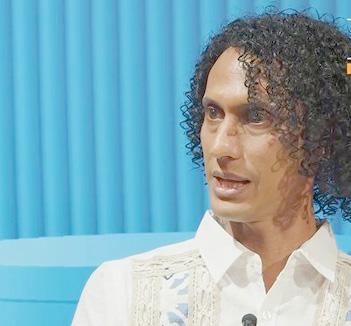
That motto remains with him today.
"I remember it came about because I grew up with my great aunt, and I was
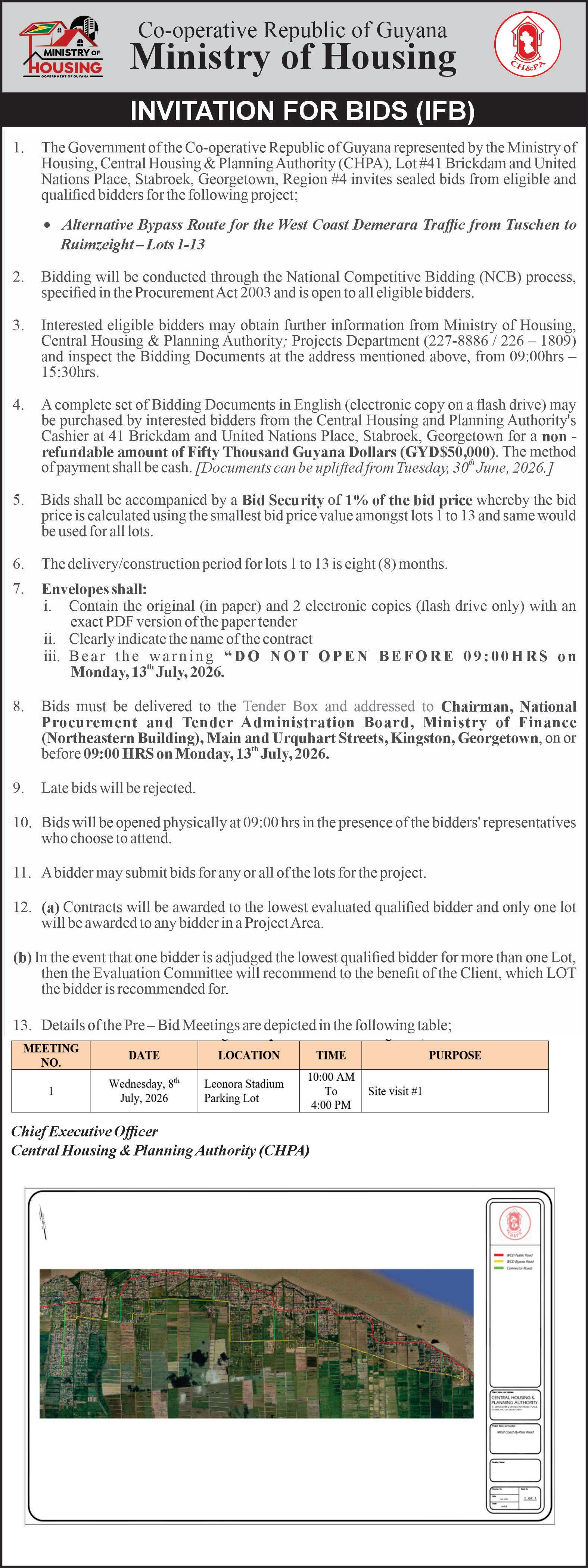
asking — when I have all these ideas and I'm drawing and sketching these things — I remember going into a museum and seeing how they made replicas of buildings, and I said, 'I can do things like that. I know how to get these pieces to make those pieces.' And that question came: how do I make a living being who I am, with these thoughts that I have?" he said.
"At the time, she probably wouldn't understand what the creative industry or someone at that level could do, but that's where the backbone of that slogan comes from. My motto — Living Your Purpose, Making a Difference — and for me, I believe I stay true to my ethnicity.
I believe I'm working to build national identity, and that is what you will see in my collection and my clothing. I'm not recognised as one ethnic group, but as a mix, because Guyana is a mix — a diversity of culture."
Growing up in poverty, Debbie Sammy began making her own clothes at the age of nine, after the hand-me-downs passed down from her sisters could no longer fit her.
What started as a necessity soon became a skill — and she began sewing for other people at that same young age.
Debbie related that she met and worked

for designer Derek Moore as a seamstress. While there, she said she often shared her opinions when asked. This led Moore to notice her talents, and he allowed her to work on projects alongside him.
She stated that he helped her become bolder and to "do whatever it is I want to do without questioning myself."
For Origins, Sammy plans to showcase Guyana through her timeless pieces. Each piece is expected to represent the beginning, the present, and the future.
Sharing a similar origin story, Ashanti Davis said she started sewing for her younger sister at the age of 11, making hand-stitched clothes cut from existing garments.
"I used to get in a lot of trouble for that. But we designed them. My uncle has a tailor shop, and I started going to train with him after my father saw the potential. From then, I just kept sewing right through secondary school. After secondary school I wanted to work, but I quickly realised I preferred to work for myself, and I navigated back to

sewing and started establishing myself as a fashion designer," Davis shared.
Davis has had the opportunity to work alongside local designer Keisha Edwards as her assistant, an experience that further ignited her creative drive.
For the Origins Fashion Show, Davis said her collection is inspired by the theme of slavery redemption.
"I decided to honour our slave freedom fighters in my collection. So my collection will feature a lot of linens and structure — a lot of blacks and browns," she explained.
For designer and artist Vibert Dummit, Origins 2026 represents his first time on what he called a "really global stage."
He said he is drawing on every workshop experience, which has been particularly helpful in terms of the business and entrepreneurial side of the craft.
Dummit shared that he draws inspiration from everyone around him and applies those lessons to both his business and his life.
Since joining Origins, he high -

lighted that one of the most important lessons he needed to learn was professionalism — including the importance of contracts, fine detailing, working with lawyers, collaboration, public speaking, and how to present oneself at industry events.
Vibert is bringing his bleach-art collection to the runway, working primarily with cotton. He revealed that a conversation with designer Keisha Edwards pushed him to expand his vision.
"She said, 'Why not take it to another level?' — meaning iconic dresses and more, combined with the bleach wear.
So that's basically something you all
will be wowed about.”
TRIANNA BARROW
Young fashion designer Trianna Barrow admitted that for Origins, there is more anxiety than excitement.
Asked what makes her nervous, Trianna
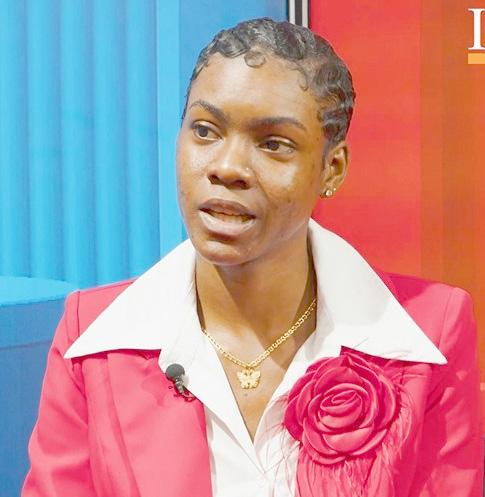
said: “The pieces. The finishing. That’s the most important part, according to what I learned in the Creative Edge workshop.” She took the opportunity to encourage other designers to seize similar opportunities.
“There are really, really good people there teaching. After I learn something, I apply it immediately.
I tell people — we learned a different way to press, or there’s a different way to do this — I take it and apply it immediately to everything in my work,” Barrow said.
MELICIA PARTAB AND HASHIM ALI (NACHLE DESIGNS)
The Nachle duo described the inaugural Origins festival as an extraordinary opportunity. Fashion, according to Ali, has served as a launchpad — doing more for

them than they ever imagined.
He called it an avenue of expression, a source of income, and an outlet for passion.
For them, it is also a connection to something deeper: keeping their traditions alive, especially when it comes to the merging of cultures.
“You can look forward to the same flair and the same neatness in the garments, but more so, you can look forward to the storyline and the story we’re telling this year,” Ali said.
“Our story is one of blooming, and you will see that in the pieces on the runway. It has a whole backstory, and there’s a deeper connection to Guyana — and a
little bit of a celebration of our sixtieth is embedded into our line this year,” Partab added.
JOSHUA AARON
A significant name in fashion, Joshua Aaron said he is not quite sure whether to feel scared or excited — because this is his very first fashion show.
He described the experience as both intimidating and thrilling. This year, Aaron is not only attending the show but participating in it.
“For somebody who is now stepping into

this arena, there was a lot of information I needed, and I’m glad I got the opportunity to receive it.
When it comes to brand identity — what I want people to see and be able to experience through my fashion and my creativity — that is important,” Aaron said.
Nelsion Nurse, another powerhouse in the local fashion industry, shared that this year’s collection is a bit different from last year’s — more playful, he said, and very much in line with what people have come to expect from him.

His focus has always been male fashion, and he is on a mission to push boundaries in that space.
“I’m trying to take a different approach to male fashion.
Most times, what’s on offer for men is just a regular shirt or pants. I’m trying to be a little more edgy when it comes to male fashion,” he said.

For Amanda Brown, crocheting is the backbone of her brand.
Brown grew up watching her grandmother sew and learned the foundations of the craft from that experience.
During a period when she was home on bed rest, she discovered crochet design online and was mesmerised by its detail. She equipped herself with a hook and yarn, turned to YouTube tutorials, and began building her skill.
Now a recognised name, Brown said that being part of the Origins Fashion Festival this year is a huge deal for her.
“I saw it last year and I thought, ‘I’m not ready.’ When it came around again, I said, ‘You know what, this is the opportunity — I’m taking it.’ This entire week I’ve been working on it, and I want to put out there that it wasn’t easy. The registration process required you to know what you were about — the proposals, coming up with your collection, getting everything in order,” she explained.
“Origins has helped me a lot. The workshops teach you — even if you’re a shy designer — how to be creative in building your brand and making it more engaging,” Brown said.
Looking at the theme for Origins, Brown shared that her collection will focus on roots, culture, heritage, resilience, and innovation.
“And in keeping with my brand — because my crochet is resort wear — we’re going to bring in all the culture, the resilience and innovation of Guyana, the whole journey, while keeping the vibrant style and elegance and luxury.”
Fashion was initially a medium for Isaiah Luther to express himself. Starting out as a model, Luther participated in several fash-

be — or even if you’re feeling low and just want a little boost, like when you put on a pair of jeans and you feel powerful, or a certain kind of boots. Fashion has always been a way for me to move through the world, and I am very much inspired by powerful women and people who know who they are,” Luther said. From his collection at Origins, Luther said audiences can expect representations of heritage, culture, and “amazing designs.”
Phelicia Adams is the face behind the Flawless Crochet brand.
“I started it as a business in 2019, and it’s so crazy — I honestly didn’t know that I would become a crochet designer. It came naturally to me in 2017. However, my mother did it a lot when she was pregnant with me, so when I discovered it in 2017, I was honestly shocked. I’ve grown a lot with my

brand, and I must say that I’m blessed to be here today to share more about it. I can’t wait for Origins, because it’s a statement for me,” Adams disclosed.
For her collection, Phelicia said audiences can expect pieces that are both unique and elegant.
Dexter Gardner said that growing up, he was always a creative child. It was only in early 2016 that he ventured seriously into designing, when he entered his first pageant.
“I designed my costume and my evening wear, and that night I won best evening wear. From then on, here I am — proud founder and visionary force behind Falcons Designs,” he said.
Describing his Origins collection in three words, Gardner said it is breathtaking, cultural, and — in his own phrase — “glitz and glamour.”
ion shows regionally and internationally.
While he is a new face to the design side of the industry, he is already making waves with his buckbead sustainable fashion.
“I find you can be anyone you want to
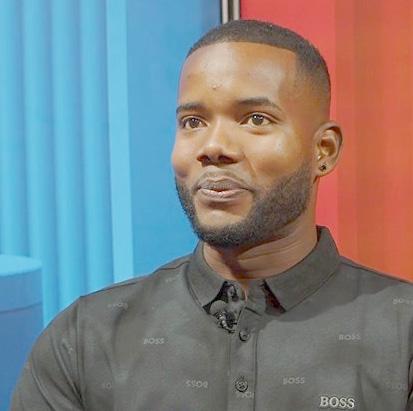
By Faith Greene
BARAMA Company Limited is positioning itself at the forefront of Guyana’s sustainable construction sector by embracing new building technologies, expanding local manufacturing and creating employment opportunities while supporting the country’s Low Carbon Development Strategy (LCDS).
Speaking during the International Building Expo, General Manager of Barama Company Limited, Mohindra Chan, said the future of infrastructure development must be centred on innovation, sustainability and smarter building solutions that create safer environments and improve quality of life.
“A strong foundation for a sustainable future means building with new technology and smart solutions,” Chan said, noting that this is the direction the construction
industry must take.
He explained that while Barama has been involved in plywood production and logging for the past 35 years, the company underwent a major transformation a decade ago by shifting its primary focus to manufacturing.
That transition, he said, has opened up new opportunities for Guyana while aligning the company with national development policies and environmental goals.
“One of the big buzzwords around for the last two decades plus is sustainable forest management, and of course, the Low Carbon Development Strategy. Many may ask, what’s the relevance of plywood manufacturing to this goal?” Chan said.
He noted that Guyana’s forests contain more than 1,000 species of tropical trees and that, despite the country being more than 80 per cent forested, only a
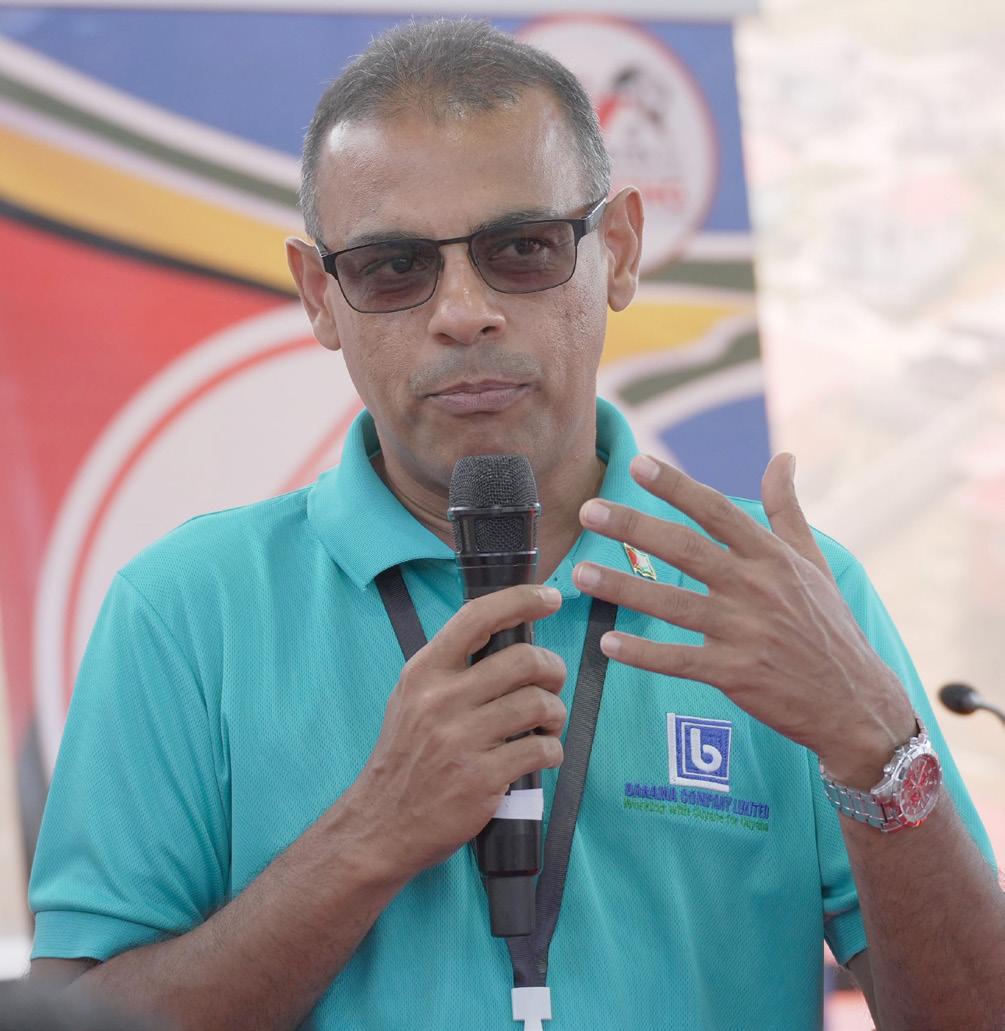
limited number of species are commercially utilised because many remain insufficiently studied.
Using Baromalli as an example, Chan explained
that the timber has traditionally been used mainly as form boards in construction, which are typically discarded after temporary use.
“Well, we’ve discovered
Baromalli. Traditionally, and even up to today, the only other use for Baromalli is form board. When you’re finished with the form board, what do you do with it?
You dispose of it. That is not sufficient value; that’s a disposable product that you utilise,” he said.
By manufacturing plywood from the species, Barama has created a higher-value product while making better use of Guyana’s forest resources.
Chan also highlighted the company’s sustainable harvesting practices, noting that only trees which have reached their maturity age of more than 60 years are harvested for timber.
He said responsible forest management remains critical to protecting Guyana’s environment while supporting the country’s Low Carbon Development Strategy.
Beyond environmental sustainability, Chan point-
ed to the company’s growing economic contribution through job creation.
According to him, Barama’s manufacturing operations now employ approximately 400 people directly, with women accounting for about half of the workforce.
“It’s a labour-intensive industry, but our process has allowed and created opportunities for at least 50 per cent women, and a lot of those women are single-parent women,” he said.
Chan added that every sheet of plywood purchased supports local employment while strengthening Guyana’s manufacturing sector through the purchase of locally sourced timber and other inputs.
He further noted that the company’s operations currently support communities in Regions One, Two, Six and Ten, with opportunities for future expansion into Regions Seven and Eight.
By Shaniya Harding
GUYANA’S seniors and their families now have a new avenue for care, relaxation and connection, with the launch of Senior Solutions Incorporated’s Day Retreat and Training Centre at Third Street Liliendaal, Greater Georgetown.
Beginning in 2024 as a home-based elderly care service headed by Co-founder and Chief Executive Officer Dr. Portia Dodson-Sami, the venture has developed into a broader mission of improving the quality of life of older adults through professional care, education and social engagement.
The launch of the new facility on Saturday marks another milestone for the company and the growing number of seniors they serve, offering a safe space for recreation, learning, wellness activities and com-
panionship, while addressing some of the biggest challenges associated with ageing.
Addressing guests at the opening ceremony, Dr. Dodson-Sami said the centre represents the fulfilment of a vision inspired by a growing awareness of the needs of elderly citizens across Guyana. She explained that the company was established after she conducted caregiver training across Guyana and recognised significant gaps in the support available for senior citizens.
As she noted, “We began by offering home-based care for the elderly because I saw the growing need for better care for our elderly citizens,” she said, noting that the company has since expanded into corporate domestic services and now the Day Retreat and Training Centre.
She emphasised that ageing is not a one-size-fits-all
experience, with seniors requiring different levels of care and support depending on their stage of life and health, adding, “As we have engaged with our senior citizens, we have noticed that they have many needs, and those needs often go unmet because they’re unnoticed. Even when they’re noticed, they are ignored,” she said.
One of the greatest concerns highlighted during her address was the growing problem of social isolation among older adults.
She noted that, “Too many seniors spend their days alone, disconnected from their family and friends,” Dr. Dodson-Sami further added, “Loneliness is not just a mental problem, it is a physical problem. It is a public health concern.”
Moreover, she added that prolonged isolation contributes to declining physical and mental health and significantly increases the
risk of heart disease, stroke, dementia and premature death. Dr. Dodson-Sami said the new Day Retreat and Training Centre was created to help address those challenges by providing opportunities for social interaction, recreation, learning and meaningful engagement.
“Our day retreat and training centre provides a welcoming space for connection, learning, recreation and social engagement,” she added, “Today, as we open our doors officially, we are also opening new possibilities.”
A key feature of the centre is its focus on life-long learning. Among the programmes being introduced is digital literacy training, designed to help seniors navigate an increasingly technology-driven world.
Dr. Dodson-Sami noted that many essential services, including banking, healthcare appointments and
government transactions, are now conducted online, leaving many older adults at a disadvantage.
As she explained, “We are trying to decrease inequalities, but if we do not address digital illiteracy, the inequalities will continue to grow,” she said. Beyond practical skills, she noted that technology training will also help seniors remain connected with relatives and friends living overseas, while supporting cognitive health through continued learning.
The centre will also offer storytelling workshops, allowing older adults to preserve their memories and life experiences while stimulating their minds. “I personally love to listen to the stories of our senior citizens. We want to capture that. We want to record it. It is not just a benefit for us, the listeners, but it’s a way of improving their memory and cognition,” she said.
Another unique offering is First Aid and CPR training tailored specifically for senior citizens. Dr. Dodson-Sami noted that many grandparents continue to play an active caregiving role within families and should be equipped to respond confidently in emergencies; adding, “If an emergency should happen, it would be good to know that our seniors know what to do until more qualified help arrives,” she said.
Looking ahead, Dr. Dodson-Sami said the company intends to continue expanding its services as new needs emerge within Guyana’s ageing population. “It is our hope that this centre will become a model for senior engagement and support throughout Guyana and inspire others to invest in the well-being of our ageing population,” she said.
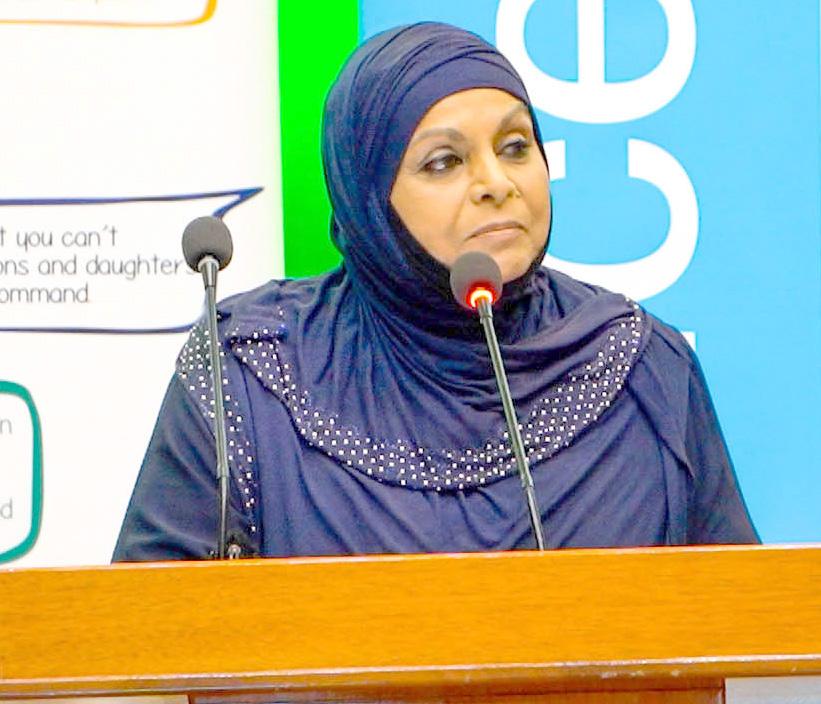
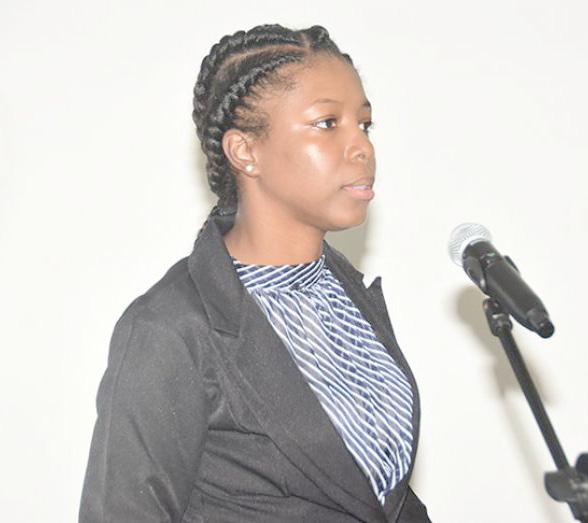

TO strengthen public awareness on child safety and encourage early reporting of abuse in Guyana, the Rights of the Child Commission (RCC) in partnership with UNICEF and the Office of the Director of Public Prosecutions (DPP) has launched a National Child Protection Awareness and Prevention campaign titled “SEE. SAY. SAFE.”
The campaign aims to equip both children and adults with the knowledge needed to recognise and respond to unsafe situations, as well as support the prevention of child sexual abuse.
outreaches to reach children and families across the country.
The nationwide effort will utilise radio, television, social media, schools and community

“Many children who experience harm do not speak about it, often due to fear or uncertainty. This campaign is about ensuring that children feel safe to speak, and that adults are prepared to listen, respond appropriately, and take action,” said Ms. Aleema Nasir, Chairperson of the RCC.
Over the coming months, the campaign will focus on helping adults recognise the signs that a child is being abused and adopt protective and safeguarding practices, in order to better ensure children’s safety, teaching children about safe and unsafe behaviours, addressing stigma that prevents disclosure and promoting clear and accessible reporting pathways.
The initiative also emphasises that abuse can occur in familiar environments and that all children, including boys, deserve protection, support, and belief.
Dr Loria-Mae Heywood, UNICEF Child Protection Specialist in Guyana noted that, “When families and communities are informed and respond appropriately, children are safer. This campaign strengthens the link between awareness and action,” Dr Heywood said.
Noting that early intervention plays a critical role in protecting children and supporting justice processes, Mrs. Teshana Lake, Assistant Director of Public Prosecutions (ADPP) stressed the importance of prompt reporting of such serious matters to the Guyana Police Force.
“Timely reporting in Sexual Offences helps to preserve evidence and it allows survivors to receive timely support,” she said.
As part of the campaign, the public will also be invited to participate in a short anonymous survey online to help stakeholders better understand awareness levels and enhance child protection services.
The RCC, UNICEF and the Office of the DPP along with key stakeholders are encouraging all members of the public to take part in the campaign by looking out for trigger signs that a child is being abused, listening to children, and reporting concerns to the appropriate authorities like the Childcare and Protection Agency (CPA) on the 914 hotline or the nearest police station. “Protecting children is a shared responsibility. When we see, when we speak up, we help to keep children safe,” the RCC Chairperson encouraged. (UNICEF)
roadside drains could one day be transformed into landscaped pedestrian walkways shaded by trees under a proposal by the United Kingdom-based King’s Foundation aimed at creating healthier, safer and more attractive streets for residents.
The proposal was presented on Friday by Ben Bolgar, Executive Director of the Projects Team at the King’s Foundation, during the Building Expo Summit 2026 at the National Stadium, Providence.
He outlined a “Healthy Streets” concept as part of the Foundation’s broader work with the Government of
town’s reputation as the country’s historic “Garden City”.
“We want the streets to be healthy and secure for children and families,” he said.
The proposal focuses on reorganising Georgetown’s streets by converting roadside drains into landscaped walkways, preventing vehicles from parking on drains, and introducing extensive tree planting to provide shade along pedestrian routes.
Bolgar explained that many of Georgetown’s streets already have an extensive drainage network, but the spaces are often obstructed by vehicles parked on drains or affected by litter. Rather
onto drainage structures, while the drains themselves would be integrated into wider pedestrian walkways lined with vegetation.
Bolgar said the Foundation also proposes planting several layers of trees and landscaping along canals and streets to create continuous shaded corridors throughout the capital.
The additional tree cover, he noted, would make walking more comfortable in the tropical climate while contributing to Georgetown’s green character.
He said the vision is for children walking to school, elderly residents visiting health centres, and other pedestrians
extensive reconstruction.
“We’ve already got the canal network. You just need to organise it in this way to make it more secure,” he added.
The Healthy Streets proposal forms part of the King’s Foundation’s wider advisory work under Guyana’s LCDS 2030, where the organisation has been providing technical advice on sustainable towns and cities for more than two years.
Throughout his presentation, Bolgar stressed that preserving Georgetown’s identity should remain central to future development as Guyana experiences rapid economic growth.
He noted that consul-
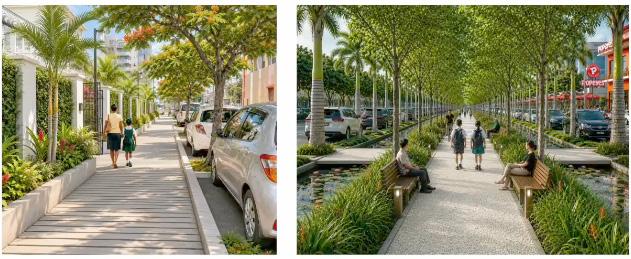
Guyana on sustainable urban and community development, aligning with the country’s Low Carbon Development Strategy (LCDS) 2030.
The UK-based organisation is working to transform Georgetown into a resilient “garden city” while planning new, eco-friendly settlements.
Bolgar said the initiative seeks to improve pedestrian safety while reinforcing George -
than rebuilding the city’s infrastructure, he said relatively simple interventions could significantly improve the urban environment.
“The idea is that you can walk the whole way through central Georgetown as if you’re walking through a garden,” he said.
Under the concept, protective kerbs or raised barriers would be installed to prevent vehicles from driving
to move safely through neighbourhoods without competing with heavy traffic.
He said, “When you drop your children at Stabroek or at school, you know they’ll be safe walking to school, or elderly parents might be safe going to the health centre.”
He added that the proposal is designed to make better use of infrastructure that already exists rather than requiring
tations with communities identified Georgetown’s image as the “Garden City” as one of the city’s defining characteristics, alongside its waterways, cultural diversity and village heritage.
According to Bolgar, urban planning should prioritise people rather than vehicles.
He stated, “We want people to stop in the streets—not just see them dominated by cars—but see them as
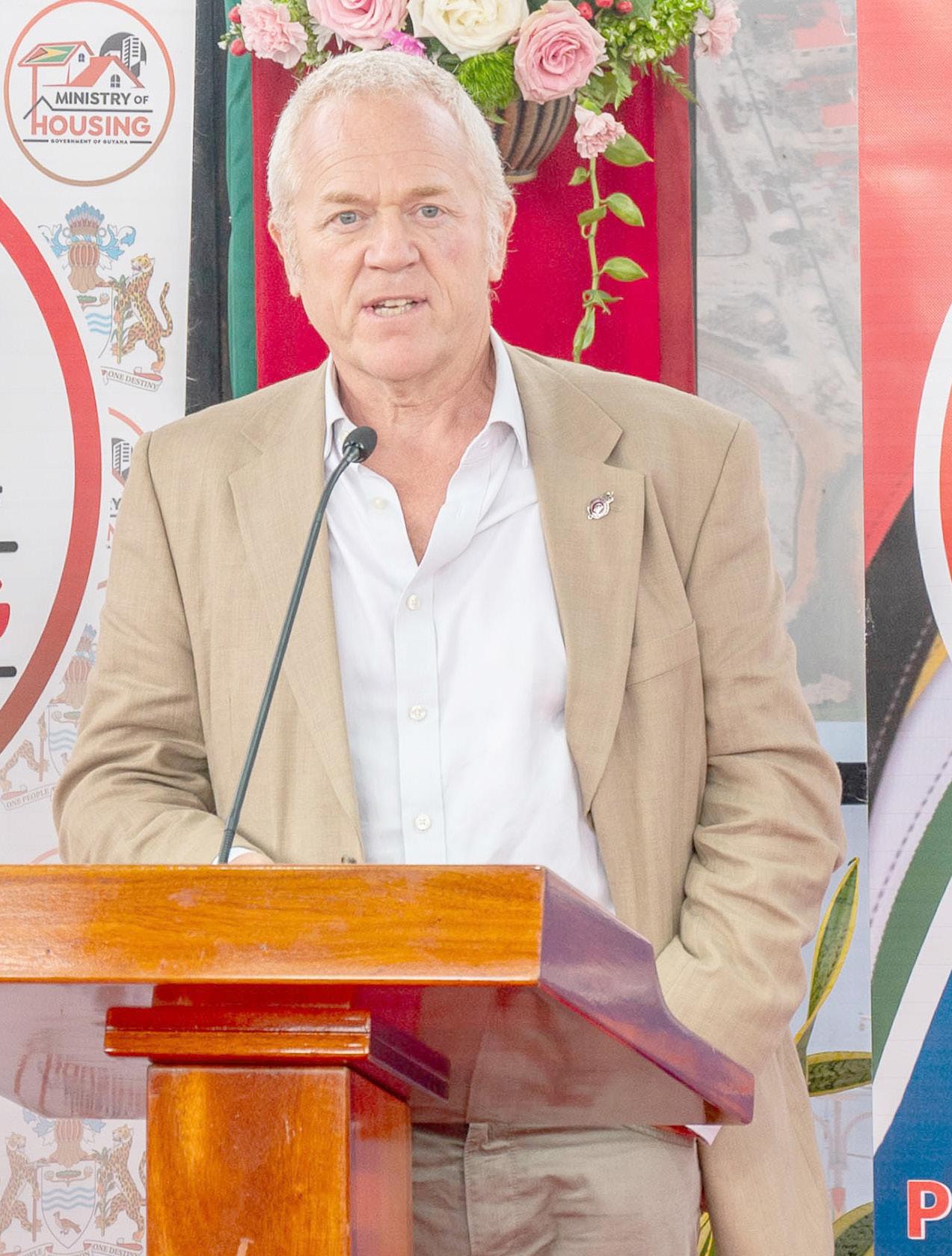
places where you want to sit, have a coffee and chat with your friends in a safe and secure environment.”
He argued that streets should be viewed as important public spaces where communities interact, rather than simply corridors for moving traffic.
The King’s Foundation’s proposals complement its broader vision for Georgetown’s future, including a network of interconnected communities, improved public transport, sustainable housing designs and the restoration of key heritage buildings.
Bolgar emphasised that healthy streets also contribute to safer neighbourhoods by encouraging more activity in public spaces.
He noted that well-designed streets with homes facing onto public areas naturally improve security because more people overlook pave -
ments and public spaces.
“Where there are more doors, more balconies and more people looking out onto the streets, those places tend to feel safer,” he said.
The King’s Foundation believes that combining improved walkability, better landscaping and thoughtful urban design can help Georgetown accommodate future growth while preserving the qualities that residents value most.
Bolgar said the proposals remain under discussion with the Government and other stakeholders but expressed confidence that many of the measures are practical and achievable.
“We think this is very achievable,” he said, adding that relatively simple improvements could make Georgetown’s streets greener, safer and more welcoming for future generations.
POPULAR Guyanese recording artiste, Emmanuel James, better known by his stage name ‘Lil’ Saint’, has died, prompting an outpouring of grief from the local entertainment fraternity, fans and government officials.
The versatile Dancehall, Soca and Afrobeat performer built a dedicated following through viral freestyles and crowd-favourite tracks like “Scrape Head” (featuring Azariel), as well as viral commentaries on local social dynamics, such as his notable release “Pakoo”.
Lil’ Saint had recently undergone surgery after doctors discovered masses in his pancreas. The circumstances surrounding his death remain unclear.
In a statement on Saturday, the Ministry of Culture, Youth and Sport described the entertainer as a young and promising artiste whose talent had already begun making a significant impact on Guyana’s music industry.
“The Ministry of Culture, Youth and Sport extends its deepest condolences on the passing of young and promising dancehall artiste, Lil’ Saint,” the ministry said.
It noted that in 2025, Lil’ Saint competed in the Ministry’s Dancehall Monarch Competition, where he secured second place and was also named Best Newcomer.
The ministry said the accolades reflected his exceptional talent and bright future within Guyana’s entertainment industry.
“Lil’ Saint was an emerging force in the local entertainment landscape, recognised for his versatility across the Dancehall and Soca genres. His passion, creativity and dedication left a lasting impression on audiences and fellow musicians alike,” the statement added.
The ministry joined his family, friends, fans and the wider creative community in mourning his passing, honouring his contribution to Guyana’s cultural landscape and extending heartfelt sympathies to all who knew him.
Before his death, Lil’
Saint recorded an emotional Facebook Live broadcast in which he candidly spoke about battling serious health complications for the past
him throughout his illness.
“I really love my wife... She stood up for me when I didn’t believe in myself. She made me believe in myself.

four years, which he believed stemmed from excessive alcohol consumption.
Speaking directly to his supporters, the artiste revealed that he had endured persistent abdominal pain and frequent vomiting and had sought treatment at several public health institutions, including hospitals in Linden and Georgetown.
He said doctors eventually diagnosed a condition affecting his pancreas and advised that he undergo major surgery.
Although he admitted feeling terrified by the operation and postponing it twice, Lil’ Saint told viewers he had finally found the strength to proceed.
During the livestream, he also expressed heartfelt gratitude to his wife, whom he credited with standing by

She encouraged me to do the right thing and never gave up on me when I was extremely down,” he said.
Since news of his death
emerged, that final public message has resonated deeply with fans across social media, where thousands have shared tributes
celebrating not only his music but also his honesty, vulnerability and determination throughout his health battle.



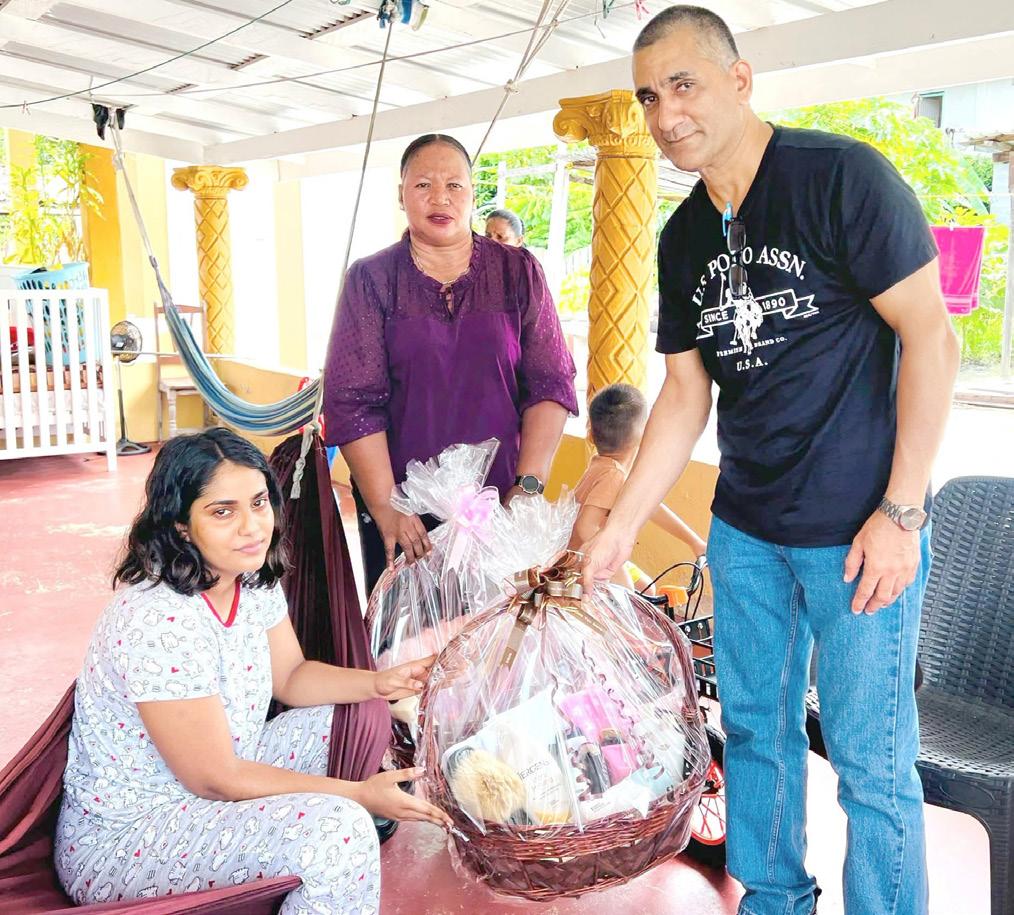
RECOVERING: Regional Executive Officer (REO), Deolall Rooplall, accompanied by Deputy Regional Executive Officer, Omesh Sasenaryan; Regional Health Officer, Dr Ranjeev Singh; Senior Regional Engineer, Kawan Suchit and Regional Education Officer, Shondelle Hercules, visited Riverstown Primary School teacher, Ms Jaidevi Dyal, at her home, on Saturday
GRADE Five teacher of Riverstown Primary School, Ms Jaidevi Dyal, is recovering after sustaining injuries during Wednesday’s freak storm that impacted several communities across Region Two.
Dyal sustained injuries after a rafter fell and struck her.
She was rushed to the Suddie Public Hospital in an unconscious state and was later transferred to the Lima Regional Hospital. His Excellency President Dr Irfaan Ali and his team, having learnt of the incident, immediately visited Region Two and other residents affected by the storm.
On Saturday morning, Regional Executive Officer, (REO) Deolall Rooplall, visited Ms Dyal at home to check on her condition and offer the Regional Administration’s support.
During the visit, Ms Dyal recalled the frightening experience and expressed gratitude that her injuries were not more serious. While she continues to experience headaches and some pain, she said she is recovering steadily and remains in good spirits.
The REO was accompanied by Deputy Regional Executive Officer, Omesh Sasenaryan; Regional Health Officer, Dr Ranjeev Singh; Senior Regional Engineer, Kawan Suchit, and Regional Education Officer, Shondelle Hercules, all of whom extended wishes for a speedy recovery.
Mr Rooplall assured Ms Dyal that the Regional Administration remains committed to assisting her in any way possible and encouraged her to contact the relevant programme managers should she require additional support.
The Regional Administration has extended its best wishes to Ms Dyal for a full and speedy recovery as rehabilitation efforts continue across the region following the devastating storm.
MINISTER of Public Utilities and Aviation Deodat Indar, has accused Guyana’s political opposition of being “bankrupt for ideas,” arguing that opposition parties have adopted a strategy of constant criticism while failing to offer practical alternatives to government policies and projects.
Appearing on the Starting Point podcast, Indar said opposition parties spend their time “nitpicking” government initiatives instead of presenting comprehensive plans that voters can assess.
Indar specifically referenced several opposition parties and groups, including the We Invest in Nationhood (WIN), Vigilant Political Action Committee (VPAC), Forward Guyana Movement (FGM), A Partnership for National Unity (APNU) and the People’s National Congress (PNC), as he accused them of focusing on criticism rather than offering solutions.
“What I’ve seen from the combined opposition— all of them—is that they fail to recognise the plank in their own eyes and try to point out the speck in their brother’s eyes. That is what I’ve seen from them. They go to every little thing and nitpick. Their philosophy is to nitpick,” the minister said.
Indar said the opposition focuses on isolated issues rather than acknowledging the broader scope of government projects.
“I’ve seen them go on and talk about some grass growing in a field during the wet weather. Grass grows all the time. Grass grows in a trench in wet weather. Grass grows all the time,” he said.
According to the minister, the opposition parties have failed to develop fresh ideas or meaningful policy proposals ahead of the upcoming elections.
“In terms of broader strategy, I’m telling you, since during the election, I was on the campaign trail.
They are bankrupt for ideas. They are bankrupt for ideas. They can’t come up with nothing new. They don’t know how to build,” Indar said.
He also argued that many members of newer political parties are former members of established opposition groups and have simply repackaged the same policies.
The minister noted, “All of them in the WIN party, a lot of them come from the AFC and the APNU. All of them recycle. Same old thinking, same old attitude. When they were there, they didn’t have no new attitude, no new ideas.”
Describing the situation, Indar said, “It’s the same wine in a new bottle.”
The minister challenged opposition parties to produce detailed policy documents outlining how they would govern if elected.
“You say what you’re going to do for the financial sector. You say what you’re going to do for the agricultural sector. Tell us what you’re going to do for infrastructure. Tell us what you can do for my ministry— public utilities, aviation, maritime affairs. Tell me what you’re going to do for health. Tell me what you can do for any of the ministries that we have differently than we [the People’s Progressive Party/Civic] are doing it,” he stated.
He added that such proposals should be submitted in writing rather than discussed only on social media.
“You give me it on paper too. No one is going to sit down and gyaff and do a live. Give me it on paper. Let me criticise your plan. You don’t have nothing.”
During the interview, Indar also made a light-hearted reference to artificial intelligence while discussing policy development.
“It might come from ChatGPT,” he joked before adding that while artificial intelligence can be useful for learning, it cannot replace human judgement.
Minister Indar said, “ChatGPT might be good for students trying to learn. When you come to critical thinking, it can’t help you. Nothing replaces a person’s critical thinking. Their critical analysis is a human thing. Judgement on the ground. Feel people’s emotions on the ground. Those are things that can’t be replaced easily.”
Indar further accused opposition figures of highlighting minor defects in public infrastructure while ignoring the overall benefits of completed projects.
“They continue to criticise everything. If we build a road—10 kilometres—and a piece of it got a little small thing because some big truck passed and jammed
the end, the whole road bad.”
He cited criticism surrounding the Bharrat Jagdeo Demerara River Bridge, stating detractors exaggerated normal engineering adjustments.
Despite what he described as persistent criticism, Indar maintained that many of those same critics continue to use infrastructure developed by the PPP/C administration.
“They cross it every day. They go in communities, curse everybody, and the road they’re walking on, the PPP government built it.”
Reflecting on his own tenure in government, Indar said he remains confident in the administration’s record of infrastructure develop -
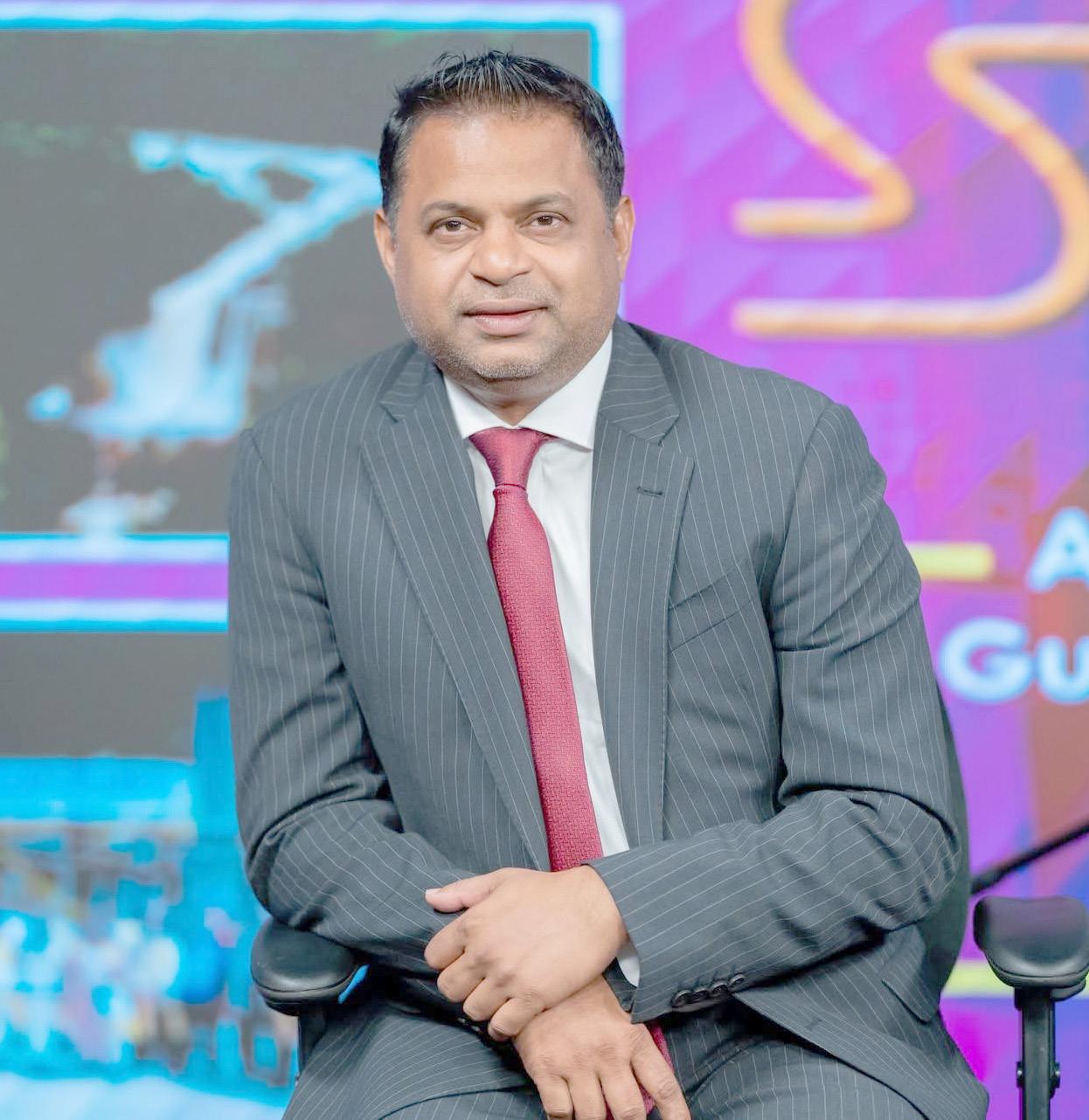
Minister of Public Utilities and Aviation Deodat Indar ment.
“For five years, I built thousands of roads at Public Works. These two hands and foot went in all them communities. I know what I did. I know what we did as a government.”
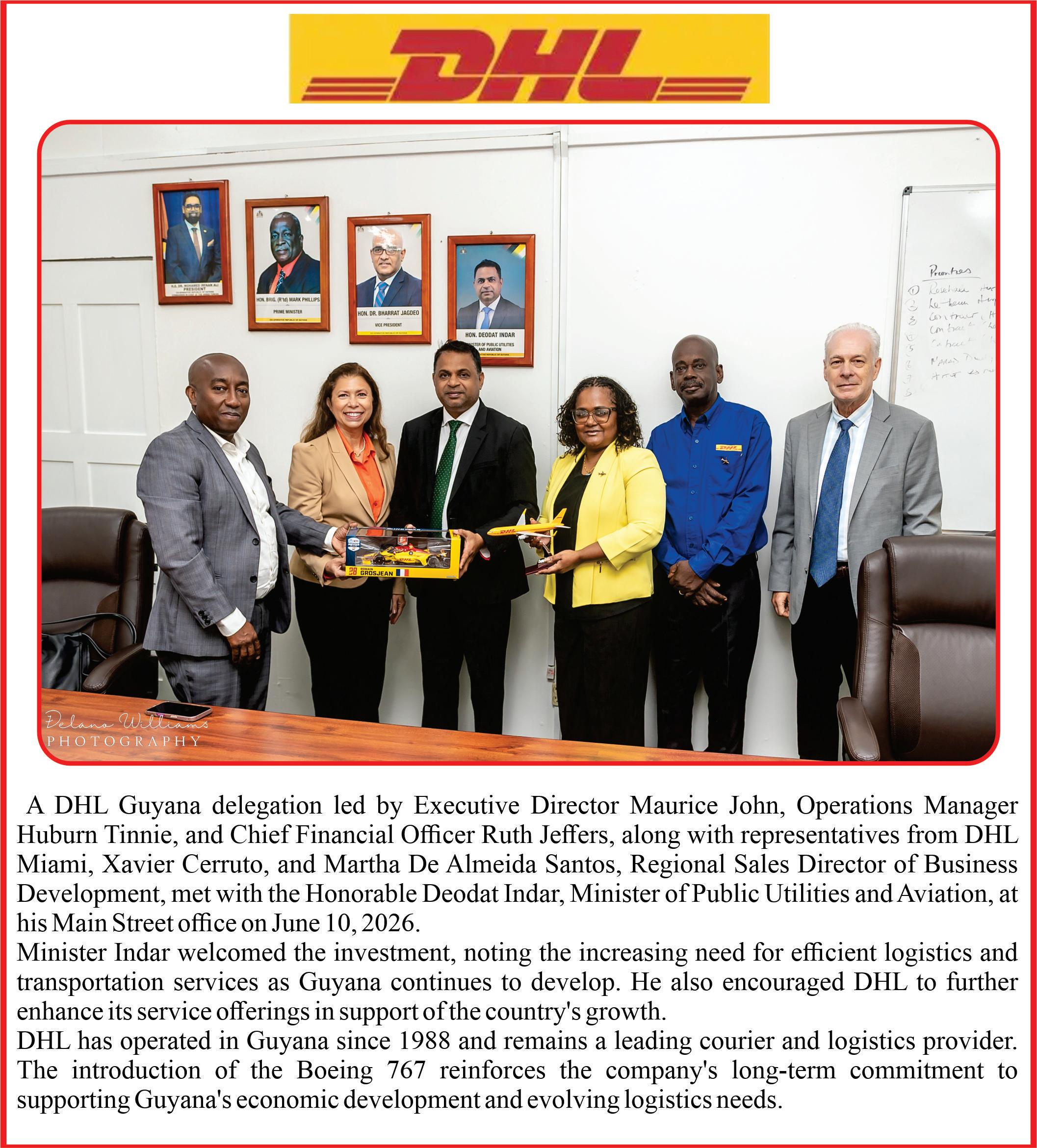





ENGLISH RACING TIPS
CARTMEL
08:57 hrs Cinating
09:27 hrs Path Of Stars
10:02 hrs Evenwood Sonofagun
10:37 hrs Amancio
11:15 hrs Sean Og
11:55 hrs Croagh Patrick
12:28 hrs Conquer The Breeze
WOLVERHAMPTON
10:05 hrs Sweet Horizon 09:37 hrs Faeberon

10:12 hrs Hozam 10:47 hrs Edwatdtheninth
11:23 hrs Trust Sergei
12:03 hrs Shalaa Asker
12:37 hrs Split Evens
SOUTH AFRICA RACING TIPS
SCOTTSVILLE
08:05 hrs Ovation Star
08:40 hrs Open Sesame 09:15 hrs Mamlambo 09:50 hrs Definitely Yes
IRISH RACING TIPS
CURRAGH
08:10 hrs Alpha
08:40 hrs Gazelle D’or 09:10 hrs Tango Flare
09:45 hrs Pretty Omagh Girl
10:20 hrs Purview 10:55 hrs Alcantor
11:35 hrs Benvenuto Cellini 12:15 hrs Antigua 12:45
Today’s Quiz:
(1) Which WI cracked the first Test ton against SL?
(2) Which SL hit the first Test century against the WI?
Answers in tomorrow’s issue

BRISTOL, England, (CMC) – WEST Indies Women’s hopes of qualifying for the semifinals of the ICC Women’s T20 World Cup took a big hit when they were upset by Ireland Women in their final preliminary match here on Saturday.
Having gone winless in 21 games at T20 World Cups, Ireland Women finally broke the jinx, with Orla Prendergast’s half century leading them to a comprehensive six-wicket victory at County Ground to put a major dent in the regional side’s qualification hopes.
After being sent in to bat, the West Indies’ batters never got out of first gear and could only muster 128 for seven in their 20 overs.
Ireland Women, who defeated the West Indies in the preceding Evara Tri-Series, showed that victory was no fluke by romping to 129 for four in 18.1 overs, to end the drought by winning their first match in their fifth T20 World Cup.
The loss means West Indies Women will have to hope that England Women defeat New Zealand Women later on Saturday if
they are to advance to the knockout stage of the tournament.
Once again, it was the Windies’ batting that let them down.
Qiana Joseph hit left-arm spinner Aimee Maguire for two boundaries in the first over of the match, but lost her wicket off the last ball as her attempted sweep shot ballooned into the air to give Leah Paul at short third man an easy catch.
Shemaine Campbelle made just four before she was dismissed by Arlene Kelly to leave the Windies 27 for two in the third over.
Skipper Hayley Matthews never got going during her knock of 22 off 25 balls, and it came as no surprise when she swept Cara Murray straight into the hands of the square leg fielder to make the score 50 for three at the start of the ninth over.
Stafanie Taylor also struggled in her time at the crease, scoring 16 off 26 balls before hitting a full toss from Aimee Maguire into the hands of long on.
When Deandra Dottin’s miserable knock
of 21 from 28 balls came to an end, the Windies were in serious trouble at 95 for five in the 16th over.
Chinelle Henry tried her best to lift the total at the death in an unbeaten knock of 27 off 21 balls, but none of the other batters provided any support.
Murray led the way for Ireland with 2-13, while Aimee Maguire took 2-22.
Needing to take early wickets to have any chance of defending their below par total, West Indies Women did themselves no favours by dropping opener Amy Hunter when she was three and just eight runs on the board.
Ashmini Munisar gave the Windies hope by grabbing the wicket of her partner and captain Gaby Lewis for nine to leave Ireland 28 for one.
But Player-of-the-Match Prendergast and Hunter effectively sealed the contest with a 66-run partnership for the second wicket which proved decisive.
Prendergast started slowly, scoring 11 runs from her first 15 deliveries, but broke
free in the ninth over by smashing Qiana Joseph for six and four off consecutive balls. She moved into the 40s by flicking Afy Fletcher through square leg for four, but lost Hunter two balls later for 28 off 32 balls as she got a leading edge trying to hit the same bowler through the leg side.
Prendergast reached her half century off 36 balls in fitting style by hitting Ashmini Munisar through the leg side for four and followed it up by driving her through cover for another boundary.
By the time Matthews had Prendergast caught at deep square leg by Dottin after scoring 63 off 44 balls, inclusive of eight fours and two sixes, Ireland Women were well in the driver’s seat at 108 for three and required 21 runs from 28 balls.
Munisar did manage to dismiss Paul for just four, but Rebecca Stokell scored an unbeaten 16 off 15 balls to lead her side to a historic victory with 11 balls to spare. Munisar was the Windies’ best bowler with 2-28 from her four overs.
The Guyana Cricket Board (GCB) has expressed profound sadness following the sudden passing of coach Forbes Daniels, whose extensive contributions to the sport have left an indelible mark on the region’s cricketing landscape.
A towering figure in Guyanese cricket development, Daniels was particularly instrumental in nurturing the game within Essequibo.
The GCB noted that his sudden departure leaves an irreplaceable void, highlighting his decades of selfless service, leadership, and unyielding dedication to shaping the grassroots structure and advancing young talent across the country.
In an official statement, GCB President Bissoondyal Singh, along with the board’s executives and staff, extended their deepest sympathies to Daniels’ family, friends, and the broader cricket fraternity mourning the loss of a distinguished servant of the game

ENGLAND’S winning run at the T20 World Cup continued with a rampant nine-wicket victory over New Zealand in their final group game at The Oval.
Already assured of top spot in Group 2, and with it a place in next week’s semi-finals, England built on the momentum of their four previous wins by cruising a chase of 164 with 16 balls to spare.
(Scores )New Zealand 163-6 (20 overs): M Kerr 42 (34); Gibson 2-30
England 164-1 (17.2 overs): Wyatt-Hodge 89* (53), Dunkley 49* (38)
Danni Wyatt-Hodge, now the tournament’s leading run-scorer, kept up her superb form by crashing 89 not out. She was supported by Sophia Dunkley, who made 49 not out in their unbroken partnership of 128.
Defending champions New Zealand, who are now eliminated, are a shadow of the side that won this title in 2024,
but the dominant nature of England’s win only added to the sense of momentum around this side.
After limiting New Zealand early on, they took three wickets in four balls without conceding a run in limiting the White Ferns to 163-6.
Sophie Devine hit three sixes in a 14-ball 30 on her final international appearance, but otherwise England were always in control.
Their semi-final opponents will be confirmed today, with India or South Africa appearing the most likely.
That match will take place on Tuesday afternoon or Thursday evening back at The Oval, where England’s women’s side have never lost any of their 11 matches.
Win that and they will return to Lord’s for the final on Sunday for a chance to win their first World Cup title since 2017.(BBC Sport)
ENTRIES are pouring in rapidly for next week’s CARICOM Cup horse race which is set for Sunday July 5, at Bush Lot United, West Coast Berbice.
Close to 100 horses secured entry for the highly anticipated horse race and the headline event will see the clash of Dataman and Olympic Kremlin.
Initially, 11 races were on the cards, but due to the overwhelming entries, organisers are pushing for a 12-race programme.
The two-years-old race will be carved into two, with fillies and colts running in respective races. Organisers disclosed that there has been a packed list of Guyana-bred two-yearold horses that will be battling for supremacy.
This CARICOM Cup will be the perfect preparation race for the Guyana Cup which is set for August 23.
More than G$15 million in cash and prizes
will be up for grabs at next week’s race meet.
The CARICOM Gold Cup feature will be open to all three-years-old and over horses going at a distance of 1900 metres. A total purse of four million will be up for grabs and the top horse will receive two million.
Other races on the programme include the CARICOM Sprint stakes open to all fouryears-old and over, CARICOM Derby open to three-years-old Guyana bred, and the ‘E’ Class and Lower.
There is also the Rising Star stakes, open to three-year-old imported horses, the three-years-old and over WI Bred winners, ‘H’ Class and Lower WI Bred non-winners in Guyana, three-years-old and over I/J/K Class, ‘L’ Class winners, K&L Maidens and the future star stakes two-year-old Guyana-bred juveniles which will now have two races.
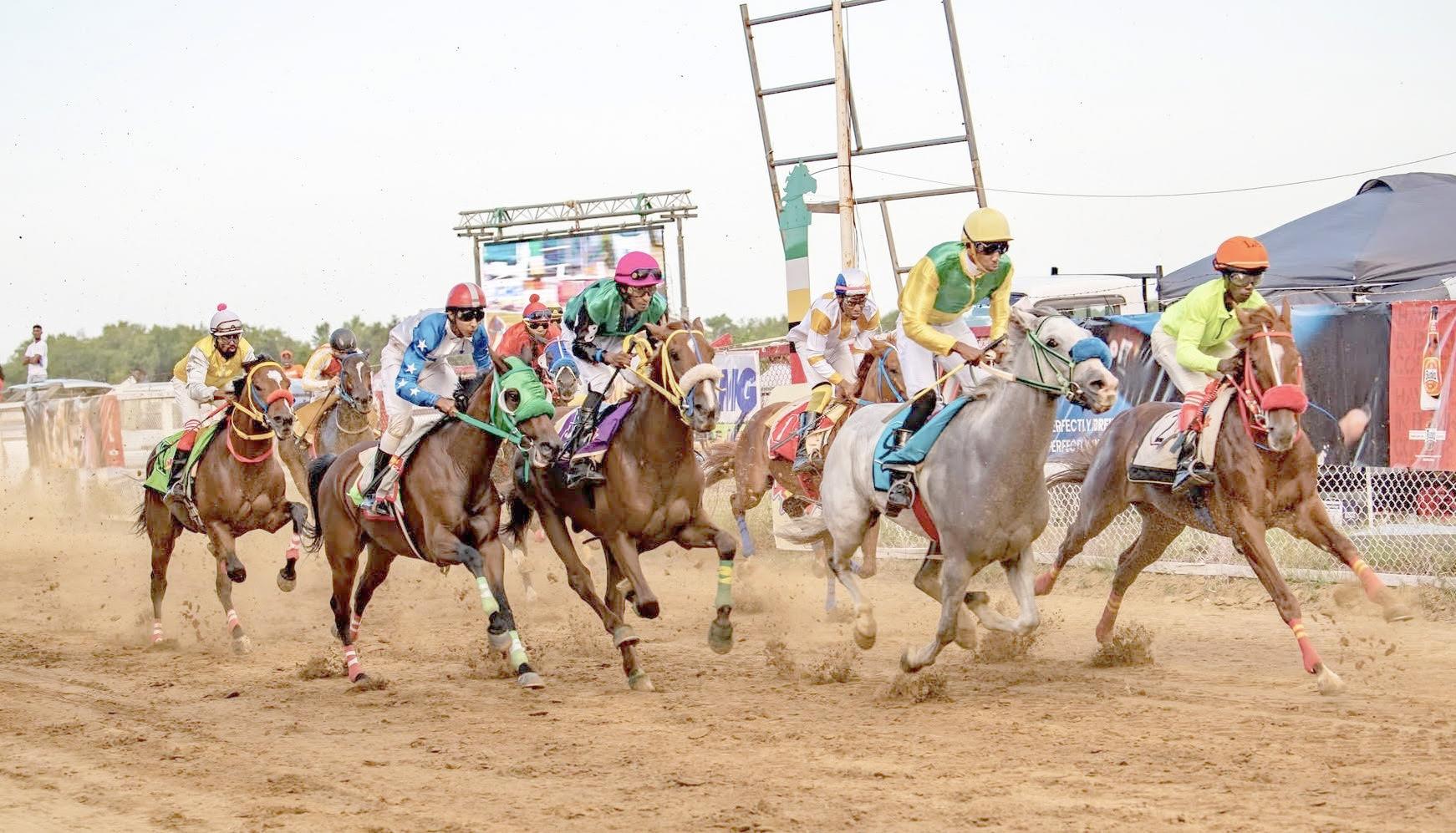
NEWLY promoted Elite League Football side Camptown FC was on Saturday provided with a brand-new lawnmower by the Government of Guyana.
Minister of Culture, Youth, and Sport, Charles Ramson Jr handed over the weeding machine to Camptown FC at the club’s ground in Campbellville.
Camptown FC President Selwyn Robertson says this will go a long way in maintaining the ground as the team looks to compete at a high level.
‘Thanks to these young men, most of them are from the Sophia area. They are a few originals, but they are a few that
stick to the task and stick with me. The government giving us the lights helps us for these guys to be able to train from 6 to 9 pm.; Robertson, who is elated for the lawnmower, is calling for more support after his club’s elevation to the Elite League, which he says is more demanding. Minister Ramson, who represents the constituency, says he has supported the community and worked hard to assist the young people who hail from the area and surrounding areas.
‘This has been a process, and the process for leading to the outcome that you see today is a relationship that has
been developed by government and people… We said that we were going to develop every single ground in Georgetown; we have invested, converted, and transformed 34 grounds in Georgetown’ Ramson Jr. said the development of the ground, erection of a fence, and equipment support, which was initiated by President Irfaan Ali, is part of the government’s aggressive agenda to create safe and community-friendly sporting facilities in and around the city and nationwide. He noted that more than 100 lawn mowers have been provided to community
grounds.
Campton Club representative Troy Mendonca says they intend to install more lights and constructing a sanitary block with some more minor works to the playing surface as they seek to transform the facility into a thriving football facility.
Camptown Club representative Troy Mendonca says they intend to install more lights and construct a sanitary block with some more minor works to the playing surface as they seek to transform Camptown FC into a thriving football facility.
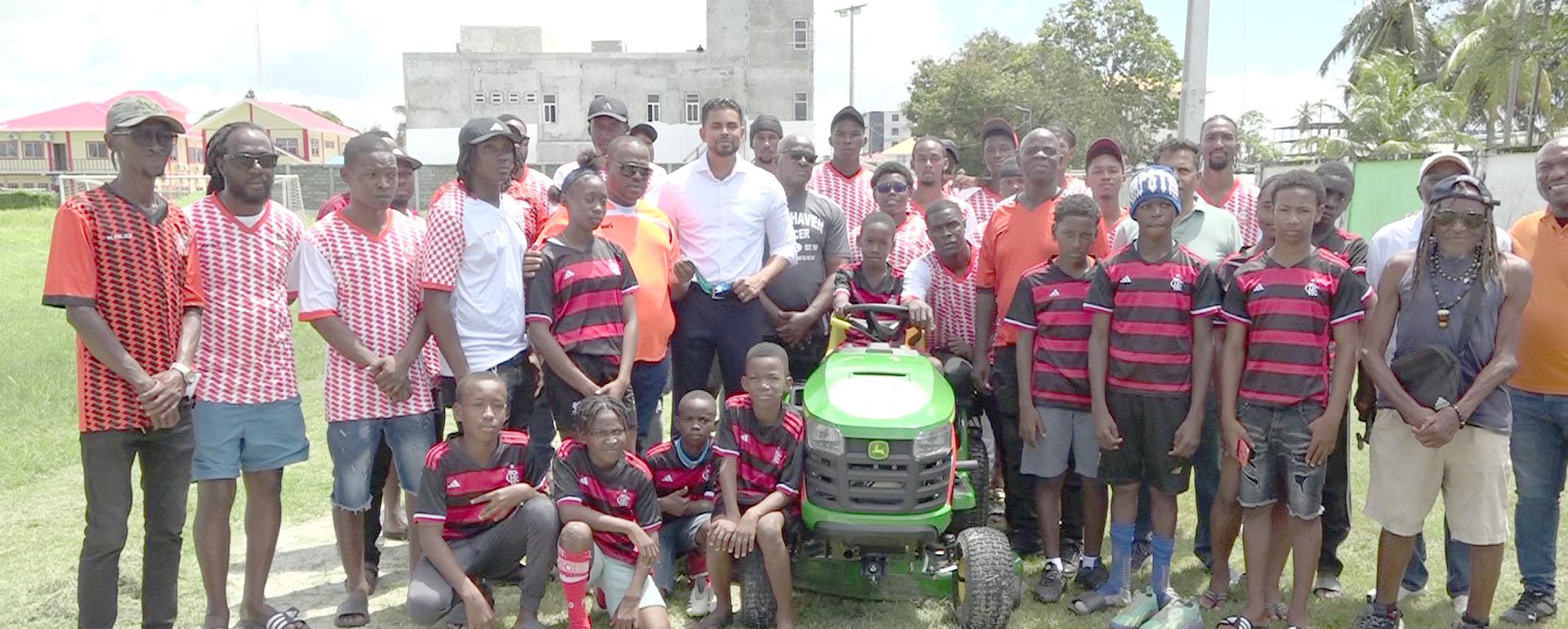
SCOTLAND have been eliminated from the 2026 World Cup following Croatia’s 2-1 win over Ghana.
The result in Group L means Steve Clarke’s side cannot finish as one of the eight best third-placed teams that will reach the knockout stage.
It is another group-stage exit from a major tournament for Scotland, who have appeared at nine World Cups and four European Championships without ever progressing past the first phase.
Scotland began their first World Cup for 28 years by beating Haiti 1-0, the lowest-ranked team in their group, but stiffer tests lay ahead in Group C against two sides in the world’s top 10.
A 1-0 defeat by Morocco was followed by Wednesday’s 3-0 loss to Brazil in Miami, which left them third on three points and with a -3 goal difference.
Clarke and some of his players conceded after the Brazil defeat that progression to the last 32 was unlikely and they faced a wait of several days to discover their fate while the remaining matches in other groups were played.

Scotland eliminated from World Cup
Results such as Ecuador’s comeback win against Germany reduced their predicted chance of progressing to 5.26% with six of the 12 groups still to be completed and Croatia’s victory sealed Scotland’s exit.
What do numbers tell us about Scotland’s World Cup attacking intent?
Is a former England striker right about reasons for Scottish football’s ills?
Scotland, who have played at each of the past two European Championships, booked their spot at a World Cup for the first time since 1998 in dramatic fashion with an unforgettable victory against Denmark at Hampden Park in November.
Backed by tens of thousands of fans who had travelled to the United States, John McGinn’s deflected strike against Haiti earned the country’s first win at a World Cup for 36
years.
That would be Scotland’s only goal of the tournament.
They lost to a second-minute strike by 2022 semi-finalists Morocco in their second match, so they entered their final group game against Brazil knowing a draw would probably be enough to send them through as one of the best third-placed teams.
However, first-half defensive errors would prove their undoing.
They once again conceded early when defender Scott McKenna was robbed of possession inside his own penalty area, gifting an opener to Vinicius Jr.
The Real Madrid forward was denied a second when the video assistant referee (VAR) deemed he had fouled Jack Hendry before rolling the ball past Angus Gunn, but just before half-time Scotland again gave the ball away near their own goal and Vinicius Jr nodded in at the back post to make it 2-0.
Matheus Cunha extended Brazil’s advantage after half-time and a late rally failed to yield a reply that would have improved Scotland’s goal difference.
Rob Stevens BBC Sport Africa CAPE Verde have made history by becoming the smallest nation to reach the knockout stage at the World Cup.
The prize for a side representing a group of 10 islands in the Atlantic Ocean will be to face defending champions Argentina in the last 32.
Players huddled around a mobile phone on the pitch following their goalless draw with Saudi Arabia to watch the final moments of Spain’s win over Uruguay - a result that confirmed Cape Verde finished as Group H runners-up.
“Tears of pride and joy all around the stands,” said BBC Radio 5 Live commentator Rob Law in Houston.
“There was a beautiful moment where they were all huddled around waiting on their phones, waiting for the full-time whistle to go.
“When it did, tears flowed on the pitch and in the stands as well. What a moment. The moment of the World Cup so far.”
That followed an incredible goalless draw in their opening game against Spain, where 40-year-old goalkeeper Vozinha was the hero, and a 2-2 draw with twotime World Cup winners Uruguay.
“It’s incredible what they are doing, it wasn’t just one game against Spain, it is three games at the highest level,” said Spain’s former World Cup winner Juan Mata on ITV.
How has a nation of just 525,000 inhabitants, who qualified ahead of fivetime African champions Cameroon, made
it this far?
Diaspora factor and plan to reach ‘big table’
The main reason behind the Blue Sharks’ success has been the decision by Cape Verde’s football federation (FCF) to draw on players from the country’s diaspora.
There are strong links to the former colonial power Portugal, with a series of severe droughts last century prompting heavy emigration from the islands, while a seafaring tradition and involvement in the maritime trade mean there is a sizeable population with Cape Verdean roots in Rotterdam.
Fourteen members of their 26-man World Cup squad were born abroad, with six of them hailing from the Dutch port city.
One of that number, forward Dailon Livramento, who spent last season playing for Casa Pia in Portugal’s Primeira Liga, scored the only goal in their vital qualifying win over Cameroon last September.
“The FCF has made significant progress through passion, commitment and a clear technical plan,” Josina Freitas Fortes, a member of Cape Verde’s parliament, told BBC Sport Africa.
“The results we are seeing are largely the product of years of consistent work, strong belief and people who have given their heart to the project.”
The recruitment of Dublin-born centre-back Roberto Lopes via business networking website LinkedIn in 2019 is a
well-told story, while former Manchester United winger Bebe was part of their 2023 Africa Cup of Nations (Afcon) squad after representing Portugal at under-21 level.
“There is an inner confidence in this team that we are good enough to mix with the best teams in the world,” Lopes said.
“It’s not something that’s just been fabricated out of nothing. Since I’ve been involved, and before that, there’s been an ongoing plan to get Cape Verde up at the big table with the big football nations of the world.
Coaching stability - ‘strength, unity, resilience’
Much credit for Cape Verde’s performances must go to coach Bubista, a former international himself who has been in charge since January 2020.
A stable coaching set-up has allowed the 56-year-old former centre-back to build a compact and well-drilled side with an organised defence, technical midfielders and gifted forwards who upset Ghana and drew with Egypt during a run to the quarter-finals at Afcon 2023, having only made their tournament debut 10 years earlier.
They may have had Vozinha to thank for the seven saves the veteran goalkeeper made in the goalless draw with Spain, but their discipline was underlined by the fact the Blue Sharks only conceded one foul against the 2010 champions - the fewest recorded by a team in a World Cup match since 1966.
“We always train and play as one unit,
so everything we did in the game was not our first time that we did it,” defender Sidny Lopes Cabral told the BBC World Service.
“For us, it’s our game. This is how we play, this is who we are.
“This is our personality as a team and as defenders.”
Cape Verde took a more attacking and expansive approach in their second Group H outing against Uruguay, but also demonstrated their steely resolve by grabbing a second-half equaliser.
“More important than the result is to be able to show our identity as a team, our strength, our unity, and also our resilience,” Bubista said.
Bubista was recognised for his achievement in delivering World Cup qualification by being named the continent’s coach of the year for 2025 by the Confederation of African Football. He has always believed that his side had the potential to mix it with the world’s elite.
“We have done really well considering how small our country is,” he told BBC Sport Africa before the 2021 Afcon, when the Blue Sharks reached the last 16.
“I think in the future we’ll be at the World Cup.”
That bold prediction has come to pass, and now Bubista hopes Cape Verde’s achievements at the expanded tournament can inspire other underdogs around the globe.
“I believe that football belongs to everyone, or is for everyone,” he said.
By Sean Devers
PRESIDENT of the Georgetown Cricket Club (GCC), Jainarine ‘Don’ Singh, suffered major stroke and was admitted to a Private City Hospital last week Wednesday and died yesterday in ICU after being placed in an induced Coma. He was 56. Vice-president Graeme AlIi has taken over the reins of the Club which was established in 1884, after Singh had replaced Jonathan Yearwood as president when the GCC, held its AGM and elections last January.
No funeral or wake arrangements have been made as yet for Singh, who got the nick name in his teens and was a DJ at house parties and was called the Don.
Singh’s association with Bourda started when his dad took him to the GCC, which hosted its first Test in 1930 when West Indies beat England to record its first Test victory.
He was the captain of the Guyana Motor Racing and Sports Club and Vice-President of the Guyana Tennis Association.
In January, Singh outlined his plans for GCC where 30 of 33 Test matches were
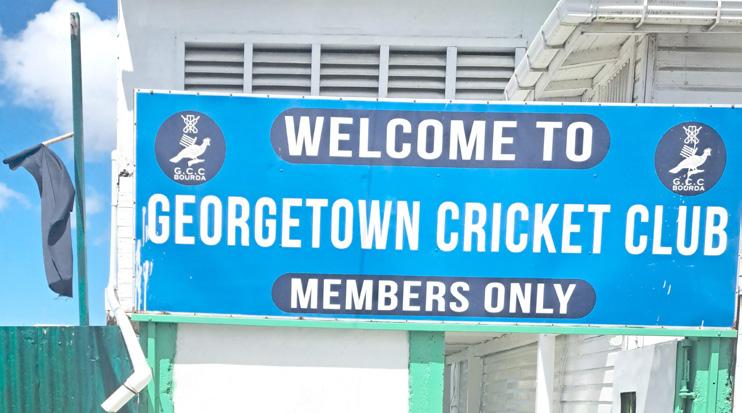
played in Guyana.
“Politics is about serving. I serve at the community level…I serve the constituencies of Alberttown, Queenstown, Kingstown, and Tiger Bay areas…so serving as GCC President is just switching hats. When you go there, you are a sports administrator… It’s all about giving back and service,” he had said in January.
The awarding of the 2007 World Cup to the Caribbean and the construction of the
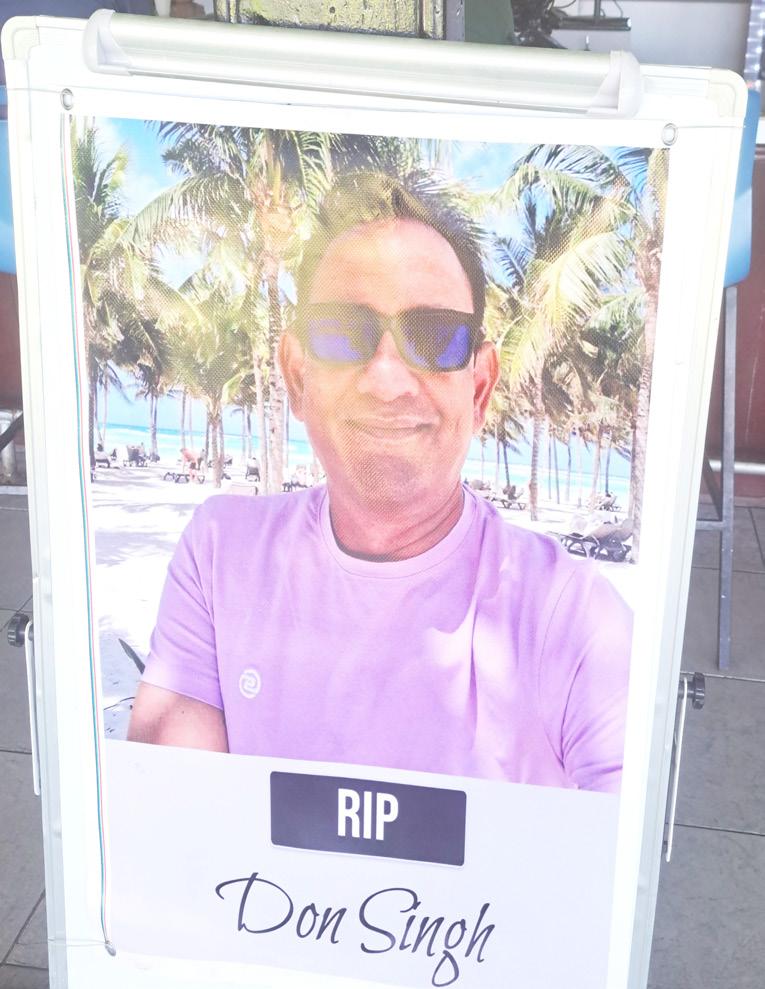
Providence Stadium saw the end of Bourda, the oldest cricket club in the Caribbean.
With Bourda no longer hosting international matches, membership dwindled and when First-Class cricket was removed, the venue suffered a rapid decline, resulting in the dismantling of dilapidated stands.
Singh had some ambitious plans to take GCC forward; the two main ones are installing lights and having regional cricket return to Bourda.
Under Yearwood’s presidency, full Stadium lights were acquired at a huge cost to GCC as a major investment, and Singh disclosed that his first assignment will be installing the lights.
“Our major plans include changing Bourda into a multi-sport facility with lights, and ultimately having regional cricket return to Bourda’s sward. He said emphasis will always be on cricket,”Singh had stated.
On Saturday several entities paid the respects to the late Singh, including the GCB, GCA, the Guyana Government and Reds Perriera who called Yearwood at GCC.
ENGLAND’S deciding Test against New Zealand -- and perhaps the future of the hosts’ management -- hangs in the balance after a dramatic and fluctuating third day at Trent Bridge.
As a previously flat pitch began to break up and play tricks, England first surrendered the initiative with the bat, then tried gamely with the ball to hang in the contest.
At the end of it all, New Zealand moved to 120-3, a lead of 204 looking sizeable given the unevenness in the surface that became apparent on Saturday.
The Black Caps had been 12-2 and 51-3, but Rachin Ravindra’s unbeaten 60, alongside 26 not out by Daryl Mitchell ensured the tourists remain in the driving seat.
Scores: Third Rothesay Test, Trent Bridge (day three of five)
New Zealand 438 (Conway 157, Latham 151; Stokes 4-70) & 120-3: Ravindra 60*
England 354: Duckett 113, Bethell 74; Smith 4-91
New Zealand are 204 runs ahead)
England began the day with an opportunity to get close to New Zealand’s first-innings 438, only to lose three crucial wickets for 10 runs inside the first six overs.
Joe Root was out for 21 and Jacob Bethell 74 - neither man adding to his overnight score - before Jamie Smith managed only one.
Harry Brook made a calm 58, but when England lost their last three wickets for
four runs, the home side were left 354 all out and 84 behind on first innings.
New Zealand seamer Zak Foulkes, who only came into the game on Friday as a concussion sub for Blair Tickner, took three of the wickets to fall on Saturday, including Brook and England captain Ben Stokes.
‘Highest pressure’ ramps up for England
This was a day when the match accelerated at an unexpectedly swift rate. When the pitch was benign on the opening two days, only 12 wickets fell. Baked in the intense heat, the surface has deteriorated and 11 wickets fell on Saturday alone.
The pitch is the prime reason why England are in such a precarious position. The run chase could be devilishly difficult, even against a depleted New Zealand attack. Still, in the slower seam of Foulkes, the Black Caps look to have gained an important weapon.
If England lose this match and the series, there could be severe consequences. It would extend their poor run to only two wins in 10 matches, set against a backdrop of off-field controversy.
Given the circumstances, skipper Stokes said before this game that his team is under the “highest pressure” when compared to any other point in his four years in charge.
Stokes’ team then came up against a New Zealand side without three key players - Matt Henry, Kyle Jamieson and Glenn Phillips - but still find themselves right up against it.
England have memories on 2022, a
remarkable win against New Zealand on this ground, albeit on a very different pitch. That was the birth of Bazball. This might be the end.
Ravindra repels charging England
Given the first-innings deficit, England had no choice but to find early inroads into the New Zealand top-order. Jofra Archer did just that, galvanising the crowd after tea on a steamy afternoon in Nottingham.
With the final ball of the first over, Archer pinned New Zealand captain Tom Latham on the shin and barely turned around to appeal.
Bowling an immaculate line and using the demons in the pitch, Archer unnerved Devon Conway with a blow to the helmet and, four balls later, had the left-hander fend to second slip.
Ravindra entered at number four, intent on counter-attacking. At the other end, Henry Nicholls was given a torrid time by Josh Tongue. Nicholls edged and Brook failed to react at a wide slip, but Brook made no mistake in the next over when Gus Atkinson induced a nick.
New Zealand were 135 ahead, with seven wickets in hand, the match in the balance. Mitchell arrived to dig in alongside Ravindra, whose scoring slowed. Stokes launched into a six-over spell, to no avail.
Shoaib Bashir almost got Mitchell to sweep to Archer, who cranked up for a final spell before the close. New Zealand got through unscathed, the Ravindra-Mitchell partnership is worth 69, with the opportunity to put the match and series beyond England.
Saturday slide leaves England vulner-
able
England began with the chance to bat themselves into a strong position, yet were left in peril by a Black Caps’ opening burst that ripped the guts out of the home middle-order.
Eight balls into the day, Root was lbw to Nathan Smith, yet again with wicketkeeper Tom Blundell up the stumps. The ball jagged back and Root shook his head as the review revealed an umpire’s call, but it is the third successive innings when Root has been leg before to a seamer operating with the keeper up.
In the next over, Bethell prodded at one from Will O’Rourke he could have left and edged to second slip. Jamie Smith was sucked into driving namesake Nathan to continue his poor match - the England keeper is dropping catches and not making runs.
Stokes, batting for England for the first time since he was made unavailable for the second Test, was given a standing ovation on arrival. The captain added 56 with Brook before becoming Foulkes’ first victim, bowled by one that ripped back into the stumps.
England were 148 behind and hopes rested on Brook. He played sensibly, taking 80 balls over his 58, until he was bowled by a wicked delivery from Foulkes that angled in, then straightened.
Atkinson batted for two hours, first with Brook, then with Archer. When Archer fended the second new ball to slip off Smith, England quickly subsided. (BBC Sport)
ST JOHN’S, Antigua, (CMC) – Amir Jangoo and captain Roston Chase produced a batting display for the ages to put West Indies in a strong position to push for victory against Sri Lanka at the end of play on the third day of the opening Test here on Saturday.
The pair shared a spectacular, record-breaking partnership of 401 for the sixth wicket at the Sir Vivian Richards Stadium, to carry the home side to a mammoth first innings total of 626 for nine before Chase opted to declare.
Armed with a massive 318-run first innings lead, pacer Jayden Seales then further stamped the Windies’ dominance by picking up the wicket of Pathum Nissanka for just three to leave the visitors 15 for one and facing a herculean task of avoiding a heavy defeat on Sunday’s penultimate day.
The day undoubtedly belonged to Jangoo and Chase, with their partnership being the highest in Test cricket history for the sixth wicket, surpassing the previous best of 399 between England’s Ben Stokes and Jonny Bairstow against South Africa in 2016.
It was also the West Indies’ second highest partnership in Test cricket, trailing only the 446-run stand between Sir Garfield Sobers and Conrad Hunte against Pakistan in 1958.
The Windies would have been targeting a handy first innings lead over their opponents after resuming the day on 271 for five, 37 runs adrift of Sri Lanka’s total of 308.
With just the fast bowlers to come, Jangoo, who started the day on 78 and Chase, who resumed on 42, knew a major partnership was needed between them if the West Indies were to post a formidable total.
Jangoo, playing in just his third Test, continued from where he left off the previous day, mixing solid defense with warranted aggression.
He moved into the 90s and gave West Indies a one-run lead by driving left-arm spinner Sonal Dinusha through the off side for four and in the next over he brought up his maiden Test century by flicking pacer Kasun Rajitha for a boundary in front of square.
Together they carried the Windies to 356 for five at lunch, as Sri Lanka’s bowling attack – missing their fastest bowler in Lahiru Kumara who suffered a hamstring injury on
Friday – toiled without success.
Chase eventually brought up his sixth Test century by driving Milan Rathnayake through cover for two runs as the West Indies progressed to 411 for five.
The skipper survived a nervous moment shortly after when he was dropped by Kamindu Mendis at first slip, but the delivery was ruled to be a no-ball in any case.
The duo brought up their 300-run partnership and the Windies maintained their grip on the contest, progressing to 492 for five at tea.
After the break, Jangoo secured a double hundred with a single to square leg off Dinusha and celebrated the milestone by leaping and punching the air.
Batting with a sense of urgency thereafter, Jangoo hit Rathanayake over deep backward square for a massive six, but lost his wicket the next ball attempting the same shot, with a leading edge sending the ball ballooning into the air for wicketkeeper Kusal Mendis to take a straightforward catch, moving the score to 569 for six.
In all, Jangoo’s knock of 233 lasted just over nine and a half hours and he faced 373 balls and struck 19 fours and three sixes.
Alzarri Joseph then entertained the crowd by hitting two sixes and one four in his cameo of 21 off 20 balls before he too became a victim of Rathnayake.
With a declaration in sight, Chase fell six runs short of a well-deserved double century when he was bowled by Dinusha for 194 after missing his attempted sweep shot.
Chase faced 324 balls and hit 13 fours and two sixes during his over eight and a half hours innings.
The only bright spark for Sri Lanka was Rathnayake, who claimed his first five-wicket haul in Tests (5-124) when he trapped Kemar Roach lbw for a duck that ultimately led to the declaration.
Faced with a nervy few minutes before the end of play, Nissanka edged Seales’ first ball of the second over behind to the wicketkeeper to be out for three.
Things could have been worse for the visitors had Jangoo managed to hold on to sharp catch at short leg off the bowling of Kemar Roach that would have accounted for Nishan Madushka before he had scored.

ST JOHN’S, Antigua, (CMC) – Cricket West Indies (CWI) and the West Indies Players’ Association (WIPA) have paid tribute to former West Indies cricketer Charles ‘Charlie’ Davis who passed away on Thursday at the age of 82.
In honour of his life, legacy and contribution to West Indies cricket, the West Indies senior men’s Test team wore black armbands on day three of the ongoing first Test against Sri Lanka at the Sir Vivian Richards Stadium in Antigua on Saturday.

Hailing from Port-of-Spain, Davis was a solid right-hand middle-order batsman who represented the region with pride in the late 1960s and early 70s.
In an international career that saw him play 15 Tests, he amassed 1,301 runs with four half-centuries and four centuries, with his maiden ton coming at the historic Lord’s Cricket Ground in his third appearance for the West Indies.
His consistency at the crease is evidenced by his career average of 54.20 with a high score of 183.
In a press release, CWI extended “deep-
est condolences to the family of this Caribbean cricketing pioneer and hero.”
WIPA president, Wavell Hinds said the region had lost an outstanding cricketer.
“The cricketing fraternity is saddened at the passing of Charles Davis.
May his soul rest in peace; we extend our condolences to his family and friends,” he said in a statement.