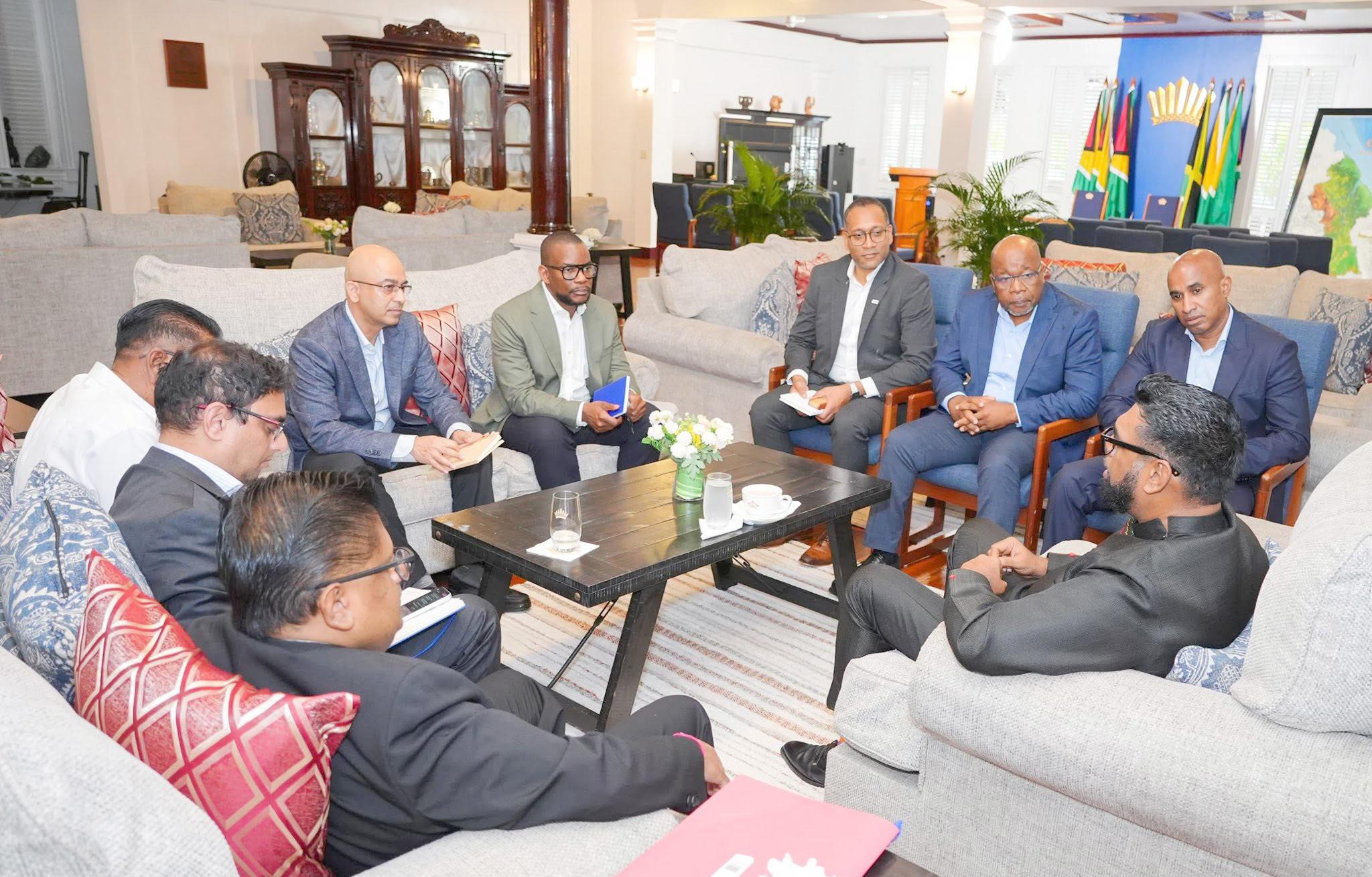
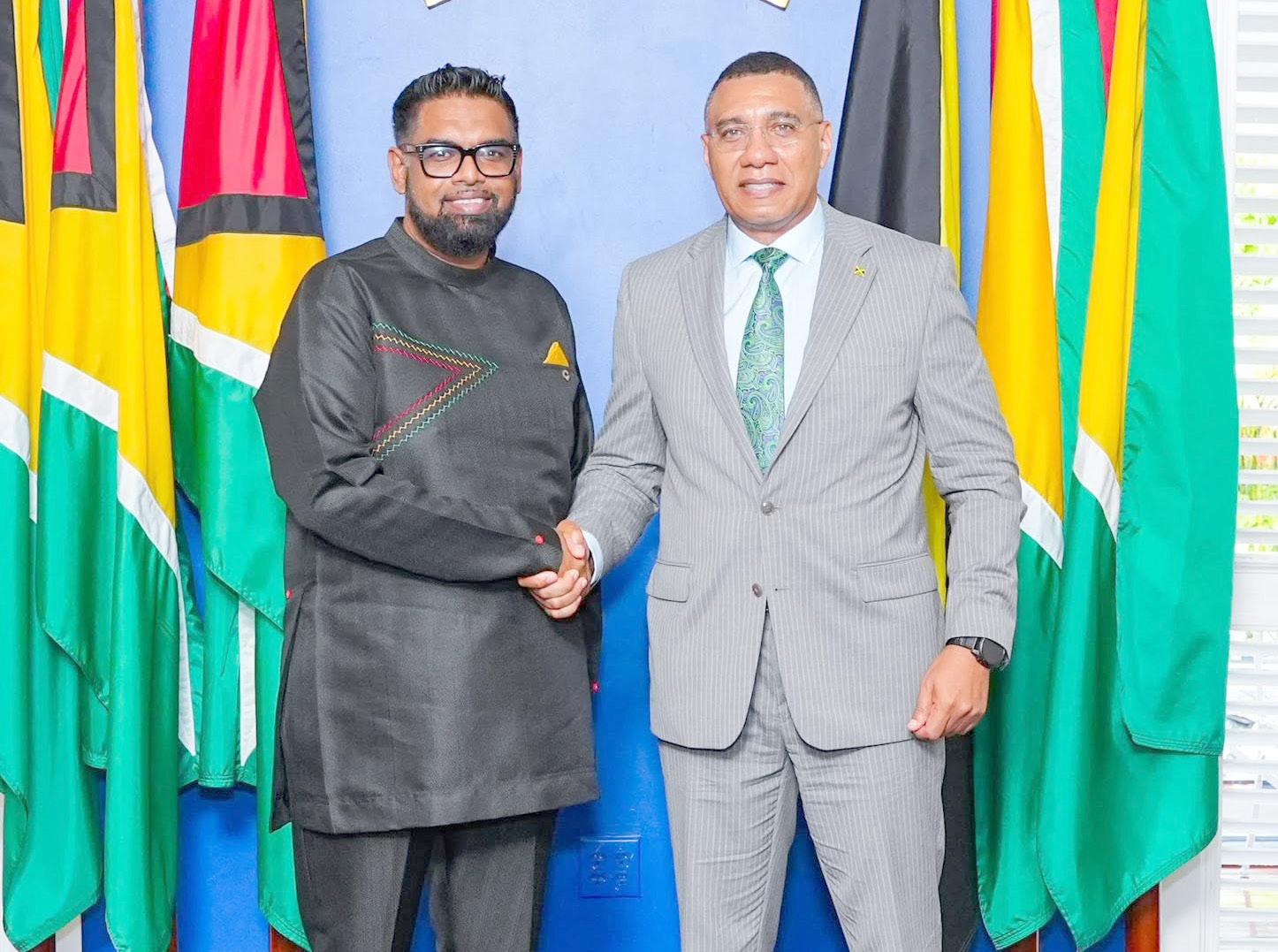
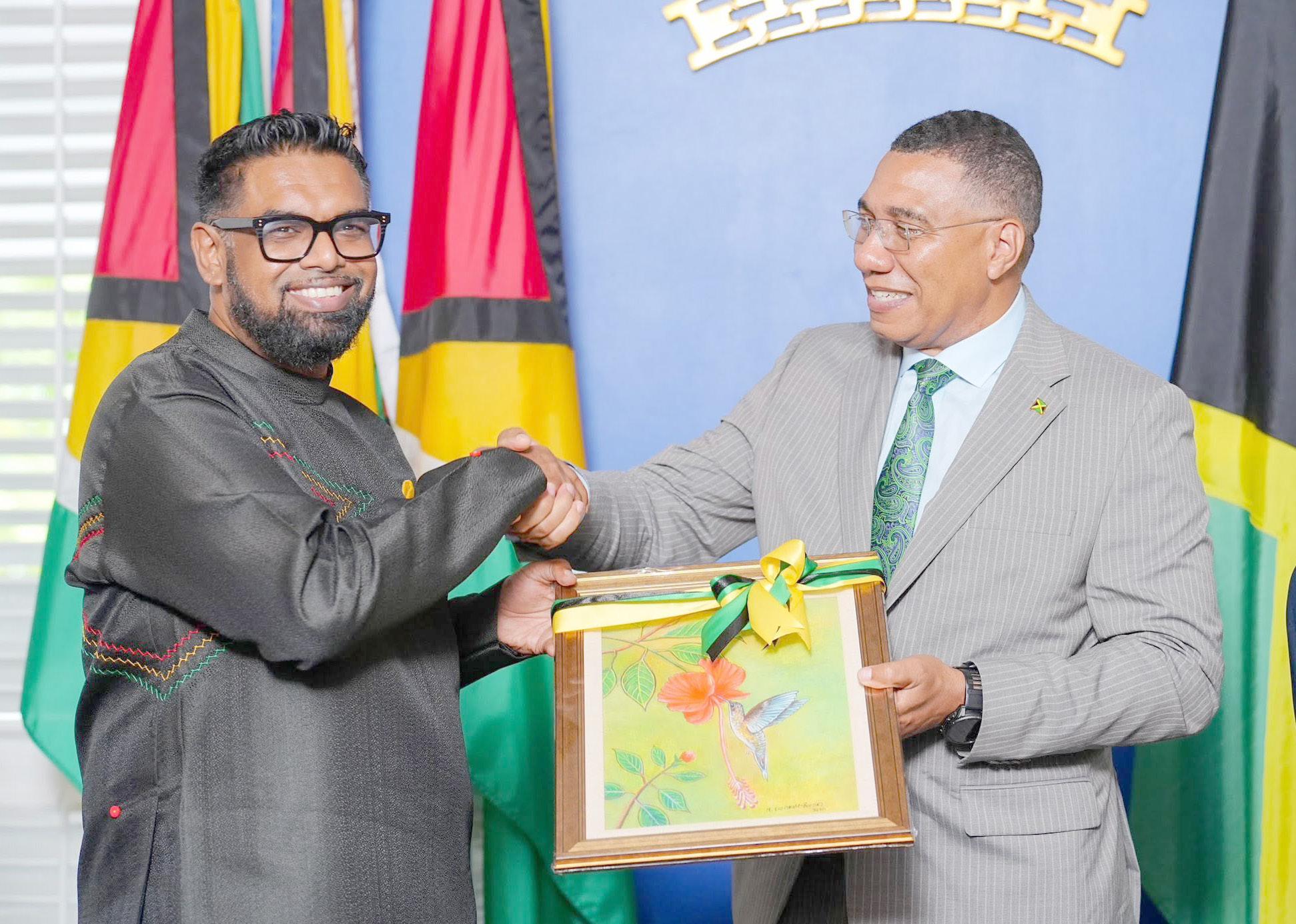
President, Dr Irfaan Ali, on Friday, met with an executive team from the Massy Group, led by its CEO, James McLetchie to discuss investment opportunities in Guyana, with particular emphasis on agriculture and agro-processing (Office of the President)
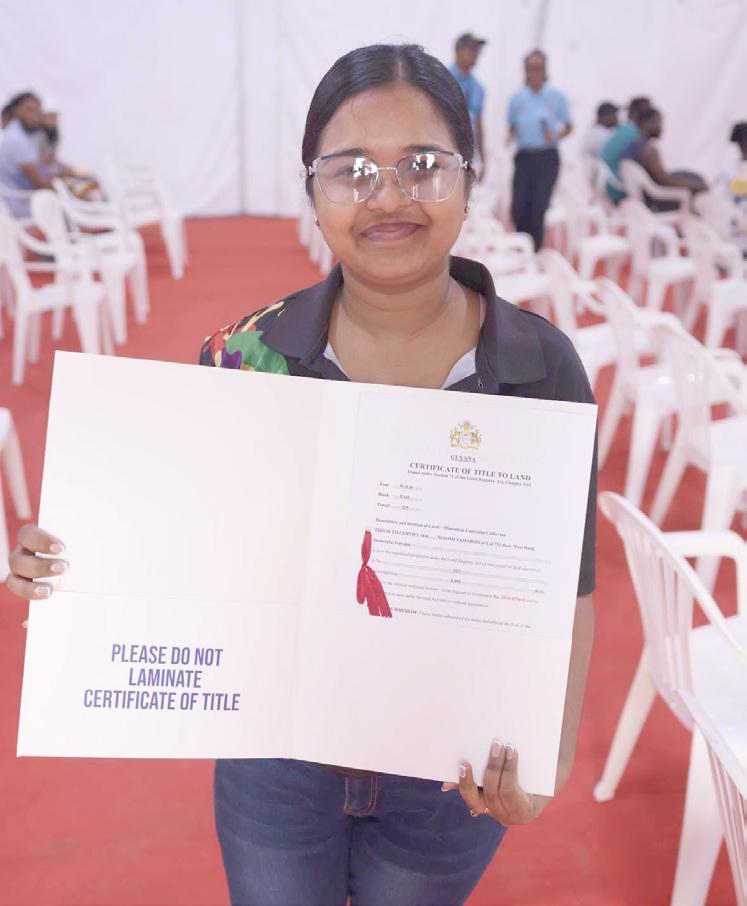
One of the over 350 persons who uplifted their Certificates of Title at Building Expo 2026, on Friday
New social housing strategy to target most vulnerable
–– with aim of reducing existing backlog for land/houses over next four years and beyond, President Ali says
PRESIDENT Dr Irfaan Ali has announced that the government will roll out a new social housing strategy in the coming weeks aimed at further cutting the national hous-
ing backlog over the next four plus years, while directly targetting Guyanese living with disabilities, single parents and those in extreme vulnerability.
Addressing the opening of the 2026 National Building Expo at the National Stadium, Providence, on Thursday, the President said the administration is redesigning the sector
to ensure that vulnerable groups can access decent, dignified housing rather than being left behind as the demand expands.
“In the coming weeks, I’ll be outlining with great clarity a housing-development strategy that will reduce our backlog to zero in the next four plus years, but more importantly, a strategy that will directly target the different segments of vulnerability in our system; persons living with disability, single-parent persons living with extreme vulnerability,” the President said.
He stressed that the objective is not simply to allocate land, but to ensure that the most vulnerable can live “in dignity.”
“We are designing a system that will allow you to have a home in which you can live in dignity, and in the coming weeks I will outline a clear strategy of how we are going to deliver homes to people who meet this criteria… and at the same time how we’re going to invest in the low, moderate, and medium income homes to meet the expectations of the people of Guyana, at a scale of which the expectation is growing,” he said.
Dr Ali signalled a structural shift in the government’s approach, with policy moving steadily from the allocation of house lots
to the delivery of completed houses, including turnkey units for specific categories of beneficiaries.
He noted that there has been a clear movement “towards homes instead of land,” driven by growing confidence in the Central Housing and Planning Authority (CH&PA) and the Ministry of Housing to deliver finished units.
The President said many applicants are now seeking transfers into young professional and other housing schemes, as they opt for built homes rather than raw lots.
BACKLOG TO BE ERASED
The forthcoming strategy is to be layered on top of an aggressive title-processing programme already underway. Between 2020 and 2026, some 30,000 land titles have been processed, and just over 20,000 remain outstanding.
Dr Ali pledged to compress the next phase dramatically.
“I can assure you that what we took five years to process, we will not take a single year, because we’re going to back the system to clear the backlog of all titles that need to be processed,” he said.
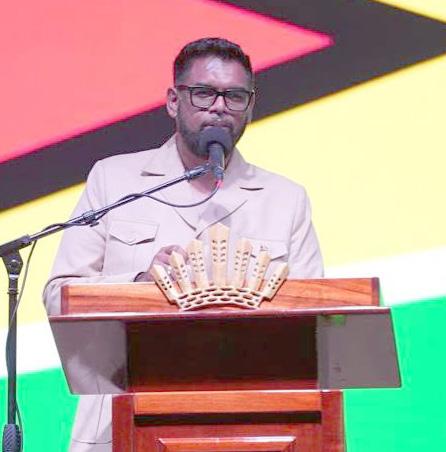
President Dr. Irfaan Ali
Guyana, Jamaica to advance cooperation in agriculture, housing, security
–– other crucial areas after signing new agreements
–– other crucial areas after signing new agreements
By Naomi Parris
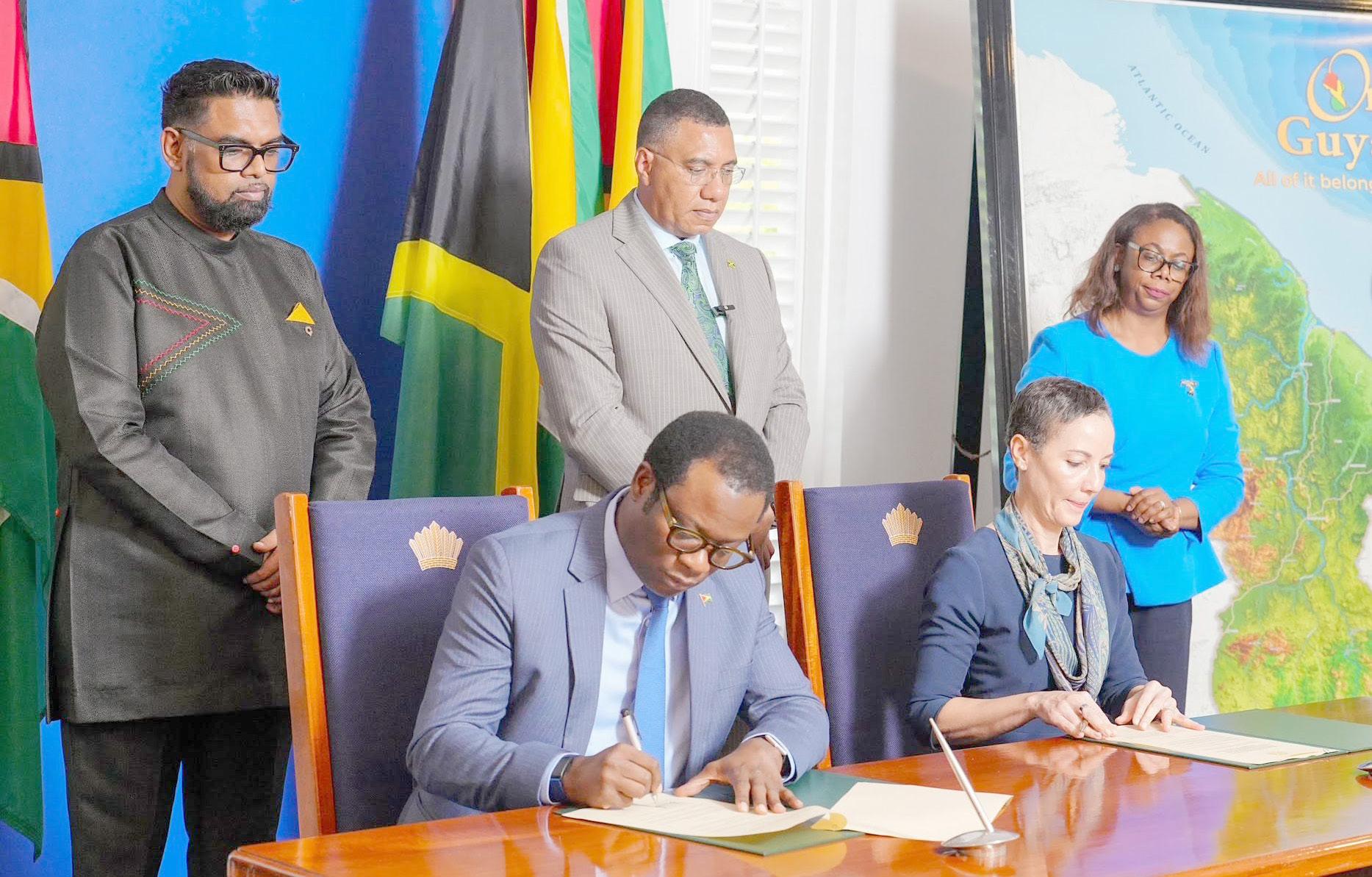
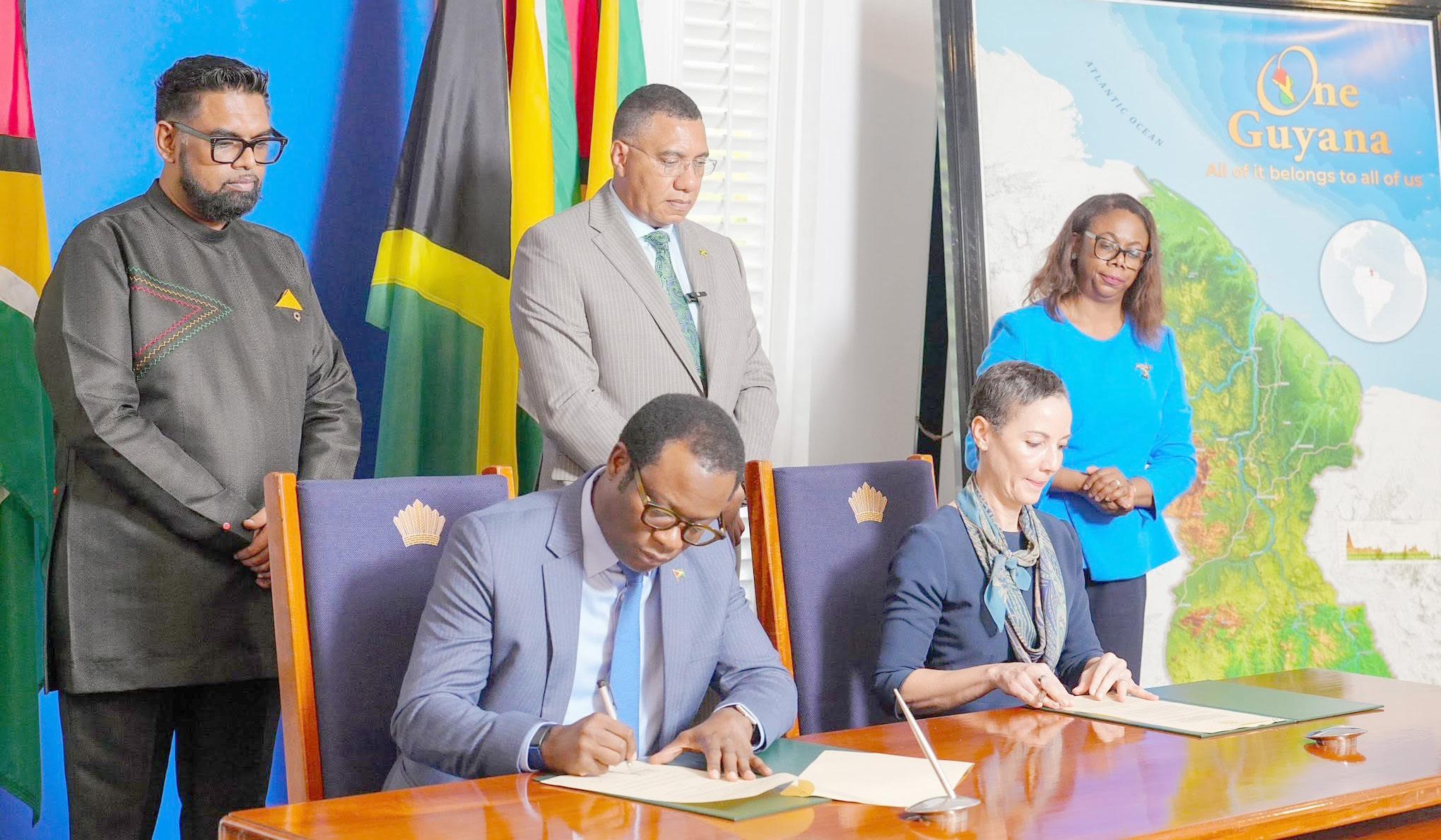
GUYANA and Jamaica on Friday formalised a new phase of cooperation by signing Memoranda of Understanding (MoUs) spanning agriculture, housing, defence and security, and financial services at State House in Georgetown.
During remarks after witnessing the signing of the official documents by Guyana’s Minister of Foreign Affairs and International Cooperation Hugh Todd, and Jamai -
ca’s Minister of Foreign Affairs and Foreign Trade Kamina Johnson-Smith, President Dr. Irfaan Ali said the engagement went far beyond the formal signing ceremony, praising the “enormous work” undertaken by both sides not only to produce the MoUs, but to fully understand the nature of shared prosperity.
The Jamaican Delegation, led by Prime Minister Andrew Holness, arrived in Guyana on Thursday. In over roughly 48
hours, the two delegations had identified a common path in many areas, built on shared challenges, priorities and aspirations.
“Both of us share the ambition of having efficient governance, efficient implementation, and delivering services where our people can enjoy the experience of having those services, that allow the citizens to feel as if they are valued, and that is important for both of us, and we are both committing on a pathway to the use of technology
to advance this cause,” President Ali said.
He noted that Guyana will establish a working group to ensure the implementation and greater integration of technical support among the two nations.
“We have to scope our competitive advantage, your infrastructure and our infrastructure… We’re committed to having a working group examine this closely, and to come up with recommendations and options as to how we can collaborate,” Presi -
dent Ali said.
The agriculture MoU aims to promote collaboration on food and nutrition security through institutional and human resource development, research and innovation, education and extension, trade facilitation, and support for the region’s “25 by 2025 +5” food production target.
A separate defence and security MoU between the Guyana Defence Force and the Jamaica Defence Force establishes a framework for capacity building, information sharing, multinational operations in support of peace and stability, and regular bilateral consultations on defence policy.
In addition, an MoU on financial services seeks to enhance financial infrastructure and systems through cooperation on the development and modernisation of financial services, as well as institutional strengthening and capacity building in the sector, with officials stressing that implementation of these commitments has already begun.
The Guyanese leader highlighted energy, security, tourism, financial services, agriculture, housing, education and healthcare as priority areas for cooperation, backed by newly signed MoUs and additional agreements expected to emerge over
time.
He also disclosed that the players in the local banking sector here in Guyana have signalled their intention to form consortiums with Jamaican developers to support housing initiatives.
“This morning, I had a call from local bankers, and they’re ready to form a consortium between Guyanese developers, Jamaican developers, and to look at how they can work with you in terms of housing. So, already we are seeing this deep commitment and interest from the private sector emerging,” he said.
Meanwhile, Prime Minister Holness described the MoUs as only a fraction of the potential cooperation now on the table, noting that the breadth of the discussions went far beyond what could be formalised during the visit.
Holness praised the Ali administration’s overhaul of the public sector, saying it was well aligned with the rapid growth Guyana is experiencing.
“We particularly share a focus on the efficiency of our public sector, and I particularly admire your president in that regard,” he said, noting that he had seen many of the changes in motion in Guyana, and would take back ideas to stimulate progress in Jamaica.
President Dr. Irfaan Ali and Jamaican Prime Minister Dr. Andrew Holness witness the signing, on Friday at State House, of three Memoranda of Understanding intended to deepen cooperation between Guyana and Jamaica in agriculture, defence and security, and financial services (Office of the President photos)
Mother dies saving daughter in Venezuela earthquakes
A VENEZUELAN mother has died while saving her daughter during the earthquakes that hit the country, according to footballer Héctor Bello and local media.
Bello wrote on his Instagram that “his precious love”, named by Venezuelan news outlets as his wife Andrea, saved the life of their toddler during two powerful quakes.
“I’ll tell her the story of how you saved her, my love - how you gave your own life for our daughter, how you were a brave woman who never abandoned her, even as you took your last breaths,” Bello wrote in his post.
Rescuers are continuing to search through rubble to find survivors after twin quakes near the capital Caracas killed at least 920 people and injured more than 3,000.
In a series of posts, Bello said he travelled to Caracas where his daughter was in
the hospital.
“My daughter and her aunt are doing well, they won’t be discharged today - they’re staying at the hospital. Thank you so much for supporting me through this immense pain,” he posted on Friday overnight.
In a separate Instagram story, Bello wrote: “How do I explain to your daughter that you lost your life to save hers, and that I wasn’t there to do anything? How do I explain it? Give me strength now.”
A local Venezuelan footballer press and publicity organisation, Cumaná de Campeones, also posted about her death.
“We regret to report that the partner of footballer Héctor Bello “Kike” - originally from Cumana - was found dead in the rubble following the earthquake that struck the country.”
“Their daughter, however, survived the collapse of
the building where the entire family resided.”
US Spanish language news outlet Univision also reported the death of Bello’s wife.
More deaths caused by the earthquakes are being reported, and victims identified, while many more are still missing after the disaster hit on Wednesday.
Two football players were among those killed, according to their clubs and the Venezuelan Football Federation (FVF).
Caracas Fútbol Club said its under-18s player Razan Sijaa had been killed alongside family members at their home in La Guaira.
“His joy, dedication, and camaraderie will accompany us in every step of the institution,” it said in a post on social media.
Victor Palacios left an “indelible mark” on Club Sport San Agustín’s academy, the Caracas-based club wrote on Instagram. “There are not enough words to express the pain we feel at his passing,” it added.
Also reporting his death, the FVF said he had played for Marítimo de La Guaira.
Former Miss Venezuela Giselle Reyes meanwhile said in a post on Instagram
that her mother had died after the twin quakes caused her building in La Guaira to “completely collapse”.
Reyes said her mother, whom she did not name, had died from a heart attack caused by the shock and impact of the earthquakes. The news was shared by the nurse who had been caring for her and was rescued alive.
Four Spanish nationals were also among the dead, with 106 still unaccounted for, Spanish media reported, citing its foreign ministry.
One Portuguese national and two Brazilian citizens
were killed, their governments confirmed.
Portuguese President António José Seguro addressed a “message of
solidarity” to the Venezuelan people and extended that to Portuguese citizens living in Venezuela. (BBC)
Brazilian men fined $150,
000
each for trespassing at Lethem Aerodrome
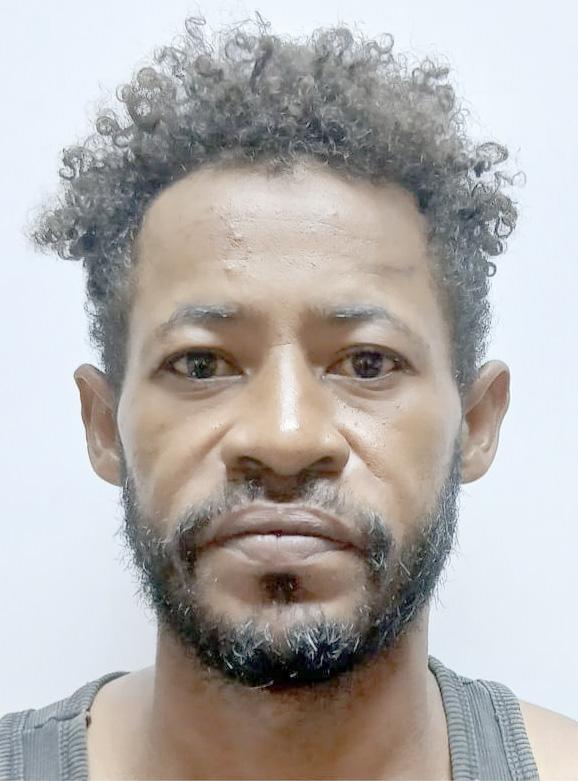
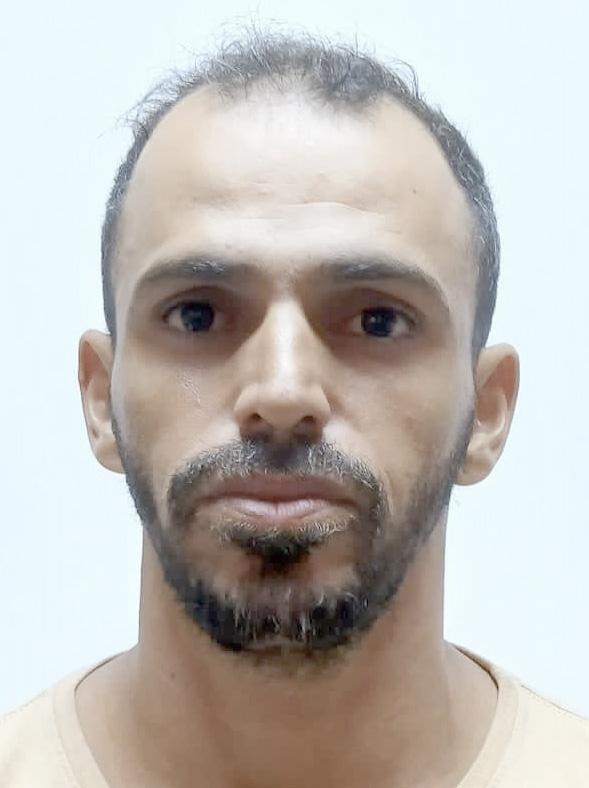
JOSE Carlos Casto Bibeiro, a 28-year-old mechanic of Terezina, Brazil; Clebson Raoni, a 37-yearold carpenter of São Paulo, Brazil and Lucis Silva Marth, a 35-year-old operator of Boa Vista, Brazil, have been charged with Trespassing on Aerodrome, contrary to Section 83(1) of the Civil Aviation Act 2018.
According to the police, the offence was committed on Wednesday, June 24, 2026, at the Lethem Airstrip, Central Rupununi.
The defendants appeared on Friday June 26, 2026, before His Worship Magistrate Omadatt Chandan at the Lethem Magistrate’s Court, where the charge was read
and translated to them by a court-appointed translator. They all pleaded guilty and were each fined $150,000.
Héctor Bello wrote in one tribute that he had been left ‘all alone’ with his daughter
Jose Carlos Casto Bibeiro
Lucis Silva Marth Clebson Raoni
Accountants must now prioritise strategic insight, policy influence
––
President Ali emphasises,
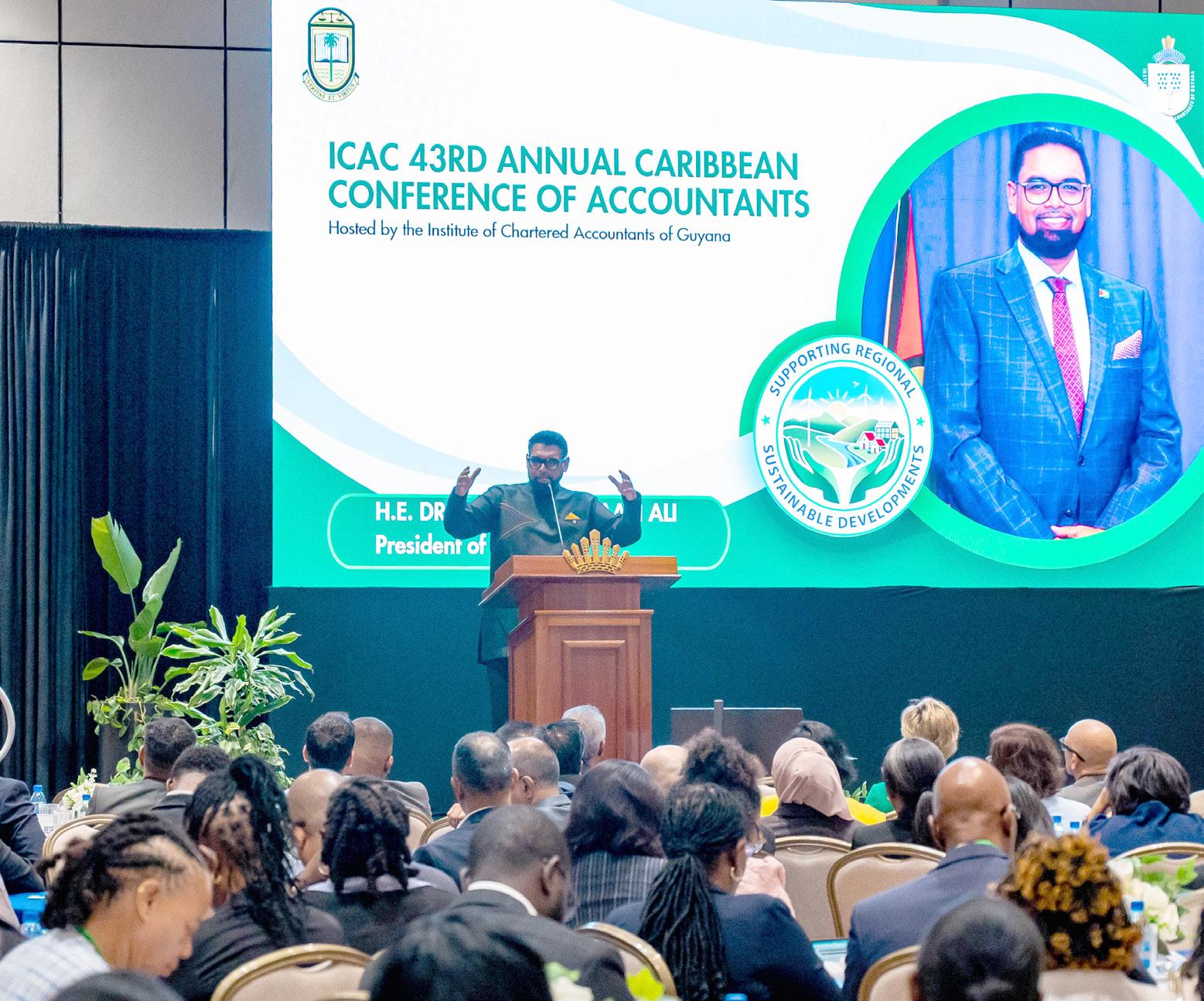
PRESIDENT Dr Irfaan Ali has warned regional accountants against becoming overly dependent on artificial intelligence (AI), urging the profession to protect its “brain muscle” and evolve into strategic advisers rather than mere operators of digital tools.
Addressing the 43rd Annual Caribbean Confer ence of Accountants of the Institute of Chartered Ac countants of the Caribbean (ICAC) in Georgetown, on Friday, Dr Ali said AI must serve as a tool to enhance professional judgment, not replace it.
“You’re also meeting at a time when professions around the world are chang ing and changing because of systems; you have to decide in your profession whether people drive [the] system or the system is driving people,” he said.
Dr Ali noted that the days of accountants being con fined to recording and report ing figures are over.
With governments and businesses now able to obtain real‑time dashboards and predictive analytics from AI systems, the value of the profession must increasingly lie in interpretation, strategic insight, and policy influence.
“AI is a tool to help us, but if we allow AI to be the tool that directs us, then we will have challenges, so we have to decide in the region how we shape AI to meet our own model and to meet our own needs,” he said.
Against that backdrop, he challenged the profession to redefine its core compe tencies.
“ Accountants now need to evolve, not just generat ing the data anymore, but using the data to enhance decision‑making, using the data to influence policy,” Dr Ali said, adding: “And for accountants to be relevant in this environment, you have to now also be like an ac countant, a Wall Street trade policy analyser, because this accountant now must move into a system where they understand policy.”
He also cautioned about the cognitive risks of over reliance on automation, drawing a parallel between children overexposed to de vices and professionals who outsource too much thinking to algorithms.
“There’s a great danger in becoming an AI human,” he warned. “The muscle of the brain is trained to think, and if we stop the process of allowing your brain muscle to work, it will become dead. You may not have a physical stroke, but you will have a different type of stroke.”
Against the backdrop of Guyana’s rapid economic expansion fuelled by oil and gas, major infrastructure, and rising foreign investments, Dr Ali said the demand for high‑quality professional ser vices, including accounting, has multiplied.
He noted that the region’s central challenge is not mere ly producing more accoun
urges professionals to keep up with rapidly changing times
tants, but also producing the right accountants for a profession that is undergoing profound transformation.
In the changing climate, he noted that accountants must be technologically lit erate, comfortable with AI, cloud‑based systems, digital audit tools, and real‑time analytics; ethically grounded, able to resist political cap ture and retain independent judgment; and strategically oriented, capable of interpret ing data for policy, compet itiveness, and development outcomes.
Despite the scale of the transition, Dr Ali expressed confidence that Caribbean accounting can adapt, as it has done through previous waves of regulatory change, globalisation, digitisation, and now AI.
“Each generation of accountants has faced this challenge and responded accordingly, and therefore, I’m confident that with the right preparation, Caribbean accounting will continue to evolve in tandem to meet the changes that lie ahead. I’m confident that this profession will continue to play a vital role in supporting economic growth, strengthening gov ernance, enhancing transpar ency, and building confidence throughout our region.”
Meanwhile, Melanie Proffitt, President of the As sociation of Chartered Cer tified Accountants (ACCA), highlighted the evolving role of accountants in a rapidly changing world, emphasising
the importance of embracing three mega trends: demog raphy, climate change, and technology. Proffitt highlight ed too the profession’s shift towards environmental and social sustainability, ethical decision making, and AI adoption.
“The organisation is re
designing its qualification to include new awards, experi ential learning, and a stronger focus on sustainability, AI, and technology. The future of accountancy involves spe cialised skills, transferable skills, and generalist interper sonal skills,” she said.
Held under the theme,
“Supporting Regional Sustainable Development,” the four-day conference has brought together more than 300 delegates from across the Caribbean to examine the accounting profession’s role in advancing sustainable growth and regional development.
President Dr Irfaan Ali addressing hundreds of delegates at the 43rd ICAC being held in Georgetown
Expanded Mortgage Relief
MORE than just another fiscal incentive is President Dr Mohamed Irfaan Ali’s announcement that first-time homeowners will be able to deduct the entire amount of interest paid on mortgages of up to $30 million from their taxable incomes.
It sends a conscious policy signal that in a rapidly changing Guyana, home ownership must be kept within reach of ordinary citizens.
Unveiled at the opening of the International Building Expo 2026, the measure essentially doubles the cap on tax relief on mortgage interest and strengthens a policy environment that is increasingly positioning the state as an active partner in helping families buy their first homes.
As the President said, in practical terms the government is lowering the tax burden on mortgage payers, thus sharing some of the cost of home ownership.
This intervention comes at a critical juncture in Guyana’s developmental trajectory. The country’s unprecedented economic expansion, largely driven by oil revenues and broader investment activity, has created both opportunities and challenges.
Affordability has been a major concern, whether young professionals, working-class families and first-time buyers can meaningfully participate in the nation’s growth story or be relegated to watching from the sidelines.
Housing policy has been one of the main ways in which successive governments have tried to widen economic participation.
Since taking office in 2020, the People’s Progressive Party/Civic administration has made housing delivery a key pillar of its development agenda, pledging to distribute 50,000 house lots within five years.
By early 2025, more than 40,000 allocations had apparently been made, putting the government on track to beat its original goal. Meanwhile, dozens of new housing schemes have been established across the country to satisfy the increasing demand.
The sheer size of the demand is a story in itself. According to President Ali, the housing-application system in Guyana has approximately 81,000 applications, with around 67,000 applications received since 2020.
What is even more telling is the average age of the applicants, just over 23 years old, showing that younger Guyanese are seeing home ownership as an attainable aspiration rather than an impossible dream.
But demand alone does not guarantee accessibility. In short, owning a home is a question of financing, and here, too, there have been big changes.
Five years ago mortgage rates in Guyana were usually between eight and 15 percent.
Today, increased competition among financial institutions has dramatically pushed rates down with some lenders offering mortgages at rates beginning as low as three percent and extending
financing periods for up to 35 years.
This is indicative of an important economic principle, which is that markets tend to respond positively when governments create conducive policy frameworks.
The housing-finance market in Guyana has matured with the expansion of mortgage products by commercial banks, the increase in lending ceilings by the New Building Society and the introduction of more flexible financing arrangements.
Still, there are legitimate questions that policymakers must continue to answer.
First, affordability can’t be assessed only by access to financing. The increasing cost of construction materials, labour shortages and infrastructure demands continue to exert upward pressure on the overall cost of building a house. Tax relief on mortgage interest makes the repayment burden lighter, but does not directly make the initial cost of construction or land development any cheaper.
Second, the sustainability of the rapid expansion of housing will be highly dependent on the government’s ability to continue to provide serviced lands, infrastructure, transportation networks, schools, healthcare facilities and recreational spaces. Housing schemes should be not just clusters of houses but sustainable communities.
Thirdly, policymakers need to be vigilant about the unintended consequences of rapid economic growth, including
speculative real estate activity that could ultimately undermine affordability for the very groups that these policies seek to help.
There are problems but the larger principle behind the new tax relief measure is commendable. There is much more to home ownership than economics. It promotes financial security, creates intergenerational wealth, strengthens communities and builds the sense of belonging and investment that citizens have in the future of their countries.
In many developed economies, governments have long understood that housing policies are essentially social policies. To make home ownership more widely available, mortgage interest deductions, government-sponsored loan programmes, tax incentives and public housing programmes have all been employed. Guyana’s latest measure fits squarely within that tradition.
As Guyana continues its remarkable economic transformation, one of the defining tests of public policy will be ensuring that ordinary citizens can acquire a stake in that prosperity.
But extending mortgage interest tax relief is not, in itself, a full answer to the country’s housing problems. But it is a meaningful step towards protecting the dream of homeownership for thousands of Guyanese families.
When governments help people build houses, they’re doing a great deal more than just building houses --- they are nation builders.
Gov’t invites bids for major West Demerara bypass road
IN keeping with the commitment to modernise Guyana’s transport infrastructure and improve connectivity, the government has moved to the bidding stage for the construction of the Alternative Bypass Route for the West Coast Demerara traffic from Tuschen to Ruimzeight.
The Ministry of Housing and Water, through the Central Housing and Planning Authority (CH&PA), has invited sealed bids from eligible contractors for 13 lots under the transformative road project.
The project will be procured through the National Competitive Bidding (NCB) process in accordance with
the Procurement Act 2003.
Interested contractors can obtain bidding documents from June 30, 2026, with bids scheduled to close on July 13, 2026.
The construction period for each lot is estimated at eight months. A pre-bid site visit has been scheduled for Wednesday, July 8, 2026, in the parking lot of the National Track and Field Facility at Leonora.
The bypass road forms part of the government’s wider strategy to ease traffic congestion along the West Coast Demerara corridor, while supporting continued housing and economic expansion in Region Three.
The advancement follows significant investments
outlined in the 2026 Budget, which allocated $14.7 billion for Region Three’s development programme.
As part of that investment, some $123 million was approved for the construction of several bridges, and an additional $493 million was approved for public works across the region, including $100 million for road rehabilitation, improving access for hundreds of residents.
The bypass route is expected to play a critical role in improving traffic flow, reducing travel times and supporting continued residential, commercial and industrial development along the West Demerara corridor. (DPI)
The reasons I believe Iran won the war
AROUND the world, since World War II (WW2) people have recognised the superpower status of the United States.
The US since WW2 has been the richest country in the world with enormous military reach that sometimes appear coterminous with the world.
This hegemony has had enormous influence, though mistakenly, on the way people saw the US. It had thousands of analysts working in many state institutions and people came to accept that these analysts, especially in the State Department and the CIA, as knowledgeable people who know what was taking place in every country in the world.
American academics came to be the authority on International Relations simply because the US dominated the global economy and American scholars, well-funded, churned journals and books that people saw as the guide to understanding international affairs.
But this perception was based more on the popularity of the American Government in the world rather than substance. Most of the prestigious journals carried International Relations essays that glorified US global presence rather than sound scholarship. These scholars were ignorant about the nature of the Global South and didn’t care to research the Global South
The security analysts at the CIA, the Pentagon and the State Department, armed with the fact that the US is the globe’s hegemon didn’t see it as necessary to do real research on what the world was like.
When the USSR fell, not one of these experts had even the remotest idea what was taking place in the USSR. This is despite the fact that all America’s state security institutions had a certain type of experts named Kremlinologists. And there were hundreds of them. Their role was to study the USSR.
We come to Iran. Based on the perception that the US can conquer any country it wants to, the US attacked Iran. No doubt the hundreds of geopolitical experts in the US government advised their government that Iran was easy pickings. It turned out that the hundreds of geopolitical experts were mediocre analysts. Iran proved it was no walk-over and could use war strategies to damage US presence in the Middle East.
The war is over and any competent analyst would know that Iran was not defeated but in fact came out stronger. Briefly here are the factors that led to the US accepting a ceasefire.
One- the US was ignorant of Iran’s capability to destroy Israel. In fact, the US experts believe that Israel is such a formidable war machine that it could destroy the Middle East if it wants to. That is abominable ignorance. Israel is not a formidable war machine. What Iran did was to signal to the US that if the war continues, it will destroy Israel (a country of a mere 8,000 square miles). Iran was so good that it bombed Israel for violating the ceasefire in attacking Lebanon. This is the first time since the Yom Kippur war between the Arabs and Israel in 1973 that a country attacked Israel not as a defensive reaction but as an offensive strategy. Israel did not respond. So, the first consideration to note is that if the war had continued then Israel may not have survived.
Secondly, the US mediocre geopolitical experts are to be blamed for what happened to the US military installations in Gulf nations and the devastation the Gulf countries themselves endured. No US strategist believed that Iran was capable of attacking US bases in the Gulf.
None of these experts ever thought that infrastructural damage could be inflicted on the Gulf State. What Iran did is that not only it liquidated many structures in Israel but destroyed US bases in the Gulf and severely damaged all the Gulf countries. What has not been made public is the enormous pressure the Gulf leaders, including the influential Saudi Arabia, put on the US to end the war. If the war had continued, Bahrain with its 290 square miles would have been obliterated from the face of the earth.
Thirdly, the US did not have a clue before the war started of Iran’s strategic control of the Strait of Hormuz. What Iran did is that it blockaded the strait thereby putting pressure on the world economy and once the world economy runs into problem the US economy gets into trouble.
The US had only one strategy, and that was to loosen Iran’s stranglehold on the strait – bomb the hell out of Iran. But the more the
bombing of Iran had continued the more the existence of Israel and the Gulf nations would have been in jeopardy. Whoever started the war with Iran failed to internalise the wise saying of Henry Kissinger after the US lost in Vietnam: “Power has never been so great
yet so useless.”
DISCLAIMER: The views and opinions expressed in this column are solely those of the author and do not necessarily reflect the official policy or position of the Guyana National Newspapers Limited.
Health training complexes to transform medical education
GUYANA is laying the foundation for a stronger, self-sufficient healthcare system with the construction of two state-of-the-art health training complexes that will dramatically expand opportunities for medical education and professional training outside of Georgetown.
As the country continues to invest heavily in new hospitals, advanced medical technologies and expanded healthcare services, the Ministry of Health is now focusing on another critical pillar of healthcare transformation, developing the skilled workforce needed to sustain those investments for generations to come.
Minister of Health Dr. Frank Anthony revealed that major health training complexes in New Amsterdam, in Region Six, and Suddie, in Region Two, are nearing completion and will serve as regional centres of excellence for healthcare education, research and professional development.
The New Amsterdam complex is expected to be ready within the next month, while works on the Suddie facility are progressing steadily, and are expected to be completed in the coming months.
These facilities will provide modern classrooms, training laboratories and
learning spaces designed to accommodate a growing number of students pursuing careers in healthcare.
The government has secured partnerships with the University of Guyana and the University of the West Indies (UWI), creating unprecedented opportunities for students to access internationally recognised programmes closer to home.
“Apart from the ministry’s training programmes going there, we have been discussing with the University of Guyana to offer a number of their medical programmes at that facility,” the minister stated. “We have also been speaking with the University of the West Indies, and that facility would also be the host of a University of the West Indies pharmaceutical programme.”
The initiative is expected to reduce the burden on students who often have to relocate to Georgetown or pursue costly overseas education to access specialised training opportunities.
In another major boost for accessibility, dormitories are being constructed alongside both training complexes to accommodate students travelling from hinterland, riverine and rural communities. (DPI)
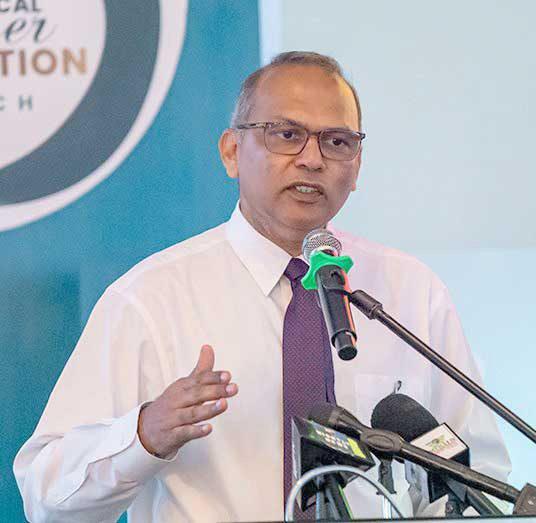
Health Minister Dr. Frank Anthony
GOAL scholarship graduate turns tragedy into triumph
–– urges persons with disabilities to never give up
By Andrea Hendricks
EARLIER this week, the 2026 GOAL graduation ceremony at the National Cultural Centre brought together almost 4,000 scholars for a celebration of achievement and perseverance.
The scholarship programme, now in its fourth year, is a Government of Guyana initiative which has been transforming lives.
Among the graduates this year are persons living with disabilities and persons from the hinterland regions.
One such person was 32-year-old Vlyssess Edwards of Bamia, Soesdyke/
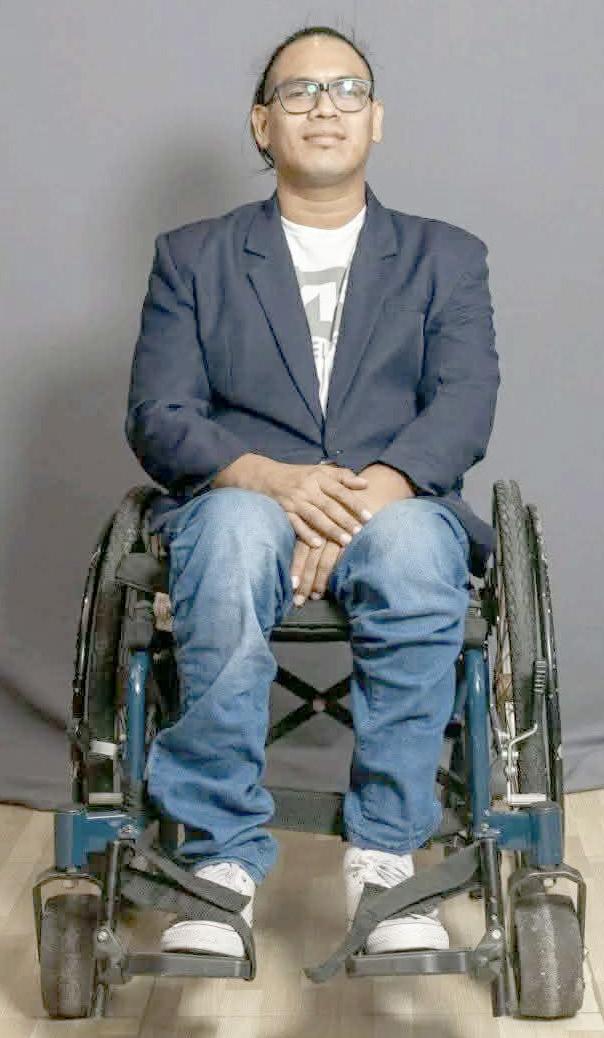
A vehicular accident in 2012 left Vlyssess Edwards confined to a wheelchair. He has not allowed this to hamper his educational pursuits
Linden Highway, who has been confined to a wheelchair following an accident in 2012. His presence on stage added to the spirit of the day and set the tone for an inspiring story of determination, growth, and success and has become a powerful example of resilience and discipline.
That vehicular accident changed the course of his life and left him dependent on a wheelchair, but it did not take away his ambition. Instead, it marked the beginning of a journey that would later take him through the scholarship programme allowing him to attain higher education and professional opportunities. Today, his story stands as a reminder that a setback can become the starting point for a remarkable comeback.
The accident occurred at a time when he was undergoing training to become a football referee, a path he was pursuing with focus and hope. In an instant, everything changed when a drunk driver struck him, leaving him with a spinal cord injury.
Looking back, he de -
scribed 2012 as “the year that changed my entire journey of life, everything I do,” he told this publication.
Before that painful turning point, he had lived an active school life at Blankenburg Primary and Leonora Secondary, where he took part in activities and spent time with friends. After secondary school, he continued to develop his interest in football by enrolling in referee training with the Guyana Football Federation.
Those early years, he underscored, helped shape the confidence and discipline that would later carry him through more difficult challenges.
Edwards’ academic journey with the GOAL scholarship programme began in 2021 with the SCQF Level 6 diploma, a qualification that opened the door to further study. After completing it successfully, he moved on to pursue a bachelor’s degree in computer application, which he completed after three years of study. He recently graduated, adding another milestone to a path built on persistence and hard work.
Interestingly, his first career ambition was to become a geologist, but that changed after he watched ‘The Terminator’ and developed a fascination with ‘Artificial Intelligence.’ During a period of free time, he came across the GOAL scholarship programme online, decided to apply, and was accepted. “I was surprised when I received my acceptance letter of acknowledgement,” he told this publication adding, “That’s where it all began.”
Edwards has never limited his ambitions to the classroom. He said business ideas have always been part of his future plans, even though one earlier attempt did not succeed. Rather than allowing that setback to stop him, he kept moving forward and is now pursuing a master’s in computer application.
He also has his eyes on building a drone security enterprise called E.D.W.A.R.D.S — short for Evolutionary Drone Workforce AI Resilience & Defensive Security. The business WILL focus on the use of drones for security surveillance, Artificial Intelligence detection, analysis, and cyber security. For Edwards, entrepreneurship is not separate from education; it is one more way to turn knowledge into practical impact.
The road, however, has not been easy. Balancing studies, health, running a non-profit organisation, and other responsibilities often became overwhelming.
“I struggled with time management,” he admitted, adding that there were moments when he wanted to give up on his academic journey. Instead of surrendering, he learned to organise his days more effectively and prioritize the tasks that mattered most. He credits tools such as Google Clock and Calendar to help him stay on track and keep up with deadlines.
Edwards also stressed that success in higher education requires a high GPA, consistent assignment work, strong attendance, focus, and careful planning.
“Being consistent and committed to this programme teaches you a lot about yourself. It can reshape your future,” he said.
Edwards emphasised that the rewards for staying the course have already begun to show.
Armed with his computer application degree, he has gained employment overseas as an Artificial Intelligence Apprentice with Data Monsters in Spain, a step that reflects how far his determination has carried him.
He said his knowledge has also helped inspire the creation of his drone business, proving that education can open doors in more than one direction.
Along the way, he was selected as the student representative, a role that allowed him to advocate for fellow students who needed help and support.
In a digital age where Artificial Intelligence continues to dominate and create new opportunities, Edwards’s journey shows how training, confidence, and persistence can transform a life. His story also highlights the wider impact of the GOAL scholarship program, which continues to give people access to educa-
tion and new possibilities.
For Edwards, the journey is about more than personal success.
He wants to encourage persons living with disabilities to see higher education as an achievable goal, not an impossible dream.
“Living with a disability is already a challenge and
being able to pursue higher education will be worth it.
Just go for it,” he said.
He also hopes to educate villagers and give back to his community by sharing the knowledge he has gained in this digital era, especially through Artificial Intelligence. That commitment to service, like his commitment to education,
remains central to the man he has become.
He closes his story with a message that reflects both his experience and his outlook on life:
“Time is like currency, once you spend it there is no refund, so spend it wisely.”
It is a simple line, but one that captures the spirit of his journey.
Vlyssess Edwards on Graduation Day
Over 350 persons receive Certificates of Title at Building ‘expo’
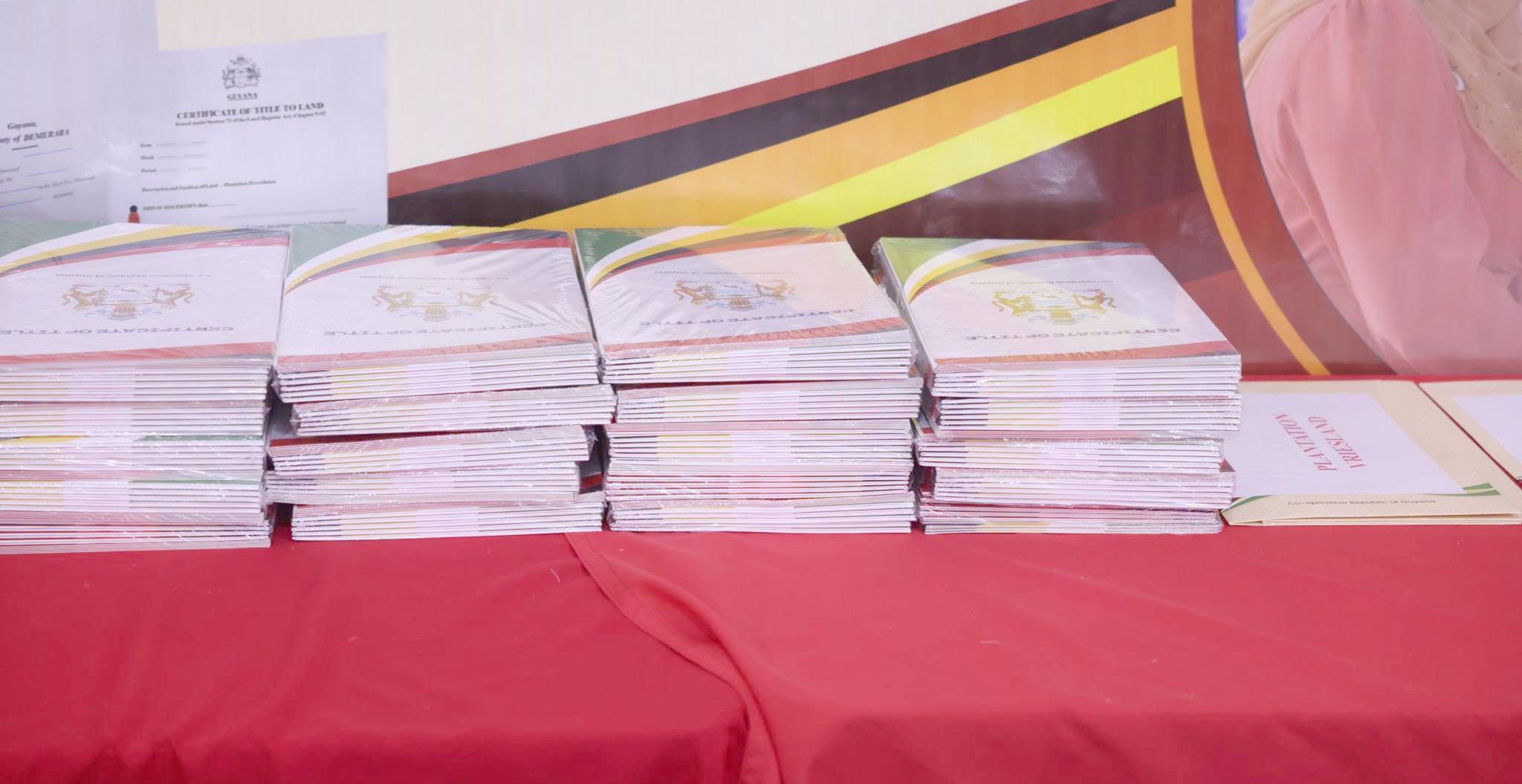
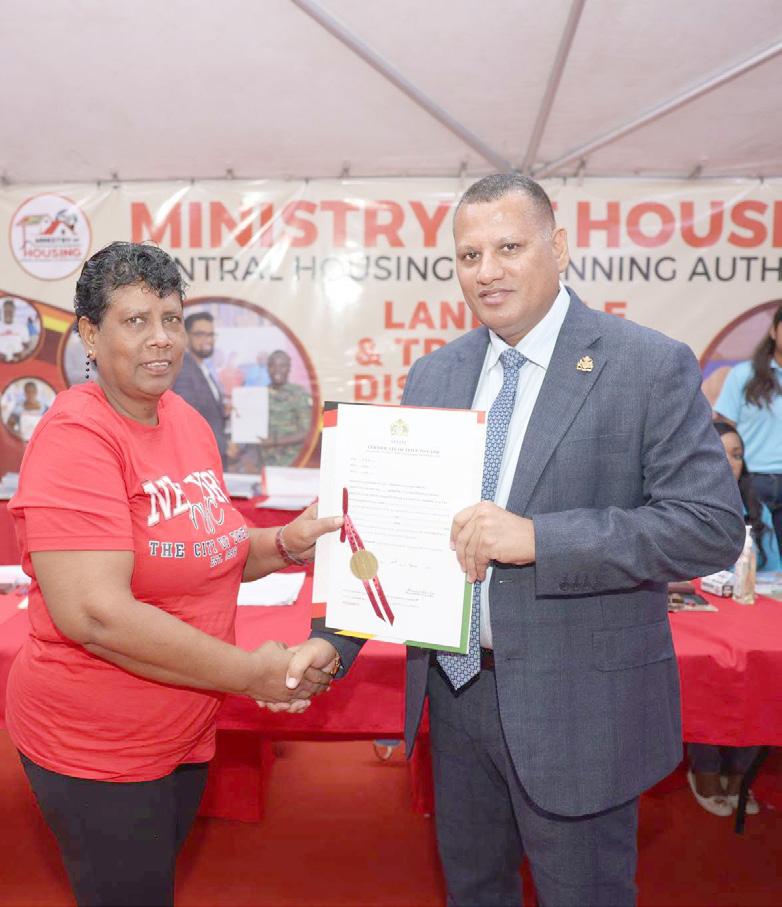
OVER 350 persons on Friday uplifted their Certificates of Title at the Ministry of Housing, Central Housing and Planning Authority (CH&PA) Dream Realised Housing Drive held at the Guyana National Stadium as part of the International Building ‘Expo’ 2026.
The Certificates of Ti-
tle distributed were for landowners in Laurentia Catherina and Vriesland, in Region Three (Essequibo Islands-West Demerara).
Persons from these areas who were invited to uplift their Certificates of Title but were unable to do so on Friday were encouraged to visit the Dream Realised Housing Drive
today or Sunday to receive their documents.
Today’s distribution will be for landowners from Leonora, in Region Three, and Good Hope, in Region Four (Demerara-Mahaica).
Minister of Housing Collin Croal, along with members of the ministry’s team, facilitated the distribution.
New benab providing space for language, cultural preservation
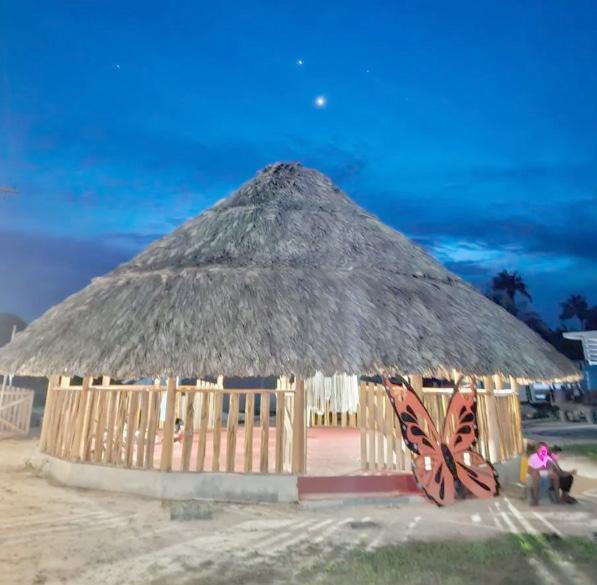
A newly established village benab is serving as a hub for cultural preservation and community engagement, providing residents with a dedicated space to celebrate Indigenous heritage while promoting the revitalisation of their language.
The benab was constructed through government support under the capital grant by the Ministry of Amerindian Affairs.
The benab is now home to the village’s cultural group, which uses the facility to rehearse performances to preserve and showcase Indigenous traditions. It also serves as a venue for community meetings and engagements with partner organisations.
The facility, the first of
its kind in the village, was named Kambana Shikua, which translates to “Butterfly House,” reflecting the community’s commitment to preserving its Indigenous identity and language.
Traditional butterfly designs adorn the interior of the benab, symbolising its name
and creating a culturally significant space for residents.
Speaking to the Department of Public Information (DPI) on Thursday, Toshao Keanu Thomas noted that the benab represents more than just a building. He said it is a symbol of cultural revival, providing a permanent space where traditions, language and community life can flourish.
“The culture group that we also formed when we took office in 2024 would have their rehearsals there as well,” the toshao said.
The project is one of several community development ventures undertaken through government-funded capital grants to improve infrastructure and services in the village. (DPI)
The newly constructed benab in St Deny
Over 350 persons on Friday uplifted their Certificates of Title at the Ministry of Housing, Central Housing and Planning Authority (CH&PA)’s Dream Realised Housing Drive held at the Guyana National Stadium as part of International Building Expo 2026
King’s Foundation proposes ‘village city’ model to guide Georgetown’s expansion
RATHER than allowing Georgetown to expand into one sprawling metropolis, Guyana should adopt a “village city” model, according to Ben Bolgar, Executive Director of the Projects Team at the King’s Foundation.
The concept envisions a network of connected communities, each with its own identity, schools, markets and essential services.
Bolgar outlined the proposal on Friday while addressing the Building Expo Seminar 2026 at the National Stadium, Providence, where he shared details of the Foundation’s ongoing collaboration with the Government of Guyana on sustainable urban development.
The King’s Foundation was invited more than two years ago to provide technical advice under Guyana’s Low-Carbon Development Strategy (LCDS), specifically on the sustainable towns and cities component.
“You can start to think this is very much a work in progress,” Bolgar told participants, adding: “We’re developing thoughts as we speak. We’ve just come from several meetings this morning on some of the projects...”
He related that the King’s Foundation’s work spans multiple areas of development, from large-scale urban planning to sustainable buildings and construction materials.
One of the first steps, he said, was consulting communities and stakeholders to understand what kind of places Guyanese want to live in as the country continues its unprecedented economic expansion.
“We always do, when working in different places, is listen to communities and listen to stakeholders and ask about the type of place people want,” he said.
According to Bolgar, preserving Guyana’s unique identity is central to that vision.
Bolgar said President Dr. Irfaan Ali has consistently emphasised that, as Guyana develops, the country should preserve its unique identity rather than simply replicate cities such as Miami.
From consultations, he said, several defining characteristics emerged, including
Georgetown’s reputation as “The Garden City”, Guyana’s waterways, the country’s cultural diversity, its architectural heritage, and the importance of village life.
“The idea of Georgetown being very much the Garden City, the city should be somewhere that is green and makes people feel relaxed,” he said, while adding that stakeholders also emphasised respect for the country’s history, culture, and Indigenous communities.
AVOIDING PLANNING MISTAKES
Bolgar argued that Georgetown should avoid the planning mistakes experienced by many rapidly growing cities around the world, where unchecked expansion eventually overwhelms infrastructure and public services.
Using an analogy, he compared cities to living organisms.
Bolgar said: “When you look at cities that have grown all over the world, where I live in London, in the 1700s and 1800s, the city grew massively. We had a huge fire, and then people started moving into the city in the way that we are moving into Georgetown.”
He added: “What you see is that if the city just grows and gets bigger and bigger and bigger, it’s a bit like a person. If I just kept getting bigger and bigger and bigger, I’d eventually have a heart attack and die.”
He suggested that cities should grow the same way nature does.
“But instead, I married my wife, we’ve got two beautiful children, and we survive and create by duplication or multiplication. That is what nature teaches us as a sustainable way to grow: not just to get bigger, but to duplicate and to multiply. That is the same principle you find in nature, and we think it’s a very sensible way for towns and cities to grow.”
Bolgar said: “Nature teaches us as a sustainable way to grow is not just to get bigger, but is to duplicate and to multiply. That is the same principle that you have in nature. We think it’s a very sensible way for towns and
cities to grow.”
Under that model, Georgetown would consist of a series of interconnected settlements, each functioning like a village with schools, markets, community facilities and essential services located within walking distance.
“You can have a big place, but each village has a school at the centre, has a market at the centre... all the things that you need to live your daily lives would be within probably one kilometre — maybe a 10-minute walk,” he said.
Residents could still travel efficiently between communities through an integrated transportation system while maintaining a stronger sense of identity within their own neighbourhoods.
Bolgar warned that many modern cities have developed in ways that separate wealthy and poorer communities, creating social and economic inequalities while increasing commuting times.
He stated: “What you find in some other cities... is you often get a city where the rich people live in the middle and the poor people live on the edge. It’s a very unsustainable form of development. It’s a very inequitable form of development, and it’s also a very inefficient form of development.”
He noted that Georgetown is already showing signs of pressure associated with rapid urban growth.
“You look at Stabroek Market, it’s very congested. You look at coastal roads, there’s a lot of traffic in the mornings. It’s not necessarily always safe for children,” Bolgar observed.
As part of its recommendations, the King’s Foundation has been studying the area stretching from central Georgetown along the East Coast corridor to the Cheddi Jagan International Airport, as well as sections of the West Bank Demerara.
The proposal envisions four interconnected settlements, each with a distinct economic role.
Georgetown would remain the nation’s cultural capital, while Silica City would focus on education, innovation and technology. A new eastern settlement would specialise
in water and green innovation, while a western settlement would support logistics and port-related activities.
According to Bolgar, these communities would be linked by high-speed transportation, allowing residents to move quickly between them without relying heavily on private vehicles.
He said transportation
planning is already being explored alongside highway engineers, with consideration being given to additional road networks and rapid public transport corridors to reduce congestion and improve connectivity.
The Executive Director stressed that the concepts remain under discussion with the government and are in-
tended to guide Guyana’s long-term urban planning rather than prescribe immediate changes.
He said the ultimate objective is to create communities that preserve Guyana’s identity while providing residents with better quality of life, greater accessibility and more sustainable growth.
Minister Parag, community mobilise relief for Wahab family after devastating fire
MINISTER of Education, Sonia Parag, who is also Geographical Member of Parliament for Region Five, visited the Wahab family at Plantation Hope,
West Coast Berbice, to offer comfort and critical support following a dev -
astating fire on Thursday morning.
The blaze completely destroyed the family’s two-storey home, leaving five individuals, including a two-year-old toddler, homeless, and reducing years of their hard work to ashes.
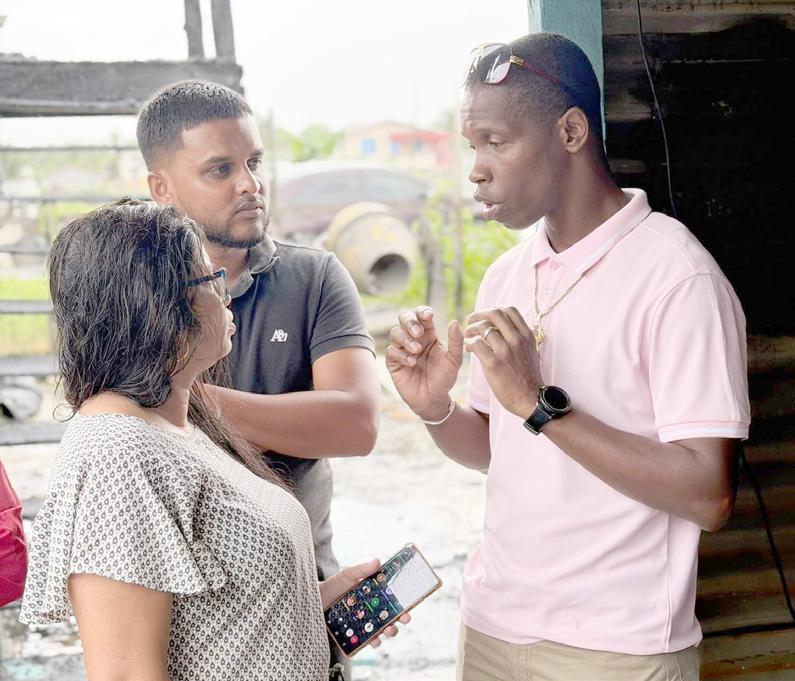
During the visit, Minister Parag met with the family members, including Bibi Wahab and homeowner
Jasode Wahab, to listen to their immediate needs and assure them of the government’s solidarity during this difficult trial.
Also present to pledge the regional administration’s assistance were Regional Executive Officer, Mary Samaroo and Regional Vice Chairman, Kleon Lindey.
Additionally, local com-
munity activists are already on the ground mobilising resources and planning a fundraiser to help the family rebuild.
The Ministry of Education extended its heartfelt sympathies to the Wahab family and commends the Plantation Hope community for standing together in support of their neighbours.
‘Putting Safety First’ Campaign intensifies with public awareness,
THE Ministry of Labour and Manpower Planning, through its Occupational Safety and Health Department, in collaboration with other stakeholders, has formally commenced, and is now intensifying, the “Putting Safety First” Campaign.
According to a press release from the ministry on Friday, this national initiative began with a focus on the construction sector, and the Ministry will embark on a nationwide outreach programme targeting the construction sector across all ten administrative regions.
This is in recognising the industry’s rapid growth and the importance of ensuring that every worker operates in a safe and healthy environment.
As such, “Putting Safe-
inspections
ty First” seeks to improve awareness, encourage compliance and promote a proactive safety culture.
These engagements are designed to bring occupational safety and health awareness directly to contractors, supervisors, workers and other stakeholders within the sector.
The regional outreach programme will adopt various approaches. One fundamental aspect of each regional engagement will focus on education and awareness through Occupational Safety and Health seminars, where participants will receive practical guidance on workplace hazards, risk management, legal requirements, and best practices for maintaining safe construction sites.
Through this combined approach of education and
further on-site engagement, the ministry aims to foster a culture in which safety is proactively integrated into every stage of construction activity, ensuring that workers can contribute to Guyana’s development in safe and healthy working environments.
While construction is the campaign’s first focus, “Putting Safety First” is intended to become a long-term national initiative that will eventually expand to other high-risk industries.
This, the minister said, further reinforces its commitment to safer workplaces throughout Guyana.
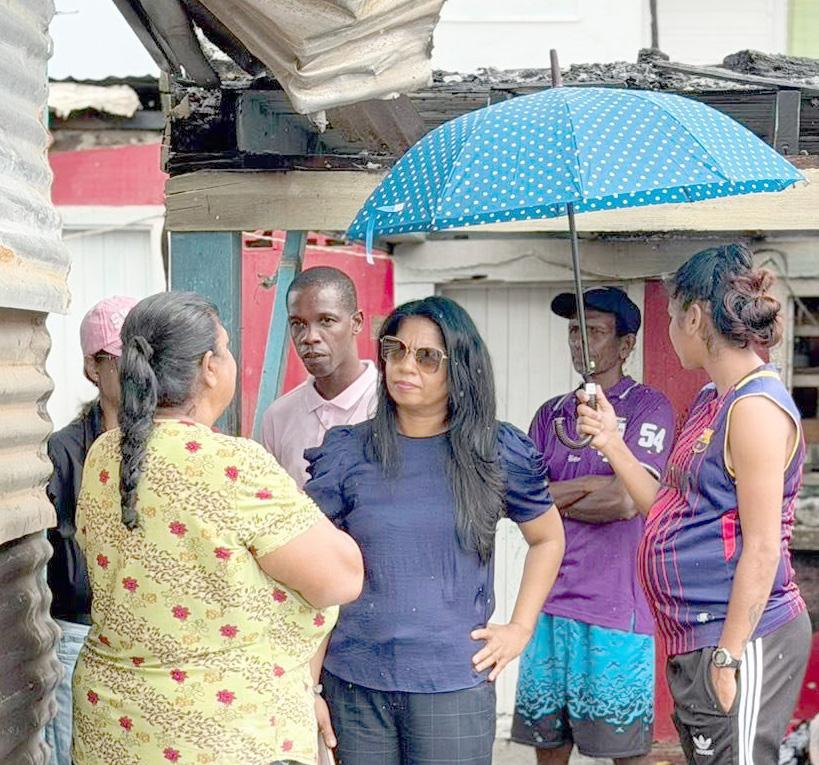
Education Minister Sonia Parag visited the Wahab family at Plantation Hope, West Coast Berbice, to offer comfort and critical support
Expanded drugs list, Telemedicine bring specialist care closer to Hinterland patients
PATIENTS in Guyana’s hinterland communities are now able to access a wider range of medications closer to home through the expansion of the National Essential Drugs List, a move that is helping to reduce the need for travel to Georgetown for follow-up treatment and prescription refills.
The initiative, coupled with the Ministry of Health’s expanding telemedicine programme, is allowing patients to continue receiving specialist care while remaining in
their own communities.
According to Mr. Michael Gouveia, Coordinator for Indigenous People’s Communities within the Ministry of Health’s Regional Health Services Department, patients who were once required to travel to Georgetown for ongoing treatment can now access many of those services through their local health facilities.
“We are able to put that medication on the National Essential Drugs List to be distributed and made available at these facilities. When the doctors see the
patient, the doctor then issues an instruction to the nurse, medic, Government Medical Officer or Community Health Worker, I need you to give this patient this amount of tablets to be used in this manner for a day, and the patient continues to be managed,” Gouveia explained.
He noted that the approach has been particularly beneficial for patients managing chronic and specialised conditions, including mental health disorders, who can now consult with specialists through telemedicine while receiv-
De Groot-EnKline man remains in custody for alleged murder of reputed wife
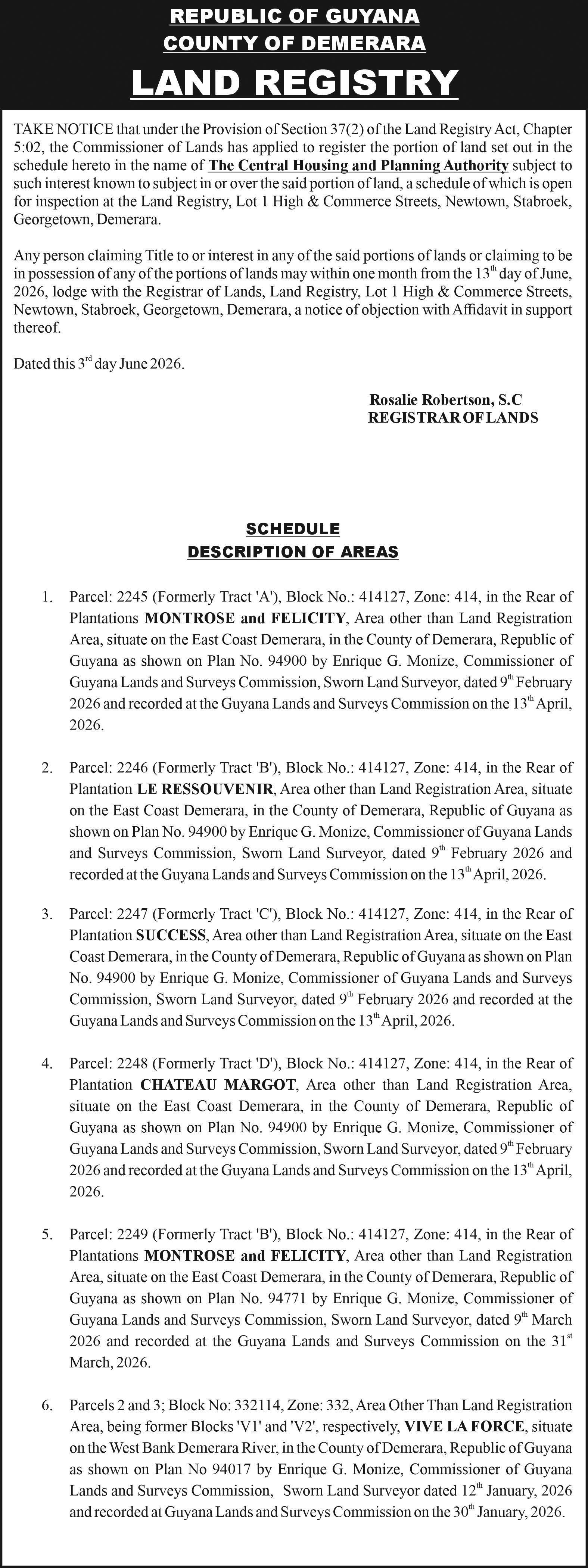
POLICE are continuing their investigation into the alleged murder of Shavannie Hanoman, called “Bo”, a 46-year-old housewife of De Groot-EnKline, Uitvlugt, West Coast Demerara.
According to a police statement, Hanoman
was reported missing on Wednesday, June 24, 2026, and her body was subsequently discovered in a trench at De Groot-EnKline on Thursday, June 25, 2026. Her reputed husband, a 44-year-old of De Groot-EnKline, was arrested in connection with
the matter and remains in custody at the Leonora Police Station.
As part of the ongoing investigation, the suspect was interviewed, and detectives conducted further investigative work relevant to the matter, the statement said.
ing medication closer to home. The model is also reducing the social and financial burdens often associated with accessing healthcare from remote communities. Gouveia said many patients previously faced significant challenges when required to travel to Georgetown for routine care, particularly women with young families.
“Let’s assume the patient is a mother who has several children. She will have to leave the children and come to town. While she is here, she is thinking about her children who are unprotected. When she comes to town, she has
to find a place to stay or go to a hostel. It brings a lot of social effects on the patient,” he said.
With telemedicine now operating at more than 130 sites across Guyana’s hinterland regions, health officials believe the combination of digital consultations and expanded access to medicines is helping to close longstanding gaps in healthcare delivery while improving the overall patient experience.
Gouveia believes the model is creating a more efficient healthcare system while ensuring patients receive the care they need closer to where they live.
for Indigenous People’s Communities within the Ministry of Health’s Regional Health Services Depart-
Coordinator
ment, Michael Gouveia
Demerara Bank offers home loan applicants chance to win new BYD at Building Expo
PROSPECTIVE homeowners applying for a mortgage through Demerara Bank Limited during the International Building Expo 2026 will have the opportunity to win a brand-new BYD motor vehicle, as the bank rolls out a suite of exclusive incentives aimed at making homeownership more accessible.
The promotion, which runs exclusively during the four-day exposition from June 25 to June 28, offers eligible home loan applicants reduced contribution requirements, waived legal fees, and the chance to win one of five G$100,000
requirements and waived legal fees.
Home Loan Specialists from the bank will be stationed at the Demerara Bank booth throughout the exposition to assist prospective borrowers with assessing their eligibility, understanding financing options, and completing applications.
The promotion comes amid intensified competition within Guyana’s mortgage market, where commercial banks have introduced more competitive lending rates and flexible financing packages in response to growing demand for housing.
Earlier this week, President Dr Irfaan
cash-back prizes, in addition to the grand prize of a new electric vehicle.
According to Demerara Bank, the initiative is designed to reduce some of the financial barriers associated with purchasing or building a home while providing customers with additional incentives to secure financing during Guyana’s premier housing and construction showcase.
“For many families, owning a home is one of life’s biggest milestones,” a representative of Demerara Bank Limited said in a statement. “Through this Building Expo promotion, we’re reducing some of the upfront costs associated with homeownership while giving customers the opportunity to enjoy significant rewards, including the chance to win a brand-new BYD.”
The bank noted that the promotion applies to a range of eligible home loan categories, including financing for the purchase of a home, new home construction, completion of unfinished homes, renovations, home improvements and extensions, as well as the refinancing or transfer of existing mortgages to Demerara Bank.
In addition to the opportunity to win the grand prize vehicle and cash-back rewards, customers applying during the expo will benefit from special concessions available only during the event, including reduced equity contribution
Ali announced expanded mortgage interest tax relief for first-time homeowners, describing home ownership as a key pillar of social stability and national development. Several financial institutions have also reduced mortgage rates and increased lending ceilings as the country’s housing sector continues to expand rapidly.
Demerara Bank said the promotion is intended to support Guyanese families at various stages of their homeownership journey, whether they are purchasing their first home, constructing a new residence, or improving an existing property.
The bank emphasised that eligibility for the grand prize vehicle and cash-back awards remains subject to its standard lending requirements, credit assessments, loan approval and disbursement conditions, as well as the promotion’s terms and conditions.
Full details on eligibility requirements and promotional terms are available at the Demerara Bank booth during International Building Expo 2026 and on the bank’s official website.
The International Building Expo 2026 opened on Thursday evening at the Providence National Stadium and has attracted thousands of visitors, exhibitors, developers, financial institutions, and prospective homeowners from across Guyana and the wider Caribbean.
IICA-led ADOPT Caribbean Project advances resilient agriculture in SVG
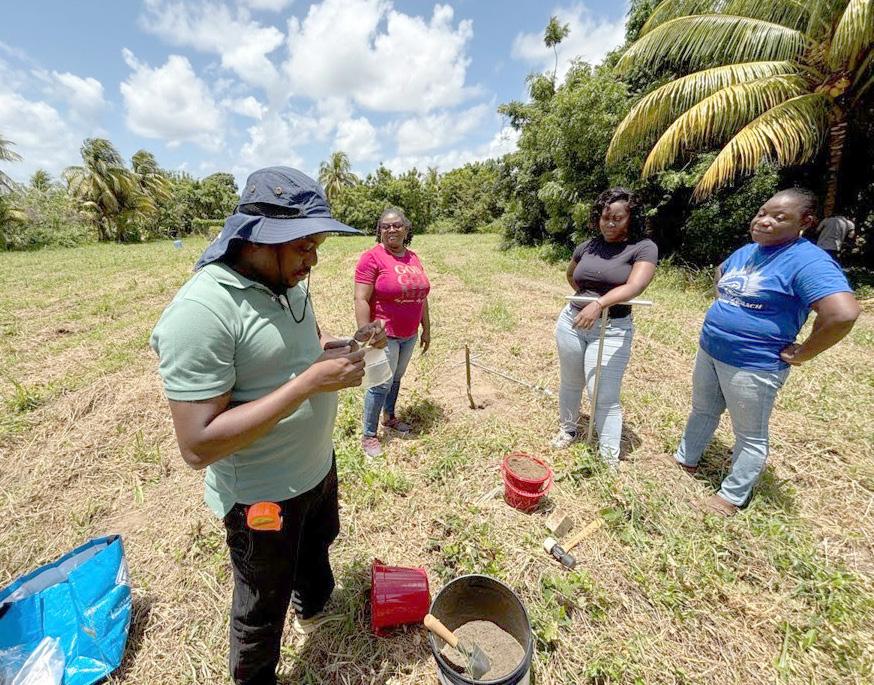
EFFORTS to strengthen climate resilience and sustainable food production in the Caribbean are advancing through the ADOPT Caribbean – Soil Health for Climate Resilient Agriculture project, with 49 farmers and technical officers recently trained in Saint Vincent and the Grenadines.
The initiative, led by the Inter-American Institute for Cooperation on Agriculture (IICA), in collaboration with national and regional partners, is gaining momentum as hands-on support reaches communities in northeast Saint Vincent and the Grenadines.
Activities showcased a blend of field and classroom learning under the project. Soil sampling exercises were conducted in Langley Park and Orange Hill to establish baseline data for improved soil management, followed by training sessions for technical officers
facilitated by Ronen Francis of the Partnership Initiative for Sustainable Landscape Management (PISLM) and Chaney St. Martin, International Specialist in Water and Soil Management at IICA, with a focus on soil health and the establishment of demonstration plots.
Farmers also participated in practical workshops led by Chaney St Martin, and supported by Technical Specialist in Saint Vincent and the Grenadines, Michael Dalton and project Consultant Michael Delpeche, where they explored key aspects of crop production – from land preparation and planting to crop management and harvesting.
“ADOPT Caribbean provides an important platform for capacity building for farmers and agricultural technicians,” said Michael Dalton.
He added: “We have been able to expose our
local technical team to key considerations for experimental plot establishment and provided information for our farmers which gives a sound basis for their operations on their farms. We intend to further advance our interventions through forums such as these for stakeholders, with the intention to promote such practices across the country.”
The project continues with the establishment of demonstration plots, giving farmers the opportunity to see climate-smart practices in action.
The ADOPT Caribbean Project is a regional initiative being implemented in Guyana, Jamaica, and Saint Vincent and the Grenadines. It supports farmers in improving soil health, reducing greenhouse gas emissions, and strengthening climate resilience.
The project is being funded through the New Zealand Government’s
Climate Smart Agriculture Initiative (NZCSA-LAC), as part of its contribution to the Global Research Alliance on Agricultural Greenhouse Gases (GRA), and is administered through the Ag Emissions Centre. (IICA)
Training session for technical officers with PISLM’s Ronen Francis
Caribbean, EU to form joint environmental police network
SECURITY officials from across the Caribbean, Latin America and Europe will soon establish a specialised police network to track and dismantle transnational environmental crime organisations operating in the Region.
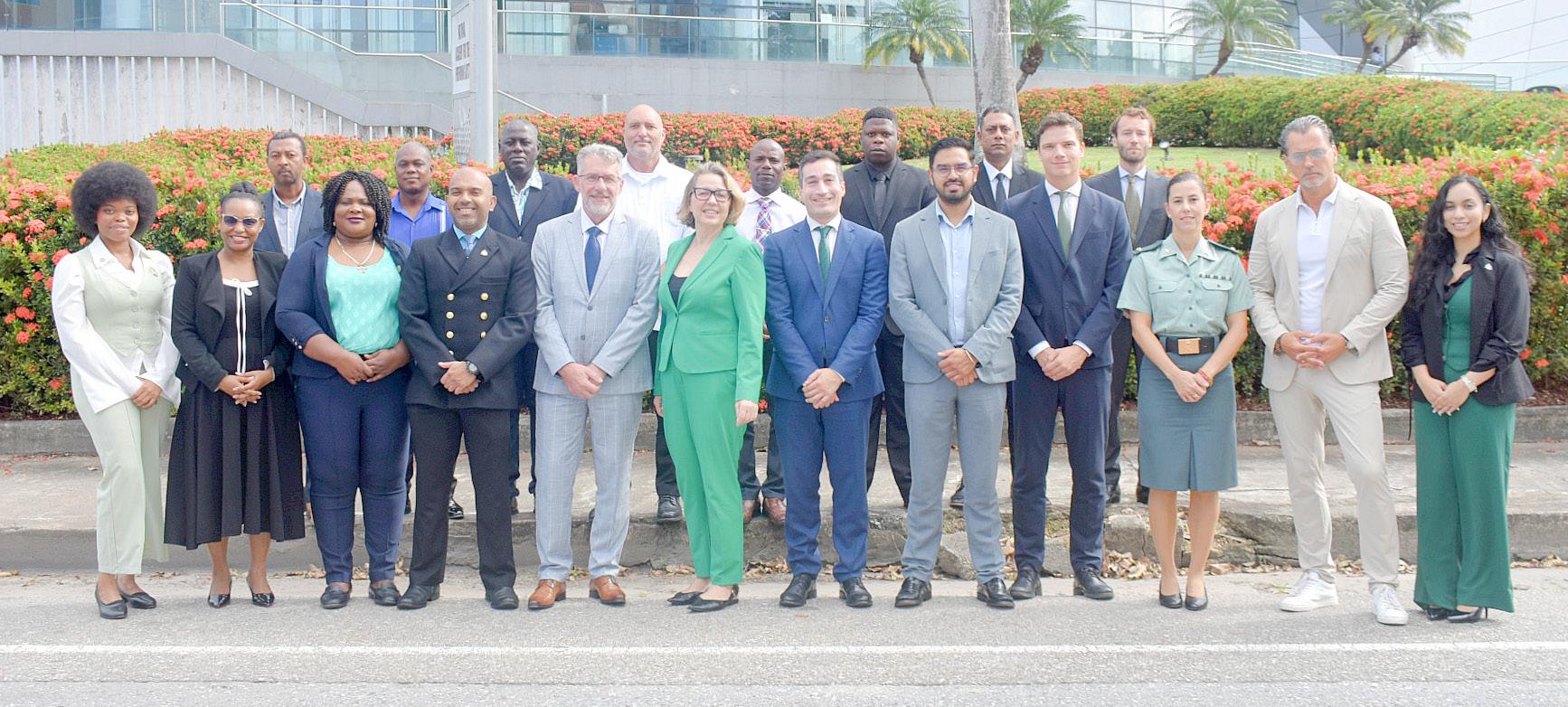
The inaugural meeting, co-hosted by the European Union (EU)-funded programme EL PACCTO 2.0 and the Caribbean Community (CARICOM) Implementation Agency for Crime and Security (IMPACS) held on 26 June 2026, followed an intensive two-day Waste Trafficking Workshop geared towards confronting the rapidly escalating global threats of waste trafficking and pollution crime.
The newly proposed network will establish a structured regional mechanism to improve real-time intelligence sharing, coordinate joint investigations and dismantle criminal networks exploiting the Region’s unique geography and maritime routes.
geography makes it to exploitation. He said that transnational syndicates take advantage of vast maritime spaces and porous borders to move illegal goods, frequently combining environmental offences with document fraud, tax evasion and money laundering.
Mr. Lutchman stated that because these criminal networks operate across borders, a siloed national response was no longer viable. He urged regional law enforcement to move towards a highly integrated model of policing, stressing that the proposed network was essential for closing the operational gaps that criminals currently exploit.
“No Caribbean country should have to face environmental crime alone. The regional geography, maritime space, biodiversity and strategic trafficking routes create vulnerabilities that call for a coordinated regional response”, he reiterated.
Mr. Alain Lemangnen, Key Expert for
Speaking at the opening ceremony of the introductory meeting, which took place at CARICOM IMPACS’ headquarters in Portof-Spain, Trinidad and Tobago, international and regional security experts warned that environmental crimes, such as wildlife poaching, illegal logging and illicit mining, have evolved far beyond ecological threats, becoming major challenges to national security and regional governance.
Ms. Evelina Melbarzde, Deputy Head of Mission, Delegation of the European Union to Trinidad and Tobago, emphasised that these activities directly undermine the rule of law and the stability of local communities.
She noted that whether dealing with timber, wildlife or waste, these offences rely on the exact same networks, maritime routes and illicit financial flows that sustain other criminal markets.
Ms. Melbarzde stated that EU views the creation of this network as part of a genuine, reciprocal partnership between the two Regions, rather than a one-sided initiative.
“Our aim is not only to support individual activities, but also to build stronger bridges between Caribbean institutions, national law enforcement authorities and their European counterparts. In this way, co-operation with regional partners delivers value in both directions”, she explained.
Mr. Virun Lutchman, Environmental Crime Lead, CARICOM IMPACS, highlighted how vulnerable the Caribbean Region’s
Environmental Crime, EL PACCTO 2.0, reinforced the call for structural unity, framing the defence of the environment as a matter of regional sovereignty.
He warned that illegal exploitation directly threatens food security and exposes local populations to heightened risks from natural disasters.
Mr. Lemangnen asserted that international agencies stand ready to provide specialised operational training but underscored the importance of local execution and long-term commitment to the network’s success.
“Beyond tools and structures, the longterm success of this initiative will depend on trust, continuity and shared commitment. It is about clearly stating that the Caribbean will not be a lawless zone when it comes to environmental protection”, he added.
He also urged participating States to designate national points of contact, enhance financial investigations and intelligence sharing as well as actively support the formation of permanent, specialised environmental law enforcement units.
The network is supported by EL PACCTO 2.0 and CARICOM IMPACS, alongside international partners such as Interpol and the Spanish Civil Guard (SEPRONA).
It aims to replicate the operational success of Latin American initiatives, like the Jaguar Network, while tailoring the framework to Caribbean realities. (CARICOM IMPACS)
Participants at the inaugural meeting of the Caribbean Police Network to Combat Environmental Crime, which was held on June 26, 2026, in Port-of-Spain, Trinidad
Rebuilding continues across Region Two following devastating storm
By Indrawattie Natram
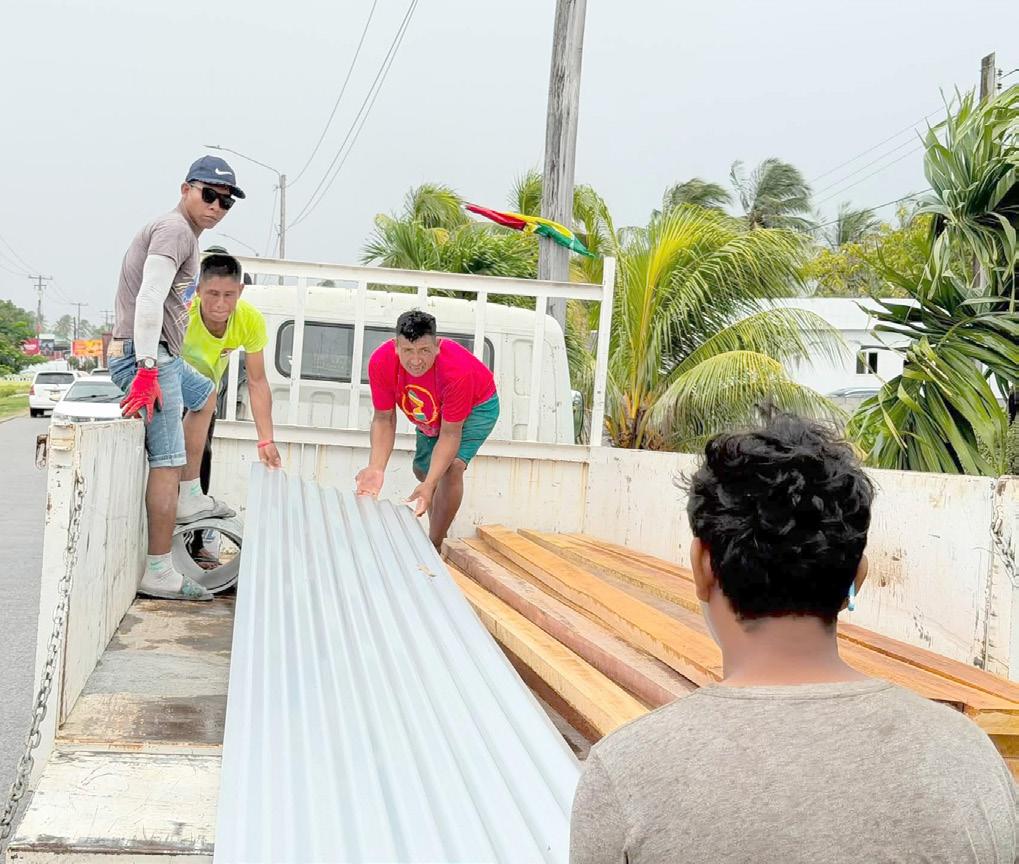
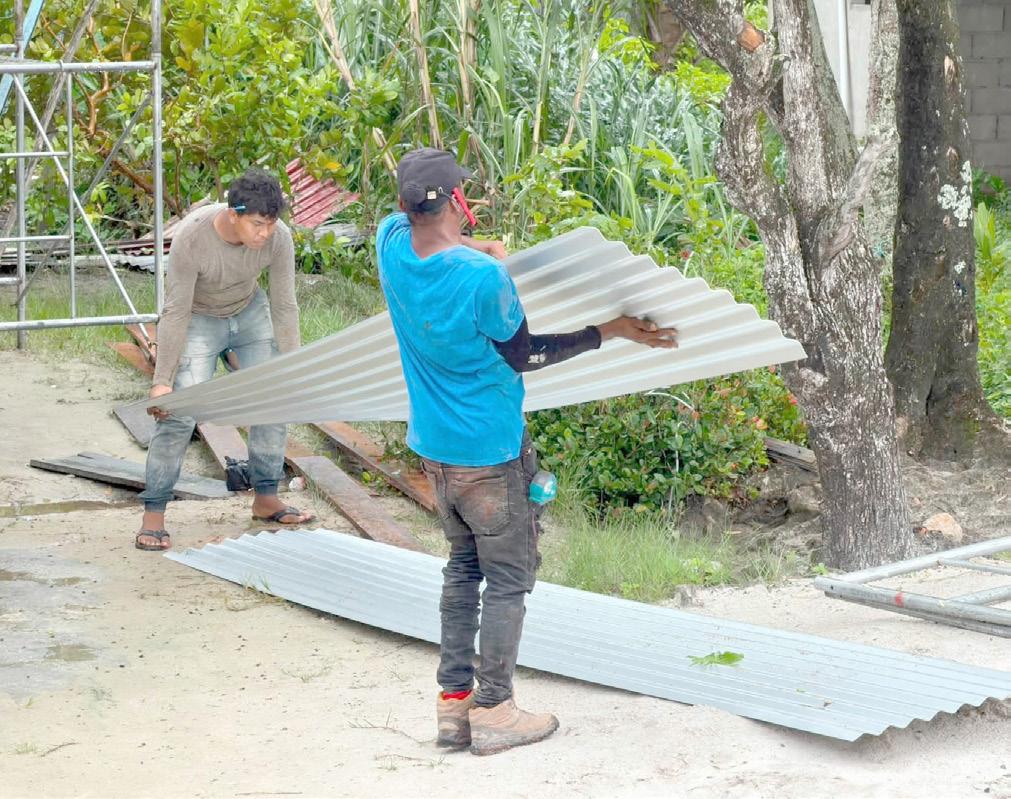
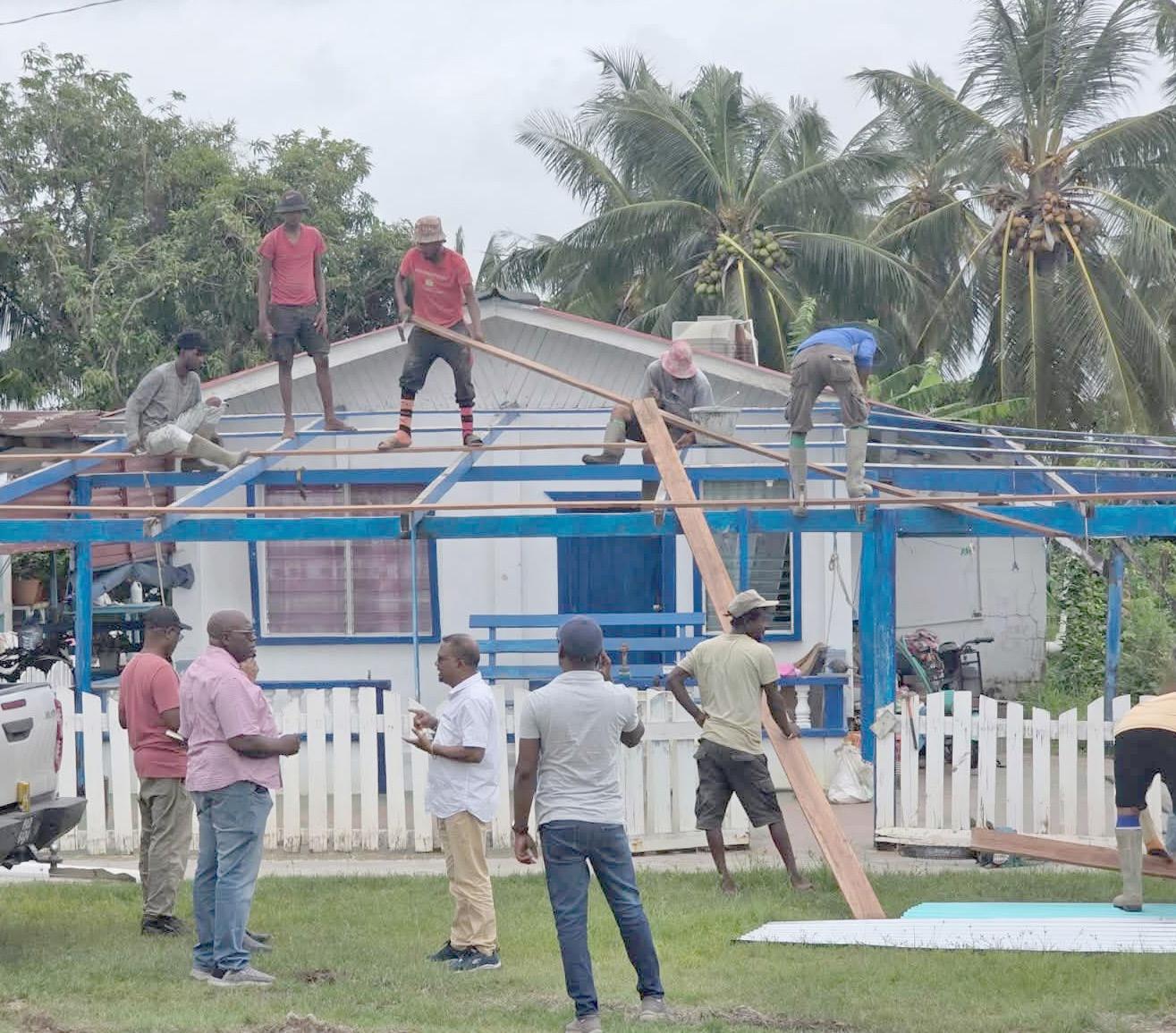
REBUILDING efforts are continuing across Region Two as government teams work around the clock to restore homes damaged by Thursday evening’s powerful windstorm.
Minister within the Ministry of Public Works, Madanlall Ramraj, along with Regional Chairman Devin Mohan and Regional Vice Chairman Humace Oodit, visited several communities, including Dartmouth and Henrietta, where repairs
are progressing on homes that sustained major roof damage.
Officials reported that works are advancing well and will continue until all affected homes are restored.
Following an early coordination meeting on Friday morning, multiple teams were once again deployed across the Essequibo Coast to carry out repairs simultaneously.
While restoration works continue, Minister Ramraj is also leading regional assessment teams to ensure every
affected household is identified and receives assistance.
Minister Ramraj said President Dr Irfaan Ali has instructed that every affected family must receive the support they need, and teams have been working tirelessly over the past three days to deliver on that commitment.
He also commended Men on Mission Coordinator, Lieutenant Colonel Bhagesh-
war Murli, for ensuring roofing materials were procured and delivered promptly.
Among those assisted was Jenny Bacchus, whose home suffered severe roof damage. She recalled that President Ali visited her shortly after the storm, after which regional officials quickly mobilised workers and materials. Her roof was fully restored within 24 hours.
Another resident, Kumar Ramdeo, expressed gratitude to the Government of Guyana after his home, which had its roof completely torn off, was repaired promptly.
Assessments remain ongoing as additional residents continue to report storm-related damage to regional officials.
The powerful windstorm damaged more than 70 homes across Region Two, while several public buildings, including the Anna Regina Stadium Blue Stand, also sustained significant damage.
A teacher was injured after being struck on the head during the incident. Recovery operations are expected to continue until all affected families receive assistance.
Ben Stokes four-for, Ben Duckett hundred inspire England fight back
(ESPNCRICINFO) - As well as things had gone for New Zealand on day one at Trent Bridge, they went badly on day two. England, led by a four-wicket haul from Ben Stokes, completed their turnaround with the ball to cap the visitors at 438 - having been 317 for 0 - and Ben Duckett then rattled off his first international hundred in more than a year to launch the reply. Duckett was given a life on 8, dropped in the slips by Henry Nicholls, but went on to form a second-wicket partnership worth 179 at exactly a run a ball with Jacob Bethell, who was eyeing a
hundred of his own by the close of another scorching day in Nottingham.
New Zealand’s problems were compounded by a concussion suffered by Blair Tickner, who was struck on the side of the helmet by Jofra Archer while batting and, despite initially being cleared to continue and delivering a three-over spell before tea, did not emerge for the evening session. He was eventually replaced by Zak Foulkes.
With Tickner, Mitchell Santner and Ben Searsthe three changes from New Zealand’s victorious XI at The Oval - all leaking runs at upwards of five an over, things began to unravel for the tourists. When Duckett brought up an 88-ball hundred midway through the evening session, the game had almost completely flipped in trajectory from 24 hours earlier, when Tom Latham and Devon Conway were amassing 150s during their triple-century opening stand.
Having taken two wickets with the last two balls on day one, England continued their fightback on the second morning. Stokes claimed three in the session during an eight-over spell, as New Zealand’s middle order struggled to build on the foundation laid for them, before two in an over from Shoaib Bashir helped wrap the innings up.
It meant New Zealand had suffered a collapse of 10 for 121 and their total of 438, while respectable, was nevertheless the third-lowest in Test history
Ben Duckett was quick off the mark in England’s first innings•Jun 26, 2026•David Rogers/Gareth Copley/Getty Images
for any innings featuring a 300-run partnership - behind England’s 407 against India at Edgbaston last summer, and the 431 made by West Indies at Sabina Park in 1999 - and the lowest when those runs had been scored by the openers.
England’s momentum was briefly checked when Will O’Rourke had Emilio Gay caught down the leg side for a five-ball duck in the second over. They should have been 8 for 2 when Nathan Smith found Duckett’s outside edge, only for Nicholls to make a hash of the catch at third slip.
Duckett, who had twice drilled Smith for fours in his opening over, was in the mood to make New Zealand pay for such gen-
erosity. His next ball also disappeared through the covers, and he used the knowledge of his home ground to good effect, cutting, pulling and clipping his way to ten boundaries in a 40-ball fifty.
Dembele helps France past Norway
(BBC) - Ousmane Dembele scored a superb hat-trick in 32 minutes as France defeated a rotated Norway
side to finish top of Group I at the 2026 World Cup. Pre-match hopes that this game would be an epic
showdown between Erling Haaland and Kylian Mbappe were quashed by the arrival of the teamsheets.
Norway manager Stale Solbakken made 10 changes after two group victories, including resting Manchester City forward Haaland.
But into the narrative void stepped Dembele, who delivered the second-fastest men’s World Cup hat-trick ever with three goals of the purest quality.
It was the first time a player had scored three goals in the opening half of a match in the tournament since Russia’s Oleg Salenko in 1994.
And it was the second-quickest World Cup hat-trick ever from the start of a match, behind Erich Probst’s 24-minute treble in 1954 for Austria.
France completely dominated the early stages and deservedly broke through in the seventh minute. Having won the ball in Norway’s half, Mbappe spread it wide right to Dembele in space. The Ballon d’Or winner squared up his marker and slammed home past Egil Selvik.
It was 2-0 in the 20th minute when Dembele completed a lightning counter-attack by cutting off the righthand side on to his wizardly left foot and whipped a curling shot into the far corner.
Norway struck back within 79 seconds, the French defence declining to respond to an attack straight from the kick-off which ended in Rangers attacker Thelo
Aasgaard sweeping the ball past a wrong-footed Mike Maignan.
But Dembele was far from done, as he moved himself into contention as the tournament’s top scorer with his fourth goal.
Again he cut on to his left foot and, with four surrounding defenders paralysed by fear, curled another effort past Norway reserve keeper Selvik.
Dembele was subbed off after 65 minutes as the tempo dropped after the break, but his Paris St-Germain team-mate Desire Doue stepped up to add a fourth in the 94th minute with a looping header.
ENGLISH RACING TIPS
CHESTER
09:02 hrs Stardom Glory
09:32 hrs Eagle Bay
10:03 hrs Dolar Acclaim
10:33 hrs Copacabana
11:10 hrs Astrazar
11:45 hrs City Queen
12:20 hrs Curran
12:50 hrs Relentless Hero
YORK
08:20 hrs Casino Star
08:55 hrs Zennor Storm
09:25 hrs Our Cody
09:58 hrs Never So Brave
10:38 hrs Who’s Lope
11:15 hrs Hallo Spaceboy
11:50 hrs Pearl Rye
NEWCASTLE
08:40 hrs Caviar Cowboy
09:10 hrs Wiltshire 09:40 hrs Shrimp Shady 10:15 hrs Ride The Thunder 10:45 hrs Strike Red 11:23 hrs Knock Three Times 11:58 hrs Sure And Steadfast
IRISH RACING TIPS
CURRAGH
08:45 hrs Giant Sequoia
09:15 hrs Confucius
09:45 hrs Meriden
10:20 hrs Sun Goddess
10:55 hrs Thundering On 11:30 hrs Fixation
12:05 hrs The Piper’s Call
12:40 hrs Starborn Legend
SOUTH AFRICA
RACING TIPS
DURBANVILLE
08:30 hrs Girl Like Us 09:05 hrs Thomas Jenkins
09:45 hrs Grapes Of Wrath
10:20 hrs Uncle Sam 10:55 hrs Kisses
AMERICAN RACING TIPS
BELMONT AT T HE BIG A Race 1 Best Impression Race 2 Spinning Class Race 3 Calling Carf Race 4 Dot’s Dollar Race 5 Toga D’oro Race 6 Brillante Race 7 Bold Love Race 8 Warolo
Ousmane Dembele has scored four times in two major tournament games, having failed to net in his previous 19
Parris’ century powers WI Academy to ODI series win over Sri Lanka Emerging Players
CMC –SHAQKERE Parris struck a scintillating, boundary-studded century to lead West Indies Academy to a 76-run win over Sri Lanka Emerging Players here on Friday.
Parris clobbered 177 off just 129 balls, with 13 fours and 11 sixes, while Kevlon Anderson scored an unbeaten half century to help the visitors post a commanding 349 for four in 50 overs after electing to bat first at the Nondescripts Cricket Ground.
Pacer Amari Goodridge then claimed four wickets as Sri Lanka Emerging Players were bowled out for 273 in 42.4 overs to give the WI Academy a series-clinching 2-1 victory.
The WI Academy’s mammoth total was built on the backs of Parris and Anderson, who shared a match-winning 222-run partnership for the fourth wicket.
Following the early dismissals of openers Mavendra Dindyal for one and Damel Evelyn for 27, which left them 42 for two, Parris and his captain Rivaldo Clarke added 79 runs for third wicket to carry them to 121 for two in the 24th over.
Offspinner Traveen Mathew broke the partnership by having Clarke caught behind for 38, but his departure brought An-
derson to the crease.
For the next 70 minutes, Parris and Anderson bludgeoned the Sri Lankan bowlers to all parts of the ground, scoring at over eight and a half runs an over.
By the time left-arm pacer Mihiranga Silva had Parris caught, the damage had already been done as only three balls remained in the innings.
Anderson finished on 86 not out off 78 balls and hit seven fours and two sixes.
Needing to score at exactly seven runs an over, Sri Lanka recovered from a rocky start of 18 for two to find themselves in the hunt at 202 for four in the 32nd over thanks mainly to Ranesh Silva’s 69, Dinura Kalupahana who made 54 and opener Vishen Halambage’s 42.
However, once Silva was dismissed by Goodridge, the home side’s run chase went off track, and they stumbled to 231 for eight.
Their eventual total was bolstered by a knock of 29 from Mathew batting at number eight, with left-arm spinner Giovonte Depeiza trapping him lbw to bring the match to an end.
Goodridge took 4-56, Zishan Motara claimed 2-46 and Depeiza 2-52.
Shaqkere Parris smashed 177 off just 129 balls for the West Indies Academy
Senegal thrashes 10-man Iraq to boost knockout hopes
(BBC) - SENEGAL boosted their chances of reaching the knockout stage of the World Cup with a 5-0 victory against 10-man Iraq.
The Lions of Teranga finished third in Group I with three points to climb to fifth among third-placed teams, but they will still need results elsewhere to go their way to secure a place in the last 32.
Senegal played a near-perfect game in Toronto as they looked to bounce back from defeats by France and Norway, and the result pushed Scotland down to ninth in the table of thirdplaced sides - with eight to advance to the next round.
Fast-starting Senegal opened the scoring after only four minutes. Abdoulaye Seck’s header from a corner took a decisive deflection off Sunderland midfielder Habib Diarra on its way past Iraq
goalkeeper Ahmed Basil. Iraq’s problems were compounded nine minutes later when referee Anthony Taylor sent off defender Rebin Sulaka for pulling down Sadio Mane at the edge of the penalty area - deeming it denial of a goalscoring opportunity after a video assistant referee review.
Mane tested Basil from the resulting free-kick, but Pape Thiaw’s side, who needed goals to improve their goal difference and thereby their chances of progressing to the next stage, failed to register another shot on target in the first half.
But they capitalised on former Manchester United midfielder Zidane Iqbal giving away possession at the edge of the box as Lamine Camara cut the ball back for Ismaila Sarr to apply a simple finish to make it 2-0 in the 56th minute. Their lead was extend-
Senegal has reached the knockout stages in two of their past three World Cup appearances
ed three minutes later as Pape Gueye curled a left-foot strike into the top corner - his first involvement after com-
ing on moments earlier.
Villarreal defensive midfielder Gueye added his second goal with an -
other thunderous effort in the 71st minute before fellow substitute Iliman Ndiaye sealed the 5-0 win,
that they would hope will be enough to send them through to the knockout stage.
Tucker, Delany, Hollard and Moondra shine in Ireland’s historic win over India
(ESPNCRICINFO) - Ireland picked up their first ever win in international cricket over India. The T20 world champions were humbled in Belfast, a place far removed from the comforts they’ve enjoyed recently. The boundaries were bigger. The pitch had help for fast bowlers. There were no impact players. And that was just too many problems to solve.
This game arrived with hope that Vaibhav Sooryavanshi will make his international debut. He did not, which left a vacuum and Ireland decided to fill it. Lorcan Tucker scored a resilient half-century to put up 183 on the board and a pair of debutant fast bowlers Matt Hollard and Jai Moondra helped defend it.
Rana strikes over and over Even in the face of visible seam and swing for fast bowlers in Belfast, Harshit Rana would not budge from his methods. He was happy to go into the pitch, and he struck. He was keen to explore the blockhole, even though the powerplay was still on. Eventually he unfurled his special skill. A slower ball that Tucker absolutely nailed but it didn’t matter because it had settled in the hands of a fielder. Rana was making his return to the competitive game after four months on the sidelines with a knee injury. He picked up 3 for 24 but more than that he highlighted
never once showed the pressure that comes with playing an innings like that; an innings where he wasn’t even looking for shots. It was more important that he stayed out there for as long as possible. And when Gareth Delany (49 off 32) gave him the confidence that the other end can hold its own, he started to open up. Tucker brought up his fifty off 35 balls. He is the first player in men’s T20Is to score a half-century in each of his first three games as skipper.
Front-loading problems
Nine hundred and thirty six days since he last played a game in the shortest format, Shreyas Iyer pulled on the India blues and this time it came with the armband. He had the toss go his way and recognising the seam, swing and bounce on offer for the fast bowlers in Belfast. He also had Rana and Arshdeep Singh bowl right through the powerplay. But that bit of frontloading had an adverse effect later. At the death, India had to turn to a spinner - Washington Sundar gave away 19 runs bowling the 16th over - and a man having a bad day - Prasidh Krishna gave away 27 runs in the 17th over and finished with figures of 0 for 57 to follow 0 for 68 from his last T20I three years ago.
Axar Patel and Arshdeep bailed Iyer out as India conceded only 18 off the last 18 balls.
why India like him in their team. He makes things happen. Tucker steps up
With Ireland at 36 for 3 at the end of the powerplay, their captain set his stall out to bat the full 20 overs. Tucker was 5 off 11 and
Need for Speed Karting Championship… Ming leads Briggs Heavy, Light categories after strong double performance
GEORGETOWN, Guyana – June 26, 2026 - Calvin Ming has taken early control of the Need for Speed Karting Championship, leading both the Briggs Senior Heavy and Briggs Senior Light categories after a dominant performance in the latest round of competition last weekend.
Driving kart number four, Ming produced a strong showing in the Briggs Senior Heavy category, earning 55 points to sit at the top of the standings during round one of the competition at the 555 Speedway in Georgetown.
Ming’s race day was highlighted by a victory in the final. He started on pole in qualifying, followed by a win in the heat and second in the pre-final. He then delivered a commanding performance in the final to collect the maximum 25 points.
Mikhail Persaud, driving kart number 34, currently holds second place in the Briggs Senior Heavy standings with 41 points. Persaud had a consistent outing, finishing second in the heat and the final and third in the pre-final but trails Ming by 14 points.
Jeremy Tenpow remains in contention
with 38 points after a strong performance that included a win in the pre-final and a third-place finish in the final.
“I’m really happy to come away with the win because Mikhail gave me a great run all day and Jeremy also drove phenomenally. None of the guys put a foot wrong, and the racing was incredibly competitive from start to finish. What makes it even more satisfying is seeing the level of driving in the Briggs Senior Heavy class continue to improve. The racing was tight but always fair, with great sportsmanship throughout, and I think that’s a credit to everyone involved. The talent in Guyana is steadily increasing, and I’m confident it won’t be long before we see even more new drivers coming through and fighting for race wins.” Ming said.
Steven Nobrega and Salim Azeez are tied on 24 points, with Nobrega holding fourth position. Nobrega secured a fourthplace finish in the final, while Azeez continues to improve as the championship progresses.
John Mohamed sits sixth with 13 points, followed by Leonardo Jienarine on 12 points and Alfred Madray on four points.
Ming has also established himself as the leader in the Briggs Senior Light category: he tops the standings with 58 points after another impressive race day.
“This one was just as hard fought. I managed to get about a half-second lead at the start of the final, and that turned out to be crucial because for the rest of the race the guys were chasing me down and I couldn’t afford to make a single mistake. I don’t think any of my laps varied by more than a 10th of a second, which just shows how focused I had to be. Had I not built that early gap, I’m sure they would have been all over me until the finish. I think I was only the fourth-fastest driver in the final on outright lap time, which says everything about the level of competition. At the end of the day, it all comes down to qualifying and executing the race because it can go either way. I’m really proud of everyone at [the] Ming Performance Group—every member of the team stepped up and played their role perfectly, allowing us to come away with the win. As our team at MPG continues to grow, it’s exciting to see more of our drivers running at the front, with Khalil Rickford being one of the first
drivers to join us from the beginning and now consistently fighting near the front.
A huge thank you to Lawson Motors and CS55 for providing me with a Tony Kart that was absolutely on rails all weekend. I’d also like to thank all of my sponsors— MPS, FMC, M Depot, Babecave, Interstate Batteries and Terracrete—for their continued support.”
The championship leader secured victory in the final to claim the maximum 25 points and extend his advantage over the chasing pack.
His clean sweep of the weekend - pole, heat, pre-final and final – cemented his standing atop the order.
Steven Nobrega is second with 40 points after a competitive performance, while Justin Tenpow occupies third place with 35 points.
Zachary Persaud follows in fourth with 31 points after collecting valuable points, including a strong result in the final race. Khalil Rickford completes the top five with 24 points, while Matthew Phang sits sixth with 18 points.
The next round is billed for September 13 at the Leonora stadium.
Jangoo, Chase’s defiant stand takes WI close to parity
AMIR Jangoo may not have even featured in the opening Test for West Indies had Shai Hope not suffered an injury during training. But with a chance handed out, he made full use of it to rescue the hosts from a precarious position to leave them only 37 behind Sri Lanka’s first-innings 308.
Jangoo, playing his second Test, walked in at 97 for 2 in the afternoon, and showed off an obdurate batting style, taking 174 balls for his unbeaten 78. His maiden Test half-century took West Indies to 271 for 5 at stumps.
At the other end, a man with something else to prove batted on from No. 7 - Roston Chase, the West Indies captain who has averaged 15.50 in the 15 innings he has batted since July 2025. Watchful in dead-batting and playing the long game, he joined Jangoo in the middle at 168 for 5, took 105 balls to score 42, and contributed to an unbeaten
sixth-wicket partnership of 103 to leave the hosts the happier side after day two. Their stand was crucial because it came after a middle-session where West Indies lost 4 for 79, losing the gains they had achieved in the morning session, with the openers helping them reach 89 for 1 at lunch.
John Campbell (39) and Brandon King (31) saw off the new ball and enjoyed a half-century stand in the morning. The runs came West Indies’ way right from the start of the day when Lahiru Kumara sprayed the ball wide in his only over of the session, conceding two four-byes, before leaving the field for the rest of the day with a hamstring niggle. Asitha Fernando and Kasun Rajitha operated close to the corridor of uncertainty but the openers saw them out successfully against the new ball.
Boundaries from Campbell and King came the classical way - on-drives past the
non-striker or crisp shots square on either side - but the occasional mistimed slash also found the fence. The Sri Lanka seamers occasionally got sideways movement off the pitch and in the air, and regularly beat the batters’ edge.
The opening stand ended in the 14th over, shortly after the day’s first drinks break. King miscued a drive off Milan Rathnayaka to short cover.
But in the second session, Sri Lanka’s bowlers were right on top with their consistency, and chipped away at West Indies’ batting line-up. Campbell was out right after lunch when left-arm spinner Sonal Dinusha tempted him with a full ball outside off. Thinking of lofting Dinusha over his head, all he did was hole out to Nishan Madushka.
Next over, Rathnayaka added a second wicket to his name - after King’s dismissal in the morning - by being rewarded for some tidy bowling in the corridor of uncertainty.
After zeroing in on a steady line and length through the 26th over, he got a good-length ball to generate some extra bounce, leaving Hodge (16) inside-edging a defensive shot onto his stumps.
Joshua Da Silva (20) and Jangoo began a repair job with West Indies at 102 for 3, and were comfortable absorbing the pressure with run-scoring drying up. Jangoo shuffled around his crease, moving to the leg-side often to access punches and drives through the off side while Da Silva was more watchful.
But after 18 overs of rebuilding with a 52-run partnership for the fourth wicket, Da Silva struck Asitha to cover, reminiscent of the King dismissal earlier in the day. Asitha once again delivered by getting a nagging delivery to nip away.
Greaves was in two minds whether to play or leave, and the eventual edge was pounced by a diving Kusal Mendis with a one-handed special.