


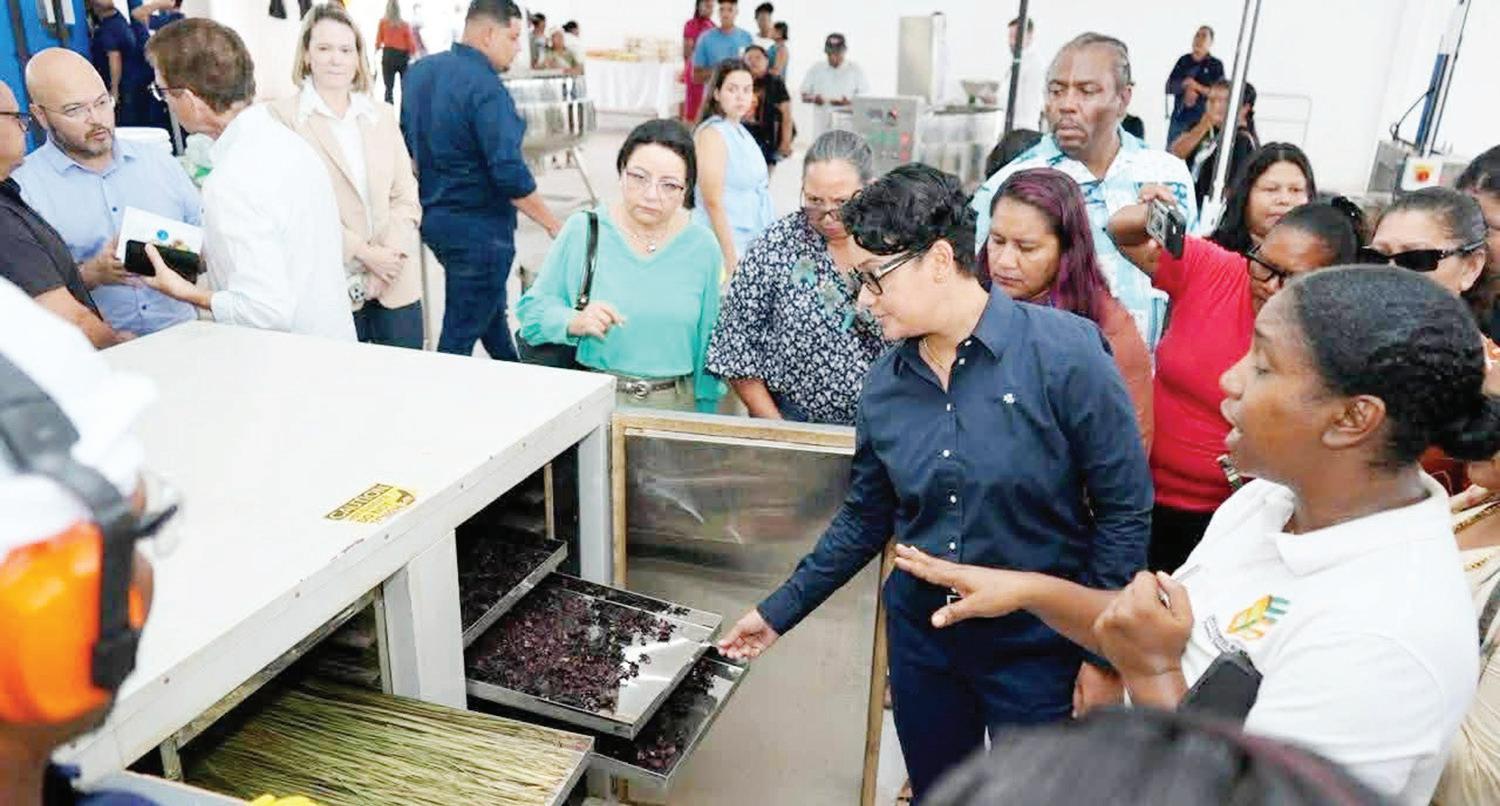
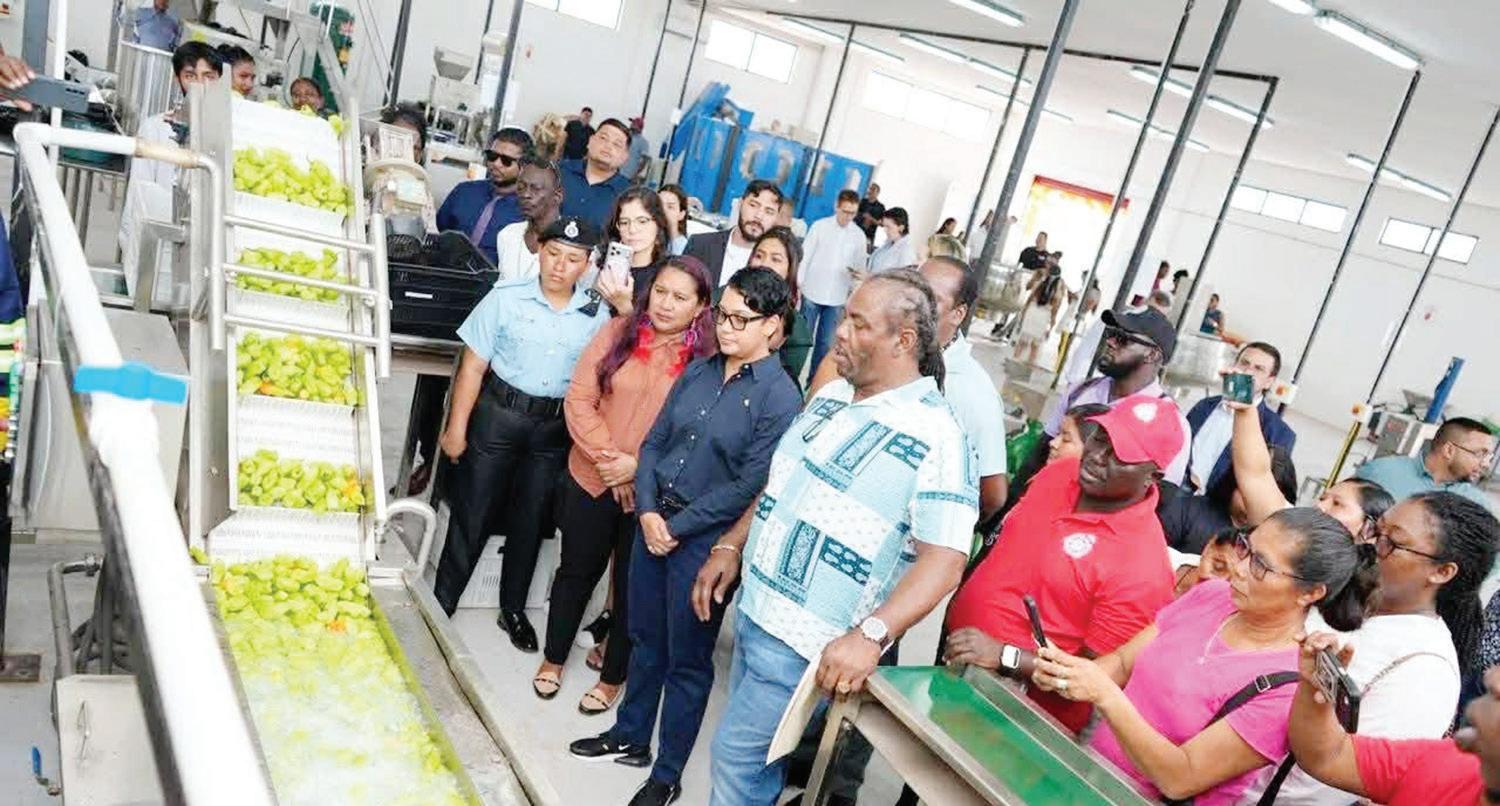




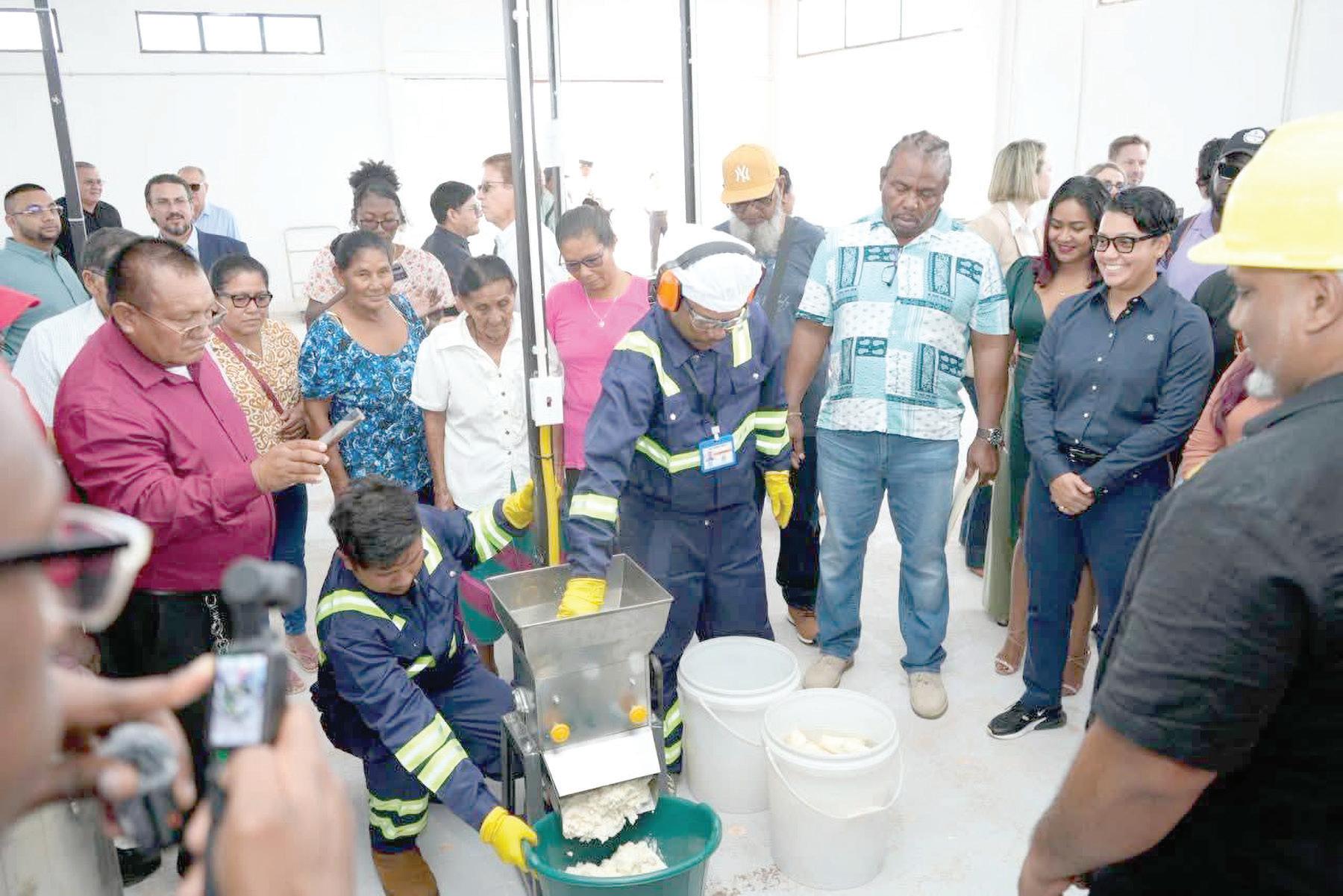
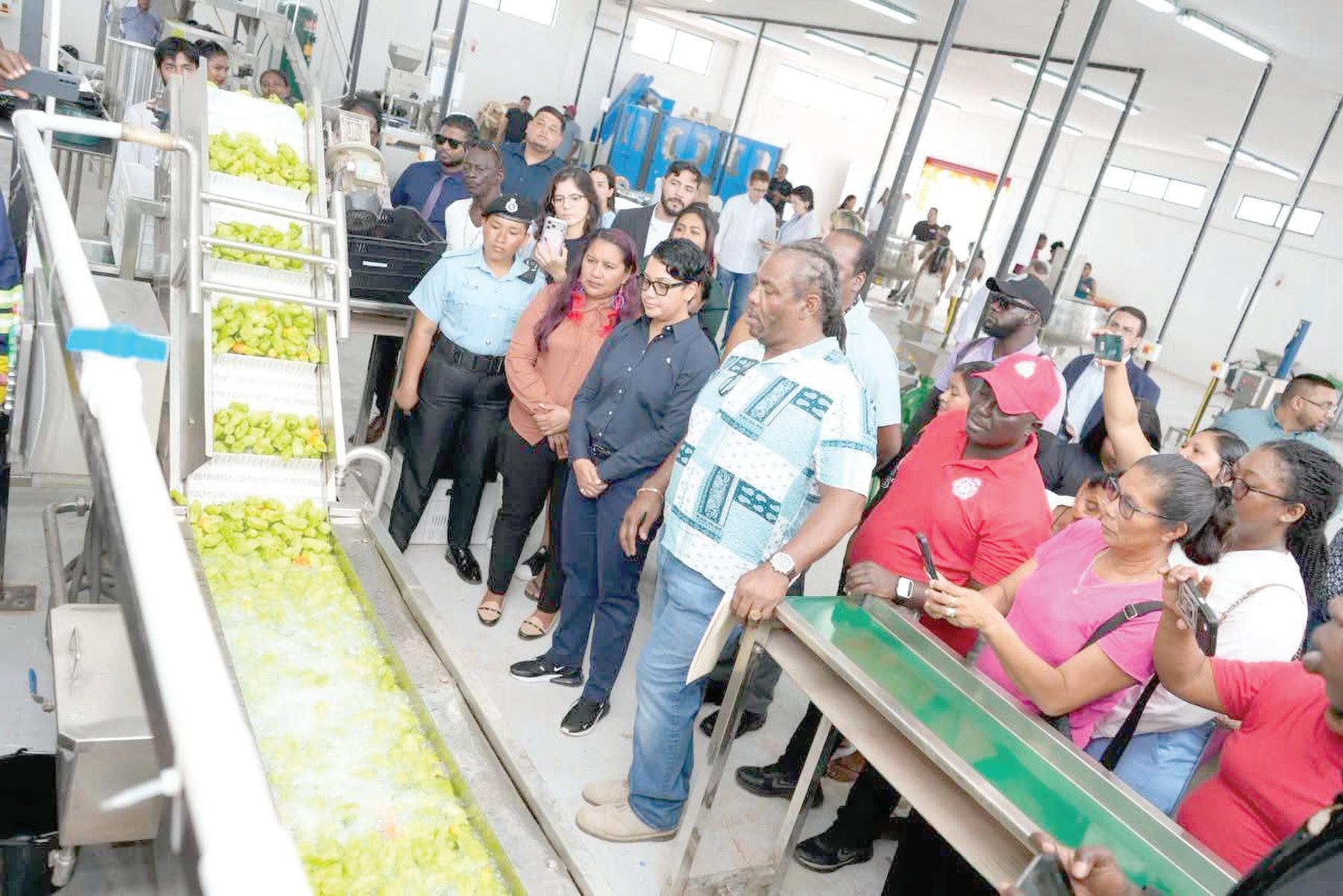
THE Government, on Saturday, commissioned a $181 million Business Incubator Centre and Agro-Processing Facility in Lethem, signalling a decisive push to expand entrepreneurship, value-added production and small business development in Guyana’s hinterland.
Minister of Tourism, Industry and Commerce, Susan Rodrigues, declared the facility open, describing the investment as a transformative intervention designed to catalyse innovation, strengthen enterprise capacity and accelerate economic growth across Region Nine.
The facility, developed by the Ministry of Tourism, Industry and Commerce and implemented by the Small Business Bureau, is equipped with specialised machinery, including dehydrators, blow moulding machines, auger packing systems and industrial blenders, aimed at shifting local production from raw output to value-added goods.
“This incubator will transform how agricultural output is utilised in this region. Farmers will no longer be limited to selling perishable goods. With access to equipment… products can now be processed, preserved, and packaged to meet market demand,” Minister Rodrigues said during the commissioning.
She underscored that the centre is strategically designed to close a longstanding gap in the production chain, giving agro-processors and small business owners access to modern infrastructure to improve product quality, extend shelf life and enhance competitiveness.
The minister further positioned the facility as a launchpad for emerging entrepreneurs, noting that it provides
a structured environment where ideas can be developed into market-ready products.
“This is about creating pathways for innovation, expansion and longterm growth. We are ensuring that entrepreneurs in Region Nine have the tools and support necessary to scale and compete,” she added.
The Lethem Business Incubator Centre forms part of the Government’s broader economic agenda to strengthen small and medium-sized enterprises (SMEs), deepen economic participation and unlock the productive capacity of hinterland communities.
Officials said the facility is expected to play a pivotal role in advancing agro-entrepreneurship in Region Nine by strengthening local value chains, encouraging product development and reducing post-harvest losses.
The commissioning also drew regional and international representation, including delegations from Brazil’s State of Roraima, the Federation of Industries and the Municipality of Boa Vista, highlighting cross-border interest in economic collaboration.
Also in attendance were Consul General of Guyana to Brazil, Roger King; Chairwoman of Region Nine, Vania Albert; Deputy Mayor Indira Singh; Permanent Secretary Roger Rogers; Director of the Guyana Tourism Authority, Kamrul Baksh; and Chief Executive Officer of the Small Business Bureau, Shazim Ibrahim.
With the facility now operational, stakeholders expect a measurable uptick in small business activity, agro-processing output and income generation in Region Nine, positioning Lethem as a growing hub for hinterland enterprise.

- 5% improvement recorded, but sustained effort needed to boost results
THE push to strengthen mathematics education across Guyana is continuing, with Minister of Education Sonia Parag making it clear that the intervention introduced in 2024 is not a one-off effort, but a sustained commitment to improving student performance
nationwide.
What began as a targeted response to low results has evolved into an ongoing initiative, with maths monitors drawn from both active and retired teachers supporting classrooms and reinforcing the curriculum.
Even with a five per cent improvement recorded


in 2025, the minister signalled that the work must continue, emphasising that steady progress requires consistency, oversight, and long-term investment in both teachers and students.
Parag, in an interview posted to her social media, stated that when she joined the ministry, mathematics results across the Caribbean were not “what we would like it to be”, noting that Guyana recorded a 32 per cent pass rate in 2025.
“In 2024, the Ministry of Education would have had a maths intervention programme whereby they brought in maths monitors… So, it’s maths teachers, retired teachers bringing them together, but also they would become maths monitors,” she said.
According to the minister, a dedicated unit was established to oversee the intervention, and ensure that the marked curriculum was being covered in schools, which she said resulted in a five per cent increase in performance in 2025.
She noted that while some might view five per
cent as minimal, “it really covers about 500 students, and it was really about 500 students that improved in mathematics”.
The intervention, she explained, targeted schools with the lowest scores, while also focusing on densely populated regions such as Regions Three and Four, and other coastal areas.
However, she acknowledged that hinterland regions were initially not benefiting at the same level, prompting the ministry to expand the number of maths monitors from just over 50 to 84.
“And we placed them strategically in the hinterland, so the hinterland regions and schools are Regions 1, 7, 8 and 9 gained from about 18 maths monitors.”
Additionally, she said there are teachers who are extremely “good in mathematics”, and it was important to utilise them in hinterland regions.
“So, we set up smart boards in the classrooms, and several schools were able to connect and have


Minister of Education Sonia Parag
those mathematics classes taught through the connection.”
According to the minister, 18 schools have benefited from the intervention, which is being led by Sir Leon Bailey.
Parag added that further support has been integrated through the Guyana Digital School, which includes mathematics instruction.
“We went into every school and ensured that we had Grades 10 and Grades 11 students sign up for those classes.”
She said a large number of students have enrolled in mathematics and other subjects.
Meanwhile, the minister noted that feedback from schools has been positive, with students benefiting from increased access to
instruction.
“It provides access to students who may not have been able to have private lessons, so this gives them the opportunity to be taught and benefit even more.”
She stressed the importance of mathematics in national development.
“Mathematics is very important to the future of every economy and Guyana is transforming at a rapid rate… producing critical thinkers and problem solvers and mathematics is a key component of that so we need to improve our maths results.”
The minister also referenced the introduction of maths “tents” by the Ministry of Education as part of broader efforts to strengthen performance in the subject.


THE Inter-American Development Bank (IDB) Invest is moving to make its financing to Guyana an annual commitment, signalling growing international confidence in the country’s fast-expanding economy.
Chief Executive Officer (CEO) of IDB Invest, James Scriven, said the institution is shifting away from multiyear accumulation of investments and instead pushing for sustained yearly financing to match Guyana’s rapid pace of development.
IDB Invest is the private sector arm of the IDB Group.
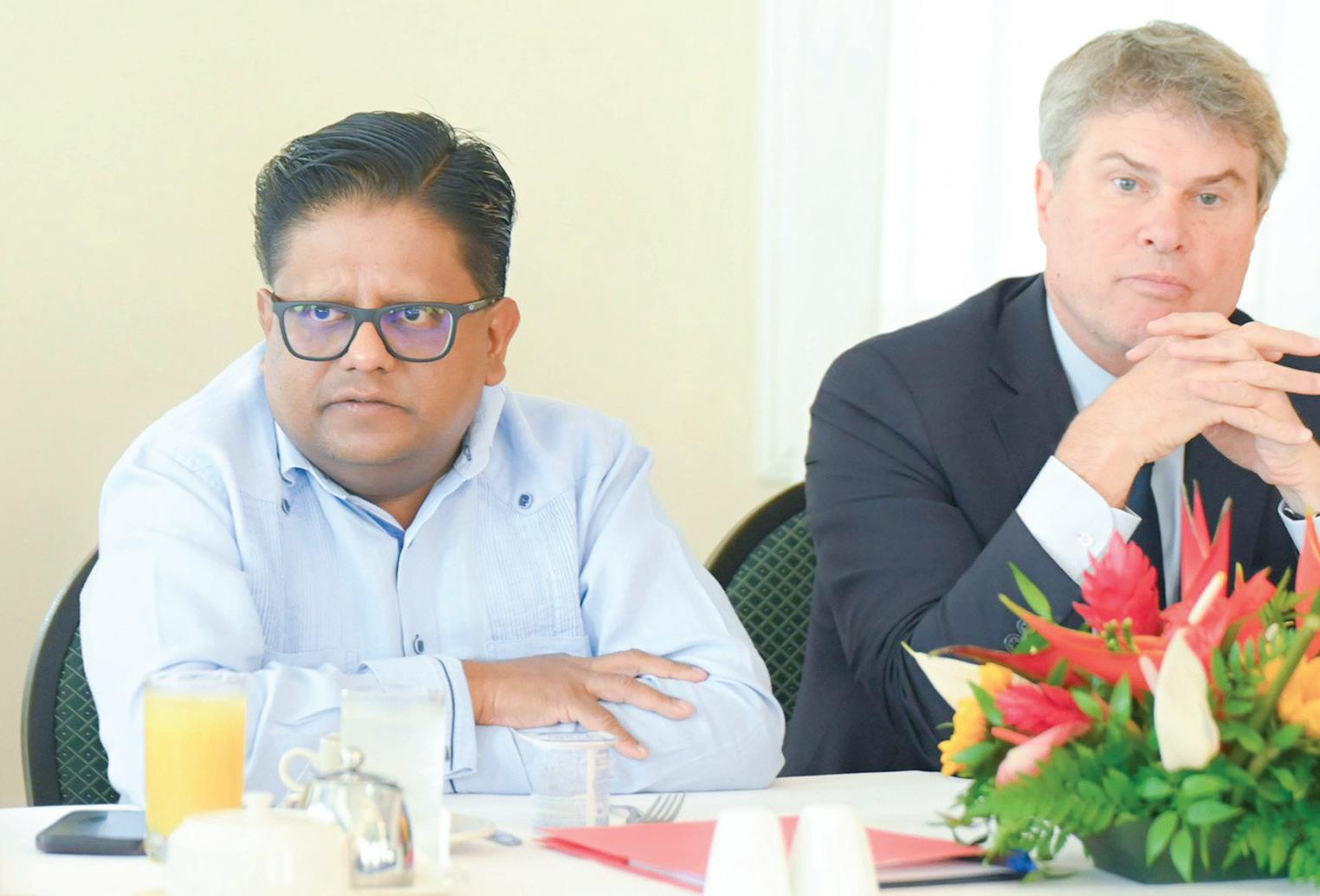
During a special conversation themed “Growth in Motion: Unlocking Guyana’s Private Sector Potential,” Scriven revealed that he had already communicated this position to Senior Minister in the Office of the President with responsibility for Finance, Dr Ashni Singh, and President Dr Irfaan Ali.
“About 260 million dollars I promised the minister and I told the president that we should be doing that on an annual basis over here, not thinking about accumulation over four or five years,” Scriven said.
The People’s Progressive Party/Civic (PPP/C) government had long advocated for stronger engagement with IDB Invest. In the first three decades of Guyana’s membership, only four transac -
tions totalling US$6 million were completed. Since 2020, however, that has shifted significantly, with some US$264 million in financing approvals for private sector projects across multiple sectors.
Scriven described Guyana as “an economy that’s growing very fast,” noting that development financing must keep pace with that expansion.
According to him, IDB Invest’s mandate is to support economic diversification across Latin America and the Caribbean, with a focus on sectors not directly tied to oil

and gas.
“We as a development institution have a keen objective to diversify the economy… there are a number of sectors that are not being addressed directly by the discoveries,” he said.
He identified agribusiness, tourism, and infrastructure as priority areas for future investment.
Reflecting on Guyana’s evolving investment climate, Scriven said the most significant change has been the government’s approach to private sector engagement.
“I invest in 26 countries
in Latin America and the Caribbean … and the biggest change… is the focus of governments on embracing the private sector for development purposes,” he said.
He added that Guyana has demonstrated a clear shift towards creating an enabling environment for investment.
“As a development institution, we focus a lot on creating the enabling environments for investments to happen… and that’s what I started seeing,” Scriven explained.
The CEO said this shift became evident through on-
going engagement with government and private sector stakeholders.
“We realised that something was happening… there was an inflection point,” he said, pointing to the country’s growing openness to private investment.
He also highlighted the strong business-driven environment during his most recent visit.
“As soon as I landed in Georgetown… we went straight to State House… it was all about business,” he said.
Scriven described the current momentum as transformative adding, “This is the beauty of the Guyana that we’re living now.”
GOV’T STANCE
Senior Minister in the Office of the President with responsibility for Finance, Dr Ashni Singh, reaffirmed that Guyana’s long-term economic strategy remains firmly anchored in private sector-led growth, supported by an enabling role for the State.
He emphasised that sustainable development depends on private investment in competitive and viable projects.
“We’ve always seen government’s role as creating the enabling environment, a conducive and attractive environment for attracting inward foreign direct invest-
ment, and for incentivising and encouraging domestic private investment,” he said.
Dr Singh also rejected the notion that pro-business policies conflict with public welfare.
“Pro-business policies are pro-people policies,” he stated.
He explained that economic empowerment is achieved through employment and entrepreneurial opportunities.
“People are economically empowered when they’re able to take care of themselves on the basis of their own financial earnings, either through gainful and productive and fulfilling employment, or similarly gainful and productive and fulfilling entrepreneurial opportunities,” he added.
The Finance Minister noted that long-term sustainability depends on enabling citizens of working age to become self-reliant.
“In the long term, there is no other sustainable option but to ensure that your population of working age is able to take care of itself,” he said
Scriven recently visited Guyana, where he held meetings with Dr Singh, senior government officials, and private sector representatives to explore investment opportunities and deepen economic co-operation.


THERE is something deeply concerning about a society that creates laws to protect its citizens, only to see those same citizens treat these laws as minor obstacles. In Guyana, this troubling situation unfolds daily on the nation’s roads, and the rising death toll serves as grim evidence.
According to data from the Guyana Police Force Traffic Department, 14 motorcyclists have died in road accidents so far in 2026. Astonishingly, 11 of those victims were not wearing helmets at the time of their deaths. This isn’t just a sta-
tistic to ignore. It highlights a culture of recklessness that has been allowed to thrive on Guyana’s roads for far too long.
The law is clear. Under the Motor Vehicle and Road Traffic Act, Chapter 51:02, riding without a helmet is an offence. Carrying a pillion rider without one is also illegal. Both are ticketable offences under the Motorcycles (Protective Helmets) Regulations. Yet, compliance remains shockingly low. The police have issued 2,674 tickets this year just for helmet violations, and people are still losing their lives.
Clearly, the current fine of $5,000 isn’t effective. It doesn’t deter; it serves as a minor inconvenience for those who see a helmet as an optional accessory rather than a life-saving tool. This is not a new issue.
In 2025, 49 motorcyclists died in crashes. The Traffic Chief confirmed that the absence of safety gear was a common factor in these fatalities. Road deaths in Guyana rose from 99 in 2022 to 175 in 2023, with motorcycle fatalities increasing by 166.7 percent in that short time.
By any standard, this is a public-health crisis, one that needs more than just awareness campaigns and free helmet giveaways, no matter how well-meaning they are.
Observers have noted that compliance with road-safety laws in Guyana is "alarmingly low," driven by a lack of discipline, weak enforcement, and a cultural acceptance of lawbreaking that must be addressed.
The proposals currently under review by the Traffic Department—a minimum fine of $50,000 for first offences and $100,000 for
repeat violations—represent the type of strong change the crisis requires. Critics may say that high fines unfairly impact lower-income riders.
That concern is valid, but it must be considered alongside an undeniable fact: a $5,000 fine has not saved any lives. Larger financial penalties, coupled with consistent enforcement through regular patrols and regional operations already in place, are much more likely to change behaviour.
Governments in the region have shown that when enforcement is credible and
penalties are serious, compliance improves.
In the end, no fine can replace a change in mindset. Motorcyclists need to understand that a helmet is not just a government requirement but a vital protection between life and death. With Guyana's roads rapidly changing alongside its economic growth, the cost of indifference is higher than ever.
Increase the penalties, enforce the law consistently, and make it clear: in Guyana, riding without a helmet is a choice to risk your life.


By: H.E. Sasenarine Singh, Ambassador to the Kingdom of Belgium and Netherlands and Permanent Representative to the European Union
THE contrasting economic performances of Guyana and Trinidad and Tobago over the last decade offer a striking case study in how resource wealth can either catalyse transformation or expose structural stagnation. While both nations are hydrocarbon economies, their current trajectories suggest that
natural resources alone do not determine success; policy direction, timing, and adaptability do.
Guyana’s economic surge is nothing short of extraordinary. Since its first major offshore oil discovery in the Liza field in May 2015, the country has rapidly repositioned itself as a global growth leader. While annual GDP growth rates have at times exceeded 40 per cent in real terms (the IMF forecast a 33.9 per cent expansion for 2024), the World Bank projects more moderate but still remarkable growth of 19.6 per cent for 2026 and 21.9 per cent for 2027.
This reflects a decisive shift from a small, raw-material-based economy to a major oil producer in under a decade. The ambition is ongoing, with President Irfaan Ali now making a renewed push for the establishment of an oil refinery in Guyana, which he has described as a “critical national security priority amid escalating global energy uncertainties and supply chain disruptions”.
However, the real argument is not that Guyana is
succeeding, but why it is succeeding. The country has aggressively leveraged foreign investment to accelerate productive and infrastructure development. In doing so, it has embraced globalisation rather than resisted it. Critics may warn of overdependence on oil, but such caution often underestimates the strategic value of timing.
Guyana’s rapid oil development, projected to make it the world’s fourth-largest offshore producer by 2035 according to Rystad Energy, is heavily scrutinised about economic overdependence and resource-curse risks. However, this “oil bonanza” provides critical, time-sensitive capital needed for infrastructure, human capital development, and strengthening regional energy security. The bottom line remains: Guyana is capitalising on its resource window while global demand still supports it. This is the only way; a pragmatic approach.
In contrast, Trinidad and Tobago represents a cautionary tale of what happens when an energy-rich economy fails to evolve. Once
Who are these WPA persons that have credibility?
IN my (last) Thursday and Friday pieces, which were replies to Moses Bhagwan’s criticism of my politics, I referred to Bhagwan and his fellow WPA comrades from the olden days as characters from the plays of Tennessee Williams. Just in case you miss those editions, Tennessee Williams (his plays always carried a philosophical reflection) wrote about people who still cling to the past even though the past forgot about them a long time ago.
Here is evidence for you; graphic, incontrovertible evidence of the Tennessee Williams character in these WPA leaders that Bhagwan, after more than 50 years, still see (and himself) as heroes even though from 2015 to 2020 they destroyed every bit of their legacy through their involvement in first, a government that was anti-progressive, anti-working class and betrayed everything they stood for and fought for
in the 1970s. Secondly, they erased their legacy by either their participation or silence in their party’s (WPA was part of ANPU in the 2020 national election) attempt to rig the 2020 national election.
I now quote a part of Bhagwan’s condemnation of my politics: “Kissoon contrive to launch into his complete enterprise of attempted assassination of the name and accredited repute of a select group of his erstwhile comrades of the WPA….” Who are these WPA names that are people of accredited repute?
Bhagwan does not offer names, but we can deduce who they are when he noted they were my erstwhile comrades in the WPA. Obviously, Bhagwan has himself in mind. I elaborated on Bhagwan’s discredited legacy last Thursday and Friday, so I will move on to other WPA personalities.
One such person is Rupert Roopnaraine. Days after his death on Republic Day this
one of the most prosperous nations in the Caribbean, its economy has stagnated, with the IMF estimating growth of just 0.8 per cent in 2025 and projecting 0.7 per cent for 2026. The issue is not a lack of resources, but a failure to adapt to changing global dynamics. Declining natural gas output, persistent foreign exchange shortages (described as a key feature of the 2025 economic environment), and limited diversification reflect deeper structural inertia.
The uncomfortable truth is that Trinidad and Tobago’s challenges are largely self-inflicted. Years of reliance on hydrocarbon revenues created a level of economic complacency that discouraged diversification and innovation. While policymakers have long discussed economic transformation in key areas such as agriculture, tangible progress has been limited. The result is an economy that is stable but stagnant (arguably a more dangerous position than volatility), because it masks underlying decline.
That said, it would be naïve to view Guyana’s rise as an unqualified success.
Rapid growth driven by oil carries well-documented risks, including inflation, inequality, and the classic symptoms of Dutch disease. However, the IMF concluded in its 2025 Article IV report that “Guyana does not yet show clear symptoms of Dutch disease”, suggesting that the government’s focus on fiscal discipline and diversification is bearing fruit.
Without careful governance, Guyana could still replicate the pitfalls that now constrain Trinidad and Tobago.
The difference is that Guyana is at the beginning of its trajectory, and the statements from key decision makers continue to illustrate that they understand the key challenges and have designed policy measures to mitigate these challenges.
President Dr. Mohamed Irfaan Ali is actively positioning the country as a leader in food, energy, and environmental security to drive economic empowerment, utilising the nation’s oil and gas revenue to fuel a sustainable, non-oil economy. His development agenda, often referred to as a “peo-
ple-cantred” approach, aims to transform Guyana’s infrastructure, reduce the cost of living, and diversify the economy through technology-driven agricultural and industrial sectors. Meanwhile, Trinidad and Tobago is still grappling with the consequences of past inaction.
Ultimately, the comparison between these two economies underscores a broader argument: resource wealth is not destiny; policy choices are. Guyana’s momentum (especially in infrastructure build-out), reflects bold, if risky, decision-making, while Trinidad and Tobago’s stagnation highlights the cost of delayed reform.
The real question is not whether Guyana will face challenges (it will), but whether it can avoid becoming the next example of missed opportunity. Thus, a total study of how the economy of Trinidad and Tobago was managed over the last 20 years is required for academics at the University of Guyana and key policymakers in both the public and private sectors. The sooner, the better.
year, I dissected the politics of Roopnaraine over the decades he was active in Guyana in 7 columns. My conclusion is extremely negative, so I will not take up space by reproducing parts of those 7 columns. I am fixed in my mind that Roopnaraine played no good role in making Guyana a better country, so I do not think he is a person of accredited repute. Someone like Bhagwan thinks so, but don’t forget the Tennessee Williams syndrome I referred to.
Next, Clive Thomas has to be one of the persons Bhagwan has in mind. A former top WPA official in the APNU government, Dr. Maurice Odle, wrote in his autobiography that Clive Thomas was Economic Adviser to President Granger. Few knew he had that status. It was never announced. Here was an avowed socialist economist holding one of the most important positions in a government and that did absolutely nothing for the class

that Thomas spent 40 years fighting for.
Thomas occupied a powerful role in the Granger presidency occupying the chairmanship of GuySuco and head of the State Asset Recovery Agency (SARA). Under his huge role in government, sugar estates were closed down and legally entitled monies due to the workers had to be fought for in the courts by the sugar union.
Here are the words of Odle, which go to show what an incompetent economic adviser Thomas was: “The coalition government made the strategic error of failing immediately to embark on (a) development plan that would quickly put money in the pockets of its poverty-stricken supporters.” So what advice was Thomas giving Granger?
For the education of Bhagwan, here is an incident
with Thomas and me when he was a powerful man in the APNU administration. I requested some information from him in his capacity as CEO of SARA. After political involvement for over 40 years with Thomas, and given my long praxis in Guyana, I naturally thought Thomas would open up to me. He refused and I was treated as a complete stranger.
I will not repeat the words of Professor Jay Mandle, a close intellectual colleague of Thomas for over 40 years, when I asked him how Thomas related to him when he went to see him as the economy tsar in the APNU-administration. Is this the man that Bhagwan says has an accredited repute? Do you realise that at the psychological level, when Bhagwan writes about the WPA stalwarts, including Nigel Westmaas, he is stuck in the past like the Ten-
Williams character? Bhagwan blanks out from his mind the descent into political and racist degeneracy by the people he once shared an intimate camaraderie with. No one in the Caribbean, Guyana and global academia sees Bhagwan, Thomas Rooponaraine and the remnants of the WPA leadership of the 1970s as activists with a legacy. That legacy lies in tatters. Bhagwan ends his epistle on me with these words: “Go write your own autobiography and let the demons haunting you be your editors.” I will write my autobiography with large chapters devoted to demons like Bhagwan.
DISCLAIMER: The views and opinions expressed in this column are solely those of the author and do not necessarily reflect the official policy or position of the Guyana National Newspapers Limited.
PRESIDENT Dr Mohamed Irfaan Ali said what his political party intends to accomplish this year, thereby making history again in this country. He intends to win the municipality and town of Georgetown, along with the upcoming Local Government Elections. He did not stutter or leave any ambiguity looming.
President Ali has made his bid to the citizens of Georgetown to give the People’s Progressive Party Civic the “chance” to run the capital city.
He said, “We want the chance to run this city because this city is better than what it has today, and it is time that we will rise up, and give the People’s Progressive Party Civic that opportunity to lead, to lead this city and continue to lead the city into progress, prosperity, and to deliver good governance for the people of Georgetown”.
The president plans to continue modernising Georgetown and the transformation of the capital city, which began under his
watch in 2020. He told the gathering at the launch of the new $6B Aubrey Barker Road that Georgetown has been neglected by the PNC/ APNU-led city council for decades, explaining that he would not play politics and the blame game.
“We will make it happen, trust me. To the people of Georgetown, we love you. I am not interested in casting in this blame game. If they don’t want to open the Koker, and if they don’t want to maintain the drain, we will show the people of this city that we are ready to do it. Our road networks must be modernised to accommodate exponential growth in motor vehicles, reduce congestion, improve safety and increase productivity”, the president said.
The president was convinced that the PPP was the right medicine that this city needed. Dr Ali said that his vision was bold and clear.
“Our vision is clear: better roads, better movement, better lives. This road transport master plan did not begin
yesterday. It has been unfolding steadily over the past five years, and it continues with strength and purpose today. The expansion and extension of Aubrey Barker Road is one chapter in a much larger national story”, the head of
structure”.
Firstly, the president’s intended declaration is welcomed by every right-thinking and objective citizen who knows the political situation that existed in Georgetown over the past four decades.
capital city, often resulting in increased vulnerability and poverty.
And, when it is convinced, they have always blamed the central government and claimed political victimisation. Ironically, it

state continued.
He said too that, “We are governing, and governance requires responsibility. It requires decisions. If Georgetown is to become the finest city in the Caribbean, then its infrastructure must match that ambition. A modern city cannot run on broken roads. A growing economy cannot move on yesterday’s infra-

The PNC and the APNU have maintained control of the municipality, running it virtually to the ground. They have misused the finances and resources through several of their PNC-APNU Mayors, with the worst being former Prime Minister and Mayor, Hamilton Greene.
The PNC Councillors have neglected the affairs of Georgetown, leading to a solid waste management and garbage crisis and a manpower shortage.
The streets are in a deplorable condition, and let’s not get started talking about the environment. The PNCled Mayor and Councillors tax and charge rates to the private sector and small-scale businesses, but provide little or no service in return.
The citizens are left to bear the brunt of problems— ranging from corruption and political instability to failed infrastructure—which is a recurring theme in the PNC-led
is the same government that has had to bail out the city time and time again. The same PPP governments are responsible for 80 per cent of the modernisation in the form of projects, buildings and developments today. The same central governments have been patient and have exercised restraint with the PNC-led council while it played politics with the lives of all residents.
No wonder, the president’s clear intent is receiving much discussion in the hallmarks of public buildings, markets, minibuses, cars, streets and meetings across Georgetown. People are fed-up and tired of listening to and believing the political sound bites that come from Congress Place and the Mayor’s mouth. They want change and need it now. A change in leadership, perhaps, and I do not think it would be to the arms of the WIN opposition, which is
more concerned about ‘Facebook likes and views’.
Secondly, if what the president described is indeed what he means, then there needs to be a relationship of trust built with the PPP and its councillors. The building of good faith and trust will lead to a victorious PPP in the local government polls in Georgetown.
They must be very visible at the council’s meetings and in and around Georgetown, if they are not already. They must begin standing up to the PNC and APNU establishment in a more assertive way for the residents. They must highlight the issues that private businesses and residents face monthly.
The PPP and the president must make their blueprint of a plan to change the fortunes of Georgetown and release it closer to the local polls.
Finally, Georgetown is no one’s property or right to govern. It is not an APNU/ PNC or WIN stronghold. It is not a political toy to be played with and kept strangled. It should be led from the front by the most promising candidates who have bold visions and plans. The old PNC establishment is crumbling, so now maybe the time to reach for its governance for the betterment of its inhabitants.
The president has articulated the plan clearly. Only time will tell.
DISCLAIMER: The views and opinions expressed in this column are solely those of the author and do not necessarily reflect the official policy or position of the Guyana National Newspapers Limited.

THE question before the Caribbean Court of Justice (CCJ) this past week, in the matter of the Mohameds’ extradition, is not a referendum on Guyana’s treaty obligations. It is a straightforward question: does the Government of Guyana have a legal duty to honour a serious and credible extradition request from a treaty partner, or not?
Guyanese went to the polls on Sept. 6, 2025. The PPP/C won hands down.
On October 6, 2025, the US federal grand jury in the Southern District of Florida unsealed an indictment of Azruddin and Nazar Mohamed. It spelt out 11 serious charges against the Mohameds, including conspiracy, mail and wire fraud, and money laundering. On Oct. 30, the US government submitted a formal extradition request for Azruddin and Nazar Mohamed.
On receiving that request, the Minister of Home Affairs, Oneidge Walrond, issued an Authority to Proceed (ATP) under the Fugitive Offend-
ers Act. That ATP activated domestic committal proceedings, which landed before Magistrate Judy Latchman.
The Mohameds responded by asking the High Court to quash the ATP on the grounds of bias. They lost. They appealed and lost again. They then went to the CCJ, which granted an interim stay of the committal proceedings while it hears their challenge.
This is not the start of a legal drama; it is the end of the legal rope.
This case is not about whether the Government of Guyana likes or dislikes the Mohameds; That’s irrelevant.
The Mohameds and their lawyers are working hard to invert reality by casting the CCJ hearings as a chapter in a political feud between the governing party and Azruddin Mohamed.
Consider the timing. The Office of Foreign Assets Control (OFAC) sanctioned the Mohameds in June 2024.
In early March 2025, Azruddin and his father quietly flew to Barbados for closeddoor meetings with unknown
shadow figures.
The Mohameds have never publicly disclosed who they met or what advice they were given. What we do know is that two and a half months later, Azruddin stepped onto the political stage, announcing his bid for President.
Less than a year after US sanctions, before the grand jury indictment was unsealed and before the extradition request, the Mohameds were already positioning themselves for the highest office in the land. They did not join politics to play an amusing game of ping-pong with President Irfaan Ali and the People’s Progressive Party/Civic. It is hard to ignore the obvious question: was a strategy hatched in a Bridgetown hotel room to bring the Mohameds exactly to this point, where they could cloak themselves in the language of political persecution and try to strangle the inevitable extradition process that would follow the OFAC sanctions like night follows day, while pretending they are mere vic-

tims rather than the authors of their own conduct?
Guyana’s extradition system is governed by the Fugitive Offenders Act. The authority for incoming requests is the Minister of Home Affairs, who issues an ATP so long as all legal requirements are met. The Office of the DPP works with the Ministers of Home Affairs and Foreign Affairs to prepare the case. A Magistrate then conducts committal proceedings to determine whether the evidence and dual-criminality requirements are satisfied. Ultimately, it is the judiciary, not the executive, that decides whether, in this case, the Mohameds are to be committed for surrender, with the higher courts acting as a further constitutional buffer. Extradition in Guyana is not subject to the whims of a back-room domino game; it is a multi-stage legal process shaped by statute and treaty.
The attack on Minister Walrond’s ATP is an attack on
the very idea that an elected government can discharge its treaty obligations without being accused of bias. In extradition law, the executive is expected to receive and process requests precisely because they arise from international commitments; that is why the Fugitive Offenders Act assigns this role to the Minister of Home Affairs and recognises that extradition lands at the intersection of foreign policy and criminal justice.
To describe the ATP as “politically infected” simply because ministers have expressed views about sanctions or corruption would be to say that no democratic government is ever capable of enforcing serious allegations against powerful citizens.
Much has been made by the Mohameds’ spin of a CCJ judge admonishing the Attorney General over his public remarks. Judicial irritation is part of the adversarial process, not evidence of in-
stitutional disgrace. The CCJ maintained only an interim stay of the committal process while upholding that extradition proceedings must move with urgency and without unnecessary delay.
The true test of a legal system is not how it treats the powerful when serious allegations arise.
In this case, the Government of Guyana has followed the path laid down by Parliament: receive the request, issue an ATP where the statutory criteria are met, and leave it to the courts to decide whether the evidence and safeguards justify surrender. That’s not persecution; it is precisely what the rule of law demands in a small state that wishes to be taken seriously in the international system.
DISCLAIMER: The views and opinions expressed in this column are solely those of the author and do not necessarily reflect the official policy or position of the Guyana National Newspapers Limited.
WHETHER it involves fatalities or not, domestic violence has been a cause for growing concern in countries around the world. It is also a subject I return to repeatedly and on this occasion, the horrifying news of a father who shot eight children — seven of them his — in the United States last week, has caused me to return to the topic yet again. When domestic violence results in the death of children at the hands of a parent, it raises a number of questions, the most pressing being, ‘why’? The answers are many and varied, but there can be no doubt that the underlying reason is the parent’s mental instability. For who in their ‘right mind’ would commit such an act?
We all feel the shock and sorrow at the death of innocent children, often caught in the web of their parents’ verbal or physical disputes.
Earlier this month, a
Guyanese mother was remanded to prison for strangling her 7-year-old daughter and attempting to kill her one-year-old son, then taking her own life. The tragedy occurred on Easter Sunday at Fyrish Village on the Corentyne and was apparently sparked by the father’s prolonged absence from the home, leaving the family with no food or money.
Ten years ago, a Soesdyke man received a life sentence after he hacked to death his three children as they lay asleep. The incident occurred five years earlier in 2011.
The Afro- American father, an army veteran, shot seven of the children as they slept, while the eighth was apparently shot on the roof of the house, placed there to save him from a death he ultimately could not escape.
A resident of a small Louisiana town, the man was on the verge of divorce and
days earlier had posted an online appeal to God to help with his emotional state. He also made a post in which he stated that he regretted his marriage.
These were definite ‘red flags’ that something was wrong. Another indicator happened years earlier when he discharged a loaded firearm in the vicinity of a school.
In order to prevent such tragedies from recurring, it is incumbent upon the authorities to look more closely at the reasons for these acts. It is also important that we, as a society, learn to recognise and not ignore the signs that warn us that all is not well with someone.
It is not enough for us to simply lock offenders away or show no empathy, while, in Guyanese parlance, still declaring, ‘Dey head can’t be good fuh do something like duh’, as I have heard many say following tragedies of this nature.As
Guyanese psychotherapist, Shane Tull said, “It has to be a combination of issues...a person doesn’t just get up one morning and decide to kill their family.”
This means the Corentyne mother’s frustration was likely building up over time and was hardly the result of the one instance. The Soesdyke father perhaps suffered from feelings of inadequacy and rage, which worsened over time and the Louisiana father was clearly emotionally unstable and possibly overwhelmed at conditions in his home.
Psychotherapist Tull also voiced his suspicion that there might have been a history of domestic violence in these homes prior to the tragedies.
He regarded the horror in the US as a “wake-up call” to us all, particularly noting that men need a safe space to discuss their mental health challenges without fear of judgement.

As someone who has been involved for many years in providing such a space, both here and abroad, Tull noted the reluctance among Guyanese to pay attention to their mental health.
If we are to avoid the horror of children dying at the hands of their parents, then we surely must consider our mental health to be of
the utmost importance. As a psychotherapist, Shane Tull vehemently declared, “Mental health is health”.
DISCLAIMER: The views and opinions expressed in this column are solely those of the author and do not necessarily reflect the official policy or position of the Guyana National Newspapers Limited.

A WALK through Stabroek Market or a scroll through Facebook reveals small businesses steadily building their name. Now imagine one of those businesses, owned by a woman, becoming a major supplier, trusted to serve international events right here in Guyana.
Would you call it luck, or would you recognise the work behind the transformation? The AccelerateHer programme is designed to make that kind of growth possible.
With the launch of its latest cohort, AccelerateHer continues to advance its mission to equip women entrepreneurs with the tools they need to scale. At its core, the programme takes the ambition of Guyanese women and turns it into real opportunity. Supported by the Greater Guyana Initiative through
the Centre for Local Business Development, it reflects a broader national shift.
Wealth generated from oil and gas is being reinvested into people, into skills, and into long-term growth. It is a reminder that Guyana’s greatest asset is not only what lies beneath the ocean, but the talent and determination of its citizens.
This is not an experiment. Since 2021, AccelerateHer has steadily built a track record of results. More than 150 women entrepreneurs have entered the programme’s boot camp phase, and over 100 have completed it.
Behind these numbers is something more important than statistics. Participants gain structured business training, access to professional networks, and the confidence to compete at a higher
level. It is the kind of support that allows a woman from Linden or Mabaruma to step into a boardroom and present her business with clarity and confidence.
The real impact, however, is best understood through the voices of the women themselves. Thelma Bess, an indigenous agro processor, described the programme as a learning experience that helped her map out possibilities she had never considered before.
At this year’s launch, another past participant, Ann Marie Machado of Auto Climate Solutions, shared a similar transformation. She noted, “AccelerateHer not only allowed me to learn how to grow my business, but it also gave me the confidence to talk about it. During and after the programme, I walked into many rooms, met

influential people through networking opportunities that have helped my business grow significantly.”
These stories highlight what makes the programme effective. It does not attempt to change who these women are. Instead, it strengthens what already exists.
With the right support, women entrepreneurs are expanding beyond traditional small-scale operations and entering more competitive sectors, including those linked to the offshore industry. In doing so, they are proving that local businesses can meet and exceed international standards.
The work of the Greater Guyana Initiative extends beyond entrepreneurship alone. While AccelerateHer focuses on today’s women business leaders, other programmes are investing in the next generation. The Regional Accelerator for STEM Students’ Readiness (RASSR) camp helps to equip young people with practical skills for a changing economy.
Launched in 2022, RASSR aims to stimulate interest in science and technology while supporting students as they prepare to make key career decisions.
GGI also recently launched FLOW, a national water purification and sustainability initiative for public secondary schools, TVET institutions, and special needs schools in Guyana.
The four-year initiative aims to improve access to purified drinking water for more than 58,000 students across 141 public secondary schools, 10 TVET institutes, and four special needs schools by 2029.
At the same time, GGI continues to invite proposals for new projects that can expand opportunity and drive inclusive development across Guyana. Calls for proposals are open until April 30 for organisations and groups seeking funding to support impactful initiatives.
Together, these efforts point to a broader vision.
Guyana’s development is not
meant to benefit a select few. It is intended to create opportunity at every level of society, from the classroom to the boardroom. Programmes like AccelerateHer show what is possible when investment is paired with intention.
For women with business ideas waiting to be developed, or for those already building something of their own, the message is clear. Opportunity is growing, but it must be met with action. Women entrepreneurs are encouraged to follow the Centre for Local Business Development and apply when the next round of AccelerateHer applications opens next year. Guyana is transforming, and the real question is not whether opportunity exists, but who is prepared to take hold of it.
DISCLAIMER: The views and opinions expressed in this column are solely those of the author and do not necessarily reflect the official policy or position of the Guyana National Newspapers Limited.
THE government is aiming to have 60,000 persons vaccinated against the Human Papillomavirus (HPV) over the next few weeks, as efforts intensify to eliminate cervical cancer and strengthen national immunisation coverage.
The ambitious target was announced by Minister of Health, Dr Frank Anthony, on Saturday, during the launch of Guyana and Caribbean Vaccination Week 2026 at the Umana Yana, Kingston, Georgetown.
Dr Anthony said the campaign forms part of a wider public health strategy to protect citizens, reduce preventable illnesses and expand access to life-saving vaccines across every region of the country.
“We want to make this happen because we can protect people from dying from cervical cancer…I am looking for at least 60,000 people being vaccinated,” the minister stated.
He noted that Guyana has already made major progress, with national vaccination rates for most antigens now above 95 per cent, while HPV coverage has climbed sharply to 69 per cent.
According to the minister, sustained vaccination efforts, public education and stronger community outreach are key to pushing that figure to 90 per cent, the level required for

elimination targets recommended internationally.
The health minister said the government has invested heavily in expanding vaccine access nationwide through solar-powered refrigeration systems, upgraded storage hubs, improved transport networks and continuous training for healthcare workers.
These interventions have allowed vaccines to reach even the country’s most remote hinterland communities.
He emphasised that vaccination remains one of the wisest investments a country can make, since it protects families, reduces pressure on the health system and saves lives through prevention.
Meanwhile, Regional Expanded Programme on Immunisation (EPI) Advisor, Dr Karen Broomes, launched the 2026 Caribbean Immunisation Manual, describing it as a practical guide tailored to the realities of national immunisation programmes across the
region.
She said the manual supports vaccination throughout every stage of life, from children and pregnant women to healthcare workers and older persons.
Dr Broomes also launched phase one of the Caribbean cervical cancer prevention campaign titled “In My Hand,” which focuses on encouraging HPV vaccination and confronting misinfor-
mation. She said the campaign highlights the power of parents, caregivers, health workers and leaders to make decisions that protect children’s futures.
The EPI Advisor warned that cervical cancer claims more than 40,000 lives annu-
ally across the Americas and said women in the Caribbean are three times more likely to die from the disease than those in North America, despite the availability of safe and effective vaccines.
The launch brought together health offi -
cials, regional partners, students and stakeholders, reaffirming Guyana’s leadership in public health and its commitment to ensuring no citizen is left behind in the drive for universal immunisation coverage. [DPI]

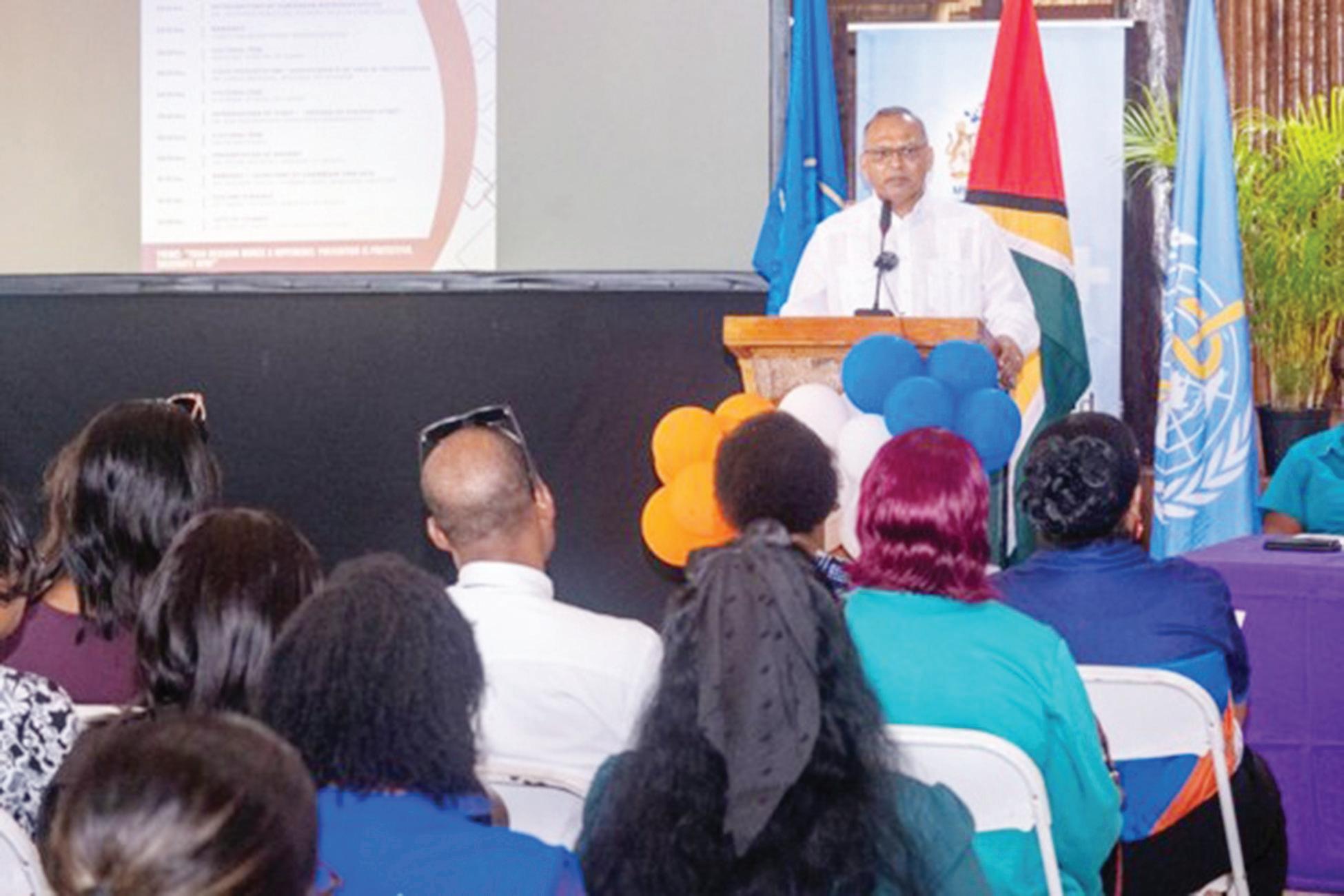
A section of the audience

By Bebi Shafeah Oosman
AS Guyana continues to advance its digital transformation in education, efforts are being intensified to ensure citizens, particularly those in rural and riverine communities, have access to modern learning opportunities.
educational gaps and equip residents with critical skills for a rapidly evolving world.
In Region Six, this push is gaining momentum through the Guyana Digital School, an initiative designed to bridge
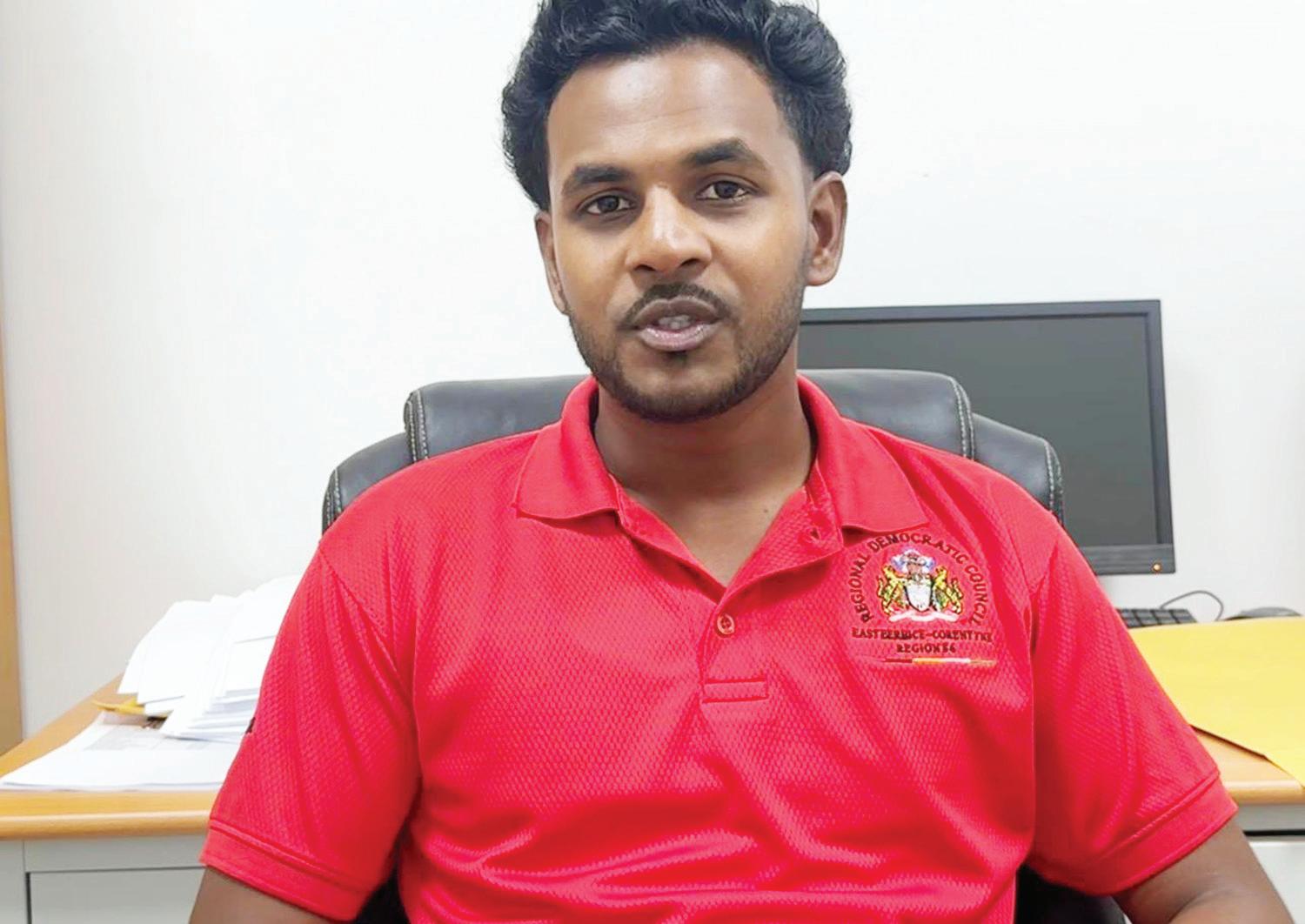
Regional Chairman of Region Six, Junior Basant, in an exclusive interview with the Guyana Chronicle, expressed
strong support for the initiative, describing it as a programme he is deeply passionate about due to its potential to expand educational access across the region.
He emphasised that the platform offers valu-

able resources for students, professionals, and lifelong learners, particularly in an increasingly digital environment.
As such, he urged residents of Berbice to take full advantage of the programmes being offered, noting that participation can enhance skills development, improve employability, and contribute to overall community advancement.
“Having a background in education, I am very excited about the Digital School. It is an initiative by His Excellency, President Irfaan Ali, where you are offered a classroom setting in the comfort of your own home, office, or anywhere with an Internet connection.
The Digital School offers comprehensive teaching and learning, and a platform that is up to CXC standard,” Basant said.
According to Basant, the government has ensured that the programme is free and easy to access.
“Signing up is relatively fast and straightforward, and all it takes is filling out a simple form,” he added.
He noted that during his school outreaches across Region Six, he has been encouraging students to sign up for the initiative.
“The government is rolling out these initiatives to make people’s lives better,” he said.
Reflecting on his own experience as a
student, Basant said he once sought the kind of support now being offered through such programmes.
“It gives you that extra boost to help you prepare, and now it is being offered free to all Guyanese — parents, students, and those preparing for exams. Take full advantage of the Digital School initiative,” he urged.
Basant stressed that the flexibility of the online platform allows users to learn at their own pace while balancing other commitments.
“Because it is online, it allows you the flexibility to work with your schedule… you can go at your own pace and make life easier,” he said.
He also highlighted the importance of the government’s GOAL and GROW scholarship programmes, noting their role in expanding access to tertiary education.
“As someone who had to pay for tertiary education, I can say that persons are not as appreciative as they should be. I want to thank the President for this initiative. Tertiary education is critical for personal development, and through GOAL, you have access to universities around the world. Again, it is free and flexible,” Basant added.
As such, Basant called on residents to utilize the opportunities available to them.
[NPR] President Donald Trump and the first lady are uninjured after a shooting incident at the White House Correspondents' Dinner on Saturday in Washington, D.C., according to a statement from the U.S. Secret Service. A suspect is in custody, the statement said.
"The U.S. Secret Service, in coordination with the Metropolitan Police Department, is investigating a shooting incident near the main magnetometer screening area at the White House Correspondents' Dinner. The president and first lady are safe, along [with] all protectees," the statement reads. "The condition of those involved is not yet known, and law enforcement is actively assessing the situation."
What sounded like gunshots were heard by gathered reporters shortly after 8:30 p.m. ET in the Washington Hilton. Several guests were seen fleeing the ballroom where hundreds of journalists, politicians and attendees were gathered — including Trump, Vice-President Vance and other members of the administration.
Video from inside the room showed security quickly clearing the guests on the main stage — including the
president and first lady. Someone can be heard shouting "Stay down!"
President Trump took to social media shortly after being rushed out to praise the Secret Service.
"Quite an evening in D.C. Secret Service and Law Enforcement did a fantastic job. They acted quickly and bravely. The shooter has been apprehended, and I have recommended that we 'LET THE SHOW GO ON' but, will entirely be guided by Law Enforcement. They will make a decision shortly. Regardless of that decision, the evening will be much different than planned, and we'll just plain have to do it again," Trump wrote.
Law enforcement was seen evacuating prominent cabinet officials to rooms within the hotel, including Environmental Protection Agency Administrator Lee Zeldin, Health and Human Services Secretary Robert Kennedy, and FBI Director Kash Patel.
The president said in a later post that all cabinet members are safe. Several members of Congress were seen leaving the event by foot, including Sen. Sheldon Whitehouse, D-R.I., and Rep. Jared Moskowitz, D-Fla.



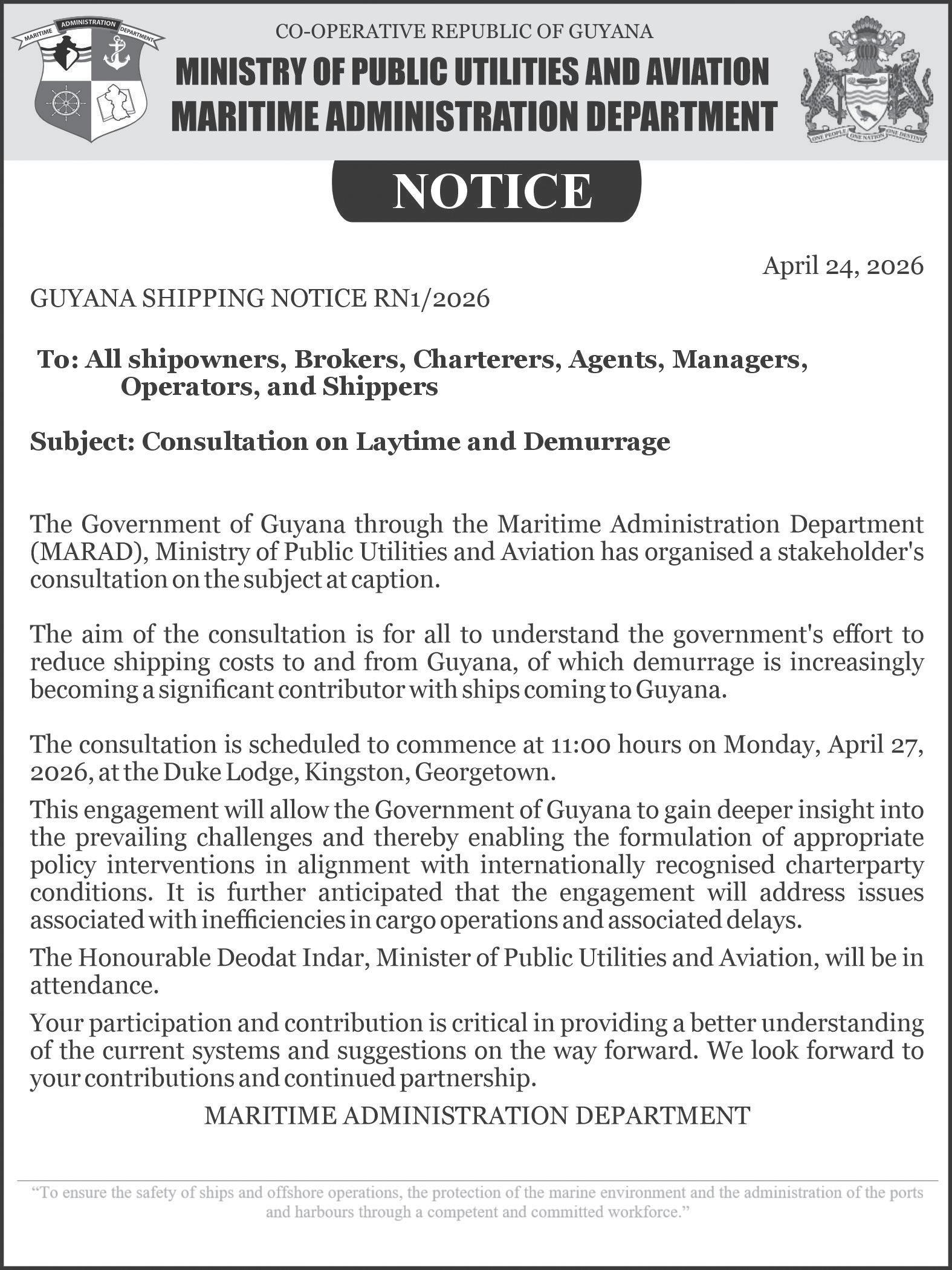
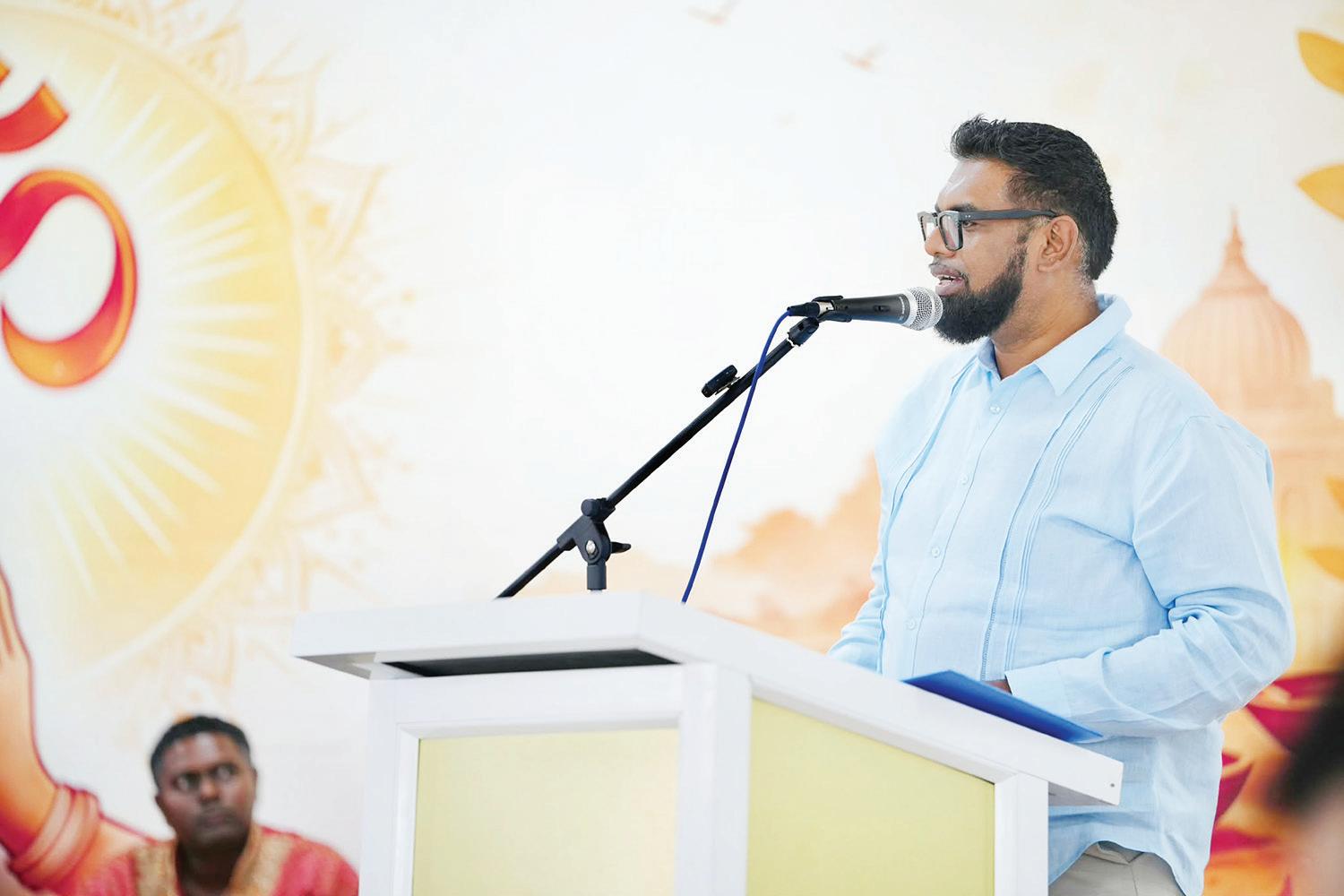
PRESIDENT Dr. Irfaan Ali on Saturday said that the legacy of the late Satyadeow “Sash” Sawh continues to shape Guyana’s national development, as he urged renewed commitment to strengthening institutions, preserving values, and advancing the country’s democratic gains.
Delivering remarks at a tribute marking 20 years since the former Minister of Agriculture’s assassination, the President described him as a man whose life was defined by conviction, sacrifice, and unwavering loyalty to country and cause.
“The journey of the life of Comrade Satyadeow “Sash” Sawh was decorated by his service, celebrated by his sacrifice, paused by human cruelty, but rebooted
in tradition, family, institution, belief and loyalty,”
President Ali said.
He told the gathering that Sawh’s life must be understood not only through the tragedy of his death, but through the enduring systems and values he helped to build.
“We must never forget that in the 60 years of our
history, this was the utmost representation of human cruelty,” the President said, referring to the circumstances surrounding Sawh’s killing. “But as painful as it is, we must address it because of its historical significance,” he added.
President Ali positioned Sawh’s enduring impact within the framework of
strong institutions, highlighting the role of the Arya Samaj movement, the People’s Progressive Party (PPP), and civic organisations in sustaining his legacy.
“All those who continue in loyalty to what he stood for… you are ensuring that his life continues,” he said, adding: “Institutions are meant to stay, and that is why it is important that we invest our energies in making them stronger.”
The Head of State also paid tribute to Sawh’s family, noting that their strength and adherence to shared values reflect the continuation of his life’s work.
“We cannot truly celebrate Comrade Sawh without recognising the strength of this family,” he said, commending his wife and children for preserving his legacy.
Beyond personal tribute, President Ali used the platform to reframe the concept of political identity, cautioning against rigid interpretations of ideological loyalty.
“A ‘Jaganite’ is not someone stuck in history or ideology,” he said. “It is an evolving concept of practical objectivity, mindful of the prevailing environment and circumstances.”
He noted that Sawh exemplified this adaptability, balancing deep cultural roots with pragmatic decision-making in service to national development.
The President further highlighted Sawh’s distinguished record of service, from his advocacy for democracy while living in Canada, to his tenure as Guyana’s Ambassador to Venezuela, and later as Minister of Fisheries, Crops and Livestock.
“He devoted his every spare hour to fighting for free and fair elections, and for democracy in Guyana,”
President Ali said, adding that Sawh was “a foundational fighter for the return of democracy”.
Reflecting on his ministerial contributions, the President credited Sawh with laying groundwork in key sectors, particularly aquaculture, and maintaining close engagement with farmers and fisherfolk.
“His door was always open, his voice always asking what the farmers and fisherfolk wanted,” he said. “He walked among them not merely as a minister, but as a true friend.”
President Ali stressed that Sawh’s life was anchored in conviction and effort, pointing out that belief alone was insuffi-
cient without discipline and sacrifice.
“You can live a life of conviction, but you will not achieve anything without effort,” he said, adding: “Comrade Sash Sawh placed effort alongside his conviction, and commitment alongside his belief.”
He also pointed to steadfastness as a defining trait, particularly in moments when circumstances could have easily diverted one from their path.
“What is required is steadfastness in your conviction, in your belief, in your sense of purpose,” the President said.
In closing, President Ali offered reassurance to Sawh’s family, affirming that the nation continues to stand with them.
“Twenty years have passed, but the wound is not fully closed,” he said. “Yet I want you to know that you are not alone… The same nation he served holds you in its abiding embrace.”
Sawh, a former senior government minister and political activist, was assassinated in 2006. His contributions to Guyana’s democratic development and agricultural sector continue to be widely recognised.

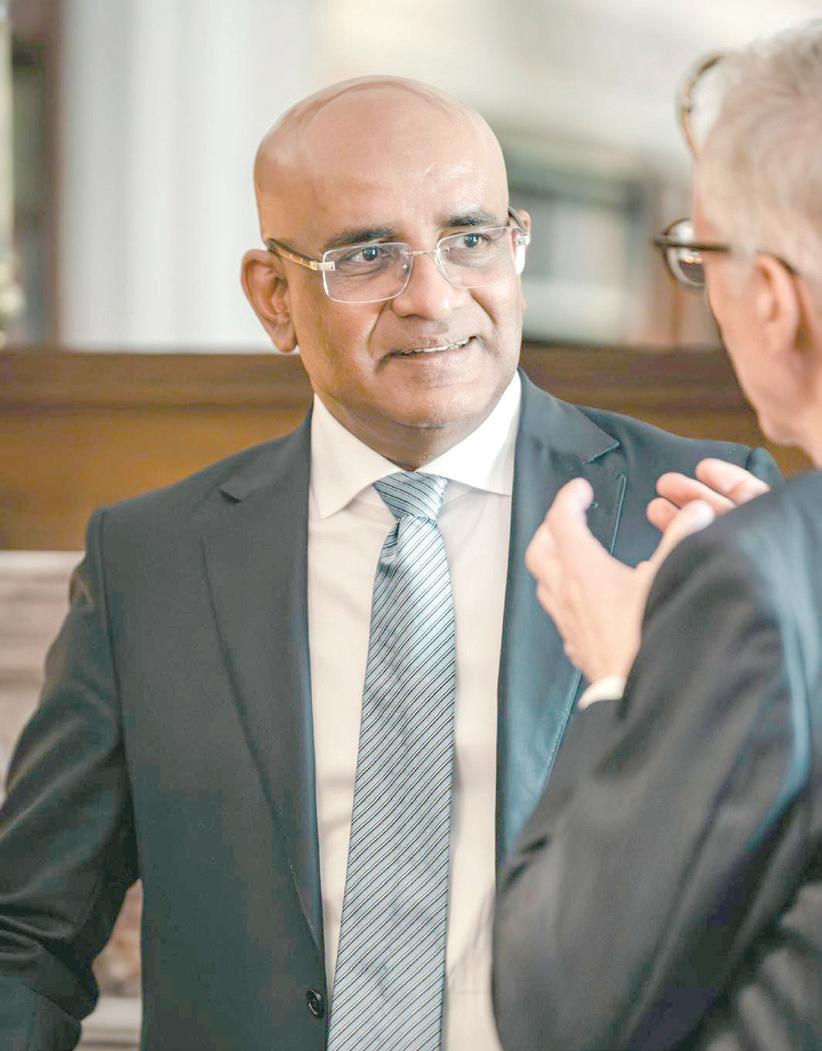
Bharrat Jagdeo, on Saturday, urged Commonwealth countries to make the most of new opportunities to access climate finance and advance development.
The Vice President joined a Commonwealth roundtable on the Declaration on Sustainable Urbanisation, adopted in Kigali in 2022.
The roundtable, supported by The King’s Foundation, brought together member states, along with experts and civil society organisations, to address how to manage rapid urbanisation while improving quality of life, strengthening economic opportunity, and building resilience.
Commonwealth leaders have spoken repeatedly of its role as a platform for practical co-operation. One example is the Commonwealth Climate Finance Access Hub - developed from work Vice President Jagdeo
chaired and presented at the 2014 CHOGM in Colombo.
Twelve years later – and now

headquartered in Mauritiusthe Hub has helped mobilise nearly US$500 million in cli-
mate finance, supported over 100 projects, and deployed expert advisers across more
than 15 countries.
Speaking after, Vice President Jagdeo said: “The prog-
ress of the Commonwealth Climate Finance Access TURN TO PAGE 23



—Minister says expanded production, agro-processing key to cutting imports
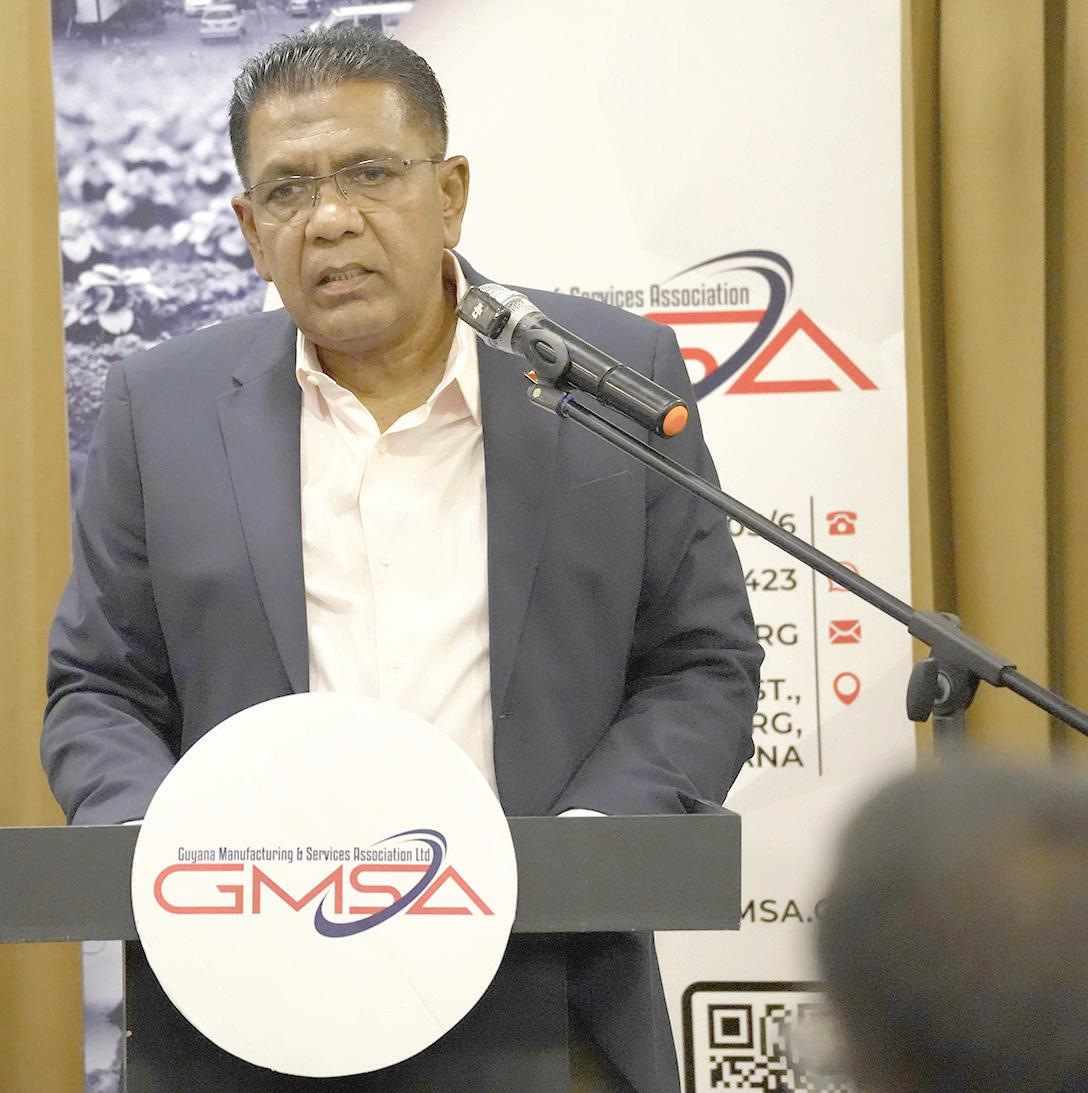
GUYANA is playing a critical role in advancing food security within the Caribbean Community (CARICOM), as demand for food and agro-processed products continues to grow, according to Minister of Agriculture, Zulfikar Mustapha.
The minister made this disclosure on Friday at the Guyana Manufacturers and Services Association’s (GMSA) Annual General Meeting (AGM).
Mustapha noted that CARICOM has set a target to reduce its food import bill by more than 4.6 million tonnes by 2030. He added that, by increasing production and expanding processing capacity, Guyana is well positioned to supply this growing regional market.
Approximately US$2 billion of regional imports consists of processed and semi-processed food products that local manufacturers and agro-processors can produce to supply CARICOM markets. According to the minister, products prioritised under the Ministerial Task

Force for import reduction include meat and poultry, cereals such as corn and soya, fruits and vegetables, dairy products, and niche products like honey and spices.
He said efforts are already underway to boost poultry production, particularly through engagement with young people.
“By the end of June, we will have nearly eight tonnes of ventilated poultry pens, consisting of around 40,000 birds each, operational,” Mustapha revealed.
The minister added that Guyana’s agricultural exports have shown steady growth, increasing from 432,544 metric tonnes in 2023 to approximately 517,727 metric tonnes in 2025.
“The next phase of the ‘25 by 2025 plus five’ initiative will further support food and nutrition security through increased production, enhanced technical co-operation, and improved trade mechanisms, including digital platforms such as the regional electronic agricultural marketing information system,” he said.
He emphasised that as Guyana expands into regional and international markets, maintaining high standards of quality, safety, and competitiveness will be essential.
“If we want to become an exporter and a country that serves our people, we have to be consistent,” he added.
Highlighting ongoing and planned projects, Mustapha pointed to efforts to develop
an agri-tech and agro-industrial complex, which is expected to create new opportunities for value-added production and expanded markets. He also referenced recent partnerships for the establishment of a US$20 million sugar refinery aimed at diversifying the sugar industry and strengthening downstream production.
The minister underscored that Guyana’s vision is not only to achieve national food self-sufficiency, but also to contribute meaningfully to food security across the Caribbean and beyond.
He disclosed that, over the next five years, the agriculture sector is set to undergo significant modernisation, supported by investments in drainage and irrigation systems, farm-to-market roads, research and extension services, and infrastructure, alongside continued engagement with farmers.
On the digital front, Mustapha said transformation is already underway with platforms such as the Agriculture Information System, the Farmers Connect App, and the upcoming digital seafood market, which will connect fisherfolk directly with buyers.
“As we look ahead, inclusive development must remain a priority. Economic growth must benefit not only large enterprises, but also farmers, small and medium-sized businesses, and communities across the country,” he stated.

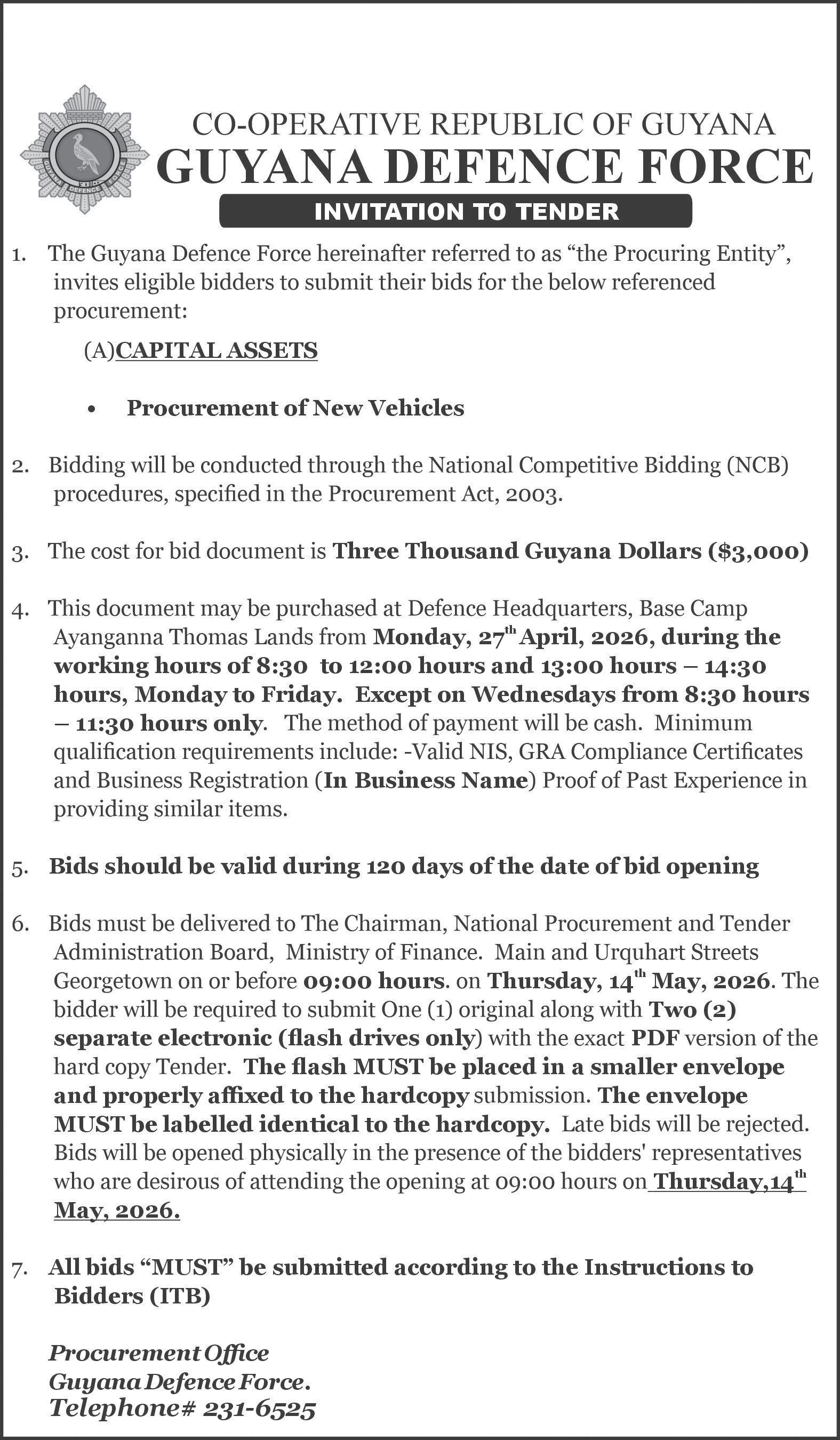
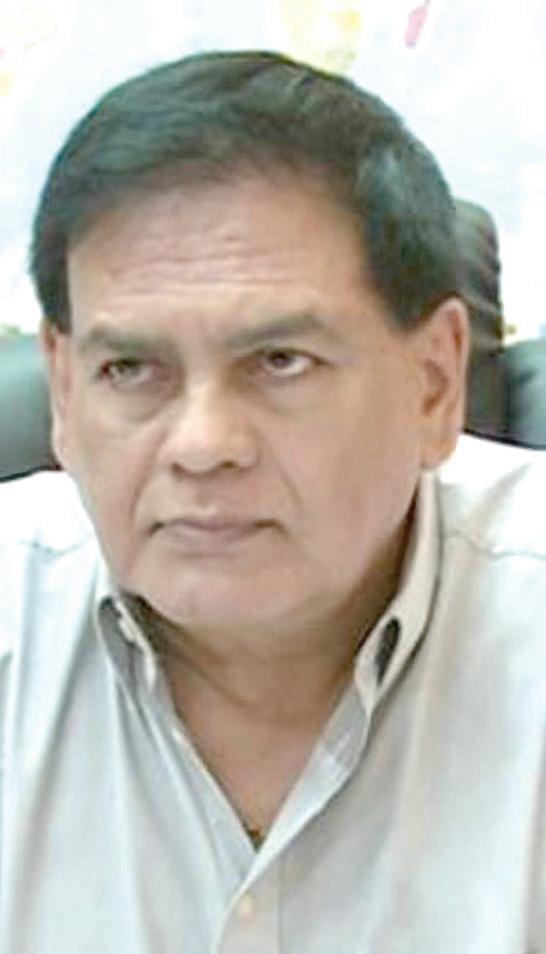
LEADING academic publisher, Routledge, has published Guyanese scholar Professor Prem Misir’s latest book, ‘Ethics and Governance of Artificial Intelligence in Healthcare’, placing critical focus on the intersection of technology, ethics and inequality in modern medicine.
The publication marks a significant milestone for Misir, whose work interrogates how artificial intelligence, machine learning and automation are reshaping healthcare systems, while raising urgent questions about governance, accountability and
human rights. Through a strong sociological lens, the book examines the growing role of AI in public health and medicine, while exposing structural imbalances in how these technologies are designed and deployed across different social groups. It highlights disparities linked to class, race, gender and power, arguing that without deliberate intervention, AI risks reinforcing existing inequalities.
Published by Routledge, the work also evaluates current ethical standards and regulatory approaches in healthcare, identifying gaps
in oversight and implementation that could undermine the benefits of AI-driven interventions.
Professor Misir advances a new governance framework rooted in social and behavioural sciences, aimed at ensuring that ethical considerations and human rights are embedded at every stage of AI development and deployment.
He had previously noted that while global institutions such as the World Health Organization have recognised AI’s potential to transform healthcare delivery and improve access—particularly in

developing countries—those gains will remain limited without strong ethical safeguards.
The book further argues
applicability and long-term impact.
Positioned as both a scholarly and policy-driven contribution, the publication is expected to serve as a key resource for academics, healthcare professionals and policymakers navigating the rapid integration of emerging technologies into health systems.
Professor Misir, who has held senior academic positions including Vice-Chancellor of The University of Fiji and Pro-Chancellor of the University of Guyana, continues to contribute to global discourse on public health, inequality and governance.
that much of the current research on AI in global health lacks sufficient ethical and regulatory grounding, raising concerns about its real-world
With AI accelerating its footprint in healthcare, this latest publication signals a clear direction: innovation must be matched by robust frameworks that safeguard equity, accountability and human rights.
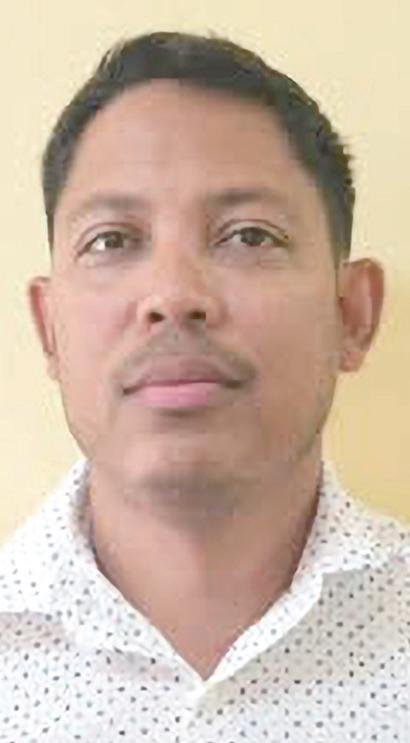
A 44-year-old driver has been charged following a fatal road accident that occurred on April 18, 2026, along the Providence Public Road, East Bank Demerara (EBD), which claimed the life of pedestrian Matthew Van-Veen.
The incident took place at approximately 18:30 hours and involved motor pick-up GAB 5505, owned and driven by Maurice Menezes of Coverden Public Road, EBD, and Van-Veen, a 52-year-old labourer formerly of Castello Housing Scheme, East La Penitence, Georgetown.
Following investigations, Menezes was on Tuesday, April 21, 2026, formally charged with the offence of causing death by dangerous driving, in contravention of Section 35(1) of the Motor Vehicle and Road Traffic Act, Chapter 51:02.
He appeared before Magistrate Dylon Bess at the Diamond/Golden Grove Magistrates’ Courts where the charge was read. He entered
a plea of not guilty. Bail was granted in the sum of $300,000, and the matter was adjourned to May 20, 2026, for a status report.
The fatal collision involved a Ford Raptor and pedestrian Van-Veen and occurred in the vicinity of the Guyoil gas station. Reports indicate that Van-Veen was crossing the road from
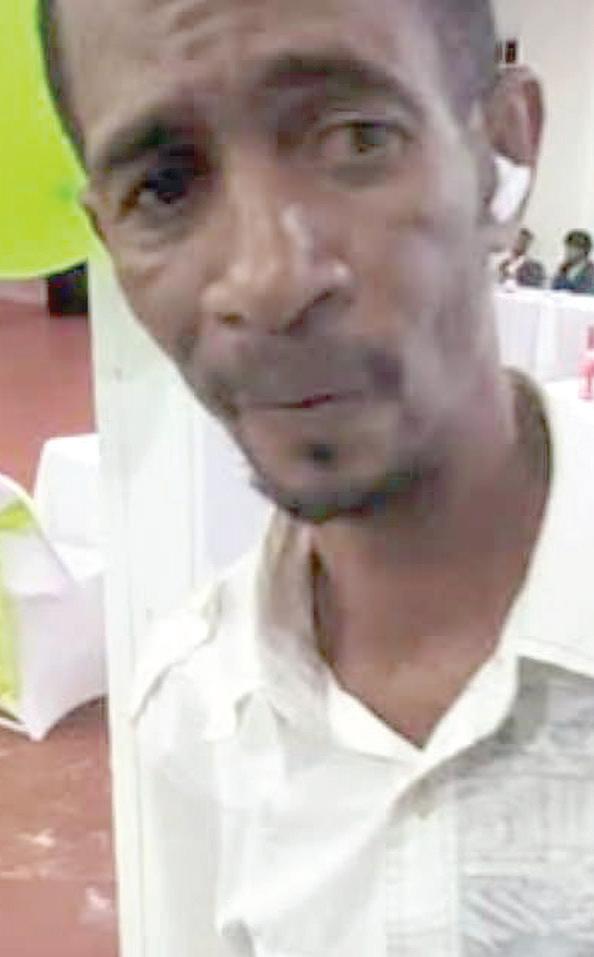
west to east while carrying a five-gallon container of fuel when he was struck by the vehicle. He was picked up in a semi-conscious state by the driver and public-spirited citizens and taken to the Georgetown Public Hospital Corporation, where he later died while receiving medical treatment.
AS Guyana’s gastronomy scene continues to evolve, blending local flavours with international cuisine, a new food kiosk is set to enter the market.
The business is owned by Irshaad Mohamed and Alejandro Haniff and is being described as a whimsical concept with a unique setup for a kiosk.
Speaking in an interview with this publication, Mohamed explained that “The Board” in the name rep -
The Board and The Batter, a new food kiosk, will open this May at Movietowne on the East Coast of Demerara, offering gourmet desserts and beverages to customers.

resents the charcuterie aspect of the business, which will be introduced at a later stage with its own dedicated setup.
“The Batter,” he said, reflects the dessert and cake component, which will form the initial offering when the business opens in the coming weeks.
“We’ll be investing extensively in training our baristas and our staff on the best customer service we could possibly offer the customers. Because anybody can set up something to go and sell. But it’s all [about] what you offer to them,” Mohamed said.
In addition to strong customer service and a fresh concept, Mohamed noted that the kiosk will allow customers to personalise their desserts.
At The Board and The Batter, customers will not only be able to purchase desserts but also build their own, using cake bars, toppings, and waffle bowls.
Flavours will include red velvet, chocolate, and signature vanilla.
The kiosk will also offer a creative twist on coffee, with bold infusions such as tiramisu and pistachio.
“We’re not just standardising our desserts. We give you the opportunity to come


and build what you want.
We’ll also be making the Dubai strawberry bowl. We’re going to be doing gourmet cakes as well. We’re going to make coffee as well. So, its desserts elevated,” Mohamed said.
He added that the business intends to incorporate as many Guyanese flavours as possible, with locally sourced fruits featured in several offerings.
Mohamed shared that the concept for The Board and The Batter began taking shape in October last year. Despite logistical issues, financial challenges, and delays, he remained optimistic about bringing the idea to fruition.
The kiosk will employ eight staff members, including co-founder Haniff, with three employees scheduled per shift, one cashier and two preparation staff.
The official opening is expected in the second or third week of May, with an influencer-driven, red-carpet launch planned.


GUYANA has spent nearly 16 years building the institutional and technical systems required to participate in global carbon markets, positioning itself as a model for developing countries pursuing climate finance opportunities.
Senior Director of Climate and REDD+ at the Ministry of Natural Resources, Dr Pradeepa Bholanath, said the process, which began in 2009 through a bilateral partnership with Norway, laid the foundation for monitoring systems, governance frameworks, and forest finance structures.
tegrates forest conservation, climate finance and sustainable economic growth into a single national framework.
This work, she noted, was advanced under Guyana’s Low Carbon Development Strategy (LCDS), which in-
Speaking at a recent Commonwealth forum titled “Mobilising green finance for Nationally Determined Con-

tribution (NDC) implementation: Lessons from Guyana’s carbon market experience,” the official explained that Guyana’s climate finance journey was not built overnight.
Rather, she noted that it was the result of a carefully structured progression involving policy development, institutional strengthening and international co-operation.
Bholanath, described the early phase of Guyana’s climate programme as a deliberate “on-ramp” designed to build the scientific and institutional capacity required for participation in global carbon markets.
“So, this was the on-ramp for Guyana, the way in which we started to develop the MRV [monitoring, reporting, and verification] systems, create the institutional infrastructure, create the systems for governance, and that interlink across the pillars of the traditional economy and the new aspects that we were seeking to develop,” she said.
According to Bholanath, this phase was critical in ensuring that Guyana had the necessary systems in place to measure, report, and verify forest-related emissions and carbon storage. These systems, commonly referred to as MRV frameworks, formed the backbone of the country’s emerging climate finance architecture.
She explained that Guyana’s first phase of development, which ran from 2009 to 2020, was grounded in a results-based bilateral co-operation agreement with the Government of Norway. That agreement generated approximately US$227 million, which was invested across several key national priorities.
The funds supported a wide range of initiatives, including renewable energy projects, sustainable land management, climate adaptation and mitigation activities, improvements to forest monitoring systems, and the development of community-based livelihood programmes. These interventions, she noted, were not isolated projects but part of a broader strategy to link forest conservation with sustainable national development.
The official emphasised

that this first phase was essential in building what she described as the “science, policy, and institutional capacities” needed for Guyana to eventually participate in carbon markets.
“So, that was our first task, finding a way to build the on-ramp so that we have the science, the policy, and the institutional capacities to deliver on a potential carbon market,” she said.
She noted that this foundational work allowed Guyana to develop systems that could later support participation in both voluntary and compliance carbon markets, while also strengthening domestic environmental governance.
A key feature of Guyana’s approach, she said, was the early alignment of its national reporting systems with international climate frameworks, particularly those under the United Nations Framework Convention on Climate Change (UNFCCC).
“We developed each aspect of our reporting to be aligned with the UNFCCC requirements,” she said, adding that this alignment covered MRV systems, social safeguards, and REDD+ [Reducing Emissions from Deforestation and forest Degradation] reporting structures.
This alignment, she explained, played an important role in reducing duplication of work and improving institutional efficiency. By designing systems that already met international standards, Guyana avoided the burden of maintaining separate reporting mechanisms for domestic and international obligations.
“So, the way to maximise and optimise on those
TURN TO PAGE 24
resources that we have would be to find ways to align what we would have had to do anyhow in terms of UNFCCC reporting with what we would do to build out this climate finance programme,” Bholanath said.
The official stressed that this approach was particularly important for developing countries with limited institutional and financial capacity. By integrating international reporting requirements into national systems from the outset, Guyana was able to streamline its climate governance framework and strengthen its ability to manage carbon finance.
She further highlighted that one of the most important outcomes of this process was the institutionalisation of key technical systems within permanent government structures.
For example, MRV systems, which were initially introduced as part of project-based activities, were later embedded into national institutions such as the Guyana Forestry Commission.
“That became a part of what we do,” she said, referring to the integration of MRV functions into the core operations of national agencies responsible for forest management.
This institutional embedding, she explained, ensured that climate-related monitoring and reporting were no longer treated as temporary or standalone initiatives but became permanent features
FROM PAGE 22
of Guyana’s governance system. Bholanath also reflected on the length of time it took to develop Guyana’s readiness for carbon markets, noting that the country’s 10year preparation period was largely shaped by the early stage of global carbon market development.
She explained that when Guyana began its process in 2009, many of the systems, frameworks, and even the markets themselves were still in their infancy. As a result, the country’s development pathway evolved alongside global policy and market structures.
At the time, she said, there were few precedents for countries entering into structured climate finance arrangements of this nature, and Guyana’s partnership with Norway was one of the earliest of its kind. However, she noted that future countries seeking to develop similar systems may not require the same length of time.
While Guyana took approximately a decade to build its foundational systems, Bholanath suggested that more advanced institutional readiness or existing capacity could significantly shorten that timeline for others.
She concluded that the Guyana experience demonstrates the importance of long-term planning, institutional coordination, and alignment with international frameworks in building credible and functional carbon market systems.
Hub is welcome and important. It shows what can be achieved when countries are given practical support to turn home-grown ideas into investable projects. But the scale of today’s climate and development challenges requires far more.
Helping all our people to secure better lives now requires managing complexity at a speed and scale not seen before. We need new thinking, new tools, and a step change in how the international community supports developing countries and smaller states.
“Today, Commonwealth stakeholders focused on urbanisation - how we plan and build cities that are liveable, productive, and attractive for investment and jobs.
But the same challenges are seen right across all areas of development – and that increasingly means the need
PAGE 8
for better data and applications that can use the data.
At the recent AI Summit in New Delhi – which brought together Heads of Government and leaders from technology companies like Microsoft, Google, OpenAI - I saw how artificial intelligence is already strengthening planning and accelerating decision-making across the world. This presents a major opportunity - but only if it works for everyone. As I said today, if AI models are not trained on data from small and developing countries, it will not work for them.
So we must invest nowin solutions, both traditional and AI-driven - that support small countries and the developing world. The Commonwealth – home to about a third of the world’s people – can play a leading role.”

CHILDHOOD vaccination coverage across the Caribbean has climbed from 92 per cent in 2022 to 95 per cent in 2025, meeting the regional target and signalling major progress in the fight against vaccine-preventable diseases.
That update was delivered by Pan American Health Organisation (PAHO) Assistant Director, Dr Rhonda Sealey-Thomas, during the launch of Guyana and Caribbean Vaccination Week 2026 at the Umana Yana, Kingston, Georgetown, on Saturday.
Dr Sealey-Thomas said the achievement reflects years of investment in public
health systems, strong political commitment and the dedication of healthcare workers across the region.
She noted that Guyana, Montserrat and St Vincent and the Grenadines have already achieved 100 per cent coverage in some childhood immunisation areas.
“The progress we have made is meaningful, but much more remains to be done… achieving and sustaining at least 95 per cent coverage for all antigens is essential,” she stated.
Sealey-Thomas warned that declining vaccination rates in some countries have contributed to a resurgence
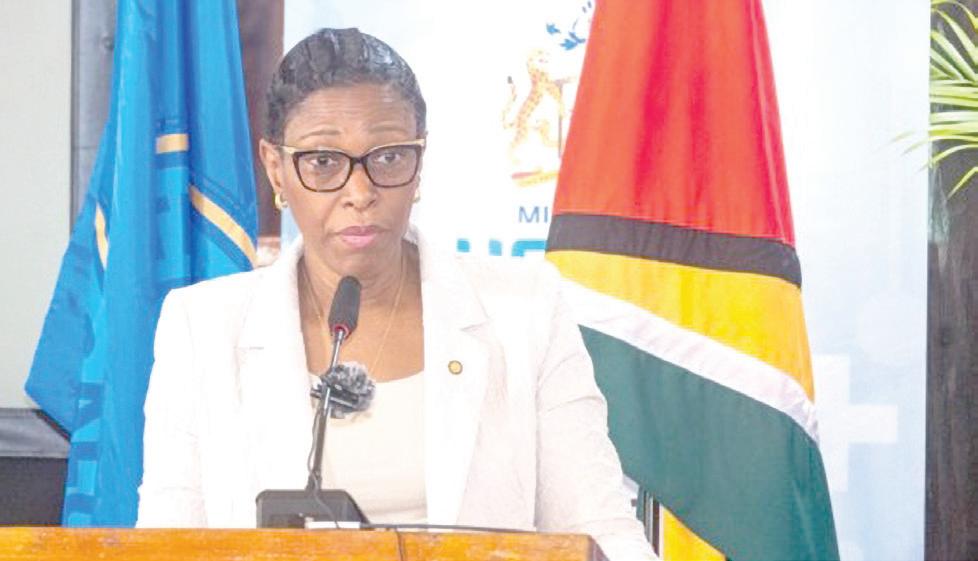
of diseases such as measles across the Americas.
According to PAHO, more than 15,000 measles cases have already been recorded in the region in the

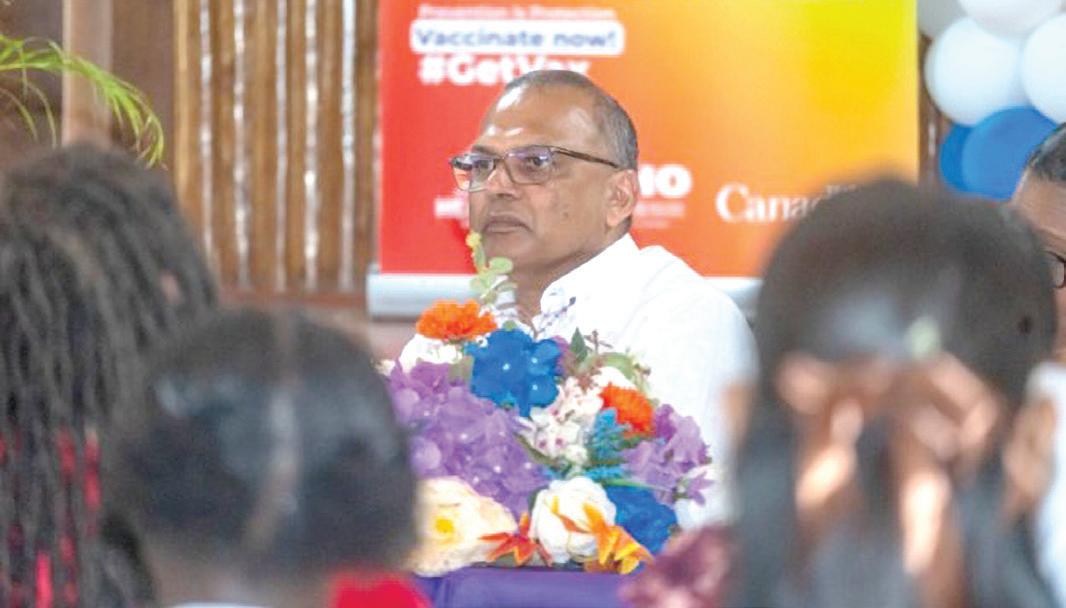
first months of 2026, surpassing last year’s total.
The PAHO assistant director said the situation underscores the importance of strong surveillance systems, public trust, timely access to vaccines and continued investment in immunisation programmes.
Her remarks echoed those of Minister of Health, Dr
Frank Anthony, who highlighted Guyana’s success in maintaining vaccination coverage above 95 per cent for most antigens while expanding access to remote and hinterland communities.
Dr Anthony said the government has invested heavily in cold-chain storage, solar-powered refrigeration units, vaccine transport systems and regular training for frontline healthcare workers to ensure every eligible citizen can be reached. He added, “It makes no sense if you have the vaccine and it is nicely stored in the fridge. Then it is not working for anyone. You have to put it in somebody’s arm so that it can work to protect that person.” [DPI]






ARSENAL regained their place at the top of the Premier League as Eberechi Eze’s first-half strike was enough for the Gunners to beat Newcastle in a hardfought match at Emirates Stadium.
Mikel Arteta’s side had dropped to second place for the first time since October after Manchester City’s win against Burnley in midweek had seen them go top of the table on goal difference.
Arsenal started the game well and took the lead in the ninth minute through Eze after a well-worked short corner.
The England international was passed the ball on the edge of the box by Kai Havertz and curled an excellent strike into the top corner.
Newcastle had chances of their own through William Osula, Bruno Guimaraes and Sandro Tonali, but could not find a way to score in the first half.
Eddie Howe introduced Yoane Wissa and Harvey Barnes after the break as the away side chased an equaliser.
And Wissa missed a golden opportunity late on to level the match as Newcastle were
MANCHESTER CITY survived a shock by coming from behind to edge past Southampton and reach a record fourth consecutive FA Cup final to keep alive their hopes of claiming a domestic treble.
Pep Guardiola’s side has already lifted the Carabao Cup this season and will return to the capital on Saturday, May 16 when they will be heavy favourites against either Chelsea or Leeds United.
The Spaniard made eight changes to the side that edged past Burnley in midweek and City’s second string was unable to find any rhythm or create clear-cut chances in a scrappy opening period.
Omar Marmoush’s shot at the near post was kept out by the feet of Southampton goalkeeper, Daniel Peretz, while Saints celebrations were cut short when Leo Scienza’s

defeated for the fourth league match in a row. The win moves Arsenal three points clear at the top of the Premier League having played a game more than title-rivals Manchester City. (BBC Sport)
quiz: (1) Ishan Kishan-13 (10/3-MI (2) Ruturaj Gaikwad-17 catches (CSK)
Today’s Quiz: (1) Who struck the first hundred in this season’s IPL? (2) Who claimed the first four-wicket haul? Answers in tomorrow’s issue.

cool finish was disallowed for offside.
Southampton managed their first shot on target on 55 minutes but Ross Stewart’s effort was straight into the grasp of James Trafford, while at the other end, substitute Savinho’s bending strike was pushed away by Peretz.
The semi-final came alive 11 minutes from time when Finn Azaz curled home an unstoppable strike into the top corner from 20 yards out to spark joyous scenes in the Saints end, but they were silenced just two minutes later when Jeremy Doku’s deflected shot crept into the far corner.
And with extra-time looming, Nico Gonzalez stepped up to power home a thumping strike past the reach of Peretz to turn the game around for City in their search for a third FA Cup triumph under Guardiola. (BBC Sport)
• From Page 32
Louis was promptly taken to the Sir Lester Bird Medical Centre but was later cleared and discharged. The incident came after a chaotic 147 overs that saw more than 25 wickets tumble, with the Leewards holding a 96-run lead when play was halted.
Simon admitted to prematch concerns but insisted he did not foresee the level of danger. He pointed to a specific crack as the root cause of the chaos.
“There was a part on the Sir Andy Roberts end, on the left-hand side of the pitch, there was a crack on the offside of it that I did not see,”
Simon explained.
“Had I seen it, I would have dealt with it, and that was the only issue. For me, everything else was fine. Nobody really came to me directly, but I’ve heard one or two players speak about the crack. That was of no major concern to me because that was really out of the playing area.”
While the crack might have been off the typical bat-
ting line, its effect was undeniable. Seales was virtually unplayable, claiming seven wickets in the second innings to go with three in the first.
Earlier on the fateful third morning, he had Jahmar Hamilton caught at second slip after a rearing ball found the glove, just three balls after striking towering allrounder Rahkeem Cornwall on the shoulder with a bouncer.
Despite the horror show, Simon vowed that the shame of Tuesday would never be repeated.
• From Page 32
Red Force captain Joshua Da Silva backed his squad’s depth despite Seales’ absence. “The cricket we’ve been playing is fantastic. I can’t really fault the boys for the effort they have put in so far,” Da Silva said. “Even though we will miss Jayden for the final match, we have the depth in our squad to continue doing well.”
A maximum of 26 points, including bonuses, is still on offer from the final game. That means the Leeward Islands Hurricanes could climb as high as 36.8 points, and the Windward Islands Volcanoes to 33.6.
But with Jamaica and Barbados facing off, guaranteeing that at least one direct rival will gain ground, both remain on life support for a playoff spot.
Jamaica have made two changes, with Brandon King and Alex Hinds replacing Ojay Shields and Jeavor Royal. Head coach Robert Haynes has zeroed in on two key areas.
“We must improve on the catching; we dropped a few that cost us. If we took those, Barbados would’ve made no more than 400 or 300 runs, which would make for a more competitive game,” Haynes said. “We are looking at the fast-bowling department in terms of the new ball and having more penetration to put the opposition on the back foot.”
Barbados head coach Vasbert Drakes believes his side is building momentum. “We want to continue playing decent cricket. From a batting perspective, we are heading in the right trajectory and getting the scores where we can control Jamaica’s bowling,” Drakes said. “But in the bowling department, we need to find ways of nullifying their opening partnership, which has had a major impact on their team.”
After two rounds, Kevin Wickham tops the batting charts with 366 runs, followed by John Campbell, 298 and Kirk McKenzie, 290.
Among bowlers, Gudakesh Motie leads all comers with 16 wickets, including two five-wicket hauls, ahead of Jayden Seales,13 and Peat Salmon, 10.
LEBRON James and Marcus Smart recorded double-doubles as the Los Angeles Lakers took a stranglehold on their first-round playoff series against the host Houston Rockets with a 112-108 overtime victory in Game Three on Friday.
After James (29 points, 13 rebounds) forced OT a three-pointer, Smart scored eight of his 21 points in the extra period to put the Lakers up 3-0 in the Western Conference series. Smart added a team-high 10 assists while Rui Hachimura put up 22 points for the Lakers, who will look for a sweep of the bestof-seven set on Sunday at Houston.
The Rockets were without leading scorer Kevin Durant for the second time in the series. Durant, who missed Game One with a knee contusion, was a late scratch due to a left ankle sprain sustained in the fourth quarter of Game Two. Alperen Sengun paced the Rockets with 33 points and 16 rebounds, while Amen Thompson chipped in with 26 points and 11 assists.
Spurs 120, Trail Blazers 108
Stephon Castle hit for 33 points and rookie reserve Dylan Harper added career bests of 27 points and 10 boards as visiting San Antonio roared back to beat Portland in Game Three of a first-round Conference playoff series.
San Antonio erased a 15-point third-quarter deficit and took a 2-1 lead in the series. The Spurs won with Victor Wembanyama on the bench after the star was ruled out before the game because of concussion protocol. De’Aaron Fox added 18 points, with Luke Kornet racking up 14 points and 10 rebounds. Jrue Holiday finished with 29 points to lead Portland. Scoot Henderson added 21

points, and Deni Avdija produced 19 points and nine assists.
Celtics 108, 76ers 100
Jayson Tatum scored 11 of his 25 points in the fourth quarter as visiting Boston defeated Philadelphia in Game Three of their first-round Eastern Conference playoff series.
Jaylen Brown matched Tatum with 25
points, while Payton Pritchard added 15 points for the Celtics, who lead the best-ofseven series 2-1.
Tyrese Maxey scored 31 points on 12-of31 shooting for the Sixers. Paul George (18 points) and Kelly Oubre Jr. (17) also made key contributions, but VJ Edgecombe pitched in just 10 points on 5-of-17 shooting, 0-of-7 from long range. (Reuters)
HALF Mile /One Mile/ Scheme and Blueberry Hill / Alleys/Valleys/ Christiaburg were comfortable winners as the inaugural Kashif and Shanghai Organisation organised, Upper Demerara Football Association sanctioned inaugural Linden Town Week Inter Ward football championship got underway Friday night at the Bayrock National Stadium in Wismar, Linden. Before the kickoff by Linden’s Town Clerk, Lennox Gasper, there was a colourful march past of the six participating teams and short addresses were done by Kashif Muhammad of the Kashif and Shanghai Organisationn, UDFA president Wainwright Bethune and Town Clerk Lennox Gasper.
One Mile/ Half Mile/ Scheme were off to a flying start as they humbled Central/ South Mackenzie/ Mines, 5-0, on a near perfect playing surface, which encouraged the playing of exciting football as Marcus Tudor helped himself to a hat-trick of goals for One
Mile/ Half Mile/ Scheme
Clinton Charles broke the 0-0 deadlock for
One Mile /Half Mile/ Scheme when he netted the opening goal of the tournament in the 32nd minute, after the goalkeeper fumbled the ball, allowing him to tap it into the open goal.
Four minutes later Marcus Tudor got the first of his hat-trick of goals in the game, making it 2-0, with a neat left foot shot for the eventual winners.
Three minutes after play resumed in the 48th minute, Zidane Ramdehol would stretch that advantage for Half Mile/ One Mile/ Scheme making it three nil; and Tudor would get his second goal in the 58th minute. Tudor would add another goal to collect his hat-trick, in the 84th minute to seal their opening 5-0 victory.
Blueberry Hill/ Alleys/ Valleys/ Christianburg would then ease their way past Silvertown / West Watooka/ Mines 4-1, in a group encounter, opening with a goal from the penalty spot via a reckless tackle by Lennox
Paul which was rightly penalised by referee Shavin Green and scored by Nicholas Gentle in the 25th minute.
That 1-0 advantage would be doubled in the 31st minute through Ouston Lewis but just before the first period of play ended Silvertown / West Watooka/Mines reduced the lead when Shane Haynes found the back of the net in the 45th minute. However, soon after the second session began, Omar Brewley would increase the advantage for Blueberry Hill/ Alleys/ Valleys Christianburg netting in the 52nd minute, and Shane Luckie sealed victory with another goal in the 61st minute for the winners.
The competition continues tomorrow night (Monday) with another double- header feature. In the first game at 18.00hrs Central/ South Mackenzie/Mines will face Amelia’s Ward / Kara Kara/ Bamia, while the second at 20.00hrs will see Block 22 / Wisrock taking on Silvertown West Watooka/ Canvas City. (Joe Chapman)
NEW Zealand have announced that star all-rounder Suzie Bates will retire from international cricket at the completion of this year’s ICC Women’s T20 World Cup. Bates will call it quits following this year’s T20 World Cup that commences in England and Wales on June 12, where the 38-year-old will get her final chance to add to her current tally of 362 international appearances for her country.
Reflecting on a wonderful career, Bates told New Zealand Cricket, “When I look back on the past 20-plus years, I can’t quite believe how quickly the time has gone. I’m immensely proud to have worn the fern so many times, and I’ve been filled with enormous purpose and joy in striving each day to be a better person, teammate, cricketer, and athlete for this team. Words can’t truly express my gratitude to all my teammates and coaches along the way. I have one final mission: to head to the UK -- a place that holds so many special memories for me -- and win another World Cup.”
The all-rounder will depart the game with one of most impressive resumes in recent times, having consistently performed at the highest level for her country since making her debut against India in Lincoln back in 200
Bates will retire as New Zealand women’s highest-ever run scorer across all formats and only Australian great Meg Lanning (15) and India opener Smriti Mandhana (14) can boast to have scored more ODI centuries than the 13 she has managed in 50-over cricket. (ICC Media)

PUNJAB Kings produced a stunning victory against Delhi Capitals in the Indian Premier League by hunting down a target of 265 to record the highest successful run-chase in the history of T20 cricket.
Punjab crossed the line with seven balls to spare at the Arun Jaitley Stadium, surpassing their own previous best chase of 262 against Kolkata Knight Riders in 2024.
• (Scores Delhi Capitals 264-2 (20 overs): Rahul 152* (67), Rana 91 (44) vs Punjab Kings 265-4 (18.5 overs): Prabhsimran 76 (26), Iyer 71* (36). Kings won by six wickets)
KL Rahul had struck an unbeaten 152 - the highest score by an Indian in IPL - as Delhi reached 264-2 batting first, but Punjab attacked from the outset and reached 116-0the second-highest powerplay score in the tournament.
Punjab openers Prabhsimran Singh, who hit a blistering 76 from just 26 balls, and Priyansh Arya, who scored 43 off 17 balls, set the tone for the visitors with a 126-run opening stand in the sweltering Delhi heat.
Captain Shreyas Iyer then capitalised on two dropped catches by Karun Nair to reach an unbeaten 71 from 36 balls and take Punjab home with relative ease.
However, the record-breaking win was interrupted by an injury to Lungi Ngidi, who had to be rushed out of the stadium in an ambulance though Delhi later confirmed via social media that the fast bowler was stable and set to be discharged from hospital.
With Punjab racing to 43-0 in the third over of the chase, the South African back-pedalled from mid-off to attempt a catch off Arya but fell backwards, hitting his head on the turf.
The match was stopped for 15 minutes as the 30-year-old received medical attention, with Vipraj Nigam coming on as a concussion substitute before the match resumed.
Unbeaten Punjab remain top of the table with 13 points from seven
matches - three ahead of Royal Challengers Bengaluru and Rajasthan Royals. Meanwhile, Delhi are sixth with six points.
Delhi had looked firmly on top at the halfway stage - aided by Rahul’s sensational 152 not out from 67 balls.
It is the third-highest individual score in IPL history, surpassed only by Chris Gayle’s 175 not out in 2013 and Brendon McCullum’s 158 not out in the tournament’s opening match in 2008.
Rahul’s knock is also the highest by an Indian in the format - beating the previous mark of 151 set by Tilak Varma in the Syed Mushtaq Ali Trophy in November 2024.
The wicketkeeper-batter was supported by Nitish Rana, who scored 91 from 44 balls, as the pair added 220 runs - the highest partnership ever for Delhi and the second-highest in IPL after a 229-run stand between Royal Challengers Bengaluru duo Virat Kohli and AB de Villiers against Gujarat Lions in 2016. But Punjab’s ruthless hitting made the target of 265 look nowhere near enough.
Delhi were given a brief lifeline when Kuldeep Yadav struck in consecutive overs to dismiss Prabhsimran and Cooper Connolly, but Karun’s dropped catches off Iyer proved costly.
“We’re making the same mistakes repeatedly,” said Delhi captain Axar Patel.
“If you don’t support the bowlers on such a wicket, I think you deserve to lose. At the same time, our bowling unit also needs to take a look at themselves, given Punjab’s score in the powerplay. If we grab the crucial moments, two or three results would have gone our way.” (BBC Sport)
THIRTY junior cricketers of the Rose Hall Town Youth and Sports Club (RHTY&SC), on Friday last, enjoyed a one-day tour of the Garden City and also Region Three.
The visit was organised by the club’s management in conjunction with the Trendsetter Tour Group with sponsorship from the Riaz Computer Store.
Players on the tour were selected from the Rose Hall Town Poonai Pharmacy Under -11, 13 teams along with the Rose Hall Town Farfan and Mendes Ltd Under- 16 team. The excited group was accompanied by Club Secretary Hilbert Foster, Cricket Manager Robby Kissoonlall, Asst Cricket Manager Tyrone Pottaya and Under- 19 players Danellie Manns and Nicholas Cameron.
Places visited included the Seawalls area, the Red House, National Cricket Stadium, the Zoo, Botanical Gardens, Farfan and Mendes Head Office, Ministry of Housing and the newly opened Guyana-China Friendship Park in West Demerara.
They were also taken on a bus ride around the city at popular venues like the St George’s Cathedral and Stabroek Market.
Club Secretary Foster stated that one of the main aims of the City tour was to educate the youths on the developments taking place in their homeland.
The boys were privileged to meet former President of Guyana, Donald Ramotar, during their visit to the Cheddi Jagan Research Centre. The former Guyana leader traced the valued contribution of Dr Jagan to the country’s fight for Independence and overall development.
Mr Ramotar also urged the attentive youths to develop a culture of respect and discipline. RHTY&SC’s Honorary Patron, Minister of Hous-
ing, Collin Croal, in a one-hour meeting with the teams spoke widely of the importance of an educational background. Minister Croal answered a wide range of questions from the players and then donated six junior cricket kits to the club for its developmental programmes.
Organising Secretary Robby Kissoonlall expressed thanks to the Honorary Patron for his assistance and pledged to use the equipment for the intended purpose of unearthing more talents for the future.
The youths also visited the head offices of their sponsor Farfan and Mendes Ltd, where General Manager Andrew Mendes expressed his delight to host them. Mr Mendes
congratulated the team on representing his company’s brand well over the years and cautioned them on the misuse of illegal drugs and alcohol.
The tour ended with a visit to the Seven Ponds area in the Botanic Gardens where several outstanding Guyanese are buried including three Presidents, national poet Martin Carter and Sir Sonny Ramphal.
The management of the club would like to express thanks to the Ministry of Tourism, Trendsetter Tours and Riaz Computer Store for the roles in making the visit a success. The club intends to make more of these visits in the future in their ongoing personal development programme for its youth cricketers.
THE Guyana Football Federation (GFF) and DOF Subsea have formalised a transformative partnership aimed at advancing the development of female football in Guyana, following the signing of a Memorandum of Understanding (MoU) on Friday at the World Trade Centre, High Street, Georgetown.
Under the agreement, DOF Subsea will make a financial contribution of GYD$40 million over five years to support the operations of the DOF FIFA Arena Girls Football Academy for the development of female football in Guyana.
The agreement establishes a strategic, five-year collaboration between the two entities and marks a significant milestone in the federation’s long-term vision to expand structured opportunities for girls in football.
Central to the partnership is the creation of Guyana’s first dedicated girls’ football academy, to be known as the DOF–FIFA Arena Girls Academy.
Under the terms of the MoU, the GFF will design and deliver a comprehensive

girls’ development programme, operating primarily from the FIFA Arena facility to be constructed at Haslington, East Coast

Titans All-Stars will start the tournament as two-time defending champions.
THE fourth installment of the One Guyana T10 Tapeball Blast will reach a new high in terms of cash prize payouts, with over G$8 million up for grabs alongside high-quality trophies.
In a move to further professionalise the grassroots format, organisers have introduced a quarter-final payout for the 2026 season.
Each zone winner will now pocket $500,000, and by advancing to the National Finals, teams can compete for an additional $2 million for first place, $1 million for second place, or $500,000 for each losing semifinalist. This structure effectively increases the overall winning prize to $2.5 million, while the overall runner-up will take home $1.5 million.
The two losing semi-finalists at the National Finals will walk away with a combined $1 million overall.
In an effort to remain player-centred, organisers FL Sport have expanded rewards for teams that fall short of the final stage. The losing finalist at the zone level will receive $200,000, while the losing semi-finalists get $50,000 each.
For the first time in the tournament’s history, losing quarter-finalists will also be rewarded with $25,000 each.
Beyond team prizes, individual excellence will be heavily incentivised with a
suite of cash awards: Most Valuable Player ($150,000) + motorbike, Most Runs ($100,000) + television, Most Wickets ($100,000) + television, Player-of-the Final ($75,000), Super Strike Rate ($50,000) and Best Economy Rate ($50,000).
Non-monetary prizes are also on the cards for players recording the most dot balls, sixes, and fours.
Tournament Director, John Ramsingh, noted that the mission has always been to provide a platform for talent to be rewarded.
“Without question, we have one of the highest cash payouts for any tournament within the Caribbean,” Ramsingh stated, adding that interest from regional counterparts to compete in Guyana continues to grow.
Registration for the 80-team tournament opens in early May with a $35,000 fee, and teams can register for any zone.
The competition will maintain its straight knockout format across four zones: Berbice, East Bank/West Demerara, Essequibo, and Georgetown/East Coast Demerara.
The tournament is scheduled to run from early August to mid-October, with the National Finals set for the brand-new Anna Regina National Stadium.
In addition to the prize money, zone winners will earn an automatic spot in the upcoming Global T10 Tapeball tournament.
Demerara, with the flexibility to expand to additional locations as required. The programme will adhere to the
technical, governance, safeguarding, and development standards of FIFA, Concacaf, and the Caribbean Football Union (CFU).
In celebration of the partnership, the Girls’ Grassroots Festival on Friday, held at the National Gymnasium, featured a training exhibition with eight schools, highlighting structured coaching, player care, and a safe, well-organised environment.
The event reinforced a strong commitment to developing women’s football from the grassroots level in Guyana.
Among those in attendance were Philippe Moggio, General Secretary of Concacaf; Liam McShane, Deputy British High Commissioner; Marco Sclocchi, EVP North America; Samuel Shield, VP of Finance – North America; Keith Lewis, General Manager –Caribbean Region; and Jesse Persaud, Branch Administrator, DOF.
Their presence underscored a shared commitment to empowering the next generation and strengthening the future of women’s football from the grassroots level. (GFF)

Reigning champions
Guyana Harpy Eagles have looked ruthless so far, bagging two wins from two to lead the standings with 43.2 points.


ST JOHN’S, Antigua, (CMC)
– With just one round remaining in the West Indies Championship bilateral series, the tension is mounting.
Playoff berths remain fiercely contested heading into the third and final set of matches starting today, and every point could prove deci sive. Under this year’s format, the table-toppers after the bilateral se ries will punch their ticket straight to the final, May 17–20.
The second- and third-placed sides will then battle in a playoff May 10–14 for the remaining spot
ST. JOHN’S, Antigua, (CMC)
– A dark cloud hung over the Sir Vivian Richards Stadium on Tues day, not from the Caribbean sun, but from a pitch that proved too dangerous for first-class cricket.
Following the abandonment of the West Indies Championship fix
VAIBHAV Sooryavanshi struck an explosive 36-ball century – the 15-year-old’s second in the Indian Premier League – but it was not enough to prevent Rajasthan Royals slipping to a defeat by Sunrisers Hyderabad.
It is the third fastest IPL hundred after his own 35-ball effort last season, when he became the youngest centurion in men’s Twenty20 cricket, and Chris Gayle’s 30-ball onslaught
lian duo Mitchell Owen (533) and Andrew Symonds (558).
Sooryavanshi plundered four consecutive sixes against Praful Hinge in the opening over before clearing the rope three more times to race to a half-century in only 15 balls. He reached his ton with his 12th six in the 15th over, but fell to Sakib Hussain the following ball.
However, with the rest of the Rajasthan batters and extras
BY
missing
their target with nine balls
15 - Years old 36 - Balls for a century 2 - IPL hundreds (already) 3rd - Fastest IPL century ever
12 - Sixes in the innings
4 - Consecutive sixes (opening over) 15 - Balls to reach fifty
- Balls to 1,000 T20 runs (fastest ever)