President Ali says ahead of independence anniversary, emphasises need for gratitude, reflection and
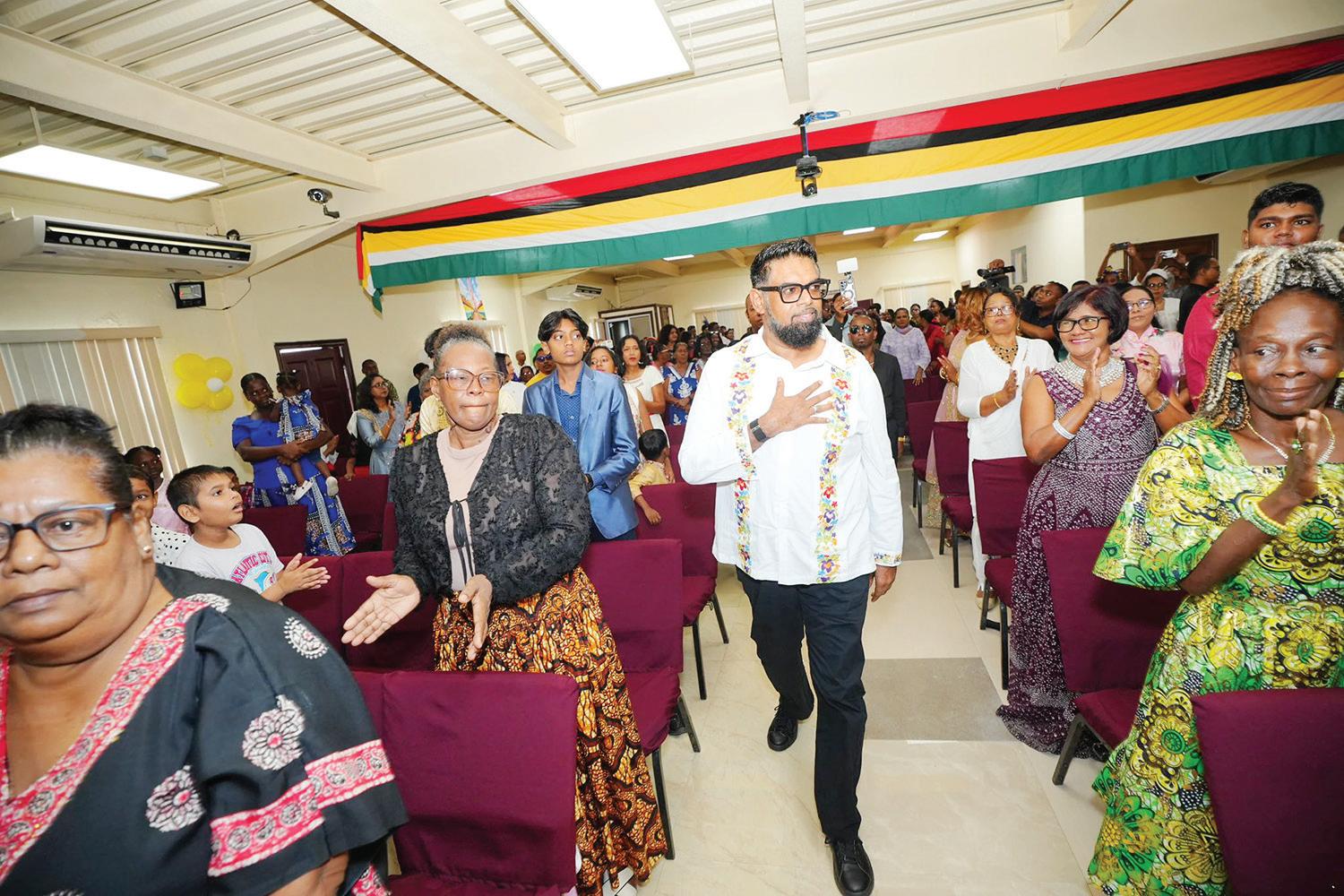
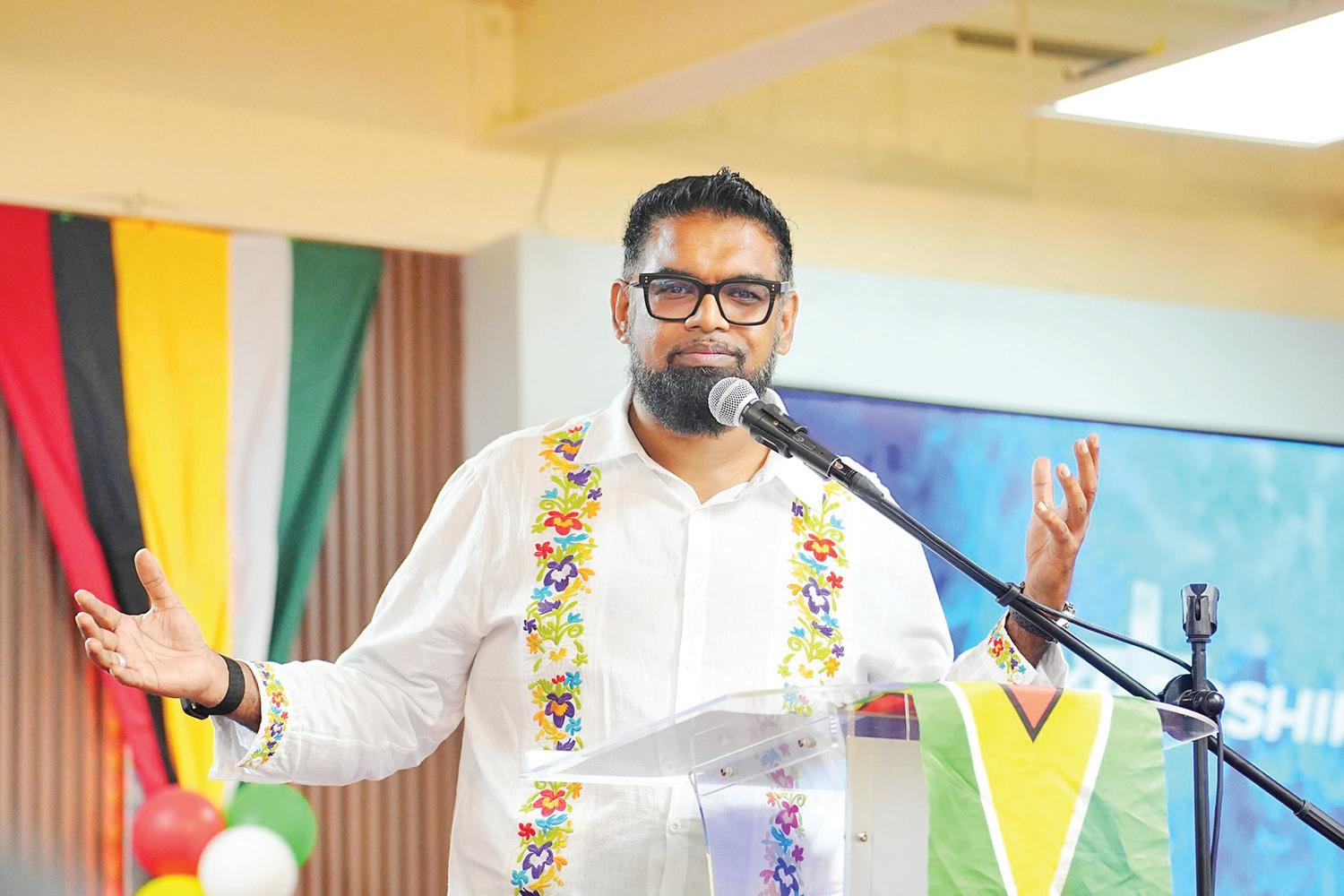
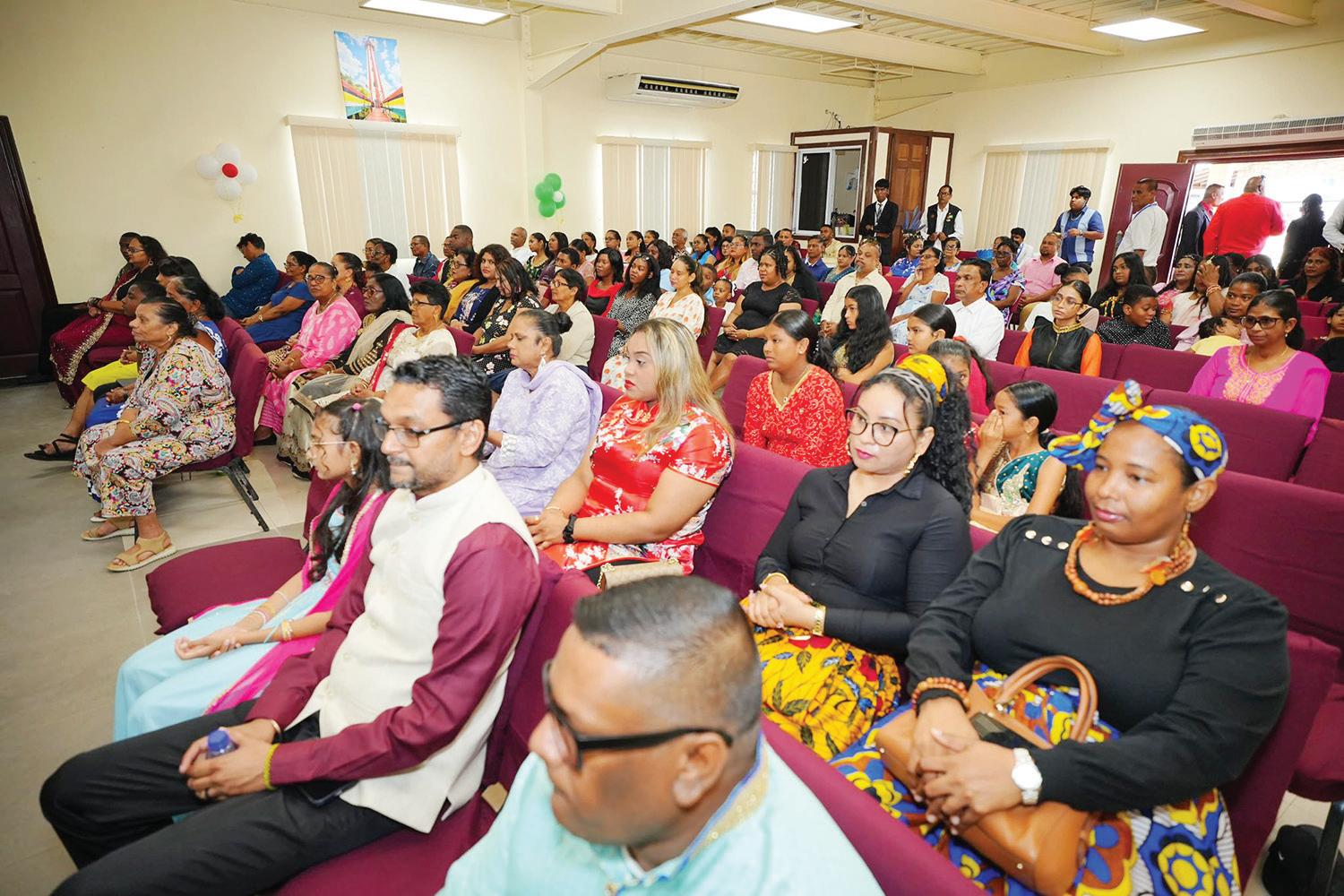
President, Dr Irfaan Ali joined scores of worshippers at the Better Hope Assembly of God Church on the East Coast of Demerara for a 60th independence anniversary thanksgiving service and cultural presentation (OP Photo)
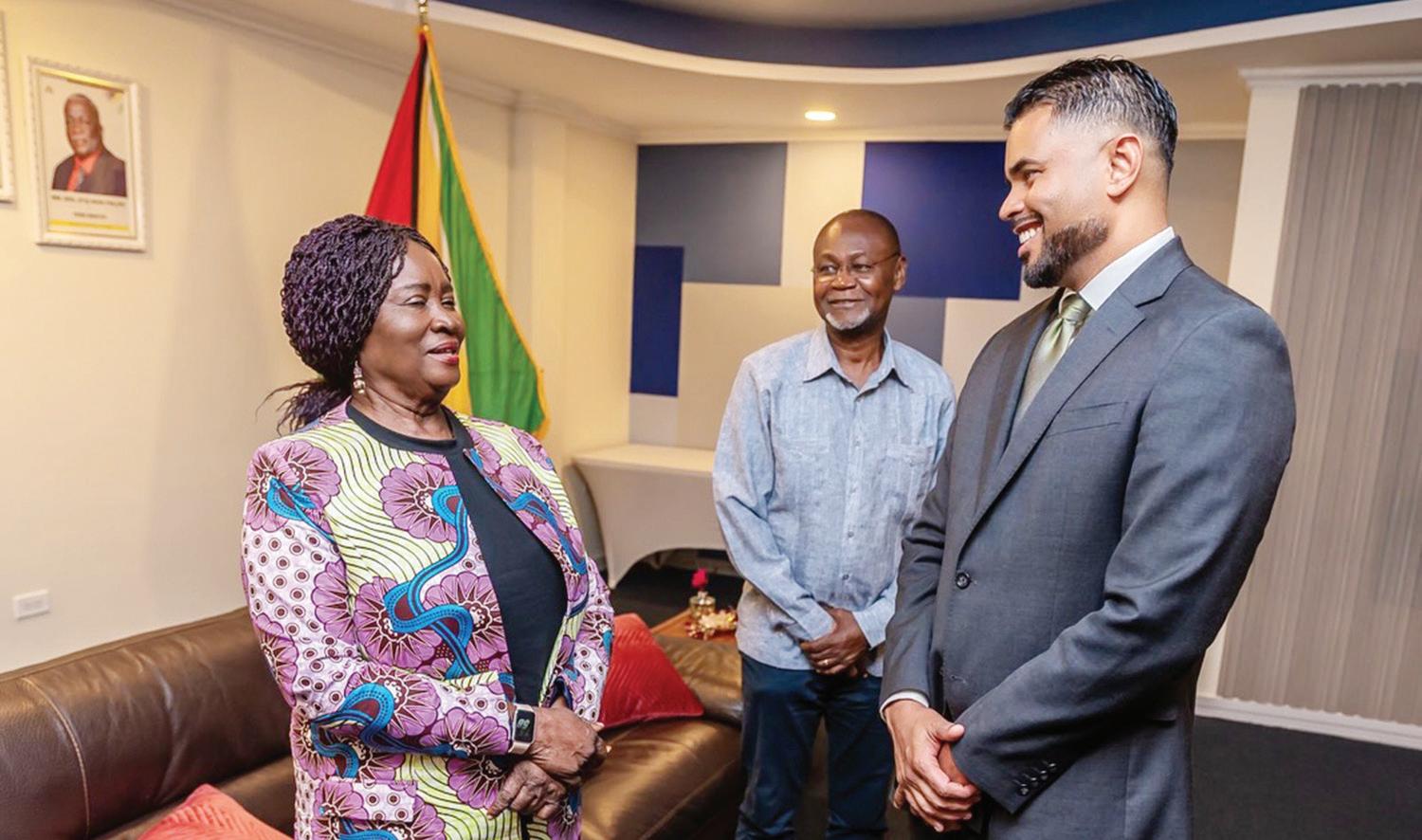
Minister Charles Ramson Jr on Sunday met with the Vice President of Ghana, Professor Jane Naana Opoku-Agyemang, ahead of Guyana’s independence celebrations. The engagement reflected the growing ties and continued co-operation between Guyana and Ghana, as the two nations strengthen relations through shared history, culture and development (Delano Williams photo)
Guyana’s greatest strength remains its people – Minister Mustapha
By Bebi Shafeah Oosman
AGRICULTURE Minister Zulfikar Mustapha on Sunday declared that Guyana’s 60th independence anniversary is a celebration of the resilient, united and unbreak-
able Guyanese spirit.
Reflecting on the nation’s journey since independence at State House in New Amsterdam, Mustapha acknowledged that the road has not always been easy.
He noted that Guyana
endured years of political and economic hardship, but despite the challenges, the country persevered and emerged stronger.
“That is why tonight’s celebration is so significant because 60 years later, Guyana is not standing
still, Guyana is rising,” he stated, while pointing to the country’s growing international recognition as one of the world’s fastest-rising economies.
According to the minister, the nation’s progress is reflected in the lives of ordinary Guyanese.
He highlighted expanded access to education, scholarships and opportunities through the Guyana Academy of Online Learning (GOAL) programme, as well as increased support for pensioners, farmers, nurses, fishermen and public servants.
“It is found in the child who now has greater access to education, the student who has access to scholarships and opportunities, the pensioners receiving greater support and dignity, and the workers who now see hope where there was once despair and uncertainty,” Mustapha said.
Under the leadership of President, Dr Irfaan Ali, the minister said Guyana is witnessing unprecedented development, with new roads, expanding housing schemes and increased investments transforming communities across the country.
“Even as Guyana rises rapidly, we remain guided by a principle: no one must be left behind,” he stressed.
Turning his attention to Berbice, Mustapha described the Ancient County as a region deeply rooted in sacrifice, resilience and national development. He
noted that Guyana’s story could not be told without recognising the contributions of Region Six.
“Region Six has long been an engine that powers the nation forward,” he said, adding that the People's Progressive Party/ Civic administration has made major investments aimed at modernising and expanding opportunities throughout the region.
Among the initiatives highlighted was the reopening of the Rose Hall Estate, which Mustapha described as more than the reopening of a factory. “It was about restoring confidence and dignity to the people,” he stated.
The agriculture minister also pointed to continued expansion within the rice industry through technology, research and increased support for farmers.
He further highlighted developments in fisheries and aquaculture, noting that Guyana is positioning itself to play a leading role in regional food security efforts within CARICOM.
He also referenced works on the Hope-like canals and other drainage and irrigation initiatives aimed at strengthening the protection of agricultural lands in Region Six.
“As we celebrate 60 years of nationhood, we must also reflect on what truly defines us as a Guyanese people,” Mustapha said. “It is not race, religion, geography or political affiliation, but our
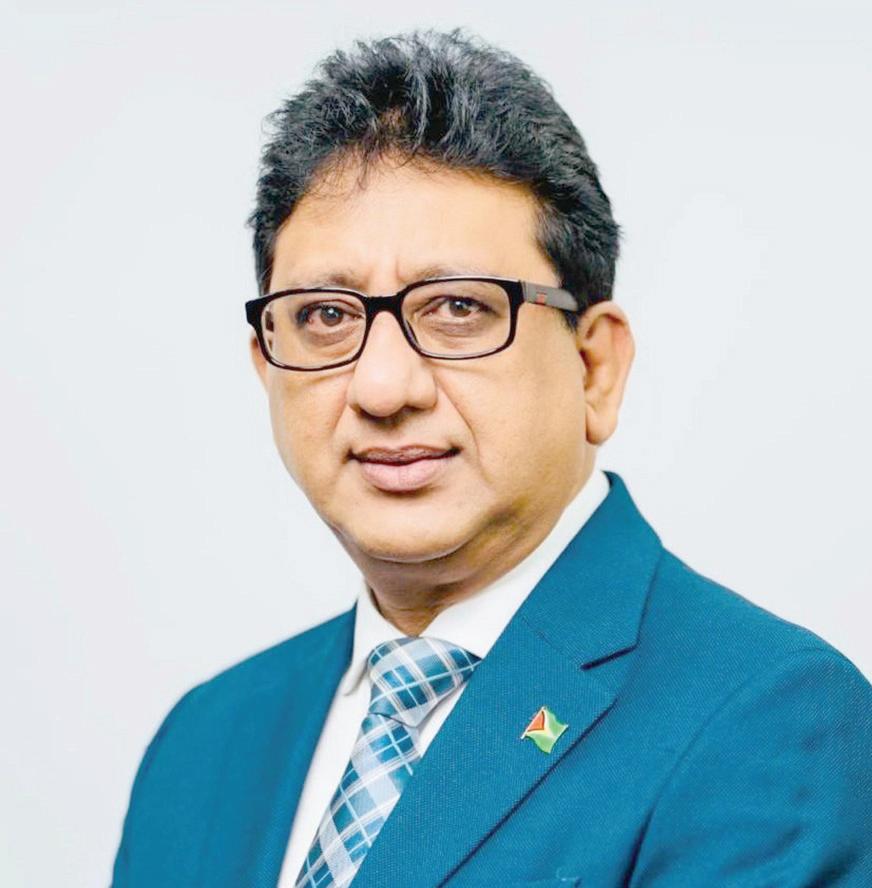
Minister of Agriculture Zulfikar Mustapha (MoA photo)
‘60 years is evidence of endurance’
– President Ali says ahead of independence anniversary, emphasises need for gratitude, reflection and unity
By Naomi Parris
PRESIDENT, Dr Irfaan Ali has called on Guyanese to embrace gratitude, spiritual maturity and national unity as the country marks its 60th anniversary of independence, declaring that “60 years is evidence of endurance” and that “a thankful nation is a strong nation.”
Speaking during a special thanksgiving service at the Better Hope Assembly of God Church on Sunday, President Ali framed the nation’s upcoming Diamond Jubilee as a moment not only for celebration, but [also] for sober reflection on God’s sustaining hand over Guyana through “trials and triumphs.”
“As Guyana celebrates 60 years of independence, it is only fitting that we pause to give thanks and praise for this long journey as a nation. Sixty years is evidence of endurance. It is proof that through trials and triumphs God has sustained this land and his people,” he said.
Dr Ali noted that thanksgiving is central to the country’s spiritual and civic health, insisting that gratitude must shape both personal conduct and national policy.
“A thankful people are a hopeful people. A thankful nation is a strong nation,” he told the congregation.
Contrasting gratitude with envy, he warned that many fail to recognise their blessings because they compare themselves to others.
REMEMBERING SACRIFICE
The President linked national thanksgiving to historical memory, urging citizens to honour the sacrifices of enslaved Africans, indentured labourers, and earlier generations whose struggles laid the foundation for modern Guyana.
“Those who came and were tortured and beaten as slaves, those who came as indentured labourers, the foundation and sacrifice that they laid is that gift of gratitude that we inherit today,” he said, calling on Guyanese to give praise and thanksgiving in their memory.
He stressed that the most meaningful way to honour parents and grandparents is through humility, conduct, and service.
Drawing on his own family history, the President recalled how his grandmother laboured in the rice fields so that her daughter could become a teacher and later a senior education official, and how that sacrifice cleared the way for his own journey.
“I stand on the shoulders of my parents, my grandparents, my grandmother who planted rice with her hands and ploughed the fields with her bare feet… On their sacrifice, my parents’ sacrifice, God has granted me this opportunity in this country,” he noted.
Reviewing six decades of independence, Dr Ali reminded worshippers that Guyana’s path had been marked by hardship, polit-
ical division, and economic strain.
“Our nation’s journey has not always been easy. There were moments of hardship, political division and strife, economic difficulties, and social uncertainty… There were times when our democracy itself was tested,” he said.
However, he maintained that God’s presence carried the nation through.
ECONOMIC GROWTH
With Guyan a now attracting unprecedented global attention and economic opportunities, Dr Ali cautioned that development, if detached from spiritual grounding and humility, could become destructive.
“As our country grows, and as the eyes of the
world turn toward Guyana, we must never forget the source of our blessing,” he said.
Development, he insisted, is not enough on its own, Positioning true independence as more than political status, the President said it must be matched by spiritual maturity and social responsibility.
“Independence is not merely political freedom. True independence also requires spiritual maturity, national unity, and social responsibility,” he said, adding:-
“We must therefore strive to build a Guyana where justice prevails, where unity triumphs over division, and where love for country rises above selfishness and greed.”
Turning to the country’s long-term outlook, Dr Ali said Guyana’s security and prosperity will not ultimately rest on its natural resources, but on keeping God at the centre of national life.
“Our future will not be secured merely by resources beneath the sea, or wealth within the economy. Our future will be secured when we continue to place God at the centre of national life, family life and personal life,” he said adding:
“If we honour God,” he added, “if we walk in righteousness, if we care for the vulnerable, if we pursue justice, and if we remain united as one people, then no obstacle will be able to defeat this nation.”
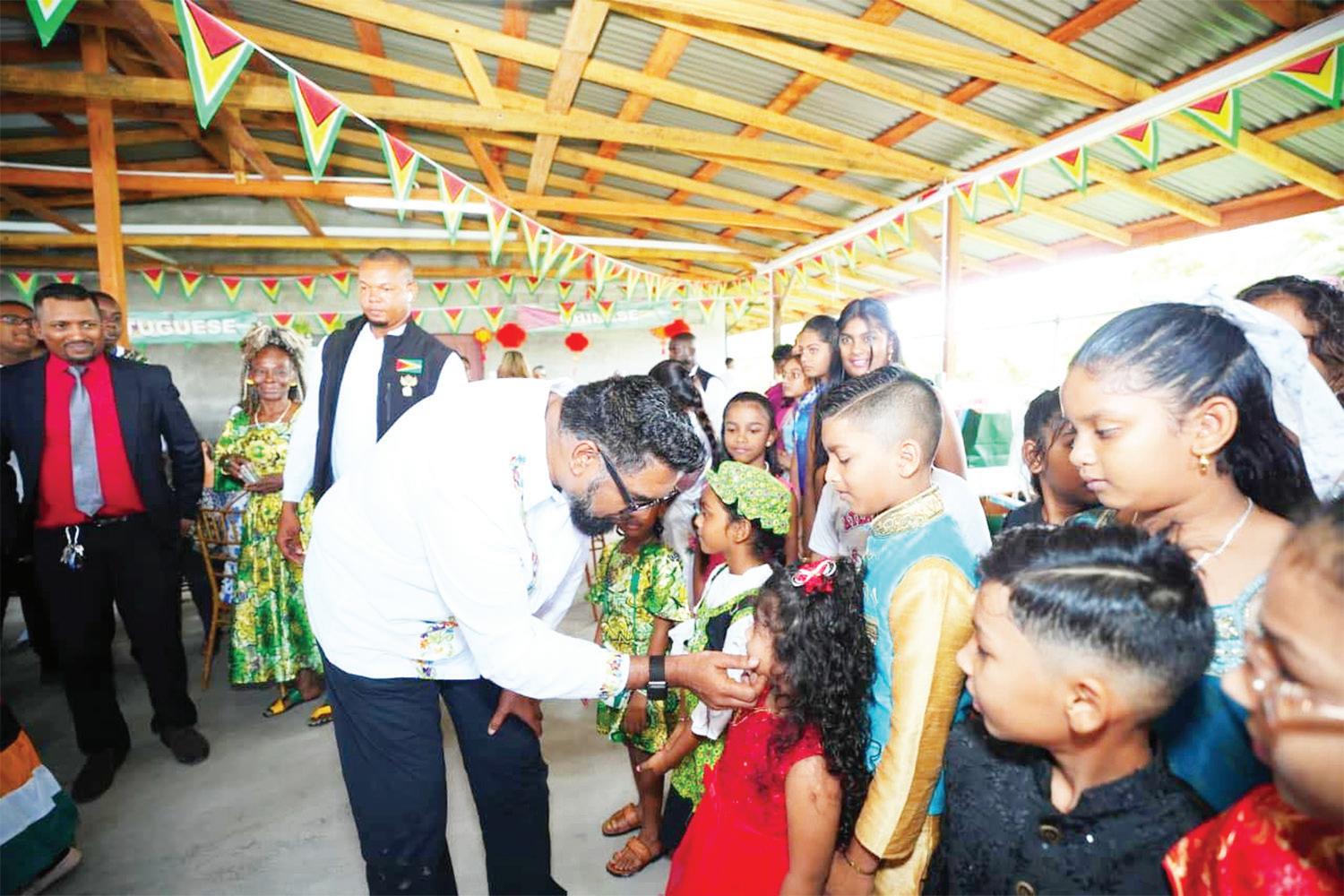
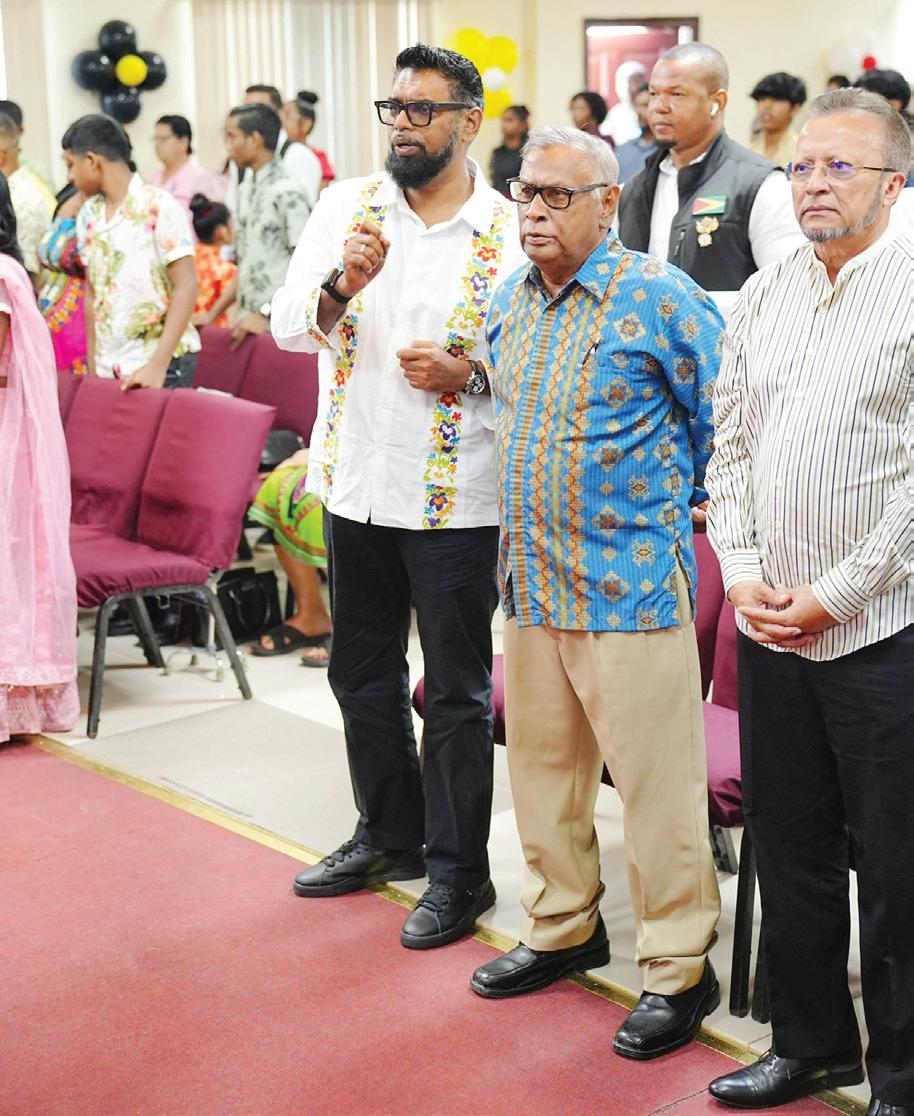
President, Dr Irfaan Ali on Sunday joined worshippers of the Better Hope Assembly of God Church for a special thanksgiving service (Photos: President Irfaan Ali/ Facebook page)
Guyana’s greatest strength remains its people...
shared love for this country and our collective determination for a better life.”
Emphasising national unity, he reminded the audience that all Guyanese stand beneath the Golden Arrowhead, regardless of background or origin.
“This evening, as we honour our diamond jubilee under the theme, ‘Homecoming,’ we are reminded that Guyana has become a land of new hope and opportunity,” he said, while encouraging overseas Guyanese to return home.
According to Mustapha, citizens are once again beginning to believe in Guyana and its future, stressing that they are building a country where young people can dream boldly, where families can prosper, and where opportunities are no longer reserved for a few but extended to all, he declared.
He maintained that the country’s greatest strength
has always been its people, noting that Guyana’s diversity remains a source of unity and power.
“The true wealth of Guyana has always been its people. Our diversity is our strength and our unity has always been our power,” he said, while urging citizens to remain patriotic and committed to national progress.
Mustapha concluded by reminding Guyanese that the sacrifices made by previous generations laid the foundation for today’s opportunities and that it is now the responsibility of citizens to build lasting prosperity for future generations.
“The country’s greatest chapter is unfolding before our eyes,” he said, adding, “It is a chapter where every citizen has a place in our country’s success.”
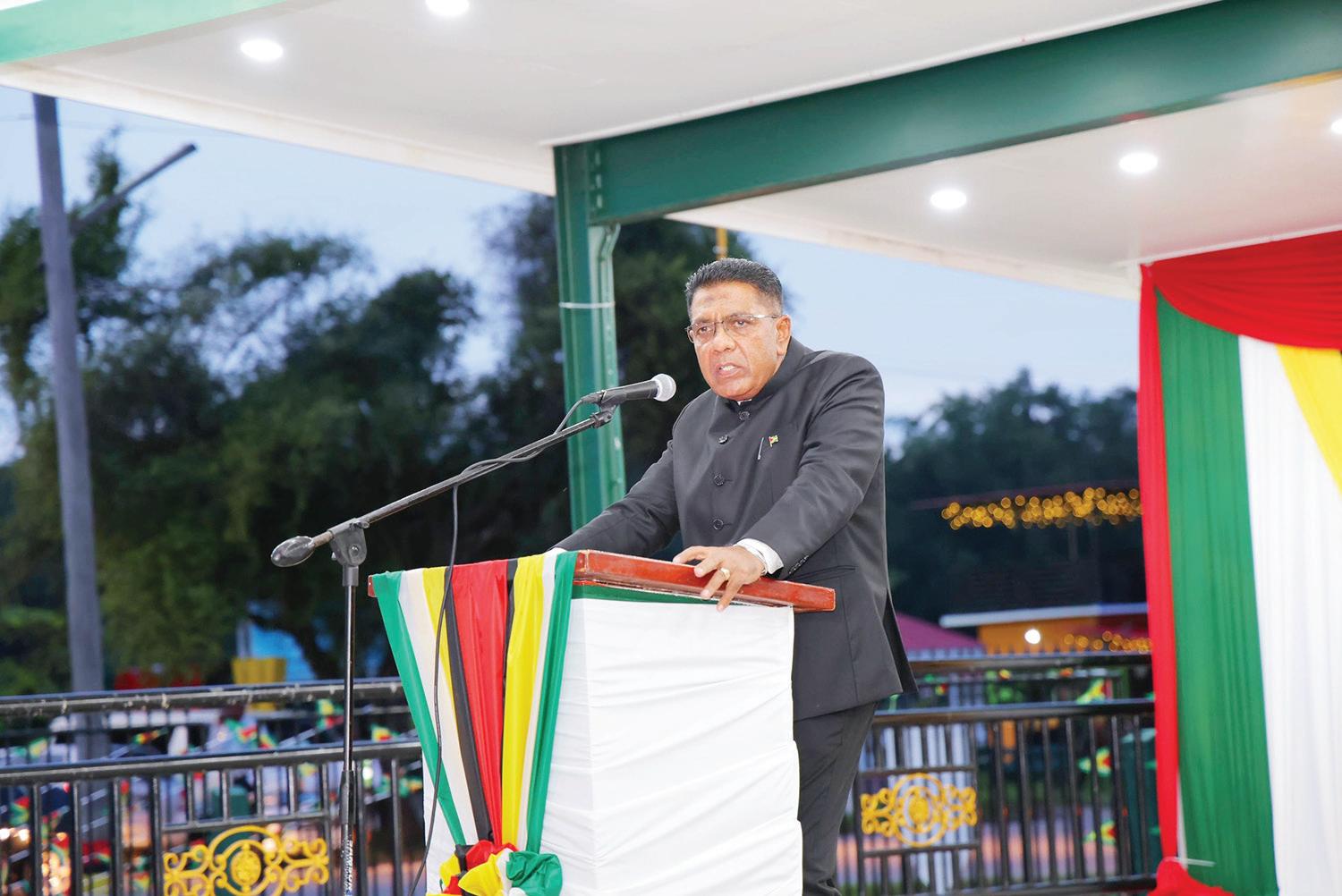
Meanwhile, Regional Chairman, Junior Basant, delivered a heartfelt and inspiring address at the flag-raising ceremony
commemorating Guyana’s 60th independence anniversary, highlighting the nation’s remarkable journey of resilience, unity, and progress over the past six decades.
Addressing the gathering, Basant noted that the celebration represented far more than a historic date on the calendar.
He said Guyana’s independence stands as a symbol of the sacrifices made by those who fought for freedom, as well as the determination and strength of the Guyanese people in building a modern and progressive nation.
He described Guyanese citizens as stronger, more ambitious, and more united than ever before, highlighting the country’s rich diversity of races, religions, and cultures that continue to coexist as one people.
Adding a touch of humour to the occasion, Basant remarked that despite the nation’s diversity, Guyanese still passionately debate which cook-up is the best, joking that it proves democracy is alive and well in Guyana.
Reflecting on the country’s transformation, he emphasised that Guyana has evolved from a small developing nation into one of the fastest-growing countries in the world. He credited years of hard work and strong leadership for the major advancements seen across the country, particularly under the People’s Progressive Party/ Civic government.
Basant also pointed to significant developments in infrastructure, healthcare, education, housing, agriculture, and job creation, noting that roads are being expanded, hospitals upgraded, schools constructed, and opportunities extended to communities throughout the country.
While acknowledging the visible physical development, he stressed that Guyana’s greatest achievement remains its people.
Despite the lighthearted moments, the Regional Chairman reminded citizens that independence also carries responsibility. He urged Guyanese to continue working together, supporting one another, and contributing to the creation of a nation where every citizen has the opportunity to succeed.
As the Golden Arrowhead was raised proudly, Chairman Basant called on citizens to remain grateful to the nation’s foreparents and to stay committed to building an even stronger Guyana for future generations.
Also present at Sunday’s event, which included a cultural programme showcasing Guyana’s diversity, were Member of Parliament, Zamal Hussain; Regional Vice Chairman, Wajid Saheed Khan and Mayor of New Amsterdam, Mayor Wainwright McIntosh.
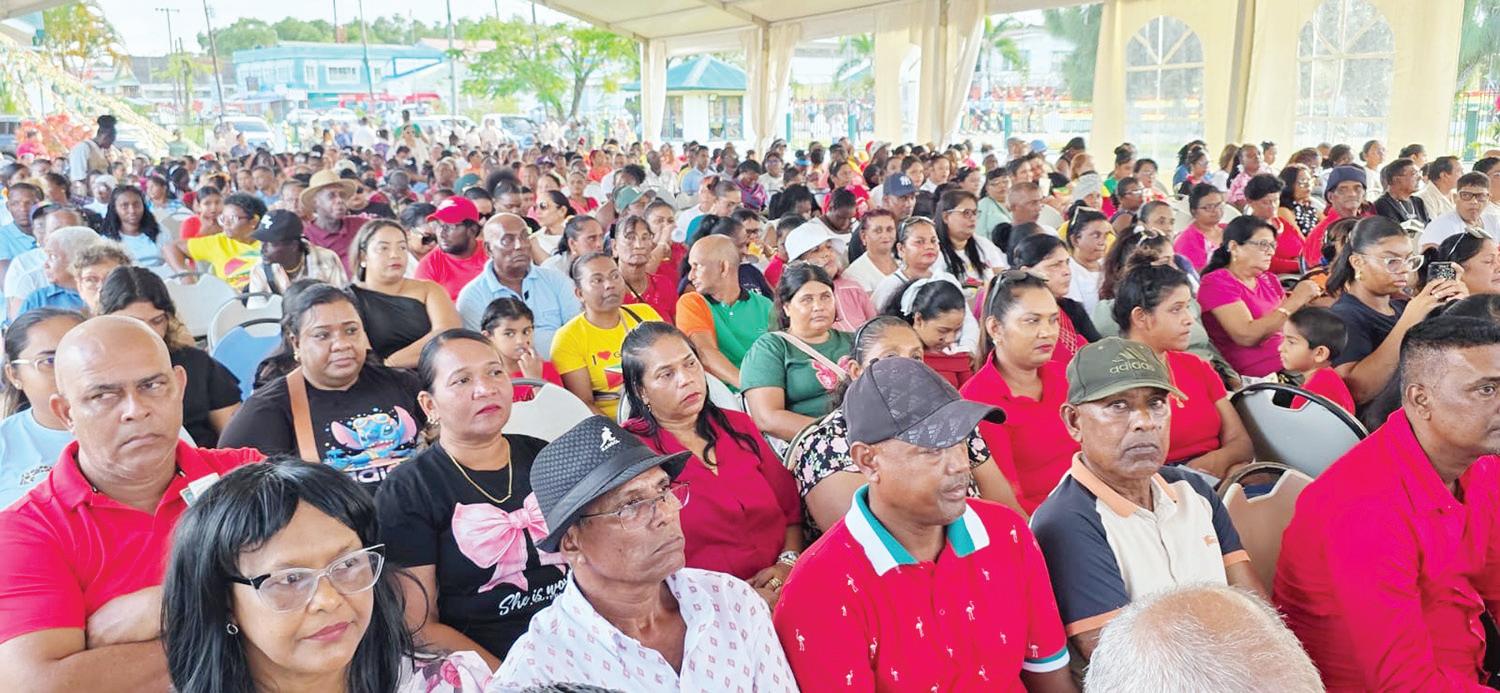
Scores of residents flocked State House in Region Six for a flag-raising ceremony in observance of Guyana’s 60th independence anniversary
President Ali signals management shake-up, technical overhaul at GuySuCo
PRESIDENT Dr Irfaan Ali has signalled imminent management changes and a technical overhaul at underperforming Guyana Sugar Corporation (GuySuCo) estates.
Responding to a question on sugar during a recent press engagement, the President confirmed that concrete steps will be taken to address poor performance within the State-owned sugar corporation.
“You will see the action,” he said when asked whether there were any new updates on GuySuCo, given his previous warning of management changes in the event of underperformance in production.
RATIONALISATION AT SENIOR LEVELS
Dr Ali made it clear that the focus will be on
estates that have consistently failed to deliver, with particular attention on top-level leadership.
“You’ll definitely see action on some of these estates that have not performed. They must be, especially at the senior management level and the head office at these places, the estates there need to be some rationalisation,” he stated.
Beyond management changes, Dr Ali said government is preparing to deploy specialist support to boost GuySuCo’s technical capacity and avoid operational gaps.
“If it is need for greater technical input, we have a team of technicians that we’re talking to; managers who will come in to assist in this, so that
ration closed 2025 with production of approximately 59,200 tonnes of sugar, falling short of even its already reduced final-crop target of 60,000 tonnes.
That figure is also significantly below the revised 2025 target of 70,000 tonnes, and far off the original target of 80,000 tonnes.
here in Region Six, and we’re going to continue to invest, but we have to get the return on our investment,” the President had said.
there is no gap, there’s smooth transition wherever it’s necessary,” he explained.
Back in January, Dr Ali had issued a stern warning to the management of Guyana’s sugar estates, making it clear that underperformance will no longer be tolerated.
It was previously reported that the Corpo-
President Ali had signalled this tougher, results-driven posture as recently as November last year, cautioning that entrenched mismanagement within GuySuCo must be eliminated if the industry is to return to sustainable production levels.
Dr Ali had stressed that while sugar remains vital to the regional economy, continued State investment cannot be divorced from performance.
“Sugar is an important part of the economy
He underscored the importance of boosting output at key estates, noting specifically that increased production at Albion and Rose Hall is essential to the industry’s recovery.
As part of the broader effort to revitalise the sector, President Ali revealed that international technical support will be brought in to strengthen operations and improve efficiency across the estates.
He also indicated that the government intends to deepen engagement with private cane farmers as part of a more inclusive and performance-oriented approach to rebuilding the sugar industry.
Technology Bridging State And People
GUYANA’S quiet digital revolution is happening right now, and it is changing how citizens engage with their government for the better.
The administration’s effort to digitise and decentralise important services is one of a plethora of people-focused reforms in recent years, and it deserves clear recognition and ongoing support.
For too long, obtaining a birth certificate, passport, or completing a tax transaction meant waiting in long lines in Georgetown, losing work hours, and a system that unintentionally disadvantaged those living far
from the capital. This model is now being dismantled. The government’s “Digital Guyana” agenda, allows people to apply for passports, birth certificates, and even an e-ID at centres close to them, reducing costs, wait times, and bureaucracy.
This is a real redesign of the state prioritising citizens’ time and dignity. Importantly, digitisation is paired with decentralisation to ensure that technology reaches beyond Region Four.
New integrated service centres in Regions Two, Three, and Five already enable residents to access passport services,
Guyana Revenue Authority assistance, birth certificates, police clearances, and digital ID registration without needing to travel to Georgetown.
More centres are planned for Regions Six and Nine. This decision to set up modern service hubs in rural and remote communities sends a powerful message that national development must include all geographic areas, not just cities.
The digital ID initiative is another significant step. By allowing quick and secure verification across health, banking, and government transactions, the e-ID is set to
provide services in a fast, effective, efficient, and transparent manner, as highlighted by the Minister of the Public Service, Government Efficiency, and Implementation.
When combined with AI-powered virtual assistants, queue-management apps such as GovConnect, and platforms for citizens to file complaints and track responses, this creates a public-service culture that is more responsive, accountable, and transparent.
This is exactly the kind of systemic reform that advocates for good governance have long called for.
Sceptics may right -
ly point out challenges, such as gaps in digital literacy, connectivity issues, and the risk of leaving some citizens behind. However, the state is aware of these realities.
Investments through the National Data Management Authority and the ICT Access and eServices for Hinterland, Poor, and Remote Communities Project have improved internet connectivity, created ICT hubs, and increased digital skills, especially in remote areas.
These efforts demonstrate that the pursuit of efficiency is balanced with a commitment to fairness.
Ultimately, a government should be judged not just by its words, but by whether it makes everyday life easier, fairer, and more dignified.
Guyana’s digital and decentralised service agenda is achieving that, bringing the state closer to its people, bridging the coast-hinterland divide, and affirming that every citizen, regardless of location, has a right to modern, and efficient public services.
The goal now is not to question whether this transformation is needed, but to ensure that it continues at a steady pace and that its benefits are safeguarded.
Guyana stands proudly on 60th Diamond Jubilee Independence Anniversary
Dear Editor,
ON this 60th Diamond Jubilee Independence Anniversary, I Brian Tiwarie, Executive Chairman of the BK Group of Companies and former Honorary Consul for Spain to Guyana, on behalf of my dedicated staff and workers, join Guyanese at home and across the diasporas in celebrating our nation’s cherished and
well-deserved 60th independence anniversary achieved on May 26, 1966. It was a momentous occasion for all Guyanese when the British flag, the Union Jack, was lowered, and Guyana’s beautiful Golden Arrowhead was raised. Tears flowed down the faces of many who witnessed the ceremony at the National Park.
Sixty years of sov-
ereignty and nation building has profoundly tested our resilience and patience, especially in protecting our treasured borders, showcased our cultural diversity, priceless heritage, strengthened our unity and affirmed our motto: ‘One People, One Nation, One Destiny,’ and our proud ‘One Guyana’ initiative.
From our rivers and rainforests in the interi-
or to the streams, lakes and fertile lands on the coastal region, Guyana stands proudly today as an acclaimed prominent and respected member of the Global Community of Nations.
The BK Group of Companies is thrilled to stand with the glorious sons and daughters of the soil and the generations building our future to salute our pioneers and renowned
leaders who fought bravely and steadfastly for independence.
As we celebrate this historic and blessed Diamond Jubilee Independence Anniversary, we at the BK Group of Companies extend our heartfelt thanks and gratitude to His Excellency, the President, the Honourable Dr Mohamed Irfaan Ali; Honourable Briga -
dier (Rtd) Mark Phillips, Prime Minister; the Honourable Dr Bharat Jagdeo, Vice President; Ministers and the Government of Guyana for their continued vision and stewardship to develop and transform Guyana.
Sincerely, Brian Tiwarie Executive Chairman, BK Group of Companies.
I ask again, where did the PNC get this man from?
THE PNC has found a lawyer named Dexter Todd. How did legal studies produce this man and where did the PNC find this man from? Since he became the Adrianna Younge family lawyer and a PNC politician, Todd has uttered the most nonsense I have heard from a PNC politician in Guyanese history and trust me when I say that, because I am a dinosaur in Guyanese politics, meaning I have been around longer than donkey years.
Last week, Todd started a podcast named ‘Guyana Rise’ and when you listen to the first edition, Guyana didn’t rise. Guyana fell flat on its face because Todd failed to lift Guyana up and failed to lift himself and his party, the PNC up.
My column for Saturday, September 13, 2025, was titled, “Where the PNC got this man from?”
and I was referring to Todd.
I am asking the question again after I looked at the rising podcast featuring the Honourable, Member of Parliament, Dexter Todd. There is a part in that podcast that marks the fifth time Todd appears foolish in the eyes of the nation. Before we reach that fifth episode, let’s look at the previous four.
Number one. Here are the words of Todd after the autopsy report of Adrianna Younge was released in April 28 last year: “There’s been a number of things that have led the family to believe that there exists a possibility that people can be somehow be infiltrated through various pressures and, you know, some people talked about whether the pathologist did the autopsy under form of fear, you know, there was chaos outside the GPHC, did that affect
their thoroughness?”
What Todd means here is that the pathologists were either part of a conspiracy or did not do a competent job. But one of the pathologists was hired by the Younge family and the family lawyer. Mr. Darren Wade witnessed the autopsy and made no mention of infiltration or fear.
That was Dexter Todd back then.
But read this piece of esoteric explanation from Todd about the PNC’s election ‘victory’ in March 2020.
We come to number two. “I see this as a delay. I don’t see this as a loss. I see this as a delay. Just a delay. But I always say a delay is not a denial.” Can anyone fathom this interpretation of the PNC’s election victory in 2020?
Number three. Todd told Kaieteur News that a team was in Guyana gathering evidence about
the murder of Adrianna Younge, but the team’s identity had to remain a secret. See my column of Tuesday, July 15, 2025, titled, “Dexter Todd’s investigators’ visas should be revoked.” Can a politician get more comical than this? The answer is yes. There is a politician like that, and it is the same Dexter Todd.
Number four. Here is what Todd did to then Opposition Leader, Aubrey Norton. He wrote to Mr Ameer Ahmad threatening libel because Mr Ahmad merely said, “People don’t know but me and Aubrey Norton are alright.” I don’t want to dwell on this stupidity because I did a column on it. See my article for Friday, August 15, 2025, captioned, “Aubrey Norton, Dexter Todd and Ameer Ahmad.”
Number five. Last week, on his podcast, ‘Guyana Rise,’ The Honourable Parliamentarian
was at it again. Before I actually explain number five, a quick digression. I don’t see grammatical peccadilloes as something to write about. I have been making such mistakes in the past 37 plus years in the press. But two mistakes of Todd had me cracking up.
All over the world the past 100 years, people say “length and breadth.”
I never read where that was put in plural, but Todd said the lengths and breadths of Guyana. Funny eh! Then he confused “authoritative” and “authoritarian. Lashing out at the PPP he said that the PPP is an authoritative party. What is an authoritative party?
Well, it is obvious he had his own party in mind. Terrence Campbell was with ANUG then AFC and in August last year joined the PNC just one month before the 2025 elections. Juretha Fernandes and Sherod Duncan bolted from the AFC and joined the PNC (not APNU, the PNC) weeks before the 2025 elections. Saiku Andrews contested local government elections under another party but is now with the PNC. Does Todd have any respect for these four PNC parliamentarians?
DISCLAIMER: The views and opinions expressed in this column are solely those of the author and do not necessarily reflect the official policy or position of the Guyana National Newspapers Limited.
Now here is number five and tell me after reading this if in his Freudian mind, Todd didn’t have his own party, the PNC in his thoughts. In referring to the PNC cadres that joined the PPP, he exclaimed that when people go about leaving parties and joining other parties, how can they be taken seriously.
Agriculture’s structural shift is now in the field
Dear Editor,
THE recent agricultural outreaches across Regions Five, Six, Eight and Nine should not be dismissed as routine field visibility. That would miss the larger policy signal. The issue is not simply more production. It is structural transformation. These engagements must be read within the framework of advancing the food-security agen -
da to 2030, at a time when Guyana’s annual food-import bill is now in the proximity of GYD 200 billion, depending on global prices and import composition.
The message from the field is clear: agriculture is no longer being expanded only along traditional lines. It is being widened into a broader production system capable of displacing imports, creating new
value chains, and contributing more materially to agricultural GDP and the non-oil economy. The messages coming out of these outreaches should therefore be read carefully. They signal not merely acreage expansion, but a restructuring of the sector itself. Pilot initiatives in beet and onion, together with the scaling of corn and soya, point to a deliberate effort to create
and deepen agricultural sub-sectors that were previously underdeveloped or commercially marginal in Guyana.
Combined with the push into high-value crops, new forms of agro-processing, and the continued modernisation of poultry, aquaculture and linked activities, the picture becomes clearer. This is not merely about producing more within the
same structure. It is about structural expansion, with a wider range of agricultural and agro-industrial activities being created, formalised and added to the country’s GDP base, particularly within agricultural GDP. That interpretation is reinforced by the latest fiscal data. Budget 2026 totals GYD 1.558 trillion.
Within the agricultural programme, government
has budgeted GYD 113.2 billion in 2026 to continue the development of the sector as a whole, including GYD 81.9 billion specifically for drainage and irrigation. These are the fiscal fingerprints of a state trying to widen the non-oil production base while oil revenues still provide the fiscal space to do so.
The strategic objective
Dr Kai-Ann Skeete exposes a mindset inimical to regional integration
DR Kai-Ann Skeete, a Bajan and University of the West Indies expert on matters relating to International Relations and regional trade, made major headlines in Guyana this past week. She is also a fellow and presented at a conference organised by the Centre for International and Border Studies.
In this article, I will examine some of the utterances of Dr Skeete which exposes a mindset oozing with a desire
to be an aggressive regional integrationist but hampered by deep seated nationalist individualism; a state of mind too common in the region and the very mindset that is keeping CARICOM integration in the cellar.
It is important to analyse the thoughts of Caribbean academics and to point out unfavourable orientations in their public discourse because academics are mind shapers in ways no other profession can claim. The
politician, the lawyer, the public policy practitioner, the economist, the medical specialist and future academics; their core philosophies and beliefs about society are shaped through an academic process. In the case of Dr Skeete, when her graduates leave, they do not only leave with basic rudimentary knowledge transfer, on the table of offerings will also be apprehensions, hesitations, political philosophies, world views and stereotypes
in the real world. Academics are supposed to be the last bastion and repository of objectivity and empiricism.
So, let’s start with the issue that would receive a ringing endorsement from me. Dr Skeete is of the view that there should be a reexamination of the appointment of Dr Carla Barnett as Secretary-General of CARICOM (SGC) for a second term. This is, no doubt, to ensure there is regional consensus, given the objections by Trinidad and Tobago.
Dr Skeete did not stop there; she opted to take a euphemistic approach in advocating for a performance evaluation and the need to open the process for other eligible candidates. The tone and gait of her outpouring, and the forthrightness with which she made those comments, suggest that it took every ounce of diplomatic restraint that prevented a blunt and outright accusation of obtuse incompetence.
My interpretation is that Dr Skeete’s focus was not so much about the righteousness of the Trinidadian objection, but the piggy back value of a second chance opportunity to go through a process that should’ve occurred in the first place. Even if Trinidad did not suffer seasickness or did not face the claimed strategic disinvite, reappointment of the SGC should only have been made after a full competitive recruitment process. Can we have an ‘Amen!’ to that?
I believe the CSG should call it a day when her term officially ends in July. With all the political sparks and epistolic salvos in either direction across the Caribbean Sea and over the Gulf of Paria, reverberating in Turkeyen Georgetown, she will be presiding over a literal warzone. She should ignore the voice of the pale angel on her left shoulders, ostensibly spooking her to hold on to
a disputed appointment that will no doubt fracture Caricom relations.
This past Wednesday, Dr Skeete also appeared on the Freddie Kissoon Show where her views were sought about the silence of CARICOM leaders when Venezuela’s Delcy Rodrigues marched into Grenada and Barbados and brazenly defied international law by displaying a redrafted map which annexed two-thirds of Guyana as a fixed and permanent part of Venezuela.
Dr Skeete said Barbados is right to look out for itself and not to stir up bad blood with Venezuela and maybe at some future date Barbados can serve as a peace broker. I would expect this kind of rhetoric from political simpletons, but it is hugely disappointing when such thoughts emanate from a tenured academic at the premier research institution of the region. Academics are supposed to follow facts and figures without manipulation, scientific deconstruction, not nationalists talking points.
Dr Skeete waxed lyrical about her consternation and dissatisfaction with the pace of our integration movement and flagged the sloth in implementing the CSME. She argued that, by now, we should’ve had a single economic space with no barriers to movement of people and goods. Right! This same contrasting mindset of Dr Skeete is the exact maggot that is eating away at CARICOM Necrosis.
An internal struggle between individual nationalism to the extent that it breathes an immobilising paranoia for which CARICOM is caught in a labyrinthine tailspin. We want integration but we are immobilised by the basic truths of integration.
The concept of a common market is not novel in the region. It started with slavery, there were no bar-
riers when slave owners moved among territories to strike bargains for their stud or rebellious slaves, it was a free market. Today’s barriers to movement and trade are our doing, recent inventions. We are trying to rub salve on self-inflicted wounds.
The facts are that CARICOM has a treaty to which Guyana, Barbados and Grenada are equal signatories. This treaty defines a physical space, and the people in that space. The known space is 214,970 km2, 431km2 and 348km2 respectively. Further, each of these spaces is defined and canoned at the UN. The ICJ ordered Venezuela specifically to take no act of aggression or depict any part of Guyana as part of its territory. These are facts that academics should embrace and take them to their logical conclusion. If Dr Skeete did so, she could never have been in the default CARICOM individualist’s quagmire she found herself.
The logical conclusion is that Barbados and Grenada have acknowledged to Venezuela that the Treaty of Chaguaramas is both defective and open for tampering by Venezuela. That is why I believe the letter from CARICOM Chairman to President Ali following his objection to the Delcy Rodrigues diplomatic salvo was shortsighted, and to put it in blunt undiplomatic language, it was crassly stupid. You have a business partnership, and someone is making a legal claim on the assets of the partner, which is used as part of the said business, how can it be that you are not an interested party? The Treaty of Chagaramas is more than a multilateral trade agreement. Guyana does not want or never asked CARICOM to settle its border controversy; everyone knows that. Guyana laid its case before the ICJ the proper forum.
Agriculture’s structural shift is now in the...
within the sector is not simply to open pockets of land in isolation, but to widen the production frontier of the sector over time. Guyana has approximately 1.04 million acres of agricultural land available, yet only about 32 per cent is currently under cultivation.
Within that context, the government’s stated plan to develop 100,000 acres of new arable lands by 2030 would push cultivation to roughly 42 per cent of available agricultural lands. Even then, the country’s agricultural potential would remain, by any serious measure, largely untapped.
The implication is straightforward: Guyana is not merely trying to raise output at the margin; it is investing heavily to expand the productive potential of the sector itself. Supporting crop diversification beyond rice, deepening aquaculture, and incentivizing poultry modernisation are not isolated gestures. They are part of a wider production model aimed at import substitution and value addition. The logic is straightforward: expanded land access raises output potential; higher output supports storage, aggregation and agro-processing; stronger agro-processing reduces import dependence and increases domestic value-add -
ed; and greater domestic value-added strengthens both agricultural GDP and the non-oil economy over time. Agriculture, in this framework, is not merely about growing more crops. It is about widening the productive architecture of the economy before the oil cycle matures.
The policy support is also becoming more deliberate at the level of capital formation and retained earnings. In Budget 2026, Government announced the removal of corporate taxes on agriculture and agro-processing businesses to increase retained earnings and enable greater reinvestment in production and productivity. This matters because it improves project cash flows, shortens capital recovery periods, and strengthens bankability—especially for newer sub-sectors and processors trying to scale. In other words, the state is directly lowering the tax-cost structure on productive activity. That is serious sector-building.
But this is also where the political economy challenge begins. Public expenditure alone does not guarantee production outcomes. Without a stronger development finance architecture, Guyana risks overinvesting in physical assets while underfinancing domestic productive actors.
Agriculture—especially among small and medium-scale producers,
youth-led ventures, aquaculture operators, poultry farmers, horticulture businesses and downstream processors—requires patient capital, risk-sharing instruments and fitfor-purpose financing channels. Otherwise, the country will spend heavily to expand opportunity on paper while leaving too many local producers structurally unable to scale. That would not be a financing problem alone. It would be a policy execution failure.
There is also a demand-side reality that policymakers and critics alike should not ignore. SphereX estimates show aggregate household income rising from approximately GYD 119.7 billion in 2010 to about GYD 790.1 billion in 2025—bringing domestic purchasing power within striking distance of GYD 1 trillion. That is a material expansion in demand. As incomes rise, demand for food, processed goods, hospitality-linked supply chains and higher-value agricultural products will rise with it. The real question is whether that incremental demand will be captured by Guyanese farmers, processors and agribusinesses, or whether it will continue to leak outward through imports. Agriculture is therefore no longer a narrow sectoral issue. It sits at the intersection of household welfare, trade leakage, ru-
Dr Kai-Ann Skeete...
FROM PAGE 8
What Georgetown is asking CARICOM to do is to affirm (to itself and any third party) the existing, known and legal physical space, currently defined by the very treaty, full stop.
It is simple, CARICOM should have a defined policy be it Guyana or any other of its existing territories, “one physical space, one economic space.” Any other country or person hoping to do busi-
ness or pursue diplomatic relationship with any of us MUST subscribe to this fixed policy.
Much like China’s policy on Taiwan, first acknowledge the “One China Policy” then we can trade, then we can talk friendship. In so doing, it becomes a matter of simple policy to tell Venezuela, we acknowledge your right to pursue all legal avenues to realise your territorial claims but unless and until a legally
ral income formation and national competitiveness.
Agriculture is no longer expanding only along traditional lines. It is being widened as part of Guyana’s future non-oil production system.
In view of the foregoing, those who continue to treat agriculture as a secondary appendage to Guyana’s future economy are misreading the structure of the development challenge. Oil may dominate the headline numbers today, but it will not solve the employment question on its own, nor the ru -
ral-income question, nor the import- substitution question, nor the long-run resilience question. Those are fundamentally non-oil questions, and agriculture sits at the centre of the answer.
The current agricultural push must therefore be judged not by the noise of day-to-day politics, but by whether it strengthens the productive base of the economy before the oil expansion matures. If the government gets this right—through infrastructure, targeted fiscal
relief, stronger market access and disciplined development financing— agriculture can emerge as one of the most important pillars of non-oil GDP in the post-2030 period. If it gets it wrong, Guyana will have squandered a rare window in which oil revenues could have been used to build enduring productive capacity beyond oil itself. So far, the signals suggest that the government is on the right track. Yours faithfully, Joel Bhagwandin
binding settlement is reached and recorded at the UN and redefined in the Treaty of Chaguaramas we cannot accept depictions of territorial annexation (in any form) on our soil, on CARICOM soil.
DISCLAIMER: The views and opinions expressed in this column are solely those of the author and do not necessarily reflect the official policy or position of the Guyana National Newspapers Limited.
Health Ministry hosts medical outreach at Golden Fleece
DOZENS of Golden Fleece, Essequibo Coast residents on Saturday accessed free health services during a medical outreach held at the Golden Fleece Mandir.
From early morning, residents gathered at the venue seeking medical attention, screenings, and consultations. The outreach provided an opportu-
dent was turned away and everyone had the opportunity to benefit from the initiative.
nity for persons, especially the elderly and vulnerable, to receive important healthcare services free of cost.
Among the services offered were blood tests, eye examinations, and spectacles for persons in need. Many residents expressed appreciation that several of the tests were done on the spot, allowing them to receive immediate attention and guidance from healthcare professionals.
Persons who arrived with vouchers were able to easily access the services, while those without vouchers were also accommodated and provided with assistance at the outreach. This ensured that no resi-
Residents described the outreach as timely and beneficial, noting that many persons often face challenges travelling long distances or paying private costs for medical services. The availability of free blood testing and spectacles brought much relief to families within the community.
Healthcare workers and volunteers worked throughout the day to ensure residents were attended to in a smooth and organised manner. Many persons left satisfied and grateful for the government’s continued efforts to bring healthcare services directly to communities across Region Two.
The outreach formed part of the Government’s ongoing commitment to improving healthcare access and ensuring that citizens, regardless of their circumstances, can receive the medical care they need.
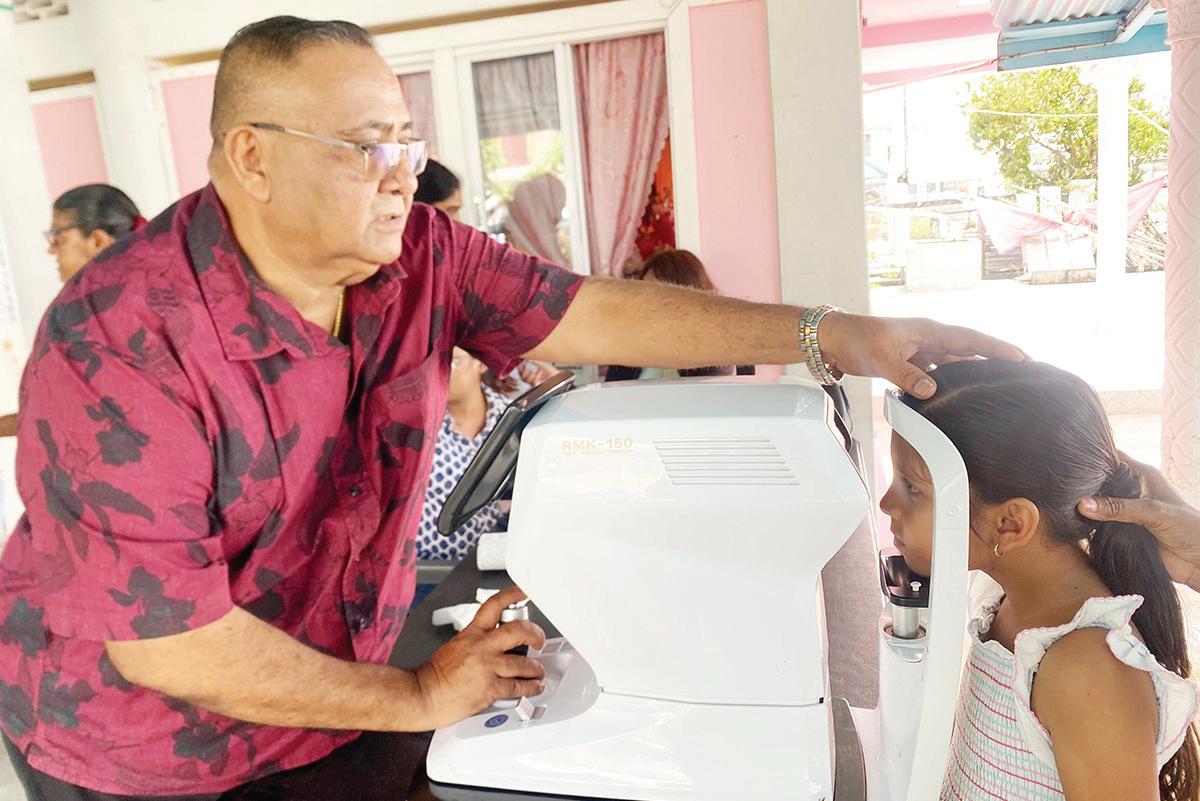
A Miracle Optical official tests a child’s eye during the Ministry of Health outreach
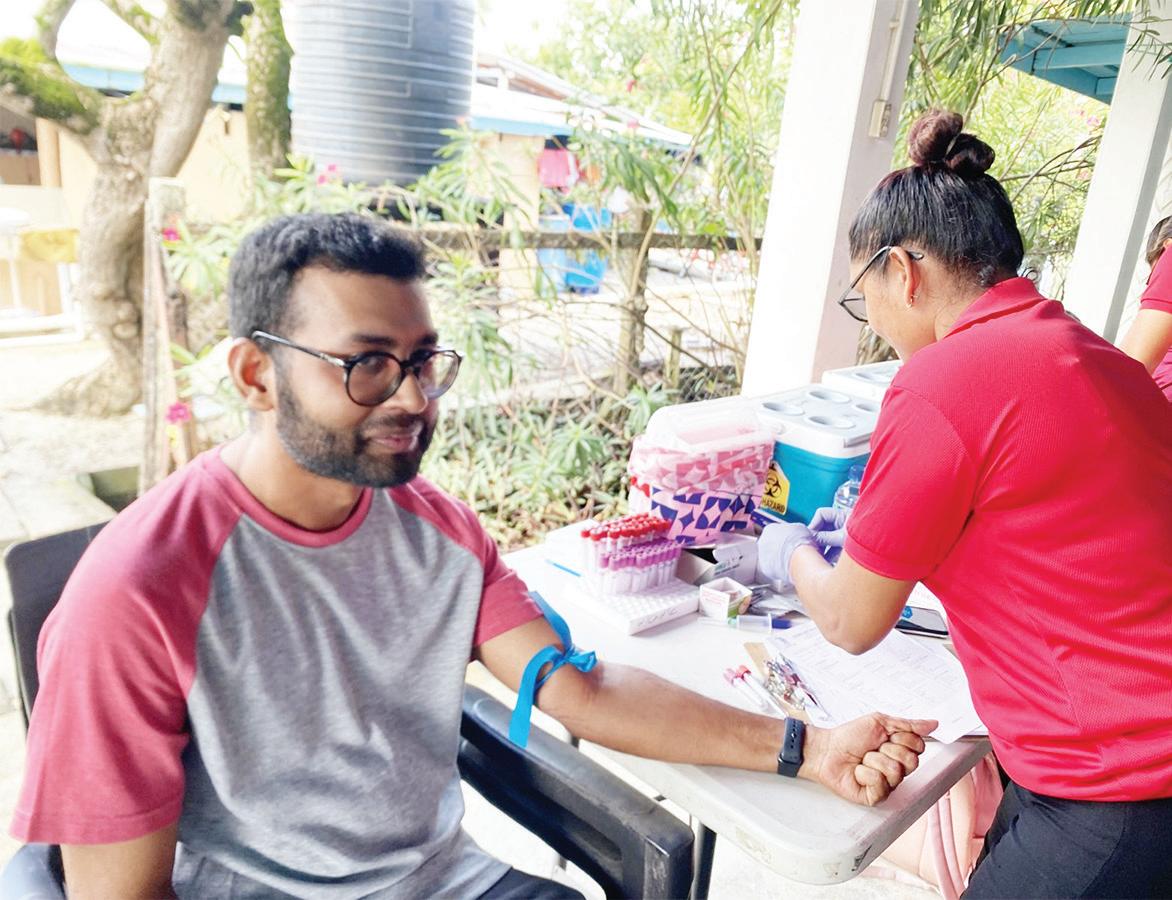
A resident accesses blood testing services
Cut Rose Project delivers strong returns, expanding opportunities
THE government’s Cut Rose Project, conceptualised by President, Dr Mohamed Irfaan Ali, is continuing to create employment and income-generating opportunities for women and single parents across Guyana.
The initiative is being implemented through the National Agricultural Research and Extension Institute (NAREI) at Mon Repos, where roses are cultivated in specially designed shade houses.
The project is part of the government’s efforts to ensure women and young people benefit from agricultural diversification.
Speaking with the Department of Public Information (DPI) on Sunday, Minister of Agriculture Zulfikar Mustapha explained that the sale of roses has increased, with many participants see-
ing significant returns from their investments.
“Participants purchased rose plants for approximately $500 and are now able to sell the roses for as much as $2,000. This demonstrates the level of income generation that the project is creating,” Minister Mustapha disclosed.
He explained that the government is now focused on expanding the initiative so more people can benefit, while increasing local production through additional technical sup-
port and expertise.
A specialist has already been engaged to focus on increasing the production.
“When the Cut Rose Project was first introduced, many persons believed it would not succeed. However, over time, a number of single parents have benefitted from the initiative,” Minister Mustapha stated.
He said production is expected to increase significantly within the coming months as the initiative continues to grow. (DPI)
Locally grown roses from the ‘Cut Rose’ Project at NAREI
Region Eight residents urged to diversify economy through agriculture, tourism
MINISTER within the Ministry of Local Government and Regional Development, Pauline Sukhai, has called on residents of Region Eight to expand the region’s economic activities beyond mining, with a greater focus on sustainable sectors such as agriculture and tourism.
Delivering feature remarks at the flag-raising ceremony at Mahdia to commemorate Guyana’s 60th independence anniversary on Sunday, Minister Sukhai said Region Eight possesses enormous untapped potential that can contribute significantly to the country’s long-term development agenda.
The minister noted that while mining remains a major pillar of the region’s economy, there must be deliberate efforts to strengthen other productive sectors that can create lasting opportunities for residents.
She noted that agriculture remains one of the most reliable sectors for ensuring food security and economic resilience, while tourism in the North Pakaraimas and the Mahdia district can unlock major opportunities for entrepreneurship and employment.
Highlighting the region’s natural beauty, Minister Sukhai encouraged young people to explore careers and business opportunities
ital connectivity.
The region has moved from being remote to accessible through advancements in internet and telecommunications services, allowing residents in hinterland communities to connect in real time with the rest of the country and the world.
These developments reflect the government’s “One Guyana” vision of inclusive national development.
within the tourism industry.
She also underscored the government’s commitment to ensuring that Region
Eight benefits from Guyana’s rapid transformation, pointing to major investments in infrastructure, healthcare, education and dig-
TWENTY-NINE
Community Service Officers (CSOs) from Regions One, Eight, Nine and Ten have graduated from a small engine repairs training programme at the Bina Hill Institute in Region Nine.
The initiative forms part of the government’s continued investment in youth empowerment and technical training in hinterland communities through the Ministry of Amerindian Affairs.
In an interview with the Department of Public Information (DPI) on Saturday, Regional Coordinator for the Ministry of Amerindian Affairs, Alister Charlie said the programme was designed to equip youths with practical skills that can contribute to development within their villages.
The member of parliament explained that the training will enable CSOs to assist with the repair and maintenance of machinery
provided to villages by the government, including generators, water pumps, chainsaws, brush cutters and outboard engines.
“The programme is a stepping stone for our young people into the working world, where they can acquire life skills, become entre -
She highlighted government investments in education, including free university education and scholarship opportunities, which she said are preparing Guyanese to participate in the country’s rapidly expanding economy.
The minister also urged parents to keep children in school and encouraged residents to embrace patriotism, discipline and national unity as Guyana continues its development journey.
The 60th independence anniversary is being celebrated under the theme, “The Homecoming – Guyana’s Diamond Jubilee.” (DPI)
Minister Sukhai pointed to ongoing works on a modern hospital in Kato, upgrades to hinterland airstrips, including Mahdia, Kopinang and Monkey Mountain, and the establishment of a technical and practical training school in Mahdia to equip youths with critical skills.
29 CSOs graduate from technical training in Bina Hill
preneurs and contribute meaningfully to the development of their communities,” MP Charlie stated.
He noted that the training is particularly important for remote communities where transportation costs and access to repair services can pose major challenges.
The trained CSOs will play an important role in ensuring critical machinery remains operational, reducing downtime in hinterland communities.
“They are now equipped with the basic technical skills to support village councils with repairs and maintenance of equipment. This will help communities save time and resources while improving essential services,” he explained.
MP Charlie also
highlighted that the Ministry of Amerindian Affairs continues to provide opportunities through scholarships and technical education programmes at institutions such as the Government Technical Institute (GTI), Carnegie School of Home Economics (CSHE) and the Guyana School of Agriculture (GSA).
He said the Bina Hill Institute was selected for the programme because of its conducive learning environment and its potential to support expanded technical training initiatives for hinterland youths.
The regional coordinator encouraged young people across Amerindian communities to take full advantage of the opportunities being provided by the government.
(DPI)
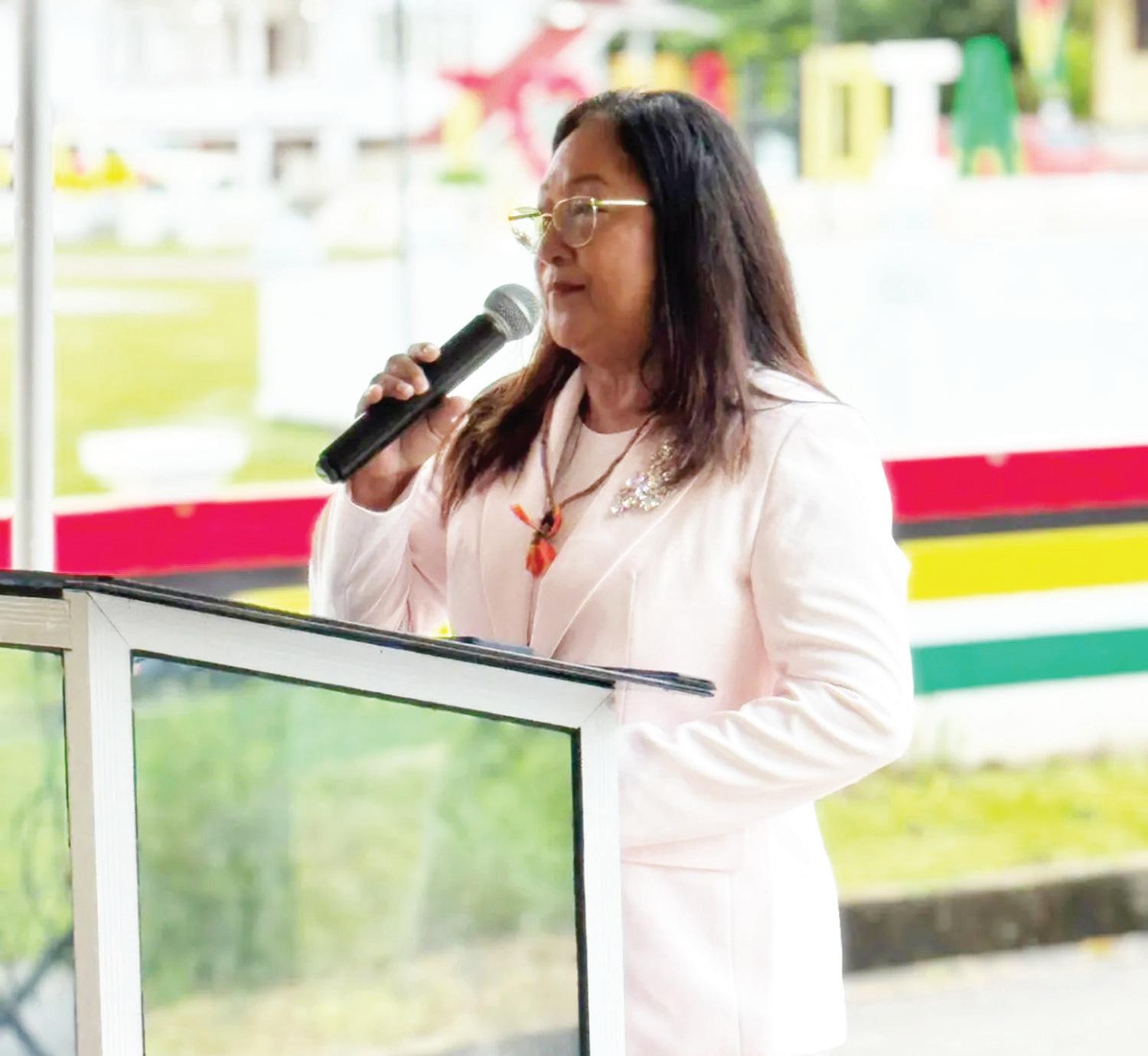
Minister within the Ministry of Local Government and Regional Development, Pauline Sukhai, delivers the feature address at the Mahdia flag-raising ceremony
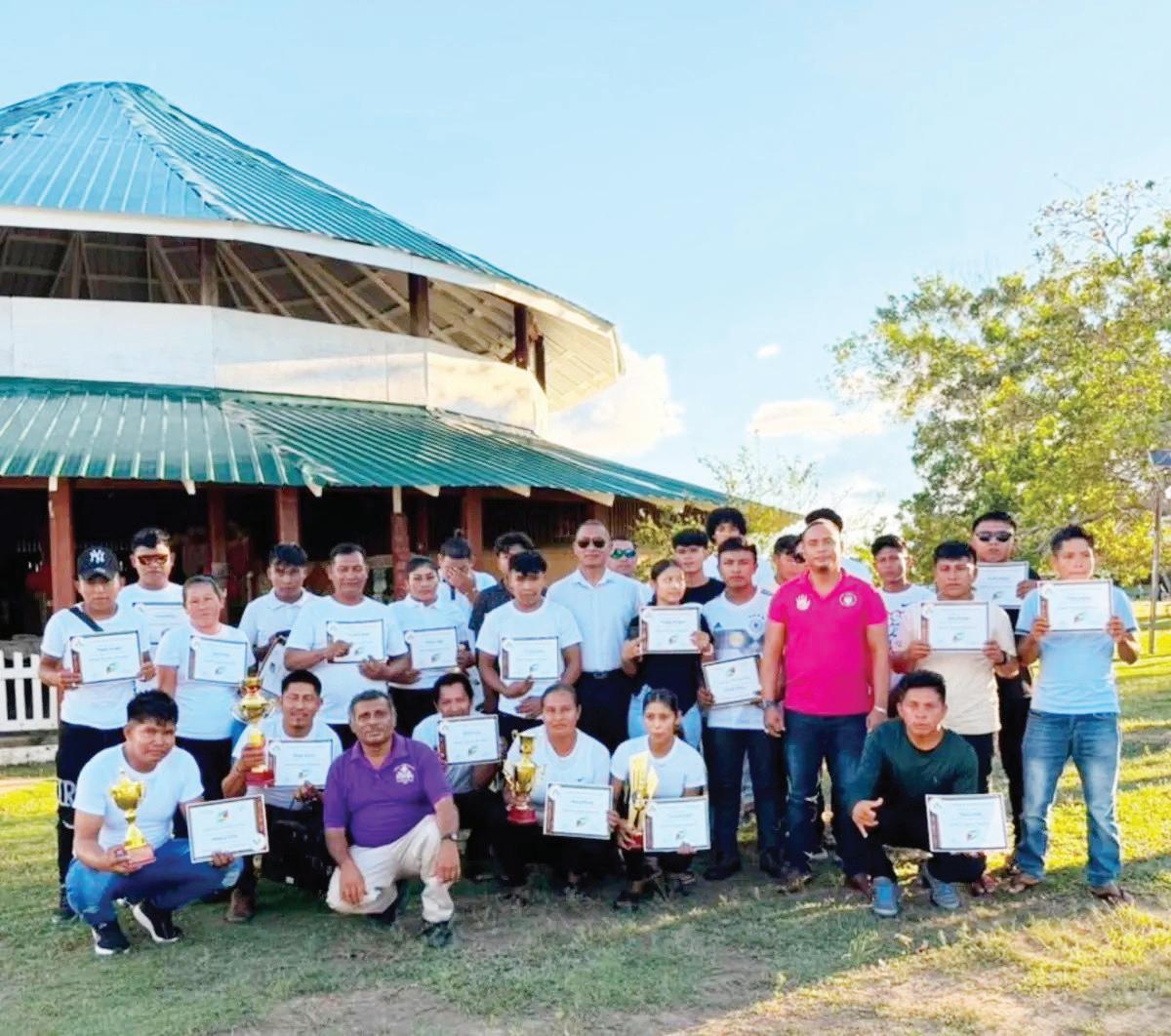
Graduates of the small-engine repair course
21st Chinese Medical Team hosts free health-care outreach at Waiakabra
IN a continued effort to strengthen bilateral relations and deliver medical care to underserved regions, the 21st China Medical Team to Guyana successfully conducted a comprehensive medical outreach in the community of Waiakabra, Soesdyke-Linden Highway, on Saturday, May 23, 2026.
The initiative, organised at the invitation of
the Waiakabra community, aimed to bridge the health-care gap for local residents, who frequently grapple with long-distance travel and limited local medical infrastructure to access basic health services.
A group of Chinese medical specialists was deployed to the location, offering free consultations across a wide spectrum of medical fields.
Residents had direct access to experts in General Surgery, orthopaedics, Internal Medicine, Burns and Plastic Surgery, Ophthalmology, Traditional Chinese Medicine (TCM), and Anesthesia and Pain Management.
In addition to specialised physician consultations, the medical team provided free baseline health screenings, including blood pressure and
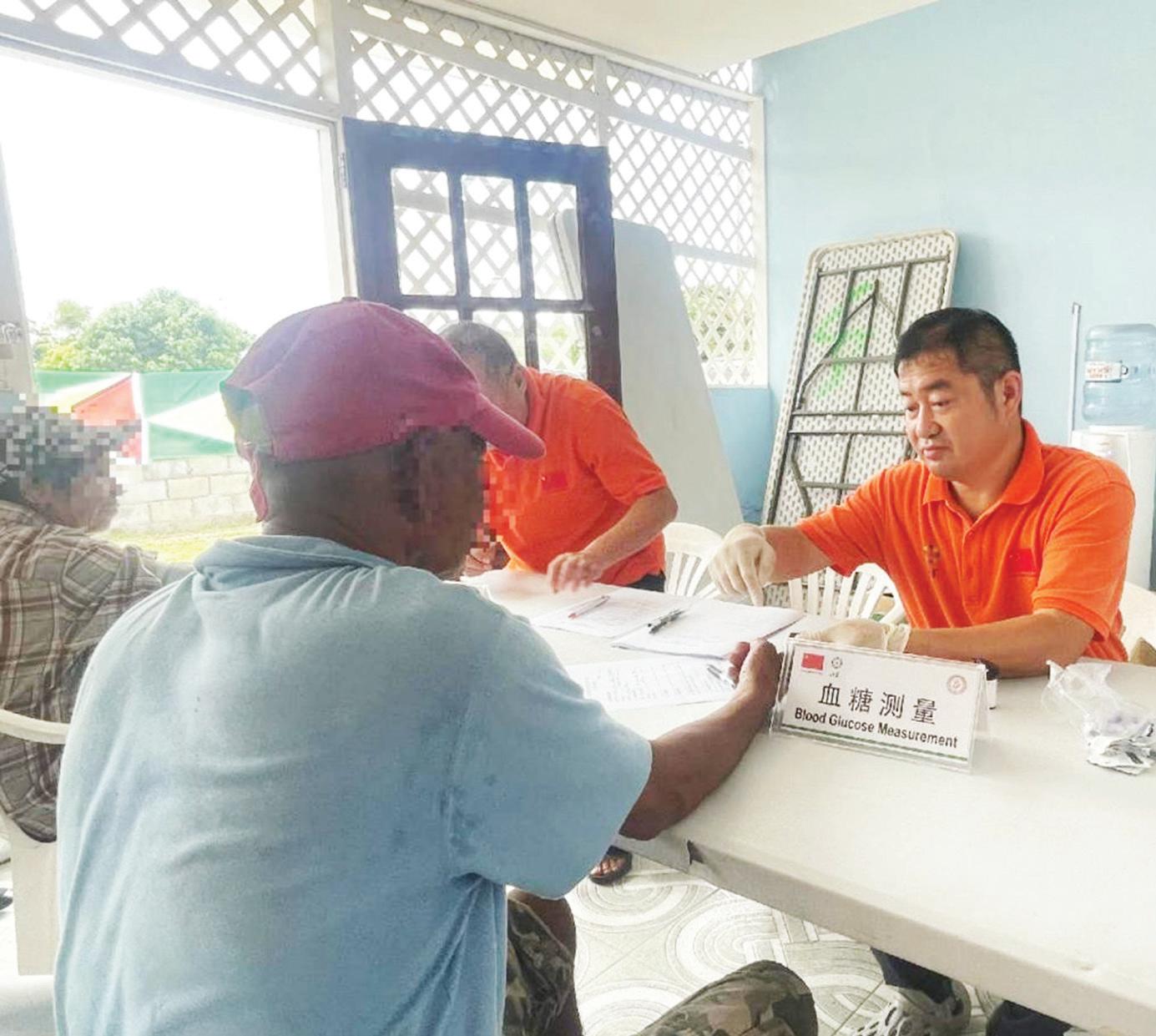
blood-sugar monitoring, to help residents better understand their health status.
Ms Mohanlall, Waiakabra’s community representative, expressed profound gratitude and high praise for the China Medical Team's prompt and compassionate response to the community's needs.
"This outreach was a blessing for Waiakabra," Ms Mohanlall noted.
"Having a team of top-tier specialists come directly into our neighbourhood to provide free care and testing is something we are deeply grateful for. The community is highly appreciative of this humanitarian gesture."
The deployment was meticulously planned under the leadership of the Medical Team Captain, Dr. Li Huansong, with the backing of relevant health authorities.
According to the organisers, the outreach not only addressed the immediate healthcare demands of the demographic, but also served as a testament to the enduring bond of friendship and mutual co-operation between the peoples of Guyana and the People's Republic of China.
Dr. Liu Xiaofeng, a member of the 21st China Medical Team provides blood-sugar testing services to local residents
The 21st China Medical Team to Guyana successfully conducted a comprehensive outreach in the community of Waiakabra on the Soesdyke-Linden Highway
PM Phillips lauds enduring Guyana-France friendship at Diamond Jubilee reception
PRIME Minister, Brigadier (Ret’d) Mark Phillips, has lauded the longstanding friendship between Guyana and the French Republic, noting that the relationship
has continued to evolve into a stronger and more strategic partnership. The Prime Minister de -
livered remarks at a reception hosted aboard the Patrol Vessel La Résolue by Ambassador of France to Guyana, His Excellency Olivier Plançon, and General Géraud Laborie, Chief of Staff of the Armed Forces in French Guiana, in celebration of Guyana’s 60th independence anniversary.
Reflecting on the significance of Guyana’s Diamond Jubilee, Prime Minister Phillips said the country’s independence remains a continuing journey grounded in resilience, unity, innovation, and strong international partnerships.
“On May 26, 1966, our nation emerged as a sovereign state, bringing an end to more than 350 years of colonial rule. Guyana took its rightful place among the family of nations, embarking on a path to self-governance with dignity and determination.”
He noted that 60 years later, Guyana has been transformed into one of the fastest-growing economies in the world, while continuing to place its people at the centre of its national development agenda.
“Our development agenda remains firmly people-centred, as we advance key sectors such as education, healthcare, energy, agriculture for food security, and infrastructure.”
Prime Minister Phillips added, “Guyana endeavours to build a resilient, inclusive and sustainable nation, and we recognise that achieving this vision requires trusted partners who share our values and aspirations.”
The Prime Minister highlighted France’s role as one such trusted partner, noting that diplomatic relations between Guyana and France were established on June 22, 1967, one year after Guyana attained independence.
He said that relations between the two countries have advanced significantly in recent years, particularly following the 2024 visit of former French Foreign Minister Stéphane Séjourné to Guyana and his engagement with His Excellency President Dr Mohamed Irfaan Ali.
Prime Minister Phillips explained that the visit marked an important turning point,
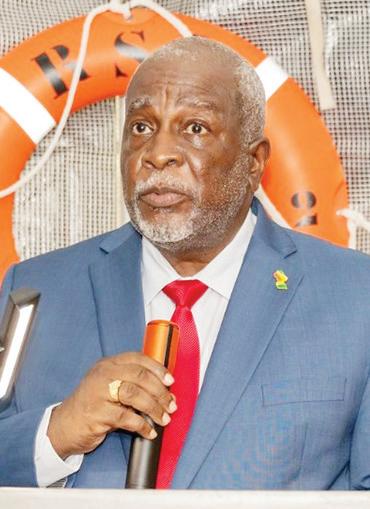
Prime Minister, Brigadier (Ret’d) Mark Phillips,
Court of Appeal backlog being addressed – AG
ATTORNEY-GEN -
ERAL and Minister of Legal Affairs, Anil Nandlall, has said that the backlog of cases at the Court of Appeal is now being actively addressed through an expanded judiciary and increased court activities.
He made this known during an airing of his weekly programme, ‘Issues in the News,’ during which he said the appointment of additional appellate judges and the introduction of a second courtroom have significantly increased the court’s capacity to hear matters.
“I do know that since we have appointed, I believe, 10 judges
to that court, we have one vacancy, I believe, left,” Nandlall said.
According to the Attorney-General, the schedule of the Court of Appeal has become increasingly rigorous, with cases and appeals now being heard more frequently.
“The schedule of that court has become very rigorous, and lawyers and litigants will tell you that they have received a series of notifications or fixtures for cases and appeals being heard every day or at frequent intervals,” he said.
Against this backdrop, he stated that the increase in judicial manpower, coupled
with the expansion of courtroom facilities, has allowed for a heavier workload to be managed more efficiently.
The AG added that his office has direct insight into the pace of work at the appellate level because the state is frequently involved in litigation.
As such, he indicated, “So don’t worry, the backlog is being addressed now.”
Just last year, the government moved to strengthen the appellate bench through a series of judicial appointments aimed at improving the efficiency and timeliness of judicial reviews.
“You have many judges there. We have two courtrooms now, so the workload has increased,” he said.
Several judges were sworn in to serve at the appellate level following recommendations from the Judicial Service Commission.
The expanded bench was intended to enhance the management of the appellate caseload and facilitate faster resolution of matters before the court. Authorities had also pointed to the importance of strengthening public confidence in the judiciary through more efficient case disposals.
At that time, it was noted that expanding the complement of judges was necessary to ensure that justice is dispensed in a timely and effective manner, while safeguarding the rule of law and constitutional order.
– newly appointed Region Four REO says, outlines plan for inclusive governance, rapid response to complaints and faster execution of projects
NEWLY appointed Regional Executive Officer (REO) for Region Four, Juan Edghill Jr, has pledged to deliver inclusive, transparent, and efficient governance, while ensuring that residents across the region receive timely responses
to their concerns.
Edghill made this known while speaking on the ‘Starting Point Podcast’, during which he said that his tenure will be guided strictly by the laws and regulations governing public administration and financial management.
He said particular attention will be placed on compliance with the Fiscal Management and Accountability Act (FMAA), the Procurement Act, the Audit Act, and the Local Democratic Organs Act.
“We’re going to follow it to the T, the Procure -
ment Act,” Edghill Jr. said.
“We have to ensure that we are following the systems, the thresholds, ensuring that the processes and the order of things are done in the correct way.”
The REO explained that he has already reviewed several years of
Auditor-General reports relating to Region Four, with the aim of identifying recurring deficiencies, and implementing corrective measures.
“One thing that I did, I read all five years of the Auditor-General’s reports prior to 2026,” he said.
“I looked at all of the recommendations. I looked at all of the red flags that the region was consistently flagged for.”
Edghill Jr said his administration will work to address those shortcomings while strengthening accountability mechanisms within the regional system.
Apart from financial oversight and compliance, he highlighted the importance of serving all citizens equally, regardless of their background or community.
“We’re going to ensure that every single Guyanese, every single household, every single community in Region Four is served,” he said.
“That’s what we’ll be guided by.”
Against this backdrop, he noted that residents can expect him, along with his team, to be on the ground, and to treat every complaint and every citizen’s issue with great urgency.
He also disclosed that he has already begun meeting with programme heads responsible for education, health, public works, and agriculture, as the administration seeks to accelerate project implementation across the region.
“We’ll be looking and seeing how we can deliver at a faster pace, and how we can get these projects rolling out,” he said.
He noted that more than 100 projects had already been awarded across the East Coast, East Bank and Highway communities prior to his appointment, and said he has since requested regular progress updates to ensure timely completion.
Region Four REO Juan Edghill Jr.
Single mother uses agroprocessing skills to support children
By Michel Outridge
WHILE others would be unenthusiastic about the prospects of becoming an agro-processor/entrepreneur, Shanice Miller developed her own small business from her home, utilising in-bred culinary skills to learned. She established Single Mama and Sons, which she started to provide for her children.
she had to set up a small venture to bring in an income.
The 32-year-old Chief Executive Officer (CEO) told the Guyana Chronicle that once she knew she had no financial backing to raise her sons, she knew
“I proved that determination, faith, and hard work can transform life’s struggles into success,” she said.
More than being a business owner, Shanice is a devoted single mother of two boys, who has dedicated her life to building a better future for them while creating a legacy they can one day continue.
Shanice’s journey began long before the establishment of her business. Raised in a single-parent household with eight children, she experienced firsthand the realities of sacrifice, perseverance, and the importance of hard work.
Those early experiences shaped her understanding of responsibility and strengthened her desire to create opportunities not only for herself, but for her family as well.
The name “Single Mama and Sons” carries deep meaning
for Shanice. It reflects her personal journey as a mother who has worked tirelessly to solely provide for and maintain her two sons.
For her, the business is not simply a company, it is a symbol of strength, motherhood, and a dream of creating generational success for her children.
The business first gained recognition through Shanice’s popular tamarind syrup, which quickly became a favourite among customers.
From there, the business continued to grow and expand into gooseberry syrup, green seasoning, pepper sauce, top-up services, and even lash extensions.
Shanice believes in using every opportunity and talent available to create a better life. According to her, “Anything I find my hands to do, I do to survive.”
Beyond her entrepreneurial drive, she is widely known as a God-fearing woman who places
God at the centre of everything, she does.
Her faith plays a major role in her life and business journey. She firmly believes that success comes through keeping God first and trusting his guidance in every step she takes.
Shanice often shares a message that has become part of her personal philosophy. Because of her strong belief in God, she trusts that whatever she puts her hands to do in business will prosper and be done well. That faith has become one of the pillars that continues to motivate and strengthen her through challenges and triumphs alike.
Today, Shanice continues to inspire those around her through her story of resilience, faith, and determination.
Shanice is originally from Number Nine Village, West Coast Berbice, but resides at Fort Wellington on the same corridor.
She would walk around in the village and its environs to sell her home-made products, especially on the weekend. She is also a part-time worker at a secondary school.
The single mother started her small venture three years ago from my home and today it has blossomed with some regular customers.
She represents more than a successful business owner, she also represents the strength of motherhood, the power of believing in one’s self, and the impact of placing faith at the centre of one’s journey. Through her business, Shanice is not only building a business, but she is building a lasting legacy for generations to come
Shanice Miller
Shanice
The sought-after gooseberry and tamarind syrup
WHO chief calls for urgent Ebola action, pandemic preparedness
THE recent Ebola and hantavirus outbreaks demonstrate that the world is still vulnerable to rapidly spreading infectious diseases, Tedros Ghebreyesus, the head of the World Health Organization (WHO), warned on Saturday at the close of the 79th World Health Assembly in Geneva. His call came as Ugandan authorities confirmed on Saturday that
there were three new cases of the Bundibugyo strain of the Ebola virus, which to date has neither a cure nor a vaccine.
“The three new cases include a Ugandan health worker, a driver
and a Congolese national who travelled from Ituri Province in the neighbouring Democratic Republic of the Congo, (DRC), for medical care,” Tedros said in a social media post. “This brings the to-
tal number of people in Uganda who have tested positive for Ebola disease caused by the Bundibugyo virus to five.”
WHO is working with the Africa Centres for Diseases Control and Prevention, (Africa CDC) and partners in the DRC and Uganda, to contain the outbreak, support affected people and help to coordinate the response. On Friday, WHO raised the national risk assessment for the DRC to “very high” –although the global risk remains low.
CROSS-BORDER COLLABORATION ESSENTIAL
In Kampala, Uganda, WHO held a two-day high-level ministerial meeting on cross-border coordination in response to the Bundibugyo Ebola outbreak.
Addressing ministers from South Sudan, the DRC and Uganda, Dr Marie Roseline Belizaire, WHO Africa’s Director of Emergency Preparedness and Response, stressed the need to strengthen and sustain cross-border collaboration to contain the outbreak.
She warned that delays in response can have serious consequences and emphasised that stronger surveillance and preparedness systems are critical because “time saves lives” during outbreaks.
SUSTAINED FINANCIAL CONTRIBUTION
The Director-General appealed to member states to continue increasing assessed financial contributions to ensure WHO remains strong, independent, and capable of responding to future global emergencies.
He also stressed that global agreements must translate into practical action that protect communities, contain outbreaks quickly and ensure healthcare reaches
vulnerable populations.
“Every nation is healthier and safer when all nations are healthier and safer,” he said.
KEY AGREEMENTS REACHED DURING THE ASSEMBLY
The week-long Assembly concluded with member states adopting resolutions on several major health priorities, including:
• Tuberculosis control
• Emergency and critical care
• Precision medicine
• Stroke prevention and treatment
• Neglected tropical diseases (NTDs)
• Diagnostic imaging
• Pharmacovigilance and medicine safety
• Transplantation and liver disease
• Countries also agreed to reform the global health architecture through a WHO-hosted, member state-led process aimed at improving international coordination during health crises. Leaders emphasised that the success of these agreements will depend on implementation at country level, including stronger health systems, financing, and community engagement body.
THE WAY FORWARD FOR WHO MEMBER STATES
• Finalise and implement the Pandemic Agreement and PABS annex
• Strengthen surveillance and rapid-response systems for outbreaks
• Invest in resilient national health systems
• Improve vaccine access and healthcare delivery
• Increase sustainable financing for WHO operations
• Expand international co-operation and data sharing (UN)
PM Phillips
FROM PAGE 14
with both countries agreeing to establish a Joint Working Group to deepen co-operation in areas such as defence, climate change, food security, technology, infrastructure, and tourism.
Further, Prime Minister Phillips described the opening of the Embassy of France in Georgetown as a symbol of France’s commitment to strengthening relations with Guyana and a tangible investment in the future relationship between the two countries.
Prime Minister Phillips further underscored the importance of continued co-operation between Guyana and France in environmental protection, climate resilience, and biodiversity preservation, particularly given the shared responsibility for the Amazon and the Guiana Shield.
He also pointed to the importance of enhanced co-operation in regional security and defence, noting that closer collaboration is essential at a time when transnational crime, illegal trafficking, cyber threats, and geopolitical tensions continue to affect the region.
“Our growing defence co-operation demonstrates the trust and confidence that exist between our countries, and we look forward to expanding joint initiatives in maritime security, intelligence sharing and other areas.”
On economic co-operation, he noted that there is significant scope for greater French investment and expertise in renewable energy, infrastructure, transportation, fisheries, sustainable agriculture, and tourism. He also acknowledged French companies that have already established a presence in Guyana, including SBL, Rubis and Technip.
The Prime Minister also expressed Guyana’s appreciation for France’s support for Guyana’s sovereignty and territorial integrity, particularly in relation to Venezuela’s unlawful claim to the Essequibo region.
“France has consistently called on Venezuela to respect Guyana’s sovereignty and territorial integrity, international law, and the order of the International Court of Justice. This mark of solidarity speaks volumes of a true friend that not only speaks about international law, but defends it.”
In closing, the Prime Minister thanked Ambassador Plançon, General Laborie, and the Government and people of France for joining Guyana in commemorating its 60th independence anniversary. (OPM)
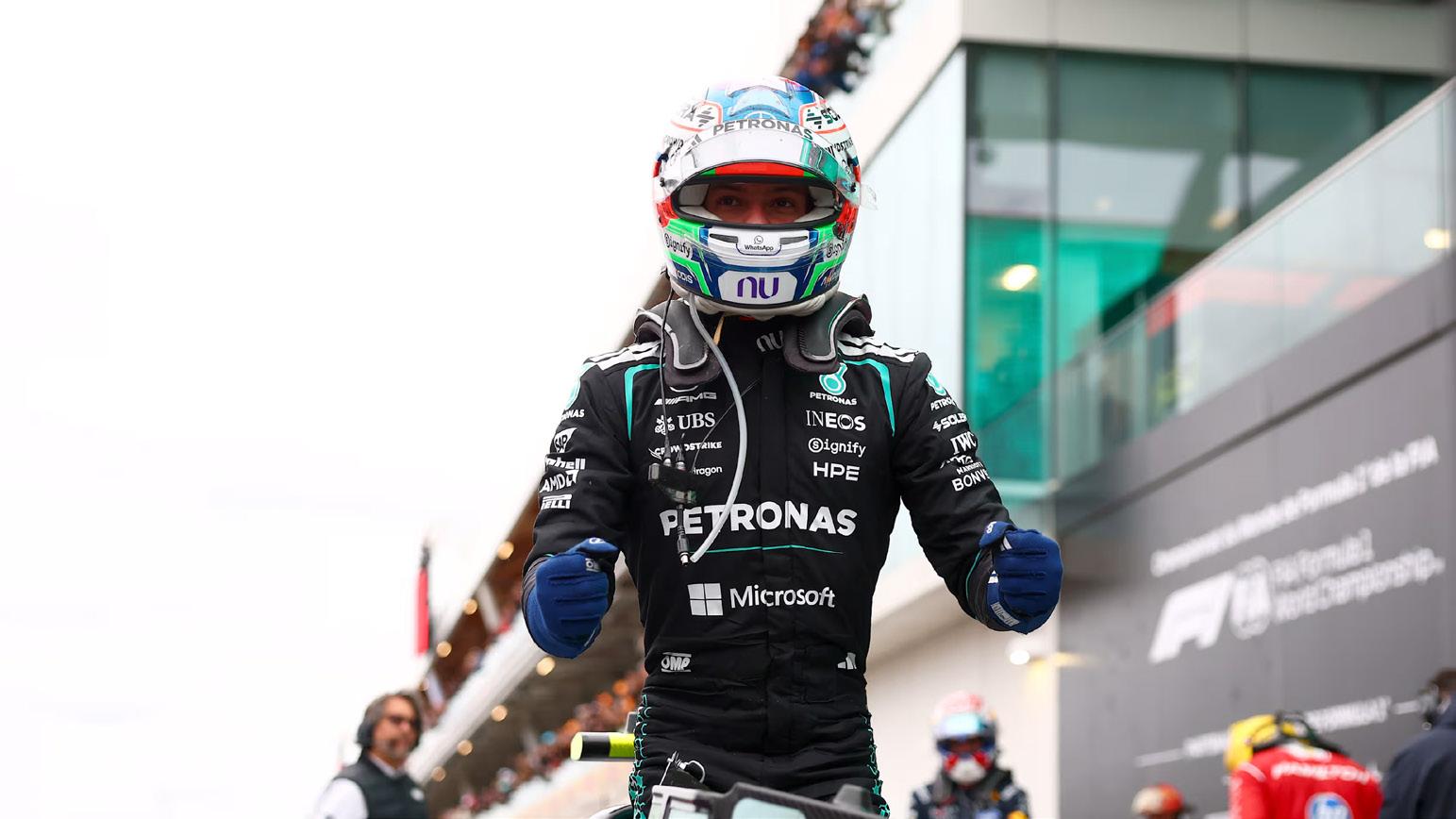
Antonelli wins dramatic Canadian Grand Prix as Russell retires amid thrilling Mercedes battle
(Formula 1) - Kimi Antonelli has taken victory in a dramatic Canadian Grand Prix, and extended his championship lead to 43 points in the process, after Mercedes team mate George Russell was forced to retire on Lap 30 following a power unit issue on his car.
The early stages of the race were dominated by a thrilling battle for the lead between Russell and Antonelli, with some contentious moments between them as the pair swapped positions on numerous occasions.
But the duel came to an end in heartbreaking circumstances for Russell when the Briton suffered a sudden technical issue that forced him to stop on track.
A Virtual Safety Car was deployed and much of the field pitted, with Antonelli left holding a solid lead over second-placed Verstappen.
From there the Italian was untroubled at the front, crossing the line with a margin of 10.7 seconds to seal his fourth consecutive win. Lewis Hamilton took a strong second place for Ferrari, the seven-time World Champion overtaking the Red Bull of Max Verstappen in the final laps.
Verstappen held onto third to score his first podium of the season, while Charles Leclerc and Isack Hadjar were fourth and fifth respectively in the sister Ferrari and Red Bull cars.
Franco Colapinto continued his good run for Alpine in sixth, and Racing Bulls’
Liam Lawson just held off the other Alpine of Pierre Gasly as the pair claimed P7 and P8.
Carlos Sainz added to Williams’ tally in ninth, and Haas’ Ollie Bearman sealed the final point on
offer in 10th. Oscar Piastri missed out in P11 on what turned out to be a nightmare day for McLaren, with both cars pitting early for slick tyres after their decision to start on the intermediate compound proved to be the wrong one. The Audis of Nico Hulkenberg and Gabriel Bortoleto placed in 12th and 13th, ahead of Haas’ Esteban Ocon, Lance Stroll in the Aston Martin and Cadillac’s Valtteri Bottas in
CRICKET QUIZ CORNER
(Monday, May 25, 2026)
COMPLIMENTS OF CUMMINGS ELECTRICAL COMPANY LTD 83 Garnett Street, Campbellville, Georgetown (Tel: 225-6158)
Answers to yesterday’s quiz:
(1) Jos Butler-124 (RR vs SRH, Delhi)
(2) Andre Russell-5/15 (KKR vs MI, Chennai)
Today’s Quiz:
(1) Who was the first to hit eight sixes in a single IPL game in 2021
(2) Who hit most sixes in IPL 2021?
Answers in tomorrow’s issue
14th through to 16th. There were five other retirements from the race alongside Russell. McLaren’s difficult day was compounded when Norris stopped after reporting a gearbox issue, the Briton having spent much of the race trying to recover after pitting two laps in from the lead to swap his intermediate tyres for slicks.
Cadillac’s Sergio Perez retired with a suspension failure, while the Aston Martin of Fernando Alonso found himself out of the running following a problem with his seat.
Williams’ Alex Albon was eliminated after being hit by Piastri – an incident that Piastri received a penalty for – and Racing Bulls’ Arvid Lindblad did not even get to start the race after experiencing a clutch issue on the grid.
Kimi Antonelli tool victory in a dramatic Canadian Grand Prix
Cutting slices way to title
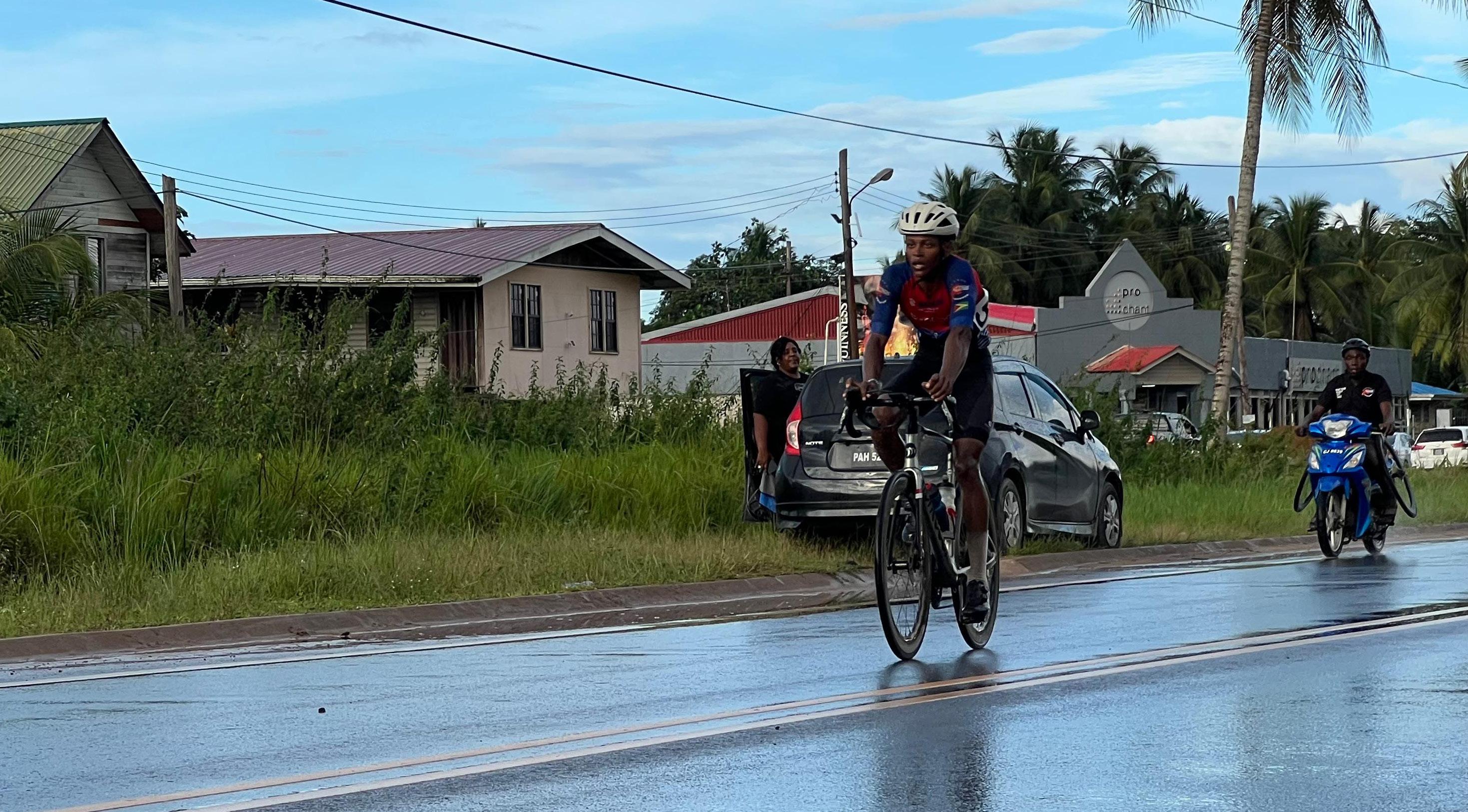
KAIETEUR Attack Racing's Ajani Cutting saved his best ride for last, putting in a fabulous showing in the third and final stage of the 60th Diamond Jubilee Independence Cycling Championship on Sunday.
The ride saw him claim the overall title on the country’s roadways.
Cutting was the overall winner ahead of Continental's Alexander Leung and Team Velocity’s Mark Lewis Jr.
Evolution's Curtis Dey and Segan Hubbard completed the top five finishers.
The third stage pedalled off on Sunday morning at Schoonord on the West Bank of Demerara, headed to Parika and returned to the Bharrat Jadgeo Harbour Bridge before moving down the Heroes Highway and onto Homestretch Avenue and finishing in front of the Cliff Anderson Sports Hall.
It was Continental Cycle Club rider Leung who
sprinted over the line first for the win in the elite category, with Cutting second and Lewis third.
However, it was consistency that earned the youngster Cutting the title after his 11th place in stage one and third place in stage two.
Carlton Wheelers' Robin Persaud was the man to beat in the last stage after outstanding performances in stages one and two, but in the final test on Sunday he faded away.
All-round Archer helps RR secure last playoffs spot
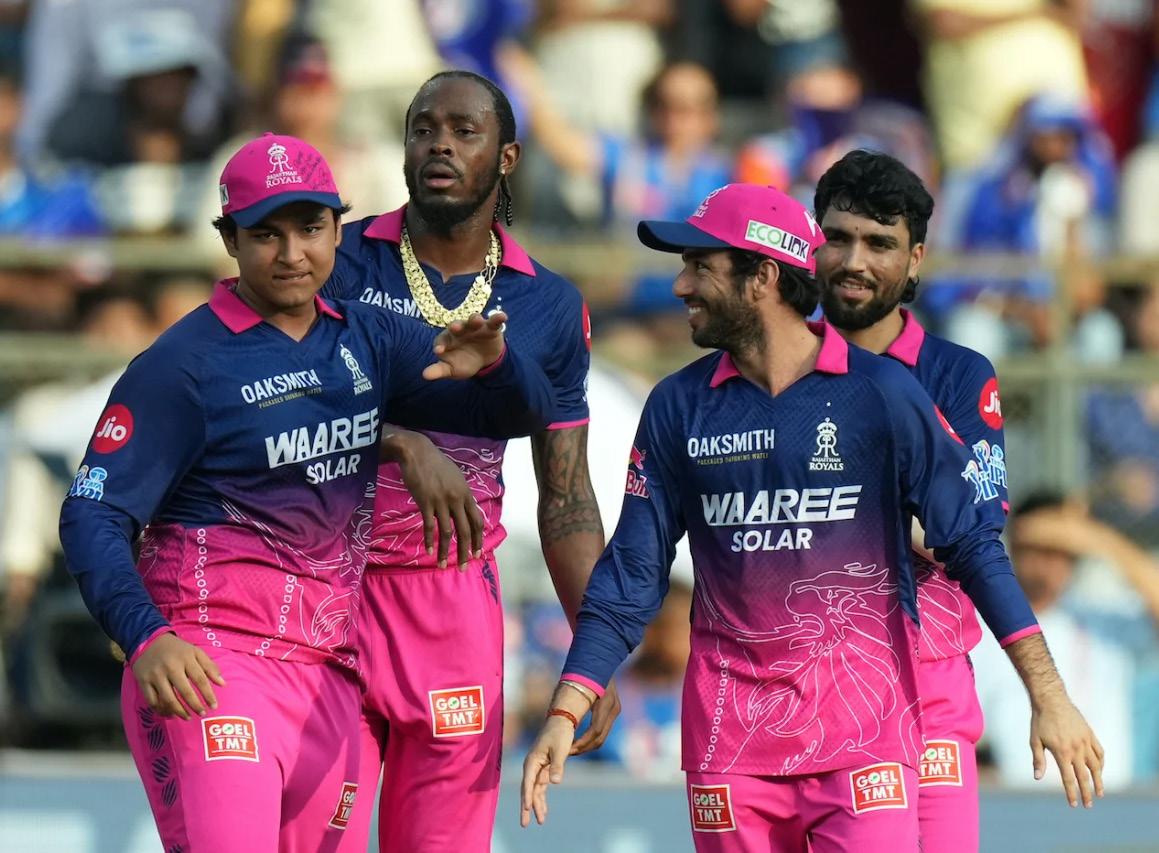
(ESPNCRICINFO) - It was a must-win game, and they were in early trouble, but Jofra Archer pulled off one of the IPL's great all-round performances to seal Rajasthan Royals' (RR) passage into the playoffs with a 30run win over Mumbai Indians (MI) at the Wankhede Stadium.
RR will now face Sunrisers Hyderabad (SRH) in the Eliminator on May 27 in New Chandigarh. The IPL's last league game, between Kolkata Knight Riders and Delhi Capitals in Kolkata, is now a dead-rubber.
Sent in to bat on a somewhat slow pitch in an afternoon game, RR lost both their rampaging openers early, and struggled for momentum through the early middle overs with hard lengths and pace-off deliveries proving difficult to hit. Then RR, despite having Shubham Dubey and their designated Impact Player Ravindra Jadeja padded up, promoted Archer to No. 7, and he hit three sixes in a 15ball 32 that shifted the game's momentum.
That innings sparked a late surge that pushed RR's total beyond 200. Then Archer began its defence spectacularly, taking two new-ball wickets with high pace and movement. And just when Hardik Pandya seemed to threaten a late heist and deny RR their playoffs spot, Archer came back for his final over and removed him with the perfect hard-length delivery. He finished with figures of 4-0-17-3, and RR wrapped up victory by 30 runs.
MI’S IMPRESSIVE POWERPLAY
That MI were well-prepared for this contest was clear in the first over itself.
When Vaibhav Sooryavanshi came on strike, Deepak Chahar stationed a sweeper cover as one of his two deep fielders, and dangled a full ball wide of off stump, asking the boy wonder if he fancied taking on the fielder.
Sooryavanshi went after it, and could have got six for it had Will Jacks not pulled off a spectacular diving save to keep him down to a single, but on another day he could have also been out.
As it happened, Sooryavanshi was starved on strike for the next few overs, as Yashasvi Jaiswal hit three sixes before falling for a 17-ball 27, out to Jacks who bowled two overs of match-up offspin to the two left-hand openers for just 10 runs off 10 balls.
When Sooryavanshi finally faced his sixth ball at the start of the fifth over, he tried to hit against Chahar's over-the-wicket angle, lost his shape for once, and fell to a sliced miscue.
When Riyan Parag fell to AM Ghazanfar off the final ball of the powerplay, caught with great awareness and balance on the edge of the longon boundary by Tilak Varma, RR were 54 for 3.
SHANAKA, ARCHER
REVIVE RR
Dasun Shanaka ensured RR didn't spend too long worrying about the wickets they had lost, with a bit of
He clinched stage two, Kara Kara to Long Creek and back, with Alex Mendes second and Cutting third
In the first stage which also pedalled off on Saturday, which was a gruelling 45-mile ride from Linden to Mabura Road, Geron Williams came out on top in 1 hour, 51 minutes and 44 seconds, with Persaud in second place and Denobrega third.
This year’s prize pool totalled $2 million, with elite riders vying for top prizes
of $275,000 for first place, $200,000 for second, and $145,000 for third place.
In the female oval category, Team Evolution Jeffrey Denise beat out Noel Tandeia and Jeffrey Abigail in that order, while the masters over 50 saw Junior Niles dominating to take the title, with Ray Harlequin second and Talim Shaw third.
The three-stage race for the juniors was won by Alexander Leung ahead of Alex Mendes and Kevon
Stephens.
Justin Tenpow won the juvenile 3 stage.
Mark Lewis also took home the category 4 prize after edging Walter Stuart and Roy Mangru.
The over 35 category was captured by Hubbard with Persaud second and Mendes third.
The event, which is part of the country's independence activities, is sponsored by the National Sports Commission.
help from ordinary MI bowling. Ghazanfar and Raghu Sharma fed him slot balls that he launched down the ground for six, and Shardul Thakur sent down a short ball down the leg side that he helped over fine leg for another six. Shanaka's 15-ball 29 was an important innings, coming when Dhruv Jurel endured another slow start. Jurel eventually hit Ghazanfar for two fours and a six in the 12th over before getting yorked by Corbin Bosch in the 13th for 38 off 26 balls.
RR have often underutilised Archer's batting ability, and now they seemed to be erring in the other direction entirely, sending him in ahead of two recognised batters with 7.1 overs remaining.
But Archer's right-handedness may have been one reason for this - MI could have sneaked in an over of Jacks against Dubey or Jadeja. The other could have just been his pure ball-striking ability on a slow pitch where MI were looking to bowl into the pitch as much as possible. Archer's height, stable base, and baseball-style swing were instrumental in his being able to hit three sixes off that kind of delivery, all either pulled or flat-batted down the ground. Thakur eventually dismissed him with a hardlength ball that climbed high enough to force a miscue, but by then Archer had given RR serious momentum. Jadeja and Nandre Burger took the baton from him and collected 30 off the last two overs. RR scored 73 off their last five.
Spurs survival celebrations can't disguise season of embarrassment
(BBC) - Strains of the old "Glory, Glory" anthem echoed inside the giant stadium as Tottenham Hotspur stepped back from the precipice of the most humiliating relegation in Premier League history.
Spurs players and supporters were in unison at last as they could finally look forward to next season as a top-flight club, victory against Everton on the final day ensuring survival and sending West Ham United into the Championship.
Slowly, a note of dissent was introduced as a giant banner was unfurled by supporters, reading: "Promised Success. Delivering Failure. ENIC out."
The fans who have suffered so much mediocrity were entitled to their outpouring – after all, this was only the third home league win they have witnessed this
season, albeit in arguably the club's biggest game in recent history.
For the Spurs players, the instant exuberance was understandable, but embarrassment should have quickly descended on them as they listened to their supporters chanting "We Are Staying Up".
The very sound of those words, the preserve of strugglers, should reverberate through the whole club.
Once Tottenham High Road empties of its revellers, the inquest from top to bottom must begin.
Roberto de Zerbi rescued Tottenham after the failed reigns of Thomas Frank and Igor Tudor
The fist-pumping defiance from those who have performed so poorly, with Spurs finishing 17th for the second successive season, could have been avoided
had they pitched up and performed earlier in this wretched campaign.
Spurs had been warned. Cracks were covered up by last season's Europa League win, which was followed by Ange Postecoglou's sacking, but they were soon exposed once more when this season begin.
The club's top brass were in attendance for the conclusion – whatever it held – with chief executive Vinai Venkatesham front of house and sporting director Johan Lange sitting just behind.
Their part in all of this will come under scrutiny, not least for their remarkable decision to trust the ill-suited Igor Tudor as successor to Thomas Frank. Frank had been sacked after eight months. Tudor was out of the door in 44 days following five defeats in seven games.
Tottenham have finished 17th for two consecutive seasons in the Premier League
Kuldeep and Rahul help DC sign off with big win
(ESPNCRICINFO) -
Chasing the fourth playoffs spot, Kolkata Knight Riders (KKR) entered their match against Delhi Capitals (DC) at Eden Gardens hoping Mumbai Indians beat Rajasthan Royals at the Wankhede Stadium. In that case, KKR would have needed to chase down their target in about 12 overs to pip Punjab Kings on net run rate and finish in the top four. But with Mumbai losing, both PBKS and KKR were knocked out, reducing this match to a dead rubber as early as the fourth over of the first innings.
In the end, KKR lost this game as well. After DC rode on KL Rahul's 30-ball 60 to post 203 for 5, KKR were 126 for 3 after 13 overs. Kuldeep Yadav then dismissed Ajinkya Rahane and
Rinku Singh off successive deliveries to derail them. Eventually, KKR were all out for 163 in 18.4 overs.
DUBEY IMPRESSES IN POWERPLAY, KKR FIELDERS DON'T
After opting to bowl, KKR started with left-arm spinner Anukul Roy to lefthand batter Abishek Porel. After two dots, Porel picked up two successive fours to make it a ten-run over. Leftarm seamer Saurabh Dubey, though, was effective. Sharing the new ball, he found movement off the seam and also used the slower ball to good effect. He conceded only five runs from his two overs in the powerplay and had Porel caught behind. Porel was dropped by Tejasvi Dahiya off Kartik Tyagi off 18 but could add only four more to his tally. In the last over of the
powerplay, Sahil Parakh also got a reprieve. He was on 7 when he reversed-swept Sunil Narine towards cover-point where Rinku grassed the chance. Narine eventually had him caught at extra cover for 24 off 17.
RAHUL TAKES ON NARINE
Rahul showed his class once again, especially against Narine. In the eighth over, he stepped out twice in a row and hit him for a six and a four. In the spinner's next over, he launched him over long-on from the crease for another six. In all, Rahul hit Narine for 21 off nine balls. He reached his fifty off 25 balls before dragging Roy to long-on.
AXAR, MILLER TAKE DC PAST 200
After Rahul's wicket,
Campbell backs fresh start ahead of Sri Lanka showdown
CMC - Opening batter
John Campbell struck an optimistic tone on the second day of the West Indies’ high-performance training camp here, declaring that a clear tactical blueprint and total team buy-in have put the side on the right path ahead of their ODI series against Sri Lanka.
Speaking to CWI Media in a sit-down interview, Campbell reflected on the morning’s work, which he already sees bearing fruit.
“I think our session went pretty well this morning. We’ve had some plans in place, and I think the way we’ve been implementing them over these training sessions, we’ve had conversations before this camp as well about what we need to do as a team to get better. And I think that everybody has bought into it, and we’re heading in the right direction.”
The 10-day camp is being framed by team management as far more than a routine fitness refresher.
It is intended as the launchpad for the upcoming ODI series against Sri Lanka in Jamaica, and a foundational block in a wider 18-month strategy to revive the West Indies’ fortunes in the 50over format.
Axar Patel and David Miller kept DC going. They added 41 off just 25 balls before Axar holed out to long-on trying a third six off Varun Chakravarthy's final over. He made 39 off 25 balls. Dubey conceded only eight in the 18th over but Miller spoiled his figures somewhat in the 20th by hitting him for two sixes. The seamer had the last laugh, though, as he had Miller caught at mid-off off a full toss. Dubey was denied a third wicket by Dahiya, who dropped Ashutosh Sharma off the final delivery of the innings. Ashutosh, once again, played a handy knock of 18 not out off 11.
ALLEN FALLS AFTER BRISK START
Finn Allen opened his account with a first-ball four off Mitchell Starc.
In the bowler's next over, he hit him for a six and a four off successive balls. From the other end, Rahane smashed back-to-back sixes off Auqib Nabi to take KKR to 43 after four overs. Lungi Ngidi provided some relief when he had Allen chopping on in a four-run fifth over. With Axar conceding only eight in the sixth, KKR ended the powerplay on 55 for 1.
KULDEEP DERAILS
KKR
Just when it looked like KKR were falling behind the asking rate, Rahane and Manish Pandey combined to hit Axar for three sixes in a 21-run eighth over. But Ngidi struck once again - he dismissed Pandey for 25, courtesy an excellent diving catch by Starc at long-on. In the next over, Kuldeep had Cameron Green caught at
long-off, leaving KKR 96 for 3 in the tenth over. Rahane brought up his fifty, his second of the season, off 31 balls but Kuldeep had him and Rinku caught in the deep off successive deliveries to dent KKR's chase. He missed the hat-trick only because Porel put down Dahiya behind the stumps. Dahiya couldn't capitalise on the reprieve and fell to Axar soon after.
When substitute fielder Sameer Rizvi's direct hit from long-off found Rovman Powell short at the non-striker's end, the end was swift. There was no Narine with the bat, as Allen had replaced him as Impact Player during the first innings itself, and the lower order didn't have the skills to deal with Starc and Ngidi. All told, KKR lost their last seven wickets for 37 runs.
Campbell made clear that no opponent will be taken lightly. “Well, obviously, every series matters. Every series carries a lot of weight. So for us, we just want to take it a game at a time. If we go there and execute our skills, then we should be good.”
“I think once we can start well, once we can get a win in the first game, it will aid us in winning the series,” he said. “I think once we have a platform, then we could build on it throughout the series.”
The opener’s focus was laser-sharp on the importance of early momentum, as he believes the key to series success lies in a fast start.
The Coolidge Cricket Ground has been a hive of intense drills, simulated match scenarios, and tactical meetings, with the coaching staff emphasising discipline and execution.
Opening batter John Campbell batting in the nets at the CWI High Performance Camp in Antigua (Photo: CWI Media)
Cutting slices way to title
Ajani Cutting on his way to victory in the third stage