



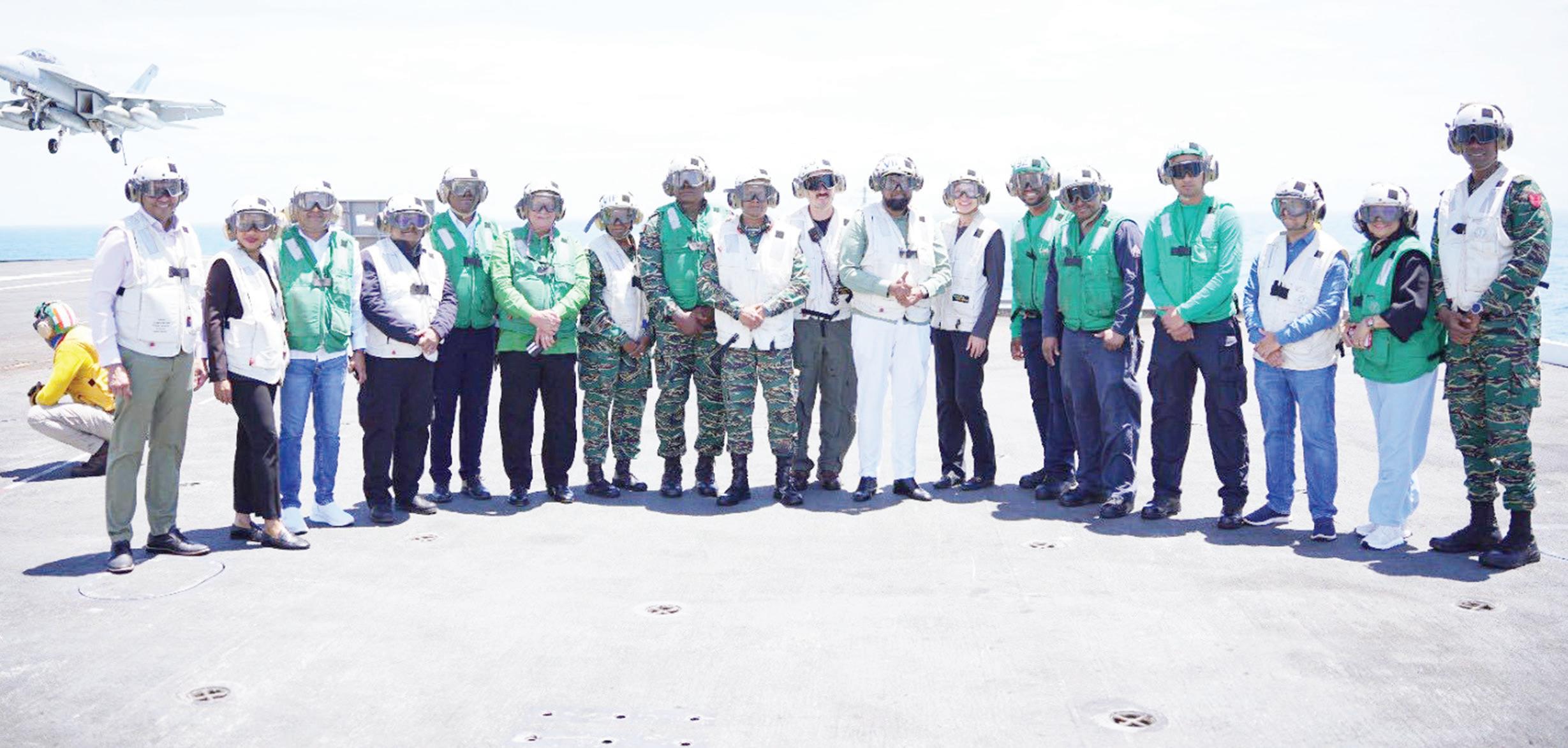
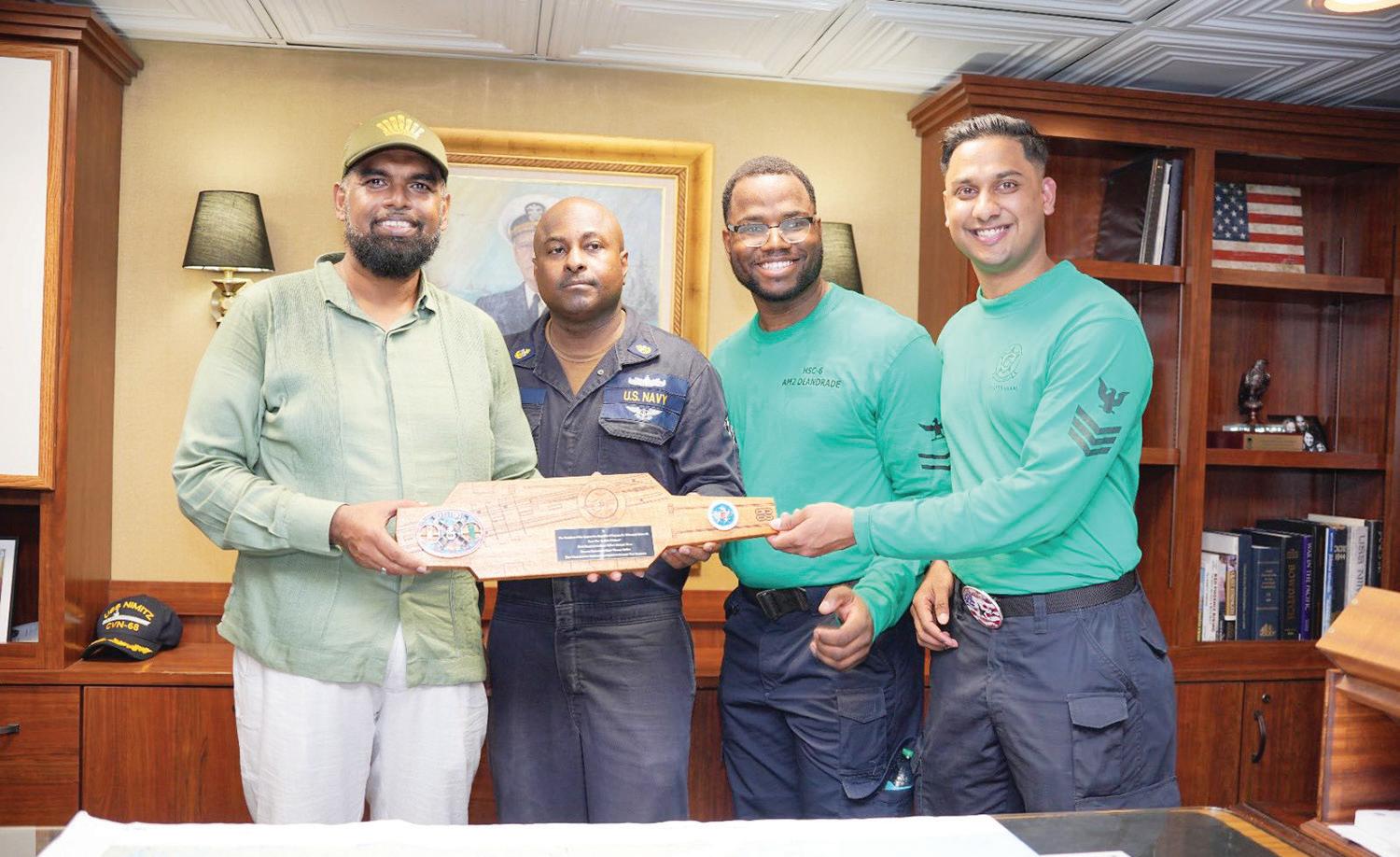



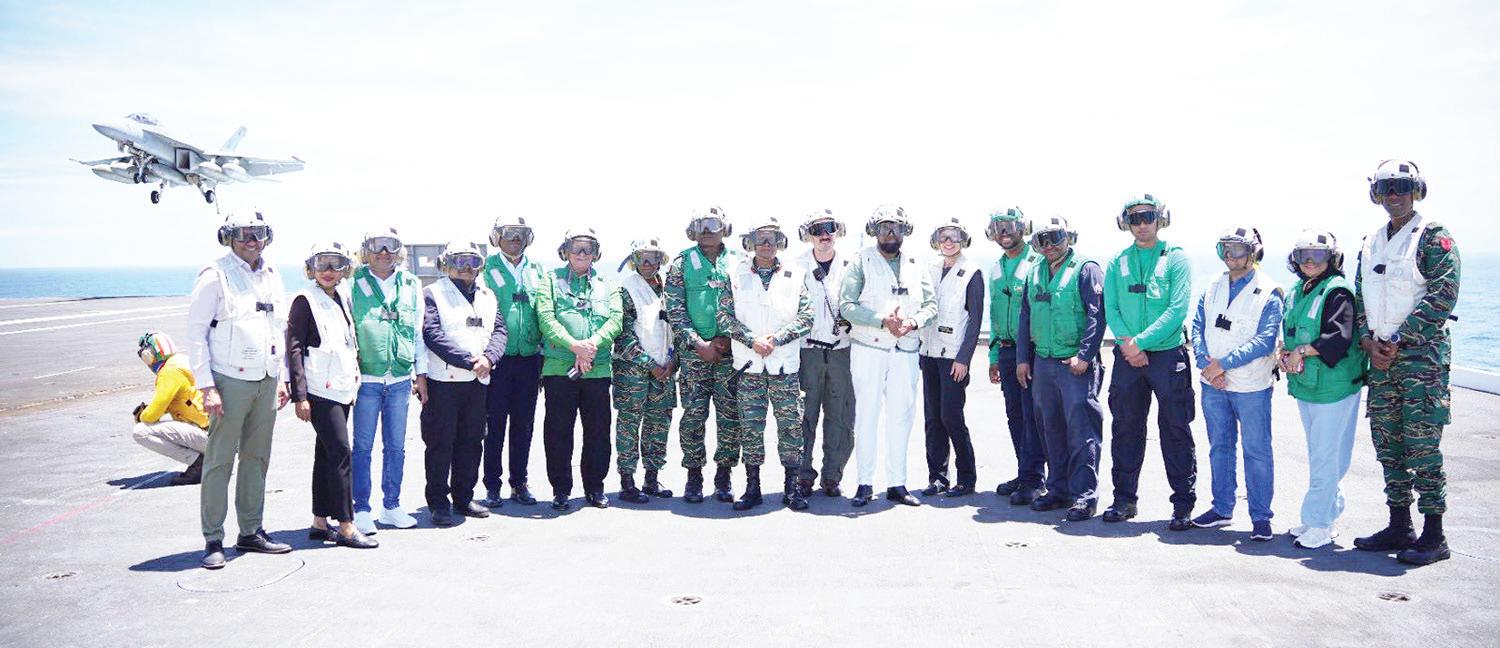
PRESIDENT Dr Irfaan Ali, on Saturday, boarded the USS NIMITZ alongside members of his Cabinet and senior officers of the Guyana Defence Force, where he underscored the importance of regional partnerships, peace and shared democratic values.
The visit to the United States aircraft carrier formed part of ongoing
Speaking during the visit, President Ali described it as his “greatest honour” to join the servicemen and women aboard the vessel.
“It is my greatest honour to join some of the finest men and women in uniform on board the USS NIMITZ as we celebrate partnership, friendship, and our collective goal of

ensuring a region built on peace, democracy, and the shared values of the members of the Shield of the Americas,” the President said.
engagements aimed at strengthening co-operation and friendship between Guyana and the United States, particularly in the areas of security and regional stability.
He praised the military precision, discipline and professionalism displayed by the crew of the aircraft carrier, while commending their commitment to service.
The Head of State also noted that meeting
said.
He further extended prayers and well wishes to members of the armed forces.
“I pray for God’s blessing, guidance and protection for all our men and women in uniform as we work tire-

three Guyanese serving aboard the USS NIMITZ was a proud moment, highlighting the contribution of Guyanese on the international stage.
“While on the vessel, I met three Guyanese among the crew, which filled me with pride,” President Ali
lessly in support of the development, prosperity and friendship of our two nations,” he added.
Meanwhile, US Ambassador to Guyana, Nicole Theriot said, “The United States and Guyana share a commitment to regional security and prosperity.
The visit of the USS
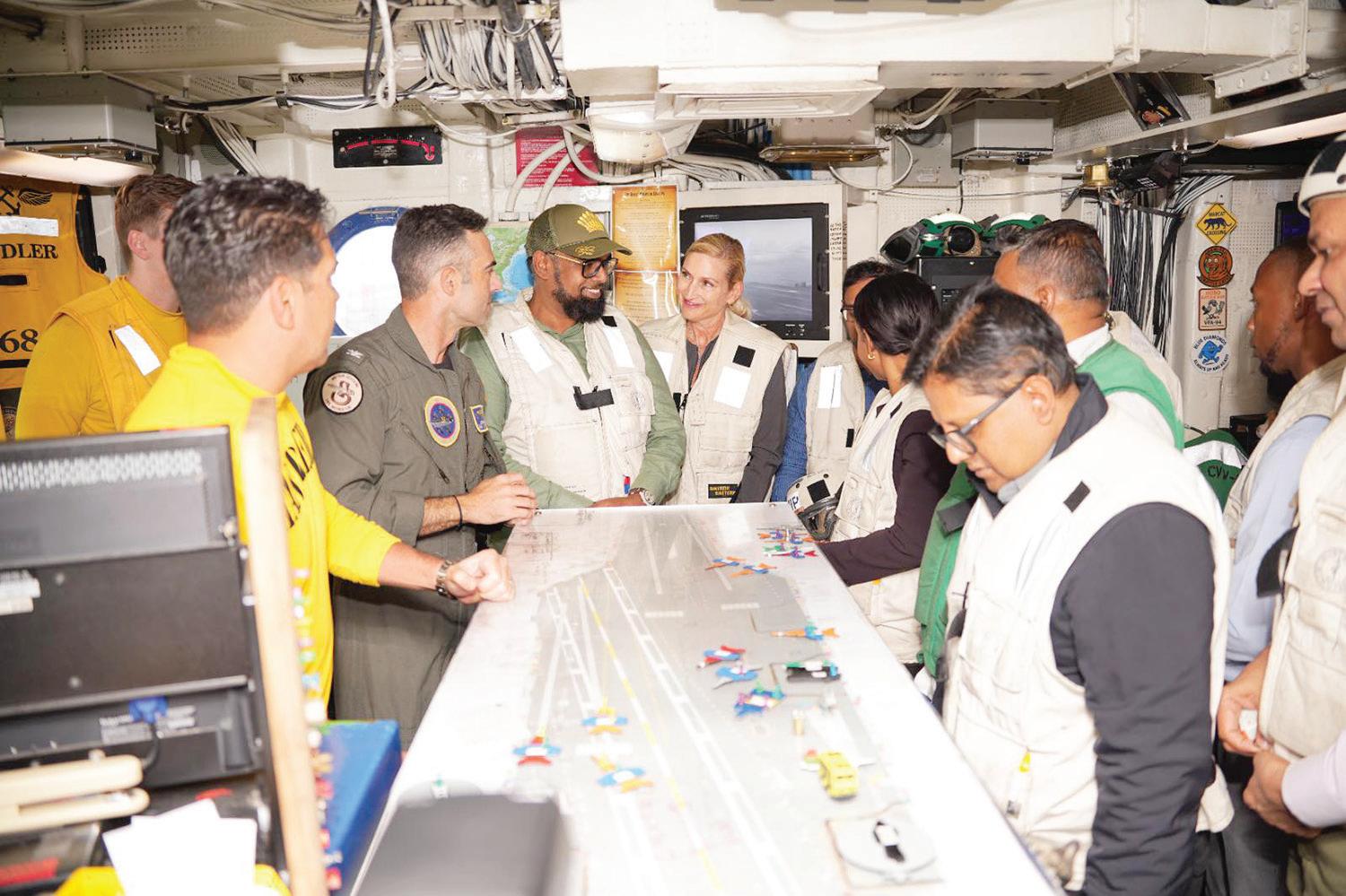
Nimitz demonstrates our dedication to working hand-in-hand with Guyana and our Caribbean partners to address shared challenges and build a safer, stronger hemisphere for all our citizens.”
According to the US Embassy, the as part of this deployment, the USS Nimitz is conducting exercises with armed forces from the Guyana Defence Force, strengthening alliances and building the capabilities needed to address security challenges together.
“Guyana's role as a founding member of the
Shield of the Americas Coalition underscores our shared commitment to hemispheric security,” it said.
The USS NIMITZ is one of the United States Navy’s most recognisable aircraft carriers and plays a key role in maritime security operations and international defence co-operation.
The visit comes as Guyana continues to deepen bilateral ties with the United States, particularly in areas related to defence, trade, security and economic development.
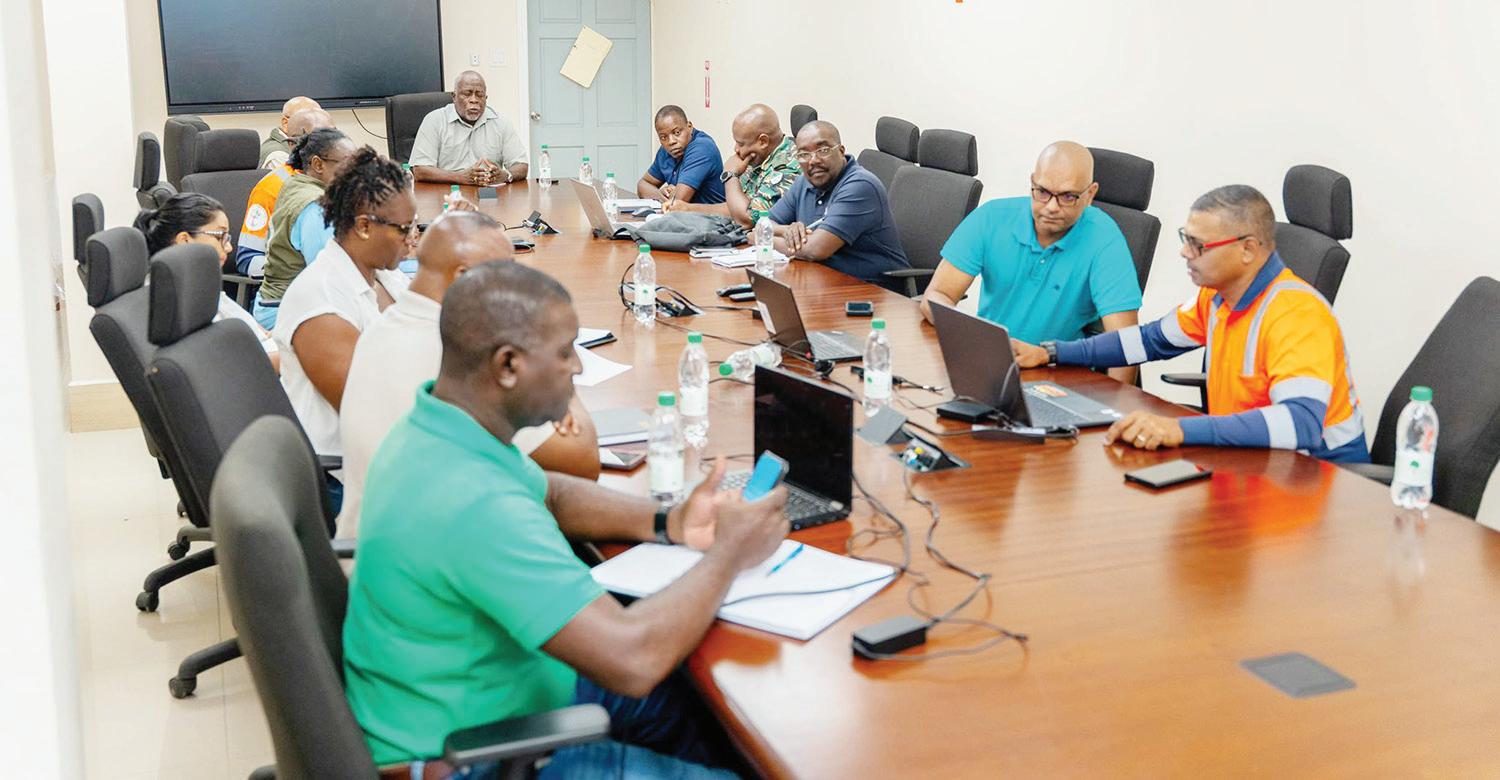
PRIME Minister Brigadier (Ret’d) Mark Phillips on Saturday received a technical briefing from the Civil Defence Commission and key response agencies regarding reports of flooding affecting several communities in Region Nine (Upper Takutu-Upper Essequibo) following continued heavy rainfall.
The briefing, which included representatives from the Guyana Defence Force, the Guyana Police Force and other technical officers, focused on the current conditions in affected communities, challenges relating to transportation and access, and the readiness of response systems should conditions deteriorate.

Officials informed the Prime Minister that flooding had been reported in communities including St. Ignatius, Annai, Aranaputa, Karasabai, Masekenari and Aishalton.
According to the information currently available, the flooding has primarily affected transportation networks and access routes, while assessments are ongoing to determine the

extent of the impact on households and communities.
The meeting also examined contingency systems and support mechanisms that may be required, should the situation worsen.
Discussions centred on maintaining communication with affected villages, monitoring water levels, assessing potential food and medical requirements, and identifying possible shelters, if needed.
Prime Minister Phillips, under whose portfolio the Civil Defence Commission falls, directed that all response efforts be coordinated through the CDC’s regional mechanism in Region Nine, working closely with regional authorities and national response agencies.
He underscored the importance of continued monitoring, timely reporting, and coordinated action among agencies as weather conditions continue to evolve.
The Prime Minister also called for regular situation reports to ensure that authorities remain fully updated and prepared to respond swiftly if additional intervention becomes necessary.
Minister of Local Government and Regional Development Priya Manickchand and Regional Chairman Karl Singh also participated in the meeting virtually and provided updates from the regional level.

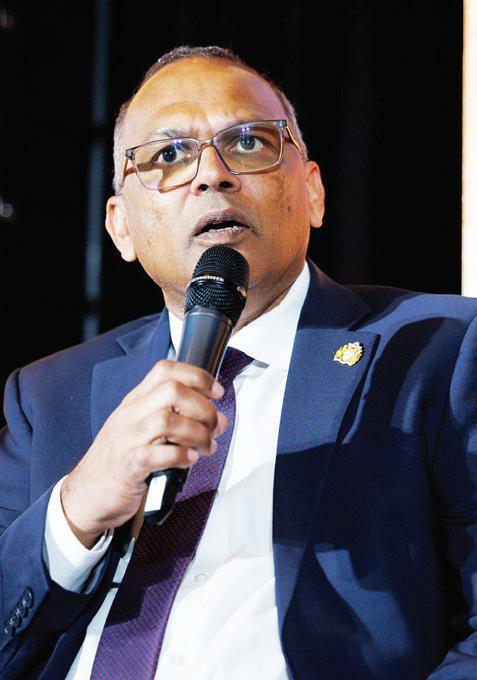
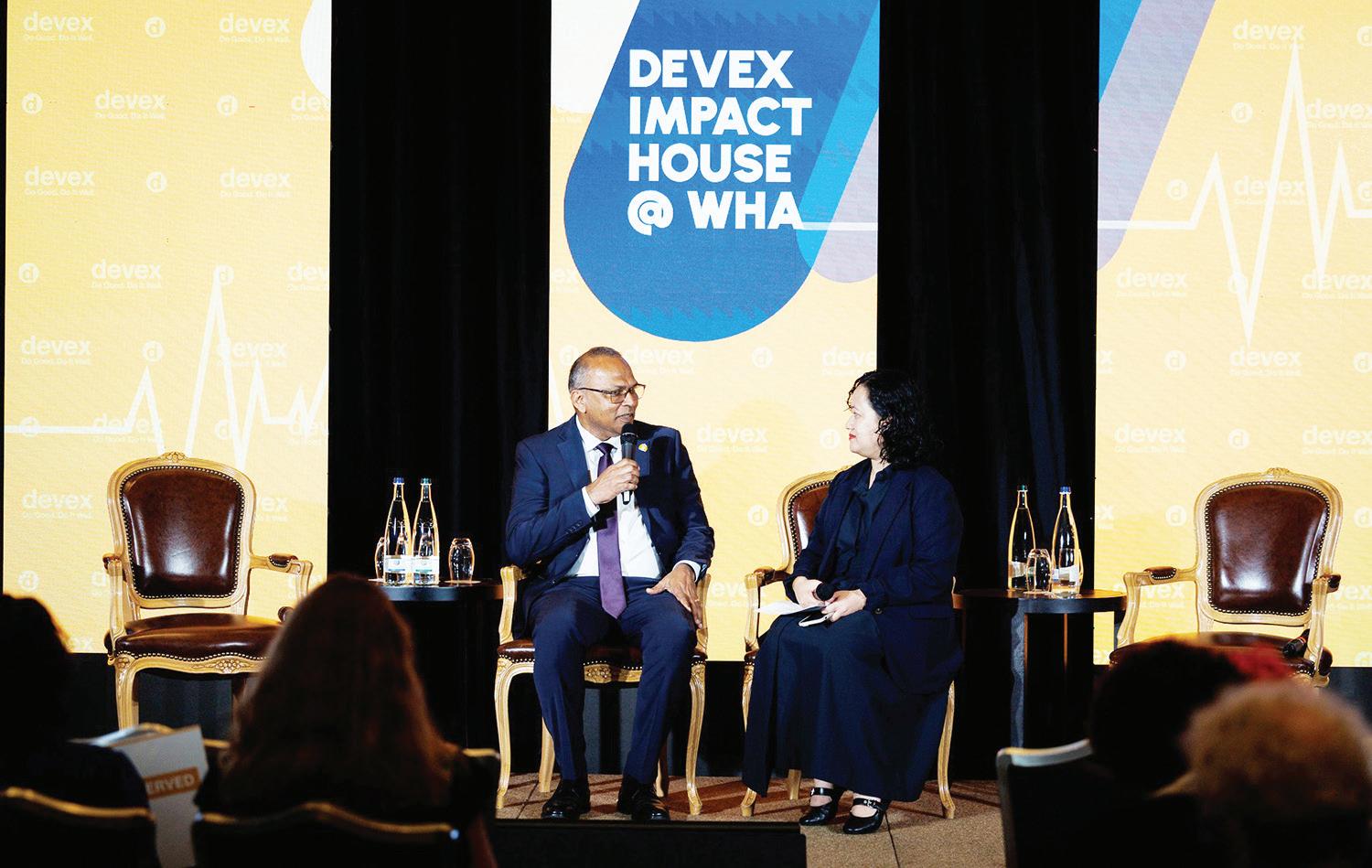
GUYANA’S Health Minister Dr Frank Anthony took centre stage at the Devex Impact House on the sidelines of this year’s World Health Assembly in Geneva on Thursday, delivering a wide-ranging account of Guyana’s innovative health-system transformation.
Addressing an audience of global health leaders, development partners and policymakers, Minister Anthony outlined how Guyana is confronting a double burden of infectious and non-communicable diseases, while simultaneously expanding infrastructure, harnessing technology and training a new generation of health workers.
Highlighting a 150-site telemedicine network, newly opened hospitals and a graduating class of 600 nurses, the minister painted a picture of a health system in rapid evolution, and offered Guyana’s experience as a lesson for other developing nations navigating shrinking health budgets.
INFECTIOUS AND CHRONIC DISEASES
While many smaller nations continue to struggle against the dual challenge of non-communicable and infectious diseases, Minister Anthony noted that Guyana has been implementing various systems to tackle both challenges alongside the broader development of the sector. On the infectious disease front, he explained, Guyana’s Ministry of Health has been working to control and manage some diseases, while working to eliminate others entirely.
“We have a programme where we are working on the elimination of leprosy, leishmaniasis, chagas and filaria. We also want to work, maybe over the next two to three years, to eliminate malaria. We are also working very hard to see mother-to-child transmission of HIV eliminated from Guyana,” he said.
He noted, however, that as people live longer, non-communicable diseases become a greater hurdle, adding that in recent years the diets of most people have shifted to include foods that are danger-
ous to long-term health and wellness.
“Our diet is shifting. With prosperity, people have stopped walking and exercising naturally. So you have lifestyle changes that are a major contributor to the non-communicable diseases,” the minister said.
However, he highlighted a rise in illnesses such as cardiovascular diseases, stroke, diabetes, respiratory illnesses and kidney disease.
Outlining the steps taken to address this, he added, “About four years ago, we established a special programme within the Ministry of Health to look at chronic non-communicable diseases. And in all of these programmes, all of the areas, we have specific programmes that are targeting the control of these particular illnesses.”
The minister also spoke to Guyana’s growth in free public health care. As he explained, Guyana is home to more than 460 health facilities across the country and has built a broad and accessible health-care system.
Noting that equity remains a vital pillar of the sector, the minister highlighted steps taken to advance access to health care across the country. Speaking on the major challenge of reaching remote communities, he noted that beyond infrastructure, the government has invested
heavily and strategically to ensure that those communities have access to the same level of care as those along the coast.
Citing investments in telemedicine, he noted that use of solar panels to provide electricity, solar refrigerators to keep vaccines cool, and Starlink to ensure the use of internet-enabled medical devices. This connectivity has allowed doctors to receive real-time patient data, including ultrasounds and ECGs, from health workers in the field, enabling timely remote consultations and, where necessary, medical evacuations.
Strides in human resources have also been a major driver of the sector’s development. As Minister Anthony highlighted, over the last three years, an estimated 5,000 health-care workers have been added to the system. Continued training through the ministry’s more than 20 training programmes continues to bolster the sector.
Speaking on tackling the shortage of nurses, the minister added, “One of the things that we’ve been doing is using a hybrid programme. On the Coursera platform, they’ve given us a portal. We have put our content there, and with the WHO Collaborating Centre in Brazil, we have been able
to design this hybrid nursing programme, and we started this about three years ago. So this year in July, we will graduate our first batch of 600 nurses, and that is a big number.”
The minister also cited infrastructural expansion as a key driver of the sector’s success, noting, “Because we have located these hospitals closer to the population in different regions previously that did not have access to secondary and tertiary health care. And so this is helping to give people a quicker way of getting to health care.”
The success of these steps in transforming Guyana’s health system is why the minister is calling on other countries to leverage technology. As he explained, technology removes the need for health-care professionals to always be physically present in remote communities, with Guyana’s 150-site telemedicine network having proven to be a game-changer.
Minister Anthony also highlighted the impact of Guyana’s electronic health record system on the speed and responsiveness of care delivery. He noted that Guyana has scaled up this system to include on-line appointment booking, reducing the hours
patients once spent waiting at facilities.
Highlighting this impact, he added, “This is changing how we are able to deliver care, and I think this kind of patient-centric approach is extremely important. So that is another way that, you know, people can, countries can look at to see how you can improve efficiency and allocation.”
Guyana has also taken steps to reduce the cost of medication. Minister Anthony noted that by purchasing medicines centrally and in bulk, the government has been able to bring costs down significantly, making medicines free at the point of
delivery across the public system.
A key mechanism in achieving these savings has been leveraging PAHO’s revolving fund for pool procurement, which allows member countries to access medicines at negotiated prices far below market rates.
Highlighting Guyana’s success in this regard, he added, “We have been able to get cost savings because we are buying in such a way. We buy in bulk, and there are mechanisms. So, like in PAHO, there is a revolving fund, so that we leverage pool procurement there, and you get cheaper costs.”


GUYANA’S rapid transformation demands a modern approach to national security and President Irfaan Ali’s vision for a technologically integrated security system signals that the country is preparing seriously for the future.
As one of the fastest-growing economies in the world, Guyana is no longer operating on the scale it did a decade ago. Expanding oil-and-gas operations, major infrastructural projects, increasing urbanisation and a more digitised economy all require stronger and more sophisticated security systems.
The government’s plan to modernise the country’s security architecture through artificial intelligence, integrated surveillance, cyber security and digital policing is therefore both timely and necessary.
Importantly, this is not just rhetoric. The numbers already show the scale of investment underway.
Guyana currently has approximately 6,000 CCTV cameras installed across 1,300 surveillance sites nationwide. By 2030, government plans to install more than 20,000 additional cameras under the ‘Safe Coun-
try’ initiative to significantly strengthen national monitoring and public safety capabilities.
At the same time, smart traffic systems are already producing results. During a recent pilot operation, mobile AI traffic units identified more than 250 vehicles with outstanding traffic violations on the East Coast corridor alone. More than 1,600 letters have also reportedly been issued in relation to questionable driver’s licence acquisition processes.
These developments demonstrate how technology can improve accountability, efficiency
and enforcement while reducing opportunities for human interference. Equally significant is the government’s focus on cyber security and digital resilience.
With Guyana moving towards a national payment system, digital IDs, QR-code transactions and expanded online services, stronger cyber protection is essential. The establishment of a 24-hour cyber emergency response capability is therefore a critical step in safeguarding the country’s financial systems, telecommunications infrastructure and strategic energy assets.
What makes the gov-
ernment’s approach particularly balanced, however, is its recognition that technology alone cannot build safe communities.
President Ali repeatedly emphasised the importance of community policing, youth engagement, churches, civil society organisations and social-intervention programmes in strengthening national security. That people-centred approach is important because lasting security depends not only on systems and software, but also on stronger families, stronger institutions and greater public trust.
The modernisation of the Guyana Fire Service, emergency response systems and judicial infrastructure further reflects a government pursuing comprehensive institutional reform rather than isolated interventions.
Guyana’s development trajectory requires modern governance and modern security systems. The administration’s vision acknowledges that reality and positions the country to better protect its citizens, infrastructure and economic future in an increasingly complex global environment.

I KNOW the Guyanese Mulatto Creole class (MCC) from two angles. One is my extensive reading of the literature before I became a UG student. Then, as a practising academic, I delved deeper into this class.
The second angle was my direct interfacing with the MCC through four channels. One was that I was not one of but the poorest, darkskinned East Indian UG student at a time when UG’s student intake was dominated by the children of the MCC with a sprinkling of the children of petty bourgeois Indians.
The second channel was my activism with the WPA as a UG student and as a practising academic. So, if I know that the WPA was an MCC outfit, why did I stay with it? That is a long story, but I was essentially an anti-dictatorship idealist.
I wanted to see the removal of Burnham’s autocracy.
The third channel was my columnist days at Stabroek News. My father worked all his life at three places dominated by the Portuguese and MCC people as a groundsman and I grew up hearing stories from him of how contemptuous this class was of Indians, their culture and choice of clothes. What my father echoed in our house, I came face to face with at Stabroek News. I am still mentally bamboozled and will remain so by the incredibly positive things people had
I was a literal spectacle at UG - this poor boy from South Georgetown with a pinned-up pair of rubber slippers walking the campus. The MCC students would move off the corridor when I was passing and would look down at my dishevelled footwear and laugh at me. The MCC are snobbish people insanely driven by class and colour and showed open contempt for Indians whom they thought were not culturally suited for a Creole Caribbean country.
to say about this elitist, racist newspaper.
The fourth channel was my time as an AFC activist. The AFC’s bigwigs were shamelessly dominated by the MCC whose personalities were openly contemptuous of ordinary people. So why did I stay? The reason is the same that I offered above in relation to the WPA.
The MCC’s contempt for Indians reached its apogee with the election loss of APNU+AFC. The mask fell off from the faces of people I struggled with for decades. These people did not want the PPP back in power because of ethnic ideology.
The MCC’s world came crashing down in March 2020 and so was my world. The MCC supported the rigging of the election for simply basic racist sociology.
The MCC showed its true colour (no pun intended) after March 2020. They could not imagine that after their ascendency in 2015, they would lose Guyana to an organisation they felt

was an Indian outfit and that was banished for good after its electoral defeat in 2015. So, from August 2020, when the Ali presidency came into power, the opposition to the PPP government was not only politically based but culturally deterministic.
The editorial pages of the Stabroek News were replete with this cultural contempt for Indian leadership of Guyana. Co-owner of the paper, Isabelle DeCaires, ridiculed the clothes President Ali wore. Now, the online newspaper, Village Voice, has demonstrated a despicable, sickening manifestation of cultural contempt for Indian political leadership.
The newspaper juxtaposed a photo of then-president, David Granger, taking the salute at a military parade. Granger donned
MANY years ago, a friend told me that on a visit to Singapore, she discovered that the fine for littering was US$1,000. It is a fine that still stands today and repeat offenders may be charged up to US2,000 and may also be sentenced to 'Corrective Work Orders' to pick up trash in public.
As a result of these and other stringent anti-littering regulations, Singapore is recognised internationally for its spotless public spaces. But Singapore is not the only country with harsh fines for littering. In Canada, dropping litter can result in a fine of up to US$1,000 for a first offence.
This can escalate to US5,000 for repeat offenders, who may also be required to attend anti-littering lectures or take part in compulsory community service.
Closer to home, in Trinidad and Tobago, a person can be charged up to US$1,000 for general lit -
tering, while the dumping of hazardous materials can result in significantly higher fines and up to five years in prison.
In Guyana, we too have anti-littering fines of G$5,000 for individuals and G$100,000 for companies. Under the Litter Prevention Regulations, littering from a vehicle or on someone else's property carries stricter penalties. However, the extent to which these fines are effective in preventing littering rests primarily on their enforcement.
Recently, Attorney-General Anil Nandlall referred to Guyana's comprehensive anti-littering regulations, noting that they have not been “operationalised”, something which needs to be addressed. He also announced a government clampdown on littering that may include stricter penalties and mandatory community service. These moves need to be supported by additional measures designed to
ensure our communities are kept litter-free and that citizens develop the kind of civic pride that makes people want to keep their surroundings clean and attractive.
One regularly stated complaint from the public is the lack of garbage disposal receptacles in and around the city. If there are no refuse bins, then people will simply be inclined to drop their litter on the ground. And this raises the issue of changing the mindset of citizens towards littering by devising campaigns to better educate them about the ills of dumping their garbage in public places. Countries around the world have employed varied measures to combat the problem and these include strict enforcement of anti-littering legislation along with comprehensive waste management policies, financial incentives and civic education programmes.
An AI overview states
a white turtleneck sweater under a suit, a typical Western wear. By contrast, last week, President wore at his salute, beige trousers with an olive-green shirtjack. When you look at the two men, Dr Ali’s sartorial outfit is typically post-colonial and relevant to tropical weather. Granger must have been perspiring profusely under that turtleneck.
But Village Voice saw the Granger fashion as superior to Dr Ali and went on a comical rampage, deriding the wear of Dr Ali. You have to see this juxtaposition to understand the cultural contempt Indians have endured since they came here as indentured workers.
President Ali cut a more post-colonial figure than Granger, but the MCC writer thought Granger looked better and superior in his Western garb.
President Ali was spared the wrath of Stabroek News for his choice of clothes because the newspaper went out of existence since March. The ridicule of what President Ali wore at the military parade is just another occasion for the MCC to demonstrate its Freudian thinking of anthropological superiority. When I look at that expression of cultural contempt for one of the Caribbean’s most beloved leaders, Mohamed Irfan Ali, I feel immensely justified in the current transformation of my politics. Maybe I was a fool for too long.
DISCLAIMER: The views and opinions expressed in this column are solely those of the author and do not necessarily reflect the official policy or position of the Guyana National Newspapers Limited.
that in its waste management policy, India enforces Extended Producer Responsibility (EPR), “shifting the burden of collecting and recycling packaging waste directly onto manufacturers rather than solely on municipalities.” Such a move here would certainly ease the overburdened Mayor and City Council and other municipalities and make manufacturers, as well as others generating waste, more accountable for its proper disposal.
In countries like Germany and the Netherlands, consumers pay a small refundable deposit on plastic bottles and cans, drastically reducing roadside waste and driving up recycling rates to over 95 per cent.
And reportedly some of the best litter prevention campaigns in the world were run in England, Scotland and Texas with slogans like ‘Scotland is Stunning - Let's Keep it that way’ or ‘Don't mess with Texas’ and ‘Love Essex’. All of

these programmes united communities to tackle their litter problems, encouraged civic pride and enjoyed the support of all stakeholders.
A report on the campaign in Scotland, that surely holds true for all countries, stated that, “Part of the progress towards tackling the littering issue was to reinvigorate people's feeling of positivity about our environment so that in the right moments they'd make smarter decisions about littering.”
I can attest to feeling this way in England, where I grew up and began putting my used wrappers in an available bag or in my handbag, waiting until I got
home to dispose of them if I did not see a public garbage bin. It is a mindset that is so deeply ingrained that I do the same in Guyana, where I now live once more. There is undoubtedly a dire need for a comprehensive anti-littering campaign in this country and a return to the civic pride that once earned Georgetown the much-respected title of Garden City.
DISCLAIMER: The views and opinions expressed in this column are solely those of the author and do not necessarily reflect the official policy or position of the Guyana National Newspapers Limited.
EVERY thirty years or so, Guyana’s Independence and the Muslim holiday of Eid-ul-Adha align, though never perfectly. This year marks the first time in our nation’s history that the day we celebrate Independence is followed by the Islamic “Festival of Sacrifice.” I wonder whether there might be a greater meaning in the moment.
Independence Day is a national celebration; Eid-ul-Adha is a religious observance and is the story of faith. Yet both speak, in different ways, about freedom, duty, obedience, gratitude, and the sacrifice required to build something larger than oneself.
This Eid comes at the culmination of the Hajj, the annual pilgrimage to Mecca performed by Muslims who are able to afford it, at least once in
a lifetime. It commemorates Prophet Abraham’s willingness to sacrifice his son in obedience to God, and God’s mercy in replacing his son with a ram. It is one of the most profound stories in the Abrahamic tradition, shared in different forms by Muslims, Christians, and Jews.
The 10th of Dhul Hijjah, observed this year on May 27, will be marked by prayer, charity, family gatherings, and qurbani, the ritual sacrifice of an animal. But the deeper meaning of the day is not found merely in the act itself. It is found in submission to God, trust in divine wisdom, gratitude for His mercy, and sharing with others, especially the poor and vulnerable.
The word “sacrifice” is worth pausing over. In Arabic, it is tied to qurbani and ‘udhiyah, the act of
slaughter that is physical, visible, and ritualised. But in English, sacrifice has travelled into a much wider moral world. It speaks of giving up comfort for duty, private interest for public good, ego for principle, and selfishness for service. And in that wider meaning, the story of Abraham becomes especially relevant to us as Guyanese.
In the Qur’an, Abraham is not remembered merely as a prophet who was tested. He is described as upright, obedient to God, devoted in faith, and, remarkably, as “a nation” all by himself. That is a powerful description. It suggests that one person, when rooted in faith, discipline, courage, and moral clarity, can embody the qualities upon which an entire civilisation may be built.
Abraham’s greatness lay not only in his will-


ingness to give up what he loved. It was that he trusted God enough to place obedience above impulse, duty above desire, and a higher purpose above personal attachment. He teaches that sacrifice is not simply about loss; it is about bringing the self under the authority of truth.
And that, too, is the essence of nation-building.
For Guyana, our Independence is not only a celebration of sovereignty won in 1966, but it is also a reminder of the task upon every generation to build, protect, and honour that sovereignty. A country may gain its flag in a single historic moment, but a nation is built every day by the choices of its people.
President Irfaan Ali has spoken repeatedly over the past year about a Guyana that is modern, inclusive, productive, confident, and united. But such a nation cannot be built by government alone, no matter how ambitious its plans or how vast its resources.
It requires citizens who are willing to sacrifice past grievances and old prejudices for a shared future built on uni-
ty and equal opportunity.
The strength of a nation begins with the character of its people. If the people are disciplined, generous, honest, and guided by a higher sense of duty, much like Prophet Abraham was, then the nation has a chance to become great.
We are living at a defining moment in Guyana’s history. The opportunities before us are extraordinary. The world is watching, and our influence is growing. But the question is not whether Guyana will become richer. The deeper question is whether Guyana will become better.
That will depend on what we are prepared to sacrifice. Can we sacrifice the politics of permanent hostility for the politics of national purpose? Can we sacrifice ethnic suspicion for genuine brotherhood? Can we sacrifice laziness for productivity, and complaint for contribution?
Eid-ul-Adha reminds Muslims that sacrifice is not meaningful when it is an empty ritual. It must soften the heart, strengthen obedience, increase gratitude, and deepen concern for others. Independence Day, on the other hand, reminds us
that freedom is not meaningful when it is treated as an entitlement. It must produce responsibility, discipline, creativity, and service.
Together, these two moments offer a message larger than dates on the Islamic lunar or the Gregorian calendars. They remind us that a nation is not built merely by what it possesses, but by what its people are willing to contribute. Prosperity without selflessness can leave a society poor in spirit.
As Guyan a marks its Independence and Eid-ul-Adha, remember that Prophet Abraham is described as a nation because he embodied the moral qualities from which nations are made. If we want a Guyana that is prosperous and strong, united and patriotic, respected and resilient, then we too must become a people willing to give up what weakens us to build what ultimately uplifts us.
DISCLAIMER: The views and opinions expressed in this column are solely those of the author and do not necessarily reflect the official policy or position of the Guyana National Newspapers Limited.

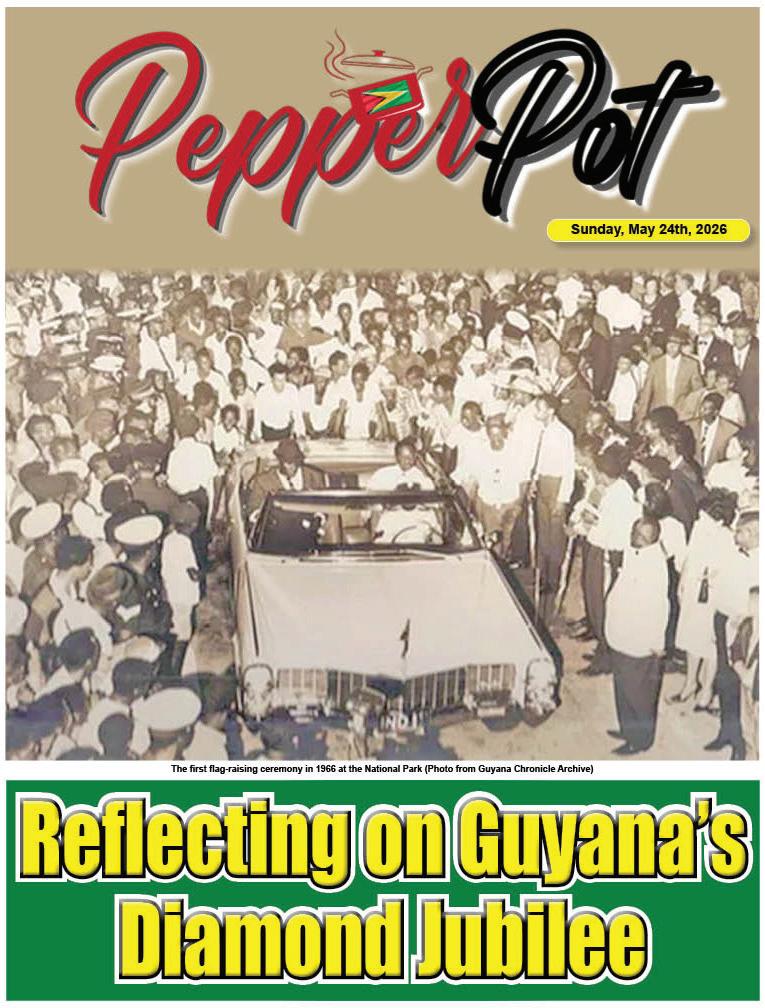
GUYANA’S 60th Independence Anniversary and Diamond Jubilee is more than a date on the national calendar. It is a moment to look back at the road travelled since May 26, 1966, to recognise the work and sacrifices that shaped the country, and to think carefully about the kind of future Guyanese want to build.
Over the past six decades, Guyana has changed in ways few could have imagined at independence. The country moved from the early challenges of self-government and a small post-independence economy to a period of growth that has drawn attention far beyond its borders. Agriculture, mining, forestry, and public service helped carry the country for many years. Today, oil and gas have added a new layer to that story, giving Guyana more resources, more visibil-
ity, and more choices about its development.
The energy sector has played a major role in this new chapter, but its value should not be measured only by production figures or revenues. Its wider importance lies in what it can help support: better infrastructure, stronger education and training, improved healthcare, more work for local businesses, and new opportunities for Guyanese across different communities and sectors.
That is why this anniversary matters. At 60, Guyana is not only celebrating independence; it is also considering how to manage growth responsibly. New roads, bridges, housing areas, schools, hospitals, and business activity are signs of change that people can see and feel. At the same time, progress must reach beyond numbers and buildings. It
must improve everyday life, create fair opportunities, and give citizens confidence that they have a place in the country’s future.
The anniversary theme, “Homecoming,” adds another important meaning to the occasion. Many Guyanese who left these shores have carried the country with them in their language, food, music, values, and family ties. For them, Guyana’s Diamond Jubilee is an invitation to reconnect, not only through celebration, but through ideas, investment, mentorship, skills, and service.
Across the diaspora, there is growing interest in what is happening at home. Some have already returned to start businesses or support projects. Others are watching closely, looking for the right moment to contribute. Homecoming should therefore be seen as more than
AS Guyana marks its 60th anniversary this week, patriotic pride should sit comfortably beside sober reflection.
We celebrate remarkable national progress, yet we cannot ignore how flagrantly recent political choices have weakened the very institutions that nurtured our gains.
For decades, our politics produced leaders of substance: Statesmen and Stateswomen shaped by experience, competence and duty. These are people who elevated office above self, and guided the nation with prudence. That tradition made possible steady development and growing political maturity across administrations. On this Diamond Jubilee, we rightly salute the foundational contributions of Cheddi Jagan and Forbes Burnham, and acknowledge how both the PPP and PNC, at different moments, steered Guyana forward.
But since last year, a jarring departure from that standard has unsettled the Opposition, and, by extension, our national discourse. Electing Azruddin Mohamed as Leader of the Opposition has not delivered the constructive, disciplined scrutiny Guyanese were promised. Instead of coherent parliamentary oversight and robust policy alternatives,
we have seen a leader more attuned to clicks than to caucus-building; more invested in spectacle than in strategy. The result is a fragmented, directionless opposition that fails to hold the government to account, and fails the electorate that entrusted it with sixteen seats.
Leadership is not performance art; it demands consistency, coalition-building, and, above all, a devotion to country over persona. Mohamed’s refusal to engage meaningfully with other opposition forces, his penchant for personal vendettas against individuals associated with the government, and a preference for social-media theatrics over legislative substance have diminished the quality of opposition politics in Guyana. The public deserves a credible counterweight in Parliament, not a succession of manufactured controversies and rhetorical excesses that distract from real policy debates. Still, on balance, the past six years have seen transformative economic and social change. The PPP/C’s stewardship has overseen rapid development in infrastructure, services, and a growing oil and gas sector that is beginning to fund broad-based improvements in standards of living.
a season of events. It is a chance to remind Guyanese everywhere that the country’s development is a shared responsibility, whether they live at home or overseas.
As Guyana continues to grow, national unity will matter just as much as economic expansion. The country’s diversity has always been one of its strongest features, but it must be protected and treated as a source of strength. Cultural identity, respect for different communities, and a shared sense of nationhood will be important as Guyana deals with the changes that rapid growth brings.
Strong institutions will also be essential. Development is easier to celebrate when people trust the systems that guide it. Clear rules, accountable decision-making, capable public bodies, and meaningful participation from citizens will
help ensure that the benefits of growth are managed well and passed on to future generations.
The next chapter will also depend on how well Guyana prepares its young people. As new industries grow and older sectors adjust, education, technical training, and entrepreneurship will become even more important. The goal should not only be to create jobs, but to help Guyanese build the skills and confidence to lead, innovate, and compete in their own country.
For older generations, the Diamond Jubilee is a reminder of struggle, patience and nation-building. For younger Guyanese, it speaks to possibility. They are growing up in a country with more attention, more investment, and more ambition than at any other time in its modern history. That brings opportunity, but it also brings responsibility.
Guyana at 60 is therefore both a celebration and a call to action. The country has much to be proud of, but the work ahead is just as important as the journey behind it. Economic growth must be matched by inclusion. National pride must be matched by unity. Natural wealth must be matched by wise planning and care for people.
As the Golden Arrowhead rises for this Diamond Jubilee, it does so over a country still writing its story. The promise of this new era will depend on how Guyana honours its past, manages its present, and prepares its people for the future.
DISCLAIMER: The views and opinions expressed in this column are solely those of the author and do not necessarily reflect the official policy or position of the Guyana National Newspapers Limited.
Non-oil sectors continue to expand, technology is raising expectations about access and timelines, and ordinary Guyanese are moving beyond mere survival towards aspirations for quality and convenience.
Under President Ali’s leadership, the trajectory is one of direction and delivery, a clarity that was often absent earlier in the decade.
Challenges remain: Inequality, cost-of-living pressures, and the need to ensure that growth is inclusive and sustainable. Those are problems for serious, policy-focused opposition and responsible government alike to address together. On this anniversary, Guyana should not be spectacle-driven but Statesman-like.
Imagine a moment where the Leader of the Opposition, regardless of party, stood with the President in mutual respect, offering rigorous critique and constructive proposals. That is the maturity we must demand.
As we celebrate sixty years of independence, let us honour the legacy of disciplined leadership that built our institutions, demand accountability from those who occupy them today, and insist that the opposition return to the business of governing, not grandstanding.

Guyana’s future is too important for anything less.
The task ahead is clear: If Guyana is to convert the promise of its diamond jubilee into durable progress, political actors must rise above theatrics and embrace responsibility.
The PPP/C has demonstrated capacity to govern at scale, delivering infrastructure, investing in health and education, and beginning to manage resource revenue for national benefit. But governance is an ongoing project; it requires rigorous opposition that tests policies, exposes weaknesses, and proposes viable alternatives. That is precisely why the current state of the opposition is so regrettable.
Azruddin Mohamed’s tenure has exposed a troubling paradox: In an era when institutional checks are most critical, the principal parliamentary opposition has opted for personality-driven narratives and selective antagonism.
Rather than marshal expertise, coordinate policy critiques, and train a new generation of capable parliamentarians, the WIIN leadership appears content to trade in spectacle. This leaves Parliament poorer, and citizens less protected from bad policy or mismanagement. Constructive dissent is not optional in a healthy democracy; it is indispensable.
The opposition must decide: Will it be a force for disciplined accountability or merely a vehicle for attention-seeking? Practical steps are obvious and overdue. Let’s rebuild cross-party committees with credible chairs, recruit policy specialists in economics, public finance and energy, and prioritise constituency service over social-media stunts. The PPP/C, for its part, should continue transparent stewardship of oil revenues, strengthen anti-corruption mechanisms, and expand outreach to communities who
feel left behind. Cooperative frameworks for oversight of resource management could bridge partisan divides and demonstrate that political rivalry need not mean national self-sabotage.
On our 60th, let this be a solemn reminder: Nation-building requires more than slogans. It requires competence, decorum, and commitment to the common good. Guyana’s journey has always been propelled by those who put country before self. If opposition leaders embraced that ethic, our political life would advance in maturity and our democracy would be strengthened to the benefit of every Guyanese household.
DISCLAIMER: The views and opinions expressed in this column are solely those of the author and do not necessarily reflect the official policy or position of the Guyana National Newspapers Limited.

THE Guyana Media and Communication Academy on Saturday hosted its Independence Culture Day celebration, dubbed “The Melting Pot,” as students and staff came together to celebrate Guyana’s rich cultural diversity during the country’s independence and Diamond Jubilee observances.
The event featured a vibrant display of cultural attire, authentic cuisine and music representing the country’s diverse ethnic backgrounds, all aimed at promoting unity and national pride.
Delivering remarks at the celebration was
Minister within the Office of the Prime Minister with Responsibility for Public Affairs, Kwame McCoy, who commended students for using their creativity and communication skills to express patriotism and tell Guyana’s story.
The minister said one of the most important aspects of the independence celebrations is recognising and embracing the country’s diversity.
Addressing the students, McCoy reminded them that as future communicators and media professionals, they carry the responsibility of informing and educating the public

accurately and responsibly.
“This is what the GMCA is preparing you for,” he said, while encouraging students to continue using their talents positively, productively and creatively.
He also urged them to honour the sacrifices and contributions of previous generations that helped shape modern Guyana.
According to the minister, Guyana’s diversity remains one of its greatest national assets and must be
preserved for future generations despite differences in ethnicity and background.
“The greatest hope for our country moving forward in a unified way and fashion and manner lies among the young people of this country,” McCoy told the gathering.
“There are many and too many instances where those who [sic] we recognise as elders and adults try to divide us in too many ways and too many times, we have seen this. We have
to reject it,” he added.
McCoy further reflected on Guyana’s past challenges, noting that attempts at division had previously hindered national progress. However, he said the country now has a strong opportunity to move beyond those setbacks and build a more unified society.
He affirmed that despite differences and challenges, Guyanese must continue embracing the vision of “One Guyana,” where citizens collectively share
dreams and aspirations for national advancement.
The minister also pointed out that while Guyana’s 60th Independence Anniversary is a major milestone, nation-building remains an ongoing process.
“Development is an evolution and happens in incremental ways and steps,” he said, adding that national progress requires patriotism, commitment and collective effort for the common good.


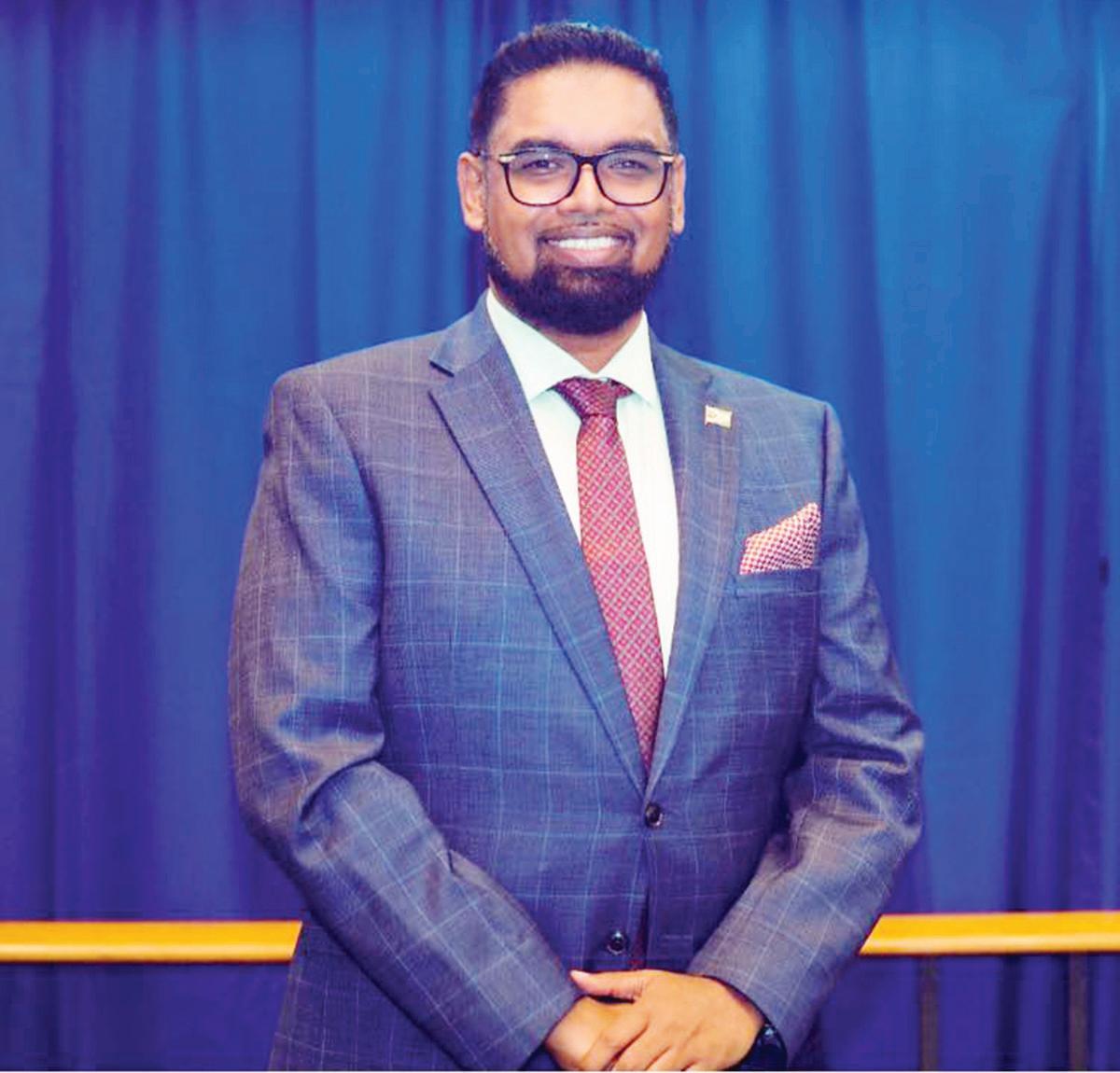
PRESIDENT Dr Irfaan Ali says the government will soon begin national consultations on intellectual property (IP) legislation, signalling a possible push to modernise Guyana’s ageing legal framework amid growing concerns that existing laws have not kept pace with rapid technological and digital changes.
IP refers to the legal protections granted to creations of the mind, with copyright being one branch that safeguards original creative works such as books, music, films and written material.
Other forms of intellectual property include trademarks, which protect brand
identities; patents for inventions and innovations; industrial designs covering a product’s

appearance; and trade secrets, which protect confidential business information.
Guyana’s copyright system is still governed largely by the United Kingdom’s Copyright Act 1956, which was extended to then British Guiana through the Copyright (British Guiana) Order 1966.
While Guyana became a member of the World Intellectual Property Organisation (WIPO) and acceded to key international treaties, including the Berne and Paris Conventions in 1994, efforts to modernise copyright legislation have remained ongoing

for years without major legislative overhaul.
Speaking at a press conference held at the Office of the President on Friday, the President said discussions are needed to determine what form any legislative reforms should take, while emphasising the importance of public participation in the process.
“On the issue of copyright, we have to have some consultation as to what form it will take,” Dr Ali said while responding to questions from the media.
President Ali indicated that he believes the issue deserves greater urgency and wider national engagement, noting that he wants to hear varying perspectives before any legislative direction is decided.
“And I’m saying that maybe it’s time we start those consultations, because I want to hear Guyana and everyone on this issue. I feel strongly about it,” the Head of State stated.
Dr Ali suggested that consultations on intellectual property re-
form could be brought forward and possibly incorporated into broader discussions on social media regulation and governance.
“So, maybe we should move this up on the agenda and start a consultation on that. So maybe we can do the social media consultation on this one together,” he added.
The President’s comments come as conversations continue globally on how governments can better protect creative and intellectual works in an increasingly digital world.
In Guyana, intellectual property legislation has long been viewed as an area requiring review, particularly as businesses, creators and innovators continue to operate in an increasingly digital environment. Stronger and more modern legal protections are often seen as necessary to safeguard literary, artistic, technological and commercial creations while also ensuring fair use and innovation.
— points to rising imports, oil & gas expansion, port congestion as reasons for stronger oversight
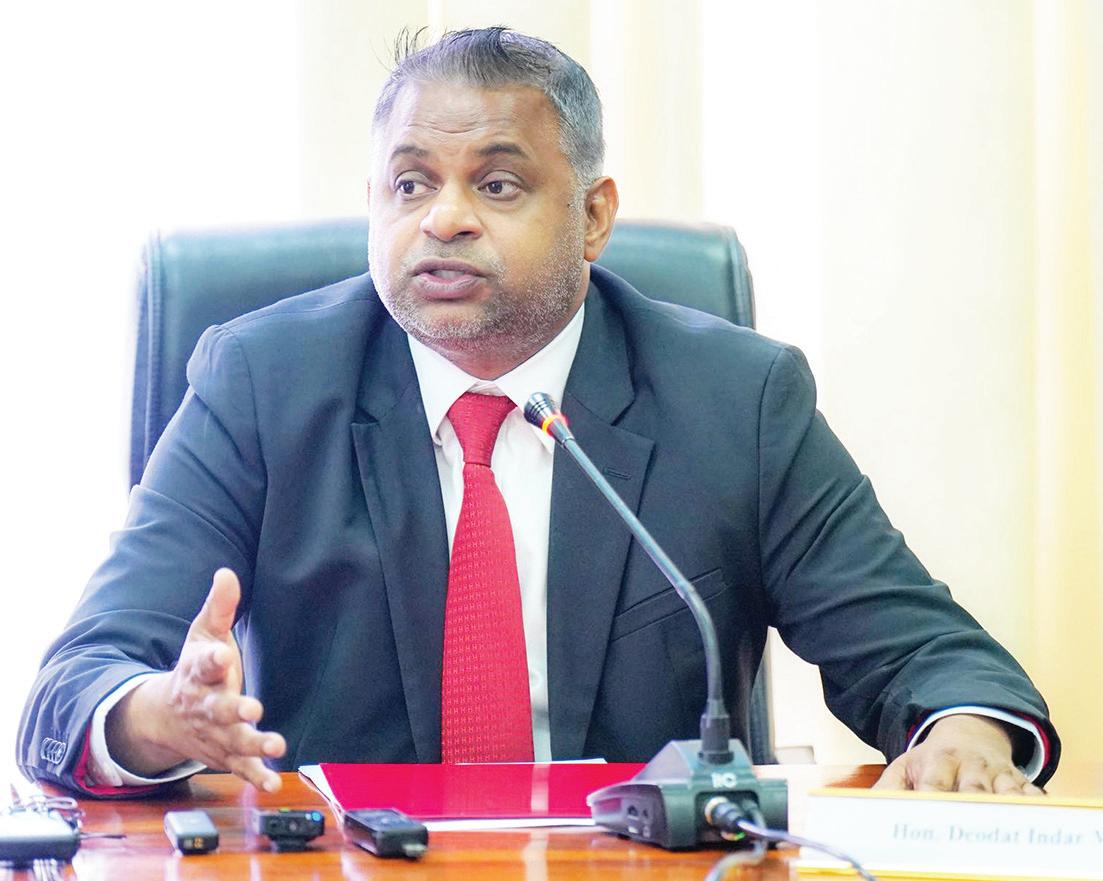
MINISTER of Public Utilities and Aviation, Deodat Indar, has warned that Guyana’s rapidly expanding maritime sector presents both opportunities and significant challenges, cautioning that global shipping disruptions and rising port activity can directly affect the cost of living locally.
Speaking recently on the Guyana Dialogue, Indar described the shipping industry as a “connected economy,” explaining that disruptions in one part of the world can quickly ripple across international supply chains and affect countries like Guyana.
“The maritime sector, the shipping sector, it’s a challenging one. The maritime sector is not just Guyana; the maritime sector is a connected economy. Right now, if there’s a choke in any one of the supply chains, the world feels it,” he explained.
The minister pointed to global chokepoints such as the Strait of Hormuz and the Panama Canal, noting that disruptions in these areas can impact shipping schedules and prices internationally.
He said, “If you have a choke in the Strait of Hormuz, the world feels it. If you have a choke in the Panama Canal, the world feels it. If you have conflict zones, you have problems with shipping, because a lot of our stuff comes from all over the place.”
According to Indar, Guyana relies heavily on imports from North America, Central America, the Caribbean, Asia and the Middle East, with major shipping hubs such as Rotterdam playing a central role in supply routes.
“So, shipping is a big thing. We have to consistently monitor what’s happening, [and the] cost profile for the products that are coming in here, because if you don’t watch it, your cost of living will spike quickly because of shipping rates,” the Minister warned.
Indar said the rapid growth of Guyana’s oil and gas industry has also transformed maritime activity, resulting in a sharp increase in imports and vessel traffic.
“Guyana’s oil and gas sector operates in a maritime
environment, so we have a lot of that happening in Guyana, a lot of vessels in and out of the country,” he stated.
The Minister revealed that import volumes have tripled in recent years, increasing from approximately 50,000 TEUs, a standard shipping measurement referring to 20-foot equivalent unit containers, around 2020 to nearly 150,000 by the end of 2025.
“We saw around three times the amount of volume of imports as we did in 2020,” he said.
Similarly, annual ship calls have risen significantly, moving from just over 1,000 around 2020 to approximately 3,600 vessels per year.
With growing activity at ports and waterfront developments, the minister said managing the sector now requires greater resources, more assets and competent personnel to ensure efficiency and safety. He said, “To manage that, you have to have more resources, you have to have more assets, you have to have competent people.”
Indar noted that the country’s maritime space has become increasingly active, with shore bases, wharves, sand and stone depots, and fuel storage facilities all expanding to support economic growth.
He said the Maritime Administration Department (MARAD), in collaboration with agencies such as the Guyana Defence Force Coast Guard, continues to strengthen oversight to maintain safety and order within the sector.
“MARAD is consistently working with partners like the Coast Guard and others in the country on a law enforcement body to make sure that we operate in a space that is safe and controlled.”
The minister also disclosed that he recently met with stakeholders across the shipping industry to address concerns surrounding costs, demurrage and bottlenecks affecting the movement of goods. While acknowledging the complexity of the issues, he expressed confidence that collaboration between stakeholders could help ease costs
and improve efficiency.
“Once everybody has that common nationalistic thing, that we want to make sure Guyana
is a place where costs are down and one person doesn’t profit more while having the other person strangulated
with heavy costs, once we understand there’s a balance, I think that we can get it done,” the Minister said.
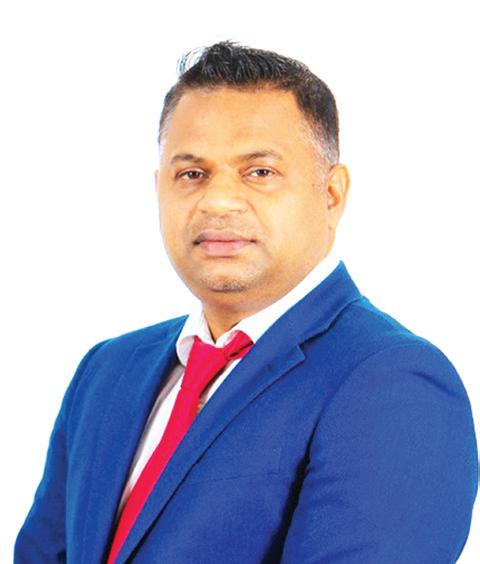

PRESIDENT Irfaan Ali, on Friday, announced that the Government of Guyana plans to install more than 20,000 additional CCTV cameras across the country by 2030 as part of an ambitious national security transformation programme aimed at creating a fully integrated “Safe Country” infrastructure.
Speaking during a press conference at the Office of the President, President Ali said the expansion of surveillance infrastructure is a critical component of Guyana’s evolving national security architecture, which will incorporate artificial intelligence, predictive policing, smart traffic systems, drones and integrated command centres.
The Head of State explained that the government intends to achieve nationwide CCTV coverage through a combination of static and mobile surveillance systems linked to regional and national command centres.

dent Ali, the surveillance network will go beyond traditional monitoring and will integrate artificial intelligence to assist law enforcement agencies with crime detection, traffic enforcement, behavioural analysis and emergency response.
“We need more than 25,000 cameras to cover the entire country,” President Ali said, while noting that the government has already established approximately 1,300 surveillance sites and installed around 6,000 cameras to date.
He disclosed that the administration will continue investing aggressively to ensure that an additional 20,000-plus cameras are installed before or by 2030.
Out of the broader $100.3 billion security sector budget for 2026, $5 billion was set aside to expand the Safe Country network. This follows a $6.2 billion deployment utilised throughout 2025. Currently, the network already relies on 781 highly active intelligent video surveillance sites deployed across multiple administrative regions. Civilian and police operators run regional command centres built across Regions Two, Three, Five, Six, and 10.
According to Presi -
ARTIFICIAL INTELLIGENCE SURVEILLANCE
The President said the intelligent system is already producing tangible results through the rollout of smart traffic cameras, which he noted have contributed to significant reductions in speeding and traffic violations in areas where they have been deployed.
He explained that the AI-backed system can now automatically identify repeat traffic offenders
within seconds and generate reports for integration into the judicial system.
“We can now generate for us who are the repeat offenders in traffic offences,” the President said, adding that the technology eliminates opportunities for human interference while improving enforcement efficiency.
President Ali also revealed that the government has completed pilot testing of mobile AI surveillance units capable of automatically identifying vehicles with outstanding traffic violations.
During one recent operation on the East Coast corridor, the system reportedly identified more than 250 vehicles with outstanding tickets.
The mobile units, he explained, are equipped
with 360-degree monitoring capability and can either patrol roadways or remain stationary while scanning for traffic offences and suspicious activity.
Beyond traffic management, the broader surveillance system will include sensor-enabled infrastructure, smart street monitoring, drone integration, and predictive threat detection.
President Ali said the technology will eventually allow authorities to track the movement of suspect vehicles, analyse behavioural patterns, and integrate information from cameras, drones, and intelligence systems in real time.
The President said the government’s long-term objective is to create a people-centred national security model that improves citizen safety while modernising public services and law enforcement operations.
The expanded CCTV initiative forms part of a wider digital transformation strategy that also includes smart police stations, AI-supported policing systems, integrated border management, cyber security infrastructure, digital IDs and intelligent traffic management systems.
“If you see the camera, the camera is seeing you, and if you're hiding from the camera, you're hiding something,” the President stated while emphasising the role of surveillance in crime prevention and public safety.
A 57 -year-old boat
life
Dead is Steve
Police said the incident occurred around 12:45hrs and involved a 26-foot wooden boat powered by a 200 HP Yamaha outboard engine and an 18-foot aluminium boat operated by Daniels. Initial investigations
revealed that the larger vessel, operated by a 51-year-old captain of Batavia Village, was travelling in the vicinity of Tapir Landing with four occupants when it reportedly collided with the smaller boat.
As a result of the
collision, Daniels and three occupants of the aluminium boat sustained injuries.
Police said Daniels was found motionless following the impact, while one of the occupants suffered serious injuries. The remaining
occupants received minor injuries.
The injured were escorted to the Bartica Regional Hospital, where Daniels was pronounced dead on arrival by a doctor on duty.
One injured occupant remains hospital-
ised in a serious condition, while the others were treated and sent away.
The operator of the 26-foot wooden boat is currently in police custody assisting with the investigation.

By Shaniya Harding
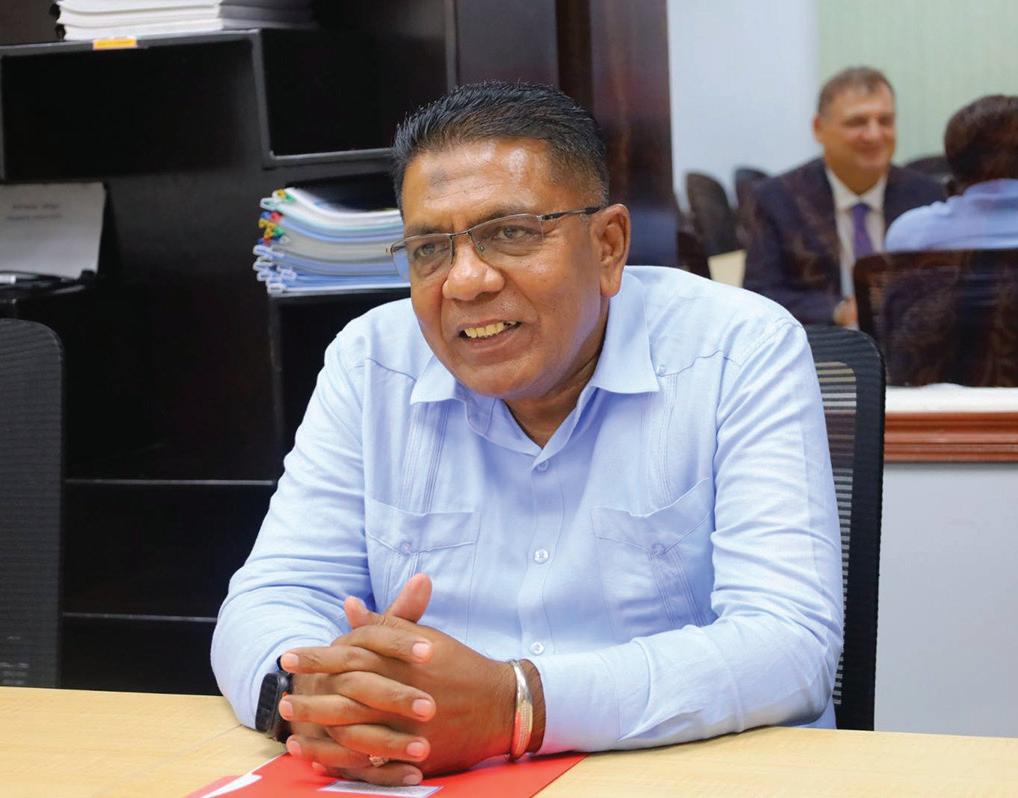
MINISTER of Agriculture and Chair of the Ministerial Task Force on Food Production and Food Security, Zulfikar Mustapha, delivered a sweeping assessment of the Caribbean's agricultural landscape at the virtual launch of the 20th Caribbean Week of Agriculture (CWA).
Speaking on Thursday, the minister outlined a region-wide push toward food sovereignty, climate resilience, and export competitiveness, reaffirming Guyana's position at the forefront of that charge.
Speaking ahead of the landmark event, which will be hosted in Jamaica from September 28 to October 2, 2026, Minister Mustapha highlighted record national investment, celebrated progress across member states, and called on the region to embrace the transformation signalled by this year's theme: “The New Face of the Caribbean Food System.”
Recent years have seen the Caribbean Week of Agriculture evolve into one of the region's most important platforms for dialogue, collaboration, innovation, and action in advancing sustainable agricultural development and regional food security.
As the minister stated, the forum aims to bring together governments, farmers, private sector stakeholders, development partners, youth, and researchers with the common purpose of building a strong and more resilient Caribbean food system.
Calling this year's
theme both timely and visionary, he noted that it reflects the region's goal of securing the future of agriculture and strengthening collective resilience.
Speaking on the importance of collective development, Minister Mustapha stated, “Agriculture remains deeply connected to the economic and social fabric of our region. It sustains livelihoods, supports rural communities, contributes to economic growth, and plays a critical role in reducing poverty and improving nutrition and health outcomes.”
Highlighting the challenges, he added, “However, we also recognise that the sector continues to face significant challenges. Climate variability, rising production costs, global supply chain disruptions, natural disasters, and market instability continue to affect food production and food availability across Caribbean.”
Despite these challenges, the region has made notable progress in strengthening food production systems and advancing the regional food security agenda. As the minister explained, this progress has been driven by deliberate investments, innovative policies, and strategic partnerships across member states.
Countries across the Caribbean are implementing transformative initiatives tailored to national priorities while contributing to the broader regional agenda. As he shared, the Bahamas has developed climate-smart agriculture initiatives supported by
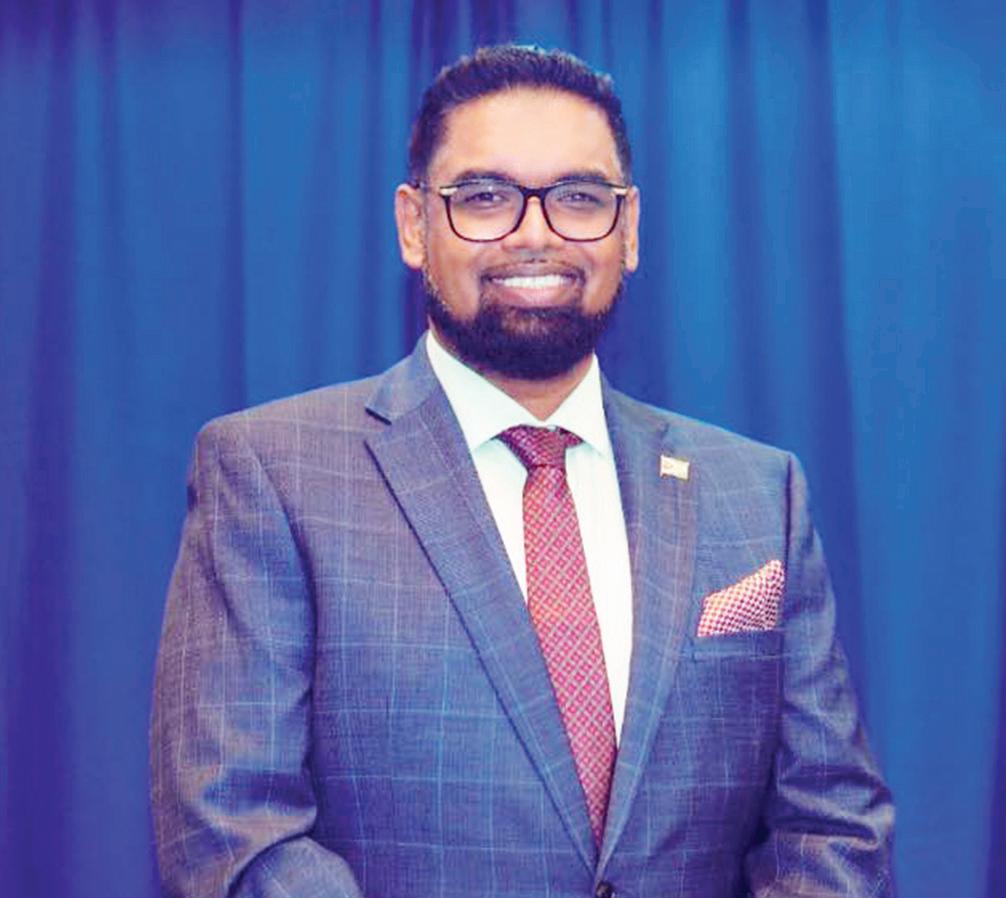
regional food security.
Noting this year's robust budgetary allocation, he said, “This year alone, over $113 billion Guyana dollars has been allocated to the agriculture sector as we continue expanding drainage and irrigation infrastructure, increasing production, and investing in value-added opportunities across multiple subsectors.”
industry is also receiving renewed attention through investments in modern dairy farms, pasteurisation facilities, and cold chain infrastructure.
the Inter-American Development Bank, which are promoting hydroponics, farming, and renewable energy solutions.
Similarly, Belize continues to support small farmers through financial assistance and reforestation initiatives while expanding production in key commodities through World Bank-supported projects.
Jamaica, the minister noted, is also strengthening post-harvest infrastructure through the expansion of cold storage facilities while investing in climate adaptation measures to improve water management and crop resilience.
Suriname is modernising plant and animal health services and implementing climate-resilient agricultural projects focused on sustainable land and water management.
Haiti's agricultural recovery efforts continue through FAO-supported seed distribution programmes and watershed restoration initiatives aimed at building livelihoods and reducing disaster risk.
Meanwhile, on the meaningful advances
of other member states, he added, “Antigua and Barbuda is expanding greenhouse farming systems. Barbados is positioning breadfruit as an export-orientated superfood while engaging youth in agriculture. Dominica is investing in agro-processing resilience and employment creation.”
He continued, “Grenada continues to strengthen fisheries management and land regulation. St. Lucia is improving fisheries resilience and revitalising the banana industry. St. Vincent and the Grenadines is enhancing partnership for sustainable crop marketing. St. Kitts and Nevis is advancing sustainable land management programmes. Montserrat is focussing on reducing food import dependence through targeted local production. Trinidad and Tobago is investing heavily in agro-processing and protected agriculture systems.”
Bringing the conversation back home, Minister Mustapha noted that Guyana continues to prioritise agriculture as a major driver of economic diversification and
He further cited these developments across the region as encouraging signs that CARICOM is steadily moving in the right direction, adding, “We are witnessing increased primary production, greater investment in agro-processing, wider adoption of climate-smart and protected agriculture technologies, and stronger linkages among farmers, processors, markets, and exporters.”
On the policy front, Minister Mustapha noted that CARICOM has identified several priority sectors critical to transforming the region's agri-food system. As the minister further explained, investments are being made in livestock production to modernise slaughtering facilities, improve feed systems, strengthen food chain logistics, and expand inter-regional trade.
In cereals such as corn and soya, the region is scaling up commercial production, expanding storage, milling, and feed processing capacity to improve feed security and reduce production costs.
In the area of fruits and vegetables, member states are investing in orchard development, greenhouses, and shade house systems. The dairy
On niche industries, Minister Mustapha added, “Niche industries such as honey and spices are being strengthened to improve certification systems, quality assurance mechanisms, and export promotion initiatives that position Caribbean products in the international market.”
The continued collective push for sustainable development in agriculture represents a coordinated regional strategy that combines production, processing, logistics, trade, and export competitiveness as the region works toward its 2030 food security target.
Moving forward, Minister Mustapha emphasised that the Ministerial Task Force will rema in committed to working closely with member states and regional institutions to remove barriers to inter-regional trade, harmonise standards, improve transportation, increase production in priority commodities, and expand value-added and export opportunities for Caribbean producers.
As the minister stated, “Our collective success will depend on continued collaboration, innovation, and sustained investment in the agriculture sector. I am confident that the discussion and engagement during CWA 2026 will help shape a more resilient, sustainable, and competitive agricultural future for our region.”
By Indrawattie Natram
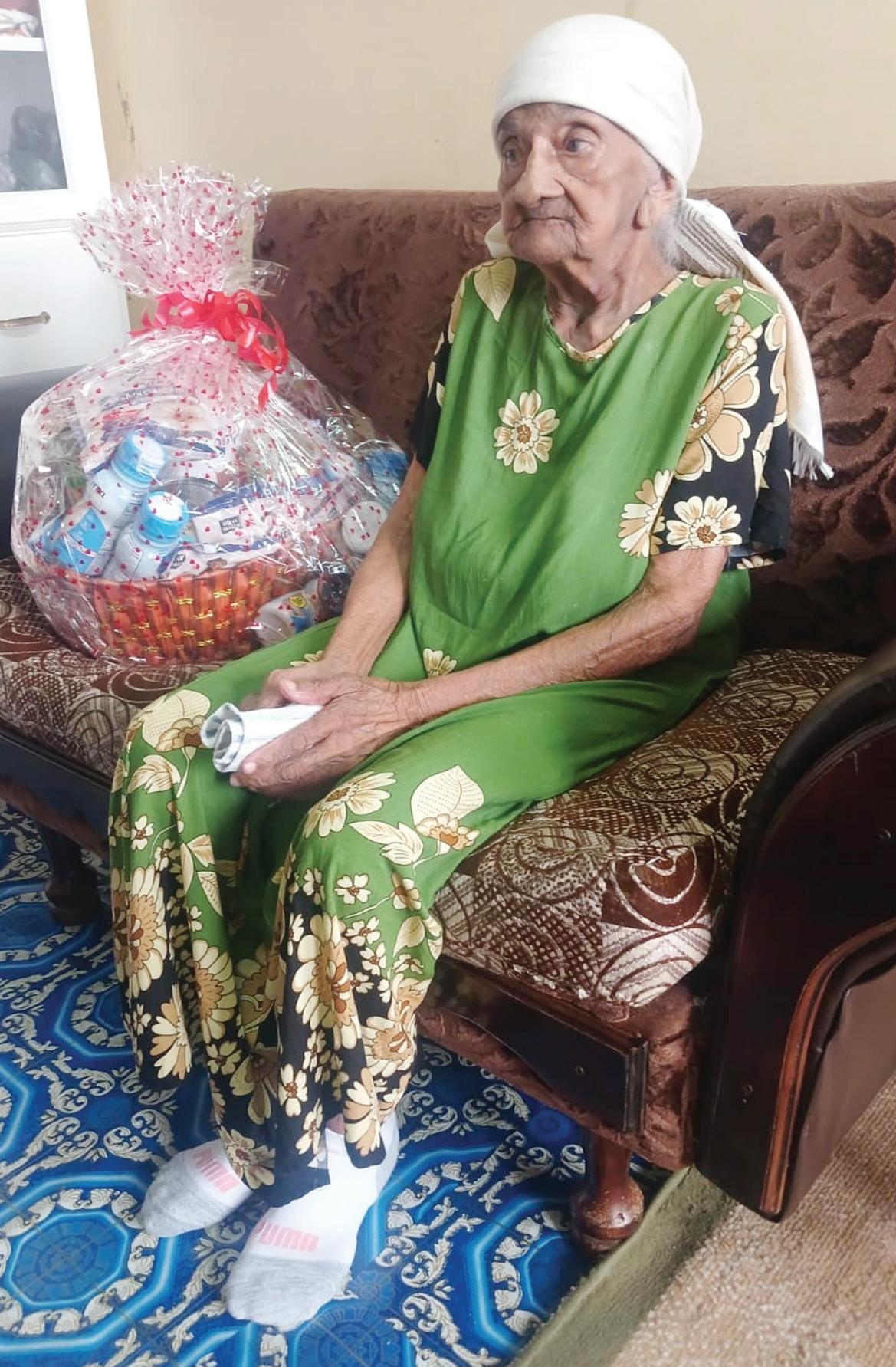
THE village of Cotton Field on the Essequibo Coast was filled with joy and gratitude as Hamidan Bacchus, affectionately known as “Aunty CC,” celebrated her 102nd birthday on Saturday
A hamper was presented to Aunty CC from the Ministry of Human Services and Social Security.
Surrounded by generations of loved ones, Aunty CC marked the extraordinary milestone with a special Muslim prayer service and an intimate family gathering at her home in Region Two.
The atmosphere was one of love, reflection, and celebration as relatives travelled from as far as the United States
and Canada to honour the matriarch whose life has touched so many.
Though age has slowed her down and she can no longer do many of the things she once did, Aunty CC continues to enjoy the presence of her children and family, who remain by her side with unwavering love and care.
Born in a time long before modern conveniences, Aunty CC has witnessed more than a century of change, history and growth.
Throughout her life, she raised thirteen children—eleven sons and two daughters—with strength, determination, and faith. Today, her legacy lives on through her thirty-two grandchildren and numerous great-grandchildren who continue to cherish her
wisdom and affection.
Known in her younger days as a talented seamstress, Aunty CC used her skills to support her family and build a life rooted in dignity and perseverance.
Her life took a difficult turn when her husband, Koda Bacchus, passed away while she was just 53 years old. Despite the hardship, she remained strong and became both mother and father to her children, ensuring they were cared for and guided through life.
A devoted Muslim, Aunty CC continues to live a disciplined and spiritual life. Her day begins at 04:30 hours every morning with prayers, the first of five daily prayers she faithfully observes. She regularly reads the Quran and be-
lieves her long life and good health are blessings from Allah, earned through faith, simplicity, and peace of mind.
Her son, Afzal Bacchus, the sixth of her children, spoke fondly about the sacrifices and love his mother gave throughout the years.
“She always made sure we had something to eat, no matter how difficult life became,” he shared. “Some of my happiest memories are travelling with her, just the two of us. I thank Allah every day for allowing her to still be with us.”
Neighbours describe her as warm-hearted and always willing to lend a helping hand to anyone in need. When asked what advice she would give to younger generations, her response was
simple yet powerful:
“Listen to your parents, stay focused, don’t rush life and always live with purpose.”
At 102 years old, Aunty CC remains deeply loved and respected by her community, a living example of strength, compassion, and enduring faith.
- says enforcement, cheaper power through GtE project key to reducing illegal connections
MINISTER of Public Utilities and Aviation, Deodat Indar, says electricity theft continues to account for roughly 12 per cent of losses incurred by the Guyana Power and Light Inc. (GPL), even as the company has significantly reduced overall losses through infrastructural upgrades and targeted interventions.
Speaking recently on the Guyana Dialogue, Indar said GPL’s combined commercial and technical losses have declined dramatically over the years, falling from the “high 40s” per cent to approximately 24 to 25 per cent.
“So, the power company, in the past, their loss factor — what you call their loss factor, which is commercial loss combined with technical losses — was in the high 40s back in the day,” Indar explained.
According to the minister, GPL has introduced a number of measures in communities where electricity theft has historically been high, helping to lower losses over time.
He said, “There were a number of initiatives that were put forward and implemented in specific areas in the country where electricity theft was high.”
Indar explained that GPL’s current losses are split between technical losses, caused by electricity travelling over long distances and commercial losses, including theft.
“We have worked to reduce that to now, it’s around 24–25 per cent, of which 13 per cent is technical losses, meaning that is line losses,” he said.
The minister added, “As power moves over long distances using 6,000 to 9,000
volts, the voltage tends to drop and you lose some of your power in that process. But then, you have about 12 per cent of it as well due to electricity theft.”
To tackle technical losses, Indar said the government is rebuilding Guyana’s electricity transmission network, with major international companies involved in expanding the national grid and increasing transmission voltage to improve efficiency.
“We have some of the biggest companies in the world in Guyana right now doing that. We have Power China and we have a company called Kalpataru, among others, that are doing the backbone and we are lifting the voltage from 6,000 to 9,000 volts to 230,000 volts,” he explained.
The upgraded transmission system, he said, will allow for the movement of bulk power across the coast-
line and connected areas while significantly reducing line losses.
However, the minister said addressing electricity theft requires both stronger enforcement and behavioural change.
“With respect to people stealing electricity, well, definitely, it requires more enforcement, but it also requires our people to change that kind of attitude and rather do the right thing,” he said.
Indar noted that GPL has a dedicated loss reduction department tasked with identifying illegal connections and correcting instances of power theft.
“One of the things we do, we have what we call a loss reduction department in GPL and they will go around and they will check to see who was stealing power and they will correct them,” he stated.
At the same time, the minister argued that reducing electricity costs through the Gas-to-Energy project could remove the financial motivation behind illegal connections.
“There’s an old principle: if there’s no incentive to steal, then you wouldn’t do it,” Indar said.
He reiterated the government’s commitment to reducing electricity costs by 50 per cent once the Gas-to-Energy project, now 72 per cent complete, comes on stream by the end of this year.
The tariff right now is around 23 to 24 US cents per kilowatt hour. If that is cut by half — by 50 per cent, which is a promise we made to the country — then the incentive to go and pay somebody to do some fancy stuff with a meter and have an illegal line into your business or your home… the incentive is not there, because your bills will be very minimal,” the Minister said
According to Indar, the government’s strategy is to simultaneously strengthen enforcement , modernise transmission infrastructure and lower electricity costs in an effort to reduce both losses and electricity theft nationwide.
GOVERNMENT’S ongoing construction of several regional pharmaceutical bonds is expected to significantly strengthen medicine storage and increase distribution and access across Guyana This was revealed by Health Minister, Dr Frank Anthony, during a recent interview on Starting Point.
“What we are doing is mimicking what we have at the MMU at Diamond, with proper storage for medicines and in some cases reagents and vaccines so we will have to have cool storage and so on.
We are building these bonds and making sure everything is in order so we will be able to send medicines to the regions to be stocked for about a year or more.
This way, the facilities in the regions should not have a problem with medicines because they will be getting medicines from the regions themselves.”
Minister Anthony explained that the bonds, which are under construction in Mabaruma, Suddie, Region Six, Mahdia and Lethem, are expected to improve regional storage capacity and reduce shortages by ensuring medicines are readily available closer to where patients live.
The construction of the bonds is expected to be completed within the next three to four months, at which time they will become fully operational.
Additionally, the Ministry of Health is in the process of putting a system in place that will track the flow of medi-
cines from the bond to which health facility it is going, then to which patient it is being issued to.
He further noted that improvements in medicine access have been substantial, with national coverage increasing from roughly 39 percent in previous years to between 90 and 95 percent today.
Meanwhile, the Minister revealed that the system that is currently in place leaves much to be desired.
“Right now, the system in place has been working for a long time.
When we send medicines out, if it is not used let’s say at a health centre and then it expires, they will discard it. What we are trying to do is, let’s say we have Panadol at a health centre that will ex-


pire in three months, we can bring that back and send it to some place where they need Panadol and it will be used up before it expires so this will eliminate a lot of wastage.”
In addition to strengthening pharmaceutical distribution, Minister Anthony highlighted government’s push to expand primary healthcare services, revealing that more than 30 new health posts and health centres have been added over the last two to three years.
He pointed to Eyelash, a mining community in Region
One’s Matakai sub-region, where a new health post was recently established to improve healthcare access for residents.
This facility is being manned by a healthcare worker.
“The healthcare worker might not have all the skillset necessary but what we are doing is complimenting that person with the use of telemedicine so they can extend the range of things that they can do and if there is a patient that presents and healthcare worker doesn’t understand
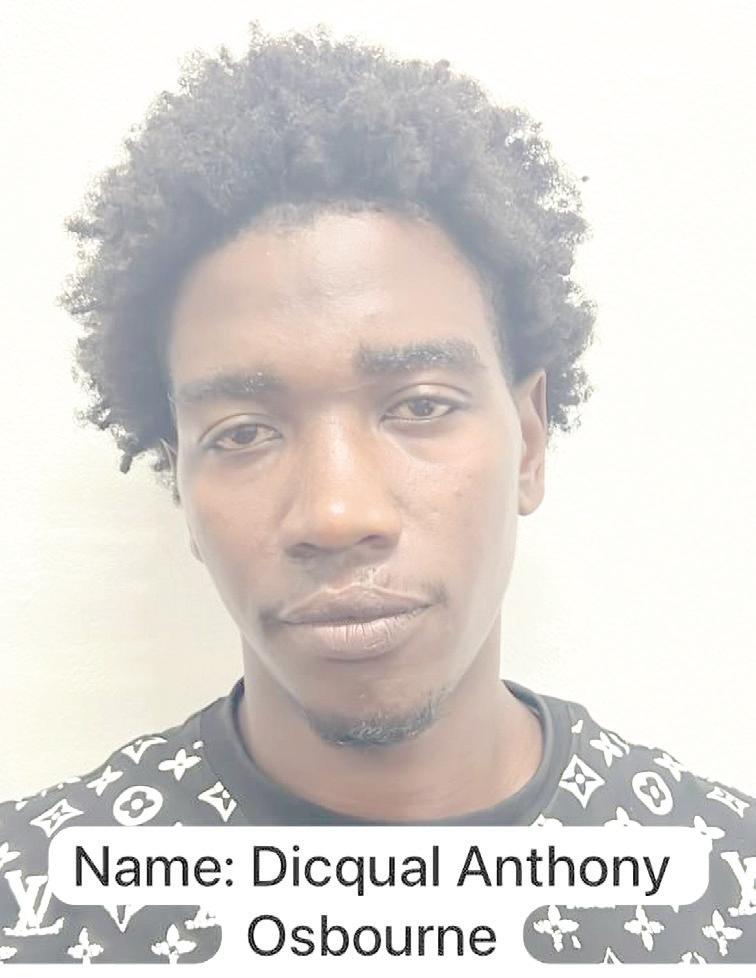
DICQUAL Osborne, a 27-year-old labourer of Albouystown, Georgetown and Sixth Avenue, Bartica, has been remanded to prison after being charged with possession of narcotics for the purpose of trafficking.
The charge was laid under Section 5(1) (a)(i) of the Narcotic Drugs and Psychotropic Substances (Control) Act, Chapter 10:10.
Osborne appeared before Magistrate Teriq Mohamed at the Bartica Magistrate’s Court on Thursday, May 21, 2026, where the charge was read to him. He pleaded not guilty and was remanded to prison until June 3, 2026, when the matter will continue.
The charge stems from an intelligence-led police operation conducted at Bartica on Wednesday night.
Police had escorted Osborne, who was already in custody in relation to a traffic offence, to a hotel room at First Avenue, Bartica, which he reportedly occupied.
During a search of the room, ranks allegedly discovered several bags containing leaves, seeds and stems suspected to be cannabis, along with $184,000 in cash.
The suspected cannabis was weighed in
what is happening with the patient, they can use the telemedicine network to call the doctor, call the specialist who would guide them through what they need to do,” the Minister said.
The combined investments in medicine storage, healthcare infrastructure and telemedicine are intended to build a stronger and more accessible health system for citizens across Guyana, all part of President Irfaan Ali’s vision of providing world class healthcare to all Guyanese.
TO protect the country’s rapidly expanding digital and economic infrastructure, President Irfaan Ali, on Friday, announced that Guyana is developing a roundthe-clock cyber emergency response system as part of a wider national cyber security and digital resilience strategy.
is the establishment of a cyber emergency response team capable of operating 24 hours a day to detect and respond to threats in real time.
such as oil and gas, energy, telecommunications and financial services.
“We have to build a team with global standards, the best as a cyber emergency response team, a team that is available 24/7 to respond efficiently and effectively to cyber threats and challenges,” he said.
President Ali noted that the expansion of Guyana’s digital infrastructure, including the national payment system and electronic transactions, makes cyber resilience increasingly
He revealed that the government is developing a dedicated energy sector cyber defence strategy to secure Guyana’s expanding oil and gas infrastructure, including the Wales Development Zone, petrochemical facilities and offshore assets.
“We will now have infrastructure in the petrochemical field, fertiliser plant, for example, the building out of the Wales Development Zone, our oil assets, our gas assets,” President Ali said.
He added that pro -

Speaking during a press conference at the Office of the President, President Ali said cyber security has become a core pillar of Guyana’s national security architecture as the country accelerates digitisation across government services, finance, border management and the energy sector.
The Head of State explained that major investments are being made to ensure that Guyana’s digital systems and critical infrastructure are protected from cyber threats as the country transitions towards a more technology-driven economy.
“Cyber security is treated as a core national pillar,” President Ali said while outlining the government’s plans for a comprehensive cyber defence framework.
According to the President, one of the key components of the strategy
important.
He disclosed that by the end of this year the government expects to have the national payment system fully implemented, allowing persons to conduct transactions using QR codes and mobile devices.
“You can go and just scan a QR code and pay for anything,” the President said, adding that some local banks are already facilitating advanced mobile transactions and international payments.
The President stressed that the growing dependence on digital systems also requires stronger safeguards for critical sectors
tecting energy-related data and infrastructure has become a national priority as Guyana moves toward greater “data sovereignty.”
“As we move towards owning more of our data and having data sovereignty, we have to ensure that the backbone is there to protect that data, so that it’s not stolen,” the President said.
President Ali also indicated that the government is reviewing and updating legislation to align with evolving international cyber security standards and norms.




THE 60th Independence Open is heating up with just one day of tennis remaining as action in the Open and Novices categories are in full swing after Friday's round of play at the National Park Tennis Courts.
Gerald Scotland got quite a comfortable win in the men's open category, topping Leyland Leacock 6-2 in their Round of 16 match.
Also advancing to the quarterfinals in the men's
Open category was Kevin Matai who was able to topple Akil Gittens 6-2 as well. Meanwhile, Leacock bounced back in the over36 category to take a 6-1 win over Joffrey Bonnet, while Phillip Squires defeated Benjettan Osborne 6-2 in the men's over-35 category as well. Martin Campbell was also able to win his over-35 match against Harry Wu with a 6-2 victory. Action in the men's nov-
ice category was intense, with S Henry playing a competitive match to defeat David Cheong 6-4, while on the distaff side J Harry easily topped Joella Serieux 6-love.
The under-category was highly competitive with Breyanna Younge and Khloe Andrew putting on a show that ended with the former prevailing 7-5 in a very exciting game of tennis. Younge also had another great match against Liza
Singh that ended 7-5 as well. Monalisa Graham was in form as well with a big win over Denesia Boston that ended 6-3 in the girls under-12 category, but lost to Israbella Grannum 6-3.
In the boy's under-12 category, Zion Hinkerson defeated Yoshua Mangru 6-1 while Hayden Chan topped Rahul Narayan 6-0.
The Open concludes on Sunday at the National Park Tennis Court.

(ESPNCRICINFO) -
Shreyas Iyer's first IPL century helped Punjab Kings break a six-match losing streak and keep their playoffs hopes alive. PBKS are now in the top four and will remain there should Rajasthan Royals lose their final game of the season against Mumbai Indians. Also, for

PBKS will hope Kolkata Knight Riders won't win big against Delhi Capitals, who are now eliminated.
A weakened Lucknow Super Giants - they fielded only two overseas players in the XII, with Mitchell Marsh and Aiden Markram going home - were beaten with 12 balls and seven wickets to spare.
BADONI'S CAMEO
LSG had a hit-and-miss powerplay. Overs two, three and four produced just eight runs. Overs one, five and six produced 58 runs. Ayush Badoni walked in ahead of Rishabh Pant at No. 4, when the innings was going nowhere. Badoni himself was 2 off 5 before suddenly surging to 42 off 16.
INGLIS' FIFTY
Josh Inglis was 16 off 6 with four boundaries. From there, he made just 10 off the next 15 balls. Just when it looked like he had lost all form - including instances where his favourite ramps were failing him - the Australian batter found another high-scoring period, hitting 29 off nine balls. He brought up his fifty during this second burst and was largely the reason why LSG could get to a total of 196.
CHAHAL VS PANT
Yuzvendra Chahal was crucial to PBKS' bowling effort. He dismissed Ba -
doni, though credit for that should go to Prabhsimran Singh, who had the batter stumped with smart glovework. Badoni made the mistake of thinking the ball was dead as soon as he played and missed. It was not. Prabhsimran waited for the moment he knew was coming - Badoni resetting his position in the crease. Just as his back foot went up he flipped the bails off.
Pant, who began the season as an opener, then wanted to be LSG's No. 3 spot, came in at No. 5 today. He faced 14 balls from Chahal and hit him for two boundaries. But the legspinner won the battle in the end, concentrating on keeping the ball wide of the left-hander's reach. Chahal could have dismissed Pant for 20 off 19 had Iyer tak-
en a simple catch at extra cover. But Iyer's drop didn't matter much, because Chahal still dismissed him on 26 off 22.
SAMAD VS ARSHDEEP
Arshdeep Singh was having a bad night. PBKS, knowing they can't afford any mis-steps, took their World Cup winner off the attack. They opted for a few overs of Shashank Singh, and the gamble worked.
Shashank got rid of Inglis in the 17th over. Marco Jansen (4-0-33-2) and Vijaykumar Vyshak (3-0-26-0) delivered superb 18th and 19th overs, which cost just 10 runs. PBKS then turned to Arshdeep for the 20th, over Azmatullah Omarzai - who had almost bowled a wicket-maiden earlier in the night - and Arshdeep leaked runs again.
(Sunday May 24, 2026)
CUMMINGS ELECTRICAL COMPANY LTD., 83 Garnett Street, Campbellville, Georgetown (Tel:2256158)
Answers to yesterday’s quiz:
(1) Ruturaj Gaikwad-635 runs (CSK) (2) Harshal Patel-32 wickets (RCB) Today’s Quiz:
(1) Who cracked the highest score in IPL 2021?
(2) Who had the best bowling figures in a single game? Answers in tomorrow’s issue
Samad turned down singles and kept strike for all nine balls of the over (including three wides) and hit 17 runs. LSG hit 28 boundaries in the innings. Ten of those came off Arshdeep. His economy rate of 17.33 was a new personal low for him in the IPL.
ARYA VS THE SHORT BALL
According to ESPNcricinfo's ball-by-ball data, Priyansh Arya had a strike rate of 366 against short balls in the IPL until
April 27 this year. On April 28, PBKS suffered their first of six straight losses. Since April 28, Arya has faced eight short balls, scored six runs and gotten out twice, including the first ball of the chase today to Mohammed Shami. Shami has nine wickets in the powerplay (out of 12 overall this season). Only Kagiso Rabada (17), Bhuvneshwar Kumar (15), Mohammed Siraj (13) and Jofra Archer (10) have done better.

IN celebration of Guyana’s 60th Independence Anniversary, the Lusignan Golf Club will host the Ready Mix Concrete Limited/Ministry of Culture, Youth and Sport Independence Golf Tournament on Tuesday, May 26, 2026, at the club’s championship course.
The tournament will tee off at 08:00hrs with a shotgun start, and will be contested under medal play format over 18 holes. The competition will feature two male flights and one female flight, bringing together many of Guyana’s top golfers for what is expected to be a memorable day of sport and national celebration.
The male category will be divided into handicaps 0–13 and 14–28, while the ladies’ division will cater for handicaps ranging from 0–36.
Players will compete for trophies and prizes in categories including Best Net in each flight, First,
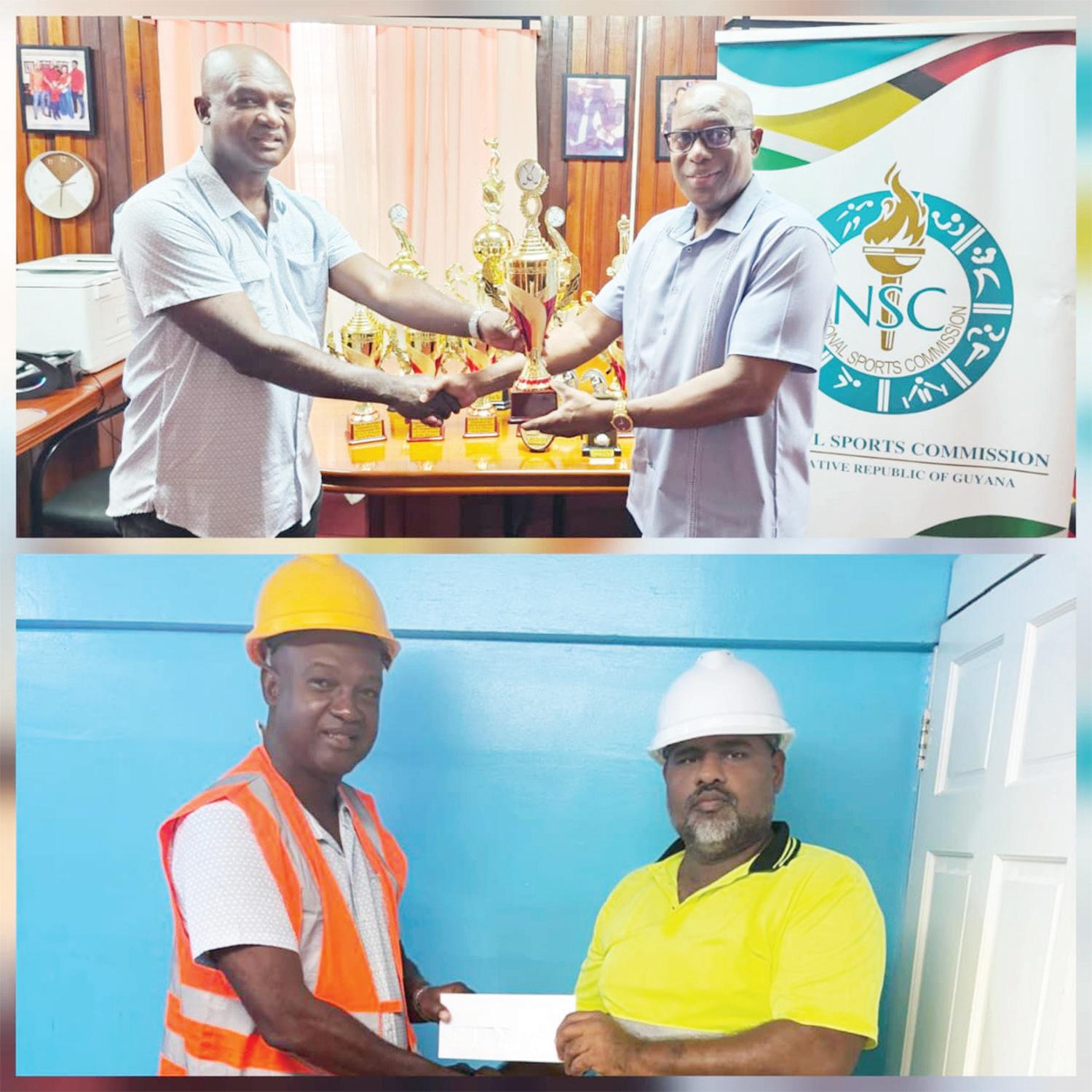
Second and Third Place finishes, Ladies Overall Best Net (First and Second Place), Overall Best
Net, Best Gross, Nearest to the Flag and Longest Drive.
Following the tourna-
ment, players and patrons will be treated to a special lunch and refreshments, including XM Rum, com-
pliments of Banks DIH Limited. Participants will have the opportunity to enjoy XM Rum 12-YearOld, 7-Year-Old and 8-Year-Old blends, along with other beverages as part of the Independence festivities.
Readymix Concrete Limited has been a long-standing supporter of golf in Guyana, and has partnered with the Lusignan Golf Club on several major tournaments over the years, including the prestigious Guyana Open. Chief Executive Officer of Ready Mix Concrete Limited, Munesh Ruplall, said the company is proud to be part of Guyana’s Independence celebrations through sport.
“Ready Mix Concrete Limited is delighted to once again support the Lusignan Golf Club and the continued development of golf in Guyana. As the country celebrates 60 years of Independence, we are honoured to be associated with this
tournament and wish all participants a successful and enjoyable competition,” Ruplall stated.
Director of Sport Steve Ninvalle commended the collaboration and reaffirmed the Ministry’s commitment to supporting golf and sports development in Guyana.
“We are pleased that the Ministry continues to play an important role in supporting the Lusignan Golf Club and the sport of golf. From assisting with equipment such as the club’s lawnmower to helping ensure tournaments are successfully executed, the Ministry remains committed to the growth of the sport. We wish all players the very best in the tournament,” Ninvalle said.
The tournament forms part of activities commemorating Guyana’s Diamond Jubilee Independence celebrations and is expected to deliver a day of competitive golf, fellowship and patriotic celebration.
(Formula 1) - George Russell beat Mercedes team mate Kimi Antonelli and McLaren's Lando Norris to pole position for the Canadian Grand Prix with a last-gasp effort.
Russell, who had won the Sprint in Montreal earlier on Saturday, posted a 1m 12.578s with his final effort to finish just 0.068s clear of Antonelli as Mercedes locked out the front row for Sunday's 70-lap race.
The Briton had been on the back foot in the final segment of Qualifying having aborted his first flying lap and he was down the order
with his first completed run. But Russell pulled out the fastest lap at the very end as the Mercedes duo beat Norris and the second McLaren of Oscar Piastri, with Ferrari's Lewis Hamilton suffering a mistake on his second run that left him P5.
Max Verstappen headed Red Bull team mate Isack Hadjar in P6 after complaining about the straightline speed of his car, with the top 10 completed by the second Ferrari of Charles Leclerc, Arvid Lindblad (Racing Bulls) and Franco Colapinto (Alpine).
Nico Hulkenberg once
again just missed out on a spot in the final part of Qualifying and will start P11. The Audi driver finished ahead of Liam Lawson (Racing Bulls), the second Audi of Gabriel Bortoleto, Pierre Gasly's Alpine, Carlos Sainz (Williams) and the Haas of Ollie Bearman.
The second Haas of Esteban Ocon finished P16 after just missing out on Q2 by 0.070s, where he was joined by the Williams of Alex Albon and Fernando Alonso's Aston Martin.
Sergio Perez finished P20 but the Cadillac driver is under investigation for sev-
eral incidents, one of which included blocking Alonso on his final flying lap.
The order was completed by home hero Lance Stroll (Aston Martin) and Cadillac's Valtteri Bottas, the pair set to start at the back of the grid for Sunday's 70-lap Canadian Grand Prix.
Play Video Qualifying Highlights: 2026 Canadian Grand Prix
Q1 – Antonelli sets the pace as Ocon and Albon drop out
There was action even before the light at the end of the pit lane turned green for the 18-minute Q1 segment at
the Circuit Gilles Villeneuve, with Alonso noted for an unsafe release into the fast lane as a rapidly-approaching Colapinto slammed on the brakes in avoidance.
Out on track, all drivers opted for the soft Pirelli rubber as focus switched from Saturday's earlier Sprint to performance over one lap, with Norris left at the top of the times following the first runs.
The reigning World Champion posted a 1m 14.213s with just 0.015s covering himself, McLaren team mate Piastri and Antonelli initially.
Despite complaining that the "ride has felt worse today than yesterday" over the radio, Russell became the first man to dip below the 1m 14s barrier with a 1m 13.953s, but it was quickly beaten by both Antonelli and Hadjar as track conditions improved. There were a number of off-track excursions as drivers explored the limits – Hulkenberg running deep at Turn 1, as Audi team mate Bortoleto cut the grass at Turn 3, while Leclerc missed the final chicane on his first quick lap.
FIFA’s Regional Member Association Development Manager, Amiel Mohammed, paid a special visit to several Regional Associations on Saturday, May 23, 2026, to observe matches being played in the Youth Ensemble U13 Programme.
The visit comes as part of a collaborative initiative between the Guyana Football Federation and FIFA aimed at establishing a sustainable annual calendar of structured youth football competitions across Guyana.
Accompanied by the GFF team, Mohammed began his visit at the Buxton Ground, where the East Demerara Football Association hosted playoff matches between Melanie FC and Mahaicony Western Lions, along with Haslington Stars and Plai -
sance FC. He then travelled to the National Training Centre (NTC), where the East Bank Football Association staged matches between Circuit Ville Jaguars FC and Timehri United FC, as well as Herstelling Raiders FC and Kuru Kururu FC.
The FIFA representative concluded the tour at the West Ruimveldt Ground, where the Georgetown Football Association hosted their march-past.
During the visit, Mohammed commended the Federation’s commitment to structured youth development and emphasised the importance of creating consistent competitive opportunities for young players at the grassroots level.
“This is what football development is all about. Being out here on the field, having
the landscape and giving the youths the opportunity to play in a structured manner and the GFF in achieving these initiatives and these missions “.
Mohammed further highlighted FIFA’s objectives through the Youth Ensemble Programme, noting that the initiative was born out of a shared vision between FIFA and the Guyana Football Federation to strengthen youth football development across the country.
“The programme was developed as part of President Forde and the GFF’s vision in alignment with the FIFA Forward regulations. They saw the need for this concept in the local landscape, and we are happy and grateful to support it by providing the funding necessary to foster youth development
and competition in a healthy and enriching environment,” he noted.
President of the Guyana Football Federation, Wayne Forde, said the visit by FIFA Regional Member Association Development Manager Amiel Mohammed underscored FIFA’s continued commitment to supporting youth and grassroots football development in Guyana throug h initiatives like the Youth Ensemble Programme.
“It shows FIFA’s commitment to our vision for the game, which fits neatly into FIFA’s global vision for football. We know the foundation of football is at the grassroots level, and it has been a huge challenge for many countries within our region to establish sustainable, well- structured youth
competitions, particularly youth leagues. The investment required to achieve this would not be possible without the support of the governing body.
Amiel’s visit here is a reassurance of FIFA’s commitment to youth football, grassroots development, and the leadership of the GFF,” Forde stated.
The Youth Ensemble Programme forms part of FIFA’s broader mandate to support Member Associations in strengthening grassroots football structures, increasing participation opportunities, and creating sustainable player development pathways from the community level to elite competition.
Over the coming weeks, U13 matches will continue to be played on Saturdays in
a 9 v 9 cross- field format, while U15 matches will be contested on Sundays in the standard 11 v 11 format. Competitions will utilise a combination of round-robin and knockout systems, culminating in a National Playoff stage featuring 20 clubs divided into four groups before advancing to the semi-finals and national finals.
Led by the Guyana Football Federation in collaboration with FIFA, the transformational Youth Ensemble Programme represents an annual investment of G$44 million and is expected to engage approximately 130 clubs while impacting more than 3,000 young players nationwide through structured U13, U15 and U17 competitions.
By Sean Devers
OLD Ryan Hercules, the Head Coach of the Guyana Harpy Eagles (GHEs) Cricket team, views his team’s performances in the recently concluded truncated bilateral three-match regional first-class championship with mixed emotions.
In the final, three-time defending champions GHEs were beaten by the Red Force by 141 runs as the ‘Trinis’ won the first-class title for the first time since Darren Ganga led them to championship honours in 2006.
“For the finals, the batting group would not have given us the start we needed. Chasing that score (284 in 90 overs), the batters got out playing recklessly.
But it was a learning experience for the group on how we could manage ourselves better when those situations arise,” continued Hercules, who has four firstclass titles, the Caribbean Premier League (CPL) and Global Super League (GSL) titles under his belt.
Over the past few seasons, Guyana seemed to lack the ‘Killer Instinct’ and allowed Seales and Phillip to add 98 runs for the last wicket.
“Phillip and Seales partnership was vital for Trinidad. We tried getting the wicket as early as possible, but with a few missed chances, it grew. These things happen in cricket,” informed Hercules, who started his journey as a cricketer at the Parika/Salem Sports Club at
the age of 13.
Imlach seemed reluctant to use his spinners in the second innings when all three of the pacers bowled more overs than Motie and Permaul.
“That’s the Skipper’s decision on the field, so I support and work with that.
In terms of the top-order batters, it was frustrating at times to see the guys not getting scores.
Some guys didn’t perform as well this season as they did last year, but it was yet another learning experience for the group. I still trust them to continue working on their strengths and weaknesses to improve their game,” continued the Essequibian, who played U-19 cricket for Guyana in 2017 and at the senior level between 2003 and 2008.
Matthew Nandu (double duck), Tagenarine Chanderpaul (33 &1), Tevin Imlach (17 & 1), Kemol Savory (17 & 24) and Kevlon Anderson (9 & 41) failed to get big scores in both innings of the final.
“Keemo Paul was amazing to watch. Back in ‘red ball’ cricket, he showed improvements throughout the tournament. I will say he is a player with a big heart and a very brave cricketer. I hope he takes this momentum going forward and returns to the international stage,” said Hercules, a Level-Four Coach. ‘The new format [bilateral] series, then finals for the first time, was a success. The team got in a few rounds of cricket.
Yes, it may not be a lot, based on certain situations at

CWI, but I am grateful that we got in some games.
The bowlers did their part, getting teams out twice to set up wins, was hard work… kudos to them” added Hercules, who was appointed coach of the Essequibo senior team in 2016 and the Guyana female team 2018/19.
“For the season, I am impressed with Jonathan Van Lange scoring a century on debut and backing it up with a half-century in the final against some quality bowling.
“I think Van Lange, with work, is one for the future to represent Guyana and the West Indies. “He is a brave player, and I think at times you need this along with your skill set. Work would be done to improve his fitness level and some minor technical flaws to get him on the right path to a long career.
“Tagenarine scored 401 runs and was among the top five batters for the tournament as well. We all know his
capabilities to spend time at the crease, but he has to back it up with runs,” posited Hercules. Joshua DaSilva (413), Amir Jangoo (411) and Chanderpaul (401) were the only batters to reach 400 runs. However, Chanderpaul’s runs took 740 balls.
The former fast-bowling all-rounder turned coach said Gudakesh Motie’s 29 wickets, the most by any bowler, was no surprise.
Hercules noted that Motie also did an exceptional job with the bat, while Nial Smith and Veerasammy Permaul got vital breakthroughs when called upon.
Hercules was the assistant coach of the Guyana Harpy Eagles 2022 to Rayon Griffith before being appointed head coach in 2023, a position he has held ever since.
The Guyanese Coach has been rewarded for his success by being appointed to the coaching staff of the West Indies Academy team, which is scheduled to travel to Sri Lanka next month.
CARLTON Wheelers Cycling Club’s cyclist Robin Persaud will enter the third and final stage of this year’s 60th anniversary Independence Three Stage Race this morning well positioned to capture top honours after capturing Stage Two and taking second position in the first stage yesterday in Linden.
The first stage, from Mabura Road and back to the starting point for the finish, was won by Geron Williams of Continental Cycling Club, with Robin Persaud placing second.
The second stage yesterday afternoon was won by Persaud, and that was from Kara Kara, in Linden, to Long Creek and back, where Geron Williams did not place in the top tier. This morning, the final stage starts at 07:00hrs at Schoonord, goes to Parika, returns over the Bharrat Jagdeo Demerara River Bridge, down Heroes Highway onto Mandela Avenue, and then onto Homestretch for the finish at the
Cliff Anderson Sports Hall. Race Director Dave Ramnarine remarked that Robin Persaud now would have won the second stage which now gives him the lead in the three-stage event.
The cyclists had a break in the second leg that started from Amelia’s Ward Hill and went all the way out to Camp Alpha and which was taken by Andre Green and he was only caught on the Moblissa Hill coming back to Amelia’s Ward where Robin Persaud home as the winner.
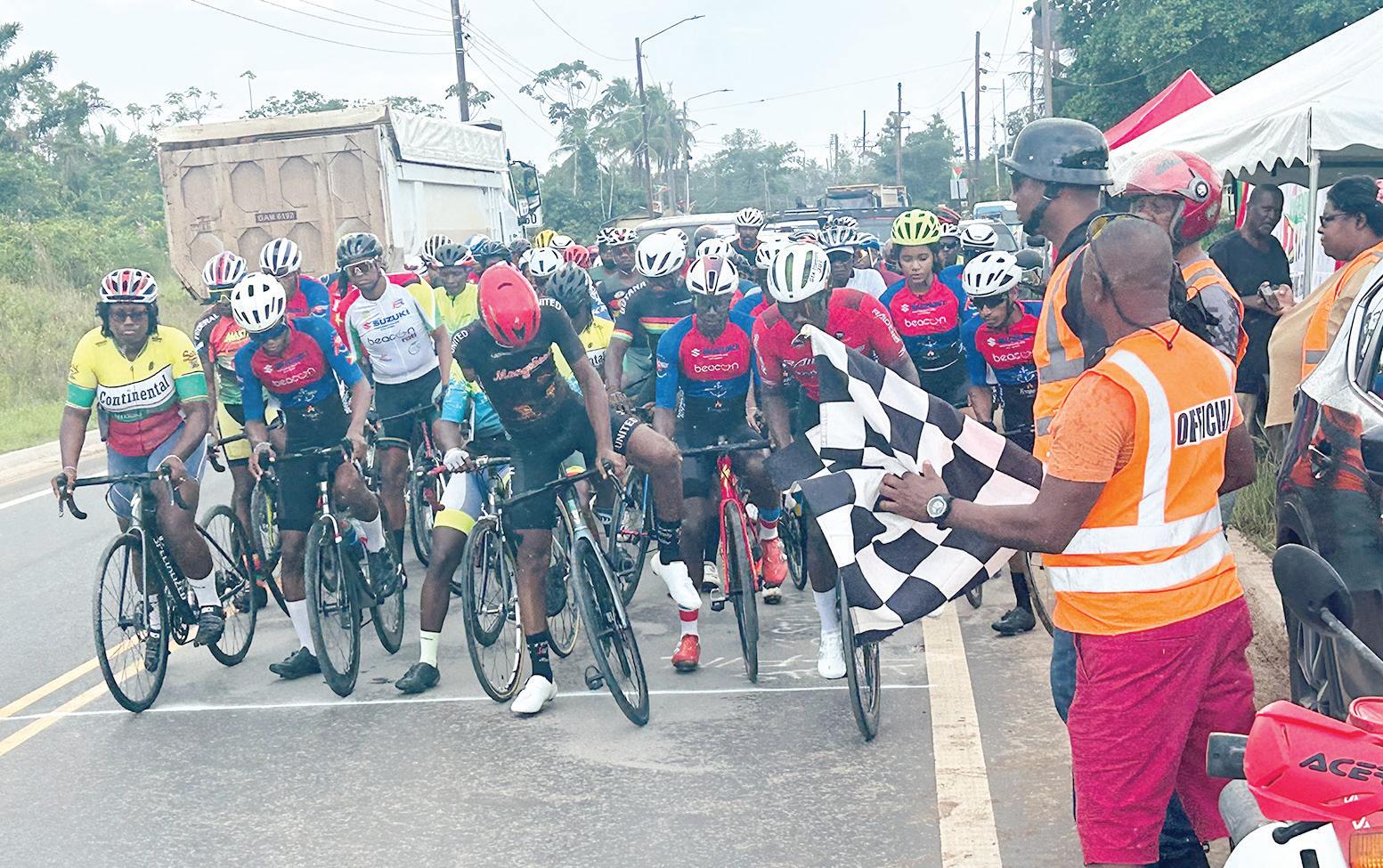
Giving his thoughts on this morning’s (Sunday) final stage he said “Tomorrow projection is that it will be a competitive race again with Ronin Persaud in the lead.
Total prize money is $2M which comes compliments of the Ministry of Culture, Youth and Sport.
GTTA Independence Diamond Jubilee Table Tennis Championships…
ON Friday the Guyana Table Tennis Association got into the action as they served in the 60th Independence Diamond Jubilee tournament.
In the senior novice’s category, Carl Kumar proved unbeatable, overcoming Peter Vabsertima 2-1, Levon Williams 2-0 and Clevon

High and St Roses dominated latest round
McEwan 2-1 to take the title.
In the boys’ U11 singles, Zion Hickerson was a touch above the rest, beating Daria Griffith and Joel Rambiriche three sets to none.
The under-9 singles category was won by Adam Rodrigues after his wins over Jaydin Sookram (3-0) and Jer-
Elite riders’ winners will see $275,000 to the firstplace finisher, $200,000 goes to the second-place winner and $145,000 for third; fourth will pocket $100,000 and fifth place $70,000.
The juniors, first and second, will be rewarded with $70,000 and $60,000, respectively.
maine Peroune (3-1).
The novice open singles saw the emergence of Gabrielle Mohabir as the overall champion after her clean sweep of her clashes.
She first got past Arianna Persaud 2-0, then Aahil Persaud and Joel Rambiriche by the same margin.
The final category was the girls’ U13 singles, which was won by Fabianna John, who beat Aria Johnson 3-1 and Kazi Edwards 3-0.
The competition continues today (Sunday) at the National Gymnasium with the Under-13, Under-15, Under-19 and “C” Class.
Brickdam, The Bishops High, Berbice High and St Roses were the top sides on Friday as Youth Basketball Guyana held regional conferences in Georgetown and Berbice.
In the city as the Cliff Anderson Sports Hall, Brickdam Secondary, opened their account on the day with a massive 35-point victory over North Georgetown, 43-8.
The Brickdam Secondary player of the game was Akili Layne, who was superb with 19 points and 12
rebounds.
While his teammate Dontavion Denny was a pillar of support with 14 points and 6 rebounds
Also chipping in with some crucial minutes in the clash was Amarion Edwards, who had a good showing with 8 points.
The Bishops High also floored Marian Academy 50-28 in another one-sided battle.
Kemol Pickering led the bishop high with an awesome 20 Points and 12 Rebounds
Also with good offensive minutes were Jonathan Nazier and Malik Williams with 8 and 7 points, respectively.
Marian Academy’s best scorer on the night was Nyle George, who produced 8 points and 7 rebounds in the loss.
Queens College defeated The Bishops High B 37-7 with Jonathan Gomes showing his ball-handling and shooting skills with a game high of 11 points and 4 steals.
Liam Bart was also good to record 11 points.
The final clash in the city saw St Rose’s High stop School of the Nations by a jaw-dropping 54 points, 58-4.
St Rose’s high have several role players that led them in a combined effort, but the standouts were Christian Williams with 17 points and 5 rebounds and Tuyen Paul, who scored 16.
Over in the ancient county of Berbice, they were wins for New Amsterdam Multilateral and Berbice High School at the Vryman’s Erven hard court.
New Amsterdam Multilateral edged Vryman’s Erven Secondary 19-16; it was a close contest until the end when Darren Crawford, who led with 10 points, scored a game-winning three-pointer to guide his side to victory on the buzzer.
Triston Welcome also supported with 10 points.
Berbice High School also thrashed Tutorial Academy 51-4.
Berbice High’s Shimron Jaffer was again in the points with 15 and 6 assists.
While his teammate Avi-
on Kesney led all scorers with 16 points and Jezhee Frazer led the defensive side with 6 points 12 Rebounds
The Berbice region now moves into the playoffs with the best of the Corentyne matching up against the best of New Amsterdam for a chance to play in the National School Basketball Festival.
The Regionals are sponsored by Edward B. Beharry Ltd, G-Boats Inc., National Sports Commission, Ministry of Education and Banks DIH Ltd.