

–– tourism, food production, manufacturing set to drive next phase of foreign interest, President Ali says
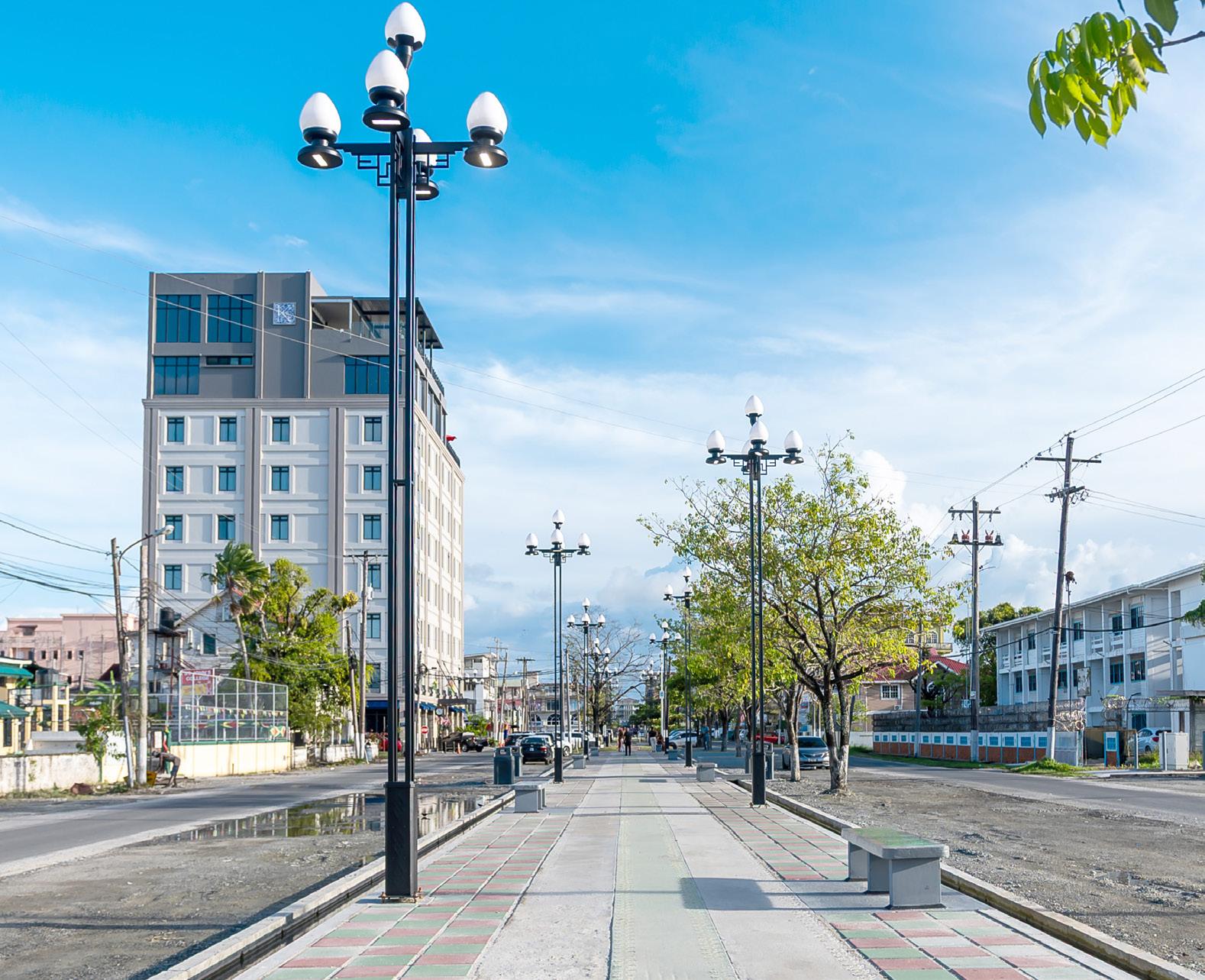
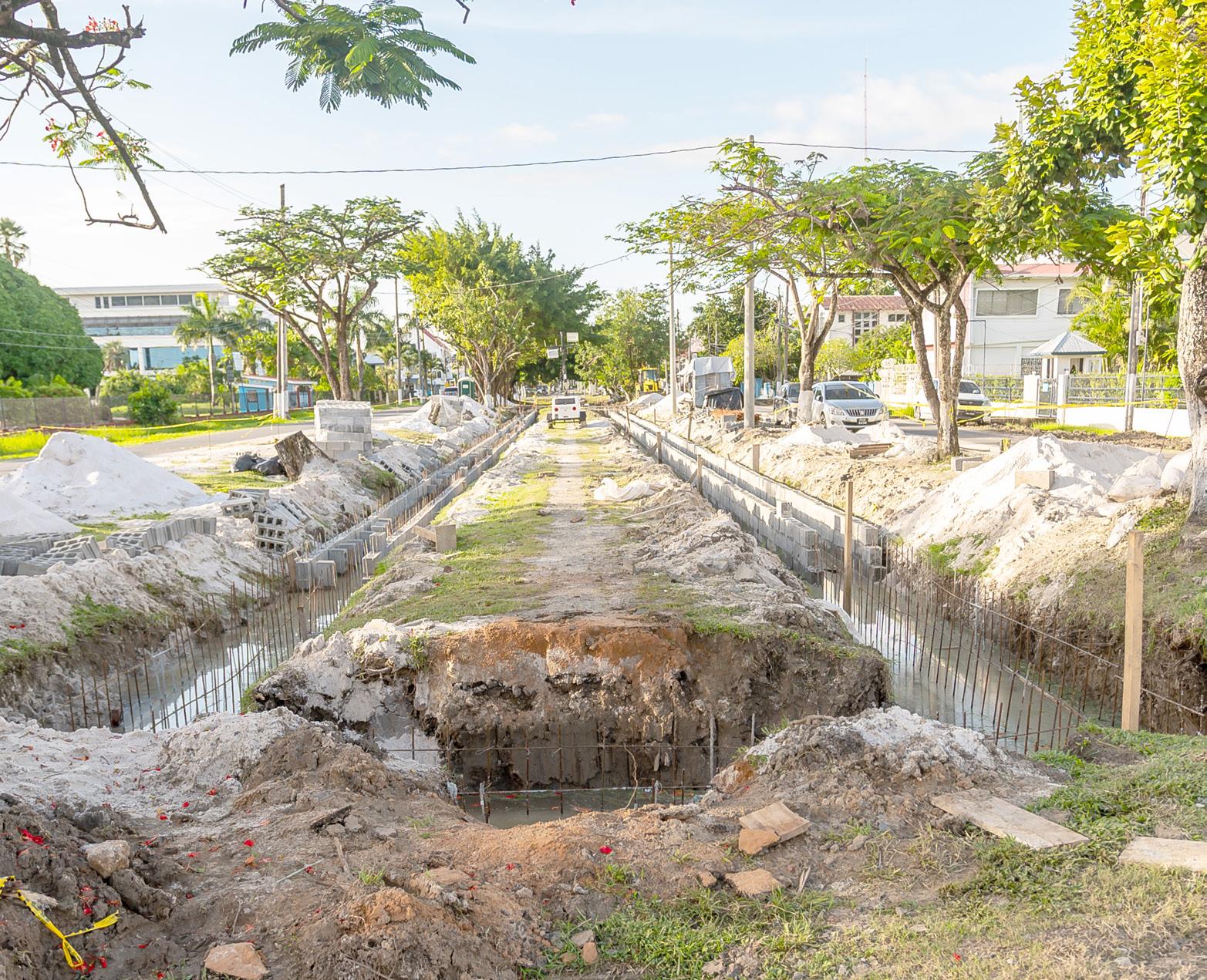
Waterloo Street Avenue has taken on a new look following extensive beautification works that have introduced modern streetlamps, improved pedestrian infrastructure, and an enhanced public space. While significant sections of the avenue have already been completed, beautification works continue along other stretches of the corridor as crews advance the project. The upgrades form part of a wider initiative to modernise Georgetown and create a cleaner, more welcoming environment in the capital (Delano Williams photos)


PRESIDENT Dr Irfaan Ali has warned overseas suppliers benefitting from Guyana’s expanding consumer market that they must begin manufacturing and investing locally, insisting that companies seeking to serve the Guyanese market should also contribute to its productive capacity.
While addressing the commissioning of two new aircraft for Jags Aviation and the company’s 12th anniversary celebra-
tion on Saturday, Dr Ali used the platform to caution foreign manufacturers that Guyana will no longer be content in playing the role of just a mere buyer.

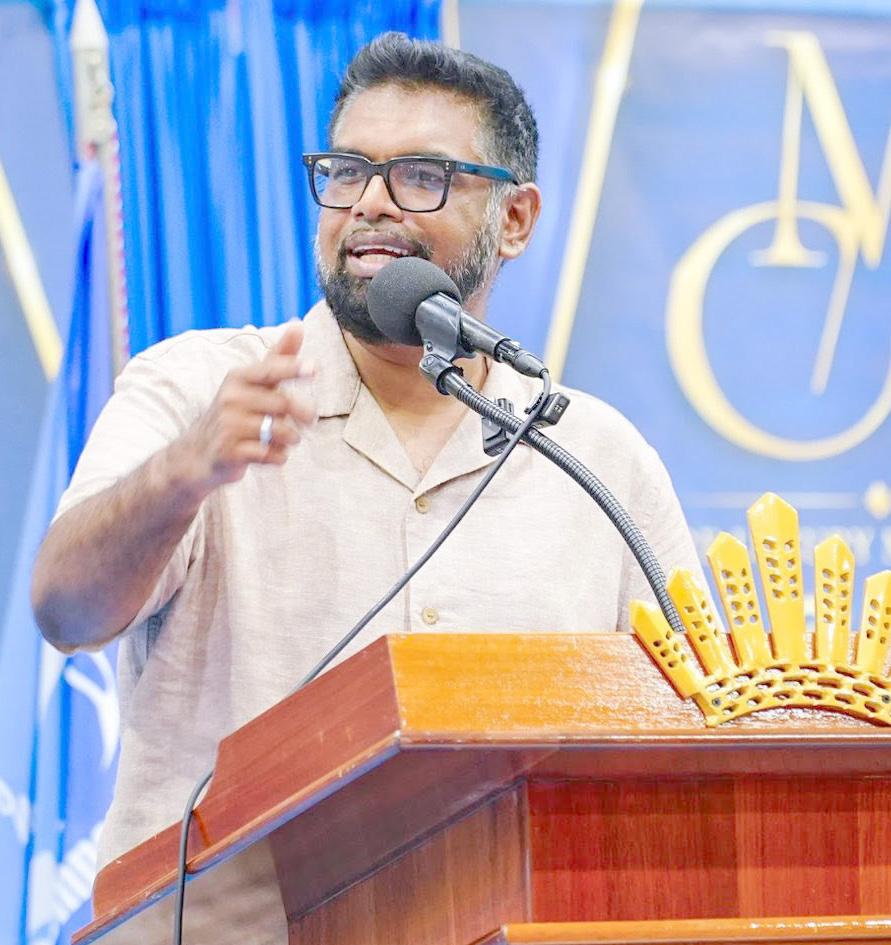
“If we are not good enough for you to manufacture and produce your goods by investing in our economy, then we are not good enough to consume [your] goods too,” the President said.
He argued that Guyana now offers the most attractive, policy-based incentives in the region for agro-processing and manufacturing and said it was time for producers to relocate production to Guyana if they wished to continue expanding their footprint here.
“We have given you all incentives, all the incentives for manufacturing. There is nothing or no other economy in the region that offers more policy-based incentives for agro-processing than Guyana. It is time [for] manufacturers [to] bring that manufacturing here if they are going to continue to expand,” President Ali said, as he pushed for value-added production.
The President made it clear that his administration’s objective is not simply to expand imports, but to anchor a new wave of agro-processing and industrial capacity within Guyana’s borders.
Dr Ali also pressed
domestic financial institutions and established companies to back the government’s policy efforts, pointing to recent efforts to build a stronger agro-processing and manufacturing base. He said he had challenged local manufactures to help lead an organised consortium of agro-processors and manufacturers for food and snacks.
“We cannot go forward without value creation and manufacturing in this country, and that is where our energy must be, and that is why this investment is critical,” he stressed.
The President framed the shift as essential to Guyana’s long-term development, arguing that the country cannot achieve its full potential if it remains locked into an export of raw materials and import of finished goods model.
He linked the demand for onshore manufacturing to his wider call for “value creation and manufacturing” in Guyana, stressing that every policy lever from energy to tax incentives is being aligned to support that goal.
Earlier this year the government moved to
By Naomi Parris
PRESIDENT, Dr Irfaan Ali recently said more than four international delega tions are set to visit Guy ana in the coming days to pursue investments in tourism, food production, manufacturing, and value creation.
Speaking at the commis sioning of two new aircraft for Jags Aviation and the celebration of the company’s 12th anniversary, Dr Ali said that the world is now looking at Guyana in a fundamental ly different way, with inves tors increasingly focused on the non‑oil economy.
He disclosed that several delegations are due shortly, all targeting diversified op portunities.
“In the coming days, I’ll be welcoming more than four international delega tions, all interested not in oil and gas, but in investing in tourism, in investing in food production, investing in manufacturing, and investing in value creation. That does not happen by accident, but by a decisive understanding and a bold communication of the Guyana we want to build,” he said.
The president stressed that this shift did not occur by accident, but is the result of “careful planning” and a decisive understanding of building a diverse economy.
Framing the moment as part of a broader develop ment vision, Dr Ali said the country is on the cusp of an “unbelievable future” for every citizen, provided that Guyanese remain committed to hard work, sacrifice, and national cohesion.
“This country is going to have an unbelievable future. Every citizen of this country will have that, but it will not happen by accident. It is happening because of careful planning. It must happen because of the ability to sac rifice [and] hard work,” he said, adding:
“Nothing can replace hard work. The essentials of success have never changed. Essentials of success remain the ability to work and work hard, the ability to sacrifice and commit, regardless of how much money a country have [sic], [or] how much revenue is coming in.”
He maintained that the current investment wave reflects a deliberate effort to present Guyana internation ally, not just as an oil pro ducer, but as a hub for food security, sustainable tourism, and value‑added manufactur ing in the wider Caribbean and South American space.
“The world is discov ering a Guyana that is completely different,” the President said, adding that the focus on value creation and production is central
to ensuring that prosperity is broad‑based and sustain able.
The president used the occasion to situate aviation within the country’s wider diversification agenda, de scribing air transport as a critical enabler of tourism, investment, and national cohesion.
He reminded the audi ence that Guyana’s “vast for ests, mighty rivers, scattered communities, and immense distances” mean that aviation cannot be treated as a luxury reserved for a few.
“In such a landscape, aviation is not a luxury, it is a lifeline. It connects people to opportunities, it connects producers to markets, it con nects families to essential services, it connects remote communities to the broader national economy,” Dr Ali said.
To this end, the presi dent highlighted plans to upgrade and expand airport infrastructure as part of a 10‑point aviation strategy.
He pointed to ongoing work on Terminal Two at the Cheddi Jagan International Airport (CJIA), which he de scribed as a state‑of‑the‑art facility designed to be not just a terminal, it is built as an “experience,” showcasing
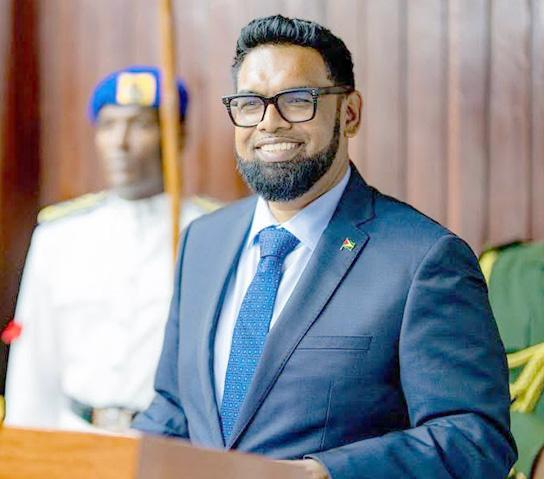
Guyana’s heritage, culture, biodiversity, and ecosystem.
In addition, he signalled that the long‑discussed Rose Hall Municipal Airport and Lethem Municipal Airport are moving from aspiration to execution, calling them “no longer dreams of the past,” but “realities of the present” that will be built to enhance regional connec tivity.
“Visitors are arriving in increasing numbers. Inves tors are exploring oppor
tunities across our regions. Tourists are seeking authen tic experiences,” he said.
These projects, he sug gested, will make it easier for in bound visitors to see opportunities first hand and for domestic producers to reach new markets.
President Ali sought to distance Guyana’s global image from a single‑sector story, insisting that the
country must be seen and must present itself as a di versified production centre, a tourism destination and a logistics and aviation hub. He noted that the gov ernment’s focus on value creation, rather than mere extraction or import de pendence, is central to en suring that the benefits of growth are “broad‑based and sustainable,” and that communities across Guy ana share in the gains from investment.
operationalise a raft of fiscal incentives and tax relief measures af ter Senior Minister in the Office of the Presi dent with responsibility for Finance, Dr Ashni Singh, successfully pi loted the Fiscal Enact ments (Amendment)
Bill 2026 through the National Assembly, fol lowing the conclusion of consideration of es timates of expenditure of the 2026 National Budget.
Among the most con sequential provisions was the removal of cor
porate taxes on agricul ture and agro processing businesses, a move the government had said will promote productive ac tivity and diversification. The measure is expect ed to increase retained earnings and drive rein vestment to boost output
and productivity in the agriculture value chain. The Bill also expand ed the export allowance framework to include value added timber prod ucts, a step aimed at en hancing the competi tiveness of exporters by reducing their effective
tax burden and allowing them to price goods more competitively on interna tional markets.
Further support for domestic manufac turing also came on stream with the remov al of VAT on locally made furniture, includ
ing doors, moulding, and beds, as well as on locally produced jew ellery. These measures are intended to low er construction costs, strengthen the forestry and jewellery subsec tors, and support local manufacturers.
ONE month after the Bundibugyo Ebola outbreak was declared in the Democratic Republic of the Congo (DRC) and Uganda, case numbers continue to rise.
The DRC now has more than 780 confirmed cases and 180 deaths, while Uganda has recorded 19 confirmed cases, including two deaths.
On the ground, the response has expanded considerably. Some 400 beds are now available and four laboratories are operational.
Two of them alone can process nearly 1,000 samples a day. Yet despite this scale-up, the World Health Organization (WHO) believes efforts remain far below what is needed to bring the outbreak under control.
“On a scale of zero to ten, compared with where this response needs to be, I would say we are at about three or four,” said Dr Rose Belizaire, Emergency Response Lead at WHO Africa, in an interview with UN News. “The outbreak
is evolving rapidly, and all partners (...) need to step up their efforts on the ground in order to keep pace with the evolution of this epidemic.”
Today, when a person is reported as a suspected case in a community, an investigation team is immediately dispatched. If the alert is confirmed, the patient is referred to a transit centre, where they await laboratory results before being transferred, if necessary, to a treatment centre.
But the Ebola response goes far beyond medical care.
“The response is organised around 11 pillars in the field,”
Dr Belizaire explained.
Community surveillance, investigation teams, transit centres for people awaiting diagnosis, laboratories, treatment centres, infection prevention and control, and data management are among the many components mobilised under the leadership of Congolese health authorities.

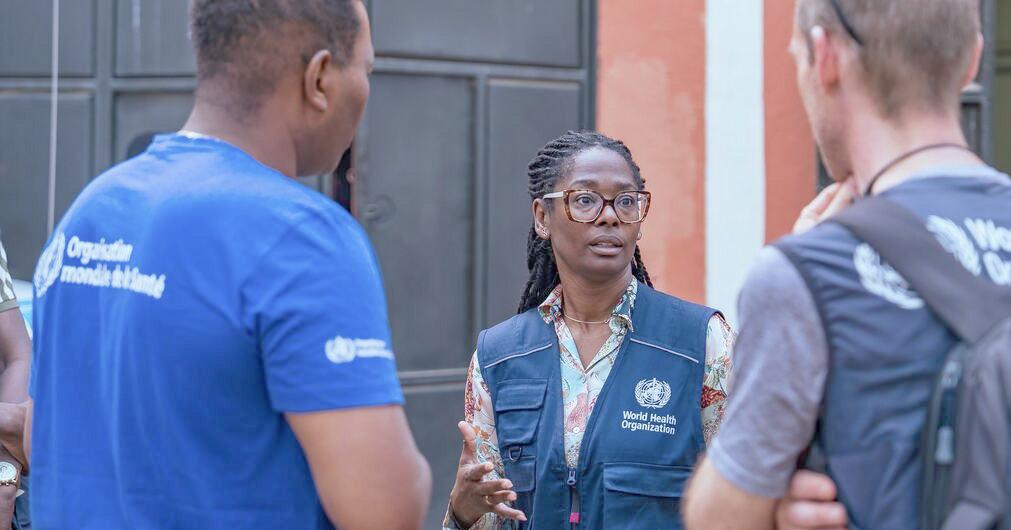
The response also includes extensive support for patients, their families and people exposed to the virus.
“We now have psychosocial support and nutritional support that provide assistance to confirmed patients, their families and the contacts we are monitoring, so that we can take a holistic approach to this outbreak,” said the WHO official.
On the ground, this approach takes very concrete forms.
“Contacts receive food rations,” the epidemiologist noted. As for hospitalised patients, “they receive three hot meals a day.”
The response also includes infection prevention and control measures aimed at limiting transmission.
“This includes disinfection
and the destruction of items contaminated by the virus,” Dr Belizaire said. “It is an entire machinery that has to be put in place.”
We have the expertise, resources must follow
During a recent visit to Beni, one of the areas hardest hit by the outbreak, Dr Belizaire said she was struck by the level of preparedness among local teams.
“I was very satisfied with their technical capacity to implement the response. They know what needs to be done. They also have the technical expertise,” she said.
What they lack, however, are the resources needed to match their capabilities.
“What they were really missing were the means.
They lacked human re -

sources, and they also lacked the logistical support required to put in place a robust response.”
The outbreak is also evolving demographically.
At the start of the outbreak, men aged 20 to 49 were the group most affected. Today, women represent the most affected category, while cases among children are increasing.
For Dr Belizaire, this shift is not surprising.
“In outbreaks of infectious diseases, women are generally the most affected. They are the ones who care for family members, their husbands, their parents and their children.”
For WHO, adapting the response to realities on the ground has become an essential part of the fight against Ebola.
“We are trying to meet with all segments of the population in order to understand their needs and adapt the response to their reality,” Dr Belizaire explained.
During her travels, the WHO official said she has met with a wide range of groups, including women, local entrepreneurs, motorcycle taxi drivers and community leaders.
Concerns vary from one group to another. Entrepreneurs worry about the impact of the outbreak on their ability to make a living, while motorcycle taxi drivers, who provide much of the transportation in affected areas, are among those most exposed.
“An outbreak always occurs in a specific context. We therefore have to adapt the response to the real needs of communities and to the realities of their movements.”
A porous border
This reality is particularly evident in the border region between Aru in the DRC and Arua in Uganda, where Dr Belizaire took part last weekend in meetings that strengthened co-operation between the two countries and helped define a common action plan.
“When you look at the border, you do not really see a dividing line or a difference between the populations,” she said.
“The names are almost identical – Aru and Arua. That is because they are the same
populations living there and they speak the same local language.”
“Interactions are extremely intense, whether commercial exchanges, family exchanges or simply human exchanges,” she added.
The two countries have therefore agreed to deploy joint teams along the border, strengthen laboratory capacity and establish a treatment centre jointly managed by Congolese and Ugandan teams.
The goal is also to bring care closer to populations living on the Congolese side in order to reduce the need to travel to Uganda to seek treatment.
For the past month, Dr Belizaire’s long days have been filled with coordination meetings, field visits and discussions with affected communities. They have also been punctuated by memorable encounters, and this week was no exception.
“While I was in a meeting, there was someone who was determined to see me at all costs,” she recalled.
When she finally went to meet him, she discovered that he was a WHO colleague. After exchanging a few greetings, he asked her:
“But Doctor, don’t you recognise me?”
She did not. He then explained why he had been so eager to meet her.
“I wanted to thank you. Thank you for saving my life. You are one of the people whose actions made it possible for me to still be alive today.”
The man is a survivor of a previous Ebola outbreak in the DRC. Today, he works as an epidemiologist for WHO.
He also reminded her that he had been among the first people to raise the alarm during the current outbreak after a pastor informed him that a body had been bleeding from the nose and mouth during a funeral in Aru.
For Dr Belizaire, the encounter illustrates how experience gained over successive outbreaks continues to strengthen the response today.
“This may be my best paycheck this week,” she said. “To see people whose lives we helped save becoming my colleagues and working in the same organization as me.” (UN)
WARS regularly make headlines. Preventing them rarely does.Yet for the past 20 years, the UN Peacebuilding Fund (PBF) has quietly been helping countries to avoid violence, recover from conflict and build more peaceful futures for their citizens.
Today, it’s the UN’s main vehicle for investing in peace before crises spiral out of control.
As the UN marks its first ever peace-building week, here’s what you need to know about the innovative Fund.
Described as a “financial instrument of first resort,” think of the Peacebuilding Fund as the UN’s emergency peace fund.
Created by UN member states in 2005, it provides rapid financing to countries facing the risk of conflict or trying to recover from it. Unlike traditional aid programmes that can take years to get off the ground, the fund is designed to move quickly when a window for peace opens.
Its guiding principles have remained the same for two decades: it has to be fast, flexible and it must accelerate change and be nationally owned.
The fund works through governments, local
communities, civil society organisations, women’s groups, youth networks and alongside more than 20 UN agencies.
Its reach is global. Over the last two decades, it has supported peace-building efforts in more than 75 countries and territories, from Sierra Leone and Colombia to Papua New Guinea, Kyrgyzstan and Haiti.
Ultimately, its beneficiaries are ordinary people: communities rebuilding after war, young people seeking opportunities instead of violence, women mediating disputes and families hoping for a more stable future.
The fund backs projects that help societies move away from conflict and towards peace.
That can mean supporting peace agreements and political transitions, bringing divided communities together through dialogue and reconciliation, restoring essential services and local institutions, creating jobs and economic opportunities in communities recovering from violence and supporting women and young people to take leadership roles in peace building
In short, it invests in the building blocks that make peace last.
Peace building works to prevent the escalation of local conflicts.
By helping countries address tensions early, the fund aims to prevent violence before lives are lost and communities are displaced.
The fund also fills a unique gap in the UN system. It can take risks, move quickly and support initiatives that other donors may be unable or unwilling to fund.
As UN member states have recognised, peace is not just about ending wars, it is about inclusive societies.
The fund’s work stretches across every region of the world.
In Sierra Leone, it contributed to peaceful elections and strengthened institutions after a devastating civil war while supporting young people.
In Papua New Guinea, it supported preparations for the historic Bougainville referendum, allowing voters to participate peacefully in a decision about their political future.
Along the Kyrgyzstan-Tajikistan border, it helped communities transform disputes over land and water into co-operation and
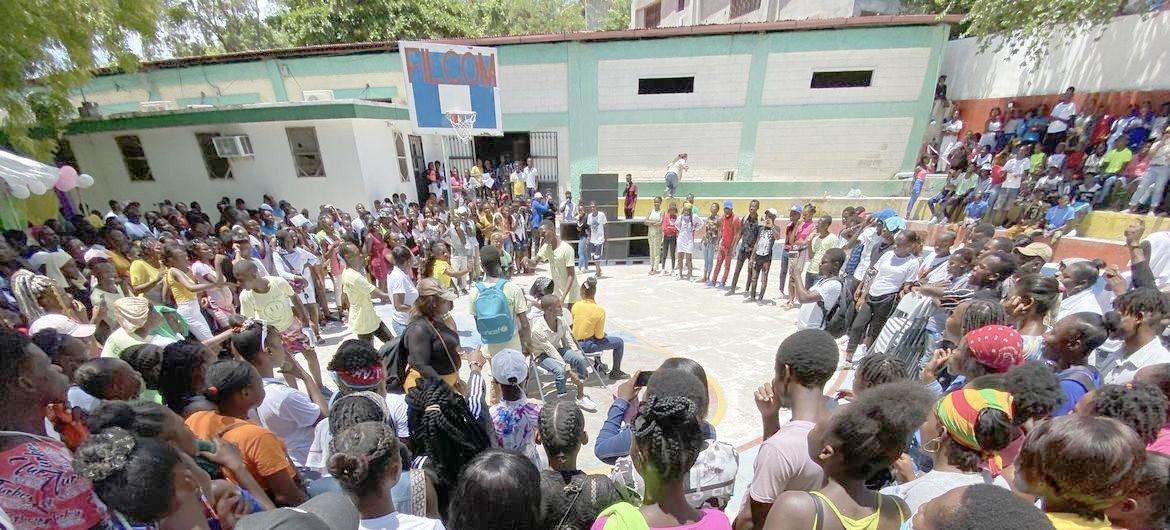
shared development.
In Guatemala, it supported indigenous women seeking justice for war-time sexual violence, helping secure a landmark conviction recognised internationally.
And in countries including the Central African Republic and the Democratic Republic of the Congo, it has helped former combatants return to civilian life, supported women mediators and strengthened community resilience.
One of the Peacebuilding Fund’s biggest investments isn’t in governments, it’s in people.
Over the years, the fund has become one of the UN’s largest financiers of wom-
en-led peace-building initiatives, backing mediators, negotiators, community leaders and grassroots organisations working on the front lines of conflict prevention.
From brokering local peace agreements to supporting survivors seeking justice, thousands of women have played a direct role in building peace through fund-backed projects worldwide.
THE FUND IN NUMBERS:
More than:
-75 countries and territories supported
-$2 billion invested
-1,150 peace-building projects funded
-120 recipient organisations and funding mecha -
nisms supported
Demand for PBF support has been increasing not just because there is more conflict, but more countries want to do more prevention and to avoid conflict.
THE BOTTOM LINE
For 20 years, the Peace-building Fund has operated on the simple premise that investing in people to build peace is cheaper, smarter and more humane than responding after a conflict erupts.
Its work may not always make headlines, but for millions of people living in fragile settings, it can make the difference between a return to violence and a chance for a more peaceful future. (UN)


GUYANA’S quiet digital revolution is happening right now, and it is changing how citizens engage with their government for the better.
The administration’s effort to digitise and decentralise important services is one of a plethora of people-focused reforms in recent years, and it deserves clear recognition and ongoing support.
For too long, obtaining a birth certificate, passport, or completing a tax transaction meant waiting in long lines in Georgetown, losing work hours, and a system that unintentionally disadvantaged those living far from the capital.
This model is now being dismantled.
The government’s “Digital Guyana” agenda, allows people to apply for passports, birth certificates, and even an e-ID at centres close to them, reducing costs, wait times, and bureaucracy.
This is a real redesign of the state
prioritising citizens’ time and dignity.
Importantly, digitisation is paired with decentralisation to ensure that technology reaches beyond Region Four.
New integrated service centres in Regions Two, Three, Five and Six already enable residents to access passport services, Guyana Revenue Authority assistance, birth certificates, police clearances, and digital ID registration without needing to travel to Georgetown. Region Nine is next on the list.
This decision to set up modern service hubs in rural and remote communities sends a powerful message that national development must include all geographic areas, not just cities.
The digital ID initiative is another significant step. By allowing quick and secure verification across health, banking, and government transactions, the e-ID is set to provide services in a fast, effective, efficient, and transparent man-
ner, as highlighted by Minister of the Public Service, Government Efficiency, and Implementation.
When combined with AI-powered virtual assistants, queue-management apps such as GovConnect, and platforms for citizens to file complaints and track responses, this creates a public-service culture that is more responsive, accountable, and transparent.
This is exactly the kind of systemic reform that advocates for good governance have long called for.
Sceptics may rightly point out challenges, such as gaps in digital literacy, connectivity issues, and the risk of leaving some citizens behind. However, the state is aware of these realities.
Investments through the National Data Management Authority and the ICT Access and eServices for Hinterland, Poor, and Remote Communities Project have
improved internet connectivity, created ICT hubs, and increased digital skills, especially in remote areas.
These efforts demonstrate that the pursuit of efficiency is balanced with a commitment to fairness.
Ultimately, a government should be judged not just by its words, but also by whether it makes everyday life easier, fairer, and more dignified.
Guyana’s digital and decentralised service agenda is achieving that, bringing the state closer to its people, bridging the coast-hinterland divide, and affirming that every citizen, regardless of location, has a right to modern, and efficient public services.
The goal now is not to question whether this transformation is needed, but to ensure that it continues at a steady pace and that its benefits are safeguarded.

I NEVER knew Cheddi Jagan up close and personal. I knew him, met with him and talked politics with him, but I was never close to him.
I never had dinner or lunch or coffee with him. I never visited his home. The politician that was my comrade and the one I admired above all else was Moses Bhagwan. He signed my marriage certificate in 1979.
Moses was a kind, gentle soul, deeply committed to the poor, powerless and the people in life who needed to be liberated from life’s burdens. I always had those instincts, so life brought us in contact with each other. He was a person you gravitated to because of the wide modesty that emanated from him.
From the time I met Moses at the beginning of the 1970s until April 2020, he was for me, numero uno in Guyana’s pantheon of political giants. When I read that his autobiography was forthcoming, I was deflated. I know large apertures would fill the book because Moses had become a completely different man to the one I knew for over four decades.
I was right. His memoir, “Enter The Political Kingdom” has two characteristics: political dishonesty and anti-Jagan obsession. The book is good, yet it is not attractive. Good in the sense that it documents one of Guyana’s courageous sons who played a huge part in seeking justice and freedom for Guyanese. It is unattractive in the sense that what was expected from that autobiography is not there and you want it to be there because Moses has completed 91 years on earth and if it is not in his memoir at 91, then it is safe to assume we will never see him walk on the ter-
rain we expected to see him perambulate on.
From the time he refused my request in April 2020 to comment on what APNU GECOM Commission Desmond Trotman said about him, that he Bhagwan would have agreed with what he (Trotman) was doing in GECOM, I knew Bhagwan had endangered his legacy. This newspaper article is an assault on that legacy.
I recall that my chagrin was beyond comprehension when he turned down my plea to say something about what was taking place with the 2020 general and regional elections. I wanted nothing to do with Bhagwan from April 2020.
In one of my columns, I wrote that the published book he gave me on his family tree, I donated to the collection of the former CEO of the Georgetown Public Hospital Corporation, Michael Khan. I was finished with Moses, so why would I have on my shelf a book on his family tree?
‘Enter The Political Kingdom’ is an irritatingly disappointing read. There is completely no analysis of the doubts about the nature of the WPA in the 1970s; nothing on the WPA in government, 2015- 2020, nothing on the WPA’s role in supporting a denial of the legitimate results of the March 2020 general and regional elections; nothing on what Clive Thomas, Rupert Roopnaraine, Bonita Bone, Tacuma Ogunseye, David Hinds and Red Thread had become.
So smitten by the WPA, Bhagwan overlooked every fault of the WPA before and after 2015. He even denies actions of the WPA that the WPA itself publicly acknowledged.

For example, Roopnaraine told John Gimlette in the book, “Wild Coast: Travels on South America’s Untamed Edge,” that the WPA had burned down the Ministry of National Development. The book was published in 2011. Moses in his memoir of 2026 chose not to identify the WPA’s involvement in the arson.
There are harsh words reserved for Cheddi Jagan in chapter 21 titled, “The Days After,” but one should not be surprised. Bhagwan never forgave Jagan after he, Bhagwan, was expelled from the PPP in the 1960s. I think it is this life-long hatred for the PPP that drove him to adopt massive silence on the elections rigging of 2020.
One esoteric moment in the book is when he obfuscated the name, Dr. Josh Ramsammy. He described how the security committee met to reflect on possible strategies for overthrowing the Burnham regime. He noted that they met at the home of one of the WPA leaders in
Ogle. That was the home of Dr. Ramsammy. Was it Freudian that he left out Josh’s name? Josh of course left the WPA and formed the National Democratic Alliance with Keith Scott. After that, this great, committed freedom fighter’s name was never mentioned in WPA circles. Ramsammy was completely ostracised by the WPA when Ramsammy accepted the PPP government’s offer to be UG’s Pro-Chancellor.
‘Enter The Political Kingdom’ is frustrating to read, especially when Bhagwan glossed over the current racist mentality of the remnants of the WPA by noting that the WPA is currently the protest voice of African disempowerment. Go to hell Moses!
DISCLAIMER: The views and opinions expressed in this column are solely those of the author and do not necessarily reflect the official policy or position of the Guyana National Newspapers Limited.
THE newly commissioned Brian Sucre Junction Health Post in Region Eight has already treated more than 100 patients within its first week of operation.
The health facility, commissioned last Friday by Minister within the Ministry of Local Government and Regional Development, Pauline Sukhai and Minister within the Ministry of
Culture, Youth and Sport, Steven Jacobs, was established to provide easier access to healthcare services for residents who previously had to travel to Mahdia for treatment.
Regional Executive Officer (REO), Marti DeSouza, made the disclosure during an interview with the Department of Public Information (DPI) on Sunday, highlight-
ing the facility’s immediate impact on residents and miners in the area.
According to the REO, residents previously had to travel approximately one hour to Mahdia to access healthcare services, often incurring transportation costs ranging from $60,000 to $80,000.
To support healthcare delivery, an all-terrain vehicle

(ATV) was also handed over to the facility.
“The vehicle will play a vital role in supporting referrals, outreach services and the movement of healthcare personnel, ensuring that residents can access timely medical care when needed,” REO DeSouza noted.
Constructed at a cost of more than $13 million, the health post currently serves several communities and mining areas in the vicinity. It is staffed by community health workers, with plans to expand healthcare services as the facility continues to develop.
The REO also highlighted the ongoing construction of the $5.4 billion Kato Regional Hospital, which is expected to significantly strengthen healthcare delivery across Region Eight by providing advanced medical services closer to residents. (DPI)

GUYANA is accelerating efforts to modernise its maritime sector through greater use of digital systems and technology as the government seeks to improve efficiency, oversight, and compliance amid growing shipping activity.
Minister of Public Utilities and Aviation, Deodat Indar, emphasised that digital transformation is becoming increasingly important as Guyana experiences rapid growth in maritime operations and works toward developing a more modern and competitive shipping environment.
He made this known while delivering remarks at a recent port state control conference in Georgetown, during which he noted that digital tools and stronger technological systems are essential as the country continues to expand its maritime capacity.
“Over the last decade, the Caribbean port state control regime has matured considerably through digitisation, stronger integration with international systems and more structured inspection practices,” Indar said.
He noted that Guyana has already begun implementing measures aimed at strengthening maritime administration and improving operational systems.
According to the minister, the Maritime Administration Department is currently expanding its logistics framework while introducing digital port management systems designed to enhance the movement and monitoring of vessels.
“At the same time, we are expanding our logistics framework and implementing digital port management
systems,” he said.
Indar explained that modernising the sector is especially critical as maritime activity in Guyana continues to increase, driven by broader economic expansion and growing offshore operations.
He disclosed that vessel traffic has increased significantly in recent years, placing greater demands on systems responsible for monitoring and regulating mari-
time activity.
Against this backdrop, he highlighted some of the progress already made, noting that Guyana conducted 12 physical port state control inspections this year while also using its online clearance system to assess vessels operating within offshore oil blocks.
He said such systems are helping authorities improve oversight while ensuring vessels meet required standards before operating in Guyana’s waters.
Indar also stressed that technology and digital innovation are becoming increasingly important globally as the maritime industry undergoes significant transformation.
He went on to note that improvements in digital systems can support safer operations, strengthen compliance with international standards, and improve overall efficiency throughout the maritime sector.
The minister further pointed to the importance of integrating modern systems with broader maritime goals, including environmental sustainability and operational excellence.
With Guyana pursuing ambitions of becoming a regional maritime hub, the minister added that digital transformation will play a central role in ensuring the sector can effectively accommodate increased activity while maintaining safety and regulatory standards.
“Guyana conducted 12 physical port state control inspections and vetted 286 vessels through its online clearance system for operations within the offshore oil blocks,” he stated.
–– Dr Akesha Murray shares journey of service, research, patient care
FOR Dr Akesha Murray, the journey to medicine began in Matthew’s Ridge, Region One, a small community in Guyana’s North West District where access to healthcare was limited.
Growing up, she witnessed many patients requiring emergency medical evacuation to Georgetown because specialist care and doctors were not readily available in the community.
The loss of a primary school colleague to a condition that might have been prevented with timely medical care played a significant role in her decision to become a doctor and serve communities with limited access to healthcare.

MINISTER of Home Affairs, Oneidge Walrond, has underscored the importance of stronger regional collaboration to address rising transnational crime in the maritime domain.
The minister was at the time speaking at the recently held Caribbean Port State Control Conference, during which she warned that criminal networks are increasingly exploiting ports and shipping routes across borders.
Against this backdrop, she said that maritime security can no longer be treated as an isolated national responsibility, given the scale and mobility of modern criminal activity at sea.
“Criminal networks do not respect national borders, and the vessels they exploit often move across multiple jurisdictions,” she said.
The minister explained that the Caribbean region’s shared maritime space makes co-operation among states essential, particularly in the exchange of information, inspection data and intelligence aimed at identifying high-risk vessels and suspicious movements.
She said the Caribbean Port State Control frame -

work plays a critical role in supporting this effort by enabling coordinated inspections and harmonised standards across member states.
Walrond added that this type of collaboration strengthens the ability of regional authorities to detect emerging threats and prevent the misuse of maritime routes for illegal activities such as narcotics trafficking,
weapons smuggling, human trafficking and illegal migration.
“Through the exchange of inspection data, intelligence, best practices and risk information, member states are better equipped to identify suspicious vessels, detect emerging threats and prevent the use of maritime routes for transnational organised crime,” she said.
During her training, she completed clinical rotations at Jose R. Reyes Memorial Medical Center in the Philippines and graduated in 2020 as Valedictorian, receiving awards for Best Graduating Student and Best Clinical Science Student.
She later completed a Master of Public Health in 2025, expanding her understanding of healthcare systems, prevention, screening, and the importance of improving access to care for patients across Guyana.
Interestingly, her path to urology was unexpected. Following internship, the only available Medical Officer position was within the Urology Department. Although initially hesitant, she soon discovered a specialty that combined surgical skill, patient interaction, and the opportunity to make an immediate difference in patients’ lives.
Since joining the Urology Department at GPHC in 2023, she has become actively involved in inpatient and outpatient care, emergency management, surgical procedures, research, and community outreach. She also participates in prostate cancer screening initiatives and urology outreach clinics through the Men’s Health Unit and Guyana Cancer Foundation, helping bring specialist care closer to communities across the country. Her commitment to research has earned regional recognition, including the Best Research Presentation Award at the 26th Annual Caribbean Urological Association International Conference and the Best Presenter Award at GPHC’s 3rd Annual Surgery Research Conference 2026.
When asked what she
The Home Affairs Minister noted that Guyana is particularly focused on strengthening its internal systems as maritime activity continues to increase alongside rapid economic growth.
She pointed to the work of several key agencies under her ministry, including the Guyana Police Force, immigration authorities and the Customs Anti-Narcotic Unit (CANU), all of which play a direct role in safeguarding ports and border entry points.
To this end, she highlighted the importance of the Con-
tainer Control Programme, implemented with support from the United Nations Office on Drugs and Crime (UNODC), which she said complements broader port security efforts.
She explained that while the Caribbean Port State Control system focuses on inspecting vessels for compliance with international safety, security and environmental standards, the Container Control Programme targets high-risk cargo containers that may be used to transport illicit
goods.
The two initiatives, she added, form a more comprehensive security architecture that enhances oversight of both vessels and cargo moving through Guyana’s ports.
“By combining regulatory compliance measures with intelligence-led cargo targeting, we create a framework that improves port security, facilitates the detection of transnational organised crime and supports the safe and secure movement of legitimate trade,” Walrond said.
finds most rewarding about her profession, Dr Murray points to the impact on patients’ lives.
“Seeing patients improve and regain their quality of life is the most rewarding part of my work. I believe in listening carefully, educating patients, and encouraging people—especially men—not to delay seeking medical care.”
As she continues her training as a first-year DM Urology Resident, Dr Murray hopes to contribute to the continued growth of urological services in Guyana, strengthen research within the specialty, and improve patient outcomes through education, early detection, and accessible care.
Thank you, Dr Akesha Murray, for your dedication to patient care, research, and service to the people of Guyana. (GPHC)
IT has been many decades since I came to know of the use of the term ‘Massacre’ to describe the killings and displacement of East Indians in Linden. I am also aware that there were objections to the use of this term.
Those who persist in using the term are almost exclusively people of Indian descent, while those who object are almost always Afro-Guyanese. The events were definitely racially inspired and racially driven and still loaded with racial sentiments.
A recent book, “The Wismar Massacre: A case of ethnic cleansing of Indians in Guyana” by academic and researcher Dr Baytoram Ramharack has caused this issue to resurface and brought this controversary to the limelight once again.
The facts are that there was well-planned intense and widespread violence and the wanton destruction of property perpetuated by Afro-Guyanese against Indo-Guyanese leading to an almost complete uprooting and dispossession of East Indians from their homes and properties.

By L eonard craig
Most of the three thousand plus East Indians who were forced to flee to other regions, never knew what became of their properties after they fled. Based on historical records, there were reports of rape, even gang rapes, beatings and killings. On the other hand, smack in the middle of the violent deposing of East Indians, the Son Chapman motorboat was blown to shreds and over 40 Afro-Guyanese perished. Most of the historical accounts are not in dispute.
People of East Indian descent who examine the events have claimed that many natural facts and perspectives were silenced and euphemised in ways that reduced the events to a basic ethnic disturbance. There are two major claims: one, the British colonial reporters suppressed certain angles and facts designed to make the colonial office look good and two, Africans who are either embarrassed by the events or wished to hide their own part in condoning the atrocities, situate it as an ordinary part of a series of disturbances across the country. In that way, its scale and enormity are not readily understood. Of the Son Chapman, Africans made pretty much the same allegations. The claim is, the incident was treated as a mishap, instead of a planned and orchestrated event. In so doing, the lives of Africans are cheapened, lowered and of lesser consequence than the lives of Indians.
In order to really situate the arguments, certain key sequences of events must be appreciated. Reportedly in response to the death of two Africans in another part of the country, the attacks on Indians in Linden resulted in three deaths while Indians sought refuge mainly in police compound and others were ferried to other locations. Things quieted down a bit, then the Son Chapman incident happened. In response to the Son Chapman incident, a fresh round of violent attacks occurred on Indians resulting in the deaths of five persons. Almost all that is controversial is contained in that sequence. There are two main categories of people who shape opinions on the issues: politicians and academics.
Dr Cheddie Jagan is credited with first employing the term Massacre to describe the killings of East Indians in Linden. From my perspective this is understandable. Dr Jagan was a politician and an East Indian. He was in the middle of fighting off formidable plots and threats to destabilise and weaken his government and political movement; he had his job to do. His job was to display his deeply felt indignation for what occurred, show that he was ac-
tively advocating for displaced Indians and to appeal to the deepest recesses of human conscience in a way to drum up political militancy. In that moment and circumstances, he would not be a politician worth his salt if he did not go for the most graphic term available to his vocabularic repertoire at the time. He chose Massacre. He also used the word in “The West on Trial” which was first published in 1966 when the incident and all of its gory details were still like a fresh wound. Since then, many politicians and social activists echoed the term, so much so, that it became a household sobriquet.
On the other hand, if an academic researcher employs that word as an accurate descriptive or definition for the events, given the history of objection against its use, he is situated in different territory from Dr Jagan. That is where this book by Dr Ramharack comes into sharp focus. I have not yet read the book, but I will. I hope Dr Ramharack fulfills his promise to give me a copy, if he doesn’t, I will have to procure one by some other means. When I do, I will come back and give a review. Until then, these notes are basically my framework to be employed when reading and evaluating it.
In my view, politicians are freer and more apt to describe events more loosely and provide emotive political stimuli. Academics, however, do not have such ambit in the political construct where it is easy and tempting to ask, “what’s in a name?” However, the academician cannot be that dismissive. They are required to stick within an established research framework, confirm to certain ethics and do pure research to expose and record historical facts, wherever it leads.
Further, academics need to be upfront about their own biases that may affect their research and show how they employed methods to control for personal biases or conflicts of interest.
Massacre has a definition in academia and international law. Did this book interact with those definitions, or did it simply pander to political stimuli? Did the author acknowledge that there are decades of pre-existing controversy relating to the way the events were defined and that the very controversy will affect how his book is read and received? Is any aspect of the book intended to be of any cathartic value to the greater Guyanese society or a specific demographic? I look forward to reading this book.
DISCLAIMER: The views and opinions expressed in this column are solely those of the author and do not necessarily reflect the official policy or position of the Guyana National Newspapers Limited.
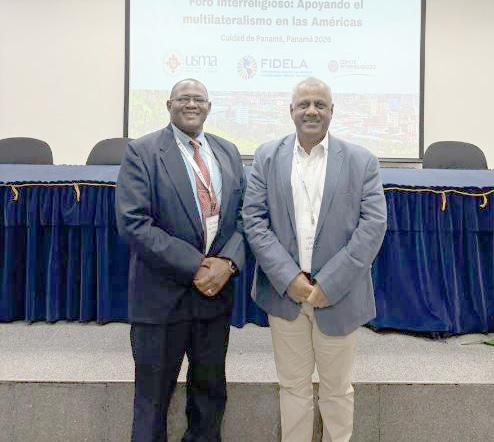
THE Ethnic Relations Commission (ERC) participated in the Ministerial Dialogue and Inter-Religious Forum convened by FIDELA, the Interreligious Forum of the Americas (Foro Interreligioso de las Américas), held in Panama City on June 18 and 19, 2026.
According to a press release, the forum brought together ministers of government and senior religious leaders from across the member states of the Organisation of American States (OAS) for a rare and timely exchange on the issues shaping religious life in the Hemisphere. Discussions centred on religious affairs, freedom of religion and worship, interfaith collaboration, the protection of human rights, and the mechanisms by which states and faith communities can work together to confront intolerance and safeguard the freedom of religious practice.
Representing Guyana
were two Commissioners of the ERC, Pandit Krishn Sharma and Reverend Rodwell Porter, whose participation reflected both the Commission’s standing as a constitutional body and the religious diversity that is embedded in its very composition, the release added.
Reflecting on the engagement, the commissioners noted that it was both an honour and a blessing to take part in such a timely event.
“Today, across the world, achieving real and true inner peace and exercising tolerance is a great challenge. The brainstorming, presentations and conversations have truly enhanced and widened the scope on religious tolerance and freedom of religious practice and suggested mechanisms to curb intolerance and enable freedom in this regard” both Commissioners posited in joint remarks, the release said. It added that participation aligned directly with
the ERC’s constitutional mandate as it is charged with, inter alia, promoting ethnic harmony and good relations among all Guyanese, and encouraging respect for and observance of the country’s religious diversity.
In keeping with that mandate, the Commission’s own membership includes representatives of Guyana’s principal religious traditions. The dialogue in Panama offered an opportunity to test and enrich the Commission’s work against the experience of peer nations across the Americas, and to bring home insights that can strengthen interfaith understanding and social cohesion in Guyana.
Further, the release said that the ERC extended its sincere thanks to FIDELA for the opportunity to participate and look forward to deepening regional cooperation on religious freedom, interfaith collaboration and human rights in the future.


AFTER many years of careful planning, Pragati Priya, a 29-year-old content creator from the eastern Indian state of Jharkhand, finally decided to enroll in a master’s programme abroad this year.
Priya will head to university in Rome in Sep -
tember to study global economic affairs - a move she hopes will open the door to better professional opportunities in Europe.
She’s excited about what the future holds, but also questions whether she’s made the right decision. The amount she needs to borrow for her
programme has risen sharply because of the steep decline in the value of the Indian rupee against a basket of currencies, including the euro, over the past few months.
“It has kept me up at night. I don’t want to burden myself with a student loan that [I] will never
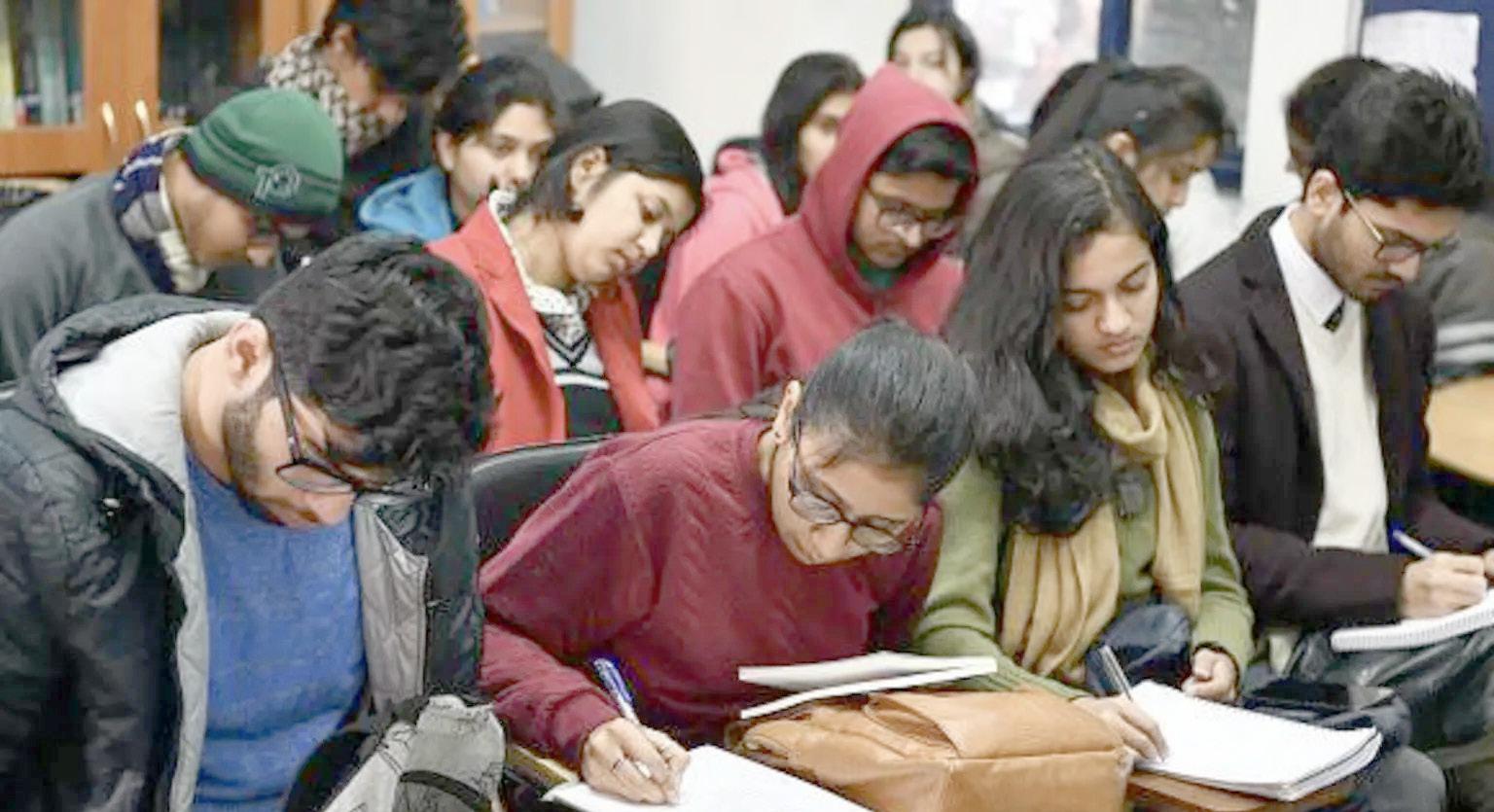
finish [repaying],” Priya told the BBC over phone. Her anxiety mirrors the dilemma facing hundreds of thousands of middle-class Indian students who leave home each year to study at universities across Europe, North America and Australia.
More than 1.2 million
Indian students were enrolled in higher education abroad in 2025, with India having overtaken China some years ago as the leading source of international students.
But a weakening currency, bleak job prospects in the US and Europe, stricter visa requirements and immigration crackdowns have forced many to reconsider whether it is worth taking on hefty debts to move abroad.
“I considered dropping my plans, but my parents and sister promised to support me. That’s the only reason I’m able to take this risk,” Priya said.
For many others, that is not a luxury they can afford - a reality reflected in declining enrolment numbers for the upcoming September intake at universities.
“The market is clearly showing signs of slowing down. We’ve already seen enrolments to the UK and US fall by 20% over the last two years, and I expect another 10-15% decline from those levels going forward,” Sushil Sukhwani, founder of Edwise International, which sends thousands of Indian students to universities abroad each year, told the BBC.
Tougher visa requirements have already taken a toll. In the UK, 76% of universities reported a decline in Indian student enrolments for the January intake, while in the US, enrolments fell by nearly 7% between February
2025 and February 2026.
The sharp fall in the rupee has compounded the challenges facing both prospective students and those already studying overseas.
“Many students who are already abroad have paid part of their tuition fees, but are now having to refinance loans and arrange additional funding to cover future instalments, with the rupee down more than 10% against the US dollar in the last year,” Sukhwani said.
According to his calculations, the Indian rupee has depreciated by between 35% and 47% against the currencies of major study destinations since 2019.
While incomes have risen for some graduates who have got jobs and stayed overseas, climbing onto the career ladder is becoming increasingly difficult for many international students.
“They arrive hoping to secure skilled jobs in the fields they trained for and end up working in the gig economy. Earlier, that work helped fund their education. Now many are graduating and doing it full-time,” Sudhanshu Kaushik, founder of the North America Association of Indian Students in Washington, told the BBC.
This, he said, is affecting the risk appetite of upper-middle-class Indian families, particularly as the weaker rupee
See page 13

has made an overseas education more expensive than ever.
Yet overall demand for foreign education remains strong.
According to the Global Student Flows Report 2026, Indian student enrolments in the US, UK, Canada and Australia - often referred to as the “big four” destinations - are forecast to decline by an average of 0.5% annually through 2030.
At the same time, interest in alternative destinations is growing.
“Countries such as Germany, Ireland, Italy and several other European destinations are attracting increasing interest from Indian students because of lower tuition costs, favourable post-study work pathways, strong employment prospects and a more attractive overall value proposition,” said Mayank Maheshwari, co-founder and COO of University Living, a student accommodation platform.
Sukhwani says his company has also shifted its focus towards these “new-age destinations” in response to growing student interest.
Affordability was a key factor in Priya’s decision to choose Italy over the UK or the US.
Her tuition fees are
roughly half of what she would have paid in the UK, while the US was “out of the question”, she said, because completing her degree there would have taken two years rather than one in Rome.
Experts say these trends are a worrying sign for countries such as the UK and the US, which have spent decades building globally competitive higher education sectors.
The concern is particularly acute because India remains one of the largest sources of international students for both countries, even as enrolments from China have slowed.
“The depreciating currency, the job market, the rise of AI, the visa issues and the current [Donald Trump] administration’s policies have all combined to create a perfect storm. No one wins,” said Kaushik.
“The students suffer, the universities suffer, college towns suffer and the broader economy suffers.”
He argues that the US especially risks undermining one of its most successful sources of influence abroad.
“We are retreating from the gains we made in promoting higher education as one of our most influential and profitable forms of soft power,” he said. (BBC)

Shweta Parsram, pharmacy has always been about more than dispensing medicines; it is also about improving lives, ensuring patient safety, and contributing to better healthcare outcomes.
Driven by a desire to enhance patient care and deepen her understanding of safe and effective medication use, Parsram’s passion for pharmacy has evolved alongside the growing complexity of healthcare. What began as an interest in
medicines has developed into a commitment to helping patients receive the safest and most effective treatment possible.
“I wanted to improve patient care and expand my knowledge of medication use. As medications and treatment
approaches continue to evolve, pharmacists have an important responsibility to ensure they are used safely and effectively,” she said.
Her career journey reflects the evolving role of pharmacists in modern healthcare.


Starting in the main pharmacy, where she dispensed medicines on physicians’ prescriptions, Parsram later moved into clinical pharmacy, a role that places her at the centre of patient care.
Today, she works closely with health-care teams, reviewing diagnoses and treatment plans, monitoring medication therapy, providing patient counselling, and helping to optimise medication use. This shift has enabled her to move beyond the traditional dispensing role and become actively involved in direct patient care.
One aspect of her work that she finds particularly rewarding is the opportunity to integrate evidence-based clinical pharmacy guidelines into routine patient management. Through careful monitoring and medication reviews, she helps to reduce medication-related problems, improve treatment outcomes, and support safer health-care delivery. Innovation, she noted, is not always about new technology; it is also about applying the latest scientific evidence to ensure patients receive the best possible care.
Parsram is equally passionate about shaping the future of the profession. As someone who mentors pharmacy interns, she hopes to inspire the next generation of pharmacists to embrace continuous learning, critical thinking, effective communication, and collaboration within multidisciplinary healthcare teams.
“Pharmacy is constantly evolving,” she said. “It is important for future pharmacists to remain adaptable, advocate for patient safety, and continue building their knowledge and skills throughout their careers.”
Reflecting on her proudest achievements, Parsram points not to a single moment, but to the cumulative impact she has made on patient care. From preventing medication-related problems to helping patients achieve better health outcomes, she takes pride in knowing her work directly improves lives.
She is also proud of her role in mentoring future pharmacists, sharing knowledge, promoting life-long learning, and strengthening clinical pharmacy practice within the health-care system.
As Commonwealth Pharmacy Week celebrates Generational Change, Innovation, and Impact in Pharmacy Practice, Shweta Parsram’s journey is just one example of the modern pharmacist’s expanding role, not only as a medication expert, but also as a patient advocate, educator, mentor, and vital member of the health-care team.
Through her dedication to patient-centred care and continuous professional growth, she continues to make a lasting impact on both patients and the future of pharmacy. (GPHC)
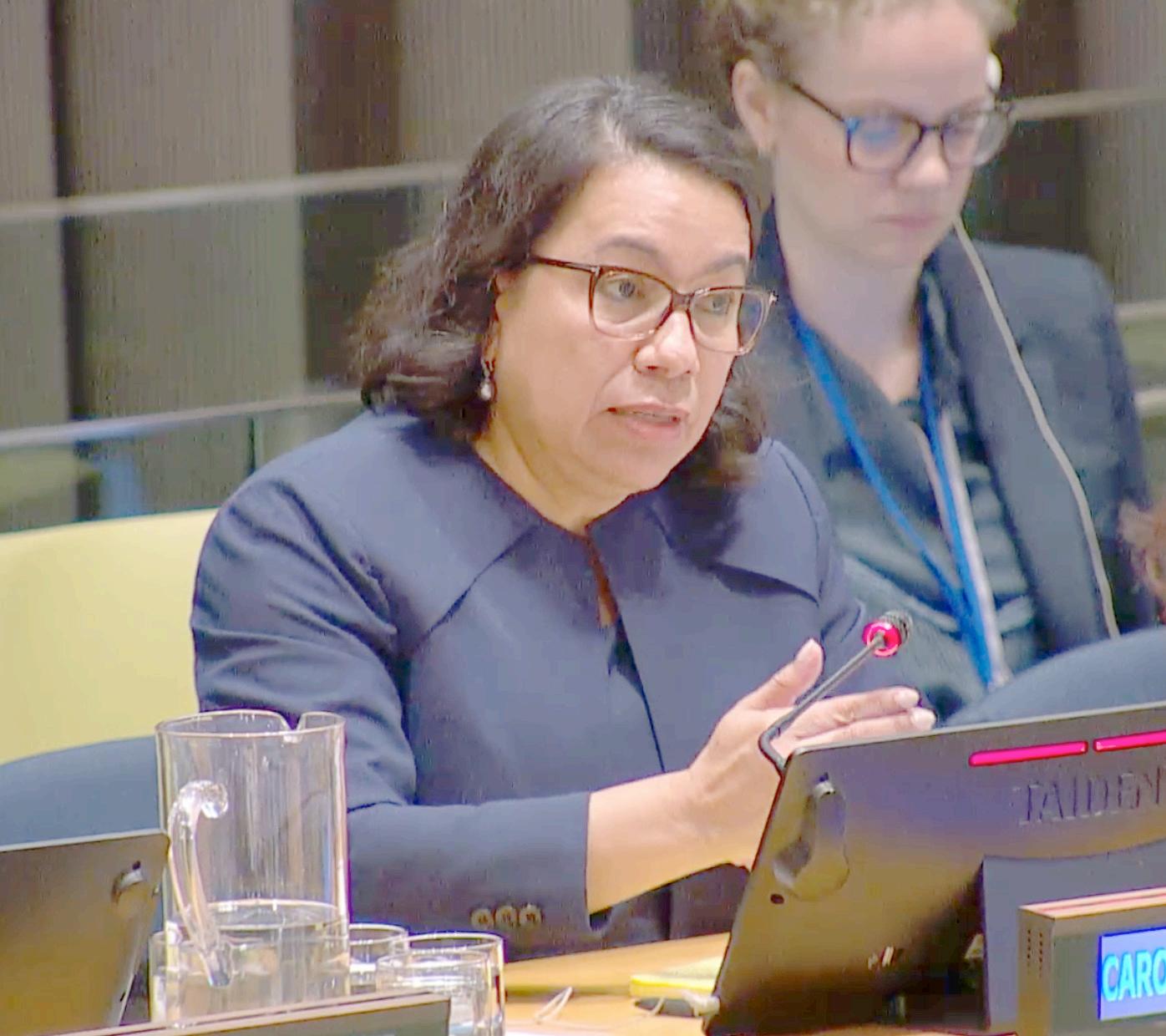
During an interactive session with member states, delegates and civil society, Guyana’s Permanent Representative to the United Nations, Ambassador Carolyn Rodrigues-Birkett, has promised to preserve a role for civil society in UN decision-making if selected as Secretary-General
GUYANA’S Permanent Representative to the United Nations, Ambassador Carolyn Rodrigues-Birkett, has promised to preserve a role for civil society in UN decision-making if selected as Secretary-General.
During a recent interactive session with member states, delegates and civil society members, Rodrigues-Birkett was asked to say how she would move the UN’s vast civil society network from a largely consultative role to becoming a strategic source of synergy.
In a carefully calibrated response, she positioned herself as a supporter of non-governmental organisation (NGO) engagement but stressed that any deepening of NGO participation must be determined by member states and not driven from the Secretariat alone.
“The United Nations is its core member state-based organisation, and the role of NGOs I see is one where we can receive proposals and suggestions,” she said. Rodrigues-Birkett pointed to her own record of working with civil society, citing three sets of negotiations she helped steer.
“In my time as co-facilitator for three UN processes, the Universal Health
society.
Last week President Dr Irfaan Ali announced the ambassador’s nomination for the top UN position.
He had said that Guyana’s successful tenure on the UN Security Council from 2024 to 2025 demon-
strated the country’s capacity to provide leadership on the global stage.
According to the President, Guyana consistently advocates for peace, dialogue, respect for international law and the peaceful settlement of dis-
putes while serving on the Security Council, earning international recognition for its contributions to discussions on some of the world’s most pressing issues.
Beyond its Security Council role, Guyana has become increasingly influential in global conversations surrounding climate change, environmental sustainability, food security, energy security, biodiversity conservation, and sustainable development.
Coverage and also the establishment of the Youth Office, we had widespread consultation with civil society, and we received many good recommendations, many of them converged with that of member states,” she recalled.
She stressed that the organisation’s long-standing practice of bringing NGOs into political processes through hearings and consultations would continue.
Rodrigues-Birkett underlined that the political space for civil society at the UN ultimately depends on governments themselves.
“I know that [the] President of the General Assembly, and many of the processes that the UN is engaging in, that civil society is consulted. So, I think that there will be continued role for civil society, and I recognise that important role,” she said adding:
“It’s for us to find ways and means, but mainly for member states to decide on this, on how we can better consult and involve civil society…”
The dialogue formed part of a transparent and inclusive selection process mandated by General Assembly Resolution 79/327, under which each candidate presents their vision and answers questions from member states and civil

REGION Seven is set to benefit from an estimated $5.6 billion in investments this year as the government continues to advance infrastructure, healthcare, education and community-development programmes across the region. This is according to the Regional Executive Officer (REO) Dr Josh Kanhai, who explained on Sunday that the focus of the investment programme remains on improving access and creating better opportunities for residents of the region.
Speaking on the ‘Starting Point Podcast,’ Dr Kanhai pointed to ongoing and planned works, including road upgrades, improved water access, healthcare expan-
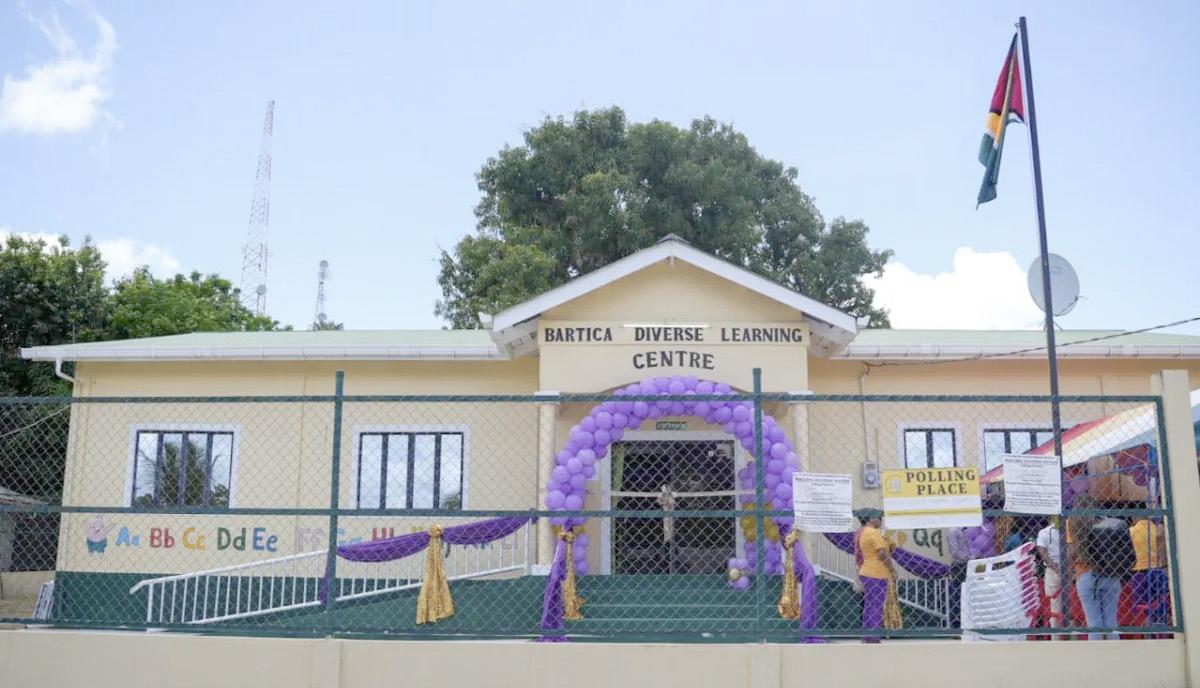

Bartica’s first Special Needs School, the Diverse Learning Centre

sion and education initiatives as key areas of development.
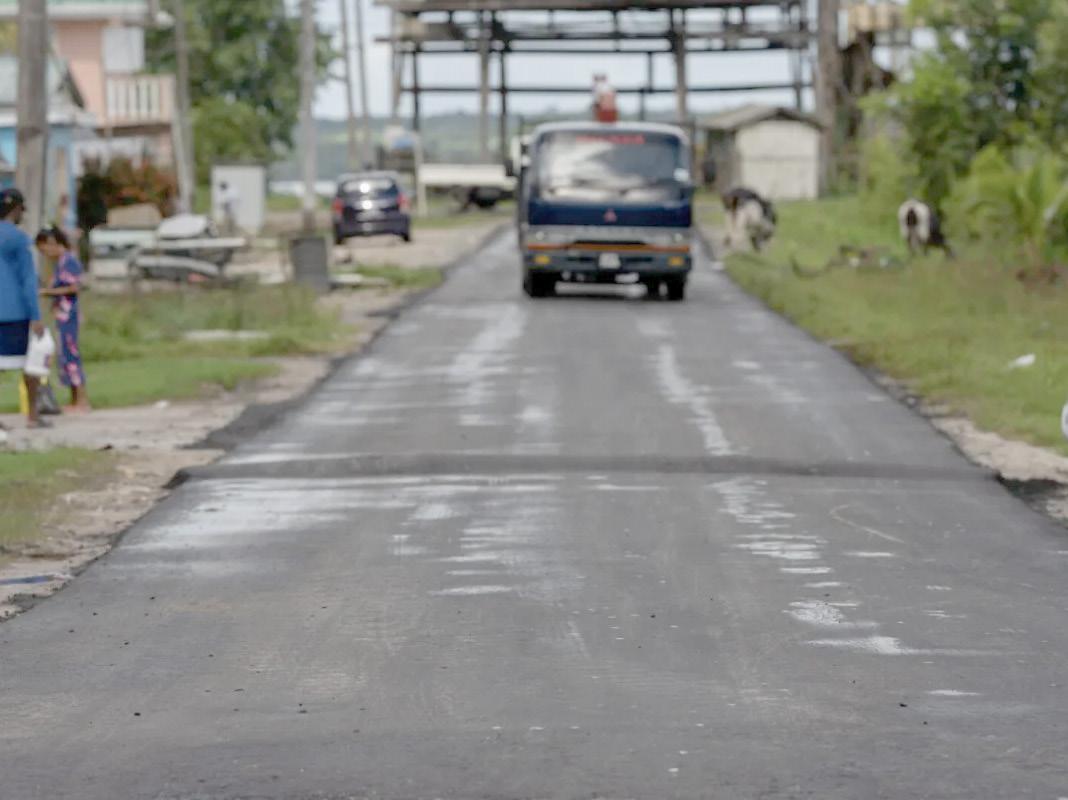
He noted that several communities that had previously relied on basic road networks have already seen improvements, with additional projects planned for areas including Monkey Mountain and other communities.
Meanwhile, the REO said steps are also being taken to strengthen accountability and ensure government investments deliver value for money.
He explained that standard operating procedures (SOPs) will be introduced across departments, particularly in areas such as contract management, engineering and project monitoring.
Dr Kanhai explained that the move is aimed at addressing delays in project implementation and creating clearer responsibilities for officers and contractors involved in government projects.
“Once you sign on, you are now held liable to comply with those standard operating procedures,” Dr Kanhai said, adding that stronger monitoring systems will help improve efficiency and ensure that projects are completed as planned.
Residents will also play a greater role in monitoring projects within their communities, allowing them to have better oversight and participate in the development process. (DPI)
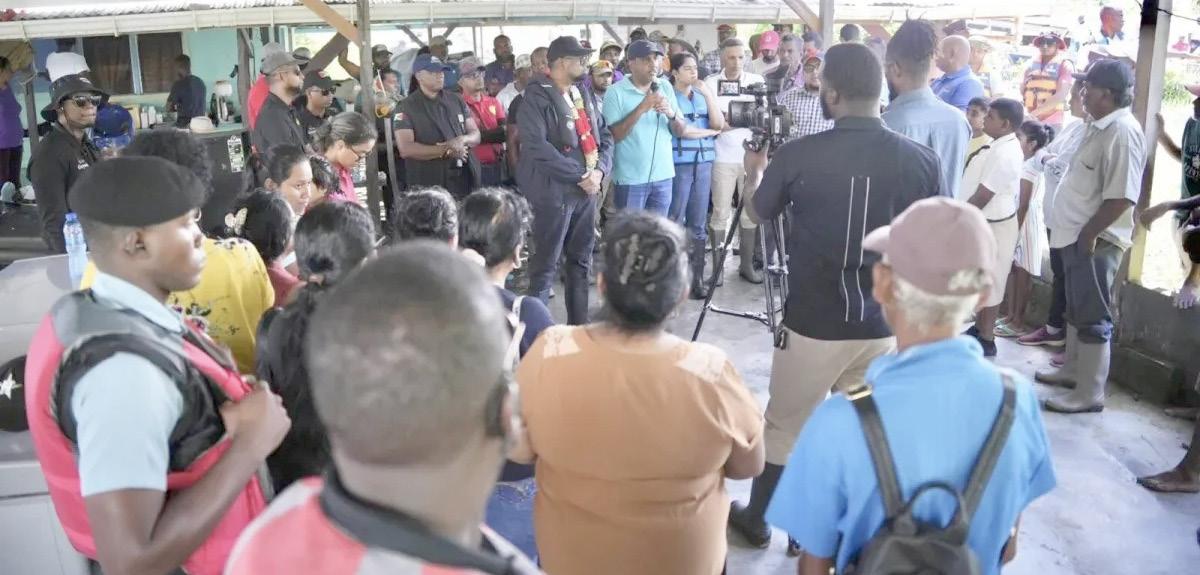
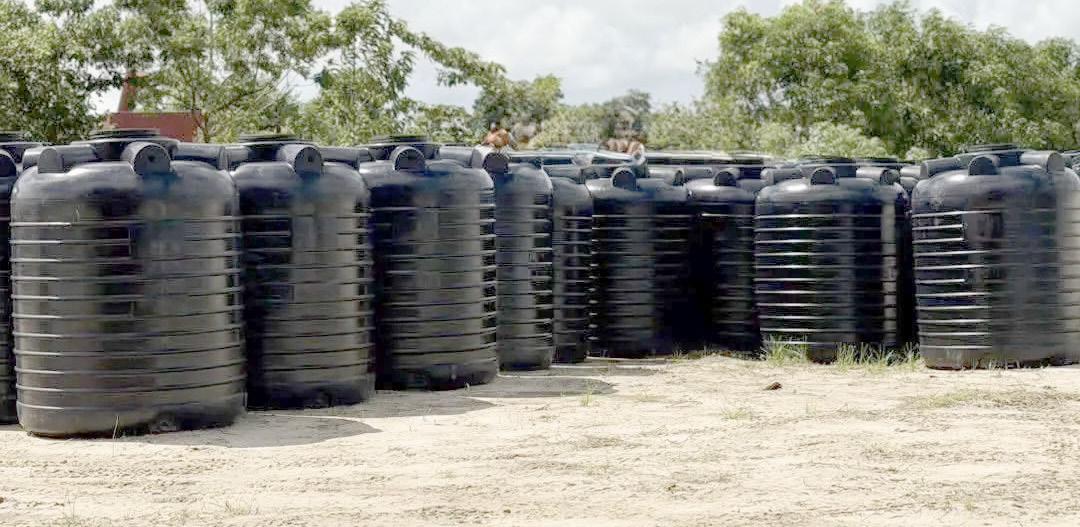
Sonia Parag on Sunday visited Branch Road in Mahaicony, where she spearheaded the distribution of 450-gallon water tanks to 74 households, acting on a directive from President, Dr Mohamed Irfaan Ali.
The distribution delivers on a commitment the president had made during an assessment visit earlier this month to several flood-affected agricultural communities in the Mahaicony Creek area, Region Five (Mahaica-Berbice).
Weeks of intense rainfall had left hundreds of acres of farmland and scores of households along the creek severely affected.
During that visit, President Ali met with farmers and residents at Branch Road and other communities to hear their concerns and assess conditions first hand.
The visit resulted in a broader package of relief measures for the area. The National Drainage and Irrigation Authority (NDIA) deployed five excavators to assist farmers in raising dams, clearing runways, and installing culverts.
Additionally, 18 farmers were engaged to use their own tractors to drain floodwaters, while pumps were relocated and new units installed to improve drainage in affected lands.
President Ali also committed to rehabilitating kokers, increasing pump capacity and clearing the main drainage canals at Branch Road.
The tanks now give affected households greater capacity to store water as families in the farming community work to recover from recent flooding. (DPI)













ENGLISH RACING TIPS
BRIGHTON 13:05 hrs Sllky Robin 13:35 hrs Roxa Love 14:05 hrs Sweetstevíe 14:37 hrs Dash Of Class 15:10 hrs King Of War 15:40 hrs Dion Baker
MUSSELBURG
09:15 hrs Only Dream Big 09:45 hrs Lady Dublin 10:15 hrs Finn Ironside 10:55 hrs Gemini Man
hrs Zuffolo
hrs Port Darwin
hrs Keep Me Stable WINDSOR 12:45 hrs Cape Of Torando 13:15 hrs Public Affection 13:45 hrs House Of Medici 14:17 hrs Glamorous Breeze 14:50 hrs Rumbustious 15:20 hrs Wedgewood 15:50 hrs Mertoun
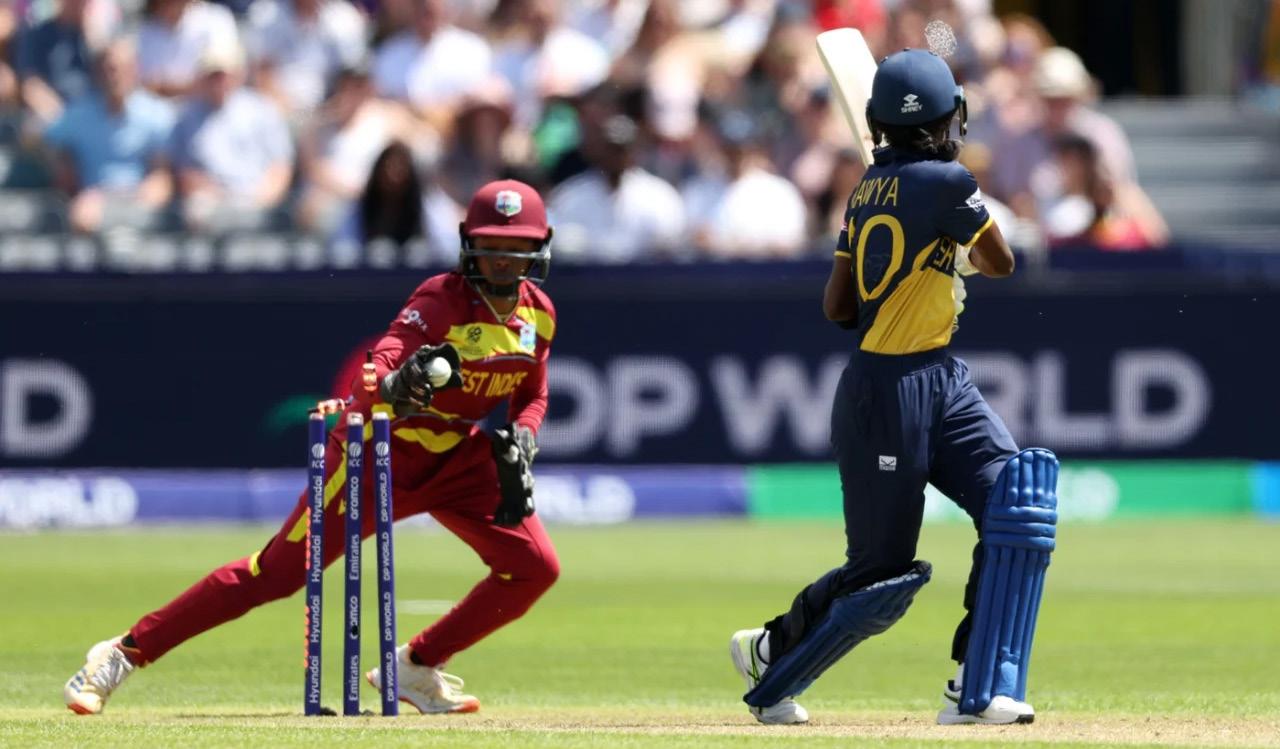
- West Indies spinners set up a third straight victory as they strangled Sri Lanka's batters before Stafanie Taylor steadied a nervy chase to see them home by five wickets in Bristol. The result brings the West Indies joint-top of Group 2 with Englandonly trailing on net run rate - while Sri Lanka's hopes of progression took a bashing.
Hayley Matthews was central to West Indies' effort, arguably setting up the win inside the opening powerplay. Having put Sri Lanka into bat, the West Indies reduced them to 24 for 4 inside the powerplay, a position from which Sri Lanka never truly recovered. Mathews picked up the innings' best figures of 3 for 15.
Then with the bat, Matthews did her part in a 28-run opening stand with Deandra Dottin, and while Sri Lanka plugged away with wickets
through the middle overs, a combination of poor catching, excess extras and Taylor's stewardship ensured West Indies' chase was never truly under threat.
Even on a surface where batting isn't the easiest, any opportunities need to be grabbed when defending a sub-par total - which is precisely what Sri Lanka had managed having been bowled out for 98.
Sri Lanka, however, struggled to capitalize on the opportunities afforded to them, while simultaneously gifting too many free runs. Twenty-three extras were given away across the innings, with 13 of those coming in wides.
Moreover Sri Lanka dropped three catches across the innings - two of them coming shortly after the fall of a wicket; momentum is everything in a low-scoring game,
and Sri Lanka were guilty of giving it up too easily. There were also a handful of close run-out chances that went begging.
It meant that West Indies, who had looked uneasy across their chase, were not punished for their mistakes - which in itself was a result of mistakes induced by the pressure created by the Sri Lankan bowlers and fielders outside of their costly errors.
Having someone with the experience of Taylor in the middle would be a boon for most any side, and she showed her value once again on Sunday. After a solid opening stand, West Indies had slipped from 2 for 36 to 5 for 70. Another couple of wickets and those remaining 29 runs might have felt closer to 50.
However, Taylor offered
just the calmness required in such a situation, content to deftly rotate the strike and ensure there were no further hiccups. Her six off a free hit was the only six of the game but highlighted her ability to capitalise on the situation at hand. Fittingly, she struck the winning runs - tellingly, dropped at midwicket.
Sri Lanka average barely over 6 an over against spin since the end of the last T20 World Cup, and West Indies were well-suited to exploit that potential weakness with a team stacked with spin options.
First on that list was skipper Matthews, who opened the bowling and struck three times in a three-over spell inside the powerplay. On a surface that was tacky, she cleverly didn't attempt to do too much, simply keeping her lines and lengths tidy.
In a period that crippled the Lankan innings before it had even truly begun, Vishmi Gunaratne offered up a leading edge - one spectacularly plucked out of the sky by Matthews - before Chamari Athapaththu went far too early on a pull as she saw her left bail dislodged. Harshitha Samarawickrama, meanwhile, was done in by some extra bounce, which meant she struggled to keep down a cut straight to point.
When Chinelle Henry had Imesha Dulani caught at mid-on, Sri Lanka had lost their fourth wicket inside the powerplay with just 24 runs on the board.
Ashmini Munisar - drafted into XI to add even more spin options - and Karishma Ramharack picked up three wickets between them as well, as Sri Lanka lost seven of their 10 wickets to spin, eventually being bowled out for 98 with two balls to
spare.
NILAKSHIKA PROVIDES SOLE SPARK
With the top and middle order offering little by way of impetus, a rescue job for the ages was needed and Nilakshika de Silva set about her task.
Her 30 off 26 came largely came across two stands of 34 and 23 with Kavisha Dilhari and Kawya Kavindi. Those were two of just three double-digit partnerships across the Sri Lankan innings, as Sri Lanka's innings stuttered into gear.
But once Nilakshika fell, looking to take on the fielder at deep square leg, the innings once more ground to a halt. Sri Lanka managed 60 for 3 in the middle overs, but without Nilakshika the death overs fetched just 15, as West Indies' spinners solidified their hold on the game.
(BBC) - Serena Williams will make a surprise return to singles action at Wimbledon later this month after accepting a wildcard.
The 44-year-old has been given the final spot in the women's main draw - filling a gap left following the initial announcement on Tuesday.
Williams has played two doubles matches since making her competitive return earlier this month after a four-year absence.
She has won the Wimbledon singles title seven times but remains one short of Margaret Court's long-standing women's record of 24 Grand Slam wins.
Williams had already been given a wildcard to play alongside older sister Venus in the Wimbledon doubles.
But asked earlier this month if she would consider a singles return at SW19, she said: "You think I'm ready for singles? I need to get to work."
Williams has not won a singles match at Wimbledon since 2019, when she lost in the final to Romania's Simona Halep. She spent 319 weeks at

the top of the world rankings and has won 73 singles titles on the WTA Tour during an illustrious career. She has also completed a career 'Golden Slam' in singles and doubles - winning all four Grand Slams and Olympic gold - and won every singles major at least three times.
Williams will discover her first-round opponent when the draw takes place on Friday, with the tournament getting under way on Monday, 29 June. 'Who knows where I'll
pop up?'
Williams won her first Wimbledon singles title in 2002 - beating sister Venus in the final - and repeated the feat a year later.
She won again in 2009, 2010, 2012, 2015 and 2016 - with her seventh triumph meaning she equalled Steffi Graf's Open era record of 22 major singles titles.
After taking maternity leave in 2017, she reached the final on her next two Wimbledon appearances, but lost in straight sets to Angelique Kerber and Halep.
Her 2021 campaign ended after just six games as she retired injured against Aliaksandra Sasnovich, and there were doubts she would return.
Given a wildcard in 2022, she was two points from victory against Harmony Tan before being edged out in a final-set tie-break.
Asked afterwards if that would be her final Wimbledon appearance, Williams said: "That's a question I can't answer. Who knows? Who knows where I'll pop up?"
Williams has won 14 titles at Wimbledon, with six women's doubles and one mixed doubles among her tally.
She also won Olympic singles and doubles gold on the same courts at the 2012 London Olympics.
Williams has won 107 of her 123 singles matches on grass courts, and it is the surface she has the best record on with an 87% win-rate.
Williams played what was widely expected to be the final match of her career at the 2022 US Open before "evolving away" from the sport.
But refusing to use the word 'retirement' always left the door ajar for a return.
She said the main motivation for her comeback was the prospect of her two daughters seeing her play.
Williams won the Australian Open while pregnant with eldest daughter Olympia and gave birth to her second child, Adira, in 2023. Her daughters watched from the stands as their mother won the first doubles match of her return at Queen's alongside Victoria Mboko.
However, the pair had to
withdraw from the tournament when Canadian teenager Mboko injured her knee in the singles.
Former world number one Williams then entered the doubles in Berlin, where she lost alongside Czech Karolina Muchova in their first-round match on Tuesday.
Afterwards, Williams remained coy when asked about the prospect of playing singles at Wimbledon, but returned to London the following day and started practising at SW19 on Thursday.
‘Providence will be ready for ODIs... (From
Ken Crafton, and the report back to us was excellent. We have until the end of the month to start real pitch preparation, and the weather should hold by then.”
In conclusion, Ibrahim, who is also President of the Muslim Youth Organization (MYO) Cricket Club, said, “The Providence Stadium is always in a state of readiness; we are embarking on enhanc-
page 31)
ing the Stadium, in terms of washroom facility and ground readiness etc., and the fans can expect a better experience with the enhanced facility.
Construction was in progress on a brand-new Corporate Boxes, while the ground floor would accommodate the Curators and equipment to the East of Stadium.”
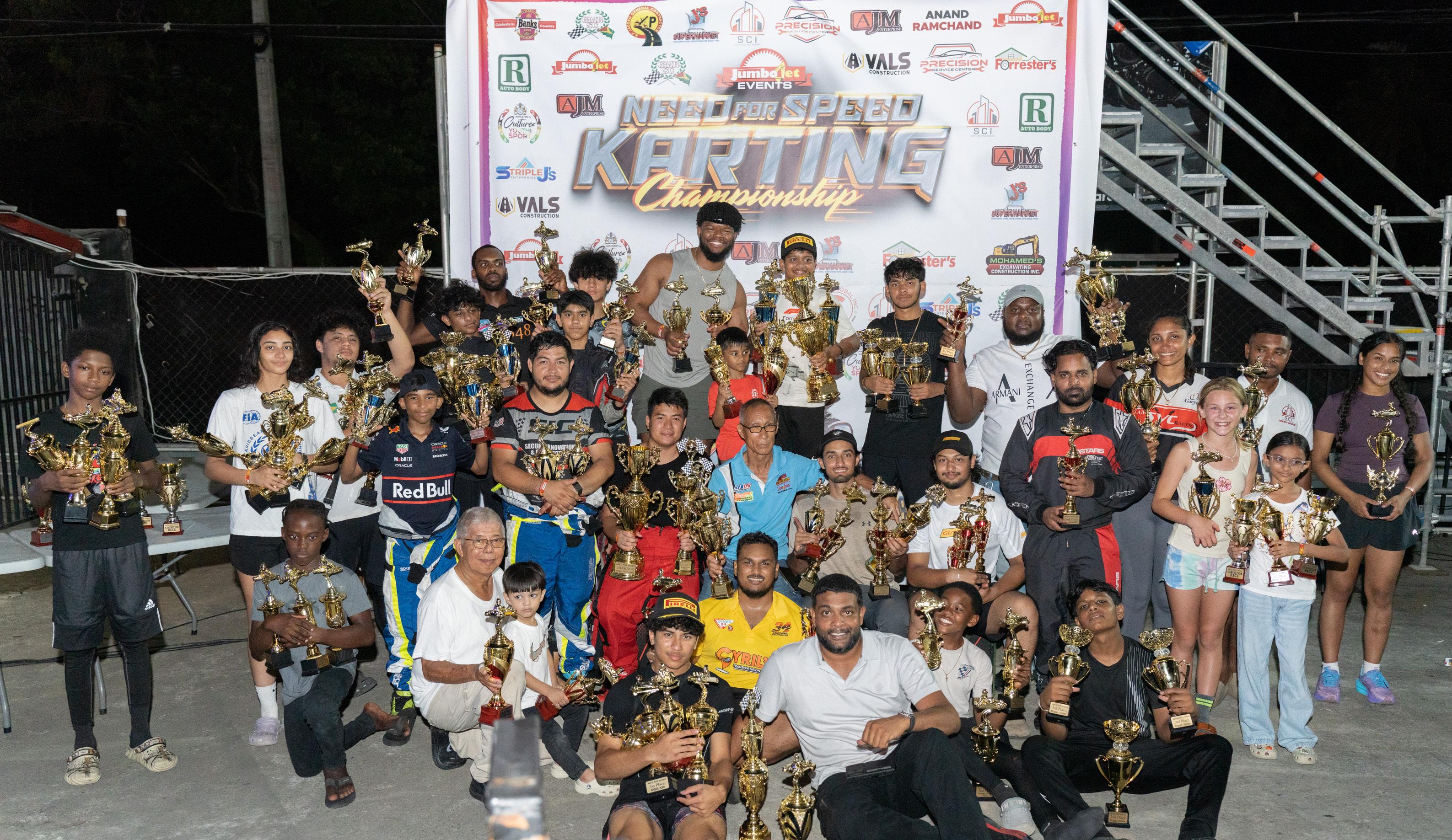
THE weather was not the only scorching thing this weekend as Jumbo Jet Events staged the first round of its Need for Speed Karting Championship at the 555 Speedway in Georgetown.
Jeremy Tenpow, Paige Mendonca, Zachary Persaud, and Asrudeen Mohamed were all successful in their bids to take early leads in their respective classes of the three-round championship.
Tenpow rode to three wins on the day, including the day’s champion rider in the SuperMoto Senior Class. In the first heat, he left Andrew Jordan and Matthew Phang to squabble for second, while in the Pre-Final, Phang got the better of Jordan. A joint second was awarded, and the points were shared between Elan Rahaman and Jordan due
to an error with the flags in the final.
Mendonca was another competitor on the day to rack up three wins and a champion driver of the day trophy in the Female Briggs Class. In the Heat, Pre-Final, and Final, Malicia Lawrence finished second ahead of Mickelly Rahaman.
Zachary Persaud was the ‘top dog’ in the Honda GX200 Class, sweeping the Heat, Pre-Final, and Final.
In the final, he withstood a momentary pressure from Nathan Rahaman midway through the 20-lap fixture and, in the end, comfortably crossed the line; Rahaman finished second, with Aqueel Edwards third. In the earlier Pre-final, the result was the same, while the early-morning heat saw Edwards and Rahaman switch spots.
The largest class of the
day was by far the Briggs & Stratton Senior Light class, which saw Calvin Ming sweep the Heat, Pre-Final, and Final. In the heat, it was Ming ahead of Steven Nobrega and Justin Tenpow, with Tenpow and Nobrega swapping places in the Pre-Final. In the Final, Zachary Persaud moved onto the final step of the podium behind Nobrega and class champion driver Ming.
In the Briggs Senior Heavy, Ming was made to work for his win in the final, pipping Mikhail Persaud to the line in a decision that had officials reviewing video cameras for over an hour due to the closeness of the finish. In the end, Ming crossed the line a half-a-bumper ahead of Persaud with Tenpow, who held Ming off for most of the 20-lap fixture, finishing third. In the Pre-Final, it was
PESIDENT of the Linden Amateur Basketball Association (LABA) Dawn McCammon-Barker has praised the pioneering efforts of the late sports journalist and basketball official Al McDonald Chapman for establishing the association and building a strong representation of the sport in the mining town of Linden.
Tenpow ahead of Ming and Persaud in that order, while in the earlier Heat, Ming took the win ahead of Persaud and Nobrega.
Another unchallenged competitor was Matthew Daby, who swept the Briggs Junior class en route to his champion driver award. He won the Heat ahead of Adam Mohamed, with debutant Amaya Mohamed third, while in the pre-final, he came home ahead of Zane Edwards and Adam Mohamed. The final featured the same order.
Perhaps the most anticipated class was the Cadet class, with future stars on show. And when the dust settled, it was Asrudeen Mohamed who had three commanding wins on the day. He converted from the pole all three times. Mohamed picked up the win in the heat
ahead of Hodges and Seejatan, and went on to take the Pre-Final ahead of Seejatan and William Vieira. The final had Seejatan finishing behind Vieira and Mohamed, who also picked up the champion driver trophy.
In the Veteran class, it was Stanley Ming who won the heat, with Brian Tenpow taking the Pre-final and final, demoting Ming to second on both occasions. Ming won the champion driver class by virtue of the points.
The Rookies had only John Mohamed.
In the opening heat of the IAME X30 125cc, Calvin Ming had the early lead before an opportune move from Tenpow turned a half chance into the lead, which held to the end; Benjamin Phang picked up third. In the Pre-final, the top two remained unchanged with
Denzel Hopkinson returning to the karting podium, while in the Final Justin Tenpow smashed the grid ahead of Ming and Phang, snagging the champion driver trophy. Lashon Lewis made a clean sweep of the Supermoto Jnr class, with Troquille Sealy second and Joshua Holder third in the heat. In the Pre-Final, the other two podium positions were flipped with Holder second and Sealy third while in the final Sealy finished ahead of Holder.
There were also two exhibition races for children 6 and under with Senna Seejatan and Malya Daby both getting trophies. The second round of the championship is billed for September 13 at the Leonora Stadium, with the final round set for December 20 at a venue to be announced.
It was Al Mc who, along with others, established the LABA when he was elected president in 1976, with Frank Fraser as secretary and Neville Rigby as treasurer, to start the administrative arm of basketball in Linden after he was posted as the Chronicle’s Linden sports correspondent in 1975.
McCammon Barker posited, “It is with profound sadness and a deep sense of loss that the Linden Amateur Basketball Association
At a special ceremony held at the Retrieve Hard Court to celebrate the life of ‘Al Mc’, as he was fondly called, the LABA president said, “Today, we pay tribute to a visionary, a pioneer, and a true champion of basketball whose dedication and passion laid the foundation upon which our association continues to thrive. Al McDonald was not merely the founder of LABA; he was the driving force behind the development and growth of basketball in Linden. Through his leadership, commitment, and unwavering belief in the potential of our young people, he created opportunities for generations of athletes to pursue excellence both on and off the court.”
mourns the passing of our founder, Al McDonald. While we mourn his passing, we also celebrate a life that was lived with purpose and service. His legacy is etched in every basketball court, every competition, every championship, and every young athlete who continues to benefit from the opportunities he helped create.”
Al Mc died in a Florida hospital on May 25, following a fire in his apartment on May 10, and his family members are here to celebrate him.
Al McDonald began his career in journalism in 1975 with the Chronicle and would also cover sports for Sports Special and briefly for New Nation, but left for the Los Angeles Olympics in 1984 with his family.
CMC – Pacers Nial Smith and Alzarri Joseph ran through Sri Lanka’s batting lineup to lead a West Indies Select XI to an unbelievable 15-run comeback victory at the Coolidge Cricket Ground here on Sunday.
The duo shared nine wickets between them as Sri Lanka, resuming the fourth and final day of play on 30 for one in pursuit of 124, were skittled out for 108 in 29.5 overs.
Sri Lanka seemed on track for an expected win with Nishan Madushka and Dinesh Chandimal at the crease and the score 46 for one.
But the game took a sudden turn after Smith trapped Chandimal lbw for 19 and then bowled Madushka for 30 to leave them 60 for three.

Smith led the way with 5-30, while Joseph snared 4-41
He followed up by having Dhananjaya de Silva caught behind for one before Joseph joined the demolition by bowling Pasindu Sooriyabandara, while Ojay Shields accounted for the wicket of Sonal Dinusha for four, to leave Sri Lanka in a spot of bother at 68 for six.
Sri Lanka were still favourites to win when Prabath Jayasuriya and Milan Rathnayake carried the score to 89 for six.
However, that advantage disappeared when Smith held on to a return catch to dismiss Jayasuriya for 10 and Joseph bowled Rathnayake for six to reduce them to 93 for eight.
The duo then wrapped up the contest by dismissing Vishwa Fernando and Lahiru Kumara in quick succession to complete a stunning victory.
THE grassroots tapestry of Guyanese cricket found its latest chapter of high drama at the Anna Regina National Stadium on Sunday, as Charity Primary clinched the Essequibo Zone title in the Future Warriors Tapeball tournament, powered by ExxonMobil Guyana.
In a clinical display of modern, short-format chase management, Charity overhauled Lima Sands Primary’s total to secure their spot in the coveted national finals.
Chasing a target of 74 after Lima Sands posted 73-3 from their eight overs, Charity Primary showcased the tactical composure that defined their tournament campaign.
Rovaldo Campbell anchor-dashed his way to an unbeaten 32, anchoring the innings with precision, while the tournament's eventual Most Valuable Player, skipper Troy Botson, provided an essential injection of momentum with a fluent 22.
Despite tidy, solitary breakthroughs from Lima Sands’ Miguel Marcus (116) and Kevin Margow (125), Charity cruised across the line at 78- 2 with an over to spare, completing an authoritative eight-wicket victory.

Paired with his 70 tournament runs, his MVP accolade was a formality.
Beyond the immediate silverware and competitive fires, the tournament’s broader architecture emphasised a progressive shift toward modern development.
The top four finishing institutions were outfitted with comprehensive equipment bags and agility kits, alongside electronic scoring tablets.
The inclusion of digital scoring infrastructure marks an institutional push to introduce grassroots players to digital match metrics, effectively bridging the gap between recreational tapeball and data-driven talent identification.
While the final was a masterclass in control, the third-place play-off earlier in the day provided the tournament’s pure theatre.
In a breathtaking high-scoring heist, Mainstay Lake Primary stunned
Lima Sands’ earlier innings had struggled to fully break the shackles against a disciplined Charity bowling unit. Margow (22*) and Marcus (16*) fought hard to inject late impetus into the death overs alongside an opening hand of 11 from Nameuel Watson, but Charity’s frontline options gave away nothing. Botson led from the front with a stifling spell of 1 for 7, supplemented by Hafeez Yazidyudin (1-8) and Campbell (1-15), to keep the target within manageable territory.
‘Providence
the 2025 champions, C.V. Nunes Primary.
Driven by a spectacular blitz from Anthony Garraway, who hammered a tournament-high 68 off just 20 balls—laced with eight sixes and four boundaries—C.V. Nunes appeared to have put the game out of reach with a formidable 90 for 2.
Yet, Mainstay Lake scripted a remarkable counter-narrative.
Jared Charles matched Garraway's aerial fireworks stroke for stroke, blasting an unbeaten 59 off 26 deliveries, including eight maximums of his own, to guide
his side to 91 for 2 with three balls to spare.
The final block of group matches had earlier set up the afternoon’s narratives.
In the first semi-final, Lima Sands executed a flawless chase against C.V. Nunes, tracking down a target of 69 in just 6.1 overs on the back of Watson’s 16-ball 26* and Margow’s 19*.
In contrast, Charity’s passage to the final was a standard template of defensive dominance; they restricted Mainstay Lake to a meagre 40 before strolling to 41 for 1 in 5.4 overs courtesy of Nickel Garraway (15*) and Batson (13).
The tournament’s individual charts reflected a high standard of junior talent.
Lima Sands’ Watson finished as the zone’s premier accumulator, finishing with 94 runs across four matches at an impressive average of 47.00 and a scoring rate of 174.07.
However, the definitive individual impact belonged to Charity’s skipper, Botson. His 10 wickets across four outings came at a staggering average of 2.50 and an economy rate of 3.12, sending down 32 dot balls— equivalent to more than five overs of unscoreable deliveries.
With the Essequibo crown secured, Charity Primary now advances to the national Champion of Champions tournament scheduled for August/September.
There, they will join Berbice’s St. Therese Primary and Demerara’s West Ruimveldt Primary to contest the ultimate prize: a novelty fixture against the Caribbean Premier League’s Guyana Amazon Warriors.
The Essequibo Zone also featured spirited campaigns from Riverstown, Taymouth Manor, Hampton Court, Good Hope, Sparta, Huis T’ Dieren, Onderneeming, Fisher, Friendship, Capoey, and Suddie Primary.
– says National Stadium GM Asad Ibrahim
By Sean Devers
GENERAL Manager of the Guyana National Stadium at Providence Asad Ibrahim says that the venue will be ready for the ODI series against New Zealand next month.
When Chronicle Sport visited the venue late last week, the outfield looked lush green and in prime condition.
There was also rehabilitation work on the stands, the Media Centre, the Umpire’s room, and the official scorers' room; some of these were be-
ing repainted and are almost complete.
The public washrooms were refurbished and looked similar to those at international venues globally.
Cricket fans can rest assured that the premier cricket venue will be ready for the three ODIs between West Indies and New Zealand from July 11-16, and the Global Super League (GSL), which is scheduled for July 23, with the final being played on Emancipation Day, August 1. As Ibrahim, who is also President of Georgetown

Cricket Association (GCA), told this newspaper during a brief tour of the facility, “Regarding the preparation for the upcoming New Zealand tour, our infield preparation is on schedule, and all is going well. The rainy weather is good for us at the moment; no hindrance. The rain is a blessing and keeps the grass green. The ground, indeed, is in great shape, and we don’t have any issue concerning the preparation.”
Still on the subject of the state of readiness for the upcoming tour, Ibrahim said, “We had an inspection from CWI