

–– Minister Edghill says, urges Corporate Guyana to bolster government’s efforts through education, internships, training partnerships

The newly-commissioned MACORP integrated industrial complex at Covent Garden,
investment described by

President Dr. Irfaan Ali recently met with Naji Khoury, Chief Executive Officer of ATN International, the parent company of One Communication. Khoury, who assumed the post in April, is currently on a familiarisation visit to Guyana. The ATN CEO reassured President Ali of the company’s continued commitment to investing in Guyana’s communications infrastructure, and improving systems. One Communication CEO, Abraham Smith (centre), and other company executives were also part of the meeting (Photo: President Dr.
Ali/Facebook)
EKAA Hrim sounds alarm that Indian workers being controlled amid labour probe
–– Minister Teixeira says in response to ‘concerning, regrettable’ public commentary Parliament sitting set for June 5
–– rejects forced-labour allegations, claims workers being held, left without food

EKAA Hrim Resources
on Thursday claimed that the 37 Indian nationals at the centre of an ongoing labour dispute were being “controlled,” while also alleging that information reaching the company suggested the workers did not know their location and were without food.
According to company consultant Yoganand
Persaud, the whereabouts of the workers, who have been seen publicly alongside Azruddin Mohamed, remain unclear as the company continues attempts to contact them and return to


negotiations.
“We don’t have any confirmation on what is happening, they are being held, but the information suggests that they are there and one of the texts that I have seen, not from our people, but someone who has been communicating with them have shown that they say they don’t know where they are, and that they don’t have food,” Persaud said during a press conference.
The company was at the time responding publicly to allegations made by the workers, who were employed at EKAA Hrim’s Region Seven operations.
During the press conference, company representatives rejected allegations of forced labour, abuse and worker exploitation while insist-

ing that they have been co-operating fully with the Government of Guyana, the Ministry of Labour, the Guyana Police Force, and the High Commission of India in Guyana as investigations continue.
Company representative Karthick Muthuvel said the company remained committed to addressing concerns raised by employees, while engaging openly with authorities.
“We take every one of these concerns seriously. We are not here to argue with our own employees. We are here to put right what needs to be put right, and to co-operate fully with the Government of Guyana,” Muthuvel said.
He added that the company welcomed inspections and maintained close contact with the Indian High Commission.
Persaud also alleged that the workers were being influenced and controlled by individuals who had no legal authority over either the employees or the company.
“These people are here, they’re being controlled by an individual that [sic] don’t have the authority to deal with this company, that don’t have the authority to have them in this position, because these are Indian nationals, they were given a work permit to work with the employer, they were taken without the consent or permission of the employer, they were not informed when they took the employees away,”
Persaud said.
Persaud went further, alleging that the workers were not under the control of any government ministry, but rather under the control of others.
“These are Indian nationals. We don’t have access to them. I don’t think they are in the ministry or any ministry’s control or possession. They are in the control and possession of the Opposition Leader,” Persaud said, while being grilled by reporters.
He further claimed that misinformation and threats were surrounding the issue as the matter continues to attract widespread attention on social media.
“What is happening, and what is being carried on social media is a distraction. There are a lot of threats being made by different people. I think that these workers have been used,” Persaud added.
According to Muthuvel, EKAA Hrim Quarry has consistently operated “responsibly, ethically and in accordance with applicable laws, regulations and operational standards,” while prioritising employee welfare and safety.
Addressing allegations of unpaid wages, the company said all salary obligations up to and including March 2026 had been fully settled, while payments for April and days worked in May would be paid during the course of the month.
Representatives also
- Minister Edghill says, urges Corporate Guyana to bolster government’s efforts through education, internships, training partnerships
By Shaniya Harding
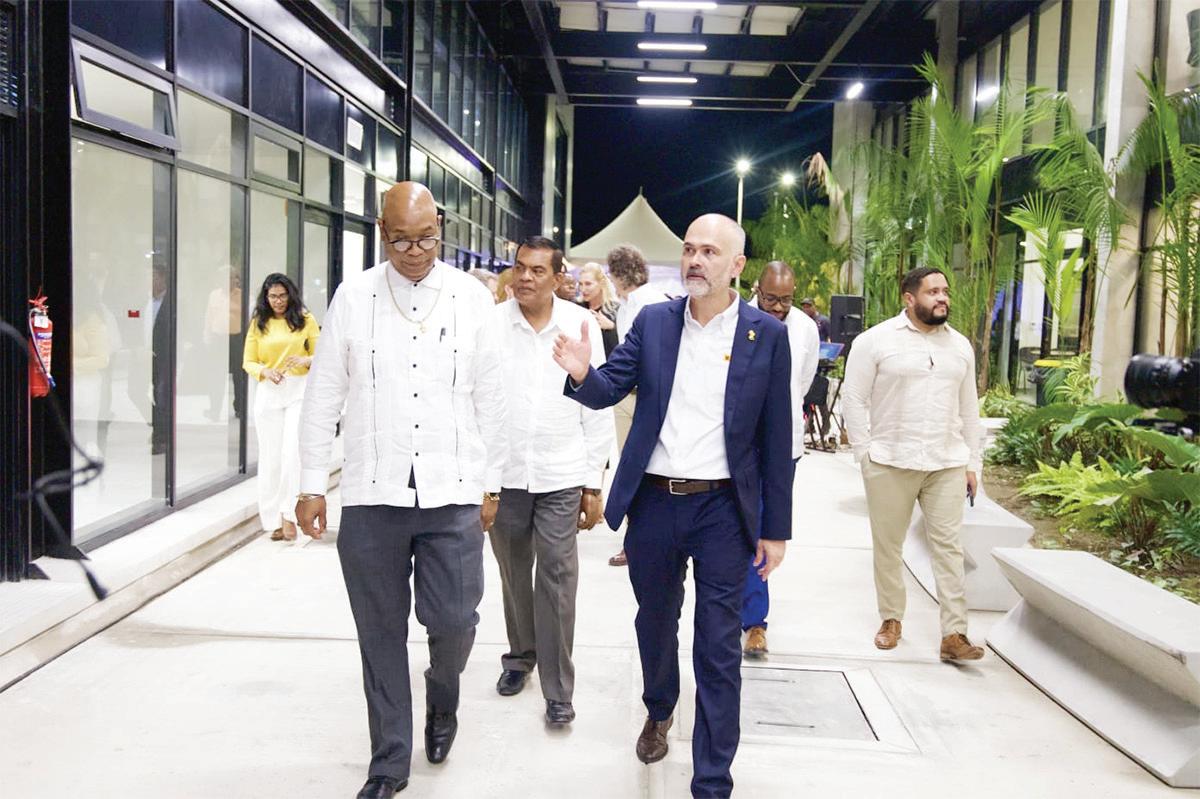
A NEW US$35 million integrated industrial complex commissioned by Machinery Corporation of Guyana (MACORP) Guyana Inc at Covent Garden was on Thursday hailed as another major vote of confidence in Guyana's economic transformation.
Doing the honours was Minister of Public Works Bishop Juan Edghill, who couldn’t help but note that the country's expanding infrastructure, mining, agriculture and industrial sectors will increasingly depend on reliable heavy-duty equipment, technical expertise, and skilled local labour.
The facility spans more than 450,000 square feet across seven specialised buildings, and was described by company officials as a long-term investment designed to strengthen equipment support services, technical training and operational capacity in Guyana, while serving as a hub for advanced diagnostics, maintenance and engineering support for industries across the country.
Delivering the feature address, Minister Edghill welcomed the facility as yet another powerful signal of growing confidence in Guyana, noting that a multi-million-dollar investment in equipment, logistics and human resources reflects assurance in the country's long-term development prospects.
Emphasising that heavy-duty machinery and skilled expertise are both vital to the country's ongoing transformation, he said, "All of this progress requires machinery, generators, heavy-duty equipment, and specialised technical support. It requires excavators, cranes, bulldozers, graders, loaders, tractors, forklifts, power systems, and countless other forms of industrial equipment that drive productivity and development."
The minister noted that the growing demand for such equipment is a direct reflection of broader expansion across Guyana's infrastructure, construction, agricultural, mining and industrial sectors, but stressed that skilled personnel are equally critical.
"Heavy-duty machinery is only as effective as the technicians, engineers, mechanics, and operators behind it. That is why the development of technical skills and engineering expertise must become a national priority," he said, adding, "As Guyana advances, we will need more trained Guyanese in technical and engineering fields, more mechanical engineers, electrical engineers, industrial technicians,

welders, machinists, hydraulic specialists, equipment operators, and maintenance professionals.
We will need young people who are capable not only of using modern machinery, but also of troubleshooting, servicing, and maintaining them."
Encouraging companies within the engineering and industrial sectors to invest in scholarships, technical training and partnerships with educational institutions, Minister Edghill said that as international companies expand their operations in Guyana, local workers must not remain only operators but must also become engineers, technicians, supervisors and innovators.
"I would like to see more companies, especially those involved in the supply and servicing of heavy-duty machinery, invest in the teaching and development of Guyanese talent. Corporate Guyana must recognise that investment in people is just as important as investment in buildings and equipment. We need more apprenticeships, internships, and structured on-the-job training opportunities," he said.
Further, he said, "There are many talented young Guyanese with the potential to become excellent engineers and technicians, but who may lack the resources or opportunities to pursue specialised training. Corporate partnerships may help bridge that gap through scholarship funds, vocational programmes, and technical training initiatives."
On the respective roles of government and the private sector, he said, "Government is doing its part to strengthen technical and vocational training by investing in training institutions, expanding access to programmes, and creating opportunities for skills development.
We are building a world-class technical training college in Port Mourant, and we are strengthening technical education across Guyana.”
He added, "We need the private sector to become a stronger partner in workforce development by offering internships, mentorships, and hands-on training opportunities. This is not only good corporate citizenship, it is also smart business. A stronger local workforce means greater productivity, lower dependence on imported labour, and stronger long-term economic growth."
Meanwhile, President of MACORP German Consuegra, in his address, called the facility the result of the company's long-term commitment to Guyana. He noted that the complex boasts more than 10,500 cubic yards of concrete, over 550 tonnes of structural steel, and 40 kilometres of electrical cable deployed throughout the site, with more than 120,000 square feet of insulated roofing installed to improve thermal efficiency and acoustic insulation.
"This facility incorporates advanced hydraulic and environmental management systems, including rainwater harvesting and reutilisation, wastewater treatment and disposal systems, flood mitigation pumping systems, and engineered drain solutions specifically designed for Guyanese environmental conditions and heavy intense rainfall patterns," he highlighted.
The site is further supported by two Caterpillar C15 generators capable of producing about 600 kVA each, operating in synchronism to automatically support the facility's power demands, alongside advanced HVAC systems, fire protection, and next-generation voice and data networks. Consuegra was keen to highlight the facility's learning centre as one of its most important components, saying:
"This centre operates under a Caterpillar technician career development programme, accredited by Caterpillar, designed to develop highly specialised technical talent. Throughout the

years, MACORP has continuously trained young Guyanese technicians, offering them a professional career that begins shortly after they graduate from vocational schools, and progressively develops them into certified specialists that can support the increasingly complex systems that are running in the country."
Vice-President of Distribution Latin America at Caterpillar Inc., Pablo de la Iglesia, said the investment reflects a long-term belief in the strength of the Guyanese market and goes beyond bricks and mortar to represent a commitment to people.
"Caterpillar's success around the world is built on strong dealerships; dealers who know their customers, who stand by them in good times and challenging ones, and who invest to ensure they can deliver world-class solutions and support. Today's inauguration
is a powerful example of that commitment in action," he said.
He noted that the facility strengthens the company's collective ability to better serve customers through improved serviceability, advanced technology and enhanced safety, adding, "It enables faster response, higher uptime, and the level of excellence our customers expect from the Caterpillar brand. Facilities and equipment matter, but it's the talent, integrity, and dedication of our dealer teams that truly differentiate Caterpillar in the marketplace."
Director-General of the Ministry of Public Utilities and Aviation Alfonso de Armas closed the proceedings with remarks underscoring the broader economic significance of the investment.
He said it delivers "direct employment at this new complex, as well as indirect
employment across the suppliers, the contractors, haulers, cleaners, caterers, and security firms that orbit a facility of this size, Guyanese jobs, paid in Guyanese dollars, taxed in Guyana, and spent in Guyana".
On skills transfer, he added that for a country on the cusp of a fantastic transformation, having "Caterpillar-Certified Technicians, straight here at home, means that a generation of young Guyanese engineers who do not have to leave the country to learn their trade, and the generation of Guyanese employers do not have to import that expertise at foreign rates".
He described the investment as a signal to firms watching from Bogota, Houston, São Paulo, and Port of Spain that
is a country worth
and one that means to stay
denied allegations relating to poor living conditions and inadequate meals at the mining camp.
Muthuvel said employees were provided with three meals daily, prepared by chefs from India following consultations with workers on dietary preferences and nutritional needs.
“Meal planning was conducted in direct consultation with the employees,” he said, while noting that food-preparation activities were monitored internally through
photographic records and communication systems.
Regarding accommodation, the company said workers were housed in facilities equipped with fans, ventilation, sanitation facilities and weather protection.
Muthuvel stated that additional structures were later added at the camp to reduce heat exposure and improve comfort for workers during rest periods.
The company also defended its handling of transportation and employee mobility, saying

workers were routinely transported to Bartica and Georgetown for shopping, medical appointments and personal matters.
According to the company, records were maintained documenting employees’ requests for travel and transportation arrangements.
Representatives further rejected descriptions of the company’s labour practices as “forced labour” or “slavery,” while denying claims that workers’ passports were confiscated.
“Every individual employed at the company’s
Region Seven operations was engaged under a voluntary written employment contract. No employee was compelled to remain at the site against their will,” Muthuvel stated.
Another company representative explained that employees deposited their passports at the office for safekeeping and were able to access them whenever necessary.
It was noted that the company maintained a ledger documenting the release and return of passports whenever workers requested them for bank-
ing and other personal matters.
The company further argued that employees were not isolated, noting that workers travelled regularly to Bartica, Georgetown and nearby communities during weekends and holidays.
Muthuvel also claimed employees participated in recreational and community activities, including cricket matches and cultural events in Batavia Village.
The workers’ passports were subsequently returned following intervention by the Ministry of Labour.
Investigations into the matter are still ongoing.
“The allegations made against the company are factually inaccurate and are directly contradicted by the documented record presented here,” he said. The company’s response comes after the group of Indian nationals raised concerns over long working hours, poor living and working conditions, low salaries, and the handling of their travel documents.

MINISTER of Parliamentary Affairs and Governance, Gail Teixeira, has clarified that the government has already planned a sitting of the National Assembly for June 5, while expressing concern over recent public comments made by members of the diplomatic community regarding sittings of Parliament.
Minister Teixeira made this known during a video address, during which she stated that it was “regrettable” that some ambassadors, embassies and high
commissions commented publicly without first engaging the government on the matter.
According to the minister, had such an engagement occurred, officials would have been informed that a parliamentary sitting had already been scheduled.
“I’ve noticed the comments in the media from various ambassadors in the diplomatic corps of Guyana regarding sittings of parliament,” Minister Teixeira said.
She added, “Had they done that, they would have
‘concerning,
been told that there was a sitting planned for June the 5th.”
She went on to note that the government, as the ruling party in the National Assembly, remains responsible for advancing the legislative agenda and ensuring the functioning of Parliament in keeping with the country’s democratic processes.
Against this backdrop, she underscored the importance of balanced engagement and mutual respect in diplomatic relations, particularly on matters concerning Guyana’s inter-
nal parliamentary affairs.
“It seems to be like a new style of diplomacy where our friends and allies in these embassies believe they should only listen to one side of the story and not listen to the other side, and the other side, in this case, is the government,” she said.
With this, she emphasised that the government values its relationships with members of the diplomatic corps and hopes future engagement on parliamentary matters will be “much more profound and respectful.”

FORMER APNU+AFC
Finance Minister Winston Jordan has acknowledged that rising prices and cost-of-living pressures are affecting countries globally and are not unique to Guyana.
Jordan was speaking during a live programme and he pointed to international economic factors, including tariffs and oil prices, as contributors to the rising costs being experienced by consumers worldwide.
“What is taking effect right now is the inflation,” Jordan said, as he noted that the impact of “humongous tariffs” and oil prices are driving up prices in supermarkets and malls.
Jordan said he was surprised by the increase in prices in the United States at certain retail chains traditionally viewed as affordable options for lower-income consumers.
“Even that is beginning to be outside the reach of the average person when it comes to certain things,

because there’s nothing cheap anymore in the Walmarts and the Targets,” he said.
He went on to note that he was able to compare prices over decades of travel to the United States, dating back to 1982.
“Over time, I’ve been able to compare prices,” Jordan said while reflecting on the significant increase in the cost of goods.
Jordan’s remarks signal that the issue of rising costs is not an issue affecting Guyana only, but one

that affects the world, even larger, more developed countries.
His comments also mirror assessments from international financial institutions and economists who have pointed to global supply-chain disruptions, geopolitical tensions and higher energy costs
as key drivers of inflation worldwide.
Governments across both developed and developing countries have faced mounting pressure over food prices, transportation costs and other consumer expenses following the global economic shocks.


THERE was a time in Guyana when getting a small loan felt harder than building a house.
Ordinary citizens walked into banks only to be met with endless paperwork, impossible collateral requirements and long waits, often leaving with disappointment instead of financing.
Today, that reality is changing rapidly and the numbers do not lie.
As Guyana celebrates 60 years of independence next week, the country is witnessing not just economic growth, but a complete transformation of its financial landscape under the leadership of President, Dr Irfaan Ali.
What was once considered a small banking system serving a limited economy is now evolving into a modern financial hub attracting some of the world’s biggest institutions and billions in investment.
Guyana’s total stock of foreign direct investment (FDI) now stands at approximately US$34.72 billion, equivalent to around 35 per cent of the country’s Gross Domestic Product (GDP).
According to the International Monetary Fund (IMF), Guyana’s economy expanded by an extraordinary 43.8 per cent in 2024, followed by 19.3 per cent growth in 2025. The IMF is now projecting another 16.2 per cent growth in 2026 and 19.7 per cent in 2027.
In fact, Guyana is now outperforming countries across the Caribbean and Latin America by a massive margin. While many economies globally continue battling inflation, debt pressures and slow recovery, Guyana is driving regional growth almost single-handedly among commodity-exporting economies.
To put that into perspective, billions of US dollars are now flowing into Guyana through oil and gas, infrastructure, tourism, logistics, technology and banking.
And global institutions are taking notice.
International financial giants such as Citibank, Crown Agents Bank and One American have all moved to establish operations or representative offices in Guyana. Longstanding institutions such as Scotia-
bank, Republic Bank and Bank of Baroda are expanding services because Guyana is no longer a market to ignore.
Why does this matter to the average citizen? Simple. More money in the banking system means more opportunities for ordinary people.
For decades, thousands of Guyanese were locked out of financing because they did not own transport, land or expensive assets. Under the current administration, that system is being challenged. Through the Guyana Development Bank, small entrepreneurs, vendors, farmers and young business owners can now access loans of up to G$3 million with zero interest and no collateral.
Yes, zero interest. No land title, no connections.
At the same time, Guyana is entering the digital age of banking. FAST PAY, launching on June 2, will allow citizens to transfer money instantly between banks using their phones. The partnership with India to implement the Unified Payments Interface (UPI) system means the days of standing in long bank lines and walking
around with large amounts of cash may soon become history.
Even more importantly, the financial system is beginning to recognise something many hardworking Guyanese always knew: character matters. Citizens can now build creditworthiness through paying their Guyana Power & Light (GPL), Guyana Water Inc (GWI) and phone bills on time through EveryData Guyana.
That is real progress.
As Guyana celebrates its Diamond Jubilee, the country is not only waving flags and hosting festivals. It is witnessing the construction of a modern economy in real time. Roads are expanding, hospitals are rising, international banks are arriving and opportunities once reserved for a few are becoming accessible to many more citizens.
At 60, Guyana is no longer merely surviving. This small South American country is competing, modernising and positioning itself as a global economic force.
And once again, the numbers do not lie and imagine how our nation is going to be 60 years from now.
IN a Facebook post last Wednesday, Terrence Campbell noted that there must be a grand coalition of churches, political parties, trade unions and civil society groups to oust the PPP from power. One of the destructive instincts of opposition personalities is the absolute and complete lack of obligation on their part to provide answers to people they want to attract, people they want to listen to them and people they advise to denounce the government.
As I write this piece, perennial critic of the government from Red Thread, Vanda Radzik comes to mind. Ms. Radzik is an advocate against oil production. She was part of a group that that wrote the president demanding that oil production be stopped because of climate destruction (see my column on this for last Wednesday).
When the BBC programme, HardTalk came to Guyana, the host interviewed Ms. Radzik. He asked her if she expects Guyana to forsake the billions of American dollars it earns from the oil industry and leave the oil in the ground. Ms. Radzik told the host that there are two spectrums. One is to leave the oil in the water, the other to get a better contract from EXXON.
Ms. Radzik never transmitted to her interviewer what her position was. And she had a perspective which she conveyed to President Ali. To date Ms. Radzik has never explained why she withheld telling HardTalk what her position was. She does not feel she has an obligation to the people she appeals to. This is the barefacedness of so many of
those whose constituencies they address each day but deliberately choose not to offer explanations to those same constituencies. Terrence Campbell is part of this school. The general election of 2025 was a mere nine months ago. Months before the election, Mr. Campbell was part of an effort to get an APNU+AFC coalition with a consensus candidate from outside the coalition.
Mr. Campbell in fact was a lone actor trying to get the PNC leader, Mr. Norton, to accept a non-PNC candidate for the coalition on behalf of the AFC. He told the media that he promised the AFC to metaphorically break the hand of Aubrey Norton to secure coalition reality.
There was no agreement between APNU and AFC and a number of parties contested the election on their own. There was no opposition unity. Mr. Campbell himself was touted by Nigel Hughes as a consensus candidate. For the first half of 2025, Mr. Campbell was in the camp of the AFC only to become an APNU candidate in July 2025.
So here is Mr. Campbell now offering the wish that there be a grand coalition that must happen if the PPP is to be removed. Nine months have gone by since the general election and in those nine months Mr. Campbell has published a daily Facebook post on which he ruminates on everything under the sun and the moon but never his thoughts on why opposition parties went into the election separately.
He has only once given his take for the collapse of talk between APNU and AFC. He noted that the PNC offered a 65/35 pow-

er-sharing formula which the AFC rejected. But why the PNC wanted 65/35? Why was the AFC unhappy with that? He was closely involved in the effort to broker a covenant, so he needs to level with the people of Guyana why he thinks a 65/35 formula was workable or not.
Since he composes a daily Facebook page, why doesn’t he explain to the Guyanese people the reason he chose to be an election candidate for ANPU and not AFC with which he had an episodic working relation for years? It simply boggles the mind that opposition figures could take to Facebook and YouTube and appeal to people to listen to them but never offer explanations to them.
Do they think these people are robots thus they do not deserve answers? Last year, I asked Campbell a question that based on
context any political commentator would ask in any country in the world. My curiosity was that now he is the head of the APNU’s parliamentary group would he shake President Ali’s hand. Here is what Campbell did. He took the column in which I asked that question and posted it on his Facebook page. He never answered my question.
But why does Campbell feel that people who like and admire him are not interested in knowing his position on the shake-hand issue? I think almost 99 percent of the people that support Terrence Campbell would like to know how he feels about the shake-hand issue.
DISCLAIMER: The views and opinions expressed in this column are solely those of the author and do not necessarily reflect the official policy or position of the Guyana National Newspapers Limited.
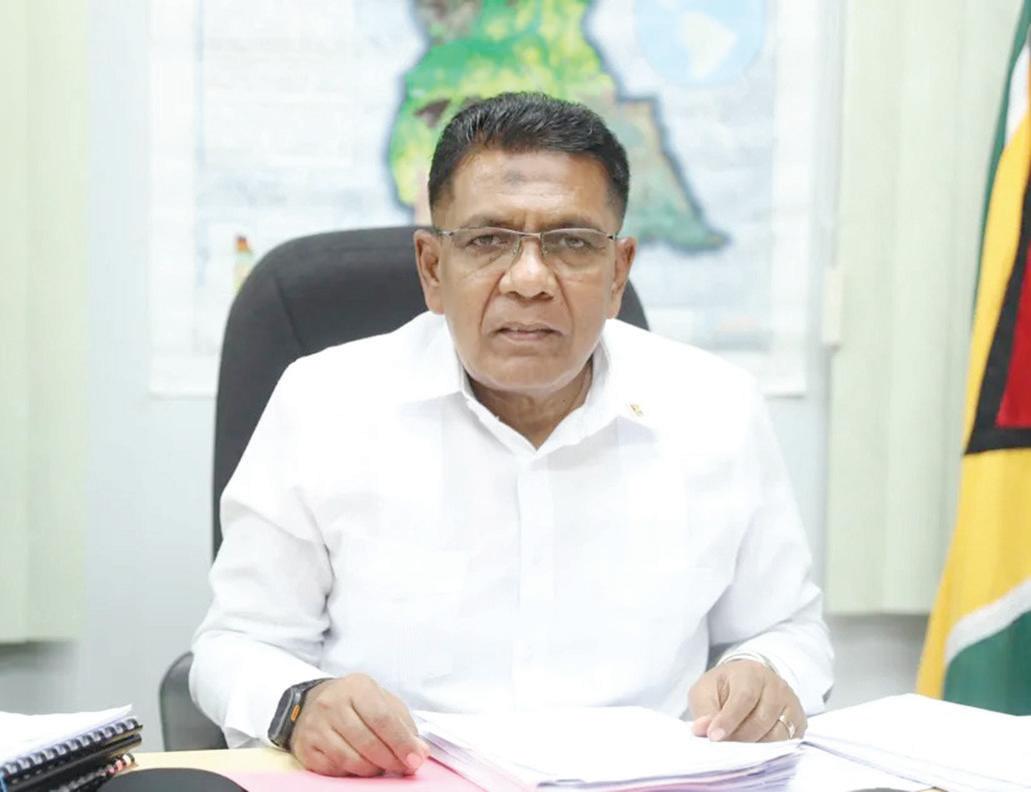
MINISTER of Agriculture Zulfikar Mustapha has said that the government is advancing plans to develop an industrial hemp industry in Guyana, with Regions Six and Ten identified for hemp cultivation once a processing plant is established.
The agriculture minister disclosed that the Guyana Industrial Hemp Regulatory Authority is now operational and a Chief Executive Officer has already been appointed to oversee the sector.
According to Minister Mustapha, several overseas companies have al-
ready expressed interest in investing in the industry, particularly in establishing a hemp processing facility in Guyana.
“So, what we are doing now…is that two regions were identified to plant hemp. Those two regions are Region Six and Region Ten. We have an authority now in place. We have a CEO in place. We already have some interests already being expressed by some companies overseas,” according to the minister.
He explained that large-scale cultivation cannot proceed until a processing facility is operational.
“We are now in discussion with those companies to set up the processing plant. I am hoping that
that can happen within another three to four months because you can’t plant hemp without a processing plant,” Minister Mustapha
stated.
The minister said the government has already received three to four expressions of interest from investors and is hoping to move the process forward once a suitable company is selected.
The Industrial Hemp Bill, previously tabled in the National Assembly, seeks to provide for the cultivation, manufacturing and research of industrial hemp and hemp-related products in Guyana.
The legislation also provides for the establishment of the Guyana Industrial Hemp Regulatory Authority, which will
regulate the industry.
Industrial hemp is often confused with marijuana because both belong to the cannabis family. However, hemp contains significantly lower levels of tetrahydrocannabinol (THC), the psychoactive compound responsible for the “high” associated with marijuana.
Government officials have previously said the development of the industry could create opportunities in agriculture, manufacturing, and exports while opening new economic avenues for farmers and investors. (DPI)
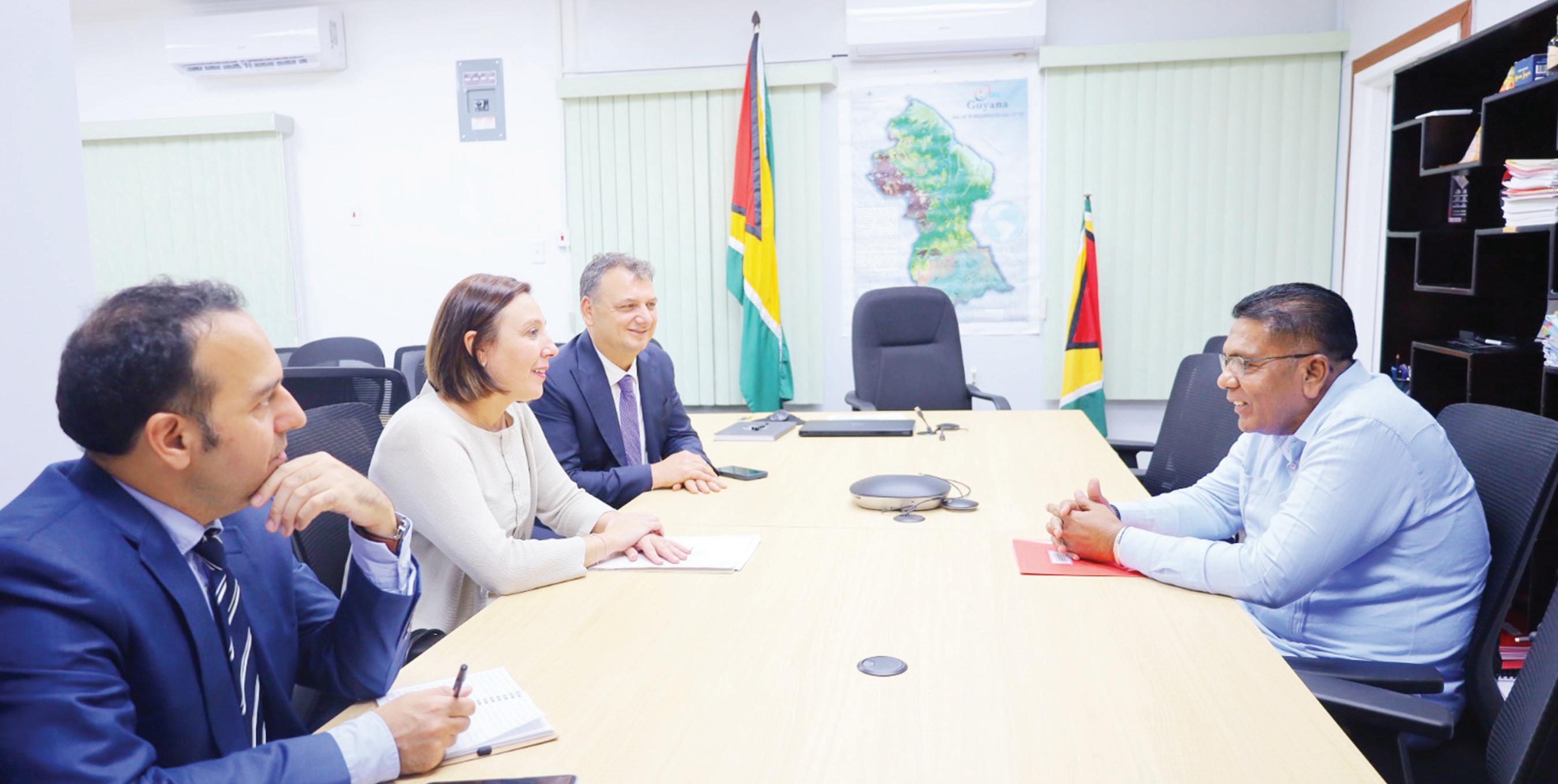
AGRICULTURE Minister Zulfikar Mustapha on Thursday received a courtesy call from the newly appointed non-resident Ambassador of the Republic of Italy to Guyana, Giuditta Giorgio. During the engagement, the officials discussed areas of mutual interest and opportunities for co-operation to further advance Guyana’s agricultural sector. Minister Mustapha highlighted Guyana’s ongoing transformation agenda in agriculture, with particular emphasis on investments to strengthen agro-processing and expand the use of technology across the sector. He also spoke about the government’s efforts to move Guyana beyond being primarily a producer of raw agricultural commodities to becoming a regional powerhouse in agro-processing and valueadded production. The minister also outlined the significant advancements made in both traditional and non-traditional agricultural industries, noting that strategic investments and targeted policies continue to drive diversification, enhance productivity, and create new economic opportunities. The discussions also explored potential areas for collaboration that can support innovation, technology transfer, and the continued development of Guyana’s agricultural landscape. Also present during the meeting were Mr. Emanuele Di Girolamo, Commercial and Cultural Attaché at the Embassy of Italy in Panama, and Mr. Vittorio de Sanctis de Ferrari, President of the Italian–Panamanian Chamber of Commerce, Industry and Agriculture (MoA photo)
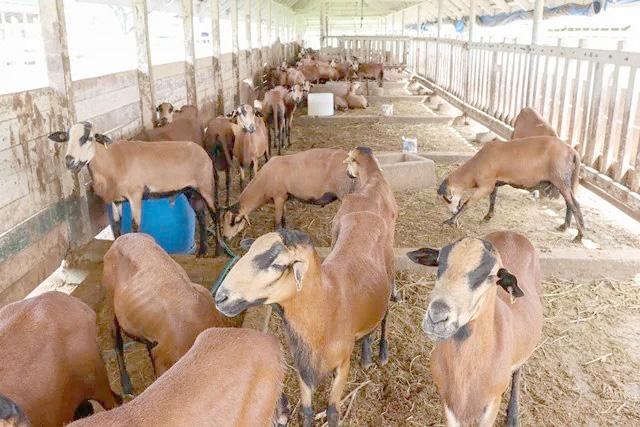
THE government continues to strengthen its livestock sector through the expansion of the Black Belly Sheep Programme, which has significantly increased local production and reduced reliance on imports.
Minister of Agriculture Zulfikar Mustapha, in an interview on Monday with the Department of Public Information (DPI), said the programme has been a success since its introduction.
According to the minister, Guyana initially received 1,000 Black Belly sheep from Barbados and has since expanded the national herd to just over 3,000 animals.
He explained that the initiative is now focusing on cross-breeding the local sheep.
The minister noted that more than 500 farmers across the country have already benefited from the programme through the distribution of breeding rams and other support, enabling them to establish and expand their own flocks.
He said the livestock development agenda aims to reduce dependency on imports while boosting local production.
“The Black Belly Sheep programme has been a success. We have received from Barbados 1000 Black Belly sheep
and today we have just over 3000 in the system. Over 500 farmers have benefited and have started their own flocks,” the minister said.
He further highlighted ongoing interventions in the livestock sector, including artificial insemination, embryo transfer, and the upcoming importation of 1000 pregnant heifers to strengthen both beef and dairy production.
“The government is intensifying its livestock development efforts through artificial insemination and embryo transfer. For the first time in our history, we are undertaking embryo transfer to improve productivity, and we will soon

import 1000 pregnant heifers to boost beef and dairy production,” he added. Minister Mustapha also pointed to growing private sector involvement, including a major dairy investment by Demerara
Distillers Limited (DDL) in partnership with an Israeli company, as well as the establishment of a pasteurised meat plant by local farmers in Region Five.
He said these developments, combined with government interventions, are expected to significantly transform Guyana’s livestock industry and increase national food production capacity. (DPI)





THE closely watched elections fraud trial continued on Thursday before Acting Chief Magistrate Faith McGusty at the Georgetown Magistrates’ Courts.
During the proceedings, certified copies of the Statements of Poll (SoPs) and Statements of Recount (SoRs), including those from Regions One, Two, and Three, were formally tendered, marked, and admitted into evidence.
Police Inspector Nigel Stephens, who is attached to the Criminal Investigation Department (CID) headquarters, took the witness stand and gave testimony concerning the handling, storage and identification of certified electoral documents linked to the March 2020 General and Regional Elections.
During his testimony, Stephens told the court that he recalled events surrounding May 28 and 29, 2021, when he became involved in matters relating to election materials.

Asked by Prosecutor Madana Rampersaud whether he remembered May 29, 2021, Stephens responded, “Yes, sir,” before explaining, “I recall the 29th day of May. I went to the Supreme Court.” He added, “I went to the Supreme Court. I went to Sueanna Lovell, the Registrar, and I spoke to her about the purpose of my visit. A verification exercise then commenced.”

The inspector testified that he acted on the basis of instructions received and later became involved in the collection and verification of certified copies of SoPs and SoRs. The prosecutor questioned him extensively about the verification process and the chain of custody of the documents after they came into the police’s possession.
Stephens told the court that after receiving the certified copies, the materials were secured and remained protected. He confirmed that the documents were placed in safes and indicated that the safes were secured within a designated storage area.
When questioned about whether he had shared access to the safes, he indicated that neither the keys nor combinations were given to others.
Rampersaud also sought to establish whether the integrity of the election documents had been maintained from the time they were collected.
When asked whether he or anyone in his presence had tampered with the contents of the SoPs or SoRs from the time they were collected to the present, Stephens answered in the negative.
He also confirmed that he had received instructions from prosecutors in relation to the certified copies to be presented in court.
As the hearing progressed, the court examined packages containing certified election records for Region One, with Stephens identifying markings he said enabled him to recognise the documents.
“Yes, those are the same packages,” Stephens told the court when shown documents related to Region One. He further confirmed that his signature and certification markings appeared on the documents being presented.
The proceedings later moved to Regions Two and Three records, with the prosecutor asking Stephens to inspect additional SoPs and identify markings used to authenticate them.
The court heard that both general and regional elections SoPs formed part of the exhibits admitted into evidence.
Throughout the proceedings, Acting Chief Magistrate McGusty oversaw the examination and formal marking of exhibits as prosecutors continued building their evidentiary case surrounding allegations of attempts to manipulate election results.
The trial is expected to continue today with further testimony from Lovell.
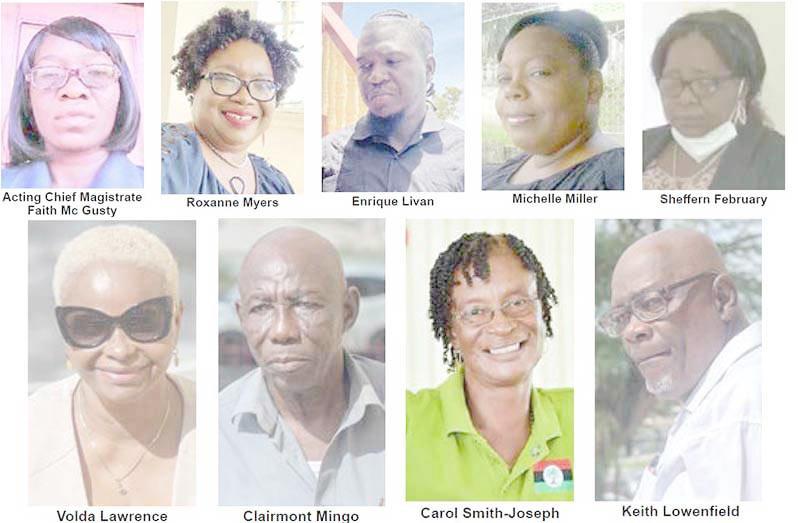
Those on trial include former Chief Elections Officer (CEO) Keith Lowenfield; former Deputy CEO Roxanne Myers; former Region Four Returning Officer Clairmont Mingo; former Health Minister Volda Lawrence; and People’s National Congress Reform (PNCR) member Carol Smith-Joseph. Also facing charges are former GECOM staffers Michelle Miller, Sheffern February, Enrique Livan, and Denise Babb-Cummings.
The defendants collectively face 19 charges, in -
cluding conspiracy to defraud and misconduct in public office. Each has entered a plea of not guilty and was released on significant cash bail.
The prosecution, led by King’s Counsel Darshan Ramdhani, has argued that the defendants each played a “critical role” in attempts to inflate votes in favour of the then-incumbent A Partnership for National Unity and Alliance for Change (APNU+AFC) coalition while reducing votes for the People Progressive Party/Civic (PPP/C).
Initial results announced by Lowenfield had declared an APNU+AFC victory, with 171,825 votes against the PPP/C’s 166,343. However, after five months of litigation and a Caribbean Community (CARICOM)-supervised recount, the PPP/C was declared the winner with 233,336 votes to APNU+AFC’s 217,920, paving the way for Dr. Irfaan Ali’s swearing-in as president on August 2, 2020.
The fallout from the election controversy led to the termination of Lowenfield’s, Myers’, and Mingo’s contracts at GECOM in August 2021.
The Presidential Commission of Inquiry (CoI) into the events of the 2020 General and Regional Elections have found that there were collusion and collaboration between senior GECOM officials to divert votes to the APNU +AFC instead of safeguarding and preserving the integrity of the electoral system.


ON Thursday, Acting Chief Justice Navindra Singh granted judicial review relief in favour of the Special Organised Crime Unit (SOCU), quashing the decision of Magistrate Clive Nurse to dismiss a gold smuggling case against Brazilian national Osmil Costa Da Silva for want of prosecution.
The matter had been dismissed on the basis that the prosecution had failed to provide a Portuguese interpreter for Mr. Da Silva. The High Court, however, clarified that under Article
144 of the Constitution of Guyana, the responsibility to ensure that an accused person is provided with an interpreter rests with the Court, a release issued by SOCU said.
It explained that on May 25, 2025, Mr. Da Silva appeared before Acting Chief Magistrate Faith McGusty, and was charged with the offence of Possession of Gold by a Person not being a Producer, contrary to Section 7(2) of the Guyana Gold Act, Chapter 66:01. On the same day, the case was adjourned and transferred to the Mahdia


Magistrates’ Court before Magistrate Nurse for trial.
On a subsequent date, the prosecution was informed that it was required to have a Portuguese interpreter present at the next court sitting for Mr. Da Silva, the Agency said, adding that on March 23, 2026, when the case was called for hearing, its prosecutors sought to commence the prosecution’s case with the assistance of a Portuguese interpreter.
Defence Counsel Ms. Latchmie Rahamat, however, objected to that interpreter being used on the basis that the interpreter had previously assisted SOCU during the investigative stage of the case, and was, therefore, not independent. The objection was upheld, and the prosecution was directed by the Magistrate to secure another Portuguese interpreter.
According to the release, when the case was again called on April 20, 2026, SOCU prosecutors appeared with several witnesses, and sought an adjournment, explaining that efforts were being made to secure another interpreter, including through the Brazilian Embassy.
Ms. Rahamat objected to the adjournment, contending that the matter had been fixed peremptorily, and that further delay would waste judicial time. Magistrate Nurse, thereafter, dismissed the case for want of prosecution, even though three witnesses were present in court.
SOCU subsequently filed judicial review proceedings in the High Court, seeking declarations, an order for the appointment of an independent interpreter, and an order of certiorari quashing the dismissal of the charge against Mr. Da Silva.
In those proceedings, Magistrate Nurse indicated that the Court’s approach may have proceeded on a mistaken understanding of the obligation to provide an interpreter, and welcomed guidance from the High Court on the proper procedure to be adopted where interpretation services are required in the Magistrates’ Court, the release said.
Chief Justice Navindra Singh, in handing down the ruling of the High Court on Thursday, reasoned that “the Learned Magistrate did not disclose a defence,
and, in fact, waffles between advancing a defence and conceding that the Court was obligated to provide an interpreter”.
He commented that “SOCU Prosecutors being present with several witnesses made it very difficult to understand how the case could have been dismissed for want of prosecution, and that it was truly disingenuous to say that though you are in a position to prosecute today, your failures to be in such readiness in the past, when I did not dismiss, will today bear down upon you”, according to the release.
In granting relief, the High Court held that Article 144(2)(f) of the Constitution of Guyana makes clear that an accused person who requires an interpreter must be afforded that facility without payment, and that the responsibility to ensure that this is done rests with the Court. The dismissal was, accordingly, quashed, and costs were awarded in the sum of G$50,000.00 to be paid by Magistrate Clive Nurse to SOCU.
The head of the Special Organised Crime Unit (SOCU), Deputy Commissioner Fazil Karimbaksh emphasised that it is unfortunate that SOCU had to resort to court action again to ensure compliance of Magistrate Clive Nurse, since Magistrates should not act illegally, irrationally, arbitrarily, and exercising their discretion wrongly in law, especially when justice is involved, since Magistrates are creatures of statute, and are bounded to comply with statutes when exercising their discretion and statuary duties in the administration of Justice.
According to the release, the Deputy Commissioner further lamented that it’s disgusting and unfair that his agency, SOCU, has to be resorting to court action regularly against Magistrates, and having their decisions being overturned by a higher court because of failure to comply with the laws they are appointed to adjudicate on. SOCU was represented by Attorney-at-Law Mr. David Brathwaite, and Attorney-at-Law Mr. Darin Chan, while Magistrate Nurse was represented by State Counsels from the Attorney-General’s Chambers.
THE Suriname-Guyana Chamber of Commerce (SGCC) has welcomed the recent engagement between Her Excellency Jennifer Geerlings-Simons, President of the Republic of Suriname and His Excellency Dr Mohamed Irfaan Ali, President of the Co-operative Republic of Guyana, who described the discussions as a positive and encouraging signal for the future of bilateral co-operation, trade, private sector engagement, and regional integration between the two neighbouring countries.
Following the meeting, President Geerlings-Simons noted that discussions focused on
“the further strengthening of socio-economic co-operation between Suriname and Guyana,” including collaboration in oil and gas, fisheries, and navigation on the Corentyne/ Corantijn River, the release said adding that Her Excellency further stated that both countries “will also actively involve the private sector in further co-operation processes.”
President Ali similarly emphasised the importance of deepening bilateral ties, noting the countries’ “shared commitment in deepening our partnership and friendship to ensure further economic co-operation, expansion of trade, and integration of our economies.”
For SGCC, the statements reflect the growing recognition that Suriname and Guyana are uniquely positioned to build a stronger and more connected economic corridor through sustained co-operation, improved connectivity, and greater private sector engagement, the release said. It added that as a bilateral business support organisation operating across both markets, SGCC believes that continued dialogue and practical co-operation between Suriname and Guyana are essential to creating a more predictable, connected, and opportunity-driven environment for businesses operating within the corridor.

For SGCC members and the wider private sector, stronger bilateral engagement can help unlock greater cross-border trade, investment facilitation, joint ventures, logistics and supply chain opportunities, improved market access, and deeper
regional value chain integration across key sectors driving growth in both economies.
According to the release, the Chamber particularly welcomes the recognition of the private sector as an active stakeholder in
future co-operation efforts and remains committed to supporting initiatives that strengthen business-to-business engagement, cross-border partnerships, and regional integration between Guyana and Suriname.

and Minister of Legal Affairs Anil Nandlall, SC, recently said the final report released by the Carter Center on Guyana’s 2025 General and Regional Elections validates a series of electoral reforms introduced following the controversial 2020 elections.
He said the report also highlights that further constitutional changes remain an ongoing process.
Speaking on his weekly programme ‘Issues in the News.’ on Tuesday night, Nandlall described the Carter Center’s May 14 report as “a good report” that highlighted several “very crucial issues” relating to the conduct of the elections and the tabulation of results.
“The report observed that election-day voting in Guyana was generally well conducted, calm, and orderly, with most polling stations opening on time,
adequate materials in place, and procedures properly followed throughout the opening, voting, closing, and counting,” Nandlall said.
According to the Attorney General, the Carter Center’s assessment effectively “ticked all the boxes” in relation to the management of polling day activities.
He added, “The entire voting process from beginning, from the opening of
polls to the close of polls, they said was properly done, orderly, calm, with sufficient materials, et cetera.”
Nandlall said too that the report also addressed the tabulation of results against the backdrop of the disputed 2020 elections, which he described as a “horrendous experience” that damaged public confidence in the electoral system.
He noted that the Car-

– AG says, notes changes helped ensure results reflected ‘the will of the people’
ter Center acknowledged reforms aimed at decentralising the tabulation process and increasing transparency.
Quoting the report, Nandlall said the Carter Center found that “the tabulation of results in Guyana’s 2025 elections took place against the backdrop of deeply contested 2020 tabulation process, which had eroded public trust and prompted legal and procedural reforms aimed at decentralisation and greater transparency.”
He said the changes were deliberately introduced to prevent a recurrence of the controversial Region Four tabulation process at the Ashmins Building in 2020, which had sparked widespread scrutiny over the handling of results in Guyana’s largest voting district.
“They have acknowledged new procedures, new legal reforms intended to

decentralise that tabulation process, that fiasco — that fraudulent fiasco that occurred at the Ashmins Building — and to bring greater transparency to that process,” he said.
The Attorney General further pointed to the Carter Center’s conclusion that legislative amendments introduced after 2020 had strengthened the electoral framework.
“Overall, the legislative changes made to the tabulation process following the 2020 elections were positive and contributed to a more efficient and transparent tabulation process that better ensures results announced reflect the will of the people as expressed on election day,” Nandlall quoted from the report.
Describing those observations as “highly commendable statements,” Nandlall said the findings reflected the impact of reforms implemented by the government.
He also highlighted observations from Carter Center monitors regarding improvements in transparency during tabulation.
According to Nandlall, observers reported that tabulation in 2025 “was generally conducted in a reasonable or very good manner across all tabulation centres, with improved transparency through the public posting of SoPs [Statements of Poll] at polling stations and their timely upload to GECOM’s website for public scrutiny.”
He explained that the public posting of SoPs and the requirement to upload them before tabulation commenced were among new legal provisions introduced after the 2020 crisis.
“All of these are new measures that we incorporated into the law,” Nandlall said.
While acknowledging that the procedures contributed to some delays, he said the report recognised that the system functioned effectively overall.
He noted, “While the new procedures, particularly [the] requirement to upload all SoPs before beginning tabulation, contributed to delays, the system functioned efficiently with few technical issues and allowed observers and the public to follow the results closely.”
Addressing criticism that reforms had not advanced sufficiently, Nandlall rejected suggestions that recommendations from
previous elections had been ignored.
“These are the fruits of the reform. And yet, you’re hearing that we have not done any reform, that we have slept on recommendations made in relation to prior elections,” he said.
The Attorney General maintained that government remains committed to implementing “most” recommendations from election observers’ reports, but cautioned that some changes require constitutional amendments and broader public engagement.
Nandlall explained, “As we stated, we are committed to implementing most of these recommendations. But they have to be done in stages. Some require constitutional interventions.”
He said constitutional matters have been left to the Constitutional Reform Commission, which has been tasked with engaging citizens and recommending reforms through a consultative process.
“The Constitutional Reform Commission is extant, up and running, and is doing its business,” he said, while disclosing that discussions are advancing on an outreach programme to facilitate consultations “across the lengths and breadths of Guyana.”
Nandlall described electoral reform as an evolving process, expressing confidence that significant progress would be achieved before the next election cycle.
“So, the process is an ongoing one.
By the time the next election’s cycle come around, we will have accomplished most of the tasks which we have set ourselves,” he said.
By Faith Greene
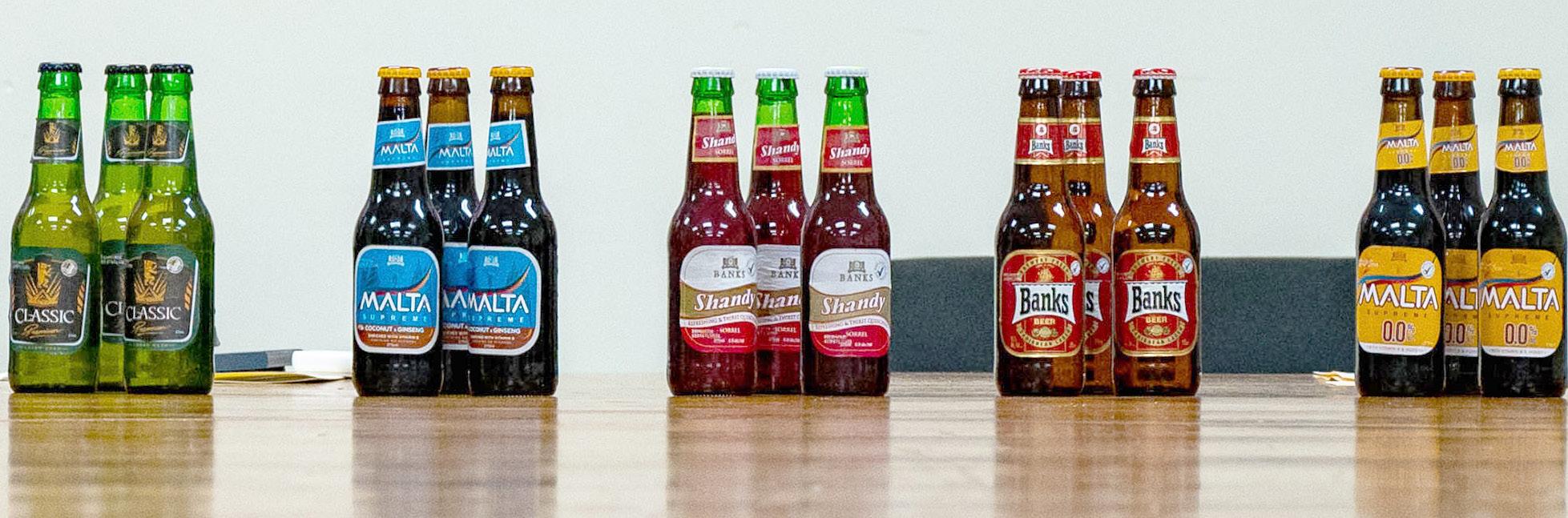
BANKS D.I.H has announced that five of its flagship products have received the Monde Selection International Gold Quality Award -- one of the world’s most respected, independent product-quality certifications.
This achievement coincides with the company’s 70th anniversary which is being held under the theme, ‘Celebrating the Origins of Our Heritage.’
At its Thirst Park, Ruimveldt Headquarters on Thursday, the Banks team said that this milestone is not being celebrated for the company, but for manufacturing in Guyana.
Banks’s Brew Master, Matthew Kendall said this is a proud moment for the brewery, not because it is announcing international recognition, but because it is celebrating Guyanese excellence, innovation, craftsmanship, and world- class quality.
“Awards of this calibre are never accidental,” Kendall said, “They are a result of scientific precision, disciplined manufacturing, innovation, uncompromising quality system and the dedication of exceptional people.”
According to Kendall, these awards confirm to Banks’ loyal customers that their products are crafted with care, consistency, and uncompromising quality.
“These are not just product awards; these are awards for Guyanese manufacturing excellence. Today we celebrate the success of these brands that reflect the diversity, innovation, and technical capability of Banks D.I.H Limited,” Kendall expressed.
The five outstanding beverage products that have been awarded the Monde Selection Gold Quality Award include Banks Beer, Classic Premium Lager Beer, Sorrel Shandy, Malta Supreme Coconut and Ginseng, and Malta Supreme Zero Zero.
Banks Beer is Guyana’s iconic flagship lager brand and has been a part of the fabric of our nation since 1955 and has, for years, been synonymous with consistency, refreshment, and national pride. At 4.5 AVB, the beer delivers the crisp, refreshing lab profile that consumers have come to love.
At 5.0 ABV, Classic Beer is a full-bodied, premium lager that is the blend of two premium malt varieties that contribute to its rich, full-

malty character, the hallmark of a premium quality beer.
According to Kendall, it is a true lager beer, and undergoes the essential labyrinthian process, allowing the flavours to mature fully and harmoniously, resulting in a distinctive burst of aroma and character from the first sip to the last.
“At less than 0.9 per cent alcohol, Sorrel Shandy captures one of the Caribbean’s most iconic seasonal flavours in a light, sparkling experience that is distinctively Caribbean. Sorrel is associated with celebration, culture, and shared memories, and this award-winning beverage transforms the beloved flavour into a modern, refreshing offering. With its deep, ruby appearance, floral hibiscus aroma, tangy, fruity sorrel character, gentle malt sweetness, and refreshing tropical finish, Sorrel Shandy is both nostalgic and contemporary,” he said.
Innovation, he emphasised, continues with Banks’s Malt Supreme Coconut and Ginseng, which offers inclusive enjoyment for all ages. Finally, Malt Supreme Zero Zero (0.0 per cent), a premium alcohol-free malt beverage that delivers all the richness of a classic malt drink without alcohol. It is a product that is rich in natural Vitamin B, crafted with honey and locally produced sugar, reflecting both nutritional value and strong local manufacturing capabilities.
He said that this international recognition sends a powerful message, that products made in Guyana can compete with the very best of the world.
Banks, he notes, remains committed to investing in innovation, technical excellence, manufacturing capabilities, and products that authentically reflect the sprit, creativity, and quality of Guyana.
Banks’ Communication
Executive Sonya Forrester
said that this award is not seen as a destination, but a mark of Banks’ continuous improvement journey.
As a company Banks believes that this standard is not a one-time achievement, but a permanent feature of the company and how it operates.

By Faith Greene
THE Carnegie School of Home Economics (CSHE) has been opened for 93 years. It is an institution that has offered endless opportunities to Guyanese.
It has grown alongside Guyana, upskilling all those who would have walked through its door expressing an interest in learning skills in cooking, housekeeping, cosmetology, interior design, and care.
The CSHE has a distinguished legacy and was
established in 1933 with a grant from the Carnegie Trustee. It was under the visionary leadership of its first Principal, Ms. Briant, that the CSHE secured essential governmental support in 1937, which laid the foundation for its growth.
In its initial phase, CSHE was known as the Carnegie Trade School and was founded with the primary objective of providing practical vocational training, particularly to young women.
The institution aimed to equip its students with
critical skills that foster employment, self-sufficiency, and enhanced family and community life.
Emphasising areas such as garment construction, catering, and home economics, the school provided public services, including custom-made garments and large-scale catering.
It was said that the founders envisioned a comprehensive institution that integrated education, technical training, and community service.
Principal Dr Sharmaine
Marshall recently told this newspaper that a significant transition occurred in 1958 when the trading section was phased out. This led to a rebranding of the institution as the Carnegie School of Home Economics.
This transformation emphasised the goal of equipping students with vital skills related to family and community life.
In the 1960s, there was a further expansion of the school’s mission as it began training educators in Home Economics.

“The introduction of a dedicated Catering Department in 1971 marked a pivotal advancement, offering specialised training in Food Preparation and Service. From 1988 to 1990, the programme benefitted from substantial enhancements through the support of the Association of Canadian Community Colleges and the Canadian International Development Agency,” Dr Marshall said.
Additionally, as the new millennium approached, Carnegie embraced innovation by launching programmes in General Cosmetology and Garment Construction, supported by the Social Impact Amelioration Project.
Today, Carnegie upholds its tradition of excellence and service, consistently updating its programmes and expanding opportunities for its students.
As the school embarks on a journey of rebranding and institutional growth, the CSHE head said that the school is “well- positioned to meet the evolving demands of the Tourism, Hospitality, and related industries, promising a bright future ahead.”
Carnegie has largely been successful in achieving its original objectives over the years. Since its inception, the Carnegie School of Home Economics has consistently provided practical and professional training in areas such as catering, garment construction, cosmetology, and home economics.
The school has equipped quite a number of students with employable skills, contributed to personal and community development, and adapted its programmes to meet the evolving needs of society and industry.
Carnegie’s ongoing expansion and modernisation efforts reflect an unwavering commitment to fulfilling its founding purpose and allows Guyanese to build new skills with its newly upgraded programmes as the demands of the hospitality and tourism industries continue to increase.
Asked about common misconceptions, the principal said the CSHE is frequently misunderstood as an institution exclusively offering traditional home economics training or programmes tailored solely for women.
“In truth, the institution has undergone significant transformations and now presents a diverse array of professional and technical programmes. These programmes encompass disciplines such as Hospitality, Catering, Cosmetology, Garment Construction, and various other skill-based fields.
Additionally, there is a misconception that CSHE

focuses solely on domestic skills. The institution is actually dedicated to preparing students for a wide range of career paths, entrepreneurship opportunities, and continuous professional development,” Dr Marshall related.
Through the continuous modernisation of its curriculum and training, the CSHE remains aligned with the evolving demands of today’s workforce and industry standards.
Looking to the future, it was said that the Carnegie School of Home Economics is moving toward a more decentralised operational model across Guyana. This strategic shift, according to Marshall, will provide the institution with greater autonomy in decision-making in areas such as programme development, resource management, and curriculum updates.
As a result, the school will be better equipped to respond to the needs of the tourism, hospitality, and other related industries, while also strengthening partnerships with local businesses and training agencies.
Overall, this decentralisation aims to enhance Carnegie’s flexibility, efficiency, and alignment with labour market demands.
The Carnegie School of Home Economics is open to a diverse mix of learners. These attendees include school leavers seeking practical and vocational skills after completing secondary education; adults looking to enhance their skills or acquire new competencies for employment or self-employment and Individuals interested in technical and vocational training across various fields.
This inclusive approach fosters a dynamic learning environment, catering to the educational needs and aspirations of all students.
AROUND 30,000 people have had to flee their homes in the Haitian capital Port-auPrince and surrounding areas following a new wave of violent attacks and atrocities perpetrated by armed gangs over the past ten days.
Much of the violence has been concentrated in Cité Soleil, an impoverished neighbourhood in the capital, where humanitarian workers are now seeking to provide life-saving assistance.
The Caribbean island nation continues to suffer from years of insecurity and deep-rooted poverty as well as a collapsing economy and political turmoil following a presidential assassination.
Here’s what two women who fled the violence told the UN World Food Programme (WFP).
ANIDETTE SAINT FLEUR FROM QUARTIER BLANCHARD (CITE SOLEIL)
“There was shooting everywhere. Then they set a fire very close by and we ran away with the whole family.
We didn’t go back to our homes. The gangs are everywhere in the area. We only had time to leave with our ID documents. We haven’t gone back since.
I always keep a bag ready, just in case. When I hear heavy shooting, I grab my bag and flee with everyone.
I had just paid my rent and we had to flee. Now we have nothing — no money, no roof — and we don’t know if or when we’ll be able to return. Please help us.
Not having a roof to sleep under and food
for the children is the hardest thing for us right now.”
DORLEAN
BOUDIN, RESIDENT OF SARTHE, CARREFOUR VINCENT NEAR CITE SOLEIL
“There were men with machetes setting fire to houses with people inside. They burned, beheaded, shot, killed — and if you had a shop, they looted everything.
The situation was already very difficult for me. I had very little money. I couldn’t buy food because I had to save money in case of emergency, to flee. We stayed without eating so we could save for transport to escape.
I need to restart a small business to raise the children. I need help with food to feed them, and to buy water because we don’t have any.”
WFP has already reached 8,500 newly displaced people from Cité Soleil with emergency food assistance, while nine WFP-supported schools serving about 12,000 students have been forced to suspend meal distributions.
WFP’s Janvier Muhima said people were being provided with food supplies including rice, pulses oil and fortified flour so they can feed themselves during this period of displacement.”
Across the country, over 1.4 million people, more than 12 per cent of the population, have been forced to leave their homes, mainly due to criminal violence.
Port-au-Prince has become the epicentre of violence, with up to 90 per cent of the city believed to be under the
control of gangs.
The recruitment of children has reportedly surged, with some estimates indicating that children now comprise 30–50 per cent of some gangs. (UN)



- FAO outlines urgent measures, policy recommendations to avert severe crisis within six to 12 months
THE closure of the Strait of Hormuz is not a temporary shipping disruption but the beginning of a systemic agrifood shock that could trigger a severe global food price crisis within six to 12 months.
Avoiding such an outcome will require alternative trade routes, restraint on export restrictions, protection of humanitarian flows, and buffers to absorb higher transport costs, the Food and Agriculture Organization of the United Nations (FAO) has warned.
The time has come to "start seriously thinking about how to increase the absorption capacity of countries, how to increase their resilience to this choke, so that we start to minimise the potential impacts," FAO Chief Economist, Maximo Torero, said in a new podcast published on Wednesday.
This involves exploring "intervention by governments, by international financial organisations, by the private sector, and by UN agencies and other research centres to try to help countries to be able to cope better with the current situation," Torero said.
According to FAO, the window for preventive action is closing quickly. Decisions taken now by farmers and governments on fertiliser use, imports, financing, and crop choices will determine whether a severe global food price crisis emerges within six to 12 months.
The impact is already visible. The FAO Food Price Index, which tracks monthly changes in the international prices of a basket of globally traded food commodities, rose for a third consecutive month in April, driven by high energy costs and disruptions linked to the conflict in the Middle East.
The shock is unfolding in stages: energy, fertiliser, seeds, lower yields, commodity price increases, then food inflation.
Mitigating these impacts will require shifting to alternative land and sea routes, including via the eastern Arabian Peninsula, western Saudi Arabia and the Red Sea, said David Laborde, Director of FAO’s Agrifood Economics Division. However, these routes have limited capacity, making it critical to avoid export restrictions by major producers.
This is especially critical for safeguarding humanitarian food flows, Torero added.
The situation could worsen with the onset of El Niño, which is expected to bring droughts and disrupt rainfall and temperature patterns across several regions.
FAO has compiled a series of policy recommendations designed to deal with the Strait of Hormuz crisis.
Short-term recommendations:
-Rapidly secure alternative land and sea corridors to bypass
Hormuz - this won’t resolve the magnitude of the supply shock of inputs but will help to marginally reduce it.
-Avoid export restrictions, especially on energy, fertilisers, and inputs.
-Exempt food aid from trade curbs.
-Promote in emergency interventions intercropping (cereals + legumes) to cut nitrogenous fertiliser use and provide major nutritional, environmental, economic, and agronomic benefits.
-Activate social protection programmes, drawing on lessons from Latin America.
rapid disbursement and expand financing for food and fertiliser imports. The Food Import Financing Facility is designed for this and the implementation in 2022 of the food shock driven window should be reactivated.
-Use fast-track financing and increase grants for debt-distressed countries through existing mechanisms of MDBs and IFIs.
Long-term recommendations:
-Diversify ports, corridors, storage, and logistics systems globally to reduce chokepoint risks in the future.
-Build regional reserves and warehousing capacity to strengthen future shock absorption.
-Improve the resilience of domestic and cross-border transport systems.
-Use concessional financing to accelerate diversification of the energy mix and expand irri-

-Avoid blanket subsidies, which create significant fiscal pressures and tend to be regressive; instead, prioritise targeted support for the most vulnerable through digital registries that can efficiently direct assistance to vulnerable rural households and smallholders, particularly in Africa.
According to FAO, the window for preventive action is closing quickly, with decisions taken now by farmers and governments determining whether a severe global food price crisis emerges within six to 12 months (FAO/Giulio Napolitano)
Medium-term recommendations:
-Avoid boosting biofuel demand during shortages to limit food–fuel competition.
-Ensure energy policy responses do not exacerbate food crises.
-Expand affordable credit for farmers and agribusinesses through second-tier institutions to provide credit lines to reach SMEs, MSMEs, and value-chain actors. These lines should be of low interest emergency credit, with repayment schedules aligned to harvest periods and with at least six to nine months of grace periods.
-Combine agricultural loans with guaranteed offtake agreements from aggregators, processors, or public buyers.
-Use digital farmer registries and mobile money systems, as implemented in Mozambique and Peru, for rapid disbursement.
-Integrate informal farmers into different forms of horizontal coordination (farmer associations, farmer groups, cooperatives, etc.) to improve access to finance and support and take the crises as an opportunity to formalise farmers through digital registries.
Provide facilities for balance-of-payments, support of
gation by replacing diesel with electric and solar-powered systems, particularly for irrigation.
-Expand the use of electrified machinery, drones, and precision agriculture technologies.
Improve efficiency through soil mapping and precision application to reduce fertiliser waste and increase nutrient-use efficiency.
-Develop innovation funds to support green ammonia, biostimulants, crop genetics, and nutrient-efficiency technologies. While this will take three to five years, it will significantly strengthen long-term resilience.
-Coordinate with fertiliser companies to develop shared soil and fertiliser mapping systems based on agreed common standards.
Support crop switching, intercropping, and fertiliser efficiency improvements rather than pursuing full system overhauls.
Strengthen macroeconomic resilience to food inflation and import shocks.
-Expand the use of early warning systems, insurance, and monitoring mechanisms to act before crises escalate. This is even more urgent given the high probability of a strong El Niño event. (FAO)

THE University of Guyana Early Childhood Centre of Excellence (UG-ECCE) is celebrating another significant international achievement after its Director, Dr. Lidon Lashley, received an international prestigious award for Excellence in Research Review and Analysis at the 2026 International Association for Laboratory Schools (IALS) Conference held recently in Finland.
Dr Lashley, who serves on the IALS Research Committee and represented the UG-ECCE at the international
conference, was recognised for his outstanding contribution to research review and analytical scholarship in the field of inclusive education.
His participation at the conference also highlighted the growing impact of the University of Guyana’s research agenda and the pioneering work being conducted through the UG-ECCE.
While in Finland, Dr Lashley presented research emerging from the UG-ECCE that examined how the education of Guyanese special education teachers is shaped
by historical legacies, competing educational approaches and sociocultural realities that continue to obstruct functional inclusive education in Guyana and across the wider Global South.
His presentation explored how global movements toward inclusion and neurodiversity intersect with local realities such as systemic inequalities, limited resources, poverty, displacement, entrenched social attitudes, Indigenous and migrant experiences, and evolving forms of disabilities and neurodivergence. The
research also examined the lived experiences of inclusive education practitioners and children with additional needs within these contexts.
Importantly, the presentation underscored the UG-ECCE’s ongoing efforts to model culturally sensitive and research-driven approaches to inclusive education within Guyana’s multicultural society. Through its work, the Centre continues to address gaps in curricula, pedagogy, cultural capital and innovative thinking while challenging traditional approaches that often exclude vulnerable populations.
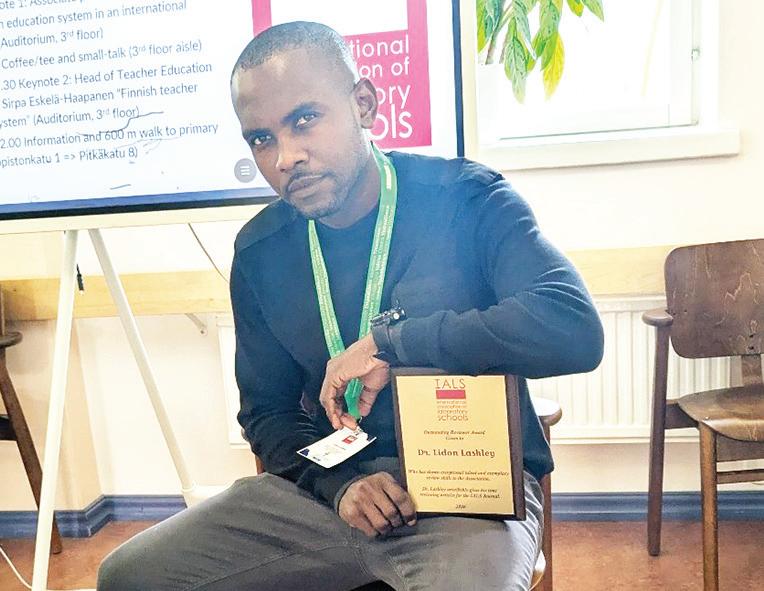
Dr Lidon Lashley proudly displays his Award for Excellence in Research Review and Analysis at the 2026 International Association for Laboratory Schools (IALS) Conference in Finland
Reflecting on the award, Dr Lashley described the recognition as both personal and professionally affirming. “The University of Guyana Early Childhood Centre of Excellence has focused on inclusive education practices, pedagogies, principles and philosophies from its commencement of operation and research in 2022,” he explained.
He noted that the growing population of children with disabilities, neurodivergence, additional needs, and diverse sociocultural backgrounds at the Centre requires careful research and context-based analysis to ensure effective responses and evidence-based practice. “Personally, this award shows that my efforts for inclusive early childhood developmentally appropriate practices at UG-ECCE are recognised globally. Professionally, it bridges global research collaboration and the exchange of good practices, even organic experiences conceptualised at UG-ECCE,” Dr Lashley said.
During his engagement at the conference, Dr Lashley also addressed some of the major barriers affecting inclusive education in Guyana. According to him, one of the greatest challenges is the absence of a Guyanese or Global South conceptualised framework for inclusive education that reflects the country’s sociocultural realities.
He further explained that colonial legacies continue to influence education systems through “engrained meritocracy, ableist and elitist ideologies” that often marginalise children with disabilities, neurodivergence and additional needs.
Additionally, he highlighted how exclusionary attitudes and institutional limitations continue to obstruct a true sense of belonging for many children across educational settings in Guyana and the wider Caribbean.
Dr Lashley stressed that understanding the lived realities of children from Indigenous, migrant, disadvantaged and other underrepresented backgrounds is critical to transforming education systems.
The award also shines a spotlight on the expanding body of research being conducted through the UG-ECCE, which has become an important hub for discussions surrounding inclusive education practices in Guyana, the Caribbean and beyond.
According to Dr Lashley, the Centre continues to drive conversations and awareness through research, public engagement and practical interventions aimed at reshaping how inclusive education is understood and implemented. “Through research discourses across Guyana, the Caribbean and globally and enhanced parental awareness conversation framed through the research and practices at the UG-ECCE, we are helping to transform thinking and practices surrounding inclusive education,” he explained.
He added that the future of inclusive education depends on understanding evolving forms of diversity and disability in order to develop new pedagogies, policies and practices capable of creating meaningful inclusion for all learners.
Dr Lashley’s achievement reflects not only his personal commitment to advancing inclusive education research, but also the University of Guyana’s growing reputation as a centre for innovative scholarship and socially responsive research.
The University of Guyana congratulates Dr Lidon Lashley on this outstanding international recognition and commends his continued dedication to advancing inclusive education research and practice locally, regionally and globally. Please visit the UG-ECCE website to learn more about the work Dr Lashley and his team are conducting: https://ecce.uog. edu.gy/research-professional-development.
The University of Guyana, through its students, faculty and research institutes, has consistently produced path-breaking research which continues to add to the existing body of knowledge in various areas of academic research. [University of Guyana release]
NINETEEN-year-old
Jaden Jaleel Ettienne of Amelia’s Ward, Linden, has been remanded to prison after being charged with possession of a firearm without a licence.
Ettienne appeared before Magistrate Omadatt Chandan at the Le-

them Magistrate’s Court on Tuesday, May 19, 2026, where the charge, laid under Section 16(2) (a) of the Firearms Act, Chapter 16:05, was read to him.
He pleaded not guilty and was remanded to prison until July 13, 2026.
The charge stems from an intelligence-led police operation conducted on Monday at Hiawa Access Road, Central Rupununi on Monday.
Police said ranks, acting on information received, went to a ranch in the area, where three men were contacted and searched.
During the operation, officers searched a hammock in which Ettienne was lying and allegedly discovered a Glock 26 9mm pistol along with an empty magazine.
He was subsequently arrested and escorted to the Lethem Police Station along with the firearm, which was lodged.
POLICE have seized more than 700 grams of suspected cannabis and cash during an intelligence-led operation at Bartica, Essequibo River, on Wednesday night.
According to a police release, the operation was
conducted around 20:00 hrs after ranks acted on information received involving a 27-year-old labourer of Albouystown, Georgetown and Sixth Avenue, Bartica, who was already in police custody in relation to a traffic of-
fence.
Police escorted the suspect to a hotel at First Avenue, Bartica, where a search was carried out on a room he was reportedly occupying.
During the exercise, ranks discovered a bulky
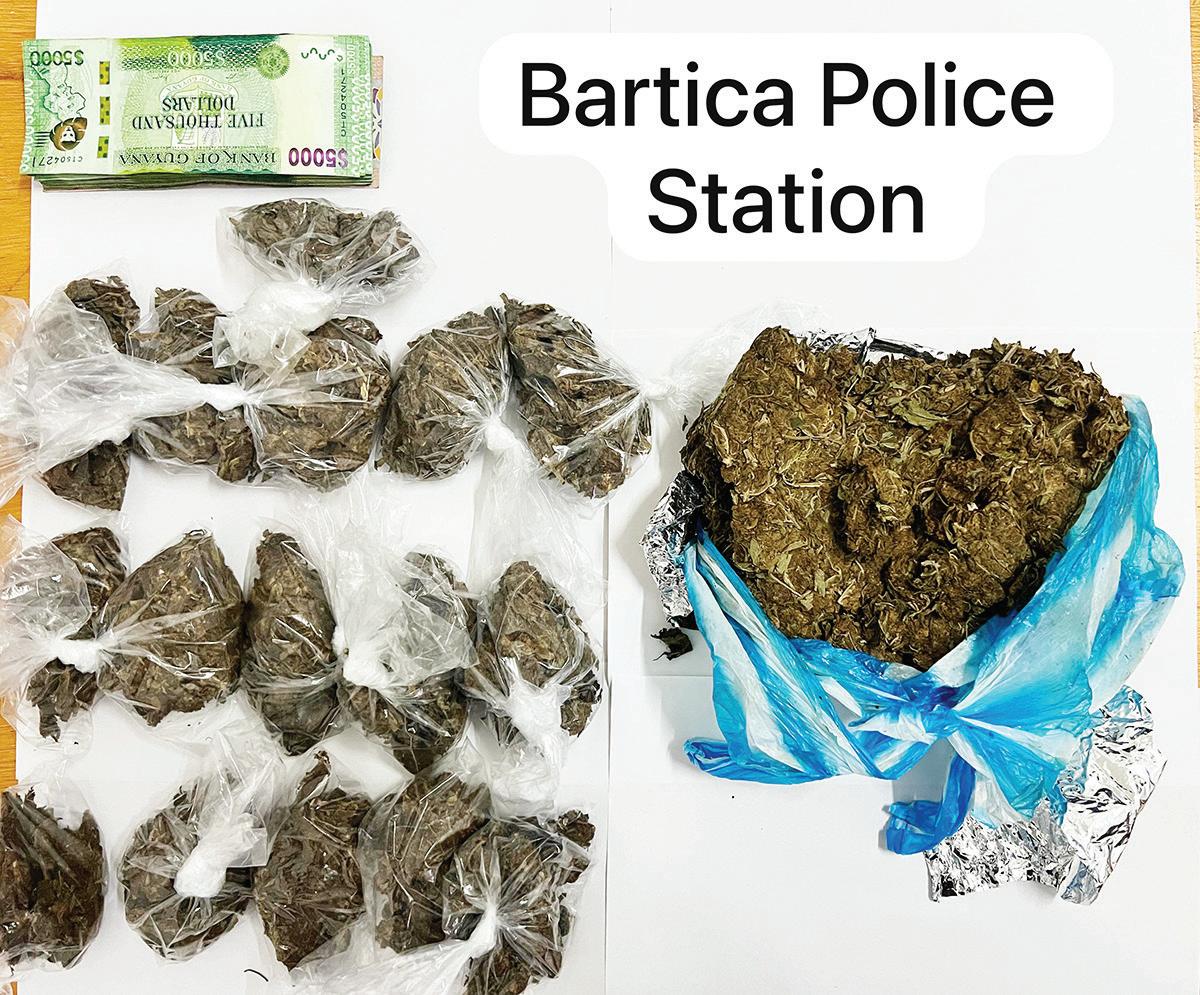
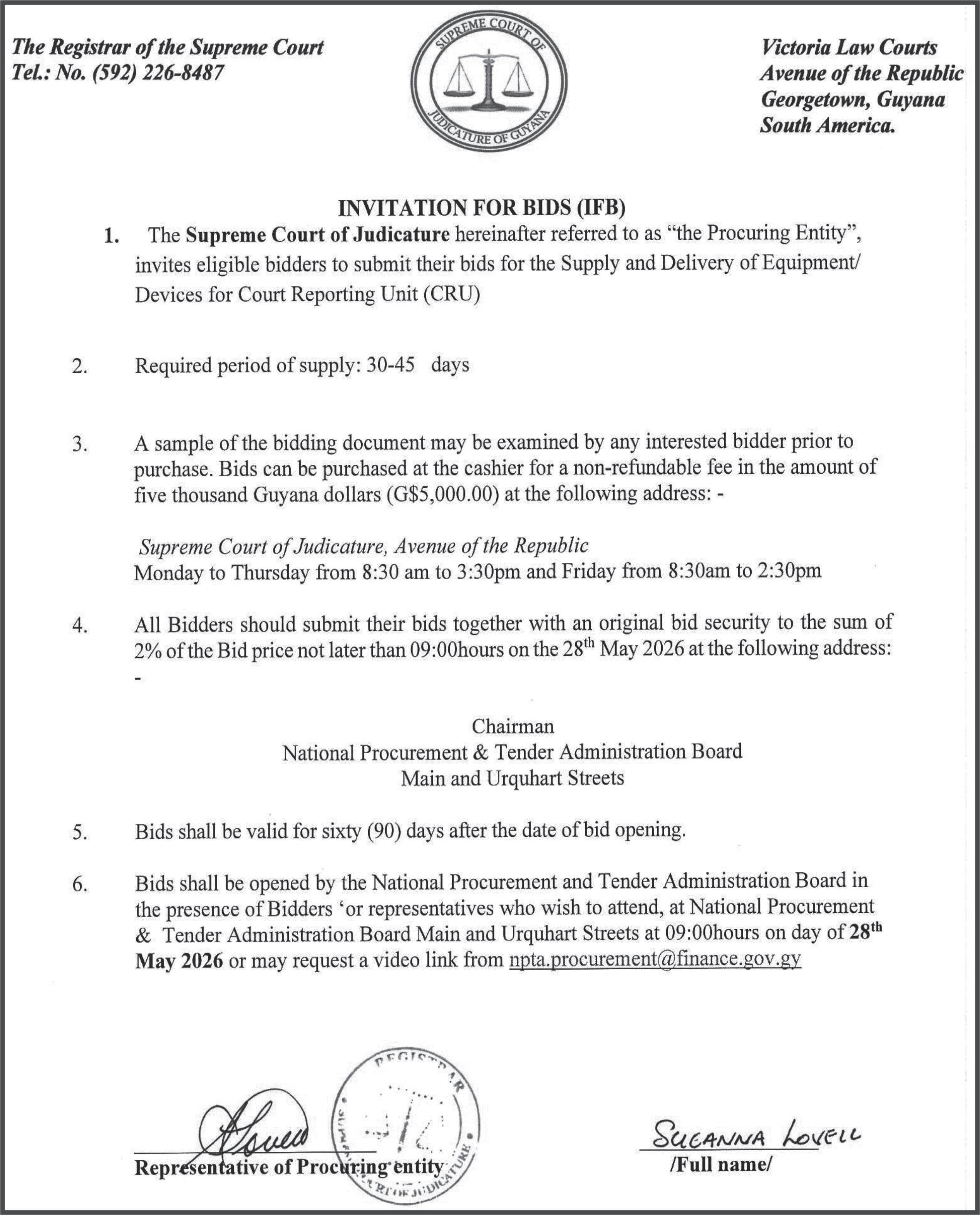
The cannabis and cash found during the intelligence-led operation
plastic bag containing sixteen small transparent bags and one blue plastic bag filled with leaves, seeds and stems suspected to be cannabis.
Investigators also recovered $184,000 from the room.
Police said the suspected cannabis was weighed in the suspect’s presence and amounted to 762 grams before being lodged pending further investigation.
The suspect remains in police custody as investigations continue.
The suspect was escorted back to the Bartica Police Station along with the suspected narcotics and cash.
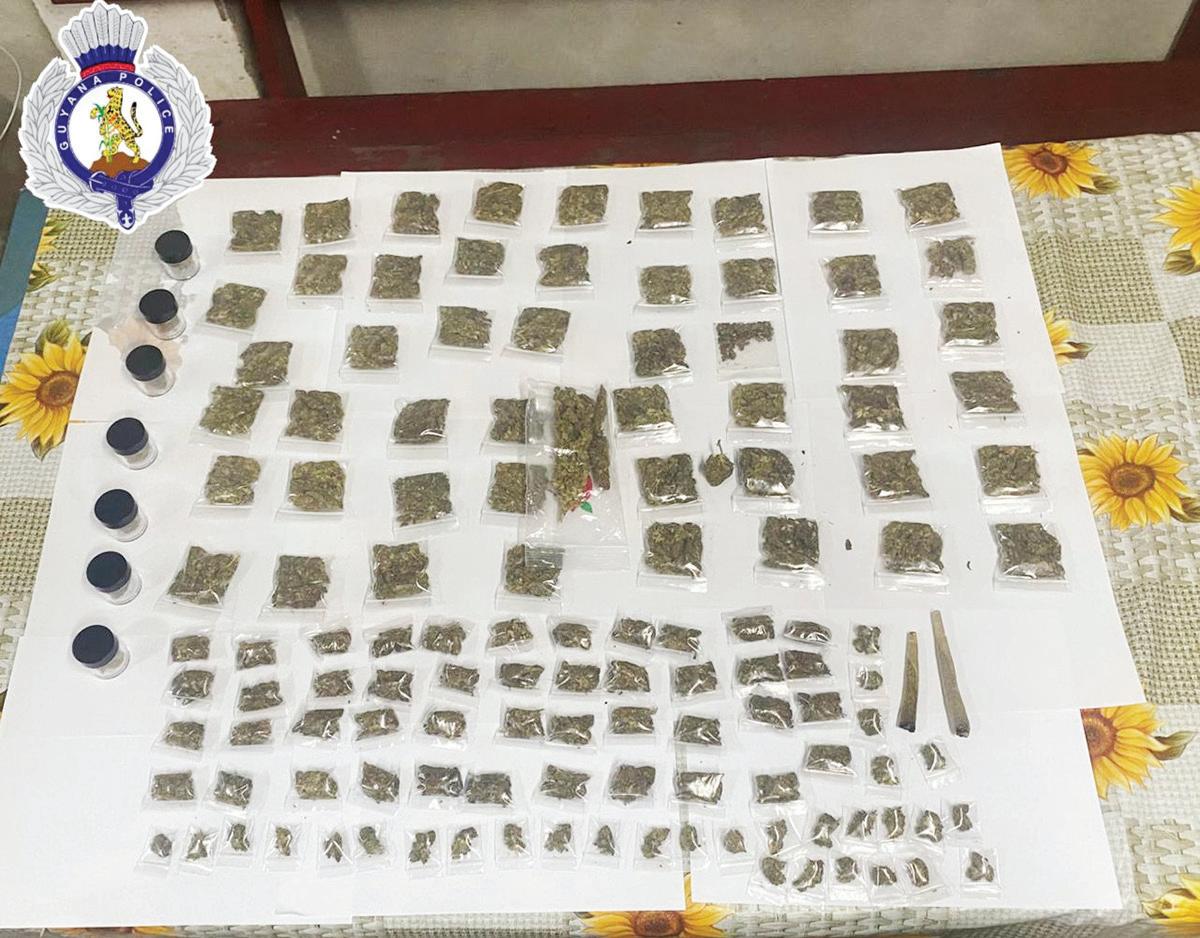
The cannabis seized during the operation
POLICE have arrested three men following the discovery of suspected cannabis during an operation at La Bonne Intention, East Coast Demerara, on Tuesday night.
The operation was carried out between 19:50 hrs and 20:16 hrs when ranks observed several males in the area.
Police said a fourth male, who was seen running in a northern direction, was pursued but managed to escape.
While combing the area, ranks discovered a bulky black plastic bag on a dam. A search of the bag allegedly revealed several transparent
zip-lock bags containing leaves, seeds and stems suspected to be cannabis.
The three suspects—a 29-year-old electrical worker of Onion Field, La Bonne Intention; a 34-year-old plumber of Canterbury Walk, Betterverwagting; and a 28-yearold carpenter of Onion Field, La Bonne Intention—were arrested and escorted to the Betterverwagting Police Station.
The suspected cannabis was weighed in their presence and amounted to 364 grams before being lodged.
The men remain in police custody as investigations continue.
CROWN Agents Bank (CAB) has announced that it has received authorisation from the Bank of Guyana to establish a representative office in Guyana, marking a major expansion of the international financial institution’s footprint in the region.
According to a statement issued by the bank on Thursday, CAB expects to open the office during the second half of this year, creating what it described as a permanent on-theground presence in South America.
The institution said it was one of only three international financial institutions, alongside two major United States global banks, invited by the Central Bank of Guyana and the Ministry of Finance to establish a permanent presence in the country.
CAB noted that the move reflects its long-standing relationship with Guyana, particularly during periods when access to international financial markets and correspondent banking services became increasingly difficult for the country.
The bank said the representative office will strengthen client engagement, relationship management and market development, while enabling closer collaboration with public and private sector entities, financial institutions and partners in Guyana and across the wider Americas.
Crown Agents Bank is a United Kingdom-regulated financial institution focused on emerging markets. The bank provides specialist foreign exchange (FX), cross-border payments, trade finance and treasury management services, with a stated mission of supporting prosperity in hard-to-reach regions.
For more than 30 years, CAB said it has supported Guyana by providing specialist foreign exchange, payments and cross-bor-
der banking services that helped connect the country to global financial markets.
The bank highlighted Guyana’s rapid economic transformation, noting that the country recorded the highest real GDP growth rate in the world between 2022 and 2024, averaging 47 per cent annually.
According to CAB, this growth has been driven by Guyana’s natural resource wealth, the expansion of the energy sector, increasing infrastructure investment and broader efforts aimed at translating economic growth into longterm national prosperity.
The release stated that as Guyana continues to emerge as one of the hemisphere’s fastest-growing economies, dependable financial connectivity to international markets is becoming increasingly critical.
CAB added that the Guyana office will further strengthen its growing Americas platform, following the establishment of its New York representative office in 2025, and enhance the bank’s ability to support financial flows across South America, the Caribbean and the wider Global South.
Chief Executive Officer for the Americas at Crown Agents Bank, Jeff Angard, said the bank’s decision to establish a permanent office demonstrates its commitment to Guyana’s long-term development.
“Guyana's story is one of resilience, ambition and extraordinary potential. Crown Agents Bank has been part of that story for more than three decades, and our decision to establish a permanent office is a clear signal that we are here to support the country's long-term ambitions,” Angard said.
He added “At a time when Guyana is playing an increasingly prominent role in the global economy, trusted financial connectivity matters
more than ever. Our focus is to support clients with the specialist FX, payments and cross-border banking expertise they need to move money securely, efficiently and transparently.”


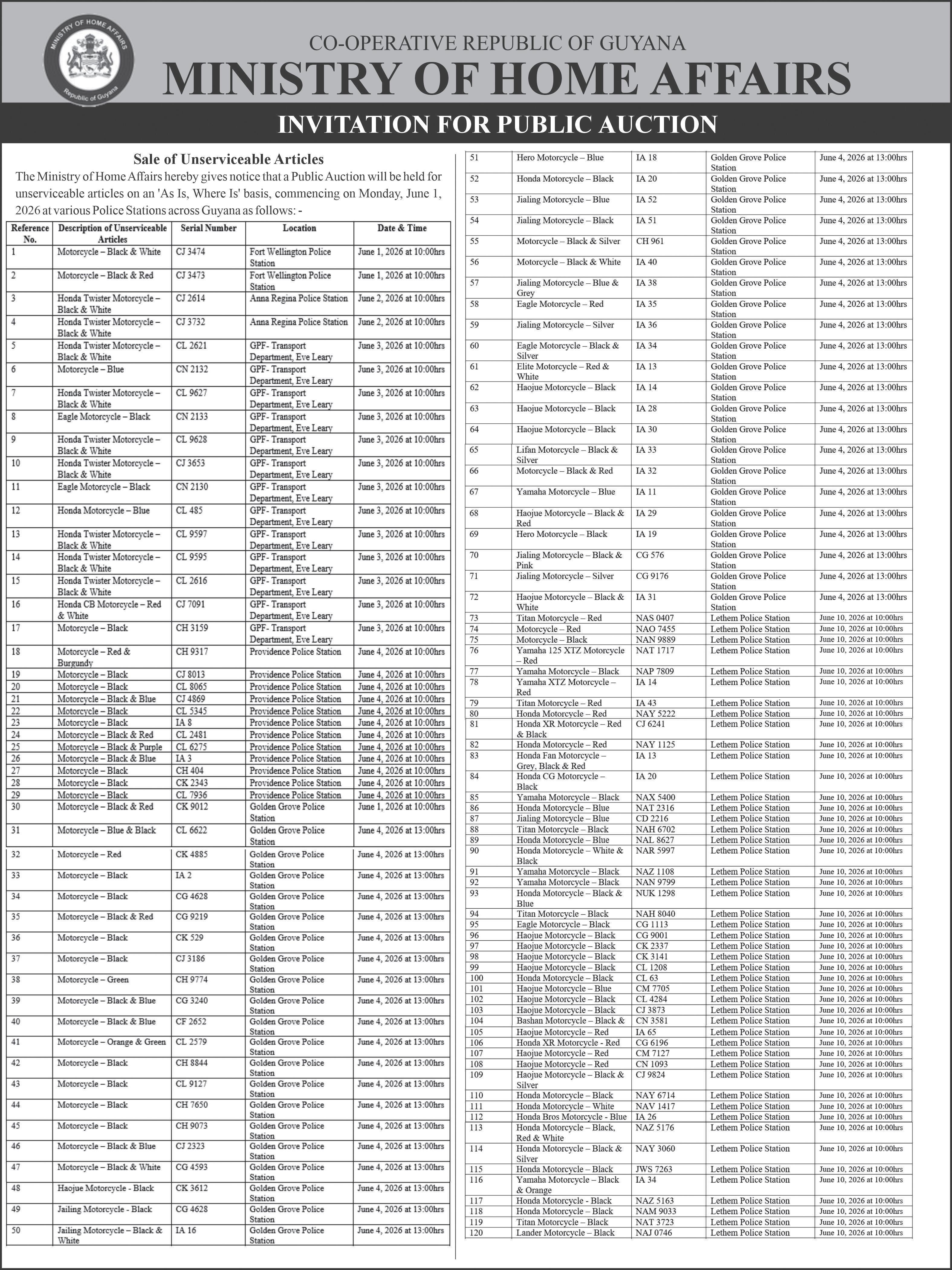




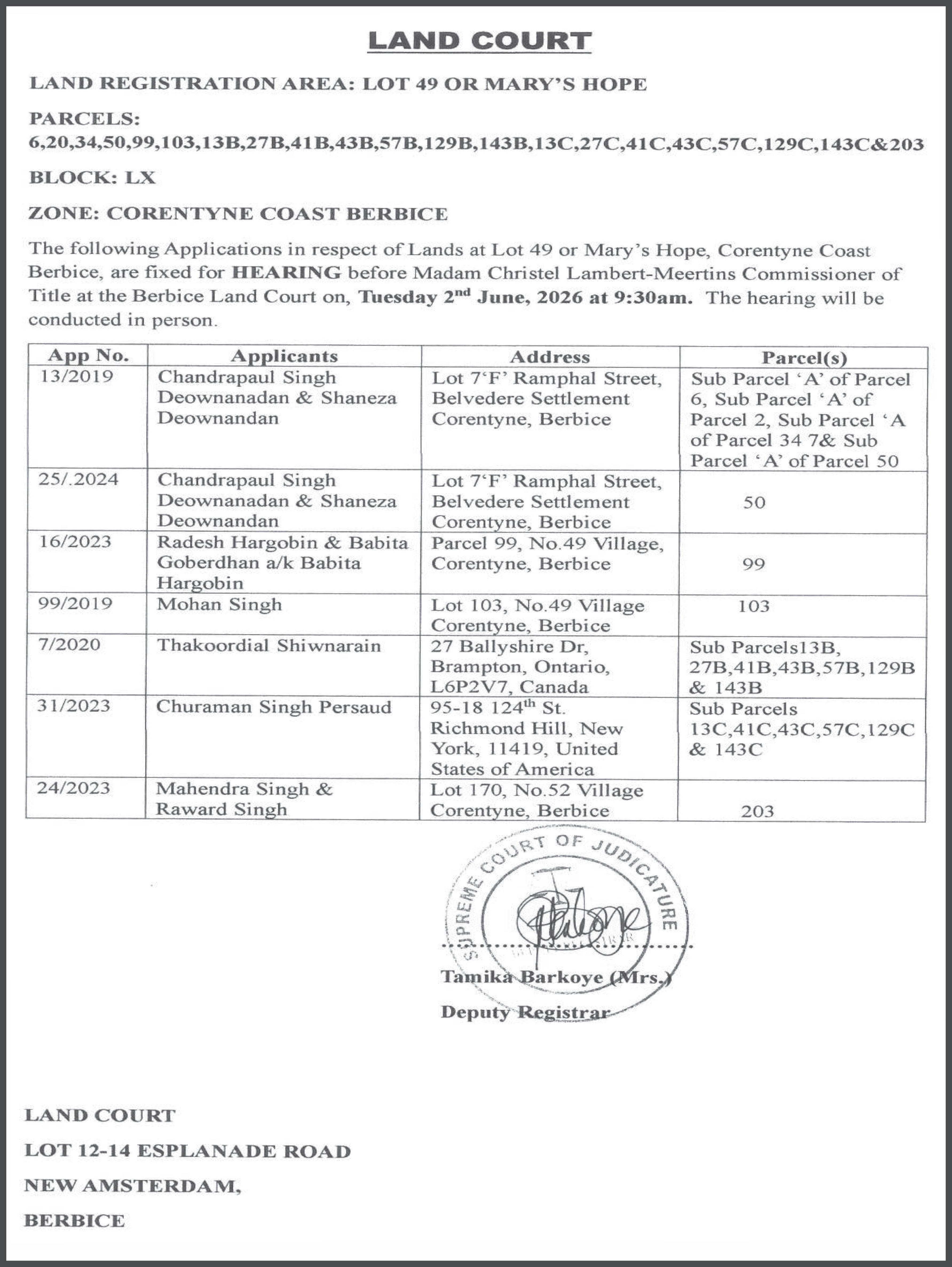
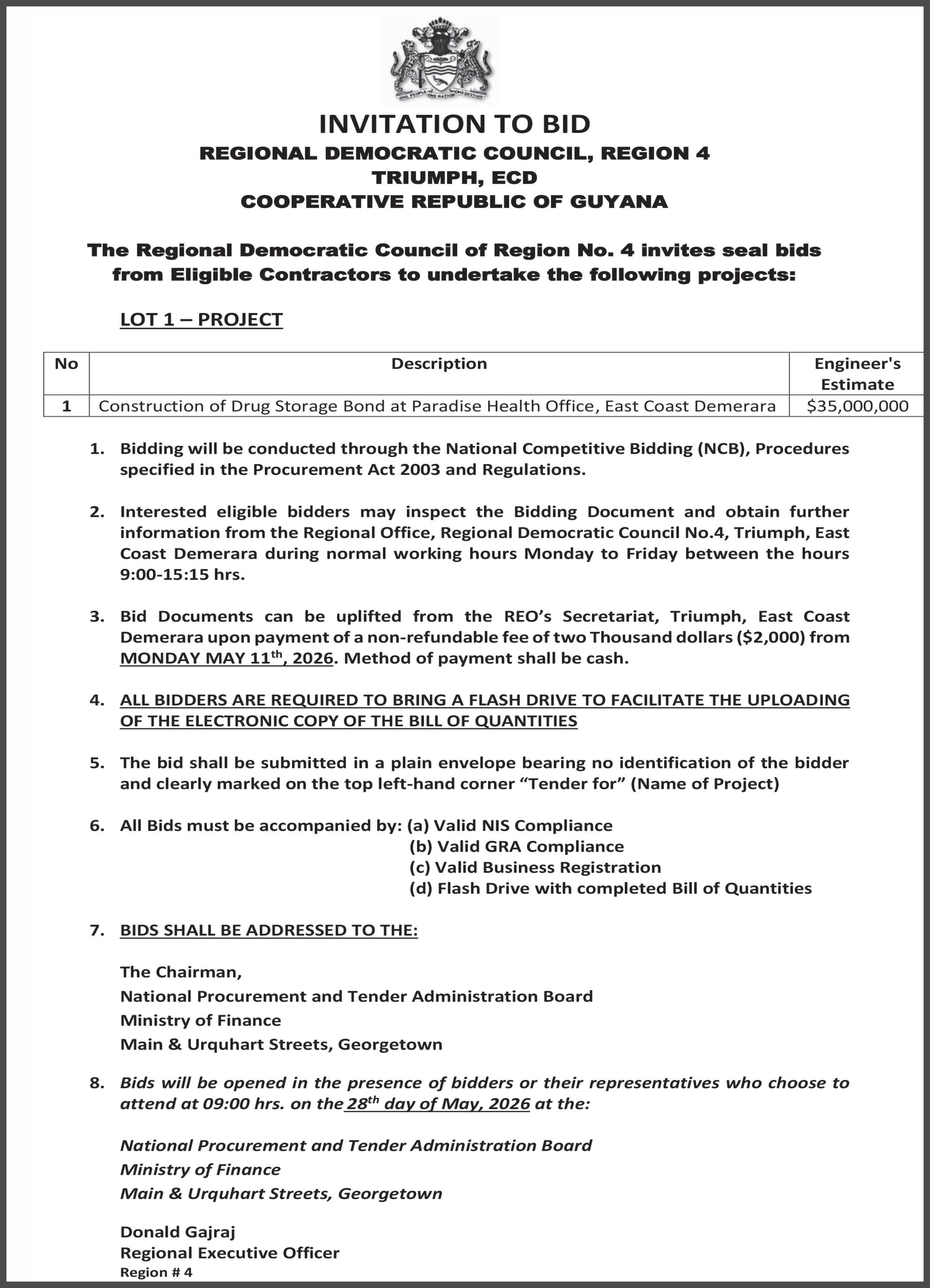


(ESPNCRICINFO) - Chennai Super Kings’ (CSK) slim playoff hopes were crushed emphatically by Gujarat Titans (GT) in Ahmedabad on Thursday night as they sealed a toptwo spot with an 89-run win.
Sent in to bat on a redsoil surface with pace and bounce, GT went all-in to post 229. Shubman Gill’s

ENGLISH RACING TIPS GOODWOOD
08:57hrs Night In Vegas
09:32hrs Lazurite
10:07hrs Bahadur
10:42hrs Sibling Rivelry
11:17hrs Ice Max
11:52hrs Mister Bluebird
12:27hrs Seven Questions HAYDOCK
08:45hrs Ladykirk
09:20hrs Jazz Queen
09:55hrs Rosy Affair
10:30hrs Tribal Appearance
11:05hrs Norflondonforever
11:40hrs Oathbound
12:15hrs Semor Campanaro WORCESTER
11:57hrs Electric Eddy
12:32hrs Jet Smart
13:06hrs Faithful Guardian
13:41hrs Shamsat
14:11hrs Crest Of Arms
14:41hrs Noble Blue
15:11hrs Stiletto
15:41hrs Saccary
IRISH RACING TIPS DOWNPATRICK
12:20hrs Tolka Row
12:52hrs Seskin Flash
13:29hrs Gangster Granny
14:00hrs Whispering Willow
14:30hrs West Of Idaho
15:00hrs Cause For Comment
15:30hrs Dinner Dance
SOUTH AFRICA RACING TIPS
FAIRVIEW
08:15hrs Fateful Love
08:50hrs King Regent
09:25hrs She’s My World
10:00hrs Amanatto
10:35hrs Rhydian
AMERICAN RACING TIPS
23-ball half-century set it up for late fireworks from B Sai Sudharsan (84 off 53) and Jos Buttler (57 not out off 27).
In reply, CSK’s top five perished inside eight overs before Shivam Dube tonked 47 off 17 to briefly inject life into the chase. His dismissal left the door ajar for GT to knock over the lower order, which they did courtesy Rashid Khan to bowl CSK out in the 14th over.
The Samson miss In the game’s second over, Sanju Samson left the field to nurse a finger injury after Spencer Johnson’s hardlength delivery down the leg side suddenly swerved away after passing the batter. He left the field immedi-
ately, and didn’t return for the rest of the innings with Kartik Sharma taking over the wicketkeeping duties. The nature of his on-field injury meant Samson could return to bat in his original position, but he lasted all of one ball, nicking a Mohammed Siraj away-swinger in the very first over.
Siraj’s impact
Having taken a wicket off the first ball in GT’s defense of 230, Siraj then saw Ruturaj Gaikwad loft him through the line over the covers, and then walk across to scoop him for six. In his next over, he saw the CSK captain whip him nonchalantly over the midwicket fence.
Siraj, though, remained
unperturbed and removed him with a length ball that ducked back in to crash into the stumps.
One ball later, he silenced the home fans rooting for local hero Urvil Patel by having him top-edge a flick straight down Prasidh Krishna’s throat at deep backward square leg.
CSK collapse again after Dube’s fireworks
At the start of the ninth, CSK were 72 for 5. It took Dube all of two overs to get the fans excited. Having endured a poor season, he began by thumping left-arm seamer Arshad Khan for 6, 4 and 4 in an over that went for 19. He went into overdrive in the next, thumping
Jason Holder’s hard-length delivery over long-on for six. And when Holder went full, Dube’s long levers helped scythe the ball behind square. Overs 8-10 fetched 37.
But one ball after launching Rashid over deep midwicket, Dube was out to him when Gill, running back from cover, pulled off a stunner. CSK lost their last four wickets in the next three overs, with Rashid finishing with 3 for 18.
Gill-Sai Sudharsan’s opening heroics
Long before his catching brilliance and the direct hit to run out Kartik, Gill began like a bullet train, surging to a 23-ball half-century to lay down the marker, even as Sai
Sudharsan buckled down to play second fiddle. He was run-a-ball for his first 22 deliveries en route to a seventh century stand with Gill - the most by an opening pair in the IPL. Gill survived on 51 despite feathering an attempted pull with none of the opposition appealing for caught behind. But it didn’t cost CSK a lot as he fell soon after for 64. Once Gill perished, Sai Sudharsan carried on to bring up his fifth consecutive IPL fifty - joining Virender Sehwag, David Warner and Buttler to this feat.
Sudharsan would eventually fall for 84, along the way surpassing Vaibhav Sooryavanshi’s tally to take back the Orange Cap.
players across the country.”
Financial incentives for the 2026 season have reached an all-time high. For the first time, cash prizes are guaranteed for every single team that reaches the quarter-final stage of their respective zone.
Rewards begin at $25,000 for losing zonal quarter-finalists and scale up significantly, culminating in the $500,000 purse pocketed by the zonal winners before they advance to the national finals.
The stakes at the na -
and more international exposure for players. The completion and effective use of dedicated badminton facilities would also be a major step forward for the sport. Greater corporate sponsorship and stronger partnerships with schools would further accelerate development. Guyana’s badminton standard is regarded as highly competitive within the Caribbean and has continued to improve steadily over the years. The country has consistently produced talented athletes capable of competing successfully at regional and international tournaments, including the CAREBACO Championships, Caribbean internation-
al tournaments, and badminton Pan Am events.
At the 2025 Senior Caribbean Championships, Akili Haynes secured bronze medals in Men’s Singles and Mixed Doubles alongside Priyanna Ramdhani. Ramdhani also earned silver medals in Women’s Singles and Women’s Doubles after being forced to retire during the singles final due to an injury.
Over the years, Guyana has consistently medalled at Caribbean championships and has captured numerous gold medals, reflecting the country’s continued growth and success in regional badminton” the GBA President concluded.
tional level are even higher, as teams will compete for a $2,000,000 grand prize, while the runner-up will take home $1,000,000. In addition to the substantial cash prizes, the four national finalists will earn the prestigious right to represent Guyana at the upcoming Global T10 Tapeball Blast this October.
Individual brilliance will also be handsomely rewarded throughout the tournament. The eventual tournament MVP is set to walk away with $150,000 and a motorbike.
Specialised awards for the leading run-scorer and top wicket-taker include $100,000 and a new television each, ensuring that per-
Anniversary, Trophy Stall is pleased to sponsor the trophies and cash prizes for the Chess 960 Tournament as part of the national observances.
Ramesh Sunich, Proprietor of Trophy Stall, said that he was very encouraged by the progress chess has made in Guyana over the years, noting that more young people are becoming interested in the game, more schools are introducing chess activities, and local players continue to perform with growing confidence and skill.
This progress, he said, shows the tremendous potential that exists within the sport and that his company is honoured to support an event that brings together talented players, young minds, and
sonal milestones are celebrated alongside team success.
The 2026 edition introduces a streamlined registration process and a phased approach to squad submissions.
Captains can secure their team’s spot right away with a G$35,000 entry fee and finalise their ultimate 15-man talent pools closer to their respective zonal start dates. Registration forms are currently available through the tournament’s official social media channels or via direct WhatsApp contact at +592 635-2235.
Following the opening 16-team leg in Berbice on August 8–9, the tournament will move on to East Bank/
West Demerara (August 1516) and Essequibo (August 22-23) in subsequent weeks. In a strategic move to maximise fan engagement and support local cricket festivities, the competition will pause during the Caribbean Premier League (CPL) window.
Action will resume postCPL with the highly competitive Georgetown/East Coast Demerara leg (September 26-27 & October 3-4), all leading towards the historic national grand finale on October 11, 2026, which will be hosted for the first time at the Anna Regina National Stadium in Region Two.
lovers of the game in a spirit of competition, discipline, and national pride.
Mr. Sunich advocated that for chess to continue growing and reaching even greater heights, there must be more tournaments, more opportunities for competition, and greater public and private support.
Trophy Stall extended congratulations to the organisers, participants, and supporters of the tournament and wishes all the players the very best.
The competition will be a 7-round Swiss format with a 15-minute time control and a 5-second increment for each player after every move.
This chess variant shuffles the back-rank pieces at the start of the game to create
exactly 960 different starting positions, forcing players to rely on creativity rather than memorised opening moves.
While the pawns remain in their standard positions on the second and seventh ranks, the back-row pieces are randomly arranged.
Registration for the tournament can be done using the registration link provided on the GCF’s Facebook page. Payment of the tournament’s registration fee is made via MMG.
The registration deadline is Monday, May 25, 2026, at 17:00hrs. Pairings and results will be published on chessresults.com.
The Federation would like to extend a sincere gratitude to the Trophy Stall for their kind support.
By Sean Devers PRESIDENT of
the Guyana Badminton Association (GBA) Emily Ramdhani believes that there was a lot of talent uncovered at the recently concluded 60th Independence Anniversary Badminton Tournament.
The GBA head spoke about that and several other aspects of the sport in Guyana in an exclusive interview with Chronicle Sport yesterday.
Emily, the widow of former national player and President of the GBA Gokarn Ramdhani, became the GBA’s latest President on February 24, 2023.
She said having a badminton court at the National Racquet Centre would be a major step forward for the development of the sport in Guyana. It would provide athletes with a dedicated facility for training and competition and help raise the standard of play.
“It would also send a strong message that badminton is being recognised as an important sport within the national sporting landscape. Most importantly, it would inspire more young people to become involved in badminton and support the long-term growth of the sport across the country,” the GBA head said.
She informed that the
standard of badminton in Guyana has improved significantly over the years, particularly in terms of player participation, youth involvement, and organisation of tournaments.
While there is still room
to grow as more individuals and organisations become interested in structured badminton development.
Badminton plays a very

for growth at the elite and international levels, the local standard continues to develop through increased competition, coaching exposure, and structured programmes led by the GBA.
“Currently we have five active badminton clubs operating across Georgetown and other regions, along with school-based programmes and emerging community groups. The sport continues
important role in youth development. It promotes discipline, fitness, focus, teamwork, and mental resilience. Through programmes such as Shuttle Time and the Badminton Academy, more young people are being introduced to the sport at an early age, helping to build both athletic ability and positive life skills.
There has been progress in expanding badminton be-
IN the ancient county of Berbice on Wednesday action continued in the Regional Basketball Conference for Region Six at the Vryman’s Erven hardcourt in New Amsterdam.
Avion Kesney starred in a low-scoring contest as his Berbice High School side defeated Vryman’s Erven Secondary School by 18 points (29-9).
Kesney finished with 16 points, leading his team offensively, with Shimron Jahfer adding six points in the victory.
Jabeal Braithwaithe was their best shooter on the day with four points.
In the second clash that followed, Berbice Educa -

tional Institute edged Tutorial Academy 16-14. Demetrius Reid was the player of the match for Berbice Educational Institute with nine points.
Tutorial Academy’s Raekwone Gladstone had a game high of 11 points in the loss.
The girls’ category also saw a blow-out performance for Vryman’s Erven as they took a 16-6 win over Skeldon Line Path Secondary.
Venicia Myers was outstanding for the winning side with 14 points as she guided her side to victory.
The regionals are sponsored by Edward B. Beharry Ltd, G-Boats Inc., National Sports Commission, Ministry of Education and Banks DIH Ltd.
yond Georgetown especially through the Shuttle Time programme and there is representation in Essequibo, Berbice and Linden. Access to facilities, coaching, and tournaments across the country, continued investment in regional programmes and school outreach will be key to achieving this goal,” Emily continued.
Emily noted that Guyana has produced several outstanding players over the years who have represented the country with distinction regionally and internationally, including William Holder — a former men’s national champion from the 1970s who captured numerous singles titles in Guyana, Barbados and Curaçao, and won multiple medals at the Caribbean Championships,
establishing himself as one of Guyana’s dominant early badminton players.
Other similar standouts include, Keith Hendy (among the early national champions from the 1970s), Nathan Montague (former Male National Champion from the 1970s & 1980s with multiple medals at Caribbean Championships), Sean Barnwell (former Male National Champion from the 1980s and 1990s, International gold medallist in Curacao Open, Junior Caribbean Champion in 1987 and achieved multiple Caribbean medals).
More recently, players such as Narayan Ramdhani — who holds the record for the most men’s national championship titles in Guyana from 2013 to 2023, achieved Guyana’s high -
est-ever junior world ranking of 53rd, and became the first and only Guyanese badminton player to secure sponsorship from Yonex — have continued to raise the sport’s profile.
Others include Jonathan Mangra, men’s national champion from 2017 to 2019 and a multiple medallist at Junior Caribbean Championships and international tournaments, as well as Ambika Ramraj, a female national player who earned multiple medals at Junior Caribbean Championships and international tournaments, including bronze at the 2013 South American Youth Games in Peru. “The GBA would like to see continued investment in facilities, coaching certification, youth programmes, TURN TO PAGE 29
CHESS 960 returns for the second year on Independence Day, Tuesday, May 26, 2026, at the Pegasus Suites and Corporate Centre.
The event, which is hosted by the Guyana Chess Federation (GCF) and sponsored by Trophy Stall and the Pegasus Suites, promises to be an exciting and fun competition to celebrate Guyana’s 60th Independence Diamond Jubilee.
Chess 960, also known as Fischer Random Chess, is a variant of chess strongly advocated by the legendary grandmaster and former world champion Bobby Fischer.
The competition will be held in the Exhibition Room at the Pegasus Suites, compliments of Pegasus Suites and Corporate Centre.
Mr. Brandon Badal, Director of the Pegasus Suites, is proud to support the Chess 960 Tournament for the second consecutive year, especially as this year’s tournament holds special significance as it forms part

Trophy Stall Proprietor, Ramesh Sunich presents the sponsorship cheque to GCF’s Company Secretary Marcia Lee at Trophy Stall, South Road
of the celebrations marking Guyana’s 60th Anniversary of Independence.
A keen chess player himself, Mr. Badal has been a dedicated supporter of the sport and a valued sponsor of local chess events for several years. He commended the
GCF’s promotion of Chess 960, noting that the variant pushes players to think outside the box rather than relying on memorised opening theories.
As Guyana proudly celebrates its 60th Independence TURN TO PAGE 29
THE National Indoor Championship 2026 hosted by Archery Guyana concluded efficaciously last Sunday at the iconic Cliff Anderson Sports Hall.
Archery competitions require a minimum of two days, and both days featured exciting, high-level competition, alongside strong displays of sportsmanship and camaraderie among archery athletes from across Guyana.
The championship brought together athletes from clubs including Pro Archers, Bow Nation, The Archery Guild and Golden League Archery along with some independent archers.
Competitors contested in Recurve, Compound and Barebow divisions across senior and youth categories.
The event showcased the continued growth and development of the sport of archery in Guyana. Quite notably, there was an increased number of youth archers whose performances drew admiration from spectators and officials alike.
At the medal presentation ceremony, remarks were delivered by President of the Guyana Olympic Association, Godfrey Munroe, who commended Archery Guyana for its organisation, discipline and commitment to athlete development.
He congratulated the athletes, coaches, officials and volunteers for contributing to another successful national championship.
Moreover, Mrs. Persaud-McKinnon expressed

gratitude to all stakeholders and volunteers whose efforts made the championship possible. She specially recognised National Judge and Director of Shooting, Ryan McKinnon, whose acknowledgment was met with
GUYANA Ex-Athletes and Friends, an overseas-based organisation, has again teamed up with the Athletics Association of Guyana (AAG) to stage their 10th annual Independence Road Race and Track Meet this weekend.
The AAG’s Technical Director, Mark Scott, expects all and sundry to come out and support the nation’s top track and field athletes on Sunday at the Leonora Track and Field Stadium.
“We have heats in the 100 and 200 for the 18 and over athletes; all other age groups, U-12, U-15 and U-18, are timed finals. I want to encourage the general public to come out and support good track and field. We have our CARFITA medallist Ms Olivia Soloman, 800 metres; she will be on show. Also, we have the athletes that went to the South American Games in Panama; they will be on show, and then we have our senior athletes returning from scholarships in the USA and Jamaica.”
Cubi Seegobin, who helped land the athletics association their Adidas sponsorship deal, says he is eager to see the local athletes compete. “I’m looking forward to going to the meet and
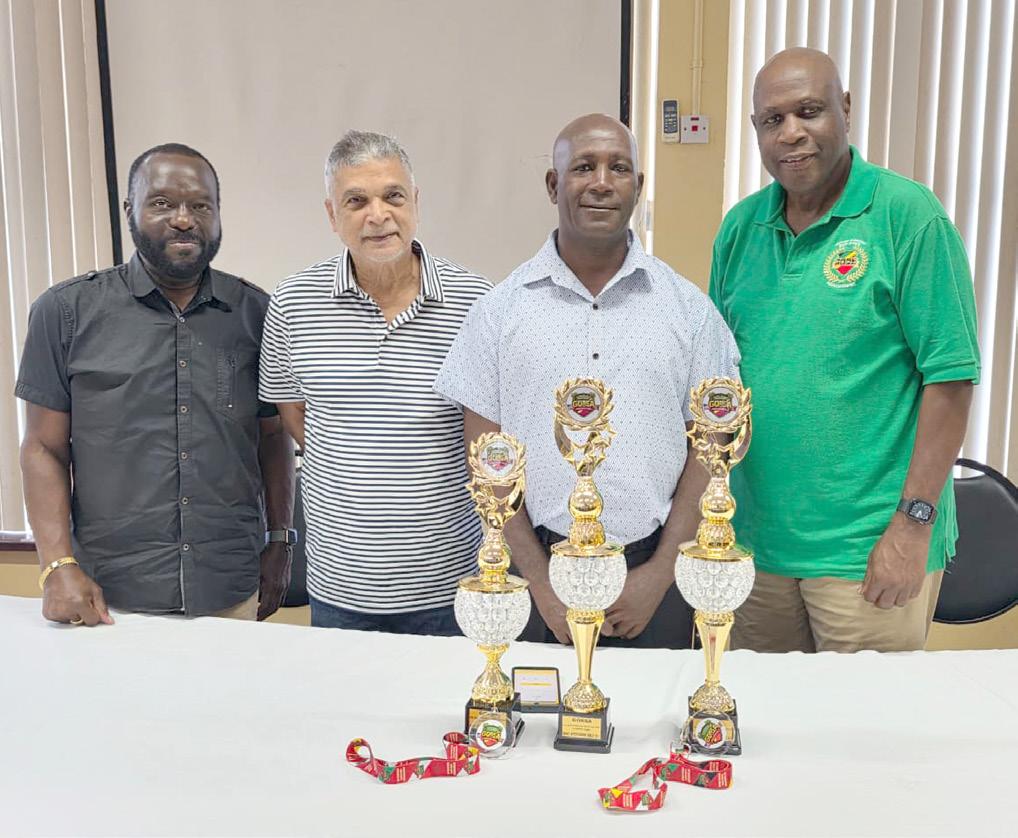
Official and sponsors at the launch of the Independence Road Race and Track Meet
seeing the young talent; it is my first time seeing a meet in Guyana, so it should be an experience… I’ve seen tapes of meets; it will give me knowledge of meets in Guyana so I can make some suggestions on how we can better put together meets. In the 18 and over category, the track athletes will also compete in the 400m, 800m, 1500m, 2x400m, and 2x200m races, long jump, and javelin, along with several relays.
Other age groups will also compete in similar categories, with student athletes collecting cash vouchers and
seniors collecting cash prizes and trophies.
Sunday will see the road race featuring top runners and student athletes from President’s College, Mackenzie High School, Christianburg Secondary School and Corentyne Comprehensive Secondary School. The road race, which includes a 1-mile, 5km and 10km race, takes off from CARIFESTA Avenue Ground and concludes at the Police Sports Club Ground at Eve Leary. The meet gets underway at 10:00hrs at the National Track and Field Stadium, Leonora.
resounding applause from the gathering in appreciation of his tireless dedication to the sport and leadership behind the scenes and throughout the competition.
Archery Guyana additionally expressed appreciation to the judges, McKinnon, Robert Singh and Afzal Karim who ensured the event was conducted in accordance with World Archery standards. Archery Guyana also, expressed gratitude to the competition committee, volunteers, range officials, set-up team whose collective efforts contributed to the professional execution of the event.
The federation applauded the efficiency of the results and technical team for their efficient use of the interna-
tionally recognised IANSEO Scoring software which facilitated accurate scoring and live result updates throughout the championship.
Thanks were extended to Results Manager Mr. Saeed Karim and Results Verifier Ms. Anoopa Ramdial.
National Indoor Championship 2026 Medallists
Recurve Men – (1st –3rd) - Waldron, Mehandra Chatargum, Purshotam Sharma.
Recurve Women - (1st –3rd) - Eslyne Gomes, Karin Onica Toppin, Roshini Boodhoo.
Recurve Under-18 Men(1st – 3rd) - Saifullah Gani, Keziah Archer, Brandon Cummings
Recurve Under-18 - (1st – 3rd) -Women Samiyyah La
Cruez, Fatima Gani, Ameerah Khan
Compound Men - (1st – 3rd) - Gerard Mekdeci, Anand Mangra, Errol Toppin Compound Under-18 Men - (1st – 3rd) - Ravish Singh (Pro Archers), Nicholas Sukhu (Pro Archers), Timothy Sukhu (Pro Archers) Barebow Men - (1st –3rd) - Nolan Gray, Shiva Tularam, Dorian Dhanraj Barebow Women - (1st – 3rd) - Shianne Affonso-Simon, Jo-Lee Zammet, Suzanne Affonso Barebow Under-18 Men(1st – 3rd) - Ezekiel Hernandez, Alec Simmons, Aalim Kahn
Barebow Under-18 Women - (1st – 3rd) - Neepa Chaturgum, Aleandra Rodrigues, Nikasie McGregor
CRITICAL corporate support for the highly anticipated 2026 One Guyana T10 Tapeball Blast continues, with Sawa Investments Inc officially coming on board as a major partner.
The company has committed $500,000 to sponsor the first prize for the tournament’s Berbice Zone.
The Berbice Zone, scheduled for August 8–9, will feature 16 teams battling across four venues: the Port Mourant Community Centre Ground, No. 69 Ground, Welfare Ground (Canje), and the Albion Sports Complex, which is slated to host the zonal final on Sunday, August 9.
Speaking at the official
handing-over presentation to tournament organisers FL Sport, Samantha Reid, Chief Executive Officer of Sawa Investments Inc., highlighted her deep personal and regional ties to the sport.
“From a personal standpoint, I am a deep lover of cricket. Being from Berbice has further created a deep-rooted connection to the sport, given the many stalwarts that [sic] have come from the county,” Reid shared. “Cricket is us, cricket is Guyana, cricket is Guyanese.”
Tournament Director John Ramsingh expressed immense gratitude for the timely corporate backing, noting how critical grassroots
investment is to the tournament’s expanding footprint.
“We are absolutely thrilled to welcome Sawa Investments to the One Guyana T10 Blast family,” Ramsingh stated.
“Their generous sponsorship of the Berbice Zone underscores the vital role corporate Guyana plays in elevating grassroots cricket. Berbice is an undeniable powerhouse of talent, and this $500,000 prize gives local teams an incredible incentive to showcase their absolute best.
Partners like Sawa Investments allow us to dream bigger and deliver a truly professional platform for TURN TO PAGE 29