

—Brahma Kumaris marks 50 years of promoting inner peace, self-reflection and spiritual development in Guyana
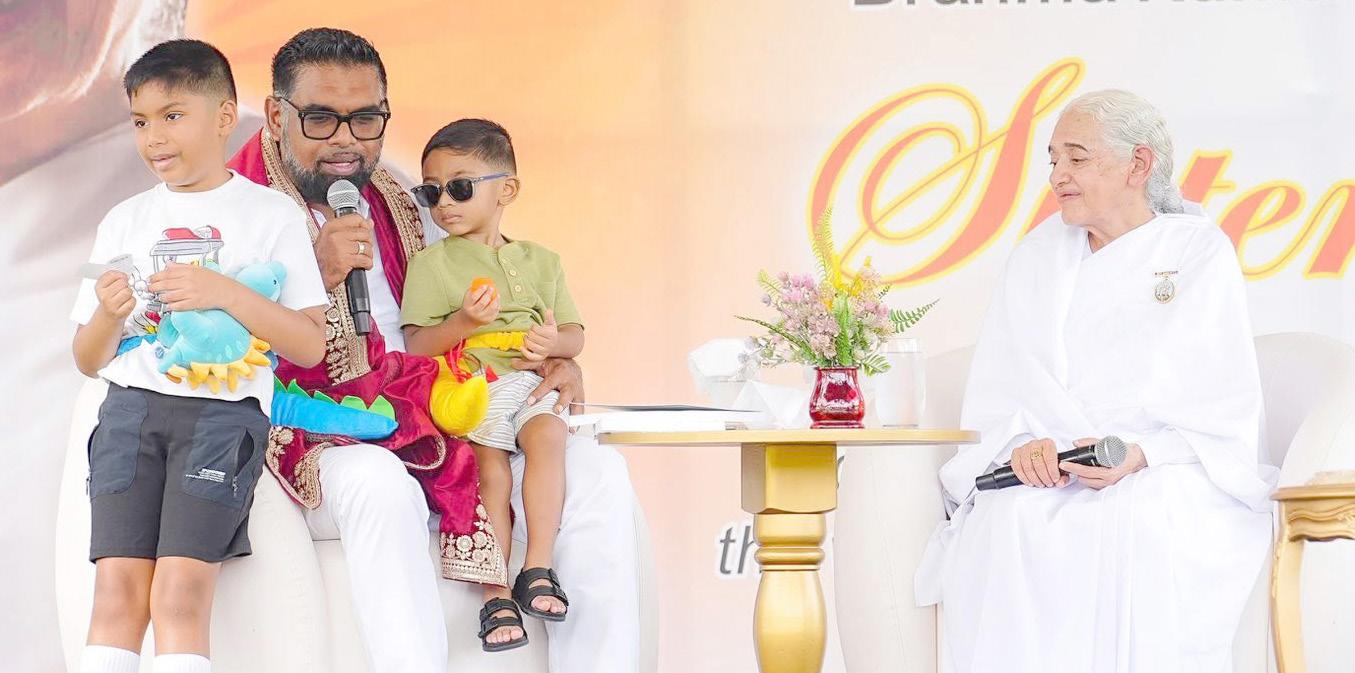
HAPPY FATHERS DAY! President, Dr Irfaan Ali shares a light moment with his sons alongside renowned spiritual leader Sister Jayanti during the Brahma Kumaris Guyana’s 50th anniversary celebrations on Saturday. The event highlighted the importance of family, character, spirituality and national unity in shaping a stronger Guyana. (Office of the President photo)
95% of concerns resolved on the spot at Region Three public day – Mustapha
—More
New protocol to require public disclosure of government projects before works begin


A newly commissioned aircraft operated by Jags Aviation sits on the tarmac, symbolising growing confidence in Guyana’s rapidly expanding aviation sector. President, Dr Irfaan Ali has called on industry players to “think bigger” as the country’s economic growth drives increased demand for air transport, tourism and hinterland connectivity. [DPI PHOTO]
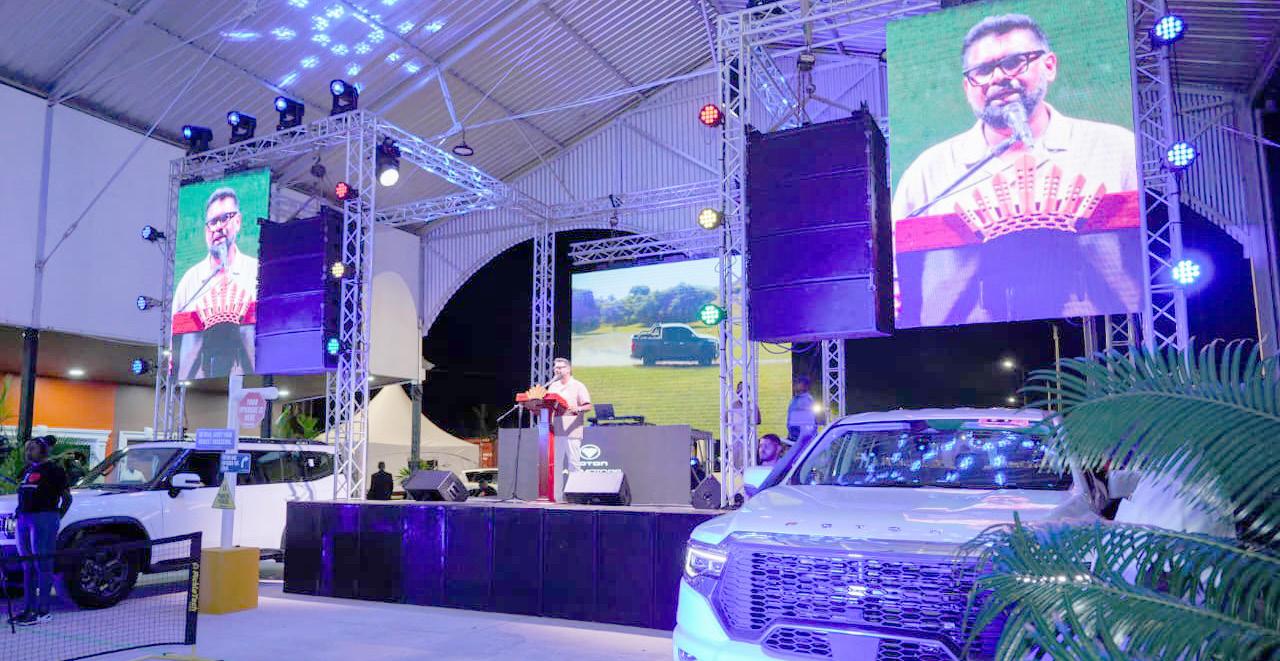
History was made this weekend as CAM Motors was officially launched in Guyana, introducing the globally acclaimed Jetour and Foton brands to the local market. Born from a powerful partnership between ATL Automotive — the Caribbean’s largest automotive dealer group — alongside the Continental Group of Companies and MMKJ Inc., this venture unites regional expertise, 65 years of trusted local investment and cutting-edge technology leadership under one roof. With Jetour leading the charge in the SUV category and Foton built for a fast-growing economy’s commercial and utility needs, CAM Motors is delivering not just world-class vehicles, but the gold standard in customer experience and after-sales support. President Dr Irfaan Ali; Prime Minister Brigadier (Ret’d) Mark Phillips; and other government and private sector officials were in attendance at the event held at the Railway Courtyard, Lamaha Street.


By Shaniya Harding
AS Guyana experiences unprecedented economic growth and infrastructural expansion, President Dr Irfaan Ali has cautioned that national development must be measured by more than roads, bridges and buildings, emphasising that a country’s true progress depends on the character, values and consciousness of its people.
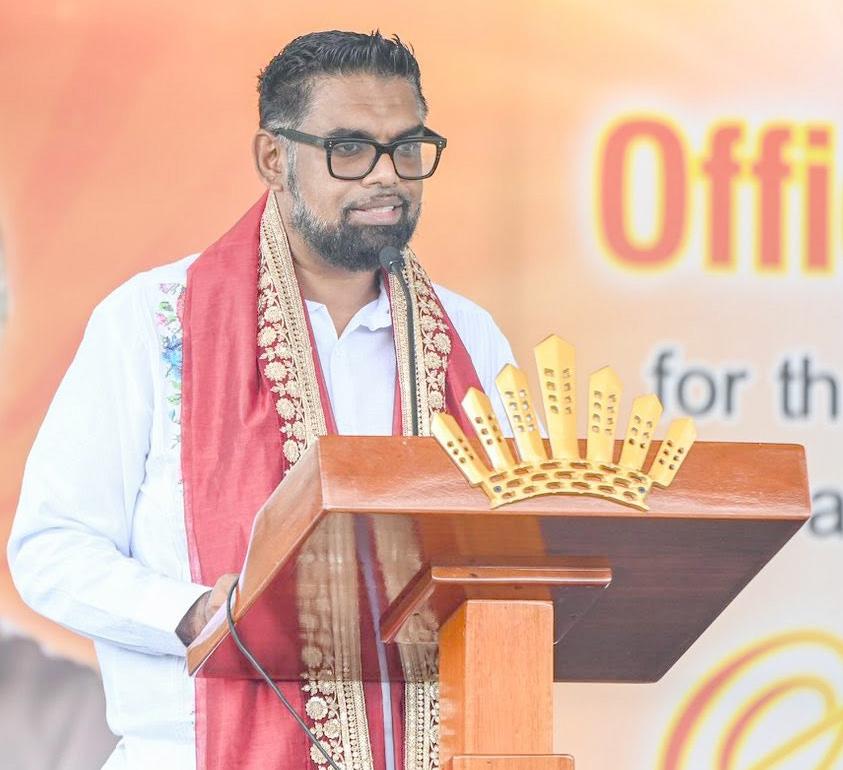
Speaking on Saturday at State House during celebrations marking the 50th anniversary of the Brahma Kumaris in Guyana and welcoming renowned spiritual leader Sister Jayanti, the President said genuine transformation begins within the individual and not solely through material advancement.
He praised the organisation’s five decades of service in promoting meditation, self-reflection, emotional resilience and positive thinking, noting that its work aligns closely with the vision of One Guyana by fostering understanding, compassion and unity across communities.
Sister Jayanti echoed those sentiments, urging Guyanese to reconnect with their inner selves and warning that consumerism, rather than technology, has distanced modern society from its moral and spiritual foun-
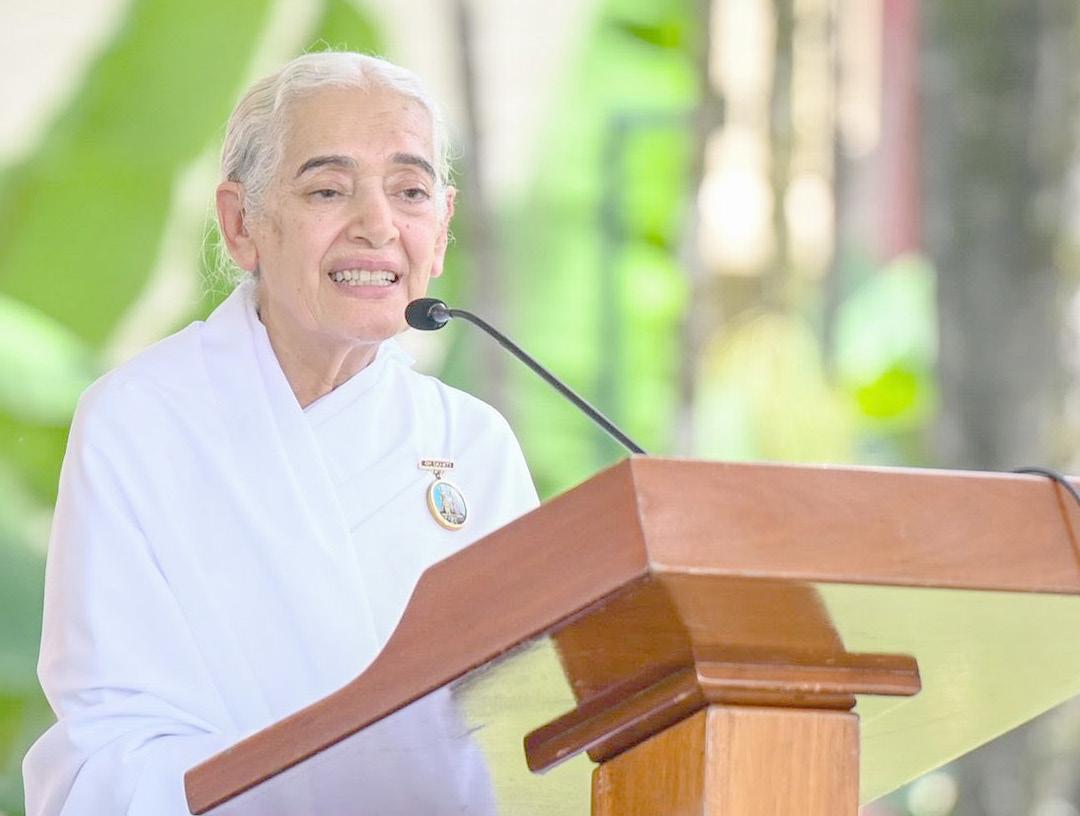
dations.
Beginning his address on the importance of inner peace, President Ali said that in a world that is constantly moving, building, expanding and changing, it is easy to overlook the fact that true progress begins within.
“The greatest transformations often start not with machines, money, roads or buildings, but with the human spirit,” he said.
Describing the anniversary as a significant milestone, the President said the occasion marked half a century of service, spiritual teaching, personal transformation and community upliftment.
“The 50th anniversary of the Brahma Kumaris
in Guyana is a significant achievement. It represents half a century of service, dedication, spiritual teaching, personal transformation and community upliftment. It represents 50 years of helping Guyanese discover the power of inner peace, meditation, self-reflection and positive thinking. For five decades, the Brahma Kumaris have quietly but steadily contributed to the spiritual and moral development of our nation,” he said.
According to the President, the organisation’s work has touched countless lives, helping individuals navigate the challenges of modern life with greater balance, resilience and purpose.
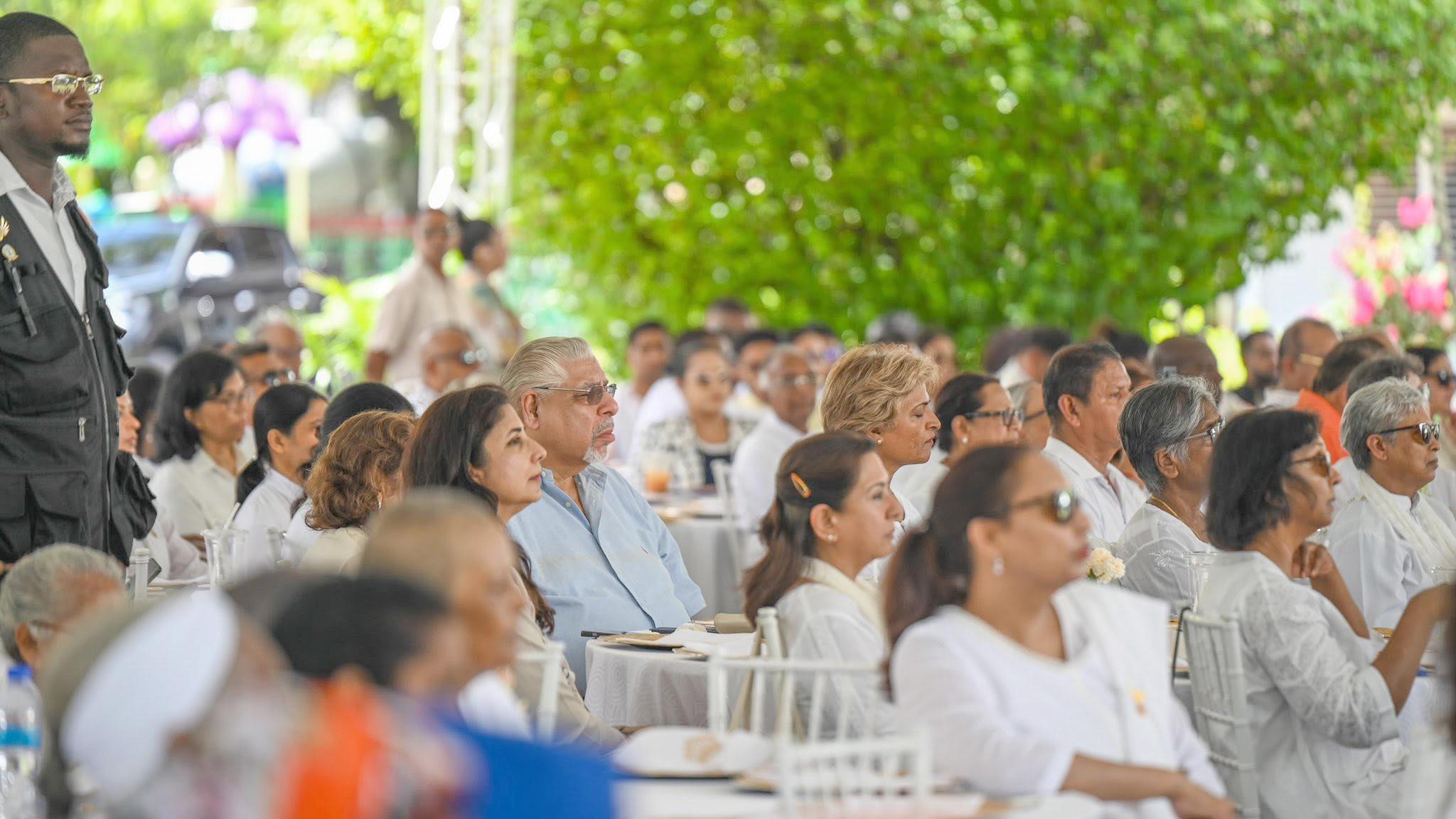
He noted that the role of organisations such as the Brahma Kumaris has become even more important as Guyana enters what he described as a new era of prosperity and development.
Highlighting the country’s rapid transformation through investments in roads, bridges, schools, hospitals, housing developments and economic opportunities, President Ali said material progress alone cannot define national success.
“A nation’s true progress is incomplete if it is confined to the material alone. It must also be reflected in the character, values and consciousness of the people. It is precisely this inner dimension of development that gives meaning and direction to our material achievements,” he said.
He added that the One Guyana vision extends beyond economic growth and infrastructural development.
“The vision of One Guyana is not merely about economic growth or infrastructure development. It is about creating a society united by mutual respect, understanding, compassion and shared purpose,” he said.
Making a call for unity, the President urged citizens to strengthen connections across communities, cultures, religions and generations.
He further noted that the philosophy of the Brahma Kumaris aligns closely with the aspirations of One Guy-
merely the absence of conflict. Peace is a way of thinking. It is a way of living. It is a way of relating to others.”
The President encouraged Guyanese to engage with the organisation through its meditation programmes, wellness initiatives and community activities, noting that the values it promotes transcend religious and cultural boundaries.
ana, explaining that both are rooted in the belief that diversity is a source of strength and that humanity is united through shared values and experiences.
“When individuals become more peaceful, communities become more harmonious. When communities become more harmonious, nations become stronger. When nations become stronger, humanity moves closer to the peace for which we all yearn. No society can successfully address its challenges through legislation and policies alone. Lasting progress also requires self-discipline, empathy, integrity and a commitment to higher values,” he said.
President Ali said the organisation’s promotion of meditation and yoga has become increasingly relevant in an era characterised by stress, anxiety, misinformation and constant distraction.
He described the Brahma Kumaris as pioneers in introducing and promoting these practices in Guyana and credited the organisation with contributing significantly to the nation’s moral and emotional well-being.
“A society cannot thrive on prosperity alone. It must also be nourished by integrity, compassion, self-discipline, kindness and respect,” he said.
“Organisations such as the Brahma Kumaris help to cultivate these values. They remind us that peace is not
“As we celebrate this Golden Jubilee, let us reflect on the tremendous contribution that the Brahma Kumaris have made to Guyana over the past 50 years. Let us honour the pioneers who established the movement, recognise the volunteers and teachers who have dedicated their lives to service, and look forward with confidence to the next 50 years of growth, service and inspiration,” he said.
Meanwhile, Sister Jayanti spoke on the importance of spirituality in a rapidly changing world, arguing that consumerism and materialism pose a greater threat to humanity’s moral values than technology itself.
“When our consciousness turns to materialism and consumerism, and when these are the things that drive individuals, then we see the result of that in the state of the world and the state of our human nature impacting the environment in a very big way,” she said.
“Technology is a tool, and one can use it for either thing. I have a knife and I can use it to cut a finger, or I can use it to cut a fruit. And so, it is human consciousness that drives whatever it is that is happening in the world out there,”
She said spirituality encourages individuals to embark on an inner journey of self-discovery and reconnection.
“What spirituality reminds us is that we have to go on an inner journey, and going on that journey means that we rediscover the connection with the self,” she said.
PRESIDENT, Dr Mohamed Irfaan Ali on Saturday called for greater ambition and regional positioning within Guyana’s aviation industry as he delivered the keynote address at the commissioning of JAGS Aviation’s new Hindustan H-228 aircraft.
The two Dornier 228 aircraft each seat 19 passengers and are expected to significantly enhance service delivery. They also introduce a first for domestic aviation in Guyana, featuring on-board washroom facilities, an added
level of comfort for passengers travelling long distances.
The planes were procured from Hindustan Aeronautics Limited in India, further strengthening bilateral ties.
The president said the investment represents more than fleet expansion, describing it as another signal of Guyana’s broader economic transformation and its ambition to become a regional aviation hub.
Commending JAGS Aviation’s continued growth, the head of state said local aviation companies should begin
looking beyond domestic operations and position themselves to compete regionally.
“It is a local company that I believe has the potential to become more than a local carrier, and indeed I believe that our aviation players should come together to look towards developing a regional carrier, because Guyana’s ambitions now seem limitless,” he stated.
President Ali said the government’s long-term strategy is to ensure that Guyana becomes a premier aviation gateway connecting the




Caribbean, South America, North America and Africa.
According to him, the country’s aviation development agenda includes strategic investments in airport infrastructure, air-traffic management systems, expanded airline connectivity,
digitisation and emerging technologies.
The president outlined a 10-pillar aviation development framework, anchored by the goal of transforming Guyana into a regional aviation and logistics hub.

He highlighted major initiatives already underway, including the construction of a new terminal at the Cheddi Jagan International Airport, development of municipal airports and investments in aviation training and safety systems.
“Terminal Two is a new state-of-the-art terminal that will reshape this region. It will celebrate our heritage, our culture, our biodiversity, our ecosystem. It is not just a terminal, it is built as an experience,” he said.
President Ali also announced that plans remain on course for a national aviation school, which he said is intended to serve not only Guyana, but the wider region as well.
“That will be the premier school for all of the region,” he said, adding that language training, including Spanish, should form part of the curriculum to improve competitiveness.
The head of state said aviation remains critical to Guyana’s development because of the country’s geography and growing economic opportunities.
He said, “We are a country of vast forests, mighty rivers, scattered communities
and immense distances. In such a landscape, aviation is not a luxury — it is a lifeline.”
He noted that aviation’s role is evolving beyond supporting mining operations and now includes tourism, trade, investment and improved access to hinterland communities.
President Ali said increasing visitor arrivals and growing investor interest in sectors such as tourism, manufacturing and food production require stronger transportation infrastructure and greater private sector alignment.
He praised JAGS Aviation for continuing to invest despite changing market conditions and pointed to the company’s focus on developing human capital.
“The only way a company can grow and reinvent itself is through investment in human capital,” the president said.
Congratulating the company on the commissioning of the aircraft, President Ali said such investments support Guyana’s wider development agenda by improving connectivity, expanding economic opportunities and strengthening national integration.
“These aircraft will help move people and goods across our beautiful country. They will strengthen connectivity, support economic activity and contribute to ensuring that development reaches every region and every community.”
Jags Aviation now operates a fleet of 14 aircraft, continuing its expansion following the acquisition of two Tecnam P2012 Traveller planes from Italy last year. [DPI]
A S Guyana advances national consultations on the effects of social media on children, participants are urging a balanced approach that safeguards young people while allowing them to benefit from the opportunities offered by the digital world.
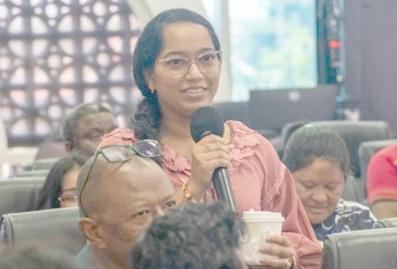
Among those lending their voices was Razia Alli, who said the discussions are critical because social media should not be viewed solely as harmful, but rather as a tool that requires proper guidance and management.
Alli noted that while children can easily be exposed to harmful content, they can also access educational resources and information that broaden their horizons and create opportunities.
“Social media can be both good and bad. There should be some form of management and guidance because children can use these platforms to learn, improve themselves and access things that are beneficial,” she stated.
Alli said the consultations provide an avenue for students, parents and stakeholders to share perspectives that will ultimately shape policies aimed at protecting children while allowing them to responsibly engage in the digital space.
Hemwantie Sawh, a mother of two, echoed similar sentiments, stressing that families have a critical role to play in regulating children’s screen time and monitoring their online activities.
Drawing from her own experience as a mother of a child in an examination class, Sawh admitted that balancing educational use with recreational use of devices can be challenging, but insisted that parents must remain actively involved.
“You don’t just give a child a phone, when you give a child a device, it becomes an extra responsibility on you as a parent to monitor and play your role,” she emphasised.
Sawh also called on parents to lead by example, not-
Among
ing that adults must moderate their own screen habits and dedicate more quality time to their children if they expect the same from them. Their views were among several shared on Saturday during the Ministry of Culture, Youth and Sport’s consultation on the effects of
social media on children, forming part of a wider national conversation initiated by President Dr Mohamed Irfaan Ali.
Minister within the Ministry of Culture, Youth and Sport, Steven Jacobs, described the issue as one requiring urgent and honest
discussions, noting that social media has transformed how people communicate and access information, while simultaneously exposing children to misinformation, inappropriate content and unhealthy online behaviours.
He pointed to growing concerns worldwide over excessive screen time, online violence and the commercial nature of social media platforms, which often reward sensational content.
“Social media has become one of the most powerful tools of our generation, but we must ask ourselves some tough questions: how do we protect our children and how do we shape the future generation we want?” the minister iterated.
He stressed that policies affecting young people must be informed by the voices of citizens and called on parents, youth groups, sports associations and cultural organisations to actively participate in the ongoing consultations.
The minister expressed disappointment at the low
turnout but announced that a digital platform will be established to allow wider participation and ensure recommendations from stakeholders across the country are captured.
According to Minister Jacobs, while infrastructure development remains important, equal attention must be given to nurturing and protecting Guyana’s most valuable resource, its people.
He said the government’s approach is guided by the vision of President Dr Mohamed Irfaan Ali, who recognised the need to address the long-term implications of social media on the nation’s children and ensure policies are developed through broad public engagement.
The consultation forms part of a series of nationwide engagements aimed at gathering recommendations that will shape future policies designed to protect children and promote responsible use of digital platforms. [DPI]
—Minister Ramraj, stakeholders discuss systems, accountability and service delivery as government advances health sector reforms
By Indrawattie Natram
STAKEHOLDERS of the Lima Regional Hospital, on Saturday, met to advance discussions aimed at enhancing healthcare services and strengthening the institution’s governance framework.
The discussions took place during a meeting among Minister within the Ministry of Public Works, Madanlall Ramraj, regional leaders, and members of the Lima Regional Hospital Board as they sought to chart the way forward for the institution.
The meeting focused on strengthening governance,
improving operational efficiency, and ensuring that systems are in place to support the delivery of quality healthcare services to residents of Region Two and surrounding communities.
Minister within the Ministry of Public Works, Madanlall Ramraj, said the engagement aligns with the vision of President Dr Irfaan Ali, whose administration continues to prioritise improvements in the health sector through significant investments in infrastructure, human resources, technology, and institutional development.
“These investments are aimed at ensuring that citi-

zens across Guyana receive better healthcare services and improved health outcomes,” Minister Ramraj said.
During the discussions, the minister emphasised the importance of effective systems and strong management structures in achieving the government’s healthcare goals.
“We want to ensure that the systems here at Lima function effectively.
Government has invested significantly in regional hospitals, and it is our responsibility to ensure that the necessary systems are in place, with a clear mandate to guide operations,”
he stated.
Ramraj further explained that regular reviews of governance and management structures are critical to ensuring that healthcare institutions remain efficient, responsive, and capable of meeting the evolving needs of the public.
According to the minister, strong governance enables hospitals to manage resources effectively, maintain high standards of patient care, and ensure transparency in decision-making.
The meeting also underscored the importance of sound governance in healthcare administration. Hospitals are complex or-

ganisations that require coordination among medical professionals, administrators, support staff, and governing boards. When these systems function efficiently, patients benefit from improved services, reduced waiting times, better resource management, and enhanced overall care.
Ramraj noted that the government’s continued engagement with regional health institutions forms part of a broader strategy to modernise healthcare management across Guyana.
By adopting international best practices and strengthening institutional systems, regional hospitals
such as Lima Regional Hospital will be better equipped to serve communities and contribute to improved healthcare outcomes nationwide.
Regional Chairman, Devin Mohan, said there is constant communication between the Regional Democratic Council and the administration of Lima Regional Hospital, noting that the delivery of quality healthcare remains a priority.
“We continue to work closely with the hospital’s administration to ensure residents receive the level of healthcare they deserve,” Mohan said.


FATHER’S Day is often a celebration of fathers. And rightly so.
It is a day to recognise the men who sacrifice, provide, guide and love. The fathers who wake up before sunrise to work, who miss meals so their children can eat, who quietly shoulder responsibilities without expecting applause.
But Father’s Day should also prompt a deeper national conversation.
What kind of men are we raising in Guyana? And perhaps more importantly, what kind of society are we building for our boys?
These questions matter because every father was once a boy. Every husband, leader, teacher, policeman, businessman and worker was once a child shaped by a home, a community and a set of experiences that influenced the man he eventually became.
As Guyana celebrates 60 years of independence, the conversation about development must go beyond infrastructure, oil production and economic growth. It must also include the development of people, particularly the boys who will one day become
the nation’s fathers, community leaders and decision-makers.
Across Guyana and the wider Caribbean, there is growing recognition that many of the social challenges confronting society today are linked to issues affecting boys and men. Violence, family breakdown, substance abuse, school dropouts, crime, suicide and mental-health struggles do not emerge in isolation. They are often symptoms of deeper social issues that require intervention, mentorship and support.
In recent years, the Government of Guyana has increasingly recognised this reality.
One of the most visible interventions has been the Men on Mission (MoM) initiative launched by President Dr. Irfaan Ali. What began as a programme aimed at encouraging positive masculinity and community service has evolved into a national movement spanning all 10 administrative regions.
The initiative has assisted vulnerable families through housing support, youth mentorship and community outreach. Homes have already been built for vulnerable fam-
ilies, while hundreds of men have become involved in activities focused on fatherhood, volunteerism, health awareness and community development.
The government has also expanded programmes aimed at addressing gender-based violence, strengthening families and encouraging responsible fatherhood. Through the Ministry of Human Services and Social Security, initiatives such as the BRAVE Men’s Policy seek to engage men as partners in building healthier homes and communities.
At the same time, health interventions targeting men have become increasingly important. Men on Mission, working alongside the Ministry of Health, has promoted nationwide prostate cancer screening programmes and broader health awareness campaigns aimed at encouraging men to take better care of their physical and mental well-being.
These efforts matter because strong communities require strong men, and strong men are not born; they are nurtured.
Yet government programmes alone cannot solve the challenges facing boys and men.
There is another conversation that deserves greater attention.
Too often, society speaks about men only when something has gone wrong. When violence occurs. When a family breaks down. When a crime is committed. Rarely do we discuss the responsibility men have to support one another before problems reach crisis point.
For generations, many men were taught to carry burdens alone. To remain silent when struggling. To suppress emotions. To avoid asking for help. The consequences are often visible in untreated trauma, broken relationships, mental-health challenges and cycles of pain passed from one generation to the next.
Guyana needs a culture in which men become their brother’s keeper.
A culture in which men check on one another. Mentor younger men. Offer guidance. Intervene when they see a friend heading down the wrong path. Encourage fathers to remain active in the lives of their children. Support those facing hardship instead of ridiculing them.
Dear Editor,
PLEASE allow me to share some information and remind my brothers and sisters of what truly occurred within the sugar industry
I will not go back to the distant past, but instead deal with the reality that people, especially young people, need to know about the sugar industry, particularly since sugar workers were misled in 2015 by the PNC and AFC coalition government.
Leading up to the 2015 General and Regional Elections, sugar workers and their families were promised a better life. The APNU+AFC coalition repeatedly claimed that if elected they would make the sugar industry profitable again and improve the welfare of workers.
Moses Nagamootoo led that charge, loudly accusing the PPP of not caring about sugar workers and promising that under an AFC and PNC government, workers would enjoy a good life. Many others echoed the same sentiments during the campaign trail, including myself, not realising that the coalition had plans that would devastate the industry and thousands of families.
Between 2015 and 2020, the APNU+AFC government closed several sugar estates, including Wales, Rose Hall, East Demerara and Skeldon. More than 7,000 sugar workers lost their jobs directly, while thousands more who depended on the industry for transportation, vending, farming and small businesses were also severely affected.
The closure of estates destroyed livelihoods across sugar-dependent communities. Families struggled to put food on the table,
children suffered, and many workers were forced into hardship and migration in search of employment. Starvation and suffering became the reality for many former sugar workers and their families.
The coalition government promised diversification and alternative employment, but many of those promises never materialised. Instead, entire communities were abandoned while the industry was pushed into decline.
Today, the same people who presided over the destruction of the sugar industry are attempting to lecture the PPP government on management and workers’ welfare.
Under the PPP/C government since 2020, thousands of workers have been rehired and several estates have resumed operations. Investments were made to reopen Rose Hall Estate and revive production in other areas. The government also restored severance payments owed to workers and continued support for communities that depend on sugar.
No one is saying the industry does not have challenges. Sugar remains a major industry with long-standing problems, and many of those issues cannot be solved overnight. However, there is a clear difference between a government trying to rebuild the industry and one that deliberately dismantled it.Between 2015 and 2020, workers could hardly raise their voices without fear. Ministers of the former government showed little concern for the plight of sugar workers and their families. Workers felt abandoned.
Under the current PPP/C administration, workers at least have a government and a Minister of Agriculture who listens to their concerns and engages with them directly.
Minister Zulfikar Mustapha has consistently
met with workers, unions and management in an effort to address issues affecting the industry.
While management problems still exist within GuySuCo, and production targets are sometimes not met, those shortcomings cannot be placed solely at the feet of the government. Some members of management must also accept responsibility for inefficiency and poor decision-making.
Today, we are again seeing opposition elements attempting to use sugar workers for political gain. Recently, Gobin Harbhajan of the WIN party sought to exploit unrest within the industry despite having little experience or understanding of sugar management or the realities facing workers.
Harbhajan and others are now using the same tactics employed by the AFC and PNC before 2015 — attempting to brainwash sugar workers with promises while ignoring the painful history of estate closures and mass dismissals under the coalition government.
The opposition’s spokesman on agriculture remains silent on many critical issues affecting sugar because many of those same individuals supported policies that nearly destroyed the industry and left thousands of workers and their families to suffer.
I, too, once criticised the PPP and its Agriculture Ministers. But after witnessing what occurred between 2015 and 2020, I had to honestly assess who truly cares about sugar workers and the future of the industry.
Since 2020, I have seen leadership from a Minister who understands the struggles of the working class, especially sugar workers. I have seen efforts to restore dignity, jobs and hope to families who depend on the industry
for survival.
Under Minister Mustapha’s leadership, there has been improved direction and greater attention to workers’ welfare. While GuySuCo still faces operational and production challenges, the government continues working to improve the industry rather than destroy it.
Recently, misinformation was spread claiming that workers would not receive retroactive payments. Yet these false narratives are being pushed by some of the same people who supported the firing of thousands of workers and the closure of estates during the coalition years.
Brothers and sisters in the sugar industry, do not allow yourselves to be fooled again. Look carefully at what took place between 2015 and 2020 and compare it with what is taking place today.
Yes, workers have every right to demand better conditions and improved wages, but they should not allow themselves to be used for the political gains of those who once destroyed the very industry they now pretend to defend.
My brothers and sisters, your future and the future of your children depend on wise decisions. The rebuilding of the sugar industry and the restoration of hope for workers are taking place under this PPP/C government.
Think carefully about who truly stood with sugar workers during the difficult years and who is standing with them today. Respectfully, Abel Seetaram
By: H.E. Sasenarine Singh, Ambassador to the Kingdom of Belgium and Netherlands and Permanent Representative to the European Union
FOR the better part of a decade, the world has viewed Guyana and observed an extraordinary national transformation. Since oil began flowing in 2019, our country has consistently recorded the world’s fastest GDP growth rate. We see inspirational headlines about infrastructure expansion, new skylines, and a future as the “Dubai
of the Caribbean”, which are welcomed.
Yet beneath the story of petro-dollars and development lies a quieter, equally important narrative.
It is told through millions of small transactions in New York, Toronto, and Miami.
I am referring to the steady stream of remittances sent home by the Guyanese Diaspora.
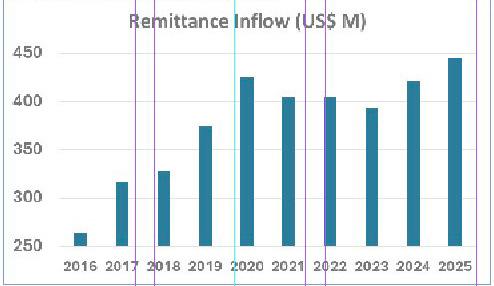
According to recent data, remittance inflows have risen steadily from $264.6 million in 2016 to an estimated $444.4 million in 2025 (see graph below).
@Source – the Bank of Guyana
In a nation now blessed with significant oil wealth, why do families continue to rely on money sent from overseas? The answer reveals not a failure, but rather the nature of the growing pains of a rapidly modernising economy navigating global realities.
A Resilient Lifeline
Remittances are traditionally associated with struggling economies. Guyana, like Ethiopia, and Uzbekistan, however, defies that stereotype. These countries, like Guyana, are experiencing historic growth, yet remittances continue to climb alongside their GDP.
The primary factor is imported inflation; a challenge faced by nearly all open economies undergoing rapid development. Guyana does not yet produce the majority of what it consumes (imported fertilisers, etc.), and it trades freely with the global market (exposing our currency). As oil production accelerated, a significant influx of petro-dollars entered our financial system, which was supposed to strengthen our currency and boost national revenue. But for some strange reason, our currency is not strengthening, and this is an area that require a detailed analytical study by the University of Guyana.
While oil wealth is steadily building highways, hospitals, and housing, the pace of growth in daily household expenses has outpaced growth in local wages. The evidence illustrates that Guyanese households continue to be exposed to global price shocks beyond the immediate control of the regulators. But it begs the question, why are we not imposing more non-tariff barriers to ease the influx of some of these unnecessary imports which continue to destroy what is left of the local manufacturing sector?
In this context, the Diaspora has stepped in as a reliable support system. This rein-
Furthermore, the purpose of these dollars is evolving. Increasingly, diaspora funds are building assets: renovating homes into rental properties, and providing seed capital for small businesses.
The Diaspora is quietly transitioning from a safety net into a partner in national investment.
So why is remittance inflow increasing? Because development is not instantaneous.
Because the transition from a pre-oil to a post-oil economy involves complex adjustments. And because the love of family transcends borders.
While President Irfaan Ali has made remarkable strides in a very short time, the steady flow of foreign currency from our Diaspora serves as a bridge; a family refusing to let go of the homeland. The Government of Guyana has recognised this dynamic and responded thoughtfully. The reopening of the Diaspora Affairs Unit was a welcome and strategic step.
The $444.4 million that was poured into Guyana by the diaspora in 2025 is not just a statistic.
It is a testament to the resilience of the Guyanese people, at home and abroad,
forces this testament to the enduring bonds of the Guyanese family. Funerals, weddings, medical treatments, and home expansions are being honoured in part by the Diaspora because of this love for family.
In 2020, at the height of the pandemic, remittances spiked to $425.7 million. While much of the world froze, the Guyanese Diaspora sent cash home precisely when the local economy needed it most.
That family-to-family support has never wavered since the pandemic.
Emigration has long been a feature of our national story.
Every flight leaving Cheddi Jagan International Airport carries a Guyanese citizen pursuing their dreams overseas, planting a seed for a future financial connection back home. This is not a crisis. It is an enduring national characteristic that has been with us for generations, one that can be leveraged for shared prosperity and future investments.
That is why the idea announced by President Dr Irfaan Ali on May 26, 2026, as Guyana celebrated its 60th Independence Anniversary, is so welcoming: a Diaspora Bond. There are additional funds available within the Diaspora that can be mobilised for national development, allowing Guyanese abroad to earn a decent return while being part of the process of building their homeland.
An encouraging shift lies within the data. While total remittances have risen, the percentage of household income they represent has declined significantly, from roughly 51% in 2010 to about 10% today. This is genuine progress on the local front. The facts is that Guyanese households are becoming less dependent on remittances for survival, even as the absolute flow increases.

THERE is an absorbing African proverb that can be found in Baytoram Ramharack’s recently published mammoth book titled “The Wismar Massacre.” It goes like this: “Until the lions have their own historians, tales of the hunt shall glorify the hunter.”
There cannot be a deeper, philosophical reflection on the philosophy of history than this compellingly moving piece of wisdom. The history of the peoples of the colonies has been written by people who colonised the Global South. So, we read about the finesse and astuteness of Western politicians, but there is nothing on the deep minds of post-colonial leaders whose political minds rivalled most leaders of the Western world.
Cheddi Jagan was one of the most humane leaders in the world. Forbes Burnham was remarkably perceptive, but we don’t read about them in political texts by Western academics. In a book just published by a history professor at Cornell University, Russell Rickford, Burnham’s complex approach to realpolitik is documented, although Rickford does not devote any space to analysing Burnham’ craft.
The book, “A Proxy Africa: Guyana, African Americans and the radical 1970s,” is a rich addition to Guyana’s historiography. This is a sad book about humans yearning for happiness in a cruel world, only to escape one hell for another. It came in on Friday afternoon for me and I completed it on Friday evening, lying next to my wife. It made me sad and I wished I didn’t have to digest it.
The story of one of the American radicals
who sought refuge in Guyana in the 1970s is told in the book and it made me sad. I met Larry Watani Stiner when we were students at UG. I credit myself with helping to turn him into an anti-dictatorship activist. Watani visited my home on D’urban Street several times. He ran away from political persecution in the US, but couldn’t stand the nature of the Forbes Burnham regime. Burnham resented his closeness to Walter Rodney. On learning that he was to be deported from Guyana, Watani disappeared. It was only on reading Rickford’s book, which I now learnt in 2026, that he gave himself up to the US Embassy in Suriname and ended up serving 20 years at San Quentin.
Rickford’s book is not for the fainthearted. It will break your heart to read how paradise was near yet so far away for the Black Panther Party activists and other radical Black Americans that fled American criminal persecution but ended up serving Burnham’s autocracy and when they could not take anymore, they knew that the greatest irony had visited their lives- an American jail was better than Burnham’s Guyana.
This is a good book that Guyanese should read because it is about their country’s political evolution. It is masterly researched. I think this is one of the most heavily footnoted texts I have ever read. I have the greatest respect for the scholarship of American professor Jay Mandle, who specialises in Caribbean political economy, but I do not agree with the final paragraph in his review of the book.
Mandle wrote: “Rickford makes no effort to address the radical contradiction that

existed between the goals of the WPA and the émigré’s support of Burnham’s race-based rule in Guyana.” I beg to differ. There is no page or pages on this subject, but that contradiction is captured in Rickford’s elaboration on the confrontation between Eusi Kwayana and Burnham in chapter 6, which I think is the core of the book.
What I think Rickford is guilty of is not devoting a section of the book as to why Burnham encouraged so many Black Panther radicals and other Afro-American revolutionaries who fled criminal prosecution in the US in the 1970s. In fact, there is just one line on that subject in which Rickford wrote: “In truth, though, the Burnham administration’s view of refugees never changed.”
Burnham showed he was a brilliant strategist at realpolitik. Burnham encouraged the American fugitives because he saw political usefulness in them in a country torn by racial suspicions. With an entrenched PPP and an
inflexible WPA on his heel, Burnham felt he could have used the American refugees to blunt the PPP and the WPA. It could only have worked if Burnham had democratic instincts.
Rickford left out the saddest case of neglect of one of the Black Panther radicals, Omowale, who was wanted in the US. After Burnham died, Hoyte had no use for the American radicals. He did not deport them but denied them any resources for their existence. Omowale, who shaped the musical programme in the Guyana National Service and who I came to know, ended up begging outside Banks DIH on Camp Street. This remains the most tragic case of the radical Americans in Guyana.
DISCLAIMER: The views and opinions expressed in this column are solely those of the author and do not necessarily reflect the official policy or position of the Guyana National Newspapers Limited.
THERE have been several news reports recently of Venezuelan boats being blown up mid-ocean by US planes. According to the American President, Donald Trump, these vessels were trafficking cocaine.
In addition, the US administration accused Venezuelan President, Nicholas Maduro of narco-trafficking and in a surprise military manoeuvre, US forces invaded Venezuela, capturing Maduro in January of this year.
However, a backlash came from political commentators who said the Americans had no way of knowing what the boats contained and argued that Venezuela is not a ‘major player’ in narco-trafficking.
They point to neighbouring Colombia, which has long been considered a hub for both the cultivation and exportation of cocaine. The growth of drug cartels during the 1960s and 70s have confirmed this and Pablo Escobar, former head of the Medellin cartel, monopolised the cocaine trade into the US in the following decade.
Escobar surrendered to authorities in 1991, escaped one year later and was killed in a shootout with police in 1993 at the age of 44. Yet Colombia remains the world’s largest producer of cocaine, is responsible for over 70% of global supply and most of the cocaine sold in the United States.
An AI Overview states that “...contemporary Colombian drug production dwarfs the era of historical cartels like Pablo Escobar’s”. It also says the country is experiencing a historic cocaine boom despite “...decades of heavily funded counter-narcotics efforts.”
Production areas have expanded, processing techniques have improved and the cartels of the 1980s have been replaced by “...fragmented, highly sophisticated criminal networks.” A
lack of formal economic alternatives has also meant that hundreds of thousands of Colombian farmers depend on cocaine cultivation for their livelihood.
When the world observes International Day Against Drug Abuse and Illicit Trafficking on Friday, this is the huge and complex problem it will face.
It is a ‘tall order’ indeed, as recognised by the 2026 theme, “World drug problem: persisting issues, new challenges, innovative responses”.
The UN acknowledges that global drug use and the number of drugs have been increasing in the past decades. Further, the low cost of manufacture and reduced risk of detection of synthetic drugs have contributed to their increase in the illicit drug market.
And as the illicit drug trade grows and expands, so too does the number of users. There are now more young people using drugs than in previous decades, as supplies become more widespread, reaching into schools and institutions of learning.
A comprehensive report by the United Nations Office on Drugs and Crime (UNODC) provides a wealth of statistics and information on drug use.
This includes a section, ‘Contemporary issues on drugs’, which addresses “the complex and layered impacts of drug use”, such as the effect on individual health, family and community well-being. It also emphasises, “the importance of social and health-oriented interventions that can prevent, interrupt or mitigate pathways of harm.”
Another chapter on ‘The nexus between drugs and organised crime’, explores the strengths and weaknesses in organised crime groups and calls for an end to “... indiscrim-

inate law enforcement operations and for investment in more effective law enforcement responses.”
These areas are particularly pertinent to the fight against illicit drugs in today’s world and the UN says that this year’s campaign “will showcase how the international community, local and national governments, civil society and the public are working together on innovative responses to reduce demand for and supply of illicit drugs and thus mitigate threats.”
DISCLAIMER: The views and opinions expressed in this column are solely those of the author and do not necessarily reflect the official policy or position of the Guyana National Newspapers Limited.
GUYANA’S Natural Resource Fund (NRF) is growing quickly. Recent reports show that US$761.7 million was deposited into the Fund for the first quarter of 2026, representing revenues from profit oil and royalties. The Fund’s balance has also reportedly moved to about US$4.1 billion. Those are big numbers, especially for a country of Guyana’s size. They will naturally attract attention. But the real story is not only how much money is going into the Fund. The bigger question is what this money means for the country, and how Guyana manages it over time.
The NRF is Guyana’s sovereign wealth fund. In simple terms, it is the account set up to receive money earned from the country’s petroleum resources. Its purpose is to help manage oil revenues in a way that supports national development now, while also saving for the future. That balance is important.
Guyana is still a developing country. There are roads to build, schools to improve, hospitals to equip, communities to connect, and jobs to create. People want to see development in their lifetime, and that is understandable. When a country begins earning more, citizens expect to see better services and better opportunities.
The country is no longer only talking about first oil, discoveries, or production growth. It is now facing the harder questions
that come with wealth. How much should be spent? How much should be saved? What should be invested? Who oversees the process? How do ordinary people benefit? How is the future protected? These questions are not signs of doubt. They are signs of maturity.
Oil money, therefore, cannot be treated as something distant from everyday life. It must make a difference. It must help improve the things people depend on, whether that is healthcare, education, infrastructure, energy, housing, or public services. But at the same time, oil wealth must be managed carefully.
Oil is not permanent. The resource will not last forever, and global oil prices can rise and fall. What looks strong today can change because of market conditions, production levels, international demand, or wider shifts in the global energy sector. That is why countries with oil and gas resources must think beyond the present moment.
This is where the Fund becomes important. It is not just a place to hold money. It creates structure.
The pressure to meet immediate needs is real, but so is the responsibility to ensure that future generations are not left asking what happened to the Fund.
Guyana has the chance to do both: invest in the country today and protect resources for tomorrow. But that requires clear rules, careful planning, strong oversight, and a public

that understands what is being done.
That last part matters more than we sometimes admit. The NRF should not be understood only by economists, accountants, politicians, or people who follow the budget closely. Every Guyanese should have some basic understanding of what it is, where the money comes from, how it can be used, and why it should not be spent carelessly.
This is not because every citizen needs to become a financial expert. It is because this money belongs to the country. The public has a right to understand how oil revenues are being managed, and why certain choices are being made.
There is also another part of the conversation that is becoming more important: investment.
As the NRF grows, Guyana will have to think more seriously about how portions of the money are saved and invested. A sovereign wealth fund should not only collect revenues. Over time, it can also help grow national wealth if managed properly.
That does not mean taking unnecessary risks. It means making careful decisions about how the country’s money can be protected, preserved, and possibly increased. Many countries with sovereign wealth funds invest portions of their resources in different assets and markets. The aim is to ensure that the money continues to work for the country,
even beyond the life of the oil sector. The size of the Fund makes these issues more urgent. When the balance was smaller, the conversation may have felt more abstract. But with billions of US dollars now involved, the stakes are higher. This is the point Guyana has reached.
If oil is to truly transform Guyana, the transformation cannot be measured only by barrels produced or money deposited. It must be measured by what happens in people’s lives. Better roads. Better schools. Better hospitals. More opportunities for young people. Stronger communities. A country that is not only richer on paper but better prepared for the future. That is the real promise of the Fund.
It gives Guyana an opportunity that many countries never get: the chance to use a major natural resource to build something lasting. But opportunity by itself is not enough. It must be matched by structure. As the NRF continues to grow, Guyana’s challenge will be to ensure that the country not only earns from oil but manages that wealth wisely. The billions matter. But what matters more is what those billions become.
DISCLAIMER: The views and opinions expressed in this column are solely those of the author and do not necessarily reflect the official policy or position of the Guyana National Newspapers Limited.
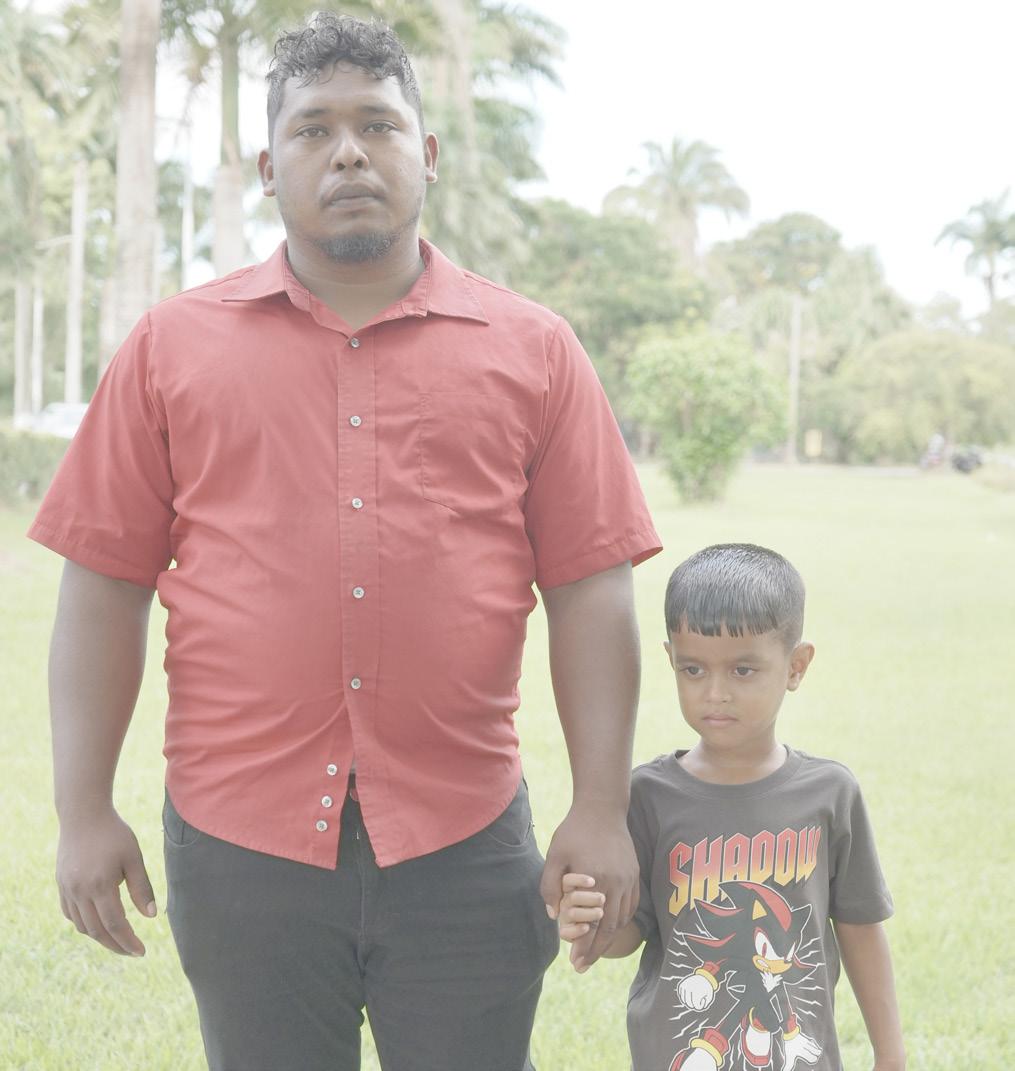
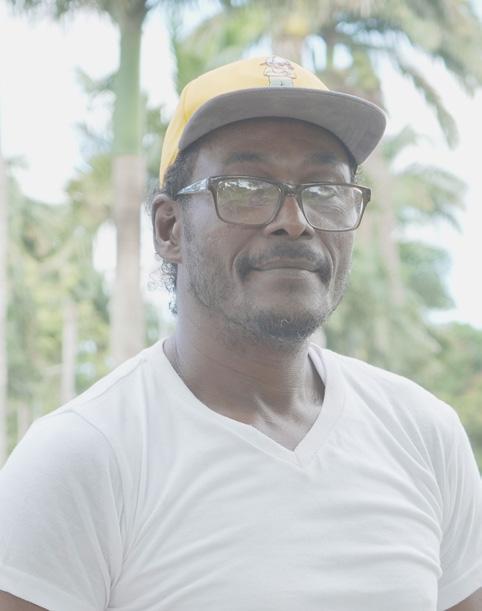
FATHERHOOD is a blessing. Whether biological or adoptive, fathers play a critical role in the lives of their children, providing guidance, protection, love and support.
Underscoring this important role were three fathers

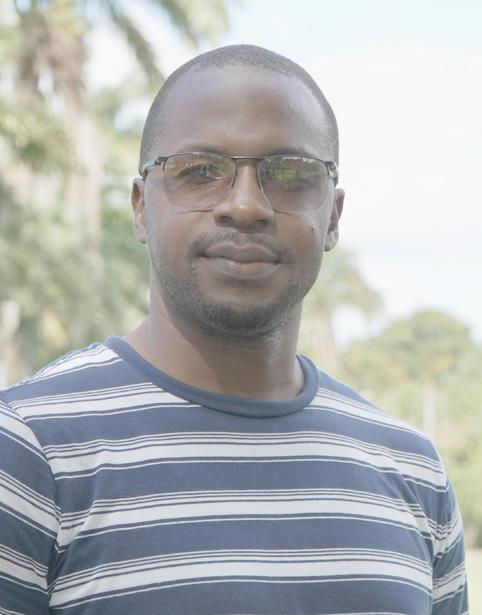
enjoying time with their families at the Botanical Gardens on Saturday: Kemptorne Daly, Mark Carter and Roham, who shared their experiences and perspectives on fatherhood.
Daly, a Communications Officer with the World Wildlife Fund (WWF), proudly described himself as the father of a two-year-old daughter.
All smiles as he spoke about his child, Daly said fatherhood has been a rewarding journey.
“It has been a wonderful experience, being able to guide such a young, beautiful and wonderful soul through life; being able to protect her, being able to show her the things that you want to show her, and also lead her into this Christian life that I’ve been living for the longest while now, and to be able to bring her up on the Christian principles that I’ve been taught,” he said.
According to Daly, one of the greatest rewards of being a father is helping to guide a child in the right direction and watching them grow and develop into their own person.

He noted that in today’s world, it is especially important for parents to raise their children with strong values and principles, given the many challenges that exist.
“You must be able to protect them from all the dangers and prepare them for this difficult life. It is in that preparation that I find a lot of joy and reward, where I can really guide and nurture this child that God has blessed me with,” he said.
Meanwhile, Carter, a father of six, including four biological children and two stepchildren, said he considers all of them his own.
He explained that raising children requires patience, understanding and constant communication.
“It’s like you’ve got to learn to understand them, because they might have you talking several times over and over, but you have to have patience, and that’s the most important thing when raising a child,” he said.
According to Carter, consistent conversations help children better understand the lessons parents are trying to teach them about life.
“While some listen to you, they don’t always do
what you say and that’s where the challenges come. But I never indulge in beating; I believe in talking a lot. That’s the most important thing when raising a child,” he said.
Carter added that one of the most fulfilling aspects of fatherhood is seeing children mature and eventually reflect on the lessons they were taught growing up.
“I love to see when they reach the stage where they can sit down with you and relate to things from way back when,” he said.
For Roham, a father of one, the greatest joy comes at the end of each day when he returns home to his child.
“The best part is coming home after work. Sometimes I might be in a bad mood, but when I reach home, good mood or bad mood, I still show them a good face. They run and come, give hugs, and it’s all wonderful fun. I’m happy to be a father,” he said.
Their stories reflect the many forms fatherhood can take, but all share a common thread: the commitment to love, guide and support the next generation.
THE People’s National Congress Reform (PNCR) is approaching one of the most consequential periods in its modern history.
With its biennial congress on the horizon and Local Government Elections expected within the next year or two, the party faces difficult questions about leadership, strategy and political relevance.
The decisions made over the next several months could determine whether the PNC remains Guyana’s principal opposition force or continues down a path of internal division and electoral stagnation.
Politics is ultimately about results. PNC Leaders are judged not merely by their intentions or rhetoric but by their ability to unify supporters, expand their appeal and deliver victories.
It is against this standard that Aubrey Norton’s tenure must be evaluated.
There is little doubt that Norton inherited a party already burdened by electoral defeat, factionalism, disunity, and organisational weaknesses. Yet after several years at the helm, the turbulence surrounding his leadership has become a defining feature of the PNCR rather than a temporary challenge. Internal disputes have become public spectacles. Senior party members have either departed, been marginalised or openly criticised the direction of the leadership. The image projected to the wider electorate is often one of uncertainty rather than readiness for government.
The reality is that the PNC cannot afford another decade of political drift. The party’s challenge is not simply defeating the governing PPP/C. It must first convince Guyanese that it is capable of governing itself effectively. A divided opposition rarely inspires confidence among undecided voters. Every public disagreement, every internal power struggle and every organisational breakdown weaken the party’s ability to present itself as

a credible alternative government.
This is why the upcoming congress carries enormous significance. It should not merely be a contest of personalities but a serious examination of the party’s future direction.
The PNCR must ask itself whether its current leadership arrangement is producing the growth and momentum necessary to compete effectively in future elections.
There are respected figures within the broader opposition movement who could potentially offer a different path. Carl Greenidge remains one of Guyana’s most experienced political and economic minds. His reputation for competence, diplomacy and statesmanship extends beyond partisan politics.
I hold no brief for Amanza Walton-Desir as a politician, but she has emerged as one of the most articulate and energetic voices within opposition politics, demonstrating an ability to connect with younger voters while also maintaining credibility among traditional supporters. Too bad, Norton kicked her out of his party and circle of politicians or made her departure easy.
Neither Greenidge nor Walton-Desir or any of the current opposition politicians represents a guaranteed solution. No leader does. However, both represent possibilities for renewal at a time when many supporters are openly questioning whether the status quo can deliver electoral success.
The strategic choices facing the PNC extend beyond leadership. Perhaps the most consequential is how it navigates relationships with newer political actors, particularly Azruddin Mohamed and the We Invest in Nationhood (WIN) movement.
While some may see co-operation as a means of consolidating opposition support, such an alliance carries substantial risks. The PNC has spent decades cultivating its identity as a national political institution with deep organisational roots and a defined ideological tradition. Aligning too closely with a move-

ment centred largely around a single political personality could blur that identity and create confusion among supporters. Just look at the 2025 polls as a case in point, and you will know what I mean.
Moreover, any arrangement that places the PNC in a subordinate or dependent position would likely accelerate concerns about the party’s long-term relevance. Rather than strengthening the opposition, it could further fragment the anti-government vote and deepen internal tensions within the PNCR itself.
Looking toward 2030, the PNC’s path to competitiveness requires rebuilding its own political machinery, not outsourcing its future to external personalities or shortterm political arrangements. The party must focus on strengthening local groups, recruiting younger leaders, modernising its communications strategy and developing policies that address the concerns of ordinary Guyanese.
Equally important is the need to remain vigilant in Parliament and at the Guyana Elections Commission (GECOM). The opposition’s effectiveness is measured not only during election campaigns but also through its ability to provide scrutiny, accountability and
oversight between elections. Strong representation in Parliament and robust engagement with electoral processes are essential if the party hopes to maintain public confidence and organisational strength.
The PNCR’s future is not yet decided. It still possesses a loyal support base, experienced members and a significant place in Guyana’s political history. However, history alone cannot guarantee future success.
The upcoming congress presents an opportunity for honest reflection. The party must decide whether it is satisfied with its current trajectory or prepared to embrace renewal. Leadership matters. Organisation matters. Strategic clarity matters. Most importantly, survival matters.
If the PNC hopes to remain a serious contender for national office by 2030, it must begin the process of reinvention now. The time for difficult conversations has arrived, and the party’s future may well depend on the choices it makes in the months ahead.
DISCLAIMER: The views and opinions expressed in this column are solely those of the author and do not necessarily reflect the official policy or position of the Guyana National Newspapers Limited.

THE end of the war against Iran couldn’t have come any sooner.
Political commentators and pundits will have much to write about in the coming months and years – the missteps, foibles, behind‑the‑scenes shenanigans and the odious nature of modern day war.
Whichever way you slice it, this ill con ceived war ended with a resounding victory for Iran. In the streets of the Middle East, Iran is not only stronger, but it is seen as the sole protector of the Palestinian people and the only state that has managed to halt Israeli expansion and aggression in the region since the 1948 war.
The global economies that depend on Gulf oil and gas are breathing a sigh of relief. As oil prices drop, manufacturers in India will most certainly begin to re‑hire millions of workers who lost their jobs when factories were shuttered at the beginning of the war.
UN World Migration reports show that India is the single largest country of origin for international migrant workers, with roughly 18 million people born in India working abroad as of 2020–2024. And this brings me to Guyana.
Guyana is unmistakably on a rapid path of infrastructural transformation, with growth evident in every major sector. In 2024, Presi dent Irfaan Ali projected that, in the medium term, Guyana will require between 100,000 and 160,000 foreign workers, with “a very large, very significant” share of the labour and semi‑skilled workforce expected to come from outside the country.
In 2025 alone, more than twelve thousand foreign workers obtained work permits, up from fewer than five thousand just two years
earlier. Into this context walked thirty‑eight Indian workers at a quarry in Region Seven, whose complaints about unpaid wages, seized passports, and harsh conditions have now been weaponised for partisan gain.
The issue gained national attention after Opposition Leader Azruddin Mohamed and his WIIN entourage descended on Batavia with cameras and press releases, suddenly discovering a deep love for migrant workers’ rights. Overnight, Azruddin recast himself as the patron saint of exploited labour, accusing the government of turning a blind eye to hu man trafficking and state‑sanctioned abuse.
Last week, the former Editor‑in‑Chief of the now‑defunct Stabroek News re‑emerged online as Kiskadee Watch and eagerly took up the chorus. The new outlet has devoted itself to amplifying Azruddin and WIIN’s narrative that the Ali administration is com plicit in human trafficking. This is presented as brave, insurgent journalism. In reality, it is a three‑syllable echo chamber. Like the bird it is named after, Kiskadee Watch is loud, re petitive and utterly convinced that shrillness is the same thing as song.
Here is where the performance collapses under its own hypocrisy. Trafficking in human beings is a despicable crime that should never be tossed around with cavalier abandon to score political points. Yet those now posing as the last line of defence for foreign workers were entangled in their own ugly history of alleged abuse. The sanctioned Mohamed’s Enterprise, Azruddin’s family company, has already been dragged before the courts over the treatment of its workers. According to local media reports, the company was forced to settle a lawsuit brought by three former

employees who claimed they were tortured and abused by the Mohameds.
So, when Azruddin Mohamed, freshly marketed as a human‑rights crusader, stands on a riverbank lecturing the country about the sanctity of migrant labour, it is not com passion we are witnessing. It is a man under indictment abroad, sanctioned for financial misconduct, now wrapping himself in the language of human trafficking to immunise himself from scrutiny at home. And it is a newly minted online outlet dutifully repeating his talking points.
The baseless, blanket accusation that the Government of Guyana is turning a blind eye to human trafficking does more than smear an administration; it throws a shadow over every foreign worker on a construction site.
It encourages the public to see every mi grant as a likely trafficking victim and every employer as a potential trafficker, regardless of facts. It also sends a chill through the boardrooms of companies that have invested heavily in Guyana and now find themselves cast as suspects simply because the country
does not yet have enough workers to fill the jobs they have created.
The ultimate objective is not the protec tion of Indian quarry workers or any other migrant worker. The objective is to drive a spoke into the wheels of growth and develop ment, to slow or derail President Ali’s vision, and to recast a fugitive from justice as a moral guardian of the poor.
Once Azruddin Mohamed and his political allies realised they could milk the complaints of a few foreign workers for maximum po litical effect, they threw caution to the wind. What we are witnessing is not a new age of accountability journalism, nor a sudden awakening of conscience in the opposition benches. It is a kiskadee chorus: loud, in sistent, and always saying the same thing – whatever serves the ambitions of the man holding the megaphone.
DISCLAIMER: The views and opinions expressed in this column are solely those of the author and do not necessarily reflect the official policy or position of the Guyana National Newspapers Limited.
PRESIDENT Dr Irfaan Ali, on Friday, challenged commercial banks to move beyond traditional banking services and play a greater role in expanding financial inclusion, particularly in hinterland and underserved communities.
He made this call during the commissioning of Citizens Bank Guyana’s new branch in Bartica, Region Seven, urging that the country’s financial system must evolve to ensure that economic opportunities are accessible to all Guyanese, regardless of where they live.
While praising the strength and stability of Guyana’s banking sector, Ali questioned whether the benefits of that growth were reaching enough people.
“What is the purpose of having a strong banking system if some people remain outside of it? What is the purpose of having several banks if communities remain underserved? What is the purpose of financial stability if financial opportunity is not broadly shared?” he asked.
His remarks come as the government advances an ambitious strategy aimed at ensuring that every Guyanese has access to a bank account, digital payment services and financing opportunities.
Over the past several
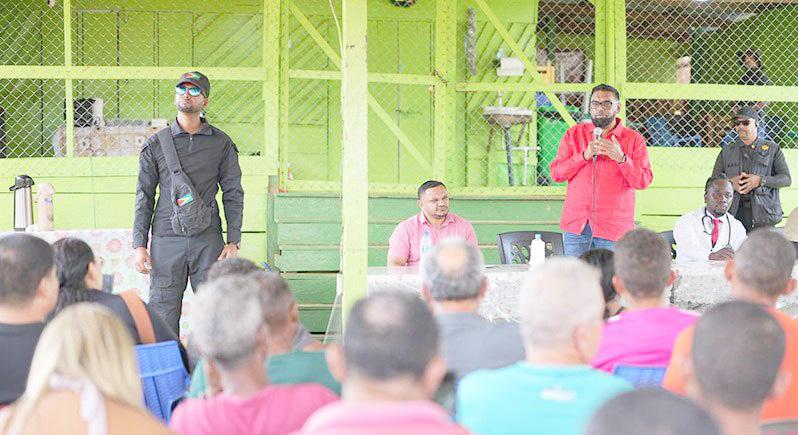
FLASHBACK: President Dr Irfaan Ali addressing scores of miners and stakeholders in the Puruni Landing, Region Seven community earlier this year during an outreach
years, the administration has consistently promoted financial inclusion as a key component of national development, with President Ali repeatedly stating that the government’s objective is for every Guyanese to own a bank account in the shortest possible time.
The push is intended to move Guyana away from a predominantly cash-based economy while making banking services more accessible to citizens across the country, particularly those living in remote and hinterland communities.
“This is the moment that commercial banks should expand their reach. This is the moment that commercial banks should embrace inclusion,” the President said.
To support that objective, the government has encouraged commercial banks to establish a stronger physical presence in hinterland regions while simultaneously investing in digital solutions that reduce the need for customers to visit branches.
The opening of the new Citizens Bank facility in Bartica represents one such effort, expanding access to
banking services in a region that serves as a major centre for mining, tourism, agriculture and commerce.
Beyond physical expansion, the administration has also been pushing for greater adoption of digital financial services.
At the Bartica ceremony, President Ali disclosed that Guyana is moving closer to the implementation of an integrated national payment system that would allow seamless cashless transactions, mobile-to-mobile transfers and round-the-clock access to banking services.
“Before the end of the year [there will be] the development of an integrated national payment system,” he announced.
The initiative forms part of a wider effort to modernise Guyana’s financial architecture through online banking platforms, e-wallet services and real-time payment systems designed to improve convenience and accessibility.
The government has also worked closely with commercial banks, including GBTI, Republic Bank, Demerara Bank and Scotiabank, to simplify account-opening procedures and reduce barriers that have traditionally prevented some citizens from entering the formal banking system.
However, Ali argued that financial inclusion extends beyond access to bank accounts.
He said equal attention must be given to ensuring that small businesses, entrepreneurs, miners and other underserved groups have access to financing.
This philosophy underpins the establishment of the Guyana Development Bank, which was recently introduced in the National Assembly.
According to the President, the institution is intended to complement com-
mercial banks by providing low-cost financing and support to individuals who may not qualify for traditional lending.
“The Development Bank is not being established to replace existing institutions. It is being established to unlock financing opportunities,” he said.
The bank is expected to provide collateral-free financing and support for small businesses, entrepreneurs and vulnerable groups, creating pathways for economic participation and wealth creation.
Ali said financial inclusion should ultimately empower citizens to invest in their own ideas, expand businesses and improve their quality of life.
As Guyana continues to experience rapid growth across sectors such as mining, agriculture, tourism and energy, the President maintained that ensuring every citizen can participate in the formal financial system will be critical to achieving broad-based and sustainable development.
“Financial independence is not only financial access,” he said.
“It is the independence to invest in your own ideas and support your own future.”
ALPHONSO Mining has defended its legal right to conduct gold mining operations on lands within a Mazaruni quarry concession and has threatened legal action against individuals it says have circulated false and defamatory claims about its operations.
The company’s response follows allegations by Opposition Leader Azruddin Mohamed that the Alphonso family had unlawfully entered and conducted mining activities within a quarry concession held by his company, Hadi’s World Inc.
In a statement issued on Saturday, Alphonso Mining said it had taken note of what it described as “false and deliberately damaging
statements” shared on a social media page connected to Mohamed and sought to clarify its position.
According to the company, Alfro Alphonso & Sons acquired subsurface rights to the gold and diamonds located within the disputed lands through a public auction in 2014 and has maintained those rights since then.
“Alfro Alphonso & Sons legally acquired the subsurface rights to the gold and diamonds within the lands in 2014 via an open and competitive public auction,” the company said, adding that all fees required to conduct mining activities were paid in full.
The statement also said, “The quarry licence granted
to Hadi’s World did not extinguish the mining rights of Alfro Alphonso and Sons held under a pre-existing licence.
The dispute surfaced after Mohamed reportedly complained that mining equipment had been deployed on lands covered by Hadi’s World quarry concession at Itaballi, Mazaruni.
Mohamed has argued that his company has invested heavily in developing the concession and questioned the legality of the mining activities.
Natural Resources Minister Vickram Bharrat has since confirmed that the matter has been referred to the Guyana Geology and Mines Commission (GGMC), which dispatched officers to investigate
the competing claims.
In its statement, Alphonso Mining also referenced alleged illegal mining activities in the area and criticised Mohamed’s response to those activities.
“We are not aware of what, if anything, Mr. Mohamed, who has been accused of gold smuggling, did to prevent or halt these illegal activities,” the company stated.
The company’s statement comes against the backdrop of ongoing legal proceedings involving Opposition Leader Azruddin Mohamed and his father, Nazar Mohamed.
Both men were sanctioned by the United States Department of the Treasury in 2024 over allegations relating to gold smuggling, tax
evasion and public corruption, allegations they have denied.
They are also the subject of a United States extradition request linked to an 11-count indictment that includes allegations of conspiracy, mail and wire fraud, and money laundering.
Extradition proceedings, which began in Guyana in late 2025, are currently on hold pending a ruling from the Caribbean Court of Justice (CCJ), which granted an interim stay after the Mohameds challenged the process through the courts.
Alphonso Mining called on the GGMC and other authorities to investigate who may have financed or supported illegal mining opera-
tions and who purchased any gold extracted from the area.
“These are the real questions that deserve answers,” the company said.
The company further warned that it intends to pursue legal action against persons whom it believes have sought to create a false impression regarding its operations.
“In response to these malicious and defamatory posts, Alphonso Mining will take legal action against the various individuals who, with nefarious intent, have sought to create a deliberate impression of impropriety where none exists,” the statement said.
The GGMC’s investigation into the dispute remains ongoing.
ACTING Chief Justice Navindra Singh, on Thursday, dismissed applications by the State to strike out legal proceedings brought by relatives of children who died in the 2023 Mahdia Secondary School dormitory fire, paving the way for the matters to proceed to a full hearing.
The cases were initiated by family members of some of the victims, who are pursuing constitutional damages alongside negligence claims.
The State had not filed affidavits in defence but instead applied to have the Fixed Date Applications (FDAs) struck out, arguing that the issues raised had already been settled through compensation agreements signed with the claimants in July 2023.
The Attorney General argued that the claims were
barred by settlement agreements entered into after the tragedy, under which each family accepted $5 million in compensation from the State.
In response, the applicants contended that the settlement agreements should not bar the proceedings because they were entered into before the signatories had obtained legal authority to represent the estates of the deceased children.
They also argued that the negotiations were unfair and that they were not afforded the opportunity to obtain independent legal advice before signing the agreements.
In delivering his ruling, the Acting Chief Justice said several substantial legal and factual issues arose from the applications, including whether the individuals who signed the agreements had
the legal capacity to settle claims on behalf of the estates of the deceased children and whether any causes of action survived the execution of those agreements.
The court also examined whether the settlements were capable of resolving constitutional claims, as distinct from negligence and wrongful death claims, and whether persons signing in their personal capacities could legally bind themselves in their later roles as administrators of the estates.
After reviewing the applications and the issues raised, Justice Singh concluded that the matters involved significant questions that could not be determined solely on the basis of the settlement agreements.
As a result, he refused the State’s applications to
strike out the proceedings and ordered that both matters be converted into claims.
While declining to dismiss the lawsuits, the Acting Chief Justice noted that the settlement agreements remain relevant and may provide the State with a substantive defence as the matters progress.
In refusing the State’s strike-out applications, Acting Chief Justice Singh ordered that the matters be converted into civil claims, allowing the parties to fully litigate the disputed issues through the filing of Statements of Claim (SoCs) and defences.
The cases will next come up for a Case Management Conference (CMC) in November 2026.
Attorney-at-law Darren Wade is representing the applicants.
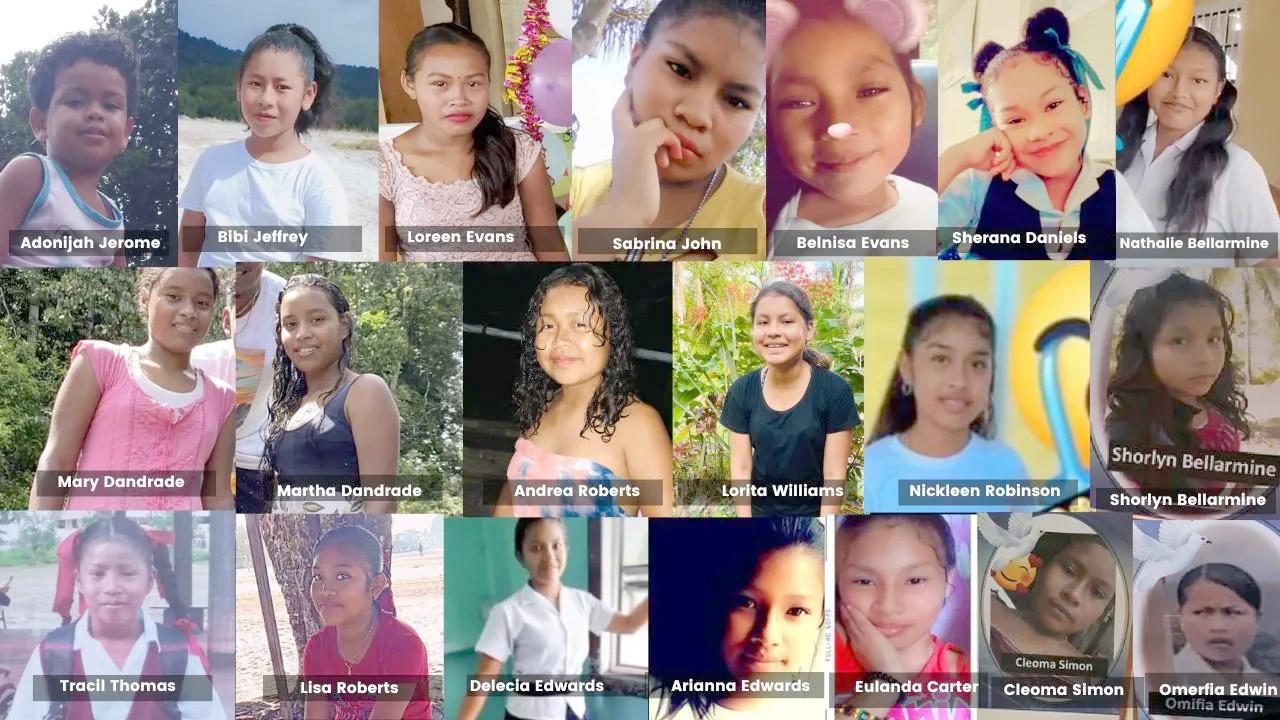

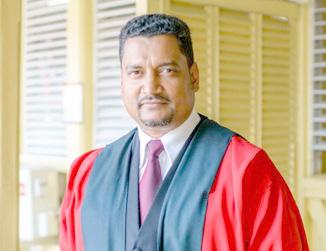
The ruling stems from a legal challenge brought by relatives of victims of the devastating Mahdia Secondary School dormitory fire, which occurred in May 2023 and claimed the lives of 20 children.
The challenge focuses on compensation agreements signed between the State and families of 13 girls who died in the blaze. Compensation was paid and accepted under those agreements, but the applicants are now seeking to challenge their validity.
The families contended that the agreements were signed under duress and without independent legal advice.
They argued that the circumstances surrounding the signing of the agreements, particularly involving Indigenous families from hinterland communities, were coercive and raise constitutional concerns.
Their claims also alleged negligence and wrongful death, contending that failures in the duty of care contributed to the deaths of the children.
The State has maintained that the agreements are le -
gally binding, arguing that compensation was offered and accepted and that there is no legal basis for setting aside the settlements. It has also argued that allegations of duress have not been sufficiently established.
The fatal dormitory fire was allegedly set by a student following the confiscation of a mobile phone. The teenager was subsequently charged as an adult with 20 counts of murder and remains before the High Court awaiting trial.
The 20 victims of the 2023 Mahdia Secondary School girls’ dormitory fire ranged in age from five to 18 years old.
Those who lost their lives in the tragedy were Subrina John, Belnisa Evans, Loreen Evans, Bibi Rita Jeffrey, Lisa Roberts, Tracil Thomas, Delecia Edwards, Lorita Williams, Natalie Bellarmine, Arianna Edwards, Cleoma Simon and Martha Dandrade.
The other victims were Mary Dandrade, Omerfia Edwin, Nickleen Robinson, Sherlyn Bellarmine, Eulander Carter, Andrea Roberts, Sherana Daniels and Adanye Jerome.

THE Ministry of Education and the Ministry of Health, in partnership with UNICEF, UNFPA and other United Nations agencies, on Saturday, concluded a two-day Sexual and Reproductive Health (SRH) Symposium at the Bartica Secondary School in Region Seven.
The initiative, now in its second year, wrapped up following intensive interactive sessions with dozens of secondary school students.
The exercise, which commenced on Friday, June 19th, brought together students and education stakeholders from Bartica Secondary and Three Miles Secondary schools.
Centred within the national Health and Family Life Education framework, the initiative focused heavily on student empowerment, providing safe, structured spaces for young people to open up about puberty, menstrual health, teenage pregnancy, gender-based violence and healthy relationships.
Minister of Education, Sonia Parag, attended the symposium and challenged students to understand the biological realities of their development while building deep internal resilience against negative societal pressures.
Addressing the core theme of adolescent development, Minister Parag demystified the emotional and physical shifts young people experience, explaining how deep internal chang -
es directly influence daily well-being.
“It is vital for both our young men and young women to understand that as you grow, your body undergoes profound chemical changes,” Minister Parag explained.
“These internal shifts happen within the brain and across the body, directly contributing to your emotional, psychological and physical experiences. This is a natural biological process that you cannot stop, but understanding it is the true beginning of your self-confidence and personal identity.”
The Education Minister issued a strong warning against the dangers of peer pressure, specifically targeting harmful habits like vaping and alcohol consumption, which she warned can lead to life-altering addictions that erode fundamental human rights and educational access.
“You do not need to be cool by giving into peer pressure,” she stressed. “If you find vaping, it looks cool, you may want to vape. But how many of you understand that you have the power to say no to certain things? No one needs to be like someone else and destroy their own body. How many of you know that all of these things can turn into an addiction?”
As part of the government’s wider plan to address adolescent health and longterm well-being, Minister Parag briefed the students on the dangers of the Hu-
man Papillomavirus (HPV), how it spreads and the fact that the virus is the primary cause of cervical cancer, which is one of the leading causes of death for women across the world. She noted that this is entirely preventable through vaccination and highlighted that the Government of Guyana provides the protective vaccine completely free of cost to safeguard the nation’s young people before exposure.
“When we started going with the vaccines in different parts of the country and we started screening women, we understood that there were so many women who had pre-cancerous cells,” Minister Parag explained. “But with that vaccine, you can stop that from progressing. It’s important for our young people to know.”
Turning her attention to institutional support, the minister highlighted that a lack of resources should never stand in the way of a child’s fundamental right to education. She praised the ongoing national menstrual hygiene initiative, noting that the First Lady’s menstrual programme, which began by raising funds and donating sanitary napkins, particularly to girls in the hinterland areas, has been so impactful that the government has formally integrated and budgeted for it this year.
This commitment ensures that the programme not only prevents period-related school absenteeism but also maintains good health and hygiene for adolescent

girls.
The minister also directly connected menstrual health to the broader battle against gender-based discrimination and violence, arguing that young men must be active, supportive participants in the conversation rather than contributors to stigma.
“These are conversations that should be happening today, tomorrow, because it’s real and it’s important.”
Minister Parag concluded by encouraging the students to look within themselves for motivation and to always speak up and ask questions.
“Looking outside for motivation, you’ll never find it. Where does motivation come from? It comes from inside. If you rely on yourself and you want to be happy, you make sure that you’re happy and you’re not disappointed. Make sure you use your voice, ask questions. Doesn’t matter how silly questions are, ask the question.”
As a high-visibility component of the symposium, the students, policymakers and inter -
national partners took to the streets of Bartica for a public awareness “Period Walk,” marching through the town chanting, “Break the silence, stop the period shame!” to directly confront localised taboos.
The forum concluded with participating students from both secondary schools signing the adolescent health empowerment pledge. These enlarged poster documents
will be permanently displayed in the respective schools, serving as a daily and visible reminder of students’ commitments to making informed positive health choices.
The symposium received collaborative backing from UN Women and PAHO WHO, with vital funding and support provided by the Government of Canada. (MoE release)

By Shaniya Harding
RESIDENTS seeking answers to personal and community concerns left Vice-President Dr Bharrat Jagdeo’s latest public day outreach in Region Three (Essequibo Islands-West Demerara) with more than just promises, as government officials moved swiftly to address issues on the spot.
Speaking to the media on the sidelines of the event, Agriculture Minister, Zulfikar Mustapha, said nearly 95 per cent of the concerns raised during the morning period of the engagement were resolved immediately, underscoring what he described as the effectiveness of taking government services directly to citizens.
Meanwhile, Minister of Housing, Collin Croal, noted that more than 500 Guyanese received updates on their land applications, certificates of title and housing matters, as well as information on ongoing housing developments within the region. The exercise unfolded against the backdrop of what
both ministers described as Region Three’s rapid transformation, driven by major infrastructural projects, expanding business activity and sustained economic growth.

Minister Mustapha was among a team of ministers, ministry officials and regional leaders who participated in Friday’s public day outreach at the National Track and Field Centre, Leonora.
As one of the country’s largest and fastest-developing regions, the event attracted thousands of residents from across the region who came to have their concerns heard and addressed.
Reflecting on the exercise, Mustapha said the engagement allowed citizens to interact directly with elected officials.
“I think this is a very good way of getting people to be directly interacting, but more importantly, with elected officials. Although we are holding outreaches across the country, and we have regular outreaches and regular community meetings, sometimes one-on-one communication can be lacking,” he said.
He added that even
commitment to bring government services closer to the people.
“Our government, the PPP/C government, the President himself, is encouraging all members of Cabinet to come out and have these interactions. I think this activity is very important. This is a big region. Region Two, Region Three, Four, Five, Six; people are looking forward to these activities and coming here to have their concerns heard,” he said.
Moreover, he noted that the public day provides residents with a one-on-one opportunity to address both personal and community-related concerns.
“At community meetings and other engagements, people might raise issues of concern in their community, issues that affect the community, but here you have a one-to-one approach, a oneto-one interaction with them to deal with their personal is-
few complaints relating to community projects because of the extensive development work already taking place across the region.
“We have not had any major concerns in community projects because in here, we have a very robust programme, doing farm-tomarket roads, drainage and irrigation projects, rehabilitating canals, doing bridges, doing sluices, fixing pumps and building pump stations. The more minor issues, the individual issues, are what people came here to raise,” he said.
Providing insight into matters raised within his sector, Minister Croal said the outreach also served as an opportunity for residents to receive updates on ongoing government programmes and development projects across Region Three.
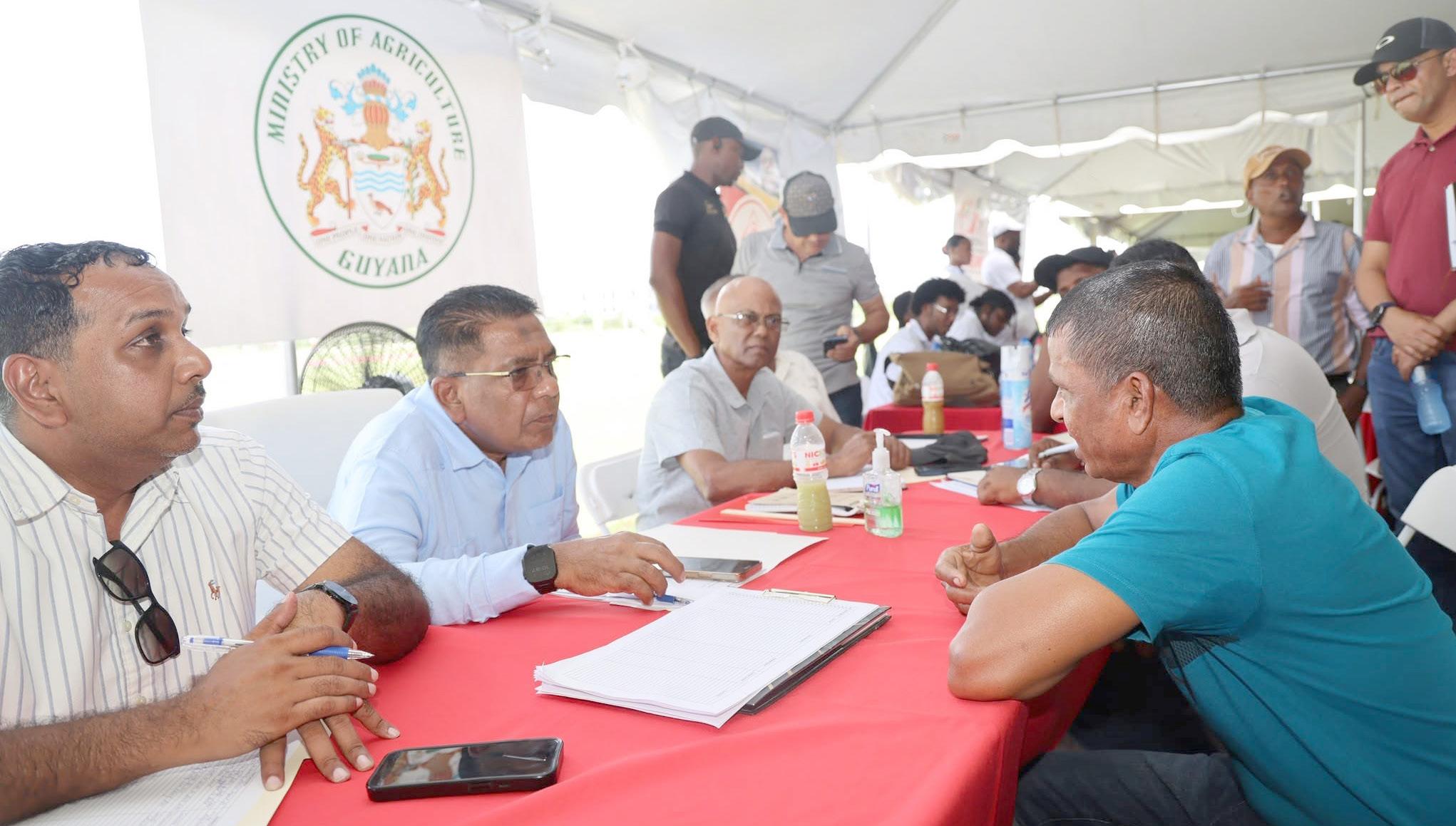
during the early stages of the engagement, after speaking with more than 100 persons, the majority of concerns had already been addressed.
“I would have spoken to over 100 persons already, individually, people who raised issues, people who have personal issues, and most of those issues, almost 95 per cent of those issues, were resolved right here this morning,” he said.
The outreach follows similar exercises held in Regions Two, Four, Five and Six.
According to Mustapha, the regional public days fulfil a People’s Progressive Party/ Civic (PPP/C) manifesto
sues, and those are issues that are important to resolve,” he added.
Speaking on matters raised within his portfolio, Mustapha said most of the concerns were personal in nature and related primarily to agriculture and drainage.
“People came with individual concerns, things like they need livestock help, they need drainage in their surroundings, they need help going into cash-crop farming, they need planting material, they need shade houses. Those are individual requests and those are most of the things we are dealing with,” he said.
He added that there were
He noted that many of the concerns centred on housing applications and land acquisition.
Croal explained that through the Central Housing and Planning Authority (CH&PA), the government is working to clear the housing backlog in Region Three by the end of 2027, in keeping with its manifesto commitment.
“We have said we will work to clear the backlog in Region Three and we are committing to have that completed by the end of 2027. Work has already started to acquire new lands and put in the necessary infrastructure. That is where most of the pending applicants who
rom page 16
came to seek information at the housing booth are concerned,” he said.
He added that the housing booth attracted more than 500 persons seeking updates on applications, agreements of sale, certificates of title and other outstanding housing matters.
The minister said the exercise provided a direct channel for residents to engage officials on pending issues while also learning about broader development plans for the region.
He pointed to ongoing and planned infrastructure projects, including the recently awarded Parika road project and expanded housing developments.
“We had some persons who were checking on their agreements of sale, certificate of title updates and some of the ongoing issues that may not have been resolved. It is an opportunity to update and interact with persons who have pending housing matters. For Region Three in general, a lot of work is happening,” he said.
Croal added that land allocation continues across the region, particularly in Wales, while plans are also advancing for the development of a new housing scheme in Wakenaam.
Sharing similar sentiments, Mustapha said the outreach comes at a time when Region Three is experiencing unprecedented economic growth driven by major infrastructural investments.
He highlighted projects such as the new Demerara River Bridge and extensive road rehabilitation works, which have improved connectivity and stimulated economic activity.
“The entire infrastructure in Region Three is changing now. We are seeing massive development taking place. This is one of the fastest-growing regions in our country. We are seeing massive building, road rehabilitation, and with the Bharrat Jagdeo Demerara River Bridge, people no longer have to wait hours to cross the Demerara River. You can come across into this region more easily. More development is coming here,” he said.
With the region also hosting the landmark Gas-to-Energy project, Mustapha said Region Three is on track to becoming one of the most developed regions in the country.
A 63-year-old businessman is in police custody after ranks allegedly discovered a firearm and ammunition concealed in a bedroom at his Perseverance, Essequibo Coast residence.
The police said the discovery was made at about 10:30hrs on Saturday, June 20, 2026, during an operation conducted in the area.
According to investigators, ranks acting on information went to a residence along the Perseverance Public Road, where

The .45 pistol and seven live rounds of ammunition allegedly recovered by police during the operation
they contacted the suspect.
A search of the house reportedly led to the discovery of a .45 pistol and a magazine containing seven matching live rounds of ammunition concealed in a bedroom.
The suspect was arrested and escorted to the Anna Regina Police Station along with the firearm and ammunition, which were lodged pending further investigations.
He remains in police custody as the probe continues.


PERSEVERANCE and suffering are two words that often seem as though they do not belong in the same sentence. However, for 20-year-old medical student Jasiel Williams, those experiences have taught her valuable lessons about character, resilience and hope.
In the second week of February 2025, what started as pain in her leg would eventually turn out to be much more serious.
Jasiel, a student of the Rajiv Gandhi University of Science and Technology at Cummings Lodge, East Coast Demerara, had just entered a three-year medical programme when the pain in her leg worsened, causing her to limp. Her legs gradually became weaker until she eventually lost the ability to walk.
A visit to the hospital followed, where she was diagnosed with lupus nephritis, a condition in which
lupus causes inflammation and damage to the kidneys.
Jasiel explained that while joint and tendon pain are common among lupus patients, losing the ability to walk is not a typical symptom.
Armed with faith and prayer, Jasiel and her mother returned to the hospital in March 2025 as her condition continued to deteriorate.
Facing several complications, she was admitted to the Intensive Care Unit (ICU), where she spent three weeks before being transferred to the High Dependency Unit (HDU) for an additional week.
Although she was eventually discharged and allowed to return home, she remained unable to walk.
At that point, the young and promising student had lost her independence and relied entirely on her mother, who had to miss work to care for her daily.
“I was like a log, like
an invalid, I would say, completely without independence anymore. So that went on for some time, and I had a relapse because when I came from the hospital, I could have at least used my hands a bit to eat a little, but when I came home, I had a relapse and the entire body shut down,” she recalled.
Alongside the physical challenges, Jasiel developed slurred speech and was unable to communicate clearly. The muscles in her face were not functioning properly, her eyes appeared glassy, and the only parts of her body she could move were her head and eyes.
She also developed deep vein thrombosis (DVT), a condition in which a blood clot forms in a deep vein, usually in the leg.
Describing the experience as extremely painful, Jasiel said she was bedridden for an extended period.
“One day it got very overbearing and we had to
go back to the hospital, and I had to go into the emergency ward, where they did an ultrasound and saw that it was a blood clot in the leg. So, I had to be readmitted to the hospital again, and that was around late April,” she said.
Following her readmission, Jasiel received therapy at the Rehabilitation Centre located at the Palms Geriatric Home before attending follow-up clinics at the Georgetown Public Hospital Corporation (GPHC).
According to Jasiel, she also underwent chemotherapy treatment, as some medications commonly used in chemotherapy are also effective in treating autoimmune diseases such as lupus.
Every two weeks, she travelled from Land of Canaan, East Bank Demerara, to the oncology clinic at GPHC for treatment.
Throughout her recovery, her mother and cousin

played a critical role in assisting with exercises and rehabilitation.
She was later referred to the Ptolemy Reid Rehabilitation Centre in Georgetown, where she received physiotherapy and occupational therapy.
Today, Jasiel continues to make steady progress and says she gives all praise to God for her recovery. She also credits the therapists and healthcare professionals who helped her throughout the journey.
She is now able to walk again, despite continuing to experience what she described as “drop foot.”
“I’ve learned perseverance and suffering produce so many things in you: character, hope and different things, and I had no doubt at
one point that I was going to get healed,” she said.
“I know this was a phase that I had to go through because of what is going to happen in the future for me.”
Reflecting on the experience, Jasiel said perseverance and endurance are lessons that will remain with her for the rest of her life.
She believes that no matter how difficult a situation may seem, faith and hope can help individuals overcome tremendous obstacles.
“I believe there’s always something working behind the scenes; God specifically, even when you don’t see. So even when I wasn’t seeing anything, I knew He was working internally,” Jasiel said.
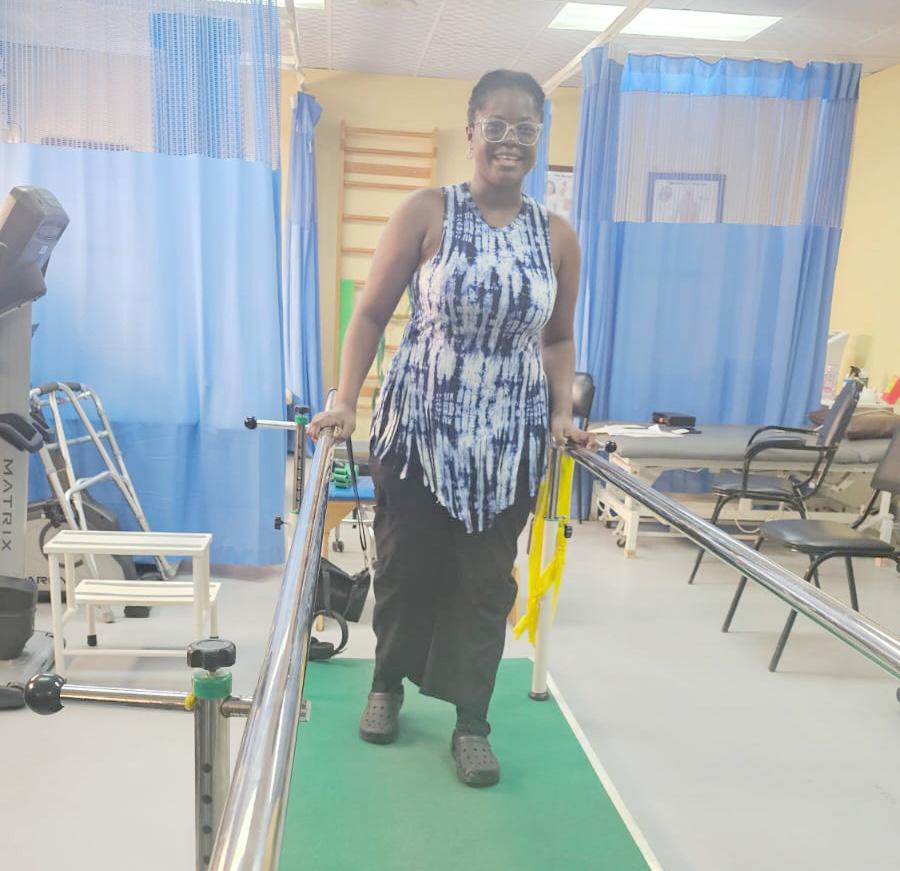

— New Cabinet-approved protocol to boost transparency, accountability and community oversight
across Guyana will soon have greater access to information on government-funded projects in their communities under a new protocol approved by Cabinet that will require ministries and agencies to publicly disclose key details of works before construction begins.
Minister of Local Government and Regional Development, Priya Manickchand, announced that the measure is aimed at improving transparency, accountability and public participation amid the country’s ongoing infrastructural expansion.
Under the protocol, agencies undertaking projects will be required to engage local democratic organs, hold community meetings and provide residents with information including the contractor’s identity, project cost, duration and scope of works.
The move comes in response to longstanding complaints from communities that they are often left unaware of who is carrying out projects, the extent of the works and how long disruptions are expected to last.
Addressing concerns surrounding transparency and accountability, Minister Manickchand said the initiative will ensure citizens are better informed while allowing communities to play a greater role in monitoring public projects and holding contractors accountable.
She noted that the measure was prompted by concerns raised by residents and local government officials, who were at times unaware of projects being undertaken in their communities.
“One of the complaints we have gotten across communities is that in this massive development of Guyana, where there is a lot of civil work happening, roads being built, bridges, buildings going up, buildings being fixed, schools being repaired, is that people in the community, or even local government bodies, do not know what is happening,” she said.
“They do not know who
the contractor is, they do not know the scope of work or the duration of the contract, and that leads to a lot of hurt and confusion; people not knowing how long they will be inconvenienced.”
Manickchand said the protocol, which has already received Cabinet approval, will require ministries and agencies to notify local and regional authorities before commencing works.
“In order to be more transparent and to get the community behind all our projects, because these are massively good development projects that are going to benefit everyone in the community, we have just adopted a new protocol in Cabinet. It is not new, but it is going to be implemented now,” she said.
The minister explained that any ministry or agency entering a community to execute a project must first engage relevant local stakeholders, including Neighbourhood Democratic Councils (NDCs), Regional Democratic Councils (RDCs), municipalities and active community organisations.
“A community meeting must be held and the project explained,” she said.
Additionally, contractors will be required to provide detailed information about the project, including the nature of the works, the expected duration, project cost and the resources involved.
“Is it 10 barrels of sand, 20 wheelbarrows of stone that were needed for this bridge, how long it is going to take, how much it is going to cost, who the contractor was, and that is going to be publicly available information also,” Manickchand said.
According to the minister, the initiative is intended to strengthen accountability by ensuring that residents are fully informed about developments taking place in their communities.
“We hope that by doing that, residents and community members better understand what is happening in their community, which we believe is our duty to make you better understand and your right to know.
But also, to make us more transparent and to make people more accountable, because now
you have a whole community watching the project,” she said.
As the government moves to implement the protocol, Manickchand urged residents to take an active role in ensuring compliance and transpar-
ency at the community level.
She said information on ongoing projects should be readily available through local democratic bodies and encouraged residents to report instances where works are being carried out without adequate public disclosure.
“If you see any work going on in your community that
you do not know about, let us know, let your local government body know, and be sure that you could walk over to your NDC and find the scope of work pasted up alongside their door, on a notice board, or somewhere visible to the public,” she said.
Manickchand stressed that citizens should not hesitate to raise concerns where
projects appear unclear or undocumented, noting that the system is designed to make project details publicly visible and easily accessible.
She said the measure will help hold contractors and agencies accountable while ensuring that communities remain informed and active participants in Guyana’s development.


HAROLD Hopkinson has spent decades building a reputation as a businessman, motor racer and champion target shooter. But the 71-year-old says his greatest achievement has always been his children.
Now, the security executive is using his voice to encourage fellow parents and policymakers to support the repeal of Guyana’s colonialera law criminalising intimacy between men and the introduction of workplace protections for lesbian, gay, bisexual and transgender (LGBT) people.
Hopkinson’s advocacy is deeply personal. Years ago, his son Quincy came out to him as a gay man. Today, Quincy is a successful medical professional living overseas, a reality his father believes is linked to Guyana’s treatment of LGBT citizens.
“It hurts deeply that he felt he had to leave Guyana because of our country’s outdated laws criminalis -
ing intimacy between men,” Hopkinson said in a video released by the Guyana Together campaign to mark Father’s Day.
“These laws do not reflect Guyanese values. They rob us of bright, hardworking people like my son,” he added.
Hopkinson, the father of six sons and one daughter, believes Guyana is losing talented citizens because of laws that discriminate against LGBT people. He is calling on both lawmakers and fellow parents to support reforms that would remove legal barriers facing gay men and provide antidiscrimination protections for LGBT workers.
“As parents, we must stand against these discriminatory laws,” he said. “It’s time for our country to also grow in fairness and respect for all people, including our gay citizens.”
His message forms part of Guyana Together’s fifth
video campaign, which is being released in observance of Father’s Day and highlights stories of support and acceptance within Guyanese families.
In the video, Hopkinson speaks candidly about his relationship with Quincy and the pride he feels in his son’s accomplishments.
“I love my son, and I am very proud of him,” he said. “He reminds me a lot of myself. We share the same sense of humour, we are both artistic, and we can fix almost anything.”
Guyana Together’s fifth video message will be aired both on local television and across a wide range of social media platforms.
It complements four other videos launched from 2023 to 2025. The campaign’s first video features a young lesbian, Krystal Trim, and ally Eusebia Liverpool, who has been a mother figure in Trim’s life since her biological mother passed away when
she was a teenager.
The second video features Guyanese model and pageant queen Kristal Inshan and her gay, best friend, fashion designer Avinash Narine and captures support through friendship.
The third video saw sister Kaisha Davis and her transgender brother Tarique. Their love and support transcend a mere sibling relationship as it cemented an everlasting bond of trust.
The campaign’s fourth video featured 80-year-old grandmother Romanie Viola Simpson and Hollister. Hollister was assigned the sex of male at birth and now identifies as a transgender woman. Simpson’s message highlights her love, protection and support for Hollister who lost her mother at a tender age.
The video puts a spotlight on the duo’s relationship and how they both value each other. All the Guyana Together videos capture real stories of immeasurable love and support from family and friends for gay and transgender Guyanese from all walks of life.
Guyana Together is a grassroots campaign aimed at growing public support and understanding for LGBT people and calling for the repeal of the country’s outdated, colonial-era law criminalising intimacy between men.
The campaign brings together leading business voices, faith leaders, and over 200 Guyanese organisations – all while elevating the voices of everyday Guyanese people who believe in re -
spect for their fellow gay and transgender citizens. According to Guyana Together, a national 2022 poll shows most of the Guyanese nationwide support the repeal of the laws criminalising same-sex intimacy and super-majority support for workplace protections for LGBT people. All these videos have seen positive support publicly. All videos can be accessed online on the Guyana Together website at guyanatogether.gy and the campaign’s social media pages on TikTok, Instagram, Facebook, X and YouTube at the handle @ GuyanaTogether. The website also provides more information on the campaign and how supporters can become involved.

THE Cheddi Jagan International Airport Corporation (CJIAC) has reaffirmed its commitment to maintaining the highest standards of aviation security while ensuring all passengers are treated with dignity and professionalism, following allegations by businessman Zaid Khan that he was humiliated
during a security screening process at the airport.
Khan, a below-knee amputee, took to Facebook to recount what he described as one of the most degrading experiences of his life while departing Guyana.
“Today, I left Guyana with a heavy heart,” Khan wrote in a post on June 17.
He alleged that during a
security screening he was instructed to remove his prosthetic leg and clothing despite his visible disability.
“Standing there, I felt stripped not only of my prosthetic but of my dignity,” he said.
While noting that he fully supports airport security measures, Khan argued that disabled travellers should
not be subjected to procedures that leave them feeling embarrassed or degraded, particularly when alternative screening methods exist.
He called for a full review of the incident, preservation of all available security footage and records, identification of the personnel involved, a review of disability screening procedures and en-
hanced disability-awareness and sensitivity training.
Khan also said he would be pursuing legal action and advocacy efforts, urging international investors and business partners to reconsider travelling to Guyana.
“This is not just about me. It is about every veteran, every amputee, every disabled child, every disabled parent, and every traveller who should never have to fear humiliation because of a disability,” he wrote.
In response, CJIAC said that under the National Civil Aviation Security Programme, additional screening is mandatory whenever an alert is generated or an anomaly is detected at the initial screening checkpoint.
The corporation explained that standard operating procedures require passengers to be offered two options when additional screening becomes necessary.
Passengers may choose to undergo screening privately in a dedicated screening room or remain in the main screening area and complete secondary screening using specialised screening equipment.
“At no time is the removal of a prosthetic device mandatory,” CJIAC stated.
The airport also encouraged passengers to report any concerns directly to management, noting that all reported incidents would be investigated to determine whether established procedures were followed.
Chairman of the CJIA Board and attorney-at-law, Sanjeev Datadin, publicly responded to Khan’s allegations, expressing regret over the experience while noting that security protocols must still be observed.
“As Chairman of the CJIA Board I’m sorry to learn of your experience. I hope you are well and have reached your destination safely,” Datadin wrote.
“We try to make every passenger experience positive whether differently-abled or not. However, we have security protocols which we cannot depart from or avoid but we must be able to implement same in a way that causes less discord. We will try to do better.”
Datadin said the matter is being examined thoroughly and promised to engage
Khan once all the facts are confirmed.
The incident has generated significant debate on social media, with many users expressing sympathy for Khan while also defending the need for robust airport security measures.
One commenter said no traveller should feel humiliated because of a disability, but questioned whether the issue stemmed more from the manner in which the screening was conducted rather than the screening itself.
“My question is, would you have felt differently if the search had been conducted professionally and privately in a separate room instead of in public?” the commenter wrote. “To me, the issue seems less about security doing their job and more about how the situation was handled. There has to be a balance between security and treating people with dignity and respect.”
Another user argued that security officers must remain vigilant given Guyana’s challenges with drug trafficking and the smuggling of gold and other contraband.
“I agree with what he’s saying to an extent, but with the way things are going with the exporting of drugs and raw gold in large quantities, even innocent-looking or disabled passengers have to be processed because they might be used to carry out these things undetected because of their conditions,” the commenter wrote.
A third commenter noted that prosthetic devices have been used internationally to conceal illegal items and suggested that airport officers were likely following security protocols.
“Unfortunately, drugs and other contraband can be hidden in a prosthetic leg. While I understand your feelings, Guyana, like so many Caribbean and Latin American countries, is forced to carry airport security in that manner,” the user wrote.
The commenter added that responsibility should be placed on those who exploit security vulnerabilities rather than on airport staff carrying out their duties.
CJIAC has indicated that any formal complaint regarding the incident will be fully investigated and appropriate action taken if established procedures were not followed.
By Bebi Oosman
MEMBER of Parliament
Zamal Hussain has underscored the People’s Progressive Party/Civic (PPP/C) government’s continued commitment to ensuring that every community across Region Six contributes meaningfully to the country’s development and economic growth.
Speaking during a series of community meetings along the East Bank of Berbice, Hussain said the government is focused on creating opportunities that will allow residents to become more productive and self-sufficient.
He emphasised that the government is rethinking development strategies to ensure that progress reaches every village and community.
According to the parliamentarian, the PPP/C administration wants every community and “every area” to produce, whether through agriculture, small business development, agro-processing, livestock rearing, tourism, or other economic activities. He noted that communities possess unique resources and potential that can be harnessed to improve livelihoods and stimulate local economies.
Hussain explained that significant investments are being made in infrastructure, education, healthcare, drainage and irrigation, and community development projects to create an environment that supports growth and productivity. These initiatives, he said, are designed to empower residents and provide them with the tools and resources needed to succeed.
The MP further encouraged residents to take advantage of government programmes and opportunities aimed at fostering entrepreneurship and expanding income-generating activities. He stressed that community participation remains critical to the success of the government’s development agenda. Hussain, who met sep-
arately with residents in Jermaniah, Upper East Bank Berbice; Mara, East Bank Berbice; Mara Scheme; Macaw; and Lighttown, East Bank Berbice, spoke extensively about the proposed Guyana Development Bank (GDB), through which persons will be able to access up to $3 million in interest-free loans.
“You notice that besides agriculture in this area, where we are helping to clear land, soon the minister will be giving the citrus plants. All these investments that we are making — a couple days back we were here to look at an all-weather road straight down to the back here to bring out more produce — and we are always encouraging farmers to grow more. We want every area to produce,” Hussain said.
He continued: “We said we will implement a new development bank which will enable you, the residents here, to do small business. Right now, the Bill is in Parliament, so as soon as we pass that Bill, everybody who has the opportunity to establish a business or generate income will be able to access that loan.”
Hussain pointed out that the interest-free loan facility has the potential to transform lives.
“You as an individual, if you are setting up an agro-processing business or any kind of business, or you want to buy a vehicle to carry out your produce, this is the right opportunity. But you want to get a plan, so you can help yourself and produce from whatever investment you make,” he said.
Breaking it down further, Hussain told residents: “Then when you pay it off, you get another opportunity to reinvest and take another loan. That is like a savings that you have there that you can tap into. So this is something big for the country.”
He stressed that Guyanese must make full use of the opportunities being created by the government.
“Too many times, Guy-
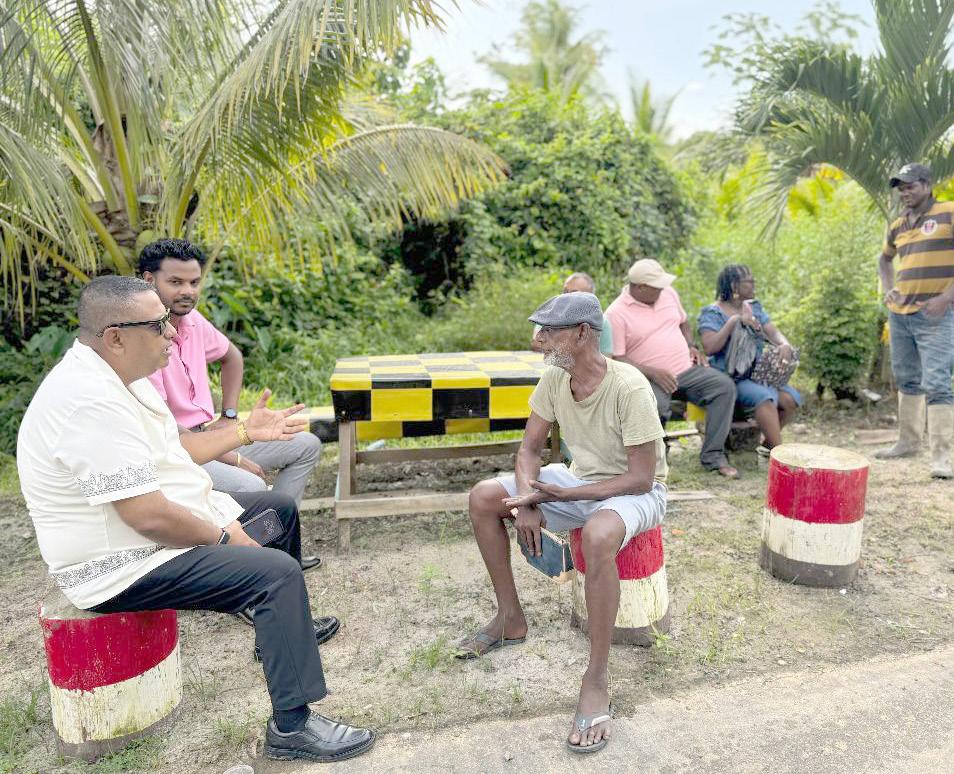
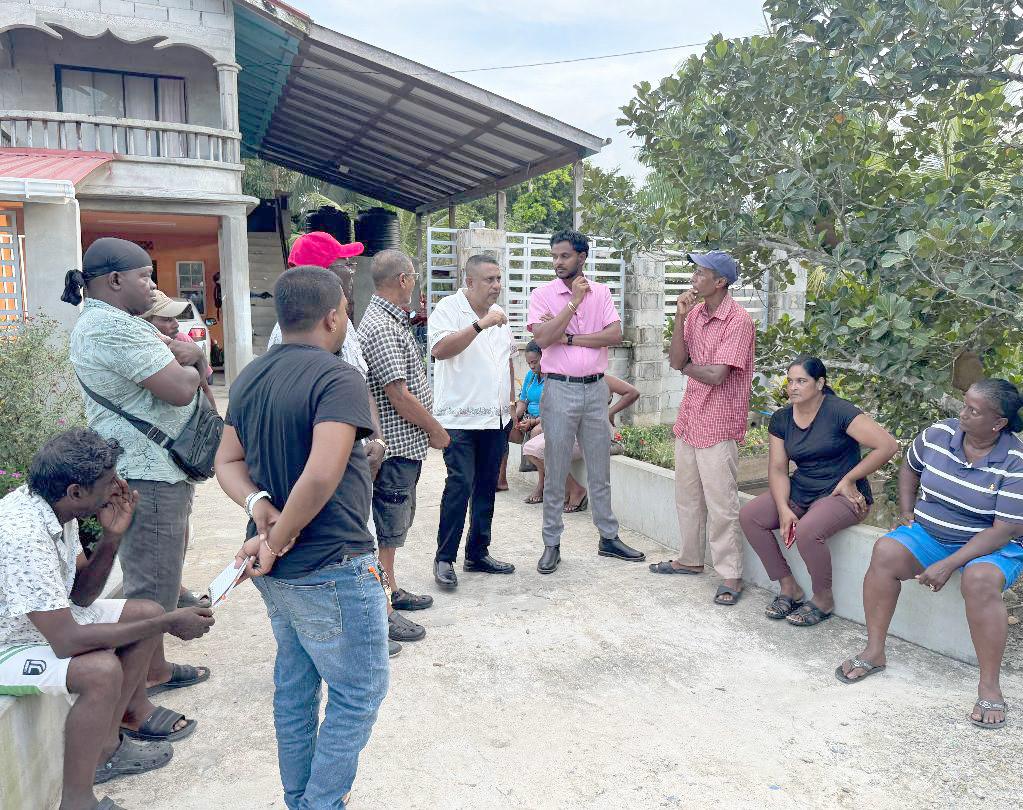
MP Zamal Hussain addresses residents during a series of community meetings along the East Bank of Berbice, where he outlined government initiatives aimed at creating opportunities, boosting productivity and supporting self-sufficiency among communities
anese don’t tap into the opportunities that are being given to them,” he said.
During the engagements, residents also had the opportunity to raise concerns,
discuss challenges affecting their communities, and offer suggestions for future development. Among the issues highlighted was the need for works to be carried out on
the main access road leading to the area.
Hussain assured residents that their views would continue to inform the government’s plans as it works to improve living standards and create sustainable economic opportunities throughout the East Bank of Berbice and the wider Region Six.
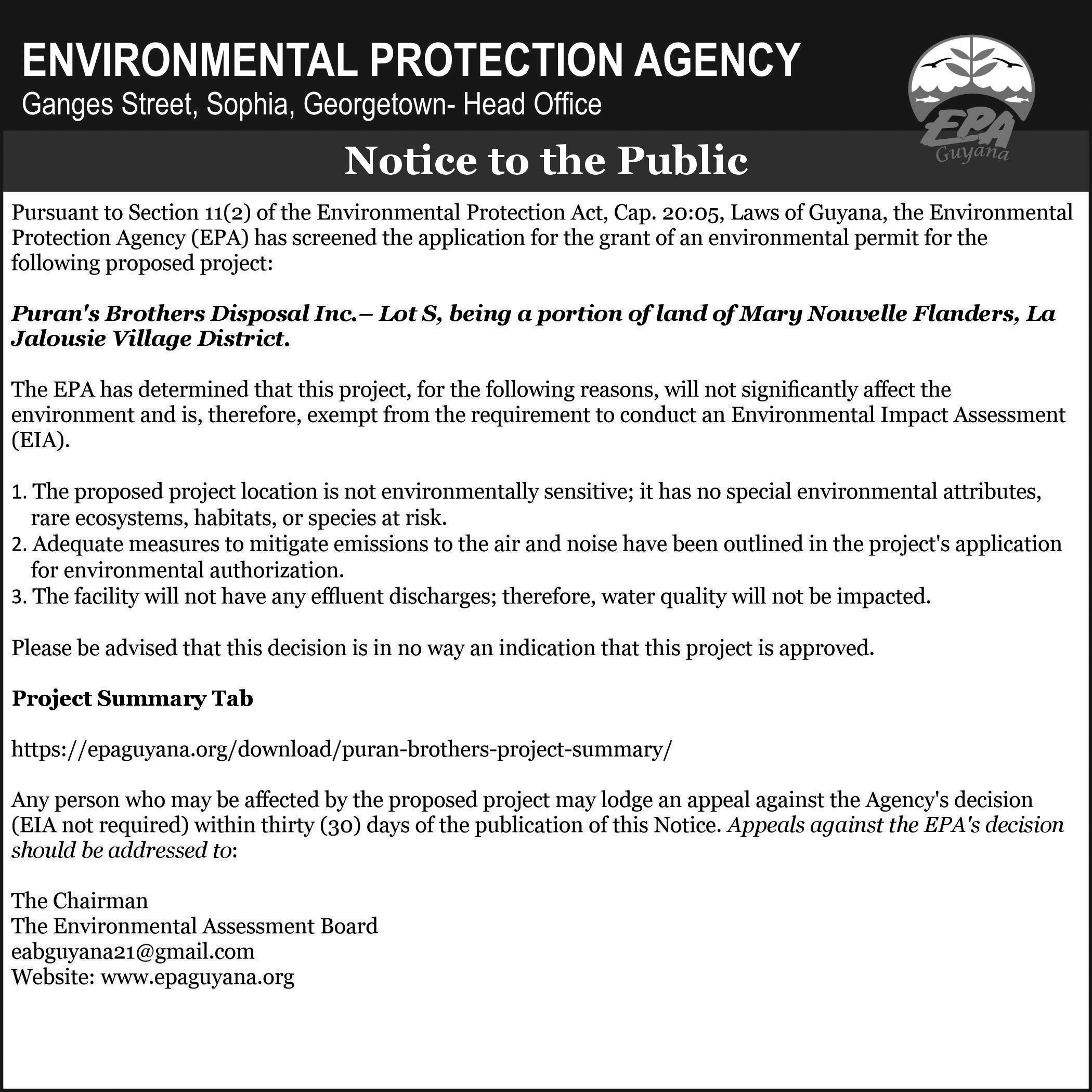
By Indrawattie Natram
REGION TWO is undergoing a remarkable transformation as strategic government investments continue to improve infrastructure, attract private investment, and strengthen the region’s tourism sector.
The region’s development momentum has been bolstered by several key projects, including the soonto-be-commissioned Anna Regina Stadium, the upgrading of the Mainstay Airstrip, and the introduction of a new ferry service, which is already enhancing transportation and connectivity between communities.
These investments have significantly improved access to the Essequibo Coast, making travel easier for residents, investors and visitors
alike. As a result, confidence in the region’s economic potential has grown, encouraging increased private sector participation.
Along the coast and within Amerindian villages, new businesses are emerging at an unprecedented rate.
During an exclusive interview with the Guyana
Chronicle, Regional Chairman Devin Mohan said hotels, cafés, restaurants and other commercial enterprises are being established to meet the growing demand generated by increased visitor arrivals and expanding economic activity.
Just a few years ago, Region Two was widely recognised for its natural attractions, including its scenic lakes, rich fishing opportunities and ecotourism experiences along the Pomeroon River. However, despite its tourism potential, accommodation options were limited, dining facilities were basic, and there was little to no structured café culture or fine-dining experience available to visitors.
Today, that landscape is rapidly changing. Entrepreneurs and investors are
capitalising on the improved infrastructure and growing tourism market, creating modern facilities that offer enhanced services and experiences for both local and international visitors.
The Ministry of Tourism estimates that nearly 100 new hotel rooms will soon become available across the region, representing a significant expansion of its hospitality capacity.
According to Mohan, the growth is expected to support major sporting, cultural and tourism events while creating employment opportunities for residents.
“The developments are also bringing new opportunities to hinterland and riverine communities, with increased economic activity extending beyond traditional business centres and into Amerindian
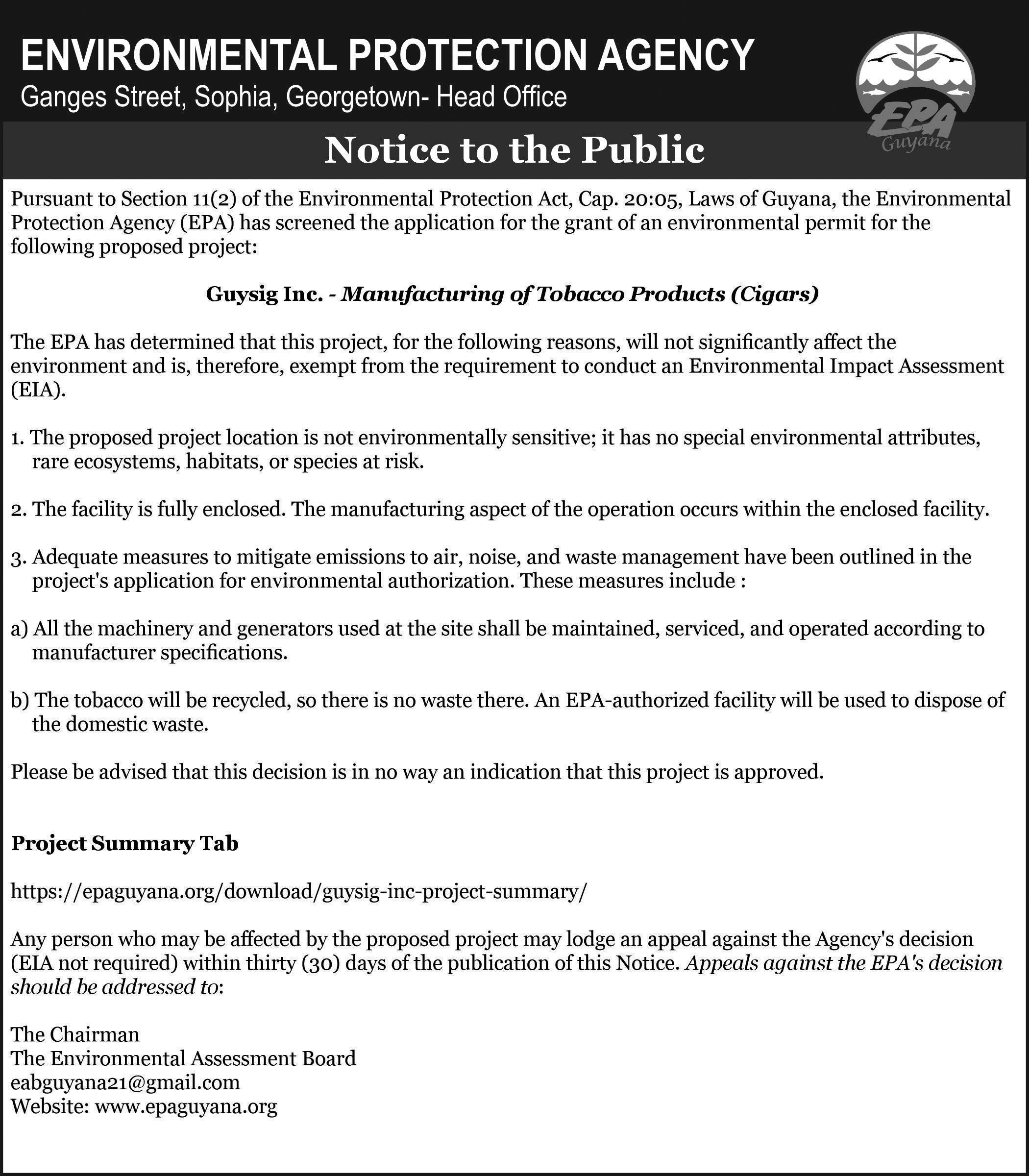
villages and tourism destinations throughout the region,” Mohan said.
He noted that as the government continues to invest in critical infrastructure and connectivity, Region Two is steadily positioning itself as one of Guyana’s emerging hubs for tourism, business and sustainable economic growth.
With enhanced transportation networks, expanding hospitality services and growing investor confidence, the future of the Essequibo Coast appears brighter than ever, reinforcing its status as a destination of choice for visitors and investors seeking new opportunities in Guyana.
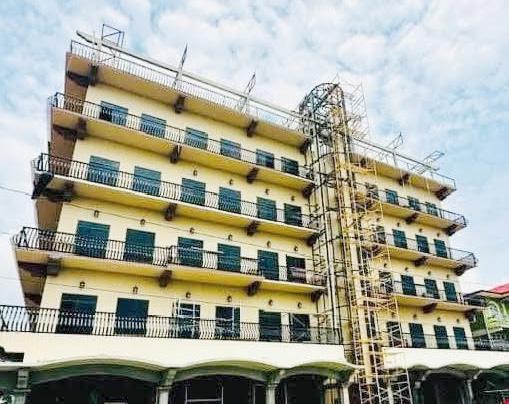
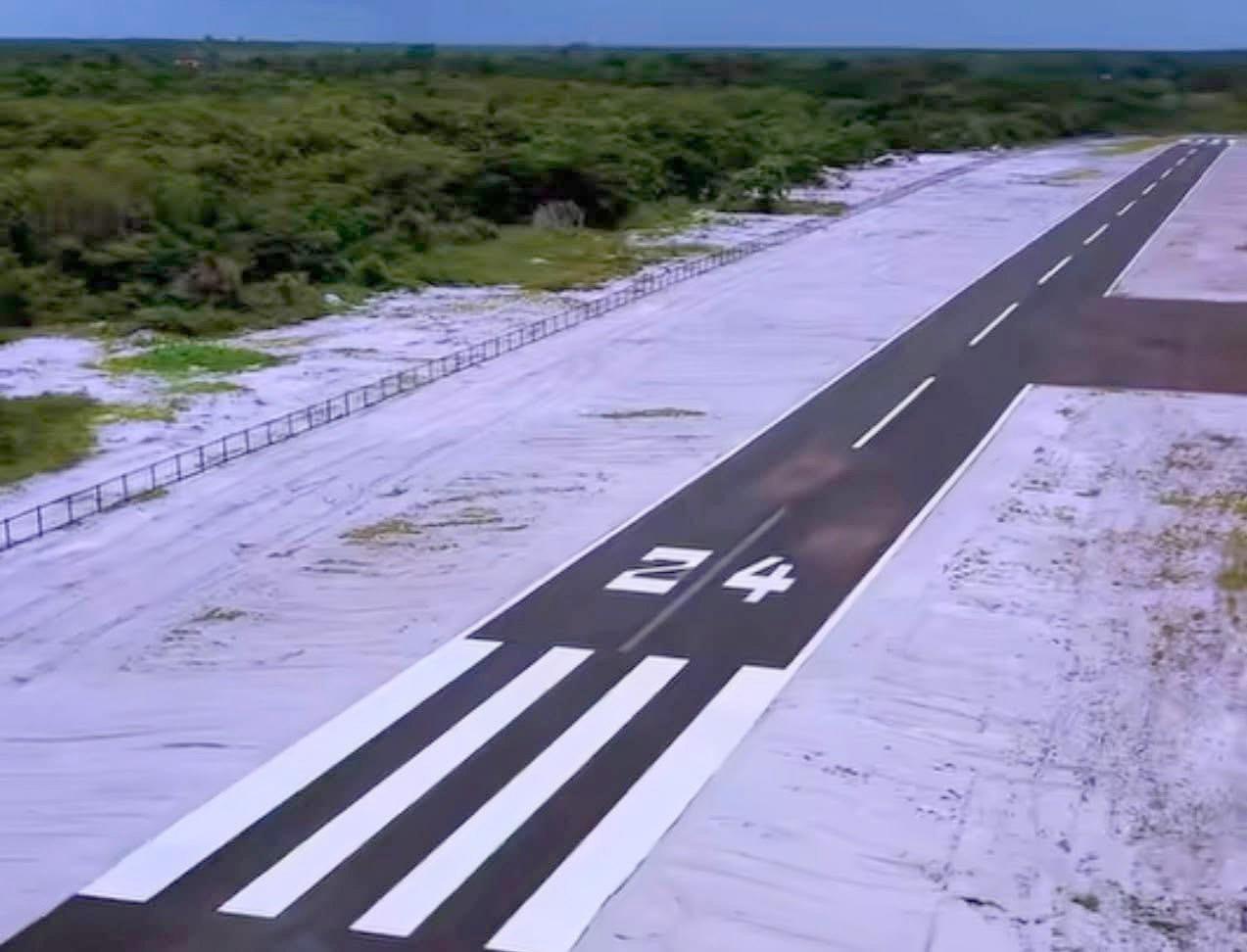
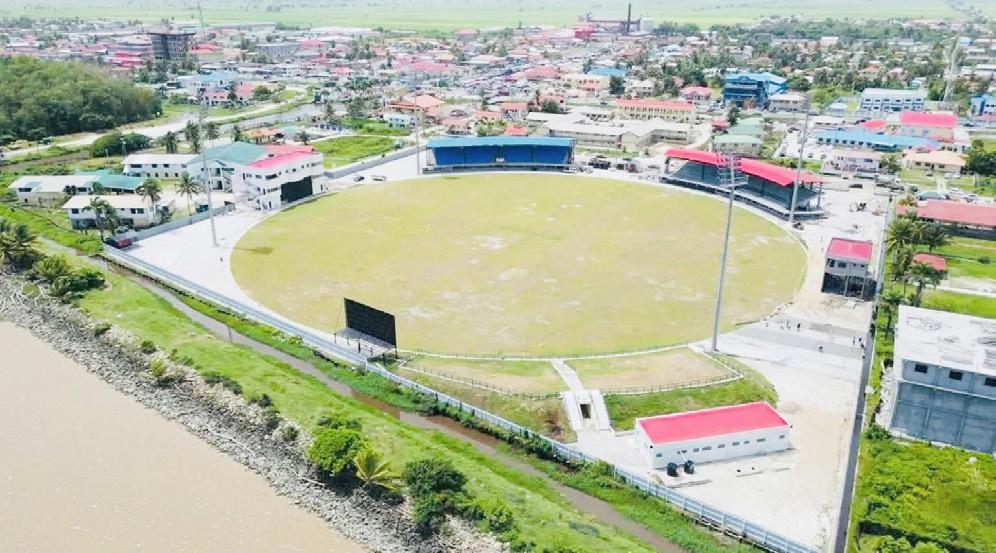

REGIONAL Executive Officer (REO) for Region Seven (Cuyuni-Mazaruni), Dr Josh Kanhai, has criticised Guyana’s political opposition, accusing it of prioritising division, rumours and complaints over constructive engagement and meaningful solutions.
Speaking on the Starting Point podcast, Kanhai argued that opposition parties have increasingly focused on highlighting minor issues and portraying them as major failures, rather than offering practical alternatives or contributing to national development.
“Politicians in our country, in the opposition, tend to just do a half-assed job,” he said.
According to the REO, the role of an opposition is to hold the government accountable while simultaneously proposing solutions to challenges facing citizens. However, he contended that this responsibility is often overshadowed by efforts to generate controversy and attract public attention.
“They come out there, they find a little seal sticking out, and they’ll turn the entire road into a failed project. That is not how opposition is done,” Kanhai stated.
He argued that public discourse has become dominated by complaints about relatively minor matters, while broader developmental achievements and ongoing projects are overlooked.
He added, “It’s like just complaining, irrelevant information, conveying irrelevant information, complaining about the smallest of issues.”
Kanhai went further, accusing opposition figures of deliberately fostering mistrust and division among Guyanese.
He said: “Guyanese need to understand that these guys are just there to spread hate and spread rumours. It’s nothing more than rumours and an attempt to cause division, which is the biggest thing I think they try to do.”
The REO suggested that even newer political forces entering the opposition landscape have adopted similar tactics. “We see a new op-
position coming online, and they’re doing the exact same thing. It makes no sense,” he remarked.
His comments come amid heightened political debate and increased scrutiny of government projects and policies by opposition parties and activists on social media platforms.
Kanhai maintained that criticism should be grounded in facts and accompanied by practical recommendations rather than what he described as attempts to sensationalise isolated issues.
“You’re going out there and just picking at these small, small things. And it’s not going to benefit people. It’s going to just give you a story,” he said.
While acknowledging that public interest in political issues remains high, Kanhai warned that not all information circulating online is accurate.
“Everybody in Guyana likes a story, right? But the stories are not always true,” he stated.
The REO used the opportunity to encourage citizens to seek information directly from official government channels, including ministry and agency social media pages, which he said provide regular updates on programmes, projects and services.
“I encourage my Guyanese brothers and sisters to go on the Facebook pages, the TikTok pages of all the ministries. They’re keeping you up to date. They’re giving you information,” he said.
Kanhai also pledged to increase communication with residents of Region Seven through his own platforms, promising to provide timely updates on issues affecting communities across the region.
He said proactive communication can help prevent misinformation and ensure residents receive accurate explanations when services are disrupted or projects encounter challenges.
“If the water is not running at Bartica and there’s a reason, I’ll put out a notice saying, ‘Hey, the water is not
going to be running for this period,’” he explained.
The REO said his intention is to ensure that citizens are informed before rumours can take hold and spread.
He declared, “I plan to tackle it before they get to it.”
He maintained that transparency and timely communication are essential tools in countering misinformation and strengthening public trust.
At the same time, he reiterated his belief that political opponents should focus more on presenting solutions and less on amplifying what he
considers minor shortcomings. According to Kanhai, Guyanese deserve constructive engagement that contributes to national progress rather than rhetoric that deepens political divisions. Kanhai’s comments reflect the People’s Progressive Party/Civic (PPP/C) government’s contention that the opposition’s focus on highlighting issues is often aimed at generating division and political support, rather than advancing solutions to those concerns.









(Sunday June 21, 2026)

Today’s Quiz:

BERBICE High School showed depth and skill to capture the Berbice title onFriday in the Youth Basketball Guyana’s Berbice Regional Conference final at the Vrymans Erven Basketball Hardcourt in New Amsterdam.
In the boys final, Berbice High came up against Skeldon Line Path; Berbice High would win the contest 34-28. Berbice High School’s best player on the court was Avion Kesney, who led with 22 points in a strong offensive display to win the MVP award in the final.
Also contributing for Berbice High were Carlson Mattheson with six points and 11 rebounds and Dontrell Ross, who scored six points and seven rebounds.
On the losing side, Skeldon Line Path’s top player was Kellon Lyte, with 11 points, and Joel Sukhram, who chipped in with eight points.
On the distaff side, the girls’ final saw Tutorial Academy lining up against JC Chandisingh, with the former winning 13-9.
Tutorial Academy’s Jada
Alexander led her team to the title with six points and eight rebounds.
Earlier in the semifinal round, JC Chandisingh earned a place in the final after defeating Vryman’s Erven Secondary 16-14.
Tutorial Academy reached the final after thrashing Skeldon Line Path 18-2.
The top Under 14, 16, 18, and girls’ teams from all the regional conferences around the country will converge at the Cliff Anderson Sports Hall for the 19th edition of the KFC National Schools Basketball

Festival.
The festival runs from June 28th to July 5th, with teams playing for top honous and prizes.
IN the second game of the day at Southampton, Bangladesh produced a fine all-round performance to eliminate Pakistan with a win by 23 runs.
They successfully defended 123 as spinners Nahida Akter and Sanjida Akther Maghla took three wickets each, restricting Pakistan to 100-8.
Pakistan started positively as openers Muneeba Ali and Gull Feroza produced a partnership of 49 for the first wicket before a collapse of eight wickets for 31 runs.
Earlier, Bangladesh’s batting had also stuttered to 92-6 but they were rescued by Shorna Akter’s unbeaten 39 from 22 balls which led them to 123-6, after contributions of 36 and 22 from skipper Nigar Sultana Joty and Sobhana Mostary.
All-rounder and captain Fatima Sana, who this week became the first Pakistani woman to sign a Hundred deal, was the pick of the bowlers with 2-18 but only managed 10 with the bat.
Bangladesh move to third in the table but they still face a very difficult task in order to qualify with India and South Africa still to play.(BBC Sport)
THE Netherlands cruised past Sweden 5-1 to all but mathematically guarantee a place in the last 32 of the World Cup, with all six goals scored by players from the Premier League.
Sunderland’s Brian Brobbey and Liverpool’s Cody Gakpo scored two goals apiece for Ronald Koeman’s side, with relegated West Ham’s Crysencio Summerville adding a fifth for the Dutch.
Sweden’s consolation goal came from Newcastle’s Anthony Elanga.
Brobbey was a surprise inclusion in the Dutch line-up at the expense of Summerville, who impressed and scored in the 2-2 draw with Japan, but the Black Cats forward took little time in repaying the faith of Koeman.
In the fifth minute the Netherlands went from one end of the pitch in just seven touches - Brobbey took down a long ball from goalkeeper Bart Verbruggen, played it to Gakpo on the left wing, and then charged into the penalty area to convert the winger’s low cross.
Brobbey netted his second 12 minutes later when he stabbed home from Denzel Dumfries’ low cross after getting goalside of Sweden defender Isak Hien.
Sweden thought they had halved the deficit in first-half stoppage time when Gustaf Lagerbielke nodded into an empty net after beating Verbruggen to a free-kick, but the offside flag went up.
Sweden’s mini-fightback was quashed less than two minutes into the second half when Gakpo tapped in at the back post from another dangerous Dumfries delivery across the face of goal.
Gakpo scored his second in the 54th minute when Summerville - brought on at half-time - drove forward and set the Liverpool man up to drill a low shot past Kristoffer Nordfeldt in the Sweden goal.
That strike took the goals scored at this World Cup to 100 in 33 games, the fastest a century has been reached since the 1958 edition (32 or 33 games as both were played simultaneously).
Graham Potter’s Sweden pulled a goal back five minutes later when substitute Elanga ran on to a through ball and lifted his shot past Verbruggen.
Summerville capped an impressive second-half cameo with a late run and strike into the bottom corner.
The Netherlands go top of Group F with four points, while Sweden will likely need a result against Japan in their final group game to secure progress to the knockout stage.
After drawing with Japan, Koeman was criticised in the Dutch media both for his side’s slow attacking build-up and

Netherlands thrash Sweden at World Cup as Premier League stars shine (The Independent)
his ineffective defensive substitutions when leading.
From the first whistle in Houston it was clear he and his players wanted to send a message of intent, as orange shirts ran at bewildered Sweden defenders in wave after wave of breathless attack.
Koeman clearly wanted his side to be more direct - Brobbey gave them a central focal point they lacked against Japan as he helped both start and finish moves.
Sweden’s back three were constantly dragged out of position by Brobbey’s hold-up play and the movement of Malen just off him, allowing Dutch runners to exploit space down the flanks.
To their credit, Sweden improved upon adopting a back four after the first-half hydration break and finished the half the stronger side, but could not convert a flurry of half-chances.
Koeman responded to his critics once again at half-time with an inspired substitution.
Summerville played with the energy and desire of an attacker hoping to reclaim his place in the starting line-up - his clever pass set up Dumfries to assist the third goal, before he turned provider for Gakpo’s second.
He can take huge credit for stopping the Sweden comeback before it gained steam, though a blow to the head he suffered late on could leave Koeman sweating.
For the second time this tournament the Netherlands XI did not feature a single Eredivisie player, while all four
DALLAS, United States, (CMC)
– West Indians Jason Holder and Andre Fletcher scored crucial knocks as the Los Angeles Knight Riders began their 2026 Major League Cricket (MLC) campaign with a seven-wicket victory over the San Francisco Unicorns here on Friday
In the rain-affected contest reduced to 14 overs a side, the Uni-
corns posted a competitive 150 for seven after being sent in to bat at Grand Prairie Stadium
They were led by Lhuan-dre-Pretorius’ 58 off 28 balls, which included five sixes and four fours, ` captain Matthew Short made 30 off 20 balls.
Sunil Narine was the Knight Rider’s best bowler with 2-33. Opener and Player-of-the-Match
Colin Munro then struck an unbeaten 64 off 40 balls with six fours and four sixes to propel the Knight Riders to 154 for three with two balls remaining.
He shared an opening stand of 70 runs in six overs with Fletcher, who blasted 34 off 17 with three fours and two sixes and added 47 runs with Holder who bludgeoned 28 off 12 balls, in just three overs.
goalscorers in this match played in the English top-flight last season.
Bar a late first-half push, Sweden’s own Premier League strikeforce of Alexander Isak and Viktor Gyokeres had quiet evenings.
Both were starved of service, but showed promising signs of link-up play. If their defensive and midfield colleagues do not up their game then Liverpool and Arsenal respectively can expect them to report for pre-season training bang on time.
That said, Hungary are the only side in World Cup history to win their opening game by four goals or more and fail to progress from the group stage after they beat El Salvador 10-1 in 1982.
As three-time runners-up, the Dutch are known as World Cup bridesmaids. After being written off by many, Koeman is determined to take his nation all the way.(BBC Sport)
Secondary School by 176 runs.
A fluent 52 from Navindra Persaud and 44 from Aarav Sukhram shared in a century stand to spearhead Essequibo Islands Secondary School to 211 from 20 overs, as they benefitted from 81 Extras. Damarcus Thompson and Fayed Basksh captured three wickets each, while Justin Dowlin and Sukhram had two wickets apiece as Tuschen Secondary School from the East Bank of Essequibo, were dismantled for a paltry 32 in 10.3 overs.
Marraseh Fredrics had Essequibo Under-15 batter Dowlin caught and bowled for a duck without a run on the board as Essequibo Secondary, which produced West Indies player
Keemo Paul, began inauspiciously.
Nickel Retemiah (10) Persaud added 40 before Fredrics trapped Retemiah LBW.
Persaud played several delightful shots on both sides of the wicket, and along with Sukhram shared in a 122-run third-wicket partnership before Jumol Morris bowled Sukhram at 162-3 in the 15 th over.
On reaching his fifty from 55 balls with five fours and a six,
Persaud retired hurt for 52 before Dennis Crossman made a cameo 14 from just six balls with three boundaries.
Fredrics (2-27) and Morris (2-29) bowled for Tuschen, who horrendously began their reply and never recovered.
Six of their batters made ducks while nobody reached double figures.
In the Georgetown zone, played at Uitvlugt due to heavy showers in the City, Saint Stanislaus College defeated New Central High School by four wicket Central High made 89-9 innings closed in 13.2 overs, with only Peter Kan scoring 34 with six fours, getting double figures. Extras contributed 45. Noel Nihal was the architect of the destruction, bagging 4-4 while Jessie Craig took 2-0 for Saints, who reached 93-6 asInshan Haricharran led the way with an unbeaten 40
THE Rainforest Water brand, under the umbrella of Banks DIH Limited, has officially recommitted as the official hydration partner of the One Guyana T10 Tapeball Blast for a fourth consecutive year.
This renewed partnership ensures the extension of the tournament’s signature ‘Rainforest Water Break’ in every match, a feature that has become synonymous with the tournament’s match-day structure.
The extension underscores the burgeoning market value of grassroots tapeball in Guyana, a format that has rapidly transitioned from a recreational pastime into a highly structured, lucrative sporting property.
Basant Ramsarup, Brand Manager for Water Beverages at Banks DIH Limited, emphasised that the corporate giant’s sustained investment aligns with a broader mandate of community development and wellness.
Ramsarup noted that this is the fourth year the brand has walked hand in hand with the tournament, stating that the partnership perfectly mirrors the brand’s core philosophy.
represent Guyana at the International T10 Tapeball Tournament scheduled for late October.
Individual accolades are equally heavy, with the tournament MVP set to claim G$150,000 and a new motorbike, while the leading run-scorer and wicket-taker will each pocket G$100,000 alongside new television sets.
With the tournament structure locked in, organisers have issued an urgent directive to regional teams to secure their spots immediately rather than delaying registration to tinker with squad selection.
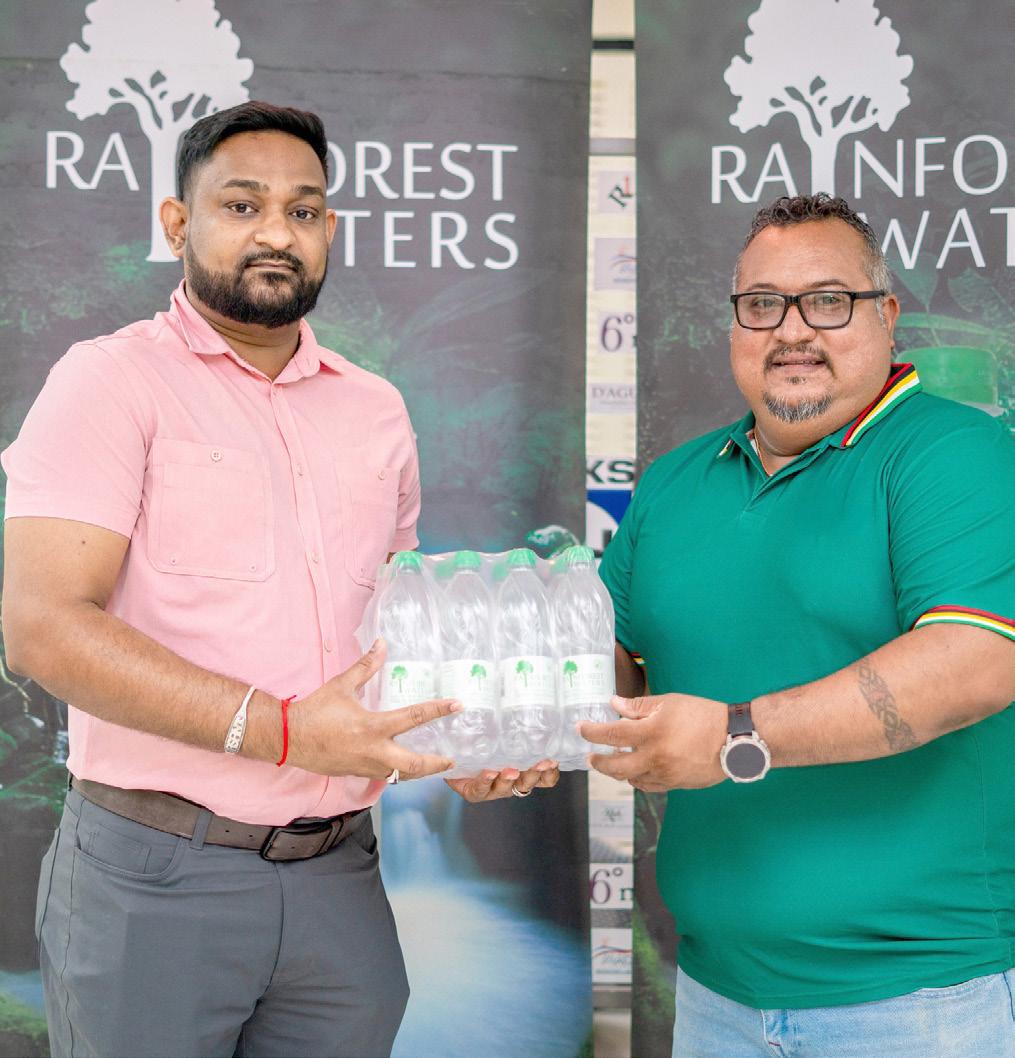
For Banks DIH and Rainforest Water, the commitment is more than just branding on a boundary board; it also serves as a vital way to give back to the communities that support them while actively promoting a healthy, active lifestyle through sport.
He added that the tournament has grown exceptionally well, and the brand is thrilled to keep the athletes refreshed as the stakes get even higher.
Tournament Director John Ramsingh welcomed the renewal, framing Rainforest Water as a foundational pillar of the competition’s ethos.
Ramsingh stated that Rainforest Water is a household brand in Guyana, and having them return for a fourth season speaks volumes about the mutual value of the relationship.
He further explained that their continued presence is monumental for the tournament’s operational growth and sustainability, providing a sense of stability that allows organisers to scale up their ambitions year after year.
Those ambitions are reflected in a heavily restructured, high-stakes 2026 season, featuring a revolutionised prize purse that guarantees financial windfalls even at the regional levels.
Teams reaching the zonal quarter-finals are assured G$25,000, with scaling rewards that culminate in a G$500,000 prize for zonal champions before they even cross into the national bracket.
The eventual national champions will secure a life-changing G$2,000,000 purse, with the runners-up taking home G$1,000,000. Additionally, the top four national finalists will earn qualification berths to
Ramsingh stressed that registration operates on a strict first-come, firstserved basis, noting that captains frequently jeopardise their entries by overthinking their lineups during the initial window.
To guarantee a spot, teams must pay the G$35,000 entry fee now, which secures their franchise slot and grants them logistical flexibility to finalise their 15-man rosters closer to their respective zonal start dates.
The entry caps will be rigidly enforced to maintain the integrity of a dense schedule.
The Berbice, East Bank/ West Demerara, and Essequibo zones are strictly capped at 16 teams each, while the combined Georgetown/East Coast Demerara zone will accommodate a maximum of 32 teams.
Registration forms can be accessed via the tournament’s official social media handles or by WhatsApp at +592 635-2235.
The tournament caravan kicks off with the Berbice Zone on August 8–9, across four premier venues, including the Port Mourant Community Centre Ground, No. 69 Ground, and the Welfare Ground in Canje, before concluding with the zonal finals at the Albion Sports Complex on August 9.
The action then moves to the East Bank/West Demerara leg on August 15–16, followed by the Essequibo Zone on August 22–23.
In a strategic scheduling move designed to avoid clashing with regional cricket priorities, the tournament will observe a complete hiatus during the Caribbean Premier League window, ensuring local fans can engage with the premier T20 tournament without domestic scheduling conflicts.
Action resumes post-CPL with the Georgetown/East Coast Demerara leg on September 26–27 and October 3–4, leading into the national grand finale on October 11, 2026.
In a historic first for the competition, the final will be hosted at the Anna Regina National Stadium in Region Two, bringing elite-level tapeball directly to the cricket-passionate demographic of the Essequibo Coast.
ZEELUGT Sports Club (ZSC) are in a strong position to take top honours when the final leg of the three-way tri-series dominoes tournament climaxes at Cold Fusion Bar, Zeelugt, East Bank, Essequibo next Sunday.
At the end of the second round (fourth match), played at Boy’s Beer Garden, Good Hope, East Coast Demerara, last Sunday, Zeelugt, who formerly played under Cold Fusion, led the charge with 309 games with opponents Relentless of Canal Number 2, West Bank, Demerara and RJ 6 of Industry, East Coast Demerara, tied on 286.
Match one saw Relentless scoring 77 to take the lead, followed by ZSC with 73 and RJ 6 closely behind on 70. For Relentless, Roy Rampant (Jet Run) scored 17 games and was assisted by Santro Singh with 15 and Mahindra Aygganand (Elvis) with 14. Salim Abdool led the way for ZSC with 14 games while Radesh Sooklall played through and made 25. For RJ 6, skipper Rajindra Jhun (RJ) and Harish Looknauth (Boy) made 16 each while Nandalall Santbeharry chipped in with 14.
In game two, played at Javed Beer Garden, Canal Number 2, ZSC scored a massive 85 games, leaving RJ 6 on 72 and Relentless in the cellar with 71. For ZSC, skipper Boodnarine Persaud played through and made 32 games (first three sittings 14 games counted for MVP). He was supported by his brother Boodram Persaud (Robin) with 15 and Salim Abdool who scored 14.
For RJ 6, captain Jhun made 16 and received solid support from Sheikh Yassin and Navin Wilfred (Bob) with 15 and 14 games respectively. Santro Singh led Relentless with 16 games.
In an exciting game three, played at Boy’s Beer Garden, Good Hope, East Coast, Demerara on Sunday, June 14, RJ 6 triumphed on sixes over Relentless, both ending on 73 games with ZSC closely behind on 71. At the end of the fifth sitting, the scoreboard readRelentless 61 ZSC 60 and RJ 60.
The consistent Jhun again led the way for RJ 6 with 15 games and was supported by Looknauth and Santbeharry with 14 each. For Relentless, Roy Rampant made 16 and received support from Devindra Rampersaud with 15. Boodnarine and Boodram Persaud registered 16 and 15 games respectively for ZSC.
Game number four saw ZSC bouncing back with another commanding performance, winning with 80 games with RJ 6 and Relentless lagging with 71and 65 respectively.
Radesh Sooklall scored the maximum 18 games for the winners and received major support from Tavendra Mangra with 15. For RJ 6, Jhun again led the way for his team with 15 games while Sheikh Yassin scored 14. Mahindra Rampersaud made 15 for Relentless.
The three teams will have a break on Fathers Day weekend, after which the final two games will be played at Cold Fusion Restaurant and Bar on Sunday, June 28. Up for grabs are trophies and cash incentives for the winning team and trophies for the runner-up team and MVP, and most of bragging rights
THE opening day of the Essequibo zone in the ExxonMobil-powered Future Warriors Tapeball Tournament for Primary Schools produced a spectacle of high-octane grassroots cricket on Saturday, culminating in four teams securing their spots in the semi-finals at the Anna Regina Stadium.
Defending champions C.V. Nunes Primary led the charge into the final four, keeping their back-to-back title hopes firmly alive.
Joining them in today’s final-four showdown are Charity Primary, Mainstay Lake Primary, and Lima Sands Primary, following an intense day of knockout action that tested the grit of the region’s finest young cricketers.
The quarter-final stage saw defensive bowling masterclasses, clutch-boundary hitting, and clinical run chases as the initial field of 16 schools was whittled down to the final four.
The defending champions sent a clear message to the rest of the field with a dominant all-round performance as Sparta Primary struggled to break the shackles against a disciplined C.V. Nunes bowling attack, grinding their way to a modest 36-7 in their allotted eight overs.
The champions made light work of the target, blasting their way to 37-2 in 4.4 overs
to secure a comprehensive eight -wicket victory.
Charity Primary showcased their chasing credentials in a high-stakes encounter against Suddie Primary, navigating a tricky target with poise.
Suddie managed to post 52-6, giving their bowlers something to defend.
However, Charity’s top order played with freedom and intent, ticking off the required runs inside six overs to finish at 56-2 and seal a comfortable eight-wicket win.
Mainstay Lake’s batting unit stepped up big to bat out Onderneeming Primary as they chased 54 in 6.2 overs, while Lima
Sands posted a massive 88-2 and restricted Riverstown Primary to 36-6.
Beyond booking a spot in the national ‘Champion of Champions’ tournament against Demerara winners West Ruimveldt and Berbice champions St. Therese Primary, all four semi-finalists have guaranteed themselves comprehensive cricket equipment bags, agility kits, and electronic scoring tablets to boost their school’s sports programme.
The tournament concludes today at the Anna Regina Stadium with the semi-finals, followed immediately by the third-place playoff and the grand final.
Admission is entirely free to the public.
JOE Root stands between England and defeat in the second Test against New Zealand on a day when absent captain Ben Stokes made 95 for Durham
Set a world record 463 to win at The Oval, England were reeling at 40-3 and in danger of not seeing out the fourth day.
At the same time, Stokes, unavailable for this Test pending an investigation into an incident at a London nightclub, was making his highest score in any cricket since a century in the fourth Test against India almost a year ago.
(Scores: England 291 (Gay 53, Fisher 50*; Henry 5-80) & 182-5 (Root 75*, Brook 58; Jamieson 3-37)
England require 281 more runs, New Zealand need five wickets)
But with the exiled skipper at the crease 275 miles away, stand-in captain Root began a typically masterful unbeaten 75 to take England’s rearguard into the final day.
Root received a standing ovation on only two as he became the second man after Indian great Sachin Tendulkar to reach 14,000 Test runs.
He shared a thrilling stand of 97 with Harry Brook, the vice-captain largely aggressive
for his 58. Both Root and Brook overturned being given lbw to Matt Henry, who eventually had Brook held at slip.
James Rew erased any lingering fears of a four-day finish, only to be lbw on review to Kyle Jamieson in the dying moments, leaving England 182-5 and New Zealand one wicket from the tail.
England hold a 1-0 lead in the three-match series.
Stokes hits 95 for Durham while England struggle
A tale of three captains
This extraordinary fortnight in English cricket, with Stokes and pace bowler Gus Atkinson stood down for the second Test after breaking a curfew, will almost certainly end in the series level at 1-1.
Two stories have played out concurrently. At The Oval, an inexperienced England team have been exposed by the efficient New Zealanders, while in Durham, Stokes plays for his county in the hope he will return to captaining his country in a decider at Trent Bridge.
On Saturday, the narratives intertwined while a trio of England captains batted simultaneously. Root is both Stokes’ predecessor and stand-in. Brook is probably Stokes’ suc-
cessor and may have been the substitute here had it not been for his own nightclub incident in Wellington in October.
It added a layer of absurdity to a saga that cannot end quickly enough, with formal announcements expected at the conclusion of this Test.
In a time of crisis, England turned to Root. While this match may have reminded him why he gave up the captaincy four years ago, he has once again held together a batting line-up that risked imploding.
Brook’s cameo was exhilarating, a reason to be distracted from Stokes’ knock in Durham. Still, it is the remaining presence of Root that gives England hope of battling deep into Sunday.
Root to the rescue
Discussing Root as a stand-in captain, director of cricket Rob Key said the Yorkshireman regularly rescues England from 10-2. Key was close. In England’s second innings it was 13-2.
Emilio Gay chipped Jamieson to mid-wicket and Jacob Bethell’s worrying form continued when he was lbw to the same bowler for a duck. Root arrived to tick off yet another milestone in his glittering career, then
Ben Duckett tamely hooked Will O’Rourke to mid-on.
Root was joined by Brook just before tea and, after the break, England launched a blistering assault. The opening five overs of the session, the first of which was a maiden, yielded 43 runs. The atmosphere was electric. Root dabbed, cut and guided to the third man fence. He was the first to overturn an lbw decision off Henry - once again bowling with wicketkeeper Tom Blundell up to the stumps - because of an inside edge. Root was on 44 at the time.
Brook showed touches of genius. He whipped a six over square leg and slashed the ball through the off side in a 33-ball half-century.
Brook also got an inside edge on a Henry lbw shout, only to jab the relentless seamer to slip.
Brook’s exit was a moment of danger for England, but debutant Rew followed an improved wicketkeeping display by showing composure for his 15. He was unfortunate to be leg before on review to Jamieson, missing a pull to a ball that skidded through and hit him above his pads.
(Yahoo Sports)
BETH Mooney smashed a half-century but retired hurt as Australia completed a comfortable 98-run victory over the Netherlands to maintain their unbeaten start to the Women’s T20 World Cup.
Mooney top scored with 74 (42) while Ash Gardner struck 58 (32) and Georgia Wareham crashed an 18-ball 41 as Australia piled on 219-6 to equal the highest total at a Women’s T20 World Cup – set by England against Sri Lanka earlier in the tournament.
(Scores: Australia 219-6 (20 overs):
Mooney 74 (42), Gardner 58 (32); Zwilling 3-52
Netherlands 121-3 (20 overs): De Leede 56* (57); Garth 2-20)
However, she pulled up after running two at the end of the 14th over and immediately left the field.
She did not return to keep wicket due to back stiffness and with emergency wicketkeeper Phoebe Litchfield also absent due to a quad injury, Georgia Voll took the gloves. The 22-year-old was quickly involved, moving sharply across first slip to remove
Phebe Molkenboer in the second over as Kim Garth struck twice in the powerplay to restrict the Netherlands to 27-2 after six overs.
Although Netherlands captain Babette de Leede (56 off 57) scored an unbeaten half-century in her 100th T20I and shared a determined 96-run partnership with Sterre Kalis (44 off 43), Australia’s total was always out of reach.
Earlier, Mooney and Voll flew out of the blocks to bring up Australia’s 50 inside five overs before Iris Zwilling and Heather
Siegers struck in quick succession to remove Voll and Ellyse Perry before the end of the powerplay.
Mooney combined with Gardner, returning from a sprained ankle which kept her out against Bangladesh, for a 101-run third-wicket stand off 55 balls.
Gardner departed two balls after Mooney, holing out to Kalis in the deep, but although wickets fell regularly in the final five overs, Wareham’s 41-run cameo, which included eight fours, powered Australia beyond 200. (BBC Sport)

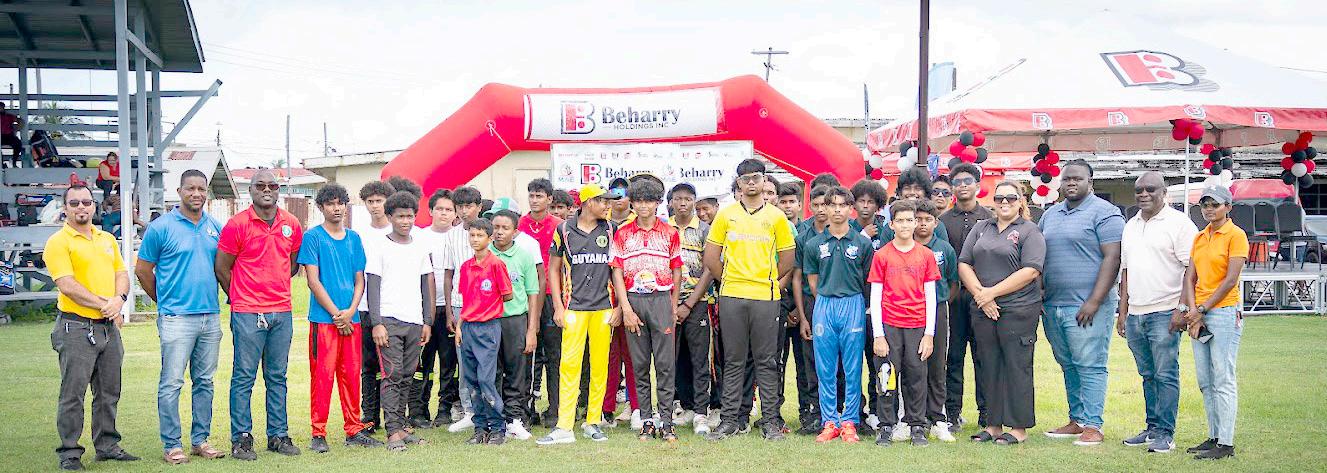
By Sean Devers
OVERNIGHT rain failed to put a damper on yesterday’s Beharry Group National U-19 schools T20 cricket tournament, organised in collaboration with the Ministry of Education (MOE) and Petra Organisation at the Uitvlugt Community Centre ground in West Demerara.
The proceedings commenced with a colourful March past of teams before the well-organised Ceremony, which was chaired by Petra Representative, Troy Peters.
Nicholas Fraser, Head of the Unit of Allied Arts, Ministry of Education, Marketing
Manager of Sterling Products Limited, Dellon Lynch (speaking on behalf of the Beharry Group), and former National U-17 Cricketer and Tournament Coordinator Azizi Christiani made remarks to a fair-sized gathering that included several parents.
In sunny conditions under mostly blue skies, at a venue which hosted Barbados and Canada in the 1998 Red Stripe Bowl and later, held its first International game when Guyana played South Africa, Essequibo Islands Secondary School demolished Tuschen
See page 33
I- BET Supreme Guyana on Friday in the Upstairs Bar at Pike Street, Campbellville, rewarded a loyal fan with a ticket for a game at the MetLife Stadium in New York on July 5 for the ongoing football World Cup round of 16 contest in the United States of America.
Winner Christian Hampstead says he is thankful to get a World Cup match-up live.
‘I want to thank I -Bet Supreme for this opportunity, and I’m grateful to be going to the MetLife Stadium to watch a World Cup game.;
I-Bet Supreme country manager Dennis Scantlebury says they have seen thousands of people participating, and this is their way of giving back to their customers.
‘Through this promotion we brought the excitement of this game to our customers, and I’m happy to announce our grand prize winner, Christian Hampstead, and today we will be officially recognising him as the winner…Our customers still have a following us.’