





RESIDENTS of Bartica on Friday witnessed another commitment delivered as President Dr Mohamed Irfaan Ali officially handed over three brand-new pieces of equipment to support an infrastructural maintenance and community-enhancement programme across Region Seven.
The initiative, announced
two weeks ago during a previous presidential outreach in the township, will immediately begin improving roads, drainage, beautification and public spaces, under the stewardship of a newly established local committee.
Addressing residents at the Bartica Community Ground, President Ali said the delivery reflects the gov-
ernment’s commitment to listening and responding swiftly to concerns raised directly by citizens.
“We came on that outreach, we listened to you, we listened to the concerns of the residents, and we acted immediately,” the President stated.
The equipment will support a broad programme of


works, including road-shoulder improvements, drainage enhancement, vegetation clearing, maintenance of dams, beautification projects and upgrades to solid waste management.
President Ali explained that one of the first tasks will be the creation of hard shoulders along roads to improve drainage, provide cleaner walking areas and create safer access for motorists and pedestrians.
“Children going to school…the same. Persons walking, you don’t have to walk in muddy or waterlogged areas anymore,” he noted.
A committee of local leaders and stakeholders has been established to oversee the works and ensure coordination throughout Bartica and the surrounding communities.
The president said the body will be supported by regional authorities and community representatives to ensure projects are executed efficiently and remain community-driven.
The president also reaffirmed support for mining communities affected by recent heavy rainfall, noting that the government is working with the Ministry of Natural Resources and miners to develop a strategic plan to rehabilitate damaged roads and infrastructure.
During the event, updates
were provided on additional commitments already fulfilled in the region.
Among them were improvements to electrical systems at the Bartica Hospital to stabilise power supply, drainage interventions across several communities, support for farmers through land clearing, restoration of water systems in Karrau, assessments for expanded electricity access and road upgrades in communities, including Batavia.
Residents were also updated on progress towards the establishment of a Government Service Centre in Bartica, which will provide access to essential services, including identification cards, passports, GRA, NIS, licences and digital services.
President Ali said the next five years will focus heavily on improving service delivery and strengthening community-based development.
“This next five years is dedicated towards community service efficiency and improving the delivery of service, and that is what you’re seeing out here now,” he said.
The President also announced that a local board will soon be established to oversee operations at the upcoming Government Service Centre, ensuring daily oversight remains in the hands of Bartica residents. [DPI]
Alex
DaGuair was charged with Obtaining Money by False Pretence, contrary to Section 194 of the Criminal Law (Offences) Act.
He was arrested on June 18 and charged the following day. The charge was read to DaGuair, who pleaded guilty. Following his admission, the court sentenced him to three years and five months’ imprisonment.
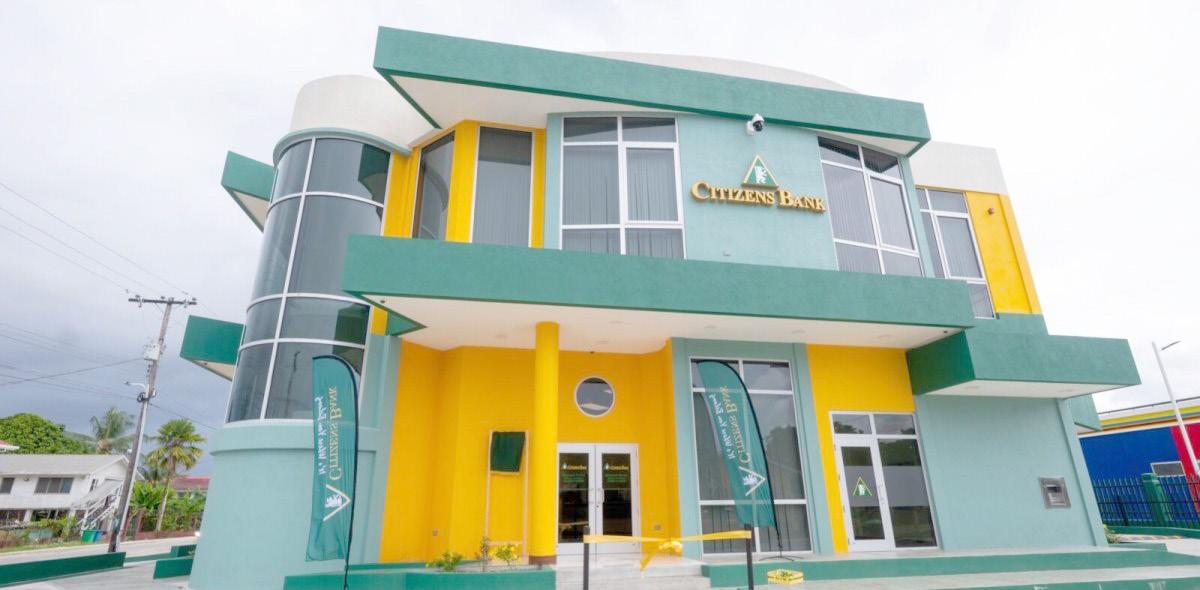
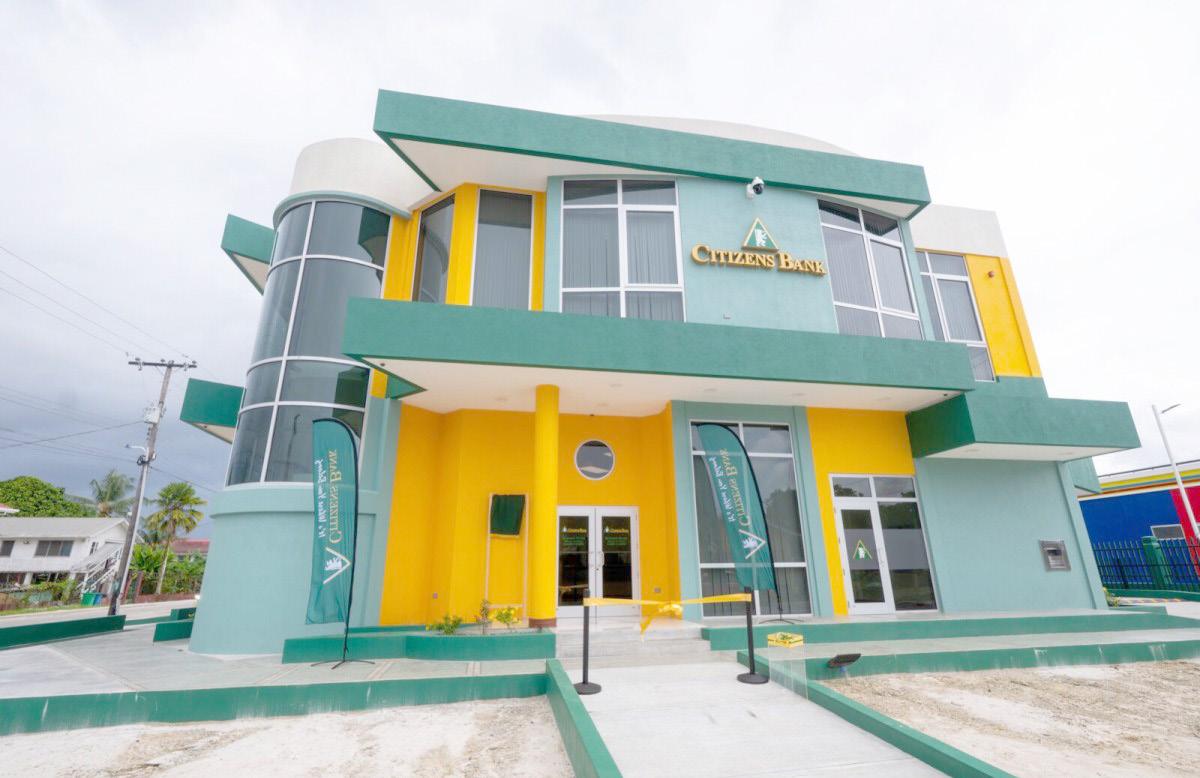
PRESIDENT Dr. Irfaan Ali on Friday commissioned the new facility now housing Citizens Bank in the township of Bartica, describing the investment as a strong vote of confidence in the future of Region Seven and Guyana’s expanding economy.
Addressing the opening ceremony, the President said the modern facility would enhance access to banking services for residents and businesses while supporting the region’s continued growth.
“This new facility can only enhance the quality of service provided not only to the people of Bartica but also to the surrounding communities. It signals confidence in the future of this region and confidence in the future of Guyana,” he said.
The new branch marks a major milestone for Citizens Bank, which first established operations in Bartica on April 3, 2000, from a modest 938-square-foot office staffed by eight employees.
Managing Director and Chief Executive Officer Clifford Reis said the opening represented more than the commissioning of a new building.
“This is a celebration of progress, confidence and partnership,” Reis said.
He noted that Bartica

serves as the gateway to the hinterland and remains a critical centre for commerce, mining, tourism, agriculture and entrepreneurship.
According to Reis, the branch has disbursed more than $5.5 billion in loans over the past 26 years to support housing, transportation, equipment purchases, businesses and other productive investments throughout Region Seven.
Of that figure, approximately $1.8 billion was approved within the last five
years alone, highlighting the region’s increasing economic activity.
Today, the Bartica branch serves about 7,000 customers across Region Seven.
The newly commissioned facility features expanded customer service areas, upgraded banking technology, a drive-thru ATM, enhanced accessibility features and a dedicated digital support zone to assist customers with online banking services and financial education.
The investment has also
resulted in additional employment opportunities, with staff numbers increasing from nine to 17 employees.
Reis noted that the operation remains largely locally driven, with many employees originating from Region Seven and returning to serve their communities.
As part of the ceremony, Citizens Bank also announced measures aimed at making home ownership more affordable.
The bank reduced its mortgage interest rate on loans of up to $30 million from 4.95 per cent to 4.6 per
cent and will absorb legal and registration-related costs for qualifying borrowers.
President Ali said the expansion of banking services in hinterland communities remains important as government continues efforts to deepen financial inclusion, increase access to financing and create opportunities for entrepreneurship and investment across the country.
“The greatest measure of any banking system is confidence. Do people trust it? Do businesses trust it? Do investors trust it? The answer is clear. Public con-
fidence in our banking system remains high…I expect, given the dynamic leadership of Citizens Bank and their proactive approach to service, to see a strategic plan laid out for Region Seven — how we can drive financial inclusion in all of the villages and communities across Region Seven,” he said.
The new branch comes as Bartica and the wider Region Seven continue to experience growth driven by mining, tourism, infrastructure development and expanding business activity.
of Region
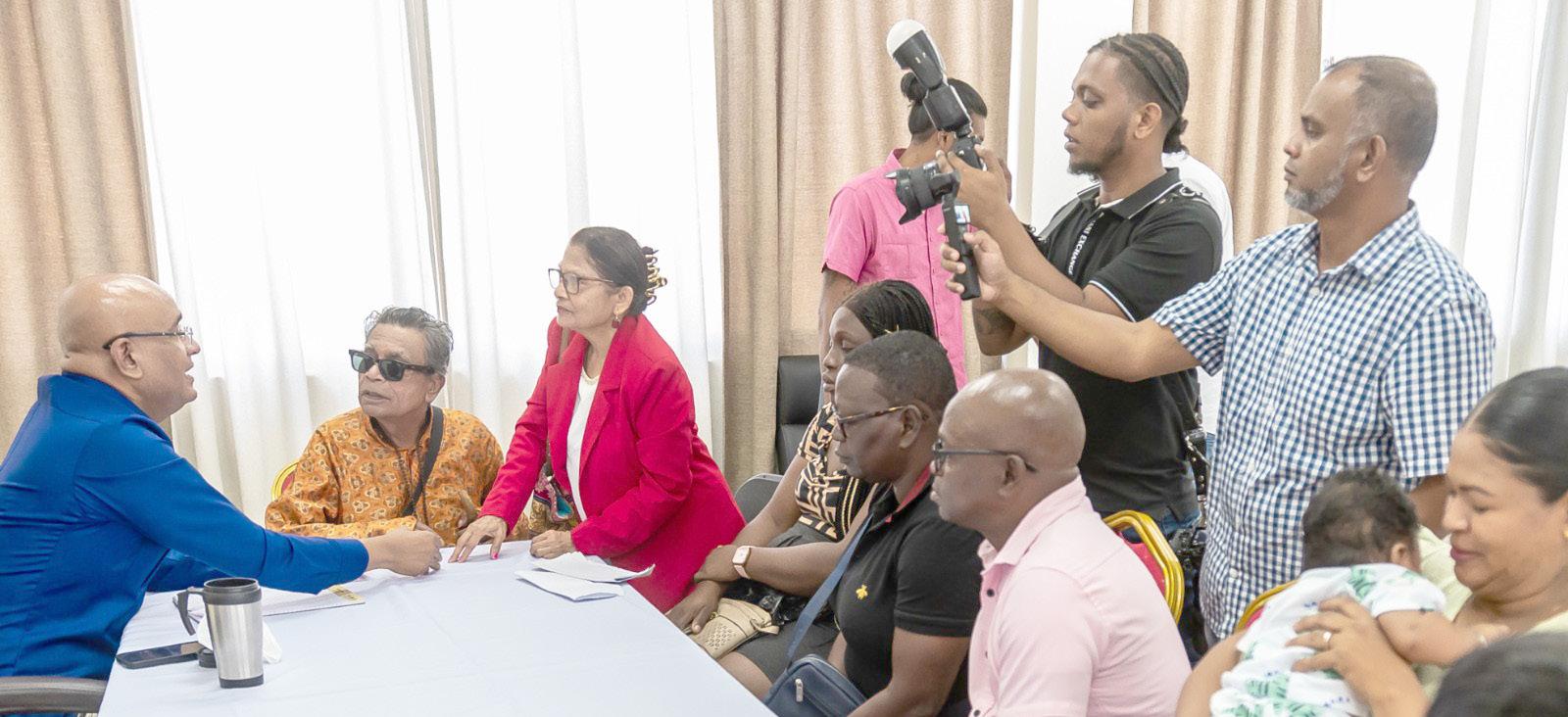
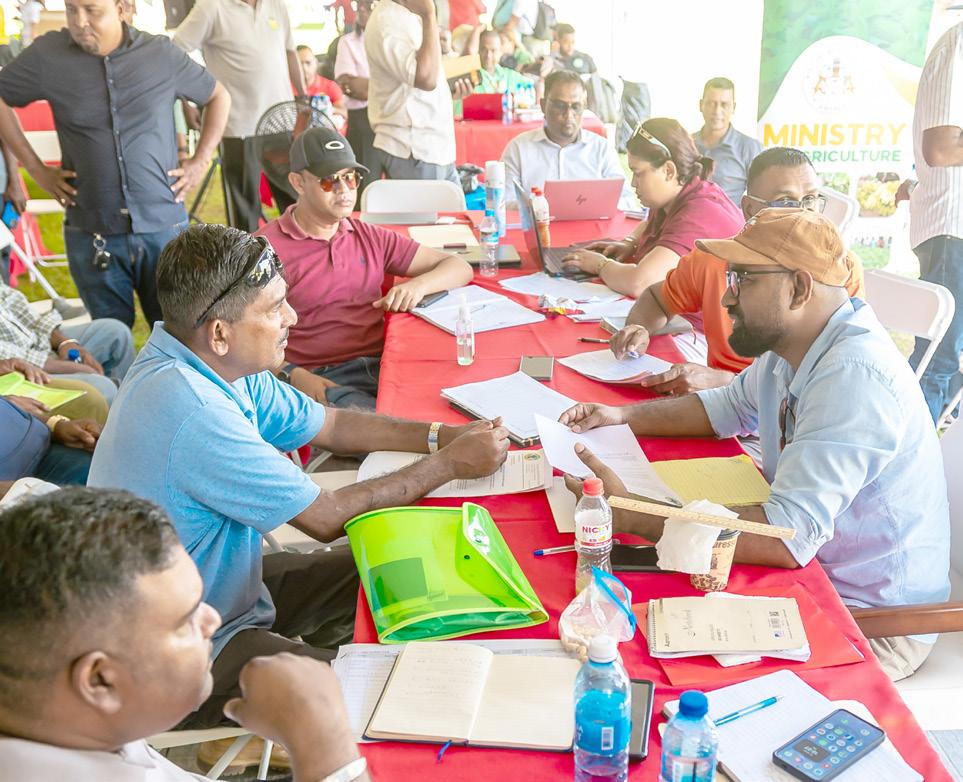
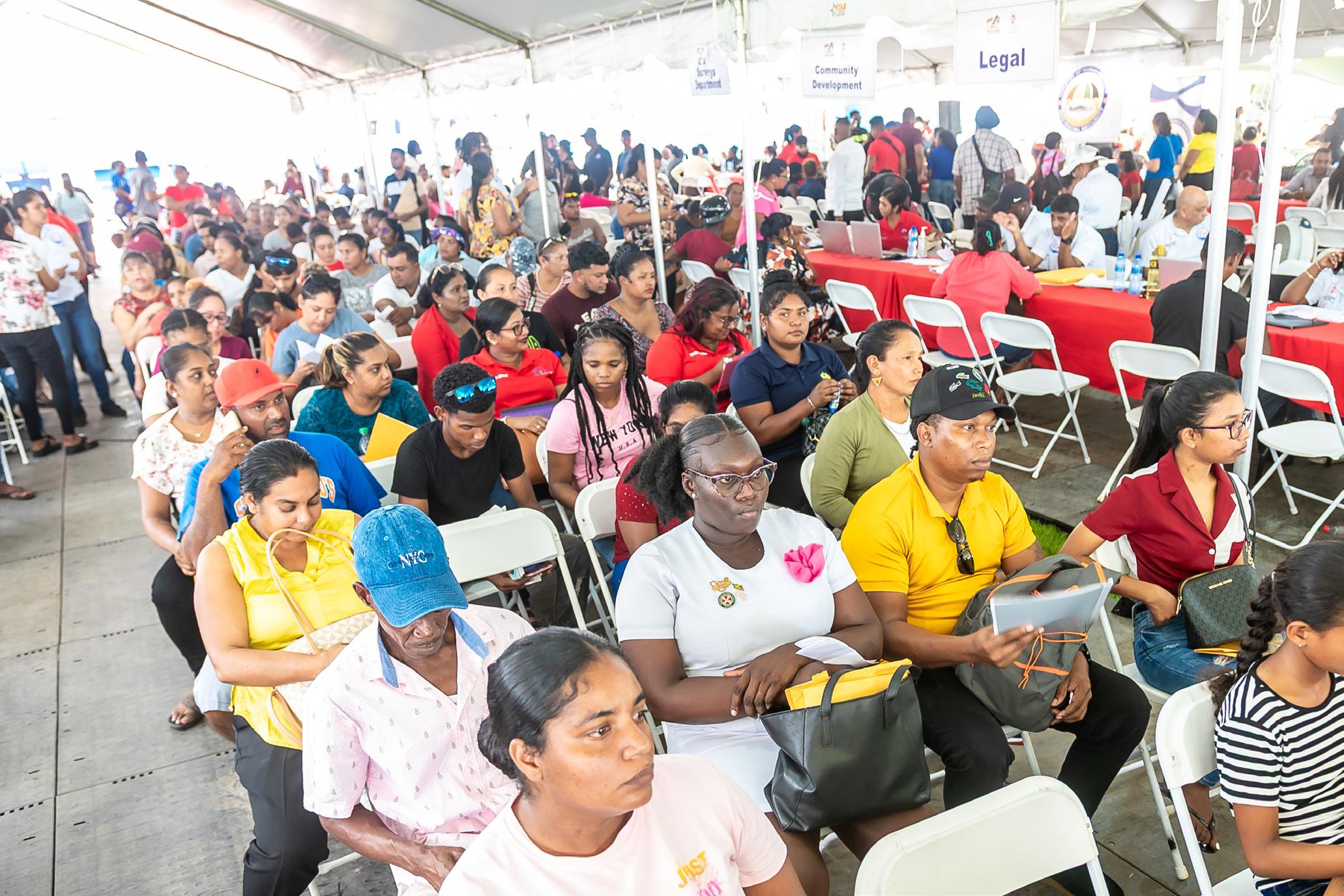
Three residents on Friday turned out at the National Track and Field Centre at Leonora, West Coast Demerara, to have long-standing concerns addressed during another public-day outreach led by Vice-president Dr Bharrat Jagdeo. The outreach saw the Vice President joined by several Cabinet ministers and representatives from government ministries and agencies, all working to address issues raised by residents while bringing public services closer to communities.
Designated stations were
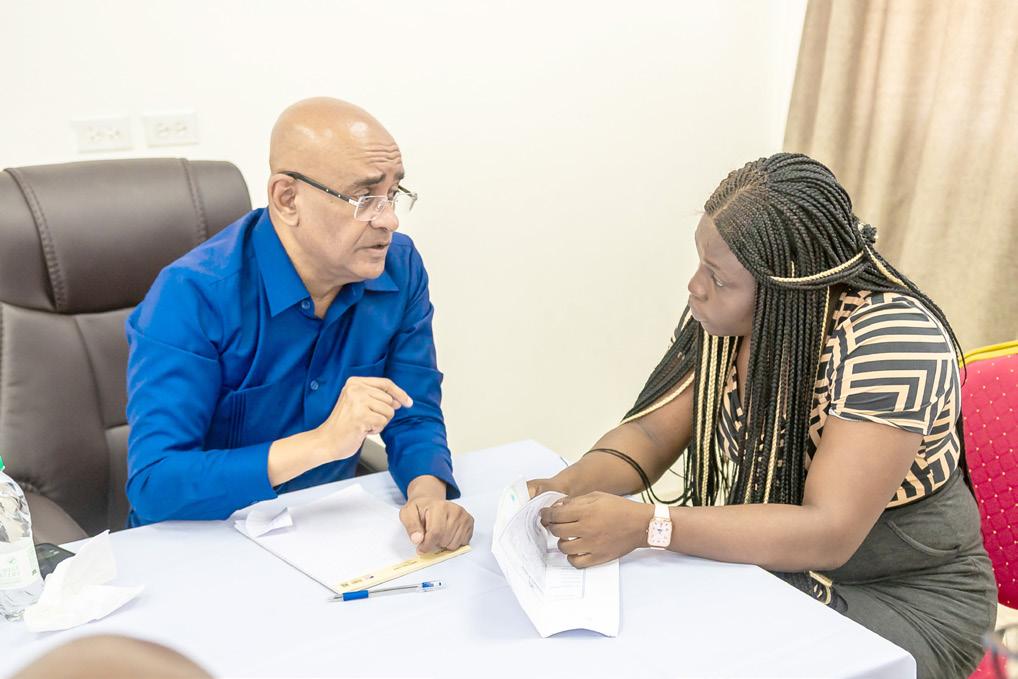
established across the venue, allowing residents to engage directly with officials on matters relating to housing, agriculture, social services, infrastructure and other areas.
Throughout the day, Dr Jagdeo met with hundreds of residents, listening to concerns and directing them to the relevant agencies to ensure their matters received the necessary attention.
Many attendees praised the initiative, describing it as an effective way of connecting citizens with decision-makers and accessing services in one location.
Among them was Sub -
baschand Bachan, who said he attended the outreach to seek assistance with housing matters and was pleased with the overall experience.
“Actually, I come housing, and so far, everything has gone smooth and well. Also, I went and do my eye testing and I get through with everything, all the systems are flowing well and everything is going good,” Bachan said.
Jamal Pereira also commended the exercise, noting that it provided an opportunity for residents to interact directly with senior government officials.
“I think it’s a good initiative. You could get to interact closely with the Vice President, the ministers and everybody. Very helpful. I didn’t get through with my land, I bring my land paper, they collect my information and they said they would give me a call,” Pereira said.
Meanwhile, Derek Persaud said the outreach demonstrated the government’s commitment to engaging citizens and resolving issues affecting communities.
“We are here at the Leonora Track and Field with
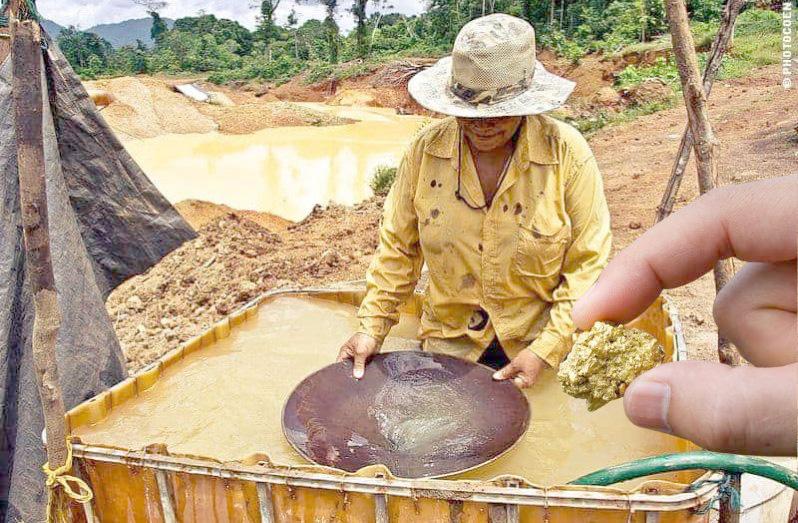
PRESIDENT Dr. Irfaan Ali has unveiled plans for the creation of a national mining company that would bring together large, medium and small-scale miners in a move aimed at ensuring Guyanese benefit more directly from the country’s mineral wealth.
The proposal, announced during the commissioning of Citizens Bank’s new branch in Bartica on Friday, forms part of a broader vision to deepen financial participation and create new opportunities for local investors and miners.
According to President Ali, the initiative would see miners pooling resources through a consortium model that would allow Guyanese operators to compete for larger mining opportunities while benefiting from advanced technology and technical expertise.
“We’re going to come together, create a consortium, buy the best technology, do all of the technical work, and move towards creating a world-class mining company,” the President said.
He explained that the
concept is intended to broaden participation in the mining sector and prevent local operators from being sidelined as Guyana’s economy continues to expand.
The Head of State noted that rather than having major mining opportunities dominated by international companies, Guyanese miners could work collectively to access larger projects and increase local ownership within the sector.
“It is broadening financial participation. It is broadening access to different mechanisms that enable financial inclusion,” he said.
The proposed company would include participation from miners of all sizes and would seek to leverage economies of scale through shared investments in equipment, technology and technical services.
Ali linked the proposal to wider efforts by the government to expand investment opportunities for Guyanese through new financial instruments, including the planned Guyana Stock Exchange expansion and the proposed Development Bank.

The President said the country’s development agenda must ensure that citizens have greater opportunities to invest and build wealth across key productive sectors, including mining, agriculture and manufacturing.
His announcement comes as mining remains one of the country’s largest non-oil sectors, with Region Seven continuing to serve as a major hub for gold production and related economic activity.
Ali also highlighted the need to create stronger support systems for small miners, many of whom face challenges accessing financing.
He acknowledged that while some medium and large-scale operators have supported smaller miners over the years, others have exploited their financial vulnerabilities.
The President pointed to situations where small miners become dependent on financiers for fuel, equipment and other inputs, often leaving them with limited bargaining power over the sale of their gold.
“We are now giving that independence. Financial independence is not only financial access; it is independence to invest in your own ideas and support your own ideas,” Ali said.
The proposal comes at a time when the government is seeking to further expand Guyana’s mining industry, which remains one of the
country’s most important non-oil sectors and a major contributor to economic activity, particularly in the hinterland regions.
Earlier this year, Senior Minister within the Office of the President with responsibility for Finance Dr. Ashni Singh announced that the government is targeting gold declarations of 510,450 ounces in 2026.
The projection is being driven by significant investments in the sector, particularly by large-scale operators, along with intensified efforts to curb smuggling and other unlawful practices.
Gold declarations have been steadily increasing in recent years. In 2025, declarations reached 484,321 ounces, representing a significant increase from the 434,067 ounces declared in 2024. The 2024 figure itself reflected a modest rise from the 432,113 ounces recorded in 2023.
To achieve the 2026 target, the government is relying on continued expansion within the mining industry while strengthening regulatory oversight and compliance measures.
Against this backdrop, Ali’s proposal signals a desire not only to increase production but also to ensure that Guyanese miners play a greater role in the sector’s future growth.
The President linked the initiative to broader efforts

to strengthen the country’s financial architecture, including the proposed Development Bank and the expansion of investment opportunities through the Guyana Stock Exchange.
He maintained that as Guyana continues its rapid economic transformation, citizens must be positioned to participate more meaningfully in the country’s development and wealth creation.
“We are not going to be second fiddle anymore,” Ali declared, while emphasising
the need for Guyanese to take advantage of opportunities emerging across the economy.
Although no timeline was announced for the establishment of the proposed national mining company, the initiative is likely to generate significant interest among miners in Region Seven and other mining districts, where the industry remains a major source of employment and economic activity.
the government outreach.
We have here with us the Vice President and the ministers for the various ministries.
This is a reality coming through, this is something what the government wanted to do, meet with the people them and get to know what are the issues and get it solved.
So, this is amazing what is happening here today,” Persaud said.
The public-day outreach forms part of the government’s ongoing efforts to engage residents at the community level, providing direct access to senior officials, while facilitating faster responses from agencies responsible for addressing public concerns.
—Bypass road planned as temporary solution while four-lane highway to Parika advances
THE Government is moving to develop approximately 11,000 housing lots in Region Three by the end of 2027 as it seeks to clear the growing backlog of applicants awaiting houselots in the region.
This announcement was made by Vice-President Bharrat Jagdeo during his fifth public day outreach initiative held at the National Track and Field Centre at Leonora, West Coast Demerara, on Friday.
Addressing scores of residents gathered at the outreach, Dr Jagdeo said close to 11,000 persons remain on the waiting list for houselots in the region, creating a significant challenge due to the limited availability of state-owned lands along the West Coast Demerara corridor.
“In this region, we have over 10,000 or close to 11,000 persons waiting for houselots,” he said.
Dr Jagdeo explained that unlike other parts of
the country where large tracts of public land are available for development, much of the land stretching from Leonora to Parika remains privately owned.
“The problem in this region is that from this area going to Parika, we don’t have much public land. They’re all private lands,” he stated.
He noted that while the Government has already developed and allocated a number of housing lots in Wales, demand continues to outstrip supply. As a result, additional lands in the Wales area that were previously recovered by the administration have now been earmarked for further housing development.
According to the Vice-President, the identified lands were formerly used for sugar cultivation and will require extensive infrastructural works before they can be allocated to prospective homeowners.
“It takes about five to seven million dollars to develop one houselot because you have to excavate, fill in different areas and build roads and everything,” he explained.
The development of the additional housing areas is expected to require billions of dollars in investment, but Dr Jagdeo assured residents that the Government is prepared to make the necessary financial commitment.
“We have to develop 11,000 houselots between now and the end of next year so everyone who applied can get their houselot,” he said.
He also urged persons who have already received allocations not to seek transfers to other locations, noting that alternative lands are currently limited.
“Don’t shift. There is nothing to shift to now. Don’t try to go back to get a houselot because we don’t have that,” he cautioned.
Dr Jagdeo further linked the housing expansion programme to major infrastructure developments underway in Region Three, noting that improved road connectivity will support future residential growth and economic activity.
He reminded residents that contracts have already been awarded for the construction of a four-lane highway linking the area of the new Demerara River Bridge to Parika.
“Within two years, by the time you build and stuff like that, there will be a four-lane road all the way at the back there from Parika to the harbour bridge,” Jagdeo said.
In the meantime, he disclosed that the Government intends to implement a bypass road as a temporary measure to ease traffic congestion along the West Coast Demerara corridor while the larger highway project is being
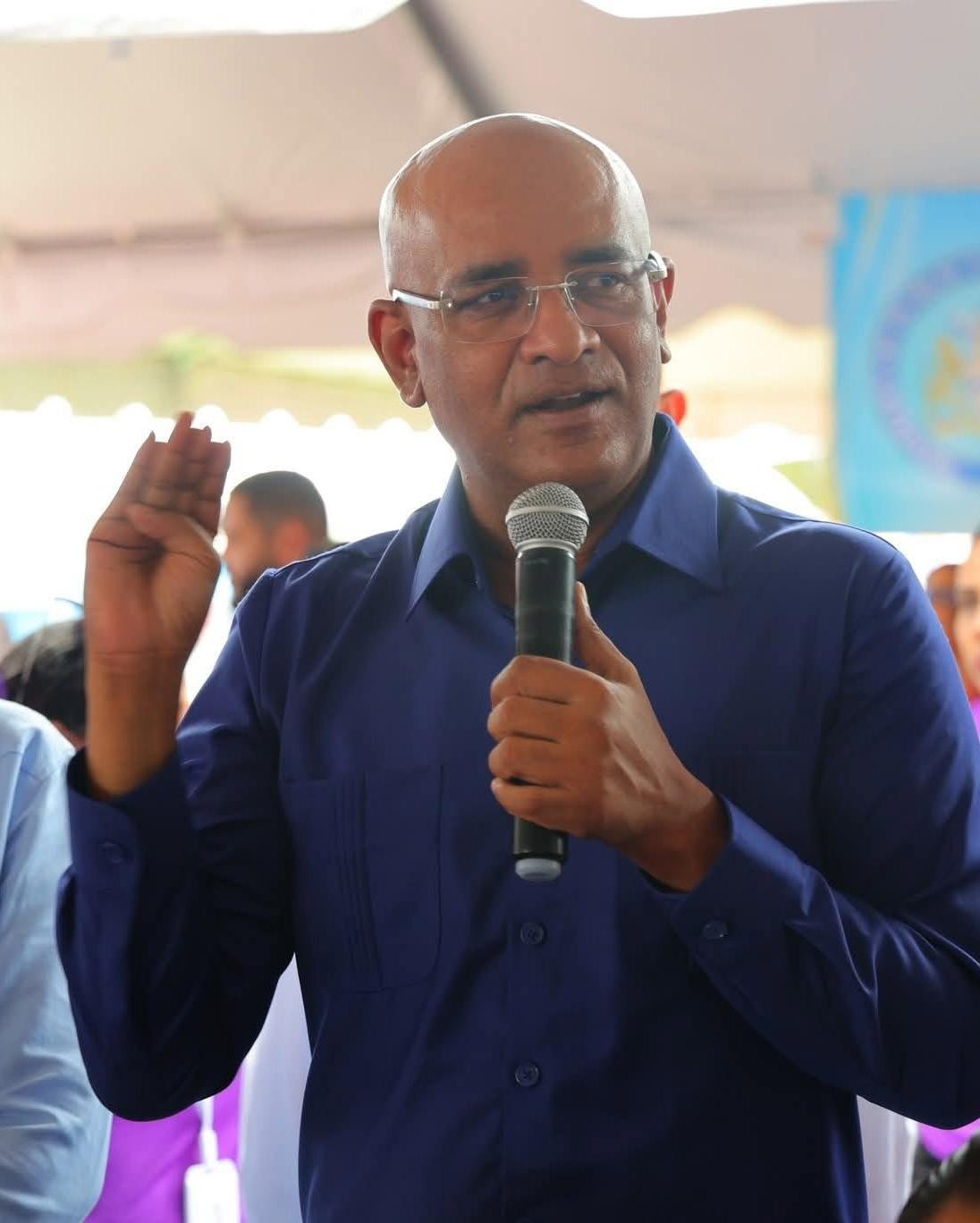
Vice-President Dr Bharrat Jagdeo addresses residents during a public outreach in Region Three, where he announced plans to develop approximately 11,000 housing lots by the end of 2027
completed.
“We can’t even wait on the four-lane road. We’re going to try to do a bypass immediately, starting soon, so that we can improve the traffic situation until we complete the four-lane road,” he explained.
The Vice-President also pointed to the rapid increase in vehicle ownership as a major contributor to traffic congestion, revealing that approximately 10,000 vehicles are imported
into Guyana every three months.
“Just imagine that, 40,000 new vehicles per year coming into the country,” he said.
Additionally, he signalled that further measures to support home ownership will soon be announced, indicating that President Irfaan Ali is expected to outline details of a new housing support initiative in the coming weeks.


GUYANA’S decision to launch its first National Drainage and Irrigation Strategy is timely and necessary.
In a country where agriculture is still a cornerstone of the economy and where communities are feeling more and more of the harsh realities of climate change, a comprehensive and forward-looking approach to water management is no longer optional, it is essential.
Drainage and irrigation infrastructure has been the backbone of agricultural production for decades, safeguarding farms, homes and businesses from flooding, while providing water during dry periods.
But the ability of traditional systems to cope with changing weather patterns, rapid urbanisation and increasing economic activities has been exposed. The National Drainage and Irrigation Strategy 2030 is an admission that Guyana must adapt to a new reality.
Agriculture Minister Zulfikar Mustapha’s warning that climate change is no longer a future threat, but a present reality, should resonate with every Guyanese. Extreme rainfall events, prolonged flooding and occasional droughts have become more and more common.
These events disrupt livelihoods, damage infrastructure and threaten food security. The costs are high, in both economic and social terms, and we need to invest in resilience as a national imperative.
The greatest strength of the strategy is its focus on modernisation and data-driven decisions. The proposed Geographic Information System (GIS)-based platform that will merge decades of hydrometeorological data with data on drainage and irrigation assets is a big leap forward for smarter governance.
By monitoring in real time and planning in a predictive mode, authorities can spot vulnerabilities before they become disasters, making public resources work better.
Just as encouraging is the government’s promise of heavy infrastructural investments.
The phase of implementation is entered; rehabilitation of drainage channels; expansion of pump stations; construction of new sluices; procurement of pumps and development of high-level canals.
Projects such as these are important not only for agriculture, but also for protecting expanding residential areas and encouraging
wider economic development.
But infrastructure alone doesn’t solve Guyana’s water-management challenges. As Minister Mustapha rightly observed, there is need for a long-term vision.
The country is growing fast with new housing schemes, industrial projects and commercial developments mushrooming all over the country. Drainage and irrigation systems have to be built not for the needs of today but for the needs of future generations.
The proposed national mapping exercise, which will begin in Georgetown and then extend to the rest of the country, is therefore a particularly important initiative. Accurate and complete maps will provide planners with the information they need to predict risks, shape development and avoid costly mistakes.
At a time when technology can dramatically improve planning outcomes, there is little justification for relying on outdated or fragmented data.
And many thanks to the involvement of international partners such as the Global Green Growth Institute. Climate resilience is a global challenge and Guyana can benefit from international expertise and best practic-
es, while adapting solutions to local realities.
The real test of the National Drainage and Irrigation Strategy will not be the quality of the document, but the consistency of its implementation.
Good plans too often go off the rails because of poor implementation, lack of maintenance or changing priorities. The government, National Drainage and Irrigation Authority, local authorities and stakeholders need to continue their commitment to translate this vision into measurable outcomes.
When successful, the strategy could prove to be one of the most significant investments in Guyana’s future.
It provides an opportunity to enhance food security, protect communities, preserve economic growth and build resilience to the increasingly unpredictable impacts of climate change.
The challenge is immense, but so is the opportunity. With the use of modern technology, development of critical infrastructure and planning for the future, Guyana can rest assured that its drainage and irrigation systems will continue to operate to support a resilient and prosperous nation for decades to come.
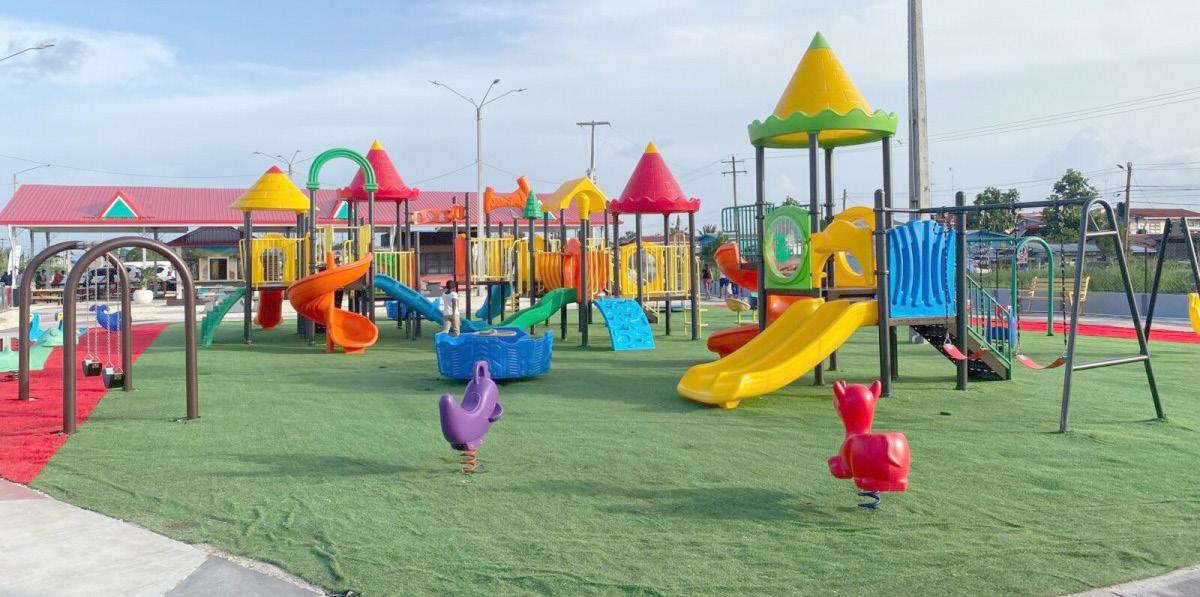
MORE than 40,000 residents of the Grove/Diamond community are expected to benefit from the newly commissioned Diamond Recreational Park, which was officially opened as part of efforts to enhance recreation, health and community engagement.
Speaking at the opening ceremony on Friday, First
Lady Arya Ali said the facility was a key initiative under the National Beautification Project, which seeks to create inclusive and accessible public spaces that improve citizens’ quality of life.
She noted that green spaces contribute significantly to physical, mental and social well-being and expressed hope that the park would become a hub for cultural exchange, recreation and family interaction.
“Parents can know that their children will be laughing and playing in a safe and secure environment,” the First Lady said, while urging residents to take ownership of the facility and help preserve it for future generations.

The modern recreational space features children’s play areas, a multi-purpose court, an outdoor gym, gazebos, walking paths, seating areas, lighting and vending kiosks.
Meanwhile, Minister of Public Works Juan Edghill said the project reflects the government’s people-centred approach to development and its commitment
to investing in communities across the country.
“This will be contributing not just to the beautification of Guyana, but to promote health, wellness, community engagement, social cohesion, a place of interaction and uplifting the pride and dignity of all Guyanese,” Edghill said.
He revealed that the site was transformed from
a former dumpsite through the removal of more than 2,000 truckloads of mud, garbage and debris, creating what is now one of Guyana’s largest recreational facilities.
Residents were encouraged to safeguard and maintain the park to ensure it remains a source of pride and enjoyment for the community.
HENRY Jeffrey and David Hinds, on different occasions, have echoed the foolishness that the Irfaan Ali Government is the most undemocratic government in post-Independence Guyana. When these rebuttals here are read, even if one Guyanese, in or out of the land, reads them, then that justifies the continuation of responding to the naked crudities of anti-government crude men.
I lived under the regime of Forbes Burnham from 1968 until he rightfully died in 1985. To compare Burnham’s tenure with those of Hoyte’s, Cheddi Jagan’s, Janet Jagan’s, Bharrat Jagdeo and Irfaan Ali’s is literally an impossible mental task. The Forbes Burnham Government had unlimited moments of demented and demonic characteristics never before seen in the CARICOM family and no government since Burnham’s death has embodied even one per cent of the totalitarian showcase of the Burnham regime.
To conclude, as Jeffrey and Hinds did, the Ali presidency is the worst post-Independence government, is to wallow in mental miasma. Burnham’s totalitarian output was beyond imagination when it began to unfold. In Guyana today, we have people who make the claim that the Ali presidency is worse than Burnham’s and since the population is a young one, it is obligatory on public intellectuals who lived through the saga of Burnham’s bestial oppression to write and keep on writing.
If the Ali presidency had produced zero-point nine per cent of Burnham’s autocratic output, the condemnations would have become non-stop. To describe the madness that engulfed Burnham’s rule would take books rather than two or three newspaper columns.
Do you think any PPP president since Cheddi Jagan could have declared that the ruling PPP party is legally and constitutionally paramount over state institutions? Burnham did just that. He concretised the embodiment of the paramount PNC within the state structure by inventing a ministry named National Development and in that ministry was a branch of the PNC.
In each of the state corporations that came
out of the nationalised industries, there was a party cadre without even a modicum of qualification or business knowledge overlooking qualified management. Yesu Persaud, in part one of his autobiography, wrote of this political interference. Can one imagine what would happen in Guyana today if the PPP put an unqualified PPP cadre without any official or bureaucratic position to oversee the state bodies like the NIS, Forestry Commission, GRA, GWI etc?
Two books have been published recently and both authors are intertwined with the opposition WPA, and their description of the horror show the Burnham Government was is a graphic testimony of the propagandistic hate of those who obfuscate the terror that characterised Burnham’s time as ruler in Guyana.
Dr Maurice Odle’s autobiography, “An Eventful Life,” and Moses Bhagwan’s memoir, “Enter the Political Kingdom”, described what they personally endured and how Guyana suffered under Burnham. But for me, the best text on how frightening the Burnham Government remained was the masterpiece by Father Andrew Morrison, “Justice: The struggle for Democracy in Guyana, 1952 -1992.”
On the front cover of this book is a mob running after Father Bernard Darke to attack him. In the photograph, can be seen a man with a long knife in his hand. They caught up with the priest and killed him. This is a seminal work on Guyana’s history and I would suggest that the Government of Guyana should seek its reprint and have it distributed freely through Guyana.
Our population is too young to understand the destruction of Guyana under Burnham. Father Morrison’s book should have been made available to all Guyanese as a gift from their country on the 60th anniversary of Guyana’s Independence. No written document has so graphically captured the oppressive system of government under Burnham as Father Morrison’s book.
Burnham’s formidable grip on power came with the 1968 rigged election. It was from there on that the descent into totalitarianism started. There were no moments of pause.


Burnham drifted from one autocratic policy to another and it didn’t stop until his death. There are some frightening yet sad moments in the rule of Burnham that makes a person look stupid to say that the Ali presidency is a worse government than Burnham’s.
One of these episodes was Burnham riding on horseback in South Georgetown, sharing out cassava sticks and scarce cigarettes to people who would run after the horse to get the cigarettes. Then there was the sadistic instinct of Burnham riding his horse upon government employees who
were compelled to work every weekend at Hope Estate. Burnham would laugh widely as the workers ran for cover. A photograph of this madness is contained in Ashton Chase’s book “Guyana, a nation in transit: Burnham’s role.” The Caribbean will never see an autocracy again, as the one Burnham created.
DISCLAIMER: The views and opinions expressed in this column are solely those of the author and do not necessarily reflect the official policy or position of the Guyana National Newspapers Limited.

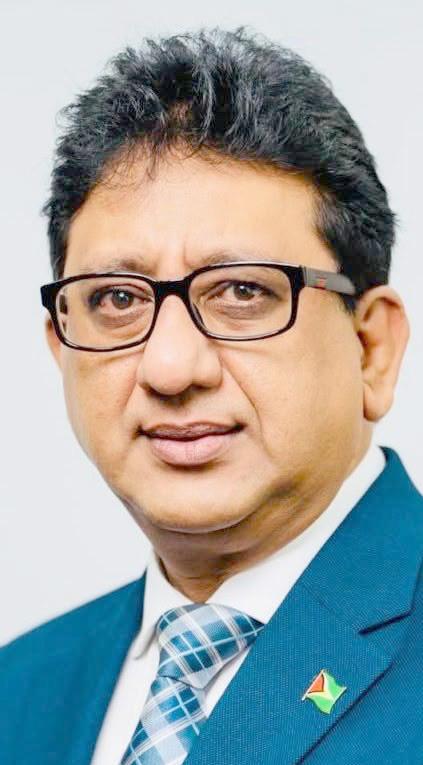
THE High Court has dismissed a legal challenge brought against President Dr Irfaan Ali’s appointment of seven members of the Teaching Service Commission (TSC), ruling that the appointments were lawful and constitutional despite the absence of a Leader of the Opposition at the time.
The decision was handed down on Friday by Justice Damone Younge, who rejected an application for judicial review filed by A Partnership for National Unity (APNU) member, Terrence Campbell.
Campbell, through his attorneys-at-law, Khemraj Ramjattan and Christopher Ram, had argued that the
President breached Article 207(2)(d) of the Constitution of Guyana by appointing members to the TSC without first consulting the Leader of the Opposition.
He sought declarations that the appointments were unconstitutional and asked the court to quash them through an Order of Certiorari.
The Attorney General, Anil Nandlall, SC, was named as the respondent in the proceedings. In defending the appointments, the Attorney General argued that the President’s constitutional power to appoint members of the TSC is not extinguished by a vacancy in another constitutional office.
He further contended that the constitutional requirement for consultation can only be fulfilled where consultation is capable of being undertaken and that the law does not require the performance of an impossibility.
Nandlall also submitted that the President acted reasonably and in the public interest to prevent a constitutional vacuum and paralysis within the TSC.
Additionally, he argued that even if there had been a procedural issue, the court should decline to grant the remedies sought because of considerations of public interest, good governance and the discretionary nature of judicial review.


Justice Younge accepted those submissions and relied heavily on an earlier ruling delivered by then Chief Justice Roxane George, SC, in the case of Aubrey Norton v Attorney General of Guyana and Clifton Hicken.
That case concerned President Ali’s appointment of Clifton Hicken to act as Commissioner of Police during a period when there was no Opposition Leader in place.
In dismissing that challenge, the Chief Justice had ruled that while meaningful consultation is generally required by the Constitution, a decision-maker is not prevented from acting where such consultation is impossible through no fault of his own.
Justice Younge found that the same principle applied to the Teaching Service Commission appointments.
At the time President Ali appointed the seven members

of the TSC on December 31, 2025, there was no elected Leader of the Opposition. The court noted that this situation was not attributable to any action or omission on the part of the President.
In her ruling, Justice Younge emphasised the importance of ensuring the continued functioning of constitutional bodies.
“The administration of education in Guyana remains a vital pillar of national life. To leave the system without a functioning Commission would have exposed it to uncertainty and disruption, thereby
See page 10

SENIOR Minister in the Office of the President with Responsibility for Finance, Dr Ashni Singh, on Friday assured members of the business community that the government remains committed to creating opportunities for local enterprises to grow, expand and succeed, stressing that a thriving private sector is critical to Guyana’s continued development.
Delivering the feature address at the Georgetown Chamber of Commerce and Industry’s (GCCI) Breakfast Seminar at the Marriott Hotel, Georgetown, Dr. Singh said the government views its relationship with the private sector as one of shared objectives, where business success translates into broader national prosperity.
The seminar was held under the theme, “Transforming Business Opportunities: Accessing Growth through the SME Development Bank of Guyana.”
“You have in President Ali’s government a government that is committed to our relationship with you. We see our objectives as the same or perfectly aligned. We want to see you do well because we believe that a
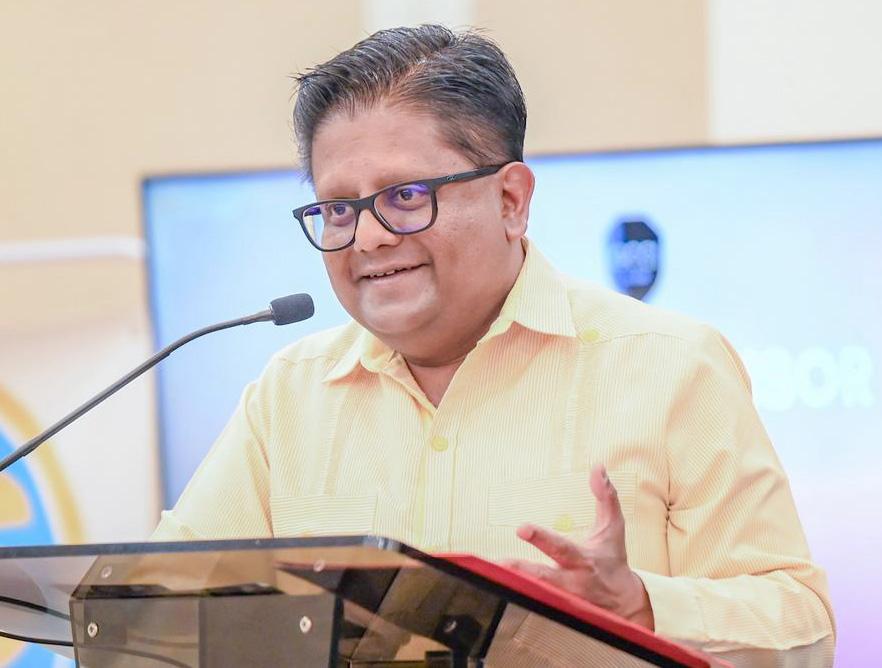
growing private sector that seeks out and finds and converts business opportunities into income, prosperity and wealth, can only redound to a more prosperous and a more successful country,”
Dr. Singh told attendees.
A significant portion of his presentation focused on the proposed Guyana Development Bank, legislation for which was recently presented to the National Assembly.
According to the Finance Minister, the institution is intended to provide much-needed financing to small and medium-sized enterprises (SMEs), allowing entrepreneurs with viable business ideas to access capital and expand their operations.
“We want to pass this law because we want to start establishing the bank and start disbursing this money to good entrepreneurs like yourselves who have good bankable projects, bankable project ideas,” he said.
Dr. Singh reminded participants that the Development Bank forms part of the government’s wider agenda to improve access to finance and financial inclusion, particularly for aspiring entrepreneurs who may face challenges securing traditional loans.
Under the initiative, eligible borrowers will be able to access loans of up to $3 million without collateral


and without interest.
However, the minister emphasised that the facility should not be viewed as a grant programme or an end in itself.
“The idea is that this bank will be self-sustaining and these funds will revolve. Because we don’t want only the first cohort to benefit; we want a first cohort to benefit and then a second and a third and a fourth,” he said.
Dr. Singh stressed that applicants would still be required to present sound and bankable business proposals, noting that the long-term objective is to help borrowers establish themselves and eventually access larger financing opportunities through commercial banks.
“The ultimate destination for borrowers is not the $3 million loan. This is only the first step in the journey,” he explained.
He added, “Our intention is for every borrower from the Guyana Development Bank to graduate into the formal financial system and to be able to get bigger loans from the commercial banks.”
The minister also highlighted the government’s broader financial inclusion agenda, pointing to measures aimed at encouraging citizens to participate more actively in the formal banking sector.
He urged Guyanese to establish banking relationships, save consistently and utilise assets such as house lots to build wealth and secure financing opportunities.
“There’s a whole chapter in the manifesto on financial inclusion. That’s about citizens participating in the formal financial sector,” Dr. Singh said, while noting that approximately 60,000 house lots have been distributed over the past five years.
“That piece of paper is a piece of capital,” he added.
Meanwhile, GCCI President Kathy Smith welcomed the establishment of the Development Bank, describing it as a response to long-standing calls from the business community for improved access to financing.
She said the institution has the potential to transform the fortunes of thousands of entrepreneurs and small-business owners across the country.
“With the establishment of this institution, the government has answered our collective calls, but we must now ensure that we do our part to prepare,” Smith said.
She noted that the bank could provide opportunities for a wide cross-section of Guyanese, from small-scale operators seeking to expand to aspiring entrepreneurs
looking to turn business ideas into sustainable ventures.
“Today can be the day that you will look back on in a few years and say, that is the moment that my life changed,” Smith told participants.
According to her, the seminar was organised to help micro, small and medium-sized enterprises better understand the opportunities that will become available through the Development Bank and the resources that can support their growth.
The event also featured a panel discussion and question-and-answer session with representatives from the private sector and business-support organisations.
Panelists included Managing Director of Opulent Consultancy Inc., Shaleeza Shaw; Deputy Chief Executive Officer of the Small Business Bureau, Simon Pollard; Founder of Guyana Payroll Solutions Inc., Marlon George; and Programme Lead at the Centre for Local Business Development, Ron Glasgow.
The proposed Guyana Development Bank is expected to play a central role in the government’s efforts to expand entrepreneurship, improve financial inclusion and create new pathways for economic participation among
THE election fraud trial will continue on Monday, June 22, before Acting Chief Magistrate Faith McGusty after Police Inspector Nigel Stephens on Friday identified hundreds of certified copies of Statements of Recount (SoRs) from the March 2020 General and Regional Elections.
Stephens, who is attached to the Criminal Investigation Department (CID) Headquarters, returned to the witness box and identified the certified copies of the SoRs by markings and signatures he had placed on the documents during a verification exercise conducted as part of the police investigation.
The SoRs related to both the General and Regional Elections and covered several electoral districts. Following identification by the witness, the documents were tendered by the prosecution, marked as exhibits and admitted into evidence.
During his testimony, Stephens also spoke about the storage and safeguarding of the election records. He told the court that the documents were secured in two safes following the verification process. According to the witness, the records
remained protected and were not tampered with while in police custody.
Stephens had previously testified that he first came into contact with the certified election records on May 29, 2021, when he visited the Supreme Court of Judicature and met with Registrar of the Supreme Court Sueanna Lovell.
He explained that he had gone to the court under instructions and informed Lovell of the purpose of his visit, after which a verification exercise commenced involving certified copies of Statements of Poll (SoPs) and SoRs linked to the 2020 elections.
Earlier in the proceedings, Stephens testified that after the documents were verified, they were collected and secured. He said neither the keys nor the combinations to the safes were shared with others and that neither he nor anyone in his presence altered or interfered with the election records.
The examination of the election documents forms part of the prosecution’s efforts to establish the authenticity and chain of custody of records being tendered as evidence in the case.
Previously, the court had

reviewed certified and original copies of SoPs and SoRs in batches of 100. Those documents were tendered through Registrar Sueanna Lovell, who testified that the records had remained in her custody pursuant to an order issued by then Chief Justice Roxane George, SC.
The court previously heard that the election records were securely stored following judicial directions and that Lovell was responsible for maintaining custody of the documents.
The SoPs and SoRs are regarded as key pieces of evidence in the trial as they contain the vote counts recorded during the March 2, 2020 General and Regional

Elections and the subsequent national recount process.
The election fraud case centres on allegations surrounding the tabulation and declaration of results from the 2020 polls, a process that led to months of political uncertainty before a final declaration was made five months after election day.
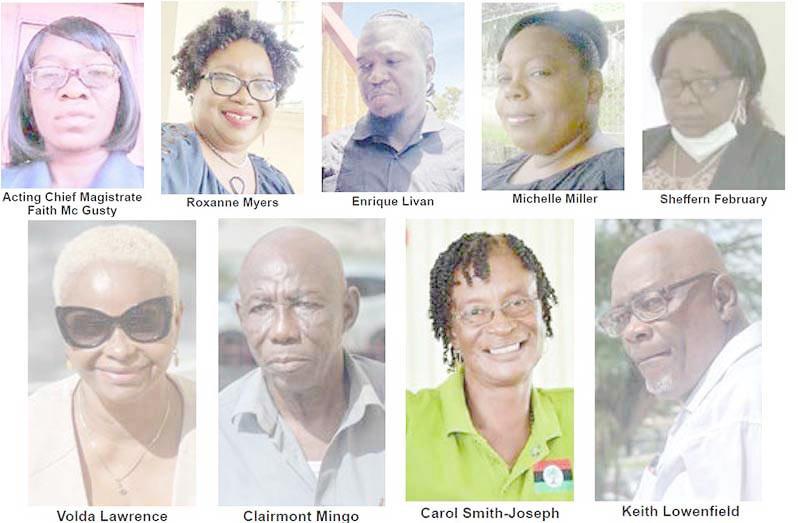
Those on trial are former Chief Elections Officer Keith Lowenfield, former Deputy Chief Elections Officer Roxanne Myers, former Region Four Returning Officer Clairmont Mingo, former Health Minister Volda Lawrence, and People’s National Congress Reform (PNCR) member Carol Smith-Joseph. Also before the court are former
Guyana Elections Commission (GECOM) employees Michelle Miller, Shefern February, Enrique Livan, and Denise Babb-Cummings.
The accused collectively face 19 charges, including conspiracy to defraud and misconduct in public office. They have all pleaded not guilty and are currently on cash bail.
The prosecution, led by King’s Counsel Darshan Ramdhani, alleges that the defendants played key roles in efforts to inflate votes in favour of the then APNU+AFC coalition, while reducing votes cast for the PPP/C. The trial is being heard at the Georgetown Magistrates’ Courts.
Following a five-month period of litigation and a Caribbean Community (CARICOM)-supervised national recount, the PPP/C was declared winner of the elections with 233,336 votes, compared to 217,920 votes for APNU+AFC. President, Dr Irfaan Ali was subsequently sworn into office on August 2, 2020. The Presidential Commission of Inquiry into the elections later concluded that there had been collusion and collaboration among senior GECOM officials to divert votes to the APNU+AFC, rather than safeguard the integrity of the electoral process.
imperilling the orderly governance of the sector,” the judge stated.
She further held that the constitutional framework must be interpreted in a manner that preserves continuity in governance and prevents key institutions from becoming inoperative due to circumstances beyond the control of those responsible for establishing them.
The judge concluded that the absence of an elected Opposition Leader made meaningful consultation impossible and therefore there could be no breach of the constitutional requirement.
“Having regard to the foregoing, this Court holds that the absence of an elected Leader of the Opposition made it impossible for there to be meaningful consul -
tation as contemplated by Article 207(2)(d) of the Constitution and as such there could be no breach of that constitutional requirement,” Justice Younge ruled.
She added that the absence of consultation did not invalidate the President’s constitutional authority to make the appointments and declared that the appointments were neither unlawful nor unconstitutional.
In dismissing the challenge, Justice Younge ordered that Campbell’s Fixed Date Application, which was filed on January 19, 2026, be dismissed in its entirety. The judge further ruled that, given the public interest issues raised in the proceedings, each party would bear its own legal costs.
Attorney General Nand-
From page 8
lall appeared in the matter alongside attorneys Shoshanna Lall, Prithima Kissoon, Ronetta Sargent-Prince and Sabira Ali Hydaralie.
The seven-member TSC, comprising Doodmattie Singh, Shafiran Bhajan, Lancelot Baptiste, Joan Davis-Monkhouse, Satti Jaisierisingh, Mayda Persaud, and Saddam Hussain, was appointed for a three-year term commencing December 31, 2025.
The TSC is an independent constitutional commission established under the Teaching Service Commission Act of 1975 and is responsible for the appointment, promotion, transfer, and disciplinary oversight of teachers across the public education system.
IN the late 1980s, waves of development swept Chinese cities into the throes of a property boom, and the fate of a crumbling compound in the heart of Fuzhou, capital of east China’s Fujian Province, seemed all but sealed.
A glaring Chinese character meaning “demolish” had been painted on the front wall of the historic residence at Fuzhou’s Sanfangqixiang, meaning “Three Lanes and Seven Alleys”, a neighbourhood steeped in over 1,000 years of history.
Scholars and cultural heritage specialists pleaded for the demolition to be halted as concerns mounted over the neighbourhood’s future.
They pointed to the compound’s historical significance: it had once been home to Lin Juemin, a martyr of the 1911 Revolution, which overthrew China’s last imperial dynasty, and later became the childhood residence of Bing Xin, one of the country’s best-known modern writers.
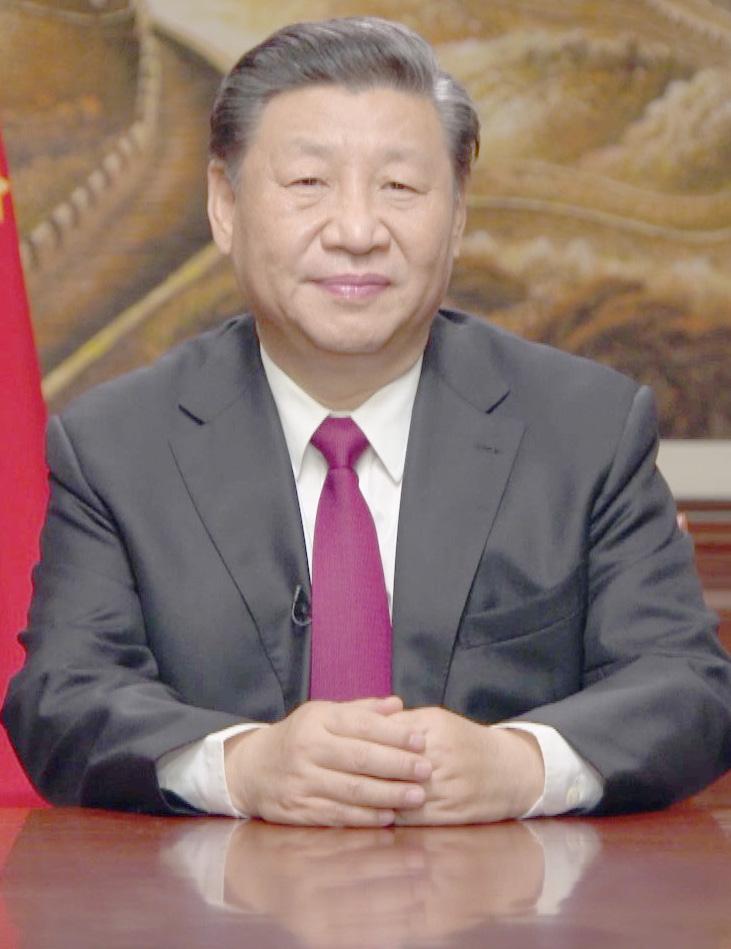
The appeals reached Xi Jinping shortly after he took office as Party secretary of Fuzhou in 1990. Recognising the value of the neighbourhood’s cultural legacy, he ordered the demolition suspended.
On March 10, 1991, Xi gathered local officials for an on-site meeting at Lin’s former residence. “We’ll preserve it and restore it,” his message was unequivocal.
“We must protect, repair, and make good use of the city’s cultural relics in our hands. Not only should we prevent them from being damaged, but also help them flourish and pass them on to future generations,” he told those gathered at the residence.
Restoration soon followed, and the residence reopened later that year as the museum of the 1911 Revolution in Fuzhou. Xi attended the opening ceremony and served as a guide for visitors. He went back three times over the following months to get feedback and discuss improvements.
The March meeting also introduced stronger protection measures for historic sites, including the former homes of prominent figures in Sanfangqixiang, and laid out a series of measures to strengthen cultural heritage preservation in Fuzhou, Huang Qiquan, then head of the Fuzhou Museum, once recalled.
“A key test of whether a political system or social force is truly progressive lies in its attitude toward history and culture,” Xi stressed at the meeting.
During his tenure in Fuzhou, regulations on cultural relic preservation were promulgated, one of the earliest local ordinances of its kind in China, and the city’s cultural heritage bureau and an archaeological team were established. Xi’s work laid the foundation for the longterm protection of Fuzhou’s cultural heritage.
After more than 30 years of conservation and restoration, Sanfangqixiang now blends historical heritage protection with cultural tourism development, standing as one of China’s most influential examples of historic relics preservation.
More than 5 billion yuan (around 734 million U.S. dollars) has been invested in conserving and restoring the block, with over 300 historic buildings already refurbished. Between 2021 and 2025, the area recorded more than 104 million visits.
Zhang Ying, deputy general manager of the conservation and development company of Sanfangqixiang, said the conservation-led revitalization of the block has boosted tourism and the cultural sector, offering visitors immersive performances, cultural and creative products, and digital interactive experiences.
During the 2026 Spring Festival holiday, the block attracted a record 1.72 million visits.
“Watching the area change over time has never been tedious, but I never imagined it would become this popular,” said Shi Ying,
a 57-year-old resident who was born and raised in the neighborhood. She knows the maze-like alleys by heart -- attending kindergarten in one lane, school in another, and now walking just five minutes from her home to work each day.
For three generations, Shi’s family has called Sanfangqixiang home. She learned the trade at a young age from her grandfather, who owned a tailor shop in the area; many locals came for their custom clothing needs.
The renovation of Sanfangqixiang, she said, made the area cleaner, more convenient and easier to live in. Her father, deeply attached to the neighborhood, would often take visiting friends on walks through the alleys, sharing stories about the neighbourhood’s history and the families who once lived there.
“He always told me, ‘Being born in Sanfangqixiang is such a blessing,’” she recalled.
Xi’s emphasis on cultural heritage protection extended well beyond Sanfangqixiang. During his tenure in Fujian, he promoted Mount Wuyi’s inscription as the province’s first UNESCO World Heritage Site, helped save the Wanshouyan Paleolithic relics in Sanming from damage, and supported Fujian Tulou’s application for World Heritage status.
In the years that followed in Zhejiang Province, similar priorities were reflected in his attention to the preservation and restoration of the West Lake in Hangzhou, the ancient Grand Canal, and the archaeological ruins of Liangzhu.
After taking the top office as the general secretary of the Communist Party of China Central Committee in 2012, Xi continued to emphasize cultural heritage protection, regularly visiting heritage sites during inspection tours and issuing directives on preservation on various occasions.
These efforts embodied a principle that Xi has con-
sistently upheld throughout his career.
As he wrote in a preface to a book on Fuzhou’s historic architecture, “Promoting economic development is an important responsibility of government leaders. Equally important is the protection of historic architecture, traditional neighborhoods, cultural heritage and historic cities.”
In 2021, nearly 20 years after leaving his post in Fujian, Xi revisited Sanfangqixiang. He walked through the alleys, visited historic compounds, and listened to briefings on restoration efforts.
“Protecting traditional neighborhoods, historic buildings and cultural relics means preserving a city’s history and cultural roots,” President Xi said.

CHINESE logistics companies are using autonomous vans and drones to facilitate parcel delivery in rural and remote areas, making services faster and more affordable for millions of residents while strengthening two-way flows of goods between cities and the countryside.
According to official statistics, 95 percent of China’s villages now have access to delivery services. However, with logistics hubs still concentrated near cities, industrial centers and towns, efficiency in remote
areas remains constrained by long distances and challenging terrain, leading to slower deliveries and higher transportation costs.
With continued improvements in rural road infrastructure and expanding internet coverage, logistics providers are now addressing the “last mile” challenge by deploying autonomous vans and drones.
In Chongyang County in central China’s Hubei Province, battery-powered autonomous delivery vans transport parcels to villages around 30 km from the dis-
tribution center. Traveling at speeds of about 30 km per hour, these vehicles are equipped with cameras and radar systems that enable them to detect cars and pedestrians.
“Each autonomous delivery vehicle costs around 2,000 yuan (about 280 U.S. dollars) to operate per month but can handle the workload of two drivers and two delivery vans, saving approximately 10,000 yuan monthly,” said Cheng Quan, general manager of the sorting center at Hubei Chuangxuan Supply Chain
Management Co., Ltd.
In Guangrao County of eastern China’s Shandong Province, logistics costs have declined after more than 20 autonomous delivery vans were integrated into the delivery network of LianDa TongCang logistics company.
“With the help of these vehicles, the average per-parcel delivery cost has dropped from 0.15 yuan to 0.05 yuan,” said Niu Junjie, head of the company, adding that parcels are now delivered twice daily at speeds comparable to those

in urban areas.
Over the past decades, China has developed an extensive network of highways, railways and air routes that enable the rapid expansion of its delivery services. In 2025, China handled 199 billion parcels, up 13.7 percent year on year, maintaining its position as the world’s largest parcel market for 12 consecutive years. More than 100 million parcels are delivered to and from rural areas every day in 2025, according to State Post Bureau officials. That amounts to roughly 40 billion parcels annually, accounting for about 20 percent of total deliveries.
As logistics infrastructure continues to improve and rural consumption demand rises, industry analysts note that rural deliveries are expected to keep growing, creating an expanding market that will require increasingly diverse services.
In Jiagedaqi District of northeast China’s Heilongjiang Province, where temperatures can drop to minus 40 degrees Celsius in winter and heavy snowfall often isolates villages, local postal services have begun using drones to improve delivery in bad weather.
“With a payload capacity of 100 kg, a flight endurance of three hours, and a range of 50 km, these drones are helping deliver supplies to some of the most remote areas,” said Xiao Yu, a drone operator in Jiagedaqi. “In most cases, terrain and bad weather no longer cause significant delays in deliveries.”
The use of autonomous vehicles and drones reflects China’s broader push for rural revitalization through enhanced logistics infrastructure and technological innovation. In addition, local logistics operators are adopting technologies and systems such as intelligent sorting equipment, automated sorting centers, and unmanned pickup stations to streamline operations, improve logistics efficiency, reduce operating costs, and further strengthen the rural logistics network.
“Express logistics has greatly facilitated online consumption in rural areas and continuously improved the user experience,” said Xu Liangfeng, deputy director of the Data Management
Division at the State Post Bureau.
According to the official, rural express services in central and western China are expanding rapidly, with a growing volume of agricultural products -- such as fruit -- being shipped nationwide through express delivery networks.
In Shiqiao Village in northwestern China’s Gansu Province, farmer Cui Yunxing has already benefited from improved delivery services. The pears he cultivates are now shipped via express delivery, reaching urban customers within a day. As a result, transportation-related losses have decreased by 30 percent, and his income has increased significantly.
“I used to worry that my pears would spoil during transport, so I hesitated to sell in large quantities. Now that’s no longer a concern,” he said, adding that he plans to expand production and sell nationwide through express delivery.
China’s 15th five-year plan on accelerating agricultural and rural modernization calls for improving the rural commercial and logistics system and enhancing coordination across the production, supply, and marketing of agricultural products. In line with this goal, the State Post Bureau plans to issue policy documents in 2026 to accelerate the adoption of unmanned delivery technologies and expand pilot applications of unmanned vehicles, drones and related innovations, with the aim of enhancing capacity building and improving the quality and efficiency of rural parcel delivery and logistics networks.
During an inspection tour earlier this month in Zhejiang Province, east China, Zhao Chongjiu, head of the State Post Bureau, emphasized the need to leverage technological innovation to drive the high-quality development of the delivery and logistics sector.
He called for greater attention to frontier technologies such as artificial intelligence, accelerated transformation and application of scientific and technological achievements, and expanded use of new technologies and products across the industry.
CHIEF Election Officer
(CEO) of the Guyana Elections Commission (GECOM), Vishnu Persaud, has rejected claims by Kaieteur News that he participated in an “exclusive interview” concerning the possibility of Local Government Elections (LGEs) being held this year, describing the newspaper’s portrayal of the interaction as misleading.
In a letter to the editor dated June 19, 2026, Persaud said the newspaper’s article, headlined “GECOM officials, opposition doubt LGE possible in November,” inaccurately represented a brief telephone exchange as a detailed interview.
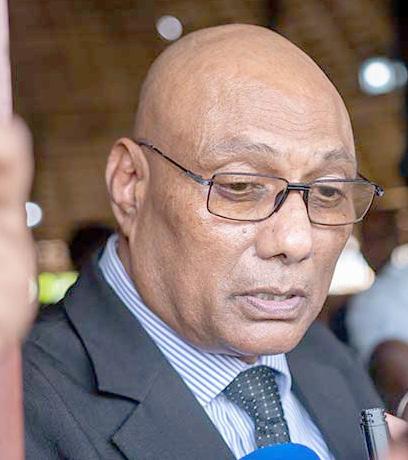
Chief Election Officer (CEO) of the Guyana Elections Commission (GECOM), Vishnu Persaud
According to the CEO, a Kaieteur News reporter contacted him by telephone and asked a single question regarding preparations for

Local Government Elections. He said his response was limited to one statement.
“Let me answer you this way,” Persaud recalled telling the reporter before stating, “Unless a plan for local government is approved by the commission, such a plan cannot and will not be activated.”
Persaud emphasised that the comment represented the entirety of his response and that he did not engage in any broader discussion about
procedural matters affecting the elections. He further stated that the article incorrectly attributed explanations and clarifications to him that he never provided.
“The article, therefore, attributes to me explanations and clarifications that were never provided,” the CEO wrote.
He argued that describing the exchange as an “exclusive interview” created the false impression that he had participated in a com-
prehensive discussion on several issues related to the conduct of Local Government Elections.
“The distinction is important,” Persaud noted, adding that readers could be left with an inaccurate understanding of both the nature of the interaction and the scope of his remarks.
The GECOM CEO also stressed the importance of accuracy and context in media reporting, particularly on issues of national significance.
“As public officials and members of the media alike recognise, accuracy and context are essential to maintaining public confidence in information disseminated on
matters of national importance,” Persaud stated.
While acknowledging the important role journalists play in informing the public, he said that responsibility must be exercised with precision and fairness, especially when reporting comments made by public officials.
Persaud also called on Kaieteur News to ensure future reports accurately reflect the nature of interactions with sources and faithfully represent the substance and scope of comments made.
He said adherence to professional journalistic standards is essential for preserving public trust and promoting informed public discourse.
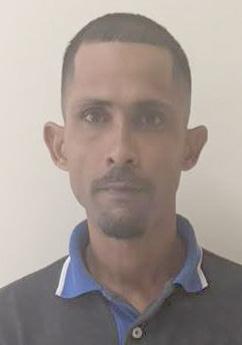
A 36-year-old Albouystown labourer has been released on $175,000 bail for attempting to obstruct the course of justice after allegedly falsely implicating himself in the murder of a Cuban national.
Junior Callender of Hogg Street, Albouystown, appeared before Magistrate Orintha Schmidt at the Georgetown Magistrates’ Court on Thursday, where the charge was read to him.
Police allege that Cal -

lender attempted to obstruct the course of justice during investigations into the murder of Cuban national, Daintier Vegas Infante, who was fatally shot on May 10 at Forshaw Street, Alberttown.
Investigators contend that Callender falsely implicated himself in the matter in an effort to take responsibility for a wanted person
connected to the murder probe.
He was arrested on June 18 and charged the following day with Attempt to Obstruct the Course of Justice, contrary to Section 330 of the Criminal Law (Offences) Act.
Callender was not required to plead and was granted $175,000 bail. He was also ordered to report to the police every Friday at 09:00 hrs. The matter was adjourned to July 3. The charge stems from the ongoing investigation into the murder of Infante, who was shot and killed at his workplace in Alberttown.
Police had since issued wanted bulletins for Nicholas Daby, Mikhail Joseph and Baraka Garnett in connection with the killing. According to investigators, the Cuban national
approached one of the men after they entered the area and were seen speaking with another individual. He was
subsequently shot and later succumbed to his injuries.
The suspects reportedly fled the scene in a car,
which was later intercepted by police. A woman was arrested and questioned as investigators sought to
determine the whereabouts of the suspects. The murder investigation remains active.

—says
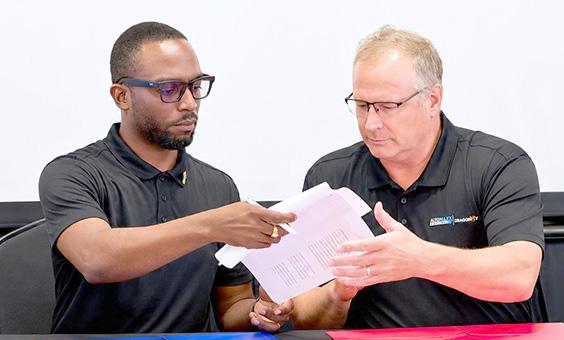
PRESIDENT of the Georgetown Chamber of Commerce and Industry (GCCI), Kathy Smith, has welcomed the newly launched joint venture between local company Dragonfly Solutions Group and Altomaxx Offshore, describing it as an example of the type of strategic partnership needed to support Guyana’s rapidly expanding economy.
The joint venture, launched on Thursday, represents a growing trend of collaboration between local and international companies and further strengthens business ties between Guyana and Canada.

bers to pursue partnerships beyond the local business landscape as companies position themselves to participate in emerging sectors and large-scale projects.
She pointed to recent engagements between the GCCI and the Guyana Power and Light Incorporated (GPL), during which opportunities for private sector participation in the utility’s development agenda were discussed.
Reflecting on concerns raised following the discovery of oil offshore Guyana in 2015, Smith said there were doubts about whether local businesses possessed the skills and capacity necessary to participate meaningfully in the new economy.
However, she said Guyanese entrepreneurs have consistently demonstrated their resilience, adaptability and determination.
Smith said the development is particularly encouraging for the GCCI, which has consistently advocated for greater collaboration between Guyanese businesses and international partners as a means of building capacity, transferring knowledge and unlocking new opportunities.
Earlier this year, Smith noted that one of the Chamber’s key priorities is ensuring that Guyanese businesses are prepared to grow along-
side the country’s economy through stronger engagement, improved financial literacy and increased access to business-development opportunities.
While the GCCI continues to experience membership growth, Smith stressed
that sustained support for local businesses remains essential.
According to the GCCI President, the Chamber has actively encouraged its mem-

Smith maintained that if Guyana is to keep pace with the rapid expansion of its economy, businesses must find innovative ways to build capacity and scale up operations.
She had previously noted that one of the country’s challenges is the limited availability of skilled human resources to meet growing demand across sectors.
Despite those challenges, Smith said the Local Content legislation has fundamentally transformed the opportunities available to Guyanese businesses and citizens.
“Guyanese people and Guyanese entrepreneurs are determined, skilled, capable, and innovative. We know how to get the job done, and for the things that we don’t know, we are always here to learn,” Smith said.
She added that partnerships such as the Dragonfly Solutions Group and Altomaxx Offshore venture demonstrate the tenacity and innovation of Guyanese businesses as they continue to position themselves for long-term growth and success.
A 50-year-old woman from Mabaruma, Region One (Barima-Waini), who admitted to unlawfully killing her common law husband during a domestic dispute, was, on Thursday, sentenced to eight years’ imprisonment by Justice Sandil Kissoon at the Demerara High Court.
Shandel Marcellino had initially been charged with the 2020 murder of her husband, 49-year-old Colin Campbell, but later pleaded guilty to the lesser offence of manslaughter.
The fatal incident occurred at Golden Hole, Mabaruma, in the North West District, where the couple reportedly operated a business.
In handing down the sentence, Justice Kissoon began with a starting point of 12 years’ imprisonment before applying a one-third reduction in keeping with sentencing guidelines to reflect Marcellino’s early guilty plea. This resulted in a final sentence of eight years.
The court also ordered that the time Marcellino has already spent in custody be deducted from her sentence. As a result, she is expected to serve approximately two more years in prison.
During sentencing, Justice Kissoon considered several factors, including the prevalence of domestic violence-related offences, the role alcohol played in the events leading up to the killing, and the fact that Campbell died from a single stab wound.
The judge noted that while Marcellino had been subjected to circumstances that made her a victim in certain respects, she nevertheless bore responsibility for her actions.
The killing occurred on the afternoon of October 23, 2020, at the former disco known as the “Golden Hole” in Mabaruma.
Reports at the time indicated that Campbell and Marcellino had been consuming alcohol before an altercation erupted between them. During the confrontation, Campbell was stabbed and later succumbed to his injuries at the Mabaruma Regional Hospital.
Police subsequently arrested Marcellino and launched an investigation into the incident.
The matter remained before the courts for several years before Marcellino opted to plead guilty to the lesser count of manslaughter, bringing the case to a close with Thursday’s sentencing.
By Bebi Shafeah Oosman
EUROPEAN Union Am-
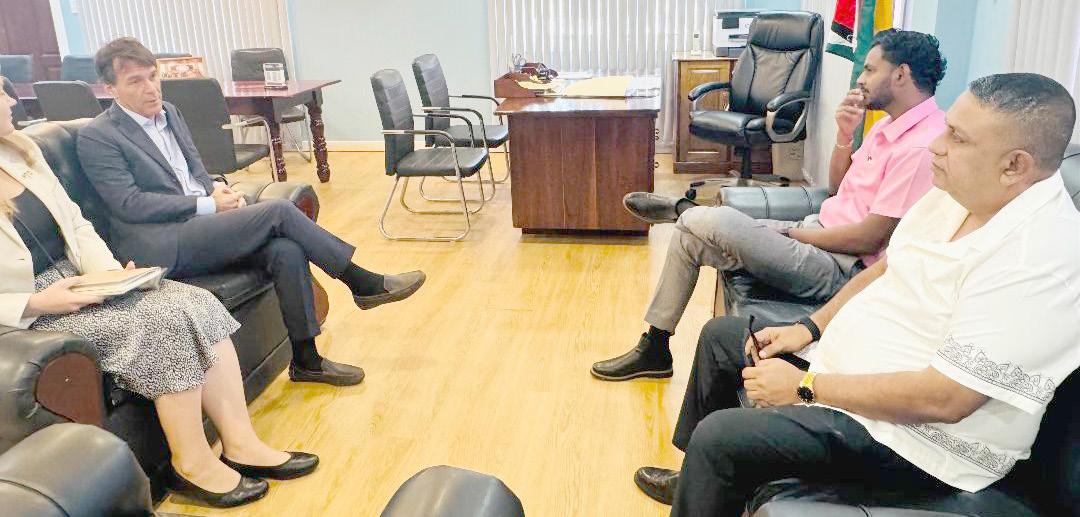
bassador to Guyana Luca Pierantoni this week embarked on an official visit to the Ancient County of Berbice, where he engaged regional and government officials, community stakeholders and representatives from the private sector as part of efforts to strengthen relations and explore opportunities for development in Region Six.
The visit is part of the European Union (EU)’s ongoing commitment to
creased international attention and investment.
The Ambassador stressed that the regions are transforming, which means “more opportunities for investors including European investors so this is apart of the conversation”.
Additionally, he said that they would have discussed the possibility of developing stronger political ties and “cultural changes between Europe and the region”.
As part of his visit, the EU Ambassador also toured several agricultural and fisheries initiatives on the Corentyne, where he
jected in the farming here, and I must say the FAO is doing a very good job there. The EU is funding the FAO for the fishermen project, which is aimed at improving the fishing practices there; the numbers are rather impressive.”
According to the ambassador, the fisheries project has already produced tangible benefits for hundreds of households in the region and demonstrates the value of international partnerships in supporting local communities.
According to him, 300 families are benefitting “we have rather impres -
fostering closer ties with communities across Guyana, and gaining a better understanding of the unique opportunities and challenges that exist outside of the capital city.
According to Pierantoni, the objective of the mission is to interact and get to know the local leaders, listen to them and gather information as to any challenges they may face as well as to meet the private sector.
On Friday, the Ambassador met with Member of Parliament Zamal Hussain and Regional Chairman Junior Basant. During discussions, attention was focused on economic development, investment opportunities, agriculture, fisheries, and cultural cooperation between Europe and Region Six.
Following the meeting, Pierantoni explained that such engagements are critical as Guyana continues to experience rapid economic growth and transformation. He noted that local regions stand to benefit from in-
met members of the fishing community and observed projects aimed at enhancing food production and sustainable livelihoods.
Furthermore, Pierantoni explained that he also met the fishermen community operating and projects at Tarlogie Farm on the Corentyne. “Some agricultural projects, particularly Tarlogie Farm, the conclusion is that there are some concepts that we are developing in Europe like the farm-to-fork concept” that ensures that fresh food arrives to the consumers.
The Ambassador highlighted similarities between agricultural concepts being developed in Europe and initiatives already being implemented in Guyana. He noted that the integration of technology and innovation into local farming practices has made a positive impression.
He said this concept has already been explored here. “In fact, we were rather impressed with the technological advancement innovation which is in -
pave the way for deeper collaboration between the European Union and Region Six in areas such
as investment, agriculture, fisheries, community development, and cultural exchange, while
creating new opportunities for residents and businesses throughout Berbice.
sive, 10,000 fish every week in the region” adding that the distribution system could be improved which would mean more benefits for the fishing community.
He noted that improving distribution networks could further increase earnings for fishermen, and strengthen food security throughout the region.
Beyond economic and agricultural development, the Ambassador also expressed interest in expanding cultural cooperation between the European Union and Berbice. He pointed out that the EU has been actively involved in cultural initiatives in Georgetown and hopes to replicate similar programmes in Region Six.
He then stated that they are also looking to expand cultural activities in the region as they have been very active in Georgetown. Noting, that he will return with a complete proposal for engaging cultural initiative to “strengthen our ties here in Berbice.”
The visit is expected to

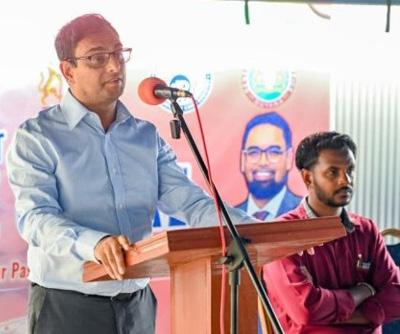
Minister of Public Service, Government Efficiency and Implementation, Zulfikar Ally
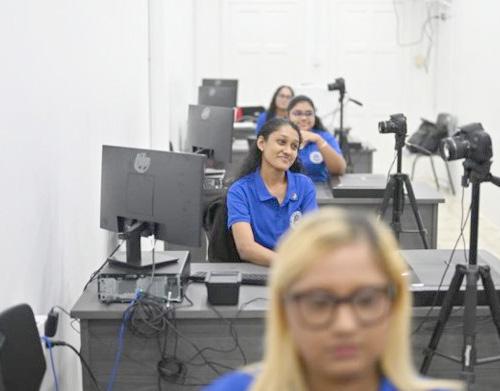
WORKS are ongoing to establish Government Service Centres in Regions Seven, Nine and Ten to deliver faster, more convenient access to a range of public services.
Minister of Public Service, Government Efficiency and Implementation, Zulfikar Ally, said that since President Dr Mohamed Irfaan Ali’s instruction to have service centres operational in Region Seven, teams are working in Bartica and Kamarang, with efforts focused on securing buildings and installing the necessary infrastructure.
During a recent cabinet outreach in the region, President Ali announced that service centres will be established.
“We are working very hard to ensure that the building, everything is acquired, and of course, the various agencies have to be outfitted with all the necessary cables, internet... We are working overtime to get that done,” he said.
The location for the service centre has already been identified, and construction works are underway.
“The teams are there building out already, so it is a matter of installing the equipment and training the staff who will be working there,” Minister Ally pointed out.
Meanwhile, the ministry is in the process of securing a suitable building to house the service centre in Region 10.
Minister Ally added that an appointment-based system will be introduced, allowing residents to schedule visits and receive services more efficiently.
“We really want to bring the modernisation of services for the public, one that is very simple, transparent and efficient,” he said.
Government Service Centres bring together multiple agencies under one roof, allowing citizens to access a variety of services without having to visit several locations.
Minister Ally encouraged residents to take advantage of the facilities when they become operational. He noted that they are designed to improve convenience and reduce waiting times for members of the public.
[DPI]
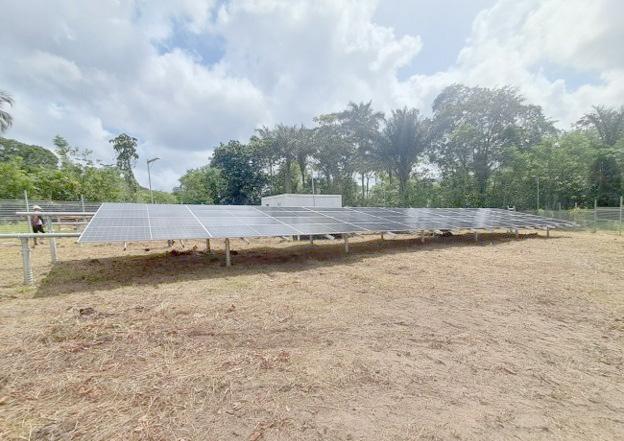
MORE than 3,000 residents of Whitewater Village in Region One are set to benefit from improved electricity following the government’s investment in a solar grid.
The grid is powering key public facilities in the community.
The renewable energy project currently supplies electricity to 20 buildings, including schools, the village health facility, churches, and a police outpost, enhancing the delivery of essential services and improving the quality of life for residents.
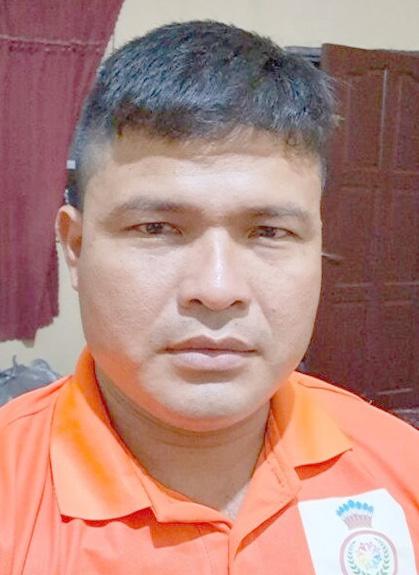
During an interview with the Department of Public Information (DPI) on Friday, Toshao Andrew Cox said the investment marks a significant milestone for the community, which has faced electricity challenges for many years.
“I am very much grateful and thankful on behalf of the residents and every sector that will be benefitting from this mini solar grid,” Toshao Cox stated.
The toshao explained that the village’s schools will now be better positioned to utilise educational resources such as
computers, printers, Internet connectivity and televisions, which were previously underutilised due to limited and unreliable electricity supply.
He noted that the project will also create a more comfortable learning environment for students and teachers, particularly during periods of intense heat.
The health sector is expected to see major improvements as well, with enhanced capacity for vaccine and medication storage through reliable refrigeration and greater ability to provide medical services at any hour.
Although 20 public build-
ings are currently connected to the grid, Cox said the entire village population of over 3,000 residents will benefit through improved access to education, healthcare and other public services.
The toshao also commended the government for its continued investments in the community, which he said have generated employment opportunities and contributed to the village’s transformation.
“The support has been great because the investment has been creating a lot of jobs, and residents are having different opportunities to gain life skills and develop themselves,” he said.
Cox pointed to recent infrastructure projects and community initiatives that have enabled residents to gain skills in masonry, carpentry and driving, while creating new economic opportunities.
He further highlighted the village’s poultry project, which was implemented through a presidential grant and continues to provide employment and income-generating opportunities for residents. [DPI]
—MoU paves way for passenger, cargo and mail services
GUYANA and Peru have signed a Memorandum of Understanding (MoU) that will pave the way for a formal Air Services Agreement (ASA), bringing the two countries closer to establishing direct commercial aviation links.
The agreement, signed virtually by the respective civil aviation authorities, creates a framework for negotiations on passenger, cargo and mail services between the two countries.
According to the Guyana Civil Aviation Authority (GCAA), the move is intended to improve connectivity, facilitate trade and tourism, and strengthen economic and cultural relations.
Under the proposed arrangement, airlines would be granted a range of op-
erating rights, including third, fourth, fifth and sixth freedom rights for mixed services and up to seventh freedom rights for dedicated cargo operations.
The GCAA said these provisions will support increased movement of people and goods while expanding opportunities for commercial exchange.
Director General of the GCAA, Lt. Col. (Ret’d) Egbert Field, and Director General of Peru’s Directorate for Civil Aviation, Paola Mariella Marin Ugarte, participated in the signing ceremony and highlighted the importance of closer aviation co-operation in advancing regional integration.
Both sides also reaffirmed their commitment to finalising an Air Services
Agreement, which will be signed and ratified in keeping with the legal requirements of each country.
“The initiative is set to strengthen air transport connectivity, foster greater co-operation, and open new opportunities for economic and cultural exchange between the two nations,” the GCAA said in a statement.
The authority added that the MoU reflects a shared commitment to strengthening aviation safety standards, enhancing regulatory co-operation and exploring new opportunities for collaboration within the sector.
The document was signed in both English and Spanish, reflecting what officials described as the spirit of partnership and mutual respect between the two nations.
GUYANA will participate in the Toronto International film festival for the first time.
This was announced by Minister of Culture, Youth and Sport, Charles Ramson, Jr, during a consultation on the Orange Economy held on Thursday at the Arthur Chung Conference Centre, Liliendaal, Georgetown.
“Guyana will be participating for the first time in the Toronto International Film Festival. So, this is a big opportunity for us,” Minister Ramson told the gathering of creatives who were part of the consultation.
The 51st edition of the Toronto International Film
Festival will be held September 10–20, 2026.
The festival is one of the most anticipated and largely attended Film Festival in the world.
Meanwhile, while Guyana’s film industry is now budding, there are opportunities for growth.
He noted that the young population will be the ones who will mostly benefit from the development of the sector.
“This is our area of opportunity. Look at where the countries that have benefitted, look at where persons who have benefitted from the sector,15-24 years old…A lot of the countries are countries that are similar in back -
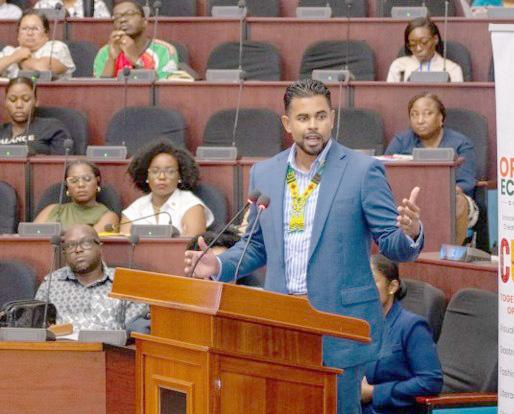
ground like us… young population, not necessarily coming from very rich
countries, but large young populations. They are the ones that are benefitting
from the employment in the sector,” Minister Ramson said.
He was referring to countries like Trinidad and Tobago, Nigeria, and other countries which have successfully tapped into the film industry.
“We have big opportunities, but Guyana is getting there,” Minister Ramson noted.
He noted the that local Film maker Alex Arjoon was instrumental in providing the local set up for filming the series “Full Circle,” a series produced in the United States.
This process took six months with filming only taking three days to complete the filming locally.
“They came in maybe a week in advance and then hardcore filming day and night for about 3 days, $500,000 US dollars, just on this one operation alone that was filmed right outside on the wharf of Stabroek market,” Minister Ramson stated.
He visited the filming set and is confident in the capability of Guyanese in the industry.
“It is a very sophisticated operation, but it’s nothing that Guyanese are incapable of learning.
In fact, I would say that we did so well, that there were other opportunities that would have been created as a result of this engagement. [DPI]

JUST over 90 per cent of primary school pupils across Guyana have been screened under a national health initiative to identify health concerns early and improve long-term outcomes for children.
The update was provided by Cardiologist and Senior Health Adviser, Dr Mahendra Carpen, during his appearance on the Guyana Dialogue programme on Thursday, where he highlighted the government’s continued focus on strengthening preventive healthcare.
Dr Carpen explained that the school health screening initiative forms part of a broader effort to move the country’s healthcare system towards early detection and prevention, rather than waiting until conditions become more serious.
The programme assesses learners in key areas including mental health, dental health, vision, blood pressure, blood sugar levels and weight-related concerns.
While the primary school screening exercise has reached a majority of pupils, assessments at the secondary school level are also ongoing.
According to Dr Carpen, the information collected through the programme will provide health officials with
important data on trends among young people and help guide future planning and healthcare policies.
The initiative is being supported through collaboration with international partners, including the Mount Sinai Health System.
The cardiologist reflected on the growth of specialised healthcare services in Guyana, particularly in cardiac care.
He noted that progress has been made since the establishment of the cardiac programme in 2006.
He explained that the programme was created to reduce the need for Guyanese patients to travel overseas for treatment and to build local capacity.
“Over the years, we have moved from where we were in 2006 and 2007, when we did our first cardiac procedure, to where we are today,” Dr Carpen said.
He highlighted that in collaboration with the Ministry of Health and the Georgetown Public Hospital Corporation, the cardiac institute has expanded its services, including performing hundreds of procedures annually, such as angiograms, stent placements, pacemakers, and open-heart surgeries.
Dr Carpen said the country has also advanced its ability to train local

specialists through partnerships such as the cardiology residency programme with the Mount Sinai Health System, allowing Guyanese doctors to receive training at home.
He noted that the longterm goal is to ensure more regions have access to specialist care. [DPI]


THE development of Guyana’s Orange Economy is moving beyond discussions and into implementation, Minister of Culture, Youth and Sport, Charles Ramson Jr., said on Thursday as government convened an Orange Economy Stakeholders Consultation at the Arthur Chung Conference Centre (ACCC).
Held under the theme, “Orange Economy: Unlocking Guyana’s Cultural & Creative Industries Potential,” the consultation brought together creatives, cultural practitioners, entrepreneurs, policymakers, development partners and private sector representatives to identify opportunities and challenges facing the sector.
Delivering the feature
address, Ramson said the engagement was designed to produce tangible outcomes and guide the next phase of development for Guyana’s cultural and creative industries.
“This is not a consultation where we are simply talking about possibilities. We are already moving towards implementation through a mix of immediate, short-term and long-term initiatives aimed at advancing the sector,” the minister said.
He noted that the Orange Economy has the potential to create jobs, attract investment, stimulate innovation and expand tourism opportunities, while preserving Guyana’s cultural heritage.
According to Ramson, the consultation forms part of
government’s broader strategy to position the Orange Economy as a key pillar of economic diversification as Guyana continues to experience rapid economic growth.
He pointed out that globally, the Orange Economy contributes approximately 3.1 per cent of Gross Domestic Product (GDP), representing an estimated US$4.3 trillion annually and supporting some 50 million jobs.
“We know the importance of diversification,” Ramson said, adding that Guyana’s cultural and creative assets have significant economic potential that remains largely untapped.
Among the major announcements made during the consultation was Guyana’s participation in the

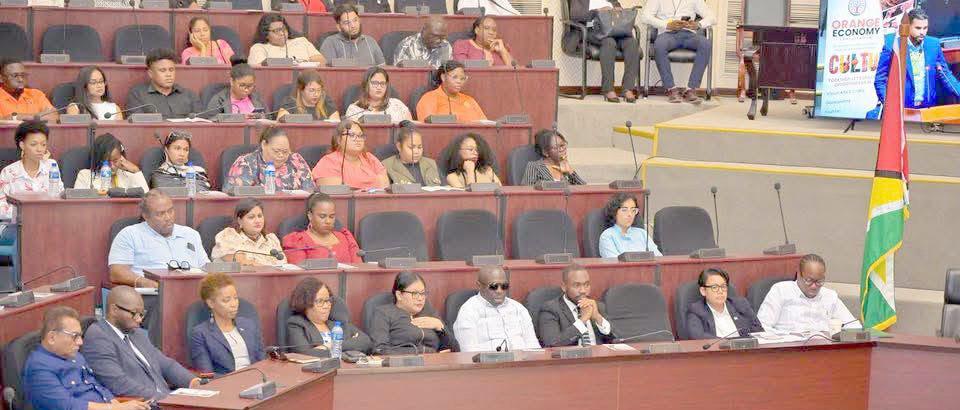
Toronto International Film Festival for the first time.
Ramson described the development as an important opportunity to showcase local talent, establish international partnerships and position Guyana within the global creative economy.
He also highlighted Guyana’s growing capacity to support international film productions, citing a recent project that invested approximately US$500,000 in the local economy.
The consultation comes as government continues to increase investment in the sector. In Budget 2026, some $3.7 billion was allocated to support Orange Economy initiatives.
Last year, government also established a National Multistakeholder Orange Economy Taskforce to develop a medium-term strategy focused on key areas including cultural heritage tourism, gastronomy, literary arts, visual arts, performing arts, film, fashion and festivals.
Minister within the Ministry of Culture, Youth and Sport, Steven Jacobs, said the country’s Diamond Jubilee celebrations demonstrated the strength of Guyana’s creative sector, with 2,284 creatives participating in activities that attracted more than 38,000 attendees.
Meanwhile, Minister of Tourism, Industry and Commerce, Susan Rodrigues, highlighted the strong relationship between tourism and the creative industries, noting that cultural experiences, festivals, art, music and gastronomy contribute significantly to visitor spending and destination appeal.
Throughout the consultation, stakeholders participated in presentations and breakout sessions examining issues such as access to financing, skills development, market expansion, policy support and international competitiveness.
Several creatives welcomed the initiative, describing it as an important opportunity to contribute to the development of a sector that has long been underuti-
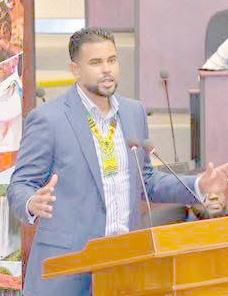
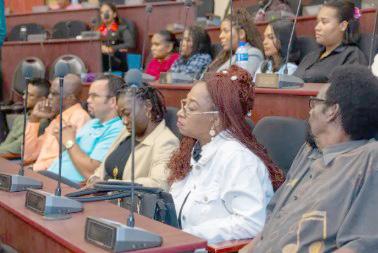
lised despite its economic potential.
Folk singer Gavin Mendonca described the engagement as a timely opportunity to unite the country’s various creative disciplines.
“Times are changing, we are a growing economy, but the creative industry always seems to be left behind, so I think now is a great opportunity to consult, to put together a plan and then to act,” he said in an interview with Department of Public Information (DPI).
Steel pan player Tyrese Thomas said the consultation made creatives feel recognised and provided a valuable platform to influence the future direction of the sector.
Prominent Guyanese singer Charmaine Blackman also praised the initiative, expressing hope that Guyana’s creatives will eventually enjoy opportunities comparable to those available elsewhere in the Caribbean.
“I believe that it is time that we come up to par with our Caribbean brothers and sisters who have been earning comfortably in the industry,” she said to DPI. Participants examined opportunities and challenges affecting a broad range of creative industries, including film, fashion, music, visual arts, media production, cultural tourism, heritage preservation, entertainment and gastronomy.
Recommendations emerging from the consultation focused on strengthening policy support, improving access to financing, expanding training opportunities, increasing market access and improving the international competitiveness of Guyanese creative products and services.
More consultations are expected as government advances plans to develop a comprehensive strategy for the sector.
DEVON Harry was this week sentenced to 21 years’ imprisonment for the 2021 murder of 25-year-old Keon McPherson, bringing an end to a case in which three of his co-accused were acquitted following a High Court trial that concluded in March 2026.
The sentence was imposed by Justice Gino Persaud at the Demerara Criminal Assizes after a jury found Harry guilty of murder. The court ordered that the Guyana Prison Service deduct the entirety of his pre-trial custody from the sentence. Justice Persaud also directed that Harry participates in anger management programmes offered by the prison service. Harry was represented by attorney-at-law Ronald Bostwick.
The prosecution’s case was led by State Counsel,

Delon Fraser, assisted by State Counsel Padma Dubraj and State Counsel Mtumika Lumumba.
Harry had stood trial alongside Nicholas Hercules, Brenna Nurse and Peter Lam for the fatal shooting of McPherson. However, when the trial concluded in March, the jury returned unanimous not-guilty verdicts in favour of Hercules, Nurse and Lam,
resulting in their acquittal and discharge.
The four had been jointly charged with the killing of McPherson, a resident of Lot 687 ‘D’ Field, Sophia, Greater Georgetown.
McPherson’s body was discovered in a yard at ‘C’ Field, Sophia, during the early morning hours of August 15, 2021. He had sustained multiple gunshot wounds.
Evidence presented during the trial indicated that the fatal shooting was preceded by an altercation between McPherson and his in-laws on August 14, 2021. Prosecutors alleged that McPherson was assaulted by Nurse and the three male accused during that confrontation.
According to reports, McPherson managed to escape and return to his home.

Later that night, however, he reportedly received a telephone call from a woman and subsequently left his residence.
Several hours later, at about 04:00 hours, police were alerted after a woman contacted the command centre upon discovering a man lying motionless in a yard at ‘C’ Field, Sophia.
Investigators later con -
firmed that McPherson had suffered a gunshot wound to the left side of his chest and another to his right hand.
Following the investigation, Harry, Hercules, Nurse and Lam were arrested and jointly charged with murder. They initially appeared before Magistrate Alisha George at the Sparendaam Magistrate’s Court, where the indictable charge was read to them and they were remanded to prison. The matter was subsequently committed to the High Court for trial before Justice Persaud.
During the proceedings, Nurse was represented by attorneys-at-law Bernard DaSilva and Shemar Parkinson.
With Harry’s sentencing now completed, he remains the only person convicted in connection with McPherson’s killing.
A 22-year-old operator of Zeelugt, East Bank Essequibo, has been granted bail after being charged with possession of narcotics for the purpose of trafficking.
Gorshome Edwards of Lot 822, Zeelugt, appeared before Magistrate Teriq Mohamed at the Bartica Magistrate’s Court on Friday, June 19, 2026.
Edwards was charged with Possession of Narcotics for the Purpose of Trafficking, contrary to Section 5(1)(a)(i) of the Narcotic Drugs and Psychotropic Substances (Control) Act. He was arrested on June 18 in connection with a narcotics matter and formally charged the following day.
The charge was read to Edwards who pleaded not guilty. He was placed on $100,000 cash bail and the matter was adjourned to August 8, 2026, for continuation.
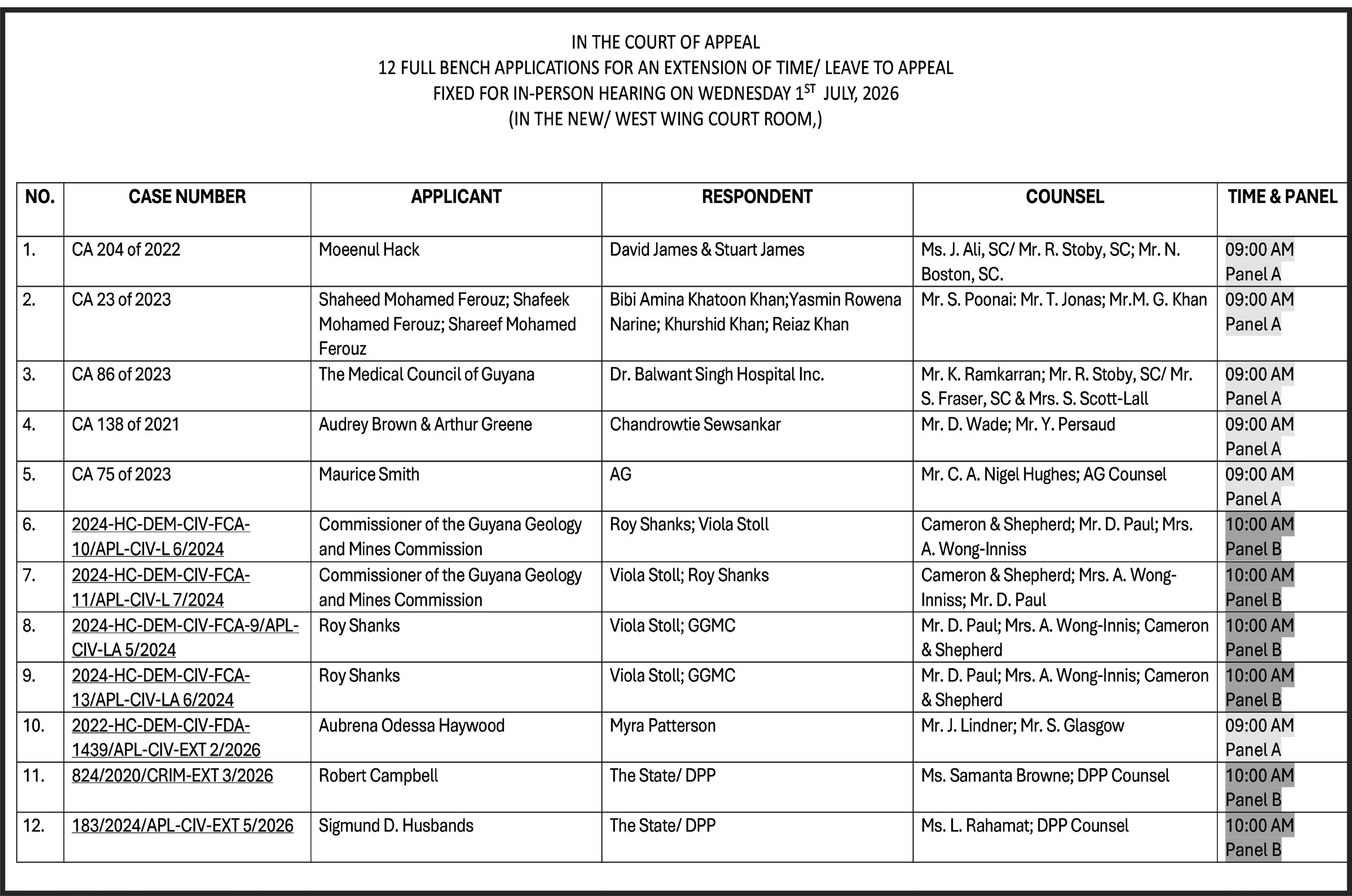












CRICKET QUIZ CORNER
(Saturday June 20, 2026)
HE announced himself at the World Cup with two goals for co-hosts the United States as they beat Paraguay in their opening game.
But Folarin Balogun only represents the USA because of a quirk of his birth.
And the irony is the nation’s prized striker is the type of person President Donald Trump says should not be eligible for citizenship under his hardline immigration agenda.
As Balogun prepares for their second group game against Australia in Seattle on Friday (20:00 BST), it comes against a backdrop of a World Cup already fraught with immigration and visa controversies.
The US Supreme Court is due to rule on the president’s executive order - and the fundamental meaning of citizenshipwithin weeks.
Balogun, 24, is a product of Arsenal’s youth academy and could have pledged his allegiance to England or Nigeria.
However, long before that, circumstances conspired to give him the opportunity to represent the US.
Balogun’s Nigerian parents were living in London when they took a trip to New York in the summer of 2001.
The trip proved fateful. Balogun’s mum was not allowed on the flight home when airline attendants realised she was heavily pregnant, and instead of being born in the English capital, he arrived into the world in Brooklyn, New York on 3 July 2001.
The controversial birthright citizenship row
Being born in Brooklyn meant Balogun was automatically granted US citizenship under the country’s birthright citizenship laws - based on the 14th amendment to the US Constitution.
Trump’s executive order seeks to deny citizenship to the children of people who are either in the US illegally or on temporary visas (such as tourist visas).
Part of a broader effort to overhaul the nation’s immigration system, the administration claims it is to combat what they have called “significant threats to national security and public safety”.
There was no doubt who was the most dangerous asset in the US ranks against Paraguay last week
Speaking after the co-hosts made a dominant start, AC Milan midfielder Christian Pulisic said what everyone else was thinking - that the US were “really lucky” to have Balogun.
“The kid’s insane,” he said. “He’s lethal right now in front of goal. Let’s just hope it keeps going like this.”
Kenny Cooper - a former US men’s national team player - believes the team,
with Balogun as “a proven goalscorer at the highest level”, can go on a historic run.
“He’s obviously a really special talent and he showed that with two exceptional goals,” Cooper told the BBC. “He has been so impressive.
“I think there’s just so much confidence that I’m sure the players have in him playing with them, and us, his fans,
plans - scoring seven goals in 13 appearances as they geared up for the 2023 Under-21 European Championship.
But his performances on loan at Reims from Arsenal during a prolific 2022-23 campaign - which earned him a £ 35m move to Monaco - had US officials circling.
There was also a huge swell of public

have in him.”
Cooper is a club ambassador for FC Dallas, who have been hosting watch parties of the World Cup at the outdoor Simpson Plaza in Frisco, Texas, near the National Soccer Hall of Fame. More than 2,000 fans watched the Paraguay match.
One of those was Tommy Marcos - the New York president of American Outlaws, the largest fan group for Team USA. He says supporters have been waiting decades for someone like Balogun, who plays for Monaco in France’s Ligue 1.
“We haven’t had that type of player - a top-five league striker that you can just put in there and know he’s going to score,” he said. “That’s pretty hard to do in the current football environment and we’re lucky to have him.”
Why Balogun switched allegiance from England
Until three years ago, there was no guarantee Balogun would end up playing for the United States
Having appeared for the US and England at Under-18 level, he was at the heart of Lee Carsley’s England Under-21
support for him to commit to the US at a time the route map to England’s senior side appeared far more complicated.
Having withdrawn from an England Under-21s camp, a secret rendezvous to meet US Soccer officials was instead plastered all over social media and he was courted with NBA tickets and trips to Florida.
There was also reportedly an invite to the New York Yankees to watch training, and several senior US internationals were dispatched to take him out to dinner to convince him to make the switch.
“When I committed, and throughout the whole cycle, and the whole journey to me being at this point, I’ve always said the fans gave me so much motivation and showed me so much support,” Balogun said on Friday.
“For me, the most important thing has always been to be able to repay that. I just want to continue to show the fans I made the right decision.”
As much as Team US want to keep politics off the pitch and focus on their game, it’s hard to ignore the fact Balogun joining
the team would’ve been impossible under President Trump’s proposed order.
If the Trump administration were to win the Supreme Court case, it would create uncertainty not just for Balogun but plenty of others, says Ilya Somin, George Mason University law professor and the chair in constitutional studies at the Cato Institute.
The administration has said they will not actually move to retroactively deprive birthright, but the logic of their argument - that those people are not actually citizens - will hang over them.
“Trump’s promises and guarantees often are not worth very much, but even if he were to stick to that resolution, a future administration might not,” said Somin.
Still, Somin believes the high court, which has a 6-3 conservative majority, will not rule in President Trump’s favour given their scepticism during oral arguments in
When the administration argued the ease of modern travel necessitated reinterpreting the constitution, Chief Justice John Roberts quipped: “It’s a new world. It’s the same constitution.”
It may be coincidence that the World Cup, the birthright Supreme Court decision and the country’s 250th anniversary are happening at the same time. But with international turmoil and domestic division on a range of polarising issues, the confluence of events is holding up a mirror to the American people.
A majority of Americans believe all babies born in the country should automatically be granted citizenship, according to a Reuters poll from April.
But there is a split along party lines. The poll found only 9% of Democrats agree with ending birthright citizenship compared to 62% of Republicans.
Balogun is hardly the only player on Team USA with a blended identity.
Marcos said fans were used to that, and the team is uniquely built to represent the nation’s melting pot.
“I think that’s what makes the team really unique in terms of the football landscape,” he said. “But it’s also what makes it special and it makes it very American.”
In 10 of the previous 12 editions of the World Cup, six goals would have been enough to win the Golden Boot.
On that basis, and only one game in, Balogun is already a third of the way to one of the most prized individual accolades in world football.
He may not be a household name in the country yet, but he’s well on his way to becoming a new talisman for US soccer fans to pin their hopes on. (BBC Sport)
ENGLAND’S parlous position in the second Test against New Zealand was compounded by drops from debutant wicketkeeper James Rew and a superb century by Henry Nicholls.
On the day Ben Stokes made his return to action for Durham following an incident in a London nightclub, an England team without their captain were slowly roasted in the heat of The Oval.
By the end of the third day, New Zealand had moved to 252-3 in their second innings, leading by 352 and primed to level the series at 1-1.
Rew was one of five changes and three new caps brought in by England from the team that won the first Test at Lord’s. The chances he missed were difficult, yet catchable and costly.
Diving to his left, Rew put down Rachin Ravindra when he had only seven. Nicholls, on 42, gloved an attempted hook down the leg side and Rew parried the ball high to his right.
Reprieved, the New Zealand third-wicket pair added 161. Ravindra was lbw to Jacob Bethell for 76, but Nicholls pushed on to end the day on 119 not out.
likely be in a crucial deciding Test for an England team desperate for a series win
REW EXPOSED
Rew made his Test debut because first-choice keeper Jamie Smith is on paternity leave. England could have given the gloves to Rew’s fellow debutant Jordan Cox, or even gone back to Ollie Pope.
Rated as a fine batting prospect, there were concerns about Rew’s keeping before this match and the two catches he dropped ended England’s slim hopes of a fightback.

England earlier gave up a first-innings lead of 100 by being bowled out for 291. It was a below-par total on a good pitch and would have been worse had it not been for number nine Matthew Fisher’s maiden unbeaten half-century.
From 222-6 overnight, the home side were reduced to 238-9 by Matt Henry’s five-wicket haul, before Fisher added 53 for the 10th wicket with last man Sonny Baker.
Despite The Oval shimmering in the sunshine, this was an odd spectacle. New Zealand’s dominance sucked the jeopardy from the contest, giving the feeling the real story was 280 miles away with Stokes, and Durham’s match against Northamptonshire.
There is a growing possibility Stokes and pace bowler Gus Atkinson will return for next week’s third Test at Trent Bridge, and this third day was a further example of how England have missed their captain as a leader and cricketer.
Denied the team balance provided by Stokes, England opted to go without a frontline spinner. One would have been useful on a pitch starting to turn and with a fast-bowling attack that had to be managed in the heat.
Stand-in captain Joe Root’s tactics were baffling on a second morning that began England’s spiral. He is marshalling an inexperienced team and the lack of senior players has shown. At one point, Root looked frustrated when Emilio Gay was not in the right fielding position.
England have been badly hurt by drops - one by Ben Duckett on Thursday, then the two by Rew on Friday - and their batting. Stokes would probably have been powerless to improve either.
If he does return as skipper in Nottingham, it will
Jofra Archer bowled with fire to have Tom Latham nick off and Josh Tongue removed Devon Conway with his first ball. With New Zealand 28-2, England had a sniff.
When Ravindra flashed at Tongue, the score had moved on to 48-2, the lead 148. Rew, moving towards first slip, put down the catch with his left hand.
Even when Nicholls was missed on 97-2, England could maybe have gained a foothold. Rew flapped at the ball gloved down the leg side off Archer, much to the displeasure of the bowler.
Bethell, who took three wickets in the first innings, did not bowl until the 38th over and could have had Ravindra caught at short leg before he won a tight lbw call against the sweeping lefthander.
Nicholls, though, would not be denied, filling the gap vacated by the retirement of Kane Williamson with his 11th Test century.
He pulled Bethell for four to reach three figures and a partnership with Daryl Mitchell, unbeaten on 32, was worth 63 by the close.
Beginning the day 169 behind, England’s hopes of getting close to New Zealand’s first-innings 391 largely rested on Cox.
But Henry was superb, nagging away with wicketkeeper Tom Blundell up to the stumps. Cox chipped to mid-wicket, the sublime Blundell brilliantly held a thick edge off Archer and Tongue was caught at mid-on to give Henry a seventh five-wicket haul in Tests.
When debutant Baker joined Fisher - playing his second Test - England were 238-9. They defied New Zealand for 80 minutes and 17 overs.
Baker gamely faced 36 balls for his four. Fisher stood up to New Zealand’s bouncers and occasionally carved through the covers for a 76-ball half-century that was given a huge reception by the crowd on his home ground.
Finally, in the fourth over with the second new ball, Baker edged a lifter from Kyle Jamieson, leaving Fisher unbeaten on 50. (BBC Sport)
MATT Renshaw’s unbeaten 89 and Tim David’s 26-ball 45 powered Australia to 196 for 5 before their bowlers held their nerve to beat Bangladesh by seven runs in the second T20I in Chattogram.
Bangladesh threatened to pull off the chase after racing to 103 for 2 at the halfway mark and remained in the hunt deep into the final over through Towhid Hridoy’s late assault, but Australia closed out the game to take an unassailable 2-0 lead in the three-match series.
Australia made an ideal start after opting to bowl, reducing Australia to 44 for 3 inside the Powerplay. After conceding 12 runs in his first over, Nasum Ahmed struck a crucial blow by trapping Josh Inglis LBW, while Nahid Rana’s extra pace accounted for Cooper Connolly with a sharp catch by Saif Hassan at slip.
Mitchell Marsh, who started positively, fell to Mustafizur Rahman for 20 off the last ball of the Powerplay, leaving Australia’s middle order with much work to do.
The innings gained momentum through a counterattacking partnership between Tim David and Matt Renshaw. David immediately took on Bangladesh’s pace, pulling Nahid for a six before unleashing himself against Abdul Gaffar Saqlain, whose second over cost 19 runsincluding two sixes and a four for David. While David provided the muscle, Renshaw settled into his innings before joining the assault, particularly against the spinners. The pair added quick runs through the middle overs bringing up the half-century stand in quick time as they took Australia past 100 in the 12th over.
Renshaw took apart Rishad Hossain, smashing three consecutive sixes to bring up his fifty in 29 balls. With David continuing to find the boundary at the other end, the pair set Australia up for a good finish after the early wobble.
Saqlain eventually broke the partnership - worth 97 in 50 balls - by dismissing David, while Nasum Ahmed later trapped Nikhil Chaudhary LBW. But Renshaw remained in complete control and received good support from Joel Davies in an unbeaten 42-run stand the came in the last four overs, including two sixes off Mustafizur in the last over. The Bangladesh openers began positively in the chase, adding 48 inside the first four overs. Spencer Johnson went for 22 in the second over, while Aaron and Nathan Ellis also went for boundaries as Bangladesh got off to a brisk start. Renshaw was introduced in the fourth over and his off spin did the trick as Tanzid Hasan Tamim handed a catch back to the bowler to depart for a 15-ball 30. Meanwhile, Johnson went for 17 in his second over as Saif Hassan struck a six and Soumya Sarkar hit two fours, with Bangladesh ending the Powerplay strongly at 72 for 1. Adam Zampa ended Sarkar’s stay by having him caught at long on, but Parvez Hossain Emon came out with a positive intent, striking two successive sixes off the legspinner as Bangladesh moved past 100 in the 10th over. Parvez and Saif continued to deal in boundaries as they brought up a half-century stand in 33 balls.
But Australia bounced back with quick wickets, with the set pair departing in successive overs. Aaron Hardie bagged the wicket of Parvez while Davies picked up the wicket of Saif, both caught by Marsh in the cover region, as Bangladesh slipped to 134 for 4 in the 14th over. Bangladesh needed 54 off the last five overs and Towhid Hridoy tried to ease the pressure with a couple of boundaries off Zampa. Ellis then bowled an excellent 17th over, having Shamim Hossain caught at deep square leg and conceding only two runs, leaving Bangladesh needing 42 off the last three overs.
Despite being hit for a four by Saqlain, Zampa gave away only eight runs in the 18th over. It came down to 23 in the final over after Ellis went for 11 in the 19th, being hit for a four by Saqlain and a six by Hridoy. Bangladesh needed 23 in the last over and 18 off the last three balls when Hridoy hit a six off Hardie.
But with 12 needed, he could only manage a four and fell off the last delivery as Australia overcame Bangladesh in a tense finish. (Cricbuzz)
NEW YORK, (Reuters) - Delirious New York Knicks fans flooded the streets of Lower Manhattan on Thursday for a ticker-tape parade celebrating the newly crowned NBA champions, capping a dream season more than five decades after the team last won a title.
The stretch of Broadway known as the “Canyon of Heroes” was a sea of orange and blue, as throngs of people gathered in the pre-dawn hours — with some camping out overnight — to secure a spot behind police barricades for what Mayor Zohran Mamdani said could be the largest parade in the city’s history.
The Knicks’ dominant run through the National Basketball Association playoffs electrified this sports-mad city that had grown used to falling short year after year. The team’s 15-3 playoff record featured a number of improbable comebacks, culminating with Saturday’s 94-90 victory in Game 5 of the NBA Finals over the San Antonio Spurs to end its 53-year title drought.
Trip Kesler, a Long Island native who lives in Florida, flew to Virginia to meet her brother before they drove north for the parade. The two secured a prime spot along the parade route after waking up at 3 a.m.
“We love our team,” the 35-year-old Kesler said, wearing an orange-and-blue Knicks hat that her 64-year-old mother knitted for the occasion. Her dad told her mother every year for decades that the Knicks would win, she added.

“And we did it this year,” she said. “I was locked in since Game One of the finals. I knew who was gonna win.”
The viewing pens were already full three hours before the parade kicked off, the New York Police Department said.
Knicks players basked in the crowd’s adulation as the parade set off from the southern tip of Manhattan at 10:32 a.m. EDT for the 2/3-mile (1.1 km) route to City Hall, where the team received symbolic keys to the city from Mamdani.
At one point, NBA Finals Most Valuable
Player Jalen Brunson, the Knicks captain and unofficial king of New York, walked along the street carrying the golden Larry O’Brien championship trophy as fans screamed his name and reached out to touch the hardware.
Karl-Anthony Towns, wearing a backwards Knicks hat and smoking a cigar, danced with Mamdani on one float, while backup center Mitchell Robinson rode in one of his custom trucks.
‘THIS IS OUR TEAM’ “This is our city. This is our team,”
Mamdani said at City Hall, with the players’ jerseys represented by banners hanging off the building. “For 53 years, we watched; for 53 years, we waited. Now we’ve won.”
Brunson, who took the lectern to chants of “MVP!” and a standing ovation, was often doubted earlier in his career due to his lack of size and elite athleticism. But the normally understated star ended his brief remarks with a message for people with “a lot of negative stuff to say.”
“When you prove them wrong, you don’t have to say shit to them,” Brunson, who scored nearly half his team’s points in the Finals clincher, said to cheers. “They don’t deserve it.”
Singer-songwriter and native New Yorker Alicia Keys concluded the ceremony by singing a few bars of Billy Joel’s “New York State of Mind” before transitioning into her 2009 ode to the city, “Empire State of Mind.” Hundreds of fans were seen spontaneously singing her unofficial city anthem in the streets on Saturday following the Knicks’ victory. Knicks stars of yesteryear also joined the party, including Walt “Clyde” Frazier, who helped lead the franchise to its two previous titles in 1970 and 1973, and Hall of Fame center Patrick Ewing.
So too did celebrity superfans, including movie director Spike Lee — a courtside presence at Madison Square Garden for decades — actor Timothee Chalamet, actor Ben Stiller and rapper Fat Joe.
ST. JOHN’S, Antigua,( CMC) – In a major show of support for the nation’s flagship sport, the Cabinet of Antigua and Barbuda has given the green light to a pair of transformative proposals from Cricket West Indies (CWI) and the Antigua and Barbuda Falcons, signalling a new era for the game’s development, infrastructure, and community engagement on the twin-island state.
During a recent high-level meeting, the Cabinet welcomed separate presentations from CWI officials and the Falcons franchise, endorsing a suite of initiatives designed to cement Antigua’s reputation as the heartbeat of Caribbean cricket.
At the core of the discussions was CWI’s ambitious plan to construct a state-ofthe-art Cricket West Indies Campus at the Coolidge location.
The project, estimated at US$6.6 million and slated for
completion by March 2027, promises to be a game-changer for regional sports infrastructure.
The facility will feature international-standard training amenities, upgraded technology, a cricket simulator, and a museum dedicated to preserving the storied legacy of West Indies cricket.
Cabinet expressed its full approval and committed to ongoing collaboration with CWI to ensure the project’s realisation.
Beyond infrastructure, CWI representatives highlighted a pressing need to revitalise school cricket, particularly at the primary level.
Emphasising a unified approach, they called for stronger partnerships between schools, the Ministry of Sports, and national sporting bodies to rebuild the grassroots structure.
Cabinet welcomed the proposal, supporting programs aimed at boosting participation among both boys
and girls to nurture the next generation of West Indies stars.
Meanwhile, the Antigua and Barbuda Falcons outlined their strategic roadmap for the upcoming season, which includes intensive training camps, community outreach, and holistic player development programs focusing on physical and mental well-being.
The franchise underscored the importance of creating clear pathways for local talent and advocated for exchange opportunities with cricketing powerhouses such as England, Australia, and India.
In a groundbreaking move for inclusivity, the Falcons also briefed Cabinet on their recent engagement with Antigua’s Spanish-speaking community at the Sir Vivian Richards Stadium.
The initiative aims to broaden the franchise’s fan base through Spanish-language promotional materials,
including a translated version of the Falcons’ theme song, and targeted outreach activities.
Cabinet commended the franchise for recognising the vital role of the Spanish-speaking demographic in the nation’s cultural fabric
and welcomed efforts to make cricket more accessible to all residents.
The meeting also addressed the future of the nation’s most promising cricketing exports. Cabinet held extensive discussions on the development of Rahkeem
Cornwall, Alzarri Joseph, and Karima Gore, pledging to provide the necessary resources, including specialised training, mentorship, and international exposure, to facilitate their continued growth and advancement on the world stage.
NEW Zealand is still in the mix for a semi-finals spot at the T20 World Cup after a thrilling four-run win over Ireland in Southampton. It was a must-win encounter for both sides after losing their opening two matches and this defeat effectively ends Ireland’s hopes of progressing from the group stage.
A fine bowling display from Ireland restricted the defending champions to 140-6 from their 20 overs.
(Scores: New Zealand 140-6 (20 overs): Sharp 36; Murray 2-26, Prendergast 2-26 Ireland 136-4 (20 overs): Prendergast 59, Lewis 58; M Kerr 2-23)
Irish skipper Gaby Lewis (58) and Orla Prendergast (59) put on a superb 110-run second-wicket partnership to give Ireland a
chance of securing a first World Cup win at the 20th attempt.
Ireland fell just short - a six was required off the final ball from Suzie Bates but Louise Little could only manage a single.
“It’s hard to reflect straight away. There’s a lot of emotion. We wanted that first win so badly,” said Ireland captain Gaby Lewis.
“As a team, we did so much right. It’s hard to sum up right now.”
New Zealand was dealt a blow before the game when star all-rounder Sophie Devine started vomiting when she arrived at the ground and was replaced by Bates.
They climb to fourth in Group 2 but may need to win their final two games and have other results go their way to progress.
(BBC Sport)
AFTER thrilling action in Demerara and Berbice, the Future Warriors Tapeball for Primary Schools, powered by ExxonMobil Guyana, lands at the Anna Regina National Stadium from today, with CV Nunes Primary firmly under the spotlight as they look to defend their Essequibo Zone crown.
They enter the 16-team knockout bracket not just as participants, but as the team with a target on their backs, carrying the hopes of the Anna Regina faithful who expect nothing less than a clinical display on home soil.
Already, West Ruimveldt have locked up the Demerara title, while St. Therese Primary flexed its muscles to claim the honours in Berbice.
The team that emerges from the Essequibo crucible this weekend will complete the trio, progressing to the coveted Champion of Champions national finals slated for August or September.
“The action in the previous zones was exceptional, and we have witnessed some exceptionally good cricket from these young players,” Tournament Director John Ramsingh said ahead of the weekend’s blockbuster schedule.
“We expect the energy and talent in Essequibo to match, if not exceed, what we have seen across Demerara and Berbice.
We must also extend our sincere thanks to the Ministry of Culture, Youth and Sport for lending support in terms of


once again giving access to a top-class facility, especially in this rainy season.”
In keeping with the tournament’s focus on grassroots development, the rewards extend far beyond the silverware.
The top four schools from the zone will take home comprehensive equipment bags, agility kits, and electronic scoring tablets—the latter of which is a forward-thinking initiative to introduce these young cricketers to the data-driven mechanics of the modern game.
Furthermore, to ensure no school leaves empty-handed, all 16 participating institutions will receive baseline fitness equipment to foster long-term athletic development.
The tournament gets underway on Saturday morning in a rapid-fire sequence across four simultaneous pitches.
The marquee opening session at 10:30h sees title favou-
rites C.V. Nunes Primary launch their campaign against 8th of May Primary on Pitch 4.
Simultaneously, Riverstown Primary faces Taymouth Manor Primary (Pitch 1), Hampton Court Primary clash with Lima Sands Primary (Pitch 2), and Good Hope Primary squares off against Sparta Primary (Pitch 3).
The second wave of first-round fixtures bowls off at 11:30h, featuring Huis T’ Dieren Primary vs Mainstay Lake Primary (Pitch 1), Onderneeming Primary vs Fisher Primary (Pitch 2), Charity Primary vs Friendship Primary (Pitch 3), and Capoey Primary vs Suddie Primary (Pitch 4).
Admission to the Anna Regina National Stadium is entirely free, and members of the public are encouraged to come out and support the future stars of Guyanese cricket.
LEEDS, England, (CMC )-IN a pulsating encounter at the ICC Women’s T20 World Cup, West Indies held their nerve to secure a hard-fought victory over a spirited Scottish side, with all-rounder Chinelle Henry revealing the team’s resolve to overcome injury worries and a fiery opposition.
Speaking after the match, Henry, who was a late inclusion after a warm-up game injury, praised veteran Stafanie Taylor for a match-defining knock that propelled the Windies to a competitive total.
“The way Stafanie played today was really amazing,” Henry stated. “She is always a class act, a class performer, and tonight we saw that. She finished that innings perfectly for us.”
The West Indies posted a total that Henry admitted was slightly below their initial target. “We discussed that the wicket was a bit slow up front, so we thought maybe 160 would have been par. The idea was to get as many as possible, but it proved to be enough to bring us over the line.”
Scotland came out firing in the chase, putting the Windies’ bowling attack under immediate pressure. Henry acknowledged the tense moments, noting the team’s strategy was to remain calm during the powerplay.
“We knew everyone would come hard in the first six overs. It wasn’t the best start with the ball, but as a unit, we finished the job,” she said.
The match saw a few jitters in the field and a tense exchange involving the emotional Deandra Dottin. Henry explained the team’s supportive approach.

Addressing concerns over a fielding injury to Shemaine Campbell, Henry downplayed the severity. “It was just a precaution, nothing major,” she assured.
Henry also confirmed her own fitness was a “team decision” made with the medical staff, stating she was fit enough to contribute.
Looking ahead, she emphasised the unpredictable nature of the tournament, which she believes is one of the most open in recent memory.
“This table is blown wide open. Nobody is here just to compete; everyone is fighting. We can’t take anyone lightly,” Henry said, turning focus to their next challenge. “Winning our first two games puts us in a good spot. We just have to go back to the drawing board, assess those first six overs, and keep trusting our skills.”
With two wins from two, the West Indies are building momentum, but Henry insists the focus remains on a game-by-game approach to secure a semi-final berth.
“It was just about the nerves. Deandra is passionate and wears her heart on her sleeve. The plan wasn’t going her way, so Hayley and I just reminded her that she is one of the best death bowlers we have.”