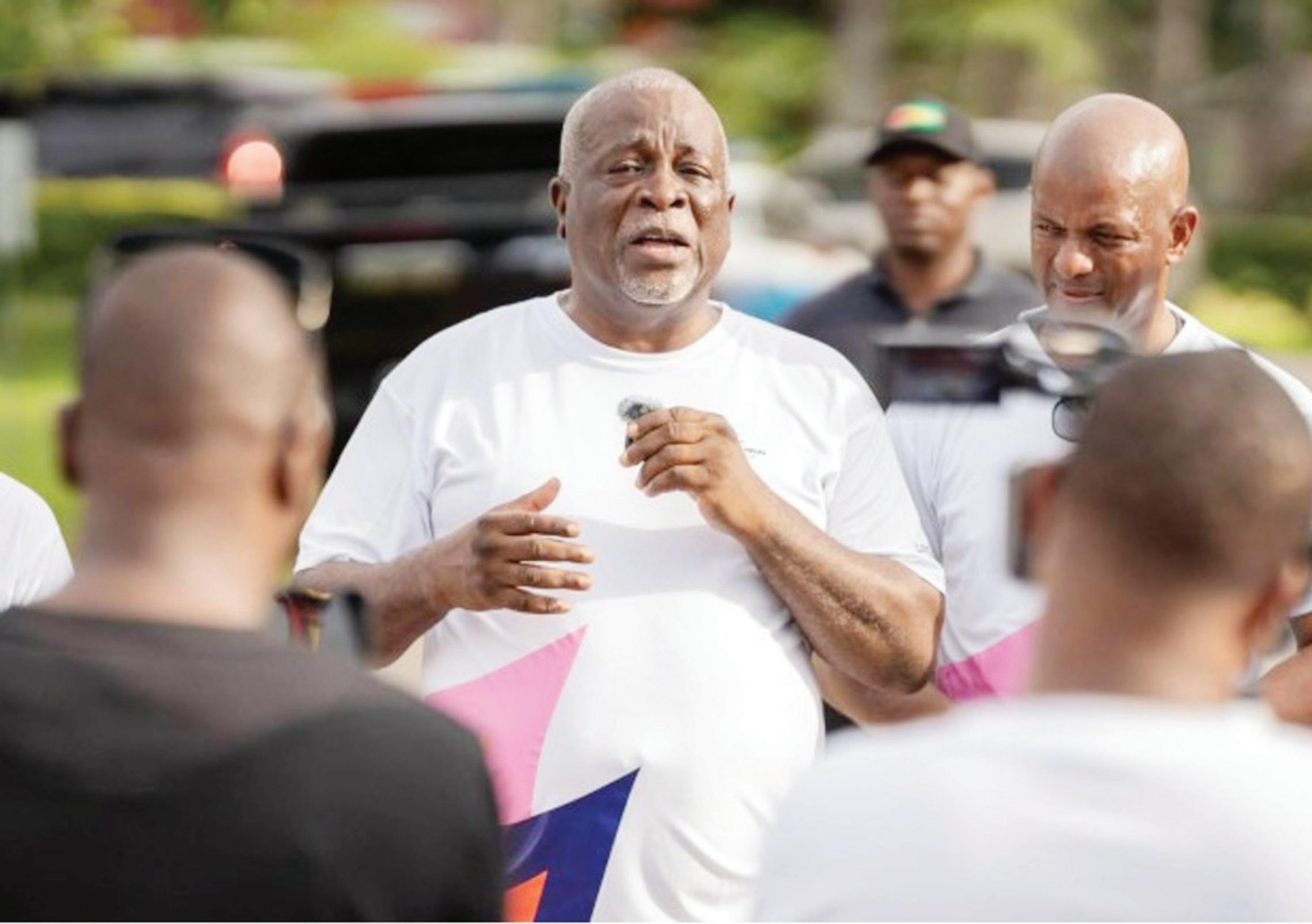





and small-business operators are gaining critical skills to strengthen their operations through business clinics hosted by the Guyana Tourism Authority (GTA) under the Ministry of Tourism, Industry and Commerce, as the government continues to invest in capacity building and private-sector growth.
The initiative forms part of ongoing efforts by the government to improve service-delivery standards, enhance professionalism and position local businesses to benefit from expanding tourism and economic opportunities.
Participants at a re-
cent business and etiquette training said the session provided valuable knowledge to help them refine their business practices and improve customer engagement.
Quancy Cummings of Family Guys Transportation highlighted the importance of the training for entrepreneurs and employers alike.
“The business-etiquette course is important for all potential employers and entrepreneurs, because it gives you the opportunity to learn more about yourself and how to develop your business,” Cummings said.
He explained that the training provided


practical tools for customer service and conflict resolution.
“It teaches you about
how to deal with the customers’ reception area, how to deal with issues, resolve them, and also how to better yourself to communicate effectively with your customers,” he added.
Cummings described the training as
both educational and inspirational, encouraging more young people to participate.
Tanya Reddock of The Balance said the programme strengthened her understanding of professionalism and effective communication.
“This experience has strengthened my understanding of professionalism, communication, and the importance of delivering excellent service,” Reddock stated.
She added that the knowledge gained will positively influence her personal and professional growth.
“I’ve gained valuable skills that I am confident will positively impact both my personal growth and future career,” she said, while expressing appreciation to the government and GTA for investing in individual development.
The business clinics are part of a broader push to empower small and medium-sized enterprises, improve tourism-related services, and create sustainable economic opportunities across Guyana. (DPI)

PRESIDENT Dr. Irfaan Ali has said that Region Nine’s healthcare system has undergone a dramatic transformation with medical evacuations dropping to under two per cent, and thousands of Brazilian patients now crossing into Guyana for care at the Lethem Hospital.
Speaking at a recent event, the Head of State pointed out how invest ment in health infra structure and specialist services is beginning to reverse long‑standing patterns of dependency on neighbouring coun tries.
“Just two years ago, thousands of patients had to leave Lethem to go to Brazil for treat ment, and 90 per cent of anything technical had to be taken back to Georgetown,” he said, adding:
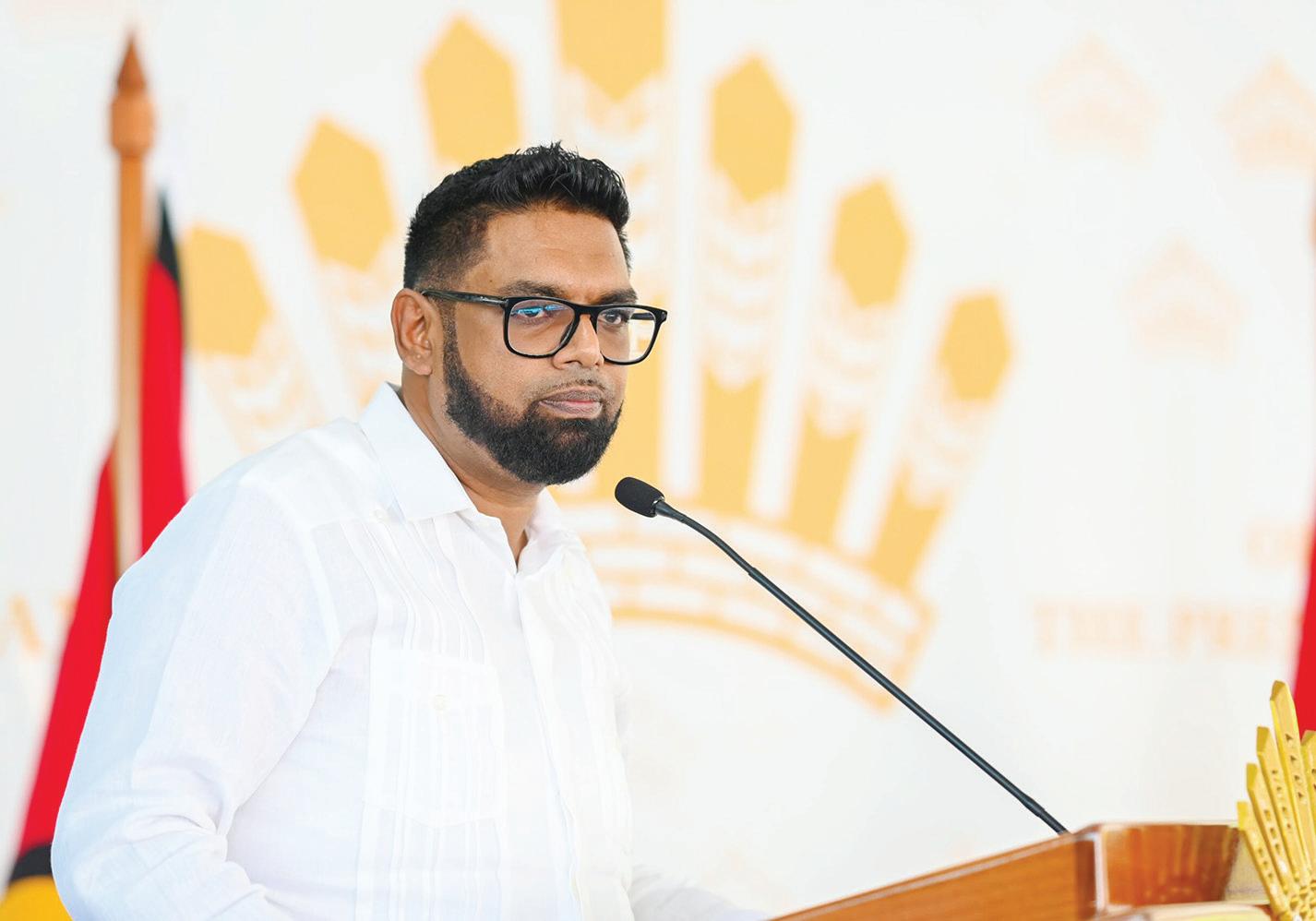
“Today, Medivac is less than 2 per cent, and now we have thousands of Brazilians coming to Lethem for treatment. This is a reality.”
For years, residents of Lethem and sur rounding communities in Region Nine (Upper Takutu Upper Essequ ibo) relied heavily on Brazilian hospitals and clinics for services that were either unavailable or difficult to access in Guyana. Complex or
“technical” cases were routinely transferred to Georgetown, often at considerable cost, and with significant delays.
President Ali said that that situation has changed dramatically as the government has expanded services and upgraded facilities in the town. He pointed to a sharp reduction in medical evacuations, and the emergence of Lethem as a net recip ient of patients from
across the border.
Last year, it was reported that region al health services had seen a marked increase in patient visits, with an annual total that has surged from approxi mately 20,000 to nearly 30,000 patients seen per year.
“This is a reality, and I say this because when we do not value what we are building, we are also not valu ing the people who are helping to build this: The doctors, the nurs es, the technicians, the labourers, everybody, because this is their sto ry; the success is their story,” he said.
President Ali noted that the shift in Lethem should not be viewed in isolation, but as part of a broader transfor mation of Guyana’s health system that in cludes new hospitals, advanced diagnostic
equipment, specialist training, and stronger partnerships with the private sector.
Cross‑border patient flows from Brazil to Lethem are an early sign of how improved facilities in historically remote areas could help underpin a new health economy on the fron tier, one that supports local jobs, strengthens ties with neighbour ing regions, and con tributes to Guyana’s growing reputation as a provider of specialist medical services.
“The government looks forward to work ing with responsible private healthcare pro viders who share a commitment to quality, affordability, ethics and national development, we look forward to the day when Guyana, through strong public private partnerships, will have the best medi
cal tourism programme in this region,” Presi dent Ali said, adding:
“Imagine patients travelling here for oph thalmology services, elective procedures, diagnostics, rehabili tation, dental services, fertility care, wellness, treatments and special ised surgeries.”
While the President acknowledged that much work remains to be done, he noted that targeted investment and consistent policy can deliver tangible results.
The Guyana Chron icle had previously re ported that some 455 Brazilians had major surgeries done at the Lethem Hospital, one of the region’s premier healthcare facilities. This had surpassed all historical data the region would have had in regard to surgeries done with some 1340 surgeries.
THE government’s Skills Connect initiative is creating new economic opportunities for skilled Guyanese by linking service providers directly with individuals and businesses seeking their expertise.
Speaking on the “Starting Point” Podcast on Sunday, Minister of the Public Service, Gov ernment Efficiency and Implementation, Zu lfikar Ally, said the plat form is already gaining traction, with more than 1,200 persons register
ing their skills across a range of trades.
The digital platform allows electricians, plumbers, mechanics, carpenters, painters, and other skilled profession als to advertise their services and connect directly with potential clients, reducing barri ers to employment and supporting entrepre neurship.

demand for their ser vices.
“You can go on this app, and you can put in, ‘I’m looking for an electrician,’ and you can see electricians that are around you.”
Minister Ally also re vealed plans to expand the platform by intro ducing draft contracts to protect both service providers and clients.
The Skills Con nect initiative comple ments the government’s broader strategy to cre ate jobs, boost small businesses and ensure that more Guyanese benefit from the coun try’s rapid economic growth.
The initiative is part of the government’s broader push to mod ernise service delivery and empower citizens through technology, while also strengthening the country’s growing economy.
Minister Ally ex plained that the platform
addresses a longstand ing challenge where by skilled individuals struggle to find work opportunities despite
These contracts will outline agreed prices and the scope of work, reduce disputes and promote professional ism.
It is expected that the platform will continue to expand as more skilled workers and employers register, further strengthening the country’s labour market and supporting sustainable development. (DPI)
IN the spirit of awareness, inclusion, and community, doctors from the Georgetown Public Hospital Corporation (GPHC), Dr. Alex Persaud and Dr. Jarrel Watson, both neurologists, joined forces with Sameir Uniquely Me Inc. for their annual autism awareness walk.
The event continues to bring together healthcare professionals, advocates, families, and supporters with a shared goal: Raising awareness and fostering understanding of autism in Guyana.
The collaboration between GPHC and Sameir Uniquely Me Inc. underscores a growing commitment to addressing conditions that are often misunderstood.

Neurologist Dr. Watson described autism as “an invisible disorder”, emphasising that it co-occurs with other conditions such as epilepsy, ADHD, depression, and anxiety. He further noted that although these conditions may not always be immediately visible, they are very real and deserve recognition, understanding, and support.

Autism is a developmental condition that affects how a person experiences and interacts with the world. It often involves differences in social communication
as well as patterns of behaviour or interests that may be repetitive or highly focused.
Importantly, autism presents differently in every individual, meaning no two experiences are the same.
Additionally, there is an established relationship between autism and epilepsy. A seizure, described as a sudden burst of electrical activi-

include staying with the person, keeping them safe, and gently turning them onto their side if necessary. These simple actions can make a significant difference in ensuring the person’s safety during an episode.
Reflecting on the turnout, Dr. Watson shared that this year’s event saw strong participation, with many individuals showing their support and helping amplify the awareness message across Guyana.
ty in the brain, can affect a person’s behaviour, movement, or awareness.
Epilepsy is a condition characterised by recurring seizures, and research shows that autistic individuals may have a higher likelihood of experiencing seizures compared to the general population.
However, it is important to note that autism does not cause epilepsy, nor is it tied to a specific type of seizure.
In addition to raising awareness, the event also included distributing materials to build practical knowledge, such as how to respond if someone is having a seizure.
Basic first-aid steps
More importantly, he reminded those in attendance of a powerful message: “Persons living with autism are seen, they are heard, and they deserve safe, inclusive spaces, not just in schools, but in workplaces and throughout society”.
As the event concluded, the message remained clear: Awareness must be matched with action. Supporting loved ones who are on the autism spectrum begins with understanding, patience, and acceptance.
For those seeking guidance or support, the Georgetown Public Hospital Corporation offers services through its Child Psychiatry Department, where individuals and families can access the help they need. (GPHC)

THE South Rupununi District Council (SRDC) recently engaged in a meaningful exchange with the Conselho Indígena de Roraima (CIR), bringing together leaders, visionaries, and community representatives committed to protecting indigenous lands, rights, and futures.
With the presence of SRDC chair, Toshao Nicholas Fredericks; ViceChair Toshao Timothy Williams; other Toshaos of communities closer to the border; and technical staff alongside CIR’s administrative leaders, climate representatives, women’s movement leader, lawyers and technical team, this meeting was a call to action in Lethem.

For over 55 years, CIR has stood on the frontlines, defending Indigenous territories, resisting exploitation, and empowering communities through legal strength, environmental protection, and visionary planning. Their journey from land demarcation struggles to pioneering community-led monitoring, firefighting systems, and reforestation initiatives, reminds us that when In-
digenous people lead, sustainability thrives.
“Today, we face shared challenges, climate change, deforestation, illegal mining, and border vulnerabilities, but we also share powerful solu-
tions. From drone technology detecting wildfires, to community-trained (and women-led) firefighting teams, to “Plan for Life” strategies shaping sustainable futures, this partnership signals hope, innovation, and strength,” the SRDC said.
The meeting aimed at cementing ties between SRDC and CIR to build bridges across borders, strengthening fire management systems and early-warning monitoring, expanding reforestation and protection of medicinal and native species, adressing illegal mining and cross-border threats through joint monitoring, elevating women in leadership and decision-making spaces, developing
shared mapping, territorial planning, and demarcation strategies, establishing systems to share real-time information and protect our people; partaking in discussions and trainings for leaders and representatives.
The collaboration is rooted in one truth: Our lands are our life, and our unity is our power.
“As we move forward, we do so with clarity, courage, and commitment, to protect what is ours, to empower our communities, and to ensure that future generations inherit not struggle, but strength. The work continues. The vision is clear. The future is indigenous-led,” the SRDC said.
THE war in the Middle East is likely to widen economic differences across Latin America and the Caribbean, giving some short-term support to oil exporters while worsening the outlook for tourism-reliant Caribbean economies and energy-importing countries in Central America, the IMF said on Friday.
The warning, issued in a blog post, follows the release earlier this week of the global lender's updated World Economic Outlook, which projected that the Latin America and Caribbean region would grow 2.3 per cent in 2026, little changed from 2.4 per cent in 2025, before picking up to 2.7 per cent in 2027. Brazil, the region's largest economy, is forecast to grow 1.9 per cent this year, while Mexico is expected to expand by 1.6 per cent.
The IMF said the region had started 2026 in relatively solid shape, with
inflation in many countries near target and growth holding close to trend. But it said the war had become a fresh external shock, driving swings in market sentiment, tighter financing conditions and sharp moves in commodity prices.
On Friday, the price of both Brent and WTI crude oil tumbled more than 10 per cent after Iran's foreign minister said passage for all commercial vessels through the key Strait of Hormuz was open during a ceasefire. Yet prices for both benchmarks are up roughly 45 per cent so far in 2026.
The IMF, which is holding its spring meetings in Washington this week, said the clearest winners, at least in the short run, are oil-producing countries. Argentina, Brazil, Colombia, Ecuador, Guyana, Trinidad and Tobago, and Venezuela are among those that have benefited from higher energy prices, which have
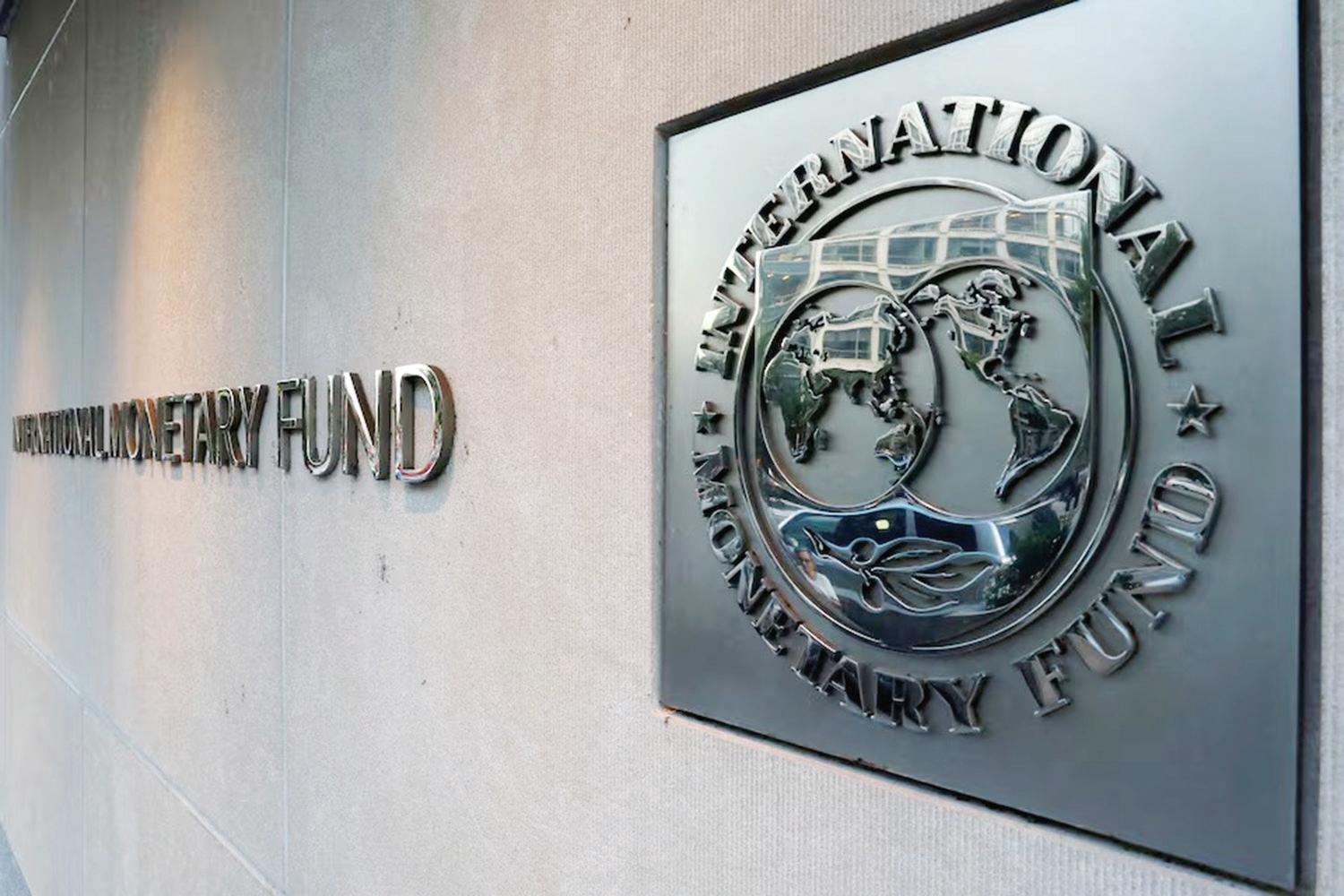
International Monetary Fund (IMF) logo is seen outside the headquarters building in Washington, U.S., September 4, 2018 ( REUTERS/Yuri Gripas/File Photo)
lifted export income, supported public finances and eased pressure on their external accounts. But the global lender also warned that even in those economies, households would still be hit with higher fuel and food prices.
The hardest-hit econ-
omies are likely to be Caribbean countries that depend heavily on tourism.
The IMF said those markets combine high debt with large energy import bills, leaving them especially exposed to another jump in oil prices. Central America also faces a broad
hit from costlier energy, although some countries may get partial relief from bigger use of renewable power.
The IMF's broader message was that the story in the region will not be one of growth alone. It said inflation will rise as
higher fuel, transport and food costs feed through to consumers, putting the biggest strain on lower-income households. Countries that rely heavily on foreign financing also could come under added pressure as investors turn more cautious.
Inflation in the region is expected to rise 6.6% this year from 6.5% in 2025, before decelerating to 4.2 per cent in 2027, the IMF said.
The IMF urged governments and central bank policymakers not to waste the credibility they built after the post-pandemic inflation surge. It said countries with firmer public finances and clearer policy frameworks would be in the best position to handle the shock, and warned against broad fuel or food subsidies, arguing that any support should be tightly aimed at vulnerable families and businesses. (Reuters)

THE opening of the $58.5 million agro-processing facility at Canal Number One Polder marks a significant moment for Guyana's agriculture, representing a clear shift from exporting raw products to producing value-added goods.
This initiative is not just about improving infrastructure; it reimagines how rural prosperity is built. It deserves full support from farmers, entrepreneurs, and policymakers.
For years, Guyanese farmers have faced the challenges of primary production while most profits went to
others along the value chain, often abroad.
Minister of Agriculture
Zulfikar Mustapha noted that "for too long we have been producing primary products and exporting primary products."
This highlights a problem that has held back rural incomes. By providing Canal Number One with mixers, blenders, stoves, stainless-steel containers, heavy-duty scales, and chillers, the government is giving farmers the tools they need.
The facility's 24-hour mechanised capacity aims
to lower operational costs and, importantly, reduce the post-harvest losses that have hurt small-farmers’ earnings in one of Region Three's most productive areas.
This rollout is notable for its focus on geographic inclusiveness. The Canal Number One project brings the national total to 15 agro-processing facilities across Regions One, Two, Three, Four, Five, Nine, and 10, reaching communities in the hinterland such as Whitewater, Orealla-Siparuta, and the Deep South Rupununi.
The principle emphasised by the minister — that coast-
THERE is a huge law in psychology that says people learn from experience. There is no way you are going to cuss down the station officer after you were nearly arrested the last time. No way, you are going to shout on the teller if the manager warns you that next time the bank is going to close your account. No way, you are going to insult the teacher if the school tells you about another act like that and your child will be expelled. These are the things that count in life. These are life’s experiences that lie at the foundation of life. People learn from them. If you cannot learn from these essential lessons of human existence, then you are going nowhere. Guyana has a school of opposition politicians whose mentality and temperament are inexplicable.
They never seem to learn from their mistakes and if
they do not, this country is going to have the Barbados syndrome where the electorate rejects the opposition party in its entirety, and it gets no seats during electoral competition. Prior to a very unprincipled thing Ganesh Mahipal did to me, for two persons whose politics are diametrically opposed to each other, we shared a very cordial and pleasant, relation. There are times I would proffer snippets of advice to Ganesh. I have known him for a long time.
Ganesh was the guest four times, including days before the 2025 elections on the Freddie Kissoon Show. The co-hosts have never laid down a line he cannot cross (save for libel and cussing down) while he was being interviewed. Then a few weeks ago, Leonard Craig and I called him on a remark he had made. I am discussing this Mahipal descent for the second time because after
what Amanza Walton-Desir told me, I believe its repetition is important for people who are supporters of the opposition to know. As I noted in my reply to Nigel Wetmaas, “repetitions reinforce the point.”
Mahipal advised two journalists who host a state programme on which guests are interviewed that their format must involve opposition politicians. He went on to add that all voices across the political spectrum must be given a platform. He suggested that the two journalists must follow the format of interview programmes such as “Sources,” “Context,” “Credible Sources.”
There is one despicable trait in what Mahipal said and another despicable trait in what he did not say. First, none of those programmes Mahipal cited are known for giving space to the PPP leaders and Ministers of Government. The atrocity in
al and hinterland farmers should have equal access to facilities — challenges the long-standing inequalities in rural Guyana.
Offering these services at no cost to small and medium-sized businesses also makes it easier for women-led cottage industries, young agripreneurs, and Indigenous producers to reach formal markets.
The broader policy framework, supported by ongoing assessments from the Guyana Marketing Corporation, suggests that agro-processing is being integrated into a clear diversification
strategy rather than introduced as a one-time effort.
In an economy where oil revenues get much attention, focusing on agriculture as "a major source of income" is a wise financial decision.
Value-added processing protects farmers from price swings, extends the shelf life of perishables, and opens doors to regional CARICOM markets where Guyanese sauces, juices, and preserves are in higher demand.
The success of the facility will depend on how well it is used. Farmers in Canal Number One and nearby areas should respond to the
minister's call to "take full advantage" of this public investment. Cooperatives, agri-business associations, and extension officers need to work together to provide training, branding support, and market connections that match processing capacity. With 15 facilities now operational and more assessments planned, Guyana is establishing a foundation for an agricultural revival, one that benefits farmers, strengthens communities, and enhances the nation's long-term resilience.

what he did not say lies in the fact that he deliberately shut out the Freddie Kissoon Show that divides its guests equally, not almost equally, but equally between pro-government personalities and anti-government opinion-makers. Ganesh appeared four times on the show.
Do you think Mahipal simply forgot to mention the only talk show that is sympathetic to the government but allows opposition equal time? The answer is no. Mahipal deliberately chose not to mention the Freddie Kissoon Show. This political dishonesty came long after the 2025 elections results. The point is people like Mahipal are sadly hopeless. They do not learn from life’s experiences.
Do you think people reading this will be easily fooled? But that is the psychological deception Mahipal, Vincent Alexander, David Hinds and so many of
them live with. They sprout the most pathetic deceptions and seriously think people do not see through them.
The result is the electoral devastation of 2025. WIN took seats and votes from the PNC and reduced the APNU+AFC hold of 31 seats to 12. WIN secured 16 seats and none of them according to the GECOM database showed they came from defeats in PPP constituencies. Could this have been prevented? Any analyst who has even a modicum of competence would know that the electorate rejected the PNC because voters felt they had no credibility. Would people believe Mahipal if he should tell them he forgot to mention the Freddie Kissoon Show?
Finally, Amanza-Walton Desir. She met me at the funeral of Rupert Roopnaraine and denounced what I wrote about her and advised me the next time I should consult
her before I write about her. But she is in hiding. Even a “mango pelter” has the feature of “missed calls.” I called her about 10 times. The number on her phone shows up as mine, and she doesn’t answer.
It is either the anti-government people are inexplicable folks or they are silly people. One thing is certain: if they keep behaving like that, Guyana is going to see an election in which the PPP will get 65 seats, and the opposition will fail to get even one. It happened twice in CARICOM; I guess some people never learn from life’s rich experiences.
DISCLAIMER: The views and opinions expressed in this column are solely those of the author and do not necessarily reflect the official policy or position of the Guyana National Newspapers Limited.
By Sasenarine Singh, Guyana’s Ambassador to the European Union
IN most Indian cities, a politician wakes up, launches a cleanliness "drive" with considerable fanfare, ostentatiously sweeps a street and delivers solemn remarks on civic duty, while the media captures the moment. By the next day, the initiative has concluded, and conditions revert to their prior state.
This is emphatically not the case in Indore, a city that has earned the title of India's cleanest city for eight consecutive years. Indore's success stems not from theatrical gestures but from the strategic, sustained work of its administrators.
The Indore Model: Private Sector Leadership and Profit-Driven Waste Management Systems Indore's transformation rests on several foundational pillars:
Private-sector involvement at the leadership level in a waste-management and recycling project that financially compensates citizens for recyclable materials— glass bottles, paper boxes, metal cans.
Automation of the entire value chain, with the private sector leading project execution.
A "for-profit" business model for waste management, backed by a competently managed state-administered enforcement arm that ensures the implementation framework is fit for purpose.
The fundamental lesson is clear: waste management will never succeed without guaranteed and predictable funding. The burden of financing must be borne, by and large, by polluters themselves.
TRANSLATING THE MODEL TO GUYANA: RIGHTS AND RESPONSIBILITIES
Just as every Guyanese citizen over 18 years of age has a right to the cash grant, with those rights come equal
responsibilities. Every single resident of Guyana has an obligation, to contribute, in part or in whole, to keeping the country clean.
A practical expression of this principle would include:
Free, lockable garbage bins at every street corner in Georgetown, fitted with a bottom-locking system that can only be released to authorised garbage collectors (to prevent theft of the bins).
Vending machines are located adjacent to most street bins and near supermarkets. These machines would accept drink cans, glass bottles, or juice boxes and generate a voucher redeemable for food at the nearby supermarket.
The core principle must be: incentive, incentive, incentive.
Above all, this citizen-facing incentive system must operate a parallel system that:
Consistently collects garbage from street receptacles to be transported to a centralised location where:
General garbage is processed.Drink cans and paper boxes are pressed together for export.
Glass bottles are either washed and reused by the local manufacturing sector, or exported in bulk for alternative uses.
Everyone in the value chain is paid—except those who generate the garbage.
ENFORCEMENT: THE MISSING LINK IN GUYANA
Operationalising regulations require not only laws but also systems to enforce the law. It is not sensible for litter enforcement to fall upon an already overworked Guyana Police Force.
The very authors of Guyana's Litter Enforcement Regulations—specifically Regulation No. 7 of 2013, The Environmental Protection Agency (Litter Enforcement) Regulations 2013—explicitly provided for the appointment of

Litter Prevention Wardens. These wardens are empowered to exercise duties conferred upon them by the Environmental Protection Act, 1996 (No. 11 of 1996) and all associated regulations.
Under the law, "public authorities" empowered to appoint such wardens include: Local authorities (NDCs, City and Town Councils), Guyana Water Incorporated (GWI), Transport & Harbours Department, the administration of any cemetery, any other authorities established by an Act of Parliament, the Environmental Protection Agency (EPA), Guyana Forestry Commission, Guyana Geology and Mines Commission (GGMC).
Yet, 11 years after the regulations came into force, the enforcement system
remains largely impotent, ineffective, and in many places non-existent. This is a baffling and can be classified as a manifest failure in the system.
In Indore, local authorities are equipped with mechanised road sweepers fitted with power vacuums. These machines sweep and wash streets periodically according to a set schedule. A high-quality unit meeting German engineering standards costs no more than US$140,000 (approximately G$29 million). In an economy that will spend G$1.5 trillion through the public expenditure system in 2026, the acquisition of several such machines is eminently feasible and would have an immediate, positive impact on the “National Cleanliness Project.”
Indore also demonstrates best practices in fleet management:
All garbage trucks are washed daily, projecting an image of cleanliness.
Trucks begin operations at 06:00hrs daily, following fixed schedules for designated areas, playing a jingle ("Indore Has Become Number One").
As the sound approaches, residents emerge from their homes to deposit their rubbish, supplementing street- receptacle collection.
GPS tracking enables supervisors to monitor each truck's movements through its designated ward or district, ensuring compliance and preventing corner-cutting.
Household waste is segregated into biodegradable, general, plastics, paper, metal, and other categories. Residents receive free colour-coded bins for each waste type.
To supplement these operational measures, Guyana can employ a system of positive incentives:
A national competition for the cleanest local authority, with the winning administration receiving a sizable prize from the Treasury, including personal bonuses for workers in that authority.
A cleanest-street competition, where every householder on the winning street earns prize money from the
Treasury.
School engagement: special prizes for all students and teachers at the school recognised as the cleanest, based on conditions both inside and outside the school compound.
The same approach applies to all places of worship.
While penalties must be doubled and tripled to address those who deliberately undermine the National Cleanliness Project, the core of the strategy remains:
Good waste-management systems (infrastructure, segregation, collection, processing).
Incentives for top performers (individuals, streets, schools, local authorities).
A consistent stock of automated and innovative machinery to ensure that technology drives the evolving agenda.
Guyana has the legal framework, the financial resources, and the institutional structures to replicate this success that is present in many cities of the world.
The choice is clear: continue with ineffective, fragmented enforcement or embrace a proven, profit driven, incentive based model that delivers lasting results.

THIS article puts into perspective the pervasive comparison made by opposition elements to equivocate the 2018 fraud charges brought against MP Irfaan Ali who was elected President in 2020, with the 2026 election of Azruddin Mohamed as leader of the opposition despite international sanctions in 2024 and US grand-jury indictment and active extradition proceedings in 2025. This article is presented in three parts.
To appreciate the predicament of the Mo-
hameds, we need to at least have a cursory appreciation for the US economic structure and justice system to understand the nature of sanctions and grand-jury indictments. The reports are all over the media and were confirmed by the US Ambassador. The OFAC sanctions came after multiple US law enforcement and security agencies conducted investigations over a number of years. The indictments came after prosecutors satisfied themselves that there are facts that exceed the minimum threshold to
secure a conviction. Despite this, the Mohameds and their surrogates have said that the sanctions and indictment of the father-son combo were instigated by the Government of Guyana.
This theory of a Government of Guyana orchestration and political persecution cannot be true, here is why. The Mohameds have said that they were so close to the PPP that during that 2020 elections fiasco the leaders relied on the family to be shuttled in luxury vehicles with armed security escorts. Azruddin Mohamed also


claimed that he funded the legal fees for the PPP to employ a bigshot Trinidadian lawyer to fight their election cases against the APNU+AFC’s “illegal occupation” of government. In March 2021, ‘Paper Shorts’ was killed on Main Street, Azruddin was alleged to have ties to that murder. The investigations are alleged to have collapsed at the desk of Major Crimes Unit head Mr Mitchell Caesar. At that time, the APNU+AFC’s mulish opposition machinery was in full swing, the younger Mohamed “was being protected by the installed PPP government,” they claimed.
Mohamed claimed he and the President exchanged DMs up to mid-January 2021 concerning his Lamborghini import. Then a circulated image of a multimillion-dollar cheque alleged to be part of regular contributions to the PPP as late as 2023. In fact, the elder Mohammed ran and won a seat for the PPP in the Eccles-Ramsburg NDC at the 2023 Local Government Elections. Also, in 2023 and early 2024, the government hailed the ingenuity of a consortium involving the Mohameds for building a shore base facility and Guyana’s first artificial island. Judging from available public records, it would seem that the Mohammeds and the PPP government were best of friends until sometime after the June 2024 sanctions took effect.
My own belief is that
the Mohameds expected their ‘friends’ in the PPP to ignore the implications of the sanctions and forge ways to keep them in the business and financial mainstream of Guyana. When the government followed international imperatives and opted not to offer any special treatment, the Mohameds responded in a fit of deranged anger. They thought there was sufficient family entitlement in the PPP to compel the government to defy the geopolitical implications, protect the family and make them unreachable to US law-enforcement efforts.
Based on widely reported Reuters publications, we know that the investigations against the Mohameds included drug trafficking; links to military and state actors in Venezuela; gold smuggling involving connections in the Middle East, bribery and money laundering. This would likely have some involvement of any or all of the following US security or law-enforcement agencies: DEA (drug trafficking); CIA (Middle East trade Links and Venezuela activities); FBI (breach of federal statutes); OFAC (money laundering and other financial crimes); NSA (determine possible threats to US security); DOJ (prosecutions and indictments).
A grand jury indictment is similar in nature to a preliminary inquiry in Guyana. Judicial officials listen to the scale of evidence in the state’s position, the quality of witnesses it intends to call and determine that,
if a full-scale trial were to be conducted, based on that information, there is a realistic chance of securing a conviction. Consistent with recent views expressed by US Ambassador Theriot, “this is our indictment … we firmly believe that they are guilty of the crimes they have been indicted for.”
The US certainly dedicated endless hours of investigation into the activities of the Mohameds spread over a number of years, and given the extent and intent of the investigations, it could not be cheap. It could not be a trifling matter in which external influencers (such as the Government of Guyana) (GoG) could penetrate. The mere suggestion that the GoG had a hand in directing or arranging the indictment against the Mohameds has to rise to the level of preposterous asininity, a complete absurdity. No doubt, despite their public posture of denials, the Mohameds understand the dynamics very well. Perhaps, the recently surfaced credible allegations that members of the Mohameds made clandestine late-night visits to the Cuban Ambassador is a play for asylum to a country that does not extradite international fugitive offenders to the US.
DISCLAIMER:
The views and opinions expressed in this column are solely those of the author and do not necessarily reflect the official policy or position of the Guyana National Newspapers Limited.
PRESIDENT Dr. Irfaan Ali has disclosed that the Government of Guyana has invested almost $3 billion in cardiac services at the Caribbean Heart Institute over the past five years.
Speaking at the opening of Optique Eye Hospital by Optique Care Vision, President Ali used cardiac care as a striking example of how sustained public spending is improving specialised health ser vices for Guyanese.
“I was looking at the numbers over the last five years, and in cardiac services alone, just at the Caribbean Heart Institute, we have supported Guyanese with an investment of almost $3 billion,” he said, adding:
“We don't go shout upon the mountain ev ery day, but these are the investments we're making.”
Investments like these, the President said, are a deliberate policy shift to build ca pacity within Guyana’s

borders, reducing the need for costly over seas treatment.
President Ali not ed that the country is positioning itself for world‑class care at home while building the foundations to be come a regional hub for medical services.
Central to the gov ernment’s strategy is the development of
what President Ali termed a “care econo my”; an integrated sys tem covering childcare, elderly care, home care and health services.
He noted that this goes beyond tradition al notions of public health, positioning care as both a social good and an engine of eco nomic value.
“The investments

that we are making is to align our health services with the care economy, because the care economy is not just a provision of health services. It’s an entire ecosystem that will allow us to provide services for economic value and financial re turns,” he said.
The government aims to create a contin uum of care that sup ports families at ev ery stage of life, while generating new forms of work, particularly for women and young people.
To support this, he
stated that Guyana now offers some of the most generous incentives for private health invest ment globally, placing the country among the “top five per cent” in terms of healthcare in vestment incentives.
President Ali stressed that the gov ernment does not see itself as competing with the private sector, but as a partner.
Guyana has wit nessed substantial in vestments in its health care sector, transform ing access and quality of services nationwide, most notable are the
construction of regional hospitals at Diamond, Enmore, Anna Regina, De Kinderen, Bath and Number 75.
Additionally, some 84 telemedicine hubs, partnered with Northwell Health and Mount Sinai, now provide real-time specialist care to remote areas, equipped with diagnostic tools. This has slashed diagnostic times at Georgetown Public Hospital from months to days, and boosted services like cataract surgery and cancer screening.

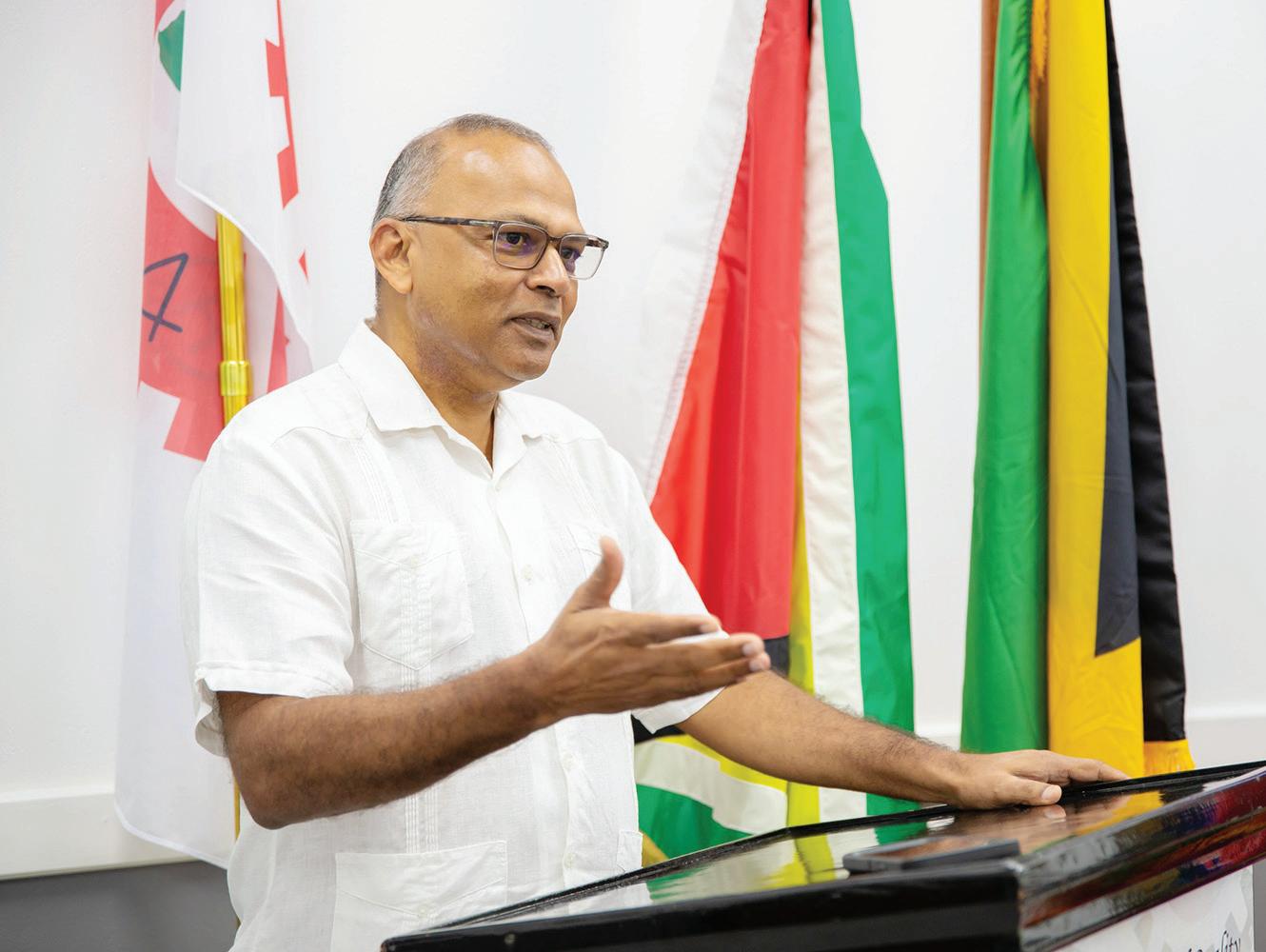
Dr. Frank Anthony recently underscored Guyana’s rapid advancements in healthcare delivery and innovation during a regional gathering hosted by the Caribbean Association of Medical Technologists (CASMET).
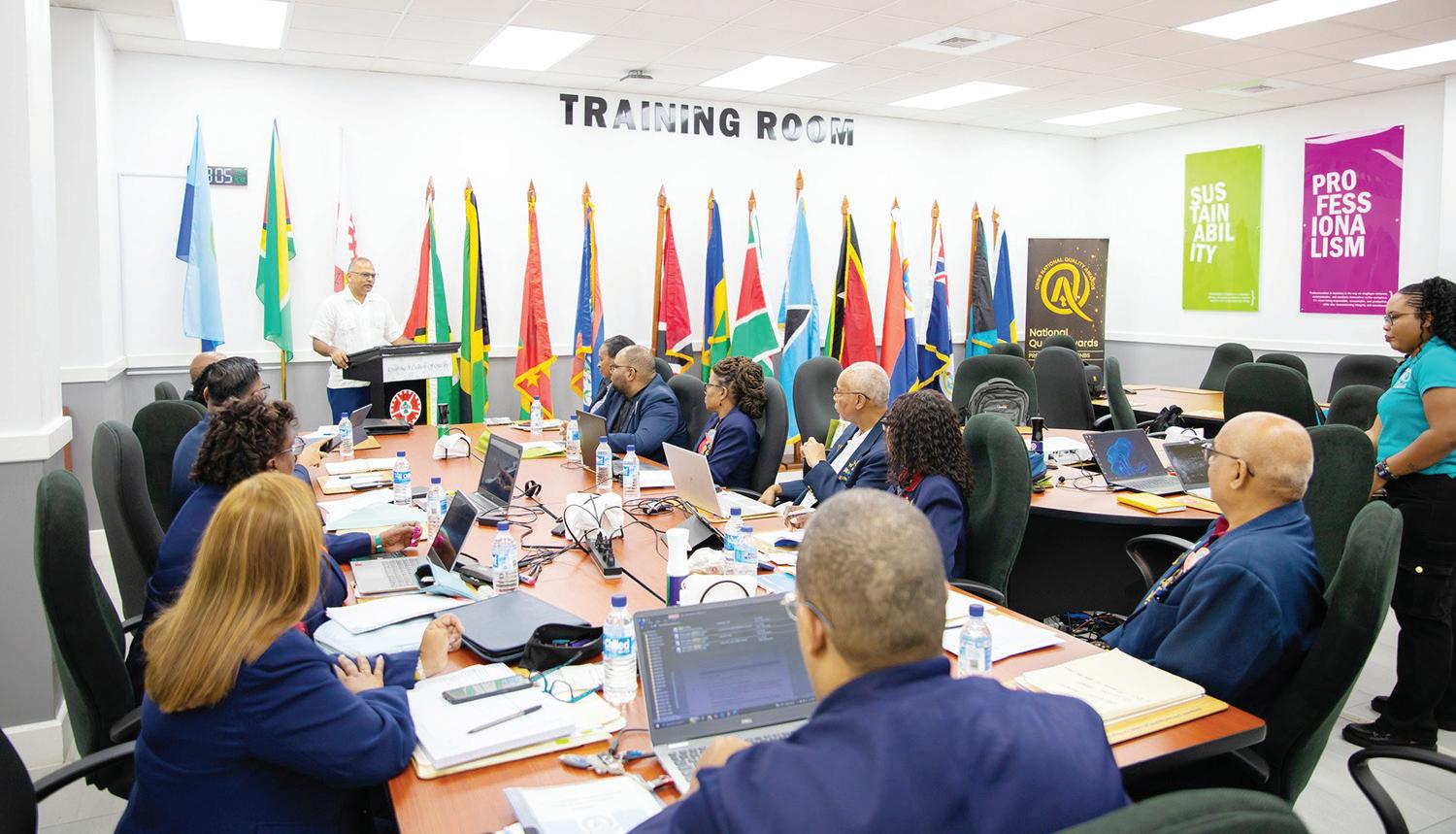

During his remarks, the minister welcomed regional delegates, and highlighted the country’s ongoing transformation within the health sector.
He noted significant investments in infrastructure, with over 450 public health facilities providing free healthcare services nationwide.
Dr. Anthony emphasised the integration of technology to expand access to care, including the implementation of telemedicine services across more than 150 hinterland lo-
cations, enabling real-time consultations and diagnostics.
He also outlined advancements in healthcare training through hybrid nursing programmes, with approximately 800 nurses expected to graduate in 2026.
Further developments include the expansion and modernisation of laboratory services, the rollout of digital health records, and the introduction of artificial intelligence systems to support medical imaging and diagnostics.
The minister reaffirmed the government’s commitment to strengthening healthcare systems through innovation, ensuring improved access, quality, and efficiency of services for all Guyanese.
The engagement also recognised CASMET’s long-standing contribution to advancing medical laboratory science across the Caribbean under its guiding principle, “We save lives by our skills”.

A CLIMATE-health lecture will this week mark the official launch of EarthMedic/EarthNurse (EM&EN) in Guyana, as the regional organisation deepens its push to highlight the growing link between climate change and public health.
According to a press release, the event scheduled for April 21 at the University of Guyana’s College of Medical Sciences, is expected to bring together health professionals, students, policymakers, and members of the public for discussions under the theme, “Climate Change is a Health Crisis: What it Means for Caribbean Families and What We Can Do”.
Organisers say the forum will focus on how shifting climate patterns are already affecting lives and livelihoods across the region.
The launch signals a broader effort to strengthen Guyana’s capacity to respond to climate-related health risks, drawing on EM&EN’s work across the Caribbean. The organisation has already trained more than 2,000 healthcare workers in climate and health, and has led the development of a regional action research agenda aimed at shaping policy and practical responses.
Through partnerships with institutions including the University of the West Indies and the Pan American Health Organisation, EM&EN has also supported knowledge-sharing initiatives and regional conferences focused on climate impacts and solutions. Similar collaboration is expected locally as the Guyana chapter takes shape.
The release noted that
the initiative will not only raise awareness but also support projects aimed at educating and empowering communities, advancing research and advocating for policies to better protect people and the environment.
Members of the public are being encouraged to attend and share their own experiences of how climate change is affecting their health and communities, as organisers seek to ground future action in lived realities.
EarthMedic/EarthNurse, a non-profit founded by public health specialist Dr. C. James Hospedales following his tenure at the Caribbean Public Health Agency, focuses on building a network of professionals and citizens committed to addressing the climate crisis through a public health lens.


MINISTER of the Public Service, Government Efficiency and Implementation, Zulfikar Ally, has noted that the Digital ID project is set to revolutionise service delivery and, in response to some concerns, further assured that no new personal data is being collected under the programme.
The minister made this known while speaking on the ‘Starting Point’ podcast, during which he acknowledged that scepticism surrounding the system has been fuelled by misinformation and rumours suggesting that the government intends to misuse citizens’ information.
“I asked myself why is it that people were sceptical of going and sign up for a digital ID card? So, I started to inquire… and

apparently there’s a rumour out there that the government wants your information and will use your information for nefarious purposes,” he explained.
As such, he said that those concerns cannot be ignored, noting that they
must be directly addressed to build public trust in the system rather than being dismissed.
According to the minister, the documents required for registration already exist within government databases, which in turn
means that the state is not collecting any new or unknown information from citizens.
“The first thing you need is your birth certificate… and guess who issues that birth certificate? The Government of Guyana. So, we have it already, you’re not going to give us anything that we don’t have,” he stated.
He further pointed out that identification documents such as passports and national ID cards, as well as proof of address and tax information, are already in government’s possession through various agencies.
“So, what is it then that the government is trying to get? Absolutely zero,” he explained.
Against this backdrop, Ally said the Digital ID
- says no new personal data being collected
is being introduced to improve the efficiency, transparency, and responsiveness of public services, allowing citizens to access government and private-sector services in a faster and more seamless manner.
Additionally, he outlined future possibilities under the system, including faster airport processing, where travellers could eventually pass through automated g ates using their Digital ID without repeated manual checks or long queues.
He also highlighted major benefits for the health sector, explaining that the system could allow medical records to be securely accessed at hospitals, reducing delays in emergency treatment and improving patient-care
outcomes.
“If you’re not well… you can swipe that card and the hospital can verify who you are and match your medical records immediately,” he said.
However, he stressed that privacy safeguards are built into the system, noting that different institutions will only have access to specific categories of information relevant to their services, with strict separation of sensitive data such as medical, banking, and travel records.
He went on to add that while the Digital ID will not immediately replace the national identification card, it represents a major step towards modernising public service delivery in the country.

and Minister of Legal Affairs
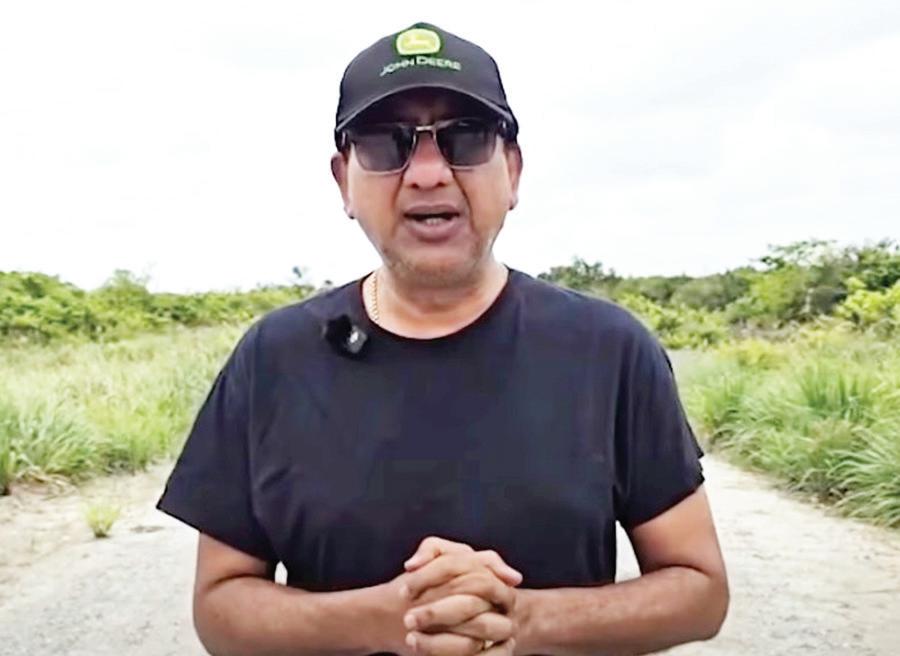
Anil Nandlall has noted that a multi-billion-dollar utility corridor stretching close to 200 miles is being developed across Guyana’s coastline to modernise the country’s electricity and telecommunications infrastructure.
The AG, during a video broadcast, disclosed that the project, which runs through backland areas from Wales on the West Bank of Demerara to Moleson Creek in Region Six (East Berbice-Corentyne), will serve as a dedicated route for high-voltage transmission lines and telecommunications
networks, marking a significant shift from the current roadside layout.
“This simple corridor at the back of what is currently nowhere is a multi-billion-dollar capital investment,” Nandlall said.
He explained that the corridor will accommodate transmission lines from the Guyana Power and Light (GPL), along with cables from the Guyana Telephone and Telegraph Company (GT&T) and other service providers, which consolidate key infrastructure into a single, purpose-built network.
“All the power lines and the utility lines that you’re seeing on the public roads of Guy -
ana, at least on the East Coast Highway, will be removed from the current abode and will come here,” he said.
According to Nandlall, the corridor cuts through multiple regions, crossing the Demerara River at Garden of Eden, extending east

The route will then continue further east, crossing the Berbice River and extending to 53 Village, subsequently moving further along to Moleson Creek, effectively linking major sections of the country through a unified utility pathway.
bring down your light bill to half what it is now,” he said.
along the backlands, turning north along the East Bank, and continuing along the East Coast into Mahaicony.
“This is a road that is nearly 200 miles long from one end of it when it concludes this corridor,” he said.
Against this backdrop, he noted that the project is a critical component of the country’s broader energy transformation agenda, laying the groundwork for expanded generation and improved distribution.
“We have new transmission lines… and we have a gas-to-energy project that will generate electricity that will
Despite its scale, the minister acknowledged that much of the work remains largely unseen by the public due to its location in remote backlands, including areas that were once used for sugar cultivation.
“That is the type of development that you are not seeing, but that is taking place,” he added.
He stressed that greater effort is needed to highlight such transformative initiatives, noting that many Guyanese are unaware of the scale of some ongoing infrastructure works.

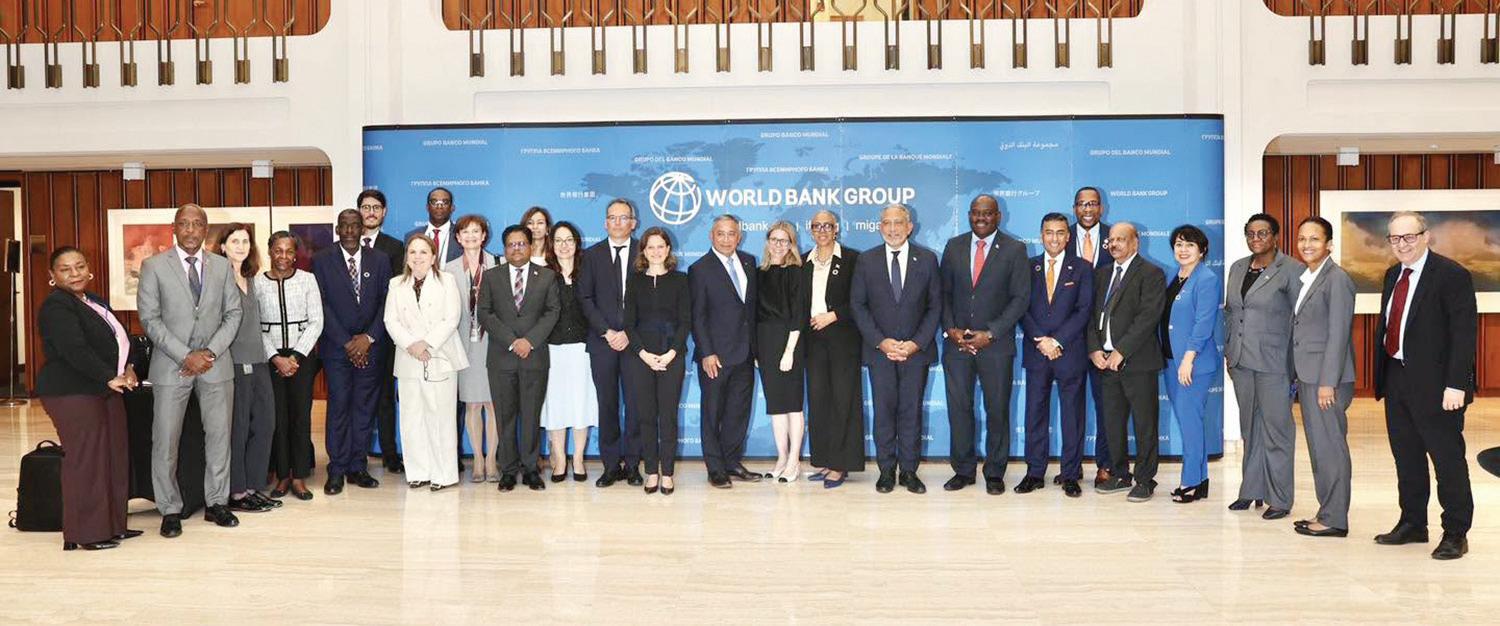
SENIOR Minister in the Office of the President with responsibility for Finance, Dr Ashni Singh, has called for expanded collaboration with the World Bank Group to deploy digital solutions aimed at improving educational outcomes across Guyana and the wider Caribbean.
According to a statement, Dr Singh speaking during a Caribbean Governors’ Meeting with the bank’s Managing Director for Operations, Anna Bjerde, at the 2026 Spring Meetings of the International Monetary Fund and
World Bank in Washington DC, underscored the importance of investing in human capital to match Guyana’s rapid economic transformation.
He highlighted opportunities for closer co-operation in the education sector, particularly through the use of digital tools to target gaps in access and quality, where improvements are most urgently needed. The minister said such collaboration would be key to ensuring a workforce equipped with the skills required in a fast-growing economy.
While acknowledg -
ing the World Bank’s long-standing support to the Region, Dr Singh pointed to the Caribbean’s unique vulnerabilities, including the impacts of climate change and the structural limitations faced by small economies.
He stressed that these challenges can only be addressed through sustained investment in infrastructure and policy reforms to unlock greater trade opportunities.
Dr Singh also lobbied the bank to scale up its support for private-sector development, particularly through financial instru -

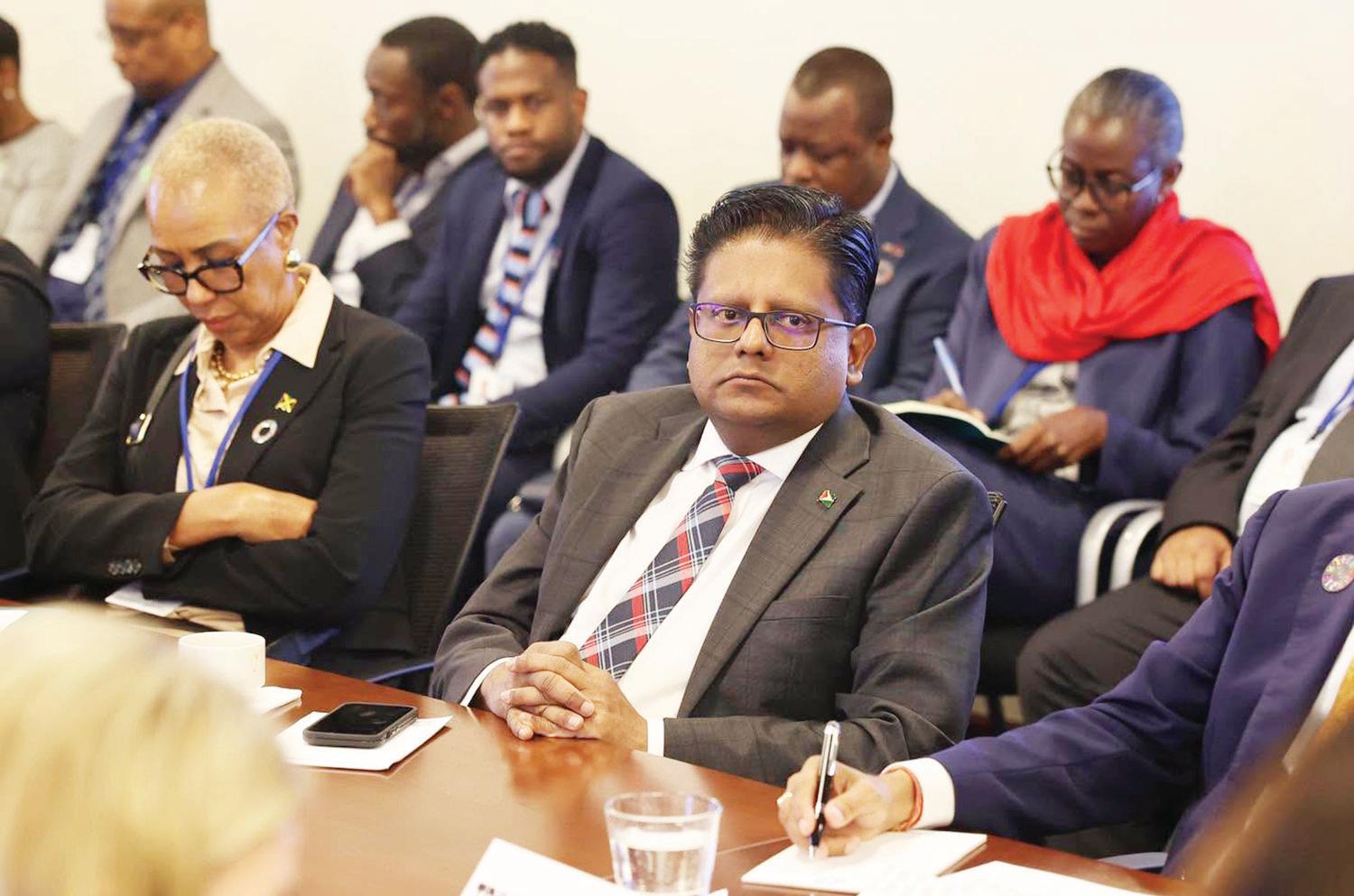
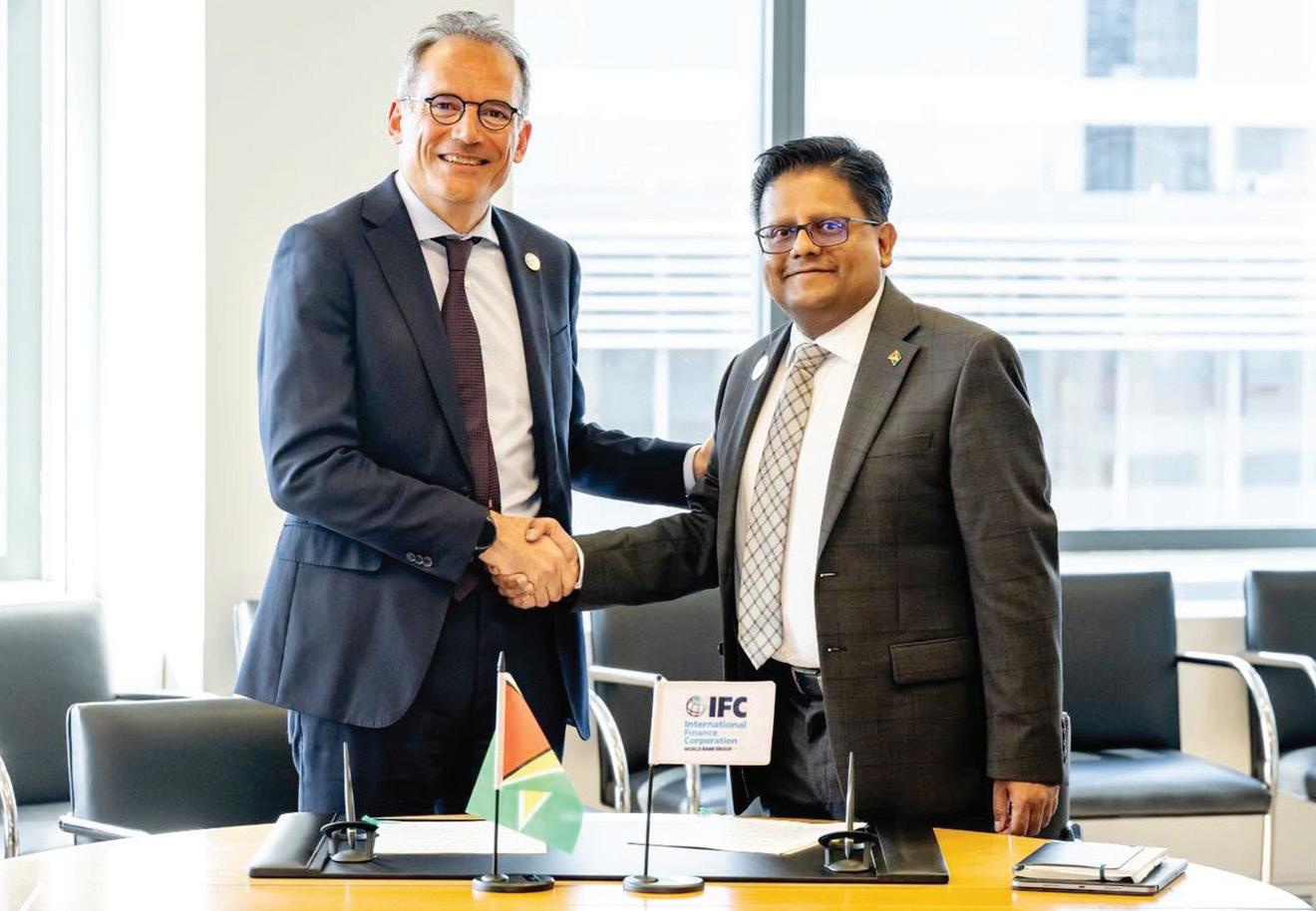
Dr Singh signed the World Bank Group Establishment Agreement with the International Finance Corporation, on behalf of the Government of Guyana. The agreement was signed alongside IFC Vice President for Latin America and the Caribbean, Alfonso Garcia Mora (Photo: Dr. Ashni Singh/Facebook)
ments that can mobilise investment in Guyana’s expanding economy. He called for a renewed sense
of urgency in advancing these initiatives.
On the sidelines of the meetings, Dr Singh signed
the World Bank Group Establishment Agreement with the International Finance Corporation, on behalf of the Government of Guyana. The agreement was signed alongside IFC Vice President for Latin America and the Caribbean, Alfonso Garcia Mora.
The agreement is expected to deepen the World Bank Group’s engagement with Guyana’s private sector, strengthening its capacity to support more resilient and inclusive economic growth.
In his remarks, Dr Singh welcomed the IFC’s ongoing support, but emphasised the need for more tangible results, particularly as Guyana undergoes a period of rapid economic expansion.

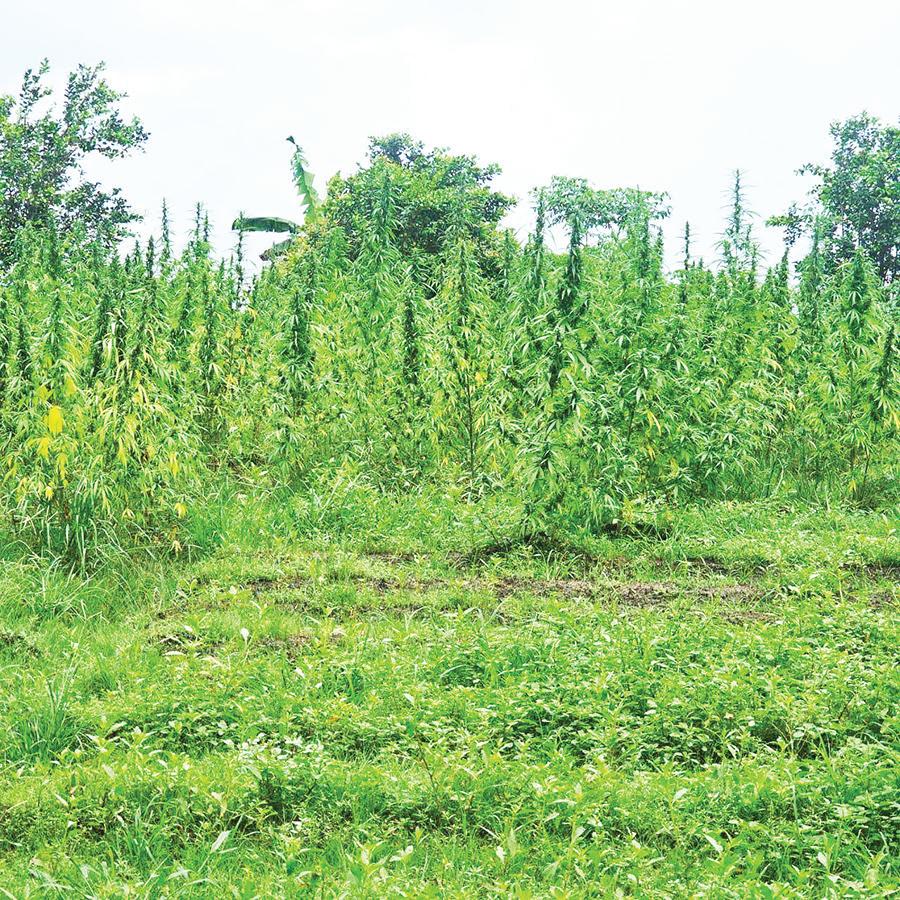
POLICE ranks led by a gazetted officer conducted a joint eradication exercise at Kimbia, Upper Berbice River, between 05:15hrs and 19:55hrs on Friday, April 17, 2026, during which two fields with a combined area of approximately seven acres were found with approximately 310,000 cannabis plants.
According to the police, the plants ranged between two and six feet in height. Two (2) makeshift camps and two (2) drying ar-
eas were also found at the location, where approximately 380 pounds (three hundred and eighty) pounds of dried cannabis was discovered.
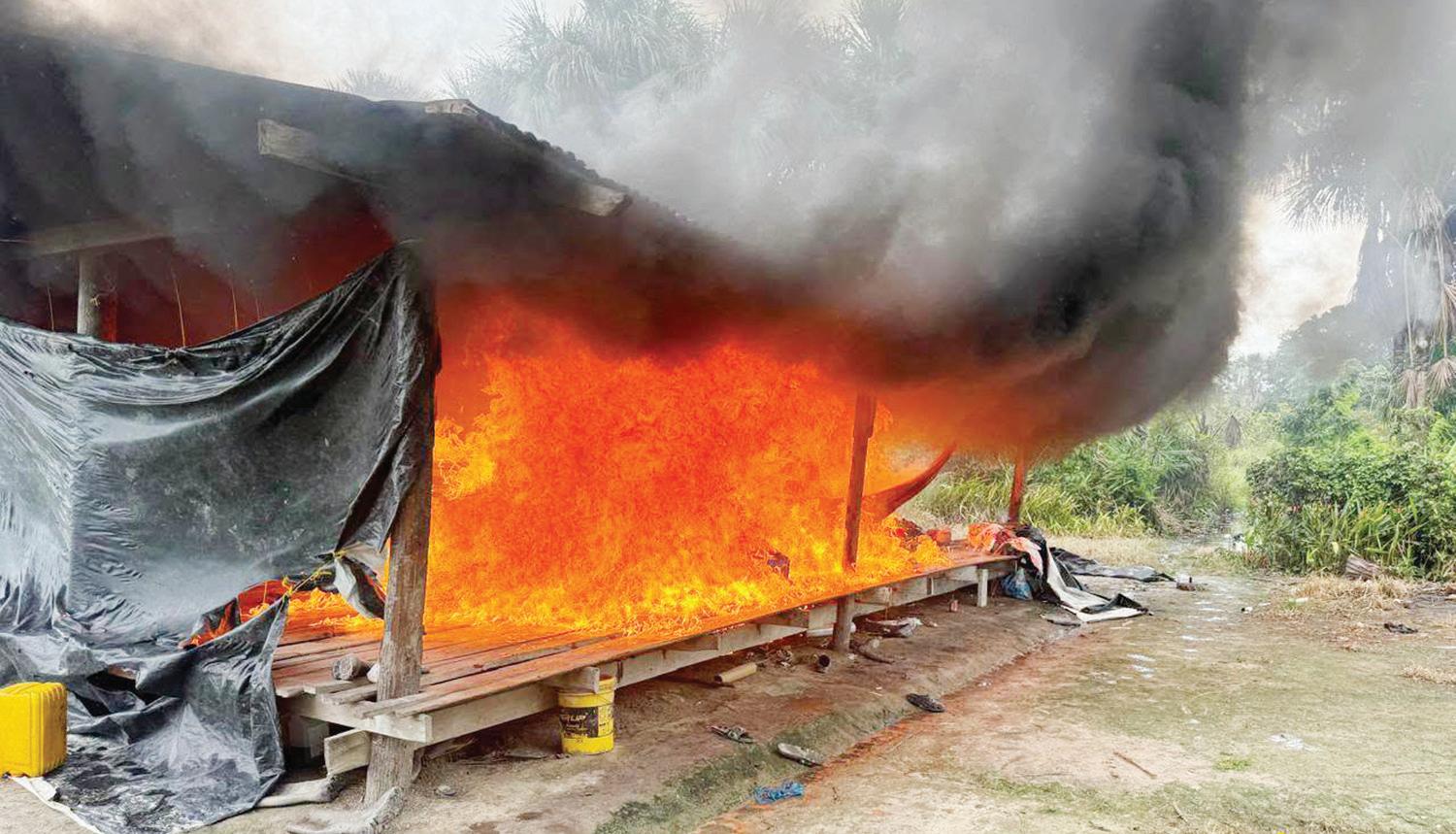
The cannabis plants, dried cannabis, camps and drying areas were destroyed by fire. No arrests were made and the operation was conducted without incident.
The estimated value of the narcotics destroyed is two hundred and fifty-eight million, seven hundred and twenty-nine thousand,

three hundred and ten dollars ($258,729,310) Guyana currency, the police said.
Investigations continue.


RESIDENTS and businesses in Region 10 are set to benefit from more reliable and stable electricity as the government advances efforts to strengthen energy infrastructure in the mining town of Linden.
The Guyana Power and Light (GPL) and the Linden Electricity Company Incorporated (LECI) have inked a Memorandum of Understanding (MoU) that will see the injection of 15 megawatts of clean energy into the Linden power grid.
The initiative forms part of the government’s broader strategy to modernise energy systems, improve reliability, and support economic expansion in hinterland and mining communities.
The additional power is expected to significantly improve electricity stability for thousands of residents, covering more than 14,000 households across the Mackenzie and Wismar Shores, including commercial districts and key public services.
FROM PAGE 16
The investment also supports the government’s aggressive housing drive in Region 10. With improved power capacity, new housing developments will be more sustainable and attractive for residents and investors alike.
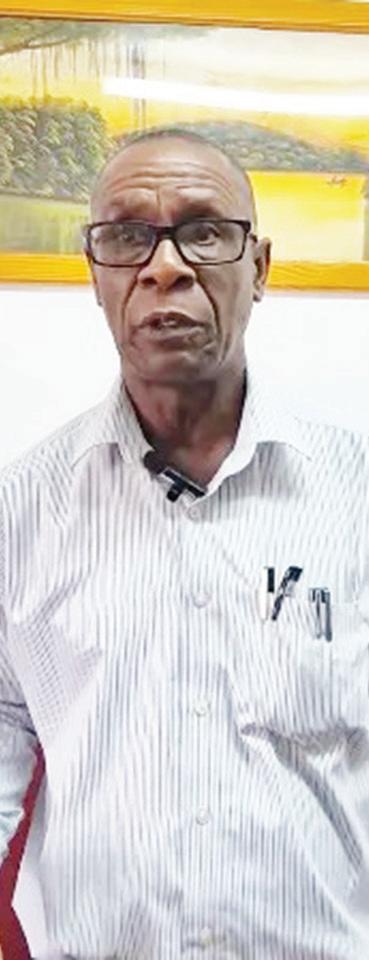
LECI’s General Manager, Avery Trim, underscored the government’s plans to develop the Wismar Land area, located in Amelia’s Ward.
“The government proposes a housing drive in the Bounceland area…this will see another 1200 receiving lands,” he said. “Currently, they are running all the line hardware to facilitate that process.”
The improved energy supply is critical
to supporting this expansion and ensuring new homeowners have access to reliable electricity.
Currently, the Linden power system relies heavily on existing generation facilities, which have faced capacity constraints due to growing demand.
The new clean-energy injection will reduce pressure on the current infrastructure, while improving efficiency and reliability.
The project represents a major step forward in the government’s continued investment in infrastructural development, housing expansion, and improved quality of life for residents in Linden and surrounding communities. (DPI)






KOLKATA Knight Riders (KKR) registered their first win of IPL 2026 with their spinners bossing on a tailormade surface and their lower middle order bailing out their misfiring top order. Rajasthan Royals (RR) played the slow surface smartly, got to 81 for 0 with the bat and then bossed the defence for 15 overs even though they had floundered to score just 155, but all it takes is one bad over for these defences to fall apart.
Dropped on 8, Rinku Singh, struggling for runs

so far, began the turnaround with a slog-swept six off Ravi Bishnoi at the start of the 16th over and ended it with a six that brought up his fifty and the win with two balls to spare. However, it was Anukul Roy, who didn't get to bowl because of a left-hand heavy RR batting, who took down the difficult deliveries in his 29 off 16 after the ask had reached 67 off 33, the only time it crossed two a ball.
KKR had to fight back from ordinary starts with both bat and ball. Varun
Chakravarthy and Sunil Narine reined RR back in with eight overs for 40 runs and five wickets, and a three-wicket 19th over from Kartik Tyagi denied RR a finishing kick.
Jofra Archer, though, set the tone of the defence with a first-ball wicket for the third match in a row before the spinners squeezed the life out of the KKR batting, but luck gave Rinku and KKR a second chance, which they grabbed.
Vaibhav Sooryavasnhi, Yashasvi Jaiswal play the conditions

ENGLISH RACING TIPS
KELSO
09:00 hrs Smoke Trail
09:30 hrs Jehol De Thaix
10:00 hrs Looking Splendid
10:30 hrs Wolfburgh
11:00 hrs Gonnino
11:30 hrs Ms Cindy Kate
12:00 hrs Boley Bob 12:35 hrs Dilrisk
LINGFIELD
09:21 hrs Chico Dulce
09:51 hrs Dyrholaey
10:21 hrs Twilight Moon
10:51 hrs Goldrn Brown
11:25 hrs Archer's Grace
11:55 hrs Magna
12:25 hrs Victor's Spirit
NEWCASTLE
12:30 hrs Asadjumeirah
13:00 hrs Analógical
13:30 hrs Bintaziza
14:00 hrs Gouken
14:30 hrs O Fortuna
15:00 hrs Lord Capulet 15:30 hrs Starshot
IRISH RACING TIPS TRAMORE
11:10 hrs Expound 11:42 hrs Crooked Path
12:12 hrs The Monkey Pole
12:42 hrs Prince Of Air
13:12 hrs Lakewood Rose
13:42 hrs Drop A Threat 14:12 hrs Likable Chancer
14:42 hrs I Walked The Line
AMERICAN RACING TIPS THISTLEDOWN
Race 1 Midnight Driven
Race 2 Hello Evelyn
Race 3 Lo Bug
Race 4 Holiday Coal
Race 5 One Smokin' Rita
Race 6 Nava's Gold
Racd 7 Cat's Cradle
Race 8 The Pink Z
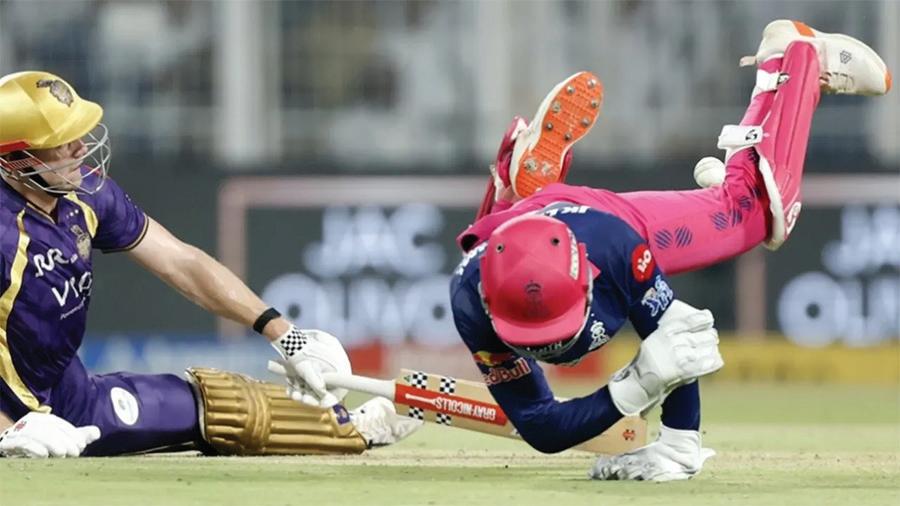
This has to be the slowest Vaibhav Sooryavanshi and Yashasvi Jaiswal have played together. There was early recognition there that this pitch was not going to be easy for new batters. So they gave themselves some time and looked to prefer quantity of runs to the pace.
However, it didn't stop Sooryavanshi from hitting Narine for a second-ball six after he introduced himself to Jasprit Bumrah with a first-ball six. It was only a 22-run final powerplay over from Cameron
Green that turned 41 into 63. Varun, Narine check in Sooryavanshi has a habit of making a big statement early against big bowlers as seen in the cases of Bumrah and Narine. He looked to do the same with Varun second ball he faced, took the big leg side on, and holed out to deep midwicket. Had he connected with this wrong'un, he would have brought up his slowest IPL fifty. Let it sink in that said fifty would have taken just 28 balls.
KKR now burst
through this small opening. Dhruv Jurel was stumped on the reverse sweep off Varun, Narine slowed the ball down to have Jaiswal caught at extra cover for 39 off 29. Riyan Parag looked to slog Varun and was bowled. In his last over, Narine brought out the carrom ball to first go past Donovan Ferreira and then create a return catch on the last ball of his assignment. The 10 middle overs had produced 5 for 61.

By Sean Devers
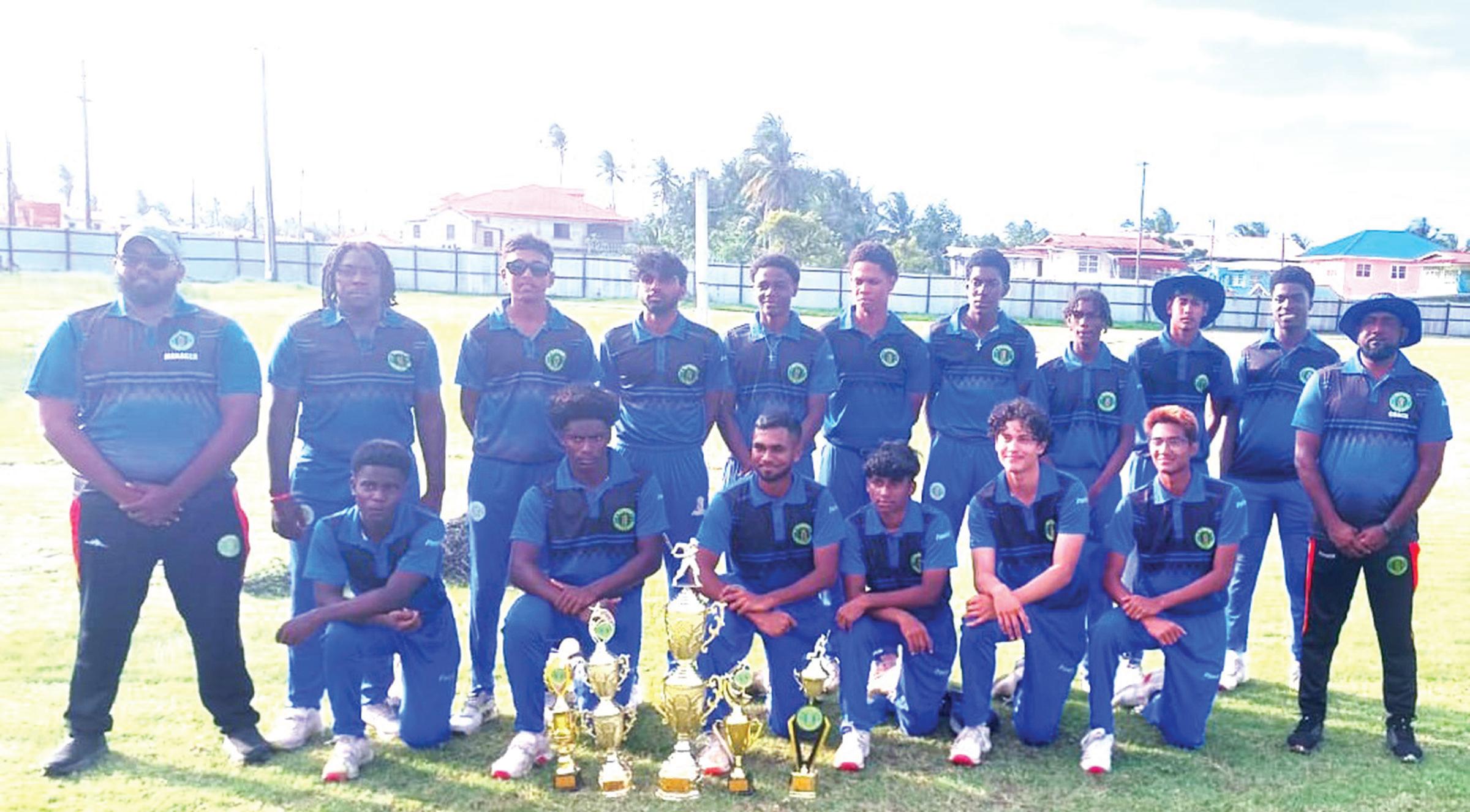
A MAN-of-the-Match performance from West Demerara’s Parmeshwar Ram and a four-wicket haul from leg-spinner Darshan Persaud powered Demerara to an emphatic eight-wicket victory over defending champions, Berbice, in their own backyard at the Canje Community Centre Ground in Berbice yesterday in the Final of the GCB U-19 Inter-County 50-over cricket tournament.
Ram blasted a pugnacious 50 from 58 balls, with three fours and three sixes after taking 2-11 in support of Persaud, who finished with 4-24.
Berbice opted to bat in overcast conditions on a track with a bit of preparation moisture, and had a horrendous start when fast bowler Shane Prince uprooted the stumps of Berbice’s leading run-scorer, Ramzan Koobir (0) in the first over.
Nathaniel Ramsammy and Vishal Williams staged ‘Operation Rebuild’ on the heavy outfield, which had areas of sand towards the boundary due to the recent showers in Region Five.
The pair added 39 for the second wicket against the controlled seam bowling from batting all-rounder Ram before left arm pacer Arif Khan induced Ramsammy, who lost his patience, to top-edge an irresponsible swing for Wicket-Keeper Shamar Apple to take a running catch as the ball ballooned mid-pitch.
Ramsammy’s demise for 13 brought Adrian Hetmyer to the crease, but the nephew of West Indies

batter Shimron Hetmyer looked scratchy and seemed uncomfortable against the off-spin of Skipper Dave Mohammed.
Ram bowled Vishal Williams with one that came back after he had made 20 from 33 balls with a couple of boundaries to leave the score on 41-3.
Ram struck again when he bowled Romario Ramdeholl (8) as the home side slipped to 57-4
Although Hetymer’s batting has regressed, he showed fight in his 73ball 39 with just one four and one six, and added 33 for the fifth wicket with Thierry Henry, who made a carefully constructed 16 from 42 balls with just a
solitary boundary.
Blue patches appeared in the sky, and the weather improved as the match progressed in high wind, which Romario Shepherd’s son took advantage of to fly his kite beyond the boundary.
With the lone kite sailing above the Rosehall, Canje ward and a sizable partisan crowd watching, Hetmyer broke the shackles by lofting leg-spinner Reyad Latif for six before cover-driving him for an imperious four.
The crowd, which included BCB President Dr. Cecil Beharry; former BCB President Hilbert Foster; and Mayor of Georgetown, displayed contrasting emotions when Hetmyer swept Latif for another boundary.
Leggy Dhanesh Persaud flighted the ball nicely, soon removed Hetmyer, caught and bowled, as the right-hander, a promising child prodigy, tapped the ball tamely back to Persaud to leave the score on 96-5 in the 31st over.
Persaud, who had 5-18 in the first round, had Henry caught in deep when he was beaten in the flight just after the 100 was posted in the 33rd over.
Richard Ramdeholl, who was last out for 23, caught and bowled by Arun Gainda, watched from the non-striker’s end as Persaud sliced through the lower order as the five wickets tumbled for 38 runs.
reply with positive batting as Ram hammered pacer Arif Khan for back-toback boundaries before Kishan Silas swivelled and pulled Hetmyer gloriously for four.
The openers seemed to be batting on a different pitch to the one the host batted on.
Ram deposited Rafael McKenzie for six to post the 50 in 9.2 overs and celebrated with another six off the next ball.
Ram reached the third 50 in the tournament from 56 balls with three fours and three sixes before he was caught and bowled by Baksh two balls later at 86-1 in 20.2 overs.
Demerara began their
and Ram as batters with fifties, when he was run out at 126-2.
Emmanuel Lewis scored an unbeaten 27 from 48 balls with two fours and a six off Richard Ramdeholl to put an exclamation mark on the match. With him at the end was Jonathan Mentore on Zero.
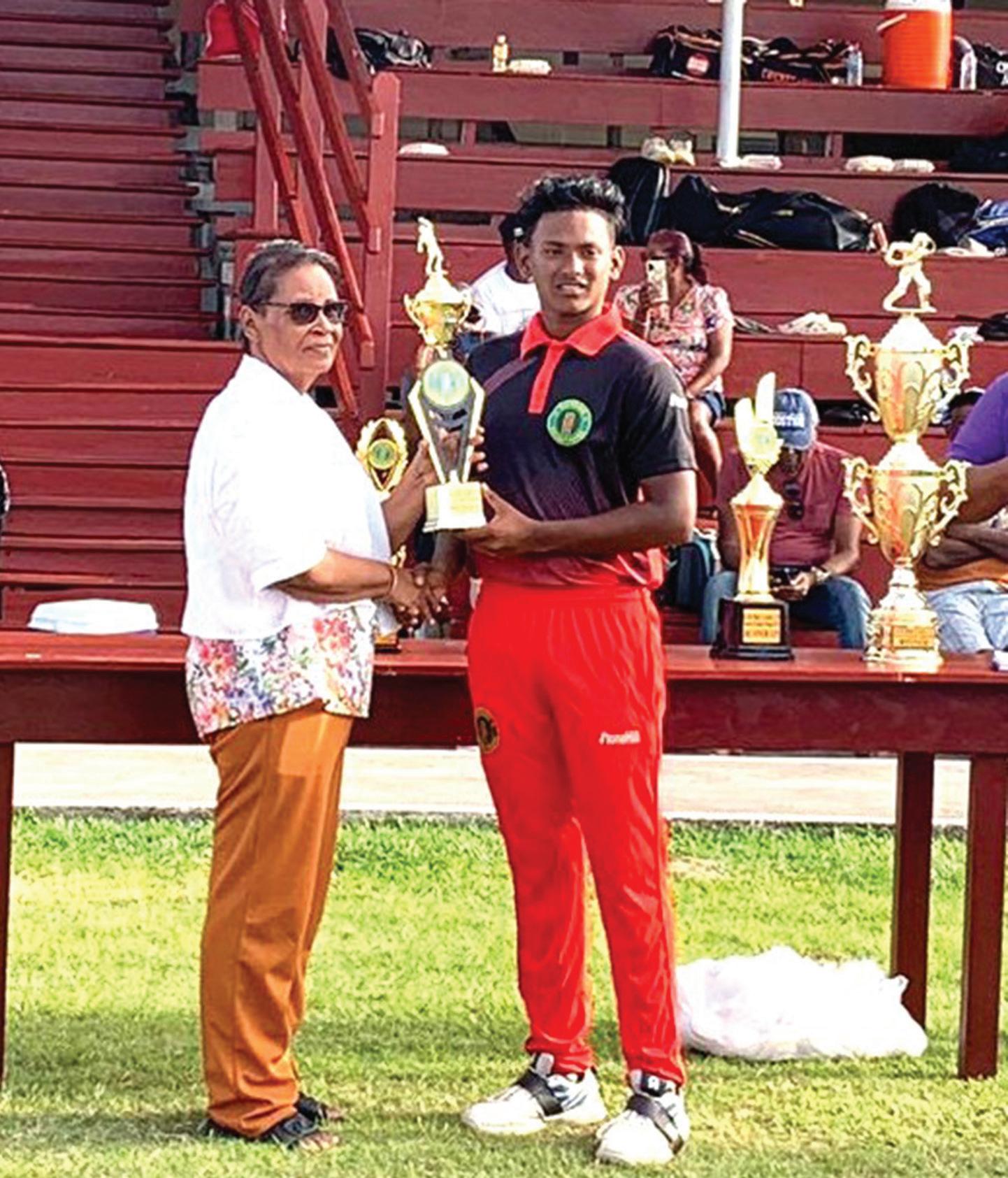
Ram received trophies for being the Man-of-theMatch and the batter with the most runs (167), while the trophy for most wickets went to Berbice leftarm spinner Gilbert Griffith, who took 10 wickets from two matches.
Demerara Skipper Shamar Apple and Berbice Keeper Thierry Henry shared the award for most dismissals (6) each. GCB U-19 Inter-County 50-over
Silas, who hit a four and two sixes, fell two runs short of joining Jaden Dowlin, Koobir
CHASE’S Academy is one step closer to' a successful defense of their Massy Distribution U-18 Schools Football Championship title.
They put on a phenomenal performance against Linden's Three Miles Secondary to open the quarter-final action on Sunday at the Queen’s College ground with an emphatic win.
Chase’s booked their place in the semi-finals after an 11-2 victory over the side from the mining town.
Mark Glasgow, who steered them to their round of 16 victory, was again awesome in front of the uprights with a hat trick this time.
Glasgow had assistance from Shaquan David, who also recorded a hat trick.


On Saturday Santa Rosa Secondary had to dig deep against a good-looking Yarrowkabra Secondary; however, as the game progressed, Santa Rosa's experience shone through as Yarrowkabra struggled to show resolve before eventually losing 3-2. West Ruimveldt stepped up their game to end the quarter-final round with a 5-1 win over St. Joseph High.
Nyron Barrow was not left out, as he played superbly to register a double, while Germaine Garrett, Micah Boodie and Jaden Christian scored the other goals.
urday in the round of 16, inflicting a 9-nil drubbing of Patentia Secondary.
The champs also strolled to victory on Sat-
Shaquan David starred in the absence of some of Chase's firepower with a hat-trick.
Charlestown will also
move on after 3-1 penalty kicks propelled them past New Amsterdam Secondary after their game ended 2-2 in regulation time.
Santa Rosa also kept a hot streak when they came up against Annandale Sec-
ondary in the quarter-final clash, winning 3-1 to advance.
Shane James led the attack with a pair of strikes, with Darren Williams chipping in with another goal for the victory.
Donovan's welcome showed his worth with a double with Lyndon Grey, Dellon Philadelphia and Domonic Lesprance getting in on one of their best outings in the competition to reach the penultimate round of the Massy U18 competition.
AFTER cruising through two 200-plus chases and easing past 196 without fuss, Punjab Kings faced a different challenge on Sunday against Lucknow Super Giants, of setting a target for the first time this season. And on a fresh New Chandigarh surface, they responded in style.
Priyansh Arya and Cooper Connolly powered PBKS to 254, the highest total of IPL 2026 - they upstaged Royal Challengers Bengaluru's 249 against Chennai Super Kings. LSG never got close, and PBKS' 54-run win extended their unbeaten run to six matches.
LSG, meanwhile, slumped to a third straight loss to slip to No. 8, with only Kolkata Knight Riders - who notched up their first win of the season earlier in the day - and Mumbai Indians - who play Gujarat Titans on Monday - behind them.
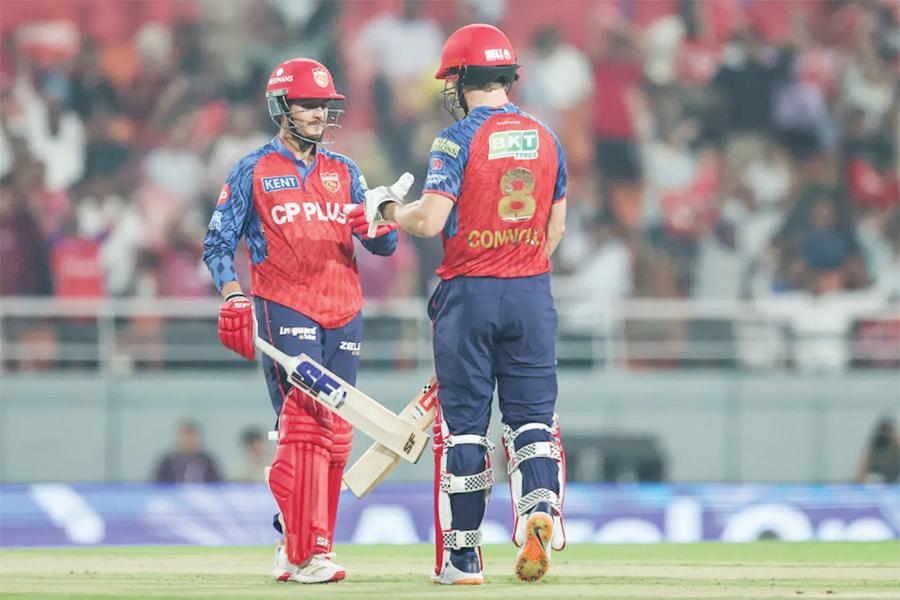
Priyansh Arya's flier allowed Cooper Connolly bide time, Punjab Kings vs Lucknow Super Giants, IPL 2026, New Chandigarh, April 19, 2026
Mohammed Shami's bolt-upright seam and late movement had Prabhsimran Singh nicking to slip for a golden duck in the first over. In the second, Mohsin
Khan should have had Connolly twice. First, LSG let go the possibility of an lbw review; replays confirmed three reds as Connolly was beaten attempting to flick
an in-ducker. One ball later, Mohsin missed a simple return chance on his follow-through.
Three overs, 40 runs. Those were Mohsin's powerplay figures in his comeback game. Much of the early damage was done by Arya, who hit him for four sixes - all to different points on the leg side, off short balls aimed into the body. This helped him race to 40 off 13 in the powerplay, and to his half-century in 19 balls.
The standout aspect of Arya's game was his awareness. He was brutal in front of square with the pull, a mark of how quickly he was picking the length. At one point, just after the powerplay, LSG had four fielders patrolling the legside boundary, from longon to deep backward square leg. Arya responded by walking across his stumps to paddle left-arm spinner
M Siddharth past short fine leg.
At 110 for 1 in 10 overs, Pant turned to Shami for a second spell and Connolly welcomed him with two sixes. He had begun slowly, scoring just 41 off his first 32 balls, but now he was in a punishing mood. When Shami went short, he pulled him ferociously in front of square. And when he went slower and fuller, Connolly teed off, straight over his head.
Connolly was audacious too, such as when he exposed all three stumps and got down low to scoop Avesh Khan over short fine leg. His blockbuster act of the night was to come soon after, when he hit Aiden Markram for three back-to-back sixes in his only over, which cost 32. By the end of the 13th over, PBKS had hit 16 sixes; nine by Arya and seven by Connolly.
YOUTH Basketball Guyana (YBG) is aiming for a bigger product in 2026.
Director Chris Bowman told Chronicle Sports they have reworked their schools regional championship model to optimize performance and reach in the annual regional schools basketball conference.
“This is going to be one of the most exciting, dynamic regional conference seasons. We will have 8 regional zones this year, and for the first time we will have Essequibo regional; we have Berbice regional, with all 13 schools in Berbice, 8 of which have female teams this year; and Linden regional, with all 8 schools participating this year. Of those 8 schools, five have female teams.”
Meanwhile, on the opening day of the Georgetown leg, YBG's Regional Conference Championship, St Stanislaus College and St Rose’s High secured wins at the Cliff Anderson Sports Hall.
St Rose’s High started off the day defeating Marian Academy 74-22.
St Rose’s High's Christian Williams starred with
23 points, 10 rebounds, and 5 assists.
He had good support from Tyler Paul with 16 points and 10 rebounds.
While Shequan Callendar and Daniel Cox chipped in with 16 and 10 points each.
Despite the loss, Lucas Pinol put in a fine effort for Marian Academy with 13 points.
St Stanislaus College then edged Brickdam Secondary in a 1-point thriller, 28-27.
Omari White was the offensive powerhouse for the Saints with 15 points and 7 rebounds.
Josiah Lee also played some crucial minutes on both ends of the court with 6 points and 4 rebounds.
Brickdam's Dontarion Denny defended well in the loss, ending on 6 points and 13 rebounds.
The city leg continues every Wednesday, Friday and Sunday at the Cliff Anderson Sports Hall.
The Berbice leg of the regional conference starts on April 23rd and continues Thursday and Friday in New Amsterdam and Corentyne, and the East Coast leg starts on the 30th at UG and President's Col-

lege Courts.
Over in region 10, Linden, they will begin on May 1st at Retrieve Hard Court.
While the East Bank conference will begin being played at Covent Garden schools on Tuesday, May 5th.
Brigadier (Ret’d)
Mark Phillips on Sunday said the King’s Baton Relay symbolises connection, unity and shared values across the Commonwealth at the Botanical Gardens in Georgetown.
The prime minister joined Guyanese athletes, officials and
representatives of the Guyana Olympic Association in the relay. In brief remarks,
Prime Minister Phillips said that Guyana’s participation in the games is a matter of pride and optimism, with the nation fully behind its athletes.
“It speaks to a modern Commonwealth that is rooted in tradi-
tion and responsive to the evolving aspirations of its people. In this regard, Guyana is proud to play its part,” Prime Minister Phillips stated.
The relay, launched by His Majesty King Charles III at Buckingham Palace in March 2025, is in Guyana on its symbolic journey across all 74 Commonwealth nations and ter-
Region 2 Essequibo will tip off their first regional competition on May 6, dubbed the Cinderella Conference, at Abram Zuil Secondary.
While over in region 3, games will start on May 8th at West Demarara Secondary in the West Side
Conference.
The regional competition will be followed by the regional playoff and finals on June 10, where all the top teams will advance to Georgetown to compete in the 19th edition of the KFC National Schools Basketball Festival being
ritories ahead of the Glasgow 2026 Commonwealth Games.
Guyana will send a 27 member delegation to the Games from July 23 to August 2, to compete in athletics, boxing, 3×3 basketball, swimming and cycling.
Meanwhile, Minister of Culture, Youth and Sport Charles Ramson Jr. stated that
the relay goes beyond sport and reflects the broader purpose of the Commonwealth.
“It’s the values that the Commonwealth represents…democracy, human rights, the rule of law, shared prosperity and development that are important for us here in Guyana,” the sports minister stated.
He stressed that
played from June 28th to July 5th at the Cliff Anderson Sports Hall.
The Regionals are sponsored by Edward B. Beharry Ltd, G-Boats Inc., National Sports Commission, Ministry of Education and Banks DIH Ltd.
Guyana’s future depends on collaboration rather than isolation to help strengthen Guyana’s voice and opportunities.
Following the early morning relay, participants also took part in a 5-kilometre road race along Main Street. (DPI)