



By Shaniya Harding
THE Government of Guyana continues to demonstrate its commitment to development through sustained efforts aimed at educating, empowering and advancing the nation’s young people. This was reinforced
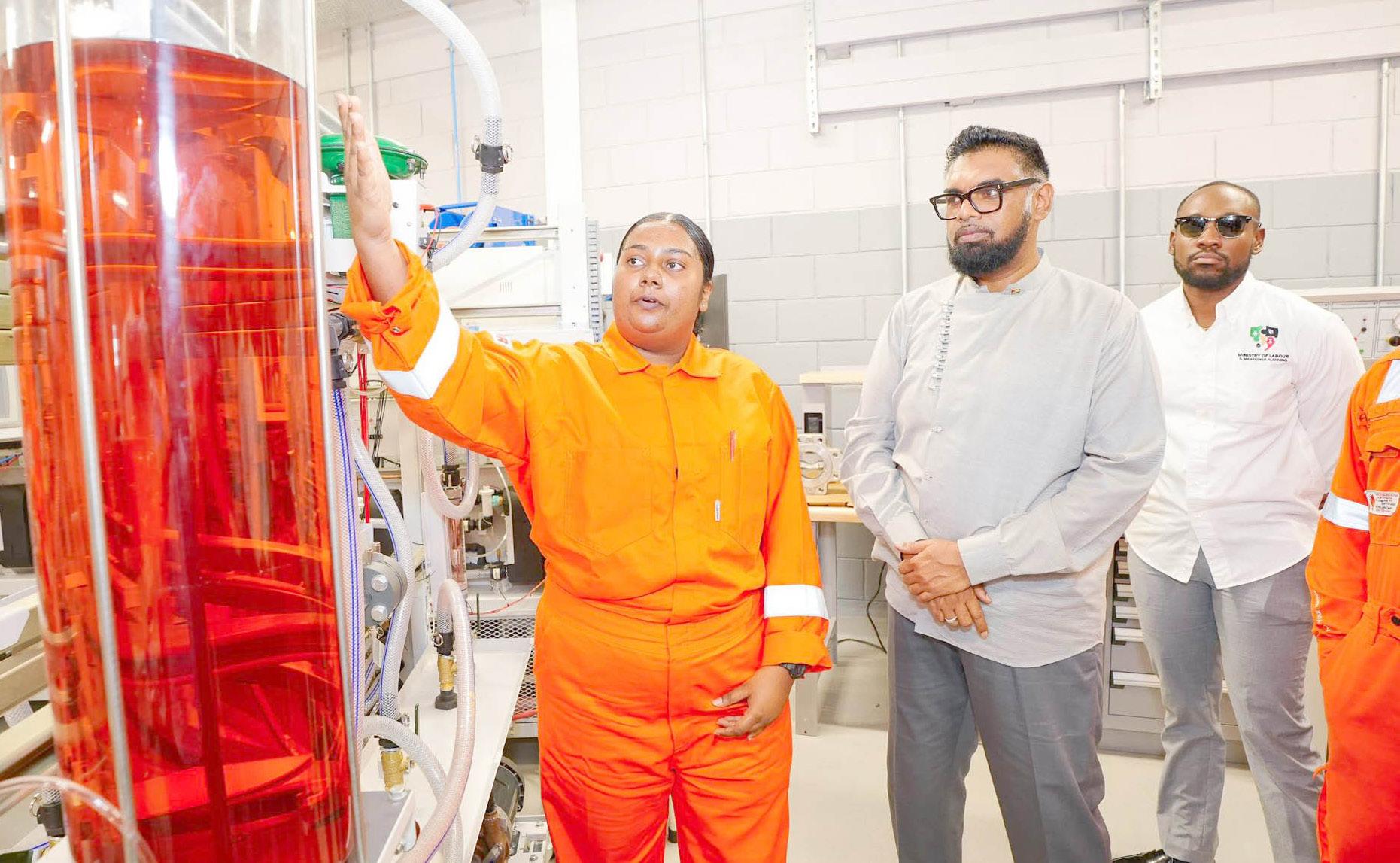
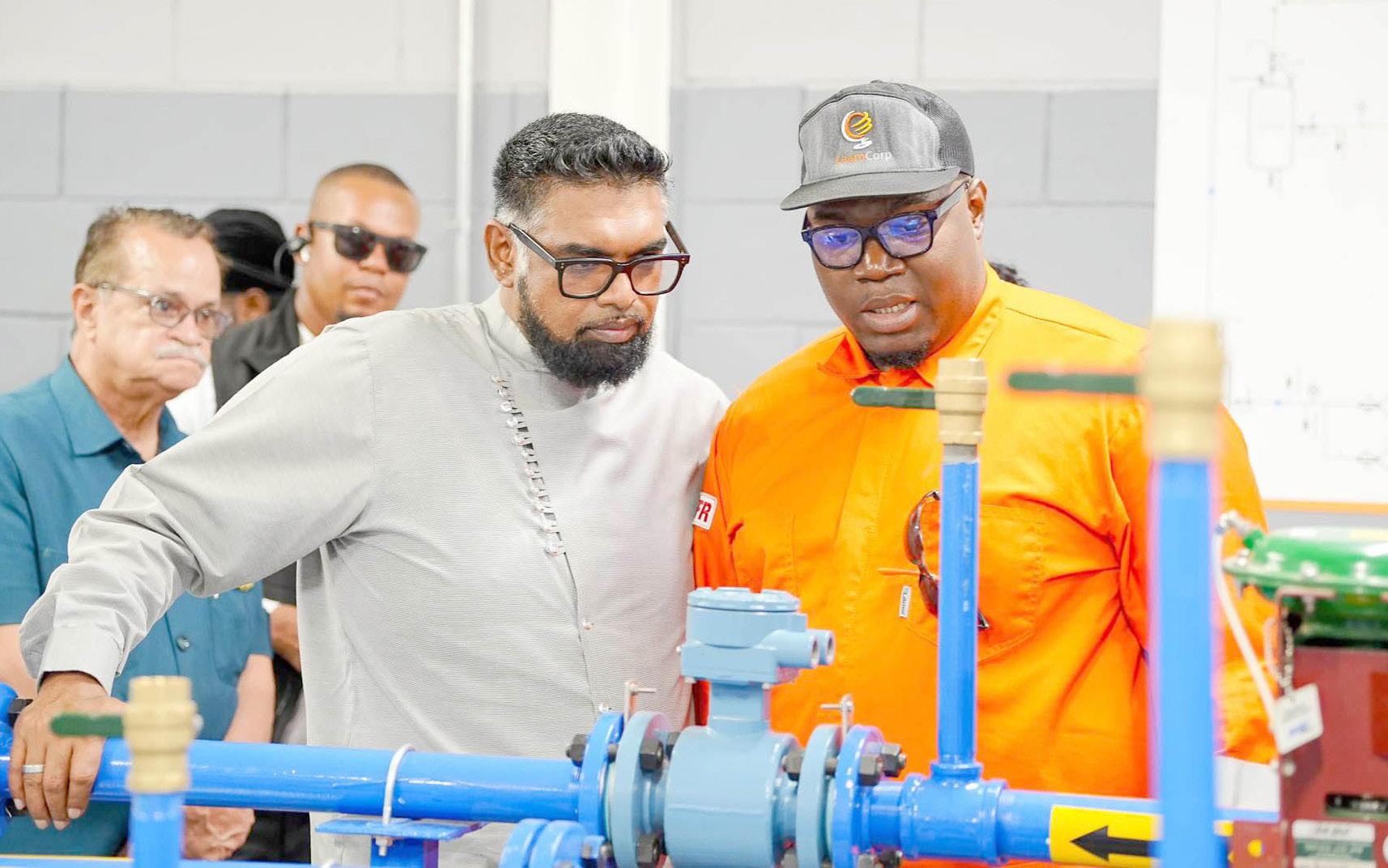
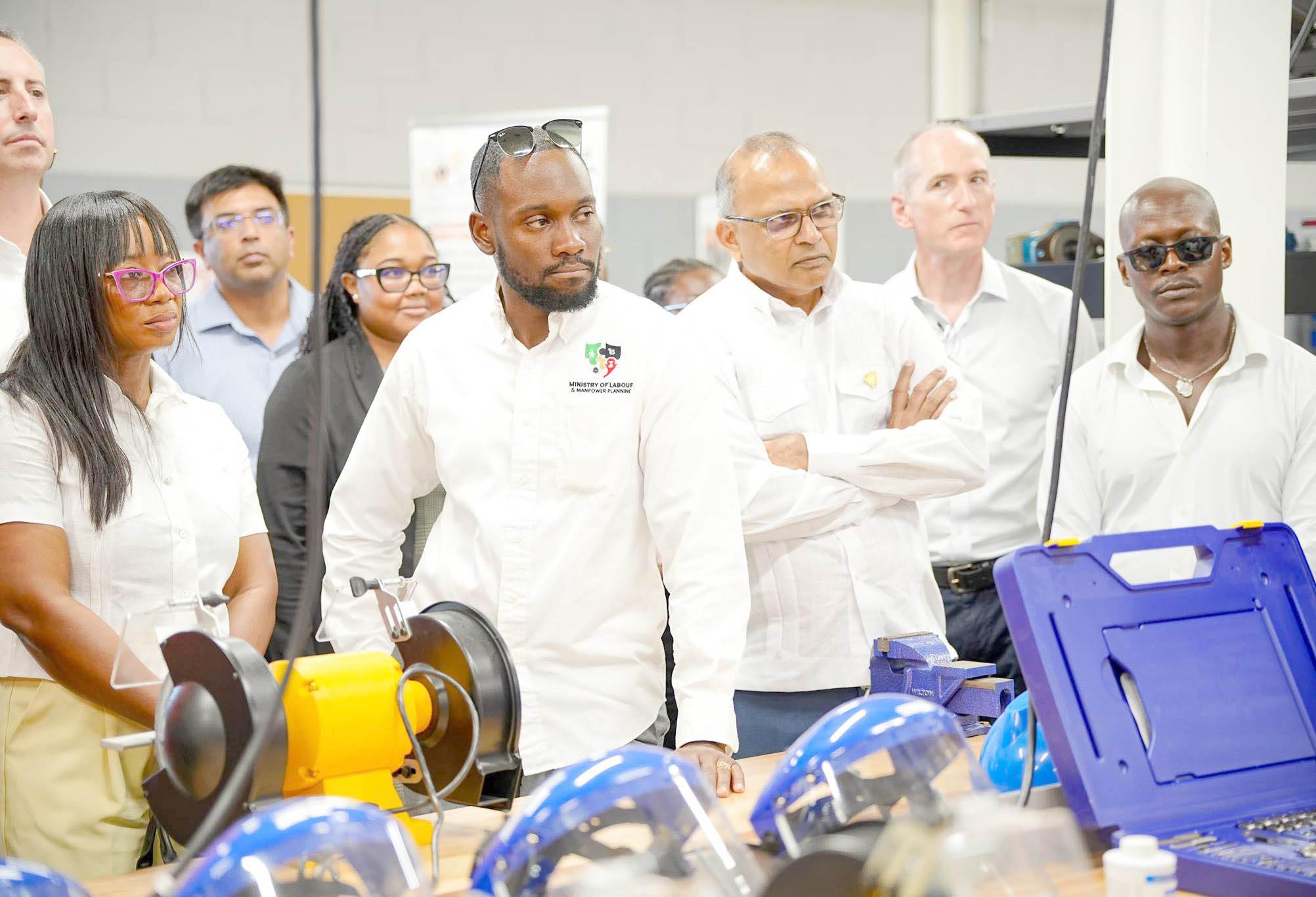
posted on the President’s official Facebook page, the Head of State engaged Minister of Labour and Manpower Planning Keoma Griffith and Minister of Tourism, Industry and Commerce Susan Rodrigues on their ministries’ respective roles in advancing national development.
phasising the significant level of investment in young people across multiple sectors.
Speaking from Berbice, which is rapidly emerging as a hub for oil-and-gas development, President Ali highlighted the scale of investment being made in the country’s next generation. He pointed
expanding technical fields.
“We are here in Berbice, Port Mo u rant. This is the capital of oil-and-gas technical training in Guyana, where the government has invested tens of billions of dollars into a world-class, state-of-the-art facility to train this and future generations of top-end oil-
He added that the drive is also aimed at addressing Guyana’s labour shortage.
“We have a major labour shortage here in Guyana, but we are putting in investment to have that manpower and planning element so that we can catch up.”
Similarly, Minister Rod-
In the video, which was
specifically to the GTTI, the first of its kind in Guyana, which is expected to train thousands of Guyanese for
and-gas workers,” he said. “We have commissioned this facility, an extraordinary facility, as I said, tens of billions of dollars of investment.”
Sustainable growth remains a key pillar of development and, as the President explained, efforts are underway across sectors to equip young Guyanese with the skills required for emerging industries. Sharing insight from his ministry, Minister Griffith said investments such as the training institute, along with others in the pipeline, are shaping the country’s future workforce.
“This is such a major win for Guyana. We’re not only transforming this country, but we’re also making investments that we will reap and see 10, 20, 30, 40, 100 years from now where Guyana will be firmly positioned as a technical training institute in this entire Caribbean,” Minister Griffith said.
rigues shared updates on the progress of the Tourism and Hospitality Institute, which is projected for completion by mid-year. The facility is expected to serve as a source of skilled Guyanese for one of the country’s fastest-growing sectors.
“Here in Berbice we also have the Tourism and Hospitality Institute …world-class international standard hospitality institute,” she said.
Speaking directly to students at the technical institute, Minister Rodrigues added, “I hope all of these young people here today understand that this would not have been possible if you didn’t have a P resident who had a vision to create a Guyana that you are now living in, opening up new opportunities here at this technical training college.”
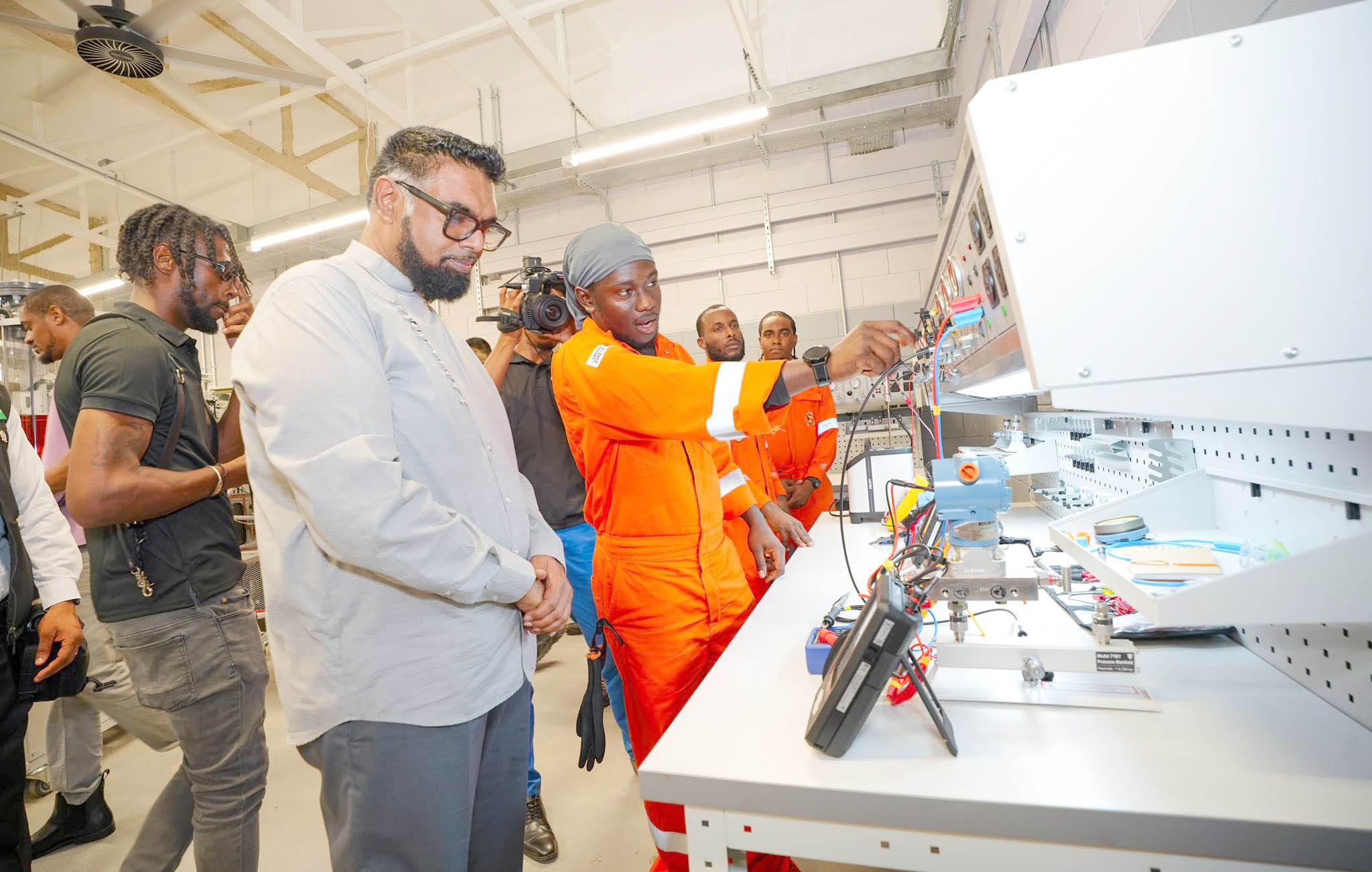
Throughout his walkthrough of the facility and engagements with trainees and trainers, President Ali
underscored the tangible scale of resources being deployed. Trainees are utilising specialised machinery valued at approximately US$30,000 per unit, while advanced instrumentation equipment in the laboratories carries a price tag of close to US$180,000 each. These investments demonstrate the seriousness with which the government is approaching skills development, he emphasised.
Additionally, the comprehensive 18-month programme being delivered would ordinarily cost about US$150,000 per participant, an expense now being absorbed by government to ensure young Guyanese are internationally certified and industry ready. According to the President, each piece of equipment and every programme introduced forms part of a deliberate strategy, not only to modernise training infrastructure, but to position the nation’s youth at the forefront of Guyana’s expanding oil, gas and diversified economic landscape.
During the episode, some of the trainees got the opportunity to relay their expectations and what this step in their educational journey means to them.
THE Ministry of Housing and the Central Housing and Planning Authority (CH&PA) have clarified that informal settlers occupying lands within Joe Vieira Park, Region Three, were given removal notices since November 2025.
According to a statement issued on Thursday to clarify misinformation in the public domain, the action undertaken to remove occupants was a lawful enforcement measure executed pursuant to CH&PA’s statutory authority to administer, regulate, and protect State lands.
“The continued unau-
thorised occupation of these lands constitutes a clear breach of the laws governing public property and poses direct risks to environmental protection, land-use planning, and the orderly execution of national development initiatives. The government will not permit the unlawful seizure or occupation of lands designated for public, environmental, or strategic national purposes,” the statement issued on Thursday said. It added that removal notices were duly issued on November 4, 2025, by the Malgre Tout/MeerZorgen NDC, formally

advising occupants that their presence is unauthorised and that enforcement action would follow in the absence of voluntary compliance.
“The Authority’s subsequent intervention was therefore grounded in due process and consistent with established legal procedures,” the statement said adding that following engagement on January 13, 2026, 13 households were identified.
To date, seven households have been allocated residential house lots through the ministry’s prescribed allocation system, with the remaining alloca-
tions actively progressing under a structured relocation framework.
“The Government of Guyana maintains an unequivocal zero-tolerance policy towards squatting and the unlawful occupation of State lands. No individual or group may bypass the legal application process and expect regularisation by virtue of illegal occupation. Such actions undermine fairness, equity, and the rule of law, particularly for thousands of citizens who have applied and are awaiting allocation through lawful channels,” the statement said.



It added that while the ministry remains committed to humane relocation and lawful housing solutions for eligible citizens, enforcement will continue wherever public lands, protected areas, or national projects are threatened.
“The rule of law will prevail,” the statement said.


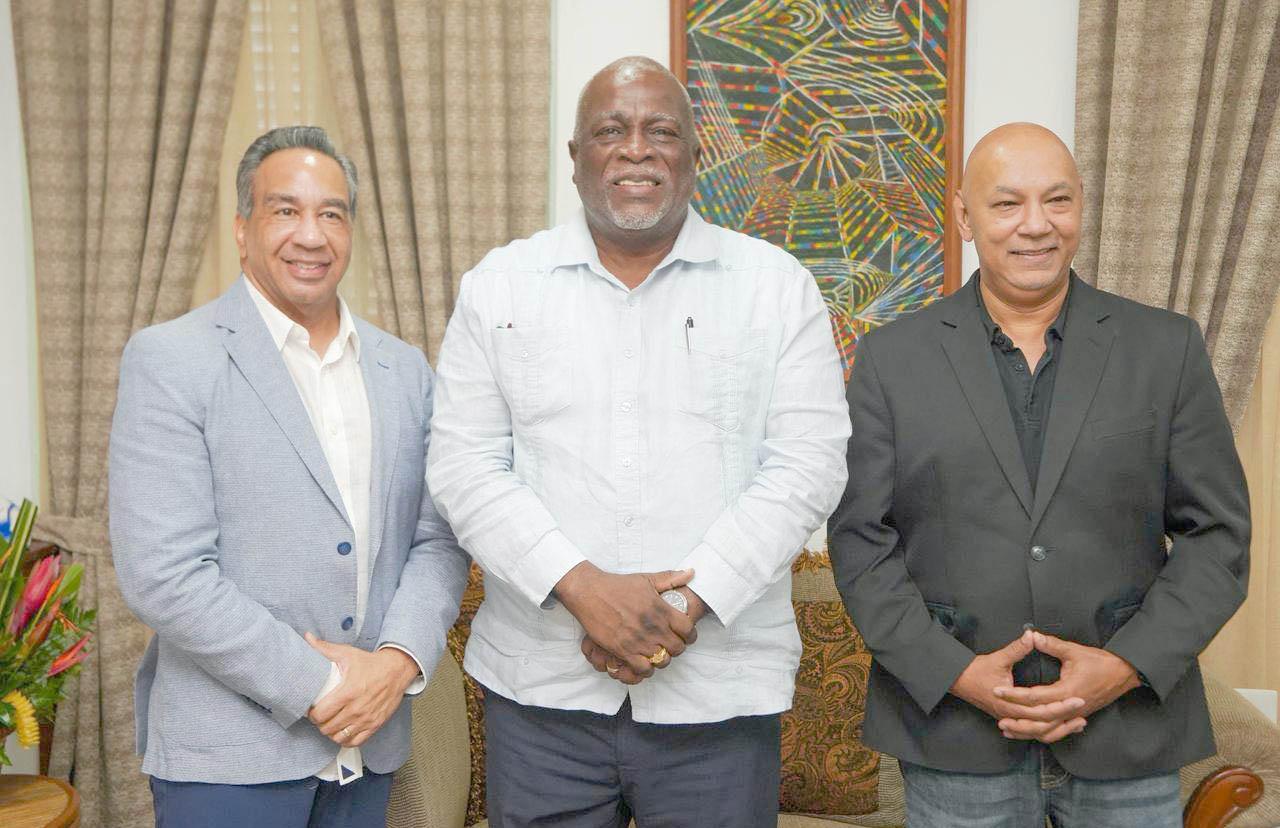
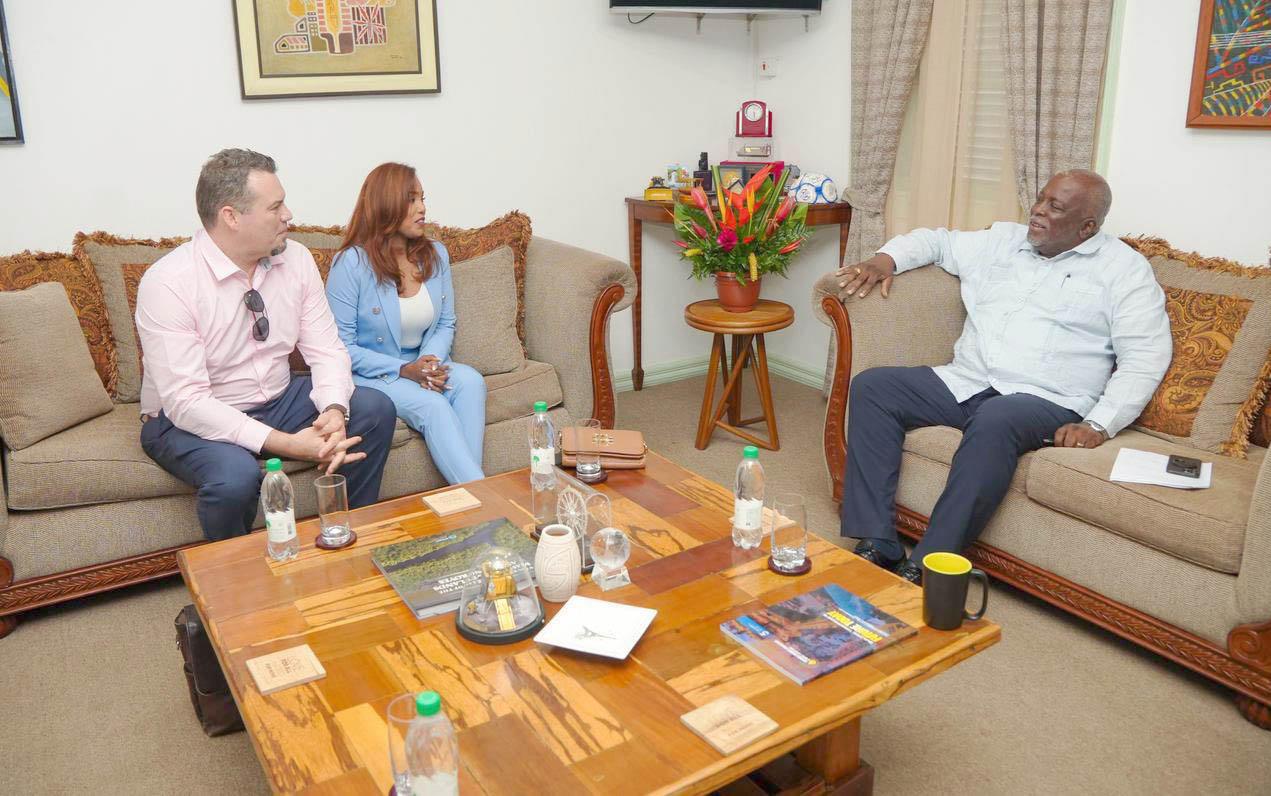
Prime Minister, Brigadier (Ret’d) Mark Phillips on Thursday discussed collaborative opportunities in healthcare and energy solutions. He met with Mr. Rick Bacchus, Chairman and CEO of Bacchus Companies LLC, and Dr. Amir Bacchus, Co-Founder and Chief Medical Officer of P3 Health Partners and during that engagement, discussions focused on exploratory opportunities in areas related to development and investment. The Prime Minister was also briefed on P3 Health Partners’ healthcare services and avenues for investment and cooperation. The PM also met with representatives of Hybrid Power Solutions Inc. at his Camp Street office. That meeting focused on the company’s power and energy solutions, including its solar-powered generator systems, potential investment opportunities in Guyana, and avenues for entering the local market through strategic partnerships. Hybrid Power Solutions Inc. is an international provider of advanced portable and fixed energy systems, specialising in clean, reliable, and efficient power solutions for commercial, industrial, and remote applications (OPM photos)
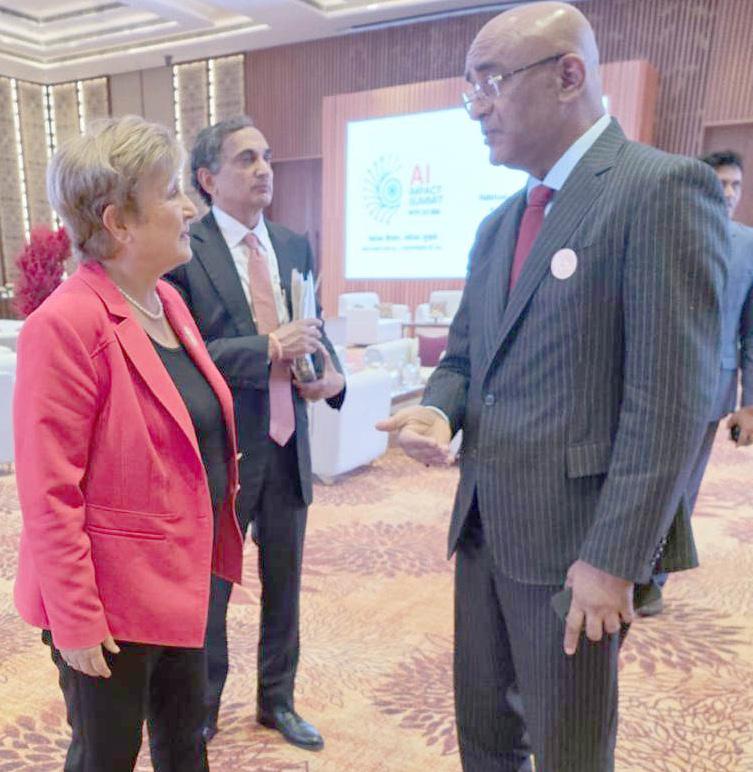
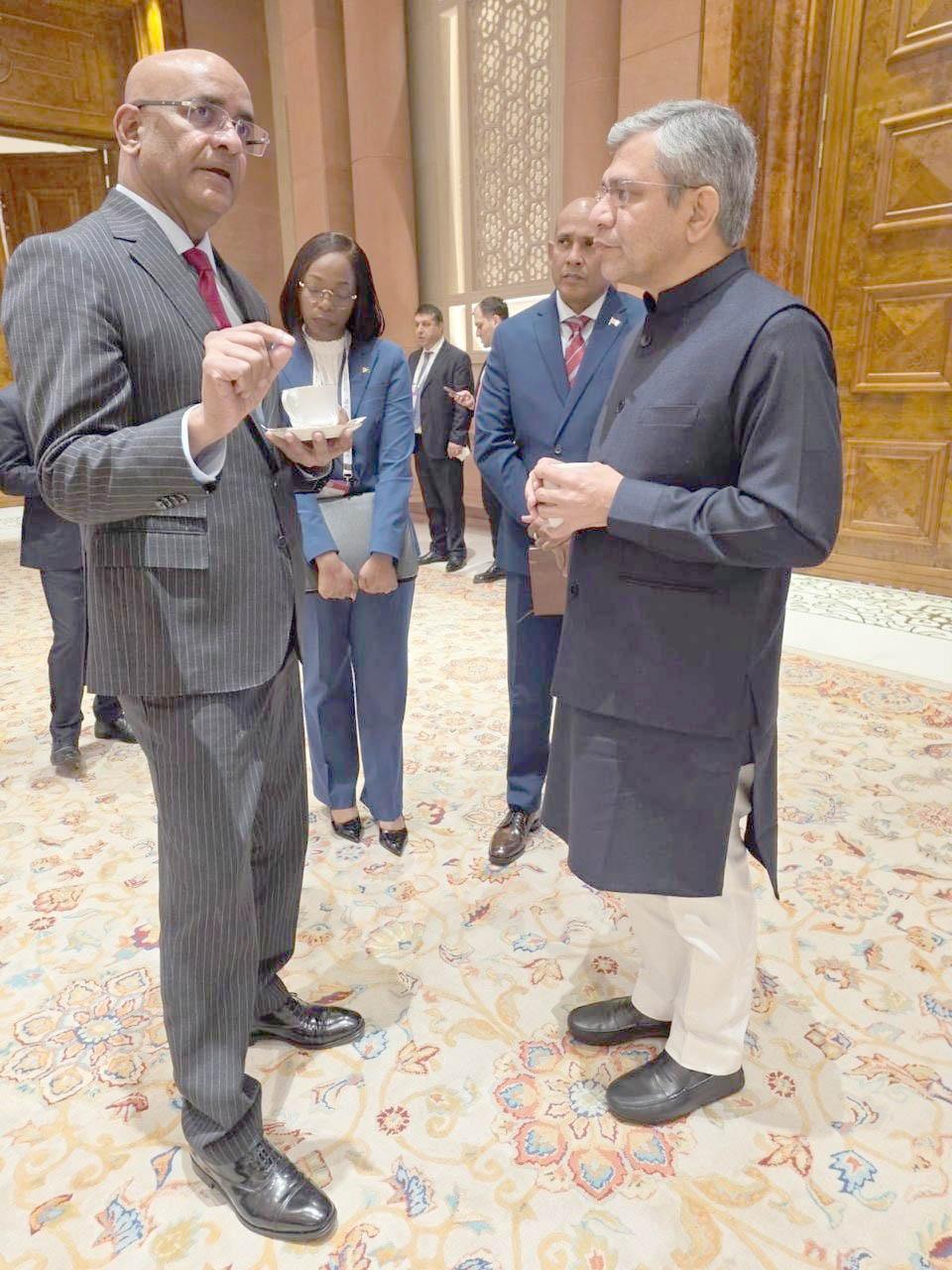
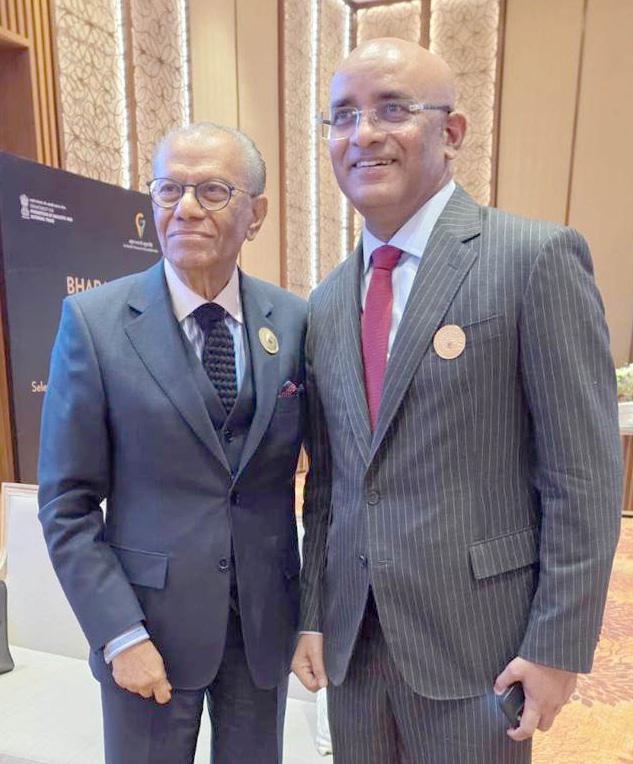
Guyana’s Vice President, Dr Bharrat Jagdeo, held discussions with a number of top officials at the AI Impact Summit 2026, being hosted in India. Pictured with Dr Jagdeo are Kristalina Georgieva, Managing Director of the International Monetary Fund (IMF); Prime Minister Dr Navinchandra Ramgoolam of Mauritius and India’s Minister for Railways, Information & Broadcasting, and Electronics & Information Technology, Ashwini Vaishnaw (Photos: Vice President Dr Bharrat Jagdeo/Facebook page)


WITH unprecedented global attention now focused on Guyana’s energy sector, the discussions at the 2026 Energy Conference and Supply Chain Expo have reinforced a growing consensus among local and international stakeholders, that Guyana is getting the balance right.
The message echoed across panels and presentations is that the country’s current course, anchored in expansion, sustainability and inclusivity, must be maintained and carefully strengthened, as it has the potential to serve as a practical blueprint for emerging energy producers.
The data presented at the forum provides substance to that assessment. Over the last five years, Guyana has added 186 megawatts of new generating capacity to the national grid while distributing more than 37,000 solar-powered home systems, installing over 37 megawatts of renewable
energy at the household level. These figures point to a deliberate effort to expand access to electricity while steadily integrating cleaner sources into the national energy mix.
The ongoing gas-to-energy programme further illustrates this transitional approach. With plans for natural gas-fired plants totalling up to 600 megawatts under phased development and the commissioning of the first 300 megawatt plant anticipated this year, the strategy is to reduce emissions from the power sector while lowering electricity costs for consumers and improving reliability across industries and communities.
At the same time, renewable expansion remains firmly on the agenda. Planned installation of an additional 100 megawatts of solar power, continued advancement of the Amaila Falls Hydropower Project
and the rollout of 10 new solar mini-grids to serve more than 6,000 households in hinterland and riverain areas all point to a diversified and forward-looking energy architecture. Upgrades to transmission and distribution networks are also expected to strengthen system resilience and efficiency.
What stands out in this policy direction is its alignment with Guyana’s long-standing low-carbon development framework.
Even as oil-and-gas revenues accelerate economic growth, forests and biodiversity continue to be treated as critical environmental assets, underscoring an attempt to reconcile resource extraction with ecological stewardship.
The broader developmental implications are equally significant. Reliable and affordable energy has direct socio-economic benefits, lowering production costs;
stimulating industrial activity; supporting small businesses and transforming public services such as education and healthcare. When energy policy produces measurable improvements in everyday life, it reinforces public confidence and ensures that growth is broadly shared.
The international interest expressed during the conference therefore reflects more than curiosity; it reflects recognition that Guyana is attempting to navigate a complex development path with notable coherence.
As the country maintains this disciplined balance between rapid expansion and environmental responsibility, it stands to demonstrate that energy-driven growth can be both sustainable and inclusive, offering a model that other developing nations may well seek to emulate.
Dear Editor,
IN the light of recent discussions in Parliament, I would like to clarify the ownership and mission of Midway Specialty Care Center.
Midway Specialty Care Center (MSCC) is a U.S.-based organisation operating nonprofit healthcare clinics designed to provide an integrated and holistic approach to patient and community care. We are a rapidly growing institute with 17 clinics throughout the state of Florida alone.
Our mission is to maximise patient choice and empower individuals to take responsibility for their health decisions. MSCC focuses its services on individuals living with HIV , AIDS, and Hepatitis C within the communities we serve. Our clinical-care model emphasises chronic, primary and acute care, with particular attention to underserved populations.
We are committed to fostering a climate of respect, confidentiality, prevention, and
education, while ensuring a seamless continuum of care.
Additionally, we actively cultivate community partnerships to improve patient access to comprehensive services.
The MSCC Guyana clinic was established in 2019 by me and our CEO, Anand Sukhram. My vision was to expand access to infectious-disease care in Guyana by leveraging the advances achieved through our robust clinical research programmes in the United States. MSCC is recognised for rapidly translating clinical research into innovative, patient-centred care.
Extending this expertise to my birthplace was the realisation of a long-held goal.
No relationship with the Government of Guyana was utilised to fund the establishment or operation of the MSCC Guyana clinic. In fact, we have personally invested private funds when necessary to sustain and advance the clinic’s services, including during the COVID-19 pandemic response.
During the COVID-19 pandemic, MSCC was one of the few laboratories in the Caribbean to introduce PCR testing and novel treatment modalities in Guyana. With an established laboratory already performing testing for sexually transmitted infections, HIV , and Hepatitis C, the expansion to include COVID-19 testing was both practical and essential. Our accredited lab continues to be fully functioning with a growing panel of available tests.
I previously served with PEPFAR Guyana from 2008 to 2012 and maintain a long-standing commitment to advancing health outcomes across the Caribbean.
My contributions include funding continuing medical-education initiatives in Guyana, founding the 592 Health Digest to promote public-health literacy, and serving as an HIV consultant to the Turks and Caicos Ministry of Health. I have also been a consistent sponsor of the CARPHA Conference and recently launched “The Great Catch” initiative to expand prostate-cancer
screening.
Internationally, I have led PrEP training initiatives for physicians in Brazil. My overarching vision remains to help end the HIV epidemic in the Caribbean through education, expanded access to novel therapies, and improved HIV management.
I hope this provides clarification to those who are under the assumption that MSCC Guyana is owned by a Government Minister.
While speculation is not uncommon within the Guyanese community, the achievements of MSCC Guyana are not the result of political ties, grants, or government funding—only hard work and dedication to the communities we serve.
By Jorge Werthein, Senior Advisor to the Director General, Inter-American Institute for Cooperation on Agriculture
IN the American football final—one of the most powerful media showcases on the planet—the spectacle usually yields to the technological brilliance, consumption, and epic nature of the cultural industry. However, the opening of Bad Bunny’s show chose another entry point: images of sugarcane fields, farm workers under the sun, cultivated land.
In a matter of seconds, the biggest sporting stage of the year connected with a question that rarely enters global prime time: who ultimately sustains the economic stability and daily life of our societies?
It was not a neutral setting. It was a symbolic statement. In the dominant global culture, the agricultural sector rarely takes centre stage. Grand narratives are constructed from an urban perspective; agriculture appears as a silent backdrop, despite being an economic and social pillar.
In a context of trade tensions, price shocks, and vulnerable supply chains,
this invisibility is becoming increasingly unsustainable: food production is once again—as it should be—a matter of security and stability.
In Latin America and the Caribbean, more than 40 million people work in agriculture, representing around 14% of total regional employment. This figure reveals the structural magnitude of the sector: it feeds, exports, generates foreign exchange, and sustains territories. And yet, culturally, it is rarely associated with prestige, innovation, or the future. The choice of sugarcane is no accident. In the Caribbean and much of Latin America, this crop encapsulates economic history, cultural identity, and social memory.
Showcasing agricultural work on a global stage is equivalent to reclaiming deep roots: contemporary well-being continues to have a material, rural, and often invisible origin.
There is also an unavoidable generational dimension. The region faces rapid rural aging and persistent youth migration to cities. Rural youth, with unequal access to financing, innovation, and connectivity, are often left out of sustained public policies. This absence is not insignificant: without generational renewal, productive
continuity is compromised, territorial cohesion is weakened, and social gaps are widened. That is why the cultural gesture takes on greater significance. When a global artist places the rural worker at the centre of their narrative, they expand the symbolic space of the countryside and challenge an entrenched cultural hierarchy: one that assumes that modernity is only written in urban terms. It was not a technical discourse or an ideological proclamation. It was an im-
age. And images, in a society saturated with stimuli, can be more eloquent than a report. From an international perspective, the message connects with a strategic reality.
Food security is no longer a sectoral issue, but a central component of the global debate on stability, trade, inflation, and economic resilience. Agri-food systems have become critical pieces of the international balance. And those systems depend, first and foremost, on people: farmers, rural workers, entire communities.
Perhaps many viewers saw only an aesthetic or poetic introduction. But that beginning brought to the forefront what usually remains outside the frame. The most powerful spectacle on the sporting calendar began, symbolically, in a sugarcane field. Modernity is not opposed to agriculture. On the contrary, it depends on it. And when pop culture decides to start in the countryside, it not only changes an aesthetic: it opens a conversation about the dignity of work, territorial inequality, and a productive future. In Latin America and the Caribbean, that conversation is not nostalgic. It is strategic.
Dear Editor,
IN the 20th century, the Non-Aligned Movement was a declaration of geopolitical sovereignty, a refusal to be a pawn in the binary struggles of distant superpowers.
In the 21st century, as Guyana stands at the precipice of a radical “Geography of the Future,” a new imperative emerges: Digital Non-Alignment.
As the nation builds physical bridges towards the continental reality of the South, it must simultaneously construct digital corridors that protect its intellectual and creative sovereignty. We must refuse to allow the Guyanese digital soul to become a vassal state to the “Decision Architectures” of the Global North.
1. Anticipating the Continental: Critique Some may argue that “Turning South” merely exchanges one history of captivity for another. It is a historical fact that Brazil imported nearly 5.5 million enslaved Africans, a demographic weight far exceeding that of
the Caribbean sugar colonies. However, for the Guyanese psyche, the Caribbean context remains tethered to the “Plantation Economy” and its memories of colonial extraction. Conversely, the “Continental Turn” toward Brazil is viewed through the lens of modern potential: the Takutu River Bridge, the US$1.02 Billion in bilateral trade, and the emerging industrial hubs of Boa Vista. We are not turning towards a different past, but towards a different use of the future.
2. Energy Sovereignty and Data Colonials: Digital Non-Alignment is an insistence on Sovereign Intermediation. Currently, Guyanese data is extracted like raw gold, processed in foreign servers, and sold back to the nation as “insights.” However, Guyana is currently undergoing a massive energy expansion, with forecasts suggesting a 90% surge in electricity consumption as industrialisation takes hold.
This energy must not merely power the status quo; it must be the lifeblood of a sovereign digital infrastructure. By 2026,
our national energy policy must include the establishment of domestic data centres. We must ensure that our newfound power fuels our own “Defensive AI” and creative platforms, rather than simply powering the foreign “scareware” and predatory algorithms that target our citizens in their private homes.
3. The Architecture of the Orange Economy: The “Orange Economy,” the reservoir of Guyanese creative talent—cannot flourish in a state of digital dependency. When our musicians, designers, and writers are forced to rely on “Aligned” platforms, they are subject to algorithms that favour the cultural logic of the North. Digital Non-Alignment facilitates regional marketplaces. By “Turning South,” we bypass the high-fee gatekeeping of global conglomerates. This is the practical application of our “Southern Turn,” connecting Georgetown to the percussion and industrial innovation of the South.
4. From Casualties to Strategists: The recent surge in aggressive, automated ha-
rassment by multinational software firms highlights the vulnerability of the unaligned individual. When we rely solely on foreign codes for our security, we lose our agency. A Non-Aligned Guyana must invest in “Indigenous Intelligence”—systems trained on our specific cultural and legal frameworks. This is the only way to ensure that the “human in the middle” of the AI wars, whether a scholar in a bedroom or a merchant in a market, is a strategist, not a casualty.
Conclusion: We are walking into a future where code is as vital as oxygen. If we do not command our digital destiny, we will be commanded by it.
Digital Non-Alignment is the essential shield for the Orange Economy, ensuring that Guyana’s poetry, its innovations, and its wealth remain firmly in the hands of its people.
Sincerely, Dr Walter H Persaud
CHEDDIE JAGAN promulgated a theory of politics in general and particularised it in Guyana. Jagan contended that personalities that are violently and uncompromisingly ultra-leftist, ultra-communist, ultra-socialist and ultra- anti-imperialist end up at the opposite spectrum where they become ultra-rightist, ultra-imperialist, ultra-colonial-minded and ultra-capitalist.
In Guyana, Jagan’s prediction became a reality and Guyana saw the incredibly shocking transformation of ultra- socialist, ultra-communist Guyanese political activists into unapologetic embracers of neoliberal capitalism and adopted the shameless narratives of imperialism.
Jagan’s theory found early expression in Martin Carter, an offensive, shameless supporter of imperialist penetration of Guyana who, in his young life, was an ultra-communist Stalinist who got expelled from the PPP in the early 1950s for accusing the PPP under Burnham and Jagan of being too soft on British colonialism in Guyana and for not embracing Stalinism and communism.
After being expelled from the PPP, Carter worked at the British Council, then became the chief PR man for Booker imperialism in Guyana. Carter, the former wild communist, spent a greater part of his life in Guyana serv-
ing Booker imperialism. Guyana, at the time, was nicknamed Booker Guiana.
Jagan popularised his theory when an organisation was formed in Tiger Bay named the Movement Against Oppression (MAO). This organisation’s acronym was deliberately shaped after the name of the founder of communist China, Mao-Tse-Tung. MAO was transformed into the WPA and like MAO, the WPA accused the PPP of being a timid Marxist organisation, not radical enough. For Jagan’s theory, see his article, “Guyana: A New Stage,” Thunder, Vol. 3. No. 3, July-Dec 1971.
Jagan’s genius is available for anyone to see in today’s Guyana. The survivors of MAO and the WPA become pro-capitalist, pro-West and racist. One survivor of MAO and the WPA became the common-law wife of a man who advocated the extinction of Guyanese Indians. Clive Thomas wrote a book on socialism. Rupert Roopnaraine was the leading Caribbean Castroite. Both Thomas and Roopnaraine became influential leaders in the neo-liberal, capitalist government of APNU/AFC. Many of the current survivors from the MAO and WPA days are sickening racists in today’s Guyana.
This has been too long an introduction to the main theme of this column – those who


say that they are pro-Black, and anti-imperialist are the leading devotees of the Stabroek News (SN), showering praise daily the past week on a newspaper that is shamelessly pro-West, pro-imperialist and wearing its Mulatto/Creole class bias on its sleeve. Such a newspaper is now the darling of people who say that the West installed the PPP government in 2020.
Could you have a larger contradiction than this at the moment? So, the West put the PPP in government in 2020 and ousted the APNU+AFC coalition from power. But the paper of the West in Guyana is seen as the colossal embodiment of freedom. The paper that was started by a grant from the American Government, resurrected the moribund, Mulato/Creole class in Guyana and has been a staple diet of Western narratives, is now eulogised by whom?
Let’s see by whom. Let’s look at the perennial face of ACDA, Eric Philips, one of the Guyanese who says his life is dedicated to African rights. He eulogises SN in yesterday’s (Wednesday) edition of SN and the contradiction shows its nasty presence. Mr. Philips’ organisation accepts that the West put the PPP in government in 2020, but offers high praise to the only Guyanese newspaper that is openly pro-West and unapologetically so. Mr. Philips ended his letter by quoting one of the purest imperialist politicians in Guyana, the late Martin Carter.
Let’s move to Ralph Ramkarran. When he was a guest two months ago on the Freddie Kissoon Show, he described his politics as being left-wing and coming within the tradition of socialist perspectives. But he eulogises the SN that is openly hostile to left-wing perspectives and openly pro-capitalist and was hostile to the Cheddi Jagan government from 1992 until Jagan’s death in 1993. Jagan, of course, is the hero of Mr. Ramkarran.
In 1993, Mr. DeCaires did an editorial on President Jagan warning Guyana that Jagan was still a communist. Twice in the past few days, I quoted the words of David DeCaires, the founder of SN, who said that SN was founded on the plank of capitalism in Guyana.
Finally, the big and bad human rights activist, Tacuma Ogunseye. Like his African rights colleague, Eric Philips offered immense praise to SN, but got himself caught on a barbed-wire, Freudian fence.
The official position of the WPA, like ACDA, is that the West installed the PPP in 2020 but like Phillips, Ogunseye sees nothing wrong with praising Guyana’s only pro-West daily. Part 4 of the birth and death of SN will continue in a few days’ time.
DISCLAIMER: The views and opinions expressed in this column are solely those of the author and do not necessarily reflect the official policy or position of the Guyana National Newspapers Limited.

MORE than a third of Ukraine’s children – 2,589,900 – remain displaced as the war in Ukraine enters its fifth year.
This includes more than 791,000 children inside Ukraine and nearly 1,798,900 children living as refugees outside the country.
“Millions of children and families have fled their homes in search of safety, with one in three children remaining displaced four years into this relentless war. For children in Ukraine, safety is increasingly hard to come by as attacks on civilian areas continue across the country. In many ways, the war is following these children,” said UNICEF Regional Director for Europe and Central Asia Regina De Dominicis.
Many children have been forced to flee their homes multiple times. A recent survey conducted by UNICEF found that of those displaced, one in three adolescents aged 1519 years reported moving at least twice. Safety was cited as the most common reason for fleeing.
Bombardments, including intensified long-range strikes, have killed or injured more than 3,200 children since 24 February 2022. Last year saw a 10 per cent increase in child casualties compared to 2024, the third consecutive year in a row that UN-
verified child casualties have increased.
The services children rely on have been decimated over the past four years and are under increased strain. More than 1,700 schools and other education facilities have been damaged or destroyed, resulting in 1 in 3 children unable to attend in-person schooling full-time.
Recent strikes on energy infrastructure have left millions of children and families struggling to survive in extreme subzero temperatures as they are forced to endure days without heating, electricity and water at home.
Babies and young children are at the highest risk of respiratory illnesses and hypothermia in these conditions, while medical facilities struggle to operate under attacks and reduced energy, with nearly 200 medical facilities verified as damaged or destroyed in 2025 alone.
Aside from the physical dangers, children’s mental health is increasingly under strain. Constant fear of attacks, endless sheltering in basements, and isolation at home with limited social connections have left adolescents struggling. A recent survey found that one in four 15–19-year-olds is losing hope of a future in Ukraine, pointing to an urgent need for safety and stability, and investment in the critical services and
opportunities that children and young people need.
UNICEF has been working across Ukraine and in neighbouring host countries to support children affected by displacement and ongoing violence, delivering lifesaving assistance and essential services. UNICEF provides access to safe water, health care, nutrition, education, child protection and mental health and psychosocial support, while also helping repair and rehabilitate critical infrastructure such as schools, health facilities and water systems damaged by attacks.
In 2025, delivering through local authorities and partners, UNICEF reached 7 million people, including 2.5 million children with humanitarian support. UNICEF’s recovery programming, working with national and local authorities, strengthened social services for some 9.8 million people across the country.
“Obligations under international humanitarian law must be upheld and every possible measure to protect children and the civilian infrastructure they rely on must be taken. Every child has the right to grow up in safety and without exception that right must be respected,” said De Dominicis. (UNICEF)



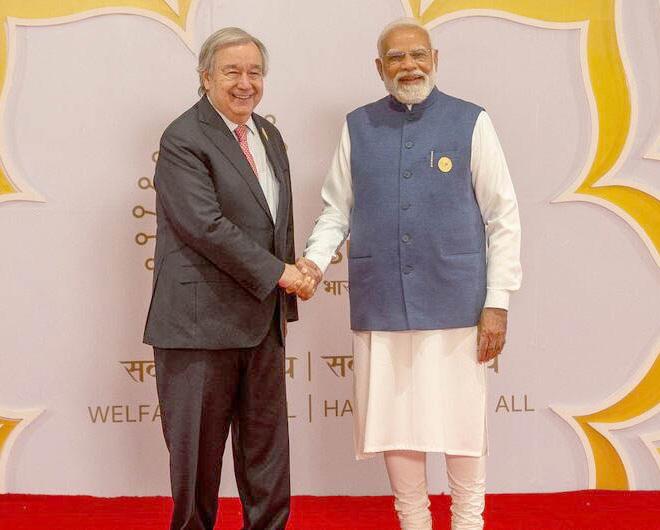
THE future of artificial intelligence “cannot be decided by a handful of countries or left to the whims of a few billionaires,” the UN Secretary-General told the AI Impact Summit in New Delhi on Thursday, calling for a global fund to help developing nations to better access these technologies.
António Guterres highlighted the need to build skills, data capacity, affordable computing power and inclusive ecosystems.
He expressed concern
that without investment many countries will be “logged out” of the AI age.
“Our target is $3 billion,” he said. “That’s less than one per cent of the annual revenue of a single tech company.”
He called this “a small price for AI diffusion that benefits all –including the businesses building AI.”
World leaders have gathered in India for the AI Impact Summit which has been held since 2023.
This year’s meeting marks the first time it is being held in the Global South, with the previous sessions taking place in France, South Korea and the United Kingdom.
The Secretary-General emphasised the efforts the UN is doing to ensure AI development is properly governed, especially the creation of the Independent International Scientific Panel on AI at last year’s General Assembly.
The panel of 40 world leading experts – appointed last week – seeks to
share evidence and close knowledge gaps by analysing AI risks, opportunities, and societal impacts.
“AI must belong to everyone,” the Secretary-General said in relation to the panel.
He urged Member States, industry and civil society to contribute to its work.
Mr. Guterres also emphasized the launch of the Global Dialogue on AI Governance and its inaugural session in July.
“We need guardrails that preserve human agency,
human oversight and human accountability,” he said.
“Done right, AI can advance Sustainable Development Goals. It can accelerate breakthroughs in medicine, expand learning opportunities, strengthen food security, bolster climate action and disaster preparedness, and improve access to vital public services,” he said.
The Secretary-General also shared concerns over negative outcomes if AI growth is unregulated, saying “it can also deepen inequality, amplify bias, and fuel harm.”
As AI’s energy and water demands soar, data centres and supply chains
must also switch to clean power and not shift costs to vulnerable communities.
“We must invest in workers so AI augments human potential – not replaces it,” he said.
Regarding safety, he stressed that people must be protected from exploitation, manipulation, and abuse.
“No child should be a test subject for unregulated AI,” he said.
“Real impact means technology that improves lives and protects the planet.
So, let’s build AI for everyone – with dignity as the default setting.” (UN)

GUYANA continues to demonstrate measurable economic transformation marked by record levels of non-oil investment, rapid private sector expansion, and sustained national development under the visionary leadership of His Excellency President, Dr Mohamed Irfaan Ali and the Government’s Vision 2030 national-development framework.
Speaking at the Guyana Energy Conference and Supply Chain Expo, Peter Ramsaroop, Chief Investment Officer and Agency Head of the Guyana Office for Investment, highlighted the pace, scale, and impact
infrastructural development nationwide; expanded taxfree agriculture under the Food Dominance strategy; enhanced incentives for manufacturing and agro-processing and expanded logistics, energy, and connectivity projects supporting national productivity.
These investments are supported by prudent fiscal management and the strategic reinvestment of oil revenues into productive, long-term economic sectors, the release said.
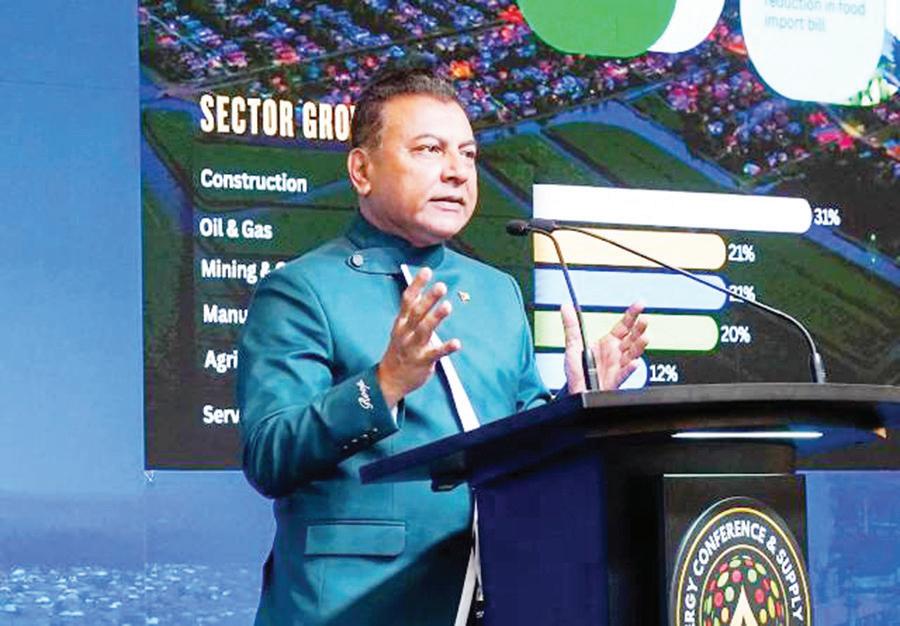
Ramsaroop, Chief Investment Officer and Agency Head of the Guyana Office for Investment
of Guyana’s economic expansion, further reinforced by the strategic measures outlined in Budget 2026.
“If you were here in 2021 and you’re back today and you don’t have work in Guyana, you missed the boat completely,” Ramsaroop was quoted in a press release as saying.
He underscored the breadth of opportunities created through decisive leadership and sustained policy implementation.
He emphasised that Guyana’s advancement is not theoretical, but tangible and measurable.
“Guyana is no longer a future story. It is a performance story, defined by execution, investor confidence, and broad-based growth across multiple sectors.” RECORD NON-OIL INVESTMENT DRIVING DIVERSIFICATION
Since 2020, Guyana has facilitated and positioned more than G$1 trillion in non-oil investments, accelerating diversification across agriculture, manufacturing, logistics, construction, ICT, services, and export-oriented industries, the release said.
It added that Budget 2026 strengthens this trajectory through accelerated
and members of the Guyanese diaspora continue to demonstrate strong confidence in the country’s economic direction, reinforcing the government’s One Guyana vision of inclusive and broad-based prosperity.
“One Guyana means one economy, driven by our people, strengthened by our private sector, and supported by leadership committed to ensuring prosperity reaches every region and community,” Ramsaroop said.
Further, the release said that six years into Vision 2030, Guyana’s progress is evident across infrastructure, agriculture, manufacturing, services, and human capital development.
“Performance does not happen by chance. It is the result of vision, planning, discipline, and execution. Vision 2030 is not a slogan, it is a national blueprint de-
livering measurable results,”
Ramsaroop affirmed.
He noted that Guyana remains open for investment, now positioned as a competitive, high-growth economy built on confidence, stability, and delivery.
“The ship has left port. The next phase of growth toward 2030 and beyond is already underway.”
In closing, Ramsaroop emphasised that Guyana’s transformation reflects decisive leadership, disciplined policy execution, and the
resilience and ambition of its people. As the country advances toward Vision 2030, it is steadily building a diversified, modern, and inclusive economy, powered by private sector growth and strengthened by national unity.
“Opportunity does not wait. Guyana has moved from promise to performance, powered by our private sector and united as One Guyana. Those who act now will help shape the future that is already being built.”
“We are not simply diversifying. We are modernising existing industries while building entirely new ones. Oil is accelerating transformation, not defining it,” Ramsaroop noted. AGRICULTURE POSITIONED AS A MODERN INVESTMENT SECTOR
Under His Excellency President Irfaan Ali’s national food-security and Food Dominance agenda, agriculture has been repositioned as a structured and globally competitive investment sector.
Investors benefit from expanded tax exemptions, duty-free concessions on machinery and inputs, structured investment agreements and dedicated export facilitation and market-access support, the release added.
“Agriculture in Guyana is no longer subsistence based. It is structured capital deployment supported by strong policy, infrastructure, and export access,” Ramsaroop stated.
PRIVATE SECTOR EXPANSION ANCHORS ONE GUYANA ECONOMY
A central pillar of Guyana’s transformation is the strength and expansion of its domestic private sector. Guyanese-owned businesses across manufacturing, agro-processing, logistics, construction, aviation services, ICT, and professional services are expanding at unprecedented levels. Local entrepreneurs



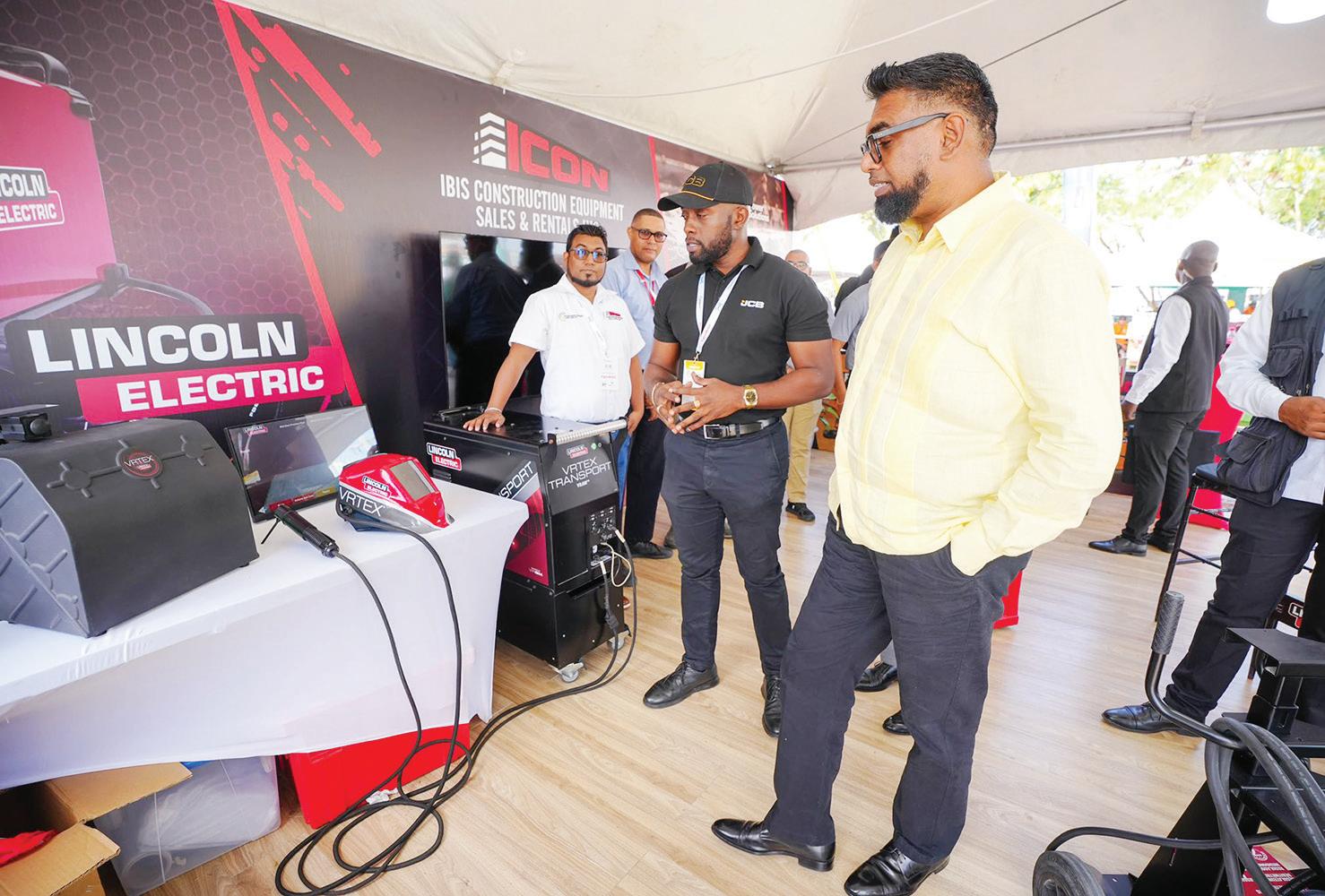
ATTORNEY-GENERAL and Minister of Legal Affairs, Anil Nandlall, SC, confirmed on Thursday that the government is crafting new legislation - the Oil and Gas Operations Bill- to regulate Guyana’s downstream natural gas sector.
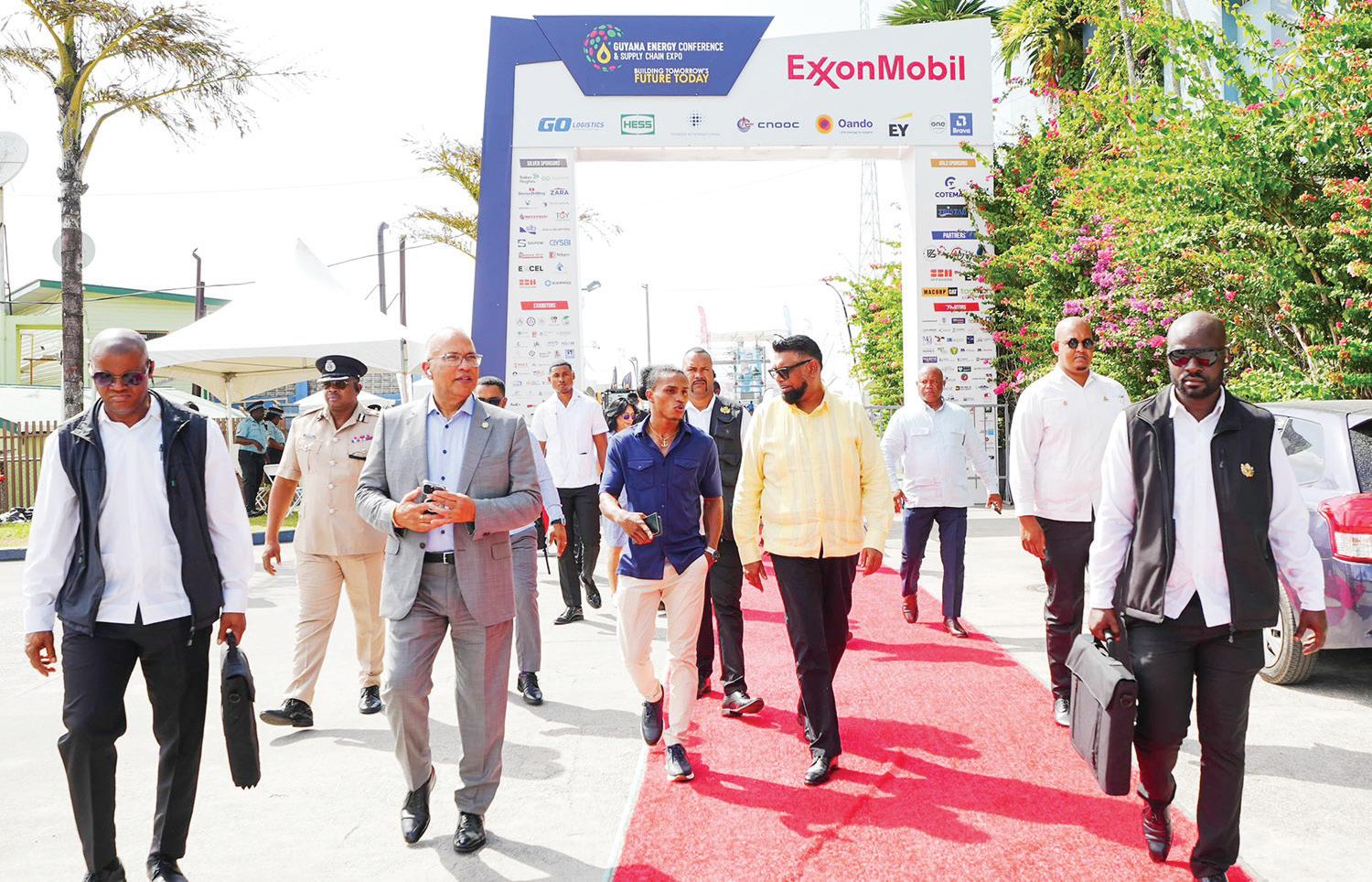
The AG made this known during day three of the Guyana Energy Conference and Supply Chain Expo.
He said: “We have also an Oil and Gas Operations Bill that will deal with the downstream activities of natural gas when, as you know, we are building that capability, we have a gas to shore project that is being completed, hopefully by the end of this year, and we already have the main statutory cradle for that sector, because that's something separate from the current gas production with which we are dealing. So, we have legislation coming in that regard.”
During his keynote address, Nandlall drew attention to the sweeping legislative architecture that has laid the foundation for Guyana’s meteoric economic rise.
Nandlall made it clear: “Guyana is transforming, and we have the legislative framework, the regulatory framework that will create the cradle from which all these industries are going to be conceived, born, weaned and flourish.”
A series of landmark legal and institutional initiatives are also on the cards.
Earlier this week, ExxonMobil Guyana Limited
stated that it is preparing to seek environmental approval for a second offshore natural gas project, a move that could significantly broaden Guyana’s energy sector and lay the groundwork for major industrial development, particularly in Berbice.
Speaking on the second day of the Guyana Energy Conference and Supply Chain Expo, President of
export, with the aim of maximising national benefits, while balancing sustainability, job creation and industrial transformation.
According to the President, the government’s objective is to ensure that ‘every molecule of gas’ contributes to the country’s economic diversification. He noted that the ongoing infrastructural developments, including

ExxonMobil Guyana, Alistair Routledge, said the company expects to submit a request for environmental authorisation within the coming weeks or months for the proposed development in the southeast section of the Stabroek Block.
The planned project signals a further diversification of Guyana’s rapidly expanding oil and gas industry, building on momentum generated by the country’s first gas-to-energy initiative and growing confidence in its natural gas resources.
Additionally, in November, President Dr Irfaan Ali noted that the government is currently assessing several models for gas use and
pipelines, industrial parks and downstream facilities, will serve as the backbone of this long-term plan.
“This is about positioning Guyana to extract the highest possible value from every resource we have,” Dr Ali said.
Currently, work is underway in relation to the construction of the gas-to-energy project, which is set to transport offshore natural gas to the onshore facility at Wales. The project aims to reduce the cost of electricity by 50 per cent.
Additionally, government plans to sell cooking gas, fertiliser and other natural gas by-products domestically and regionally.
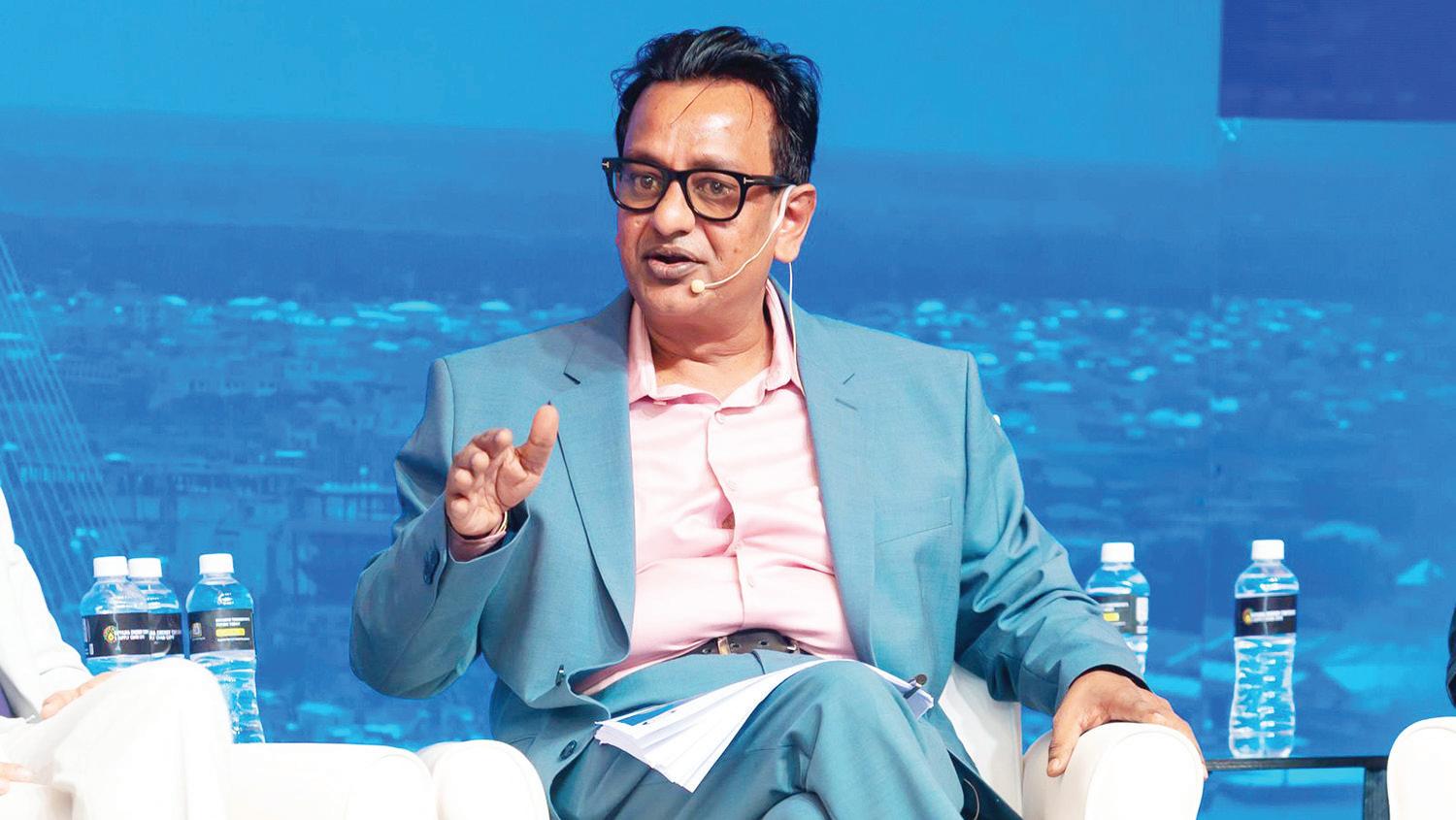
FROM new substations, transmission lines and smart-grid technology, the Guyana Power and Light (GPL) is undertaking a sweeping overhaul of power generation, especially given that peak demand has jumped from 120 megawatts (MW) in 2020 to 236MW in 2025.
GPL’s Chief Executive Officer (CEO) Kesh Nandlall made this disclosure during day three of the Guyana Energy Conference and Supply Chain Expo. While part of a panel discussion on the changing power landscape, he elaborated on the company’s plans to ensure that reliable power can be attained across the coast and hinterland.
With more customers coming on to the grid, industrial activity accelerating and housing developments expanding at a fast pace, GPL recognises the need for a system that fixes bottlenecks and improves reliability.
In 2020, the number of customers connected to the grid was approximately 201,000 but now, there are 244,000 customers, which represents a 21 per cent increase in the company’s customer base.
Further, in 2020, GPL
outputted 903 gigawatt-hour (GWh), while in 2025, 1,485 GWh was outputted, according to GPL’s CEO. The latest figure represents a 65 per cent increase.
Nandlall noted that with peak demand climbing, GPL had to move swiftly to meet this increase and from 2020 to now, it has added more than 186 MW of capacity.
Explaining that peak demand is expected to climb this year, the GPL CEO said:
“We have to equip ourselves to now bridge that gap until the ending of the year, when the gas-to-energy project will become available to us.”
Additionally, he projected peak demand in 2030 to be “1 GWh 650 MW.”
To keep pace, GPL is rolling out an aggressive and modern transmission
and distribution expansions, which include constructing 155 kilometres of new 230kV transmission lines to take power to Williamsburg in Region Six (East Berbice-Corentyne) from the gas-to-energy project.
There will also be nine new substations built in strategic locations within the next year.
Some 215 kilometres of 69kV transmission line and more than 200 kilometres of new distribution feeders will also be installed.
There will also be major upgrades to existing facilities in Georgetown and along the coast.
“Everything is going to be built with redundancy,” Nandlall said, noting that the aim is to make power supply more reliable.

WITH there being more global demand for stronger environmental safeguards, Guyana stands out given its ability to leverage its Low Carbon Development Strategy (LCDS) to build market trust, standardise environmental metrics and unlock new streams of private capital at scale, according to climate and biodiversity experts.
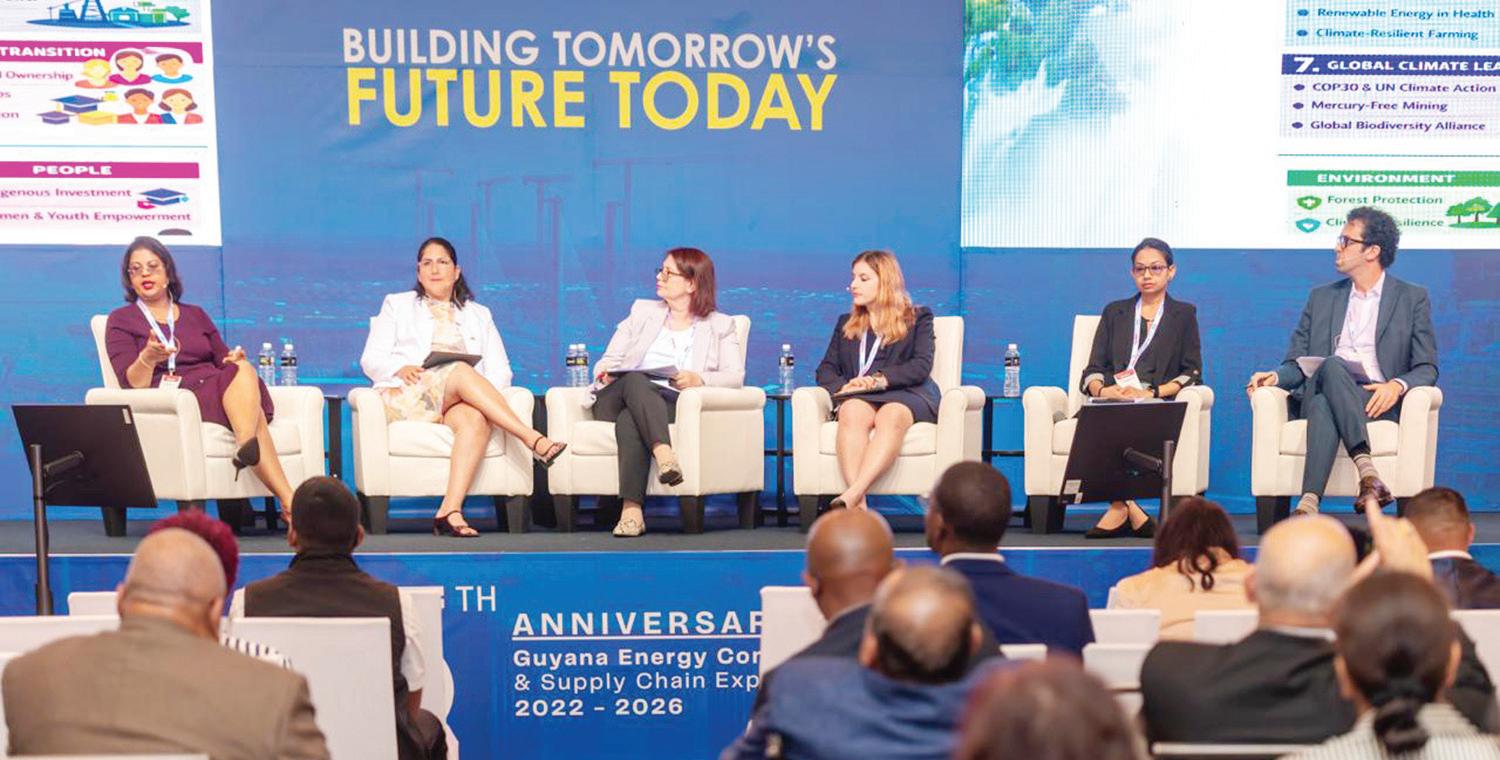
During a panel discussion on day three of the Guyana Energy Conference and Supply Chain Expo, several experts within the climate and biodiversity arena focused on Guyana’s development model and how the country is blending economic growth and environmental stewardship.
Senior Director of Climate And REDD+, Ministry of Natural Resources, Dr Pradeepa Bholanath, explained to the panellists and the wider audience that Guyana’s climate finance architecture has become an attractive investment hub as it aligns economic growth with environmental responsibility
The LCDS, in this regard, fulfils the “do no harm to nature,” characteristic which investors seek, she said.
Additionally, Bholanath highlighted that President Dr. Irfaan Ali stands out in his
leadership as he exemplifies what it means to implement policies that embrace climate security, energy security, and food security.
With the LCDS in place, development is not only reaching the coast but hinterland communities, as Bholanath pointed to the expansion of hydropower and solar power in indigenous communities.
Under the first LCDS, the global climate services provided by Guyana’s standing forests were mobilised to generate revenue for the country, in this instance, under a US$250 million bilateral partnership with the Kingdom of Norway.
On December 1, 2022, the Architecture for REDD+ Transactions announced the issuance of US$33.47 million
TREES credit to Guyana for the five-year period from 2016 to 2020. The Architecture for REDD+ Transactions (ART) is a global initiative that seeks to incentivise the reducing of emissions from deforestation and forest degradation (REDD), as well as restore forests and protect intact forests. Subsequently, the government entered into an agreement whereby Hess Corporation purchased approximately a third of Guyana’s credits. The agreement sets out that Hess will buy 2.5 million credits per year for 2016 to 2030 to a total of 37.5 million credits for a minimum payment of US$750 million to be paid to Guyana between 2022 and 2032.
Associate Partner of Mckinsey Social, Healthcare
and Public Entities Practice, Dr Stephanie Stefanski explained during the discussion that it is very clear that the primary constraint to successful energy transition is not the ambition, capital or aggregate, but how the opportunity can be captured on a broader scale to foster sustainable, equitable and inclusive economic development.
Recognising Guyana’s push to position itself as a global environmental leader, McKinsey stated that an integrated “lock and step” approach linking the synergies where climate finance can help unlock biodiversity finance and aid in bringing benefits to citizens, is needed.
There is no single instrument that can unlock scale,
she said, but in order to build these mechanisms, stability coupled with strong, clear and transparent governance and credible measurement systems are needed.
She said: “Guyana is already taking the first steps today towards one of its kind, national biodiversity information monitoring system that will help unlock and create this transparency around its natural capital, which I believe will be really key to unlocking the climate and biodiversity finance together.”
Country Representative of Inter-American Development Bank (IDB) in Guyana, Lorena Solórzano Salazar added to McKinsey’s comments about building trust in the market.
She noted that markets require blended finance warranties from institutions like hers, the IDB, or warranties from the countries that can enhance and expedite, attracting more investment from the private sectors, concessional capital, or public private partnerships.
Second is harmonised standards to make climate and nature finance more transparent and in this light, she referenced the IDB’s recent launch of a common nature finance taxonomy.
She also stated that while REDD+ has played an important role in supporting forest-rich countries, the region must move to now deploy a more sophisticated “toolbox” to further unlock vast natural capital.
“REDD+ has played an important role so far. But we need to scale up, as Pradeepa was mentioning in how we can capitalise, again, the nature capital of this region in a more sophisticated toolbox,” she said.
Also present on the panel were Guyana’s Country Coordinator of the Forest and Climate Leaders Partnership, Preeya Rampersaud and Bioeconomy Investment Expert at Conservation International Humberto de Andrade Soares.
The panellists further explained that beyond REDD+, they proposed new instruments that could further mobilise private capital in Guyana and the wider Caribbean and Latin America region, including debt-for-nature swaps and resilience-linked financing structures.
Such frameworks, the IDB country representative said, are critical for emerging markets like Guyana, where blended finance structures are often required to de-risk projects and accelerate investment flows.

By Trina Williams
ATTORNEY-GENER -
AL and Minister of Legal Affairs, Anil Nandlall, on Thursday, elaborated on how Guyana’s “unprecedented” transformation could not have taken place without the rule of law and a strong regulatory framework, which underpins the country’s oil and gas sector.
He made these remarks during day three of the Guyana Energy Conference and Supply Chain Expo, which is being held at the Marriott Hotel, Georgetown.
During his keynote address, Nandlall drew attention to the sweeping legislative architecture that has laid the foundation for Guyana’s meteoric economic rise.
He said: “By international metrics, Guyana is by far, the fastest growing economy in the world. The transformation in the country is unprecedented. It permeates every area of human endeavour.”
As explained by the Attorney-General, the oil and gas sector is not operating in isolation, but it is being used as a catalyst to also propel the non-oil sector.
This has resulted in a commercial surge and in 2025 alone, 36,251 new businesses were registered in Guyana, Nandlall said.
Further, the Minister of Legal Affairs highlighted that as Guyana transforms, so is its legal architecture.
Nandlall made it clear: “Guyana is transforming, and we have the legislative framework, the regulatory framework that will create the cradle from which all these industries are going to be conceived, born, weaned and flourish.”
A series of landmark legal and institutional initiatives are on the cards, and this includes an overhaul of the Companies Act, which was enacted in 1991. Being frank, he said in its current form, the piece of legislation is inadequate for regulating the complex, fastpaced, digital Guyana.
A consultant has already been engaged and broad consultations with the private sector and key stakeholders are expected to begin shortly, the legal affairs minister said.
Other pillars needed for reform which will be pursued are: Electronic Transactions Law, Open Data and Data Protection Law and Law Reform of the Trustees Act.
ister of Legal Affairs pointed to Guyana’ western neighbour, Venezuela to show when these elements are absent, institutional stability can unravel.
Central to Guyana’s responsible management of its resource wealth is the Natural Resource Fund (NRF), he highlighted.
He disclosed that when the People’s Progressive Party/ Civic (PPP/C) government took office in 2020, there was “no appropriate legislative framework” in place to regulate the sector.
The former A Partnership for National Unity+ Alliance For Change (APNU+AFC) administration had enacted a Natural Resource Bill in 2019, after it was already toppled by the historical No-Confidence Motion, the Attorney General recalled.
The South American nation has received appraisals from globally renowned institutions, including the International Monetary Fund (IMF), which in its 2025 Article IV Consultation Report, commended Guyana’s careful and rulesbased management of its NRF, calling it a key pillar of the country’s long-term economic strategy, Nandlall further pointed out.
The NRF Act of 2021 in Guyana established the NRF, a fund designed to manage the country’s natural resource wealth.
The Act outlines the framework for handling oil revenues, ensuring transparent and accountable management for the benefit of current and future generations. The Bank of Guyana is responsible for the operational management of the fund.
tisation of Guyanese nationals and Guyanese companies in the procurement of goods and services for the advanced enhancement of the value chain of the petroleum sector to enable local capacity development.
Another major piece of legislation the Minister of Legal Affairs made mention of was the Petroleum Activities Act 2023 (Act No. 17 of 2023), which modernised Guyana's oil and gas legal framework, replacing the 1986 Act.
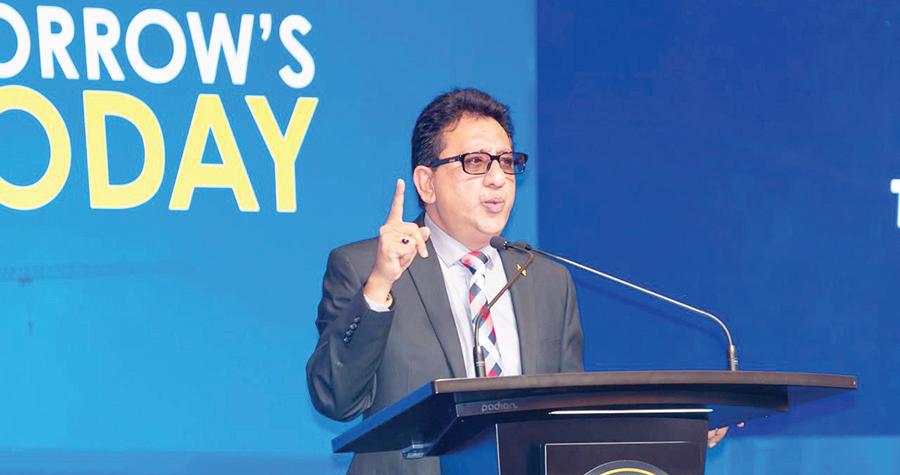
Attorney-General and Minister of Legal Affairs, Anil Nandlall
The Petroleum Activities Act is the next major piece of
legislation, which repealed the “outmoded and anachronistic” 1986 Petroleum
Production Act.
He also noted that the government has drafted templates of Production Sharing Agreements (PSAs) to be used in relation to future oil blocks, emphasising: “Those production agreements that are going to be signed are going to be radically different from the 2016 agreements.”
There were several other pieces of legislation that the Attorney-General referred to that have bolstered the framework of the country’s oil and gas sector.
BUILDING A STRONG LEGAL
The NRF Act introduced major improvements to the framework for managing oiland-gas revenues and essential enhancements to the governance and transparency arrangement of the fund. These enhancements to the NRF Act 2021 include the establishment of a Board of Directors which will be responsible for reviewing and approving the policies of the fund and monitoring its performance, thereby separating the management of the fund from the minister responsible for finance. Additionally, the NRF Act 2021 requires the government to seek parliamentary approval for withdrawals from the fund, and also sets out new, simplified calculations needed for ensuring that the fund achieves its purposes.
Both during the conference and externally, international observers have likened Guyana’s rapid ascent to major nations like Qatar and Dubai. While emphasising the importance of strong governance and legal safeguards, the Min-
The Attorney-General then turned his attention to another critical piece of legislationthe Local Content Act 2021, which he said is almost “purely indigenous and original.”
The Act provides for the implementation of local content obligations and the priori-

- health officials urged to collaborate, work as a team
By Indrawattie Natram
DIRECTOR General of
the Ministry of Health, Dr. Vishwa Mahadeo, has called on health professionals in Region Two to work collaboratively to further advance healthcare delivery across the region.
Dr. Mahadeo emphasised this while addressing doctors, heads of departments, and matrons at the Annual Regional Health Services Leader-
ship Meeting hosted by the Regional Democratic Council (RDC) on Thursday morning in the RDC Boardroom.
The meeting, which is the first for 2026, brought together senior health officials, administrators, and frontline leaders to review progress and chart the way forward for strengthening healthcare services across the region.
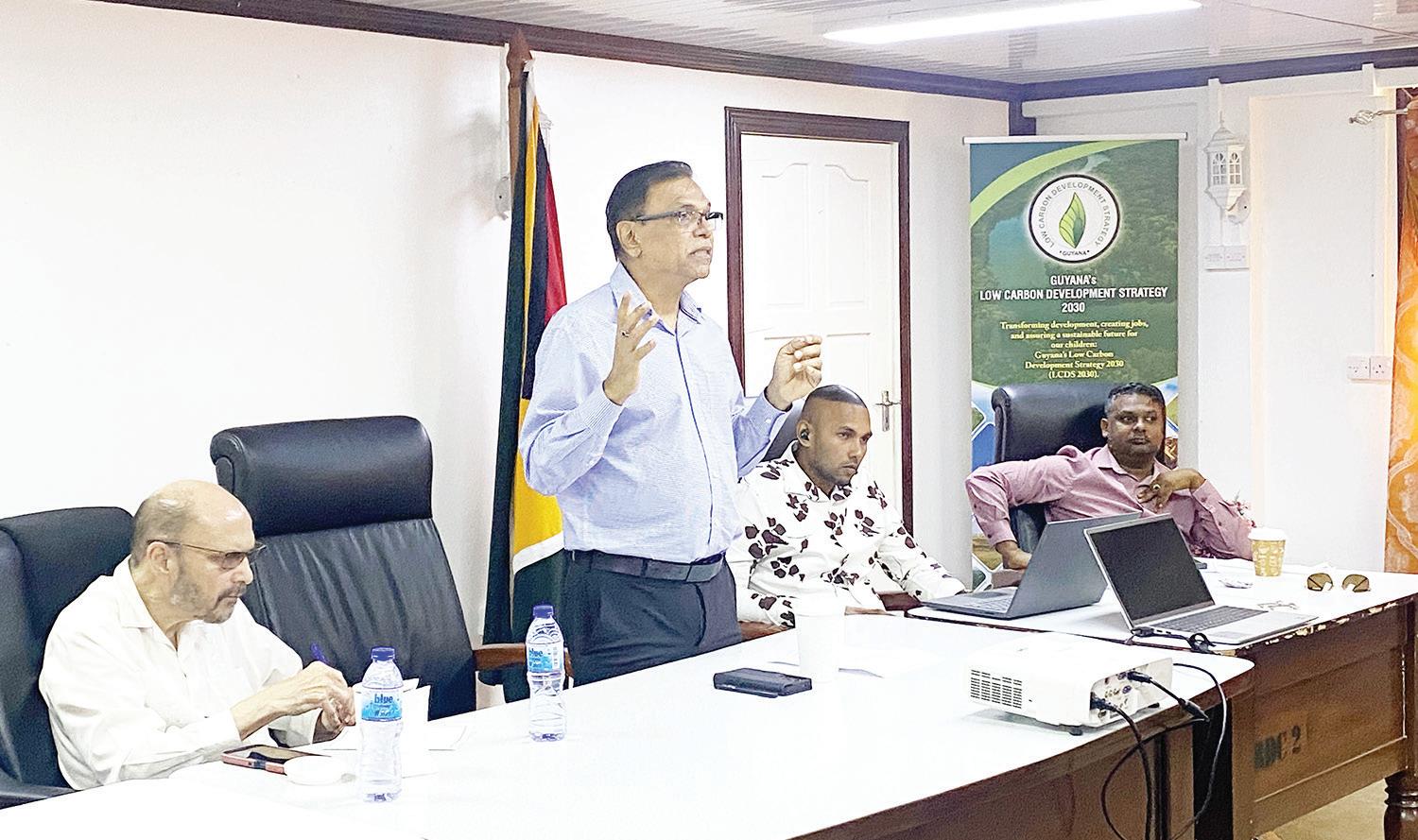
Delivering the feature address, Dr. Mahadeo reflected on the significant transformation of healthcare services in Region Two since 1994. He shared that he conducted the region’s very first medical outreach

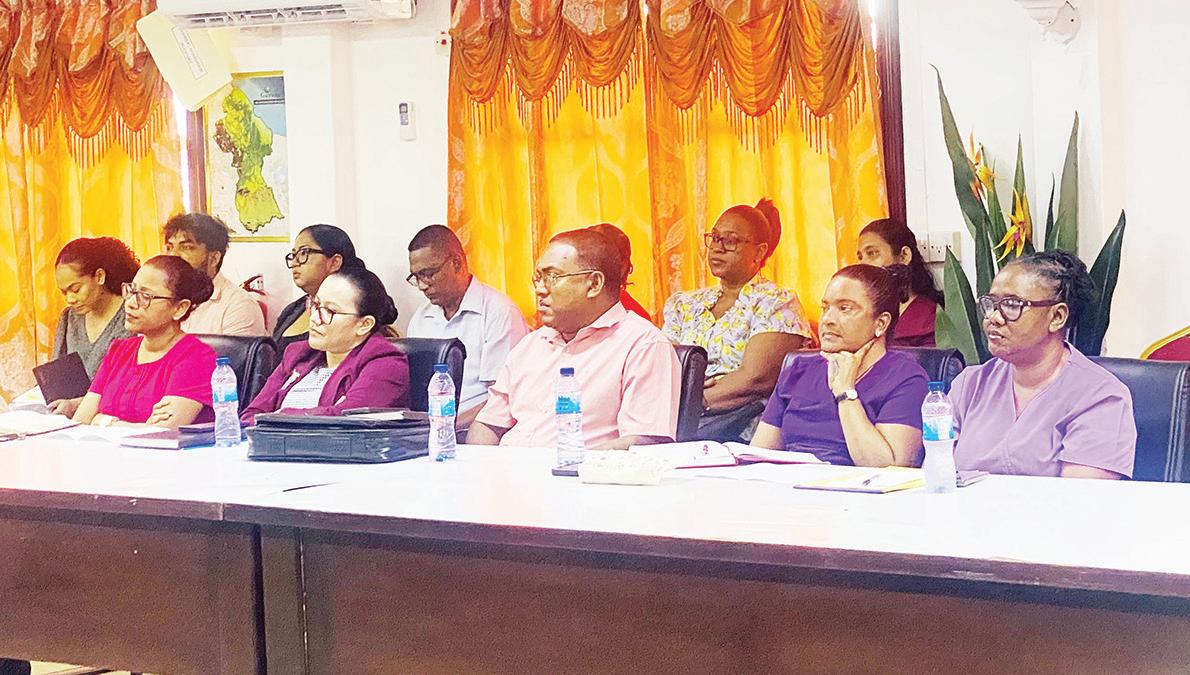
Health officials from various departments and institutions in Region Two at the recently held Annual Regional Health Services Leadership
and expressed pride in the steady expansion and modernisation of services over the years.
He emphasised the government’s commitment to equal and equitable healthcare, stressing that every citizen must have access to the same standard of care, regardless of where they reside.
“If patients cannot come to us, then we must go to them,” he stated, underscoring the importance of medical outreaches, particularly in hinterland communities.
Dr. Mahadeo noted that in earlier years, health facilities struggled with shortages of medication and limited diagnostic capabilities. Today, however, health centres across the region, including those in remote areas, are delivering expanded and improved services.
He stressed that maintaining this progress requires strong leadership, accountability, coordination, and above all, teamwork.
The senior health ministry official reminded health leaders that under the President Irfaan Ali administration, significant national investments are being made in the health sector. As representatives of the Government of Guyana, he said officials have a responsibility to ensure that taxpayers’ funds that are allocated for medicines, reagents, and infrastructure are properly managed and accounted for.
He commended Region Two for setting high standards in healthcare delivery and urged
leaders to maintain and strengthen those benchmarks.
Management committees were encouraged to identify challenges early and communicate effectively with the Regional Health Officer, Medical Superintendents, and the Regional Executive Officer.
Dr. Mahadeo also called for increased specialist outreaches to hinterland communities and assured the region’s health officials that nursing care would be available for bedridden patients.
Special commendation was extended to those attached to the Regional Dental Department and laboratory services department for their outstanding performance.
“We have to make care more friendly. Region Two has done well. Now it’s time to maintain the standard,” he said.
Regional Health Officer Ranjeev Singh emphasised the importance of collaboration among healthcare professionals, noting that teamwork leads to improved patient outcomes and stronger staff-patient relationships.
Regional Executive Officer Susanah Saywack highlighted the need for improved communication and collective responsibility, cautioning against finger-pointing and encouraging leaders to use the forum to address areas requiring improvement.
Regional Chairman Devin Mohan reminded attendees of their duty to
serve in the best interest of the people.
He stressed that patient experience must remain a top priority and reaffirmed the region’s continued support for the health sector. He also said that recent visits to Charity and Lima hospitals left him impressed with the progress made in the region’s health sector.
Meanwhile, Dr. Mc Watt, Director of RITS at the Ministry of Health, described the leadership meeting as a pivotal initiative aimed at strengthening the regional healthcare model. He underscored the importance of consultation, collaboration, and building a people-centred health system guided by the Regional Health Office, while examining both achievements and gaps to improve service delivery.
The meeting featured presentations from Lima Regional Hospital, Oscar Joseph District Hospital, and Suddie Public Hospital, followed by interactive question-and-answer sessions with matrons, laboratory technologists, surveillance officers, environmental health officers, TB workers, and hospital administrators.
During the meeting, Region Two officials reaffirmed their commitment to delivering equitable, accountable, and people-centred healthcare, while strengthening partnerships among leaders and frontline professionals to ensure the continued advancement of the health sector.
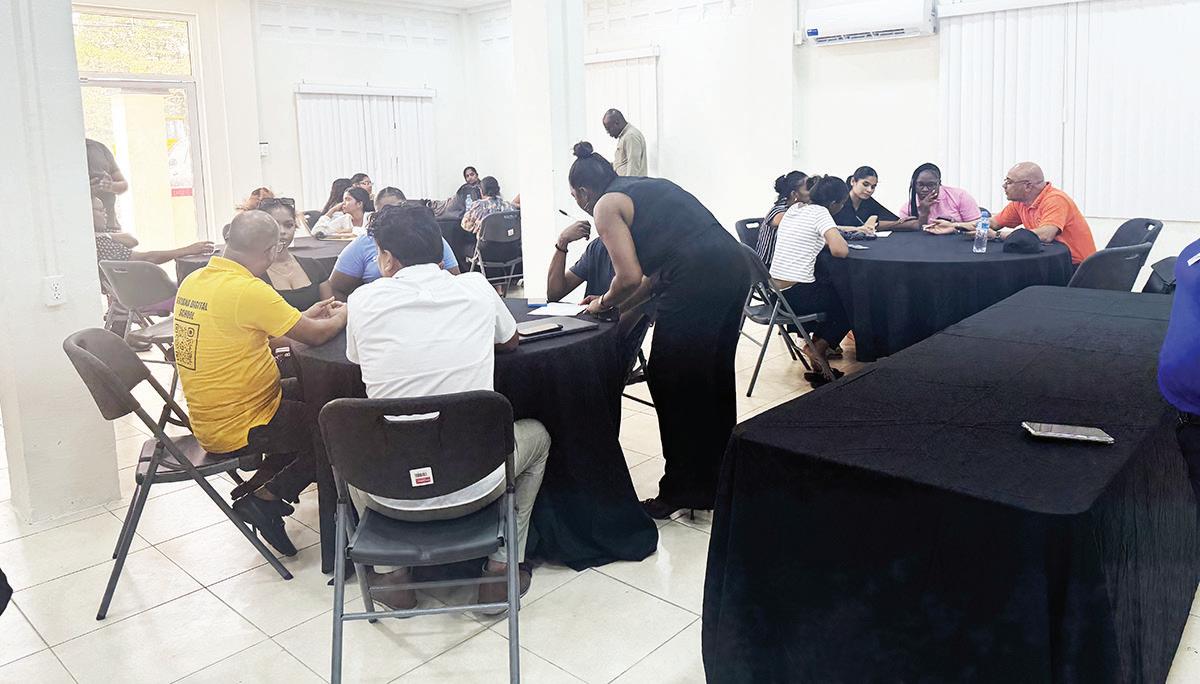
Persons being interviewed for various positions at the Region Six service centres which are expected to open to the public before the end of March
By Bebi Shafeah Oosman
THE process to establish service centres in Region Six has commenced with three locations expected to open before the end of March – something Berbicians are eagerly anticipating.
Regional Chairman, Junior Basant, who was present on Wednesday for the identification of locations and met with persons applying for several vacancies stated, “as part of the government initiative to meet the people within their communities, we are rolling out a series of service agencies as mandated by the His Excellency, the President.”
According to Basant, the centres are expected to be in Palmyra, Port Mourant and Corriverton. Some of the agencies that will be housed at these locations include the Digital Identification Card office, General Register Office, Guyana Digital School and Immigration.
“These centres will be spread across Region Six and will bring critical services that the people need and will
be able to access on a daily basis,” he emphasised.
The Chairman pointed out that most of these services were previously centralised and as such, persons had to incur huge costs and endure lengthy travel time. However, when the centres are opened, these issues will “become a thing of the past and people will be able to access these on a daily basis.”
Additionally, he said the fact that the Digital ID Card will be available at the service centres is exciting news for the residents of Region Six.
Meanwhile, a young business owner of Canefield, Niomi Bhimsain, spoke highly of the centres explaining that “establishing inter-governmental agencies such as the E-ID card system, passport offices and the digital school initiative will bring meaningful change to residents of Corentyne.”
She said, “sub-post offices will improve access to essential services, reducing travel time and costs for families, seniors, and small business owners. The E-ID card system will modernise iden-
tification, making it easier to access banking, healthcare, and government services while improving security and efficiency.”
She added that, “The digital school initiative will enhance education by providing students with modern technology and online resources, helping to bridge the digital divide and prepare young Guyanese for future opportunities. Together, these initiatives will strengthen community development, improve accessibility, and support for residents.”
Another young professional from the Corentyne, Aarifah Khan, who studies at the University of Guyana’s Tain Campus said that she believes “it will make services that were once difficult to access, easier”
According to her, such locations at prime spots in the region will also be a plus for persons trying to access and update their documents. “In essence it will be an easier, efficient and reliable service in a modern way,” she pointed out.
POLICE in Regional Division #10 are investigating a fatal incident which occurred on Wednesday, February 18, 2026, at Mango Landing, Region #10 and resulted in the death of Balram Jhaman, a 50-year-old male of Soesdyke, East Bank Demerara.
According to a police
statement, preliminary investigations revealed that articulated motor lorry GAL 8612, with trailer registration number unknown, was parked facing west on the southern side of the Mabura Trail with an excavator positioned on the trailer. The deceased reportedly entered the excavator and attempted to move it off the trailer
when the machine capsized and fell into a ditch, pinning him underneath.
He sustained injuries abou t his body and was transported to the Linden Hospital Complex, where he was pronounced dead on arrival by a doctor on duty. Investigations are ongoing, the police said.





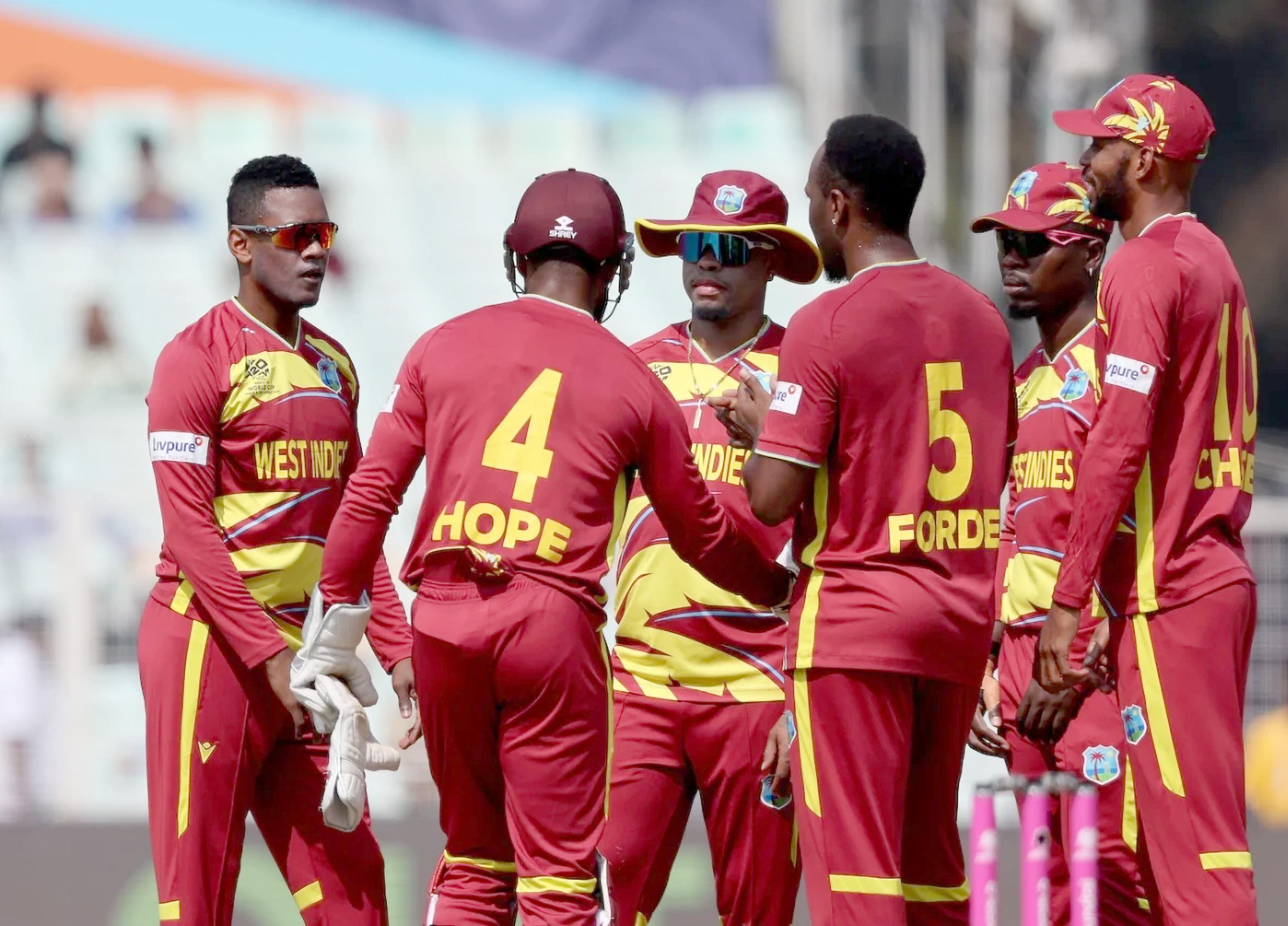
(ESPNCRICINFO) - West Indies headed into the Super Eight of the T20 World Cup unbeaten after successfully defending 165 against Italy at Eden Gardens on Thursday. Spinners Crishan Kalugamage and Ben Manenti impressed with the ball, and were backed up by some sharp fielding, but the batters couldn’t get the Italian job done.
While Italy exited their maiden World Cup with a win against Nepal and many memories to cherish, West Indies sealed their fourth successive win at the venue where they will face India in their final Super Eight fixture on March 1.
Italy may have sensed an opportunity for another win when they stifled West Indies’ power-packed middle order, but Matthew Forde’s twin strikes in the powerplay decisively tilted the game in West Indies’ favour.
Bowling three overs on the bounce, Forde dismissed both Justin Mosca and No. 3 Syed Naqvi, helping West
Indies restrict Italy to 37 for 3 in six overs.
Shamar Joseph then bagged four wickets to go with his four catches as Italy were bowled out for 123.
The win was set up by Shai Hope, who hit backto-back half-centuries and dominated the early exchanges with an array of offside drives. West Indies lost steam after Hope departed for 75 off 46 balls, but they regained it through their bowlers.
Hope’s solo act
After West Indies were asked to bat first, they hit seven boundaries in the powerplay, and Hope was responsible for all of those. By the eighth over, the West Indies captain had zoomed to a 28-ball half-century. The first boundary by a West Indies player not named “Shai Hope” came in the tenth over when Roston Chase backed away and lifted leftarm spinner JJ Smuts over extra-cover.
Hope peppered the offside, scoring 46 of his 75
(Friday February 20, 2026)
CUMMINGS ELECTRICAL COMPANY LTD 83 Garnett Street, Georgetown (Tel:225-6158)
Answers to yesterday’s quiz: (1) 40 Group games (2) 12 Super Eight games
Today’s Quiz:
(1) What has been the result of the final Group game in the current T20 World Cup?
(2) Who copped the Man of the Match award? Answers in tomorrow’s issue

runs in that region. Anything that was remotely full and outside off was crashed in the arc between mid-off and point.
When Italy dragged their lengths back, Hope was ready for it as well. Like when left-arm seamer Ali Hasan banged one into his upper body, Hope swatted him away over square leg for six in the fourth over. Hope was particularly severe on right-arm fast bowler Thomas Draca, taking him for 20 off nine balls.
Italy finally stopped him in the 16th over when leg-spinner Kalugagame bowled him with a tossed-up wrong’un.
West Indies were on track for 200, especially when Hope was in charge, but wrist-spinner Kalugamage combined well with offspinner Ben Manenti to drag them back. After being on 90 for 2 in 12 overs, a West Indies middle order that included the likes of Rovman Powell, Sherfane Rutherford and Jason Holder could only
manage 75 in the final eight overs on a fairly flat pitch at a ground with small boundaries.
Chase didn’t find his timing at any point, labouring to 24 off 25 balls before Ben Manenti had him holing out. Powell scored a run-a-ball 9 before also falling to Ben Manenti.
Kalugamage busted his finger while taking the catch of Powell in the outfield, but after a quick trip back to the dressing room, he castled Hope and brought out his trademark arms-crossed celebration, paying tribute to Lautaro Martinez, his favourite football player. The celebration made another appearance after Kalugamage had Holder caught at wide long-on with a short and wide leg-break.
Forde, who retained his place in the XI ahead of Romario Shepherd, who had also missed the previous game with a niggle, made a cameo (16 not out off eight balls) to haul West Indies past 160.

ENGLISH RACING TIPS
EXETER
10:14hrs Kapiten Kool
10:44hrs Mountain Mike
11:14hrs Fun Fun Fun
11:45hrs Catch Catch Fire
12:15hrs Sweet Carlyne
12:45hrs Watchoutitscookie
13:20hrs Loveable Report
FFOS LAS
09:52hrs Esperti
10:22hrs Shade Of Winter
10:52hrs Rathkenny
11:22hrs Eton Mes
11:52hrs Morning Mayhem
12:22hrs El Rojo Grande
12:52hrs Gold In The Rivers
SOUTHWELL
12:26hrs King Of York
12:58hrs My Mate Mike
13:30hrs Wonder
14:00hrs I Need Your Love
14:30hrs Vantheman
15:00hrs Midnight Lion
15:30hrs Square Necker
16:00hrs Juan Les Pins
16:30hrs North View
SOUTH AFRICA RACING TIPS
08:15hrs Kentucky Lassie
08:50hrs Get Impressed 09:25hrs Roman Agent
10:00hrs Song Of Myself
10:40hrs Lady Bomber
IRISH RACING TIPS
DUNDALK
10:40hrs Sir Les Patterson
12:10hrs Go Out
12:40hrs Oiche Rua
13:15hrs Astronomically
13:45hrs Pink Oxalis
14:15hrs Voice Of Reason
14:45hrs Storm Eric
15:15hrs Arrietty
AMERICAN
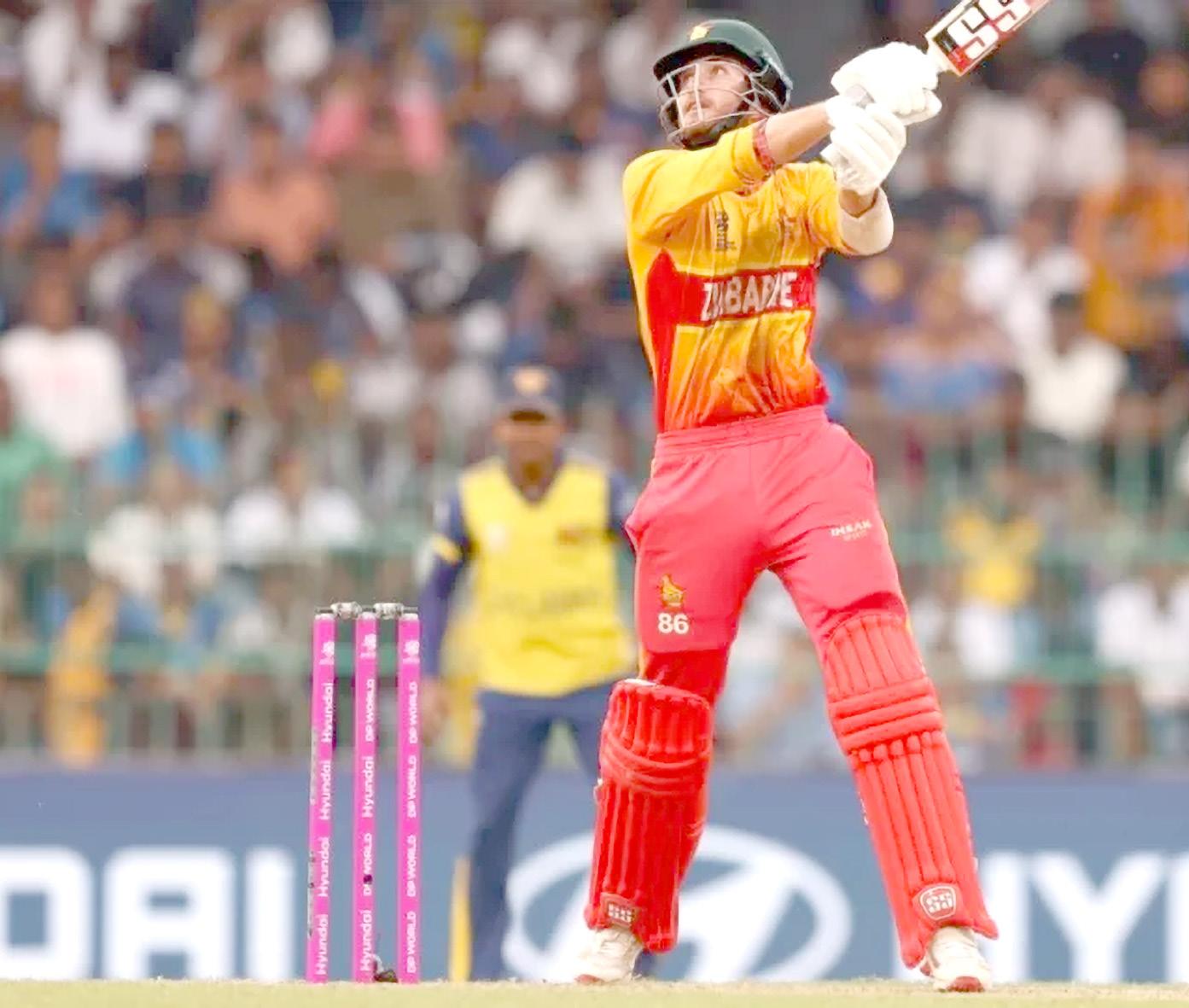
(ESPNCRICINFO) - One time is a shock. Two times, and the second to beat hosts Sri Lanka at their own game, is Zimbabwe. Led by their canny bowling, Zimbabwe pulled Sri Lanka back from a flying start to keep them to 178 on a sluggish Premadasa track.
Their opener Brian Bennett, quickest scorer in their history, dropped anchor, stayed unbeaten like his team, and Sikandar Raza, Ryan Burl and Tadiwanashe Marumani did all the damage from the other end to seal their second-highest successful T20I chase.
Sri Lanka’s innings had three neat divisions: first 29 balls for 54 for 0, next 72 for 82 for 4 and then a finishing kick of 42 for 3 off the last 19 balls. Zimbabwe went Bennett and non-Bennett. Bennett scored 63 off 48; the other three combined for 102 off 64 balls. Raza was the decisive hand: 45 off 26
after the asking rate had gone past 11.
Nissanka continues good form
Fresh off a match-winning hundred, Pathum Nissanka got off the blocks running along with Kusal Perera. In the company of Kusal Mendis, he took Sri Lanka past 50 in the fifth over. Zimbabwe did try to deny them pace by bowling two overs of spin in the first four, but Raza and Wellington Masakadza were not as accurate and menacing as some of the more established spinners.
Zimbabwe pull things back
Once Blessing Muzarabani got rid of Perera with a slower short ball at the end of the fifth over, the game changed. Kusal Mendis played a strange innings of little intent and 14 off 20, during which Nissanka went past him as the most prolific
run-getter for Sri Lanka in T20Is. By the time Mendis was dragged out of his crease by a ripping leg-break from Burl, Sri Lanka had fallen to 100 for 2 in 12.1 overs.
With even Pavan Rathnayake struggling at the start of his innings, Nissanka felt obligated to hit out and was out on the reverse sweep off Graeme Cremer, who returned figures of 4-0-272. His second victim was Kamindu Mendis courtesy a gentle push for a return catch.
Rathnayake provides a finishing kick It was only in the end that Sri Lanka found some momentum with Rathnayake finding a way to score 44 off 25. He hit the first six of the innings at the end of the 17th over, and went to hit the only other six of the innings off Brad Evans in the 19th over. Dunith Wellalage scored 14 off the last over to carry some momentum into the defence.
THE upcoming physiotherapy seminar for coaches, featuring a panel of experienced local practitioners and sports medicine specialists, is being positioned as a major step toward strengthening athlete welfare and performance standards in Guyana.
The one-day programme, set for February 27 at the Cliff Anderson Sports Hall, will be led by physiotherapists Vanessa Wickham, Jana Edghill, Angelica Holder, Neil Barry, and Kelly Coonjah, with each presenter focusing on critical areas ranging from injury prevention to safe return-to-play protocols.
Organised by the National Sports Commission (NSC), in collaboration with the Physiotherapy Department of the Ministry of Health, the initiative aims to bridge the gap between clinical sports medicine and everyday coaching practice.
According to organisers, the seminar will cover a wide cross-section of practical topics including injury prevention and load management, mechanisms of injury linked to coaching decisions, acute injury management, concussion recognition, heat illness prevention in tropical environments, hydration strategies, structured warmup and cool-down protocols, and strength and conditioning for injury resilience.
Additional sessions will examine youth athlete considerations, injury-tracking systems, and criteria-based return-to-play frameworks. Wickham, who will address sports medicine team dynamics, injury patterns, and International Olympic Committee injury-prevention protocols, is expected to set the foundation for understanding how coaching decisions influence athlete health outcomes.
Edghill will focus on
acute injury response, concussion management, and heat-related illnesses, an especially relevant topic in Guyana’s climate, while Holder will emphasise the importance of proper warmup and recovery strategies.
Barry’s presentation will centre on strength and conditioning principles for both performance and injury prevention, with Coonjah concluding with guidance on safe return-to-play systems and youth athlete development.
Director of Sport Steve Ninvalle described the seminar as a critical component of the NSC’s long-term vision to modernise sport development in Guyana, noting that athlete welfare must remain central to any performance ambitions.
“Our vision is clear…we want Guyanese athletes to perform at their highest level, but never at the expense of their health,” Ninvalle
explained.
He added, “programmes like this ensure that coaches, who are often the first responders when injuries occur, are equipped with the right knowledge and tools to make informed decisions.
That directly impacts athlete longevity, safety, and success.”
Ninvalle further stressed that the partnership with the Ministry of Health, and its department headed by Dr Arianne Mangar, represents an important shift toward a more integrated national sports system, where medical expertise is embedded into training environments rather than treated as an afterthought.
“This collaboration signals that sport and health must work hand in hand. When we invest in education for coaches, we are investing in the protection of athletes across every discipline, from grassroots to elite levels,”
Ninvalle noted.
The NSC believes the seminar will also contribute to reducing injury incidence, preventing reinjury, and improving performance sustainability nationwide.
Beyond technical knowledge, the initiative reflects a broader national commitment to athlete-centred sport development.
By integrating evidence-based sports medicine principles into the coaching
culture, organisers hope to create safer sporting environments while strengthening referral systems between coaches, medical professionals, and institutions.
The seminar is open to coaches from all sporting disciplines, with the NSC encouraging broad participation as Guyana continues its push toward sporting excellence built on a foundation of athlete protection and welfare.

NEW Guyana Cycling Federation President Nigel Eliakim London is keen on meeting the Minister of Culture, Youth and Sport Charles Ramson Jnr.
During a recent interview with Chronicle Sport, London, who replaced Horace Burrowes following the latter’s resignation, said, “There is on my part a better understanding of the importance of politics, in reference to governance, and its role that should be played in sports.
Whether we want to admit it, politics play a very, very, critical role in the development of any sport, and in this case cycling, there is really in need or injection or healthy dose of assistance from the political circles, be it opposition or in this case the government side.”
London, who previously
served as a Vice-President of the GCF explained, “I understand my role and my interaction with other political figures and so on, could be healthy, as long as we keep the focus that it’s a sport.
It’s one in which our youths and in this case, many instances the older men and women that have become involved in cycling, I do foresee that there should be a very healthy relationship if I understand what the political climate is like, and I know what it should also be like, if we are all matured about this situation.”
Looking back at the reason for his ascent to the top official of cycling due to Burrowes’ decision to exit and how he intends to navigate in such a challenging role, London, who was the Prime Ministerial Candidate
REBEL Tennis Club is celebrating their 11th anniversary with a month packed of activities.
RTC was founded in February of 2015 by Head Coach, Andre Erskine.
The club kickstarted its celebrations with the Anniversary Tournament, which will see players competing in various categories namely U-8, U-10, U-12, U-14, U-18, U-25, and an internal parents’ competition.
The tournament, which is named the RTC Anniversary Clash, started on January 31st and will be played on weekends throughout the month of February.
The club, which is in the compound of the Guyana Bank for Trade and Industry along the Diamond Public Road, is being partially funded by Trophy Stall for the second consecutive year at this event.
for The Forward Guyana Movement at the 2025 Regional and General Elections, said, “I have understood from first hand some of the challenges that Mr. Burrowes would have faced. It had a lot to do with the role and the marriage between various entities and also individuals and the sport. What is healthy for me or what has become very important in this situation is the fact that every person who is an enthusiast says that they really want to see the sport advance and the peloton group that rides now it’s quite large about 60 to 70 people on their bikes, and it has dwindled to 20 to 30 at times, so we have a much larger number of people who are riding, and they all said they just want to see there to be a better environment in
which to ride.”
Having served under Burrowes, London offered these words of appreciation, stating, “I do credit him with being very, very strong to have been around for so long, and whether persons choose to admit it.
He is the only president in our country’s history, who had the honour of hosting the elite Caribbean Championships, which we gained a Bronze Medal through Briton John. He hosted the Junior Caribbean Championship, so much has been done under his tenure, although it would have been rocky as some people would say. But cycling is a tough sport, and you have to be all of this.”
On the immediate task at hand and meeting with the Minister of Sports Charles Ramson (Jr.), London had

welcoming words notably, when questioned if the GCF had met with the minister, “Not as yet, and I am eager to have that engagement, we have our first GCF executive meeting tomorrow, and in that meeting we hope to discuss the importance of having conversations with the likes of the Minister Charles Ramson (Jr), a representative from the Ministry of Culture, Youth and Sport because you know that in this mammoth budget, $6B would have

been allocated for three, culture, youth and sport, hopefully we can have a supplemental budget where $6B is just allocated for sports in general. I said initially that my role as a political figure, as some media outlets have presented it, is good.”
Saying that as politicians there should be things in common London added “Here I have one who should be a colleague of mine in the political arena in Charles Ramson, so we both understand governance and how things should be, but along with that we look forward to having conversation with the likes of individuals in the National Sports Commission, and importantly in the Ministry of Education, because we cannot get where the feeder ground is.
And one of the main focuses should be on the youth and children, because that is where inspiration comes from. The great Tadej Pogacar started as a little boy, well he played football first and branched off to cycling… Mark Cavendish, one of the greatest cyclists ever, also started as children. And we know our very own Joelyn Joseph started as a teenager 14, 15 years old.
So, if we can get that relationship with the Ministry of Education, hopefully we could even have a national cycling championship for school children, not a part of the national inter schools; but cycling in general. Because it happens all over the world and why can’t we have that here also in Guyana?.”
AKADIAN Andrews and Clarence Charles were on target in the latest clashes in the MODEC Tertiary Football Tournament when action returned to the Scotts Ground in New Amsterdam Berbice this week.
Port Mourant Technical Institute finished with a 3-1 victory against New Amsterdam Technical Institute.
Andrews’ goal broke the silence 18 minutes into the piece then New Amsterdam Technical Institute’s Amare Caesar found the net in the 38th minute for the equaliser.
After both teams returned from the half, Andrews scored his second goal in the 53rd to give Port Mourant the lead 2-1.
In the last 10 minutes of the encounter, Clarence Charles registered his first and only goal to guide Port Mourant Technical Institute to the 3-1 victory.
Upper Corentyne Industrial Training Centre (UCITC) then played to a draw with University of Guyana Tain Campus 2-2.
UCITC had a pair of goals from Rarvon Simon coming in the 5th and 20th minutes.
University of Guyana Tain Campus’ Jaheim Elgin then helped them rebound as he scored back-to-back goals in the 30th and , 36th minutes to level the scores.
The matches are being hosted in the different regions where the tertiary schools are located with teams playing on a home-and-away, round-robin basis.
The top seven and the next best team will make up the quarter-final.
The top teams will be awarded $300,000, $200,000, $100,000 and $50,000 for places 1-4 with proceeds going to a school project of their choice.
The tournament will conclude on March 8th at the Ministry of Education Ground.

ELITE League Champions Slingerz FC kicked off their Elite League Cup campaign with an 8-nil drubbing of Ann’s Grove on Wednesday evening at the Guyana Football Federation National Training Centre.
Slingerz, led by doubles from Darron Niles and Kemar Beckford defeated Ann’s Grove United FC 8-nil.
After kick-off in the feature contest, a pair of goals
from Niles in the 12th and 23rd minutes coupled with Beckford’s first goal put Slingerz in a place of comfort with a 3-nil lead.
Midfielder Curtez Kellman then scored in the 31st minute as they went into the break with a 4-goal advantage.
After the resumption, Niles completed the hat-trick with his effort in the 49th minute of play.
A brace followed from
the boots of Beckford, the Slingerz man finding a triple to take the score to 7-nil.
A late strike from Rashawn Ritch completed the rout in the 84th as the West Side giants took a statement win to get their Elite League Cup campaign on the road.
Meanwhile in the opening contest of the evening, Santos FC led by a Shakeel King 39th minute strike grabbed a 1-nil victory over Den Amstel.
The competition will see the winner collecting a million dollars with $700,000 for second place, and half a million for third place.
The Elite league Cup continues Saturday with a pair of matches, at 18:30hrs. Ann’s Grove will come up against Monedderlust FC and Western Tigers are set to meet Fruta Conquerors FC at the same venue.
CRICKET West Indies (CWI) today announced a new sponsorship agreement with Livpure, a leading water purification and home appliances brand, which will serve as an official jersey sponsor of the West Indies Senior Men’s Team for the ICC Men’s T20 World Cup 2026 and the West Indies white ball tour of India later this year.
The partnership comes at an exciting time for the West Indies Men, who are currently on a strong winning streak in the ICC Men’s T20 World Cup 2026 and have already secured qualification to the Super Eight stage. The team
will next face Zimbabwe in their Super Eight fixture on Monday, February 23, with the first ball scheduled for 9:30 AM Caribbean Time, as they look to maintain momentum heading into the knockout phase of the tournament.
The agreement covers the ICC Men’s T20 World Cup 2026, scheduled for February and March, and the West Indies’ white ball tour of India in September and October 2026, which includes three One Day Internationals and three T20 Internationals.
CWI President, The Hon. Dr. Kishore Shallow, welcomed the partnership as an
important step in strengthening the commercial foundation of West Indies cricket.
“On behalf of Cricket West Indies, I warmly welcome Livpure as a valued partner of our Senior Men’s team.
This collaboration reflects the enduring global appeal of West Indies cricket and our ability to attract respected international brands. Strategic partnerships such as this are critical to supporting the growth, competitiveness, and long-term sustainability of our game across the region.
We look forward to building a strong and mutually
beneficial relationship with Livpure as our team competes on the world stage.”
CWI Chief Executive Officer Chris Dehring also highlighted the significance of the agreement, particularly in a key cricket market.
“Cricket West Indies is pleased to welcome Livpure into the West Indies cricket family.
This partnership reflects the global appeal of our team and the strong commercial opportunities associated with West Indies cricket, particularly in key markets such as India. We look forward to working closely with Livpure to deliver value both on and
off the field during a pivotal year for our men’s team.”
Livpure’s branding will appear on the leading arm of the team’s shirt during the ICC Men’s T20 World Cup in accordance with tournament regulations, and on the front of the shirt during the India tour, subject to international playing conditions and approvals.
Rakesh Kaul, MD & CEO for Livpure expressed enthusiasm about the collaboration.
“We are proud to partner with Cricket West Indies and to be associated with one of the most iconic teams in world cricket. The passion,
flair, and global fan base of West Indies cricket align strongly with our brand values, and we look forward to engaging millions of cricket fans through this partnership as the T20 World Cup in India and Sri Lanka sets the stage for an atmosphere of unmatched scale and excitement that resonates deeply with audiences across the world.”
The sponsorship underscores CWI’s continued focus on building sustainable commercial partnerships that enhance the team’s competitiveness while expanding the global footprint of West Indies cricket.