–– Ambassador Rodrigues-Birkett outlines vision for proactive dialogue, enhanced support, global leadership in bid for UN Secretary-General post
Guyana unveils first national drainage strategy to tackle climate threats
apologises to victim’s relatives, nation Sobbing ‘Iswe Boss’ gets 25 years for killing girlfriend, burying body in shallow grave
A little diplomacy, a little dough, and plenty of flavour set the tone on Wednesday night as Prime Minister, Brigadier (Ret’d) Mark Phillips, attended the European Union Cultural Event and Pizza-Making Competition. The event was hosted by the Delegation of the European Union in Guyana and led by European Union Ambassador to Guyana, HE Luca Pierantoni, bringing together chefs for a lively evening of friendly competition, culture, and creativity. Chefs competed in two categories, Traditional Neapolitan Pizza and Guyanese Gourmet Pizza, putting both classic techniques and bold local flavours on full display
photos)
‘Principled, pragmatic, and responsive’
–– Ambassador Rodrigues-Birkett outlines vision for proactive dialogue, enhanced support, global leadership in bid
By Naomi Parris
GUYANA’S
Permanent
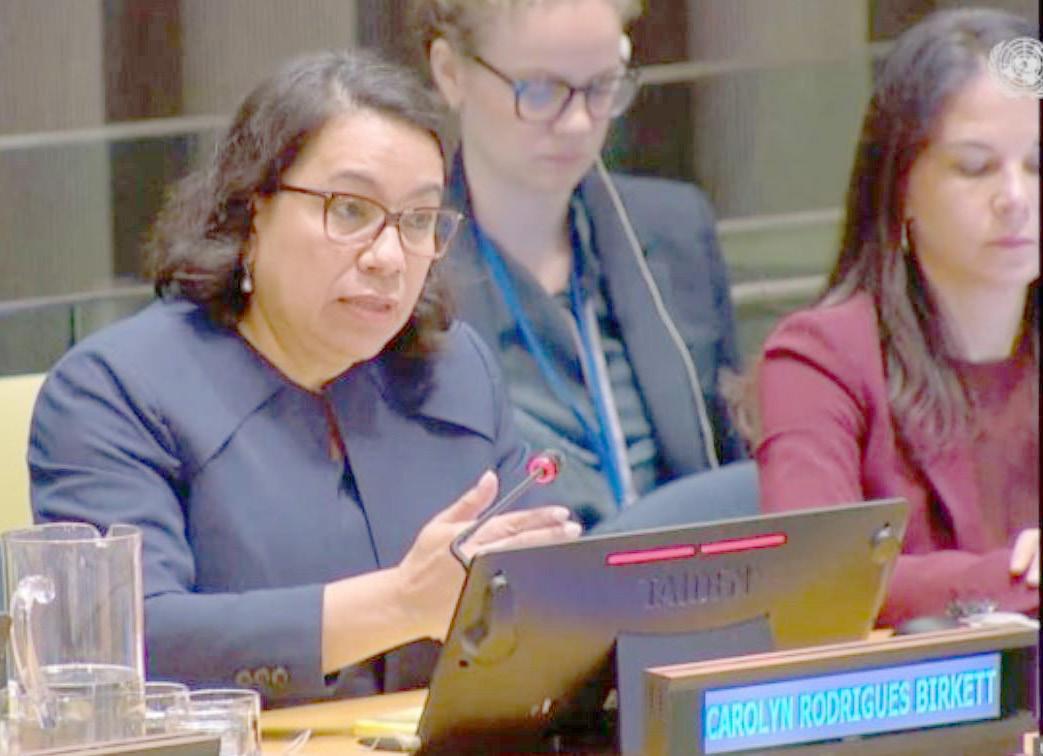
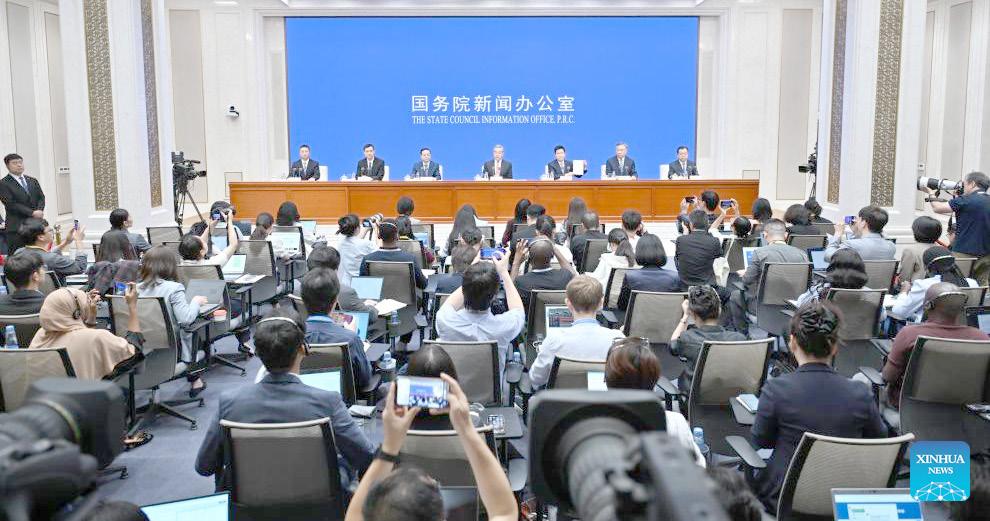
Representative to the United Nations, Carolyn Rodrigues-Birkett, has unveiled a reform-focused vision in her bid to become the next UN Secretary-General, warning that while the organisation remains “indispensable,” it must become more proactive in the face of multiplying global crises.
Addressing permanent representatives, delegates, and civil society at the UN Headquarters in New York, Ambassador Rodrigues-Birkett set out a vision she described as “principled, pragmatic, and responsive” to the needs of the organisation.
She noted that the appointment of the next Secretary-General comes at a “critical moment” for a multilateral system under unprecedented political and financial pressure.
“The global landscape has changed, and the tools required to guide the organisation must likewise evolve. The vision I have outlined is principled, pragmatic, and responsive to the needs of the organisation,” she said.
Acknowledging the
mounting frustrations on the UN deliverables in the wake of systemic pressures, she vowed to bring practical advancements, ensuring that the organisation is truly fit for purpose, closing gaps that currently exist between the efforts being made and tangible solutions.
“No country is untouched by the work of the United Nations. While the full breadth of its achievements may not be widely recognised, its impact is clear across every region of the world,” she said.
The dialogue formed part of a transparent and inclusive selection process mandated by General Assembly Resolution 79/327, under which each candidate presents their vision and answers questions from member states and civil society.
Drawing on her five years at the United Nations and Guyana’s recent term on the Security Council, Ambassador Rodrigues-Birkett said she has heard a “growing sense of frustration that the UN is not delivering as it should,” citing proliferating conflicts, the slow pace in meeting the Sustainable Development Goals (SDGs) and a worsening liquidity crisis. Yet she insisted that
the world would be “difficult to imagine” without the UN’s conflict prevention and standard-setting work.
“If there were no United Nations, how would we even begin to address many of the global issues confronting us?
I’ve said all of this because I believe in the United Nations. It is indispensable. It is incomparable, and it is a force for global good,” she emphasised.
Ambassador Rodrigues-Birkett said her vision builds on the UN’s achievements while responding directly to the challenges we face, aligning with the UN’s 80 reform agenda.
“An effective Secretary General in today’s context must possess two essential strengths, in my view, discernment and versatility. She must be an administrator, peacemaker, mediator, broker, negotiator, convener, and spokesperson. More importantly, she must be able to discern which role is most appropriate in any given situation,” she said, adding:
“I believe that I have acquired these skills during the period of my time as Minister of Foreign Affairs of Guyana, Minister of Amerindian Affairs, as an international civil
for UN Secretary General post
Guyana’s Permanent Representative to the United Nations, Ambassador Carolyn Rodrigues-Birkett, has unveiled a reform-focused vision in her bid to become the next UN Secretary-General
servant and as a permanent representative right here in these halls, representing my country.”
During the interactive session Rodrigues-Birkett, responded to several questions from delegates and civil society.
Last week President Dr Irfaan Ali announced the ambassador’s nomination for the position of Secretary-General.
He had said that Guyana’s successful tenure on the UN Security Council from 2024 to 2025 demonstrated the country’s capacity to provide leadership on the global stage.
According to the President, Guyana consistently advocates for peace, dialogue, respect for international law and the peaceful settlement of disputes while serving on the Security Council, earning
international recognition for its contributions to discussions on some of the world’s most pressing issues. Beyond its Security Council role, Guyana has become increasingly influential in global conversations surrounding climate change, environmental sustainability, food security, energy security, biodiversity conservation, and sustainable development.
Guyana unveils first national drainage strategy to tackle climate threats
–– US$500,000 plan outlines blueprint for modern, data-driven drainage network, efficient water management
By Naomi Parris
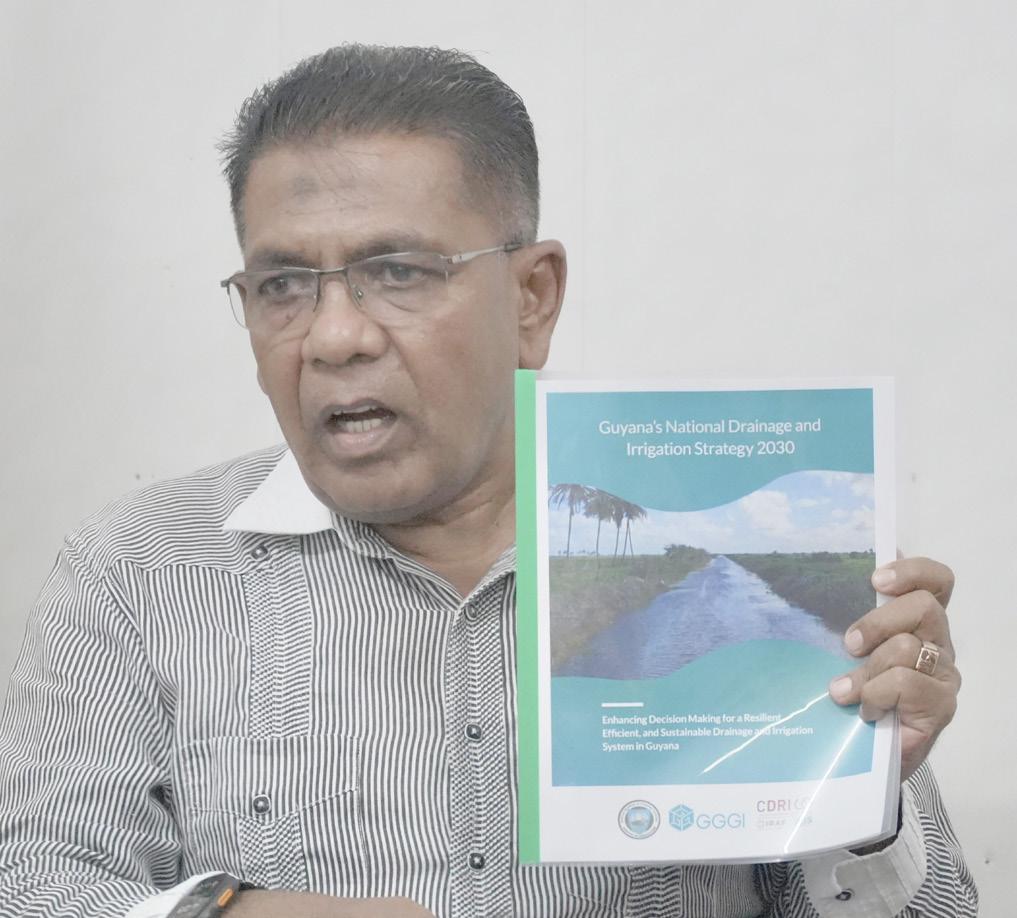
AGRICULTURE Minister, Zulfikar Mustapha, has announced that Guyana’s first national drainage and irrigation strategy will underpin significant public investments in modern, climate-resilient infrastructure and digital systems across the country.
Addressing stakeholders at a soft launch on Thursday at the Ministry’s Regent Street Headquarters, Minister Mustapha said the National Drainage and Irrigation Strategy 2030 is an important milestone in Guyana’s journey towards building a more resilient, productive, and more prosperous nation.
“I’m very happy to state that this is the first time that the National Drainage and Irrigation Authority has now a published strategy, which will be [available] very shortly… we will make this strategy public,” he added said.
The US$500,000 strategy is a collaborative effort between the ministry, the National Drainage and Irrigation Authority (NDIA), and the Global Green Growth Institute (GGGI). It aims to respond to the high economic and social costs of flooding.
Notably irrigation is a lifeline for the country, supporting roughly 19,000 farms and contributing significantly to public sector GDP, the strategy aims to make the system more resilient, inclusive, and climate-adaptive, particularly for vulnerable and indigenous communities.
A core feature of the project is the development of an integrated, interactive Geographic Information System (GIS)-based data platform that will consolidate NDIA’s assets, agricultural information systems, and more than 25 years of hydrometeorological data. This platform will support real-time monitoring, time-adaptive maintenance, and better decisions on where to locate drainage and irrigation infrastructure to reduce flood risks.
“Climate change is not a future threat; it is the present reality. We know that long ago that was a threat for us, now it’s become a reality. Recent years have demonstrated the devastating impact that floods and drought can have on our community and agricultural production,” he said.
He noted that Guyana is already experiencing “extreme
rainfall events” with five to six inches of rainfall in an hour compared to two and three inches in a month in earlier decades.
“It’s an important milestone in Guyana’s journey towards building, as you’ve heard people, the person who spoke before me talk about a more resilient, more productive, and more prosperous nation today,” he said adding:
“Agriculture has been one of the mainstays of Guyana’s economy, and it will remain the mainstay of our economy, and when you look at our national budget, almost or over 75 per cent is being expended in the national drainage and irrigation authority’s expenditure. Why? Because we want to build resilience, we want to build a modern state of the art drainage and irrigation system.”
Detailing government’s
capital push over the last five years the Minister said significant investment has been made to modernise and strengthen drainage and irrigation systems countrywide.
These include the construction and rehabilitation of drainage channels and irrigation canals; upgrading and expansion of pump stations; rehabilitation and construction of sluices and kokers; procurement of more than 63 pumps for installation in various parts of the country; plans to rehabilitate or construct about 92 sluices across Guyana and the construction of high-level canals in several regions designed to operate on a 24-hour basis.
“These investments are not only for agriculture purposes but also for drainage system across the country,” he said, adding that the NDIA must now respond “more responsi-
bly” to rapid development and expanding housing schemes.
Mustapha insisted that infrastructure alone is “not enough”, stressing the need for a “long-term vision” and the capacity to expand systems as the country continues to grow.
A key feature of the new strategy is a national mapping exercise of the drainage system, starting with Georgetown and extending to the rest of the country.
MODERN, DIGITAL INFRASTRUCTURE
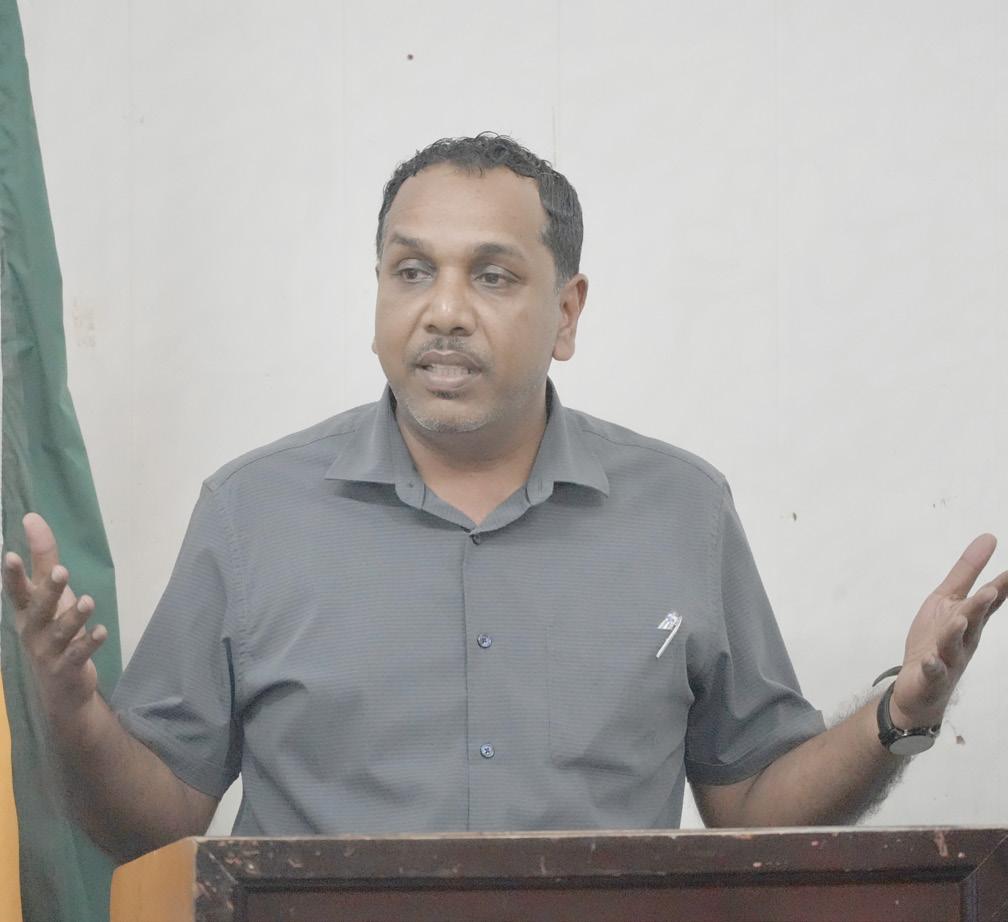
Meanwhile, Chairman of the National Drainage and Irrigation Authority (NDIA), Lionel Wordsworth, stressed that the strategy is not merely a planning document, but a framework for targeted expenditure on critical infrastructure and technology within the NDIA.
“While much of it takes
us into a direction that would overall improve the services we provide at NDIA, it also targets what we are facing, and that is the effect of climate change,” Wordsworth noted, adding that the plan now positions the country to further expand the country’s drainage and irrigation.
Wordsworth underscored that a large part of the modernisation drive is already underway, with government funds being channelled into technology and data systems that will support the new strategy.
He pointed to recent work in Georgetown, where the NDIA has been using advanced mapping tools to support better planning and investment decisions.
“This strategy talks about building a dashboard with all our infrastructure, and this is already an input towards what the strategy envisages, and this now will be executed across the country, where we have the NDIA-managed systems,” he explained.
Wordsworth also acknowledged the role of development partners, referencing the support of and other agencies, alongside the work of the Ministry of Agriculture and local government bodies, which he said had contributed meaningfully to the strategy’s development.
Wordsworth stressed that the strategy is designed to ensure that money spent on drainage and irrigation delivers long-term protection for communities, agriculture, and economic activity.
Investors, business leaders, entrepreneurs gather for ‘Global Growth and Commerce Summit’
THE World Trade Centre sponsored and hosted the “Global Growth and Commerce Summit” on Thursday at its 44, High Street, Kingston, Georgetown office.
The summit brought together business leaders, investors, entrepreneurs, government representatives, and industry experts to discuss opportunities for investment, trade, innovation, and economic growth in Guyana.
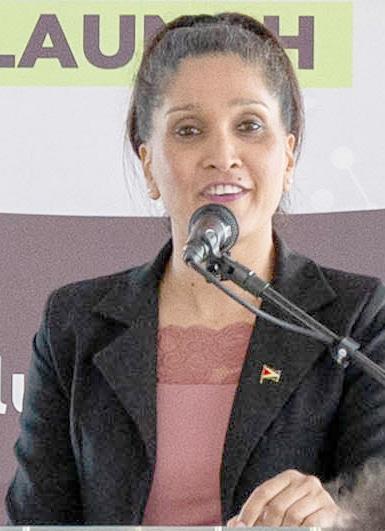
Delivering remarks at the event was the Head of the Diaspora Unit at the Ministry of
Foreign Affairs and International Cooperation Rosalinda Rasul, who spoke extensively on the importance of finding the right connections, partnerships, and investor opportunities in Guyana. Rasul, in her speech, told the gathering that there is a lot happening in Guyana in booth the traditional and nontraditional sectors. The non-traditional sectors: Artificial Intelligence, Supply Chains, and so many others, are all areas that have been growing in Guyana in recent years.
These sectors will need people who have sound ideas that can be developed, and be invested in. According to Rasul, Guyana needs new investments, people with new skill sets and people with the credibility to fund these ideas.
Rasul noted that these people will need to be brought into rooms like this one, to have that conversation.
“You need to now have those conversations that move from just an idea to having a concept to be able
to sign a contract to get the money. The key thing about having that right conversation is that I can tell you when people hear about Guyana being an oil economy, and then you hear words like “Little Dubai”, it sends very, very wrong messages to people. They come here with their own interpretation and understanding of generic information,” Rasul expressed.
The Diaspora Unit Head said that this is now a “huge stumbling block for people who may have some great ideas, because they run away
with these things, and they’re getting that from generic information, they’re not getting the right conversations about the country, about investors, about what is it they want, what are the pathways, who are the key people you should be talking to, nothing of the sort”.
Rasul continued to say that with the right people in the room stakeholders will receive more accurate information about what they can do in Guyana and understand the opportunities for growth.
Agriculture Minister, Zulfikar Mustapha
NDIA’s Chairman, Lionel Wordsworth
Head of the Diaspora Unit
Rosalinda Rasul (Elton John photo)
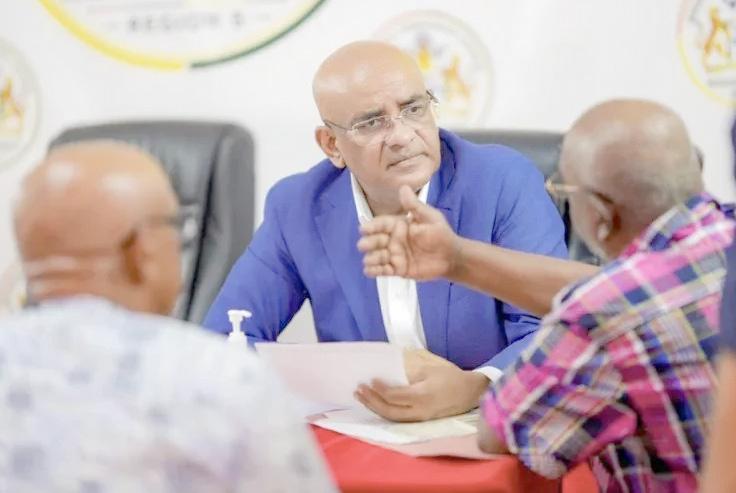
Jagdeo takes public day outreach to Region Three today
VICE-PRESIDENT Dr Bharrat Jagdeo will bring his Public Day outreach to Region Three (Essequibo Islands-West Demerara) today, the latest stop in a series that has already moved through Regions Two, Four, Five and Six.
The session is set for 10:00hrs at the National Track and Field Centre in Leonora, where residents will be able to meet the Vice-President and ministers under one roof. Those planning to attend are encouraged to arrive early.
The public day aims to provide residents with direct contact with government officials.
Rather than visiting multiple offices, residents can take their concerns to a single sitting and put them to the Vice-President and agency officials in-person. Matters raised are taken down for follow-up, with some addressed on the spot and others referred to the relevant ministry or department.
Across the regions visited so far, residents have used the sessions to raise a mix of personal and community issues, from requests for house lots and land, to employment, agricultural support, drainage and road works, and assistance for small businesses.
Region Three residents are expected to bring a similar range of concerns when the outreach reaches them today.
The visit continues a programme that has seen the Vice-President travel from region to region to hear directly from citizens and shorten the distance between communities and the agencies meant to serve them.
With Region Three now on the schedule, attention turns to the turnout and the issues that residents on the islands and along the West Demerara corridor will bring forward. (DPI)
Guyana’s Vice-President, Dr Bharrat Jagdeo
Government to introduce e-wallet system
–– as part of digital transformation of public services
By Bebi Shafeah Oosman
CITIZENS can soon expect to have access to an E-wallet system that will allow important personal documents, including passports, driver’s licenses and birth certificates, to be stored on their smartphones, according to Minister of Public Service, Government Efficiency and Implementation, Zulfikar Ally.
Speaking on Wednesday at the opening of the new
Government Service Centre in Port Mourant, Ally said the initiative is part of the government’s plans to modernise the delivery of public services across the country.
“Coming up we will be working towards having your E-wallet, to having your passport, your driver’s licence, your birth certificates, all of that on your smartphones, that you can go anywhere and show and people can scan it.”
He noted that the People’s Progressive Party/Civ-
ic administration has been taking steady steps to ensure citizens outside of Georgetown have equal access to government services.
“Over the years His Excellency the President, the People’s Progressive Party/ Civic has always been making incremental steps to ensure that you have access to services like what someone will have in Georgetown.”
Ally then noted that the government’s vision extends beyond the establishment of service centres and is
focused on improving the overall quality of life for citizens through modern and efficient systems.
“We have greater things coming from you. We want to ensure that you have a quality of life that people in other parts of the world are enjoying because the things that we are doing we are taking you to have that experience. The President is taking you to have an experience, one that is modern, one that is efficient and one that is truly transparent as
well.”
The minister also emphasised the importance of preparing citizens for the country’s rapid development, stating that it is his responsibility to prepare both current and future generations to benefit from emerging opportunities.
He urged residents to take advantage of educational opportunities available through the GOAL programme and the University of Guyana, with both offering free access to higher
education.
“The opportunities are there for you, there is nothing that you living here in Berbice do not have than what the people in Georgetown or the people in the East Bank or the East Coast have, you have access to all of these things as well, and these are things that you have to pay very careful attention to,” he noted adding, “It is up to you to take advantage of all the opportunities that are there.”
Authorities closely monitoring Kwakwani floods
–– water levels expected to recede soon, Minister Mustapha says
AGRICULTURE
Minister Zulfikar Mustapha has assured that floodwaters in Kwakwani are expected to recede in the coming days, as authorities continue to monitor changing weather patterns.
“Normally, when the rain starts [to] fall like this period, you know, we [can] have floods here,” Mustapha said.
He explained that while parts of the area remain under stress, the expectation is that water levels will gradually decline as the weather pattern shifts.
“We [are] monitoring this situation, hoping the water will recede. Accord-
Speaking with the Guyana Chronicle on the sidelines of an event on Thursday, Minister Mustapha said authorities were closely monitoring the conditions in Kwakwani and surrounding areas, noting that recent forecasts from the Hydrometeorological Office indicated a reduction in rainfall. According to him, the current inundation is consistent with the seasonal pattern experienced during this time of year.
ing to the Hydro Met Office, the rain will start to break.”
However, he pointed out that the overtopping of the Berbice River and the influence of high tides have compounded the situation.
“There’s the overtopping of the [Berbice] River… because of the tide, the high tide, so… the water will start to recede now.”
The minister said that while the administration is working to manage the immediate impacts, long-term solutions will inevitably be required.
Earlier this week, regional officials issued an urgent appeal to the Civil Defence Commission (CDC) and other disaster response agencies to immediately mobilise assessment teams and relief supplies to affected communities.
Among the hardest-hit areas are Waterfront, Lamp Island, Jeep Landing and the Mackenzie Market Wharf.
To trace the history of seasonal flooding in the Region 10 community, the Guyana Chronicle in 2021, following severe flooding, had spoken to the former
Regional Chairman, Mortimer Mingo, who was the acting regional chairman some ten years ago when severe flooding had hit the community.
Mingo, in that interview, had said that severe flooding in Kwakwani was a phenomenon that tend to occur every ten years or so during the rainy season or whenever there was above-normal rainfall.
He had noted that in 2006, just after a wave of severe flooding, the then government had identified an area in Kwakwani to be transformed into a hous -
ing scheme to facilitate the relocation of residents from the waterfront area. However, only a few residents would have opted to relocate.
Mingo had explained to this publication that, in the past, residents would just clean-up and go back to normal after the floodwaters would have receded.
He had insisted that given the recurring floods, residents, particularly those living along the waterfront should take climate change and global warming into consideration and relocate.
EVERY generation of Guyanese can identify something that defines its time. There was a period when sugar was king. There were years when rice dominated the conversation. Today, it is oil.
The numbers are impressive. Oil production is expected to surpass one million barrels per day by the end of 2026. Guyana has become one of the fastest-growing economies in the world. New roads are being built. New hospitals are rising. New housing schemes are reshaping communities. Foreign investors are arriving in numbers never seen before.
Yet amid all this growth, an important question remains. As Guyana changes, what must remain the same?
That is why the recent discussions surrounding the Orange Economy are so important.
Too often, culture is viewed as something separate from development. It is placed in the category of entertainment, festivals and heritage events. It is celebrated during holidays, anniversaries and commemorative occasions
and then quietly pushed to the side while “serious” conversations about the economy continue.
That thinking misses the point entirely. Culture is not separate from development. Culture is development.
Long before Guyana discovered oil, before foreign investors arrived and before international headlines spoke of economic growth, there was already something valuable here: our music, our food, our languages and dialects, our folklore, our Indigenous traditions, our literature, our festivals, our art and our stories. That is what made us Guyanese.
The challenge facing Guyana today is not simply how to grow wealth. The challenge is how to grow while preserving identity.
Around the world, countries have learned that economic transformation can sometimes come with unintended consequences. Communities change. Traditions fade. Younger generations become disconnected from their heritage. Local culture is replaced by import-
ed influences. Progress occurs, but something valuable is lost along the way.
This is why the conversation about the Orange Economy matters.
At its heart, the Orange Economy is not merely about creating jobs for artists, musicians, filmmakers, designers or craft producers. It is about recognising that culture itself has value. Not just sentimental value, but economic value, social value and national value.
When a Guyanese artist paints a local scene, when an Indigenous craft producer preserves traditional techniques, when a writer tells Guyanese stories, when a chef promotes local cuisine, when a musician creates music rooted in our experiences, they are doing more than earning an income.
They are protecting pieces of who we are. And that protection has become increasingly important.
As Guyana celebrates 60 years of Independence, there is a growing recognition that
development cannot be measured solely in economic statistics. A nation is not defined only by its GDP, its oil production or the size of its infrastructure projects.
A nation is also defined by its character. It is defined by the stories it tells, the traditions it preserves and the values it passes on.
This is perhaps why President Dr. Irfaan Ali has repeatedly spoken about protecting the “soul of the nation”. Economic growth can build roads and buildings. It can create opportunities and improve lives. But it cannot, on its own, preserve identity.
That responsibility belongs to all of us.
The Orange Economy therefore represents something bigger than business. It is an opportunity to ensure that as Guyana becomes wealthier, it does not become less Guyanese.
Because when future generations look back on this period of transformation, they should not only see what we built. They should also recognise who we remained.
Culture creates Wealth Operating model missing from Guyana Development Bank debate
Dear
Editor,
THE debate on the proposed Guyana Development Bank is being reduced too narrowly to the question of political control. Who appoints the Board? Can the minister influence lending? Can a politically connected borrower obtain a loan by bypassing the rules? These are not irrelevant questions. Governance matters.
Public money must be protected. But the present public discussion has become excessively preoccupied with board appointment mechanics, as if that alone determines whether the institution will succeed or fail. That framing misses the central issue.
The test of a development bank is not whether political risk can be imagined in theory. Political risk can be imagined in almost every public institution. The real question is whether the operating architecture makes arbitrary lending difficult, traceable, reviewable and institutionally costly.
In that regard, the Guyana Development Bank should not be judged only by the statutory appointment structure. It must be assessed by the credit pathway, borrower-screening process, monitoring framework
and accountability systems through which loans are actually originated, vetted, approved, disbursed and recovered.
This distinction is important because the proposed model is not designed as a simple top-down loan window. The stronger design element is the peer review cluster. Under that model, loan applications do not simply move from a Minister’s desk to a borrower. They begin at the bottom, where MSMEs are organised into peer clusters that support training, mentoring, documentation, peer review and shared accountability. The cluster becomes the first layer of discipline. It is where business plans are tested, documentation gaps are surfaced, borrower readiness is assessed, repayment behaviour is culturally reinforced, and early warning signals can be identified before a weak proposal reaches formal management review.
From there, the application moves upward through the technical machinery of the bank: Eligibility screening, credit scoring, staged disbursement assessment, management review, credit committee scrutiny and ultimately board-level oversight within defined policy limits. That is materially different from the caricature that a Minister can simply direct
who gets a loan. If the credit rules are properly codified, if the peer-cluster mechanism is mandatory, if the approval thresholds are clear, and if every disbursement leaves a documented audit trail, then political instruction cannot substitute for underwriting without creating an observable breach in the system.
This is why the obsession with political control, while understandable, is incomplete. The determining factor is not appointment power in isolation. The determining factor is whether the institution has enforceable operating rules. A weak bank with a beautifully appointed independent board can still fail if loans are poorly screened, monitoring is passive, recoveries are weak and portfolio data are not reviewed. Conversely, a publicly created development bank can operate with discipline if the lending process is rule-based, decentralised at origination, professionally underwritten, independently audited and continuously monitored.
The peer-cluster model is central to that discipline. Its value is not ceremonial. It creates a bottom-up information system. Commercial banks often reject MSMEs because they lack collateral, formal records, clean financial statements or sufficiently document-
ed cash flows. The development bank model must therefore do more than lend cheaply. It must convert informal or semi-formal enterprises into bankable borrowers. That requires financial literacy training, record-keeping support, business planning, advisory follow-up, staged disbursements tied to milestones and active post-loan monitoring. Without these features, concessional lending becomes subsidy leakage. With them, it becomes capability-building finance.
Pre-monitoring matters because weak borrowers should be identified before public capital is disbursed.
This includes assessing business purpose, repayment capacity, market access, cost structure, basic records, tax/NIS formalisation readiness and sector risk. Post-monitoring matters because MSME distress rarely appears suddenly.
It shows up in late records, missed cluster meetings, declining turnover, supplier arrears, weak inventory discipline, diversion of loan proceeds, delayed repayments and poor cash handling.
A serious development bank must
Jagdeo appeals libel judgement, framing case within wider State-land controversy
VICE-PRESIDENT
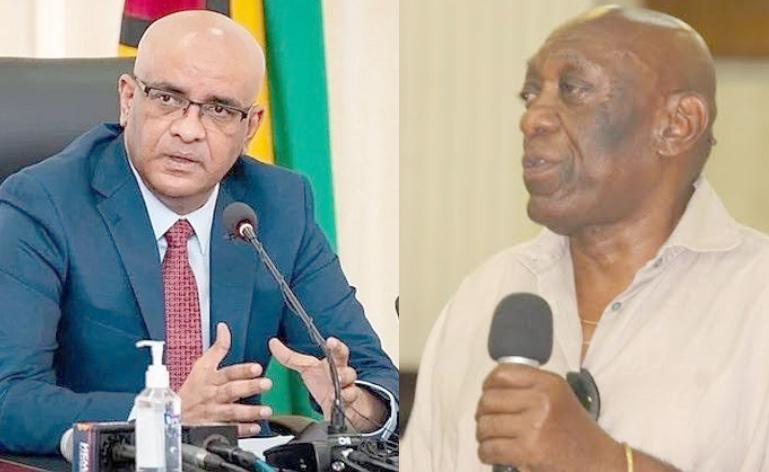
Bharrat Jagdeo has appealed a High Court ruling that awarded businessman Charles Ceres G$15 million in damages and G$2.15 million in costs in a libel case, arguing that the dispute cannot be separated from a broader and deeply contentious debate over the allocation of State lands during the final years of the former APNU+AFC administration.
The appeal seeks to overturn a decision by Justice Fidela Corbin, who found in favour of Ceres after concluding that remarks made by Jagdeo during a 2019 press conference were defamatory.
At the time, Jagdeo was Leader of the Opposition. His comments focused on Ceres’s acquisition of several parcels of State land while Ceres’s wife, Ndibi Schwiers, held a senior position within the Ministry of the Presidency, the government agency responsible for Stateland allocations.
When the court awarded damages to Ceres, the ruling appeared to bring to a close a years-long legal battle over statements made during a politically charged period.
In his newly filed appeal, however, Jagdeo contends that the case was never solely about one businessman, but about what he viewed as a wider pattern of questionable State-land transactions involving politically connected beneficiaries.
Through his attorney, Pratesh Satram, Jagdeo argues that the trial court failed to properly assess evidence showing that Ceres received multiple parcels of State land while his wife occupied a senior government position with responsibility for land allocations.
According to the appeal, those facts were not in dispute and should have been given greater weight in determining whether the statements were substantially true.
The filing contends that Ceres acquired valuable parcels of land in areas including Liliendaal, Canje and near the mouth of the Berbice River during the tenure of the APNU+AFC administration. It further argues that the trial judge did not adequately consider the significance of Ceres’s relationship to a senior official whose ministry oversaw land allocations.
The appeal also points to evidence that Ceres transferred a portion of land in Liliendaal to Ms. Schwiers, maintaining that this supported the substance of the statements at issue.
At the heart of the appeal is the argument that the court examined Jagdeo’s comments too narrowly, focusing on specific wording and timing rather than the broader circumstances in which they were made.
Jagdeo argues that his remarks arose amid mounting public controversy over the allocation of State lands during the final months of the APNU+AFC administration, when critics alleged that public assets were being distributed to selected individuals without competitive bidding or transparent procedures.
MASSIVE LAND GIVEAWAYS
Records found in Guyana’s Official Gazette document a series of significant land distributions between 2019 and 2020.
Among them were 18 land orders signed in August 2019, six more in September of that year, and a further 45 orders signed in February 2020 and published the following month. Beneficiaries included public officials, political figures and individuals connected to State institutions.
The records list allocations to then government parliamentarians and others, including Amanza Walton-Desir.
Additional allocations involved senior officials attached to agencies operating
under the Ministry of the Presidency.
Marlon Bristol, then Head of the Project Management Office within the ministry, was listed as receiving one acre at Mocha, 12 acres in Linden and 80 acres in Bohemia.
Aubrey Heath-Retemeyer, then Deputy Head of the State Assets Recovery Agency (SARA), was listed as receiving 10 acres along the Linden-Soesdyke Highway and another acre at Mocha.
Eric Phillips, then a SARA Special Assistant, was listed as receiving 1,000 acres in the Essequibo River and another 1,000 acres in the Demerara River. Former Chief Elections Officer Keith Lowenfield was listed as receiving 216 acres at Millie’s Hideout in Region Ten and two acres at Mocha.
The records also refer to allocations through the Mahaica Mahaicony Abary/ Agricultural Development Authority scheme, under which then Chairman Kelvin Saul was listed as receiving more than 10,000 acres behind the Mahaica River.
For Jagdeo and the governing People’s Progressive Party/Civic (PPP/C), these transactions became emblematic of what they described as a broader pattern of non-transparent land distribution involving strategically valuable State assets.
QUESTIONS OVER VALUE AND PAYMENT
The controversy intensified following the change of government in 2020.
Several companies that had acquired prime State lands during the APNU+AFC
Incorporated, the Corum Group, American Marine Services Incorporated and Supergraphics Enterprise.
Their decisions fuelled allegations that some transactions had been executed at prices far below market value and before the State had realised the full worth of the assets involved.
The government later referred several transactions to the Special Organised Crime Unit (SOCU) and the Criminal Investigation Department for investigation.
Former NICIL Chief Executive Officer, Colvin Heath-London, was questioned by investigators as scrutiny intensified over the disposal of State assets.
administration later surrendered those lands to the State, citing concerns about the circumstances surrounding the transactions.
Among them was Caribbean Marketing Enterprises Incorporated (CMEI), a consortium of foreign investors that had acquired 21 acres at Ogle for a proposed hotel development.
In announcing its decision to return the land to the National Industrial and Commercial Investments Limited (NICIL), the company stated that the acquisition had placed it in an “unfamiliar and uncomfortable position”.
CMEI said it believed it had followed a lengthy and transparent process but noted that the completion of the transaction coincided with the post-election political crisis and the global COVID-19 pandemic.
The Ogle transaction attracted particular scrutiny because it was finalised after the March 2, 2020 elections, during a period when the APNU+AFC administration was serving in a caretaker capacity following the December 2018 no-confidence vote.
Government figures released after the change in administration suggested that nearly 100 acres of prime East Coast State lands had been vested to various companies. Those lands were said to have a combined value of approximately G$2.9 billion, while NICIL reportedly received only about G$64 million in payments.
Five companies that benefitted from similar transactions subsequently returned lands to the State, including Navigant Builders Incorporated, Cardiology Services
approving allocations.
The filing argues that the judge placed excessive emphasis on distinctions between land allocated directly to Ceres and land allocated to companies in which he held shares, contending that such distinctions were irrelevant to the broader reality of the transactions.
Among its 31 grounds of appeal, the filing challenges the rejection of legal defences including justification, fair comment and qualified privilege.
CRIMINAL CASES AND CONTINUING FALLOUT
The political controversy surrounding land allocations has since found its way into the courts.
In March 2025, former Finance Minister Winston Jordan was charged with misconduct in public office in connection with the sale of more than five acres of State land at Plantation Beterverwagting and Sparendaam.
Prosecutors alleged that Jordan signed a vesting order between February and June 2020 for land valued at G$150 million that was sold for G$2.425 million. The charge alleged that the transaction amounted to an abuse of public trust without reasonable cause or justification.
Jordan was not required to enter a plea because the charge is indictable. His attorneys argued that the matter had previously been discharged and described the prosecution as politically motivated.
Although unrelated to the litigation involving Ceres, the case underscored the continuing legal and political fallout from land transactions executed during the final months of the APNU+AFC administration.
THE APPEAL’S CORE ARGUMENTS
Jagdeo’s appeal maintains that his comments concerning Ceres reflected legitimate concerns about a wider system of State-land distribution involving politically connected beneficiaries and individuals linked to agencies responsible for
On justification, Jagdeo argues that the statements were substantially true and that the court erred in concluding otherwise. On fair comment, the appeal contends that sufficient evidence existed to support criticism of allocations made without competitive bidding or tendering processes.
The appeal further argues that, as Opposition Leader, Jagdeo had both a right and a duty to comment on matters involving public property and the management of State assets.
The filing also challenges findings related to land allocations that remained pending after the government’s defeat in the 2018 no-confidence vote. It alleges that Ceres was not truthful when denying knowledge of a pending allocation near the mouth of the Berbice River, citing documentary evidence presented during the proceedings.
In warning of the broader implications of the ruling, the appeal argues that the decision risks discouraging scrutiny of public transactions and limiting the ability of elected officials to speak on matters of public concern. It states that “the legal and practical effect of the ruling delivered by the learned Judge was to silence any form of public criticism by political leaders on the allocation of public property to persons employed by the state and their relatives. The decision of the learned Judge has effectively destroyed the right of the Appellant to comment on matters of public importance and prevents him from exercising and/or fulfilling his public duties as an elected official.”
The Court of Appeal has not yet indicated a date when it will hear the matter.
From left: Vice-President Dr Bharrat Jagdeo and engineer Charles Ceres
David Hinds is the running man
DAVID Hinds appeared twice on the Freddie Kissoon Show. That was long before the 2025 election. Since then, Leonard Craig and I have invited Hinds over and over.
On each occasion, he said yes. Here is what he told Craig. He said the show comes over as PPP slanted and there are harder questions asked of guests from the opposition.
He told Craig he wanted the assurance and guarantee that he will not be ambushed and he is not treated in a confronted way. He was given the promise. Weeks after, he remained a no-show. I caught up with him at Rupert Roopnaraine’s funeral. He explained that he is now a parliamentarian and is a bit busy, but he plans to come on the show.
Our encounter was in February this year. Hinds is still a no-show. Hinds is not running from Craig and me. He is running from Azruddin Mohamed. If there is any Guyanese who will not attend an interview where the discussion is on Guyana’s incredibly unusual election result, it is David Hinds.
So why is Hinds evading Craig and me? The reason is Azruddin Mohamed and WIN. Hinds will come on the show once there is no mention of Mohamed and WIN. You see, WIN has made Hinds, a useless, anachronistic, pitiful character and Hinds will literally drown in cold sweat when you bring up Mohamed’s name.
Why is Mohamed the nemesis of Hinds? To understand this, two situations have to be fully grasped. One is the foundation
of Hinds’ politics. His politics is full-out Africanized. His activism is centred on an obsession with African-Guyana’s presence for which he wants expanding political and economic space.
So, he adopts two methodologies to pursue this agenda. One is to keep on singing the tune the cow died on – the PPP is an Indianized party that wants to miniaturise African existence. The second methodology is to whip up frenzy among Africans so they can express hatred for the PPP.
These two approaches were canopied under a social media programme named Politics 101. This broadcast became hard to stomach because, since the 2020 national election, the theme was the same – the PPP doesn’t like African people, African people should fight the PPP.
Hinds has been singing this tune almost daily. Each edition of Politics 101 is about race. Someone can break Brian Lara’s record or Usain Bolt can become the Prime Minister of Jamaica, those things would not find their way into Politics 101 because all Hinds do is preach race.
Then Hinds found himself in a political coffin after the general election of 2025. All the ethnic sermons of five years that came from the mind and mouth of Hinds crashed down and Hinds’ message was trampled upon by his parishioners. It is no exaggeration. He was trampled upon by his own church attendees.
Just three months in politics with no election machinery, Azruddin Mohamed put a jumbie lash pon Mark Benschop, Lincoln Lewis, Aubrey Norton, Rickford Burke,
Tacuma Ogunseye and David Hinds, but it was mostly Hinds who was running from ignominious embarrassment. None of the names mentioned here was as relentless and incessant in their appeal to African people as Hinds. None of the names mentioned here joined the election campaign to get Africans to vote for APNU as Hinds did.
Hinds got a stroke when he read the GECOM election statistics. Someone told me that Hinds was hospitalised. I don’t know if that was true. But in Hinds’ hometown of Buxton, Mohamed ran away with Hinds’ votes. In Norton’s hometown of Plaisance, Mohamed ran away with Norton’s votes. In Ogunseye’s hometown of Sophia, Mohamed stole all of Ogunseye’s votes.
Hinds may have been hospitalised for truth because the GECOM station by station results showed that Mohamed picked up his votes where African Guyanese live and not where PPP constituencies are. Hinds may have suffered a bout of apoplexy in truth because Mohamed did not touch
PPP constituencies and Irfaan Ali, while securing his base also made inroads into the PNC’s constituencies. An Indian man and his Indian sister and her Caucasian husband, who ran WIN’s campaign, demolished Hinds in the general election of 2025. But Hinds got out of his hospital bed and began to fight back. He invited a guest on Politics 101 named Dr Vincent Adams. He told Adams that Mohamed’s showing was not a result of Africans crossing over to an Indian man. What Adams said gave Hinds another stroke. Adams said that he saw grannies in their nightgowns, in Linden running to greet Mohamed. For the record, Mohamed is an Indian man. So, Hinds is not coming on the Freddie Kissoon Show because he has become the biggest political failure in Guyana’s history.
DISCLAIMER: The views and opinions expressed in this column are solely those of the author and do not necessarily reflect the official policy or position of the Guyana National Newspapers Limited.
Education stakeholders discuss social media’s impact on children –– consultation forms part of national effort to create safer online spaces
By Shaniya Harding
EDUCATORS from across Guyana on Wednesday called for stronger measures to address the growing impact of social media on children, as the Ministry of Education hosted a stakeholder consultation as part of the national discussions on “Social Media and its Consequential Effects on Children.”
The consultation, held at the St. Rose’s Auditorium under the theme “Protecting a Safe and Healthy Digital Environment for Children,” brought together headteachers, education officers and ministry officials to share recommendations on issues ranging from accountability and online behaviour to possible policy and legislative measures aimed at safeguarding children in the digital age.
tration and excessive social media use among students, while stressing the need for a balanced approach that promotes responsible and safe online engagement.
Speaking following the consultations, Minister of Education Sonia Parag noted that the talks are being held as part of a wider consultation on the consequences of social media use as it relates to children. It comes just weeks after public consultations were launched by Minister of Parliamentary Affairs and Governance, Gail Teixeira, with Minister Parag noting that the Ministry of Education’s consultation sought to highlight the ideas and recommendations of relevant officers and stakeholders.
“We have had a number of recommendations and suggestions coming out of different offices whether it be the HMs of schools and all regions were represented this morning,” she said adding, “We did have several recom-
mendations whether parents should be held responsible in terms of the legal framework whenever we create a legal framework if that should be included. So, we were hearing several different perspectives.”
The consultations also sought to address issues of responsibility and accountability, including among parents and educators.
The minister said, “We are hearing from teachers about whether colleagues should be held accountable and so various opinions were given, various recommendations and suggestions. We have taken all of the suggestions, and we are going back to our public consultation,” she said.
The recommendations and ideas from the Ministry of Education will be brought to another public consultation, slated to be held on June 24, led by Minister Teixeira and the Ministry of Parliamentary Affairs and Governance.
Moreover, Minister Parag noted that persons and stakeholders who wish to provide additional recommendations have the option of scanning a QR code provided by the ministry to submit further ideas ahead of the next public consultation.
Speaking on the outcome of the consultation, Minister Parag added, “I think it was quite productive and I know that other sectors have been having theirs as well so I’m looking forward to see what comes out of this for certain,” she said. “It is an issue that so many countries and developed countries are dealing with and sitting here I can
See page 10
Operating model ...
detect these signals early and intervene through advisory support, restructuring where justified, and recovery where necessary.
In that sense, monitoring is not an administrative addon. It is the core financial control. The loan is only one part of the intervention. The real development-finance instrument is the combination of capital, mentoring, peer accountability, formalisation, staged drawdowns, early-warning systems and recovery protocols. This is why the debate should move away from simplistic claims that the bank will automatically become a political lending vehicle. The proper question is: will the credit manual, peer-cluster process, monitoring and recoveries unit, internal audit function, quarterly portfolio dashboard and board-review framework be strong enough to prevent that outcome?
Critics would serve the public better by focusing on those design controls. What should be the maximum exposure per borrower? What debt-service tests should apply? What documentation should be required before disbursement? What baddebt cap should be reported quarterly? How should portfolio distribution by region,
sector, gender, youth ownership and business stage be published? What role should internal audit play? How quickly should recovery protocols activate? These are the questions that determine whether public capital is converted into productive capacity or lost through weak execution.
In light of the foregoing, the Guyana Development Bank should not be defended as if governance risk does not exist. It does. But it should also not be dismissed by pretending that governance risk is solved only by arguing about who appoints the Board. The stronger policy position is that the bank must be built so that no minister, board member, manager or regional actor can override the credit architecture without leaving a clear procedural breach. That means mandatory peer-cluster vetting, objective eligibility criteria, credit scoring, staged disbursement, independent credit committee review, internal audit oversight, active monitoring and published aggregate portfolio reporting. The country needs a more mature debate. Guyana’s MSME sector remains constrained by collateral gaps, informality, weak financial records and limited access to
From page 6
patient capital. Those constraints will not be solved by commercial banking alone. They require a development-finance instrument that carries a higher developmental risk appetite, but with stronger monitoring than ordinary lending and stronger accountability than grant financing. That is the space the Guyana Development Bank is intended to occupy.
The real issue, therefore, is not whether one can imagine political abuse. One can. The real issue is whether the institution is designed to make abuse difficult, detectable and sanctionable while still allowing underbanked MSMEs to access productive capital. If the peer-cluster model, pre- and post-monitoring framework, credit discipline and transparency safeguards are implemented seriously, the Guyana Development Bank can become more than a loan facility. It can become a structured mechanism for converting public capital into MSME capability, formalisation, employment and non-oil productive capacity.
That is the level at which the debate should now proceed.
Yours faithfully, Joel Bhagwandin
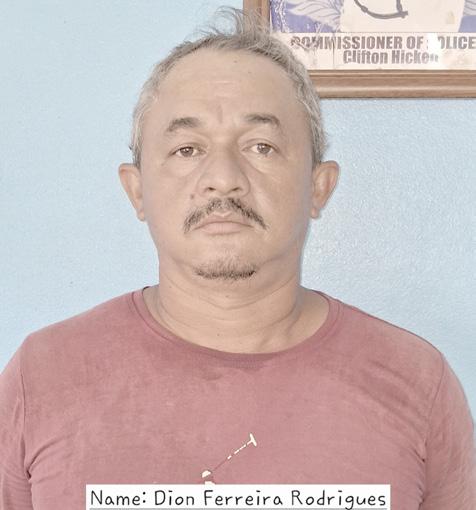
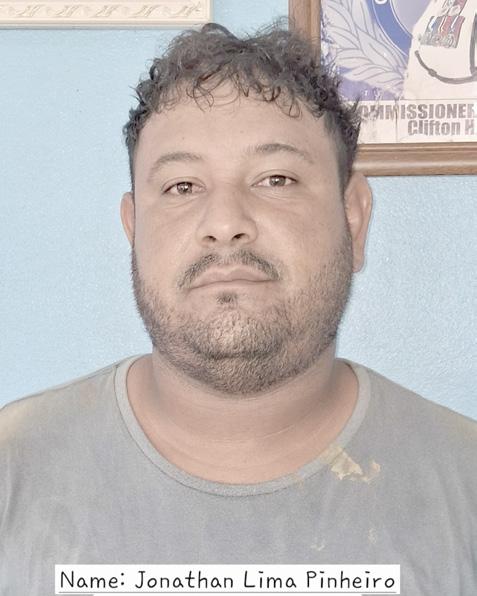
Two Brazilian men fined for overstaying time in Guyana
–– one remanded to prison
THREE Brazilian nationals were charged with Overstay of Person in Guyana following a joint operation conducted by the Guyana Police Force and the Guyana Geology and Mines Commission on Tuesday June 16, 2026, at Arakaka Backdam, North West District.
checks revealed that they had overstayed the period granted to them in Guyana.
According to the police, the operation targeted illegal gold mining activities in the area, during which the three persons were arrested after
The defendants appeared virtually on Thursday June 18, 2026, before Her Worship Faith McGusty at the Port Kaituma Magistrate’s Court, where the respective charges were
read to them.
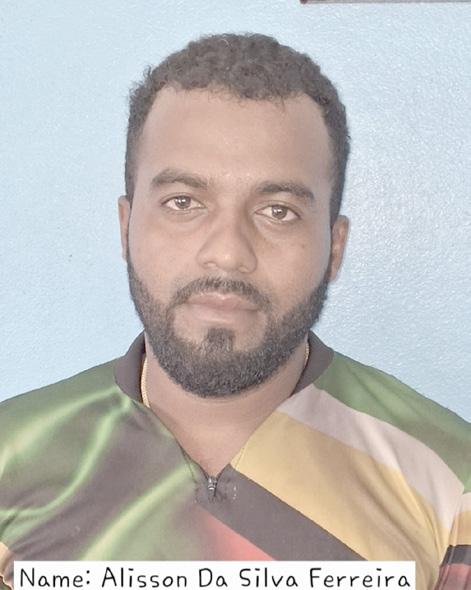
The police said Alisson DaSilva Ferreira pleaded guilty to the charge and was fined $60,000 or, in default, four months’ imprisonment. He was also ordered deported.
Meanwhile, Jonathan Lima Pinheiro also plead-
ed guilty and was fined $30,000 or, in default, two months’ imprisonment. He was also ordered deported.
Dione Marcus Ferreira Rodrigues pleaded not guilty and was remanded to prison. He is scheduled to return to court on July 14, 2026.
The three Brazilians who were arrested during a joint operation at Arakaka Backdam, North West District and later charged with overstaying their time in Guyana (GPF photos)
Education stakeholders discuss social media’s ...
From page 9
tell that every single person in the room knows it’s an issue and it’s something that we have to address.”
Sharing insight into her experience at the consultation, Education Officer of Region Nine Simone Haywood noted that the discussions are timely.
Speaking on challenges she has observed with children’s use of social media, Haywood added, “Well this consultation today is timely with so much that is happening today in our schools with regards to social media. It’s creating and it has created a negative impact despite we have positives, but the negative impacts are what are affecting our children in the schools,” she said. “This is like I said timely and it is a way for us to really find ways to deal with this to manage the whole use of the social media with our children.”
Sharing similar sentiments, Education Officer of Region Nine Curtis Bristol emphasised that the consultation also helps to educate the country on the effects of social media on children. As he stated, “I do agree with my colleague that indeed this is very much timely and I’m pleased that we’re having this consultation at this very level because the Ministry of Education is responsible and taking the lead in educating the nation and I believe that the nation needs to be educated in this aspect in our schools so that we can be able to develop the kind of character and be able to use social media appropriately,” he said.
Rosemond Cornelius-Smartt, Headteacher of Port Kaituma Secondary School, called the initiative an excellent one.
She emphasised that having the opinions and views of various persons and stakeholders allows for a more comprehensive approach. “We all know that social media has both good and positive effects on our children however the negative effects far override the positive and social media has placed so many negative effects,” she said.
Cornelius-Smartt noted that lack of concentration, poor academic performance and poor communication skills are among the major issues linked to social media use, adding, “I believe if policies are crafted that will limit the use of our students as it relates to social media then our children will be protected not only from cyber bullying and all the other negative effects that lies out there but we will have better leaders for our future who will take Guyana far into the future.”
––– partnership aims to promote workforce development, inspire next generation of drone pilots
By Faith Greene
DRAGONFLY Solutions Group Inc. and Altomaxx Offshore have partnered to form a joint venture that represents the value of international collaboration, and the strengthening of relationships between Canada and Guyana.
The joint venture is said to be a prime example of what Canadian and Guyanese businesses can build when they choose to work together, rather than trading across the distance.
Where Altomaxx brings years of experience across several continents, Dragonfly Solutions Group brings an established local presence, regulatory familiarity, and relationships built over years of operating in Guyana.
Delivering the feature address, Minister of Labour and Manpower Planning Keoma Griffith said that this initiative truly demonstrates how we can take a passion, and turn it into a partnership.
Minister Griffith stated
that in 2020, when Dragonfly’s Founder Brian Smith decided to take a leap into a non-traditional sector, not only did the government change, but the trajectory of Guyana changed completely as well.
“Brian took an idea and turned it into a passion. Six years later, that passion has turned into partnership, and so, it demonstrates to all of us here today what we can do with just an interest, with just an idea, and it demonstrates to us that the world really is ours and we all have the ability,” the minister said.
He remarked that this was more than the celebration of the forming of a joint venture; it is a celebration of partnership that has the potential to create opportunities for Guyanese, strengthen local capacity, facilitate skills development, and contribute to the continued growth of Guyana’s economy.
Guyana, the minister said, stands at a remarkable point in its history.
Solutions Group Inc Founder Brian Smith and Altomaxx’s Chief Operating Officer Steve Priestley (Elton John photo)
Across many sectors, we are witnessing unprecedented growth and transformation, new investments are creating opportunities, industries are expanding, and our nation’s economy continues to evolve at a rapid pace, the Minister posited. Continuing, he said economic growth on its own is not enough.
As Guyana continues to expand, and diversify its
economy, the minister said we must ensure that our workforce is prepared to meet the demands of emerging industries - technology, innovation, and specialised skills - that will increasingly shape the jobs of the future. He pledged the government’s continued support to the private sector, and to young people who, like Brian, are ready to take full advantage of the opportuni-
ties that exist.
He noted that in the coming days, Guyanese will see and hear more about other opportunities, and how they can turn passion to partnership. This, he said, is going to change the landscape of how business is done, and how young people are able to do business in Guyana.
“As our country continues to expand and diversify its economy, we must ensure that our workforce is prepared to meet the demands of emerging industries. Technology, innovation, and specialized skills will increasingly shape the jobs of the future, and our people must be equipped to seize those opportunities,” he said.
Dragonfly’s Founder, Smith, said that at his company there are two things that are important. One is that collaboration is what will make them succeed, and the other is the shared aim of operating at the global standard, although the operation is grounded in Guyana.
“Today’s proof of a lot
of hard work comes success. And we’re happy about this partnership. It’s about workforce development. It’s about inspiring the new generation,” Smith said.
Meanwhile, Altomaxx’s Chief Operating Officer, Steve Priestley shared that since its establishment in 2018, the company has expanded to thirty countries, six continents, and is now establishing a full-time presence in Guyana, through the partnership with Dragonfly Solutions.
“We’re both passionate more than just about drones and growing business. As I said, it’s about education, it’s about that next wave of drone pilots, and it’s about another form of careers that we can offer. And it’s a career to do with education, compliance, so many other things that people go that gets overlooked, and it’s something, hopefully, we can bring to the Guyana market to help the entire industry grow,” Steve related.
Dragonfly
Sobbing ‘Iswe Boss’ gets 25 years for killing girlfriend, burying body in shallow grave
–– apologises to victim’s relatives, nation
By Feona Morrison
TWENTY-FOUR-YEAR-
OLD Shaquan Alleyne, called “Iswe Boss” and “Iswe,” broke down in tears on Thursday as he was sentenced to 25 years’ imprisonment for the 2021 murder of his girlfriend, 21-year-old Shonnette Dover Her body was discovered buried in a shallow grave behind Alleyne’s home at Wismar, Linden, Region 10 (Upper Demerara-Berbice). The murder occurred between April 3 and April 30, 2021.
The sentence was handed down by Justice Sandil Kissoon at the Demerara High Court after Alleyne had admitted to the capital offence of murder under a plea agreement negotiated between his attorneys and the Office of the Director of Public Prosecutions (DPP).
Alleyne was represented by attorneys Paul Fung-aFat, Charlene Fung-a-Fat and Domnick Bess, while State Counsel Cicelia Corbin led the case for the prosecution. Before sentencing, he addressed the court through tears, offering an apology to Dover’s family, several mem-
bers of whom were present in the courtroom, as well as to the nation.
“With a heavy heart, I stand here before you. I apologise to the court and the victim’s family for my actions. I am taking responsibility for my actions,” Alleyne said.
He told the court that he had spent time reflecting on his relationship with Dover and the events that led to her death.
He said, “It was an accident and I was afraid. I am asking the family of Shonnette Dover to forgive me. I am also asking the nation to forgive me. I understand that I made a mistake. I understand that there are consequences for my actions.”
The convicted killer added that he hoped his case would serve as a warning to others and expressed hope that it would serve as a warning to others. He pleaded for a second chance to one day prove that he could become a productive member of society.
In handing down the sentence, Justice Kissoon stressed that the welfare and protection of women, particularly vulnerable women, remained a central consideration in sentencing.
“The paramount and
overriding consideration in sentencing remain the welfare and well-being of all women in society generally, but in particular the most vulnerable,” the judge said.
“That is the fundamental pillar that underlines the rule of law, our criminal justice system and the very objectives of sentencing.”
‘THIS WAS A SERIOUS CRIME’
The judge noted that the offence before the court was among the most serious crimes known to law and said the court was required to examine both the circumstances of the offence and the offender before determining an appropriate sentence.
Justice Kissoon identified several aggravating factors, beginning with the prevalence of domestic violence and intimate partner killings in Guyana.
The judge reminded the court that Dover was a young woman whose life was cut short by a person she trusted.
“Shonnette Dover was then a child of Guyana. She was the intimate partner and common-law spouse of the accused standing in the dock. She was a child of the community of Linden,” Justice
January 30, 2024—the day he was first remanded to prison.
Kissoon said.
He noted that she was shot in her own home with an illegal firearm.
The judge stated, “She was shot to the forehead with an unlicensed firearm which he possessed no lawful right to bear or to be in possession of.”
According to Justice Kissoon, the circumstances surrounding the murder made the offence particularly serious.
“She was brutally killed in her own space, in the presence of her younger sister, by one in whom she reposed trust and confidence as her intimate partner and husband.”
The judge referenced research and statistics on violence against women in Guyana, including findings showing the widespread nature of domestic and gender-based violence.
He said these realities could not be ignored by the courts when determining an appropriate sentence.
“Too frequently, society only becomes aware of the existence of the faceless, the voiceless and the vulnerable victims when the situation enters the public domain following… the murder of the victim,” Justice Kissoon observed.
The judge said the objectives of sentencing required the court to denounce such conduct and deter others from engaging in similar acts.
Justice Kissoon also outlined several aggravating factors specific to Alleyne’s conduct after the shooting.
He stated, “The accused, after shooting his intimate partner, did not see fit to render or provide assistance to her or to take her to the medical facilities available in Linden.”
The court further noted that Alleyne enlisted the assistance of Dover’s younger sister in concealing the crime.
“He placed his victim in a shallow grave and made a family member, that is the youngest sister of the deceased, a whole conspirator in his criminality after the
fact to help dispose and conceal the body.”
The judge also criticised Alleyne’s attempts to mislead the victim’s relatives and the wider community.
“After committing the murder of his partner, [he] led the entire community and perhaps segments of society on a mission for the truth by manipulating those closest to his victim and family members.”
He added that, “with assistance from his elders who knew better, he took steps to actively conceal” his crime before investigators uncovered the truth.
Justice Kissoon further observed that Alleyne fled Guyana and did not voluntarily return to face justice.
The judge noted that Alleyne did not voluntarily return to Guyana to face justice. Instead, he was apprehended in Suriname, deported, and taken into police custody in January 2024.
Turning to the sentence itself, Justice Kissoon explained that the court applied the established sentencing methodology used throughout the Caribbean.
He said the court arrived at a starting point of 35 years’ imprisonment based on the seriousness of the offence.
The court then considered mitigating factors personal to Alleyne, including the fact that he had no significant previous convictions.
“On that basis, the court adjusts its starting point by two years and six months to 37 years and six months,” Justice Kissoon stated.
The judge then granted Alleyne a reduction for his early guilty plea.
As a result, the sentence was reduced by 12 years and six months, leaving a final sentence of 25 years’ imprisonment.
Justice Kissoon ordered that Alleyne serve the full 25-year sentence.
The court also granted Alleyne credit for time spent on remand and ordered that the sentence commence from
In concluding the proceedings, Justice Kissoon encouraged Alleyne to pursue educational and vocational opportunities while incarcerated so that he could eventually reintegrate into society after serving his sentence.
BACKGROUND
The case stemmed from Dover’s disappearance in April 2021. Her decomposed body was later discovered in a shallow grave behind Alleyne’s Canvas City, Wismar residence with a gunshot wound to the head.
Investigators subsequently alleged that Alleyne shot Dover and buried her body with assistance from her then 15-year-old sister before fleeing to Suriname. He was later apprehended by Surinamese authorities and returned to Guyana, where he ultimately admitted to the murder and brought an end to the long-running case. In a confession statement to police, Alleyne maintained that the shooting was accidental.
“While cleaning the gun, I pulled back the hammer, and I did spray double WD-40. Shonette was sitting in a chair, and I was in front of her on another chair handle when I pointed the gun and waved it. Shonette told me to stop playing and my finger touched the trigger, and the gun went off, and I see smoke in the living room and Shonette lying motionless with a wound in her forehead and blood coming out,” he reportedly told investigators.
Police said Alleyne further admitted that after the shooting, he became fearful and concealed Dover’s death from her family, falsely claiming that she had gone to work and never returned.
He also allegedly confessed to selling the murder weapon to a man before fleeing to neighbouring Suriname.
DEAD: Shonnette Dover
JAILED: Shaquan Alleyne, dressed in a black suit, is escorted into the courthouse by members of the Joint Services
‘Cayenne’ handed 35-year jail sentence for ‘vicious’ murder of ex-partner
DESPITE pleading for mercy and citing a series of health challenges, including an enlarged prostate and other ailments, 66-yearold murder convict Allan Sim, called “Cayenne” and “Shortman,” was on Thursday sentenced to 35 years’ imprisonment for the 2015 murder of his former partner, Melissa Skeete.
Before sentencing, Sim appealed to the court for leniency, highlighting his medical conditions and declining health.
The sentence was imposed by Justice Sandil Kissoon at the Demerara High Court following Sim’s conviction by a 12-member jury at a retrial ordered by the Court of Appeal of Guyana.
Justice Kissoon further ordered that Sim must serve at least 30 years of the sentence before becoming eligible for parole. The convict was, however, granted credit for time spent on remand dating back to October 13, 2015, when he was first taken into custody for the crime.
Sim was represented by attorney-at-law Latchmie Rahamat, while State Counsel Cicelia Corbin appeared for the prosecution.
Before sentencing, Sim addressed the court but did
not express remorse for the killing.
Instead, he spoke about his declining health, telling the court that he suffers from a swollen prostate, had undergone surgery on one of his eyes, and was generally in poor health.
He pleaded with the judge for mercy.
In handing down sentence, Justice Kissoon described the matter as yet another tragic case of intimate partner violence and noted that the mother of four had endured a cycle of abuse at the hands of Sim.
The judge said the evidence established that Skeete was “viciously and callously” murdered by her former in-
timate partner and that Sim ultimately carried out threats he had made against her prior to the killing.
According to Justice Kissoon, evidence presented during the trial revealed that Sim had threatened to kill Skeete at her Plaisance, East Coast Demerara (ECD) residence in the presence of her son. He had also threatened to harm those closest to her if he could not have her.
The judge said those threats were not idle remarks but formed part of a pattern of abuse and control that culminated in Skeete’s death.
Justice Kissoon further noted that the murder was marked by a significant degree of planning and premed-
Mainstay/Whyaka residents’ determination to serve leads them to career in firefighting
THE village of Mainstay/ Whyaka Village on the Essequibo Coast is celebrating the achievement of two of its sons, Anderson Williams and Ovid Baird, who recently graduated as firefighters and joined the Guyana Fire Service. Their success reflects determination, hard work, and a deep commitment to serving their country and communities.
Ovid Baird grew up in Lake Mainstay, where he was raised by his grandparents. He attended Lake Mainstay Primary School before moving on to Anna Regina Secondary School, where he earned the qualifications that opened the door to a career in the Guyana Fire Service. His interest in firefighting developed after completing a oneweek Auxiliary Firefighting Training Programme. He later spent a year assisting in controlling small fires within his community. This experience inspired him to pursue firefighting as a profession. Ovid chose this career
because he wanted to serve his country, save lives, and make a positive impact in his community. He describes the training as challenging but rewarding, teaching him discipline, teamwork, resilience, and perseverance.
Similarly, Anderson Williams’ journey reflects dedication and determination.
A former student of Cotton Field Secondary School, he always dreamed of becoming a firefighter and serving as an Auxiliary Firefighter. With the unwavering support of his loving parents, Anderson credits them, who worked on the farm to help support him throughout training.
itation, an aggravating factor that weighed heavily against the convict.
He also pointed to the brutality of the attack, citing medical evidence presented during the trial.
According to the judge, a post-mortem examination revealed that Skeete sustained eight incised wounds about her body, including injuries to her chest. One of the wounds penetrated her lung. The examination also revealed defensive injuries to her hands, indicating that she attempted to protect herself during the attack.
Justice Kissoon noted that the weapon used to inflict the injuries would have had to be at least 14 centimetres in length.
The judge said the injuries reflected the ferocity of the assault and underscored the seriousness of the offence.
He further observed that
When asked what advice he would give to his peers he posited that they should believe in themselves. “I would like to encourage the youths out there to take up every opportunity they get and believe in themselves; once you believe in yourself, anything else is possible,” he said.
As newly minted firefighters, both young men hope to grow professionally, serve with integrity, and inspire other youths from Mainstay/Whyaka Village to pursue careers dedicated to national service and community development.
(GFS)
Sim remained unremorseful for his criminal conduct despite the devastating impact the murder had on Skeete’s family and loved ones.
Justice Kissoon said the killing was a grave offence that produced far-reaching consequences for those left behind and for society as a whole.
After considering the circumstances of the offence, the court adopted a starting-point sentence of 35 years’ imprisonment.
The judge found no mitigating factors capable of outweighing the aggravating circumstances of the case and therefore made no deductions from the sentence. As a result, the 35-year sentence remained intact.
The sentence follows a retrial after Sim’s earlier conviction and sentence were overturned on appeal.
In 2020, Sim had been sentenced to 60 years’ imprisonment, with eligibility for parole after serving 40 years, for the murder of the 31-year-old former Georgetown Public Hospital Corporation (GPHC) ambulance dispatcher.
That conviction arose from a trial before then Justice Navindra Singh, where a 12-member jury found him guilty of murdering Skeete on November 23, 2015.
Sim subsequently appealed both his conviction and sentence. The Court of Appeal later quashed the conviction and ordered a retrial,
which culminated in his latest conviction.
According to reports, Sim and Skeete shared two children and had been involved in an on-and-off relationship for more than a decade.
On the day of the murder, Sim reportedly picked Skeete up from work at about 15:00 hrs. She was stabbed multiple times before being thrown from Sim’s car onto a city street, where she was left bleeding heavily from her injuries.
Approximately 30 minutes later, she was found on Carmichael Street suffering from multiple stab wounds and bleeding heavily.
She was rushed to the Georgetown Public Hospital Corporation, where she later succumbed to her injuries.
Investigators subsequently arrested Sim, who reportedly admitted committing the offence while under caution. His vehicle was later discovered abandoned, and investigators found that the passenger seat had been refurbished.
Police records show that Sim surrendered to ranks at the Alberttown Police Station on November 25, 2015, after reports linked him to Skeete’s death.
Family members had previously alleged that Sim was controlling and abusive throughout his relationship with Skeete, allegations that formed part of the broader context considered during the proceedings.
Allan Sim Melissa Skeete
Justice Sandil Kissoon
Anderson Williams
Ovid Baird
E-bike rider dies after Craig Road accident
A 61-year-old electric cycle rider has died after he was struck by a motor lorry along Craig Public Road, East Bank Demerara, on Wednesday afternoon.
Dead is Lal Singh of New Hope, East Bank Demerara.
Police said the accident
occurred at about 17:10 hrs and involved motor lorry GAP 5043, driven by a 29-year-old man of Lusignan, East Coast Demerara and Kwatta, Suriname.
According to preliminary investigations, the lorry was proceeding south along
the eastern driving lane of Craig Public Road in a line of slow-moving traffic when the driver reportedly felt the vehicle pass over a hump.
The driver later heard someone shouting for him to stop and brought the vehicle to a halt before reversing a
short distance.
Singh was subsequently found lying beneath the left side of the lorry near the front wheel with injuries about his body. His unregistered electric cycle was found nearby.
Emergency Medical Technicians responded and
One arrested over cannabis, cocaine found during police operation at Providence
POLICE are investigating the discovery of a quantity of suspected cannabis and cocaine, which was found on Thursday, June 18, 2026, about 12:00hrs, during an operation conducted on Providence Public Road, East Bank Demerara.
During the exercise, ranks stopped a motor van which was occupied by a driver and three other persons, police said, adding that a search was conducted on the occupants and the vehicle, during which three suspected cannabis joints, one transparent ziplock plastic bag containing leaves, seeds and stems suspected to be cannabis and
four transparent zip-lock plastic bags containing a whitish substance suspected to be cocaine were found in a side bag worn by a 21-yearold labourer of Patentia, West Bank Demerara.
The suspect was arrested and escorted to the Providence Police Station along with the suspected narcotics. The suspected cannabis was weighed in his presence and amounted to two grams, while the suspected cocaine amounted to one gram, before being lodged, the police added.
The suspect remains in custody as investigations continue.
transported Singh to the Diamond Regional Hospital in a semi-conscious condition.
He later succumbed while receiving medical treatment.
His body was taken to Sandy’s Funeral Home, where it awaits a post-mor-
17
tem examination.
Police said two breathalyser tests were administered to the driver and no trace of alcohol was detected.
The driver remains in police custody assisting with investigations.
pounds of cannabis found during Bladen
FOUR persons are in police custody after more than 17 pounds of suspected cannabis were discovered during an intelligence-led operation at the Bladen Hall Squatting Area, East Coast Demerara.
Police said the operation was conducted between 19:45 hrs and 20:20 hrs on Wednesday, June 17, 2026.
During the exercise, ranks contacted four occupants at a premises in the area: a 51-yearold labourer, a 45-year-old vendor, a 26-year-old construction worker and a 26-year-old woman of Vigilance.
A search of the prem -
Hall operation
ises led to the discovery of a bulky black plastic bag containing leaves, seeds and stems suspected to be cannabis concealed among vegetation in the yard.
The four suspects were arrested and escorted to the Vigilance Police Station along with the suspected narcotic.
Police said the suspected cannabis was weighed in the presence of the suspects and amounted to 17.25 pounds before being lodged.
The suspects remain in custody pending charges. Investigations are ongoing.
Elderly man found dead in canal at Mainstay
POLICE are investigating the suspected drowning of an 89-year-old pensioner whose body was found floating in a canal near his home at Mainstay/Whyaka, Essequibo Coast.
Dead is David France of Mainstay/Whyaka.
According to police, France was last seen alive at about 12:45 hrs on Wednesday, June 17, 2026, at his residence. Investigators were told that he would normally bathe in a canal located approximately 120 feet east of his home.
At about 15:30 hrs, relatives became concerned after
he was not seen at home and conducted checks in the area. France was subsequently discovered floating in the canal.
His body was removed from the water and taken to the Lima Regional Hospital, where he was pronounced dead by a doctor on duty.
Police said the body was examined and no marks of violence were observed.
The remains are currently at the Suddie Mortuary awaiting a post-mortem examination.
Investigations are ongoing.
The cannabis recovered during an intelligence-led operation at the Bladen Hall Squatting Area, East Coast Demerara
The cannabis and cocaine that were allegedly found in the possession of a 21-year-old labourer of Patentia, West Bank Demerara (GPF photo)
New canned Banks Beer, GT Beer aim to expand reach, consumer convenience
–– company’s brew master says
Kendall, Brew Master at Banks DIH Limited, giving remarks at the launch of the company’s
BANKS DIH Limited, on Thursday, officially launched Banks Beer and GT Beer in cans, marking a significant milestone in the company’s ongoing efforts to modernise its operations and respond to changing consumer preferences.
The introduction of the new canned products provides consumers with a more convenient and portable packaging option, while maintaining the quality and taste that have made the brands household names across Guyana.
Speaking at the launch, Brew Master Matthew Kendall said the move reflects the company’s commitment to innovation, consumer convenience, and investment in world-class beverage production, while reinforcing the strong Guyanese identity and heritage associated with both brands.
With the new products now available nationwide through supermarkets, retail outlets, bars, restaurants, entertainment venues and authorised distributors, Kendall said the move aims to bring two of the company’s flagship products to consumers in a modern, convenient, and portable package while preserving the same world-class quality and taste.
He stated, “This launch marks another milestone in the evolution of our operations and reflects the company’s continued commitment to innovation, consumer convenience and investment in world-class beverage production.”
Speaking on the legacy of Banks, Kendall said the new canned products honour the same recipe of selected malted barley, rice, and local water.
Recently awarded the prestigious Monde Selection Gold Quality Award, Banks Beer has received international recognition for its quality and consistency. This, Kendall noted, reinforces Banks’ position as a premium lager that meets global standards while remaining proudly Guyanese.
view
“Consumers can now enjoy the same great Banks Beer taste in a convenient can format that is ideal for sporting events, outdoor activities, entertainment ventures, social gatherings and occasions where portability and convenience matter most,” he said.
He further noted that joining Banks Beer in the new can format is GT Beer, a lager beer designed for consumers seeking a lighter, easy-drinking beer.
Speaking on the brewing process, Kendall said production will continue using premium two-row malted barley and a touch of coloured malt for its distinctive hue. While the brewing process remains unchanged, he noted, “Banks Beer and GT Beer will be available in 330ml cans nationwide through supermarkets, retail outlets, bars, restaurants, entertainment venues, and authorised distributors. Consumers will be able to purchase the products in convenient 24-, 12- and six-packs, providing greater flexibility for every occasion,” he said.
On the business front, Kendall said the canning line is about staying ahead of where consumers are heading, adding that the new line gives the company the capacity and flexibility to deliver more of the brands Guyanese love in a format they are increasingly preferring.
He further stated, “As Guyana continues to grow and evolve, Banks DIH Limited remains committed to delivering premium beverages that celebrate the nation’s heritage, culture and spirit while maintaining the highest standards of quality, craftsmanship and innovation.”
He added, “These products are proudly brewed and packaged in Guyana by a Guyanese company and enjoyed both locally and internationally. As we mark this important milestone, we invite everyone to raise a can and toast to brands that embody the pride, resilience, and character of our nation.”
Canned Banks Beer and GT Beer moving along the production line at Banks DIH Limited’s canning facility
A close-up
of the newly launched canned Banks Beer and GT Beer now available to consumers nationwide
Matthew
new canned Banks Beer and GT Beer on Thursday (Sachin Persaud photos)
China leads latest Nature Index rankings, highlighting growing scientific strength
CHINA has once again topped the latest Nature Index Research Leaders rankings, with the newest results highlighting the country’s expanding contribution to global scientific research.
The 2026 Nature Index Research Leaders rankings, released on Wednesday, showed that China remained the world’s leading contributor to research output and was the only country among the global top 10 to record double-digit growth, with its adjusted Share rising 22.4 percent from 2024 to 2025. The rankings add to
a series of international assessments pointing to China’s sustained progress in scientific research, while its growing high-quality output is reshaping the global research landscape and creating new opportunities for international cooperation, analysts said.
STEADY RISE IN RESEARCH OUTPUT
Among the seven subject areas covered by the expanded Nature Index, China ranked first globally in physical sciences, chemistry, biological sciences, applied sciences, and
earth and environmental sciences.
Chinese institutions occupied the top 31 positions in applied sciences and the top 14 in chemistry, while nine of the top 10 institutions in earth and environmental sciences came from China.
An analysis published by Nature noted that China’s output in chemistry has increased by nearly 350 percent since 2015.
In 2025, China accounted for 53 percent of the global chemistry Share measured by the Nature Index, far ahead of the United States, which ranked second with 15 percent.
The latest edition of the Nature Index also expanded its coverage to include applied sciences and social sciences. In the social sciences, a field long dominated by the United States, Tsinghua University entered the global top five institutional rankings.
Meanwhile, the Chinese Academy of Sciences ranked first overall among academic, government, corporate and healthcare institutions, leading in five subject areas except health sciences and social sciences.
China had nine institutions among the world’s top 10, one more than in last year’s rankings. The number of Chinese institutions in the overall top 100 also increased from 47 to 51.
In the academic institution rankings, Zhejiang University surpassed Harvard University to take the top position, ending Harvard’s run at the summit that began in 2015, while Chinese institutions occupied the remaining nine places in the top 10.
Published regularly by an institution under Springer Nature, the Nature Index is widely regarded as one of the world’s key indicators for measuring research contributions in relevant fields.
This year’s edition expanded its coverage to include 17 applied-science journals, one conference proceeding and 15 social-science journals.
Its signature metric, Share, measures the contribution of countries, regions and institutions based on the proportion of authorship assigned to research papers.
HIGH-QUALITY
RESEARCH RESHAPES
GLOBAL LANDSCAPE
Commenting on the latest rankings, Nature
Index analysts said the results underscore China’s growing prominence in global research output and reflect the changing global distribution of scientific strength.
As fewer Western institutions occupy the top positions, China is reshaping the global map of leading research organizations.
In an interview with Xinhua earlier this year, Nature Editor-in-Chief Magdalena Skipper recalled that when she first joined the publisher many years ago, papers from China were rarely seen in the journal. By 2025, however, more than 200 papers published in Nature listed researchers from China as corresponding authors.
According to academic statistics in recent years, China has long ranked first globally in research paper output while also demonstrating strong research quality.
“In many scientific fields, papers from China are the most highly cited,” Skipper said.
The findings are echoed by other international assessments, which also point to China’s continued progress in scientific research.
A report released by the Australian Strategic Policy Institute in late March said China’s research leadership in critical technologies had become a “structural condition.”
Another international report published by the World Intellectual Property Organization in February said China is playing an increasingly prominent role in innovation and has significantly improved its level of international openness in science.
China’s growing research output has also contributed to expanding international scientific cooperation.
An accompanying article published by the Nature Index noted that joint research papers between China and South Korea in natural sciences and health sciences increased by around 50 percent between 2023 and 2024, making it one of the fastest-growing major scientific partnerships worldwide.
An editorial published by The Lancet earlier this year argued that the rise of China’s research represents a global opportunity and highlights the importance of international cooperation in advancing scientific progress.
China releases white paper on global governance
CHINA’S State Council Information Office on Wednesday released a white paper titled “More Just and Equitable Global Governance: China’s Principles, Proposals and Actions.”
The white paper was published to introduce China’s principles, proposals and actions on global governance, foster broader consensus within the international community, ensure more effective responses to global challenges, and build a more just and equitable global governance system.
Global governance is a common endeavor that bears on the well-being of all humanity, and building a just and equitable global governance system is a shared vision long pursued by people from across the world, the white paper said, adding that China has always been an active participant in, contributor to, and builder of global governance.
In the new era, President Xi Jinping put forward the vision of building a community with a shared future for humanity. In promoting a global governance system characterized by extensive consultation and joint contribution for shared benefit, he has called for true multilateralism to foster an equal and orderly multipolar world and a universally beneficial and inclusive economic globalization, according to the white paper.
In 2025, Xi proposed
the Global Governance Initiative (GGI), which is designed to offer a Chinese solution to the two pressing questions of the era: what kind of global governance system should be established, and how global governance can be reformed and improved.
Upon its introduction, the GGI swiftly gained support from nearly 160 countries and international organizations, with over 60 countries joining the Group of Friends of Global Governance. The international community believes that the GGI sends a clear signal: uphold multilateralism, unite forces, and pursue a fair future, the white paper said.
The GGI aligns with the growing trend towards greater democracy in international relations and bolsters international confidence in practicing multilateralism. It offers a clear and feasible roadmap for improving global governance, bringing valuable stability and positive energy to a turbulent world, according to the white paper.
China has proposed the GGI to expedite the building of a more just and equitable global governance system.
Resolutely upholding the UN’s authority and status is fundamental to the effective implementation of this initiative, the white paper said.
Success will also hinge on major countries bearing a sense of responsibility, and on all nations uniting and co-
The State Council Information Office (SCIO) holds a press conference to present a white paper titled “More Just and Equitable Global Governance: China’s Principles, Proposals and Actions” in Beijing, capital of China, June 17, 2026. The white paper was published to introduce China’s principles, proposals and actions on global governance, foster broader consensus within the international community, ensure more effective responses to global challenges, and build a more just and equitable global governance system (Xinhua/Li Xin)
operating to address deficits in peace and development. All countries should firmly uphold the international system with the UN at its core, safeguard the international order based on international law, and uphold the basic norms governing international relations underpinned by the purposes and principles of the UN Charter, instead of reinventing the wheel, according to the white paper.
Apart from the preface and conclusion, the white paper has five parts: “The World Today Faces Severe
This photo shows the Chinese and English editions of a white paper titled “More
and Equitable Global Governance:
by the
Principles, Proposals and Ac-
June 17, 2026.
introduce China’s principles, proposals and
global governance, foster broader consensus within the international community, ensure more effective responses to global challenges, and build a more just and equitable global governance system (Xinhua/Li Xin)
and Complex Challenges,”
“The Global Governance Initiative Responds to Challenges of Our Times,”
“China’s Contribution to Promoting Global Governance,” “Guiding the Direction of Change To -
wards a Bright Future,” and “Moving Forward Hand in Hand at a Critical Juncture in History.”
Just
China’s
tions” released
State Council Information Office (SCIO) on
The white paper was published to
actions on
President Ali chairs wide-ranging discussion on WI Cricket development
–– CWI welcomes inclusive approach at 22nd PMSC on Cricket
PRESIDENT of Cricket West Indies (CWI), the Honourable Dr. Kishore Shallow, has expressed sincere gratitude to His Excellency Dr. Irfaan Ali, President of the Co-operative Republic of Guyana, for the inclusive and consultative approach adopted in chairing the Twenty-Second Meeting of the Prime Ministerial Sub-Committee (PMSC) on Cricket, held via videoconference on Wednesday, 17 June 2026.
The meeting, convened under the auspices of the Caribbean Community (CARICOM), brought together a broad cross-section of stakeholders from government, cricket administration, the business community and the playing fraternity – a composition CWI described as reflective of a timely and welcomed engagement on the future of the regional game.
Notably, Prime Minister Gaston Browne of Antigua and Barbuda joined the discussions, lending the weight of regional leader-
ship to the session. Participants also included government ministers, members of the CWI Board led by President Dr. Shallow and Vice President Azim Bassarath, and CWI executive management, including Chief Executive Officer Chris Dehring. The cricket fraternity was represented by figures including Sir Clive Lloyd, Courtney Walsh and Ramnaresh Sarwan, while West Indies women’s captain Hayley Matthews joined to offer a player’s perspective. Representation from the business community was also present on the call.
Speaking after the meeting, Dr. Shallow commended President Ali for the manner in which the session was conducted.
“On behalf of Cricket West Indies, I want to thank President Ali for the inclusive approach he has adopted as Chair of this Sub-Committee. Bringing together government, the cricket community and the business sector around the same table speaks to a genuine recognition that the development of our
game requires the input of all stakeholders. This kind of engagement is both timely and welcomed, and we are encouraged by the spirit in which it was conducted,” Dr. Shallow said.
He added that the involvement of past and present players ensured that the voices of those who have represented the region on the field were reflected in the discussions, alongside the perspectives of government, business and CWI’s own executive leadership.
In addition to matters arising from the meeting’s agenda, including updates on developments in West Indies cricket, discussions also focused on the state and development of cricket infrastructure across the Caribbean. In this regard, the Sub-Committee considered the proposed establishment of a joint CARICOM–Cricket West Indies Infrastructure Development and Utilisation Sub-Committee, which would provide strategic oversight and recommendations on the planning,
maintenance and development of cricket and multi-purpose sporting facilities throughout the region. The terms of reference for this body remain subject to finalisation, though it is anticipated that the Sub-Committee will be formally established in short order.
The meeting also agreed on the intention to convene a Regional Cricket Business Forum aimed at increasing the involvement of the Caribbean business community in cricket. The forum is expected to explore opportunities for greater investment, partnership and collaboration in support of the continued growth and development of the regional game.
Cricket West Indies looks forward to continued collaboration with CARICOM, regional governments and all stakeholders as these initiatives advance, and reaffirms its commitment to working alongside the Prime Ministerial Sub-Committee on Cricket in the months ahead.
Need for Speed Series Championship - Round One… All roads lead to Thomas Lands
THE two-day racing extravaganza that kicks off an action-packed month of motorsport starts today at the Guyana Motor Racing and Sports Club (GMR&SC) Thomas Lands venue with the first round of the Need for Speed Karting Championship.
The Jumbo Jet-organised event gets going today with the official qualifying segment from 17:00hrs with the GX200 class, followed by the SuperMoto Junior (85cc), Briggs Female, SuperMoto Senior (250cc), Briggs Rookie (Over 35), IAME X30, Briggs Junior, Briggs Senior Heavy, Briggs Veteran, Briggs Cadet and Briggs Senior Light classes. Saturday’s action across the 11 classes will begin from 08:00hrs with the opening of pits and scrutineering. Drivers will then
attend a mandatory briefing at 08:45hrs before final preparations get underway. The National Anthem is scheduled for 09:00hrs, followed by final grid staging and driver preparation.
Racing action starts at 09:15hrs with the opening heat for the Honda GX200 class. The day’s programme will continue at 15-minute intervals, featuring the SuperMoto Junior (85cc), Briggs Female, SuperMoto Senior (250cc), Briggs Rookie (Over 35), IAME X30, Briggs Junior, Briggs Senior Heavy, Briggs Veteran, Briggs Cadet and Briggs Senior Light classes.
Following the completion of heat one, competitors and officials will break for lunch from 12:00hrs to 12:45hrs before returning to the track for heat two which gets underway immediately after.
Heat two is expected to play a crucial role in determining starting positions and momentum heading into the championship finals. Drivers will have little room for error as every point could prove decisive in the race for top honours.
A short 20-minute break is scheduled from 15:30hrs to 15:50hrs before the championship finals commence. The finals will once again feature all 11 categories, with each race expected to deliver intense wheel-to-wheel competition as drivers push for victory.
The championship showdown will conclude with the award ceremony at 18:50hrs where the top three finishers in every class will be recognised for their performances.
Organisers are anticipating another strong turnout of racers and spectators as the Need
for Speed Series continues to grow in popularity among Guyana’s motorsport community. With experienced racers, rising young talents and several closely contested championships on the line, fans can expect a full day of highspeed action and entertainment at the G5S Speedway.
Promoters have noted that race lengths, class schedules and event format may be adjusted if required due to weather, safety concerns or operational considerations. However, the focus remains firmly on delivering another exciting chapter in the Need for Speed series. With championship honours at stake and bragging rights on the line, all roads lead to the G5S Speedway this Saturday for what promises to be an action-packed day of karting competition.
GHB says the Diamond Jubilee Cup a huge success
--Focus now moves to indoor season
THE Guyana Hockey Board (GHB) President, Phillip Fernandes, says that the Diamond Jubilee Cup hosted to celebrate the country’s independence anniversary, which concluded on Monday, was a huge success.
The GHB boss contended that the tournament
showcased the talent pool of the board, adding “The Providence National Stadium was made available for the tournament, and it was really a welcomed facility that provided for the best quality of hockey to be played. Everybody enjoyed the games; the players were glad to be out on such a great surface.”
Fernandes says some competitive matches in the group stage culminated in some exciting final clashes in both male and female categories.
“The hockey board has to move out of the outdoor season now because of the inclement weather, and we would normally go to our indoor schedule; however,
there are some repairs to be done to our national facilities, and therefore, we will have a bit of a hold-up, and it looks like when that becomes available again, it should be around August. Then we will try to go into our indoor season.’
He said they will now focus on training and building the club teams as they host some mini-tournaments on artificial
surfaces at the Old Fort Club’s facility in South Georgetown and at the GCC mini-pitch at Bourda Ground.
On Monday, the Pepsi Hikers side defeated Old Fort Top Form 4-2 in a thriller, while the GCC Elite women got the better of Hikers women to take the inaugural titles at the National Stadium, Providence.
GHB Head Phillip Fernandes
Banks DIH announces sponsorship of the ExxonMobil GSL 2026
By Sean Devers
AT a simple but important event yesterday in the Boardroom of Banks DIH Thirst Park, Banks DIH Limited saw the announcement of the beverage giant’s support of the 2026 ExxonMobil Guyana Global Super League (GSL) as a major sponsor.
This year’s tournament runs from July 23 to August 1 at the Guyana National Stadium, Providence, and features five of the world’s elite T20 franchise teams competing for a US$1M prize.
Banks DIH will promote its premium XM Rum brand during the tournament which culminates on Emancipation Day.
XM Rum is Banks DIH Limited’s premium rum brand, produced and aged in Guyana. Crafted from local sugarcane and shaped by Guyana’s unique climate and distilling tradition.
“We believe this to be a fitting association for a product that is authentically Guyanese, internationally recognised, and
built on a legacy of quality and craft. XM Rum, produced locally and celebrated across the Caribbean and beyond, reflects the same pride of place that the GSL brings to Guyana on the global sporting stage,” said Banks DIH Limited Communications Executive Sonya Forrester.
“Cricket and Banks DIH have something in common,” she said, adding: “We are both woven into the fabric of Guyanese life.
“For over 70 years, Banks DIH has been part of the celebrations, the gatherings, and the proud moments that define who we are as a people.
“The Global Super League is a natural home for our XM Rum brand, and we are proud to stand alongside an event that carries Guyana’s name and spirit onto the world stage.
“As the Global Super League continues to grow in stature, it is immensely encouraging to see corporate Guyana remain steadfast in its support of the tournament. A key objective of the league is to showcase
the vibrancy, culture, and potential of our beautiful country as it continues to strengthen its presence on the global stage.”
Meanwhile, two-time winning World Cup Captain (1975 & 79) Sir Clive Lloyd, who is the Chairman of the GSL, said, “We are delighted to welcome XM Rum, one of Guyana’s most respected and iconic brands, to the GSL family. Their partnership reflects a shared commitment to excellence and national pride, and we are confident they will play an important role in helping us showcase the very best that Guyana has to offer to audiences around the world.”
“This sponsorship reflects Banks DIH’s long-standing commitment to investing in the communities, culture, and experiences that matter most to Guyanese people. The company views the GSL not only as a world-class sporting event but as an affirmation of Guyana’s growing stature as a destination for international sport, tourism, and business,” explained Sales and Marketing Executive Lee Baptiste
Now in its third edition, the GSL has
–– XM Rum brand to be showcased at Providence
firmly established itself on the global T20 calendar.
The 2026 tournament features five elite franchises: defending Champions Guyana Amazon Warriors (Caribbean Premier League), Lahore Qalandars (Pakistan Super League), Desert Vipers (International League T20), Perth Scorchers XI (Big Bash League), and the San Francisco Unicorns (Major League Cricket) the first Major League Cricket side to compete on the global stage.
Tickets for the ExxonMobil Guyana Global Super League 2026 are available now at www.gslt20.com. Fans are encouraged to purchase early to secure their place at what promises to be another landmark edition of the tournament.
Banks DIH Limited is one of Guyana’s leading manufacturers and distributors of beverages, food products, and household goods, such as Banks Beer, XM Rum, Coca-Cola, Malta, Icee, Qik Serv, and a wide range of consumer products.
Chess attracts over 50 young people in Leguan
IT was a proud milestone for the Guyana Chess Federation (GCF) on Saturday, June 13, 2026, as students and teachers on Leguan Island participated in an introductory, one-day chess training exercise at the Leguan Secondary School.
Located on the Essequibo River and originally settled by the Dutch, the 12 square-mile agricultural community is home to roughly 3,000 residents, and is celebrated for its rich vegetation and rural charm. Nearly 60 participants, including learners from Grade 3 and up, along with eight teachers from across the island, took part in the intensive six-hour introductory workshop.
Attendees, among them thirty-five females, learnt the fundamentals of the game, including piece movement, capturing of pieces, and executing basic checkmates. The children showed immense eagerness, patience, and resilience throughout the session. By the end of the day, they had successfully grasped the core concepts, laying a solid foundation to become strong players with continued practice. The teachers, mostly young adults, were grateful for the opportunity to learn the ancient game of chess. They successfully completed the training, and were confidently playing by the end of the session.
Each participant was provided with an introductory chess manual to reinforce the lessons. Furthermore, the five participating schools: Maryville Primary, Success Primary, Richmond Hill Primary, Eastern Leguan
A section of the Leguan chess group
Primary, and Leguan Secondary - were tasked with launching internal chess clubs as an extra-curricular activity.
Each school was gifted five chess sets to kickstart their programmes, with the GCF promising additional equipment as the clubs grow and develop.
Ms. Juliet Augustus, Headmistress of Maryville Primary, expressed her gratitude to the federation for bringing the training program to the island. She highlighted how
meaningful it is to introduce chess to local schools, recognizing the immense value the game brings to both students and teachers.
GCF President Anand Raghunauth expressed great satisfaction with the high turnout, emphasizing that introducing chess to the school curriculum is crucial for youth development on the island. He assured educators that the federation remains fully committed to providing ongoing technical assistance and resources to sustain the newly formed clubs.
The programme was part of the GCF’s continuing expansion of chess in Region Three (Essequibo Islands-West Demerara), and was led by FIDE School Instructors Mrs. Marcia Lee, Anand Raghunauth, Kim ShingChong, Ellisha Johnson, and Ethan Lee. Other chess players and members of the federation: John Lee, Gilbert Williams, Ethen Pompey, Ronan Lee, Arysh Raghunauth, Angelina Yhap, and Chelsea Harrison assisted with the training programme, lending their expertise to the young enthusiasts.
Future regional tournaments and expanded outreach campaigns are already in the works to ensure the continuous growth of chess across Region Three.
The GCF would like to thank the Headteachers of the schools for their support in organising their charges for the programme, especially Ms. Augustus from Maryville Primary. Thanks to the Leguan Secondary School for providing the venue.
This successful venture would not have been possible without the support of the Unit of Allied Arts and the Ministry of Education’s regional body.
The GCF also extends a special thank you to Mrs. Idea Harrison of the federation’s events committee, whose hard work and support on the trip were invaluable.
Interested persons can join the federation by registering on guyanachess. gy. and follow the GCF on Facebook and Instagram.
THE semi-final of National Sports Commission (NSC), Ministry of Culture Youth & Sports and All Sports & Tour Promotions (ASTP) Primary School (Boys) Windball Cricket tournament organised by Alister Munroe was played at the National Gymnasium on Sunday.
Rama Krishna boys booked their place in the finals when they defeated Saint Agnes by 10 wickets.
Saint Agnes, after being sent in to bat, made 77 -5 off five overs with Israel Alphonso unbeaten on 40 with six fours. Caiden Loncke contributed 16 in a losing effort.
Rama Krishna in their turn in the middle reached 78 without loss with Kevin Klass blasting a rapid 40, decorated with six fours
and two sixes and got support from Mikhail Nelson who made 27 not out.
The other semi-final will be played on Saturday June 20, 2026 commencing at 17:30 hours, between Comenius and Stella Maris.
The third-place and finals will be contested later in the Evening
Meanwhile, the curtain will also come down in the Girls’ competition the same Evening.
Saint Thomas More Primary comes up against West Ruimveldt Primary in Finals after the third-place game between Rama Krishna and Saint Pius is played and parents are being encouraged to bring out the family to experience a memorable night of Windball cricket. (Sean Devers)
Future Warriors Tapeball shifts to Anna Regina National Stadium on June 20-21
FOLLOWING highly competitive and successful regional legs, the excitement of the ExxonMobil Future Warriors Tapeball Tournament officially shifts to the Essequibo Zone this weekend, June 20-
two regional champions. Demerara was won by West Ruimveldt, while Berbice was claimed by St. Therese Primary.
With their respective victories, the New Amsterdam-based St. Therese Primary joins Demerara champions West Ruimveldt in the highly-anticipated national post-season lineup.
Sixteen primary schools from the Essequibo region will battle it out in a knockout format starting Saturday morning.
The participating schools include: Riverstown Primary, Taymouth Manor Primary, Hampton Court Primary, Lima Sands Primary, Good Hope Primary, Sparta Primary, 8th of May Primary, CV Nunes Primary, Huis T’ Dieren Primary, Mainstay Lake Primary, Onderneeming Primary, Fisher Primary, Charity Primary, Friendship Primary, Capoey Primary, and Suddie Primary.
Reflecting on the tournament’s journey so far, Tournament Director John Ramsingh shared his enthusiasm ahead of the upcoming weekend, saying:
“It has been great for the tournament so far.
We have witnessed some exceptionally good cricket from these young players, and now we are in the final leg of the regional qualifiers.
“We expect the energy and talent in
paign in the Dominican Republic over the weekend.
Essequibo to match, if not exceed, what we have seen across Demerara and Berbice.”
Beyond the silverware, the tournament highlights an institutional focus on modern cricket metrics.
The top four schools from each zone will receive comprehensive equipment bags, agility kits, and electronic scoring tablets.
The integration of tablets is designed to introduce young players to the digital mechanics of Online match scoring, bridging the gap between recreational play and data analysis.
To ensure lasting development, all 16 participating schools will also leave with baseline fitness equipment.
The regional champions crowned this weekend will progress to the Champion of Champions tournament later this year, scheduled for August or September.
The stakes remain incredibly high, as the ultimate winner of that national phase will earn a novelty fixture against the Guyana Amazon Warriors.
Admission to the Anna Regina National Stadium is entirely free, and members of the public are encouraged to come out and support the future stars of Guyanese cricket.
By Sean Devers
NINETEEN-YEAR-OLD Jonathan Van Lange has been named as a replacement for Trinidadian wicketkeeper/batter Amir Jangoo in the Guyana Amazon Warriors’ squad for the ExxonMobil Guyana Global Super League, set for July 23 to August 1 in Guyana.
Jangoo has been picked to play for the West Indies Test squad which will face Sri Lanka in Antigua.
The West Indies under-19 batting all-rounder scored a century on his FirstClass debut for the Guyana Harpy Eagles
against West Indies Academy last May before scoring a half-century in the final of the West Indies Four-Day Championship against Trinidad and Tobago Red Force in a losing cause.
Van Lange has also been named in the Guyana Amazon Warriors squad for the Republic Bank Caribbean Premier League, billed for August 7 to September 20.
The senior men’s table tennis team and two-time Olympian Chelsea Edghill have officially secured their spots for the 2026 Central American and Caribbean (CAC) Games following a gritty qualifying cam-
Van Lange, Shemar Britton, Elishaba Johnson and Niran Bissu secured their place for this summer’s showpiece following a clinical display in the group stages.
CAC will also be in the Dominican Republic from July 24 to August 8.
Van Lange said while he is looking forward to participating in the CAC Games, both tournaments will be held during the same period and he felt that cricket was the best option for him at this stage.
“I was a bit surprised with GGSL selection but I chose cricket over Table Tennis. I intend to put my best foot forward and gain as must experience from
rubbing shoulders with the senior guys” said the multi-talented DCC right-hander. Guyana Amazon Warriors Squad: Shimron Hetmyer, Romario Shepherd, Rovman Powell, Gudakesh Motie, Glenn Phillips, Imran Tahir, Dwaine Pretorius, Mohammad Nabi, Muhammad Haris, Johnson Charles, Quentin Sampson, Keemo Paul, Matthew Forde, Jonathan Van Lange
The Guyana Amazon Warriors will be up against Lahore Qalandars of Pakistan- returning for their second stint in the Global Super League- and newcomers Desert Vipers of the UAE, Perth Scorchers XI of Australia and the San Francisco
of USA.
Unicorns
The two teams which played in the ‘semis’ and a few parents after the game
21, at the Anna Regina National Stadium. The tournament has already crowned
Part of the action at the Albion Sports Complex last weekend
President Irfaan Ali is flanked by Sports Minister Charles Ramson Jnr (right) and Minister within the Ministry of Sports Steven Jacobs
action returns
Guyana Motor Racing and Sports Club Thomas Lands for the first round of the Jumbo Jet events karting championship
From left are: Banks DIH staff members, Banks DIH Limited
tions Executive Sonya Forrester, PR & Communications lead
Avinash Ramzan, Jonathon Van Lange Amazon Warriors player (sitting on Rum Bar
rel) and Sales and Marketing Executive Lee Baptiste display the XM Rum yesterday (Sean Devers photo)