



First Lady commissions two recreational parks in Region Five

Chinese acrobatic troupe’s tour deepens Guyana–China cultural ties – President Ali says






First Lady commissions two recreational parks in Region Five
Chinese acrobatic troupe’s tour deepens Guyana–China cultural ties – President Ali says
— facility to cut post-harvest losses, create jobs and support small businesses
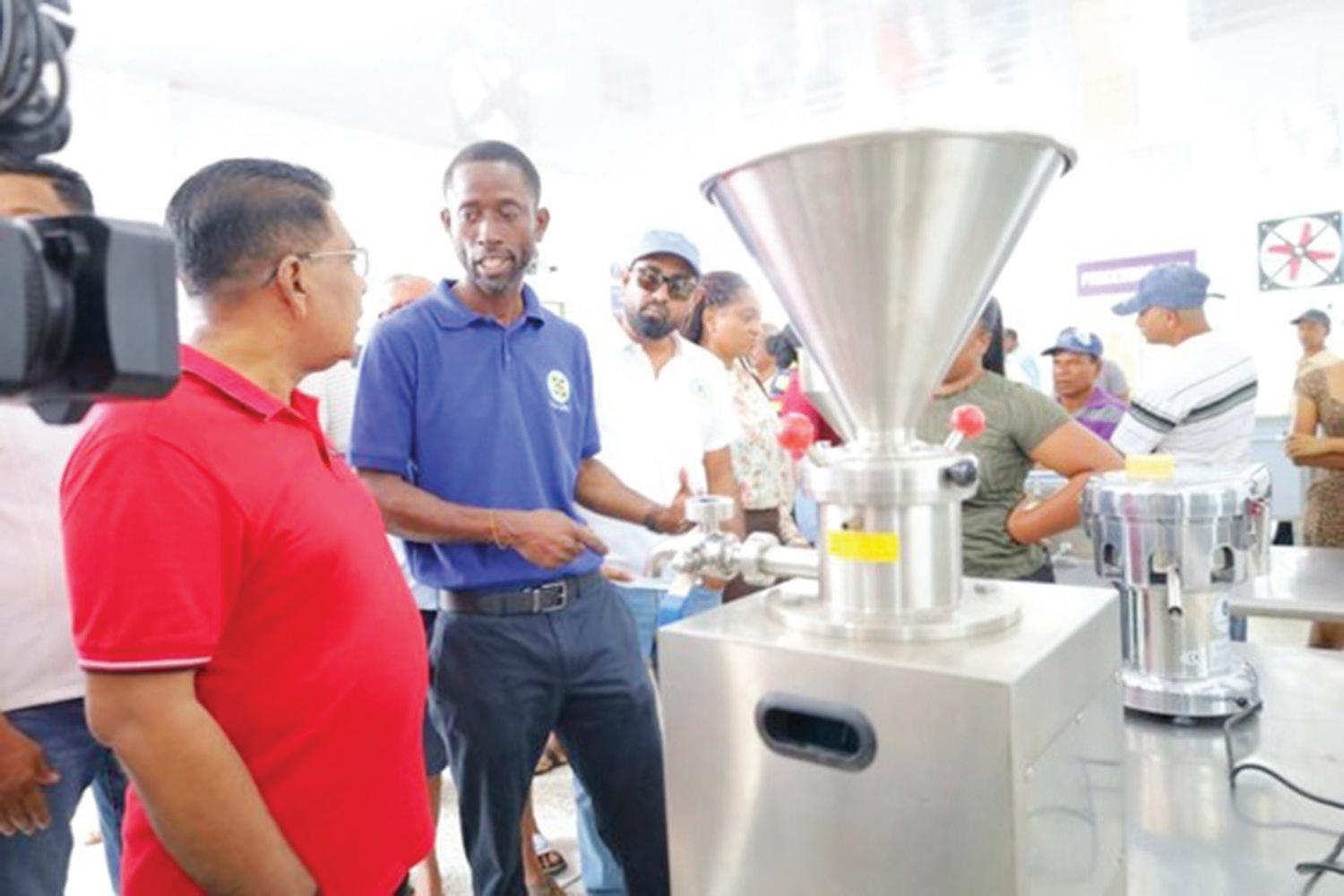
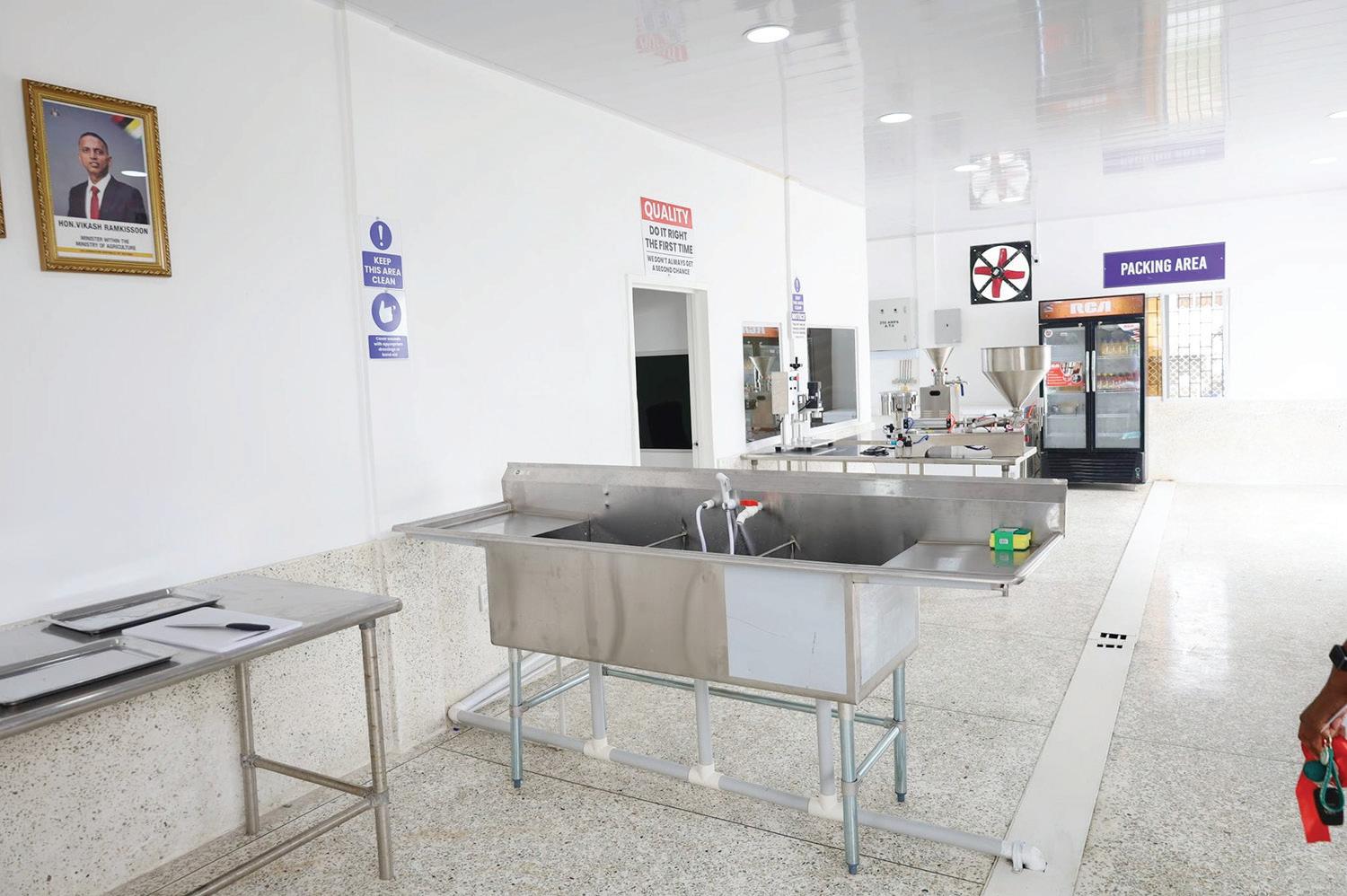
AGRICULTURAL development in Region Three has received a major boost with the commissioning of a new $58.5 million agro-processing facility at Canal Number One Polder.
The facility will convert raw agricultural produce into value-added goods, significantly increasing farmers’ incomes, reducing post-harvest losses, and creating year-round employment opportunities, particularly in rural communities.
Speaking at the commissioning ceremony on Saturday, Minister of Ag-
products, and exporting primary products. Today, in Canal Polder, we are now harvesting that potential,” he said, adding:
“Agro-processing in Guyana is not only about adding value, but it is also about transforming the way we do things. It is about creating new opportunities and empowering people.”
Pomeroon-Supenaam), Three (Essequibo Islands-West Demerara), Four (Demerara-Mahaica), Five (Mahaica-Berbice), Nine (Upper Takutu-Upper Essequibo) and Ten(Upper Demerara-Berbice).
The minister said the initiative is ensuring equitable access for farmers not only in urban and coastal communities, but also in remote hinterland areas such as Whitewater in Region One, Orealla-Siparuta in Region Six (East Berbice-Corentyne), and the Deep South Rupununi in Region Nine.
riculture Zulfikar Mustapha said the facility will further unlock the region’s agricultural potential in a transformational way, moving beyond the production and export of raw commodities.
“For too long we have been producing primary
The minister noted that the facility was strategically established in Canal Number One Polder, since it is one of the most productive agricultural communities in a region that is known for its abundant fruit production.
“I am hoping that the farmers in this community take full advantage of this facility,” he said.
The facility is equipped with a range of machinery, including mixers, blenders, stoves, stainless steel containers, heavy-duty
scales, and chillers.
It also has the capacity to operate on a 24-hour basis, offering mechanised processes that will help lower operational costs. It will operate free of cost, and provide support to small and medium-sized enterprises.
Moreover, Minister

Mustapha said his ministry, through the Guyana Marketing Corporation, has been assessing opportunities across the country to further transform the agriculture sector.
“We are making this sector more resilient. We are making this sector a major source of income
for our country’s population. That is the way we are transforming this sector,” he said.
The Canal Number One facility brings the total number of such agro-processing facilities established nationwide to 15, spanning Regions One (Barima-Waini), Two
“The same facilities that farmers on the coast are enjoying are the same facilities our farmers in hinterland communities are enjoying too,” he said. He further reiterated the government’s commitment to the buildout of this new sector. [DPI]

FIRST LADY Arya Ali on Friday commissioned two new parks in Region Five under the National Beautification Project. This is in keeping with their commitment to delivering safe recreational facilities across Guyana. The Office of the First Lady has said that recreational spaces are integral to the social fabric of every community. It is for this reason that they are
making such facilities accessible in each Region.
Aside from the two parks commissioned on Friday, the First Lady’s Office revealed that another has been designed for Belladrum, Region


Five (Mahaica-Berbice), while a number of others are being constructed in Regions Two (Pomeroon-Supenaam), Four (Demerara-Mahaica), Six (East Berbice-Corentyne) and Ten (Upper Demerara-Berbice), with some expected to be completed in the coming months. Speaking briefly, Mrs. Ali, during the commis-

“This kind of unstructured play can be vital in developing creativity,
ensure that you have a safe space and experience,” Mrs. Ali said.

sioning ceremony for one of the parks, said that the play areas and open green spaces offer children the freedom to explore and create.

and allows children to work together, promoting teamwork, and social interaction. This park features a wide range of amenities, including secure play areas, gazebos, washroom facilities, walking paths, seating and lighting, all thoughtfully designed to enhance the overall ambience and
She urged that simply picking up garbage during visits to either facility is guarding against misuse and vandalism.
The First Lady further said that the diligent stewardship of attendees will ensure that the park remains safe and open for years to come.

- says strong offshore safety record backed by legislation, emergency-response systems as production scales up rapidly
GUYANA’S rapid rise in the oil and gas sector over the past five years has been described as “unprecedented,” even as the country maintains a strong safety record, with no major offshore incidents to date, according to Minister of Natural Resources Vickram Bharrat.
“What has happened in Guyana, in the oil and gas sector in Guyana over the last five years is unprecedented,” the minister said on Wednesday’s episode of The Guyana Dialogue. He noted that the scale and pace of development “has never happened in any part of the world before.”
He pointed to the country’s exceptional exploration success, particularly in deepwater operations, explaining that “ExxonMobil is doing exploration in over 5,000 feet of deep water, and to accomplish a success rate at discovery wells of almost 85 per cent, that has never been heard of in the industry.”
The minister also underscored the sector’s strong safety performance, emphasising that “we have never really encountered any major incident offshore.”
He said the government remains “happy about that and thankful about that,” while maintaining preparedness for any potential risks.
Despite Guyana’s relatively short time as an oil-producing nation, the country has already put in place significant safeguards. Minister Bharrat noted that “as a small country, we are still prepared for any eventuality,” referencing the passage of oil-spill legislation that places clear responsibility on operators.
“You would recall some time back we passed the oilspill bill in Parliament, which gives direct responsibility to the operator as they clean up the restoration of marine life, compensation—all of that is included in the oil-spill bill,” he explained.
The legislation is formally titled the Oil Pollution, Prevention, Preparedness, Response and Responsibility Act of 2025.
In a major boost to emergency-response capacity, Guyana is now home to one of only 13 capping stacks globally—critical equipment used to seal wells in the event of a blowout.
A capping stack is a large subsea emergency device used to seal a leaking oil or gas well if the blowout preventer (BOP) fails. It functions as a temporary cap, installing valves on the wellhead to halt or control the flow of hydrocarbons while relief wells are drilled to permanently secure the well.
“There are 13 capping stacks in the world, that are available in the world, and one is in Guyana. Imagine that, a small oil-producing country, only five years into oil and gas production, but we have one out of the 13 capping stacks in Guyana,” the minister said.
He explained that the presence of the equipment locally significantly reduces response
time in an emergency. “Having it here in Guyana will reduce that time significantly, maybe by half of the time, or even less than that, that we can deploy the capping stack to basically seal that well and prevent any further damage or oil spill.”
Currently, all oil production is taking place in the Stabroek
broek Block with an average daily production of about 920,000 barrels per day,” he explained.
The country is on the verge of further expansion, with a fifth FPSO—the Errea Wittu—set to be commissioned shortly.
“In a couple of weeks, maybe another two weeks from now, we will commission our fifth

Block, which remains the country’s only producing block.
“In the Stabroek Block, which is the only producing block in Guyana presently, so when we speak about producing 920,000 barrels per day, it is only the Stabroek Block,” Bharrat added.
Production is being supported by four floating production, storage and offloading vessels (FPSOs) operating offshore. These include the Liza Destiny, Liza Unity, Prosperity and One Guyana FPSOs, which together are delivering an average daily output of about 920,000 barrels.
“So, we have four FPSOs that are producing in the Sta-
FPSO that’s being built in Singapore,” the minister said, noting that the vessel is expected to arrive in Guyana by August, with production start-up projected for the first quarter of next year.
Looking ahead, he projected that output will surpass one million barrels per day within the next year.
“So, I would say safely that next year, this time, in another year from now, we will have five FPSOs producing at over 1.1 million barrels per day. And that is quite significant,” he stated.
The sector’s growth has been equally striking when compared to earlier production levels.

“Moving from discovery in May of 2015 to first oil in December of 2019, when we took over government, the production was 80,000 barrels per day. We would have moved that in five years to 920,000 barrels per day. And in another year from now, over 1.1 million barrels per day,” Bharrat noted.
Beyond production, exploration activities continue across other offshore blocks, with new partnerships being forged.
The government recently signed agreements with a consortium led by TotalEnergies, alongside QatarEnergy and Petronas.
He said the government is very happy to have the consortium sign an agreement, noting that the companies involved are highly reputable international oil companies, and added that they will begin exploration very soon.
Another agreement has also been inked with a Ghanaian company, Cybele Energy, which is expected to begin exploration activities shortly.
“They too are going to start exploration,” he noted, adding that Guyana is also in discussions with the Dominican Republic and other interested parties seeking to acquire off-
shore blocks.
“We are in negotiation with the Dominican Republic again as well too… and there are a few other companies and countries that we are in talks with because they too would have signalled an interest in acquiring blocks offshore,” the minister said.
Even as the country celebrates rising production and
revenue, the government continues to emphasise a balanced approach that prioritises both development and safety.
“So, while we are producing, while we are happy about that, while we are getting revenue and using the revenue to develop our country, we are also putting safeguards in place,” the minister stated.



GUYANA stands at a unique crossroads. This moment is shaped not only by rapid economic growth, but also by a generational shift in how we understand work.
Recent insights from University of Guyana Vice-Chancellor Professor Paloma Mohamed-Martin highlight a truth that policymakers and employers can no longer overlook. The youth in this country are not just preparing for jobs, they are changing the definition of work.
Findings from the university’s Capacitation
Conclave surveys show a group that is practical, adaptable, and willing to challenge old norms.
Young people no longer feel tied to the idea of life-long employment in a single job.
Instead, they see work as a way to support their changing life goals, placing importance on flexibility, creativity, and personal control. This isn’t a rejection of work; it’s a rethinking of it.
This shift is happening during a time when government policy is actively promoting job creation across different sectors.
Oil and gas development,
infrastructural projects, public sector hiring, and support for new industries have created thousands of opportunities.
Wise fiscal management, which includes careful investment, controlled spending, and strong institutions, ensures that growth is not only fast but also sustainable. This approach helps to stabilise the economy while opening new employment pathways.
However, as Professor Mohamed-Martin points out, simply creating jobs isn’t enough if those jobs do not meet the chang -
ing expectations. Young people are increasingly doubting strict job requirements, especially when they come with low starting wages.
They seek clear opportunities for growth, skill-building, and advancement. In this context, employers need to rethink job design, not as fixed roles demanding perfection, but as flexible opportunities for training, mentoring, and advancement.
The Vice-Chancellor emphasised continued co-operation between the University, industry, and government as both time-
ly and crucial. A modern job market requires ongoing discussions.
Curricula should reflect industry needs, businesses must invest in talent, and the government has continuously shown a commitment to support these connections through policies and incentives.
Internships, apprenticeships, and team-based curriculum development should also be the norm, not the exception.
The opportunities created during this period of Guyana's prosperity, driven by careful economic management, must be capitalised on.
As Professor Mohamed-Martin said, we must act quickly to seize state-funded education and current advantages. The chance to build a strong, future-ready workforce is present.
This is an exciting time, but as she emphasised, it is also a risky one—filled with rapid global change and uncertainty.
Persons must equip themselves to benefit from Guyana's economic changes.
The future of work in Guyana isn't something we can just predict; it's actively being shaped.
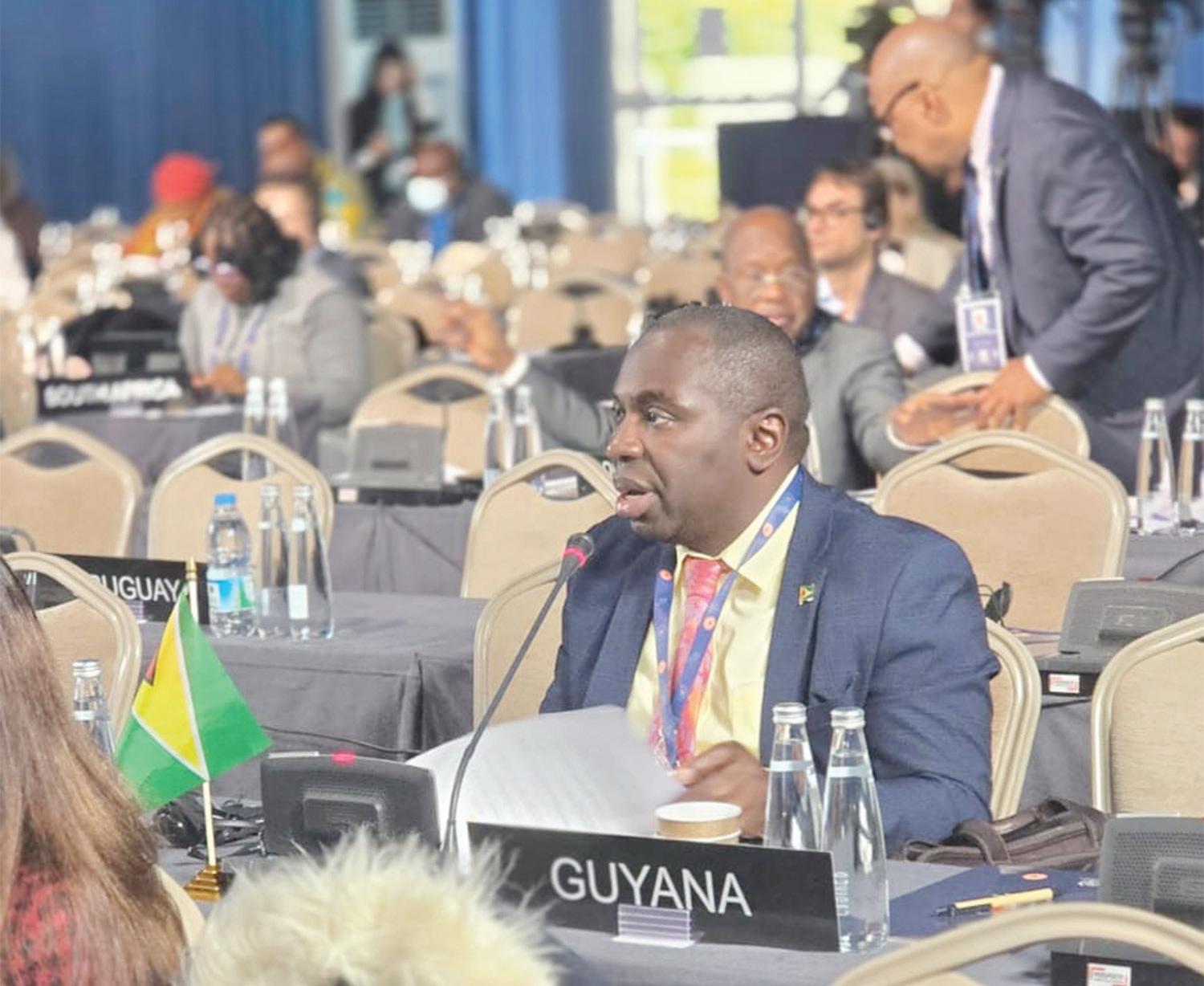
AR TIFICIAL intelligence is no longer a distant policy debate but a “present governance reality” demanding urgent legislative action, Minister within the Office of the Prime Minister Kwame McCoy has said, warning that the window to shape AI governance is rapidly narrowing.
Delivering high-level remarks at the 152nd Inter-Parliamentary Union (IPU) Assembly in Istanbul, Turkey, McCoy underscored that governments must move decisively to ensure that technological advancement is matched by responsive and accountable legislative frameworks.
“Artificial intelligence is no longer a future policy issue; it is a present governance reality shaping how citizens access information, services and opportunities,” the minister stated, while urging parliaments globally to “close the gap
between technological advancement and legislative responsiveness, ensuring innovation is anchored in democratic accountability”.
He stressed that Guyana has already positioned itself to participate meaningfully in the global digital economy through sustained investments in connectivity and digital infrastructure over the past five years.
These include the establishment of three fibre optic submarine cable connections, expansion of high-speed broadband nationwide, and the licensing of low-earth orbit satellite services to reach remote communities.
According to McCoy, these developments have shifted connectivity from a long-standing constraint to a strategic enabler for economic growth and AI integration.
Beyond infrastructure, he highlighted the government’s aggressive push to
digitise public services, noting that approximately 70 services are now available Online, including tax systems, citizen registration, and public benefit programmes. This, he said, reflects growing public trust and engagement with digital governance systems.
“Our model is clear: AI must be built on strong, inclusive digital public infrastructure, ensuring that
innovation translates into real, everyday improvements in citizens’ lives,” he told the assembly.
However, the minister cautioned that alongside opportunity comes risk, pointing to the growing threat of misinformation, data privacy breaches, algorithmic bias, and emerging harms such as AI-generated non-consensual intimate imagery (NCII).
He described these as
urgent issues requiring targeted legislative responses grounded in human rights and adaptable to rapid technological change.
“Parliaments must move beyond general AI discussions to establish specific legal protections, and ensure victim-centered remedies and enforcement mechanisms,” McCoy said, particularly noting the disproportionate impact of such harms on women and public figures.
He further said that for developing countries like Guyana, international cooperation remains critical.
This includes access to technical expertise, capacity-building for legislators, and greater inclusion in global AI governance frameworks, which, he warned, should not be dominated by major powers or private sector interests.
Looking ahead, McCoy outlined Guyana’s next phase of digital transformation, including accel -
erated 5G deployment, strengthened cybersecurity architecture, expanded digital skills training, and deeper public-private partnerships to drive innovation.
“These priorities reflect a deliberate shift, from expanding access to leveraging digital infrastructure for productivity, innovation, and AI integration, ensuring that adoption is inclusive, secure, and development-oriented,” he noted.
The minister also issued a clear call to action, asserting that governments must act collectively to ensure AI strengthens democracy, protects human rights, and expands opportunities for all.
“The window to shape AI governance remains open, but it is narrowing,” he warned, signalling Guyana’s readiness to collaborate internationally in advancing responsible and inclusive AI frameworks.
GUYANA is not going to see any intellectual exchange between PNC leaders and independent academics. Guyana is not going to see PNC leaders participating in open debate with persons whose politics are not on the same wavelength with them.
What the PNC leaders and the entire school of anti-government preachers will do, way into the far future, is to stay in their comfort zones and sermonise their small group of converts. Look at social media and see if you can identify one social media programme where these anti-government politicians have engaged in open debate. They are afraid of intellectual exchange and they are running from it. They take refuge in their comfort zones. The result is they appear as jaded, faded mandarins and this and no other factor explains the devastation of the PNC in the 2025 general and regional electionse3ese3e.
The man who is happy to talk political insipidities in his comfort zone is Vincent Alexander.
He came on the Freddi Kissoon Show and argued that African Guyanese who joined the PPP suffer from post-slavery syndrome. Alexander reduced the complexities of the human mind to a single factor. So there are no other variables involved when an African Guyanese decides to join the Government of Guyana.
Alexander refused a request to debate James Bond on another edition of the show, since Bond was accused of having post-slavery syndrome. When I asked Alexander why he refused, he said he did not like the comments he saw posted about him on the show. Any schoolboy would know that

was an asinine cop out. One enters an arena of debate for three reasons: self-confidence, addressing the public on issues you want to educate them on and the obligation to those who support you to speak to them.
Alexander was in his comfort zone last week. The safety cocoon was David Hinds’ social media programme titled Politics 101. Here is what Alexander said. The upper class of Indo Guyanese has captured the state and has perpetuated domination over Guyana and its resources.
He went on to add that although there are ordinary Indians who do not benefit from the upper Indian class, they will not speak out because they see the government as Indian.
Now and forever, Alexander will not defend that unmitigated political miasma in front of an audience in which he is a panellist among independent thinkers and face questions from the audience. Now and forever, Alexander will remain happily ensconced in his comfort zone.
There isn’t any part of that delivery that could stand up to questioning. The rest of this column is an assault on this fake political theory of Alexander. First, you have to explain to your supporters
through which route this Indian class came to capture the state.
It can be by rigged election, a putsch or a coup d’état. The PPP came into power in 1992 and, except for the election it lost in 2015, has won state power through free and fair elections since 1992, which the world has accepted.
In all those elections, Mr Alexander himself sat in the Elections Commission. If the PPP captured state power, Alexander had to explain how it did that while he sat for 18 years as a GECOM Commissioner. Secondly, Alexander has to explain how this upper Indian class caused itself to be out of power in 2015. If this upper Indian class is a relentless perpetuator of domination, how did it lose in 2015?
Thirdly, how did this upper Indian class secure power again in 2020 when the 2015 government had the following characteristics – President - former head of the army; Vice-President - former chief of army intelligence; former Chief of Police - Minister of citizenship; former head of the army - presidential adviser. We can go on, but that information compels Alexander to explain how the upper Indian class captured the state in 2020. Fourthly, Alexander

tions report for both 2011 and 2015 to see that the very Indian people that he says will not speak up voted for the AFC to bring about a minority PPP government in 2011 and loss of power in 2015.
could be accused of being intellectually poor. He did not read the GECOM elec-
Fifthly, in a country where Indians are 39 percent, how did the PPP receive 55 percent of the voters cast in 2025? Sixthly, the concept of an upper Indian class that controls the government is a bogus political theory.
Seventhly, can Alexander explain why, if the PPP is so
bad, why did Africans reject their own party in 2025? What Alexander said last week is the same old story he and his acolytes have been preaching for the past five years. It is insane politics from the people Guyana has left behind.
DISCLAIMER: The views and opinions expressed in this column are solely those of the author and do not necessarily reflect the official policy or position of the Guyana National Newspapers Limited.

SOMEBODY needs to be bold enough to say it without any fear of successful contradiction. This person needs to do a clear analysis of the four months that Azruddin Mohamed has been elected as Guyana’s opposition leader. They need to be objectively honest and fair.
Some opposition members are incapable of criticising Mohamed, even when he does something that he should not do or embarrasses the opposition. These are WIIN members who sometimes give off cult-like vibes when it comes to their leader, as they appear brain-dead and unwilling to contradict him. These opposition politicians still don’t understand the role that they have been elected to play in Guyana’s political landscape, and are on a fishing expedition, it would seem, without any hooks.
The other group, APNU
politicians, must be commended for their conduct when it comes to criticising Mohamed. They know that he doesn’t have any solid political policies or plans to talk about other than the veiled philanthropic work that he does for people, which is purely political.
I feel that the APNU opposition does not respect or like him as opposition leader, but is being politically strategic.
I think Mohamed is the worst opposition leader in Guyana’s history, judging from his tenure over the past four months. I intend to analyse his approach to governance and the job at a later date, but for now, he is failing miserably and shamefully when compared to the conduct of his predecessors.
The lack of leadership, political knowledge and policy understanding is quite
appalling. Mohamed seems not to play a strategy in politics, and is solely depending on his money and respect for his father in the country to help him.
Over the last four months, I could see now why there was severe criticism regarding his fitness for office, his focus on personal legal battles, and his impact on opposition unity. Six months after the elections, the opposition is still battered, and unity is nonexistent within the opposition. And the opposition leader couldn’t care less at this point about the need for discussions with APNU or FMG about various factors. Rather than consolidating the opposition, Mohamed’s election has exacerbated internal fractures.
This is so because Mohamed’s tenure is characterised more by self-preservation than a national agenda.


Much of his political capital is spent addressing his own criminal charges and fighting extradition to the United States for alleged gold smuggling and money laundering.
It must not escape the public’s eye that, despite calling for transparency from government ministers, Mohamed has reportedly failed to publish his own asset declarations as required by the Integrity Commission for Members of Parliament. No other opposition leader has the integrity issues that he is faced with now.
Another criticism of Mohamed is that he is frequently accused of using his platform to attack personal and political enemies under the guise of fighting corruption. He has launched public attacks on government ministers, such as questioning the wealth of the minister of agriculture and tourism, while facing similar accusations regarding his own “unaccounted wealth”.
As opposition leader, I think he should look within his circle; he should put his theory to the test, and his party should take the government, ministers, persons, and organisations to court over the corruption allegations, but it is all a classic smoke-
screen. I think his actions are a ‘pattern of lies’ intended to distract the public from his international sanctions and local tax evasion charges, including the alleged undervaluation of luxury vehicles like the 2020 Lamborghini.
Interestingly, the role of the opposition leader is a constitutional pillar intended to hold the government accountable and safeguard the interests of all citizens.
Mohamed is, therefore, unfit for public office, and represents an “international economic threat” to the country due to U.S. sanctions. His actions, such as driving an unregistered Lamborghini into Parliament, have been cited as examples of a disregard for the Rule of Law he is sworn to uphold.
I am convinced that Mohamed’s approach lacks the necessary rigour to hold the government accountable through conventional parliamentary and constitutional mechanisms. Optics are important, but should not be prioritised over oversight.
If you were to look at his frequent use of social media and public distribution of aid as “image laundering” rather than substantive policy critique, you would get the picture.
While Aubrey Norton,
were respected giants in the opposition politics of their time, Mohamed has no respect, substance, or political intelligence. This is a severe downgrade from what the public is accustomed to, and Mohamed does not even possess the oratory skills to bluff his way.
He spends more time detailing his personal philanthropy on Facebook than engaging in the intricate legislative work required of an opposition leader. It is unfortunate that the masses will have to settle for a Facebook opposition leader.
Unlike Norton, who often produces detailed policy alternatives, I think that Mohamed has “policy gaps” and a lack of clear legislative strategy beyond vague calls for “accountability.”
Those who are following Mohamed and appear obsessed with turning the personal grief and misfortune of others into a political blame game against the government are baby politicians and novices. This is the most disappointing and distasteful trend developing in Guyanese TURN TO PAGE 11

IF I had to sum up the past week in a headline, it would have to be: “Guyanese panicked over fuel shortage for no good reason”. In many countries, the war in the Middle East made people worry about soaring prices at the pump, and for very good reasons; here, sound government policy spared us that burden, leaving only imagined fears and public mischief dressed up as intelligence to fuel our anxieties.
On the ground, it played out like this: The line-ups at gas stations in Guyana were a scene out of a familiar playbook, specifically Azruddin Mohamed’s worn-out shtick.
You’d think we would have learned by now to recognise a con artist. We’ve seen them by the barrels with every reincarnation of the People’s National Congress (PNC) and many of the bizarre lot who teamed up with them over the years.
And now, the “We Invest in Nationhood (WIIN)” is proving just as adept at subterfuge. I’d like to think we are maturing as a nation, but this last week left me wondering what’s got into people.
The massive, thankfully short - lived line - ups at stations proved that even a serial mischief - maker like Azruddin could make many people throw good old commonsense out the window. Azruddin dropped a match in

a proverbial barrel of oil, and suddenly we were staring at a firestorm of our own making, hard to control, even after the facts were clear.
President Irfaan Ali jumped on it right away, assuring Guyanese not to worry; supplies were en route. He didn’t sugar-coat the challenges to supply lines. A war was raging, and Iran was still imposing a chokehold on the Strait of Hormuz.
The president met with stakeholders and posted pictures on his Facebook page, the social media platform that the majority of Guyanese gravitate towards for their daily fix of news and information, showing exactly who he was meeting with, and what they informed him about the shipments of oil and gas destined for Guyana. It was credible information from the horse’s mouth, as they say. That’s leadership in action. No nonsense. The economy and people’s wel-
fare are not things to trifle with.
There is absolutely no question that he is the president, and he acts like one. He wasn’t born with a silver spoon in his mouth.
There were no rides in expensive cars with the AC cranked up for him to peep comfortably out the windows just to memorise licence plate numbers. This president took a bus and a river taxi to and from St. Stanislaus, where he excelled as a student. No one knows to this day whether Azruddin even completed high school.
As drivers panicked and the line-up at stations grew longer, a mischievous Azruddin framed the “No Gas” signs at stations as “a national crisis”, and, like lemmings, people headed for the ledge. Azruddin used it as proof that the government had failed to manage national resources. It ultimately

ety, Azruddin, the Mohamed family and WIIN’s camp were busy triggering panic buying and unsafe fuel-storage practices, which I observed with my own eyes. As the government was urging citizens not to hoard fuel, Azruddin was igniting a rush-to-buy and did nothing to calm public anxieties.
The more the government tried to debunk fake notices about a 10-week shortage, Azruddin’s cultlike following stoked fears.
backfired on him.
Consider this: WIIN’s leader is unable to manage his own court schedule. Why would anyone take his word on a matter so substantial as our ability to get from point A to B? But the nation will find out in two days whether Azruddin fares any better before the Caribbean Court of Justice (CCJ), or whether he will pull the same delay stunts that he has used, repeatedly, with Magistrate Judy Latchman and gotten away with?
Instead of calming anxi-
Prime Minister Mark Phillips issued a formal statement and public-facing messages urging citizens not to panic-buy or hoard, warning about the dangers of unsafe storage, and setting out a detailed schedule of incoming fuel cargoes to show that the squeeze was temporary.
A ceasefire between the United States and Iran, with Israel pushed into a corner, thankfully, appears to be holding. Soon, the world will look at this unnecessary war in our collective rearview as a very bad idea. When we do, we should re-
member Azruddin’s role, his language, his blame game, his fuelling of the rumour mill that triggered anxiety buying, for what it reveals about him and the politics he represents.
And let the record show that facts matter when it comes to this government. It always has, whether it’s addition or subtraction. Facts were presented in briefings, in meetings with importers, in shipment timetables, and with words that reassured the people of Guyana that the grid and the pumps would be supplied.
In the end, Guyana did not run out of fuel, but it should have run out of patience with those who would burn down public trust for a few cheap political points.
DISCLAIMER: The views and opinions expressed in this column are solely those of the author and do not necessarily reflect the official policy or position of the Guyana National Newspapers Limited.


MUCH is being said about Guyana’s rise as the fastest oil-producing nation, from the number of barrels produced per day to the revenue coming in, and the increase in international partnerships. However, beyond those headlines, another story is unfolding, one rooted in people, opportunity, and national pride.
That story is beginning to take shape as Guyana strengthens its local oil-andgas workforce. This progress is clearly reflected in the recent graduation of the third cohort of technicians to earn an Advanced Diploma in Oil and Gas from the Guyana Technical Training College Inc (GTTCI). This historic achievement is not just a milestone for the institution, but for the country’s broader development. It signals
a clear shift, showing that Guyanese are not only participants in the oil and gas sector, but its backbone.
Professor Clement Sankat, Director of the College, underscored the significance of the achievement. He noted that the 20 graduates represent a programme delivered to international standards, with broader implications for the future of technical education in

Guyana.
“You have earned this Advanced Diploma in Oil and Gas, certified to international standards and quality assured by City and Guilds of the United Kingdom. This is no mean feat. This is not a City and Guilds certificate. This is a GTTCI certificate, and it represents a level of accreditation and quality assurance that sets this institution apart,” Professor Sankat said to the graduates.
What makes this moment especially significant is not just the number of graduates, but what they represent. These are individuals who have undergone rigorous, industry-aligned training designed to meet the demands of offshore operations, where technical precision and a strong culture of safety are crucial.
Hearing from the graduates themselves made the achievement even more meaningful. Valedictorian Alvacie Moore captured this sentiment powerfully, reflecting on the journey that brought the cohort to this point. “We are not just technicians; we are innovators, problem solvers, and safety leaders. As we step into our careers, let us remember that our roles connect to something bigger: people’s lives, environmental protection, and the future of this industry.”
The graduates are transitioning directly into roles on Floating Production, Storage, and Offloading vessels (FPSOs). This seamless movement from the techni-
cal institute in Port Mourant, Berbice, to offshore operations demonstrates that the training pipeline is working. It also addresses one of the most pressing challenges facing emerging energy producers: the need to build and sustain local expertise.
This progress has been supported through collaboration between training institutions, the government, and industry partners, including ExxonMobil Guyana, which continues to invest in developing local talent and strengthening the country’s workforce capacity.
For years, the narrative around oil-and-gas development in growing economies has been one of dependency on foreign companies, foreign workers, and foreign knowledge. Guyana, however, is steadily reshaping that narrative by building a local workforce that is both capable and competitive.
By investing in programmes like those offered by the GTTCI, the country is creating opportunities for more Guyanese to benefit directly from the sector. It means knowledge is being retained and transferred within our communities. It also means a stronger sense of ownership over the country’s natural resources.
As Moore noted in another moment of reflection, “beyond the technical, this journey has taught us about teamwork. No calibration is done in isolation. No shutdown is ever managed alone. We learned to trust each other, to share knowledge,
and to support one another through long nights of study and challenging practicals.” That sense of collective progress is essential. Oil wealth, if not managed inclusively, can deepen inequality and disconnect citizens from the very resources that are meant to uplift them. Workforce development is among one of the most effective ways to ensure that opportunities are shared more broadly across society.
Sustaining this momentum will require continued commitment. Training programmes must expand, evolve, and remain aligned with the needs of the industry and the realities of offshore operations. Partnerships between educational institutions, government, and private operators will need to deepen. Most importantly, there must be a longterm vision that positions human capital, not oil, as the country’s most valuable resource.
This first graduating class of Advanced Diplomas in Oil and Gas offers a compelling glimpse of what is possible. It is proof that Guyana’s future in oil and gas will not be defined offshore alone, but by the people prepared right here to lead it.
DISCLAIMER: The views and opinions expressed in this column are solely those of the author and do not necessarily reflect the official policy or position of the Guyana National Newspapers Limited.

Massage therapy has a rich and diverse history dating back over 3,000 years. The ancient Egyptians, Indians, Chinese and Japanese are just some of the nations who practised the art to both heal and treat injuries, while fostering a general sense of wellbeing.
It began in India, where it was used in Ayurvedic “life health” medicine and considered a sacred system of natural healing.
Subsequently, massage made its way to China, where it was combined with traditional Chinese medicine, martial arts and yoga.
Chinese Buddhist monks took it to Japan, putting their 'own spin' on the therapy, calling it 'anma' and later 'shiatsu’. This technique was developed to strengthen the organs of the body.
The ancient Egyptians later added their own bodywork techniques and are credited with introducing reflexology, where pressure is applied to areas of the hand and feet to bring about healing.
The Greeks and Romans, influenced by the Egyptians, used mas -
sage in different ways.
And the Greek, Hippocrates, is said to be the first person to introduce a combination of fresh air, exercise, diet and even music, to promote “health balance”.
Greek athletes used massage to tone their bodies and wealthy Romans began to enjoy massages in their homes.
When its popularity declined in the West, Swedish doctor Per Henrik Ling is credited with reviving massage through the Swedish Movement Care, which gave way to what is currently known as Swedish massage.
Now, massage therapy is widely used in countries around the world and Guyana is no exception. With the general evolution in health and beauty treatments, massage is recognised as an effective means of enhancing health and promoting physical and mental wellness.
Massage parlours today are also designed to create an atmosphere which encourages relaxation and a space where patrons can escape from the pressures of daily life and work.
It is with this in
mind that Olivia Dos Santos recently opened her “boutique studio” - Touch of Paradise Massage Therapy - on the Soesdyke/Linden highway.
“Every detail of my private studio is intentional,” she says, “I wanted to create a peaceful, personalised environment where clients can step away from their busy lives and truly feel catered for”.
With ten years in the field of aviation as a flight attendant, Olivia knows about hectic schedules, long hours of trans-continental travel and the toll this takes both physically and mentally.
As wife and mother, she spent ten years juggling her personal and professional life, while also battling health challenges. This has imbued her with an innate understanding of, particularly, a woman's need for support and comfort and fuelled her decision to get into massage therapy.
So, when her career in aviation ended, three years ago, she decided to continue studying in earnest, completing a journey she began years earlier with her first massage course.
politics. It’s only four months, and his irresponsible conduct has already been called out by the Ministry of Human Services, which has criticised his use of vulnerable individuals, including children and abuse victims, as ‘political props’, suggesting a lack of judgment and sensitivity.
Finally, the poor people and opposition supporters are not better off because of Mohamed’s politics and political philanthropy. They don’t see Mohamed as a victim of political witch-hunting or as a target of government trumped-up charges. They see clearly. They
know that Mohamed can’t and will not do anything for them and their state without a camera.
They know that he can’t defend himself without his political advisers, who are pulling his strings in return for their pots of silver-plated or gold coins. The public sees through the politics of division, race, rage, violence, optics, convenience, self-interest, and money. No opposition leader worth his salt would conduct himself like Mohamed does for likes and shares. No opposition leader would use people who are innocent as a shield from extradition and
“After leaving aviation, I decided to fully commit to this path," says this energetic young woman, who now has certification in massage, facial and body treatment and body contouring. She also participated in the Road to Growth programme for Women in Business.
Her desire to create a space of her own grew from her experience at massage facilities she visited in various countries during the course of her career.
While she acknowledges that some of the treatments were good, she pointed out that she never had a moment where she could say “Wow, this is an experience”, Olivia muses.
“That stayed with me," she says, adding,

“I knew that one day , if I created my own space, I wanted it to be more than just a service - I wanted it to feel like a true escape”.
The day came last March 8th, when Olivia held the opening ceremony for Touch of Paradise Massage Therapy, offering an escape to tranquillity.
"My goal is to help women, especially mom's, feel like themselves again - rested, confident and supported,” says a smiling Ol-
ivia Dos Santos.
Her boutique studio offers stone and deep tissue treatments, Swedish Bliss massage and 'Glow-Up' facials and is open daily except Wednesdays and Sundays.
DISCLAIMER:
The views and opinions expressed in this column are solely those of the author and do not necessarily reflect the official policy or position of the Guyana National Newspapers Limited.
the long arm of justice.
No opposition leader would sacrifice the combination of the opposition’s strength to go it alone on matters of integrity, corruption, and mismanagement like Mohamed is delusional in doing.
No opposition leader deserves the title ‘worst’ more than Mohamed.
DISCLAIMER: The views and opinions expressed in this column are solely those of the author and do not necessarily reflect the official policy or position of the Guyana National Newspapers Limited.

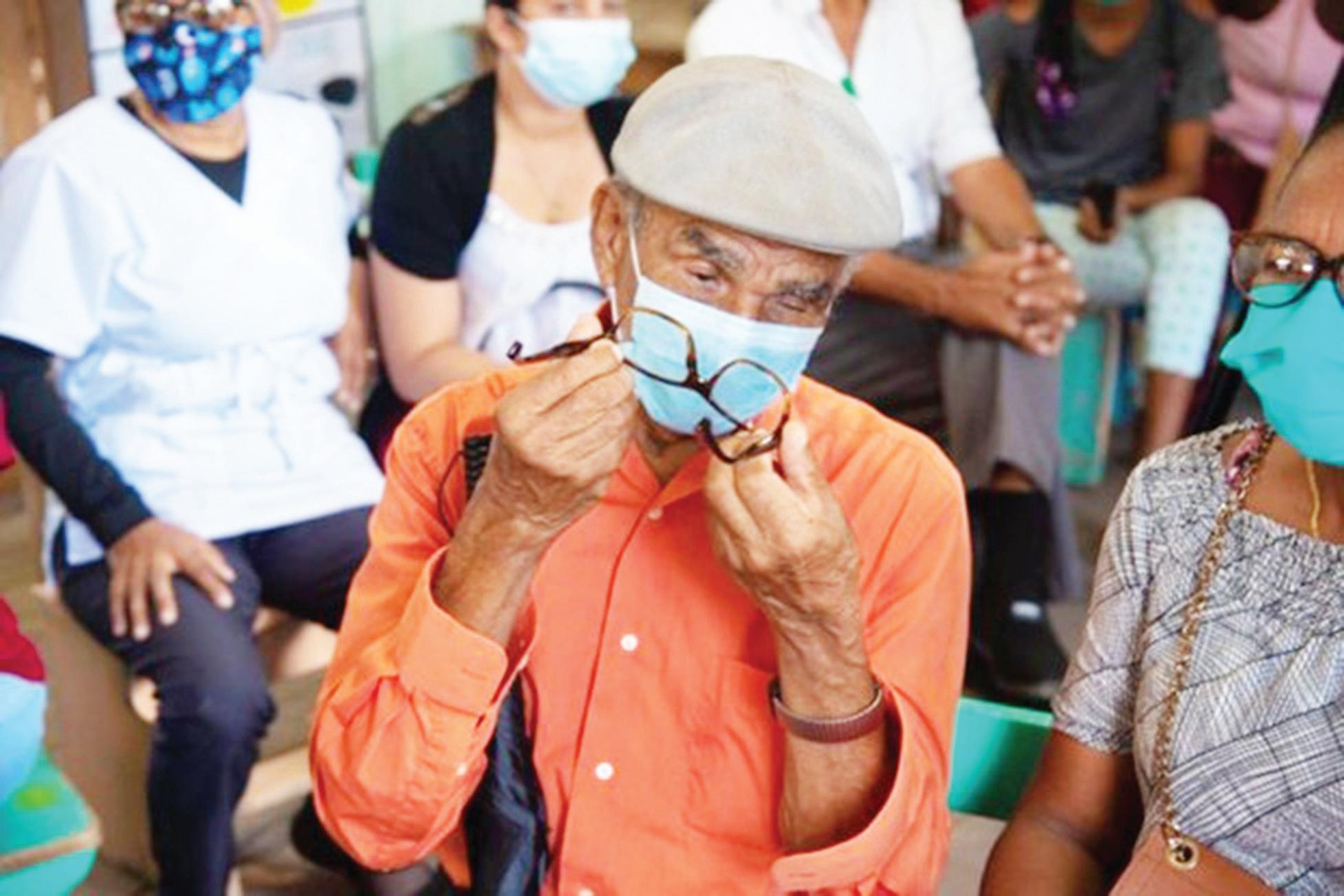
HUNDREDS of thousands of Guyanese are now accessing free eye care through the government’s Eye Testing and Spectacles Subsidy Programme that is expanding testing and corrective lens support across the country.
President Dr. Mohamed Irfaan Ali on Friday evening dis -
closed that since the initiative’s launch in 2024, 175,272 vouchers have been used for eye examinations, while 160,282 persons have received assistance for spectacles.
Before the programme, many people put off routine eye checks due to cost, inconvenience, or limited access, often allowing
manageable conditions to worsen over time.
The initiative addresses that gap by pairing free testing with financial support for glasses.
“Under this programme, citizens receive a voucher for eye testing along with a $15,000 voucher for spectacles,” the president explained.
A key feature of the

programme is its delivery model, which draws on both public and private providers to expand reach without duplicating infrastructure.
“This helps us to utilise existing and spare capacity within the private sector, and that is efficient. We build [no] entirely new state-run systems where capable private facilities already exist,” President Ali said.
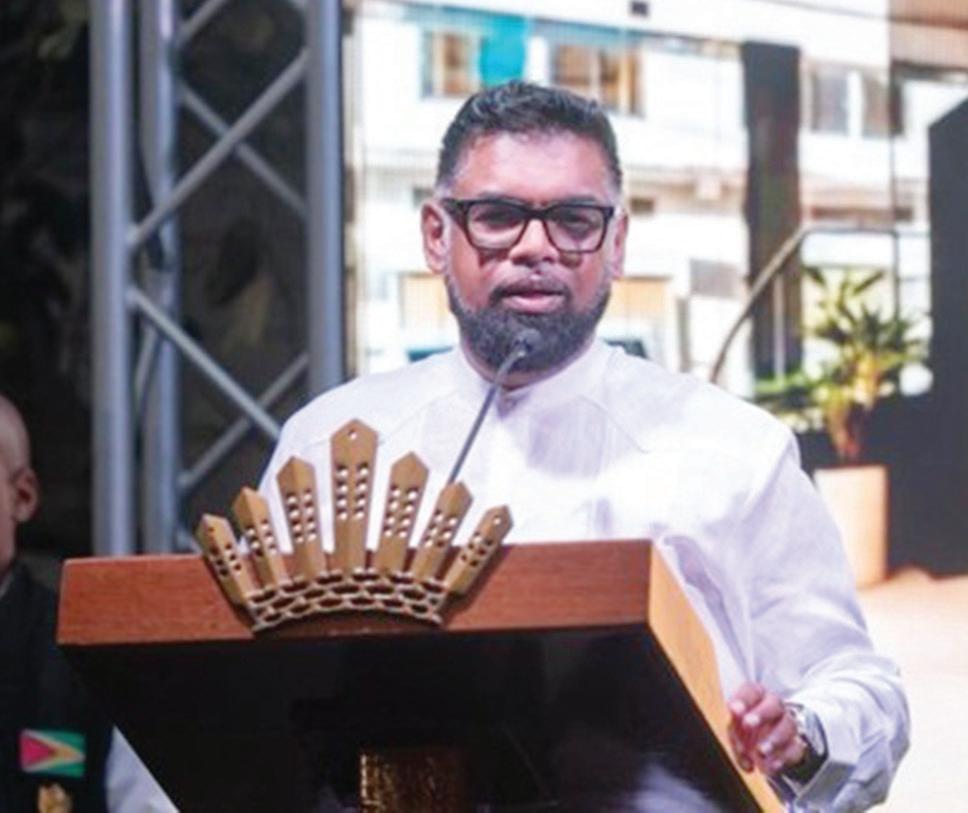
cialists handle service delivery.
President Ali added that the same approach holds promise across other areas of healthcare, including diagnostics, imaging, dialysis, rehabilitation, and specialists’ consultations.
“That is practical policymaking; that is
dents to catch vision problems early.
He described the arrangement as a “public financed, privately delivered” model, in which the government underwrites affordability while private spe-
public-private partnership in action,” he declared.
The effort also extends into classrooms, where testing is being rolled out among stu-
The goal is to ensure children are screened multiple times during their school years. This will reduce the risk of undetected vision issues affecting learning outcomes, with the president emphasising, “this is how preventative healthcare strengthens a nation.”
For 2026, the government expanded the programme to be available to all Guyanese citizens, effective March 2, 2026. [DPI]

COOPERS (PwC) is strengthening its presence in Guyana, positioning itself to meet growing demand for professional services while building a pipeline of local talent to support the country’s expanding economy.
PwC’s Assurance Partner, Aruni Singh-Persaud said the firm is excited to be part of Guyana’s development journey, following the recent opening of its permanent office at the Pegasus Corporate Centre in Kingston, Georgetown.
While PwC has operated in Guyana for several years, the establishment of a physical office signals a deeper commitment to the local market.
Singh-Persaud noted that increasing economic activity has created strong demand for services such as auditing, accounting, business advisory, and corporate support.
“We would like people to
understand we are a professional services firm, and the type of support that we can provide,” she said.
She explained that PwC’s Corporate and Legal Services Department supports entrepreneurs with business registration, licensing and related processes; services that are becoming increasingly important as more Guyanese move to formalise their businesses.
“With the increased economic activity, a lot of people are trying to incorporate businesses in Guyana; so, that’s a way we can support the Guyanese people,” she said.
The firm is also providing accounting and business solutions to companies that may not have the capacity to employ full-time finance professionals.
“If a company cannot hire their own accountant full-time, there are practical solutions that we can offer the market. And of course,

our flagship line of service is audit,” Singh-Persaud added. She emphasised that PwC’s role extends beyond service delivery to strength-

ening transparency and investor confidence through accurate and reliable financial reporting.
Another key focus for the
firm is talent development.
Singh-Persaud said PwC serves as a training ground for young professionals, offering mentorship and structured development pathways.
“So, it is somewhere young people can come and grow and prosper with us, and we are willing to invest the time to train and mentor them,” she said.
PwC also supports employees pursuing professional qualifications, covering tuition and examination fees for the Association of Chartered Certified Accountants (ACCA) programme, as well as annual subscriptions for ACCA and the Institute of Chartered Accountants Guyana (ICAG).
The firm recently participated in the University of Guyana’s Open Day and Job Fair 2026, where it engaged students and showcased career opportunities
Country Manager for PwC Guyana, Saeed Rahaman said the organisation
offers a range of career paths beyond auditing.
“The future looks bright in terms of accounting and the different career paths available.
In addition to auditing, we offer tax and legal services, as well as advisory and management consultancy,” he said.
Rahaman added that the firm is also exploring opportunities to expand beyond Georgetown, with a focus on tapping talent across the country.
At present, PwC employs staff from Berbice, including remote and part-time workers, as part of efforts to decentralise employment opportunities.
Beyond recruitment, PwC is also working to raise the standard of the accounting profession locally, collaborating with industry bodies to ensure professionals remain aligned with evolving practices and opportunities.



— telecom sector accounts for nearly half of reported cases
MORE than $23 million was recovered for consumers through refunds, billing corrections and penalties in 2025, even as complaints against utility providers increased and the telecommunications sector accounted for the largest share, according to the Public Utilities Commission (PUC).
In its 35th Annual Report, the commission documented 259 complaints across the telecommunications, electricity and water sectors last year, marking a 6.14 per cent rise compared to 2024.
Telecommunications companies attracted nearly half of all complaints, with 128 cases recorded. Issues reported by customers were largely tied to service disruptions and billing concerns, highlighting ongoing challenges within the sector.
Guyana Power & Light Inc. (GPL) accounted for 93 complaints, with the majority linked to electricity-related concerns. Of these, 84 matters were resolved, representing a 90 per cent resolution rate. Service tampering emerged as the most common issue raised in this category.
Meanwhile, the water sector recorded improvement, with complaints against Guyana Water Inc. (GWI) declining to 38 from 48 the previous year. The PUC indicated that every complaint filed against the company during


the period was successfully addressed.
Overall, the commission maintained a strong performance in addressing consumer grievances, with approximately 93 per cent of all complaints resolved within an average timeframe of just over two months.
A portion of the total compensation, amounting to $10.2 million, was distributed to 71 consumers during 2025, while the remainder covered adjustments for matters carried over from the previous year.
The credits represented billing adjustments, penalties for breach of service standards and reimbursement for undelivered services. Credits were applied to the accounts of 13 consumers who had filed their complaints in the previous year and had their matters resolved in 2025. This brought the total credits applied to consumer accounts in 2025 to $23,359,258
The commission said the figures reflect continued efforts to strengthen consumer protection and improve accountability among utility companies operating in Guyana.
The report also outlined that the PUC exercises statutory oversight over a range of telecommunications providers and public utilities operating in Guyana.
These include U-Mobile (Cellular) Inc. (Digicel), E-Networks Inc. (ENet), One Communications Inc., Quark Communications Inc., Green Gibraltar Inc., and Starlink (Guyana) Inc.
NUMBER PORTABILITY
The implementation of number portability in Guyana’s telecommunications sector was driven by the PUC, which “initiated the process approximately three years prior to its official launch in February 2025.”
According to the PUC’s latest report, the commission played a central role in coordinating stakeholders, guiding the technical rollout, and ensuring regulatory compliance.
It also led extensive prelaunch public-awareness efforts, including social media campaigns and website publications, to prepare consumers for the transition and explain “how the porting process worked.”
Following the launch, the PUC continued its public education drive to strengthen consumer understanding and confidence in the new system. These post-im-
plementation efforts were carried out “via social media in an effort to build public confidence in the system and to ensure that consumers understood the benefits from the flexibility that number portability provided to them.”
Between February and December 2025, a total of 1,311 ports were completed. The report noted that porting activity showed moderate fluctuations throughout the year, with alternating periods of increases and declines. The highest number of ports was recorded in July.
The commission observed that these fluctuations reflected shifting customer behaviour, influenced by market conditions and possible promotional activity. It stated that periods of increased activity “may be attributed to the impact of promotional campaigns, increased marketing efforts, or other seasonal factors.”
Despite these variations, the process was described as running smoothly overall. The report said there was “sound coordination between operators and the supporting systems, which allowed ports to be completed efficiently with little disruption to customers.”
Importantly, it was also noted that there was “no significant movement of customers who returned to their original providers,” suggesting a high level of consumer satisfaction among those who switched networks under the new system.
The PUC is an independent regulatory authority with oversight of the telecommunications, electricity and water and sewerage sectors in Guyana. The commission, which is a statutory body, was established under the Public Utilities Commission Act, Act No. 26 of 1990 and currently operates under the Public Utilities Commission Act, Act No. 19 of 2016.
As part of its mandate, the PUC ensures that the regulated service providers comply with the standards outlined in the relevant Acts and Regulations.
The commission’s primary role is to balance the interests of consumers and service providers, specifically monitoring the quality of service provided to consumers, maintaining fair and reasonable pricing for services, while safeguarding the financial sustainability of operators.






PATIENTS in Guyana could soon have their X-rays, magnetic resonance imaging (MRI) and computed tomography (CT) scans in as little as one minute, under a new initiative announced by President Dr. Mohamed Irfaan Ali.
Speaking at the opening of a new eye hospital on Friday evening, the first privately-owned facility on New Market Street, President Ali said the country has already in-

vested in the infrastructure needed to support the shift.
“We have now signed on to a programme that will allow us to read X-rays, CT scans, and MRI in seconds. One minute,” he said.
For years, patients have faced lengthy delays waiting on scan results, delays that often slowed treatment and placed added pressure on the healthcare system.
Acknowledging that reality, the president
remarked, “Before, you would be waiting for hours for those scans to be read.”
The new system is expected to significantly speed up both the reading and analysis of scans, enabling medical professionals to respond to patients more quickly.
President Ali noted that faster diagnostics will translate into stronger results across the system, saying, “That allows better outcome, faster response, and greater results.”
The initiative forms part of a broader push to expand the use of technology in Guyana’s healthcare sector, spanning diagnostics, imaging, and specialist services, where new systems and partnerships are expected to drive greater efficiency.
The goal is to establish a world-class health sector by 2030, driven by massive public investments and partnerships with the private sector. [DPI]
GUYANA’S 60th Independence Anniversary celebrations received a major cultural boost on Friday evening as the internationally- acclaimed Hebei Acrobatic Troupe delivered a captivating performance at State House, reinforcing decades of diplomatic and cultural ties between Guyana and China.
The performance, described as a cultural gift from China, forms part of a wider national tour, and coincides with both Guyana’s Diamond Jubilee and 54 years of diplomatic relations between the two countries.
President Dr. Irfaan Ali, while welcoming the troupe, underscored the significance of the visit, noting that its presence here adds “splendour and spectacle to a year already rich with national pride”.
“It is with distinct pleasure that we welcome the Chinese acrobatic troupe to Guyana… Their visit marks the beginning of what promises to be an extraordinary tour,” the President said, noting that performances across the country will ensure that “all of Guyana would have an opportunity to see their performance”.
The visit, he emphasised, goes beyond entertainment, reflecting decades of cooperation and shared progress between the two nations.
“The relationship between
- opens Guyana tour with dazzling State House performance for Diamond Jubilee celebrations

President Dr. Irfaan Ali, while welcoming the troupe, underscored the significance of the visit, noting that its presence adds “splendour and spectacle to a year already rich with national pride”
Guyana and China has long been built on mutual respect, co-operation, and shared progress… Culture has a unique power to bring hearts closer, to inspire understanding, and to remind us that excellence, discipline and beauty are values admired in every corner of the world,” he added.
Founded in 1976, the Hebei Acrobatic Troupe has performed in more than 80 countries, and earned over 50 international awards. Its arrival in Guyana, more than four decades later, forms part of a cultural exchange initiative aligned with the country’s Independence milestone, and 54 years of diplomatic relations with China.
Friday night’s showcase

delivered exactly what global audiences have come to expect: Precision, artistry and spectacle. The programme featured group contortion, intricate hoop-diving routines performed through towering stacks of metal rings, and a gravity-defying handstand act balanced on a single cane, drawing sustained applause from attendees.
President Ali underscored the broader national significance of the moment, pointing to the long-term cultural imprint such performances leave on younger generations. “When the story of our Diamond Jubilee celebrations is told, Guyanese will remember not only the ceremonies, but also that Guyana was privileged to host one of the

world’s most admired performing groups,” he said.
The Head of State also acknowledged the role of the Embassy of the People's Republic of China in Guyana and Chinese Ambassador Yang Yang in facilitating the tour, describing the initiative as “a shining example” of cultural diplomacy in action.
“I have no doubt that this tour will leave a lasting impression on all who witness it; it will be an experience that Guyanese will cherish for the rest of their lives,” President Ali said, as he officially declared the performances open.
Ambassador to Guyana Yang echoed similar sentiments, positioning the performance as part of a broader legacy of soli-
darity and cooperation between the two nations.
“On this warm and celebratory evening, we celebrate the 60th Anniversary of Guyana’s Independence,” Ambassador Yang said, extending congratulations to President Ali, government officials, and the people of Guyana.
She highlighted the historic depth of bilateral relations, noting that China “firmly supported Guyana’s cause of independence from the very beginning”, and was among the first countries to recognise Guyana in 1966.
The Ambassador also pointed to Guyana’s support for China at the United Nations in 1971 as a defining moment in the relationship. “This mutual support at a decisive moment in history laid a solid and unshakable foundation for the deep friendship between China and Guyana,” she said.
According to her, cooperation between the two countries has expanded significantly over the past six decades, particularly since the establishment of diplomatic relations in 1972. “China and Guyana have always treated each other with respect, and as equals… In recent years, relations have moved into a fast lane,” she added.
She cited tangible outcomes of this partnership, including infrastructure and development projects. “Hospitals, bridges,

parks, and other practical cooperation projects… have brought in capital, technology, and talent… created thousands of jobs… and made life easier for ordinary people,” Ambassador Yang said.
Framing the tour as a symbolic gesture, she described the Hebei Acrobatic Troupe’s visit as China’s “second special gift” to Guyana’s 60th Independence Anniversary, following the commissioning of the China-Guyana Friendship Park.
“It will serve as a bridge of culture and art, and further deepen the friendship between our two peoples,” she stated.
The performances are being staged through a partnership between the Government of Guyana and the Chinese Embassy, with sponsorship from CNOOC Petroleum Guyana Limited. The tour is being offered as a cultural gift from China.
Following its Georgetown debut, the troupe will continue performances at the Albion Stadium in Region Six (East Berbice-Corentyne) on April 21; the Mackenzie Sports Club Ground in Region Ten (Upper Demerara-Berbice) on April 22; and conclude at the Anna Regina Stadium in Region Two (Pomeron-Supenaam) on April 23. All shows are free to the public, with the exception of the Georgetown performance.

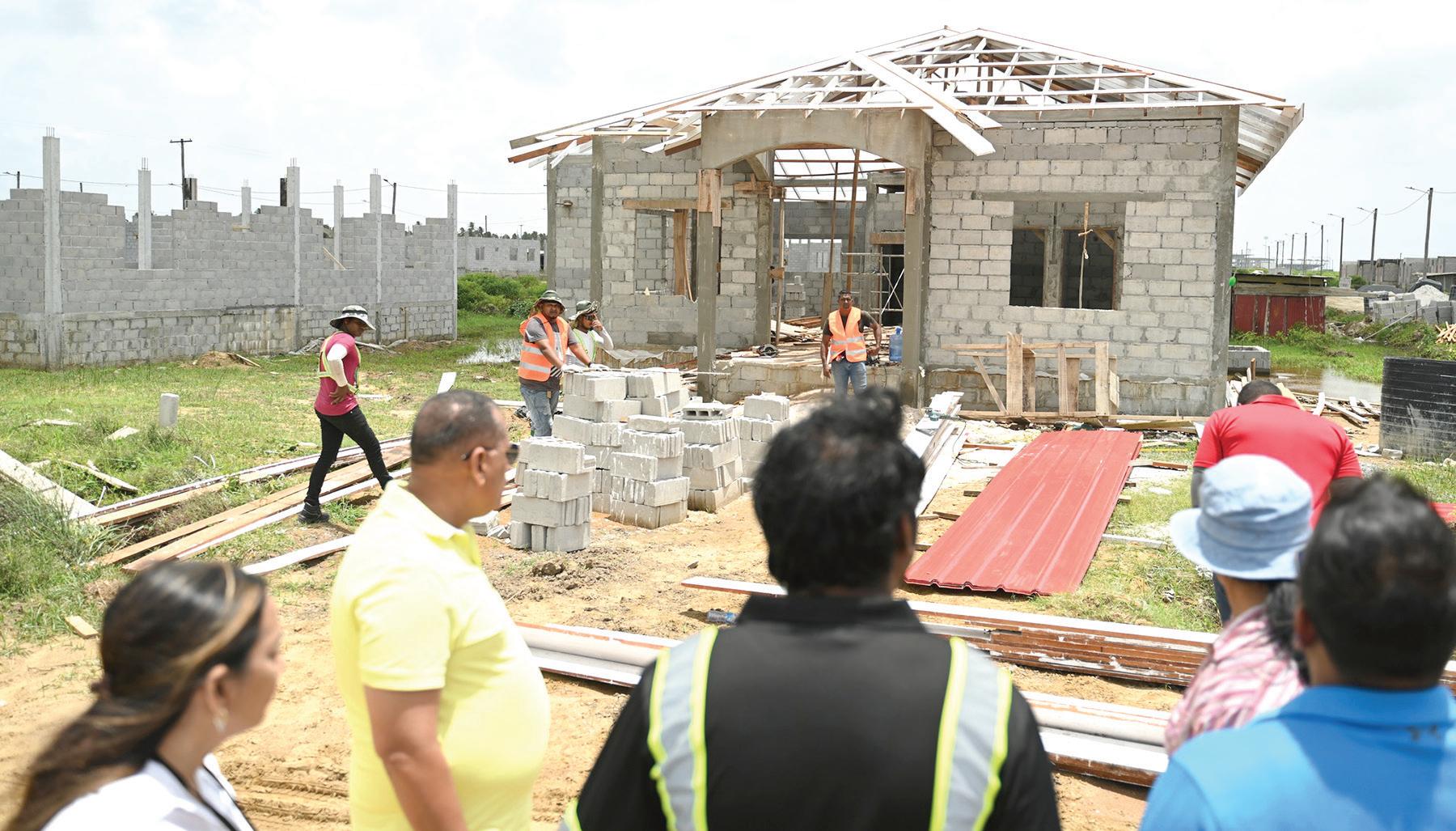
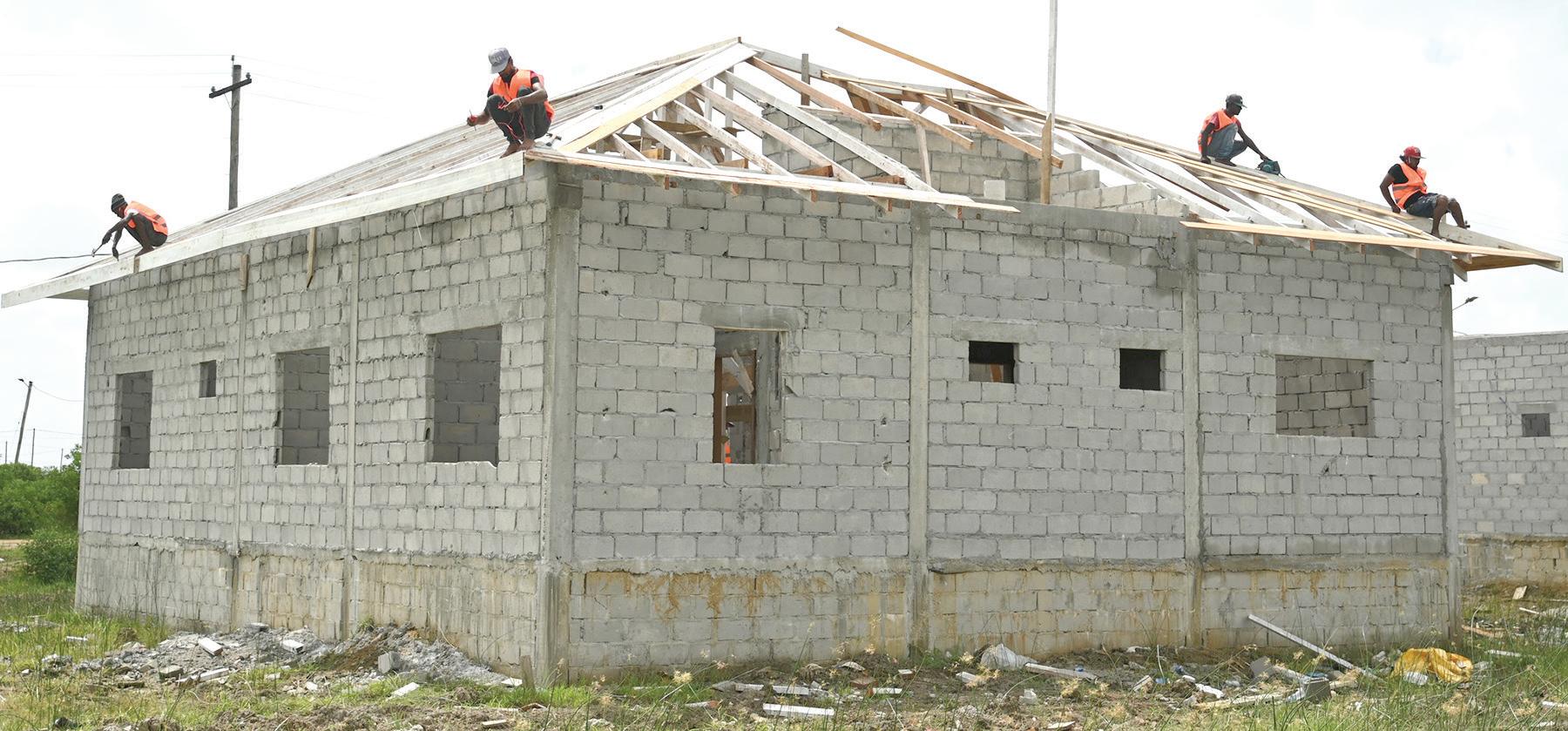
MINISTER of Housing Collin Croal on Saturday visited the Palmyra Housing Scheme, where 110 young professionals homes are currently under construction, with works approximately 35 per cent complete, and three units already at about 50 per cent completion.
The minister noted that the houses are expected to be completed by the end of June. He explained that the young professionals homes are replicas of those being constructed in Georgetown, and are being built at a cost of $19.5 million each. He highlighted that all contractors involved in the project are from Berbice. Of the 110 houses being built, 50 Berbice-based contractors are engaged, creating employment for more than
450 persons who are working daily on the project.
Minister Croal expressed satisfaction with the pace of development, and noted that additional persons have already expressed interest in this type of housing, with the Region Six Housing Office set to engage those individuals.
During the visit, Minister Croal also noted that the government has reserved 1,100
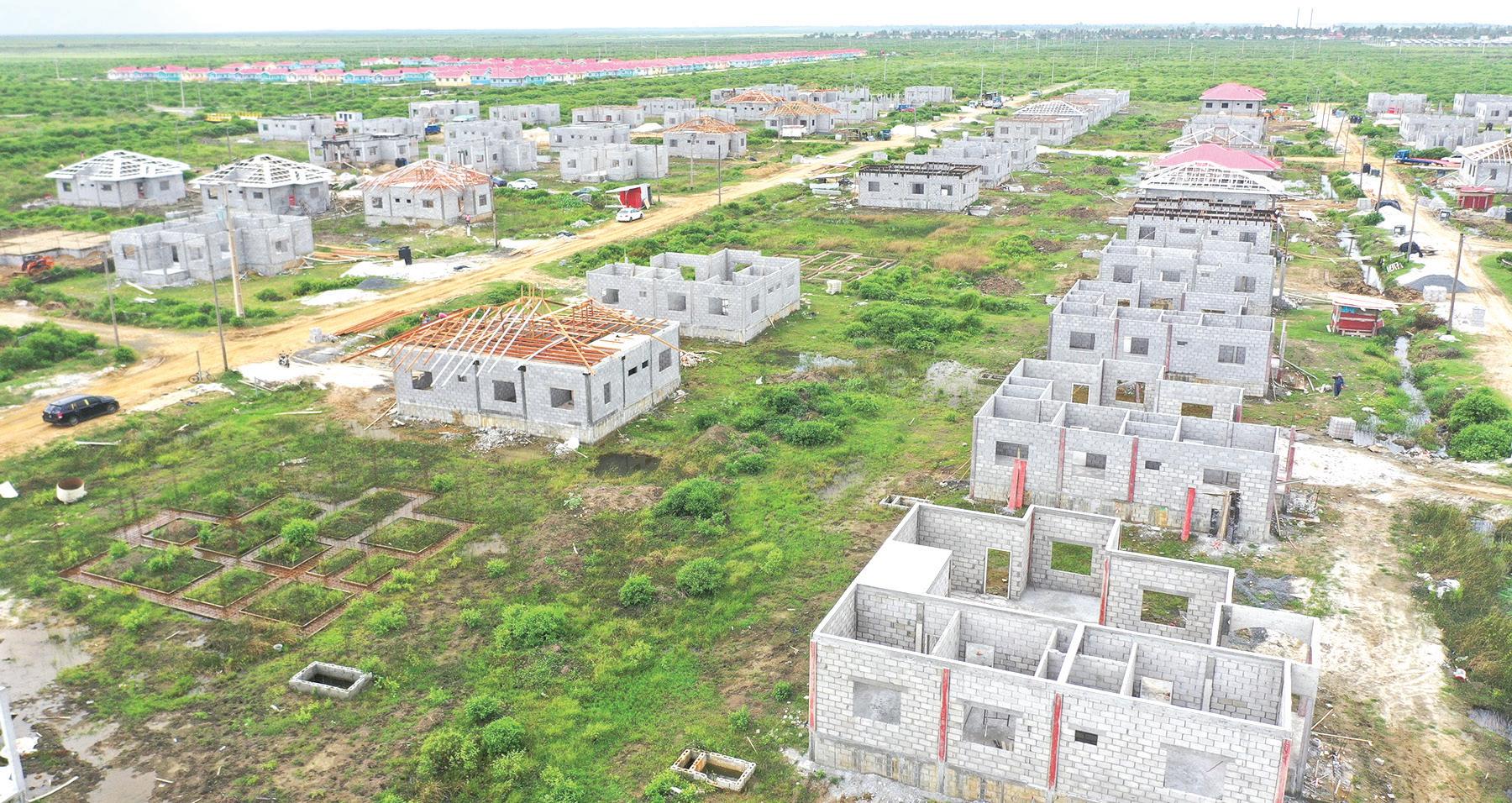

house lots at Palmyra for the construction of homes as part of its nationwide housing programme. Additionally, 99 per cent of the 100 three-bedroom houses in the area have already been completed.
Junior Engineer Orlando Arno, who’s attached to the Central Housing and Planning Authority (CH&PA) and serving as one of the project’s supervising engineers, explained that each unit measures approximately 1,700 square feet.
The homes comprise one self-contained master bedroom, two additional bedrooms, two bathrooms, a general kitchen and living
area, and a dedicated laundry space. He noted that the houses will be equipped with all necessary electrical and plumbing installations, and will be move-in ready upon completion. The units will also feature shovel-textured ceilings, tiled floors, and an external painted finish. Arno added that contractors are working diligently to meet the deadline, while the supervising team continues to ensure that construction standards are maintained, so that beneficiaries receive quality homes. (CH&PA PR Department)

residents
of Anna Regina and Cotton Field have successfully completed a one-week Basic ICT training programme facilitated by the Industry and Innovation Unit within the Office of the Prime Minister.
opportunities in education, employment, and business,” he said.
to continue building on the foundation they have gained, and encouraged them to take advantage of additional educational opportunities, including scholarships offered through the Government’s GOAL programme.
Adams said that the coun-
ernment’s wider vision for technological advancement, as outlined in the PPP/C 2025 Manifesto, which states that ICT will be a key driver of national development, innovation and economic growth.
The Manifesto envisions a Guyana where more cit -
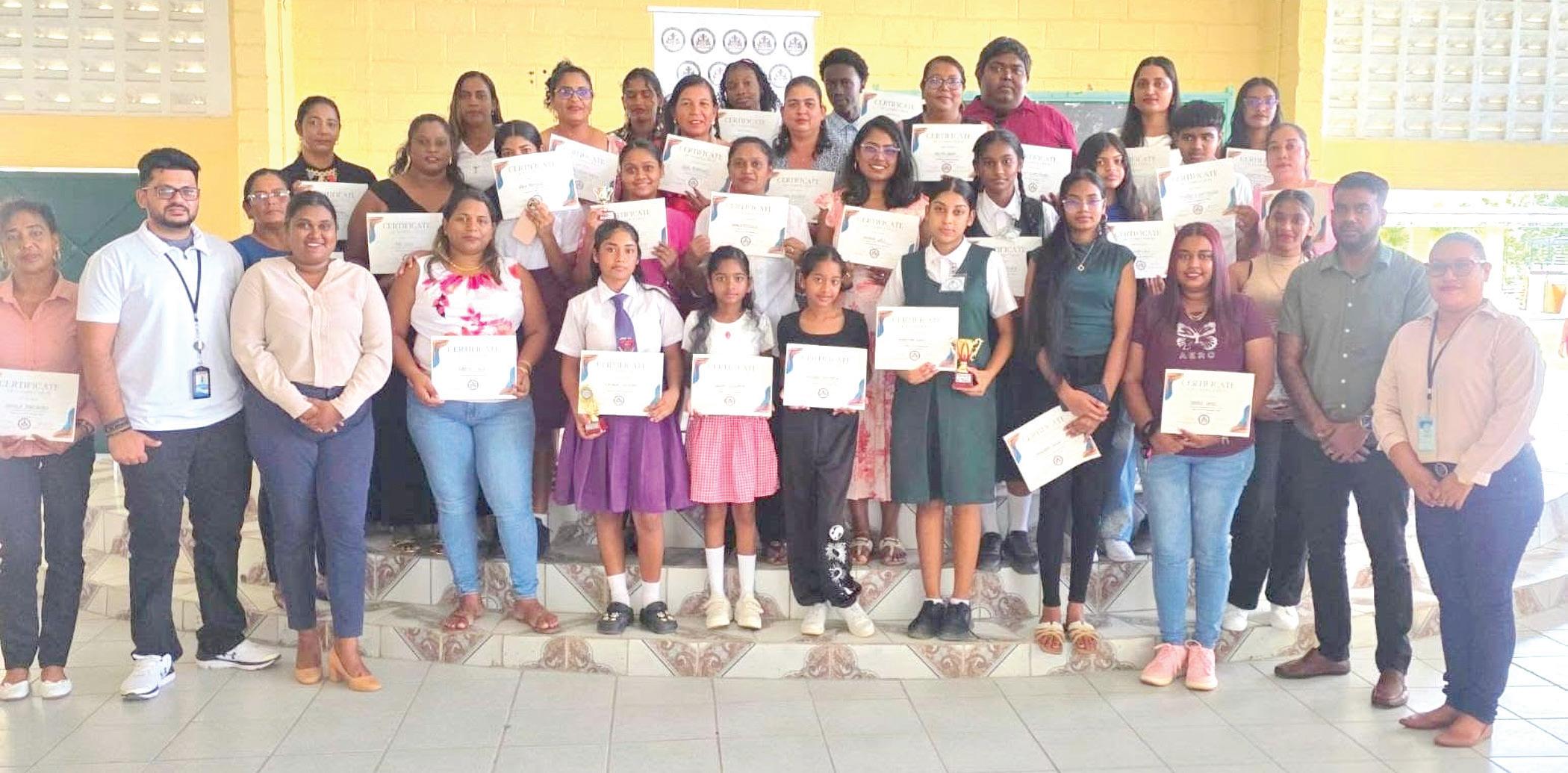
The programme, which ran from April 13 to 17, was conducted at the Cotton Field Community Centre, and targeted participants between the ages of 13 and 45. The diverse age range reflected the broad interest in developing computer and digital skills among residents of Region Two.
The graduates were officially recognised during a ceremony held on Friday at the Anna Regina Secondary School Auditorium. Family members, community leaders, and government representatives gathered to celebrate the achievement of the participants, many of whom were experiencing formal ICT training for the first time.
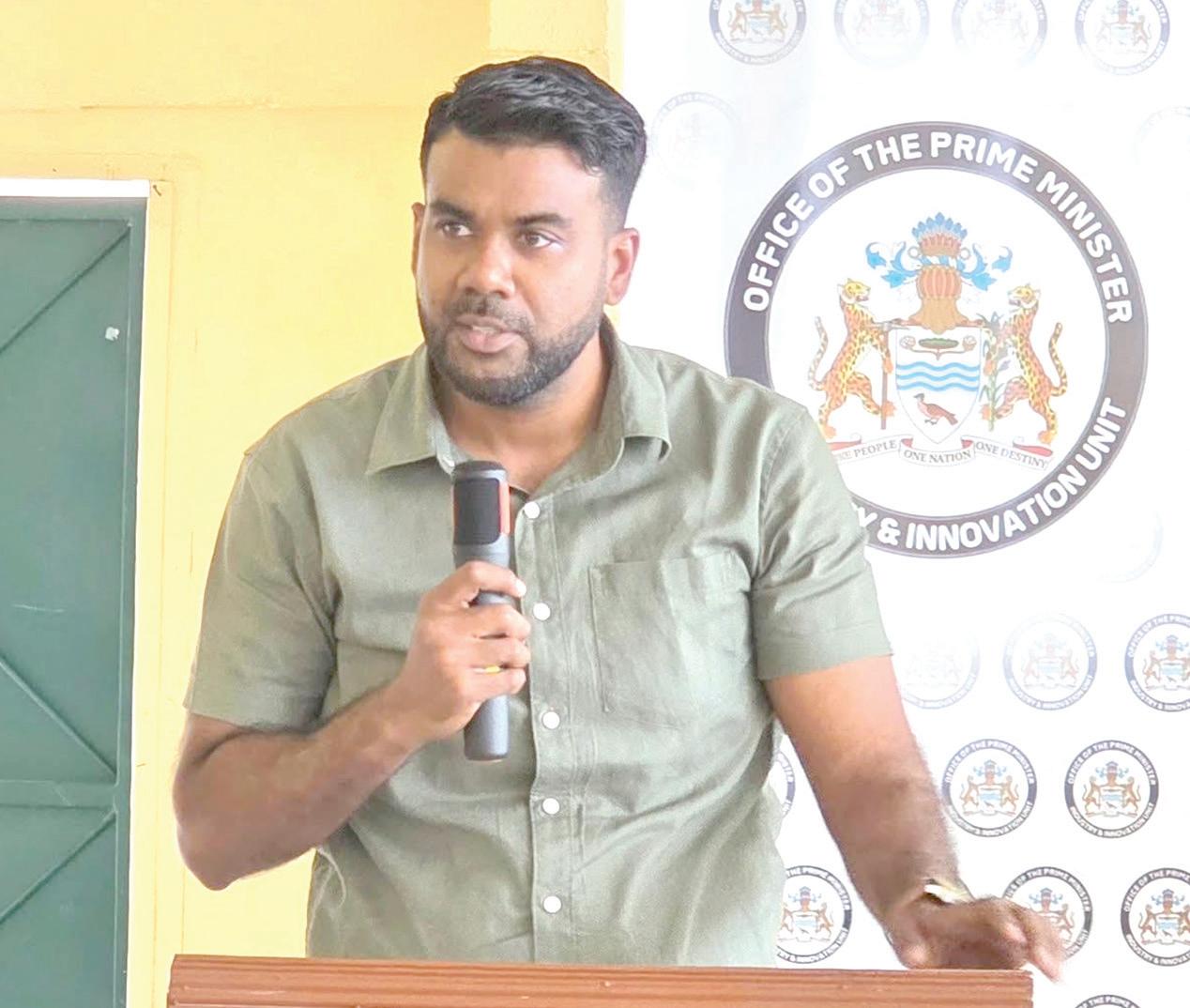
Deputy Regional Executive Officer (DREO) Omesh
Sasenarayan attended the graduation ceremony, and praised the participants for their commitment and determination throughout the week-long programme.
He said the large turnout, and the varying ages of the graduates demonstrated that the desire to learn and improve is present across all sections of the community.
Sasenarayan noted that training opportunities of this nature are especially important as Guyana continues to embrace technology and digital development.
“Today’s graduates represent the future of our region and our country. Whether you are 13 years old or 45, the skills you have gained this week will place you in a better position to access
He further explained that basic ICT knowledge has become essential in almost every aspect of modern life, from completing school assignments and applying for jobs, to communicating Online and managing businesses.
DREO Omesh Sasenarayan
izens are digitally literate, more communities have access to training and technology, and more opportunities are created through the use of ICT.
Friday’s graduation represented another step in preparing residents of Region Two for the future and ensuring that they are equipped to par-

The participants received instruction in a number of key areas during the week, including the fundamentals of computer use, typing, operating digital devices, using the internet, creating documents and understanding basic software applications. The training was designed to equip them with practical skills that can be used in everyday life and in the workplace.
Delivering the feature address at the ceremony, Prime Minister’s Representative Arnold Adams emphasised the need for Guyanese citizens to become more technologically prepared as the country develops rapidly. He urged the graduates
try is moving towards greater digitalisation, and persons who possess ICT skills will be better positioned to benefit from new opportunities.
“Guyana is changing quickly, and technology is becoming a part of everything we do. You must continue learning and ensure that you are prepared to compete and succeed in this new environment,” Adams told the graduates.
He pointed out that the Government remains committed to making ICT training accessible to people in every region, particularly young people and community members who may not otherwise have access to such opportunities.
The graduation ceremony also highlighted the Gov -
ticipate in Guyana’s growing digital economy.
The 33 graduates left the ceremony with certificates in hand, and a renewed sense of confidence, ready to apply the skills they’ve learnt and continue their journey towards greater educational and professional success.



KEATON Jennings staged a dogged half-century to give Lancashire a potentially crucial advantage over struggling Gloucestershire at the halfway stage of a low-scoring County Championship Division Two match at Bristol.
The experienced opener defied a seam-friendly pitch and uneven bounce to carve 70 from 110 balls and dominate a partnership of 79 for the second wicket with Josh Bohannon as the Red Rose posted 240 to establish a first-innings lead of 104.
• Scores: Seat Unique Stadium, Bristol (day two)
Gloucestershire 136 & 58-3: Price 35; Balderson 5-34, Anderson 3-12 Lancashire 240: Jennings 70; M Taylor 6-43, Bell 2-56
Left-arm seamer Matt Taylor did his level best to keep Gloucestershire

in contention, spearheading a fightback with a return of 6-43 as Lancashire were made to work hard. Shot out for 136 in their first innings, Gloucestershire’s batting frailties were again exposed as they reached stumps on 58-3, still trailing by 46. Bottom of the table without a point before this game, they face an uphill battle to avoid a third straight defeat.
Resuming on 124-6, Gloucestershire lost their last four wickets for 12 runs as they were dismissed inside 51 overs.
Jimmy Anderson accounted for Taylor, Henry Brookes and Will Williams in a burst of three wickets in five balls, while George Balderson removed debutante Tommy Boorman to finish with 5-34. Taylor made the breakthrough when persuading Wells to depart for 27 but Bohannon and Jennings held firm to progress the score to 73-1 at lunch.
Jennings looked well set and brought up the 50 partnership before registering a half century from 87 balls.
Bohannon was bowled for 21 as Lancashire moved ahead, Marcus Harris later striking a six before falling. Suddenly, Gloucestershire tails were up, and Taylor was rewarded when Michael Jones fell for a duck with the score 141-4. When Bell trapped Harris for 12, Lancashire were 145-5 and under pressure. Shetty was next to go as Lancashire reached tea on 170-6.
That became 180-8, Taylor recording another five-wicket haul. Gloucestershire were frustrated by a ninth-wicket stand of 58 between Matty Hurst and Ollie Sutton. Hurst made 39 before being bowled by Bell, while Taylor removed Sutton for 19. Lancashire finished the day on top, Balderson having Bancroft caught, Anderson dismissing Price lbw and Coughlin removing Ben Charlesworth as Gloucestershire’s top order faltered again.
Miles Hammond and James Bracey saw out the close, but the home side will need greater resistance to escape trouble. (BBC sport)

• From Page 28
The Forresters Lumber and Building Complex, Briggs and Stratton Heavy Class, will see Mikhail Persaud 36.594 start the day ahead of Jhon Mohamed (37.492), Salim Azeez (38.236), Andre Rochford (39.315), and Jeremey Ten Pow in that order. The Triple J Construction IAME X30 125CC was another battle of close times, with Justin Ten Pow’s 31.223 time enough to pip a hard-charging Kristian Jeffrey, who could only muster a 31.288; both times a shave off Calvin Ming’s 31.366.
Narrowly missing out on the top three spot was Benjamin Phang with a 31.844, who starts ahead of Nicholas Sawh (32.319), ahead of Rayden Persaud and Mahendra Bhoodoo.
In the SVC Incorporated Briggs and Stratton Cadet, William Vieira recorded a 37.255 to take the top spot ahead of Asrudeen Mohamed (37.452), Nathan Seejattan (37.720), with Gavriel Gayadin (37.729) representing another close battle.
Meanwhile, Paige Mendonca snagged the top spot in the J’s Supermarket Female Briggs and Stratton and Stratton Class ahead of Malicia Lawrence.
Matthew Phang was the fastest in qualifying for the Mohamed’s Excavating Construction Incorporated Super Moto 250cc class with a 34.469 ahead of Jeremy Ten Pow’s 34.753, Andrew Jordan’s (35.060) and Salim Azeez’s (37.973).
In the AJM Enterprise Briggs and Stratton Over 35 Rookie Class, John Mohamed qualified on pole with Shaun Bhoodoo snagging the top spot in the Ministry of Culture, Youth and Sport Briggs and Stratton Junior class.
Saturday’s session was watched by the Honourable Charles Ramson Jnr, the Minister of Culture, Youth and Sport, along with Assistant Director of sport Franklyn Wilson.
Gates open today from 08:00hrs with racing set to begin just under two hours later.
Admission is $3000 for adults and children U12 are free.


AT the small DCC ground, the home team beat Malteenoes by 208 runs yesterday in the latest round of the GCA’s U-19 Eline Security Logistics 50-over tournament.
Malteenoes, chasing 317 to win were bowled out for 108 in 25.5 overs in a game both teams failed to bat 50 overs. The Thomas Road side lost their first two wickets in 4.2 overs with only 16 runs on the board.
However, Skipper Joshua Budram reached the boundary twice in his 31 and Nathaniel Ramkelawan, who finished on 34 from 39 balls with six fours, added 64 for the third wicket before Mickel Sharma bowled Budram.
Budram’s demise triggered a dramatic collapse as the last eight wickets tumbled for 28 runs as Ramkelawan ran out of partners.
NATIONAL Sports Commission (NSC) Ministry of Culture, Youth & Sport(MCY&S) 11th edition of Presidents Janet and Cheddi Jagan five-over Windball Cricket champion trophy Region Two, organised by Sports Officer Alister Munroe, was played at the Queenstown Community Centre ground in the Essequibo zone.
Schools from Georgetown will do battle today from 14:30hrs (2:30 pm) at the National Gymnasium in Day/Night Windball cricket tournament coordinated by Al Sport and Tour Promotions’ before the action moves to the Enterprise Community Centre ground from 10:00hrs (10 am) tomorrow in the East Coast Demerara zone.
In her address to the participants, Region two Sports Organiser Debra Daniels thanked the organisers the MCY&S and the NSC for once again allowing her to co-ordinate this competition.
“I want to remind you to embrace and honour the contributions to this country made by the former Presidents of Guyana. Let’s have fun, be disciplined and re-member we are all one,” The Region Two Sports Organiser told the gathering.
Janet Jagan Girls division:-
Defending champion Abrams Zuil Secondary failed to advance to this year’s Region Two final after being knocked out by debutant Charity Secondary School.
Charity after been invited to take first strike made 72-1, thanks to Jaraya Rodrigues hitting an unbeaten 49, while Gianna Douglas made 10. Abrams Zuil were restricted to 22-5.
8th of May Secondary School batted first and scored 28-3. Johanna Cecilia Sec-ondary replied with 24-3.
Cotton Feld Secondary 55-0, Christine Rodrigues 26, Shagueena Moses 11. 8th of May Secondary 33-4.
Cheddi Jagan Boys:
Anna Regina Multilateral School (ARMS) after being sent it to bat, made 88-0 with Tyrere Stepheney hitting 55 (6s x4), Jhonattan Barry 21. 8th of May Secondary in reply were restricted to a record lowest total of nine runs from five overs.
Defending national champions Abrams Zuil Secondary sent it to bat scored 67-4, Eshwar Tillack 24, Markanthony Obermueller15.
Sudesh Jacobs took 2-20 for Cotton Field Secondary, who replied with 27-3.
Anna Regina Multilateral School 421, Barry Johattan 38. Debutant Charity Sec-ondary 24-6 Safarz Park 10. Bowling for ARMS, Zachariah Maholal and Barry Jo-hatton each picked up two wickets apiece.
Abrams Zuil Secondary 33-2. Johanna Cecelia Secondary 28-8, Ravi Fredricks, Shavesh Bridgmochan, Otish Roberts each grabbed two wickets.
Captain Kaylon Callender took 3-14, while Sharma and Jasane Craig took two wickets.
Earlier, DCC lost 14-year-old left-hander Lomar Seecharran (5) and Jer-
mane Grovsnor (12), as Kyle Gibson struck twice to leave DCC on 39-2. But half-centuries from Yeshua Hutson, who hit a four and nine sixes in his 77-ball 96, Makia Dowlin, whose 73 was dec-
orated with six fours and a six and Sharma, who blasted seven fours and two sixes in 53, rallied DCC over the 300run mark. Gibson Grabbed 4-67 and Nathan Bishop took two wickets.

JALEN Green’s 36 points helped lift the Phoenix Suns into the playoffs with a 111-96 play-in win over the visiting Golden State Warriors on Friday.
The Suns earned the Western Conference’s eighth postseason seed. They will visit the defending champion and top-seeded Oklahoma City Thunder on Sunday to open a first-round series.
“Sometimes the road’s not always the one that you choose and think it’s going to happen or the one that’s most traveled, sometimes it’s the least traveled,” Phoenix coach Jordan Ott said. “We found our way in, now it’s on to the next thing.”
Phoenix scored 30 points off the Warriors’ 21 turnovers. After Phoenix let a late lead slip away against the Portland Trail Blazers in the play-in opener, the Suns held on this time.
There was some late drama, though. With the outcome already decided, Golden State’s Draymond Green fouled out with just more than a minute remaining. Warriors coach Steve Kerr shared a moment with Draymond Green and Stephen Curry, embracing both. The three were part of four NBA championship runs.
“I don’t know what’s going to happen. I still love coaching but I get it. These jobs all have an expiration date,” said Kerr, whose contract is up this summer.
Phoenix jumped out to a big lead with a 13-0 run after the Warriors scored the game’s first two , then closed the quarter with eight consecutive points to lead 33-15.
Golden State’s 15 first-quarter points were their fewest in a quarter since scoring 14 in the fourth quarter March 7 against the Thunder.
The Suns, who shot 52.4% in the first quarter, struggled in the second quarter as the Warriors roared back.
Phoenix was just 5 of 20 from the field in the second, and Golden State

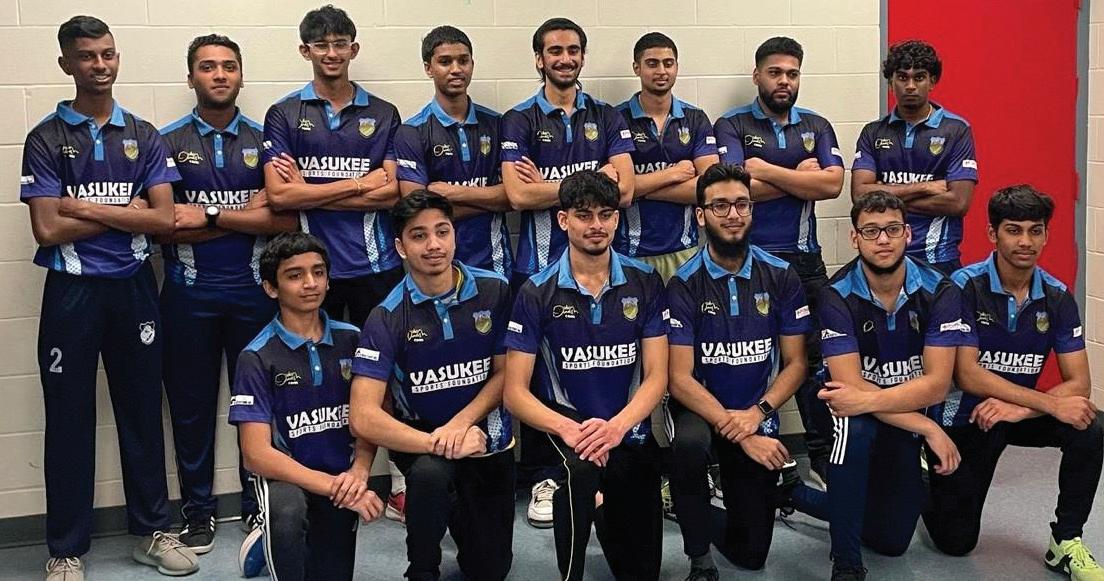
pulled within two on Curry’s free throws with 19.6 seconds remaining in the half.
As time ran down, Jalen Green elevated for a 3-pointer from the wing and drained it for the Suns’ first field goal in more than five minutes to give Phoenix a 50-45 lead at the break.
Golden State’s Brandin Podziemski scored 10 of his team-high 23 points in the second. He also led the Warriors with 10 rebounds.
The Suns used an 11-1 run -- featuring two 3-pointers from Jalen Green -- to regain control in the third quarter.
Booker finished with 20 points, eight assists and six rebounds. Phoenix’s Jordan Goodwin added 19 points, nine rebounds and six steals.
Curry recorded 17 points in the loss but was just 4 of 16 from the floor and 3 of 10 from 3-point range. De’Anthony Melton added 16 points and eight rebounds off the bench. (Reuters)
FRESH off their dominance in the Canadian Commonwealth Cricket First-Division League, where they secured back-to-back championships in 2024 and 2025, Noor Cricket Youth Club will be embarking on a high-stakes tour of Guyana early in May. According to a release from the club, the tour will serve as a critical bridge between its recent domestic triumphs and the challenges of the upcoming Canadian season.
The release pointed out that the tour features five marquee encounters against some of Guyana’s most historic and competitive clubs and fans can expect a high level of intensity in all the matches, which will feature both T20s and 40-over encounters.
Games are scheduled to be played against the Georgetown Cricket Club (GCC) at Bourda, Everest Cricket Club at Everest, Albion Sports Club at Albion and Cotton Tree Cricket Club at Cotton Tree.
The club pointed out that looking ahead to the 2026 season, the tour is more than just an exhibition; it is a rigorous preparation phase of a packed domestic calendar. Upon the players return in mid May, they will begin their hunt for further silverware.
“The team is looking to use this tour as a springboard,” a club representative noted.
“With the Premier 40-over and T25 Divisions in the Commonwealth League on the horizon, testing ourselves against Guyanese talent is the best way to sharpen our skills,”
The club has surrounded its young talent with an enviable Guyana-born support staff, boasting deep international and first-class experience.
The head coach is Abdool Samad, brother of former Guyana opener, the late Fazil “Terminator” Sattaur, a veteran of the 2003 and 2007 ICC Cricket World Cup. Samad also recently served as the batting coach for the Canadian team during
the T20 World Cup in India.
The mentor is Azib Alli Hanif, a former standout for Guyana at the senior firstclass level and former Guyana under-19 player who brings invaluable local knowledge and tactical depth to the side. Hanif is also the coach for the Canadian Girls Under-19 team which will play in the ICC Under-19 World Cup qualifiers. Assistant Coach Aftab Shamsudeen adds further international pedigree to the dugout, having represented Canada at the highest level.
The manager is Quasim Shariff, who returns to the position following a successful stint during the 2025 Barbados tour.
The 14-man squad comprises: Mu’adh Shariff, Jafar Samad, Moksh Patel, Jatan Mehta, Fayaz Hanif, Farhad Hanif, Keerthivardhan Susarla, Bhumeshwar Ramkissoon, Stephen Moore, Jamal Shamsudeen, Jaden Singh, Adrian Singh, Ved Patel and Kavya Amin. (Frederick Halley)
AYABONGA Khaka led the way with 3 for 16 before Laura Wolvaardt struck a composed half-century to guide South Africa to a six-wicket win over India in the first T20I in Durban, giving the hosts a 1-0 lead in the series.
Asked to bat first, India got off to a brisk start through Shafali Verma and Smriti Mandhana, who added 46 in quick time, but momentum dipped after both openers fell in the space of six balls to-
wards the end of the Powerplay.
Jemimah Rodrigues and Harmanpreet Kaur then steadied things with a 71-run stand for the third wicket.
Rodrigues made 36 before falling in the 16th over, while Harmanpreet held one end with an unbeaten 47 off 33, hitting five fours and a six.
South Africa struck regularly at the death, picking up four wickets for 33 runs in the last five overs to restrict India to 157 for 7.
Ayabonga Khaka was the standout bowler with figures of 3 for 16 and was named Player of the Match, whereas Tumi Sekhukhune supported well with 2 for 27.
South Africa’s chase began positively despite the early loss of Sune Luus to Shreyanka Patil.
Wolvaardt and Tazmin Brits added 48 quick runs for the second wicket to keep the innings on track before Brits was stumped off Shree Charani against the run of play. Wolvaardt then stitched a
crucial 52-run partnership with Dercksen to take the hosts past 100 and keep the asking rate in control.
India fought back with two quick wickets, removing Wolvaardt and Anneke Bosch in consecutive overs to leave South Africa at 129 for 4, but Dercksen remained calm under pressure and steered the hosts home.
Tryon sealed the win with a six as South Africa completed a clinical win.
PAKISTAN appointed former captain Sarfaraz Ahmed as head coach of their Test team for the two-match series in Bangladesh next month, the country’s cricket board said on Saturday.
Since Australian Jason Gillespie quit as Pakistan’s redball coach in December, Aaqib Javed and Azhar Mahmood temporarily guided the team led by Shan Masood, who will continue as captain in Bangladesh.
Sarfaraz, who led Pakistan to the Champions Trophy title in 2017, has worked with the under-19 team as well as Pakistan’s Shaheens after
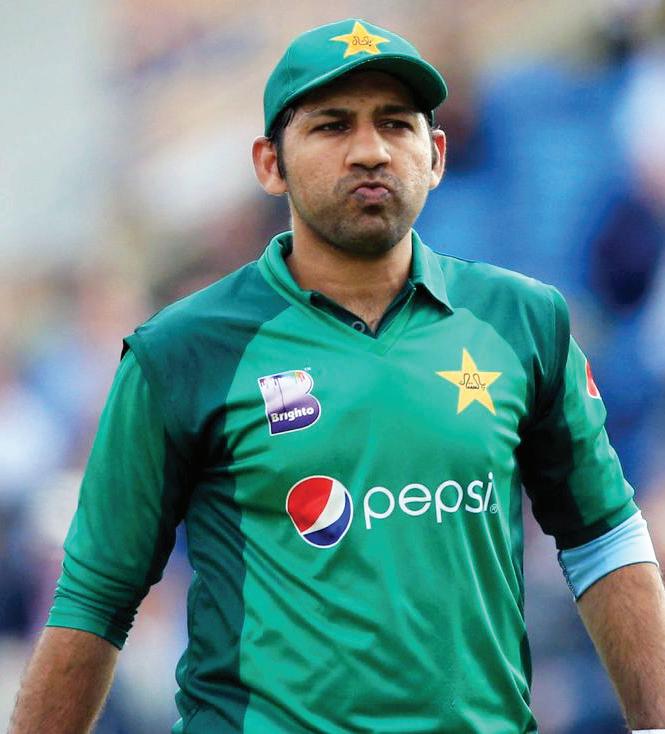
his retirement. Pakistan have named four uncapped players - Abdullah Fazal, Amad Butt, Azan and Muhammad Ghazi
Ghori - to their 16-member squad for the Bangladesh series starting in Dhaka on May 8.
Sarfaraz’s former teammate Umar Gul will join him in the setup as the bowling coach.
• Pakistan Test squad: Shan Masood (captain), Abdullah Fazal, Amad Butt, Azan Awais, Babar Azam, Hasan Ali, Imam-ul-Haq, Khurram Shahzad, Mohammad Abbas, Mohammad Rizwan (wicketkeeper), Muhammad Ghazi Ghori (wicketkeeper), Noman Ali, Sajid Khan, Salman Agha, Saud Shakeel and Shaheen Afridi. (Reuters)
DAVID Miller held his nerve in the final over as Delhi Capitals beat Royal Challengers Bengaluru by six wickets with a ball to spare.
Needing 15 runs to win from the last six balls in pursuit of 176, South Africa’s Miller whacked two sixes and a four off Romario Shepherd, who had not previously bowled in the innings.
RCB had expertly squeezed Delhi in the middle overs, conceding just 22 between overs 13 to 17, but took a gamble with their frontline bowlers including Josh Hazlewood and Bhuvneshwar Kumar all bowled out before the death.

Miller’s compatriot Tristan Stubbs finished unbeaten on 60 from 47 balls, having come in with the score 18-3 after Bhuvneshwar ripped through the Delhi top order.
Opener KL Rahul rescued the chase with 57, but his dismissal in the 10th over shifted the momentum back to RCB, who became strong favourites again when Delhi skipper Axar Patel retired hurt on 26, only for Miller to produce his final-over heroics.
England’s Phil Salt topscored with 63 from 38 balls in RCB’s 175-8, but they also struggled in the middle overs after reaching 99-2 after 10.
Delhi’s bowlers chipped in with regular wickets throughout to restrict the defending champions, with Lungi Ngidi, Kuldeep Yadav and Axar Patel claiming two wickets each. (BBC Sport)

SUNRISERS Hyderabad (SRH) marched into the top four with a 10-run victory over Chennai Super Kings at home. CSK’s own death-bowling performance -- which restricted the hosts to 194 despite half-centuries from Abhishek Sharma and Heinrich Klaasen -- was surpassed by Hyderabad’s who recorded their second successive win.
CSK failed to mount a challenge with the bat in reply, losing wickets in a heap despite being comfortably set at 111/3 at the halfway point.
The destructive pair of Abishek Sharma and Travis Head put on a typically brisk 75-run stand in 5.5 overs to lay the platform with Abhishek leading the charge. The first half of the Powerplay saw only 23 runs posted, and then in the next 16 balls all hell broke loose. After getting his eye in against the offie, Abhishek took on Matthew Short for 4,4,4,6,6 to race to a 15-ball 50 by the end of the fifth over. Head joined the party with three boundaries off Mukesh Choudhary in the sixth over. Choudhary then ended the Powerplay by taking wickets off successive deliveries, sending the Australian and then the SRH skipper Ishan Kishan packing.
Because of the middle-overs squeeze, Noor Ahmed saw Abhishek dropped off his bowling right after
the Powerplay, but Jamie Overton ensured the damage wasn’t much when he reviewed a caught-behind call to send him back to the hut. Overton kept breaking the middle-order partnerships, preventing SRH from regaining momentum.
CSK’s Powerplay performance matched SRH’s, but they lost an extra wicket by the end of it. The openers lined up Praful Hinge early but Nitish Reddy struck first ball to remove Sanju Samson cheaply.
Ayush Mhatre and Ruturaj Gaikwad carried forward the attack, putting on a 51-run partnership in just 20 deliveries but Mhatre’s hamstring issue caused a momentum break. Klaasen had dropped a tough catch earlier to reprieve Mhatre, and it cost SRH 30 runs in 12 balls before the South African could redeem himself. Eshan Malinga, then, also struck first ball to send back the CSK skipper and even the scales.
Cameos around Short. The Australian was the anchor, but had support in Sarfaraz Khan, who chipped in a 19ball 25, and then Shivam Dube, who hit a six and a four in his 16-ball 21.
The wickets fell in pairs though, leaving CSK with much to do at the backend. Malinga accounted for both Sarfraz and Short, finishing with an impressive 3-29 from his four overs.
THE ICC’s Anti-Corruption Unit (ACU) is investigating allegations of corruption involving Cricket Canada, one of which focuses on a game involving Canada from the recent men’s T20 World Cup in India and Sri Lanka.
ESPNcricinfo understands the ACU has two active investigations that span elements of Cricket Canada and allegations of breaches of the ICC’s anti-corruption code at international and domestic level as well. The existence of the allegations emerged in a documentary
‘Corruption, Crime and Cricket’, produced by the fifth estate, a Canadian investigative documentary programme. The 43-minute film, aired by the public broadcaster CBC (Canadian Broadcasting Corporation) on Friday, makes wide-ranging accusations of corruption and governance at Canada Cricket.
According to the documentary the claim of corruption at the World Cup comes from Canada’s game against New Zealand. Under scrutiny is the fifth over of New Zealand’s chase when the captain
Dilpreet Bajwa came on to bowl. Bajwa, then 22, was appointed captain three weeks before the tournament began.
Primarily a batting allrounder who bowls offspin, Bajwa took the ball with New Zealand 35 for 2. Canada had opened the bowling with pace in Jaskaran Singh and Dilon Heyliger, but in a poor start they conceded 15 and 14 runs respectively. They switched to spin as early as the third over, when Saad bin Zafar came on and bowled a wicket maiden. Heyliger took a
wicket in the next over - the fourthand then Bajwa came on. He began the over with a no-ball, bowled a wide down the leg side and ended up conceding 15 off the over.
The other investigation stems from a recording of a telephone call involving then Canada coach Khurram Chohan, in which he claims that senior (now former) Cricket Canada board members put pressure on him to select certain players to the national side. The audio was leaked last year and has been under ACU investigation since. (Cricinfo)
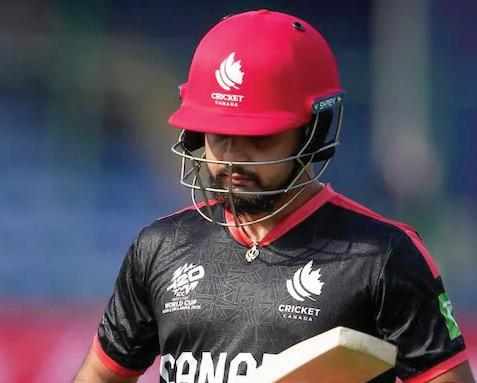
KINGSTON, Jamaica, (CMC)
If the opening round of the 2026 West Indies Championship was an appetiser, the second round promises to be a full-course feast. When action resumes today, April 19, three compelling matchups will unfold across the region, headlined by a heavyweight showdown at Sabina Park where the Jamaica Scorpions will host the Barbados Pride in a battle between two teams fresh off contrasting results.
The Scorpions authored the comeback story of round one. Chasing 324 for victory against the Pride at Chedwin Park, captain John Campbell (126) and Kirk McKenzie (135 not out) produced a 242-run opening stand to steer their side to a seven-wicket win. It was the kind of chase that demoralises opponents and announces title ambitions.
But for Barbados: they did everything right except win. Kevin Wickham entered the record books with twin centuries (153 and 108 not out), becoming just the third Barbadian this century to achieve the feat in a regional match. Yet his brilliance was a footnote.
Now the Pride travel to Sabina Park, a venue where pace and bounce can unsettle the best. For Barbados, the equation is simple: dismiss Jamaica’s openers early.
Barbados Pride have strengthened their batting lineup with the return of West Indies Test captain Roston Chase, who boasts 11 centuries, replacing Shian Brathwaite. For the Scorpions, the question is whether their
ROUND 2 SCHEDULE
(Sunday, April 19)
• Jamaica Scorpions vs Barbados Pride
– Sabina Park, Kingston (10 am start)
• Windward Islands Volcanoes vs Guyana Harpy Eagles – Antigua Recreation Ground, St. John’s (10 am)
• Leeward Islands Hurricanes vs Trinidad and Tobago Red Force –Sir Vivian Richards Stadium, North Sound, Antigua (10 am)
middle order can be trusted.
Elsewhere, the defending champions, Guyana Harpy Eagles, looked vulnerable, then inevitable.
The Harpy Eagles trailed the Volcanoes after the first innings at the Sir Vivian Richards Stadium, but Gudakesh Motie happened.
The left-arm spinner’s ten-wicket haul (10 for 119) turned a deficit into a four-wicket victory.
Sunil Ambris’s unbeaten 107 was heroic but lonely.
Now Windwards must regroup at the Antigua Recreation Ground, which aids spin less.
Tevin Imlach’s gritty 82 showed why Guyana remains the team to beat. If the Harpy Eagles’ batting provides a par total, Motie will likely do the rest. The Guyana Harpy Eagles will also see the return of pacer Shamar Joseph as they aim for consecutive wins against the Windward Islands Volcanoes at the Antigua Recreation Ground.
Over at North Sound, the Red Force sparkled. An innings and 271-run demolition of the Leeward Islands Hurricanes at Coolidge Cricket Ground was complete.
Amir Jangoo’s double century (203 not out) and Terrance Hinds’

Defending champions Guyana Harpy Eagles will see the return of pacer Shamar Joseh to their line-up for their second round match against the Winwards Volcanoes at the ARG.
hundred powered Trinidad to 507 for 5 declared, while Khary Pierre (4 for 37) led the bowling.
Now they meet again at the Sir Vivian Richards Stadium. For the Hurricanes, the psychological scars remain.
Captain Justin Greaves’ 56 not out was admirable, but his team was buried. The Hurricanes make two changes with Kofi James and Carlon Bowen-Tuckett replacing Nathan Edward and Daniel Doram.
Joshua Da Silva called it a “perfect performance”. The Red Force captain now faces maintaining intensity against an opponent already beaten. The challenge will be sustaining focus and discipline across four days while ensuring their dominance is repeated rather than remembered as a one-off display of superiority again.

ALIYAH Boston and the Indiana Fever agreed to a fouryear, $6.3 million extension on Friday, according to ESPN, which is the richest contract in the league’s history.
“I’m super blessed and grateful for this opportunity and to continue my journey here with the Fever. God is good!” Boston said. “I’m excited for the future ahead for both myself and for our team, and I can’t wait to keep building upon everything we have accomplished so far. Go Fever!”
To help the Fever pay other players on the roster, Boston, a 6-foot-5 forward, agreed to earn $1 million in 2026, less than the $1.19 million she was eligible for. Boston is set to earn 20% of the Fever’s cap each year through 2029.
“Entering just her fourth season, Aliyah is already one of the best players in the WNBA. She’s been a foundational piece of the Indiana Fever since she
was drafted here in 2023,” Fever general manager Amber said in a statement. “We’re thrilled to be able to reward her with this new contract and make history, and most importantly, lock her in as a cornerstone of the Fever for years to come.”
A three-time All-Star, Boston has averaged 14.5 points, 8.5 rebounds and 3.0 assists while shooting 54.7% for the Fever, who chose Boston with first overall pick in 2023. Boston averaged 15.0 points, 8.2 rebounds, and 3.7 assists in 2025, tying for sixth in MVP balloting while landing on the All-WNBA and All-Defensive second teams. The Fever reached the semifinals, losing to Las Vegas, which won its third league championship in four years.
Boston’s extension comes a week after Indiana retained another three-time All-Star by signing Kelsey Mitchell to a one-year, $1.4 million supermax deal. (Reuters)
PORT OF SPAIN, Trinidad, (CMC) – Another World Cup dream lies in ruins. Another Trinidad and Tobago football team has fallen short. And Kenneth Butcher, the former national player, coach, and government sports minister, has seen enough.
On Friday night, the Trinidad and Tobago senior women’s national team suffered a crushing 0–2 defeat to El Salvador, officially ending their bid for a spot in the 2027 FIFA Women’s World Cup.
The loss is the latest in a staggering sequence of failures: the senior men, the Under-20 men, the Under-17 girls, and the Under-17 boys have all crashed out of their respective World Cup qualification campaigns in recent months.
For Butcher, the pattern is no
longer a coincidence. It is an indictment.
Speaking exclusively on the special Friday edition of iSports on i95.5fm, Butcher did not hold back. His message to the current executives of the Trinidad and Tobago Football Association (TTFA) was blunt and unambiguous: resign, or be forced out.
“I know they won’t resign,” Butcher said. “But if I were the government, I would say, no more funding for them. I am not interfering with you. But if I am spending $4 to $5 million a year, I am telling you that if you don’t do X, Y and Z, no more funding.”
Butcher, who served as Sports Minister in the 1980s and has worn nearly every hat in local football, believes the time for patience has
expired. He called on the government to immediately withhold all financial support to the TTFA unless fundamental structural changes are made within the next 12 months.
“You want to save Trinidad and Tobago football?” Butcher asked. “Then you have to force their hand. Decisive action. Not more press conferences. Not more promises. Action.”
When pressed on whether Trinidad and Tobago could have performed better across all tournaments, not necessarily qualified, but performed better, Butcher’s answer was immediate and emphatic.
“Yes, of course. It’s the coaching,” he said. “When you look at some of the teams that we had together, the selection of the team was poor. The combinations.”






IN a show of fine margins, Zachary Persaud snatched a narrow pole for Today’s BANKS DIH Briggs and Stratton and Stratton Senior Light class of the $10M Nitro Kart Klash.
Saturday’s qualifying session was one in which many drivers were pushed to the limit to extract every fraction of a second, and when the dust settled, Persaud emerged atop the time sheets at the National Stadium Parking Lot.
Persaud’s 35.310 ensures that he has the first jump at the grand Prize of $1M on offer for the final today, with Calvin Ming (35.553), Khalil Rickford (35.634), and Matthew Phang (35.799) all sniffing close by.
Persaud also starts on pole in the Honda GX200 Class sponsored by Jumbo Jet Auto Sales after a time of 36.986, putting him ahead of Naresh Alves (38.240) and Luis Kumar (38.687), with Aqueel Edwards, Jaden Daziel, and Shaun Bhoodoo completing the grid.
In the Chung’s Global Super Moto 125CC Junior Class, Lishon Lewis’ 37.010-second time was enough to secure top spot ahead of Joshua Holder (39.970) and Troquille Sealy (41.060).
• Continues on Page 22



KINGSTON, Jamaica, (CMC) — The Reggae Girlz are getting a major financial lift just as their latest World Cup qualifying campaign kicks into high gear.
KFC Jamaica announced a new two-year sponsorship deal worth J$14 million on Saturday, committing $12 million in cash and an additional $2 million in meal products to support the national women’s football team’s pursuit of a historic third consecutive FIFA Women’s World Cup appearance.
The agreement, which breaks down to J$6 million in cash plus $1 million in meals per year, arrives on the same day the Girlz return to action against Guy-ana in their latest World Cup qualifier.
“We believe in long-term development, in building platforms and setting strong foundations for growth,” said Andrei Roper, Marketing Manager at KFC Jamaica. “That is why we are proud to be back on board, supporting a team that continues to represent the country with pride as they move closer to another historic World Cup appearance.”
The fast-food giant is no newcomer to women’s football in Jamaica. The brand recently renewed its support for the Jamaica Women’s Premier League (JWPL) for the 2025/2026 season with a J$3.5 million contribution in cash and meals.
KFC had also backed the
Reggae Girlz during their 2023 World Cup campaign and previously held a two-year partnership with national captain and all-time leading scorer Khadija “Bunny” Shaw.
“For those familiar with KFC Jamaica’s mindset, you know we are no strangers to supporting sports development across all levels, especially at the youth level,” Roper added. “Over the past two years, we’ve paid close attention to the growth of women’s football, and we see the talent and potential coming through the Women’s Premier League. We’re excited about what that pipeline can mean for the national programme and, ultimately, the world stage.”
Jamaica Football Federation President Michael Ricketts welcomed the re-newed backing as the team continues its preparations.
“We welcome KFC’s strong return and continued belief in the Reggae Girlz,” Rick-etts said. “This support comes at an important time as we continue to build on our momentum. Their commitment allows us to strengthen our systems, better sup-port our players and remain competitive at the highest level.” With kickoff against Guyana scheduled for later Saturday, the Reggae Girlz now carry not only a nation’s hopes but renewed corporate firepower as they chase another slice of World Cup history.