- President Ali expresses concern over growing health challenges - says focus has to be on early screening,
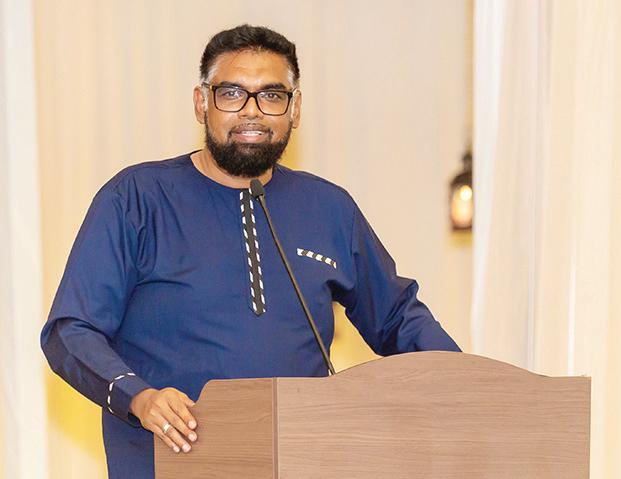
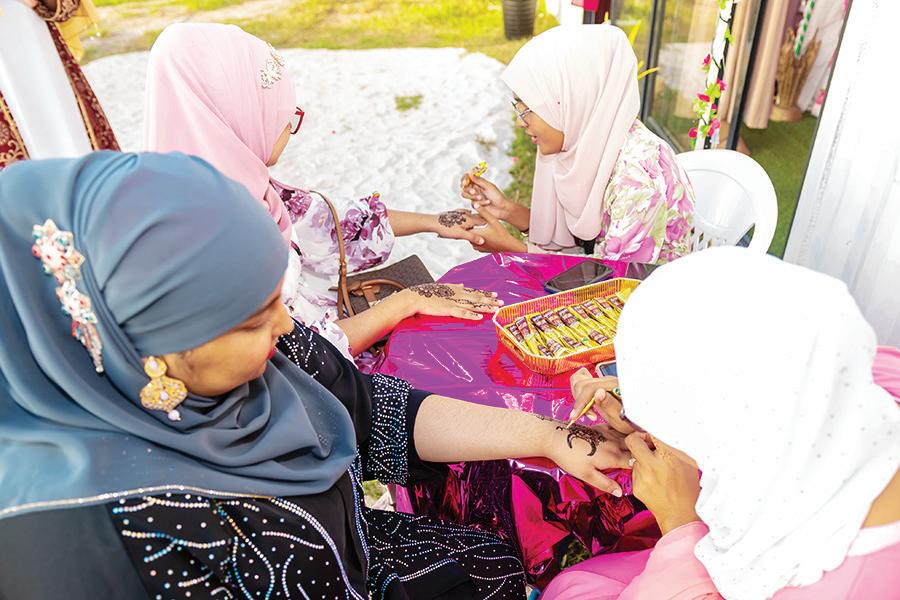
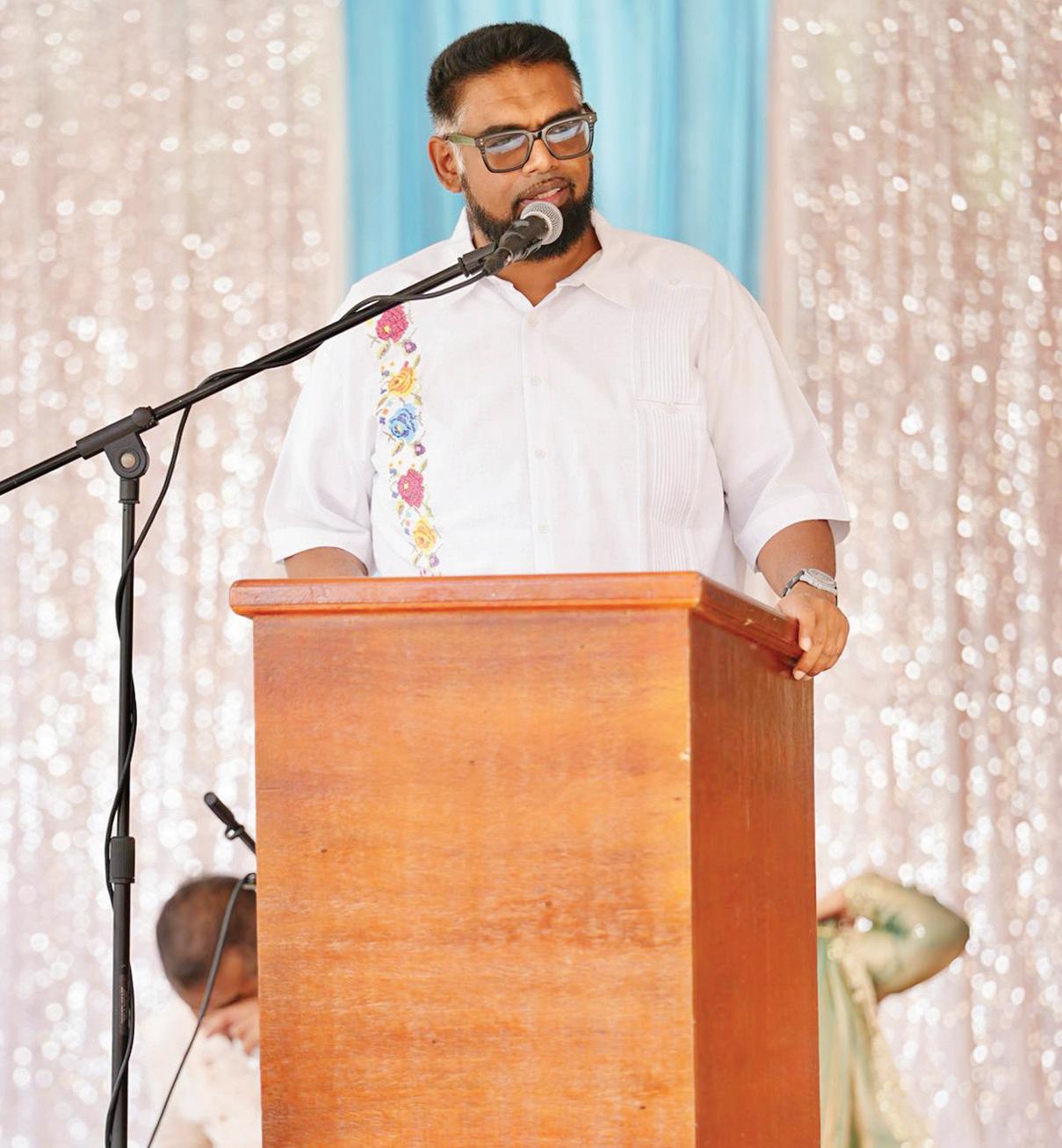
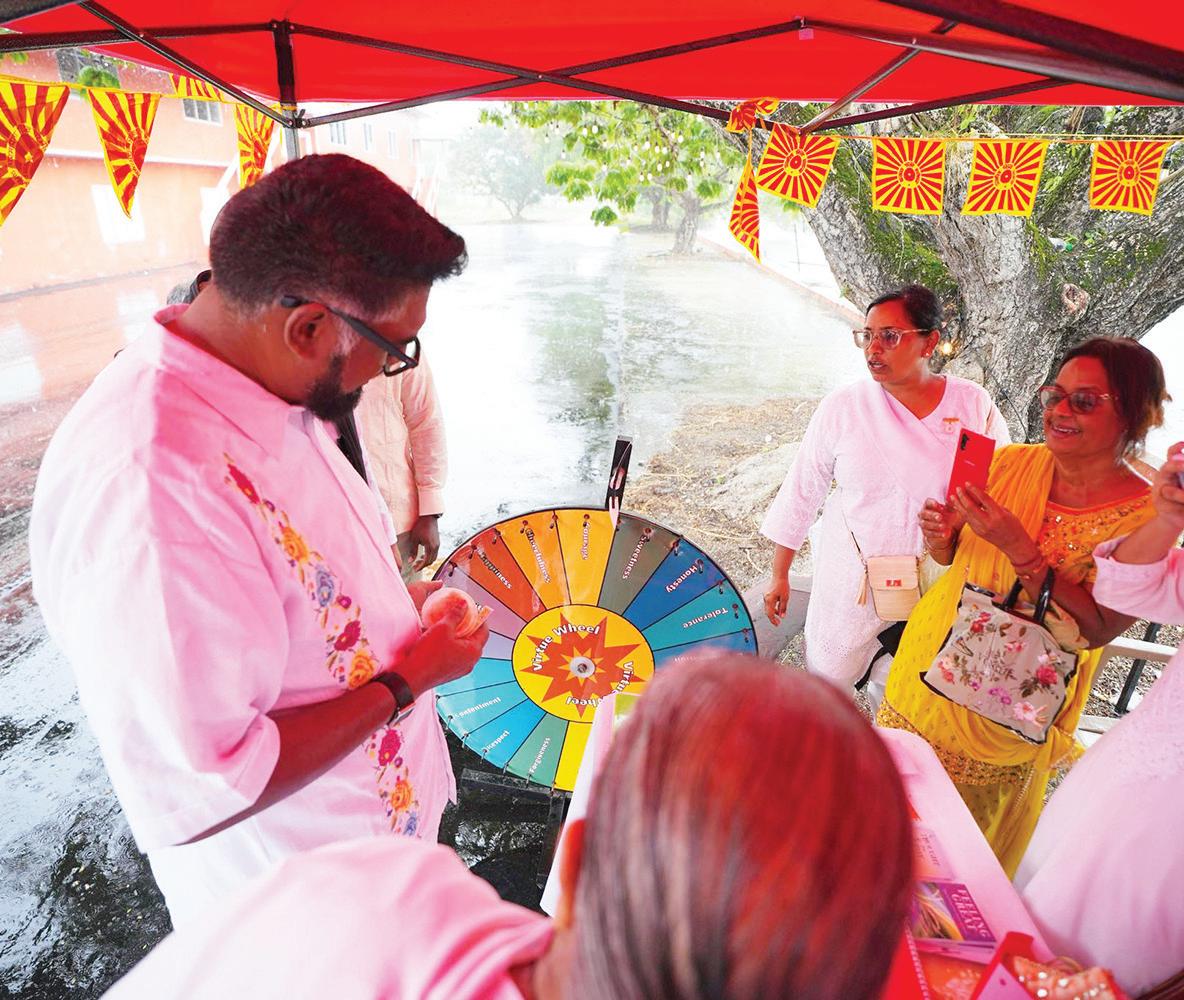
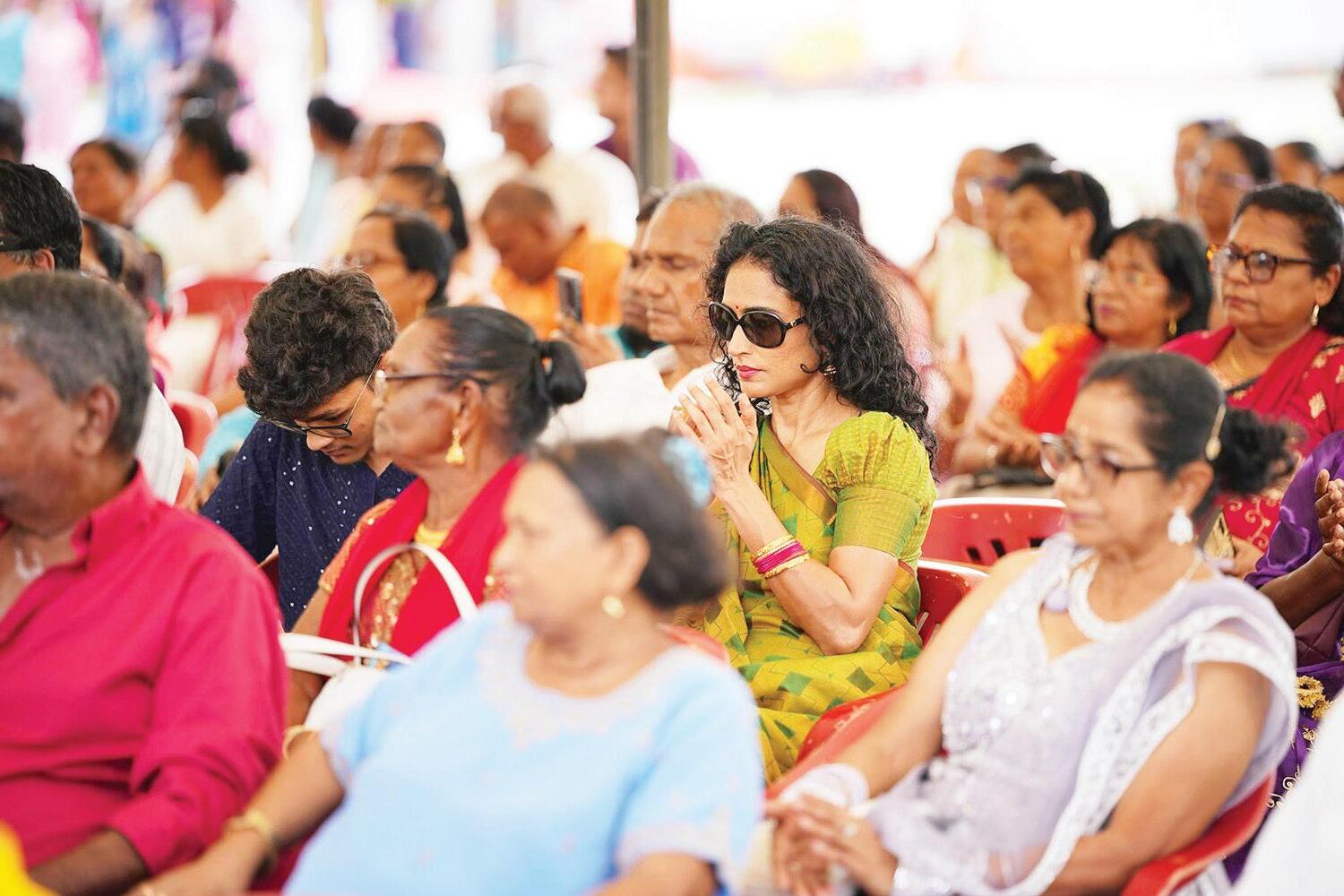
President, Dr Irfaan Ali, First Lady Mrs Arya Ali, their sons and cabinet members joined hundreds of persons at the opening of the Annual Ramadan Village at the Muslim Youth Organisation Ground on Sunday night. In his remarks President Ali emphasised inclusivity, renewal, shared humanity and healthy living. A special feature this year is a Farmers’ Market organised by the First Lady, with proceeds dedicated to supporting the less fortunate, reinforcing the Ramadan principle of charity (Photo: President Irfaan Ali/Facebook page)
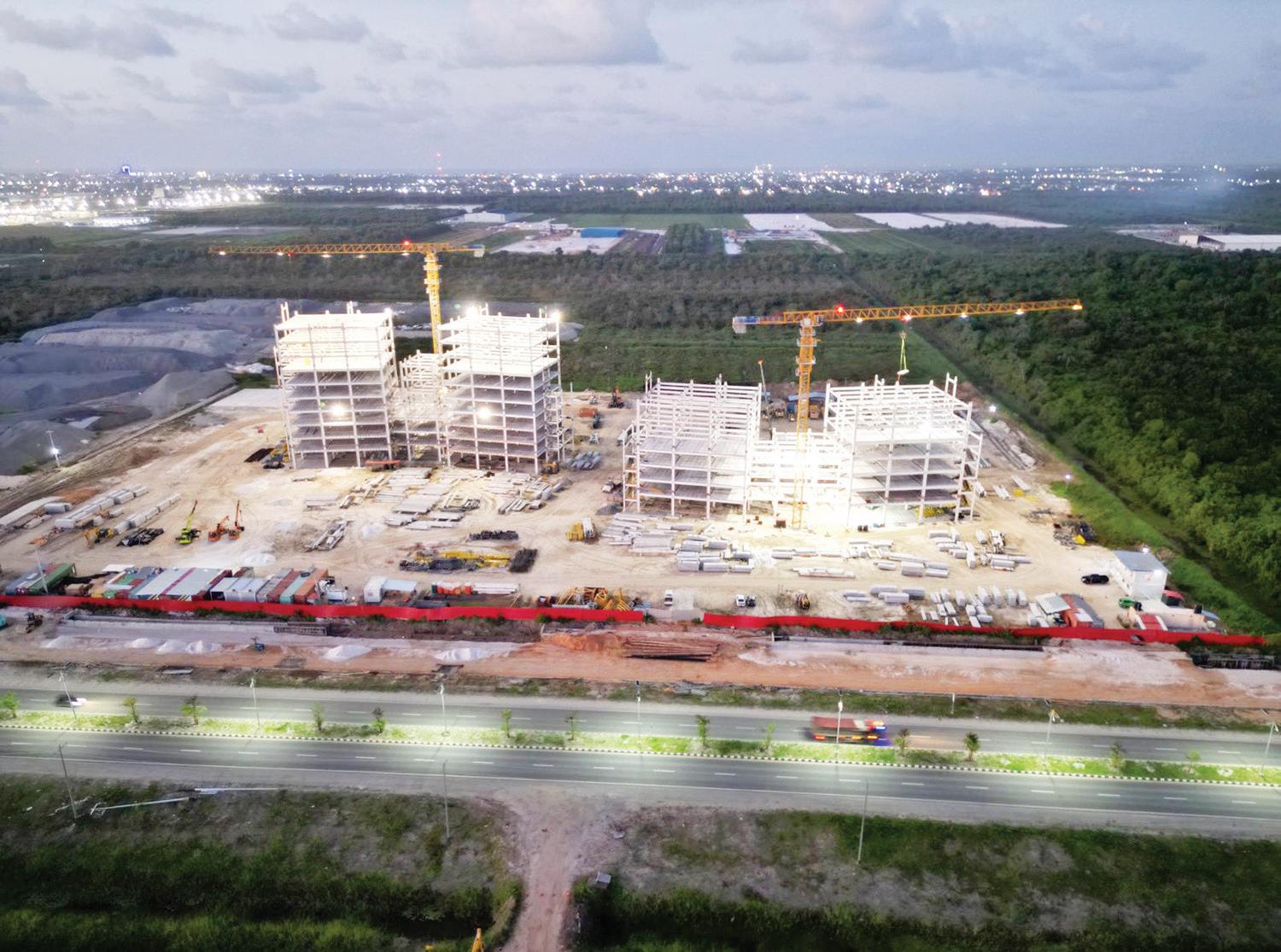
The Government Towers at Haags Bosch, East Bank Demerara, are taking shape (Photo: President Irfaan Ali/Facebook page)
Gov’t eyes massive primary healthcare ‘collab’ programme with religious institutions
- President Ali expresses concern over growing health challenges
- says focus has to be on early screening, public education, lifestyle changes
By Naomi Parris
IN a community‑centred effort to tackle chronic dis eases and promote health ier lifestyles from the ground up, President Dr Irfaan Ali has announced plans for a nationwide primary healthcare pro gramme in partnership with religious institutions across Guyana.
Speaking at the opening of the 2026 Ramadan Village on Sunday, President Ali praised the role of mosques, churches and temples in fostering social responsibility and said they would be placed at the heart of a new preventative health agenda.
The Head of State voiced concern about the growing number of Guyanese requiring dialysis, noting that while government support had expanded access to treatment, the priority must now shift to prevention.
“We must lead a revolution in public health education, against diabetes, against all the primary healthcare challenges and issues that we have. Too many persons are going on dialysis,” he said adding: “We want you to prevent dialysis, and we are going to launch a massive programme, a massive programme with our religious community on public health issues, on primary health care.”
He explained that the new initiative would focus on early screening, public education and lifestyle changes to reduce the incidence of diabetes and other non-communicable diseases.
“We are going to create in every single area with these religious institutions, [a] primary healthcare facility where we can do checks, where we can do corrective healing, where we can do counselling, and where we can change living style
and living habits from the ground up,” the President said.
HEALTH PARTNERS
Usin g the example of the Eccles Masjid, which hosted health outreach and public health education session earlier in the day, President Ali commended local faith leaders for stepping up. He signalled government’s desire to build on such efforts.
“Our religious institutions, this is where we want that consciousness to go, whether it’s the temples, the mosque or the churches. We want us to be each other’s keeper. We must lead a revolution in public health education, against diabetes, against all the primary health care challenges and issues that we have,” he said.
He added that religious bodies would also be involved in initiatives to keep communities clean and
healthy, with formal proposals to be developed for environmental maintenance and public-health awareness in neighbourhoods surrounding places of worship.
Meanwhile he shifted his attention to personal responsibility, self-accountability, and the ethical teachings of Islam, which he linked directly to social and health outcomes.
Citing verses from the Quran, he warned against a culture of blame and urged citizens to take ownership of their actions and lifestyles.
He noted too that genuine God - consciousness extends beyond ritual observance to concrete action, including care for the vulnerable.
“God-fearing is how you apply the principles of Islam in every aspect of life. You can't be God- fearing and be praying five prayers and then see someone that you can help starving,” he said.
Now in its third year, the Ramadan Village has grown into one of Guyana’s most anticipated faith-based and cultural events, drawing thousands of visitors from across the country and the diaspora. The initiative is a collaboration among the Central Islamic Organization of Guyana (CIOG), the Guyana Islamic Trust (GIT) and the Muslim Youth Organization (MYO).
Meanwhile, Head of Education and Dawah at CIOG, Shaikh Moeen ulHack, highlighted how Guyana’s religious freedom allows Muslims to gather openly, answering the call to prayer five times a day, and hosting a Ramadan Village that becomes a space for worship, reflection and community sharing.
This year’s theme, “grateful at home, compassionate to the world”, he said sets the tone for the event.
“If I were to give this year's Ramadan Village theme, it would be grateful at home, compassionate to the world. This theme requires us to look inward at our land, our beautiful country, where Muslims can gather openly sound the call to prayer five times daily. They can then host a Ramadan Village, and welcome all to a space that will be transformed into a place of worship and reflection,” he said.
While expressing deep appreciation for Guyana’s peaceful, diverse and inclusive society, Moeen ulHack contrasted this with the suffering faced by many communities globally.
The Ramadan Village was presented as a symbol of unity, where families share food, stories, and spiritual nourishment, and where non Muslims are not outsiders but hon oured guests.
Rupertee, Maruranau internal road upgrades near completion
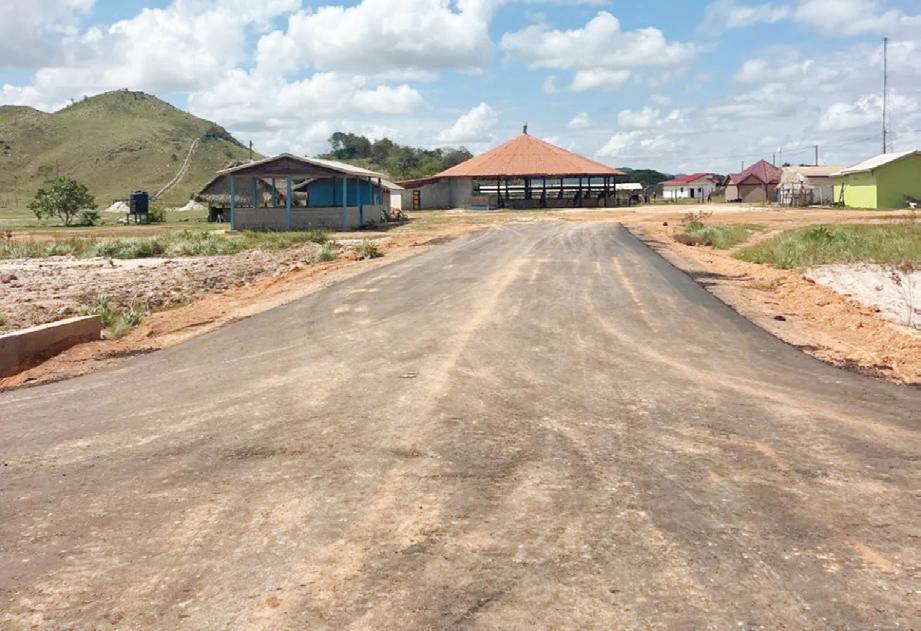
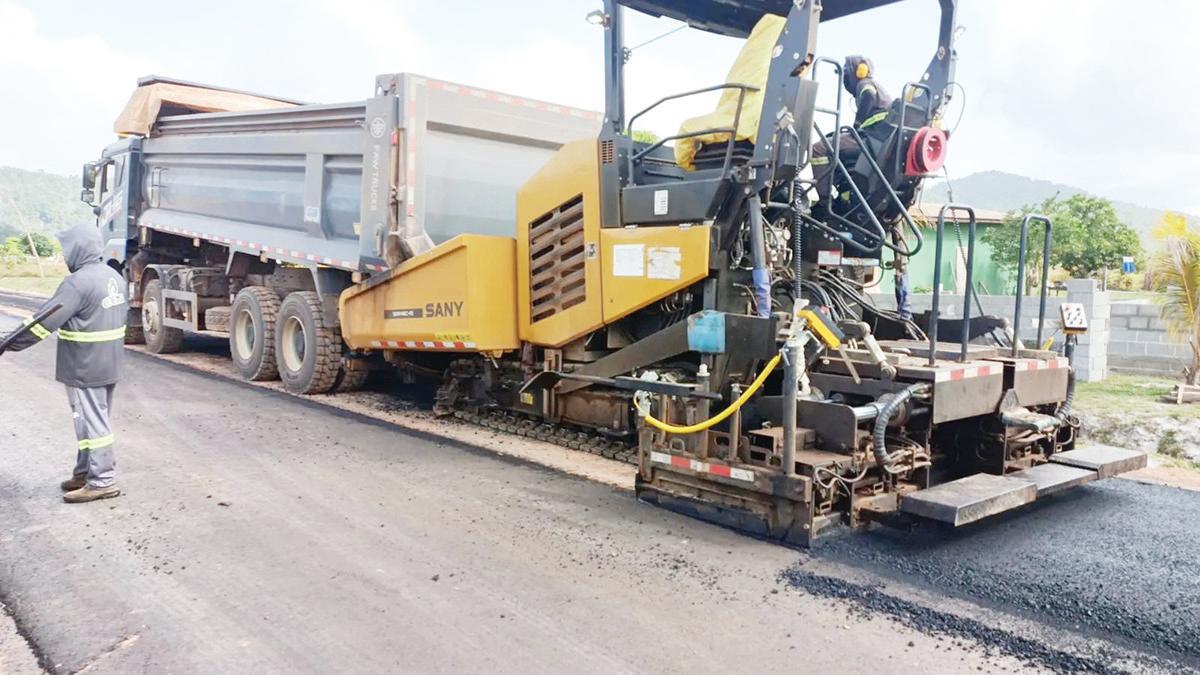
THE internal road net work in the village of Rupertee in the North Rupununi district, Re gion Nine, is almost com plete. The project is part of the government’s ef fort to bridge the gap that exists in hinterland communities.
According to the Ministry of Public Works, the project will see existing laterite roads converted to asphaltic concrete, improving durability and year-round access for residents.
The contract has been awarded to Modern Urban Investments, with a con-
tract sum of $144.9 million. Works commenced on June 16, 2025, and are scheduled for completion by February 16, 2026.
The scope of the project includes the construction of one kilometre of asphaltic concrete roadway, supported by a sta-
bilised base designed to withstand heavy use and seasonal weather conditions.
Similar upgrades are
also underway in the Maruranau Village, further south in Region Nine. This project is being executed by Chrome Con-
struction Inc to the tune of $181.1 million.
Construction in Maruranau also began in June last year, and the contractual completion date is February 16, 2026.
Like Rupertee, the works there involve one kilometre of asphaltic concrete road with a stabilised base.
The projects form part of wider efforts to improve connectivity, reduce transportation costs and enhance the quality of life in hin terland and Amerindi an communities across Guyana. (DPI)
Upgraded road works in Rupertee Village, Region Nine Ongoing works in Region Nine
President Dr Irfaan Ali on Sunday officially opened the 2026 Ramadan Village reiterating the humble teachings of Islam. He was accompanied by First Lady Arya Ali, his sons, and several cabinet members (Delano Williams photos)
Solar mini-grid upgrades power communities growth
TOSHAO of Orealla and Siparuta villages in Region Six (East Berbice-Corentyne) has highlighted how the upgrade of the villages’ solar photovoltaic (PV) mini-grid will improve access to energy, while also driving development for residents.
More than 12,000 persons in hinterland and riverine communities across Regions One, Two, Six and Nine, will benefit from upgrades to 11 solar PV mini-grids, and will gain access to reliable, 24-hour renewable electricity, according to the Guyana Energy Agency (GEA).
Additionally, the agency said that solar
capacity will increase significantly, empowering some 116 public and government facilities. This includes schools, health centres, and public buildings, while supporting expanded services and transforming everyday life.
Vanderburgh said that for schools in both communities, particularly, the initiative is very important.
“The School Feeding Programme, they store ingredients in the refrigerator which is directly dependent on the solar farm to keep the ingredients frozen. So, I think that upgrade will greatly benefit that area. And also, teachers often attend classes online, thereby using the wi-fi that is at the school which depends on power from the solar farm also,” the toshao said.
This, he noted, will ease teachers’ worries somewhat, as it relates to being bounced off or logged out of their classes when the wi-fi shuts down.
Further, Vanderburgh said the village office has been connected to the solar farm
with permission from the Office of the Prime Minister, allowing them to have access to wi-fi services, getting the power to print documents, and use equipment to better serve residents.
“I must extend a heartfelt gratitude to the government, and I do look forward to more developments as the years go by,” he said.
The GEA had said
that Guyana is taking renewable energy further in 2026, where communities that need it most are receiving reliable, renewable electricity.
With a total investment of $209 million, the combined solar capacity will increase from 108.8 to 528.8 kilowatts peak, ensuring that these communities can meet increased energy demands, while also expanding services
to new facilities.
These upgrades mean more than just electricity access; it is empowerment, a lifeline that strengthens communities, fuels opportunity, and lights the way to a sustainable, low-carbon future in Guyana.
The GEA stated that with each solar panel installed, Guyana is proving that renewable energy is transforming lives.
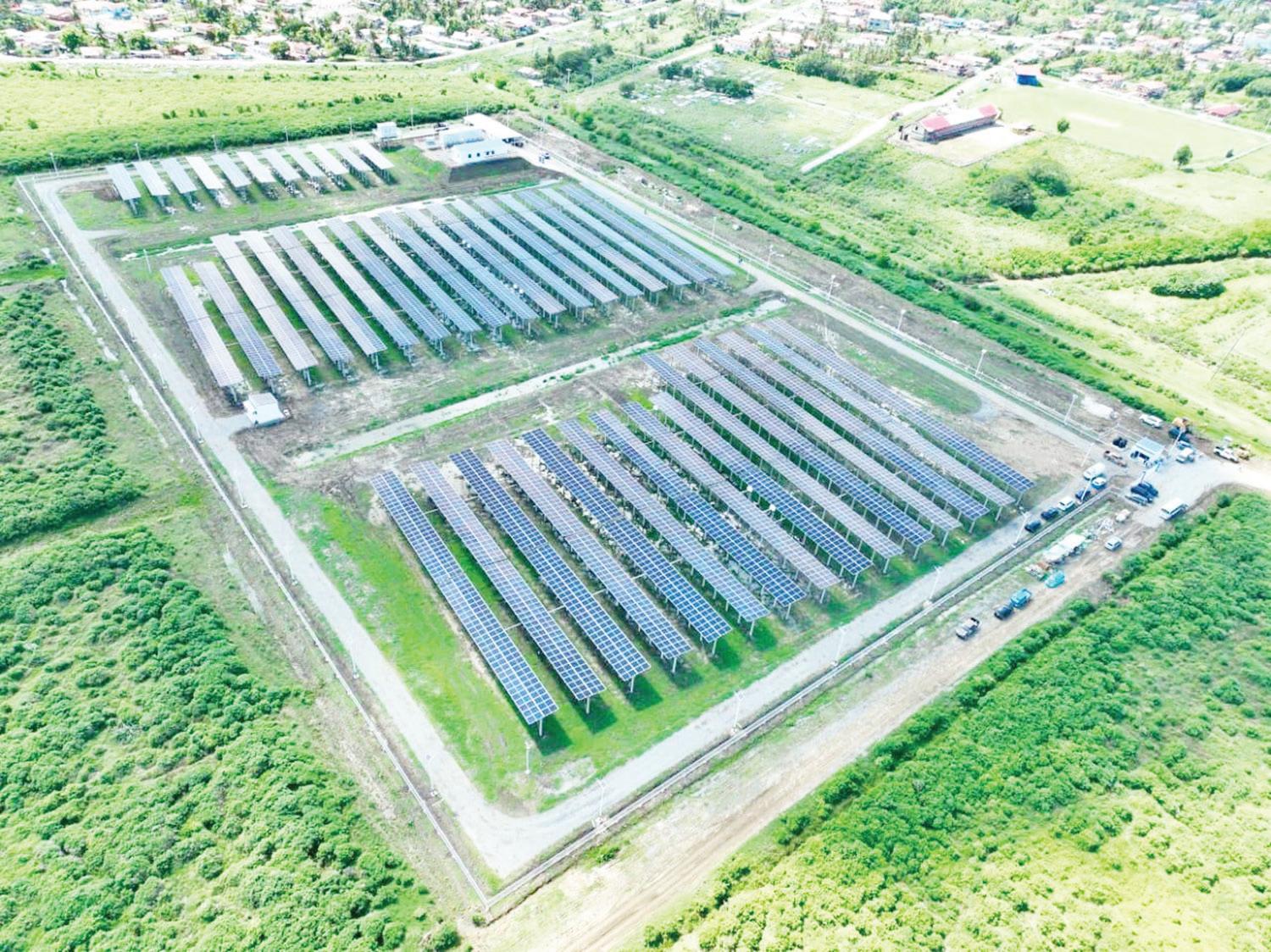
A Solar PV Farm in Region Six (File photo)
President Ali urges deeper social consciousness
PRESIDENT Dr Irfaan Ali has called for a deeper, sustained consciousness within society, urging citizens to root their actions in history and spiritual constancy rather than fleeting moments or opportunistic impulses.
Speaking at a Maha Shivratri 2026 observance on Sunday at the Cove and John Ashram, President Ali reflected on his own experiences.
He framed these expe-
riences as part of a broader “conscience of society”, noting that true consciousness meant recognising objective realities, even when they are difficult or uncomfortable.
Maha Shivratri is a festival which honours Lord Shiva and is observed by Hindus around the world.
He offered blessings to all observing Maha Shivratri, wishing them a festival filled with deep meaning, devotion and re-
flection. He urged citizens to seek the “true meaning of consciousness and constancy” in their own lives, and to strive to become better and truer members of the family of humanity.
He warned against judging individuals or mo vements based on isolated disagreements or temporary differences, urging instead that they be evaluated against the backdrop of long-term struggle, sacrifice and historical contri-
bution.
He told the gathering that the day’s observances were “just but a reminder that that conscience exists and that consciousness exists. So, we can take it through the rest of the year and the rest of our life.”
He encouraged especially younger generations to ground their values and choices in a clear understanding of history, emphasising that festivals such as Maha Shivratri should
serve as enduring reminders of spiritual duty, moral responsibility and unity.
Also present at Sunday’s festival was Anil Nandlall, Attorney General and Minister of Legal Affairs, who also underscored the festival’s message of spiritual reflection, moral responsibility and unity within society.
Maha Shivratri is one of the most sacred festivals in the Hindu calendar, dedicated to the worship of Lord
Shiva, who symbolises transformation, discipline and spiritual awakening. Observed annually, usually between February and March, the festival is marked by night-long prayers, fasting, meditation and the chanting of sacred mantras. Devotees gather in temples and homes to offer milk, water, flowers and fruits to the Shiva lingam, a sacred symbol representing divine energy and creation.
President Dr. Irfaan Ali during Sunday’s Maha Shivratri observance
Scenes from Sunday’s Maha Shivratri
Turning oil wealth into human capital
THE commissioning of the Guyana Technical Training College Inc at Port Mourant marks a defining step in how the country is choosing to prepare for the demands of its growing oil and gas sector. It sends a clear message that development is not only about what lies beneath the seabed, but about the skills and opportunities created for Guyanese on land. The investment of more than US$120 mil -
lion into a single technical institution shows a deliberate focus on long-term capacity building. Instead of short-term spending, the People’s Progressive Party/Civic (PPP/C) government has opted to develop infrastructure and training systems that will shape the workforce for decades.
As such, the decision reflects an understanding that the benefits of the energy sector must be secured through education, certification and practical
training for young Guyanese.
Locating the college in Port Mourant is also no coincidence, since the area has long been known for producing technically competent workers and the new facility builds on that legacy, while bringing it in line with global industry standards. With advanced simulation labs and specialised training equipment, students now have access to the kind of hands-on learning that was previously only avail-
able overseas. This change alone removes a major barrier for many families and keeps valuable training resources within the country.
The wider impact on Region Six cannot be ignored. The college is part of a broader wave of investments that include expanded engineering programmes, health-training facilities, infrastructural works and industrial projects linked to the gas-to-energy project and port expansion. Together,
Parents urged to sign on to School Health Programme
THE Ministry of Health (MoH), in partnership with the Ministry of Education and the Mount Sinai Health System, has launched the School Health Programme, which aims to ensure that children receive a comprehensive health checkup at least once at the nursery, primary and secondary school levels.
these initiatives are steadily repositioning Berbice as a centre for technical and industrial growth.
Another important shift is the increasing presence of young women in technical fields as their participation speaks to changing attitudes and growing confidence that technical education offers real and rewarding career paths.
As President, Dr Irfaan Ali puts it, during the commissioning, the training college represents
a practical approach to development; it recognises that resource wealth must be matched by skilled people who can operate, maintain and eventually lead the industries that are shaping the economy. By deliberately focusing on training the nation’s workforce locally, President Ali reaffirmed that his government is laying the groundwork for a future where opportunities are created at home and shared across communities.
The Ministry of Health is encouraging parents and guardians to complete and return the consent forms issued to allow healthcare providers to conduct the necessary health screenings.
The process is described as quick and simple and is designed with the comfort and well-being of children in mind.
According to the ministry, early screenings give the health sys-
The initiative continues to be rolled out in several schools and allows students to benefit from free dental and vision screenings, physical examination, ear examinations, and growth and development monitoring, by qualified doctors, with the permission of their parents/ guardians.
tem an opportunity to provide effective treatment by catching any potential health problems at an early stage. This ensures children start life healthy.
Dental Nurse at the Ministry of Health, Orrinthia Bishop, one of the many professionals who are involved in the programme said, “Early detection, through prevention, can stop the risk of them developing dental caries, because as we would all know, that our teeth is important to us, and without these important gems in our mouth it wouldn’t be
possible in the longterm,”
She was at the time urging parents to come on board and allow their children to be checked through the School Health Programme.
Meanwhile, Optometrist Francine Indarsingh said, “I would like to encourage parents to have their kids involved in the School Health Screening Programme. In my section, to be specific, we focus on the eyes. In terms of the eyes, a lot of persons are not aware that they have problems with their eyes until they are tested for eye problems.”
She explained that they usually screen children, checking their vision to see if they have any issues with their eyes. If it is found that a child’s vision is not at the standard expected, Indarsingh said they go deeper by conducting
tests to see what underlying issues the child may have and if spectacles are needed.
To learn more about the School Health Programme, persons can contact the ministry on 227-4357 or visit the various social media platforms.
Stabroek News,
part 2: The golden era
IN part 1 yesterday (Sunday), there were theoretical notes on the emergence of the Stabroek News (SN). In part 2, we look at the golden life the SN enjoyed in Guyana from 1987 onwards. The SN was bound to enjoy prodigious success at its birth. It is important to note that the year 1986 continues to be misleading.
For the historical record, it should be written that SN was born in 1986, but the actual date of birth was at the end of the third week in November 1986. The start-up date of a newspaper or radio or television station is the day of the year that the product comes out. The day the company came into being does not constitute the actual day of the birth of a newspaper.
Guyana had seen its worse rigged elections in 1985, and the society became obsessed with the need for free and fair elections, especially since the new President Desmond
Hoyte had begun to go in the direction of abertura and perestroika as we noted in part 1. At the birth of SN, there were only three papers available for the Guyanese people to read.
The Guyana Chronicle was the only daily and it was state-owned and the weekly, gestafaxed Catholic Standard and weekly Mirror, owned by the PPP. SN emerged at a time when the people of Guyana were starved of news. It became a beacon of hope. People were literally engrossed with SN.
To say that after 1986, SN was coterminous with Guyana would be a slight exaggeration, but the paper was sought by almost every Guyanese. One had to live in those times to see how smitten people were with SN and how powerful its editor-in-chief, David DeCaires, had become. It would be no exaggeration to say that DeCaires was as popular and sought after as any of Guyana’s leading pro-democracy
politicians. It is easy to imagine how powerful Mr DeCaires was. Since the entire nation wanted to read SN, pro-democracy organisations throughout Guyana sought to have the ear of DeCaires. I saw this with my own two eyes. SN was simply a powerful force in Guyana.
President Desmond Hoyte could not rescind SN’s licence, but he began to resent the powerhouse that SN had become. So angry with the ease with which DeCaires and Fitzpatrick penetrated Guyana and became inf luential, President Hoyte referred to the Mulatto/Creole leadership of SN as a “Putagee” mafia. That derogatory racial term was a huge mistake by Mr Hoyte, and it backfired because it led to SN’s increased popularity.
President Hoyte knew that SN had penetrated the diplomatic community and had extensive contacts with Caribbean governments and Caribbean
God’s Speed Stabroek News
ON Monday October 13, 2025, during a call-in programme on the Freddie Kissoon Show, a caller made a brief swipe at the government for being hostile to certain media houses in Guyana. That caller was referring to a September 5 exchange between President Ali and a journalist and a subsequent statement by the Guyana Press Association which accused the government of “hostile and
dismissive … callous treatment” of media workers.
The caller claimed government bias and lack of press freedom. Freddie chimed in with a comment, that the Stabroek News more than any other paper embraces an insane level of anti-government bias. He opined that the Chief Editor is taking the paper down irredeemable paths that can only lead to its demise because the majority of the consuming public
organisations and people with status in Guyana. It is a historical fact that SN played a huge role in the colossal struggle for free and fair elections.
Once there weren’t free and fair elections and once there was the PPP and organisations clamouring for free and fair elections throughout Guyana, people flocked to SN to get the news. SN was patterned after the mainstream broadsheets in the world, but took on the tabloid size. It came in the tradition of the more serious broadsheets and avoided the mass circulation tabloids of the UK and New York.
This was a congenital mistake of SN as we will come to see in part three, but because it was the only independent daily, and had no competitor, it was subscribed to by
all strata and classes in Guyanese society. So, whereas in London or New York, the ordinary folk would prefer to read the gossipy tabloids, in Guyana, the unemployed, the lumpen proletariat and the working class clung to the SN because there were no other newspapers except the state-owned newspaper.
The contents of SN from the time of its birth catered for certain of type of news. So, it avoided the kind of direction you find in tabloids in metropolitan cities around the world.
The paper saw itself as a mainstream daily heavily bent on social happenings, the Guyana business world, Guyana’ socialite world and of course political developments in an autocratic society.
I quote from page 129 of “The Birth of Stabroek
News” by Anna Benjamin what David DeCaires wanted SN to be: “de Caires placed emphasis on private enterprise and a favourable business climate.”
So popular was the SN from the mid 1980s onwards that soon after its birth, it began as a daily. But no one in Guyana knew about the Achilles’ heel of SN until serious competition emerged. It came with the Kaieteur News (KN). Part 3 will highlight the reasons for the challenge KN posed to SN.
DISCLAIMER: The views and opinions expressed in this column are solely those of the author and do not necessarily reflect the official policy or position of the Guyana National Newspapers Limited.
are fair-minded, decent people who expect fair and balanced coverage. I then chimed in by advocating for a rebalancing of ads share based on viewership/ readership and browsing analytics.
The following day, I was at the studio and ran into Guyanese Critic. I asked him how much government ad revenue his social media channel gets given its popularity, he said none. He wanted to know why I asked.
I said it was time we opened a discussion about the fair distribution of government ads based on share of eyeballs.
Two days later, the Vice-President spoke pointedly on the subject at his press conference. He made mention that a significant share of government ads was going disproportionate-
ly to some print mediums with falling readership. He expressed a commitment to review the system, in that, the government would place ads where it will demonstrably reach more people. In the world of superstition, when the 13th of any month falls on Friday, that day is considered an unlucky,
ominous day associated with bad luck called a Black Day or Black Friday, distinct from the American traditional shopping day. Friday the 13th of February, 2026, was a Black Friday for Stabroek News (SN). We learned that the news outlet will wind down business and shut down the pubTURN TO PAGE 8
God’s Speed Stabroek...
lication.
SN was born at a time when Guyana yearned for an independent newsprint. The newspaper had its journalistic ups and downs but for the most part we respected the outlet as being independent and balanced. We could observe threads of anti-PPP orientation in its choice of columnists but, this was moderated by the quality and orientation of the hard news. So, readers looked to the columns for an alternative to government framing on issues. For example, SN gave free column space to small parties, especially the AFC, whose messages may have otherwise not been given the light of day. The fact-based nature of the hard-news section was generally reliable, so SN was considered the most credible newspaper in Guyana for a
long time.
However, when the PPP was returned to office under the presidency of Dr Ali, something changed at SN. Its columnists and editorials became savagely anti-government in dimensions never seen before. Even the hard news section was framed with strong tendencies towards aggressive anti-government, anti-PPP reporting. Freddie Kissoon has a sociological ex-
planation for the direction SN took. His theory is that the owners of SN are part of a Mulato progeny who are anti dark-skinned and anti-working-class, and at the deep philosophical level, they believe the dark-skinned and working-class “country boo boo” upbringing of Dr Ali falls outside the entitlement coterie.
SN began a rapid post-2020 slide in circulation and several reasons are attributable. First, SN failed to reform its business model. It hardly made a foray into the social media space; it chose to hold on to an online subscription format not consistent with Guyanese preference, a format most readers were not interested in.
Many news outlets provide almost instant coverage of events via various online platforms, while readers have to wait till the next day to get anything from SN. In the modern media world, that turnover timeline is fatal and the outfit became an old news outlet. People only consulted SN to see what their perspective was, having already digested the coverage of the news from 1,000 angles almost instantly.
Further, as mentioned above, SN could no longer be relied upon for balance and independence as their themes became a bland anti-government predictability. Once this was their operating environment, the mystical Aramaic phrase “mene mene tekel upharsin”
was bound to appear on their storyboard. In their announcement, SN hinted that declining revenue from government placements was a major factor in their decision to end publication. This cannot be true, even though SN has not proven its circulation in the public space, SN received the second highest proportion of government ads after the Chronicle, simply because the government used historical data from a decade ago when SN was more respected. It is being noised around that the government owes SN for about five months’ worth of ads. SN also said that late payments were a deliberate act to single out and frustrate its business cash flow. Then it was revealed that government owes all media houses hefty sums, so it couldn’t be that SN was targeted for disfavour.
SN also claimed that it attempted to diversify into radio and was repeatedly refused a radio licence. This is absolutely inaccurate. While I was Chairman of the GNBA, upon assuming the position, I was asked by then Prime Minister for details on the SN application since the government of the day had keen interest in granting a radio licence to SN. I requested their file and found that the application was defective and/or incomplete. At the time a simultaneous application to the National Frequency and Management
Unit was also required. From the information gathered, that too was defective. I invited the general manager of SN, Ms Khan, to a meeting to discuss the defects in their application and stated my willingness to provide any assistance the GNBA could provide to rectify the defects and omissions. Up to the time of leaving, in November 2016, SN made no effort known to the GNBA to fulfil the legal requirements for a full and complete application. I am unable to vouch for what occurred after I left, but I did make cursory enquiries in early 2020 and the information received indicated that SN still did not have a full and complete application for a radio licence. Therefore, the claims of denial of a radio licence to SN has to be nothing short of bull crap and scapegoating. No doubt SN made positive contributions to this dear land. There were good years, hundreds of employees, contributions to private-sector development, SN pioneered private media in the post-1980 era and acted as a good corporate citizen. A debt of gratitude to its founders and managers. God speed!
DISCLAIMER: The views and opinions expressed in this column are solely those of the author and do not necessarily reflect the official policy or position of the Guyana National Newspapers Limited.
State-of-theart agricultural training centre planned for Berbice
- as Guyana looks to accelerate industrialisation of ‘agri’ sector, food industry
A NEW state-of-the-art agricultural training facility is to be established in Region Six, Berbice, as part of a wider push to modernise Guyana’s agricultural sector and develop a robust food industry.
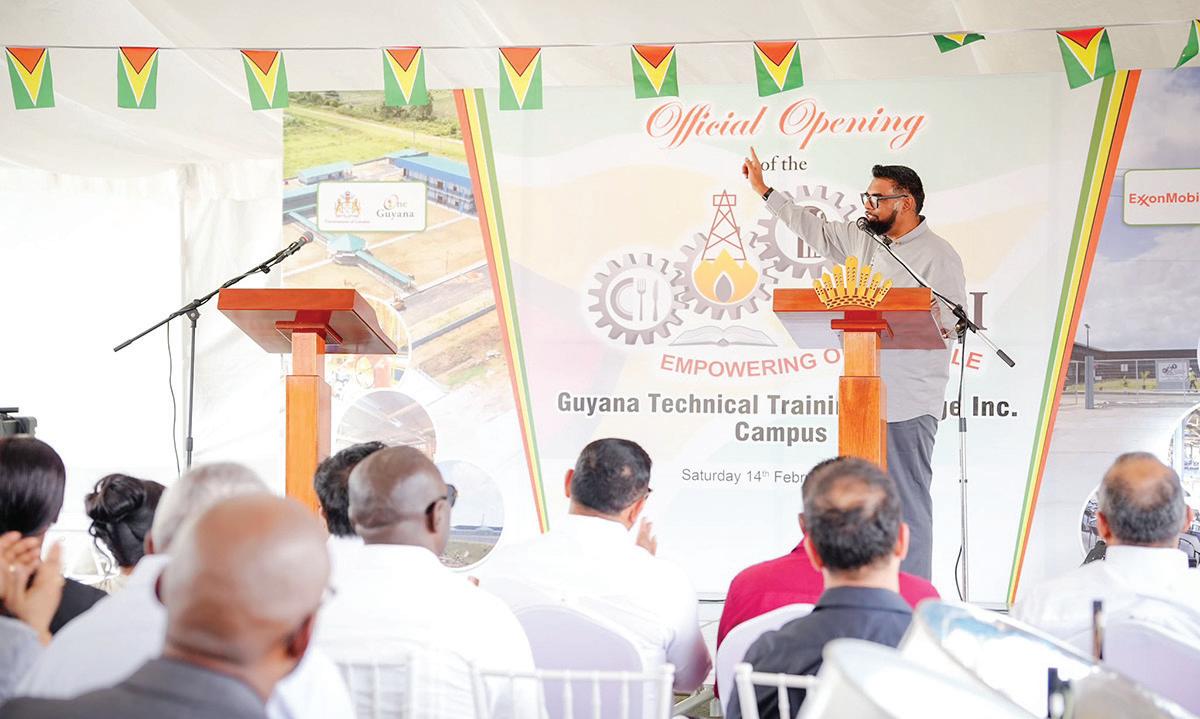
This was revealed on Saturday by President Dr Irfaan Ali during the commissioning of the Guyana Technical Training College Inc. (GTTCI) at Port Mourant.
During his address, Dr Ali explained that the training centre will be designed to support the industrialisation of agriculture and foster the growth of a modern food industry, positioning Region Six as a key hub in Guyana’s broader economic transformation.
“The Minister of Agriculture is not here by accident. He also will be tasked with ensuring that we build a state-of-theart agriculture's training facility in Region Six to support the industrialisation of agriculture and to support the development of a food industry,” the President said while addressing hundreds of residents and other stakeholders.
He described it as “an amazing time to be young in Guyana, and to be young here in Berbice,” noting that the planned investments are expected to create new opportunities for young people in
education, employment, and entrepreneurship.
The project forms part of the government’s broader commitment to strengthening food security, adding value to agricultural production, and equipping the next generation with the skills required for a more technologically advanced and industrialised agricultural economy.
The government has set out a wide - ranging vision to transform Guyana’s agriculture sector into a resilient, high-value engine of development and economic growth, unveiling a suite of investments and policy priorities that span across sugar, rice, livestock, coconut, and other emerging value chains.
Last month it was revealed that $113.2 billion has been earmarked to support food security during the presentation of the 2026 Budget by Minister in the Office of the President with Responsibility for Finance, Dr Ashni Singh.
The finance minister had told the National Assembly that the government will continue to invest heavily in storage and post - harvest infrastructure, green technologies and expanding industrial complexes, with the aim of opening 100,000 acres of new arable land to boost capacity.
“Agriculture and food
security sit at the centre of Guyana’s economic strategy for resilience. Government has invested, and will continue to invest heavily in projects, initiatives and systems that keep the Guyanese people fed, that improve incomes for our farmers, and that reduce Guyana’s exposure to external shocks,” the finance minister said.
The government, he said, too, will support mega farms developed with private - sector partners and the increased production of high-valued crops and vegetables through the construction of greenhouses, tunnel farming and hydroponics.
President Dr Irfaan Ali
- Minister Browne-Shadeek says
MINISTER of Amerindian Affairs, Sarah Browne-Shadeek, has described the attacks against her on social media by the We Invest in Nationhood (WIN) party as purely political.
In a sit down with the Starting Point Podcast, Browne-Shadeek admitted that the attacks have crossed
WIN attacks ‘purely political’ Land-allocation drive launched for small miners
various lines and had a negative effect. But she also made it clear that the attacks from the Azruddin Mohamed-led party would not deter her from her duties.
The Minister pointed out that having been in politics since her early days as a People’s Progressive Party/ Civic youth member, she will continue to overcome.
“I’ve been in politics since I was about 21 years old. I’ve been an activist in the PYO. And for me, what I’m facing today, while it’s affecting me in some way, I’m not so bothered that I can’t function. I’m strong… and I will contin ue to stand up for what’s right,” she said. (NCN Guyana)
THE Ministry of Natural Resources on Sunday announced the rollout of a new “Troy-like” land-allocation model aimed at expanding access to mining lands for small-scale Guyanese miners, while reinforcing compliance and transparency within the gold-mining subsector.
This initiative follows the successful model implemented in the Issano 14 Mile area, formerly associated with Troy Resources, a press release said, adding that after the closure of that operation, a portion of the licensed area was subdivided into 27-acre parcels and allocated to small miners under a structured arrangement.
Nearly 100 small miners are currently operating in that area, benefitting significantly, particularly in Regions Seven and Eight, the release said.
The ministry, through the Guyana Geology and Mines Commission (GGMC), will open similar areas in Region One (Mabaruma/Matthews Ridge sub-district), Region Seven, and Region Eight. Within the next two to three months, at least 75 parcels will be made available in each region, totalling approximately 225 allocations for small Guyanese miners.
Importantly, the parcel size will increase from 27 acres to 50 acres per miner. Beneficiaries will retain the option to relinquish their allocation once mined out and apply for another 50acre parcel.
The press release said the government has engaged
a U.S.-based company, Global Venturing, to conduct a mineral- processing and data-collection exercise across the mining districts. The aerial surveys, now nearing completion, will provide high-quality geological data to guide more
mining activities. Since the commencement of intensified enforcement operations in recent months, more than 400 pieces of equipment, including engines, pumps, generators, and excavators, have been seized in joint exercises conducted by the
informed land allocations. This will reduce prospecting costs for small miners, minimise environmental impact, and improve overall efficiency in the sector.
Complementing these measures, the Guyana Gold Board will introduce mobile purchasing units (“mobile shops”) to enhance accessibility for miners in remote locations. The ministry reiterates that all gold produced in Guyana must, by law, be sold to the Guyana Gold Board or to a licensed buyer.
“These supportive measures accompany a firm zero-tolerance stance on illegal
GGMC and the Guyana Police Force. Nearly 100 individuals have been prosecuted, with additional matters before the courts.
“These enforcement actions are designed to ensure compliance, protect the integrity of the industry and secure fair returns for Guyana. The ministry remains fully committed to working alongside small and medium-scale miners, being the backbone of our gold industry, to build a transparent, sustainable, and prosperous mining sector for all Guyanese,” the release added.
Amerindian Affairs Minister, Sarah Browne-Shadeek (Ministry of Amerindian Affairs photo)
Healing the brain, serving the nation: the journey of Dr Alex Persaud
MORE than twenty years ago, Dr Alex Persaud first worked at the Georgetown Public Hospital Corporation as a pharmacy assistant. Today, he serves in the same institution as a neurologist, caring for patients with complex conditions of the brain and nervous system. Though he proudly considers himself “a farmer first,” those early experiences shaped the discipline, resilience, and compassion that now define his medical career.
Dr Persaud earned a scholarship to study medicine in Cuba, where he completed his medical degree before specialising in neurology. He later pursued a fellowship in electroneuromyography at the Institute of Neurology and Neurosurgery in Havana, strengthening his expertise in diagnosing nerve and muscle disorders.
For over two years, Dr Persaud has been part of GPHC’s Neurology Department. He provides care to both hospitalised patients and those attending outpatient clinics. His work includes managing stroke, epilepsy, chronic headaches, movement
disorders, neuropathies, and other neurological conditions. In addition to clinical duties, he oversees EEG services and contributes to the continued development of neurological care at GPHC, with the goal of strengthening services across Guyana.
Neurology captured his interest early in medical school. The brain’s complexity fascinated him. "It controls how we move, speak, think, feel, and remember," he said. He was drawn to the careful thinking required to diagnose neurological illnesses, where detailed history taking and physical examination are essential.
“Beyond the science, I was deeply moved by how neurological conditions affect not just individuals, but entire families. A stroke, seizure disorder, or degenerative illness can change a life overnight. I wanted to work in a field where thoughtful care, patience, and longterm support could make a meaningful difference,” he explained.
“The most rewarding part of my job is seeing patients improve, especially when they arrive
frightened or uncertain about their future,” he says. “Whether it’s helping someone gain control over seizures, managing chronic migraines so they can return to work, or supporting a stroke patient through recovery, those moments of progress are incredibly fulfilling. Sometimes it’s not even about curing a condition, but about providing clarity and reassurance. Giving someone an explanation for their symptoms can bring tremendous relief.”
Dr Persaud believes that improving neurological services strengthens the entire healthcare system and increases awareness about brain health. He also works to address common misunderstandings. Many people believe neurological conditions are always permanent or untreatable. While some are chronic, many can be effectively managed, and some can even be reversed if caught early. Seizures, for example, are not always dramatic convulsions. They can appear as brief staring spells, confusion, unusual movements, or subtle behavioral changes. Education is essential to reduce stigma
and encourage people to seek care.
When asked about one simple step people can take to protect their brain health, Dr Persaud highlights sleep. Good sleep supports memory, mood, concentration, and seizure control. Chronic sleep deprivation increases the risk of stroke and cognitive decline. He also encourages healthy eating, regular exercise, and careful control of blood pressure and blood sugar, especially since these are major risk factors for stroke in our population.
Over the years, his approach to patient care has evolved. While diagnosis and treatment remain cen-
tral, he now places even greater emphasis on listening and communication. Many patients enter his office anxious. Taking time to hear their concerns and explain findings clearly builds trust. He believes that medicine is not only about treating disease but also about supporting people during vulnerable moments in their lives.
For those considering a career in neurology, Dr Persaud describes it as challenging
but deeply fulfilling. He encourages young doctors to stay curious, sharpen their clinical skills, and practise empathy. Behind every scan and test result is a person who needs understanding and care. Through his work at GPHC, Dr Alex Persaud continues to bring both knowledge and compassion to the patients and families he serves. (GPHC)
Dr Alex Persaud
Doctors at Lima Regional Hospital lead life-saving effort in preterm birth case
By Indrawattie Natram
WHAT began as a high-risk pregnancy at just 22 weeks and six days turned into a powerful story of medical dedication, resilience, and hope, thanks to the swift and coordinated intervention of the doctors and nurses at Lima Regional Hospital.
Joanna Henry, 42, of Pomona, was admitted to the hospital on November 11, 2025, after experiencing signs of preterm labour and dangerously uncontrolled blood pressure. At such an early stage of pregnancy, both mother and baby were at extreme risk. The obstetrics and gynaecology teams acted immediately, stabilising her blood pressure and closely mon-
itoring both patients. Despite their intensive efforts, complications escalated and the baby began showing signs of distress. Faced with a critical situation, the doctors made the urgent but necessary decision to proceed with a premature delivery in order to save both lives.
The tiny infant, Kiara Henry, was born weighing just 900 grammes on New Year’s Day. Survival at this stage is never guaranteed, and the delivery required precision, experience, and calm under immense pressure.
Immediately after birth, the neonatal team sprang into action. Under the leadership of Head of Paediatrics, Dr Kalesh Latchminarine, and with Neonatal Intensive Care Unit (NICU) oversight by paediatrician Dr Finola Permansingh, the newborn was transferred to the NICU.
There, a highly trained team of paediatricians and nurses provided 24-hour specialised care. Baby Kiara required ventilator support, feeding tubes, and constant monitoring—interventions that demanded skill, vigilance, and unwavering commitment from the medical staff.
The Maternity De -
partment, headed by Dr Latesha Fordyce, ensured that Ms Henry also received comprehensive postpartum care. She remained hospitalised for 96 days, completing her full 42 days of postpartum care under medical supervision to ensure her safe recovery. Throughout this period, the doctors worked tirelessly, not only managing complex medical conditions, but also providing reassurance, guidance, and emotional support to a mother facing one of the most difficult experiences of her life.
43 DAYS OF INTENSIVE NEONATAL CARE
Baby Kiara spent 43 days in the NICU, where steady progress became a testament to the expertise of the paediatric team. Every gramme gained, every stable reading, and every milestone achieved reflected the careful treatment plans and round-the-clock monitoring by the doctors and nurses.
By the time of discharge on February 13, 2026, Kiara weighed 1.245 kilogrammes—a remarkable improvement from her birth weight. Mother and baby were discharged together, a moment that marked the success of months of specialised care.
A MOTHER’S GRATITUDE
Ms Henry has expressed her deepest gratitude to the doctors and nurses of the OB/ GYN and NICU departments at Lima Regional Hospital. She credits their professionalism, dedication, and compassion for saving both her life and her baby’s. This journey stands as a powerful reminder of the critical role of skilled medical professionals in maternal and neonatal care. Through expertise, teamwork, and unwavering commitment, the doctors and nurses at Lima Regional Hospital transformed a life-threatening emergency into a story of survival and hope.
Joanna Henry and members of the obstetrics and gynaecology teams at Lima Regional Hospital
Joanna Henry and her miracle baby
GTTCI represents a strategic investment in Guyana’s future
- Ministry of Natural Resources says
THE Ministry of Natural Resources
said it welcomes the official opening of the Guyana Technical Training College Inc. (GTTCI) in Port Mourant, Berbice, an initiative realised under the vision of His Excellency, President Dr. Mohamed Irfaan Ali, to establish a premier institute to train Guyanese in oil and gas and other crucial skilled trades.
With respect to the oil and gas component, it features a state-ofthe-art Facility Simulator (FacTor). Established in 2024 by SBM Offshore with support from the Stabroek Block partners and the Government of Guyana, the simulator replicates the environment of a floating production, storage and offloading (FPSO) vessel to familiarise students with offshore operations, a press release highlighted.
It added that it is designed to equip trainees with essential technical skills to strengthen Guyana’s workforce and support the country’s rapidly expanding oil and gas sector.
According to the press release, Minister of Natural Resources, Vickram Bharrat, said the Facility Simulator
is a source of national pride since the country now provides for an 18-month intensive residential programme leading to a globally accredited Advanced Diploma in Oil and Gas: Mechanical, Electrical, Instrumentation and Production.
“The need to send our students to Canada for such training has thus come to an end,”
Minister Bharrat was quoted as saying.
Further, he praised President Dr. Irfaan Ali and his team for bringing this vision to fruition and observed that Guyana now has a world-class facility with a simulator that ranks among one in ten in the world.
He further remarked, “As a new producer, Guyana has demonstrated with this investment that it is a leader in oil sector management, especially among new producers, as we continue to put our people first in all aspects of management.”
President Ali, in his address at the opening, affirmed the long-term ambition behind the GTTCI: “…When we are 100 years into oil and gas, we will be the number one training facility in the world.”
He described the college as “the most
strategic investment we have made in oil and gas; it is an investment in our workforce and an investment in our future.”
While the institute is initially for Guyanese, President Ali said it will become available to Suriname, Trinidad and Tobago and beyond, providing training for those engaged in deep sea oil exploration.
The press release emphasised the ministry’s support of the President’s position as it will position Guyana not only to meet domestic workforce needs, but to serve the wider region with world-class training and capacity building.
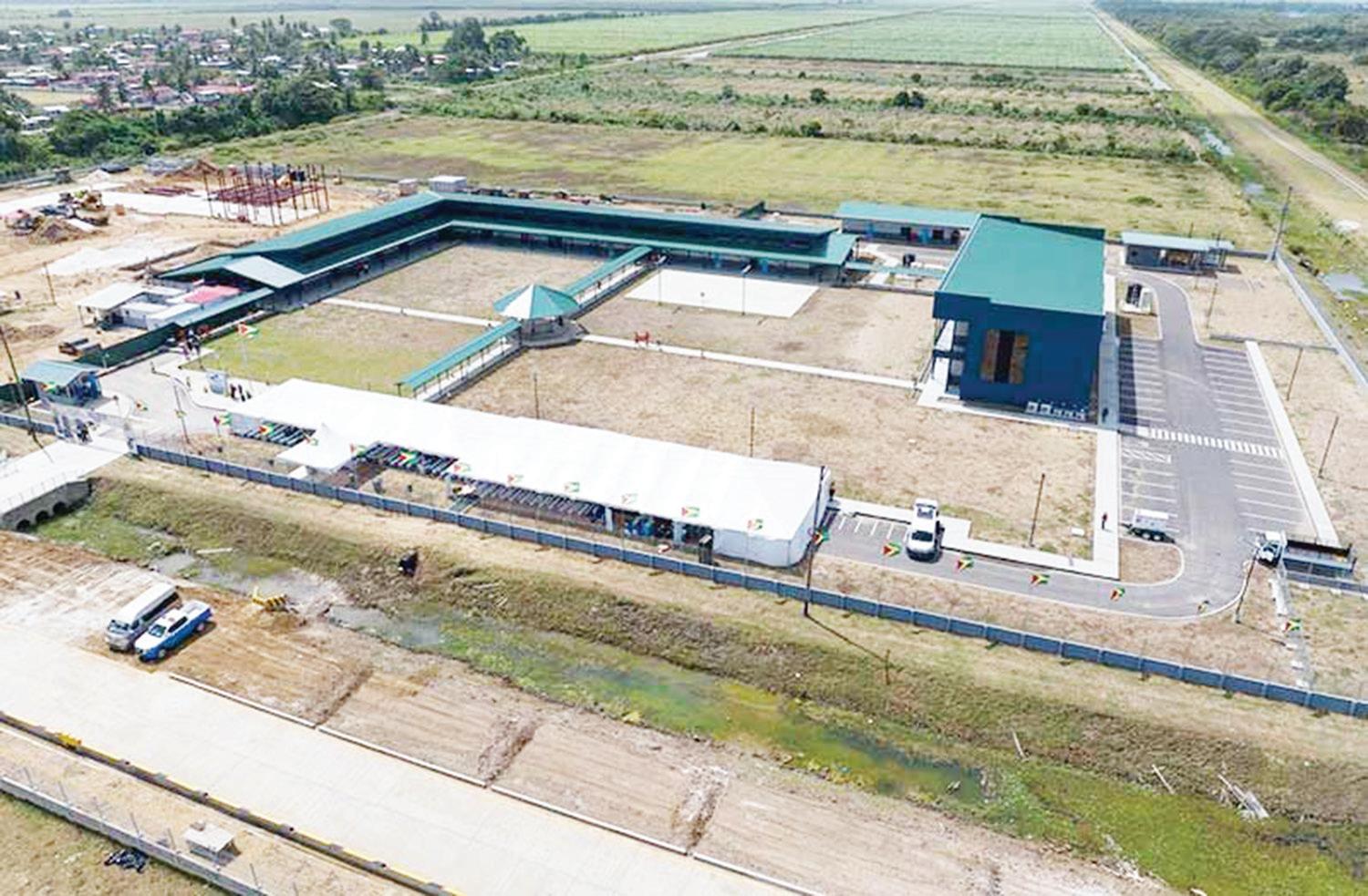
Aerial view of the newly commissioned US$120 million GTTCI campus at Port Mourant, which is positioned as a national hub for oil and gas technical workforce development
‘China Shock’? No, China Opportunity!
By Gong Rong
DATA recently released by the General Administration of Customs of China showed that the country’s trade surplus reached US$1,08 trillion in the first 11 months of 2025, breaking the US$1 trillion mark for the first time. This is a strong testament to the robust resilience of China’s foreign trade. Yet some have seized the opportunity to exaggerate the so-called “second wave of China shock” and falsely accuse China of pursuing a “neighbourhood impoverishment strategy.”
A close observation reveals that various versions of the “China shock theory” surface from time to time with new rhetoric emerging one after another, all following the old trope of the “China threat theory.”
Is it “dumping excess capacity,” or mutually beneficial trade exchanges? From an economic perspective, the so-called “excess capacity” is a false proposition. In today’s era of economic globalisation, countries participate in international trade by virtue of their comparative advantages to realise the optimal allocation of global resources — a significant progress in the way humans engage in economic co-operation. A country’s production takes into account both domestic and international market demands, and China’s exports are normal trade under the principle of comparative advantage.
The international criteria for determining dumping are that a product is exported at a price lower than its normal value, causing material injury or threat to the relevant industries of the importing country, and that a causal relationship exists between the two. China boasts the world’s most complete industrial system, an efficient logistics system, a large pool of high-calibre talents and sustained R&D investment. The competitiveness of Chinese goods stems from economies of scale, a complete industrial chain and technological progress. When the market has demand, products offer cost performance, and all parties benefit. Is it “crowding out development space,” or enabling development through co-operation? Judging from the structure of China’s export commodities, intermediate goods
and capital goods are the main drivers of overall export growth.
Moreover, Chinese enterprises are vigorously promoting the localisation of supply chains. Leading Chinese automakers such as Great Wall Motors and SAIC Motor have successively set up factories in Thailand and Indonesia, and the local production ratio at BYD’s Thailand’s plant has reached 54 percent. China’s “technology spillover effect” has effectively raised the local industrial level. Midea Group has built Southeast Asia’s first 5G fully connected air-conditioning factory in Thailand, and its 5G+AI quality inspection technology has significantly improved factory efficiency.
China is actively advancing high-standard exhibitions such as the China International Import Expo and the China International Fair for Trade in Services
every year, from which many neighbouring countries have reaped substantial benefits. In the first 10 months of 2025, the trade volume of agricultural and food products between China and ASEAN reached US$51,3 billion, a year-on-year increase of 8.9 percent. Among them, China’s imports of fresh and dried fruits and melons from ASEAN exceeded US$10 billion, accounting for more than two-thirds of its total imports of such products from the world.
China is the world’s second-largest importer of trade in services, with a particularly strong demand in the tourism service sector. It has long been an important source of tourists for neighbouring countries such as Thailand, Malaysia, and Vietnam.
China’s trade and investment have provided local young people with more diverse and prom -
ising career options. Adhering to the concept of “skills training going hand in hand with production, and schools co-operating with enterprises,” China has effectively raised the level of local labour forces. For example, the Luban Workshop in Thailand adopts a model of “academic education plus vocational training.” All six majors it offers have passed the evaluation of Thailand’s Vocational Education Commission and have been incorporated into the national education system, and students can obtain academic qualifications recognised by the competent education administrative departments upon completion of their studies.
It is clear that China’s co-operation with neighbouring countries is a complementary and win-win collaboration. One-sided interpretation of trade sur-
pluses, deliberate confusion between comparative advantage and unfair competition, and smearing of normal trade exchanges and industrial and supply-chain co-operation amount to a negation of the global market and the laws of the market economy. Such acts attempt to artificially split the global value chain and hinder the industrial upgrading of developing countries in the Global South, all in the pursuit of the outdated “America First” style of “national priority.”
The international community is generally optimistic about China’s development prospects. Institutions such as the International Monetary Fund and Standard Chartered Bank have successively raised their forecasts for China’s economic growth rate in 2026. The proposals for China’s 15th Five-Year Plan depict a beautiful vision of all countries seeking common development and sharing a common future.
China will continue to advance the high-quality joint construction of the Belt and Road Initiative, build a more efficient regional connectivity network, reduce logistics and trade costs, and enable neighbouring countries with superior geographical locations to better play their roles as regional hubs. A China that adheres to opening up, commits itself to innovation and pursues high-quality development, is the most powerful driver of common prosperity in Asia.
Armadillo Earth Sanctuary: a place to connect with nature
ARMADILLO Earth Sanctuary, formerly known as Armadillo Earth Farm, has been described as a sanctuary of self-discovery, and a place where a person, or group of persons, can reconnect with Mother Earth.
One of its founding committee members, Diane Raghoo, said it all began in 2018, and after three years of hard work and with the help of volunteers, the sanctuary was completed.
Over the years, interest in Armadillo has grown. While the sanctuary is Raghoo’s home, it has also morphed into a number of different things.
Initially, it was built as a home for family and friends, but it was eventually opened for children to have the opportunity to experience what a forest feels like.
“So, I changed the name from farm, though we still have a little farm, to a sanctuary where our mission now
is to protect the forest. We felt called to use our mission to protect the forest, while still having a farm where we have chickens, dogs, rabbits and we plant within the forest system, meaning we don't cut down every single tree in sight as what is happening on the highway. We plant fruit trees in the forest, clear enough for the sunlight to come through, and as the trees grow, we clear some more so that we don't take down every tree in sight,”
Raghoo explained. She said that people would visit Armadillo to host events, which are usually Yoga Retreats, Semi Silent Retreats, among other things. Armadillo also partners with some psychologists, life coaches, and artists and together, they create events for people who need space to go into silence, learn about solitude, journalling, and about mental health.
Referencing Armadillo’s
signature event, ‘Yoga and Bush Tea,’ which is being hosted on February 22, 2026, she said the event is a blend of yoga with a yoga instructor, walking through the forest, guided meditation, and spiritual insight sessions.
So, for an example, people who come here, they may stay here, and they rise with the sun, they do yoga, they spend time journalling and reflection[sic]. They walk in the forest. So, it's not about doing as much as it is about being and being with myself in silence, as opposed to having people around me all the time.”
Whether visitors may want to take a quiet walk through the forest or read a book from Armadillo’s extensive library, journal, or do meditative art, the venue is a relaxing space.
While many have visited for a “retreat,” Raghoo said, “The main aim of Armadillo Earth, is for the quietness, the quietude, the solitude, the time of space, for quiet reflection. So, you won't find us having a list of activities.
In January, they hosted a Self-Mastery Programme with 25 persons in attendance, and Raghoo described it as a total immersion retreat.
This, she posited, is something she would like to see continued at Armadillo, where persons can be emotionally intimate, and connect with themselves first.
With her background in
nutrition, yoga and fitness, she also aims to create a space for persons who want to try intermittent fasting, and silence, by offering a weekend programme, where a spiritual life coach is present.
“So those are programmes I would like to offer going forward this year, and people have been reaching out to us as a retreat space. They would like to host their retreats here, so we'll see how that goes,” Raghoo said.
Armadillo Earth’s mission is to cultivate harmony between humanity and nature, through sustainable stewardship of its sanctuary. It is also dedicated to safeguarding the delicate ecosystem of the forest, while providing a nurturing space for persons to reconnect with the Earth.
For more information, persons can follow Armadillo Earth on Instagram or visit Armadillo Earth Farm on Facebook.
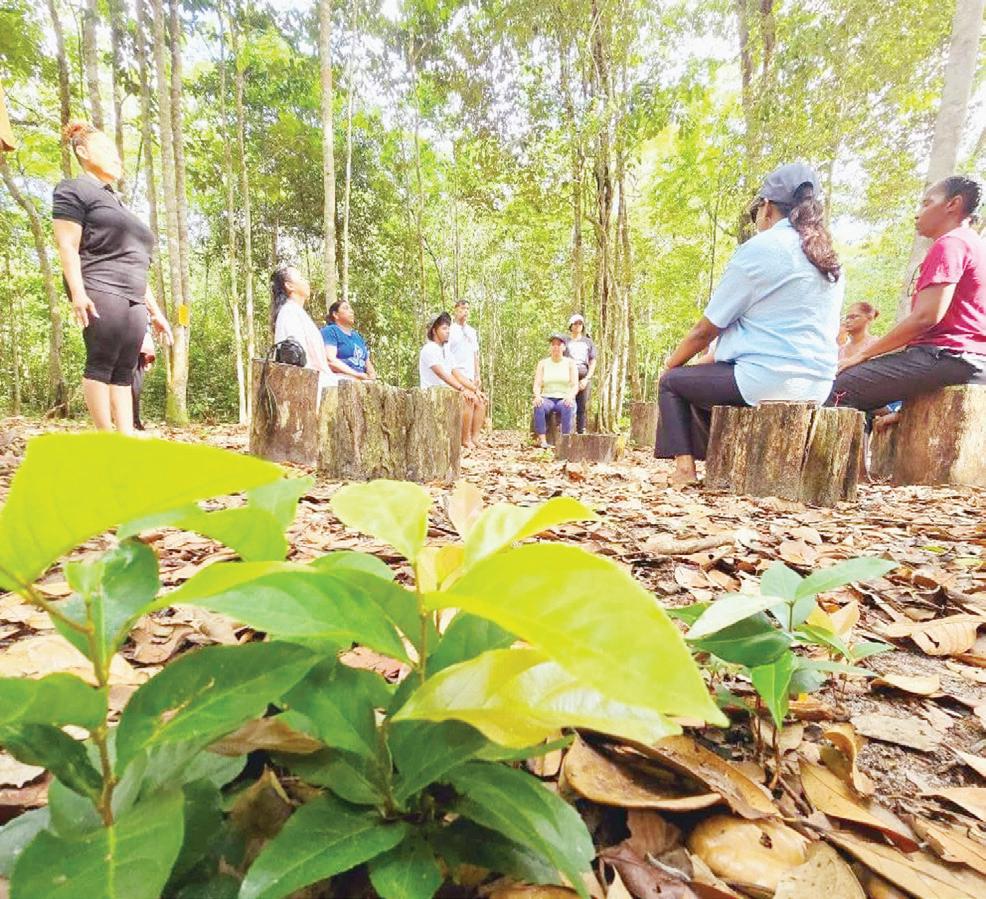
A day at the Armadillo Earth Sanctuary (Photo: Armadillo Earth Farm/Facebook)
Gov’t constructing more fire stations nationwide to strengthen emergency services
THE Guyana Fire Service (GFS) is set to see a significant expansion and upgrade to its infrastructure and services, as the government moves ahead with the construction and rehabilitation of firefighting facilities nationwide.
As part of the $1.558 trillion budget passed in the National Assembly last Friday evening, a sum of $52.1 billion has been approved for the Ministry of Home Affairs.
During the budget consideration of estimates and expenditure earlier Friday evening, Minister Oneidge Walrond outlined a wide-ranging programme to strengthen emergency response capacity nation-
wide.
Among the projects highlighted is the construction of the West Ruimveldt Fire Station, which is expected to be completed later this year.
New stations are also being built at Wisroc, Soesdyke and Onderneeming, while works are underway to complete the Diamond and Mahaicony Fire Stations.
The Campbellville Fire Station will be reconstructed, and rehabilitation and furnishing works are planned for the New Amsterdam Fire Station.
An electrical upgrade is scheduled for the Bartica Fire Station.
In hinterland and riv-
erine communities, works include the construction of reservoirs at the Lethem and Mabaruma Fire Stations to improve water storage capacity.
A marine fire station is to be constructed in Georgetown, while a satellite station is planned for the Timehri aerodrome.
The Leonora Training Facility will be extended, and new station offices are also to be constructed as part of the wider modernisation drive.
Minister Walrond further highlighted that a sum of $2.9 billion is required for the repair and installation of fire hydrants.
Of this sum, $250 million was earmarked for the
purchasing and installation of hydrants in all regions.
The minister added that an additional $50 million has been set aside for basic recruit training to increase the fire service and strengthen frontline capacity.
Turning her attention to the Guyana Police Force (GPF), she detailed several developments and the maintenance of police living quarters across every region.
Priority projects include the construction of female living quarters at Mabaruma, new barracks at Arakaka and living quarters in Mahdia and Kamarang.
Rehabilitation works will commence at the liv-
ing quarters at Leonora in Region Three, at Reliance in Region Six, and at the living quarters at MacKenzie in Region Ten.
In addition, reconstruction of officers’ living quarters is underway in New Amsterdam, Berbice, while officer living quarters are also being constructed at Wisroc, Linden.
The minister said the GPF received the largest
Eccles Sunnatul Masjid, Save a Life Inc host successful medical outreach and blood-donation drive
By Michel Outridge
SAVE a Life Inc, in collaboration with the Eccles Sunnatul Masjid on Sunday hosted a medical outreach to bring direct healthcare services to the community.
The medical outreach which was warmly received, started at 10:00hrs and lasted until 16:00hrs at the Eccles Masjid on the East Bank of Demerara. Residents came out in their numbers to take advantage of the opportunity, accessing much-needed health services.
According to Imam Haseeb Yusuf, the event was hosted at the masjid, since it is the most suitable location in the community. He
Sunday’s
expressed gratitude for the partnership, which he said brought healthcare services directly to the people.
As the Imam in charge of the masjid for about two months now, he told the Guyana Chronicle that this was their way of giving back to society and the community and the plan is to host similar events two or three times per year.
Imam Yusuf said the medical outreach offered a variety of services including pharmacy, haematology, gynaecology, cardiology, orthopaedics, physiotherapy, internal medicine, blood pressure and diabetes testing, eye exams, HIV testing and counselling and diabetic foot
care/ assessment, among others.
He added that they saw the need to bring direct healthcare services under one roof to the people, since they were badly needed.
Imam Yusuf reported that a highly qualified, specialised team of medical professionals were onsite along with volunteers.
He stated that 20 of the volunteers are members of the Eccles Sunnatul Masjid.
Emphasising that no one was turned away, Imam Yusuf told this publication that the masjid is planning a community-based beautification exercise, which will see several streets being regularly cleaned and maintained.
Additionally, the masjid will be designated a safe space for the community. Non-members will be allowed to utilise the recreation facilities, turning the area into a community hub.
Imam Yusuf said they are also seeking to partner with government to have services such as old age pension payable at the masjid among others as a form of ease for elders in the community.
Meanwhile, Consultant for Internal Medicine/Haematologist, Dr Kamela Bemaul-Sukhu told the Guyana Chronicle that Save a Life Inc., is an organisation that
partners with other agencies to bring medical service to the community in Guyana. It operates under the motto, “Give so Others Can Live.”
She related that the medical outreach at the Eccles Sunnatul Masjid was for anyone who needed access to the services that were being offered.
Dr Bemaul-Sukhu explained that the medical outreach was two-fold. In addition to medical services, it was also a blood-donation drive as there is an urgent need for blood for medical purposes.
She added that the med-
ical outreach had about 12 different specialised areas for services offered and they are catering for about 400 to 500 persons by the end of the day.
Dr Bemaul-Sukhu pointed out that it is their first-ever medical outreach in Eccles and so far, it was well received. The services offered were free of charge. She noted that they have had successful medical outreaches in other areas such as Wakenaam, St Cuthbert’s Mission, Mabaruma, several orphanages, Georgetown and Linden.
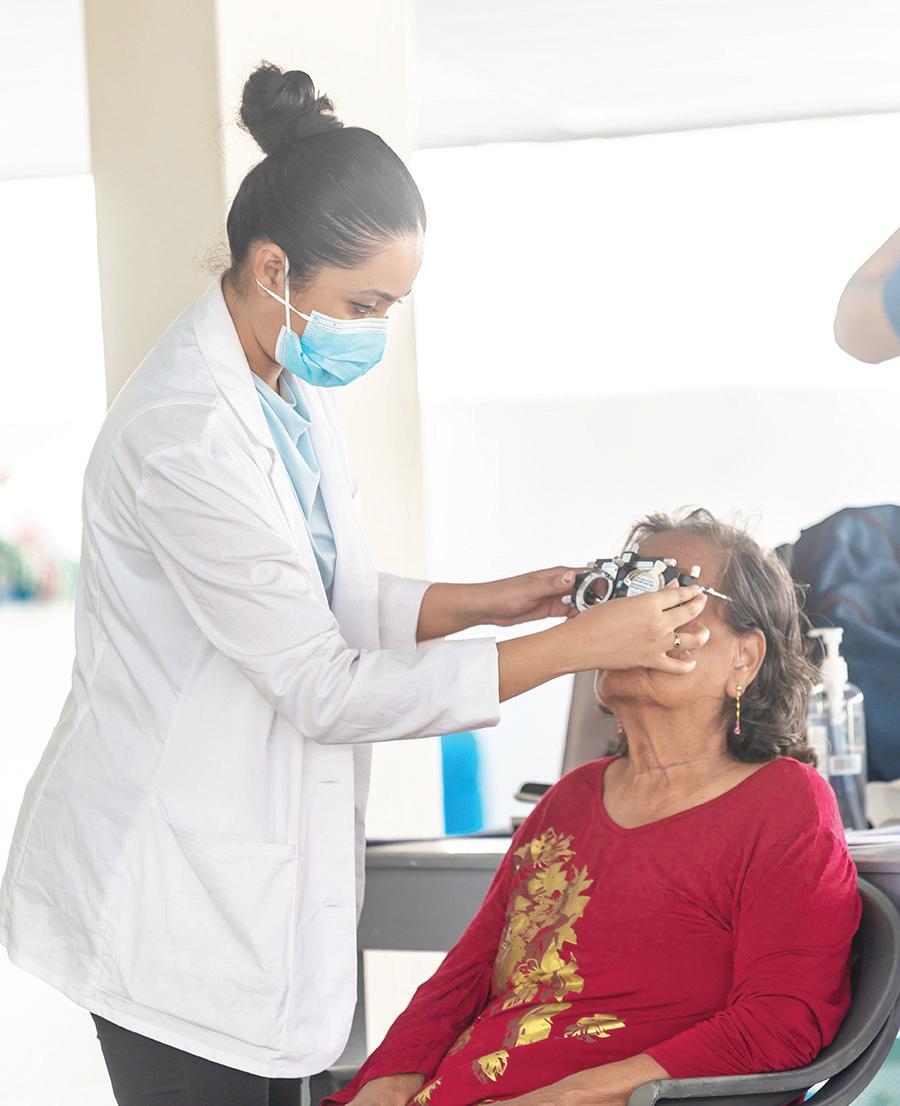
Eye testing done during
medical outreach
Dr. Kamel Bemaul-Sukhu
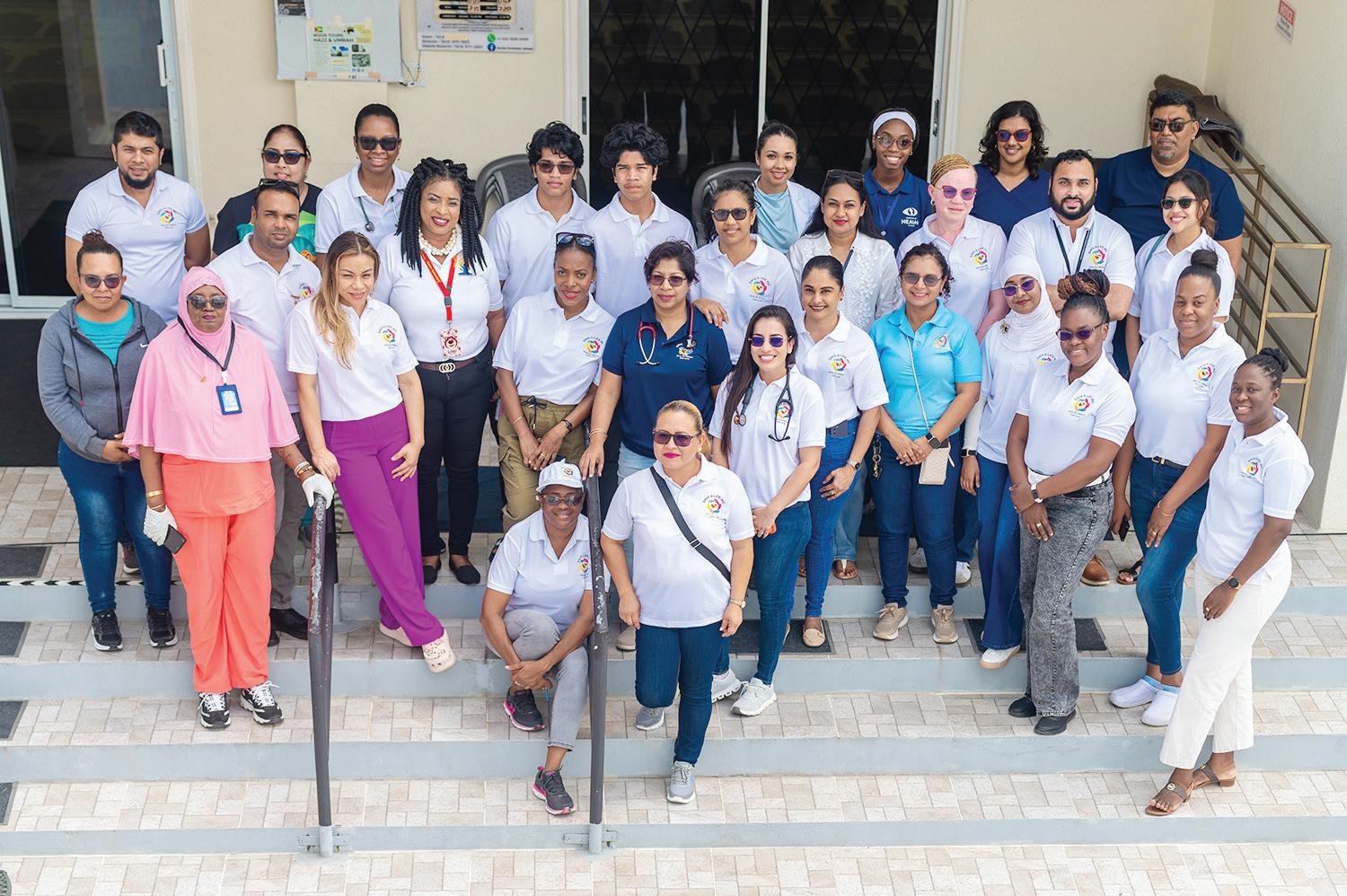
The group of medical professionals who participated in the medical outreach on Sunday (Delano Williams photos)
Minister of Home Affairs, Oneidge Walrond
Holder, Hope seal WI's Super Eights spot; Nepal knocked out
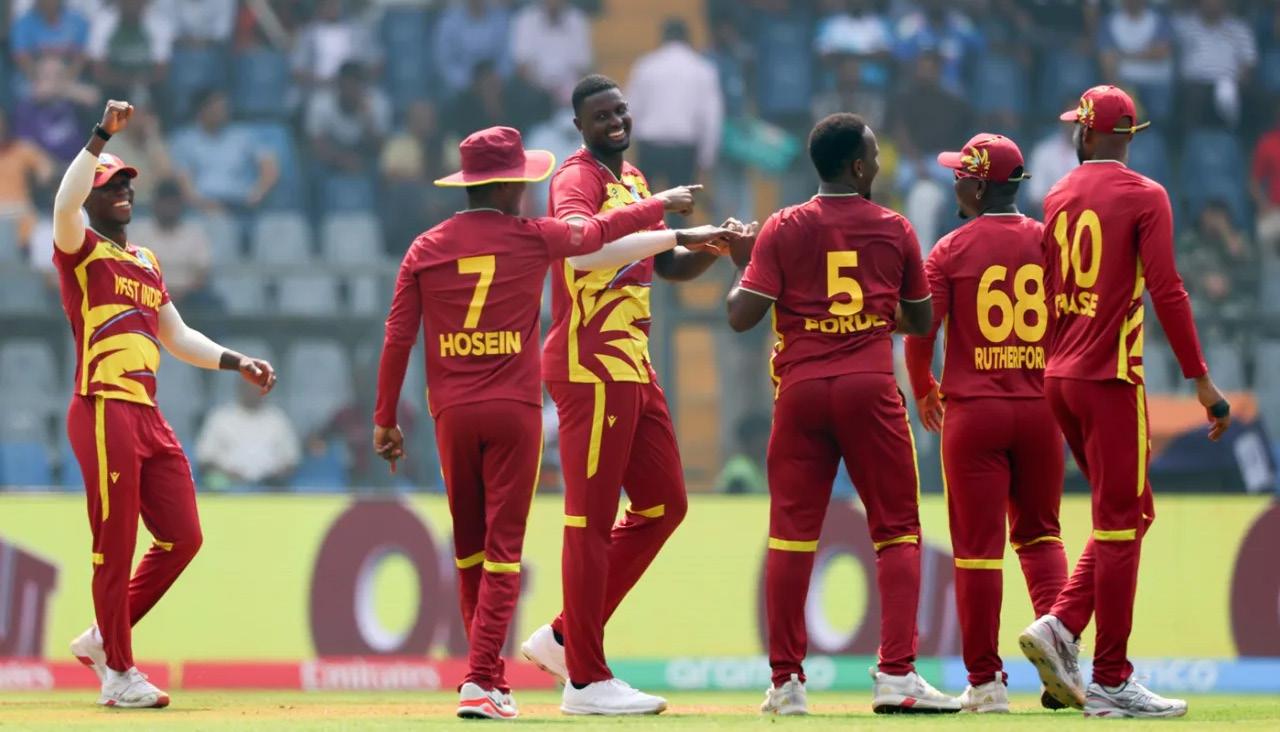
A DOMINANT bowling display in the powerplay, backed up by a solid batting display helped a clinical West Indies ease to their third win of the tournament, confirming their spot in the Super Eights.
From the first over of the game until the last, West Indies were in complete control as they eased to a nine-wicket win, ending Nepal's dreams of progressing in the process.
Matthew Forde shone with the new ball, while Jason Holder took four wickets. Dipendra Singh Airee was a bright spot for Nepal with a gritty half-century to
take them to 133 for 8, but it wasn't enough against a power-packed West Indies lineup.
West Indies captain Shai
Hope found his feet with a fluent half-century while Shimron Hetmyer continued his destructive form as West Indies raced to their target in the 16th over.
West Indies dominate the powerplay
Hope wanted West Indies to make the most of a pitch he said was damper than they had expected, and his bowlers did just that. Akeal Hosein dealt the first blow, beating Kushal Bhurtel's defence with an arm ball in the first
over, improving an already impressive match-up. Hosein has now dismissed Bhurtel four times in the four T20I innings they have faced each other and has conceded just 18 runs off as many balls.
Then it was Forde's turn to get in on the action. The allrounder, playing because Romario Shepherd was left out as a precaution due to a slight niggle, got the ball to swing and seam around, and Nepal's batters had no answers.
In his second over, he trapped Nepal’s captain, Rohit Paudel, lbw with an inswinger, and then barely
allowed Airee to get a touch on the ball as he completed a wicket maiden.
Jason Holder then struck with his first ball of the match as Nepal lost two wickets in seven balls without scoring. It was a slot ball that should have been put away, but Aasif Sheikh's flick went straight to Shimron Hetmyer at deep backward square.
Nepal survived the rest of the powerplay, but their 22 for 3 was the lowest score in the first six overs by any team in this World Cup.
Holder then removed the other Sheikh brother, with Aarif miscuing one to midwicket.
India steamroll Pakistan in lopsided contest
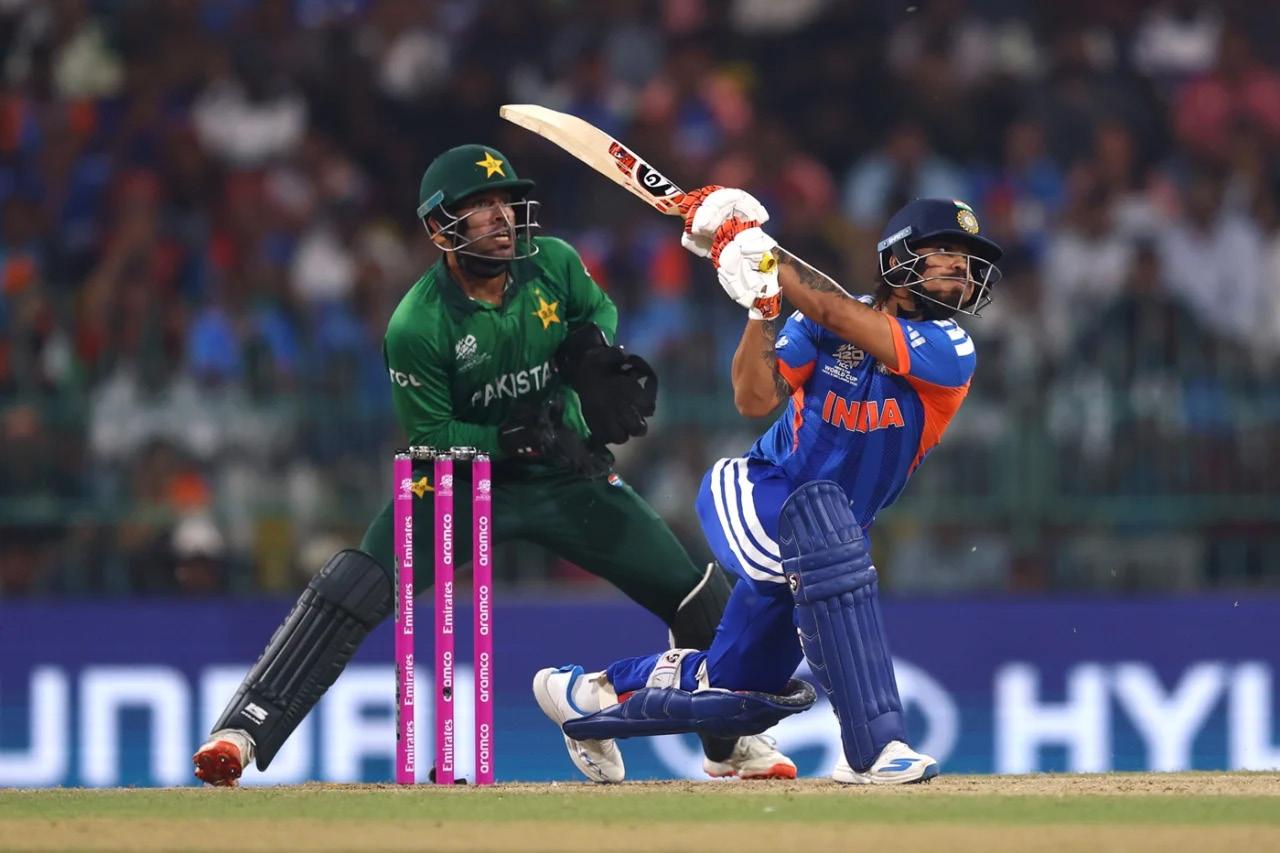
(ESPNCRICINFO) - A sensational 77 off 40 balls from Ishan Kishan on a slow, spin-friendly pitch helped India make it 8-1 against Pakistan in T20 World Cups and seal their place in the Super Eights. The surface at the R Premadasa Stadium was so tacky that Pakistan bowled 18 overs of spin after sticking India in, but Kishan rose above the conditions to take India to what looked like 30 above par. With three wickets in the first two overs, Hardik Pandya and Jasprit Bumrah vindicated that feeling as India registered their biggest T20I win against Pakistan.
The impact of Kishan's innings - after Salman Agha opened the bowling to get Abhishek Sharma for a duck - was clear from plain numbers. The rest of the India innings, including extras, managed just 98 off 80 balls, which was much closer to being representative of the conditions. As was Pakistan's innings, which went at over a run a ball only thanks to
Usman Khan's 44 off 34. Agha springs a surprise It is a no-brainer to bowl offspin against two left-hand openers on a slow surface, but the choice of the bowler was surprising: Agha, and not Saim Ayub. Even with the new ball, turn and lack of pace was obvious, resulting in one run off first five balls and a second duck in two innings for Abhishek in his World Cup career.
Kishan puts Pakistan to the sword
This is only the second month of the year, and nothing rode on this match in terms of progression in the tournament, but this is an early contender of the innings of the year just because of how much better Kishan was than the average better on this surface. Shaheen Shah Afridi had the right idea to bowl into the surface
even with the new ball, but the quick hands and low height of Kishan turned the first ball into a dismissive pull over forward square leg for a six. Then he hit Agha over mid-on against the turn.
A lot of focus has been around Usman Tariq, but Pakistan's main spinner for long has been Abrar Ahmed with his mix of offbreaks and carrom balls. Kishan didn't let him settle, sweeping him
Airee, Kami lift Nepal at the death
Between overs 8 and 15, Nepal went at a run-a-ball, losing two more wickets. Airee stayed steady at one end, and if Nepal were to reach a respectable total, he would be key to that effort.
Airee and Sompal Kamiwho came into the XI in place of Lalit Rajbanshi - picked up a boundary in the 17th over, and then Kami hit Holder for three consecutive boundaries through the off side.
Airee cut a short and wide delivery from Shamar Joseph for six to bring up his
first ball for six.
Despite the first over ending at 1 for 1, Kishan owned the powerplay, taking India to 52 for 1, which was absolutely essential before the field spread out. The easing of field restrictions didn't matter to Kishan, who steered the first ball after the powerplay for four. Then he hit Abrar right over his head. Then drove him over extra-cover. The second of these fours brought up his
half-century - only the second by a Nepal batter in a T20 World Cup - and finished an 18-run over with another six, this time slogging the West Indies quick over midwicket. However, he fell to Holder in the final over while trying to clear the ropes. Holder closed the innings out well, conceding just seven runs despite offering Nepal a free hit. He also dismissed Karan KC off the final ball to finish with figures of 4 for 27. It was a strong comeback after going wicketless and conceding 34 runs in two overs in the win over England.
fifty in just 27 balls. Curiously, despite having an offspinner and two mystery spinners who can turn the ball away from the left-hander, Pakistan went to Shadab Khan's legspin against two left-hand batters in the eighth over, and paid with 17 runs. By the time Ayub dismissed Kishan, one ball after a reverse-pull for four, he had scored 77 out of 88 in 8.4 overs.
GDF and Police take emphatic wins as Elite League Cup kicks off at NTC
THE Guyana Defence Force and Guyana Police Force delivered some stinging performances on Saturday when the Guyana Football Federation kicked off action in the inaugural Elite League Cup at the National Training Centre at Providence.
The opening contest saw the Guyana Defence Force beating Fruta Conquerors 5-nil.
Fruta Conquerors started strongly despite an early goal from GDF’s Abumchi Opara, 6 minutes after the opening whistle.
Fruta apart from the early set back, showed good defence to stop further damage in the first half as they held the former Elite League champions, GDF, to the 1-nil score line.
The second half proved an entirely different story as GDF found the way af -
ter the half to breakdown the Conqueror's defence to dominate the encounter.
McDonald and Ian
the men responsible, both recorded
doubles in the contest to ensure a 5-nil rout of Fruta Conquerors.
Dooker scored backto-back strikes with goals coming in the 57th and 61st minute with McDonald’s goals coming in the 48th and 71st minute.
After the opening clash, the GFF held its march past to signal the official opening of the Elite League Cup.
General Secretary of the GFF, Pushpargha Chattopadhya, said that the tournament will grow the eco-system of the sports and it forms part of the broader goal to expand their domestic competition calendar and bring their tournament in line with global football.
After the brief ceremo -
DCB U19 Inter-Association Cricket starts on Feb 18
By Sean Devers
WEST Indies U-19 World Cup player Shamar Apple is among those expected to contribute outstanding performances when the Demerara Cricket Board 50-over U-19 Inter-Association Cricket Tournament commences on Wednesday, February 18.
Five Association Teams: West Demerara, East Coast, Georgetown, East Bank and Upper Demerara, will battle for the top spot in a tour -
nament in which defending champions Georgetown, who play all their games at the Police ground, will start as favourites.
Apart from Apple, the city side boasts the likes of Captain Dave Mohabir, Emmanuel Lewis, pacer Shane Prince, and Lomar Seecharran, who scored a century and a 50 in the recent DCB Inter-Association 50over U16 tournament.
West Demerara will have as its captain the talented Pameshwar Ram,
while Arun Gainda will be in charge of the East Coast unit.
East Bank’s skipper is Joshua Budhram, with Upper Demerara’s captain Russell Anderson spearheading his team’s hunt for their first title.
In the opening round on Wednesday, February 18, Georgetown faces East Bank at the Police Ground, Eve Leary, and West Demerara will battle East Coast at Meten-Meer-Zorg.
On February 20, East
Bank will oppose East Coast at Police, and West Demerara will face Upper Demerara at MMZ
In the third round on Feb 22, GT will match skills with East Coast at Police, while Upper Demerara will come up against East Bank at LBI.
On Feb 26, GT face U/ Demerara at Police, and West Demerara will battle East Bank at MMZ.
In the fifth and final round, West Demerara clash with GT at Police, while East Coast will collide with U/ Demerara at LBI.
The team with the most points will be declared the
CRICKET
winner.
With CWI removing the U-15 and U-17 from its regional calendar, this is the first step in naming Demerara’s U-19 team to participate in the GCB’s U-19 Inter-County 50-over tournament.
ny the Guyana Police Force FC took on Den Amstel in the evening's second clash. It was another one-sided affair as GPF Football club achieved a 9-nil lead over Den Amstel by the half prompting Den Amstel to not return for the second half handing Police the victory.
The competition sees the winner collecting a million dollars with $700,000 for second place, and half a million for third place.
The elite league cup continues on Wednesday with another double header Santos FC will come up against Den Amstel FC and elite league champions, Slingerz FC, are set to tackle Ann’s Grove United FC at the national training centre.
Upper Demerara: Russel Anderson (Captain), Errol Alder, Triston Peters, Elizah Bowen, Rusco Anderson, Jaushawn Clark, Tyrick Henry, Andy Ramgoolam, Alex Ragubeer, Shahid Ramzan, Nicholas Simon, Antonio Chan, Divin Persaud, Randy Chung, Nathan Bishop, Makai Dowlin, Aadesh Mahase.
Stephen
Dooker were
GDF’s goal scorers - Stephen McDonald, Abumchi Opara and Ian Dooker
UG slaughter GITC
GFA senior men’s league
North stars FC grabs win over Vengy
NORTH Stars FC, on Saturday evening, edged Vengy 2-nil at the Plaisance ground, as action continued in the Georgetown Football Association Senior Men’s League.
After a sedate first half, second half goals from Joslon Deen and Shaquon Deen guided North Stars to victory.
Joslon Deen scored in the 55th minute to record the first goal of the encounter before Shaquon Deen scored in injury time to double the team as they finished 2-nil winners.
In the other game of the evening Motherland and Campton FC played to a 3-3 draw.
Anthonie Williams scored the opener in the 18th minute for Campton FC with motherland FC’s Carlos Agard finding the equaliser minutes later.
Campton’s Deon Alfred and Shane Jones scored thereafter to make it 3-1 in Campton’s favour.
North Stars’ goal scorers Joslon Deen and Shaquon Deen
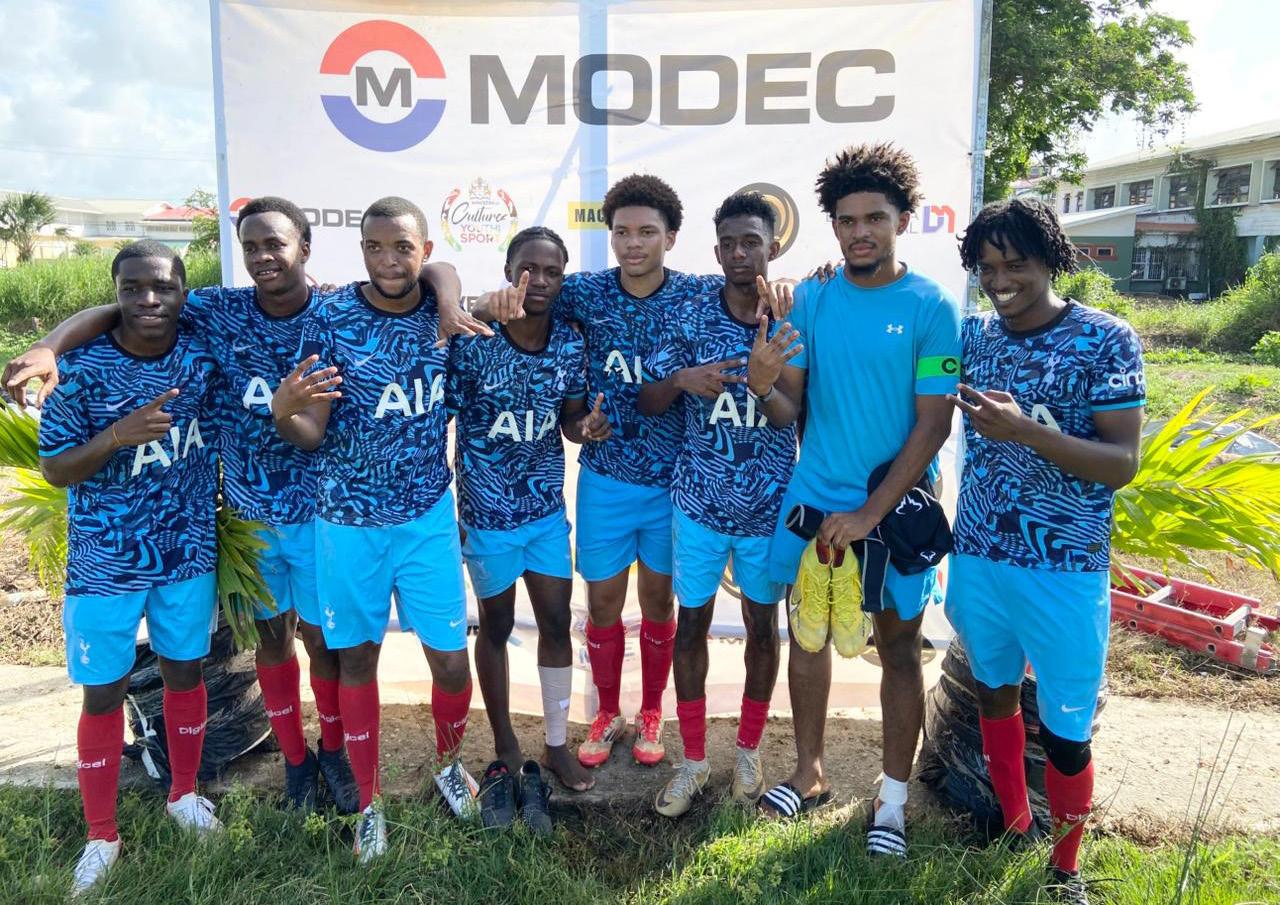
THE University of Guyana on Sunday thrashed the Guyana Industrial Training Centre 18-nil on Sunday when action continued in the MODEC Tertiary Football Competition at the Queen’s College ground.
It was the biggest win of the inaugural competition as they mesmerised GITC with Sherwin Sobers scoring six goals, followed by Ronaldo Sobers with a helmet trick.
Keron Spencer and Romeo Bradford also grabbed a pair of goals each.
Josiah King, Jaleei Alcindor, Deandre Anderson and Montell Mc Almont also scored.
The other game at the QC ground saw the Government Technical Institute defeating Texila American University 5-1.
Domaris Webbs, Kevin David, David Augusta, Alron Fraser and Keron Seymour were the goal scorers.
Meanwhile, Essequibo, Mahaicony, and Linden
Technical Institutes controlled play with impressive wins on Saturday. On Saturday over in Region Three at the Leonora Track and Field Facility, Leonora, the Technical and Vocational Training Centre went down to the Essequibo Technical Institute 5-1.
Essequibo was led by Jim Carter with a brace, with the other goals coming off the cleats of Deangelo Davidson and Momes Henry.
Over at the Buxton Community Centre Ground, the Guyana School of Agriculture was pummelled by the Mahaicony Technical Institute 8-2.
The Linden Technical Institute then grabbed a 4-2 win over the Cyril Potter College of Education.
Kymani Sealey led the charge for Linden Technical Institute with a hat-trick of goals.
However, it was CPCE that was put under pressure after the start of the game with CPCE’s Theodore Al-
exander and Dean Domingo scoring in the third and 35th minutes to give them the edge.
Sealey then came to the fore in the 40th minute with his first goal, followed by goals in the 51st and 61st minutes to record a triple to overtake CPCE
Dexter Milo then capped off the win in the 73rd minute with his goal for the 4-2 finish.
The matches are being hosted in different regions where the tertiary schools are located with teams playing on a home-and-away, round-robin basis, with the top seven and the next best team making up the quarter final.
The top teams will be awarded $300,000, 200,000, 200,000,100,000 and 50,000 for places 1-4, with proceeds going to a school project of their choice.
The tournament will conclude on March 8 at the Ministry of Education Ground.
Motherland FC’s Lonsdale George scored in injury time of the first half as they
and share of the spoils.
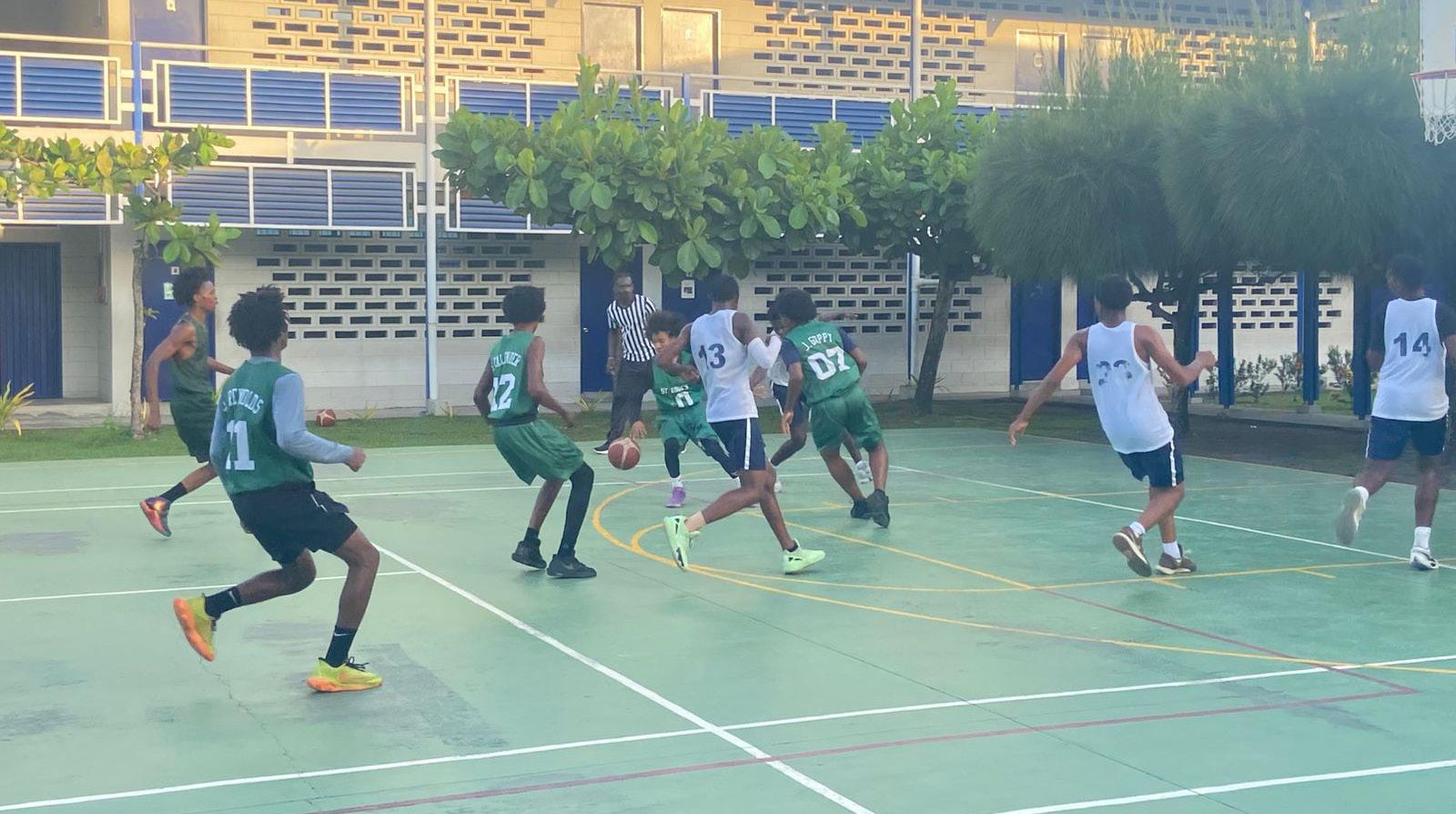
St Rose’s blows out Marian Academy in Schools Basketball League
St Rose’s and Marian Academy battling in Schools Basketball League
ON Friday, when Marian Academy hosted St Rose’s High at their school’s compound, it was the home side that left the court bruised after a 69-points thrashing at the hands of the visitors.
It was demolition exercise as Marian Academy was outplayed from start to finish.
In the first quarter they were outplayed 19-2, with the same trend continuing in the 2nd to 4th quarters 13-7, 30-5 and 28-7 to end 90-21 in favour of St Rose’s.
In the day’s second clash,
St Stanislaus College defeated President’s college 49-48 at Burnham hard court.
Saints started slowly as they were behind after the opening period 12-5 and fell behind at the half 23-15 to PC.
However, the last two quarters proved a different story as Saints bounced back to lead the third quarter 15-12 before outscoring PC 19-13 in the final quarter to tip the scales and take a 1-point win 49-48.
Saints’ Daniel Chisholm
starred with 20 points, 14 from Demitri Crandon and 12 from Ralson Pollard.
Despite the loss, PC maintains their top of the table position with 4 wins and a loss in five outings, second place is Saints with 2 losses and 3 wins in five matches and Queen’s College third with 1 loss and 3 wins in four clashes.
The league continues Wednesday with Saints visiting President’s College for the return leg match-up at PC compound.