


—President calls on religious organisations to help preserve the country’s values as rapid economic transformation continues
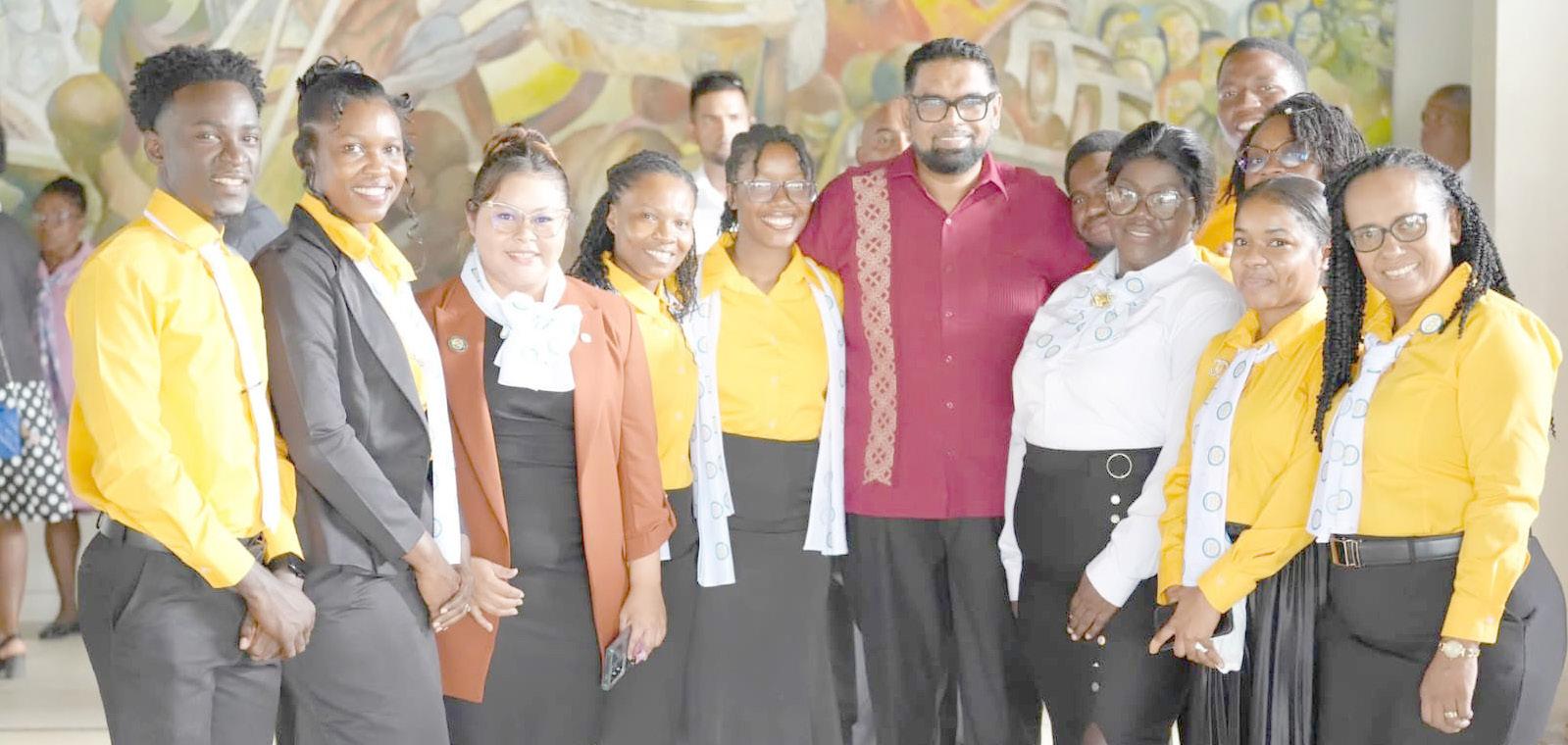
President Dr. Irfaan Ali attended the centennial celebration of the Caribbean Union Conference of the Seventh-Day Adventist Church at the National Cultural Centre on Saturday, where, during an address, he urged churches and faithbased organisations to play a greater role in strengthening families, promoting values, and helping to shape Guyana’s future amid rapid economic and social transformation [Caribbean Union Conference Photo]



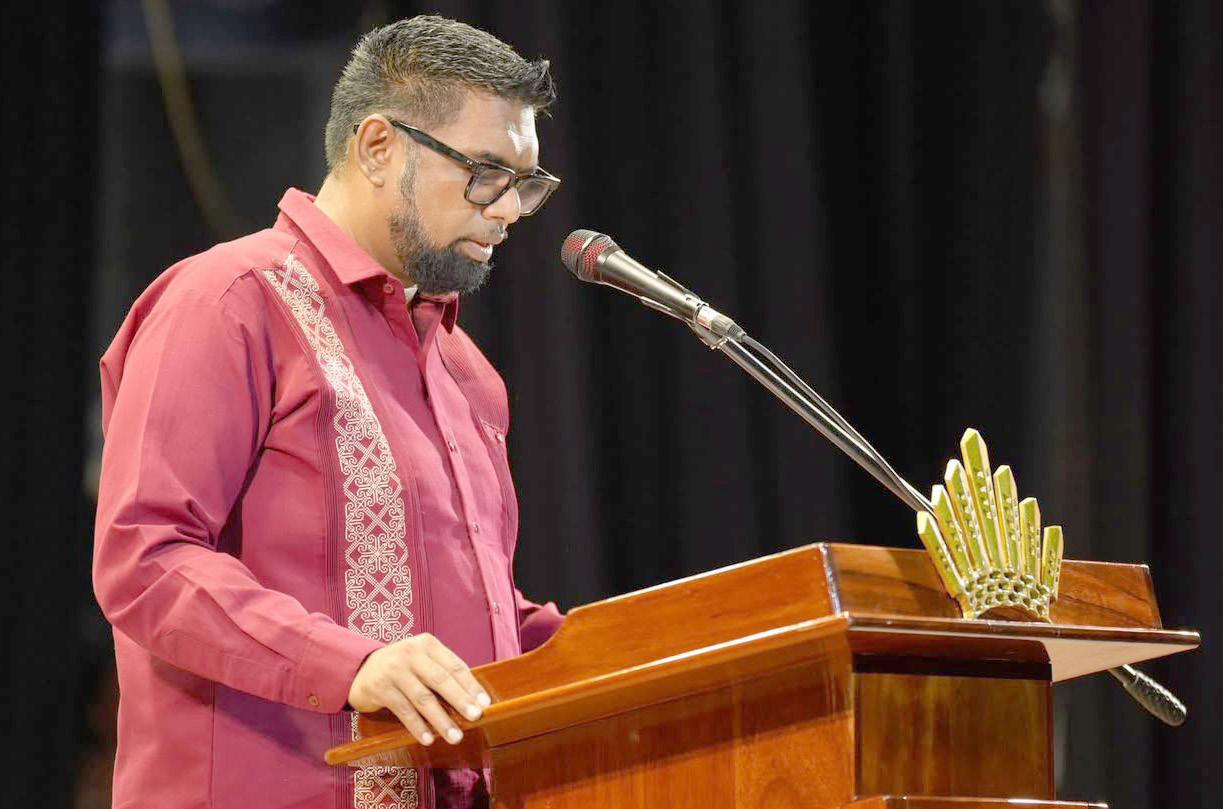
The Head of State made the appeal on Saturday while delivering congratulatory remarks at the centennial celebration of the Caribbean Union Conference of the Seventh-Day Adventist Church at the National Cultural Centre (NCC) on Homestretch Avenue, Georgetown
PRESIDENT Dr. Irfaan Ali has called on churches to take a more active role in shaping Guyana’s future, warning that the country’s unprecedented economic transformation must be matched by a commitment to strong values, ethical leadership, and social responsibility.
The Head of State made the appeal on Saturday while delivering congratulatory remarks at the centennial celebration of the Caribbean Union Conference of the Seventh-Day Adventist Church at the National Cultural Centre (NCC) on Homestretch Avenue, Georgetown.
Addressing church leaders, members and invited guests, President Ali said Guyana is entering a new chapter of development marked by expanding industries, growing investment, major infrastructure projects and increasing employment opportunities. However, he cautioned that the country’s success cannot be measured solely by economic indicators.
Instead, he argued that Guyana must remain focused on preserving its moral foundation and strengthening the values that bind its people together.
“We have a soul that we must protect as a nation; we must have a value system that we protect as a nation. We must have principles that we will protect as a nation,” the President said.
He noted that while the country continues to benefit from unprecedented econom-
ic opportunities, particularly as a result of rapid development across multiple sectors, there is a need for a national conversation about identity, values and social cohesion.
“I’ve started asking our people to dig deep for us to find the soul of our nation; the soul of a nation that will tell the story of our values, that will tell the story of our principles, that, regardless of what development and what wealth come before us, we have a soul that we must protect as a nation,” he said.
According to President Ali, faith, unity, love and God’s guidance must remain central pillars of national development.
“I would say, without a shadow of a doubt, that the soul of this nation rests in faith, love, unity and the will of God,” he said.
The President warned that history provides numerous examples of countries that achieved significant economic success but failed to maintain social cohesion, national unity, and strong moral values.
“History teaches us that economic transformation alone does not guarantee national success. Throughout the world, there are examples of countries that became wealthier but not necessarily stronger. They became richer but not necessarily happier. They became more prosperous but not necessarily more united,” he said.
According to President

Ali, periods of rapid economic growth often bring challenges, including increased materialism and a tendency to define success solely through wealth and possessions.
“The pursuit of wealth can become disconnected from the pursuit of goodness and righteousness,” he said, referencing the biblical passage in Mark 8:36: “For what shall it profit a man if he shall gain the whole world and lose his own soul.”
As Guyana continues its transformation, the President said churches have a responsibility to help ensure that the country’s development remains grounded in values that promote integrity, compassion and responsibility.
“This is why institutions such as the church become even more important during times of national transformation, The church serves as society’s moral compass. It reminds us that true development is always about character. It is about integrity. It is about compassion. It is about justice. It is about responsibility to one another,” he said.
He added that national transformation can only be considered complete if it strengthens not only the economy but also the moral foundations upon which society is built.
FIVE AREAS FOR CHURCH INVOLVEMENT
President Ali outlined what he described as several key areas in which churches can continue mak-

ing meaningful contributions to Guyana’s development.
The first, he said, is value-based education and youth development.
While schools provide academic knowledge and technical skills, the President argued that values such as honesty, discipline, humility, respect and responsibility must also be actively taught and reinforced.
“The future of any nation rests in the hands of its young people. The church can continue to instill honesty, discipline, respect, humility and responsibility in our youth,” he urged.
President Ali also used the opportunity to express concern about troubling social behaviours among some young people, particularly the increasing normalisation of violence through social media.
“If children understand that if they stand in a circle and watch their colleagues fight, and all they do is laugh and clap along and video that fight and then upload it on social media as if it’s a
form of normalcy, something is seriously wrong, from the home, from the community and from the minds of these children,” he said.
The President said the issue extends beyond schools, and requires intervention from families, communities, religious institutions and policymakers.
He argued that churches should become more involved in helping young people navigate the challenges posed by social media, Internet exposure, and changing societal norms.
“The Church has to become more involved in our school system and in our healthcare system,” he said.
The President’s second recommendation centred on strengthening families, which he described as the foundation of strong communities and successful nations.
“Strong nations are built upon strong families. Economic growth can sometimes place pressure on family life. Longer working hours, changing lifestyles, and social challenges can weaken family bonds,” he said.
According to President Ali, churches have a unique role in supporting marriages, promoting responsible parenting, and helping families navigate modern challenges.
“The Church has a unique role in supporting marriages, strengthening parenting, and nurturing healthy family relationships,” he said. He added that there must be greater collaboration between government and religious organisations to build stronger families and communities.
“There must be a partnership between government and the church in building stronger families, strengthening stronger fam-
He acknowledged that economic growth and changing lifestyles can place pressure on family relationships, making it even more important to create environments that support healthy family life.
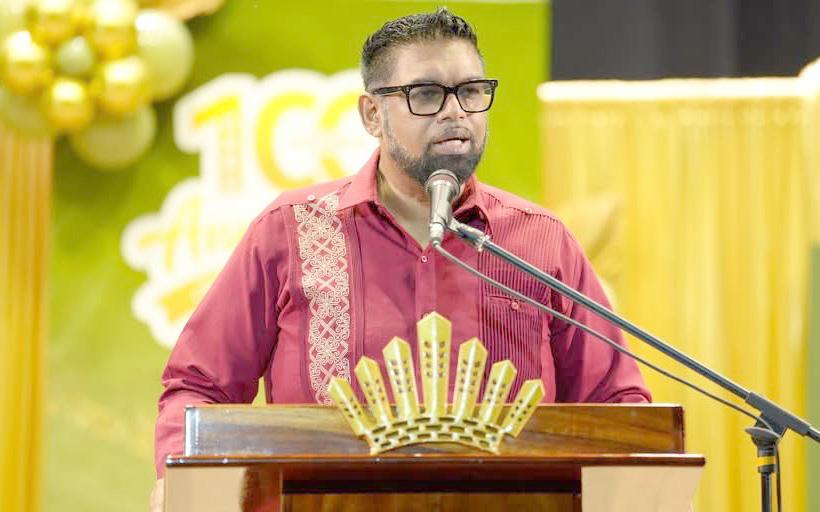
President Ali delivering congratulatory remarks at the centennial celebration of the Caribbean Union Conference of the Seventh-Day Adventist Church at the National Cultural Centre
PRESIDENT Dr. Irfaan Ali on Saturday floated the idea of introducing a weekly Family Day initiative that would see a major street in Georgetown closed to vehicular traffic, creating a dedicated space for families to gather, exercise, socialise and spend quality time together.
The proposal was announced as the President delivered congratulatory remarks at the centennial celebration of the Caribbean Union Conference of the Seventh-Day Adventist Church at the National Cultural Centre.
Looking ahead to Guyana’s continued develop -
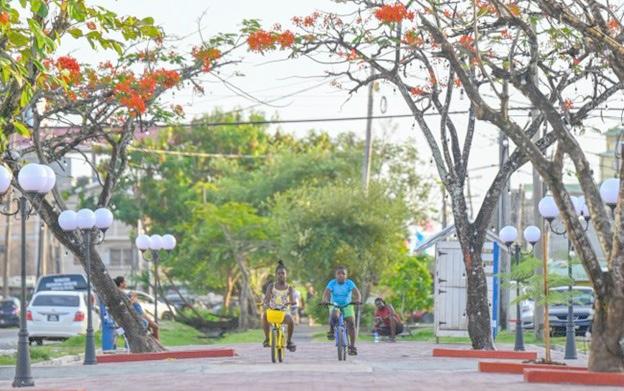
ment, President Ali said the country must focus not only on economic progress but also on strengthening family bonds and preserving the nation’s values.
“As we continue to develop the streets of Georgetown in the coming weeks, I want to launch a programme, and I look forward
ilies,” he said.
The President also highlighted the importance of ethical leadership, noting that churches have historically played a critical role in encouraging integrity and accountability in public life.
“As opportunities expand, the Church can continue to be a powerful voice in public service, public life and community leadership. The church has a role in supporting strong national leadership. The church has a role in working with strong national leadership,” he said, adding that faithbased organisations should remain active participants in national conversations and decision-making processes.
“The Church’s role in public life is extremely important; the Church’s role in national life and national development and national leadership is critical,” he said.
As such, the President encouraged churches to be proactive in ensuring that their values remain intertwined with national development efforts.
Beyond leadership, the President pointed to the
Church’s long-standing tradition of community service, including health programmes, disaster response initiatives, counselling services and support for vulnerable populations.
“The Church has long demonstrated that faith must be accompanied by action,” he said.
Whether through health programmes, outreach initiatives or humanitarian support, Ali said churches continue to play a vital role in building caring and compassionate communities.
“A prosperous society must also be a caring society,” he said.
The President’s final recommendation focused on national unity and social resilience.
He noted that rapid change often creates uncertainty and divisions within societies, and argued that churches can help foster hope, peace and reconciliation.
“The Church can help us to build hope, resilience and unity by reminding us of the values that bind us together as a people. In a world often characterised by division, the Church can continue to proclaim the timeless message of love, peace, and reconciliation,” he said.
From page 3
President Ali’s call for deeper church involvement comes as the Government continues to promote its One Guyana agenda, which seeks to strengthen national unity and social cohesion while ensuring that the benefits of development reach all citizens.
He said the partnership among government, communities and faith-based organisations will be crucial as Guyana continues its journey of transformation.
“As Guyana advances economically and socially, we look forward to continuing partnerships with institutions such as the Seventh-Day Adventist Church that help shape not only successful citizens but also good citizens, not only productive workers but also compassionate neighbours, and not only prosperous communities but also righteous communities,” the President said.
The President’s remarks formed part of celebrations marking the 100th anniversary of the Caribbean Union Conference of the Seventh-Day Adventist Church, which he described as a milestone reflecting a century of faith, service, education, health outreach, and community development across the Caribbean region.
to the support of the Seventh-Day Adventist movement, when on Sundays we can close off Main Street, or one of the large streets in Georgetown,” the President said.
“Every Sunday, close it off for families to come out and unite, play together, share a meal together, children riding bicycles and doing things together as one big Guyanese family,” he added.
According to President Ali, initiatives of this nature are essential to fostering social cohesion and creating lasting memories for future generations.
“These are the things that will shape us; these are the things that would leave lasting moments in a nation’s life,” he said.
The proposal aligns closely with the Government’s broader ‘One Guyana’ agenda, which seeks to strengthen national unity by bringing together citizens from diverse ethnic, religious, and socio-economic backgrounds through shared experiences and opportunities.
Over the past several years, the administration has invested heavily in the de-
velopment and enhancement of public recreational spaces aimed at encouraging family interaction and community engagement.
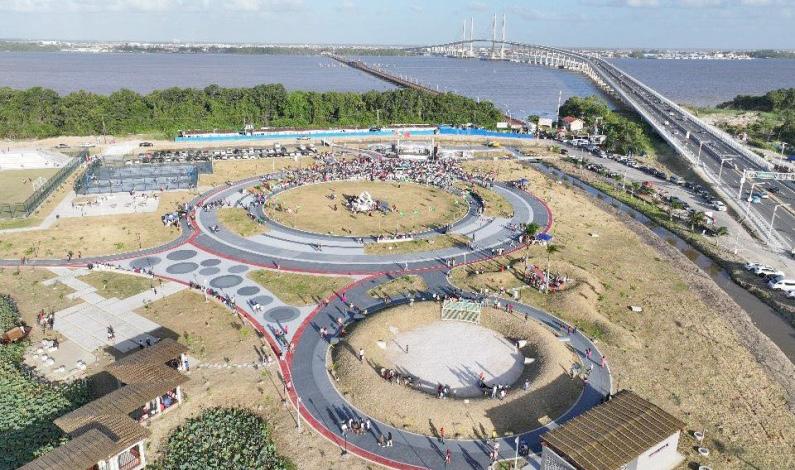
Through the National Beautification Project, spearheaded by First Lady Arya Ali, several parks and recreational facilities have been established or upgraded across the country.
These include the modern children’s play park at the National Park, the One Guyana Recreational Park in New Amsterdam, and improvements to the Guyana-China Joe Vieira Park.
Government has also partnered with various ministries and agencies to rehabilitate community grounds and recreational facilities nationwide, adding improved lighting, fencing, sanitation facilities, and sports amenities.
Many of these spaces now feature children’s playgrounds, basketball and football courts, modern washroom facilities, and complimentary public Wi-Fi.
The proposed Family Day initiative would further complement existing efforts, including the popular
One Guyana Kitchen events hosted along Main Street, which bring together citizens through food, culture, and entertainment.
During his address, President Ali stressed that while Guyana is experiencing unprecedented economic transformation, preserving family values and social connections remains critical to the country’s long-term success.
He argued that strong families create strong communities, which, in turn, help build stronger nations.
“There must be a partnership between government and the church in building stronger families, strengthening stronger families, and that is why we have to create the environment, the ecosystem that will support family development, family time, and building stronger families,” the President said.
While no timeline was announced for the implementation of the proposed weekly Family Day programme, the President indicated that discussions on the initiative are expected to continue as part of broader efforts to strengthen social unity and family life across Guyana.
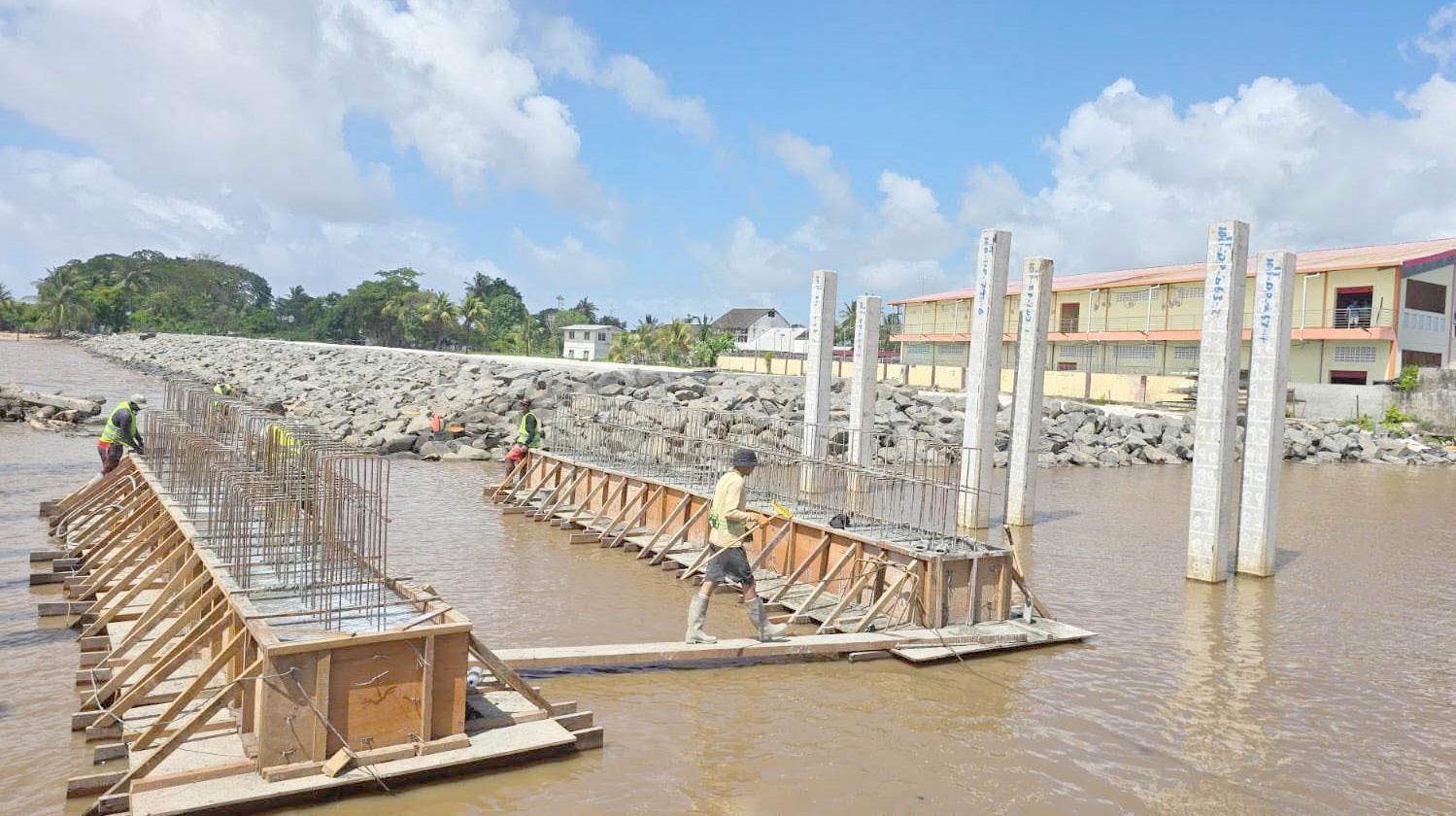
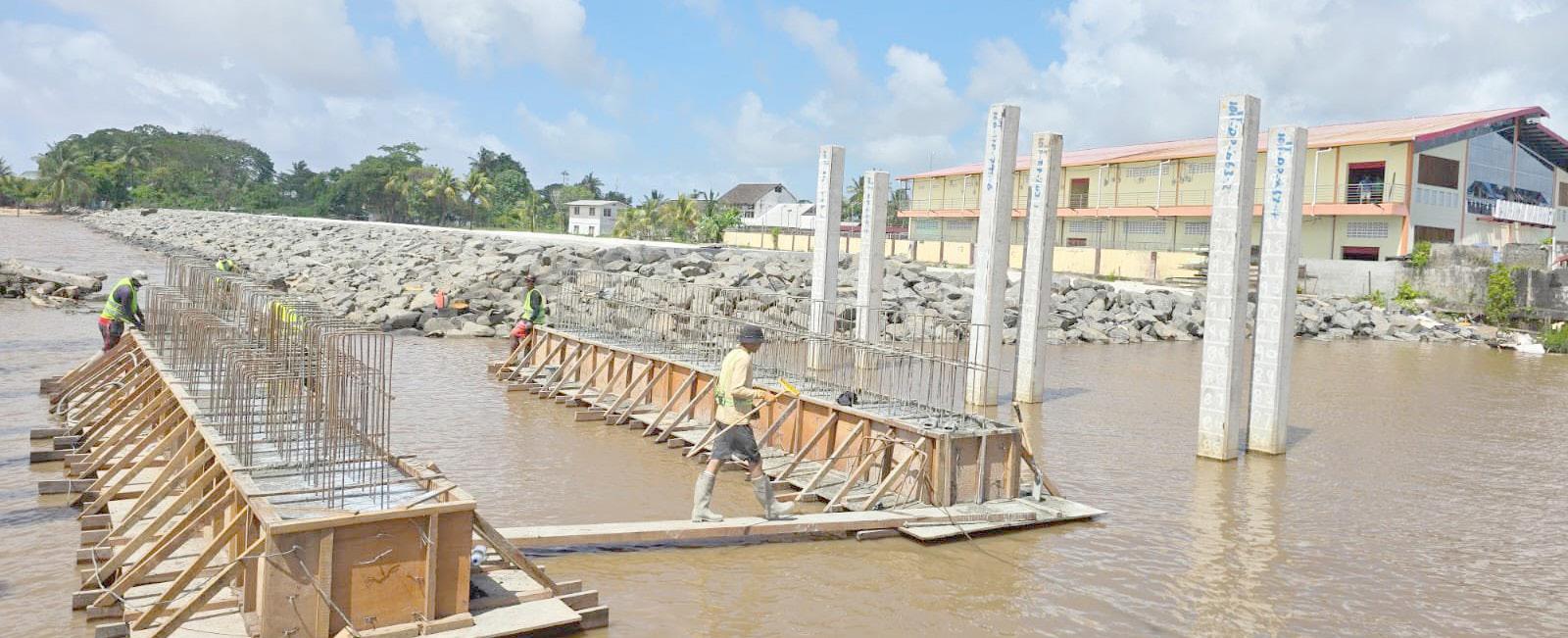
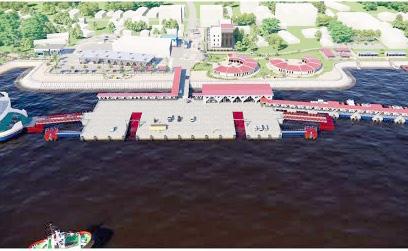
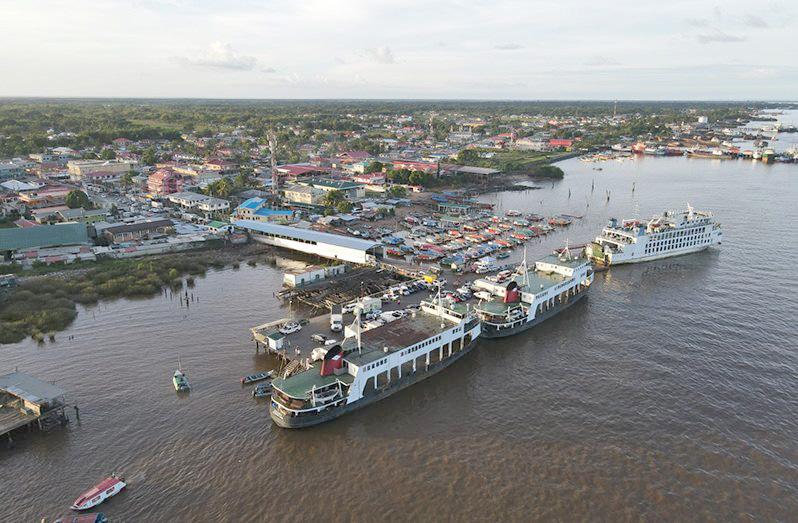
THE first concrete has been poured for the multi-billion-dollar Parika Modern Port Facility and Waterfront Development project, signalling the start of construction on a major initiative that is expected to transform the Essequibo gateway into a hub for regional trade, tourism and transportation.
President Dr. Irfaan Ali announced the milestone on Saturday, sharing photographs of the works.
The project forms part of a wider vision to modernise the Parika waterfront, and create an international-standard port facility capable of supporting cargo operations, cruise tourism, and luxury marine travel.
Earlier this year, Minister of Public Works Bishop Juan Edghill said the development would unlock significant economic opportunities while positioning Parika as a key centre for regional trade and waterfront activities.
The upgraded terminal is expected to facilitate exports to Caribbean Community (CARICOM) member states, creating direct access to new markets for local farmers and producers.
“It is from the Parika Terminal that we want to be able to engage the CARICOM trade of taking our produce to CARICOM nations, which means opening up markets for our farmers,” Edghill had said.
The facility will also support marine tourism through the establishment of a dedicated marina and services for visiting yachts and recreational vessels.
According to the minister, the modern port complex will house key government agencies, including Customs, Immigration, the Customs Anti-Narcotic Unit (CANU), the Guyana Police Force, and the Transport and Harbours Department.
The Ministry of Agriculture and the Fisheries Department are also expected to play a role in the development, with plans for agro-processing facilities that will allow produce to be inspected, processed, packaged and shipped directly from Parika. The project will include cold storage and other supporting infrastructure.
Beyond trade and transportation, the waterfront redevelopment is intended to create a vibrant tourism and entertainment district.
“That whole Parika front is part of the development plan, which will allow us to build out the necessary night entertainment just as you would see in other parts of the world,” Edghill said.
The project will also serve as a launch point for tourists seeking to explore Guyana’s rivers and interior destinations, with plans for restaurants, improved sanitary facilities and expanded mooring space for vessels.
As part of the broader
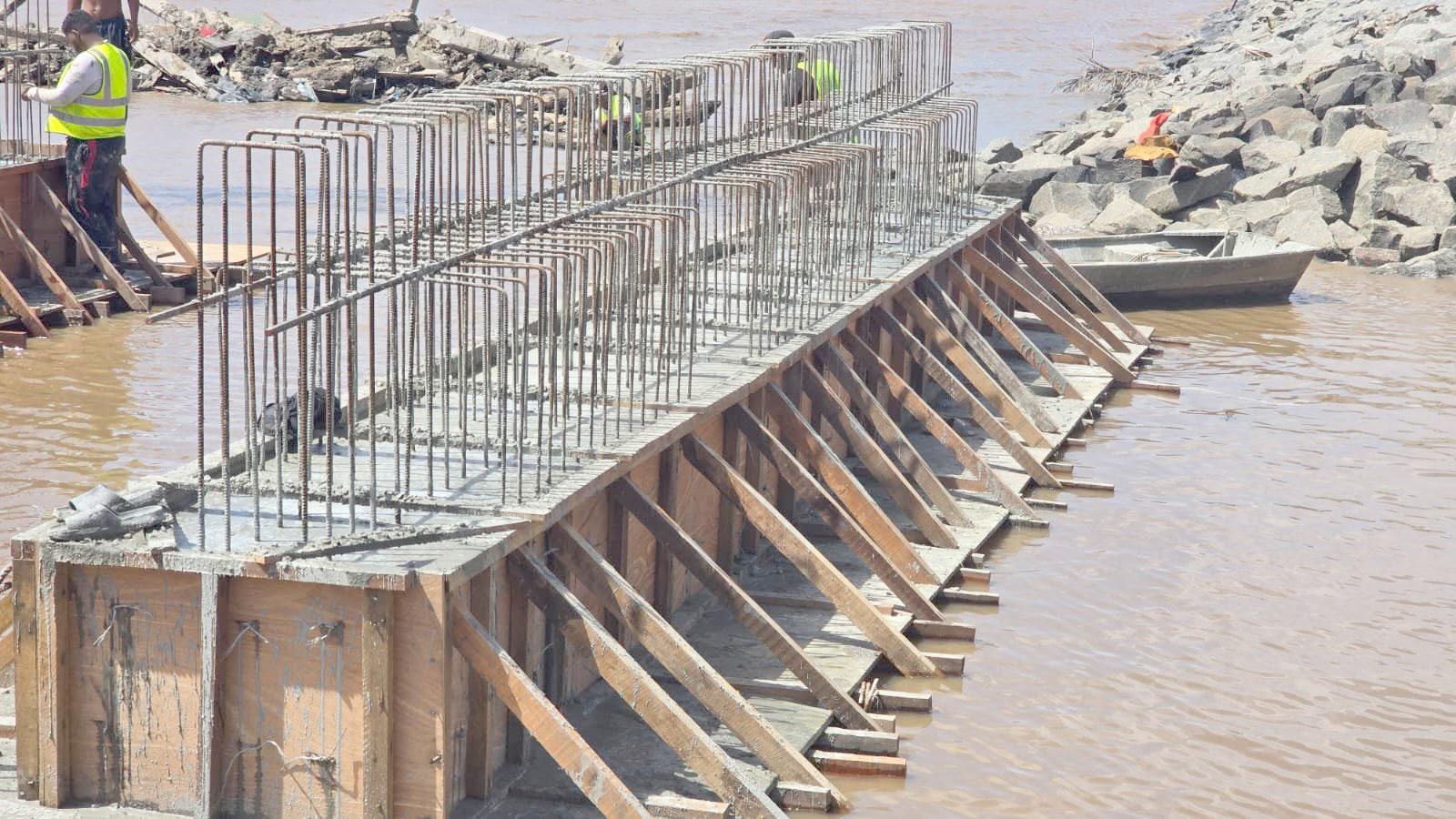
development strategy is the Schoonord-to-Parika Highway, which has improved connectivity, eased traffic congestion and opened additional lands for housing and commercial development.
Prior to the approval of the mega port project design, consultations were held with a range of stakeholders, including farmers, boat operators, taxi and minibus operators, businesses and residents.
Several changes were implemented as construction progresses, including the relocation of speedboats currently occupying sections of the wharf slated for redevelopment. The existing wooden facility used by the MV Sabanto, Kanawan and other vessels will remain operational during construction.
Additionally, a dilapidated building at the stelling will be demolished and replaced with a modern terminal featuring waiting areas and office space for the agencies operating at the facility.
The Central Housing and Planning Authority (CH&PA) had already engaged residents living along sections of the sea dam that fall within the project’s alignment regarding relocation arrangements.
In a later phase, the development will include a marina for yachts arriving from the Caribbean and other destinations, while the entire waterfront area
entertainment
The Parika Modern
Port Facility and Waterfront Development is among several major infrastructure initiatives like the Goed Fortuin Waterfront Project be -
ing pursued by the government to expand economic opportunities and strengthen Guyana’s transport, tourism and trade sectors.

AMID the cranes, concrete, highways, housing schemes and record-breaking economic growth, President Dr. Irfaan Ali has consistently returned to a single message wherever he goes.
Whether addressing churches, mosques, temples, community groups or national forums, the President has repeatedly argued that Guyana’s development cannot be measured only in dollars and cents. He has consistently maintained that as the country grows economically, equal attention must be paid to strengthening families, communities, values, and the institutions that shape national character.
His remarks at the centennial celebration of the Caribbean Union Conference of the Seventh-Day Adventist Church were, therefore, not new. They were part of a message he has been carrying for years.
The difference today is that the message may be more relevant than ever.
Guyana is experiencing a period unlike any in its history. Economic opportunities are expanding. New industries are emerging. Entire communities are being transformed through infrastructure development. The country is attracting global attention and investment at levels unimaginable only a decade ago.
Yet, alongside this progress are troubling
realities that cannot be ignored.
Across the world, societies are grappling with increasing social fragmentation, declining family structures, violence among young people, substance abuse, mental health challenges, and a growing sense of isolation despite unprecedented connectivity.
Guyana is not immune.
We see it in the videos of children fighting while their peers record and upload the footage for entertainment. We see heinous acts of violence that shock communities.
We see it in the rise of bullying, crime, anti-social behaviour, and the erosion of basic respect and civility that once formed the bedrock of community life.
Recent tragedies, including the murder of the seven-year-old boy, have forced the nation to confront difficult questions about violence, trauma, family breakdown, and the social conditions that sometimes allow such incidents to occur.
These challenges cannot be solved by legislation alone; they cannot be solved by policing alone. They cannot be solved by government alone.
This is precisely why the President continues to call for greater involvement from faith-based organisations, and community institutions.
Long before there were ministries, agencies and social programmes, churches,
temples and mosques served as the centres of community life. They were places where people sought guidance, comfort, counselling and support. They were institutions that helped shape values, reinforce responsibility, and strengthen social bonds.
Even today, when families face crisis, loss, uncertainty or hardship, many still turn first to their faith communities.
That reality should not be underestimated.
The President’s call is, therefore, not about religion entering politics or government shifting responsibility. It is about recognising that some of society’s deepest challenges require society’s strongest institutions working together.
The concept is simple: Communities must know what is happening within communities. Neighbours must look out for neighbours. Families must support families. Churches, temples and mosques must remain actively engaged in the lives of the people they serve.
When a child begins to struggle, when a family is facing hardship, when a young person appears lost, intervention should not begin only after a crisis occurs. The strongest communities are those that identify problems early and respond collectively.
This is why President Ali has repeatedly
spoken about building stronger partnerships among government, religious organisations, and civil society. The objective is not merely to address the consequences of social problems but to prevent them from taking root in the first place.
Guyana celebrated 60 years of Independence, and stands at an important crossroads. The nation is building world-class infrastructure. It is modernising healthcare, expanding education, and creating unprecedented economic opportunities. These achievements deserve recognition.
But there is another task that is equally important; it is the task of protecting the values that define who we are.
The soul of a nation is not found in its GDP figures, oil production levels, or investment statistics. It is found in how its people treat one another. It is found in strong families, caring communities, compassion for neighbours, and a shared sense of responsibility.
Economic transformation may build Guyana’s future, but it is faith, values, family and community that will ultimately determine what kind of nation that future becomes.
That is why protecting our soul may be one of the most important development goals of all.
Dear Editor,
PLEASE permit me a space in your letter column to share what took place last Friday during the Vice-President’s outreach in Region Five.
Firstly, I would like to thank the Vice-President, Dr. Bharrat Jagdeo, M.P., and his team for visiting Region Five, the largest agriculture-producing region in Guyana.
Residents, both young and old, turned out in large numbers to share their concerns and have them examined, addressed, and, where possible, resolved.
As an agricultural region, many farmers—including those involved in cash crops, rice cultivation, cattle rearing, and poultry production—had the opportunity to voice their concerns and frustrations
regarding issues affecting them within the Ministry of Agriculture and its regional departments.
All of the farmers in attendance had the opportunity to engage directly with Hon. Zulfikar Mustapha, M.P., and his team. They were able to raise their concerns, face-to-face, and I can confidently say that many of their matters were addressed immediately, leaving them satisfied and encouraged.
The day was well organised, and flowed smoothly as residents sought assistance from various ministries and agencies, as well as the opportunity to meet Vice-President Jagdeo.
Hon. Collin Croal, M.P., Hon. Vanessa Benn, M.P., and representatives from the Ministry of Housing were on hand to address concerns related to the housing
sector.
Residents were able to receive updates on their house lot applications, and gain valuable information regarding the Home Construction Assistance Programme and other housing initiatives.
The ministers and their teams worked diligently to resolve issues, with some residents receiving allocations, and others obtaining immediate assistance that would help them begin building their homes.
Also present were representatives from GWI, GPL, the Small Business Bureau, and several other agencies. Residents took the opportunity to raise concerns and seek assistance, and many matters were addressed on-the-spot.
Hon. Dr. Ashni Singh, M.P., and his team also did an excellent job in ensuring
that pensioners and residents experiencing issues with NIS received the attention and guidance they needed.
Residents were likewise able to engage with officials from the Ministry of Public Works. The ministry’s team, led by Hon. Madanlall Ramraj, M.P., along with Permanent Secretary Mr. Vladim Persaud and regional staff, listened attentively to concerns, and provided assurances regarding infrastructure improvements throughout the region.
I must commend all of the ministers and their teams for the excellent work they did in listening to and addressing the concerns of the people of Region Five.
Many residents had the opportunity to meet one-on-one with the Vice-President himself, discuss their issues, and
By: H.E. Sasenarine Singh, Ambassador to the Kingdom of Belgium and Netherlands and Permanent Representative to the European Union
SINGAPORE transformed from a newly industrialised “Asian Tiger” into one of the wealthiest nations on earth.
Yet its most remarkable achievement is not wealth alone but building a system that ensured that those at the bottom of the economic ladder are not left behind. Between 1992 and today, GDP per capita surged from roughly US$16,000 to over US$90,000, while policy measures pushed citizens to upskill, boost productivity, and create new income opportunities that they did not have a decade prior.
A state-run savings system (the Central Provident Fund, similar to Guyana’s NIS) also delivered targeted, asset-based transfers focused on homeownership. Today, 91% of Singaporean citizens own their own homes; their own personal space. And we’re not talking about a plot of land with a promise. We’re talking actual keys, actual walls, actual privacy.
Upgrading from Labour to Knowledge Singapore learnt very early that for lower-wage workers to benefit, there must first be jobs worth having. Its path was clear: move up the value chain so that growth could serve the workers as well as the investors. Throughout the 1990s and 2000s, Singapore relentlessly pushed its economy from labour-intensive manufacturing to capital-intensive industries, and eventually to a knowledge and innovation-driven economy.
In the early 1990s, as neighbouring countries with cheaper labour began catching up, the government forced a decisive shift. Wages were raised substantially across three consecutive years, compelling companies either to automate or leave. Government provided grants to companies to assist with automation. The message was clear: Singapore would no longer compete on low costs, instead, it pursued high-tech industries (automation equipment, pharmaceuticals, medical devices)
and offered foreign investors generous tax holidays to set up advanced operations.
By the mid-1990s, Singapore transitioned toward a knowledge economy, attracting overseas professionals and granting them permanent residency and comfortable housing. This created a “headquarters economy” where multinational companies set up their Asian bases. Today, more than 7,000 multinational companies have offices in Singapore, with 4,200 establishing regional headquarters there; the highest concentration of any Asian city.
The 2008 global financial crisis prompted further intervention: bridging loans for local enterprises, employment subsidies, and largescale infrastructure investment. By 2010, Singapore had rebounded strongly, focusing on high-tech talent and innovation.
GDP per capita doubled from US$46,237 in 2010 to over US$90,000 by 2024.
Economic growth alone does not guarantee that benefits reach the poorest. Singapore’s approach rests on an “asset-based social security system.”
Rather than handing out cash payments, the government helps lower-income citizens build assets, primarily through homeownership, healthcare access, education, retirement savings, employment support, and community assistance. This op-ed highlights two pillars: Education was recognised early as the primary enabler of social mobility. In 1992, the Edusave scheme ensured no child was denied opportunities due to family background. In 2016, the KidStart programme targeted low-income families to give children a stronger start in life. The school system tracked every child who missed a day in school and was at the bottom half of the class with regards to academic and inter-personal skillsets (yes the mental health of the child was monitored). The strategy was to ensure that no one was left behind; it was not a public relations gimmick. The welfare system was
resourced to place at-risk children into special programmes offering financial support, psychological help, homework assistance, and after-school learning.
Housing occupies a uniquely important role. The CPF Housing Grant (1994) subsidised home purchases directly. Guyana’s President H.E. Dr Irfaan Ali has laid out a superior policy to ensure every family secures a house lot which can easily benefit from lowcost financing to complete their home.
His strategy puts Guyana on par with the best housing systems in the world.
Perhaps the single most significant pro-poor policy introduced since 1992 is the Workfare Income Supplement (WIS) scheme, launched in 2007.
WIS supplements the incomes and pays CPF (social security - NIS) contributions for lower-wage Singaporeans directly from government revenue. The author suggests
it would be a great idea if Guyana’s NIS payments for all 10-day workers could be similarly settled by the Treasury, granting low-income workers a guaranteed monthly pension upon retirement.
Crucially, Workfare is not just a handout. It is conditional on employment and includes the Workfare Training Support scheme to help low-waged workers upgrade their skills (e.g., from school sweepers to excavator operators), where income can multiply more than five-fold after training.
This reinforces the philosophy: help people to help themselves, but ensure those who cannot keep up are not abandoned.
The policies have worked.
Real income growth for the bottom 20th percentile of workers, which was negative at -1.4% per annum between 2001 and 2006, turned sharply positive at +6.1% per annum between 2006 and 2011, coinciding with the introduction of Workfare and expanded social support. Singapore’s Gini coefficient, a measure of income inequality, has also improved. While still relatively high by international standards, the trend has been toward greater inclusivity.
Conclusion: A Model of Asset - Based Inclusion
From 1992 to the present, Singapore has demonstrated that a small, resource-poor nation can generate spectacular wealth while ensuring that those at the bottom share in the gains. The formula has four key components:
Relentless economic upgrading. Asset-based social security.
Targeted income supplementation.
A robust safety net.
The result is a model where the state acts as an enabler, an investor, and, where necessary, a direct supporter, always with the goal of helping citizens stand on their own feet. For other developing nations, Singapore’s experience offers a distinctive and instructive path.
either have them resolved immediately or referred to the relevant agencies for prompt action.
This visit was wholeheartedly welcomed by the people of Region Five. The outreach provided an avenue for residents to raise concerns that, in some instances, had not received adequate attention from regional agencies. As a result, many issues were finally brought to the forefront and addressed.
I also commend the Regional Chairman, the Regional Executive Officer (REO), and their teams for ensuring that the day’s activities were conducted in an orderly and professional manner, creat-
ing an environment where everyone felt welcomed and heard.
For many years, this region has lacked outreach initiatives of this nature, where ordinary citizens can directly engage ministers and senior government officials. Too often, communities feel disconnected from decision-makers, and concerns remain unresolved.
I therefore encourage the Regional Chairman and the newly appointed REO to continue working for the people by organizing regular community outreaches—not only political engagements, but genuine opportunities to listen to residents and address their concerns. Greater
oversight should also be exercised to ensure that NDCs and regional agencies effectively carry out their responsibilities within their communities.
This outreach should serve as an eye-opener and a model for future engagement. The positive outcomes achieved on Friday should continue throughout the region through regular visits to villages and communities, allowing residents to be heard and assisted.
Once again, on behalf of the people of Region Five, I extend sincere gratitude to the Vice President and his team for what was undoubtedly a successful
and beneficial regional outreach. Mr. Vice-President, I must also commend you for the tremendous effort you continue to invest in these outreaches, ensuring that our people have a voice and access to those who can help address their concerns.
Through initiatives such as these, we can continue building a better Guyana—one where all citizens are treated with respect and dignity as we strive toward the vision of One Guyana.
OHIO University in the 1980s had enumerated a list of leadership qualities. I can distinctly remember affability was not one of them. None of the factors relating to affability was selected as a quality a leader must have.
I think Ohio University did not see the contents of affability as important in sustaining leadership success. But I think it is. From colonial times to the present moment, the scholars in the Global South have not done away with the Eurocentric concepts, paradigms and descriptions that they have inherited from colonial academia and American institutions after the US replaced Europe as the global Leviathan after World War 2. One of the influential academic platforms in the world is the journal, “Foreign Affairs.” At all of the universities I attended including our own UG, the lecturers chose articles from Foreign Affairs as required reading. But Foreign Affairs published by the Council on Foreign Relations is a shameless status quo academic school that is highly sophisticated pro-American intellectual propaganda. Every article since the 1950s is pro-American. No scholar’s submission will be accepted if it uses the term, “American imperialism.” It is time the Global South invents its own intellectual descriptions in political theory, sociology, International Relations and philosophy. I am proposing that a case study of Irfaan Ali in Guyana would suggest that affability is one of the leadership qualities that
make for success in governmental leadership.
The West Indies have not produced leaders with the quality of affability with Forbes Burnham the exception, but who has since been exceeded by Irfaan Ali. I cannot think of any colonial era West Indian leader and in the post-colonial period that possessed the quality of affability. From colonial times, West Indies leaders have been stiff, serious personalities without a sense of humour.
From Bustamante and Norman Manley in Jamaica, Eric Williams in Trinidad, George Price in Belize, Barrow in Barbados, Vere Bird Senior in Antigua, Gairy in Grenada and all their successors have been people without


a evocative sense of humour. Only Guyana has been the exception.
In Guyana, Burnham was the most easy going, humourous head of government in CARICOM. Cheddi Jagan was an extremely pleasant human that generated a sincerity about him that made you like him instantly. But Jagan was inherently an idealist and his idealism burdened him with philosophical thoughts of wanting to change the world. He would smile, but lightness was not part of his personality. Jagan was seriously contemplative for the greater part of his life.
It was Burnham who could smile, joke with the citizens and let loose a reign of funniness that attracted people to him. But he lacked what the current president, Mohamed Irfan Ai has – he didn’t have the culture of a working-class evolution that provides the politician with an exotic easiness, a sense of always being there to mix and mingle, and the congenital instinct that you must be part of the milieu of the ordinary man and woman. I think the word, “world” is more appropriate than “milieu.”
Affability is a requirement in leadership if you are going to achieve a sustained presence among your subjects. The mysterious factor in President’s Ali personality make-up is that affability is more a product of the urban setting than the rural environment. And Ali was a product of the rural setting. He is from Leonora, but at that time, 40 years ago, Leonora was more seen as part of rural Guyana. A simple sociological factor explains this rural/
urban difference.
Rural life is parochial and more demanding than urban worlds. In all countries in the world, the rural human is burdened with the ever-present desire to leave for social elevation in the city. In contrast, the urban landscape is more diverse, with a multiplicity of cultures, classes and people in general. Urban people have more time on their hands, so they produce more humour than you find in the countryside.
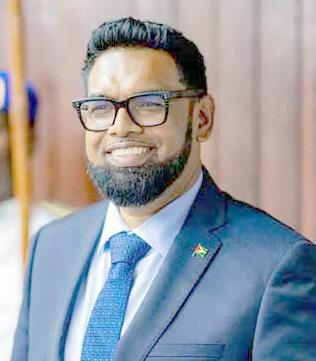
It is to President Ali’s credit that he has produced a personality of warmth, courtesy, approachability, modesty, lightness of touch, and personality ebullience that has never been present in the West Indies and still no sign of it in the CARICOM region. It is a misplaced academic exercise to compare Ali and Mottley of Barbados in this context. She does not have the ebullience of spirit, mind and body that the researcher sees in Ali.
The ebullience of spirit has set Mohamed Irfaan Ali apart from all West Indian leaders from colonial times to 2026. Even if he is not your political choice, the substance of his persona has allowed for a massive gravitation of his citizens to him and that cannot be denied by his detractors. In that context, his legacy has already been created.
DISCLAIMER: The views and opinions expressed in this column are solely those of the author and do not necessarily reflect the official policy or position of the Guyana National Newspapers Limited.
GUYANA’S footprint is extending well beyond our borders.
That’s true not only for the arts and culture, sports and literature, but the demand for Guyana is increasing on the international political stage. The world, from all appearances, needs more of Guyana, and President Irfaan Ali is eager to oblige.
Two days ago, he nominated Guyana’s Permanent Representative to the United Nations, Carolyn Rodrigues-Birkett, for the position of Secretary-General of the United Nations. Rodrigues-Birkett, an accomplished diplomat who follows in the footsteps of several outstanding Guyanese diplomats, is an apt candidate.
Just over a week ago, Human Services Minister, Dr Vindhya Persaud, was elected to the executive body of the OAS Inter-American Commission of Women, placing Guyana at the centre of regional decision-making on gender policy for the first time in nearly a quarter of a century.
From spearheading a Guyana-led Global Biodiversity Alliance that now counts the World Bank and leading universities among its partners, to utilising UN and CARICOM platforms to argue for food security, climate justice and peaceful dispute resolution, President Ali is pursuing a quiet but unmistakable internationalism that asks the world to engage with Guyana not as a client state, but as a convener.
President Ali’s internationalism is not
an attempt to make Guyana bigger because we are now an oil and gas nation, nor is it to sneer at the virtues of “small”. It is, in my estimation, an attempt to secure Guyana a seat at the tables where the rules of food, energy, climate and finance are written, while still insisting that development must remain at a human scale.
That’s why, even as his foreign policy reaches for the UN Security Council, pushing a global biodiversity alliance and gaining a seat at the hemispheric gender institution, his domestic agenda remains committed to delivering the Guyana Development Bank. In other words, while the state is negotiating at the level of global systems, it is adamant on keeping finance and opportunity close enough for ordinary people and small firms to grasp.
E. F. Schumacher would have recognised it as the beating heart of a humane economy.
Schumacher’s 1973 classic, “ Small Is Beautiful: Economics as if People Mattered,” remains a seminal text in environmentalism and alternative economics. Schumacher’s arguments about scale and human-centred economics offer a useful lens for understanding President Ali’s developmental roadmap.
While the PPP/C Administration is leveraging Guyana’s potential into global partnerships while creating opportunities for hinterland and coastal communities, Azruddin Mohamed and his We Invest in Nationhood (WIIN) party are busy investing in the politics of permanent grievance and a campaign
–– says false narratives threaten public trust, national unity and key government programmes
MINISTER within the Office of the Prime Minister with responsibility for Public Affairs Kwame McCoy has called out Opposition Leader Azruddin Mohamed and his associates for deliberately spreading misinformation aimed at undermining government programmes.
Delivering the feature address at the National Communications Network (NCN)’s 21st Annual General Meeting at the Arthur Chung Conference Centre, McCoy said the rise of misinformation and disinformation poses a serious threat to national development and unity.
The minister told staff and management that the role of the State broadcaster has become even more important in an era dominated by social media, artificial intelligence and instant information sharing.
“We are operating in an era shaped by digital technology, instant information, social media, artificial intelligence and, regrettably, a growing culture of misinformation and disinformation,” McCoy said.
According to him, false information can spread
across the country within seconds, damaging reputations, creating confusion, and eroding public trust.
He used as a typical example the widespread criticism of the government’s school breakfast initiative, allegedly instigated by the We Invest in Nationhood (WIN) leader in a bid to discredit the programme through misleading social media content.
“We see it every day, right before our eyes, that someone could take a mildew sandwich, and upload it on their social media page. As mischievous as that is, it seeks to destroy a programme of government that is important for the children of this country,” he said.
The minister specifically accused Mohamed and his supporters of attempting to undermine government initiatives for political purposes.
“Those are the sort of things Azruddin Mohamed and his crooked associates will do to try to pull down this and everything else, and they call it politics,” McCoy said.
He further contended that individuals responsible for spreading false narratives often attempt to shield

built on repackaging the national pastime of complaining into a brand.
And then there is Aubrey Norton, leader of the People’s National Congress Reform (PNCR). In a recent letter to the editor, Norton wants Guyanese to “End this nonsense about a Wismar massacre.” Norton accepts that an entire community was driven out of Wismar-Christianburg-MacKenzie, that homes were burnt, that people were beaten and killed, yet he wastes ink trying to convince us that it was not a “massacre,” but a statistical inconvenience in a wider pattern of violence.
Norton believes human suffering is only serious when it crosses an arbitrary numerical threshold. By his logic, once enough people are beaten, raped, uprooted and dispossessed without reaching some undefined body count, we must retire the word “massacre” and speak instead of “disturbances.”
It troubles me deeply that Norton knows exactly what he is doing. As a trained social
scientist and former university lecturer, he understands that if you strip an event of the language that captures its moral gravity, you shrink its place in the national memory. When he declares it is “time to end this nonsense of a Wismar massacre”, he is inviting the nation to forget that an entire community was told, with fire and weapons, that they did not belong.
A man who aspires to lead a multi-ethnic nation should protect the vocabulary of mourning and not be the first to vandalise it. So, while President Ali leans into the hard work of imagining and constructing Guyana’s future, the opposition leaders seem preoccupied with filing down the rough edges of our past and turning a culture of complaining into a political platform.
DISCLAIMER: The views and opinions expressed in this column are solely those of the author and do not necessarily reflect the official policy or position of the Guyana National Newspapers Limited.
themselves behind claims of credibility.
“The person with the most sordid credibility; irreparable credibility, seeks to claim credibility. It tells us how bad it is on this subject of misinformation and disinformation,” he added.
McCoy stressed that combatting misinformation requires swift responses and accurate reporting, noting that the government places significant emphasis on exposing falsehoods because of the dangers they pose to social cohesion and national progress.
“A manipulated image, an AI-generated video, or a reckless social media post can create confusion and damage reputations, undermine public confidence, and even threaten national unity,” he said.
Against that backdrop, the minister challenged NCN to ensure that its information remains the most trusted and thoroughly verified in the country.
“In this environment, the role of a national broadcaster is not diminished. It is, in fact, more essential,” McCoy told the gathering.

THERE has been yet another call for Guyanese to adopt healthy lifestyles. This time, the appeal came from Dr Stephen Carryl, Head of an Overseas Medical Assistance Team (OMAT).
Of particular concern is the growing number of young adults suffering from diabetes and other Non-Communicable Diseases (NCDs). Diabetes, which currently affects about one-fifth of the country’s adult population, can cause kidney damage, requiring daily dialysis treatment, as well as poor blood circulation and other medical issues. Hypertension, the other leading cause of death
among Guyanese aged 4564, can also result in chronic kidney failure, stroke and heart disease.
The underlying reasons for these conditions lie in poor diet, insufficient exercise and a generally sedentary lifestyle, which can then lead to obesity.
Affecting over 56% of persons 15 years and older, obesity can exacerbate blood pressure risks. While a diet high in carbohydrates, which produces glucose (sugar), can lead to high blood sugar resulting in diabetes.
Dr Carryl noted that persons in their early 30s are now increasingly showing signs of the early onset of
both hypertension and diabetes, diseases which tend to go ‘hand in glove’. He also warned that these illnesses can lead to a myriad of other health complications in the future and urged that Guyanese get regular medical check-ups.
But the rapid growth in fast-food outlets with their deep-fried meals and an array of heavily sweetened beverages exposes Guyanese to the kind of diet that is loaded with salt, sugar and fat. The more we consume this kind of food, the more susceptible we become to hypertension and diabetes. And as more and more fast-food restaurants open their doors, the

more inclined we become to enter and purchase.
The result is that we eat fewer home-cooked meals, fewer vegetables and begin to gain weight, which becomes harder to lose as we exercise less. Dr Carryl made mention of the growing absence of bicycles like ‘back in the day’, when exercise could be had from pedalling to destinations.
Now, a growing number of Guyanese sit behind the wheel of cars and opt to drive even the short distances they can walk. Those who spend their days at work in front of computer screens, on their cell phones or playing video games, all while seated, are leading the kind of sedentary lifestyle which ultimately results in ill health.
Staying fit and getting adequate exercise is not an option; it is a necessity. Eating a healthy diet is not a matter of choice; it is the primary means of preserving good health. Regular physical examinations help to detect the onset of disease.
As Dr Carryl pointed out,

a visit to a doctor to ensure you are in good health is a way of practising preventative health care. It is a mindset which tells you not to wait until something is obviously wrong before seeking medical attention.
However, diabetes and hypertension are medical issues not only in Guyana but throughout the Caribbean and globally. These two diseases often “occur together and may share common causes like sedentary lifestyle, obesity, inflammation and insulin resistance”, according to Medical News Today
An article in the publication last month also advises lifestyle changes, “such as losing 5% to 10% of body weight, getting 150 minutes of moderate exercise per week (and) following a
healthy diet…”
The message could not be clearer. Guyanese need to take heed and actively pursue measures to guard against these two diseases, widely recognised by medical professionals as the ‘dangerous duo’.
Decades ago, an Afro-American comedian and activist, speaking from experience, said, “People with high blood pressure, diabetes - those are conditions brought about by lifestyle. If you change your lifestyle those conditions will leave”.
DISCLAIMER: The views and opinions expressed in this column are solely those of the author and do not necessarily reflect the official policy or position of the Guyana National Newspapers Limited.

ONE of the most troubling features of Guyana’s political culture is the tendency of some political actors to demand standards of accountability from their opponents that they were unwilling to apply to themselves when they occupied the seats of power.
The current debate surrounding the Government’s move to restore the Former Presidents’ Benefits legislation to its 2009 framework provides a timely example of this phenomenon.
Today, opposition figures are presenting themselves as champions of fiscal responsibility, transparency, and prudent public expenditure. Yet many Guyanese have not forgotten the actions of the APNU+AFC administration between 2015 and 2020, particularly the controversial legislation passed in 2017 to provide pension benefits to former Prime Minister Hamilton Green.
At the time, the APNU+AFC Government used its parliamentary majority to pass legislation specifically designed to confer pension benefits on Mr. Green decades after he had left office. The legislation generated significant public discussion because it was viewed by many as a measure tailored to benefit a political ally rather than a broad public policy initiative intended to address a systemic issue.
What makes the current criticism from the opposition particularly difficult to reconcile is that many of the same voices now questioning pension benefits remained largely silent when the Hamilton Green legislation was being advanced.
If the opposition believes that public expenditure on benefits for former office holders must be carefully scrutinised, then that principle should apply consistently. It cannot be a concern only when a PPP/C Government introduces legislation and an afterthought when an APNU+AFC administration does the same.
The issue here is not whether Hamilton Green should or should not have received pension benefits. Reasonable people can disagree on that question. The issue is whether the opposition is applying a consistent standard to matters of public spending and governance.
The record suggests otherwise.
During its time in office, the APNU+AFC administration repeatedly cited fiscal constraints when confronted with demands for higher wages, improved conditions for public servants, and increased social spending. Public sector workers were frequently reminded of the limitations of the national budget and the need for fiscal discipline.
Yet the same administration found sufficient fiscal space to pursue legislation benefitting a former political figure.
This contradiction raises legitimate questions that deserve answers.
Who specifically drafted and sponsored the Hamilton Green pension legislation? What policy rationale was used to justify the measure? What financial implications were presented to Parliament before its approval? Were independent assessments conducted regarding its long-term cost to taxpayers? These are not partisan questions. They
are governance questions.
Likewise, what were the precise financial arrangements associated with the pension package? Were there retroactive payments involved, and if so, what was their value? How much public money was ultimately committed under the legislation?
These questions become even more relevant when viewed alongside the opposition’s current objections to pension-related legislation.
Political credibility depends heavily on consistency. Citizens are more likely to trust criticism when it is rooted in principle rather than political convenience. When politicians condemn actions today that closely resemble actions they defended yesterday, they weaken the strength of their own arguments.
This is why the present debate should not focus solely on the contents of the Former Presidents’ Benefits Bill. It should also involve an honest examination of the broader record of those now presenting themselves as fiscal watchdogs.
Transparency cannot be selective. Accountability cannot be conditional. Fiscal responsibility cannot be invoked only when one’s political opponents are in government. If public expenditure deserves scrutiny today, then it deserved scrutiny in 2017. If Guyanese taxpayers have a right to know the costs associated with benefits legislation now, then they also had that right when Parliament approved special pension arrangements nearly a decade ago.
The opposition’s challenge is not merely to criticise the Government. That is an important and legitimate function in any democracy. The challenge is to demonstrate that its criticisms are grounded in consistent principles rather than shifting political calculations.
Unfortunately, the current debate exposes a glaring contradiction.
The same political actors who now express concern about government spending were noticeably less vocal when legislation benefitting a former ally was moving through Parliament. The same voices demanding accountability today did not appear nearly as concerned about the precedents being established then.
That inconsistency is what many Guyanese find difficult to ignore.
As the discussion continues, citizens should examine the facts carefully and judge all political parties by the same standards. Governments should be held accountable for their decisions. Oppositions should also be held accountable for their records.
In politics, credibility is earned not by the volume of one’s criticism but by the consistency of one’s principles.
The public has every right to ask whether the current outrage reflects a genuine concern for taxpayers or simply another example of political amnesia.
That question remains at the heart of this debate.
DISCLAIMER: The views and opinions expressed in this column are solely those of the author and do not necessarily reflect the official policy or position of the Guyana National Newspapers Limited.


THE proposed Guyana Development Bank will operate under a strict governance and accountability framework, with directors facing removal for misconduct and individuals and companies exposed to multimillion-dollar fines for offences ranging from providing false information to misusing the institution’s funds and assets.
Those provisions are contained in the Guyana Development Bank Bill 2026, which was recently published in the Official Gazette and is expected to be debated in the National Assembly.
While much attention has focused on the bank’s role in providing financing and support to small and medium-sized enterprises (SMEs), the legislation also outlines extensive governance, transparency and enforcement mechanisms designed to safeguard public resources and ensure prudent
management.
The bill places significant responsibility on the institution’s board of directors, which will oversee the affairs and business of the bank.
Among its responsibilities, the board will be required to approve strategic and business plans, establish credit, risk and governance policies, monitor management performance and safeguard the independence of credit decisions. The legislation also stipulates that the bank must operate with due regard for financial sustainability and risk management.
To strengthen public confidence in the institution, the bill establishes strict eligibility requirements for board members.
Under the proposed legislation, an undischarged bankrupt, a person of unsound mind, or anyone convicted of an indictable offence or an offence involving fraud, dishonesty or moral turpitude
would be disqualified from serving as a director.
The legislation also outlines several circumstances under which a director may be removed from office.
According to the bill, a director may be removed if he or she engages in any act in the performance of duties that constitutes a wilful breach of duty or results in personal financial gain.
Removal may also occur where a director is found guilty of misconduct, neglect of duty, conflict of interest or any other cause that renders the individual unfit to continue in office.
Conflict-of-interest provisions feature prominently throughout the legislation. Directors and officers of the bank will be required to disclose any direct or indirect interest in matters before the institution. Once such an interest is disclosed, the legislation provides that the individual shall not participate in any deliberations or decisions relating to that matter.

The bill also contains provisions governing the bank’s finances and lending operations.
Clause 21 provides that the Guyana Development Bank shall be exempt from the payment of tax on its profits and income, allowing the institution to retain earnings for lending and development activities.
Clause 24 places a cap of $3 million on loans issued to any individual or enterprise, although the minister responsible for finance may amend that ceiling through an order subject to the negative resolution of the National Assembly.
The legislation goes further by creating a number of offences aimed at protecting the integrity of the institution.
Under Clause 33, a person commits an offence if he or she provides false or misleading information to the bank. Offences are also committed where a person obstructs or hinders the bank in the exercise of its functions, falsifies, conceals, alters or destroys records relating to its affairs, improperly discloses confidential information obtained through the institution, or wilfully misapplies or misuses the bank’s funds, property or assets.
The penalties attached to those offences are substantial.
Any person convicted of an offence under the legisla-
tion would be liable on summary conviction to a fine of not less than $5 million and not more than $10 million.
Importantly, the bill extends liability beyond individuals.
Where an offence is committed by a company or other body corporate, the entity itself may be fined between $5 million and $10 million. Directors, managers, secretaries and other officers may also face personal liability where the offence was committed with their consent or connivance, or where it resulted from their neglect.
This means that corporate officers may be prosecuted and punished in addition to the company itself.
The legislation also seeks to ensure accountability through rigorous record-keeping and auditing requirements.
The proposed institution would be required to maintain proper books of accounts and records and prepare annual financial statements. Its accounts would be audited annually by the Auditor General, while annual reports and audited financial statements must be prepared and submitted in accordance with the Fiscal Management and Accountability Act.
Confidentiality provisions are also included in the bill.
Information obtained by the bank in the course of carrying out its functions would be treated as confidential
and used only for purposes authorised under the Act. Improper disclosure of such information is specifically identified as an offence and could attract the same penalties as other violations.
Additionally, the bank will be required to adopt written credit policies governing loan eligibility, risk assessment, approval thresholds, monitoring procedures and recovery measures. Loan restructuring and write-offs would only be permitted in accordance with approved policies and under appropriate oversight mechanisms.
The Guyana Development Bank is intended to provide financing, technical assistance and other support services to small and medium-sized enterprises, with the aim of promoting business growth and economic development.
The bill establishes the institution with an authorised capital of $40 billion, to be subscribed and paid by the Government of Guyana in amounts and at times determined by the minister responsible for finance.
Earlier this week, President Dr Irfaan Ali described the proposed Development Bank as a catalyst for long-term business growth, noting that it would provide critical support for entrepreneurs seeking to transform ideas into sustainable enterprises capable of expanding and enduring over time.
AS Guyana continues to strengthen its healthcare system, efforts are advancing to expand rehabilitative care through the development of a state-of-the-art neurorehabilitation facility, the training of specialised personnel and the introduction of advanced technologies aimed at improving patient outcomes.
Speaking recently with the Guyana Chronicle, Director of Rehabilitation and Disability Services, Dr Ariane Mangar, said the Ministry of Health is pursuing a number of initiatives designed to deliver world-class rehabilitation services in keeping with the vision outlined by President Dr Irfaan Ali.
According to Dr Mangar, rehabilitative care remains one of the major areas of focus within the health sector, with significant progress already made in expanding services and increasing the number of trained professionals.
“We have grown a lot. The services have grown, definitely. We have more professionals, more physiotherapists. We did not have speech therapists, we did not have occupational therapists,” she said.
She noted that the ministry is continuing to work through training programmes and partnerships to increase the number of
speech therapists and occupational therapists available within the healthcare system.
Among the most significant projects currently in development is a dedicated neuro-rehabilitation facility, which will focus primarily on stroke patients.
“We are in the process of working with the government to have a neuro-rehab facility built,” Dr Mangar said.
“This facility will focus on stroke patients, and we are hoping that it is a state-of-the-art facility, with everything that you can think about inside, so that it is first world as the President has said,” she added.
The facility is expected to significantly enhance Guyana’s ability to provide specialised rehabilitation services by increasing capacity and accommodating advanced medical equipment.
“We want to be able to meet the needs of people and showcase what Guyana can do. We have a lot of talent, but a lot of times we do not have the machines, or we are limited in what we have because of the space we have,” Dr Mangar explained.
“Now with the bigger space we can bring in more advanced machines, so that we can improve the services we offer,” she added.
In addition to infra -

structural expansion, the ministry is also investing in workforce development and emerging technologies.
Dr Mangar revealed that healthcare personnel are currently being trained as orthotic and prosthetic technicians to improve the local production of prosthetic devices.
“We are upgrading some persons as orthotic and prosthetic technicians, so we can improve the making of prostheses here.
We are also having training on the making of the sockets and splints using a 3D printer,” she said.
The introduction of 3D-printing technology is expected to dramatically reduce production times for prosthetic components.

“With a 3D printer, a socket can be made in three hours rather than three days. It improves the turnaround time,” Dr Mangar noted.
The ministry is also placing increased focus on autism services and early intervention programmes.
According to Dr Mangar, upcoming training initiatives will equip therapists and medical professionals with specialised skills to better support children diagnosed with autism.
“We are going to be doing some training in autism, behavioural training for our therapists, so that they can provide a more comprehensive
service to the children who would have been diagnosed with autism,” she said.
The initiative will also involve training paediatricians and other healthcare professionals to improve the identification and diagnosis of autism in children.
“We will be working with some paediatricians, some doctors, to help them to better identify autism in children. We’re going to be doing that along with Mount Sinai and personnel from the University of Indiana, and that is almost immediate,” she added.
Looking ahead, Dr Mangar said the ministry’s long-term goal is to build a comprehensive rehabil-
itation system supported by a full complement of specialists and modern facilities.
“Ideally, we would like to have the full staff complement, physiotherapy, speech therapy, occupational therapy, more doctors involved, more physiatrists, more audiological practitioners and specialists,” she said.
“We could serve the people better, orthotic and prosthetic specialists, so we could meet the demands of the people.
Once we have the staff and we have the facility, then we can definitely provide a world-class service,” Dr Mangar added.
of Region
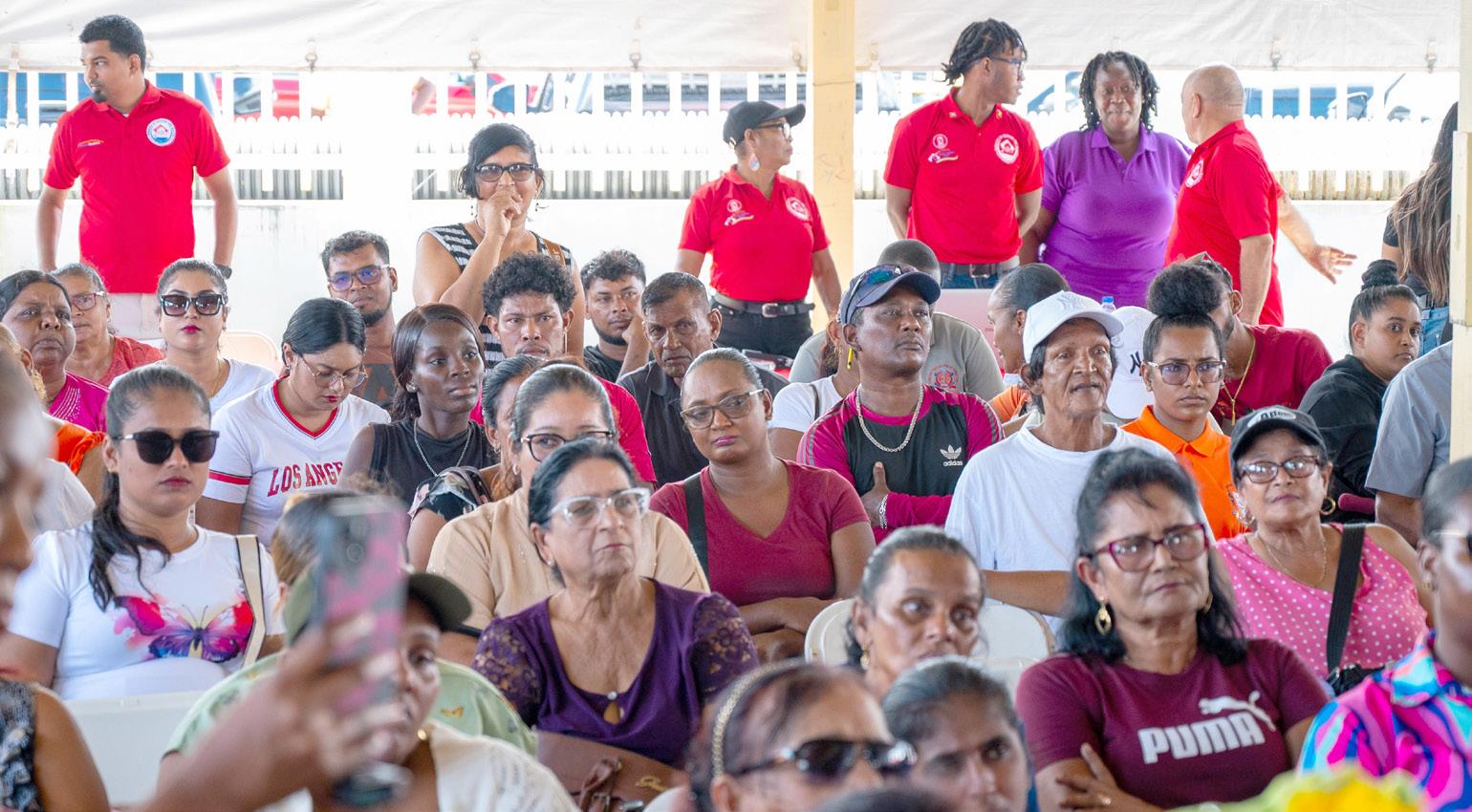
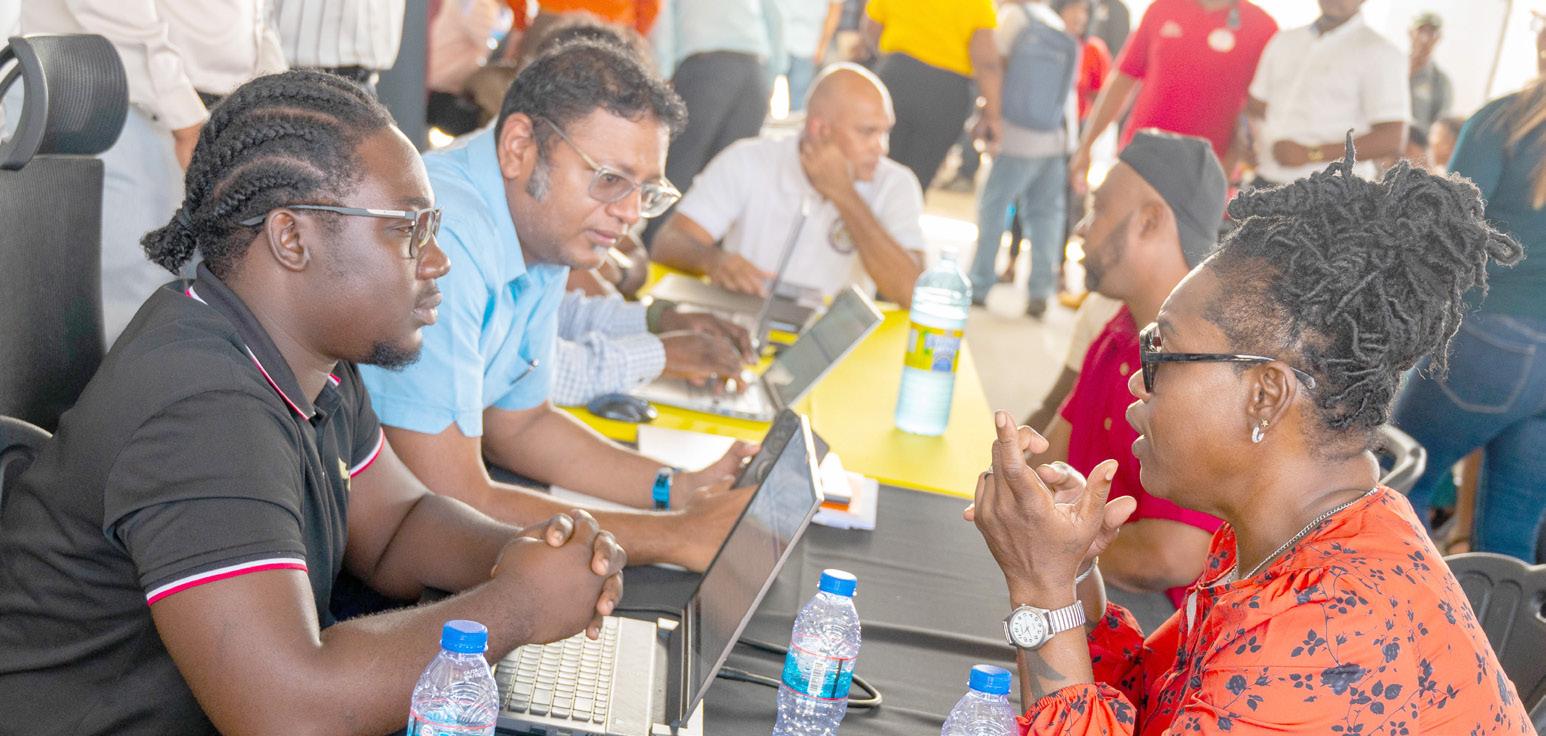
Five (Mahaica-Berbice) have welcomed the Government of Guyana’s latest Cabinet public day, describing the initiative as an important opportunity for citizens to engage directly with senior government officials and have longstanding community concerns addressed.
The engagement, which was led by Vice President Dr Bharrat Jagdeo and supported by ministers, regional officials and representatives from several government agencies, attracted large numbers of residents from communities across the re-
gion seeking information, assistance and solutions to a wide range of issues.
Hosted on Friday at the Regional Democratic Council (RDC) office in Fort Wellington, the initiative allowed residents to raise concerns, access government services and receive updates on ongoing and planned community development projects.
Many of those who attended praised the government’s efforts to engage citizens at the grassroots level.
Speaking with members of the media on the sidelines of the outreach, resident Nicholas Sagadaye said the large turnout reflected both
public confidence in the initiative and residents’ desire to play an active role in improving their communities.
“I think it is a really great initiative. Personally, it is really nice to see that the Cabinet ministers, the Vice President, can get to the level of the people continuously and the people actually show out in numbers, which also shows their interest both in the party and their desire to basically develop their communities and their own personal well-being,” Sagadaye said.
He noted that the presence of ministers alongside representatives from various

government agencies made the outreach particularly beneficial for residents seeking assistance.
“The fact that they are out here in their numbers says a lot. And not just the ministers, but each department, all of the relevant departments, they’re here assisting people. We need to have more outreaches like this. I think it was well received. The crowd speaks for itself, generally speaking,” he added.
Similar sentiments were shared by Ambroziman Thomas, who said the initiative provides an avenue for residents to interact directly with ministers and government officials, something that is not always possible through regular channels.
“It is a great initiative for Region Five, where you can meet with the people in West Coast Berbice, bringing all the information and all the ministers of government coming out and reaching the
people at this time, because there are so many issues that sometimes you are not able to reach the minister in person,” Thomas said.
She expressed appreciation to Vice President Jagdeo and members of the Cabinet for bringing the public day to the region.
“So, we are happy and grateful in Region Five for this government initiative,” she added.
Resident Bindrabhan Bisnauth said the public day was an event many persons in the region had been anticipating after seeing similar exercises conducted in other parts of the country.
“This is a very wonderful exercise. We had expected this for a long period. Seeing that the Vice President and team visited other regions, we were eager to have the same presence in Region Five. Fortunately for us, today is the day,” Bisnauth said.
He added that residents were pleased to see a broad cross-section of government officials present, particularly ministers responsible for sectors critical to the region’s continued development.
“I am sure people from Region Five are overwhelmed with the presence of the VP and the other ministers. Knowing Region Five is an agriculture-based region, but we are slowly diversifying now. We are elated also to have the Honorable Minister of Agriculture here,” he said.
The practical impact of the engagement was highlighted by community leader Devon Saul, who said he was able to raise concerns about infrastructure challenges affecting his area and received an immediate response.
According to Saul, issues relating to roads and drainage within his community were brought to the
—DPP says reforms have reduced delays, improved case management helped bring more recent matters before the courts faster
LONGSTANDING backlogs within Guyana’s criminal justice system are being significantly reduced, with the number of cases listed for the criminal assizes in the High Court falling from approximately 300 between 2020 and 2024 to just over 100 since 2025.
The disclosure was made by Director of Public Prosecutions (DPP), Shalimar Ali-Hack, during the launch of a training programme for prosecutors and investigators earlier this week.
Ali-Hack described the reduction as a major achievement for the justice sector, reflecting years of reforms and improvements aimed at increasing efficiency within the criminal justice system.
“Guyana was able to reduce the cases, particularly in the criminal assizes in the High Court. In between 2020 and 2024, we had like about 300 cases listed for assizes. From 2025, those have come down to like 100 and something,” she said.
According to the DPP, the reduction is the result of a range of interventions implemented across the justice sector to improve case management, accelerate the movement of matters through the courts and prevent new backlogs from developing.
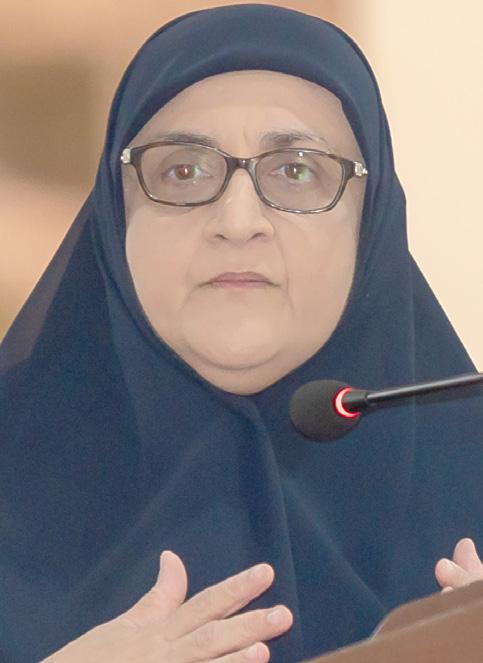
Director of Public Prosecutions (DPP), Shalimar Ali-Hack, speaking at the recent launch of a training programme aimed at developing the skills of Guyana’s prosecutors and investigators (Delano Williams photo)
“This is a remarkable improvement and it is a part of the results of all the justice improvement that we have been involved in,” Ali-Hack said.
“This has resulted not only in the reduction of the backlog, but what we are trying to do at the same time is to maintain a status quo so that we do not have the backlog building up again, so that persons will have timely trials. And that has been happening,” she added.
Ali-Hack pointed to the speed at which some serious criminal matters are now reaching trial as evidence of the progress being made.
“Next week, we will be empanelling in court a case, a murder which was committed just a year before last, and this is remarkable. We have had like other offences which
From page 14
attention of officials during the exercise.
“We have a little problem with the road, with the little drainage and so on. I came here and I complained about it and I already have results. By Monday, I will be seeing the representatives of the different authorities in my scheme taking care of the problem in my community,” Saul said. He encouraged residents to take advantage of such opportunities whenever government officials visit their communities.
“Just come out and give the government a chance to see what the government could do for you because remember, the government is coming to you,” he said.
The public day forms part of the government’s broader effort to strengthen engagement with citizens while ensuring that concerns raised at the community level are addressed promptly.
By bringing ministers, agency heads and technical officers directly into communities, the initiative seeks to improve access to government services and ensure that development remains responsive to the needs of Guyanese across the country.
were committed last year and persons have already had their trials,” she said.
The DPP explained that prosecutors have adopted a dual-track approach, simultaneously addressing older backlog cases while ensuring that newly committed offences are processed without unnecessary delay.
“In the criminal justice system, in the prosecution’s part, we have been running
the two parallel, the backlog as well as the current cases,” Ali-Hack noted.
She also highlighted the role of the recently implemented Paper Committal Act, which is designed to streamline the process by which matters are prepared and transferred to the High Court for trial.
“With the new Paper Committal Act, that will ensure that that happens be -
cause since the Act came into being last year, we have already had matters come into the chambers and indictments preferred for their trial in the High Court,” she said.
According to Ali-Hack, the legislation is expected to further reduce delays within the criminal justice system while generating wider benefits.
“This will reduce a backlog of the cases and it will as-
sist with the reduction of the prison population,” she said. The significant decline in criminal assizes matters represents one of the most notable improvements within Guyana’s justice sector in recent years, with authorities now focused on ensuring that cases continue to move through the courts in a timely manner while preventing the re-emergence of backlogs.

GUYANA’S Permanent Representative to the United Nations (UN), Ambassador Carolyn Rodrigues-Birkett, has expressed gratitude to President Dr Irfaan Ali and the Government of Guyana for nominating her as the country’s candidate for
Secretary-General (SG) of the UN, as ministers, and senior officials continue to rally behind her historic bid.
In her first public statement since the announcement, Rodrigues-Birkett described the nomination as both an honour and a
privilege, while outlining her vision for service at the highest level of international diplomacy.
“I extend my heartfelt gratitude to His Excellency President Mohamed Irfaan Ali for his decision to put forward my candidacy for the post of Secretary-General
of the United Nations. It is both an honour and a privilege to receive his support and that of the Government,” she stated.
The veteran diplomat indicated that decades of experience in government and international affairs have prepared her for the chal -
lenge ahead. Rodrigues-Birkett added: “As I embark on this campaign, the experience and skills I have gained over the last decades serving in successive PPP/C Governments and in the international community will guide me on this journey, where I aspire to serve as the world’s chief public servant working with the 193 Member States of the United Nations and partners in advancing the cause of international peace and security, development and human rights for all.”
Her remarks came hours after President Ali announced that Guyana had formally nominated her for the position of Secretary-General upon the completion of the tenure of current UN Secretary-General António Guterres on December 31, 2026.
The nomination has triggered an outpouring of support from across government, with ministers describing Rodrigues-Birkett as exceptionally qualified and uniquely positioned to lead the world’s premier multilateral institution.
Minister of Education Sonia Parag was among the first Cabinet members to publicly endorse the nomination, describing the ambassador as “exceptionally qualified and deserving of the role of UN Secretary-General.”
“I am proud to support her candidacy,” Parag stated.
Highlighting Rodrigues-Birkett’s pioneering role in Guyanese politics and diplomacy, Parag noted that she served as Guyana’s first female and Indigenous Minister of Foreign Affairs.
She stated: “As Guyana’s first female and Indigenous Minister of Foreign Affairs, she served our nation with distinction, grace, integrity and unwavering professionalism. Throughout her career, she has demonstrated remarkable intelligence and a deep commitment to public service.”
Parag further noted that in her current position as Guyana’s Permanent Representative to the United Nations, Rodrigues-Birkett continues to be “a strong and principled advocate for international co-operation and global peace.”
Beyond her professional accomplishments, the education minister described the ambassador as “a warm,
approachable and compassionate woman who inspires confidence and respect wherever she serves.”
Parag added, “Ambassador Rodrigues-Birkett has represented Guyana with excellence on the world stage and I sincerely hope her candidacy is successful.”
The Ministry of Amerindian Affairs also issued a strong endorsement, describing the nomination as a source of pride for Indigenous communities across Guyana.
Minister of Amerindian Affairs, Sarah BrowneShadeek and staff of the ministry warmly welcomed the announcement, praising Rodrigues-Birkett’s remarkable journey from the Moruca, Santa Rosa in Region One (Barima-Waini) to the highest levels of international diplomacy.
The ministry described her as “a true daughter of the soil” whose life story continues to inspire generations of Guyanese.
According to the ministry, Rodrigues-Birkett has devoted more than two decades to advancing Guyana’s interests nationally, regionally and internationally, earning widespread respect among world leaders and diplomats.
The ministry further noted that her candidacy represents “not only a historic milestone for Guyana but also a powerful symbol of hope and possibility for Indigenous peoples everywhere.”
Support also came from the Ministry of Local Government and Regional Development, which encouraged Guyanese to unite behind the nomination.
“We look forward to rallying with you all around Ambassador Carolyn Rodrigues-Birkett who was just nominated by Guyana’s President Irfaan Ali to be the Secretary General of the United Nations,” the ministry stated.
“When women step up and take their place, the world benefits!”
Guyana’s Ambassador to the United Nations in Geneva and former Minister of Health, Dr Leslie Ramsammy, similarly argued that the time is right for both a woman and a Caribbean national to lead the United Nations.
“It is time for a woman to be the UN SG. It’s time
Guyana’s Permanent Representative to the UN, Ambassador Carolyn Rodrigues-Birkett
for a Caribbean citizen to be the SG for the UN. It is time the best candidate is elected to be the SG,” Ramsammy stated.
“One person fits all these elements as the UN votes for its SG - Carolyn Rodrigues. Let’s do the right thing.”
Minister of Human Services and Social Security, Dr Vindhya Persaud, also extended congratulations to Rodrigues-Birkett, describing her as an “outstanding daughter of Guyana.”
“My warmest congratulations and best wishes to this outstanding daughter of Guyana and she continues to make Guyana and all of us

Minister of Education, Sonia Parag
proud,” Persaud stated.
President Ali, in announcing the nomination on Friday, described the decision as one that reflects Guyana’s growing international stature and confidence in Rodrigues-Birkett’s diplomatic credentials.
The President announced:
“Guyana has decided to formally nominate Ambassador Carolyn Rodrigues-Birkett, Guyana’s Permanent Representative to the United Nations, for the position of Secretary-General of the United Nations.”
He pointed to Guyana’s successful tenure on the UN Security Council between
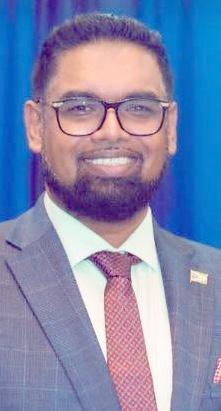
President Dr Irfaan Ali
2024 and 2025 and the country’s increasing influence on issues such as climate change, environmental sustainability, food security, biodiversity conservation and sustainable development.
According to the President, Rodrigues-Birkett possesses the experience, expertise and diplomatic judgement required to guide the UN through a period marked by global conflict, humanitarian crises and increasing geopolitical tensions.
“In my estimation, Ambassador Rodrigues-Birkett has acquired the experience, expertise, judgement and diplomatic skills necessary


Minister of Amerindian Affairs, Sarah BrowneShadeek
to perform ably and effectively carry out the duties of Secretary-General of the United Nations,” President Ali stated.
Rodrigues-Birkett has served as Guyana’s Permanent Representative to the United Nations since 2020 and played a central role in the country’s participation on the Security Council. Before that, she served as Director of the Food and Agriculture Organization’s Liaison Office in Geneva from 2017 to 2020.
Her ministerial career includes serving as Minister of Foreign Affairs from 2008 to 2015 and Minister of Amerindian Affairs from 2001 to

Minister of Local Government and Regional Development, Priya Manickchand
2008. Throughout her public service career, she has been associated with advancing Indigenous rights, gender equality, social development and sustainable development initiatives.
If successful, Rodrigues-Birkett would make history as the first woman and the first Guyanese national to lead the United Nations as Secretary-General.
The Government of Guyana has indicated that it will actively engage member states across the world in support of her candidacy as the campaign for the UN’s top post gathers momentum.


AS Guyana’s oil and gas industry continues its rapid expansion, homegrown logistics giant, John Fernandes Limited (JFL), is positioning itself

deeper within the sector’s value chain through partnerships, specialised services and major infrastructural investments aimed at supporting offshore operations and broader economic development.
Business Development and Project Coordinator at JFL, Jonathon Fernandes, recently reflected on the company’s journey into the energy sector, noting that its involvement dates back to the earliest stages of Guyana’s petroleum development.
Speaking on a recent episode of The Take on Fueled, Fernandes explained that JFL first became involved in the industry through its commercial port operations when ExxonMobil commenced activities in Guyana.
He explained that when ExxonMobil first came to Guyana, the compnay handled them through their commercial port.
That early involvement provided the company with valuable insight into the industry’s needs and helped shape its strategy to diversify beyond traditional shipping and logistics services.
Over the last 12 to 15 years, JFL has established a network of strategic partnerships designed to support offshore operations

and strengthen local participation in the energy sector.
“We have a logistics partnership, we’re into CCUs, which is a specialty box that’s a rental company. We provide a lot of sandblasting and painting, we have outrigging shops, so a lot of DNV-certified gears specifically for the oil and gas industry,” Fernandes said.
Today, JFL provides a broad suite of oil and gas support services through its wholly-owned subsidiary, Fernandes Energy Inc. (FEI), including shore-base operations, laydown yards, certified labour, specialised equipment, freight management and logistics support.
The company has also expanded through several strategic partnerships, including G Port Inc., a collaboration with international marine transportation provider Edison Chouest Offshore, which operates specialised shore-base facilities serving Guyana’s offshore petroleum sector.
JFL is also partnered with Rig Bound Trinidad through Rig Bound (Guyana) Inc., which supplies Cargo Carrying Units (CCUs) and specialised offshore containers critical to offshore logistics and supply-chain operations. Through TLC Guyana Inc., the company also provides freight forwarding and customs management services.
These capabilities have enabled JFL to support major energy companies operating in Guyana, including ExxonMobil, Halliburton, Baker Hughes, Saipem and Schlumberger.
The company’s growth has accelerated following the introduction of Guyana’s Local Content Act in 2021. JFL is an approved Local Content Certificate holder and has been among the local companies expanding their participation in the oil and gas supply chain under the legislation.
The law establishes 40 categories of goods and services reserved for Guyanese participation and encourages partnerships between local and international firms. Under the framework, foreign companies can collaborate with Guyanese businesses that maintain at least 51 per cent beneficial ownership, allowing local firms to access procurement opportunities and compete for contracts across a range of sectors.
JFL’s expansion strategy is also extending beyond oilfield support services and into large-scale infrastructural development.
Through Cranes Guyana Inc., a joint venture between John Fernandes

Business Development and Project Coordinator for John Fernandes Limited, Jonathon Fernandes
Limited and Muneshwers Limited, the two Guyanese companies are investing more than US$285 million in the development of a modern deep-water port facility in Berbice.
The project is expected to become one of the most significant trade and logistics infrastructural investments in Guyana’s history, positioning the country to support growing offshore activity while enhancing regional trade and cargo handling capacity.
The investment underscores the evolving role of local companies within Guyana’s energy economy, where businesses are increasingly moving from service providers to infrastructure developers capable of supporting long-term industrial growth.
For Fernandes, however, the industry’s expansion represents more than business growth.
“As a local guy, you just kind of want to see the country progress, right? I mean, when you’re sitting in it every day, driving the streets, you see small progressions like new roads and that kind of stuff, but you don’t actually see it happening right in front of your face, a lot of the growth that is happening right now,” he said.
“It’s nice to sit back every now and again and actually take note of what’s happening around you, because you’re going to wake up in 20 years and you’re not going to realise how much has changed.”
Founded in 1959 by businessman John Fernandes Snr., JFL remains 100 per cent Guyanese-owned and operated, employing more than 600 people across its operations. Its expansion into oil and gas, combined with investments in strategic infrastructure and specialised services, reflects the broader maturation of Guyana’s private sector as local companies position themselves to capture greater value from one of the world’s fastest-growing petroleum provinces.
THE Department of Information and Public Affairs, on Saturday, hosted a stakeholder engagement with media practitioners at the Office of the Prime Minister, as part of the ongoing National Consultation on Social Media and its Consequential Effects on Children.
The engagement was led by Minister within the Office of the Prime Minister with Responsibility for Public Affairs, Kwame McCoy.
It provided a platform for representatives from the media sector to share views, experiences and recommendations on addressing the impact of social media and digital technologies on children.
The consultation forms part of a wider national process coordinated by the Ministry of Parliamentary Affairs and Governance, aimed at gathering feedback from stakeholders on child online safety, responsible social media use, digital literacy, platform accountability and the broader social effects of digital technologies.
During the session, several key areas were presented for discussion, including a proposed minimum social media age, mandatory age verification, child-safe platform design, digital literacy education, parental empowerment and the possible establishment of a Child Online Protection Authority.
Minister McCoy told media representatives that the proposals being discussed are not final decisions but remain open for feedback from stakeholders and citizens.
“We want to be able to have the opportunity of
hearing from our citizens how they believe we can handle this matter, and everything that we have proposed thus far is just what they are, proposals, and there is nothing that is fixed,” Minister McCoy said.
The minister noted that while social media and digital technologies provide opportunities for learning, creativity, innovation and access to information, they also present challenges, particularly for children.
He highlighted concerns including cyberbullying, harassment, harmful content, online exploitation, misinformation and the impact of certain platform designs on children’s wellbeing.
“First and foremost, our approach as government is to protect our children, while preserving the opportunity of utilising technology for creativity, education, arts, culture, responsible expression and innovation,” he stated.
Meanwhile, Director of Public Affairs, Gordon French, noted that the consultation is intended to gather evidence, document experiences and identify practical recommendations from stakeholders who create, manage, distribute and analyse public information.
“This is not intended to promote any determined position. We are coming into the consultation very open to receive feedback from the public,” French explained.
During discussions, media practitioners emphasised the importance of maintaining responsible journalism practices, protecting children’s privacy and ensuring any future framework balances child

protection with freedom of expression.
The need for media organisations and content creators to strengthen child-safe practices within their own platforms, including responsible reporting involving minors and careful consideration of content shared online, was also highlighted.
The engagement also
explored the changing media landscape, with discussions on how social media has expanded the space for information sharing and public communication, while creating challenges around misinformation, online influence and content accountability.
Media representatives from several organisations participated in the
consultation, including the Department of Public Information (DPI), Guyana Press Association (GPA), National Communications Network (NCN), Guyana Chronicle, MTV, 96.4 FM, the Ministry of Education’s education broadcasting units and other media stakeholders.
Each stakeholder will be provided with feed -
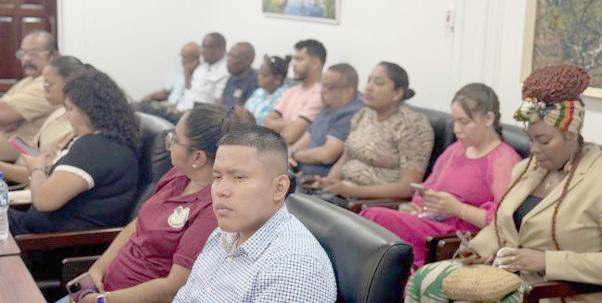
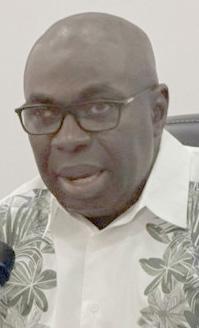
back templates to submit additional recommendations as part of the consultation process, which will contribute to the wider national discussion on developing a child online safety framework.

THE Guyana Fire Service (GFS) has strengthened its ranks with the addition of 107 newly trained firefighters, following the graduation of Recruit Course 1-2026 at the Fire Service Training School, West Coast Demerara, on Friday.
The graduation ceremony marked the successful completion of months of intensive training and saw scores of family members and well-wishers gathering to celebrate the achievement of the new recruits as they officially entered the service on probation.
During the ceremony, the graduates showcased their skills through a series of demonstrations, including foot drills, firefighting techniques and first aid exercises, highlighting the practical training they received
throughout the programme.
Among the 107 graduates were 33 women, who completed the demanding course alongside their male counterparts.
Delivering remarks at the ceremony, Chief Fire Officer, Gregory Wickham, described the graduation as another important milestone in the continued development of the Fire Service.
He expressed gratitude to the Government of Guyana for its ongoing investment in the agency, noting that support has extended beyond the acquisition of modern firefighting equipment to the strengthening of the Service’s human resources.
Wickham also thanked the parents, spouses and relatives of the recruits for their support throughout the training period.
Meanwhile, Minister of Home Affairs, Oneidge Walrond, commended the graduates for successfully completing the programme and reaffirmed the government’s commitment to the continued development and modernisation of the Fire Service.
She encouraged the new firefighters to work together in the service of the nation and remain committed to protecting lives and property.
The Minister also praised the recruits for their resilience and dedication during training and urged them to continue developing themselves professionally while contributing to national development.
Several outstanding recruits were recognised during the ceremony.
Tomicka Crawford was named runner-up to the best graduating student and was additionally awarded Best Female Firefighter. The Most Improved Student Award was presented to Devindra Persaud.
Awardees received trophies and plaques in recognition of their achievements, while the top graduating student also received a special award from Minister Walrond.
Trevon Williams emerged as the top graduating student and also received awards for Best Drill and Best Theory.
The latest batch of firefighters comes as the Guyana Fire Service continues to expand its capacity and strengthen emergency response capabilities across the country through ongoing recruitment, training and investment in modern firefighting infrastructure and equipment.

Last month, President Dr Irfaan Ali announced that GFS is undergoing a major transformation as government moves to modernise the country’s emergency response capabilities to meet the demands of rapid urban expansion, industrial development, and the growing oil-andgas sector.
Speaking during a press conference, President Ali said billions of dollars have already been invested in upgrading the nation’s firefighting infrastructure, equipment and personnel as part of the government’s broader national security architecture.
“The Guyana Fire Service is a major area that needs massive reorganisation,” the President said while outlining the administration’s plans for a more technologically advanced and responsive fire and emergency service.
This year, the GFS was allocated $6.3 billion in the 2026 National Budget to strengthen emergency response and firefighting capacities. This includes $1.1 billion for new and upgraded fire stations, $1.6 billion for additional firefighting equipment, and $250 million for the procurement of new fire hydrants.
Among the major initiatives announced on Friday is an aggressive nationwide hydrant installation programme aimed at strengthening fire response capabilities in both urban and expanding residential communities.
President Ali disclosed that the government plans to install more than 25,000 hydrants across the country, noting that several thousand have already been installed.
The Head of State explained that government is also investing heavily in smart emergency management systems designed to improve coordination, response times and operational efficiency.
These systems will include GIS-enabled command rooms, integrated CCTV monitoring, digital incident tracking systems, real-time GPS fleet management and smart dispatch centres capable of coordinating emergency responses more efficiently.
President Ali acknowledged public concerns regarding response times, but said improvements have already been recorded.
“It has improved, I must say, looking at the numbers; tremendously. But we are not satisfied at all with where we are,” he stated.
According to the President, the government’s investment strategy also reflects the changing nature of infrastructure and industrial activity in Guyana, particularly with the rapid growth of the oil-and-gas sector and the expansion of high-rise buildings and industrial facilities.
As a result, the administration is procuring more advanced firefighting assets, including rapid intervention vehicles, higher-capacity pumps, ladder trucks, hydraulic platforms, industrial rescue trucks, and chemical containment units.
“We are not in the days where it is a two-storey house, you put up a ladder, and you climb up anymore,” President Ali said while discussing the need for modern hydraulic platforms and specialised equipment.
The President further noted that Guyana’s growing petrochemical and industrial ambitions require specialised firefighting capabilities, including foam tenders and advanced suppression systems designed to respond to industrial and oil-related fires.
“We have to look at foam tenders now, because it’s different types of fires,” he said.
In addition to equipment upgrades, President Ali said government is also investing heavily in training and human resource development within the fire service.
He disclosed that hundreds of new personnel have already been trained as part of the modernisation drive.
The President added that major investments are also being directed toward strengthening airport and port emergency response systems to meet increasing international standards as Guyana expands its aviation and maritime infrastructure.
This includes investments in airport firefighting capacity, port emergency vehicles, offshore platform response systems and fire
THE construction of the Regional Food Hub being built at Yarrowkabra, along the Soesdyke-Linden Highway, is roughly halfway complete.
It is on course to be finished by the end of the year, Minister of Agriculture, Zulfikar Mustapha, has said.
“As I am speaking now, approximately 50 per cent of the work has been completed. It’s ongoing,” the minister told the Department of Public Information (DPI) recently in an interview.
Local contractors hired to do the job are expected to wrap up their portion of the work by the end of Septem-
ber. Once that phase is done, he said, Blumberg Grain, a U.S.-based agriculture company, will move in to install a cold storage facility and the remaining systems that will bring the hub into operation.
The facility marks the next stage of a project that was years in the making.
Phase One began in 2023, and in July last year, the government signed a memorandum of understanding (MoU) with Blumberg Grain and Logistics.
When complete, the hub will be built to international standards.
According to the ministry, it will feature modern
From page 20
boats to support expanding port facilities.
President Ali said the modernisation of the Guyana Fire Service forms part of a wider national security and emergency management strategy that integrates technology, surveillance systems, artificial intelligence and coordinated emergency response infrastructure across multiple sectors.
In 2025, five new fire stations were completed in Charity, Parika, Diamond, Soesdyke and Wisroc, complemented by targeted upgrades to existing facilities and living quarters.
In 2026, planned infrastructural investments will encompass the completion and commissioning of seven additional fire stations in Onderneeming, Campbellville, Ruimveldt, Timehri, Mahaicony and Tarlogie, as well as the construction of the Rosignol and No. 38 Village fire stations and a Marine Fire Station in Port Georgetown. For these and other infrastructure initiatives, a total of $1.1 billion was budgeted.
The acquisition of advanced equipment represents a fundamental component in the enhancement of core firefighting capabilities, and overall operational effectiveness. To this end, $527.9 million was expended for the procurement of a crash tender, three ambulances, two water tenders, five all-terrain water tenders and one breathing apparatus refilling vehicle, among others.
In 2026, $1.6 billion is earmarked to procure additional firefighting equipment including two airport firefighting vehicles, four water tenders and two water bowsers.
Additionally, in 2025, government expended $503.1 million to advance procurement for more than 430 fire hydrants, and an additional sum of $250 million was budgeted for procurement of more hydrants in 2026.
In 2025, a sum of $47 million was expended toward the training of 91 ranks.
In 2026, $50 million is allocated for training in basic and advanced firefighting techniques.
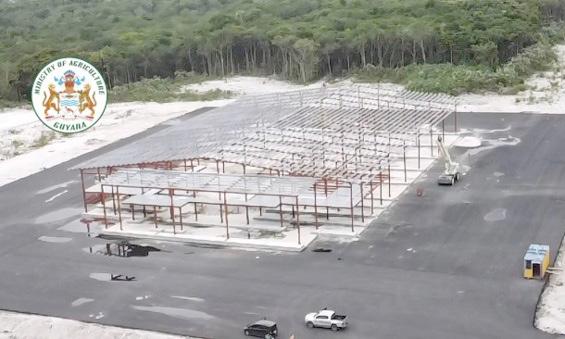
Construction continues at the Regional Food Hub at Yarrowkabra (File photo, March 2026)
grain silos, refrigerated storage, container-loading facilities and digital inventory systems, and is projected to reduce post-harvest losses by up to 30 per cent, supporting increased exports of rice, corn, poultry feed and pro-
cessed feeds to CARICOM markets.
Minister Mustapha explained that the facility is being built with a single purpose in mind: keeping more of the value of Guyana’s produce inside the country
and across the wider region.
The hub will act as a central collection and export point, drawing in produce from farmers and channelling it to Caribbean markets to help close the gap targeted under the “25 by 2025” initiative, the regional drive to cut CARICOM’s food import bill by a quarter.
“When we have this food hub up and running, it will be very active, and we’ll purchase products from farmers around the country, and that will be there to export overseas,” Minister Mustapha added.
He also tied the facility to the wider work of the Guyana Marketing Corporation (GMC), which has been linking farmers without a market to agents who can move their produce.
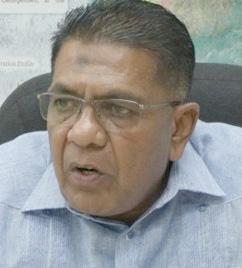
Minister
The

A TOTAL of 168 girls across four regions have been equipped with foundational Artificial Intelligence (AI) and digital skills through the Guyanese Girls Code Programme, an initiative of the Industry and Innovation Unit (IIU) within the Office of the Prime Minister.
The programme, which forms part of Guyana’s observance of International Girls in ICT Day, continues to encourage greater participation by girls in the field of technology while supporting the country’s broader digital transformation agenda.
According to the IIU, the Guyanese Girls Code Programme is a targeted digital skills and AI literacy initiative designed to provide women and girls with
early exposure to emerging technologies.
Over the past five years, the programme has responded to the growing need for inclusive, future-ready education aligned with Guyana’s Science, Technology, Engineering and Mathematics (STEM) and digital transformation goals.
The final leg of the 2026 programme was held in Region Ten on Saturday, concluding this year’s observance.
This year’s programme was led by Miriam Jainarine, who has served as lead trainer for the past five years. Jainarine was previously a beneficiary of the Unit’s advanced training programmes and was also the second-place winner in the Unit’s 2024 Innovation Challenge (Hackathon).
Held under the global theme, “AI for Development: Girls Shaping the Digital Future,” the programme targeted girls between the ages of 13 and 15.
Participants were introduced to ethical AI principles and core AI concepts through relatable, real-world examples before progressing to hands-on exploration of how machines learn from data.
The six-hour, in-person, school-based training programme was delivered at Leonora Secondary School in Region Three; Annandale Secondary School in Region Four; Bush Lot Secondary and Bygeval Secondary schools in Region Five; and New Amsterdam Secondary and J.C. Chandisingh Secondary schools in Region Six.
According to the IIU, the training utilised a blended pedagogical approach that combined instructor-led teaching, inquiry-based learning, peer instruction, live demonstrations and collaborative project work.
The Unit noted that this year’s curriculum placed a strong emphasis on ethical awareness and design thinking.
Students were guided to identify real-world problems within their schools and communities, collaborate in groups and develop AI-based solutions through gamified activities and creative challenges.
Participants also explored machine learning fundamentals, compared human and machine intelligence and experimented with model behaviour

through practical exercises.
The students built and tested both text-based and image-based AI models, identified errors and biases in outputs and integrated the models into Scratch-based projects using a use-modify-create approach.
The programme concluded with project presentations where participants showcased their AI applications, received peer feedback and reflected on the ethical implications of artificial intelligence.
According to Director of the Industry and Innovation Unit, Shahrukh Hussain, the Guyanese Girls Code Programme represents a strategic intervention aimed at bridging the gender gap in technology while equipping young women with essential skills for the future digital economy.
He explained that the programme is designed to address these challenges by demystifying AI and Machine Learning through accessible, creative and nocode learning approaches.
He underscored the rapid advancement of AI and machine learning globally and noted that providing young women with early access to these fields remains a priority for the Unit.
Hussain believes initiatives such as the Guyanese Girls Code Programme help break down barriers associated with limited exposure to technology, build confidence and encourage greater female participation in STEM-related fields through practical, hands-on learning experiences.
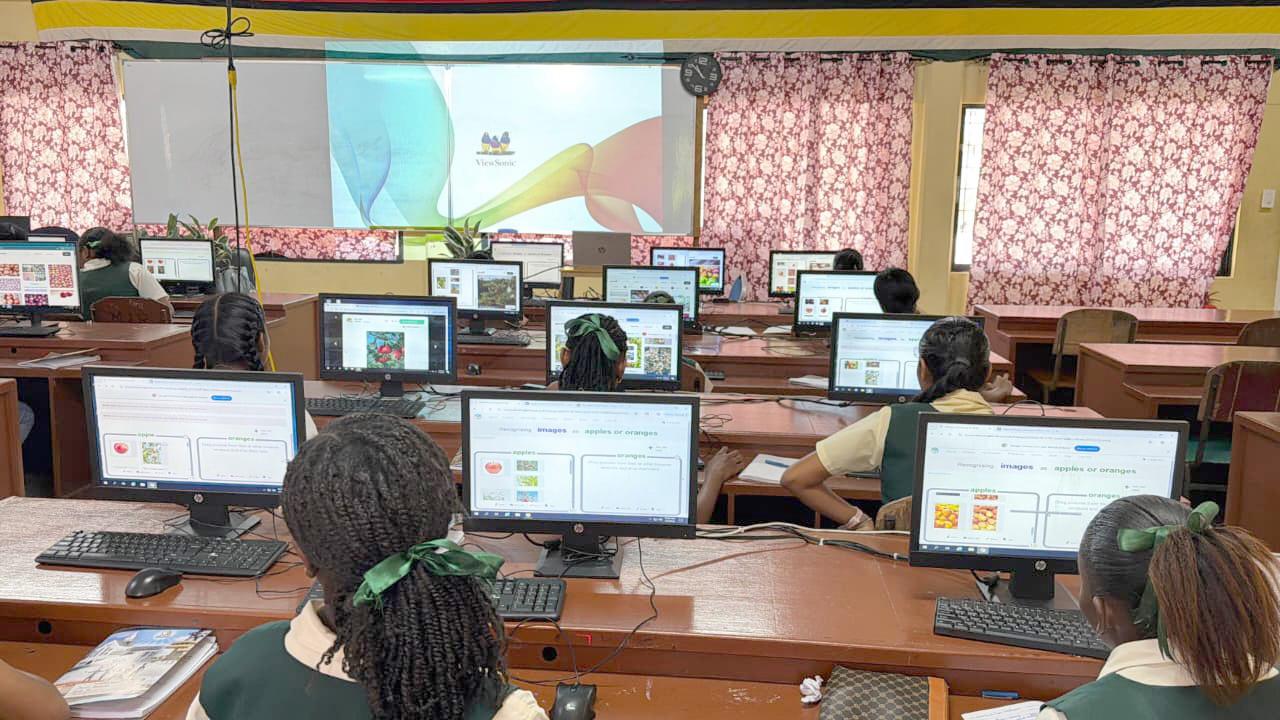
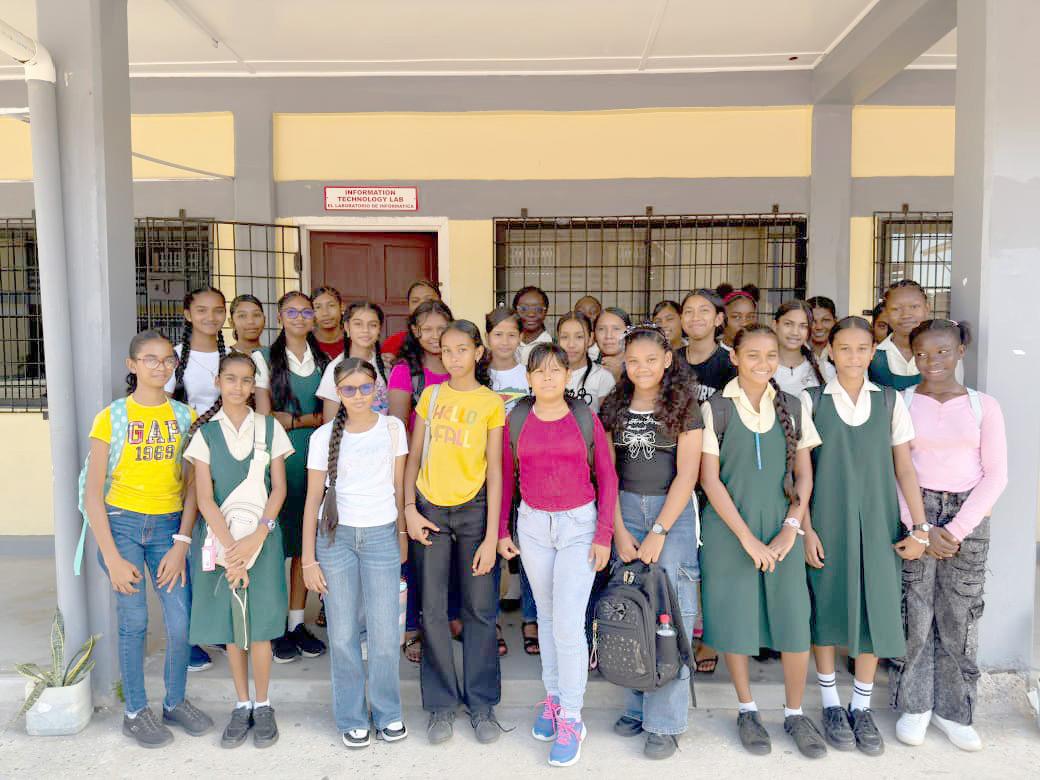
The Guyanese Girls Code programme is a targeted digital skills and Artificial Intelligence (AI) literacy initiative designed to support early exposure to emerging technologies among women and girls across Guyana
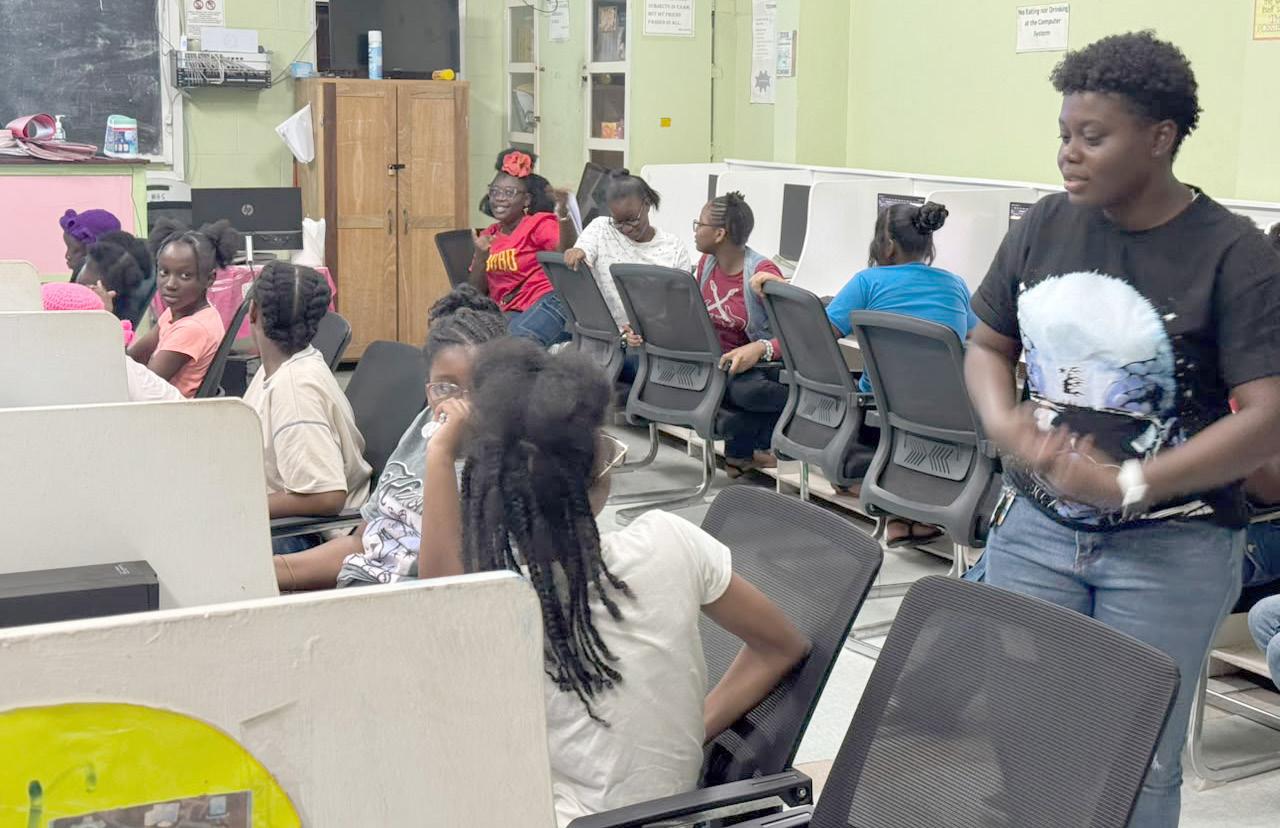
Minister of Culture, Youth and Sport, Charles Ramson Jr., along with some of the participants in the PYARG Expedition Programme
MORE than 400 young people from 40 communities are to take part in a national youth award scheme, ahead of an upcoming outdoor expedition designed to teach leadership and life skills.
The participants are entering the Medal of Service tier of the President’s Youth Award Republic of Guyana (PYARG).
An orientation session was held at the National Gymnasium on Friday, ahead of a three-day training exercise at the Kuru Kuru Training Centre on the Soesdyke-Linden Highway.
The session was organised by the Ministry of Culture, Youth and Sport through its youth department and the award scheme.
Around 90-unit leaders, instructors, secondary school teachers and ministry staff are currently undergoing specialised training.
The weekend’s activities include hiking, campcraft, watermanship, wilderness first aid and leadership development.
Meanwhile, Minister of Culture, Youth and Sport,
Charles Ramson Jr., underscored the significance of the PYARG programme in shaping the next generation of leaders.
He noted that the initiative provides young people with opportunities to build resilience, strengthen teamwork and develop practical skills that will serve them throughout their lives.
Beyond outdoor adventure, the programme plays a critical role in fostering discipline, confidence and problem-solving abilities among participants.
It encourages young people from diverse backgrounds and communities to work together to strengthen national unity and social cohesion while promoting healthy and productive lifestyles.
The programme was restored by the PPP/C Government under the leadership of President Dr Mohamed Irfaan Ali, and continues to expand its reach and impact, providing thousands of Guyanese youths with life-changing experiences and opportunities for self-development.
[DPI]
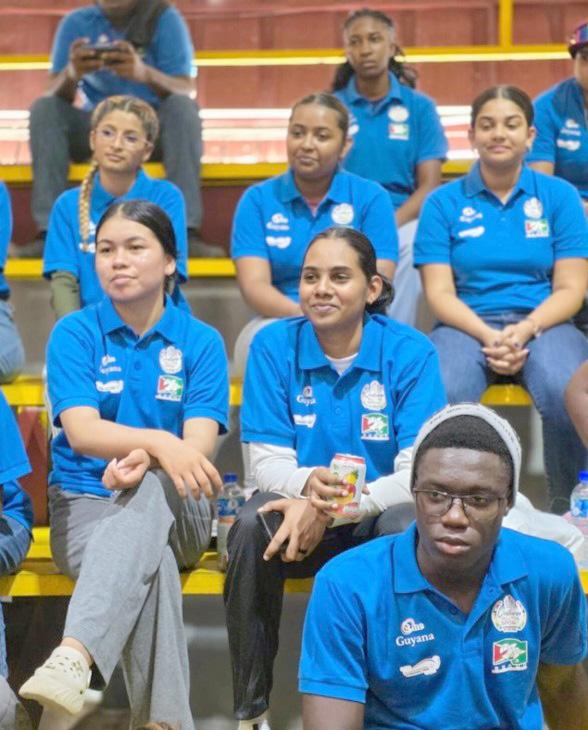
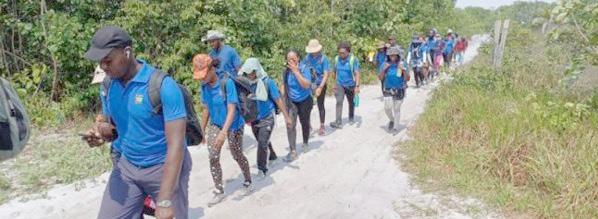

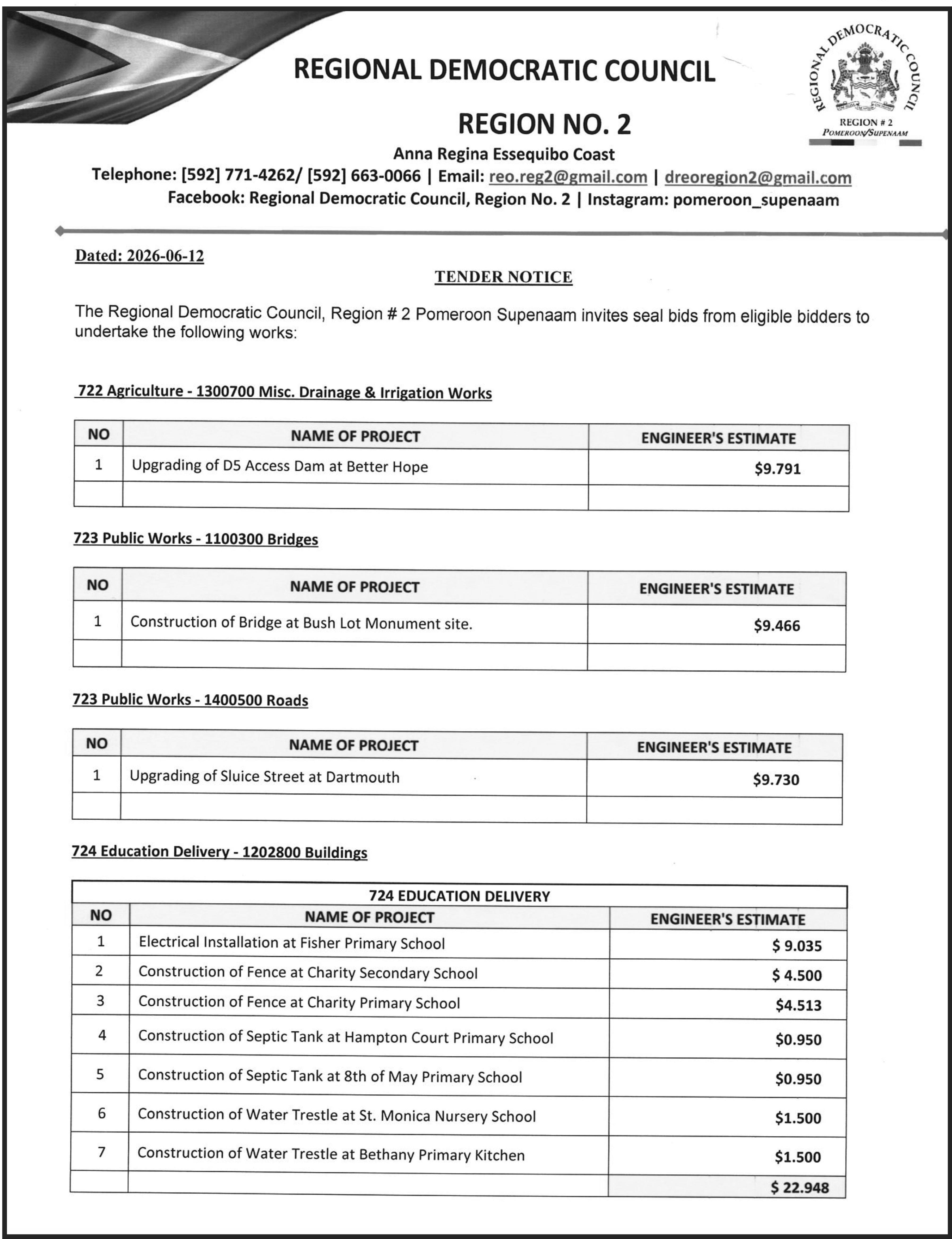
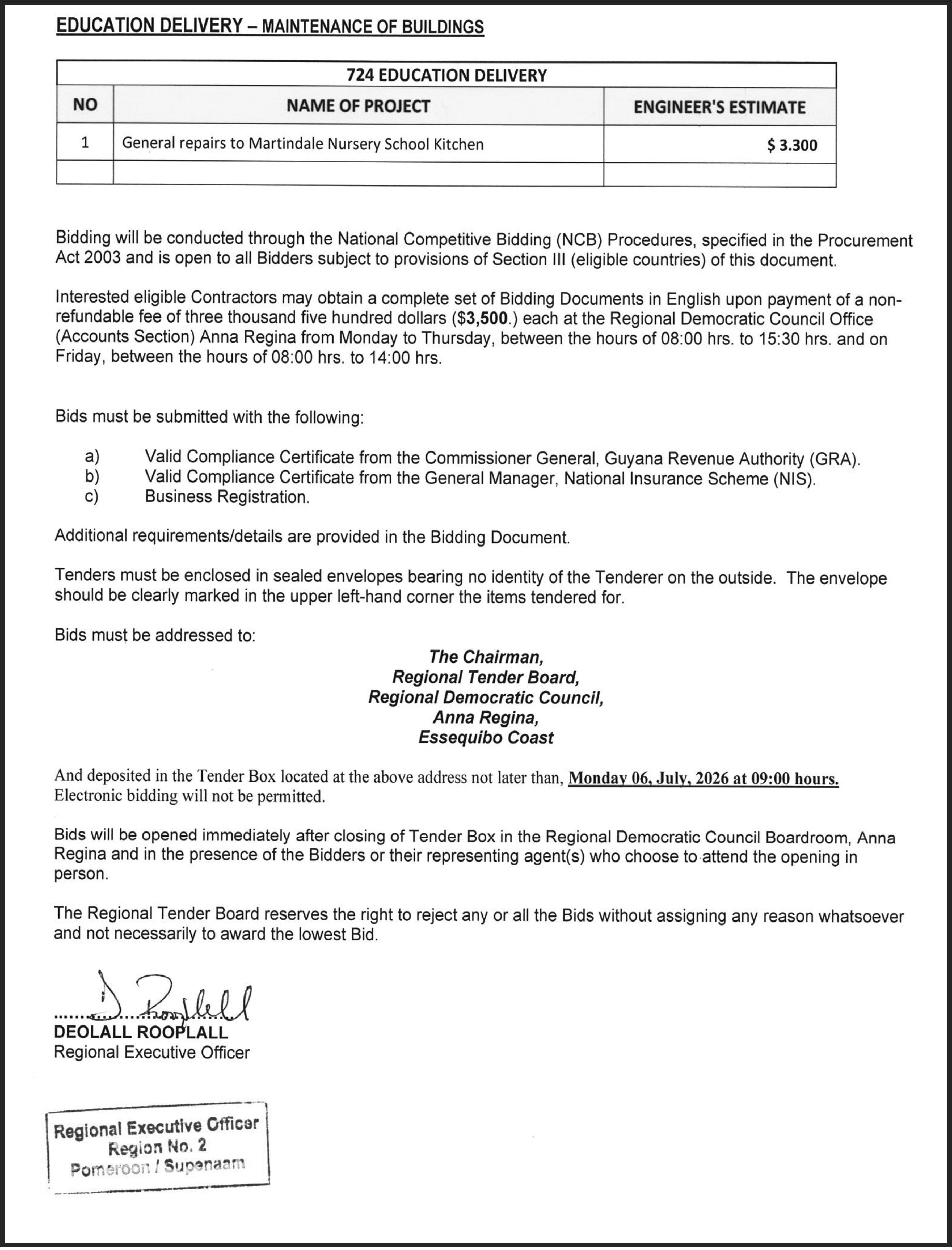
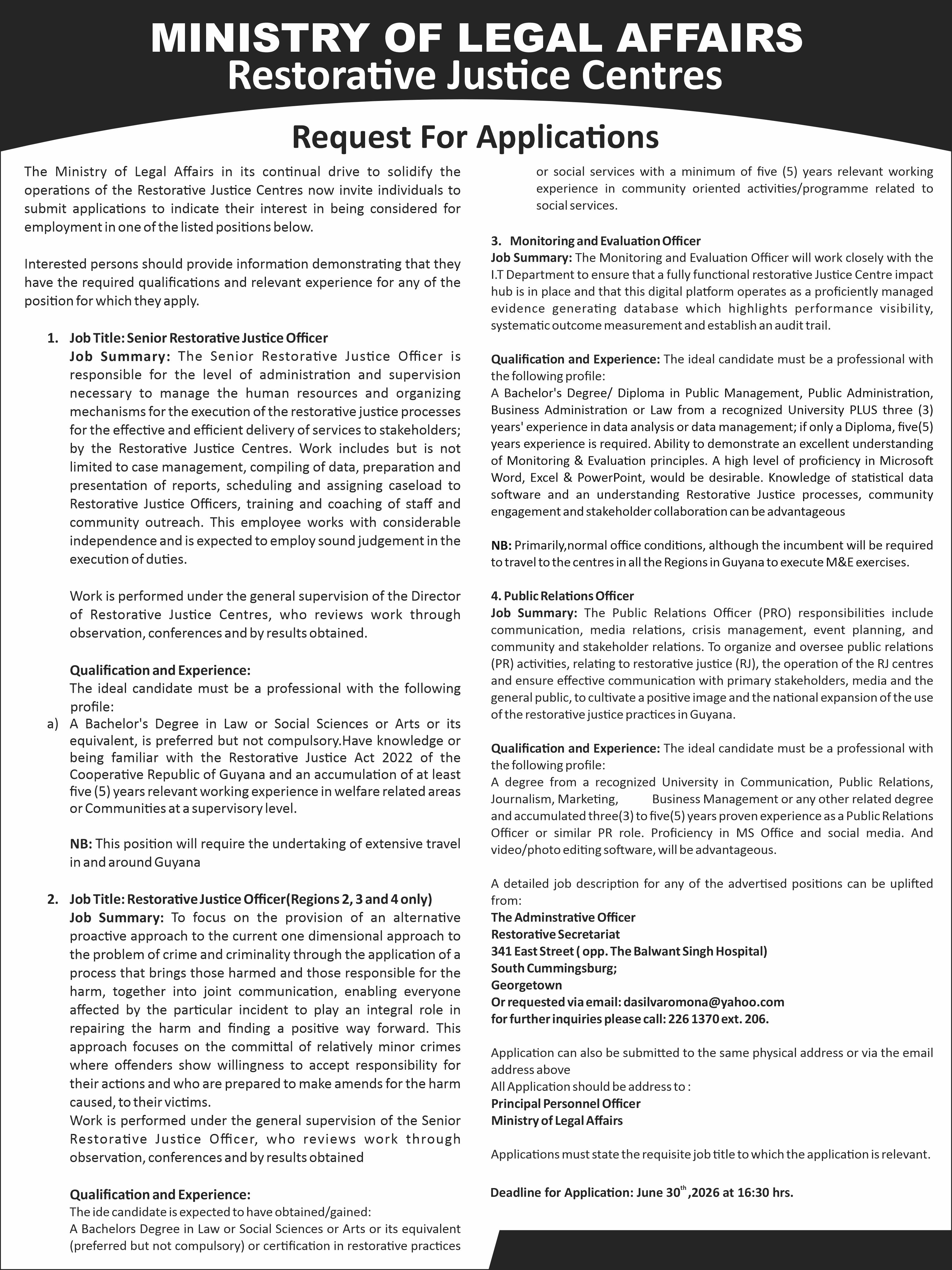

SCOTLAND secured their first T20 World Cup win, thanks to an impressive 40-run victory over Ireland in the Old Trafford opener.
A superb 106-run partnership between skipper Kathryn Bryce (60) and her sister Sarah Bryce (49) helped the Scots to 161-5 from their 20 overs.
Kirstie Gordon took three wickets in an over as the Irish struggled in reply and they were bowled out for 121.
Scotland tasted victory for a first time at the fifth attempt while Ireland’s miserable T20 World Cup record continues, having lost all 18 games.
Ireland won the toss and elected to bowl first in a cold, windy and mainly overcast Manchester.
It looked to be a good decision as the Scots were reduced to 36-2, but the Bryce sisters changed the momentum of the match with a decisive third-wicket partnership.
Kathryn’s quickfire 60 from 39 balls included six boundaries and a six while the pair piled up 36 runs from just two overs.
Ireland will rue two chances to dismiss the Scottish captain with Alana Dalzell misjudging the flight of the ball on the boundary before Alice Tector spilled an easier opportunity.
Ireland pegged back Scotland in the final overs to keep the target down to 162 with Ava Canning (3-27) the pick of the bowlers.
The Irish needed a strong start with the bat and reached 37-1 before losing the key wicket of captain Gaby Lewis (11),
who was stumped from a Katherine Fraser delivery. Amy Hunter topscored with 39 and Orla Prendergast made 33 but the Irish were undone by impressive spin bowling from Gordon (3-16) and Fraser (3-19).
Gordon’s three wickets came in the same over to leave Ireland on 70-6 and from there Scotland eased to victory, their fourth in a row against Saturday’s opponents. Ireland is back in action against hosts England on Tuesday at Southampton while next up for the Scots is a Headingly meeting with West Indies on Thursday


‘Just
KANE Williamson sat on the Lord’s balcony last week and came to the gradual realisation that his 110th Test would be his last match as a New Zealand cricketer.
He firmed up his decision over the subsequent days after conversations with his parents and his partner, and told a close circle – some senior players, including captain Tom Latham, head coach Rob Walter and team manager Mike Sandle – that his time was up. “It just feels like the right time for me to step away,” he explained.
Most of Williamson’s New Zealand teammates only discovered the news that he was retiring from international cricket with immediate effect on Friday morning, shortly before he went public with the news.
In typically understated fashion, he had called an unexplained meeting for “coffee and a chat” at the team’s Imperial Wharf hotel, where he informed them that he was done.
The timing of Williamson’s decision came as a shock, one match into a three-Test series and with a bumper 2026-27 season featuring series against India and Australia on the horizon. But he said that he had no interest in “being on a team sheet and adding a couple of games” to the record without being fully committed, and that he had realised his time was up.
“When I look at the dressing room now and I see the talent, and the journey that I think this team’s looking to go on, it just feels like the right time for me to step away,” Williamson said. “I feel really good about it. It’s funny when you reflect on so much, but all good things come to an end, and it’s the change of seasons.”
Williamson has gradually decreased his workload as an international player since turning down a central contract two years ago, a decision which has allowed him to miss some series to play franchise cricket or spend more time with his young family.
“Just as someone that cared deeply about the team, always wanted to do more, and was deeply committed to my craft as a cricketer. I’m really, really grateful for it all.”
He hinted before the first Test that he was unlikely to return to Lord’s as a player, and said on Friday that he had been “getting comfortable” with retirement since that match, in which he made 0 and 18 in a low-scoring

Kane Williamson finishes as New Zealand’s highest run-scorer in Test cricket with 9515 runs at an average of 54.06 in 110 matches
defeat.
“I didn’t have it [retirement] in mind,” he said. “You’re at the pointy end, and so you’re wanting to just value every experience and really commit because that’s what you have done and that’s what you expect of everybody else in the group and they certainly all do that in a big way. And yeah, [there was] a little bit of reflection.
“Obviously, that was an interesting match in itself, but [I was] sitting up there on the [dressing-room] balcony and thinking a bit about it, and then just taking a bit of time in the days post that to get comfortable with it… I really like the space of being really grateful for the time I’ve had with this New Zealand cricket team, and then also the excitement and potential I see in the group.”
Williamson will turn 36 in August, and said that he felt comfortable stepping away knowing that he was still worth his place, rather than clinging on. “It does feel good
to not exhaust it, because it’s not just about me, this decision,” he said. “There’s a lot of factors and a deep care for the team.”
He said that he felt comfortable with the decision to play his last match overseas –“playing that last game at Lord’s is kind of cool” – rather than in front of a home crowd, and to slip away quietly rather than have a farewell appearance. “I’ve got too much respect for this team and where it’s wanting to go,” he explained.
Kane Williamson, during his stint as strategic advisor at LSG, Lucknow Super Giants vs Rajasthan Royals, IPL 2026, Lucknow, April 22, 2026
Kane Williamson served as ‘strategic advisor’ at LSG in IPL 2026 and could move into coaching•PTI
Williamson will stay with the squad for the coming days but said that he will be “giving the team a bit of space” and that his decision would enable other leaders to emerge. “I remember the day when other leaders in our team left and there’s steps to take, and I think me stepping away allows that as well,” he said.
The timing is a blow to New Zealand’s hopes of overturning a 1-0 deficit to win this series in England, as Walter acknowledged: “You don’t lose Kane Williamson off the team sheet and get stronger, because he’s a legend.”
Henry Nicholls is the spare batter but Walter declined to say who will bat at No. 3 at The Oval, with Rachin Ravindra shifting up from No. 4 as an alternative.
“Everyone is asking, ‘Why in the middle of the series?’ but you hear his reasons and you understand fully,” Walter said. “That’s the person that he is, and just [shows] the regard that he holds the team to not just carry on because it’s the end of a series, but actually to hand the opportunity to someone else who would take his place and fill a more long-term role for this team.”
Williamson reflected on his career, citing the 2021 World Test Championship final win over India in Southampton as a highlight. “It was this real evolving of a side to get where we got to, and to put out strong performances and repeat that, to see some of that success after the ups and downs that we experienced. It was great, but more for those reasons rather than just a win.”
He added: “It’s funny: you remember your first Test and it was just the best thing ever.
[Even] if it was never to happen again, you’ve got your baggy [cap], it’s incredible. You have a few more, and 16 years later, you’re standing here and you’re having a choice to make this decision. It’s incredible, when you reflect on it… It’s been a journey.”
As for how he would like to be remembered? “Oh gosh, I didn’t prepare for this one,” Williamson said with a smile. “Just as someone that cared deeply about the team, always wanted to do more, and was deeply committed to my craft as a cricketer. I’m really, really grateful for it all.”
He has only retired from international cricket at this stage, and said he was uncertain about whether he would continue to play on the franchise circuit. “I’m just going to cross that bridge when I come to it. [I have] no plans as such in the playing department, but we’ll see.”
Williamson looks likely to move into coaching, having spent the two months before this tour at the IPL as a ‘strategic advisor’ with Lucknow Super Giants. “I had a little bit of time in the coaching space and enjoyed that,” he said. “We’ll see. The next step here is to have a chat with all of you, take a few days with the family and have a look at what’s next.”
Williamson finishes as New Zealand’s highest run-scorer in Test cricket with 9515 runs at an average of 54.06 in 110 matches. The pinnacle of his career came when he led New Zealand to victory in the inaugural World Test Championship final in 2021, against India.
He also made 7256 ODI runs in 175 matches (fourth highest for New Zealand) and 2575 T20I runs (second highest for New Zealand) in 93 matches.
Williamson captained New Zealand in 40 Tests (22 wins, 10 losses and eight draws), 91 ODIs (46 wins, 40 losses, one tie), and 75 T20Is (39 wins, 34 losses, one tie).
Under his leadership, apart from the World Test Championship title, New Zealand made the semi-finals of the 2016 T20 World Cup, the final of the 2019 ODI World Cup, the final of the 2021 T20 World Cup, and the semi-finals of the 2022 T20 World Cup and the 2023 ODI World Cup.
(ESPNcricinfo)
AUSTRALIA opened their T20 World Cup campaign with a 65-run victory over fellow contenders South Africa to lay down an early marker in Group One.
With 50-over champions India also in this pool, making a tough battle for the two semi-final spots likely, Australia struck an early blow by fighting to 172-8 and confidently defending the total.
(Scores: Australia 172-8 (20 overs): Litchfield 50 (24), Perry 36 (26); Mlaba
South Africa 107 (16.4 overs): Wolvaardt 44 (39); Wareham 3-13
Australia won by 65 runs)
They removed Sune Luus, Annerie Dercksen and Nadine de Klerk in the first seven overs and applied the squeeze as Laura Wolvaardt attempted a rebuild with Marizanne Kapp.
Australia had dropped De Klerk in the powerplay but two interventions in the field from Georgia Wareham, who
also took 3-13 and contributed an important 32, proved decisive.
She ran out the dangerous all-rounder Kapp for 12 with an accurate throw from the deep and then took a smart low catch at cover to see off Wolvaardt for 44.
Afterwards, Australia clinically knocked over the lower order to dismiss the Proteas, who have reached the past three world finals across formats, for 107
Australia, in their first tournament
under new captain Sophie Molineux, was below their best with the bat, losing regular wickets, but their impressive depth meant they still posted a testing score.
Wareham’s knock came after 50 from Phoebe Litchfield. Ellyse Perry also contributed 36.
South Africa may now have to beat India when the sides meet on Sunday, June 21, on the same ground. (BBC Sport)

FOXBOROUGH, United States, ( CMC) – HAITI has been forced to change the design of its World Cup kit three days before their opening match against Scotland.
According to FIFA, the illustration on the shirt, which depicts a war scene, fails to comply with its rules, which prohibit the use of any “political, religious, or personal messages or slogans” on kits.
to the Battle of Vertieres in 1803, which secured Haiti’s independence. It had also been embedded on the shirts worn in both of their pre-tournament friendlies.
The design pays tribute
In a statement, Colombian manufacturer Sae -
ta said its original design “was a tribute to the men and women who contribute every day to Haiti’s future” and “was not intended as a political statement”.
It added: “FIFA determined that certain visual elements could be interpreted differently under its equipment regulations and ultimately requested modifications to the design.
“While this interpretation differed from our intention, Saeta respected the process and implemented the final requirements communicated by FIFA.”
Haiti begins their first World Cup campaign in 52 years against Scotland at Boston Stadium, Foxborough on Saturday evening.
NEW DELHI: Indian captain Shubman Gill produced a stunning moment in the rain-shortened first ODI between India and Afghanistan at Dharamshala, pulling off a one-handed screamer that lit up the match as India tightened their grip in a 25-over contest.
The catch came at a crucial stage as Afghanistan were trying to recover after a chaotic middle phase, but Gill’s sharp reflexes ended another key breakthrough attempt in style.
The dismissal happened in the 21.4 over when Harsh Dubey tossed one up just outside off. Allah Mohammad Ghazanfar attempted a big shot, only to get a thick top edge that ballooned towards slip.
Gill reacted instantly, diving to his left and sticking out one hand to complete a sensational grab, ensuring control as he rolled over on the ground. The batter was out for 0 off 2 balls, and India continued to chip away at the Afghan lower order. At the end, India bundled out the visitors for 194 in 24.5 overs.
Gill reacted instantly, diving full stretch to his left and grabbing a one-handed stunner. Afghanistan had earlier been powered by a brilliant 102 off 51 balls from Rahmanullah Gurbaz, who dominated the powerplay and middle overs with 8 fours and 8 sixes. However, once he fell at 142, the innings unravelled quickly. India’s bowlers kept striking at regular intervals.
Arshdeep Singh picked up two early wickets, while debutant Gurnoor Brar impressed with three scalps, including Rashid Khan and the final wicket of Zia Ur Rahman Sharifi. Harsh Dubey also claimed three wickets, removing key batters Hashmatullah Shahidi, Azmatullah Omarzai, and Ghazanfar.
Nitish Kumar Reddy contributed two wickets, while Prasidh Krishna and Washington Sundar supported the attack in a disciplined effort.
Despite Gurbaz’s explosive century, Afghanistan collapsed from 142 for 3 to 194 all out, losing their last seven wickets for just 52 runs.(Yahoo Sports)
DANNI Wyatt-Hodge lit up the opening night of the T20 World Cup with a sensational 105 not out as England began with a statement victory over Sri Lanka at Edgbaston.
Veteran opener Wyatt-Hodge, whose partner gave birth to their first child three weeks ago, celebrated by rocking her bat in her arms after racing to three figures in 61 balls.
She put on 135 for the first wicket with Amy Jones and when England’s wicketkeeper fell for 53 from 38 balls, captain Nat Sciver-Brunt continued the onslaught by hitting 46 not out from 22.
It took England to 219-1 - the highest score at a women’s T20 World Cup.
Sri Lank did not help themselves, dropping Jones twice and Sciver-Brunt once as well as leaking wides and no-balls, and were bowled out for 132.
Wyatt-Hodge also took a stunning steepling catch to dismiss Sri Lanka’s captain and key batter, Chamari Athapaththu, for four to cap a stunning all-round display, while 21-year-old left-armer Freya Kemp snuck in with 4-21 to seal the 87-run win.
It gave England a perfect start on a sunny night in Birmingham.
England’s second match in Group 2

GUYANA’s international jockey, Colin Ross, is fresh from an overseas stint where he placed third at the Garrisons Savanah in Barbados.
Jockey Ross was pleased with his experience in Barbados where he placed third in his maiden overseas race. Returning to Guyana with more experience under his belt, Ross is hoping to deliver the goods at the upcoming CARICOM Gold Cup on July 5, at Port Mourant Turf Club.
“The experience was good. Far different than Guyana racing. When it comes to the track it is totally different. It was a good experience, I learnt a lot from that. The first race I rode I was a bit nervous but I got over it,” Ross explained.
“So far we are working towards CARICOM Cup. Rain or no rain we are working. We want to get the horses at least 95% to the upcoming
races,” he added.
Ross has showed his class at various Guyana Cup, and on August 23, he will be hoping to repeat a similar dose.
“It will be a good feeling to go out there and win a fifth Guyana Cup for me. After the CARICOM Cup we will assess the horses and then prepare for the Guyana Cup, the experienced jockey said.
As it relates to the top horses in Guyana, where Ross piloted to success in the past, the animals are in good shape, according to Ross.
“So far Dataman, Stat and Anthem King are going good. So far the three horses are going very well.”
The Guyana horse-racing committee has released a provisional programme which will see 11 races on the card and more than G$15 million in cash and prizes will be up for the taking.
The CARICOM Gold Cup feature will be open to all three-year-olds and over horses going at a distance of 1900 metres. A total purse of four million will be up for grabs and the top horse will receive two million.
Other races on the programme include the CARICOM Sprint stakes open to all fouryear-olds and over, CARICOM Derby open to three-year-olds Guyana bred, and the ‘E’ Class and Lower.
There is also the Rising Star stakes open to three-year-old imported horses, the threeyear-olds and over WI Bred winners, ‘H’ Class and Lower WI Bred non-winners in Guyana, three-year-olds and over I/J/K Class, ‘L’ Class winners, K&L Maidens and the future star stakes two-year-old Guyana-bred juveniles. All races will be run under the Guyana rules of racing and entries will open from June 22 and close on June 26.
THE United States opened their World Cup campaign with an impressive 4-1 victory against Paraguay as former Arsenal striker, Folarin Balogun, struck twice to inspire the co-hosts to an assured start in Los Angeles.
Balogun became just the second US player to score more than once in a World Cup match, after Bert Patenaude - who netted the tournament’s first-ever hat-trick in the inaugural 1930 edition, also against Paraguay.
It is also the US’ joint-biggest win at a World Cup - matching the 3-0 victories against Paraguay and Belgium in 1930, when they finished third.
It took the home side just seven minutes to open the scoring in the Group D opener in front of their vocal supporters, courtesy of an own goal from Paraguay’s Damian Bobadilla.
Christian Pulisic, however, was the archi-

tect, squeezing between two defenders with a quick burst of pace before feeding Weston McKennie, whose cutback was inadvertently turned into his own net by Bobadilla.
Mauricio Pochettino’s side thought they had a second in the 28th minute only for Balogun to be flagged offside, but they were not to be denied three minutes later as the
Monaco striker thumped home from winger Pulisic’s pass.
Balogun then pulled the US further ahead, pouncing on a through ball from Malik Tillman and escaping a challenge from Sunderland defender, Omar Alderete, before curling past goalkeeper Orlando Gill to find the top corner.
They continued to apply the pressure after restart but it was Paraguay who struck next against the run of play through Brazilian-born Mauricio, who was slipped in by former Brighton forward Julio Enciso and slotted past Matt Freese.
The US victory was capped off with the goal of the night from substitute Giovanni Reyna, who curled a 20-yard shot home with the outside of his right foot with the final kick of the game.(BBC Sport)
QATAR scored a dramatic stoppage-time equaliser as they fought back to draw against Switzerland to claim their first-ever point at a World Cup finals.
Boualem Khoukhi headed home Homam El Amin’s cross in the 94th minute to spark wild celebrations among Julen Lopetegui’s squad.
It delivered a remarkable conclusion to a one-sided affair that Switzerland had dominated and had looked likely to be settled by Breel Embolo’s first-half penalty.
The Switzerland striker fired in after Remo Freuler was clattered by Qatar goalkeeper Mahmoud Abunada, although television replays appeared to show that the
Bologna midfielder had strayed marginally offside in the build-up.
At that stage, Murat Yakın’s side were heading to the top of Group B with tougher tests to come in their next two fixtures against Bosnia-Herzegovina and Canada. However, they were heavily punished for some profligate finishing and a drop in intensity in the closing stages.
Nottingham Forest forward Dan Ndoye failed to convert several good opportunities while Ruben Vargas and Embolo also missed gilt-edged chances.
And it allowed Qatar, who were outclassed for long periods, to snatch the most unlikely of points. (BBC Sport)

ANOTHER zone and another defending champion has been eliminated before the semi-finals in the Future Warriors Tapeball for Primary Schools, powered by ExxonMobil Guyana.
The script of the Future Warriors Tapeball Championship continues to favour the underdogs and punish complacency. Just weeks after Demerara’s defending champions, Grove, tumbled in the quarter-finals, the Berbice Zone followed an identical narrative on Saturday.
Two-time champions Cropper Primary were ruthlessly eliminated from the tournament by a clinical Massiah Primary, highlighting a day of high-octane action at the Albion Sports Complex, featuring spectacular diving saves, athletic catches, and crisp cover drives.
Massiah Primary looked the part from the opening delivery. Their bowling attack, operating with remarkably polished, professional-like actions, completely choked Cropper’s vaunted batting line-up.
Abdul Khan was the chief destroyer, spearheading a disciplined tactical approach that restricted the defending champions to a paltry 48 for 7 in their allotted eight overs.
Khan’s two-over spell yielded a miserly 2 for 10, setting a template of control that Cropper simply could not break.
Khan then swapped ball for bat to seal
a comprehensive nine-wicket victory. He anchor-slammed a rapid 16 off just 9 balls, punctuated by three boundaries, while Seeraj Laljit provided fluent support with 14.
Massiah cannibalised the target in a mere 4.5 overs, sending a clear warning shot to the rest of the field.
The day’s other quarter-finals offered similar bursts of individual brilliance. St. Theresa’s Primary booked their semi-final spot with a commanding 37-run win over Latchmansingh Primary.
Batting first, St. Theresa’s posted a formidable 74 for 5, propelled by a blistering 18-ball 31 from Elijah Bhandan, who cleared the ropes once alongside three boundaries.
In response, Latchmansingh’s chase never got off the ground, stifled by Keiron DeJonge’s exceptional spell of 2 for 5 from two overs, eventually sputtering out at 37 for 6.
Tain Primary pulled off an equally impressive, authoritative chase against New Market Primary. New Market posted what seemed a competitive 59 for 5 from nine overs, largely thanks to Tanesh Basdeo’s brisk 12 off eight balls.
However, their progress was constantly checked by Romel Mahadeo (2-5) and Arun Mahadeo (2-17). Tain made a mockery of the halfway score, hunting down the target in exactly six overs.
Nicholas Bristol was the undisputed star of the chase, smashing an unbeaten 34 off 21 balls, laced with two fours and three towering sixes, alongside an anchoring 12 from Adriel Chichester.
Meanwhile, Rose Hall Estate Primary navigated a low-scoring scrap against All Saints Primary. Precision bowling from Mario Ramsammy (3-10) and Timothy Chester (3-11) dismantled All Saints for just 42 in 8 overs.
Despite a spirited fightback from All Saints’ Kyden Springer, who claimed 2 for 12, Rose Hall Estate showed enough nerve to cross the line at 43 for 5 in 6.3 overs.
The semi-final line-up for Sunday morning promises high drama. St. Theresa’s Primary will lock horns with Tain Primary at 09:30h, followed immediately by the heavyweight clash between the impressive Massiah Primary and Rose Hall Estate Primary.
The Berbice Zone—comprising Belvedere, Cropper, Betsy Ground, Massiah, New Amsterdam, New Market, Sandvoort, Tain, Albion, St. Theresa’s, Fort Ordnance, Latchmansingh, All Saints, Sheet Anchor, Rose Hall Estate, and Cumberland—has served as the perfect canvas for a tournament designed to modernise grassroots cricket in Guyana.
To ensure a completely level playing field, tournament organisers FL Sport, in partnership with ExxonMobil Guyana, have removed
all financial barriers by fully funding playing kits, bats, meals, and transport for every participating school.
The format is unashamedly modern: a high-octane, eight-overs-a-side knockout competition. In a progressive twist, teams have the flexibility to field mixed-gender XIs, intentionally integrating boys and girls on the same turf from a foundational level.
Yet, the tournament’s modernising ambitions extend well beyond the boundary rope. While regional winners will take home comprehensive equipment bags for their schools, the top four teams in each zone will also receive tablets.
The goal is distinctly analytical: teaching children the digital mechanics of online match scoring, fusing technology with play to cultivate an early understanding of modern cricket metrics.
To bridge the gap between aspiration and reality, active national cricketers are also being deployed throughout the tournament as team mentors, providing pupils with direct access to elite role models who can guide them through the game’s tactical nuances.
Admission remains free for the duration of the Berbice zone fixtures as the tournament continues its mission to spotlight the next generation of Guyanese cricketing talent.
OSLO, Norway, (CMC) – SAINT Lucia’s track queen, Julien Alfred, celebrated her 25th birthday in grand style by capturing gold in the 100m at the Diamond League’s Bislett Games here on Wednesday.
After the race, the reigning women’s Olympic 100m champion said she was satisfied with the result.
“I am healthy, and I am happy to get the win here. I would say I am trusting
Alfred ran a wind-assisted 10.76 seconds to finish well ahead of Britain’s Amy Hunt, who placed second in 10.99 seconds, while Zoe Hobbs of New Zealand grabbed bronze in a time of 11.03 seconds.
myself a lot more. And I am having so much more fun.
“As long as I come in and finish healthy, I am happy about it. I worked very hard to get to this point in my life. Just being here, racing amongst the best athletes in the world, like I said, I am appreciating every chance I get to run,” Alfred said.
“I love the competitiveness in the 100m right now.
It keeps me on my toes to go out there and compete and be at my best every single time I line up, so I have no complaints right now.”
It was her second gold medal winning performance in the Diamond League in under a week after winning the 200m at the Rome Diamond League.


By Sean Devers
AT a lavish ceremony, replete with pomp and splendour at the Gemini Lounge, the City of New York recently honoured USbased Guyanese pugilist Elton Dharry for becoming a World Champion.
The 40-year-old Dharry, who fights out of the Gleason Boxing Gym in Brooklyn, on April 29, 2026, beat Tanzania’s 22-year-old Salim Kassim by a unanimous decision to win the IBO Super Bantamweight belt at the Pegasus Suites.
Dharry, who born on the island of Leguan on the Essequibo River, became the eighth Guyanese Boxer to win a World Title and first male to achieve that feat on home soil.
At the ceremony, which was attended by his wife, family and supporters, Dharry received a NYS proclamation from Jenifer Rajkumar’s Office, member of Assembly, 38th District, A proclamation from senator Joseph Addabbo, 15th senate district, and
A city council citation from members of the City of New York by Lynn Schulman.
The stylish boxer, who has a professional record of 33 bouts, 26 wins,15 KOs, six losses and a draw, said he was also deeply honoured to have received these recognitions.
“I am truly humbled and honoured to have celebrated with the US-Guyanese Diaspora. I extend my sincere gratitude to everyone who came out to share in this meaningful occasion.
Your presence was greatly appreciated,” said Dharry, who migrated to New York with his family as a 13-year-old.
“I would like to express my heartfelt thanks to Nalini Brandon Alli from Hacks Halal, Nals Nest and Gemini Lounge for graciously hosting such a memorable event in my honour. Your generosity and thoughtfulness are deeply appreciated,” concluded Dharry, who also thanked the Government of Guyana and the Ministry of Sport for their continued support.

SOUTHAMPTON, England, (CMC) –Shemaine Campbelle saved her best-ever T20I performance for the 2026 ICC Women’s T20 World Cup to propel West Indies Women to a stunning seven-wicket victory over defending champions New Zealand Women here at the Rose Bowl on Saturday.
The 33-year-old’s spectacular, unbeaten 90 off 62 balls, inclusive of seven fours and three sixes, overshadowed Aaliyah Alleyne’s haul of 4-27, as the Windies Women chased down New Zealand’s target of 162 for six, finishing on 163 for three with one ball remaining.
What made the outcome even more impressive was the fact that the West Indies did it without Stafanie Taylor and the injured Chinelle Henry, two of their best players.
New Zealand did themselves no favours by dropping at least six catches to go along with wicketkeeper Isabella Gaze’s two missed stumpings.
After producing a decent performance with the ball to limit New Zealand to 162 for six after winning the toss and electing to field, West Indies Women did not get off to the best of starts.
They lost Qiana Joseph by the run-out route in the second over with only 12 runs on the board following a mix-up with captain Hayley Matthews
In the next over, Matthews should have been back in the pavilion after scoring just nine, but Izzy Sharp dropped a sitter at deep backward square.

Campbelle, who batted at Number Three, and Matthews carried their side to 35 for one at the end of the powerplay, well below the 8.15 required run rate at the start of their innings. Matthews was then given a second lifeline on 21, when Maddy Green failed to hold on to a catch offered at cover.
Campbelle, who survived a lbw appeal early on by reviewing, was mis-stumped on 18 and dropped on 26, made the Kiwis pay dearly.
Together with Matthews they put on 74 runs for the second wicket to keep the Windies in contention.
Matthews, too, rode her luck, surviving another dropped opportunity when she was on 42, before eventually holing out to long on off the bowling of Jess Kerr after scoring 48 off 37 balls.
Campbelle pressed on, eventually bringing up her maiden T20I half century off 39 balls in her 155th T20I by hitting Amelia Kerr for two sixes in the 14th over.
She dominated a 40-run partnership with Deandra Dottin, who made six, before Jess Kerr took a spectacular catch at long on to dismiss the latter and leave the score 126 for three after 16 overs.
With the Windies requiring 37 from 24 balls and World Cup debutant Jahzara Claxton at the other end, Campbelle smashed Devine for four and clobbered Amelia Kerr for six, while also picking up much-needed singles and twos.
With 14 runs needed from 12 balls, the pair gathered 10 runs from the penultimate over bowled by pacer Rosemary Mair.
Campbelle then sliced Devine to backward point for two runs off the first ball of the last over, and after picking up a single, she scampered home off a leg bye with just one ball remaining in the match to help the Windies complete the second-highest run chase at a Women’s T20 World Cup.
Earlier, Alleyne wrecked New Zealand’s top order with her steady medium pace.
Openers Gaze and Georgia Plimmer plundered 49 runs inside six overs to put the regional side on the backfoot, but Alleyne broke the stand by having Plimmer caught at deep backward square for eight. She then struck twice in the eighth over by having both Melie Kerr and Gaze caught by Karishma Ramharack at mid-on to leave them 56 for three.
Devine and Brook Halliday steadied the innings during a partnership of 45 before Matthews dismissed Devine for 22.
New Zealand’s eventual total was mainly due to the efforts of Halliday, who topscored with 40 off 32 balls and Maddy Green, who scored an unbeaten 35 off 22 balls.