

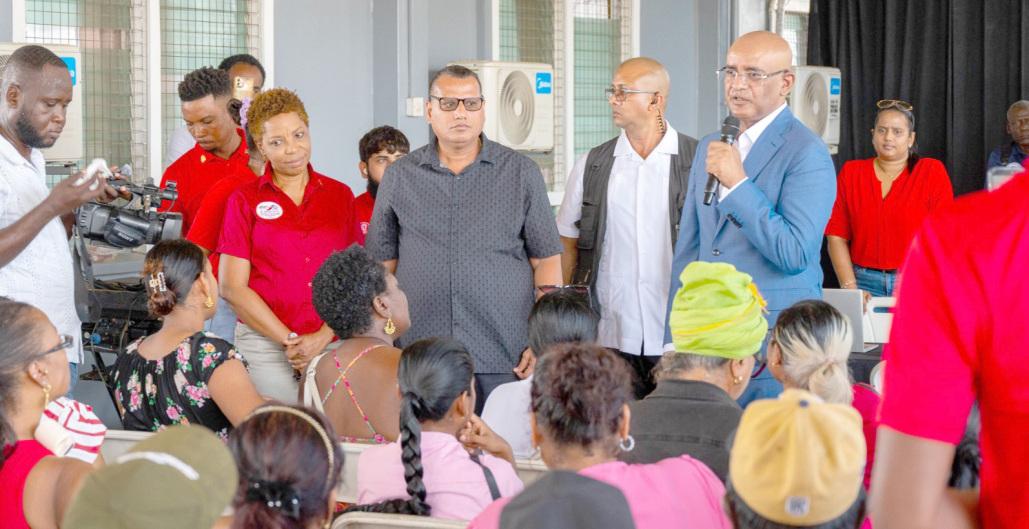
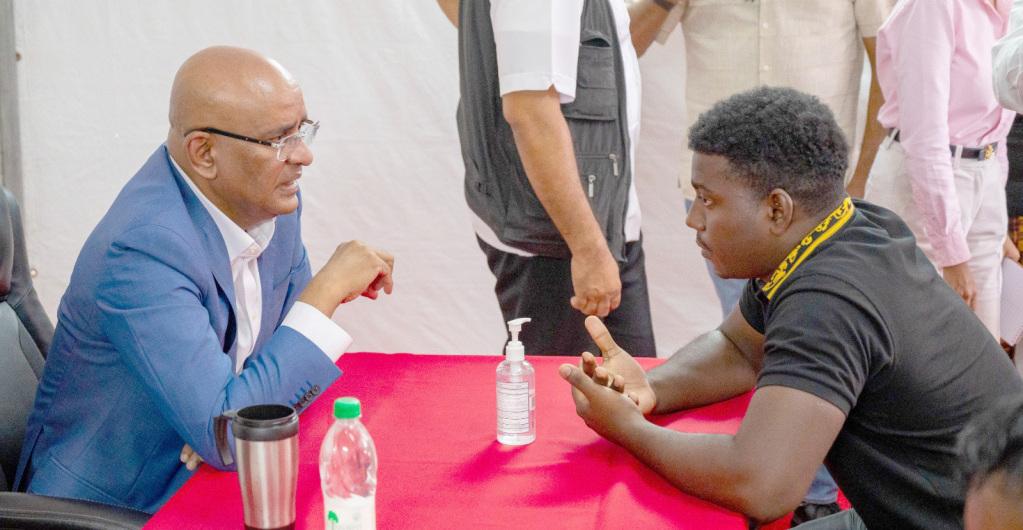



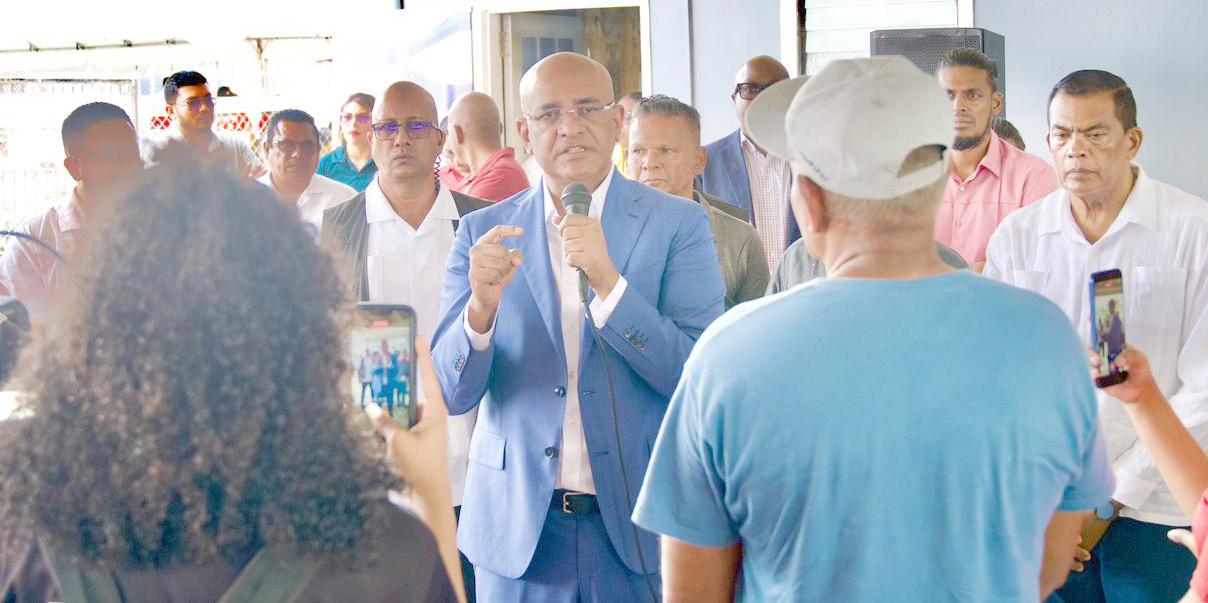
VICE- President Dr. Bharrat Jagdeo has assured the more than 12,000 small contractors on the government’s pre-qualified list that each of them will be allocated at least one contract before the year ends, including all 530 who qualified in Region Five (Mahaica-Berbice).
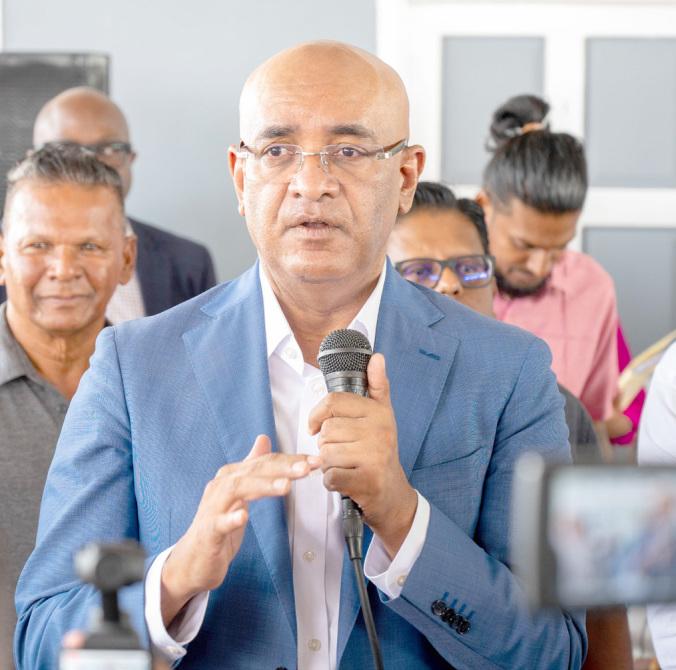
He was addressing the hundreds of residents who, in their numbers, showed up for his Public Day outreach at the Regional Democratic Council (RDC) office in Fort Wellington.
The vice-president traced the assurance back to a commitment in the 2025 elections Manifesto to put small works in the hands of far more people.
“If you’re on that pre-qualified list, you are in good shape,” he said.
Dr. Jagdeo said the government threw the pre-qualification process
open to the public after complaints that the earlier pool of contractors was too narrow. The notice ran for a month, and was then stretched to three to give as many people as possible time to register Online.
The guarantee covers contracts valued below $15 million, which the government allocates rather than sends out to tender.
He explained that the choice was deliberate, because forcing contractors to bid for the smaller works would have left them in the hands of only a few. Anything above that figure still goes to open bidding, where a single project can pull 30 to 40 competitors for one award. For those who came away with nothing in the first round of allocations in the region, the Vice-President was clear that they have not been skipped. Contractors who received work the first time will not
be served again straight away, he said, and the government will instead move down the list to reach those still waiting.
“You have to wait your turn,” he told them, urging patience, and repeating that the work would reach them over the course of the year.
He had a firmer message for anyone who let the three-month window pass without registering.
They would have to wait for the next cycle, stating: “If you missed it, you missed the cycle for this year.” [DPI]
MORE than 500 students across Guyana have benefitted from the Small Business Bureau’s (SBB) Youth



Entrepreneurship Programme, which is helping to transform young people from job seekers into job creators.
The programme targets secondary school students and aims to foster an entrepreneurial mindset by exposing them to business development and management at an early age.
SBB’s Chief Executive Officer (CEO), Mohamed Shazim Ibrahim, disclosed this during an interview with the Department of Public Information (DPI) on Thursday.
Ibrahim explained that the initiative begins with training teachers, who then guide students through developing business ideas and preparing business plans.
“We visit schools and train teachers in business plan preparation and the fundamentals of operating a small business,” Ibrahim said.
Students are encouraged
to develop viable business concepts, which are submitted through their schools and assessed by the SBB in collaboration with the Ministry of Education. Successful participants receive monetary awards to support the development of their ideas.
According to the CEO, the programme has produced positive results over the years, with several student-led businesses continuing to grow beyond the classroom.
The SBB has also worked to ensure students in hinterland and rural communities have access to the same opportunities as those on the coast.
Over the past four years, the programme has been implemented in communities including Moruca and Santa Rosa in Region One, Sand Creek and Aishalton in Region Nine, and Orealla -Siparuta and Charity.
“We have spent the past
four years taking this programme to schools across the hinterland regions and other communities throughout Guyana. Our goal is to ensure that young people, regardless of where they live, can access entrepreneurial opportunities,” Ibrahim stated.
In addition to the Youth Entrepreneurship Programme, the bureau provides ongoing support through training in small business management, financial management and record-keeping, marketing and business plan preparation.
Students pursuing studies at tertiary institutions can also benefit from the SBB’s tertiary education grant programme.
Under the initiative, students who complete the Small Business Operations Certification and submit viable business plans can access grants of up to
—President Ali says seasoned diplomat has the experience, judgement and leadership needed to guide the United Nations through a complex global era
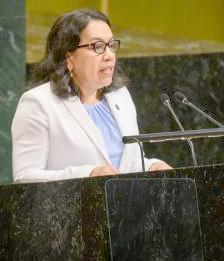
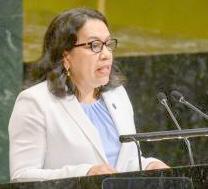
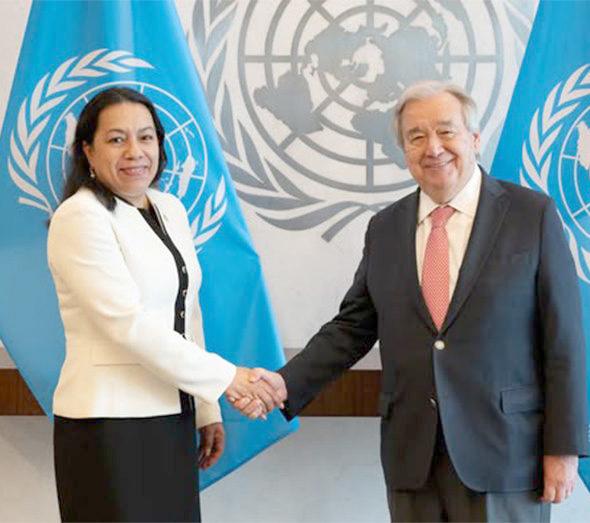
GUYANA has formally nominated its Permanent Representative to the United Nations, Carolyn Rodrigues-Birkett, for the position of Secretary-General of the United Nations, marking a historic moment for the country as it seeks to place one of its most accomplished diplomats at the helm of the world’s premier multilateral institution.
The announcement was made on Friday by President Dr Irfaan Ali, who said the decision comes as Guyana’s international standing continues to grow and reflects the country’s commitment to strengthening multilateral co-operation at a time of increasing global uncertainty.
“Guyana has decided to formally nominate Ambassador Carolyn Rodrigues-Birkett, Guyana’s Permanent Representative to the United Nations, for the position of Secretary-General of the United Nations upon the completion of the tenure of the current Secretary-General, Mr Antonio Guterres, on December 31, 2026,” President Ali said.
He noted that Guyana’s successful tenure on the UN Security Council from 2024 to 2025 demonstrated the country’s capacity to provide leadership on the global stage.
According to the President, Guyana consistently advocated for peace, dialogue, respect for international law and the peaceful settlement of disputes while serving on the
Security Council, earning international recognition for its contributions to discussions on some of the world’s most pressing issues.
Beyond its Security Council role, Guyana has become increasingly influential in global conversations surrounding climate change, environmental sustainability, food security, energy security, biodiversity conservation and sustainable development.
“As a country that has demonstrated that economic development and environmental stewardship can advance hand in hand, Guyana has become a respected voice in global discussions on balancing growth, sustainability and equity,” President Ali said.
The Head of State said the government believes it is
both timely and appropriate to put forward a candidate who possesses the credentials and leadership qualities necessary to guide the United Nations during a period of significant global challenges.
“In my estimation, Ambassador Rodrigues-Birkett has acquired the experience, expertise, judgement and diplomatic skills necessary to perform ably and effectively carry out the duties of Secretary-General of the United Nations,” President Ali stated.
Rodrigues-Birkett has served as Guyana’s Permanent Representative to the United Nations since 2020. During that period, she played a central role in Guyana’s participation on the Security Council and was instrumental in advancing the
country’s positions on international peace and security issues.
The President highlighted her leadership abilities, noting that her work at the United Nations has demonstrated a strong capacity for consensus-building, diplomacy and engagement with a wide range of international stakeholders.
He further underscored her extensive knowledge of the UN system, gained through direct involvement with the General Assembly, Security Council and other multilateral institutions.
Prior to her current role, Rodrigues-Birkett served as Director of the Food and Agriculture Organization (FAO) Liaison Office in Geneva from 2017 to 2020, where
she worked closely with international partners on food security, sustainable development and global co-operation initiatives.
She also served as the Minister of Foreign Affairs from 2008 to 2015 and previously held the portfolio of Minister of Amerindian Affairs from 2001 to 2008.
Throughout her public service career, Rodrigues-Birkett has been recognised for her work in advancing inclusion, social development, gender equality, indigenous rights and sustainable development.
President Ali said the next Secretary-General must be capable of rebuilding trust among member states, strengthening confidence in international institutions
and ensuring the United Nations remains effective in addressing modern global challenges.
“The government of Guyana believes that the next Secretary-General must possess not only a thorough understanding of the challenges confronting the international community, but also the ability to build trust among member states, strengthen confidence in multilateral institutions and lead the organisation with vision,” he said.
According to the President, Rodrigues-Birkett’s vision for the United Nations is centred on strengthening multilateralism, promoting inclusive global governance and enhancing the organisation’s responsiveness to challenges such as conflict prevention, climate change, food insecurity, sustainable development, humanitarian crises and emerging threats to international peace and security.
“The Government of the Co-operative Republic of Guyana will actively advocate for the candidature of Ambassador Carolyn Rodrigues-Birkett and engage with member states of the United Nations in support of her election as the next Secretary-General of the United Nations,” the President said. If successful, Rodrigues-Birkett would become the first Guyanese and among the few Caribbean nationals to serve as Secretary-General of the United Nations.
DURING a social media address, President Dr. Mohamed Irfaan Ali highlighted that approximately 40 young people in Region Nine have already expressed interest in expanding onion cultivation, with early technical support being coordinated through agricultural extension ser-
vices and emerging cluster-based arrangements.
“The facilitators are already reaching out to the Ministry of Agriculture extension office to help them to build out their capacity, help them to build out this project from a technical perspective,” the president said.
According to the president, the young onion producers will be organised into clusters where they will receive structured support, including mentorship, financial literacy training, technical guidance, and continuous monitoring from dedicated field-based credit officers and facilitators.
The model is intended to ensure that new and emerging farmers are not only financed but also actively guided through each stage of production and expansion.
“Here is where we will have large-scale farmers, we will have business leaders, religious leaders helping in the mentorship of
the clusters, in the mentorship of the individuals who are going to take these loans,” the president noted.
The Guyana Development Bank will provide interest-free and collateral-free financing while also embedding a strong support framework to reduce failure rates among start-ups and small enterprises. In the case of agricultural projects such as onion cultivation, the approach will allow farmers to scale from small plots to larger commercial production in a structured and sustainable way. (DPI)
EVEN as the global economy faces mounting uncertainty from geopolitical tensions, rising energy
prices and slowing growth, Guyana is expected to remain one of the world’s standout economic per-


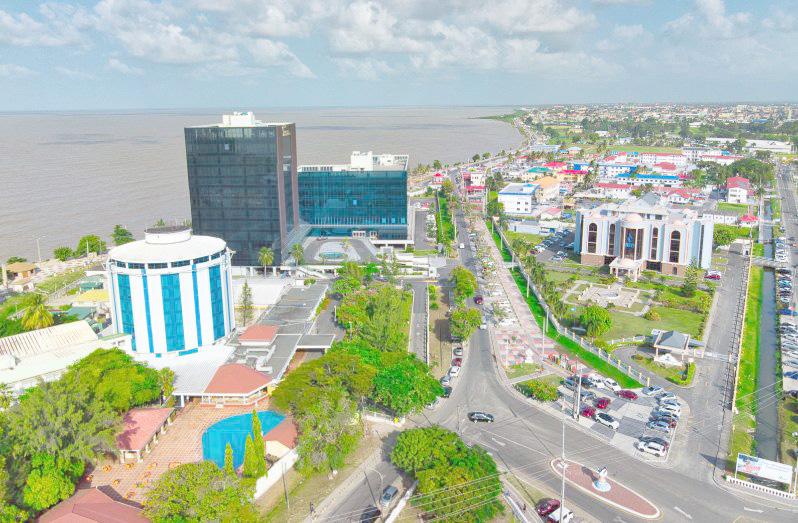
The assessment was made in the World Bank’s June 2026 Global Economic Prospects report, which painted a cautious picture of the global economy while singling out Guyana as a bright spot in the Latin America and Caribbean region
formers, with the World Bank projecting that the country’s economy will continue to record exceptional growth on the back of expanding oil production.
The assessment was made in the World Bank’s June 2026 Global Economic Prospects report, which painted a cautious picture of the global economy while singling out Guyana as a bright spot in the Latin America and Caribbean region.
According to the report, countries across the Caribbean are expected to face increasing pressure from higher fuel costs and inflation as a result of disruptions in global energy markets. However, Guyana’s rapidly expanding petroleum sector is expected to continue driving strong economic performance.
“In Guyana, growth is expected to remain exceptionally strong as oil production continues to expand,” the World Bank said.
The report comes at a time when Guyana’s oil industry continues to set records. From a standing start in December 2019, the country has increased production to more than 900,000 barrels per day in just over six years, making it one of the fastest offshore oil production ramp-ups in modern history.
Production from the prolific Stabroek Block now exceeds 900,000 barrels per day through the Liza Phase One, Liza Phase Two, Payara and Yellowtail developments, with several additional projects expected to come on stream over the next few years.
ExxonMobil Guyana, the operator of the Stabroek Block, holds a 45 per cent interest in the acreage. Its part-
ners are Hess Corporation, now owned by Chevron, with 30 per cent and China’s CNOOC, which owns the remaining 25 per cent.
The continued expansion of production has transformed Guyana into one of the world’s fastest-growing economies and a major emerging oil producer, generating billions of US dollars in revenues and attracting significant foreign investment.
While the World Bank warned that the global economy is being buffeted by the effects of conflict in the Middle East, which has triggered sharp increases in energy prices and renewed inflationary pressures, Guyana’s status as an energy exporter places it in a stronger position than many countries that rely heavily on imported fuel.
The institution projected that global economic growth would slow from 2.9 per cent in 2025 to 2.5 per cent in 2026, marking the weakest pace of expansion since the COVID-19 pandemic. Emerging market and developing economies are also expected to see slower growth this year as higher energy costs, tighter financial conditions and weaker trade weigh on economic activity.
Across Latin America and the Caribbean, growth is projected at 2.2 per cent in 2026 before improving modestly in the following years. The World Bank noted that most Caribbean economies remain vulnerable to elevated fuel prices because they are net energy importers. Nevertheless, economic activity in the sub-region is expected to strengthen on the back of tourism recovery and resilient domestic demand.
Guyana, however, continues to chart a different

ment tied to fourth-quarter 2025 production, under Guyana’s fixed two per cent royalty mechanism within the production sharing agreement.
Under the country’s petroleum framework, profit oil represents the government’s share of crude after cost recovery, with revenues deposited into the Natural Resources Fund (NRF) and reported on a cash basis.
course.
The report classified Guyana among the world’s energy-exporting emerging market and developing economies, underscoring the country’s growing role in global energy markets.
The latest forecast adds to a growing body of international assessments that continue to identify Guyana as one of the fastest-growing economies globally, driven by increasing crude oil production and sustained investments in infrastructure, energy, housing, healthcare and other transformative sectors.
Back in April, the World Bank’s Latin America and the Caribbean Economic Update – April 2026 had reported that Guyana remains the standout performer in the region, with projected growth of 16.3 per cent in 2026, continuing a multi-year trend of extraordinary expansion. This double-digit growth is forecasted to continue in 2027 to 23.5 per cent.
Guyana recorded more than G$159 billion in oil revenues during the first quarter of 2026, according to figures published in the Official Gazette, with receipts covering the period December 30, 2025, to March 31, 2026.
The Ministry of Finance reported that the bulk of the inflows came from profit oil earnings across ExxonMobil-operated developments, including the Liza Destiny, Liza Unity, Prosperity and One Guyana floating production, storage and offloading (FPSO) vessels.
Individual cargo payments ranged between G$12.3 billion and G$15.1 billion, reflecting sustained production levels offshore.
A significant portion of the earnings came from a G$23.1 billion royalty pay-
Earlier this year, World Bank Country Director for the Caribbean, Lilia Burunciuc, had emphasised that Guyana has moved from being one of the lowest-income economies in the hemisphere to one of the fastest-growing in the world, while seeking to ensure that the benefits of growth are broad-based and sustainable.
Burunciuc recalled first visiting Guyana almost five years ago, just as the country was preparing to receive its first oil revenues. She noted that at the time, Guyana’s income per capita was among the lowest in the region.
“Almost five years ago, Guyana was the first country I came to in the entire region, and it was the moment when Guyana discovered oil and was preparing to start receiving the revenues, but it was still a country which had one of the lowest income per capita in that hemisphere,” she said.
The World Bank official said the transformation since then has been striking, citing rapid growth, improved living standards, and a visible shift in the physical landscape.
Recent years have seen major investments in transport and hospitality infrastructure, including new bridges, upgraded roads and hotel developments, helping to support both domestic connectivity and international business.
“I could feel the change in the air. The change was coming. And five years later, when I see the country, the country has changed,” she said adding: “The country is very different from what it was five years ago. I can only imagine what this country will be in another five years or 10 years. The development is remarkable.
I must commend the government for investing in what really matters when you have an economy that gets significant revenues.”
THE Ministry of Housing and Water, through the Central Housing and Planning Authority (CH&PA), has engaged several international law enforcement agencies, including INTERPOL and the Federal Bureau of Investigation (FBI), as efforts continue to locate and hold contractor Omar Malik accountable over allegations linked to the failed construction of the Young Professionals Homes.
In a statement issued on Friday, the Ministry said it remains committed to pursuing “all available legal, administrative, and international avenues” to ensure justice for affected homeowners and families impacted by the actions of Malik and his company, DreamVu Homes.
According to the Ministry, concerns surrounding Malik’s failure to fulfil contractual obligations have been under active investigation for an extended period, well before the matter became the subject of recent public discussion.
The Ministry noted that several public notices were issued through social media platforms and national newspapers, including notices published in August 2025,

calling on Malik to report to the Ministry to address outstanding financial matters. After those efforts reportedly failed to secure compliance, formal reports were submitted to the Guyana Police Force (GPF).
The Ministry further disclosed that following Malik’s departure from Guyana, its Enforcement and Compliance Department escalated the matter internationally by sharing relevant information with a number of regional and global security agencies. Among the agencies now engaged are INTERPOL, the FBI, and the Caribbean Community Implementation Agency for Crime and Security (CARICOM IMPACS), along with other international authorities.
“Due to Mr. Malik’s departure from the jurisdiction, the Ministry’s Enforcement and Compliance Department has formally engaged regional and international security organisations. Relevant information has been shared for immediate review and cross-border action,” the Ministry stated.
Officials said they have maintained close contact with affected homeowners, and continue to explore lawful avenues to assist those impacted, while supporting ongoing investigations and efforts aimed at securing resolutions.
The Ministry acknowledged that the situation has caused significant distress for affected families but maintained that every effort has been made to respond swiftly and responsibly.
It also rejected suggestions that authorities had been inactive in addressing the matter, describing such claims as inaccurate and dismissive of the work already undertaken.
“Groundless assertions that regulatory bodies have remained passive are not only entirely false, but they also disregard the extensive, multi-agency legal framework currently operating to
apprehend the individual in question,” the Ministry stated.
The Ministry said it has exercised due diligence
throughout the process, acting in accordance with legal procedures and cooperating fully with relevant authorities.
It reaffirmed its commitment to transparency, accountability and the protection of citizens’ interests as investigations continue.
Bryan “Big Foot”
Leitch was, on Thursday, sentenced to 25 years’ imprisonment for the 2013 murder of Georgetown hotel proprietor, Joseph Jagdeo, bringing to a close a case that has spanned more than a decade through Guyana’s court system.
The sentence was imposed by Justice Gino Persaud at the High Court in Demerara following Leitch’s recent conviction for murder by a 12-member jury.
The prosecution team comprised State attorneys Delon Fraser, Mtumika Lumumba and Padma Dubraj, while attorney Excellence Dazzell appeared for the defence.
Leitch’s conviction came during a retrial ordered after the Court of Appeal overturned an earlier 2018 manslaughter conviction and 33year prison sentence imposed in the matter.
At the conclusion of the retrial, the jury found Leitch guilty of murdering Jagdeo,
a well-known Georgetown businessman who owned the South-Central Hotel at Lot 218 South Road.
Jagdeo, popularly known as “Joey”, was 62 years old when he was killed in November 2013. According to evidence presented during the trial, Leitch had been staying at the hotel on November 13, 2013, accompanied by a female companion.
The court heard that Jagdeo later realised his cellular phone was missing and confronted Leitch about the matter. The confrontation reportedly escalated, leading to the fatal attack.
The following day, a caretaker employed at the hotel attempted to enter Jagdeo’s room to carry out routine cleaning duties but discovered that the door was locked.
After gaining entry, the caretaker found the businessman dead beneath a bed.
His hands and feet had been bound with pillowcases and he had been gagged. A post-mortem examina-
tion conducted by Government Pathologist, Dr Nehaul Singh, determined that Jagdeo died from haemorrhage caused by blunt trauma, coupled with suffocation and compression to the neck.
Leitch was only 19 years old when he was initially charged in connection with the killing.
At his first trial, the jury acquitted him of murder but convicted him of the lesser count of manslaughter. He was subsequently sentenced to 33 years in prison.
However, following a successful appeal, the conviction was quashed and a retrial ordered.
The retrial ultimately resulted in a murder conviction.
Since his arrest, Leitch has spent nearly 13 years in custody as the matter moved through various stages of the judicial process.
In the end, Justice Persaud sentenced Leitch to 25 years’ imprisonment, with credit to be given for the time he has already spent on remand.


THERE is a need and timeliness to the debate on the proposed Guyana Development Bank Bill.
Any institution responsible for managing public resources and providing financing for economic development must be subject to rigorous public scrutiny.
But no valuable debate can be based on assumptions about the failures of development banks elsewhere, only on a careful reading of the legislation itself.
Much of the criticism seems to be based on the historical record of state-led financial institutions.
Development banks have often stumbled worldwide when lending decisions became subject to political influence, patronage or short-term expediency.
And these are legitimate concerns. But the key question is whether the Guyana Development Bank Bill repeats those mistakes or tries to avoid them.
A close reading of the proposed legislation suggests that its drafters were very conscious of these dangers and built deliberate safeguards into the legislation to address them.
One of the most important aspects of the Bill is the separation between lending decisions and political authority. The Minister responsible for finance has powers over appointments and regulatory oversight
but the power to establish credit policies, to determine risk and to approve lending frameworks are vested in the Board of Directors. This distinction is important because it creates an institutional barrier between the executive branch and the technical processes that determine the distribution of credit.
The Bill also mandates the establishment of formal credit policies governing eligibility, risk assessment, approval procedures, monitoring and recovery.
These provisions are not just administrative requirements; they create a transparent, rules-based framework that limits discretionary decision-making.
This legislation reduces the scope for arbitrary intervention and therefore increases the likelihood that decisions on financing are based on economic merit rather than on political considerations.
Safeguards for debt restructuring and write-offs are equally important. The Bill provides that these actions must be taken under the supervision of the Board and in compliance with approved internal policies.
This reduces the likelihood of politically motivated concessions and increases the financial discipline of the institution.
The legislation also makes a distinction between governance and management. The
Board provides strategic oversight, and operational responsibility is vested in the Chief Executive Officer and professional staff.
This separation is in line with a core principle of good corporate governance that has stood the test of time: elected officials and policymakers decide on the overall framework, and trained professionals implement it.
This method encourages consistency, professionalism and accountability in lending decisions.
Another interesting point is the fact that the Bill focuses on small and medium-sized enterprises.
The legislation would also define who can access the Bank’s services, helping to keep the Bank focused on filling financing gaps for businesses that often struggle to get traditional sources of credit.
That concentration lessens the likelihood that the institution would serve as a conduit for favouritism in financing big, well-connected interests.
Accountability is also buttressed by audit requirements and oversight mechanisms. These provisions add an extra layer of scrutiny and help ensure the Bank’s operations remain transparent and consistent with established policies.
None of this is to suggest the Bill is above criticism or improvement. Parliamentary debate, stakeholder consultation and public engagement are required in the legislative process. Constructive criticism can help improve the final product and can increase public confidence in the institution.
But the grounds for criticism should be the substance of what is in the legislation, not fears based on historical experience alone.
The proposed Guyana Development Bank Bill seems to acknowledge many of the governance failures that have plagued development banks in the past and includes measures to prevent their re-occurrence.
Guyanese would do well to examine the opportunities and safeguards that exist within the Bill as the national discussion continues. Development banks are crucial in expanding access to finance, supporting entrepreneurship and promoting economic growth.
The ultimate success of the institution will depend not only on the strength of the legislation, but also on the integrity and professionalism with which it is implemented.
The Bill deserves careful consideration and informed debate, rather than alarmism.
Dear Editor,
ALLOW me to clarify some of the misunderstandings surrounding the Guyana Development Bank Bill that was recently tabled in parliament.
While scrutiny of any major financial institution is both necessary and welcome, commentary from a small group of critics appears to overlook a central fact: the proposed Bill has been deliberately designed to address the very weaknesses that historically undermined national development banks.
It is well established in the literature that development banks tend to fail primarily due to “directed lending”, where credit decisions are influenced by political expediency or personal patronage rather than the technical merit of projects. The drafters of this Bill have clearly taken this lesson seriously. At its core, the legislation establishes a robust institutional firewall between the executive branch and the technocratic machinery responsible for allocating the Bank’s funds.
Firstly, the Bill prevents the Minister responsible for finance from determining credit decisions and limits his power to the
appointment of the Board of Directors (see Clause 7(2)) and making regulations (see Clause 34(1)). It is the Board of Directors that is responsible for such decisions. Clauses 9(b) and (c) explicitly mandate that the Board of Directors, and not the Minister, assess risk and approve credit and governance policies, as well as safeguard the independence of credit decisions. In other words, while the Minister is allowed to set strategic parameters by way of regulations, these clauses insulate the Bank’s lending decisions from external directives and political interference.
An additional measure to preserve the Bank’s independence is introduced by the operational architecture proposed by the Bill. Clause 25(1), for instance, mandates that the Bank creates explicit credit policies to guide eligibility criteria, risk assessment, approval of thresholds, and monitoring and recovery (see Clause 25(2)). These clauses not only help formalise the lending process but also make it transparent and rules-based. In doing so, these clauses also limit discretionary decision-making and reduce the likelihood that management could be pressured to approve loans on non-commercial or political grounds.
Clause 26, which clearly limits debt restructuring and write-offs, is an equally important safeguard. This provision mandates that such actions be carried out under Board supervision and in accordance with approved internal policies, rather than arbitrarily. Therefore, the prospect of arbitrary or politically motivated concessions on debt restructuring and write-offs is eliminated by Clause 26.
The Bill clearly delineates the roles of the Board and Staff of the Bank. Under Clauses 25(1) and (2), the Board is tasked with strategic oversight and business planning, while Clauses 18 and 19 assign day-to-day operations to the Chief Executive Officer and technical staff. These clauses further entrench a merit-based lending culture to ensure that professional career technocrats - rather than political actors - drive project appraisal and credit allocation.
Moreover, by explicitly defining eligible small and medium-sized enterprises under Clause 2, the Bill prevents the Bank from being repurposed as a discretionary financing vehicle for large, well-connected firms. This is a critical safeguard in ensuring that the institution remains focused on addressing genuine market gaps.
Finally, all the Bank’s activities will be subject to audit scrutiny under Clause 29, reinforcing accountability and compliance at every level. Taken together, these provisions align closely with the governance frameworks of successful development banks. As a matter of fact, the Bill outlines a government framework consistent with best practices that will directly confront the historical pitfalls responsible for the failure of state-led financing institutions.
In view of the foregoing, the prevailing narrative of alarm expressed by some critics seems misplaced. Rather than undermining the initiative with speculative concerns, the national conversation would benefit from a more careful reading of the Bill and a more balanced appreciation of its safeguards.
The legislation does not ignore good governance and the factors that contribute to the failure of development banks. Instead, it makes sufficient provisions for good governance.
ON this day in 1980, a bomb secretly concealed in a transmitting set exploded on the lap of Walter Rodney, instantly killing him and seriously injuring his brother, Donald.
There was a Commission of Inquiry started under President Ramotar; when Granger became president in 2015, he ended the commission’s work.
Since Rodney was assassinated, there have been strange things that have happened in relation to the revolutionary comrades of Rodney in the Working Peoples’ Alliance (WPA) and a frenetic silence of the Rodney family in relation to these comrades.
The more the years go by, the more mysterious June 13 as part of Guyana’s calendar gets. Here are some areas of what I refer to as the inscrutable journey of June 13.
ONE -The closest comrades of Rodney joined the PNC to form APNU and became part of the government in 2015. During the reign of the WPA, all of Rodney’s trusted friends, who included Clive Thomas and Rupert Roopnaraine, agreed to end the commission’s work.
This comes close to betrayal because you have agreed that you do not want the world to know the facts of the assassination. The WPA tried to overthrow Burnham, then Burnham had Rodney killed, Burnham and his people denied involvement and actually claimed that the assassin, Gregory Smith, was a WPA terrorist, yet you chose to end the enquiry.
From 2015 to 2020, the WPA, now in government only observed one anniversary of Rodney’s death and that was in 2016, which Roopnaraine did not attend. During that period, the PNC observed the death anniversary of both leaders, Burnham and Hoyte.
Secondly, the role of Roopnaraine cries out for iconoclastic analysis. Roopnaraine died in February this year and all of his sordid secrets he took to his grave. Given his deportment from the time the PPP won power in 1992, there is a need to carefully examine his role in politics since he came on the scene in 1976.
Here are some facts on Roopnaraine that, strangely, the Rodney family is happy to be silent about. 1- Roopnaraine had a genuinely sound friendship with David Granger from the 1960s. Godwin McPherson told a prominent trade unionist that the army was involved in the murder
of Rodney. Did Roopnaraine ever approach Granger about what the army knew of Rodney’s death? 2- Roopnaraine had a long, secret relationship with the PNC during the time when the WPA was in confrontation with the Burnham government. 3- Roopnaraine refused to testify at the commission, using the asinine excuse that his closeness to Rodney would have made him too emotional to testify. 4- Ravi Dev has supplied evidence to prove that Roopnaraine tried to sabotage the efforts to have the commission during the Ramotar presidency.
5- One of two very high-level state security officers under Burnham who were named in the commission’s report as being involved in Rodney’s death turned up at Roopnaraine’s funeral. What relationship or friendship did Roopnaraine had with him for him to be there? I interpret his presence to mean that during the plan to kill Rodney, Roopnaraine knew this man. 6- Circumstantial evidence points to Roopnaraine’s involvement with foreign state security when he was a top leader in the WPA.
Space would not allow for me to elaborate, but I have offered such circumstantial evidence in other columns. I do believe that Roopnaraine was not a politically healthy activist. Bob Marley’s son said he believed that the CIA was involved in the attempt on his father’s life because of Marley’s revolutionary influence in the Caribbean.
By the same token, we should consider if the CIA was one of the planners in Rodney’s assassination and if Roopnaraine was involved. I share Ravi Dev’s public sentiment that when Roopnaraine was an Indo-Saxon elite student at Cornell University, he was probably recruited by the CIA. 7- The consensus in Guyana is that there were deeply placed moles in the WPA that led to WPA cadres being killed and some jailed. Elvin McDavid took a liking to me and subtly hinted that the Burnham government had highly prized moles in the WPA.
On this day, when the Rodney family holds a candlelight moment of silence for him under the rubric of the Walter Rodney Foundation, it is time the Rodney family and the foundation take the shame from their eyes and begin doing the politically decent thing and level with the Guyanese people
as to what the family thinks about betrayal activities in the WPA that led to Rodney’s death. If they continue their sordid silence, then one could say that poor Walter was betrayed by everyone around him.
DISCLAIMER: The views and opinions expressed in this column are solely those of the author and do not necessarily reflect the official policy or position of the Guyana National Newspapers Limited.

See page 8
THE parliamentary committee system is now fully in motion following the nomination of members to the National Assembly’s committees. Speaker of the National Assembly Manzoor Nadir announced that meetings have been scheduled for Monday, June 15, to elect chairpersons and advance the legislative agenda.
Speaking during a recent interview on the National Communications Network (NCN), Nadir described the development as a significant step in the work of the 13th Parliament and a key part of the country’s parliamentary democracy.
“On Monday, the Speaker has to convene the first meeting of most of the committees which he doesn’t chair, so a chairperson could be elected,” Nadir explained.
He noted that approximately 10 committees are expected to meet to elect their leadership.
“So, on Monday, we have scheduled the meetings to elect the chairperson. I think
it might be about 10 committees which the Speaker doesn’t chair. He elects those chairpersons,” he added.
The Speaker stressed that the committee appointments made after the June 5 sitting of the National Assembly were crucial to ensuring Parliament’s work continues beyond plenary sittings.
Nadir stated, “What we saw on Friday (June 5) was very, very significant in this dynamic process of parliamentary democracy.” According to him, the committee structure is a distinctive feature of Guyana’s parliamentary system.
“Our Parliament has 14 committees, and it’s unique in the Caribbean — the Commonwealth Caribbean — very unique,” he said.
Among the committees are standing committees responsible for oversight of economic services, foreign relations, social services and the security sector, as well as the Public Accounts Committee, which examines government expenditure.
Nadir disclosed that after
the fourth sitting of Parliament on June 5, a meeting was held to nominate members to the remaining 13 parliamentary committees.
“After the plenary session or the fourth sitting of Parliament, a meeting was convened to nominate the members of the remaining 13 committees of Parliament,” he explained.
The Speaker indicated that the committee meetings scheduled for Monday will help prepare the ground for future sittings of the National Assembly and the consideration of new legislation and parliamentary business.
“The pipeline for sittings has been loaded,” Nadir declared.
He explained that the parliamentary system is now positioned to deal with a range of matters, including questions to ministers, bills and financial papers.
Nadir indicated that the next sitting of the National Assembly is expected to address a number of pending matters, including responses to parliamentary questions,

the second reading of bills and the possible consideration of the Supplementary
Financial Paper tabled by the Senior Minister in the Office of the President with Responsibility for Finance, Dr Ashni Singh. Nadir added that the coming weeks are expected to see a steady flow of parliamentary business.
He noted: “We will have this ongoing process now where not only more questions will come, but more bills will come for first reading, more motions will migrate, including opposition motions, will migrate onto the Order Paper.”
The Speaker also used the interview to reject claims that Parliament has been inactive between sittings, arguing that committee work, scrutiny of reports and the processing of parliamentary questions
continue throughout the year.
Nadir maintained that parliamentary work has continued steadily since the convening of the 13th Parliament, revealing that more than 400 questions have been submitted by Members of Parliament, with over 150 qualifying for inclusion on the Order Paper after review.
He emphasised that the activation of the committee system marks another important stage in ensuring Parliament remains prepared to process legislation, scrutinise government actions and represent the concerns of citizens.
“To get that first business sitting moving forward outside of the budget, you have to load up the pipeline,” Nadir said.

MACKENZIE High School, on Friday, emerged as the winners of the 2026 J.O.F. Haynes Memorial Inter-Secondary Schools Debating Competition, a prestigious event that promotes intellectual growth, public speaking and analytical thinking among secondary school students.
Named in honour of J.O.F. Haynes, a distinguished Guyanese legal luminary and advocate for education, the competition was established in 1988 and continues to serve as a platform for developing future leaders and policy influencers.
In the final round, Mackenzie High School, debating as the opposition, faced off against the proposition team from Three Miles Secondary School.
The moot debated was: “The implementation of universal basic income from oil revenue is the most effective way of eliminating poverty in Guyana.”
At the conclusion of the debate, Mackenzie High School secured victory with a total of 318 points, while Three Miles Secondary School earned 247 points.
Representing Mackenzie High School were Nephlyah Farrel, Tahir Gomes and Rhea Persaud, while Three Miles Secondary School was represented by Richard Mohabeer, Mia Shanks and Bhavani Sieucharran.
Farrel was adjudged Best Debater of the competition.
The final was described as a celebration of intellectual curiosity, critical thinking, effective communication and respectful dialogue. The competition provided students with an opportunity to examine important national issues, strengthen their research skills, evaluate opposing viewpoints and express themselves with confidence and clarity.
Chief Judge of the 2026 competition, Colette Horatio, in announcing the winner and delivering closing remarks, commended participants for their performance throughout the contest.
She noted that debaters demonstrated strong use of rhetoric, research and supporting evidence.
She also praised the quality of language displayed by participants.
“Good language was on display this morning in most instances. We did not have too many slips. Engagement with the audience in some instances could have been better, but generally good. The ideas brought forward were well linked to the thesis statement,” she added.
Horatio encouraged students who intend to participate in future debates to avoid excessive reading from prepared notes, engage more directly with audiences and pay closer attention to time management. Meanwhile, Assistant Chief Education Officer for Secondary Education, Sherwyn Blackman, urged students interested in debating to prepare thoroughly and make use of the support available from their teachers.
He encouraged aspiring debaters to develop and refine their speeches and to continue practising in order to improve their skills and confidence.
“We were greeted with lots of research and citation. Those were very good. They were generally relevant to the topic and helped to support the arguments presented,” Horatio said.
VICE President Dr Bharrat Jagdeo has assured Region Five residents that all persons who applied for house lots before December 2025, and even some applicants from 2026, will receive their allocations by the end of 2027 as the Government moves to address the region’s housing backlog.
The commitment was made during the Vice Presi-
will get their houselots. So that’s a commitment we’re making,” Dr Jagdeo told residents.
He explained that while the Government remains committed to meeting housing demand, one of the major challenges in Region Five is the limited availability of state-owned lands suitable for housing development.
“We’re looking for the
Dr Jagdeo assured residents that the administration is prepared to acquire private lands and invest in the infrastructure required to develop new housing schemes.
“I can assure you that once you applied before December 2025, and even for some people who have applied in 2026, the latest you will get your houselot will be by the end of next year. That
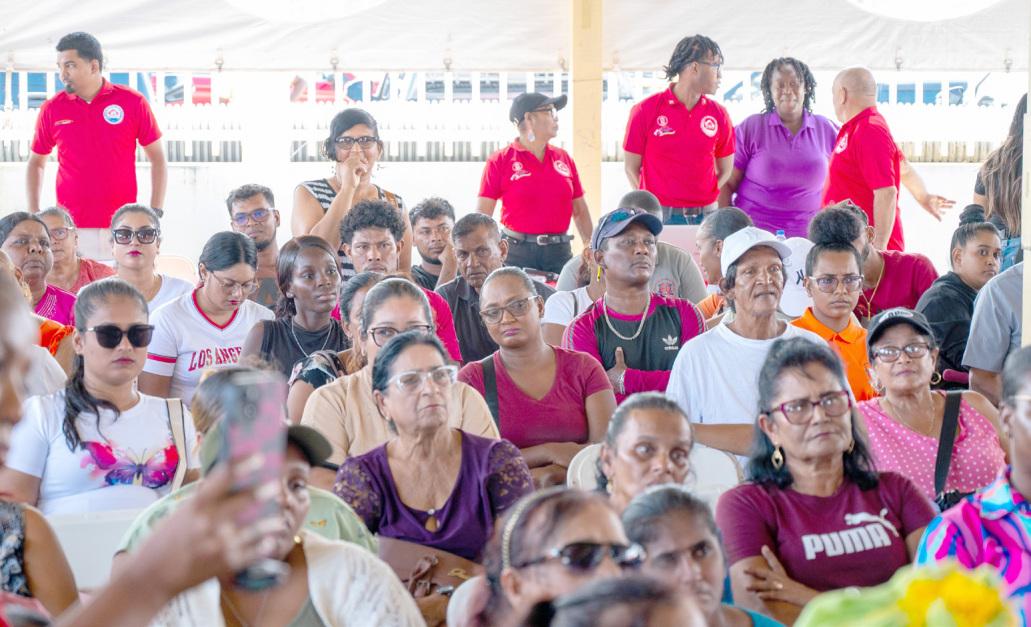
dent’s public outreach in the region on Friday, where he addressed residents and officials at the Regional Democratic Council’s compound in Fort Wellington, West Coast Berbice.
“So, by the end of next year we can clear everybody who have applied; they
land now to buy from private people to convert into housing. But the unfortunate thing about this region is the Government doesn’t own much land. It’s all in private hands, so we would have to buy land now to do that,” the Vice President said.
Despite this challenge,
Over 500 students benefit from SBB’s ...
From page 2
$400,000 to establish their businesses.
Additionally, the SBB will host a summer training programme for students who have recently completed their Caribbean Secondary Education Certificate (CSEC) and Caribbean Advanced Proficiency Examination (CAPE) studies.
The week-long programme will provide participants with practical knowledge in entrepreneurship, taxation, National Insurance Scheme requirements and other key aspects of business operations.
He also noted that the programme remains accessible to all students, including those from vulnerable backgrounds and the disability community. Women account for nearly 70 per cent of participants.
The Youth Entrepreneurship Programme forms part of the government’s broader efforts to equip young people with the skills and resources needed to establish sustainable businesses and contribute to Guyana’s economic development. [DPI]
is a commitment we made because we’re going to purchase the land and develop it,” he stated.
Against this backdrop, he encouraged residents attending the outreach to engage directly with officials from the Ministry of Housing to resolve outstanding matters relating to their applications.
“Today I want you to sit, talk to the staff here and please let everyone know where they stand. Every one of you, so you have a clear idea,” he said.
The Vice President noted that senior government officials, including ministers and housing personnel, were present throughout the day to work through residents’ concerns.
Meanwhile, Dr Jagdeo revealed that the Government is preparing to launch a major housing assistance initiative aimed at helping Guyanese build and improve their homes.
He noted that the programme was promised in the People’s Progressive Party/ Civic’s (PPP/C) 2025 manifesto and will be unveiled by
President Dr Irfaan Ali in the near future.
“Very soon, the President will launch a comprehensive programme. We promised in our 2025 manifesto that we want to assist people to build,” Dr Jagdeo disclosed.
According to him, the initiative will include support for social housing as well as direct assistance to home -
owners.
“The programme will speak about some social housing, and it will speak about the assistance that we will give. As soon as the President speaks more about this, the kind of assistance we will give to people to build and improve their homes [will be known],” he said.

THE investigative capacity of the Guyana Police Force’s Criminal Investigation Department (CID) has received a boost with the graduation of 36 ranks from the Junior Investigators Course 2/2026.
The four-week programme concluded on Friday at the Officers’ Training Complex after commencing on May 18, and formed part of the Force’s ongoing efforts to strengthen crime-fighting capabilities and improve investigative standards.
Addressing the closing ceremony, Deputy Commissioner ‘Law Enforcement’ Wendell Blanhum said the Guyana Police Force will continue investing in the development of investigators and exposing promising ranks to overseas training opportunities.
“We will continue to build capacity within the Criminal Investigation Department. Additionally, we’re going to identify young, talented and intelligent indi-

viduals and expose them to overseas training” he said, while reminding the ranks that “meritocracy will al -
ways be our guide within the Criminal Investigation Department”.
According to the Crime

Chief, the course was designed to strengthen investigative skills and prepare ranks to respond to emerging criminal threats, including organised crime and criminal networks.
Participants received training in homicide investigations, interview techniques, crime scene management, report writing, case file preparation, criminal law, laws of evidence, committals and inquests, among other areas.
The programme also in-
cluded practical exercises, real-life scenarios and exposure to emerging investigative tools and technologies.
Blanhum urged the graduates to remain disciplined and committed in carrying out their duties.
“Remain disciplined, remain committed, remain focused, and always bear in mind that you are all ambassadors of the Guyana Police Force,” he told the ranks.
He also emphasised the importance of teamwork among investigators and
other branches of the Force.
“We cannot work in isolation. When you go back to your respective divisions, work together with the traffic ranks, the general duty ranks and the special branch ranks. That is the only way within which we can be effective as investigators,” he said.
Lance Corporal Nickomo Blackman emerged as the top student, while Corporal George Fraser and Corporal Tanesha Johnson secured second and third places respectively.

The four-week programme concluded on Friday at the Officers’ Training Complex after commencing on May 18, and formed part of the Force’s ongoing efforts to strengthen crime-fighting capabilities and improve investigative standards
MINISTER of Parliamentary Affairs and Governance Gail Teixeira has defended the consultative process behind the Sexual Offences (Amendment) Bill 2026, saying the proposed legislation was subjected to extensive stakeholder engagement over a one-year period before being tabled in the National Assembly.
In a statement issued on Friday, Teixeira sought to address what she described as misinformation circulating on social media and other public platforms regarding the Bill, which was presented for its first reading on June 5.
According to the minister, the amendment bill was developed through a comprehensive process involving government ministries, legal practitioners, civil society organisations, professional bodies, faithbased groups, regional representatives, and members of the public.
“I believe that in the interest of removing a lot of misinformation, I am duty-bound to inform the public and to report in detail on the broad and widespread consultative process on this amendment bill which was implemented between 2024 and 2025,” Teixeira stated.
The Sexual Offences (Amendment) Bill was tabled by Minister of Human Services and Social Security Dr. Vindhya Persaud on Friday, June 8, and seeks to strengthen protections for victims of sexual violence, while introducing Guyana’s first National Sex Offenders Registry aimed at improving victim protection, enhancing accountability and closing legislative gaps identified within the criminal justice system.
According to Teixeira, the review of the Sexual Offences Act formed part of the broader Support for the Criminal Justice System Programme, an initiative implemented by the Ministry of Legal Affairs with support from the Inter-American Development Bank (IDB).
She explained that although the Sexual Offences Act introduced significant reforms when it was enacted in 2010 and amended in 2013, there was a recognised need to revisit the legislation to ensure it remained responsive to changing societal realities and emerging challenges.
The minister noted that concerns over the prevalence of sexual violence
cases and the need to strengthen protections for victims prompted authorities to commission a comprehensive review of the legislation. A consultant was subsequently hired to identify legislative gaps, engage stakeholders, and recommend reforms.
One of the major recommendations emerging from the legal gap analysis was the establishment of Guyana’s first National Sex Offender Database, an issue that has generated significant public discussion in recent weeks.
Teixeira said the analysis examined international practices, and found that while sex offender registries exist in several countries, including Canada, Australia, New Zealand, South Africa and the United Kingdom, access to those databases is generally restricted to law enforcement agencies.
Trinidad and Tobago remains the only Caribbean jurisdiction with a system that allows limited public access to information on convicted sex offenders.
The review also highlighted concerns raised internationally about public registries and their potential implications for privacy and other human rights protections.
Teixeira stressed that the process to develop the legislation was not confined to technical experts but included broad public engagement.
She said the first phase of consultations involved legal and criminal justice practitioners, including the Director of Public Prosecutions, Assistant Director of Public Prosecutions, senior State counsel, State counsel, members of the criminal bar, and magistrates. Their recommendations formed the basis of the initial draft legislation. Consultations were then expanded to include government ministries and agencies whose work intersects with victim protection and the administration of justice. Invitations were sent to several ministers, including then Education Minister Priya Manickchand and Human Services and Social Security Minister Dr. Vindhya Persaud, seeking their comments and recommendations on the proposed reforms.
“This inter-agency approach ensured that the proposed amendments benefitted from multidisciplinary perspectives, and reflected
the practical realities of institutions involved in the prevention, detection, reporting, investigation, prosecution, and response to sexual offences,” Teixeira explained.
Following completion of the consultancy, the draft bill was disseminated through traditional and social media channels to encourage public feedback. Teixeira noted that in May 2024, Attorney General and Minister of Legal Affairs Mohabir Anil Nandlall publicly invited members of the parliamentary opposition and the wider public to review the draft and submit recommendations.
According to the minister, no response was received from the opposition despite the invitation being publicly extended.
She added that the draft legislation remained publicly available for nearly a year and attracted submissions from several organisations and individuals, including Red Thread Guyana, the Indigenous Delegation Against Domestic and Sexual Violence, Danuta Radzik, Vanda Radzik and Vidyaratha Kissoon.
A milestone in the consultation process was the National Stakeholders Forum held on July 3, 2024, at the Cara Lodge in Georgetown.
Teixeira said 103 agencies and organisations were invited to participate, with 62 confirming attendance. Participants represented all 10 administrative regions, government ministries, constitutional commissions, the Guyana Police Force, Guyana Defence Force, indigenous organisations, faith-based groups, trade unions, private sector bodies, medical professionals, civil society organisations and representatives of the LGBTQI community.
According to the minister, one of the most significant recommendations discussed during the forum was the establishment of a sex offenders registry.
“The establishment of the Sex Offenders Registry/ Data Base was welcomed by all participants as a major step forward in monitoring and tracking convicted offenders,” Teixeira stated.
On Wednesday, President Dr. Irfaan Ali directed that the Sexual Offences (Amendment) Bill be referred to a Select Committee of the National Assembly for further consideration.
says
The announcement was made by Vice- President Bharrat Jagdeo in a statement posted on Facebook, where he disclosed that both the President and Cabinet support making any sex offenders registry established under the legislation publicly accessible.
According to Jagdeo, the President believes that any register of convicted sex offenders should be open to the public, a position he said he strongly supports.
“President Dr. Irfaan Ali has instructed that the Sexual Offences (Amendment) Bill, presented in the National Assembly on June 5, 2026, be sent to a Select Committee. He has also indicated that it is his view, and that of the Cabinet, that any register of sex offenders must be public. I strongly share this view,” Jagdeo stated.
The President’s decision followed widespread public discussion on the legislation and calls from sections of society for convicted sex offenders to be publicly identified.
Teixeira, however, noted that participants at the July 2024 consultations had recommended a different approach.
“The issue of whether it should be open or not was also discussed and the recommendation was to have it closed with application for information on an offender,” Teixeira added.
Following the forum, recommendations were reviewed and incorporated into revised drafts of the legislation before being circulated once again among key ministers and technical stakeholders.
Additional consultations were conducted with police officers, prison officers, probation officers, state counsel and police prosecutors during a sensitisation exercise held in November 2024.
The consultation process was further expanded in April 2025 when the Ministry of Human Services and Social Security hosted a public awareness symposium at the Umana Yana during Sexual Assault Awareness Month.
Stakeholders used the forum to discuss proposed amendments relating to victim protection, investigative procedures and the establishment of the National Sex Offender Database.
Teixeira said the recommendations arising from those engagements were incorporated into the final draft before it was submitted to the Attorney General for review and finalisation.
She emphasised that the consultation process spanned approximately one year and involved a broad cross-section of Guyanese society.
“Noteworthy is that this intensive consultative

process on the Sexual Offences (Amendment) Bill spanned a period of one year involving the participation of a wide range of government ministers, stakeholders from a broad cross section of Guyanese society and technical practitioners and gate keepers,” Teixeira said.
She added, “It would be grossly incorrect to state that this bill was not subjected to the rigour of consultation and participation of the widest possible views.”
According to the minister, the Bill subsequently underwent scrutiny by the Cabinet Sub-Committee on Bills and Cabinet itself. However, its progress was interrupted by the dissolution of Parliament ahead of the 2025 General and Regional Elections.

STABLE employment, fair wages and stronger family support systems are among the most effective tools in preventing child labour, according to Minister of Labour and Manpower Planning, Keoma Griffith.
As Guyana joined the international community on
Thursday in observing World Day Against Child Labour, Griffith said efforts to eliminate child labour must go beyond enforcement and address the economic and social conditions that place children at risk.
“When families have access to stable employment,
fair wages, safe working conditions and meaningful opportunities, children are protected,” the minister said in a statement marking the observance.
He added that when adults are empowered through decent work, children are more likely to remain in school,
avoid exploitation and enjoy a safe and secure childhood.
World Day Against Child Labour, observed annually on June 12, was established by the International Labour Organization (ILO) to raise awareness of the need to eliminate all forms of child labour worldwide.


Griffith said child labour remains a serious social and moral issue that threatens education, limits opportunities and undermines the future of young people.
“No child should be deprived of education because of economic hardship. No child should bear burdens that rob them of hope, security and the joy of being young,” he said.
The minister noted that the Government continues to strengthen measures aimed at protecting children through labour oversight, legal protections, education initiatives and social support programmes.
He said the Ministry of Labour and Manpower Planning continues to enhance labour inspections and improve compliance with labour laws to ensure workplaces uphold standards that protect the rights and welfare of all citizens.
However, Griffith stressed that enforcement alone cannot solve the problem.
“Lasting progress requires partnership among government agencies, employers, workers’ representatives, educators, communities, parents and our international partners,” he said.
He added that Guyana’s economic transformation must be accompanied by social progress, decent employment opportunities and stronger protections for families.
The minister also underscored the importance of education in breaking the cycle of child labour.
“Every child in the classroom represents hope. Every child empowered through education strengthens Guyana’s future,” he said.
Griffith called on employers to remain compliant with labour standards, urged parents to prioritise their children’s education and well-being, and encouraged communities to report and reject all forms of child exploitation.
“Protecting children is not solely the responsibility of the Government. It is a shared national duty,” he said.
Reaffirming the administration’s commitment to child protection, Griffith said the Government will continue working to advance decent work, strengthen families and ensure every child has the opportunity to learn, grow and achieve their full potential.

By Indrawattie Natram
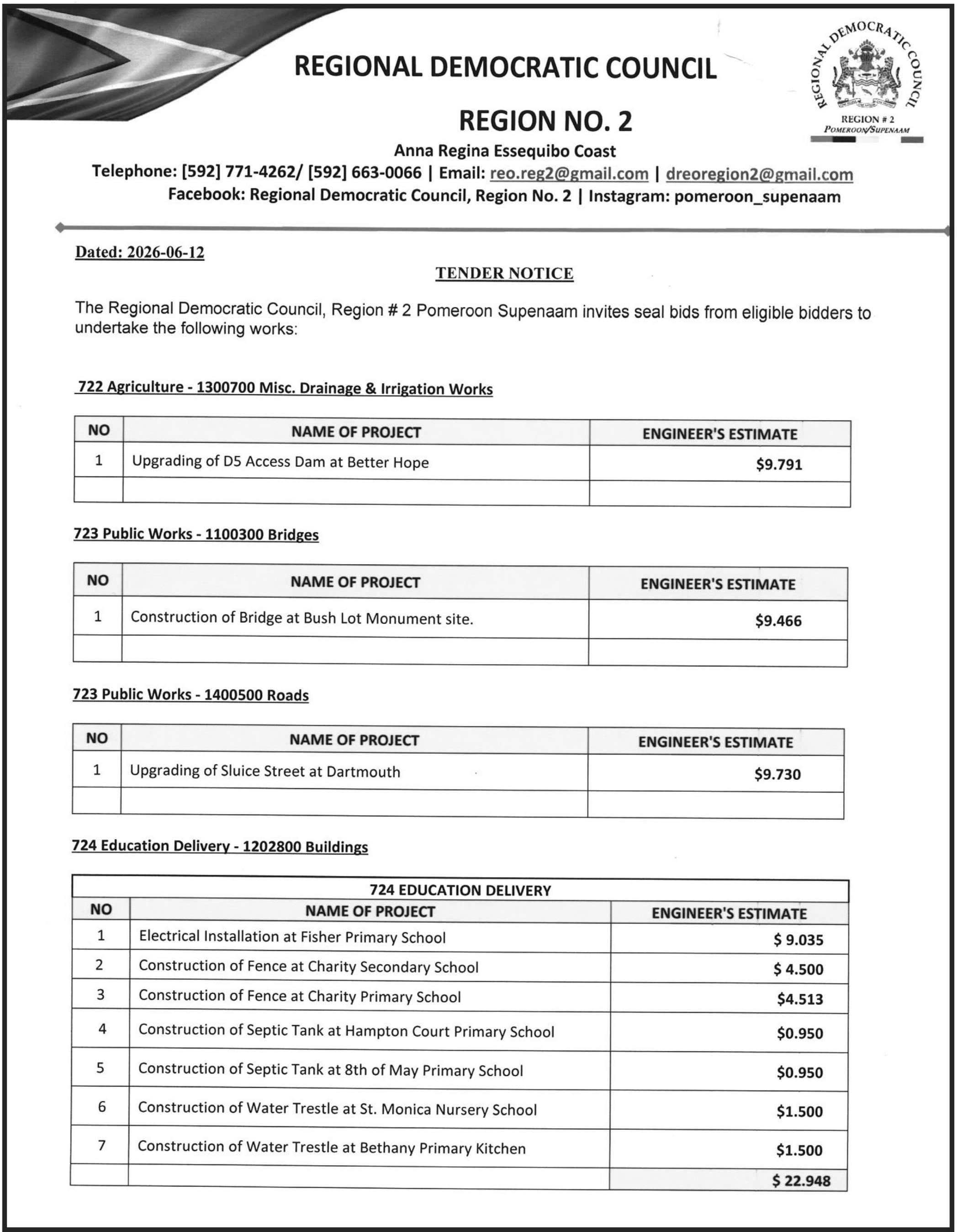
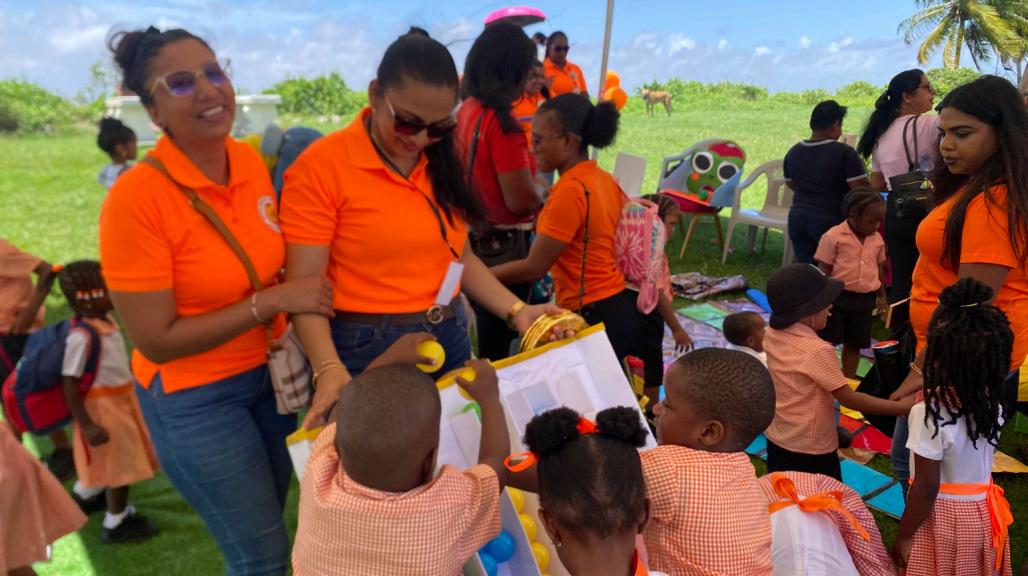
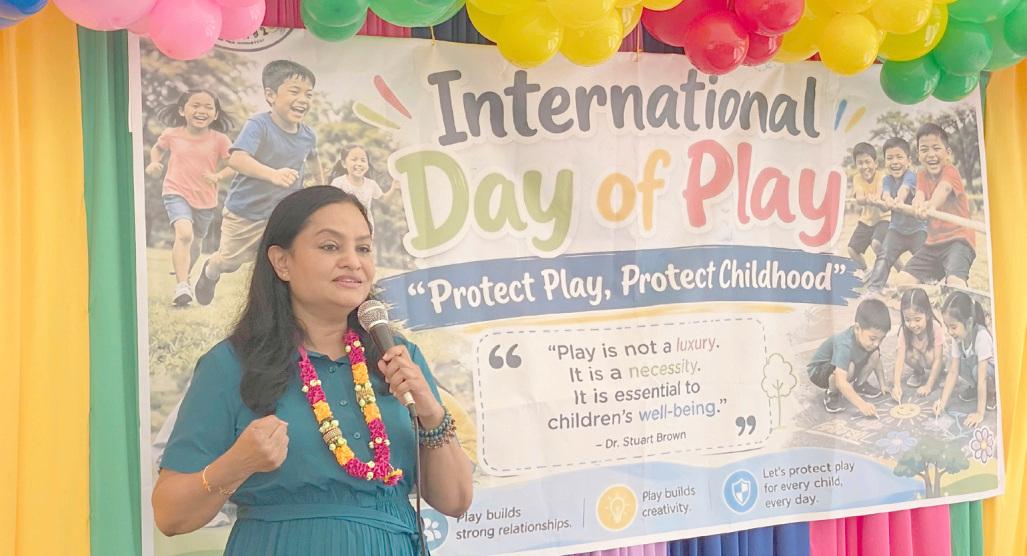
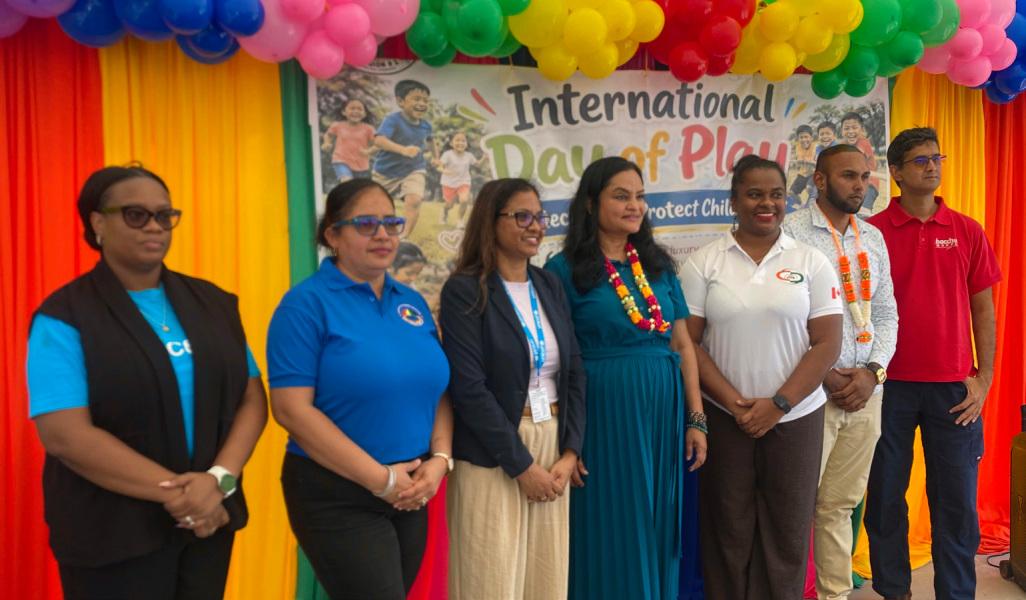
HUNDREDS of children, parents, teachers and community members gathered at the Imam Bacchus Play Park and Library in Affiance on Friday to celebrate International Day of Play 2026 under the theme, “Protect Play, Protect Childhood.”
The event, organised
dren with safe opportunities to play, noting that play should be purposeful, meaningful, inclusive and impactful. The minister also stressed the importance of teaching children kindness, acceptance and inclusion, particularly towards children with special needs.
“Play is synonymous with childhood,” Dr Persaud told the gathering.
reational spaces across the country, noting that First Lady Arya Ali has been instrumental in establishing several family-friendly recreational facilities, including a number of facilities in Region Two.
Director of Children’s Services, Levine Gouveia, welcomed attendees and underscored the significance of the observance.

by the Ministry of Human Services and Social Security through the Childcare and Protection Agency’s (CPA) Early Childhood Development Services Unit, highlighted the importance of play in the healthy growth and development of children.
Delivering the feature address, Minister of Human Services and Social Security, Dr Vindhya Persaud, emphasised that play is not merely recreation but a fundamental right of every child.
She urged parents and caregivers to provide chil-
“When children play, they learn important life skills, build friendships, develop confidence and strengthen their ability to overcome challenges. Success often comes after multiple failures, and play helps children build resilience.”
She also encouraged parents to carefully monitor screen time and create more opportunities for children to engage in outdoor activities, interact with others and express themselves creatively.
The minister highlighted the government’s commitment to creating safe rec-
ents, teachers, caregivers and communities must work together to create safe and stimulating environments where children can learn and thrive through play.
Gouveia also highlighted ongoing efforts to strengthen parenting programmes that promote healthy attachment and play-based learning while ensuring access to safe and inclusive recre -
best through creativity, exploration and imagination,” she said.
Persaud explained that play forms the foundation for lifelong learning, health and well-being. However, she warned that opportunities for free, safe and unstructured play are shrinking in many communities.
She encouraged parents to engage children in mean-
The activity zones provided opportunities for children to socialise, build confidence, develop teamwork and express their creativity.
Children also entertained the audience with a variety of cultural performances.
She explained that play is essential for children’s cognitive, social, emotional and physical development.
“Through play, children learn about themselves and the world around them. They develop critical thinking skills, creativity, communication abilities and social competence,” Gouveia said.
She noted that modern-day challenges such as increased screen time, academic pressures and limited outdoor activities have reduced opportunities for free and creative play.
As a result, she said par-
ational spaces such as the Imam Bacchus Play Park and other facilities along the Essequibo Coast.
Special remarks were delivered by representatives of the Government of Canada and UNICEF Guyana.
UNICEF Education Specialist, Fiona Persaud, emphasised that play is integral to a child’s development and is protected under the United Nations Convention on the Rights of the Child.
“Play is not something children should have to earn after learning. It is one of the ways children learn
ingful conversations during everyday activities, noting that these interactions help nurture development and strengthen family bonds.
UNICEF also expressed appreciation to the Government of Canada for its support through the Promoting Safe and Healthy Living and Learning Environments Project.
Throughout the day, children participated in a wide range of interactive activities, including creative arts, trivia competitions, board games, pretend play, songs, dances and various indoor and outdoor games.
Avni Persaud of Bacchus Pre-School delighted patrons with a dance presentation, while Keanu Alleyne and Mariya Ramnarine of Young Scholars Academy captivated the audience with a musical performance.
Students of the Anna Regina Special Needs School also earned enthusiastic applause for their vibrant dance item, while Athena Browne of Lotus Pre-School delivered a dramatic poetry presentation.
Among those attending were Region Two Chairman, Devin Mohan, Permanent Secretary of the Ministry of Human Services and Social Security, Erica Forte and
ta Gray.
TWO men are in police custody after ranks allegedly discovered quantities of suspected cannabis during a mobile patrol at Seventh Avenue, Bartica, Essequibo River.
Police said the discovery was made between 14:40 hrs and 15:00 hrs on Thursday, June 11, 2026, while officers were conducting patrol duties in the area.
According to investigators, ranks contacted the occupants
of a wooden passenger speedboat that was docked along the shoreline at Seventh Avenue.
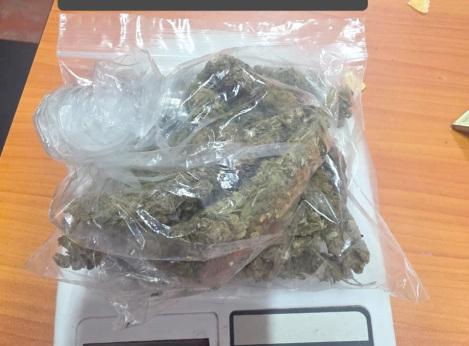
A search of the belongings of a 33-year-old fisherman of North Ruimveldt, Georgetown, reportedly led to the discovery of a quantity of leaves, seeds and stems suspected to be cannabis concealed in a blue Lays chips container.

Both men were arrested and escorted to the Bartica Police Station along with the suspected narcotics.
Police said the substances were weighed in the suspects’ presence and amounted to 46 grams and 24 grams respectively before being lodged.
The suspects remain in custody pending charges as investigations are ongoing.
A further search of a 35-year-old miner of Vreed-enHoop, West Coast Demerara, allegedly uncovered another quantity of suspected cannabis.
Police said the discovery was made between 14:40 hrs and 15:00 hrs on Thursday, June 11, 2026, while officers were conducting patrol duties in the area

A 33-year-old miner of Paramakatoi Village, Region Eight, is in police custody after ranks allegedly discovered ammunition in his possession during a joint operation in the Iwokrama Rainforest Reserve.
Police said the discovery was made on Thursday, June 11, 2026, during an exercise conducted in the Supuruni River area.
According to investigators, ranks stopped and searched a silver aluminium boat occupied by six persons.
During a search of the miner’s personal belongings, officers reportedly found a haversack containing a white plastic bag with four live 12-gauge cartridges.
The suspect was arrested and escorted to the Annai Police Station along with the
ammunition. The cartridges were lodged pending further investigations.
The suspect remains in police custody assisting with the investigation.
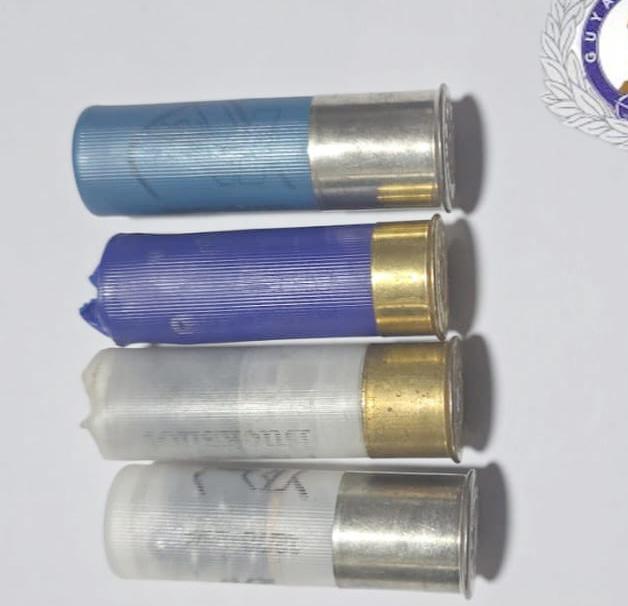
The four live 12-gauge cartridges allegedly found in a miner’s haversack during a joint operation in the Iwokrama Rainforest Reserve, Supuruni River area


By Indrawattie Natram
MINISTER of Human Services and Social Security
Dr. Vindhya Persaud has revealed that more than 600 individuals and groups have already signed up to participate in the Government’s Care Economy Initiative, a transformative programme aimed at creating employment opportunities while strengthening childcare and support services across Guyana.
Speaking to parents and caregivers during a visit to Region Two on Friday, Dr. Persaud said the initiative will soon be rolled out in several regions, including Region Two, as the Government works to establish community-based care centres in homes and community spaces.
The minister explained that the Care Economy Initiative is designed to address a growing need among working families by providing safe,
structured and nurturing environments for children. At the same time, it creates new income-generating opportunities for caregivers and community members who wish to offer care services.
“Many parents do not have a safe space to leave their children, and we are creating that so that people can benefit in many ways. Parents will be able to gain employment while knowing their children are in a safe, secure, educational and impactful environment,” Dr. Persaud said.
She noted that the programme goes beyond traditional childcare by providing opportunities for training and certification, enabling participants to develop skills in child development, caregiving, nutrition, safety and early childhood education.
These skills can help create sustainable employment while improving the quality of care available in communities.
Dr. Persaud said the ini-

tiative also seeks to recognise and support caregiving as valuable work that contributes significantly to families, communities and the national economy.
The minister highlighted that special attention is being given to families of children living with disabili-
ties. Through the programme, parents and caregivers will be supported in creating inclusive spaces where children can participate in learning, recreational and developmental activities close to home.
“Parents can come together and create spaces within their communities where children can come every day to learn, interact, develop social skills and receive the support they need,” she said.
Dr. Persaud encouraged residents to organise themselves into groups and take advantage of the opportunities being made available through the initiative, noting that community participation will be critical to its success.
She further disclosed that teams from the Ministry of Human Services and Social Security will be visiting communities throughout Region Two to engage residents on a range of social issues, including parenting, positive discipline, teenage pregnancy,
child protection and the prevention of child abuse.
According to the minister, these engagements are intended not only to educate but also to listen to the concerns and recommendations of residents.
“We believe in listening to people. The feedback we receive from communities helps us shape policies, programmes and legislation that respond to the real needs of citizens,” she stated.
The Care Economy Initiative forms part of the Government’s wider efforts to expand social services, support working parents, promote gender equality in the workforce and ensure that children receive the care and developmental support needed to thrive.
With more than 600 sign-ups already recorded, the programme is expected to play a significant role in strengthening families and communities across the country.

—welcomed a record 453,489 visitors in 2025 as it looks to build on growth through community partnerships and sustainable tourism
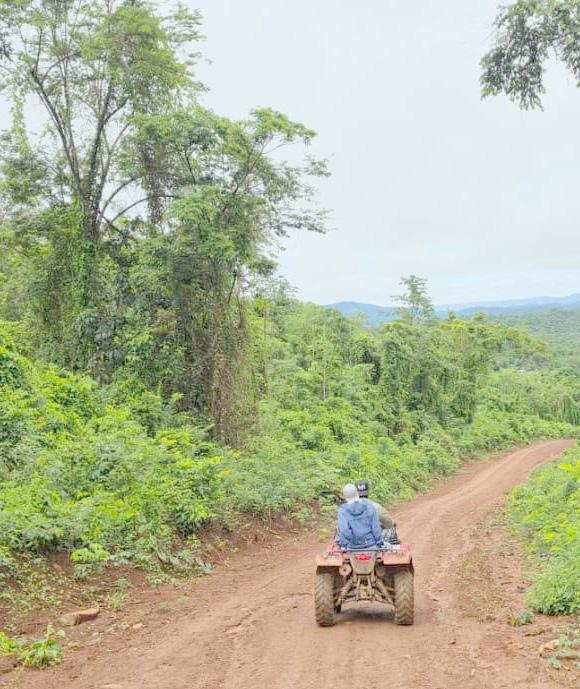
THE Guyana Tourism Authority (GTA) is celebrating 24 years of advancing tourism development in Guyana, working alongside communities and industry partners while showcasing the country’s people, culture and natural her-
itage to the world.
In a statement marking the milestone, GTA Director, Kamrul Baksh, said the anniversary represents more than the success of an institution; it reflects a shared vision for Guyana’s tourism sector and national development.
“As the Guyana Tourism Authority marks 24 years of service, we celebrate more than an institution. We celebrate a shared vision for Guyana,” Baksh stated.
He noted that tourism has become one of the most powerful ways
Guyana tells its story to the world while creating opportunities for communities, supporting small businesses and preserving the country’s cultural and natural heritage.
According to Baksh, as Guyana continues its transformation, tourism

has an important role to play in shaping a future that is inclusive, sustainable and distinctly Guyanese.
He stressed that the success of the sector should not be measured solely by visitor arrivals, but also by the opportunities created, heritage preserved and national pride inspired among Guyanese.
Reflecting on the sector’s progress, Baksh said the GTA has spent the last 24 years laying a strong foundation for tourism development.
“Today, Guyana is increasingly recognised as a destination that offers authenticity, adventure and meaningful connections with nature and culture,” he said.
Looking ahead, he reaffirmed the agency’s commitment to working closely with communities, stakeholders and industry partners to ensure tourism remains a driver of national development.
“Guyana Tourism Authority remains committed to working alongside our communities, stakeholders and partners to ensure that tourism continues to be a force for national development. Thank you to everyone who has contributed to this journey. The best
of Guyanese tourism is still ahead of us,” Baksh added.
GTA Deputy Director, Liloutie Mangra, who has been with the organisation for 21 years, described the milestone as a deeply personal one.
She noted that it has been rewarding to witness the growth of the sector from its early stages to what it has become today.
Reflecting on the agency’s achievements, Mangra highlighted Guyana’s record-breaking tourism performance in 2025.
“In 2025, Guyana recorded a historic 453,489 visitors. That is the highest in our country’s history and it speaks to the growing interest in Destination Guyana and the strong partnerships driving this sector forward,” she said. Mangra further revealed that over the years, the GTA has supported the development of 79 new tourism experiences across the country through training, product development and licensing support.
Reflecting on the 24 years, she acknowledged the staff of the GTA as well as tourism stakeholders and communities who continue to shape this journey for them.











AFTER a high-octane opening leg in Demerara that pushed local talent to its limits, the Future Warriors Tapeball Tournament caravan rolls into the Ancient County of Berbice this weekend.
The grassroots competition, powered by ExxonMobil Guyana, has taken up residency at the historic Albion Sports Complex, transforming the iconic venue into a four-pitch hotbed of developmental cricket.
The action bowls off simultaneously this morning with a packed Round One schedule.
Early marquee matchups see Belvedere Primary lock horns with Cropper Primary, while Betsy Ground Primary squares off against Massiah Primary.
It kicks off a relentless weekend of knockout cricket that will culminate in the grand Berbice Zone final on Sunday afternoon, before the tournament packs its bags for the newly developed Anna Regina National Stadium in Essequibo the following weekend.
The transition to Berbice comes on the heels of a highly competitive Demerara leg that exceeded organisational expectations.
FL Sport’s John Ramsingh reflected on the tournament’s impressive trajectory, emphasising the raw quality on display.
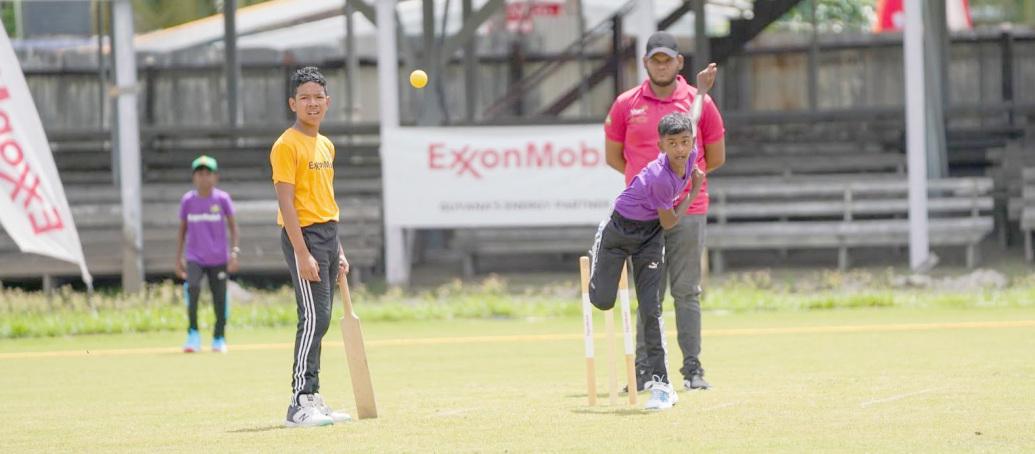
A
“The competitive nature of this tournament has been absolutely exceptional,” Ramsingh noted. “We’ve seen an incredible depth of raw talent in Demerara, where matches were fought right down to the wire. It highlights just how vital grassroots tapeball is for development. We are highly anticipating the same level of fierce rivalry and passion when the Berbice leg gets underway at Albion.”
A total of 16 schools—including local heavyweights like New Amsterdam Primary,
Albion Primary, All Saints Primary, and Rose Hall Estate Primary—will battle for regional supremacy.
To ensure the cricket remains the sole focus, organisers have completely levelled the playing field; all financial barriers have been dismantled, with playing kits, bats, meals, and transport fully funded through the joint venture between ExxonMobil Guyana and FL Sport.
Admission for spectators remains free
(FIFA) - Substitute Cyle Larin ensured that cohosts Canada would make a positive start to their tournament after securing a first-ever point on the global stage for Les Rouges against a resolute Bosnia and Herzegovina.
The Opening Match of Canada’s FIFA World Cup 2026™ had been heralded by pre-match cameos from Michael Buble and Alanis Morisette, yet it was the star quality of the Canadian substitutes that had the Toronto Stadium in raptures by the
end of this very watchable Group B contest.
Coach Sergej Barbarez had promised a motivational speech before the game and his Bosnian players responded well. Amar Memic sent an early chance over, and with the Dragons establishing superiority at set pieces, Sead Kolasinac’s flick from a corner enabled Jovo Lukic to head home.
Undeterred, Canada played with energy and endeavour. Yet when the ball ricocheted favourably for Jonathan David, the striker’s
low shot made for a comfortable Nikola Vasilj save. Tani Oluwaseyi had an even more inviting opportunity but blazed over despite time and space in the box.
Oluwaseyi lit up the start of the second half with a Cruyff turn and nearly scored with a header blocked by Nikola Katic. The Canucks were in full flow when Stephen Eustaguio, deputising as captain for the unused Alphonso Davies, played in Richie Laryea but somehow Kolasinac cleared the goalbound shot off the line. At the
other end, Maxime Crepeau saved at the feet of Ermedin Demirovic.
Jesse Marsch’s team were staying positive, boosted by a number of substitutions. It was the 76th-minute introduction of Larin that brought the equaliser and, ultimately, Canada’s first-ever World Cup point. The striker had only been on the pitch two minutes when he turned sharply to fire in from Promise David’s assist.
And he nearly won it in added time but was denied by Tarik Muharemovic.

throughout.
The tournament structure is unashamedly modern. Played in a frantic, eight-oversa-side knockout format, it rewards tactical flexibility and intent. In a progressive developmental twist, teams are encouraged to field mixed-gender XIs, deliberately integrating boys and girls on the same turf from a foundational level.
However, the event’s ambitions extend well beyond traditional boundary ropes. While the regional champions will receive comprehensive equipment bags for their schools, the top four teams in each zone will also receive digital tablets.
The initiative aims to fuse technology with on-field play, teaching young cricketers the mechanics of online match scoring and introducing them early to modern cricket metrics.
To bridge the gap between grassroots aspiration and the elite level, active Guyanese national cricketers have been deployed across the venue as team mentors.
For the youngsters on show, it provides direct, unprecedented access to role models who can guide them through the game’s tactical nuances in real time.

SOUTH AFRICA RACING TIPS GREYVILLE
08:25 hrs Mojo Man
09:05 hrs Amor Fati
09:40 hrs Vihaan’s
THE Guyana Bank for Trade and Industry (GBTI) is providing 3.5 million dollars in funding for the inaugural Beharry U-19 schools’ cricket competition.
The competition bowls off on June 13 and concludes in August, with the first stage featuring zone teams from every region.
Pernell Cummings, GBTI Senior Marketing Manager, said the tournament can harness new talent hence the company saw it fit to provide support to the youth competition.
“It was created by the Beharry group really to promote cricket among the youths in Guyana. GBTI is happy to be a part of
this tournament. As we celebrate 190 years under this banner, we hope that this tournament does lead to future talent for Guyana and potentially the West Indies team.”
Troy Peters, Petra’s representative, says that the tournament is unique and provides a great platform for young budding talent.
“The weather has not been very kind to us in Georgetown and along the coast, so the matches’ schedule for Georgetown, Berbice, and the East Coast has been rescheduled, but the tournament will definitely start this weekend in the Essequibo area.”
The Ministry of Education, through the unit of Allied Arts, is assisting with the
coordination of the competition around the country.
.Four matches will be played in Essequibo today.
Aurora Secondary will clash with Johanna Ceceila at Pomona ground with Abrams Zuil facing Cotton Field Secondary at Joe Jagmohan ground.
Hinterland team Santa Rosa will square off with Waramuri at Sheba ground while Charity Secondary will tackle Anna Regina secondary at Joe Jagmohan ground.
One game is also carded for West Demerara with Patentia Secondary meeting West Demerara Secondary from 09:30
hours.
Meanwhile, GBTI Senior Risk Officer, Tonia Griffith, handed over the sponsorship cheque to Kareshma Ramnauth of the Unit of Allied Arts of the Ministry of Education in the presence of Cummings and Peters.
The top 8 winning zone teams will then meet in a round-robin national segment, with the top four moving into a playoff.
A total of 80 teams are set to compete in the tournament with schools from regions 1, 2, 3, 4, 5, 6 and 7.
The competition is sanctioned by the Ministry of Education with support from the Ministry of Culture, Youth and Sports
THE ExxonMobil Guyana Global Super League (GSL) has secured a major promotional partnership with Cricket West Indies (CWI) ahead of this year’s tournament, which is scheduled to be held in Guyana from July 23 to August 1. As part of the agreement, the ExxonMobil Guyana Global Super League will be featured prominently on the front of the West Indies Men’s team shirts during their ongoing white-ball series against Sri Lanka.
The partnership is expected to significantly increase the tournament’s visibility across the Caribbean and internationally, utilising the global reach of West Indies cricket to promote the competition in the lead-up to its third edition.
Chairman of the ExxonMobil Guyana
Global Super League, Sir Clive Lloyd, welcomed the collaboration and highlighted the shared spirit between the tournament and the West Indies team.
“The ExxonMobil Global Super League is very pleased to support the West Indies Men during what promises to be a thrilling series in an exciting summer for West Indies cricket,” Lloyd said.
“We have recently released a campaign on the theme of ‘Super We’ and this can now be extended to ‘Super WI’! We wish the team every success in the Series and are proud to be involved.”
CWI’s CEO Chris Dehring welcomed the partnership and highlighted its significance for the regional game as an example of Caribbean entities working together towards a common goal.
“Cricket West Indies is pleased to wel-
come the Global Super League as a commercial partner during the ‘WI OUTSIDE!’ International Home Series. This partnership underscores the importance of regional collaboration and the collective responsibility of Caribbean cricket stakeholders to work together in building a stronger, more sustainable future for the game.”
“As the cricket landscape continues to evolve, strategic commercial alliances such as this are essential to unlocking new opportunities, driving investment, expanding audiences, and creating greater value for players, fans, and partners across the region. We are pleased to provide a global platform for the GSL while advancing our shared vision of growing Caribbean cricket and ensuring its long-term success on and off the field”, stated Dehring.
The ExxonMobil Guyana Global Super
League has continued to strengthen its reputation as one of the world’s premier T20 franchise tournaments, bringing together champion teams from across the globe.
Organisers believe the partnership with Cricket West Indies will further enhance the profile of the event while celebrating the region’s rich cricketing heritage. With increased exposure through the West Indies Men’s team and the staging of international matches in Guyana ahead of the tournament, the ExxonMobil Guyana Global Super League is poised to attract heightened attention from fans, sponsors and cricket audiences worldwide.
The tournament will run from July 23 to August 1 in Guyana, reinforcing the country’s growing status as a leading destination for international cricket and major sporting events in the Caribbean.
SAINT Thomas Moore Primary School etched its name into the history books after securing a place in its first-ever Primary School Girls Windball Cricket final when semifinal action in the Smalta-sponsored tournament concluded recently at the National Gymnasium. The competition, organised by A. Munroe in partnership with the National Sports Commission (NSC) and the Ministry of Culture, Youth and Sport (MCYS), returned this year after last being staged in 2019.
In the opening semifinal, Saint Thomas Moore won the toss and elected to bat, posting 52-5. Mya Pereira top-scored with
14 runs, while Zachera Richmond added 12. Ashanti Smith was the standout bowler for Saint Pius with two wickets.
Saint Pius, one of the tournament’s most successful schools, struggled to keep pace in their chase and were restricted to 38-3. Ashanti Smith led the scoring with 10 runs, while Kezia Washington claimed two wickets as Saint Thomas Moore sealed a historic victory.
The second semifinal saw West Ruimveldt Primary book their place in the championship match after overcoming Rama Krishna Primary.
After winning the toss, West Ruimveldt invited Rama Krishna to bat first. Rama Krishna responded with 59-5, setting up
an intriguing chase.
West Ruimveldt, however, made light work of the target, finishing on 59-1. Daeshiah Layne led the charge with a top score of 18 runs as her team advanced comfortably to the final.
Adding to the excitement of the day was the presence of Guyana’s only twotime Olympian in table tennis, Chelsea Edghill, who watched both semifinal encounters.
Edghill, who also played Windball Cricket during her primary school years at Mae’s, encouraged the young players by sharing her own experiences in school sports. She recalled standing in a semifi-
nal just like the participants, noting that her school had lost on that occasion, but the experience helped shape her sporting journey.
The tournament will now conclude with Rama Krishna and Saint Pius contesting the third-place playoff, while Saint Thomas Moore and West Ruimveldt will battle for championship honours.
Organisers have indicated that both matches will be played under lights, allowing parents and family members the opportunity to witness their children competing on the big stage.
The date for the matches is expected to be announced shortly.

THE 19th edition of the KFC National School Basketball Festival (NSBF) National Championship was officially launched on Friday at the Cliff Anderson Sports Hall on homestretch.
The one-week basketball festival runs
from June 28 to July 5 at the same venue and will feature all the top teams that competed in the regional basketball conference series.
Director Chris Wayne Bowman remarked on how the tournament has grown,
noting its contribution to creating opportunities for young athletes.
“For the first time, Region 9 would come to the festival; that’s a big deal for us. For the first time, schools from Essequibo will come to the festival. For the first time, the schools in Berbice will outnumber the schools in Georgetown,” Bowman added.
He said the competition has seen over 14,000 students pass through the programme.
One of the measures introduced this year to ensure the development of more players is the limiting of players to one division.
“The tournament was sort of skill-dominant and not developmental, so the good players would get most of the running time on both (U-14, U-16, and U-18) teams, but now with the separation we have more players with the opportunity to play and to develop, and we believe with this we are going to have bona fide divisional champions.’
Meanwhile, Melisa Jeffers of KFC Guyana said this year, “marks a significant milestone for our company as we celebrate 15 consecutive years of sponsoring Youth Basketball Guyana. This enduring part -
nership reflects one of our core values: a strong belief that investing in youth sports is investing in the future of Guyana.”
A highlight of the launch was the official unveiling of the championship trophies that schools will compete for during this year’s tournament.
Also speaking was assistant director of sports, Franklin Wilson, who said the National Sports Commission remains committed to supporting sporting incentives.
“19 years of consistent organising is no simple feat, and they need to be complemented; I think they sometimes are very modest in what they have achieved……. His Excellency is an ardent supporter of sports, and one of the initiatives is to have basketball courts constructed in most of the schools, if not all of the schools, in Guyana. That is a project that has commenced and will complement what YBG has been doing.”
The tournament is the grand culmination of the country’s schools basketball programme and will see intense grassroots basketball competition in the girls’ and boys’ U-14, U-16 and U-18 categories.
THE Guyana Hockey Board slugged off action on Thursday in their long-awaited Diamond Jubilee Cup competition at the National Stadium, Providence.
The tournament, which was originally set to run off last month as part of the country’s independence celebration was delayed due to weather and other activities at the stadium.
The action officially got underway with a clash in the women’s first division category.
GCC Elite women got things off with a 10-nil drubbing of Hikers ladies in a lopsided affair.
GCC’s Gabriella Xavier, Rebecca Ferreria, Abosaide Cadogan, and Princessa Wilkie scored doubles in the win.
Next, Old Fort Top Form then defeated
Saints 4-2.
Old Fort was he first to the back of the net with goals in the 20th and 25th minutes off the tick of Nkosi Saul and Shaquon Favorite.
Saints Aaron and Abraham would come to the fore, scoring in the 28th minute to make it 2-1.
Goals followed from Yonnick Norton and Jael Gaskin as they extended their lead to 4-1.
Saints’ Shakeem Fausette would pull one back in the 55 minutes, but by that stage Old Fort already had an unassailable lead.
They would close out the contest 4-2 for the victory.
The first division league is set to conclude on Monday with the finals in the men’s and women’s categories.

(ESPNCRICINFO) - West Indies survived a spirited Sri Lanka defence in chase of a middling target of 148, before they eventually secured a final-over, but ultimately comfortable, seven-wicket victory in the first T20I at Sabina Park. The rain which had been forecast stayed away, as a raucous home crowd finally got something to celebrate following the ODI washouts.
A flicked six over deep midwicket by Rovman Powell off the expensive Dilshan Madushanka sealed the win, but it was one built on the patience of Shai Hope. The West Indies captain made it a point to carry his bat through the innings in a 54-ball 65*, and ensured there would be no hiccups come the crunch.
Hope was part of a rampant 38-ball opening stand of 67 with Brandon King, before
shifting gears through the middle to string crucial partnerships of 28, 33 and 21* with Shimron Hetmyer, Roston Chase and Powell, respectively.
Sri Lanka’s bowlers toiled to drag the game deep in the second half of the chase, buffering a 66-run powerplay to take the game into the final over. Wanindu Hasaranga was the pick of the bowlers with figures of 2 for 32, while Eshan Malinga also impressed with 1 for 26.
But on a wicket that wasn’t necessarily the most conducive to shot-making, it was Sri Lanka’s batting that let them down. Kamindu Mendis waged a lone war for much of the innings during a 39-ball 51, while before that, Kusal Mendis had blitzed 36 off 23 deliveries. But contributions aside from theirs was not nearly enough.
Jason Holder’s 3 for 18 was the catalyst for all the good West Indies managed with the ball, and it earned him a deserved Player-ofthe-Match award.
King, Hope break the chase
Generally, when chasing a middling target on a sticky surface, a fast start in the powerplay when the ball is hard and seven fielders are in the ring is almost a prerequisite. And on that front, the West Indies openers delivered.
The pair of Hope and King struck 66 in an opening six-over salvo, as Sri Lanka were left ruing a host a missed opportunities - and King was at the centre of each of them.
The first was off Dushmantha Chameera, who rushed the right-hand batter with a short one that he could only miscue to midwicket. A no-ball check from the third umpire, though, offered a reprieve, much to the delight of
the home crowd. The free hit that followed was a yorker squeezed to mid-on for a single that was never on. But Sri Lanka again let a chance slip by missing the direct hit. Then, off the first ball of the very next over, Madushanka looked to have trapped King lbw, only for the decision to be overturned upon review for the ball having pitched outside leg.
King made the most of his good fortune as he found his timing soon after, racing along to a 22-ball 37 before eventually been knocked over by a googly from Hasaranga. Hope, at the other end, carried on at a similar click, managing 29 off 17 deliveries during the stand. But as the game progressed, he slowed down to crucially bat through to the latter stages and see the hosts home.