



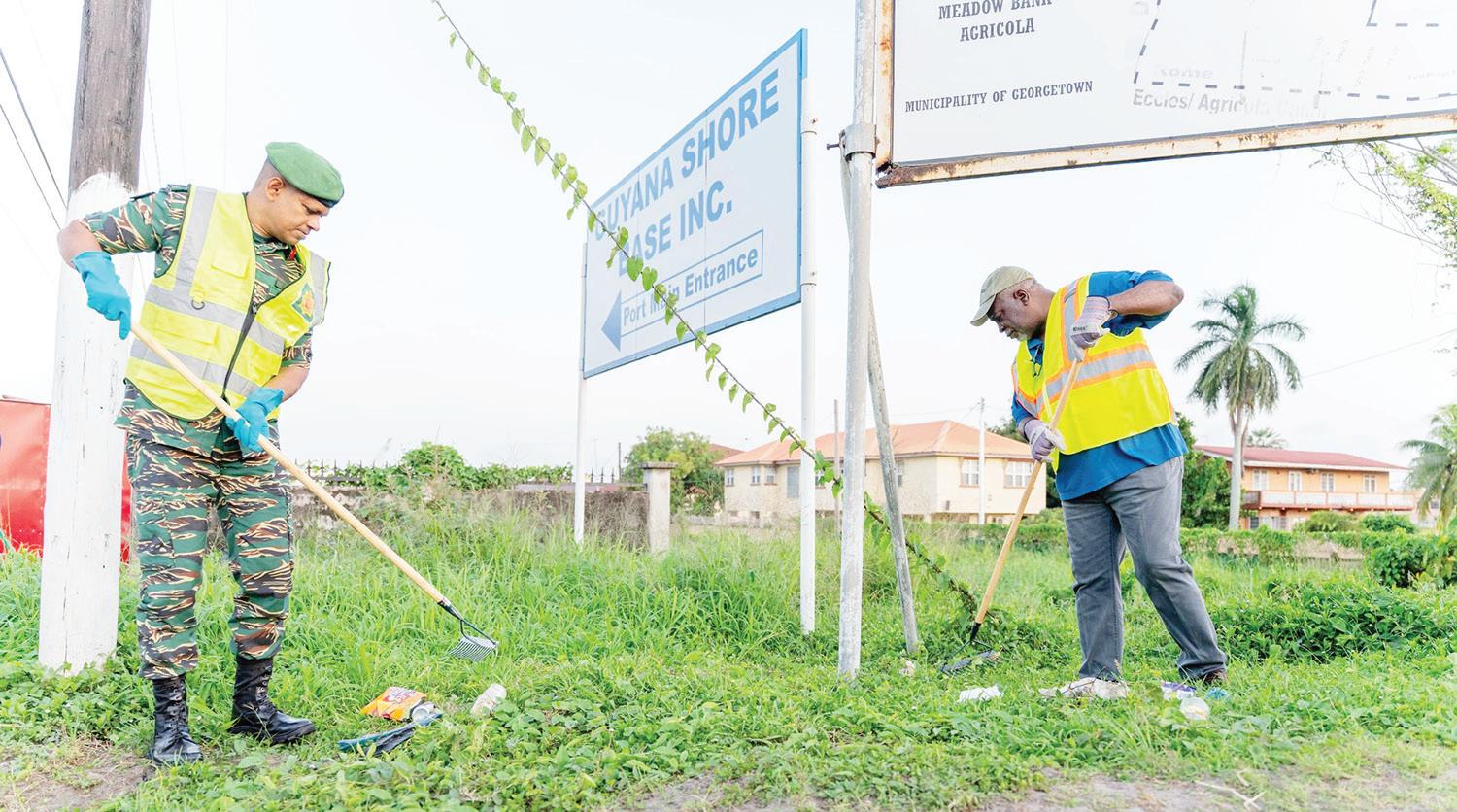
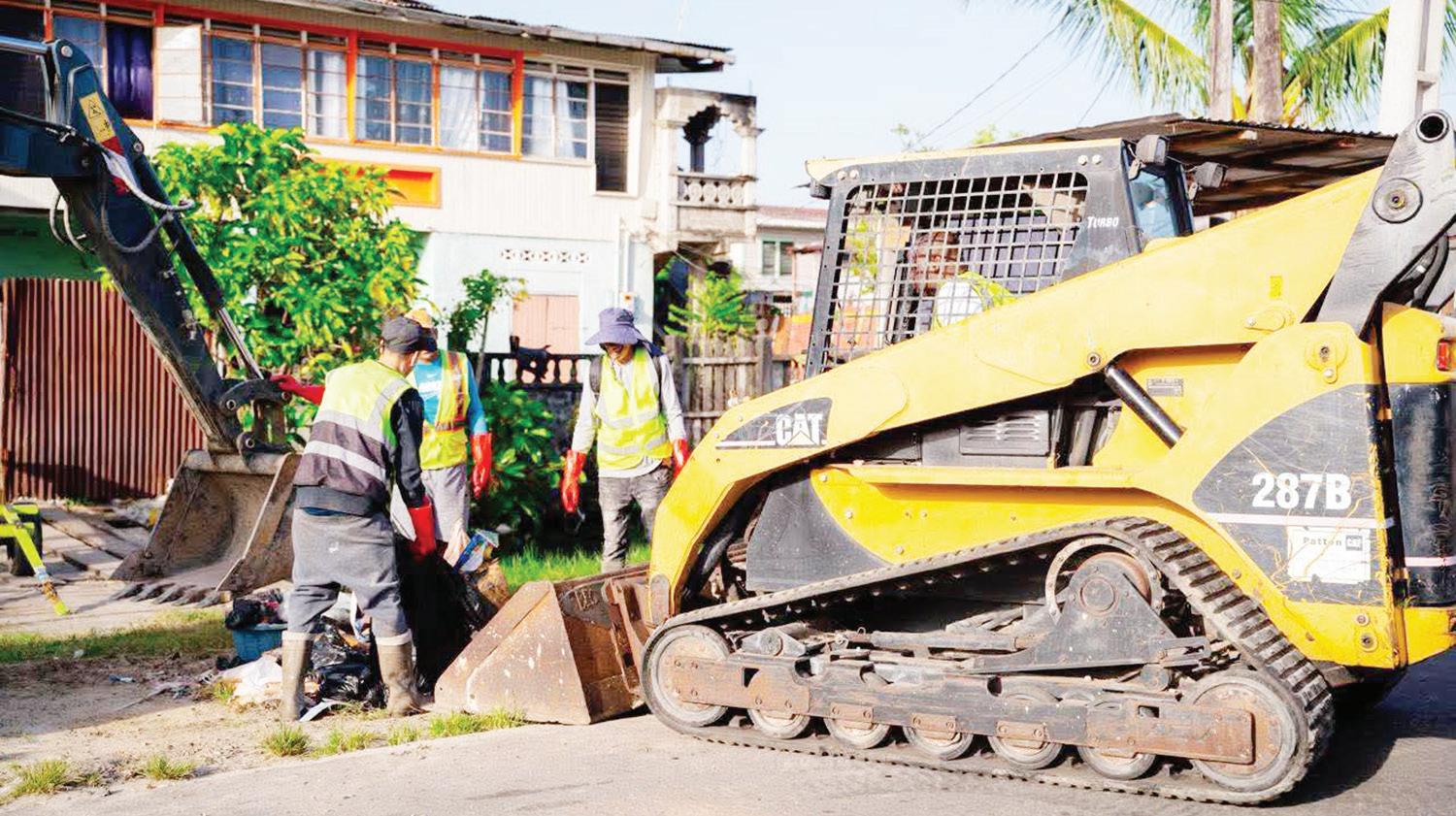



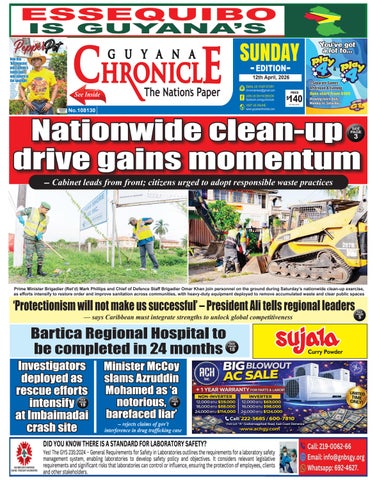
- Cabinet leads from front; citizens urged to adopt responsible waste practices
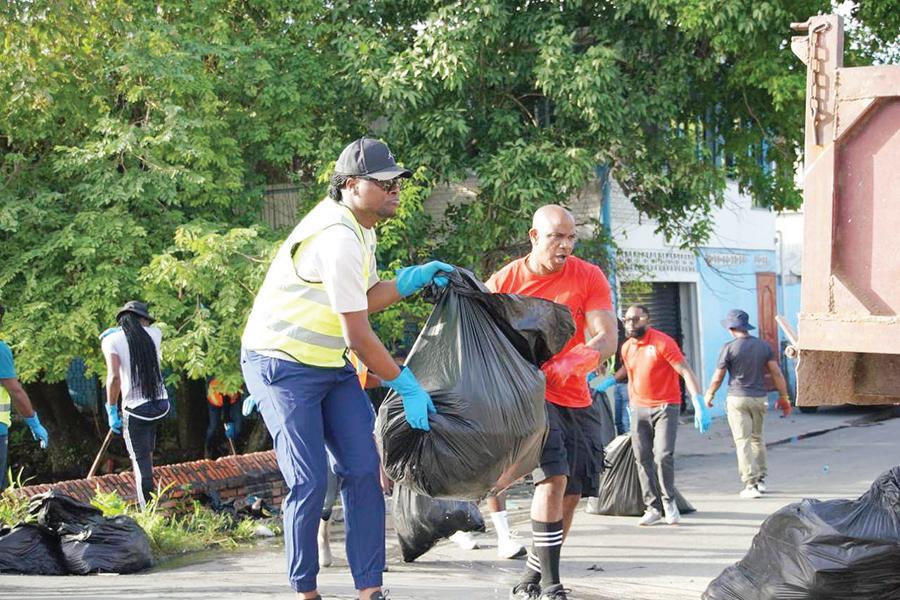
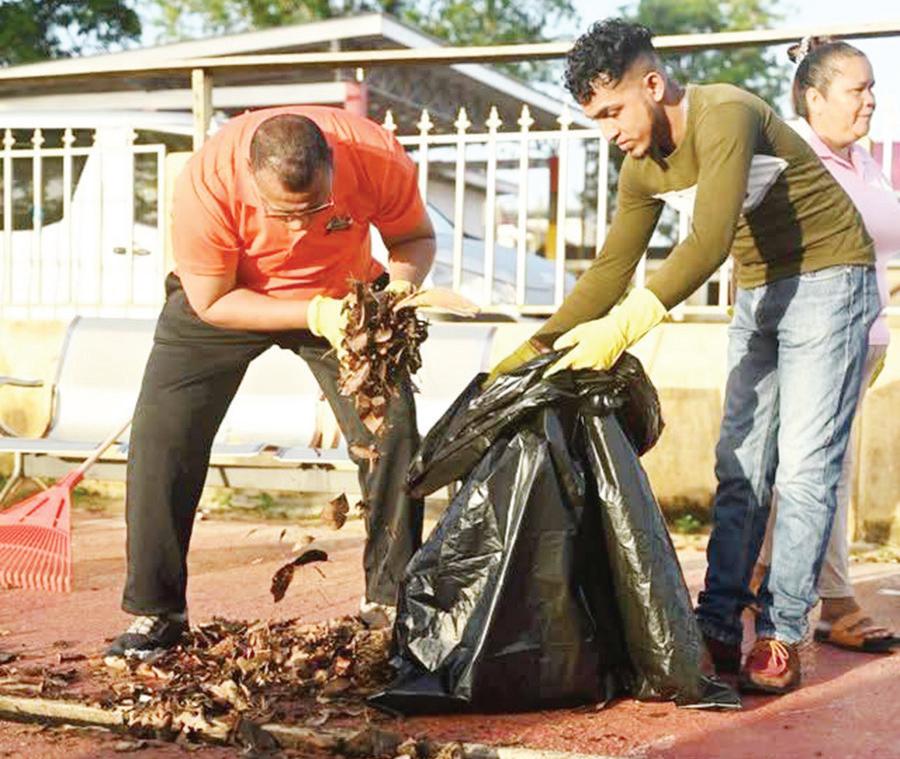
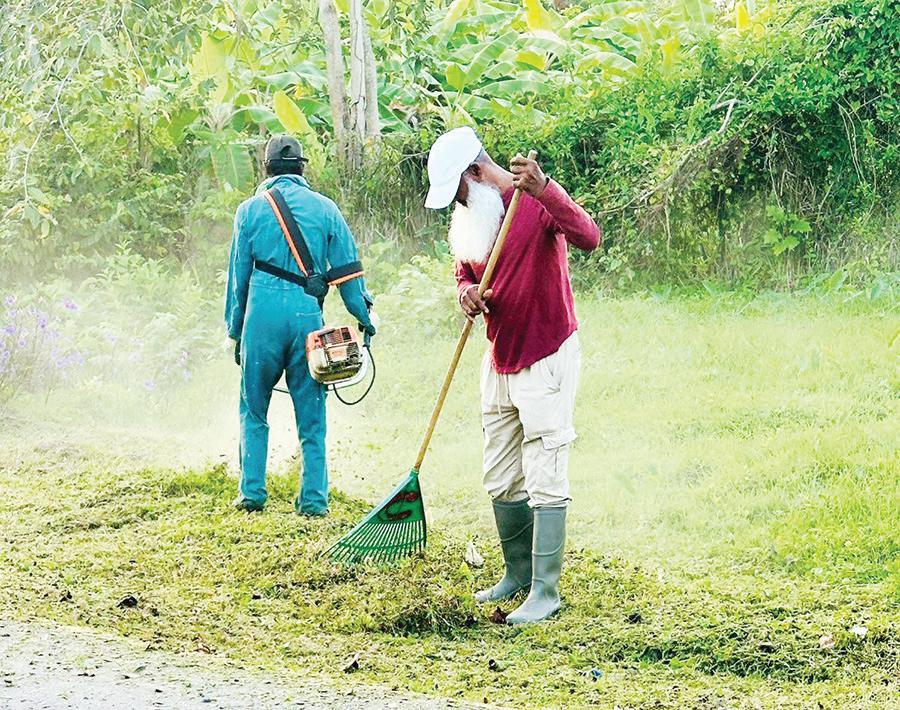
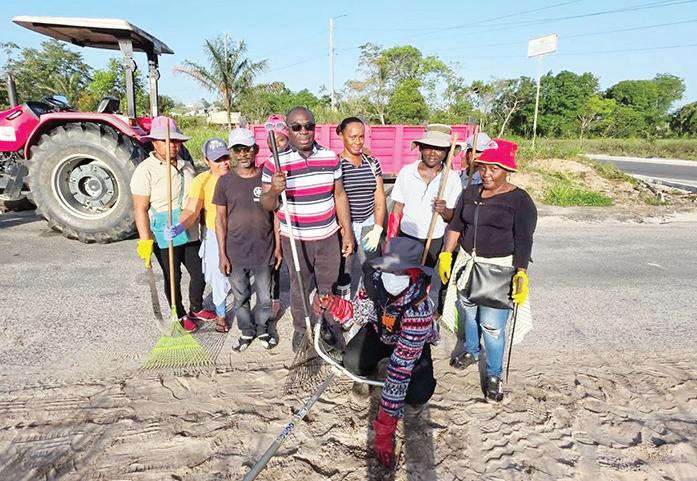
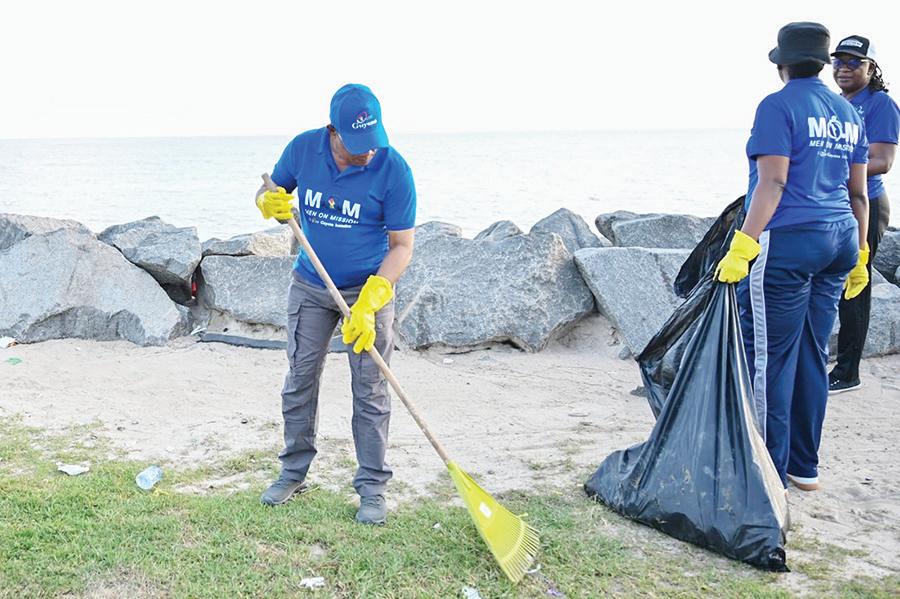
CABINET ministers fanned out across the country on Saturday as the Government escalated its nation-wide clean-up campaign, with Prime Minister Brigadier (Ret’d) Mark Phillips leading a strong call for shared responsibility, while the National Enhancement Committee reported overwhelming public participation and tangible results.
On the ground, the Prime Minister positioned the exercise as more than a symbolic initiative, making it clear that Guyana’s sanitation challenges require sustained behavioural change and national buy-in.
“We need to play our part as citizens of Guyana in keeping our country clean,” Phillips said, stressing that communities across all 10 administrative regions must take ownership of their surroundings.
He warned against indiscriminate dumping, noting that poor waste disposal habits continue to undermine public health and environmental standards.
“You have to get the garbage… put it in some designated place where collectors will come and pick it up,” he added, highlighting the need for structured systems supported by responsible public conduct.
The Prime Minister underscored that while local authorities such as the Mayor and City Council, Regional Democratic Councils and Neighbourhood Democratic Councils have a role, the success of any clean-up strategy ultimately hinges on citizen cooperation.
Providing a broader national snapshot, the National Enhancement Committee said the exercise, executed under the direction of President Dr. Irfaan Ali, mobilised citizens, organisations, and the Joint Services across every region, resulting in the removal of massive volumes of waste.
In a statement, the Committee said the scale of the operation demonstrated “the spirit of collective action and national pride” that defined the initiative.
“Today showed exactly what Guyanese can accomplish when we come together with a shared purpose,” said Minister Deodat Indar, who chairs the committee.
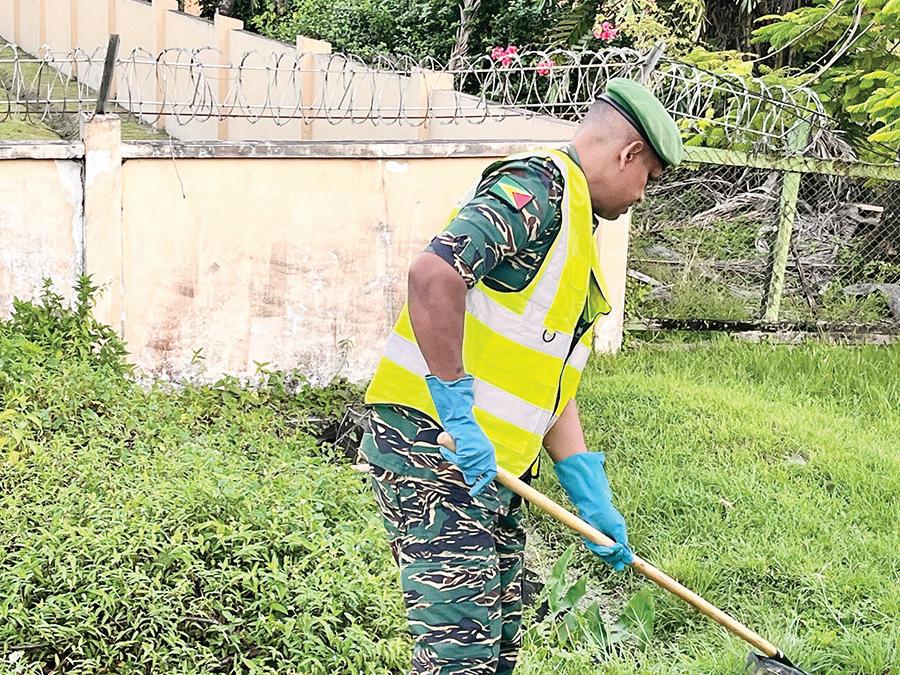
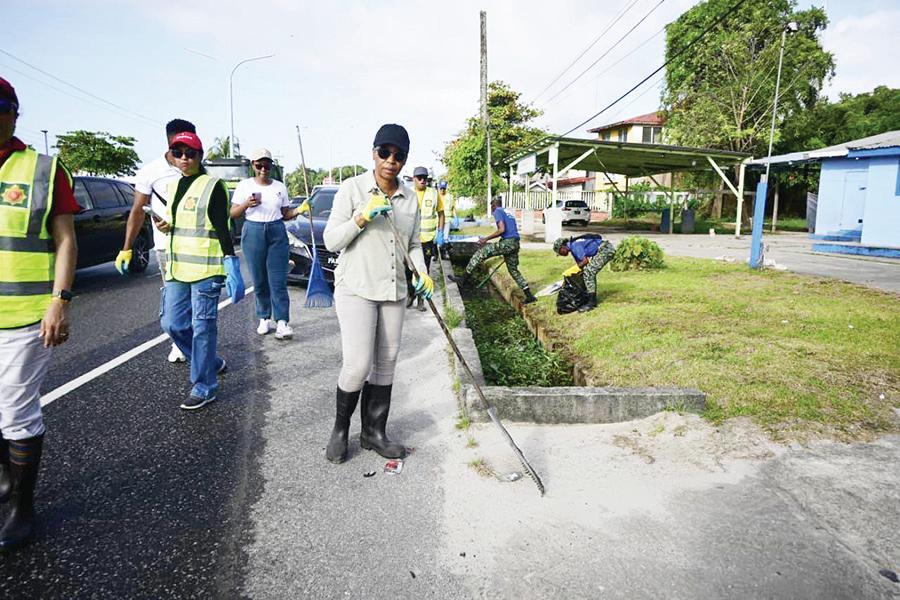
He credited volunteers, private sector entities, and public agencies for providing equipment, personnel, and logistical support, noting that the wide-ranging collaboration reinforced the national character of the exercise.
The committee also highlighted the direct involvement of Cabinet members, describing their presence across multiple regions as a clear signal that environmental stewardship remains a top-tier government priority.
Meanwhile, Minister of Local Government and Regional Development Priya Manickchand signalled a decisive shift toward stricter enforcement, expressing frustration over continued irresponsible dumping.
Speaking at Sussex and Saffon Streets, Georgetown, the minister said the exercise was part of a nationwide initiative led by President Ali to clean up garbage across the country. She expressed frustration
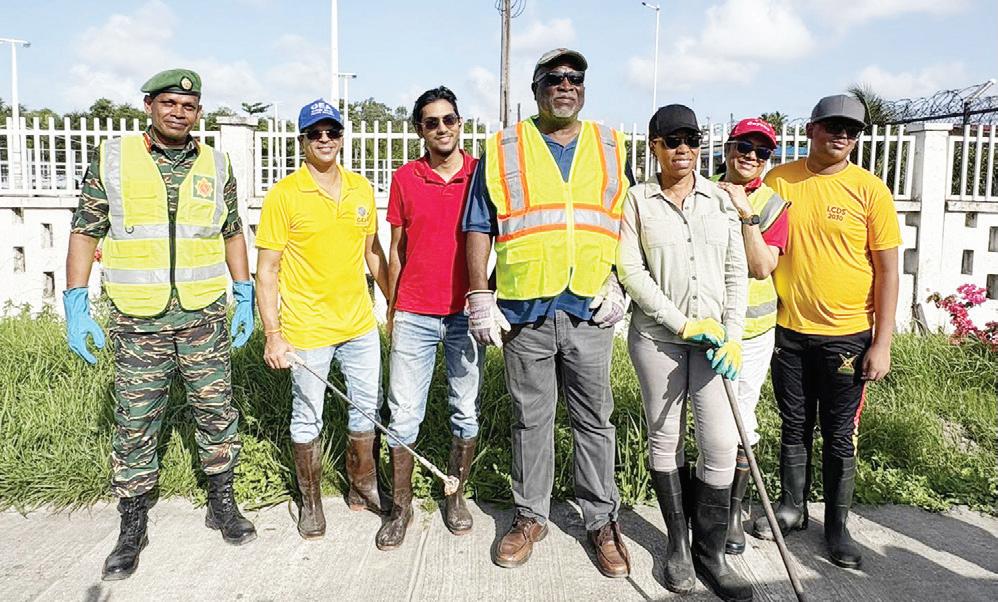
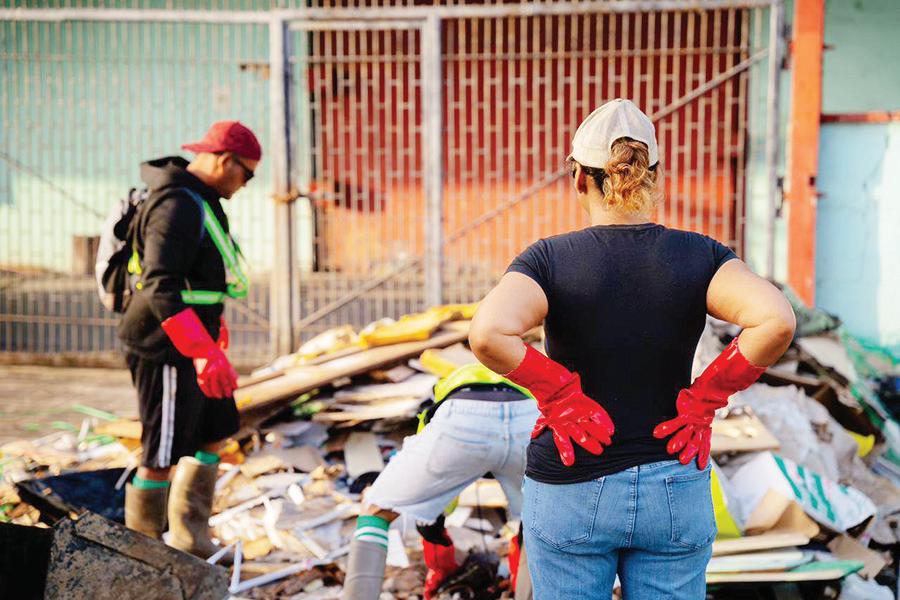
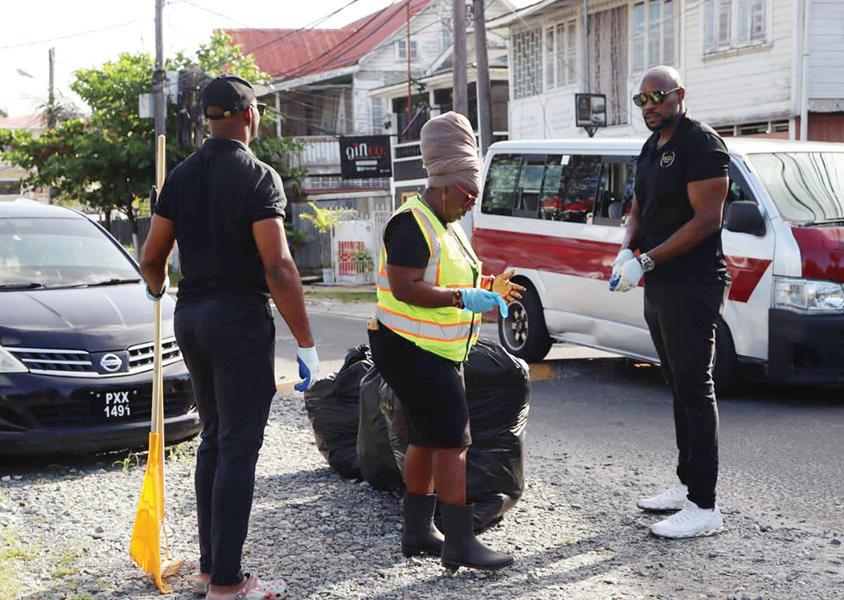
over the condition of the area, pointing to what she described as irresponsible behaviour by some members of the business community.
“Look at this behind me. This is some unconscionable businessman that did this and we can’t keep doing that,” she said, pointing to a pile of garbage.
The minister said the burden of cleaning up after others was becoming unacceptable.
“This is extremely irritating to me that we have to wake up at six o’clock and clean people’s rubbish because they have zero responsibility,” she stated.
Manickchand warned that stronger measures would be introduced to change behaviour and enforce accountability. “We’re going to have to really, really move very quickly, and I intend to do it,” she said, adding that authorities may adopt a system of penalties for offenders.
She further indicated that cultural change around waste disposal must be enforced. “It’s a place where people get charged
for this, where we change the culture out forcibly, so that this is not what we look like anymore,” Manickchand explained.
The minister noted that existing legislation already provides tools to act against offenders, and these will be utilised more effectively moving forward.
“We have laws now that can operate,” she asserted.
She stressed that the current cleanup efforts should not become routine. “This must be, if not the last, at least one of our last cleanups. This can’t be what we’re doing,” she added.
Meanwhile, former West Indies cricketer Marlon Samuels was among those on the ground for the national cleanup exercise, where he reflected positively on his experience in Guyana, and praised ongoing environmental efforts.
Samuels, who once played international cricket in Georgetown, described the city as “one of the most beautiful places” he has visited.
He also suggested that Guy-
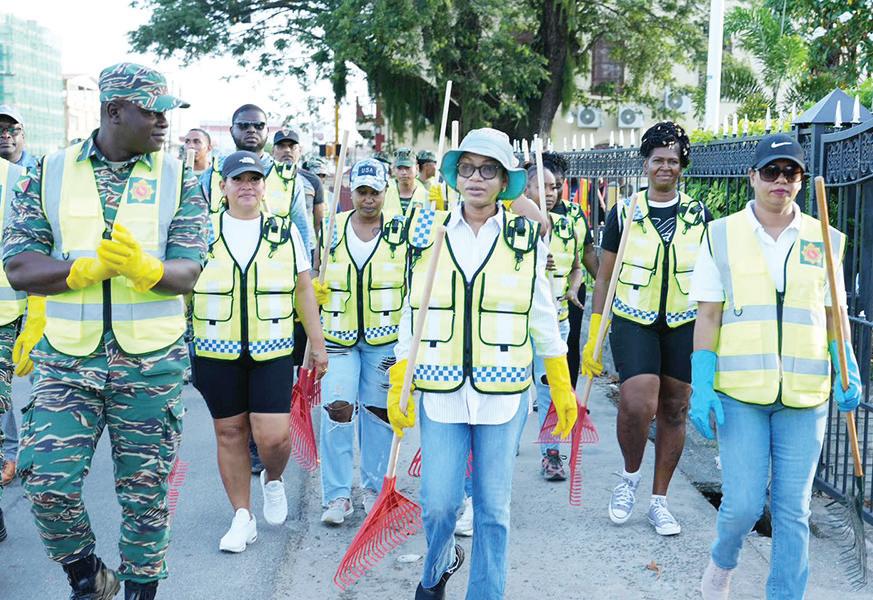
ana holds significant appeal for visitors, noting that people around the world should want to experience what he described as the Amazon region.
During the cleanup activity, Samuels commended government ministers and members of the private sector for taking part in the national initiative.
“I’m very happy about what I’m seeing,” he said, expressing satisfaction with the level of participation and the ongoing efforts to improve cleanliness in communities across the country.
SUSTAINING MOMENTUM
The National Enhancement Committee said the results of Saturday’s operation have set a strong foundation for continued national mobilisation, urging citizens to maintain the momentum beyond organised exercises.
According to the committee, the scale of the operation was made possible through a wide coalition of stakeholders, including youth groups, civil society bodies, religious organisations, and private sector companies,
many of which provided equipment, vehicles, manpower, and logistical support.
Key contributors included major private firms, construction companies, waste management services, and business organisations, alongside State agencies such as the Guyana Defence Force, Guyana Police Force, and Guyana Fire Service, whose operational support proved critical to execution.
Thousands of volunteers, community groups, religious organisations, and businesses participated, contributing to what officials described as one of the most coordinated environmental efforts in recent years.
Prime Minister Phillips reinforced that message, emphasising that the long-term objective is a cleaner, more disciplined Guyana driven by consistent public action.
“This is a clean-up campaign… to sensitise and make everybody aware that we have to work together for a cleaner Guyana,” he said.
MINISTER within the Office of the Prime Minister, Kwame McCoy, has strongly condemned fugitive offender Azruddin Mohamed, describing him as “a notorious, barefaced liar who is hellbent on damaging the reputations of Guyanese who oppose his snare of deception.”
In a statement issued on Saturday, the minister said the People’s Progressive Party/Civic (PPP/C) is “a mass-based political party with hundreds of thousands of supporters,” adding that while supporters are not controlled in their personal lives, the party expects them “to live a life of lawfulness and decency.”

The statement further addressed recent public claims made by Mohamed in relation to the criminal case involving PPP/C councillor for the Haslington-Grove Neighbourhood Democratic Council, Ronita Stuart Ram, insisting that his assertions were untrue and politically motivated.
The minister drew comparisons between the Stuart matter and other legal proceedings, stating that “the public record will show that Stuart was charged [for drug trafficking] alongside Ranjeev Ram, Maikhram Ram, and Savitri Ram.” He said they appeared in court and were granted bail.

Minister McCoy noted that “this is the exact same way that Azruddin and Nazar Mohamed… have been put on bail for transnational crimes. He argued that “there is no difference between the way that the case of Stuart and the case of the Mohameds were dealt with.”
He also referenced the timing of political developments, noting that “just as Stuart was elected a councillor in 2023, it was the same time that Azruddin’s father and co-accused for international crimes, Nazar Mohamed, was elected.”
The minister further stated that at the time, the PPP/C was not aware of alleged
international criminal activity, adding that such matters have since been “well documented” by United States authorities and are subject to legal proceedings abroad.
Responding to Azruddin’s claims regarding interference in prosecutorial decisions, McCoy said he was attempting “desperately to convince right-thinking Guyanese” that senior government officials had influenced the Office of the Director of Public Prosecutions (DPP) in Stuart’s matter.
McCoy rejected this, in-

and has instead been associated with developments that further confirm the extent of his and his father’s criminality.
Minister McCoy referenced ongoing extradition proceedings involving Azruddin Mohamed and his father and suggested that additional indictments are pending.
In a separate and detailed statement on Friday, the DPP, Shalimar Ali-Hack, SC, also strongly condemned Azruddin Mohamed for what she described as “the deliberate dissemination of false, misleading and damaging information.”
sisting that “the evidence… rips Azruddin’s lie to shreds.”
The minister also accused Azruddin of attempting to create distractions, noting that he was engaged in a “clown circus of palavering and clutching at straws.”
He added that Azruddin Mohamed had failed to acknowledge what the statement described as “procedural parallels” between the Stuart case and his own legal matters.
The minister’s statement noted that Azruddin Mohamed’s conduct reflects desperation and inconsistency in his public commentary.
Reiterating its political position, the statement said the PPP/C had previously warned that Azruddin Mohamed “would be a disaster if elected.”
According to the minister, since taking office, Azruddin Mohamed has added no value
The DPP clarified that her office provided legal advice in the matter of The Police v. Ronita Stuart Ram, Ranjeev Ram, Maikhram Ram and Savitri Ram concerning “possession of narcotics for the purpose of trafficking.” The statement confirmed that the police conducted investigations and submitted a file for review.
It further explained that, based on “the evidence contained in the police file and the applicable law,” the DPP advised that charges be laid.
The four accused were subsequently charged on March 4, 2026, appeared before Magistrate Orinthia Schmidt at the Cove and John Magistrates’ Court, and pleaded not guilty.
The DPP confirmed that “the magistrate granted them bail in the sum of $1M each,” and emphasised that all legal advice issued by her office is grounded in evidence, law, and the Code for Prosecutors.

PRESIDENT, Dr Irfaan Ali has issued a strong call for a fundamental reset in how Caribbean economies operate, urging a decisive shift from fragmented competition to structured collaboration as the region seeks to remain relevant in an increasingly competitive global landscape.
Delivering a feature address at the Trinidad and Tobago Chamber of Industry and Commerce’s Annual Business Meeting Outlook 2026/2027, the Head of State warned that long-standing protectionist tendencies and inward-looking policies are actively undermining the region’s ability to grow, innovate, and compete.
“We have not created enough systemic opportunities… we cannot be inward-looking. The world is changing. Every country is looking at its interest, and then the region’s interest,” President Ali said.
He made it clear that the Caribbean’s development trajectory will depend heavily on its ability to integrate production systems, align investment strategies, and build shared economic platforms capable of competing beyond regional borders.
“Protectionism cannot, cannot and will not allow any of us to be successful in the new
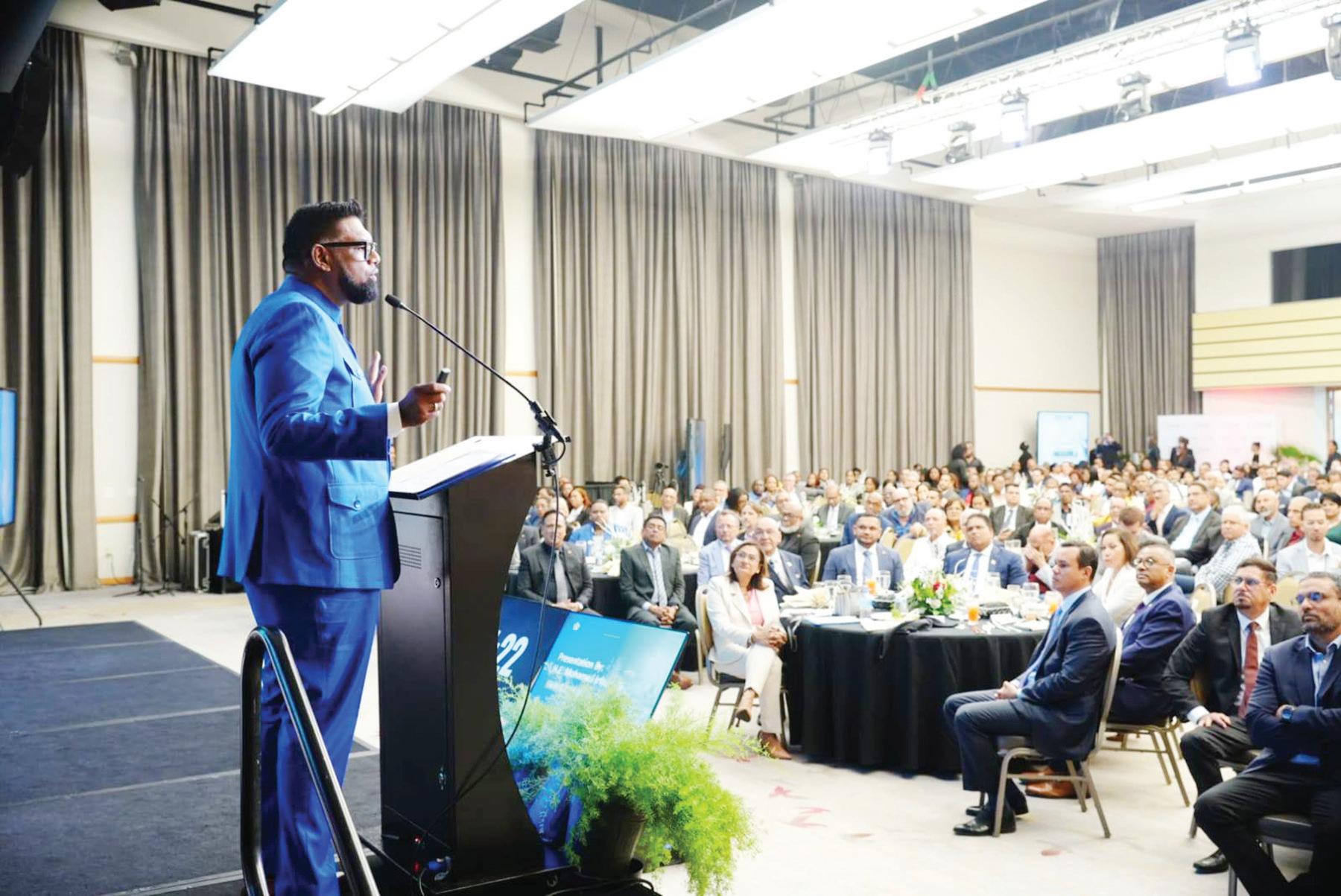
Delivering a feature address at the Trinidad and Tobago Chamber of Industry and Commerce’s Annual Business Meeting Outlook 2026/2027, the Head of State warned that long-standing protectionist tendencies and inward-looking policies are actively undermining the region’s ability to grow, innovate, and compete
world. The only formula is building our competitiveness, integrating our competitive advantage, and building a common platform,” he asserted.
Central to the President’s message was the need to dismantle bureaucratic and policy barriers that continue to restrict trade, investment, and the free movement of goods and services across the region.
He pointed to persistent inefficiencies in areas such as customs, logistics, and regulatory
frameworks, arguing that these constraints are incompatible with the level of integration required to drive modern economic growth.
“We cannot talk about partnership and coming together if we can’t fix these problems,” he said, calling for frank engagement between governments and the private sector to identify and eliminate obstacles.
President Ali even proposed an intensive, results-driven approach to reform, suggesting that key stakeholders should be brought together to resolve critical
issues within a defined timeframe.
“Let’s get in that room, lock ourselves up for 72 hours and fix the problem,” he urged.
The Guyanese leader stressed that regional economies must move beyond operating in silos and instead embrace a model that pools resources, capital, and expertise to generate scale.
He highlighted the importance of building consortiums and joint ventures that can leverage the region’s combined strengths, particularly in sectors

President Ali underscored that the ultimate objective of deeper collaboration must be to position Caribbean products and services competitively on the global stage.
“The goal is to build a common platform through which our products in the region can first be competitive within the region and then extra-regionally,” he explained.
He warned that without such alignment, individual economies will continue to face limitations in scale, market access, and investment attraction.
such as energy, agriculture, manufacturing, and logistics.
“Are we better off fighting alone or fighting together? The time is now for us to reimagine our business structures… partnership and consortiums are what the future requires,” he said.
According to President Ali, integration is not simply a policy ambition but a practical necessity, especially as global markets demand higher levels of efficiency, reliability, and production capacity.
While acknowledging that the concept of regional integration is not new, the President challenged both policymakers and business leaders to move beyond rhetoric and deliver tangible outcomes.
“This is not about talking partnership… this is about fixing what is broken and building what is necessary for the future,” he said. His remarks form part of a broader push by the Guyana government to deepen regional cooperation, expand economic linkages, and position Guyana as a catalyst for a more integrated and competitive Caribbean economy.


THE launch of Origins 2026 at the Railway Courtyard last Friday was not just a flashy event. It was a significant policy statement, and Guyana needs to take it seriously.
For too long, Guyana's creative sector has been treated as mere decoration. It gets celebrated at national events, and praised in speeches, only to be sidelined when tougher economic discussions arise.
Origins 2026 marks a clear shift from that pattern. The announcement that each of the 30 selected designers will receive a $250,000 cash grant shows a real commitment that can turn a talented community into a thriving industry. Minister Susan Rodrigues correctly framed it not as charity but as "a strategic investment in talent and potential". This distinction is vital.
message has been lacking for too long.
The prize structure further emphasises this seriousness. A top prize of $1,000,000 for Best Fashion Designer and runner-up awards of $500,000 across categories send a strong message that excellence in this field has significant economic implications. That
The theme, "A Diamond Legacy: Fashioning 60 Years", is well chosen. Guyana's Diamond Jubilee calls for reflection, but it, more importantly, calls for looking ahead. Fashion, perhaps more than any other medium, turns cultural memory into a commercial opportunity.
The designs shown at the launch, from Katia Fitzpatrick's "Matapee" to Roberto Teekah's "On the Clothesline" and Mwanza Glen's "Journey", indicate that Guyana's designers are
already making this connection fluently. The festival aims to enhance what they are already expressing. What really stands out is the inclusion framework. The assurance that applicants who do not make it to the runway will still have access to structured workshops for designers and models is crucial. This is not a minor detail; it is the most important aspect of the entire initiative. Industry growth cannot focus solely on thirty champions. It needs a broad base of trained, connected, and financially savvy creatives who can
maintain the ecosystem long after the event concludes.
The government's intention to connect participants with the upcoming Small Business Enterprise Development Bank, and to provide access to both national and international markets adds to what appears to be a solid policy framework. As the minister wisely pointed out, creativity "requires structure, access to capital, and scale".
The real challenge, as always, will be implementation. Guyana has rolled out impressive creative
frameworks before. What will set Origins apart from past initiatives is whether the grants are distributed on time, the bank connections come through, and the workshops provide real skills. If those commitments are met, July's runway at the Railway Courtyard will not just be a display. It could lay the groundwork for an industry that Guyana has had the potential to develop for decades.
The talent has always existed. Now, the investment must prove worthy of it.
Dear Editor,
ON April 6, 1919, a meeting was held at the Unique Friendly Society on Regent Street, where Hubert Nathaniel Critchlow proposed a resolution to establish a labour union. This was approved.
Two representatives of Bookers were also invited, and from them came the suggestion for the formation of an Industrial Council for settling disputes between the dockers and the Water Street employers. The three-man council met shortly afterwards and recommended the eight-hour day and certain wage increases.
The dockers’ protest sparked the formation of an organisation that extended
past their own concerns. According to a letter published in the Argosy, the worldwide unrest among workers following the war—often covered by the Guyanese media—inevitably impacted the Guyanese working class.
The surge in membership requests for the BGLU reflected widespread revolutionary sentiment among workers nationwide.
In April 1919, Victoria (East Coast Demerara) approved the establishment of a local labour union branch. They followed suit; these were typical examples of the movement that led to the quick formation of a nationwide workers’ organisation.
All labour sectors participated, including tradesmen. The first President, M

Hosanah, was a tailor, and membership even extended to residents of the Alms House and Old People’s Home, who were allowed to join the union.
The union originated as a Friendly and Burial Society, connecting itself to one of Guyana’s oldest social structures, known to the general population.
The BGLU engaged in frequent industrial actions, with numerous strikes and disputes in late 1919 and 1920 affecting sectors such as railways, the electric company, sawmills, sugar estates, the Argosy, and the docks. Manual workers’ efforts were strong enough to secure benefits for Water Street clerks, despite the clerks lack of genuine support for
the movement. The inaugural annual general meeting in 1920 faced significant challenges, leading to a period in which the union was at risk of dissolution.
Although membership declined sharply from its highest point of 13,000 to only a few hundred, the union continued to operate as an advocacy group. By 1923, the delegates attending the general conference could reflect on several years of meaningful progress.
One union campaign had led to the passage of a Rent Restriction Bill early in 1922. In January 1923, rumours circulated that the Rent Act might soon be repealed, prompting the workers to get ready to renew their struggle should it become necessary.
The workers showed they intended to use the union for more than just wage negotiations. A 1923 conference resolution proposed creating a voluntary group to advise against unnecessary court cases that could be resolved privately. A primary issue was unemployment, prompting the organisation of a petition.
The BGLU’s boldest action was organising the inaugural West Indian Conference in 1920. Only the Trinidad Working Men’s Association was able to send representatives; although other territories indicated their willingness to participate, they were unable to attend. The opportunity to form a unified West Indian labour movement was missed, although Guyanese
workers closely followed events in Trinidad.
The Guyanese masses experienced a nationwide awakening, not just among urban workers in Georgetown. The BGLU supported plantation labourers, but managers’ resistance restricted union activity on plantations. Most East Indian labourers raised their concerns with Crosby and the Immigration Department, often seeking assistance from prominent Indian lawyers.
The arrangement required active involvement; Crosby and the Indian lawyers regularly met with large groups from plantations or areas experiencing grievances in Georgetown. The entire plantation workforce frequently TURN TO PAGE 7
I watch still photos and video clips of President Ali interfacing, interacting, engaging with and embracing dimensions of the Guyanese society that cut across gender, demography, and race, and I say to myself, this is somebody new and unique.
My admiration for Cheddi Jagan is enormous. I think he is the best the British West Indies has produced, but there is a West Indian political model and I think few of our CARICOM heads, past and present, have manifested that West Indian motif as President Ali of Guyana does.
I think there were CARICOM heads that moved easily among the people and they had that West Indian touch about them. Their presence invented the term “the West Indian politician.” CARICOM has seen a plethora of West Indian governmental heads, many of
whom had more of the West Indian flair than our two stalwarts in Guyana – Burnham and Jagan.
Eric Gairy of Grenada stands out. There was Edward Seaga in Jamaica. We had Ralph Gonsalves in St. Vincent. Currently in Barbados, there is Mia Mottley. But the man who brings the “West Indian politician” alive in this day and age is Ali of Guyana. Irfaan Ali is a perfect example that humans cannot understand the inner substance of the individual. We once had two tomcats that were born in our yard. These two cats had absolutely nothing in common. They were two completely different creatures. One was aggressive and moody. The other was docile and introverted. The point is that there are some ingrained characteristics of humans that set them apart from the flock. Irfaan Ali has a light person-
ality that prevents the birth of stiffness and arrogance. That personality type allows humans to wade through all the sections, dimensions and strata of society with incredible ease. Such a personality type can hardly lose and almost never loses.
I have written it before and my position is that repetitions reinforce the point and when the point echoes, it sticks and people learn. Here is a repetition from previous columns – Irfaan Ali is the only electoral competitor since the first multi-party contest in 1957, after the removal of the Jagan/Burnham PPP Government by the Colonial Office in the early 1950s, who received a meaningful cross-racial vote in the 2025 election.
He will not be a contestant in 2030, but that legacy will live on. Can his successor emulate him? Ali’s successor is predictably Anil Nandlall. I mention that for

two reasons. There is more oil money coming in, particularly from 2028, according to what I read the experts say. There will be a sufficiently large pie to share. It is stupid for any Guyanese to think that after 2028, there will not be rich people who will get richer from the oil economy.
There is no innovative policy by the government that can stop that. This is the natural way of economics in a capitalist system. The role of the state is to take the country’s wealth and ensure people who are low-income earners, who are at a comparative economic disadvantage and live with an unacceptable financial burden are given a comfortable life. When a ruling party does that, the natural societal appreciation follows. I think it is inconceivable that the current ruling party could be so short-sighted that a vast improved oil economy will
not be used to give Guyanese an inviting future. We have four years, six months before another election and given the map of electoral competition, the legacy that Irfaan will leave will favour a PPP victory. In 2030, the state of the opposition may see the PPP getting a two/ third majority.
Whoever is leading the PPP into the election will be the next Guyana president. My analysis informs me it will be Anil Nandlall.
Mr. Nandlall is one of three faces that are synonymous with the PPP. There is an unspoken, invisible PPP triumvirate – Ali, Jagdeo and Nandlall. He is a brilliant lawyer, one of the best CARICOM has produced. He has long served the PPP. But most of all, I think Nandlall’s strategic intervention over the past five years has made the rule of the PPP possible. We have four more years for the PPP to find a presi-
dential candidate. It is going to be difficult for a genuinely ambitious person (nothing wrong with being ambitious) within the PPP leadership to have a greater claim than Nandlall. I am putting 58 years of experience on the line by saying I cannot see any circumstances in which another candidate can outbid Nandlall.
For me, the die is cast. My emotion centres on if Nandlall could do the West Indian politician thing the way Ali has successfully done it. I think Nandlall has the personality to secure an embrace from all walks of life, but could he be another Ali? I hope he can.
DISCLAIMER: The views and opinions expressed in this column are solely those of the author and do not necessarily reflect the official policy or position of the Guyana National Newspapers Limited.
departed together, as occurred in 1917 and again in 1924, when workers from Ruimveldt left. During the second event, rural and urban initiatives worked together with an inspiring sense of unity.
Four thousand Indians and Negroes started to march on Georgetown with flags, sticks, and their tools – some to meet Hubert Nathaniel Critchlow at the BGLU office and others to the Immigration Department to complain about irregular wages.
In addition to forming the labour union, rural peasants initiated efforts to address mass welfare issues. The chairman of the Victoria Institute remarked in April 1919 that ‘Georgetown looks to the East Coast to decide its political matters,’ and the facts did bear out this situation.
The rural proletariat and peasantry used credit banks and agricultural societies as
tools in their struggle, with village councils and chairmen’s conferences serving as platforms to voice their collective resolve against the planter class.
In February 1919, the Attorney General alleged that A. A. Thorne, a workers’ representative in the Combined Court, sought to establish a group of Bolsheviks in a village under the leadership of the village chairman.
The West Bank Agricultural Society’s chairman responded that the Attorney General had used a Russian term and clarified that the issue concerned capital and labour, labour being represented by the Farmers’ Conference and the Village Chairman’s Conference.
The regional labour movement is marking a significant milestone by commemorating the 100th anniversary of its Regional Labour Conference. This centennial obser -
vance highlights a century of collaboration, advocacy, and progress within the regional labour community. It serves as a reminder of the enduring importance of the conference in shaping labour policies and promoting workers’ rights throughout the region.
Over the past 100 years, the Regional Labour Conference has provided a crucial platform for dialogue, policy development, and solidarity among labour organisations. Its legacy continues to inspire current and future generations of labour leaders and members.
The first-ever Regional Labour Conference was convened in Georgetown, in then British Guiana, from January 12 to 14, 1926. This historic gathering laid the foundation for a century of progress and collaboration within the Caribbean labour movement. Over the past 100 years, the movement has evolved, reflecting the shared
commitment to advancing workers’ rights and fostering unity among labour organisations across the region.
The centenary of the Regional Labor Conference marks a moment to reflect on the enduring influence of that inaugural meeting in Georgetown.
The principles established during those three days have guided the movement through decades of advocacy, policy development, and solidarity. As the Caribbean Labour Movement commemorates this milestone, it honours the legacy of the 1926 conference and reaffirms its dedication to promoting social and economic justice for all workers.
This high-level meeting, attended by some of the leading trade unionists across the Region, is poised to play a pivotal role in charting the course for the labour movement’s future. As the global economy undergoes rapid
and significant changes, the participants have engaged in critical discussions to determine the movement’s direction and strategies.
Their deliberations are to address the challenges and opportunities posed by economic developments, ensuring that the movement remains responsive and relevant to workers’ needs throughout the Region.
Between 1925 and 1930, the union was relatively modest in both membership and financial resources. Despite its small size, the union’s impact on the labour movement and its broader influence within the community were far greater than its numbers might suggest.
The organisation played a pivotal role during this formative period, demonstrating that dedication and advocacy could compensate for limited membership and funding. Its efforts laid the groundwork for subsequent growth and
FROM PAGE 6
the strengthening of collective action in the Region.
Hubert Nathaniel Critchlow demonstrated remarkable vision and foresight by convening both the Regional and International Labour Conferences during a formative period for the labour movement.
His pioneering efforts culminated in the first Regional Labour Conference, known as the British Guiana and West Indies Labour Conference, held at the Public Buildings in Guyana from January 12 to 14, 1926. This landmark gathering was organised under the auspices of the British Guiana Labour Union, setting the stage for a century of progress and collaboration within the Caribbean labour movement.
Sincerely,
Mayor
Alfred Mentore and People’s National Congress Leader, Aubrey Norton, could ‘cry a river’ as hard as they like about the alleged manner in which the central government is handling the business of Georgetown, no one will hear them or sympathise with their explanations.
No right-thinking or objective citizen of Georgetown would fault the government for looking after the needs of citizens, which the mayor and his political minions at the council neglect daily, weekly, monthly and yearly.
The residents have been complaining about the huge piles of garbage in the city that is left in a wanton state outside of their residences, hospitals, state agencies, businesses and council prop-
erties.
They have complained about the state of certain streets, communities, parks and recreational facilities that fall under the local government and municipal ambit of control, many of them falling into a sordid state of neglect and disrepair over a number of years.
The residents are tired of the blame game between the council and the government when it floods, with the latter forced to take up the lion’s share of responsibility, which has led to remarkable progress over the last 15 years. They have noted that the Georgetown City Council is treated as a treasure chest into which they are forced and coerced to pay their hardearned rates and taxes, but they get poor service in the end.
The residents are angry, tired and feel betrayed constantly by the council, and that’s a fact that any survey would justify.
Mayor Mentore and the PNC are just plundering the council’s resources through several get-rich schemes. They threaten the residents into compliance with parking meters, higher taxes and other schemes. They are just bullying the residents who basically want a lean and clean local government body that eases the burden, which many times the central government has to carry.
Residents want the garbage picked up, the city clean and all other services provided efficiently by the council. This is not about power and control as Norton and Mentore are seeking to ramrod down the minds


of citizens. This is about incompetence, mismanagement, misuse of resources and manpower and financial irregularities that are eating away at the fabric of Georgetown. This is about the ineptitude, unprofessionalism and inaction of Hamilton Greeen, Mayor Mentore, Norton, PNC, AFC and other personalities of the Georgetown City Council.
Countless consultants, unions and professionals have said it, including former town clerks Beulah Willliams, Carol Soober and Yonette Pluck. The late Keith Burrowes and Ramon Gaskin said it. They had said the city council needs urgent attention and reform.
They have left the government with no choice but to use the administrative and executive powers it has to act in the public’s interest and move certain things from under the council’s control.
The government’s patience has been ‘maxed out’ with this current council, which throws stones at the residents and seeks to hide its actions in the night.
While I support the idea of local governance and municipal authority, if these are being abused, there must be executive leadership shown by the central government. This must be legal and follow due course.
The city council’s ‘eyes pass’ the residents of Georgetown. They have abused us and are seeking to go to court now to continue their abuse.
No. Let them have their day in court with this PPP government, which will ‘max out’ their ‘little resources.’
The central government is right to take possession of the properties and streets. The government is right to take control of key revenue-making streams. The government is right to get Mentore and
Norton out of their offices and running to the courts.
I am principled and right is right and wrong is wrong. The City Council and its bed fellow, the PNC, does not own any resident or group in the city. The city residents could get them out of power as they did at the general elections, where the PNC and Norton were kicked to the back of the class.
The Mayor and the PNC should be focused on improving the livelihoods of Georgetown residents and be happy that the little areas of authority are now under the control of the central government, which amounts to less stress for them.
DISCLAIMER: The views and opinions expressed in this column are solely those of the author and do not necessarily reflect the official policy or position of the Guyana National Newspapers Limited.

PAKISTAN once again in the global spotlight. This time, as an unexpected mediator between the United States and Iran in pursuit of a lasting ceasefire and an end to the war in the Middle East.
The glaring irony is that Pakistan’s own nuclear ambitions once stunned India and upset the world’s apple cart. Beginning in the late 1970s, under the leadership of nuclear scientist AQ Khan, Pakistan, then a close U.S. ally, pursued a covert uranium enrichment programme that culminated in the late 1990s with the unveiling of the so-called “Islamic bomb.”
That’s exactly how Prime Minister Zulfikar Ali Bhutto framed his country’s nuclear ambitions before he was ousted, tried and executed by his Chief of Army Staff, General Muhammad Zia-ul-Haq in April 1979.
That same month, Ayatollah Khomeini declared an end to the monarchy of Shah Reza Pahlavi and the official establishment of the Islamic Republic of Iran. The seizure of the American embassy later that year resulted in a 444-day hostage crisis that set Iran on a collision course with the United States.
Also in 1979, the former Soviet Union invaded Afghanistan, and a ragtag army of Mujahideen, with generous military and financial support from the United States, some $3billion worth of arms and equipment over a period of about ten years, and coordinated by General Zia in Islamabad, meant the Soviet army would bleed money and resources in Afghanistan without ever scoring a knockout blow.
Using the war next door, a war that it continues to fight with Afghanistan, General Zia doubled down on his country’s nuclear ambitions,
and almost ten years after he would die in a mysterious plane crash, Pakistan tested its nuclear weapons with six underground explosions in the Ras Koh Hills of the Chagai district in Balochistan.
Decades later, Islamabad finds itself brokering an attempt to end Iran’s nuclear dreams. It’s impossible to ignore the irony. Beyond the game of cricket, Pakistan rarely ever comes up in public conversations among Guyanese.
Although much of what happens in Pakistan, a country with a population of nearly 200 million, has little to no impact on our daily lives, it’s nevertheless a country with vast economic potential and strategic leverage. I am not even sure Guyanese are aware that Pakistan’s most beloved of sons, and perhaps one of the greatest cricketers of all time, Imran Khan, continues to be illegally imprisoned to the point that he is beginning to lose his sight.
My first visit as a journalist to Pakistan in December 1993 clashed with the nuclear ambitions of Prime Minister Benazir Bhutto, the daughter of Zulfikar Ali Bhutto, the PM who was executed by Gen. Zia. Bhutto herself would be assassinated in 2007 by Islamic militants determined to prevent her from returning to office. Bhutto was an astute and razor-sharp politician whom I was fortunate to have interviewed for the Canadian Broadcasting Corporation (CBC) while she was visiting relatives in Toronto and dreaming of returning to office.
I recall making small talk as our cameras were setting up about our experience trying to obtain Pakistani visas in 1993 and being flatly rejected. I asked her whether it had anything to do with rumours that Pakistan was on

the brink of testing a nuclear weapon, and her government would have preferred not to answer questions from pesky foreign journalists. She smiled and feigned ignorance.
Our team eventually entered Pakistan over the Khyber Pass from Afghanistan, legally obtaining our visas from a makeshift shed on the outskirts of the bustling city of Peshawar, perfectly timed as the sun was setting.
Strangely, our interests had nothing to do with nu-
clear weapons. We were trying to piece together the reasons Arab veterans of the Afghan jihad against the Soviet Union had put a massive truck bomb in the basement of the World Trade Centre in February 1993. That devastating explosion turned out to be a dress rehearsal for the attacks of 9/11.
And now all eyes are on Islamabad in April 2026. This is where negotiations are taking place to bring about a permanent end to Iran’s nuclear ambition. Remember,
President Donald Trump said he was launching Operation Epic Fury to make sure Iran “can never have a nuclear weapon.” It is the one consistent point in the back and forth between Tel Aviv’s objectives for this war and those of the Trump administration.
Iran has always insisted that it is not seeking to build a nuclear bomb, a claim that is viewed with enormous scepticism. On the one hand, Iran is a signatory to the Nuclear Non-Proliferation Treaty. Israel, on the other hand, is
one of the only countries with nuclear weapons that has not signed the treaty. Missing from all the talk on international network news channels is an explanation of Iran’s administrative structure. From 1979, Iran’s governance is based on what the country calls “Wilayatul-Faqih”, which means the “Guardianship of the Islamic Jurist.”
The most senior jurist until his decapitation a few weeks ago was Ayatollah Ali Khamenei. In Shia Islam, Khamenei was regarded as a marja’, the highest level of religious authority. His word is the gospel, as we would say. His fatwa, or religious edict, for 25 years, was that nuclear weapons are strictly forbidden (haram) in Islam.
DISCLAIMER: The views and opinions expressed in this column are solely those of the author and do not necessarily reflect the official policy or position of the Guyana National Newspapers Limited.


QUITE apart from gangs in schools, societies across the globe are also witnessing a general increase in violence among young people and the growth of cyberbullying.
The latter is a relatively recent phenomenon resulting from the ‘birth’ of the infor-
mation highway we call the internet and the tremendous influence it exerts over our youth.
While hosting an An -

ti-Violence and Anti-bullying Conference two months ago, Minister of Education, Sonia Parag, posed several questions about youth violence -where it originates, whether in schools or ‘behavioural patterns’ in the home and what measures can be taken to stop it
She gave assurances that the Education Ministry has acknowledged this as an issue and was not “pushing it under the rug,” also asserting that expelling, suspending or transferring a child is not the solution.
Her stance is supported by experts who call for more creative mechanisms to deal with the matter, such as life skills and development programmes and lessons in anger management.
The World Health Organization (WHO) advises that youth violence requires a comprehensive approach involving schools, parents and the wider community — a strategy the ministry recommends. However, the WHO also recognises a “strong correlation between rates of youth violence and economic inequalities.”
The point is made that impoverished sections of society are more prone to high rates of youth violence, because young people become frustrated and experience the kind of despair that finds an outlet in violence.
The organisation urges governments to address economic disparities, stating that, “To achieve sustainable prevention gains, it is important to address income inequality, increase economic mobility and enhance access to education, social protection and employment opportunities.”
Last month, President Irfaan Ali in a speech referred to another troubling issue, which has been gaining momentum since the advent of

the “digital age.”
It seems that traditional, physical bullying has been eclipsed by cyberbullying.
Young people are now using various apps on their cellphones or other digital devices to post threatening or hurtful messages to those they dislike.
With cellphones in the hands of youths everywhere, it has become easy to hide behind the anonymity these devices offer, avoiding faceto-face contact.
Cyberbullying eliminates the physical aspect of torment, making it a powerful weapon of emotional and psychological damage, which is often more devastating than physical injury.
It can also be relentless in a way that physical violence cannot achieve, happening at any time, anywhere, with little or no restriction on its frequency.
The objective is generally to scare or shame the person targeted and may not only be verbal, but can take the form of embarrassing photos or videos.
This form of online bullying can make persons feel unsafe in their own homes, humiliated and unable to escape the torment. It can cause long-lasting psychological damage, as well as physical illness through loss of sleep or appetite, headaches and even stomach aches.
The feeling of being laughed at by others can be
overwhelming, preventing those targeted from speaking out for fear of attracting unwelcome attention and increased bullying. In extreme cases, it can lead to withdrawal from friends and family and can result in suicide.
Sometimes online bullying may be hard to detect, as the perpetrator may want to pass it off as a joke and not to be taken seriously. However, if the words seem to be harmful rather than humorous and the person persists, then action should be taken to stop it.
As with other forms of bullying, the first step to ending cyberbullying is to discuss it with parents, a teacher, a counsellor or other responsible adult. Everything should be documented, screenshots taken where possible as evidence and the tools available on the platform used to block and report offenders.
Engaging with an online bully, just as with a physical bully, can only make things worse, but cyberbullying leaves a digital footprint, which is a record that can provide evidence and help to stop the abuse.
DISCLAIMER: The views and opinions expressed in this column are solely those of the author and do not necessarily reflect the official policy or position of the Guyana National Newspapers Limited.


FOR many young Guyanese, the University of Guyana (UG) Job Fair has become much more than a date on the calendar. It is where ambition meets opportunity in Guyana’s steadily growing energy sector. This year’s fair, themed “Innovation. Opportunity. Impact,” takes place on April 17- 18 at the Turkeyen Campus, at the Berbice Campus, on April 24 and the Essequibo Technical Institute on May 4. At a time when the energy sector continues to shape the transformation of Guyana’s economy, the Job Fair stands as a platform for meaningful engagement. Students are not simply collecting brochures. They are having direct conversations with employers about skills, expectations, and career paths. Companies across the oil and gas value chain attend to engage with people about the skills needed to support the industry and how they can tap into these opportunities.
This growing connection between academia and industry is one of the reasons UG stands out as a critical pipeline for workforce development.
Students are leaving not only with academic qualifications, but with exposure, confidence, and practical insight that give them a head start in the working world. Increasingly, programmes are being designed to align with industry needs, strengthened by direct partnerships with leading companies in the energy sector.
One of the clearest examples of this collaboration is the level of investment being made in student training. ExxonMobil Guyana, for instance, has supported upgrades to UG’s Mechanical Engineering Lab with modern, industry-grade equipment.
Across the sector, this support extends to internships and scholarships that move students beyond training into real career pathways. Exxon-
Mobil Guyana’s scholarship programmes, for instance, have already supported Guyanese students in progressing from study into employment within the sector.
SBM Offshore Guyana offers internships in operations, engineering support, and data analysis, while CNOOC Petroleum Guyana Limited (CPGL) provides scholarships in petroleum engineering and geoscience, including opportunities for study abroad. MODEC delivers structured training for offshore production, with a focus on safety, hands-on exposure, and mentorship for FPSO operations. Guyana Shore Base Inc (GYSBI) also supports students through technical scholarships, often paired with internship opportunities.
Together, these experiences are critical in helping students understand workplace expectations, develop technical and soft skills, and, in many cases, transition seamlessly into full-time

employment after graduation.
At the same time, UG has expanded its portfolio of industry-aligned programmes to keep pace with demand. Students can now pursue fields such as Petroleum Engineering, Environmental Management, and Supply Chain, Marine and Energy Studies. These programmes are grounded in STEM disciplines and designed to equip graduates with the analytical, technical, and problem-solving skills required by the energy sector.
Industry estimates show more than 6,200 Guyanese are employed in the oil and gas sector, accounting for about 70 percent of the work-
force. These figures reflect the growing role of local participation in the industry’s development. Still, as opportunities expand, competition is also increasing.
Employers are looking for candidates who are not only technically capable but adaptable, professional, and ready to contribute from day one. Events such as the UG Job Fair offer students a valuable chance to prepare, engage, and position themselves effectively in a competitive environment.
Beyond individual success, the broader impact is clear. A stronger local workforce reduces reliance on foreign labour, keeps more in-
come within the country, and ensures that Guyanese are actively shaping the future of their own energy sector.
As April 17 to 18 approaches, the message is clear. This is more than a job fair. It is a gateway into a rapidly evolving industry. For those ready to engage, prepare, and take initiative, the opportunity is not just to find a job, but to be part of building Guyana’s future.
DISCLAIMER: The views and opinions expressed in this column are solely those of the author and do not necessarily reflect the official policy or position of the Guyana National Newspapers Limited.

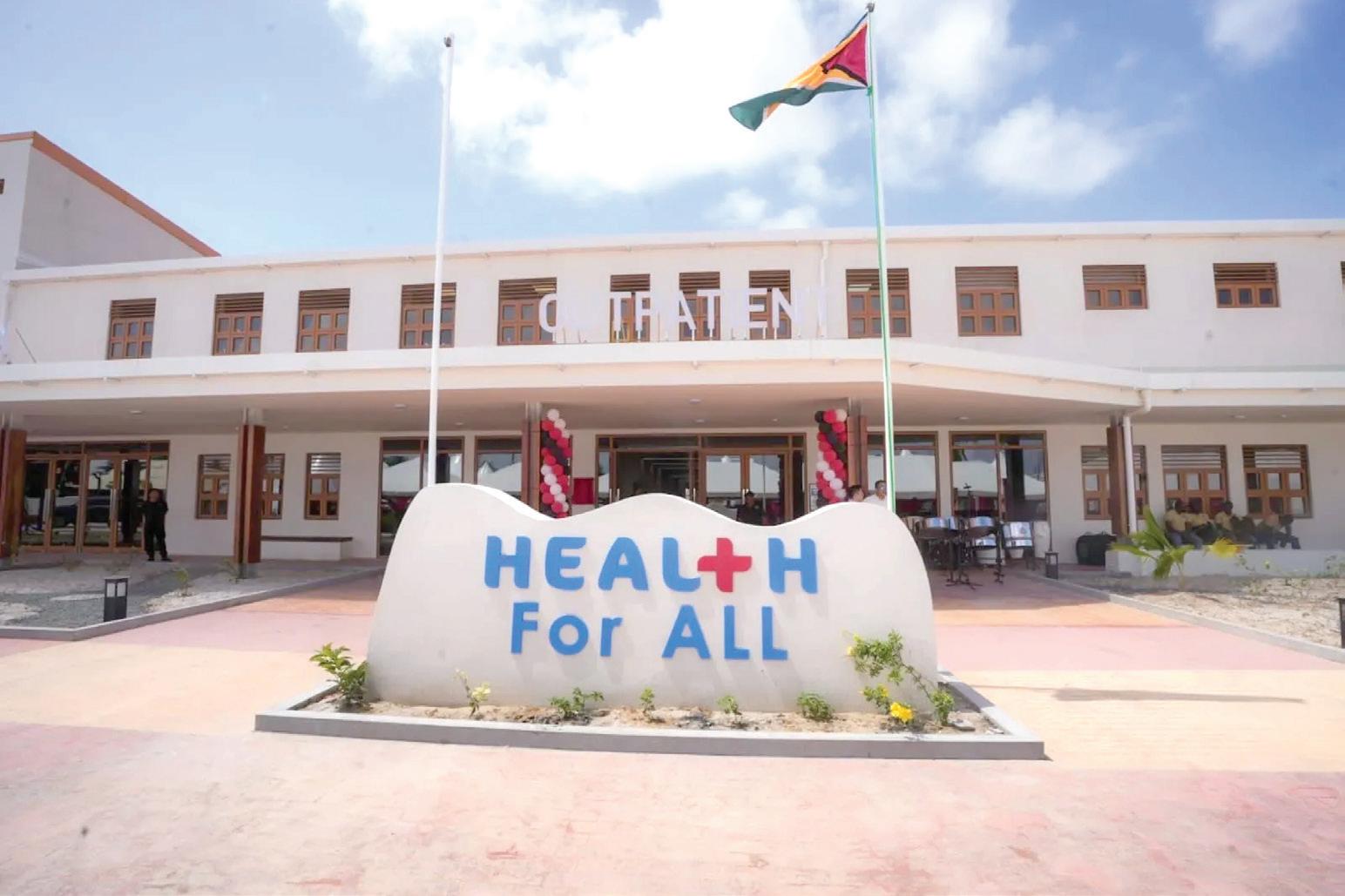
GUYANA is moving to significantly ramp up the use of technology and digitisation within its healthcare sector, a comprehensive shift that President Dr. Irfaan Ali has said will position the country competitively among its regional and global counterparts.
Speaking to reporters on the sidelines of a recent event, the Head of State noted that while digital advancements in healthcare have already begun improving service delivery, the next phase of development is expected to be transformative, introducing new systems
and capabilities that could redefine how care is delivered across the country.
While sharing insight into the major push expected in the coming months, the President emphasised the importance of integration and coordination across sectors. Guyana’s technological shift in healthcare, he explained, is occurring alongside broader national digitisation efforts, ensuring that systems across the government are interconnected and able to function seamlessly.
Alluding to ongoing developments such as the digi-
tisation of passport services and other government platforms, President Ali stressed that these initiatives are being pursued simultaneously to support a unified and efficient digital ecosystem.
“The technology in healthcare will be celebrated in a way that is unbelievable; you will see that unfolding. All of these things must integrate with each other,” he said.
This integrated approach forms part of a wider national strategy aimed at improving efficiency, reducing delays, and enhancing the overall quality of public
services, including healthcare delivery. Already, digitisation efforts in areas such as public service access have been yielding positive feedback, setting the stage for similar gains within the health sector.
Just months after the launch of key initiatives, one of the most strategic advancements in Guyana’s healthcare system has been the implementation of the country’s telemedicine network. Beginning in early 2026 through pilot programmes in Indigenous communities in Region Nine (Upper Takutu-Upper Essequibo), the network has rapidly expanded, becoming one of the most extensive telemedicine systems in the Western Hemisphere.
Backed by approximately 130 telemedicine sites across the country, with an additional 50 planned for development during the course of the year, the system has already begun improving access to healthcare services in remote and hinterland regions, allowing patients to receive consultations and
preliminary diagnoses without the need for long-distance travel.
Building on this foundation, President Ali indicated that the next phase of development will focus on more advanced technological capabilities, particularly in diagnostic services, which are expected to significantly enhance the country’s healthcare capacity.
“We are now moving closer to having real-time reading of X-rays, MRIs, CT scans and all of these things integrated into the global health system,” he said.
Such advancements are expected to allow for faster diagnosis and improved accuracy, further strengthening the quality of care available to patients across Guyana.
These developments come on the heels of other major technological shifts within the sector, including the rollout of the Electronic Health Record (EHR) system. Launched in January by the Georgetown Public Hospital Corporation (GPHC) at the Festival City Polyclinic under the guiding
principle of “One Patient, One Record”, the system is designed to ensure that patients can access their complete medical history at any public health facility across the country.
The Ministry of Health has since signed a US$3.3 million contract with RioMed Limited to support the national rollout of the EHR system, with the first phase at the GPHC expected to be fully operational by mid-2026. This initiative is expected to improve continuity of care, reduce duplication of tests, and enhance data-driven decision-making within the health system.
Moves like these, coupled with the advanced technological integration outlined by the President, are expected to significantly transform Guyana’s healthcare landscape, bringing it closer in line with international standards.
“We are definitely pursuing technology at a speed and scale that would allow the country to propel itself among its competitors,” President Ali added.

PRESIDENT Dr Irfaan Ali has signalled that Guyana and the wider Caribbean must urgently
remarkable way in the short term—Haiti and Cuba,” the President said.

reposition their economic strategies to capitalise on what he described as emerging opportunities in Haiti and Cuba, warning that failure to act early could see the region miss out on transformative growth.
Addressing the Trinidad and Tobago Chamber of Industry and Commerce’s Annual Business Meeting Outlook 2026/2027, President Ali pointed to shifting geopolitical dynamics that could unlock significant demand in both countries, particularly in food, construction, and industrial supply chains.
“The geopolitical environment is telling us that two massive markets will open up, or have the possibility of opening up in a
He stressed that both countries, given their development trajectories, will require sustained imports and external support to rebuild and expand their productive capacity, creating a window of opportunity for regional exporters and investors.
“Imagine now the size and possibility those two markets opening up. The time frame for them to rebuild capacity, whether it’s in food, agro-processing, they will have a long lag time,” he explained.
Against this backdrop, the Head of State urged Caribbean governments and private sector players to move beyond reactive approaches and begin actively positioning themselves as first movers in these markets.
“How are we positioning ourselves in the eyes of this geopolitical shift that is occurring? What are we investing in to define our presence there?” he questioned.
President Ali emphasised that early coordination between Guyana and Trinidad and Tobago could be pivotal in establishing a competitive advantage, particularly through joint investment frameworks and regional consortiums.
“If we come together, we can develop a powerful
consortium that can position Guyana and Trinidad and Tobago to be first movers when those opportunities arise,” he said.
The President made it clear that traditional, inward-looking economic policies would not be sufficient to take advantage of these emerging prospects, calling instead for bold, outward-facing strategies that align with global demand patterns.
He underscored that the region must begin investing
now in sectors that will be critical to servicing these markets, including agriculture, agro-processing, manufacturing, and logistics.
The call forms part of a broader push by the Guyanese government to promote deeper regional integration, expand export markets, and leverage the country’s growing production capacity, particularly in agriculture and energy.
President Ali’s remarks also align with ongoing national efforts to build a diversified economy, with
Guyana positioning itself as a key supplier within a wider Caribbean and Latin American trade network. He warned, however, that without decisive action, the region risks being sidelined by more aggressive global competitors already preparing to enter these markets.
“Opportunities like these do not wait,” the President said, urging policymakers and business leaders to act with urgency and strategic clarity.

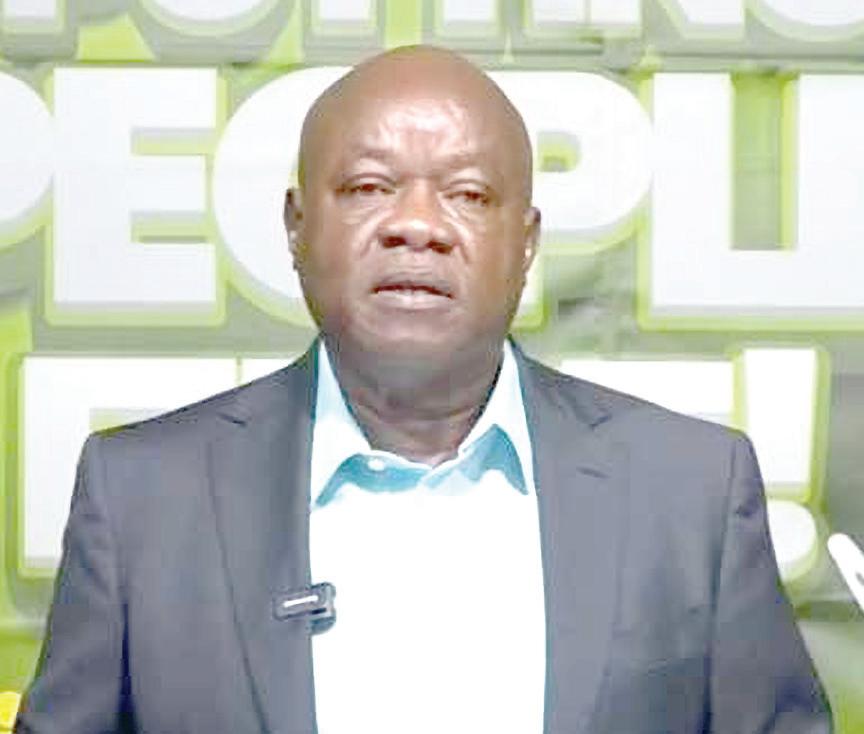
A PARTNERSHIP for National Unity (APNU) on Friday sought to cast doubt on the United States’ confidence in Guyana’s development trajectory, with its leader, Aubrey Norton dismissing Washington’s position as “interest-driven” despite mounting international recognition of the country’s rapid transformation.
Norton’s remarks, made during a press conference, were directed at recent statements by United States Ambassador Nicole Theriot, who had pointed to widespread infrastructure expansion and the strategic use of oil revenues as evidence that Guyana is moving in the right direction.
His position, though, stands in stark contrast to both the scale of development currently underway and the broadening international consensus around Guyana’s economic and social progress.
Ambassador Theriot, speaking on the Sources programme, had emphasised that development is taking place across the country, not just in Georgetown, with oil revenues being channelled into infrastructure designed to improve mobility, productivity and living standards for all Guyanese.
“I honestly believe that the current leadership of this country has the Guyanese
However, in attempting to counter that assessment, Norton argued that the United States is motivated primarily by its own geopolitical interests, suggesting that its engagement with Guyana should not be interpreted as genuine partnership.
people’s best interests at heart,” the Ambassador said, pointing to the scale and reach of development across the country.
She emphasised that


progress is not confined to Georgetown, noting that her travels across Guyana have revealed extensive infrastructure works underway in multiple regions.
“I just look around at all of the infrastructure projects that are going on, and it’s really important to note they’re not just in Georgetown. I travel all around the country, and I see it everywhere that I go,” she said.
According to the ambassador, the government’s strategic use of oil revenues is laying the foundation for long-term national advancement, with investments targeting improved mobility, economic opportunity, and enhanced quality of life for citizens.
“They are using the oil revenues that they’re receiving now, and the budget is being allocated to create critical infrastructure that will benefit all Guyanese,” Theriot explained.
She added that these developments are expected to bring tangible benefits across key sectors, including agriculture and business, while improving everyday life for citizens.
“That is going to allow the Guyanese farmer, Guyanese business people, the average Guyanese citizen to be able to move more freely and quickly around the country. And that is going to improve the personal circumstances of the Guyanese people,” she said.
Addressing a common criticism that infrastructure alone does not equate to development, the ambassador underscored that such investments are essential building blocks for sustained economic growth.
“I see everything moving in the right direction,” she added.
Theriot also commended the government’s decision to partner with United States companies on major development initiatives, noting that such collaborations bring high standards of quality, sustainability, and business ethics.
“When you work with a US company, you’re going to have quality, you’re going to have sustainability, and you’re going to have very high business ethics standards and international quality,” she said, describing the partnership as “a wonderful decision” by the Government.
Beyond infrastructure, the ambassador highlighted growing economic ties between Guyana and the United States, revealing that increasing numbers of American companies are exploring opportunities across a wide range of sectors.
“US companies have really woken up to Guyana,” she said, noting expanding interest not only in oil and gas, but also in agriculture, information technology, and security.
She explained that the

presence of the United States Department of Commerce office within the US Embassy in Georgetown has played a key role in facilitating partnerships between American investors and local businesses, acting as a bridge to deepen economic cooperation.
While acknowledging that investors have raised concerns about regulatory frameworks and transparency, Theriot said these issues are actively being addressed, with ongoing reforms improving the business climate and boosting investor confidence.
“There is concern there, but I think it’s being addressed, and it’s making US companies much more comfortable as they see the attention being paid to those issues,” she noted.
Against this backdrop, Norton’s attempt to downplay these gains has raised questions about the opposition’s willingness to acknowledge measurable progress. While he argued that infrastructure alone cannot define development, his critique stopped short of addressing how improved connectivity, reduced travel time and expanded access to services directly impact citizens’ daily lives.
Moreover, his characterisation of U.S. engagement as purely “interest-driven” appears increasingly out of step with the depth and diversity of cooperation between the two countries since the Ambassador’s assessment had highlighted a growing international confidence in Guyana’s economic direction, with sustained investment, expanding infrastructure, and deepening partnerships positioning the country as a key player in the global energy and development landscape.
GUYANA is set to export soya beans to Barbados for the first time, marking a significant milestone in the country’s drive to expand agricultural production and strengthen regional food security.
President, Dr Mohame d Irfaan Ali made the announcement during his address at the Trinidad and Tobago Chamber of Industry and Commerce Annual Business Meeting Outlook 2026/2027 in Port of Spain, noting that the export is expected to commence within two weeks.
The president said the development signals Guyana’s rapid progress in building out large-scale agriculture, supported by targeted investments, in-
frastructural expansion, and strategic partnerships.
He explained that the opening up of the inter-
tropical fruits, coffee, and cocoa.
“This is about creating a full ecosystem for pro-
connectivity between Guyana and northern Brazil, describing it as a major economic corridor that

mediate savannahs, coupled with improved road networks, is enabling increased production of key crops, including soya,
duction, value addition, and export,” President Ali stated.
The head of state also highlighted the growing
will unlock new markets, reduce transportation costs and position Guyana as a key hub for regional trade. Beyond agriculture,
President Ali stressed the importance of addressing longstanding inefficiencies that hinder regional integration. He called on governments and private-sector stakeholders to urgently address bottlenecks in customs, immigration, and transportation systems.
“We cannot speak about partnership and integration if we are not prepared to fix the basic problems,” he said.
The president pointed to ongoing efforts in Guyana to modernise systems through technology, including real-time monitoring of immigration processes to improve efficiency and accountability.
He also underscored the need for seamless regional travel, noting that
current transit arrangements within the Caribbean remain cumbersome and undermine efforts to deepen economic co-operation.
President Ali further outlined opportunities arising from Guyana’s expanding infrastructure, including major investments in energy, industrial development, and logistics that will support manufacturing and trade.
He encouraged Caribbean businesses to adopt consortium-based investment models, allowing for greater scale and competitiveness in global markets.
“The future requires partnership, scale, and the willingness to act decisively,” he emphasised.
[DPI]


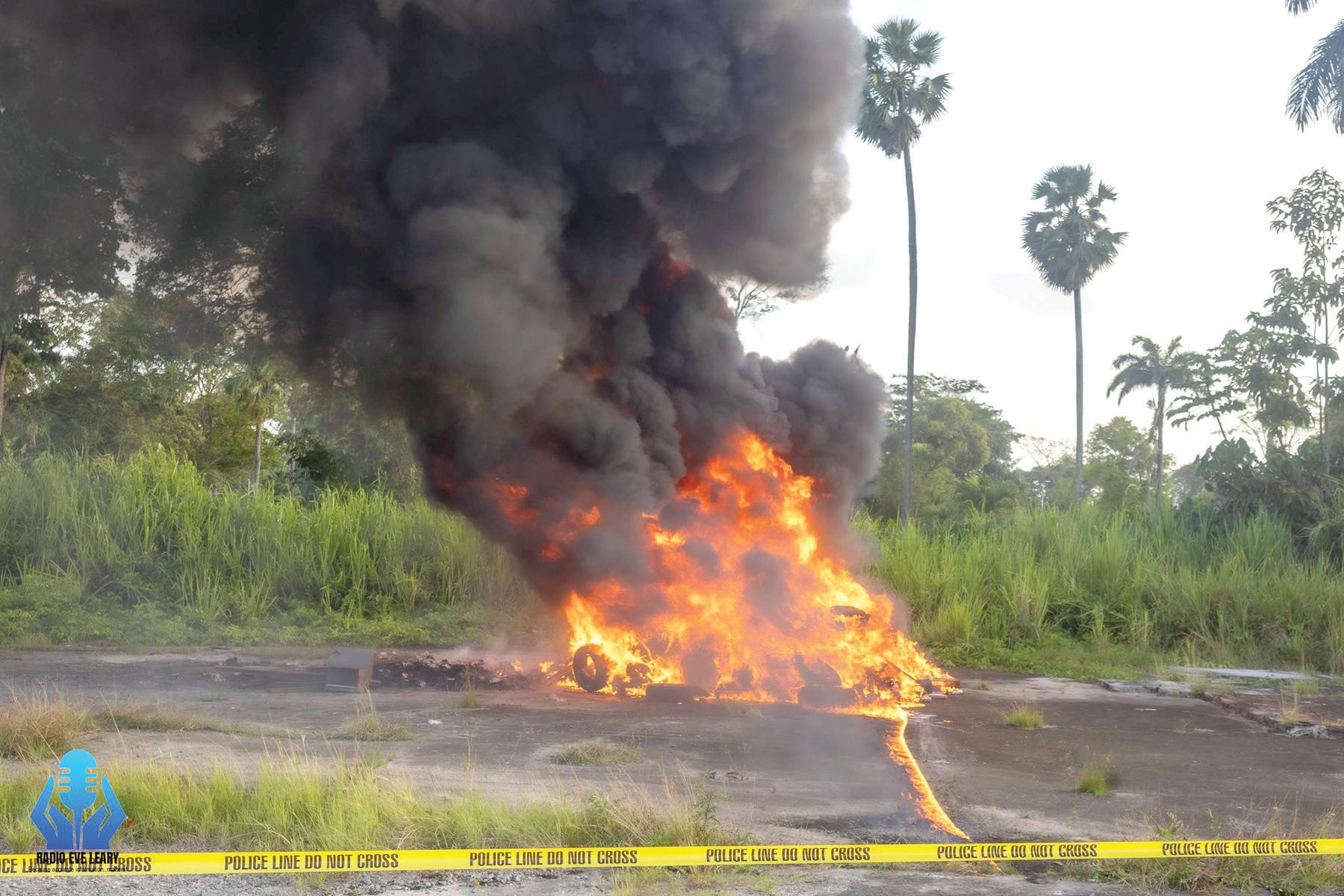
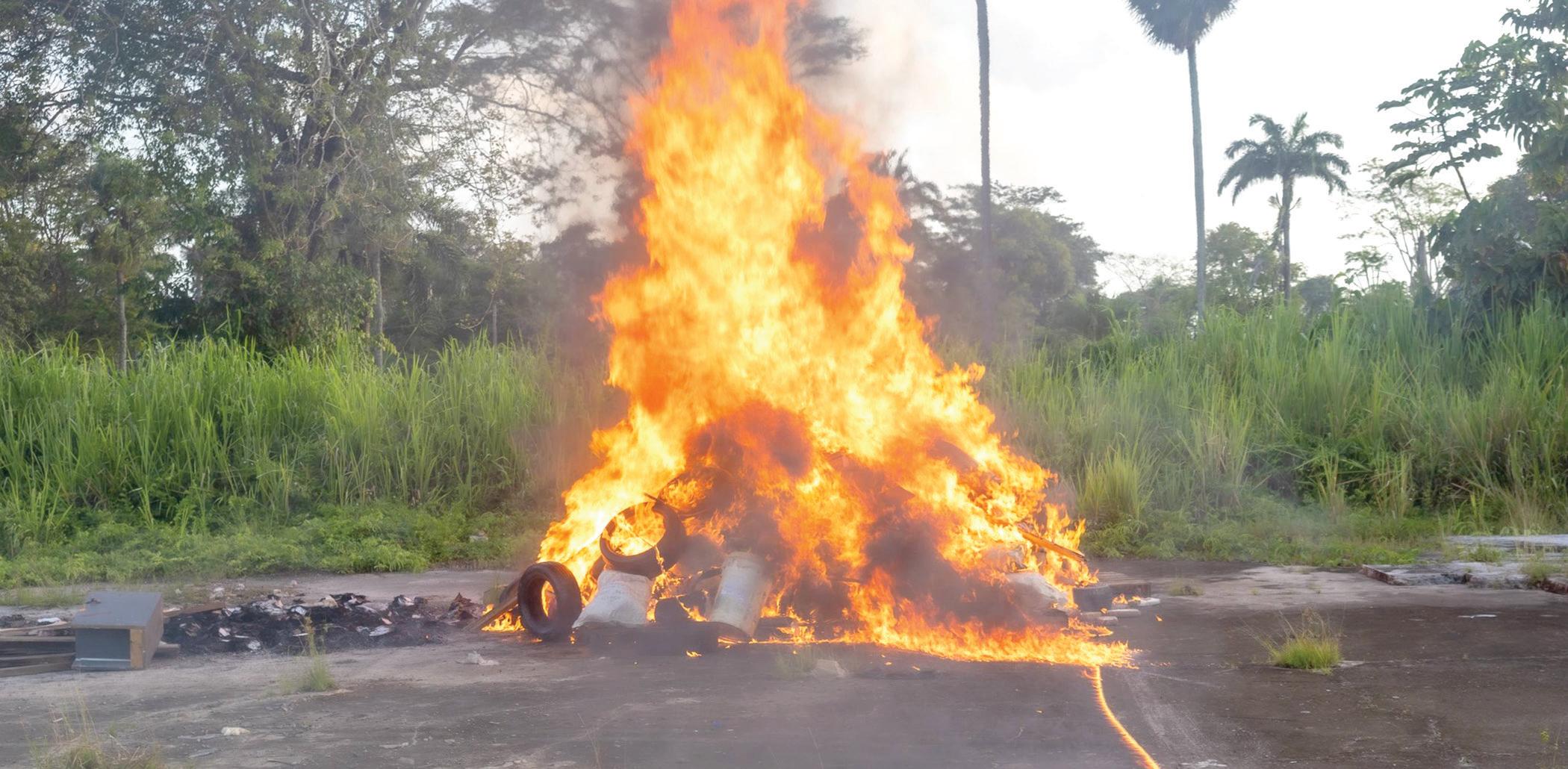

Narcotics valued at over $1.7 billion being destroyed during a police-led drug destruction exercise, as authorities move to permanently remove seized cannabis and cocaine from circulation
THE Guyana Police Force, on Saturday, carried out a major drug destruction exercise, eliminating more than $1.7 billion worth of narcotics that were previously tendered as evidence in concluded court matters.
The exercise was conducted under the supervision of Deputy Superintendent Fiona Fredericks, Head of the Narcotics Branch, as part of the Force’s standard procedure to dispose of seized drugs once they are no longer required for evidentiary purposes.
According to police, the narcotics destroyed included cannabis valued at $738,195,125 and cocaine valued at $974,383,500, bringing the overall total to $1,712,578,625.
The Force said the fig-
ures reflect the “significant volume and value of illicit drugs removed from circulation following successful prosecutions.”
Head of the Guyana Forensic Science Laboratory, Dellon France, along with his team, was present to conduct quality control tests on the narcotics prior to their destruction.
Police noted that the exercise forms part of ongoing efforts to combat drug trafficking and ensure that seized substances are permanently removed from circulation.
The destruction exercise, the Force said, underscores its continued commitment to disrupting the narcotics trade and strengthening national security.

A CRACKDOWN on derelict vehicles and illegal dumping intensified on Saturday, with the Ministry of Public Works removing multiple abandoned vehicles and obstructions along D’Urban Street, as authorities ramp up enforcement against persistent non-compliance.
The operation forms part of a broader push to reclaim
previously targeted areas.
“What we are seeing is displacement. When we issue notices in one area, the derelicts and caravans are moved elsewhere. Hadfield Street has now become a dumping ground, and that is unacceptable,” the minister stated.
down in order across communities.
He also criticised the practice of leaving derelict vehicles and caravans in front of residential properties, describing it as inconsiderate and unacceptable.
“Come on citizens, this
is our Guyana. You cannot bring caravans and just dump it in front of somebody’s residence. Or bring a derelict and dump it in front of somebody’s residence, because you do not have anywhere else to put it,” he said, adding: You just
cannot come and park and leave trucks and all the rest of it in front of somebody’s residence for long periods. Let’s clear up the place; let’s get order. Let’s work together. On D’Urban Street, there are a number of derelicts that will be cleared.”
While acknowledging improvements in areas already cleared, Edghill maintained that enforcement will continue as the authorities move to clamp down on illegal dumping, and restore order to public spaces.
public roadways increasingly being overtaken by discarded vehicles, caravans, and other debris, despite repeated warnings to owners.
Minister of Public Works Bishop Juan Edghill said the removals were a direct response to continued disregard for public notices, noting that some individuals have chosen to ignore advisories or relocate derelict items to new locations.
“Having put up public notices, and published the images for weeks, this is what happens when people do not comply,” Edghill said during the exercise.
He highlighted that illegal dumping has evolved into a pattern, with Hadfield Street emerging as a new hotspot as persons shift abandoned vehicles from
Reissuing a public warning, Edghill announced that all derelict vehicles and improperly placed caravans along Hadfield Street, particularly between Mandela Avenue and Cemetery Road, must be removed immediately.
Failure to comply, he warned, will trigger removal by the ministry, with owners required to cover associated costs, and barred from returning the items to the roadside.
“If you need them, move them. If not, we will remove them, and you will have to pay to get them back, and you will not be able to put them back on the shoulder of the road,” he stressed.
The minister underscored that abandoned vehicles not only create an eyesore, but also obstruct roadways, pose safety risks, and contribute to a break-


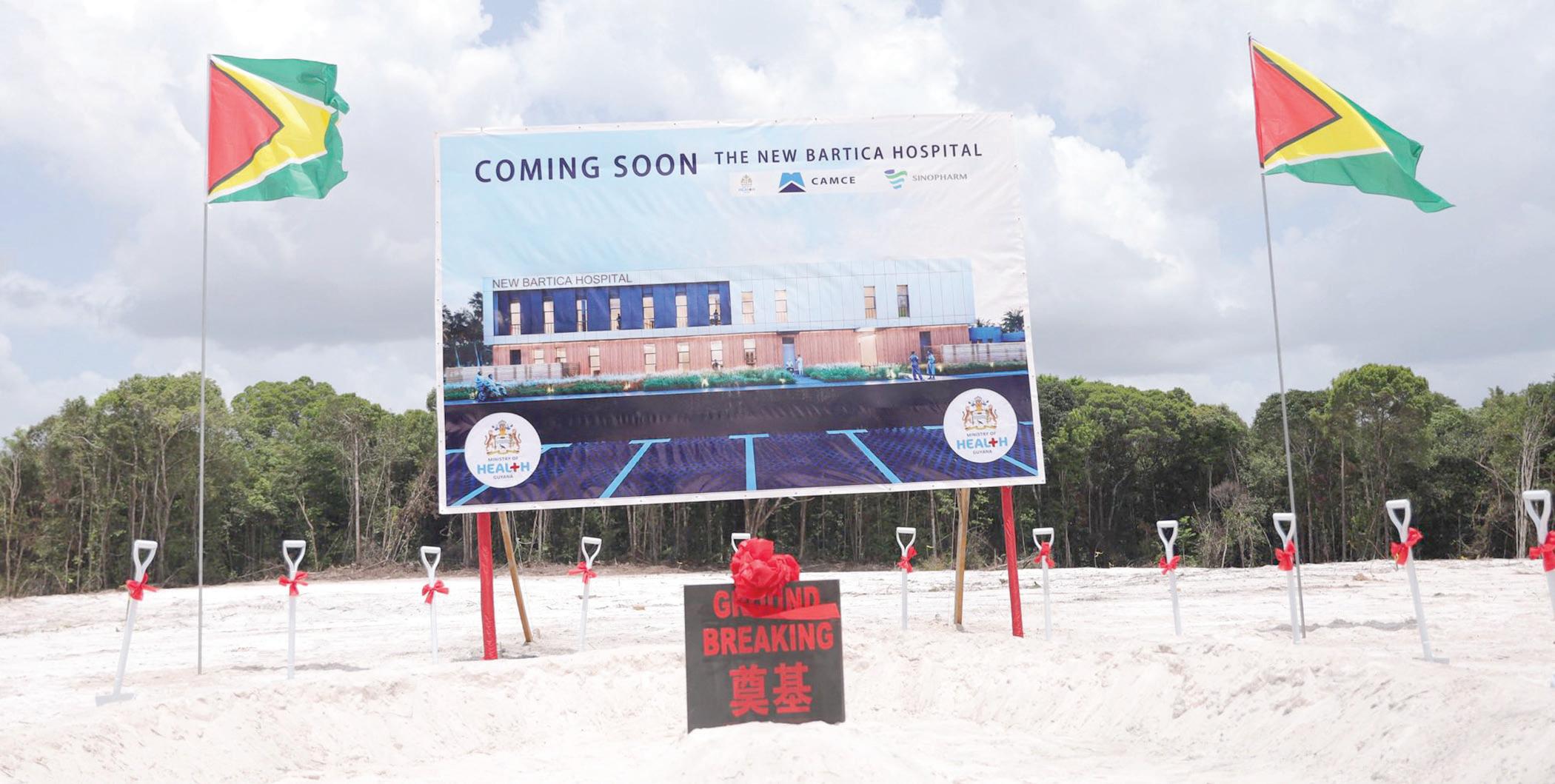
THE Ministry of Health on Saturday celebrated a major milestone with the sod-turning ceremony for the construction of a new, state-of-the-art regional hospital in Bartica, Region Seven.
The facility, which is expected to be completed in two years, forms part of the government’s ongoing efforts to modernise and expand healthcare access across Guyana.
Minister of Health Dr. Frank Anthony, in his feature address, described the occasion as a “memorable and long-anticipated moment”, noting that the project reflects the government’s commitment to strengthening the national health system following the challenges exposed during the COVID-19 pandemic.
Since 2020, the government has made substantial investments in healthcare, including the construction of nearly 25 health centres and posts nationwide.
The government has also commissioned six new regional hospitals in areas such as Lima, De Kinderen, Diamond, Enmore, Bath, and No. 75 Village. These facilities are fully operational and staffed with trained medical professionals, including specialists.
The minister explained that after careful assessment, the government opted to construct the new hospital on a fresh site rather than retrofitting the existing facility.
The new location spans approximately ten acres, allowing room for future expansion, improved patient access, and enhanced emer-

gency response capabilities, including proximity to the airstrip for medical evacuations.
“When this hospital is completed, people in Bartica and surrounding communities will be able to access high-quality, specialised services right here, without having to travel to Georgetown,” he noted.
The new Bartica Regional Hospital will be equipped with a wide range of modern services and technologies.
These include a 24-hour accident and emergency department, pharmacy, and diagnostic unit featuring digital X-rays, ultrasound, and a modern CT scanner. The facility will also incorporate advanced artificial intelligence systems to assist with rapid interpretation of medical imaging, enabling quicker and more accurate diagnoses.
Additional features will include a fully equipped laboratory capable of conducting over 100 types of tests, a modern blood bank, and approximately 50 inpatient beds in self-contained, air-conditioned rooms designed for patient comfort and privacy.
“We want the nurses, technicians, and other healthcare workers in this hospital to come from Bartica and surrounding communities, and we are asking residents to work with us to identify and train young people for these opportunities,” he urged.
Specialised services will also be available on-site, including dentistry, with dedicated dental imaging, audi-
ology services with access to hearing aids, speech therapy, and two modern operating theatres capable of supporting a wide range of surgical procedures.
A dedicated maternity ward and neonatal unit will further enhance care for mothers and newborns.
Upon completion, the hospital is expected to employ a minimum of 46 doctors, including specialists in obstetrics and gynaecology, surgery, internal medicine, paediatrics, and emergency medicine, significantly enhancing the level of care available within the region. (DPI)

The Guyana Civil Aviation Authority (GCAA) has deployed a team of investigators to the crash site of the Air Services Limited (ASL) aircraft near Imbaimadai, as authorities intensify coordinated rescue and recovery operations in the challenging hinterland terrain.
In a statement on Saturday, the GCAA confirmed that an accident investigator has been appointed by the Minister of Public Utilities and Aviation and dispatched, along with a team of trained personnel, to the location of the downed Cessna 206 aircraft.
“The Minister… has identified an accident investigator in charge, who, together with a team of trained investigators has been dispatched to the crash site… in the vicinity of Imbaimadai,” the agency stated.
The Search and Rescue Coordination Centre (SARCC) remains fully operational, providing logistical and operational support to the Guyana Defence Force (GDF) and other agencies involved in the response.
However, efforts to access the wreckage continue to be severely con-
strained by the terrain. According to the GCAA, the aircraft is located on a steep escarpment, with dense tropical vegetation further complicating access.
“The crashed aircraft is situated on a steep escarpment… Access and recovery efforts are being substantially impeded by dense tropical vegetation and the steep terrain,” the release noted.
Top officials, including Director General of the GCAA, Lt. Col. (ret’d) Egbert Field, and Chief of Staff of the Guyana Defence Force, Brigadier Omar Khan, have been fully briefed and are receiving continuous updates as the operation progresses.Meanwhile, GDF special forces personnel remain on the ground, working with urgency to establish a viable route to the crash site.
The GCAA emphasised that the situation is being treated with the highest level of priority, as authorities continue to coordinate a multi-agency response under difficult conditions.
Further updates are expected as teams make progress in accessing the site and advancing the investigation.






THE Corentyne woman accused of killing her seven-year-old daughter is expected to appear before a magistrate in Region Six on Monday, where she will be charged with the capital offence of murder.
Isabella Dabadial, a pupil of the Cooper Primary School, who lived at Fyrish Road, Corentyne had died during the ordeal, while her one-year-old brother, Ethan, survived the incident but sustained injuries.
The accused is her mother, Sarah Elizabeth Shivpersaud, a 26-year-old ten-day worker of the same address.
A police source confirmed, on Saturday, that investigators have received advice from the Office of the Director of Public Prosecutions (DPP) to institute the murder charge.
She is expected to make her first court appearance on Monday.
Police have said that the child was allegedly manually strangled at her home on Sunday, April 5, 2026. Investigators further reported that the woman also attempted to harm her infant son but was unsuccessful.
According to police, Shivpersaud told investigators that she had been experiencing significant emotional distress after her husband left the home several days earlier and refused to return. She also claimed that she woke up on the morning of the incident to find there was no food in the house.
Investigators said that following the alleged act,
the woman injured herself by slitting veins behind both of her ankles in what is believed to have been a suicide attempt.
She and the two children were taken to the Port Mourant Public Hospital, where Isabella was pronounced dead on arrival. Shivpersaud received medical treatment and, upon discharge, was taken into police custody.
Hours before the incident, the woman reportedly posted a photograph of herself and her two children on Facebook with the caption: “Me and my babies last pic! I’m sorry! May God forgive me!”
FATHER’S ACCOUNT
The children’s father, Kirwayne Dabadial, an agronomist attached to the Albion Estate, has since spoken publicly about the events leading up to the tragedy.
He said he left the home approximately two weeks prior after discovering what he described as inappropriate messages on the woman’s phone.
According to him, the couple had been together for eight years and experienced ongoing issues.
“She always used the children to manipulate me to get me to stay,” he alleged.
Dabadial further claimed that on the day of the incident, the woman sent him a message giving him a short time to return home.
“She messaged me and told me she gave me fifteen minutes to get back home or I would regret it. Then she called me and showed me

the children lying down, it looked like they were sleeping and told me it was too late,” he said.
He added that he immediately contacted persons nearby, who subsequently made the discovery.
The seven-year-old was laid to rest on Friday.




POLICE are investigating an armed robbery at Eccles, East Bank Demerara, where three Chinese nationals were attacked and robbed at their home on Friday afternoon.
The incident reportedly occurred around 15:53 hrs on April 10, 2026, when the victims had just returned home and were exiting their motor car in the garage.
According to a police release, on the date and time in question, four identifiable

POLICE have recovered 100 grams of suspected cannabis during an operation at Mahdia Arcade, Region Eight, on Friday morning.
The discovery was made between 09:00 hrs and 10:50 hrs on April 10, 2026, when ranks conducted searches in and around the arcade.
males, one armed with what appeared to be a handgun, approached the victims and forced them into the house.
The suspects allegedly ransacked both the upper and lower flats and relieved the victims of $500,000 Guyana currency, US$900, 1,000 Mexican dollars, 200 Hong Kong dollars, a Chinese identification card and other documents.
The suspects then made good their escape.
Police said CCTV footage from cameras attached to the residence has been extracted and will form part of the ongoing investigation.
Investigations are ongoing.
During the exercise, a bulky black plastic bag con-
taining leaves, seeds and stems suspected to be cannabis was found concealed in an abandoned area under old wood and plastic. The suspected narcotic was taken to the Mahdia Police Station, where it was weighed and amounted to 100 grams before being lodged. No arrests have been made as investigations continue.
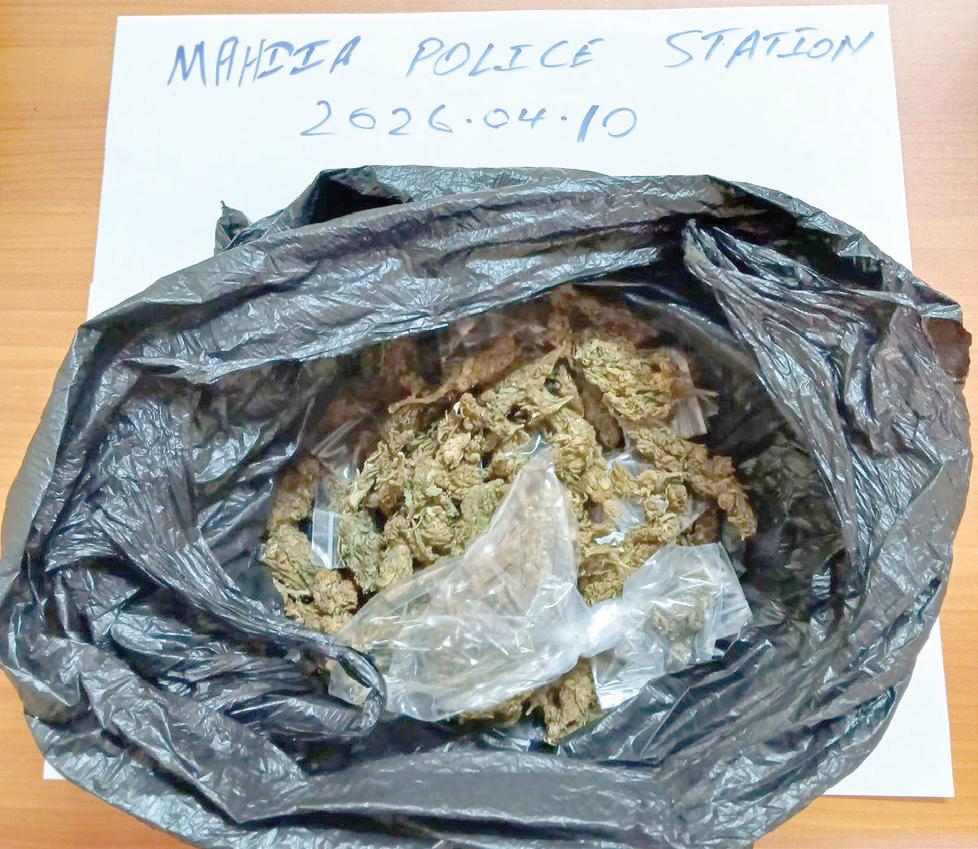

By Bebi Shafeah Oosman
A 53-year-old man lost his life on Friday night after he was struck and run over by a motor lorry along the Fyrish Public Road, Corentyne, Berbice.
Dead is Mark Songster, formerly of Lot 6 Section ‘C’, Fyrish Road. Police said the accident occurred around 20:10 hrs and involved motor lorry GYY 5720, driven by a 43-year-old man of Black Bush Polder, and Songster, who was a pedestrian at the time. Initial investigations revealed that the lorry was proceeding west along the southern driving lane of the road at a normal rate of speed when the driver encountered the pedestrian lying on the roadway.
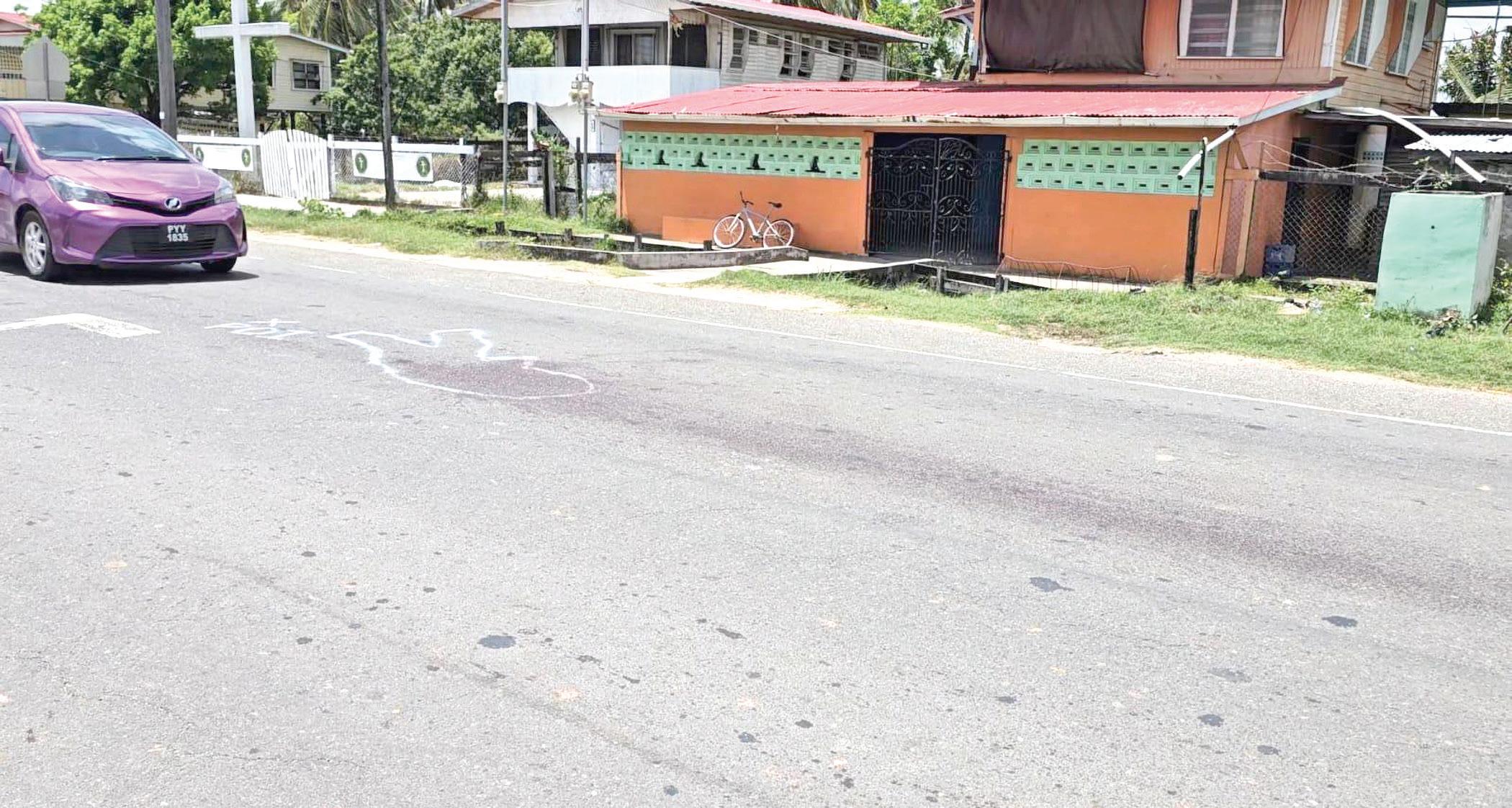
The scene along Fyrish Public Road, Corentyne, Berbice, where a pedestrian was fatally struck by a motor lorry on Friday night
POLICE have arrested two men during an intelligence-led operation at Mocha, East Bank Demerara, in connection with robbery under arms and break-and-enter-and-larceny offences committed earlier this month.
Ranks of Regional Division 4 ‘B’ conducted the operation on Friday between 15:00 hrs and 17:00 hrs, during which a 22-year-old vendor of Barnwell North, Mocha, and a 21-year-old construction worker of the same area were taken into custody.
bery committed on a Chinese supermarket at Goed Fortuin, West Coast Demerara, on April 6, 2026, as well as a break-and-enter-and-larceny at a dwelling house in Eccles, East Bank Demerara, on the same date.
Both men were escorted to the Providence Police Station, where they were interviewed and subsequently placed into custody.
Investigators said CCTV footage obtained and reviewed from both scenes played a key role in advancing the probe.
The lorry subsequently ran over the man, causing him to sustain injuries about his body. Songster was picked up in an unconscious condition by public-spirited citizens and taken to the Port Mourant Public Hospital, where he was pronounced dead on arrival.
post-mortem examination.
His body has since been taken to the Ramoo Funeral Home and is awaiting a
Police said the driver and the vehicle were taken to the Albion Police Station, where the lorry was lodged for examination by a Licensing and Certifying Officer. The driver has been placed into
custody and is assisting with investigations.
A breathalyser test conducted on the driver showed a reading of 11 micrograms of alcohol in his breath. Investigations are ongoing.
Police said the suspects are linked to an armed rob-
The suspects remain in police custody as investigations continue.






BARCELONA moved nine points clear of rivals Real Madrid at the top of La Liga with a comfortable win over Espanyol in the Catalan derby.
Ferran Torres rose highest to head home Lamine Yamal’s corner at the back post after nine minutes to open the scoring.
The former Manchester City forward then got his, and Barcelona’s, second goal in the 25th minute as he latched on to a pass with the outside of the boot from Lamine Yamal and got in front of Espanyol goalkeeper Marko Dmitrovic to guide a finish into the net.
At the age of 18 years and 272 days, Lamine Yamal became the club’s youngest player to reach 100 appearances and showed his importance once more with the two assists.
Despite struggling to gain possession during the match, Espanyol replied in the 56th minute when Pol Lozano was in the right place in the box to hammer home after Barca defender Eric Garcia had made a block.
Fernando Calero also sent a header wide from Ramon Terrats’ corner, but the visitors were unable to find an equaliser.
Barcelona rallied again for a strong finish and found the net twice in two minutes to settle the outcome as Lamine Yamal slotted into an empty net and England forward Marcus Rashford came off the bench to hook an 89th-minute volley into the bottom corner.
With seven games left in La Liga



struggling,
side is on course to retain its title.
But Barca will now turn its attention to the second leg of their Champions League tie against Atletico Madrid on Tuesday (20:00 GMT), where they will
has now
to win in 14 consecutive La Liga matches (D5 L9) but remarkably remain 10th in the table. (BBC Sport)
Arsenal’s title hopes were dealt a major blow as Alex Scott’s second-half strike gave Bournemouth victory at Emirates Stadium.
Defeat meant the hosts missed a chance to extend their lead at the top of the table to 12 points before second-placed Manchester City’s game against Chelsea on Sunday.
Mikel Arteta called for supporters to arrive early for an important match in the Gunners’ season and get behind the team, whose hopes of Carabao Cup and FA Cup silverware have been crushed in recent weeks.
But it was Bournemouth who looked the most at ease initially, and they punished Arsenal when Junior Kroupi finished off Adrien Truffert’s deflected cross from close range for an early breakthrough.
The home side rallied after going behind and levelled when Viktor Gyokeres
slammed in a penalty after Ryan Christie was punished for handball when trying to block a shot.
There was a tense atmosphere inside the stadium and Arsenal manager Arteta tried to force the contest in his team’s favour when he brought on the attacking trio of Eberechi Eze, Leandro Trossard and 16-year-old Max Dowman.
But it was Bournemouth who produced a moment of quality to win the game when Alex Scott ran on to Evanilson’s flick on the edge of the penalty area and shot past David Raya to stun the silenced home fans.
It was a goal that ensured the Cherries extended their unbeaten run in the league to 12 matches, leaving Arsenal deflated.
Arteta’s side remain top of the table but have played two more games than Manchester City now. They must also travel to Manchester next weekend to
take on Pep Guardiola’s side.
This match always felt like a huge moment in the Gunners’ season.
After recent disappointments, it was time to make a statement.
Arteta must now hope it is not the game that is highlighted as the one where Arsenal threw away the title.
Supporters arrived full of hope for a confident performance after their late winner against Sporting in the Champions League on Tuesday.
Instead they witnessed a nervy performance with Arsenal well below their best.
Injuries have hit Arsenal at a crucial time and they were without Bukayo Saka, captain Martin Odegaard and Jurrien Timber.
Myles Lewis-Skelly came in at leftback for just his second league start of the season, with Riccardo Calafiori also unavailable. (BBC Sport)
CJ McCollum scored 25 of his gamehigh 29 points in the first half and Dyson Daniels collected 13 points, 10 rebounds and 12 assists as the Atlanta Hawks clinched a playoff spot with a 124-102 rout of the visiting Cleveland Cavaliers on Friday night.
Jalen Johnson had 18 points and nine rebounds and Nickeil Alexander-Walker scored 18 for the Hawks (46-35), who will finish either fifth or sixth in the Eastern Conference. Southeast Division champion Atlanta missed the playoffs in the last two seasons.
Daniels posted his second career triple-double and McCollum drained 6-of-8 3-point attempts. The Hawks built a 92-59 lead in the third quarter, when Alexander-Walker and Johnson each had 11 points to deliver the knockout blow.
James Harden scored 20 points and dished out five assists, and Tyrese Proctor had 15 points in the final quarter for the fourth-seeded Cavaliers (51-30). Cleveland will have home-court advantage in the first round against either Atlanta or the Toronto Raptors.
Lakers 101, Suns 73
LeBron James scored 28 points and dished 12 assists to become the fourth player in NBA history to top 12,000 in a career, leading Los Angeles to a convincing victory over visiting Phoenix.
Luke Kennard added 19 points in the victory that assured Los Angeles will finish no lower than fourth place in the Western Conference and have homecourt advantage in a first-round playoff series. The Lakers remain one game behind the third-place Denver Nuggets with one game to play, and Los Angeles owns the tiebreaker edge.
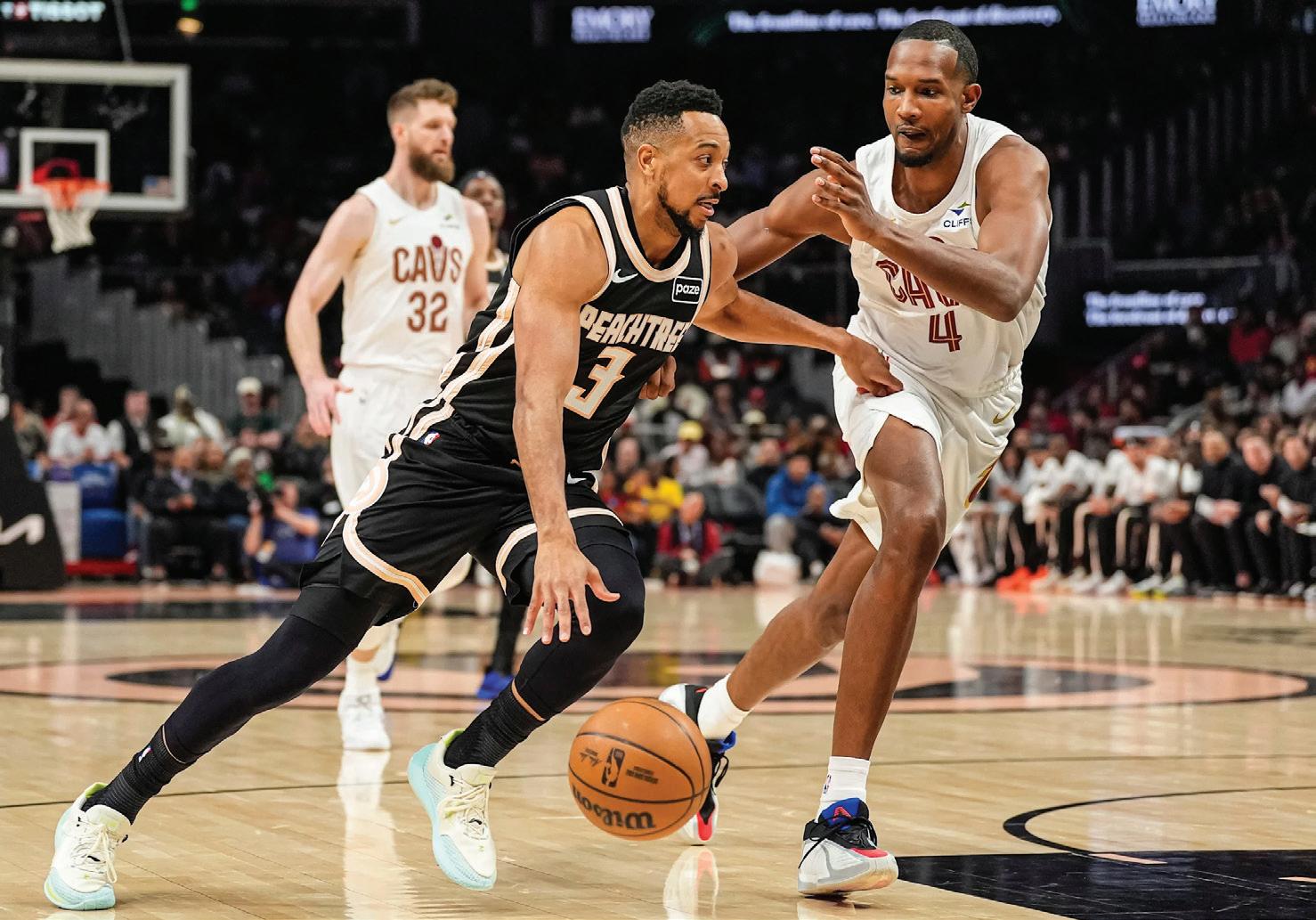
Dillon Brooks scored 12 points and reserve Royce O’Neale added 11 for the Suns, who were without star Devin Booker (ankle). Phoenix scored just 25 second-half points in a contest that meant nothing after it previously locked up the No. 7 spot in the West and a home play-in game. Grayson Allen exited in the second quarter due to a left hamstring injury and didn’t return.
Jalen Duren scored 20 points on 8-for11 shooting from the field and Detroit rode a strong stretch early in the fourth quarter to a win over host Charlotte.
Duncan Robinson racked up 19 points,
Cade Cunningham had 14 points, Ronald Holland II posted 13 points and Ausar Thompson added 12 points for the Pistons, who have won five of their past six games. Detroit had already locked up first place in the Eastern Conference. The outcome means the Hornets will be in the East’s play-in tournament.
The loss eliminated any chance that they could advance directly to the playoff bracket. LaMelo Ball’s 27 points, including six 3-point baskets, led the Hornets, while Brandon Miller had 22 points. Coby White, after missing the team’s Tuesday game night because of groin soreness, scored 11 points off the bench.
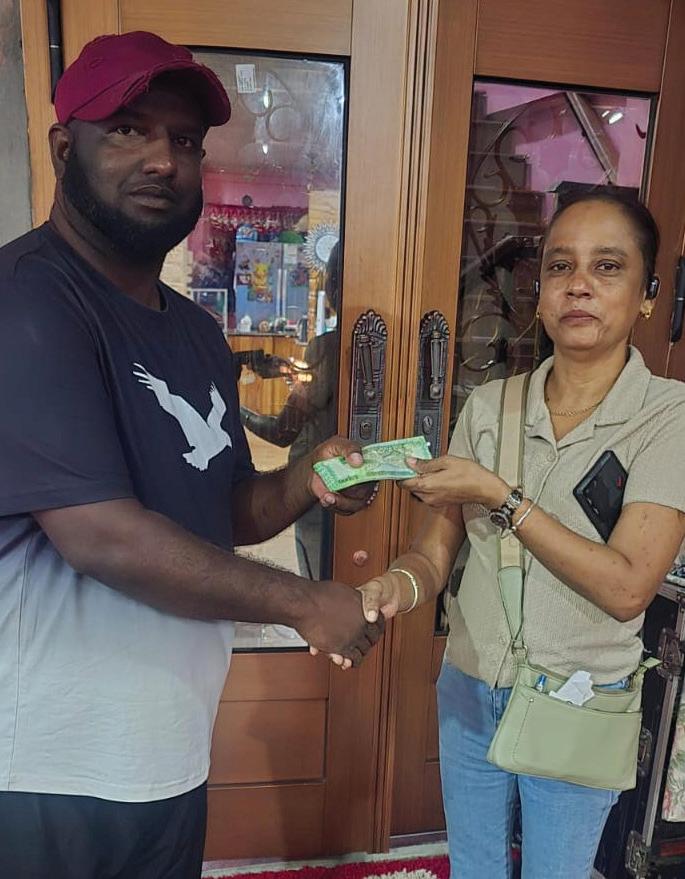
LATCHMAN Patram was re-elected president when the Zeelugt Sports Club (ZSC) held its Annual General Meeting (AGM) last Wednesday at Boodnarine Persaud’s residence, Zeelugt, East Bank Essequibo.
Others elected to serve on the executive committee are Vice-president - Boodnarine Persaud, Secretary - Trevayne Mohabir, Treasurer - Tavendra Mangra, Asst Secretary/ Treasurer - Aleem Khalil and Public Relations Officer - Jason Mohamed. The seven committee members are Deokinandan Maniram, Boodram Persaud, Keon Alexander, Kapildeo Charandeen, Tameshwar Dass, Ravindra Sanichar and Aron Mohabir.
“ONE Movement Entertainment” is the latest entity to benefit from “Project Cricket Gear for young and promising cricketers in Guyana, the initiative between Anil Beharry of Guyana and Kishan Das of the USA.
The movement received one box of white cricket balls for its annual Good Friday cricket clash. The game involved many young and talented cricketers in Guyana.
Organiser Royale Melville was grateful for the token and indicated that other than exposing some of our young cricketers, it also builds life-long relationships.
Total cricket related items received/ purchased so far: $786,146 in cash, 13 coloured cricket uniforms, one set of stumps, two trophies, 36 pairs of cricket shoes, 40 pairs of batting pads, 49 cricket bats, 48 pairs of batting gloves, 29 thigh pads,
three pairs of wicket-keeping pads, six arm guards, two chest pads, two boxes, 15 gear bags, 13 bat rubbers, seven helmets, one fiber glass bat, 16 boxes and four of white cricket balls, 13 boxes of red cricket balls, one bat cone, one batting inners and 28 footballs.
To date, 106 players from all three counties of Guyana have benefitted directly from cash, 10 gear bags, two trophies, four arm guards, 43 bats, four boxes, six helmets, 38 pairs of cricket shoes, 22 pairs of batting pads, 25 thigh pads, one bat grip, 42 pairs of batting gloves, one pair of wicket-keeping pads and four pairs of wicket-keeping gloves. Many others benefitted indirectly.
• Anyone interested to contribute can contact Anil Beharry on 623 6875 or Kishan Das on 1 718 664 0896.

Among the invitees in attendance were Omar Khan, President of the West Demerara Cricket Association, Shazim Nazrudeen Secretary of the East Bank Essequibo Cricket Association, Ian Whyte and a representative from the Zeelugt/Tuschen Neighbourhood Council.
The Returning Officer was Ravi Deonarine of the West Demerara Cricket Association.
Following the AGM, a committee meeting was held on Thursday evening to discuss and elect members to function on the different sub committees, including Disciplinary, Selection and fund-raising.
Meanwhile, Imtiaz Zafarullah, a resident of Zeelugt and owner of AMIC General Contracting Company, made a generous donation of $150,000 which goes towards purchasing 20 suits of uniforms for the players.
Zafarullah also lent his machine to develop and prepare a better pitch at the Zeelugt Sports Club ground. The members of the club expressed heartfelt thanks to the donor for his generosity in developing sports in the Zeelugt Community.
By Sean Devers
NATIONAL U-17 batter and Demerara U-15 Captain, 14-yearold Lomar Seecharran, scored two of his seven centuries this year, including 151 from 124 balls with 17 fours and four sixes for Champions Demerara against the GCB’s X1 at the LBI ground and 130 for Champions Georgetown against East Bank in the DCB inter-Association 50-overs competition.
The left-hander scored a century on his Guyana U-13 debut last year, but was surprisingly left out of the GCB’s X1 for the GCB’s U-19 tournament scheduled to commence
today. Seecharran ended the CWI U-16 rain-affected series against Barbados as the leading runs scorer, acknowledged that he was surprised and disappointed not to have been selected for at least the GCB X1.
The DCC opener, who was born on November 2, 2011, in Georgetown, said that he will not let this disappointment break his spirit. His plan is to let his bat do the talking.
Lomar was born to Lon and Marquita Seecharran and has one sibling.
“I attended Mae’s Primary School, Mae’s Secondary School, and, recently, transferred to Morgan’s Learning Centre.
I became interested in cricket
THE Guyana Cricket Board (GCB) has announced the squads for its annual Under-19 Inter-County Championship, set to bowl off today with matches in Essequibo and Demerara.
Demerara will be led by Dave Mohabir, with Parmeshwar Ram as Vice Captain and includes Khush Seegobin, Emmanuel Lewis, Shamar Apple, Arvind Suknanand, Johnathon Mentore, Dhanesh Persaud, Arun Gainda, Reyaz Latif, Vijai Kalpu, Shane Prince, Patrice Fraser, Tashant Argyle and Ravaldo Pereira.
Berbice will be captained by Romario Ramdeholl, with Adrian Hetymer as Vice Captain, and features Antonio DePaul, Vishal Williams, Shoaib Gaffoor, Nathaniel Ramsammy, Richard Ramdeholl, Thierry Henry, Feaz Baksh, Gilbert Griffith, Asif Marimutoo, Arif Khan, Rafeal McKenzie, Razam Koobeer and Micah Amsterdam.
Essequibo’s squad includes Nicholas Lovell as captain, Darwin Joseph, Elesia Ramdat, Jathniel Nurse, Darius Pearson, Romario Bholo, Eron Benjamin, Justin Dowlin, Bomesh Lall,
Murali Seodat, Dennis Crossman, Ravesh Singh, Shazim Mohamed, Navendra Sankar and Zandon Rose.
The GCB’s Select XI will be led by Joshua Budram, with Tameshwar Deonandan as his deputy, alongside Munesh Outar, Rupie Rajaram, Robin Seecharran, Yannick Newton, Munesh Rampersuad, Gibran Yacoob, Lakeraj Hemraj, Javhayden Rohler, Amit Rajran, Micheal Newland Jr, Linsdyl Harris, Reiad Ramnarine, Shazim Basheer and Mark Daniels. Today, Essequibo face Demerara at the Joe Jagmohan Ground, while Berbice take on the Select XI at the Police Sports Club Ground.
Action resumes Tuesday with Demerara opposing the Select XI at Lusignan and Berbice meeting Essequibo at the Police Sports Club.
Following a rest day on Wednesday, Demerara will clash with Berbice on Thursday at the Police Sports Club, while Essequibo will face the Select XI at Lusignan.
The tournament will conclude with the final on Saturday, April 18, 2026.
when I was young by watching matches and playing in the yard with my dad, which made me enjoy the sport more.
I am doing well in my studies. I stay focused and always try my best to improve.” Informed Lomar, who made a triple century last year against Blairmont in Berbice.
The talented Lomar disclosed that his growing up has been enjoyable.
“I never had one of those rough childhoods because my parents tried their best to give me everything I needed.
My hobbies include playing cricket, table tennis, swimming and fishing while my favourite cricketer
is Brian Lara.
I admire his strong work ethic and record-breaking achievements in cricket” continued Lomar who joined DCC at the age of four.
“It was mainly a decision made by my dad, as he believed the club’s history and strong foundation would be the best place for me to start my cricket journey.
My most memorable moment in cricket was scoring a triple century at the U-15 level.
I scored my first century at the age of 12 against the Diplomats’ Second Division team. Currently, I have scored seven centuries, along with a triple century” Lomar proudly declared.
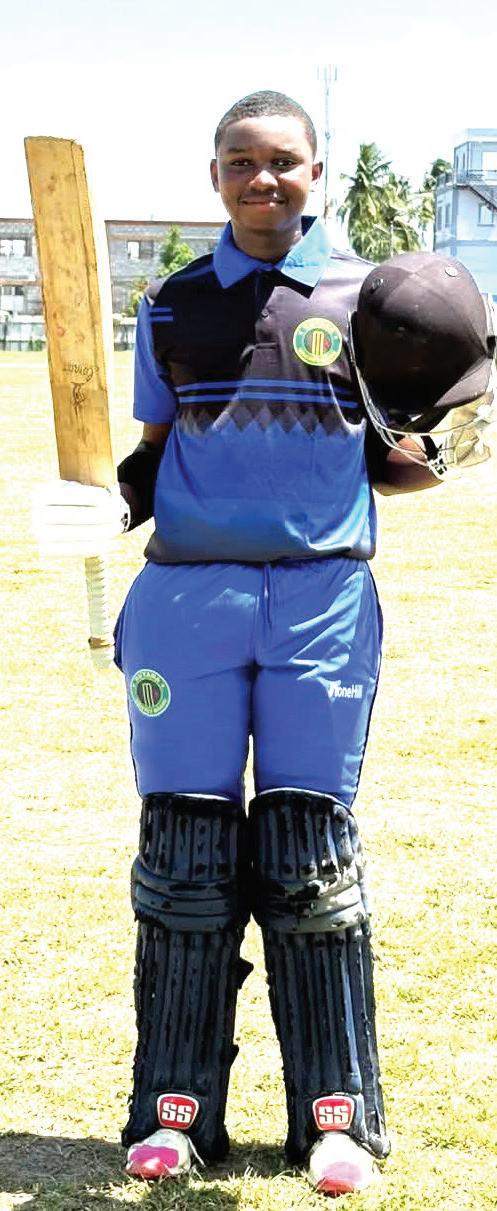
CRICKET Canada, the governing body for cricket in Canada, has announced the election of Arvinder Khosa as its new President.
The appointment marks a transition for the organization as it works to strengthen and support the sport across the country. Khosa is a highly-respected cricket administrator and community leader from Surrey, British Columbia, with a long-standing involvement in the game.
Khosa assumes the role effective immediately following his election at Cricket Canada’s Special General Meeting. Under this new leadership, Cricket Canada will focus on strengthening governance, enhancing stakeholder engagement, and continuing to build strong foundations for the organiszation.
Khosa brings experience from across the Canadian cricket landscape, including his role with Cricket BC, where he has supported the development and promotion of the sport at both the grassroots and organisational levels.
“This is an important moment for cricket in Canada,” said Khosa. “We are focused on strengthening the organisation and working with our members and partners to support the game across the country, with an emphasis on integrity, accountability and continued growth.”
Joining Khosa is newly elected Secretary Paramjit Shahi, a community leader from Winnipeg, Manitoba, who has been actively involved in cricket development, including supporting infrastructure
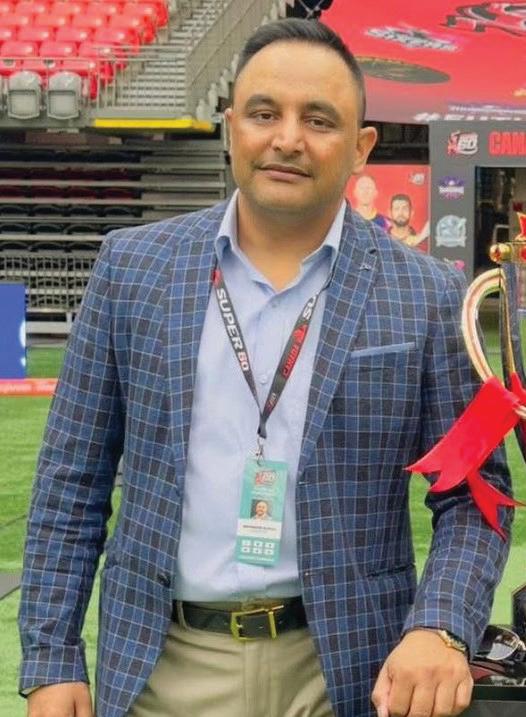
and youth-programming initiatives. Cricket in Canada continues to evolve, with steady participation growth, ongoing investment in the national programme and increasing
ANOTHER Canada Cricket Umpires Association (CCUA) umpire will be endeavouring to participate in the West Indies Cricket Umpires Association (WICUA) Exchange Programme, following the attempt by Guyana-born Daniel Singh which was severely curtailed by the recent inclement weather in Guyana.
After spending over two weeks in his homeland, a disappointed Singh returned to Canada last Wednesday without officiating in any games.
Singh’s non-participation has however not deterred Indian-born Sush Mahalanobis from venturing to Guyana for a two-week period during the month of May. Like Singh, Mahalanobis’ participation is also approved by the Executive Committee of the CCUA.
Mahalanobis is a dedicated and accomplished figure in the world of cricket, embodying a deep passion for the sport both as an umpire and a competitive player. With over a decade of umpiring experience spanning Canada, South Africa, and India, he has had the privilege of
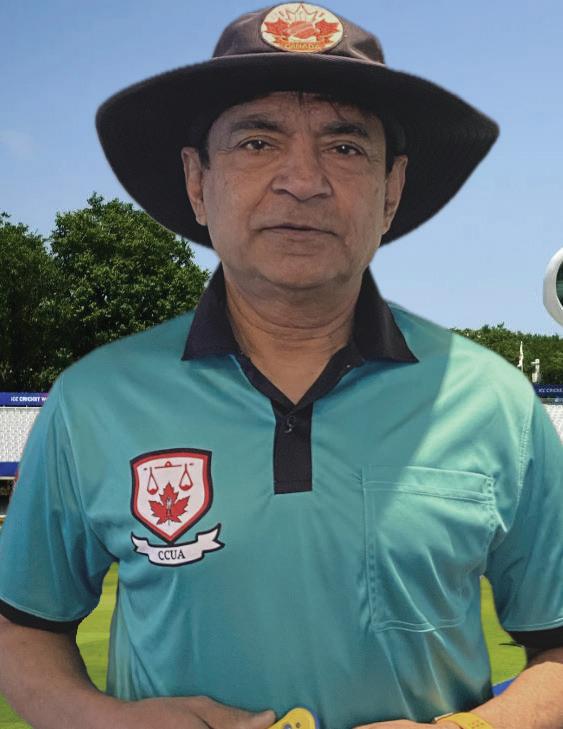
officiating in a wide range of diverse and competitive environments
His career also includes representing his state in cricket at a high level within India, demonstrating his strong commitment and involvement in the game.
In recent years, Sush has completed more than 100 umpiring assignments in just the past two years alone, covering tournaments and leagues at the national, provincial, and city levels.
His distinguished portfolio features assignments with prominent organisations such as
the CCUA - Scarborough Cricket Association, Cricket Canada - Toronto District Cricket Association, Canada Masters Cricket Council, Mississauga Cricket League, and Brampton Cricket League, among numerous regional and national tournaments.
He is proud to be recognised as a fully qualified WICUA umpire since 2024 and holds advanced certifications including CCUA Level 3 and BCCI ICC Level 2. Additionally, Sush has undergone TV umpiring training under the guidance of Mr. Peter Nero, further enhancing his expertise and credentials.
These accomplishments reflect his unwavering dedication to upholding the integrity, fairness, and spirit of cricket at every level, demonstrating his commitment to excellence both on the field and in officiating.
Beyond his cricketing pursuits, Sush is a Chemical Engineer who holds an MBA degree from the US. He is an entrepreneur currently serving as the CEO of a progressive business entity in Canada.
(Frederick Halley)
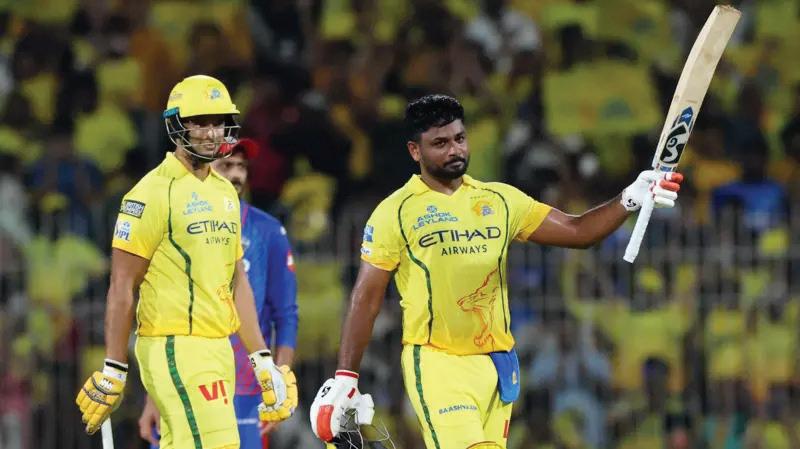
SANJU Samson’s century and Jamie Overton’s fine spell of 4-18 earned Chennai Super Kings their first win of this year’s IPL as they beat Delhi Capitals by 23 runs.
• (Scores:Chennai Super Kings 212 for 2 (Samson 115*, Mhatre 59 retired out, Axar 1-39) beat Delhi Capitals 189 (Stubbs 60, Nissanka 41, Overton 4-18, Kamboj 3-35 by 23 runs)
Samson made a sparkling 115 not out from 56 balls in CSK’s 212-2, and was supported by 18-year-old Ayush Mhatre, who was eventually retired out for 59 from 36.
Despite choosing to bowl first, Delhi skipper Axar Patel was the sole wicket-taker in the innings, removing opener Ruturaj Gaikwad for 15.
Delhi started positively in the powerplay but slipped from 61-0 to 76-4 as KL Rahul fell for 18, Pathum Nissanka made 41 and Sameer Rizvi and Axar fell for single-figure scores.
Destructive South African batter David Miller was bowled by a beauty from Overton which clipped his leg stump, but Miller’s compatriot Tristan Stubbs kept Capitals’ hopes alive with a counter-attacking half-century.
With 32 needed from 12 balls, Overton -- despite struggling with a sore side from throwing in from the boundary -- held his nerve in the 19th over to remove Stubbs for 60 and conceded just four runs.
Anshul Kamboj then took two wickets in the final over as Delhi were bowled out for 189 to take CSK above Kolkata Knight Riders and off the bottom of the table.
“The first few games didn’t go my way but these things happen in T20 cricket, but I have felt good with my pace since the Big Bash in December,” said Overton.
“The pitch was a little bit tacky so it was just about trying to keep the stumps in play as much as possible. My side is fine, it was just a bit of cramp out there.” (BBC Sport)
The drama which Rory McIlroy has produced at the Masters over the years - the type that left his fans peeking through their fingers - is woven into the fabric of his story.
When McIlroy moved into a record six-shot lead at the halfway point, it felt like this year’s tournament was going to see a different chapter written, one about a rather sedate affair which demonstrated control rather than chaos.
Many predicted a procession for the defending champion going into Saturday’s third round. They should have known better.
Northern Ireland’s McIlroy saw his commanding lead evaporate in a dramatic day where he swung the door wide open to his
rivals with a one-over par 73.
On Sunday, he will go out for the final round level on 11 under with American Cameron Young. Buckle up.
“I knew today wouldn’t be easy, the quality of the chasing pack is obvious,” McIlroy said on Sky Sports.
“I would have wanted to be in a better position going into [Sunday, having] started out with a sixshot lead, but I’ve still got a great chance. I’m in the final group and that’s where you want to be.”
Finally landing the Masters last year provided 36-year-old McIlroy with a sense of liberation.
During his first two rounds, he played with the greater mental freedom which he predicted reach-
ing his golfing Everest - finally conquering Augusta National to complete the career Grand Slam - would provide. The five-time major champion showed patience to take control of the leaderboard, even though he was not playing as well as the scoreboard suggested.
The ability to recover from wayward driving was the key to McIlroy’s success, staying calm in the pressure moments to play sensibly when required before attacking when the chances arose. An uncluttered mindaided by his superb short game - was missing on Saturday and could not ride to the rescue.
McIlroy found eight of the 14 fairways in the third round - the same as he did on Friday when he shot a 65. On Thursday, he only hit
five as he posted a 67.
McIlroy remains 90th in the 91-man field for accuracy off the tee and that is the reason why Augusta has been allowed to fight back against its most recent victor.
The old place took a beating on Saturday, with watered greens allowing favourable scoring conditions.
But McIlroy was one of three players inside the top 28 who did not finish under par for their rounds, alongside England’s Tommy Fleetwood and Norway’s Kristoffer Reitan.
“I will go to the range and figure it out. I still have a great chance but if i am going to win I will have to play better,” McIlroy said. (BBC Sport)
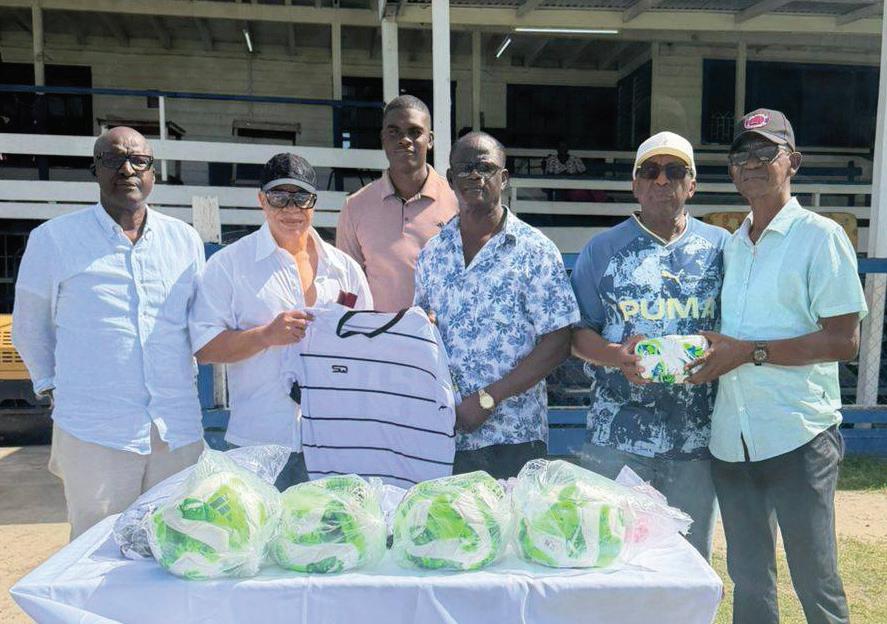
THE Guyana Police Force Football Club received a significant boost on Friday with the presentation of football gear from Pele Alumni Corporation, in a gesture that underscored continued support for the development of the sport within the Force.
The handover was done at the Guyana Police Force Sports Department, Police Sports Club ground, Eve Leary.
The presentation was made by members of Pele Alumni Corporation, including President Dennis Carrington, Treasurer Patrick Barton, Executive Eric Smith and Earl O’Neil, all of whom are former
national players who have made meaningful contributions to football in Guyana over the years.
The gear was accepted on behalf of the Guyana Police Force by Sports Development Officer, Colin Boyce, who expressed appreciation for the timely and thoughtful support. The presentation reflected a shared commitment to the advancement of football and the importance of investing in programmes that continue to nurture discipline, teamwork and talent.
The involvement of the former national players added special significance to the occasion, as their contribution represented not only a
practical investment in the sport, but also a strong vote of confidence in the continued growth and development of GPF Football.
The gesture by Pele Alumni Corporation stands as a commendable example of giving back to the game and supporting the next phase of football development through partnership and encouragement.
The Guyana Police Force values the contribution and extends sincere thanks to Pele Alumni Corporation and its representatives for their support, which will no doubt serve as a source of motivation to those involved in the football programme. (GPF)
• From Page 32
“The development of a world-class High-Performance Campus is a necessary first step in modernising our production pipeline, fully embracing the use of advanced technology including simulators and other high-tech training equipment. But we can’t stop here.
“This campus will benefit all countries in the Caribbean, and we
hope Antigua & Barbuda’s lead will inspire others to establish similar facilities,” Dehring said.
CWI also accentuated the project’s considerable commercial value, framing it as a critical step toward building a more sustainable and diversified financial future for the organisation.
The integration of sports tourism, broadcasting infrastructure, events, and hospitality offerings will unlock new revenue streams, reduce
THE opening round of the Diamond League season, scheduled to take place in the Qatari capital of Doha on May 8, has been postponed until June 19 because of the ongoing conflict in the Gulf, organisers have said.
The track and field meeting is the latest top sporting event to be disrupted in the country since the U.S. and Israel launched air attacks on Iran, and the Islamic Republic responded by firing missiles at neighbouring states.
“In the interests of athlete and spectator safety, a decision has now been taken to postpone
the meeting. Should conditions allow, it will now held on June 19,” the event’s organisers said in a statement.
“As temperatures are expected to be higher in Doha in June, the meeting will also be moved from the Qatar Sports Club to the Khalifa International Stadium. The stadium... is temperature-regulated.”
The Qatar MotoGP race and the opening leg of the sports car World Endurance Championship have been postponed, and the “Finalissima” soccer match between Spain and Argentina scheduled for Doha was cancelled. (Reuters)
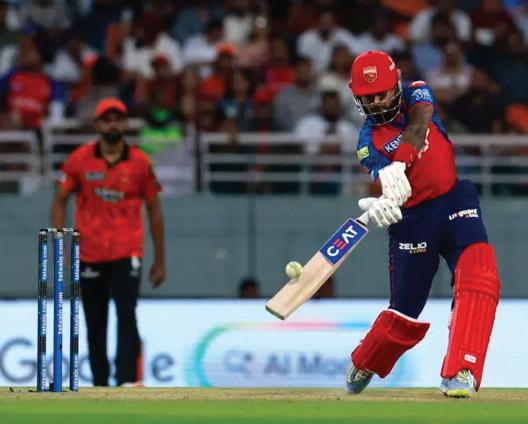
Shreyas leads Punjab to dominant win over Sunrisers
CAPTAIN Shreyas Iyer’s unbeaten 69 from 33 balls led Punjab Kings to a clinical six-wicket win over Sunrisers Hyderabad as they chased their target of 220 with seven balls to spare.
Punjab made a flying start as openers Prabhsimran Singh and Priyansh Arya added 99 in 6.2 overs, with the latter pummelling a 16-ball 50.
reliance on traditional income sources, and enhance the overall commercial ecosystem surrounding West Indies cricket.
The co-location of CWI’s administrative headquarters and key partners, alongside a dedicated broadcast and production facility, will further strengthen operational efficiency while positioning the region as a central hub for global cricket content creation and distribution.
• (Scores Punjab Kings 223 for 4 (Iyer 69*, Arya 57, Prabhsimran 51, Shivang 3-33) beat Sunrisers Hyderabad 219 for 6 (Abhishek 74, Klaasen 39, Head 38, Shashank 2-20) by six wickets)
Sunrisers dragged back some control when both batters were dismissed in quick succession by Shivang Kumar, who took 3-33,
but Shreyas’ counter-attacking knock swung the momentum back in Punjab’s favour.
Shashank Singh clubbed an unbeaten 16 to go with his crucial spell of 2-20 which halted the Sunrisers’ progress after their openers also made a rapid start.
Sunrisers were on course for a huge total as Abhishek Sharma and Travis Head added 120 in eight overs, with the former smashing eight sixes in his 74 from 28 balls.
But Shashank removed both in the space of three balls and Sunrisers’ progress stalled, with Heinrich Klaasen’s 39 from 33 the next highest contribution as they made 219-6.
The result sees Punjab remain second in the table and was also their ninth chase of 200 or more in the history of the IPL, which is a tournament record. (BBC Sport)
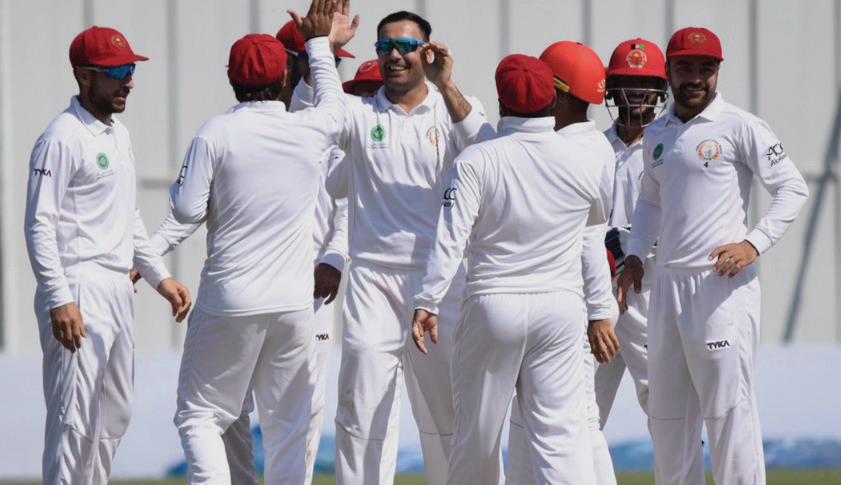
DUBAI, United Arab Emirates, (CMC )– An International Cricket Council (ICC) working group is expected to submit a proposal to include Zimbabwe, Ireland and Afghanistan in the next cycle of the World Test Championship (WTC), boosting the number of teams to 12.
According to a report by ESPNcricinfo, the group led by Roger Twose, is also set to recommend that one-off Tests be included in the next cycle. The proposals are expected to be presented to board heads at an ICC meeting later this month, or early in May.
Last year, Twose was appointed head of a working group and tasked with finding ways to enhance the game’s competition structures, with cricket struggling to deal with scheduling issues caused by the
three international formats and a growing ecosystem of franchise leagues. In November, the group presented a two-division WTC model, but that was shot down by a number of Full Members.
The working group will now return to present an expanded 12-team WTC model, which will include Zimbabwe, Afghanistan and Ireland. Despite being Full Members, the three were not included in the WTC when it was launched in 2019. They do play Tests, but opportunities against the nine WTC teams have been limited.
The working group will also recommend allowing one-off Tests to count towards the points accrued over the league’s two-year cycle. That, according to one official familiar with the discussions, is a bid to make it more financially
viable for bigger Full Members to host smaller ones, including these three teams.
Currently, a WTC series must have at least two Tests, which in some instances is viewed as a loss-making exercise for bigger boards.
The nine Full Members schedule their WTC commitments bilaterally, with three home and three away series over the course of two years. Including one-off Tests will allow Zimbabwe, Afghanistan and Ireland to fit into the league.
Ultimately, according to one official, the board will have to consider two things: whether one-off Tests are acceptable as part of the WTC, and whether it is financially sustainable for the three non-WTC teams to commit to two years of more Test cricket.
AS a precursor to the Georgetown Softball Cricket League (GSCL) Inc., plans to usher in Guyana’s 60th Independence Anniversary with the staging of an Over45 and Over-55 tournament, the league will stage a special three-team tournament at the LBI Community Centre ground today.
The action bowls off at 09:30hrs sharp and the teams in contention are Regal, Parika Defenders and Fisherman.
Today’s mixed teams’ tournament will be played over 20 overs and at stake are several trophies, including the winners, runners-up and MVP of the final, sponsored by Ramesh Sunich of Trophy Stall fame. It’s also one of several to honour the 72nd birth anniversary of Sunich, who celebrated the milestone on April 4.
Meanwhile, the GSCL is still encouraging teams to register for the Independence Cup to honour Guyana’s attainment of its 60th Independence Anniversary.
The GSCL is still aiming to bowl off the tournament on Saturday, April 25, with matches being scheduled for successive Saturdays and Sundays at 13:00hrs (1:00 pm) and 09:30hrs, respectively.
The winners in both categories will take home a whopping $500,000, while the runners-up are guaranteed $100,000 and trophies. The overall Most Valuable Player (MVP) in each category will also ride away with a motorcycle. Incentive prizes will also be awarded to players hitting centuries and bowlers with five-wicket hauls in the preliminary rounds.
Interested teams in Georgetown are asked to contact Mahen-
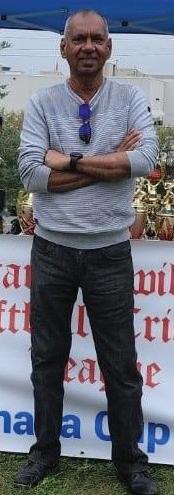
dra “Anil’ Hardyal on 610-702 and Abdul Seenjan on 662-1021 for the Over-45 category; Ian John (611-8073) and Parsram “Pacer” Persaud (677-4191) for the Over-55s. The Essequibo contact is Patrick Rooplall on 671-5697; Berbice – Krishnanand “Chinee” Balgobin on 642-9893; West Demerara – Mark Ernest on 6007489 and East Coast – Rafman Karramattlee on 646-1624.
PORT OF SPAIN, Trinidad, (CMC) – Cricket West Indies (CWI) vice-president Azim Bassarath has revealed that he has not made up his mind on if he will seek to become president when Dr Kishore Shallow’s term comes to an end in 2028.
The 69-year-old Bassarath, who is also the president of the Trinidad and Tobago Cricket Board (TTCB), has served as Shallow’s deputy for
two terms, the last of which began in March 2025.
However, after being named as Saint Vincent and the Grenadines’ Minister of Tourism and Maritime Affairs last December, Shallow announced that he would not seek re-election when his three-year term comes to an end.
During an interview on Isports i95.5 FM on Thursday, Bassarath was asked whether he was interest-
ed in throwing his hat in the ring for the presidential post.
“I haven’t thought about it. I will be about 72 years of age at that time, so I’m not sure if I will be physically fit to seek election,” he admitted.
“…My term of office in Trinidad comes at the end of 2029, so I’m hoping to serve out my term year in Trinidad.”
Bassarath said the last time a Trinidadian was at the helm of the
governing body was back in 2007 when Ken Gordon was president of the West Indies Cricket Board. He maintained, however, that even if he was not in a position to serve, they were other members of the TTCB who were interested in the position.
“There are other people in Trinidad who want to be president, so we maybe could support them,” Bassarath said.
ST JOHN’S, Antigua, (CMC) – In a landmark decision, the Government of Antigua and Barbuda has authorised the establishment of a Cricket West Indies (CWI) Campus and High-Performance Centre at Coolidge.
The project will be implemented in phases between 2026 and 2030, and will see the redevelopment of the 20-acre campus in Coolidge now solely owned by CWI, to create a fully integrated ecosystem for elite cricket development, sports science, education, and commercial activity.
The proposal was approved by the Cabinet of Antigua and Barbuda following a recent meeting with Prime Minister Gaston Browne and Minister of Sport Daryl Matthew, where the details of the project were shared by CWI representatives, including president Dr Kishore Shallow and CEO, Chris Dehring.
The decision was welcomed by Dr Shallow, who described the project as “a pivotal investment” in West Indies cricket.

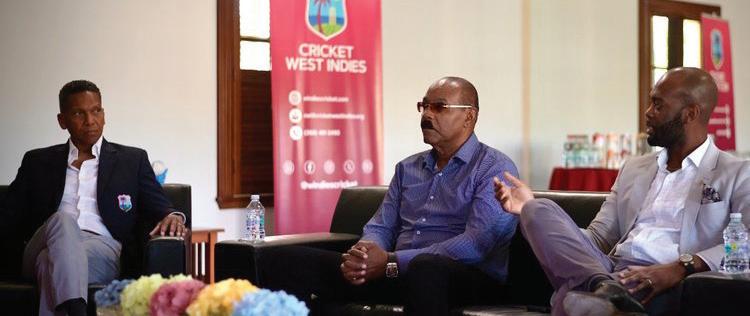
“We are deeply appreciative of the Government of Antigua and Barbuda for their vision and support of this transformative initiative.
“This campus stands as a pivotal
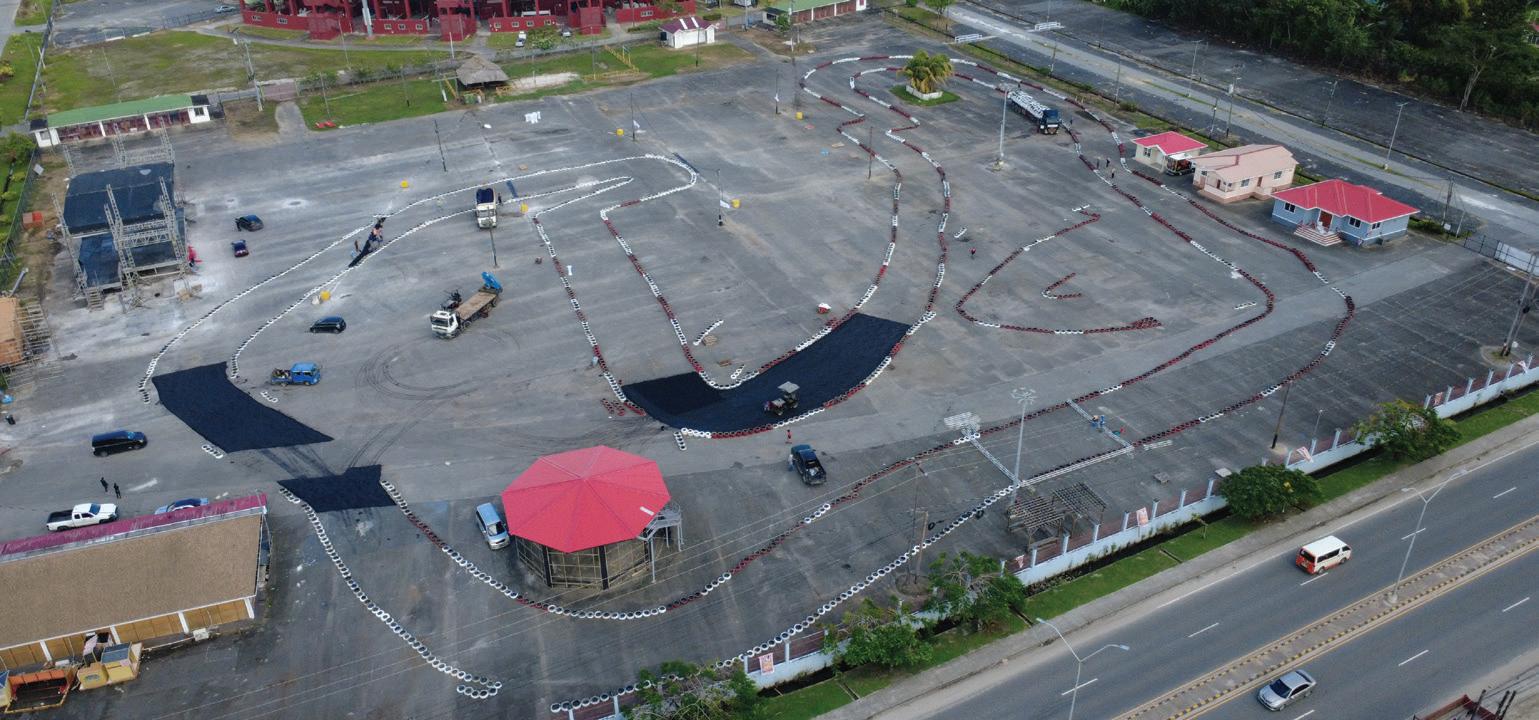
WITH exactly a week to the mega karting event locally known as the Nitro Kart Clash, the track is nearing completion.
The event, set for April 18 and 19 at the National Stadium, Providence parking lot, is being touted as one of the biggest motorsport events and the biggest local karting event, with over $10M dollars in cash and prizes on offer. And with the clock counting down, organisers have confirmed that the track layout is complete, with the final touches expected to be put in place today.
“We are almost complete with getting the track set up. We wanted to give the potential competitors as much time as possible to learn the layout. To get familiar with the surface and the undulations that the Nitro Kart Klash round one will bring,” a spokesman said.
“So far, we’ve had our graphic artists and rendering team put the basic layout on track, but there are going to be some added surprises when the drivers and riders take to the track; we won’t let it out of the bag just yet.”
The 6KM track will be home next weekend to several classes of racing, namely the 200cc four Stroke Honda, Briggs 206 Heavy,
Briggs 206 Light, Briggs 206 Jr, Briggs 206 Cadet, 125cc IAME, Time Attack Open and SUPERMOTO Senior.
The event will also see the addition of several new classes, including the Briggs Rookie Over 35 (Non-Pro Racers), Briggs Female, Supermoto Jr’s and Electric Scooter Race. The Jumbo Jet Events brainchild will also include a kids’ zone, complete with trampolines, bouncy castles and other attractions.
“We have a full food court and concession area with games and such set up to ensure that the event is a full family fun day for everyone. We want people to know that we are catering for everyone, because it’s a full family fun day too,” the spokesman said.
The event has the support of Banks DIH, AJM Enterprise, KP Jagdeo General Contractors, J’s Supermarket, SCI (Sawh’s Construction Inc), Precision Service Centre, and Ramchand’s Autobody.
Gates will be open from 13:00hrs on Saturday, with qualifying and free runs scheduled, and from 08:00hrs on Sunday, when racing action will get going. Admission is $3,000 for adults, and Children under 12 are free.
investment in the future of West Indies cricket, providing a centralised platform to strengthen our player development pathway and elevate the standard, consistency, and competitiveness of our teams across all
formats,” Shallow said.
“Equally significant, it enhances our capacity to build a more robust and diversified financial model, harnessing the synergies of sport, tourism, content production, and innovation to secure the long-term sustainability and growth of West Indies cricket.”
The world-class facility will serve as a central hub for high-performance training, advanced analytics, and athlete preparation, ensuring that players across the region benefit from modern infrastructure, data-driven coaching, and integrated support systems.
Importantly, the inclusion of a full-time Cricket Academy and High School will provide a structured environment for young talent, combining academic development with elite cricket training and expanding access to opportunity for the next generation.
Dehring said the project was important to the long-term growth and continued viability of cricket in the region.
• Continues on Page 30

I Am Maximus became the first horse since Red Rum in 1977 to regain the Grand National as trainer Willie Mullins celebrated his third consecutive victory in the race at Aintree.
The 2024 winner and last year’s runner-up came into the race as the 9-2 favourite and backed that up by finishing ahead of Iroko, Jordans and Johnnywho.
It made Irishman Mullins, who won the race for a fourth time in total, the first trainer since Vincent O’Brien between 1953 and 1955 to win in three successive years.
The feat means that JP McManus is now the leading owner in the history of the race with four wins - backing up the victories of Don’t Push It in 2010, Minella Times in 2021 and I Am Maximus in 2024.
McManus could also boast owning three of the top four in Saturday’s showpiece race,
with only Jordans not in his stable.
Red Rum’s second and third victories came in 1974 and 1977, and I Am Maximus is the first horse to have won the race in non-consecutive years since.
Further history for I Am Maximus was made by him, with a handicap of 11st 12lbs, becoming the first top weight to win since Red Rum carried 12 stone to victory in 1974.
Jockey Paul Townend said he felt “privileged” to be riding I Am Maximus.
He told ITV: “He’s tough. He’s a really, really good horse, and although Grangeclare West and Nick Rockett looked good in training, this lad wasn’t telling me not to ride him.
“He is so good and has such an engine. He will gallop to the end of the world for you. I am really privileged. What a horse. “Grand Nationals and Gold Cups are the pinnacle of the sport and I have them both.” (BBC Sport)