President Ali says, highlights diversification, investment, human capital and global
President Dr. Irfaan Ali on Sunday attended the Mother’s Day Satsang at the Triveni Mandir in Brampton, Ontario. While there, he addressed devotees and later distributed roses to the women who were present. President Ali and several members of his Cabinet are in Canada on official business. President Ali has so far engaged members of the Guyanese Diaspora, and attended the Maple Leaf Gala hosted by the Guyana-Canada Business Chamber in Toronto, Jummah at the International Muslim Organisation in Toronto, and the Guyana-Canada Business Forum. He has also had ‘fruitful’ discussions with Canadian Prime Minister Mark Carney on a wide
of
of mutual interest and
to both nations (Photos: President Irfaan Ali/Facebook)
EU, Guyana only scratching surface of partnership potential
EUROPEAN Union
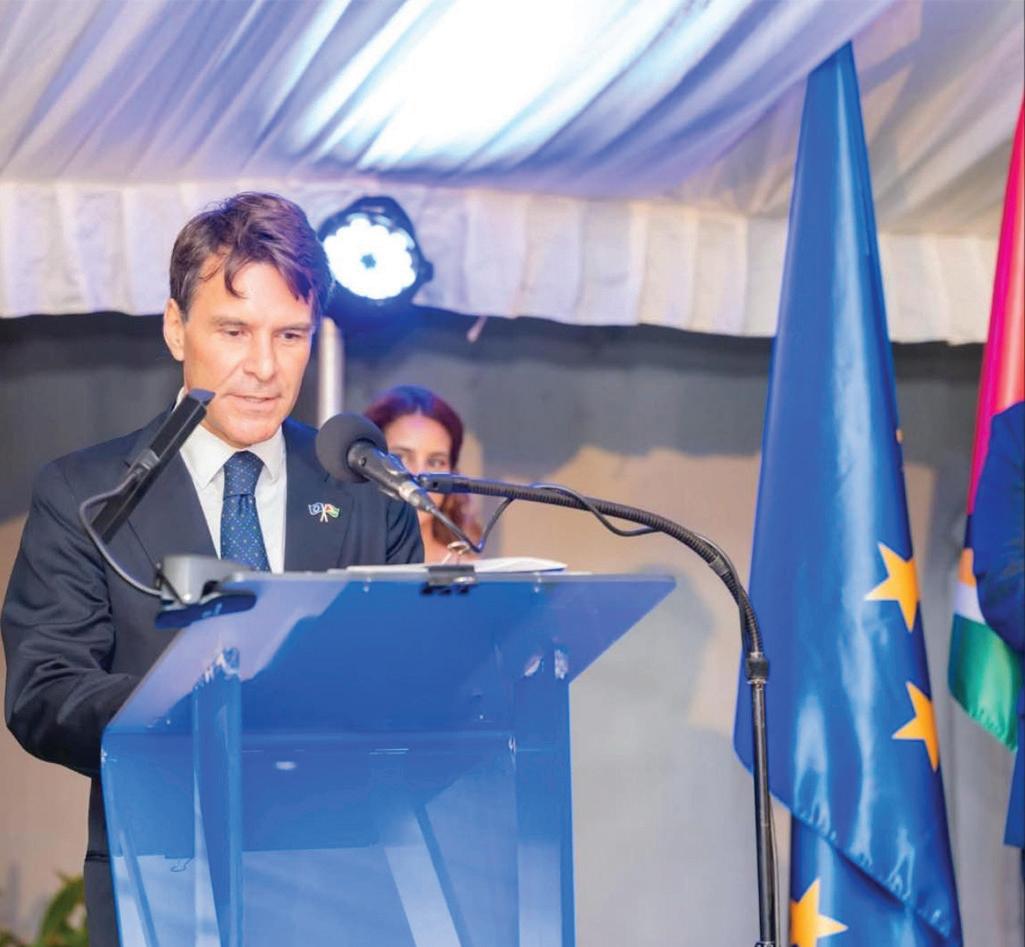
(EU) Ambassador to Guyana, Luca Pierantoni, has noted that Guyana and the EU are only scratching the surface of partnership potential, pointing to growing oppor-
tunities in business and innovation.
Pierantoni made these remarks recently while speaking during the EU delegation’s Europe Day observances here, indicating that there remains “enor -
mous, largely unused potential” in the relationship between Guyana and Europe.
“When it comes to the relationship between the European Union and Guyana, there is one certainty:
- Ambassador Pierantoni says, notes stronger business, academic and cultural ties could unlock more ambitious co-operation
we are so far only tapping into a fraction of what is possible,” he said.
“There is enormous, largely unused potential of co-operation between us, potential that we must now strive to
explore and realise,” he added.
The ambassador then outlined economic and technical co-operation, academic and cultural exchanges, and people-to-people connections as key pillars for expanding relations between Guyana and the EU.
He noted that Europe remains one of the world’s largest economies and said the bloc possesses significant expertise in areas including clean technology, strategic industries, research, and innovation.
According to Pierantoni, strengthening links between businesses, researchers, young professionals, and public institutions should remain a priority moving forward.
He pointed to a number of recent initiatives aimed at deepening co-operation, including business missions focused on health, agro-processing, digital technology, and connectivity.
Ambassador Pierantoni also referenced visits by Guyanese private-sector operators to several European countries, including Belgium, the Netherlands,
France, and Spain, alongside engagements with European companies interested in opportunities in Guyana.
Against this backdrop, he said that the EU’s Global Gateway agenda is increasingly serving as a platform to strengthen business-to-business partnerships and forge new alliances between European and Guyanese companies.
He also highlighted growing interest among European states in strengthening ties with Guyana.
“I have witnessed a growing interest by all member states to engage with Guyana, and I’m sure that we will see soon an expansion of new presence in the country, not only from a diplomatic and economic point of view, but also in terms of scientific, academic [and] culture.”
Meanwhile, Ambassador Pierantoni added that the European Union remains committed to building a stronger and more ambitious partnership with Guyana as co-operation between the two sides continues to expand.
EU Ambassador to Guyana, Luca Pierantoni
Guyana building economy to last ‘100 years ahead’
- President Ali says, highlights diversification, investment, human capital and global partnership efforts
By Shaniya Harding
GUYANA’S future will not be measured by the discovery of oil alone, but by how the country uses that wealth to build an economy capable of lasting “100 years ahead”, according to President Dr. Irfaan Ali.
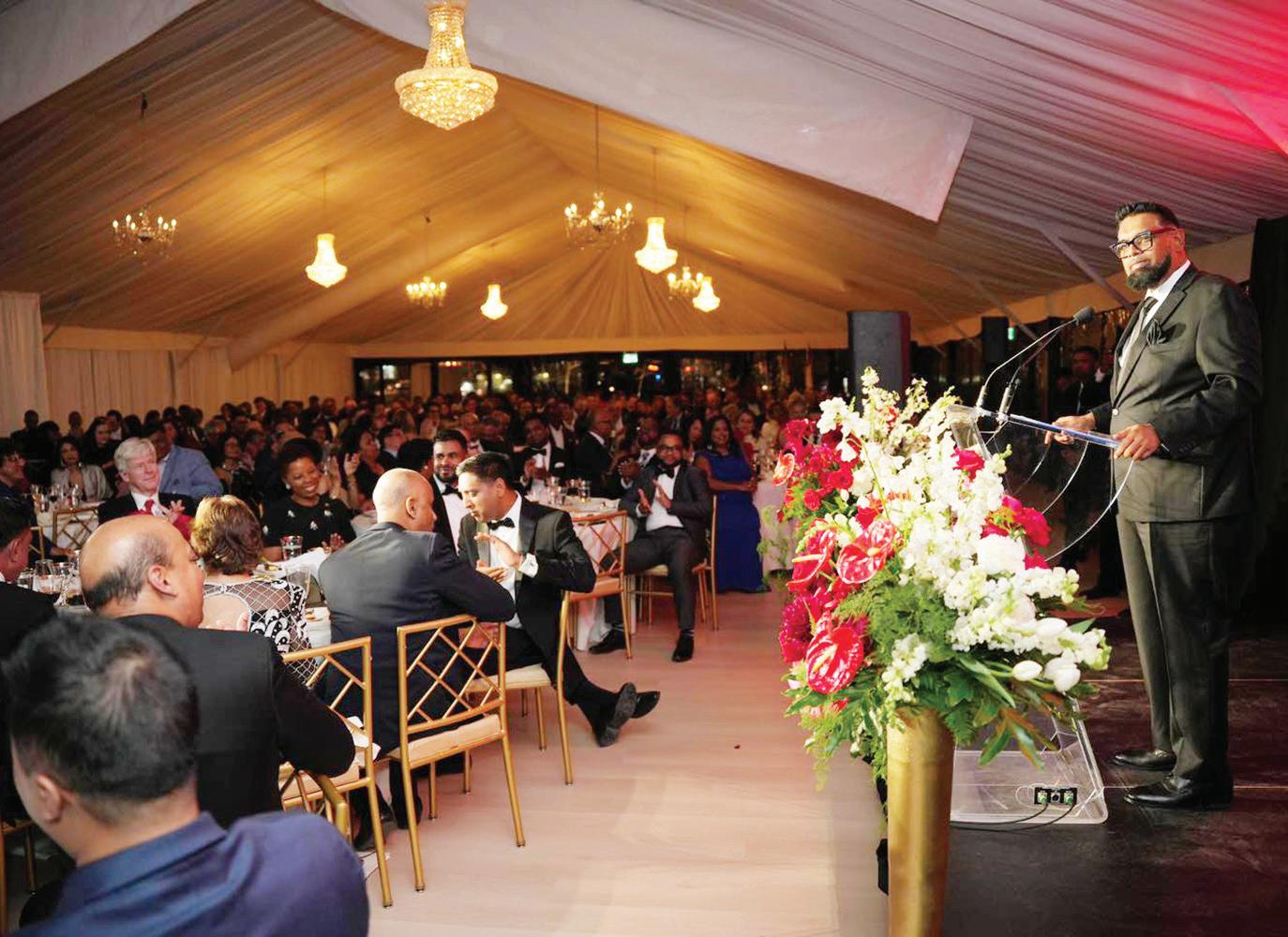
Speaking at the Maple Leaf Gala hosted by the Guyana-Canada Chamber of Commerce in Toronto, Canada, the Head of State said Guyana is pursuing a development model grounded in diversification, strategic investment, human capital and international partnerships, all steps towards positioning itself as a leader in energy, technology and sustainable growth.
As Guyana continues to gain recognition on the international stage, he emphasised that this recognition is built on more than the discovery of oil, but the development of structures, policies and an economy, which he said will last for decades ahead.
Turning his attention to the ability of small nations like Guyana, President Ali noted that with the discovery of oil offshore Guyana, the country has worked to ensure the stability of its future and economy.
“The next period of vindication is upon us. Vindication about what and for what? Vindication to the world that when we were blessed with this great resource of oil and gas, we built the strongest, most resilient and sustainable economy for 100 years ahead of us,” he said, adding, “This is our moment to vindicate
what many believe a developing country or a country as small as Guyana cannot achieve. That is avoiding the resource curse.”
He emphasised that Guyana has made oil and gas a blessing through investment, diversification and economic expansion.
Speaking further on this diversification, the Head of State noted that Guyana’s economy is growing and open to new investors. As he explained, the goal for Guyana’s economy is not isolation, but interconnectivity and strong regional and international relationships.
“Guyana today is open to investment, open to innovation, open to partnership, and open to business,” he said, noting, “The objective today is not economic isolation. It is economic interdependence. Because we recognise that we live in an interconnected world. No country succeeds alone. The great economies of the world are linked through trade, investment, technology, talent, and collaboration. And the key to economic interdependence is through trade, investment, and people-to-people contact.”
Successful, sustainable development, he added, is backed by Guyana’s emphasis on vision and investment in people.
President Ali noted that Guyana, within less than a decade in oil and gas, has made some impressive strides, particularly regarding the country’s deep-sea training facility, adding, “A small country like ours, only just over a decade in oil, today we have one of the top
training institutions in deep-sea facilities in Guyana. Countries that [are in this business for 50 years, 100 years, cannot say they have that. We have that not by accident.”
Moreover, he cited the investment in “a world-class tourism and hospitality institute” and a US$100 million state-of-the-art STEM training centre. This centre, he added, will be used by Guyana’s primary school children, who he said are “the next set of innovators, scientists, developers,” who “are going to come from these institutions because we are going to expose them, find their talent, and nurture their talent very early in the development cycle.”
These moves come as the Head of State
emphasised that the world and the global economy are changing.
President Ali noted that development worldwide has also created greater connectivity and has pushed nations like Guyana to play on the international stage with new partners, adding, “The world today has taught us an important lesson. There is no one-track approach to development. You have to be able to operate on 10 tracks at the same time, with the same speed, with the same clarity.”
“So, you have to navigate trade decisions in Asia, in the Western Hemisphere, in Europe, all at the same time, without offending any of the trading partners,” he said.
Further, he noted
that Guyana will have the “most competitive energy costs” by using technology to drive development, innovation and, more importantly, access through preferential trade arrangements to a market of over 450 million consumers.
This strategic strength is why President Ali said that Guyana is among the best places for new investors.
He stated that investors play a major role in the vision of making a Guyana that is not just for Guyanese, but for the world at large.
“We do not want to build a Guyana for Guyanese. We want to build a Guyana in which the world can enjoy, in which our standing forest remains
the light upon which humanity survives, in which when the world loses 60 per cent of its biodiversity, we keep ours intact,” he said. He added that Guyana’s leaders see industries like pharmaceuticals, scientific research and development as the future, adding, “When the world decides to drop out the most inefficient oil and gas producers, they'll have to drop out those with the highest carbon footprint. And we know that when we get to that stage, Guyana will not be one of those dropping out. That is why Guyana is the most secure location for exploration and investment in oil and gas.”
Speaking at the Maple Leaf Gala hosted by the Guyana-Canada Chamber of Commerce in Toronto, Canada, President Dr. Irfaan Ali said Guyana is pursuing a development model grounded in diversification, diversification, strategic investment, human capital and international partnerships
Diplomacy key to addressing conflict, preserving peace – PM Phillips
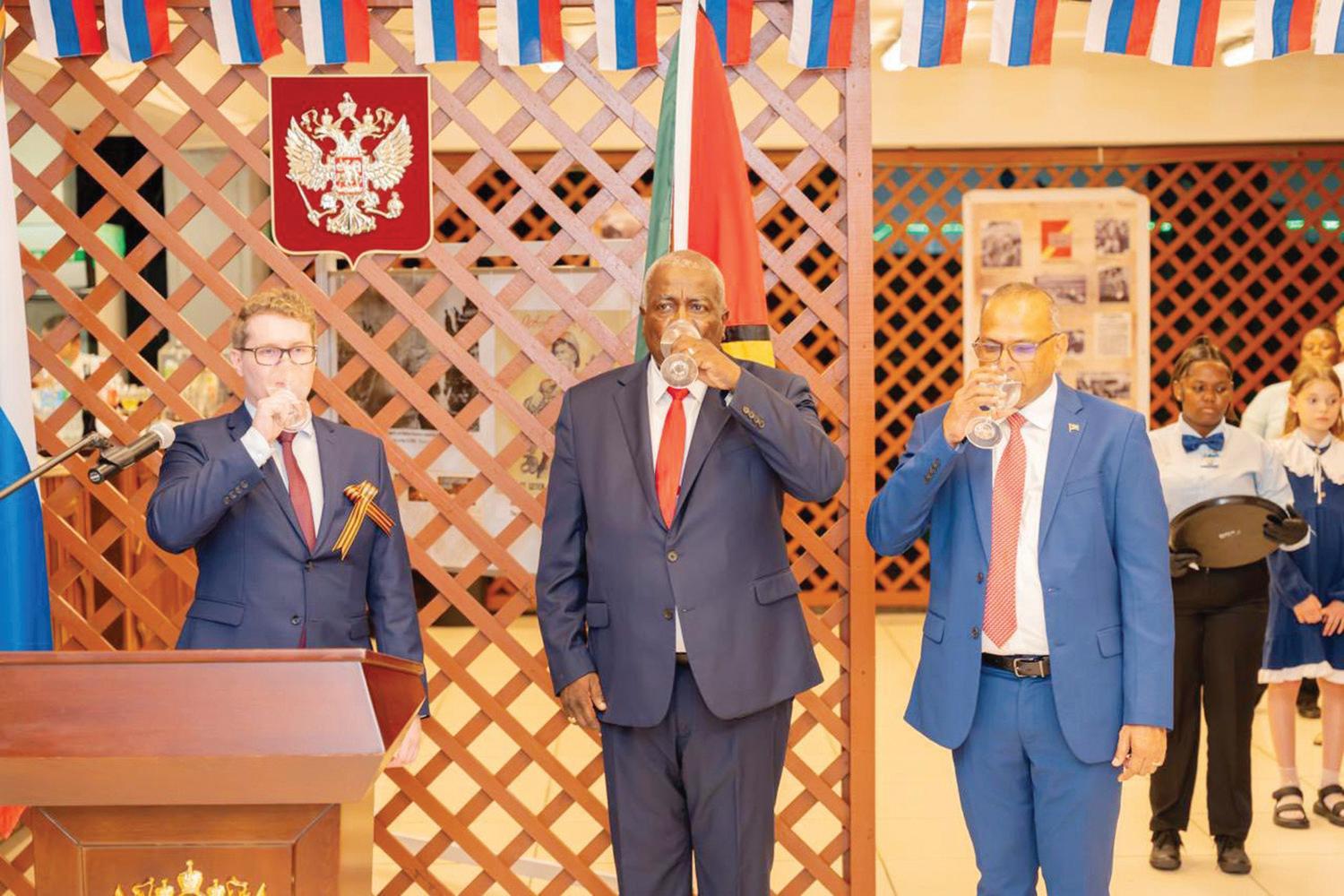
PRIME Minister, Brig adier (Ret’d) Mark Phillips, performing the functions of President, attended a reception hosted by the Ambas sador of the Russian Federation to Guyana, HE Andrey A. Pritse pov, on Friday night at the Russian Embassy in Georgetown.
The event commemorated the 81st Victory Day Anniversary of the Second World War. Delivering remarks, Prime Minister Phillips honoured the memory of those who gave their lives during the Second World War and acknowledged the immense sacrifices made across the
Soviet Union and among all Allied nations.
“In hindsight, this was not the achievement of any single nation. It was a collective victory, one forged through shared sacrifice, resilience, and an unyielding commitment to a common purpose. That lesson remains as relevant today as it was in 1945.”
He noted that the end of the war remains a defining moment in history, not only because of its military significance, but because of the principles it helped to preserve. He
also reflected on Guyana’s place in that history, noting that although Guyana is a small nation, its contribution to the wider Allied effort remains a source of national pride.
The Prime Minister said the occasion also served as a reminder that every nation, regardless of size or geography, has a role to play in advancing peace and safeguarding the values that bind the international community.
“Guyana continues to support a global order
rooted in co-operation, mutual respect, and dialogue. We believe firmly that diplomacy must remain at the forefront of efforts to address conflict and preserve peace. On this basis, Guyana reiterates its firm commitment to the rules-based international order as an essential system for fostering human progress, international peace and comity.”
The acting Head of State reaffirmed Guyana’s support for a rules-based international order, noting that cooperation, collective action and respect for the sov-
ereignty of all peoples remain central to building a more peaceful and equitable world.
“Let us work together to ensure that the sacrifices of those who came before us were not in vain, and that future generations inherit a world that is peaceful, just and secure.”
Prime Minister Phil lips was accompanied by his wife, Mrs Mi gnon Bowen‑Phillips and Minister of Health and Acting Minister of Foreign Affairs and International Co oper ation, Dr Frank Antho ny. (OPM)
Prime Minister, Brigadier (Ret’d) Mark Phillips, performing the functions of President and Acting Minister of Foreign Affairs and International Co-operation, Dr Frank Anthony, on Friday evening attended a reception hosted by the Ambassador of the Russian Federation to Guyana, HE Andrey A. Pritsepov to commemorate the 81st Victory Day Anniversary of the Second World War (OPM photos)
Guyana is a predictable partner for global energy investment
-
President Ali emphasises, says stability and clear policies driving hydrocarbon growth
PRESIDENT, Dr Irfaan Ali has defended Guyana’s long-term hydrocarbon strategy, noting that Guyana is a stable and predictable destination for global energy investment.
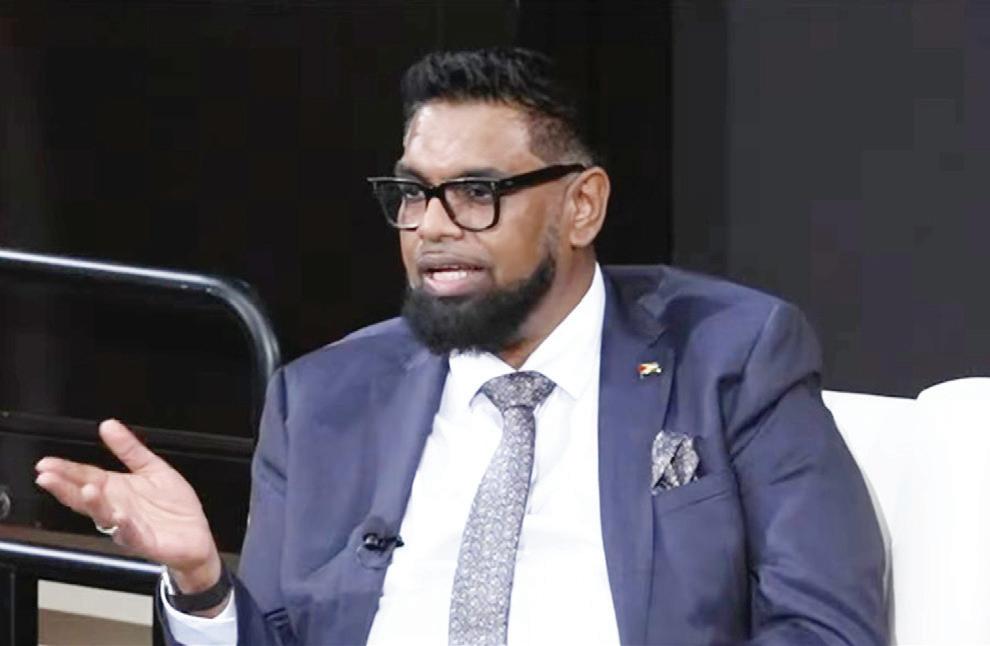
Dr Ali was at the time speaking during the Baker Institute’s Center for Energy Studies conversation titled, “The Future of Guyana,” during which he stated that Guyana’s rapid emergence as a major energy producer is being driven by clear policies, investor confidence and strategic planning for the future.
The President said that Guyana’s hydrocarbon development was already “speaking for itself globally,” noting that major investors and energy companies were fully aware of the
country’s reserves, production potential and development strategy.
He said the government’s gas-to-energy initiatives and broader energy plans are intended to unlock opportunities beyond oil production, including lower electricity costs, manufacturing expansion and regional energy integration.
“Our strategy has been very clear,” the President said.
As such, he explained that Guyana was positioning itself to become a net energy supplier to the wider Caribbean region, while also pursuing integration with the energy grids of northern Brazil and Suriname.
He further pointed to the importance of maintaining a policy environment that en -
courages investment in the sector, while cautioning that shifts in international financing attitudes could affect future opportunities.
Guyana, he said, understands the importance of capitalising on the current global appetite for financing energy and hydrocarbon projects.
“So there is no second-guessing what we are doing,” he added.
Against this backdrop, President Ali noted that predictability remains one of the most critical factors for investors when assessing countries for long-term energy investments.
“If investors cannot see predictability in your policy making, in your decision making, and the way you’re approaching the sector, then you will find
President, Dr Irfaan Ali
it very difficult,” Ali stated.
As such, he indicated that investors examining Guyana see a democratic and rules-based country with clearly defined policies and a transparent framework governing the oil and gas sector.
Further to this, Dr Ali said that Guyana’s success in the hydrocarbon industry was rooted not only in its resource potential, but also in the robustness and practicality of its systems.
Addressing sugges-
tions that the global oil and gas sector was nearing decline, President Ali maintained that international data and development trends did not support such claims.
“Any suggestion that the oil and gas sector is approaching its deathbed is imaginary,” the President said.
Dr Ali, however, stated that oil and gas will remain a critical part of the global energy mix for decades to come and as such, Guyana intends to maximise the opportunities available while investment and financing conditions remain favourable.
A Government Ready to Listen
THERE is a simple yet powerful idea behind the People's Progressive Party/Civic's Public Day initiative. A government is only as responsive as the distance it is willing to close between itself and its citizens.
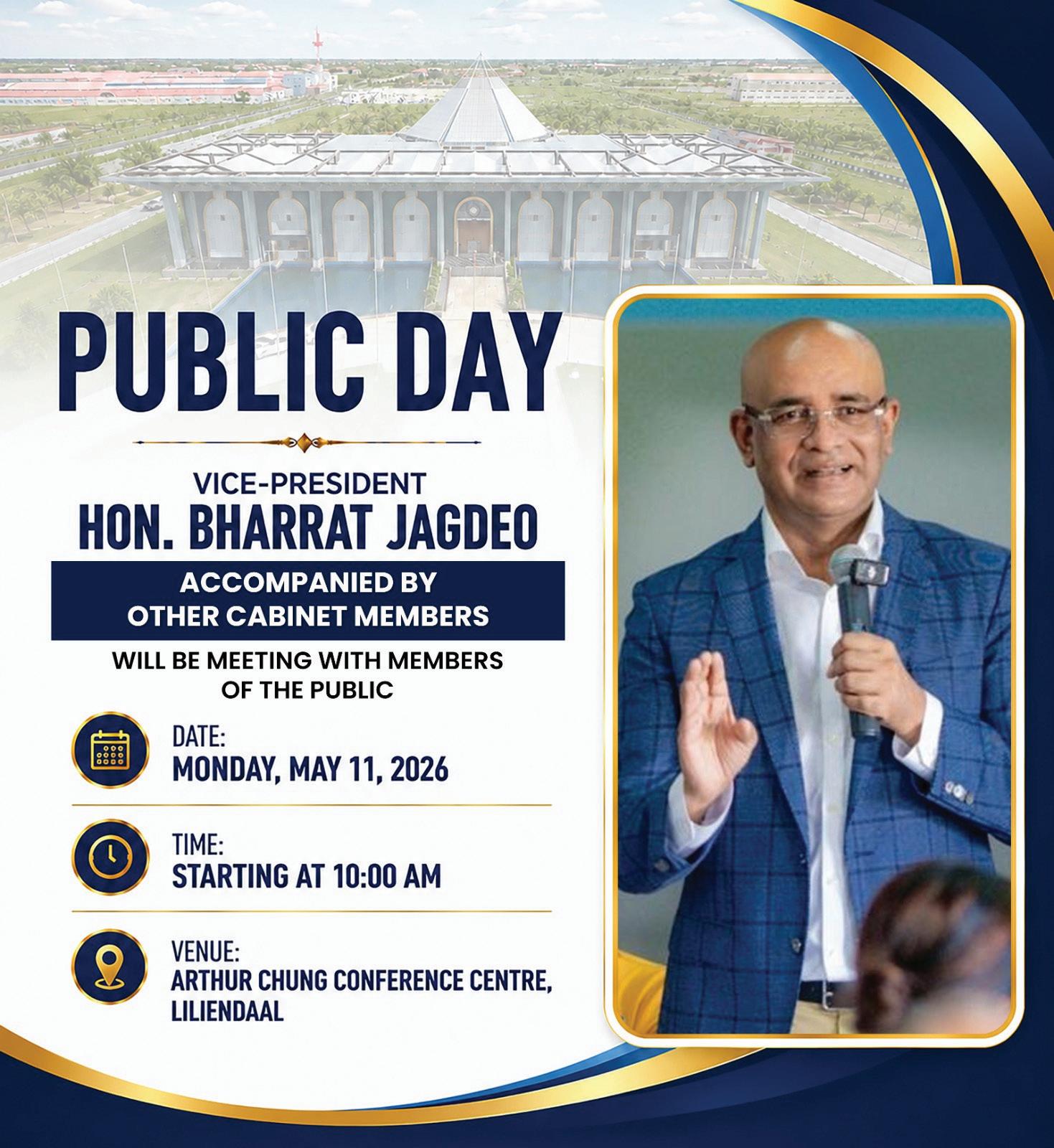
Today, Vice-President Bharrat Jagdeo, along with Cabinet members and senior ministry officials will continue to show that there is no distance between the PPP/C and Guyanese, as they converge at the Arthur Chung Conference Centre.
From 10:00 hrs the
doors will be open to any Guyanese who wants to walk in. No appointment needed; no letter of introduction or party card required. Just a citizen, a concern, and a government ready to listen.
This approach deserves more recognition than it typically gets.
Across the region and much of the world, ordinary people are often told that access to ministers is a privilege for the well-connected.
The PPP/C's Public Day challenges that idea. Topics such as housing and land allocation, the National
Insurance Scheme, employment, agricultural support, public infrastructure, and personal grievances that usually don’t make the news are all presented together.
The results are clear.
Previous Public Days have attracted hundreds of attendees who left not with vague promises but with immediate directives, referrals to relevant agencies, and often, quick resolutions to long-standing issues.
Citizens, including residents who saw drainage problems fixed and students who received learning devices, show that this model leads to
real outcomes, not just good appearances. It's also important to see Public Day in a broader context. These sessions occur alongside Cabinet-led outreach across all ten administrative regions, ensuring that engagement isn’t limited to those who can travel to Liliendaal.
Together, these efforts create a consistent governance approach, treating accessibility not as a motto but as a real commitment. This same spirit motivated the inclusive national consultations for the 2025-2030 Manifesto,
which gathered thousands of submissions from everyday Guyanese to shape the administration’s development plans.
Critics may label these efforts as political theatre, but theatre can't last without substance. Public Day has now become a regular event, and attendance remains strong. Citizens recognise the difference between being managed and being listened to.
When a fisherman from Region One and a pensioner from Berbice can sit together before the Vice-President and receive equal attention,
something significant is occurring in the democratic culture of this country.
As Guyana works towards its ambitious 2025-2030 agenda, supported by oil revenues and the hope of a diversified economy, the temptation to move towards distant, technical governance will only increase. Public Day serves as a valuable counterbalance. It reminds both the administration and the public that prosperity means little if the citizens at its centre cannot get through the door.
PPP/C continues face-to-face outreaches as VP Jagdeo hosts major Public Day today
THE People's Progressive Party/Civic (PPP/C) is once again putting its open-door approach on full display, with Vice-President Bharrat Jagdeo set to host another major Public Day event at the Arthur Chung Conference Centre (ACCC) today.
Jagdeo, alongside several Cabinet members and senior ministry officials, will meet directly with citizens from 10:00 hrs, offering Guyanese from any
part of the country the chance to walk in and raise their concerns without the need for prior appointments, letters, or political affiliation.
The initiative forms part of the PPP/C administration's wider strategy of direct, faceto-face engagement, designed to cut through bureaucratic delays and connect residents with decision-makers in a single setting.
Issues commonly raised at these sessions span housing and land
allocation, social services, the National Insurance Scheme (NIS), employment, public infrastructure, agriculture support, and a range of personal and community grievances.
Previous editions of Public Dday have drawn hundreds of Guyanese, with attendees consistently citing the open format as a rare opportunity to engage multiple ministries under one roof.
At past events, citizens have walked away with referrals,
on-the-spot directives to relevant agencies, and, in many cases, immediate resolutions to long-standing matters.
The government officials have repeatedly stressed that no issue is considered too small or too large to be addressed.
Today's event continues a clear pattern of direct outreach by the PPP/C government, which has paired the ACCC sessions with Cabinet-led regional engagements across the country's 10 admin-
istrative regions.
Through those community-level visits, residents have been able to raise personal and community concerns directly with senior officials, including the Vice-President and line ministers.
The government representatives have framed the sustained engagement as a reflection of the administration's governance philosophy, which prioritises accessibility and responsiveness. They have also point-
ed to the high turnout at past Public Days as evidence that citizens value the chance to interact with the leadership outside of formal channels.
With another large turnout anticipated at the ACCC today, the PPP/C is signalling that direct citizen engagement will remain a central feature of its approach, as the administration advances its 2025–2030 developmental agenda.
Dennis Yost and the tragedy of runaway capitalism
AFTER primary school, none of the Kissoon siblings went on to high school. For me, life had little meaning on D’Urban Street in Wortmanville. You get up in the morning and there is hardly food but plenty of time to do nothing. Before I go out onto the roadways, I would listen to Ron Robinson.
I was so sad when Ron died. I admired his radio voice when I was 14 years old and decades after, the great man and I became friends. A Portuguese salesman named Brian Sadler who worked as a commercial salesman for a company that was at the corner of Quamina and Carmichael Streets, sold my father a radio for a very cheap price.
Mr Sadler belonged to the Portuguese outfit named the Non-Pareil Club at the junction of Camp Road and Woolford Avenue, and my father
was the chief groundsman at Non-Pareil. Mr Sadler did not know we didn’t have a radio at home, so he sold my father a transistor very cheaply and that little thing we would listen to.
All Georgetowners listened to Ron Robinson in the mornings. It was from Ron I learnt about the saxophone music of the Italian musician Fausto Papetti. Papetti was not a sophisticated saxophonist at all like Grover Washington Junior, but I found something special in his music. I became a UG graduate and went to Canada to study. I lived in downtown Toronto where there was a huge record store named “Sam the Record Man.” I walked into Sam’s and saw Pappeti and bought every Papetti record. I still have dozens of Papetti. I gave some away. If you want some, please call me at 614-5927 or
fredkissoon@yahoo.com.
I am getting on in age and want to give away my record collection.
One morning, (I was about 16 years), I heard Ron played a song that I instantly liked. I mean instantly. It was a song about a girlfriend that had long gone, but the guy hopes she will return one day. He kept souvenirs of their days together and those souvenirs reminded him of her which he referred to as “traces of love.” He lives in hope that she will return, but will die in despair because she will never come back.
The song was titled “Traces” by Classics 1V with lead singer Dennis Yost. Of all the longhaired, soft-rock groups from the 1960s, Dennis Yost had an unusual voice. His voice stood out. “Traces” is one of the best love songs ever written. Its inherent rich
texture is magnified by the inherent rich smoothness of Yost’s voice.
There is a company in the UK named Beat Goes On Records (BGO Record). It puts four albums on one CD and sells it for 10 American dollars, which can be bought from Amazon. I bought 32 Johnny Mathis albums on eight CDs. Imagine the pure magic of Mathis on eight CDs. So recently, BGO put four Classic 1V albums on one CD and I bought it for $12 US. At 16 years of age, through Ron Robinson, I came to love Dennis Yost and Classics 1V.
Yesterday morning (Sunday), I was driving to the National Park and the CD that was playing in my car stereo was from Classics 1V and of course “Traces” was on. I am excessively fond of Johnny Mathis. I think he can
cover any song and do it better than the original singer.
He covered “Traces” on an album titled “Love Story.” But Johnny’s couldn’t outdo Dennis Yost. Many artistes have covered “Traces,” but the Dennis Yost original cannot be surpassed.
A tinge of sadness came over me as I drove into the National Park. Yost fell ill at age 65 and was in financial trouble and couldn’t pay his hospital bill. A benefit concert was held for him, but it did not raise the amount needed for the brain operation. Classics 1V was a huge act in the US in the 1960s and around the world. But at age 65, the man who serenaded the American population couldn’t pay his medical bill.
I will go to my grave and always wonder how
people could vote for political parties in the US where a jet fighter costs a billion American dollars, but the government does not offer free medical treatment for their citizens who cannot afford it. How can people vote for politicians who spend literally trillions on their armed forces but cannot spend money on free medical treatment? Dennis Yost would have lived if he were a Guyanese. It didn’t matter the cost of the brain operation. He would have walked into the Georgetown Public Hospital and got his operation free of cost.
DISCLAIMER: The views and opinions expressed in this column are solely those of the author and do not necessarily reflect the official policy or position of the Guyana National Newspapers Limited.
Law and order: An Imperative for quality development
MAINTENANCE
of law, order, and strong institutions is inextricably linked to indissoluble development. Every country, in every epoch, where there is a break down of law and order, citizens live with unrealised potential and unattained developmental possibilities, while those that have advanced have done so in tandem with (or driven by) adherence to law, order and good governance.
Collective values shape the culture of any society. I am of the firm
view that over the last two to three decades, Guyana has slipped into an insidious culture of lawlessness.
Two analytical reasons may be advanced, one: our values and attitudes changed faster than the willingness or capacity of lawmakers to review old and introduce new statutes to meet the moment; and two, it may be that the political elite may have deliberately allowed certain legal regiments to deteriorate so that they can capitalise on the lack of checks and balances.
In that scenario, when
systems break down, the politician becomes the central object of law(s), he says what is or isn’t permissible, who gets what and who goes where. In such a setting, persons are allowed to escape legal scrutiny because they know ruling politicians or have “lines” in the law administration and enforcement sector.
This is a country where anyone can simply ‘knock-up’ any two pieces of old wood by the roadside, call it a stall and start vending. We have nightclubs, rum shops
and drinking parlours situated in any section of any neighbourhood, just swing open their doors anytime they feel like and blare music at any decibel without the necessary permit and or licence. Any ‘lil’ youth man can ride a motorcycle, dodge in and out of traffic without helmet in full view of traffic ranks.
We open, in any neighbourhood, pig farms and chicken farms, machine shops, noisy production lines, spray painting shops, woodworking outfits, carwash bays, corner shops, etc… without environmental or other permits.
The country is littered with mechanic shops that have dozens of derelict vehicles lining the parapets encumbering the free flow of traffic for years with impunity. There are thousands of citizens across the country who just colonise portions of the government reserves for personal enjoyment without recourse of law.
Recently, Freddie Kissoon on his podcast griped about how much Banks DIH is encumbering the parapets at Thirst Park with impunity. He questioned why the authorities have not sought to curb it. With some degree of consternation, he contrasted this with the cases where poor vendors are chased from certain locations and the fact that Banks DIH itself took court action to compel City Hall to move vendors outside its establishment at Stabroek Square.
I argued that while I support the removal of the encumbrances at Thirst Park, I do not support the singling out or targeting of “Banks” or any other person. I cannot support
any action taken in isolation of a well thoughtout, economically sensitive, practical, systematic plan to curb the culture of illegal occupation and encumbrance of parapets across the country.
How do you advocate for City Hall to leave from its base, travel through the streets of Georgetown, go past the hundreds of permanent and makeshift encumbrances on every street of the city, only to end up at “Banks” to move a few traffic cones?
This would be selective enforcement of the law, and I do not support it. I also cannot support sporadic overnight flareups of vendor-removal drives, nor do I support these occasional police campaigns to enforce noise nuisance or operations to “pull-in” minibuses for violating public-transportation statutes or any temporary “clamp down” or enforcement action.
Many laws and ordinances have been routinely disregarded for such a long time that the lines between right and wrong are blurred; the current generation of youth can barely discern the differences. Violators are middle-class, working-class, impoverished, political elite, law enforcement and just about everyone. As a nation (government and people), we have to make some hard decisions.
I advocate a comprehensive national initiative to curb and reorient our value system with a view to thwart this culture of lawlessness that pervades every aspect of society. As a nation, the longer we dabble in this culture of non-adherence to existing institutional mechanisms and general law and or-
der, the longer we spend on the benches of underdevelopment. This will be an uncomfortable but necessary process, but we must bite the bullet and endure it.
It requires political courage and national will to confront and defeat this beast; many who have benefitted from decades of lawlessness and believe they have attained the status of untouchable will resist, but that should not deter our resolve.
Otherwise, despite the blessings of new resources, Guyana will not cross that threshold between potential and actualisation. We cannot continue to vend anywhere we feel like or encumber any reserve or parapet we deem convenient, or alter public property deliberately unmindful of existing rules.
It would be remiss of me if I ended this article without mentioning a recent discussion I had with AG Nandlall. He mentioned a comprehensive review of a raft of laws for adoption before year’s end, that will address the contemporary challenges of all the issues I raised above. I look forward to these and urge that their rollout be linked to practical implementation programmes and directly interwoven with our development needs. Development not backed by a strong culture of maintaining law and order is easily reversible.
DISCLAIMER: The views and opinions expressed in this column are solely those of the author and do not necessarily reflect the official policy or position of the Guyana National Newspapers Limited.
Bartica residents to soon receive house ownership documents
- as housing development nears completion
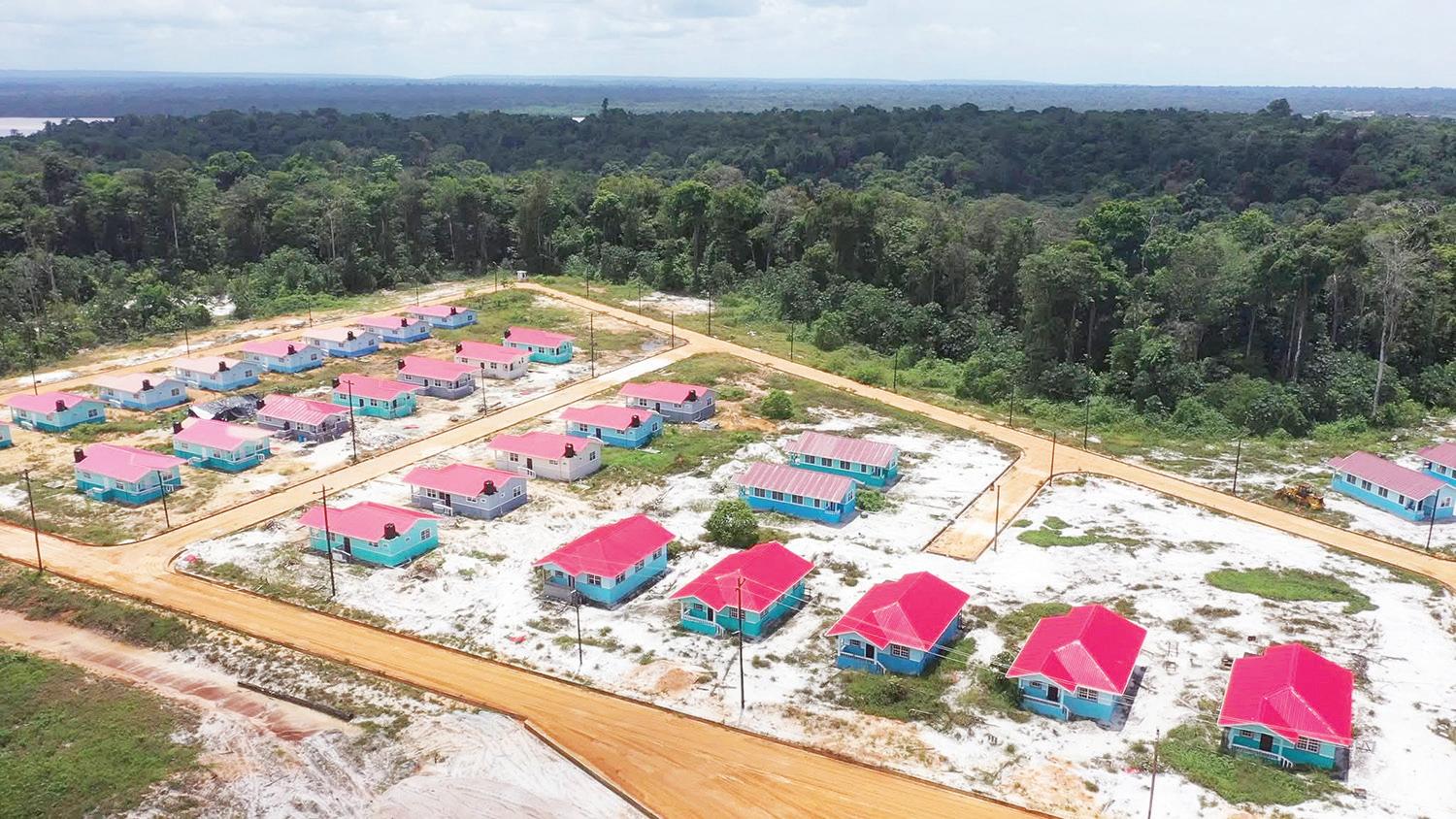
RESIDENTS of Bartica who were allocated housing units within the Block CHPA Development are expected to soon receive their ownership documents, enabling them to officially occupy their new homes.
The announcement was made by Minister of Housing Collin Croal during an on-site inspection to assess the progress of construction works within the development.
Also present during
erson.
The housing development features both bungalow and V-roof designs.
Minister Croal disclosed that 41 of the 55 housing units have already been completed. He noted that the agency was forced to retender for 10 units following the termination of a previous contract.
For persons who have already been allocated units, the Minister indicated that the next phase involving the signing of
ed to commence the process for bank pre-approvals and pre-qualifications.
The Minister further explained that efforts will intensify in the coming weeks to facilitate occupancy within the development, as the first phase of infrastructure works, including electricity and water services, has already been completed.
Importantly, the project continues to create employment and stimulate economic activity within
the visit were Prime Minister’s Representative Mr. Erwin Ward, Regional Executive Officer Mr. Kerwin Ward, Regional Housing Officer Ms. Narisa Rahaman-Sheriff, Senior Surveyor attached to the Central Housing and Planning Authority (CH&PA) Mr. Shaquille Mayers, and Projects Engineer Mr. Jamaal Broth-
Agreements of Sale and the processing of Certificates of Title is expected to commence within the next two weeks.
Additionally, Minister Croal also noted that the agency will now be moving forward with other applicants within Region Seven who had indicated their interest in built units. These persons are expect-
the region, as construction works are being executed by local contractors.
While noting that this housing initiative is relatively new to Bartica, Minister Croal stated that the government will assess the public response before determining the construction of additional housing units in the area. The total invest -
ment in housing and infrastructure for the Block CHPA Development is approximately 13 million. The V-roof two-bedroom units, which include a kitchen and bathroom, are priced at $11 million.
Projects Engineer Jamaal Brotherson also highlighted that one of the housing models includes a three-bedroom bungalow and V-roof
design measuring 24 by 36 feet, complete with tiled ceilings, toilet and bath facilities, and situated on lots measuring 50 by 100 feet. (Ministry of Housing)
The housing project
Minister of Housing, Collin Croal with officials of the Ministry of Housing at the site
Some of the finished housing units (Ministry of Housing photos)
Healthcare transformation driven by increased training, technological advancements, expanded access
– Minster Anthony says
By Shaniya Harding
AS Guyana’s healthcare sector continues to undergo rapid transformation, Minister of Health Dr. Frank Anthony said the country’s progress has been driven by a strong focus on expanding medical capacity, strengthening infrastructure, and embracing modern technology to improve access and quality of care nationwide.
Speaking on the most recent episode of the ‘Starting Point’ podcast on Sunday, Minister Anthony said that the nation’s success in healthcare is owed to development in both
medical capacity and infrastructure.
He explained that expansion has been seen in both infrastructure and human resources and skilled personnel.
Emphasising the importance of skilled people in the field, he added that this alone has played a major role in bolstering Guyana’s abilities in various areas and procedures.
“We have better trained people. There are procedures now that we are able to do that…We did not have the equipment nor the know-how.”
He further added that, “In terms of capacity, we have ex -
panded that and we are decentralising. A lot of what we were doing centrally, we are now able to do in the regions because, we
ing done with doctors, as the minister cited programmes at the University of Guyana that have been expanded.
“The intake used to be about 60 persons max. Now they have capacity to take in 120 persons, and we are expanding that even further,” he added.
Currently, he noted, the ministry is looking at fellowship training, post-graduate training, and having persons from across the Caribbean join these programmes.
have that emphasis on building capacity in the regions.”
Speaking on the area of nursing, he shared that while Guyana has three nursing schools, the capacity is still limited, and they can only train an estimated 200 nurses per year. This has led the government to partner with the Pan American Health Organisation (PAHO) and the World Health Organisation (WHO) collaborating centre in Brazil, the University of São Paulo, to create an Online nursing programme.
“We have registered nurses who can be trained Online, and what we have been able to do is also work with the Coursera platform. This year, in July, we would graduate about 800 registered nurses. This is a three-year programme,” he added.
Similar work is be-
Infrastructure, too, has played a major role in the development of the sector, Minister Anthony noted.
Citing the six recently opened hospitals, the minister said these facilities have far-reaching effects, noting that they have been vital in lessening the burden on institutions like the Georgetown Public Hospital. While these institutions are equipped with some state-of-the-art additions new to Guyana’s medical landscape, such as imaging suites with ultrasound, X-rays and CT scans, 24-hour laboratories, and new inpatient facilities, further developing access remains a major pillar.
As Minister Anthony noted, in the last two to three years, the government has added another 30 health posts across the country. Moreover, the ministry has also improved access to medication.
This, he added, is
being done in an effort to bring healthcare closer to the Guyanese people.
“What we want to ensure is that wherever you are living, you can have access to medications and medical supplies.” He noted that in the past, Guyana saw less than 40 per cent coverage in this regard, but today that has shifted to more than 90 per cent.
Digitisation and artificial intelligence (AI) within the sector have also played an integral role in the development of healthcare.
Minister Anthony noted, Guyana is already well on its way with AI in healthcare, with five hospitals having been equipped with AI software to interpret X-rays.
Highlighting the impact of this, he added, “This system also has the capability of reading CT scans. It has the capability of reading MRIs. The system that we’re using is about 99 per cent accurate because it has been well trained on these different images,” he said. With expanded training programmes, new regional facilities, improved access to medication, and the integration of advanced technology, Guyana’s healthcare sector continues to move toward a more modern, accessible system and closer to the vision of worldclass healthcare.
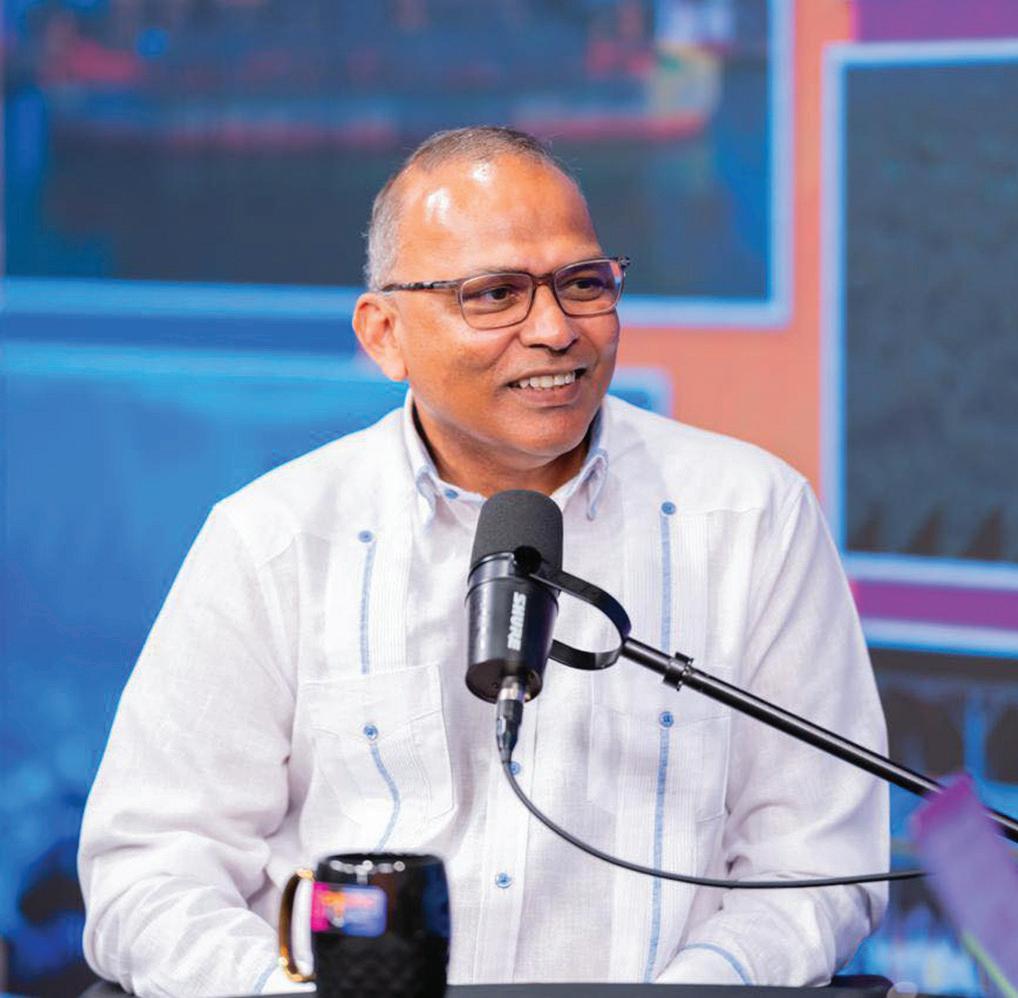
Minister of Health Dr. Frank Anthony speaking recently on the ‘Starting Point’ podcast
Guyana braces for heavy rainfall, gusty winds
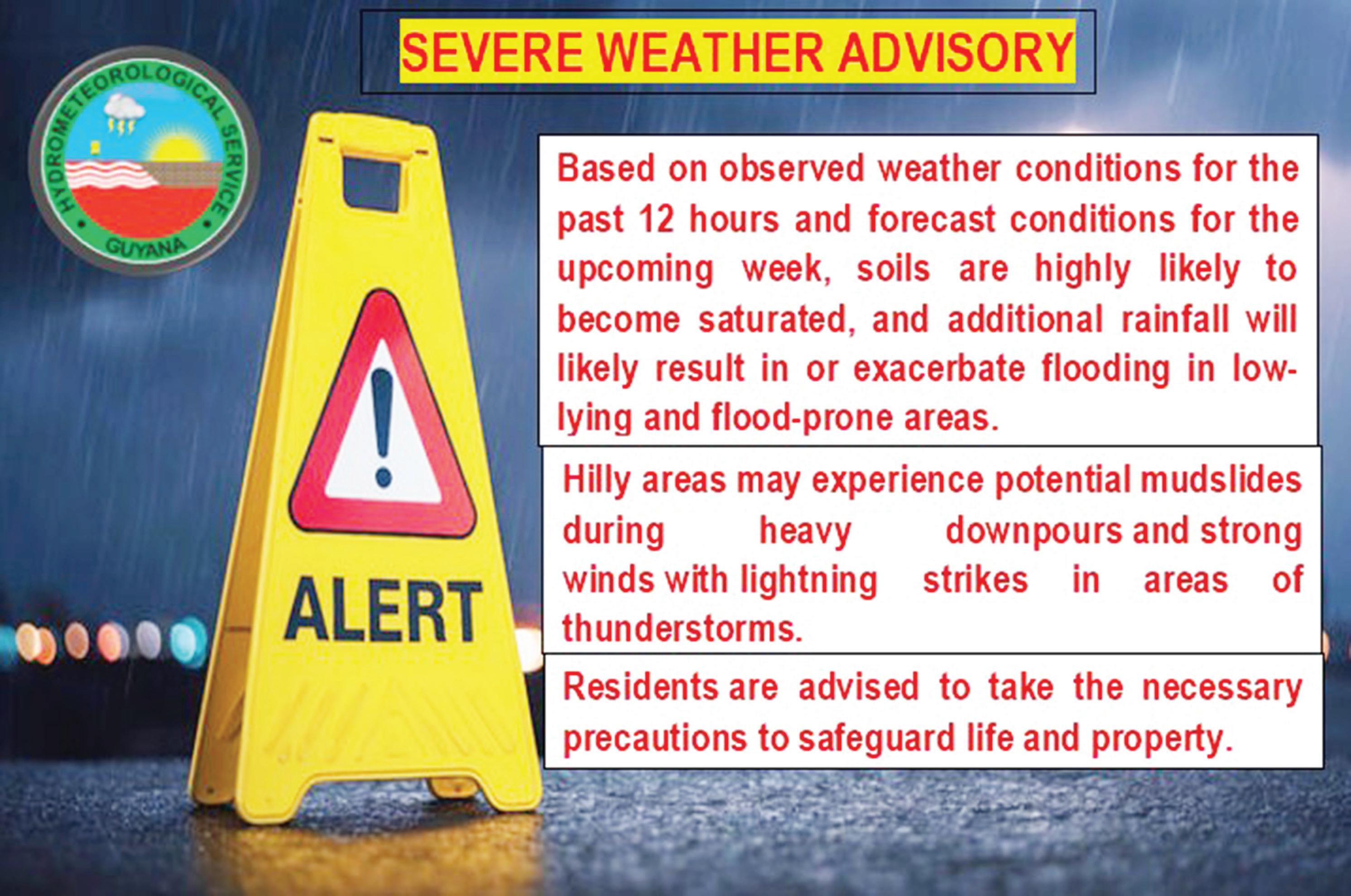
THE Hydrometeorological Service of Guyana on Sunday issued a special weather bulletin warning of widespread rainfall, and an increased risk of flooding across the country up to May 15.
According to the bulletin, unstable atmospheric conditions are expected to continue affecting Guyana, particularly coastal regions, resulting in periods of moderate to heavy rainfall, thunderstorms and gusty winds.
It was noted that rainfall is expected to increase significantly between May 14 (Thursday) and 15 (Friday), with all regions likely to be impacted during the period.
The agency added that rainfall is expected to decrease after May 16.
Forecast models in-
dicate rainfall accumulations between 25 millimetres and 50 millimetres within 24 hours, from today through Wednesday.
However, as atmospheric conditions become increasingly unstable, this could rise to between 25 millimetres and 75 millimetres within a 24-hour period.
Against this backdrop, the agency indicated that the weather conditions are being influenced by tropical waves moving westward near the borders of Suriname and French Guiana, as well as the Inter-Tropical Convergence Zone (ITCZ), which is expected to enhance atmospheric instability over Guyana.
As such, citizens have been advised to prepare for widespread
rainfall, thunderstorms, stronger winds, increased water levels and saturated soil conditions.
Hydromet warned that the conditions could lead to localised flooding, particularly in flood-prone and poorly drained communities.
Water accumulation on roadways could also create hazardous driving conditions.
The bulletin further cautioned that outdoor activities, including construction and sporting events, may face disruptions due to persistent rainfall and thunderstorms.
Black Bush Polder farmers receive pesticide cabinets, safety kits
By Bebi Shafeah Oosman
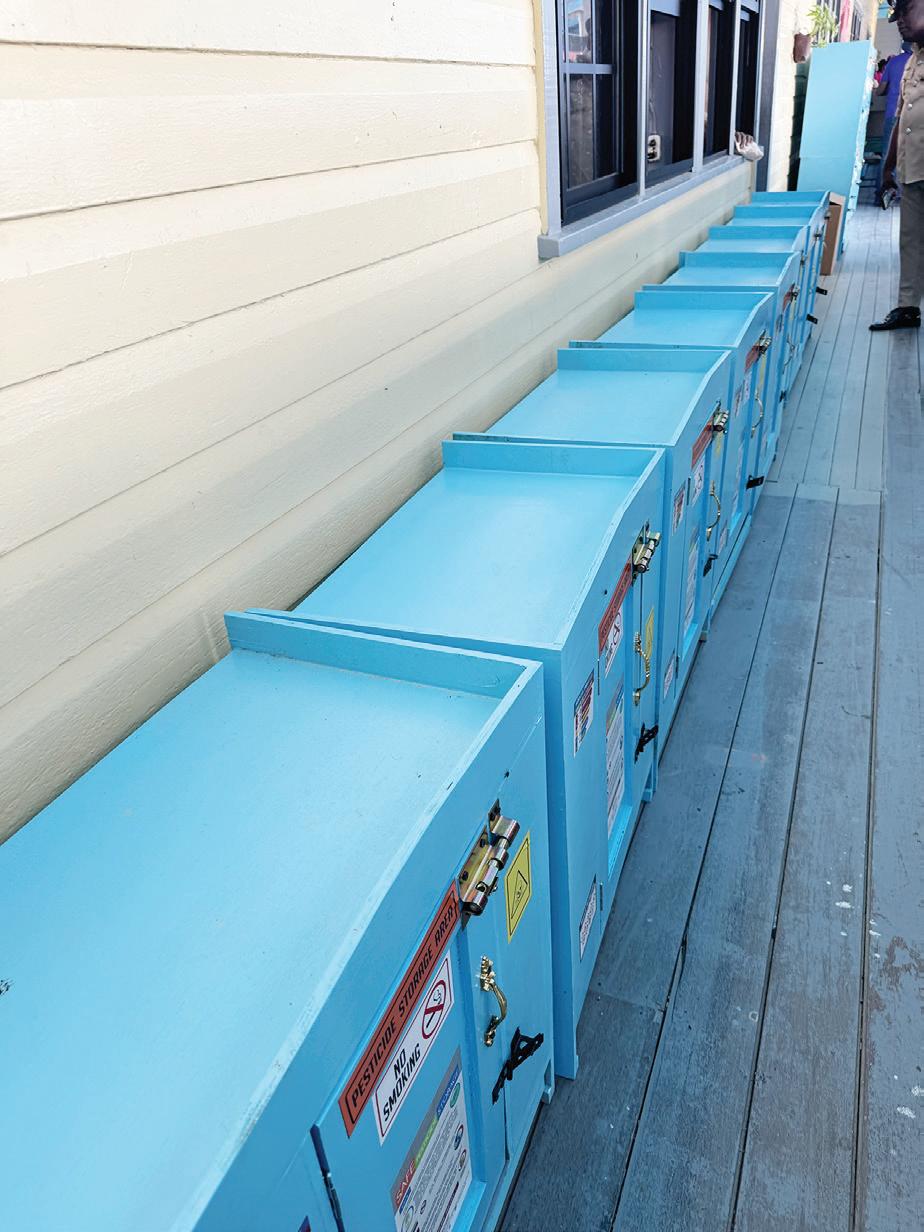
A TOTAL of 200 pesticide storage cabinets along with safety kits were distributed to farmers at Black Bush Polder on Saturday as part of the government’s continued efforts to improve safety practices within the agricultural sector, while creating greater opportunities for farmers across Guyana.
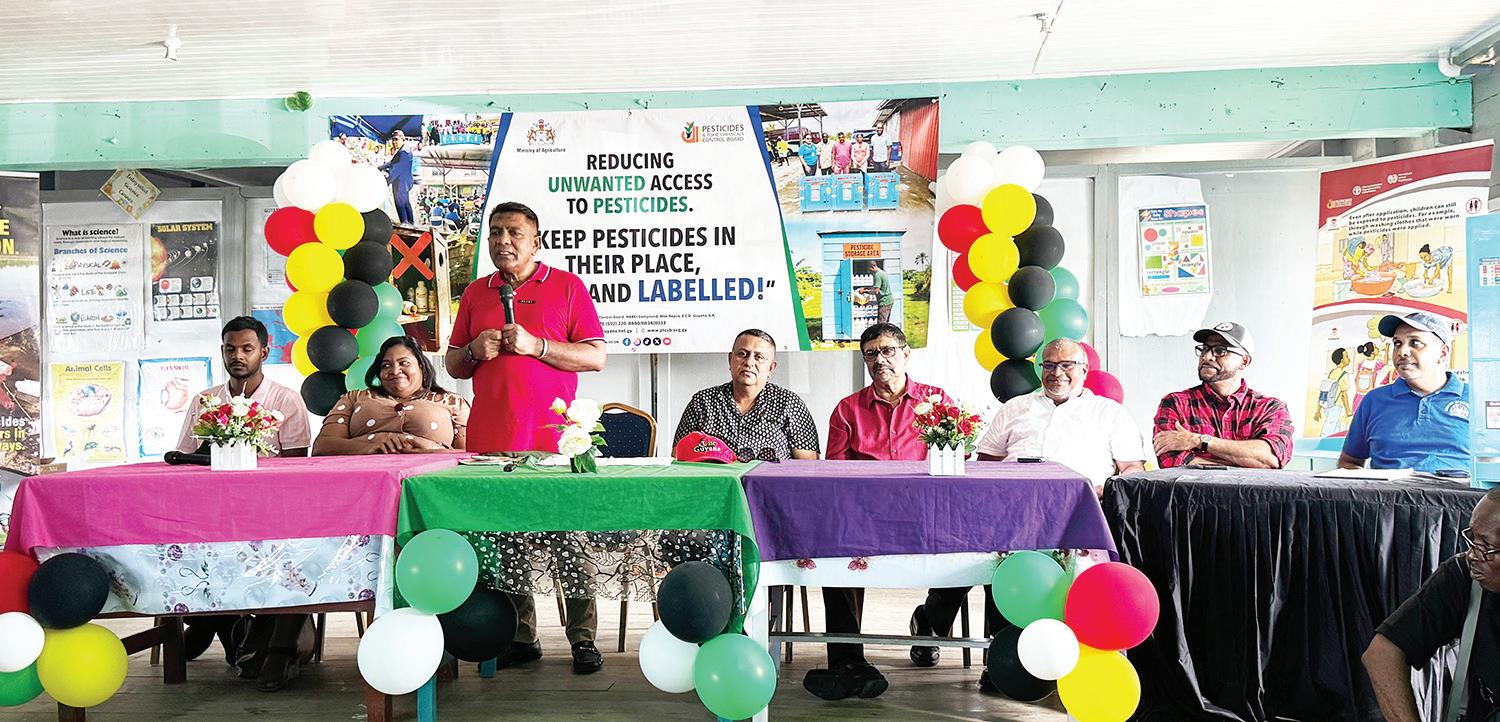
Speaking during the exercise, Minister of Agriculture Zulfikar Mustapha emphasised the importance of pesticide safety and responsible chemical storage, noting that the initiative is aimed at reducing the misuse of agricultural chemicals and preventing accidental poisonings and suicides.
The minister acknowledged that Black Bush Polder has, over the years, been associated with several incidents involving chemical ingestion, and said the government is committed to changing that narrative through proactive intervention and awareness.
Minister Mustapha told
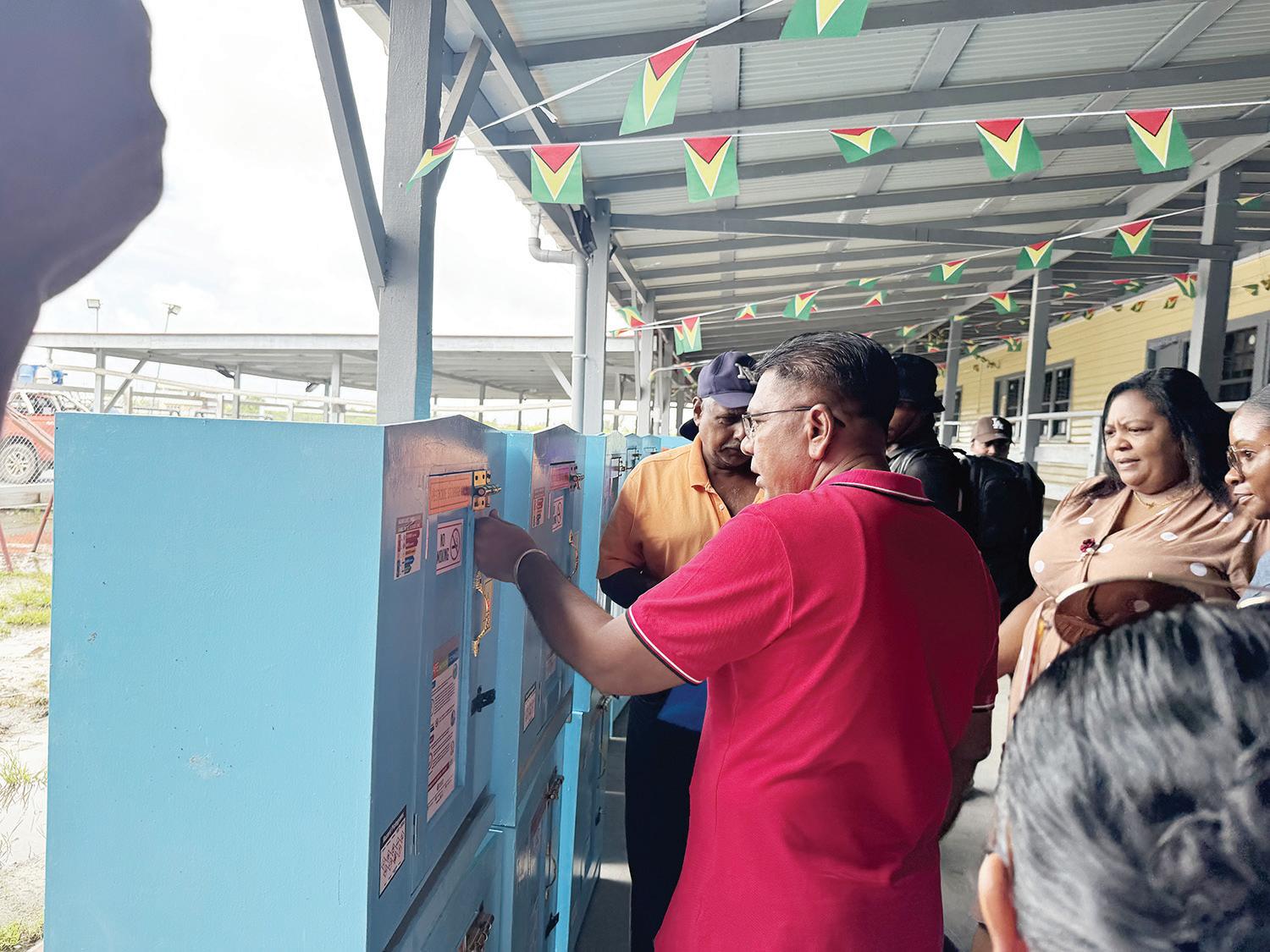
farmers while urging them to store chemicals securely and responsibly, that each cabinet is equipped with two locks to ensure safer storage and restricted access, particularly from children and unauthorised persons.
According to the minister, the programme in Black Bush Polder alone represents an investment of approximately $35 million, and he assured residents that every farmer in the area will eventually benefit from the initiative.
By the end of September this year, some 759 farmers in the area are expected to be beneficiaries. Further, farmers were encouraged to make full use of protective gear when handling agricultural chemicals to help reduce long-term health risks associated with pesticide exposure.
During his visit to several communities across Region Six on Saturday, Minister Mustapha also highlighted the government’s ongoing investments in agriculture and encouraged residents to take advantage of emerging opportunities
in high-value crop production, coconut cultivation, livestock rearing, and agro-processing.
He disclosed that through the Agriculture and Innovation Entrepreneurship Programme, a number of young people are already producing and supplying agricultural products to supermarkets throughout Guyana.
The minister further revealed that approximately 76,000 high-yielding coconut plants were imported this year as part of efforts to expand coconut
production nationwide.
He described coconut cultivation as a highly profitable industry with growing local and international demand and encouraged farmers in Black Bush Polder to become involved in the sector.
Minister Mustapha also spoke about the ministry’s ventilated poultry pen initiative, explaining that the programme allows farmers to rear large quantities of broilers every six weeks while maintaining significantly lower mortality rates.
According to him, approximately 12 groups comprising nearly 40 persons each are already participating in the programme across several regions, with plans underway to expand the initiative further into Region Six.
Addressing concerns within the rice industry, Minister Mustapha said the government continues to provide support to farmers amid fluctuating world market prices for paddy. He explained that Guyana’s paddy prices
are heavily influenced by international market conditions.
“Over the last two years we have tried as much as possible to bring relief to the farmers in terms of helping them with fertilizer, inputs, chemicals, and different varieties of seed paddy. We have also subsidized the cost of every bag of paddy sold,” the minister stated.
He added that the government increased fertilizer assistance this year and later stressed the importance of ensuring that all relief measures are distributed transparently so that the farmers who are genuinely entitled to assistance can benefit stressing that the way in which farming is done now must be changed and adapt to the new way things are done.
The minister met residents and farmers in Upper Corentyne, Black Bush Polder, Auchlyne, Corentyne and PlegtAnker, East Bank Berbice. Also present at the activity were Member of Parliament Zamal Hussain, Region Six Chairman, Junior Basant, Vice Chairman Wajid Saheed Khan, and Regional Executive Officer Narindra
Persaud.
Agriculture Minister Zulfikar Mustapha speaking to farmers about the importance of pesticide safety and responsible chemical storage
Minister Mustapha on Saturday distributed
200 pesticide storage cabinets along with safety kits to farmers at Black Bush Polder
FAO Food Price Index up for third consecutive month largely on rising vegetable oil prices
-
index also impacted
THE benchmark of world food commodity prices rose in April for a third consecutive month amid elevated energy costs and disruptions caused by the conflict in the Near East, according to the latest release by the Food and Agriculture Organization of the United Nations (FAO).
The FAO Food Price Index, which tracks monthly changes in the international prices of a basket of globally traded food commodities, averaged 130.7 points in April, up 1.6 per cent from its revised March level and 2.0 per cent higher than a year ago.
The FAO Cereal Price Index rose by 0.8 per cent from March and was up 0.4 per cent from a year ago, reflecting higher prices across major cereals, except sorghum and barley. World wheat prices increased by 0.8 per cent, due to concerns over drought in parts of the United States of America and a higher likelihood of below-average rainfall in Australia. The increase was further reinforced by expectations of reduced wheat plantings in 2026, with farmers shifting to less fertilizer-intensive crops amid high fertilizer prices – driven by elevated energy costs and disruptions associated with the effective closure of the Strait of Hormuz.
“Despite the disruptions linked to the crisis in the Strait of Hormuz, global agrifood systems continue to show resilience. Cereal prices have increased only
by
increases in cereal, rice prices amid disruptions linked to Strait of Hormuz crisis
moderately so far, supported by relatively strong stocks and adequate supplies from previous seasons. Vegetable oils, however, are experiencing stronger price increases, driven largely by higher oil prices, which are increasing demand for biofuels and putting additional pressure on vegetable oil markets,” said FAO Chief Economist Máximo Torero.
Global maize prices increased by 0.7 per cent, underpinned by seasonally tighter supplies and weather-related concerns in Brazil, as well as dry conditions affecting sowing in parts of the United States of America. Additional upward pressure came from firm ethanol demand amid elevated crude oil prices and ongoing concerns over fertilizer affordability. By contrast, world sorghum prices dropped by 4.0 per cent, largely due to weaker global import demand and improved supply prospects in key producing and exporting countries.
The FAO All Rice Price Index rose by 1.9 per cent in April, driven by higher Indica and fragrant rice prices, reflecting increased production and marketing costs in most rice-exporting countries following the surge in the prices of crude oil and its derivatives.
The FAO Vegetable Oil Price Index increased by 5.9 per cent from March, reaching its highest level since July 2022. The rise was driven by higher prices of palm, soy, sunflower and
rapeseed oils. International palm oil prices rose for the fifth consecutive month in April, largely underpinned by prospective stronger demand from the biofuel sector, supported by policy incentives in several producing countries and higher crude oil prices. Additional upward pressure stemmed from concerns over lower production in Southeast Asia in the coming months.
The FAO Meat Price Index reached a new record high in April, rising by 1.2 per cent from March and 6.4 per cent from a year ago. World bovine meat prices climbed to a new peak, underpinned by higher export
quotations in Brazil amid limited supplies of slaughter-ready cattle, reflecting ongoing herd rebuilding. Pig meat prices also rose, driven by firmer quotations in the European Union amid rising seasonal demand, though partly offset by lower prices in Brazil due to ample supplies.
By contrast, the FAO Dairy Price Index declined by 1.1 per cent from March, mainly reflecting lower international quotations for butter and cheese amid abundant milk supplies in the European Union and stronger-than-expected late-season output in Oceania.
The FAO Sugar Price
Index also dropped, down 4.7 per cent from March and as much as 21.2 per cent from a year ago. The decrease was largely driven by expectations of ample global supplies in the current season, reinforced by improved prospects in key Asian producing countries, notably China and Thailand. The start of the new harvest in Brazil, the world’s largest sugar producer, further contributed to the downward pressure on sugar prices.
CEREAL MARKETS REMAIN WELL SUPPLIED BUT UNCERTAINTIES LOOM
FAO on Friday also raised its 2025 production
forecast for most major cereals, further strengthening indications of a generally favourable supply situation in 2025/26. Global cereal production is now forecast at 3 040 million tonnes, representing an increase of 6.0 per cent compared to the previous year.
For the 2026 crops, FAO’s latest forecast for world wheat production has been revised slightly down this month and now stands at 817 million tonnes. This represents a decline of around 2 percent from the previous year, although output is still expected to remain above the last five-year average. The outlook continues to face uncertainty amid the effective closure of the Strait of Hormuz, which has raised input costs – notably for energy and fertilizers – alongside relatively softer wheat prices.
AGRICULTURAL MARKET INFORMATION SYSTEM UPDATE
The Agricultural Market Information System (AMIS), hosted by FAO, also published its monthly Market Monitor on Friday. In addition to the regular updates, the report highlighted that global markets faced renewed pressures in April as the effective closure of the Strait of Hormuz continued to disrupt fertilizer supply, driving up urea and phosphate prices, further undermining fertilizer affordability and increasing risks to future agricultural production.
The FAO Cereal Price Index rose by 0.8 per cent from March, reflecting higher prices across major cereals (FAO / Emilija Marić)
Woman arrested in connection with Queenstown fatal shooting
THE police are investigating an alleged murder which occurred on Sunday, May 10, 2026, at about 05:45hrs, at a business establishment on Forshaw Street, Queenstown, Georgetown, resulting in the death of Dainier Vegas Infante, a 23-year-old Cuban man and janitor employed at the said establishment, of Alexander Village, Georgetown.
Preliminary investigations revealed that the deceased was at the business establishment when four males arrived in the vicinity. One of the suspects, who was armed with a handgun, reportedly approached two men who
were seated outside of the establishment and engaged them in conversation.
It is alleged that the deceased subsequently exited the establishment and approached the suspects, during which the armed suspect discharged a round in his direction, causing him to fall to the ground.
The suspect then entered a motor vehicle and made good his escape along Forshaw Street, while the other suspects also fled the scene in separate vehicles.
The victim was pronounced dead at the scene by a doctor on duty. His body was later escorted to the Me-
morial Gardens Funeral Home, where it awaits a post-mortem examination.
Further enquiries disclosed that, through coordinated efforts and the use of the Guyana Police Force Command Centre, a motor vehicle linked to the incident was identified and intercepted and a 45-year-old female manager of Little Diamond, East Bank Demerara, was arrested and is presently in police custody. The vehicle has since been seized and is being processed as part of the investigation.
CCTV footage is presently being reviewed as investigations continue. (GPF)
Rashford scores free-kick as Barcelona lift 29th La Liga title
(ESPNCRICINFO) - Marcus Rashford scored a stunning free-kick as Barcelona beat rivals Real Madrid to seal their 29th La Liga title with three games remaining of the season.
The England forward put the hosts ahead before Ferran Torres got the second with a fine finish as Hansi Flick's side cruised to victory in El Clasico at the Nou Camp.
Both players ran to their head coach when they scored after his father passed away at the weekend.
Barcelona are now seven titles behind record winners Real after claiming Spain's top flight in back-to-back seasons.
They have gone on an 11-game winning run in La Liga to coast to the title and lead their rivals by an unassailable 14 points.
Barcelona's imperious
home form has helped them to the title, as this was their 18th victory from 18 games in front of their own fans.
On-loan Manchester United forward Rashford got them off to a perfect start
when he whipped an early free-kick into the top corner past Real goalkeeper Thibaut Courtois, whose faint touch could not keep the ball out. A superb move in the 18th minute - with Dani Ol-
mo's clever flick setting up Torres to fire home - doubled their lead.
Aurelien Tchouameni started the game for Real days after he was involved in an altercation with team-
mate Federico Valverde, who was concussed during the argument and missed the game.
Under-pressure Real manager Alvaro Arbeloa could not inspire his side, with Gonzalo Garcia failing to get one of their few chances on target in the first half.
Rashford had an opportunity for his second but was denied by a fine save by Courtois.
Vinicius Junior did get in on Barcelona's goal in the second half but goalkeeper Joan Garcia closed him down.
Chants of "Championes, Championes" rang around the revamped Nou Camp as the clock ticked down to confirmation that the home side had retained their La Liga crown, with Robert Lewandowski coming close to making it 3-0 late on.
England pace bowler Atkinson suffers concussion
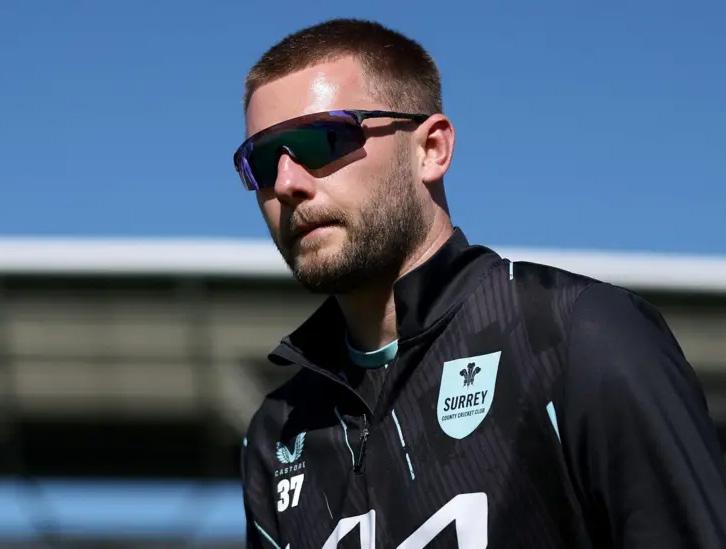
(BBC) - Gus Atkinson added to concerns over England's pace bowling by suffering a concussion during Surrey's County Championship match against Nottinghamshire.
In the week England could name their squad for the first Test against New Zealand, Atkinson was twice struck on the head by international team-mate Josh Tongue.
Batting in Surrey's first innings at Trent Bridge, Atkinson was hit in successive
09:30 hrs Mount Rua -
10:00 hrs Zarvali
10:30 hrs Laravie
11:00 hrs Irish Dancer
11:30 hrs Free Pic
12:00 hrs Lily Pearl
09:42 hrs Huckleberry
10:12 hrs Kara Sacre
10:42 hrs Marie D'al -
Tongue overs - with the second blow particularly nasty.
The 28-year-old was assessed on both occasions and batted on. He eventually called for more treatment and retired on 27, replaced in the match by Reece Topley.
"Gus passed the tests on the field, otherwise he would not have been able to stay out there," said Surrey head coach Gareth Batty.
"He felt like he was OK, but duty of care comes into it. I don't know the ins and outs of what exactly happened
11:12 hrs Crystalate
11:42 hrs Lheur De Gloire
12:17 hrs Louis Veron
12:47 hrs Duffry Trixs
12:12 hrs Hengest 12:42 hrs Fighter's
13:17 hrs Under The Twlight
13:47 hrs Sargent
14:17 hrs Merrimack
14:47 hrs Wild
15:17 hrs Kindly
but it clearly came to a point where he had to come off. He's OK in himself."
Atkinson's injury came on the same day as England team-mate Ollie Pope did not appear to bat for Surrey until number 10 because of a hand injury.
England, who are set to confirm Australian Marcus North as their new national selector, will soon name a squad for the first Test against New Zealand at Lord's that begins on 4 June.
While much speculation has centred on which players could come into the batting line-up, England's pace-bowling department is looking depleted.
Atkinson and Tongue appeared to be the most likely specialist seamers to be in the squad, along with two or three others.
Jofra Archer might not be ready to play Test cricket following his spell at the Indian Premier League and Brydon Carse has a broken wrist. There is no timetable for Mark Wood's return from a knee injury and Chris Woakes retired from international cricket last year.
Atkinson's Surrey team-
mate Matthew Fisher was called into the Ashes squad but another Surrey bowler, Tom Lawes, has missed two Championship matches through injury.
England could end Ollie Robinson's international exile or ask Essex's Sam Cook to add to the one cap he won against Zimbabwe last year.
Hampshire's Sonny Baker has a central contract and has been in good form at the start of the season, while Lancashire's Mitchell Stanley is highly rated.
England captain Ben Stokes has played his first game of the season for Durham, opening the bowl-
ing in his first Championship match in almost two years.
Stokes has recovered from the quad injury he suffered in the fifth Ashes Test and the horrific broken cheek sustained in an accident while he was coaching the Durham academy.
The all-rounder took two wickets in 8.5 overs in Worcestershire's second innings to go with the two wickets in 20 overs he took in the first.
After being out for 14 on Saturday evening, Stokes was not required to bat in the second innings as Durham chased 143 to win by nine wickets.
Ronald Araujo lifts the trophy after Barcelona's title win
Gus Atkinson
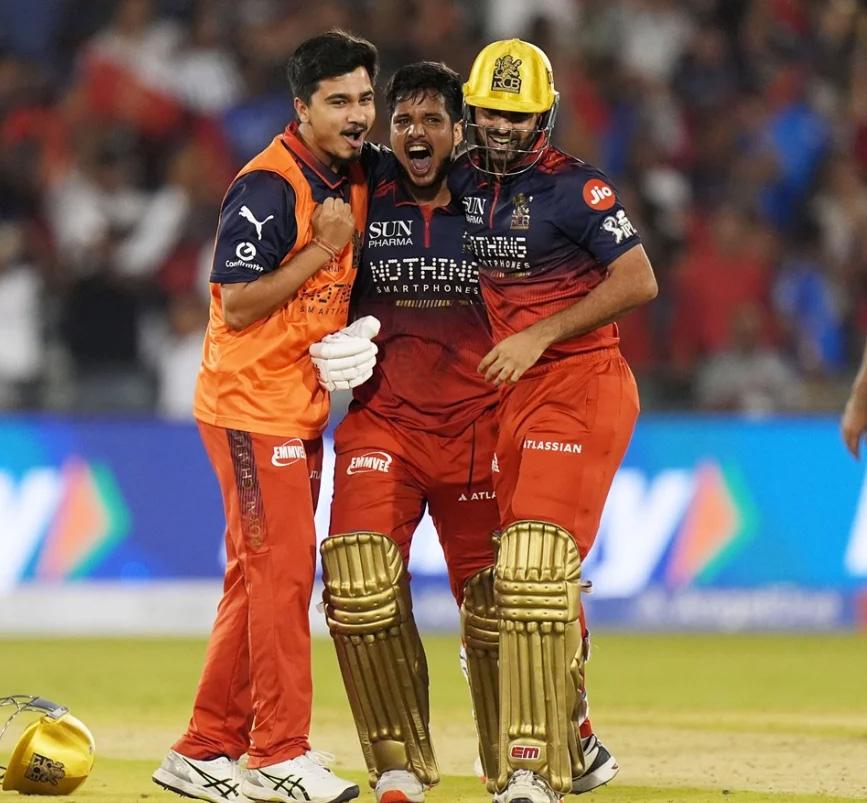
RCB eliminate MI and go top after tense finish
(ESPNCRICINFO) - A two-paced, up-and-down pitch in Raipur was the stage for one of the most enthralling contests of IPL 2026, and it ended in the most dramatic of last-ball finishes, with Royal Challengers Bengaluru (RCB) breaking a two-match losing streak to go to the top of the table. In doing so they ended the playoffs hopes of not just Mumbai Indians (MI), their opponents on the night, but also Lucknow Super Giants (LSG).
In the end, the finish defied explanation. With RCB needing two to win off the last ball, Rasikh Salam clipped a near-yorker from Raj Bawa back towards the bowler. Bawa fumbled, the ball dribbled into the mid-on region, and when Ryan Rickelton collected the
throw and broke the wicket at the keeper's end, Rasikh had just made his ground, diving to complete the second run.
Perhaps the only explanation was that two players did not deserve to be on the losing side. One was Bhuvneshwar Kumar. He took three wickets in a bewitching new-ball spell, then returned to take out MI's top scorer at a crucial moment in the death overs, and then, batting at No. 10 with nine runs required from three balls, hit Bawa for a gloriously timed six over the leaping sweeper cover fielder. It was Bhuvneshwar's first six in the IPL since 2016.
The other was Krunal Pandya. Promoted to No. 5 with RCB 39 for 3 in the sixth over, Krunal took charge of the chase, finding ways to hit boundaries even
as everyone around him struggled to middle the ball, and hitting sixes while fighting cramps, and eventually scored 73 off 46 balls.
BHUVI MAGIC
From the start it was evident that hard lengths would be extremely difficult to negotiate on this pitch. From these lengths, the ball stuck and jumped on some occasions, bringing the leading edge into play, and at other times it skidded and kept low.
After RCB opted to bowl in their first match at their second home for the season, Bhuvneshwar struck in the first over with a hard-length ball. It hit high on Rickelton's bat as he looked to punch over mid-off, and all he managed to do was hit it to the fielder.
But there was more to
Bhuvneshwar's magic on the night than merely his use of the pitch. His second wicket came off one of the great balls of his IPL career: a knuckle-ball outswinger that made Rohit Sharma reach for the drive, which he edged to the keeper. Next ball, he went back to a traditional good length and closer to the stumps, and found late, late swing to get Suryakumar Yadav nicking to slip for a golden duck.
TILAK
AND
DHIR REBUILD, BUT MI FINISH WITH A WHIMPER
With the pitch behaving as it did, Naman Dhir and Tilak Varma began an oldschool rebuild, knowing that even 180 would be an excellent total. And they set up perfectly for that final push, putting on 82 off 57 balls.
But RCB dismissed both just when they were looking dangerous. Dhir had just struck Rasikh for a pair of pleasing back-foot fours through the off side when a shooter did him in. Then, in the 18th over, Bhuvneshwar dismissed Tilak, who played on while looking for the scoop over short fine leg. It took away one of MI's most dangerous death-overs hitters with two overs remaining; they only scored 11 runs off those two overs, as Josh Hazlewood and Rasikh kept extracting misbehaviour from hard lengths.
CHAHAR AND BOSCH EVEN THE CONTEST
Virat Kohli had been out for a duck in RCB's previous game, the victim of a peach from Prince Yadav. On Sunday he was out for a golden duck; this time he
looked to impose himself on a wide outswinger from Deepak Chahar, but ended up mishitting it to mid-off.
Chahar was erratic - he conceded 14 in his first over, with Jacob Bethell putting him away for back-to-back fours off his first two ballsbut continued to bowl good balls. In his second over, he sent down a jaffa that squared up Devdutt Padikkal and nicked him off, straightening after angling into the left-hander from round the wicket.
Then, in the final over of the powerplay, RCB lost their third wicket; this time, Corbin Bosch made full use of a pitch made for his strengths. He banged it in short, got the ball to hurry and cramp Rajat Patidar on the pull, and the top-edged ballooned to the keeper.
Overton, Urvil power CSK to fifth spot with third straight win
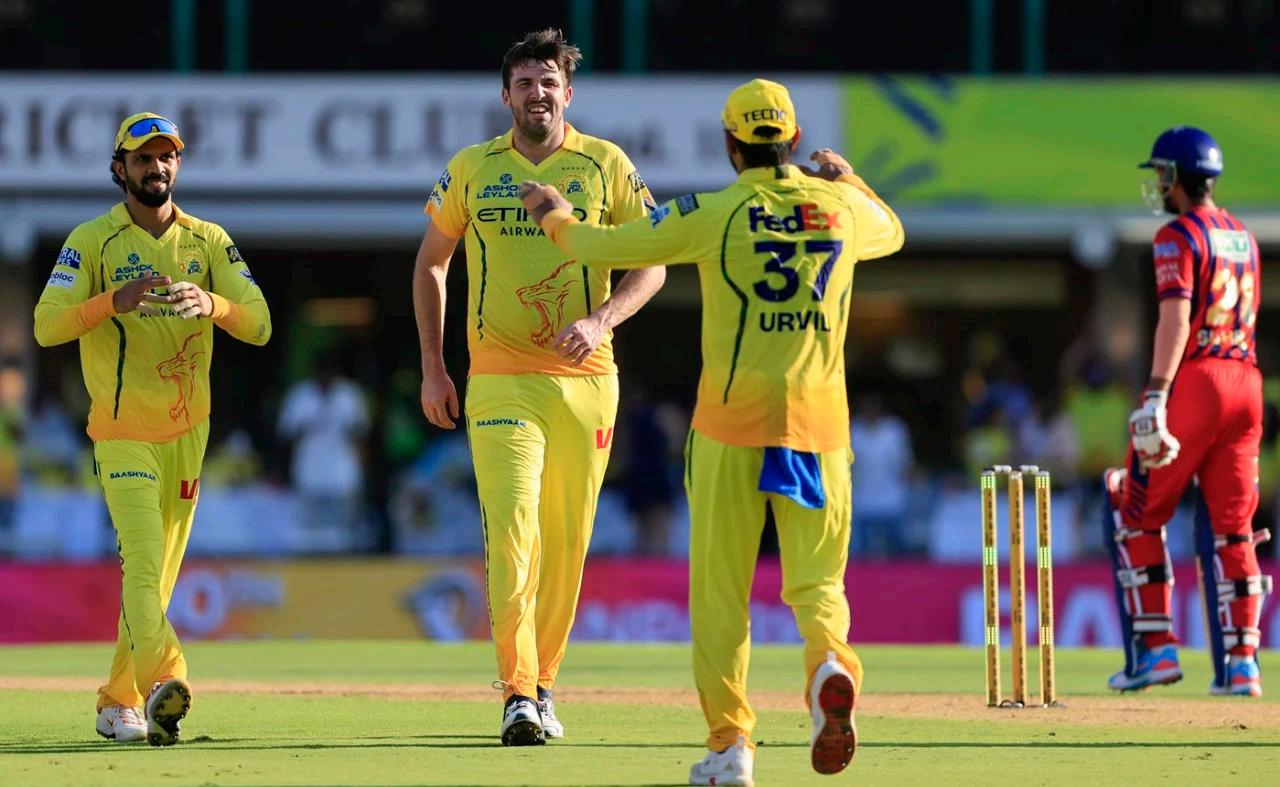
(ESPNCRICINFO) - Urvil Patel played the kind of innings that erased a bit of history and created a bit of history. In 2025, team after team came to Chepauk and breached it and the crowd got used to leaving early. On Sunday evening, 32,825 people - some of whom might have seen the morning show where one of Tamil Nadu's most popular actors took charge as the chief minister - were given double delight as Chennai Super Kings (CSK) chased down their first 200-plus target since 2018 and one of their future stars announced himself with the IPL's joint-fastest half-century.
Urvil got there in 13 balls. When he walked into the middle, CSK's chances of winning were 38.13%. When he walked out, to a standing ovation from the crowd and his coaching staff, CSK's chances of winning were 93.02%. He single-handedly changed the game and powered CSK to fifth spot.
INGLIS IMPACT
Mitchell Marsh had taken first strike in eight out of 11 Lucknow Super Giants (LSG) matches. Here he gave it up so that Josh Inglis could do his thing. One of the best
spin hitters in the world threw the opposition's bowling plans off when he targeted Akeal Hosein, hitting him for three successive boundaries in the first over. CSK turned to pace, which suited Marsh better and which Inglis harnessed to play some of the coolest ramps ever seen and he went for them over and over.
According to ESPNcricinfo's ball-by-ball data, nobody has tried more ramps (four) inside the powerplay. Even when he missed one, he created scoring opportunities. Because Anshul Kamboj, having seen what he wanted to do, went fuller instead of camping on a good length area and got smacked through the covers. Inglis' ease in accessing the 'V' behind the wicket opened up easier scoring shots in front of it. He was 77 off 25 after six overs. Only Suresh Raina (87 vs PBKS in 2014), Travis Head (84 vs DC in 2024) and Jake Fraser-McGurk (78 vs MI in 2024) have scored more inside the field restrictions.
NOOR AND OVERTON PULL IT BACK
But with the field spreading, CSK unleashed the season's joint-second-highest wicket-takers (12 each) in the
middle overs on LSG. Noor Ahmad aced his match-up with Nicholas Pooran (two runs off nine balls for three dismissals). In his first three games this season, he had 0 for 111 at an economy rate of 11.1. In the next eight, Noor has picked up 12 for 215 at an economy rate of 7.16. In the background, MS Dhoni
had suggested that the Afghanistan wristspinner focus more on his legbreak than just going googly all the time. That's had a knock-on effect of Noor targeting the stumps a little more and it's worked for him.
This was the same pitch where CSK won their first game of the season against
DC. Just like that day, Jamie Overton played a big role. Inglis, who had faced 25 of the first 36 balls of the innings and hit nine fours and six sixes, could only get on strike for eight of the 19 balls since the powerplay. Antsy to keep the rate up, he went for a scoop against Overton and got caught be-
hind. Hitting the deck with both pace on and off, Overton delivered 10 dots in his first 18 balls and provided two wickets. LSG were 56 for 5 in 50 balls after the field restrictions. Shahbaz Ahmed helped LSG recover a bit, hitting the last ball of the innings for six, to push the score past 200.
Jamie Overton picked up three wickets (May 10, 2026 BCCI)
11 races carded for Independence horse race
HORSE racing fans will witness 11 exciting races on Sunday, May 31 at the Port Mourant Turf Club at the Independence Day horse races.
More than G$ 15 million in cash and prizes will be up for grabs and fans will see the return of Guyana’s champion horse, Dataman.
The unbeaten Dataman had won the last Guyana Cup, President’s Cup and the Banks DIH Classic. In addition to Dataman, stable-mate Anthem King is also expected to run in the feature race on May 31, the Independence Cup.
The feature race will be
open to all three-year old and over horses and the purse will be a whopping $5,625,000. The top horses will be rewarded 3 million running a distance of 8.5 furlung.
Other races on the provisional card include the D Class and Lower, three-yearold imported bred open, F Class and Lower open to E Class non winners in Guyana, and the three-year-old Guyana bred open. Additionally, there will be the H Class non winners in Guyana, open to WI Bred non winners for one year, also open to three-year-old WI Bred non winners of two races.
There will also be an H Class open race, I Class and Lower, K and L Class open four years-old an upwards, L Class maidens four-year old and up open to three-yearold Guyana-bred non earners fillies and mares, and the L Class maidens four-year old and up open to three-yearold Guyana-bred non earners colts and geldings.
Entries for this race day opened on May 9 and will close on May 26. The races will be run under the Guyana rules of racing. Simon Prince will be the race co-ordinator.
The event is powered by Banks DIH, and organised by Jumbo Jet Events.
John wins Essequibo Leg of Cheddi Jagan Memorial Cycle Race
THE feature senior category of the Essequibo leg of the Cheddi Jagan Memorial Cycle Race was dominated by in-form cyclist Briton John, who continued his strong run of performances with another impressive victory.
John finished ahead of second-placed Alex Newton, who produced a determined effort, separating himself from the main field and further establishing himself as one of the country’s emerging cycling talents.
Robin Persaud finished third with Anjai Cutting fourth, Geron Williams fifth and Segun Hubbard sixth.
In the Ladies category, Abigail Jeffrey claimed first place, while Alex Newton topped the Juniors division.
The Veterans Over 50 category was won by Ian Jackson, followed by Mark Spencer in second and Talim Shaw in third.
Robin Persaud secured victory in the Veterans Open division ahead of Segun Hubbard and Jaikarran Sookhai.
In Category Four, Julio Melville finished first, with Mark St Claire taking second place and Collis Williams third.
Cyclists and officials also praised the efforts of the police ranks within the division, led by the Divisional Commander and Officer in Charge of Traffic, Inspector Mahadeo.
The police were commended for effectively managing the event despite limited resources and the added challenge of overseeing a sporting activity that is not commonly hosted within the division.
The long-awaited Essequibo leg of the Cheddi Jagan Memorial Cycle Race was successfully staged on Sunday, delivering thrilling competition and drawing
praise from organisers, cyclists, and spectators alike.
Flying Ace Cycle Club executive Linden Dowridge extended heartfelt appreciation to sponsors Caricom Rice Mill and Builder’s Hardware for supporting the historic event, which had been years in the making.
According to Dowridge, discussions surrounding the hosting of an Essequibo leg had been ongoing between himself and Neil Kumar for several years. However, sponsorship and logistical difficulties repeatedly delayed the initiative before it finally came to fruition this year.
The race started at Supenaam and proceeded to Freedom House in Anna Regina before riders made the turn for the return journey to Supenaam, where the race concluded before an enthusiastic crowd.
Guyanese boxer, Raul Frank, Inducted into the New York Boxing Hall of Fame - Class of 2026
GUYANESE boxers continue to bear the Golden Arrowhead with pride even after the end of their active tenures. The late Andrew ‘Sixhead’ Lewis and Patrick Forde, Lennox Blackmore, Terrence Ali, and a myriad of other pugilists have served as proud ambassadors in the ‘Square Jungle,’ before their respective elevation as boxing coaches and/or advisers.
Former world-rated boxing contender Raul Frank had enjoyed high world rankings and even matched gloves against the late Vernon Forrest for the vacant IBF Welterweight Championship. Frank wrapped up his professional career shortly afterwards, but his love for the sport saw him taking on duties as a coach at Gleason’s Gym NY.
The Guyanese pugilist was first honored in 2024 when he was inducted into the Florida Boxing Hall of Fame Class of 2024. He had then penned on his official Facebook page, “I joined my other colleagues, including my countryman and boxing legend, Vivian Harris, a previous inductee, and am elated to have earned a place in the Florida Boxing Hall of Fame.”
Now, two years after that historic accomplishment, Frank has once again entered the limelight, this time, induction into the Ring 8 New York State Boxing Hall of Fame, Class of 2026.
This prestigious award reflects the depth, resilience, and enduring legacy of boxing in New York, honouring a distinguished group of fighters, officials, and contributors whose impact on the sport spans generations. Frank joins several other respected fighters, the likes of Tunde Foster, Bob Stallings, Louie
Hubela, Larry Stanton, John Rome, Julio Cesar Green, and John Rowe, all representing the heart of the New York fight scene.
Frank has compiled a 29-5-3 professional record, 14 of which ended inside the distance. He is a two-time USBA champion; the welterweight title by defeating Purcell Miller and later capturing the super welterweight title. He is also a former IBF Latino super welterweight champion, after defeating Mohamad Abdallah Said Salem.
Frank revealed that as a young boxer, he was guided by his countryman, former Commonwealth Lightweight
champion and world-rater, Lennox Blackmore, and the late Patrick Ford, both instrumental in his development in and out of the ring.
A fixture of the New York boxing circuit, including time at Gleason’s Gym, Frank earned recognition for in-ring accomplishments and his dedication to the sport. In his inauguration, Frank delivered a speech alongside his brother, Ronson Frank, CEO of Uprising Promotions and co-owner of Hit the Deck Boxing Gym, and his son, Joshua Frank, a Berkeley Law graduate and lawyer within the New York court system. Together, they emphasised a shared long-term vision of extending their dreams to create meaningful opportunities and empower the next generation of Guyanese athletes. Frank stands among other honourable pugilists of the 2026 class such as Joe Cortez, Steve Weisfeld, Yuri Foreman and Alicia Napoleon Espinosa, and Nirmal Lorick, all honoured for their contributions outside the ring. Together, this group reflects the full spectrum of New York boxing and the legacy of those who built the sport.
Joseph's strike leads Mocha’s Riddim Squad to title
ON Saturday evening at the Plaisance Community Centre Ground, a goal was what separated Beacon and Riddim Squad FC in the final of the Georgetown Football Association senior men’s knockout football tournament.
Wendell Joseph was the talisman in the 23rd minute of the clash to guide Mocha’s Riddim Squad to the title. It culminated in an exciting round-robin knockout competition which featured 16 teams and was played entirely at the community ground.
Kelvin Gordon was honoured as the leading goal scorer, with Seon Grant being adjudged the most valuable player of the tournament.
Mocha’s custodian Ron Liverpool again copped the best goalkeeper accolade.
Earlier in the night Vengy battled Eastveldt FC in the third-place contest; after regulation time, the score was tied 1-1.
Aleem Murray scored for Eastveldt while Dominique Warren scored for Vengy.
After regulation it went straight to penalty kicks, with Vengy winning it 5-3.
Riddim walked away with half a million for the first-place prize, while Beacon had to settle for $300,000 for second place.
Vengy FC collected $200,000 for third place.
The competition’s main sponsor is Nalico/Nafico Insurance with support from Insurance Brokers Guyana Limited, the Ministry of Culture, Youth and Sport, Holistic Pest Control and Triple J’s Auto Rental.
Pride grab two late wickets to even contest against Red Force
CMC –
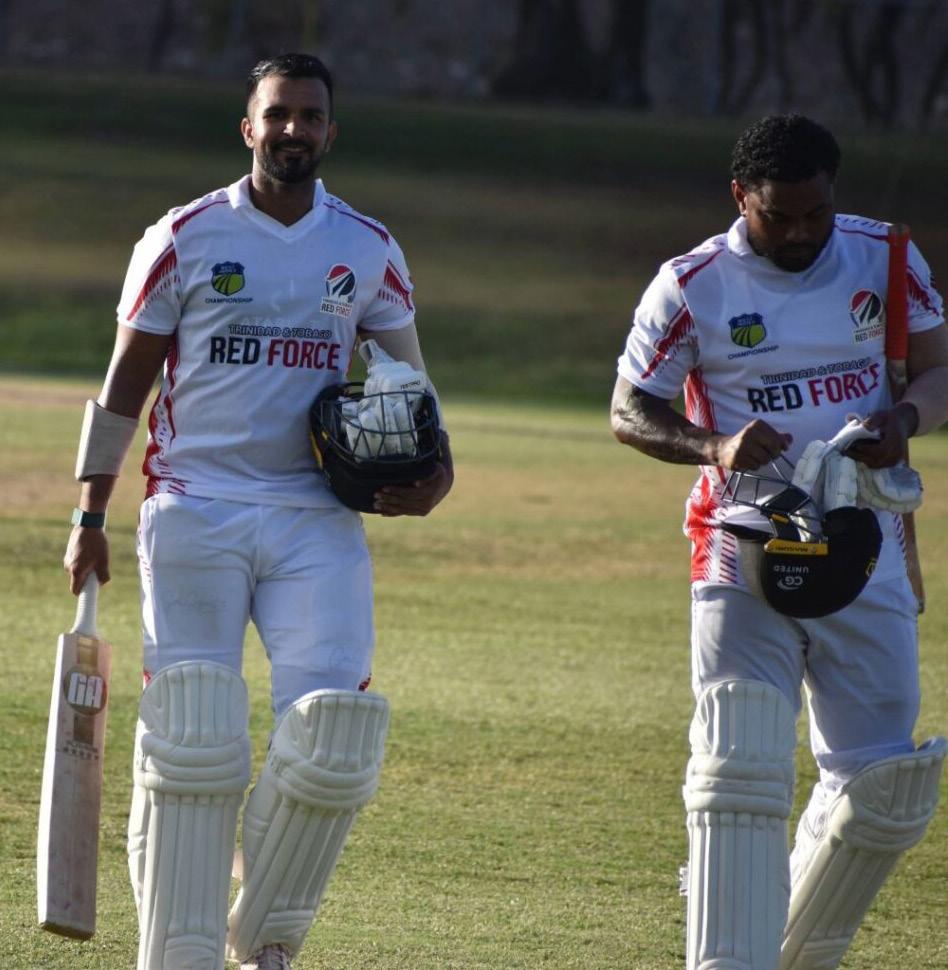
Pride captured two wickets late in the day to wrestle the initiative away from the Trinidad and Tobago Red Force at the close of play on the opening day of their playoff in the West Indies Championship here on Sunday.
Half centuries by opener Cephas Cooper, captain Joshua Da Silva and all-rounder Terrance Hinds gave the Red Force the upper hand in the contest for the majority of the day, until medium pacers Kyle Mayers and Shamar Springer struck in the closing minutes to restrict them to 298 for seven after 89.3 overs.
Those wickets undid the earlier hard work by T&T’s batters, who justified Da Silva’s decision to bat first at the Coolidge Cricket Ground after winning the toss.
The Pride reaped early success when fast bowler Johann Layne had Evin Lewis caught behind for seven with just 16 runs on the board.
However, Jyd Goolie joined forces with Cooper and together they frustrated their opponents during a 102-run stand for the second wicket.
Barbados eventually got the breakthrough when Springer had Goolie caught behind by wicketkeeper Leniko Boucher for 33, and four runs later Layne dismissed Jason Mohammed for a duck to leave the score 122 for three.
Cooper looked a sure bet to reach three figures having progressed into the 90s, but he was denied his first cen-
tury of this year’s tournament when he was dismissed by left-arm spinner Jomel Warrican after reaching 93 off 161 balls, inclusive of 16 fours, as the Red Force slipped to 156 for four.
And when off spinner Roston Chase trapped Jangoo lbw for 41, the Pride would have had high hopes of running through the Red Force’s lower order at 194 for five.
However, Da Silva and Hinds had other plans, as they put the Red Force in complete control during a partnership of 103 for the sixth wicket.
While Da Silva was patient and cautious, Hinds, who has been productive with the ball throughout the championship, played a counterattacking role, slamming six fours and one six
on his way to notching his seventh first class half-century. But with the close of play looming, Mayers broke the stand by dismissing Jangoo via the lbw route for 51 off 74 balls to make the score 297 for six.
And five balls later with just one run added to the total, Springer returned to trap Khary Pierre lbw for a duck to bring the Pride right back into the match.
The in-form Da Silva ended the day unbeaten on 65 off 131 balls with eight fours and will shoulder the brunt of the responsibility if the Red Force are to post a formidable first innings total.
Springer (2-31) and Layne (2-56) have been the Pride’s best bowlers to date.
Harpy Eagles bowlers made to work as Clarke, Goodridge record centuries
CMC – Captain Rivaldo Clarke and Amari Goodridge both hammered unbeaten centuries as the West Indies Academy took opening-day honours against the Guyana Harpy Eagles in their warmup match at the Antigua Recreation Ground here on Sunday.
Clarke scored an unbeaten 165, while all-rounder Goodridge ended the day on 109 not out, as the Academy piled
up 423 for six in 91 overs. It was a surprising end to a day in which the Harpy Eagles were in the ascendancy at one stage.
Despite opener Mbeki Joseph scoring an aggressive 60 off just 53 balls containing seven fours and three sixes, and Mavendra Dindyal hitting 45 off 53 balls, the Academy found themselves 101 for four with spinners Richie Looknauth and Veerasammy Permaul sharing the wickets.
The Harpy Eagles enforced their dominance by claiming two other wickets to leave the Academy perilously placed at 169 for six and in danger of being bowled out cheaply.
However, Clarke and Goodridge rescued their team in an unbroken 254-run partnership for the seventh wicket, to completely change the complexion of the match.
Clarke reached his maiden first-class century off 120
deliveries by clobbering leftarm spinner Gudakesh Motie over midwicket for six.
Goodridge’s first-ever first-class century also came off the bowling of Motie, his sweep shot racing to the fine leg boundary to bring up the milestone.
Clarke has so far faced 213 balls and struck 20 fours and five sixes, while Goodridge has faced 160 balls and hit nine fours and three sixes.
(3-86) and Permaul (3-113) have
GFA senior KO football competition…
Riddim Squad ‘keeper’ Ron Liverpool collects the winner’s trophy from Nalico and Nafico’s Azad Hassan
Barbados
Captain Joshua Da Silva (left) and Terrance Hinds (right) both scored half centuries for T&T Red Force against the Barbados Pride. (Photo courtesy CWI Media)
Looknauth
accounted for all six wickets to fall thus far.
11 races carded for Independence horse race
RCB eliminate MI and go top after tense finish
All eyes will be on the champion Dataman on May 31
Bhuvneshwar Kumar and Rasikh Salam celebrate after Royal Challengers Bengaluru won a last-ball thriller (May 10, 2026 BCCI)
Amari Goodridge (left) congratulates Rivaldo Clarke after he had scored his maiden first-class century against the Guyana Harpy Eagles