

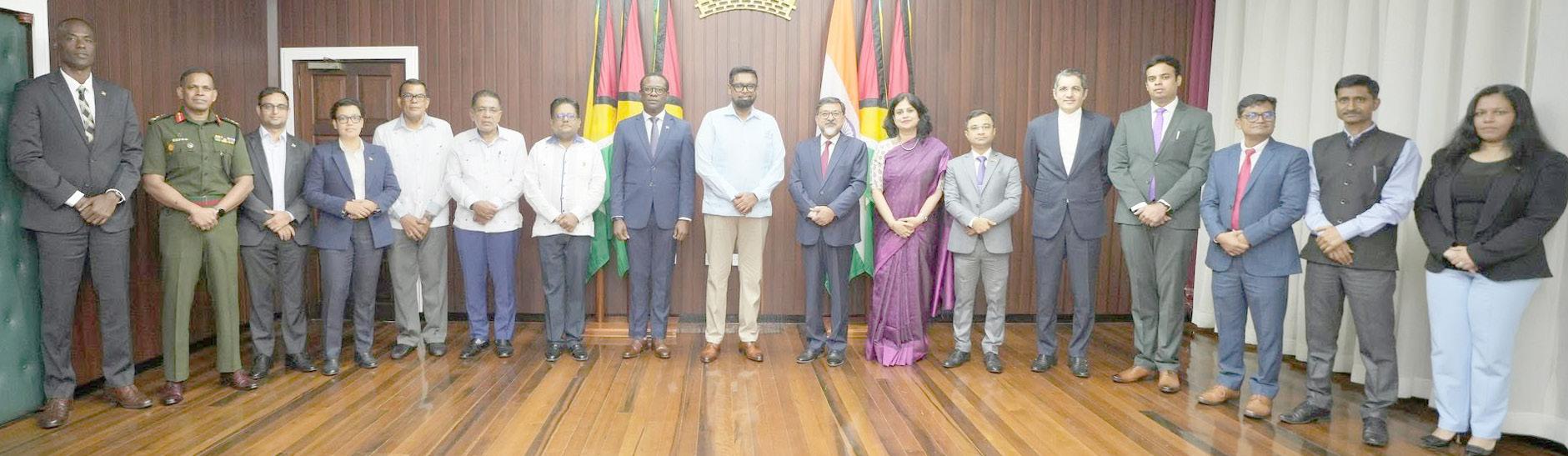


President Dr. Irfaan Ali meets with Secretary of
Relations in India’s Ministry of
Shri Sudhakar Dalela, and
of a
Indian delegation at the Office of the President on Tuesday (Office of the President Photo)

—Final round of talks clears way for new school safety procedures, policies
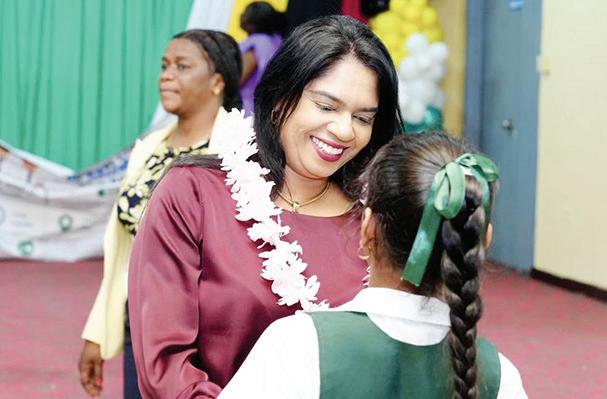
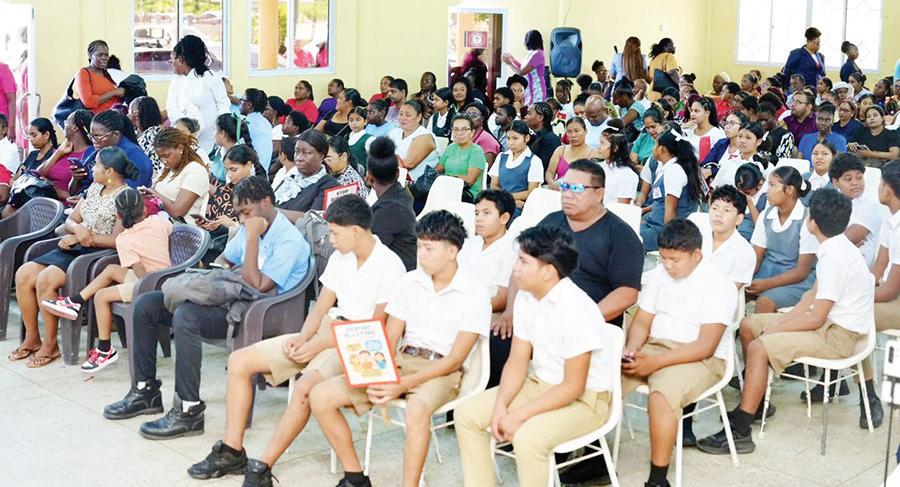
GUYANA is moving one step closer to creating a comprehensive standard operating procedure or policy for tackling bullying as the Ministry of Education’s nationwide anti-bullying and anti-violence consultation campaign came to a close on Tuesday in Region Five (Mahaica-Berbice).
As Minister of Education, Sonia Parag recently shared, the completed consultations, along with other data gathered on bullying, will pave the way for the development of new standard operating procedures aimed at creating safer school environments across Guyana.
Launched in November 2025, the campaign involved teachers, students, religious leaders, civil society representatives and residents from all 10 administrative regions.
Following the conclusion of the consultations, the ministry will compile recommendations gathered during the meetings, along with feedback submitted through a recently established reporting app, before meeting with a multi-agency task force comprising representatives from the Ministries of Human Services and Home Affairs, among others.
The initiative forms part of the Government’s broader response to growing concerns about bullying, school violence
and cyberbullying, issues that President Dr. Irfaan Ali has described as increasingly alarming within the education system.
Giving a public update on social media, Minister Parag shared that following months of consultations across all of Guyana’s regions, Tuesday saw the final talks held with educators, parents, students and other stakeholders.
As she shared, “We would have held a public consultation with different segments or sections of society, consultation after the first one into the various regions,” she said. This is the ministry’s final consultation and represents a new step in the government’s anti-bullying and anti-violence campaign.
As Minister Parag further added, the next stage will see the ministry gather further recommendations and suggestions through the ministry’s anti-bullying reporting system launched earlier this year.
Speaking on the information gained from the consultations, Minister Parag shared that the talks have been productive, giving the ministry insight into steps that can be taken and policies that can be drafted to stop violence and bullying in schools.
As she shared, “We will be seeing a lot coming out of these

consultations in how we plan to ensure that schools are safer, that our youths and our population are in an environment, in the school environment, in which it's conducive to learning rather than fear, ensuring that we are going to have the best possible environment for our students,” she added.
“We would have held a public consultation with different segments or sections of society, including religious leaders, teachers and civil society,” she said.
Moreover, the ministry will be collaborating with other ministries to take a united approach to the issues of bullying and violence in schools.
As the Education Minister shared, a task force comprising various ministries will be consulted on the next steps and creating a strategy.
“We are going to sit down with the multi-agency task force
that we had set up with the Ministry of Human Services, Ministry of Home Affairs, and other relevant ministries and agencies and then come up with our strategy for ensuring that we place into schools at least standard operating procedures or policies,” she said.
Minister Parag also highlighted other steps being taken by other ministries to combat bullying and violence among Guyana’s youth, citing the recent national consultation aimed at developing a framework to address the harmful impact of social media addiction on children, held by Minister of Parliamentary Affairs and Governance, Gail Teixeira.
The anti-bullying campaign forms part of a wider government effort to address rising levels of violence, indiscipline and cyberbullying in schools.
Recently, President Ali disclosed that incidents of misbehaviour had been recorded in 353 schools across Guyana, describing the situation as “alarming” and requiring a coordinated national response.
Region Four accounted for the largest share of reported cases, followed by Regions Six, Three, Five and Ten, with higher levels of challenges reported at Diamond Secondary, Soesdyke Secondary, East Ruimveldt Secondary, Canje Secondary, Bartica Secondary and the Linden Foundation Secondary School.
The President identified cyberbullying, gang activity, vaping and other forms of substance abuse among the factors contributing to behavioural challenges within schools. Moreover, he noted that online harassment often extends beyond social media platforms and can lead to confrontations and violence
among students, creating an environment that is not conducive to learning.
In response, the Government will begin rolling out several interventions aimed at strengthening student welfare and school safety.
These include expanded counselling services, greater collaboration among agencies, a standardised referral system for behavioural cases, increased school monitoring and investments in security infrastructure in high-risk schools.
The administration has also stressed that addressing bullying and violence cannot be left to schools alone.
Parents, religious organisations and community leaders have all been encouraged to play a more active role in guiding young people and helping to foster positive behaviour both online and offline.

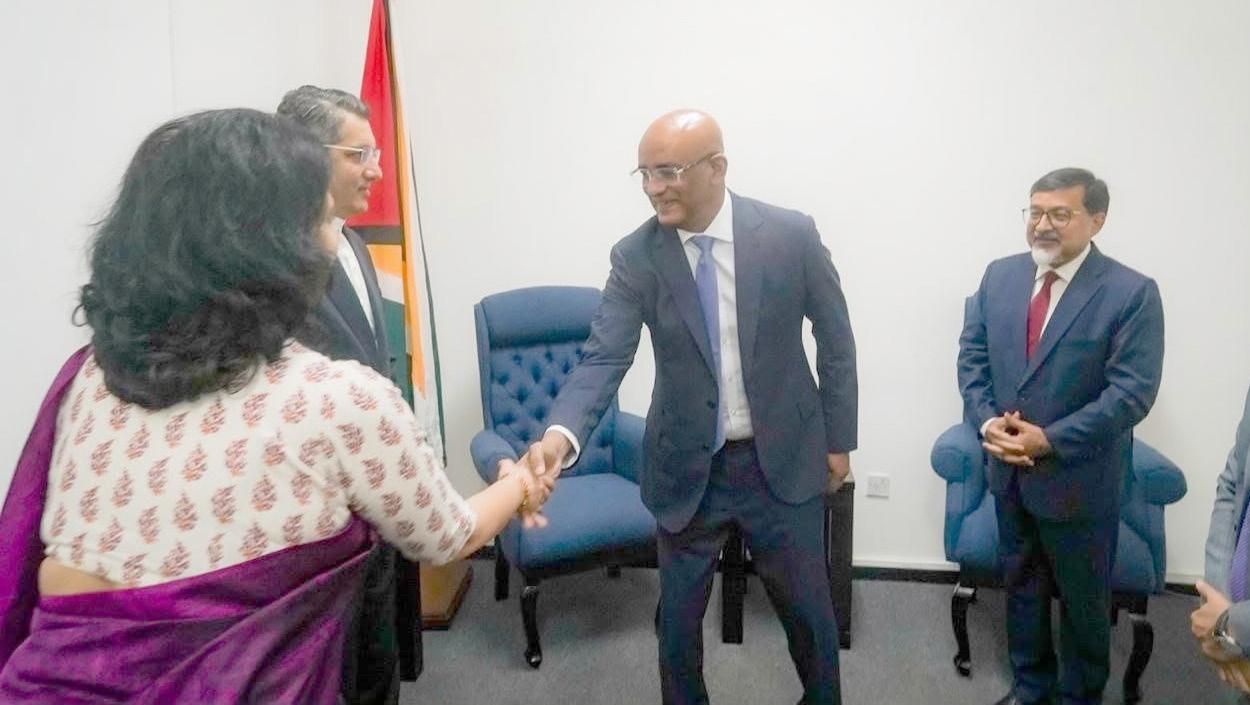
PRESIDENT Dr Irfaan Ali on Tuesday met with an advance delegation from India as Guyana and India move to strengthen bilateral relations ahead of a proposed visit by India’s Minister of External Affairs, Dr Subrahmanyam Jaishankar.
The delegation was led by Secretary of Economic Relations in India’s Ministry of External Affairs, Shri Sudhakar Dalela, and included senior officials from
the country’s foreign affairs and defence ministries. Former High Commissioner to Guyana Dr Amit Shivkumar Telang and others were also part of the meeting.
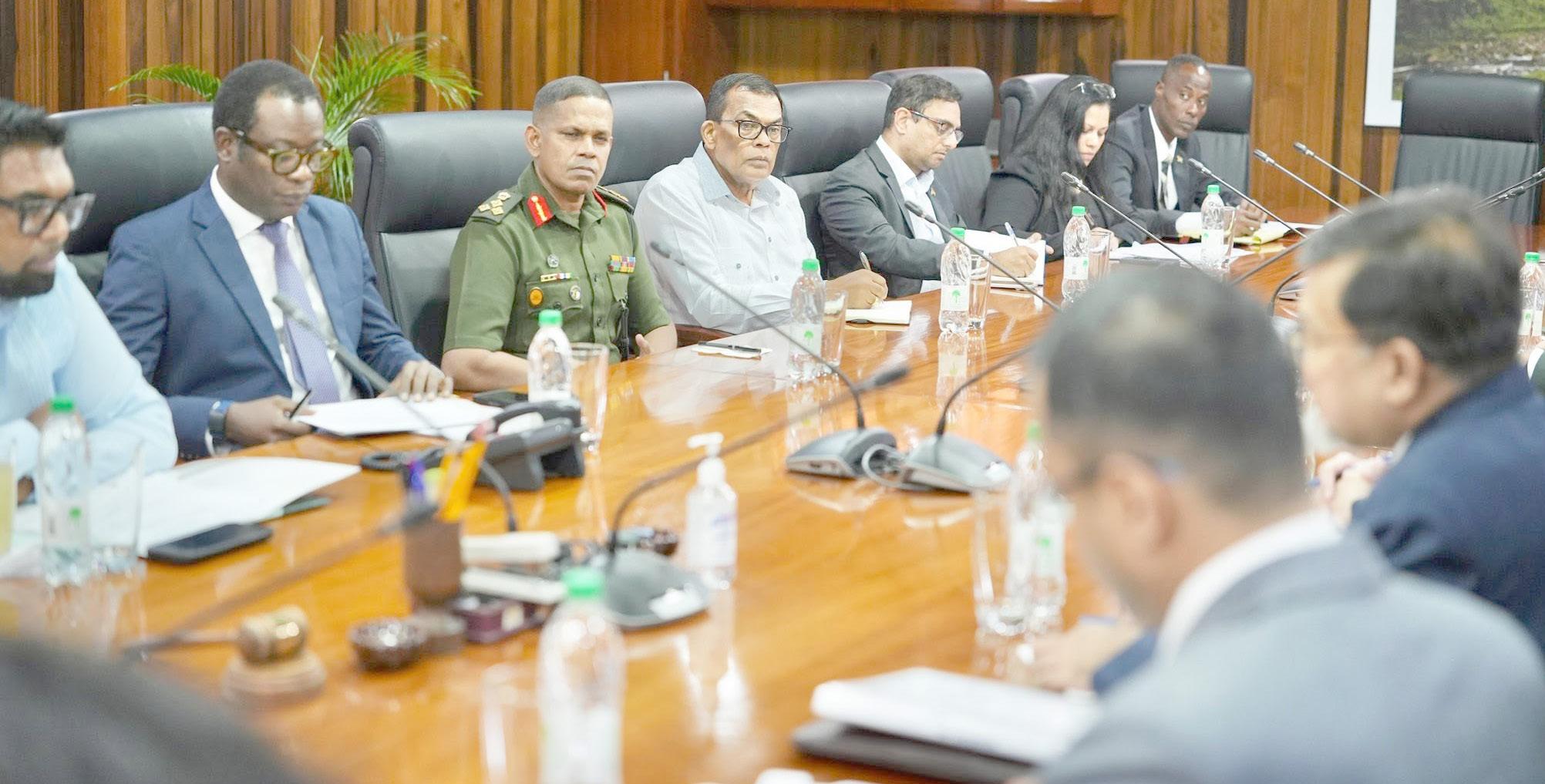
During the engagement at the Office of the President, President Ali, accompanied by members of his Cabinet, underscored the importance of deepening co-operation between the two countries and advancing strategic partnerships across key sectors.
He highlighted opportunities for expanded collaboration in energy, agriculture, government efficiency, trade and finance, while discussions also focused on information and communications technology, technology transfer and human resource development.
Earlier in the day, Vice-President Dr Bharrat Jagdeo also met with the visiting delegation. Discussions during that meeting centred
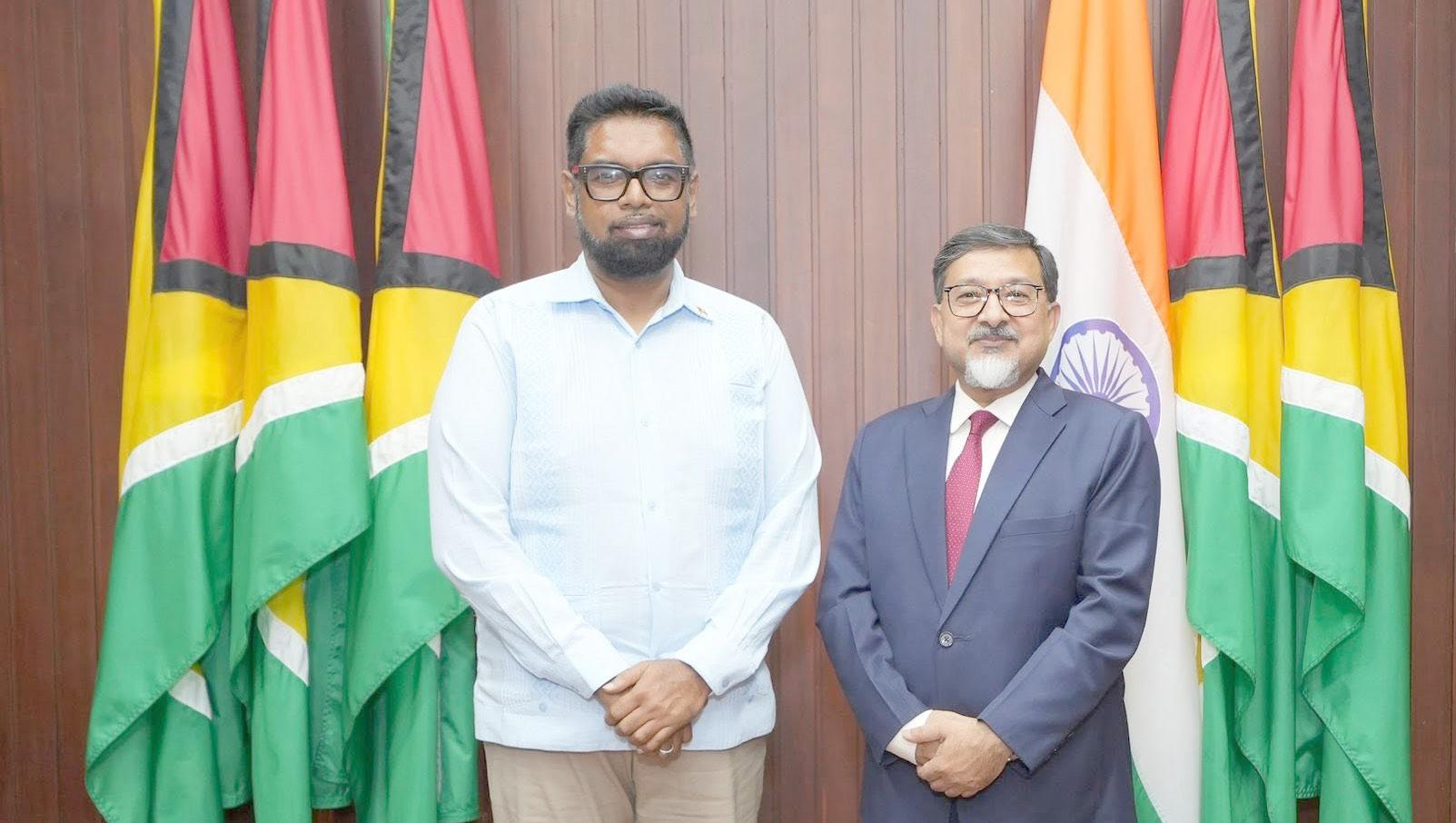
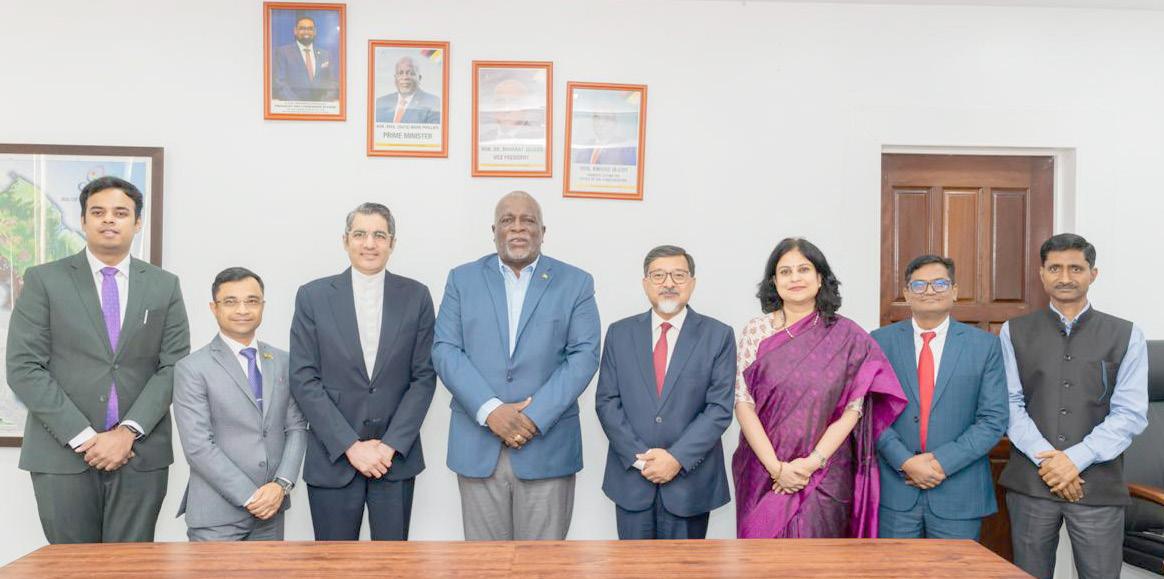
on strengthening bilateral ties.
Prime Minister Brigadier (Ret’d) Mark Phillips likewise received the delegation at the Office of the Prime Minister on Camp Street, where engagements formed part of a series of high-level meetings aimed at enhancing diplomatic and economic relations between Guyana and India.
Dalela was accompanied by Joint Secretary of the
Development Partnership Administration-I Division, Suja K. Menon; Joint Secretary of the South America Division, Dr Aman Puri; Joint Secretary (International Co-operation) in the Department of Defence, Dr Amit Shivkumar Telang; Under Secretary in the South America Division, Sarath Sankar; Counsellor (Political) and Head of Chancery at the High Commission of India in Georgetown, Manoj Kumar; and Second Secretary
(Consular and CARICOM), Sanjay Kanojia.
Back in 2024, the two nations had signed several Memoranda of Understanding (MOUs) during a state visit by Indian Prime Minister Narendra Modi.
The agreements, spanning hydrocarbons, health, agriculture, energy, and technology transfer, had represented a step toward deepening co-operation in vital sectors.
June 29 set for $85,000 ‘Because We Care’ cash grant rollout
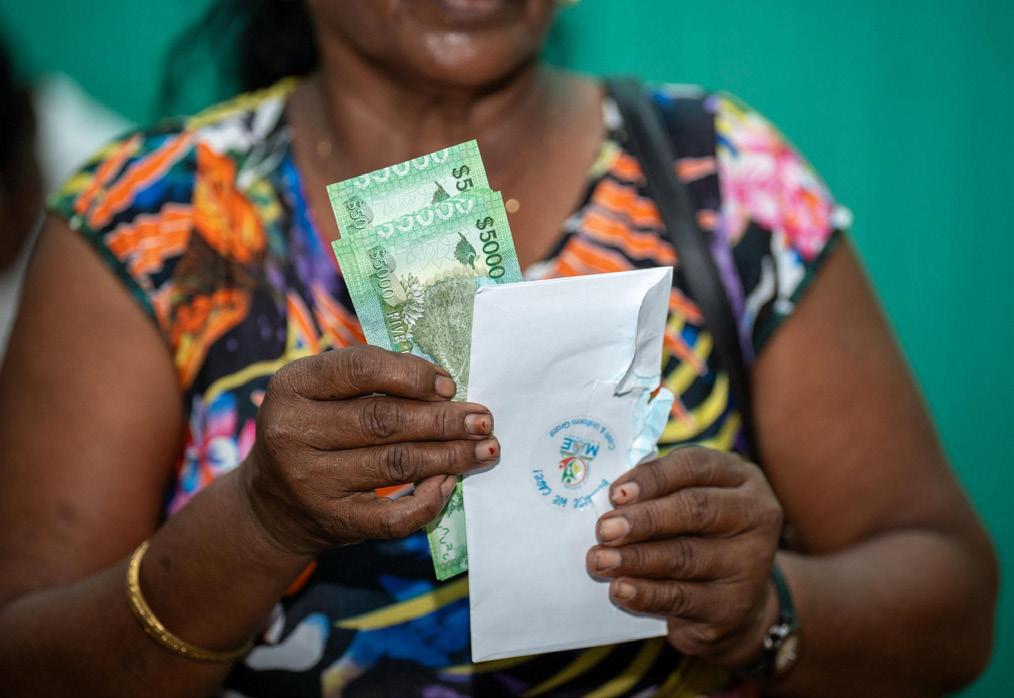
PARENTS and guardians of children registered in Guyana’s school system will begin receiving the ‘Because We Care’ Cash Grant from June 29, with each eligible child attracting a total of $85,000 in assistance following increases and the introduction of a new transportation grant.
The announcement was made on Tuesday by the Minister of Education, Sonia Parag, who said the distribution will commence in all 10 administrative regions across the country.
“As you know, six years ago, when His Excellency took office, he ensured that the because we care cash grant that was taken away from children was restored,” the minister stated. Adding, “it was not only restored but increased over the last five years,” the minister said.
In 2025, the People’s Progressive Party Civic (PPP/C) Government committed to further enhancing the programme during its second term in office.
As a result, the grant has been increased from $50,000 to $60,000, with the uniform grant of $5,000, bringing it to $65,000.
The minister also announced that a new $20,000 transportation
grant, another commitment made in 2025, will be added to the existing assistance package.
This brings the total support to $85,000 per child registered in the public or private school system.
This initiative forms part of the government’s broader agenda and will support Guyanese and ensure that quality education is delivered. [DPI]
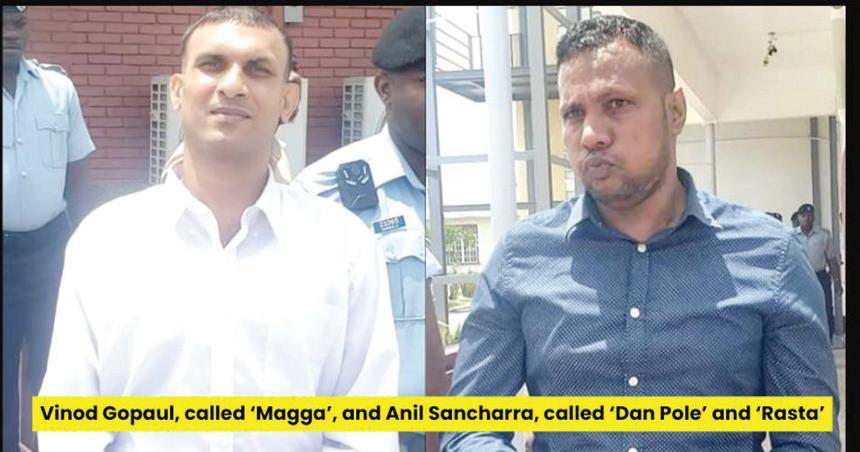
ANIL Sancharra, called “Dan Pole” and “Rasta”, and Vinod Gopaul, called “Magga”, were on Tuesday found guilty of the gruesome murders of cousins Joel Henry and Isaiah Henry following a trial in the Berbice High Court.
The verdict was returned by a 12-member jury after deliberations on Tuesday afternoon before Justice Simone Morris-Ramlall.
Sancharra, called “Dan Pole” and “Rasta,” of D’Edward Village, West Coast Berbice, and Gopaul, called “Magga,” of Yakusari, Black Bush Polder, Corentyne, were convicted for the September 2020 murders of the teenage cousins whose mutilated bodies were discovered in the Cotton Tree backlands.
Following the guilty verdicts, Justice Morris-Ramlall ordered that probation and psychological reports be prepared on both men before sentencing. The matter was adjourned to June 26, 2026, for sentencing.
Throughout the trial, the jury heard extensive testimony from witnesses, police investigators and medical personnel as prosecutors sought to establish the circumstances surrounding the deaths of the two teenagers.
A key witness for the prosecution was Akash Singh, who was initially charged in connection with the murders but later became a state witness.
Singh testified that on the day of the killings he was with the two accused men in the backlands where marijuana was allegedly being cultivated.
According to Singh, he had accompanied Sancharra and Gopaul on several occasions to the area to tend to marijuana plants and transport supplies, including fertiliser and food items.
He told the court that when the men returned to the cultivation site approximately three weeks after planting seedlings, they discovered that the plants had been destroyed. Singh said there were also signs that crops on a nearby farm had been damaged, which he believed was the result of pesticide.
While discussing the destruction, Singh claimed that two teenagers approached the camp. According to his testimony, one of the teenagers laughed after he mentioned the damaged crops.
Singh said Gopaul questioned the teenager about whether he knew anything about the destruction of the marijuana plants.
The witness told the court that the situation quickly escalated.
He claimed that one of the teenagers attempted to run away and was attacked by Gopaul, while Sancharra attacked the other.
Although he said he could not recall the exact number of blows inflicted, Singh testified that both teenagers were repeatedly chopped during the attack.
The court heard that after the killings, Singh was allegedly instructed to assist in disposing of the bodies.

According to his evidence, the bodies were tied onto horses before being removed from the area by the accused men.
He claimed that he was later instructed to dismantle and dispose of the cutlasses allegedly used in the killings and to throw away his bloodstained clothing.
Singh said he discarded the items in a canal.
The witness further testified that the accused men threatened him and warned him against informing authorities about what he had witnessed.
Despite those threats, Singh said that after his arrest in January 2021, he disclosed everything he knew to investigators.
He also claimed that he had informed his sister and two other persons about the killings before he was arrested, but they did not believe him.
During his testimony, Singh also alleged that the accused men attempted to influence his

account of events while they were incarcerated.
He told the court that Sancharra and Gopaul instructed him to falsely tell investigators that police had beaten him into giving statements.
Under intense cross-examination by defence attorney Dr. Dexter Todd, Singh maintained that his account was truthful and denied fabricating the allegations against the accused men.
He repeatedly rejected suggestions that police investigators had assaulted him or coerced him into making statements.
“I come out from prison to talk the truth,” Singh told the court.
Singh also informed the court that he remains fearful for his safety because of what he claimed to have witnessed.
Additionally, he denied that he had received any promises from investigators in exchange
for his testimony.
He also denied suggestions that charges against him had been withdrawn as part of any arrangement with the prosecution.
Attorney Chandra Sohan also challenged Singh's credibility during cross-examination.
Sohan questioned him about his appearance while incarcerated and suggested that because he had long hair, he may not have been in prison during the period he claimed.
However, Singh rejected the suggestion and stated that prisoners were allowed to keep long hair.
The jury also heard testimony regarding Singh's efforts to assist investigators.
According to his evidence, he later took police to the area where he claimed the cutlasses used in the killings had been discarded.
However, investigators were
unable to recover the weapons.
Medical evidence presented during the trial detailed the extent of the injuries suffered by Joel and Isaiah Henry. Pathologist Dr. Nehaul Singh testified regarding the numerous wounds sustained by both teenagers and outlined the severe trauma inflicted on them before their deaths.
The medical evidence formed a significant part of the prosecution's case as jurors were presented with details of the violent nature of the attack.
The State's case was led by prosecutor Marisa Edwards, who called a number of witnesses in support of the prosecution's allegations.
The accused men were represented by attorneys-at-law Dr. Dexter Todd, Dexter Smartt and Chandra Sohan.
The murders of Joel and Isaiah Henry in September 2020 sparked widespread outrage and unrest across West Coast Berbice and drew national attention.
The discovery of the teenagers' bodies in the backlands led to days of protests and calls for justice from relatives, residents and members of the wider public.
With Tuesday's verdict, the case now moves to the sentencing phase, where the court is expected to consider the probation and psychological reports before determining the punishment to be imposed on the convicted men.
THE Guyana National Control Centre (GNCC), a key component of the Gas-to-Energy Project, is expected to become fully operational by August 2026, significantly enhancing the management and reliability of Guyana's electricity network.
This was disclosed by Minister of Public Utilities and Aviation Deodat Indar following a site visit on Tuesday to inspect ongoing works at the state-of-theart facility at Goedverwagting,
According to the minister, the facility is currently undergoing comprehensive testing of its critical systems, including power supply, internal generators, security, water and air conditioning infrastructure.
GPL officials informed the minister that the centre's Supervisory Control and Data Acquisition (SCADA) equipment has already arrived in Guyana and is undergoing acceptance testing at

the company's secondary control centre in Sophia.
"The SCADA equipment will enable GPL to monitor, control, and optimise electricity distribution across the Demerara-Berbice Interconnected System (DBIS), thereby significantly strengthening real-time management and improving overall system reliability," Indar noted in a Facebook post.
The Guyana National Control Centre (GNCC) costs approximately US $18.65 million (approx. GY$3.9 billion). This total cost covers both the civil engineering of the physical building (which had an initial contract
around US $8.6 million).
The facility is being constructed by Power China International, will serve as the central hub for monitoring and managing Guyana's electricity grid. Once operational, it is expected to improve grid stability, reduce blackouts and support the integration of power from the Gas-to-Energy Project into the national system. Government signed the contract for the establishment of the National Control Centre in 2024 as part of broader efforts to modernise Guyana's electricity infrastructure and strengthen energy security.
— Letter of Intent signed to establish EMBRAPA Science, Technologies, and Innovation Hub, with operations expected to begin within a year
GUYANA will soon become home to the EMBRAPA Science, Technologies and Innovation Hub, a landmark initiative expected to transform agriculture across the Caribbean through greater access to research, technology and scientific expertise.
The project was formally launched on Tuesday with the signing of a Letter of Intent between Guyana and Brazil, paving the way for Guyana to benefit from the expertise of Brazil's globally renowned agricultural research institution, EMBRAPA, while strengthening regional efforts to improve food security and climate resilience.
Minister of Agriculture Zulfikar Mustapha described the initiative as a "game changer" for Guyana and the wider Caribbean, noting that it represents a shared commitment to advancing agricultural innovation and scientific cooperation.
The hub will support the development and deployment of technologies tailored to tropical agriculture, facilitate knowledge transfer, strengthen research networks and help reduce the region's dependence on imported food. It also aligns with CARICOM's food security agenda and Guyana's growing role as a regional leader in agricultural development and innovation.
Speaking at the launch event hosted in the Ministry of Agriculture's boardroom, Minister Mustapha said the initiative stemmed from engagements between President Dr. Irfaan Ali and Brazilian President Luiz Inácio Lula da Silva.
The partnership, he said, reflects the two countries' shared commitment to advancing agricultural innovation, strengthening scientific cooperation and building a more resilient and food-secure Caribbean.
For decades, Guyana and Brazil have maintained a strong relationship rooted in practical cooperation.
“Our previous collaboration has strengthened our technical capacity in areas such as coconut development, livestock disease surveillance, laboratory strengthening, GIS capability and the joint
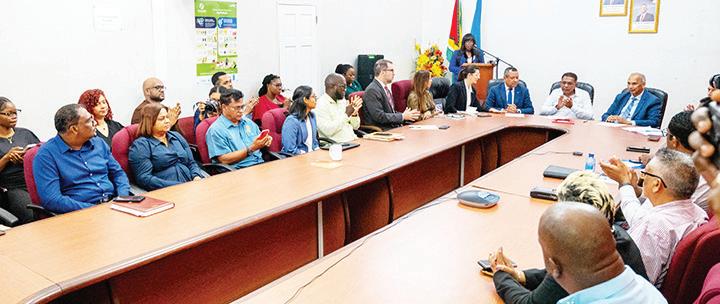
Officials from Guyana, Brazil and IICA gather for the signing of the Letter of Intent marking the official launch of the EMBRAPA Science, Technologies and Innovation Hub (Elton John photos)
monitoring of the Carambola fruit fly,” Mustapha said.
With Guyana and Brazil uniquely positioned to create a corridor of production, processing and logistics between the State of Roraima and the Caribbean, the minister said the collaboration will further deepen bilateral relations.
He also highlighted the role of the Inter-American Institute for Cooperation on Agriculture (IICA), describing it as a steadfast development partner supporting science, technology, innovation, agricultural health, climate resilience and regional integration.
According to Mustapha, the hub is expected to become operational within the next year.
Following the IICA Executive Committee meeting on July 21 and 22, Guyana and Brazil will begin negotiations to recruit a full-time liaison officer who will be based in Guyana. Thereafter, Guyana, Brazil and IICA will develop a work plan by August in close coordination with CARICOM.
All parties are aiming to officially commence operations between September and October.
With technical expertise being provided by EMBRAPA, widely recognised as one of the world's leading agricultural research institutions, and IICA, Mustapha said Guyana will soon establish a regional situation room and expand its tissue culture programme.
“We will have a centre of excellence, a cooperation between IICA and Guyana. In another month from now we will have a situation room with full data, not
only for Guyana but for the entire Caribbean,” Mustapha said. “In another three months we will have, and we already have, a tissue culture lab that will produce millions of planting materials for our farmers in Guyana.”
He added that Guyana's expanding network of soil laboratories, research facilities and innovation centres is positioning the country as a major driver of regional agricultural development.
“We have a number of soil laboratories, and all those science and innovation centres will make up the agricultural sector in Guyana. Imagine what Guyana will be: a powerhouse in the Caribbean driving agriculture and food security,” the minister said.
Addressing challenges facing the sector, Mustapha pointed to supply chain disruptions and rising global food prices as major concerns affecting Guyana and the wider region.
To tackle these issues, he said science-based, data-driven and regionally coordinated solutions are essential.
He noted that many CARICOM countries are now building agricultural capacity, making the EMBRAPA hub a critical component of the region's food security agenda.
"The establishment of the EMBRAPA Science, Technologies and Innovation Hub in Guyana aligns perfectly with our national priorities and supports CARICOM's vision, 25 by 2025 Plus Five, which calls for deeper integration, accelerated technology adoption and adaptation,

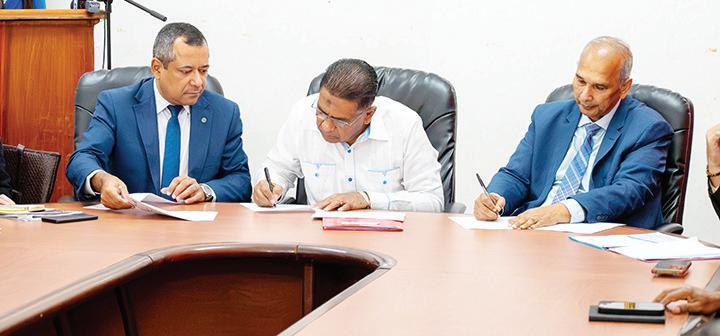
Executive Secretary Cleber Soares and Minister Zulfikar Mustapha sign the Letter of Intent as IICA Director General Muhammad Ibrahim signs as witness
and a resilient regional agri-food system," Mustapha said.
“This hub will strengthen our collective capacity to reduce the region's food import bill, expand intra-regional trade and build true food security.”
Work on establishing the hub is expected to begin in the coming months, with technical teams from the Ministry of Agriculture
of Guyana, the Ministry of Agriculture and Livestock of Brazil, EMBRAPA and IICA finalising the institutional, operational and financial arrangements required to commence operations during the second half of this year.
Executive Secretary of Brazil's Ministry of Agriculture and Livestock, Cleber Soares, said the hub has the potential to transform
agriculture across the Caribbean and Central America.
Delivering remarks during the signing ceremony, Soares reflected on Brazil's agricultural transformation over the past five decades, noting that the country moved from importing 85 per cent of its food to becoming one of the world's leading agricultural producers and exporters.
“Why did this happen? Because we invested heavily in science, technology and innovation to bring food security. It is a pleasure and an honour for the Brazilian agricultural system to support one in every eight plates of food in the world. But we need to create food security around the world,” Soares said.
He expressed confidence that through collaboration and leadership, Guyana will play a central role in advancing regional and global food security efforts.


THE tragic murder of seven-year-old Adriel Mohamed at Zeelugt has shaken the nation and reignited an uncomfortable but necessary conversation about the deeper social issues affecting communities across Guyana.
While the criminal justice system must do its work and ensure accountability, incidents such as these force us to confront a difficult reality: crime and violence rarely emerge in isolation. They are often symptoms of deeper problems rooted in trauma, neglect, abuse, broken relationships and social dysfunction.
This is why the recent comments by Human Services and Social Security Minister Dr. Vindhya Persaud about untreated pain, emotional abuse and generational trauma deserve serious attention.
For too long, societies have focused primarily on responding to the consequences of violence rather than addressing its causes. We react when tragedy strikes. We mourn when lives are lost. We demand justice when crimes are committed. Yet preventing future tragedies requires a different conversation altogether. It requires breaking the cycle.
The Government of Guyana has increasingly recognised that public safety cannot be addressed solely through policing and law enforcement. While stronger legislation, improved investigations, technological tools and stricter penalties remain important, they represent only one part of the solution.
Under President Dr. Irfaan Ali’s administration, a broader approach has emerged, one that seeks to address the social conditions that often contribute to crime, abuse and anti-social behaviour.
This approach has involved coordinated action among the Ministries of Human Services, Education and Home Affairs, alongside community organisations, faithbased groups and social services agencies.
The objective is plain and simple… intervene before families reach crisis point.
The government’s “Home and Church” initiative reflects this thinking. Through partnerships with churches, temples, mosques and community groups, efforts are being made to identify vulnerable households, provide support to struggling families and connect those in need with social services before problems escalate
into tragedy.
The concept recognises something many communities already know. Teachers, religious leaders, neighbours and community members are often the first to notice signs of distress, abuse, neglect or hardship.
Government services remain essential, but they cannot operate effectively in isolation.
The Ministry of Human Services and Social Security has expanded parenting programmes, family enhancement services, child protection interventions and counselling support.
The Ministry of Education has strengthened mechanisms for addressing bullying, violence and behavioural challenges in schools. Meanwhile, law enforcement agencies continue to modernise reporting systems and intelligence capabilities to improve crime prevention and response.
Taken together, these efforts represent a shift away from a purely reactive model toward one focused on prevention.
That shift is important.
The death of a child is always heartbreaking. But if there is any lesson to be
drawn from such tragedies, it is that protecting children requires more than criminal investigations after the fact. It requires stronger families, healthier communities and support systems capable of identifying risk before lives are destroyed.
No government programme, ministry or agency can accomplish that task alone.
Parents must be willing to seek help when overwhelmed. Communities must be willing to intervene when they see warning signs. Religious institutions, schools and civic organisations must continue playing active roles in supporting vulnerable families.
Breaking cycles of abuse, trauma and violence is not simply a social policy objective. It is a national imperative and the tragedy at Zeelugt reminds us why. If Guyana is to build safer communities and protect future generations, the focus cannot rest solely on punishing wrongdoing after it occurs. Equal attention must be placed on preventing the conditions that allow such tragedies to happen in the first place.
That is how cycles are broken and that is how lives are saved.
Dear Editor,
At a time when political tensions in Guyana remain high, the Caribbean Court of Justice must protect its credibility at all costs. That is why Justice Arif Bulkan should recuse himself from matters involving the PPP/C government.
This is not a personal attack. It is a matter of ethics, optics, and public confidence.
Guyana is deeply politically divided. In such an environment, judges connected, directly or indirectly, to active political figures must appreciate
how their involvement in politically sensitive cases will be viewed by the public.
Justice Bulkan’s immediate family is heavily intertwined with opposition politics. His sister, Janette Bulkan, has for years been one of the PPP/C’s most outspoken critics and has openly supported political opponents of the government. His brother, Ronald Bulkan, was a senior Minister in the APNU+AFC coalition administration and remains a prominent PNCR figure now linked with Amanza Walton-Desir’s Forward Guyana initiative.
Whether Justice Bulkan himself is
capable of being impartial is not even the central issue. The larger issue is perception.
Can the average Guyanese citizen reasonably be expected to believe there is absolutely no risk of political predisposition when such close relatives are deeply embedded in anti-PPP political activism and opposition politics? That question alone is sufficient to justify recusal.
Across the democratic world, judges routinely step aside from matters where there is even a reasonable appearance of conflict. They do so to preserve confidence in the judiciary
and to protect the integrity of the courts themselves.
The CCJ should not wait for controversy or accusations before acting prudently. The court’s authority depends on public trust, and public trust depends on visible neutrality.
In a country as politically polarised as Guyana, even the appearance of bias can damage confidence in the judicial process. Recusal would therefore be the responsible, ethical, and statesmanlike decision.
Sincerely, Quincy Anderson
I STOPPED off in part 5 on January 31 this year. In that article, I ended it when the PNC under the name APNU secured election victory in 2015.
Mr. Granger, as head of the PNC, became the president. Under Granger’s leadership, the PNC’s role in government was diminished. It was the first time since 1992 that the PNC acquired state power.
What happened from 2015 to 2020 was Mr. Granger in power and not the PNC. Granger became the only leader to have acquired the position of a party leader without having a history of functionalism in the party. I remember at the entrance of the High Court, former PNC minister, Clarissa Rheil, telling me, “But Freddie, I don’t know him (Granger) at all.”
PNC stalwarts did not know Granger for one reason only: he was not a visible or even invisible PNC player over the past 40 years prior to 2011. How Granger became leader of the PNC in 2011 (see part 5 for Faith Harding’s complaint against Granger’s election) has to do with the secret life Rupert Roopnaraine lived in Guyana. Space will not permit elaboration and I did a recent series on Roopnaraine, but I believe Roopnaraine may have been involved in Walter Rodney’s assassination.
It was Roopnaraine’s long-hidden relation with Granger and a key PNC player that allowed Corbin to agree to Roopnaraine’s request that Granger become the PNC leader. Corbin told me a few years ago that he was writing his memoir. I hope he is frank in discussing the Roopnaraine’s protagonist role in the formation of APNU.
What Granger did when he became president, he adopted the Desmond Hoyte methodology. Hoyte administered the affairs of Guyana, not as a party leader but only as president. The PNC had little if any role in the government of Guyana under Hoyte’s presidency. Hoyte made sure there was a dormant PNC, so PNC stalwarts could not interfere with his administration.
Granger did exactly that. He wanted the space that Hoyte gave himself to decide policy without PNC interference. Hoyte’s first taste of party intrusion was when he scrapped the PPP/PNC dialogue that Jagan and Burnham started in 1984. Hoyte, in a rage, told the PNC when the PNC wanted the talks to continue, “I am the president.”
What Granger did as president was that he scrapped the physiology and anatomy of APNU. Joe Harmon, as General Secretary of APNU, resigned
and concentrated on his position in the Ministry of the Presidency. Granger contemptuously diminished the role of the WPA in government (see Maurice Odle’s autobiography of how powerless he was as head of NICIL.
Granger then bypassed the PNC and replaced the PNC’s presence in government with a school of former GDF officers. These former military men became ubiquitous in the government. The PNC, therefore, had no strategic placements in the government. Harmon was the de facto president and the crucial role of the Ministry of Finance was not in the hands of a PNC stalwart.
If one examines the PNC Government under Burnham from 1964 to 1985, the PPP government from 1957 to 1964, the PPP presidency under Cheddi Jagan, Janet Jagan, Bharrat Jagdeo, Donald Ramotar and Irfaan Ali, those administrations had a huge and visible presence of cadres that came from the womb of the PNC and PPP, respectively.
Hoyte broke with that tradition because he was more a sycophant of Burnham rather than a party apparatchik. Hoyte was not really a PNC personality. Granger was the identical fit. He was a frenetic admirer of Burnham but not a party apparatchik. What happened to the PNC was that after Burnham died, the PNC leader position was passed in 1985 to a man (Hoyte) who was not dyed in the PNC’s greenness. After Corbin became discredited in 2011, the PNC leader position was passed to a man (Granger) who hardly had any activism with the PNC.
The PNC then, from 1985, began a slow death. After Hoyte lost power, Hamilton Green first tried to bring back the PNC. He failed. A group of young Turks harassed Hoyte to the point he suffered a heart attack. Corbin took over the position, but by then the PNC had become too fragmented to stay functional. When Granger took over, there was hardly any PNC left.
Under Granger’s presidency, the PNC as a party did not grow and there was a complete absence of regeneration. The PNC under Granger produced no young leaders with access to government experience from which they can grow and learn. When the PNC lost power in 2020, the PNC was on its deathbed. Anyone could have become its leader. What happened next was the final nail in the coffin.
DISCLAIMER: The views and opinions expressed in this column are solely those of the author and do not necessarily reflect the official policy or position of the Guyana National Newspapers Limited.


Minister of Human Services and Social Security Dr. Vindhya Persaud is encouraging parents and families facing challenges to make use of the Ministry's support services, warning that unresolved trauma, emotional abuse and harmful parenting practices are contributing to cycles of violence and dysfunction across society.
In a candid public discussion on family relationships and child welfare, the minister stressed that many of the issues affecting homes and communities today stem from deeper, unaddressed emotional wounds.
“We often hear the phrase, ‘hurt people hurt people,’ but if we're being completely honest, it goes much deeper than that. In fact, I think untreated pain passes down,” Persaud stated.
According to the minister, the country is witnessing troubling patterns of abuse, aggression and emotional harm that affect both children and adults. She noted that while physical violence often attracts public attention, emotional and verbal abuse can be equally damaging and leave lasting scars.
She asserted, “We are seeing children fighting children, bullying each other. We are seeing parents and children going at it. I am seeing parents supposedly disciplining children, but to my mind, it looks totally like abuse. It is abuse.”
Persaud argued that society often overlooks harmful behaviours within families, particularly when there are no visible signs of physical violence.
“We ignore the quiet, subtle emotional neglect in fam-
ilies because at least there's food on the table, right? That's what we say. And no one is getting hit. But is that enough?” she questioned.
The minister highlighted concerns about parents who routinely belittle or humiliate their children, explaining that such treatment can have lifelong consequences.
“There is also this subtle and quiet thing sometimes called emotional abuse and verbal abuse, where children will tell me that their own parents call them terrible names,” she explained.
Recalling interactions with children during workshops, Persaud shared examples of young people who reported being called degrading names by their parents.
As part of efforts to address these issues, Persaud urged parents and guard -
ians who feel overwhelmed to seek assistance through the Ministry's various programmes and services.
“We have parenting programmes. We have parenting classes. And I want to encourage parents to reach out to us if they feel overwhelmed,” the minister said.
She outlined several initiatives currently available, including the Family Enhancement Service, the Child Protection Agency and the probation programme, all of which work with children, young people and families experiencing difficulties.
“We have the Family Enhancement Service, where we work with young people and their families. We have the Child Protection Agency, where we do the same. We have the probation programme, where we do the same,” she explained.
While noting that the
Ministry stands ready to assist, Persaud emphasised that lasting change will require broader societal involvement.
“The point is, we have these services. But I still believe that while we have these services and we are 100 per cent ready to support. We need to really, really face what's happening there and ask the hard questions,” she said.
The minister also reiterated her opposition to physical punishment and public humiliation as disciplinary methods.
“I do not support embarrassing children and young people in front of their peers, or in front of the public, or in front of anybody. These things have such deep-seated scars,” she remarked.
Persaud indicated that the discussion will continue through a series of community engagements across the coun-
try, beginning with visits to Region Two (Pomeroon-Supenaam), where she plans to meet directly with residents and hear their concerns.
The minister stated, “This is not a one-man solution or a one-woman solution. This is a solution that our country has to find, because it deals with people. It deals with homes. It deals with families.”
She urged citizens to participate in the conversation, seek help when needed and work collectively to create healthier homes and stronger communities for future generations.

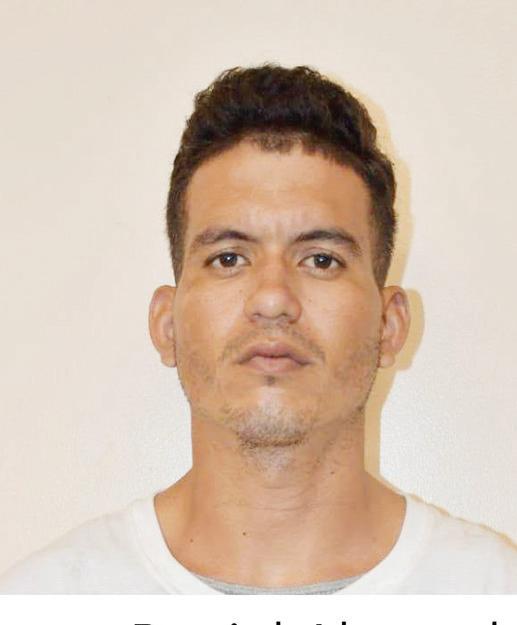
THE Georgetown Magistrates’ Courts has commenced an extensive review of evidence against four persons accused in connection with the deadly October 2025 bombing at the Mobil Service Station in the capital city.
Paper committal proceedings officially commenced on Monday, June 8, before Acting Chief Magistrate Faith McGusty.
A paper committal is a pre-trial legal procedure in serious criminal matters where a magistrate assesses whether sufficient evidence exists to commit an accused to stand trial in the High Court, based solely on written material and without hearing live testimony.
The proceedings are expected to continue on Thursday, June 11, as the court examines the evidence gathered by the Guyana Police Force (GPF).
More than 100 statements were formally tendered during the opening day of the paper committal exercise. The evidence includes statements from eyewitnesses, police ranks, investigators and other persons linked to the probe.
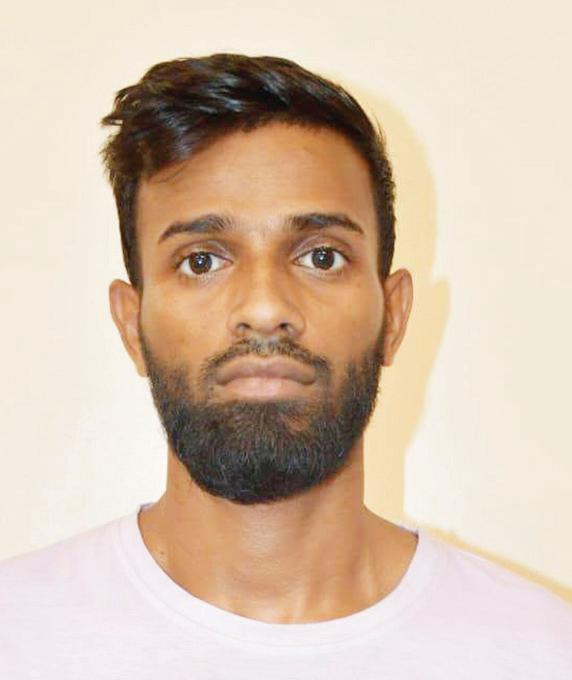
The evidence tendered on the opening day included a statement from accused Venezuelan national Jhonny Boodram, who is before the court alongside fellow Venezuelans Alexander Bettencourt and alleged mastermind Daniel Alexander Ramirez Poedemo, as
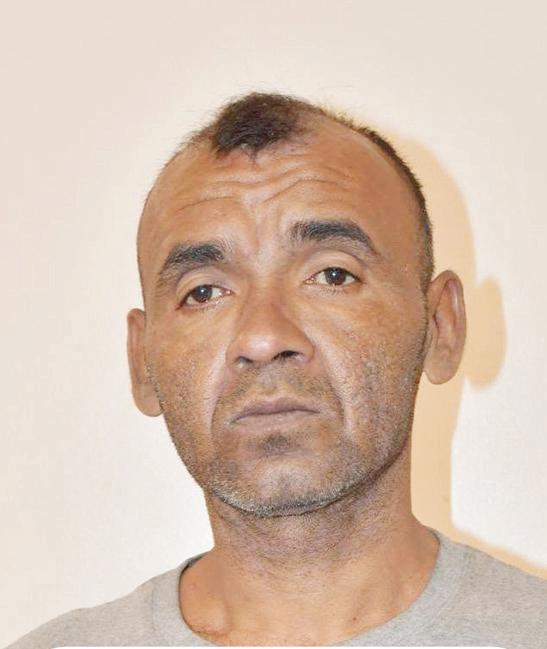
well as Guyanese-Venezuelan Krystal LaCruz.
The charges stem from the October 26, 2025, explosion at the Mobil gas station at the corner of Regent and King Streets, Georgetown, which claimed the life of six-year-old Soraya Bourne and injured four of her relatives.
Several vehicles and nearby buildings were also damaged in what has been described as one of Guyana’s most serious national-security incidents in recent years.
Poedemo is charged separately with terrorism contrary to Section 3(1)(a) of the Criminal Law (Offences) Act. The charge alleges that he placed and detonated an explosive


device with intent to threaten Guyana’s security and sovereignty or to strike terror among the public, resulting in the child’s death. The three other defendants are jointly charged with aiding and abetting Poedemo in the commission of the terrorist act.
Investigators have relied on surveillance footage, forensic analysis and numerous witness statements during the probe. Some forensic samples were also sent to India for advanced testing.
All four accused remain on remand.
The opening day of proceedings also saw the submission of a statement from Guyanese Ramesh Pramdeo, one of several individuals who
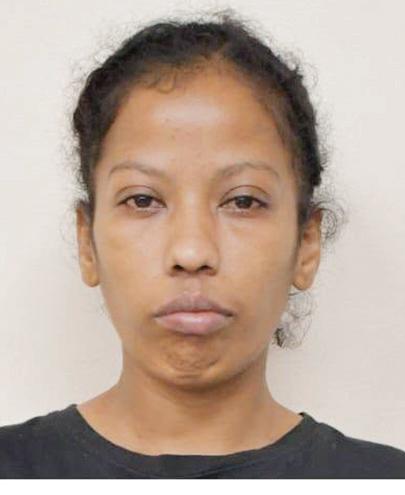
had previously faced charges arising from the same investigation.
Pramdeo and fellow Guyanese Wayne Correia were discharged in April after Magistrate Alisha George upheld a no-case submission filed on their behalf by their attorney.
The court found that the evidence presented against the two men was insufficient to support the terrorism-related charges.
In contrast, their co-accused, Venezuelan Jennifer Rodriguez, was committed to stand trial in the High Court after Magistrate George ruled that the prosecution had established a prima facie case against her. Rodriguez, who is currently on remand, is expected to go on

trial at the next practicable sitting of the Demerara Criminal Assizes.
The Georgetown proceedings now focus on the four-remaining accused in the central case.
During the paper committal process, Acting Chief Magistrate McGusty will examine the statements, reports and documentary evidence submitted by investigators before determining whether sufficient evidence exists to commit the defendants to stand trial before a judge and jury in the High Court in Demerara.
Senior Police Legal Advisor Mandel Moore is appearing on behalf of the State.
The commencement of the proceedings follows months of legal developments, including repeated assertions by Poedemo that he alone was responsible for the fatal explosion.
The Government has signalled its intention to seek the death penalty under anti-terrorism laws, which provide for capital punishment in instances where terrorist acts lead to the loss of life.

— Finance Minister says major international companies are establishing a presence as opportunities expand beyond oil and gas
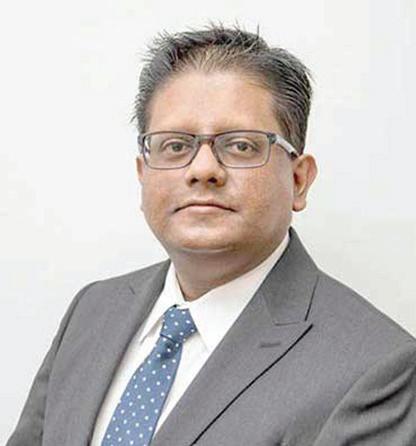
GUYANA is attracting unprecedented levels of foreign investment as international companies move to establish operations and capitalise on the country’s rapid economic growth and expanding opportunities, according to Senior Minister within the Office of the President with responsibility for Finance, Dr Ashni Singh.
He was at the time delivering remarks during a trade and investment mission here, during which he noted that the country is experiencing an extraordinary period of development that is drawing the attention of investors from around the world.
“You are in the right place at the right time,” the minister said, describing Guyana as a country under-
going significant economic and industrial expansion.
The rapid growth of the oil and gas sector, coupled with large-scale infrastructure development, has helped create an investment climate that is attracting major international companies.
“You have every single major provider of goods and services to the oil and gas industry establishing
a presence in Guyana,” Singh said.
He noted that alongside the country’s growing petroleum sector, significant investments are being made in energy generation, industrial development, transportation infrastructure, housing, healthcare, education and tourism.
International energy companies from the United States, France, Qatar

and Malaysia are already involved in offshore exploration and development activities, while global hotel brands and other investors are entering the local market.
Against this backdrop, Dr Singh said that Guyana’s appeal extends far beyond oil and gas, with opportunities emerging across virtually every sector of the economy.
“With the rate at which foreign direct investment is arriving, the rate at which domestic credit to the private sector is growing and the rate at which jobs are being created, there is a lot of business to be done,” he said.
“It almost doesn’t matter what sector you’re doing business in. The opportunities are many,” he added.
The minister added that the government’s aggressive infrastructure programme and policies aimed at fostering a globally competitive non-oil economy are creating additional opportunities for local and international investors alike.
“There are opportunities along the entire spectrum,” Dr Singh said. “From the largest investment opportunities all the way down to the smallest of enterprises.”
As Guyana continues its transformation, Dr Singh said the country remains open to investment and business development, while pursuing sustainable growth across multiple sectors of the economy.
Last month, President Dr Irfaan Ali said foreign direct investment in Guyana has surged to approximately 35 per cent of the country’s Gross Domestic Product (GDP), describing it as a powerful indicator of growing global confidence in the country’s economy and governance.
“That is no ordinary number. That tells you about global confidence, investors’ confidence, confidence in the political system, confidence in the government, confidence in the economy and confidence that in the risks they are taking to invest, they believe that they can be successful,” President Ali stated.
The Head of State said Guyana has moved beyond the stage of having to introduce itself to international investors, noting that the country is now recognised globally for its economic transformation and strategic opportunities.
He highlighted Guyana’s leadership in climate policy, biodiversity, agriculture and renewable-energy advocacy long before the emergence of the oil and gas sector.
According to President Ali, Guyana is now positioning itself for the next phase of development through diversification into sectors such as healthcare, education, tourism, agro-processing, manufacturing, artificial intelligence and data centres.
“We are building out the most modern healthcare system in the world, the most modern education system in the world, not only for Guyanese, but as an economic component of the diversification of our economy,” he said.
The President noted that Guyana is aggressively embracing AI and digitisation, integrating technology into healthcare, immigration, public services and national planning systems.
“We have embraced AI as a development partner of the future,” he stated.
He identified hydroelectricity, smart grids, pharmaceutical manufacturing, agriculture, tourism and manufacturing among the sectors offering major opportunities for investment.
The President further stressed that Guyana’s development model is aimed at creating prosperity for all Guyanese through policies that encourage private-sector expansion and entrepreneurship.
“The government’s only role is to create the environment through systems and policies. The role of business, making money, development and growth is the role of the private sector,” he said.
HER Excellency First Lady Arya Ali highlighted the country’s ongoing efforts to build a more inclusive society for people living with disabilities.
Speaking on Tuesday at the United Nations headquarters in New York, Mrs Ali outlined a series of legislative, financial and educational initiatives during the 19th session of the Conference of States Parties to the Convention on the Rights of Persons with Disabilities (COSP19).
Addressing delegates at the high-level forum, the first lady said the principles of the convention continue to guide Guyana’s national development agenda as the country works to eliminate barriers and expand opportunities for people with disabilities.
Reflecting on the 20th anniversary of the convention’s adoption, the first lady noted that the landmark agreement marked a transformative step
towards dismantling institutional and societal barriers and promoting equal participation for persons living with disabilities.
“In Guyana, the principles of the convention continue to guide national efforts to create a more inclusive society through legislative reforms, policy development and targeted programmes,” she told the conference.
Mrs Ali said Guyana had adopted a multifaceted approach to ensure that persons living with disabilities received equal treatment and greater opportunities to participate fully in society.
Among the measures highlighted was the government’s expansion of financial support for persons living with disabilities through increases in the permanent disability grant, monthly public assistance and periodic cash grants.
She noted that the Business Centre for Persons with

Disabilities, established in 2025, is playing a key role in creating economic opportunities for persons with disabilities.
“The centre currently employs more than 100 persons with disabilities,” she informed the delegates.
Mrs Ali reminded the conference that Guyana opened its first school for children with hearing impairments last year, and announced that the country will establish its first specialised school for children with autism later this year.
While acknowledging the progress made, she said significant challenges remained, particularly for developing countries seeking to improve access to modern disability support technologies.
She stressed the importance of ensuring that persons living with disabilities benefit from advancements in innovation and rehabilitation services.
Mrs Ali called for stronger international partnerships and collaboration among governments, international agencies,
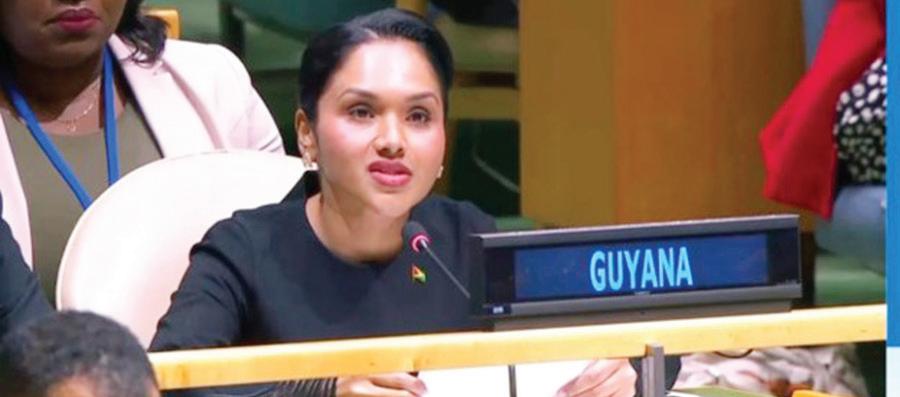
H.E First Lady Arya Ali addressing the United Nations on Tuesday
technology stakeholders and organisations representing persons living with disabilities to further advance the goals of the convention.
“Guyana looks forward to the continued implementation of the convention being underscored by strong partnerships and collaboration,” she stated.
COSP19 brings together governments, civil society organisations and disability advocates from around the world to assess progress and strengthen global commitments towards protecting and advancing the rights of persons with disabilities. (DPI)

— Minister Bharrat says milestone reflects transformational impact of Guyana’s local content legislation
By Naomi Parris
MEETING international standards with zero defects and no need for repairs, high-pressure process pipes for a Water Injection Riser Depressurisation (WIRD) system were fabricated in Guyana for the first time. The milestone was hailed as a clear example of how deliberate investment in local capability can support Guyana's long-term development and industrialisation.
Speaking during a fabrication ceremony on Tuesday, SBM Offshore Guyana General Manager, Martin Cheong, said the pipe systems will operate under some of the highest water pressures on the Liza Unity Floating Production Storage and Offloading (FPSO) vessel.
“For the first time, high fabrication and high-pressure water testing for an FPSO project has been completed

Guyanese welders and technicians, on Tuesday, celebrated historic milestone after completing the country’s first locally fabricated highpressure process pipes for the Liza Unity FPSO, meeting international quality and safety standards with zero defects and no repairs (Sachin Persaud photos)
locally by Guyanese workers in accordance with internationally recognised quality and safety standards. At SBM Offshore, we know that local content is not simply about where work is done. It is about creating opportunities for people, strengthening local businesses and building technical expertise that will support Guyana's long-term
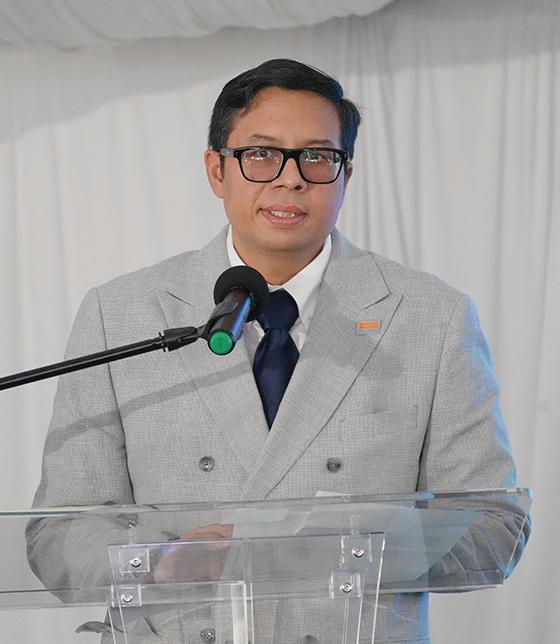
development, impact communities and individuals, and establish us as a long-term partner in Guyana's development,” Cheong said.
The project was intentionally pursued as a local content development opportunity, providing Guyanese workers with hands-on experience in one of the most technically demanding areas of offshore

fabrication.
Crucially, the work was completed with zero weld defects and zero repairs, a performance described as an exceptional accomplishment.
Guyanese welders played a direct role in developing and qualifying the welding procedures used for the project, while three additional welders obtained international certifi-

standards," she said.
She noted that while the current work supports the Liza Unity FPSO, similar opportunities are expected across future FPSOs and offshore projects, ensuring the skills developed continue to create value for years to come.
cation, further strengthening the country's pool of highly skilled technical workers.
“The fact that this work was completed in Guyana with zero weld defects and zero repairs required is an exceptional accomplishment. It speaks to the quality, professionalism and dedication of the workforce, while demonstrating that Guyanese talent can successfully execute highly specialised offshore work to international standards,” Cheong said.
He noted that the achievement was made possible through collaboration with Friedlander, which facilitated a rigorous qualification process involving vendor audits, weld procedure qualification testing, international laboratory testing, American Bureau of Shipping (ABS) classification approvals and the training and qualification of Guyanese welders.
Dr Carla Crawford, Director and Co-owner of Friedlander, described the project as a powerful statement about the country's growing industrial capability.
“This is more than a performance; it is a statement. A statement about quality, a statement about capability and, above all, a statement about people,” Crawford said.
“The success belongs first and foremost to the teams in the yard and on the workshop floor, working through every stage, cutting, fitting, welding, testing and painting, while meeting some of the most demanding technical requirements in the offshore industry.”
A
Positioning the WIRD project as proof of concept for local content, Crawford said it demonstrated that advanced fabrication work can be executed successfully in Guyana.
“Our ambition in Guyana has been clear, not just to operate here, but to build here, develop local expertise, invest in skills and create opportunities that last beyond a single project. This is why training and qualification were central to this project. Today, we are proud to see the results: Guyanese welders trained, qualified and certified to international
“We are opening a new chapter, a chapter where Guyana is not only an oil-producing nation, but a country capable of delivering world-class industrial services, a country building its own expertise. The future of the industry in Guyana will not be imported. It will be built here by the great people of this great nation, Guyana," Crawford said.
Meanwhile, Minister of Natural Resources, Vickram Bharrat, credited Guyana's Local Content legislation as a key driver of the transformation taking place in the oil and gas sector.
According to Bharrat, the legislation has boosted job creation, improved safety standards and positioned Guyana as the world's fastest-growing economy.
He stressed that the law was never intended to discourage foreign investment or create barriers for operators but rather to ensure Guyanese participate meaningfully in higher-value segments of the industry.
“In drafting that bill, there was no way that we intended to bring difficulties to the oil and gas sector. There was no way it was intended to keep away foreign investment in Guyana, by no means, because we live in the real world and we know there is no way that Guyana and Guyanese businesses at that point in time could have developed the oil and gas sector to where it is today,” Bharrat said.
He argued that genuine local content means producing goods and services in-country rather than importing finished products and simply reselling them to operators.
The minister also highlighted what he described as a transformational shift in safety and quality standards, noting that practices introduced through the oil and gas industry are now being replicated in sectors such as mining and forestry.
“Today we have locals, we have Guyanese participating in a meaningful way in the sector. You have young Guyanese trained and working in the sector, and those are just 7,000 direct jobs,” Bharrat said.
He added that projects such as the WIRD fabrication initiative demonstrate the success of Guyana's local content policy and the growing capacity of Guyanese workers and companies to compete at the highest international standards.
—says government has cracked down on fronting, shell companies exploiting Local Content Act
, Vickram Bharrat, has issued a stern warning to Guyanese seeking to exploit the Local Content framework through unethical arrangements, including selling their citizenship status and fronting for foreign companies.
Speaking at an event on Tuesday, Bharrat recalled that shortly after the Local Content Act came into effect in January 2022, authorities uncovered several schemes involving local partners who were only nominally Guyanese-owned.
“We have had some of the very Guyanese who were advocating for local content selling themselves, or rather their passport, I should say,” he said, describing the practice as unethical and contrary to the spirit of the legislation.
While noting that the government has strengthened its ability to detect and address practices such as “rent-a-citizen” arrangements and fronting, Bharrat urged Guyanese to distance themselves from such activities.
This phenomenon – commonly referred to as ‘fronting’ or ‘rent-a-citizen’ – has the potential to reduce the financial benefits accumulated by Guyanese and runs counter to the spirit and intent of the LCA.
In 2022, the LCA was challenged by the Trinidadian-owned company, Ramps Logistics Guyana over the non-issuance of a local content certificate.
Acting Chief Justice Roxane George, S.C., in her ruling, ordered the Local Content Secretariat (LCS) to issue a local content certificate to the company. The LCS has since complied with the order.
However, the Chief Justice noted that the Local Content Act “clearly needs” regulations to prevent arbitrary decision-making.
“We have gotten a handle on that situation, but I want to make an open call to my fellow Guyanese: value your citizenship, value your passport, value your country. Don’t sell it. Be an active participating member in the oil and gas sector,” he stressed.
“We have had cases in the past where people were holding five and 10 per cent of a company, but on paper there was 51 per cent,” Bharrat disclosed.
According to him, when the Guyana Revenue Authority (GRA) began examining profit distributions against declared shareholdings, discrepancies quickly emerged.
Bharrat said the government also had to confront the emergence of shell companies established solely to exploit local content requirements.
“A number of shell companies just came in and established themselves… all of this we had to fix in the journey from implementation in January 2022 to date,” he said.
He noted that local businesses had also raised concerns about invoicing systems and lengthy payment periods imposed by tier-one and tier-two contractors.
“We had issues with the tier-one, tier-two contractors and the invoicing system, and the payment periods,” Bharrat said, explaining that lengthy payment cycles are common in some jurisdictions.
He said the administration has since engaged operators to simplify invoicing systems and reduce the time taken to settle payments.
Guyana’s Local Content legislation is designed to promote economic growth and development by ensuring that local businesses and workers benefit from opportunities in the oil and gas sector.
Under the legislation, companies are required to procure specified percentages of goods and services from Guyanese businesses, including 90 per cent of office space rental and accommodation services, 90 per cent of janitorial, laundry and catering services, 95 per cent of pest-control services, 100 per cent of insurance services, 75 per cent of food supply services and 90 per cent of
The minister revealed that in some instances, Guyanese shareholders were listed on paper as majority owners of companies but received only a small fraction of the profits.
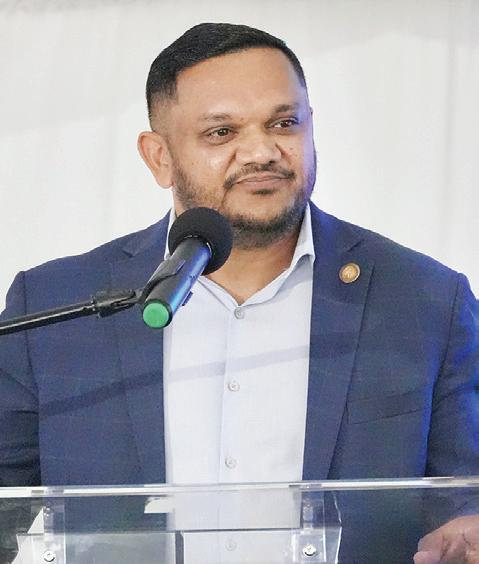
accounting services.
Updated legislation is expected to include additional provisions addressing training and capacity building for local workers, as well as greater participation throughout the supply chain. Amendments are currently awaiting policy-level consideration following extensive stakeholder consultations
Meanwhile, Bharrat reiterated President Irfaan Ali’s call for local businesses to pursue partnerships, joint ventures and consortiums to overcome financing challenges and compete more effectively.
“One of our biggest challenges in the oil and gas sector for the local private sector is the availability of capital. That is why His Excellency has been pushing the local private sector towards partnerships, joint ventures and consortiums, so you can pool resources together,” he said.
The minister urged businesses to focus their competitiveness outward, targeting regional and international opportunities rather than competing against each other domestically.
“We have to put that competitiveness aside and work together and compete regionally and internationally… not compete against each other,” he stressed.
Bharrat also made it clear that the Local Content Act was never intended to protect poor-quality services or inflated pricing.
Instead, he said, the legislation was designed to help Guyanese businesses develop the capacity to compete
regionally and internationally on quality and cost.
“We want our local private sector to compete regionally and internationally, both in quality and in price.
That is what the local content legislation is there for,” he said.
He cautioned that businesses cannot rely on local content requirements while offering substandard accommodation, facilities or services, noting that competitiveness and quality must remain central to the sector’s long-term success.
RANKS of the Guyana Fire Service (GFS) have commenced a four-week specialised training programme aimed at strengthening the agency's fire investigation capabilities.
The training, which began on Monday, is being conducted in collaboration with the Trinidad and Tobago Fire Service and focuses on enhancing the technical skills of fire officers in determining the origin and cause of fires, preserving evidence, and conducting thorough investigations.
According to the GFS, the programme will utilise a blended learning approach, combining virtual and face-toface instruction to maximise participant engagement and operational flexibility.
The first phase of the programme will be conducted online and will focus on theoretical instruction, while the second phase will involve practical exercises and handson training sessions.
The curriculum is designed in accordance with the principles and methodol-
ogies outlined in the National Fire Protection Association (NFPA) 921 Guide for Fire and Explosion Investigations. It incorporates both classroom-based learning and practical scenario-driven exercises.
During the programme, fire officers will receive training in intermediate and advanced fire investigation techniques, the use of personal protective equipment (PPE), fire scene props and simulation materials, evidence collection procedures, scene excavation methods, photography, and investigative documentation.
The initiative forms part of ongoing efforts to enhance the operational effectiveness of the Guyana Fire Service and improve its capacity to investigate fire-related incidents.
Upon completion of the training, officers are expected to be better equipped to conduct scene examinations, determine fire origins and causes, preserve critical evidence, and prepare comprehensive investigative reports.
The Guyana Fire Service

noted that the programme will significantly increase its capacity in fire investigations and further strengthen the organisation's ability to support law enforcement and public safety efforts.
Last month, President Dr Irfaan Ali announced that GFS is undergoing a major transformation as government moves to modernise the country’s emergency response capabilities to meet the demands of rapid urban expansion, industrial development, and the growing oil-and-gas sector.
Speaking during a press conference, President Ali said billions of dollars have already been invested in upgrading


the nation’s firefighting infrastructure, equipment and personnel as part of the government’s broader national security architecture.
“The Guyana Fire Service is a major area that needs massive reorganisation,” the President said while outlining the administration’s plans for a more technologically advanced and responsive fire and emergency service.
This year, the GFS was allocated $6.3 billion in the 2026 National Budget to strengthen emergency response and firefighting capacities. This includes $1.1 billion for new and upgraded fire stations, $1.6 billion for additional firefighting equipment, and $250 million for the procurement of new fire hydrants.
Among the major initiatives announced on Friday is an aggressive nationwide hydrant installation programme
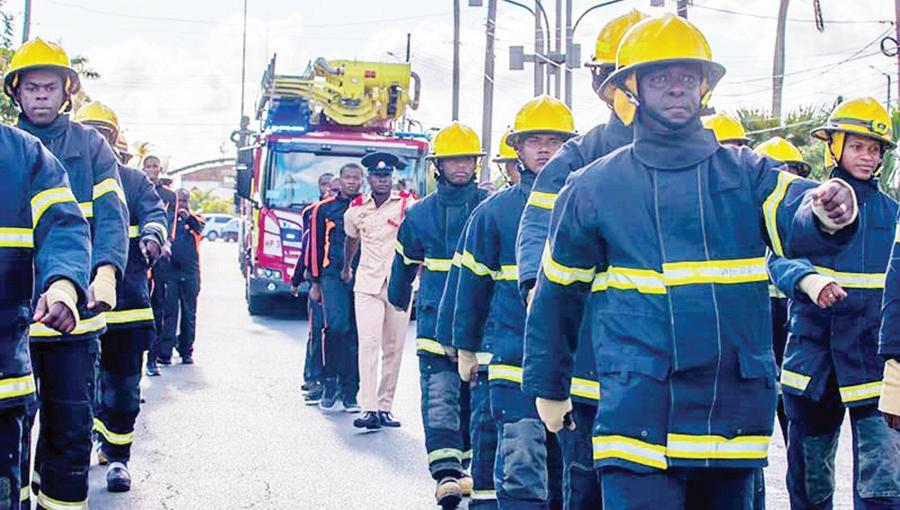
The Guyana Fire Service is undergoing a major transformation as government moves to modernise the country’s emergency response capabilities to meet the demands of rapid urban expansion, industrial development, and the growing oil-and-gas sector [File Photo]
aimed at strengthening fire response capabilities in both urban and expanding residential communities.
President Ali disclosed that the government plans to install more than 25,000 hydrants across the country, noting that several thousand have already been installed.
The Head of State explained that government is also investing heavily in smart emergency management systems designed to improve coordination, response times and operational efficiency.
These systems will include GIS-enabled command rooms, integrated CCTV monitoring, digital incident tracking systems, real-time GPS fleet management and smart dis-
patch centres capable of coordinating emergency responses more efficiently.
President Ali acknowledged public concerns regarding response times, but said improvements have already been recorded.
“It has improved, I must say, looking at the numbers; tremendously. But we are not satisfied at all with where we are,” he stated.
According to the President, the government’s investment strategy also reflects the changing nature of infrastructure and industrial activity in Guyana, particularly with the rapid growth of the oil-andgas sector and the expansion of high-rise buildings and
TURN TO PAGE 15

THE EU and Kenya have agreed to deepen co-operation on trade, digital policy and investment, including new EU funding for transport links, connectivity and land registration.
The commitments were set out in Brussels, where Executive Vice-President, Henna Virkkunen, met Kenya’s President, William Ruto, the Commission announced on Monday.
Under the EU’s Global Gateway programme, the two sides will invest in “clean transport and trade facilitation” along East Africa’s Northern Corridor and expand high-speed connectivity to more than 3,000 public offices, schools, health centres and digital hubs across Kenya.
Talks also covered the EU–
Kenya Strategic Dialogue and progress in the EU–Kenya “data adequacy” process — an EU assessment of whether a country’s personal data protections allow data to flow safely from the EU. FUNDING ANNOUNCED FOR TRANSPORT, DIGITAL NETWORKS AND SERVICES
Virkkunen announced €17 million to support changes along the Northern Corridor — described by the Commission as the busiest route in East Africa, stretching from Mombasa to Kisangani — including developing cold chains for fresh products, shifting freight from air to sea, and simplifying trade rules.
The Commission also announced €15 million for an
industrial facilities.
As a result, the administration is procuring more advanced firefighting assets, including rapid intervention vehicles, higher-capacity pumps, ladder trucks, hydraulic platforms, industrial rescue trucks, and chemical containment units.
“We are not in the days where it is a two-storey house, you put up a ladder, and you climb up anymore,” President Ali said while discussing the need for modern hydraulic platforms and specialised equipment.
The President further noted that Guyana’s growing petrochemical and industrial ambitions require specialised firefighting capabilities, including foam tenders and advanced suppression systems designed to respond to industrial and oil-related fires.
“We have to look at foam tenders now, because it’s different types of fires,” he said.
In addition to equipment upgrades, President Ali said government is also investing heavily in training and human resource development within the fire service.
He disclosed that hundreds of new personnel have already been trained as part of the modernisation drive.
The President added that major investments are also being directed toward strengthening airport and port emergency response systems to meet increasing international standards as Guyana expands its aviation and maritime infrastructure.
This includes investments in airport firefighting capacity, port emergency vehicles, offshore platform response systems and fire boats to support expanding port facilities.
President Ali said the modernisation of the Guyana Fire Service forms part of a wider national security
expansion of Kenya’s national fibre-optic network to extend high-speed connectivity in underserved parts of the country, and €12 million to support the digitalisation of land registration.
A further €10 million will support a Digital Transformation Centre in Kenya working on areas including artificial intelligence and policy for digital trade and investment.
The EU will also provide
€16 million to help refugee camps transition into “integrated communities”, citing Kenya’s role in hosting refugees.
The EU is Kenya’s largest export market, and the two sides signed an Economic Partnership Agreement in December 2023 after concluding negotiations in June 2023, with the European Parliament giving its consent in February 2024. (The Brussels Times Newsroom)
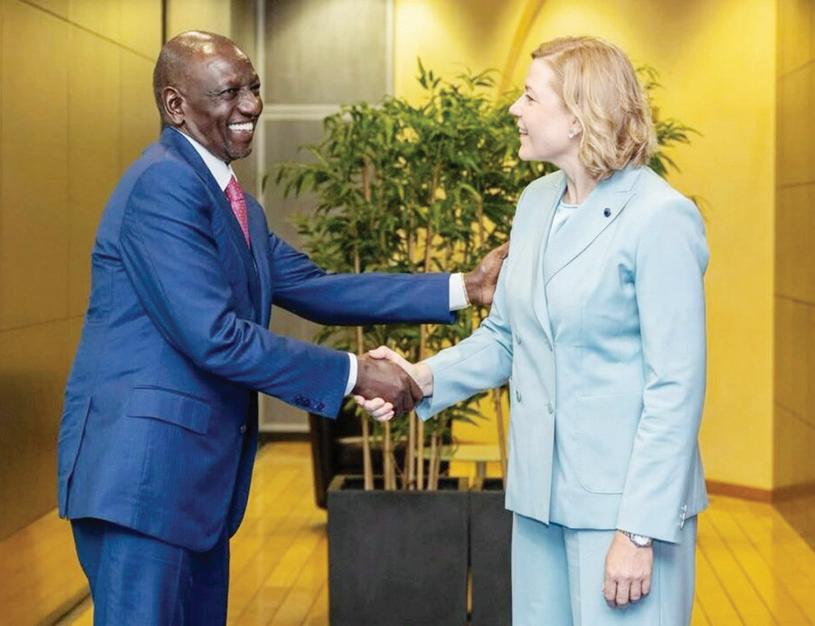
The commitments were set out in Brussels, where Executive Vice-President, Henna Virkkunen, met Kenya’s President, William Ruto, the Commission announced on Monday
and emergency management strategy that integrates technology, surveillance systems, artificial intelligence and coordinated emergency response infrastructure across multiple sectors.
In 2025, five new fire stations were completed in Charity, Parika, Diamond, Soesdyke and Wisroc, complemented by targeted upgrades to existing facilities and living quarters.
In 2026, planned infrastructural investments will encompass the completion and commissioning of seven additional fire stations in Onderneeming, Campbellville, Ruimveldt, Timehri, Mahaicony and Tarlogie, as well as the construction of the Rosignol and No. 38 Village fire stations and a Marine Fire Station in Port Georgetown. For these and other infrastructure initiatives, a total of $1.1 billion was budgeted.
The acquisition of advanced equipment represents a fundamental component in the enhancement of core firefighting capabilities, and overall operational effectiveness. To this end, $527.9 million was expended for the procurement of a crash tender, three ambulances, two water tenders, five all-terrain water tenders and one breathing apparatus refilling vehicle, among others.
In 2026, $1.6 billion is earmarked to procure additional firefighting equipment including two airport firefighting vehicles, four water tenders and two water bowsers.
Additionally, in 2025, government expended $503.1 million to advance procurement for more than 430 fire hydrants, and an additional sum of $250 million was budgeted for procurement of more hydrants in 2026.
In 2025, a sum of $47 million was expended toward the training of 91 ranks. In 2026, $50 million is allocated for training in basic and advanced firefightFROM PAGE 14

By Shamar Meusa
SENIOR Minister within the Office of the President with responsibility for Finance, Dr Ashni Singh, has urged Trinidadian companies visiting Guyana to pursue strategic partnerships with local businesses, stressing that collaboration will allow both sides to benefit from the country's unprecedented economic expansion and investment opportunities.
Dr Singh made the call on Tuesday while addressing the opening ceremony of the Trinidad and Tobago Manufacturers' Association (TTMA) Trade and Investment Mission at the Pegasus Suites and Corporate Centre.
The Finance Minister told the delegation that while Guyana remains open to foreign investment, the government is committed to ensuring that local companies and Guyanese citizens benefit from the country's ongoing transformation.
“We are open for business and we welcome and emphasise partnership,” Singh said.
He noted that Guyana is experiencing extraordinary economic growth, fuelled by rapid developments in the oil and gas sector, largescale infrastructure projects, expanding industrial activity and growing private sector investment.
Against this backdrop, the minister encouraged members of the TTMA delegation to work alongside Guyanese businesses rather than operate independently.
“We encourage you, as far as you see it fit to do so, to enter partnerships with Guyanese companies, Guyanese investors and Guyanese nationals,” he said. He added: “We urge as many companies coming into Guyana to seek out strategic partnerships, find local partners as far as we possibly can.”
Singh emphasised that the government is unapologetic about advancing the interests of Guyanese companies and citizens and ensuring they are active participants in the country's development.
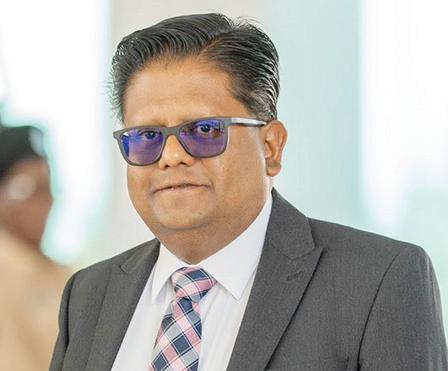
He noted that numerous successful partnerships have already emerged under Guyana's Local Content framework, which requires the oil and gas industry to procure a minimum percentage of specified goods and services from Guyanese companies.
According to the minister, these strategic alliances have enabled local businesses to access technology, expertise and new markets, while helping foreign companies meet local
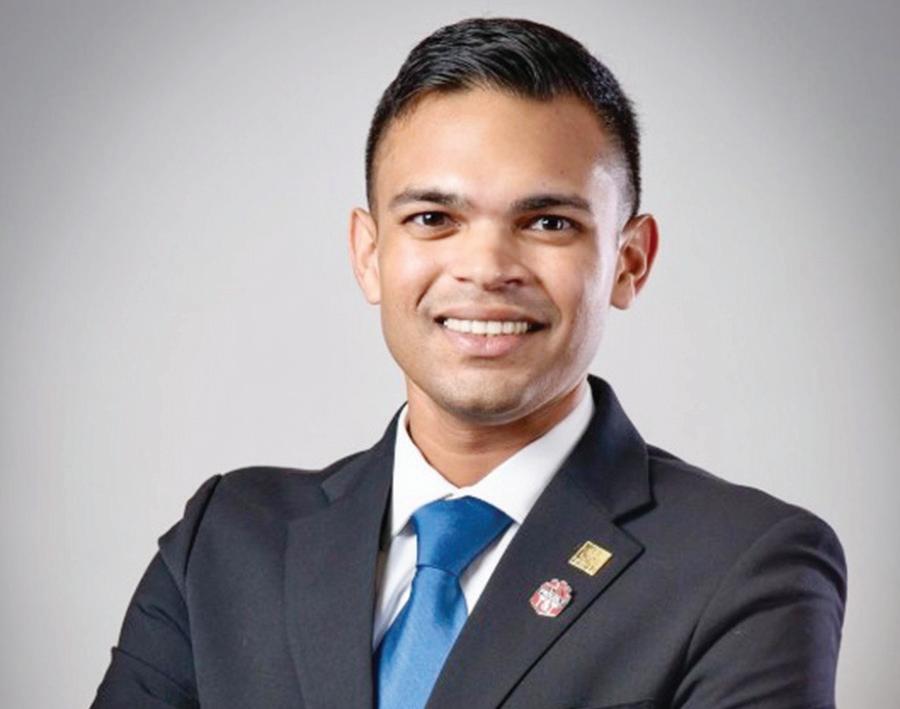
content requirements.
“You might have technology that Guyanese companies might not have. Guyanese companies might have local knowledge and experience. We have seen some really fascinating partnerships between non-Guyanese companies and Guyanese companies in all manner of ways,” Singh said.
He further highlighted opportunities across a broad range of sectors, including agriculture, agro-processing,
construction, manufacturing, tourism, education, training, energy and infrastructure.
Meanwhile, President of the TTMA, Emil Ramkissoon, said the mission reflects the Trinidad and Tobago business community's desire to deepen economic ties with Guyana.
Ramkissoon noted that the delegation comprises more than 30 companies, making it the TTMA's largest trade mission to Guyana to date, with participants seeking to
explore new opportunities and strengthen relationships with Guyanese counterparts.
“We bring over 30 unique companies to this beautiful country to strengthen ties with our Guyanese brothers and sisters and further develop our relationship,” he said.
He described Guyana as a country offering significant business and investment opportunities due to its economic stability, ongoing infrastructural development and strategic location.
Ramkissoon expressed hope that discussions during the mission would lead to long-term partnerships and joint ventures.
“I hope you will make concerted efforts to have fruitful conversations that will, in the long run, form into partnerships and possible joint ventures,” he said.
He added that the trade mission is intended to strengthen bilateral relations, foster business connections and promote sustainable trade between the two CARICOM nations.
THE University of Guyana’s School of Entrepreneurship and Business Innovation (SEBI) has achieved a major milestone in accounting education with the accreditation of its Bachelor of Accountancy Degree Programme by the Association of Chartered Certified Accountants (ACCA), one of the world’s leading professional accounting bodies.
Valid from January 1, 2026, to December 31, 2030, the accreditation formally recognises the quality and international comparability of UG’s accounting education while further enhancing the value of the degree on the global stage.
While University of Guyana graduates have previously benefitted from ACCA exemptions on an individual basis, this is the first time the institution has secured formal accreditation for the programme itself. The achievement represents a significant step in aligning UG’s academic offerings with international professional standards and further strengthens its position as Guyana’s leading institution for business education.
Vice-Chancellor, Professor Paloma Mohamed Martin, thanked Dr Aaron, Dean of SEBI, Professor Leyland Lucas, and members of the ACCA and local accounting firms for their guidance and support in leading the preparation for the long-anticipated mark of quality. “We are delighted to celebrate another step towards making the University of Guyana into a world-class university. Dr Aaron and SEBI are working with local partners and ACCA on several other products which will add value to our students and accelerate their certifications for quicker entry into professional practice. This is a big win for our students,” VC said.
Dr Alfred Aaron, Head of the Department of Accountancy and Finance within SEBI, described the accreditation as a landmark achievement for the University. “This accreditation confirms that our Bachelor of Accountancy programme meets internationally recognised standards and reflects the quality of teaching, curriculum design, and assessment within the department. It is a significant achievement for the University and a major advantage for our students, who will now have a more direct pathway towards global professional certification,” Dr Aaron said.
The accreditation brings significant benefits for both current and future students pursuing careers in accounting, finance, auditing, and related fields. Graduates of the Bachelor of Accountancy programme from 2026 onwards who pursue the ACCA qualification will be eligible for exemptions from four papers: Business and Technology (BT), Management Accounting (MA), Financial Accounting (FA), and Corporate and Business Law (LW). This means graduates will only be required to complete nine remaining ACCA papers on their path to obtaining the globally recognised professional qualification.
The successful accreditation shows the commitment and collaboration of faculty, administrators, and professional staff across the University. Dr Aaron extends appreciation to Vice-Chancellor Professor Paloma Mohamed Martin and Dean of SEBI, Professor Leyland Lucas, for their leadership and support throughout the process. The accreditation effort was led by Dr Aaron, who coordinated the submission and documentation process.
UG also acknowledges the support provided by the ACCA Trinidad team, particularly Ms. Anouska Sammy, Senior Business Relationship Manager, and Ms. Aisha McKenna, Business Relationship Manager, whose guidance was invaluable throughout the accreditation process.
This accreditation reflects the University’s commitment to academic excellence, professional relevance, and the development of globally competitive graduates who can contribute meaningfully to Guyana’s rapidly evolving economy. As the country continues its unprecedented growth and development, UG remains committed to producing highly skilled accounting and finance professionals equipped with academic knowledge and internationally recognised professional credentials.
This latest achievement builds on SEBI’s ongoing efforts to expand specialised, industry-responsive educational opportunities. The School recently launched an Associate Degree in Oil and Gas Accounting/Taxation/ Audit, and a Graduate Executive Diploma in Oil and Gas Accounting/Taxation/ Audit.
In 2025, the University of Guyana attained institu-
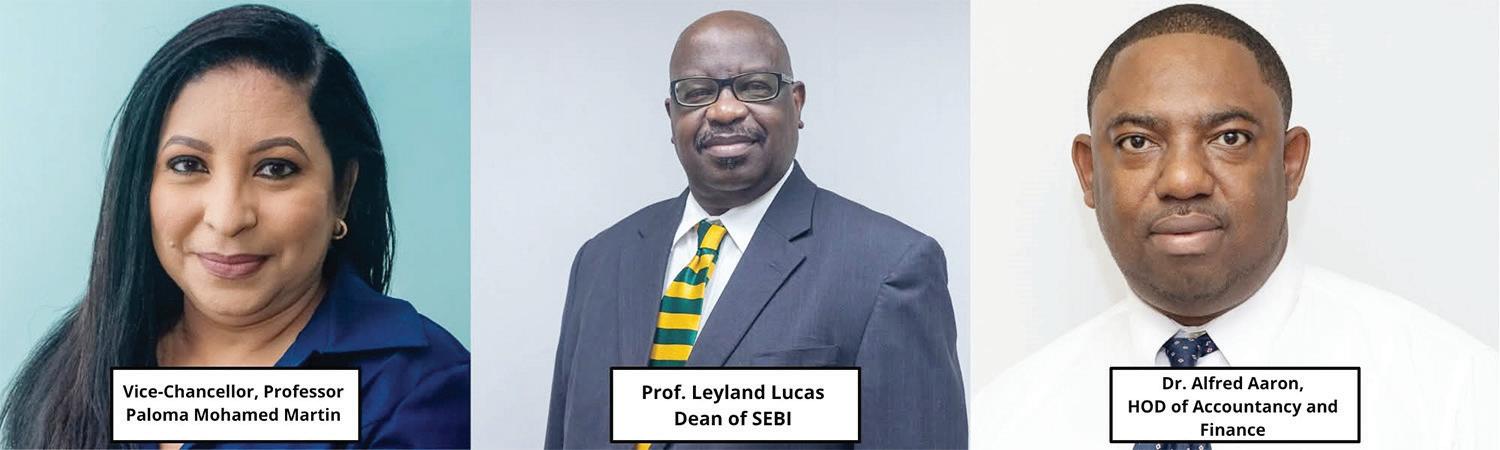
tional accreditation from the National Accreditation Council (NAC) for the first time in its history since its
establishment in 1963. The achievement affirmed the University’s commitment to maintaining high stan-
dards across its academic, administrative, and student support systems, while strengthening con-
fidence in the quality of a UG education both locally and internationally. (UG PRESS RELEASE)



CHINESE Foreign Minister Wang Yi on Monday called for improving understanding and fostering mutual trust through dialogue when addressing an event observing the International Day for Dialogue among Civilizations via video.
Wang, also a member of the Political Bureau of the Communist Party of China Central Committee, called on all sides to promote unity and seek consensus through exchanges, and continuously consolidate the popular and cultural foundation for building a community with a shared future for humanity in the face of
unprecedented challenges.
Wang highlighted that China proposes a fourpronged approach to promoting dialogue among civilizations.
He said, firstly, all sides should adhere to mutual respect and promote harmonious coexistence among different civilizations, calling for championing equality, mutual learning, dialogue and inclusiveness among civilizations.
Secondly, all sides should abide by a people-oriented approach and lay a solid foundation for exchanges among civilizations, Wang said, adding that efforts should be
made to promote mutual understanding and friendship among people of all countries and ensure that the fruits of mutual learning among civilizations benefit the people more extensively and directly.
China is willing to enhance dialogue among civilizations with all countries and deepen exchanges of experience in state governance, in order to jointly solve the problems of the times and work together to broaden the path of world modernization, Wang added.
Thirdly, Wang called for endeavours in inheritance and innovation of traditional culture to en-
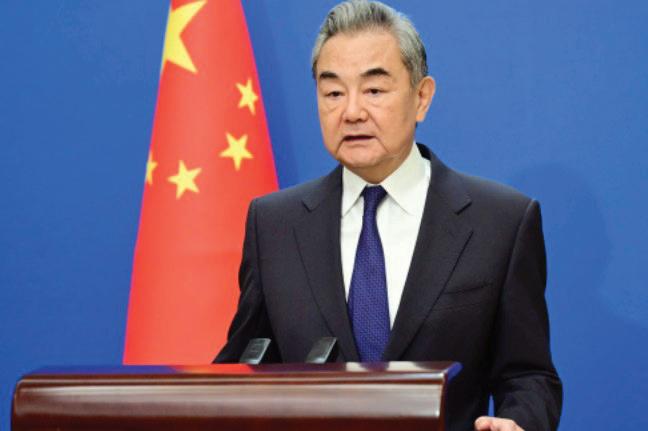
hance the driving force of civilization and progress, noting that China will assist all countries in achieving creative transformation and innovative development of their outstanding traditional cultures. He also appealed for fully exploiting technological dividends such as artificial intelligence and social media, to empower exchanges, mutual learning, inheritance and
innovation among civilizations, and promote the common prosperity of human civilization.
Fourthly, Wang said all sides should adhere to exchanges and mutual learning and improve the mechanism for dialogue among civilizations.
China supports further leveraging platforms including the United Nations Alliance of Civilizations, the United Nations Educational, Scientific and Cultural Organization and the Forum of Ancient Civilizations to enable them to play an important role in inter-civilization dialogue, he added.
by Xinhua writer Tian Ye
One evening, my daughter asked me to take her cycling in the street. I hesitated -- I had been away from China and Beijing for years and was not sure if evening rides were safe.
“Don’t worry,” she said. “Have you noticed how many cyclists there are in Beijing?”
We took a ride through downtown, and I began to notice the changes the city had undergone in the four years since I left in late 2021.
Along the major roads, fleets of cyclists glided past on professional bikes, joined by riders on brightly coloured shared bicycles and delivery men. Infrastructure for cycling -- clearly marked lanes and parking zones -- has become far more visible than before.
As we rode on, other meaningful changes stood out: there were more flower-lined green belts dividing traffic, redesigned intersections easing congestion caused by U-turning vehicles, and pocket parks
with basketball courts and ping-pong tables woven into both residential and commercial areas.
These subtle, people-centered improvements are quietly reshaping everyday life, demonstrating that China’s rapid development is not only about towering skyscrapers, highspeed rail or AI technology -- but also about gradual, practical improvements in how people live.
Chinese leaders often emphasize that development should be people-centered and its benefits widely shared. The changes in Beijing offer a concrete illustration of how that development philosophy is being applied in practice.
According to Beijing’s government work report released in January this year, the city added 1,000 km of greenways over the past year, renovated 1,225 residential compounds, and added more than 50,000 new parking spaces for electric bikes.
In terms of air pollution control, official statistics show that the city’s annual average PM2.5 concentration fell to 27 micrograms
per cubic meter in 2025, down 11.5 percent year on year. This marks the first time it has dropped below 30 micrograms per cubic meter, reaching the lowest level in its monitoring history. The level was nearly 70 percent lower than that of 2013, when smog was a major public concern.
“I’m glad the city’s air quality has improved over the years, and it’s wonderful to have an ‘oxygen bar’ right on my doorstep,” said a man identified only by his surname, Li, while strolling through a park in Caishikou -- a site once slated for high-rise office development before a 2017 policy transformed it into green space.
There were other targeted measures to improve people’s living standards, something I have personally benefited from since my return. In September 2023, the city launched dedicated school bus routes that offer zero-transfer journeys for school children. Under the program, buses travel to residential compounds to pick up students, relieving parents who may not have the time to escort their chil-
dren to school. Zhao Zhen, an official from the Beijing Municipal Commission of Transport, noted that more than 300 routes are now in operation, serving approximately 26,000 passenger trips each day.
Such transformations extend beyond Beijing.
About 180 km east of the capital, Tangshan, historically an industrial city known for its coal mines and steel industry, is reshaping its identity through ecological restoration. Former mining and subsidence areas such as the South Lake have been converted into parks, wetlands, and cultural spaces.
In Shanghai, the “15-minute community life circle” initiative aims to ensure residents can access daily essentials -- shops, clinics, parks, eldercare, and schools -- within a short walk, a model increasingly discussed in global urban planning circles. In southwest China’s Chongqing, hillside communities have been made more accessible through monorails, and public escalators were integrated with metro systems to facilitate
travel.
In rural areas, China’s development model is also reshaping livelihoods. In Yucun, a village in Zhejiang Province, once a limestone-mining place, forests and rivers have been restored and eco-tourism now provides stable income for residents.
In an interview with China News Service on April 21, Nadia Rasheed, representative of the United Nations Population Fund to China, hailed China’s historic achievements in economic growth, poverty reduction, health, education and gender equality, and praised the country for placing people at the center of its development agenda.
Charles Onunaiju, director of the Center for China Studies in Nigeria, said that China has remained focused on improving people’s well-being by responding promptly to the public’s practical needs, continually updating its development philosophy, and ensuring that its governance system evolves with the times.
This, he noted, helps ensure that the benefits
of economic growth are shared by the broadest possible segment of the population.
This unrelenting spirit of reform is one of the key reasons behind the success of Chinese modernization, he said.
As we finally begin our journey home, I looked around at the city I had once known and the one I now rediscovered. Beyond the policies and the statistics, what stood out most was the quiet transformation of daily life -- the ease of movement, cleaner air, accessible green spaces, and the sense that people’s well-being was a real priority. It occurred to me that development is not just about progress on paper, but about the contentment and the simple joys that fill ordinary days. In Beijing, and increasingly across China, modernization is measured not only by growth, but by how it shapes lives -making them healthier, safer, and richer in everyday experience. And on that evening ride, I felt it firsthand.
as One Guyana FPSO drives higher output as company earns $982.5B in 2025
EXXONMOBIL Guyana Limited generated after-tax earnings of $982.5 billion in 2025, as increased production from the Stabroek Block helped offset a sharp decline in global
crude prices that weighed on revenues and profitability.
The company's audited fi-
nancial statements for the year ended December 31, 2025, show revenue of $1.71 trillion and op-
erating profit before tax of $1.21 trillion, reflecting another year of strong cash generation from
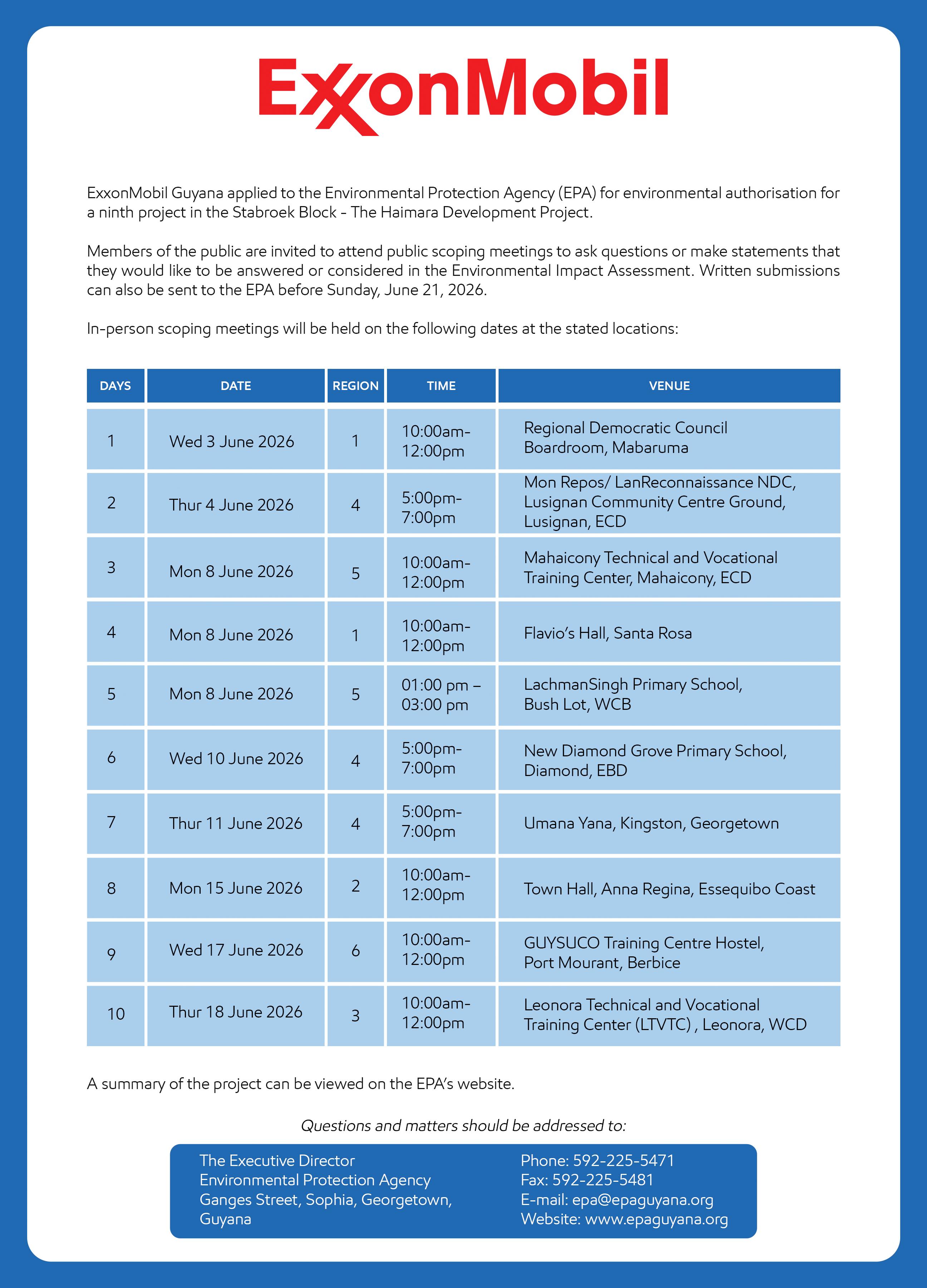

The results were presented on Tuesday by ExxonMobil Guyana’s Vice President and Business Services Manager, John Colling, who said the company’s performance was driven largely by the successful start-up of the One Guyana Floating Production, Storage and Offloading (FPSO) vessel, Guyana’s fourth producing offshore development.
Guyana's offshore oil operations.
The results were presented on Tuesday by ExxonMobil Guyana's Vice President and Business Services Manager, John Colling, who said the company's performance was driven largely by the successful start-up of the One Guyana Floating Production, Storage and Offloading (FPSO) vessel, Guyana's fourth producing offshore development.
"In 2025 ExxonMobil had a very strong year, underpinned by strong operational performance," Colling told reporters at the company's Ogle headquarters.
He noted that while production volumes increased significantly during the year, lower international oil prices prevented a corresponding rise in revenues.
"The overwhelming factor was lower oil prices in 2025 versus 2024. In 2025, the average realization was US$68 per barrel and in 2024 it was US$82 per barrel. In fact, volumes were up in 2025 versus 2024 with the startup of One Guyana," he said.
The financial statements show revenue declined marginally from $1.73 trillion in 2024 to $1.71 trillion in 2025, while net profit slipped from $995.1 billion to $982.5 billion. Despite the softer commodity price environment, ExxonMobil continued to expand its investment footprint in Guyana. Capital expenditure reached approximately $720 billion during 2025, while the value of the company's property, plant and equipment increased from $2.94 trillion to $3.49 trillion.
The company also disclosed future capital commitments of nearly $785 billion, underscoring continued investment in the Stabroek Block's expanding production base.
Colling said the results demonstrate that the Production Sharing Agreement continues to encourage reinvestment and production growth.
“We continue to reinvest the profits that we're making here, and the contract is doing what it was incentivized to do, incentivizing reinvestment and increasing production and reve-
SHAEED Mohammed, called "Max", was, on Tuesday, remanded to prison for the brutal murder of seven-yearold Adriel Aftab Mohamed, who was killed during a home invasion last Friday.
Mohammed, a 23-year-old resident of Providence, East Bank Essequibo, appeared before Magistrate Alisha George at the Leonora Magistrate's Court.
It is alleged that on June 5, 2026, at Zeelugt, East Bank Essequibo, he murdered the child during the course of a robbery at the family's home.
The accused was not required to plead to the indictable charge.
Following a brief court appearance, Magistrate George remanded Mohammed to prison and adjourned the matter until July 20, 2026.
The charge was instituted after police investigators sought and obtained legal advice from the Director of Public Prosecutions (DPP).
Mohammed was arrested on Saturday, less than 24 hours after the murder, following what police described as an intensive investigation involving digital evidence, CCTV footage and forensic leads.
According to police, investigators confronted the suspect with digital evidence placing him at the crime scene at the time of the attack. Crime Chief Wendell Blanhum later disclosed that the suspect reportedly confessed after being unable to explain the evidence.
Police said the suspect
also identified a knife recovered at the scene as the weapon used in the attack.
Investigators further revealed that the accused admitted entering another nearby property before targeting the home where Adriel lived, but abandoned that attempt after hearing movement inside the house.
The murder occurred during the early hours of June 5 at Phase Three, Zeelugt Housing Scheme, East Bank Essequibo.
Adriel was found dead inside the home, while his 72-year-old great-grandmother, Halima Itwari, was seriously injured during the attack and rushed to hospital, where she remains under medical care.
The child's death triggered widespread outrage and grief across Guyana, with residents, government officials and community leaders expressing condolences and calling for justice.
Police investigations are continuing.

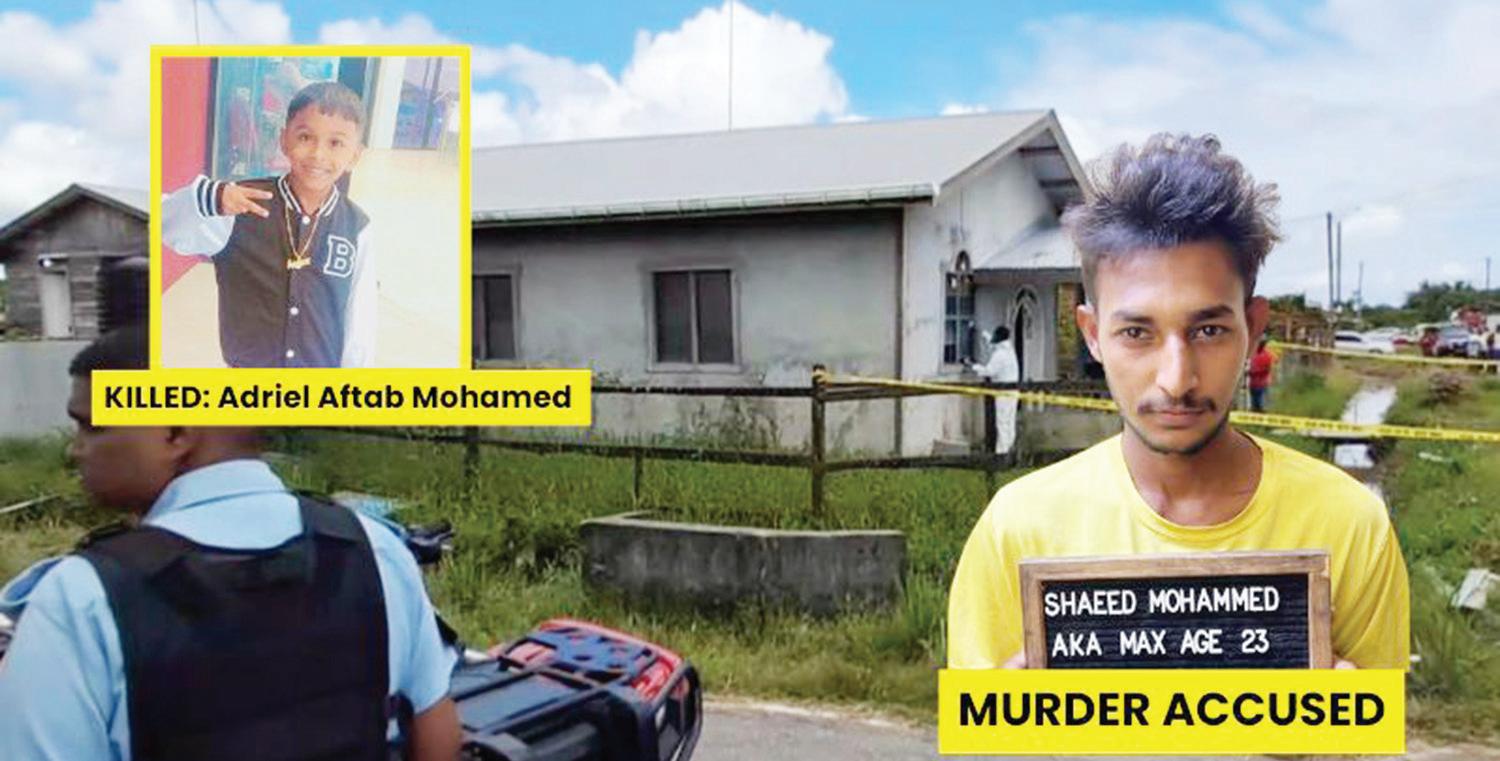
THE Cuban national who initially claimed he was being held against his will and used in a ransom demand has been remanded to prison alongside another Cuban national after both were charged with conspiracy to commit a felony.
Iban Martinez, 28, of North Road, Georgetown, and Daikol Tartabull Rodriguez, 22, of Grove, East Bank Demerara, appeared before
Magistrate Fabayo Azore at the Georgetown Magistrates' Court on Monday.
The men were charged following an investigation into what police suspect was a staged kidnapping plot. They were not required to plead and were remanded to prison until June 22.
Police had launched the investigation on June 3 after receiving a report that Martinez was being held captive
and that a ransom demand had been made for his release.
Investigators later located Martinez in Grove, East Bank Demerara, and subsequent enquiries reportedly uncovered inconsistencies in the report.
According to police, Martinez allegedly sent a photograph of himself appearing to be held at gunpoint in the back seat of a vehicle and requested US$1,500 from his father, who lives overseas.
An air pistol matching the object seen in the photograph was later recovered during the investigation.
This is not the first time a foreign national staged their kidnapping in Guyana. Back in 2017, Trinidadian national, Sawak Maraj, was arrested for giving false information to the police, stating that he had been kidnapped, and that his abductors had demanded US$700,000 for his release.
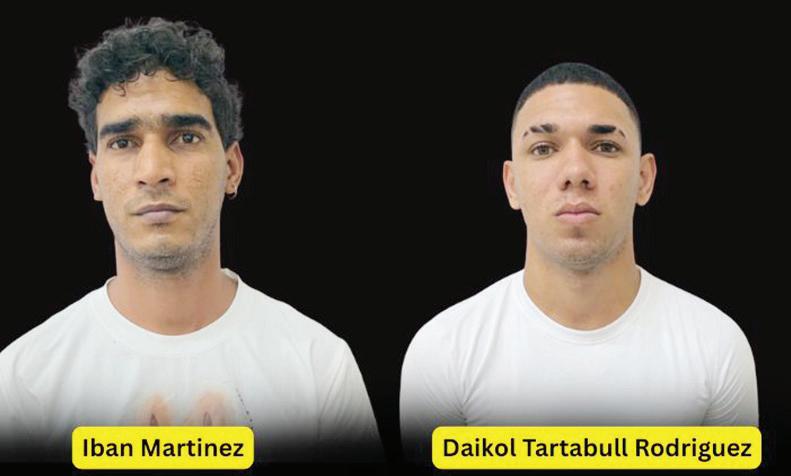
He was eventually sentenced to four years in prison.
Maraj arrived in Guyana on October 27, 2017, claiming to have come for a job interview. He was picked up at the Cheddi Jagan International Airport by two other Trinidadians who had arrived in the country earlier that week.
Later that same day, Maraj’s relatives in Trinidad reportedly received a call from an unknown person claiming to have kidnapped Maraj shortly after his arrival here and demanding that a ransom be paid for his release.
The man’s family was also sent a photograph showing him clad only in his underwear and socks, and one of his alleged abductors holding a cutlass to his neck.
After being contacted by the man’s family in Trinidad, local police and agents from the Force’s Major Crimes Unit immediately sprang into action.
The first thing they did was to review footage from the surveillance camera at the airport, which showed Maraj warmly embracing his two socalled abductors, who turned out to be the said two ‘Trinis’ who’d picked him up at the airport, before boarding a taxi without incident.
Aided by the surveillance tapes, the investigators were able to track down the taxi driver who transported the men from the airport and trace the call that was made to demand the ransom. It was that call that gave away the location from where the call was made.
Armed with such vital information, the agents then hurried to the location, and there they found Maraj, the supposedly kidnapped victim, in an apartment, relaxing and sipping on beverages.
nue for all parties,” he said.
“We are delivering industry-leading performance, applying our scale and technology to develop a world-class resource safely and efficiently, which is driving increased profits and revenues for all parties. As Guyana's energy partner, ExxonMobil remains committed to delivering value for the people of Guyana.”
The impact of the One Guyana project was also evident in operating costs. Production costs rose to $82.2 billion in 2025 from $61.3 billion in the previous year.
According to Colling, the increase was largely attributable to the commissioning and operation of the new FPSO.
“There are a number of items that go into production costs. The key driver was really the startup of the One Guyana. There are some additional costs that are included in there such as research costs and future development but really the key driver is the startup of One Guyana,” he explained.
ExxonMobil's financial statements show the company generated $1.38 trillion in cash from operating activities during the year and maintained total assets of $3.87 trillion. The company also recorded an income tax expense of $231.6 billion and distributed $463 billion to its head office during the reporting period.
The results come as Guyana's oil sector continues to expand at one of the fastest rates globally. Production from the
Stabroek Block now exceeds 900,000 barrels per day from the Liza Phase One, Liza Phase Two, Payara and Yellowtail developments, with additional projects expected to come online in the coming years.
ExxonMobil is the operator of the Stabroek Block with a 45 per cent interest, while Hess Corporation, now owned by Chevron, holds 30 per cent and China's CNOOC owns the remaining 25 per cent.
Under the 2016 Production Sharing Agreement, up to 75 per cent of petroleum revenues can be used for cost recovery, with the remaining profit oil shared equally between Guyana and the co-venturers. Guyana also receives a two per cent royalty on production.
While oil prices averaged substantially lower in 2025, recent geopolitical tensions in the Middle East have pushed prices upward.
Asked about the potential impact on Guyana's offshore operations, Colling said ExxonMobil does not forecast commodity prices but acknowledged that stronger prices generally translate into increased revenues.
Back in March, President of ExxonMobil Guyana, Alistair Routledge had disclosed that GUYANA is set to be securing a significantly larger share of oil revenues from production in the Stabroek Block, as rising global oil prices accelerate the recovery of ExxonMobil’s investment costs.


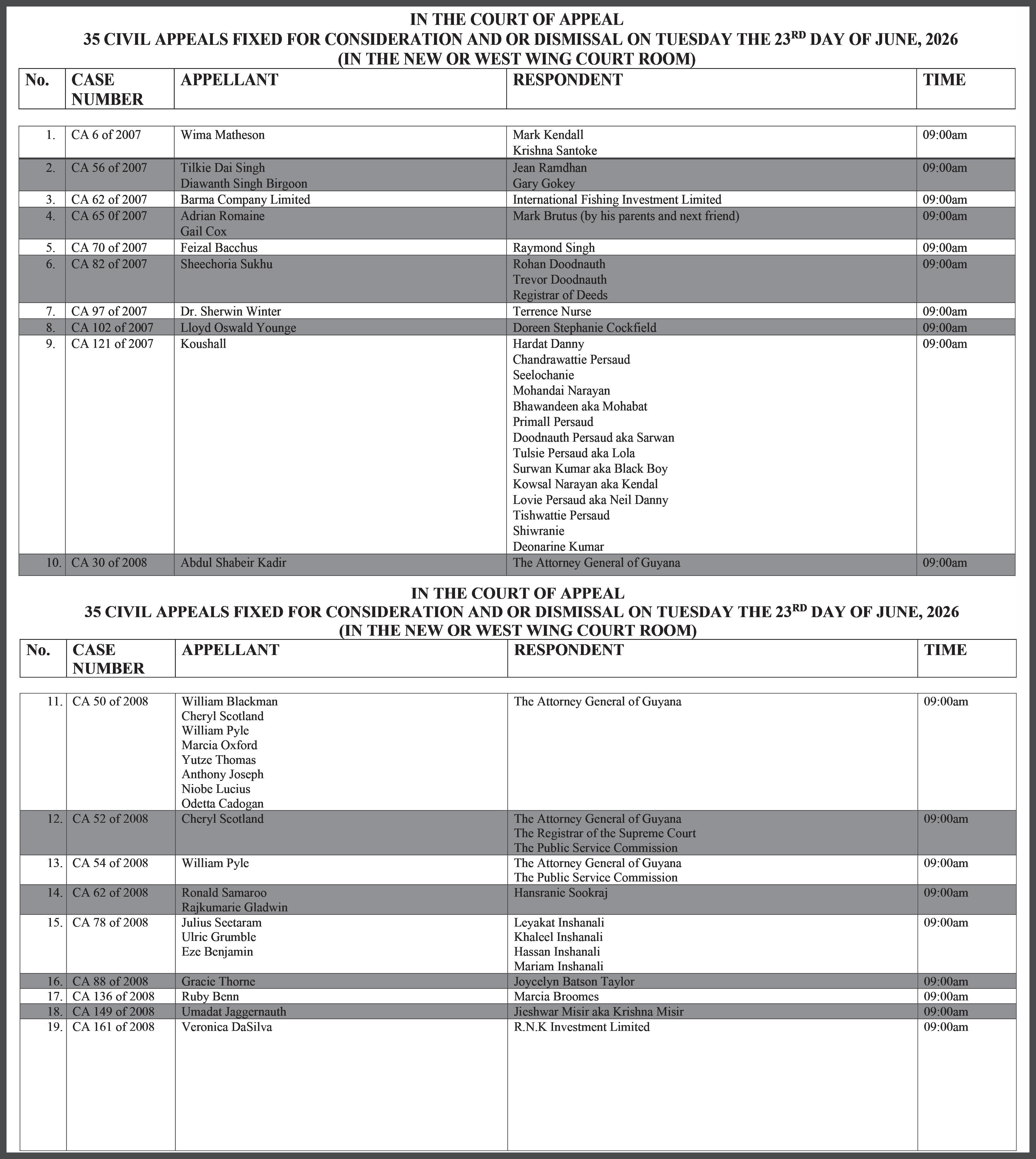
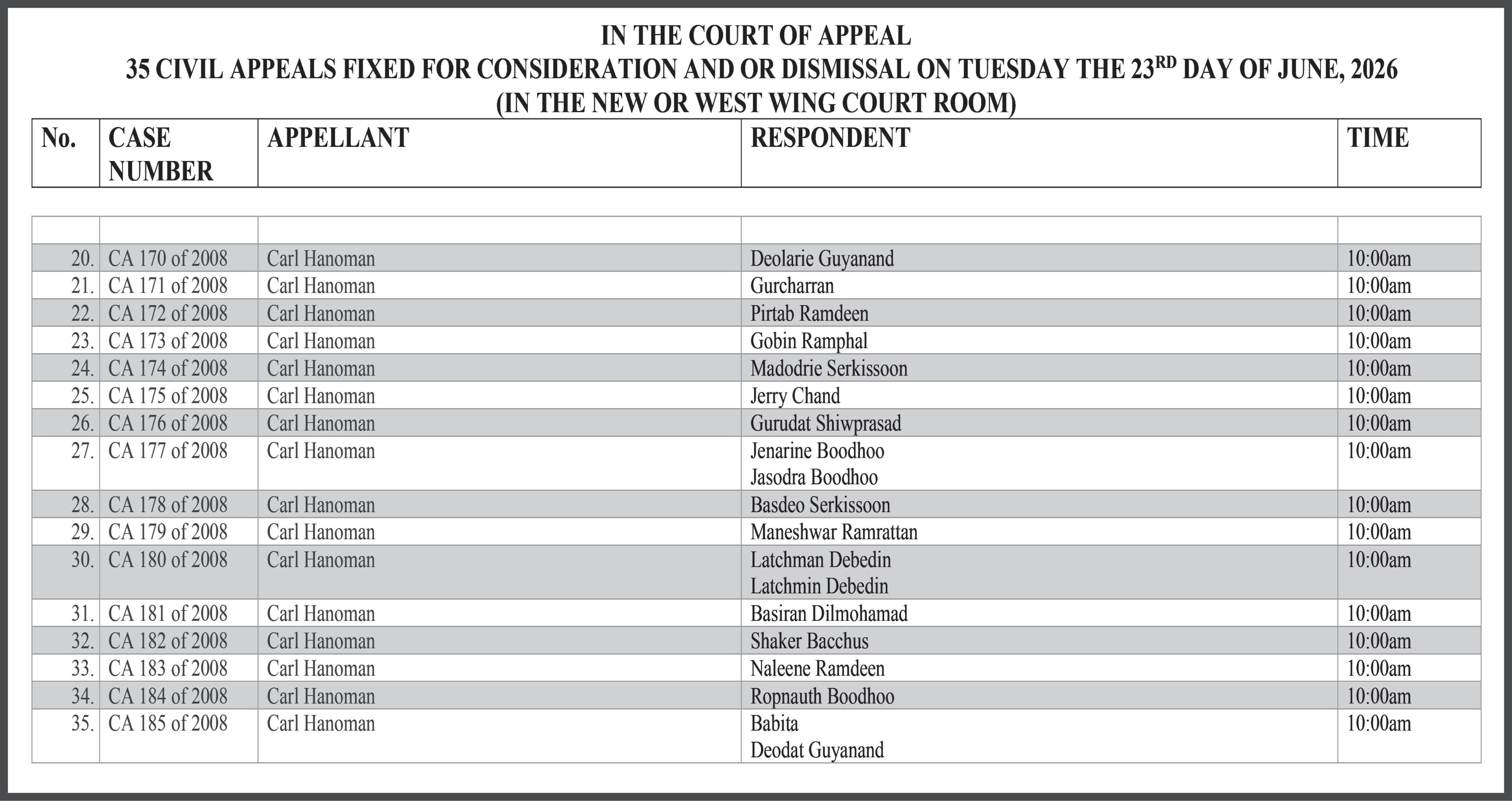
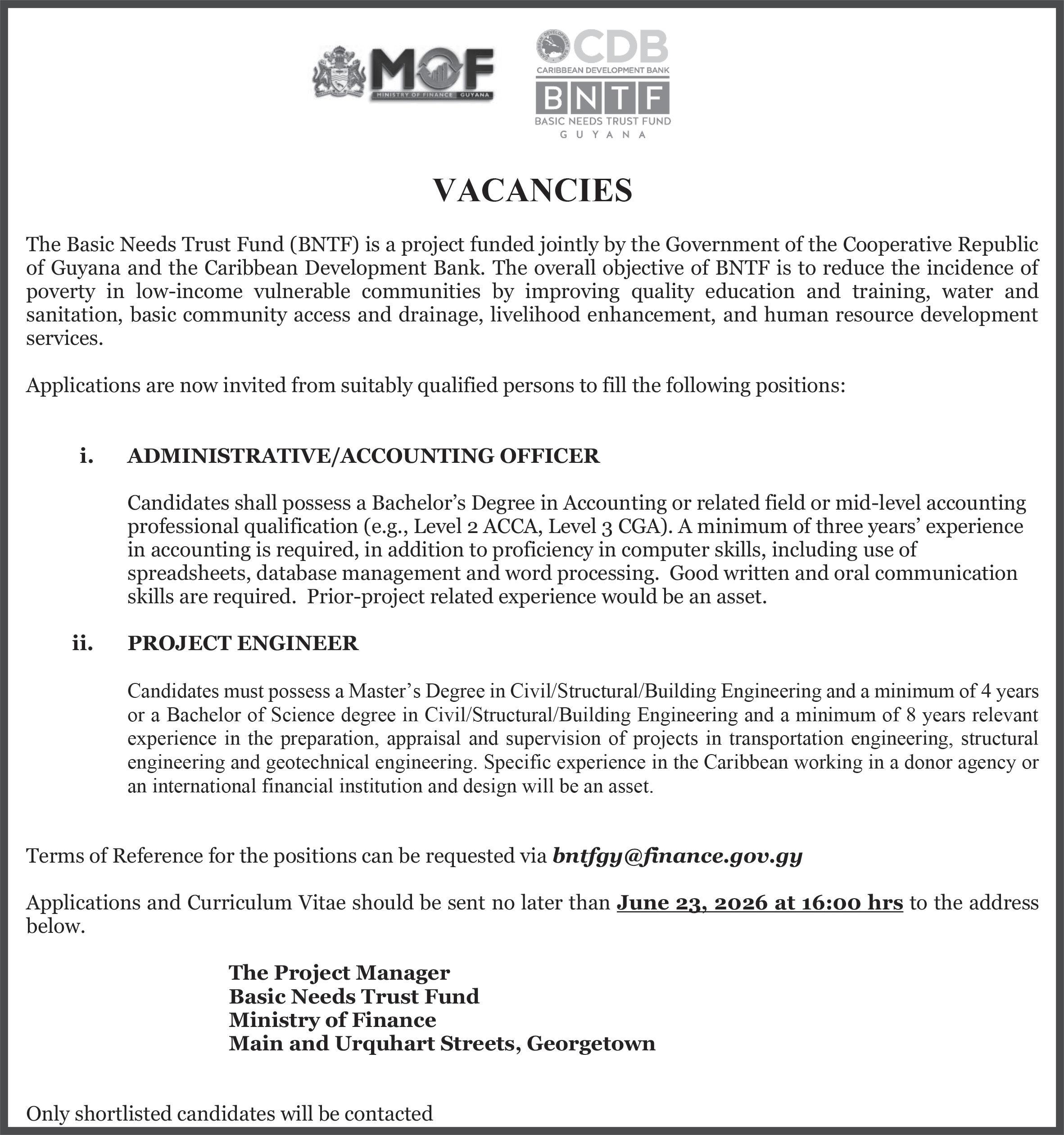

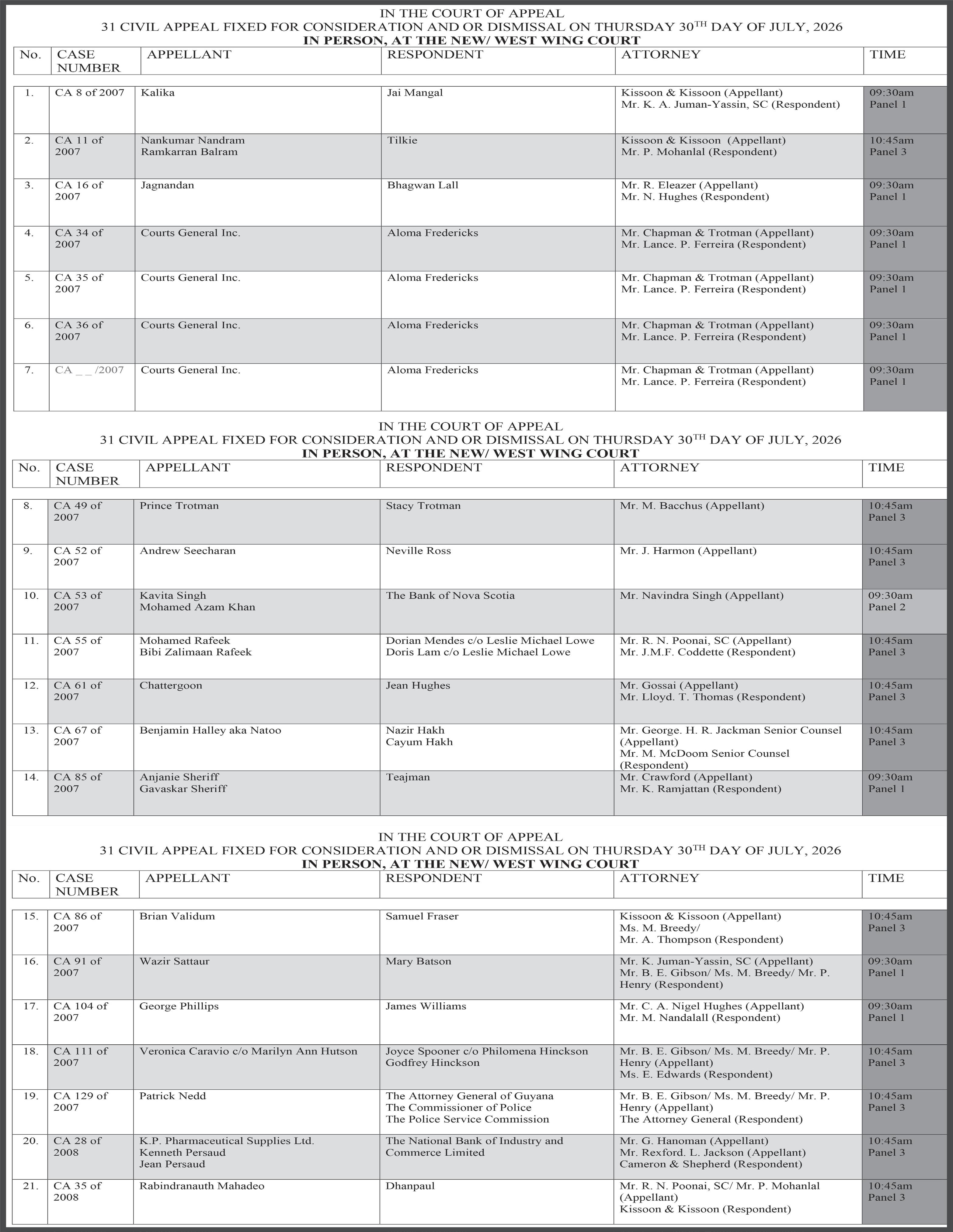
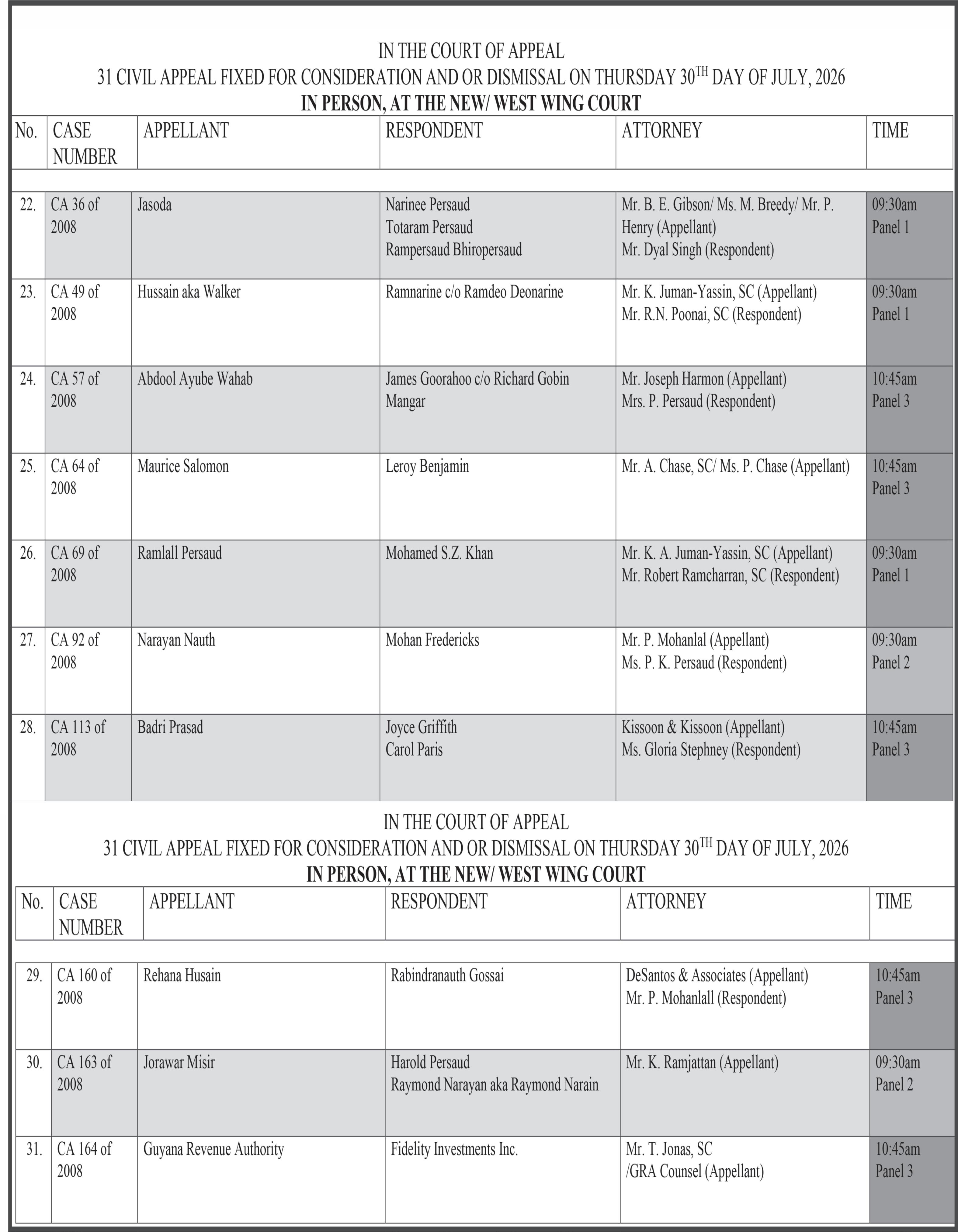
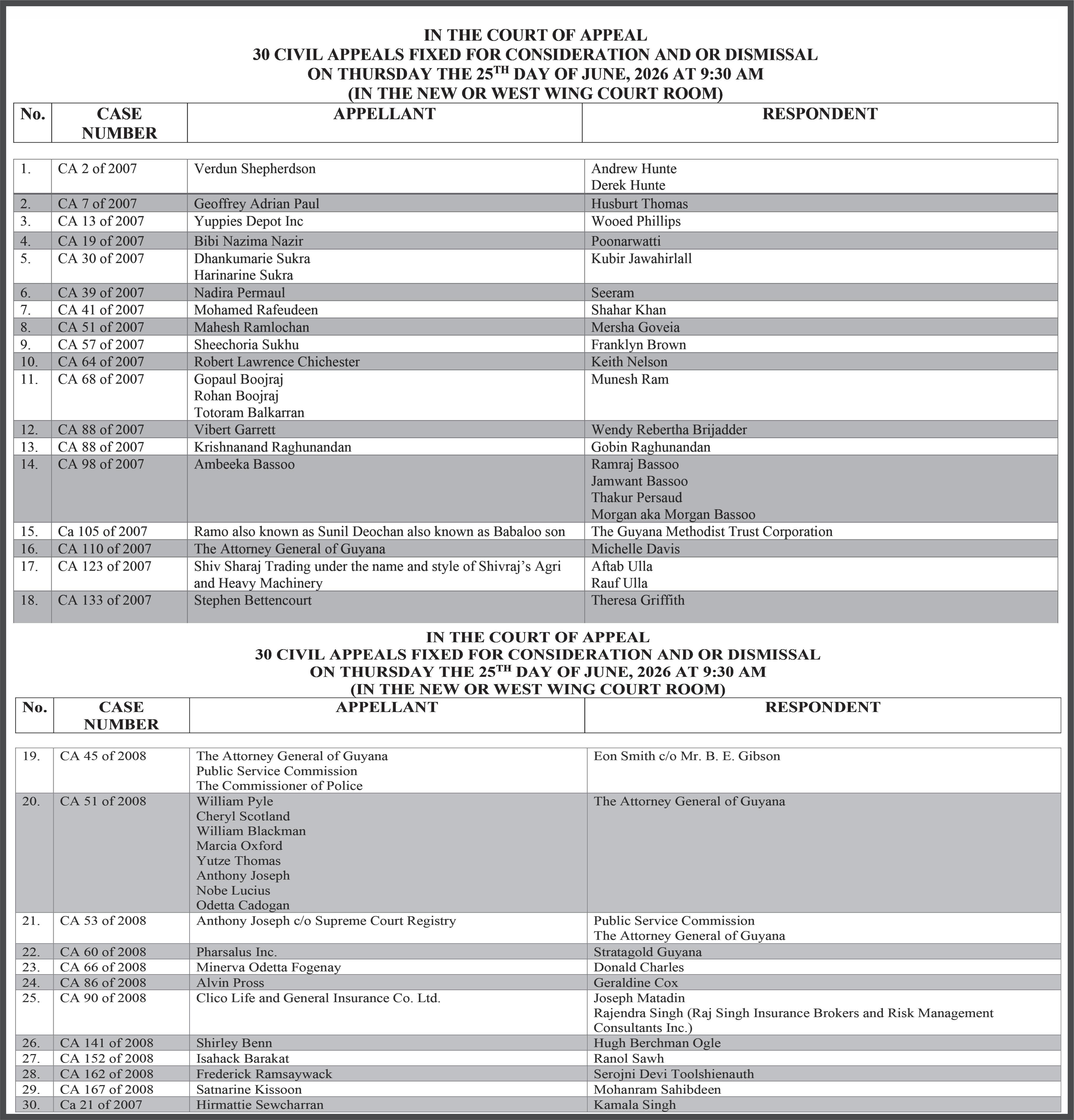


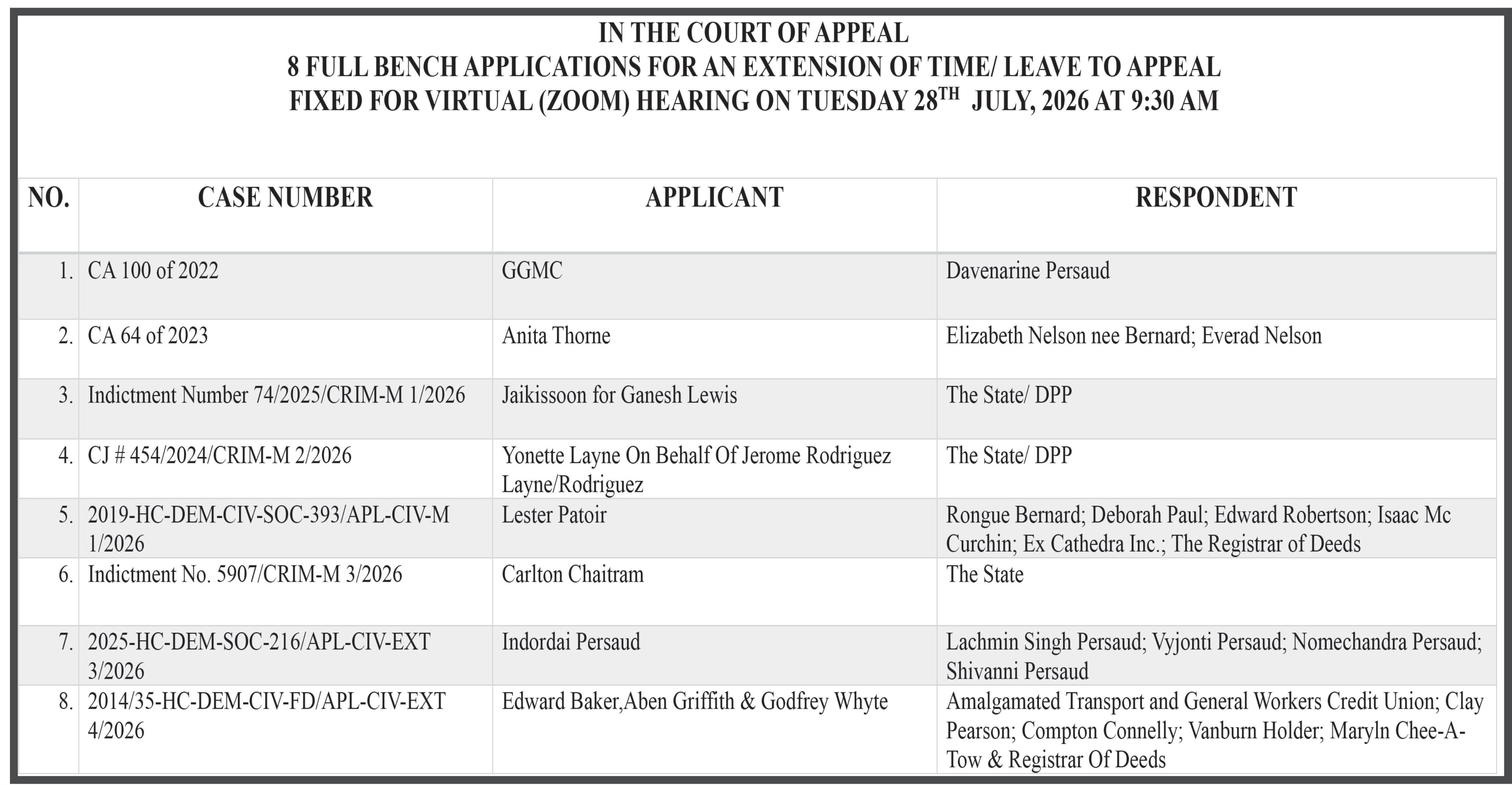


SOUTH AFRICA RACING TIPS
GREYVILLE
08:25hrs Golden Moment
09:00hrs Intrepid
09:35hrs Good Gor You
10:10hrs Princess Goldie
10:45hrs Snow Moon
ENGLISH RACING TIPS
FONTWELL
09:30hrs Viscountess Nelson
10:00hrs A Little Something
10:30hrs Almuhit
11:00hrs Special John
11:30hrs Mistress Fox
12:00hrs Muskerry Rock
HAMILTON
13:30hrs Zu Run
14:00hrs Royal Heritage
14:30hrs Glory Of The Seas
15:00hrs Canaria Queen
15:30hrs Novak
16:00hrs Mwafaq
KEMPTON
12:08hrs Rogue Empire
12:40hrs Dark Reign

13:10hrs Velvet Vega
13:40hrs Silca Bay
14:10hrs Jumeirah Sands
14:40hrs Amazing Journey
15:10hrs Desert Belle
15:40hrs Karakula
IRISH RACING TIPS
LIMERICK
11:43hrs Kakori
12:13hrs Lord Aus
12:50hrs Res Ipsa
13:20hrs Noli Timere
13:50hrs Ohmali
14:20hrs James Henry
14:50hrs Concaire
15:20hrs Our Lucky Lady
AMERICAN RACING TIPS
CHURCHILL DOWNS
Race 1 Relevate
Race 2 Bon Voyage
Race 3 Warrior Richard
Race 4 Banana Frost
Race 5 Solaria
Race 6 Presider
Race 7 Capital Connection
Race 8 Rothko
(ESPNCRICINFO) - Nahid Rana and Mosaddek Hossain combined brilliantly to secure Bangladesh a huge win against Australia in the first ODI in Dhaka. The 86run victory, which eventually came via DLS due to a thunderstorm, was only the second time that Bangladesh have defeated Australia in this format; their previous win was in June 2005, known as the Cardiff Miracle. However, this win 21 years later was far from an upset as Bangladesh continued their impressive home form by completely dominating proceedings.
Mosaddek celebrated his return to the team after four years with an all-round showing that included an unbeaten career-best 86 and two wickets. Rana, who had taken three five-wicket hauls in the last three months, claimed 4 for 41 in a fiery performance where he was clocked at over 150kph.

Australia had a forgettable day at the Shere Bangla National Stadium. They dropped four catches and looked unlike themselves in the field. Then they couldn't withstand Rana's speed on a pitch that produced mostly even bounce and a bit of pace. Cameron Green ended unbeaten with 52 but the game had long since gone. Taskin Ahmed's peach of a delivery that moved slightly off the wicket castled Matt Short off the first ball of the Australia chase. Short became only
the fifth opener to get out first ball in an ODI innings against Bangladesh, and the first in 17 years. It meant Australia had registered three consecutive scoreless opening stands.
Mustafizur Rahman trapped the struggling Marnus Labuschagne lbw with the second ball of the next over. Left-armer Mustafizur pitched it up to Labuschagne who played around the delivery. There was initial doubt about the review before captain Mehidy Hasan Miraz gave the signal and it was the right call.
Rana then bowled a perfect length to Australia captain Josh Inglis who edged to wicketkeeper Litton Das. Rana, who usually doesn't react to his wickets too loudly, really went into a celebratory run, appearing to say something Inglis. He reacted to Rana's outburst, before Mehidy escorted away his Australian counterpart. In the rest of the over, Rana bowled
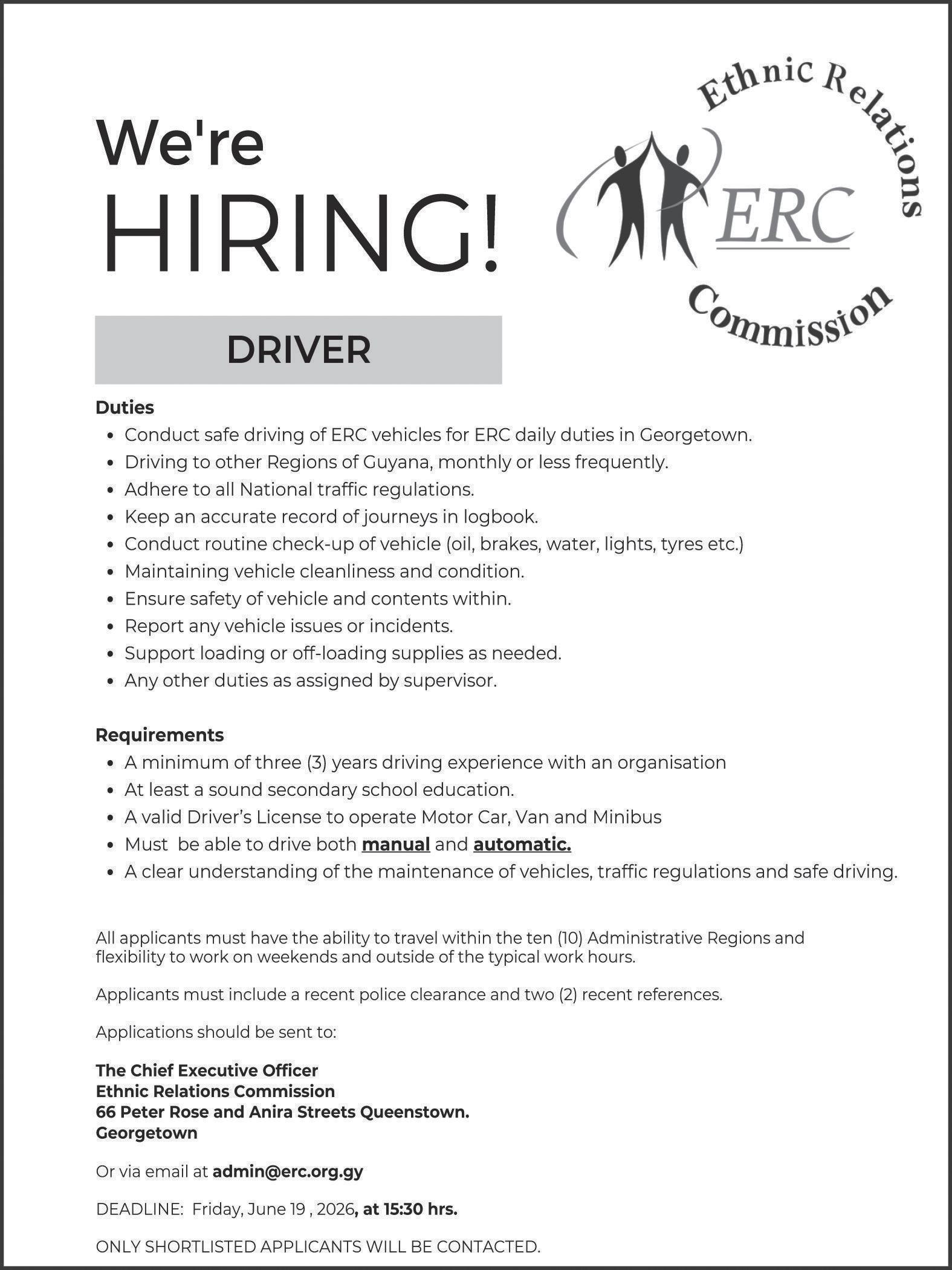
deliveries in excess of 146kph. Mosaddek's fine day continued when he removed Cooper Connolly in the 20th over with a delivery from around the wicket which slid into leg stump. Connolly, opening for just the second time in his ODI career, made 35 off 50 balls.
Alex Carey was the next to go, nicking Rana to the keeper for 47 when he looked beaten for pace. In the 29th over, Rana bowled one delivery that reached 150kph.
Rana also removed debu-
tant Liam Scott and Xavier Bartlett in the space of two overs. Scott fended a rising delivery to Tawhid Hridoy, who took a diving catch in front of him at gully, and Bartlett avoided getting hit when he gave a simple catch to Tanzid at square-leg off a 148kph delivery.
Meanwhile, Mosaddek had added his second when he trapped Matt Renshaw lbw for two with one which turned sharply to hit the back leg. Mosaddek capped off his bril-
liant day with a terrific catch running back from mid-off when Nathan Ellis top-edged Mustafizur.
After Bangladesh were sent in to bat, Mosaddek led the way in the latter part of the innings as he struck seven fours and three sixes in his unbeaten 86 off 70 balls. Mosaddek added 75 for the fifth wicket with Hridoy who contributed a sedate 31. The partnership revived the Bangladesh innings after they had slipped to 140 for 4.
(BBC) - There had always been real concerns that supporters would have difficulties getting into the United States for the 2026 World Cup. But not a referee.
The tournament is supposed to bring together the best of the best in football - players, coaches and officials.
Artan, from Somalia, flew into Miami to join up with the other 51 referees. After what he says was an 11-hour grilling by immigration officials, he was put back on a plane.
"It is pretty clear that the fears of an ideological and discriminatory
Omar Artan is the number one referee from Africa. He will not be allowed to officiate at the World Cup.
visa policy from the US government is being realised," said Piara Powar, executive director of discrimination campaign group Fare.
"Never have we seen the farce of an official FIFA referee being refused entry as he arrives for final preparations."
Concerns remain about the potential presence of US Immigration

and Customs Enforcement (ICE) at stadiums, and how fans could be affected.
With 48 hours still to go until the World Cup
of the 2018 and 2022 tournaments in Russia and Qatar, the 2026 edition was supposed to give everyone a chance to concentrate on the foot-
in Chile, where he took charge of three matches including the third-place play-off.
At the end of the year, he refereed two group
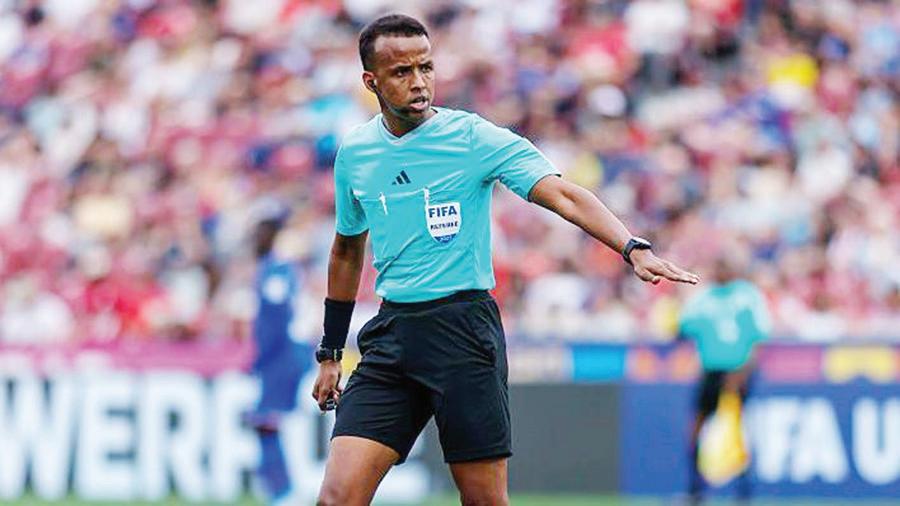
kicks off, does FIFA have little control about what will happen outside the stadiums?
Artan earned his World Cup dream
After the controversy
ball.
Remarkably, this World Cup is in danger of being more controversial.
The astronomical cost of tickets, a subpoena over ticket practices, criticism of FIFA over hotel bookings and transport prices have dogged the build-up.
But this story is about a member of FIFA's own delegation being subjected to hours of questioning before being put on a flight back to from where they came.
Artan had a year to remember in 2025, becoming the first Somali to take charge of a continental final.
In June 2025, he officiated the second leg of Pyramids FC's African Champions League final victory over Mamelodi Sundowns.
FIFA appointed Artan to the U-20 World Cup
games at the Africa Cup of Nations, having also officiated at the tournament in 2024.
Then in March 2026, Artan received the ultimate accolade which should have been the pinnacle of his career.
"Every referee's ambition is to go to the World Cup," Artan told BBC Somali in an interview last week.
"When you are selected, you feel that all your hard work was worth it. Years of effort finally made sense."
Artan should have become the first Somali to officiate at the World Cup. Instead, he is en route back to the capital, Mogadishu.
Artan told the New York Times, how he faced an 11-hour immigration interview, and was then detained for several hours.
GOLF has long been viewed as a sport that brings people of all ages and backgrounds together, and at the Lusignan Golf Club (LGC), significant efforts continue to be made to ensure that women have every opportunity to learn, play, and excel in the game.
The club is home to some of Guyana's most accomplished female golfers, whose achievements have helped inspire a new generation of women and girls to pick up a golf club and discover the many benefits the sport has to offer.
Leading the way is Christine Sukhram, widely regarded as Guyana's most successful female golfer.
Playing off a handicap of 10, Sukhram has captured the Guyana Open title an incredible 14 times. Her success has extended beyond Guyana's borders, with victories in tournaments across Barbados, Trinidad and Tobago, Suriname, New York, and Florida.
Throughout her career, Sukhram has demonstrated that dedication, discipline, and perseverance can lead to success at the highest levels. Her achievements continue to motivate aspiring golfers, particularly young women who may be considering taking up the sport for the first time.
Another standout figure is Dr. Joaan Deo, with a handicap of 14, Dr. Deo has enjoyed success both locally and internationally, including Guyana Open victories in 2014 and 2016 and the Suriname Open Championship in 2018, where she captured both the Gross and Net titles.
She also etched her name in local golfing his-
tory by recording a holein-one during the 2008 Ansa McAl Tournament, becoming the only female golfer to achieve that feat in the event's history.
Her accomplishments across numerous prestigious tournaments have earned her widespread respect throughout the golfing community.
Adding to Guyana's growing list of female golfing stars is Shanella London, who currently plays off a handicap of 10.
London has established herself as one of the country's leading competitors, winning the Guyana Open four times.
Her achievements in Suriname have also been noteworthy. She became the first Guyanese woman to win the A-Flight Championship in 2016 and has gone on to secure multiple Suriname Open victories.
Most recently, she delivered an outstanding performance at the 2025 Suriname Open, earning Best Gross Female honours and capturing the Longest Drive title on both tournament days.
While these golfers have reached impressive heights, Lusignan Golf Club believes that golf is not reserved for elite athletes. The club is actively encouraging more women and girls to get involved in the sport, emphasising that golf is a game that can be learned and enjoyed by anyone, regardless of age or experience.
Unlike many sports that require intense physical contact or years of training before participation, golf is a sport that beginners can start learning almost immediately. With basic instruction and regular practice, new play-
ers can quickly develop the skills needed to enjoy the game recreationally or competitively.
The club offers a welcoming environment where newcomers can learn the fundamentals, build confidence, and develop at their own pace. Experienced players are often willing to share their knowledge, creating an atmosphere that is supportive, inclusive, and encouraging for beginners.
Beyond competition, golf provides numerous benefits, including exercise, mental focus, discipline, social interaction, and opportunities to build lasting friendships and professional networks. These qualities make it an ideal sport for women and girls seeking both personal development and recreation.
The success of Christine Sukhram, Dr. Joaan Deo, and Shanella London demonstrates what is possible when talent is nurtured and opportunities are provided. Their achievements serve as powerful examples that women can excel at every level of the game.
As Lusignan Golf Club continues its mission of growing the sport in Guyana, it remains committed to creating opportunities for women to learn, participate, and compete. The club welcomes women and girls who have never played before and encourages them to take the first step into a sport that is rewarding, enjoyable, and accessible to all.
With role models such as Sukhram, Deo, and London leading the way, the future of women's golf in Guyana has never looked brighter.
CMC – Half centuries from captain Rivaldo Clarke, Mavendra Dindyal and Shaqkere Parris have given the West Indies Academy a slight advantage over Sri Lanka’s Emerging Players at the halfway mark of the first unofficial Test here on Tuesday.
Clarke ended the day unbeaten on 72, Dindyal scored 60 and Parris stroked 55, as the visitors finished the day on 273 for five in reply to Sri Lanka’s first innings total of 356.
The Windies were given a decent start by openers Mbeki Joseph and Damel
Evelyn, with the pair adding 42 runs inside six overs.
Pacer Nisala Abeyratne eventually broke the stand when he held on to a return catch to dismiss Joseph for 13. Dindyal joined Evelyn at the crease and the two maintained the momentum during a 40-run partnership.
When off spinner Chamod Battage had Evelyn caught behind for an aggressive 35 off 29 balls, it led to a minor collapse which saw the Windies slip from 82 for one to 134 for four.
Left-arm spinner Shakthi Udara was the main
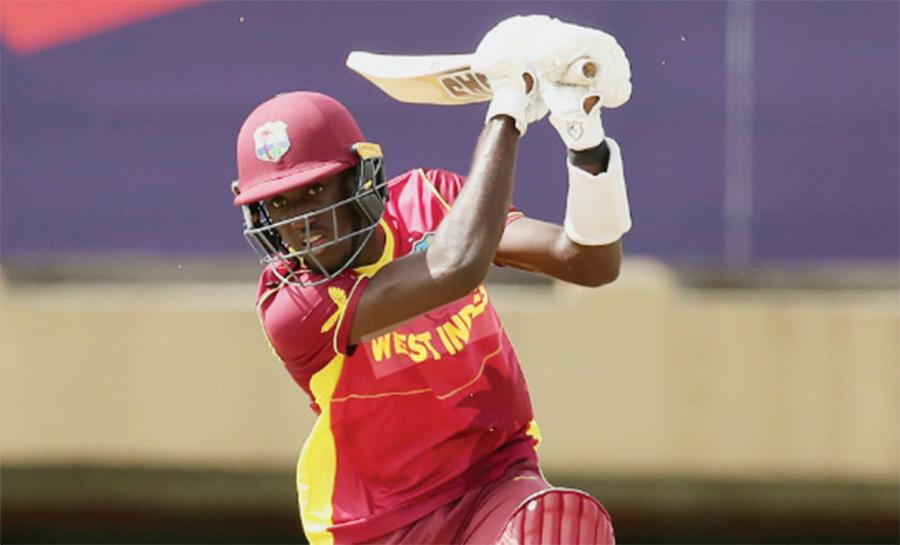
architect, trapping Kevlon Anderson lbw for two, before having Dindyal caught and bowled for a wellplayed 60 off 79 balls that contained six fours and one six.
However, Clarke and Parris came to their side’s rescue with a crucial partnership of 115 runs for the fifth wicket that put them back on track.
The Windies looked to
be cruising on 249 for five, when Udara struck again to remove Parris shortly after he reached his half century. In all he faced 115 balls and hit three fours.
Amari Goodridge ensured there would be no further losses, as he finished the day on 14 not out, while Clarke has so far faced 132 balls and struck seven fours and one six in his innings.
Udara has been the pick of the Sri Lankan bowlers with 3-85.
Earlier, resuming the day on 302 for eight, Sri Lanka added 54 valuable runs for the last two wick-
ets.
Overnight batters Anjala Bandara and Nisala Abeyratne extended their partnership to 142 runs before the latter was run out two runs short of a well-deserved half century.
Last man Battage contributed just one run in his partnership of 21 for the last wicket with Bandara, who was trapped lbw by Ryan Bandoo for 163 off 217 balls, with 19 boundaries to bring the innings to a close.
Bandoo ended with 3-45, Johann Layne took 3-68 and Jediah Blades 2-83.
CMC – With only one game of their One Day International (ODI) series against Sri Lanka being played, West Indies white ball captain Shai Hope has stressed the importance of the upcoming five-match series against New Zealand towards the regional team automatically qualifying for the 2027 ICC World Cup.
Sri Lanka won the threematch ODI series 1-0 after the final game on Monday at
Sabina Park was abandoned without a ball being bowled due to persistent showers.
The Windies lost last Wednesday’s opener by 41 runs, with the second match on Saturday also being rained out.
The result ended the West Indies’ streak of four straight ODI series victories at home and left the 10th ranked West Indies 11 points behind Bangladesh for the ninth and final automatic qualifying spot for next year’s World Cup.
Speaking after Monday’s rained out contest, Hope said the results against Sri Lanka meant the Windies needed to take full advantage of the five ODIs against New Zealand, with the opening match set for July 11 in Guyana.
“Those games are extrem ely important. I will continue to stress that every single game matters, every single is very important for us, especially now.
“I wouldn’t say it’s crunch time as yet, but the
importance of every game, we need to look at it as if it’s the last one. So not to put any pressure on the group, but to put some importance on what we have to do in the next coming days,” Hope said.
While the disappointed skipper described the Sri Lanka series as “unfortunate”, he said they had learned several lessons that he hoped would serve them in good stead against New Zealand.
“Firstly, we can’t control Mother Nature. It’s just unfortunate that we couldn’t get in two solid games of cricket to give ourselves a chance to get back in the series, but we still have to see the importance of playing every single moment that we get because we didn’t know what was going to happen today or the previous ODI.
“We will take the learnings from the first game, and I still must give credit to the
guys when they did well. I think the bowlers hit the straps especially in the first powerplay, and it’s an area that we fell down in the last couple of years so it’s good to see we can pick some positives from that first ODI,” Hope said.
“Hopefully we can take those learnings into the New Zealand series. It’s unfortunate we couldn’t get in two solid games to make it a series win for us, but we can’t control the weather.”
CMC – Youngsters Jewel Andrew and Ackeem Auguste, along with all-rounder Shamar Springer have been drafted into the West Indies squad for the upcoming T20I series against Sri Lanka, which bowls off on Thursday.
The trio represent the only changes to the 15-member squad that took part in the ICC Men’s T20 World Cup in India earlier this year. They replace Johnson Charles, Quentin Sampson and Jayden Seales.
The 19-year-old Andrew had a commendable showing at the ICC Men’s Under-19 World Cup in January, where he scored two half centuries and was dismissed in the 40s on two occasions.

He was part of an under-strength West Indies team that lost 2-1 to Nepal last year in their three-match T20I series and has long been earmarked as one of the region’s most promising and exciting batters.
The Antiguan has however, failed to impress so far in the senior side, having scored just 78 runs in five T20Is at an average of 15.60. Meanwhile, Auguste, 22, has scored 164 runs in nine T20Is at an average of 23.42.
He was part of the Windies’ T20I squad that toured New Zealand late in 2025.
Springer could consider himself unlucky not to have been included in the World Cup squad after taking a hattrick against Afghanistan in his last match for the Windies back in January.
The 28-year-old has a healthy average of 35.50 in T20Is with 71 runs in six matches. He has also taken eight wickets at an economy rate of 8.07.
Fast bowler Alzarri Joseph, who recently returned to the ODI squad following a 10-month layoff, has been rested as part of workload management plans and will continue his training and preparation ahead of the two-
match test series being held in Antigua.
Fellow pacer Shamar Joseph, who returned home ahead of the third ODI against the Sri Lankans due to personal reasons, is expected to return ahead of the series on June 9.
Head coach Daren Sammy believes the series offers an excellent opportunity for the players to entertain home supporters while showcasing an exciting brand of cricket.
“This series is an important one for us as it’s our first since the World Cup in India, where the team played with passion, fight and the togetherness that West Indies cricket is built on.
“Our focus now is to
build on those foundations, continue growing as a team and make our fans proud with the way we compete against Sri Lanka,” Sammy said.
WEST INDIES T20I
SQUAD: Shai Hope (captain), Jewel Andrew, Ackeem Auguste, Roston Chase, Matthew Forde, Shimron Hetmyer, Jason Holder, Akeal Hosein, Shamar Joseph, Brandon King, Gudakesh Motie, Rovman Powell, Sherfane Rutherford, Romario Shepherd, Shamar Springer.
Match Schedule
1st T20I: June 11 – Sabina Park, Jamaica
2nd T20I: June 13 – Sabina Park, Jamaica
3rd T20I: June 14 – Sabina Park, Jamaica
PRESIDENT of the Guyana Rugby Football Union Ryan Gonsalves says it was another chase of missed chances, but he is still confident the team has what it takes; they just need to execute.
The GRFU boss was reflecting on his side’s 21-3 loss to the Barbados unit in the ‘away’ fixture of their Rugby America’s North (RAN) fixture.
“We all are disappointed from the loss on Saturday, but the game was closer than it looked. We were 11-3 into the 70th minute. We had 2 yellow cards in the first half that really set us back. But the guys held their end and the defense was solid. If we had taken our opportunities and completed our attacks and scored, we had five clear opportunities to score it would have been a different game.”
He said while they had some hard calls, they could have taken the game out of the hands of the referees by scoring their tries.
The GRFU Boss believes that not all is lost as they can improve and bounce back.
“Once this game is confirmed for Trinidad on the 28th, we are going to be ready and then straight into our 7’s season. We are looking to do really well in RAN’s this year, so our preparation for RAN is going to start on the first of July, so we are going to have a lot of clubs 7’s Rugby going on, and the squad is going to be called early so
they can start training.”
The former national captain turned administrator is asking for patience with the team as they seek to learn on the job and steadily move from strength to strength.
In the 15’s clash over the weekend, the ‘Green Machine,’ was soundly beaten , 21-3 in their Rugby America’s North championship match-up played in Garrison Savannah, Barbados.
Guyana scored first with a penalty 5 minutes into the contest, earning them 3 points.
Barbados’s Nicholas Daniel scored a try in the 19th minute to make it 5-3 as they overtook Guyana’s advantage.
D’Andre Phillips failed to convert Daniel’s try as Barbados led, 5-3.
Phillips would go on to register a penalty, making it 8-3, before missing out on converting another penalty.
In the 68 minutes, Philips would come back to convert another penalty to make it 11-3.
Barbados’s Sean Ward also recorded a try, making it 16-3 before Daniel Ramsey’s try, converted by Philips, finished the ‘Green Machine’ off 21-3
It was Guyana’s second loss in their campaign after opening the season with a loss to Bermuda at home.
The team is powered by Brava Guyana, but GRFU is calling for more support for the national team as they seek to get back on top in the region.




(ESPNCRICINFO) - Ben Stokes will meet with his advisors on Wednesday to decide on his future, with the ECB giving England’s Test captain room to weigh up his options amid fears he could retire from international cricket.
The ECB and the Cricket Regulator are investigating a nightclub incident after the first Test against New Zealand, in which Stokes and Gus Atkinson broke the team curfew and got into a fracas with Saracens rugby player, Totoa Auvaa. The incident left an England security officer needing stitches and put the spotlight back on the England dressing-room and management, after promises to improve behaviours and culture around the team following off-the-field indiscretions over the winter.
The governing body is sure to discipline the pair accordingly for their breach of team protocol. However, they are keen to let Stokes come to his own decision around his future, having been spooked by the prospect of the England captain retiring altogether.
Those fears led to an emergency executive board meeting on Tuesday morning to discuss the matter. At that point, there were strong suggestions Stokes was fed up and keen to call time on a 15-year career. Such has been the breakdown of communication between Stokes

Ben Stokes was involved in an incident at a nightclub in Chelsea on Monday • PA Photos/Getty Images
and the ECB, some feared they would only be informed of his decision via a post on his Instagram page.
Retirement remains a live issue, but there is optimism that Stokes has cooled on that nuclear option. He will meet with his long-time agent, Neil Fairbrother, the former England and Lancashire batter, to determine the best course of action. Offered the chance to resign on Monday, the 35-year old may yet take the chance to step down and carry on through to the end of his central contract, in 2027, after the next Ashes. He could also opt to relinquish the captaincy and take an indefinite break from the game.
For now, Stokes and Atkinson are expected to incur a suspension and fines, perhaps even ruling them out of the rest of the New Zealand series. The second Test starts at The Kia Oval on June 17 and the ECB will name a squad before Friday, regardless of whether Stokes has made a decision on his future or not.
Stokes is said to be in relatively good spirits, rueful for being out late and worried about the knock-on effect this incident will have on his team-mates.
There is also a sense he is not entirely happy with the ECB’s handling of the situation, despite his own culpability in the situation.