
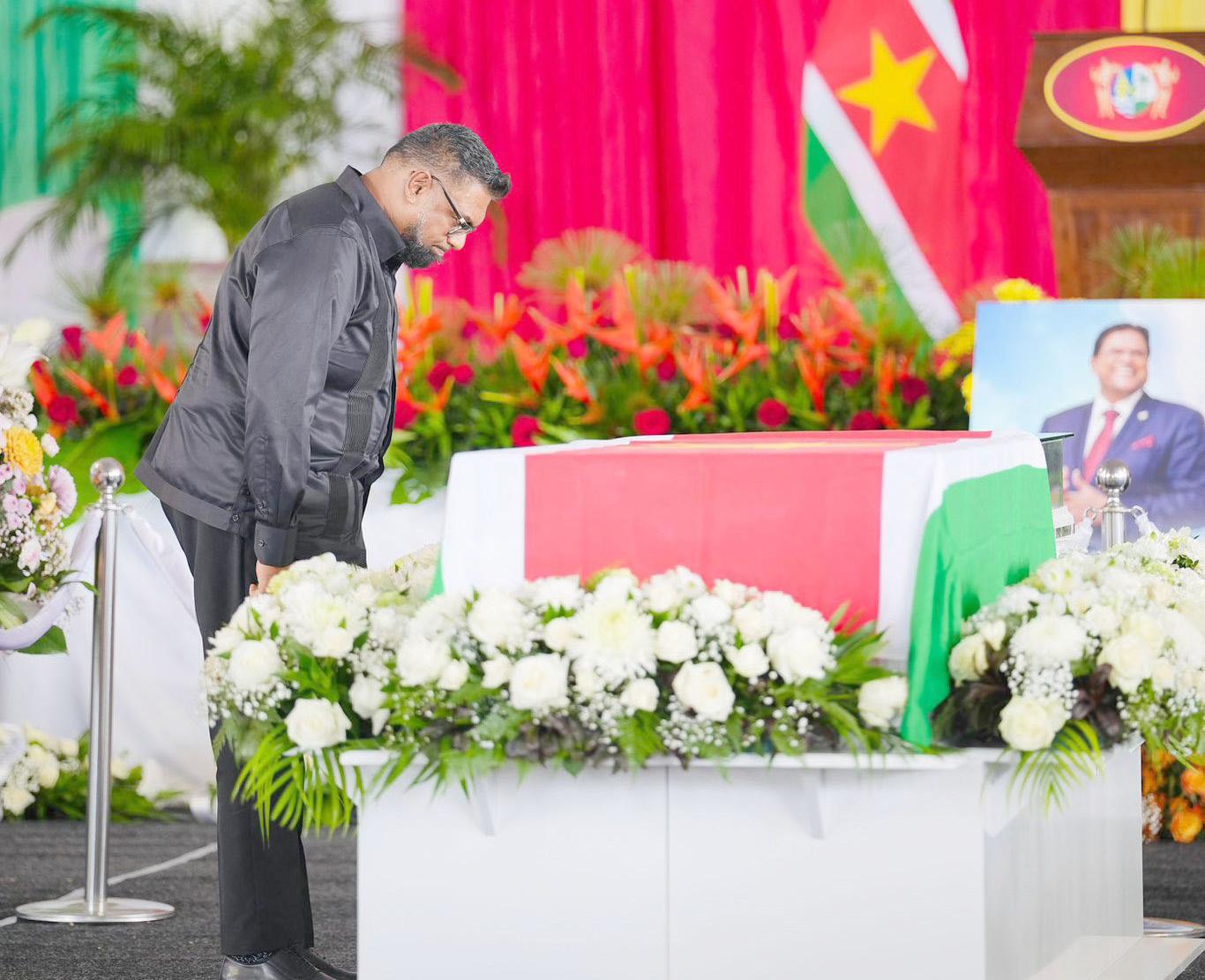




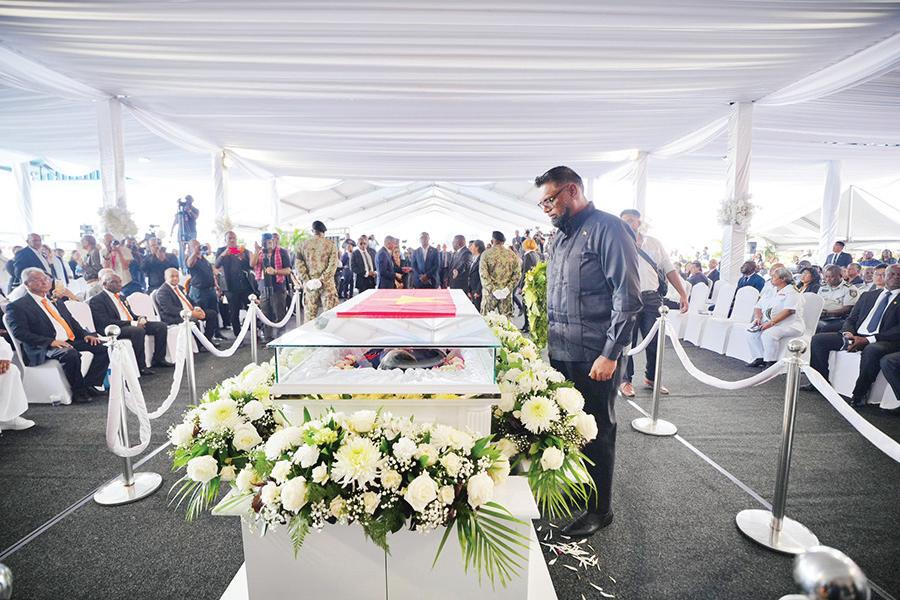
Dr. Irfaan Ali on Tuesday paid tribute to former Suriname President Chandrikapersad ‘Chan’ Santokhi



THE Government of Guyana has rejected claims published in the Kaieteur News that it secretly paid US$80 million to a contractor involved in the Wales Gas-to-Energy project, describing the report as inaccurate and misleading.
In a statement issued by the Office of the Prime Minister (OPM) on Tuesday, the administration made it clear that no such undisclosed payments were made, stressing that all financial transactions are conducted transparently through established State systems.
“There are no secret payments made to the Contractor. All payments are made via the Consolidated Fund, and reported to Parliament,” the statement said.
The government also pushed back against assertions that it had lost an arbitration matter linked to the project, clarifying instead that arbitration proceedings have not yet been advanced, and that no such ruling has been issued.
“For the record, the Parties have not advanced the arbitration process, and, as such, there is no arbitration ruling… It is therefore incorrect to suggest that the GoG has lost the arbitration,” the OPM stated.
According to the release, both the government and the contractor had previously indicated that they were dissatisfied with decisions made in January 2025 by the Dispute Avoidance/Adjudication Board (DAAB), and signalled their intention in March 2025 to move towards arbitration. However, that process remains an available option, and has not been concluded.
The OPM further underscored that DAAB de-
cisions are confidential, in that neither party is permitted to publicly disclose their contents.
Providing an update on the project’s status, the government highlighted significant progress at the Wales site, including a restructuring of the contractor consortium in mid-2025. Houston-based company, Lindsayca, has since assumed full control of the project, now operating under the name Lindsayca Guyana Inc.
Since late 2025, construction has been accelerated, with major equipment delivered and critical infrastructure works underway.
At present, more than 8,000 piles have been installed, and over 18,000 cubic metres of concrete foundations poured. Approximately 800 workers are engaged on-site, with operations ongoing aroundthe-clock.
“All four gas turbines have been placed on foundation… [and] work on many aspects of the construction is proceeding on a 24-hour basis,” the statement noted.
Additionally, key components such as transformers for the sub-station and pipe racks for gas transportation are already in place, while NGL storage tanks have begun arriving.
The contractor has also commissioned on-site accommodation capable of housing more than 400 workers.
The government maintains that the project remains on track and active, positioning the latest KN’s report as part of a broader pattern of misinformation that it says undermines public understanding of major national infrastructure initiatives.
- late former Suriname President Santokhi helped build bridges of trust, unity, shared progress President Ali says in moving tribute
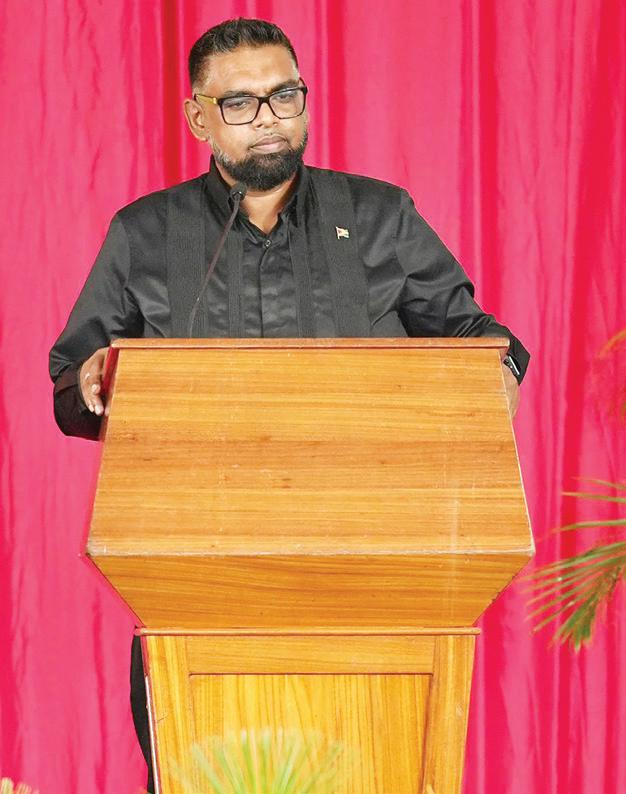
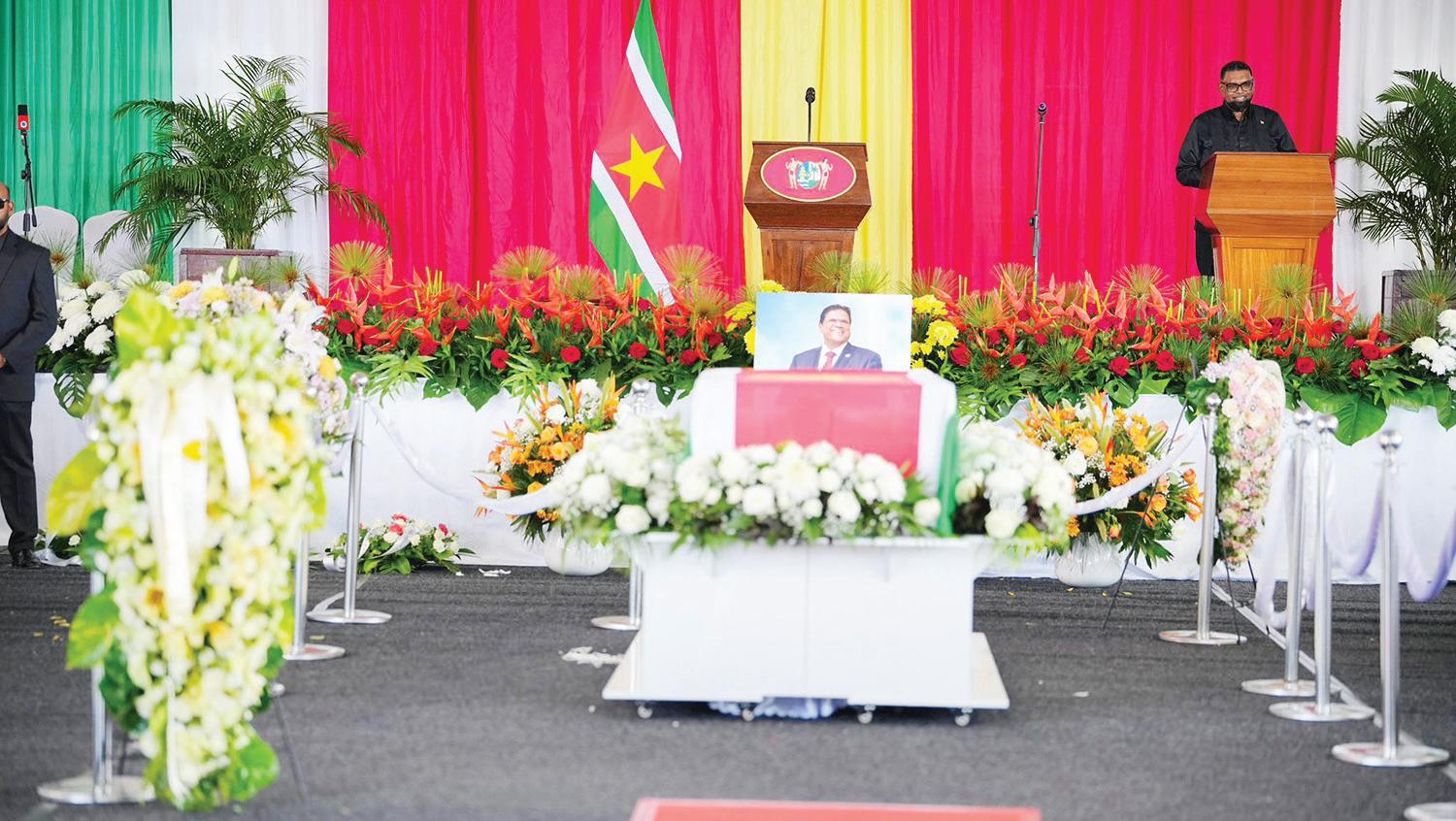
PRESIDENT Dr. Irfaan Ali on Tuesday paid tribute to the late former Suriname President Chandrikapersad “Chan” Santokhi, describing him as a brother whose personal friendship helped reshape relations between Guyana and Suriname.
Speaking at Santokhi’s Funeral Service, Dr. Ali reflected on the “quiet, real chemistry” that marked their first encounter as leaders, noting that it laid the foundation not only for a deep personal bond but also for “a new season” between the two neighbouring States.
He said their rela -
That gesture, the Head of State said:
“Turned the page of vision itself, helping both governments to imagine a future built on co-operation rather than competition.
“He agreed we want

tionship transcended formal diplomacy, and evolved into a “fraternity” grounded in trust, humility, and mutual respect.
“What began as a murmur between two presidents became a river between two nations, and what grew between us was not diplomacy alone. No! It was something softer, rarer. It was fraternity! To me, President Santokhi was like a brother. When he first took office, he moved not with haste, but with clarity, like a man who had already read the map of his own heart. One of his earliest gestures was to reach out to me, to lean across the distance,” President Ali said.
rivalry. But he stressed that Santokhi consistently rejected such a path. He noted that Santokhi often spoke of the river between Guyana and Suriname not as a dividing line, but as “a vein connecting
tokhi’s belief that any true partnership must live “in and through people”, including traders, small boat operators and communities along the border.
The Guyanese leader highlighted Santokhi’s
to complement, not compete against each other.
These words became a kind of creed; soft, yes, but stronger than iron, reshaping how we saw each other, and how we should walk towards tomorrow.”
Dr. Ali added: “That creed took shape in action, especially in the areas of trade, of security, of business, and always with our eyes on a shared vision. We believe that the fortunes of our two lands were braided together.”
Framing Guyana and Suriname as “young children of oil” stepping into the glare of global attention, the Head of State said there had been external voices seeking
two hearts”; a symbol of unity rather than discord.
This philosophy, Dr. Ali said, informed San-
dream of bridges, both literal and figurative linking the two States, from physical infrastruc-
ture to bonds of trust and fairness.
He said the Surinamese Statesman repeatedly reminded regional partners that small States, “standing shoulder-to- shoulder”, could achieve, together, what they could never reach alone.
Dr. Ali praised not only Santokhi’s vision, but also his temperament, noting that what made him exceptional was his restraint and calm in moments when tension might otherwise have flared.
On “sensitive ground”, he said, Santokhi chose stillness over anger, and harmony over confrontation, helping to keep relations between Guyana and Suriname
“warm, unbroken, and turned toward the future”.
“Santokhi knew the true partnership between States must live in and through people, in markets, in the small boats traversing the river that links us. We encouraged our private sectors to weave together, understanding that growth is not only shaped in halls of power, but forged along river banks, in the patient work of hands. He dreamed of bridges, one of steel and concrete, others of trust that would bind Guyana and Suriname closer,” President Ali said, adding: “He called for sure and mutually beneficial ties, and he lived by that measure in every conversation, every handshake, every moment of resolve.”
Turning directly to the bereaved family, Dr. Ali assured them that they would always be welcome to Guyana.
He pledged to honour Santokhi’s memory by working to realise the dreams and aspirations they’d both shared for the future of Guyana–Suriname relations.

- physical help desks to be set up, home visits to shut-ins, vulnerable groups to commence this week, Finance Minister says
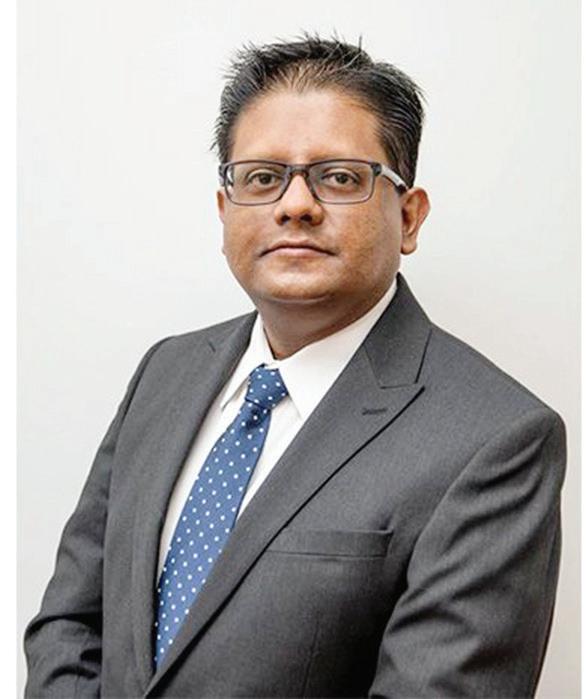
SENIOR Minister in the Office of the President with responsibility for Finance, Dr Ashni Singh, has announced that more than 140,000 Guyanese have already received their $100,000 cash grant via direct bank transfers.
During an update on the initiative on Tuesday evening, Dr Singh said that the government first targeted central government employees for whom bank account information was already on file. A total of 48,858 such employees had received their grants directly into their bank accounts.
To reach the wider population, the gov -
ernment established an online portal at cashgrant.gov.gy, allowing citizens to self-register for the grant.
According to Dr Singh, 126,011 persons have used the portal to complete self-registration, and 91,688 have already received their grants via direct transfer. This brought the total number of direct deposits processed so far to 140,546, combining both central government employees and self-registered applicants.
Recognising the specific challenges faced by communities in the hinterland regions, particularly limited access to banking services, the government has also launched a targeted outreach in those areas.

In Region Nine, teams were deployed to assist residents with registration, including those without bank accounts. As a result, 10,417 payments
have been processed for Region Nine alone, through a combination of direct transfers and cheques.
In total, 150,963 cash grants have now been processed nationwide.
Dr Singh described

the rollout to date as “extremely successful”, highlighting the large number of beneficiaries reached in a relatively short period using “simple and efficient” processes.
He urged those who have not yet registered to do so using the online portal, emphasising that it is the easiest and most efficient way to receive the grant directly into a bank account without leaving home.
In addition to the digital and banking-based approach, the minister announced a series of support measures for vulnerable and hard-to-reach groups.
Similar special registration exercises for Region Nine will be rolled out in every other hinterland region, with teams assisting residents who lack access to banking facilities or have difficulty completing the online process.
A dedicated initiative will also be launched to support shut-ins, including the elderly and persons who are otherwise incapacitated and unable to leave their homes.
Using a database generated from the old age pension and NIS records, government teams will visit shut-ins at home to assist with registration and ensure they are able to receive
their grants.
“We're going to be rolling out a special initiative to assist shut-in persons who are unable to leave their homes, perhaps because they're elderly or they're otherwise incapacitated. We're going to be coming to your homes and assisting shut-ins,” the finance minister said.
Furthermore, help desks are to be established at several locations across the country, staffed by specially trained personnel who will provide in-person assistance to citizens who, for any reason, are unable to complete the self-registration online.
These additional measures, Dr Singh said, are expected to begin later this week, as the government intensifies efforts to ensure that all eligible Guyanese can access the National Cash Grant.
“We're going to be establishing some help desks in several locations countrywide, so that citizens can come in, who for one reason or another, were unable to complete their self-registration. They can come in and they can obtain assistance from persons who have been specially trained to be able to complete the registration process online,” Dr Singh said.

OIL prices plummeted Tuesday after President Donald Trump agreed to a two-week ceasefire with Iran, spurring hopes that more oil tankers would be able to transit the key Strait of Hormuz soon.
But analysts warned that questions remained, including what will change for the effective blockade of the strait, through which about 20% of the world’s oil passes, and whether the ceasefire will lead to a long-term end to the war.
US crude futures declined more than 15% after hours to less than $95 a barrel - a significant drop, but still well above the $67.02 settle on February 27, before the war began. Brent crude futures, the global benchmark, declined 12.88% to $95.12.
Meanwhile, US stock futures and Asian markets jumped. Dow futures leapt more than 900 points, or about 2%, S&P 500 futures increased 2.1%, and Nasdaq futures rose about 2.5% in after -

hours trading.
Early Wednesday morning, Japan’s benchmark index Nikkei 225 surged 4.4% as of 9:30 am local time, while South Korea’s Kospi gained 5.6%.
“The market has been eager to get good news but it remains to be seen if the Strait of Hormuz opens fully,”
Bob McNally, founder and president of Rapidan Energy Group, told CNN. “That’s the whole ball of wax and so far Washington

and Tehran seem to be talking past each other on that.”
While Trump celebrated on social media, Iran emphasised that the ceasefire was only temporary. “This is not the end of the war but all military branches should follow the Supreme Leader order and cease their fire,” according to a statement read out on state-run news channel IRIB.
Still, the jump in stocks and the slump oil prices sent an “ex-
tremely clear” message, Art Hogan, chief market strategist at B. Riley Financial, told CNN: “Investors would like to get the Strait of Hormuz open and this conflict behind them.”
Trump agreed to the ceasefire less than two hours before his 8 pm ET deadline to destroy a “whole civilization.”
He said the agreement hinged on the reopening of the Strait of Hormuz.
“We received a 10-point proposal from

Iran, and believe it is a workable basis on which to negotiate,”
Trump posted on Truth Social on Tuesday night.
The war in the Middle East – and the effective closure of the crucial Strait of Hormuz – has caused the biggest oil supply shock on record, affecting roughly 12 million to 15 million barrels of crude oil a day. Both the futures and physical oil markets had signaled major warning signs.
But whether the Strait can simply return to business is up in the air. Iran also claimed
victory and said its military will regulate passage through the Strait of Hormuz, which would grant Iran “unique economic and geopolitical standing,” a statement from Iran’s Secretariat of the Supreme National Security Council said.
The ceasefire “hasn’t really clarified anything when it comes to the Strait,” Patrick De Haan, head of petroleum analysis at GasBuddy, said on X Tuesday.
And the longer-term effects will take a while to shake out.

THE numbers tell the story. In just a few days, over 140,000 Guyanese have received their $100,000 National Cash Grant.
This milestone showcases the government’s ambition and its serious approach to getting things done. What is happening here represents what modern, inclusive governance can look like in a developing nation finding its footing.
Dr. Ashni Singh, the Senior Minister in the Office of the President responsible for Finance, confirmed that 140,546 grants have been processed through direct bank deposits alone.
This includes 48,858 for central government employees who had their banking details on file and 91,688 for citizens who registered through the government’s online portal at cashgrant.gov.gy.
When including the 10,417 payments processed specifically for residents of Region Nine, the nationwide total is now 150,963. Dr. Singh called the rollout “ex-
tremely successful,” and it’s hard to disagree.
What sets this second National Cash Grant apart from earlier versions is the focus on technology and financial inclusion as key components of delivery.
The move to a banking-based payout system aligns with President Dr. Irfaan Ali’s digital agenda. It enables the government to transfer funds securely and efficiently, avoiding the long lines and physical distribution centres.
The self-registration portal has shown its value, drawing over 126,000 registrants in a short time, confirming the government’s trust in a digital-first approach.
However, it’s the new initiatives announced for the days ahead that truly enhance this programme. Recognising that no digital system can reach everyone, the government has taken important steps to fill the gaps.
Special registration teams deployed in Region Nine to assist residents, including
those without bank accounts, will now expand to other remote areas in the country.
This approach shows that the government is committed to equity, meeting citizens where they are instead of expecting them to navigate bureaucratic systems alone.
Another encouraging initiative is focused on shut-ins, the elderly and people with disabilities who cannot leave their homes. Using data from old age pension and National Insurance Scheme records, government teams will visit these individuals to help them register and receive their grants.
This thoughtful effort deserves real recognition. It sends a strong message to Guyana’s most vulnerable: this government sees them, values them, and won’t leave them behind.
Additionally, help desks will be set up in multiple locations across the country. These desks will be staffed by trained personnel ready to guide citizens through the online registration process in person. For those lacking digital skills, reliable internet access,
or confidence in using the online portal, these desks will provide important support.
Together, the portal, outreach, home visits, and help desks create a genuine safety net around the cash grant, designed to maximise participation and minimise exclusion.
When this initiative is complete, it is expected to inject over $60 billion into the Guyanese economy, giving real spending power to hundreds of thousands of citizens.
This economic boost, paired with a broader effort towards financial inclusion, means the benefits of this programme will reach far beyond the cash transfer itself. Guyanese who are encouraged and assisted in opening bank accounts are being integrated into a formal financial system that will benefit them for years.
This government is delivering on its promises, efficiently, fairly, and with attention to those who are often overlooked. The $100,000 cash grant is already becoming a success story, with more positive developments still to come.
Dear Editor,
WE refer to the letter published in your Wednesday, April 1, 2026 edition under the caption “Cherry-picked rules, neglected staff: GECOM under scrutiny.”
It has become increasingly evident that there is a deliberate and sustained effort to tarnish the integrity of both the Chairman and the Chief Election Officer and, by extension, the Commission.
This conclusion is drawn from the publication of three successive letters, purportedly authored by “Concerned Employees,” all of which advance a series of allegations without providing any credible evidence or specific examples.
The apparent objective is to portray the Chief Election Officer as a tyrannical administrator, allegedly supported by the Chairman—an assertion that is wholly unsubstantiated.
While internal considerations have allowed us to reasonably narrow the likely source of these letters to a small number of persistently delinquent staff—possibly acting individually or in concert—this response is not intended to target any individual. Rather, we consider it our duty to provide clarity
on how staff relations and human resource matters are managed within the Commission.
In that regard, we wish to highlight the following:
1. GECOM operates as a structured, hierarchical organisation comprising several divisions, each headed by a Senior Manager. All subordinate staff report through this established chain of command and not directly to the Chief Election Officer.
2. Under the leadership of former Chairman Dr. Steve Surujbally, the Commission formally delegated authority to the Chief Election Officer to recruit and manage staff below the level of Senior Manager (Scale 9).
3. Like many public institutions, GECOM continues to address ongoing human resource challenges. These include issues related to attendance and punctuality, substandard output—particularly among long-serving field registration staff—and a persistent resistance to modernised work practices by some employees. All such matters are managed strictly in accordance with the Public Service Rules.
4. The Chief Election Officer has consistently maintained an open-door policy, encouraging all staff to raise concerns freely. This invitation has been reiterated in multiple forums, including senior management
meetings, staff engagements, and training sessions. To date, no staff member—including the alleged authors of these letters—has utilised this opportunity to formally raise concerns.
5. Additionally, the Chief Election Officer has explicitly invited staff to disclose instances of victimization or discrimination during general meetings. No such concerns have been raised. To further strengthen transparency, a Provisional Grievance Procedure was circulated in February this year to provide a formal mechanism for lodging complaints. To date, no submissions has been received under this process.
6. Claims of unjust denial of leave are entirely unfounded. On the contrary, the Chief Election Officer, with the Chairman’s approval, has demonstrated considerable leniency, including granting extended nopay leave to facilitate personal development pursuits unrelated to GECOM’s operations. It is noteworthy that one such beneficiary has been among those few most resistant to adherence to established rules.
Staff relations at GECOM have always been governed by the Public Service Rules and policy directives issued by the Commission. It is the responsibility of the Chief
Election Officer to ensure compliance with these frameworks, failing which he would be held accountable.
We have deliberately refrained from addressing the fragmented and repetitive allegations in detail, as doing so would lend undue credibility to claims that are clearly devoid of merit and driven by individuals unwilling to conform to established standards of professionalism and accountability.
The Commission remains steadfast in its commitment to maintaining the highest standards of staff relations while ensuring adherence to the rules and values that underpin effective public service.
The Chief Election Officer continues to be fully accessible and willing to address any legitimate concern brought forward through the appropriate channels.
Going forward, the Commission will not engage in exchanges with anonymous or unverified sources.
We instead encourage all staff to utilise the established internal mechanisms designed to address concerns constructively and professionally.
Yours faithfully, Guyana Elections Commission
HERE is what Nigel Westmaas wrote: “A lot of people have had their ‘Kissoon’ moment – that is a crescendo of criticism directed at one over several columns and recycled as if constant repetition will in any way increase or lessen a judgement or criticism.”
What repetitions Westmaas is referring to? They relate to the use of the Stabroek News by the Usual Suspects (TUS) and the Mulatto/ Creole class (MCC) to fool this nation. In many ways, I am glad that the Stabroek News is dead and gone never to rise from the ashes again and has taken its place in the cemetery of dead newspapers. I will do a sad reflection of how I feel about some people’s misplaced eulogies when the newspaper was buried.
How can people who were trained in the social sciences be so sycophantic that they cannot see that the Stabroek News was essentially a platform for Anglo-Christian values, and that was the primary reason for the birth of the newspaper and those values the newspapers perpetuated for its entire life.
The newspaper was a breeding ground for members of the Mulatto/Creole formation that sees class and colour as essential determinants in the governance of Guyana. I will spend the rest of this analysis here demonstrating how the people from this breeding ground displayed arrogance and conceit in relation to the Guyanese nation.
The repetitions Westmaas is annoyed at have been published by me in several columns of mine over the years and they will be repeated because we need to keep this candle glowing so people can be shown the arrogance and pomposity of the people who
want to change the government. People need to know about the propagandistic politics and dangerous games TUS and MCC play.
Westmass can be assured these repetitions will continue including the treacherous history of his hero, Martin Carter. Here are the repetitions. One of the most arrogant humans this country produced was the editor of the now defunct Stabroek News, Mr Anand Persaud. That man was so conceited that he refused to understand that the power of the Fourth Estate carries responsibility, obligation and accountability.
How can any newspaper inform a presidential adviser that it will not publish his letters without the decency, responsibility and obligation to publish an explanation which it owed to the presidency? To think that none of the sycophants who sang and will sing praise to the Stabroek News will pen even a half-line acknowledging that this was arrogance on the part of the Stabroek News.
Here is what Janet Bulkan, a perennial critic of the government had to say about Mr. Persaud – “Over the years I’ve said to many persons that I hold Anand Persaud to be the most consequential Guyanese of the late 20th and current century.” Obviously, she told that to her fellow jokers who have psychological shortcomings like her.
When you think of Ron Robinson, Yesu Persaud, Clive Lloyd, Father Andrew Morrison, Cheddi and Janet Jagan, Walter Rodney, Ian Mc Donald and hundreds, yes hundreds more like them, then, just think of how silly those people are that lambast the government every day. Can you and do you take Janet Bulkan seriously? If you do, then you may be


more far gone than her.
The Guyana Human Rights Association is one of one most despicable organisations Guyana has produced. This organisation with the misleading title, pompously decided that it will not respond to the dozens of critics that accused it of silence on the 2020 general elections and the Commission of Inquiry into that election.
A simple explanation, no matter how faulty, was an obligation.
Here is a list of anti-government critics and judge for yourself if what is on display here are not conceit, contempt, hauteur, pomposity and even worse. The current co-owner of the Stabroek News assets, Isabelle DeCaires; Alissa Trotz, her sister Maya; Nigel Westmaas; sisters, Vanda and Danuta Radzik-Vieira; Sherlina Najeer and many others who comprise TUS wrote a letter to President Ali demanding Guyana get out of oil production because greenhouse gas from
fossil fuels kills African people.
No other race was mentioned. The world has many races – Arabs, Persians, Chinese, Indigenous people, Caucasians, Indians, and Africans. These anti-government critics named above advised the President about African people only.
Do you know that to date none of those names above in a list of 42 persons who co-authored that letter does not see it as insulting to the President and bordering on racial superiority to offer the President and Guyanese a public apology? These are the very people that tell you that the government has a set of unacceptable leaders. My parting advice; ignore these lost souls, now and forever.
DISCLAIMER: The views and opinions expressed in this column are solely those of the author and do not necessarily reflect the official policy or position of the Guyana National Newspapers Limited.

PRESIDENT Dr Irfaan Ali has issued a strong call to investors, to capitalise on expansive opportunities in Guyana’s agricultural sector, emphasising that his government is “ready to support” bold and innovative ventures.
Speaking from a farm in the Rupununi, Region Nine, President Ali recently appealed directly to businessmen and women based in Georgetown, especially those with available liquidity, to partner with local communities and farmers.
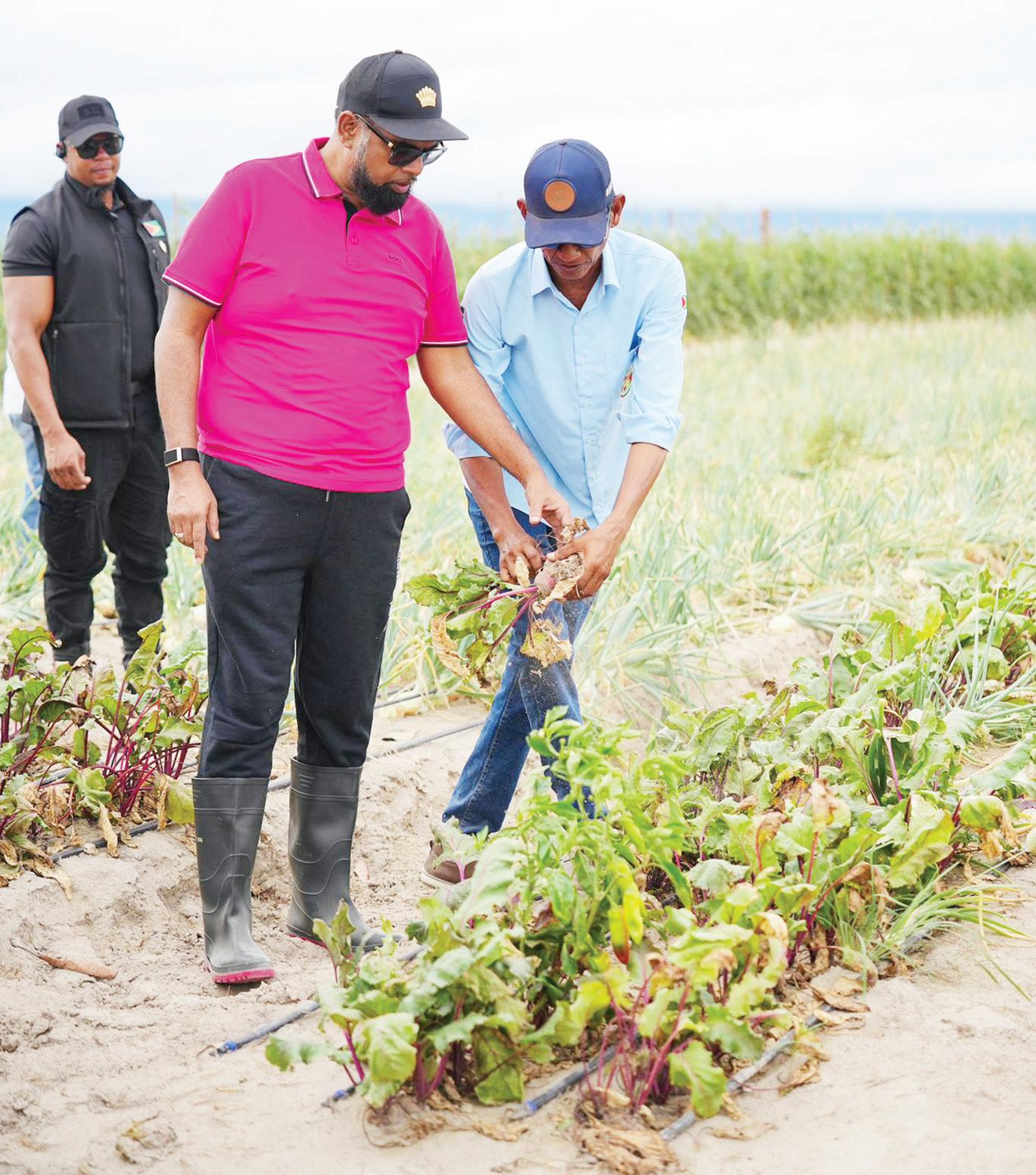
“We give all the tax incentive, zero corporate tax for everything in agriculture, zero tax, because we want you to come where the land is, partner with the villages, partner with the farmers, and let's do this,” he said. Trials for onions, to -

matoes, beets, ground provisions, peanuts and watermelon have been successfully cultivated on a commercial scale in the region.
“Opportunities are there, seek and you shall find it's time for our investors to come out of their comfort zone and be bold. When I say to be bold and innovative, this is what bold innovation is. And you know, you have a government communities and people who are ready to support your investment,” the President said.
The Head of State underscored that the agricultural sector in Guyana is being positioned as a key driver of economic growth, supported by a suite of fiscal incentives.
urges local investors to seize emerging opportunities, partner with local farmers
President Ali had previously noted that with mechanisation, standardised cultivation practices and state-supported logistics, the Rupununi can significantly increase agricultural productivity and strengthen food security for both Guyana and the wider region.
“I am impressed by the results I have seen and by the tremendous potential in Region Nine for largescale agriculture. This is exactly the kind of investment and innovation we are advancing as we push aggressively to strengthen food security in Guyana and across the wider Caribbean,” the President said.
It was previously reported that the govern -
ment, through the Ministry of Agriculture, would collaborate with farmers from Regions Nine and Eight to boost crop production in 2026, noting that together the two regions will amplify production in both traditional and non-traditional crops.
The trials for large scale onion production had begun back in 2025, with farmers also exploring larger cultivation of tomatoes, watermelons and other fruits with assistance from the Ministry of Agriculture and National Agricultural Research and Extension Institute (NAREI). Agronomy support was also provided by specialists from Brazil.

(Xinhua) Major projects
outlined in China’s 15th Five-Year Plan are creating jobs that require stronger technical skills, more specialised expertise or broader cross-sector capabilities, challenging the long-held view that construction work is largely manual labor.
A closer look at the blueprint shows that these initiatives are far more than a list of investment and construction plans. Projects aimed at fostering new quality productive forces and those designed to improve people’s livelihoods came in first and second by number, underscoring the country’s development strategy that emphasises investment in both physical assets and human capital.
Taken together, the projects offer a glimpse into how China’s employment landscape is likely to evolve during the plan period.
From skilled blue-collar roles in advanced infrastructure and manufacturing to high-end, cross-sector positions in emerging industries, the projects are expected to generate a broader, more diverse range of job opportunities.
SKILL UPGRADES IN
Infrastructure projects still make up an important part of the new five-year plan. But the shift from extensive expansion to smart,
green and digital development is fundamentally transforming traditional blue-collar jobs and raising the skill requirements.
This shift is evident across a wide range of infrastructure projects outlined in the plan, including a comprehensive national transportation network, a new-type energy system, modern water conservancy networks, and new infrastructure.
Zhang Linshan, a researcher at the Academy of Macroeconomic Research under the National Development and Reform Commission (NDRC), said that in large-scale new energy bases in desert and Gobi regions, more than 70 per cent of jobs are skilled blue-collar positions.
Such jobs require expertise in areas such as system commissioning and high-voltage operations, with certified operation and maintenance personnel earning 15,000 to 20,000 yuan (about 2,176 to 2,902 U.S. dollars) per month, he said.
The market has already sent clear signals. Data from Guangdong’s human resources and social security authorities show that in the Pearl River Delta, some highly skilled blue-collar workers earn more than 10,000 yuan a month, while top technicians in positions such as testing can make as much as 20,000 yuan.
Wang Xiaoping, Minister
of Human Resources and Social Security, said China will deepen large-scale vocational skills training this year, with subsidised programmes expected to benefit more than 10 million people.
Targeted training will focus on sectors such as the low-altitude economy, new energy vehicles, AI, and elderly care services, in a bid to better align skills development with industrial and employment needs, Wang said.
Experts said major national projects are no longer primarily a reservoir for absorbing low-skilled labor but are increasingly an important arena for blue-collar workers to upgrade their skills and raise their incomes.
About a quarter of the major projects in the blueprint are designed to develop new quality productive forces, covering sectors such as integrated circuits, embodied AI, biomanufacturing, and new-type batteries.
Experts said these projects require substantial investment and lengthy development cycles, with their core value lying not in shortterm returns but in supporting national strategies and building long-term competitiveness. This forward-looking nature helps nurture and attract high-end talent.
Zheng Shanjie, head of the NDRC, said the scale of China’s AI-related industries is expected to exceed 10 trillion yuan by the end of the 15th Five-Year Plan period.
A significant shortage of high-end AI talent has already emerged, intensifying competition among employers. In Shanghai, a human resources manager at an AI company is negotiating with a candidate for an algorithm engineer position who has already received five job offers and is still in talks with other firms.
A recent report by the Chinese career platform Maimai showed that newly posted AI-related jobs surged about 12-fold year-on-year in the January-February period of 2026. Recruitment data also showed that top-paying positions, including AI scientists, product architects, and algorithm researchers, offer average monthly salaries exceeding 70,000 yuan.
Huang Xiaofei, co-founder of Shanghai Volant Aerotech Co., Ltd., an electric vertical takeoff and landing (eVTOL) aircraft manufacturer, said professionals who can handle complex systems engineering while bridging technical expertise with business strategy remain in short supply.
Industry insiders said that over the next five years, the impact of major projects will move beyond output value, with greater emphasis placed on cultivating high-
end talent.
Such professionals, with a solid grounding in basic science, strong engineering capabilities, and a keen understanding of market needs, will help bridge laboratories, enterprises and markets.
A key feature of the major projects is the deep integration of emerging technologies with traditional industries, giving rise to a wide range of cross-sector job opportunities in areas such as intelligent manufacturing, smart agriculture and healthcare.
In agriculture, one of the oldest industries, technologies such as AI, remote sensing, and big data are reshaping production across vast stretches of farmland.
From the field to the table, smart agriculture is creating new roles across the entire value chain. Unmanned harvesters rely on navigation specialists, crop-spraying drones are operated by trained pilots, and sensors monitoring crop growth require maintenance by Internet of Things engineers.
After harvest, cold-chain logistics analysts calculate optimal routes from farm to market, while quality-tracing engineers assign “digital passports” to rice and other products. On the sales side, rural e-commerce operators
and agricultural brand planners help local specialties fetch better prices.
This trend is also evident in urban industries. Humanoid robots have appeared on major stages and exhibitions as greeters and hosts, driving rapid growth in related sectors such as robot sales, leasing, deployment and maintenance.
“Robot leasing is not just about renting out machines, but about putting them into real-world use,” said Li Yiyan, CEO of a robot leasing platform in Shanghai. “This has created new roles such as on-site deployment engineers and operations coordinators managing equipment from different brands.”
Wang Hao, an expert with the Ministry of Industry and Information Technology, said that as manufacturing and services continue to integrate, demand is rising not only for research and production posts, but also for positions in operations, services and supporting functions, which increasingly require professionals with solid technical expertise as well as strong operational and service capabilities.
Experts said those able to work across fields and turn skills into real-world solutions are expected to become the fastest-growing segment of the workforce, a trend that will be a key focus of higher education and vocational training reform.
(People’s Daily) As the morning sun filtered through the misty forest, casting dappled light on the ground, members of a women’s ranger team at a management centre of the Northeast China Tiger and Leopard National Park in Dongning, northeast China’s Heilongjiang province, were already assembled and ready for their daily patrol.
One of China’s first national parks, the Northeast
China Tiger and Leopard National Park is a vital habitat for rare species such as the Siberian tiger and Amur leopard. Established in 2019, the five-member team is the park’s first all-female patrol unit. Over the past seven years, they have trekked more than 9,000 kilometers through rugged terrain -- removing traps, maintaining monitoring equipment, rescuing wildlife, and promoting conservation awareness.
At 8:30 a.m., the team gathered on schedule. Captain Xu Chunmei checked their gear one by one: GPS devices, bear spray, loudspeakers, spare batteries and memory cards for infrared cameras -- nothing can be left behind. Each backpack also carried heat packs and heated insoles, while notebooks were kept close to the body to prevent moisture damage.
At 9 a.m., the team set off by vehicle. An hour later,
they arrived at the foot of the mountain and began a 6.5-kilometer hike. “Patrolling on foot is much tougher than I expected,” said Li Caining, a young member born in the 2000s, who joined the team last year. Veteran ranger Song Yan patiently shared her experience, teaching Li how to navigate mountain paths and manage her energy.
“This time of year works in our favor,” Xu explained as they walked. With no leaves
on the trees, animal traces are easier to spot. Snow, she added, acts as a “natural record,” clearly preserving footprints and droppings -- valuable data for researchers studying animal diets, health, and potential diseases.
Deep in the forest, a series of clicks broke the silence as Xu removed her gloves and skilfully adjusted an infrared camera mounted on a tree.
“Extreme cold can freeze
the cameras, and sometimes wild boars or woodpeckers damage them. We can only detect these issues on-site,” she said.
The management centre has deployed more than 400 real-time transmission cameras, over 200 infrared cameras, and more than 70 monitoring checkpoints, many located on cliffs or along wildlife corridors,
making maintenance both difficult and risky.
“Technology is a great help, but it can’t replace our eyes and feet,” Xu noted. She is especially skilled at identifying animal tracks. By examining the size, depth, and pattern of footprints, she can determine an animal’s sex, size, approximate age, and even its health condition.
Removing traps is another key task. Hidden wire snares become more visible against the snow.
“These traps tighten the more an animal struggles,” Xu said. “I once stepped into one myself.
The pain made me determined to clear every single trap.” Over the years, the team has removed more than 4,300 traps. Now, snares are rarely
seen, while sightings of wildlife such as red foxes, squirrels, and wild boars have become more frequent.
During heavy snowfalls, when food becomes scarce for wildlife, the team sets up 20 feeding sites along frequently used animal corridors.
“We carefully control the amount of feed,” said team member Zhao

Hongyu. “It helps animals get through tough times without disrupting their natural habits.”
At a wildlife rescue centre managed by the Chaoyanggou protection station, rescued sika deer and roe deer wandered calmly within enclosures. In recent years, the team has rescued around 70 wild animals.
Beyond fieldwork, the rangers are also active in public education. “Do you know how great a tiger’s sense of smell is?” Xu asked students during an ecology class at a primary school in Dongn -
ing. “They can track prey by scent and mark their territory on trees.” Her lively explanations drew excited reactions from the children.
Such outreach programmes have been running for five years, reaching more than 20 primary and secondary schools.
“Every session is an opportunity to spread environmental awareness,” Xu said.
The team also visits local villages, posting notices and explaining regulations door to door, using real cases to highlight laws related to national parks and the prohibition
of illegal hunting.
“When we first started, some older villagers still held the outdated belief of ‘living off the mountains,’” Xu recalled. Through repeated outreach and visible ecological improvements, the team gradually helped change their perceptions.
Behind their hard work lies a deep bond with the forest.
“Over the years, some members have had to leave due to injuries or other reasons,” Xu said. “But love for the mountains and a strong sense of responsibility keep more of us going.”

with
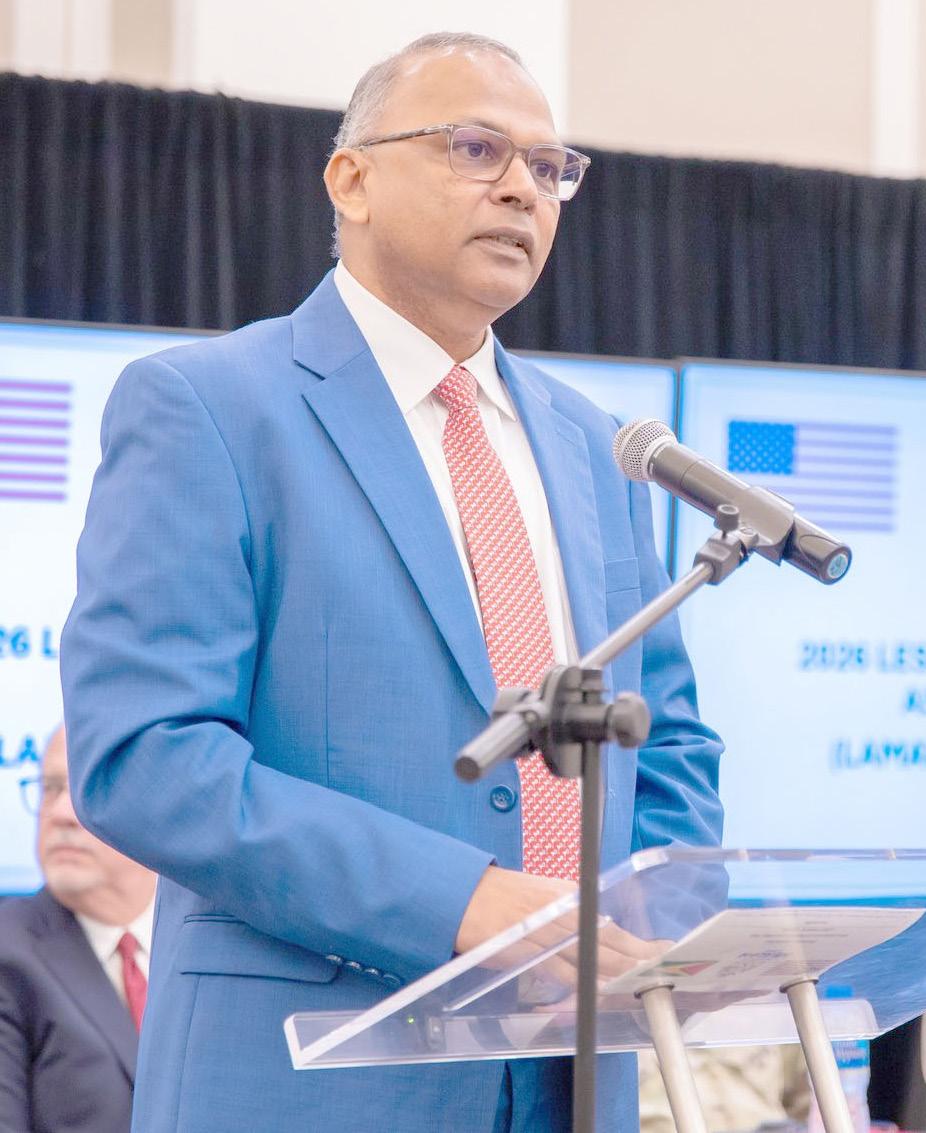
AS the world marked World Health Day on Tuesday, April 7, 2026, under the World Health Organisation (WHO)’s theme “Together for Health. Stand with Science”, Guyana’s Minister of Health Dr. Frank Anthony delivered a pointed message reaffirming the country’s commitment to building a technology-driven, people-centred health system that benefits Guyanese in every corner of the world.
“On this World Health Day, Guyana declares with confidence that the future of health is no longer a distant idea. It is here, and we are building it,” Dr. Anthony said in his official message.
The declaration comes as the government continues to roll out a sweeping digital transformation agenda that is already drawing international attention, and placing Guyana at the forefront of tech-integrated healthcare in the Caribbean region.
Dr. Anthony’s message laid out a sweeping vision anchored in five transformative technologies: Artificial Intelligence (AI) for diagnostic imaging, Electronic Health Records (EHR), telemedicine, drone-based delivery of medical supplies, and robotics.
Critically, the minister was emphatic that the purpose of each innovation must be human: “Technology, in this new era, must never replace humanity. It must deepen it,” he said.
The theme resonates strongly with the WHO’s 2026 global campaign, which underscores the importance of science-driven partnerships, evidence-based decision-making, and multilateral cooperation in building healthier societies.
Guyana’s domestic agenda mirrors this global call to action, but frames it through the lens of eq-
uity, ensuring that progress reaches the hinterland mother, the child with an early-detectable illness, and the elderly requiring specialist care without travelling hundreds of kilometres to access it.
Among the most advanced pillars of Guyana’s digital health strategy is its telemedicine network. What began in 2022 as a pilot programme in four Amerindian communities in Region Nine (Upper Takutu-Upper Essequibo) has expanded rapidly into one of the most extensive telemedicine networks in the Western Hemisphere.
As of early 2026, 130 telemedicine sites are operational across the country, with an additional 50 sites planned for development during the curse of the year, according to an announcement made by Dr. Anthony. At each site, patients in remote hinterland and riverine communities can connect with specialists at the Georgetown Public Hospital Corporation (GPHC) through video consultations, real-time ultrasound, and digital diagnostic tools. The system also sup -
ports teleconsultations, nursing education, disease surveillance, and emergency medical evacuations.
A DECISIVE STEP
Guyana’s healthcare system took another decisive step into the digital age in January 2025 when the GPHC officially launched its Electronic Health Record (EHR) system at the Festival City Polyclinic under the guiding principle of “One Patient, One Record”.
The system ensures that wherever a patient seeks care within the public health network, their complete medical history follows them securely and digitally, thereby reducing duplication, improving accuracy, and enabling smarter clinical decision-making.
The Ministry of Health signed a US$3.3 million contract with RioMed Limited for the national rollout of the EHR system, with the first phase at GPHC expected to be fully operational by mid-2026.
GPHC Chief Executive Officer (CEO) Robbie Rambarran confirmed that
by the end of 2026, patient records across public health facilities will be integrated into the unified system.
A mobile application
allowing patients to book appointments Online is also in development, removing the need for lengthy waiting times at health facilities.
In one of the most visually striking innovations in the nation’s healthcare

transformation, the government is deploying drone technology to deliver critical medical supplies to communities that are otherwise difficult or impossible to reach by road.
President Dr. Irfaan Ali had announced in August 2025 a nationwide dronebased blood delivery system, designed to work in full coordination with Guyana’s national blood bank.
“If a patient in Port Kaituma, Lethem, or Crabwood Creek needs emergency blood, it can be delivered in record time using drone technology,”
President Ali had declared.
The Ministry of Health has since confirmed that drone delivery testing has begun in remote communities of Region 10, including Wiruni, Ituni, and Malali, assessing the technology’s capacity to transport medicines across
challenging terrain.
Dr. Anthony noted that the tested drone can fly 150 kilometres, and carry a cargo load of 22 pounds.
Artificial Intelligence is also being deployed to modernise diagnostics and pharmaceutical management across Guyana’s public health system.
The Ministry of Health is integrating AI-powered tools for reading and interpreting X-rays and CT scans, thus reducing the

time and cost associated with radiology analysis.
President Ali has noted that the AI tool under acquisition “can do it in seconds”, and will bring down the cost of reading and interpreting scans substantially.
Beyond diagnostics, AI will streamline the distribution of pharmaceuticals and medical supplies, reducing human error and ensuring adequate stock levels at hospitals and health centres nationwide.
Throughout his World Health Day message, Dr. Anthony was careful to anchor the technology agenda in human values, a counterpoint to the risk of digital transformation bypassing the communities most in need.
“Innovation should
never increase inequality. It should eliminate it,” he said, adding: “Progress should never be reserved for the privileged few. It should reach every citizen, in every community, across every region of our country.”
This philosophy is reflected in the government’s broader health infrastructure investments.
Guyana’s World Health Day message places the country squarely within the spirit of the WHO’s 2026 global theme “Together for Health. Stand with Science,” which calls on governments and citizens alike to rely on scientific evidence and multilateral cooperation to confront complex health challenges.
The WHO’s 2026 ob-
servance also anchors a year-long campaign focused on the One Health approach, recognising that human health is inextricably linked to the health of animals, ecosystems, and the planet.
Dr. Anthony concluded his message with a declaration that frames Guyana not as a passive recipient of global health progress, but as an active contributor to its authorship, noting: “In Guyana, we’re not just waiting for the future of healthcare; we’re actively shaping it. All through science, courage, compassion, and an unwavering dedication to every Guyanese life.
The future of health is being written now, and Guyana intends to be one of its authors.”





-
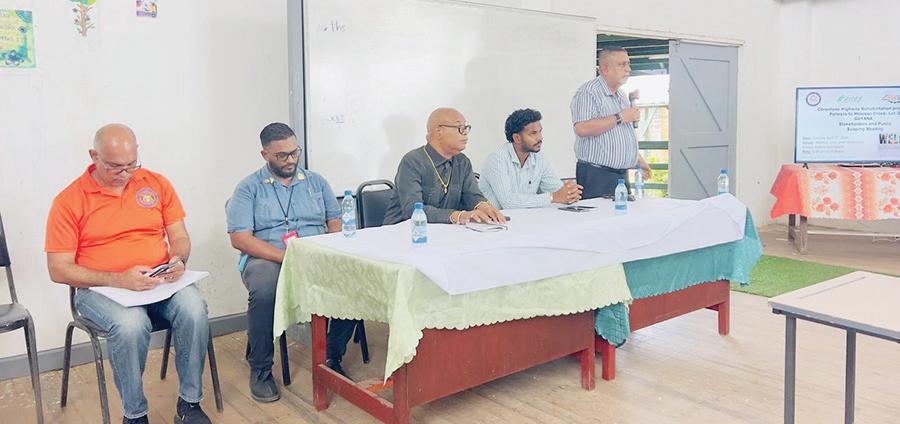

Three stakeholders’ meetings were convened across Region Six on Tuesday as works continue on the expansion of the Corentyne Highway, a major infrastructure project valued at US$604 million
By Bebi Shafeah Oosman
THREE stakeholders’ meetings were convened across Region Six on Tuesday as works continue on the expansion of the Corentyne Highway, a major infrastructure project valued at US$604 million.
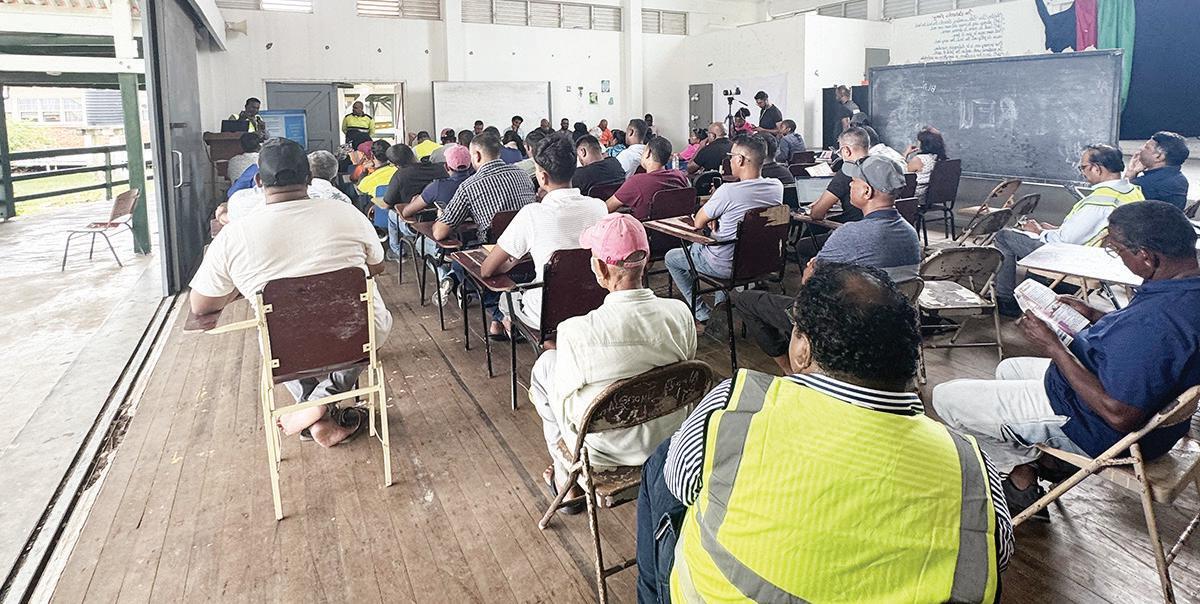
Minister of Public Works Bishop Juan Edghill met with East Berbice-Corentyne residents, contractors, and other key stakeholders to provide updates on the project, and address concerns as construction progresses.
The meetings were held in Sheet Anchor, East Canje Berbice, Leeds Village, Corentyne and Skeldon, Upper Corentyne. During the engagements, Minister Edghill was firm about removing any encumbrances along the road shoulders.
The project is being done in three lots: Namely, Lot 1, starting from East Canje to John’s, Port Mourant; Lot 2, commencing from Bloomfield Village to Number 54 Village, Corentyne; and Lot 3, starting from Number 55 Village, Corentyne to Molson Creek.
During the engagements, Minister Edghill provided an
update on the progress of the highway expansion project, and outlined the upcoming phases of construction.
Discussions focused on improving traffic flow, enhancing road safety, and ensuring the project is executed efficiently while minimising disruptions to communities and businesses along the Corentyne corridor.
Residents and stakeholders were also given the opportunity to raise concerns, ask questions, and share recommendations regarding the ongoing works.
The Minister emphasised the government’s commitment to maintaining open dialogue with communities to ensure the project delivers maximum benefits to the region.
The expansion of the Corentyne Highway forms part of the government’s broader infrastructure development agenda aimed at improving connectivity, reducing travel time, and supporting economic growth along the Corentyne Coast.
At Leeds Village, Minister Edghill told those gathered that the attendance of residents shows that they have interest in the development of their com-
munity.
With US$604 million expected to be expended on the project, Edghill said, “As a matter of fact, it is one of the largest undertakings in terms of road infrastructure that is being done right now in Berbice”.
As he went on to say, “There will be inconveniences,” but he urged residents not to not allow persons who are “anti-development” to dupe them into thinking that “nothing is happening”.
Noting that “everybody in Guyana is a comrade of the PPP/C”, Minister Edghill said that any items placed along the road shoulders will be promptly removed.
He emphasised that no one has special privilege to encumber the roadsides, pointing out that the project was announced some time ago, and that the road alignment had already been clearly established.
Edghill noted that while there will be some dust during the works, contractors are aware that they have to regularly soak the road to minimise its impact.
Residents also expressed their understanding, noting that they can tolerate a few mornings of dust as the project progresses to ensure the necessary development is completed.
Meanwhile, it was also disclosed that close to 100 Guyanese have been hired to work on the project.
According to the minister, a total of $50.1 billion has been invested in community
FROM PAGE 14
roads across Region Six under the administration of President Irfaan Ali, marking an unprecedented level of funding for infrastructure development in the region.
The massive investment represents an injection of funds never before seen for community road upgrades, significantly improving accessibility, transportation, and overall living conditions for residents across the region.
“When the PPP/C does something, it is to bring benefits to Guyana,” the minister stressed.
Meanwhile, Member of Parliament Zamal Hussain, who was also present at the meetings, pointed out that with development comes inconveniences, highlighting: “We have to understand that with this expansion, we will be able to accommodate more vehicles on the road, and we will traverse in a more timely manner. When you look at what is happening in Guyana, you will see that in every village or every community there will be expansion.”
Turning his attention to Black Bush Polder, Hussain pointed out that there is a new scheme being constructed t here, along with a new scheme in Line Path.
Hussain further stressed that the expansion of the Corentyne Highway is one of the many projects ongoing in the region.
While urging “patience”, he said that the government is working to ensure development throughout the country.

WORLD food commodity prices rose in March for the second month in a row, due largely to higher energy prices linked to the conflict escalation in the Near East, according to the latest benchmark measure released Friday by the Food and Agriculture Organization of the United Nations (FAO).
The FAO Food Price Index, which tracks monthly changes in the international prices of a basket of globally-traded food commodities, averaged 128.5 points in March, up 2.4 per cent from February and 1.0 per cent above its level a year ago.
The FAO Cereal Price Index increased by 1.5 per cent from the previous month, driven primarily by higher world wheat prices,
which rose 4.3 per cent due to drought-related deterioration of crop prospects in the United States of America and expectations of reduced plantings in Australia due to higher fertiliser costs. Global maize quotations edged up slightly, as ample global availability offset concerns over fertiliser affordability and indirect support from greater ethanol demand prospects linked to the rising energy prices. The FAO AllRice Price Index declined by 3.0 per cent in March, driven by harvest timing, weaker import demand, and currency depreciations against the United States dollar.
"Price rises since the conflict began have been modest, driven mainly by higher oil prices and cushioned by ample global cereal supplies,"
said FAO Chief Economist Máximo Torero (video interview). "But if the conflict stretches beyond 40 days with high input costs with current low margins, farmers will have to choose: farm the same with fewer inputs, plant less, or switch to less intensive fertiliser crops. Those choices will hit future yields and shape our food supply and commodity prices for the rest of this year and all of the next."
The FAO Vegetable Oil Price Index increased by 5.1 per cent from February to stand 13.2 per cent higher than its year-earlier level. International quotations for palm, soy, sunflower and rapeseed oil all rose, reflecting spillover effects from the sharp increases in crude oil prices, which catalysed
expectations of stronger demand for biofuels.
The FAO Meat Price Index increased by 1.0 per cent from the previous month, driven by a surge in pig meat prices in the European Union ahead of strengthening seasonal demand, along with higher world bovine meat prices, particularly in Brazil, where exportable supplies

were curtailed by tightening cattle availability. Ovine and poultry meat prices declined, partly due to logistical constraints limiting access to markets in the Near East.
The FAO Dairy Price Index increased by 1.2 per cent, driven primarily by higher quotations for milk powders amid a seasonal decline in supplies in Oceania. International cheese prices declined further in the European Union driven by higher production and weak export demand, while rising in Oceania for the opposite reasons.
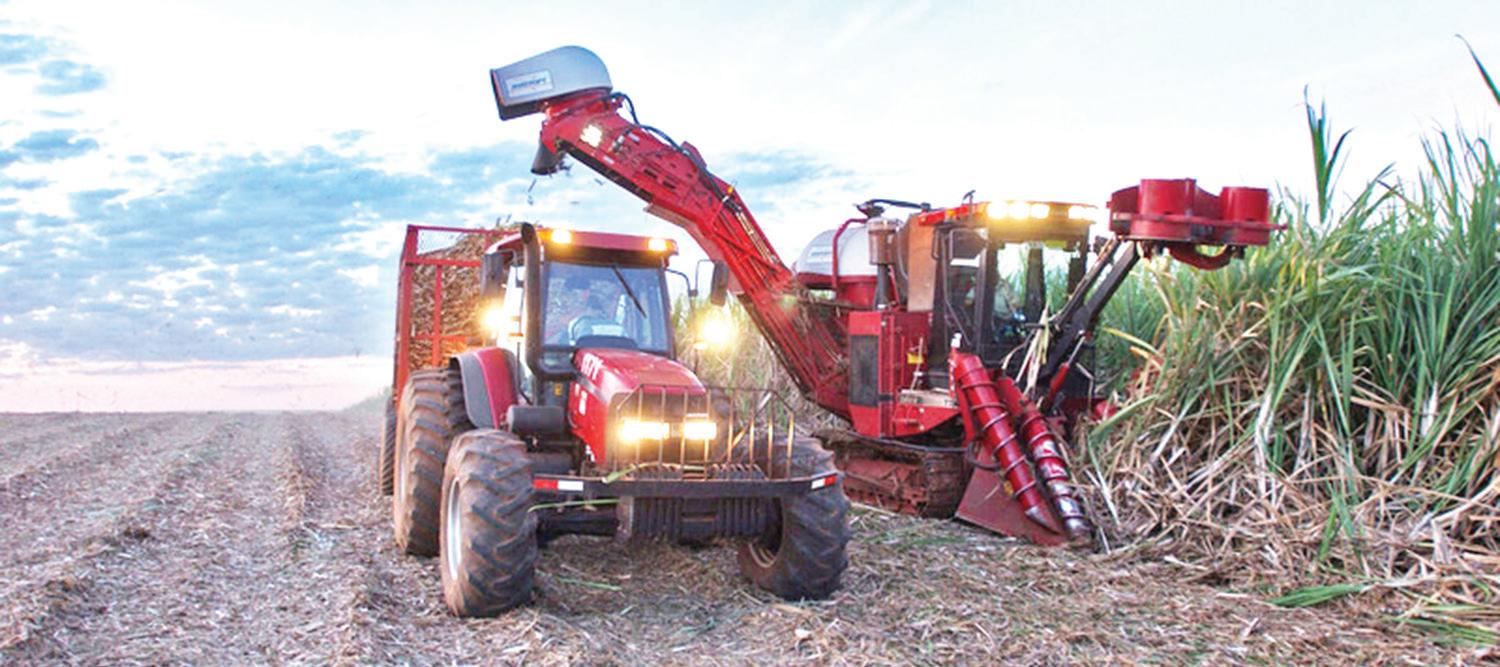
The FAO Sugar Price Index increased by 7.2 per cent in March. Rising expectations that Brazil, the main sugar exporter, would use more sugarcane to produce ethanol to counter higher international crude oil prices overweighed a generally favourable global supply outlook for the current season, supported by good harvest progress in India and Thailand.
FAO also released updated assessments of global wheat and maize production in 2026, both of which appear on course to drop modestly from high levels, though remaining above their past five-year averages.
With most of the world’s wheat crop already planted, FAO forecasts worldwide harvest of 820 million tonnes, a 1.7 per cent drop from the previous year. Lower prices and adverse weather conditions are anticipated to curb wheat output in the European Union, the Russian Federation, and the United States of America, while production in India is expected to hit a record high. Improved rainfall is expected to improve yields and overall outputs in the Islamic Republic of Iran, Türkiye, and across North Africa.
However, the escalation of conflict in the Near East, with associated higher energy and fertiliser prices and disruptions to production and supply chain routes, as well as the prospect of some
farmers shifting towards less fertiliser-intensive crops, has introduced additional uncertainty into the outlook for wheat and maize, according to the new Cereal Supply and Demand Brief.
Maize harvesting is already underway south of the equator, and output is expected to be above average in Argentina, Brazil, and South Africa.
FAO has also updated several forecasts, now projecting global cereal production in 2025 at 3 036 million tonnes, 5.8 per cent higher than the previous year. World rice output is projected to expand by 2.0 per cent, driven by Bangladesh, Brazil, China, India, and Indonesia, to reach a record 563.3 million tonnes.
World cereal utilisation in 2025/26 is forecast to rise by 2.4 per cent on the year to 2 945 million tonnes, while global cereal stocks will likely expand by 9.2 per cent to 951.5 million tonnes. The world cereal stocks-to-use ratio at the end of seasons in 2025/26 is forecast to stand at 32.2 per cent, underlining an overall comfortable global supply situation. FAO’s forecast for world trade in cereals in 2025/26 stands at 505.3 million tonnes.
The Agricultural Market Information System (AMIS), hosted by FAO, also published its monthly Market Monitor on Friday. Noting that the closure of the Strait of Hormuz has sent shockwaves across the global economy, with notable spillovers to the agricultural sector, the new edition of the report offers further details on the potential direct and indirect impacts of rising energy, fertiliser and transportation costs on food and agriculture.
FAO Chief Economist Torero recently detailed risks related to the Strait of Hormuz at a UN press briefing, and FAO recently published a report on Global Agrifood Implications of the 2026 Conflict in the Middle East
TARGETED mathematics camps introduced by the Ministry of Education are providing additional academic support to Caribbean Secondary
structured to address specific topic areas rather than covering the entire syllabus in a single session. This allows students to attend only the sessions where they

Education Certificate (CSEC) students, as part of a broader push to improve performance in the subject.
This was according to Chief Planning Officer Mischka White-Griffith during her appearance on Starting Point.
She said the initiative builds on existing interventions which include the deployment of mathematics monitors across regions but offers a more focused approach to learning.
“But we wanted to add to that with the maths camps for the CSEC students, so that they can have that one on one with a teacher… and in a smaller setting, they may be more confident to say, “Miss, I don’t get question two, where am I going wrong with this?”” she said.
White-Griffith added that the camps are
identify locations most convenient for their children.
White-Griffith emphasised that while the camps are already showing results, they form part of a wider, long-term strategy to address challenges in
mathematics education.
“The mathematics and the challenges of mathematics, unfortunately, is a worldwide problem. But that doesn’t mean that we will sit and say… this is happening in every country,” she said.
To this end, White-Griffith said that success in mathematics does not begin at the examination level but is built throughout a student’s academic journey.
“To pass NGSA or CSEC maths, it
doesn’t happen in Grade Six or Form Five. It happens throughout the system,” White-Griffith said while underscoring the need for continued interventions at all levels of education.
need the most support.
“With the maths camps, we are focusing on topics per session… you do not have to attend every session if you do not need work on every topic. You come in for the content that you need the most support,” she said.
Against this backdrop, White-Griffith noted that both students and teachers have responded positively to the initiative, particularly the targeted nature of the sessions.
“Because it’s focused, it means that we leave that class… understanding that particular math content, so the focus is what both the teachers as well as the students like,” she added.
The camps, she said, are being offered free of cost, with schedules made available on the ministry’s platforms, allowing parents to

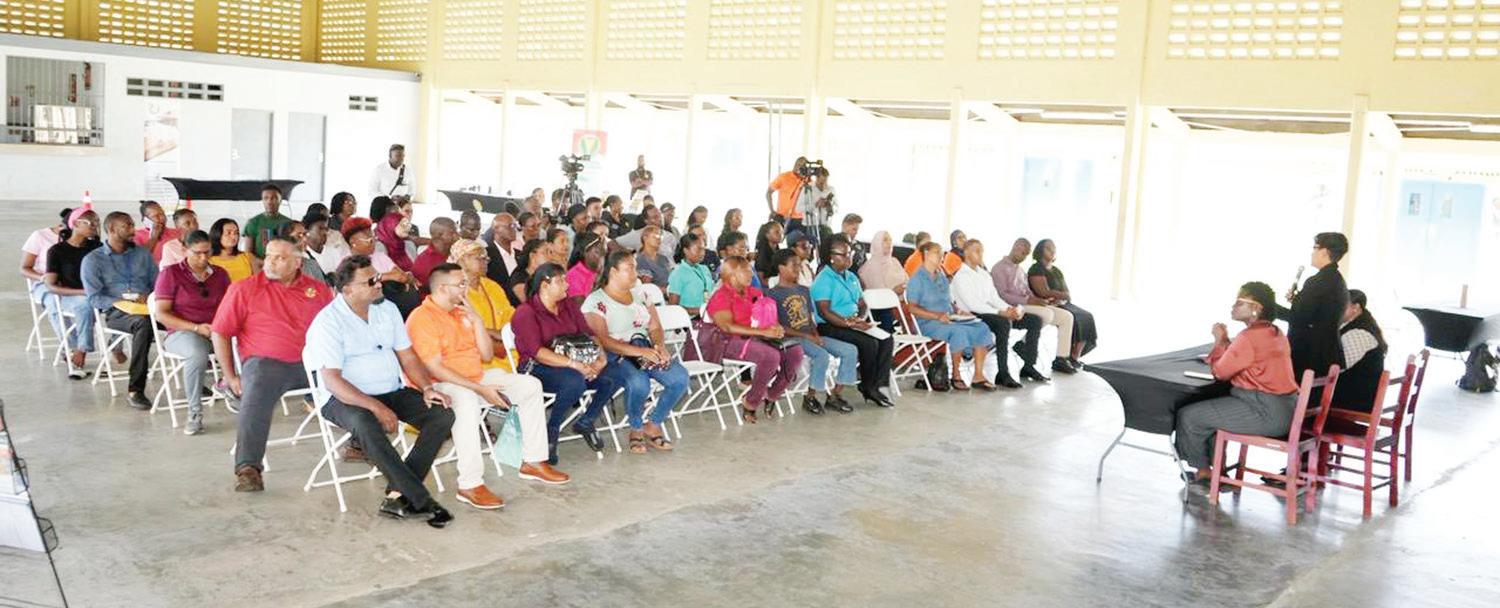
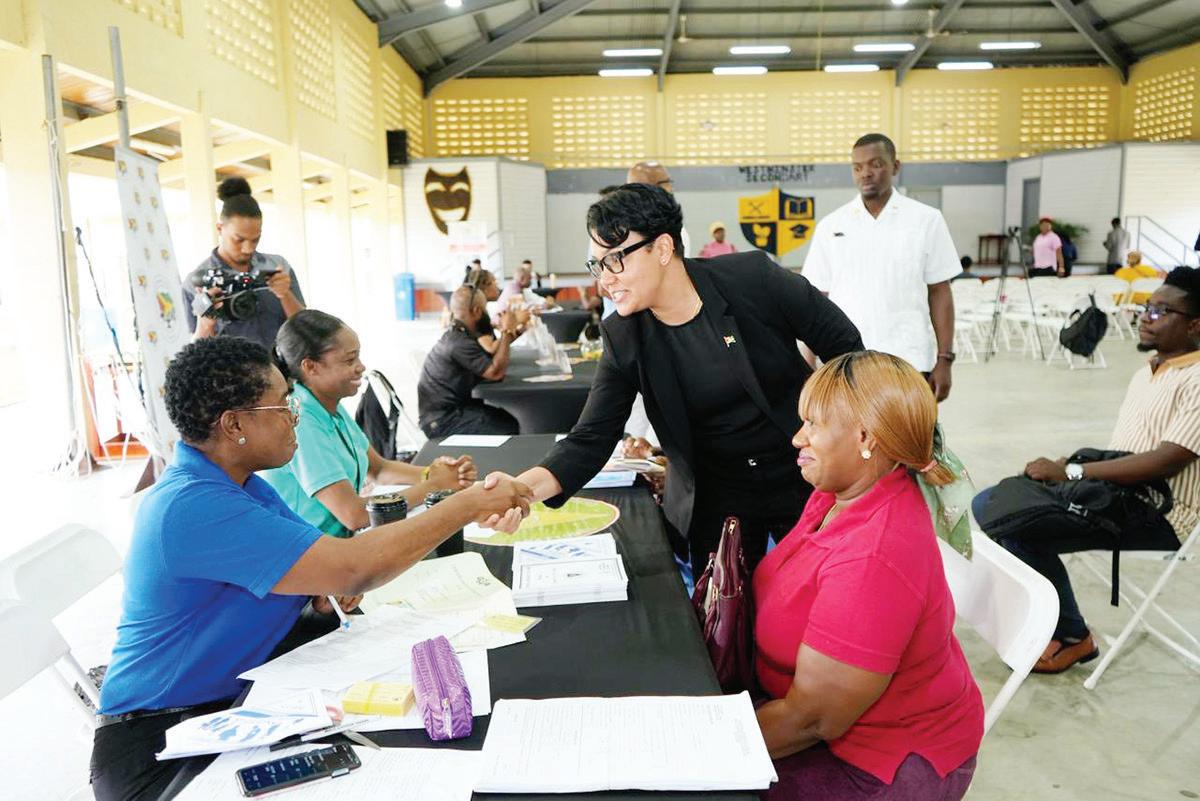
The Ministry of Tourism, Industry and Commerce has empowered over 400 businesses through government-led business clinics designed to strengthen entrepreneurs and support small and medium-sized enterprises across Guyana
THE Ministry of Tourism, Industry and Commerce has empowered over 400 businesses through government-led business clinics designed to strengthen entrepreneurs and support small and medium-sized enterprises across Guyana.

Speaking at the recent business clinic held in Westminster Village, Region Three, on Tuesday, Minister Rodrigues
TURN TO PAGE 20

A post-mortem examination conducted on Tuesday, April 7, 2026 has confirmed that sevenyear-old Isabella Dabadial of Fyrish Village, Corentyne, Berbice, died as a result of manual strangulation.
The examination was performed by Govern -
believed to have been a suicide attempt. She and the two children were taken to the Port Mourant Public Hospital, where Isabella was pronounced dead on arrival. The suspect remains hospitalised in stable condition under police guard.
FATHER RECOUNTS

ment Pathologist Dr. Vivekanand Brijmohan, at Bailey’s Funeral Home, Number Four Village, West Coast Berbice.
Isabella died on Sunday, April 5, 2026, in an incident that has since sent shockwaves through the Fyrish community.
Police say the child was allegedly killed at her home by her 26-year-old mother, Sarah Elizabeth Shivpersaud, who is also accused of attempting to take the life of her oneyear-old son.
Investigators reported that the woman later injured herself in what is
claimed that during a subsequent call, he was shown the children lying motionless.
“It looked like they were sleeping, and she told me it was too late,” he added. He said he immediately contacted persons nearby, who later made the
discovery.
The grieving father said he is now struggling to come to terms with the loss of his daughter.
Meanwhile, relatives of the suspect have disputed claims that there was no food in the home, which police said was among the
reasons given by the woman for doing what she did.
Family members said they spoke with Shivpersaud on Sunday morning, and were told that the family had already eaten breakfast and that she planned to cook pumpkin and rice for lunch.
Her mother, Lalita Brijlall, also confirmed that she had spoken with her daughter prior to the incident.
The body of the child has since been handed over to relatives for burial. Investigations are ongoing.
The child’s father, Kirwayne Dabadial, an agronomist attached to the Albion Estate, has since spoken out, alleging that he received a warning shortly before the incident. According to him, he had left the home about two weeks prior after discovering what he described as inappropriate messages on the woman’s phone.
“She messaged me and told me she gave me fifteen minutes to get back home or I would regret it,” he said.
Dabadial further

FROM PAGE 18
noted that the clinics provide a ‘one-stop
shop’ for entrepreneurs to access government services and receive ex-
pert guidance. “We are serious about ensuring that our pop -
ulation is educated, is protected, is healthy, and that our business owners
can thrive in that healthy economic environment that we are creating here

in Guyana,” she said She also revealed that more than 16 clinics have already been conducted, benefitting over 400 businesses.
Minister Rodrigues signalled the government’s ongoing commitment to providing entrepreneurs with the support they need to succeed in today’s competitive economy.
Minister Rodrigues highlighted that one of the major challenges facing small businesses is non-compliance, noting that “when opportunities arise, they are unable to benefit because they do not have the necessary documentation in place.”
Entrepreneurs attending the clinics have access to key agencies, including the Guyana Revenue Authority, the National Insurance Scheme, the Deeds and Commercial Registry, the Local Content Secretariat, the Guyana National Bureau of Standards, the Guyana Tourism Authority, the Small Business Bureau, the Competition and Consumer Affairs Commission, and the Department of Commerce.
Services provided include business registration, tax and social security compliance, assistance with grant and loan applications, business plan writing training, and awareness sessions on regulations and opportunities.
An additional nine clinics are planned for this year, with a renewed focus on bringing critical government services directly into communities. By bringing these services directly to communities, the government is making it easier for small and medium-sized enterprises to grow while positioning themselves to benefit from national development opportunities. (DPI)

DEMERARA Distillers Limited (DDL), in collaboration with the Guyana Tourism Authority (GTA), on Tuesday, launched its four-day El Dorado Bartender Training at Black Magenta, Georgetown Club, bringing together bartenders from leading bars and restaurants across the country.
According to a press release, now in its second year, the initiative highlights DDL’s sustained investment in bartender development, reinforcing a long-term approach to building capacity within the local hospitality sector.
By continuing this programme, DDL ensures that industry professionals are consistently exposed to evolving techniques, global standards, and the level of professionalism required to elevate Guyana’s service offering.
Facilitated by El Dorado’s Global Brand Ambassador and acclaimed UK mixologist Oren Coleman, the training focuses on refining practical skills while introducing internationally recognised approaches to mixology
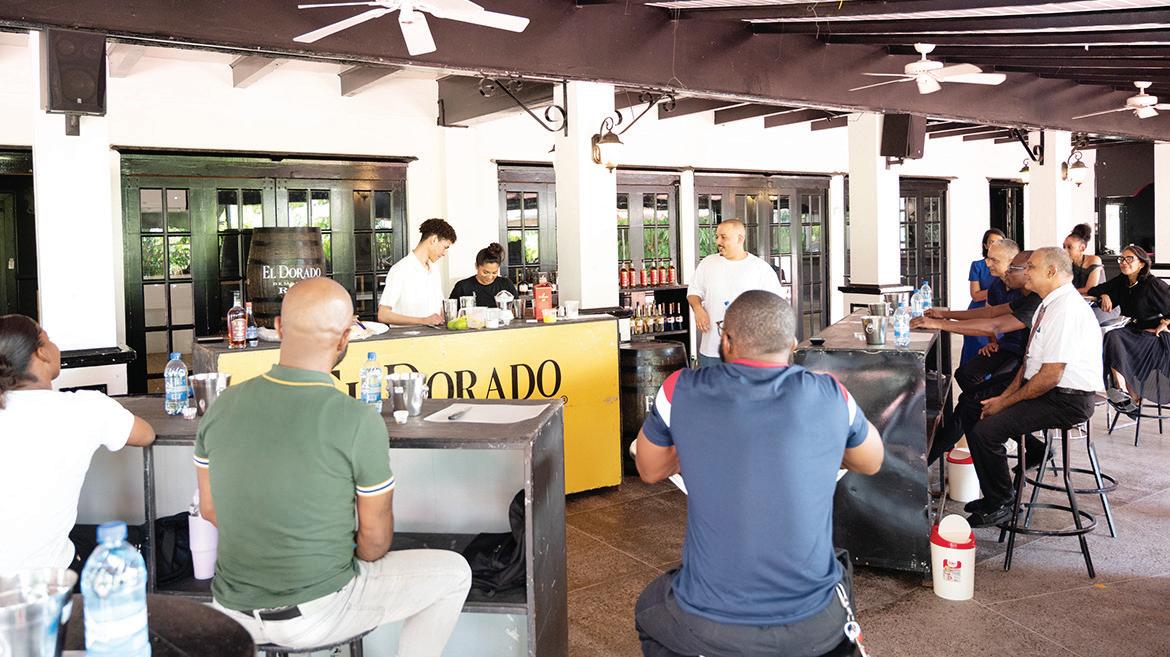
and service.
Participants represent a wide cross-section of establishments, creating a collaborative environment that encourages knowledge-sharing, innovation, and the exchange of real-world experiences across the industry.
At the conclusion of the training, participants will have the opportunity to compete in the Guyana leg of the El Dorado Rum Heritage Global Cocktail Competition. Now in its third year, the competition invites bartenders from around the world to interpret and showcase the rich heritage of El Dorado, which dates to 1670.
The Guyana leg of the competition will be judged by Santi Dady, El Dorado Brand Manager (USA); Oren Coleman, internationally acclaimed UK mixologist; and Raveena Mangal, El Dorado Brand Manager (Guyana).
The winning bartender will advance to the Global Finals, hosted in Guyana at the iconic Diamond Distillery, Guyana’s
last remaining rum distillery, where eight competitors from the United States, United Kingdom, Canada, Barbados, Norway, the Netherlands, and Guyana will vie for the title.
The Global Finals will provide participants with an immersive cultural experience, allowing them to explore Guyana’s heritage and lifestyle before presenting their final creations to a distinguished panel of judges: Sharon Sue-HangBaksh, Master Blender at DDL; Daniele Dalla Pola, International Rum
and Cocktail Specialist (USA); and Sasha Siegel, Bar Owner and celebrated bartender (Canada).
Speaking on the initiative, Sharda VeerenChand, Marketing Director at DDL, noted, “As we enter the second year of this programme, we are happy to continue investing in the development of Guyana’s bartending community. This initiative is more than just skills training, it is about creating consistency, raising standards, and building a strong pipeline of talent that can not only repre-
sent Guyana with confidence on the global stage but showcase the best of what Guyana has to offer to our visitors. Our partnership with the GTA allows us to not only strengthen the industry locally but also share our rich rum heritage and culture with the world.”
Kamrul Baksh of the GTA added, “Our continued collaboration with DDL reflects a shared commitment to developing a highly skilled and professional hospitality workforce.
“In its second year, this training programme
is already demonstrating its value in building capacity and improving service standards across the sector. By investing in people and promoting Guyana’s world-renowned rum heritage, we are strengthening our position as a destination that delivers quality, authenticity, and excellence in every visitor experience.”
Partnerships like these continue to create new opportunities for local industry while elevating Guyana’s presence on the global stage.

THE Guyana Police Force has reiterated its commitment to safeguarding children, assuring the public that all matters involving minors continue to receive priority attention.
In a statement on Tuesday, addressing recent public concern, the Force emphasised that reports involving children are handled with urgency and in coordination with relevant authorities and partner agencies.
evant authorities and partner agencies,” the Police said, noting that this approach aligns with the Government’s broader child protection framework.
“All reports involving children are treated seriously and are addressed in collaboration with the rel -
The Force underscored that cases relating to missing children, abuse, neglect and other threats to a child’s
safety are being actively monitored and thoroughly investigated.
Authorities also stressed that they remain vigilant and are committed to ensuring timely intervention and appropriate action in all such matters.
“The Guyana Police Force wishes to assure
the public that matters involving children continue to receive close attention,” the statement noted, adding that every lawful effort is being made to protect vulnerable minors.
The public is being encouraged to share any information that may assist investigations, with
police highlighting that timely reporting and co-operation are critical to effective response.
The Force reaffirmed its ongoing commitment to protecting the nation’s children and supporting all lawful efforts aimed at ensuring their safety and wellbeing.
THE Consulate General of the Co-operative Republic of Guyana in Toronto, Sunday evening, hosted a special book launch and reception for newly-published literary work of four Canada-based Guyanese authors, held at the Consulate at 505 Consumers Rd., Toronto.
Featured were Janet
had a chance to experience or were aware of certain struggles and events that took place.
He described the presenting authors as the "cream of the crop" in our Canadian diaspora and thanked them for continuing to promote Guyana’s rich history, heritage and culture through their literary works and poetries.
ry offering hope, guidance, and connection for families navigating similar experiences, while highlighting healing and resilience. Natalie is a firsttime author whose debut book was inspired by her deeply personal journey alongside her daughter through the discovery, diagnosis, and surgical treatment of scoliosis.

Naidu’s ‘Along Many Roads’; Natalie ScottChin’s ‘Spinal Curve –Can I Still Dance’; Nirmala Ramprasad’s ‘All About Guyana’; and Dennis Hosannah’s ‘Kilmanack’.
Honorary Consul, Mr. Mani Singh, offered brief remarks and congratulated the authors on their achievements which he said stemmed from their passion, commitment, dedication and hard work in the literary field.
The Honorary Consul was especially grateful that some of the work provided glimpses into Guyanese history that few
Emcee Gillian Williams gave a brief synopsis of the four authors and their works stating that Janet Naidu’s ‘Along Many Roads’, is a collection of poetry exploring themes of despair, alienation, homeland, resilience, and aspiration. Janet is an educator, a writer and poet. She has published five books. Her first book, Winged Heart published in 1999 was short-listed for the Guyana Prize for Literature, Poetry category, in 2000.
Natalie Scott-Chin’s ‘Spinal Curve: Can I Still Dance?’ is a powerful sto-
the historical journey of communal farming and community building in Guyana.
After completing his secondary education, Den-
Nirmala Ramprasad’s ‘All About Guyana’ is a children’s book that invites young readers to connect with Guyanese culture through storytelling, everyday life, and meaningful family experiences. Nirmala is an author, educator, community leader, and the President of Green Dupatta Charitable Organization.
Dennis Hosannah’s, ‘Kilmanack’ is a story about a group of young men who ventured into Guyana’s hinterland to pursue communal farming.
According to Ms. Williams, the work reflects
nis was selected as a member of the original Guyana Young Farmers’ Cooperative Society and his work with this group is outlined in his novel Kilmanack.
The books are available for purchase by contacting the authors through their various social media platforms.


- says injuries raise doubts over jet ski accident claim

AS investigations continue into the death of 16-year-old Aarif Azeez, his family has raised serious concerns about the circumstances under which he died, pointing to injuries they believe are inconsistent with a jet ski accident.
Aarif, of Lot 28 Adventure Village and a student of Al Madina Academy, was found after being reported missing Easter Monday following an incident on Easter Monday at Hot and Cold Lake, Sand Pit/Red Village, Region Two.
Relatives said the discovery of multiple injuries, including a broken foot and trauma to the head, has left them searching for answers.
His sister, Malika Azeez, noted that his face appeared bloodied and questioned whether a fall from a jet ski could have caused such extensive harm. She suspects foul play might have been involved.
According to the family, Aarif left home earlier that day with a cousin and several acquaintances. However, they stressed that these individuals were not considered his close friends. He was expected to return by mid-afternoon but did not, prompting concern.
After checking his location and seeing he was
in the Onderneeming area, Malika alerted their mother, Woletta Hopkinson, that something seemed wrong. Later, the family was informed that Aarif had reportedly fallen off a jet ski while attempting a manoeuvre.
His grandmother, Shafeeza Zameena, described him as a quiet and reserved teenager and said she repeatedly tried to contact him without success. The family remains devastated by his sudden passing.
Police reports indicate that the incident occurred around 16:30 hrs. Aarif had been at the lake with four individuals for a recreational outing involving two jet skis. He was reportedly operating one of the vessels when it began running low on fuel.
After advising a companion to continue ahead, he attempted to manage the situation before being seen riding in a zigzag pattern and falling into the water approximately 50 feet from shore.
Despite immediate efforts by a companion to locate him, he was not found at the time.
Police are continuing their investigations as relatives call for a thorough probe into the events leading up to his death.
Guyana Inc. has officially launched its ProArchers Sports Hub at Eccles, East Bank Demerara, marking a significant milestone in the advancement of archery in Guyana.
The launch coincided with the organisation’s seventh anniversary and the observance of the International Day of Sport for Development and Peace on April 6, underscoring its commitment to expanding access to the sport.
The Sports Hub provides a central location where athletes, clubs, and
Mangra added that, beyond retail, the hub will offer hands-on guidance to ensure archers select compatible equipment suited to their needs, enhancing performance and development.
Further expansion of the facility is already underway. With the completion of the building and a mini archery range expected by the end of this month, persons will be able to walk in to view a wide variety of equipment, receive information on archery specifications, and participate in supervised try-outs of various types of bow shoot-

President of ProArchers Guyana and Archery
beginners can access a wide range of archery equipment, gear, and accessories locally, addressing longstanding challenges associated with sourcing supplies overseas.
ProArchers Guyana is the sole authorised dealer for Sanlida products in the country, offering what it says are reliable and affordable options for the local and regional market.
The initiative comes at a pivotal time as Guyana prepares to host the Caribbean Development Championships (CDC) for the first time in October 2026.
The facility is expected to play a key role in athlete preparation and the continued growth of the sport.
President of ProArchers Guyana and Archery Equipment Specialist, Anand Mangra, said the hub is part of a broader vision to position Guyana as a regional centre for archery supplies and expertise.
He noted that the facility will support not only local archers but also athletes and emerging clubs across the Caribbean, many of which face difficulties accessing equipment.
ing under the guidance of internationally certified coaches.
Head Coach and Ambassador for Peace, Narda Mohamed-Mangra, emphasised that the initiative reflects ProArchers’ ongoing focus on athlete development.
“Creating the right environment with the right equipment and support is essential for performance. We continue to adapt and improve to ensure our athletes have every opportunity to succeed,” she said.
The organisation also acknowledged the support of President Dr. Mohamed Irfaan Ali for sports development, noting that national efforts to expand opportunities for athletes align with ProArchers’ mission to remove barriers to participation.
The ProArchers Sports Hub is expected to serve not only Guyana but the wider Caribbean, improving access to equipment, technical knowledge, and training opportunities as the sport continues to grow in the region.






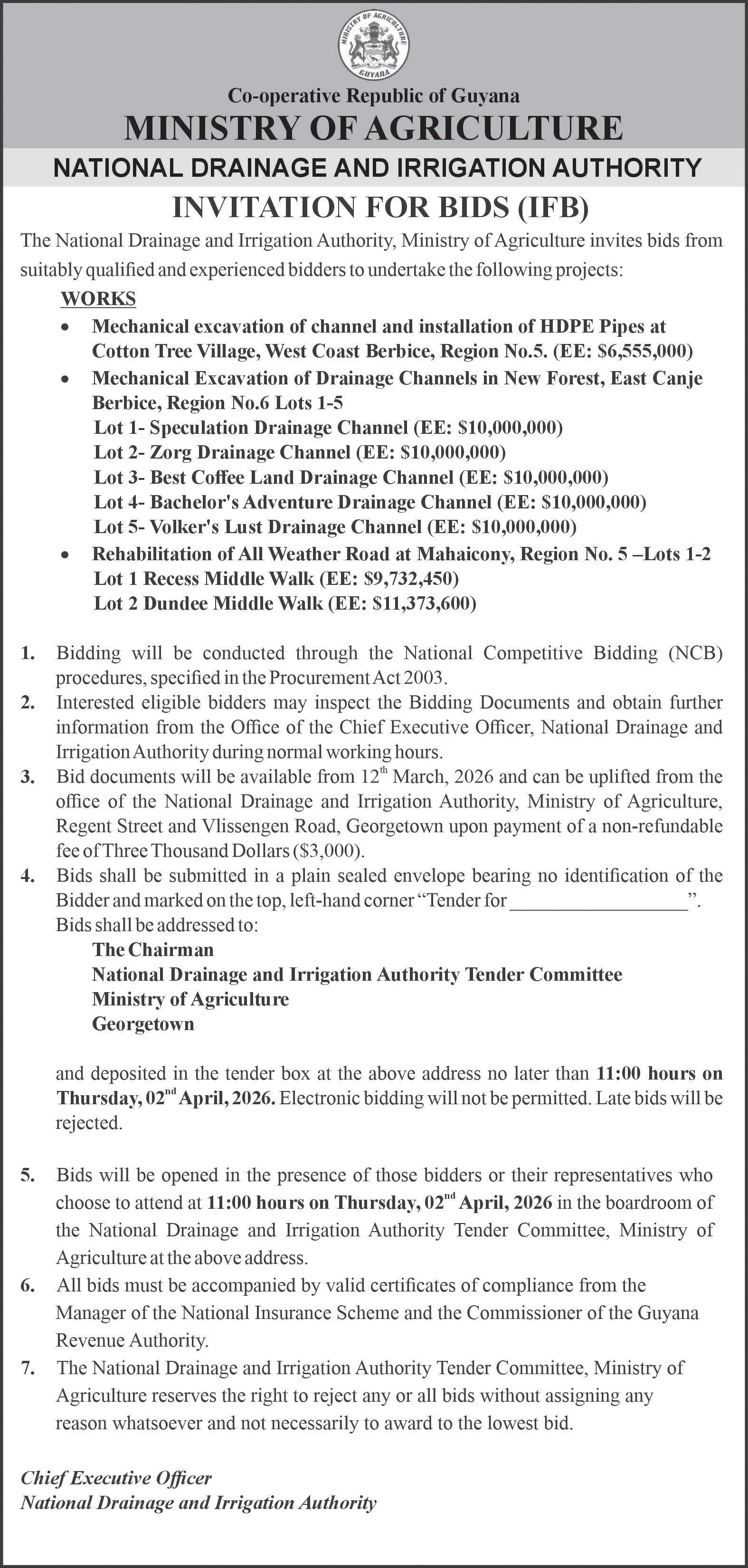




(ESPNCRICINFO) -
Heavy rain in Guwahati delayed the start of the match between Rajasthan Royals (RR) and Mumbai Indians (MI) by more than two and a half hours. And when play finally began at 10:10 pm, there was another storm awaiting MI.
RR’s openers Yashasvi Jaiswal and Vaibhav Sooryavanshi ransacked 80 runs in five overs.
Sooryavanshi was eventually dismissed for 39 off 14, but Jaiswal rampaged unbeaten through the 11-over innings, scoring 77 off 32 to power RR to 150 for 3.
In reply, MI lost three wickets inside the powerplay, which was reduced to 3.2 overs, and were eventually restricted to 123 for 9. Jofra Archer had provided the first breakthrough, and Sandeep Sharma, Nandre Burger and Ravi Bishnoi picked up two wickets apiece. RR moved to the top of the points table with three wins in three games, while MI suffered their second successive defeat.
Sooryavanshi and Jaiswal don’t need to be told to be aggressive, and that natural instinct was heightened in a rain-shortened contest.
If there was any moisture in the pitch due to the weather, there was no evidence of it in the powerplay. MI chose to give the first over not to Trent Boult but to Deepak Chahar and Jaiswal tore into him: 4, 6, 4, 0, 4, 4. Then came the highly-anticipated battle: 15-year-old Vaibhav Sooryavanshi facing Jasprit Bumrah for the first
time in his fledgling career. How would he approach one of the greatest bowlers in the game? Bumrah’s first ball was a slot ball.
Sooryavanshi played the delivery and not the deliverer and smashed it over the longon boundary.
The strike rotated back to him over the next two balls, and when Bumrah tested him with an off-pace delivery, Sooryavanshi swivelled and pulled him for another six over deep backward square leg. Round one - 13 off 5 balls - to Sooryavanshi.
Boult came on for the third over and Jaiswal cleared the deep square leg boundary twice and Sooryavanshi once, and by the time the 20-ball powerplay was finished, RR were 59 for 0.
Jaiswal brings out his best Jaiswal is usually boom or bust against MI. Before this match, he had two centuries and five scores of less than 15 in eight innings against them. On Tuesday, he
went boom again, smashing four fours and three sixes in his first nine deliveries. He got to fifty off 23 balls by cracking Hardik Pandya through point.
Sooryavanshi fell to the golden arm of Shardul Thakur, Dhruv Jurel and Riyan Parag fell to the mystery spin of AM Ghazanfar, but Jaiswal didn’t stop. He clobbered Bumrah for a straight six and picked three fours off Shardul in the final over to take RR to 150.
MI fail to take off
Like they had with the ball, MI suffered 20 balls of powerplay mayhem with the bat. Facing an asking rate of nearly 14, Ryan Rickelton swung Jofra Archer for six over deep midwicket but then top-edged another pull and was caught by Jurel running back.
Suryakumar Yadav paddled Nandre Burger for the flattest of sixes over fine leg but was deceived by a hardlength off-cutter and caught at deep backward square a ball later. Rohit was pinned
(Wednesday April 08, 2026)
CUMMINGS ELECTRICAL COMPANY LTD 83 Garnett Street, Georgetown (Tel:225-6158)
Answers to yesterday’s quiz:
(1) Abhishek Sharma-141 (SRH vs Punjab Kings, Hyderabad)
(2) Mitchell Starc - 5/25 (DC vs SRH, Visakhapatnam)
Today’s Quiz:
(1) Who struck most sixes in a single match in IPL 2025?
(2) Who hit most sixes in IPL 2025?
Answers in tomorrow’s issue
lbw for the sixth time in 13 IPL innings by Sandeep. While RR’s powerplay score was 59 for 0; MI responded with 29 for 3.
Royals control the chase
The pitch had become a little tacky as the match progressed and the RR quicks adapted by using their cutters to good effect.
Leg-spinner Ravi Bishnoi extended his lead at the top of the Purple Cap charts by dismissing Hardik and Tilak Varma in his first over, reducing MI to 46 for 5 after five overs. He should have had a
third in his next over, when Sherfane Rutherford miscued to long-on but Jaiswal dropped the chance.
With the required rate soaring to past 17 an over, Naman Dhir and Rutherford tried to revive the chase with a partnership of 47 in 17 balls.
But any slim hope MI may have had was extinguished when Sandeep dived forward at short third to take a low catch to end Rutherford’s innings. Burger, Sandeep and Archer closed out the innings to seal RR’s victory by 27 runs.

SOUTH AFRICA RACING TIPS
GREYVILLE
08:25 hrs Dylan’s Champ
09:00 hrs Axis Power
09:35 hrs Connery
10:10 hrs Intuitive Spirit
10:45 hrs Tirpitz
ENGLISH RACING TIPS
NOTTINGHAM
08:17 hrs Infraad
08:47 hrs Tornado Tower
09:22 hrs Final Appeal
09:57 hrs Fiorella Princess
10:32 hrs Dryburgh
11:07 hrs Powerful Response
11:40 hrs Light The Night Up 12:10 hrs Cavolo Nero
FONTWELL
09:30 hrs Hardly Surprising
10:05 hrs Lyle View
10:40 hrs Rip Wheeler
11:15 hrs Ferret Jeeter
11:47 hrs Valirann Gold 12:17 hrs Frank Stamper KEMPTON
12:00 hrs Romantic Symphony 12:30 hrs Go Rombaud 13:00 hrs Heraldry 13:30 hrs Ash Wednesday
hrs Rastinet
hrs Arry Up
hrs Watermelon Sugar 15:30 hrs Take The Boat
IRISH RACING TIPS
GOWAN PARK 08:30 hrs Neolithic 09:05 hrs Hassaniya 09:40 hrs Unfamiliar 10:15 hrs Sinmara 10:50 hrs Coincidental Glory 11:25 hrs Electric Beauty 11:55 hrs Matt Connor 12:25 hrs Zanahiyr
AMERICAN RACING TIPS
KEENELAND Race 1 Waggley Race 2 Outlaw Empire
4 Expecto Patronum
5 Integration
6 Answered Prayers

(CWI) - THE 2026 West Indies Championship is set to deliver another season of exciting, high-quality cricket when it bowls off on Sunday, April 12 with a new format featuring the first of three rounds of bilateral matches among the six franchises.
Serving as a prelude to a packed summer of cricket across the region, the tournament will see players competing fiercely for international selection while upholding the intensity and standards expected of the Caribbean’s premier first-class competition.
Reigning champions Guyana Harpy Eagles, who have dominated the championship over the past decade with eight titles, including three consecutive wins, will open their campaign against the Windward Islands Volcanoes in Antigua.
They have a favoured matchup against the Windwards, going unbeaten in the last five meetings inclusive of three wins and a draw.
The last two matches have seen thumping wins for the Guyanese franchise, with captain Tevin Imlach playing a starring role with centuries in both matches to enable his team’s title pursuit.
There is no secret that the Harpy Eagles are keen to continue their trend of reigning supreme in the region’s first-class tournament and captain Imlach is ready to lead with purpose.
“The Windward Islands Volcanoes have a competitive bunch of players, with some young talent who are eager to showcase their skills, but I believe we have the team capable of coming out on top against them when the tournament gets going.”
On the other side, the
Windward Islands Volcanoes are on the hunt for improved performances after finishing at the foot of the standings in the previous season.
Along with West Indies representatives Alick Athanaze and Kavem Hodge, they have drawn on the services of Academy graduates Ackeem Auguste who made his international debut in 2025, as well as Teddy Bishop who captained the West Indies Academy team.
These inclusions will bolster the batting line-up which features former West Indies under-19 captain Stephan Pascal and the experienced Sunil Ambris, who has represented the region in 22 matches across formats.
It is against this backdrop that the title holders will not take their opponents for granted.
“It is important to remind the players that what
to be the squad’s primary weapon. Former West Indies leg-spinner Devendra Bishoo headlines a formidable spin attack that also includes Neil McGarrell, Sunil Dhaniram, Antonnel Atwell, Rakesh Maharaj, and Deonarine.
Additional variety comes from Imran Khan of Guyana and Imran Khan of Trinidad & Tobago, giving the selectors multiple slow-bowling options capable of exploiting Guyana’s traditionally low, turning pitches.
The batting unit is equally experienced, led by former internationals Ramnaresh Sarwan, Sewnarine Chattergoon, Sunil Dhaniram and Lendl Simmons.
Former West Indies wicketkeeper Dinesh Ramdin and Rayad Emrit add further stability with both bat, ball and gloves.
Beyond its frontline names, the provisional squad offers useful all-round depth.
Players such as Larry Babb, Rudy Hinds, and Trevon Garraway provide seam-bowling support, while additional batting and spin resources give selectors flexibility as they work toward a final squad of 16 to 18 players.
There are, however, a few
obvious questions around balance. The pace attack appears relatively thin, which could become an issue on surfaces offering bounce or carry. Fielding and overall mobility may also be tested, particularly against younger and more athletic opposition capable of turning ones into twos and applying pressure in the field.
There is also a heavy reliance on spin, which could become a weakness if conditions do not favour turn, especially on flatter pitches such as those sometimes seen at Providence Stadium.
On traditional Guyanese wickets, the hosts are expected to be highly competitive.
Bowlers such as Bishoo, Imran Khan, Maharaj, McGarrell, and Deonarine could play a decisive role in controlling the tempo of matches and making West Indies a dangerous team on home soil.
Sadeo is confident the squad has been selected with the right balance in mind.
“We’ve selected experience with a plan. Guyana rewards discipline and spin; we have that in abundance. Fitness will be managed, but cricket IQ is paramount. This squad knows how to win on
happened before in the past years are gone, it is time to focus on what is now while creating our own legacy and playing a brand of cricket that is enjoyable.”, said Imlach.
Athanaze, who will once again captain the Volcanoes, foresees a more positive outlook for this year’s Championship and is eager to lead what he describes as a hungry and exciting bunch of cricketers.
“I’ve been captaining this unit for a while and there is a level of familiarity with the group. I believe we have a team not just to challenge the reigning champions but to compete and win against them. We are not going into this viewing the opposition as impossible to defeat, because we are confident that we will be able to give them a challenge throughout the course of the series.”
Athanaze was pleased
FROM PAGE 34
these tracks.”
Much may depend on the form of Sarwan, whose experience and technical quality could prove crucial, especially if the tournament is played on slow, demanding surfaces.
Overall, the squad appears well-suited to local conditions and capable of mounting a serious challenge.
Whether West Indies can go all the way may depend on how the pitches play, but on spin-friendly tracks, they should be among the teams to beat.
Provisional Squad:
Denesh Ramdin, Narsingh Deonarine, Rayad Emrit, Devendra Bishoo, Sewnarine Chattergoon, Hemnarine Chattergoon, Antonnel Atwell, Lawrence Farnum, Larry Babb, Devon Clements, Sunil Dhaniram, Lendl Simmons, Shazam Ramjohn, Reno Mittleholtzer, Dale Richards, Imran Khan (Guyana), Neil McGarrell, Ramnaresh Sarwan, Devi Maharaj, Asif Chan, Randy Thomas, Imran Khan (Trinidad & Tobago), Vic Mahabeer, Randy Ramanan, Ryan Nurse, Rakesh Maharaj, Jieunick Mingo, Rudy Hinds, Trevon Garraway.
with the performance of several players in the final trial match before the squad was selected, particularly those younger players in the setup.
“Players such as Ackeem Auguste and Teddy Bishop provide a good cushion to our batting line-up.
Coming over from the Academy they have shown good maturity which I think will enable us to be a stronger team in this year’s tournament.”
When the first ball is bowled at the Sir Vivian Richards Stadium on April 12, it will be an exciting clash of confident champions against hungry challengers, which each chasing a very different destiny.
Guyana Harpy Eagles Squad: Tevin Imlach (Captain), Kevlon Anderson, Tagenarine Chanderpaul, Richie Looknauth, Gudakesh Motie, Matthew Nandu, Kee-
mo Paul, Raymond Perez, Veerasammy Permaul, Zeynul Ramsammy, Kemol Savory, Nial Smith, Isai Thorne Windward Islands Volcanoes Squad: Alick Athanaze (Captain), Sunil Ambris, Ackeem Auguste, Teddy Bishop, Darel Cyrus, Kenneth Dember, Shadrack Descarte, Kavem Hodge, Ryan John, Noel Leo, Darron Nedd, Stephan Pascal, Gilson Tyson
Round 1: April 12-15, 2026- Windward Islands Volcanoes vs Guyana Harpy Eagles at Sir Vivian Richards Stadium, Antigua Round 2: April 19- 22, 2026- Windward Islands Volcanoes vs Guyana Harpy Eagles at Antigua Recreation Ground, Antigua Round 3: April 26-29, 2026- Windward Islands Volcanoes vs Guyana Harpy Eagles at Coolidge Cricket Ground, Antigua.
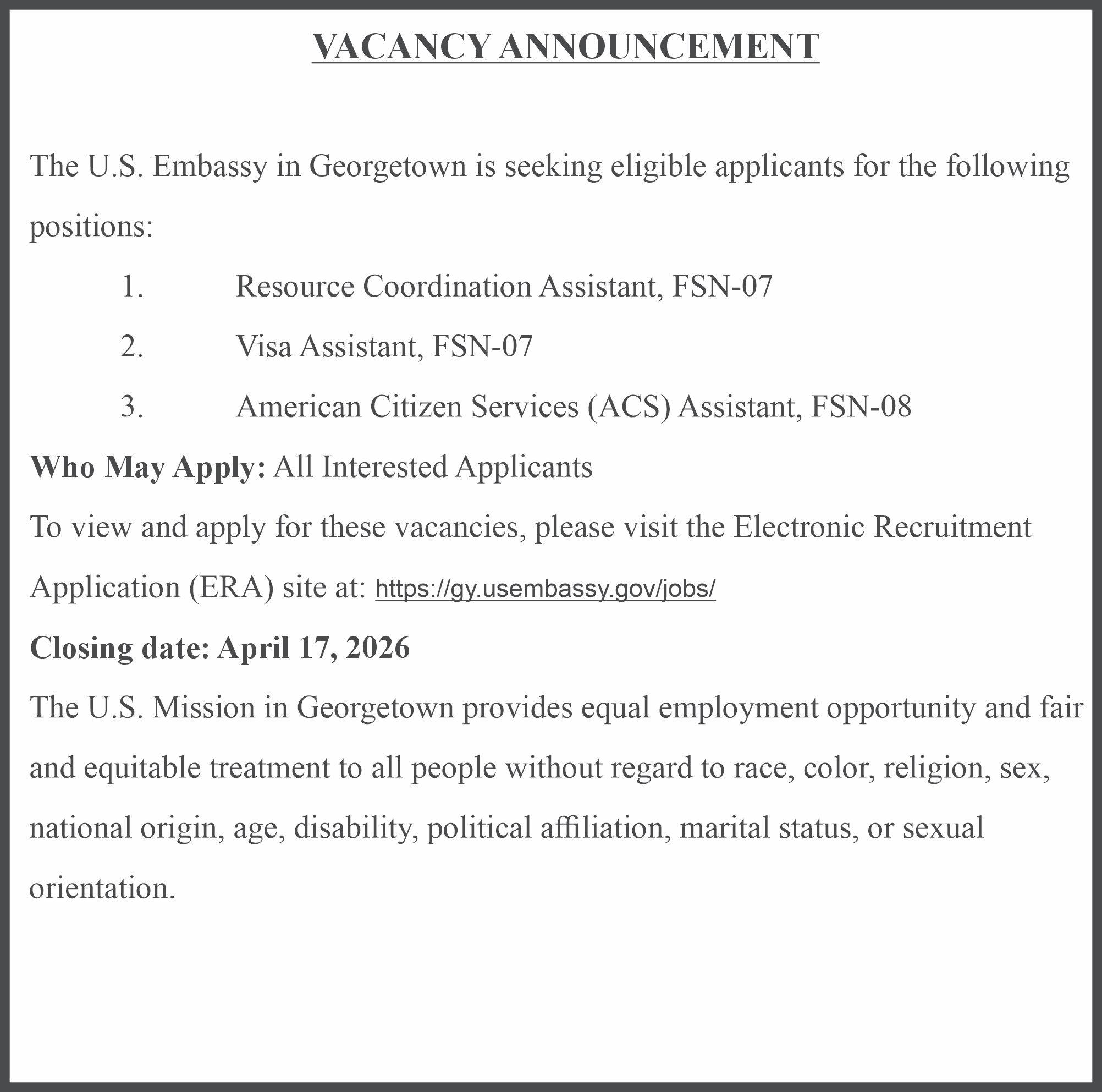
(CWI) - THE Cricket West Indies (CWI) Rising Stars Under-15 tournament wrapped up on Monday, with strong performances over the week-long series of encounters.
Windward Islands, Trinidad and Tobago, and Guyana each secured series victories in the revised bilateral format, highlighting the depth of emerging young cricket talent in the Caribbean.
The Windward Islands were most dominant in their series against the Leeward Islands by sweeping the series five games to nil in Antigua.
Following a 51-run victory to start the series, the Windwards then propelled their way to a narrow 30-
run triumph in the second encounter at the Coolidge Cricket Ground.
Derwin Lewis stood out with the innings of the tournament, cracking an impressive 102 from 128 balls to power the Windwards to a comfortable 61-run victory, and an unassailable lead in the series.
Lewis, the rangy left hander stroked eight fours and four sixes in his innings which took the Windwards to the highest total of the tournament of 217.
Dylan John was another standout performer from the visiting team, spearheading their bowling and finishing the series with ten wickets.
Over in Jamaica, Trinidad
& Tobago battled their way to a 3–1 series victory, with one match being abandoned without a ball being bowled due to rain.
The series began with a nail-biting two-wicket win for Trinidad & Tobago via the Duckworth–Lewis Method at Melbourne Oval.
After restricting the hosts to 96 for 9 in a match reduced to 34 overs, Trinidad & Tobago chased down the target, reaching 102 for 8 in the 29th over.
They then followed up with a dominant 39-run victory in the third match, highlighted by a magnificent bowling performance from Arnaldo Premchand, who claimed seven wickets for

DIRECTOR of the Petra Organization, Troy Mendonca, said that they were putting in the final touches on the Queen’s College ground as they restart the Massy Schools’ U-18 football championship.
“The games are scheduled for tomorrow. Right now, we are cutting the ground in preparation because of the rain; the grass grew up a little, so we are in preparation mode. Hopefully the sun stays out and continues to dry the field.”
The second round was postponed recently after a spell of adverse weather patterns over the past two weeks. On Wednesday Anna Regina Secondary will battle East Ruimveldt Secondary, with New Campbellville Secondary meeting Ann’s Grove Secondary, with both matches set for 10:30 hours. The next round of clashes sees Zeeburg Secondary and Yarakabra Secondary taking to the field, then Charlestown Secondary clashing with New Amsterdam Secondary. Also set to lock horns are West Ruimveldt Secondary and St. Stanislaus College, and Good Hope Secondary is coming up against St. John’s College.
The final match will feature Santa Rosa playing Brickdam Secondary and West Ruimveldt playing Hope Secondary.
This tournament is played on a round-robin/knockout basis, consisting of thirty-two secondary school teams divided into eight groups of four. Two teams from each group will advance to the round of 16, with the four third-placed finishers also advancing.
The winning team will collect $300,000, with $200,000 for second and $100,000 for third, along with a trophy and medals.
just six runs to dismiss Jamaica for 47 while defending a modest total of 86.
The visitors secured the series with an impressive 39-run victory in the fourth match at Boys Town Playing Field. After posting 183 for 9 from their allotted overs, Trinidad & Tobago bowled out Jamaica for 144 inside 47 overs.
Premchand and Samir Boodoo each claimed three wickets, reinforcing their team’s dominance over the hosts.
Jamaica, however, managed a consolation win in the final match of the series, claiming a five-wicket victory at Melbourne Oval. The hosts were led by Hugh Turn-
er’s outstanding five-wicket haul, which helped to dismiss the visitors for just 74.
Jamaica then comfortably reached 75 for 5 with 142 balls remaining.
Premchand ended the series as the leading wicket-taker with 13 wickets, while Turner finished with nine wickets from three matches.
In the third series, hosts Guyana completed a 2–0 series win over Barbados in a contest disrupted by severe weather conditions affecting the country.
In the second match, which was rescheduled to the Police Cricket Ground, Guyana posted 137 for 8 in a game reduced to 31 overs per side. In response, Barbados
was bowled out for 61 in just 21 overs, giving Guyana a commanding 76-run victory. Leon Reddy starred with the ball, taking 4 for 8.
In Monday’s final match, Lomar Seecharan delivered another standout performance, claiming 4 wickets for just 5 runs to restrict Barbados to 79 for 9 in their 20 overs, as they chased Guyana’s target of 116. Fans wishing to review the full details of each match are encouraged to visit the Match Centre on www.windiescricket.com , while those looking to view the ball-by-ball action can do so by visiting “Live” segment of the Windies Cricket YouTube channel.
GUYANA is set to take centre stage in international masters’ cricket when it hosts the Over-40s Masters Cricket World Cup from October 17 to 31, 2026.
Matches will be played at first class venues across the country, marking a major milestone for masters’ cricket in the region.
Since securing the hosting rights in November 2025, the Cricket West Indies Masters Association has moved quickly to establish a robust planning framework.
Up to 16 nations are expected to compete, including major Test-playing countries such as Australia, England, India, Pakistan, Sri Lanka, New Zealand, South Africa, alongside hosts West Indies.
Manager Daniel Sadeo has announced a 29-man provisional squad designed to take full advantage of home conditions. The group combines former international players with proven regional performers, reflecting a clear strategy cantered on experience, spin bowling, and local knowledge.
A major strength of the squad is its tournament pedigree. Several players were part of the West Indies side that reached the final of the
- experienced squad named

Ramnaresh Sarwan
previous Masters Global Cup in Pakistan.
Among the standout performers were Lawrence Farnum, the team’s leading run-scorer, Narsingh Deonarine and Randy Thomas, both of whom earned selection in the Team of the Tournament, with Thomas also rec-
ognised as the competition’s top wicketkeeper. Devi Maharaj, one of only three West Indian centurions in the event, and all-rounder Devon Clements also add significant depth and pedigree.
Spin bowling is expected TURN TO PAGE 33
THE country’s senior male team has completed its mission of qualifying for the 2026 Central American and Caribbean Games 2026.
The team, which has been competing in the qualifying stages of the tournament since Monday in Santo Domingo, made it through the playoffs before snagging the spot.
The team, made up of Shemar Britton, Jonathan Van Lange, Elishaba Johnson, and Niran Bissu, took a comfortable win over Haiti 3-0 and Trinidad 3-0 but lost to Costa Rica to finish second in their group.
The second place earned them a spot at the CAC games from July 24 to August 8, also in the Dominican
Republic.
Guyana’s men’s squad qualifies alongside Colombia, Guatemala, El Salvador, St. Lucia, Venezuela, Barbados, and Costa Rica.
The women’s team led by Chelsea Edghill which also included Jazmine Billingy, Samara Sukhai, and Neveah Clarkson narrowly missed out on qualification. They

PRESIDENT of the Guyana Hockey Board, Phillip Fernandes, says that the country’s masters’ teams that competed in the recently held Indoor Hockey World Cup showed the world the strength of Guyana’s hockey.
He said that, despite the modest return of a bronze medal, the four teams performed admirably, competing against and defeating top nations at the Masters Indoor Hockey World Cup held at the David Ross Centre in Nottingham, England.

lost in the qualifier event to Colombia 3-0 and Trinidad and Tobago 3-1 but beat St. Lucia 3-2 to finish third in their group, missing out on qualification.
The men’s team will now turn their attention to the Senior Caribbean Table Tennis Championships, which run
from today to April 16 at the same venue.
The Guyana Table Tennis Association says that the women’s team will not play in the Caribbean championships as they continue the transition process, bridging the experience gap.
The local governing body
says that Jasmine Billingy and Samara Sukhai will participate in the South American Youth Games along with Malachi Moore and Kayden Meusa from during the second week in April in Panama.
The teams are being coached by Joel Alleyne.
He said that it was the first time with such a large contingent, comprising an over-40 women’s team along with teams in the men’s over40, over-50, and over-55 categories.
“We will need to learn from it, regroup, and come again the next time. The men’s over-40 team, however, stood out. The over 40 team lost only twice.
Germany and England were clearly cut above the rest, but Guyana won the bronze medal match very handily over Scotland 7-1. It was a really good showing to see Guyana on the podium; it certainly was recognisable for the world of hockey.”
Fernandes says nations are now intrigued about the quality of the country’s hock-
“I think this was a fantastic outing for Guyana and for hockey because it was good representation on the world stage, where we played in full view of all the nations. Guyana played its own unique brand of hockey, represented itself well; three of the four teams did not medal, and they won a few games each and finished somewhere down in the ranking.”
ey, which means it is a big success for Guyana.
“It encourages us and encourages a lot of people to focus on Guyana. We have been asked, how are we able to play at this level against teams that have never heard of us? And we were able to promote our own local diamond mineral water hockey tournament.”
Guyana’s over-40 men’s team secured a commendable bronze medal finish.
Guyana delivered a dominant 7–1 victory over Scotland. Last year, Guyana finished with silver after falling to England in the over-45 final.
Meanwhile, the over-40 women’s team also ended on a high note, defeating Scotland 3–1 in their final match.
In the Over-55 men’s division, Guyana defeated Belgium 3–1.