President, Dr Irfaan Ali recently joined businessman Roopan Ramotar and his family to commission their 43-room Rooster International Hotel at Anna Regina, Essequibo Coast. This was described by the President as another addition to the rapidly growing hospitality sector of Region Two
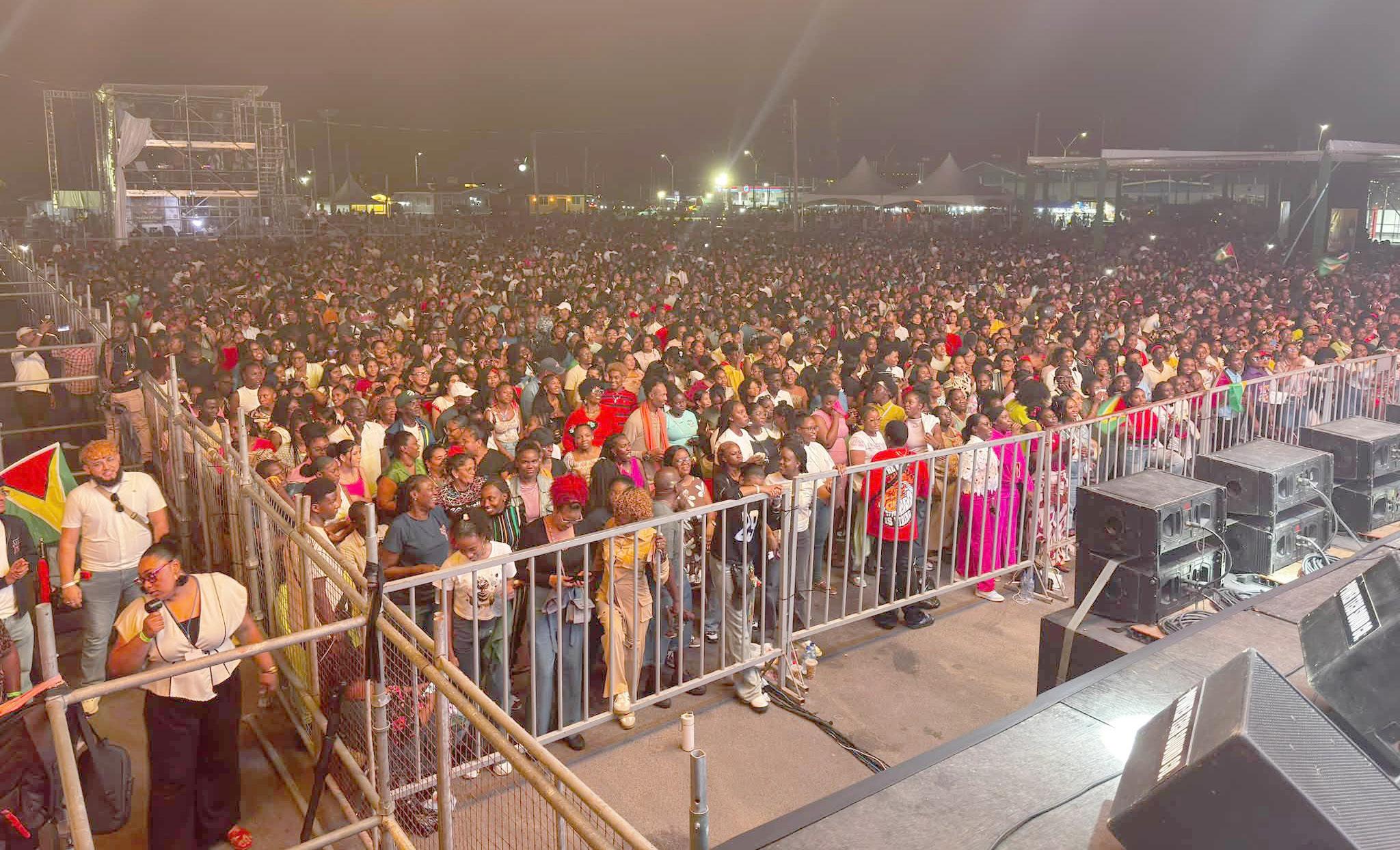
Thousands of Guyanese gather at the Providence National Stadium for the One Guyana Worship Experience. Headlined by internationally renowned gospel artistes Naomi Raine and Sinach, the event brought together the Christian community for a night of love, community, and faith (NCN photo)
Guyana to soon deploy AI-driven platform to boost pharmaceutical-supply management
–– step up use of drones to modernise public health supply chain
GUYANA to soon introduce an artificial intelligence (AI)-powered inventory platform, and continue and expand the use of drones to deliver emergency medicines to remote communities as part of a major push to modernise Guyana’s public health system, President Dr Irfaan Ali has said.
While addressing a gathering in Region Two, the President noted that while the government is making investments in the physical infrastructure to support modern, decentralised supply chain for medication, a new digital architecture will ensure every box and bottle of medicine in the public system is tracked and managed in real time.
“A modern health system also requires information and accountability. That is why this new infrastructure is being paired with a monumental effort to digitise our entire health system,” he said.
The Head of State disclosed that the government is partnering with global experts to introduce an AIdriven platform capable of
forecasting demand, flagging problems and guiding procurement decisions based on actual consumption rather than guesswork.
“We are partnering with the global export to establish an AI-powered system that will provide us the real time data to guide our decision making. This digitisation will be transformative,” he added.
President Ali said the new system will allow health authorities to anticipate shortages, prevent expiry and respond rapidly to spikes in illnesses such as dengue.
“It will allow us to prevent waste, pretend challenges, and plan ahead of every situation. Take, for example, today, if the Minister of Health wants to know whether a community is having a challenge with dengue, he’s required to call and get information… now with this system based on consumption, he can tell you whether it is a spike in a particular problem, and we are able to plan ahead of that problem and address that problem,” he said.
President Ali added that
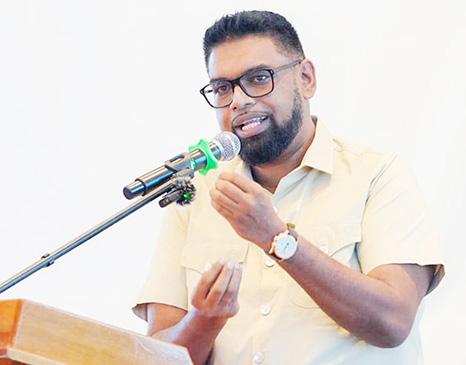
President Dr Irfaan Ali
predictive analytics will be used to identify seasonal or event-driven surges in demand and to adjust orders accordingly.
“Data-driven intelligence will allow us to generate precise location specific forecasts automatically, flag slow moving items before the approaches are expired, and adjust ordering quantities dynamically to match actual demand rather than historical averages,” he said.
The President further related that the predictive
analytics could identify seasonal or event-driven spikes in usage, enabling the Ministry of Health to stock up strategically while avoiding surplus.
“In essence, digitisation doesn’t just improve forecasting, it transforms exploration management from a reactive cost centre into a proactive intelligent system that continuously learns, adapts, and drives measurable reduction in waste.”
Framing the initiative as a clean break from the era
of chronic drug shortages and ad hoc management, the President said the combination of decentralised storage and digital monitoring is designed to end both stock-outs and wastage.
He pointed out that the system will incorporate pre- and post-audits, comfortability matrices and a dedicated patient-feedback portal that feeds directly to the Minister of Health.
DRONES TO REACH “WHERE ROADS END”
The President also highlighted the integration of drone technology to move high-value and time-sensitive medical supplies from the new hub to distant communities that cannot safely store certain drugs and vaccines.
“Drones are delivering critical medical supplies to our most far- flung and hard-to-reach communities, where roads end at river slope. These unmanned aircraft fly fast and direct, ensuring that life-saving medicines, vaccines and emergency supplies reach those
who need them most, not in days but in hours,” the Head of State said.
He added: “We are laying the groundwork today for a healthier and stronger Guyana.”
Guyana launched its telemedicine programme in 2022 to connect health posts and clinics in remote and hinterland communities with doctors and specialists at regional hospitals and the Georgetown Public Hospital Corporation (GPHC).
The service uses telecommunications technology to provide remote consultations and has since expanded to 81 sites across the country’s administrative regions, improving access to healthcare in previously isolated areas.
“This is the foundation upon which we are building a healthcare system that is not just functional but formidable,” he said, adding: “We are laying the groundwork today for a healthier and stronger Guyana, and one where no citizen is left waiting, no prescription is left unfilled, and no promise is left unfulfilled.”
‘From $100,000 at birth to free university’
Minister Sukhai highlights government’s major education, social support
MINISTER within the Ministry of Local Government and Regional Development, Pauline Sukhai, has underscored the People’s Progressive Party/Civic (PPP/C) Government’s growing investment in education and social services, highlighting that children now receive state support from birth through to university.
Speaking at a recent community meeting, Sukhai outlined the range of programmes available to Guyanese families, noting that government assistance now accompanies children throughout their educational journey.
She pointed to the $100,000 cash grant provided at birth, the combined $85,000 ‘Because We Care’ and transportation grants for school-aged children, as well as government-funded Caribbean Secondary Education Certificate (CSEC) and Caribbean Advanced Proficiency Examination (CAPE) examinations.
She said these initiatives, together with free tertiary education, reflect the gov -
ernment’s commitment to investing in human capital.
“Currently, as soon as your child is born, they get $100,000. As soon as they enter nursery, they start getting their ‘Because We Care’ grant. By the time they reach secondary school, they get eight subjects that the government pays for them to write at CSEC,” Sukhai said. She contrasted the current situation with previous years when many parents struggled to afford examination fees for their children.
The minister stated, “Five to seven years ago, people were struggling to find CSEC fees. These days, our children are doing a lot more subjects because they are better off than our parents or even our grandparents were.”
Sukhai also underscored the government’s policy of free university education, describing tuition as the largest expense faced by students pursuing higher learning.
According to the minister, the government now absorbs that cost while continuing to invest in educational infrastructure and teaching re-
sources.
“As soon as you get out of secondary school, if you’re inclined to invest in your education, you can head straight
to the university without having to pay a cent,” she said. While acknowledging that students may still incur expenses for transporta-
tion, materials and projects, Sukhai noted that tuition— the largest financial burden— is now fully covered by the government.
“The government provides the infrastructure, the tutors and free tuition. All you have to do is take yourself to the university,” she told residents.
The minister also encouraged adults who may have missed earlier educational opportunities to take advantage of the Guyana Online Academy of Learning (GOAL), describing it as an accessible pathway to further education and skills training.
She said increased internet connectivity across Guyana has made it easier for persons to enroll in online programmes from their own communities.
Sukhai said, “I want those who are still not taking up the opportunity to know that it is right into their homes now because most people have connectivity.”
She specifically encouraged housewives, gardeners and other adults with flexible schedules to consider enrolling in GOAL programmes to
improve their qualifications and employment prospects.
According to Sukhai, the initiative is not limited to persons pursuing university degrees but also caters to individuals seeking practical skills or those who need to strengthen their academic qualifications before entering tertiary education.
“If you’re not academically inclined or you’re short of your CSEC, there’s a course also that you can take under the GOAL scholarship to enhance where you are and to build you up for entry into university,” she said.
Sukhai urged residents to spread awareness of the educational opportunities available, encouraging families and communities to ensure that more Guyanese benefit from the Government’s investment in education.
The government has made education and social welfare a central pillar of its development agenda, investing in cash grants, educational subsidies and free tertiary education to reduce the financial burden on families.
Gov’t encourages farmers to expand production ––
By Indrawattie Natram
MINISTER of Agricul-
ture Zulfikar Mustapha has encouraged farmers on the Essequibo Coast to expand and diversify their agricultural operations, assuring them that the government will continue making significant investments to reduce production costs, improve market access, and create greater op -
portunities for growth across the agriculture sector.
He made this appeal to farmers on Saturday, during an engagement with farmers and residents at Anna Regina as part of the two-day Cabinet Outreach in Region Two led by President Dr. Mohamed Irfaan Ali.
Addressing farmers, Minister Mustapha said the government remains
committed to strengthening agriculture through sustained investments that directly benefit farmers and enhance national food production.
He noted that over the past five years, billions of dollars have been invested in critical areas including drainage and irrigation infrastructure, farm-tomarket roads, agricultural extension services, and a range of support
programmes aimed at increasing productivity and improving farmers’ livelihoods.
According to the minister, these investments have helped farmers overcome longstanding challenges while creating a stronger foundation for the continued growth of Guyana’s agriculture sector.
Minister Mustapha also emphasised the im-
commits continued investment
portance of attracting more young people to agriculture, describing generational renewal as essential for the long-term sustainability and modernisation of the industry.
He highlighted flagship initiatives such as the Agriculture and Innovation Entrepreneurship Programme (AIEP) and President Ali’s Tunnel Ventilated Poultry Project, explaining that these
programmes are providing young people with opportunities to engage in modern, technology-driven, large-scale farming.
The minister said the government’s vision is to build a resilient and competitive agriculture sector that not only strengthens food security but also creates employment, increases farmers’ incomes, and supports Guyana’s expanding economy.
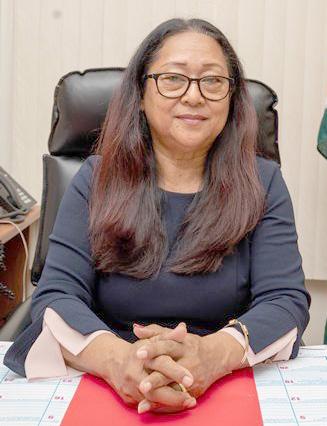
Minister within the Ministry of Local Government and Regional Development, Pauline Sukhai
Citizens challenge US-indicted Mohamed to declare sources of income, assets
–– say accountability starts with individual responsibility, acknowledge President Ali’s declaration of possessions
THERE have been mounting calls for United States-indicted businessman Azruddin Mohamed, who is also Leader of the Opposition, to subject his own assets and sources of wealth to the same level of public scrutiny as government officials.
One individual, Sean Graham, took to Facebook to call for Mohamed to step down as Opposition Leader, reminding him of his pending sanctions and ongoing legal case.
Meanwhile, Rosemary Mendonca called out the sanctioned businessman for not publicly declaring his assets, especially given his campaign on “accountability.”
Further, Nathan Whtye raised concerns that Mo -
hamed might secretly have several companies across the country. Persons have also informed Mohamed that accountability starts with individual responsibility.
These renewed calls for the Opposition Leader to come clean about his assets follow his actions targetting government ministers and, most recently, President, Dr Irfaan Ali.
Without any evidence of illegality, Mohamed sought to besmirch the President over farming investments made before his presidency.
On Sunday, President, Dr Irfaan Ali underscored his commitment to practising what he preaches about food security and agriculture, as he fielded questions about recent allegations made by Mohamed about a farm he
US-indicted businessman Azruddin Mohamed
owns on the Soesdyke-Linden Highway.
Earlier on Sunday, President Ali had said he would not succumb to blackmail from the Mohamed family.
According to reports, prior to these public allegations regarding his farm, President Ali had received several communications over a period of time concerning the release of information
about him if “amends were not made.”
President Ali had also disclosed that he was in possession of text messages from businessman Nazar Mohamed— the father of Azruddin--who is also sanctioned by the United States.
According to Dr Ali, Nazar sent messages as early as last week indicating that recordings would be released if amends were not made with him and his son.
The President’s comments came after Azruddin published a 24-minute video, in which he made several allegations against the Head of State.
According to information that has since been made public, the farm was acquired long before President Ali assumed office. The acquisition of the property predates Dr Ali’s presidency and can be independently verified through banking records and other official documentation.
Additionally, President Ali has made the appropriate declarations to the Integrity Commission. The acquisi -
tion of his assets and the source of the funds used to acquire them are capable of verification through the relevant financial and regulatory records.
Further reports state that the farm has never received any special benefits, preferential treatment, or assistance from the Government of Guyana, either before or after President Ali assumed office. At no point have state funds, public resources, or government assets been used in relation to this investment.
One citizen, Julian Kattow, joined other voices in defence of President Ali’s transparency and accountability.
In response to Mohamed’s claims, the woman said, “So why you all jealous of what [President Ali] doing, he is working like any other Guyanese.”
In remarks shared by ‘Starting Point,’ the President emphasised that his hands-on involvement in agriculture was always part of a broader national push to transform food production and improve resilience across the region.
The Mohameds have been at the helm of controversy over several allegations of criminality.
In October last year, a federal grand jury in Miami returned an indictment charging the father and son with participating in a multi-year scheme to evade millions of dollars in taxes and royalties owed to the Government of Guyana through fraudulent gold export practices and related money-laundering activities.
According to court documents, Nazar, 72, and Az-
ruddin, 38, were owners of Mohamed’s Enterprise, a gold wholesaler and exporter in Guyana that sold gold to buyers in Miami and Dubai.
From about 2017 through at least 2024, the pair allegedly enriched themselves and defrauded the Government of Guyana by concealing the true quantity and value of gold exported by their company.
The indictment alleges that Mohamed’s Enterprise paid taxes and royalties on one shipment of gold to obtain official government seals, then reused those same seals on subsequent shipments to avoid paying additional taxes and royalties.
Prosecutors further allege that empty boxes bearing Guyanese government seals were shipped from Dubai through Miami to Guyana and that bribes were paid to customs and other officials to facilitate the scheme.
In total, the pair allegedly exported at least 10,000 kilogrammes of gold through Miami, resulting in an estimated loss of approximately US$50 million to the Government of Guyana.
Nazar is charged with conspiracy to commit money laundering, conspiracy to commit mail and wire fraud, and mail fraud.
Azruddin is charged with conspiracy to commit money laundering and wire fraud.
The indictment also alleges that Azruddin engaged in a separate scheme to evade more than US$1 million in Guyanese taxes in connection with the shipment of a Lamborghini from Miami to Guyana.
Minister Parag highlights role of STEM in shaping Guyana’s future
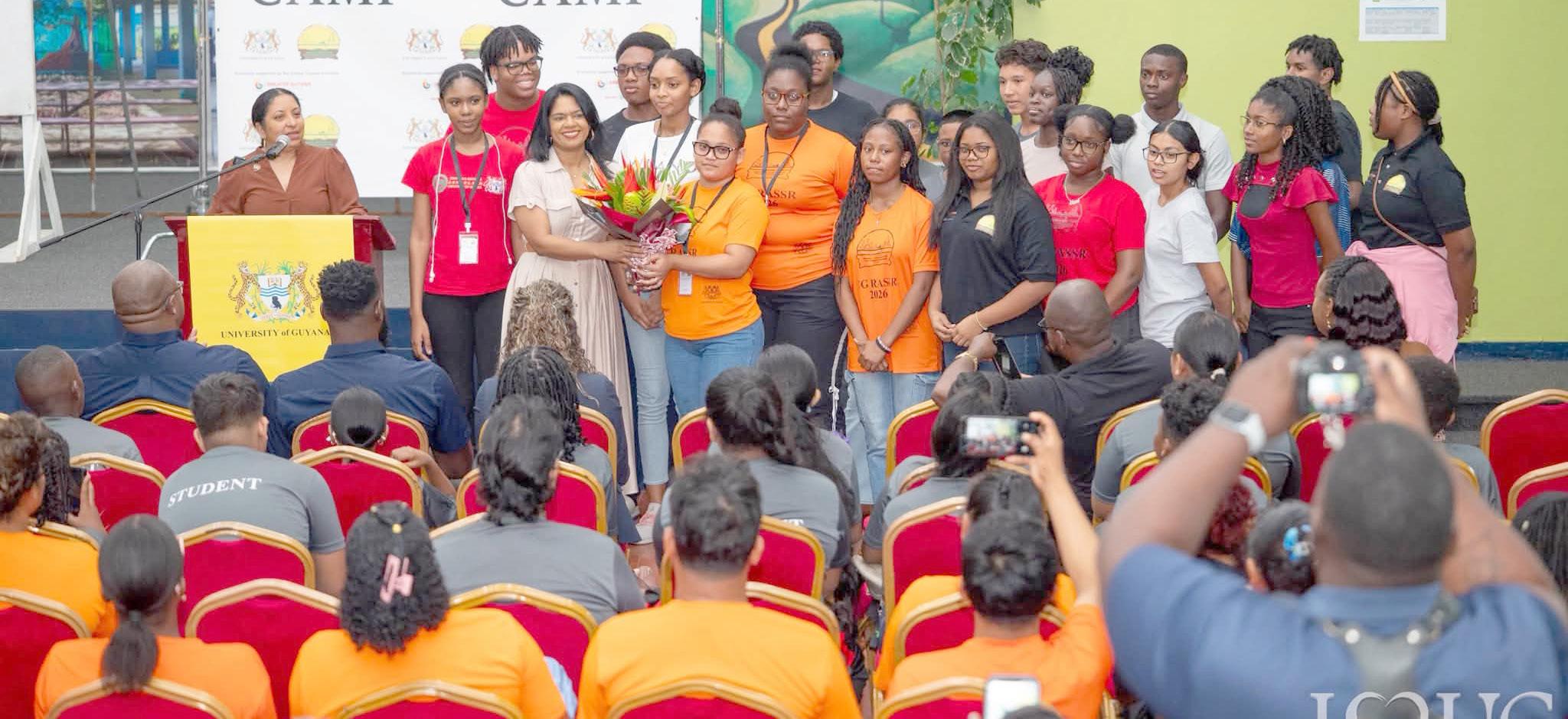
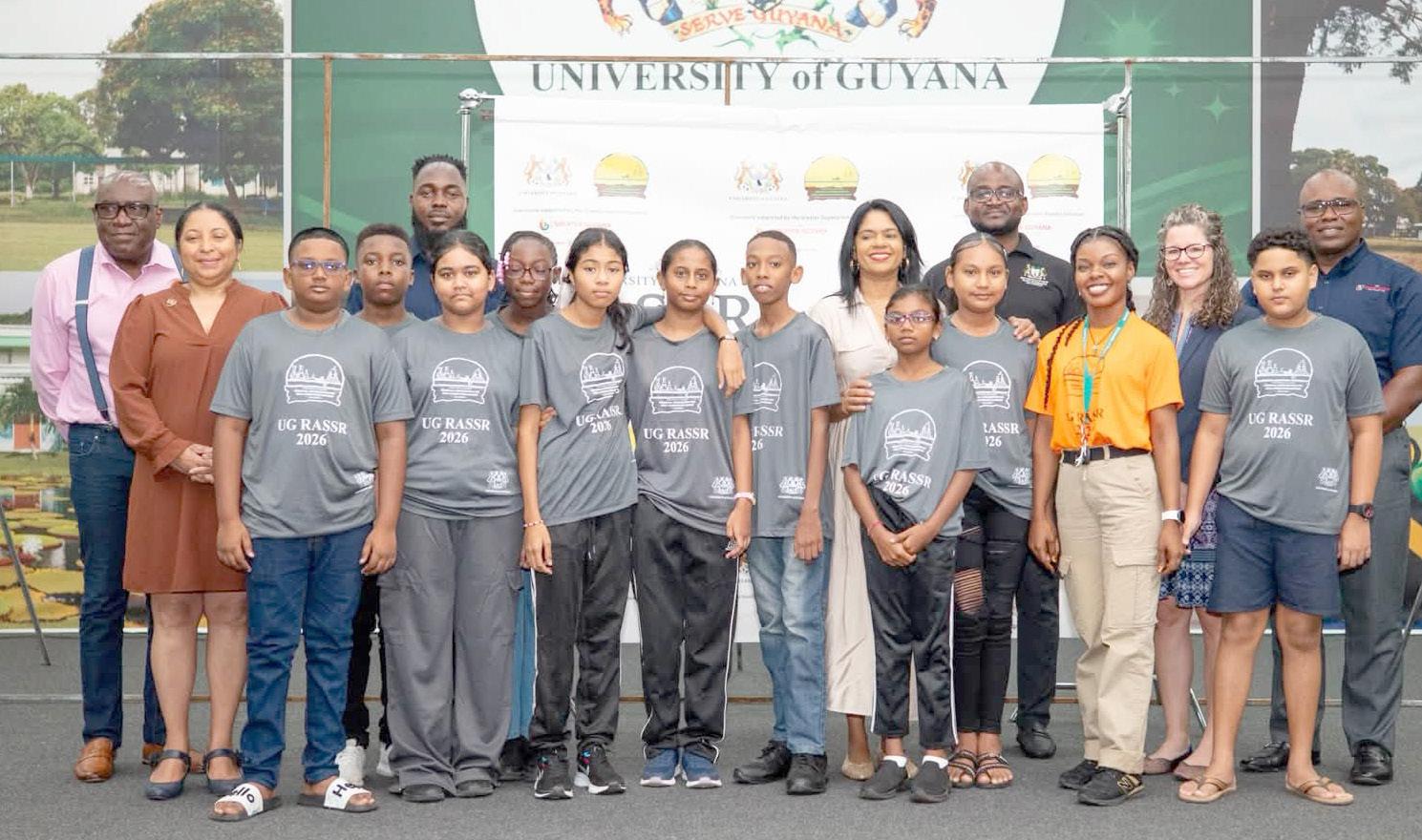
MINISTER of Education, Sonia Parag, recently delivered encouraging remarks to the second cohort of the University of Guyana’s Regional Accelerator for STEM Students Readiness (RASSR) programme.
The RASSR pro -
gramme, according to the Ministry of Education, brings together promising young minds from across Guyana and provides them with an immersive learning experience designed to deepen their knowledge and interest in Science, Technology, Engineer-
ing and Mathematics (STEM).
During her remarks, Minister Parag encouraged the students to make the most of the unique opportunity before them by fully immersing themselves in every aspect of the programme, remaining cu-
rious and challenging themselves to think beyond the boundaries of the classroom. She also urged them to recognise that the experience is about more than academic development. The minister encouraged the students to build meaningful and lasting
relationships with one another and to understand the importance of collaboration, noting that some of the greatest ideas and solutions are born when people work together, share perspectives and learn from each other.
Minister Parag reminded the students
that they represent some of the promising young minds who will help shape Guyana’s future and encouraged them to use the next 14 days to learn, explore, form lasting bonds and discover just how much they are capable of achieving.
Minister of Education, Sonia Parag, recently delivered encouraging remarks to the second cohort of the University of Guyana’s Regional Accelerator for STEM Students Readiness (RASSR) programme
A Noble Gesture
PRESIDENT Dr Mohamed Irfaan Ali has extended a hand of solidarity with the Government and people of Venezuela in the aftermath of one of the most devastating calamities the country experienced in its recent history.
This is indeed a noble act by President Ali and by extension the Government of Guyana. Regardless of our border controversy which is before the International Court of Justice (ICJ) there is one incontestable fact, namely that Venezuela is geographically our western neighbour and has been so for over a century.
There is a saying that one can live without one friend but not without one’s neighbours. This is all the truer during times of distress as is currently the case
with Venezuela. Over two thousand lives were lost in the recent earthquakes and the numbers keep climbing with each passing day.
It is the living, however, that need the care and attention of the government and the international community, both financial and technical. In a situation as dire as the country is experiencing, no amount of aid can be considered too many, especially when it comes to humanitarian aid.
It is in the above context that that the decision to dispatch assistance to the people of Venezuela affected by the tragedy has to be seen.
This gesture of support was publicly acknowledged and welcomed by Acting Venezuelan President Delcy Rodriguez. The relief efforts were coordinated by no
less a person than Guyana’s Prime Minister, Brigadier (Ret’d) Mark Phillips in collaboration with officials from the Civil Defence Commission, the Guyana Police Force and the private sector.
This is indicative of the high importance Guyana has placed on the relief efforts to bring humanitarian help to the victims of the deadly earthquakes.
It is worth mentioning that Guyana not only was quick to mobilise critically needed items such as pharmaceutical products, medical supplies and food products but also played a leading role in the coordination of relief efforts within the broader CARICOM region.
This is yet another manifestation of the leadership role the country is playing in the wider Caribbean region.
President Ali has demonstrated by his actions that leadership is best served when it is anchored in the pain of humanity and the cries of people during times of distress.
The full extent of the damage in terms of deaths and destruction is still to be determined. What will be remembered for a long time is the alacrity with which countries, organisation and individuals responded to the cries of humanity.
In this regard, President Ali and the Government of Guyana have not been found wanting.
Indeed, President Ali has demonstrated that when it comes to dealing with a humanitarian crisis, differences can and must give way to the higher cause of humanity.
Who protects consumers from horrible telecommunications service in Guyana?
Dear Editor,
I am writing to express my deep frustration about the quality of telecommunications services being provided to consumers in Guyana by One Communications and to ask whether the rights guaranteed under our consumer protection laws are being adequately upheld.
As a customer of One Communications for almost two decades, I am depressed by the terrible service I’m literally being forced to subscribe to. I upgraded to a Business Postpaid plan with the expectation of receiving improved service. Instead, I have experienced more frequent internet outages, unreliable mobile connectivity, and numerous
occasions where people attempting to call me have been unable to reach me. As a business owner, I have missed important business calls and opportunities locally, regionally, and internationally because of these persistent service failures.
The problems do not end there. My home internet service has also been unreliable, and the Push-to-Talk devices I use for business operations have performed poorly. I stopped paying that bill but is still being charged for same. I have reported these issues to One Communications on numerous occasions, yet the problems continue. Despite this, I am expected to pay my monthly bills in full for a service that repeatedly falls below a reasonable standard.
The Consumer Affairs Act 2011 was enacted to protect consumers and promote fair treatment in the provision of goods and services. Consumers have a right to expect that the services they pay for are delivered with reasonable quality and reliability. When those expectations are not met, companies should be held accountable and should work promptly to resolve legitimate complaints. I therefore call on One Communications to take these complaints seriously and improve the quality and reliability of its services. I also urge the Competition and Consumer Affairs Commission and the Public Utilities Commission to investigate recurring complaints about telecommunications services.
Telecommunications are no longer a luxury, they are essential for businesses, education, healthcare, emergency communication, and everyday life. Consumers deserve dependable service, transparency, and accountability.
It is time for customers’ voices to be heard and for meaningful action to be taken. In saying that, I believe I will have no other reason than to take One Communications to court because I’m fed-up complaining to them and still receiving the same distasteful service.
Sincerely, Quincy Anderson
Did Aubrey Norton put a ‘jumbie lash pon’ Campbell and Mahipaul?
GANESH Mahipaul and Terrence Campbell gave their take in a discussion with David Hinds last week on why APNU lost the general election of 2026.
In both of their outlines, there was no mention that the PPP won the election through a process of rigging.
Mahipaul concentrated on public infighting within the PNC and lack of campaign money. Campbell felt that a grand coalition would have defeated the PPP. The question is if Campbell and Mahipaul knew of their leader’s position on why the PPP won when they were offering their reasons for APNU’s defeat?
Aubrey Norton told journalist Svetlana Marshall on a podcast titled, “Sources” that there was “widespread rejection” of the PPP in the election but it was the rigging that ensured PPP’s victory. He used the word “rigging” twice. He told Ms. Marshall “a number of avenues were used allow the PPP to win.”
One wonders if after the programmme, Norton was enraged and lashed out at his two parliamentarians. People know Norton does not like you publicly disagreeing with him. I guess we will never know if Norton hauled them over the coal, so let’s move on to analyse two of the factors these men cited for the PNC’s loss. For Mahipaul, it was open badmouthing among PNC leaders. This is a heavy topic that will necessitate a separate article.
For now, let’s look at Campbell’s emphasis on the absence of a grand coalition that cost the APNU the election. In fact, Campbell’s output in the three-way discussion between himself, Hinds and Mahipaul was
centered mainly on the coalition factor.
Since Campbell was intricately involved in the rendezvous with APNU and AFC on the 2025 general election, one would have expected him to explain why the rapprochement between the ANPU and AFC suffered a stillbirth. In fact, Campbell publicly said in July 2025, he was trying for months “to break Norton’s hands” (figuratively speaking) to get him to accept a coalition with the AFC.
To speak at length on the necessity to have a coalition for the 2030 election and not level with the Guyanese people is political dishonesty and the politics of deception. No one more than Campbell, except Norton and Nigel Hughes, is in a better position to explain to Guyanese why there wasn’t an APNU, AFC election marriage in 2025.
Campbell could not do so because he is not a politician of quality and without leadership qualities, a politician is always going to be the 12-man pushing the water cart onto the cricket pitch. Campbell cannot answer a simple question which should disqualify him from having parliamentary status. The question is whether he would shake the President’s hand if it is extended to him.
How could any politician refuse to answer such an unimportant query? What is equally disturbing in the arena of opposition politicians is the mental dwarfs that they have as supporters (no apologies whatsoever). If you endorse Mr. Campbell to be someone that you want to represent the nation, why can’t you respond to his hundreds of Facebook posts by asking him a simple question – Dr. Campbell would you shake the President’s hand?
Why can’t even one supporter put that question to Campbell? We have gone past the five-year-old government of APNU+AFC and since 2020 when APNU+AFC went out of office, not one supporter of David Hinds has ever asked him on his Facebook page why his government did not allow for the passage of the marijuana amendment legislation.
It is for this reason I refer to the supporters of these people as mental dwarfs. Don’t you want to know the answer seeing that you as a supporter look at Hinds all the time?
Don’t you think you owe it to yourself to ask him that especially when for 365 days in each year since August 2020, he talks about the liberation of African people yet 98 percent of possession of marijuana convictions are African Guyanese including one of Guyana’s most famous boxers.
We have too many mentally limited people in Guyana. I used to read the online comments in the letter pages of the Stabroek News where the bloggers love to write adoring things about their newspaper.
Yet these fans that were insanely overjoyed that Stabroek News was an independent newspaper could not muster the moral decency to simply ask in their comment; “but sir why did you refuse to carry the letters from presidential advisor, Dr. Randy Persaud.” These people owed it to themselves to ask their favourite newspaper that crucial question. But then again, mental fools do not know better.
DISCLAIMER: The views and opinions expressed in this column are solely those of the author and do not necessarily reflect the official policy or position of the Guyana National Newspapers Limited.
UG reopens applications for selected programmes for 2026/2027 academic year
PROSPECTIVE students seeking admission to the University of Guyana (UG) for the 2026/2027 academic year will have a second opportunity to apply, as the country’s premier tertiary institution reopens applications for selected degree, diploma and certificate programmes from July 8 to August 17, 2026.
The university announced that the second application phase is specifically intended for programmes where spaces remain available and is expected to benefit students who were unable to apply during the initial application period, as well as those who recently sat the
Caribbean Secondary Education Certificate (CSEC) and Caribbean Advanced Proficiency Examination (CAPE) and are awaiting their results.
UG had previously accepted applications for the upcoming academic year between March 30 and May 9, 2026. The institution said the additional application window reflects its commitment to expanding access to higher education while ensuring that prospective students have another opportunity to secure placement in available programmes.
Information on the programmes being offered during this second application phase, along with application procedures
and other important details, is available through the university’s official communication channels, including its website, Student Records Management System (SRMS), official social media platforms, and media partners.
The university also provided an update for applicants who submitted applications during the March-May application period and have not yet received a response, noting that admissions decisions are expected to begin
being communicated by mid-July.
Meanwhile, applicants who submit their applications during the July-August application period are expected to receive a response regarding their application status by August 28, 2026. Prospective students have been encouraged to regularly monitor the SRMS portal to track the progress of their applications.
According to the university, orientation activities and the commencement of classes for the new academic year are scheduled to begin during the final week of August and the first week of September.
UG is urging prospective students, particularly
those who missed the initial application window, to apply as early as possible during the second phase to avoid the challenges associated with late registration and enrolment.
The university has also made available detailed guidance on the application process, including step-by-step instructions for prospective applicants seeking admission to one of Guyana’s leading institutions of higher learning.
For a step-by-step guide on the application process, interested persons can visit ( https :// uog edu gy / frequently - asked - questions / how - apply ) and can apply online here at (https://www.uog.edu.gy/ apply)
Gros Islet Saint Lucia beckons: More talk or?
IN Guyana, Monday was Caricom Day, a national holiday in honour of the Caricom dream. It’s a celebration and commitment to many ideals that remain elusive.
During the slave trade, history records that there were occasions when one ship will drop off enslaved people on one island in the Caribbean Sea and continue on to several islands delivering enslaved Africans and all along the journey pick up agricultural produce to take to Europe.
In some cases, the main ship will put off its cargo of enslaved humans at a single port where slave traders, middlemen and brokers will bundle their human cargo to other islands in smaller boats. The same was done with Indentured Servants.
Before our individual territories gained independence, we were one market space with freedom of movement as colonies of the Crown and British Overseas Territories. We all hoisted the Union Jack, we all sung God Save the Queen.
We had the same school system, and for the most part, we had the same structure of economies. We cut cane with machete on the sugar plantations and started the boilers to churn sugar; we sent most of it to the UK and wider Europe. On the smaller Islands, our people head up the mountains to cultivate banana to send to Europe, and on most occasions, these products sailed on the same boat.
Many migrated to the very “motherland” and formed close knitted West Indian communities. Most of our brilliant sons and daughters converged at the same universities in the “motherland” they studied many of the same programmes. They shared the same burden to break the chains of colonialism.
Many came back to their home islands and fought synchronously for independence. Out of a common struggle, similar national mottos were birthed; “One people, One Nation, One Destiny”; “Together we aspire, together we achieve”; “Out
of Many, One People”; “Ever conscious of God we aspire, build and advance as one people.” The fabric and structure of our culture, language, food, music, lifestyle, education and government are essentially the same.
Something changed in our territories after independence. The major changes took place at the level of government not among our people. The leaders seem to have been cut from the same cloth, they knew very well that our people prefer to live together, unhindered by definition of economic space and inter-territory movement. However, the taste of individual island power originating from a governance structure banqueted by a monarchial system that seemed to infuse a self-aggrandising intoxicating use of power and triumph of individualism.
Having also inherited, West Indies Cricket and several other common organs, our leaders set out to appease by entering into a treaty. With the very treaty, they set up implementation rules that has built in mechanisms to make it slow, painful and subject to general agreements to talk and talk.
The political process in each territory is of such that fear mongering about our minor differences became easy targets for political canvassing, so we shifted our lingo from proud West Indian to proud Jamaican, Guyanese, Bajan and Trini.
We are now stuck with an illusion
By L eonard craig
of unity under the banner of Caricom when essentially, Caricom represents an undoing of freedoms we already shared and enjoyed with a promise to rebuild it. Caricom remains an unrealised dream. We all have hope; our peoples have hope but we continue to rely on successive governments that are unwilling to cede some of their colonial-like power that the very colonisers did a better job at unifying the region.
Despite the challenges, like most ordinary citizens of the region, we continue to hope. Yes! I still have hope that our leaders can develop the collective courage to simply return regional movement of people and goods to pre-independence state and improve on that.
It’s not that hard, each of the territories have model legislation, some have already passed legislation that they do not act on. Caricom is at the crossroads, we either free our people and production from the clutches of self-interest and trod the path of passport free travel between Barbados and Guyana or seriously invoke Guyana’s Irfaan Ali’s two-word doctrine – Full Reciprocity. This week, Gros Islet Saint Lucia beckons.
DISCLAIMER: The views and opinions expressed in this column are solely those of the author and do not necessarily reflect the official policy or position of the Guyana National Newspapers Limited.
President Ali’s Region Two outreach signals inclusive national development
–– says Region Three Private Sector Inc
HEAD of the Region Three Private Sector Inc. (R3PSInc), Halim Khan, has praised President Dr Mohamed Irfaan Ali and his Cabinet for what he described as a “remarkable demonstration of leadership through action” following the recent Government’s extensive outreach across Region Two (Pomeroon-Supenaam), where several major infrastructure and social development projects were commissioned.
Khan said the President’s direct engagement with residents of more than 60 villages and communities across the Essequibo Coast, coupled with the commissioning of critical public infrastructure, underscores the administration’s commitment to ensuring that development reaches every corner of Guyana.
“This is how communities are strengthened, when leaders show up, listen to the concerns of citizens, and deliver tangible results,” Khan said. “The outreach to the Cinderella County demonstrates a governance model that places people at the centre of development and ensures that no region is left behind.”
President Dr Mohamed Irfaan Ali and members of Cabinet commissioned the new Anna Regina Stadium, the upgraded Anna Regina/Mainstay Airstrip, the Manawarin Health Centre, teachers’ living quarters at Tapakuma, and the Onderneeming Health Bond during the two-day outreach exercise.
The President and his ministers also held direct engagements with residents throughout the region, hearing concerns and outlining future development plans.
Khan, who has consistently advocated for infrastructure investment and private sector expansion, said the commissioning of the upgraded $221 million Anna Regina Airstrip represents one of the most significant recent investments in improving connectivity and economic opportunities on the Essequibo Coast.
“The revitalisation of the Anna Regina Airstrip is transformational,” he stated. “Improved connectivity creates new opportunities for tourism, agriculture, hospitality, trade and investment. These are the types of projects that stimulate economic activity and create long-term benefits for communities.”
The upgraded facility, located at Mainstay/Whyaka, features a 2,000-foot by 50-foot runway and is expected to significantly reduce travel time between Region Two and Georgetown while providing a faster and more reliable alternative to river transportation.
The project forms part of the Government’s broader strategy to strengthen transportation infrastructure and unlock economic potential across the country.
Residents and community leaders have welcomed the development, noting that the airstrip, originally constructed in 1959 through community labour, carries deep historical significance and has long been viewed as critical to the region’s future growth.
Local stakeholders believe the upgraded facility will stimulate business activity, enhance tourism, and provide improved access to education, employment and healthcare services.
Khan noted that improved transportation infrastructure has historically served as a catalyst for private sector expansion and regional economic growth.
“When government invests in connectivity, the private sector gains confidence to invest, entrepreneurs find new opportunities, and communities
regardless of where they live,” Khan said.
He further praised plans to construct a jetty and boathouse and provide a boat and outboard engine to support healthcare outreach services to neighbouring riverine communities, noting that such investments will have lasting impacts on public health outcomes.
According to Khan, the broad scope of projects undertaken during the presidential outreach illus-
become more attractive destinations for commerce and tourism,” he said.
He pointed specifically to the anticipated benefits for the tourism industry, including increased accessibility to destinations such as Lake Mainstay Resort and community-owned accommodations throughout the region.
The R3PSInc Head also commended the Government’s investment in healthcare infrastructure, particularly the commissioning of the new $30 million Manawarin Health Centre and the completion of a further $30 million in staff living quarters, describing the initiative as evidence of a development agenda that balances economic growth with social advancement.
The new facilities are expected to benefit approximately 500 residents in Manawarin and surrounding communities while improving the retention of healthcare workers serving the indigenous riverine community. Designed to withstand seasonal flooding, the elevated health centre includes examination facilities, an observation area, vaccine storage, maternal and child healthcare services, a fully stocked pharmacy, and telemedicine capabilities linking patients with specialists at regional hospitals and the Georgetown Public Hospital Corporation.
“The investment in Manawarin demonstrates that development is not only about roads and buildings, but also about improving quality of life, ensuring equitable access to healthcare, and creating opportunities for citizens
trates a development model centred on consultation, implementation and accountability.
“The President and Cabinet’s willingness to engage directly with residents and deliver on commitments sends a strong signal that development is being pursued in a deliberate and inclusive manner,” he said.
Khan added that the rapid pace of infrastructure expansion and public
investment across Guyana continues to create opportunities for businesses, communities and future generations.
“These investments in Region Two are not isolated projects; they form part of a wider national vision aimed at strengthening connectivity, improving social services, stimulating economic growth and building a more prosperous Guyana for all citizens,” he said.
‘False, malicious and entirely without merit’
–– Minister Mustapha rejects Mohamed’s allegations
–– says claims are politically motivated
MINISTER of Agriculture Zulfikar Mustapha has firmly rejected allegations made against him by
businessman and political figure Azruddin Mohamed regarding the Black Belly Sheep Project, describing
the claims as “false, malicious and entirely without merit” and part of a broader campaign of politically
and personally motivated attacks.
In a statement issued on Sunday, Mustapha said the latest accusations represented the continuation of what he described as a sustained effort to spread misinformation and damage his reputation, as well as that of his family members and associates.
“The allegations against me are false, malicious and entirely without merit,” the minister stated, asserting that the accusations identified no wrongdoing on his part and instead sought to create public suspicion through speculation and innuendo.
Mustapha said he had largely refrained from responding to previous allegations and social media attacks directed at him and his family because many of them lacked credibility. However, he said he chose to address the latest accusations because they reflected what he described as an “emerging and troubling pattern” of public accusations aimed at advancing a narrative of political victimisation.
According to the minister, Mohamed’s public statements and social media activity appear designed to apply pressure, intimidate others, and reinforce claims that he is being politically persecuted.
“The people of Guyana should recognise these attacks for what they are,” Mustapha said, arguing that Mohamed became involved in politics long after legal proceedings and investigations involving him in the United States had already commenced.
The Minister of Agriculture further contended that Mohamed’s allegations form part of a broader strategy to frustrate ongoing legal proceedings while targeting in-
dividuals whom he believes have distanced themselves from or declined to support him.
Mustapha also addressed allegations involving his son, describing him as a successful businessman, gold miner and qualified medical doctor who has never been involved in politics.
He claimed that his son had been subjected to repeated public attacks after deciding to sever ties with Mohamed, whom Mustapha said had harboured a personal grievance against him.
“When my son made the decision to no longer keep his company and to move forward with his own life, the attacks began,” Mustapha stated, adding that his son had suffered significant reputational damage as a result of sustained public criticism and allegations.
The minister maintained that he would not be distracted by what he described as politically and legally motivated attacks and reaffirmed his commitment to public service.
“My focus remains on serving the people of Guyana with integrity, diligence and accountability,” he said.
Mustapha concluded by calling for a political culture rooted in facts, accountability and respect for the truth, stressing that public discourse should be guided by evidence rather than misinformation, speculation or manufactured controversy.
“I remain fully committed to serving the people of Guyana with honesty, integrity and unwavering dedication,” the minister stated.
Emphasising that his son is an independent adult with the right to choose his personal and professional associations, Mustapha argued that no individual or family should be subjected to public attacks because of personal disagreements or perceived grievances.
Minister of Agriculture Zulfikar Mustapha
Joint declaration reinforces commitment to One-Health approach in the Americas
EVERY year on July 6, the international community marks World Zoonoses Day, raising awareness of the risks posed by diseases transmitted between animals and humans while promoting practices to prevent them.
This observance is particularly relevant given that an estimated 60 percent of all known human infectious diseases are zoonotic, while nearly 75 percent of emerging infectious diseases in humans originate from domestic or wild animals.
These figures underscore the need for an integrated, cross-sectoral approach to addressing zoonotic diseases and other health threats by bringing together human health, animal health and environmental conservation.
Against this backdrop, the Quadripartite Alliance— comprising the Food and Agriculture Organization of the United Nations (FAO), the World Organisation for Animal Health (WOAH), the Pan American Health Organization/World Health Organization (PAHO/WHO) and the United Nations Environment Programme (UNEP)—together with regional partners including the Inter-American Institute for Cooperation on Agriculture (IICA) and the Regional International Organization for Plant and Animal Health (OIRSA), today announced the signing of a Joint Declaration to strengthen regional coordination under the One Health approach in the Americas, marking the first regional agreement of its kind.
The declaration calls for coordinated action to address health threats such as zoonotic diseases, food safety risks, and the impacts of climate change, biodiversity loss, environmental pollution, ecosystem degradation and antimicrobial resistance (AMR).
According to the World Health Organization (WHO), Antimicrobial resistance (AMR) is estimated to cause 1.27 million direct deaths each year worldwide and is associated with nearly 5 million indirect deaths.
Foodborne diseases cause an estimated 1.5 million deaths annually, including 78,000 in the Americas.
“The health challenges faced by the region in recent years have highlighted the importance of strategic partnerships and coordinated action to achieve sustainable
results. This is reflected in our ongoing efforts to address avian influenza and the New World screwworm outbreak across the region, helping protect the livelihoods of thousands of farming families.
“By signing this declaration, we are taking another important step towards strengthening regional cooperation and coordinated action to advance the implementation of the One Health approach,” said René Orellana Halkyer, FAO Assistant Director-General and Regional Representative for Latin America and the Caribbean.
integrated response to current and emerging health threats. For decades, this approach has guided PAHO’s technical cooperation through programmes on communicable diseases at the human-animal interface, food safety, antimicrobial resistance and environmental public health, particularly through the work of our Regional Center for Veterinary Public Health (PANAFTOSA) and the implementation of PAHO’s One Health Policy, which this year marks its fifth anniversary,” said Dr Jarbas Barbosa, Director of PAHO.
“Animal health systems are a critical first line of defence against disease outbreaks, particularly those with pandemic potential. However, WOAH’s latest State of the World’s Animal Health report shows that these systems remain underfunded.
“The One Health approach will only reach its full potential if animal health is fully integrated into public planning and investment. Across the Americas, WOAH has promoted this integrated approach for many years, advocating for greater recognition of the role of animal health. This declaration marks a milestone for the region by reaffirming our commitment to addressing shared challenges more effectively,” said Dr Francisco D’Alessio, WOAH Regional Representative for the Americas.
The declaration recognises the Americas’ long-standing tradition of intersectoral cooperation in public health, animal health, agriculture and the environment. At the same time, it acknowledges the need to further strengthen coordination among international organisations, governments, academia, civil society and the private sector to respond effectively to current and future challenges.
“For PAHO, the One Health approach is a strategic priority and an essential component of public health in the Americas, enabling an
For his part, Juan Bello, UNEP Regional Director and Representative for Latin America and the Caribbean, stated: “For UNEP, the One Health approach is essential to addressing environmental and health challenges in Latin America and the Caribbean in an integrated manner by recognising the close interconnection between human, animal and environmental health.
“In the face of planetary threats such as climate change, biodiversity loss and pollution, One Health strengthens the resilience of natural systems by prioritising preventive rather than reactive action from an environmental perspective.
“It also reinforces regional cooperation to address the environmental dimensions of antimicrobial resistance while reducing the risk of zoonotic diseases with pandemic potential, in line with the 2030 Agenda for Sustainable Development.”
The joint declaration calls on organisations, networks and stakeholders across the region to strengthen information-sharing and regional collaboration in support of Member States’ efforts to prioritise and implement One Health activities.
This includes enhanced coordination, intersectoral collaboration and public-private partnerships in the areas of governance, legislation, institutional development, capacity building, and the exchange of data, evidence and knowledge.
Through this declaration, the participating organisations reaffirm their commitment to promoting coordinated responses to health threats that transcend sectors and borders, contributing to the protection of the health of people, animals and ecosystems across the Americas. (FAO)
Guyana needs more truck drivers, mechanics, tradespeople
–– as economy expands, PSC executive member says
GUYANA’S rapid economic expansion has created an unprecedented demand for workers across multiple industries, leaving businesses grappling with a growing labour shortage, according to executive member of the Private Sector Commission (PSC), Timothy Tucker.
Speaking on the Starting Point podcast on Sunday, Tucker said the country’s booming economy has generated employment opportunities well beyond the oil and
gas sector, driving demand for skilled and semi-skilled workers in construction, transportation, mining, agriculture and other industries.
“We have a labour shortage,” Tucker said, noting that employers are finding it
increasingly difficult to recruit workers to fill available positions.
Among the occupations experiencing the greatest demand are truck drivers, mechanics, electricians, plumbers, health and safety
officers and quality-control specialists.
“We see something as simple as truck drivers being a high-demand job at the moment, that is paying extremely well,” he said.
“We see health and safety officers. We see quality-control people. Mechanics, electricians, plumbers.”
According to Tucker, the construction boom has also fuelled a sharp increase in demand for general labourers as both public and private-sector projects continue to expand across the country.
“Especially with the construction boom, you’re seeing a great demand for labourers as well,” he stated.
While foreign workers have entered Guyana to help address labour shortages, Tucker believes opportunities remain abundant for Guyanese seeking employment or considering entrepreneurship.
He said, “Yes, we have some number of foreigners coming in to help, but I believe that most Guyanese have the opportunity to either work in the industry or an associated industry, or you have the ability at this point to be an entrepreneur.”
Tucker argued that the country’s economic transformation is no longer being driven by a single industry, creating opportunities across a wide cross-section of the economy.
“You don’t have one sector pushing the country,” he said.
“The government is doing developmental aspects, but you have the oil and gas industry demanding international standards. It’s forcing local manufacturers to raise their game.”
Beyond oil and gas, Tucker identified mining, forestry and agriculture as sectors generating new business opportunities.
He noted that increased demand for goods and services has created openings for suppliers of fruits and vegetables, transportation providers and businesses supporting the country’s productive sectors.
“If you look at the market today, there are greater opportunities,” Tucker said.
He encouraged Guyanese to take advantage of the expanding economy by identifying unmet needs and
developing businesses that fill those gaps.
“There’s nothing stopping you from being an entrepreneur,” he added.
“Keep your day job and work that side gig. Everything counts. You’ve got to diversify, look for your niche product or service and really try to fill the gaps in the market.”
Tucker stressed, however, that success requires planning and preparation.
He urged prospective entrepreneurs to conduct market research before launching businesses, arguing that understanding customer needs and industry trends is essential in a rapidly changing economy.
According to Tucker, Guyana’s current economic environment presents one of the best opportunities in decades for citizens willing to develop skills, pursue entrepreneurship or enter industries experiencing high demand.
“There’s opportunities all around you,” he said.
“You just have to look for them.”
The government has been expanding technical and vocational training, increasing tertiary-education opportunities and introducing skills-development programmes aimed at building a workforce capable of meeting the demands of Guyana’s rapidly growing economy.
PSC’s Timothy Tucker
Transitioning from creative industry to economy: Origins panellists speak
By Faith Greene
HOW can we transition from a creative industry to a creative economy?
This was essentially the question that paved the way for the third and final panel discussion with stakeholders in the creative industry during the last day of the Origins: Guyana Fashion Festival on Sunday.
The expert panel of men consisted of fashion designers Randy Madray and Isaiah Luther, distinguished Caribbean Jurist, legal scholar, and cultural advocate, Professor Courtney Able, attorney-at law Joshua Benn, and creative entrepreneur, musician, and hospitality professional Andrew “Drew Thoven” King.
The panelists dove headfirst into this topic highlighting challenges and solutions to each. They stated that the creative industry speaks to the way in which a product is produced (brands and so on).
The creative industry, like any other, focuses on the
functions, the productions, and speaks directly to the creative processes whether it is music or fashion. The creative economy deals with how they commercialise those products.
The creative economy, they said, also speaks about putting creativity at the centre of the economy and governance, and requires the involvement of creatives to inform not only policy but also the community about the importance of creativity.
Madre said that when he hears the word “economy” he thinks about generating revenue and sustainability. He opined that there’s no reason to add the word economy unless it is sustainable and will consistently be developed.
“Like my fellow panelists would have said, the creative economy speaks about commercialising the industry. How do we generate revenue? How do we sustain that, and how do we continuously generate better revenue annually to the point where it di -
rectly impacts the overall economy?” Madray said adding, “Because within an industry you can generate revenue, but how does that impact all of Guyana? How does that filter down? There’s all the talk about the impact of oil on the economy, and I think we need to start looking at it the same way. This is our oil, this is the oil of the creative industry, or creativity, or intellectual property,”
According to the knowledgeable panel, some of the limiting factors would be the current systems in place. While noting that the government is doing a good job at leading the sector in the area it needs to be in, they said that understanding the business side of the creative industry is something designers need to have.
King pointed out that there is another “dimension” that is often overlooked or perhaps even forgotten in these conversations: “we have a framework, a structure, we have now an injection, and we
have an economy that is now setting up, but we are still, as creatives, the driving force, and still I think we have to, aside from talent, talent is like 20 per cent of your outcome, it’s less than 50 per cent. The real work is the discipline, the real work is the mastery of selling, and I often don’t hear that a lot in conversations,”
Adding to this, the young creative said that part of the reasons why creatives have gotten so far is because at one point along the way, they would have had to master themselves in terms of discipline, diet, and other factors.
King asserted that if everyone in the creative industry continues to develop themselves while the creative economy is being set up and the government is continuing to put measures in place, when it does come to fruition, they will be better equipped to function in those spaces.
“It gets deeper, but that’s something that I think we need to remember
moving forward, because the government could continue to do all of these great things, and if we don’t become the people to accept it and to make something out of it, it’s worthless,” King said.
Adding to this, Luther remarked that what separates Guyana from the fashion capitals of the world is self.
“Like you said before, identity. When you look at Trinidad and you look at all the other Caribbean countries, I’m not saying that we don’t know who we are, but I think we kind of piggyback on everything else. So, I think, like, now specifically, when we look at the designers, we’re now coming into who we are as Guyanese,” he remarked.
Speaking from legal standpoints, Benn shared that one thing that needs to be understood is that the laws exist. He said Guyana has copyright, trademark and patent laws in place. However, these are outdated, he pointed out later positing that in modernis-
ing these laws, there needs to be consultations with stakeholders.
Meanwhile, Abel stated that what is important in all of this is legal reform.
“Sometimes we think that just changing the law changes everything, and it doesn’t. It doesn’t, because at the end of the day, if it doesn’t change the political and legal morality, if values are not effective, then nothing changes.
You can change the statute books, nothing changes.
So I agree with you completely when you say that the emphasis shouldn’t just be about changing laws, although they need to change, and we need to have a discussion among the people who will be affected most by creatives, but what’s important is we have to begin to see ways in which we can change the value systems, which underlie the whole business of copyright exploiting other people’s creativity, that is something that we have to focus on,” he expressed.
Panelists: Andrew “Drew Thoven” King, Professor Courtney Abel, attorney-at-law Joshua Benn and fashion designers Isaiah Luther and Randy Madray (Delano Williams photo)
That’s a wrap: awards ceremony closes off Origins 2026
THE Origins Fashion Festival has given dozens of Guyanese creatives opportunities to shine. Over three days, the organisers managed to execute a show that not only placed Guyana on the map, but also told our story, gave our creatives opportunities and showcased our identity through fashion.
Throughout the event, some 300 fashionable outfits were showcased on stage, the work of just over 30 designers. Each piece told Guyana’s story.
After the final collection was displayed, organisers recognised the “standout vision and performances” featured throughout Origins. Awardees included the top male and fe-
male models of Origins 2026. The top male and female awards were presented to Ryan Tyman and Kayla King respectively.
According to Origins, their aim was to recognise the faces who carried each designer’s vision from sketch to spotlight.
“Every garment tells a story, but it is the model who gives that story movement, confidence, and life. Throughout Origins 2026, our models have represented the work of 31 designers with professionalism, poise, and dedication; becoming ambassadors not only for the collections they wore, but for the festival itself,” they said.
From the first casting call, through weeks of rehearsals and every appearance on the runway, Origins judges carefully observed and evaluated each shortlisted model. The assessment, they said, extended beyond the final walk.
The models were evaluated on attendance, commitment
and preparation throughout rehearsals, professionalism and conduct, technical runway performance, garment presentation, stage presence and audience engagement, and their overall impact across the Origins 2026 showcase.
The Top Female Model award was presented to King for her consistently demonstrated professionalism, discipline, and exceptional runway performance throughout the festival. Origins had related that her confidence carrying every collection elevated each designer’s vision, and she distinguished herself through commitment from rehearsals to the final runway presentation.
Tyman was awarded on the basis of his ability to command the runway, while faithfully presenting each designer’s vision, making him a standard performer from beginning to end. It was announced that the third edition of Origins will be held July 2 to 4 2027.
Ryan Tyman, Origins 2026 Top Male Model
Kayla King, Origins 2026 Top Female Model
FAO Food Price Index edges down amid diverging commodity price movements
––
new early-season forecasts point to another strong global cereal harvest amid growing El Niño risks
THE FAO’s benchmark measure of world food commodity prices edged down in June, as lower quotations for cereals, sugar and dairy products outweighed higher quotations for vegetable oils and meat, according to new data released Friday by the Food and Agriculture Organization of the United Nations (FAO).
The FAO Food Price Index, which tracks monthly changes in the international prices of a basket of globally-traded food commodities, averaged 130.3 points in June 2026, down 0.3 per cent from its May level but remained 2.2 per cent higher than its year-earlier level.
“While the overall benchmark for international food commodity prices declined slightly in June, individual commodity markets continue to respond differently to evolving factors. In an increasingly uncertain global environment, transparent markets, timely information and predictable global trade remain essential to advance food security and strengthen the resilience of agrifood systems,” said Boubaker Ben-Belhassen, Director of FAO’s Markets and Trade division.
The FAO Cereal Price Index declined by 3.5 per cent from May, driven by lower international maize and wheat prices, but remained 2.7 per cent higher than a year ago. Global wheat quotations dipped by 4.4 per cent as rapid harvest progress and strong supply prospects in the Black Sea region outweighed concerns over crop prospects in Australia and the United States of America. Additional downward pressure stemmed from a stronger United States dollar and softer energy markets amid expectations of reduced tensions around the Strait of Hormuz. World maize prices fell by 6.2 per cent, reflecting prospects of ample supplies in exporting countries in South America and weaker ethanol demand. By contrast, the FAO All Rice Price Index increased by 3.2 per cent in June, as Asian demand for Indica rice strengthened, while weather concerns and elevated production, transport and marketing costs lent support to non-fragrant quotations.
The FAO Vegetable Oil Price Index, by contrast, increased by 3.8 per cent from May. Higher palm and rapeseed oil quotations, supported by stronger mandated biofuel demand and broadly stable sunflower oil prices more than offset lower soy oil prices.
The FAO Meat Price Index increased by 0.5 per cent, reaching a new record high. International poultry meat prices increased, due in part to temporarily tighter domestic availability following production adjustments in response to earlier oversupply, while pig and bovine meat prices declined.
The FAO Dairy Price Index declined by 1.5 per cent from the previous month, reflecting lower prices on skim milk powder, whole milk powder and butter, along with an eleventh consecutive monthly drop in international cheese prices as export supplies continued to exceed global import demand.
The FAO Sugar Price Index decreased by 5.7 per cent from May, driven down by lower domestic ethanol prices in Brazil along with depreciation of the Brazilian real. Ongoing concerns over the potential impact of El Niño on sugar production in India and Thailand contained the overall decline in international sugar prices.
FAO also released updated forecasts for 2026 harvests in its Cereal Supply and Demand Brief, with production seen on course to be the second-highest in history, although 1.9 per cent below last year’s record high.
Global total cereal output is now pegged at 2 983 million tonnes. Coarse grain production forecast is close to the previous year’s level, buoyed by recent official estimates from Argentina, Brazil, China (mainland) and Zambia, all pointing to
weather conditions, along with high input prices, are constraining agricultural production prospects in East and West Africa.
Meanwhile, in North and Southern Africa, where the main harvest is already complete, cereal outputs are
stronger harvests than previously anticipated.
Global wheat output is expected to decline by 4.3 per cent to 806.5 million tonnes, as recent official data from Australia point to El Niño driving output below the five-year average. World rice production is now anticipated to dip by 1.8 percent from its all-time high in 2025/26.
FAO lowered its forecast for world cereal utilization in 2026/27 to 2 961 million tonnes, due an expected reduction in global wheat utilization. FAO’s forecast of world cereal stocks at the close of seasons in 2027 now stands at 957.8 million tonnes, leaving the global cereal stock-to-use ratio largely unchanged in 2027 at 32.0 per cent. FAO’s forecast for world trade in cereals in 2026/27 is little changed at 507.6 million tonnes.
The Agricultural Market Information System (AMIS), hosted by FAO, also published its monthly Market Monitor on Friday. Describing agricultural markets as “generally steady”, the report notes that while El Niñorelated risks warrant close attention, generally favourable crop conditions, ample supplies and harvest progress continue to underpin market sentiment. The report also discusses the potential impact of the Hormuz crisis on agricultural markets.
FAO estimates that 41 countries and territories globally, 31 of which are in Africa, require external assistance for food, according to a separate report also released today by FAO’s Global Information and Early Warning System on Food and Agriculture (GIEWS).
Conflict and insecurity remain the primary drivers of the most severe levels of acute food insecurity. In addition, El Niño-related
forecast above their fiveyear averages in 2026, with record harvests expected in some countries, the latest Crop Prospects and Food Situation report says.
Among the 39 LowIncome Food Deficit Countries, aggregate cereal output is forecast to increase by 1.4 per cent in the 2026/2027 season to 129 million tonnes, while their total cereal import requirements are expected to rise by 2.0 per cent to nearly 48 million tonnes. (FAO)
Shanaka snares double hat-trick in final over as...
ja Mukkamalla in the third over. Jasdeep Singh then took Rilee Rossouw in the final over of the Powerplay which TSK ended on 35/3. Batting caution was the name of the game in the chase as well as Shubham Ranjane and Wiaan
Mulder dragged their side to 50/3 at the halfway stage. But Baartman once more caused havoc as he returned to dismiss Mulder and see out a wicket-maiden. Dian Forrester kept Ranjane company next as they slowly ate into the target but the asking
rate climbed. A fantastic review from Seifert brought the break in partnership as Stoinis had Forrester caught behind and needed a review to confirm it.
TSK went into the death overs with Ranjane still battling on, but while
(From page 22)
needing 49 off five overs. Shanaka conceded nine but Baartman gave away just three to finish with incredible figures of 3-9 and retain the pressure on the chasing side. 37 off three overs became 28 off 2, still keeping the game on a knife's edge.
No West Indian named in ICC Team...
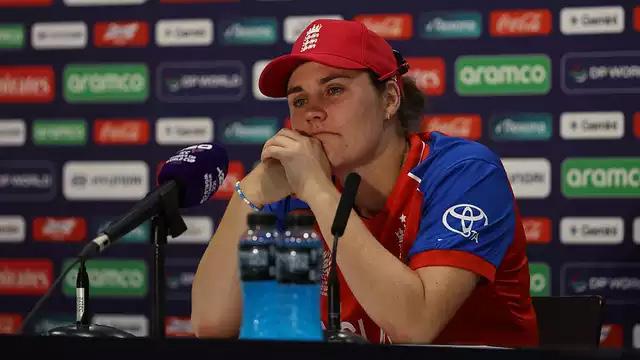
over England on Sunday to capture their seventh T20 title.
She was joined by wicketkeeper Beth Mooney, who scored 238 runs in seven matches at an average of 47.60, Ellyse Perry, who
scored 198 runs at an average of 49.50 and Ash Gardner, who scored 150 runs at an average of 50, while also taking three wickets.
England’s duo of Danni Wyatt-Hodge and captain Nat Sciver-Brunt were also
Ferreira then swung the pendulum of momentum back in his team's favour by finishing the penultimate over with a four and a six. 15 off 6 was still gettable, until TSK batters tripped up against Shanaka's excellent variations. (Cricbuzz)
(From page 23)
included, while left-arm spinner Shree Charani was the lone Indian named in the team after finishing as the tournament’s leading wicket-taker with 14 scalps in just five matches – the second-highest tally ever re-
Pryce, Thompson-Herah credit Francis for...
with me always.”
Thompson-Herah, meanwhile, joined the MVP club in 2011 and went on to win gold in both the 100m and 200m at the Rio Olympics in 2016 before repeating the feat at the Tokyo Games in 2021. She established herself as one of the fastest women
in history, clocking 10.54 seconds in the 100m — just 0.05 seconds shy of the world record of 10.49 set by American Florence Griffith Joyner — and 21.53 seconds in the 200m.
Thompson-Herah, who left MVP in 2021 after a reported fallout with Francis,
paid tribute to her former coach in a post on social media.
“I’m lost for words right now. Thanks for paving the way, the greatest to ever do it. Rest in peace to an ICON, you will be surely missed,” she said on her official Insta-
corded at a single Women’s T20 World Cup.
Ireland’s Orla Prendergast, Sri Lanka’s Nilakshika Silva, South Africa’s Marizanne Kapp and Pakistan captain Fatima Sana completed the XI.
(From back page)
gram account while posting photos and videos of herself and Francis.
Jamaican sprint legend
Usain Bolt, despite being coached by Glen Mills at Racers Track Club, also paid tribute to Francis.
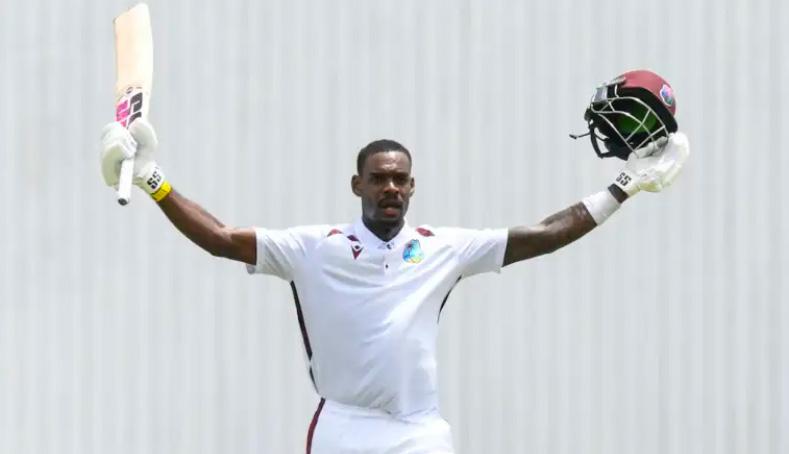
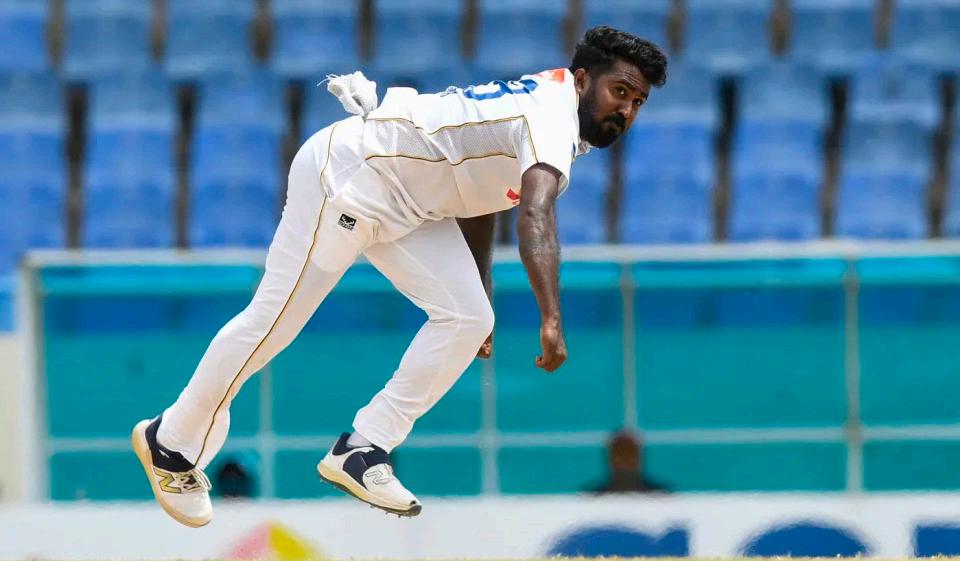
(1) Who replaced the two WI players in the recent second Test against SL?
(2) Who replaced the three SL players?
Answers in tomorrow’s issue
ENGLISH RACING TIPS
PONTEFRACT
08:48hrs Claret And Blues
09:18hrs Kinetic Impact
09:48hrs Cheshire Dancer
10:18hrs Garfield Shadow
10:48hrs Dubai Venture
11:18hrs Clonquest
11:48hrs Dream Deal
UTTOXETER
08:30hrs Ride Like A Girl
09:00hrs Jiair Madrik
09:30hrs Karnaval Point
10:00hrs Abbey Scope
10:30hrs Rocks Up Late
11:00hrs Most Wanted
11:30hrs Teleleo
BRIGHTON
13:20hrs Some Nightmare
13:50hrs Radahn
14:20hrs Dion Baker
14:50hrs Super Hit
15:20hrs Graffiti
15:50hrs Rory Rocket
SOUTH AFRICA RACING TIPS
DURBANVILLE
08:00hrs Macro Gravity
08:35hrs Up In Flames
09:10hrs My Sunshine
09:45hrs Devil A Saint
10:20hrs Prince Of Tibet
10:55hrs Absolutely Yes
IRISH RACING TIPS
TRAMORE
12:25hrs Plontier
13:00hrs Dream On Baby
13:30hrs Marmeladova
14:00hrs Highway
An incredible night when England’s heroes were made
ENCLAND'S
players dropped to their knees in sheer elation and exhaustion at the end of a performance fit for heroes as Mexico's great fortress of the Azteca was breached.
On a spine-tingling night of drama, emotion and pure theatre in one of sport's most atmospheric arenas, England delivered one of their great World Cup victories.
In fact, one of their great victories full stop. Arguably their best since the World Cup was won at Wembley in 1966.
And head coach Thomas Tuchel, who shook two-goal hero Jude Bellingham in sheer joy after the final whistle before the pair collapsed into each other's arms, had masterminded exactly the sort of win the Football Association had in mind when he was appointed.
England won 3-2 to move
forward to play Norway in the quarter-final in Miami on Saturday at 22:00 BST. The scoreline alone barely touches the sides of a night that will never be forgotten by anyone who experienced it.
Tuchel and his players have been presented with barriers from the moment they arrived in Mexico, from the Azteca's altitude of more than 7,000ft, the sheer noise and hostility they were confronted with here, the game delayed for an hour by storms, then Jarell Quansah's red card early in the second half.
All overcome. The World Cup quest continues.
This was an epic win on an epic night at an iconic venue. A win for the ages, simply because of the circumstance in which it was constructed.
Mexico had lost only two of 89 competitive games at the Azteca before England won –
England win thriller against Mexico to reach quarter-finals
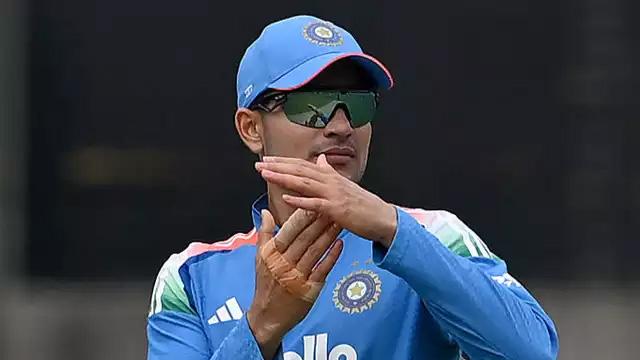
India squad for Zimbabwe T20Is: Samson excluded; Rinku, Mayank return
INDIA have named a 15-member squad for the upcoming T20I series against Zimbabwe starting on July 23 in Harare. The squad features several changes from the one currently competing against England. Sanju Samson, whose poor run of form has continued, has been omitted. Axar Patel, Washington Sundar, Ravi Bishnoi, Harshit Rana, Arshdeep Singh and Prasidh Krishna have also been left out.
Ashok Sharma and Yash Thakur have earned their maiden India call-ups, while Rinku Singh headlines the returning players. Prabhsimran Singh, who was last part of the squad during the 2023 Asian Games, has also been recalled. Mayank Yadav, who last represented India in 2024, and Harsh Dubey, who is uncapped in T20Is, complete the additions.
Both Ashok Sharma and Yash Thakur enjoyed excellent Syed Mushtaq Ali Trophy campaigns, picking up 22 and 18 wickets respectively.
Notably, Thakur claimed his wickets from just seven games at an impressive average of 9.88 and an economy rate of 6.80. Sharma, meanwhile, made his IPL debut for Gujarat Titans, claiming six wickets from as many outings. Clocked
at 154.2kph, he also bowled the fastest delivery of the season. Most recently, both players were part of the India A squad that toured Sri Lanka.
Prabhsimran Singh has been rewarded for his consistent IPL performances.
After a 579-run season in 2025, he followed it up with 510 runs from 14 games at an average of 42.50 and a strike-rate of 168.87 in 2026. With Ishan Kishan also in the squad, however, Prabhsimran is likely to serve as the reserve wicketkeeper.
Injury-ridden Mayank Yadav also returns to the squad for the first time since 2024. After missing the early
stages of IPL 2025 before being ruled out midway through the season, Mayank returned to action in early 2026, featuring for India A in a T20 World Cup warmup fixture against the USA. He also went wicketless in the four IPL matches he played in 2026.
Harsh Dubey has also earned his maiden T20I callup after making his India debut in the ODI series against Afghanistan in June. He featured in eight matches for Sunrisers Hyderabad in IPL 2026, picking up as many wickets.
India squad: Shreyas Iyer (C), Vaibhav Sooryavanshi, Abhishek Sharma, Tilak
and it is easy to see why.
Supporters lined the roads five hours before kick-off, the noise at kick-off was deafening, with some Mexico supporters in tears as they sang the national anthem.
The cracks of thunder, flashes of lightning and the dark clouds over the Azteca as kick-off was delayed only added to the sense of unfolding drama.
Drama we got. And then some.
Into this cauldron walked England, questioned because of spluttering progress to the last 16 but about to show what they can be to their fans inside the stadium, as well as those glued to TV and radios in the early hours back home as the game stretched towards daybreak.
England spent every reserve they had in these alien conditions high above sea
level – all of which makes this the most memorable win of Tuchel's reign and one to stand alongside any in recent years.
Former England captain Alan Shearer told BBC Sport: "Those players have represented their country in magnificent form. Every single player had the right attitude.
"Everything that could have gone against them, everything that was thrown at them - the energy, the altitude - they have got past all of that and they deserved it. That is an incredible performance from start to finish."
They were sentiments echoed unanimously.
To win with 10 players in these surroundings, frantic to the point of hysteria as 11 agonising minutes were added on, only underscores just how good this was. (BBC Sport)
Report: Raptors, Kawhi Leonard to begin extension talks
THE Toronto Raptors are expected to begin contract extension talks this week with forward Kawhi Leonard and his new agent, ESPN reported on Monday.
Varma (VC), Ishan Kishan (WK), Shivam Dube, Suryansh Shedge, Rinku Singh, Harsh Dubey, Varun Chakaravarthy, Prince Yadav, Yash Thakur, Ashok Sharma, Mayank Yadav, Prabhsimran Singh (WK) India tour of Zimbabwe, 2026 Dube named Nitish Reddy's replacement for England ODIs
Additionally, Shivam Dube will replace Nitish Reddy in India's squad for the ODIs against England. Reddy was earlier ruled out of the T20Is after suffering a quadriceps injury and has failed to recover in time for the ODI series.
(Cricbuzz)
Leonard, 35, has one season and $50.3 million remaining on the three-year extension he signed in 2024 with the Los Angeles Clippers.
The previous deal was negotiated by Mitch Frankel, but the seven-time All-Star and two-time NBA Finals MVP has hired Harrison Gaines of SLASH Sports to oversee negotiations with Toronto, per the report.
Leonard is eligible to sign up to a two-year, $123.7 million extension as he rejoins the Raptors, per ESPN.
The Clippers agreed on June 30 to trade Leonard to the Raptors for veteran forward Brandon Ingram, thirdyear guard Gradey Dick and a package of draft picks. The
trade can be made official on Monday.
Leonard averaged 26.6 points and 7.3 rebounds in 60 games (all starts) with Toronto in 2018-19, his lone season with the team before moving on to the Clippers. He was named Finals MVP after leading the Raptors to a six-game series victory over the Golden State Warriors.
After a string of injury-plagued seasons, Leonard averaged a career-high 27.9 points along with 6.4 rebounds in 65 games (all starts) last season to finish seventh in the MVP voting and earn his seventh All-Star nod.
The two-time Defensive Player of the Year has career averages of 20.7 points, 6.4 rebounds, 3.1 assists and 1.7 steals in 798 games (769 starts) with the San Antonio Spurs (2011-18), Raptors and Clippers (2019-21, 2022-26). (Reuters)
Rinku Singh and Mayank Yadav return to the India squad for the Zimbabwe T20Is
Kawhi Leonard and Raptors set to begin extension talks
Pogacar takes Tour yellow with sweltering stage three win
DEFENDING
Tour de France champion Tadej Pogacar took victory on stage three of the Tour de France with a late acceleration to the line following a 195.9km route from Granollers to Les Angles.
The Slovenian also acquired the overall lead and yellow jersey after the stage winner's bonus points took him level on time with Denmark's Jonas Vingegaard of Visma-Lease a Bike, who had been in yellow since Saturday's opening stage.
Pogacar took control with around half a kilometre to go, taking Vingegaard and French darling Paul Seixas of Decathlon-CMA CGM by surprise with a blistering attack.
Pogacar was led up the final category three climb by Sunday's stage winner and UAE Team Emirates-XRG team-mate Isaac del Toro of Mexico, who Pogacar had shepherded over the line the previous day while very clearly holding back his own pace.
On a sweltering hot day in the Pyrenees on the border between northern Spain and southern France, fans had been told to stay away from the area around Les Angles at the finish because of wild-
fires.
Temperatures could once again reach 40C in southwest France this week and have already exceeded 40C in parts of Portugal and Spain.
Pogacar, 27, is trying to claim his fifth Tour title to become the joint-most successful rider in Tour history, alongside Jacques Anquetil, Eddy Merckx, Bernard Hinault and Miguel Indurain.
"I got some extra power in the final [thanks to Del Toro] because he committed more than 100% in the final climb," said Pogacar.
"All [of the] team in the middle of the stage said it is possible to go for the stage win and I'm really happy we started the Tour with this incredible finish today.
"To take yellow is a
dream for any cyclist of any age, so for me any time I can get it on my shoulders, it feels special."
Ecuador's Richard Carapaz of EF Education Easypost finished third just ahead of Seixas, both two seconds down on Vinegaard.
The best-placed Briton on the day was Tom Pidcock of Pinarello-Q36.5 in 16th, 18 seconds down, alongside Colombia's Egan Bernal of British 'super team' Netcompnay Ineos Cycling.
Pidcock sits in 11th in the general classification, one minute 22 seconds down, with the highest-place Netcompany Ineos rider Thymen Arensman of the Netherlands in 16th, two minutes 19 seconds behind yellow. (BBC Sport)
ICC plans to widen DRS supplier base
THE International Cricket Council (ICC) is set to introduce a DRS certification system and explore the possibility of accrediting more vendors capable of supplying cost-effective Decision Review System (DRS) technology.
The proposal is among the agenda items for the Annual Conference in Edinburgh, where the world governing body is also expected to grant Associate Membership to Mauritius. The Annual Conference is scheduled to be held from July 8 to 11.
Currently, UK-based Hawk-Eye Innovations and New Zealand-based Virtual Eye are the two approved providers of DRS technology for international cricket.
However, their services are widely perceived to be expensive, making them unaffordable for many smaller boards and even for franchise and domestic leagues organised by state associations in India. On an average, DRS would cost approximately $ 10,000 (Rs 10 lakh) a day.
A couple of Indian technology firms are understood to be developing a more cost-effective DRS solution and are believed to have made presentations to the ICC. There could also be a few overseas companies in the fray. If the ICC Chief Executives' Committee (CEC) approves the proposed certification system, the ICC could open the door for new suppliers.
"The ICC needs to en -
I don't want it to be my last World Cup: Nat Sciver-Brunt
ENGLAND captain Nat Sciver-Brunt hoped Sunday's World Cup final defeat to Australia at Lord's will not mark her final appearance at a World Cup, even as she reflected on an emotional end to England's campaign.
Australia claimed their seventh Women's T20 World Cup title, outclassing an England side that had shown significant improvement under Sciver-Brunt but ultimately fell well short in the decider.
The occasion carried extra significance for the England captain. Accompanied by her son Theo during the pre-match anthems, Sciver-Brunt returned to the venue where, as a 24-year-old, she had played a starring role in England's triumph at the 2017 ODI World
Cup final, the last time England lifted a major global trophy.
Sunday's defeat inevitably prompted questions about whether she would feature at another World Cup.
"I don't want it to be my last World Cup," she said.
"I'm living day by day at the moment. Family is everything. The support we get from our families, our team, our supporters, it all just means so much, that's why the emotions are high."
Sciver-Brunt entered the tournament carrying a calf injury and was forced to balance her leadership responsibilities with being England's premier batter. Despite missing most of the build-up to this showpiece tournament at home, she
returned to score half-centuries in both the semifinal and final.
"Trying to nurse an injury during a World Cup hasn't been fun," she said. "I've always wanted to try and remain positive around the group and not let on too much how I'm feeling. Missing those games were pretty tough. I just tried to do everything I could do to not be too disruptive coming back.
"I surprised myself a bit coming into back in that semi-final and being able to redo what I did. I'm really proud of what I was able to do."
Her 58 in the final, however, came off 53 deliveries and was a talking point after Australia chased down England's total with relative ease.
A couple of Indian technology firms are understood to be developing a more cost-effective DRS solution and are believed to have made presentations to the ICC
sure that DRS implementation undergoes a comprehensive assessment and testing process for both current DRS suppliers and potential suppliers. A DRS certification system will also be explored with a view to making cost-effective DRS options available that can serve the global game," a source in the know explained.
The ICC will also deliberate on whether there is scope to expand beyond the current threshold of four overseas players from Full Member nations in the franchise leagues. "The meeting will discuss whether to broaden the ICC's remit to include domestic franchise leagues that fall outside the existing threshold of tournaments featuring more than four overseas players from Full Member countries," the source said.
The item is consistent with the ICC decision taken at the previous board meeting in Ahmedabad earlier in May. "The Board expressed
Sciver-Brunt conceded she would have liked to score quicker but dismissed any suggestion that retiring out had crossed her mind - a tactic India employed earlier in the tournament with Jemimah Rodrigues.
Head coach Charlotte Edwards, meanwhile, praised the strides England have made over the past 15 months post a disastrous Ashes series but hinted that changes could be on the horizon as the side looks to bridge the gap to Australia.
Veterans Heather Knight and Danni Wyatt-Hodge, both 35, were among England's standout performers during the tournament, but Edwards indicated the squad composition would come under review at the end of the summer. While
concern regarding growing expanse of franchise cricket and resolved to form a committee to assess harmonisation of franchise cricket with the international calendar within the current structure," the ICC had said in a statement on June 1. The world governing body is also expected to consider granting membership to the Mauritius Cricket Federation (MCF). If approved, it will become the ICC's 111th member. Currently there are 12 Full Members and 98 Associate Members.
On July 8, elections will be held for the three Associate Member Director positions. As previously reported by Cricbuzz on June 15, five candidates are in the fray - Mubashir Usmani (UAE), Mahinda Vallipuram (Malaysia), Gurumurthy Palani (France), Rudie van Vuuren (Namibia) and Imran Khwaja (Singapore). (Cricbuzz)
Sciver-Brunt entered the tournament carrying a calf injury and was forced to balance her leadership responsibilities with being England's premier batter
Sciver-Brunt maintained the gulf between the two finalists was narrower than the result suggested, England's management appears open to refreshing the squad ahead of the next cycle.
"There's a lot of younger players in this team now that are staking a claim,"
Edwards said. "We need to have a look at the team. We obviously stuck with a lot of our older players for this tournament and they've rewarded us well. That's something for the end of the summer to have a look at and see where we are as a side." (Cricbuzz)
Tadej Pogacar poured a full bottle of cold water over himself as soon as he crossed the line
Ageing Brazil need major surgerybut is Ancelotti the man to do it?
FOUR years ago Brazil were unlucky to go out of the World Cup to Croatia in the quarter-finals. Four years prior to that they were also slightly unfortunate to fall to Belgium at the same stage. This time they failed even to get that far and there was nothing unlucky about their loss to Norway.
This, frankly, is an unmitigated disaster.
Carlo Ancelotti arrived with his band aid after a 4-1 thrashing by Argentina in March of last year.
Of his 16 games in charge of the national team he has won 10, drew three and lost three. He turned around a side that had struggled in World Cup qualifying, losing four out of five games prior to his arrival.
But that has not proved enough.
Brazil now need major surgery - starting with the area of the field where they used to be so strong, so creative, so entrancing -- the midfield.
Turning their backs on imaginative central midfield play has lost Brazil some friends along the way, and it is also losing them matches. The fact that they were comprehensively outpassed by Norway on a warm summer's afternoon at this World Cup is simply astonishing -- but it has to do with the make up of the side.
Ancelotti was a hostage to Casemiro. The first thing the coach did was recall the player from 18 months in the international wilderness.
There were plusses. Casemiro gave the team structure and freed Bruno Guimaraes, who until
President’s College reign supreme with a divisional title at the National Schools’ Basketball Festival
his early missed penalty against Norway -- and what a difference that might have made -- was enjoying a fine tournament.
But Casemiro's vulnerability in open space was always a problem -- clear in the second minute when Norway had a goal disallowed. And so the way Brazil defended was to drop deep and watch Norway exchange their passes and grow in confidence.
And then there is the absence of Lucas Paqueta, injured in the previous round against Japan. Ancelotti confessed that he did not have another player with the same characteristics.
In came Arsenal's Gabriel Martinelli, which had the effect of making the team's attack almost entirely dependent on quick, direct breaks.
The coach made an error with his initial call uphaving only five midfielders was a serious lapse, and when right back Wesley was injured in the final warm-up game, Ancelotti used the opportunity to bring in potential Manchester United signing Ederson. But if the coach is to blame then so is the country.
College U-18
SERIAL school basketball champions President’s College (PC) on Sunday again demonstrated their skill set on the newly installed hardwood floor at the National Gymnasium when Youth Basketball Guyana staged their National Schools’ Basketball Festival.
President’s College claimed the Girls and Under-18 divisional titles after comfortable wins in the finals at the weekend. PC, playing the feature under-18 game of the night
against Queen’s College (QC), was cautious in the first quarter as it ended with both teams on six points. However, by halftime, President’s College started to pull away, leading by two points, 19-17. They maintained their lead in the third quarter, 2422. Mattaniah Fordyce, with 11 points and 16 rebounds, along with Dontrell Ross, who had 13 points, had an explosive showing in the fourth and final quarter to steer them to a blowout win over QC by 22 points (4725).
The evening’s most competitive match-up was the under-16 finals, which pitted city side St. Rose’s High against Berbice High School for the national title. It was Berbice High that led after the second half, but St. Rose’s clawed their way back into the contest before missing two crucial free throws at the end of regulation time, which forced overtime after they were tied up 42-42.
The ensuing overtime saw St. Rose’s High, guided by Mickal Macpherson with
23 points and 12 rebounds, supported by Shaquan Calendar clinching the victory, 50-46. Berbice High’s Avion Kesney finished with 15 points in the loss.
The girls finals saw President’s College edging Hururu 18-17 in a close contest. Hururu tipped off the day’s action with a 45-31 win over Skeldon Line Path to capture the under-14 crown; Crandon Beckles starred with 19 points in the win. Roy Corbis also contributed with 12 points.
Shanaka snares double hat-trick in final over as Orcas defend 121/9
DASUN Shanaka was tasked with defending 10 runs off the final four deliveries. He earned Seattle Orcas a nine-run victory as he went W W W W to sink Texas Super Kings.
The Knight Riders Cricket Field in Pomona was once again hostile towards batters as the Orcas managed to defend their paltry 121/9.
The game, across both teams, had excellent bowling spells - Amshi de Silva went 3-15, Adam Milne conceded just 10 runs in four overs for two wickets; In the second innings, Ottneil Baartman bowled a maiden, picked three wickets and gave away only 9 runs.
On an evening of bowling joys all around, Shanaka stood out, first with a hat-trick and then a fourth wicket off the fourth ball. The eventful fixture, full of batters crashing and burning culminated in TSK needing 15 runs off the last over. Shubham Ranjane, the top-scorer of the
game, started it with a four and a single, handing over to Donovan Ferreira to put the finishing touches. Shanaka knocked his stumps back with leg-cutter.
Next came Calvin Savage. Shanaka dished out another cutter. Savage got bat to ball, but only as far as Shimron Hetmyer at longon. Milne arrived needing
to score in two balls what he conceded in four overs. Shanaka went cutter again and Milne nicked it behind, leading to the hattrick. Amshi then miscued a big shot when the game was already lost, and Hetmyer ran in from long-on to complete the catch, the incredible four-wicket over and the game in his team's favour.
Batters were tentative, and easy fodder, all game as TSK inserted Orcas in and triggered a collapse. Tim Seifert, Matthew Breetzke and Shayan Jahangir were all sent packing inside the Powerplay. Hetmyer and Ali Sheikh stopped the bleeding, but only as far as the ninth over when another collapse ensued. Abhimanyu Lamba dismissed Ali Sheikh, pushing Orcas down to 44/4. That soon became 70/7 in the 13th over with Marcus Stoinis's exit putting in doubt the possibility of a total over 100. Harmeet Singh and Cameron Gannon made it possible, their watchful 31-run stand taking the team just past 100. Lower-order contributions, including Shanaka's 16, dragged Orcas to 121/9. TSK flew for the first two overs of the chase Faf du Plessis took charge. But Baartman pegged the veteran back by dismissing him, and his opening partner Saite -
(Turn to page 19)
Brazil coach Carlo Ancelotti
President’s
national champions collecting their hardware
St. Rose’s High posing with their U-16 national title
Dasun Shanaka picked a hat-trick, and four wickets in the final over to secure an incredible victory
Could Uefa go to war with Infantino?
UEFA laid down new battle lines on Tuesday, when voicing strong opposition to the Balogun decision.
European football's governing body said Fifa had "crossed a red line" and described it as an "unprecedented, incomprehensible and unjustifiable decision".
But this was not the first time Uefa has crossed swords with Fifa.
In May 2025, Uefa President Aleksander Ceferin, led a group of European delegates in staging a walkout during a break at the Fifa Congress.
Infantino had been on a diplomatic tour of the Middle East alongside Trump and arrived two hours 17 minutes late.
Uefa has looked to score political points during the World Cup, too.
No sooner had Artan landed at home in Somalia last month than Uefa announced he had been invited
to referee the Uefa Super Cup between Paris St-Germain and Aston Villa on 12 August.
And throughout this year, Uefa has been eager to point out how cheap Euro 2028 tickets are compared to the World Cup. It will not introduce hydration breaks, or red cards for players who cover their mouth.
Infantino, remember, came from Uefa. For many years he was the man who presented the Champions League draws.
He may not quite be persona non grata there these days - he gave a speech at the Uefa Congress in February - but there is clear friction.
Taking all this into account, Infantino's position must surely be in doubt?
On the contrary. Infantino is popular with many federations around the world - and a lot of that is down to Fifa's development of the game.
No West Indian named in ICC Team of the Tournament
LONDON, England, (CMC) – Despite reaching the semifinals of the ICC Women’s T20 World Cup, no player from the West Indies Women’s team was selected in the Team of the Tournament.
Four players from Australia Women’s champion side along with two players
from losing finalists England Women dominate the 12-member team announced by the ICC on Monday.
Australia’s Sophie Molineux, who claimed 11 wickets in seven matches, was named captain after leading her side to a comprehensive seven-wicket win
Infantino's Fifa Forward programme has funded football projects across the globe, and he has created opportunities through the expanded World Cup.
Sixteen extra nations now qualify - the vast majority from the confederations with less depth. Europe only
got three of the additional spots.
This World Cup has shown that, below the top level, Asia and Concacaf have a lot of work to do to be competitive.
But Infantino has provided the dream, the hope that nations who never before could play at the World Cup
might just get there. Like Cape Verde, Curacao, Jordan and Uzbekistan.
Despite all the criticism over the 48-team format, it created the wonderful opportunity for a team like Cape Verde live their dream.
And it will allow less traditional football nations to grow their game and get stronger - and surely that is a positive for football around the world?
The catch?
Tournaments like the World Cup, and the huge ticket prices, pay for these projects.
This year, Fifa is expected to bring in $9bn (£7.9bn)
Uefa may oppose much of what Fifa and Infantino stand for, but European football is the rich man of the game. Largely, it can fund itself.
The rest of the game depends on Infantino and the money Fifa generates.
There are 211 countries
within Fifa. Each gets a vote on the presidency, with 106 needed to win an electi.
Let's look at the maths.
In April, Conmebol - the South American confederation - said its 10 countries would back Infantino.
Three weeks later, the Confederation of African Football (Caf) confirmed unanimous backing from its 54 member associations.
Shortly afterwards, the Asian Football Confederation's 47 nations followed suit.
Infantino already has 111 votes. He cannot be beaten.
Even if Uefa thought it could muster a candidate capable of mounting a challenge, the race is already run.
Infantino was re-elected unopposed in 2019 and 2023. It would take something truly remarkable for anyone to stand against him, let alone beat him in 2027. (BBC Sport)
Substitute Merino scores late winner as Spain knock out Portugal
MIKEL Merino came off the bench to score an injury-time winner for Spain as they knocked Portugal - and Cristiano Ronaldoout of the World Cup in a heavyweight last-16 tie in Dallas.
Spain had failed to create clear-cut openings in a poor second half before Ferran Torres played in the Arsenal midfielder, who slotted low past goalkeeper Diogo Costa in the 91st minute.
The 1-0 result was a repeat of their meeting at the same stage in 2010 and sets up a quarter-final tie with either co-hosts United States or Belgium in Los Angeles on Friday, 10 July (20:00 BST).
Portugal's defeat also ends 41-year-old Ronaldo's World Cup career after the superstar confirmed this tournament would be his last.
Spain squandered a giltedged chance after just three minutes as Dani Olmo's pass helped Mikel Oyarzabal get behind the defence, but the Real Sociedad striker dragged his effort wide.
Costa then produced a double save to deny Spanish duo Lamine Yamal and Alex Baena in quick succession as La Roja probed for an opener, but it was Portugal who went closest next.
Spain were saved by the woodwork in the 41st minute as Nuno Mendes' venomous left-foot strike took a deflection off Pedro Porro and rattled the crossbar. However, the game remained goalless at the break.
Roberto Martinez's side continued to grow into the game after the break, though Ronaldo cut a frustrated figure up front in a second half that produced little in the way of action in the final third.
Bruno Fernandes hit the side-netting in the 76th minute, while at the other end Olmo's shot from inside the box was blocked by a brave Ruben Dias before the two Spain substitutes combined to produce the match-winning moment.
There has been little to separate Spain and Portugal
in their recent meetings.
Heading into this World Cup last-16 tie, six of their previous seven matches had ended in draws after 90 minutes.
And for long periods in Dallas, it appeared extra time and penalties awaited - just like when the sides met in the Nations League final in June 2025, when Portugal won on penalties.
In a goalless first half, it was Spain who produced the better chances, but Portugal went closest to breaking the deadlock through Mendes.
The second half was devoid of much quality but for the decisive moments as the game inched towards extra time.
The European champions caught the Portugal defence napping after Rodri earned them a free-kick and Torres slipped in Merino, who finished into the bottom left corner to begin Spanish celebrations in earnest.
But for Ronaldo - captain, leader and inspiration behind Portugal's Euro 2016
triumph - this is the end of the road, at least on football's grandest stage.
The five-time Champions League winner has said this would be his final World Cup while, before last week's last-32 game with Croatia in Toronto, Ronaldo's sister stated this tournament would be his "last dance".
The Portugal captain tested Unai Simon - who has now gone 609 minutes without conceding at the World Cup - early in the 12th minute and almost poked in a knock back across the goal from his Al-Nassr team-mate Joao Felix in the 37th.
However, it was an underwhelming display from the forward, who stayed on the pitch until the final whistle but registered just 19 touches, with only three of them inside the box.
Spain's 18-year-old Yamal was among those who consoled a crestfallen Ronaldo after the game in a moment that felt symbolic of football's changing of the guard. (BBC Sport)
FIFA president Gianni Infantino has been Fifa president since 2016
Australia’s Sophie Molineux was named captain of the ICC’s Team of the Tournament
Greaves’ marathon innings of 180 leaves final Test headed for draw
…Shai
ST JOHN’S, Antigua, ( CMC) – Justin Greaves defied Sri Lanka’s bowling attack for over eight hours to leave the second Test likely to end in a draw heading into today’s final day.
Greaves’ knock of 180 off 325 balls sucked the life out of any hopes Sri Lanka had of pushing for victory on Monday’s penultimate day, as the West Indies were dismissed for a creditable 499 in 165.5 overs at the Sir Vivian Richards Stadium, giving their opponents a 50-run first innings lead.
West Indies then struck back in the final session by grabbing two wickets to re-
Hope hits first Test century in the Caribbean
duce the visitors to 92 for two – an overall lead of 142 runs.
The home side commenced the day in a strong position of 318 for four, with Shai Hope on 86 and Greaves on 85.
Greaves overtook his partner when he drove pacer Asitha Fernando exquisitely through cover for four, but Hope responded with a boundary off Milan Rathnayake to move to 98.
Moments later, Hope finally scored his first Test century in the Caribbean and fifth overall by driving Rathnayake through cover for a single to see the Windies progress to 349 for four.
A single off the first ball of the next over by Hope ensured the West Indies avoided the follow-on and after being stuck on 99 for some time, Greaves brought up the next milestone by reaching just his third Test hundred – and second at the venue – with a quick single to mid-on.
The pair then chose to work the ball around the ground for singles and twos with the lunch time break fast approaching.
But just minutes away from that interval with the score 386 for four, Hope was stumped in peculiar fashion.
Left-arm spinner Sonal Dinusha’s delivery down the leg
side was missed by Hope as he tried to pad it away, but the ball hit wicketkeeper Kusal Mendis’ glove and ricocheted onto the stumps with the batter out of his crease to dismiss him for 112.
He faced 243 balls and spent just over six hours at the crease.
With captain Roston Chase joining Greaves, the Windies went to lunch comfortably placed at 406 for five.
The duo put on 52 for the sixth wicket, but after being struck a couple times with short deliveries Chase was eventually undone by another short ball from Fernando which he could only edge
behind to the keeper to be caught for 23.
Fernando then dismissed Anderson Phillip for a duck and Rathnayake had Alzarri Joseph caught at fine leg for 13 to leave the Windies 465 for eight.
Greaves added 34 crucial runs with tailenders Shamar Joseph and Jayden Seales, before he was the last man out to bring his eight-and-a-halfhours innings, in which he struck 14 fours and two sixes, to an end.
Fernando was the pick of Sri Lanka’s bowlers with 5-130, while Jayasuriya took 3-131.
Sri Lanka needed quick
runs in their second innings, but instead found themselves in early trouble when Shamar Joseph trapped Lahiru Udara lbw with just two runs on the board.
Things got worse when Nishan Fernando could only parry a short delivery from Alzarri Joseph to slip where John Campbell took a spectacular catch at full stretch to see them slip to 32 for two.
However, Dinesh Chandimal who ended the day unbeaten on 40, and Kamindu Mendis who is on 30 not out, shared a 62-run partnership while scoring at over five runs an over to see them through to the close of play.
Pryce, Thompson-Herah credit Francis for successful careers
KINGSTON, Jamaica, , (CMC) – Two of the world’s best female sprinters, Shelly-Ann Fraser-Pryce and Elaine Thompson-Herah have praised former coach Stephen Francis for his role in shaping their careers.
Francis, a world-renowned coach and co-founder and former head coach of the MVP Track & Field Club, passed away on Saturday at the age of 64 after a brief illness.
Fraser-Pryce joined the University of Technology, Jamaica (UTech)-based MVP in 2006, where she stayed for 14 years before leaving in 2020.
The now 39-year-old Fraser-Pryce, who retired at the World Championships last year, credited Francis for much of her achievements.
“He was not only my coach but a steady source of guidance during some of the most defining moments of my career. He challenged me to dream beyond my circumstances, demanded excellence with every race, and instilled in me the confidence and resilient spirit that shaped the woman I would become.
“Everything we accomplished together was built on sacrifice in the relentless
Under Francis’ tutelage, she captured Olympic gold in the 100m in 2012, and won world titles in 2009, 2013, 2015 and 2019.
pursuit for greatness. His standards were uncompromising because he believed his athletes were capable of extraordinary things,” Fraser-Pryce recalled.
“While the world will rightly remember his remarkable achievements, I will remember the man who believed in me and whose impact on my life extends beyond the track. As Jamaicans, we grieve together but we also celebrate a lifetime of extraordinary and immeasurable impact and influence. His philosophy was built on the premise that success was earned through consistency, discipline and self-belief. Those lessons will remain
Justin Greaves celebrates after scoring a century against Sri Lanka in the second Test
Asitha Fernando picked up a five-for (AFP/Getty Images)
Elaine Thompson-Herah (left) and Shelly-Ann Fraser-Pryce (right) were both coached by Stephen Francis at the MVP Track & Field Club (Turn to page 19)