



––
President Ali says; emphasises importance of ensuring all heritages are seen, heard, included as nation continues to fortify unity
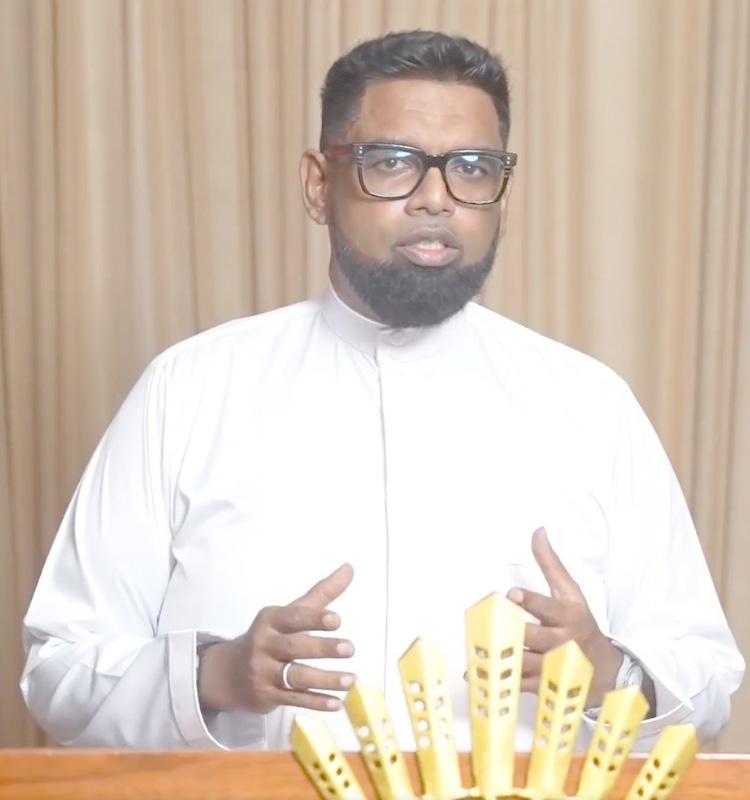
PRESIDENT Dr Irfaan Ali has called on Guyanese to actively work towards deeper unity as Guyana
marked Arrival Day and further prepares to celebrate 60 years of Independence.
The Head of State made these remarks during his Arrival Day message, during which he reflected on the
country’s complex historical journey and emphasised that Guyana’s independence was built on sacrifices that were

made long before 1966.
He urged citizens to recognise the collective contributions of all groups who shaped the nation.
“The stepping stones were laid by every hand, every sacrifice and every dream that came before,” the President said.
To this end, he pointed to the foundational role of Indigenous peoples, the endurance of African ancestors, and the contributions of those who arrived later.
Arrival Day, he noted, provides a moment to honour the waves of migrants who came to Guyana following Emancipation, many as indentured labourers from India, China, Portugal and elsewhere.
As this year also marks the 180th anniversary of the arrival of the first East Indian indentured immigrants, the President paid tribute to Indian indentured labourers and their descendants, acknowledging their resilience despite the hardships they faced.
“Most endured injustices, privations and the ache of separation, yet the majority… stayed and made Guyana their home,” he said Against this backdrop, the President framed the country’s central challenge as forging unity from diversity.
“The great challenge… has been how to create one-
ness from the diverse strands of our people,” he said.
Dr Ali stressed that this challenge remains unresolved and requires deliberate action, noting: “Arrival Day calls us to answer it with action, not only with remembrance.”
The Head of State outlined a vision of a unified Guyana where inclusivity is central, noting that national unity must be built on a foundation where, “every heritage feels seen, every voice is heard, and no one is made to feel a stranger in their own homeland.”
President Ali noted that unity will redound to economic development, emphasising that the country’s growing wealth must benefit all citizens.
Further, he indicated that Arrival Day should serve not only as a commemoration of the past, but as a call to responsibility in the present.
Honouring ancestors, he noted, requires continuing their pursuit of justice, equality and dignity.
President Ali urged citizens to remain committed to building a society where opportunities are accessible to all, particularly the younger generation, and called for a nation in which “every child, regardless of circumstance, can be protected and aspire to be the best version of themselves.”
PRESIDENT Dr Irfaan
Ali has outlined Guyana’s approach to transforming the country’s vast natural assets into a model of inclusive and sustainable development.
The Head of State was, at the time, sharing Guyana’s experience and expertise at the Baker Institute’s Center for Energy Studies conversation series at Rice University in Houston, Texas.
During his remarks, President Ali told the gathering that Guyana is deliberately shaping an economic framework that maximises resources while addressing global challenges.
“We are positioning ourselves to live an economic reality that is based on optimising our natural asset to its fullest,” President Ali said.
He noted that Guyana’s strategy goes beyond oil production, focusing instead on building an economy that integrates energy, environmental stewardship and social advancement.
The Head of State said
that the country is pursuing a balanced framework in which traditional energy and renewable investments coexist, while also being supported by technology and innovation to reduce environmental impact.
“We do not see Guyana as a petro-producing country that adds problems to the world,” he said, noting: “We see Guyana as utilising this advantage to demonstrate… that development powered by energy can coexist with environmental stability.”
A major component of this is the preservation and monetisation of Guyana’s environmental assets.
Dr Ali highlighted that even as oil production expands, the country maintains one of the world’s lowest deforestation rates, with more than 85 per cent forest cover intact.
It was against this backdrop that he pointed out that global systems have not adequately rewarded countries that preserve their forests, noting the imbalance in how environmental services are
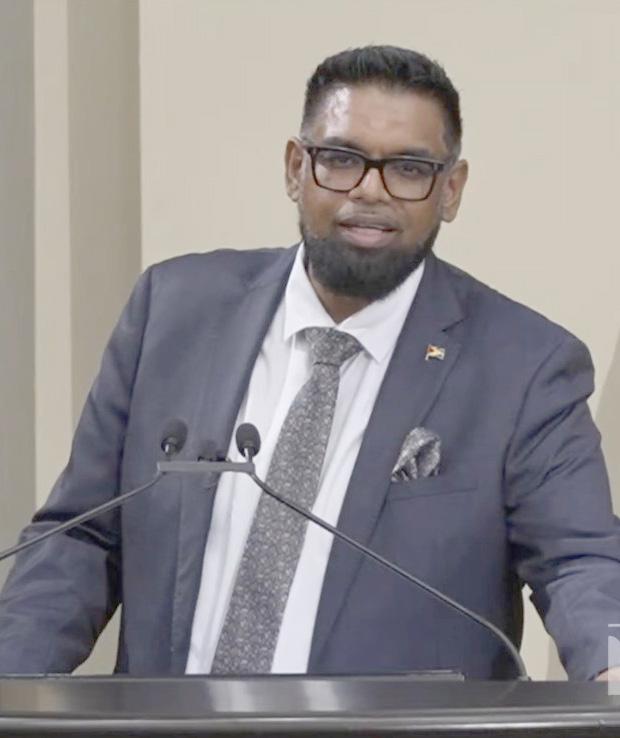
President Dr Irfaan Ali speaking at the Baker Institute’s Center for Energy Studies conversation series at Rice University in Houston, Texas
valued internationally.
“Here is a country that has decided… we are keeping it standing, but we are opening up the forest for international monitoring,” he said, while advocating for market-based mechanisms to ensure fair compensation for climate
and biodiversity services.
Meanwhile, President Ali outlined a multi-pillar strategy for economic diversification, underpinned by revenues from the oil and gas sector.
He disclosed that these revenues are being channelled into manufacturing
and industrial development, allowing Guyana to move beyond raw production into value-added industries such as petrochemicals, agro-processing and food production.
With investments in gas-to-energy projects expected to significantly reduce electricity costs, he told the energy studies centre that Guyana is positioning itself as a major supplier of processed food within the Caribbean and wider region.
To this end, he pointed to Guyana’s strategic location as a gateway to northern Brazil and a potential hub for regional integration.
Dr Ali said ongoing investments in roads, ports, bridges and energy infrastructure are aimed at unlocking cross-border economic opportunities and enhancing competitiveness.
Further, he highlighted that Guyana is investing heavily in digitisation, artificial intelligence and technology to accelerate development and improve efficiency.
President Ali noted that energy must not only be produced but also utilised domestically to create value and drive economic expansion.
“It is not only about the production of energy, it is how much of that energy you can consume yourself to add value and create multiplier effect within your countries,” he said.
Additionally, Dr Ali highlighted the government’s people-centred approach focused on human capital development, with investments in education, healthcare and skills training that are intended to ensure citizens benefit directly from economic growth.
“It is people-centred… understanding how these investments can uplift people,” he said.
To this end, he outlined that Guyana’s experience offers a practical example of how resource-rich countries can pursue growth responsibly, balancing economic expansion with environmental protection and social progress.
–– for positioning Guyana as a ‘forward-looking global energy partner’
PRESIDENT Dr. Irfaan Ali’s ‘visionary leadership’ has been credited with positioning Guyana on the global energy stage by a senior United States official. The vote of confidence came from none other than Bradley McKinney, Deputy Assistant Secretary for the U.S. Commercial Service at the International Trade Administration of the U.S. Department of Commerce.
Speaking on the sidelines of an ongoing Offshore Technology Conference in Houston, Texas, McKinney said: “What makes Guyana truly stand out is not just the scale of its reserves; it’s how it’s developing.”
He bolstered his argument by pointing to its commitment to transparent governance, strong collaboration with global operators and a clear focus on long-term national development.
Noting that pillars such as these have become defining characteristics of Guyana’s strategy as it continues to expand its role in the global energy
market, he went on to say that this approach of which he speaks is being shaped at the highest level of leadership.
“…That approach starts at the top. So, Mr. President, thank you! You are demonstrating leadership, and positioning Guyana not just as a major energy producer, but as a forward-looking partner in the global
energy system,” he said.
The U.S. official further highlighted the significance of Guyana’s model for international stakeholders, particularly American businesses and investors.
“For U.S. companies and international investors, our partnership is not just a resource play; it is a model for responsible energy development,” McKinney stated.
President Ali’s leadership was further acknowledged as he was conferred with the visionary leadership award by the Bilateral Chamber in Houston, Texas in recognition of his steadfast leadership and transformative vision for Guyana’s economic development.
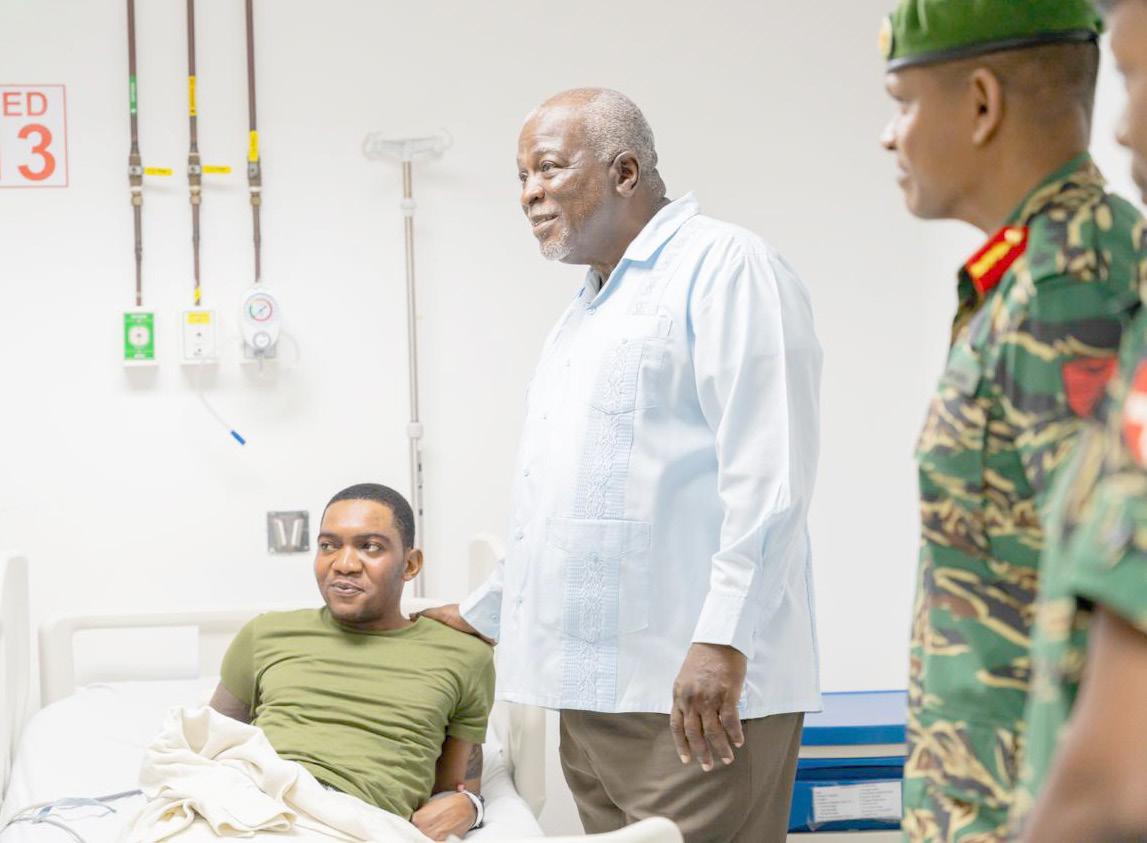
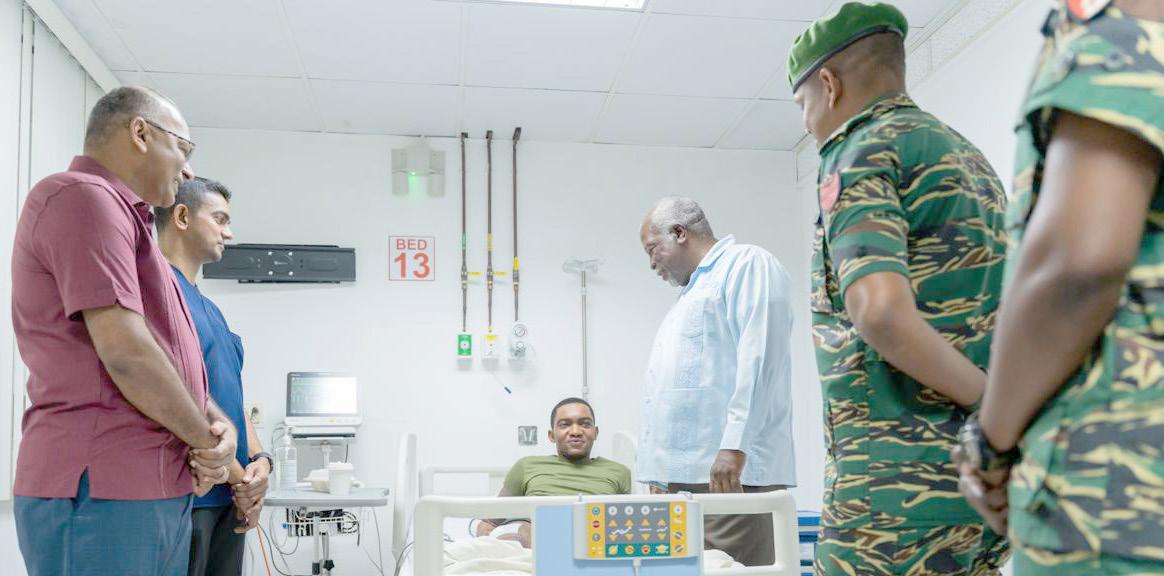
Brigadier (Ret’d), Mark Phillips, performing the functions of President, on Tuesday, visited Lance Corporal Troyland Douglas of the Guyana Defence Force at the Georgetown Public Hospital Corporation, where he is receiving treatment after sustaining injuries during a GDF boat patrol along Guyana’s western border in Region Seven.
During the visit, Prime Minister Phillips wished Lance Corporal Douglas a full and speedy recovery and reaffirmed the Government’s support for the men and women of the Guyana Defence Force in
the execution of their duties to safeguard Guyana’s territorial integrity.
The Prime Minister was accompanied by Minister of Health, Dr Frank Anthony; Chief of Defence Staff, Brigadier Omar Khan, MSS; and other senior officers of the Guyana Defence Force.
Lance Corporal Douglas was injured when the GDF patrol, which was escorting three civilian boats transporting personnel and cargo from Makapa to Eteringbang, came under fire in the vicinity of Black Water.
The patrol returned fire and safely manoeuvred the convoy out of the area.


A 35-year-old motorcyclist died on Sunday evening following a collision with a motor lorry at the junction of the Mandela to Eccles Highway and Rome Access Road, and police have launched an investigation into the circumstances surrounding the fatal accident.
Dead is Andra Jnr Lewis of Guyhoc Park, South Ruimveldt, Georgetown.
Police said the accident occurred at about 18:16 hrs and involved motorcycle CR 5455, which Lewis was riding, and motor lorry GAM 1442, driven by a 24-year-old man of D’Edward Village, West Coast Berbice.
According to initial investigations, Lewis was proceeding south along the eastern drive lane of the Mandela to Eccles Highway, while the lorry was travelling east along the northern drive lane of the Rome Access Road.
Investigators said that
upon reaching the intersection, the driver of the motor lorry allegedly drove into the path of the motorcycle, resulting in the front of the motorcycle colliding with the left rear side of the lorry.
The impact of the collision left Lewis with severe injuries about his body.
Emergency Medical Technicians were summoned to the scene, and the injured motorcyclist was examined by a doctor on duty, who pronounced him dead at the scene.
His body was later escorted to the Davis Memorial Crematorium and Funeral Home Mortuary, where it is awaiting a post-mortem examination.
Police said a breathalyser test was administered to the lorry driver, and no trace of alcohol was found in his system.
The driver remains in police custody as investigators continue their probe into the fatal accident.
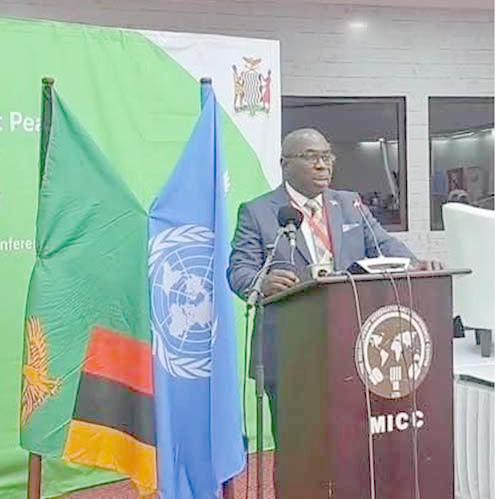
MINISTER within the Office of the Prime Minister of the Cooperative Republic of Guyana, Kwame McCoy, has implored stakeholders to leave behind the adversarial relationships they have developed and move forward into a new age of constructive collaboration based upon trust, accountability and shared goals.
The minister emphasised this point during his address to global leaders at the closing session of the 2026 World Press Freedom Day Conference which was hosted at the Mulungushi International Conference Centre in Lusaka, Zambia.
McCoy made reference to the many people who attended the conference including government Representatives, UNESCO officials and members of the international press corps.
The minister emphasised that Press Freedom is not just some theoretical concept or mere idea; rather it represents a real obligation that is shared equally by all
members of society.
“An Independent Free Press exists not alone,” he stated, adding: “Rather it relies upon a joint effort from all sectors of society –namely governments, media practitioners, civil society and citizens.”
The importance of the minister’s statement was heightened by the fact that Guyana is currently celebrating its Diamond Anniversary (60th anniversary) since attaining Independence.
The minister indicated that this occasion provides a unique opportunity to examine the institutions that have contributed to shaping and protecting Guyana’s democracy.
In this regard, he reaffirmed the continuing important role that the Press plays as the Fourth Estate and therefore contributes significantly to public life.
McCoy clearly asserted that Press Freedom in Guyana is neither theoretical nor rhetorical. Rather, it is a tangible reality.
The minister emphasised
that Guyana’s governance framework supports the free, responsible and diverse nature of Media in every form; a support that aligns perfectly with global democratic principles recognising a free Press as essential to transparency, accountability and sustainable development.
At the centre of McCoy’s speech was a plea to funda-

from Adversary Posture to Constructive Engagement,” he declared strongly. “And once Trust is Developed, the media should no longer view themselves as adversaries but as key Partners in National Development.”
While McCoy recognised that trust alone will not sufficiently protect press freedom from challenges related to the rapidly evolving information landscape, he pointed out the considerable challenges that traditional media institutions are facing due to artificial intelligence and unregulated online platforms. These are forces that are changing how information is created, distributed and consumed.
mentally alter the relationship between governments and media.
He recognised that suspicion has frequently characterised this relationship. However, he called on both sides to transition away from doubt and toward mutual transparency and accountability.
“We need to make a shift
While acknowledging the opportunities presented by these technologies, McCoy warned of several grave risks including mis-information/dis-information and erosion of editorial standards. As a result of these challenges, Minister McCoy issued two separate calls –one to the media and one to governments/international bodies.
First, he called on media organisations to act promptly to adapt to these changes by investing in digital transformation and rededicating their role as credible sources of verified information.
Second, he called on governments and international bodies to develop frameworks that promote innovation while safeguarding truth and accountability.
“To survive in this new environment requires vigilance and innovation,” he stated.
Finally, McCoy closed his speech with a message of determination.
He reminded delegates that ultimately the trajectory of press freedom will be determined by human choices: The choice to uphold integrity; to collaborate across divides and to defend the right of the public to receive accurate reliable information.
“A free fair responsible Press is not optional,” he affirmed, noting, “it is essential to development, stability and progress.”

WHEN President Dr. Mohamed Irfaan Ali spoke at the Offshore Technology Conference in Houston last Monday, he aimed to reshape the entire global conversation, and he was right.
In front of industry leaders, investors, and policymakers from over 100 countries, Guyana’s leader made one of the clearest and most honest arguments this year: the planet needs energy balance more than it needs an energy transition.
This is not just wordplay. It corrects a prevailing narrative that has treated fossil fuels and renewables as opposing forces rather than as tools that can work together to meet the growing global energy gap.
The inconvenient truth President Ali highlighted in Houston is one that wealthy world-climate advocates have often avoided—record global clean energy investment of US$3.3 trillion in 2025 primarily goes to China, the United States, and the Eu-
ropean Union, while regions with the fastest-growing energy needs receive the least funding. That is not a transition; it is the entrenchment of energy inequality masked in green rhetoric.
The president’s challenge was pointed: are we solving one environmental crisis while creating another?
The demand for critical minerals for renewable technology has its own environmental costs: deforestation, toxic waste, and water stress in vulnerable communities.
These are not minor concerns. They are real issues that should make every sincere climate advocate think twice. Guyana is asking the right questions, even if many in the Western policy establishment are not yet willing to answer them honestly.
What strengthens Guyana’s argument is that the country is not just theorising; it is showing the model in action.
Guyana is one of the fastest-growing oil producers while also being a
significant net carbon sink, with forests covering about 85 per cent of its land and absorbing over 150 million tonnes of carbon each year.
Through the Low Carbon Development Strategy 2030, Guyana became the first country to issue carbon credits under the ART-TREES standard, securing a landmark agreement valued at around US$750 million— funds directed toward renewable energy, climate resilience, and national development. That is not hypocrisy; that is innovative governance.
Domestically, the Gas-to-Energy project at Wales, the rollout of solar farms across all ten administrative regions, advancements in hydropower, and investments in smart grid technology and storage, all show that the government is serious about creating a diversified, resilient energy system, not just extracting oil and moving on.
The regional effort is also promising, with partnership projects
underway with Suriname, Brazil, and French Guiana to build interconnected power infrastructure that will benefit the entire area.
Critics may argue that Guyana should leave its hydrocarbons in the ground. They are entitled to that view, but they should be ready to explain to Guyanese communities still waiting for reliable electricity, better roads, and improved healthcare how long they must wait for the world to address its renewable financing issues.
The energy transition, as it stands, is not happening quickly or broadly enough for the Global South. Guyana’s “energy balance” framework provides a practical and principled alternative, one that does not force a choice between development and climate responsibility because, as President Ali correctly states, those two goals do not have to conflict.
The world listened in Houston. It should keep listening.
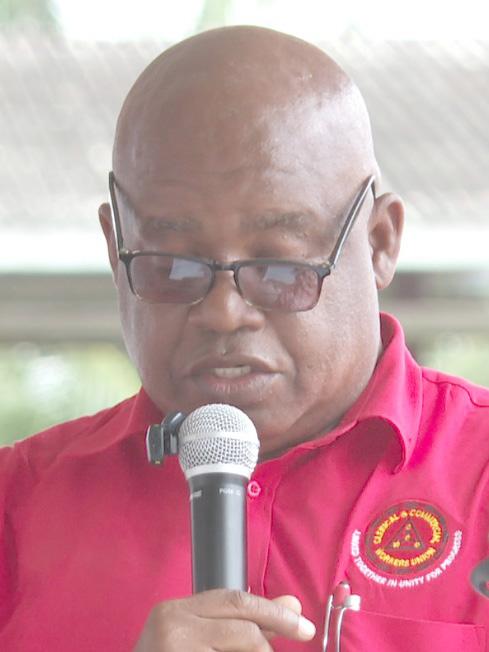
THE General Secretary of the Clerical and Commercial Workers Union (CCWU) Sherwood Clarke has called for greater attention to the rights and protections of lesbian, gay, bisexual and transgender (LGBT) workers, urging continued efforts to strengthen workplace inclusion in the country.
Clarke was at the time delivering remarks during Labour Day observances on Friday. He noted that the trade union movement’s longstanding commitment
to fairness must extend fully to LGBT citizens.
“Our commitment to dignity and respect for workers must apply to all workers. Not some. Not most. All,” he said.
He noted that while Guyana has established a legislative framework to address discrimination, there remains room for consideration of more explicit protections for LGBT persons within the workplace.
Clarke said: “There are currently no explicit protections in employment prohibiting discrimination on the
basis of sexual orientation, gender identity, or gender expression.”
According to the trade union leader, this can create uncertainty for some workers in their day-to-day lives.
“It means a worker can be denied a job, not because they lack qualifications, but because of who they are.”
“It means a person can go to work every single day with fear,” he added.
Against this backdrop, Clarke encouraged discussion around enhancing the Prevention of Discrimination Act to better reflect
evolving workplace realities.
“That is why today we are calling for extending non-discrimination protections to create a stronger, more inclusive Prevention of Discrimination Act,” he related.
Clarke also pointed to broader national conversations on inclusion, noting the union’s support for initiatives that promote understanding and unity.
He said, “This outdated law is a stain on our country’s global reputation and continues to inflict real damage on gay and trans
citizens.”
Clarke emphasised that inclusive workplaces are beneficial not only for individuals but for the wider society.
“Guyana is strongest when everyone is included in our workforce.”
He went on to note that as Guyana continues to advance, ensuring that LGBT workers can participate fully and without fear, remains an important consideration in strengthening both the labour force and national development.
YOU survey the horizon of people who want the nation to know that the Government of Guyana is undemocratic and terrible, and when you are finished, the huge question is in front of you to be answered.
Is what you are seeing a horror show or a circus where the clowns make you laugh?
Recently, I looked at a piece of adumbration from a perennial anti-government critic, Dr Nigel Westmaas (Tuesday, April 28, 2026) in which he literally traced the 60 years of political activism of Dr Clive Thomas, and did not even mention one word of the five years that Thomas spent as a serious power-wielder in the APNU+APNU government of 2015-2020.
That is either horrific or comical, and it is tantamount to someone tracing the film career of Sean Connery and omitting his role as James Bond. Are these the people you should listen to when they tell you that the Government of Guyana is flawed? Aren’t they more seriously flawed?
I was at the funeral event for Dr Rupert Roopnaraine. The MC was another perennial critic of the government, Dr Alissa Trotz. She began her address by mentioning what the world is going through today and the word to come out of her mouth was Gaza. She referred to the genocide in Gaza.
A week after her performance at the Roopnaraine event, Trotz was part of a group that took out a full page colour advertisement in Kaieteur News praising the Stabroek News (which had closed down) for giving coverage to the Gaza genocide and the plight of the Palestinian people. But that was completely untrue.
Stabroek News did not report on these issues and, in fact, completely blanked out Palestinian activities in Guyana during the Israeli massacre of Palestinian women and children. Was this a horror show or a circus?
Are these the people you should listen to when they tell you how bad the government is? So, May Day 2026 was the usual spectacle of anti-government denunciations.
It turned out to be both a horror show and a circus. I quote what the President of the Trade Union Council, Norris Witter said On May Day: “The PPP is a dangerous disease and therefore we must work together to determine what
kind of dangerous medicine is required to get rid of this disease.”
This is the same Witter that is Vice-President of the Guyana Human Rights Association (GHRA). In which country of the world, a Vice-President of a human rights body refers to the democratically elected government as a disease and still wants to be recognised as an independent civil society entity?
But in Guyana this happens.
The GHRA has an executive committee. Guyanese are going to wait in vain for any executive member to denounce Witter’s despicable emanation. Here are the executives: Larry Carryl (Engineer); Kerry Anne Cort-Kansinally (Data analyst-forestry); Michelle Kalamandeen (Remote sensing scientist – forestry); Cecil Morris (Disabilities activist); Natasha George (Data processor); Njuma Nelson (Chemist/water scientist); Marcelie Sears (Computer specialist); Teshanna Cox (Research officer); Troy Thomas (Snr. Lecturer, mathematics); Medino Abrams (Indigenous activist /religious leader); and Tiadi Welch (young businesswoman).
Is there anyone of these names that is going to issue a statement on the contradiction of their Vice-President calling the Government of Guyana a disease? How can he be a civil society activist yet have such insane political viewpoints?
Does anyone out there in Guyanese society know any of the 11 names listed above and be able to ask them for an explanation? If you can supply me with an email address or a telephone number for these 11 persons, please contact me at 614-5927 or fredkissoon@yahoo com
This is where the media comes in. But they will not seek a comment from the forever head of GHRA, Mike McCormack or the 11 persons named above. But the private media become vultures if a Minister of Government says something that is out of place.
This is the horror show and circus we have to live with in Guyana. Is it more horror or more circus? Well read what the parliament head of APNU had to say on Labour Day.
I quote Terrance Campbell: “The government is a wicked, evil, inhuman, despicable regime.” This outburst is coming from one of the leaders, a mere eight months after the PPP won a general election and increased its seats by three more.

On the opposite side of the spectrum, the APNU party of Campbell saw its seats go from 31 to 12. It is obvious that the electorate feels that Campbell’s party is the one that is wicked, evil, inhuman and despicable. There is both horror and comicality
in anti-government politics in this land.
DISCLAIMER: The views and opinions expressed in this column are solely those of the author and do not necessarily reflect the official policy or position of the Guyana National Newspapers Limited.

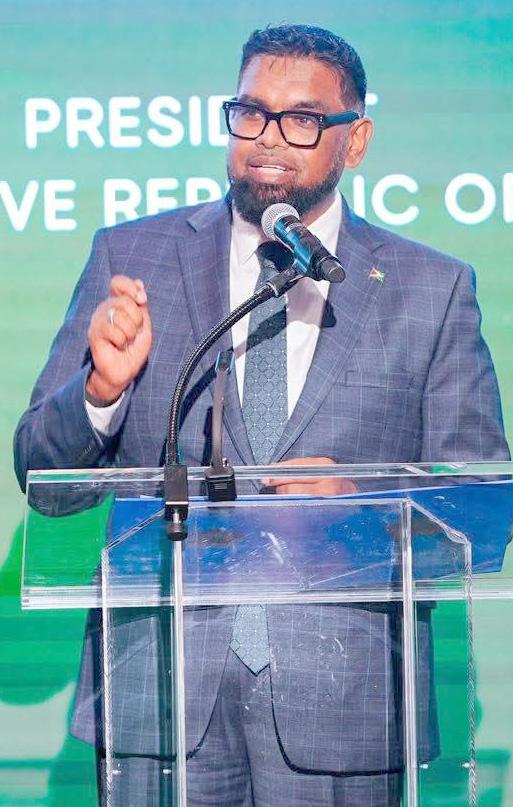
PRESIDENT Dr. Irfaan Ali has emphasised that true national prosperity depends not only on natural resources, but also on how effectively countries invest in people, partnerships and long-term development strategies.
After receiving the Visionary Leadership Award from the Bilateral Chambers of Commerce in Houston, Texas, in recognition of his transformative vision and leadership in advancing Guyana’s economic development, Dr. Ali delivered remarks outlining his vision for the country’s future.
“I receive this Vision-
ary Leadership Award not as a trophy to be displayed, but as a mirror— one that reflects not merely my own efforts, but the collective vision of every colleague, mentor, and every citizen who was there to work towards a brighter horizon for our nation,” he said.
He also emphasised the importance of strong partnerships in driving shared prosperity.
Addressing the gathering, President Ali said economic growth must translate into real improvements in people’s lives, rather than remain confined to statistics or macroeconomic indica -
tors.
“Oil and minerals are gifts of the earth. Prosperity is a gift we give ourselves,” he said.
He related that development should be understood through tangible outcomes, such as improved living standards, access to education and healthcare, and opportunities for upward mobility.
President Ali added: “It is found in real-life examples. It is found in a child whose need for nourishment is satisfied; in a classroom built to nurture minds and impart knowledge; in a health clinic equipped and stocked with medicines that support

healing; and in a family lifted from the margins of poverty to the mainstream of dignity.”
He highlighted the importance of partnerships in achieving these outcomes, noting that collaboration between governments, private sector actors and institutions plays a critical role in driving growth.
“When a bilateral chamber facilitates an investment flow, it does more than move money; it moves possibility. When it forges a strategic alliance, it does more than sign a memorandum; it writes a chapter of shared prosperity.
“Nowhere is this more evident than in our own beloved Guyana, where it is said that our golden years are now before us,” he reasoned.
President Ali also underscored the value of strong international relationships, particularly with the United States, pointing to its role in supporting Guyana during a critical political period.
The Head of State reminded that during the first term of Donald Trump, Guyana faced a significant internal threat to the rule of law and democracy after elections, when the losing party, A Partnership for National Unity + Alliance for Change coalition (APNU+AFC), refused to concede.
“And it was the United States, under then-Secretary of State Mike Pompeo, that stood up and ensured that the rule of law and democracy prevailed. Otherwise, none of this would have been possible,” Dr. Ali said.
According to the Head of State, democracy and the rule of law form the foundation for sustainable development.
“Any system that is built without those pillars… is a system of failure,” he said.
The President outlined
Guyana’s development strategy, which includes significant investment in human capital.
He noted that, “The greatest investment we are making is in human capital; the development of our human capital, upskilling people, creating opportunities, diversifying the economy, and building resilience and sustainability in everything we do.”
According to him, this includes future-proofing the economy through investment in technology, sustainability, security, and politics.
He said this approach is aimed at building a more resilient and diversified economy, capable of withstanding both internal and external shocks.
President Ali also pointed to investments in technology, sustainability and security as key components of future-proofing the country’s economy.
In addition to energy, he said Guyana is positioning itself as a leader in food security, envi -
ronmental services and biodiversity.
He highlighted the country’s extensive forest cover and low deforestation rate as examples of its environmental stewardship.
“We have shown what true environmental stewardship looks like, feels like, and in policy. That is why today our forest stores 19.5 gigatons of carbon, has one of the lowest deforestation rates in the world, and one of the highest levels of forest cover in the world,” he stated.
He also pointed to Guyana’s agricultural potential, citing its arable land and freshwater resources as key assets in becoming a regional food producer.
Dr. Ali referenced emerging sectors such as biodiversity services and cultural industries,
From page 8
noting their potential to contribute to economic growth and diversification.
Importantly, he stressed that development must be inclusive, with opportunities extended beyond large corporations.
“We must always reach for the opportunities for the small and medium-sized enterprises,” he said.
He encouraged international partners to support smaller businesses and ensure broader participation in economic growth.
Dr. Ali also addressed the importance of resilience and perseverance, particularly in a changing
global environment.
“This is not the time to quit. This is not the time to lose faith. This is a time to be strengthened in faith and purposeful in our endeavours. Development is a poetry that follows the prose of trade agreements and joint ventures,” he emphasised.
He reinforced this message with a familiar phrase: “Winners never quit and quitters never win.”
Reflecting on Guyana’s future, Ali expressed confidence in the country’s trajectory, noting: “Our golden years are now before us.”
He added that con -
tinued effort and sound policy decisions will be essential.
Dr. Ali, however, cautioned against relying solely on natural resources, reiterating that sustainable prosperity depends on deliberate action and strategic planning.
In closing, the President emphasised the collective nature of development and leadership.
He reaffirmed Guyana’s commitment to working with global partners to build a sustainable and inclusive future, positioning the country as an active contributor to regional and global development.


FORTY-SEVEN ranks of the Guyana Police Force have successfully completed the Criminal Investigation Department’s Junior Investigators Course, marking the return of a key training programme that had not been held for nearly two decades.
The graduation ceremony was held on Monday at the headquarters of the Criminal Investigation Department on Vlissengen Road, where ranks from the level of lance corporal to sergeant, drawn from divisions and departments across the country, received certificates and awards for completing the 2026 programme.
strengthen investigative capacity within the police force in response to the evolving demands of modern policing. It combined refresher training with advanced instruction aimed at enhancing both theoretical knowledge and practical investigative skills.
The course was reintroduced and redesigned to
Participants received training in critical areas including report writing, state-


ment taking and recording, suspect and witness interviewing, crime scene management, identification parades, and the preparation of search warrants and case files.
They were also exposed to key legal and procedural subjects such as the Judges’ Rules, laws of evidence, elements of crime and offences, legal defences, and procedures governing committals and inquests.
Delivering the feature address, Crime Chief and Deputy Commissioner of
Law Enforcement, Wendell Blanhum, underscored the importance of teamwork and continuous professional development within the Criminal Investigation Department.
He said the course had been carefully tailored to meet the realities faced by frontline ranks and detectives investigating serious and complex offences.
“The training requirements had to be reviewed considering our enhanced workload, more so since the last course was held about
two decades ago,” Blanhum said. He commended the graduates for their performance, noting that they had excelled despite time constraints and other challenges.
According to Blanhum, the successful participants have been equipped to provide better service to the public and to strengthen the force’s crime-fighting capabilities.
He also disclosed that some of the graduates may
By Frederick Halley
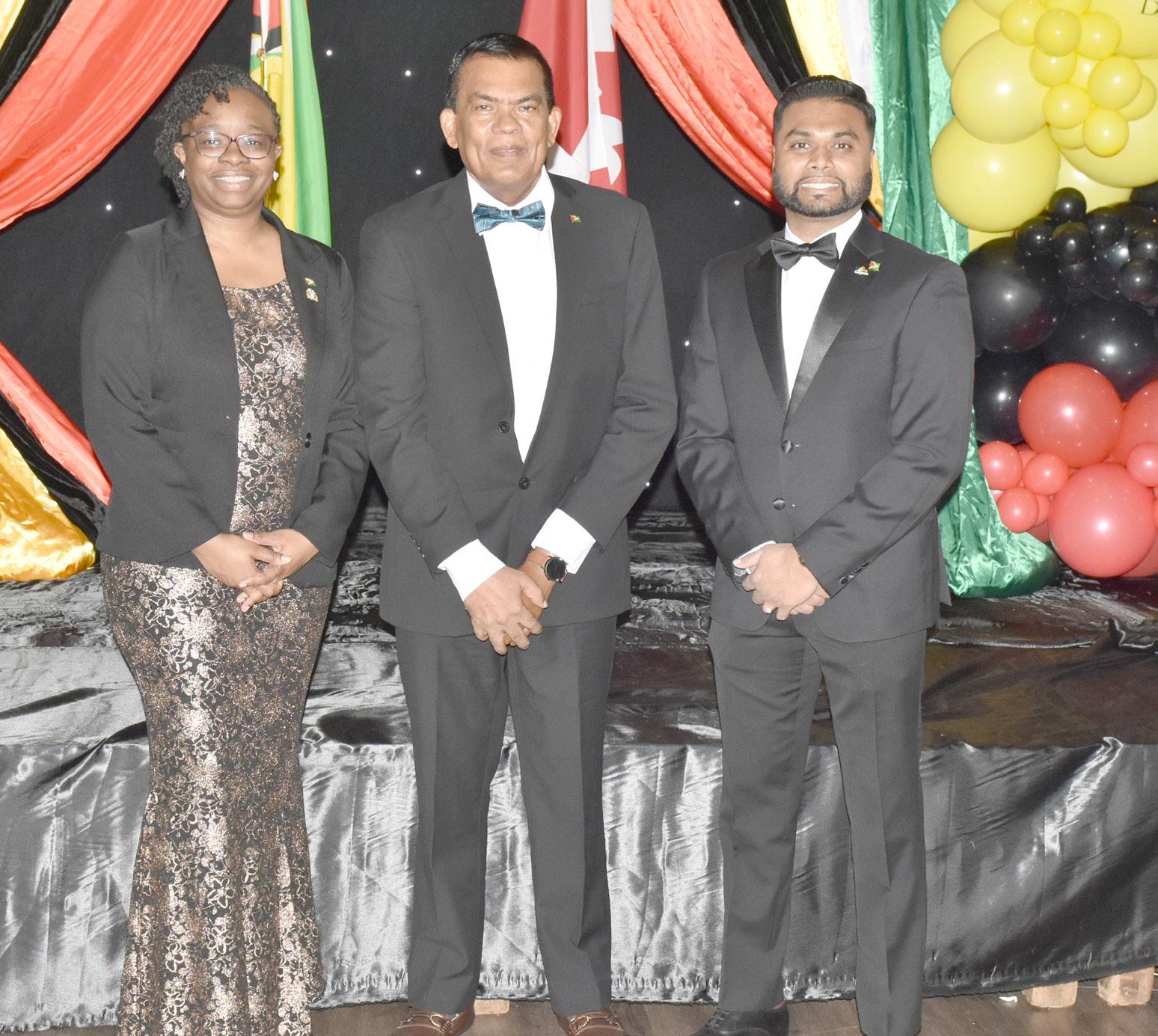
GUYANA’S High Commissioner (ag) to Canada, Cindy Sauers and Chairman of the Guyana Independence Celebrations Committee, Shiv Persaud have lauded the strides made by Guyana over the last 60 years following the attainment of Independence.
Speaking at last Saturday night’s grand 60 th Independence Diamond Jubilee gala, held at the Grand Cinnamon Banquet Hall & Convention Centre, Toronto, Canada, Sauers pointed out that in recent years, Guyana’s classification as the fastest growing economy, poised to experience continued growth fuelled by a flourishing oil and gas sector, a changing infrastructural landscape and transformative and progressive non-oil sectors are key highlights.
According to Sauers, “Guyana has been elected to serve in several significant positions in regional, hemispheric and multilateral organisations over the years and its role in leading the Caribbean Community’s (CARICOM) food security initiative to reduce its food import bill by 25% by 2030 is also deserving of recognition.”
Reflecting on the effects of climate change, Sauers said Guyana’s efforts towards addressing and mitigating these effects through, for example, the maintenance of its pristine forests and the implementation of its Low Carbon Development Strategy (LCDS) to balance economic development with sustainability should be applauded.
“In seeking to inspire acts of patriotism, I reference ‘Guyana! I want to serve my country! Guyana! Beautiful, happy and free! Guyana! Let’s cooperate with our Government; To help develop Guyana the Free.’ These are more than just lyrics in a national song, but a call for a commitment to nation-building, unity and cooperation. So, as you answer the call of the Government to reconnect with your beloved homeland to celebrate its
achievements as a sovereign State as well as the rich cultural diversity, under this year’s theme, ‘The Homecoming’, I encourage you to also explore and take advantage of the investment, business and other opportunities which are available, so that you can contribute in some way towards Guyana’s continued development trajectory.”
Sauers pointed out that “Guyana’s sovereignty is essential and worth every honour and celebration, as Guyana continues to be credited as a sovereign State with a growing international acclamation not only for its national policies, but through the implementation of its foreign policy objectives with foreign States like Canada. Canada is home to a significant Guyanese diaspora community, and the contributions of the members continue to enrich its cultural and socioeconomic fabric. I am therefore pleased to acknowledge the longstanding relationship between Guyana and Canada, grounded in shared values such as democracy, respect for the rule of law, sovereignty and territorial integrity.”
In his remarks, Persaud, who also chaired the night’s proceedings, pointed out that the Diamond Jubilee Independence celebration is a time of national pride and deep reflection, “as we commemorate six decades since our nation broke the chains of colonial rule and took its rightful place among the free nations of the world.”
According to Persaud, “the journey to independence was not a gift freely given, but a right bravely won, spearheaded by the sacrifices, struggles, and unyielding spirit of the Guyanese working class. Since May 26, 1966, our country has seen notable advances in health, education, infrastructure, and governance. Today, Guyana stands on the cusp of its greatest transformation. With the responsible stewardship of our natural resources and a renewed national vision, the nation is experiencing unprecedented growth.
“As we celebrate this Diamond Jubilee, the Guyana Independence Celebrations Committee reaffirms its unwavering commitment to fostering an environment where every Guyanese, regardless of their ethnic background, feels valued, respected, and empowered. Our diversity is our strength, a vibrant tapestry woven from myriad cultures, traditions, and perspectives. It is this rich mosaic that truly defines us as a nation.
“The committee recognises that building and sustaining national unity is an ongoing process, one that requires continuous dialogue. Guyanese, as we reflect on our national journey and recommit ourselves to the path ahead, we must also confront the challenges within our society.”
Minister within the Ministry of Public Works, Madhanlall Ramraj delivered the feature address.

SENIOR Minister in the Office of the President with Responsibility for Finance, Dr Ashni Singh, met with Deputy Assistant Secretary of Commerce for the Western Hemisphere at the United States Department of Commerce, Isabella Cascarano, on the margins of the SelectUSA Investment Summit in Maryland, United States of America.
The discussion, according to information from the Senior Minister’s Facebook page, centred on ways in which the two
countries can advance shared economic interests, with particular emphasis on fostering private sector partnerships and identifying new investment and commercial opportunities.
Both parties reaffirmed their commitment to building a more resilient and diversified economic partnership between the two nations, signalling a continued push to broaden bilateral engagement beyond traditional sectors.
Guyana’s delegation at the meeting included Senior Director of Investment at Go-Invest, John
Edghill, and Executive Director of AmchamGuyana, Richard Leo, alongside a strong contingent of private sector leaders. Among the companies represented were Beharry Holdings Inc., Banks DIH Holdings Inc., Citizens Bank Guyana Inc., Demerara Distillers Limited, DCSN Manufacturing Inc., Complete Medical Examinations Prep., and Harris Paints (Guyana) Ltd. — a cross-section of firms reflecting Guyana’s growing appetite for deeper commercial ties with the United States.

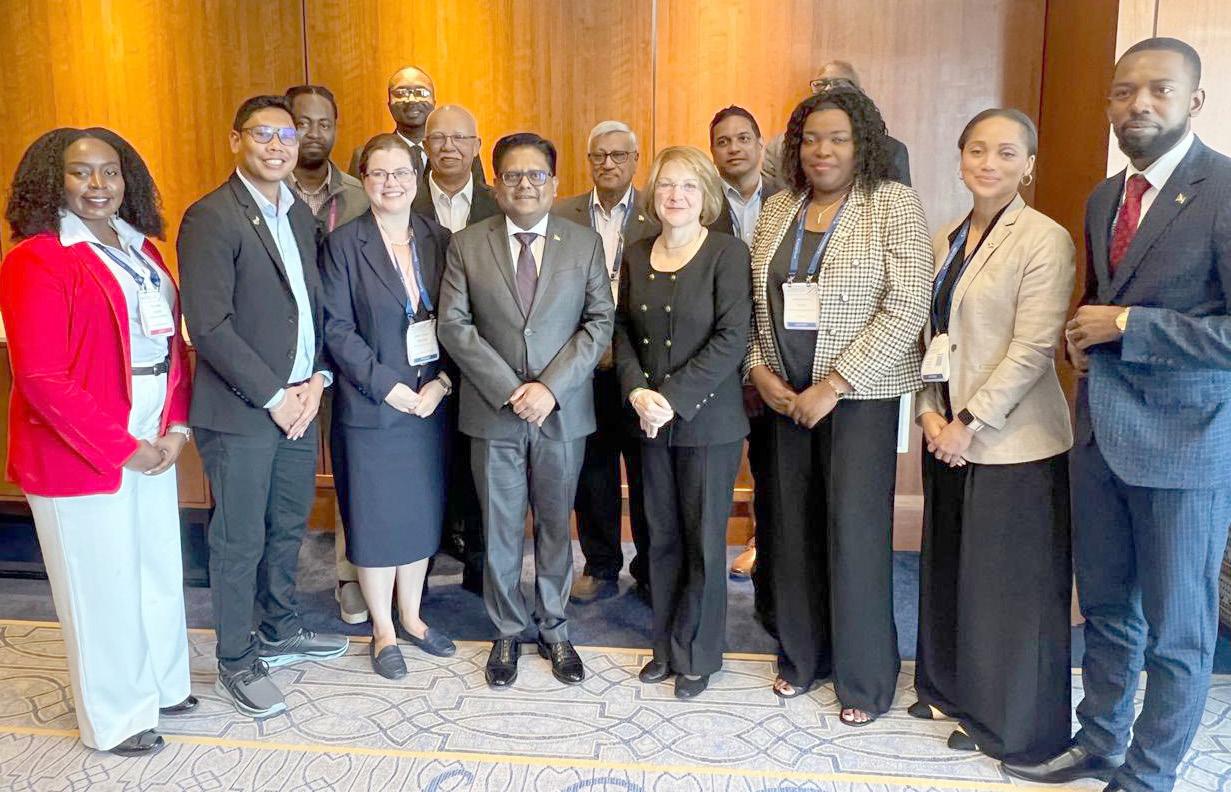
Senior Minister in the Office of the President with Responsibility for Finance, Dr Ashni Singh, met with Deputy Assistant Secretary of Commerce for the Western Hemisphere at the United States Department of Commerce, Isabella
The engagement comes as Guyana continues to position itself as one of the hemisphere’s most dynamic
investment destinations, with the SelectUSA Summit offering a key platform to court American capital and
forge new partnerships across manufacturing, financial services, distribution, and healthcare.

THE Government of Guyana, on Monday, strongly rejected Venezuela’s reliance on the so-called “Mallet-Prevost Memorandum” during hearings before the International Court of Justice (ICJ). Guyana’s lead counsel, Phillipe Sands, described the document as unreliable, unverified and devoid of factual substance.
Appearing on behalf of Guyana during the first day of hearings in The Hague, Sands argued that Venezuela’s claim that the 1899 Arbitral Award is null and void rests heavily on a document “that no one has ever seen.”
“The story of this document is so fantastical that it could rather feature in a novel,” Sands told the court, while questioning both the authenticity and credibility of the memorandum.
The document, attributed to former Venezuelan legal
adviser, Severo Mallet-Prevost, has been used by Caracas to support allegations that the 1899 arbitral was influenced by a secret political arrangement between Britain and Russia.
However, Sands informed the court that the original memorandum has never been found, verified, or produced since it was first mentioned in a 1949 journal article by American lawyer Otto Schoenrich.
“There is no evidence to show that this supposed document is anything other than a creation of Mr Schoenrich’s imagination,” he stated.
Further, he argued that even if the memorandum did exist, it contains major factual inaccuracies, contradictions and speculation that undermine its credibility. Among the examples he brought to the attention of the court was a claim that British
jurist Lord Russell influenced the arbitration process during a January 1899 dinner conversation. Sands pointed out that Lord Russell was not even part of the arbitration.
“It follows that claim cannot be true.” He added.
The counsel also dismissed Venezuela’s allegation that Britain and Russia secretly colluded to determine the outcome of the arbitration. Sands described the accusation as “a concocted fantasy” unsupported by documentary evidence, historical records, diplomatic correspondence or tribunal archives. “There is not a shred of evidence,” he told the judges.
Additionally, he referenced historical research and archival reviews, which found no indication of any secret arrangement between Britain and Russia during the

be selected for overseas training as the Guyana Police Force continues efforts to build capacity within the Criminal Investigation Department.
Emphasising merit-based advancement, Blanhum told the young investigators that future opportunities would be guided by performance and professionalism.
“The road ahead may pose some challenges, but rest assured that we have prepared you to confront these challenges,” he said, urging the ranks to uphold high professional and academic standards.
Top honours in the course went to Kevin Brown of CID Headquarters, who placed first. Second place went to Randy David, also
arbitration proceedings.
Sands also argued that the tribunal’s arbitrations, including compromise and negotiation among arbitrators, were normal features of international adjudication and not evidence of misconduct.
Throughout his presen -
tation, the British French barrister maintained that Venezuela’s argument relies on speculation rather than law of fact. “Venezuela has opened before us a world of theatre and fiction, not law of fact,” Sands declared at the conclusion of his submission.
He urged the court to
reject Venezuela’s attempt to invalidate the 1899 Arbitral Award, describing the memorandum as “a giant red herring” that offers no credible basis for nullifying the decision that established boundaries between Venezuela and Guyana.
(DPI)
From page 10
of CID Headquarters, while third place was secured by Garfield Solomon.
Among those attending the ceremony were senior officers, Senior Police Legal Advisor Mandel Moore, Junior Police Legal Advisors Janet Ali and Aarti Hooblal, along with senior heads of department within the Criminal Investigation Department.

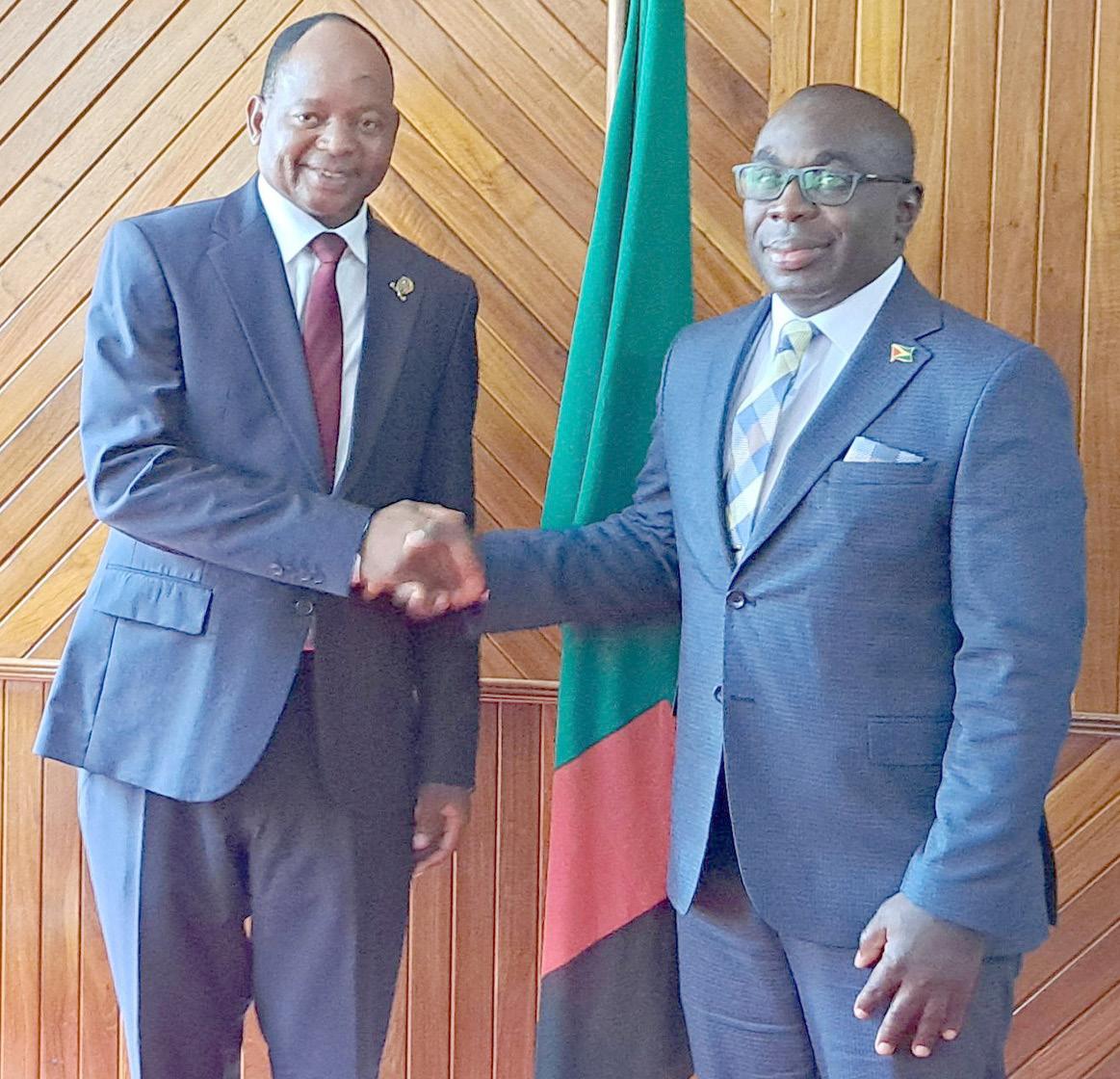
GUYANA and Zambia have committed to pursuing media relations and economic initiatives as the two countries build on existing diplomatic ties dating back to 1971.
On the sidelines of the high-level World Press Freedom Day Conference 2026, Minister McCoy made a courtesy call on Zambia’s Information and Media Minister and Chief Government Spokesperson, Cornelius Mweetwa.
The duo reaffirmed the importance of pursuing and strengthening co-operation, discussed opportunities for cross-border learning, and outlined intentions for further engagement.
Minister McCoy addressed the closing ceremony of the press freedom-themed conference in Zambia’s capital, Lusaka, hosted alongside UNESCO.
The conference brought together media practitioners and media innovators, regulators and policymakers from around the world.


–– new
assesses risks, identifies adaptation options as rising temperatures pose hazards to people, crops, livestock, fish
heat events
currently threaten the livelihoods and health of over a billion people, causing half a trillion work hours to be lost annually, with the prospect for damage to livestock herds and crop yields set to soar higher in the future.
Agricultural workers and agri-food systems are on the frontlines, absorbing the greatest impacts from extreme heat.
The frequency, intensity and duration of extreme heat events have risen sharply over the past half century, with worrying impacts on agri-food systems and landscapes, according to “Extreme heat and agriculture,” a new report from the Food and Agriculture Organization of the United Nations (FAO) and the World Meteorological Organization (WMO).
Extreme heat refers to situations where daytime and nighttime temperatures rise above their usual ranges for a protracted period, leading to physiological stress and direct physical damages to food crops, livestock, fish, trees and human beings.
The report examines how extreme heat ripples through agricultural systems and how heatwaves can interact with other climatological variables, including rain, solar radiation, humidity, wind and drought – to trigger compound effects that wreak havoc on individuals and entire ecosystems.
“This work highlights how extreme heat is a major risk multiplier, exerting mounting pressure on crops, livestock, fisheries and forests, and on the communities and economies that depend upon them.” said FAO Director-General QU Dongyu.
“Extreme heat is increasingly defining the conditions under which agri-food systems operate,” said WMO Secretary-General Celeste Saulo. More than simply an isolated climatic hazard, it acts “as a compounding risk factor that magnifies existing
weaknesses across agricultural systems.”
The joint FAO-WMO report’s sections describe the physical science of extreme heat, the vulnerabilities, observed and projected impacts on agriculture, adaptation strategies, case studies, and offer policy recommendations.
The impact of extreme heat events is relative to the context of when and where they occur.
The report cites how in the spring of 2025, a part of Kyrgyzstan’s Fergana mountain range endured a protracted stretch of 30.8 degrees Celsius, 10 degrees higher than usual. This caused a thermal shock on fruit and wheat crops, contributing to a locust outbreak, heightened evaporation that reduced irrigation capacity, and eventually a 25 per cent decline in cereal harvests.
Rising average global temperatures and more frequent and intense extreme heat events narrow the “thermal safety margin” species rely on for biological processes that support photosynthesis, cellular regeneration, reproduction and ultimately staying alive. Extreme heat intensity roughly doubles at 2 degrees Celsius of global warming, and quadruples at 3 degrees, relative to 1.5 degrees increase in average global temperatures, according to the report.
For the most common livestock species, stress begins at above 25 degrees Celsius, and a bit lower for chickens and pigs, which are unable to cool themselves by sweating. Above that threshold, animals begin to suffer, initially seeking shade, drinking more water, eating and moving less, while if exposure persists, they begin to suffer from digestive tract breakdowns, organ failure and cardiovascular shock. Even when not lethal,
extreme heat reduces dairy yields as well as fat and protein content – which inter alia worsens the carbon footprint of animal-sourced foods. Fish can suffer cardiac failure as they struggle to maintain elevated respiration rates in waters where extreme heat events drive dissolved oxygen levels lower. In 2024, 91 per cent of the global ocean experienced at least one marine heatwave.
For most major agricultural crops, yield declines begin to occur above 30 degrees
Celsius –lower for some crops such as potatoes and barley - leading to weakened cell walls, sterile pollens and the production of toxic oxidative compounds. Under extreme temperatures rates of tree photosynthesis and respiration diverge, creating an energy imbalance, resulting in reduced growth and less carbon removal from the atmosphere. Evidence points to a strong correlation between heat waves and wildfires, with longer and more intense fire seasons.
Critically extreme heat also takes a toll on humans, especially agricultural labourers, for whom it can be fatal.
The number of days each year when it is simply too hot to work may rise to 250 in much of South Asia, tropical Sub-Saharan Africa and parts of Central and South America, according to the report.
The full danger of extreme heat lies not only in
its direct impacts, but also in its role as a risk multiplier, amplifying the effect of water stress, serving as a trigger of flash droughts and elevating the risk of wildfires, or fostering the spread of pests and diseases.
The report offers a comprehensive look at such compound effects.
Flash droughts are often triggered by extreme heat events that deplete moisture
See page 16

from the topsoil and root zone. Notable cases occurred in the United States of America in 2012 and 2017, the Russian Federation in 2010, Australia in 2018 and 2019, China in 2022, and Brazil in late 2023 and 2024, which saw soybean yields fall by as much as 20 per cent as temperatures averaged as much as seven degrees higher for protracted periods.
Data shows they are starting earlier, lasting longer, and exposing more and more cropland, forested areas and human populations to their impacts.
They can leave lasting effects such as hardened soils with reduced ability to absorb water and greater vulnerability to erosion.
Numerous case studies are presented in the report, including that of a monumental heatwave covering three million square kilometres in North America in 2021, when peak temperatures rose to four standard de-
viations above normal, leading to major yield drops in fruit orchards and Christmas tree plantations and a calamitous spike in forest fires.
Remote sensing analysis and ground surveys revealed multiple feedback loops were activated, such as dry soil conditions exacerbating the heating effect of solar radiation.
The report points to the need for innovation and the implementation of adaptative measures such as selective breeding and crop choices adjusted to the new climate reality, adjusting planting windows and altering management practices that can shelter crops and agricultural activities from the impacts of extreme heat.
Early warning systems are a particularly important tool in aiding farmers
in their efforts to respond to extreme heat.
Access to financial services – cash transfers, insurance and payment schemes, shock-responsive social protection schemes and other forms – underpins all categories of adaptation options.
Technical solutions are necessary but by themselves will be insufficient without addressing pervasive socio-economic barriers in low- and middle-income countries, including limited access to information, education, awareness and training.
“Protecting the future of agriculture and ensuring global food security will require not only building onfarm resilience but also exercising international solidarity and collective political will for risk sharing, and a decisive transition away from a high-emissions future,” the report says. (FAO)

THE spirit of heritage and unity came alive on Tuesday as the Regional Democratic Council (RDC) Region Two hosted its annual Arrival Day cultural programme at Bush Lot, Essequibo Coast.
Held under clear skies in the backdam of Bush Lot, near the township of Anna Regina, the event unfolded at a site deeply rooted in history.
The Bush Lot monument, erected to honour the arrival of East Indian indentured immigrants in May 1838, stands as a powerful symbol of resilience and legacy.
Historical records indicate that approximately 90 East Indian immigrants settled in the area, making it a fitting location for the commemoration.
Bush Lot, long associated with the early settle-
ment of indentured labourers, provided a meaningful backdrop as residents, cultural groups, and officials gathered to reflect on the sacrifices and contributions of their ancestors.
The atmosphere was vibrant, filled with the sounds of traditional music and the colour of cultural expression.
Residents were treated

to a rich cultural showcase, including bhajans, qaseeda, tassa drumming, and traditional dances, all highlighting the enduring influence of Indian heritage in Guyana.
Delivering the feature address, Rudra Jayanta Bhagawati, Director of the Swami Vivekananda Cultural Centre and representative of the Indian High Commission,
reflected on the journey of the Indian ancestors and their lasting impact. He noted that their legacy continues to shape Guyanese society, with descendants contributing across all sectors, including medicine, law, and public service. Bhagawati emphasised the deep cultural connection between India and Guyana, describing it as one rooted
in shared history and spirit, and reaffirmed India’s commitment to strengthening ties and reconnecting the diaspora with their ancestral roots.
Minister within the Ministry of Public Works, Madanlall Ramraj, described Arrival Day as a moment of national reflection. Minister Ramraj said that the ancestors came with their cultures and identity, which are pre-
served to this day.
He underscored that Guyana’s identity was built by diverse groups who arrived under different circumstances but collectively contributed to shaping the nation.
Ramraj highlighted the struggles faced by Indian ancestors, who endured harsh plantation conditions yet preserved their culture, faith, and traditions, laying the
foundation for future generations.
He added that ongoing government investments continue to support cultural preservation and national development.
Director General of the Ministry of Amerindian Affairs, Sonia Latchman, extended Arrival Day greetings and encouraged reflection on the sacrifices of the foreparents.
She noted that despite arriving with little, they demonstrated resilience and determination, building lives and communities that continue to thrive today.
Regional Chairman Devin Mohan also addressed the gathering, highlighting the theme of unity in diversity. He remarked that the
struggles of the past have given rise to hope and progress, with contributions from all ethnic groups shaping every sector of national life. He pointed to ongoing development across Region Two under the leadership of President Dr Irfaan Ali, noting that investments in infrastructure and opportunities for young people are paving the way for a more empowered and prosperous future.
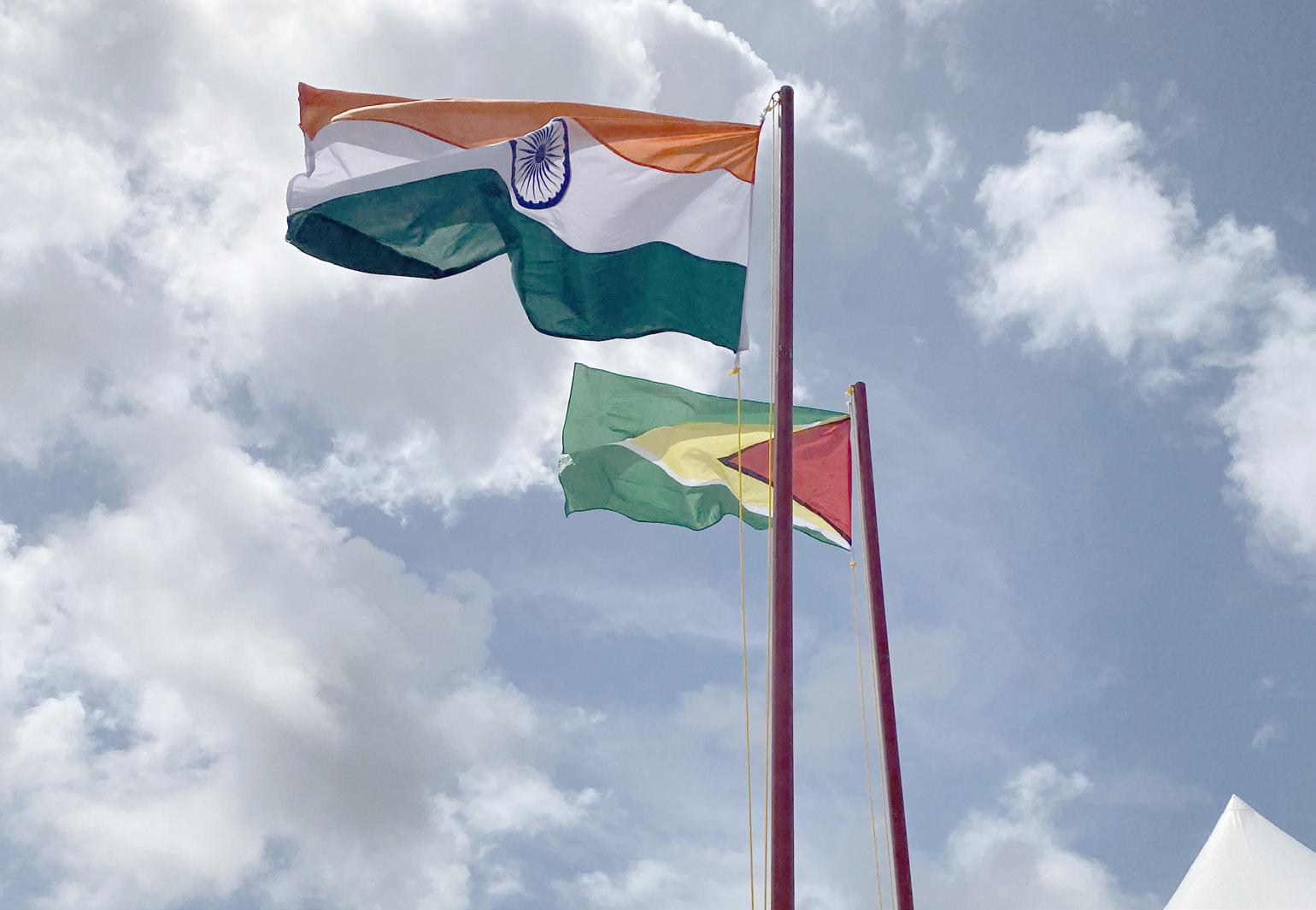
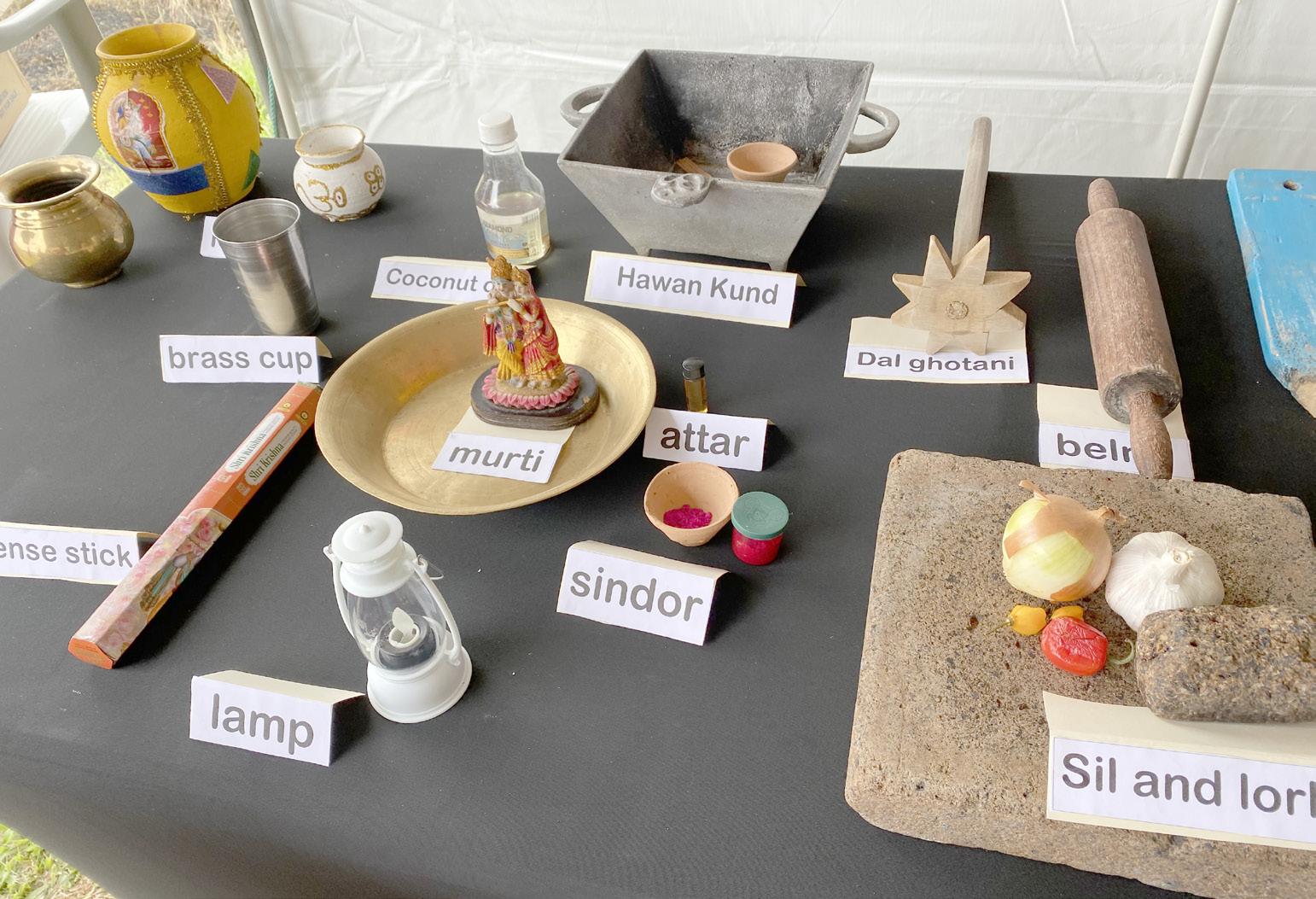
The Golden Arrowhead along with the Indian flag was hoisted. At the end of the programme, people took the opportunity to view the exhibition.
The programme is a celebration of Guyana’s multicultural identity—one grounded in resilience, unity, and shared progress.
A WORRYING pattern of sudden, unexpected deaths among Guyanese in their 20s, 30s, and 40s has emerged.
Many of these individuals are dying in their sleep or during everyday activities, according to renowned Cardiologist Dr. Mahendra Carpen in a Facebook post on Tuesday.
He issued a public alert about Sudden Cardiac Death (SCD), as cardiovascular disease remains the leading cause.
Dr. Carpen, who leads Internal Medicine and Cardiology at the Georgetown Public Hospital Corporation (GPHC) and serves as a presidential adviser on Science and Healthcare Modernisation, explained that Sudden Cardiac Death occurs due to an electrical issue in the heart, resulting in an abnormal rhythm that can be fatal within minutes.
While artery blockages account for most cases, he noted that inflammation and infection of the heart muscle, severe uncontrolled hypertension, enlarged and stiffened heart muscles, and certain inherited conditions can also trigger SCD.
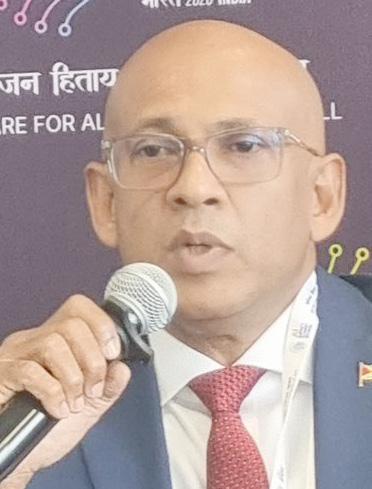
Cardiologist, Dr. Mahendra Carpen
In Guyana, Dr. Carpen has observed a significant rise in serious heart disease among younger people. This increase is not just due to arterial blockages but also to weakened heart muscles linked to inflammation and infection, along with complications from uncontrolled hypertension, diabetes, and high cholesterol. Lifestyle choices, such as smoking, are also increasing the risk.
This trend aligns with broader concerns about non-communicable diseases (NCDs), which the Pan American Health Organization has highlighted as a leading cause of death in the Caribbean. NCDs account for roughly 70 per cent of all deaths in Guyana annually.
THE AgriConnect initiative, designed by the World Bank Group (WBG) to expand rural connectivity, digital inclusion, and the integration of family farmers into markets, was launched in Jamaica with the support of the Inter-American Institute for Cooperation on Agriculture (IICA).
The presentation took place in the city of Kingston, with the participation of Jamaica’s Minister of Agriculture, Fisheries and Mining, Floyd Green, and strong attendance by stakeholders from the country’s food sector, where family farming is essential for bringing food to people’s tables every day and faces significant challenges.
Also participating in the launch event were Lilia Burunciuc, World Bank Director for Caribbean countries, and Kent Coipel, IICA Representative in Jamaica, who reaffirmed the alliance between the hemispheric organisation and the World Bank and its commitment to strengthening Caribbean agriculture.
Also in attendance were Benoît Bosquet, Director for Sustainable Development for Latin America and the Caribbean at the World Bank, and Diego Arias, Agriculture and Food Practice Manager for Latin America and the Caribbean at the multilateral organisation.
The implementation of the project in Jamaica is part of a global strategy by the World Bank Group to drive the transformation of the agrifood sector.
Worldwide, the initiative aims to support up to 300 million smallholder farmers by 2030, promoting the transition from subsistence models to more productive agricultural enterprises.
Minister Green highlighted the launch of AgriConnect as a major opportunity for the country. He explained that the philosophy of the World Bank ini-
tiative, supported by IICA, is aligned with the path Jamaica is currently pursuing to build a more resilient, modern, and inclusive agricultural sector.
The country has a small economy and farmers face obstacles in accessing financing through private banks. As in other Caribbean nations, Jamaican producers are highly vulnerable to climate events, which are becoming more frequent and more intense. The Caribbean region is also seeking to strengthen its food security and reduce dependence on food imports.
On behalf of IICA, Coipel emphasised that the Institute has a long track record of working with small and medium-sized farmers and supporting the development of value chains across the Caribbean, with a special focus on capacity building, export training, and market linkages.
“Strengthening the organisational capacity of rural communities is a fundamental pillar of IICA’s technical cooperation,” he said.
The inter-American agricultural development organisation has supported the creation and legal formalisation of organisations such as the Jamaican Network of Rural Women Producers. It has also facilitated the exchange of experiences and the creation of networks to improve governance and sustainability in rural communities.
The President of Jamaica’s College of Agriculture, Science and Education (CASE), Derrick Deslandes, and Jacqueline Sharp, Director of a family business engaged in coffee production, local marketing, and export, discussed during the launch in Kingston, the Jamaican

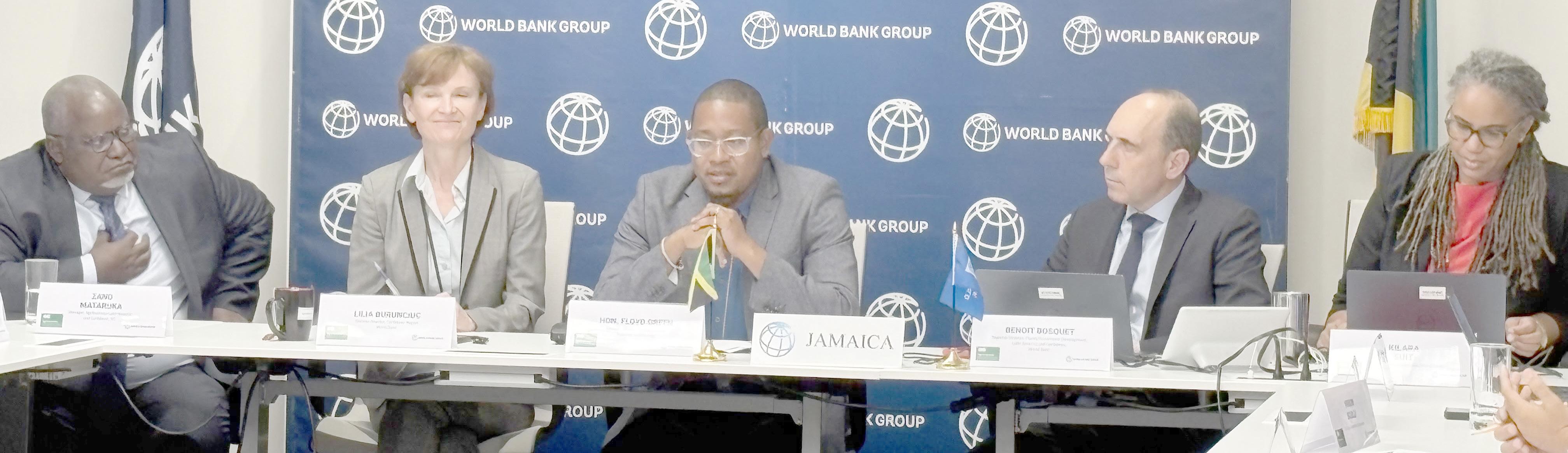
The presentation took place in the city of Kingston, with the participation of Jamaica’s Minister of Agriculture, Fisheries and Mining, Floyd Green (centre), and broad attendance by stakeholders from the country’s food sector
capital, pathways to improve farmers’ access to markets and more efficiently integrate food value chains. Strategies to facilitate small producers’ access to new technologies, and the new frontiers of science and technology in Jamaican agriculture, were the focus of another exchange that yielded important lessons. Participants included World Bank specialist Winston Daes; Aura Cifuentes, Director for Latin America and the Caribbean at Co-Develop; and Arturo Ramírez, Technical Director of Isratech Jamaica Limited, a company providing agricultural solutions in areas such as water management and alternative energy generation to fossil fuels.
IICA is one of the international organisations supporting the initiative of its partner, the World Bank, in the Americas, along with financial institutions, private sector representatives, foundations, and knowledge partners.
In March, AgriConnect was presented at the IICA office in Brazil, a country with nearly four million family farmers. The regional launch for Latin America and the Caribbean took place in April in Washington, D.C., with the participation of IICA Director General, Muhammad Ibrahim and ministers of agriculture from
From page 19
across the continent.
Globally, AgriConnect has an estimated annual financing of USD 9 billion, with the potential to mobilise an additional USD 5 billion in investments, strengthening innovation, financing, and service ecosystems geared toward agriculture.
The initiative was conceived, as explained, after a group of experts convened by the World Bank identified the agricultural and agribusiness sector as one of the five sectors globally with the greatest potential to absorb young people entering the labour market.
Reducing agricultural risks, through strengthening climate and market risk management mechanisms, is one of the main focus areas of AgriConnect.
The programme also focuses on improving value chains and the digitalisation of agricultural services, through the implementation of digital tools, knowledge platforms, and technological solutions for production management.
Initiatives such as AgriConnect are expected to help accelerate the digital transformation of agriculture, strengthening productive inclusion, enhancing the sector’s competitiveness, and promoting more sustainable rural development in the Americas. (IICA)
CULTURE, unity, history and national development were among the main themes highlighted at this year’s Pushpanjali observance, marking 188 years since the arrival of indentured labourers in Guyana.
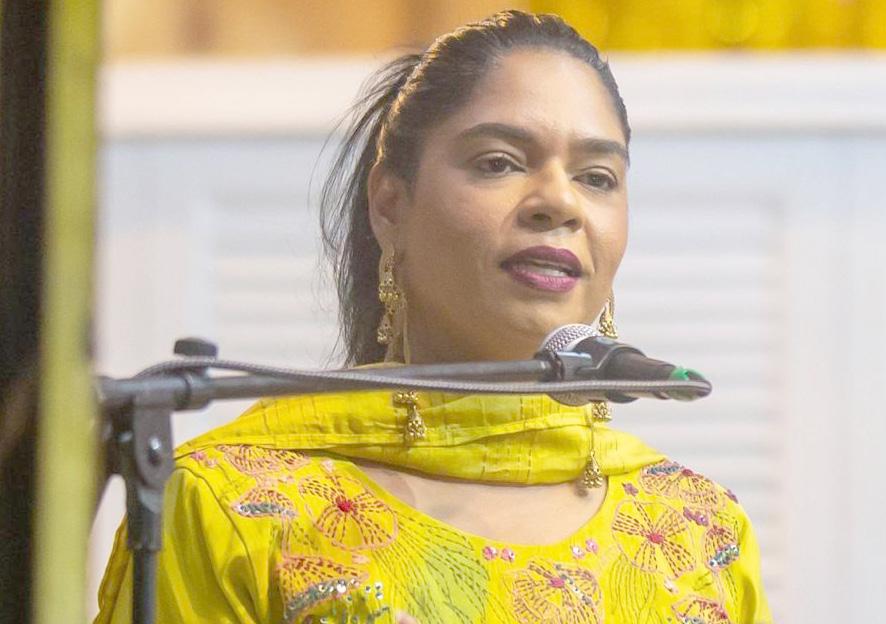
Speaking to hundreds gathered at the Indian Monument Gardens on Tuesday, Minister of Education Sonia Parag called for national unity, stronger cultural preservation, and reflection on the sacrifices of ancestors, while drawing attention to ongoing national development, expanding access to education and youth empowerment.
The minister emphasised that the struggles of inden-

tured labourers should serve as a guiding lesson in resilience and purpose, noting that their contributions continue to shape modern Guyana.
Taking to the stage to deliver the feature address, Minister Parag was keen to emphasise the importance of events like Pushpanjali in preserving culture as well as promoting history.
She noted that while challenging, the history of the indentured labourers brought to Guyana’s shores some 188 years ago aboard the Whitby and Hesperus plays a vital role in shaping Guyana’s cultural identity.
Reflecting on their sacrifices, she noted, “Today, when we celebrate Arrival Day, we celebrate their sacrifices, not because they did not go through hardships, but because of their hardships, we are here today benefiting from all of that.”
She added, “When we are celebrating 188 years of arrival, it is not just that they landed here in Guyana, but they landed here, and despite the worst of the circumstances, they made something good of it.”
Taking stock of how far the nation has come and acknowledging the many vibrant cultural performances at the event, Minister Parag
noted that events like Pushpanjali offer a unique space to express cultural creativity.
role in both the growth of the orange economy and the preservation of culture.
She related that the government will continue to invest in Guyana’s young people through a comprehensive framework across sectors, to ensure all of the nation’s children are educated.
“We will also be investing in our young generation, our youths, ensuring that they become the leaders that we want them to be for the next generation,” she said, adding, “it is involving them in decision-making at all levels so that they can start from now to implement ideas of their own to make this country a

She also highlighted the government’s push toward the development of the orange economy, underscoring that emphasis will be placed on ensuring that culture can be developed into income.
“It is harnessing and fostering the talent and the creativity that we have in our people to earn for our country, not only for the country, but for you individually,” she said, adding, “those of you who have talents, and I have seen it here, and it is born out of your culture. That can be used for you to turn that into something flourishing for yourself and for the country.”
Additionally, Minister Parag noted that youth development plays an important
la, Aditya Shaw, Himanshu Chauhan and Shameza Baksh, who performed a blend of devotional pieces and Bollywood selections, complemented by tassa drumming from the Dubraj Tassa Group.
A highlight of the evening was the presentation of awards recognising individuals for their contributions to
the Indian Commemoration Trust. In brief remarks during the proceedings, Hemraj Kissoon expressed appreciation to the performers, supporters and patrons who continue to sustain the annual event.
great country.”
She further said that it is a national effort, noting, “Teaching our young generation how to inculcate good behavioural patterns. Do not bully. There should be no violence in schools. It starts with a community, and it starts with our country.”
The programme also featured a rich display of cultural expression, with performances from the Berbice Delight and the Vanie Vanatya Dance Academy, including presentations by both children and senior dancers, as well as a medley by the Ishara Dance Troupe.
Musical renditions were delivered by artistes such as Shiva Sankar, Renuka Bho-
He also underscored the importance of inclusivity and cultural unity, while encouraging greater use of the venue and continued participation from all communities.
The evening’s blend of cultural performances, recognition of contributions, and reflections on heritage served to reinforce the enduring significance of Pushpanjali as both a memorial and a celebration of Indo-Guyanese identity.


international law professor Dr Nilufer Oral on Monday presented extensive historical and legal evidence before the International Court of Justice (ICJ) showing that Venezuela accepted and complied with the 1899 Arbitral Award for more than six decades, arguing that it is now legally barred from challenging its validity.
Professor Oral, a leading authority on the law of the sea, the Director of the Centre for International Law at the National University of Singapore (NUS) and a member of the UN International Law Commission, told the ICJ that from 1899 to 1962, Venezuela’s conduct was “constant, consistent and unequivocal”, with no objection raised to the award or the boundary it established.
“There were no deviations, not a single one throughout this period,” she stated.
Professor Oral demonstrated how Venezuela not only refrained from protesting the award but actively endorsed and implemented it. She noted that immediately after the award was issued in October 1899, Venezuelan officials celebrated the outcome as a success, particularly for securing control of the strategically vital mouth of the Orinoco River.
She further provided evidence to the court showing that Venezuela insisted on strict adherence to the boundary, even rejecting proposals that could have worked to its advantage if they deviated from the arbitral line.
“Venezuela did more than fail to protest; it demanded compliance with the award to the letter,” she told the ICJ.
The professor detailed Venezuela’s active role in the 1900–1905 joint boundary demarcation with Great Britain, which culminated in the 1905 Boundary Agreement. She described this process as a “collaborative and voluntary exercise”, noting there was no evidence of coercion, contrary to Venezuela’s current claims.
She cited official correspondence and reports showing Venezuelan officials took pride in the demarcation work and expressed satisfaction that the long-standing territorial controversy had been resolved.
Professor Oral also highlighted a consistent pattern of

Dr Nilufer Oral, International law professor
official conduct over decades, including the publication of at least 16 Venezuelan maps between 1911 and 1962, all reflecting the boundary established by the 1899 Award and the 1905 Agreement.
“We have found no official map showing a different boundary, none at all,” she said.
According to Professor Oral, this long-standing acceptance carries clear legal consequences under international law, particularly the principle that a state cannot later challenge an agreement it has consistently recognised and implemented.
She drew parallels with established ICJ jurisprudence, including cases where states were barred from disputing boundaries after years of acquiescence, noting that in Guyana’s case, Venezuela delayed its challenge for over 60 years, far longer than in comparable precedents.
“By 1962, it was simply too late,” she argued.
Oral rejected Venezuela’s claim that it only became aware of alleged defects in the award after 1949, stating that all such arguments were based on facts known at the time the award was issued.
She also dismissed the suggestion that the 1966 Geneva Agreement created a new legal basis to challenge the award, explaining that it merely acknowledged Venezuela’s claim without validating it.
“The evidence is resoundingly clear,” she said. “For more than 60 years, Venezuela accepted, recognised, and applied the award.”
The ICJ is expected to determine the validity of the 1899 Award and the legal boundary between Guyana and Venezuela at the conclusion of the hearings.
THE establishment of the Guyana Development Bank (GDB) marks a critical step in transforming the country’s economic landscape, with a strong focus on inclusion, entrepreneurship and sustainable growth.
Speaking in an interview with the Department of Public Information, Financial Analyst, Joel Bhagwandin explained that, unlike traditional banks, the GDB is designed to support individuals who have been unable to access financing – particularly small entrepreneurs and those operating in the informal economy.
He noted that the initiative will provide interest-free and collateralfree loans.
The economist also said the bank will offer business training, mentorship and financial guidance, giving citizens the tools needed not just to start businesses, but to sustain and scale them.
Bhagwandin highlighted that over 80,000 new businesses have been registered in recent years, signalling strong entrepreneurial interest.
However, many remain limited by a lack of access to financing and formal systems, gaps that the development bank aims to close by transitioning small operators into the formal economy.
“Nobody must be left behind, and this is why the Development Bank is so important. It is to create new industries, not to compete with the commercial banks,” he stated.
The economist also underscored the bank’s role in strengthening key sectors such as agriculture, where expanded financing and support

Financial Analyst, Joel Bhagwandin
services will help unlock Guyana’s vast underutilised lands and boost food production.
“With those investments and the policy framework, it is important to get more young people in agriculture. By learning innovative ways of conducting agriculture and by seeing agriculture not as a laborious profession, but as a viable, sustainable business,” he noted.
Additionally, he pointed to opportunities in tourism and new industries, explaining that the bank will help drive diversification as Guyana prepares for a future where oil production stabilises.
Bhagwandin emphasised that the Development Bank is not intended to compete with commercial banks, but to fill a critical financing gap in creating new business opportunities for Guyanese.
This initiative, he underscored, forms part of a strategic mechanism to reduce poverty, expand opportunity, and empower citizens, ensuring that more Guyanese can actively participate in and benefit from the country’s rapid economic transformation. (DPI)











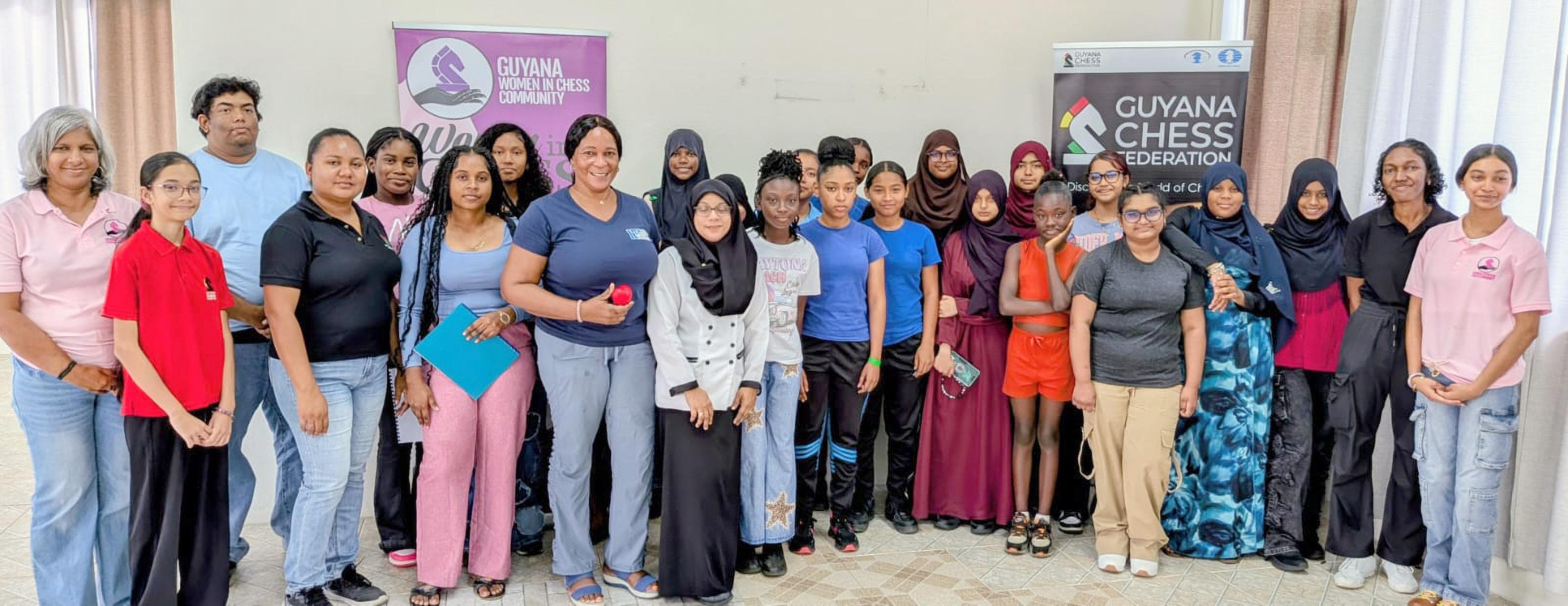
SATURDAY, May 2, 2026, marked a significant milestone for the Guyana Chess Federation (GCF) as the Guyana Women in Chess Community (GWICC) successfully launched its Girls’ Chess Camp in Region Three.
Hosted at the Leonora Stadium, West Coast Demerara, the event drew a vibrant crowd of 21 girls and educators from local institutions, including the Leonora Secondary School and Qayyim Academy.
Between 10:00am and 3:00pm, the stadium was transformed into a hub of strategic learning, signalling a bright future for female
representation in the sport.
According to a statement from the GCF, the workshop welcomed both newcomers and experienced players. While the girls and their teachers were introduced to the fundamentals, those already familiar with the game received advanced training.
The one-day event was a resounding success; by its conclusion, every female had mastered the rules and was playing confidently. Each participant was given a booklet for beginners detailing chess rules and basic checkmate and tactics so that they can continue to learn on their own.
The GWICC aims to in-
- youth training set for this weekend
crease the number of girls and women in chess in Guyana. Over the years, the number of girls playing the sport has increased significantly within the federation.
Led by Mrs. Marcia Lee, the participants were taught the basics of chess, including checkmate and other tactical elements.
Mrs. Lee was aided in the coaching by CM Taffin Khan, WCM Jessica Callender, and Nellisha Johnson. The GCF thanked Rouge Salon and Spa, Mrs. Suparna Narine, and Mrs. Harrison for providing lunch, snacks, and beverages for the event.
In line with its mandate to decentralise the sport, the
GCF has launched its expansion initiative in Region Three. The Federation aims to empower schools to establish their own chess clubs as a cornerstone of their extra-curricular programme.
Building on the success of the Girls’ Camp, the GCF will host its Youth Chess Training this weekend, May 9th and 10th, at the Leonora Stadium.
Open to both boys and girls, these sessions will run from 10:00am to 3:00pm daily. This initiative will introduce students to the world of chess, specifically designed to sharpen critical thinking and strategic rea -
soning. The GCF invites all schools in Region Three to register their allotted number of participants. Registration forms are currently available through school administrations or via the GCF’s official Facebook page.
The GCF, in collaboration with the Ministry of Education, is introducing the game to schools in its chess-in-education drive as a model for strategic thinking and competition among students.
The GCF expressed gratitude to the Ministry of Education and the Unit of Allied Arts for their support towards the programme.
(ESPNCRICINFO) - Chennai Super Kings came into IPL 2026 with a dodgy look about their bowling attack. They lost three games straight where their bowlers picked up 10 for 588 at an economy rate of 11.37. Since then, there has been an absolutely stunning turnaround.
Over the last seven games, CSK’s bowlers have scooped up 51 wickets - only Gujarat Titans (52) have more - at an economy rate of 8.15 - which no-one can match.
Given first use of a slow pitch, Akeal Hosein (4-0-191) and Noor Ahmad (3-0-222) took charge of proceedings. Delhi Capitals could only put up 155 for 7, which proved too little as the surface got better to bat on in the second innings. Sanju Samson, who has contributed 24% of CSK’s runs this year, finished things off with 87 not out off 52 balls.
Kartik Sharma, growing in confidence, was alongside him, with 41 off 31.
Both captains expected the pitch to be slow. The scoring pattern of the first four overs confirmed it. Fifteen dot balls. Six boundaries. Three singles and a wicket with the batter trying to force the pace. In conditions where the ball comes onto the bat, KL Rahul and Pathum Nissanka might have been able to hit the gap with the shots they played off good length balls. On this one, as much as they tried, they just found the fielder. Worse, they found themselves having to hold their shape for longer and even that didn’t always work.
With two right-handed openers, CSK had no hesitation in handing the ball to Hosein. When Nissanka fell though, DC sent Nitish Rana out in an effort to either hit Hosein out of the attack or prevent him from coming on. This is how much of a no-no matching a left-arm spinner with a left-handed batter is. But CSK bucked tradition.
They gave Akeal a third over. He provided Rahul’s wicket and in the end Rana got to face only one ball from Akeal. A dot ball. DC came out of the powerplay 37 for 2. Akeal finished with figures of 4-0-19-1, which is exceptional considering he bowled only one over outside the field restrictions. Akeal Hosein had KL Rahul sky one to mid-off, Delhi Capitals vs Chennai Super Kings, IPL 2026, Delhi, May 05, 2026
AXAR’S STRUGGLES
Axar Patel has 33 runs this season. Twenty-six of those came in one innings. And his strike rate is 97. It is a massive drop. The DC captain was one of the bright spots last season, their fourth-highest scorer with 263 at a very healthy strike rate of 157. He was in the middle when his team needed to rebuild and his wicket - the third that CSK took in a space of 19 balls between overs 8 and 11 - had an impact on the total they put up.
ceiling
The
are looking to fine-tune their engine room.
The Harpy Eagles are preparing to face either Trinidad and Tobago Red Force or Barbados Pride in the season’s showpiece event.
Guyana Harpy Eagles Squad: Tevin Imlach (capt),
UP DC’s first five wickets scored 69 off 66. Sameer Rizvi, Impact Player-ed in because this was definitely an emergency, and Tristan Stubbs together put on 65 off 42 balls. Stubbs seemed to be factoring in the slowness of the pitch into his movements much better, handling Noor’s mystery spin and Gurjapneet Singh’s extra bounce with ease. Rizvi at the other end showed how batters could play against Anshul Kamboj, one of the season’s best death bowlers. He knew Kamboj liked to come around the wicket and target the wide line with yorkers. So he moved across his stumps
a little bit, sweeping, slicing and smashing him down the ground.
One part of this plan was premeditation - the movement across his stumps - the other was instinct. Rizvi consciously tried to keep his shot options open, and not just target leg side. Until this match, Kamboj from around the wicket in this IPL has been box office: 63 balls, 93 runs, three sixes, eight wickets. In this game, he struggled: 12 balls, 34 runs, five sixes, no wickets. Meanwhile, Jamie Overton, one of CSK’s best bowlers, bowled only one over and spent time off the field as well.

SOUTH AFRICAN RACING TIPS GREYVILLE
08:25 hrs Day Two
09:00 hrs Chill In The Air 09:35 hrs Next Of Kin 10:10 hrs Jazz Diva 10:45 hrs Zoombomber ENGLISH RACING TIPS
FROM PAGE 35
BRITON John produced one of his best rides for the year to edge his rivals and clinch the coveted Jude Bentley Memorial Road Race at the inner circuit of the National Park on Sunday.
In the senior category, Robin Persaud and Alex Newton first broke away, forming a lead pack and putting distance between themselves and the rest of the field.
However, a couple of laps into the race, Jamaul John, Briton John, and Alex Mendes powered their way into contention, joining the lead pack, and the action intensified as they tussled for the top spot over 30 laps.
In the end, Briton John would be the first to cross the line as the cycling fraternity remembered the former cyclist Bentley.
Second place went to Alex Mendes, with Jamaul John coming in third to complete the podium.
Alex Newton finished fourth, with fifth place going to Robin Persaud, and Andre Greene crossing the line sixth. Shernna Alder claimed the ladies’ category, followed by Rebecca Daymon.
Newton, who took 4th place among the seniors,
also won the juniors, with Kevon Stephens coming in afterward.
Among the veterans over 50, Talim Shaw, Junior Niles and Ray Harlequin finished in that order.
While in the veterans’ open, Robin Persaud was good enough to take the top spot in front of Segun Hubbard and Paul Choo-WeeNam.
Collis Williams won the
Alex Newton won the senior mountain bike race, defeating Marcus Keiler and Seon Budhan.
The event also featured BMX races for boys and girls aged 6-14; the winners were Jamilla Samuels, Cadeem Bascom, Delisa Luke, Prince Johnson, Shemiah Johnson and Jamar Samuels.


sanctioned by the governing Guyana Amateur Swimming Association (GASA) and was used as a Time Trial for the upcoming Goodwill Games to be held in Trinidad in August. Chung-Phillips said that due to the tremendous support from several sponsors, the swim meet is likely to be
held annually during the Linden Town Week celebrations.
Those sponsors who donated trophies, medals and food hampers, were the Trim Brothers Avery Snr. Grenville ‘Bonny’ and John, Neville ‘Zipper’ Johnson, Ryan Lewis and Family, Nazeema
FROM PAGE 35
and Lenworth Warner, McRae’s Hardware Store, Colin Rodney and Sons, Dr. Deon Anderson, Omali Dare, Linden Mayor and Town Council, Torpedo Swim Club, Linden Fund Canada, Joann Dhanpaul and Family and the Toucan Mall.
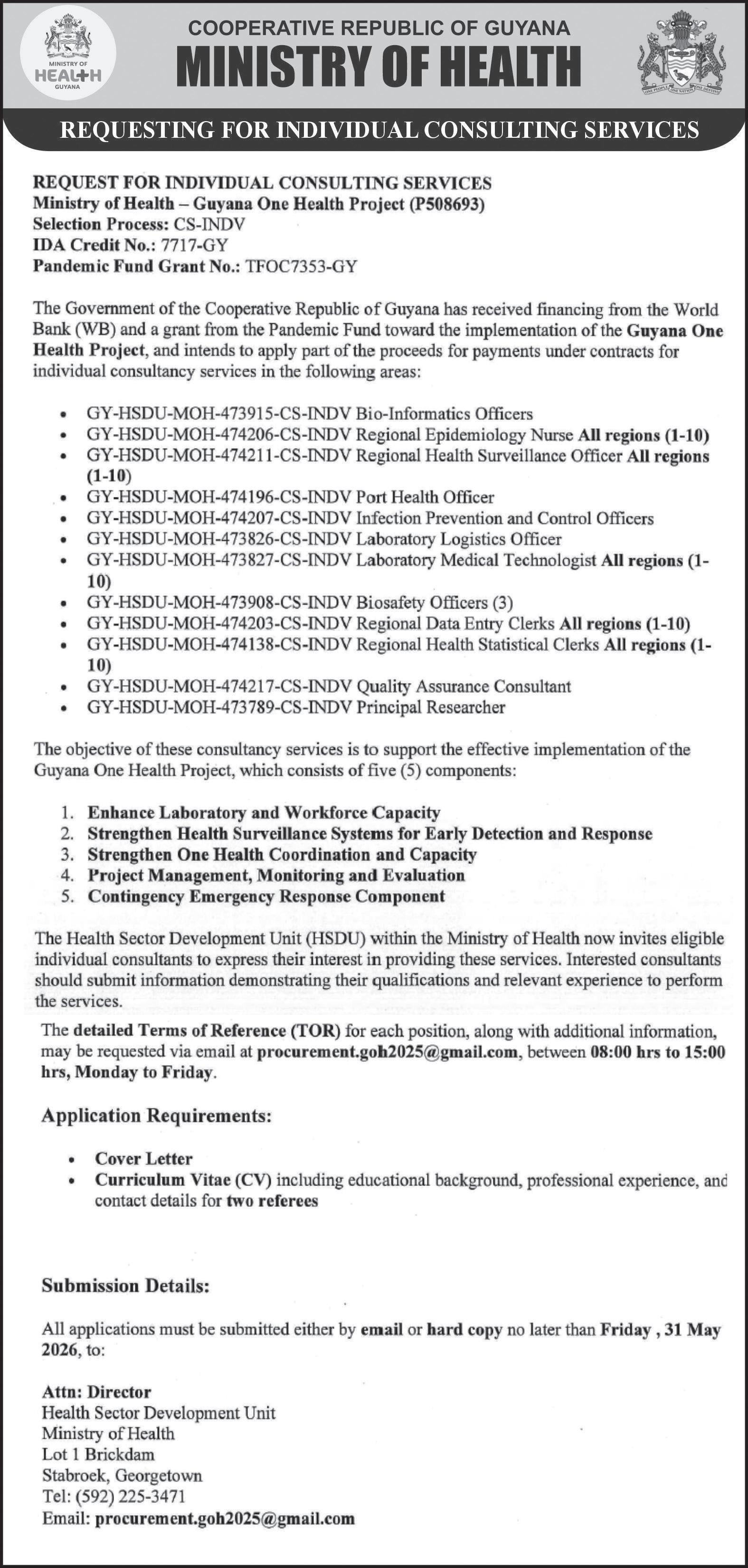
EASTVELDT Football
Club executed a near-perfect game on Sunday evening at the Plaisance Community Centre Ground against Northern Rangers, winning 7-1 as action in the GFA football tournament continued.
Akeem Farley got the ball rolling with his first in the 19th minute of play before Triston Christian equalised in the 35th.
Farley wasted no time delivering another goal to make it 2-1 a minute later.
Tyrone Khan then scored
before the break and after the resumption, extending their lead to 4-1.
Farley then recorded his third to complete the hat-trick as they took an unassailable 5-1 lead.
Mariheo Eastman and Akel Clarke then cemented

the win with two more goals as they completed the 6-nil victory. In the other clash, Order and Discipline FC and Genesis FC played to a nilall draw.
Riddim Squad, Beacon and Eastveldt have already booked their place in the semi-final.
Today (Tuesday) will see the final round-robin clashes. North Star FC will meet Motherland FC.
Vengy will meet Pele to determine the final semi-final place up for grabs.
The semis are set for Thursday, May 7th, and the grand finals on Saturday, May 9th.
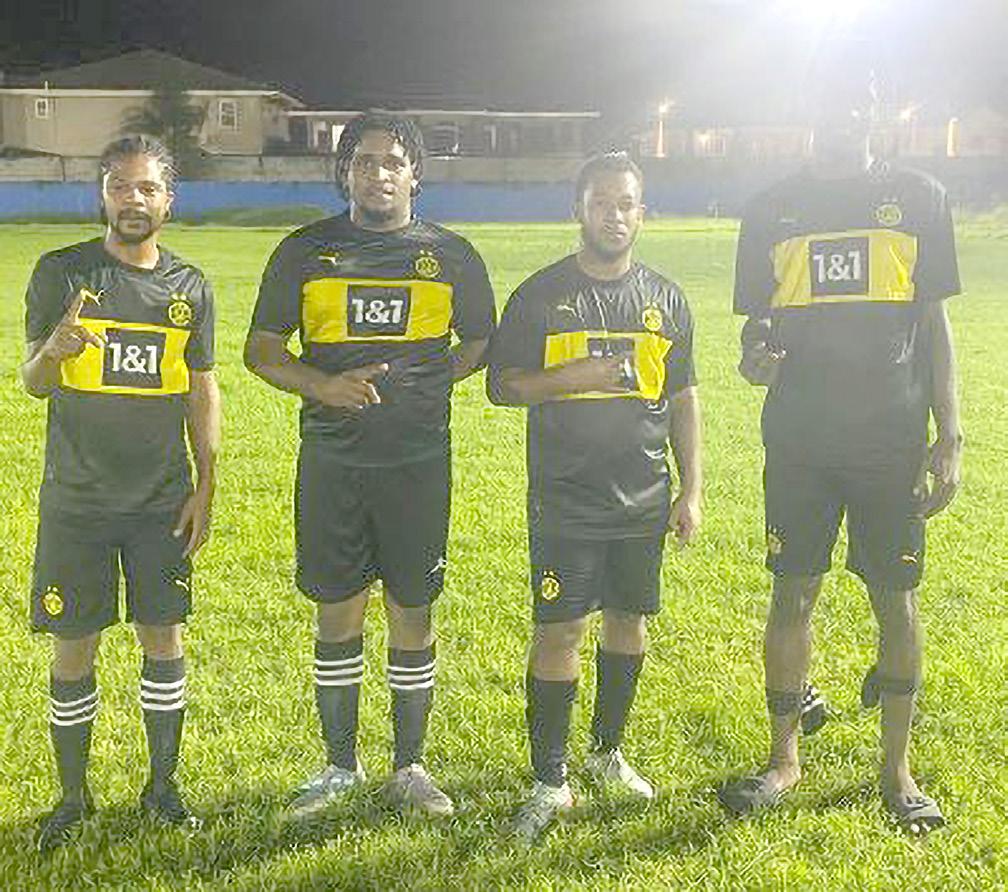
The teams are playing for a million in prizes, with half a million for first place, $300,000 for second place, $200,000 for third place and $100,000 for fourth place along with trophies and medals.
The competition is sponsored by Nalico/Nafico Insurance, with all games played at the Plaisance Community Centre grounds.
ON Sunday at the Cliff Anderson Sports Hall, Bishops’ High, Marian Academy and St. Rose’s High soared above the competition as Youth Basketball Guyana continued action in the Georgetown leg of their countrywide Regional Basketball Conference.
The Bishops’ High came up against The Bishops’ High ‘B’ and won 49-12.
Eli Archer was at the forefront of the win with 11 points and a game-high 13 rebounds, while Yisdalayah
Yisrael added 10 points, 9 rebounds and 4 steals in the win.
On the losing side, Nkosi Griffith dropped 7 points and 10 rebounds for The Bishops’ High ‘B’. Marian Academy then thrashed School of the Nation’s 50-13. Marian’s Lucas Pinol had an inspiring outing with 14 points and 11 rebounds.
He had solid support from Nhyl George with 12 points and 9 rebounds and Emmanuel with 8 points.
St Rose’s High closed off the day with a 44-28 whipping of Queens College. St Rose’s High played well from tip-off; Shaquan Callendar starred for them with 12 points and 13 rebounds. He was ably supported by Christian Williams and Jeremy Chung, who scored 15 & 11 points, respectively.
The Regionals are sponsored by Edward B. Beharry Ltd, G-Boats Inc., National Sports Commission, Ministry of Education and Banks DIH Ltd.

FL Sport, the organisers of the fourth One Guyana T10 Tapeball Blast, is officially urging teams across the country to register early for what is set to be the most lucrative and prestigious edition of the tournament yet.
With registration scheduled to go live this Friday, May 8, officials are warning interested squads to move quickly to avoid missing out on the 80-team, straight-knockout competition.
Tournament Director John Ramsingh noted that in previous years, several teams were left on the sidelines after waiting too long to finalise their rosters.
He clarified that, for this season, teams do not need to submit their full player lists at the time of registration, and registration to teams is open
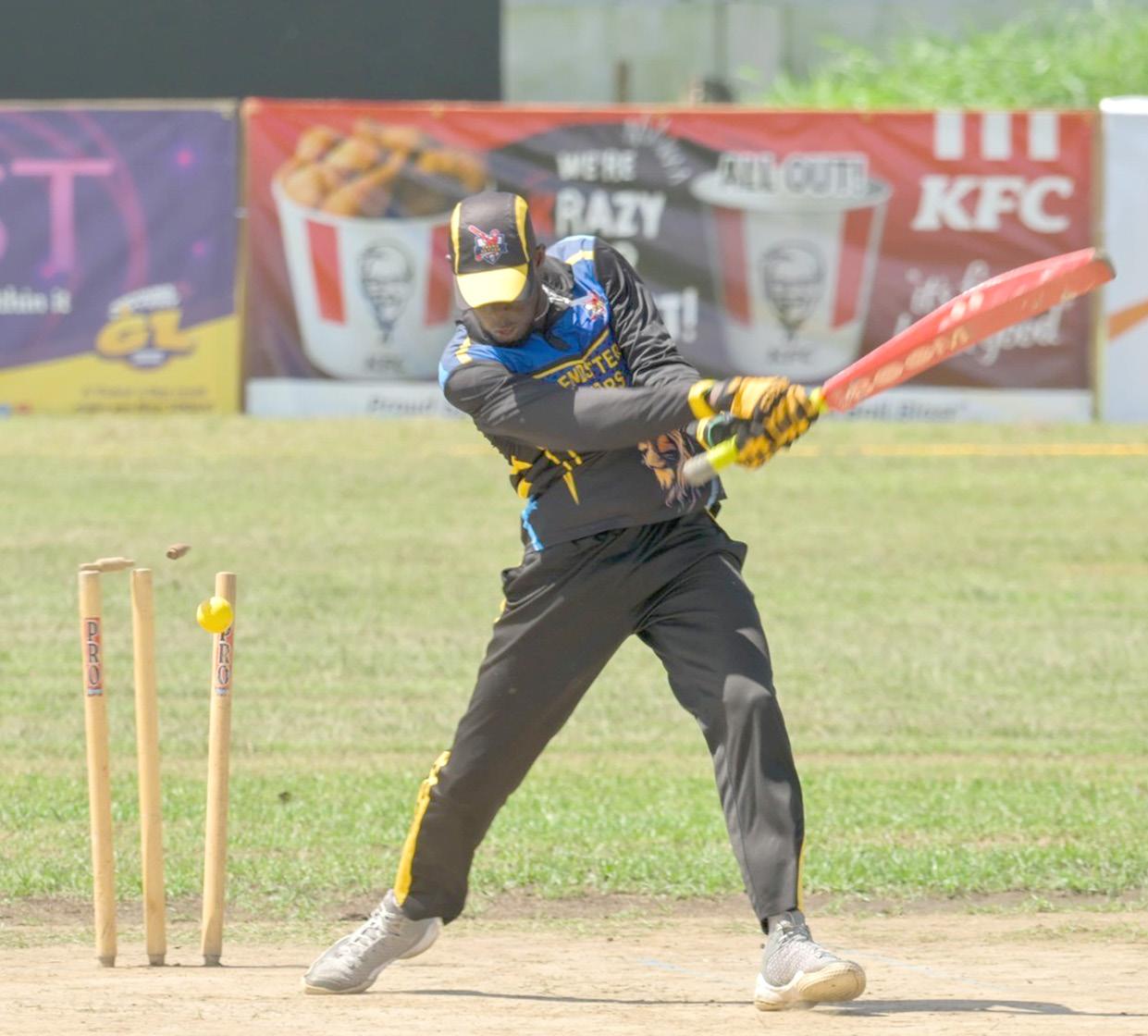
In an effort to reward performance across the board, organisers have significantly increased the prize pool
to any zone.
Instead, squad submission will follow a phased approach based on when a specific zone is scheduled
THE conveyor belt of Guyanese talent has produced its latest high-profile graduate, as the Guyana Cricket Board (GCB) confirmed the inclusion of Jonathan Van Lange in a 13-man Harpy Eagles squad.
The former national youth captain, fresh off his stint at the ICC Under-19 World Cup, is set to travel to St. John’s for a crucial fourday warm-up fixture against the West Indies Academy starting May 10.
Van Lange’s elevation represents a strategic move by the defending champions to integrate youth into their red-ball setup.
For a player who has already captained his country at both Under-17 and Under-19 levels, the step up to the senior squad feels like a natural progression.
Head coach Ryan Hercules emphasised that while Van Lange is a long-term
project, the rigours of the longest format provide the ideal laboratory for his development.
Hercules noted that the four-day environment offers the “mileage” necessary for a young player to refine his plans and find his feet in professional cricket. The squad reshuffle comes with its share of forced changes. Van Lange and fellow youngster Thaddeus Lovell enter the fold to fill the void left by the injured Isai Thorne. Additionally, the Harpy Eagles will be without the services of Shamar Joseph for this specific encounter, though the pace sensation is expected to return for the championship final.
The inclusion of Lovell alongside Van Lange underscores a clear mandate from the GCB to blood prospects who have shown a high TURN TO PAGE 32
G$35,000 per team, and registration forms will be available on the tournament’s social media platforms starting May 8, or via WhatsApp at +592 635 2235.
In an effort to reward performance across the board, organisers have significantly increased the prize pool.
Every team reaching the quarter-final stage or beyond is guaranteed a cash prize, ensuring that even those who fall short of the trophy walk away with a tangible reward for their efforts.
Financial incentives for the 2026 Blast are substantial, with losing quarter-finalists earning $25,000 and losing semi-finalists at the zone level receiving $50,000.
to play, allowing teams to secure their spot now and finalise their talent pool closer to game day.
The entry fee is set at
Zonal finalists will pocket $200,000, while zone winners receive $500,000 and the opportunity to compete for a $2,000,000 grand prize at the
National Finals.
The national runner-up will earn an additional $1,000,000, and the two losing semi-finalists will receive $500,000 each.
Beyond the local glory, the four teams that qualify for the national finals will also earn the honour of representing Guyana at the upcoming Global T10 Tapeball Blast.
The tournament is scheduled to bowl off on the weekend of August 8–9 in Berbice with a 16-team cap for the opening leg.
The action then shifts to the East Bank/West Demerara zone on August 15–16, followed by the Essequibo zone on August 22–23.
A short hiatus will follow to accommodate preparations for the Caribbean Premier League (CPL) in Guyana and the finals in Barbados, ensuring maximum visibility
and availability for the sport’s fans and players.
Following the CPL conclusion, the tournament resumes with an extended format for the Georgetown/East Coast Demerara zone.
This final zonal leg will span four playing dates, covering the Round of 32 through to the zone finals on October 3–4.
This structured build-up leads to the national grand finale on October 11, which will be hosted for the first time at the brand-new Anna Regina National Stadium in Region Two.
Individual brilliance will also be handsomely compensated, with the tournament MVP receiving $150,000 and a motorbike, while the leading run-scorer and wicket-taker will each earn $100,000 and a television.
AT the Linden Town Week Swim Meet organised by the mining town’s Torpedo Swim Club, the Dolphin Speed Swim Club topped the points standing to be Champion Club at the Toucan Mall Swim Pool on Sunday, April 26.
Dolphin Speed Swim Club with 510.5 points, outswam home team Torpedo Swim Club who accumulated 481.5 points for second place finish, with Sea Otters Swim Club taking third position on 377 points.
Finishing in fourth spot were Mafra Swim Club with 154 points, with Orca Speed Swim Club scoring 152.5 points, Dorado Swim Club 98.5 points and Silver Sharks Aquatic Swim Club occupying the cellar position on 47 points.
After the 76 events were completed, there were several age group champions.
They were: 6 and Under Boys Champion Reheem McLean of Torpedo Swim Club, 6 and Under Girls Champion Kitana Parsram of Orca Swim Club, 7-8 Boys Champion Alonzo Simon of Mafra Swim Club, 7-8 Girls Champion Keyana Welcome of Mafra Swim Club, 8 and
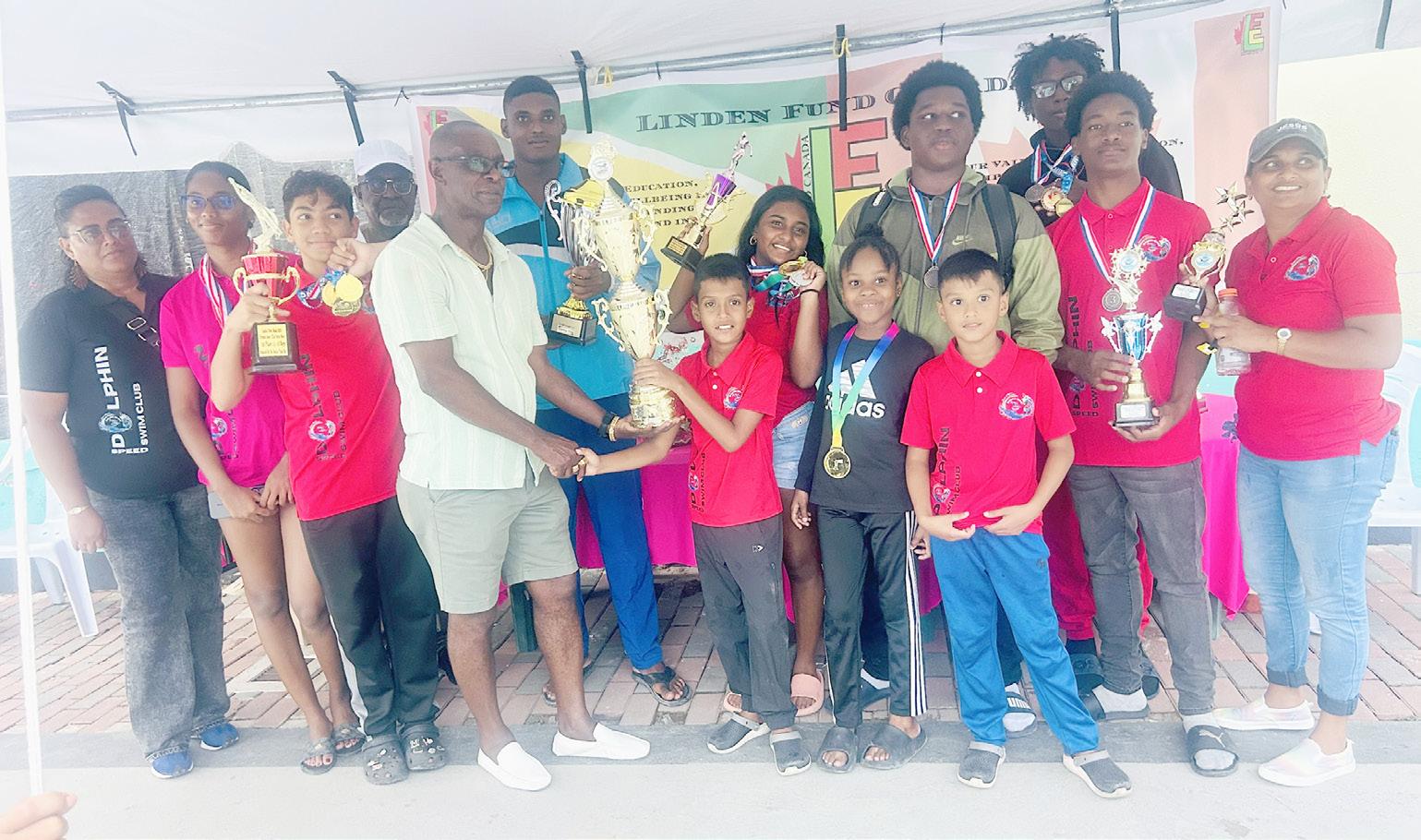
Under Boys Champion Eshwar Roopnarine of Dolphin Speed Swim Club, 8 and Under Girls Champion Adelaide Roberts of Sea Otters Swim Club.
Other outstanding swimmers were 9-10 Boys Champion Chianand Roopnarine of Dolphin Speed Swim Club, 9-10 Girls Champion Aria McKoy of Sea Otters Swim Club, 11-12 Boys Champion Malakhiy Patokie of Dolphin Speed Swim Club and 1112 Girls Champion Rebha
Lachhman of Orca Swim Club.
13-14 Girls Champion Akiesha Pulmeyere of Torpedo Swim Club, 13-14 Boys Champion Jelani Oding of Sea Otters Swim Club, 1517 Boys Champion Zidan John of Torpedo Swim Club, 15-17 Girls Champion Shareefah Lewis of Sea Otters Swim Club and the 18 years and Over Boys Champion Paul Mahaica Dolphin Speed Swim Club were also winners. The Youngest Male
Swimmer was three- yearold Josiah Denny of Torpedo Swim Club, with Kitana Parsram being the Youngest female swimmer. The Oldest male swimmer was 22-year-old Chaill Goddette of Sea Otters Swim Club, and the Oldest Female swimmer 22- year- old Latisha Blair.
Organiser and coach for the Torpedo Swim Club Ms. Mary Chung-Phillips reported that the meet was TURN TO PAGE 33