President Ali: Embrace the season of hope, renewal, enduring joy
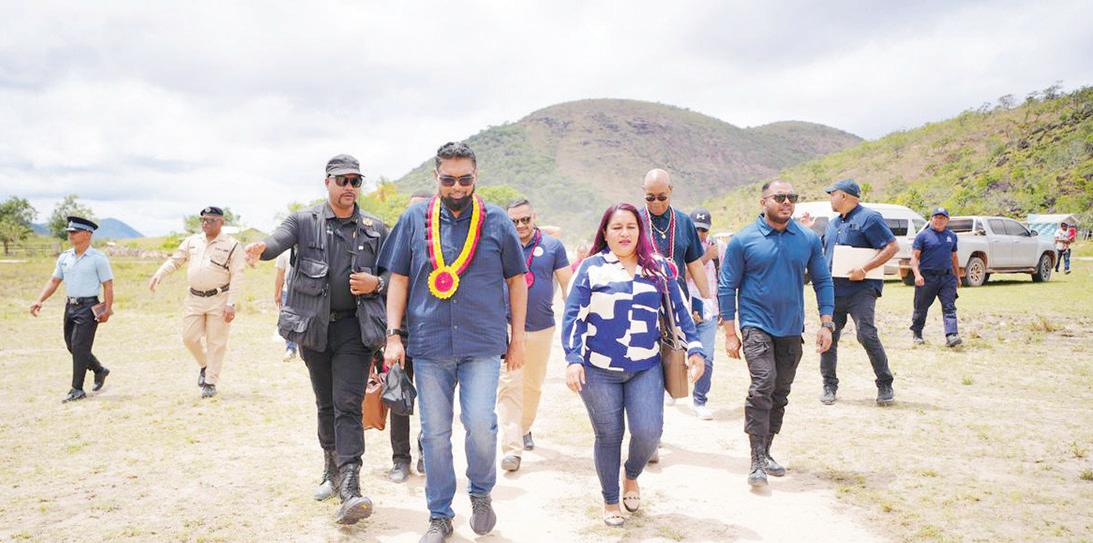
Gov’t launches first district-level Border Patrol Unit in Region nine
- President Ali announces, stresses importance of protection from community to national level - Amerindian Affairs Minister highlights
culture and opportunity
PSC laments Suriname’s Corentyne River fees as threat to trade, CSME, livelihoods 22-year-old cattle farmer steadily expanding herd with confidence, innovation
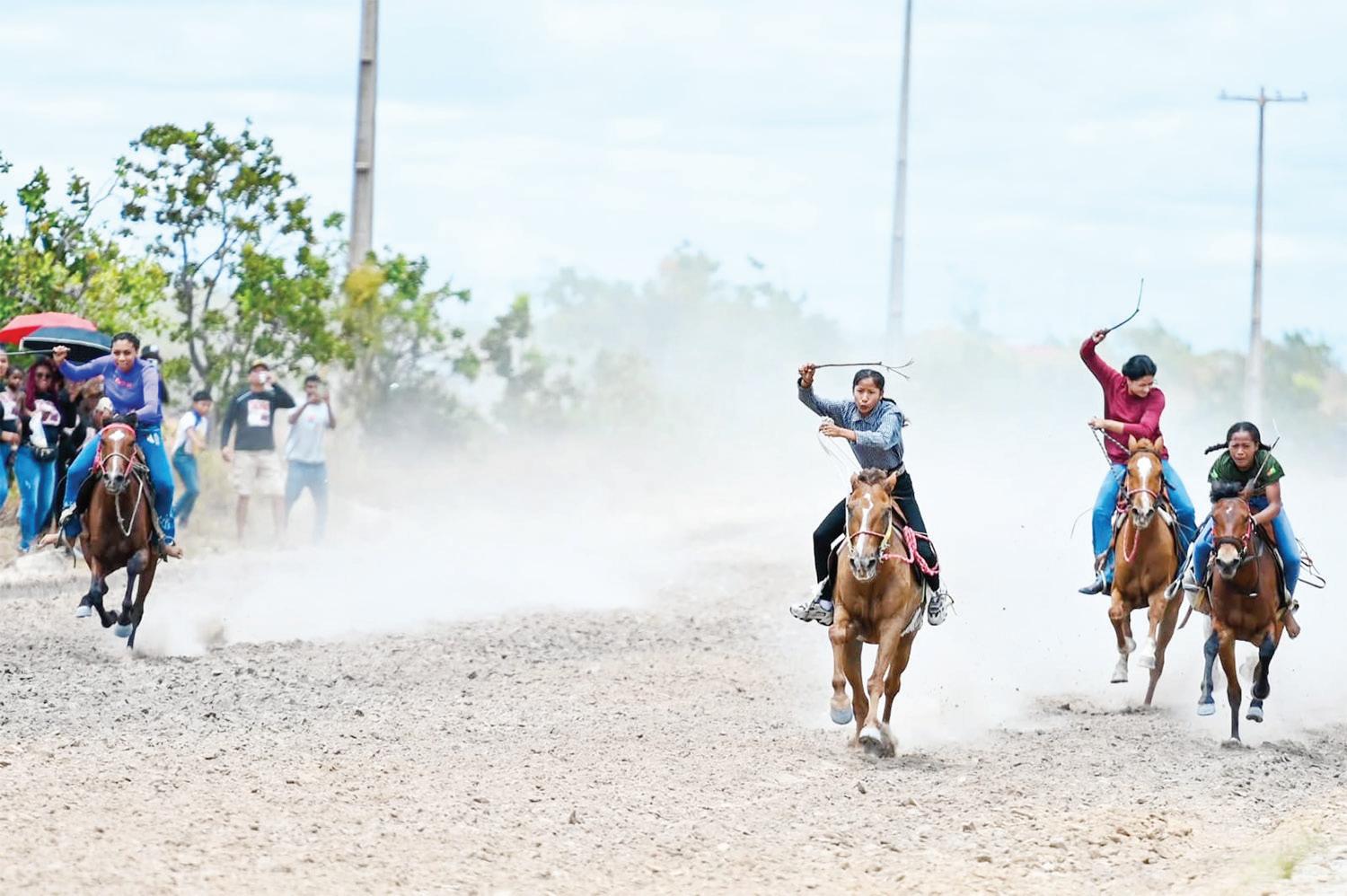
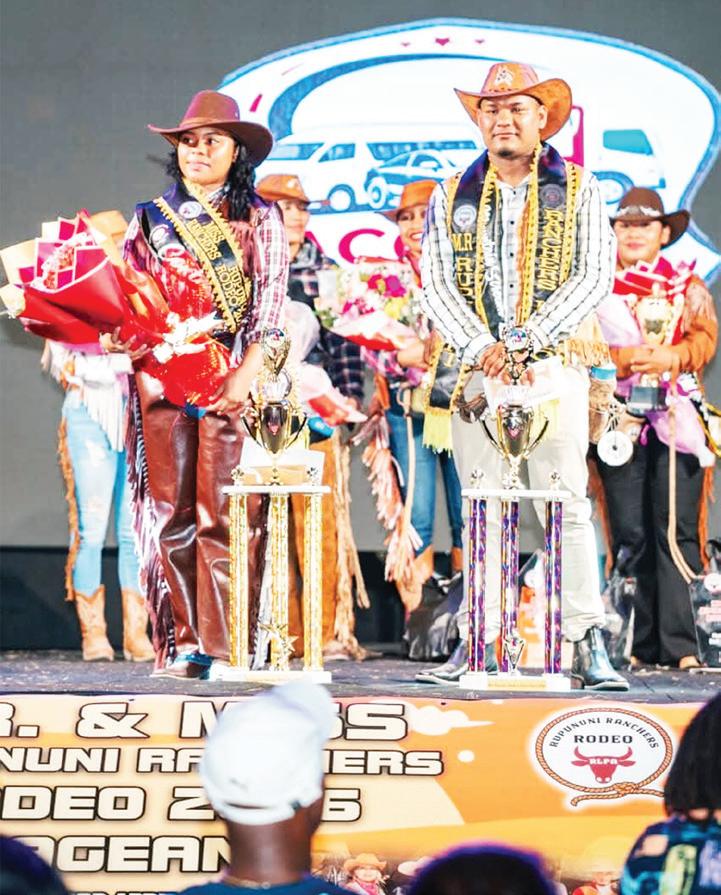
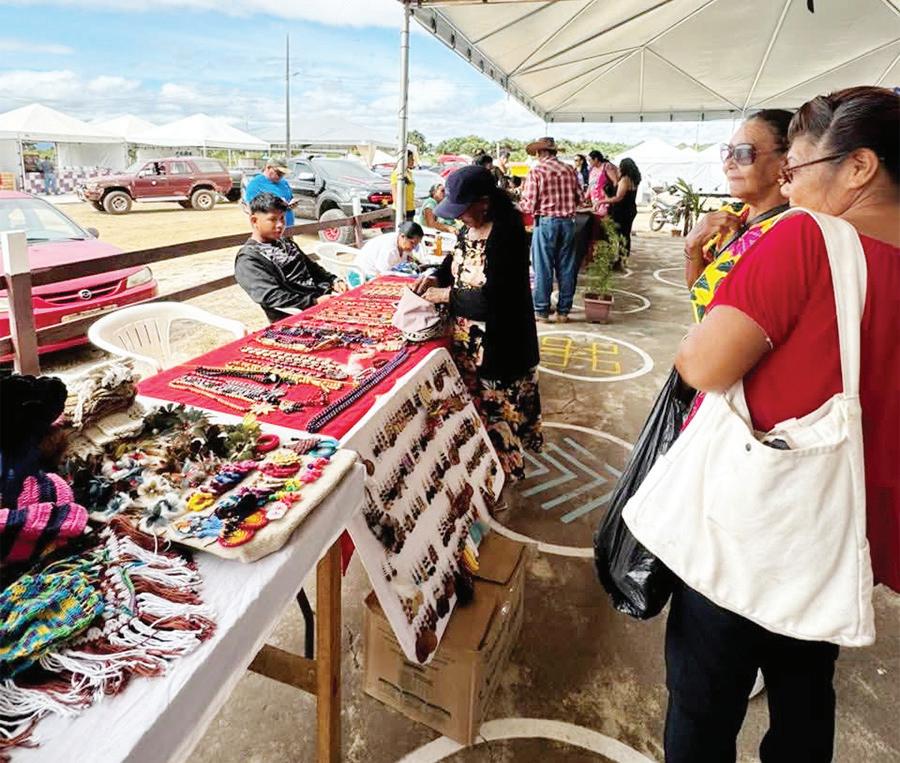
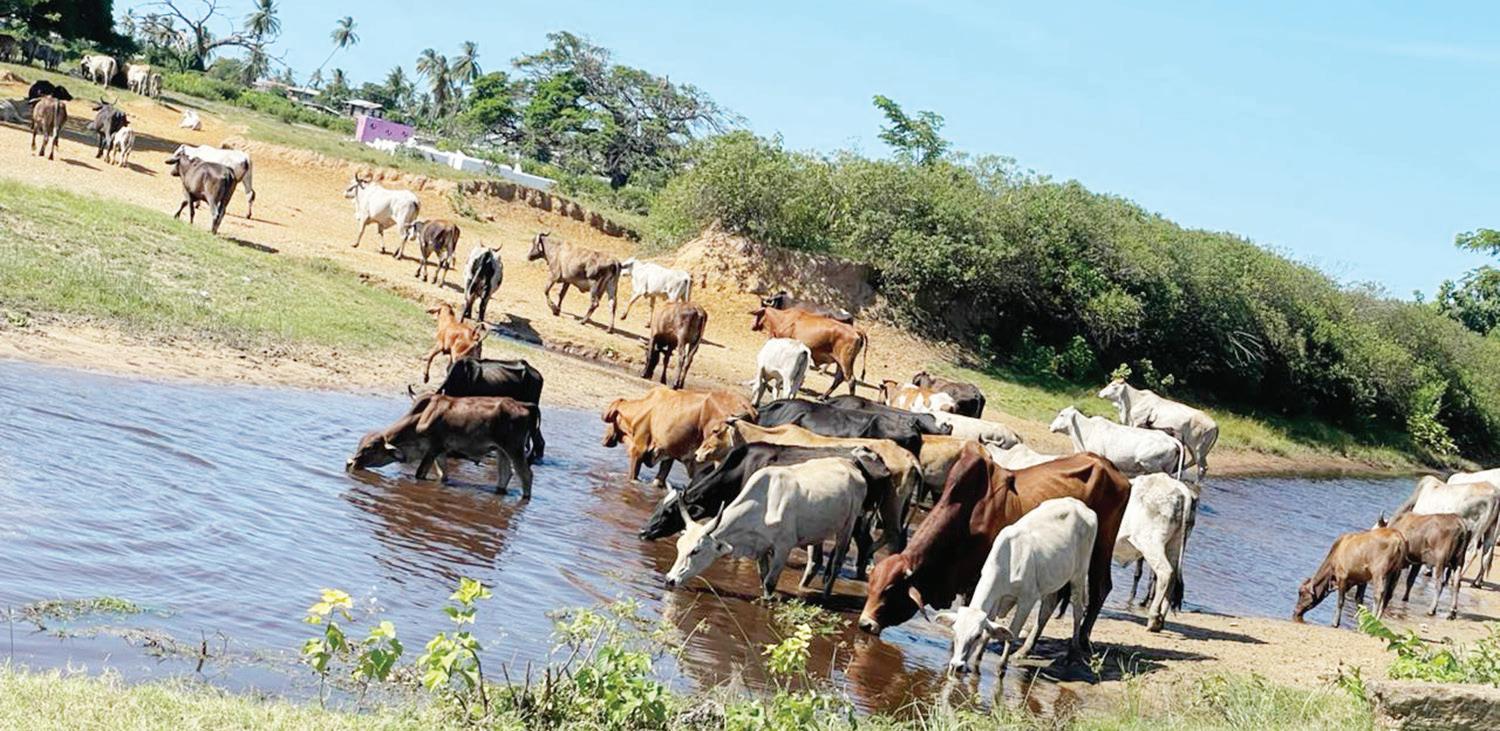
Scenes from this year’s Rupununi Ranchers Rodeo
Rupununi emerging as major hub for growth, culture, opportunity
- Amerindian Affairs Minister highlights
MINISTER of Amerindian Affairs, Sarah Browne, has noted that the Rupununi is firmly establishing itself as one of Guyana’s leading regions for growth, culture and opportunity, shedding its title as the “sleeping giant.”
ers Rodeo 2026 in Region Nine (Upper Takutu-Upper Essequibo).
Minister Browne made these remarks during her address at the Rupununi Ranch-
Brown disclosed that the transformation of the region is evident and is accelerating
under the leadership of President Irfaan Ali.
“The Rupununi has long been described as a sleeping giant, and today… that giant has not only awakened, but
is actively taking its rightful place as one of Guyana’s leading regions for growth, culture and, of course, opportunities,” the minister told attendees.
She noted that the rodeo, one of the country’s most anticipated events, has evolved beyond a regional celebration into a national
TURN TO PAGE 5
Scenes from this year’s Rupununi Ranchers Rodeo
Embrace the season of hope, renewal, enduring joy
- President Ali tells Guyanese amidst Easter festivities
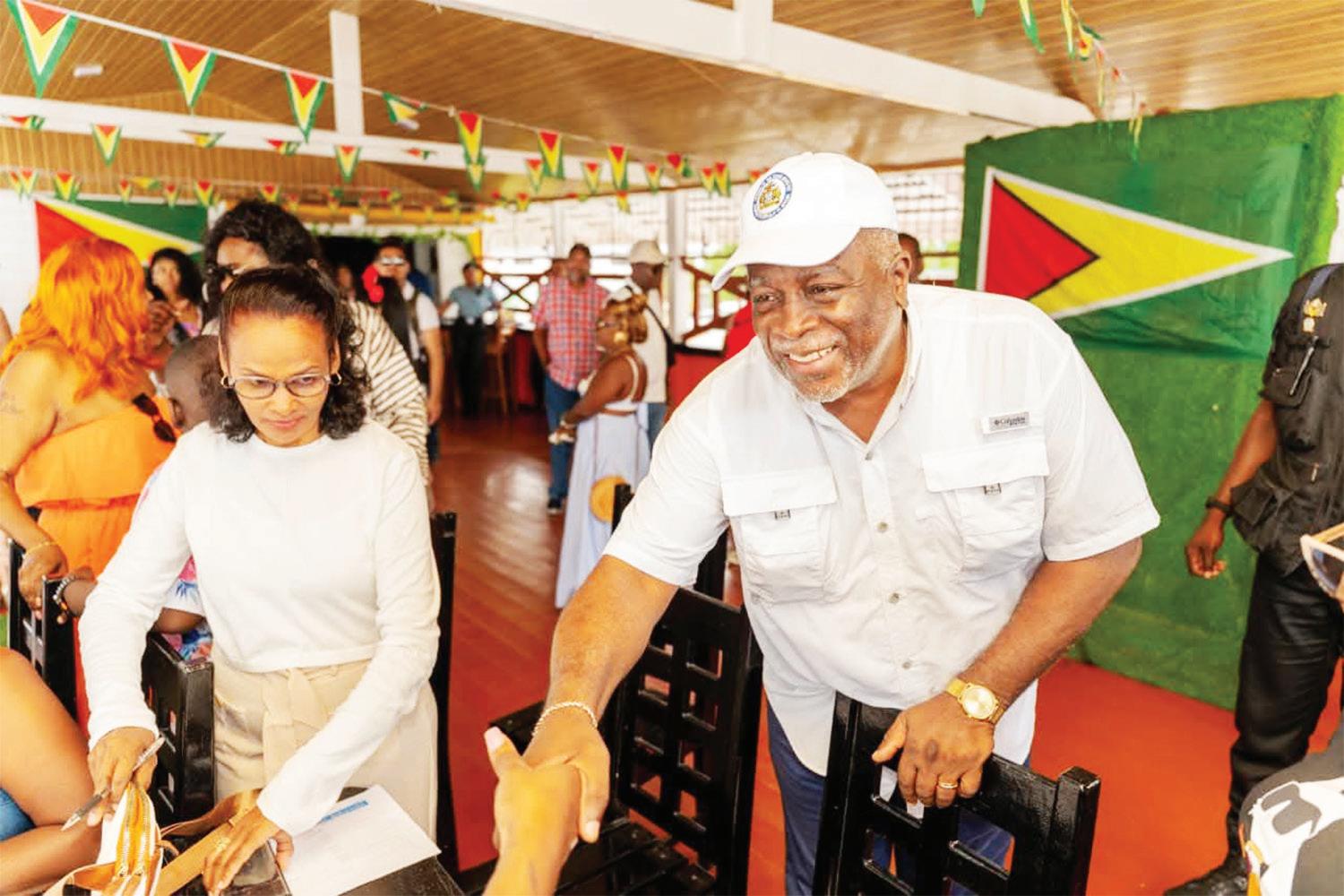
PRESIDENT Dr. Irfaan Ali on Sunday extended Easter greetings to Guyanese at home and in the Diaspora, urging citizens to embrace the season as one of hope, renewal, and enduring joy.
In his Easter message, the Head of State reflected on the significance of Christ’s resurrection, describing Easter as the “heartbeat of the Christian faith”, and a reminder that joy can emerge even after periods of sorrow and uncertainty.
Quoting Psalm 30:5 “Weeping may endure for a night, but joy cometh in the morning” — President Ali said the message of Easter remains deeply relevant, offering comfort to those
facing loss, loneliness or hardship.
He recalled the grief experienced by the followers of Jesus on Good Friday, but said Easter morning transformed despair into triumph with the resurrection of Christ.
He said: “To every citizen of our mighty nation, whether you are here in Guyana or abroad, I extend greetings for a radiant and joyful Easter! May this sacred dawn fill your cup to overflowing, and may your homes dance with the light of heaven’s own gladness.”
President Ali also highlighted the way Easter is celebrated across Guyana, noting that the extended hol-
iday weekend is marked not only by worship and reflection, but also by vibrant traditions and family-centred festivities.
He pointed to kite flying across the country, the Bartica Regatta, the Rupununi Rodeo, picnics along the coastland and horse racing on the Corentyne as examples of the rich cultural spirit that accompanies the Easter season.
According to the President, these activities bring communities together and reflect the warmth, resilience and joy of the Guyanese people.
Even amid the celebrations, however, he urged citizens not to lose sight of
the true meaning of Easter, saying it remains a powerful symbol of victory over sin and death, and a lasting
source of hope. “Yet in all our festivities, let us not forget the central message of this day.
Easter heralds the triumph over sin and death. It is a season of Hope,” the President said.
Gov’t launches first district-level Border Patrol Unit in Region Nine
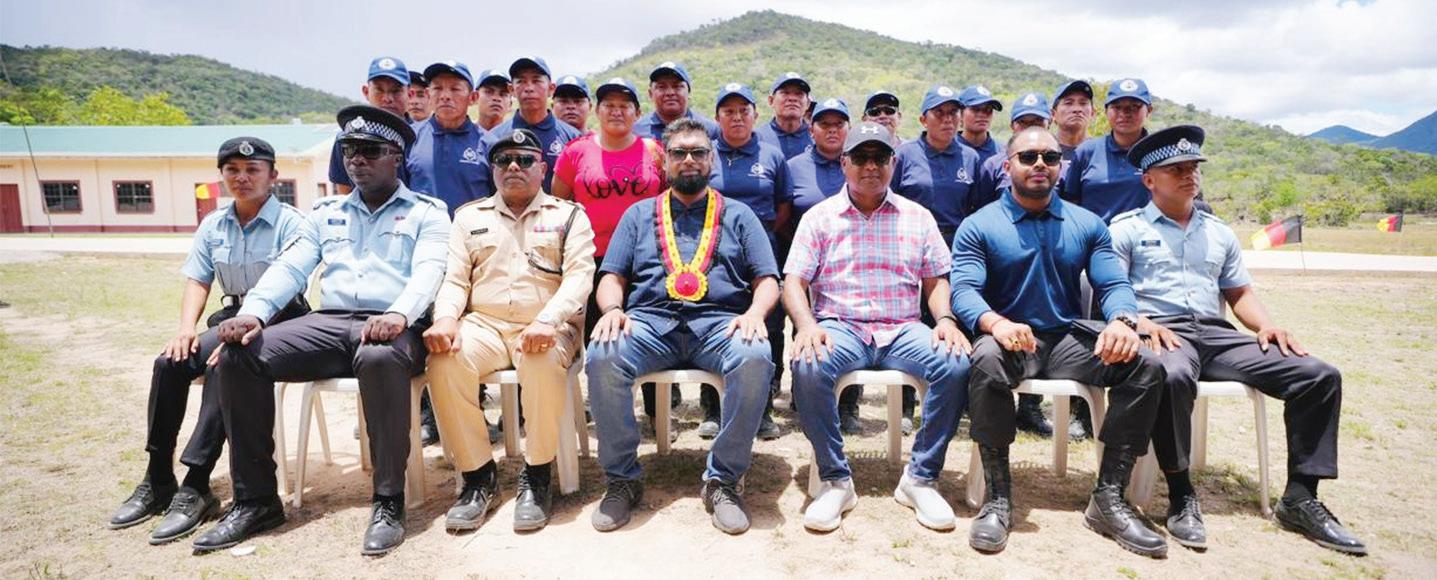
PRESIDENT, Dr Irfaan Ali has announced the establishment of the first district-level Border Patrol Unit in Region Nine (Upper Takutu-Upper Essequibo), describing it as a major step in strengthening community-based security and protecting Guyana’s borders from the village level up.
During his address at a community meeting with residents from Rukumutu and satellite villages, the President said the initiative would build on existing community-policing structures and give local people a greater role in safeguarding their communities.
“Our borders are important. Supporting you in the protection of our borders is important working with you, and we want our borders to be protected from the level of the community,” he said.
The initiative, Dr Ali said, forms part of a wider community development and security agenda that also includes major investments in infrastructure, roads, bridges and agriculture across indigenous villages.
“You will get more and
- President Ali announces, stresses importance of protection from community to national level
President, Dr Irfaan Ali has announced the establishment of the first districtlevel Border Patrol Unit in Region Nine
more community development, better health service, more and more education opportunity, better water service. All of that will come because this is the government that will continue to deliver that,” he said, linking security, development and livelihoods as part of one
long-term strategy.
The President related that some residents recently launched a community policing group of around 30 members, and that this structure would now be expanded and integrated into a formal Border Patrol Unit.
Under the new arrange-
ment, the unit, he said, will be expanded to about 40 members across several villages.
Members will receive the full stipend currently given to community policing ranks, but now in full-time support of border patrol duties.
The Border Patrol Unit
will operate under the umbrella of community policing and the national security apparatus, with direct collaboration between regional and national-security officials.
To enhance mobility and coverage across difficult terrain, the government will provide three brand-new
All-Terrain Vehicles (ATVs) to the unit.
“We are going to give you under this unit, three ATVs, three, brand new ATVs that will help in the patrol of the border and that will help in the security,” the Head of State said.
President Ali underlined his government’s vision of a people-centred security framework, rooted in communities rather than imposed from afar.
He emphasised that border protection must be built “from the level of the community” and affirmed that the administration is committed to supporting local structures with resources, training and direct engagement.
Since 2021, the government has been strengthening its security capability through the “Safe - Country” programme, which is a government-led, technology-driven security initiative that evolved from the earlier “Safe City” project and now aims to cover the entire country with integrated surveillance and command-centre infrastructure.
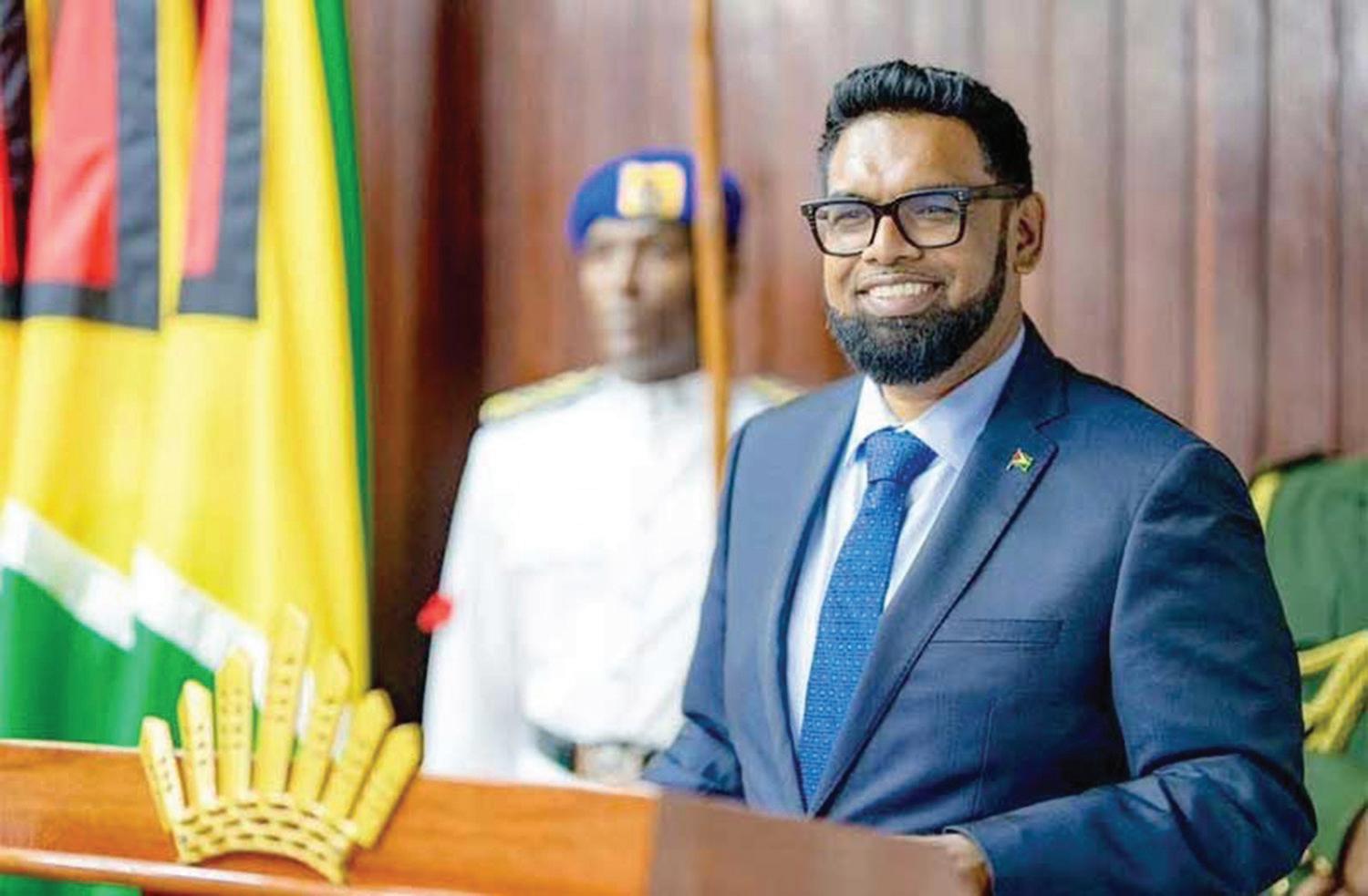
President Dr. Irfaan Ali
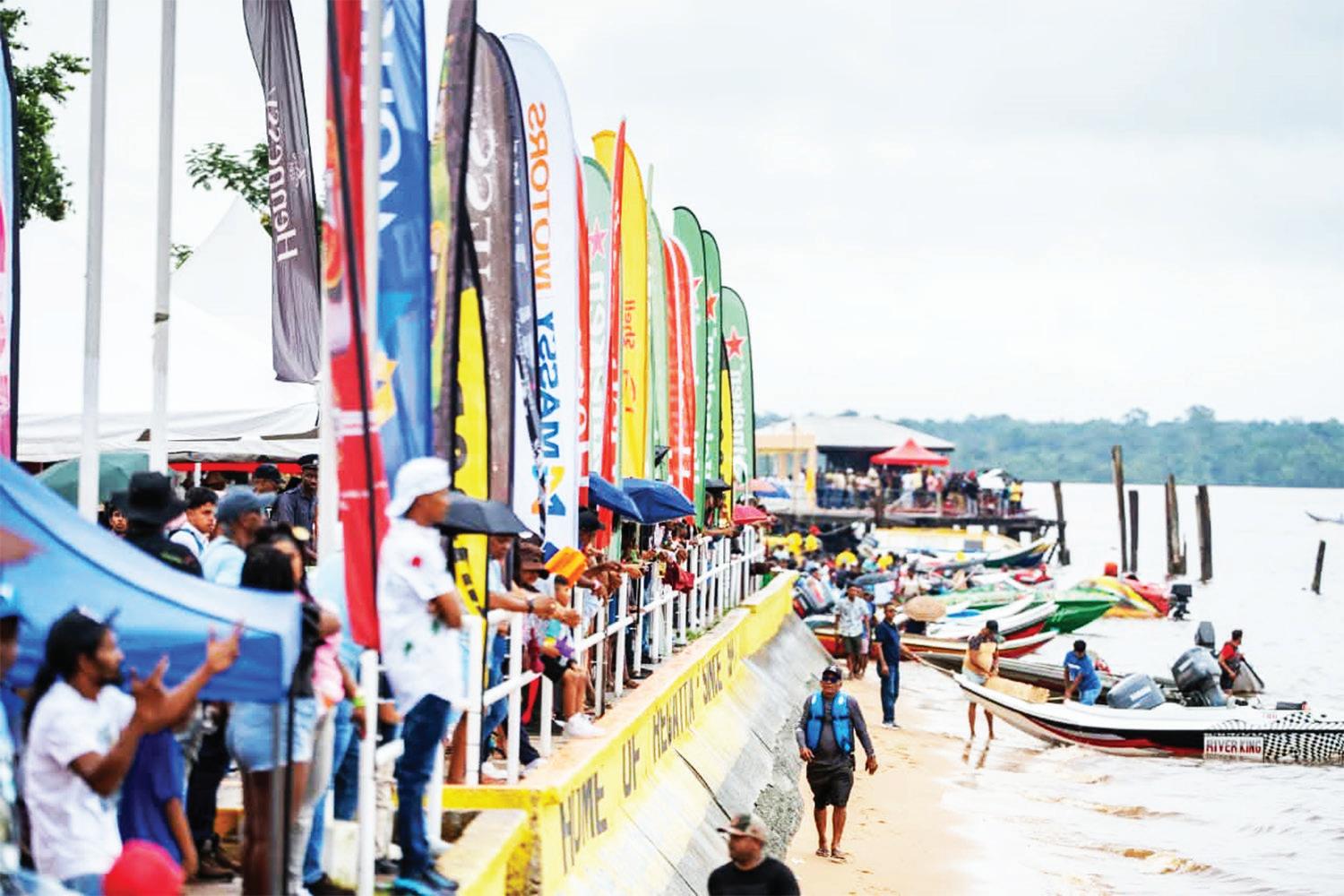
PM commits govt’s continued support for Bartica Regatta
- emphasises activity’s reflection of rich culture, spirit, and pride of the Region Seven town
PRIME Minister
Brigadier (Ret’d)
Mark Phillips was present at the Bartica Easter Regatta 2026 on Easter Sun-
day, where he officially declared the races open at the annual
event held in the river town of Bartica, Region Seven (Cuyuni–Mazaruni).
Delivering the feature address at the opening ceremony, Prime Minister Phil -
lips reaffirmed the government’s steadfast commitment to the regatta, indicating that support will continue to be channelled through the relevant ministries to further expand and enhance the event.
He noted that the regatta remains an enduring tradition that reflects the culture, spirit, and pride of the Bartican community.
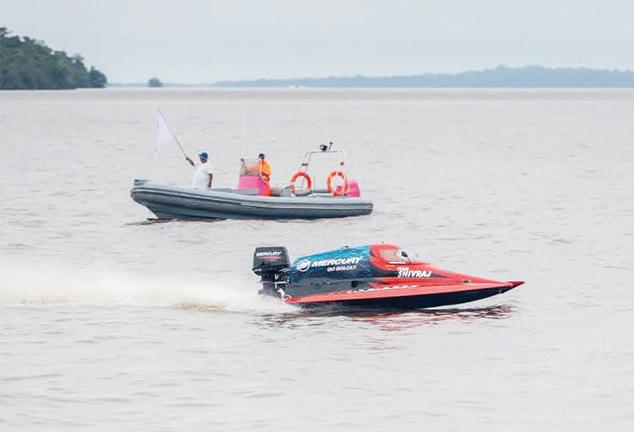
This year’s edition is widely regarded as one of the most action-packed to date, with organisers scheduling 20 powerboat racing events, includ-
ing three Formula One races, as the highlight of the Easter Sunday programme.
Several new boats are set to make their debut on the water, with top competitors already confirmed to thrill the large crowds expected at the waterfront.
The Bartica Regatta, Guyana’s oldest annual regatta, also features a packed calendar of supporting activities, including football, domino competitions, grass track racing, and a beauty pageant.
Prime Minister Brigadier (Ret’d) Mark Phillips was present at the Bartica Easter Regatta 2026 on Easter Sunday, where he officially declared the races open at the annual event held in the river town of Bartica
‘A Distinguished Son of the Caribbean’
- President Ali pays tribute to late former CARICOM Secretary-General Roderick Rainford
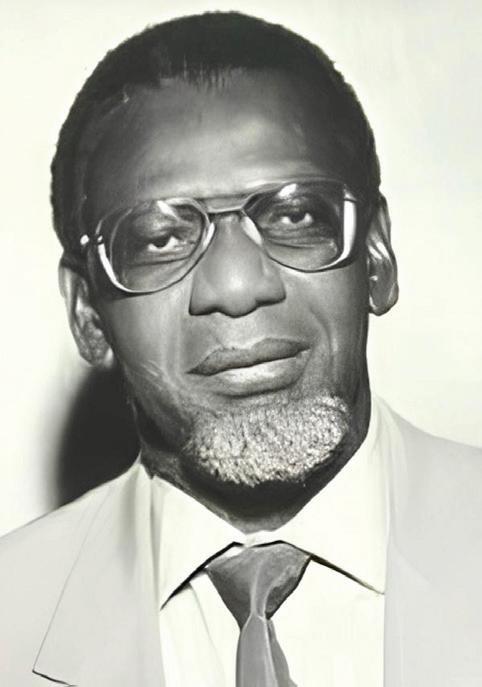
PRESIDENT, Dr Irfaan Ali has paid tribute to the late former Caribbean Community (CARICOM) Secretary-General Roderick Rainford, describing him as “a distinguished Caribbean son” whose leadership and vision helped shape a critical era in the Region’s integration movement.
In a statement on Sunday, President Ali said Guyana joins the wider Caribbean in mourning the passing of Rainford, whose contribution to regional development left an enduring mark on the CARICOM.
The President said Rainford played a consequential role in guiding the CARICOM Secretariat during one of the most challenging periods.
“His consequential role in laying the foundation for the Caribbean Single Market and Economy, in strengthening regional institutions and in preparing the Caribbean for a future shaped by trade and economic liberalisation is part of his outstanding service to regionalism.
“On behalf of the Gov-
Roderick Rainford served as CARICOM Secretary-General from 1983 to 1992
ernment and people of Guyana, I extend deepest sympathy to his family and other loved ones,” President Ali added
According to CARICOM, Rainford, CCH, OJ, OCC served as CARICOM Secretary-General from 1983 to 1992.
A national of Jamaica, Rainford also served as Deputy Secretary-General and led the secretariat in a period of significant global turmoil, including high oil prices and
heightened Cold War tensions, which impacted the Region negatively.
CARICOM recalled that Rainford played a crucial role during the 1983 military invasion of Grenada.
Recounting his professionalism, CARICOM, in a statement, said Rainford in his calm and dignified manner, drew on his vast reserves of diplomatic and academic skills to steer regional in -
tegration on a steady path, leading to the 1989 Grand Anse Declaration. This set the foundation for the CARICOM Single Market and Economy CSME, through the establishment of the Common External Tariff (CET).
He was a firm believer in the benefits of economic and functional integration to advance regional development and, above all, to improve
the welfare of Community nationals from all spheres of life.
Among the developments under his tenure were the rudiments of the Regional Stock Exchange, the negotiation of the framework for the Caribbean Investment Fund, and reactivation and revival of the Caribbean Festival of Arts (CARIFESTA).
Further, during his stewardship, the Region had
heightened focus on environmental management and protection.
“His contributions include overseeing the development of a CARICOM Uniform Building Code to harmonise standards in construction and infrastructural development, and the creation or consolidation of institutions for common regional action, such as the Caribbean Environmental Health Institute (CEHI) and the Caribbean Disaster Emergency Response Agency (CDERA, now CDEMA),” CARICOM said. He was awarded the Order of the Caribbean Community in 2024.
“Mr Rainford’s patience, equanimity, team spirit and analytical skills are fondly remembered by those who worked with him in the CARICOM Secretariat and across the Region. Our community is stronger for his dedication and service. CARICOM conveys deepest condolences to his wife, Nesha, other family members and all who mourn his passing,” CARICOM added.
Rupununi emerging as major hub...
PAGE 2
and international attraction.
To this end, she noted
that the event captures the very essence of the region and its people and further stands as a, “true gem in
the crown of our beautiful Guyana.”
Against this backdrop, Browne highlighted the significance of the annual gathering, indicating that it promotes national unity and social cohesion, bringing together residents, visitors, and participants from across
the country and beyond.
“As we look around, the evidence of unity, diversity and shared joy is clear,” she added.
Browne also pointed to visible development taking place across the region, particularly in Lethem, which she described as a vibrant
town making remarkable developmental strides in all sectors.
“The President [Dr Irfaan Ali] reminded us that this region is transforming at an unprecedented pace. We can see the tangible results all around us,” she said.
This progress, she said,
can be attributed to the strong and deliberate partnership between the government and people of the region.
Browne further expressed confidence that even greater advancements lie ahead for Region Nine.
Unity and Tolerance
Easter in Guyana is quite extraordinary. It is, at its core, the most sacred observance in the Christian calendar, celebrating the resurrection of Jesus Christ and the triumph of good over evil.
However, here, it has become something much more. Easter in Guyana is a clear example of what can happen when a society chooses togetherness instead of division. Neighbours from different faiths and ethnic backgrounds come together to share in each other’s joy.
As kites fly over the National Park, the seawalls, and the Botanical
Gardens, and families gather in communities from Georgetown to Bartica and the Rupununi, one feels that the skies above us carry a message more powerful than any political speech ever could.
Guyana is one of the most ethnically and religiously diverse nations in the Western Hemisphere. Its people come from various backgrounds, including Amerindian, African, East Indian, Chinese, Portuguese, and many others who have come together over the years to build a shared homeland.
This history has not always been easy. Co-
lonial tactics of divideand-rule have left deep scars in our social fabric, and ethnic tensions have sometimes been stirred by those who benefit from national disunity. Yet, year after year, we celebrate Easter together—people of all faiths, ethnic backgrounds, and economic statuses converge in open spaces for a shared purpose. That is an act of profound national courage.
The Ethnic Relations Commission (ERC) expressed it well in its Easter message: Easter is “a powerful testament to the victory of good over evil; forgiveness, faith,
sacrifice, hope, and renewal that calls on all of us, regardless of religious belief or background, to reflect on the universal values of compassion, understanding, and peace.”
These values are not just Christian; they are Guyanese. They resonate in the celebrations of Phagwah, Eid-ul-Fitr, Diwali, and Christmas. These occasions rise above their religious origins to embody national harmony. Guyana’s national motto—“One People, One Nation, One Destiny”—is not merely an aspiration; it is evident in the shared bun, the shared kite string, and
the shared laughter of Easter Monday.
Easter calls us to reflect. It is a season of resurrection—not just of Christ, but of our better selves.
President Dr Irfaan Ali stated that the greatest legacy his administration hopes to leave is “a country that is strong, united, and prosperous—one in which all the people value each other as neighbors, value each other as part of the family of humanity.”
These words deserve more than applause; they deserve to be embraced by every Guyanese as Easter approaches.
Tolerance and unity are not passive qualities. They must be practiced, reinforced, and protected, especially now, as Guyana’s rapid economic change brings both great opportunities and new pressures.
This Easter, let every Guyanese commit to being a builder of bridges instead of walls. The kite, with its string stretching across the open sky, has always been one of our most democratic symbols, it belongs to no one race, no one faith, and no one class. May that spirit carry us forward, together.
Revolutionaries in power
Here are the words of Nigel Westmaas in his dolichocephalic, sesquipedalian letter on me in the Stabroek News, the day before it closed (March 14, 2026): “To his credit, Kissoon once held positions forged during long struggles over Guyana’s political and social direction. Yet the present government is now departing from longstanding patterns in Guyana’s relations with CARICOM, in its foreign policy posture, and in other areas of national domestic life.”
Nigel Westmaas and the WPA once embraced action and beliefs that were shaped by the instinct to fight for freedom so people could be free.
These very people like Westmaas retreated from their lived experiences, admirable struggles and nightmarish ordeals that the world admired them for.
Westmaas quoted from my praxis when I was a confrontationist
during the PPP periods in power. He accuses me of now supporting the government of the PPP.
I am going to quote from four books to let people know where the WPA and its leaders were, and look at what they became after 2015.
As readers digest the quotes from these four books, they must bear in mind that for all my 60 years in politics, I never held office or allotted some form of power by a government in Guyana in my entire life.
I think all, without exception, who look at the Freddie Kissoon Show and read the Freddie Kissoon Column, know that I have no formal or informal relation with the ruling party or the state.
I possess not a residue of authority assigned to me by the state.
The WPA leaders that were almost destroyed by the PNC government of the 1970s and 1980s, joined the PNC in power.
The power they acquired was not put in
service of liberation. A story of sugar workers being forced into a trench in 2016 will be described if space permits. Here are the quotes.
1. Clairmont Chung, “Walter Rodney: A Promise of Revolution.”
Quote from Clive Thomas: “During that period we were fearful for our lives… fear that attempts would be made to assassinate us…”
2. Maurice Odle, “An Eventful Life.”
Quote from the author: “I was the principal editor of “Ratoon” then Josh Ramsammy took over…. This prominence of the Ramsammy role may have contributed to the regime’s attempt to put an end to his life… men in a vehicle said to include the third highest ranking of the PNC leaders, opened fire on Ramsammy who barely survived.”
3. Rupert Roopnaraine, “The Sky’s Wild Noise.
Quote from the au -
thor: “In those 13 days of terror, at least 30 homes were searched. My own home was searched. I was detained and held for four days at Eve Leary. My home was searched again.”
John Gimlette, “Wild Coast: Travels on South America’s Untamed Edge.”
Quote from Rupert Roopnaraine: “I wanted an armed insurrection. We’d been stockpiling timers, arms and explosives, right here in the room upstairs.”
This is just a brief sample of how the WPA leaders were oppressed under the PNC government and could have been killed.
Three of the WPA leaders quoted above – Rupert Roopnaraine, Maurice Odle and Clive Thomas – aligned the WPA with the PNC and acquired state power in 2015.
None of these three great revolutionaries from the anti-dictatorship struggle of the 1970s that
almost lost their lives in those days played any role in transforming Guyana and its political economy when they had state power after 2015. Here is the incident with the sugar workers mentioned above.
When Clive Thomas was chairman of GuySuco, a number of sugar estates were closed without the necessary legally required compensation. The sugar union had to go to court to secure it and they won.
One day, the sugar workers were picketing the Office of the President on Vlissengen Road over that required compensation. The police kept pushing them further east on the parapet near to the trench.
They kept pushing them so they fall into the trench. This was under a government in which WPA leaders had power.
Now for Westmaas himself. His best friend in Guyana had always been Walter Rodney’s brother-in-law, Keith
Scott.
During Scott’s time as Labour Minister, I got complaints from Tacuma Ogunseye, and second-tier leaders from the AFC that Scott was impossible to relate to. During the APNU+AFC’s time in office, Westmaas visited Guyana each year in which he spent his time with Scott.
At his hotel, I implored Westmaas to talk to Scott to remind him of his obligation to the working people of Guyana. Westmaas told me he cannot do that because it means mixing friendship with politics. Westmaas has the temerity to tell me I am a PPP supporter. What was he and what he is now?
DISCLAIMER:
The views and opinions expressed in this column are solely those of the author and do not necessarily reflect the official policy or position of the Guyana National Newspapers Limited.
MP Mahipaul stirring up momentum towards religious intolerance
EXCEPT for a handful of countries, the separation of church and state is a sacred principle religiously embraced and practised to varying degrees. Some things that are acceptable in some countries will be abominable if practised in another.
For example, Germany takes up a church tax, the majority of which is used to fund certain church activities
and to upkeep religious heritage buildings. This gives the state a major stake in certain church affairs. This practice will be socially abominable and legally unconstitutional in the USA.
In Iran, only religious clerics can occupy the top tiers of national leadership. In China, religious groups need a licence for places of worship. Religious gathering outside a licensed premises and sharing
of religious paraphernalia are strictly forbidden. In Guyana, separation of church and state is tied to religious freedom which is guaranteed by the constitution. The extent of the state’s involvement in religious affairs is limited to declaration of public holidays to facilitate major religious observances.
When the British handed over Guyana to self-rule, Christianity was an apex and
pedestal religion, the only one recognised by the state. One of the major positive contributions of President LFS Burnham was to give official state recognition to Islam and Hinduism.
In so doing, the state appointed two each of Hindu and Muslim religious observances as national holidays on the same level with Christmas and Easter.
The state has also adopted the practice of reciting one prayer from each of these religions during official state events.
An often-overlooked aspect of Burnham’s facilitation of religious tolerance was the legalisation of traditional African ritualistic practices that were strictly forbidden by colonial law. Many people often refer to this action by Burnham as being limited to legalising Obeah. It was deeper than that: there were many small groups practising traditional African tribal and religious rituals, including some Rastafarian ceremonies which had to be performed in hiding.
By removing this prohibition, a major cymbal for freedom of religious conscience was struck. Guyana is a model for religious freedom of expression that can only be dreamed about in many places on earth.
Right across the pond in the USA, “Land of the Free and home of the Brave,” such levels of religious tolerance would be unimaginable. Imagine a U.S. president signing an executive order to declare Eid ul Fitr a national holiday. Section 4 of the 25th Amendment of the constitution would be immediately evoked to remove him from office by reason of insanity.
A major contributing factor to the high level of religious tolerance in Guyana is the widespread practice of religious co-mingling. We’ve all been invited to sit in at religious rituals and ceremonies; especially for
private social events such as funerals, weddings and family accomplishments.
On account of good-neighbourly relations, interfaith marriages and other family or friendship ties; regardless of our own religious avowals, we attend ceremonies of other groups as a way of life. We attend, not because we share their belief system, but because we want to be respectful or tolerant and to embrace the other person’s humanity and their experiential journey to dharma, repentance, tawbah or whatever tenets ultimately steers their embrace of truth, justice, peace and love.
Therefore, the co-mingling aspect of religious freedom and religious tolerance is possibly higher in Guyana than it is in most countries on earth. Elected politicians are extracts from the larger society and they too share this way of life from childhood and it often predates their political careers.
As such, it cannot be, by any stretch of the imagination, a strange occurrence for an elected office holder to co-mingle with worshippers and adherents to religious tenets different from their own.
Quite recently, there has been a brigade led by Ganesh Mahipaul, MP, and picked up by a lunatic fringe which include peddlers like Norman Browne, Darren Wade and the Burke brothers whose stock in trade is hate and division with critical endorsement by the cyber tabloid Village Voice.
They sought to criticise ministers and elected MPs for co-mingling during Ramadan religious ceremonies. More recently, the intolerance was heightened with attacks on Pastor Clarke, Head of the Seventh-day Adventist Church in Guyana, for inviting President Ali to declare open a youth camp of over 2,500 youths from across the Caribbean.
These hateful critics were particularly incensed that Pastor Clarke used kind words in
his introduction of President Ali. I rang Pastor Clarke on the matter and he said he was not fazed by the criticisms.
He said the work of ministering to a local membership of over 60,000 local members held his focus. He said he introduced President Ali guided by his personal interactions with him over a number of years. He also pointed out that for more than 50 years the SDA church has always invited elected leaders to its major celebratory events, regardless of party affiliation.
He was stern in pointing out that he has never asked or signalled his congregation to vote for any person or party even when members of his congregation are running for public office.
Being an SDA myself, I happen to know for a fact that Hoyte, Jagan, Jagdeo, Ramotar and Granger have all been invited to witness and speak at various major events of the church, in fact, I was present at one event where Aubrey Norton as Opposition Leader was an honoured invitee.
The protest by these folks has no resemblance to even a sliver of decency, they are just on an anti-Ali, anti-PPP tantrum rant and in doing so are attempting to influence gullible minds into dangerous realms of religious intolerance and hate.
Religious co-mingling and the practice of various religious sects extending invitations to elected politicians to attend special services will live on as part of our culture.
This robust endemic social phenomenon will withstand this naked and unashamed crusade of hate.
DISCLAIMER: The views and opinions expressed in this column are solely those of the author and do not necessarily reflect the official policy or position of the Guyana National Newspapers Limited.
Fyrish mother kills seven-year-old daughter
- attempts to take one-year-old son’s life
By Bebi Shafeah Oosman
TRAGEDY struck the community of Fyrish, Region Six (East Berbice-Corentyne) on Easter Sunday after a 26-year-old mother suffocated her sevenyear-old daughter, Isabella Dabadial, and attempted to kill herself and one-yearold son.
According to an initial police investigation, the suspect, Sarah Elizabeth Shivpersaud reportedly told investigators that she had been experiencing significant frustration after her husband left the home several days ago and refused to return.
She stated that on Sunday morning, April 5, 2026, she woke up with no food in the house, which allegedly led her to suffocate her sevenyear-old daughter.
Seven-year-old Isabella Dabadial
Police said the woman also admitted that she attempted to strangle or otherwise suffocate her infant son, but was unsuccessful. Investigators further revealed that after the incident,
Shivpersaud reportedly slit a vein behind both of her ankles in what is believed to
have been an attempt to take her own life.
She and the two children were subsequently escorted to the Port Mourant Public Hospital, where the sevenyear-old was pronounced dead on arrival.
Shivpersaud received medical treatment and sutures for her injuries, and is currently listed in stable condition at the hospital, where she remains under police guard.
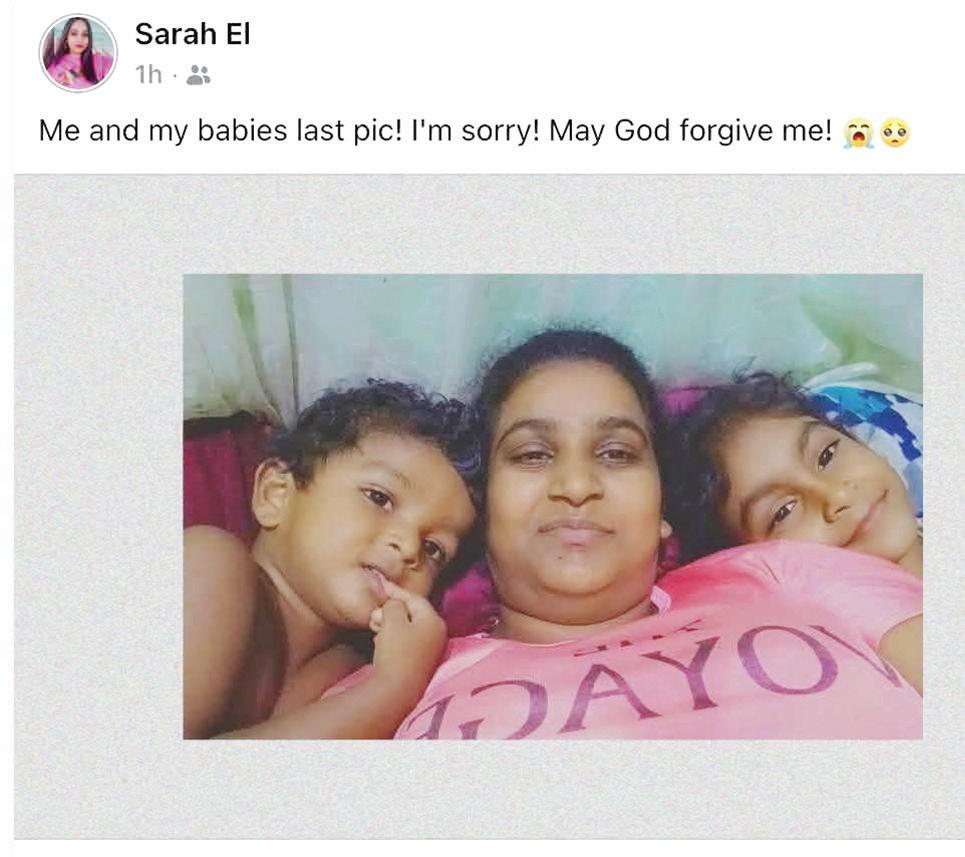
On Sunday morning prior to the incident, Shivpersaud posted a picture with herself and her two children on her
On Sunday morning prior to the incident, 26-year-old Sarah Shivpersaud posted a picture with herself and her two children on her Facebook page
Facebook page, where she wrote: “Me and my babies last pic! I’m sorry! May god forgive me!”
Up to press time on Sunday, the police were continuing the investigation.
Easter Messages
The PPP: The People’s Progressive Party extends warm Easter greetings to all Guyanese, especially our brothers and sisters within the Christian community.
Easter is one of the most sacred observances in Christianity, commemorating the resurrection
of Jesus Christ. It carries profound lessons of hope, renewal, humility, love, and respect for one another.
“This season reminds us that even in the face of adversity, there is always the promise of a brighter tomorrow through faith, perseverance, and unity.
Beyond its religious
The AFC: As Christians across Guyana and the World observe the sacred season of Easter, the Alliance For Change extends heartfelt greetings to all. Easter stands as a powerful symbol of renewal, sacrifice, hope, and triumph over adversity. It reminds us that even in the darkest of times, there is the promise of rebirth and the possibility of a better future. These en -
significance, Easter continues to be a unifying national celebration in Guyana. Families and communities across the country come together in a spirit of joy and togetherness, upholding cherished traditions such as kite flying, which symbolise freedom, hope, and aspiration.
As we celebrate, the
during truths resonate far beyond the Christian faith and speak to the shared human experience—making Easter a moment of reflection for all Guyanese, regardless of creed or background.
party encourages all citizens to practise safety, especially during outdoor activities, to ensure a joyful and incident-free holiday.
May this Easter inspire renewed faith, strengthen our bonds as a people, and guide us toward continued progress and harmony.
Happy Easter to all!
In our richly multicultural society, we are continually reminded that our strength lies in our diversity. The values embodied in Easter—compassion,
even deeper meaning. It invites us not only to reflect on personal renewal, but also on our collective journey as a nation. Over the past six decades, Guy-
forgiveness, resilience, and love—are universal principles that bind us together as one people and one nation.
This year, as we approach the 60th Anniversary of Guyana’s independence, Easter takes on
ana has faced trials and triumphs, challenges and opportunities. Like the message of Easter itself, our national story is one of perseverance and the enduring hope for a brighter tomorrow.
The Alliance For
Change believes that this is a time for renewed commitment—to unity, to justice, to inclusion, and to building a society in which every Guyanese can thrive.
As we look toward this important milestone in our nation’s history, let us recommit ourselves to the ideals of shared prosperity, mutual respect, and national pride.
May this Easter season inspire reflection in our hearts, peace in our homes, and a strengthened resolve to work together for the continued growth and development of our beloved Guyana.
The Alliance For Change wishes all Guyanese a peaceful, blessed, and hopeful Easter.
Easter Messages
GAWU: The Guyana Agricultural and General Workers Union (GAWU) extends warm Easter greetings to all Guyanese, particularly to our Christian brothers and sisters across the country.
Easter is one of the most sacred observances on the Christian calendar, marked by deep reverence and reflection on the crucifixion and resurrection of Jesus Christ. It stands as a powerful reminder of sacrifice, redemption, hope, and renewal—values
The ERC: The Ethnic Relations Commission (ERC) extends warm Easter greetings to the Christian community and to all Guyanese at home and in the Diaspora.
As we observe Easter 2026, we recognise this period as the cornerstone of the
that continue to resonate strongly within our society.
This holy occasion also follows the Lenten season, a period characterised by fasting, prayer, and spiritual cleansing. The conclusion of Lent invites believers and all citizens alike to reflect on personal growth, discipline, and the importance of compassion and humility in our daily lives.
In Guyana, Easter is also celebrated in a unique way through the vibrant tradition of kite flying. As kites soar high above, they sym-
teousness over sinfulness, and the enduring power of hope and sacrifice. In Guyana, Easter has evolved into more than a religious observance: it is a vibrant testament to our National Motto and, for decades, this holiday has served as a bridge between our diverse ethnic groups,
Christian faith, commemorating the resurrection of Jesus Christ. It is a profound story of the triumph of life over death, righ -
fostering a spirit of togetherness that is uniquely Guyanese. From the sea walls of Georgetown to the
bolise not only freedom and joy but also our collective aspirations as a people—to rise, to achieve, and to realise long-held dreams. This cherished custom reflects the enduring spirit of our nation and our shared determination to reach new heights.
GAWU encourages all Guyanese to use this period for sober reflection, fostering a renewed commitment to unity, mutual respect, and the common good. Let us embrace the ideals of national development, nation building, and social cohesion, recognising that
vannahs of the Rupununi, the sight of thousands of kites taking flight symbolises our collective aspirations and the freedom we enjoy as a unified people.
Whether through cross-community picnicking, the sharing of cross-buns, or the simple act of greeting friends and neighbours, Easter reminds us that our shared spaces are where our strongest bonds are forged.
We also take pride in seeing Guyanese of all backgrounds—African, East Indian, Indigenous, Portuguese, Chinese, European, and Mixed—participating in the festivities, reinforcing the respect and appreciation we hold for each other’s traditions.
The ERC encourages every citizen to use this season as an opportunity for personal and communal renewal. Let the resilience celebrated at Easter inspire us to continue building a nation where harmony prevails and where our diversity is seen as our greatest strength.
As the kites soar this weekend, let them represent our rising commitment to peace, tolerance, and mutual respect.
Happy Easter to all!
our strength lies in our collective efforts and shared purpose.
As we celebrate this Easter season, the union urges everyone to do so responsibly and safely, with consideration for family, community, and country.
GAWU extends its best wishes to all for a peaceful, enjoyable, and safe Easter holiday
open sa-
PSC laments Suriname’s Corentyne river fees as threat to trade, CSME, livelihoods
GUYANA’S Private Sector Commission (PSC) has issued a forceful denunciation of Suriname’s newly enforced fees on vessels traversing the Corentyne River, declaring the charges anti-trade, in violation of the
spirit of CARICOM’s regional integration framework, and directly harmful to the livelihoods of thousands of Guyanese citizens who depend on the waterway for their economic survival.
The PSC, in a strong-
ly worded statement released on April 4, condemned “in the strongest terms” the imposition of fees by the Government of Suriname on vessels using the Corentyne River.
The commission warned that the unilat-
eral charges will “disrupt trade, increase costs for operators, and place Guyanese businesses and communities at an immediate disadvantage.”
The controversy centres on fees that Surinamese authorities have
begun enforcing for vessels using the Corentyne River, which borders both countries, but falls under Suriname’s jurisdiction.
Business operators at Crabwood Creek report being required to pay approximately US$2,500 per trip under what Suriname classifies as a “pilot licence” requirement. On top of that, operators must engage Surinamese brokers at costs ranging between US$1,000 and US$1,500, with additional charges applied based on vessel tonnage.
The financial shock is being felt most acutely in river-dependent communities such as Orealla and Siparuta in Region Six (East Berbice-Corentyne), where economic activity is almost entirely tied to sand mining, loam extraction, and timber production.
“That will greatly affect my community because Orealla depends on sand, loam mining and timber… this is where the majority of our revenue comes from and we don’t want that economic activity to slow down,” said Stuart Peneux, an Orealla resident.
The Upper Corentyne Chamber of Commerce and Industry
(UCCCI) has warned of “catastrophic repercussions” for the local economy, noting that the added costs would inevitably be passed on to purchasers, rendering operations less competitive in the open market.
The PSC argued that Suriname’s actions go beyond a bilateral commercial dispute; they represent a fundamental breach of the ethos underpinning CARICOM and, more specifically, the CARICOM Single Market and Economy (CSME).
The CSME, established through the Revised Treaty of Chaguaramas in 2001, is built on the free movement of goods, services, capital, and people, with the explicit objective of removing fiscal, legal, and administrative barriers to trade, not creating new ones.
“These actions directly contradict the spirit of CARICOM and are fundamentally at odds with the principles of the CARICOM Single Market and Economy, which are intended to promote the free movement of goods, fair treatment, and the removal of barriers to regional trade,” the PSC stated.
The commission characterised the move as “regressive” and “dis-
Talent should be currency
- White-Griffith says, as gov’t ramps up investment in ‘orange’ economy
GUYANA’S push to develop its ‘orange’ economy is positioning creativity and talent as viable and sustainable career paths for young people navigating their future in the world’s evolving job market.
This was according to Chief Planning Officer at the Ministry of Education, Mischka White-Griffith, during an interview on the
According to White-Griffith, the foundation for this transformation already exists within Guyana’s education system.
“The groundwork was already there. It’s already happening,” she said.
Against this backdrop, she highlighted programmes within the Allied Arts Department, including sports, theatre and dra-
Starting Point podcast.
She said that the shift challenges long-held perceptions that artistic careers are unstable, while also creating new economic opportunities grounded in culture and innovation.
“Becoming an artist [sic] is not a dream deferred. It doesn’t mean that you will have to struggle,” she said.
White-Griffith related that advancements will be made to ensure that young people see careers in the arts as viable and economically sustainable ones.
She said: “And the ‘orange’ economy… is where a person’s talent now becomes their currency.”
She went on to add, “It gives a new direction, and more importantly, it will become financially stable for those persons who will venture into that economy.”
White-Griffith also un-
derscored the influence of educators in shaping how students and parents perceive these emerging opportunities.
“What the teacher says in the classroom… it becomes the reality for students,” she said.
She added that teachers’ endorsement can legitimise non-traditional career paths, boosting confidence among both students and their families.
“It adds credibility to it, and students are more confident, and parents are more confident to step out of traditional jobs into this new frontier,” White-Griffith said.
ma, along with technical training offered through the Carnegie School of Home Economics.
White-Griffith said:
“We have craft production… bringing the natural environment into a more economically sustainable artifact that represent[s] the Guyanese culture.”
The ‘orange’ economy, she noted, will serve to amplify these efforts, encouraging greater participation and expanding the scope of creative industries.
“It will allow students to dream outside of, I have to have an eight to four Monday to Friday,” she said.
Chief Planning Officer at the Ministry of Education, Mischka White-Griffith
PSC laments Suriname’s Corentyne...
ruptive to business certainty,” at a time when the Caribbean region should be deepening integration and building confidence in cross-border commerce.
The rebuke carries particular weight, given that CARICOM leaders had only recently reaffirmed their commitment to addressing non-tariff barriers hin -
dering the movement of goods across the region, making Suriname’s imposition of new charges a visible step in the opposite direction.
The PSC’s condemnation forms part of a growing chorus of alarm from Guyana’s business community. The Shipping Association of Guyana (SAG) warned that the proposed fees could have “adverse implica-
tions for trade and commerce” between the two countries, urging Surinamese authorities to refrain from introducing new charges until a mutually agreed solution is reached through formal negotiations.
The Georgetown Chamber of Commerce and Industry (GCCI) went further, calling on the Government of Guyana to halt all dis-
cussions on the development of the Corentyne River Bridge until the fees issue is permanently resolved.
“As a nation, Guyana must not continue to extend a hand of friendship without reciprocity,” the GCCI declared.
The GCCI also raised concerns about the broader bilateral relationship, highlighting ongoing challenges from what it described as “unfair and one-sided practices by Surinamese authorities” that have created obstacles for Guyanese businesses and fishermen, as well as the proliferation of counterfeit and illicit goods entering Guyana from Suriname.[
to “engage the Surinamese authorities with urgency, firmness, and absolute clarity,” insisting that the removal of the fees and the restoration of a “fair and predictable operating environment” must be the immediate objective.
While affirming that dialogue must remain the first pathway, the PSC issued an unmistakable warning: if the measures are not reversed, the Government of Guyana must be prepared to implement “proportionate and strategic responses” to defend Guyanese businesses, safeguard livelihoods, and restore balance to the trading relationship.
reciprocity is fundamental to fair trade, and where balance is not maintained, it inevitably invites proportionate responses,” the commission asserted.
The PSC framed the issue not as a commercial inconvenience, but as “a direct threat to enterprise, investment confidence, and the economic dignity of our people,” standing firmly with affected businesses, workers, and communities.
“A strong nation must stand up for its businesses, its workers, and its rightful place within the regional economy. On this matter, the PSC is unwavering,” the commission concluded. FROM PAGE 12
The commission urged state authorities
“The principle of
Motorcycle victory showcases China speed and youth power
A ZXMOTO motorcycle, ridden by Valentin Debise, clinched a landmark double victory on March 28 and 29 at the Portuguese round of the Superbike World Championship, overwhelmingly outperforming competitors from Ducati, Yamaha and other brands. It became the first Chinese motorcycle brand to win at this event, breaking the decades-long dominance of European, American and Japanese manufacturers. What roared down the high-speed track was not just a machine, but a force of development that keeps pushing boundaries and redefining limits. An absolute lead of nearly four seconds created a stunning moment for Chinese motorcycles, offering a vivid footnote of “China speed” in the new era.
This breakthrough reflects a leap in technological innovation from “0 to 1.” Chinese motorcycles were once labelled as “lowend” or “OEM.” Today, the Chinese-made motorcycle
shining on the international circuit demonstrates the shift from “Made in China” to “Created in China.”
Facing the “moat” of key technologies built by western companies, Chinese R&D teams chose not to bypass the challenge but to confront it head-on. The ZXMOTO team achieved independent breakthroughs in key areas such as engine efficiency and lightweight structures, pushing towards technological frontiers through constant trial and error and iterative optimisation. This victory not only reshapes the competitive landscape, but also vividly illustrates China’s advance toward high-end manufacturing.
This leap also relies on systematic support from “1 to 100.” As a true showcase of China’s high-end manufacturing strength, the victory of the ZXMOTO motorcycle is supported by the decades-long industrial ecosys-
tem of Chongqing, known as China’s “motorcycle capital.” Represented by Chongqing, China’s motorcycle industry clusters have developed a complete chain covering R&D design; core-component manufacturing; vehicle assembly and testing and validation. This highly coordinated industrial structure enables rapid response and continuous iteration across all links, significantly shortening innovation cycles and reducing trial-and-error costs. This virtuous cycle, where innovation generates industry and industry feeds back into innovation, has become a key driver of China’s climb up the value chain.
This victory also highlights the spirit of today’s Chinese youth: stepping forward, taking responsibility, and daring to pursue their dreams. “A name unknown to the general public. A disproportionate ambition.” As early as last October, an international motorsport website introduced the ZXMOTO as “the new Chinese bomb,”
predicting it would shake the global racing world. Driven by passion, ZXMOTO founder Zhang Xue pushed the limits of technological development and ultimately brought a homegrown motorcycle to the top of the world. The journey itself is powerful. It proves that dreams are meant to be pursued. “Because of courage, my life is more extraordinary.” As long as you dare to think big, act boldly, and stay persistent, you can realise both personal and social value amid the tides of the times.
This achievement once again underscores the resilient and tenacious national character of the Chinese people. The endurance to avoid seeking immediate results and the willingness to engage in repeated experimentation, combined with the courage to confront challenges head on, provide crucial spiritual support for the ongoing ascent of Chinese manufacturing.
An atmosphere that encourages innovation empowers young people to “strive
relentlessly for what they love.” Today, China places a greater emphasis on long-termism, offering more inclusivity and support to entrepreneurs. This characteristic of steadiness and ambition enables China to progress steadily in a complex and ever-changing international competitive landscape.
From a broader perspective, China’s high-speed rail network crosses mountains and rivers, the new energy industry is rapidly expanding its global presence, and highend equipment continues to achieve breakthroughs at elevated levels. The concept of “China speed” is evolving with deeper meanings. This represents not just an acceleration in the pace of development, but also a comprehensive enhancement of quality, efficiency, and structure. The leading position on the tracks shines like a beacon, illuminating the path for the advancement of Chinese manufacturing to higher levels, while inspiring greater enthusiasm for innovation
and hard work throughout society.
“Young people are the most dynamic and most creative group of our society, and should stand in the forefront of innovation and creation.” Today, a large number of young innovators and entrepreneurs are emerging in cutting-edge fields such as humanoid robots, commercial space, and the low-altitude economy, with the average age of teams such as Chang’e, Tianwen, Shenzhou, and Beidou being between 30 and 40. On the new journey of advancing Chinese modernisation, more young people are needed to engage in practice with a spirited and upward attitude, continuously overcoming challenges in key areas. The roar of Chinese motorcycles on European racetracks, carrying the fighting spirit and belief in innovation, will continue to resonate across broader horizons.
(Web editor: Zhong Wenxing, Liang Jun)
Sci-tech cluster, green development: Xiong’an offers glimpse into China’s ‘City of the Future’
(Xinhua) AT the Xiong’an Artificial Intelligence (AI) industrial park, blue signage panels line the walls, each bearing the name of a different AI startup. Offices sit just a door apart, and entrepreneurs often meet in the roadshow hall or over coffee in the shared lounge – casual encounters that frequently spark collaboration.
On April 1, 2017, China announced plans to establish the new area in north China’s Hebei Province, to relieve Beijing of functions non-essential to its role as the national capital and advance the coordinated development of the Beijing-Tianjin-Hebei region.
Over the past nine years, more than 400 branches of state-owned enterprises have set up operations in
Xiong’an, alongside over 200 companies in fields such as aerospace information, artificial intelligence, and digital technology.
This February, the State Council approved the upgrade of the Xiong’an hightech industrial development zone to a national-level zone, calling for deeper integration of sci-tech and industrial innovation while attracting high-end innovation resources from home and abroad.
“Xiong’an gives us not just policy support, but real, attentive service,” said Zhang Tianyang, co-founder and CEO of Stable AI. “We feel a genuine commitment to growing together. It’s the ideal place to start.”
INNOVATION
VITALITY, WARM SERVICES For Stable AI, a startup
established in Xiong’an in October 2024 by researchers from Tsinghua University in Beijing, the new area has provided the comprehensive support a young company needs.
“What startups need most is the first round of investment. The first 20 million yuan (about 2.9 million U.S. dollars) arrived in less than three months, during which we completed the entire process from initial contact to due diligence, valuation and payment in Xiong’an. The efficiency exceeded our expectations,” said Zhang.
“The AI industrial park is more than just office space. It’s an accelerator that supports companies through every stage, from incubation to growth and expansion,” noted Lu Hao, deputy general manager of China Xiong’an
Group City Development Company.
The park provides systematic support in services, application scenarios, nearly rent-free office space, lowcost computing, shared R&D platforms and a full-chain funding system.
“Since we moved in, the park has assigned staff to explain policies to us regularly – everything from housing to commuting,” said Zhu Yu, an employee at Stable AI. “We learned about residency and home-buying policies through these lectures. Some of my colleagues plan to buy houses and settle here.”
Unlike large language models, Stable AI’s large data model, LimiX, focuses on structured data like tables, time series and graphs. It analyzes causal relationships to deliver precise insights and
trend predictions with strong industry applications.
Since its landing, Xiong’an has helped the company connect with industrial partners. A local energy firm employed the model to optimize gas purchasing.
Using historical sales, heating data and weather information, the model predicts annual gas demand, helping the company control costs.
Forecast accuracy rose to 93 percent, compared with 76 percent achieved by human forecasters.
In just a year and a half, the company has grown from fewer than 10 employees to over 60. It has been involved in several smart city projects as the new area gradually opens up data flows to businesses, including a flood control system. Its model is now being tested for ap-
plication in more than 40 industrial scenarios.
“We will continue to advance the upgrade and iteration of LimiX, fully empowering the intelligent transformation of various industries,” Zhang added.
SMART CITY CULTIVATES FUTURE INDUSTRIES
In April 2021, China Satellite Network Group Co., Ltd. Became the first central SOE to establish its headquarters in Xiong’an. Since then, these relocated SOEs have attracted upstream and downstream companies, forming a vibrant science and technology innovation cluster in the new area.
“Xiong’an is building a smart city from scratch, which gives startups plenty of room to grow,” said Li
Sci-tech cluster, green development...
FROM PAGE 16
Qiang, founder of Huaqing Zhiyan, an AI agent company in Xiong’an. “There are also many large SOEs relocated from Beijing. They anchor the industrial cluster. Elsewhere, it would be nearly impossible for a startup like ours to partner with them.”
Huaqing Zhiyan’s AI agents are already being used in projects involving China Satellite Network, including satellite-based farmland imaging, crop monitoring and agricultural insurance assessment.
As this smart city takes shape and more researchers move in, flexible computing power has become a growing need.
“Traditional computing services are usually sold on a monthly subscription basis, which makes it hard to meet flexible demand,” Li explained. “But our AI agents are connected to a computing dispatch platform. Even a researcher who only needs a small amount of computing power can use it on demand, and pay only for what they use and stop anytime.”
This example shows that as Xiong’an advances towards constructing a high-standard smart city, and
generating significant opportunities for AI and other future industries, innovators are stepping forward to offer technical support that facilitates researchers relocating to the city, thereby fostering a virtuous cycle of growth and development.
Since arriving in Xiong’an in early 2025, Huaqing Zhiyan has seen rapid growth. Its contract value rose from 3 to 4 million yuan when it first set up in July 2024 to 26 million yuan by the end of 2025, with more than one-third of that coming from local projects in Xiong’an.
Li is confident about further growth and is already working on the company’s next technological step.
“As people use AI agents for more tasks, data security will become increasingly important,” he said. “That’s why we’re partnering with our neighbour tech company. In the future, we plan to integrate encryption modules into agent decision-making, ensuring tasks are processed securely and results are safely returned, providing full protection for users’ data and information.”
GREEN DEVELOPMENT IMPROVES
LIVELIHOODS
Since its establishment, Xiong’an has prioritised ecology and green development, laying a solid foundation for an eco-friendly future city. Improved ecological conditions have also elevated local villagers’ quality of life.
In Mapu Village, near Baiyangdian Lake, clear water, reeds and trees form a pleasant landscape. Dozens of RVs are parked in the woods. Liu Liqing, 56, grows morel mushrooms in greenhouses and enjoys leisure time by the village pond.
“In the past, it was a fetid, stagnant pond teeming with mosquitoes. People stayed away from it,” Liu recalled.
Since 2019, Xiong’an has embarked on a comprehensive initiative to treat rural sewage, garbage, and toilet waste in the vicinity of Baiyangdian Lake. Eightynine sewage-treatment stations were built in 78 villages, purifying domestic wastewater to meet Grade IV standards suitable for industrial and recreational applications. The facilities in Mapu Village alone cater to the needs of over 10,000 residents, providing 400 to
500 tonnes of purified water used daily for irrigation of morels, tomatoes and strawberries. The once-malodorous pond has become a clean waterscape within an ecological park.
Better ecology has boosted incomes. Liu Chuanghui, village Party secretary, said villagers once grew corn on limited land with an annual per capita income of around 1,000 yuan, and now the village runs a morel planting base and an RV campsite.
“Tourists come here for fishing, barbecues and RV stays,” Liu said. The village earns 230,000 yuan annually from woodland leasing. The morel project brings villagers 14,000 yuan per worker each growing season, with expected sales of 20,000 to 30,000 yuan per mu (about 0.067 hectares) in the future.
With rising collective income, the village has enhanced subsidies for medical insurance, built a football field, and opened a free canteen for villagers aged 75 and above. “Since Xiong’an New Area was established, our environment and servi ces have kept improving,” Liu said. (Web editor: Zhang Kaiwei, Liang Jun)
22-year-old cattle farmer steadily expanding herd with confidence, innovation
THERE is a particular kind of quiet confidence that comes not from books or boardrooms, but from years of early mornings, muddy boots, and watching life grow under your care.
At 22, Shakeem McCalmon of Bel Air Village, West Coast Berbice, carries that confidence like a second skin.
While most young men his age are still figuring out who they want to be, Shakeem already knows. He is a cattle farmer, and he would not have it any other way.
Shakeem’s education in livestock began
long before any formal training. Growing up, he spent his days watching his father, Relvon McCalmon, tend to cows with a patience and precision that left a lasting impression.
There were no textbooks, no classrooms, just a boy, his father, and the rhythms of farm life.
“Having my father’s support really encouraged me to buy more cows,” Shakeem recalled, noting: “I saved, kept buying, and he also funded me in purchasing more. He owned 80 percent of the farm at one point, and I am grateful
for that push and motivation.”
When he had finished high school, Shakeem made a choice that surprised many around him.
With $160,000 saved from construction work, money earned by the sweat of his hands, he bought his first cow. Not as an investment. Not as
What started as affection gradually became ambition. Encouraged by his father, who contributed animals from his own herd and stood
a herd of approximately 60 cattle, primarily Brahman and Holstein crosses, on land he has learned to work, protect, and stretch.
Rather than chasing a city job or an uncertain career, he turned back to the land he had grown up loving.
a business strategy. Simply as a pet. That single animal would change the course of his life.
as both financial backer and moral compass, Shakeem’s modest beginning expanded steadily.
Today, he manages
At its peak, the herd numbered 90 head. But farming, as Shakeem has come to understand, does not reward complacency.
The floods of 2021, devastating to many, briefly created lush grazing conditions that worked in his favour. Then came the dry season of 2024, which was far less forgiving.
Pasture quality declined sharply, and herd numbers followed. Yet Shakeem did not give up. He adapted.
FIGHTING FOR EVERY ACRE
Perhaps the most persistent challenge facing young farmers like Shakeem is one that rarely makes headlines-- land. The communal pastures that once sustained livestock farmers across Region Five are slowly disappearing, swallowed by rice cultivation and the creeping expansion of housing developments.
Where cattle once grazed freely, fences and paddy fields now stand. For Shakeem, this is not an abstract policy prob-
Some of the cows from Shakeem McCalmon’s herd
22-year-old...
22-year-old
FROM PAGE 20
lem. It is a daily reality. His response has been practical and creative: he splits his herd between semi-intensive feeding near his home and rotational grazing on backlands when conditions allow.
It is not an ideal system, but it is a working one.
SCIENCE MEETS TRADITION
What sets Shakeem apart from many of his peers is his willingness to embrace new knowledge without abandoning old wisdom.
Through the Guyana Livestock Development Authority’s (GLDA) national artificial insemination programme, he has introduced superior genetics, including Girolando, Brown Swiss, and Beefmaster breeds into his herd, improving both milk yield and animal quality.
“I am thankful to Mr Mahase, GLDA’s Region Five AI technician, and the entire extension team for their support. I am proud to say that this system works for me,” he said with quiet pride. He is equally appreciative of the broader support network around him. Whether it is a disease-management workshop, a biosecurity training session, or a phone call to a GLDA veterinary officer, Shakeem treats every resource as an opportunity to grow.
His recent participation in GLDA’s farmer-sensitisation programme on Bovine Tuberculosis and Bovine Brucellosis has deepened his understanding of herd health.
“I am appreciative of the blended approach of incorporating the traditional knowledge I learned from my father and the constant training offered by GLDA,” he said.
The young farmer added: “These are helping me to develop better-quality animals and manage my livestock like a real business.”
Shakeem still picks up part-time construction work to supplement his income, but for the past seven months, he has managed the farm entirely on his own.
He speaks about the future, fenced land, better market access, improved herd genetics, and eventually export markets, not as distant dreams, but as the next logical steps in a plan already in motion.
The young farmer is confident that Guyana’s evolving agricultural infrastructure, including the new a battoir at Onverwagt, will translate into better prices for farmers like himself.
He believes, firmly, that the livestock industry is not a relic of the past, but a genuine and rewarding path for young people willing to put in the work.
Shakeem McCalmon
Port Mourant Easter Cup horse race rescheduled to April 26
DUE to heavy rainfall across the ancient county of Berbice, the Port Mourant Turf Club Easter Cup horse race is postponed to Sunday April 26.
They were also engagements to host the race on April 12, but a final de-
cision was made for April 26.
The organisers explored all possible options to host the race, but the weather did not allow such.
The event was also moved from Port Mourant to the Kennard Memorial Turf Club in an attempt to save the race day; and the date was shifted for Easter Sunday.
However, despite these efforts, the persistent rainfall continued without relief, preventing the track from drying sufficiently to host the event safely at both tracks.
According to organisers, the safety of horses and jockeys remains paramount, along with ensuring a comfortable and enjoyable expe-
rience for our spectators.
“We sincerely apologise for any inconvenience caused and thank you for your understanding and continued support,” the organisers said.
A total of 11 races, including the jockey dash, is on the events card.
This next race day is of great importance as it marks the second nomination day for the Guyana Cup, which is slated for August 23 at a venue to be announced.
According to the provisional programme for the Easter Cup, horses will run at approximately one mile in the feature race and the total purse for the race is $4 million.
CRICKET QUIZ CORNER
(Sunday April 05, 2026) CUMMINGS ELECTRICAL COMPANY LTD-83 Garnett Street, Georgetown (Tel:225-6158) Answers to yesterday’s quiz:
(1) David Murray-9 (vs AUST, MCG, 1981) & Courtney Browne-9 (vs ENG, Nottingham, 1995) 2) Deryck Murray-24 dismissals (22/2)-vs ENG (in ENG), 1963 Today’s Quiz: (1) Who are the defending IPL Champions? (2) Which team lost the IPL 2025 final? Answers in tomorrow’s issue
ENGLISH RACING TIPS
PLUMPTON
09:00hrs Local Derby
09:35hrs Edwardstone
10:00hrs Loriko
10:45hrs Minella Jury
11:25hrs Sea Invasion
11:55hrs Yasmina
12:30hrs Kamile Au Kanada KEMPTON
08:45hrs Creative Queen
08:20hrs Guesstimate
09:55hrs Gethin
10:30hrs Mariner
11:05hrs Musical Angel
11:40hrs Final Night
12:15hrs Berry Clever
12:50hrs Mio Amico
WOLVERHAMPTON
08:55hrs The Ubermensch
09:30hrs Pershaada
10:05hrs Trust No One
10:40hrs Recency Bias
11:15hrs Kameel
11:50hrs Von krolock
12:25hrs Mount Ruapehu
12:55hrs Three On Thursday IRISH RACING TIPS
FAIRYHOUSE
09:05hrs Saveforarainyday
09:40hrs Majolique
10:15hrs Grann's Boy
10:50hrs Kawaboomga
11:20hrs Found A Fifty
12:00hrs Goraibhmaithagat
12:40hrs Ayiko
13:10hrs Charismatic Kid SOUTH AFRICA RACING TIPS
KENILWORTH
08:15hrs Autumn Rush
08:50hrs Pinot Grigio
09:25hrs Noble Hero
10:00hrs Stormwatch
10:35hrs Legal Counsel 11:10hrs Street Outlaw
RACING TIPS
Sponsorship needed to host Breakout League, says Shallow
CMC – The cashstrapped Cricket West Indies (CWI) has admitted that this year’s Breakout T20 League will only take place if it attracts sponsorship.
President of CWI, Dr Kishore Shallow said while last year’s inaugural tournament was a success, the regional body was not in a position financially to host the 2026 edition on its own.
Earlier this year, CWI said the tournament had been put on pause due to a congested cricket cal-
endar, citing the need to prioritise preparations for both the ICC Under-19 and senior men’s T20 World Cups.
However, speaking during a recent CWI press conference, Shallow said there was a possibility that the Breakout League – a tournament designed to unearth cricketing talent in the region by catering to players under the age of 30 with limited professional experience –might be scrapped this year.
“Earlier in the year we were forced to reschedule it…and we thought of cancelling it altogether for this year, but we decided to explore that decision and explore the option of having it.
“Of course we are open to exploring partnerships. If we find someone in the corporate space, whether in the region or internationally, who would be willing to meet us halfway to host that tournament, because we understand how critical it is to host
the Breakout League to expose our young talent,” Shallow said.
“So, we’re still exploring those opportunities. Hopefully we find a partner, but in the absence of that it will be
difficult to have it this year. What we have also explored and discussed is that it may be a case of tactically hosting the Breakout League every other year or so.
“But we are really
exploring the possibility, talking to key partners like governments to see how possible it is to host this Breakout League later this year, but if not, then next year,” Shallow added.
RCB defeat Chennai thanks to David innings
(ESPNCRICINFO) -
Defending champions Royal Challengers Bangalore razed Chennai Super Kings' attack and the record books, in front of their beloved fans at the Chinnaswamy Stadium.
After being on 91 for 1 in ten overs, RCB nearly tripled that in the last ten, pushing the limits of T20 power-hitting. RCB's 250 for 3 was their third-highest total in the IPL and the highest ever by any team against CSK in the league. In response, CSK lost their top three inside three overs and eventually slid to their third successive defeat in IPL 2026.
The Chinnaswamy surface was tacky in the early exchanges, according to Devdutt Padikkal who scored 50 off 29 balls, and the outfield was unusually slow, with quite a few strong hits plugging in the outfield. While the surface settled later in the innings, the
outfield remained slow.
Tim David and Rajat Patidar didn't feel the need to hit the ball into the outfield, especially when they had the power to keep launching the ball into the night sky.
David and Patidar faced 44 balls between them and sent 14 of
those disappearing over the boundary. The entire CSK batting line-up could manage only 11 sixes.
The calm
After being asked to bat, RCB needed 20 balls for the first boundary of the day. Both Matt Henry and Khaleel Ahmed hit
hard lengths and made scoring hard for Phil Salt and Virat Kohli. It was Anshul Kamboj who provided CSK with the opening breakthrough when he had Kohli caught by Shivam Dube at long-on for 28 off 18 balls. Dube redeemed himself after dropping
Kohli on 7 at mid-on off Khaleel Ahmed in the third over.
With the ball not coming onto the bat, Salt laboured to 15 off 16 balls. A brace of swatted fours off Kamboj then freed him up, but Shivam Dube, bowling for the first time in this season, struck with his third ball to stop Salt on 46 off 30 balls with a cutter that was banged into the pitch.
Padikkal, who had dashed out the blocks on the opening day of the season, wasn't allowed to do so on this track. He started slowly as wellhe was on 17 off 16 balls at one point - but then put then put the pedal to the floor and converted it into a 28-ball half-century. It was his second successive fifty, but it certainly wasn't the story of the day.
The storm
David and Patidar came together at 151 for 3 at the start of the
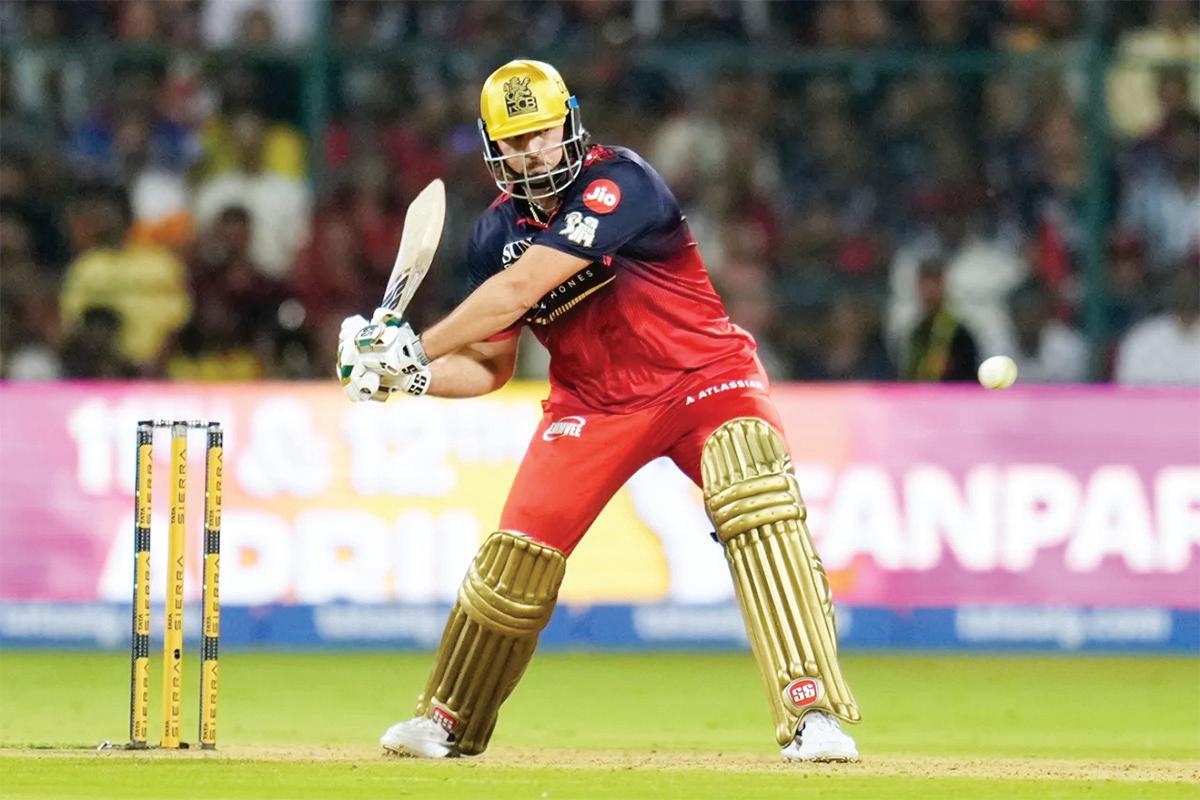
15th over after Overton had knocked Padikkal over by cranking it up to 148kph. The carnage created by David and Patidar turned out to be the story of the day. With only 35 balls left in the innings, David took strike for 25 of those and crashed an unbeaten 70. Only one other batter has scored as many or more without facing a ball in the first 14 overs of a T20 innings (where ball-by-ball data is available).
David was particularly brutal on Overton, taking him for a sequence 6,4,6,6,6 in the 19th over that yielded 30 runs. All of those hits had the Chinnaswamy in a frenzy. One of those even had Kohli off his seat in the dressing room and applauding David. The last of that sequence was a 106-metre monster six that disappeared out of the ground.
The Trinidad Tobago Legions won the inaugural Breakout T20 League in 2025
Tim David smashed an unbeaten 70 off 25 balls • Apr 05, 2026•Associated Press
GMR&SC adds female class to April 11 Dexterity and Auto Expo
THE Guyana Motor Racing and Sports Club (GMR&SC) has added a dedicated female class for its upcoming Dexterity and Auto Expo, with registration ongoing.
The event, scheduled for April 11 at the National Track and Field Centre parking lot in Leonora, is already attracting growing interest from competitors and enthusiasts.
Organisers say the addition of a female category represents a meaningful step
towards ensuring that more women feel welcomed and encouraged to compete.
A club spokesperson noted that fostering female participation is a key priority for the organisation.
“Motorsport has traditionally been male dominated, but we want to change that narrative. It’s important for us to create opportunities where women feel comfortable entering and competing, and the female class is one of the ways we’re doing that.”
The spokesperson added that the initiative aligns with the club’s wider vision of making motorsport more accessible to a diverse audience.
“Inclusivity is critical to the growth of the sport. We want to ensure that anyone with an interest—regardless of gender—has a pathway to get involved.”
Sponsored by ENET, GUYOIL, and Castrol, the Dexterity and Auto Expo will combine competitive driving with fan engage -
ment activities. Registration is currently open at the club’s Thomas Lands office and online, with organisers encouraging early signups as interest continues to build.
Unlike traditional racing formats that emphasise speed and engine power, the dexterity competition will focus on precision, control, and technical skill.
Participants will be required to navigate a series of obstacle courses designed to test maneuverability and
accuracy.
Organisers indicated that six to seven course configurations are being considered, with competitors aiming to complete each in the fastest possible time.
Classes will follow a structure similar to endurance racing categories—0–1500cc, 1501cc–1600cc, 1601cc–2000cc, and unlimited—with separate divisions for cars and motorcycles, in addition to the newly introduced female class.
Beyond the dexterity competition, the event will feature a range of motorsport attractions, including racing challenges, motorcycle stunt riding, competitive go- karting, and drifting exhibitions.
An auto expo will follow the competition, providing patrons with an opportunity to interact with drivers and view a variety of vehicles up close.
Admission is set at $2,000, with gates opening at 16:00hrs.
Kevin Sinclair Responds to GCB claims
GUYANA and West
Indies player Kevin Sinclair made a statement responding to the claims by officials of the Guyana Cricket Board and the Guyana Harpy Eagles regarding his alleged “disruptive behaviour”.
upbringing, I am equally thankful that I was able to rise above those circumstances.
faced significant setbacks.
In 2024, during a net session in Trinidad, I was subjected to a series of dangerous beamers from a particular player, despite still recovering from a broken hand sustained on a previous tour in England.
should have been among the happiest moments of my life.
STATEMENT BY KEVIN
SINCLAIR
:
“My name is Kevin Sinclair, and this statement is true and represents the truth.
I come from very humble beginnings, where nothing was guaranteed and even the basic necessity of food was sometimes a daily struggle.
I am deeply grateful to my parents and my beloved grandfather, who, despite immense hardship, ensured that I was cared for and guided.
I grew up in what is commonly referred to as “Cow Dam,” an environment where challenges such as teenage pregnancy, school dropouts, and crime were prevalent.
While I value the lessons learned from that
Cricket became my pathway. Through the guidance and dedication of my grandfather, I committed myself to the sport with discipline and purpose. Cricket is not just a game to me—it is my passion, my identity, and the foundation of my life.
Every run I score and every wicket I take carries deep meaning. My passion sometimes shows in my emotions on the field, but it comes from a place of love, commitment, and respect for the game.
I have always represented my country and the West Indies with pride, passion, and dignity. In every training session and practice, I challenge myself and create a highly competitive environment, striving to be the best at my craft.
I now realize that this attitude has sometimes been misinterpreted, when my goal has only ever been excellence.
In recent times, I have
I reported the incident, but I felt that no satisfactory action was taken.
Frustrated and feeling unprotected, I reacted harshly—something I acknowledge I could have handled better.
At the same time, I was dealing with deep personal grief, having just lost my brother in a tragic accident in Berbice.
Rumours circulated about him being gay, and I was subjected to malicious and deeply hurtful taunts regarding my brother. That moment pushed me to a breaking point, and I reacted in a way I regret.
All of this occurred at a time when I had just become a father to my baby girl and was preparing to move into my new home—milestones that
Following these events, my central contract with the Guyana Cricket Board was withdrawn, and I was subsequently excluded from all Guyana teams. I was labelled as “indisciplined,” a characterization I strongly disagree with.
I do not believe my full circumstances were properly heard or understood. While I take responsibilit y for my reaction, I maintain that it came from a place of emotional distress, passion, and a desire to defend myself—not from misconduct.
During my career, I have never been disrespectful to management and have always supported and valued my teammates.
In response to public narratives, I wish to clarify that in 2024, at the request of the West Indies Players Association (WIPA), I remained in Trinidad while the matter was being addressed.
During that time, I continued preparing for my scheduled tour to Pakistan with the West Indies team.
After the withdrawal of my contract and being sidelined from selection, I recognized the need to reset and grow. I took time away from the game, travelled abroad, and sought professional help. I returned refreshed, focused, and ready to contribute positively. However, despite these efforts, I was again overlooked during regional team selections.
I would also like to clarify a recent incident that I believe has been misinterpret ed. During a trial match at Everest Cricket Club, I requested permission from the captain to briefly leave the field due to illness—diarrhoea—and suggested that my teammate, Anthony Adams, continue bowling in my absence. Upon returning shortly after, I was denied the opportunity to resume bowling and was told that I had “walked off the field,”
which does not accurately reflect the situation. I was again forced to leave due to the same illness, and feeling physically unwell, later changed into civilian clothing near the end of the innings at the fall of the ninth wicket. These are not isolated incidents. On multiple occasions, I have felt that my voice has not been heard and that I have been unfairly labelled without full consideration of the context.
I remain fully committed to the sport I love. I am willing to learn, grow, and improve, and I accept that there are moments I could have handled better. However, I also believe in fairness, accountability, and being given a genuine opportunity to represent myself both on and off the field.
Cricket is everything to me—it is not just what I do, it is who I am. I will continue to pursue it with passion, integrity, and determination, no matter the obstacles in my path.”
GCB’s Head Selector clears the air on omission of GHE players
Sinclair was not picked for disciplinary reasons
By Sean Devers
CHAIRMAN of the Guyana Cricket Board (GCB) Selectors, Ramnaresh Sarwan has cleared the air on several non-selectees of the Guyana Harpy Eagles (GHE) 2026 squad.
Speaking on behalf of Rabindra Debideen (Essequibo), Julian Moore (Berbice), and Surendra Hiralall (Demerara), Sarwan cleared the air on the omission of Kevin Sinclair, Ricardo Ali-Mohammed, Ashmead Nedd, and Mavindra Dindyal from Guyana Harpy Eagles.
The chief selector was speaking at a press conference on Saturday at the Georgetown Cricket Club (GCC).
Those sitting on the panel included Angelica Holder (Fitness Trainer), Tevin Imlach (Guyana Harpy Eagles Captain), Ryan Hercules (GHE Head Coach), Sarwan, and Anthony D’Andrade (GCB Cricket Operations Officer).
Guyana will face the Windward Islands in three matches in Antigua from April 12 in a reduced Regional First-Class tournament.
The non-selection of 26-year-old Sinclair has been a hot topic on social media.
The Guyana and West Indies all-rounder has played four Tests and seven ODIs, taking 92 wickets from 38 first-class matches and has
scored a century and 12 fifties at this level.
Sarwan emphasised that Sinclair’s cricketing prowess was never in question.
Informing that indiscipline was the reason why he was not selected.
“I think it is very important for him to understand what we are trying to do for our group. I don’t think it is viable for him to be disobedient to the captain, disrespectful to the coach and abuse his teammates verbally.
Those are the things Kevin has to change… we have spoken to him about these things. Kevin is fully aware of these things and people around Kevin knows about this” Sarwan said.
Sarwan, a former West Indies Captain, explained that Sinclair was not selected because of a series of issues.
“Since 2024, we have had disciplinary issues with Kevin. His most recent actions at Everest in the second practice match was the reason he was not selected. He walked off the field and was disobedient towards the captain,” explained Sarwan
Imlach disclosed that Sinclair claimed he had to go to the washroom, noting that it is not unusual for players to want to use the washroom.
“We had to get about three wickets when he went off and changed into his casual clothes and went into the stand. It looked as if he did
53rd CARIFTA games…
not plan to come back on the field” the West Indies keeper/ batter revealed.
D’Andrade provided a background of Sinclair’s prominent indiscretions.
“The first official incident occurred in 2024 in the Super50 in Trinidad. The GCB received a report from the head coach on Kevin’s disruptive behaviour on and off the field.
The management of that team would have arranged a meeting during that tour. Kevin failed to turn up for that meeting.
The GCB also invited him after replacing him in the squad two days after he was scheduled to return to Guyana. He did not return to Guyana but rather booked a room at the same hotel that the Guyana team were staying. He missed the flight and the meeting.
He was subsequently picked for the West Indies team, but we managed to convene a meeting with Kevin, the Chairman and the CEO of the GCB to discuss some of those issues that would have transpired.
Kevin was selected for the breakout league in January. So this was not a case of him being victimised. Following that meeting, the GCB was comfortable with the progress Kevin had made. He admitted to all of his misdemeanours.
We (GCB) were comfortable enough to pick him for the Breakout League… unfortunately, that tournament was cancelled.
In February, we had another report from the head coach of him disrupting the training sessions…and quite recently, during the practice,” D’Andrade explained.
Asked what the GCB is doing to help players like Sinclair, D’Andrade informed that the GCB had reached out to the Ministry of Culture, Youth and Sport to have a sports psychologist involved.
“Since then, we have reached out to a sports psychologist in England, but that fell through.
We are still looking because we recognise at the GCB that a sports psychologist plays a major part in professional sport. Plus all the social issues and other issues athletes face, we want to equip them to be better professionals as they represent Guyana and the West Indies,” D’Andrade posited.
Looking at the other notable omissions including Ali-Mohammed, Nedd and Dindyal, the head coach said he has not heard from Nedd
since September when he joined the camps for two training sessions. It was also revealed that a second opportunity for those who had failed to reach 40 in the beep test or who had not gotten to do it, was conducted on Saturday morning.
Six players were set to do the beep test. Dindyal (who reached 30 on his first try) failed to show up, reportedly ill. A replacement will be announced shortly.
Of the five (Shamar Joseph, Gudakesh Motie, Tagenarine Chanderpaul, and Ali-Mohammed (who reached 31 in his first try) Ali-Mohammed was the only one to fail.
Joseph is likely to play from the second round since he is on mandatory rest from CWI.
Decent showing for Guyanese on day two
- Solomon, Roberts and Anderson into 800 final
Guyana emerged empty-handed but still on the hunt after day two of the CARIFTA Games being held at the Kirani James Athletics Stadium in St Georges, Grenada.
Following their fast start with a 5-medal rout on Day 1, the Guyanese were unable to secure
anymore hardware on the second day.
The Under 17 4X100 relay side finished sixth overall in the final with a time of 43.25s; they earlier finished fourth in the heat with a time of 40.91
The team was made up of Omari Welch, Malique Kendall, Jarel Campbell and Jumeel
Cornette.
In the U20 boys' 4X100 relay, after grabbing second in their heat to qualify for the final, they also finished 6th place with Trinidad and Tobago winning in 39.64 seconds.
Guyana will also have another chance at a gold medal on Mon -
day evening after Olivia Solomon stormed her way into the U17 girls' 800-metre final with a scorching time of 2 minutes 13.39 seconds; she was the fastest qualifier.
The boy's U17 800-metre race saw Bryson Anderson finishing in 2 minutes 00.70 seconds to advance to the
finals, while his teammate Jermaine Shepherd finished in 2 minutes 01.24 seconds barely missing the mark.
Jevon Roberts will also seek gold on Monday after a superb run in the U20 boys' 800 metre after winning his heat in 1 minute 53.73 seconds; it was the second fastest
time going to the finals.
In the other heat, Kaidon Persaud finished in 1 minute 57.57 seconds, which was not enough to qualify further.
In the boys' U17 shot put, Nathaniel Samaroo, with a best put of 13.32 metres, finished in U17 category fifth place.
(from left) Angelica Holder, Tevin Imlach, Ryan Hercules, Ramnaresh Sarwan, Anthony D’Andrade (Sean Devers photo)
Port Mourant Easter Cup horse race rescheduled to April 26