

nationwide programme to benefit more than 5,100 rice farmers as gov’t delivers on cash grant promise to support



By Indrawattie Natram
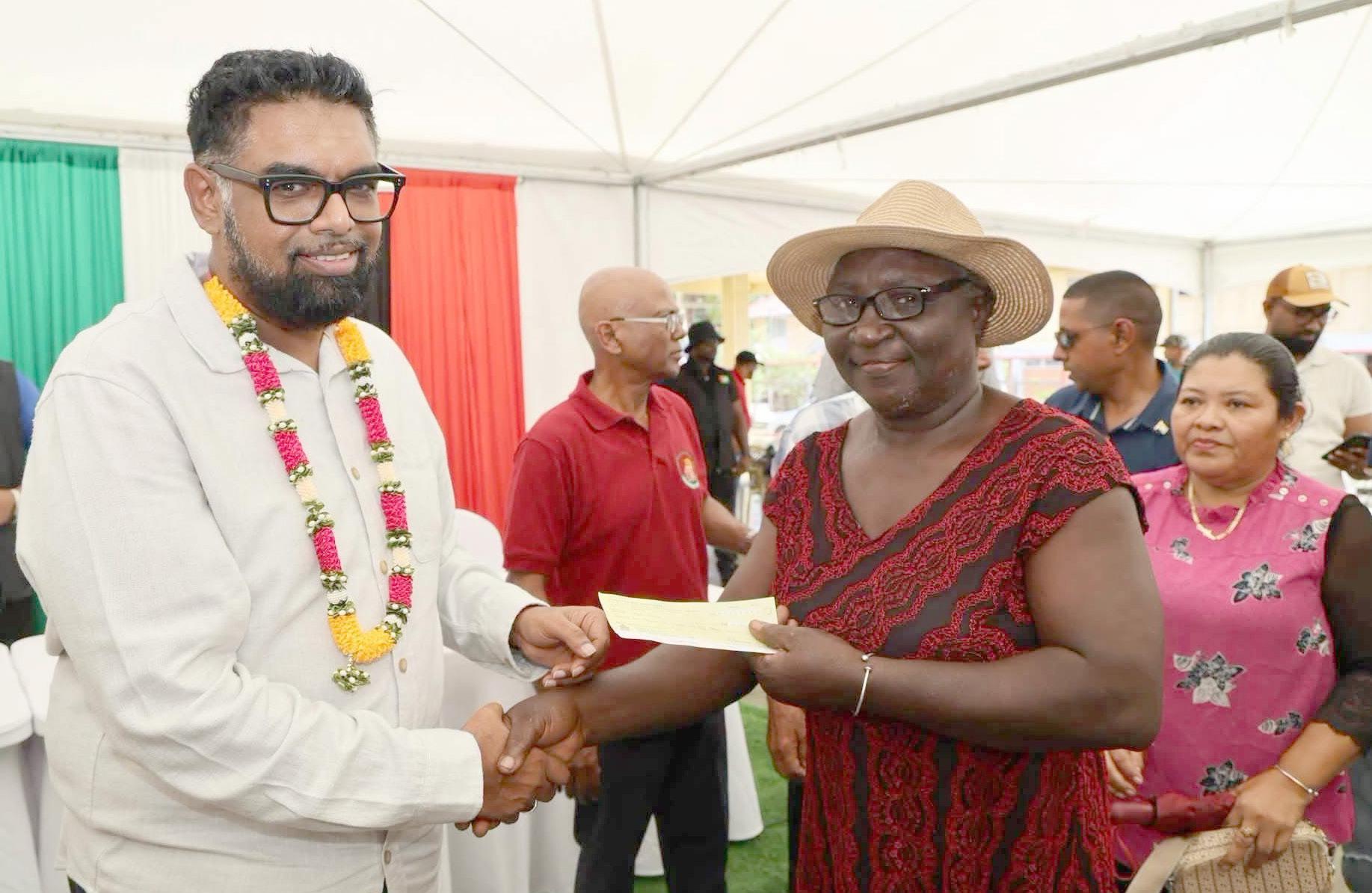
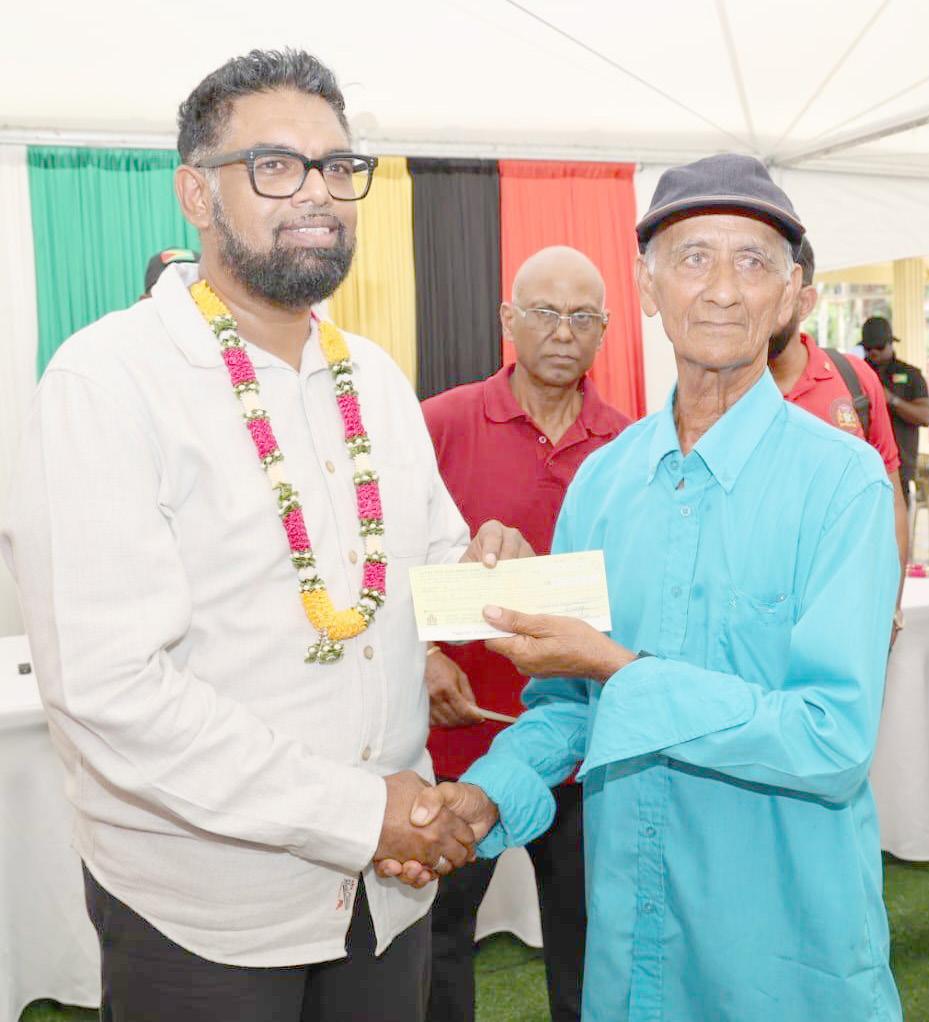
MORE than $403 million was distributed to rice farmers in Region Two (Pomeroon-Supenaam) on Saturday as the Government commenced its nationwide cash grant programme, fulfilling a commitment made earlier this year to support the rice industry amid rising production costs and global market challenges.
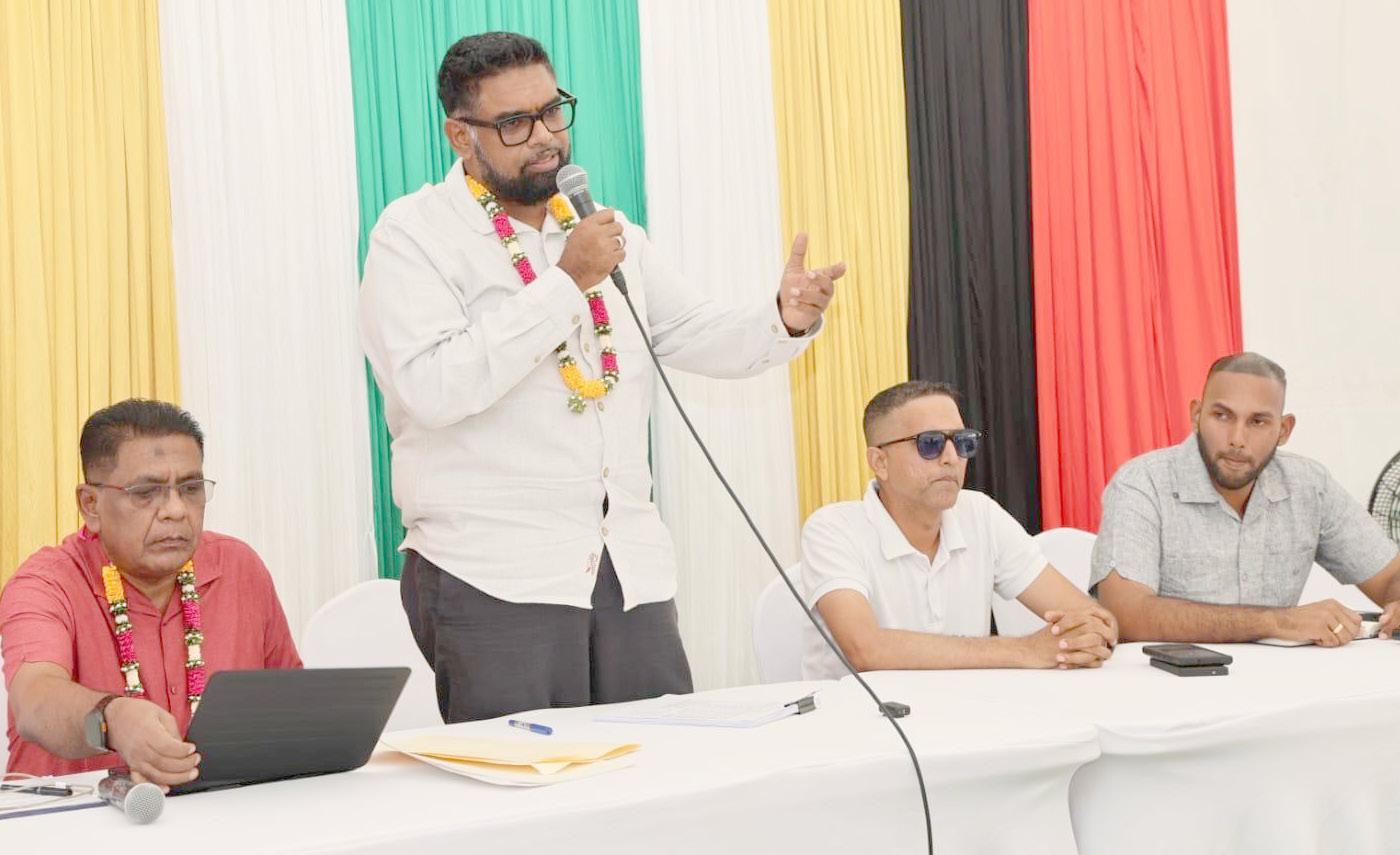
The distribution exercise, held at the Anna Regina Town Council compound, was led by His Excellency President Dr Irfaan Ali and Minister of Agriculture, Zulfikar Mustapha, on Saturday.
It marked the start of the Government’s cash relief initiative for rice farmers, first announced during consultations with farmers at the Arthur Chung Conference Centre in April.
Under the programme, farmers cultivating 50 acres or less receive $15,000 per acre, while those cultivating more than 50 acres receive $10,000 per acre. The nationwide initiative will benefit more than 5,100 rice farmers cultivating over 235,000 acres across Guyana.
Addressing hundreds of farmers, President Ali said the distribution was another example of the People’s Progressive Party/Civic (PPP/C) Government honouring its commitments to the agricultural community.
“This is a government you can trust. This is a government that continues to work alongside you. This is a government that has demonstrated respect for you,” President Ali told farmers.
The President highlighted several measures implemented since 2020 to reduce production costs and improve profitability for farmers, including the removal of VAT on electricity and water, the abolition

of tolls at the Demerara Harbour Bridge, transportation support for paddy, expanded ferry services to the Essequibo Coast, and major investments in drainage and irrigation infrastructure.
He also announced additional initiatives aimed at strengthening the rice industry, including the rehabilitation of farm ac -
cess dams into all-weather roads, the expansion of drainage and irrigation systems, the opening of new agricultural lands in Region Two, and the construction of a modern rice drying and storage facility.
“Whatever agriculture initiative you have, this Government will back those initiatives,” the Presi-
dent assured.
President Ali also revealed that the Government is exploring the use of drone technology to assist farmers with fertiliser application and crop spraying, particularly to address labour shortages and reduce production costs.
He further encouraged farmers to diversify into
crops such as onions and livestock production, assuring them that the Government is prepared to provide support to expand agricultural opportunities and increase incomes.
Minister Mustapha said the distribution represented much more than financial assistance.
“Today is more than
just a distribution of cash grants. Today is about trust, accountability and, more importantly, about keeping a promise made to the people of our country,” he stated.
He recalled that during consultations in April, President Ali listened directly to farmers’ concerns regarding increasing production costs and uncertainties in the global rice market before committing to the cash grant.
“He did not make excuses. He did not make promises for another day. He gave his commitment that the Government would stand with the rice farmers,” Minister Mustapha said.
The Agriculture Minister noted that Guyana’s agriculture sector has experienced significant growth since 2020, with rice production increasing from approximately 550,000 tonnes in 2020 to 825,000 tonnes last year. He added that the first rice crop of 2026 has already yielded about 414,000 tonnes, positioning the industry for another strong production year.
Mustapha said the Government has continued supporting rice farmers through fertiliser assistance, improved market access, infrastructure upgrades and strengthening the Guyana Rice Development Board.
“This assistance recognises the important contribution of our rice farmers and helps cushion the impact of rising production costs,” he said.
He reaffirmed the Government’s commitment to continued investment in agriculture, describing the sector as a key pillar of Guyana’s economic growth and regional food security. Rice farmers expressed gratitude for the assistance, noting that it will help them invest further in their rice fields.
THE Ministry of Health has rolled out a modernised patient feedback system aimed at improving the quality, accessibility and efficiency of public healthcare services across Guyana, with patients now able to share their experiences through a digital platform, hotline and in-person advocates.
The initiative, which was highlighted by President Dr Irfaan Ali on his official Facebook page, forms part of the Government’s ongoing commitment to building a more responsive and patient-centred healthcare system.
At the centre of the initiative is a simple digital feedback platform that allows patients to submit comments on the care they receive at health
facilities nationwide.
Patients can access the feedback form by scanning QR codes displayed on posters at Ministry of Health facilities or by visiting the Ministry’s online feedback portal. The process takes less than a minute to complete and allows users to submit feedback either anonymously or with their contact information.
The platform is designed to encourage honest feedback while making it easier for citizens to report both positive experiences and areas requiring improvement.
The Government said every response will help strengthen healthcare delivery by identifying service gaps, improving patient care standards, supporting evidence-based decision-making and

promoting greater accountability throughout the public health system.
In addition to the digital platform, patients can report concerns by calling the Ministry’s Health Hotline on 227-4357 to raise issues such as long waiting times, poor service or the unavailability of prescribed medication at health centres and hospital pharmacies.
The Ministry of Health has also expanded its Patient Advocates Programme, with advocates stationed at the Georgetown Public Hospital Corporation (GPHC) and several regional health facilities. These officers assist patients, help resolve concerns, improve communication between patients and healthcare providers, and collect complaints.
Meanwhile, quality audit teams continue to monitor healthcare delivery by reviewing patient records and assessing whether hospitals are meeting established clinical standards and
waiting-time protocols.
The patient feedback initiative complements the Government’s wider healthcare modernisation programme, which includes the implementation of an Electronic Medical Record (EMR) system at GPHC.
The digitised system replaces paper-based records and streamlines patient management, while future plans include the introduction of a citizen health application that will facilitate appointment bookings and improve the overall patient experience.
In promoting the initiative, the Government is encouraging all patients to share their experiences, noting that every voice contributes to building a stronger and more efficient public healthcare system.
“Your feedback is heard. Your experience matters. Together, let’s build a stronger healthcare system for all of Guyana,” the Ministry said.




By Indrawattie Natram
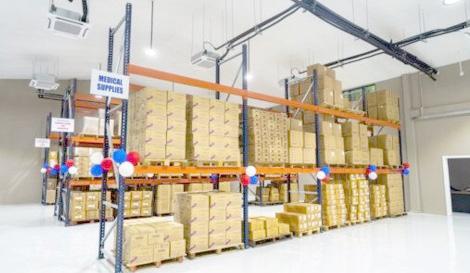
PRESIDENT Dr Irfaan Ali, on Saturday, commissioned the new $230 million Regional Medical Distribution Centre at Onderneeming, Region Two, describing the facility as a major milestone in the Government’s drive to modernise Guyana’s healthcare system through a digitally integrated and decentralised pharmaceutical supply chain.
Commissioned under the theme, “Strengthening Regional Healthcare Through a Modern Digitally Integrated Supply Chain,” the facility is expected to significantly improve the

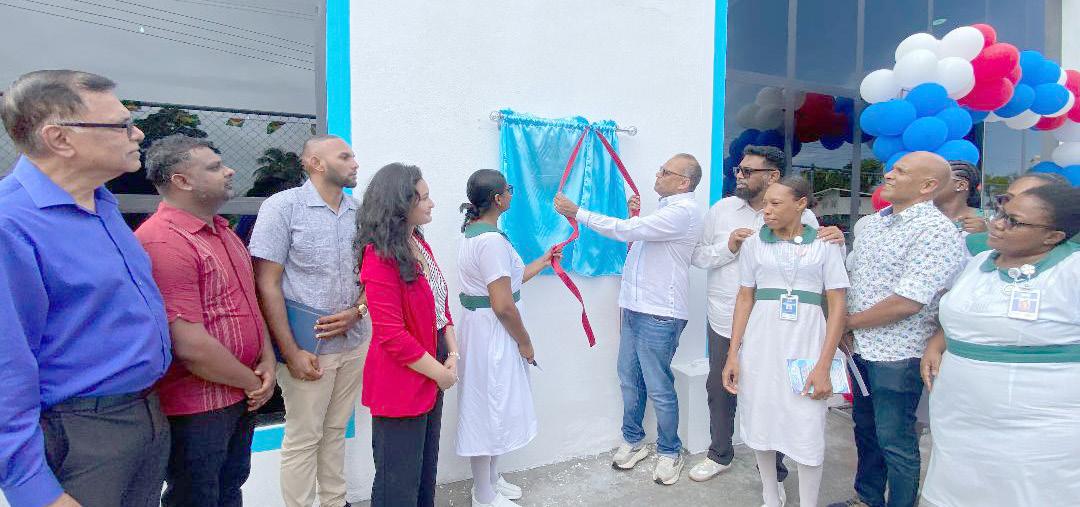
storage, management and distribution of medicines across the region.
Speaking at the ceremony, President Ali said the centre forms part of the Government’s broader transformation of the national healthcare system by decentralising the storage and distribution of medicines while using digital technology to improve efficiency, accountability and patient care.
He explained that the facility will maintain adequate stocks of essential medicines tailored to Region Two’s needs, drastically reducing the time it takes for health facilities to receive supplies.
The President noted that, in the past, transporting medication to remote communities such as Akawini could take several days. With the new distribution model, medicines can now be dispatched in less than a day through improved logistics and digital tracking.
“This facility allows for traceability, accountability and timely access to medicines that will ultimately save lives,” President Ali said.
He added that the centre is part of a nationwide healthcare network that will
also support telemedicine services and, in the future, integrate drone technology to rapidly transport medicines to remote communities in the Pomeroon and other hinterland areas.
“This is the type of investment we are making because we are committed to building a world-class healthcare system in Guyana,” the President said.
President Ali recalled that years ago, pharmacy shelves were frequently empty despite the existence of storage facilities.
He said the Government has since invested heavily to ensure a consistent supply of medicines, allowing doctors to prescribe confidently from an approved list of pharmaceuticals supplied by the Ministry of Health.
He also announced the introduction of a digital patient feedback mechanism that will allow persons to report on their experiences accessing medication, further strengthening transparency and accountability throughout the healthcare system.
According to the President, the new medical distribution centre demonstrates the Government’s commitment to bringing quality healthcare closer to communities through a
modern, decentralised supply chain.
Minister of Health, Dr Frank Anthony, said the facility has the capacity to store approximately 95 per cent of the medicines required by Region Two and will significantly improve the timely distribution of pharmaceuticals throughout the region.
He disclosed that plans are already in place to expand the facility with specialised cold storage to safely accommodate vaccines and other temperature-sensitive medications.
Dr Anthony explained that the centre operates using an intelligent digital inventory management system capable of tracking every medication, identifying its precise storage location and monitoring stock levels in real time. The system
opportunities for students interested in pursuing careers in medicine.
Classrooms will also be established at the Lima Regional Hospital to support clinical teaching and practical training.
“There is no excuse. We want to have more doctors coming from this region to serve this region,” Dr Anthony said.
He added that the Government remains committed to institutionalising medical training while continuing to invest in world-class healthcare infrastructure across the country, pointing to the Lima Regional Hospital as an example of the quality of healthcare now available
the Materials Management Unit (MMU), Dr Sarah Hack, described the commissioning of the bond as a significant step in the modernisation of Guyana’s healthcare system.
“This centre comes at a particularly crucial time as we simultaneously deploy the CORTEX pharmaceutical supply chain management system across Guyana,” Dr Hack said.
She explained that the CORTEX digital platform represents a major advancement in the country’s pharmaceutical supply chain, noting that Region Two is the first administrative region to become fully operational on the system from
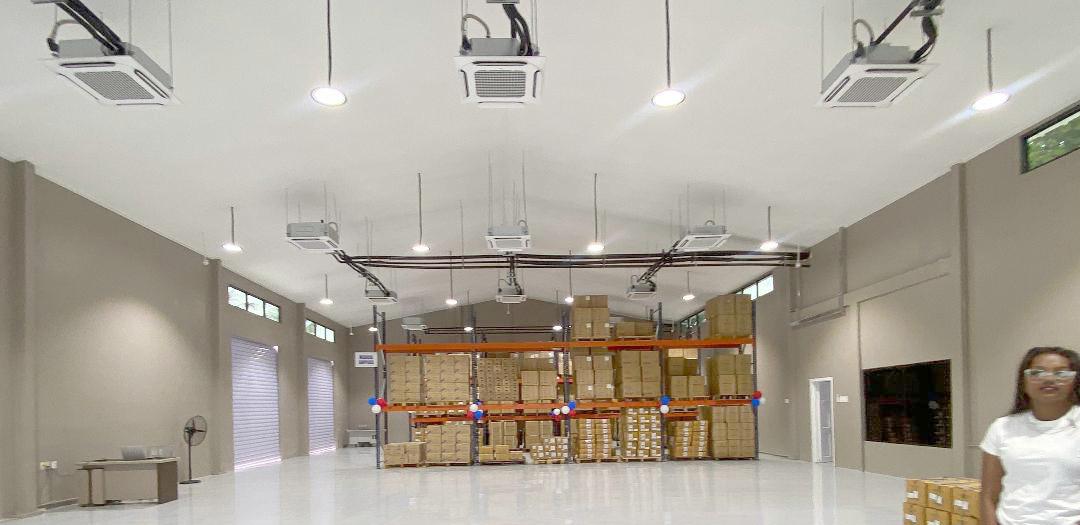
also records the movement of medicines from the warehouse to health facilities and ultimately to patients.
Reflecting on the transformation of healthcare in Region Two, the Health Minister said the region has advanced significantly since the 1990s and now has more than 80 doctors serving its population.
He highlighted the Government’s continued investment in medical education, noting that several healthcare training programmes have already been introduced in the region and that a dedicated training centre will soon be established.
Additionally, he announced that the Ministry of Health has partnered with the University of Guyana to introduce an 18-month pre-medical programme, creating greater

outside Georgetown.
Regional Chairman, Devin Mohan, said the commissioning of the Regional Medical Distribution Centre marks another important milestone in Region Two’s development.
He noted that the Government continues to make substantial investments in healthcare and public infrastructure, improving services and enhancing the quality of life for residents.
Meanwhile, Director of
coast to coast.
Supervisor of the Regional Medical Distribution Centre, Kumar Dass, commended the Government for the investment, noting that the region had long needed such a facility.
The $230 million centre is expected to play a pivotal role in ensuring faster, more reliable access to medicines while strengthening the efficiency and resilience of healthcare delivery throughout Region Two.


PRESIDENT Dr. Irfaan Ali’s call for the United States to be a “trustworthy and reliable partner” is not just diplomatic nicety.
It is an acknowledgment of a geopolitical reality that has become increasingly evident over the past several years: The strength of Guyana’s international partnerships is now deeply linked to its security, economic prosperity and territorial integrity.
President Ali spoke of a vision for relations between Guyana and the United States that went beyond the traditional bilateral cooperation at a reception hosted by the United States Embassy in Georgetown to mark the 250th anniversary of the independence of America.
His comments reflected a strategic partnership based on common democratic values, mutual respect, and a shared commitment to maintain peace and stability in the Western Hemisphere.
For decades Guyana has enjoyed good relations with the United States. But the rise of Guyana as one of the world’s fastest growing economies, along with enduring threats to its territorial integrity, has elevated that relationship to something far more consequential.
President Ali’s claim that the George-
town-Washington partnership is at its peak is not political rhetoric; it is backed by a range of developments that have radically reshaped the regional security landscape.
The security environment facing Guyana today is radically different from that which prevailed even a decade ago.
The long-standing dispute with Venezuela over the Essequibo region has worsened in recent years, particularly after the discovery of large offshore oil reserves and a series of provocative moves by Caracas.
The decision by Guyana to seek a peaceful resolution of the controversy through the International Court of Justice has received broad international support, including strong backing from the United States and other democratic partners.
In this context, the growing security cooperation between Guyana and the United States should be seen not as militarisation but as an act of prudent statecraft.
In the past, small states have depended on strategic partnerships to protect their sovereignty in the face of complicated geopolitical realities. The same is true for Guyana.
Importantly, President Ali emphasised that the new security alliance is not aimed at aggression or domination in the region.
Its purpose is deterrence, stability, and
the protection of democratic institutions. In an era of transnational crime, narcotics trafficking, cyber threats, illegal resource exploitation and geopolitical tensions, security cannot be conceived through the traditional prism of military defence.
It involves integrated institutions, intelligence sharing, technological cooperation and joint strategic planning.
The President’s reference to the alignment of the Guyana National Defence Institute with the institutions of the United States is indicative of the understanding that twenty-first century security partnerships are based on interoperability, shared doctrine, and institutional capacity.
The strengthening of Guyana’s defence architecture is thus not just about defending borders; it is about defending economic development, democratic governance and regional stability.
Equally important is President Ali’s assertion that friendship between nations does not mean subservience.
This distinction is important. For centuries Guyana’s foreign policy has been based on the principles of sovereignty, non-interference and mutual respect.
So the country’s growing partnership with Washington must continue to reflect
those values. Strategic alliances work best when built on mutual respect and shared interest rather than dependence.
Some will no doubt question the wisdom of closer security ties with a world power. Such debates are healthy for any democracy. But it would be irresponsible to turn a blind eye to the realities facing Guyana and the wider Caribbean region. For the defense of territorial integrity, the security of critical energy infrastructure and the maintenance of regional peace, partnerships capable of addressing modern threats are needed.
Guyana at 60 years of independence is at a historic crossroads. No longer a small developing state on the northern shoulder of South America. It is an emerging economic power, a defender of international law and a rising actor in hemispheric affairs.
President Ali’s comments indicate that Guyana has made a strategic calculation that closer partnership with the United States will enhance, rather than undermine, the country’s future security and prosperity. If that partnership is built on mutual respect, shared democratic values and an unshakeable commitment to peace, then it could very well be one of the most consequential decisions taken in Guyana’s post-independence history.
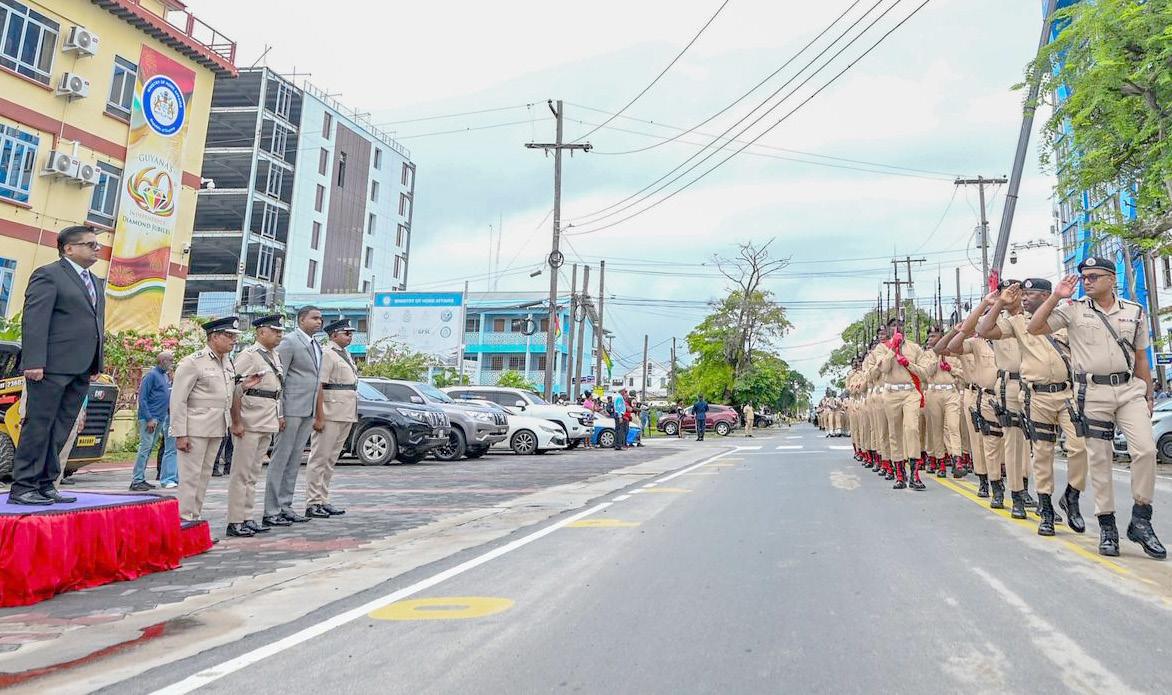
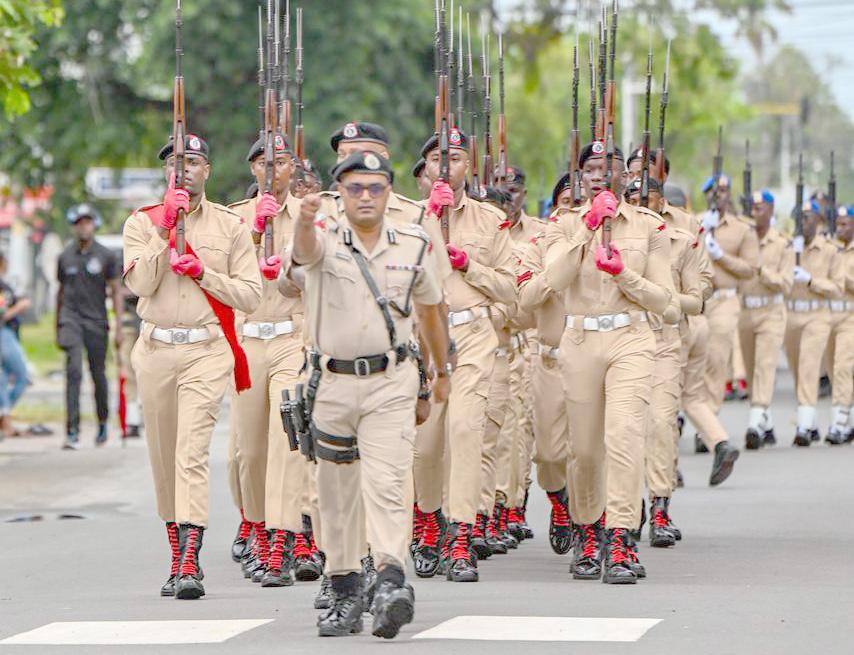
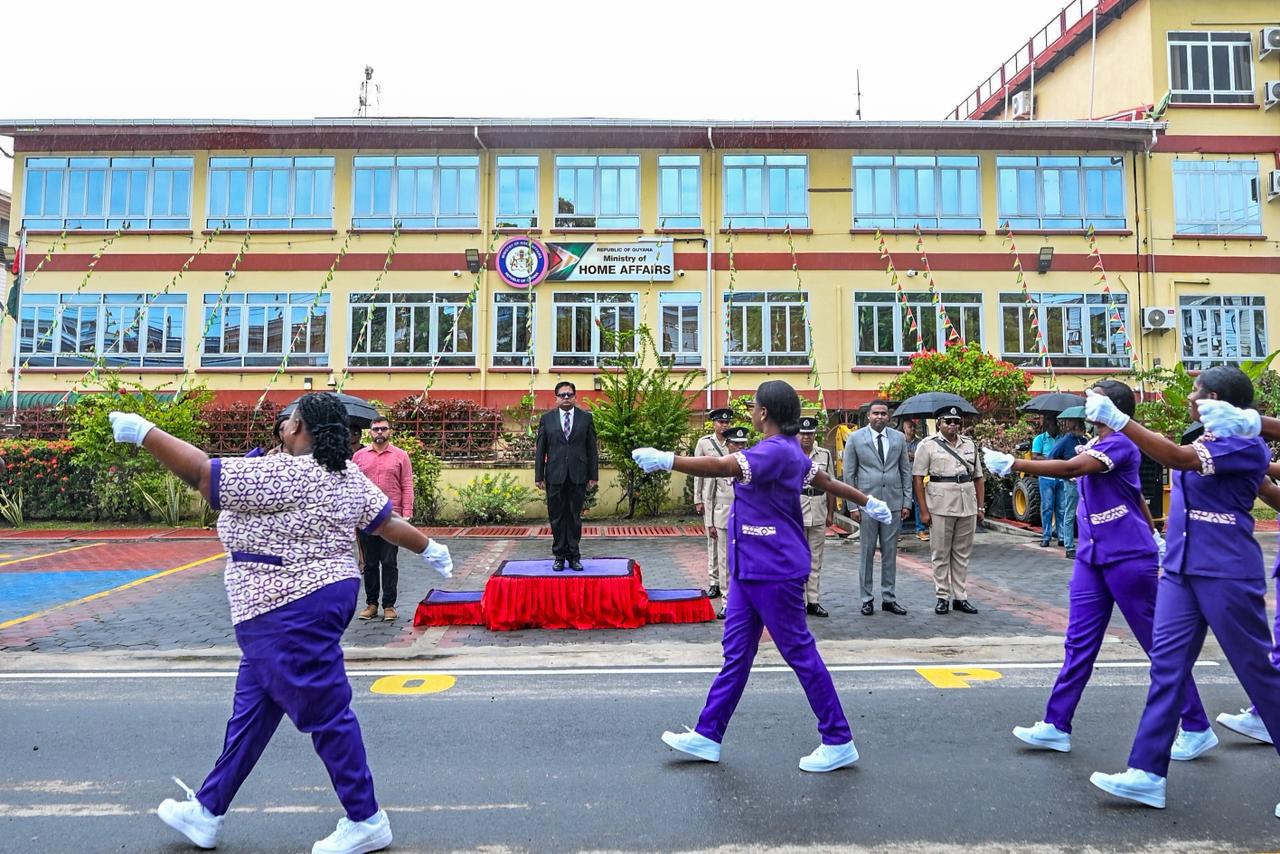
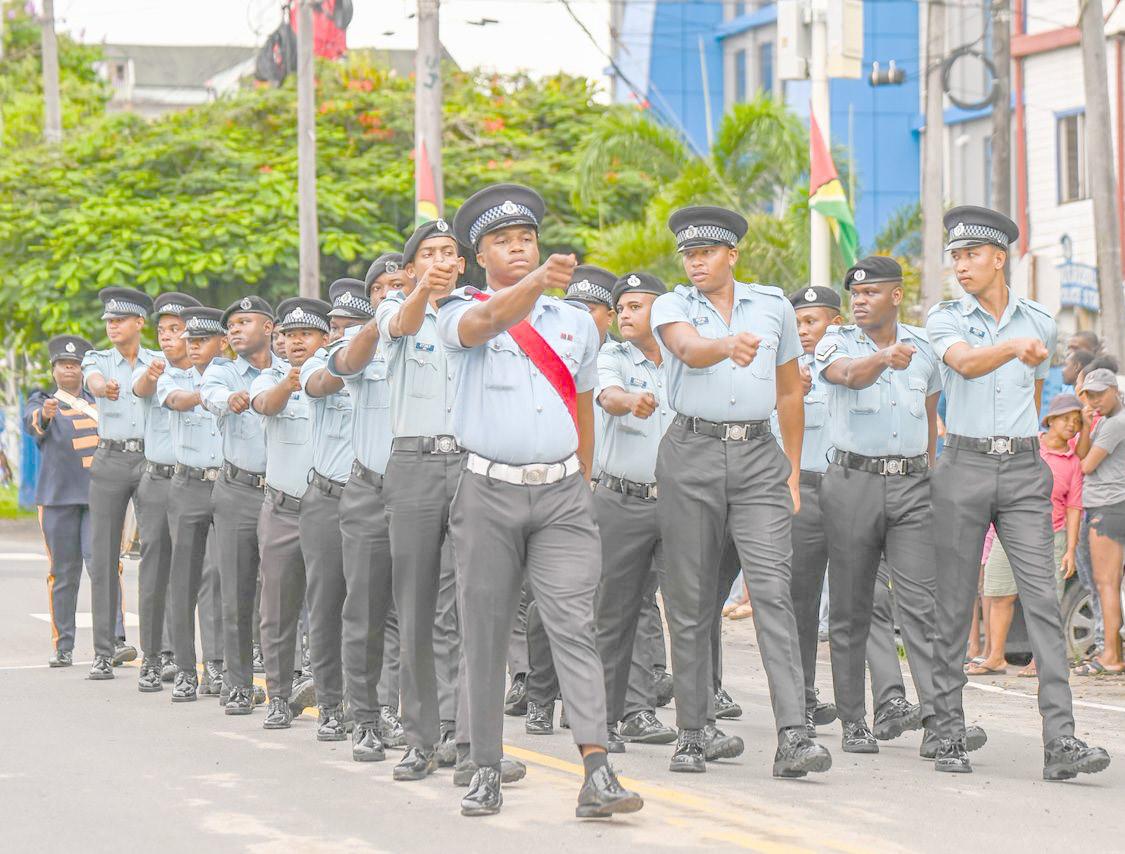
THE Guyana Police Force (GPF), on Saturday, staged its annual Route March Parade in Georgetown as part of activities marking its 187th anniversary, with Senior Minister in the Office of the President with Responsibility for Finance, Dr. Ashni Singh, receiving the traditional “eyes right” salute while performing the functions of Minister of Home Affairs.
The parade passed in front of the Ministry of Home Affairs, where Dr Singh inspected the ranks and accepted the salute in the absence of substantive Minister of Home Affairs, Oneidge Walrond.
Addressing the occasion on behalf of President Dr Mohamed Irfaan Ali, Dr
Singh congratulated the Guyana Police Force on its 187 years of service to the nation.
He reaffirmed the Government’s commitment to working alongside the Force to strengthen public safety and national security.
“The Government remains deeply committed to our shared vision with the Guyana Police Force of building a safer, stronger and more secure Guyana,” Dr Singh said.
The annual Route March Parade forms part of the Force’s anniversary observances, highlighting the discipline, professionalism and unity of the men and women who serve and protect the country.
The month-long celebrations commenced on July 1
with a Drum Head Church Service at the Police Officers’ Mess Annexe at Police Headquarters, Eve Leary, which was attended by Dr Singh.
The Guyana Police Force was established on July 1, 1839, when it was known as the British Guiana Police Force during the country’s pre-independence period.
Activities planned throughout July include an Inter-Divisions Male and Female Domino Competition, a Fitness Walk, Rugby Games, a Welfare Day, the Fallen Heroes Wreath-Laying Ceremony, participation in the President’s National Clean-Up Initiative, Five-a-Side Inter-Regions Male and Female Football
ee page 8
BY The Honourable Mr. Justice Winston Anderson, President of the Caribbean Court of Justice
IN July 2021, in the pages of the Jamaica Gleaner, the question was posed: Why is CARICOM Day not a national holiday throughout the Caribbean?
Five years later, in July 2026, the issue arises again for consideration by our Caribbean policymakers.
On 4th July 1973, four visionary leaders, Errol Barrow of Barbados, Forbes Burnham of Guyana, Michael Manley of Jamaica, and Eric Williams of Trinidad and Tobago, signed the Treaty of Chaguaramas creating the Caribbean Community.
In so doing, they laid the foundation for what remains the most ambitious experiment in regional integration undertaken by small developing states anywhere in the world. Vere Bird of Antigua and Barbuda, one of three original signatories to the Dickenson Bay Agreement, is also a widely recognised figure in the history of regional integration.
That date is more than a historical footnote. It is the birthplace of the Caribbean Community and therefore the midwife of our claim to regionhood. And to our being one out of many.
Public holidays are rarely only about the past. They are moreso about the present and the future. They provide societies with the opportunities to reaffirm shared values, preserve a collective memory, and cultivate a sense of belonging and continuity across generations. Independence Days, Republic Days, Emancipation Days, and other national observances perform this function in countries throughout the world. They remind citizens not only of what occurred on a particular date, but also of why, and who they are, as a people.
The Caribbean Community remains in the unusual position of possessing many of the attributes of a single economic space while lacking a single day for public reflection upon that communal space. We have common institutions, common legal heritage and arrangments, shared educational structures, and an increasingly integrated economy. Yet we do not pause collectively and simultaneously to celebrate the regional project that made those achievements possible. The observance of CARICOM Day would help fill that space.
Communities are defined not only by our territories and institutions but also by our symbols, traditions, and rituals. Their sustainability requires moments through which citizens can recognise themselves as participants in a common enterprise. The observance of a regional CARICOM Day would provide such a moment. It would draw a boundary not in geography but in time, setting apart one day each year where we reflect upon the Caribbean endeavour and the aspirations that continue to animate it.
On July 4 this year, the United States celebrated 250 years since the Declaration of Independence.
While Americans gather annually on July 4 to celebrate the birth of their nation, we in the Caribbean have an opportunity on that same day to reflect upon the birth and evolution of our regional community.
The leaders who gathered in Chaguaramas on 4th July 1973 understood that regional integration would be the work not of a few years but of many decades. The responsibility for advancing that vision therefore passed from one generation of Caribbean leaders to the next.
The work begun by our founders was carried forward by leaders such as P.J. Patterson, Basdeo Panday, Owen Arthur, and Bharrat Jagdeo, who helped to encourage economic integration and strengthen regional institutions. More recently, leaders including Kenny Anthony, Patrick Manning, Ralph Gonsalves, and Mia Mottley, have continued to champion regional co-operation while adapting the integration movement to contemporary realities.
CARICOM therefore is not the achievement of a single generation. It is the shared inheritance of many.
A regional holiday would provide an annual opportunity to reflect on how far we have travelled and how much further we still have to go.
The Caribbean Community has endured and matured through changing administrations, economic turbulence, natural disasters, and shifting global realities. It has done so because the idea at its heart remains compelling: that co-operation among Caribbean peoples, despite their different ancestries,
achieves greater welfare, security, and prosperity.
The entry into force 20 years ago of the Revised Treaty of Chaguaramas and the creation of the CARICOM Single Market and Economy (CSME) represented the maturation of that vision. Today, Caribbean nationals enjoy opportunities unimaginable to earlier generations. Citizens can travel freely across the Community, establish businesses, provide services, pursue employment opportunities, and invest beyond the borders of their own States.
The movement toward full free movement of CARICOM nationals, continues to advance. Each step in that direction reinforces a simple but powerful idea: that a Jamaican, a Dominican, a Vincentian, a Kittitian, a Barbadian, a Trinbagonian, a Guyanese, or a Belizean is not only a citizen of a particular State but also a citizen of the Caribbean Community. The CARICOM passport is a powerful symbol of that unity.
The institutions of regional integration have likewise become among our greatest strengths.
The University of the West Indies (UWI) has educated generations of Caribbean leaders, scholars, professionals, and public servants. The Caribbean Examinations Council (CXC) has developed qualifications recognised throughout the Region and internationally. The Caribbean Development Bank (CDB) has financed development across Member States. The Caribbean Public Health Agency (CARPHA) has enhanced our collective public health response and CDEMA has managed relief efforts across the region in times of disaster. Both West Indies Cricket (CWI) and the CARIFTA Games have demonstrated the power of sport to unite the region, while serving as enduring symbols of Caribbean identity and pride.
The Caribbean Court of Justice (CCJ), both the apex or highest court for participating states and the judicial guardian of the rights enshrined in the integration movement is uniquely endowed with the responsiblity to adjudicate over Caribbean matters, and has been making great strides in adjudicating cases that impact our daily lives. The Court, indeed, belongs to the people of the Caribbean; a truth embodied in its motto “One People. One Region. One Court.” All people of the region are encouraged to visit the Court, whether in person in Port-of-Spain or online via its website (www.ccj.org) and social media pages to understand the Court’s cases and how they impact us - from Kingston to Georgetown.

These achievements should not be taken for granted.
WHY CARICOM DAY MATTERS
A regional holiday on July 4, and where this falls on a weekend to be celebrated on the first Monday thereafter (this year on July 6) would therefore be about far more than remembrance.
It would provide a catalyst for schools to teach the history of regional integration; for governments to highlight the achievements of Caribbean institutions; for businesses and civil society to celebrate Caribbean enterprise and innovation; and for citizens to reflect on the shared inheritance that binds us together.
Two Member States, Antigua and Barbuda, and Guyana, already recognise CARICOM Day as public holidays. Their example demonstrates that such recognition is practical and appropriate.
It would be a good thing if our policymakers did not allow another 5 years to pass us by without giving serious thought to celebrating our shared history and bright future on CARICOM Day.
On July 4 each year, we should pause to celebrate our achievements, reflect on our shared journey, and renew our commitment to the Caribbean project. In the end, we are all we have. Warts and all.
IF an interviewer asked me to employ my decades of studying and writing about the politics of my country to say who I think will succeed Irfaan Ali in 2030, I would bet on Anil Nandlall.
Whoever is the PPP’s candidate in 2030 is going to win the elections for two reasons. One is by 2028 oil revenues are going to be enormous for a small population like Guyana. There will be money to be spent in making Guyana a coun-
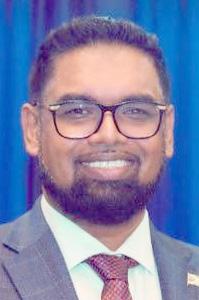
try of economic and social elevation.
The second reason is that Guyana is not going to have a numerically strong opposition. WIN cannot survive even if by some miracle Azruddin Mohamed remains in Guyana. WIN was a freak storm that blew Guyana’s way in 2025. It will simply die a natural death because money and leadership will not be there. The PNC by 2030 will fizzle out, perhaps winning about three seats. A third player will emerge, but it will not get a large pres-
ence in parliament. From where I stand, I think Nandlall will be Guyana’s next president. When that happens, Nandlall has to spend time reflecting profoundly on why Keir Starmer failed as Prime Minister of the UK after two years, and why Irfaan Ali is so successful. The story of Starmer and Ali is a study in contrast.
The largest defeat the Conservative Party ever suffered was in 2024, when Keir Starmer became Prime

Minister. He led the Labour Party to a majority in Parliament of 174 MPS. After two years, Starmer is gone, went in an ignominious way and has become the least popular British Prime Minister in Britain’s history. What did Starmer do to make him lose support? What has Ali done to cement his legacy? First, Starmer came into politics late in life at age 50. In contrast, Ali was born into a strong PPP family on the WCD in Leonora. I was a personal friend of his uncle, MZ. Ali
who, until his death, was one of Janet Jagan’s favourite PPP persons. Experience in politics is a vital factor because it gives you a deep sense of how to manoeuvre in a minefield of complex politics. Ali knew Guyanese politics in a way Starmer did not know British politics. Secondly, Ali has taught the world of politics how to communicate as a leader of a country. Starmer did not know anything about the art of communication. I will of-
fer two examples in the contrast between Cheddi Jagan and Irfaan Ali as presidents. President Jagan was giving out houselots to sugar workers in Berbice. Speaking to them in a serious tone, he urged them to take care of what was given to them. If it was Ali, he would have handed the titles to them, tell them the same thing Jagan told them, but then the art of persuasion would have kicked in. Laughing, Ali would have said; “and when you build, don’t forget to invite me.”

If Jagan played a ceremonial game of cricket for a special occasion and he got bowled, he would have laughed and walked. If it was Ai, in a jovial way, Ali would have turned to the umpire and said: “Did you check if that was a no-ball?” This is called the art of communication in politics.
A leader has to know that he cannot remain stiff in office. His citizens want him/her to communicate with them, to talk to them and to make them feel that they do not have an aloof
head of government. Starmer could not have reached out to people with the common touch because that was not in his capacity. Guyana knows about how important the common touch is because two of its presidents lacked it completely and both were voted out of office- Desmond Hoyte and David Granger. Thirdly, personality style is a key factor in preserving the support of the masses. In this context, Ali and Starmer are opposites. Ali got everything thrown at him from 2021. Two popular newspa-
pers – Kaieteur News and Stabroek News, harassed him. Prominent civil society organisations hounded him. Social media did not spare him its wrath.
You do not survive that kind of assault, but Ali did and phenomenally achieved two things- he increased the parliamentary seats of his party in the general election of 2025 and was the first sitting head in an election victory that had more crossover votes in British Guiana and Guyana.
How do you explain this contrast? It lies in a style that the Caribbean gave the worldthe personality that combines several personality nuances that endears the nation to the leader. I think Ali has successfully done this. Starmer simply did not have a personality suited to politics.
DISCLAIMER: The views and opinions expressed in this column are solely those of the author and do not necessarily reflect the official policy or position of the Guyana National Newspapers Limited.

WHEN we hear the term “local content,” most of us naturally think about numbers.
We look at how many Guyanese are employed in the oil and gas sector, how many local companies have secured contracts, and how well companies are complying with national regulations.
Those questions are important. They help the country track whether Guyanese are participating meaningfully in the industry. But numbers alone do not tell the full story.
Local content is not only about getting people into the industry. It is also about helping them grow within it. It is about whether Guyanese workers, students, professionals, and businesses are learning new skills, meeting higher standards, and preparing for opportunities that can last beyond a single contract or job opening.
Recent examples from the oil and gas sector show this more practical side of local content. Supplier opportunities, industrial support services, maritime training, professional vacancies, and skilled fabrication work all point to the same thing: Guyanese participation is moving beyond basic entry-level involvement.
One example is the growing demand for local suppliers that can support offshore operations. When a company seeks safety equipment for a drillship, it may sound like a simple procurement notice. But in the oil and gas industry, safety equipment is not a small matter. Suppliers must understand quality standards, documentation, delivery requirements, and reliability. Offshore work depends heavily on safety, and any company hoping to serve that space must be prepared to meet those expectations.
The same applies to industrial support services such as welding, fabrication, machining, maintenance, and corrosion control. These areas may not always attract public attention, but they are important to keeping oil and gas operations running. They also give Guyanese businesses and workers room to build real technical capability over time.
This is where local content becomes more than a policy term. A local
company that starts by providing one service can, with the right systems and experience, move into more complex work. A welder can become a supervisor. A technician can become a specialist. A small business can improve its safety systems, documentation, and quality control to compete for larger opportunities.
Too often, people think of oil and gas jobs only as offshore jobs. But the industry also needs people in human resources, information technology, logistics, finance, administration, procurement, safety, and compliance. These roles may not always be the most visible, but they are part of the system that keeps the industry functioning.
This matters because it widens the idea of who can participate. Not every young Guyanese will become a driller, seafarer, or engineer. Some will find their place in data, technology, business support, training, safety management or administration.
Maritime training is another important part of this discussion. Guyana’s offshore industry depends heavily on vessels, crews and marine support. As more young people are exposed to maritime careers, they can begin to see that the ocean is connected not only to traditional fishing and transport, but also to modern offshore operations.
Another useful example is the skilled fabrication work completed by Guyanese workers for the FPSOs. Work of that nature requires care, accuracy, and strong safety performance. When local workers can complete technical assignments to a high standard, it sends an important message that Guyanese are not just watching the industry develop from the outside. They are becoming part of the work itself.
At the same time, it is important not to make local content sound easier than it is. The oil and gas industry has strict requirements for safety, quality, timing, and performance. A company cannot simply say it is local and expect to be awarded work. A worker cannot rely only on interest or ambition. There must be preparation.
That preparation includes certification, technical training, workplace discipline, safety awareness, financial management, good record-keeping,
and the ability to deliver consistently. These are not small things. But they are necessary if Guyanese participation is to move from basic involvement to stronger and higher-value roles.
This is where the national conversation on local content must continue to mature. It is not enough to ask whether Guyanese are getting opportunities. We must also ask whether those opportunities are helping people and businesses become more capable over time.
A supplier opportunity, a technical vacancy, a maritime training programme or a fabrication achievement may seem like separate stories. But together, they point to something bigger. They show how the oil and gas industry can help build a wider base of skills and business capability in the country.
That is the real promise of local content. It is not only about jobs today. It is about preparing Guyanese for careers, businesses, and leadership roles tomorrow.
Local content should therefore be seen as a ladder. The first step may be employment, training, or a small contract. But the goal must be higher capability, stronger businesses, safer workplaces, advanced skills, and more Guyanese taking up positions of responsibility. That is what local content looks like beyond the headlines.
DISCLAIMER: The views and opinions expressed in this column are solely those of the author and do not necessarily reflect the official policy or position of the Guyana National Newspapers Limited.
THERE is a version of Guyana’s 60th Independence Anniversary that writes itself easily: oil revenues, record growth, new bridges, houselots by the tens of thousands.
It is a story of transformation so rapid it staggers the imagination. But on June 30, at the Arthur Chung Conference Centre, the Ethnic Relations Commission convened a different kind of national conversation, asking whether the people being transformed are being transformed together
The answer, by the end of the day, was: mostly yes, but the work is nowhere near done. That was the thread running through every address at the ERC’s National Symposium, “Guyana at 60: Unity, Diversity and the Path Forward” – a gathering that brought together government ministers and opposition parliamentarians, diplomats and civil society leaders, indigenous elders to grapple with the question that has haunted this country since before its independence.
Framing the conversation was ERC Chair-
man, Shaykh Moen ul-Hack, and his opening remarks set a tone that was neither triumphalist nor defeatist, but demanding. “Harmony cannot be manufactured in a vacuum,” he said. “It requires active, deliberate work.” UlHack committed the ERC to producing not another glossy report, but an actionable, evidence-based document – structured dialogue, empirical data, and concrete recommendations – drawn from the day’s proceedings.
Senior Minister Dr Ashni Singh began by calling out a national character flaw: the Guyanese instinct toward modesty that keeps us quiet about our own achievements. “We are more comfortable speaking about our challenges and our failures than our successes,” he said – and then, having made the diagnosis, he refused to be bound by it. He spoke of ancestors dragged to these shores by force and deception, who nonetheless forged what he called “a richly and beautifully diverse, kaleidoscopic tapestry” that is modern Guyana.
Dr Singh cited the halving of unemploy-


ment in five years, the creation of 104,000 jobs that went to Guyanese of every background in every region, the reduction of youth unemployment from 30.2% to 12.1%. These were not statistics deployed as political armour –they were offered as evidence that President Ali’s “One Guyana” platform is a governing philosophy, not a slogan.
But Dr Singh also looked his audience in the eye: “We need to be frank about separating rhetoric and soundbites from reality. Our work is certainly not done.”
United Nations Resident Coordinator, Jean Kamau, brought the weight of global experience to bear in her presentation. Her country, Kenya, had torn itself apart along ethnic lines after the 2007 elections, and had spent years rebuilding trust through constitutional reform, devolution, and sustained civic investment. She did not use Kenya as a cautionary tale to frighten Guyanese; she used it as proof that recovery is possible, and that it is always institutional.
Her five prescriptions for Guyana – deeper cross-community engagement among youth; civic education; robust public dialogue against disinformation; trusted institutions; a shared national vision – were not abstract. They were a work plan. “The opportunity before Guyana,” she said, “is not simply to manage diversity, but to harness it as a source of strength, creativity, and national progress.”
Two voices gave the day its moral centre. Susan English, President of the Amerindian Action Movement of Guyana, delivered a quiet masterpiece of historical accounting –from Stephen Campbell’s pre-independence lobbying, through the Amerindian Lands Commission of 1967, to the $11.7 billion in village development funds, to the 15% of carbon-credit earnings now flowing directly to indigenous communities.
“Sixty years ago, we asked only to be counted,” she said. “Today we are titled, funded, self-governed, and recognised as an equal
people in an equal nation.”
And then came 24-year-old Nikhil Sankar, born one month after the ERC itself was established, and carrying none of the diplomatic caution of his elders. He named slavery. He named indentureship. He named the violence inflicted on indigenous peoples. He invoked Cuffy, Quamina, Rodney, Cheddi, and the Enmore Martyrs, not as a history lesson, but as moral debt.
And he turned to the ERC with a direct challenge: stop merely fostering harmony, and start naming racism where it lives. “Establish tribunals. Measure harm empirically. Prove it through data. Build the safeguards that protect basic dignity when it is being eroded.” He asked the gathering a simple question that hung in the air long after he sat down: Can we do it? And then answered it himself: Yes. Yes, we can.
That Guyana’s private sector – represented at the symposium by the Private Sector Commission – issued a statement affirming that social cohesion “remains critical to continued progress” is, in itself, a signal worth noting. When business adds its voice to the language of inclusion, the conversation shifts from aspiration to architecture.
Sixty years after the Union Jack came down over Georgetown, the Ethnic Relations Commission under Shaykh Moen ul-Hack is insisting that independence without unity means that our collective work remains unfinished business.
Although the ERC symposium produced no silver bullets, it produced something rarer in national life: an honest reckoning. And in a country moving as fast as Guyana, that may be the most indispensable thing of all.
DISCLAIMER: The views and opinions expressed in this column are solely those of the author and do not necessarily reflect the official policy or position of the Guyana National Newspapers Limited.
WHILE the international trade in illicit and abused prescription drugs rakes in billions of dollars for traders and manufacturers, the users often end up penniless, addicted, suffering and dying.
This is certainly true of illicit drug users, whose health deteriorates as their cash runs down, while they feed an addiction growing stronger each day.
In recent years, the use of opioids (painkillers) has led to a prescription drug crisis and addiction rate that has not only caused depleted bank accounts but also resulted in hundreds of thousands of deaths worldwide over the past two decades.
It was declared a public health emergency in the US back in the late 1990s, when pharmaceutical companies heavily marketed opioids like OxyContin, assuring doctors they were non-addictive.
Contrary to this assertion, the drugs were found to be highly addictive and the subsequent overprescribing of opioids led to widespread physical dependence.
By 2010, as governments clamped down on prescription painkillers and costs became prohibitive, people turned to the equally addictive but cheaper heroin.
Three years later, the crisis had shifted to illegally manufactured synthetic opioids, mainly fentanyl, which is 50 to 100 times stronger than morphine or heroin.
While medical fentanyl is highly effective for treating pain, the illicit form is cheap, synthesised in ‘labs’ and often added to heroin, cocaine and methamphetamine.
The result has been a high mortality rate from overdoses, especially among young
people who access the drug online without their parents.
Meanwhile, the trade in illicit narcotics continues unabated, despite drug enforcement efforts worldwide. And the recent boom in cocaine production and enhanced distribution networks has meant that the drug is more widely available.
A particularly potent and highly addictive form of cocaine is crack, which hit the streets in the late 1970s and presented the world with an unprecedented drug problem.
Some referred to it as a “fast food” form of cocaine, where the powder is converted to solid ‘rocks’, using baking soda and water. This can then be heated and smoked in specially designed pipes, making a distinct crackling sound, leading to its name.
Cheaper than powdered cocaine, crack delivers an almost instantaneous high to the brain. But the intense, euphoric ‘rush’ is short-lived, lasting five or ten minutes, leaving the user craving more.
Guyana is a major transit point for narco-trafficking because of its porous borders and cocaine is moved across the region in a variety of ways.
However, while the powder generally passes through the country, crack cocaine has been peddled here for decades. The result has been widespread abuse, financial hardship, homelessness, severe illness and death in extreme cases.
Young people are at risk, especially in deprived areas and among low-income earners. Many of the porters and helpers in our nation’s markets, for instance, are crack smokers.

But crack use is not limited to this section of the population. It crosses all socioeconomic and ethnic lines and has brought many of the wealthy ‘to their knees’, selling belongings, including cars and houses, to feed their habit.
The drug acts by rapidly enhancing dopamine levels in the brain, which in turn causes intense pleasure and can lead to addiction as early as the first time it is smoked.
Crack use can result in heart failure, stroke and potential death from respiratory failure and users may display heightened aggression, restlessness, anxiety and loss of appetite.
Now, synthetic drugs like methamphetamine or MDMA, popularly known as ‘Molly’ and Ecstasy, are also available locally, deepening the drug problem. Many users are unaware of the destructive nature of these substances, which are closely aligned.
Molly usually refers to the drug in a pure
powder or purplish crystalline form, while Ecstasy refers to the drug in its pill form. Both are stimulants and hallucinogens, which distort time and perception.
Known as the ‘party drugs’, young adults and adolescents favour them because they reduce inhibitions and promote feelings of closeness, empathy and sexuality.
These drugs also have a host of side effects on the body, including increased heart rate and blood pressure, tremors, nausea, teeth clenching, paranoia and confusion. In high doses, they can result in liver, kidney and cardiovascular failure, swelling of the brain and even death. TO BE CONTINUED...
DISCLAIMER: The views and opinions expressed in this column are solely those of the author and do not necessarily reflect the official policy or position of the Guyana National Newspapers Limited.
GUYANA recorded a significant reduction in overall road accidents during the first half of 2026, but traffic fatalities have increased marginally, highlighting the continued challenge of changing driver behaviour despite intensified enforcement and education efforts.
According to Traffic Chief, Assistant Commissioner Mahendra Singh, the Guyana Police Force’s HalfYear Traffic Report shows that the total road accidents fell by 26 per cent, declining from 783 incidents during the corresponding period in 2025 to 580 this year.
Fatal accidents, he said also decreased slightly from 59 to 58, representing a two per cent reduction. However, the number of persons killed on the nation’s roads rose from 63 to 64. Serious accidents declined by five per cent, while minor and damage accidents dropped
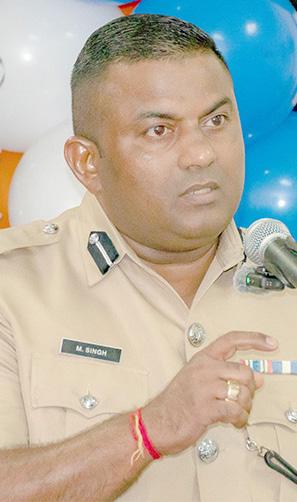
Traffic Chief, Assistant Commissioner Mahendra Singh
sharply by 35 per cent and 33 per cent respectively.
Assistant Commissioner Singh noted that the figures suggest that increased enforcement, technological interventions and public awareness campaigns are
–– road accidents down 26 per cent in first half of 2026, but fatalities edge up
producing positive results, although more work remains to be done to reduce fatalities.
“While speeding continues to be a concern and contributor to fatal accidents, there is a significant reduction owing to efforts made, awareness programmes, the implementation of the SRIS, automated ticketing and targeted enforcement,” the report stated.
The data revealed that speeding remained the leading cause of fatal accidents, accounting for 43 of the 58 fatal crashes recorded this year, down from 52 in 2025. However, the report highlighted a worrying increase in deaths linked to driver inattentiveness, which doubled from six cases last year to 12 in 2026.
According to the Traffic Chief, personal distractions among drivers are becoming an increasingly dangerous factor on Guyana’s roads.
“Inattentiveness owing to personal distraction is increasing at an alarming rate, with drivers seemingly unconcerned,” the report warned.
Motorcyclists continued to represent the largest category of road users killed. Twenty-six motorcyclists lost their lives during the first six months of 2026, with 22 of them reportedly not wearing safety helmets.
Additionally, all seven pillion riders who died were not wearing helmets. The report noted that investigations have revealed that many road users only comply with helmet regulations when police officers are visibly present.
Pedestrian fatalities also increased significantly, rising from 12 deaths in 2025 to 17 this year. Seven of those deaths were linked to inattentiveness, while five involved pedestrians crossing into the path of approaching vehicles.
The report further showed that occupants of motor cars accounted for the largest number of vehicles involved in fatal accidents, increasing from 26 in 2025 to 31 this year. Fatal crashes were most prevalent during the evening hours between 6:00 pm and midnight, when 28 fatal accidents occurred.
Adults between the ages of 25 and 42 remained the demographic group most affected by fatal accidents, accounting for 36 of the 64 deaths recorded. Men continued to account for the overwhelming majority of fatalities, although female deaths increased from four to nine.
Saturday emerged as the deadliest day on Guyana’s roads during the reporting period, with 14 fatal accidents recorded, compared with nine during the corresponding period last year.
Despite the concerning
fatality figures, enforcement activity intensified considerably during the first half of 2026.
Police issued 18,874 speeding tickets, an increase of more than 4,600 compared with the previous year. Cases involving failure to wear seat belts rose to 2,814, while prosecutions for driving under the influence increased to 916. Authorities also recorded increases in offences related to unlicensed drivers, traffic light violations and vehicles left in dangerous positions.
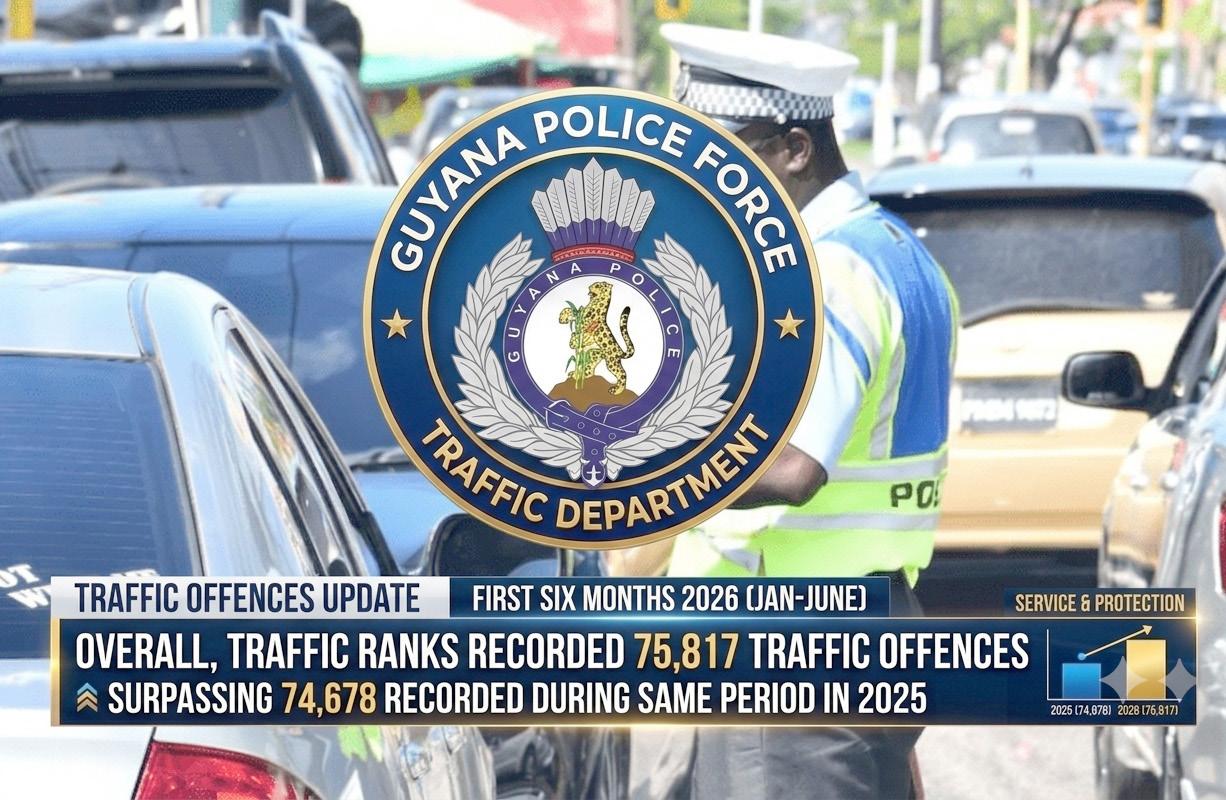
Overall, traffic ranks recorded 75,817 traffic offences during the first six months of 2026, surpassing the 74,678 recorded during the same period in 2025.
The Traffic Department also significantly expanded its public education campaign, conducting 980 traffic
THERE is tremendous value when a president, ministers and senior government officials leave their offices and spend time in villages, schools, health centres and community grounds. Government becomes visible, accountable and accessible. Citizens are no longer simply writing letters or waiting months for responses.
They are able to explain their challenges directly to the country’s leadership and, in many cases, receive immediate answers and practical solutions.
That is exactly what unfolded during the Region Two outreach.
President, Dr. Mohamed Irfaan Ali did not merely arrive to make speeches. He listened, instructed officials, resolved problems and announced additional interventions for communities throughout the region.
The commissioning of the upgraded Anna Regina Airstrip is itself symbolic of a government that understands that infrastructure is not simply about concrete and asphalt. Better connectivity means greater economic opportunities, faster emergency responses, stronger tourism prospects and improved access for remote communities. As President Ali noted during the commissioning, infrastructure creates inclusion and equal opportunities.
The commissioning of the new Anna Regina Stadium also represents far more than another sporting facility. It is an investment in young people, community life and regional pride. Facilities such as these become centres for youth development, recreation, business opportunities and national events. They send an unmistakable message that Essequibo matters.
Importantly, this outreach was not limited to ceremonial events. Residents raised concerns relating to healthcare, drainage, agriculture, security, housing, education and public services. Ministers were dispatched into communities, while President Ali himself issued instructions designed to address long-standing issues affecting families throughout the re-
gion. This style of governance demonstrates responsiveness rather than bureaucracy.
Only days before the outreach, more than 130 families whose homes were damaged by severe weather were already back under safe roofs after the government mobilised emergency assistance. Roofing materials, repairs and relief reached vulnerable residents quickly because the administration treated their hardship as an immediate priority, rather than a future political talking point.
Perhaps the greatest strength of these outreaches is not found in government press releases, but in the lives they change.
For many residents, a direct meeting with the President can become the turning point that alters their family’s trajectory. Whether it is a farmer finally receiving assistance to restore damaged crops, a family obtaining housing support after years of waiting, or a young student gaining access to scholarships and educational opportunities, these encounters transform government from an abstract institution into a partner in people’s aspirations. Across this outreach, numerous residents walked away knowing that someone had finally listened and acted on their concerns. That is meaningful governance because real leadership is measured by outcomes, not headlines.
Contrast that with the increasingly familiar political style adopted by Azruddin Mohamed.
His political approach appears built around constant social media videos, sensational claims and sweeping accusations about communities supposedly abandoned by government. Such content may generate online engagement, but likes and shares are poor substitutes for policy and delivery. Residents ultimately judge governments by roads constructed, schools improved, hospitals strengthened, scholarships awarded, agricultural support delivered and families assisted—not by who produces the most dramatic Facebook clip.

There is a fundamental difference between performance politics and public service.
President Ali’s leadership style has consistently projected calmness, energy and purpose. He engages residents directly, answers difficult questions and moves quickly to assign responsibilities to ministers and technical officials. His approach is not built on outrage but on administration. It is not centred on personal publicity but on measurable development.
Region Two occupies a special place within Guyana’s national development story. It remains one of the country’s agricultural powerhouses, while emerging as an increasingly important destination for tourism, sports, education and commerce. Investments in transportation, healthcare, education, sporting infrastructure and community development are creating conditions for sustained growth that will benefit future generations.
For the PPP/C, this matters politically because elections are ultimately referendums on trust. Voters ask a simple question: who has demonstrated the capacity to improve our lives?
When residents can point to a modern airstrip, a new stadium, expanded public investment, stronger disaster response, direct
engagement with the Cabinet and tangible solutions emerging from presidential outreaches, that question becomes easier to answer.
No government is perfect. Challenges remain, and Region Two will continue to demand improvements in healthcare, agriculture, security and economic opportunities. But there is a clear distinction between a government willing to confront those challenges face to face and politicians whose principal contribution is generating online controversy.
The people of Essequibo understand that difference.
Governments earn confidence by keeping promises, one project, one community and one family at a time.
Judging by that standard, the People’s Progressive Party/Civic has steadily strengthened its relationship with Region Two. If it continues governing through delivery rather than rhetoric, optimism about the region’s future and the PPP/C’s electoral prospects there will be well founded.
DISCLAIMER: The views and opinions expressed in this column are solely those of the author and do not necessarily reflect the official policy or position of the Guyana National Newspapers Limited.
education exercises nationwide. These included lectures for drivers, school programmes, awareness sessions in bars and public outreach initiatives through radio broadcasts.
Assistant Commissioner Singh stressed that infrastructure improvements and increased enforcement alone will not solve Guyana’s road safety challenges.
“No amount of signs, signals or road markings will make a difference if drivers do not shift their behaviour to compliance and embrace the concept of shared road space,” the report stated.
Looking ahead, the Traffic Chief indicated that authorities expect vehicle imports to increase further due to ongoing economic growth and development.
In response, plans are underway to strengthen traffic management systems, particularly around major event venues such as the National Stadium at Providence.
The report added that the expansion of the Safe Road Intelligent System, automated enforcement mechanisms, enhanced penalties for traffic offences, broader public education programmes and increased deployment of technology are all expected to play a critical role in improving road safety across Guyana in the months ahead.
Ultimately, Assistant Commissioner Singh highlighted that every traffic regulation, from speed limits and seatbelt requirements to rules governing the use of the road especially where careless and dangerous driving
or distracted driving exists for one fundamental reason: to preserve human life.
“No destination, appointment or convenience is worth the loss of a life on Guyana’s roads…The increase in pedestrian fatalities further reinforces the concept of shared road space repeatedly emphasised by the Traffic Department. Motorists, motorcyclists, cyclists and pedestrians all have a responsibility to exercise caution, remain alert and respect the rights and safety of others using the nation’s roads.”
He added that while investments in technology, enforcement and public education are yielding measurable improvements, the ultimate determinant of road safety remains human behaviour.
... From page 11


THE Latin America Guyana Chamber of Commerce (LAGCC) has endorsed the Government of Guyana’s recent statement of solidarity with the Cuban people, while calling for economic liberalisation and market-oriented reforms as key drivers of sustainable growth and prosperity in Cuba.
In a statement issued on Saturday, the Chamber welcomed the Government’s position, which supports a peaceful, sustainable and people-centred resolution to the economic and humani-
tarian challenges confronting the Caribbean nation.
The Chamber, which promotes trade, investment and commercial co-operation across Latin America and the Caribbean, said long-term prosperity depends on economic openness, regional integration, entrepreneurship and an enabling environment for private enterprise.
Chairman of the Board of Trustees, Dr Youni Anthony Abdul, said economic liberalisation, supported by strong governance and transparent institutions, has
consistently delivered positive results across the region.
“Economic liberalisation, when coupled with the rule of law, transparency, good governance and strong institutions, has invariably shown its ability to attract investment, spur innovation, expand productive sectors, create jobs and improve the quality of life of citizens,” the statement said.
According to the Chamber, greater economic openness has enabled several Latin American countries to improve their compet -
itiveness, diversify their economies and deepen their integration into regional and international markets.
The organisation also expressed confidence in the Cuban people’s ability to thrive if provided with greater economic opportunities.
“The Chamber believes that the Cuban people have great talent, resilience and entrepreneurial spirit. Expanding economic opportunity through market-oriented reforms, increased commercial engagement and greater participation in international trade can
unlock that potential and foster sustainable and inclusive economic growth,” the statement added.
The Chamber further welcomed the Guyana Government’s emphasis on dialogue, universal values and the aspirations of the Cuban people, noting that constructive engagement and peaceful co-operation remain the most effective path towards long-term economic development and regional stability.
It reaffirmed its support for initiatives that promote economic liberalisation and
private sector development, entrepreneurship and innovation, increased trade and investment, transparent and predictable economic institutions, and sustainable economic growth that delivers opportunities for citizens.
The Chamber also reiterated its commitment to strengthening commercial ties throughout the Americas, maintaining that deeper regional integration and open markets will continue to drive prosperity, resilience and shared development across the hemisphere.

THE Government has commissioned a new $30 million health centre and completed a $30 million staff living quarters at Red Hill, Manawarin, Region Two (Pomeroon-Supenaam), as part of a $60 million investment aimed at strengthening healthcare delivery in the indigenous riverine community.
The new facilities are expected to improve access to quality healthcare for approximately 500 residents of Manawarin and neighbouring communities, while providing accommodation to support the retention and wellbeing of healthcare workers serving the area.
Minister of Health, Dr Frank Anthony, commissioned the facilities during a recent visit and said the investment reflects the Gov-
ernment’s commitment to expanding modern, accessible healthcare services to rural and hinterland communities.
“The GY$60 million investment in the Manawarin Health Centre and staff living quarters reflects the Government’s continued commitment to strengthening healthcare infrastructure across Guyana and ensuring that residents of riverine communities have access to comprehensive, high-quality healthcare services,” Dr Anthony said in a statement.
Designed to withstand seasonal flooding because of its proximity to the river, the new health centre has been elevated to ensure uninterrupted healthcare services throughout the year.
The facility includes a spacious waiting area, separate male and female
washroom facilities, a fully equipped examination room, an observation bed for shortterm patient monitoring, a kitchenette for staff and vaccine storage to support immunisation services.
A key feature of the centre is its telemedicine system, which connects healthcare workers in Manawarin with doctors and specialists at regional hospitals and the Georgetown Public Hospital Corporation.
The system is equipped with devices to monitor patients’ blood pressure, temperature, oxygen saturation and other vital signs, allowing real-time consultations with medical specialists.
Residents will also benefit from a fully stocked pharmacy providing essential medicines for common illnesses and the ongoing
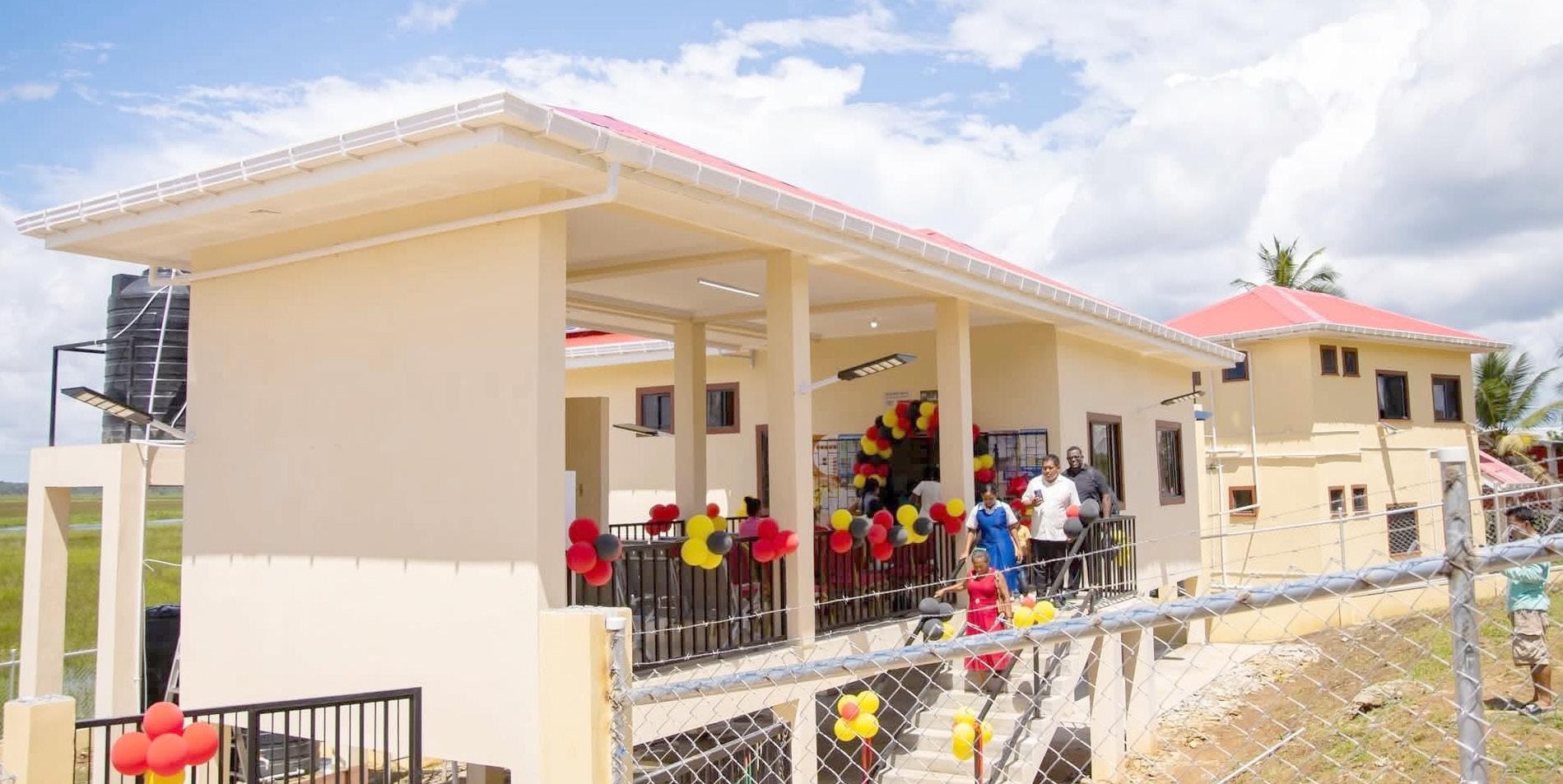
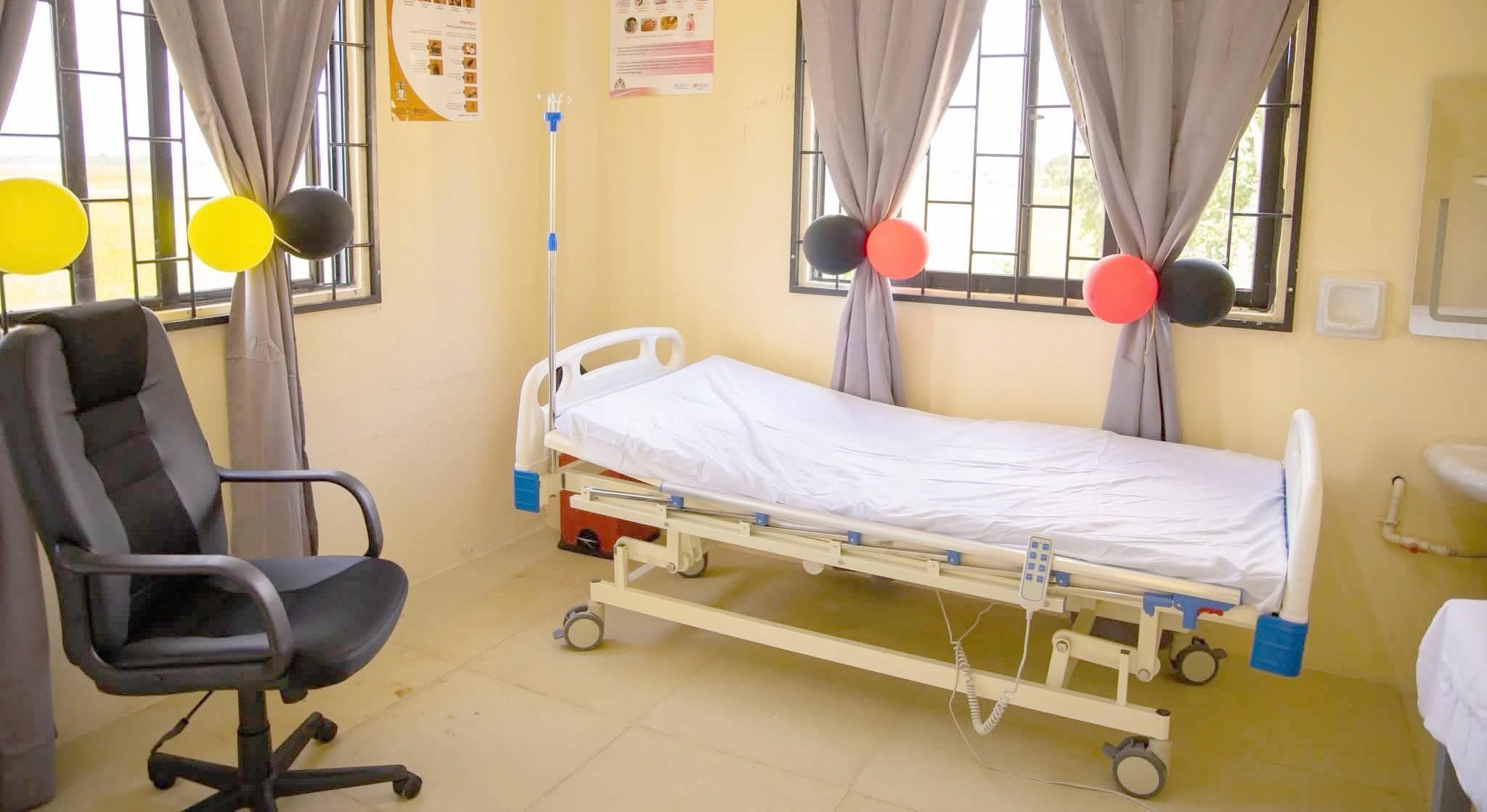
The facility includes a spacious waiting area, separate male and female washroom facilities, a fully equipped examination room, an observation bed for short-term patient monitoring, a kitchenette for staff and vaccine storage to support immunisation services
treatment of chronic conditions such as hypertension and diabetes.
The facility also includes a dedicated Maternal and Child Health Room equipped with infant weighing scales and a length board to support routine growth monitoring and improve maternal and child healthcare services.
The newly completed staff living quarters will provide safe and comfortable accommodation for healthcare
personnel, supporting the Ministry’s efforts to attract and retain medical staff in remote communities while ensuring continuous delivery of healthcare services.
To further enhance healthcare access, the Ministry of Health plans to construct a jetty and boathouse at the facility.
The health centre will also receive a boat and outboard engine to enable healthcare workers
to conduct home visits and extend outreach services to neighbouring riverine communities. According to the Ministry of Health, the investment forms part of the Government’s broader strategy to modernise Guyana’s healthcare system by expanding infrastructure and ensuring that quality medical services are available to citizens regardless of where they live.
— Origins panellists say Guyana must shift from individual success stories to building a sustainable
GUYANA’S fashion industry must move beyond celebrating individual designers and shift its focus to building sustainable businesses, strengthening technical skills and embracing collaboration in order to become a recognised creative force regionally and internationally.
This was the central message expressed by leading designers during Saturday’s Origins: Guyana Fashion Festival panel discussion.
Held on the festival’s second day at the Railway Courtyard, the discussion brought together industry leaders Keisha Edwards, Cherisa Samuels, Mwanza Glenn, Delayna Scott and Damian Moore, who explored how Guyana can convert the momentum and success of events such as Origins into a thriving industry that creates jobs and lasting opportunities.
Edwards described the festival as an opportunity to strengthen both the fashion sector and the people within it through business-focused training and mentorship. She said the workshops, which covered branding, customer engagement and business development, are helping designers understand what it takes to build sustainable enterprises rather than simply producing garments.
Reflecting on the opening night’s runway presentations, she praised the variety of collections and the overall execution of the show, while noting that there is still room for improvement in technical finishing.
Speaking on what success means within the industry, Edwards said it extends beyond personal achievements, explaining that a healthy fashion industry should create opportunities for everyone, from pattern drafters and seamstresses to quality control specialists.
Stressing the importance of partnerships, she said: “A lot of the time, you cannot see the value in the person next to you; where they are today is not where they will be five years from now.”
Botswana-based Guyanese designer Delayna Scott, who has built an international career after leaving Guyana as a teenager, said Origins is providing an important platform for expe-
rienced designers to mentor emerging talent.
She encouraged young creatives to remain patient, passionate and committed to the process of building their careers rather than chasing overnight success.
Scott said genuine success comes when creativity develops into a thriving business that creates employment, earns customers’ trust and gains recognition.
Returning to Guyana as an established designer made the experience particularly meaningful, she noted, as it represented recognition from her homeland after years of building her career abroad.
Reflecting on how she achieved that success, Scott credited teamwork and partnerships across the creative industry, noting: “Collaborating does not have to mean another designer; it can be a photographer, a stylist or a make-up artist. I can be a great designer and a terrible stylist, so having that team helps build the brand.”
Designer and educator Damian Moore said this year’s festival demonstrates that Guyana is making meaningful progress within the regional fashion industry, particularly through its emphasis on capacity building.
He noted that the workshops have exposed participants to new technical skills and business opportunities beyond fashion designing, allowing creatives to explore different career paths within the sector.
He said recent support through regional cultural grants has strengthened his commitment to helping others develop their careers.
Moore further noted that collaboration, rather than competition, is essential to the growth of Guyana’s fashion industry, stating: “We need to build each other up, develop this sector together. And if you do not trust the person you are working with, get a contract. Draft it, sign it, and let that paperwork protect you both.”
Fashion designer Mwanza Glenn described the festival’s emphasis on capacity building as one of its greatest strengths.
Citing aspects of the workshops, from learning how to market effectively across different social me-
dia platforms to improving branding and product presentation, Glenn said the sessions have encouraged designers to pay closer attention to the finer details of running a successful business.
He explained that success is not simply about personal recognition but is also about building a brand that can meet international standards.
Moreover, Glenn noted that the goal is for customers to recognise the brand before they recognise the designer, while ensuring that every garment is professionally produced, packaged and ready for export.
Glenn added that collaboration works only when designers are confident in their own abilities while respecting what others bring to the table, adding: “A true collaboration should complement, not compete. I work with you because I respect what you bring, and it adds to what I’m bringing to the table.”
For Cherisa Samuels, the festival has highlighted not only the talent within Guyana’s fashion community, but also the willingness of emerging designers to learn.
She said watching participants receive advice from more experienced creatives and apply it to improve their presentations was one of the highlights of the event.
Samuels believes lasting success goes far beyond the runway, explaining that a strong fashion brand should create jobs and provide career opportunities.
Looking ahead, Samuels urged Guyanese creatives to embrace a culture of co-operation rather than competition.
As she shared: “I cannot see success without collaboration; it creates opportunities beyond your own industry. We need to move away from the crab-in-abarrel mentality and put egos aside. We each have different niches. How can my strength benefit someone else?”
Throughout the discussion, all panellists reinforced that Guyana possesses the creativity and talent to build a thriving fashion industry, but sustained growth will depend on continued investment in skills development, mentorship and collaboration.

Leading regional designers shared their experiences and perspectives on building successful fashion brands during Saturday’s Origins: Guyana Fashion Festival designer panel. The discussion highlighted the importance of collaboration in advancing Guyana’s growing fashion industry and orange economy (Sachin
photo)

MINISTER of Local Government and Regional Development, Priya Manickchand, has identified a lack of technical knowl -
edge among Neighbourhood Democratic Councils (NDCs) as one of the biggest obstacles to effective local governance.
She made the observation even as the Government continues to invest millions of dollars annually in strengthening the country’s


local democratic organs.
Appearing recently on the Guyana Dialogue programme, Manickchand said the Government has significantly increased financial and material support to NDCs over the past few years, but stressed that capacity building and education remain critical if communities are to fully benefit from those investments.
However, she stressed that providing equipment and increasing salaries alone will not solve the challenges facing NDCs.
“Having come into the ministry, I understand a little bit better that it’s not only about the garbage truck and the fire truck and the salary,” she said. “A lot of times these councillors and officials just don’t know what next to do.”
According to the minister, many officials are unfamiliar with the legal and administrative procedures required to address routine community issues.
She cited situations involving overgrown private properties or buildings constructed outside approved regulations, explaining that while councillors often recognise a problem exists, they are unsure of the legal process that follows issuing a notice.
“There has to be a lot of training and retraining,” she said. “These are bodies that change and can change every two or three years because that’s when they have elections.”
Manickchand argued that standard operating procedures (SoPs) and written protocols should be developed to guide councillors regardless of changes in leadership.
She said, “There has to
chand said NDCs are empowered to issue a notice, seek a court order, enter the property to clear the vegetation and then bill the owner for the work.
She argued that many local government officials are unaware of this process, underscoring the need for greater education, training and clear standard operating procedures.
However, she noted that many NDCs officials are unaware they can provide such guidance to residents and instead spend time pursuing unnecessary enforcement measures.
The minister said the solution lies in improving communication and ensuring local government officials receive practical guidance on handling common issues.
be some written-up SoPs and protocols that can prevail over time.”
While acknowledging public criticism that some NDCs are unresponsive, the minister suggested that in many cases the issue is not unwillingness but a lack of understanding of the required legal process.
Manickchand acknowledged that while some residents may view NDCs as unresponsive, the issue is often not a lack of action but rather poor communication about the legal procedures involved. She explained that many matters require statutory processes that take time to complete, which can create the impression that councils are failing to respond.
Asked about the biggest challenges confronting NDCs, Manickchand said residents would likely identify issues such as garbage collection, drainage and street lighting.
However, from the ministry’s perspective, she said the principal challenge is education.
“I think the top three challenges that get in the way of the NDCs delivering on those issues would be their know-how,” she said. “They simply do not know in some cases what to do.”
She illustrated the point using the example of disputes between neighbours over tree branches extending onto adjoining properties.
“It’s a very simple issue. The law is very clear on that... if something comes into your yard, you’re allowed to cut it down,” Manickchand explained.
Using the example of residents who fail to weed their properties, Manick -
She stated, “I think the number one thing that we can do that would make it better is to get everybody talking to everybody.”
Since assuming office, Manickchand said she has already met with 65 of the country’s 70 NDCs and expects to complete meetings with the remaining councils within the next few weeks.
“That’s all in trying to let them understand that we are one body really in different villages trying to run the country in a way that is most pleasant for the people that we serve,” she said.
She maintained that strengthening education, improving communication and equipping councillors with practical knowledge will allow NDCs to make better use of the significant financial and material resources now being provided by the Government.
The Government has backed its push to strengthen local democratic organs with increased financial support for both officials and councils.
NDC chairpersons now receive monthly stipends of $50,000, up from $10,000, while vice-chairpersons’ stipends have increased from $5,000 to $40,000 and councillors from $3,000 to $30,000.
Regional Democratic Council (RDC) councillors are also now paid $50,000 monthly, up from $30,000.
Additionally, annual subventions for NDCs have risen from $5 million to $30 million, while municipalities now receive $50 million annually instead of $18 million, providing greater resources to improve community services and local governance.
RESIDENTS of Affiance on the Essequibo Coast
have praised President Mohamed Irfaan Ali for his hands-on approach to governance, as concerns raised during Saturday’s Cabinet outreach were addressed immediately through referrals and on-the-spot interventions.
The outreach formed part of the Government’s continuing engagement with citizens across Region Two (Pomeroon-Supenaam), providing residents with direct access to the President, Cabinet ministers and senior government officials.
Bruce, a resident of Affiance, expressed gratitude for the President’s visit, noting that many of the concerns raised by residents were addressed during the outreach.
“I thank His Excellency President Irfaan Ali and his team for visiting us in Affiance. I think most of us got our concerns resolved. I
can see tremendous development in our community and throughout the country.
I thank the President for the wonderful work he is doing. May God bless the President and his Cabinet. We know we will continue to see him in the future,” he said.
Another resident, Ron Baharran, attended the outreach seeking assistance with an application for a firearm

licence.
Following discussions with the president, he was immediately referred to the relevant authorities for follow-up.
“I am pleased with the President. I came with an issue regarding my firearm application, and I got through. On Tuesday, I will follow up to ensure everything is completed,” Baharran said.
Meanwhile, Pradek Lall, who resides in the United States, said he has been waiting since 2015 for a houselot

application to be approved.
After raising the matter directly with President Ali, he was referred to officials from the Ministry of Housing.
Lall also committed to commencing construction within six months, once he is allocated a houselot.
“I’ve been waiting since 2015 for a houselot. The president gave me his word that the matter will now be addressed. Once I receive the land, I will begin construction within six months,” he stated.

Resident Melrose Henry said the outreach demonstrated the value of taking government directly to the people, noting that residents from across Region Two travelled to meet with the President.
“It has allowed residents and Essequibians to interact directly with the President. I have seen issues being re-
solved on the spot, and for those that require follow-up, I believe action will be taken.” She added, “When issues are resolved, it makes people happy. Nobody comes out in the rain to raise a concern, only to leave dissatisfied. Today, I saw satisfied faces, and that is what meeting the people is all about.” [DPI]
Anil Nandlall, SC, has defended the government’s nationwide schools cash-grant programme, arguing that it provides direct financial support to every eligible child and is unmatched elsewhere in the English-speaking Caribbean.
Speaking during his weekly programme Issues in the News , Nandlall accused the former A Partnership for National Unity and the Alliance For Change (APNU+AFC) administration of misleading the public about the initiative, while replacing it during its 2015-2020 term with what he described as a far less effective programme.
According to Nandlall, the previous administration discontinued the cash grant and introduced its “Three Bs” initiative, which provided buses, boats and bicycles to students. He contended that the replacement programme reached only a limited number of children, unlike the cash grant, which he said places
money directly into the hands of parents of school-aged children across Guyana.
Nandlall said, “They abolished a comprehensive national programme that put money in the hands of every single parent of this country and replaced it with a programme of a couple boats, a couple bicycles and a couple buses.”
The Attorney General also claimed that while travelling across the country during the previous administration’s tenure, he received numerous complaints from residents about how the transportation programme was implemented.
Recalling visits to communities in Berbice, he alleged that some school buses bypassed certain villages while collecting students from others, prompting accusations of unequal treatment.
“I had calls from parents complaining that buses were passing villages and collecting students from selected communities,” he said, adding that the concerns were raised during a live call-in programme.
In contrast, Nandlall main-
tained that the People’s Progressive Party/Civic (PPP/C) government’s cash-grant programme benefits every eligible child attending both public and private schools, irrespective of ethnicity or geographic location.
He argued that the programme’s universal approach is what distinguishes it from previous education initiatives, noting that every eligible student receives the benefit regardless of where they live or their ethnic background. According to Nandlall, the government deliberately designed the initiative to ensure that financial assistance reaches families directly, allowing parents to offset back-to-school expenses.
The Attorney General further contended that criticism of the programme by the opposition has failed to resonate with the public because thousands of parents have personally benefitted from the initiative. He argued that when citizens experience the impact of a government programme firsthand, they are able to determine for themselves wheth-
er claims made against it are accurate.
Nandlall said this, in his view, has contributed to the opposition’s declining credibility on the issue, arguing that attempts to discredit a programme that provides direct assistance to families have been unsuccessful. He maintained that the cash grant remains one of the government’s flagship education initiatives and continues to provide meaningful support to households with school-aged children.
“Every single Guyanese of every single ethnicity is benefitting from this programme once you are in a school, public or private,” he stated.
Nandlall further argued that the initiative is unique within the English-speaking Caribbean and challenged critics to identify another programme of similar scope anywhere in the region.
“As I said, it is a programme that has no similarity in the English-speaking Caribbean, or go further [sic] afield if you wish and find a programme that is similar to
this,” he said.
He also encouraged parents and guardians who have not yet collected the grant to do so, stressing that the funds are intended to assist families with the cost of educating their children.
He urged, “So, please ensure that you uplift your cash grant wherever you are residing.”
During his remarks, Nandlall also criticised the opposition’s attacks on the programme, stating repeated criticism of a policy that directly benefits families had damaged its credibility with the public. He argued that voters were able to judge the programme based on their own experiences as beneficiaries.
Under this year’s programme, each eligible child is receiving a $60,000 “Because We Care” cash grant, a $5,000 school-uniform grant and the newly introduced $20,000 transportation grant, bringing the total assistance to $85,000 per child.
The government announced during the presentation of the 2026 National
Budget that approximately 206,000 children enrolled in public and private schools are expected to benefit from the increased allocation. The initiative is projected to inject an additional $2 billion into households, bringing the total value of transfers under the programme to an estimated $12.4 billion.
The “Because We Care” initiative was reintroduced by the PPP/C administration in 2020 and has been expanded annually through successive increases in the cash grant and the introduction of additional education-support measures.
The programme is intended to assist parents and guardians with back-to-school expenses, while improving access to education by helping families meet the cost of uniforms, transportation, stationery and other school-related necessities.
Distribution of the grants began on Monday, June 29, and is continuing at schools nationwide in accordance with schedules established by the Ministry of Education.
AS Guyana accelerates the transformation of its healthcare sector, the country has achieved another major milestone, with medication coverage now reaching between 90 and 95 per cent nationwide.
Speaking at the commissioning of the new regional pharmaceutical bond and Materials Management Unit (MMU) in Region Two, Min-
ister of Health, Dr Frank Anthony, described the facility as another major investment aimed at ensuring patients receive timely and uninterrupted access to essential medicines.
“We are building a worldclass healthcare system. This new bond will become the logistics hub for medicines, ensuring that nobody will be short of any medication
that they need,” the minister affirmed.
Dr Anthony explained that the government has gone beyond simply increasing medicine availability.
He said the government is now focused on guaranteeing that patients, particularly those living with chronic diseases such as hypertension and diabetes, receive up to a three-month supply of medi-
cation at a time.
He noted that this initiative follows a directive from President Dr Mohamed Irfaan Ali to eliminate the burden of patients making frequent trips to health facilities for life-saving medication.
The newly commissioned pharmaceutical bond forms part of a nationwide expansion of regional Materials Management Units designed

to decentralise the storage and distribution of medicines.
Previously, Region Two relied on pharmaceutical supplies from Georgetown, often limiting the quantity of medicines that could be stored and distributed.
With the new facility offering significantly larger storage capacity, the region will now be able to maintain an annual stock of medicines while ensuring more reliable and efficient distribution to health institutions.
The minister said the bond will also feature modern cold storage facilities for vaccines and temperature-sensitive medical supplies, safeguarding the integrity of critical pharmaceuticals.
In addition, a new digital inventory management system will track every medication entering and leaving the facility, allowing health officials to monitor stock levels, locate medicines instantly, and trace supplies directly to individual patients.
According to Dr Anthony, the technology will improve accountability, minimise losses and ensure medicines reach those for whom they are intended.
Dr Anthony noted that the region has progressed from having only a handful of doctors decades ago to now employing between 75 and 80 medical practitioners across multiple specialties, including surgery, internal medicine, paediatrics, obstetrics and gynaecology, and neonatology.
Residents now have access to advanced diagnostic services, including mammography, CT scanning, 24hour laboratory services and digital X-ray facilities across several health institutions, reducing the need to travel outside the region for specialised care.
The minister also announced that before the end of the year, the government will commission a new health training complex on the Essequibo Coast, where more than 20 Ministry of Health training programmes will be offered.
Dr Anthony said these investments are part of the government’s broader vision to decentralise healthcare and medical education while ensuring every Guyanese has access to quality health services regardless of where they live. [DPI]
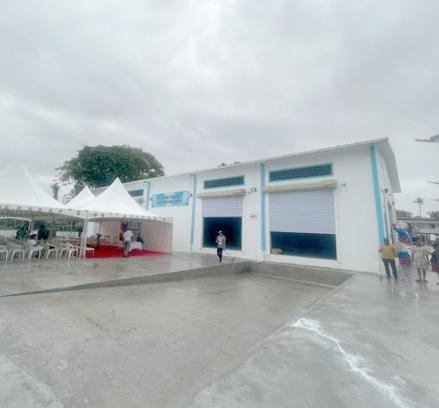
FUMACON 2026 returned bigger and better than ever on Saturday at the Marriott Hotel, surpassing organisers’ expectations as thousands of anime, gaming and pop culture enthusiasts packed the venue to experience an expanded programme of free activities, international guests and a bustling marketplace of local creative businesses.
After a one-year hiatus, the convention featured more than 15 free workshops and activities, including prop-making sessions, films and live entertainment, drawing an enthusiastic crowd that organisers said reflected the event’s growing influence among Guyana’s youth.
Co-founder and Head of Marketing and Public Relations at Seishonen Guyana, Juliana Lopes, said the overwhelming turnout underscored the demand for creative spaces where young people can express themselves, develop new skills and connect with like-minded individuals.
Beyond cosplay and entertainment, vendors also hailed the convention as an opportunity to promote their businesses, attract new customers and network with fellow entrepreneurs.
Co-founder and Head of Marketing and Public Relations at Seishonen Guyana, Juliana Lopes, said this year’s turnout exceeded expectations, particularly after the event’s one-year hiatus. She said the expanded programme, which included around 18 free activities and workshops alongside international guests, played a major role in attracting large crowds. These included costume craftsmanship experts, a circus performer and an internationally acclaimed voice actor.
Lopes said the energy inside the venue, the creativity on display through cosplay, and the strong presence of women-led small businesses highlighted the importance of the convention.
As she stated: “We expected strong attendance after taking a one-year hiatus and expanding the event with about 18 free activities and workshops, along with international guests, including costume craftsmen, a circus performer and an internationally acclaimed voice actor.”
She added that seeing “everyone’s enthusiasm, the incredible costumes and the


strong support for the many businesses here, most of which are women-led, is wonderful.”
Lopes further noted that partnerships with sponsors such as Modec Guyana Inc., the Ministry of Tourism, Industry and Commerce, the Guyana Tourism Authority and several private sector partners were essential in sustaining and growing the event.
Among the creative entrepreneurs showcasing their work was Brianna Exeter of Hooked by Bri, who turned her passion for crochet into a small business offering
handmade bouquets, hats, bags and plushies. Exeter, who is currently a University of Guyana student, said she started the business three years ago and chose to become a vendor as she prepares to migrate.
She explained that FumaCon provided a valuable opportunity to promote her work before leaving the country and expand her customer base.
As she shared: “Events like this are really important because they help promote small businesses. FumaCon is such a large annual event that it gives vendors
an opportunity to showcase their work to many people. Even after the event, people continue supporting your business.”
Also exhibiting was Savers Paradise, founded by Amrita Singh, which began as a hobby during the COVID-19 pandemic and has since expanded into a multi-service creative business offering social media management, logo design and graphic design.
Singh said this was her third year at FumaCon, noting that the event allows her not only to promote her services but also to build relationships and connect with other creatives.
Speaking on the importance of the event as an entrepreneur, Singh noted: “Events like this are important for small businesses because they increase visibility and allow people to learn about what you’re doing, especially when you’re passionate about your work.”
Also featured at the convention was Wicked Tales, an online bookstore run by Nazia Khan, which specialises in horror and mystery novels.
Khan said the business was created to fill a gap in the local market, where most bookstores focus primarily on romance genres. She added that FumaCon provides strong visibility for niche businesses, helping them introduce alternative offerings to a wider audience while receiving encouraging feedback from attendees discovering new genres.
As Khan noted: “FumaCon is a great marketing opportunity. It helps businesses get their names out there because of the large crowds, and the organisers do an excellent job of supporting and promoting small businesses.”
She added: “Even though the crowds are still building, many people have commented that they don’t usually see horror and mystery books available locally, so it’s been great introducing them to something different.”
For patrons, FumaCon was equally about community, expression and shared interests.
Natasha Singh, who attended the event to cosplay and explore the programme, said the convention brings together people who share a love for anime and pop culture, creating a welcoming environment for fans from across the country.
She added: “Events like this are important because they bring together people who enjoy anime and the wider anime culture. You can see people from all over coming together. The creativity is incredible. Everyone really put a lot of effort into their costumes, and they all look great.”
First-time attendee Navita Rafick said the event offered a space to meet new people and engage with shared interests, noting that she enjoyed the variety of workshops, activities and food offerings.
She added that, as someone without many anime friends, FumaCon provided
a rare opportunity to connect with like-minded individuals.
Speaking on the experience, she noted: “This is my first time and I am really happy I got to try all the different kinds of food and activities. There are movies, workshops and plenty of activities.”
She added: “The best part is being able to meet people who share the same interests. I don’t have many friends who watch anime, so coming here allows me to meet new people and make new friends. Finding a community of people with similar interests is the biggest reason I am here.”
Elizabeth Seedhan echoed similar sentiments, describing the convention as a space for self-expression and creativity.
She said events like FumaCon are especially important in Guyana, where people are often discouraged from expressing themselves freely, and help to normalise interests that are more widely accepted in other parts of the world.
As she noted: “I really love FumaCon. It is a great experience, it’s a lot of fun, and I think everyone should come out and express themselves. The community is very important because in Guyana people are often criticised for expressing themselves.”
She added: “Events like this help normalise those interests here instead of making them seem like something that only exists overseas.”



Lanka built on their impressive start
by producing another sterling batting display on the second day to maintain their grip over the West Indies in the second Test at the end of day two here on Saturday.
Half centuries by Sonal Dinusha and Kusal Mendis helped them convert their healthy overnight score of 338 for five into a formidable 549 for nine, before declaring their innings shortly after tea at the Sir Vivian Richards Stadium.
In their reply, the West Indies lost the wicket of Brandon King, but John Campbell and a nervous looking Kavem Hodge guided them to 58 for one at the close of play.
The day once again belonged to the visitors, with a 143-run partnership between Dinusha and Mendis helping them to strengthen an already robust first innings position.
For the second straight day, the Windies’ pacers were guilty of being either too short or too wide, and they were made to pay dearly.
The pair negated the first hour without much alarm, but the partnership should have been broken when it was worth just 44 and the score 382 for five, but Campbell put down a regulation catch to dismiss Mendis at first slip off Shamar Joseph. They caried the score to 420 for five at lunch and after the break Dinusha brought up his half century
in streaky fashion by edging Shamar Joseph along the ground through slip.
Mendis wasn’t too far behind, and he whipped Alzarri Joseph over the backward square leg boundary for six to bring up his 50.
The West Indies finally got a breakthrough when Anderson Phillip bowled Mendis for 69 off 115 balls as he tried to scoop him over fine leg, to make the score 476 for six.
When new batsman Milan Rathnayake clipped pacer Justin Greaves into the onside for two runs, it carried Sri Lanka past 500 runs for the first time in the Caribbean.
By that time Dinusha was in sight of his maiden Test century, which he neared by hitting part-time bowler Hodge for two successive boundaries to move to 92.
But Hodge got his revenge by having him caught at cover off the next ball to end his 166-ball innings and reduce Sri Lanka to 512 for seven.
Roston Chase then removed Milan Rathnayake for 15, and Jayden Seales claimed the wicket of Isitha Wijesundara for 14, before Sri Lanka declared their innings.
Shamar Joseph and Seales both finished with figures of 2-98.
Needing to navigate the final two hours of play, the home side’s opening pair of John Campbell and Brandon King started brightly, with

ENGLISH
RACING TIPS AYR
09:11 hrs Our Absent
Friends
09:41 hrs Conciliate
10:15 hrs Altareq
10:55hrs Approaching
Dawn
11:25 hrs Shifter
12:00 hrs Leadenhall
12:35 hrs Monhammer
MARKET RASEN
08:50 hrs Lakefield Flyer
09:20 hrs Rogue Impact
09:50 hrs Fidemdum
10:25 hrs Larkfield
Lusive
11:00 hrs Regal
Renaissance
11:35 hrs Galway Reel
12:10 hrs Masterius
King driving Wijesundara for two boundaries in the eighth over to see them move to 32 without loss.
But after scoring 17 runs off 26 balls, King drove loosely at a delivery from fast bowler Asitha Fernando and was snapped up at slip by Kamindu Mendis.
Hodge, who looked unsettled during his unbeaten six off 41 balls, should count himself lucky to be still at the crease after Sri Lanka spurned two opportunities to
dismiss him.
He had scored a solitary run when Dinusha failed to hold on to a tough chance running in at fine leg off the bowling of Rathnayake.
And two overs later, Hodge’s thick edge was dropped at first slip by Isuru Udara off the same bowler.
It allowed the Windies to end the day trailing Sri Lanka by 491 runs and needing a herculean task from their batters on Sunday’s third day
WORLD Cup favourites France were made to sweat to book their quarter-final place, but Kylian Mbappe’s second-half penalty proved enough to help them past a resolute Paraguay in Philadelphia.
Paraguay limited the two-time winners to very few chances until substitute Desire Doue was fouled inside the box by Brighton’s Diego Gomez and referee Ilgiz Tantashev pointed to the spot after a video assistant referee (VAR) intervention.
Mbappe took the penalty and sent Orlando Gill the wrong way to ensure France’s progress, as he drew level with Argentina great Lionel Messi on seven goals in the tournament’s Golden Boot race.
The last-16 tie kicked off in extreme heat, with temperatures soaring to 38C, but it appeared to be no deterrent for France, who dominated possession from the start.
However, a disciplined Paraguay defence proved difficult to break down and that frustration was evident in the 36th minute when Mbappe lashed out after a foul on him by Andres Cubas.
Gustavo Alfaro’s side, who upset Germany on penalties in the last 32, defended resolutely during a cagey first half that ended goalless and with neither side registering a shot on target.
France showed greater urgency after the break and finally forced Gill into a save through Manu Kone’s effort from distance in the 54th minute - their first on target.
But it was not until Doue replaced Bradley Barcola on the left wing that Les Bleus found the moment they had been searching for.
The 21-year-old Paris St-Germain forward drove into the box four minutes after coming on and danced past a Paraguay defender before Gomez stuck out a leg to bring him down, allowing Mbappe to seal France’s place among the final eight.(BBC Sport)
SOUTHWELL
09:02 hrs Lillie Margot
09:32 hrs Vitalline
10:05 hes Noble Guest
10:40 hrs Hamda’s Joy
11:15 hrs Kylian
11:50 hrs Premier
12:25 hrs Club Class
12:55 hrs Sixpack
SOUTH AFRICA
RACING TIPS
TURFFONTEIN
08:25 hrs Don’t Cry For Me
09:00 hrs Copper Eagle
09:35 hrs Almond Sea
10:10 hrs Master
Christmas
10:45 hrs War Reporter
(Sunday, July 05, 2026)
A BELLIGERENT undefeated 59 from Rohit “Beast” Dutchin, coupled by a superb spell of bowling from Mahendra “Murph” Seeram spurred defending champions New York Dynasty to a comprehensive 54-run victory over Cricket Super League (CSL) when the final of the Open All Stars category in the 21st edition of New York Softball Cricket League (NYSCL) ended at Baisley Park, Queens, last Sunday.
Playing before a vociferous crowd, New York Dynasty ensured the winning Eagle stayed in the “Big Apple” as the Orlando-based team offered token resistance.
Set 166 for victory, after New York Dynasty reached 165 for seven in their allotted 20 overs, CSL were skittled out
for 114, mainly through an incredible opening two-over blitz from Seeram, who after picking up one wicket in his opening over, grabbed three more in his second as CSL slipped to 18 for four.
There was a partial recovery between Delroy Perreira (20) and Rohesh Mahase (12) who added 34 for the fifth wicket but once the two were separated, the rest of the batting subsided with Seuchand Budhu (17) failing to get any tangible support.
Seeram ended with four for 12 from his four overs, which also included a maiden while skipper Bobby Prahalad claimed two for 23.
Earlier, New York Dynasty was indebted to Dutchin, who blasted five fours and four sixes in his 30-ball undefeated


59 after his team had slumped to 78 for five. The burly Dutchin shared a face-saving 69-run sixth wicket partnership with Kenny Narinedat who contributed a valuable 22. Karamchand Persaud (two for 23) and Budhu (two for 35) were the top bowlers for CSL.
New York Dynasty carted off the winning Eagle and $4,000 (US) while all the players were recipient of medals. Runners-up CSL took home the runners-up trophy.
Seeram earned the Most Valuable Player (MVP) of the category award and a prize for taking the most wickets. Dutchin took the man-of-the-match in the final prize.
Other prize-winners included Akwass Rahaman of World Boss for scoring the most runs (159), Sachin Singh of CSL
MOROCCO are on another fairytale World Cup run -- even if their latest win over Canada was less beauty and more beast.
The North African side were not pretty in beating the 2026 co-hosts 3-0 in their round-of-16 meeting
in Houston. Morocco won despite having just five efforts on goal – the fewest by a team who won a World Cup knockout match on record – and the first half was the first in World Cup history with more yellow
cards than shots.
But Morocco came through, and as the cliché goes, the mark of a great team is that they know how to win ugly.
And now we must regard Morocco as a great team, and a real contender
to win this World Cup.
They are not only unbeaten in this World Cup, but in their last 34 matches across all competitions.
While that record does carry an asterisk as it includes the 2026 Africa Cup of Nations final against
for the highest individual score (90) and Kevin Singh of Notorious All Stars for the best bowling figures in a match (five for 13). Tariq Jameer of Hustlers All Stars claimed a hattrick in his figures five for 19 and was rewarded for his splendid effort.
Among the several sponsors were Raval Raman True Blue Home Service, Lebs Electric Construction and Communication, AGS Memorial and Right Price Realty, Bridgemohan Contracting LLC, Vishal Building Maintenance and Janitorial, TAG HVAC Inc, R& J Automotive LLC, Boi, Inner Circle Bar and Lounge, Rockaway Roti Shop, Cricket Zone and Trophy World, Mike Bansi, Gemini’s Bar and Lounge, Fazee’s Delight and Doi from Harry Electric. (Frederick Halley)
Senegal – a win rewarded retroactively to Morocco and being challenged in court – it is impressive nevertheless.
Not since a 1-0 loss to Kenya in August 2025 in the African Nations Championship – a tournament solely for players in Africa’s domestic leagues – have the Moroccan national team lost a match.
And after the first 15 minutes in Texas, they never looked like losing this game.
Canada had two early chances, with Moroccan keeper Bono saving from Jonathan David and Tani Oluwaseyi, while the Atlas Lions did not have a touch in the opposition box for the first quarter of an hour for the second successive fixture.
But once Morocco settled, they firmly took control of the game. As Canada manager Jesse Marsch said afterwards: “They were bending a little bit but they didn’t break.
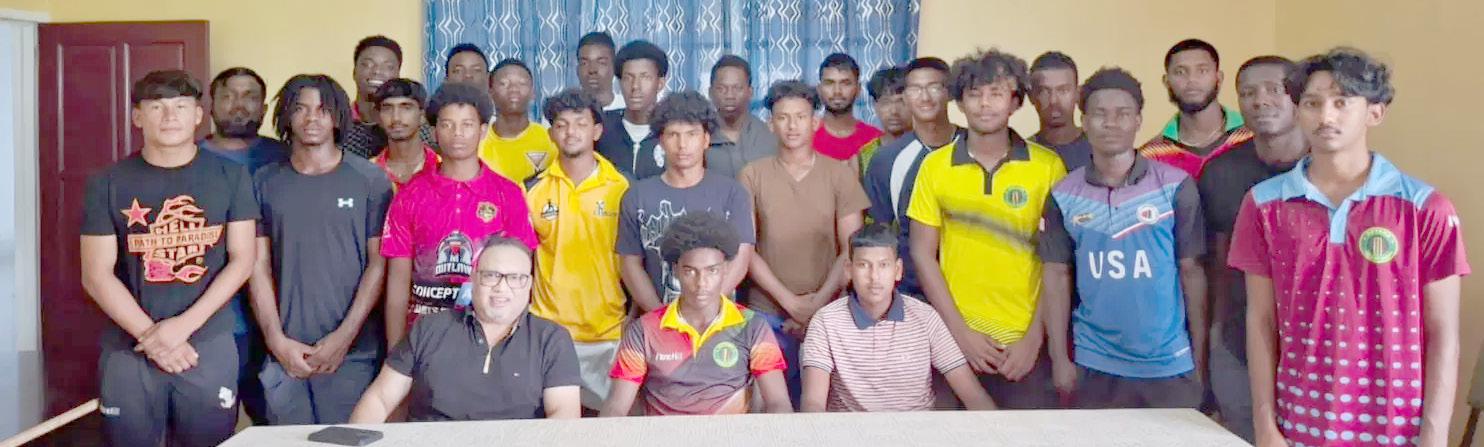
as they prepare for the upcoming Cricket West Indies Rising Stars Under-19 Championship
THE Guyana Cricket Board (GCB) president, Bissoondyal Singh, has urged the national Under-19 squad to maintain high standards of discipline and focus as they enter the final stages of preparation for the upcoming Cricket West Indies (CWI) Rising Stars Under-19 Championship. Singh met with the squad and management at their training camp, ahead of the team’s scheduled departure for the regional tournament on July 9.
Addressing the players, Singh emphasised the significance of wearing the national colours, reminding the youth side of both the privilege and the accountability that accompany regional selection.
He commended the work ethic demonstrated during the preparatory encampment and stressed the importance of collective responsibility on the field, urging the squad to play for one another and give their very best in every outing.
The tournament is widely viewed as a critical developmental stepping stone for young talent in the Caribbean, a point Singh reinforced by encouraging the players to embrace the platform to showcase their skillsets.
Reaffirming the board’s backing, the GCB president expressed full confidence in the team’s capabilities before wishing them a safe journey and a successful bid for regional honours.
the players to
Training Squad: Justin Dowlin, Jonathan Mentore, Shamar Apple, Joshua Budram, Darwin Joseph, Dhanesh Persaud, Micah Amsterdam, Parmeshwar Ram, Romario Ramdeholl, Adrian Hetmyer, Razam Koober, Yannick Newton, Gilbert Griffith, Feaz Baksh, Richard Ramdeholl, Dave Mohabir, Thierry Henry, Khush Seegobin, Gibran Yacoob, Emmanuel Lewis, Jayhayden Rohler, Darrius Pearson, and Shazim Mohamed.
THE KFC-sponsored National School Basketball festival got into the business end of the competition with quarter-final action at the National Gymnasium.
In the Under-14 division, Skeldon Line Path edged St. Rose’s High 39-33. Skeldon Line Path led from the front with Kellon Lyte doing the damage offensively with 12 points and six rebounds.
Also playing well for Skeldon Line Path were Araf Wazidally (12 points) and Eshmael Coodluck(seven points).
St. Rose’s Jonathan Sullivan had an outstanding game on both ends of the court to finish with 17 points and 10 rebounds. Kwakwani Secondary was next dismissed. The Bishops’ High, 37-19. Kwakwani had three players going into double figures. Trayon Hopkinson (12 points) and Kwayson Bethune (10 points) and Jermain Sampson (10 points) The festival’s biggest winner on day five was Hururu Secondary, who beat St. Stanislaus College78-13. Hururu had a strong game from Crandon Beckles, who had a game-high 35 points, 13 rebounds, and 10 steals.
Josiah Archer also dropped 21 points, with Marvelon Forde hitting 12 points in their best performance for the win.
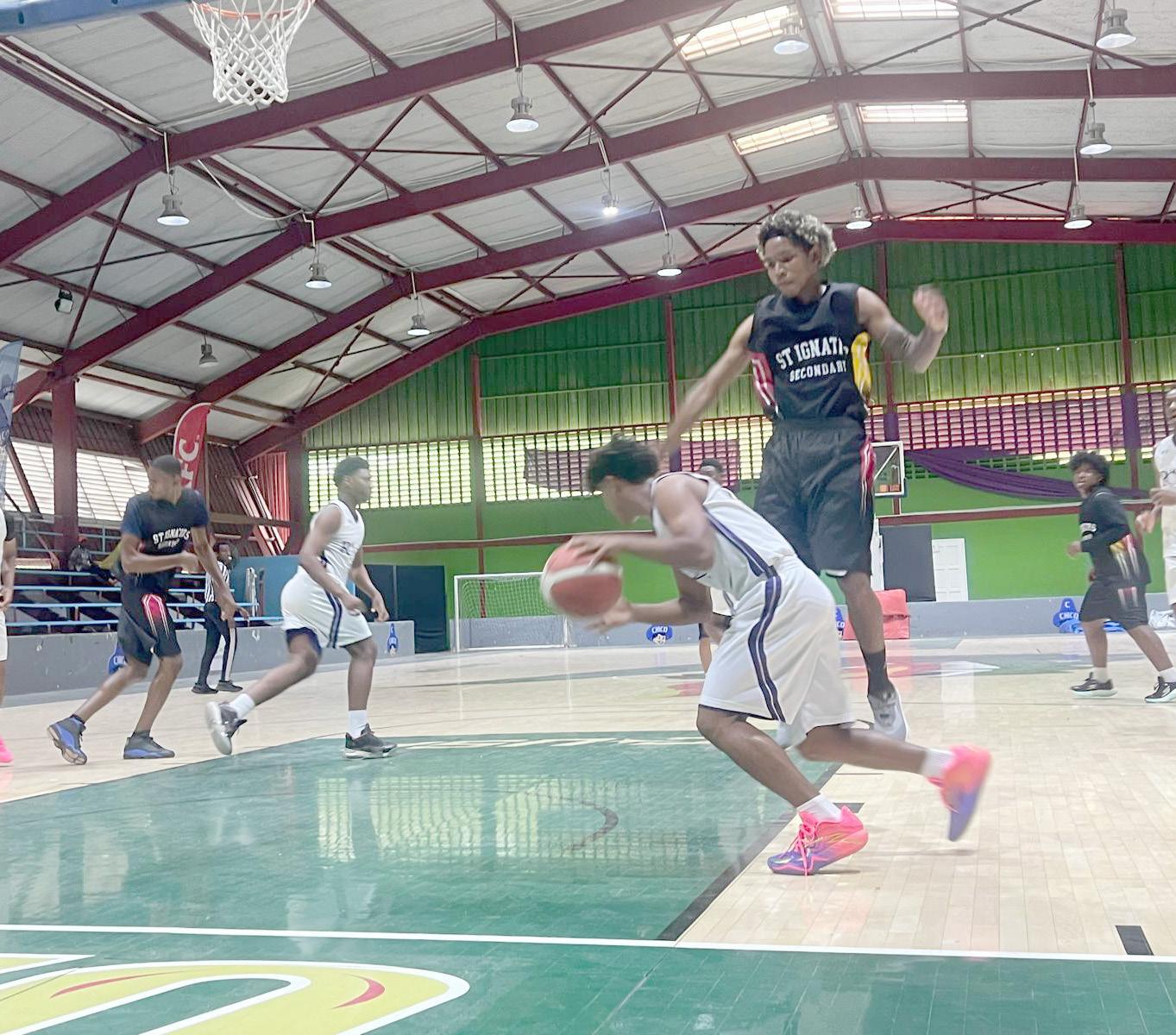
Good Hope Secondary also took a surprise win over Queen’s College 18-15.
The Under 18 category saw President’s College thrashing St. Ignatius 50-13.Mattaniah Fordyce had 13 points with 10 from Ricardo Ramdhial.
St. Rose’s High also defeated Covent Garden Secondary 31-23 after a 19-point showing from St. Rose’s Chazaiah Bernard, coupled with nine rebounds.
Queen’s College then clinched a win over Bishops’ High, 32-28. QC had Deshawn Gurrick, at the helm of the win with 12 points.
Closing off the day in the boy’s U18 category was Kwakwani Secondary with a seven-point victory over New Amsterdam Multilateral, 50-43.
They were led by Tyreek Sampson and Marlon Mendonca, who scored 17 and 15 points, respectively.
New Amsterdam’s Samuel Welcome had 19 points and 11 rebounds in the loss.
The competition is sponsored by KFC, Edward B Beharry Ltd., G-Boats Inc., the Ministry of Culture, Youth, and Sport and the Ministry of Education.
By Sean Devers in Essequibo
RAIN eventually spoiled the carnival-like party at the impressive Anna Regina Stadium on the Essequibo Coast on Friday night after the home side had beaten a Berbice and Demera combined team in front of a capacity crowd.
Hotels in and around the bustling township of Anna Regina were fully booked as a drove of fans from as far a Georgetown and the Pomeroon arrived by the boatloads in
being called off just before midnight to the disappointment of the crowd which produced a kaleidoscope of colour at the facility similar in quality to the Providence Stadium.
Despite the adverse weather causing the official opening ceremony with the cultural performance, fireworks and military display and feature game being called off, the raucous, partisan crowd waved Guyana flags and danced in the stands to the pulsating music from the massive speakers around the large ground during the first match.
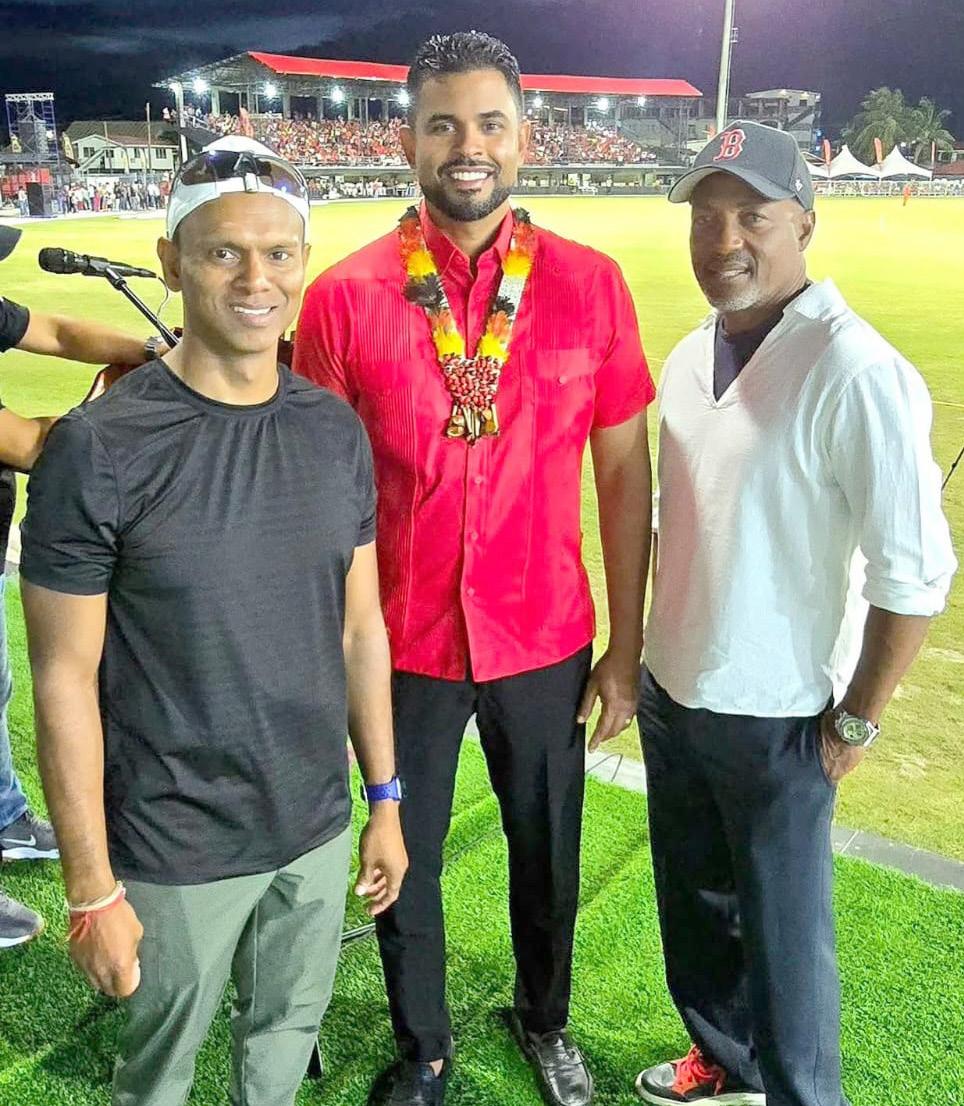
anticipation of witnessing cricketing icons Trinidadian Brian Lara and Guyana’s own Shiv Chanderpaul roll back the years with the bat.
Watched by the biggest crowd to turn out for a cricket match in Guyana’s largest county which included almost the entire government Cabinet, the atmosphere was fantastic.
After an afternoon of glorious sunshine, heavy and continuous rain arrived just before 10 PM, resulting in the proceeding final
Skipper of the Berbice and Demerara combined team Devon Lord won the toss and invited Essequibo to bat on an excellent track and lush green and fast-drying outfield.
West Indies U-19 player Johnathan Van Lange captured the first wicket at the new Stadium when he removed Kevin Boodie at 7-1 in the second over of the T10 game.
West Indies T20 World Cup selectee Quinten Sampson and Canadian International Dillon Heyliger added 52 for the second
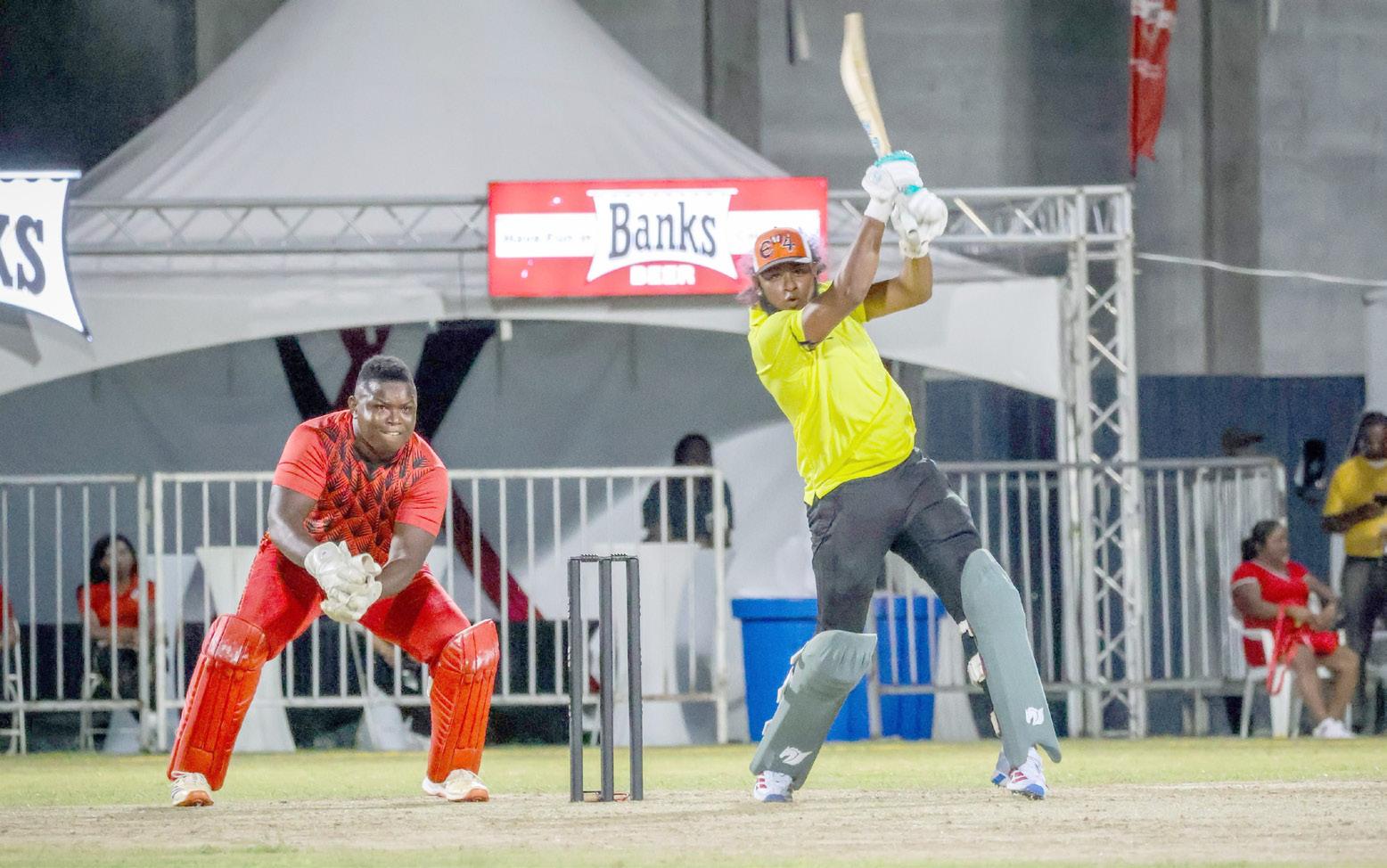
wicket in three overs before Sampson departed at 59-2.
Sampson, a pugnacious right-hander who played in the GSL and CPL was brutal, clobbering 42 from just 12 balls with two fours and five disdainful sixes to the delight of home fans, Heyliger departed at 96-3 in 6.1 overs before Richard
Adams smashed four fours and three sixes in his 21-ball 43 before he fell at 118-4, while former West Indies U-19 player Mahendra Dindyal departed at 134-5 in the final over as Essequibo reached 143-5.
Van Lange had 2-27 while skipper Devon Lord, West Indies off-spinner Kevin Sinclair and West Indies players Kevlon Anderson took a wicket each for the visitors who were restricted to 115-6 in their 10 overs.
Sinclair and Anthony Bramble added 22 for the first wicket before Bramble, who hit two fours and six in 17, hit a catch to Dindyal
as Ricardo Adams struck in the third over. Left-arm Spinner Antony Adams bowled Ushardeva Balgobin for a duck before Antony Adams dismissed Akasya Persaud (2), while Sinclair was removed by Heyliger for 32 from 16 balls with three fours and a six. Barrington, who hit a six in 15 was sent packing by pacer Ronsford Beaton, one of only three Essequibo players who played international cricket for the West Indies after Ivor Mendonca and Kemo Paul.
Van Lange struck three sixes in 20 from seven balls before he was caught and bowled by Myheim Khan who held a well judged ‘skier’ leaving Anderson unbeaten on 18 with six and a four when overs expired.
Antony Adams took 2-5 to the delight of the Essequibo fans who were excited when shown on a massive replay screen which served as the electronic scoreboard.
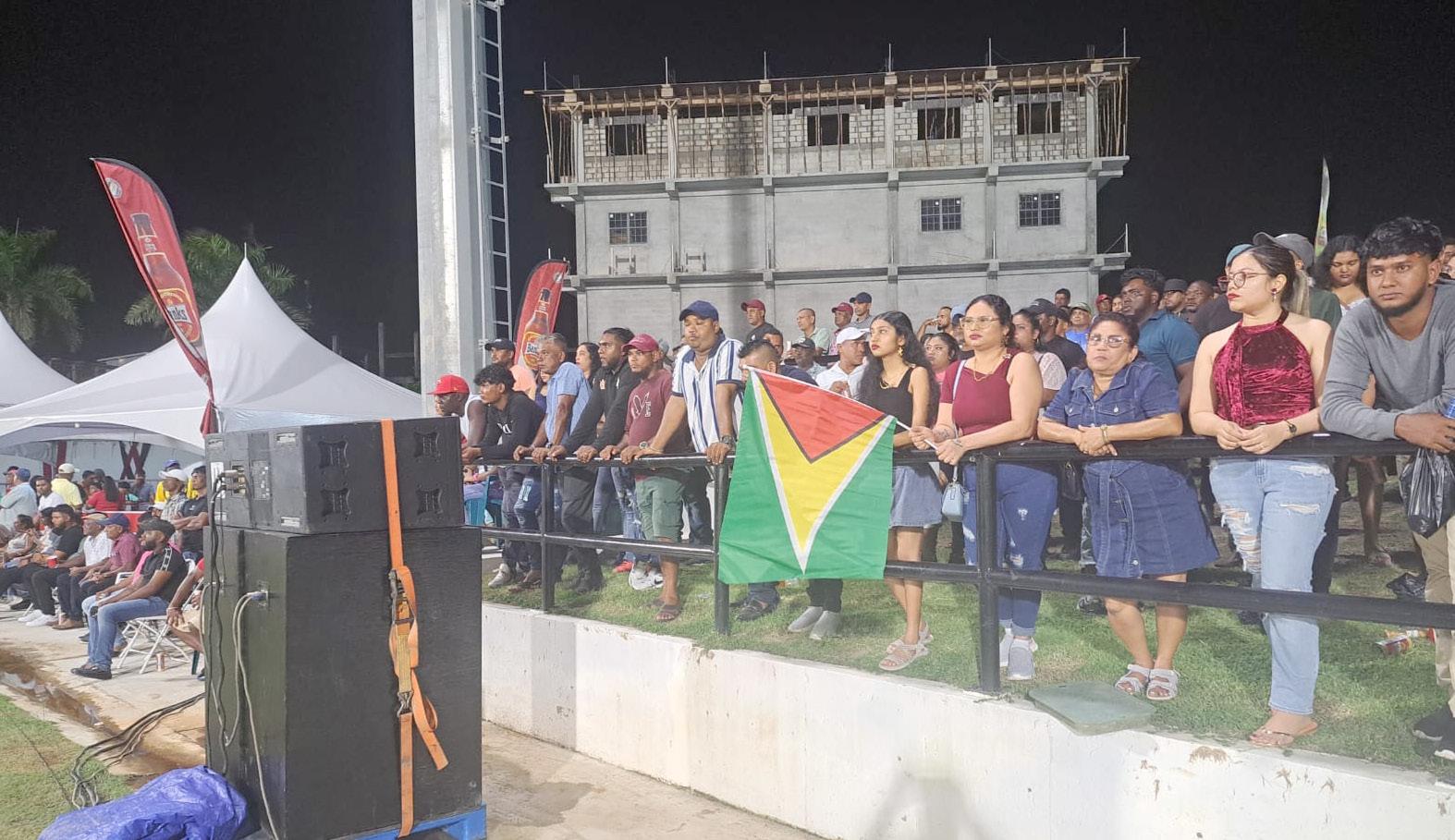

LONDON, England, (CMC) – JAMAICAN umpire Jacqueline Williams and Vrinda Rathi have been named as the onfield umpires for the ICC Women’s T20 World Cup final, which will be played at the famous Lord’s Cricket ground today
The officiating team for the highly anticipated final between Australia Women and England Women was announced by the ICC on Friday, and also includes Kim Cotton as third umpire, Nimali Perera as the fourth umpire and GS Lakshmi as match referee.
In the ongoing tournament, the 50-yearold Williams was in the middle of the opening clash between England and Sri Lanka and also presided over England’s 40-run semi-final win over South Africa, as well as Australia’s crucial six-wicket victory against India. Meanwhile, it will be a maiden Women’s T20 World Cup final appearance as an on-field umpire for Rathi.
WITH the ninth edition of the Prime Minister T20 softball Cup set to resume in the first weekend in October, following a one-year hiatus, organisers, the Georgetown Softball Cricket League (GSCL) Inc is making strenuous efforts to get players countrywide involve in the grassroot game in preparation for the major event.
Towards this end, the GSCL is planning a return to the days of Major and Minor league softball and is aiming to attract teams countrywide.
According to the GSCL, registration commences on Tuesday and interested teams are advised to contact Regal Stationery & Computer Centre, 69 Seaforth Street, Campbellville, Greater Georgetown for registration forms. Teams will be allowed to register a minimum of 18 players. The tournament is set to get underway on Sunday, July 26.
Apart from Georgetown, the GSCL is also aiming to stage matches in Essequibo, Berbice, West Demerara and East Demerara. The Georgetown/East Demerara leg is scheduled to be played at Ogle, Better Hope and LBI.
Entrance fee per team is $20,000 which will go mainly towards the acquisition of grounds while teams will also be responsible for the paying of umpires’ fees.
The winning teams in each category (Major and Minor) will cart of $300,000 while runners-up are guaranteed $100,000.
In addition to the two finals, the GSCL also explained that a special feature game will be played on the said day featuring joint Over-40 and Over-50 players whereby each team will comprise of five Over-40 and six Over-50 players. Several government officials are also listed to participate.
CALIFORNIA, United States (CMC) – ROVMAN Powell blasted a boundary-studded half century to carry the Los Angeles Knight Riders to a comfortable six-wicket victory over the Texas Super Kings in their Major League Cricket contest here on Friday.
The powerfully built Jamaican bludgeoned 73 off just 27 balls, inclusive of six sixes and six fours, while Colin Munro scored an unbeaten half century as the Knight Riders chased down the Super Kings’ total of 173 for five, ending on 175 for four in 18.4 overs.
The pair shared a match-winning partnership of 107 runs off a mere 41 balls that rescued their side from a shaky position of
59 for three in the 11th over.
With 40 runs required off the last four overs, Powell, who was named Player-ofthe-Match, essentially ended the contest by hitting Adam Milne for two sixes and three fours, which also brought up his 50 off 18 balls. By the time he was dismissed the Knight Riders only required eight runs, and Munro took the side to an easy victory with eight balls remaining.
Earlier, Sunil Narine (2-22) and Jason Holder (2-48) helped limit the Super Kings to their eventual total despite a knock of 80 off 55 balls from opener Saiteja Mukkamalla.

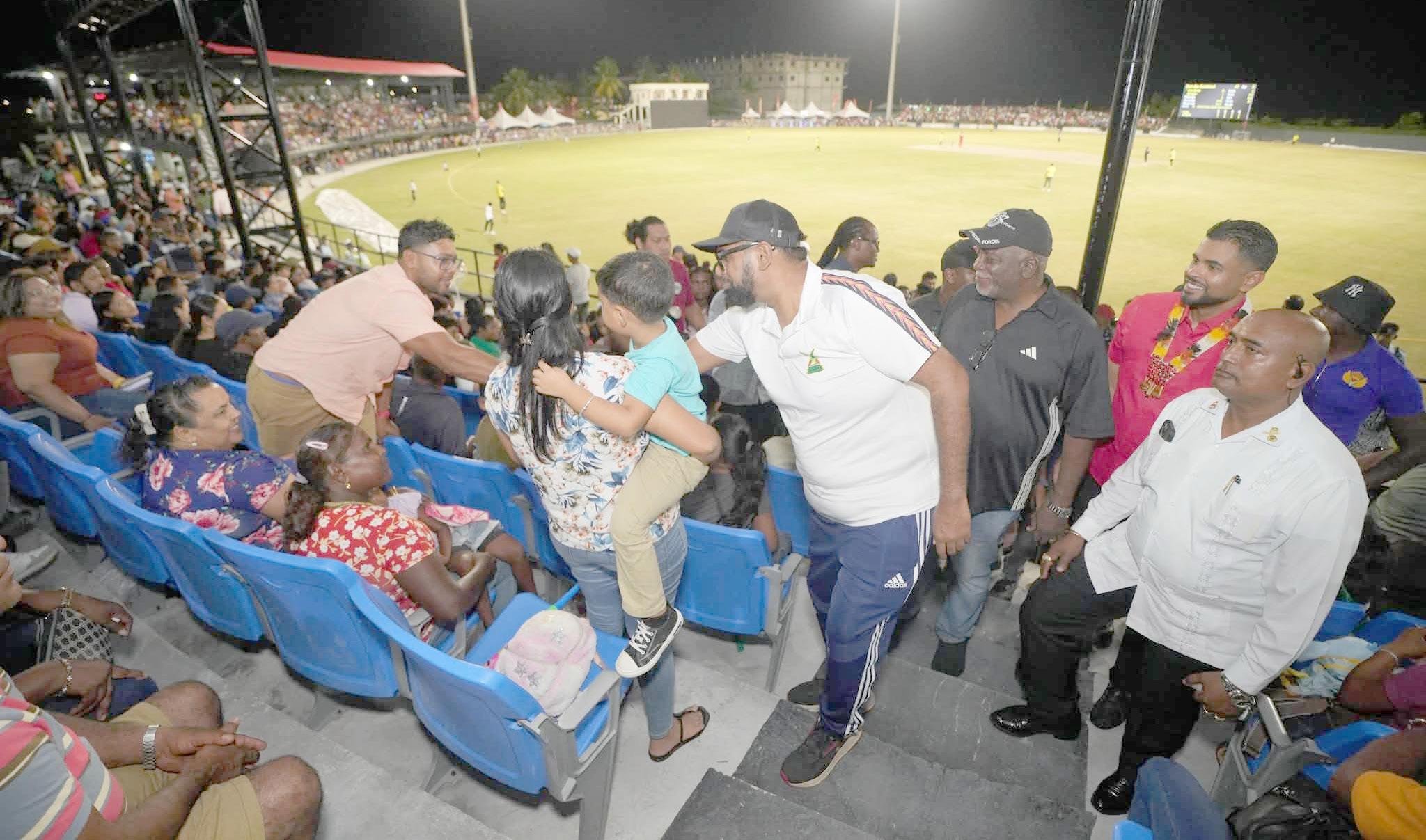
President, Dr Irfaan Ali engaging with spectators at the opening of the facility on Friday evening
THE Guyana Amazon Warriors have hailed the inauguration of the new Anna Regina Stadium, branding the venue a major milestone in the country’s rapid emergence as one of the Caribbean’s premier cricketing destinations.
The franchise expressed immense enthusiasm for the prospect of taking the field at the new facility in the near future, noting that the venue presents a golden opportunity to
bring elite, world-class cricket directly to a deeply passionate fan base in the Essequibo region.
Beyond expanding the country’s portfolio of international-standard sporting infrastructure, the Warriors believe the stadium will serve as a vital catalyst to inspire the next generation of home-grown talent across Guyana.
In a formal statement, the franchise

extended its congratulations to President, Dr Mohamed Irfaan Ali and the Government of Guyana for their sustained investment in sports infrastructure.
This ongoing development—which will soon see another major addition with the anticipated opening of the Palmyra Stadium in Berbice—has firmly solidified Guyana’s standing as a premier hub capable of hosting major global cricket events.
While future fixtures in Essequibo await, the Amazon Warriors’ immediate focus shifts to the upcoming ExxonMobil Guyana Global Super League, scheduled to run from July 23 to August 1.
Tickets for the tournament are currently available online and at the local box office as the franchise prepares to showcase its brand of cricket on the international stage once more.