



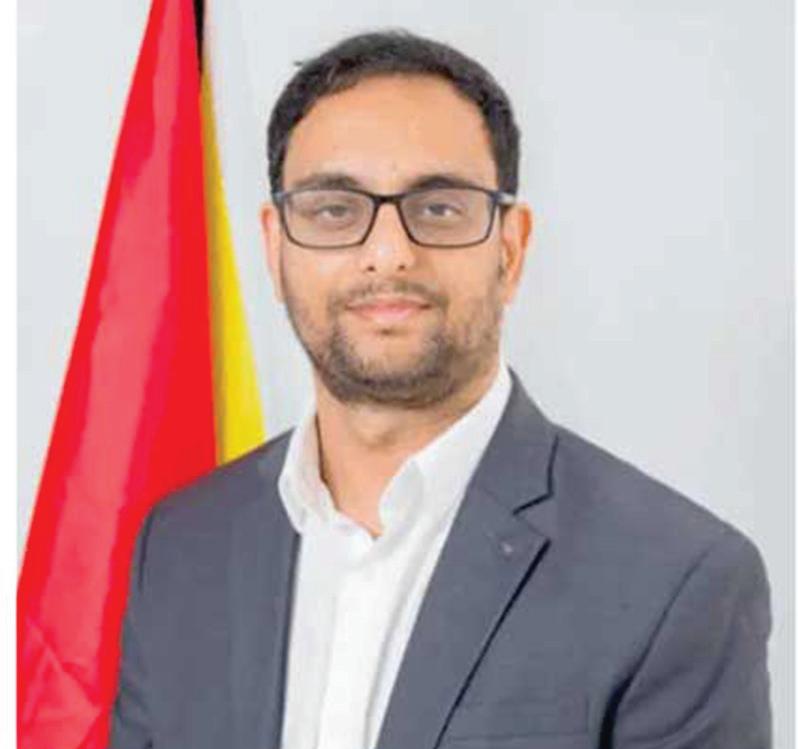
THE success of the newly passed Guyana Development Bank legislation should not be measured by the amount of money the institution lends, but by the jobs it creates, the businesses it helps to thrive and the opportunities it generates for Guyanese across the country, Minister of Public Service, Government Efficiency and Implementation Zulfikar Ally has said.
Ally made this known while delivering remarks recently, during which he argued that the institution’s true value would lie in its impact on people’s lives and its ability to broaden participation in the country’s rapidly expanding economy.
“The Guyana Devel -
opment Bank should not be judged only by how much money it disburses,” Ally said. “It is important to consider the impact of those disbursements that it will produce.”
According to the minister, those outcomes should include the number of jobs created, the extent to which financing reaches businesses operating outside the traditional coastal communities and how many enterprises remain successful after receiving support
He said the legislation comes at a critical time for Guyana, noting that the country is experiencing unprecedented economic growth fuelled by major investments, infrastructural development and the emergence of new industries.
However, he cautioned that a financing gap still exists, one that could prevent many Guyanese from participating fully in the country’s economic transformation.
“Guyana has the physical space. It has the infrastructure agenda. It has rising household income. It has tens of thousands of newly registered businesses. It has an emerging entrepreneurial class, but it also has a financing gap that, if left unresolved, will limit who participates in the country’s transformation,” Ally said.
He explained that the development bank is intended to close that gap by providing access to financing for groups that have traditionally faced challenges securing capital,

including first-time borrowers, women entrepreneurs, young people, rural producers and residents of hinterland communities.
The minister also said the institution would create opportunities for persons with disabilities seeking to establish businesses, farmers looking to invest in agro-processing ventures, single mothers hoping to expand their enterprises and families striving to build businesses of their own.
Framing the legislation as more than the creation of another financial institution, Ally said the government was establishing a disciplined and accountable development-finance platform capable of supporting enterprise development while promoting shared prosperity.
He said that since taking office in 2020, the People’s Progressive Party/
Minister
Civic (PPP/C) administration has overseen one of the most significant periods of economic expansion in Guyana’s history through prudent financial management and sustained investment in social sectors.
As the economy continues to grow, he said, the government has a responsibility to ensure that growth is inclusive and translates into improved livelihoods, expanded opportunities and wealth creation across all communities.
“The purpose of this Bill is not simply to cre-
ate a bank,” Ally told the House. “It is to create a disciplined, accountable development-finance platform that allows Guyanese enterprises to participate in the next stage of national growth.”
He added that if properly governed and rigorously managed, the development bank would finance not only businesses, but also strengthen what he described as “the social contract of shared prosperity” by ensuring that more Guyanese benefit from the country’s economic progress.

GUYANESE will today have the opportunity to help shape what could become a new blueprint for community development as the government launches a nationwide series of consultations on its ambitious Model Village Initiative.
The consultations
Market.
The exercise will then move to Region Four on Tuesday, where consultations are scheduled for Kaneville, Grove and Diamond along the East Bank of Demerara.
On Thursday, residents of Melanie, Mon Repos, Good Hope and
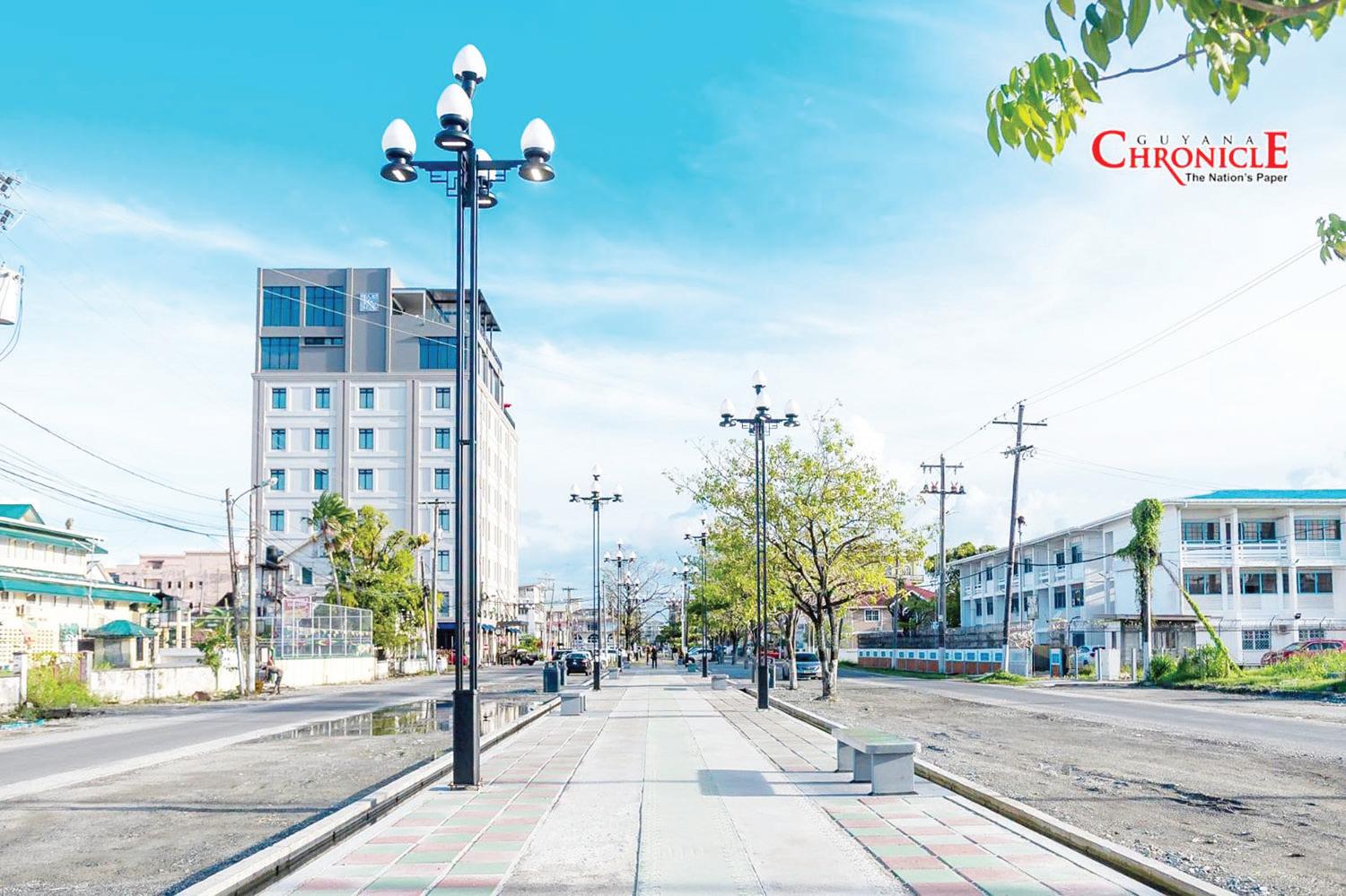
Although the concept of model communities is not new to Guyana, the current initiative seeks to build on previous efforts by focusing on the comprehensive transformation of existing villages through community-centred planning.
In 2017, the Central
allocation of house lots to the creation of complete, liveable communities.
The president has noted that Budget 2026 provides $8 billion for a nation-wide community enhancement programme, including the construction of concrete drains and recreational spaces.
housing backlog of approximately 75,000 to 78,000 applications, more than 50,000 of which are in Region Four.
To address this demand, the Government’s 2025-2030 Strategic Housing Plan aims to eliminate the backlog in most regions by 2027
Executive Officer of the Central Housing and Planning Authority (CH&PA), Dr Martin Pertab, said innovation has become a central pillar of Guyana’s housing strategy as the country works to meet growing demand.
mark the next step in plans to transform communities through improved roads and drainage networks, expanded green spaces, recreational facilities and other modern amenities, with residents being invited to engage directly with President, Dr Irfaan Ali and play a direct role in determining how their villages evolve
According to a government notice, the first consultation will begin at 09:00hrs (9:00 a.m.) today at the Leonora Secondary School in Region Three.
Meetings will continue throughout the day at Zeelugt, Goed Fortuin, Parfait Harmonie and Tuschen before concluding at the Pouderoyen
Enmore will be engaged, while the consultations continue on Friday in Region Five at Bush Lot, Bath and Hopetown.
The outreach will extend to Region Six on Saturday, with meetings planned for Port Mourant, Rose Hall, Skeldon and New Amsterdam, before concluding in Region Two next Monday with consultations at Supenaam, Suddie, Charity and Anna Regina.
The initiative forms part of the government’s broader vision of creating communities that are not only better connected through improved infrastructure, but also offer enhanced public spaces, environmental sustainability and a higher quality of life.
Housing and Planning Authority (CH&PA) established a model housing village at Perseverance on the East Bank of Demerara to showcase modern housing designs, innovative building materials and planned community development.
By engaging residents directly, the government hopes to ensure that the development of these model villages reflects the priorities and needs of the communities they are intended to serve.
The consultations come as President, Dr. Irfaan Ali continues to advance a vision that shifts Guyana’s housing programme beyond the
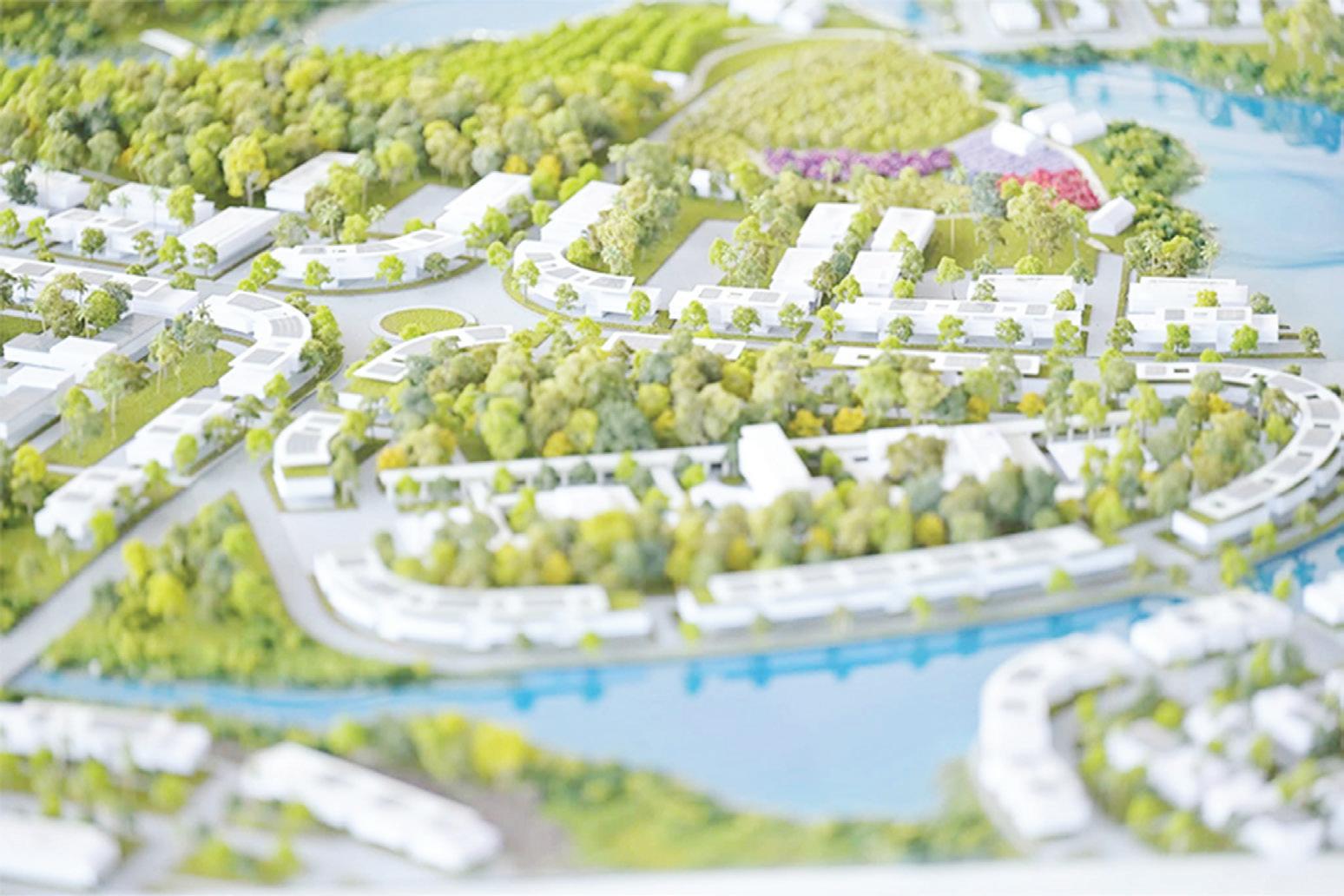
“We are building an ecosystem to support quality living, to support better family environment, better community environment, and that is a heavy focus of the government programme,” President Ali said.
According to the Head of State, these investments are intended to ensure that new and existing housing schemes provide not only shelter, but safer, greener and more cohesive environments where families can thrive.
President Ali has acknowledged that, although the government has surpassed the PPP/ C’s manifesto target of distributing 50,000 house lots, Guyana still faces a
while placing greater emphasis on home construction and social housing for vulnerable groups, including single mothers, persons living with disabilities and senior citizens.
The president has also announced plans to construct between 3,000 and 5,000 social homes nationwide.
At the same time, the administration is investing in new development corridors and urban centres designed around modern planning principles, with Silica City identified as Guyana’s flagship smart city development.
INNOVATION
KEY TO FUTURE
HOUSING
Meanwhile, Chief
Addressing this year’s International Building Expo, Pertab said traditional construction methods alone will not be sufficient to deliver the scale of housing and infrastructure required.
“As we build more houses, communities and infrastructure, we are also mindful of how we build. We have realised that our housing challenges of today and tomorrow cannot be solved using yesterday’s methods alone,” he said.
“This is why innovation has become a central pillar of our development strategy. We are actively exploring modern construction technologies, including modular prefabricated housing solutions.”
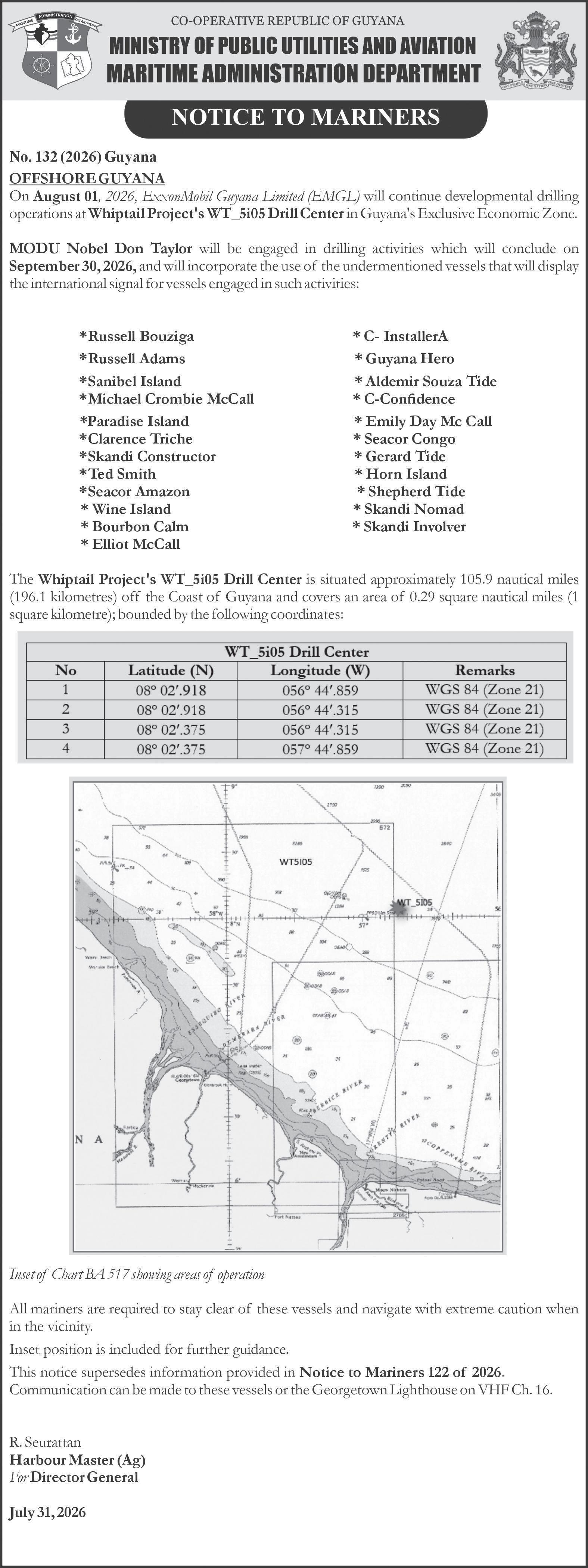
(CMC)—The Barbados-based Caribbean Climate Outlook Forum (CariCOF) on Friday said that as the region goes into the peak of the Atlantic Hurricane Season and the Caribbean Wet Season, El Niño is strengthening and water around the Caribbean is steadily warming.
El Niño is a natural climate pattern defined by the warming of ocean-surface temperatures in the central and eastern Pacific Ocean, and weakened trade winds.
It recurs every two to seven years as part of the broader El Niño Southern Oscillation (ENSO)
It also said that there will be irregular and less frequent bouts of Atlantic Hurricane Season activity, as well as the potential continuation or exacerbation of drought impacts, particularly in Grand Cayman and the Lesser Antilles.
In addition, there will be lower-than-usual rainfall frequency than in most years
In its latest Caribbean Climate Outlooks publication covering the period August to October this year, CariCOF said that a very strong El Niño in the Pacific implies a number of factors, including intense humid heat into the peak of the Heat Season in September, culminating in recurrent heatwaves, especially in the Lesser Antilles and Guianas.


and despite being less frequent than in most years, the expected occurrence of excessive rainfall events leads to high to extremely high potential for flooding, flash floods, cascading hazards and associated impacts.
It said that rainfall totals from August to October are likely to be the usual or less across most of the Antilles, French Guiana, coastal Guyana, and Suriname, as well as the
Northwest Bahamas and western Belize.
As of July 1, severe or worse short-term drought has developed in Antigua, parts of Central Bahamas, eastern Belize, Grand Cayman, St Kitts and Nevis, and southwest Tobago, with long-term drought occurring in easternmost Cuba, Grenada, eastern Guadeloupe, southwest Jamaica, Martinique, St Lucia, St Vincent, and northernmost Trinidad.
CariCOF said that by the end of August, agricultural drought will be evolving in The Bahamas, Grand Cayman, Martinique and parts of coastal Suriname, and might possibly develop or continue in the ABC Islands, northern Belize, Dominica, Grenada, St Kitts, St Lucia, and the United States Virgin islands (USVI).
By the end of October, short-term drought would be evolving in
the ABC Islands (Aruba, Bonaire and Curacao), northwest Bahamas, Grand Cayman, Dominica, Grenada, Martinique, northwest Puerto Rico, St Kitts, St Lucia, Tobago and the USVI, and might possibly develop or continue in the northern Bahamas, north & southeast Belize, southern Dominican Republic,. coastal French Guiana, Martinique, northeast Puerto Rico, other parts of the Leeward Islands.
CariCOF is predicting that by the end of November this year, long-term drought would be imminent in St Lucia and evolving in Antigua, the northwest Bahamas, Grand Cayman, Martinique and St Kitts, and might possibly develop or continue in the ABC Islands, the northern Bahamas, Grenada, Guadeloupe, St Vincent, Tobago and the USVI.

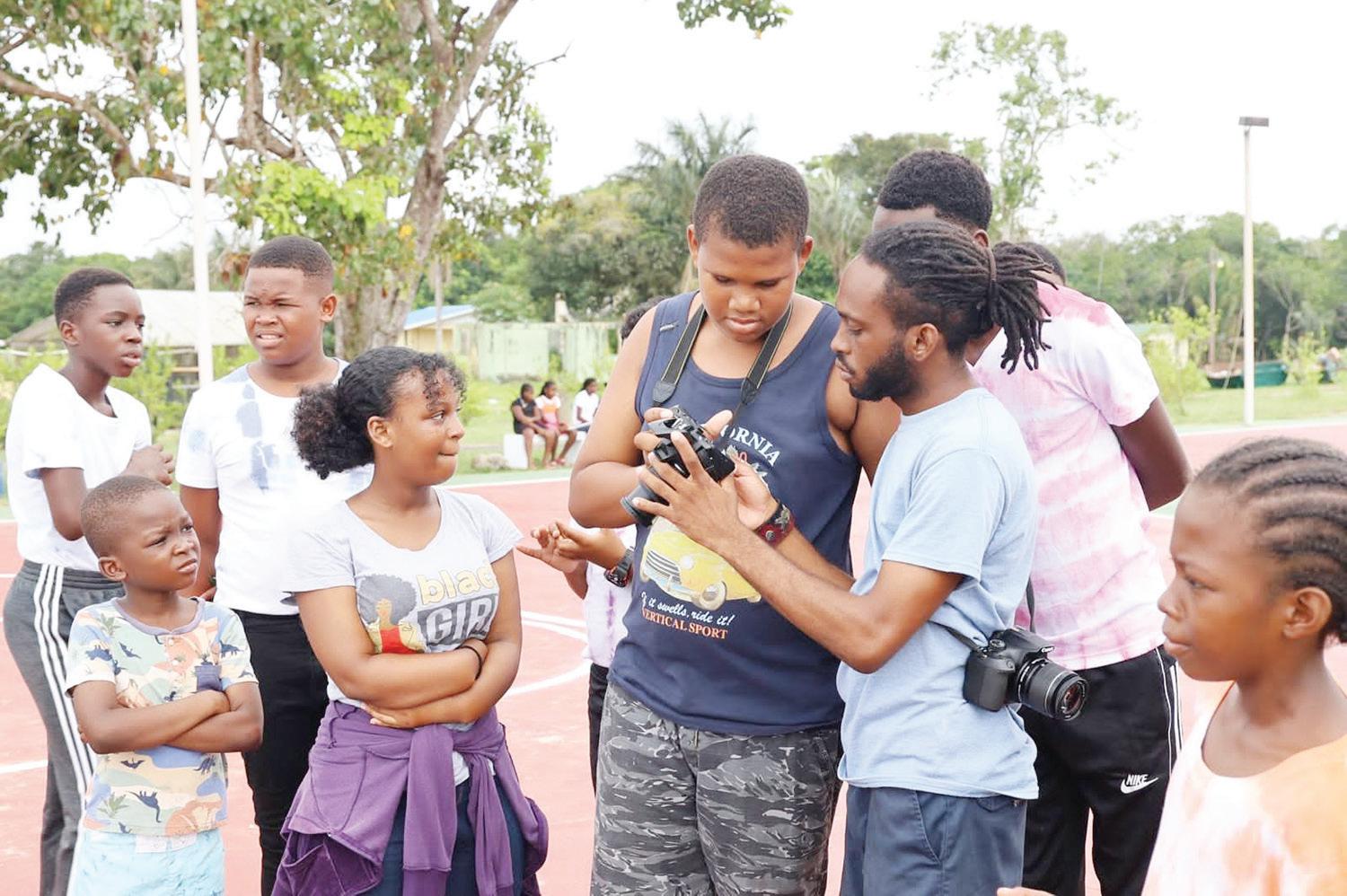
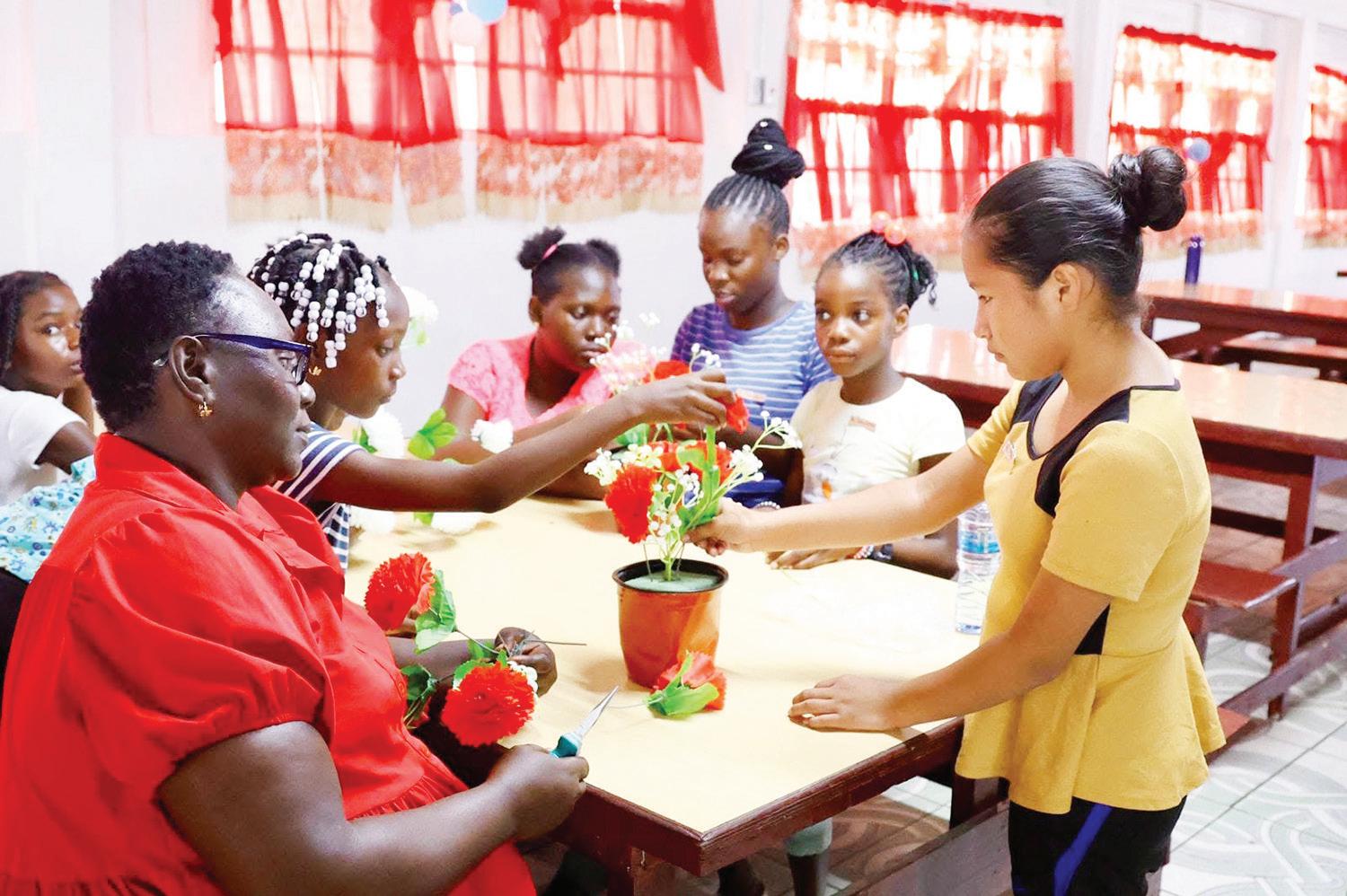
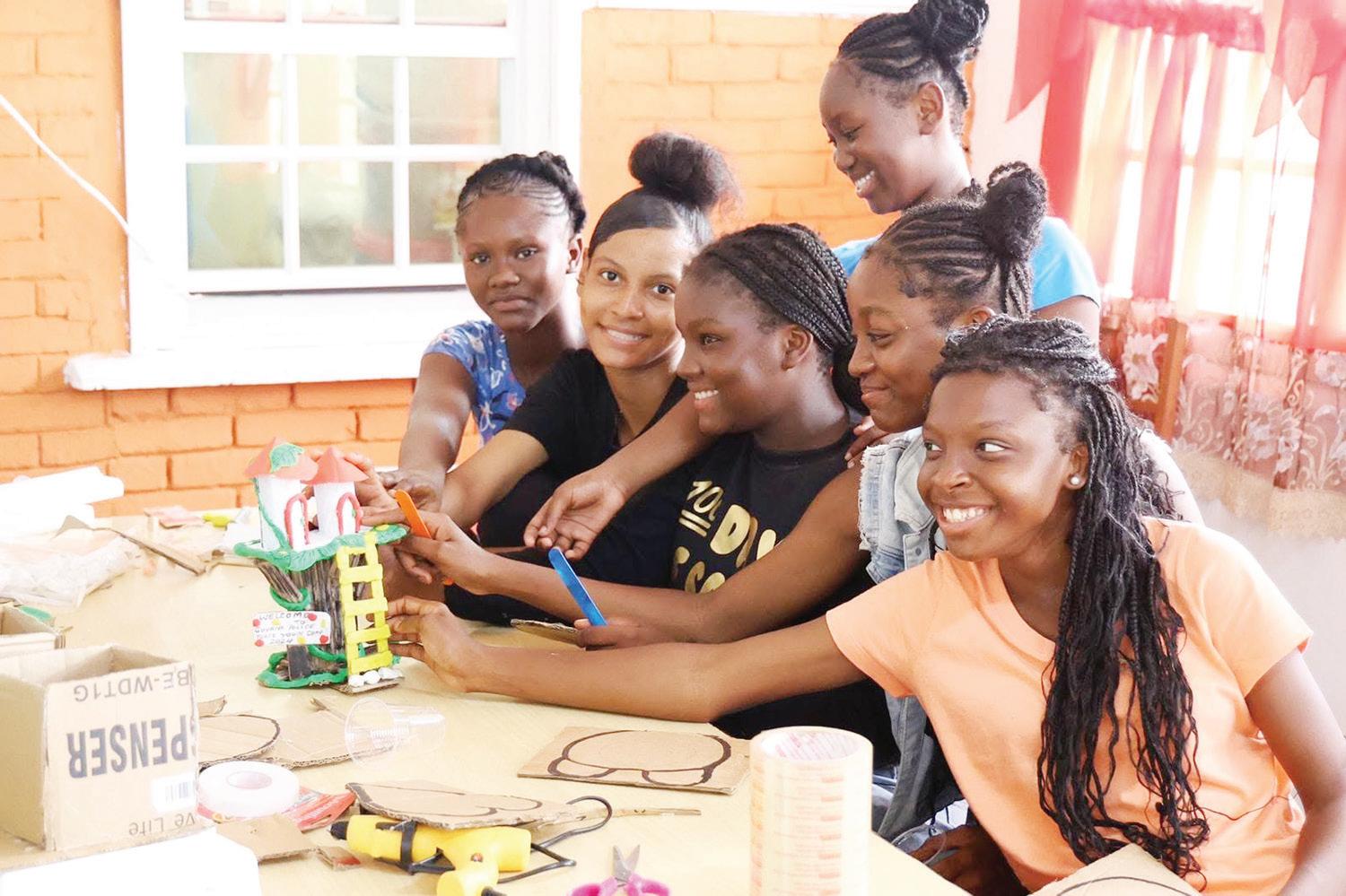
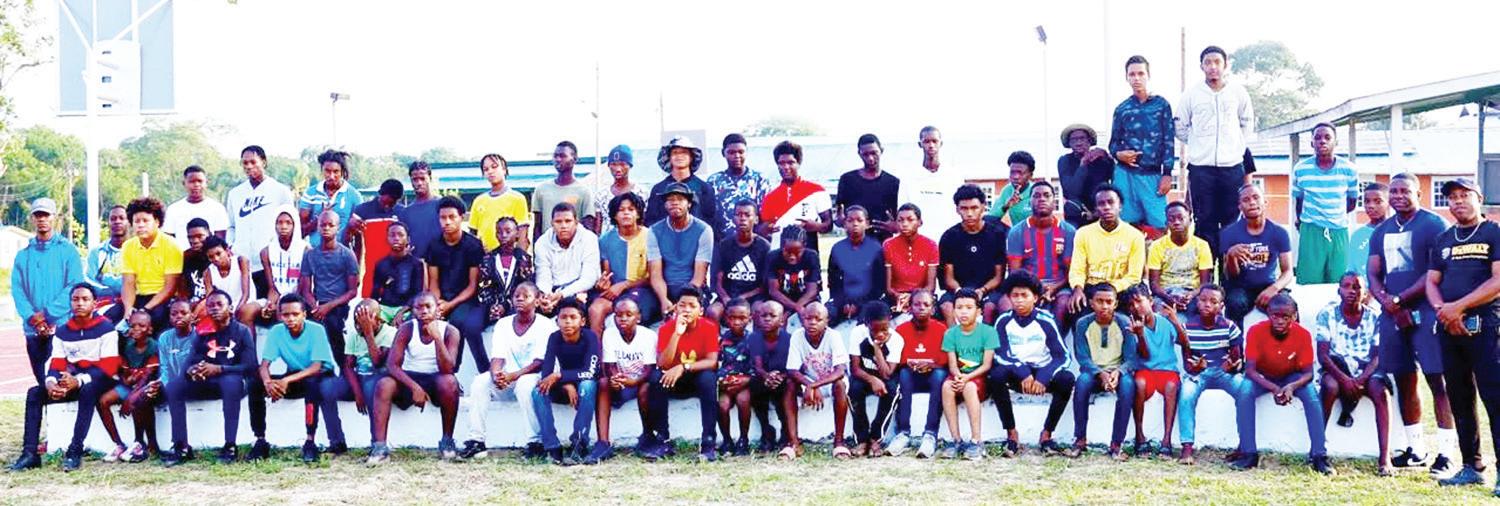
The camp, which runs from August 3 to 7, forms part of the force's continued efforts to promote positive values, discipline and team work among the nation's youth.
THE Guyana Police Force's Annual Youth Camp gets underway today at the Kuru Kuru Training Centre on the Soesdyke-Linden Highway, bringing together young people from across the country for five days of leadership training, personal development and community engagement.
Ahead of the opening, Commissioner of Police Dr Clifton Hicken met with Deputy Commissioners Ravindradat Budhram and Errol Watts, President of the Guyana Association of Women Police (GAWP), Senior Superintendent Dr.
Nicola Kendall, Head of the Community Relations Department Superintendent Leslyn Smith and Community Relations Liaison Officers from the 12 Regional Police Divisions to finalise preparations.
Throughout the week,
participants will engage in educational, recreational and developmental activities while interacting with members of the Guyana Police Force and other stakeholders.
According to the force, the initiative aims to strengthen positive rela -
tionships between young people and law enforcement through open communication and constructive engagement, while investing in the development of future leaders.
(Aljazeera) At least five people have been killed and 41 are missing after a ferry caught fire off Indonesia’s Madura Island, the country’s search and rescue agency said.
The vessel, the Mutiara Sentosa 2, caught fire between 6am and 7am local time on Sunday (23:00 and 00:00 GMT), while travelling from Surabaya in East Java province to Makassar in South Sulawesi. Madura Island lies off the northeastern coast of Java.
Indonesia’s National Search and Rescue Agency (Basarnas) said 271 people were on board when the fire broke out – 232 passengers and 39
crew members. According to Basarnas, the ferry operator, PT Atosim Lampung Pelayaran, alerted rescuers about an hour after the fire broke out, after receiving a report from the captain that the vessel was ablaze near the northern tip of Madura Island. Contact with the ferry was later lost.
Authorities later determined the ferry’s location, about 19 nautical miles (35km) north of Buruan Sapudi Island, after establishing communication with a nearby cargo vessel. The ship, however, was unable to approach the burning ferry because it was carrying flammable cargo.
Footage released by

Basarnas of the incident showed thick black smoke billowing from the ferry as passengers wearing life jackets gathered on deck awaiting rescue.
Videos circulating on social media also appeared to show frightened passengers clustered on the upper
decks, with some jumping into the sea as flames spread across the vessel.
The ferry was later reported to be almost engulfed in flames as a tugboat and another passing vessel moved in to begin evacuating passengers.
By Sunday afternoon,
several nearby vessels managed to rescue 225 passengers and crew and recovered five bodies. At least 41 people remained unaccounted for.
A search-and-rescue operation was continuing, with authorities working to locate those still unac-
counted for.
Basarnas said a rescue vessel was dispatched from Surabaya, although it was expected to take about six hours to reach the scene. A rigid inflatable boat sent from a nearby rescue post later returned to shore because of rough seas and high waves, while the Indonesian navy deployed a warship to assist in the operation. The cause of the fire was not immediately known.
Indonesia, an archipelago of more than 17,000 islands, frequently experiences maritime accidents, in part because of lax enforcement of safety regulations and unpredictable weather.

FOR decades, the dream of owning a home has been tied to a fairly straightforward formula: Acquire a house lot, build a house and move in. But anyone who has lived in a rapidly developing community knows that a house alone does not necessarily provide the quality of life families expect. The condition of the roads, drainage, recreational facilities, green spaces, security, access to services and even the relationship between neighbours ultimately determine whether somewhere simply has houses or whether it truly becomes a community.
It is against this backdrop that the nationwide consultations on the government's
Model Village Initiative, beginning today, should be considered. Residents will have the opportunity to sit with President Dr. Irfaan Ali and government representatives and say what they believe their communities require. That consultation is important because people living in Leonora, Zeelugt, La Parfaite Harmonie, Diamond, Enmore, Bath, Port Mourant or Anna Regina will understand their communities in ways that planners sitting in an office cannot. They know which drains overflow, where traffic becomes unbearable, where children have nowhere safe to play and what facilities are missing.
This is also the natural next stage of Guyana's
housing development. The government has already surpassed its commitment to distribute 50,000 house lots, yet there remains a backlog of approximately 75,000 to 78,000 applications. That demand tells its own story about home ownership and the aspirations of Guyanese families, but addressing it cannot simply mean opening more land and distributing more lots. The challenge now is to ensure that communities being created today do not inherit the planning problems Guyana will spend decades trying to correct tomorrow.
Budget 2026's allocation of $8 billion for community enhancement, including concrete drainage and recreational facilities, therefore,
HANDS down, the most ubiquitous business formation on the Guyanese landscape are Chinese supermarkets. They are literally on every main road, street, lane, culde-sac, nook and cranny. By the very nature of life, in any field, especially if it has a major effect on economics and commerce, those upon whom it operates must take notice. It is my view that such a phenomenon should not merely attract attention; it should evoke regulatory scrutiny from government before it grows into an uncontrollable monster.
A few examples will suffice. The proliferation of small betting shops has become so ubiquitous that it had to attract some new forms of scrutiny and regulation. The ubiquitous presence of those e-bikes is inescapable and has been attracting new forms of regulatory scrutiny. Also of recent vintage, specially adopted noisy motorcycles and moving discotheques crammed in the back of cars must, of necessity, attract some new forms of regulatory scrutiny. Since I am on this issue, please allow this digression. There is a proliferation of new
building contractors who face little or no scrutiny; it's time for a regulatory framework- that’s for another column.
Back to the Chinese supermarkets. I am essentially making out a case for closer regulatory scrutiny not because of any phobia, hatred or ill will; I simply want the best deal for the people of Guyana. My first essential point is that, if for no other reason, the mere nature, pace, scale and effects of the spread of supermarket business should attract higher levels of regulatory attention, study and scrutiny. It would be foolish
deserves to be viewed within this wider context. So, too, should the planned construction of between 3,000 and 5,000 social homes for vulnerable citizens and the continued development of new urban centres such as Silica City. Taken together, these initiatives suggest that housing policy is gradually moving beyond providing shelter towards considering how people actually live. There is also an economic argument for getting this right. Better-planned communities protect property values, encourage private investment and small-business development and reduce the long-term cost of constantly repairing infrastructure that was poorly designed in the first place. Proper drainage
matters when increasingly unpredictable rainfall threatens homes and livelihoods; recreational spaces matter when communities are grappling with youth violence and social problems; and green spaces become increasingly valuable as development consumes more available land.
None of this will work, however, if consultation becomes merely an exercise in listening. Residents who participate must eventually be able to recognise some of their concerns in the communities that emerge. Equally, citizens have responsibilities of their own. Government can construct drains, but those drains cannot function when garbage is dumped into them. Recreational spaces
cannot survive without communities taking ownership of them, and neighbourhoods cannot become safer without residents looking out for each other.
Guyana is changing quickly, and the physical appearance of our villages will inevitably change with it. The opportunity before us is to ensure that growth does not simply produce more houses, roads and concrete, but communities where people genuinely want to live, raise children, and grow old.
That is ultimately what the Model Village Initiative should seek to achieve: not villages that merely look better on a plan, but communities that work better for the people who call them home.

for those in charge of our regulatory levers to simply ignore or dismiss it as benign commerce. So, I would ask readers to hear me out.
Have you ever wondered how a Chinese national, just landed from China, knows there is a specific economic opportunity for a supermarket in some secluded back street in a remote countryside village? That is so because the Chinese government has commerce attachés working in Guyana. Their
task is to study the business landscape of Guyana and build community profiles. In other words, they have economic data on communities organized and collated in scientific ways even the Government of Guyana does not have.
In other words, a world superpower is using the awesome power of its commerce department and treasury together with advanced (big) data analysis to drill down to even the commercial minutiae of
individual communities. Even communities tucked away in remote locations. So, when the next Chinese national arrives to do business, he has ready-made and up-todate information that is backed by the confidence of his government. He can therefore boldly and confidently go to 3rd Street Line Path Village, Middlewalk Anns Grove, Lovers Lane Linden, 5th Avenue Bartica or Independence Boulevard Al-
IT has been rumoured since last year that Aubrey Norton is chaperoning Terrence Campbell for leadership of the PNC. On becoming parliamentary leader of the APNU parliamentary group, he is on record as saying that APNU will campaign in PPP’s constituencies. He named Port Morant and Babu John. For more on this see my column of Friday, September 26, 2025, “The Hinds/Campbell showdown in APNU.”
Last week, Hinds took a startling position on the future of the PNC. He did not say APNU. He said the PNC. What Hinds as an APNU parliamentarian enunciated is a PNC disaster in the making. His output was shocking, disturbing, politically insane, and borders on the oxymoron as being comically dangerous. It will take more than
one column to expose the craziness in what Hinds mouthed off.
He argued that history has shown that every election the PNC won, it did so by consolidating and protecting its African base and because the PNC knows that it cannot win solely with its African base, it has sought covenant with parties that could bring crossover votes (CVs). That happened and the PNC won four times.
In 1964, the United Force brought the CVS. In 2011, 2015 and 2020 (but in 2020, the PPP cheated), the PNC won those elections because the AFC brought the CVs. In 2025, he believes the PNC lost because it did not seek out a coalition partner to bring in the CVs. He added that unfortunately, in 2025, the PNC did not “run up” (his words) its African base. That is for another discus-
sion.
He went on to add that the PPP lost in 2020 and 2025 because it is incapable of winning even with CVs so in 2020 and 2025, it rigged the national elections and in 2025, it also bought votes. In effect the PPP is incapable of winning an election on its own but that is for another column. All the PNC leaders should listen to what Hinds outlined because he is part of the APNU coalition and APNU as the entire world knows is led by the PNC.
Now do the two senior leaders in the PNC – Ganesh Mahipaul and Terrence Campbell - accept the theory of Hinds? What are the danger signals in Hind’s output? One – the PNC has been destined to lose elections only if it teams up with a partner that adds the CVs to the African base of the PNC.
Which party of his -

toric significance like the PNC is willing to admit that it cannot go beyond its African base? Forbes Burnham and Desmond Hoyte as PNC leaders attracted dozens of high-level non-African and Indian Guyanese, many of whom were from the PPP. An Indian PPP defector, Ranji Chandisingh became the PNC’s general secretary and Vincent Teekah was being schooled to be second in charge. Desmond Hoyte seriously courted Indian Guyanese.
Two- If Mahipaul and Campbell accept the theory of the indispensability of the partner that will bring the CVs, then that smaller partner will determine what the PNC must do and what the shape of the government must be like. A simple analogy will suffice. You have a back
house and need the space in front of your premise to publicise your manufactures.
That front house owner is going to crucify you with a high price because he knows you need him to survive. What Hinds has said is that the United Force (UF) and the AFC brought the PNC to power and the PNC would have had power in 2025 if it had a partner to do for the PNC what the AFC and UF did – bring in the CVs. So, in 2030, if the PNC seeks out a partner for the elections and that partner knows that it alone can bring the PNC to power, then it has the latitude to dictate to the PNC.
What will be the PNC’s response? It has only one card to play – tell its partner that without the PNC’s African base, your CVs
will not propel you into power. That is a point, but who is in a stronger position to bargain? The answer is the smaller partner. And that is what happened in 2025. The AFC told the PNC you need us to get into government so we will decide the shape of things. The PNC rebuffed the AFC and the rest is history. But a fact needs to be mentioned about 2025. There was no longer a PNC African base. The base went over to Azruddin Mohamed. So contextually, the PNC’s may not have a future.
DISCLAIMER: The views and opinions expressed in this column are solely those of the author and do not necessarily reflect the official policy or position of the Guyana National Newspapers Limited.
bouystown, knowing that his business structure and model is well thought out and his chances of success is high.
There is a Chinese Association in Guyana with a commerce arm that is also tied back to the Embassy of the Peoples Republic of China with highly trained resident commercial attachés. Together they form a formidable business coaching and guidance mechanism which allows Supermarket owners to even navigate cultural peculiarities of specific locations. All of this comes at zero expense to the Chinese national. Further, the Chinese Government has a Department in its Ministry of Commerce that provides diaspora funding for those wishing to invest in
certain countries around the world. Also, under Chinese “One Belt, One Road” program, a.k.a The Belt and Road Initiative (BRI), which has the entire world mapped out as one big commercial space to be influenced and controlled by China with highly specific policies for each country. Under this BRI program, there is huge funding for Chinese nationals to, either individually or via business swarms, control lanes leading to the “One Road”, with the eventual outcome to control the entire “Road”. Even without the many other dimensions I can go into, using only the factors mentioned above means that it is impossible for ordinary Guyanese to compete with any Chinese business, especially those
that operate in swarms, like supermarkets. If a typical Guyanese were to contemplate supermarket ownership, he would have to do his own market research, find his own collateral and face commercial banks for funding together with all the other antecedents. Essentially, a small family in Guyana has to compete against, not only the individual Chinese National, but also a highly organized Chinese Association, economic and commerce data research, all backed with highly developed and specialized policies from one of the world’s greatest superpowers.
I am not one given to conspiracy theories but I beg you to also spare a thought for the exponential rise in Chinese fast-food chains and com-
munity diners together with massive growth in traditional Chinese restaurants. Taken together with the ubiquity of Chinese Supermarkets and some very large Chinese farms in Guyana, this represents a controlling interest of well over 70% of our retail food consumption. Such strong ties back to the Chinese government mean that if China ever finds it strategic to its own interests, it can engineer scarcity of a particular nature any time it wants to. There is a case from the USA that may be instructive. The great American basketballer LeBron James once made a comment about the lack of certain political freedoms in China. The Chinese government was livid and simply asked all firms owned by Chinese na -
tionals around the world, especially those that benefitted from government financial schemes, to stop doing business with any product line endorsed or owned by James. He was forced to apologise. The government of China can use this same power via its highly organised structures in Guyana to punish a particular manufacturer. Suppose the chairman of DDL makes a comment that China finds offensive; it can order local supermarkets and restaurant chains to stop carrying DDL products. I do not have to mention the ill effects on DDL if that were to be the case.
This means that a “benign” food supply structure can have far reaching effects on things such as free speech, food scarcity and even engineer specific
business or community lock out. Further, I invite you to also contemplate the far-fetched (is it really far-fetched?) consistorial movie-styled event that there is a food-based epidemic engineered in a Beijing-controlled lab specifically for the people of Guyana. It would be a mistake for the government to treat this phenomenon as one unworthy of closer study and scrutiny together with possible regulatory changes to attenuate the negative effects. Much more in a subsequent column.
DISCLAIMER: The views and opinions expressed in this column are solely those of the author and do not necessarily reflect the official policy or position of the Guyana National Newspapers Limited.
THERE is an old Guyanese saying: "Stop acting big, stupid, like ya ain't got no sense." It is blunt, but sometimes it captures a political reality better than any carefully crafted speech. That is where the opposition party, We Invest in Nationhood (WIN), now finds itself.
Rather than allowing the country to mourn, support the survivors and families, and permit investigators to establish the facts surrounding the MV Barima tragedy, WIN has launched what appears to be a political witch-hunt. Its immediate demand for the dismissal of Public Works Minister Juan Edghill and Minister of Public Utilities and Aviation, Deodat Indar, is driven more by political theatre than by evidence.
This is premature politics at its worst.
The party, led by embattled Azruddin Mohamed and political newcomer Odessa Primus, has repeatedly inserted itself into the national tragedy in ways that appear designed to generate headlines instead of helping grieving families. Every press conference, every
confrontation, every social media video seems carefully calculated to inflame emotions rather than contribute to meaningful solutions.
That is not leadership.
Holding a government accountable is one of the most important responsibilities of any opposition. But accountability is not achieved by shouting outside a minister's residence, provoking confrontations with public officers performing their duties, or encouraging public outrage before investigations have reached their conclusions.
If WIN genuinely wants answers, there are constitutional and democratic mechanisms available. It can request meetings with ministers; question technical officials; table motions in Parliament; demand committee hearings; propose legislative reforms and scrutinise the findings of the Commission of Inquiry. That is how a serious opposition behaves.
Instead, Guyanese have witnessed noise replacing substance.
Nothing is gained by turning a national tragedy into a political spectacle. Walking outside Minister
Edghill's home will not uncover the facts. Public confrontations with law enforcement officers will not improve maritime safety. Loud speeches cannot substitute for evidence, and outrage cannot replace due process.
Governments do not cease governing because the opposition demands political sacrifices. The affairs of the nation continue. Rescue operations continue. Recovery efforts continue. Investigations continue.
Understanding that requires judgment, not simply volume.
Every Guyanese wants justice for those who lost their lives aboard the MV Barima. Every Guyanese wants answers. Every Guyanese wants to ensure that such a tragedy never happens again.
But justice cannot be built upon mob pressure or vigilante politics.
The government's responsibility is not to satisfy political impatience. Its responsibility is competence—responding to the crisis, supporting survivors, recovering victims, identifying failures, prosecuting


wrongdoing where it exists, and ensuring that no family experiences such heartbreak again.
That process began immediately.
President, Dr Mohamed Irfaan Ali mobilised national resources alongside the Guyana Defence Force, the Coast Guard, emergency responders, volunteers and private citizens in one of the country's largest searchand-rescue and recovery operations. Prime Minister Brigadier (Ret'd) Mark Phillips, Minister Juan Edghill and other senior officials became directly involved in coordinating the national response while the government established an independent Commission of Inquiry and supported criminal investigations into those who may bear legal responsibility.
No reasonable person argues that government agencies should be shielded from scrutiny. Quite the opposite. Where negligence exists, accountability must follow.
Indeed, criminal charges have already been laid against members of the vessel's crew, while the independent inquiry has been tasked with examining operational failures, identifying weaknesses and recommending reforms.
That is precisely how constitutional democracies are supposed to function. There is, however, an enormous difference between demanding accountability and exploiting grief.
Every democracy requires a strong opposition. A responsible opposition asks difficult questions, examines evidence, challenges government decisions and proposes better alternatives. It should never become a cheerleader for the government.
But neither should it become an opportunist. Responsible opposition politics requires patience, discipline and respect for due process, especially while rescue and recovery operations are still unfolding.
National tragedies should never become campaign stages.
The MV Barima disaster has understandably shaken the nation. Citizens deserve answers about maritime
safety, passenger management, emergency preparedness and regulatory oversight. Those answers should emerge through investigations that follow the evidence wherever it leads, not wherever political ambition wishes to take it.
Premature conclusions help no one. Demanding resignations before investigations conclude may energise political supporters, but it does little to establish the truth. If wrongdoing exists at any level, it should be proven by evidence, not assumed through slogans, speculation or political rhetoric.
History teaches us that effective opposition leadership during moments of national crisis is measured not by who shouts the loudest, but by who contributes the most.
A mature opposition visits grieving families without turning every visit into a media production. It requests information through official channels. It asks hard questions in Parliament. It proposes reforms. It ensures inquiry recommendations are implemented.
That is accountability, leadership and public service.
Guyana has experienced periods when political disagreements were fierce but were accompanied by respect for democratic institutions. Leaders such as Winston Murray, Robert Corbin, Deborah Backer, Joseph Harmon and the late President Desmond Hoyte often engaged in robust political battles, yet they understood that some moments demanded seriousness, restraint and national responsibility.
Too often today, that maturity is absent.
The Ali administration will ultimately be judged by whether it implements the Commission of Inquiry's recommendations, strengthens maritime regulation, improves passenger safety and prevents another catastrophe. Those are legitimate standards by which any government should be measured. The opposition should be judged by equally important standards.
Does it offer practical solutions? Does it strengthen democratic accountability? Does it help unite a grieving nation? Or does it deepen division in pursuit of political advantage?
These are questions the Guyanese people are entitled to ask. The grief surrounding the MV Barima belongs to every citizen. It is not the PPP’s grief. It is not the opposition’s grief. It is Guyanese grief.
That distinction matters because how political leaders respond to tragedy shapes public confidence in democracy itself. The months ahead should therefore be devoted to reform rather than political theatre. Maritime safety regulations must be strengthened where necessary. Passenger manifest systems must be improved if weaknesses are identified. Emergency-response procedures should be reviewed. Every recommendation emerging from the independent Commission of Inquiry deserves careful consideration and implementation.
Those are the actions that will honour those who lost their lives—not partisan grandstanding.
Leadership is not measured by the harshest headline, the loudest accusation or the most confrontational video on social media. Leadership is measured by wisdom, judgment and the ability to place the national interest above political ambition.
Guyana will recover from the MV Barima tragedy. The pain will remain, but so too will our determination to build a safer future.
Above all, Guyana deserves leaders, whether in government or opposition, who understand that some moments in our history are simply too sacred to be reduced to partisan competition.
DISCLAIMER: The views and opinions expressed in this column are solely those of the author and do not necessarily reflect the official policy or position of the Guyana National Newspapers Limited.
— says Caribbean states have transformed local climate challenges into international priorities through collective action
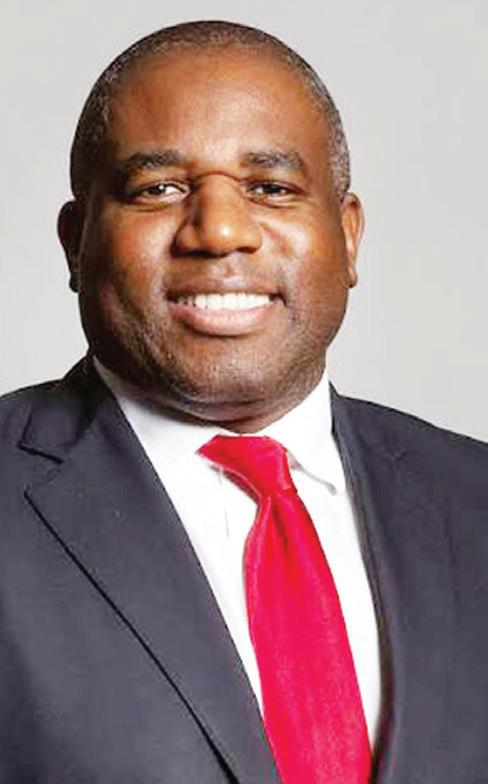
United Kingdom (UK) Member of Parliament, David Lammy has said that Guyana and other Caribbean small states have successfully placed their climate vulnerabilities at the centre of global diplomacy through decades of persistent collective action.
Speaking at a conservation event in Guyana on Friday, Lammy said that despite their limited geographical size and geopolitical influence, Caribbean nations and Small Island Developing States (SIDS) have reshaped international climate negotiations by ensuring the concerns of vulnerable countries remain on the global agenda.
"For decades, small island developing states, and Caribbean nations particularly, despite limited geographical [and] geopolitical weight, have, through persistence, collective action, moral clarity, transformed local challenges into global priorities," Lammy said.
"They ensured that the voices of vulnerable communities were heard in international forums. They changed the conversation and influenced policy far beyond their size and scale."
Lammy said Guyana is now emerging as an increasingly influential voice in global climate and conservation discussions, describing the country as uniquely positioned as both a Caribbean nation and part of South America.
“That's where I see Guyana increasingly playing a very, very
crucial role because, of course, it is a country, part of the Caribbean and a central part of South America,” he said.
He added: “Guyana is no longer simply a country of immense natural wealth, it's becoming a country of immense environmental significance.”
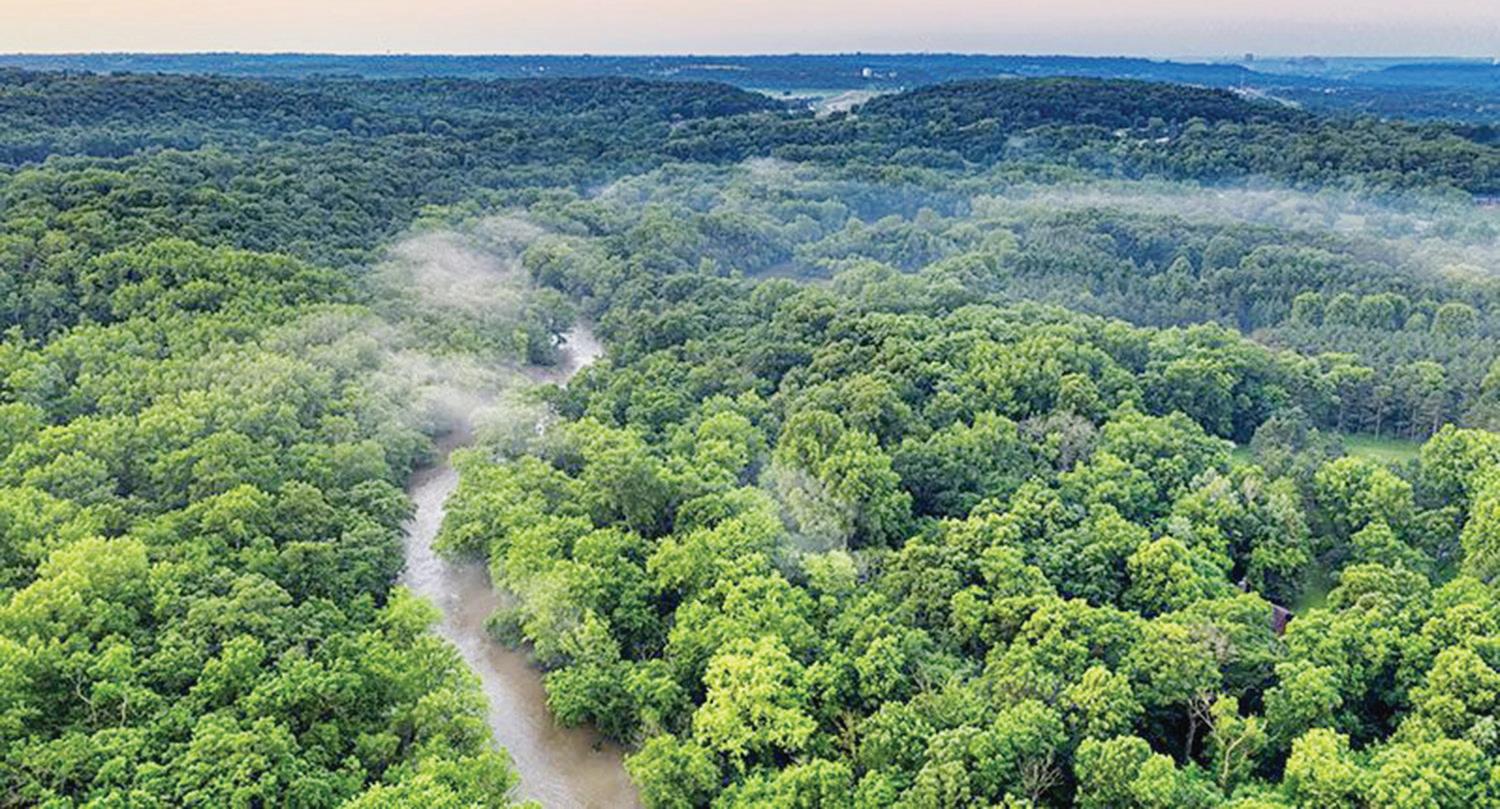
Lammy, pointed to Guyana's Low Carbon Development Strategy (LCDS) 2030, its commitment to protecting 30 per cent of its land and marine areas by 2030, its leadership within the Global Biodiversity Alliance, and what he described as the expansion of opportunities and rights for Indigenous peoples as examples of why the country is attracting increasing international attention.
According to Lammy, Guyana is demonstrating that economic growth and environmental stewardship can advance together rather than compete with each other.
“Guyana is a nation that the world is now looking at anew, a nation that demonstrates that economic development and environ -
mental stewardship do not have to be opposing forces,” he said.
He also described President, Dr Irfaan Ali as one of the leading emerging voices from the Global South on climate and environmental issues.
Lammy argued that conservation extends beyond environmental protection, saying it is closely linked to questions of justice, governance and geopolitical influence.
“If geopolitics determines who controls the land and justice determines who benefits from that land, conservation is not merely an environmental issue. It is a question of power, a question of fairness, and a question of governance,” he said.
With Guyana's vast rainforest, expanding oil and gas sector and growing network of international partnerships, Lammy said the country has a unique opportunity to demonstrate that sustainable development can coexist with economic prosperity, providing a model for other nations.

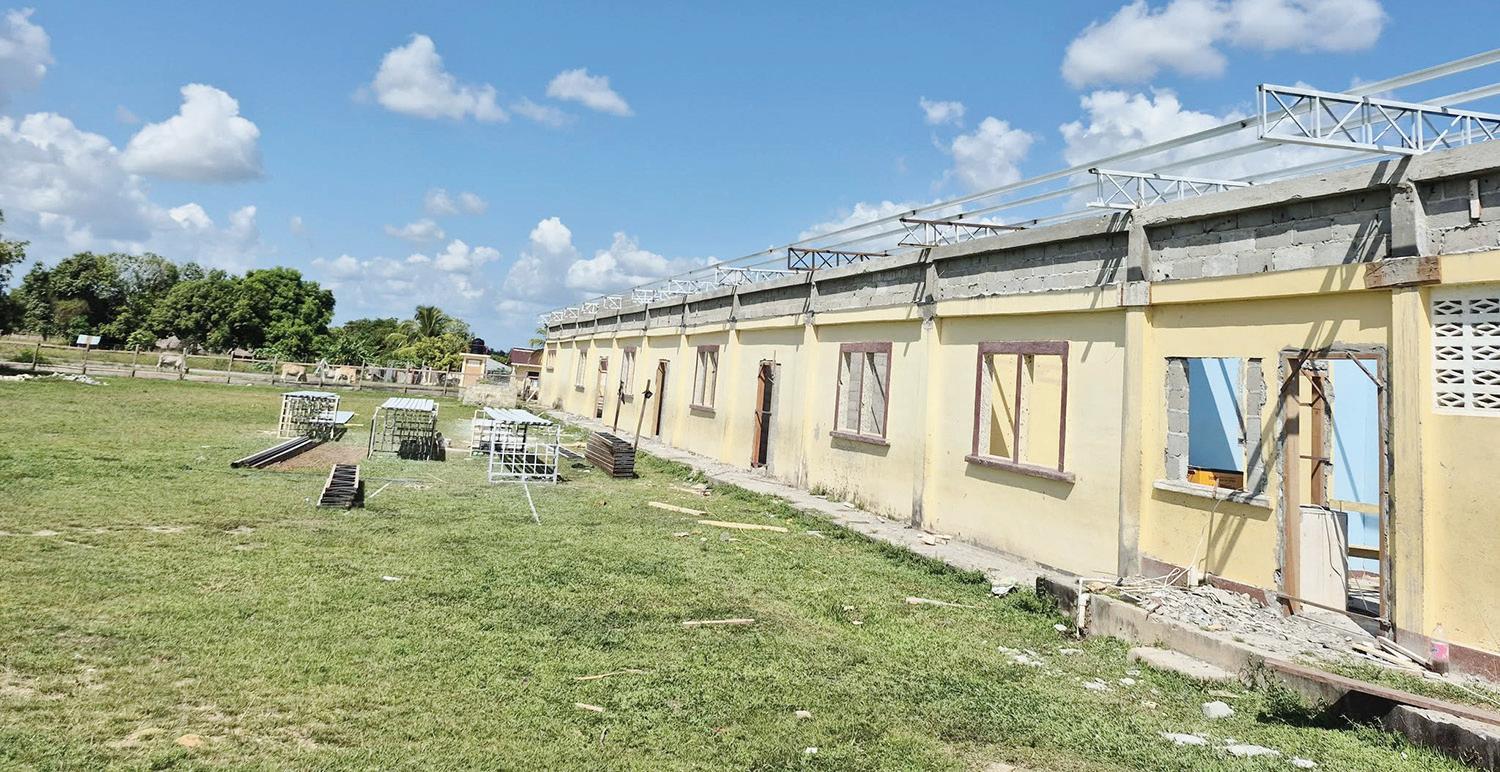
PUPILS in Karaudarnau Village, Region Nine, are set to return to an improved learning environment when the new school term begins in September, following ongoing upgrades to the community's primary school.
According to the Village Council, the project is aimed at creating a safer, more comfortable and conducive environment for teaching and learning.
The works include enclosing the classrooms and installing a new steel roof. The roof has been raised to improve ventilation, helping to reduce heat inside the classrooms and provide greater comfort for both pupils and teachers.
The project is being facilitated by Regional Executive Officer (REO) Karl Singh, who supported the village's request for the up -
grades. Residents said the improvements are timely, with schools scheduled to reopen next month.
The school project forms part of a broader
Recently, 48 streetlights were installed throughout the village by Councillor Peter Isaacs and his team, improving safety and visibility for residents.
munity's Annual August Games by erecting light poles through voluntary labour.
This year's August Games will be held from August 16 to 22,
long event will feature sporting competitions, cultural activities and family entertainment, with male and female teams competing across several disciplines.
including the rehabilitation of internal roads, the installation of a solar photovoltaic (PV) mini-grid and upgrades to the village's water-distribution system.
The community has also pursued initiatives to expand local agriculture, including peanut butter and farine processing, while researchers recently documented a wild-rabbit species in the area, extending its known range into Guyana.
programme of community development in Karaudarnau.
Villagers have also been working together to prepare for the com-

with the opening ceremony scheduled for 14:00hrs (2:00 p.m.) on August 16. The week-
Karaudarnau has benefitted from several major development projects in recent years,
Karaudarnau, an Indigenous Wapichan village in the Upper Takutu-Upper Essequibo (Region Nine), has a population of more than 1,000 residents. The village is supported by a nursery and primary school, health post, ICT hub, guest house and other community facilities, while residents continue to preserve their Wapichan language and culture.

THE government is on track to eliminate the housing backlog in Region 10 (Upper Demerara-Upper Berbice) by the end of 2027 as major investments continue in new housing developments and supporting infrastructure.
During a recent social media address, President Dr Mohamed Irfaan Ali revealed that Region 10 had a housing backlog of 3,398 applications as of December 2025.
However, he said that some 2,314 house lots are currently avail-
able for allocation, leaving an estimated 1,274 additional lots to be developed to satisfy the remaining demand.
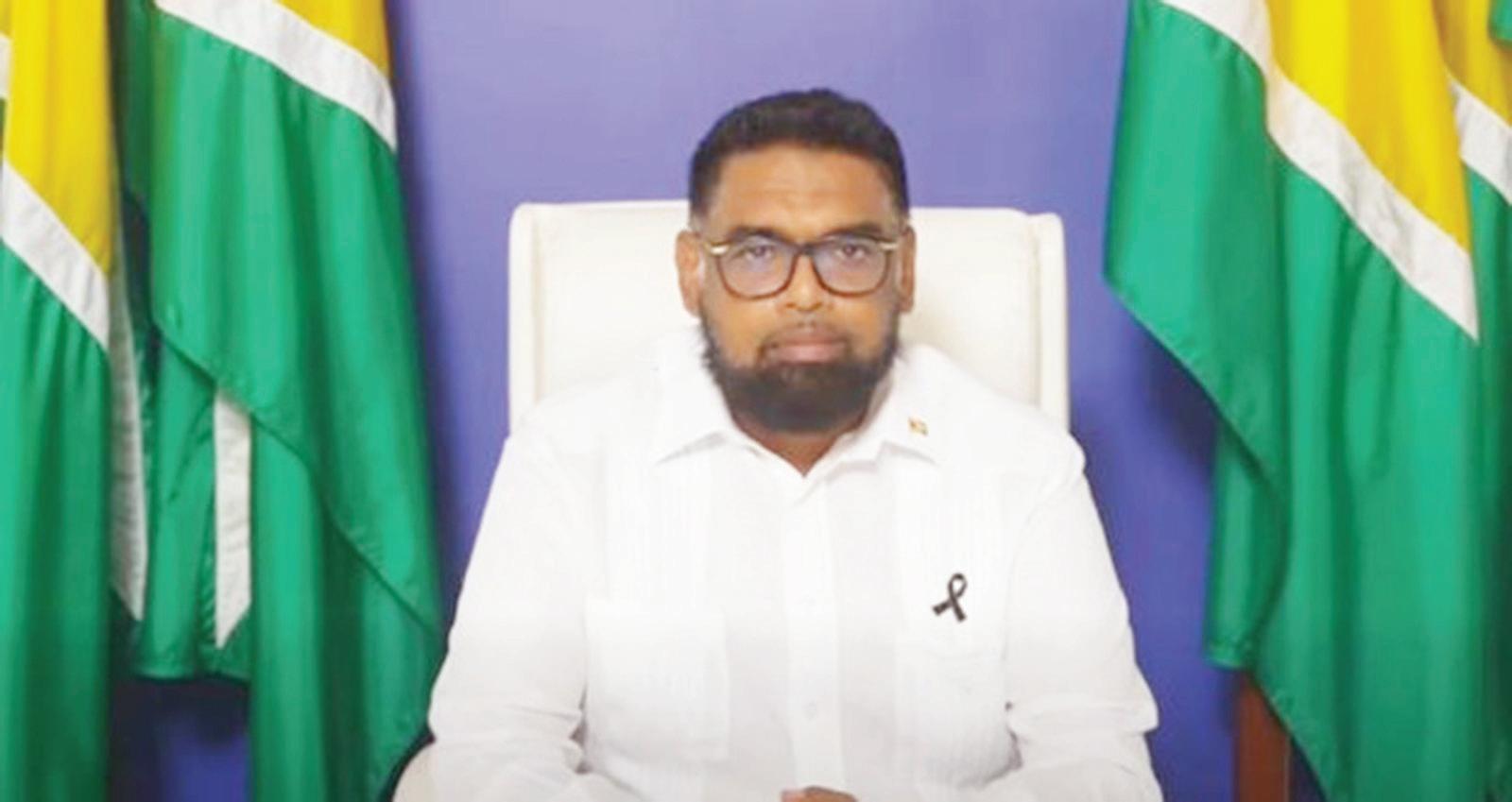
“We are now designing and building infrastructure in various areas in Region 10, and we are confident that by the end of 2027, we’ll be able to clear that backlog,” the president stated.
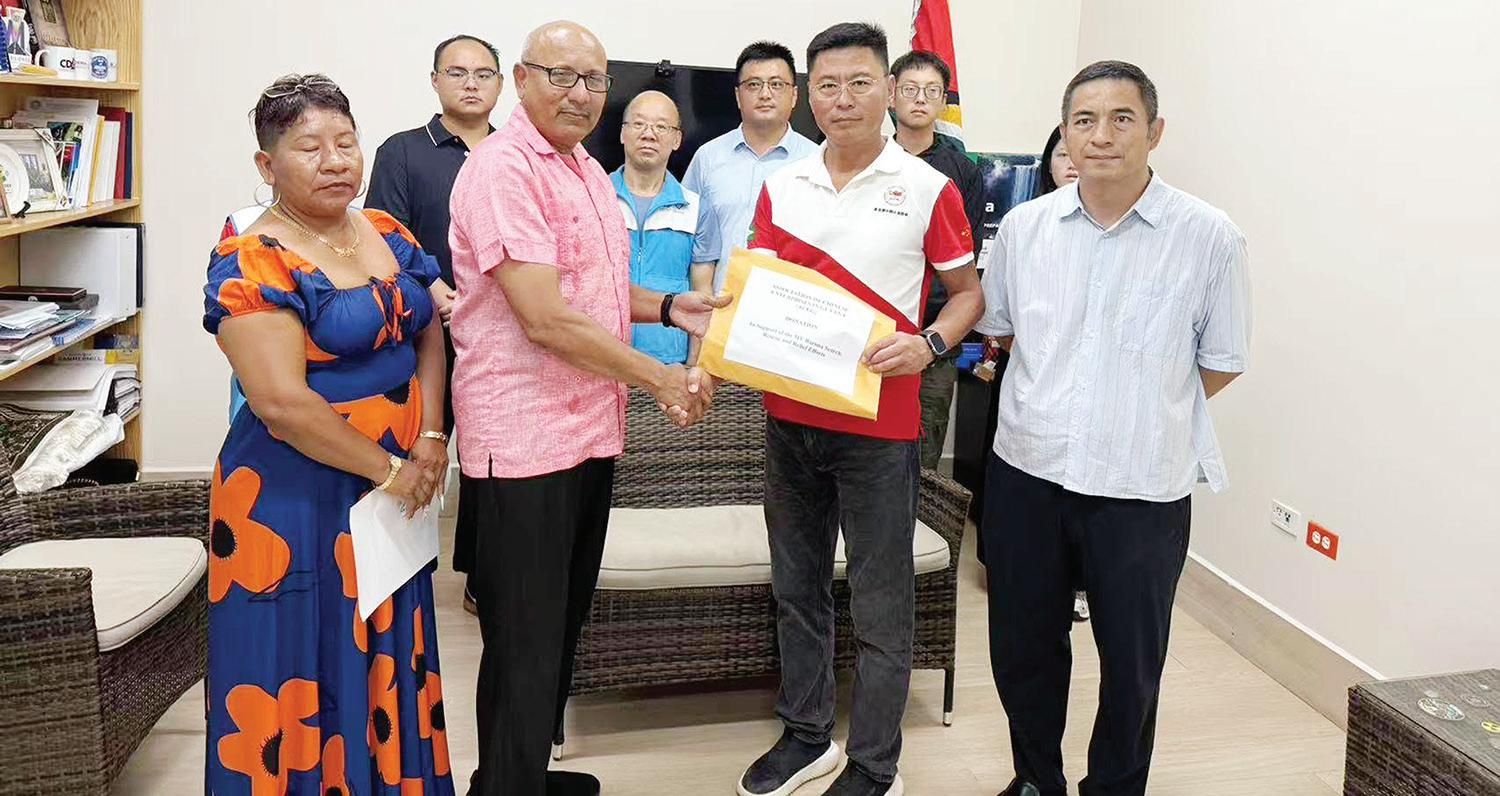
THE Association of Chinese Enterprises in Guyana (ACEG) has made an additional donation to the Civil Defence Commission (CDC) to support the ongoing response and relief efforts following the MV Barima maritime tragedy.
The contribution was made through the collective support of ACEG's member companies, reaffirming the association's commitment to assisting Guyana during times of national tragedy.
Companies contributing to the initiative include Hong Da Lian Shao Guyana Construction Inc.,
PowerChina International Group Ltd., Xinhai International (South America) Inc., Ping An Inc., CNQC Guyana, LongReach Investments & Construction Inc., China Auto Sales, One Tree International Inc., Guyana Green Farm Inc. and Bosai Minerals Guyana.
The donation was presented on behalf of ACEG by its General Secretary, Jason Wang, and received by Director General of the Civil Defence Commission, Colonel Nazrul Hussain. Counsellor Li of the Chinese Embassy in Guyana was also present during the handing-over
ceremony.
ACEG said the additional contribution reflects the continued commitment of its members to standing in solidarity with the people of Guyana and supporting national response efforts.
The association also extended its deepest condolences to the families and loved ones of those who lost their lives in the tragedy and expressed appreciation to the emergency responders, recovery teams, government agencies and all those involved in the ongoing operations.
The announcement
forms part of the government’s wider national housing strategy to ensure every eli-
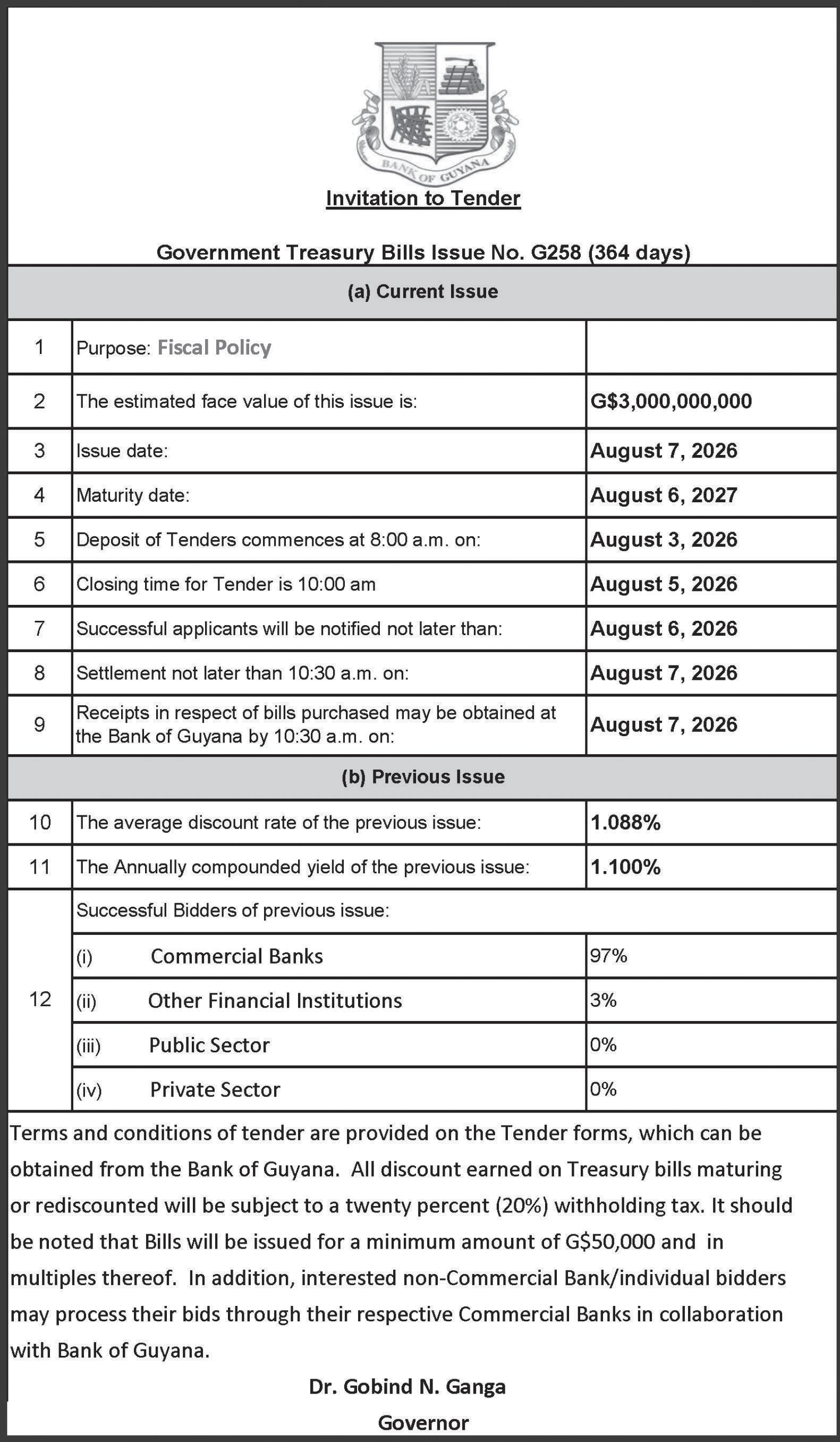
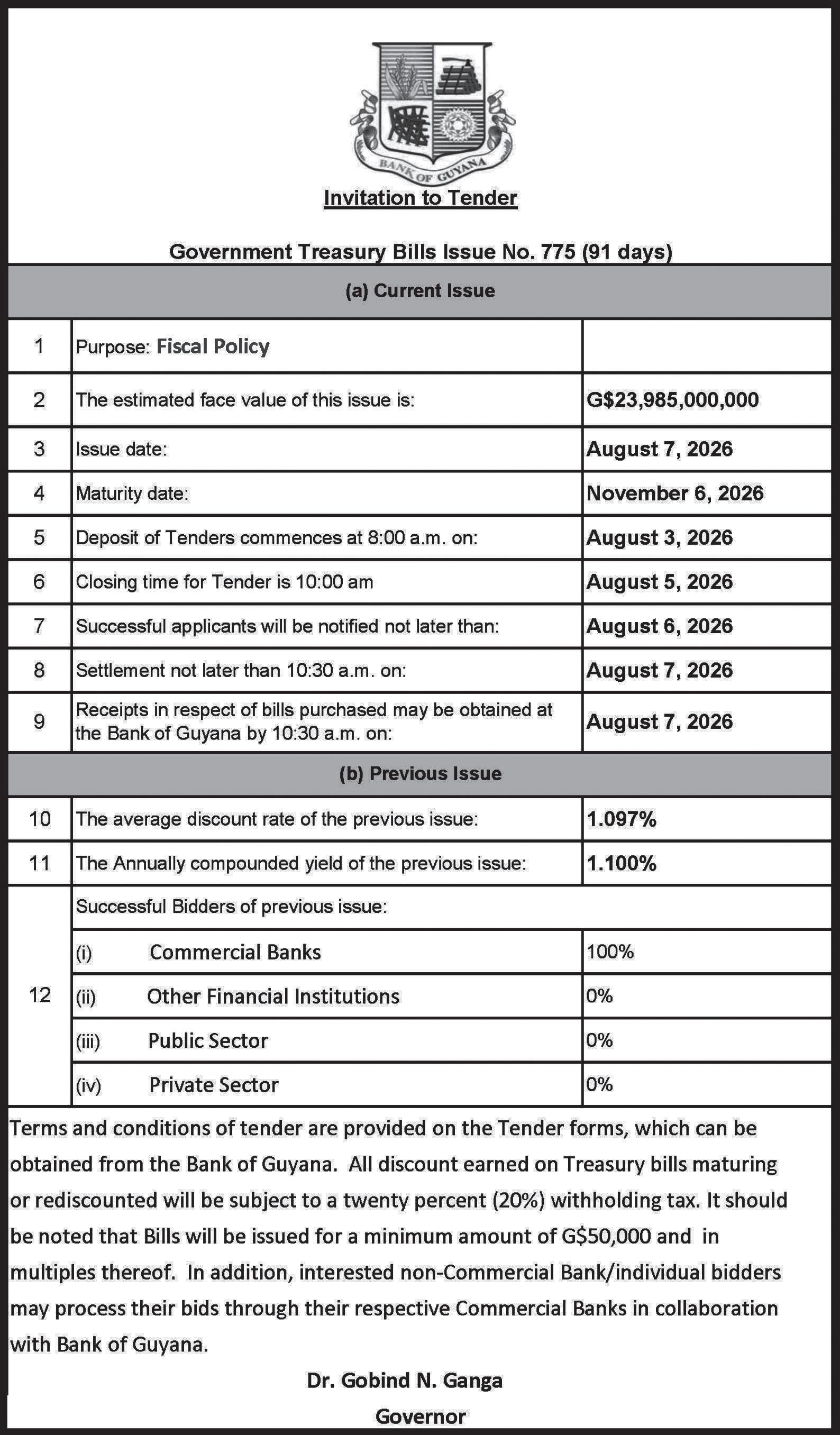
GUYANA'S banking sector remains well-capitalised and resilient despite the country's rapid economic expansion, with the International Monetary Fund (IMF) saying the financial system is well-positioned to support continued growth while urging authorities to strengthen oversight as the economy becomes more diversified.
In its 2026 Article IV
Mission Staff Concluding Statement, released on Friday, the IMF said Guyana's financial system continues to demonstrate strong fundamentals, underpinned by robust liquidity buffers and improving asset quality.
“The banking sector remains well capitalized, with robust liquidity buffers and improving asset quality. Stress tests continue to suggest that banks remain resilient under rea-
sonable adverse scenarios,” the IMF stated.
The Fund noted that the authorities have maintained close supervision of the financial sector but stressed that continued vigilance will be essential as rapid growth in both the oil and non-oil economies drives increased lending and investment activity.
According to the IMF, developing a comprehensive macroprudential

framework would strengthen the country's ability to identify and manage emerging financial risks. It also recommended continued technical assistance to improve policy formulation and implementation while closely monitoring concentration risks within the banking system.
The IMF further highlighted the importance of strengthening oversight of the rapidly expanding housing market through the development of a real estate price index, describing it as a valuable addition to Guyana's financial stability toolkit.
It also encouraged improvements in data collection on corporate and household balance sheets to enhance risk monitoring and banking supervision, while urging stronger cybersecurity standards as financial services become increasingly digital.
The IMF's assessment comes as the Government of Guyana advances sweeping reforms aimed at expanding access to finance and modernising the country's banking system.
On July 30, President Dr. Irfaan Ali assented to the Guyana Development Bank Act 2026, establishing the Guyana Development Bank (GDB), a new state-backed institution designed to improve financing for small and medium-sized enterprises (SMEs).
Backed by an initial capital injection of more than US$200 million (approximately G$40 billion), the GDB will provide eligible SMEs with zero-interest, zero-collateral loans of up to G$3 million, while offering business development and financial management support to help entrepreneurs become commercially bankable.
The bank is expected to establish offices in every administrative region, with financing prioritised for agriculture, agro-processing, tourism, hospitality, services and the creative industries.
Alongside the creation of the GDB, the government has also announced a series of broader financial sector reforms aimed at increasing competition and improving access to affordable credit.
These include an incentive framework to encourage commercial banks to reduce lending rates for SMEs to below four per cent while easing collateral requirements. The government has also announced plans to launch an integrated national payment system before the end of 2026, enabling seamless digital payments, e-wallets and mobile-to-mobile transactions nationwide.
At the regulatory level, the Bank of Guyana is also transitioning towards a more proactive, data-driven supervisory approach to
strengthen financial stability as the economy continues to expand.
Guyana's commercial banking sector currently comprises both domestic and international institutions. Major local banks include the Guyana Bank for Trade and Industry (GBTI), Demerara Bank Limited and Citizens Bank Guyana Inc., while regional and international institutions such as Republic Bank (Guyana), Scotiabank and Bank of Baroda continue to play significant roles in financing businesses and supporting trade.
The sector is also attracting increased international interest. Earlier this year, the government approved licences for three additional international financial institutions, including Citi, which has established a representative office in Georgetown to strengthen links between Guyanese businesses and global financial markets.
With economic activity continuing to accelerate, the IMF said that Guyana's banking system remains fundamentally sound but emphasised that sustained regulatory reforms, enhanced supervision and improved financial sector monitoring will be critical to preserving stability as the country enters its next phase of economic development.
AS government efforts continue to support survivors and families affected by the MV Barima tragedy, the private partners are stepping up to strengthen those initiatives.
The Guyana Amazon Warriors (GAW), in partnership with the ExxonMobil Guyana Global Super League (GSL), donated $25 million to the Hope, Empathy, Aid, Resilience and Trust (HEART) Initiative on Saturday.
The donation was presented during the closing ceremony of the ExxonMobil Guyana Global Super League at the National Stadium in Providence.
The HEART Initiative was established by President Dr Mohamed Irfaan Ali to provide long-term support to survivors and families affected by the July 18 MV Barima tragedy.
It brings together humanitarian assistance, psychosocial and trauma counselling, social services, spiritual guidance and other forms of care to help families heal and rebuild.

President Ali has made it clear that the initiative is not intended as financial
compensation. Instead, it represents the nation’s commitment to standing with sur-
vivors and bereaved families throughout their recovery.
The president also an -
nounced the establishment of a national body, comprising respected religious and civil
society leaders, to oversee and coordinate the initiative.
He also called on citizens, organisations and the private sector to support the HEART Initiative as the country continues to respond to one of Guyana’s deadliest maritime disasters.
The $25 million contribution fulfils an agreement between the Guyana Amazon Warriors and the ExxonMobil Guyana Global Super League to donate all proceeds from ticket sales for the tournament final towards educational and humanitarian assistance for families and individuals affected by the MV Barima tragedy.
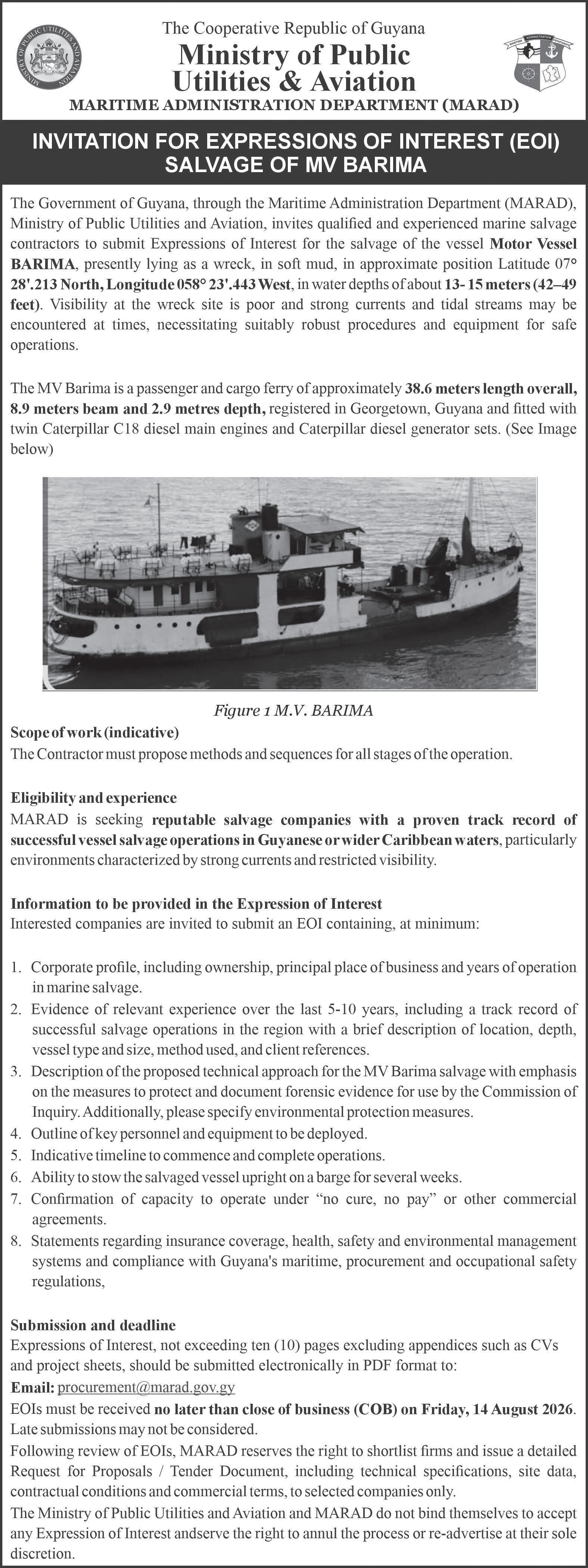
The MV Barima, a passenger and cargo vessel, capsized off the Essequibo Coast on July 18, 2026, claiming dozens of lives and leaving many families devastated.
The government has since mobilised a comprehensive response, including humanitarian relief, counselling services and long-term recovery support through the HEART Initiative.
[DPI]

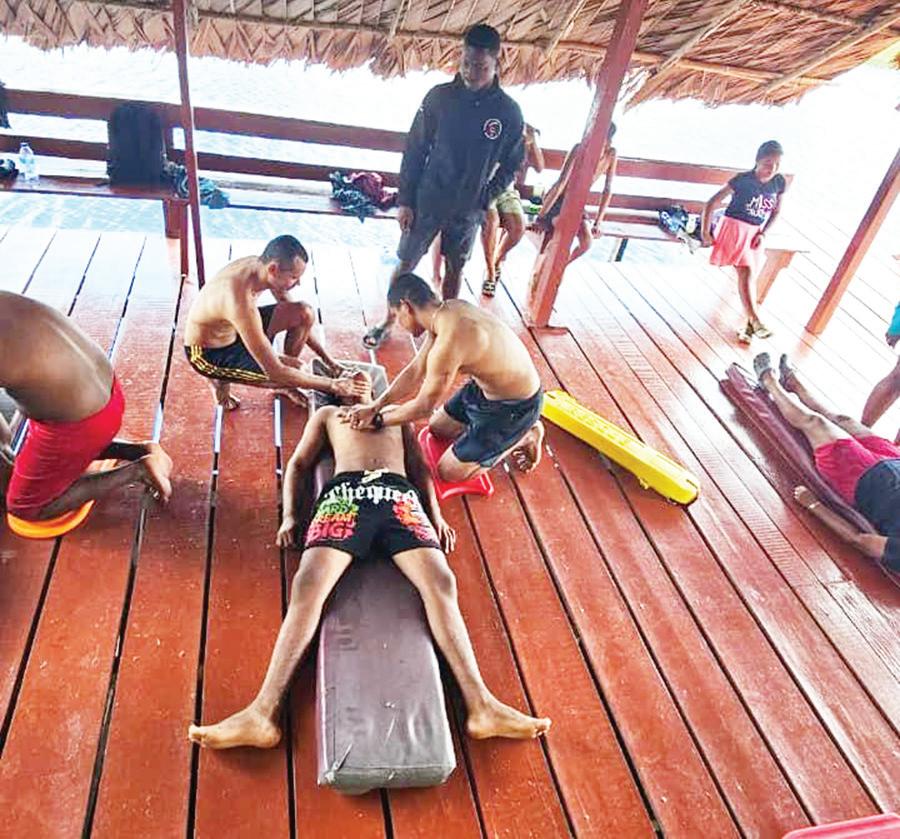
FIFTEEN tour guides from Santa Mission, Arrowpoint Nature Resort, and Waia Lodge have enhanced their emergency response skills after successfully completing the Bronze Medallion Lifeguard Training Programme facilitated by the Guyana Lifesavers Association.
The three-day training exercise was conducted from July 28 to 30, 2026, at Arrowpoint Nature Resort, where participants received intensive practical and theoretical instruction in water safety and emergency response.
Throughout the programme, the tour guides were trained in open-water swimming, rescue techniques, casualty carries, spinal injury management, cardiopulmonary resuscitation (CPR), first aid and emergency response scenarios.
Each exercise reinforced the importance
of preparedness and the critical role trained first responders play in saving lives.
With ecotourism continuing to expand in Guyana, organisers noted that equipping tour guides with lifesaving skills is essential to ensuring the safety of both visitors and the communities they serve.
The training was designed to provide participants with the knowledge, confidence and practical skills needed to respond effectively to water-related emergencies.
The Guyana Lifesavers Association was commended for facilitating the programme and recognised for its expert instruction and commitment to strengthening water safety across the country.
Participants were also congratulated for their dedication, teamwork and determination

throughout the training.
“Together, we're building a safer future one trained lifesaver
at a time,” the programme coordinator said.

MORE than $900 million will flow directly into the communities of Region Eight as the government advances a major initiative to improve roads and bridges while empowering villages to lead and sustain critical infrastructural works.
The investment, announced following the recently concluded National Toshaos Council (NTC) Conference, will
economic opportunities.
“The communities are now given the capacity to do repairs to their own roads and bridges. That’s $30 million to 31 communities. That works out to more than $900 million circulating right within our very own region,” De Souza said.
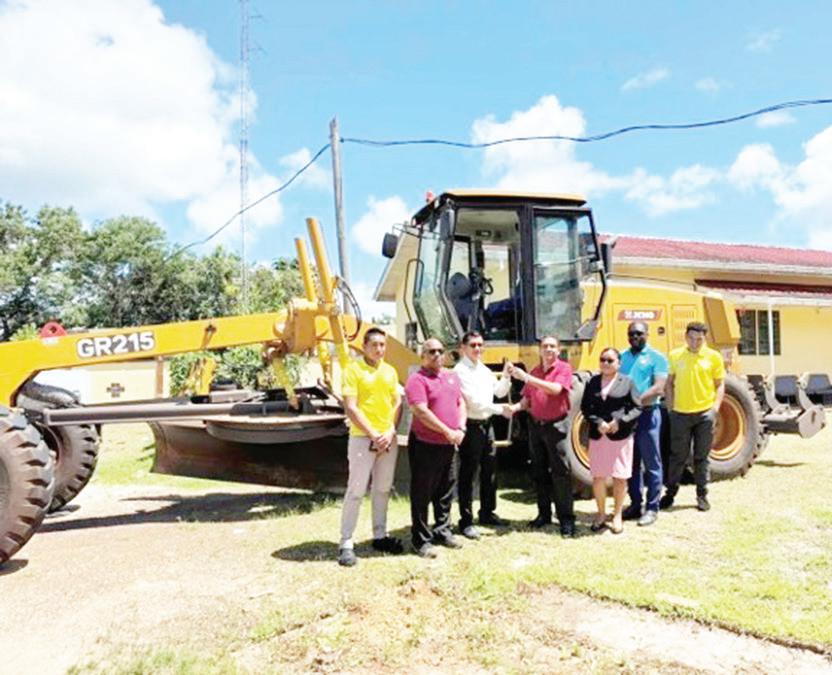
ers, dump trucks, rollers and backhoes, will strengthen the region’s capacity to maintain and rehabilitate community infrastructure.
see each of the region’s 31 Amerindian villages. The Community Development Councils (CDCs) will receive $30 million for road and bridge maintenance, a substantial increase from the previous $5 million allocation.
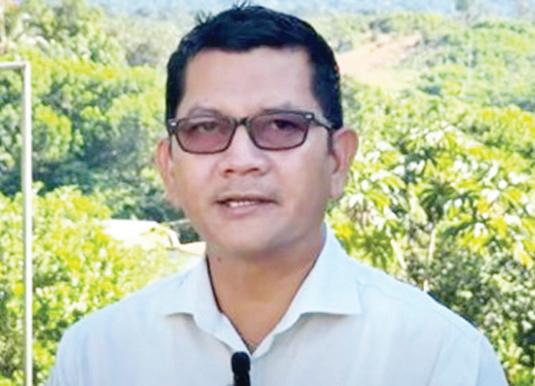
In a video shared last Friday on the Regional Democratic Council Region Eight Facebook page, Regional Executive Officer (REO), Marti De Souza, said the unprecedented investment will place communities in a stronger position to improve internal access while creating lasting
The REO noted that the initiative comes at a critical time, following the recent rainy season when several communities required emergency works on damaged roads and bridges. By placing resources directly into the hands of village leaders, communities will now be able to respond more quickly to infrastructural needs while managing projects at the local level.
Complementing the financial investment, the Ministry of Public Works will deploy five pieces of heavy-duty equipment to each cluster of villages.
The machinery, including bulldozers, grad-
The programme also places significant emphasis on developing local expertise. Ten young people from every cluster will receive specialised training to operate the equipment, creating employment opportunities while ensuring the machinery remains sustainably managed within the communities.
“We will now be empowering our very own young people right within the communities, and the monies will be circulating within the communities also. Communities will now take ownership of the machinery and take ownership of the work that they are doing to improve access on the roadways and the bridges,” The REO stated. (DPI)

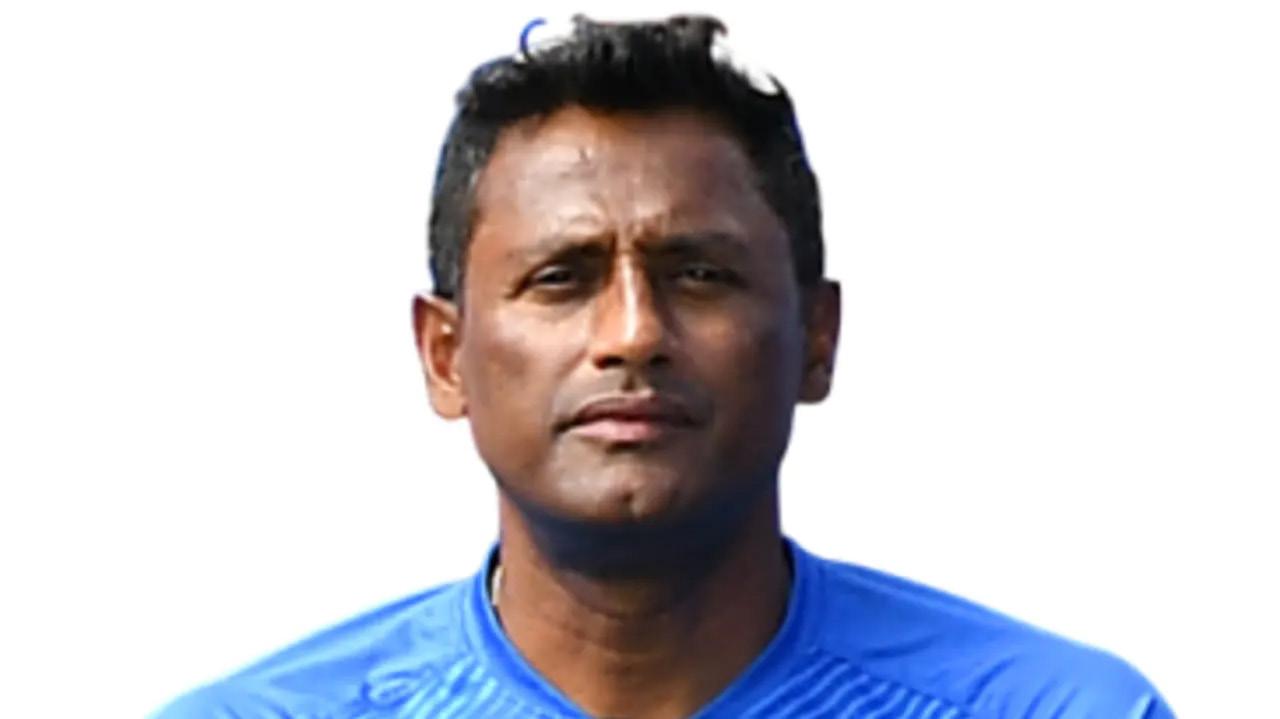
(ESPNCRICINFO) - Subhadeep Ghosh has replaced T Dilip as India Men's fielding coach ahead of the twoTest tour of Sri Lanka.
Ghosh, 57, has previously been the fielding coach for India Women. He was with them for two years, including the 2022 Women's ODI World Cup and the

2023 Women's T20 World Cup. Apart from that, he has also worked with India ‘A’ and coached Assam's senior men's team. In his playing days, he was a right-handed batter and featured in 17 firstclass matches and as many List ‘A’ games for Assam and Railways.
Dilip was India men's fielding coach from 2021 to the 2024-25 Border-Gavaskar Trophy. He then returned again during India's Test tour
of the UK in 2025 for a oneyear stint. He was not given an extension after his contract ended.
India men's assistant coach Ryan ten Doeschate had also left his role after the white-ball series in England and joined KKR as head of cricket strategy.
The first Test in Sri Lanka begins on August 15 in Galle and the second on August 23 at the SSC in Colombo. Ahead of the series, the team will
three-day practice
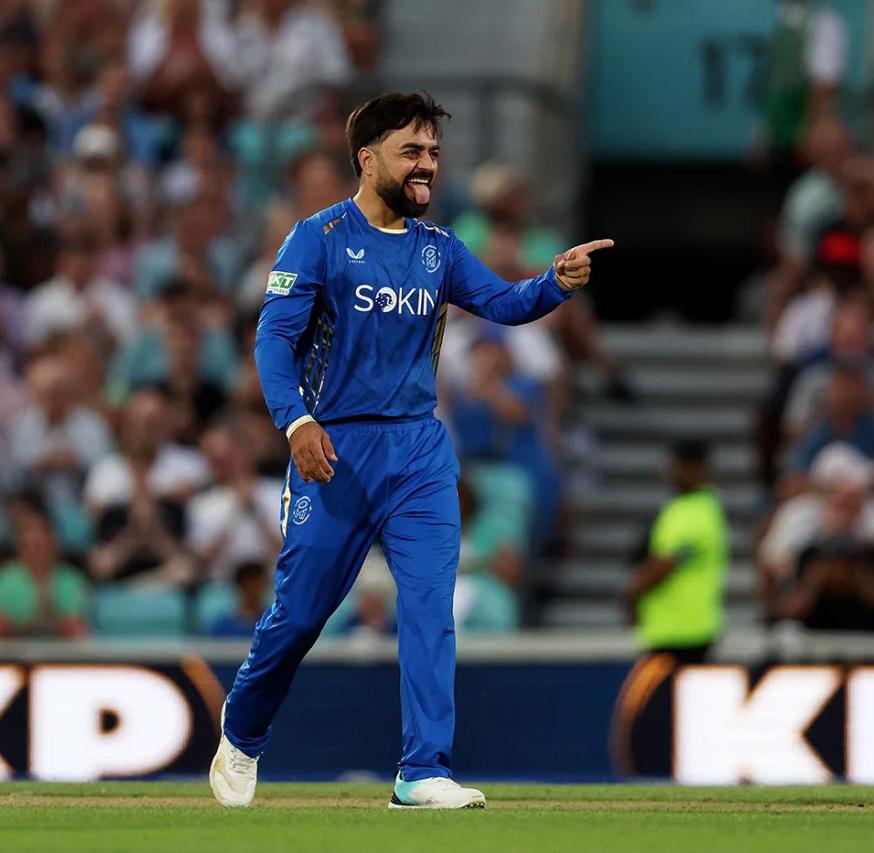
(ESPNCRICINFO) - A maiden five-wicket haul in the Hundred from Rashid Khan followed up some brutal ball-striking from Will Jacks and Nicholas Pooran as MI London secured a 45-run win over Manchester Super Giants at the Kia Oval.
The win saw the home side climb to second place in the table, as Rashid signed off before going on international duty with Afghanistan in Ireland next week. He could yet return if MI London reach the final on August 16, but is unlikely to be available for the rest of the season.
"I needed those wickets," Rashid said. "I'd had a bit of a quiet tournament overall for me, but just tried my best to keep things simple and hit the right area consistently and I got the results. Runs on the board makes a difference, but it's about hitting the right area consistently and making it as hard as possible for the batters.
"I enjoy it a lot always when I come here," he added. "National duty is something that is the first priority. I had a great time here over the last two-three weeks, and going back tonight to Ireland for the ODIs. It's going to be good fun, going back with some confidence."
Having been asked to bat first, Jacks came out looking like a man on a mission and propelled MI London to their highest powerplay score of the season. He scored 34 off his first 18 balls, clearing the rope four times, as the home side reached 45 for 0 after 25 balls.
Coming in at No. 3, Pooran got off the mark with a six off Liam Dawson to set the precedent for what was to come. Jacks brought up a
28-ball half-century with a maximum off Noor Ahmad and just kept on swinging, falling for 62 off 31 as MI London reached 109 for 2 with 40 balls to go.
Pooran and Sam Curran looked in ominous touch. The powerful left-handers added 44 in 23 balls before the latter went, stumped by Jos Buttler off Noor. Pooran cantered along unperturbed and went six, six, four, off Gus Atkinson to reach 50 from 25 balls.
The Trinidadian was bowled by Josh Tongue for 54 from 28 as Tongue, amongst all the carnage, managed to finish with figures of 2 for 13. MI London closed on 183 for 6, their highest total of this year's campaign.
With a big chase on their hands, Aiden Markram made a strong start to the chase. Not to be outdone by Jacks' earlier hitting, he was even
more destructive in the powerplay, smashing 38 from 17 as the Super Giants made it

to 55 for 0.
But Rashid then struck twice, removing Tim Seifert and Buttler for 17 and 2 respectively, with Buttler well caught on the leg-side boundary by Nathan Sowter.
After bringing up his 50 from 25 balls, Markram also fell. He pulled Sowter to Curran at midwicket to leave Super Giants three down with 110 still required from 55 balls.
Rashid then further turned the game in MI London's favour when he dismissed Heinrich Klaasen and Tom Moores in the space of two balls. Dawson then chopped on to give him his fifth as the Afghanistan superstar finished with figures of 5 for 17.
With the wind removed from their sails, Super Giants could only muster 138, but despite the loss they are still in the race for a spot in the Hundred Eliminator.

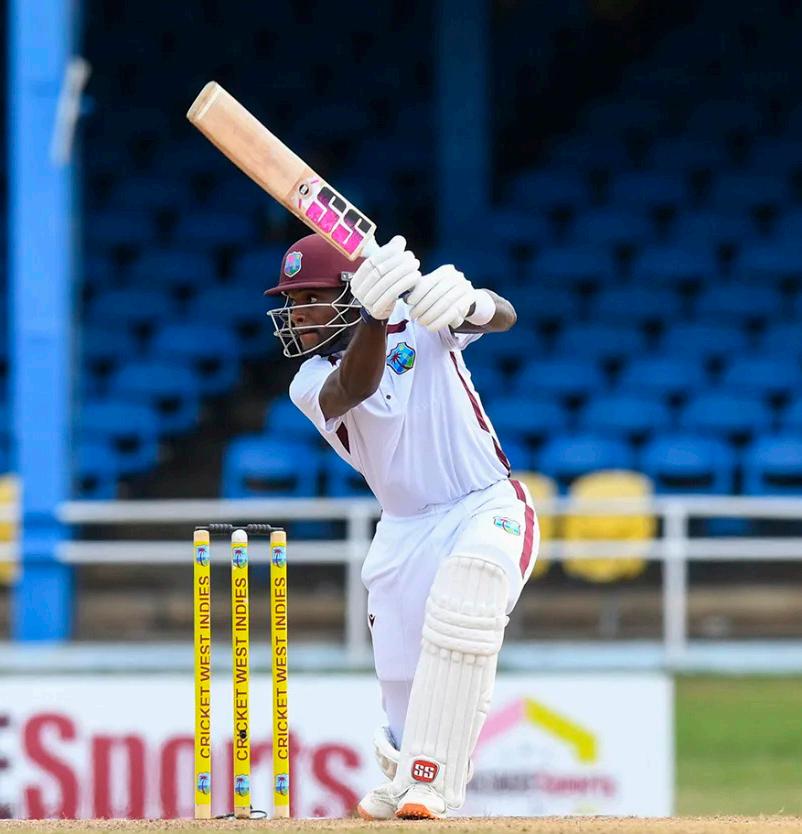
CMC – Justin Greaves’s unbeaten half century helped the West Indies level the playing field with Pakistan at the end of the first day’s play in the second Test here on Sunday.
Greaves finished the day on 64 not out and the Windies fought back to reach 239 for five in 74 overs at the Queen’s Park Oval after electing to bat first for the second straight match.
His skipper Roston Chase is unbeaten on 36, with the two so far sharing an unbroken partnership of 66 runs for the sixth wicket that helped them recover from a potentially danger -
ous position of 173 for five after tea.
Following a brief rain delay that saw the start of play pushed back by 15 minutes, the home side was given a solid start by openers Tagenarine Chanderpaul and Brandon King, with the two putting on 49 runs while scoring at over five runs an over.
However, Chanderpaul gifted Pakistan his wicket when he hooked a short delivery from pacer Mohammad Ali straight down the throat of Sajid Khan stationed strategically at deep fine leg, in what proved to be the last ball of the morn -
ing session, with showers forcing the players off the field and to an early lunch. Play restarted belatedly an hour and a half later at 12:40 p.m. with King moving to within touching distance of a half century after his edge off Ali flew through the vacant third slip corridor and into the boundary.
But four runs short of a well-deserved 50, King was undone by a superb delivery from debutant spinner Ali Usman that turned sharply away from leg stump and hit him on his pads. While he was initially given not out, a Pakistan review showed the
'No guarantees' - joyful Glasgow cannot banish all Commonwealth doubts
(BBC) - Glasgow has performed the surgery the Commonwealth Games needed to keep it alive.
Eleven days. 674 medals. Thousands of happy fans.
But this is only the start of the recovery.
The Indian city of Ahmedabad now stands where Victoria did four years ago - as the next hosts of an event that will celebrate its 100th anniversary in 2030.
Victoria pulled out. Can Ahmedabad give certainty it won't?
"I don't think one can give any guarantees," Raghu Iyer - chief executive of the Indian Olympic Association - told BBC Sport. It was a note of caution that showed questions about the Games' future had not been banished as the 2026 Games closed on Sunday evening.
After Victoria withdrew in 2023, Glasgow answered the SOS call - and organisers say the past 11 days in the Scottish city have "exceeded all expectations".
Yes, there have been grumbles - including from those who have seen parking spaces outside their houses taken - and taxi drivers and shop ownersthe Games have passed by.
On the ground, though, this felt like a meaningful event.
Ticket sales of 434,000 were well down from 1.5 million for Birmingham 2022, but they were always going to be given the smaller venues for this scaledback edition. It has been rare to enter a venue and not find a joyful, engaged crowd.
There was plenty of excitement for fans, too - Josh Kerr's golden homecoming at Scotstoun, Angharad Evans making the swimming pool floors shake, and Neil Fachie's emotional victory on his return to the Sir Chris Hoy Velodrome.
They also celebrated Jamaica's seismic netball win over Australia. Live sport rarely fails to deliver.
But a nagging question has remained throughout: is anyone else watching?
Big names such as Kerr and Adam Ramsay-Peatywith his emotional reaction to taking bronze in the pool - broke out of this Glaswegian bubble, but what else?
Organisers said their social media views passed those of Birmingham within the opening few days and highlighted record-breaking television figures in Australia and New Zealand, where the Games were free-to-air.
Still, without that same coverage in the UK, these Games have - at timesdrifted by.
Glasgow 2026 was also hurt by the absence or late withdrawal of big-name competitors, particularly in athletics, which missed Keely Hodgkinson, Katarina Johnson-Thompson and Dina Asher-Smith.
The Games' differing relevance between sports was again clear - for netball, this remains the pinnacle and is treated as such; for others, it is a stepping stone. Many narratives focused on the "next generation".
Eighteen-year-old Jersey swimmer Filip Nowacki was perhaps the most exciting name to emerge, but gymnasts Ruby Evans (Wales) and Reuben Ward (Scotland) and England track cyclist Henry Hobbs, who won two golds and a bronze, were others.
Swimmer Faye Rogers impressively brought her success at the Paralympics back to Glasgow with gold in the pool - and then competed in the non-para event as well.
Cyclist Emma Finucane turned her three Olympic medals in Paris into four Commonwealth golds in Glasgow.
ball crashing into middle stump to give Usman his first Test wicket and leave the score 65 for two.
With the pitch giving assistance to spinners, Sajid Khan was introduced into the attack, with the bowling pair creating headaches for Kavem Hodge and Amir Jangoo.
Pakistan had to use another review to claim the wicket of Hodge for 10, with the technology showing the ball kissing his glove before hitting his forearm, with the wicketkeeper taking a good catch down the legside to see the Windies slide to 91 for three.
Jangoo hit three splendid fours in his knock of 26, but just when he looked in good nick, he chased a wide delivery down the leg side from debutant pacer Ubaid Shah and edged it behind to the keeper as the Windies found themselves in a spot of bother at 120 for four.
Greaves joined Shai Hope at the crease and helped to repair the damage during a 53-run stand for the fifth wicket.
Greaves was given a lifeline when he was 22 and the score 154 for four, when Pakistan captain Babar Azam failed to hold on to a sharp chance at cover off the
bowling of Ali. Ali got some measure of reprieve when he bowled Hope off the inside edge for 29 in the final session, to bring Chase, the Windies’ last recognised batsman to the crease.
However, the pair defied Pakistan’s bowlers any more success, with Greaves bringing up his second Test half century off 92 balls by pushing Khan behind square for two runs.
Greaves has so far faced 125 balls and struck eight fours, while Chase’s knock has spanned 70 balls and contained five boundaries.
(BBC) - Irish boxer Lee Reeves is in a "critical but stable" condition in hospital after he was stretchered out of the ring in Dublin on Saturday.
Reeves was facing Gary Cully for the vacant BUI Celtic super-lightweight title but was knocked out in the 10th round at the 3Arena.
The 31-year-old Limerick fighter was stretchered out of the ring after the fight and transferred to hospital.
In an update released on Sunday, a spokesperson from Queensberry Promotions said that Reeves is in a "critical but stable" condition.
"Lee Reeves is still in hospital, in a critical but stable condition," the spokesperson said.
"We will know more in the coming days, and our thoughts and prayers remain with Lee and his family."
Speaking after the fight,

Cully said that his "prayers and thoughts" were with Reeves.
"Hopefully he's okay," said Cully.
"He came in there as a big underdog after fighting relatively at a lower level up until now, but he really showed that he can operate at a higher level. Huge credit to him."
In a social media post after the fight, Queensberry promoter Frank Warren said
his "thoughts and prayers" were with Reeves and his family.
"Everyone at Queensberry is thinking of him and we're in constant contact with his team regarding his condition as we hope for positive news," he said.
The bout was taking place on the undercard of Pierce O'Leary against Mark Chamberlain, which the home fighter lost via knockout in the 10th round.

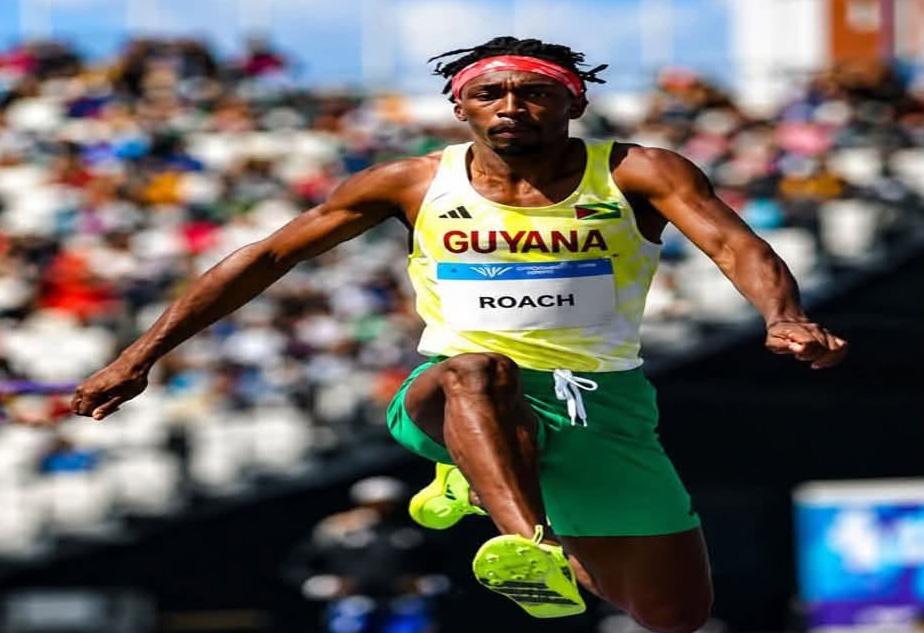
STAFON Roach missed the mark in the triple jump pit at the Commonwealth Games, with a best leap of 15.64 metres, while his other two jumps were 15.61 and 15.58 meters.
Jamaican Jordan Scott won the gold medal with 16.72 metres, with Indian nationals Praveen Chithravel and Selva Prabhu Thirumaran taking silver and bronze.
In the men’s 4 x 100-metre relay, Guyana produced a season-best run of 39.96 seconds but finished fifth.
Nigeria won the relay heat ahead of Canada and Australia.
The Guyana relay team was made up of Akeem Stewart, Noelex Holder, Shamar Horatio, and Jackson Clarke.
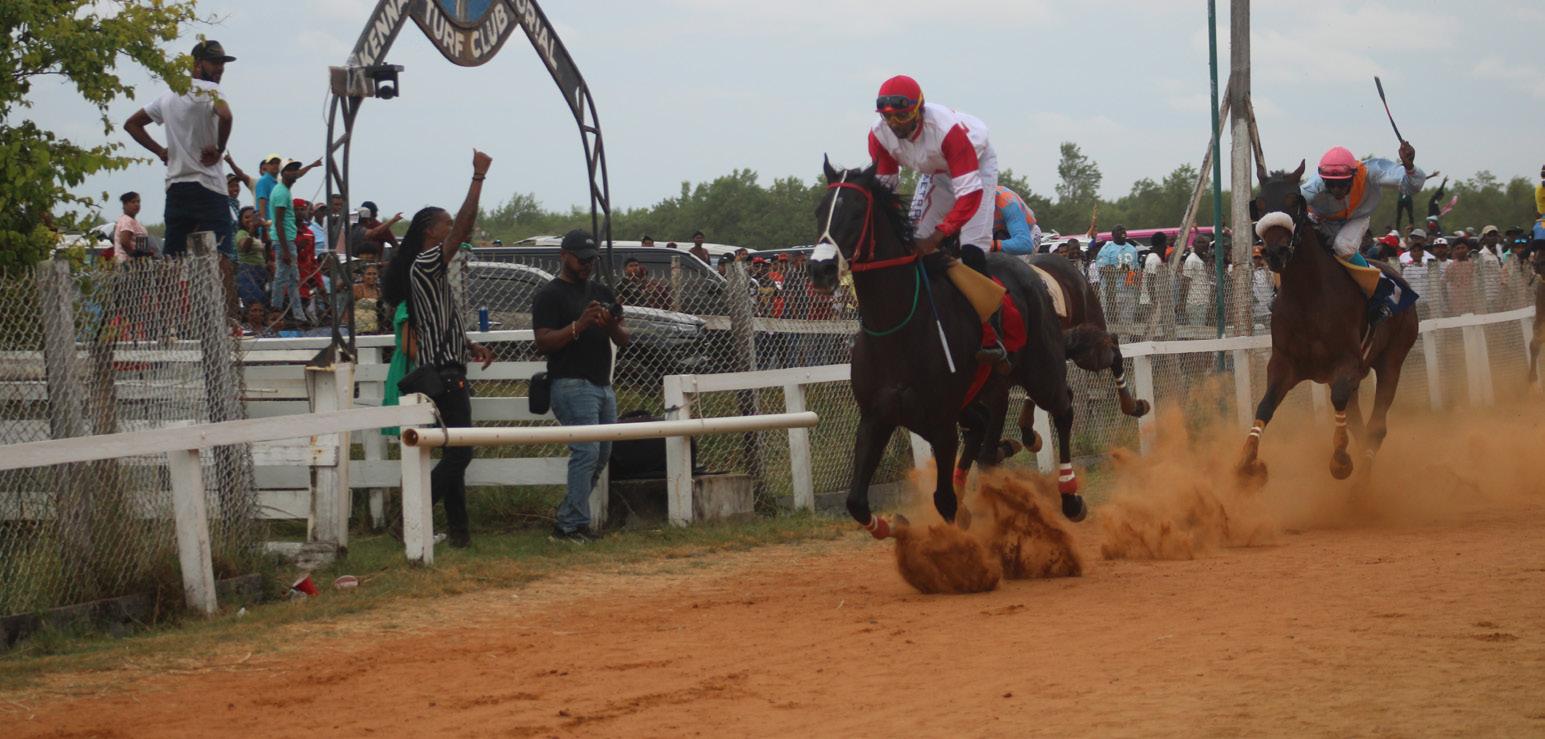
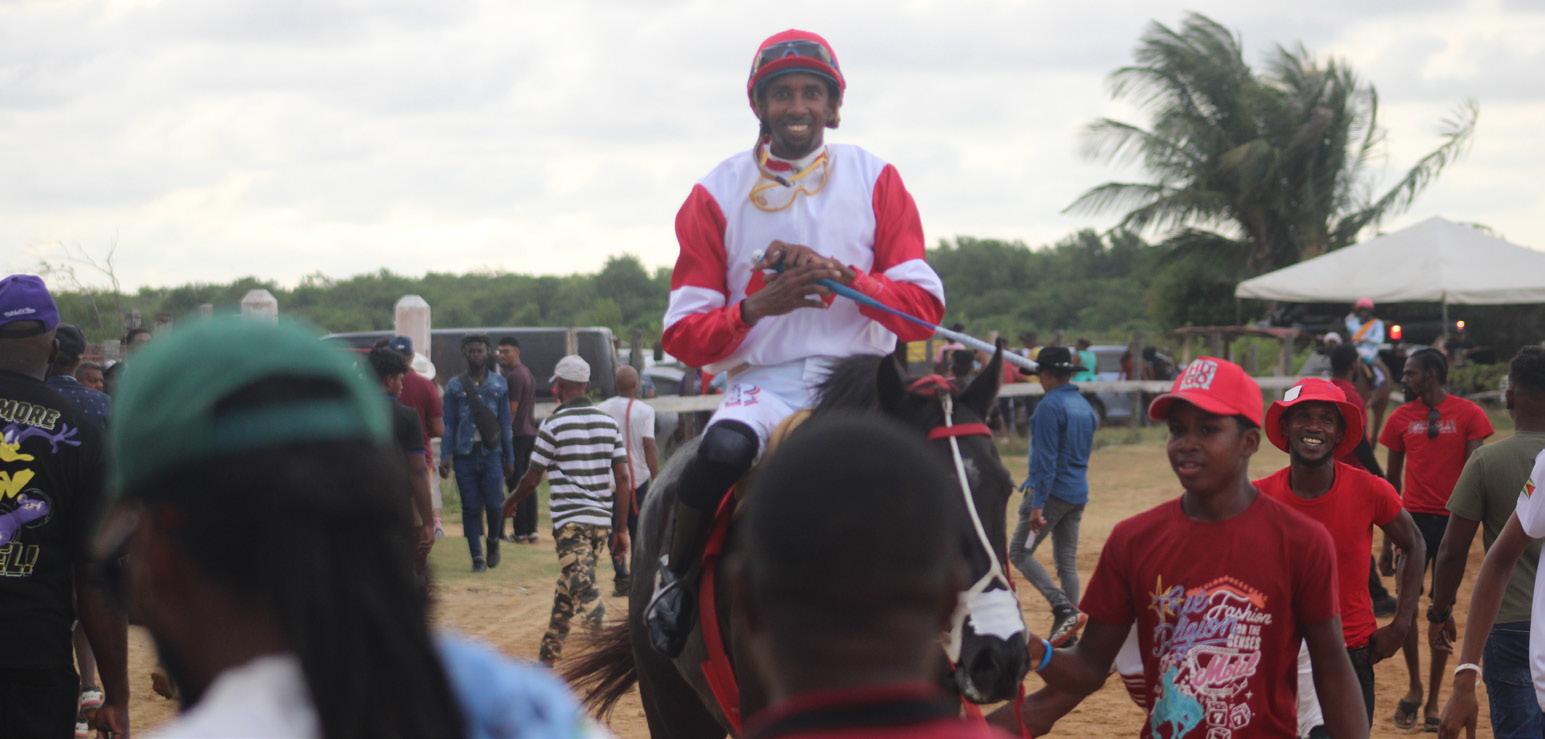
Lion Heart stormed to victory finishing ahead of Doctor J, who ran second, while Perfect Trip and Sakar were the other top four finishers in that order.
In the nursery stakes, two-year-old Guyana-bred maidens, JanoStar outshone the opponents with jockey Yovin Kissoonchand leading the charge. Chelsea ran closely for second, while Princess Alesha finished third and Just in Time ran fourth.
The third race was the Emancipation Sophomore stakes for two-year-old Guyana-bred maidens. Boss Lady enjoyed a sweet victory, by 10 lengths, while Ocean Star ran in second spot. High Beam claimed third and Lady Cash finished fourth.
In the Emancipation mile stakes three-year-old Guyana-bred maidens and of one race, Miracle Boy ran with bravery to finish in pole position, while Glory Queen ran in second. Risen Star and Black Beauty finished in third and fourth respectively. Jockey Arvin Dhanraj and Yovin Kissoonchand were unseated from their horses.
Jagdeo Racing Stables took the top spots in race five. Theory of Colors took the lead from the inside to emerge as the victor in the ‘H’ Class and Lower, while stablemate Sydney ran comfortably for second. She WBO on Time ran third and Mufasa finished in fourth. New-comer Turmalina Negra out of Brazil had with-
(From page 23)
drawn from the Emanciption Classic Stakes W Class Non winner Open to F & G Class horses. The day got even better for Jagdeo’s Racing Stables as Oy Vey displayed pure dominance to clinch victory. Converter ran second while Qurbaan’s Kingdom came in third.
A host of the big horses were in rest mode ahead of the Guyana Cup which is slated for August 23 at the Rising Sun Turf Club.
More than G$66 million in cash and prizes will be up for the taking at the 18th running of the Guyana Cup. The top stables are expected to feature new horses for the most lucrative event in the history of Guyana’s horse racing.

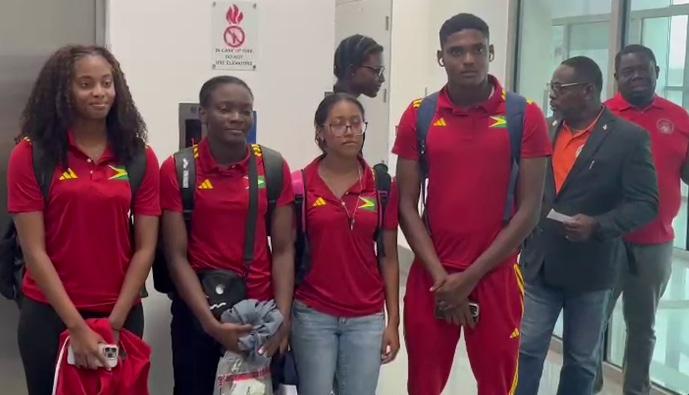
THE nation’s four-member team that journeyed to the CAC Games and won multiple gold medals was welcomed home on Sunday by a delegation headed by Minister within the Ministry of Culture, Youth and Sport Steven Jacobs at the Cheddi Jagan International Airport.
Olympian Raekwon Noel secured three gold medals and three games’ records, which were also national records; records in the 200-metre freestyle, individual medley, and butterfly.
Minister Jacobs says that as a former athlete he was blown away by the record-breaking performances.
“Your achievement in relation to winning medals but even further than that, your achievement in breaking records, is exceptional, as I speak, my pores are
raising because as a former athlete that is why you play sport, for these moments, you live for them. You have achieved this with the support of your parents, the association, the coaches, and we are extremely proud of you at the Ministry of Culture, Youth and Sports and the entire Irfaan Ali government.”
He said that every time the national anthem was played and the flag was hoisted, these were ‘significant’ for Guyana, as it put the country on the map.
He was grateful to the young swimmers, adding that the ministry will continue to offer support.
President of the Guyana Olympic association Godfrey Munroe, said “Noel epitomised and embodied what they want all the citizens to be, dedicated, com-
mitted, humble, full of pride, tenacity, fierce and competitive, you have demonstrated and inspired a generation of athletes. From the Olympic Association side, we have contributed. In this new year and new iteration, what we have mapped out is a tier system of how we want to support athletes, not just Raekwon Noel, but we want to encompass a wide range of athletes.”
Noel says he was thankful for the support of all who helped him achieve the milestone, and while he lives in the USA, his roots are in Guyana, where he learned his craft and discipline.
Assistant Directors of Sport Franklyn Wilson and Melissa-Dow Richardson, Dolphin Swim Club and other officials were also on hand to greet the team.
OLYMPIAN, Raekwon
Noel showed his class and pedigree once again for Guyana at the ongoing Central America and Caribbean Games, capturing his third gold medal on Saturday evening at the Juan Pablo Duarte Aquatic Center in Santo Domingo, Dominican Republic.
Noel reset the CAC Games and national records to capture his third gold medal in the men’s 200-metre freestyle event.
The swimmer improved his personal best time and national record by two seconds with a time of one minute 47.08 seconds.
It erased the CAC Games record of one minute 47. 19 set by Mexi -
co’s Jorge Iga at the 2018 games in Colombia and his own national record of one minute 49.04 seconds, which was his entry time in the event.
Former record holder Iga, who swam in the event, had to settle for silver in one minute 47.95 seconds.
Nikoli Blackman of Trinidad and Tobago was third for bronze in one minute 49.41 seconds.
Earlier on Saturday, he was the second-fastest swimmer in the 200-metre freestyle heats.
Noel won his heat in one minute 52.43 seconds, comfortably beating Venezuela’s Adanuriel Rosalá and Costa Rica’s Alberto Vega, who finished second
and third, respectively.
Noel, who had already given Guyana two gold medals - the 200-metre individual medley and 200 butterfly final, while setting new national and CAC Games records), -went into the final with an entry time of one minute 49.04 seconds.
Iga was the fastest out of the combined heats, with a time of one minute 52.33 seconds.
Meanwhile, Ariel Rodrigues copped third place in her heat with a time of 31.40, with her country-mate Shareefah Lewis in fourth in 31.41 seconds. It was not enough to send either of her swimmers into the finals.
TEAM Guyana, made up of 17 young chess players, officially concluded its campaign at the Pan American Youth Chess Festival in Medellín, Colombia.
The event ran from July 26 to August 2, 2026, and was hosted jointly by the Colombian Chess Federation and the Chess Confederation for the Americas (CCA).
The prestigious event gathered nearly 1,000 players representing 30 nations from across Latin America and the Caribbean. Competitors faced off across the Absolute and Girls divisions, spanning categories from U-8 to U-18.
Guyana’s stand-out result came in the U-18 Absolute category, where National Junior Chess Champion Kyle Couchman scored five points in the nine-round competition.
Rated 1962 ELO, Couchman notched four wins and two draws, dropping only three games—all to strong Colombian opponents: Juan Esteban Cabiativa (2148), Xavi Hernandez Jimenez (2112), and CM Samuel Toro Ramirez (2063).
Battling through an elite field, Couchman’s tactical resilience saw him outperform his initial 41st seed to finish 34th out of 86 contenders.
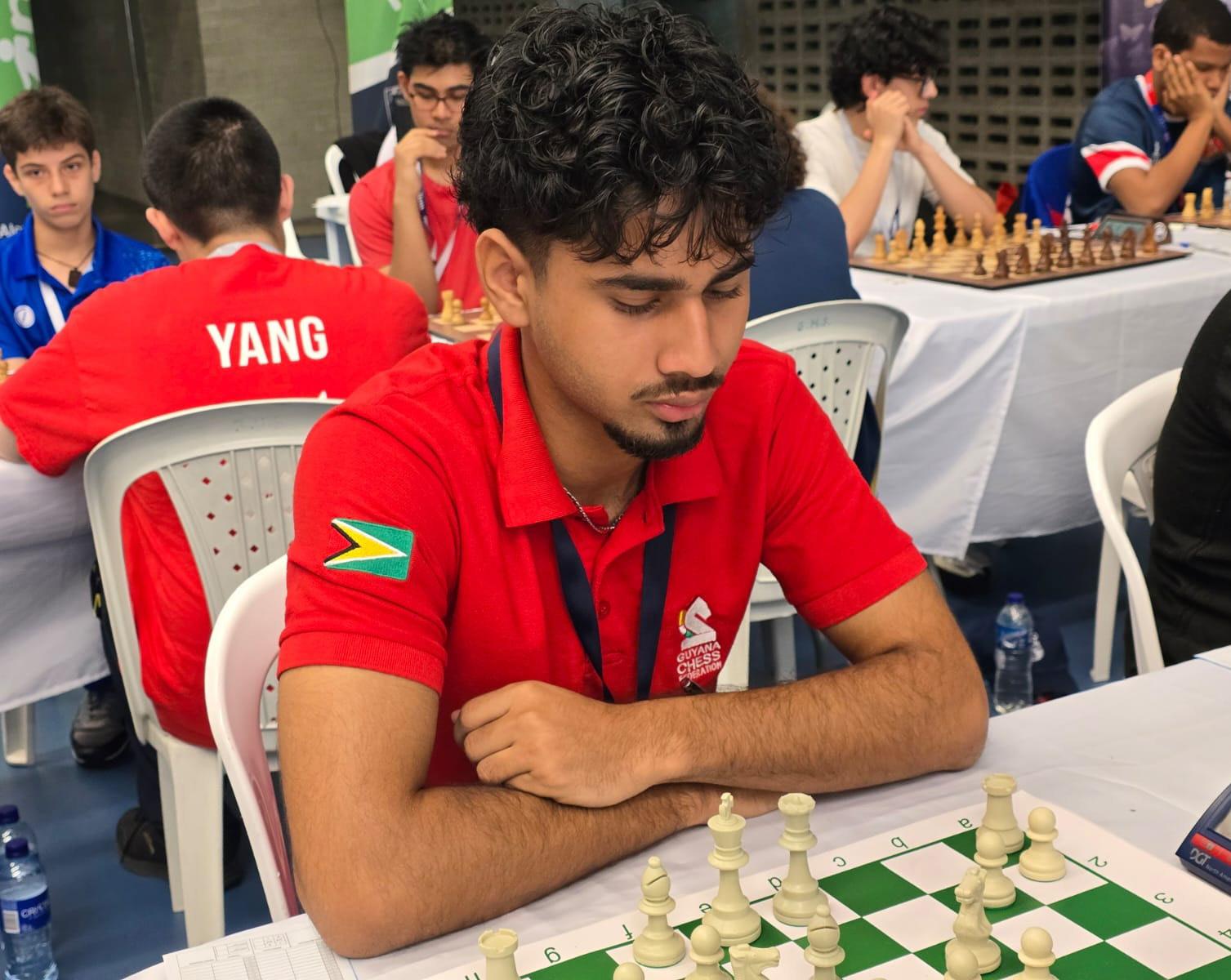
His tournament highlight came in round four, when he secured a brilliant draw against Mexico’s CM Miguel Angel Lopez Garcia (2217).
WCM Aditi Joshi and Guyana’s National Women’s Champion recorded 4.5 points after two wins and five draws in the U-16 Female Category. National U-14 Open Champion Abel Fernandez Ciria finished with four points in his U-14 Absolute Category with three wins and two draws, while National U-12 Open Champion Aiden Tinnie ended on four points in the U-12 Absolute Category.
Alek Ubaldo-Singh, competing in the U-14 Absolute
Category, scored 3.5 points, while Rebha Lachhman finished with three points in the Girls U-14 category. Alexander Zhang finished with three points in his U-16 Absolute Category, and Emma John recorded three points in the U-16 Female Category.
In the U-12 Absolute Category, Vir Narine and Jeremiah Jacobs finished with three points each, while Sanjay Suman and Arian Tinnie, competing in the same category, scored two points and 1.5 points, respectively.
In the Girls U-12 category, National U12 Girls Champion Divya Persaud finished with three points, while Amaya Sharma finished with two.

In the U-10 Absolute category, Mark Defreitas scored three points, while Jordan Jacobs finished with one.
Parnav Suman, the youngest member of the contingent, put up a valiant effort in the U-8 Absolute category, with a score of 2.5 points.
The players returned Sunday after a week of intense competition, with invaluable international experience and in some cases, significant gains in their ELO ratings.
The Guyana Chess Fed-
eration (GCF) is proud of its young players and is confident that this experience will foster both their growth as chess players and their personal development.
We extend special thanks to National player Keron Sandiford, who served as Coach and Head of Delegation, as well as parents Gwen Tinnie and Patrick John for their unwavering guidance, supervision, and support throughout the tournament. Additional thanks
go to all the accompanying parents who provided crucial help and supervision during the event.
Finally, the GCF thanks the officials who worked tirelessly behind the scenes to make this trip possible.
Coordinating our largest ever contingent of nearly 40 individuals to an international event required extraordinary dedication, and we are immensely grateful for their assistance and support.