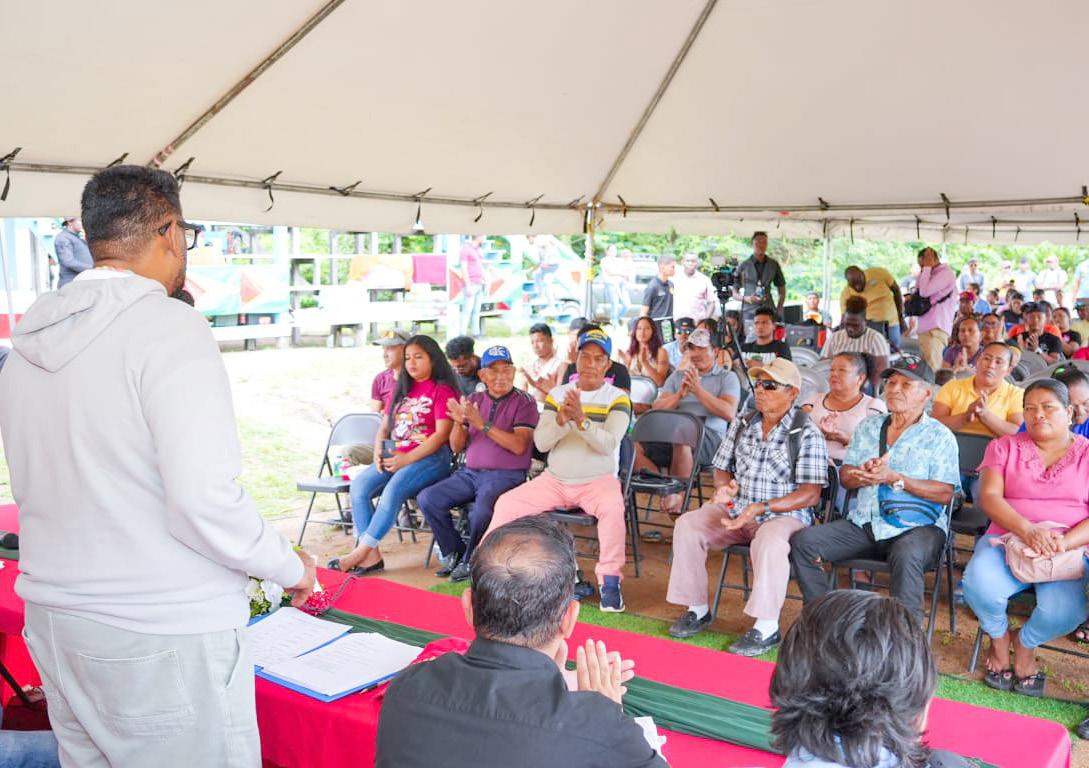
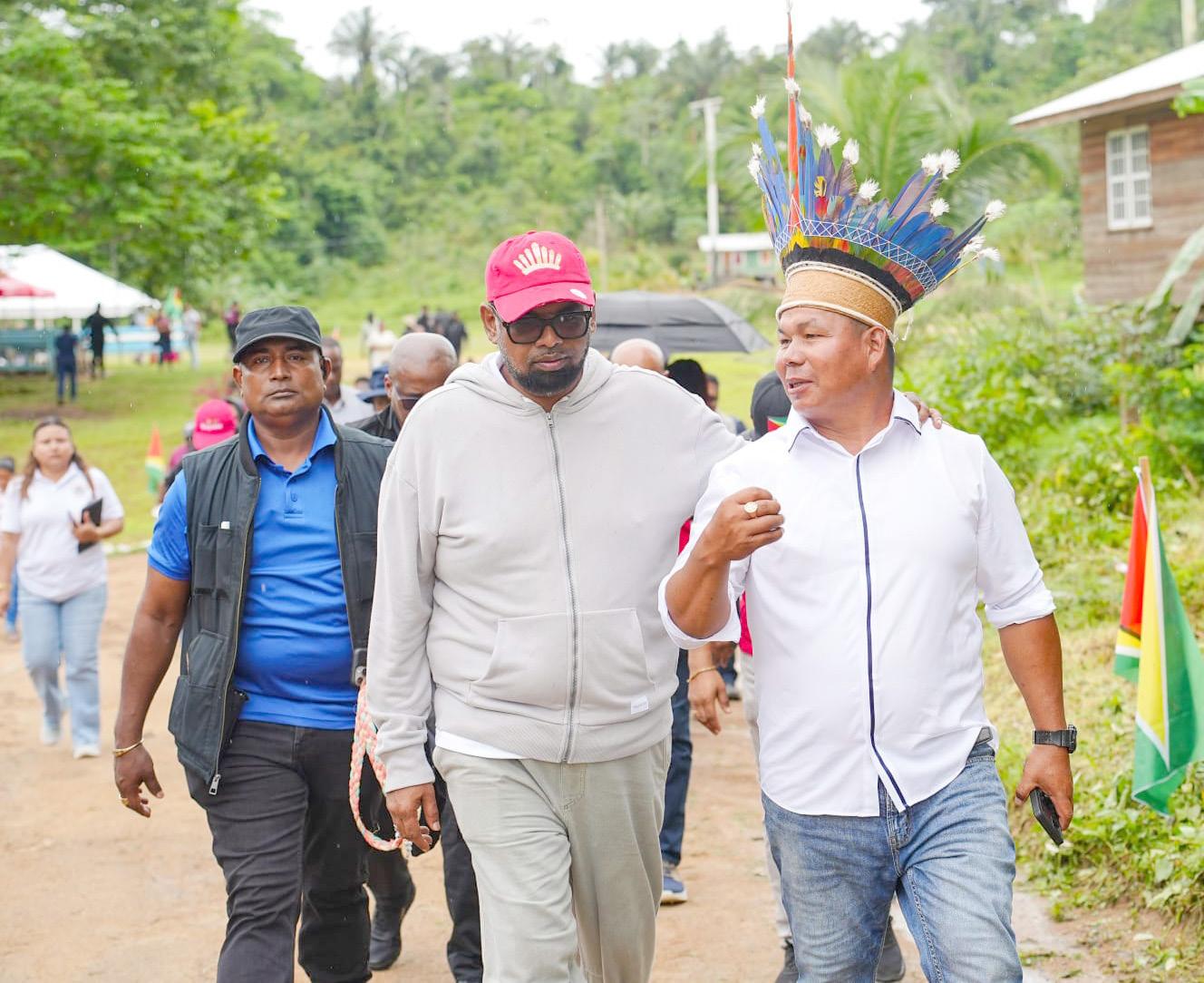
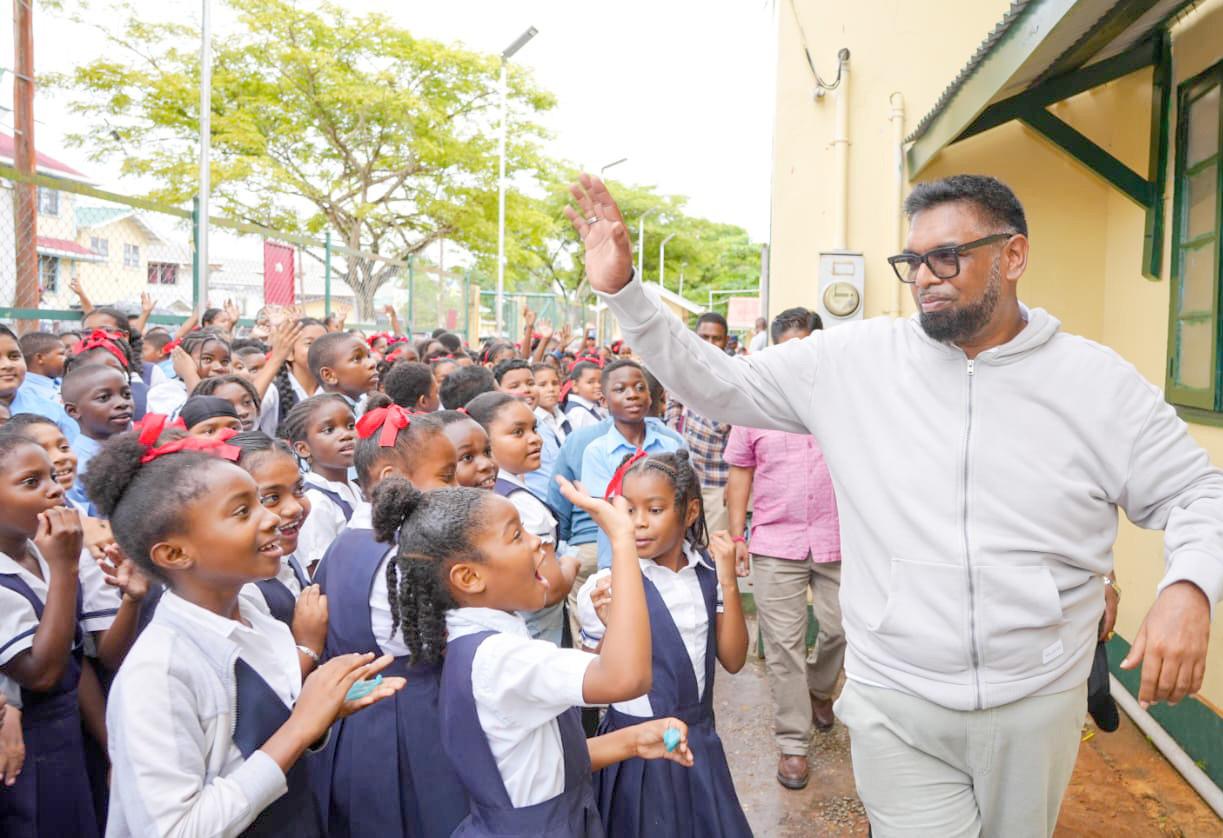
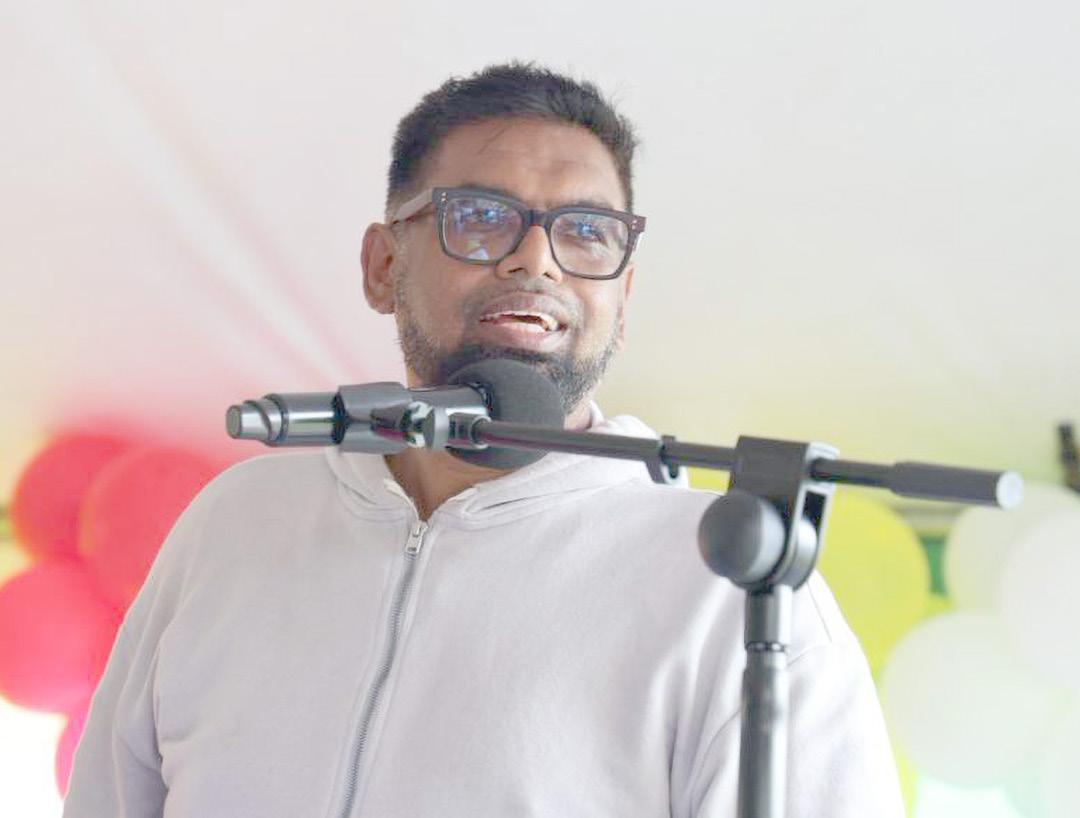
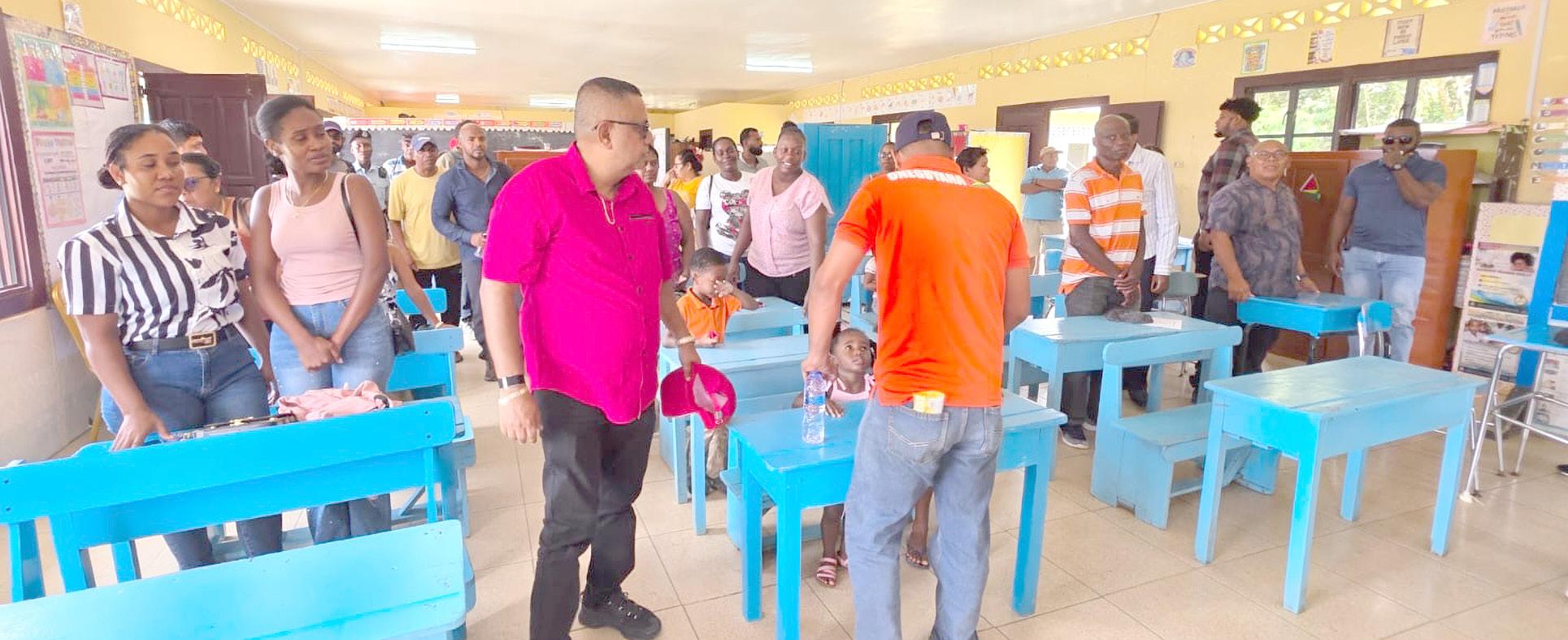
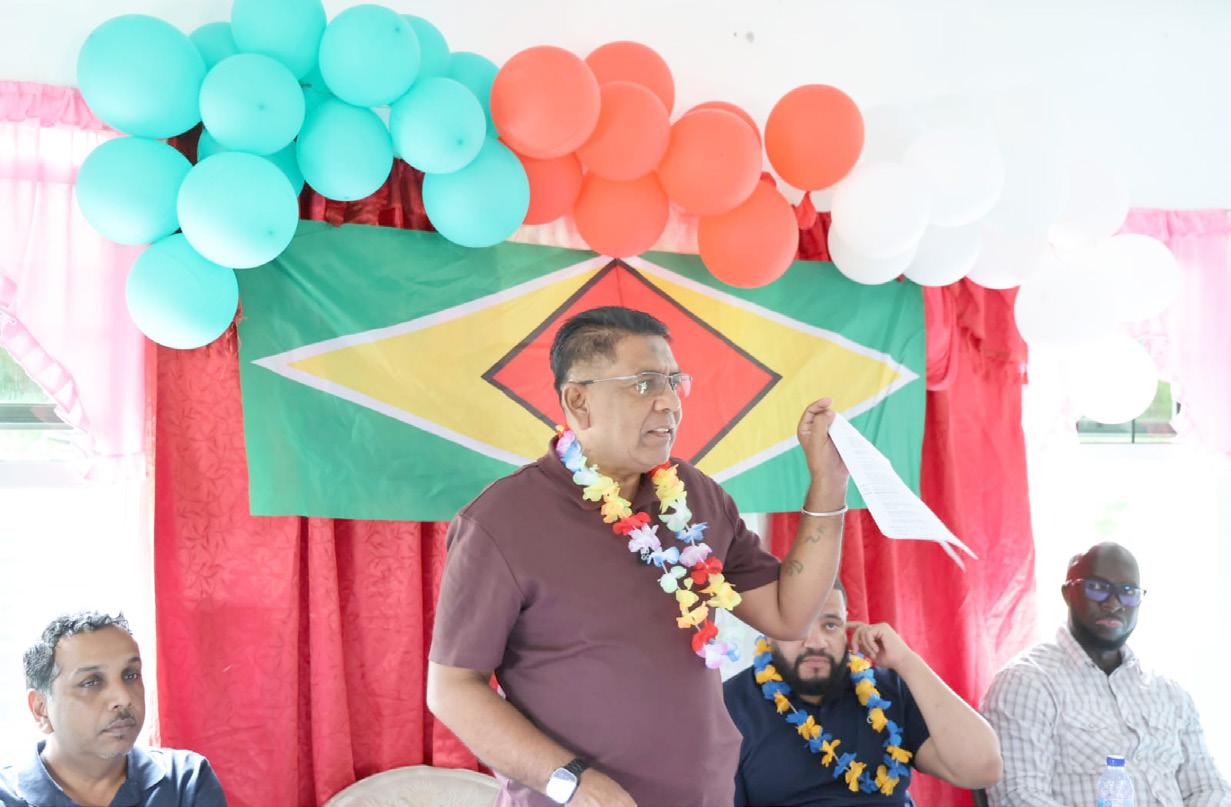
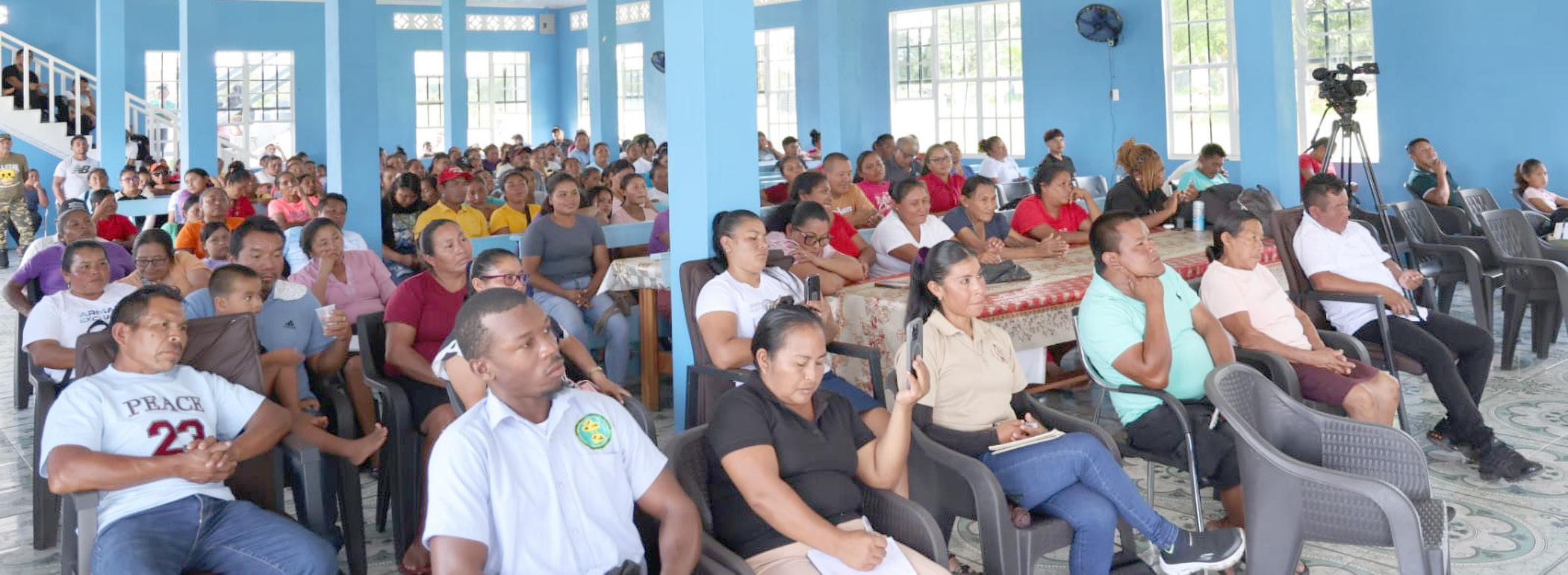
President, Dr Irfaan Ali took a break from the busy two-day cabinet outreach to Region Seven (Cuyuni—Mazaruni) to meet the students of the St John the Baptist Primary School in Bartica on Monday. He also met residents of Batavia where he announced that the community is set to benefit from a new wave of development in the months ahead that includes new infrastructure, water and security initiatives (Latchman Singh photos)
Construction of US$6M Puruni River bridge to commence in August
RESIDENTS and businesses in Region Seven (CuyuniMazaruni) are set to benefit from improved connectivity
with the construction of a new bridge across the Puruni River, a major infrastructure project that will
strengthen transportation links and support economic development in the mining district.
President Dr Mohamed Irfaan Ali announced on Monday that the bridge project, valued at approximately US$6 million, is expected to commence in August this year.
Speaking during a government outreach in Bartica, the president said the project forms part of a broader programme to modernise infrastructure and improve access across hinterland communities. According to the head of state, construction is expected to take approximately eight months once work begins.
The bridge is expected to improve the movement of people, goods and services within the region while providing safer and more reliable access for residents, miners, farmers and businesses operating in the area.
The announcement comes
as the government continues to advance a series of major infrastructure projects across Region Seven to support economic activity and improve residents’ quality of life.
President Ali noted that significant investments are already underway in roads, airstrips, health, education and energy infrastructure throughout the region.
The Puruni River bridge is expected to complement ongoing economic expansion in the region, including increased mining activity and the development of largescale initiatives such as the Oko West Gold project.
The president said the government remains committed to ensuring that development reaches every community and that infrastructure investments create new opportunities for growth and prosperity.
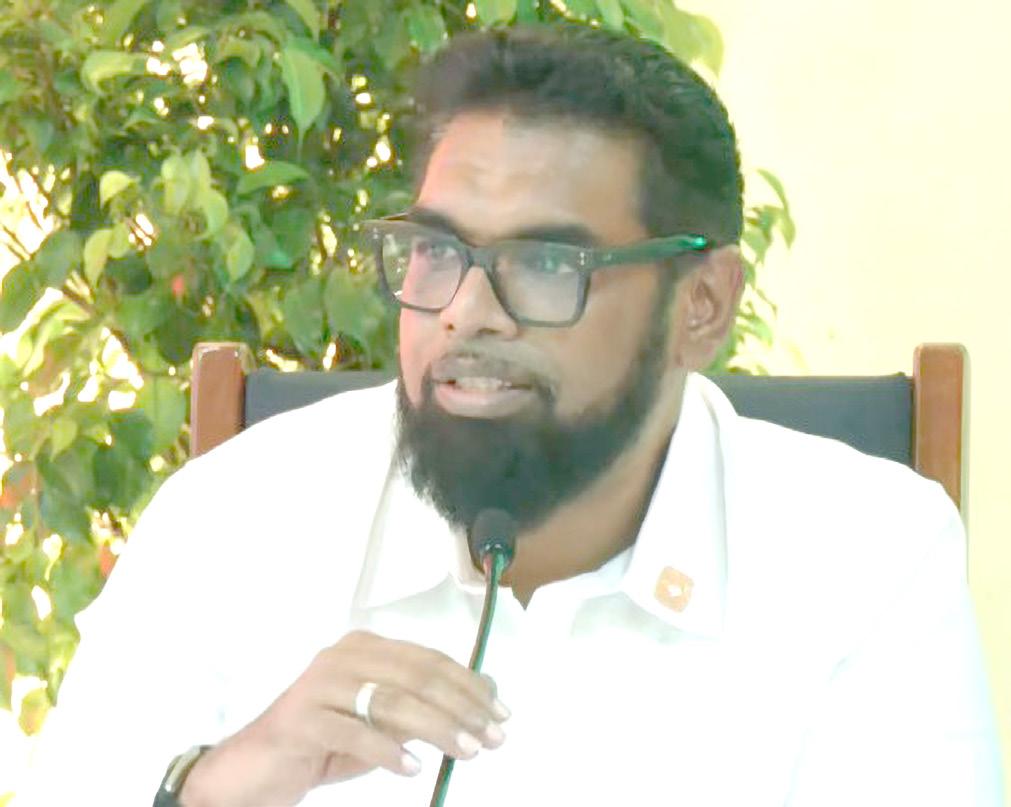
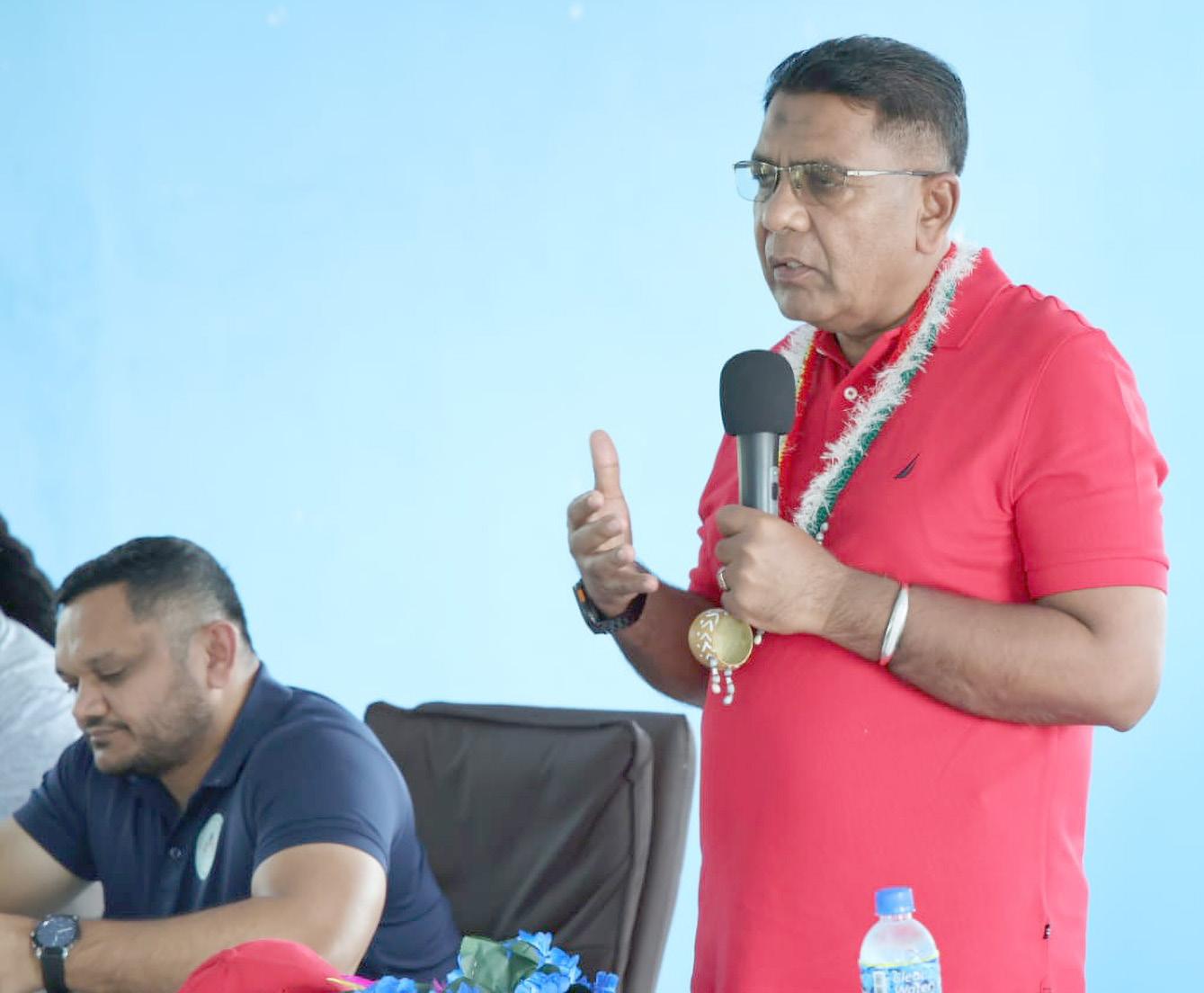
President Irfaan Ali addressing residents in Bartica, Region Seven
25 per cent cut in electricity rates for Bartica to begin in July
--President Ali announces, says 1.5-megawatt solar farm saving over 6000 drums of diesel, eliminating 11,000 tonnes of carbon dioxide
PRESIDENT, Dr Irfaan Ali has announced a 25 per cent reduction in electricity rates for households in Bartica, Region Seven.
Speaking at a community engagement on Monday, President Ali said the recently operationalised 1.5-megawatt solar photovoltaic farm is now supplying power to Bartica, following an investment of more than $703 million.
The 1.5-megawatt solar PV farm is now supplying electricity to Bartica. This was an investment of more than $703 million
This investment has resulted in this output of 6,148 drums of diesel, and of course we measure the emission that it eliminates, 11,000 tonnes of carbon dioxide,” he told residents, adding:
“Your electricity rate will be reduced by 25 per cent in your first trance [sic] as you move up to the 50 per cent across the country.”
The investment is expected to benefit more than 5000 households across the township, which is a central hub for mining and manufacturing in the region.
He explained that the project significantly reduced fuel consumption and emissions in the regional grid.
Linking the initiative to the government’s manifesto
commitment, President Ali stressed that his administration is delivering on its pledge to cut power costs nationally.
The President used the announcement to reinforce a message of trust in the current administration, describing the People’s Progressive Party/Civic (PPP/C) as a reliable partner for citizens.
“If there is one government, one administration you can trust, it is the People’s Progressive Party… we are not fair weather, we are there for every weather. We are not fair weather, we are fair for everyone,” he declared, to applause from the audience.
The measures form part of the government’s wider
programme to expand renewable energy, cut emissions and ease household expenses in hinterland and riverine communities such as Bartica.
The solar farm was commissioned back in 2023 and constructed with the support of the Guyana Energy Agency, in partnership with the Inter-American Development Bank (IDB), under the Guyana Utility Scale Solar Photovoltaic Programme (GUYSOL) at Dagg Point.
The 1.5 MW PV Plant at Bartica was designed to accommodate increased levels of solar PV penetration as Bartica’s load grows.
At maximum capacity, the system will generate and supply a total of 1,988 MWh
Power and Light (GPL)
to the grid, resulting in an estimated annual reduction of 4,500 drums of diesel consumption and a 1.5-million-kilogramme reduction in carbon dioxide emissions.
“We are a government that is continuously on the ground, continuously mixing… We don’t manage from a high place, we manage from the ground.
That is why we’re out here. So we know the challenges, and that is why we are addressing these challenges in a direct way,” Dr
Ali said. Guyana has rapidly expanded its energy infrastructure. Under its Low Carbon Development Strategy (LCDS) the country has taken a transformative approach to energy that seeks to reduce reliance on imported fossil fuels, by diversifying energy sources and ensuring affordable, reliable energy access for all Guyanese.
The aim is to integrate renewable resources such as solar, hydro, wind, biomass, and natural gas to meet
growing energy demand, while keeping emissions low.
Further, the 300 MW Wales Gas to Energy project, Guyana’s largest infrastructural initiative to date, aims to reduce electricity costs by 50 per cent and support domestic production of liquefied petroleum gas (LPG) for cleaner household cooking.
Beyond immediate energy benefits, the GtE project is expected to enhance industrial competitiveness and strengthen the country’s energy mix.
Maternity services being overhauled as part of drive to reduce maternal deaths - GPHC CEO says
THE Georgetown Public Hospital Corporation (GPHC) has undertaken a major overhaul of its maternity services as part of ongoing efforts to reduce maternal deaths, according to Chief Executive Officer Robbie Rambaran.
The CEO noted that women’s and children’s health was identified as a priority area upon his return to the institution, thus prompting a comprehensive review of key services within the hospital.
He explained that three critical areas, emergency care, maternity services, and supplies and logistics were identified as requiring immediate attention due to their impact on patient outcomes.
“Having looked at so many
competing priorities, I had to decide where we would make the biggest impact,” he said while adding that maternity was one of those key areas.
As part of the reforms, the hospital has restructured leadership within the maternity department, including changes to the head of department and a full reorganisation of staffing systems.
Rambaran said doctors have now been assigned directly to specific units within the maternity department, including the labour ward, prenatal and postnatal care areas, rather than operating solely on an on-call rotation system.
He said this change has strengthened accountability, and improved
patient monitoring.
“We realigned the staff, the shift system and the call system so that there is more direct responsibility for each unit,” he explained.
Against this backdrop, he stated that the hospital has also expanded the maternity ward and upgraded facilities, including improvements to patient comfort and infrastructure such as air conditioning across wards.
Rambaran further added that the GPHC has invested heavily in specialised medical equipment to improve monitoring of mothers and newborns, alongside ongoing staff training programmes.
Further to this, partnerships with international institutions, including
Mount Sinai and Northwell Health, have supported efforts to enhance clinical skills and improve outcomes in maternal care. Meanwhile, addressing the issue of referred patients, he stated that many maternal deaths involve high-risk cases transferred from private institutions.
He said, as a national referral hospital, the GPHC often receives patients in critical condition, which can complicate outcomes despite medical intervention.
As such, the CEO said the reforms are ongoing and part of a sustained effort to reduce preventable maternal deaths while strengthening overall maternal health services across the institution.
President, Dr Irfaan Ali (Guyana Power and Light/Facebook)
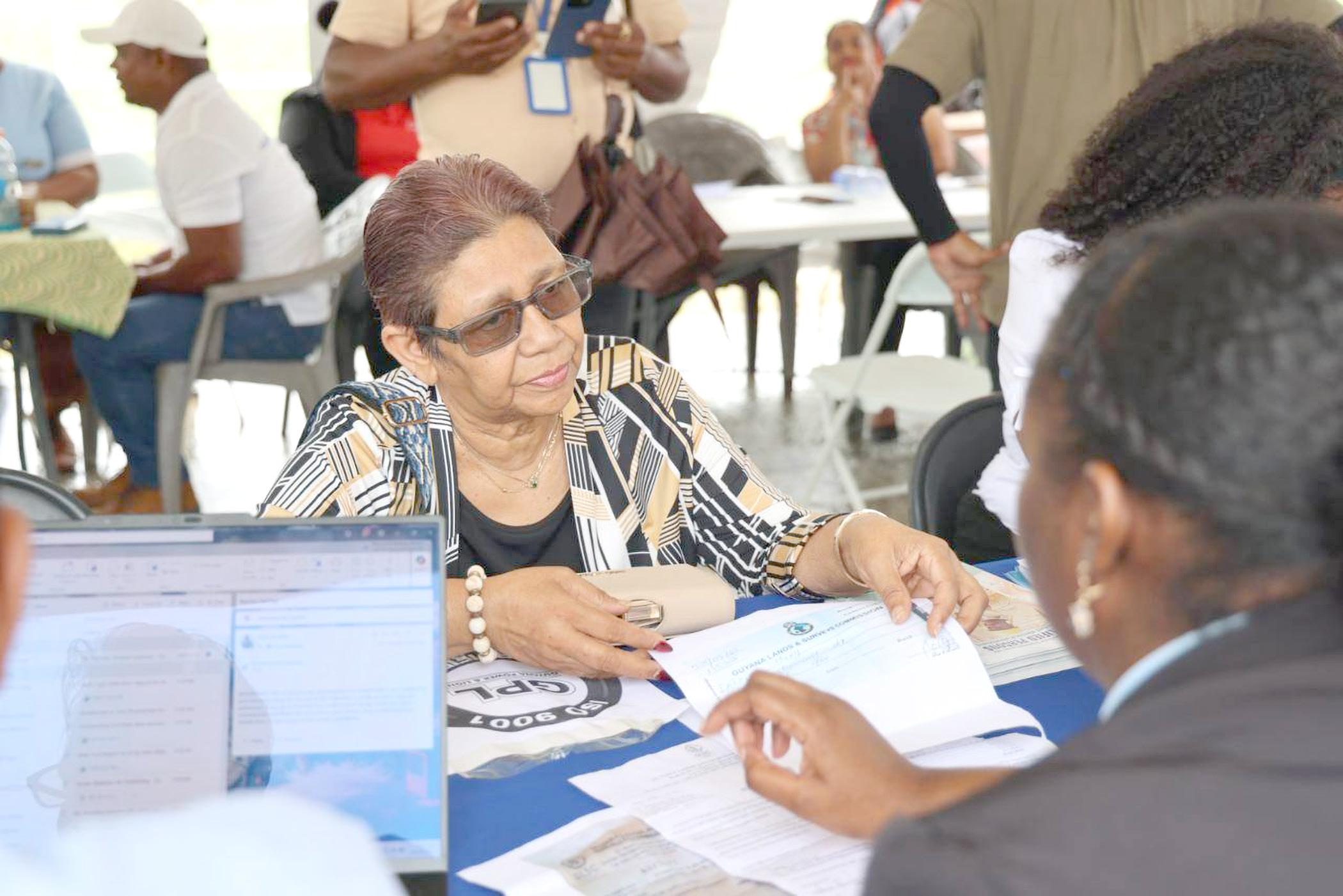
During the engagement residents were able to address concerns and queries from various government agencies, among those were the Guyana
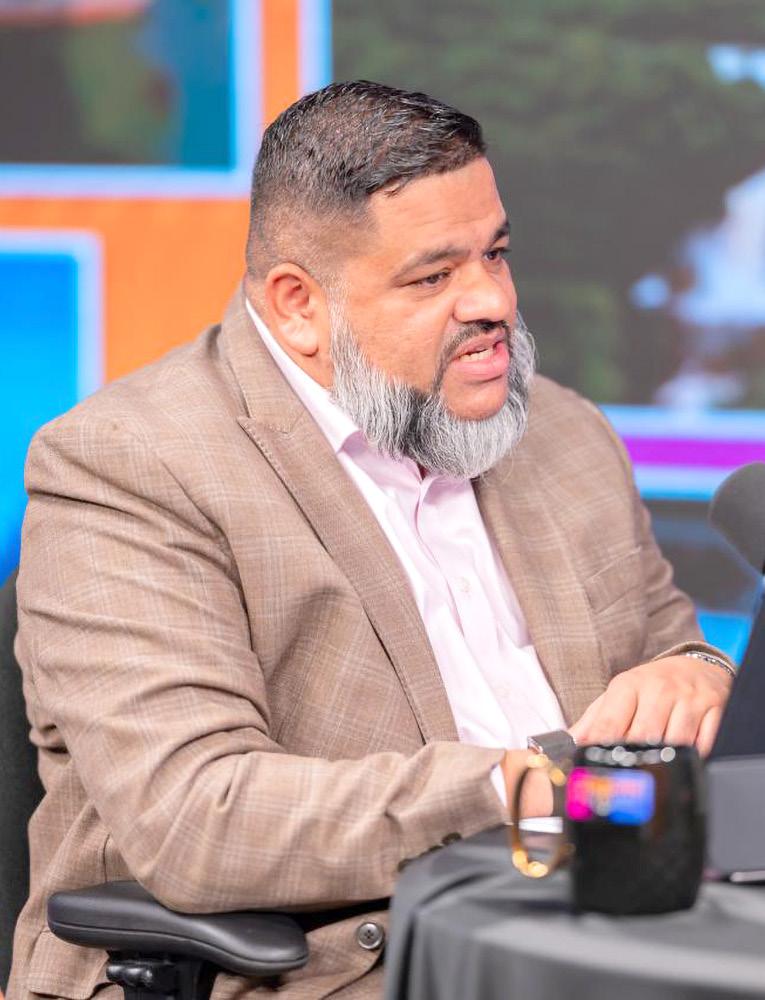
GPHC CEO Robbie Rambarran
Batavia sees wide-ranging development gains through education, energy and infrastructure investments
--Toshao highlights impact of government interventions on Region Seven community
By Shaniya Harding
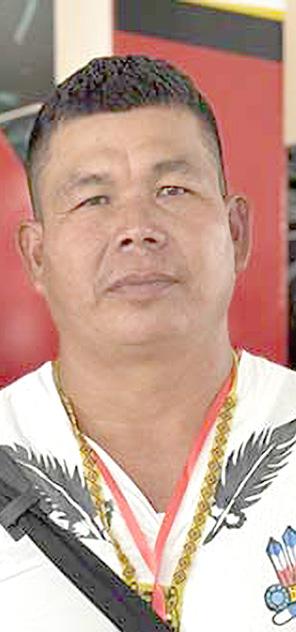
RESIDENTS of Batavia Village along the lower Cuyuni River are experiencing significant improvements in quality of life driven by recent government investments in education, energy, infrastructure and public services, according to Toshao Murphy Gomez.
Speaking during a recent government outreach in Region Seven, Gomez said the riverine community, which is home to approximately 700 residents, has undergone notable transformation since 2020, with upgrades in essential services and community facilities reshaping daily life.
The outreach brought together members of the Cabinet and local residents, providing a platform for direct engagement between policymakers and community leaders.
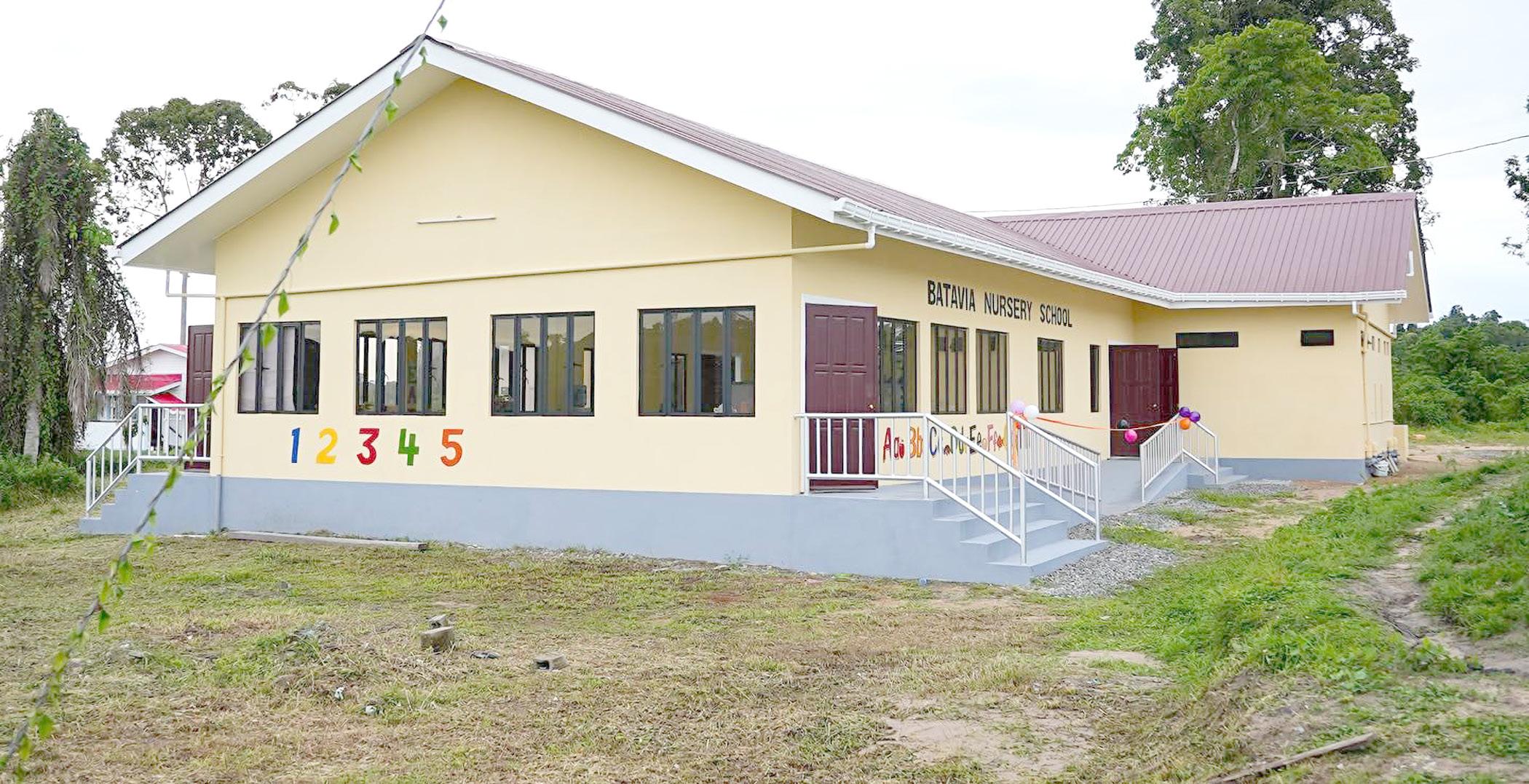
Among the most significant developments highlighted was the construction of a new nursery school, which Gomez said has improved early childhood learning conditions in the community.
“For education, we want to say thank you to the Ministry of Education for the new
nursery school. Our children can now be in a comfortable place to learn on a daily basis, separated from the primary school,” he said.
The improvement forms part of broader efforts to strengthen educational access in hinterland communities, and improve learning environments for young children.
ENERGY TRANSITION THROUGH SOLAR POWER
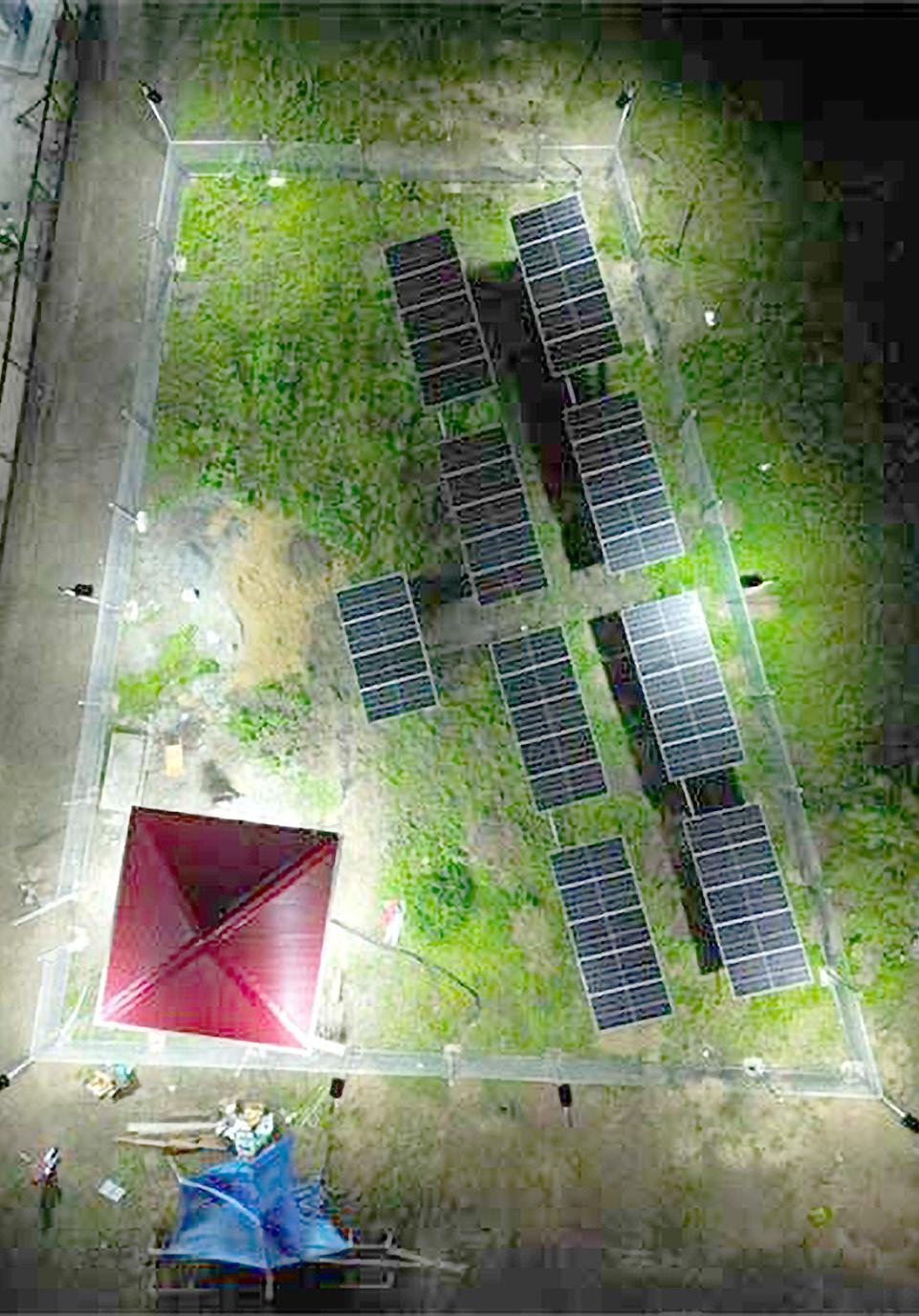
Gomez also pointed to major gains in energy access following the installation of a US$1.4 million solar energy project executed by CNOOC Guyana.
The project, launched in 2021, includes two fully operational solar farms supplying electricity to key community facilities, including Arian Island and the village centre, where several government buildings are located.
Previously, Batavia relied
heavily on gasoline-powered generators, which residents described as costly and un-
reliable.
In addition to the solar farms, 51 household solar systems have also been distributed to families in the community.
“I want to say a big thank you to the Government of Guyana, also CNOOC, for providing us with two solar farms and 51 household solar systems,” Gomez said.
The development has contributed to improved public health conditions, and reduced dependence on limited or untreated water sources.
AGRICULTURE AND LIVELIHOODS
Agricultural development has also been a key focus, TURN TO PAGE 5
Access to clean drinking water has also improved with the commissioning of a newly constructed well, which now supplies potable water to residents across the community.
An aerial view of one of two solar farms on Batavia’s Arian Island, now supplying power to the community
The Batavia Nursery School
Toshao of Batavia Village, Murphy Gomez (Samuel Maughn photos)
Gov’t moves to address middlemen spiking hinterland airfares
DESPITE increased concessions to privately owned local airline operators, residents of hinterland communities across Guyana continue to face challenges transporting goods and travelling due to rising airfares and freight charges.
On Monday, during a cabinet outreach in Region Seven (Cuyuni-Mazaruni), President Dr. Irfaan Ali announced that the government will move swiftly, engaging all stakeholders to establish long-term relief for citizens.
President Ali said every community in the area had raised concerns about the high cost of travel and moving goods, despite government support for private air operators.
He noted that the administration has already provid-
during an engagement with villagers, President Ali said every community in the area had raised concerns about the high cost of travel and moving goods, despite government support to private air operators
ed extensive concessions to these operators, including tax breaks and investments in aviation infrastructure, aimed at making air services more affordable.
“We have given all the concessions… zero tax on fuels… we’re investing in the runways, making it safer, less wear and tear for them, to revert back on the air ticket, but we are not getting the corresponding returns from them,” President Ali said.
The President indicated that, based on information received, the problem appears to lie not only with the operators but with intermediaries in the system.
“They have said that the problem is the middleman… they said they’re selling the middleman seats and capacity, and the middleman, they
are inflating the price far beyond what they are selling,” he explained.
To address this, President Ali announced that a series of consultations will be held in the coming week, led by the competent minister, to explore practical measures to support communities and reduce transport costs.
These talks are expected to bring together stakeholders in the air transport chain, with the aim of ensuring that the benefits of government concessions are passed on to consumers and villages, particularly in the movement of essential goods.
The President said the government will “find ways in supporting the communities, supporting the villages in reducing the cost of their transport.”
Batavia sees wide-ranging development...
with residents benefiting from support through shade house projects, improved farming inputs and technical assistance.
Gomez said farmers have received seeds, pesticides and planting materials through the National Agricultural Research and Extension Institute (NAREI), helping to boost cash crop production in the village.
“For agriculture, we are grateful for the cash crop farmers being provided with the necessary crops they request from NAREI, seeds, and also pesticides, etc. Our shade house project, which was recently erected, is also
progressing,” he said.
In the area of sports, Batavia has received a $1 million annual grant from the Ministry of Culture, Youth and Sport to upgrade its playfield.
Works are currently ongoing, including the installation of floodlights, aimed at improving recreational facilities for young people and encouraging greater community participation in sport.
“For sports, we are grateful to the Minister of Culture, Youth and Sport for granting us the $1 million to enhance our playfield,” Gomez said.
Residents have also benefitted from improved transportation services, particularly through the introduction of a school boat provided by the government.
The vessel now transports students and residents between riverbanks and key community facilities, including the school, health post, market and other public buildings.
“For transportation, we are thankful for the school boat that was given to us by the Government,” Gomez said. “It helps transport our school children daily and also serves residents travelling across the village.”
COMMUNITY SAFETY AND INFRASTRUCTURE
The village has also reactivated its Community Policing Group (CPG) in collaboration with the Guyana Police Force, strengthening local security arrangements and community involvement in safety efforts.
Infrastructure development has further included the construction of new bridges and a newly completed doctor’s quarters, improving access and services within the community.
Gomez also referenced national initiatives such as the Low Carbon Develop-
ment Strategy (LCDS), the government’s cash grant programmes, the Ministry of Education’s Because We Care cash grant, and support from Community Service Officers, noting their collective impact on household welfare.
Concluding his remarks, the Toshao urged continued cooperation between residents and government, saying ongoing collaboration remains key to sustaining development gains.
“Let us continue to support our government. I want to say proudly and boldly that we are in good hands,” he said.
He said these programmes, alongside local investments, have contributed to improved living standards and strengthened confidence in national development efforts.
Speaking
A win for CARICOM
STARTING July 1, 2026, Guyanese and Barbadian citizens will be able to travel with either a passport or a national identification card.
What was meant to be welcomed across the board as a concrete step towards deeper Caribbean integration has instead raised eyebrows in some quarters, particularly in Barbados where questions have been posed about security, border control, legal ramifications and administrative readiness.
These fears should not be dismissed lightly. Citizens have the right to ask how a new travel arrangement will work and what safeguards will be in place. But much of the concern about the initiative seems to stem not from the policy, but from those responsible for implementing it not communicating openly and quickly with the public.
In fact, the use of national ID cards for border crossings is neither radical nor unprecedented. Regional blocs around the world have long adopted similar arrangements. Citizens of the European Union routinely travel in the EU and Schengen Area with national ID cards.
The same holds true for the Gulf Cooperation Council and the Organisation of Eastern Caribbean States (OECS) member states where government-issued identifi-
cation documents already allow people to travel within the region.
If such systems can work in other jurisdictions, there is no reason in principle why Guyana and Barbados cannot make it work.
Indeed, the potential benefits are large. National ID cards are generally more available than passports. Both countries may reduce one of the barriers to travel to promote more people to move for tourism, family visits, education and business.
More travel can boost economic activity, enhance cultural links and deepen people-to-people exchanges between the two countries that already have close historical and regional ties. It also has the potential to serve as an important building block in the wider CARICOM integration project.
Caribbean leaders have talked for decades about building a more connected region. But progress has often been slow, frustrating citizens who hear more about integration than they see it actually taking place. This is an action-oriented and pragmatic step, moving the conversation from rhetoric to action.
There are also longer-term possibilities. Mutual recognition of identification systems could eventually facilitate the
development of more digital services, easier cross-border business transactions and stronger cooperation in areas from commerce to public administration. Trusted identity frameworks are becoming part of economic competitiveness in an increasingly digital world.
Now, that’s not to say that the challenges are small. Border security is still paramount. Citizens should be able to trust that national ID cards used for travel are of internationally accepted standards and that the integrity of immigration systems will not be compromised.
Luckily, standards already exist. The International Civil Aviation Organization (ICAO) has prepared detailed specifications for machine readable travel documents, including identity cards.
The standards range from biometric data and security features of documents to electronic verification systems. When implemented properly, they offer a framework to ensure that identification documents can be authenticated efficiently and securely.
It’s now a question of preparedness. Border officials need to be trained properly. Immigration systems need to process and verify identity cards. Legal and administrative systems need to be efficient. Above all, governments must communicate clearly and consistently with the public.
Transparency is not only good governance. It is essential for public confidence. The weeks leading up to the implementation should therefore be used to provide detailed explanations, address concerns and dispel misinformation.
Ultimately, this measure is important for more than travel documents. It’s about where the Caribbean wants to go. Grand declarations are not sufficient to bring about regional integration. It comes in incremental steps, slowly bringing Caribbean people closer together.
Some people see the Guyana-Barbados arrangement as just an administrative adjustment. We see it in a different way. It is a working example of integration moving from aspiration to reality. It is a reminder that progress often comes not in dramatic leaps but in carefully thought-out steps.
The dream of a closer CARICOM has not yet been fully realised. But if the region is ever going to realise its vision of seamless movement, deeper economic co-operation and a stronger regional identity, it has to start somewhere.
While this may not be the end game, it is certainly a step in the right direction. In a place where progress can take time, every meaningful step forward deserves recognition, and support.
Eccles road project meant to ease congestion instead creates unofficial parking lot
Dear Editor,
THE ongoing efforts by the Ministry of Public Works to remove derelict vehicles, abandoned equipment, containers, trailers and other encumbrances from public roadways across Guyana deserve commendation.
Over the past several years, the ministry under the provisions of the Road Act, has undertaken numerous nationwide campaigns aimed at improving road safety, easing traffic congestion, enhancing community aesthetics and restoring order to public spaces.
These exercises have targeted vehicles, cargo containers, heavy-duty equipment and other obstructions occupying road reserves and parapets along major thoroughfares, including sections of Georgetown, the East Bank of Demerara corridor, Sheriff Street, Mandela Avenue and other heavily trafficked areas.
The ministry has repeatedly reminded citizens that road reserves are public property and that encroachments pose serious
safety hazards to motorists, pedestrians and emergency responders.
It is against this backdrop that we, the residents of Eccles “EE” Section, wish to bring attention to a matter that continues to affect the quality of life within our community.
In 2025, recognising the narrowness and infrastructural challenges of our roadway, the Government of Guyana undertook a much-needed project to widen the road and construct western drains. The project was completed successfully and has undoubtedly improved accessibility and drainage within the area. However, a supplementary section remains unpaved and covered with stones. Unfortunately, since the completion of these works, the area has effectively been transformed into an unofficial parking facility for trucks, cargo containers, low-bed trailers and other heavy-duty equipment. This development appears to defeat the very purpose of the road improvement project.
Many of these vehicles are parked throughout the day while residents are away at work and are later removed during the
night for operational duties. Their departures are often accompanied by loud noises that disturb the peace and tranquility of the neighbourhood. In many instances, the vehicles return before dawn, making it difficult for residents to identify or engage the owners. Furthermore, most of these vehicles do not belong to residents of the street or, in many cases, even to persons residing within the wider neighbourhood.
Of particular concern is the fact that this situation exists along the street where the newly constructed Masjid was recently established, creating additional inconvenience for worshippers, residents and visitors alike. The presence of large, often unmarked vehicles and equipment raises concerns regarding safety, accessibility and the overall appearance of the community.
Residents first reported this issue to the Eccles/Ramsburg Neighbourhood Democratic Council in 2025. We were informed that a field supervisor would investigate the matter; however, to date, no visible action has been taken. The matter was also raised with the Ministry of Public Works, but we
have not received any response.
Given the ministry’s demonstrated commitment to removing encumbrances and derelict vehicles from public roadways across the country, we respectfully appeal for similar attention to be given to our community. We believe that prompt intervention by the relevant authorities would help preserve the intended benefits of the road- improvement project, while safeguarding the well-being, safety and peace of residents.
We therefore respectfully call upon the Ministry of Public Works, the Eccles/ Ramsburg NDC and other relevant agencies to urgently investigate this matter and implement the necessary measures to prevent public-road reserves from being used as parking and storage areas for heavy-duty vehicles and equipment.
We remain hopeful that our concerns will receive the attention they deserve.
Yours faithfully, Concerned Residents Eccles “EE” Section, East Bank Demerara
Truth and Reconciliation Commission and hypocrisy in Guyana
HERE is the list of people who comprise the executive committee of the Guyana Human Rights Association (GHRA): Larry Carryl (Engineer); Kerry Anne Cort-Kansinally (Data analyst-forestry); Michelle Kalamadeen (Remote sensing scientist –forestry); Cecil Morris (Disabilities activist); Natasha George (Data processor); Njuma Nelson (Chemist/water scientist); Marcelie Sears (Computer specialist); Teshanna Cox (Research officer); Troy Thomas (Snr. Lecturer, mathematics); Medino Abrams (Indigenous activist /religious leader); Tiadi Welch (Young businesswoman).
Try to make contact with any of these folks to ask them for their accountability in explaining the politics of the GHRA and you will not succeed. The GHRA makes pronouncements of governmental behaviour using
strong language in their disagreements with the Guyana Government, but you cannot elicit a response from these executives.
I made contact with one of them and she declined to discuss the GHRA. In my article of Wednesday, May 6, 2026, titled, “Horror or comicality in anti-government politics,” I listed the names above and asked that those who know them if I can have a contact number for each. The reason I needed a reaction was what the co-president of the GHRA, Norris Witter, said at the TUC Labour Day rally: “The PPP is a dangerous disease and therefore we must work together to determine what kind of dangerous medicine is required to get rid of this disease.”
Now we have a call from Transparency International, Guyana Inc (TIGI) for Guyana to have a Truth and Reconciliation Commission (TRC) similar to what South
Africa had. The last group of people in the entire world to speak of transparency is TIGI. The world saw one of the most bizarre and degenerate attempts to rig a general election to ever happen in a country in the 20th century and it took place in Guyana, where TIGI had a presence. The malignancy of the attempts lasted five months.
Where was TIGI when this descent into Draculean behaviour by APNU and certain elements in the GECOM staff were taking place? I saw a podcast in 2022 in which the then leader of ANUG, attorney Timothy Jonas, asked his fellow panelist, then head of TIGI, Frederick Collins, to cite the occasions when TIGI condemned the 2020 rigging.
TIGI was nowhere to be found in Guyana between March and July in 2020. The Guyana Human Rights Association was nowhere to be
found during that same period. These two organisations along with Red Thread are a disgraceful embarrassment to the civil-society name in this country. Suddenly, TIGI wants a TRC in Guyana.
What has happened in Guyana and what is taking place in Guyana for there to be a TRC? Suriname had a violent Maroon uprising and a military coup and there was no advocacy for a TRC in Suriname.
There was an army revolt in Trinidad, then years later a violent seizure of Parliament by the Muslimeen group in which the Prime Minister was shot. There were no demands for a TRC in Trinidad.
Britain, France, the UK, Germany and Holland brutalised the peoples of the colonies they invaded in the 19th century. There has never been any advocacy within those countries for a TRC.
The Second World War
was about to end when the US used the atomic bomb on Japan, and the racism in 19th-century and early 20th-century America led to untold numbers of tragic deaths of African Americans. There were no calls for a TRC in the US.
Just two years ago, Guyana had a Commission of Enquiry into the 2020 elections disaster. No one from TIGI testified. TIGI officials couldn’t testify because they were nowhere around when the disaster unfolded. So who is going to testify at this TRC? Walter Rodney’s most intimate comrades refused to give evidence at the commission of inquiry into his death.
Are the people who planned the Rodney assassination going to admit to their crimes? The commission’s findings point to two very high-level state-security officers who were involved in Rodney’s murder. These
two men are very prominent in Guyanese society today. I saw one at the funeral of Rupert Roopnaraine. Are they going to appear in front of the TRC and concede that the commission’s report was right about them?
If there is a TRC in Guyana, it will fail because I am going to testify and name names about what I know happened in Buxton between 2022 and 2005. Are those who are named going to give testimony? There has been only one TRC in the world, and that is because apartheid was one of civilisation’s worst crimes. But I would like to hear the reason for a TRC here.
DISCLAIMER: The views and opinions expressed in this column are solely those of the author and do not necessarily reflect the official policy or position of the Guyana National Newspapers Limited.
‘No community is being left behind,’ says MP Hussain - credits
By Bebi Shafeah Oosman
EMPHASISING the People’s Progressive Party/Civic (PPP/C) government’s commitment to remaining connected to citizens and delivering development across every region of Guyana, Member of Parliament Zamal Hussain has reaffirmed that no community is being left behind under the administration of President Dr Irfaan Ali.
Hussain, along with other members of parliament and advisers to government, joined President Ali’s twoday cabinet outreach to Re-
gion Seven, on Sunday and Monday where they fanned out in different communities meeting citizens.
Addressing residents in Wineperu Village during an outreach activity on Sunday, Hussain highlighted the government’s people-centred approach, noting that continuous engagement with communities allows the government to better understand and respond to the needs of citizens on the ground.
“His Excellency President Irfaan Ali has always said that the facilities that we have on the coastline must also be available in the
regular community engagement for Government’s delivery success
interior locations, and this is something that this People’s Progressive Party/Civic government continues to work towards,” Hussain said.
He explained that the government remains focused on ensuring that residents in hinterland and riverine communities enjoy the same opportunities, services and standard of development as those living on the coastland.
According to Hussain, since assuming office in 2020, President Ali has worked tirelessly to ensure development reaches every corner of the country through regular community engagements, infrastructure projects and investments in public services.
“No community is being left behind. He wants to ensure that the people of this country are always getting a better standard of living,” Hussain said, noting that the President and his administration continue to maintain a strong presence among
citizens and remain attentive to their concerns.
The parliamentarian also encouraged residents to work alongside the government in advancing their communities, while acknowledging that some challenges require time and sustained effort to resolve.
“We have to work together to ensure that we build our families, ourselves and our communities,” Hussain said, stressing that the government’s developmental agenda is rooted in partnership with citizens and a shared vision for national progress.
He added that while not every issue can be addressed overnight, the PPP/C government has demonstrated its commitment to tackling challenges directly and delivering tangible improvements to the lives of Guyanese.
Meanwhile, on Monday at St Mary’s Quarry, Hussain took the opportunity, during an engagement with residents, to remind them that the
PPP/C government remains successful because of their connection with the people on the ground.
“Since assuming office in 2020, this government has been reaching out and listening to the concerns of residents in the communities, then we go back to the drawing board and see the issues, some of them we fix immediately, some of them are fixed over time, and this is why this government was successful at the last elections because we continue to reach out to the residents of Guyana.”
He added, that the country is extremely lucky to have a President who always has the interest of the people at heart in every decision that he makes. “I have worked with him and I can tell you he is somebody who will reach out and ensure that if you have problems in the community he will fix them immediately and sometimes go beyond the problems.”
Member of Parliament, Zamal Hussain, meets with residents in Wineperu, Region Seven
GPF takes drivers’ theoretical exam to Katoka Village
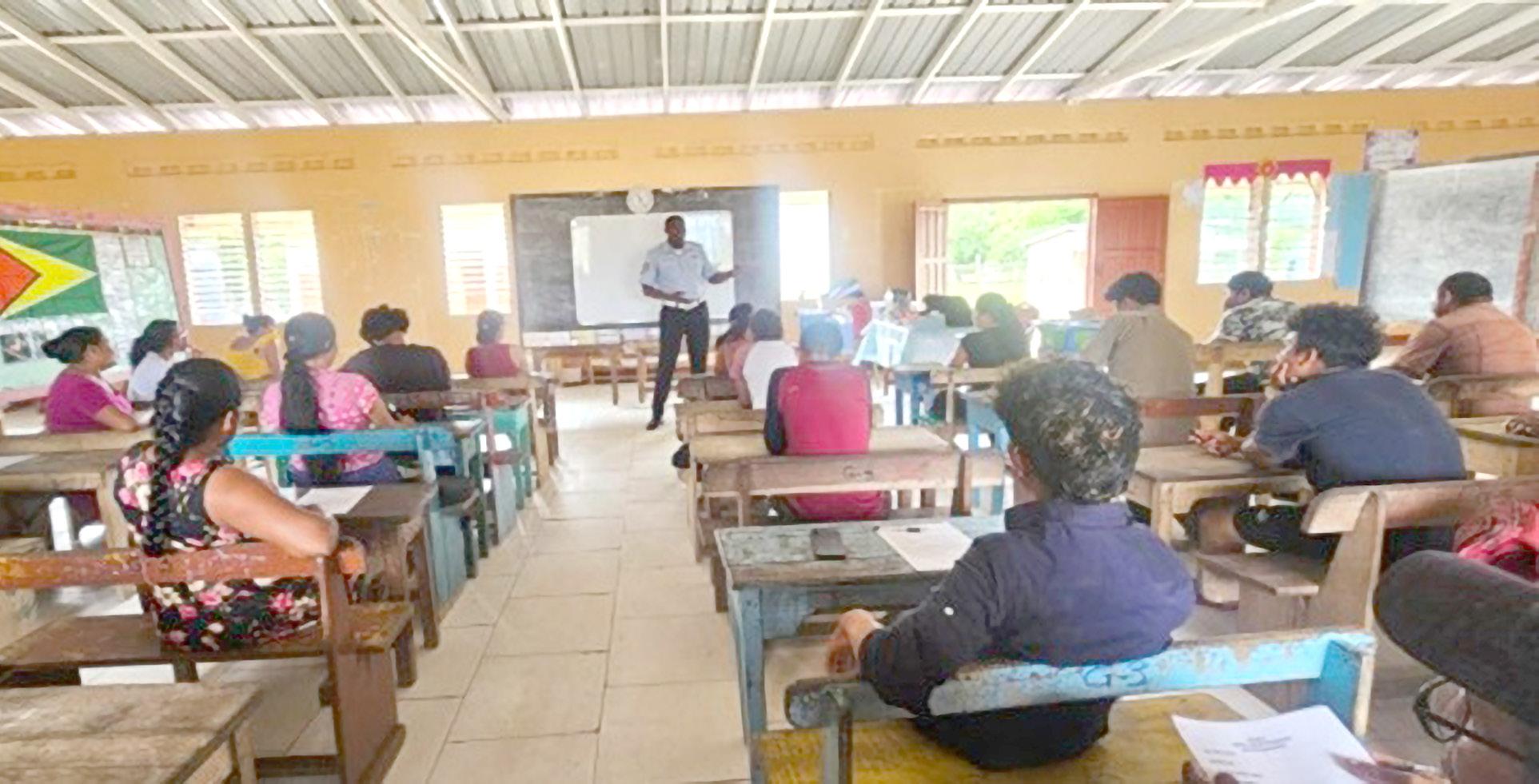
IN an effort to make driving tests more accessible to all Guyanese, the Guyana Police Force (GPF) conducted a Learner Driver’s Theoretical Examination in Katoka Village, Central Rupununi, Region Nine, on Saturday.
The examination is normally conducted in Lethem. However, the GPF said the test was held in the Amerindian community to provide a convenient opportunity for aspiring drivers to access essential services.
The test was administered to new applicants and rescheduled candidates who were previously unable to travel to Lethem to sit the examination.
This opportunity has enabled residents to operate motor vehicles legally, allowing individuals to commute to work, run errands and access essential services more easily.
Residents of Katoka village expressed their gratitude for the initiative, noting that it will continue to benefit and transform their lives.
Village Councillor Nimrud Parks also lauded the GPF for bringing the service to the village, commended the ranks for their continuous efforts, and said he looks forward to similar initiatives and services in the future. (DPI)
The Guyana Police Force conducts Learner Drivers’ Theoretical Examination in Katoka Village
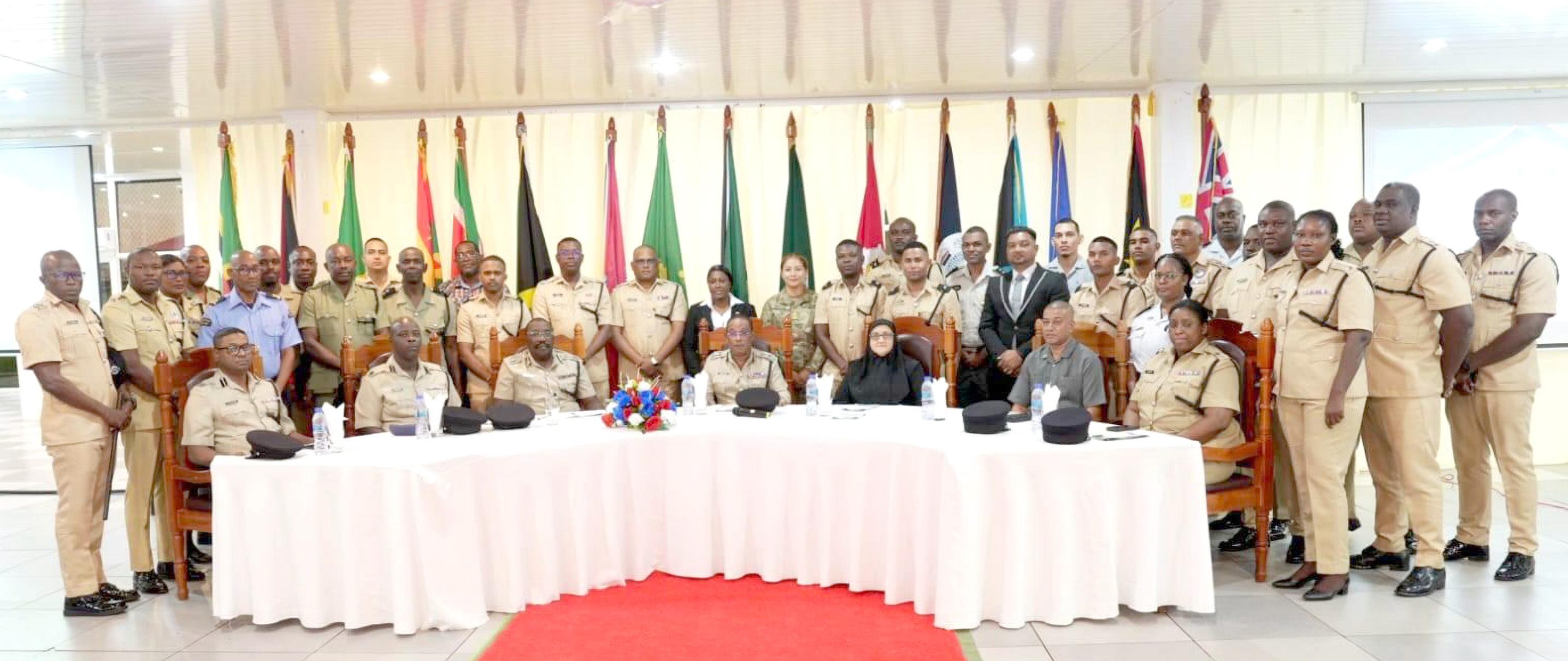
Regional law enforcement officers join GPF for Junior Officers’ Course
LAW enforcement officers from across the Caribbean joined members of Guyana’s Joint Services on Monday as the Guyana Police Force (GPF) officially launched its Junior Officers’ Course #1/2026, a programme aimed at strengthening leadership, professionalism and regional cooperation among emerging security sector leaders.
The course commenced at the Police Officers’ Mess Annex at Eve Leary, Georgetown, with Commissioner of Police Clifton Hicken urging participants to embrace integrity, discipline, and professionalism as they prepare to take on greater leadership responsibilities within their respective organisations.
The opening ceremony brought together offi -
cers from several Caribbean countries, including Antigua and Barbuda, Belize, Dominica, Grenada, Jamaica, St. Vincent and the Grenadines,
St. Kitts and Nevis, The Bahamas, the Turks and Caicos Islands, and Suriname.
Participants also include ranks from the Guyana De-
fence Force (GDF), Guyana Fire Service (GFS), Guyana Prison Service (GPS), and the Customs Anti-Narcotics Unit (CANU).
Addressing the gathering, Commissioner Hicken said the programme had been redesigned following the accreditation of the Guyana Police Force Academy, and forms part of the Force’s broader strategy to enhance leadership development, professional training, and human resource capacity.
He explained that the curriculum places emphasis on leadership, ethics, accountability, critical thinking, information technology, and evidence-based decision-making, all competencies that have become increasingly important in modern policing and security management.
“The development of strong, competent and ethical leaders is critical to the future of policing and public
safety,” Hicken said, while encouraging participants to uphold the highest standards of professionalism throughout the course and their careers.
The Police Commissioner also highlighted the Force’s investment in education and professional development, noting that more than 3,000 local scholarships and partnership opportunities have been facilitated for ranks.
He added that hundreds of officers are currently benefiting from educational programmes through the Guyana Online Academy of Learning (GOAL).
Looking ahead, Hicken said the Force intends to expand training opportunities in emerging fields such as artificial intelligence, cybersecurity, intelligence analysis, digital forensics and digital investigations as part of efforts to modernise policing and strengthen institutional capacity.
He further disclosed that the Junior Officers’ Course will be delivered through a fully digital platform, reflecting the Force’s ongoing embrace of technology-driven learning and operational efficiency.
Addressing the regional contingent, Commissioner Hicken underscored the importance of collaboration among Caribbean law enforcement agencies, noting that partnerships involving accredited training programmes and instructor exchanges are essential to raising professional standards and addressing shared security challenges.
The course will be coordinated by Superintendent Dellon Fraser and Assistant Superintendent Dionne Pollard, and is designed to foster the exchange of best practices while developing participants’ leadership, supervisory and managerial capabilities. Officials said the programme will also strengthen cooperation and networking among law enforcement agencies throughout the Caribbean, providing participants with opportunities to share experiences and build relationships that can support future regional security initiatives.
The Junior Officers’ Course forms part of the Guyana Police Force’s ongoing efforts to modernise its training framework and prepare a new generation of leaders capable of responding to the evolving demands of policing and public security in Guyana and across the wider Caribbean.
The course commenced at the Police Officers’ Mess Annex at Eve Leary, Georgetown, with Commissioner of Police Clifton Hicken urging participants to embrace integrity, discipline and professionalism
PM Phillips calls for accelerated climate action on World Environment Day
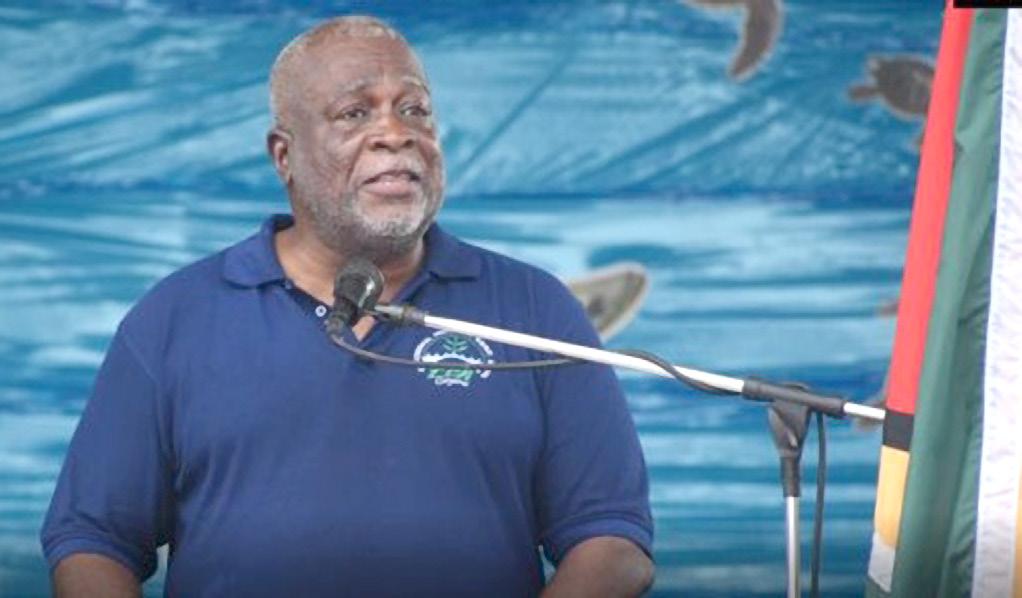
PRIME Minister Brigadier (Ret’d) Mark Phillips on Sunday underscored the urgent need for accelerated climate action, environmental stewardship, and collective responsibility as Guyana observed World Environment Day 2026, celebrated annually on June 5.
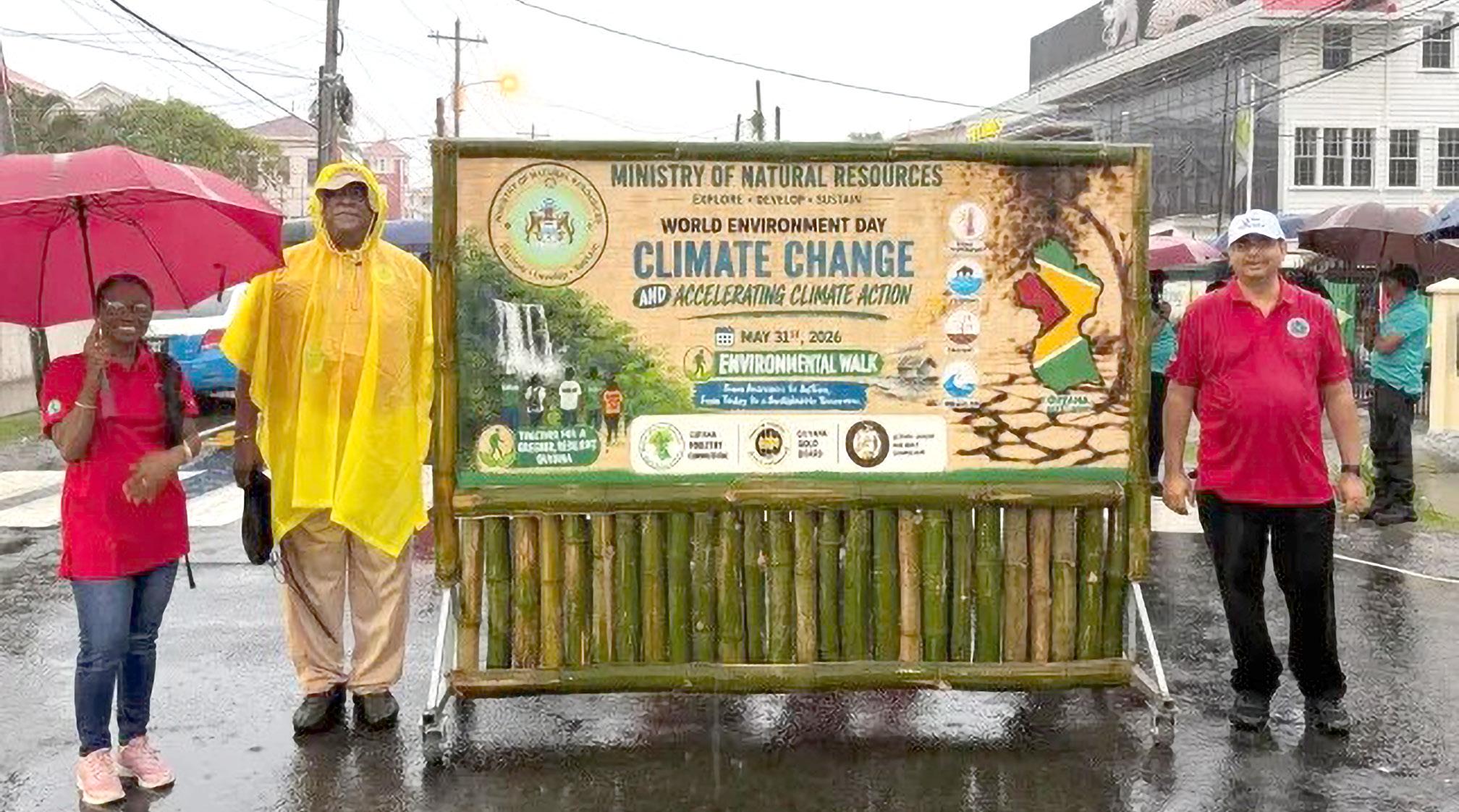
To mark the occasion, Guyana’s Environmental Protection Agency (EPA) organised a Green Walk on Sunday. Hundreds of participants braved persistent rainfall to walk from the Umana Yana in Kingston to the National Park Tarmac.
Addressing participants, Prime Minister Phillips said the global conversation on climate change has moved beyond scientific debate and now requires decisive action from governments, communities, and individuals.
“The question before every government and every community is whether we are changing fast enough in response to our changing climate,” the prime minister stated.
Referencing discussions at the 30th Conference of the Parties (COP30) held in Belém, Brazil last November, he noted that world leaders have acknowledged the growing likelihood of global temperatures exceeding the 1.5 degrees Celsius warming threshold, a reality that presents significant risks for vulnerable countries such as Guyana.
PM Phillips highlighted Guyana’s unique vulnerability, noting that approximately 90 per cent of the population and about 75 per cent of the country’s economic activities are concentrated along the
Guyana has been implementing a range of measures to address climate change through its Low- Carbon Development Strategy (LCDS) 2030, including preserving 99 per cent of its forests, expanding renewable energy, and strengthening climate resilience initiatives.
The prime minister also highlighted the country’s success in generating more than US$180 million from the sale of carbon credits, with revenues being channelled into community development projects, nationwide.
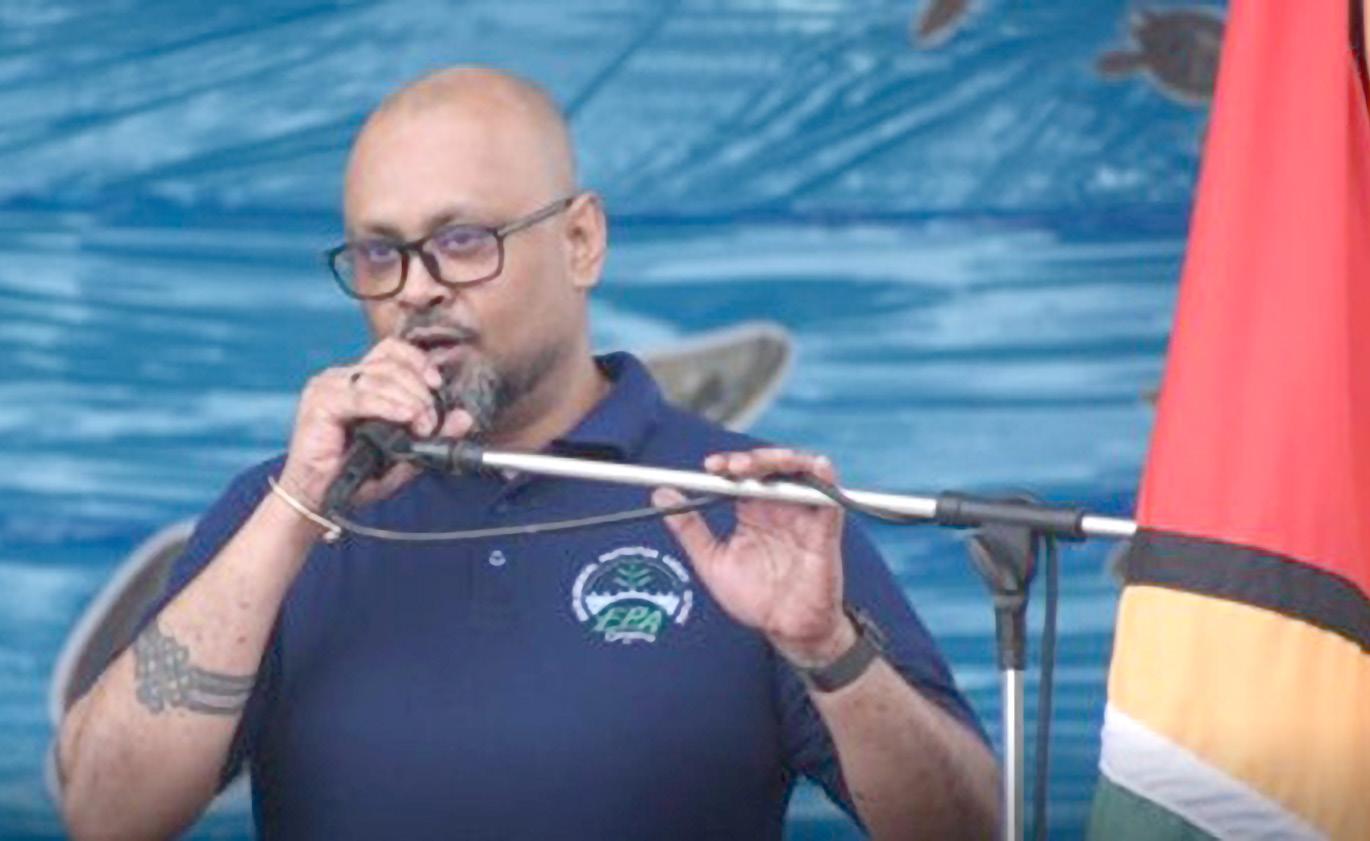
tively to protect communities from the impacts of climate change. Meanwhile, EPA’s Executive Director Kemraj Parsram reflected on Guyana’s environmental achievements, and the Agency’s 30 years of service in advancing sustainable development and environmental protection.
While Guyana remains one of the most forested countries in the world, and continues to lead globally in environmental stewardship, behavioural changes are still needed to address littering and improper waste disposal.
“If we can proudly say that Guyana is our home, then we must also take responsibility for keeping it clean. Every road, every drain, every river, every village, every community,” Parsram said.
The EPA head used the occasion to promote the agency’s national “Nah Dutty De Place, Man” initiative, which encourages citizens to take greater responsibility for maintaining clean and healthy communities.
low-lying coast.
He cited rising sea levels, stronger storm surges, and more flooding as major risks to coastal areas, farming, and infrastructure.
“This seawall along which we walk this morning is one of the most consequential pieces of infrastructure in our country. It holds back an ocean for us, it requires constant investment, constant political will, and overall attention,” he emphasised.
While the government continues to invest in sea defences, drainage infrastructure, and renewable energy projects, PM Phillips stressed that environmental protection also requires personal responsibility.
PM Phillips also said
He urged citizens to reduce plastic waste, adopt environmentally responsible practices, and work collec-
The Green Walk forms part of a series of activities planned for World Environment Day 2026, including a Green Theatre production scheduled for June 11 at the National Cultural Centre.
This year’s observance is being held under the theme, “Climate Change and Accelerating Climate Action”. (DPI)
Kalcoon residents to benefit from inputs, land clearing – Min. Mustapha
WHILE engaging villagers from Kalcoon and other surrounding villages in Cuyuni-Mazaruni (Region Seven), Agriculture Minister Zulfikar Mustapha disclosed that a number of interventions will be implemented in the coming weeks to develop agriculture and boost production in the area.
Minister Mustapha and other Cabinet Ministers are currently in the region participating in a twoday ministerial outreach being led by President Dr. Irfaan Ali in keeping with the government’s efforts to get first-hand information from citizens and deliver critical services to hinterland communities.
During the engagement, Minister Mustapha outlined a series of interventions aimed at ensuring hinterland communities become more productive and self-sufficient.
“We want every community to become more productive and self-sufficient.
The government is making significant investments to ensure that our hinterland communities have
the resources, technical support, and infrastructure necessary to develop agriculture on a commercial scale. Agriculture must become a vehicle for economic growth and improved livelihoods in every
--as gov’t moves to make community more productive
region of our country,” Minister Mustapha said.
To support crop cultivation, Minister Mustapha announced that planting materials would be provided, free of cost, while officers from the National Agricultural Research and Extension Institute (NAREI) will work closely with villagers to develop cultivation plans for the area.
He also committed to providing fertilizer, ant bait, agricultural tools such as tillers and wheelbarrows, as well as agro-chemicals free to farmers.
Additionally, Minister Mustapha told farmers that extension officers from NAREI will conduct soil testing in the community to determine the most suitable crops for cultivation, and will construct a community shade house to support year-round production.
The Minister also disclosed that
the Pesticides and Toxic Chemicals Control Board (PTCCB) will review the list of chemicals currently being used in the area with the aim of identifying safer and less toxic alternatives for farmers.
Recognizing the community’s interest in aquaculture, Minister Mustapha directed the National Drainage and Irrigation Authority (NDIA) to facilitate the development of a community fish farm for the rearing of Tambaqui, providing residents with another income-generating opportunity.
Furthermore, the NDIA will also assist farmers with land clearing up to five acres per farmer, in addition to the construction of a bridge across the creek to improve access to agricultural lands. Each household in the village will also benefit from 20 Black Giant birds to assist with poultry production.
To mark World Environment Day 2026, Guyana’s Environmental Protection Agency (EPA) organised a Green Walk on Sunday
Prime Minister Brigadier (Ret’d) Mark Phillips delivering the feature address EPA Executive Director Kemraj Parsram
Agriculture Minister Zulfikar Mustapha addressing Kalcoon residents
Guyana will train regional surgeons in cutting-edge robotic surgery – President Ali
JUST as Guyana marked the historic breakthrough of having performed the longest distance telesurgery procedure using advanced robotics, President Dr Irfaan Ali has noted that an agreement has been reached to establish an international training hub in Guyana in this regard.
During the recent press conference, the head of state indicated that the move will position the country as a regional centre for advanced robotic surgery training.
He said the agreement is a major step in Guyana’s wider push to become a leader in global healthcare and to ensure that its development benefits the wider Caribbean region.
“When I said that we want to position Guyana as a
leader in global health care, many persons doubted.”
The President said Guyana’s investment in robotic surgery was not limited to acquiring technology, but also included securing full training support from the system’s developers.
The company, SS Innovations (SSI) are pioneering the future of medical robotics by leveraging technology, surgeons and training to drive the advancements in the field of surgery.
He said the country had adopted some of the most advanced robotic surgical technology available globally, describing it as a leap into the future of medical care.
“We have leapfrogged to 2050 and beyond in medical technology.” According to Dr Ali, Guyana also negotiated
for the establishment of a structured training ecosystem through SSI Mantra, ensuring that international-standard instruction will now be delivered locally.
He said this included sending local medical professionals to India for specialised training under the programme and added that those who underwent training performed exceptionally well and impressed their international counterparts.
He added that within weeks, Guyana will be able to host the same level of advanced training currently delivered in India, as part of the hub to be established.
“Everything that they experienced in the most advanced facility in India, in the coming weeks will be available here in Guyana for the
rest of the region as we build out the hub for robotic surgery and care from Guyana and the spokes will be built out throughout the Caribbean and we will provide the training mechanism for all of the teams across the region,” the President affirmed.
Dr Ali said the model will see Guyana function as the central point in a regional “hub and spoke” system, where healthcare professionals from across CARICOM will be trained locally and then supported through a wider network.
“This facility will allow us to train professionals from across the region.”
He went on to note that the initiative reflects a deliberate strategy to ensure that Guyana becomes not only a user of advanced medical
technology but also a producer and exporter of medical training and expertise.
The President said this development strengthens Guyana’s ambition to be-
come a regional centre of excellence in healthcare innovation, supported by partnerships, technology transfer, and capacity building.
Global poverty relief entails collaboration
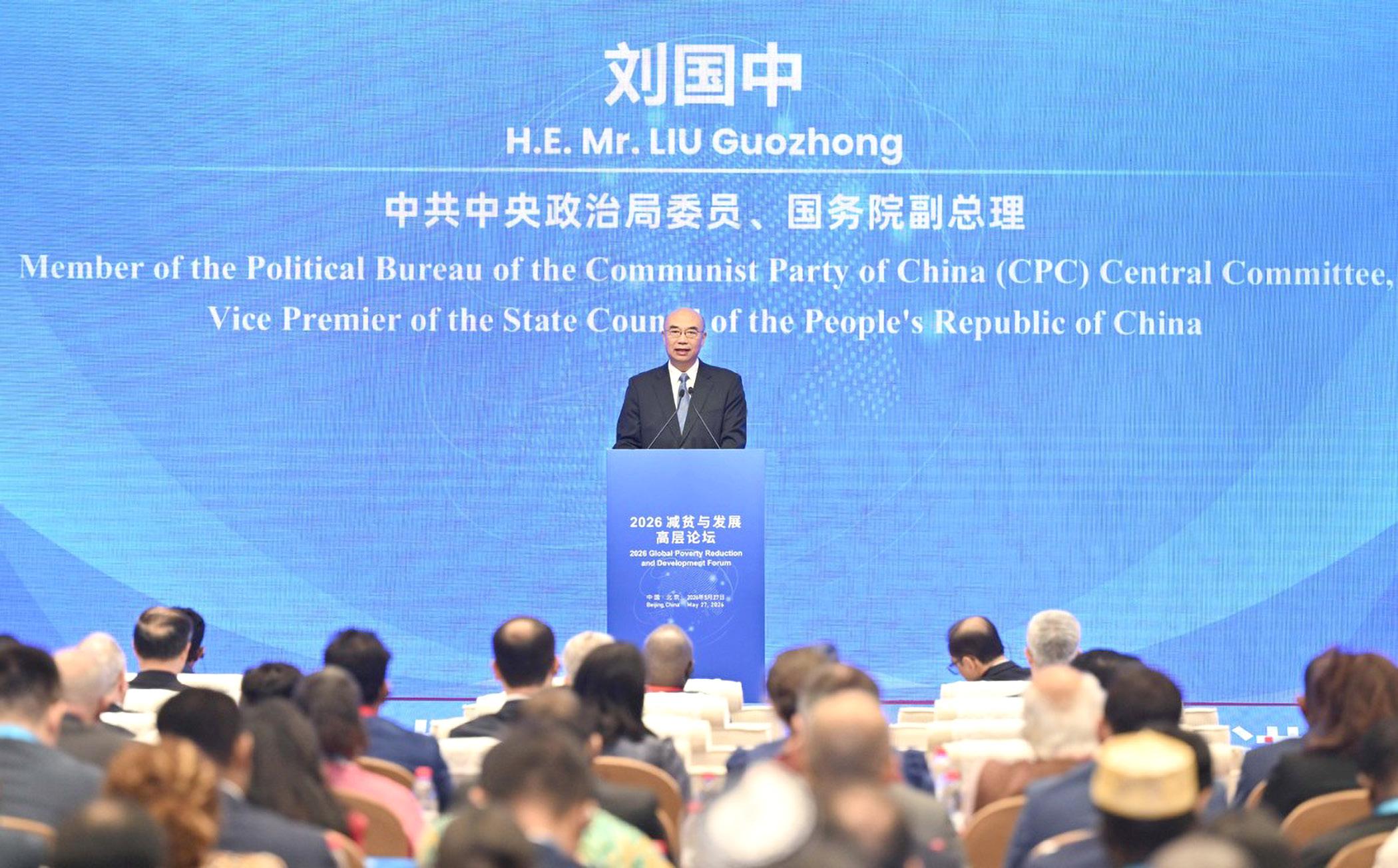
A MAJOR outcome of the 2026 Global Poverty Reduction and Development Forum that opened in Beijing on Wednesday is the establishment of the Global Partnership for Poverty Alleviation and Development (GPPAD) by China and 53 other countries, along with nine international organisations.
While some major countries export inflation, chaos and war, China is contributing poverty reduction and sharing its experience to promote poverty relief and common development.
United Nations Development Programme Resident Representative ad interim for China, James George, said in the first committee meeting of the GPPAD, the UNDP welcomes the partnership’s emphasis on dialogue, knowledge-sharing, South-South co-operation and multi-stakeholder collaboration, as these are essential elements for accelerating sustainable development progress and ensuring that development pathways remain inclusive, resilient and sustainable.
Against a backdrop of mounting global development challenges, the establishment of the partnership is both timely and significant.
According to the latest Global Multidimensional Poverty Index report released by the UNDP, 1.1 billion people across 109 countries continue to live in multidimensional poverty, while nearly 890 million vulnerable people face the dual pressures of poverty and severe climate hazards. With three-quarters of the world’s extreme poverty concentrated in rural areas, the urgency of strengthening international co-operation on poverty reduction has become increasingly evident. At a time when climate change, economic uncertainty, food insecurity, debt pressures and geopolitical conflicts are undermining global development gains, no country can tackle these challenges alone. What the world needs is stronger solidarity, more pragmatic co-operation and platforms that enable countries to share experiences and pursue common solutions. In this regard, the founding of the partnership represents another global public good provided by China and its partners. By promoting policy dialogue, technology sharing, capacity building and development co-operation, China is transforming its poverty-reduction experience into an international resource that
benefits more developing countries. This reflects China’s commitment to advancing inclusive development and building a global community with a shared future free from poverty. China’s experience demonstrates that poverty is neither inevitable nor unconquerable. In 2021, the country declared a landmark achievement: the eradication of absolute poverty, following a decades-long effort that lifted around 800 million people out of destitution. With that, the nation achieved the poverty-reduction target
of the UN 2030 Agenda 10 years ahead of schedule. China has actively promoted international exchanges and co-operation on poverty alleviation. Through the Global Development Initiative, South-South co-operation projects, agricultural-assistance programmes and poverty- reduction training seminars, China has shared its experience and technology with countries across Asia, Africa and Latin America. From hybrid rice technology benefitting farmers in nearly 70 countries to mushroom cultivation creating employ-
ment opportunities in over 100 countries and regions, China is sharing its hardearned experience with the world.
Fundamentally, the issue of poverty reduction is an issue of development. Only through development can impoverished regions cultivate endogenous growth drivers and achieve sustainable prosperity. China’s experience shows that poverty alleviation must move beyond shortterm relief and focus instead on strengthening self-development capabilities. As Chinese Vice-Premier
Liu Guozhong said at the forum, China will support the GPPAD in fully leveraging its role by strengthening policy dialogue, technology demonstration and talent training, while developing a series of “small but beautiful” projects to help developing countries enhance their poverty-reduction capacities.
To this end, there is an urgent need for all parties to build broader consensus and accelerate the global poverty- reduction process. The proposals put forward by Liu underscore China’s commitment to advancing international poverty alleviation through pragmatic, results-oriented actions. As he said, countries should accelerate pragmatic actions, strengthen dialogue and exchanges and enhance endogenous drivers by vigorously promoting market and technology-enabled empowerment, reinforce multilateral coordination and improve the global governance system for poverty reduction.
Poverty relief is not a one-time accomplishment but a long-term undertaking for all countries. Only through collaboration and shared progress can humanity build a better future marked by lasting prosperity and dignity for all.
[Photo/Xinhua]
President Dr Irfaan Ali
Government eyes third ferry for Parika-Bartica route
- as cargo and passenger traffic surge
WITH increased traffic along various routes in the Essequibo River, the government is exploring the addition of a third vessel to ply the Parika to Bartica route.
This was according to Minister of Public Works, Juan Edghill, who was at the time aboard the MV Makouria vessel and stated that the route is currently being serviced by two vessels.
However, the Parika–Bartica corridor, one of the country’s busiest river transport routes, has seen a steady increase in both passenger and vehicle traffic in recent months, with authorities attributing the growth to expanded economic activity in the interior and along the Essequibo River.
He said the high volume of movement has made it necessary for the government to consider expanding the fleet serving the route, in order to reduce waiting times and improve efficiency for commuters and businesses relying on the service.
“We are looking to add a third vessel to the Bartica route. His Excellency, the President, has instructed that we explore getting a third vessel.”
The initiative advanced by the President forms part of broader efforts to
No sedation required: GPHC set to offer advanced kidney-stone treatment
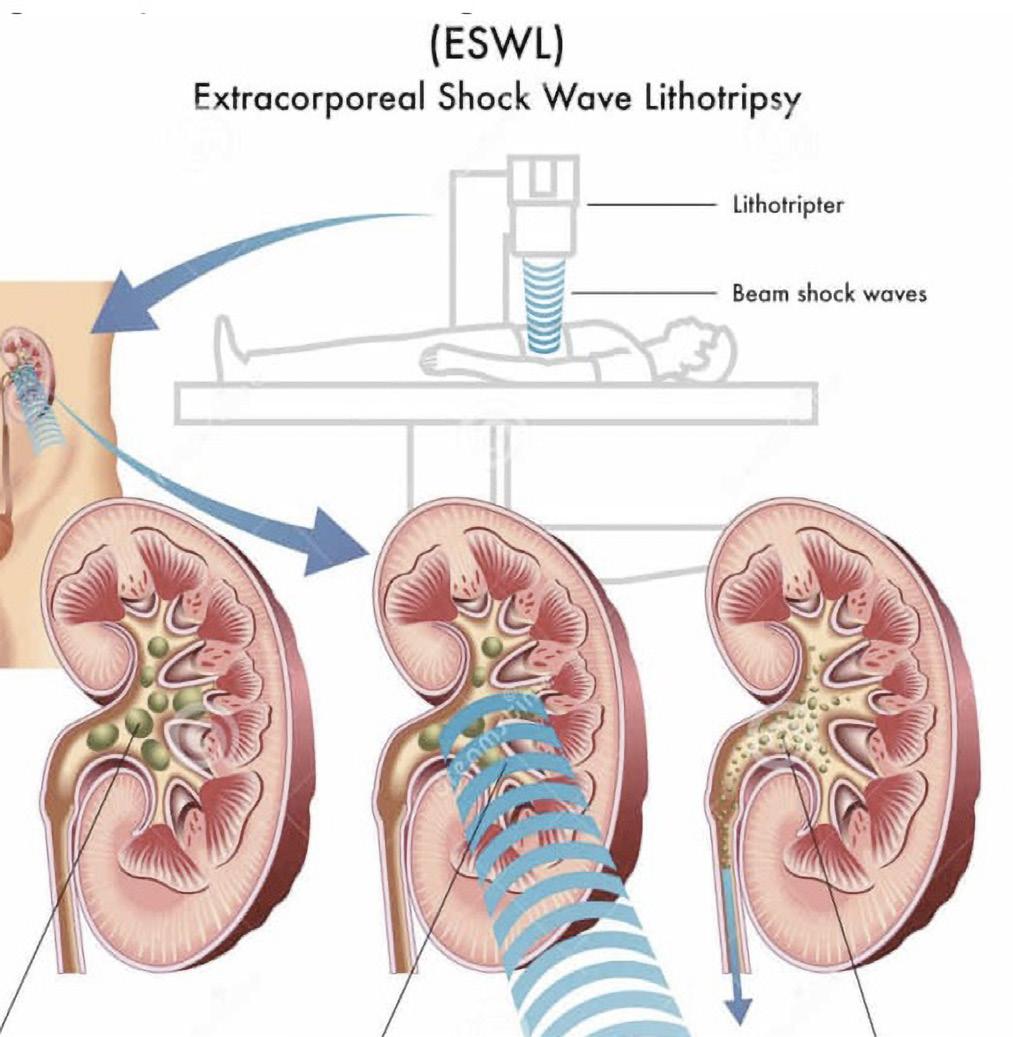
CHIEF Executive Officer of the Georgetown Public Hospital Corporation (GPHC), Robbie Rambarran, has revealed that the institution will soon be able to offer advanced treatment for kidney stones using Extracorporeal Shock Wave Lithotripsy (ESWL), eliminating the need for prolonged hospitalisation in many cases.
“What will be in that imaging centre? An MRI. We have a CT scan but it has aged, so we have some reservations about it and so we bought another CT scan, so that’s two CTs; we have a Cath Lab and we bought another, two brand new mammograph machines. We also have the Extracorporeal Shock Wave Lithotripsy. This is a machine that is being used for treatment of kidney stones and I was told by the doctors that you don’t even need to put the patients to sleep and they can go home as soon as the procedure is finished.
modernise the country’s river transport system and strengthen connectivity.
He said similar investments on other ferry routes have already improved service delivery and reduced congestion.
The minister noted that the addition of a third vessel would significantly improve capacity, particularly for vehicles and heavier cargo, helping to ease long lines that sometimes form at the ferry stelling during peak travel periods.
“So rather than people be in lines for long periods, whether its online or physically to get on these ferries, because of the great demand, we’re improving service,” he said.
The Public Works Minister went on to note that he is happy that members of government and heads of agencies who were recently travelling to Bartica for an outreach have been able to get the experience and get a greater appreciation for the service being provided.
Edghill added that improved ferry services would not only benefit daily travel but also support tourism and wider economic activity along the corridor.
“We are improving service and operational efficiency across all routes.”
that training remains one of the most impactful areas of development within the corporation.
“ In terms of where it is most impactful, you can see the impact in our training, post-graduate training especially. Right now we have over 21 post-graduate trainings at the hospital. This is where doctors and nurses in collaboration with the University of Guyana and several universities aboard [sic] partner up on training, so that they can meet the
after high school, credited the institution’s progress to the dedication and hard work of its staff.
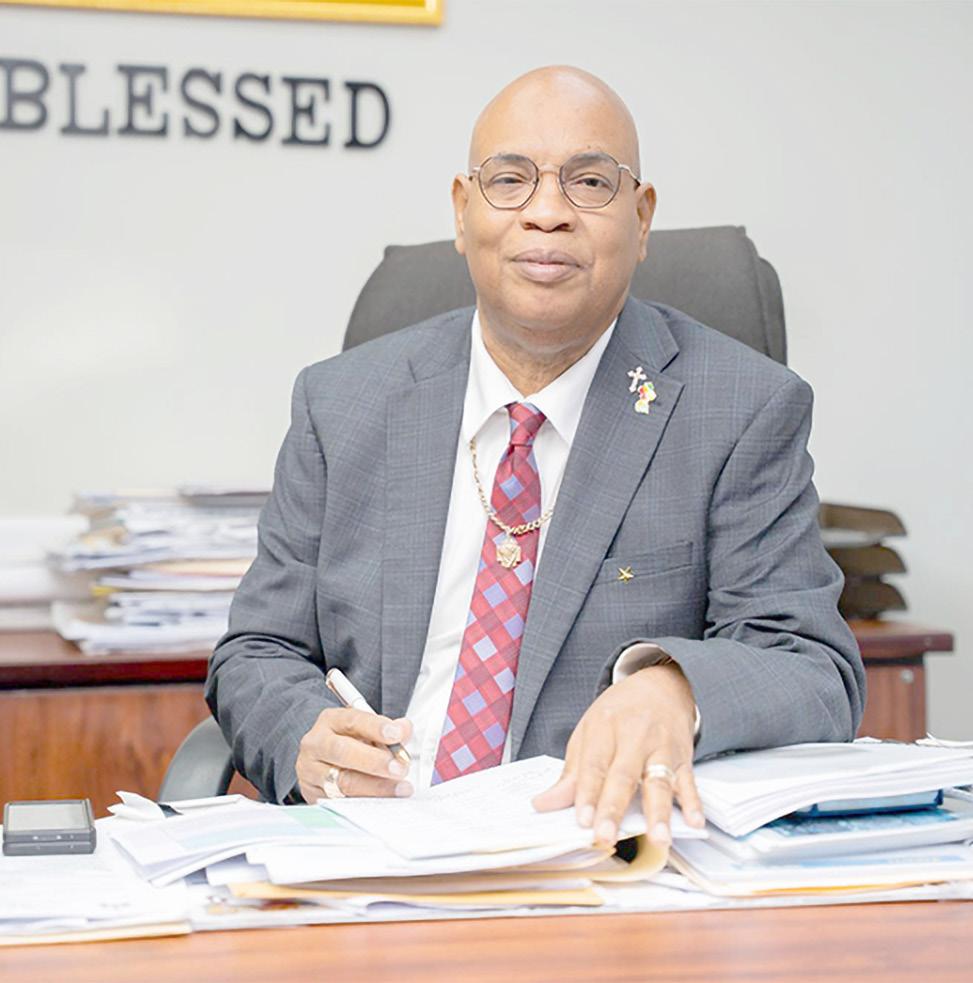
“I would start by thanking each one of them for showing up amidst challenges. Health care is not easy, we spend many long hours, but the bottom line that drives the change, the evolution of the Georgetown Hospital and it’s not a one-man show, it’s not my show, it’s building out a team’s effort. I have been at the hospital from dilapidated buildings, outdated equip -
that listening to staff, understanding their priorities, and working collectively towards shared goals have all contributed to the continued evolution and modernisation of the hospital.
They also told me that no where in the Caribbean has it. It’s a huge investment, over a billion dollars for the equipment and the building. These are some of the exciting things that’s happening at the hospital to transform our diagnostic capabilities and will help us to treat our patients better,” Mr Rambarran explained.
He was at the time speaking on ‘Starting Point’ and was referring to the construction of the new state-of-theart Medical Imaging Centre at the GPHC.
Mr Rambarran recalled that when he assumed duties at the corporation in 2021, Guyana’s premier health institution did not have a functioning X-ray machine.
As a result, the government moved to replace non-functioning equipment with modern alternatives. He noted that these investments have contributed significantly to the $85.2 billion invested in GPHC over the last five years, excluding allocations for 2026.
“A lot of those have been on infrastructural improvement. I always say, once we give the people the tools, they shouldn’t complain, Now, what we have to do is work on the human-resources aspect to deliver to the people the level of service that they need,” the CEO said.
With the addition of new equipment and facilities, Mr Rambarran emphasised
needs of our people and in giving specialised care,” Mr Rambarran said.
The results of these investments in training, equipment, and infrastructure are becoming increasingly evident. One area highlighted by the CEO was maternal health outcomes.
“The GPHC last year recorded 11 maternal deaths, most of which were indirect deaths, meaning deaths that were not caused by maternal complications but by comorbidities that developed later on in the patient. So far in 2026, only two maternal deaths occurred at the facility and both were indirect deaths,” the CEO revealed.
Mr Rambarran, who has spent more than two decades at the Georgetown Public Hospital, beginning shortly
ment, there was a time in the hospital when we couldn’t afford to buy certain equipment and supplies and we used to rely heavily on donations from abroad and most times used products. But now with the advent of oil and the new prosperity, the President with his mandate, we are able to invest more in health care,” the CEO said.
He added that his more than 20 years of experience at the institution, coupled with a deep understanding of healthcare delivery, has helped shape his leadership approach.
According to Mr Rambarran, collaboration with technical personnel, including doctors, nurses, and other healthcare professionals, has been instrumental in advancing the corporation. He noted
The GPHC is Guyana’s premier tertiary healthcare institution and Level V national referral centre. Established in 1838, the facility has grown into a modern hospital with more than 550 beds, 26 inpatient wards and eight critical care units, making it the largest and most comprehensive public healthcare institution in the country.
As Guyana’s principal teaching hospital, the GPHC plays a vital role in training healthcare professionals through 21 post-graduate programmes and currently employs 456 doctors and 879 nursing personnel. The institution manages more than 320,000 outpatient visits, 26,600 inpatient admissions, and approximately 75,000 emergency department visits annually.
The hospital also provides a wide range of specialised services, including a 24-hour Accident and Emergency Department, advanced surgical services, medical imaging, laboratory diagnostics, and Guyana’s first officially certified Kidney Transplant Centre, established in 2024.
In 2025, its pathology laboratory earned certification to GYS 170-2021 from the Guyana National Bureau of Standards, further reinforcing its reputation as a model institution for patient safety, quality improvement, and clinical excellence.
With 11 operating theatres, specialised centres for obstetrics and gynaecology, psychiatry, and paediatrics, along with strategic partnerships that support healthcare delivery, education, and research, the Georgetown Hospital remains the backbone of Guyana’s public healthcare system and a critical pillar in safeguarding the nation’s health and well-being.
Minister of Public Works, Juan Edghill
GO-Invest, BritCham engage UK businesses on investment opportunities in Guyana
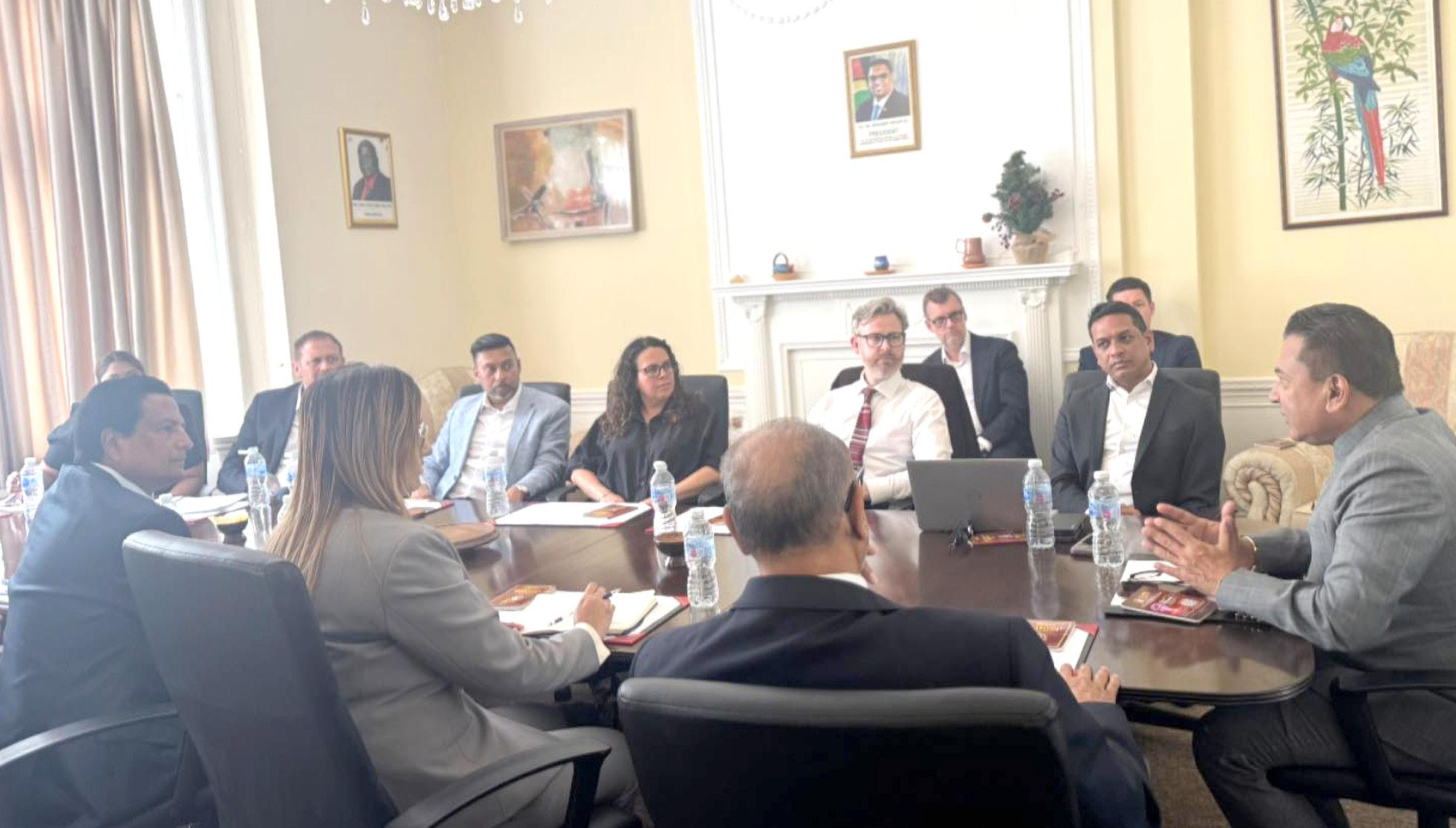
THE Guyana Office for Investment (GO-Invest), in collaboration with the British Chamber of Commerce Guyana (BritCham), has intensified efforts to attract foreign investment, hosting a strategic roundtable in London that brought together senior representatives of British companies interested in expanding or establishing operations in Guyana.
Held at the High Commission of the Co-operative Republic of Guyana in London, the engagement provided a platform for direct discussions between investors and government officials on opportunities within Guyana’s rapidly expanding economy, as the country continues to position itself as a leading investment destination in the region.
The roundtable was attended by Guyana’s High Commissioner to the United Kingdom, His Excellency Dr Rajendra Singh, whose participation underscored the growing economic relationship between Guyana and the UK and the commitment of both countries to strengthening commercial ties.
Unlike traditional investment forums, the event was structured as an interactive dialogue, enabling partici -
pants to engage directly with government representatives on issues ranging from investment opportunities and business- expansion plans to public procurement, reg-
agriculture, tourism, healthcare, education, technology and professional services.
A key focus of the discussions was the role British companies can play in Guy-
firms explored opportunities to enter the market for the first time.
“What was particularly encouraging about this engagement was the level
Leading the discussions was Chief Investment Officer and Member of Parliament Peter Ramsaroop, who outlined Guyana’s ongoing economic transformation and highlighted opportunities across a range of sectors
ulatory requirements, local partnerships and investment facilitation. Leading the discussions was Chief Investment Officer and Member of Parliament Peter Ramsaroop, who outlined Guyana’s ongoing economic transformation and highlighted opportunities across a range of sectors, including infrastructure, energy, logistics, manufacturing,
ana’s development through strategic investments, partnerships with local enterprises, supplier development programmes and participation in major infrastructural projects.
Ramsaroop noted that interest was particularly strong among companies already operating in Guyana and seeking to expand their presence, while several other
Bartica water-treatment plant delivering round-the-clock service to 6,000 residents
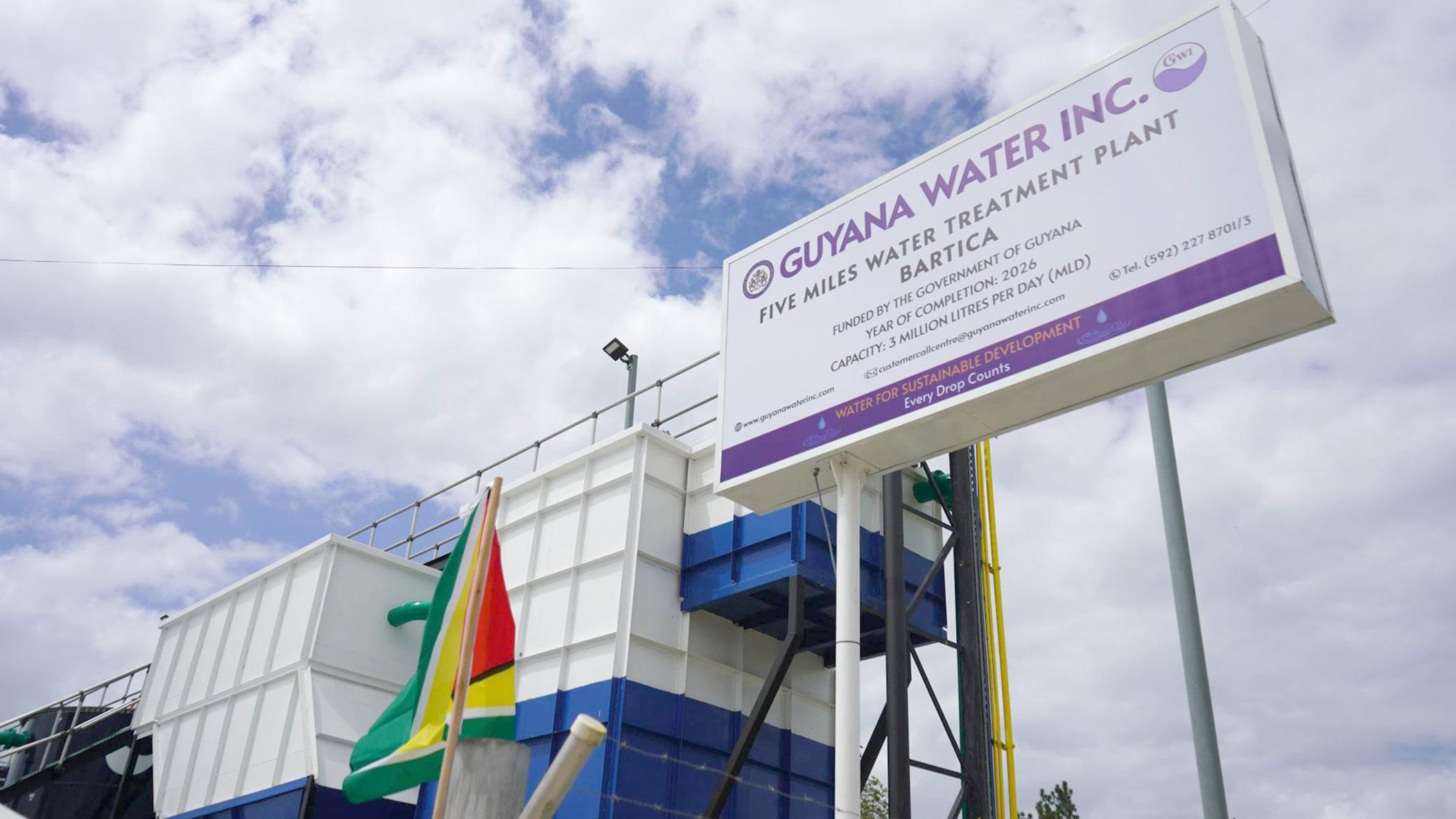
JUST months after its commissioning, the Five Miles Bartica Water Treatment Plant is providing a reliable 24-hour supply of treated water to approximately 6,000 residents across the Four to Seven Miles communities, with residents reporting significant improvements in water quality and pressure.
The facility, which was officially commissioned in February this year, represents a $607 million investment by the government and forms part of a broader strategy to strengthen infrastructure and support the rapid development taking place in Bartica and surrounding areas.
Residents have welcomed the project, describing it as transformative for communities that had previously faced challenges with water access and supply reliability.
Jenacie Williams, a resident of Bartica for the past 12 years, said the treatment plant has greatly improved the quality of water available to her family.
“Good water, clear water, nice water. Clear that you could even drink,” Williams said.
Other residents also pointed to notable improvements in water pressure since the facility became operational.
One long-time resident, who has lived in Bartica for 48 years, recalled the difficulties faced by residents in Five Miles over the years.
“When I tell you struggle, you really struggle in Five Miles for the first, right? First with the road, second with the water supply,” he said. “Nevertheless, for the
past few months, a couple months going back, I have no objection where you talk about water. You’re getting water, bountiful.”
The Five Miles facility is the first surface-water treatment plant of its kind in Guyana and has the capacity to produce approximately two million litres of treated water per day.
The treatment plant was constructed by Toshiba Water Solutions Inc at a cost of $468 million, while an additional $68 million was invested in supporting infrastructure, including the water-catchment system, pumping station and transmission pipeline.
At the time of its commissioning, officials described the project as part of an aggressive forward-planning approach designed to meet
Participants were also updated on major government initiatives, including industrial development projects; improvements in logistics infrastructure; energy expansion; digital-transformation efforts and the modernisation of systems designed to support business operations and investment facilitation.
The discussions further examined opportunities for British expertise and technology to contribute to Guyana’s ambitions in renewable energy, advanced manufacturing, engineering services, healthcare, education, digital transformation and sustainable infrastructural development.
According to GO-Invest, participants expressed keen interest in supporting Guyana’s long-term development priorities, while benefitting from the country’s strong economic growth and expanding investment landscape.
of interest from companies already operating in Guyana and looking to expand their presence,” Ramsaroop said. “The discussion focused on practical opportunities, investment facilitation, procurement processes, partnerships with local businesses, and how companies can align with Guyana’s long-term development agenda.”
Highlighting the importance of international partnerships, Ramsaroop praised BritCham’s role in connecting investors with opportunities and fostering meaningful business relationships between the two countries.
“We are proud to work alongside BritCham in strengthening the commercial relationship between Guyana
and the United Kingdom,” he said. “As Guyana continues its transformation, these engagements help ensure that investors are not simply observing our growth story, but actively participating in it.”
The investment roundtable forms part of GO-Invest’s broader international outreach programme aimed at attracting new capital, supporting existing investors and strengthening investor confidence through direct engagement with global business leaders.
Officials said partnerships involving organisations such as BritCham and the Guyana High Commission in London remain critical to advancing sustainable development, economic diversification and long-term prosperity by connecting international investors with opportunities in Guyana.
The engagement concluded with participants expressing a strong commitment to further explore investment prospects in Guyana and deepening commercial relations between the United Kingdom and Guyana, reinforcing the country’s reputation as one of the world’s fastest-growing and most attractive investment destinations.
growing demand driven by expansion in the housing, tourism, aviation and healthcare sectors in Bartica and neighbouring communities.
The plant is also expected to play a critical role in supporting the town’s longterm development agenda, as Region Seven continues to experience significant investment in public infrastructure and services.
Among the major projects underway are the construction of a new Level Five
regional hospital, expanded housing developments, renewable-energy initiatives and improvements to transportation and aviation infrastructure.
These developments are expected to transform Bartica into a more modern and economically vibrant hub, increasing demand for essential services such as potable water.
Officials have said the new treatment plant was designed not only to address current needs, but also to accommodate future growth, ensuring residents and businesses have access to a safe and reliable water supply as the township continues to expand.
The positive feedback from residents, just months after the facility became operational, signals the early success of the project and highlights the impact of improved utility services on the quality of life in hinterland communities.
The Bartica water-treatment plant is the first surface-water treatment plant of its kind in Guyana
Aquaculture, cassava expansion tagged for Jawalla economic transformation
- Agriculture Minister announces major agricultural interventions
RESIDENTS of Jawalla Village in the Upper Mazaruni, Region Seven, are set to benefit from a series of agricultural and economic-development initiatives after Minister of Agriculture, Zulfikar Mustapha, committed to targeted interventions aimed at boosting food production, creating income opportunities and improving livelihoods in the community.
The commitments were made during a Cabinet outreach led by President, Dr Irfaan Ali, where Minister Mustapha and a team from the Ministry of Agriculture met with residents to discuss challenges affecting the village and explore opportunities for sustainable development.
During the engagement, residents raised concerns and proposals related to farming, economic activities and community development.
In response, Minister Mustapha announced that officials from the National Agricultural Research and Extension Institute (NAREI) will return to the village within a week to conduct a comprehensive assessment and collaborate with residents on a plan for largescale agricultural production.
According to the minister, the government’s objective is to move communities beyond subsistence farming and establish sustainable agricultural enterprises capable of generating incomes and improving living standards.
“We have made significant investments over the last five years to transform the agriculture sector,” Minister Mustapha told residents. “The budgetary allocation to agriculture has increased substantially, allowing us to invest in infrastructure, research, drainage and irrigation, mechanisation, and support services for farmers across the country.”
He noted that the government has introduced improved crop varieties, expanded the cultivation of high-value crops, and is working to ensure that every region contributes meaningfully to national food production.
As part of the proposed development programme, a
technical team comprising officers from NAREI and the Guyana Livestock Development Authority (GLDA) will work closely with residents to design an economic development plan tailored to the village’s resources and needs.
The minister also pledged support in the form of agricultural inputs, including seeds, fertilisers, and agrochemicals, while immediate action will be taken to address the Acoushi ant infestation that has been affecting cultivation in the area.
Recognising the community’s potential for aquaculture, Minister Mustapha announced plans to establish a fish-cage project in Jawalla. The initiative is expected to provide residents with an additional source of income, while improving access to protein.
He also encouraged farmers to increase cassava cultivation, citing growing demand for cassava and cassava-based products in local and regional markets.
“Cassava is one of the crops that has tremendous potential. We are seeing growing demand for cassava and cassava-based products, and we want communities like Jawalla to benefit from these opportunities,” he said, adding that improved planting materials, technical support, and better market access can help farmers expand production and earnings.
To support increased agricultural output, the minister said the New Guyana Marketing Corporation (New
GMC) will assist residents with marketing and agro-processing initiatives aimed at creating value-added products and securing markets for produce.
“We are not only interested in producing more crops; we want to create value-added products and build agro-industries,” Mustapha said. “Our vision is to move Guyana from being primarily a producer of raw agricultural commodities to becoming a regional agro-processing hub.”
The outreach forms part of the government’s broader strategy to expand agricultural production across Guyana, strengthen rural economies and advance the country’s food-security agenda.
Through investments in infrastructure, research, agro-processing, and market development, the administration has been encouraging communities in hinterland and riverine regions to play a larger role in national agricultural production, while creating new economic opportunities for residents.
Agriculture Minister Zulfikar Mustapha during the engagement with residents where proposals related to farming, economic activities and community development were raised
UG library captures 60 years of independence, academic excellence
- open to members of the public from May 29 – June 5
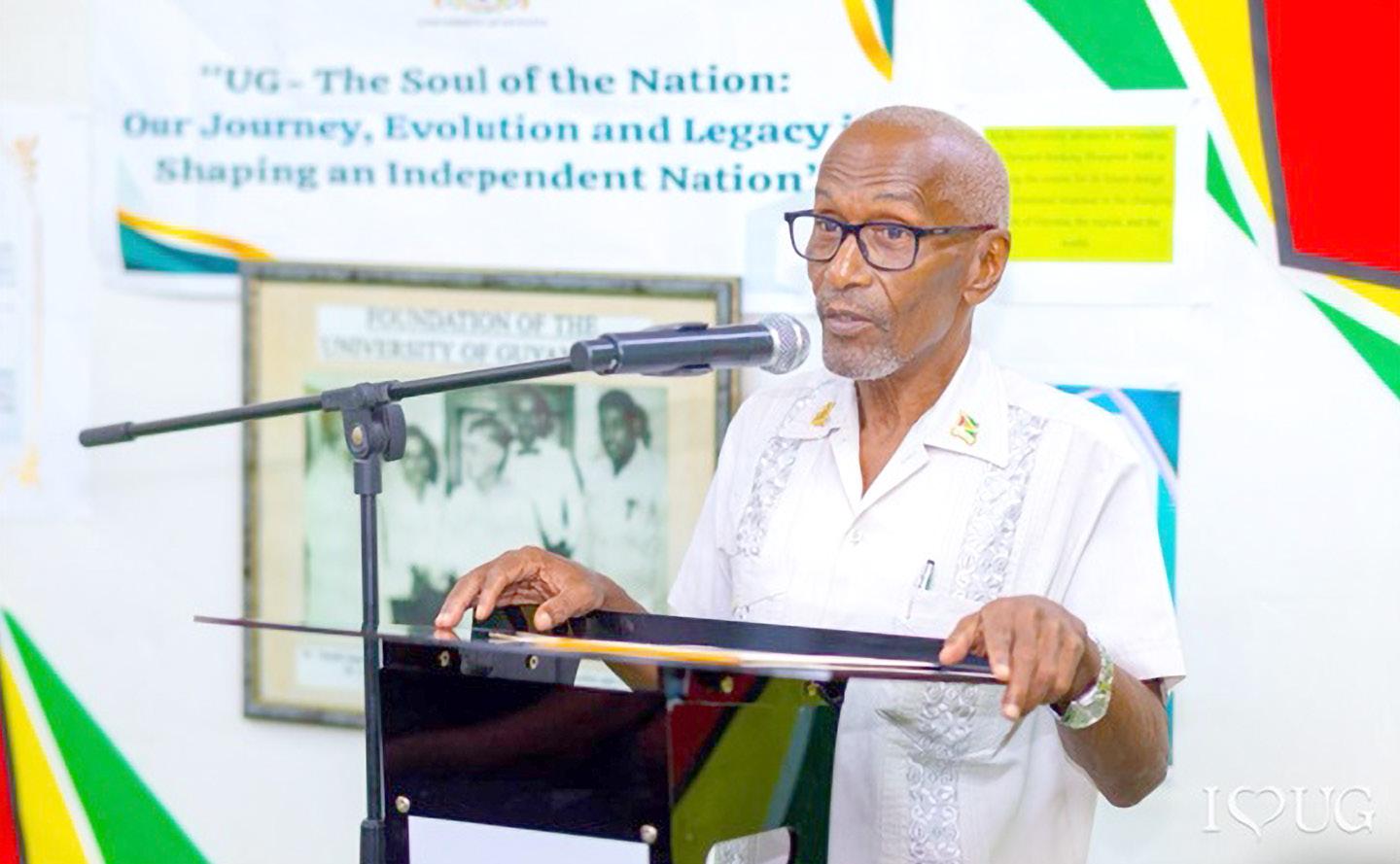
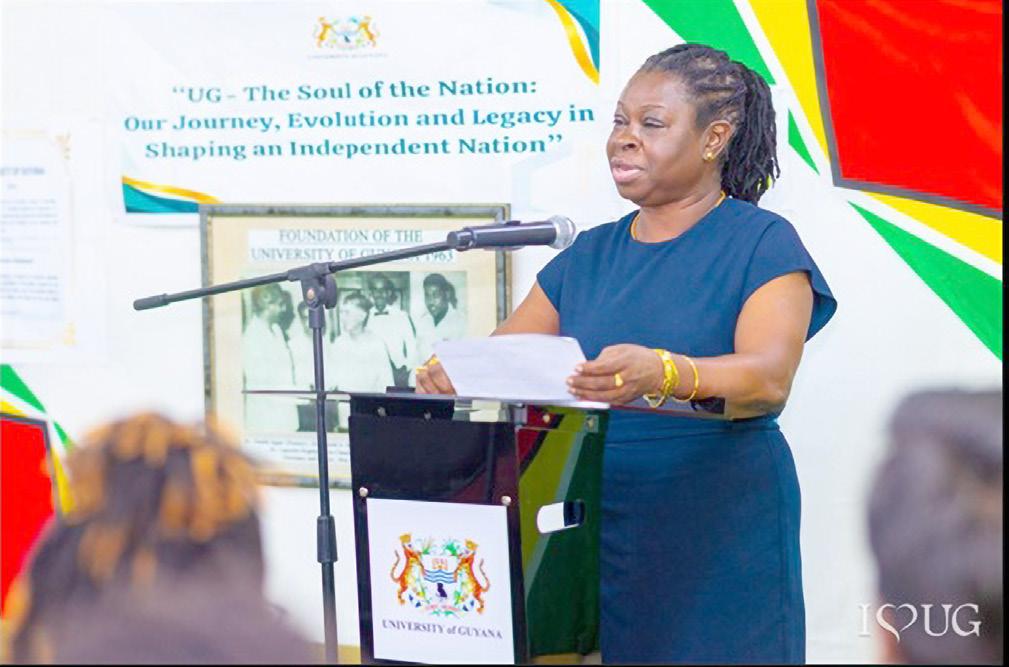
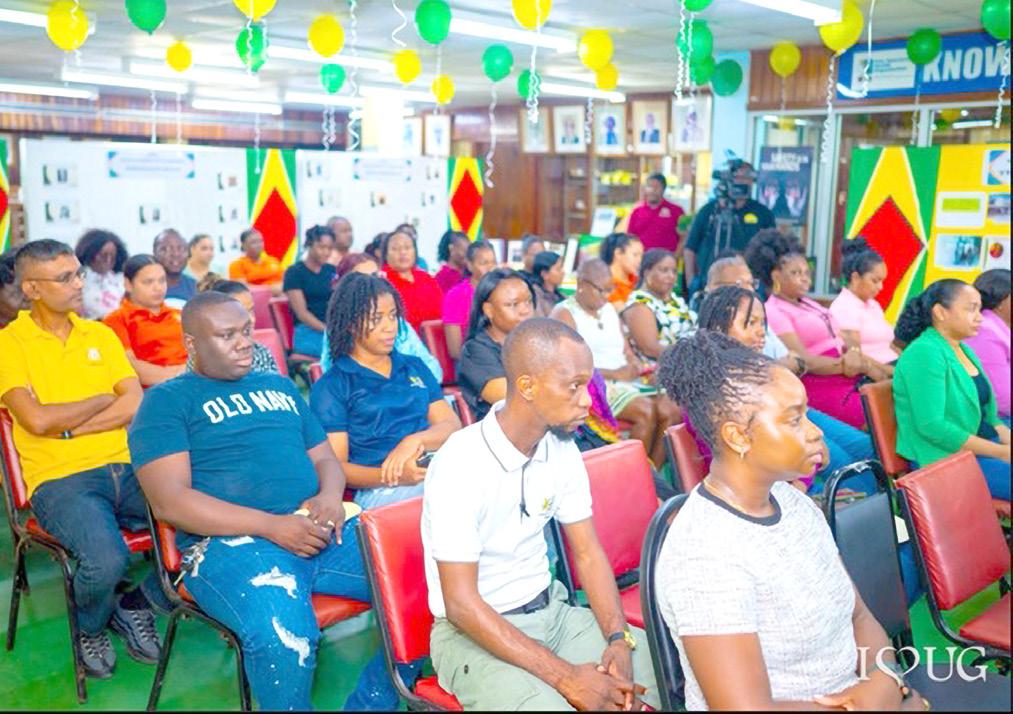
AS Guyana celebrates its 60th Independence Anniversary, the University of Guyana Library, on Friday, May 29, launched its 60th Independence Anniversary pictorial exhibition, which will run until Friday, June 5, 2026, highlighting the institution’s enduring contributions to national develop-
ment, education, research, and leadership since the institution was established over six decades ago.
The week-long exhibition is being held in the University of Guyana Library Foyer at the Turkeyen Campus under the theme, “UG – The Soul of the Nation: Our Journey, Evolution and Legacy
in Shaping an Independent Nation.” It showcases the University’s evolution alongside Guyana’s growth as an independent nation.
Among the displays are exhibits on the University’s academic and professional excellence, the evolution of its administration, significant milestones and events
throughout the institution’s history, and profiles of administrators and leaders who helped shape the University over the years.
The exhibition also features literary displays documenting the institution’s expansion in medicine, engineering, environmental sciences, research, innovation,
and community development.
Delivering the featured remarks at the opening ceremony, Vice-Chancellor of the University of Guyana, Prof. Paloma Mohamed-Martin, highlighted the connection between the University and Guyana’s progress. “The University is not divorced from the nation. In fact, it is the integral, as we like to call it, heartbeat and strategic centre of the nation,” Professor Mohamed Martin said.
The Vice-Chancellor noted that since its establishment in 1963, the University has remained closely tied to Guyana’s aspirations and development agenda. “One could argue that at any point in the nation’s history, the University has inextricably been linked to the fortunes of the country, both in terms
of our ability to support the national agenda and also for the national purse to support the University’s aspirations and mandate,” she said.
Prof. Mohamed-Martin explained that the exhibition was conceptualised to encourage reflection on the institution’s own journey and the important role it has played in shaping modern Guyana.
While referencing the writings of some of the University of Guyana’s early visionaries, including Dr Harold Drayton, a Guyanese academic and biologist who was the principal architect behind the establishment of UG, and Professor Winston McGowan, Prof. Mohamed Martin said the institution was always envisioned as TURN TO PAGE 19
Registrar of the University of Guyana, Dr Nigel Gravesande, delivers remarks at the launch of the University of Guyana Library’s Independence Anniversary Exhibition
University Librarian, Dr Simone Bernard, delivers remarks at the launch of the University of Guyana Library’s Independence Anniversary Exhibition
A section of the audience at the launch of the University of Guyana Library’s 60th Independence Anniversary Exhibition
Iwokrama, Beharry Holdings sign multi-year agreement to support conservation Ammunition seized, construction worker arrested in New Amsterdam police raid
THE Iwokrama International Centre for Rain Forest Conservation and Development (Iwokrama) has confirmed that it has signed a multi-year conservation pact with Beharry Holdings Inc (BHI) to support biodiversity conservation activities at the Centre.
Originally announced at the 30th Anniversary celebration of the Iwokrama Act on May 18, 2026, the grant agreement was formally signed yesterday. The grant will be made annually and in the first instance will support the Centre’s monitoring programme.
Thereafter, the Centre and BHI will jointly discuss areas of support for future years including education and awareness, research and science and community relations amongst others.
Dane Gobin CEO of Iwokrama notes “The Centre is grateful for the support of Beharry Holdings Inc. which is the largest local private sector contribution
in the Centre’s history. I am happy that the Beharry group recognises the importance of biodiversity conservation as they embark on an impressive expansion strategy in Guyana and abroad”.
The CEO continued “I hope that other local private
sector businesses emulate the Beharry Group in support of the Centre which has been tasked by President Dr Mohammed Irfaan Ali to play a significant role in his Global Biodiversity Alliance initiative”.
This announcement
comes weeks after the Centre was recognised as one of the top 50 eco-tourism destinations globally.
Mr Suresh Beharry, Chairman of Beharry Holdings Inc. comments: “For nearly nine decades, the Beharry Group has grown alongside Guyana, and we recognise that our country’s future prosperity must be balanced with the protection of the natural assets that make Guyana unique.
Iwokrama is a globally respected model of conservation, sustainable development, and scientific research, and we are proud to support its important work through this multi-year partnership.
The Centre remains grateful to the Government of Guyana for their valuable ongoing support to the Centre. Special thanks are extended to the Centre’s staff and its local community partners, the North Rupununi District Development Board (NRDDB), for their continued support.
A 28-year-old construction worker is currently in police custody following a successful law enforcement operation that uncovered a quantity of ammunition at a residence in Angoy’s Avenue on Monday.
According to official reports from Regional Division #6, the discovery was made at approximately 11:45 hours on June 1, 2026, at a property located in High Dam, Angoy’s Avenue, New Amsterdam.
Acting on intelligence received, a team of police ranks descended on the home of the suspect. A search of the premises was subsequently conducted in the presence of the 28-year-old resident.
During the operation, officers uncovered a black haversack. A closer inspection of the bag revealed: One 9mm round of ammunition and nine .223 rounds of ammunition. The construction worker was immediately arrested at the scene and escorted to the Central Police Station. The discovered ammunition was seized and formally lodged as evidence.
The suspect remains detained at this time and is said to be assisting law enforcement officers with their inquiries. Police have confirmed that investigations into the origin of the ammunition and the suspect’s possession of the items are actively ongoing.
From left: Mr Suresh Beharry, Chairman of Beharry Holdings Inc. and Mr. Dane Gobin, CEO of Iwokrama International Centre
Health Minister urges proper medical use of Ozempic as generic version set for Guyana market
HEALTH Minister, Dr Frank Anthony, is urging Guyanese to use Ozempic and similar medications responsibly and only under proper medical supervision, warning that misuse of the drug can create serious health complications.
Speaking recently on Starting Point, Dr Anthony said while Ozempic and related medications have been beneficial for many patients, especially those managing diabetes and weight-related conditions, the drugs must be used carefully and according
to medical advice.
“Ozempic and this line of medicines that have now become available, they have been helpful to a lot of patients, but it requires proper medical use and it must be under medical supervision because without that, people
can misuse it,” Anthony said.
The Minister explained that the medication is not intended for casual or unsupervised use and stressed that persons should only access the drug through proper medical channels.
“This is not a non-prescription medicine. You have to get the prescription. Somebody got to supervise your care, and I think people should stick to what the medications are intended for,” he stated.
Minister Anthony also revealed that a generic version of Ozempic is expected to become available on the
Guyanese market within the next few months as one of the manufacturers producing a generic form of the medication has already submitted documentation to Guyana’s Food and Drug Department for registration approval.
The application is currently under review and once approved, the medication could become more widely available locally. The Minister said, government will also be monitoring how the drug is used after it enters the market to ensure it is being prescribed and consumed appropriately.
“Once the drug is on the
market, you also have to have surveillance to see how the drug is being used. That surveillance will tell you whether it is used appropriately or inappropriately, and if it’s being used inappropriately, then the regulatory agencies will be able to correct it,” Anthony explained.
Ozempic, known generically as semaglutide, was originally developed as a treatment for Type 2 diabetes. The medication works by mimicking a hormone known as GLP-1, which helps regulate blood sugar levels, slows digestion, and reduces appetite.
In recent years, the drug has gained international attention for its effectiveness in weight management, leading to increased global demand and wider use beyond diabetes treatment.
Health officials internationally have repeatedly warned, however, that the medication should only be used under professional supervision due to possible side effects and the need for proper dosage monitoring.
Amid global uncertainty Caribbean tourism stands firm, officials declare at Caribbean Week
CARIBBEAN tourism leaders have reaffirmed the region’s resilience and global appeal despite mounting economic, geopolitical and climate-related challenges, as Caribbean Week 2026 officially opened in New York with calls for greater collaboration and continued investment in the industry.
The opening ceremony brought together tourism ministers, industry stakeholders and government officials from across the Caribbean and the United States, including Guyana’s Minister of Tourism, Industry and Commerce Susan Rodrigues and Chairman of the Caribbean Tourism Organization (CTO) Ministerial Council and Barbados’ Minister of Tourism and International Transport, Ian Gooding-Edghill.
Addressing the gathering, Gooding-Edghill said the Caribbean tourism sector is operating in an increasingly complex global environment, marked by geopolitical tensions; economic uncertainty; inflationary pressures; rising operational costs and the growing effects of climate change. “These are real chal-
lenges affecting connectivity, investment, resilience and the long-standing competitiveness of tourism-dependent economies,” he said.
Despite these obstacles, the Barbadian minister noted that the Caribbean continues to rank among the world’s most sought-after tourism destinations and remains one of the most resilient regions globally. According to Gooding-Edghill, that resilience has been built through strong leadership, regional co-operation, innovation and a shared commitment to advancing the tourism industry.
“The Caribbean has grown even more resilient, and it is our responsibility as Ministers of Tourism and travel-trade partners to rise
to the challenge and protect Caribbean tourism,” he told attendees. The minister stressed that sustained collaboration among governments, tourism agencies and private-sector partners will be critical to maintaining the region’s competitiveness and ensuring continued growth.
Meanwhile, New York State’s Chief Procurement Officer Dhanraj Singh, highlighted the deep historical, cultural and economic ties between New York and the Caribbean, describing the relationship as one built over generations through shared values, migration, trade and investment.
“New York and the Caribbean share a relationship TURN TO PAGE 19
Toronto Consulate stages spectacular cultural show as curtain comes down on Independence celebrations
THE curtains came down in grand style on Guyana’s 60th Independence Anniversary celebrations on Saturday as Guyanese and friends of Guyana turned out in their hundreds to a flag-raising ceremony, inter-faith service and cultural show, held in the North York compound of the Consulate General of the Co-operative Republic of Guyana.
The highly anticipated large-scale event - the first of its kind to be held in the compound of the Toronto Consulate - saw guests ditching the shade to enjoy the brilliant summer-like sunshine, as a noticeably renewed vigour of patriotism filled the air.
Mr. and Mrs. Osman Ali, the parents of His Excellency President, Dr Mohamed Irfaan Ali, joined Honorary Consul Mani Singh and staff of the Toronto Mission, in cutting the beautifully decorated 60th Independence Anniversary cake, as the huge crowd cheered, proud to be citizens of the fastest growing economy in the world, and free from the shackles of British Colonialism, 60 years ago.
Following the Land Acknowledgement by Gillian Williams, siblings Navita and Aninesh Persaud performed an indigenous dance and poem recital, followed by inspiring and healing inter-faith
prayers by Pastor Andrew Eastman of the Grace Life Centre in Scarborough; Pandit Jageshwar Sharma of the Maha Lakshmi Narayan Mandir in Mississauga; and Imam Shaykh Faisal of the Islamic Forum of Canada in Brampton.
The guests, who savoured a sumptuous and nostalgic Guyanese feast of chicken curry, channa and aloo curry, cook-up rice, dhal puri, potato balls and barbecue chicken, with mauby and sorrel beverages, witnessed the symbolic hoisting of Guyana’s National Flag, the Golden Arrowhead, by members of the Guyana Defence Force Ex-Soldiers Association of Canada.
The National Anthems of Guyana and Canada were sung by Shaundell Parris with musical accompaniment by our very own trumpeter ex-
dance performance, followed by Indian and Guyanese patriotic songs and dance by the Singh sisters, Suhana, Sumeera and Sunaya, accompanied by the Ramessar brothers, who later serenaded with musical pieces of their own.
Guyana-born, Ms. Fazia Roopchand of the Mayor of Brampton’s Office, was the MC for the proceedings, which drew Guyanese and friends of Guyana from the Greater Toronto Area and across Southern Ontario, who
traordinaire and Juno Award winner, Jan Morgan, both of whom later entertained the audience with solo musical performances of patriotic and other selections.
The highlight of the entertainment segment showcased Guyana’s fusion of ethnic
Amid global uncertainty...
that extends far beyond geography,” Singh said. “The Caribbean story is woven into the New York story.”
He pointed to the visible influence of Caribbean communities across New York’s neighbourhoods, businesses, institutions and workforce, noting that Caribbean immigrants and their descendants have played a significant role in shaping the state’s cultural identity and economic success.
“You see it in our neighbourhoods, in our businesses, our institutions, our workforce, our entrepreneurship, public service, food, music and culture,” Singh said. “Caribbean people have helped shape the state for generations, contributing not only to its cultural richness, but also to its economic strength, resilience and global identity.”
Singh also paid tribute to prominent Caribbean-American figures such as the late Shirley Chisholm, the daughter of Caribbean immigrants and the first Black woman
elected to the United States Congress, and the late General Colin Powell, the son of Jamaican immigrants who rose to become U.S. Secretary of State. He said their achievements underscore the enduring contributions of Caribbean people to American society and global leadership.
The New York official further reaffirmed his state’s commitment to fostering inclusive economic opportunities through modernised procurement systems, support for minority- and women-owned businesses, and policies aimed at promoting responsible economic development.
According to Singh, New York has long served as a gateway for Caribbean peoples and remains a vital partner to the region through tourism, trade, education, investment and family connections that span generations.
“That is why Caribbean Week matters,” he said. “Gatherings like this are more than a celebration of
FROM PAGE 18
tourism, they are a celebration of identity, partnership, economic connection and the shared future that we all aspire to realise.”
He added that the event serves as a reminder that the Caribbean is not peripheral to New York’s success, but is an integral part of its story and continued growth.
Caribbean Week, hosted annually by the Caribbean Tourism Organization, serves as the region’s premier tourism event in North America, bringing together policymakers, tourism executives, investors and members of the Caribbean diaspora to promote the region, strengthen partnerships and explore opportunities for sustainable tourism development.
This year’s event comes as Caribbean destinations continue to focus on enhancing resilience, expanding connectivity and attracting investment, while adapting to emerging global challenges and changing travel trends.
cultures with an Indo-Caribbean Fusion Dance by Alyssa Boodoo, Alanna Boodoo and Isabella James from the Footsteps Dance School; dancers from the Children and Youth Dance Theatre, Averie Robinson, Aubrey Hinds, Azula Morrison Landu, Neveah and Tenaeya Martin, taking to the stage with an Afro-Caribbean
were welcomed by brilliant steel pan mastery by our very multi talented Toronto-based Guyanese artiste D’Jango-Jango pan fyah (Roy Mc Crea), as they arrived.
Honorary Consul Singh, in brief remarks, reiterated Guyana’s example to the world as a nation of six races
with three official and three unofficial religions, coexisting in harmony as a free and independent country, pursuing the dream of “One Guyana”, in keeping with President Ali’s vision.
“We are living in the most interesting, fascinating and exciting times in the history of our country, where Guyana is expected to experience real Gross Domestic Product (GDP) growth in 2026 in the 20% range, while industrialised nations are only expected to see real GDP growth in the low to medium single digit percentage range,” Mr. Singh told a highly energised gathering.
The Guyanese Representative in Toronto remarked that Guyana’s mind-boggling astronomical economic, infrastructural, social and cultural transformation, was effectively spearheaded by the President Dr Mohamed Irfaan Ali-led Administration, despite the country’s oppressive and cruel history of slavery, indentureship and colonial rule.
Scores of attendees commended the Consulate for what they described as a highly successful event, held outdoors, which they said provided the perfect environment for the diaspora to interact, reminisce and share experiences of an Independent Guyana over the last 60 years. All present were filled with much pride for our beautiful heritage.
UG library captures 60 years of independence, academic...
a critical pillar of national development and self-determination.
She further shed light on the University’s Blueprint 2040, which aims to expand access to higher education and produce graduates equipped to contribute meaningfully to society.
Meanwhile, UG’s Librarian (ag.), Dr Simone Bernard, in her remarks, said the exhibition was designed not only to celebrate Guyana’s Independence Anniversary but also to allow patrons and visitors to reflect on the University’s contribution to nation-building and intellectual development.
She described the University as an institution that has consistently advanced learning, research, and national growth since Guyana attained Independence. “This exhibition celebrates the en-
during legacy of scholarship and the transformative power of learning that have shaped generations of students, faculty, and researchers,” she said.
Dr Bernard noted that the exhibition also highlights UG’s critical role in preserving and advancing Guyana’s intellectual heritage while inspiring future generations. She further noted that the library remains central to preserving the University’s history and documenting the nation’s academic and cultural development.
Dr Bernard added that the exhibition demonstrates the importance of safeguarding historical records and connecting present and future generations to the country’s journey.
Meanwhile, Registrar of the University of Guyana, Dr Nigel Gravesande,
who chaired the ceremony, described the exhibition as a fitting tribute during Guyana’s Diamond Jubilee celebrations. “During these six decades of Guyana’s independence, the University of Guyana, often referred to as the soul of the nation, has been a home for knowledge, discovery, and innovation,” Dr Gravesande said.
He noted that the exhibition highlights “the enduring legacy of scholarship and the transformative power of learning that have shaped generations of students, faculty, and researchers.”
The exhibition is a collaboration between the University’s Library and the Department of Events, Conferences and Communication, and is open to the general public free of charge from 09:00 hours to 16:00 hours daily.
Mr. and Mrs. Osman Ali, (third and fourth from left, respectively), the parents of His Excellency President, Dr Mohamed Irfaan Ali, seen among the gathering at Saturday’s ceremony
The symbolic raising of the Golden Arrowhead
FROM PAGE 16
ENGLISH RACING TIPS
PONTEFRACT
09:48hrs Alma Latina 10:18hrs Avionics 10:48hrs Bravo Zulu 11:18hrs Zarinca
11:48hrs Distinction 12:18hrs Quantum Power
SOUTHWELL
09:30hrs Vocito 10:00hrs Ceolwulf 10:30hrs For Her Glory 11:00hrs Way Maker
CRICKET QUIZ CORNER (Tuesday June 02, 2026) CUMMINGS ELECTRICAL COMPANY LTD 83 Garnett Street, Georgetown (Tel:225-6158)
Answers to yesterday’s quiz: (1) 10 (2) 8
Today’s Quiz: 1) Where and when did the WI and NZ first play an ODI against each other?
(2) Who were the captains involved?
Answers in tomorrow’s issue
RCB's Tim David suspended for opening game of IPL 2027
(ESPNCRICINFO) - Tim David, the Royal Challengers Bengaluru (RCB), batter, will miss the opening match of IPL 2027, after picking up his third sanction of the season.
The incident occurred in the IPL 2026 final in Ahmedabad on Sunday, "during the 10th over of Gujarat Titans' innings. Following the fall of a wicket [Jordan Cox's catch off Washington Sundar ruled not out], David threw an ice bag aggressively in the direction of umpire Nitin Menon," according to an IPL media release. David was found to have breached Article 2.9 of the IPL's Code of Conduct, which relates to "throwing a ball (or any other item of cricket equipment such as a water bottle) at or near a Player, Team Official, Umpire, Match Referee or any other third person in an inappropriate and/or dangerous manner during a Match." David admitted to the offence and accepted the sanction imposed by the Match Referee, Javagal Srinath.
Tim David will not be available for his team's opening game next season (BCCI)
Since he accumulated his fifth demerit point(s) of the season, he will be handed a one-match ban. RCB beat GT by five wickets in the final to pick up their second title, successfully defending their 2025 crown.
West Indies Academy squad...
conditions against quality opposition.
The squad features a strong blend of emerging regional talent, with thirteen members being regular participants in the Academy programme, including Johann Layne, Jediah Blades and Zishan Motara, each having already represented the region at the senior level.
With Ackeem Auguste being selected for the West Indies Senior Team and Carlon Bowen-Tuckett being unavailable for selection (personal reasons), emerging players Kevlon Anderson, Shaqkere Parris and Johann Jeremiah have been afforded the international developmental experience opportunity.
Guyana Harpy Eagles
Head Coach Ryan Hercules will join the Academy coaching staff as an Assistant Coach for the tour, adding further experience and support to the management unit.
Academy Head Coach Ramesh Subasinghe spoke about the objectives for the tour:
“Our Academy objective is simple, to develop players into the next level of their careers, and tours like this play a key part in that journey. Sri Lanka has historically been one of the
toughest places for West Indian teams. This tour represents the perfect platform to immerse our brightest emerging talent in conditions that will truly test and shape them.”
“Last year we hosted a highly competitive home series against Sri Lanka in Antigua, and four players from that squad have since gone on to represent the West Indies senior men's team, with many others earning regional franchise and CPL opportunities”, he added.
CWI’s High-Performance Manager Dwain Gill highlighted the significance of the tour as part of the organisation’s wider player development strategy.
“This tour is an extremely important component of our long-term development pathway programme as we continue to invest in the future of West Indies cricket. Opportunities like these allow our emerging players to experience competitive international environments, adapt to unfamiliar conditions and further develop the technical, tactical and mental skills required at the highest level of the game”, said Gill.
The squad will travel to Hambantota for the four-day series before moving to Co-
ICC approves red-to-pink ball change to reduce bad-light impact in Test cricket
(ESPNCRICINFO) - In an attempt to reduce the impact of bad light on Test matches, the ICC has approved a trial of switching from a red ball to a pink ball before the start of a Test that is likely to be affected by bad light, subject to the prior agreement of both participating teams.
The decision was one of several recommendations from the Chief Executives Committee that were approved by the ICC Board at a meeting in Ahmedabad on Sunday. Until now pink balls were used exclusively in day-night Test matches, which are also regularly played largely in Australia and nowhere else, but the trial of changing from a red ball to a pink ball during a day Test seeks to allow play to continue under lights and minimise the time and overs
lost to bad light.
It is understood that the process for the playing conditions to take effect won't be in place in time for the series between England and New Zealand from June 4. The ICC also said it would undertake research "on lighting technology for match officials and venues to reduce lost play due to poor light, with ICC co-funding R&D projects alongside Marylebone Cricket Club (MCC)."
The ICC board also approved a recommendation that will allow head coaches - or designated staff - to enter the field of play during scheduled drinks intervals and consult with their players in ODIs and T20Is. This was not permitted in international cricket - messages could only be relayed by the players running drinks - but
has been a feature in franchise T20 leagues like the IPL, where coaches interact with their players during strategic timeouts.
In T20I internationals, the ICC said the break between innings would be 15 minutes, and batters would be required to be ready at the resumption of play.
In 2025, the ICC had begun trials to give bowlers leeway down the leg side for wide calls, and it has decided to permanently adopt the practice of using guidelines to help umpires adjudicate wides down the line side, especially when a batter is moving around his crease.
And in the case of suspect bowling actions, the ICC said it would help match officials access Hawk-Eye data when considering whether to report a bowler.
(From page 22)
lombo for the white-ball leg of the tour, with all matches being played under standard ICC playing conditions.
West Indies Academy Squad: Rivaldo Clarke (Captain), Kevlon Anderson, Ryan Bandoo, Jediah Blades, Giovonte Depeiza, Mavendra Dindyal, Nathan Edward, Damel Evelyn, Amari Goodridge, Johann Jeremiah, Shaqkere Parris, Mbeki Joseph, Johann Layne, Zishan Motara, Kelvin Pitman, Raneico Smith Team Management Unit: Don Ramesh Subasinghe –Head Coach, Rohan Nurse –Assistant Coach, Ryan Hercules – Assistant Coach, Shanique Peters – Physiotherapist, Hance Richards – Strength & Conditioning Coach, Clint St. Hill – Manager
Match Schedule
June 8–11: 4-Day #1 - Mahindra Rajapaksa International Cricket Stadium, June 15–18: 4-Day #2 - Mahindra Rajapaksa International Cricket Stadium
June 22: 50-Over #1 - Sinhalese Cricket Club
June 24: 50-Over #2 - Sinhalese Cricket Club
June 26: 50-Over #3 - Nondescripts Cricket Club
Ireland make history with first T20I win over West Indies, amid Dublin rain
CMC – In a rain-hit thriller at Castle Avenue on Monday, Ireland claimed a historic first-ever Women’s T20I victory over the West Indies, winning via the DLS method after the heavens opened with the hosts just one run ahead of the par score.
Chasing 142 for victory, Ireland were 99 for five after 14.1 overs when Louise Little struck a boundary at the start of the 15th over, a four that pushed Ireland one run ahead of the DLS target.
Moments later, the rain returned with a vengeance, and the players never made it back onto the field.
The win was powered by a magnificent captain’s knock from Orla Prendergast, who remained unbeaten on 71 off just 46 deliveries.
Her innings, which marked her 11th T20I half-century for Ireland, held the chase together after a rocky start.
Earlier, West Indies captain Hayley Matthews won the toss and chose to
bat.
The decision paid immediate dividends in the field. Ava Canning removed Matthews in the third over for one, and Leah Paul’s stunning low diving catch at square cover sent Deandra Dottin packing for 12, leaving the Windies wobbling at 21 for two in the fourth over.
Wicket-keeper Christina Coulter-Reilly then produced a diving catch of her own to dismiss Qiana Joseph for 12, giving Canning her second wicket as the visitors slipped to 33 for three. When Jahzara Claxton was run out for 11 in the ninth over, the Windies were 49 for four.
This didn’t get any better for the regional side, as Stafanie Taylor retired hurt after facing 18 balls and scored just nine runs.
Shemaine Campbelle, with a gritty 21 and Jannillea Glasgow, with a defiant top score of 36, steadied the ship with a 46-run partnership, but the West Indies could only manage 141 for eight from their 20 overs.
Ireland’s reply began disastrously. Openers Alana Dalzell and Arlene Kelly, promoted up the order, both fell in the first over to Shawnisha Hector, leaving the hosts at three for two.
Prendergast and Rebecca Stokell then rebuilt with a 57-run stand for the third wicket before Stokell departed for 12 in the ninth over, making it 60 for three. Leah Paul, one, and Alice Tector, two, followed quickly as Ireland lost three wickets for just five runs, putting the chase in serious jeopardy.
But Prendergast held firm by hitting 11 fours and a six in her 46-ball knock, and Little’s rain-soaked boundary sealed the historic result.
The victory lifts Ireland level with the West Indies at the top of the Tri Nations standings, which also features Pakistan.
The West Indies will face Pakistan on Wednesday, while Ireland will conclude their campaign against Pakistan on Thursday.
Jumbo Jet Events launches Need for Speed Karting Championship with multimillion-dollar prize pool
MOTORSPORT enthusiasts across Guyana and the Caribbean are set for an action-packed season as Jumbo Jet Events officially unveiled its Need for Speed Karting Championship, an invitational series that promises highspeed competition, regional participation, and over GYD$17 million in prize money.
The championship will be contested over three rounds, beginning on June 21 at the Leonora Stadium in Region Three. The second round is scheduled for
September 13 in Region Four, while the championship finale will take place on December 20 in Region Six, with both venues to be announced at a later date.
Designed to attract some of the region’s top karting talent, the championship will feature a wide range of classes catering to drivers of all ages and experience levels. Competitors will battle for lucrative cash prizes in categories including LO206 Briggs & Stratton Light, Heavy, Junior and Cadet, the Honda GX200, IAME 125cc, LO206 Rookie Over-
35, LO206 Female, as well as Supermoto Senior and Junior divisions.
The premier LO206 Briggs & Stratton Light class will offer a top prize of GYD$4 million (USD$20,000), making it one of the richest karting categories ever contested in Guyana. Several other classes will award GYD$2 million (USD$10,000) to their winners, while the remaining divisions will compete for prizes ranging between GYD$1 million and GYD$1.5 million.
Adding further excite -
ment to the championship is the introduction of a new ‘VIP and Local Celebrities Arrive and Drive’ category. The special class is expected to provide entertainment for fans while allowing prominent personalities to experience the thrill of competitive karting.
Veteran competitors have also been given a dedicated platform through the Veteran Pro Drivers category for racers over 50 years old. Participants in that division will compete for a winner’s purse of GYD$2 million (USD$10,000).
Championship organisers have also specified tyre regulations, with most classes utilising MG Red tyres, while the IAME 125cc division will run on MG Yellow tyres to ensure competitive parity throughout the series.
The championship is being promoted as a major boost for local motorsport, with organisers aiming to attract international participation and elevate Guyana’s standing on the regional karting calendar. With substantial prize money, diverse racing categories, and
three rounds spread across the country, the Need for Speed Karting Championship is poised to become one of the biggest karting events ever staged in Guyana.
Fans can expect intense wheel-to-wheel action, emerging young talent, seasoned veterans, and celebrity competitors when the green flag drops at Leonora on June 21. The stage is set for a season of speed, skill, and fierce competition as drivers chase championship glory and a share of the lucrative prize fund.
Avinash Contracting fuels One Guyana T10 Tapeball Blast Season IV
CORPORATE backing for the One Guyana T10 Tapeball Blast has continued with Avinash Contracting & Scrap Metal Inc. officially recommitting its long-standing support for the fourth season.
The high-octane tournament is scheduled to bowl off on August 8 in Berbice.
The partnership highlights a shared vision between the corporate sector and tournament organisers to foster community development and unearth talent across the country through the fast-growing tapeball format.
Speaking on the alignment, Kavita Lakeram, Health, Safety, Social & Environmental (HSSE) Lead at Avinash Contracting, emphasised that supporting the tournament aligns perfectly with the company’s core values of community advancement.
“At Avinash Contracting, we believe that sports play a pivotal role in building safe, vibrant, and cohesive communities,” Lakeram stated.
“The One Guyana T10 Tapeball Blast has grown into a powerful platform that bridges communities and provides young athletes with a stage to showcase their skills. We are incredibly proud to continue our partnership with FL Sport, and we look forward to an electrifying tournament that brings people together across all regions.”
Tournament Director and FL Sport representative John Ramsingh expressed im -
mense gratitude for the company’s sustained patronage, noting that corporate trust is the bedrock of the tournament’s rapid expansion.
“Avinash Contracting has been with us on this journey, and their renewed commitment is a massive boost for the tournament’s sustainability,” Ramsingh said.
“When corporate leaders invest in grassroots sports, they are directly investing in the people. This partnership allows us to elevate the player experience and increase the rewards, ensuring that tapeball cricket gets the professional platform it truly deserves.”
With the tournament boundary lines expanding, organisers have reported
an unprecedented surge in interest.
Team slots across various administrative zones are filling up rapidly as regional squads rush to secure their participation.
Ramsingh expressed immense confidence in the trajectory of this year’s tournament, noting the overwhelming response from the cricket community.
With the stakes higher than ever, organisers are urging teams to act quickly rather than delaying their entry while finalising their rosters.
Ramsingh emphasised the urgency of the first-come, first-served system, recognising that the fierce nature of the competition often causes
captains to deliberate over their lineups.
The Berbice, East Bank/ West Demerara, and Essequibo zones will have a maximum cap of 16 teams each, while the East Coast Demerara/Georgetown zone will accommodate 32 teams.
To secure a spot immediately, captains can pay the G$35,000 entry fee and finalise their ultimate 15-man talent pools closer to their respective zonal start dates.
Registration forms are currently available through the tournament’s official social media channels or via direct WhatsApp contact at +592 635-2235.
The action-packed tournament is set to bowl off with the Berbice Zone on August 8–9, featuring 16 teams battling across four premier venues: the Port Mourant Community Centre Ground, No. 69 Ground, Welfare Ground (Canje), and the Albion Sports Complex, which is slated to host the zonal finals on Sunday, August 9.
Following the opening leg in Berbice, the tourna -
ment moves to East Bank/ West Demerara on August 15–16, followed by the Essequibo leg on August 22–23.
In a strategic move to maximise fan engagement and support local cricket festivities, the competition will pause during the Caribbean Premier League (CPL) window, ensuring fans can fully immerse themselves in the professional franchise season.
Action will resume postCPL with the highly competitive Georgetown/East Coast Demerara leg, spanning September 26–27 and October 3–4.
This all leads toward the historic national grand finale on October 11, 2026, which will be hosted for the first time at the Anna Regina National Stadium in Region Two, taking top-tier tapeball action to the Essequibo coast.
Financial incentives for the 2026 season have reached an all-time high, introducing guaranteed cash prizes for every single team that reaches the quarter-final stage of their respective zone.
Rewards begin at $25,000 for losing zonal quarter-finalists and scale up significantly, culminating in a $500,000 purse pocketed by the zonal winners before they advance to the national finals.
The stakes at the national level are even higher, as teams will compete for a massive $2,000,000 grand prize, while the runner-up takes home $1,000,000.
In addition to the substantial cash prizes, the four national finalists will earn the prestigious right to represent Guyana at the upcoming International T10 Tapeball Tournament this October.
Individual brilliance will also be handsomely rewarded throughout the tournament. The eventual tournament MVP is set to walk away with $150,000 and a brandnew motorbike.
Specialised awards for the leading run-scorer and top wicket-taker include $100,000 and a new television each, ensuring that personal milestones are celebrated alongside team success.
West Indies Academy squad embarks on development tour of Sri Lanka
A 16-member West Indies Academy squad has departed the region for a reciprocal tour of Sri Lanka from June 3–27, 2026, where the team will face the Sri Lanka Emerging Players in a multi-format series designed to further strengthen the region’s player development
pathway. It follows the visit by the Sri Lanka Emerging Team to Antigua in 2025, where the sides competed in two fourday matches, which ended one game apiece, and three OneDay matches, with the Academy coming out on top 2 to 1. Once again consisting of
two four-day and three 50-over matches, this tour represents another significant investment in the development of the next generation of West Indies cricketers, offering players the opportunity to gain valuable overseas experience and adapt to challenging subcontinental
(Turn to page 21)
Tournament Director John Ramsingh (left) and Kavita Lakeram, Health, Safety, Social & Environmental (HSSE) Lead of Avinash Contracting
CWI puts the region's emerging pace talents to the test in Antigua
(ESPNCRICINFO)
-
Twelve of the region’s fast-bowling talents will take part in a High-Performance Fast Bowling Assessment Camp from June 1–11, 2026 at the Coolidge Cricket Ground in Antigua as part of Cricket West Indies’ commitment to strengthening capacity and supporting player development across the Caribbean.
The primary objective of the programme is to identify and assess the region’s pool of resources across both red-ball and white-ball disciplines through structured challenges and measurable evaluation of speed, technique, skill execution, physical robustness, and problem-solving ability.
The camp will be led by former West Indies fast
bowler and world-renowned bowling coach Ottis Gibson, who was recently appointed to the role of Fast Bowling Consultant. Supporting him will be former West Indies fast bowler Jerome Taylor, one of the region’s emerging coaching talents who continues to contribute to player development initiatives within the CWI system.
Gibson spoke on what he is seeking to achieve over the 10-day period:
“I’m excited and honoured to be working with this developing generation of fast bowlers across the region. The main objective is to enhance and maximise the potential of the players we have, which will ultimately benefit West Indies cricket in the long run.”
“I’ve been very impressed with the talent and
resources I’ve seen so far during my time here. There are several promising players who stand out in terms of their physicality, height and strength. What they now need is the capacity, determination, and desire to consistently bowl fast,” he added.
CWI High Performance Manager Dwain Gill said the camp represents an important step in strengthening the region’s bowling depth and future succession planning.
“This camp is a strategic component of our wider High-Performance strategy to strengthen the regional fast bowling pipeline and ensure we continue building depth across all formats of the game,” Gill said. “We want to identify bowlers who demonstrate the technical skill, physical capabil -
ities, tactical awareness and mindset required to compete at the international level, while also providing targeted support to accelerate their development within the
CWI system.”
The High-Performance Fast Bowling Assessment Camp underscores CWI’s ongoing investment in developing a sustainable pipe-
line of elite fast bowlers capable of succeeding across all formats at the international level.
High-Performance Fast Bowling Assessment Camp Participants: Khari Campbell – Jamaica Scorpions, Joshua Cepal – Saint Lucia High Performance Centre, McKenny Clarke – Windward Volcanoes, Joshua James – Trinidad & Tobago Red Force, Anderson Phillip – Trinidad & Tobago Red Force, Jakeem Pollard – West Indies Academy, Ojay Shields – Jamaica Scorpions, Ramon Simmons – Barbados Pride, Nial Smith – Guyana Harpy Eagles, Javier Spencer – Leeward Islands Hurricanes, Oshane Thomas – Leeward Islands Hurricanes, Gilon Tyson –Windward Volcanoes.
Ravens crowned GBF Independence 3x3 Club Champions
...Nikkoloi Smith named MVP
RAVENS Basketball Club emerged as champions of the Guyana Basketball Federation (GBF) Independence 3x3 Club Championship on Sunday, capping an unbeaten campaign with a commanding victory in the final at the Cliff Anderson Sports Hall.
The tournament, which was fully sponsored by the Ministry of Culture, Youth and Sport, attracted nine clubs from Linden, Berbice and Georgetown, all vying for more than $600,000 in cash prizes as part of Guyana’s 60th Independence Anniversary celebrations.
Led by an outstanding team effort throughout the day, Ravens defeated Eagles 21-14 in the championship game to claim the top prize of $300,000.
Eagles, who battled their way into the final, received $200,000 for finishing runners-up, while Victory Valley Royals collected $100,000 after placing third.
Ravens were dominant from start to finish and completed the tournament without suffering a defeat.
Their journey to the final included a comfortable 2112 semi-final victory over Linden’s Block 22 Flames.
The championship-winning squad featured Nikkoloi Smith, Dominic Vincente, Jude Corlette and Alroy Nurse.
Smith was particularly influential throughout the tournament, finishing with a tournament-best 47 points across six games. His consistency and leadership
earned him the Most Valuable Player (MVP) award.
While Smith provided the scoring punch throughout the competition, Vincente delivered when it mattered most.
The sharpshooter produced a sensational shooting display in the final, helping Ravens pull away from Eagles and seal the title.
Eagles, meanwhile, reached the championship game after surviving what
many considered the most thrilling contest of the tournament.
Facing Victory Valley Royals in the semi-finals, Eagles prevailed 21-19 in overtime after the teams ended regulation deadlocked at 19 points apiece.
With the contest hanging in the balance, Michael Turner stepped up to deliver the decisive basket, knocking down a walk-off twopoint shot to end the game.
Under FIBA 3x3 rules, the first team to score two points during overtime is declared the winner, making Turner’s effort a dramatic conclusion to an entertaining encounter.
Despite the heartbreak of missing out on the final, Victory Valley Royals left the competition with their heads held high after claiming third place and the accompanying cash prize.
The championship showcased the continued growth and popularity of the 3x3 format in Guyana, with clubs from across the country displaying skill, athleticism and competitiveness throughout the one-day event.
Assistant Director of Sport Franklin Wilson, who was present for the competition and assisted with the distribution of prizes, praised the athletes for delivering an exciting spectacle for basketball fans.
Wilson highlighted the Government of Guyana’s ongoing commitment to the development of basketball, noting that both the Ministry of Culture, Youth and Sport and the National Sports Commission (NSC) have consistently supported the 3x3 discipline.
According to Wilson, the format has become an important part of the country’s basketball landscape and was therefore included among the month-long sporting activities commemorating Guyana’s 60th Independence Anniversary.
GBF Vice-President Rawle Toney, who coordinated the tournament, also expressed gratitude to the Ministry of Culture, Youth and Sport and the NSC for their support.
Toney explained that the decision to stage the event as a club championship was deliberate, with the aim of encouraging greater participation in the 3x3 format at the club level across the various basketball sub-associations.
He noted that strengthening club involvement would help expand opportunities for players and contribute to the overall development of the discipline nationwide.
In addition to the top-performing teams, the tournament also featured Amelia’s Ward Jets of Linden, Georgetown-based Pacesetters, the South American Youth Games team, Berbice and Retrieve Raiders of Linden.
Several fast bowlers are e a part of the High-Performance Fast Bowling Assessment Camp from June 1–11, 2026 at the Coolidge Cricket Ground in Antigua
Assistant Director of Sport, Franklin Wilson, handing over the winner's purse of $300 000 to Ravens Basketball Club
Jumbo Jet Events launches Need for Speed Karting Championship with multimillion-dollar prize pool
Five changes as GRFU names 15s squad ahead of Barbados clash
THE Guyana Rugby Football Union on Sunday announced the final squad for the ‘Green Machine’ crucial 15’s Rugby Americas North clash set for this weekend in Barbados.
President of the Guyana Rugby Football Union Ryan Gonsalves says they have brought in five new players to boost the team, and he is confident despite the tough conditions at the moment.
“The weather has us bad, it has us under a lot of pressure in terms of having a comfortable place to train, the team has been working hard, we are working despite the conditions and we are pretty much confident in how the guys are looking,
they are looking really, they are working to the system and putting it together on Saturday, I do have all the confidence we are going to beat Barbados this weekend,” He said.
He said now the work is up to the players to execute.
“They just have to have that in their head and play decent rugby and play what is in front of them, and once they do the basic stuff right, definitely, why not? Because the game is for the taking, they are prepared, and they are working towards a system and structure; it is just about getting it done.”
The new players are Jamal Junior, Osbert Robertson and Julius Jardim
will join USA-based Kevin Braithwaite and Tyrese Prescod.
The team will again be led by Rondel McArthur along with other local players Renaldo Niles, Rickford Cummings, Odida Douglas, Lionel Holder, Akino James, Shawn David, James Osborne, Godfrey Broomes, Gavin McPherson, Phibian Joseph, Owen Adonis, with overseas players Christian Klass from Great Britain, USA-based players Vallon Adams and Godfrey Pollydore, and Canadian-based player Sebastian Manifie. Guyana will travel to Barbados on June 6 before returning home to face Trinidad and Tobago.
The winners from the last Jumbo Jet event, the Nitro Kart Klash (Travis Montooth Photo)
Flashback! Guyana playing Bermuda earlier this year
West Indies batter Jahzara Claxton is run out for 11 as Ireland wicketkeeper Christina Coulter Reilly looks on (Photo: CWI Media)