President Ali tells workers, outlines wealth-building vision for citizens
‘PPP/C gov’t has shown genuine partnership with labour’
–– labour movement leader says, affirms GAWU, FITUG commitment to continue working together for workers’ benefit
when we paused to honour
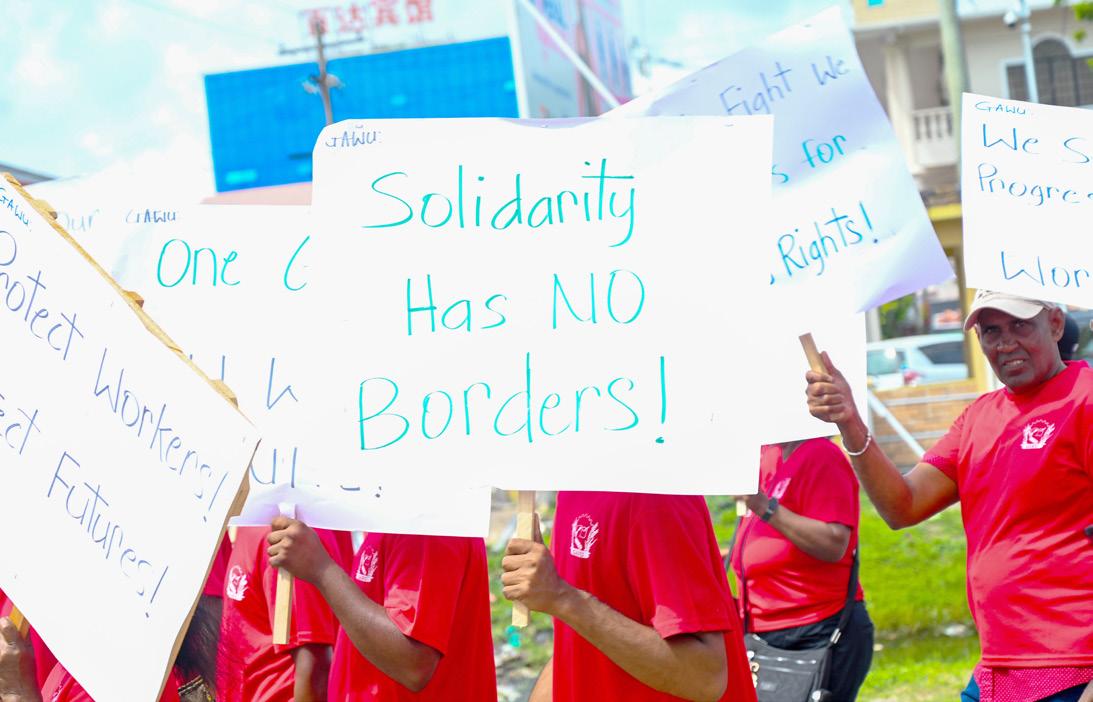
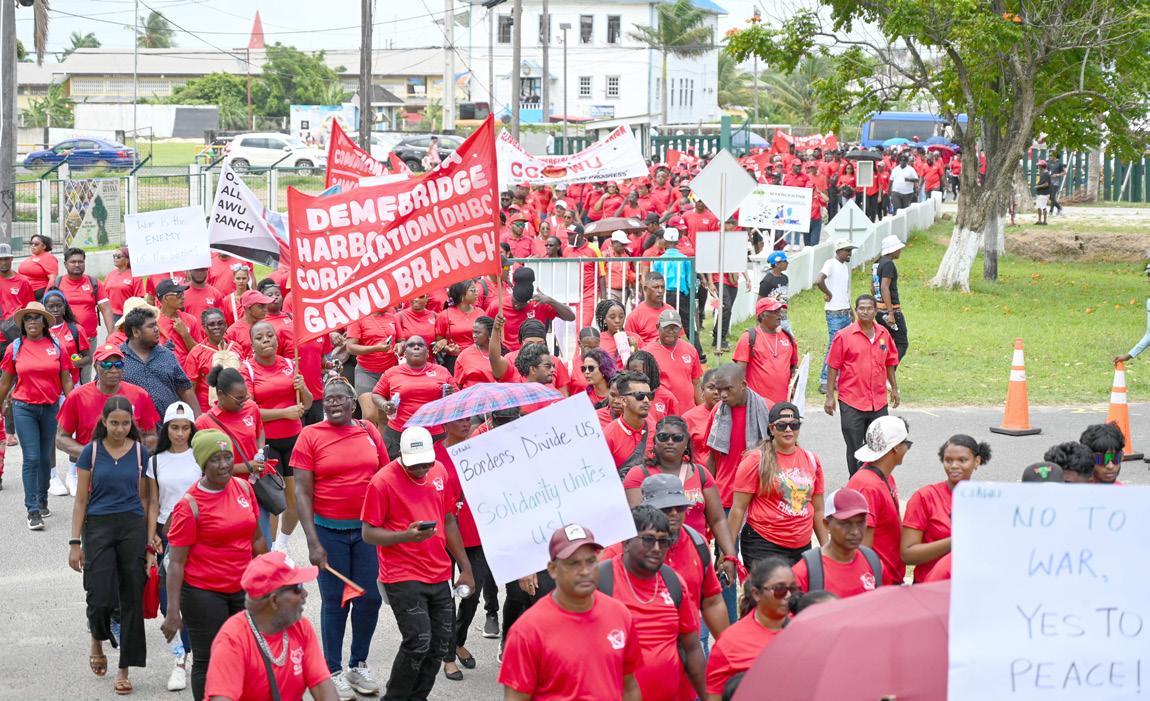
globe. [ Photos by Elton John]
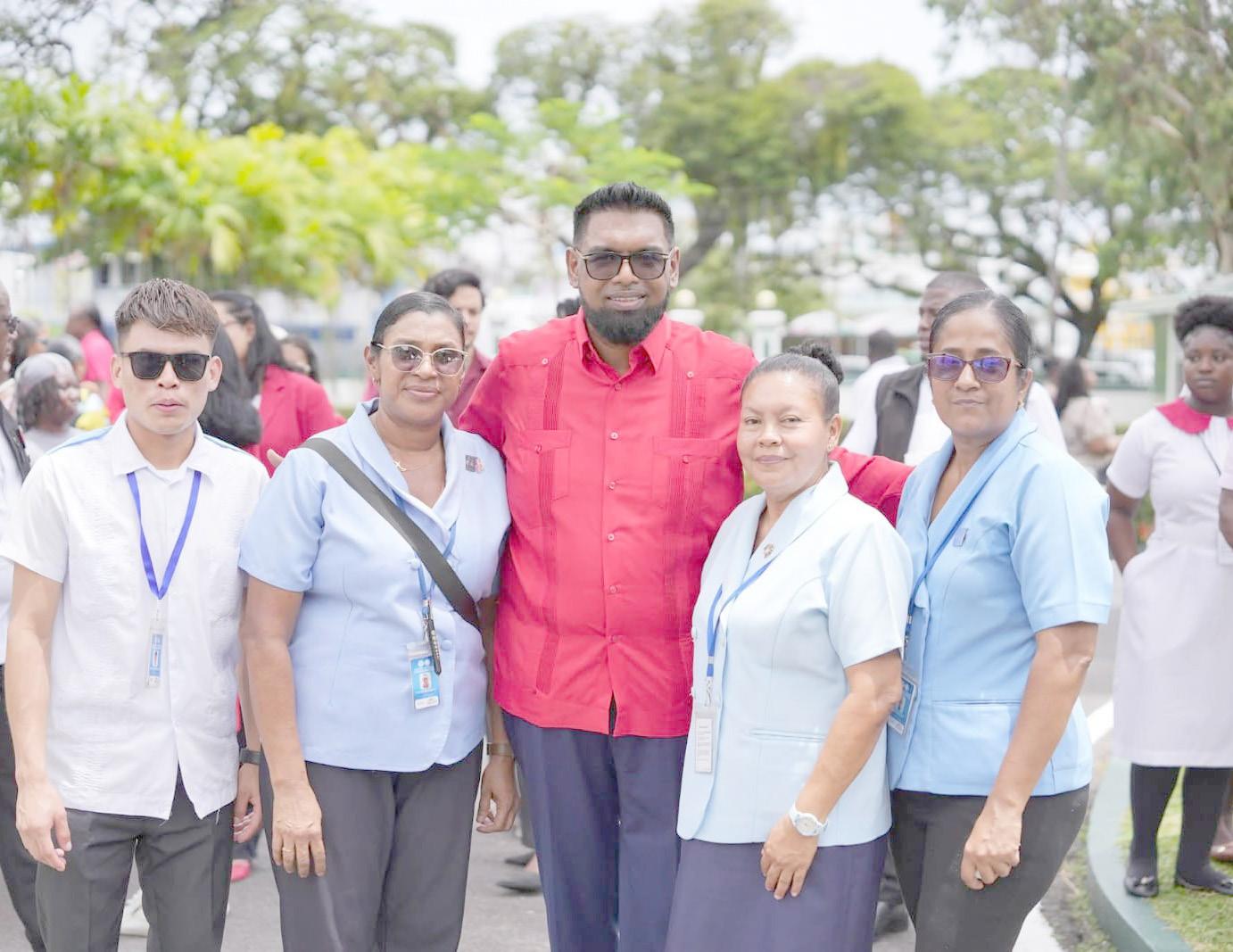
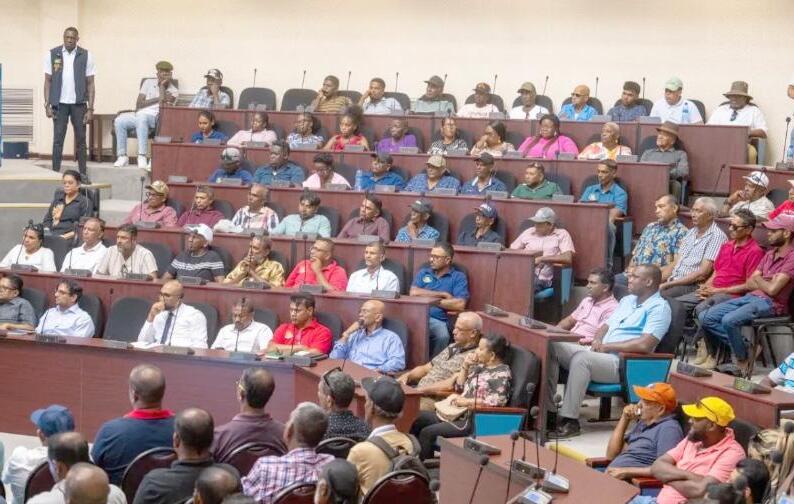
On Friday, President, Dr Irfaan Ali hosted a Labour Day Brunch on the lawns of State House, honouring our vibrant workforce across Guyana and celebrating their invaluable contributions to our nation’s development. [Office of the President photo]
‘You have to own things’
–– President Ali tells workers, outlines wealth-building vision for citizens
PRESIDENT Dr Irfaan Ali has highlighted that the government is working on plans to ensure that workers are able to invest in and benefit directly from large-scale national projects, outlining a vision for wealth creation beyond traditional wages.
The Head of State made this known while delivering his address at the Labour Day brunch at State House, on Friday.
Dr Ali emphasised that the government is moving to create systems that would allow ordinary Guyanese to own a stake in transformative industries, including those linked to the country’s expanding energy and industrial base.
“You have to own things. We want the workers to own things,” President Ali said, pointing to plans for special mechanisms and incentives that would allow workers to
invest in major opportunities such as the gas and fertiliser projects and other emerging sectors.
He related that this approach represents the “next level” of economic empowerment, where citizens are not only earning incomes but also building assets and sharing in the returns of national development.
Dr Ali stressed that empowerment must go beyond wages and cash grants, arguing that longterm prosperity will depend on giving families the tools to generate and expand their own income streams.
“We can’t only think about empowerment through wages… we have to think about empowerment as something longterm, something sustainable,” Dr Ali affirmed.
In this regard, the President highlighted the planned establishment of the Guyana Development Bank as a key pillar of this strategy.
This institution, he said, will support small ideas and entrepreneurial ventures, helping to transform them into viable businesses and new sources of income for working families.
Dr Ali further pointed to the role of public infrastructure in creating wealth, noting that investments in roads and community development can significantly increase property values and economic opportunities for households.
However, the challenge ahead, he said, is ensuring that workers are equipped to leverage these gains.
“How do we work with the workers to deploy this additional value… to diversify your income, to expand your income base?” he questioned.
Against this backdrop, Dr Ali urged workers to position themselves to take advantage of opportunities arising from Guyana’s
rapid development.
“This is a moment in our history… that requires a restructuring of our thinking process,” he said while adding that the government is building an “ecosystem” and setting aside resources to support citizens in this transition.
The President emphasised that the push for worker ownership will form part of a wider development model grounded in social justice, with programmes designed to ensure that opportunities are accessible across the society.
He further reiterated the government’s commitment to strengthening support systems for workers beyond their active years, including pensions, healthcare and other services aimed at ensuring dignity in retirement.
President Dr Irfaan Ali, on Friday, hosted May Day Brunch for workers
One Guyana portal to unify all government services
––– Minister Ally says; notes single digital platform will transform how citizens access public services
MINISTER of Public Service, Government Efficiency and Implementation, Zulfikar Ally, has noted that the government is moving to consolidate all public services into a single digital platform, outlining plans for a “One Guyana” portal that will centralise access for citizens.
The minister made this known while speaking at a recent national stakeholder forum on digital governance.
He had related that the initiative represents a major step in the country’s broader digital transformation agenda, aimed at improving efficiency, ac-
cessibility and service delivery.
“Our goal is to centralise everything into a One Guyana portal,” he said, explaining that the platform will integrate the various applications and systems currently being developed across government ministries and agencies.
Through the portal, citizens will be able to access a wide range of services using a single interface, including applications for passports, driver’s licences and other official documents.
The system will be linked to a unique digital identity, allowing users
to view and manage their personal information and service requests in one place.
“When you log in, you will see all of the services that you have requested in government… and from that service you can go and do anything,” Ally said.
This initiative builds on a series of digital platforms already rolled out, including Citizen Connect, GovConnect and Skills Connect, which are being integrated to form the foundation of the unified system.
Against this backdrop, he said the move towards a single platform is intended to eliminate fragmentation across agencies, where services have traditionally operated independently, often resulting in delays and inefficiencies.
As part of the transformation, the government is also working to digitise key services, with plans for online passport applications and appointment scheduling expected to reduce long-standing issues such as lengthy lines and early-morning wait times.
The portal will also support the development of digital wallets, enabling citizens to store essential documents such as identification cards and certificates on their smartphones.
In addition, Ally said supporting systems such as a national payment platform and local data centres are being developed to ensure secure, real-time transactions and data management within Guyana.
He emphasised that the broader objective is to create a more citizen-
“We were not going to get anywhere as a country if everyone was doing things independently,” he noted.
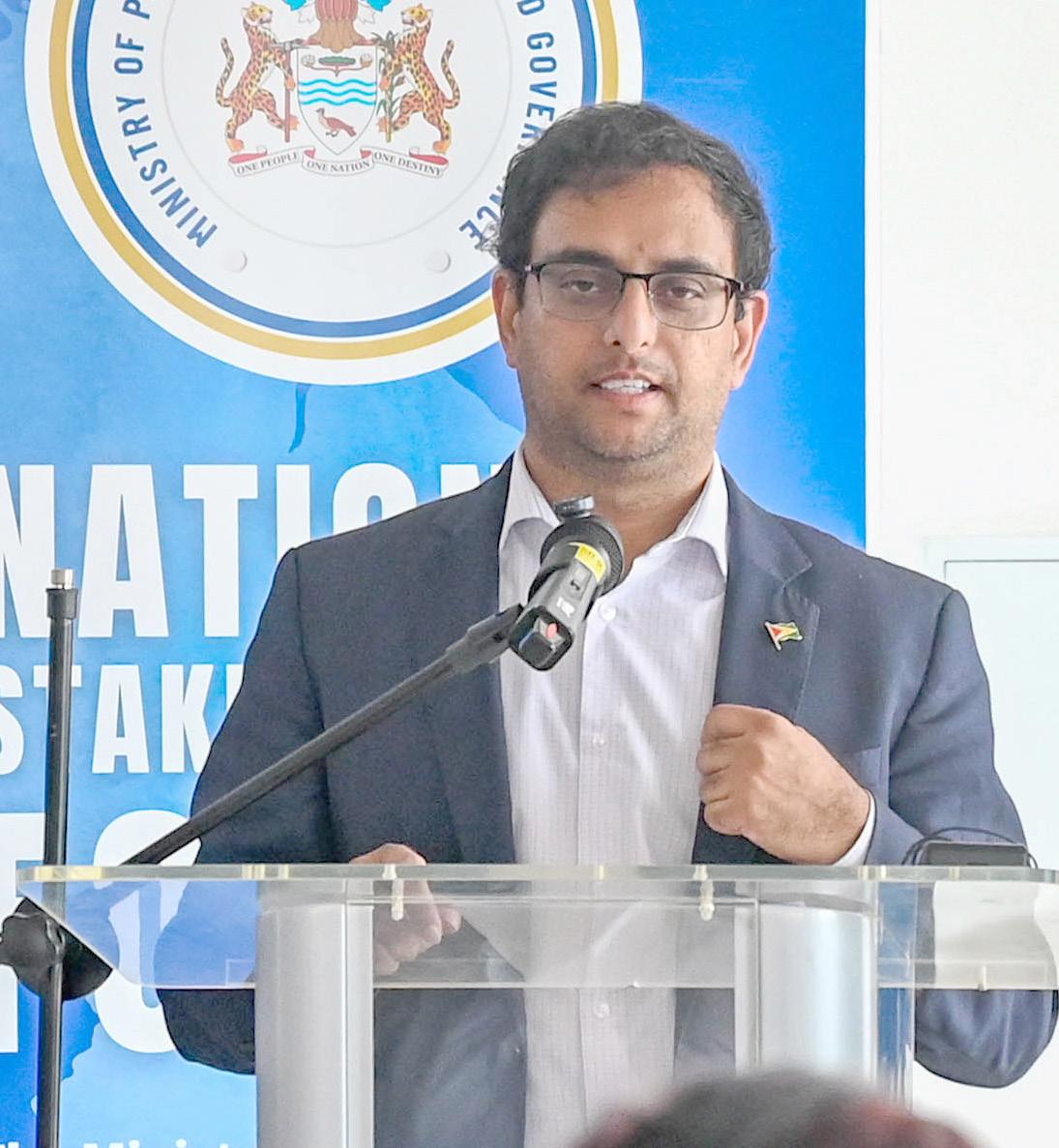
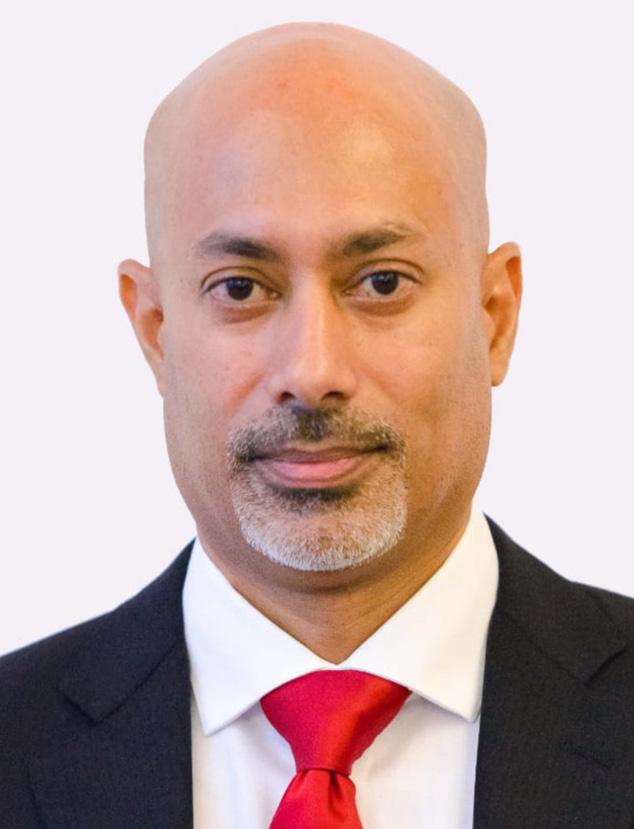
Minister of Public Service, Government Efficiency and Implementation, Zulfikar Ally (Elton John photo)
centred public service, where individuals can access government services quickly and efficiently, without unnecessary travel or delays.
“Everything has to be fast, and everything has to be efficient,” the minister said.
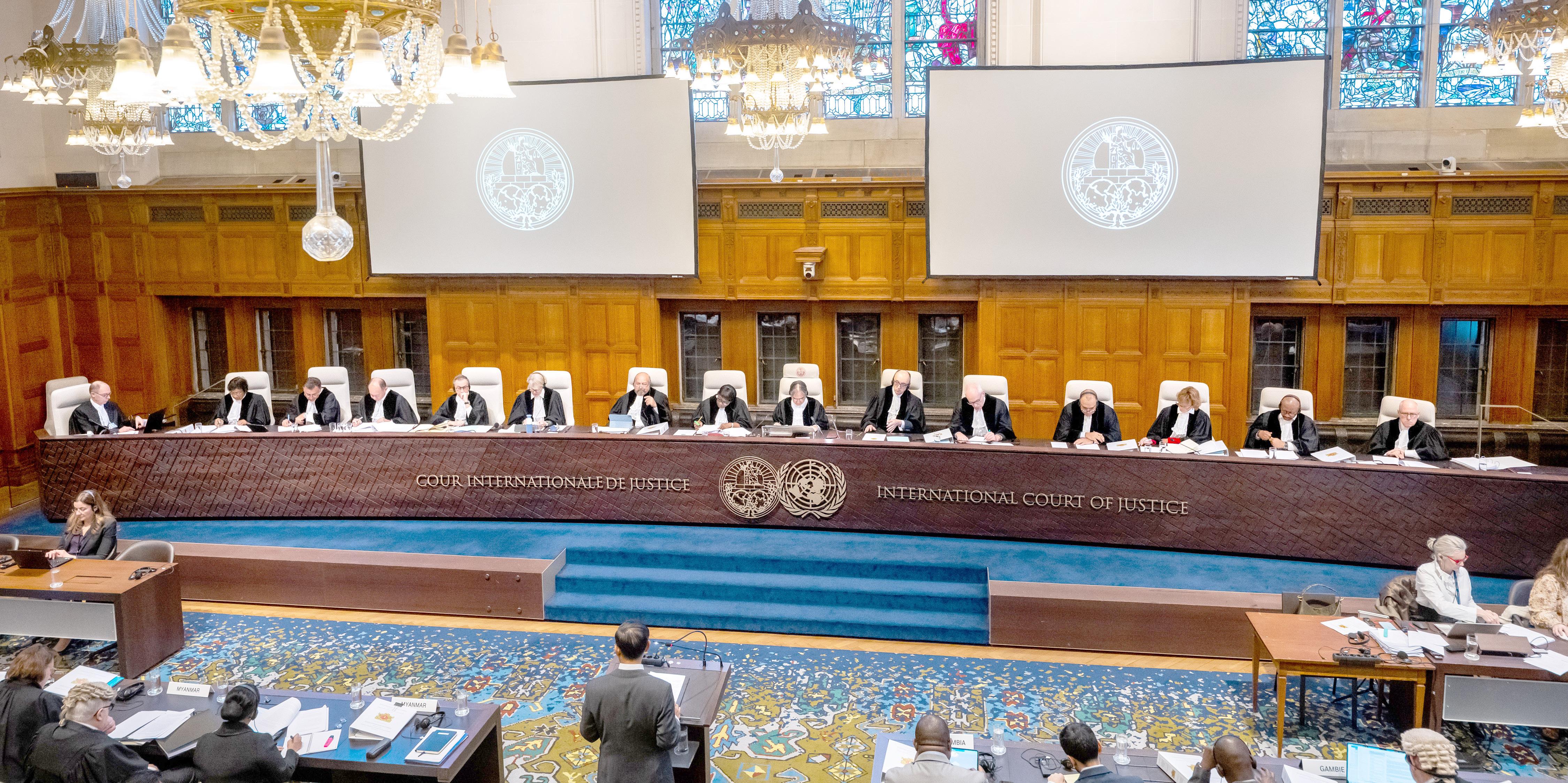
Guyana confident as ICJ set to hear border case merits from Monday
THE International Court of Justice (ICJ) will commence public hearings on the merits of the long-running border controversy between Guyana and Venezuela from Monday, May 4 to Monday, May 11, 2026, at the Peace Palace in The Hague, Netherlands.
The hearings mark a critical stage in the case concerning the validity of the October 3, 1899 Arbitral Award, which determined the boundary between the Colony of British Guiana and Venezuela, and continues to define the present-day border between Guyana and Venezuela.
In a statement issued by the Ministry of Foreign Affairs and International Co-operation on Friday, the government said it is approaching the hearings with “full confidence in the strength of its case,”
grounded in historical evidence and established principles of international law.
The case was formally filed by Guyana on March 29, 2018, seeking a final and binding ruling affirming the legal validity of the 1899 Award and the boundary determined thereafter.
According to the government, that boundary was further confirmed through a 1905 agreement between the then British Guiana and Venezuela, which adhered to the unanimous decision of the Arbitral Tribunal.
The ICJ has already ruled twice on its jurisdiction in the matter, first on December 18, 2020, and again on April 6, 2023, both times affirming that it has the authority to hear and determine the case.
The ICJ also rejected Venezuela’s objections to
its jurisdiction, and confirmed that it could proceed to consider the substantive issues raised by Guyana.
In addition to jurisdiction rulings, the ICJ has issued multiple provisional measures aimed at preserving the status quo while the case is pending.
In its December 2023 Order, the court directed Venezuela to refrain from any action that would alter the current situation in the disputed territory, where Guyana exercises administration and control.
More recently, in May 2025, the court strengthened those measures, ordering that Venezuela must not conduct or prepare to conduct elections in the territory in dispute.
Guyana had sought these measures amid concerns over actions by Venezuela that could interfere with its sovereignty over
the Essequibo region.
The upcoming hearings will focus on the merits of the case, where both countries will present their full legal arguments.
According to the court’s schedule, Guyana will open the proceedings on Monday, May 4, with its first round of oral arguments from 10:00 a.m. to 1:00 p.m. and again from 3:00 p.m. to 6:00 p.m.
Venezuela will then present its first round of arguments on Wednesday, May 6, during the same time slots of 10:00 a.m. to 1:00 p.m. and 3:00 p.m. to 6:00 p.m.
The second round of oral arguments will follow on Friday, May 8, when Guyana will present from 3:00 p.m. to 6:00 p.m., while Venezuela will conclude the hearings on Monday, May 11, also from 3:00 p.m. to 6:00 p.m.
The proceedings will be conducted in the court’s official languages, English and French, and will be streamed live and made available on demand via the ICJ’s website and UN Web TV.
The ICJ, the principal judicial organ of the United Nations, is tasked with resolving legal disputes between states in accordance with international law.
Guyana maintains that the 1899 Arbitral Award is legally binding and settled the land boundary definitively, while Venezuela has challenged its validity.
Guyana has consistently argued that the award definitively settled the border over a century ago.
In accordance with the Geneva Agreement, Guyana and Venezuela engaged in more than two decades of Good Offices efforts under the auspic -
es of the United Nations Secretary-General in an attempt to reach a peaceful resolution.
However, on January 30, 2018, after the process failed to yield meaningful progress, the Secretary-General determined that the Good Offices process had run its course and selected judicial settlement by the ICJ as the next means of resolving the controversy.
Guyana has since received widespread international backing for its position, with support from the Caribbean Community, the Commonwealth, the European Union, the Organisation of American States and other global partners.
They have also expressed concern over actions by Venezuela that could heighten tensions and threaten regional stability.
Investing in Rice Farmers
THE announcement by President Dr Irfaan Ali of a $3 billion-plus injection into Guyana’s rice industry could not have come at a more opportune moment.
The sector has faced increasing pressure from global market instability, rising input costs and long-standing structural challenges.
Through direct cash grants and a more comprehensive development approach, the government’s efforts offer immediate relief. But they also raise a more important question: Will this support lead to long-term resilience?
On the face of it, it’s a big initiative. Farmers with less than 50 acres will receive $15,000 per acre, while farmers with more than 50 acres will receive $10,000 per acre.
This tiered approach aims to protect small farmers, usually the most vulnerable, while still providing real support to everyone.
In a country where rice is a pillar of rural livelihoods and export earnings, such measures are not just helpful, they
are imperative.
But this is not new to Guyana. Historically, the rice industry has been at the mercy of the international market which can quickly eat up any gains through oversupply, changes in demand and disruption due to geopolitics.
As reported recently by this publication, swings in global prices and rising costs for fertiliser, fuel and shipping continue to squeeze margins for farmers.
The President himself called this the “net-off effect,” where higher selling prices don’t always mean higher profits. Here the government’s wider strategy merits closer scrutiny. But it’s more than just cash injections.
The emphasis on diversification, co-investment and productivity indicates a move towards a more sustainable model.
Promoting the cultivation of high-value crops together with rice is a good strategy. It accepts a simple truth: dependence on one commodity in a volatile world market is a risk few can
afford to take.
The suggested co-investment model, in which the state directly invests with farmers to broaden income-generating opportunities, is equally important.
Done right, it could help fill persistent gaps in capital and infrastructure access. “But a lot of the success will depend on the execution.
Past efforts have sometimes been thwarted by bureaucratic delays, uneven distribution, or lack of follow through.
Farmers will be watching closely to see if this approach produces tangible results on the ground.
Ongoing investments in drainage and irrigation systems, farm-to-market roads and other essential infrastructure also are important. These are not new promises, but they are still necessary.
Better infrastructure directly reduces costs of production, post-harvest losses and improves competitiveness. These are as important as financial grants.
There is still a larger context that cannot be ignored. Forces outside the
control of any one government are increasingly shaping the global agricultural landscape, from climate change to supply chain disruptions.
While Guyana’s proactive approach should be commended, the future of the rice sector will depend on its ability to adapt, innovate and compete on the international stage.
The People’s Progressive Party/ Civic administration has made a clear political and economic commitment to stand by farmers.
Now that commitment is being tested, not just by the scale of financial support, but also by the effectiveness of long-term planning.
Cash grants can help with immediate burdens, but they are not the answer.
The real test of success will be if Guyana’s rice farmers come out of this crisis stronger, more diversified and better able to withstand the next global shock.
In that sense, this $3 billion intervention is not the end, but the beginning.
Attaining a resilient sugar industry
Dear Editor,
AS a communications analyst, I have spoken with many displaced former workers from the sugar industry in Berbice, gaining insight into their experiences following the industry’s period of decline.
These conversations reflect not only economic hardship, but also the emotional and social strain that accompanied the loss of stable employment in communities long dependent on sugar.
The closure of several sugar estates in Guyana—Wales, Skeldon, Enmore, and Rose Hall—between 2016 and 2017 resulted in approximately 7,000 workers losing their jobs. This decision created significant socioeconomic disruption, affecting families,
small businesses, and entire villages that relied heavily on the industry for survival and continuity.
The reopening of the Rose Hall Estate in Berbice, however, represents a step towards recovery and renewed confidence. As of March 2026, public reports indicate that the Rose Hall, Albion, and Blairmont estates exceeded their weekly production targets during the second week of the current crop, producing 2,457 tonnes of sugar against a target of 1,989 tonnes—surpassing expectations by 468 tonnes.
This progress was further supported by the Weekly Production Incentive (WPI), which has motivated workers by providing additional earnings for increased productivity.
These results demonstrate that a combination of improved infrastructure, better management practices, and a committed workforce can significantly strengthen the industry. Strategic coordination and investment are proving essential in restoring efficiency and building momentum within the sector.
At the same time, the training and development of the next generation of skilled workers will be critical to sustaining longterm growth. The Guyana Sugar Corporation (GuySuCo) is targeting 100,000 tonnes of sugar production in 2026, supported by a $13.4 billion government allocation aimed at modernisation, mechanisation, and factory improvements.
With production costs previously ex-
ceeding selling prices, ongoing reforms are focused on achieving financial sustainability, with projections indicating a return to profitability by 2030.
With all of this in mind, it is important that Guyana continues to diversify its economic portfolio while strengthening traditional industries.
Sugar remains a foundational part of our national identity and economic history, alongside rice production, and continues to play a vital role in supporting regional food security within CARICOM. A balanced approach will ensure both resilience and progress for the nation
Sincerely, Blane R Bunbury
Moses Bhagwan put a 'jumbie lash' pon David Hinds
THE story began with my assessment of the political career of Dr. Rupert Roopnaraine after his funeral service. One of the eulogy presenters was Dr Wazir Mohamed. At the event, Mohamed waxed lyrical about Roopnaraine being a figure of national unity.
That contradicts my experience in Guyanese politics. Dr Roopnaraine was genetically anti-PPP. It is too long an explanation why Roopnaraine (for cultural and psychological reasons) was always subtly and diplomatically anti-PPP.
The evidence of that is easy material for the historian to gather. In my seven-part series on Roopnaraine in March this year in the Chronicle, I dealt with some reasons for his attitude towards the PPP and PNC.
In one of those articles, I rebutted Mohamed’s declaration that he made at the funeral that Roopnaraine was a political actor that strove for national unity. I gave one example. When the Cheddi Jagan presidency in 1993 offered a Cabinet post to Clive Thomas, the WPA met in emergency session and the offer was rejected. Roopnaraine was against the offer.
Here now is Mohamed’s reply to my position: “I state clearly and unequivocally that the Committee, over which I presided, voted by majority to accept the offer to participate in government. Furthermore, Dr Rupert Roopnaraine argued strongly and consistently in favour of the WPA accepting that offer.”
I did not accept that explanation by Mohamed. I quoted what David Hinds said on page 158 of his book, “Ethno-politics and power-sharing in Guyana.”
Hinds noted: “The WPA itself was split over participation in a PPP dominated government. No doubt the risk of being perceived as siding with one ethnic group, and being seen as an appendage of the PPP may have been uppermost in their minds.”
So, the question becomes pyrotechnical. Mohamed used the word “majority” which meant there were rejectionists.
Hinds used the word, “split.” What Mohamed and Hinds have done is that they have robbed Guyanese history by not telling us who were for and who were against. I am saying that Roopnaraine, Moses Bhagwan and Eusi Kwayana voted at that meeting against Thomas joining the Jagan government.
Enter Bhagwan. He claims he was there. But what he describes as “there” differs from what I wrote. By “there” he meant the discussion between a WPA delegation and President Jagan and Roger Luncheon about Thomas’s participation.
Either Bhagwan has Alzheimers or is possessed of political dishonesty. By “there” I meant the emergency meeting of the WPA to discuss President Jagan’s offer to Thomas.
At that meeting, Roopnaraine, Bhagwan and Kwayana voted against Thomas joining the Jagan Government. Now I agree that the three men may have felt it was “eye-pass” for the PPP to name Thomas rather than the WPA doing the selection but I stand by what took place at that meeting. The three men voted against the WPA joining the PPP government.
Bhagwan writes an epistle criticising me but removed the emergency meeting that I wrote about and put in its place the
discussion between a WPA delegation and President Jagan and Luncheon. I did not write on that event. Anyway, Bhagwan suggested in his epistle that I should have consulted primary sources like him rather than rely on “second or tenth rate hearsay.”
Obviously, he is referring to David Hinds. I quoted from Hinds on how the government felt about the WPA joining the PPP Government in 1993. Looked at from any angle, Bhagwan meant Hinds when he referred to second or tenth rate source. I am not interested in the dispute between Hinds and Bhagwan but what is involved here is chauvinism.
Bhagwan is saying that he is relating what happened because he was there and Hinds wasn’t. But there is a large but. But why should we believe Bhagwan? Why should we believe anything the former leaders of the WPA say especially those who carried an old anti-Jagan sentiment since the 1960s?
In Bhagwan’s voluminous condemnation of me, he left out who comprised the members of the delegation that met
with Dr. Jagan and Luncheon. Isn’t that strange? Was Roopnaraine part of the delegation?
Secondly, Dr. Jagan and Luncheon are not around to contradict Bhagwan’s description of what took place.
In conclusion, I think Dr. Jagan wanted the inclusion of Thomas in his Cabinet as an act of good faith and then see how things would evolve. But Jagan was met with hostility from the WPA, particularly Bhagwan, Kwayana and Roopnaraine, and he felt these people would never drop their anti-Jagan hostility.
Interestingly, one of the WPA leaders who argued for Thomas to take up the position was Dr Josh Ramsammy. From that moment, Ramsammy was isolated and never reintegrated himself into the WPA. He left the WPA shortly after.
DISCLAIMER: The views and opinions expressed in this column are solely those of the author and do not necessarily reflect the official policy or position of the Guyana National Newspapers Limited.
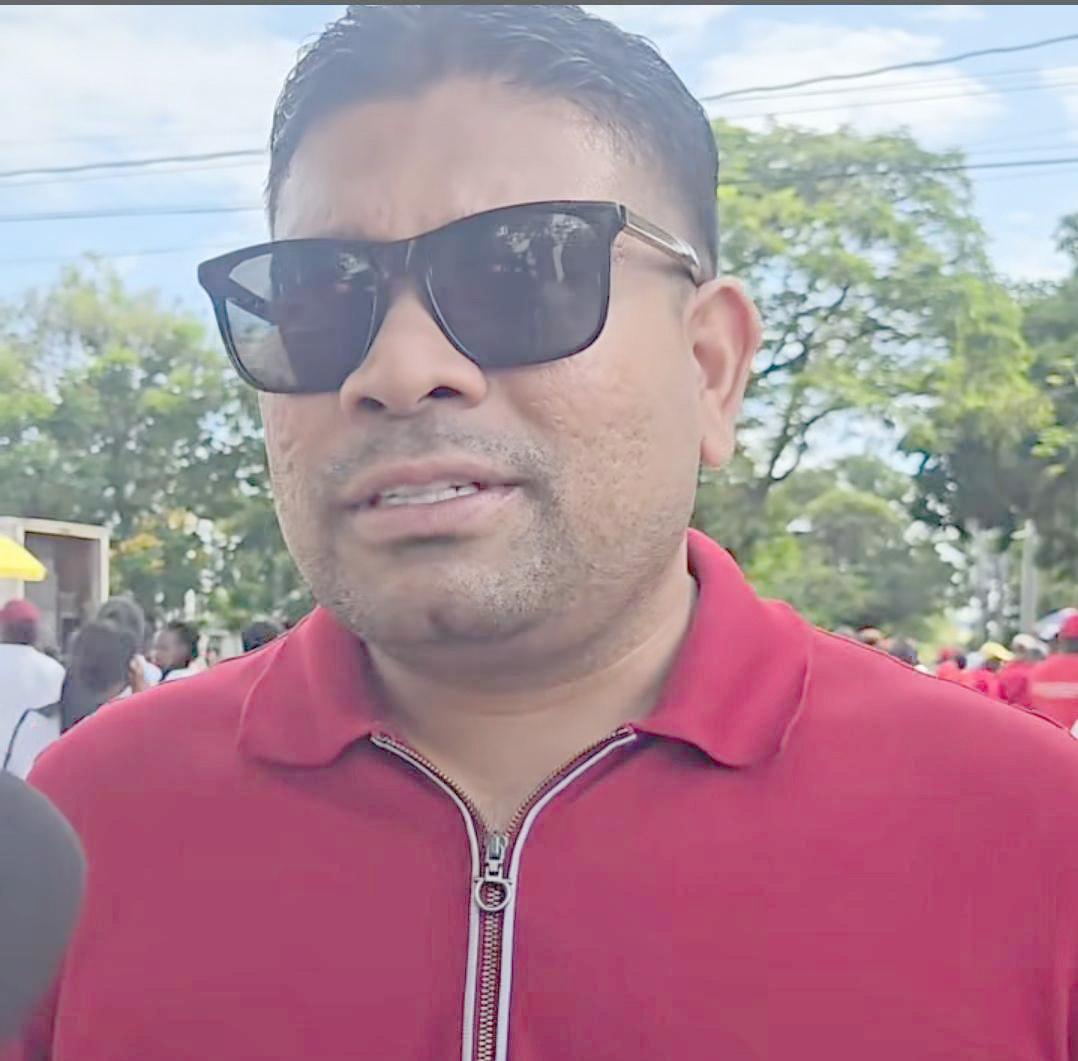
Azruddin faces backlash over ‘misguided’ call for blanket price controls
–– critics say suggestions expose lack of understanding, knowledge of economy’s management
US-INDICTED businessman and Opposition
Leader Azruddin Mohamed is facing backlash by critics for his lack of knowledge and understanding of how the economy works after he suggested blanket price controls on commodities.
Mohamed, in an interview with reporters on Friday, suggested that price controls would help alleviate cost of living issues. However, according to analysts and historical evidence, price controls could be damaging to a modern, free-market economy.
The primary mechanism to determine prices
in a market-based system is through supply and demand. Price control schemes risk creating myriad unintended negative consequences, including but not limited to shortages (due to increased demand for products); less supply (as producers are no longer incentivised to produce); and black markets.
Historically speaking, price control mechanisms have proven to be shortlived and costly. Furthermore, since Guyana relies heavily on imports to meet domestic needs, the likelihood of discouraging importers and retailers
from supplying products at higher than controlled prices is likely. Therefore, price control mechanisms are unlikely to achieve their intended purpose of making products more affordable.
Guyana’s experience with price controls during the 1970s-1980s under the People’s National Congress (PNC) government was disastrous, according to critics.
The World Bank had recommended in recovery frameworks that Guyana reduce price distortions by limiting price controls only to highly essential commodities with low demand elasticity.
The financial institution said when the government abolished price controls and liberalised markets in the early 1990s, GDP grew six per cent in 1991 after fifteen years of continuous decline, with growth continuing at
five-seven per cent annually through the mid-1990s.
Industries like rice, sugar, and gold had rebounded as private initiative returned to the economy.
Historical experience is further reason that there could be no chance of success with such ideas.
During the interview, the reporter mentioned that he thought that the historical experience was an example of how we should avoid implementing policies that did not work before.
Mohamed responded by saying he is confident it would work, without offering an explanation.
The reason Mohamed’s comments also raised questions among analysts is because he attempted to draw a parallel between regulating the foreign exchange market and establishing price controls for food.
Many have indicated that this analogy does not hold true.
A government can regulate a currency in a foreign exchange market by employing various methods, including but not limited to setting interest rates; managing reserves; and implementing other monetary policies.
These actions fall under the realm of monetary policy.
As previously stated, these types of regulatory actions do not equal the direct administration of price controls. Price controls are direct administrative regulations on a product and its
associated retail price, and as such they are directly opposed to market signals.
Many have also expressed concern over Mohamed’s lack of understanding regarding fundamental economic principles.
He appears to conflate foreign exchange regulation with price control mechanisms, suggesting he fails to comprehend how different these two mechanisms truly are.
A number of observers have suggested that there are better ways for a government to assist consumers during periods of high inflation than through blanket price control mechanisms.
The government has already rolled out and continues to roll out several forms of assistance, including subsidies, offering tax relief, and increasing income levels.
Specifically, over the past five years, more than 200 taxes have been repealed, while social programmes have been broadened to include all sectors of society.
Measures have been introduced to offer subsidies and direct support for housing construction and improvement, with a particular focus on assisting poor and vulnerable families.
Initiatives to encourage banks to lower interest rates and ease collateral requirements for low-income groups have also been pursued, while a SME development bank is on the horizon.
US-indicted businessman and Opposition Leader Azruddin Mohamed
From curiosity to electrical installation certification
- D’Angelo Douglas tells his story
THE Government of Guyana is investing heavily in our youth, with intensified skills training programmes that make room for employment, financial independence and even entrepreneurial experiences.
While the skills may vary, the goal remains the same, to equip Guyanese with skills beyond academics.
The Ministry of Culture Youth and Sport re-
cently provided an update on its training programme at the Georgetown Training Centre.
Sharing a comment, D’Angelo Douglas, who completed the electrical installation course at the centre, said that growing up, electrical installation was something he was always fascinated by.
“I was always curious about how electricity works and stuff like that,” he said.
By completing the course, Douglas said he understands what electricity is and its functions, as well as what safety measures to take to protect himself from electricity.
Reflecting, Douglas expressed that as he attempted to learn the practical aspects of the programme, and applied the knowledge he gained, he realised that he could complete the programme.
Now that he is certi -
fied, Douglas said his first goal is to find employment to gain experience, and if possible, he will pursue more opportunities to further his knowledge.
He said that programmes like this one give young people the opportunity to develop themselves and become something more. It also provides them with a certain level of skill sets that they didn’t know they possess.
The ministry’s programme targets persons between ages 16 and 30, providing practical skills in areas such as carpentry, masonry, electrical installation, plumbing, and welding and fabrication.
These programmes create gateways to several sectors, through a number of training courses.
On completion each
participant will receive a Caribbean Vocational Qualification Level One Certificate, with stipend support provided throughout their training.
The programme includes information and communication technology training, helping participants to improve their digital skills and gain
valuable abilities for today’s job market, while areas such as financial literacy training equips individuals with knowledge needed to make informed financial decisions.
The training initiative represents a significant investment in youth development by the Government of Guyana.
D’Angelo Douglas
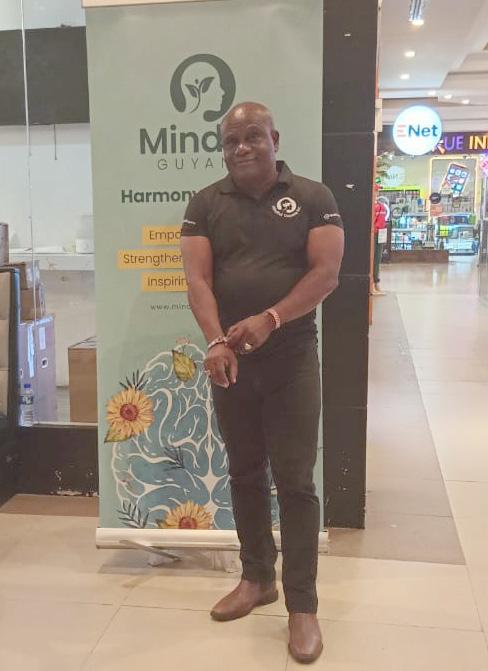
Mindful Guyana Inc successfully hosts public-awareness event on environmental, mental health link
MINDFUL Guyana Inc successfully hosted a public-awareness event recently at the Amazonia Mall, East Bank Demerara, engaging members of the public in meaningful conversations about the vital connection between environmental health and mental well-being.
The event attracted strong participation, with individuals and families stopping to learn more, asking questions, and sharing their perspectives.
According to Chairman of Mindful Guyana Inc, Royston King, public interaction was notably positive, with a high level of curiosity and openness, particularly
around mental health. He said this encouraging response highlights a growing interest among Guyanese in understanding mental health and its broader influences, including environmental factors.
King added that the attendees were introduced to the concept of the interconnectedness between the environment and mental wellness, emphasising how issues such as climate change, urban stressors, and access to green spaces can directly and indirectly affect psychological health. He related that the discussions also reinforced the importance of community awareness, education, and proactive
engagement in promoting both environmental stewardship and mental resilience.
“This level of engagement shows that people are eager to learn more about mental health and how it relates to their everyday lives,” said a representative of Mindful Guyana Inc. “It’s clear that there is a strong appetite for continued dialogue and accessible information on these issues,” King said.
The Chairman of Mindful Guyana Inc related that the Amazonia Mall event forms part of an ongoing series of public awareness and educational initiatives that Mindful Guyana Inc is conducting in commu-
nities across Guyana.
King noted that these efforts aim to foster informed, healthy, and environmentally conscious communities through outreach, education, and advocacy.
Mindful Guyana Inc is a non-profit organisation dedicated to promoting mental-health awareness, education, and well-being across Guyana.
Through community-based programmes, public engagement, and advocacy, the organisation seeks to build a more informed and resilient society, while highlighting the critical links between mental health and environmental sustainability.
Chairman of Mindful Guyana Inc., Royston King
Some of the attendees at the event held at Amazonia Mall recently
Baramita Primary Top’s first batch of CSEC students in full preparation mode
THE first batch of students sitting the Caribbean Secondary Education Certificate (CSEC) examinations at Baramita Primary
Top stands as a landmark in the village’s history of grit, headaches, muddy boots, and unstoppable ambition.
This is more than a group of students—it is a symbol of what determination looks like in one of Guyana’s most remote communities.
The journey began in September 2023, when Headteacher Ms Audrey Williams-Massiah officially opened the secondary department.
She reported that with crucial support from Food For The Poor Guyana Inc., the school received the furniture and resources needed for the launch.
Massiah added that it started with 65 students and rapidly grew into a vibrant department of 226 learners over a three year-period.
The headteacher stated that at the heart of this transformation was Mr Nicolas Grant, the temporary qualified master (TQM) teacher who led a lively, energetic classroom full of noise and unstoppable spirit.
She pointed out that they are an energetic group of 23 teachers who managed to motivate 12 of the Grade 11 students
to embark on the CSEC journey.
Massiah said they “barely survived” the pressures of upper school, yet their determination never wavered.
However, Sir Grant taught them through online classes, constant review, and support from many hands, especially Sir Leon Beaton, who guided them in mathematics, and Miss Francis, the Headteacher of South Ruimveldt Secondary, whose mentorship became a major source of inspiration.
Massiah noted that the group of learners worked with limited resources, relying on solar power and a generator because there is no electricity in the community.
She revealed that internet access was unreliable, yet Sir Grant still managed to teach them, with some help from colleagues’ online classes, late-evening sessions, and constant review.
Massiah told the Guyana Chronicle that many mornings, the 12 students came to class in unpressed uniforms, simply because they had no electricity to iron them, but they came anyway, which shows they were committed more to learning than appearance.
She related that three of the students went even further, entering the STEAM Science Fair under the Agriculture cat-
egory with their project: “Smart Irrigation System”—an innovative design using IoT (Internet of Things) technology. Even reaching the farm to test their crops and feed their meat birds was a challenge in itself, but they pushed through every obstacle, Massiah said.
The headteacher reported that when Sir Grant injured his leg, he continued working with the students, teaching Physical Education and pushing them to stay focused.
“His commitment became a symbol of the entire journey: painful, demanding, but deeply rewarding,” she said.
Massiah noted that one of the toughest hurdles was the school-based assessments (SBAs). For a new secondary department, this was unfamiliar territory. Yet with persistence and teamwork, the students successfully completed their SBAs.
She noted that now, the 12 students are preparing to write six CSEC subjects, carrying with them the memories of long nights, early mornings, and many days filled with headaches, pride, unity, and hope.
“They are the first, they are the foundation and they have opened the door for every Baramita child who will follow on 5th May 2026,” Massiah said.
Students Raphael Baird, Ryan Fonsat and Alejandra James receive a prize from Mr Martia DeSouza, DCEO Hinterland after their successful participation in the STEAM Science Fair
Gov’t prioritises skills, protection as global factors change labour market dynamics
THE Government of Guyana is advancing workforce training and skills development as global challenges continue to reshape labour markets, according to Labour and Manpower Planning Minister Keoma Griffith’s Labour Day 2026 message, which underscored the need to prepare workers for a rapidly evolving world of work.
Marking Labour Day on Friday, the minister had said that emerging industries, technological change, and shifting global economic conditions demand a proactive approach to equipping Guyanese workers with relevant skills while ensuring labour protections keep pace.
“We must equip our workforce with the skills needed to meet these changes and challenges, and to continue to thrive,” he stated, noting that progress must not come at the expense of workers’ rights and wellbeing.
The minister situated this forward-looking agenda within Guyana’s long history of labour struggle, reflecting on milestones such as the establishment of the British Guiana Labour Union in 1919 and the 1948 Enmore Martyrs, whose sacrifice helped catalyse the country’s independence movement.
He said these events laid the foundation for today’s commitment to dignity, fairness, and justice in the workplace.
Building on that lega-
cy, the government continues to promote a tripartite model of co-operation
ties, and ensure that economic growth translates into tangible benefits for workers.
The ministry has also intensified enforcement and compliance efforts. Over the past year, more than 1,400 workplace inspections were conducted, while approximately $28 million in owed wages was recovered for workers. These interventions, the minister noted, are critical to safeguarding workers’ rights and ensuring accountability.
vation, employment, and economic diversification.
He also acknowledged the growing role of women in the workforce, particularly in public service, education, and health, while encouraging greater female representation in trade union leadership.
among trade unions, employers, and the state. The minister reaffirmed his ministry’s commitment to strengthening this collaboration through active engagement and dialogue. Central to current policy efforts is the 2025–2030 Decent Work Country Programme, developed with the International Labour Organisation, which aims to improve labour standards, expand opportuni-
Efforts are also underway to modernise the ministry’s operations, with increased use of technology to improve access to services, streamline complaint processes, and enhance transparency. Additionally, dispute resolution mechanisms are being strengthened to ensure timely and fair outcomes.
The minister highlighted the importance of emerging sectors within Guyana’s development strategy, including the “orange economy” and “care economy,” which are expected to generate new opportunities for inno -
Reaffirming that “workers’ rights are human rights,” the minister emphasised that every Guyanese worker is entitled to fair wages, safe working conditions, and protection from discrimination and exploitation.
He called on trade unions, employers, and workers alike to continue fostering co-operation and mutual respect, noting that collective effort remains essential to building a just, inclusive, and prosperous society.
“As we honour the struggles of the past, let us also embrace the responsibilities of the present,” the minister said, adding that the ministry stands ready to protect, engage, and advance the rights and wellbeing of all workers in Guyana.
GCCI commends government’s $3B support for rice farmers
THE Georgetown Chamber of Commerce and Industry (GCCI) has applauded the Government of Guyana for its interventions to support rice farmers across the country. With more than $3 billion in financial support towards rice farmers, this initiative rep-
resents an impactful decision that will further support the bolstering of Guyana’s agriculture sector, a press release said, adding that, over the years, the Chamber has noted the government’s continuous substantial injections into the rice industry, with frequent efforts to support stakeholders.
“The GCCI encourages farmers to utilise this support to advance their productivity. With Guyana’s agriculture sector playing a key role in food security, the Chamber lauds the government’s commitment to developing and diversifying all facets of the economy,” the release added.
Minister of Labour and Manpower Planning, Keoma Griffith
‘PPP/C gov’t has shown genuine partnership with labour’
––– labour movement leader says, affirms GAWU, FITUG commitment to continue working together for workers’ benefit
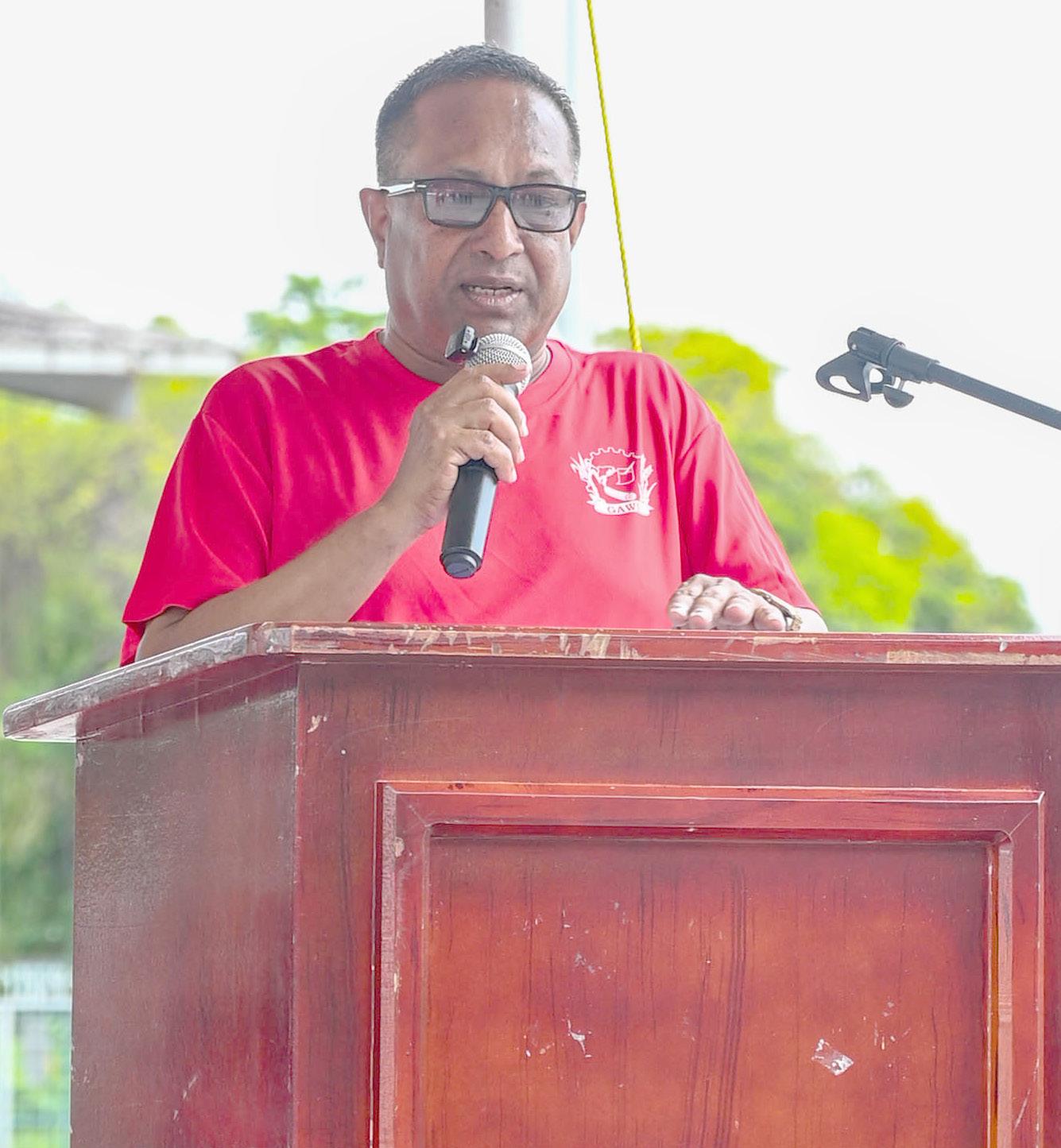
GAWU President, Seepaul Narine (Photos by Elton John)
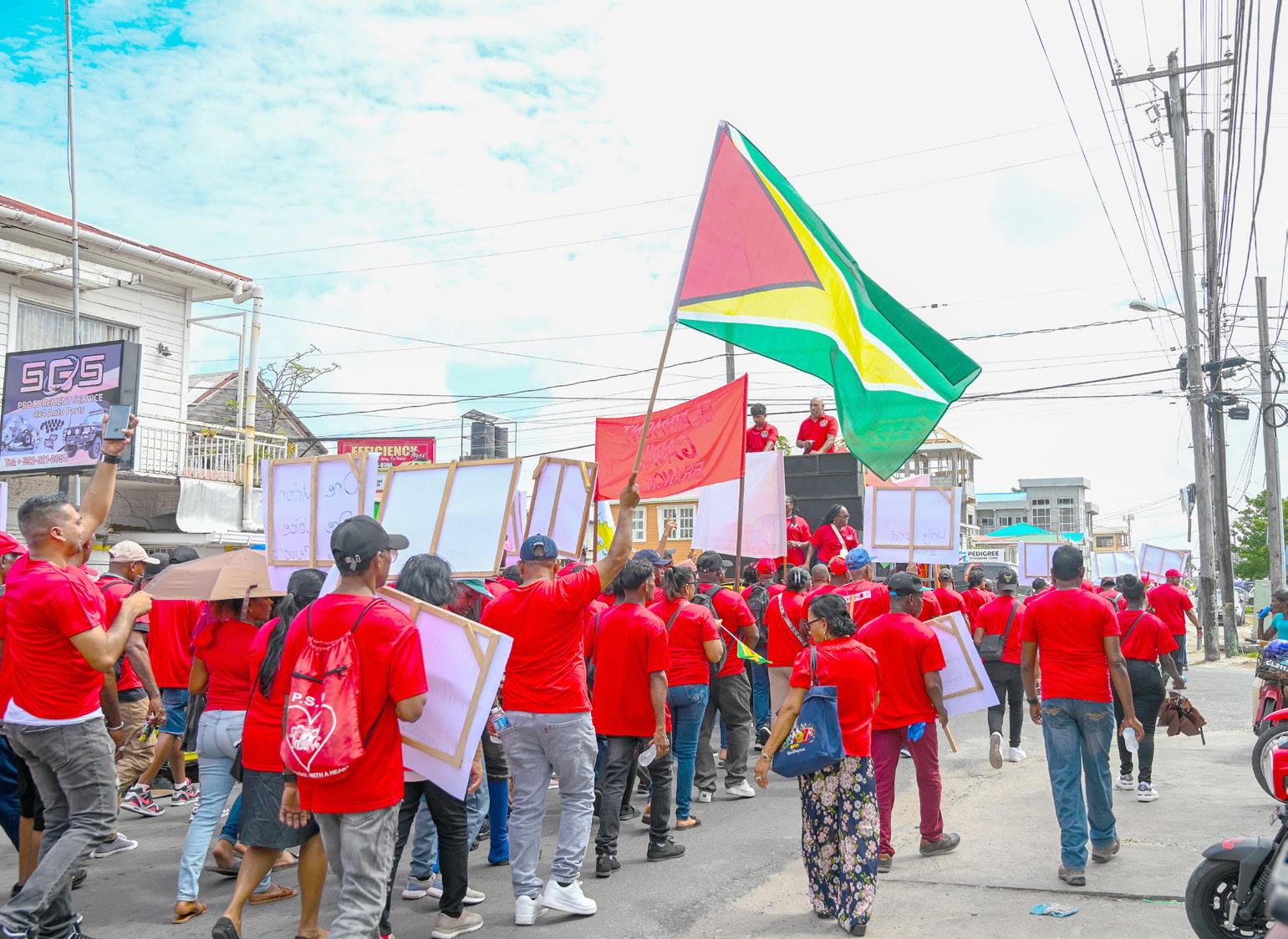
PRESIDENT of the Guyana Agricultural and General Workers’ Union (GAWU), and Treasurer of the Federation of Independent Trade Unions of Guyana (FITUG), Seepaul Narine, on Friday, said that the face of Guyana is being remade with new roads, new bridges, new hospitals, and new schools.
He told workers at the conclusion of the May Day Rally in the National Park that they have given so much and deserve a share of the wealth they have created
in our nation.
In his remarks, Narine told workers that GAWU must remain a constructive partner of the government. GAWU, he said, supports the government’s efforts in addressing issues affecting public sector workers, including nurses, teachers, police, and prison officers.
“The PPP/C is a government that has shown genuine partnership with labour. Do not take that for granted. We have worked together and we will continue to work together for
the dignity and prosperity of every Guyanese worker,” he said.
Narine mentioned Guyana’s signing of its third Decent Work Country Programme (DWCP) last year, a tripartite commitment between governments, unions and employers. The programme promises stronger protection, expanded training, and a more formalised path to decent work for thousands of Guyanese who labour in the shadows of the informal economy.
The GAWU President stated that the government has taken meaningful steps to ease the burden on working families, to increase the income tax threshold to $140,000 per month and put more money in the hands of Guyanese.
He recalled the expansion of part-time work for old-age pensioners, which allows our seniors to remain active and supplement their income with dignity.
Aside from this, Narine highlighted the challenges that remain, with the aim of finding solutions to these challenges together.
He stated that the cost of living continues to pressure families, and while wages have risen, and taxes are reduced, prices for food,
rent, transportation and utilities have risen. While he acknowledged that this is not a problem that is unique to Guyana, Narine believes that with continued partnership more could be done.
He recommended a continued review of the national minimum wage that reflects the true cost of a dignified life; enhanced price monitoring and targeted relief for basic food items; and accelerated affordable housing for low-income workers.
“These are not demands. These are proposals from a party in the trade union
movement. GAWU sits on the same side of the government, the side that wishes every Guyanese to live well and better,” Narine assured.
Continuing along, Narine mentioned that GAWU celebrated 50 years of historic recognition in the sugar industry, which represents five decades of outstanding form when others would have liked the union to bend.
Fifty years of fighting for justice, and quality for workers and sugar estates, of burying fallen comrades and raising new leaders.
“That golden jubilee was
not a celebration of GAWU alone. It was a celebration of every worker who never gave up,” the GAWU head said.
He spoke about GAWU’s successful achievement of securing an industry minimum wage of $100,000 per month from January 1, 2025. This agreement places billions of Guyanese dollars back in the hands of sugar workers and their families.
This he said proves a simple truth, that when workers are united, stand together, and fight together, they win together.
Unlit vehicles remain major road hazard
THE Guyana Police Force Traffic Department is raising alarm over the continued presence of unlit motor vehicles on the nation’s roads, warning that the practice remains a serious threat to public safe-
ty, particularly during nighttime driving. According to the department, a total of 1,876 cases involving unlit vehicles were recorded in the first quarter of 2026, with an equal number of tickets issued as enforcement
–– as Police issue over 1,800 tickets in early 2026
efforts intensified.
Authorities say the offence, ranging from vehicles being driven without proper lighting to those left parked in hazardous positions without lights or reflective markings, significantly increases the
risk of accidents.
The department noted that while traffic volumes tend to decrease at night, the danger level rises due to reduced visibility.
Drivers often have limited time to detect hazards, especially in poorly lit areas, placing motorists, cyclists, motorcyclists and pedestrians at heightened risk.
Large vehicles, including articulated lorries and trailers, were highlighted as particular concerns when left unattended on roadways without illumination or reflective indicators.
The offence is governed under the Motor Vehicles and Road Traffic Regulations, specifically Regulation 34(1)(a) for unlit front lights and Reg-
ulation 34(1)(b) for rear lights. Each violation carries a fine of $5,000.
However, traffic officials argue that the penalty is inadequate when weighed against the potential consequences, which include serious injury, fatalities, and property damage.
The warning comes amid ongoing national concerns about road safety. Recent reporting by this publication has consistently highlighted dangerous driving practices, increasing traffic violations, and fatal accidents across the country, prompting calls for stricter enforcement and greater public awareness.
In response, the Traffic Department has ramped up public education cam-
paigns, roadside inspections, and targeted enforcement exercises aimed at improving compliance.
Officials stressed that maintaining functional headlamps, rear lamps, and other required lighting is both a legal obligation and a critical safety measure.
“Compliance is not optional,” the department emphasised, urging all vehicle owners and operators to ensure their vehicles are properly equipped and visible at all times, particularly during prescribed hours of darkness.
Authorities maintain that addressing the issue of unlit vehicles is a key step toward reducing accidents and improving overall road safety in Guyana.
Mazaruni Prison harvests
600kg of produce
–– as rehabilitation programme expands
The Mazaruni Prison continues to strengthen its agricultural programme as a core component of inmate rehabilitation
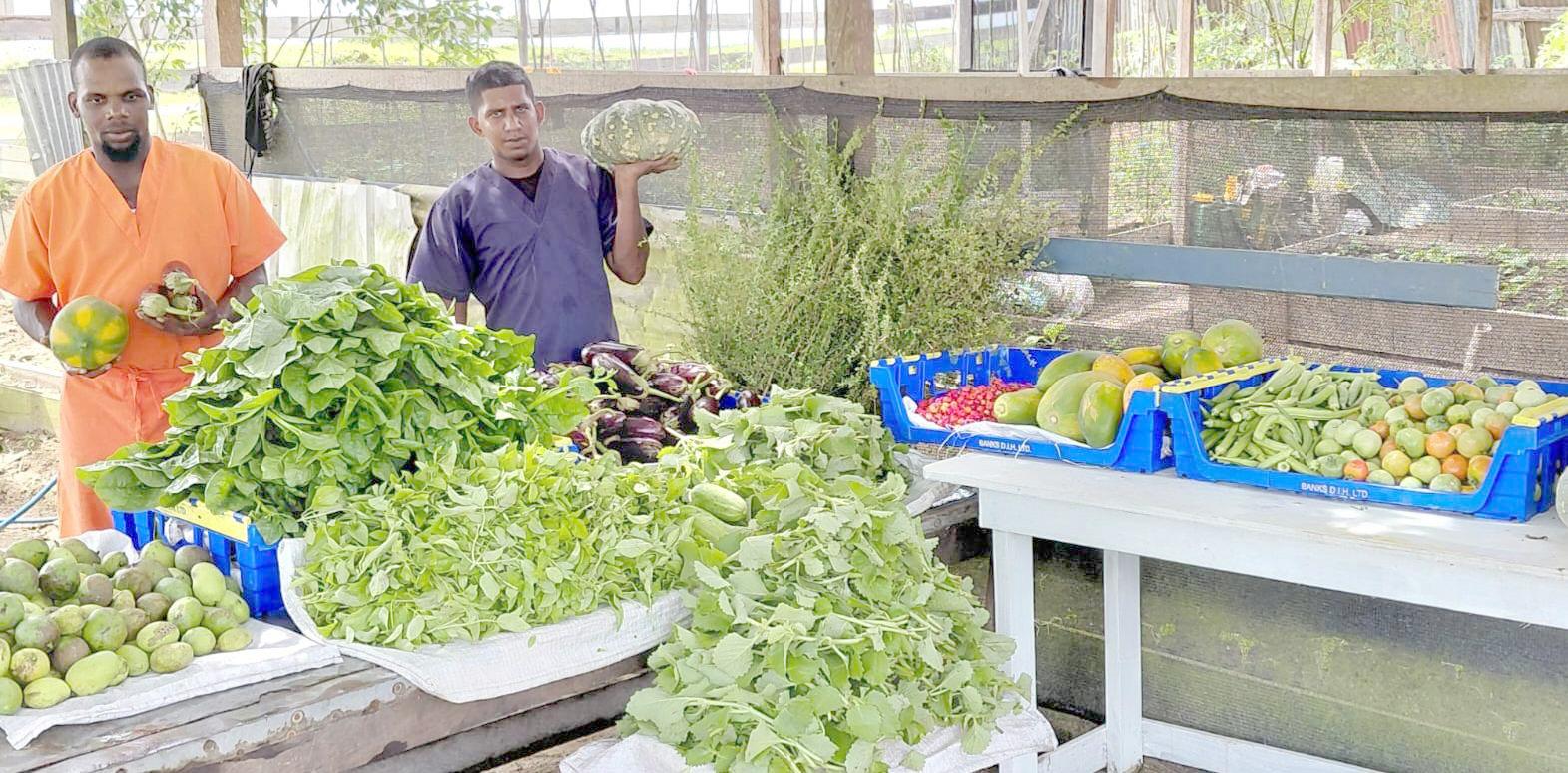
THE Mazaruni Prison continues to strengthen its agricultural programme as a core component of inmate rehabilitation, with a focus on equipping prisoners with practical skills for reintegration into society.
On Friday, May 1, 2026, inmates harvested approximately 600 kilogrammes of fruits and vegetables from the facil-
ity’s farm, underscoring the programme’s growing productivity and impact, according to the Guyana Prison Service.
Superintendent of Prisons, Carlton Cameron, who oversees operations at the location, said that the initiative encompasses a range of agricultural activities, including crop cultivation and livestock management.
He noted that the programme is designed not only to reduce the prison’s dependence on external food supplies but also to contribute to broader agricultural resilience.
Importantly, it provides inmates with hands-on experience and marketable skills, positioning them for more successful re-entry into society upon release.
THE Guyana Defence Force (GDF), on Thursday evening, hosted a Mess Dinner to formally dine out nine retired Warrant Officers (WO’s) and Senior Non-Commissioned Officers (SNCO’s) at the WO’s and SNCO’s Mess, Base
Camp Ayanganna, Thomas Lands.
According to GDF, the honourees were Warrant Officer Class One Tyrone Goodridge; Warrant Officers Class Two Lincoln Fraser, Marcia Williams and Wavelyn Allicock; Staff Sergeants Julian
Punch and Dailon Benjamin; and Sergeants Owen Paul, Ulrice Calderia and Bonnine Grimes.
They were treated to a night of nostalgic military tradition, camaraderie and recognition for their many years of service and sacrifice.
The ‘Dining Out’ ceremony is the Force’s official retirement farewell for those who have completed distinguished service and retired at the rank of SGT or higher.
Present for the evening’s programme were the Chief of Defence Staff,
Brigadier Omar Khan, MSS; Colonel General Staff, Colonel Kenlloyd Roberts, MSM; Senior Officers, WOs and SNCOs.
The evening concluded with the presentation of tokens to the honourees and appreciation for unwavering dedication and
invaluable contributions to the Force.
They have joined the ranks of distinguished veterans, leaving behind a legacy of leadership, discipline and service that will continue to inspire generations of soldiers to come, GDF said.
The Guyana Defence Force (GDF), on Thursday evening, hosted a Mess Dinner to formally dine out nine retired WOs and SNCOs
President Ali congratulates Antigua and Barbuda’s PM on fourth-term victory
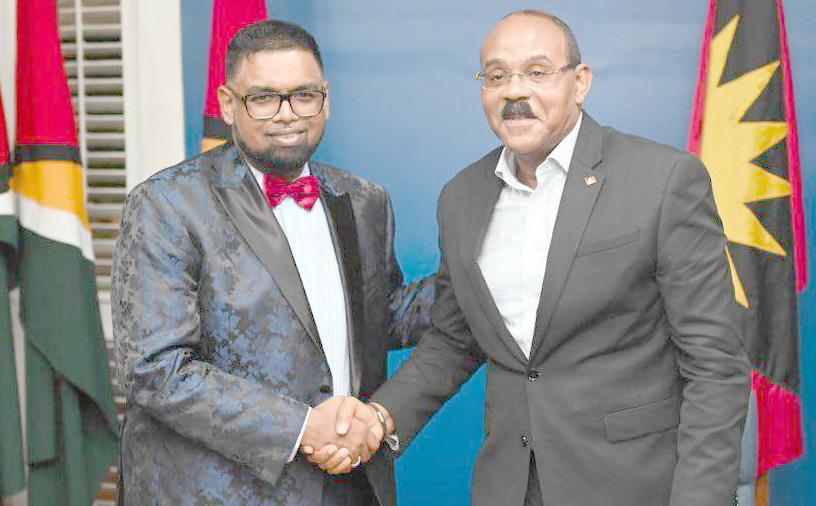
PRESIDENT Dr Irfaan Ali has extended congratulations to Prime Minister of Antigua and Barbuda, Gaston Browne, following his re-election to a fourth term in office, describing the victory as a strong endorsement of the leader’s vision and governance.
In a statement shared on his official Facebook page, President Ali said the decisive outcome at the polls reflects the confidence and trust the people of Antigua and Barbuda continue to place in
Browne’s leadership.
He noted that the renewed mandate signals public support for the Prime Minister’s development agenda and national direction.
President Ali also underscored the importance of continued collaboration between Guyana and Antigua and Barbuda, expressing optimism about strengthening regional partnerships.
He indicated his intention to work closely with Prime Minister Browne to advance shared priorities, particularly in deepening
regional integration and co-operation within the Caribbean Community (CARICOM).
The Guyana Head of State further emphasised the collective goal of fostering a more resilient, prosperous, and secure Caribbean, highlighting the role of unified leadership in addressing regional challenges and opportunities.
President Ali concluded by wishing Prime Minister Browne and his administration success as they begin their new term in office.
Largest vessel in 40 years transits Demerara River under new high-span bridge
IN a historic leap for Guyana’s maritime capabilities, the MV Cleantec successfully transited the Demerara River Channel on Thursday, marking the first time in four decades that a vessel of this magnitude has navigated the waterway.
The MV Cleantec, a massive bulk carrier, was engaged in the transport of rice-related products for local miller, Hack.
The vessel’s passage, according to information
from the Ministry of Public Works, was made possible by the advanced design of the Bharrat Jagdeo Demerara River Bridge, which was engineered specifically to accommodate larger, modern vessels and eliminate the logistical bottlenecks of the past.
The vessel bore the measurements: 179.9 Meters in length, 28.4 Meters width and an air draft of 35 Meters.
This successful transit
signals a new era for Guyanese exports. By allowing larger ships to dock further inland, the cost of logistics is significantly reduced, providing a direct boost to the competitiveness of Guyana’s agricultural sector on the global market.
The Government of Guyana said it remains committed to modernising infrastructure that fosters economic growth and enhances our national shipping capacity.
President Dr Irfaan Ali and Antigua and Barbuda PM, Gaston Browne
Rice farmers back direct cash payout of new $3B support package
PRESIDENT Dr Mohamed Irfaan Ali, on Thursday, announced a new $3 billion investment to support rice farmers, as the government intensifies consultations to determine how best to deliver the assistance.
Speaking at the Arthur Chung Conference Centre during a meeting with rice farmers from across the country, President Ali said the funds will be tailored based on farmers’ direct input, ensuring the support reflects their real and varied needs.
The head of state outlined options, including direct cash support, fertiliser assistance, subsidies, and acreage-based payments, that are being considered.
He emphasised that the government’s approach remains consultative and data-driven, noting that decisions are shaped by continuous engagement with farmers and careful assessment of market realities.
The majority of the farmers who gathered at ACCC voted for direct cash transfers.
The $3 billion will be distributed in the following way:
$15, 000 per acre for farmers with less than 50 acres of rice fields
$10, 000 per acre for farmers with more than 50 acres of rice fields
During his address to the farmers, the president also highlighted a series of interventions implemented since 2020, underscoring what he described as a consistent record of support for the rice industry.
Among these mea -
sures was reducing export commission fees paid to the Guyana Rice Development Board (GRDB), moving from US$8 to US$6 per metric tonne in 2022, followed by the eventual removal and zero-rating of the commission in subsequent years to increase farmers’ earnings.
In response to global price pressures, the government injected $3.1 billion in support for over 15,000 rice farmers. The government also injected an additional $3.4 billion distributed through a $300 per bag subsidy when paddy prices declined in 2025.
The president also referenced flood relief efforts, including $2 billion in direct assistance to affected farmers and the distribution of over 20,000 bags of seed to aid recovery and sustain production.
Further, infrastructure investments were expanded across rice-producing regions, including the construction of drying floors and the removal of key transportation tolls, saving farmers tens of millions of dollars annually.
President Ali said these interventions reflect the administration’s commitment to safeguarding livelihoods and ensuring the long-term viability of the sector.
“This is a government that has shown you consistency. We have responded,” he stated.
He reiterated that the new $3 billion allocation will be shaped by farmers themselves, signalling a collaborative approach to policy design.
“Our job is to work with you, alongside you,” the president said, assuring that the government
will continue to act in the best interest of the agricultural community.
(DPI)
Rice farmers gathered at the Arthur Chung Conference Centre
Jagdeo pledges continued support as global conditions impact rice industry
VICE President Dr Bharrat Jagdeo assured rice farmers that the government will support the industry during the current economic challenges and highlighted the immediate pressures that may increase production costs.
Addressing farmers at a meeting convened by President Dr Mohamed Irfaan Ali on Thursday, VP Jagdeo identified two urgent challenges facing the industry: a reduction in the global market price of rice and a sharp rise in input costs.
The government is reassuring farmers as the US-Iran conflict causes economic changes that will affect many sectors, especially agriculture, in both the short and long term.
Fertiliser prices glob-
ally have increased by 46 to 50 per cent, while fuel prices have climbed by 30 per cent.
“These things are out of our control,” the vice president said, noting that 20 per cent of global oil supply passes through the Strait of Hormuz.
Despite the bleak external picture, VP Jagdeo pointed to the government’s impressive record of investing in the rice industry as grounds for optimism.
He highlighted ongoing drainage and irrigation works in Regions Five and Six, including the construction of approximately 125 kilometres of dams, rehabilitation of 841 kilometres of canals, and the installation of 39 fixed pumps and 40 mobile pumps, funded through Guyana’s forest carbon revenues.
When completed, the projects are expected to open up 100,000 acres of new agricultural land.
VP Jagdeo also announced that the govern-
ment has already received bids for the construction of drying and storage facilities, which will allow farmers to store harvested paddy rather than being forced to sell at unfavour-
able prices.
“The farmers will have greater bargaining power,” he said. “That’s a huge sum of money there, because we can then support markets.”
He added that the government removed a 50 per cent fuel tax during its first term, a measure valued at approximately 400 million US dollars annually. He cautioned that there is no further tax buffer to absorb the current spike in global fuel costs.
“The president has indicated that he’s willing to assist the industry in overcoming the immediate problems. We have long-term problems in the industry, and we have immediate problems,” he told the rice farmers.
Since taking office in 2020, the government has supported the industry by
providing billions in fertiliser subsidies, $300 per bag of paddy for producers, and removing VAT/ duties on machinery and fuel to reduce production costs.
“Historically, from Cheddi Jagan days, all the way to this current day situation. We’ve always stood by the industry in tough times,” VP Jagdeo underscored.
Another important action is to reverse the land rental fees that were set by the APNU+AFC Government (2015-2020).
Small and medium-scale farmers were forced to pay between $3,500 and $15,000 in land rental and D&I charges during that period, but are now saving $1.6 billion annually, thanks to the reversed rates. (DPI)
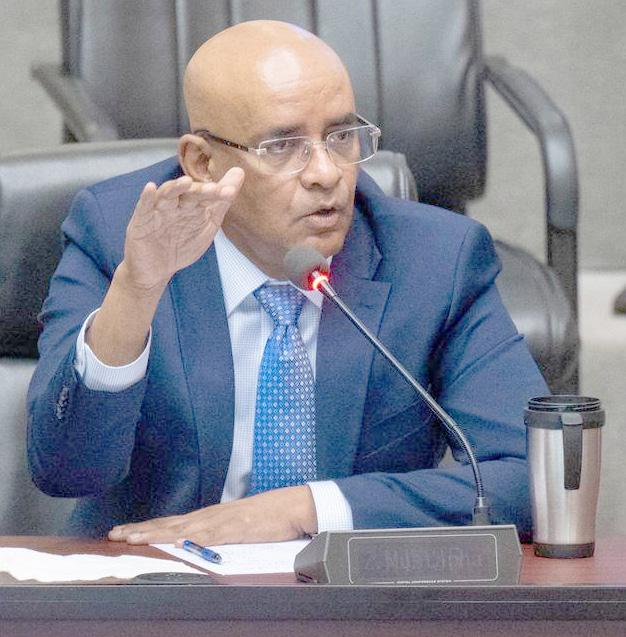
Vice President Bharrat Jagdeo
FAO unveils new data domain tracking agricultural research, development trends
–– publicly-oriented agricultural R&D systems surpass $50 billion globally, investment is steadier since 2009
The findings come from a new data domain available to all on FAO’s FAOSTAT portal, the world’s most comprehensive database for agricultural themes
PUBLICLY-ORIENTED
agricultural research and development (R&D) systems have been growing at an average annual rate of 1.8 percent in the past two decades, reaching $50.4 billion in 2023, while the number of agricultural researchers has grown even faster, new data presented today by the Food and Agriculture Organization of the United Nations (FAO) indicated.
The figures encompass a relative surge since 2009 after sluggish expansion in the first decade of the millennium.
The findings come from a new data domain available to all on FAO’s FAOSTAT portal, the world’s most comprehensive data base for agricultural themes.
The new service represents the development, expansion of coverage and frequency, and technical improvements of a service that began in 1981 as a joint venture between the International Food Policy Research Institute (IFPRI) and the former International Service for National Agricultural Research (ISNAR) to collect agricultural research data.
It is now brought back to FAO in an effort to institutionalise it with our member countries, thanks to a grant from the Gates Foundation.
Agricultural Science and Technology Indicators (ASTI), such as those contained in FAOSTAT’s new domain, are in demand to assess research performance and impact, and to set policy and investment priorities to increase agricultural growth and productivity.
Agricultural R&D is associated with lowering food
prices and high economic returns, and it is increasingly central to improving the efficiency of resource utilisation, lowering carbon footprints and producing more output with fewer inputs such as land, labour and chemicals, and enabling key food crops to adapt to changing environmental conditions.
“This new domain will strengthen evidence-based policymaking and advocacy for more effective agricultural research systems. It addresses a longstanding gap by providing, for the first time, a regular, globally agreed framework to monitor agricultural R&D.
This represents an important milestone, enabling countries to set and track commitments on investment and research capacity through a harmonised measure of national efforts that generate benefits for all, recognising science and technology as global public goods.” said FAO Chief Statistician, José Rosero Moncayo.
The data can be accessed here, while an accompanying analytical brief presents global, regional and country-level trends in public agricultural R&D from 2004 to 2023. Data is present for more than 120 FAO Member states, with more to be added later in the year.
The brief also highlights changes over time in both research capacity and expenditure, as well as persistent disparities in the scale and intensity of investment across national agricultural research systems.
Globally in 2023, the equivalent of 316,000 fulltime experts were engaged
tion reflects a host of variables including national income levels, the size of a country’s agricultural sec-
tor, trade dynamics, and issues of scale. The granular FAO data will allow for closer and more contextually
robust analysis of needs and best practices in the pursuit of sustainable agrifood systems. (FAO)
in public agricultural R&D systems, up from 204,000 in 2004.
Measured in constant 2015 purchasing power parities, global public expenditure in this sector amounted to $50.4 billion, up from $35.9 billion in 2004.
Asia accounts for the largest share, home to 45 percent of the world’s agricultural researchers in 2023, followed by Europe at 24 percent, Americas at 14 percent, Africa at 13 percent and Oceania with three percent.
Trends in this sector vary sharply, the highest growth rate over the period was in Central Asia reporting with the largest decline in Southern Africa.
Spending on public agricultural R&D shows a broadly similar pattern, with Asia accounting for 48 percent of the global total, followed by Americas at 22 percent, Europe at 20 percent, Africa at eight percent and Oceania at three percent.
The fastest growth in expenditures over the period was in Central Asia, followed by East and South Asia; while Southern Europe recorded the largest decline.
The ratio of agricultural researchers per 100,000 agricultural workers varies considerably around the world, ranging from five to 1,692, while countries spent on average around 1.3 percent of the value-added generated in their agricultural sectors on agricultural research, with a median of 0.6 percent. Countries with the highest values included Belgium, Denmark, Switzerland, Republic of Korea, and Slovenia.
Between-country varia-
GBTI eyes digital expansion, customer growth after strong financial year
THE Guyana Bank for Trade and Industry Limited (GBTI) has outlined an ambitious path forward centred on digital innovation, customer-focused services, and data-driven decision-making, as it positions itself to support Guyana’s rapidly expanding economy.
At its 39th Annual General Meeting (AGM), the bank signalled that future growth will be driven by deeper investment in technology, enhanced digital banking solutions, and con-
tinued support for businesses and individuals navigating an evolving financial landscape.
The strategy reflects GBTI’s intent to strengthen financial inclusion while improving efficiency and accessibility across its services.
These forward-looking plans come on the heels of a strong financial performance in 2025. In his first address, according to a press release from the bank, Chairman Suresh Beharry reported that the bank recorded a Profit After Tax of G$4.5 billion, representing an 8.2 per cent increase over the previous year.
This growth was supported by disciplined loan portfolio expansion, strong deposit growth, and sustained operational efficiency.
The bank’s balance sheet also showed notable expansion, with total assets reaching G$313 billion. Customer deposits rose sharply to G$268.6 billion, reflecting a 28.5 per cent increase, while the loan portfolio grew by 17.9 per cent.
Asset quality remained stable, with a non-performing loan ratio of 4.12 per cent, and the bank maintained a robust Capital Adequacy Ratio of 16.42 per cent, well above regulatory requirements.
Shareholders benefitted directly from this performance, with GBTI declaring a dividend of G$41 per share, an increase from G$32 in the previous year, rein -
forcing the bank’s commitment to delivering value.
A key contributor to the bank’s impact on the wider economy was its SME lending platform, GBTI GROW, which disbursed G$394 million in loans to small and medium-sized enterprises. The initiative continues to support job creation and economic diversification, aligning with national development priorities.
Operational advancements also featured prominently during the year, particularly in digital transformation.
The bank expanded its GO Banking services, introduced real-time card payment capabilities, and rolled out Digital Account Opening and Retail Loan Onboarding, allowing customers to access services online.
Additional developments included the expansion of the credit card portfolio, the launch of a Mastercard Debit Card, and the upgrade of the Mon Repos branch to offer a full suite of banking services.
The AGM also marked a significant leadership transition, with Beharry assuming the role of Chairman following the tenure of Robin Stoby, S.C., who stepped down after two decades of service.
Stoby’s contribution to the bank’s growth was acknowledged, and his continued presence on the Board is expected to provide strategic continuity. Shareholders also re-elected Directors Suresh Beharry, Kathryn Eytle-McLean, and Richard Issava. With a strong financial foundation and a clear strategic direction, GBTI said it is now focused on leveraging innovation and expanding its reach as it adapts to the demands of a rapidly transforming economic environment.
GBTI Chairman, Suresh Beharry
Rahul, Nissanka 50s lead 226 chase as DC return to winning ways
(ESPNCRICINFO) - In their last match in Jaipur, Rajasthan Royals (RR) were asked to bat first, scored around 230, and never looked like they could defend it. On Friday, against Delhi Capitals (DC), their second match in Jaipur this year, RR won the toss, chose to bat first, scored around 230, and never looked like they could defend it. Between these two matches, RR themselves chased down around 230 with ease.
The decision at the toss remains in sharp focus because it took extraordinary hitting for RR to recover from 36 for 2 in five overs when the ball seamed.
During the chase, though, the pitch didn’t offer much to RR, who have arguably had the best attacking new-ball bowlers in Jofra Archer and Nandre Burger.
The result was DC’s highest successful chase without seemingly
having to come out of third gear.
Riyan Parag had to endure the early misbehaviour before he could turn his innings around into 90 off 50 balls. Donovan Ferreira (47* in 14 balls) drilled out proverbial yorkers for sixes to give RR their second-best finish in the Impact Player era.
However, led by the returning Mitchell Starc’s three-for, the DC bowlers did just enough to let their batters make full use of the improved conditions.
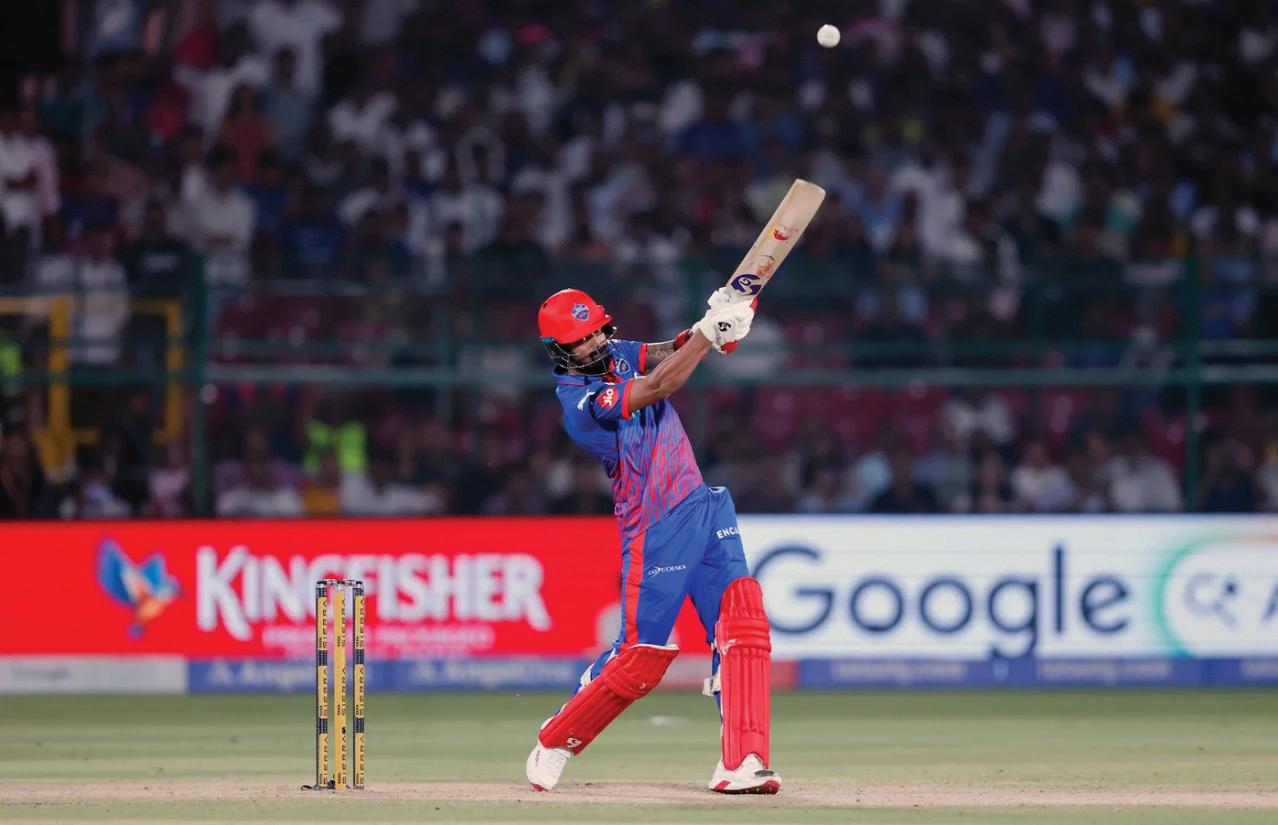
Pathum Nissanka started the charge with 52 from 26 deliveries in the powerplay, KL Rahul went at better than two a ball in the middle overs, and Nitish Rana put any possible nerves to rest with his 33 off 17 balls.
NO STARC VS SOORYAVANSHI
The moment Parag won the toss and surprised just about everybody,
11:00 hrs Love Beach
11:30 hrs Law Court
12:05 hrs Startled
DONCASTER
11:35 hrs Stay Salty
12:10 hrs Noelan Star
12:50 hrs Lion O 13:27 hrs Rose Of Honour
14:02 hrs Sixpack
14:32 hrs Tropical Pearl
15:02 hrs Zubaru
SOUTH AFRICA RACING TIPS
GREYVILLE
08:25 hrs Questioning
09:05 hrs Princess Of Gaul
09:45 hrs Tin Pan Alley
10:25 hrs Ladyofdistinction
11:00 hrs King Of The Gauls
11:35 hrs Arverni Princess
including his opponents, that shock quickly gave way to anticipation of watching Vaibhav Sooryavanshi go against Starc after his first-ball sixes off Jasprit Bumrah and Pat Cummins, a second-baller off Sunil Narine, and four boundaries in first four balls against Josh Hazlewood. However, things happened at the wrong ends.
Yashasvi Jaiswal hit Starc for a first-ball six, and two balls later, offered a return chance off a high full toss. Sooryavanshi never got to the Starc end as he played on a Kyle Jamieson yorker, which might point to a pre-decided plan.
PARAG RISES
ABOVE CONDITIONS
Parag had the dubious company of Dhruv Jurel, but he kept RR going at a rate that was exciting but did not promise a win. However, outside the three wickets that fell, you hardly see or hear of any IPL
IRISH RACING TIPS
PUNCHESTOWN
09:30 hrs Fountain House
10:05 hrs Folly Master
10:45 hrs Uhavemeinstitches
11:15 hrs Wodhooh
11:55 hrs Apolon Of Charnie
12:30 hrs Jump Allen
13:05 hrs Cotswold
13:35 hrs Mordor
AMERICAN RACING TIPS
CHURCHILL DOWNS
Race 4 Ways And Means
Race 5 My Boy Prince
Race 6 Dragoon Guard
Race 7 Sweet Rebecca
Race 8 Crude Velocity
Race 9 Remember Mamba
Race10 Cornucopian
Race11 Rhetorical Race12 Renegade
Saturday, May 02nd, 2026 CUMMINGS
Answers to yesterday’s quiz:
(1) Quinton de Kock-10 sixes (RR) (2) Jos Butler-45 sixes (RR)
Today’s Quiz:
(1) Who effected the most wicketkeeping dismissals in IPL 2022?
(2) Who took the most catches (non-wicketkeeper)?
Answers in tomorrow’s issue.
coaches asking those in the between to initiate something.
MATCH-UP MESS
Now RR were happy with a strike rate of little over one as long as Ravindra Jadeja could offer Ferreira shield from Kuldeep Yadav, with the right-hand batter having fallen to the left-arm wristspinner twice in nine balls.
Jadeja was strictly a pinch anchor, asked to face Kuldeep out for Ferreira to have the biggest impact. But what impact did Ferreira have, including hitting three sixes off Kuldeep. The balls he hit were no more than two inches off the mark, if at all. By bending his back knee and staying deep inside the crease, Ferreira took RR to what looked like a competitive score.
THE CHASE LOOKED
DIFFERENT
Under slick conditions in the
chase, the ball came on much better. Neither Nissanka nor Rahul had to extend himself.
While Nissanka went past fifty in the first six overs, Rahul put out a clinic on batting outside the powerplay.
The RR spinners couldn’t quite extract the same assistance as DC did. In the powerplay, Nissanka made it look like a morning walk. Outside of it, Rahul took down the likeliest man to get a wicket, the legspinner Ravi Bishnoi.
For someone introduced into this IPL as a second thought and only for his par-time offspin against SRH, Rana has shown he belongs at this level if not for India.
While the two DC openers holed out, they had already done such good work that DC needed just 49 off 28 balls.
Tristan Stubbs and Ashutosh Sharma were never going to allow a hiccup.
Desai named Canada head coach
CMC – In a move aimed at steadying a ship rocked by scandal and on-field failure, Cricket Canada has appointed former West Indies batting coach Monty Desai as the new head coach of the men’s national team.
Desai, who served as the West Indies batting coach under Phil Simmons in 2019, takes over at one of the most turbulent junctures in the country’s cricketing history.
Notably, Cricket Canada’s announcement offered no clarity on the duration of his appointment.
The decision follows a disastrous ICC Men’s T20 World Cup campaign in 2026, where Canada lost all four group-stage matches to Afghanistan, New Zealand, South Africa, and the UAE.
The situation darkened in April when the ICC’s anti-corruption unit launched an investigation into
allegations of corruption at the tournament, with a specific focus on a game involving Canada.
Despite the turmoil, Cricket Canada’s new president, Arvinder Khosa, expressed unwavering confidence in the India-born coach.
“Our foremost priority is to restore Cricket Canada’s prominence through performance, professionalism, and a renewed and vitalised sense of purpose. Appointing Monty
Norris storms Miami Sprint pole
(FORMULA 1) Lando Norris has stormed to pole position in Sprint Qualifying at the Miami Grand Prix as the McLaren driver grabbed the team’s first P1 grid slot of the season ahead of championship leader Kimi Antonelli.
After displaying good pace during SQ1 and SQ2, Norris continued his solid form by going fastest of all in what proved to be a one-lap shootout in the final segment, the Briton pumping in an effort of 1m 27.869s.
This put him 0.222s clear of Mercedes’ Antonelli, while the other McLaren of Oscar Piastri was only narrowly behind in third. Charles Leclerc put his Ferrari in fourth –
having also looked quick during the session – followed by the Red Bull of Max Verstappen.
George Russell was sixth in the sister Silver Arrows car – some six tenths away from Norris – while Ferrari’s Lewis Hamilton took seventh. The Alpines of Franco Colapinto and Pierre Gasly claimed P8 and P10, with Red Bull’s Isack Hadjar slotting between them in P9.
The Audi pair of Gabriel Bortoleto and Nico Hulkenberg missed out on the top 10, exiting SQ2 in P11 and P12, with Haas’ Ollie Bearman also finding himself out of the running in P13.
Williams also experienced a
Desai reflects this vision,” Khosa said in a statement.
Desai, described by the board as “widely respected for instilling belief, structure, and competitive discipline in emerging cricket nations,” said he is ready for the challenge.
“I am honoured to take on this responsibility and thank Cricket Canada for their trust,” Desai said. “My previous experience in Canada has given me a clear understanding of the
system’s potential and the passion that exists for the game. Associate cricket is an important driver in the global growth of cricket today, and teams like Nepal and Afghanistan have demonstrated what belief, discipline, and fearlessness can unlock.
“Canada has a similar opportunity, and my focus will be on building a culture that translates this potential into consistent performances on the international stage.”
RHTYSC, Namilco renew cricket sponsorship for seventh consecutive year
The highly successful relationship between the Rose Hall Town Youth and Sports Club and the National Milling Company of Guyana[NAMILCO] was renewed for the seventh consecutive year on Wednesday last. The renewal was done at the company head office in Agricola, East Bank Demerara, and the presentation was attended by Club Secretary Hilbert Foster, Cricket Manager Robby Kissoonlall, and cricketers Matthew Pottaya, Nicholas Cameron, and Leon Reddy.
Kissoonlall stated that the milling company came on board in 2019 as the official sponsor of the club’s first division team and later adopted the under-23 team. The Rose Hall Town Namilco Thunderbolt Flour over the years has won over a dozen titles, while the under-23 are the current defending champions for that age group in the ancient county. The last title won by the first division team was the BCB Two Days Tournament earlier this year.
double exit in the second segment as Alex Albon and Carlos Sainz took 14th and 15th – sparking some unhappy radio comments from the latter – putting them ahead of Racing Bulls rookie Arvid Lindblad.
The sister Racing Bulls of Liam Lawson was pushed out of SQ1 in P17 ahead of Haas’ Esteban Ocon, while the Cadillacs of Sergio Perez and Valtteri Bottas wound up in P19 and P20 respectively on the team’s first home weekend.
The Aston Martin pair of Fernando Alonso and Lance Stroll, meanwhile, rounded out the order at the back of the field in 21st and 22nd places.
Kissoonlall stated that the teams have produced two test cricketers under the sponsorship of Kevin Sinclair and Kevlon Anderson, while others like Junior Sinclair, Sylus Tyndall, Jonathan Rampersaud, Clinton Pestano, Jeremy Sandia, Matthew Pottaya, Jayden Ganpat, Tameshwar Deonandan, Rafeal McKenzie, Ramzan Koobeer, Sohil McKenzie, and Reon Reddy have represented Guyana at different levels over the last seven years.
Additionally, a total of thirty six players have played for Berbice during the same period at all levels. Reddy was recently named the best bowler for the CWI bilateral under-16 tourna-
ment versus Barbados, while Ganpat won a similar award at the under-13 level against the same opposition. The cricket manager disclosed that the Rose Hall Town Namilco Thunderbolt Flour under-23 team would be led by Jonathan Rampersaud, with Matthew Pottaya as his deputy.
Veteran former national player Clinton Pestano would lead the first-division team, with Rampersaud as his deputy. The strong Rose Hall Town team in 2026 would include Pestano, Rampersaud, Eon Hooper, Jason Sinclair, Keith Simpson, Anderson, Kevin Sinclair, Junior Sinclair, Javed Karim, Asif Marimuthoo, Romesh Bharrat, Junior Babb, Tyndall, Jayden Ganpat, and Keon Sinclair, among others.
Club Secretary Hilbert Foster stated that the two teams would continue to uphold their high standards on and off the cricket field.
The long-serving cricket administrator noted that since its formation in 1990, the club has won a total of 132 cricket tournaments at all levels and has produced 133 Berbice players, seventy-six for Guyana, while ten have gone on to play at the international level.
He also disclosed that the two teams under the sponsorship for the next twelve months would undertake close to forty personal and community programs. Trade Marketing Supervisor Alicia Anderson hailed the relationship between the club and her company as highly successful and congratulated the players on the high standard they have set themselves.
She urged them to remain focused and to always strive for success while maintaining their personal discipline.
Lando Norris
Massy Distribution U18 Schools Football Final Chase ‘chasing’ 5th title against Santa Rosa today
AFTER six weeks of gruelling schools’ football action, the Massy Distribution U18 schools’ football championship will conclude with a blockbuster contest today at the Ministry of Education Ground.
Chase Academic Foundation, after double-digit wins over St. Joseph High, Westminster Second-
ary, and The Bishops High School, stormed their way into the quarterfinals.
In their quarter-final, Chase decimated Three Miles Secondary 11-2 before continuing their winning way in the semi, beating Charlestown 7-0.
They now face the final hurdle on the hinterland side of Santa Rosa
Squad thrash Genesis FC
MOCHA’S Riddim Squad put on a thumping performance on Thursday evening as they kept their winning streak intact with a 6-nil win over Genesis FC at the Plaisance Community Centre Ground in the Georgetown Football Association Senior Men’s Knockout Football Tournament.
Kelvin Gordon first troubled the scorer 16 minutes into the contest as they went into the break with the narrow lead.
After the resumption, Germin Harry doubled the advantage before Jeshawn Marshall got into the act with a pair of goals.
Seon Grant also got onto the score sheet, with Gordon scoring his second for the 6-nil win.
Deon Alfred also scored a pair of goals as Campton beat Northern Rangers 3-nil.
Ozel Small scored the third goal in the win.
Meanwhile, Beacon FC and VenGy eased to victories on Tuesday as they eclipsed North Star and Black Pearl, respectively.
Beacon would first take to the field against North Star FC at the East Coast ground.
Shaquan Murray got Beacon of the mark in the 26th minute before
Secondary, and Chase will need to put in a strong showing to clinch their fifth title in the 12th edition of the competition.
Santa Rosa, whose lone title came in their debut season in 2023, has also been a force to be reckoned with after dominating their group by handsomely beating West Demerara, Brickdam Secondary, and St.
Stanislaus College.
Santa Rosa edged Annandale 3-1 in their quarterfinals, and narrowly advanced past West Ruimveldt on penalty kicks in the semi-finals.
The two teams will take to the field at 18:00 hours after the thirdplace contest between Charlestown Secondary and West Ruimveldt
Secondary at 16:00hours.
The winning team collects $300,000, with $200,000 for second place, along with medals and trophies; all proceeds go toward a school project of their choice.
Individual awards will be presented to the highest goal scorer, best goalkeeper, and most valuable player.
Epic Clash Martial Arts Championship 2026 showcases youth talent and discipline
his teammate Antwone Vincent doubled their advantage in the 35th.
North Star’s Yannick Norton but North Star on the score sheet in the 38th as they make it 2-1 going into the break.
A sedate second half produced no goals as their score remained unchanged, giving Beacon the win 2-1. The second contest of the evening saw Francisco Hernandez guiding VenGy to a narrow victory, 1-nil.
The competition continues today (Saturday) with a double header: Black Pearl will take on Pele FC, and Beacon will again be in action against Motherland FC.
The next playing days are Sunday and Tuesday.
The semis are set for Thursday, May 7, and the grand finals on Saturday, May 9.
The teams are playing for a million in prizes, with half-a-million for the first-place prize, $300,000 for second place, $200,000 for third, and $100,000 for fourth place, along with trophies and medals.
The competition is sponsored by Nalico/Nafico Insurance, and concludes on May 9, with all games played at the Plaisance Community Centre Ground.
THE Guyana Mixed Martial Arts Karate Association (GMMAKA) successfully hosted its highly-anticipated Epic Clash Martial Arts Championship 2026 on April 25 and 26, bringing together young martial artists from across Guyana for a dynamic display of skill, discipline, and sportsmanship.
The event commenced with a formal opening ceremony, featuring the formation of students, the recitation of the Karate Dojo Motto, prayer, and the National Pledge.
Organisers highlighted the Association’s 35-year legacy of youth development, focusing on both physical and mental growth, along with consistent success at local and international levels.
A total of 15 martial arts teams, comprising approximately 145 competitors participated in the championship, representing schools and communities nationwide.
These included Iron Fist Martial Arts Academy (New Diamond/ Grove Primary School), United Warriors Martial Arts Academy (Cornelia Ida, Tuschen, and Graham’s Hall Primary Schools), Invisible Kicks Martial Arts Academy (La Parfaite Harmonie), Red Dragon Martial Arts Academy (Belle
West, Leonora, and LBI Primary Schools), Vreed-En-Hoop Martial Arts Academy (Vreed-En-Hoop Primary School), Black Dragon Martial Arts Academy (Mon Repos and Lusignan Primary Schools), Tiger Fang Martial Arts Academy (Cindy’s Academy), Genesis Martial Arts Academy (Genesis Primary School), Korean International Martial Arts Guyana (Tang Soo Do), and Goshindo Martial Arts School.
The championship featured a range of competitive events designed to test technique, creativity, and combat ability, including Traditional Kata, Free Form, flag sparring, team kata, Weapon Form, Padded Weapon, and Sparring.
Participants delivered impressive performances marked by discipline and precision, with matches judged under established WKF rules. Points were awarded based on accuracy and execution, with head kicks receiving the highest scores. Strict safety and conduct protocols were enforced throughout to ensure fairness and respect among all competitors.
A vibrant march-past by all karate students added to the excitement of the event, highlighting unity and pride among the participating academies. Spectators also con -
tributed to the lively atmosphere, with strong support for the event’s snack bar.
A highlight of the championship was the Grand Championship for Traditional Kata, in which all firstplace winners competed for the ultimate title. Emerging victorious was Zafar Ramnarine, who delivered an outstanding performance to claim the prestigious grand championship title. The GMMAKA congratulated Ramnarine on this remarkable achievement, commending his dedication and excellence.
Master Lloyd Ramnarine also extended congratulations to all participating students for their outstanding performances. He encouraged them to return to their respective dojos and continue working diligently to prepare for the various challenges ahead, while wishing them success in their future competitions.
The Association reaffirmed its commitment to youth development and nation-building through martial arts, emphasizing its ongoing mission to guide young people toward a positive and disciplined future. The event was officially declared open by the host, marking another successful chapter in Guyana’s martial arts community.
Marshall, Gordon register doubles as Riddim
Campton FC strikers Deon Alfred and Ozel Small.
Action from the Epic Clash Martial Arts Championship 2026.
Youth Basketball Guyana East Coast Regional Conference
Annandale Secondary, President College emerge winners
YOUTH Basketball Guyana on Thursday continued their nationwide regional school basketball conferences with the East Coast leg at the President’s College school court.
President’s College defended home court with a 28-17-point win over Plaisance Secondary in the final contest of the day.
PC was led offensively by Ter-
ron Mohabir with 12 points and 5 steals. Romarion Wolfe was also in form with 12 points, combining with Mohabir to dominate the game.
Hope Secondary also defeated Good Hope 16-11 in a low-scoring contest.
Dion Moore led the charge for Hope Secondary with a game-high 16 points, 4 rebounds, and 4 steals.
Annandale Secondary also
picked up 16-2 point win over Ann’s Grove Secondary.
Tequan McRae had 16 points and 5 rebounds for Annandale, with his teammate Jonathan Bovell adding 11 points and 3 steals.
The Regionals are sponsored by Edward B. Beharry Ltd, G-Boats Inc., National Sports Commission, Ministry of Education and Banks DIH Ltd.
Guyana eyes spot at FIBA 3X3 Challenger in Brazil
GUYANA’S rapidly rising presence in 3x3 basketball will face another crucial test when the nation competes in the Caribbean Clash Lite Quest tournament in Suriname.
The two-day tournament (May 1-2), sanctioned under FIBA’s 3x3 framework, will feature eight teams battling not only for regional bragging rights, but for a coveted spot at the FIBA 3x3 Challenger later this month in Brazil, an avenue that could bring the winning team one step closer to the prestigious FIBA 3X3 World Tour.
Akil Hughes, Nikkoloi Smith, Travis Belgrave, and Shelroy Thomas will carry the Golden Arrowhead’s hopes in Suriname, with GBF Vice President Rawle Toney serving as team manager. Their participation in Suriname has been made possible through critical backing from
the National Sports Commission (NSC), Guyana Breweries Inc, and former West Indies cricket star, Ramnaresh Sarwan.
According to the Guyana Basketball Federation (GBF), the tournament serves a dual purpose. Beyond the immediate goal of qualification, it forms a key part of Guyana’s preparation for upcoming multi-sport events, including the Commonwealth Games and the Central American and Caribbean (CAC) Games.
Over the past few years, Guyana’s 3x3 programme has been quietly but steadily progressing, with increased participation in regional tournaments and a stronger emphasis on structured preparation.
The GBF noted, that the Caribbean Clash Lite Quest now presents a platform to measure that progress against some of the region’s best.
Australia still King and Queen of the rankings, but Windies show signs of life
CMC– The annual ICC rankings update has confirmed what the cricket world already suspected, as Australia remains the undisputed heavyweight champion in both Men’s Test and Women’s ODI cricket.
However, buried within the latest calculations released Friday are encouraging whispers for West Indies fans, with both the men’s and women’s teams making subtle but notable gains.
While the Aussies extended their dominance by holding a 12-point lead over South Africa in the Men’s Test standings (131 points) and a massive 35-point buffer over England in the Women’s ODI ladder (163 points), the regional sides have quietly improved their stock.
In the red-ball arena, Daren Sammy’s side remains anchored in 8th position, but the numbers tell a story of fragile progress. The West Indies Men have actually gained
one rating point, moving from 69 to 68.
While that might seem modest, it represents stability at a time when others slipped. England, for example, lost seven points and tumbled behind India into 4th after their historic 2022 home wins over New Zealand, South Africa, and a 3-0
sweep in Pakistan were stripped from the three-year window.
Elsewhere in the men’s table, Pakistan (89) leapfrogged Sri Lanka (86) into 6th, while Ireland fell out entirely due to a lack of matches.
If the men’s team inched forward, the West Indies Women
sprinted. Captain Hayley Matthews’ side has climbed the ODI rankings in a more tangible way, gaining two rating points to reach 71.
Crucially, while the top six spots remain unchanged (Australia, England, India, South Africa, New Zealand, Sri Lanka), the Windies women have consolidated their hold
on 9th place and are now breathing down the necks of Pakistan (72) and Bangladesh (73).
The gap between the ladies in maroon and the teams directly above them has shrunk. Given that Bangladesh overtook Pakistan for 7th, the Windies (71) now sit just two points behind Pakistan (72) and a single win away from potentially climbing to 8th.
Elsewhere in the women’s update, Thailand and the Netherlands dropped out for failing to play the requisite eight ODIs in the past three years.
For the men, Afghanistan and Ireland have been given a one-year grace period to play two more Tests or risk permanent exclusion.
The cricket world now turns its attention to the shorter formats. The ICC has confirmed that the Men’s and Women’s T20I rankings will be updated on May 5, followed by the Men’s ODI rankings on May 7.
The West Indies women made strides.
Annandale’s Jonathan Bovell shooting a 2-pointer against Ann’s Grove Secondary.
Guyana’s 3x3 team, Renegades (L-R) Akil Hughes, Travis Belgrave, Nikkoloi Smith and Shelroy Thomas.
Chase’s Malcolm Hendricks (left) and Santa Rosa’s Dane Phillips (right) hold the championship trophy.