

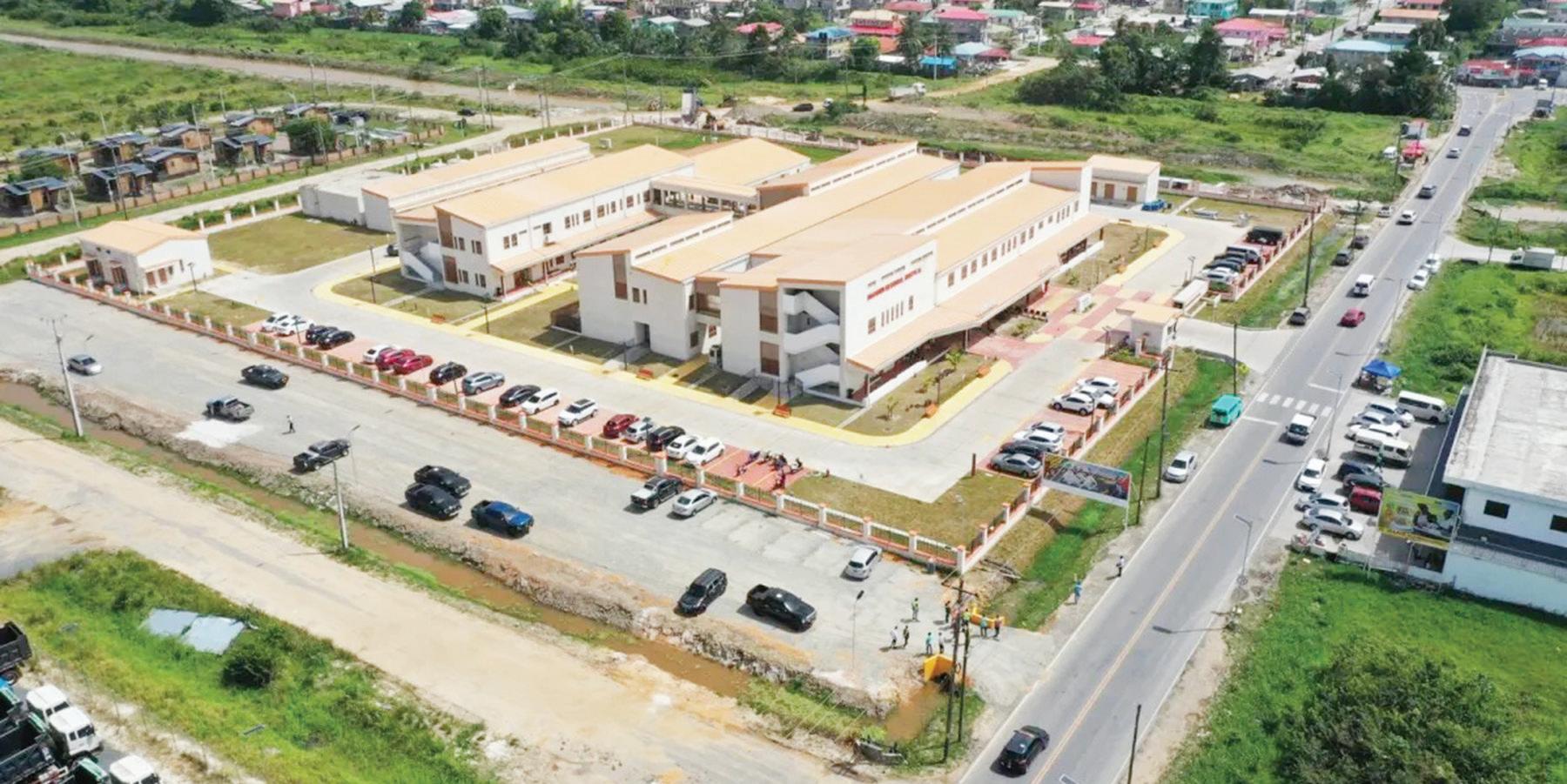
MORE than 100,000 Guyanese children are set to benefit from life-long digital health records under the government’s expanding electronic healthcare system, as President, Dr Mohamed Irfaan Ali on Saturday outlined a transformative shift towards proactive, data-driven healthcare delivery.
The Head of State made the announcement during commissioning of the new Outpatient Pavilion at Dr Balwant Singh’s Hospital on East Street, Georgetown, where he detailed sweeping reforms aimed at modernising and future-proofing the national health sector.
The initiative builds on the January launch of the National Elec -
tronic Health Record System (NEHRS), a US$3.3 million project implemented through a contract with UK-based company RioMed Limited. The system is designed to significantly improve how patient information is accessed, managed and shared across public-health institutions nationwide, while eliminating inefficiencies associated with manual record-keeping.
According to President Ali, the integration of electronic health records and expanded screening initiatives have already resulted in tens of thousands of children having their baseline medical data securely stored, allowing for continuous tracking of their health throughout their lives.
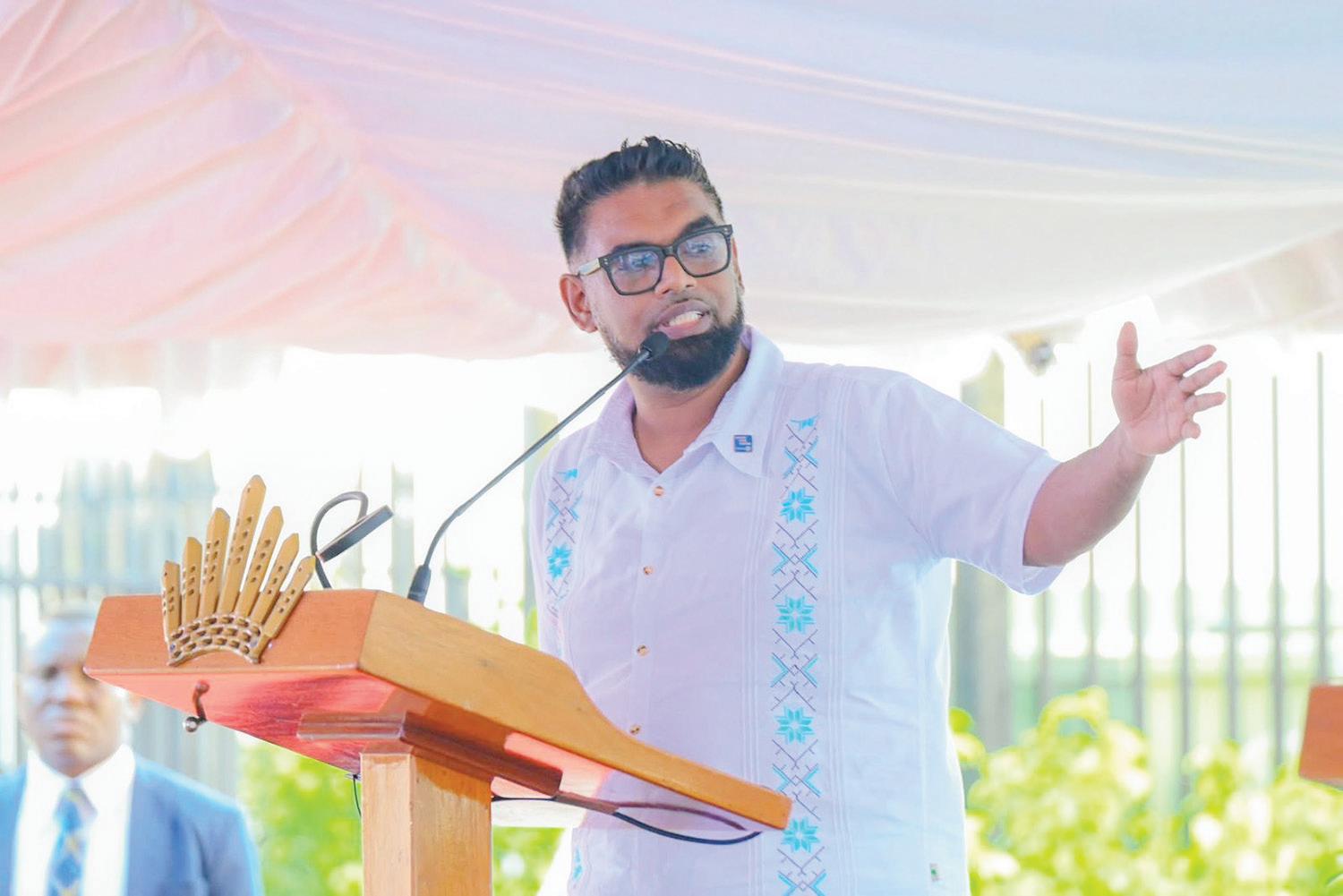
“More than 100,000 children will now grow up in an environment where their baseline health data has already been captured and recorded to track them for the rest of their lives,” the President said.
“That is a new future


ications and treatment plans in real time, ensuring seamless referrals and continuity of care across facilities.
The rollout will be conducted in phases, beginning with the Festival City Polyclinic, followed by the Georgetown Public Hospital Corporation and eventually expanding to all public-health institutions across Guyana.
our children will grow up in. That is the new norm.”
He explained that early capture of key health indicators will enhance monitoring, support faster diagnosis and enable more effective long-term treatment planning as children transition into adolescence and adulthood.
The initiative forms part of a broader nationwide rollout of electronic health records and digital health platforms aimed at reducing waiting times, eliminating administrative inefficiencies and strengthening preventive care.
President Ali emphasised that the approach signals a strate-
gic shift from reactive to proactive healthcare delivery.
“We are building a healthcare system in which waiting times are reduced, shortages are eliminated and early detection becomes standard practice,” he said.
“These are the things that will make the difference long after all of us are gone. That is how we take Guyana safely, better and healthier into the future.”
The NEHRS is designed to operate as a fully paperless system, removing the need for patient cards and reducing administrative bottlenecks. Healthcare professionals will be able to access complete medical histories, med-
Minister of Health Dr Frank Anthony noted that the system has been under development for more than a year, with extensive customisation to meet the specific operational realities of Guyana’s healthcare sector.
An accompanying mobile application is also expected to be introduced, enabling patients to book appointments online and securely access their health records from anywhere in the country.
To safeguard patient confidentiality, the government has implemented strict protections under the Data Protection Act, which carries penalties of up to $20 million for individuals and $100 million for institutions found guilty of unlawfully sharing personal data.

By Shaniya Harding
IN an effort to revolutionise the healthcare system, the Government of Guyana is moving to establish a National Ambulance Authority aimed at strengthening and centralising emergency medical-response services across the country.
The initiative, first outlined during the 2026 Budget debate, will see the coordination of ambulance fleets, improved response times, enhanced training and the deployment of modern technology to ensure world-class emergency care nationwide.
Delivering the keynote address at the commissioning of the Balwant Singh Hospital Pavilion on Saturday, President, Dr Irfaan Ali said emergency response reform is a central pillar of the govern-
ment’s broader healthcare transformation.
“We are also building out an emergency-care system that ensures every second counts. I think the first 15 minutes of an emergency medical call are the most important 15 minutes. If you lose those 15 minutes, the outcomes are far less superior,” he added. “So we are working on improving that first point of contact.”
This move, the President explained, will be facilitated through the development of a National Ambulance Authority.
Outlining the structure and operational vision for the authority, which will be aided by expanded fleets with new land, air, and river ambulances, he explained that this allows for pre-deployed units in strategic areas to improve response time, professionalised EMS personnel and
emergency call centres with GPS tracking and real-time response technology.
President Ali said emergency reform is part of a wider digital transformation of the healthcare system. The goal moving forward, he added, is to break the barrier of distance in healthcare, creating a nation-wide system that provides the same level of service in the hinterland as it does along the coast of Guyana.
“We are deploying technology to bridge distances and break barriers. We are committed to the nationwide rollout of electronic health records already launched at GPHC. The expansion of telemedicine service to 200 sites linking remote communities to specialists,” he said.
Highlighting current steps to further integrate technology into Guyana’s

healthcare system, the Head of State shared that the government is now looking at diagnostics being done by artificial intelligence (AI), adding that the nation is close to signing on to an AI tool to aid in the reading of scans.
“The integration of AI in diagnostics from X-rays to CT scans. As a matter of fact, we are now going to sign on an AI tool that will bring down the cost for

reading and interpreting CT scans and X-rays,” he said.
However, the government aims to leverage the technology not only locally but regionally. As President Ali explained, previous discussions with Minister of Health Dr Frank Anthony, saw the two examine procurement rights for South America and the wider region.
“But we are not only buying the technology for Guyana. I said to Dr Anthony, we must procure this technology and have the rights for it for the entire region of South America. So we become a brain hub for this technology across the region.”
The President also linked emergency efficiency to reforms in medicine procurement and supply management. Citing this as a vital part of holistically developing the healthcare system, President Ali said the government is looking to create an integrated platform for medical supplies.
“We recognise today that hospitals cannot function without medicines. That is why we want to move towards an integrated platform for medical supplies in our country. Not only buying and sell-
ing,” he added, “We want to create the framework here where we will manufacture for the rest of the Caribbean.”
While noting the government’s vital role in developing the sector, President Ali also maintained that emergency reform and broader healthcare improvements rely on integrated public–private collaboration.
“Let me say again what I said before. The public health care system is not in competition with private health care providers. We are not rivals,” he added. “We are partners. We are complementary forces working towards one national goal. Accessible, affordable, quality health care for every citizen.”
The establishment of the National Ambulance Authority forms part of the government’s longterm plan to modernise healthcare delivery, integrate technology and ensure equitable access to emergency services across Guyana’s coastland and hinterland regions.
The authority is expected to be rolled out within the fiscal year, with updates to be provided at the next budget presentation.
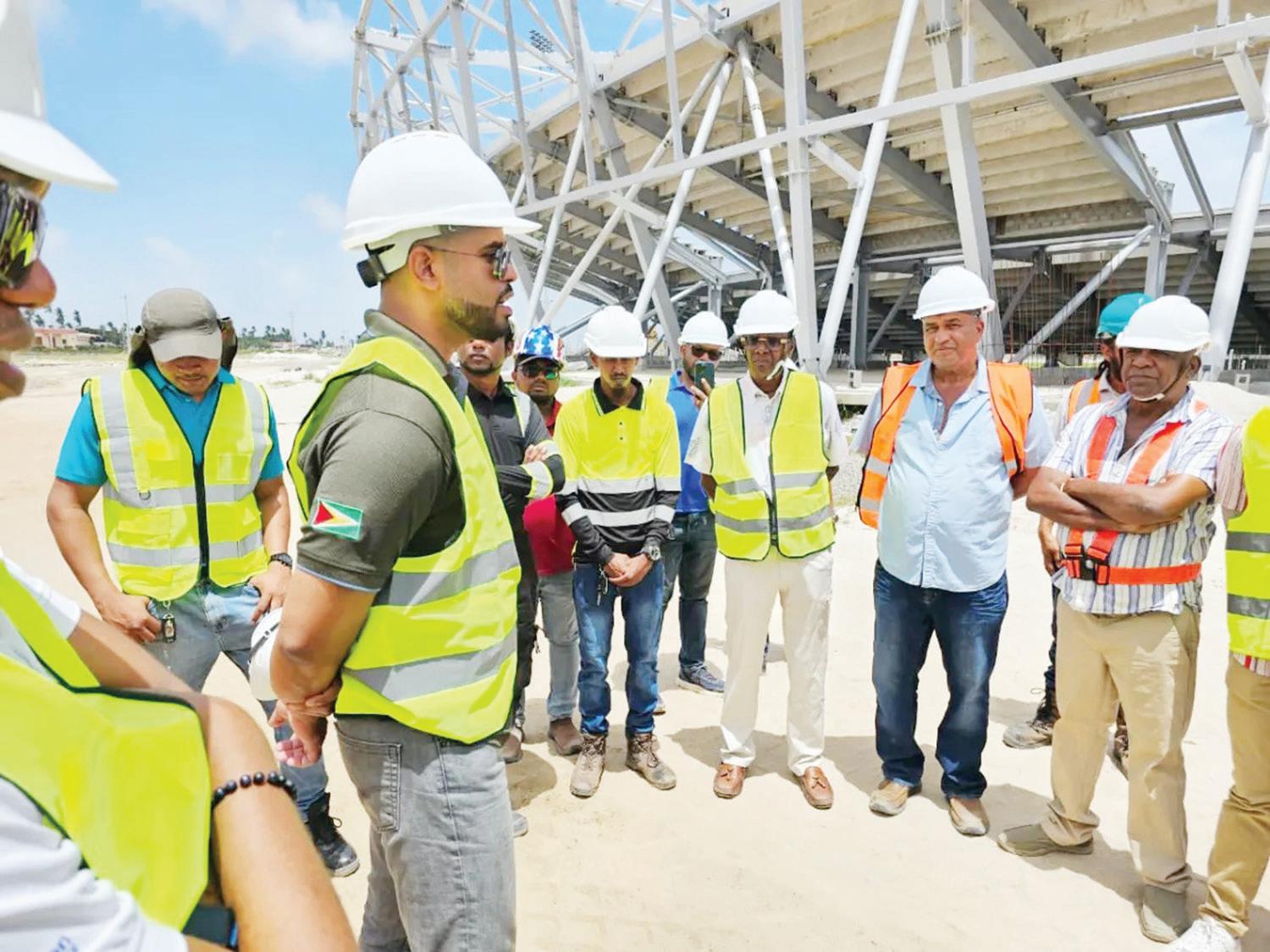
THE Minister of Culture, Youth and Sport, Charles Ramson Jnr, visited the Palmyra Multipurpose Stadium in Region Six on Saturday to assess ongoing construction.
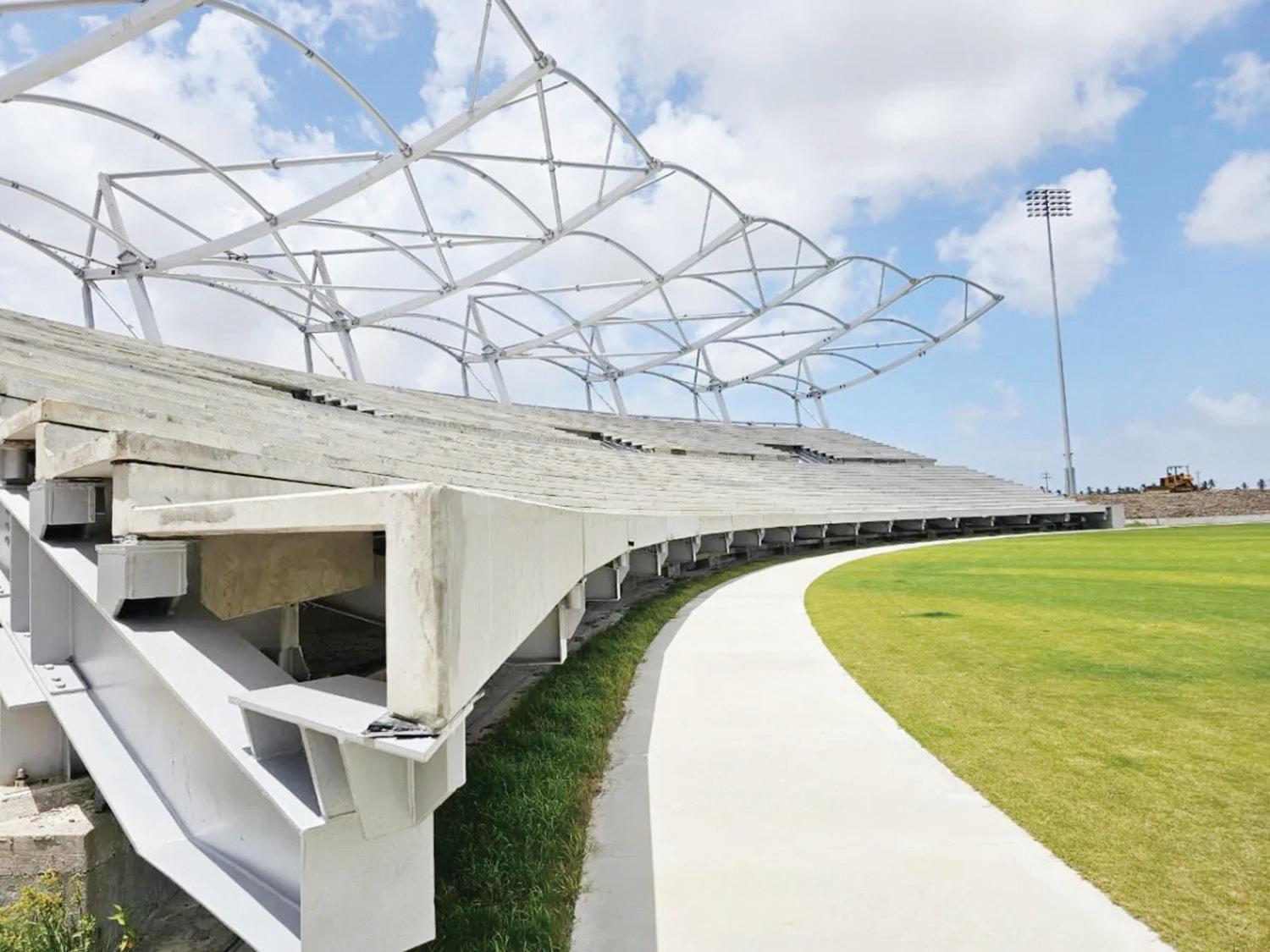
During the site visit, the minister met with contractors and expressed satisfaction with the facility’s progress. He emphasised the importance of resolving any logistical hurdles to keep the project on schedule.
have are not left unaddressed, so that the project continues to move towards completion,” Minister Ramson said.
“We just had a big meeting with all of the contractors working here to ensure that any of the challenges they

After touring the site, Mr Ramson described the facility as “very impressive,” noting it would be one of the finest stadiums in the region.
On the timeline for completion, the minister gave the assurance that the works are on track for May 2026.
“By the end of May, everybody who has their areas of work to complete should be finished. There isn’t
anything left that has to come into the country, except for one item arriving in the next few days,” he explained.
He also shared updates on construction progress, pointing out the installation of the roof over the stands and the commencement of the 10,000-seat installation.
“A lot of things are happening very quickly, which is good for our target of completing by the end of May. Once finished, just like the National Stadium has served the country for 19 years, this will bring immense value
to Region Six and catalyse development, including new hotels, restaurants, and other economic activities,” he said.
The minister added that the government is determined to ensure that the facility advances President Irfaan Ali’s vision of making Guyana a “premium destination for worldclass events.” He also highlighted ongoing work on supporting infrastructure, including culverts and bridges.
“The project is very complex with many moving pieces that have to sync together,”
Minister Ramson continued. “This is probably the largest and grandest project we’ve done, and Guyanese will be very happy when they experience it.”
The construction at Palmyra began in March 2023, supported by a $3.7 billion investment from ExxonMobil’s ‘Greater Guyana’ initiative. The multipurpose facility is set to become a major landmark in the region, promising to boost sports, culture, and economic activities once completed. (DPI)

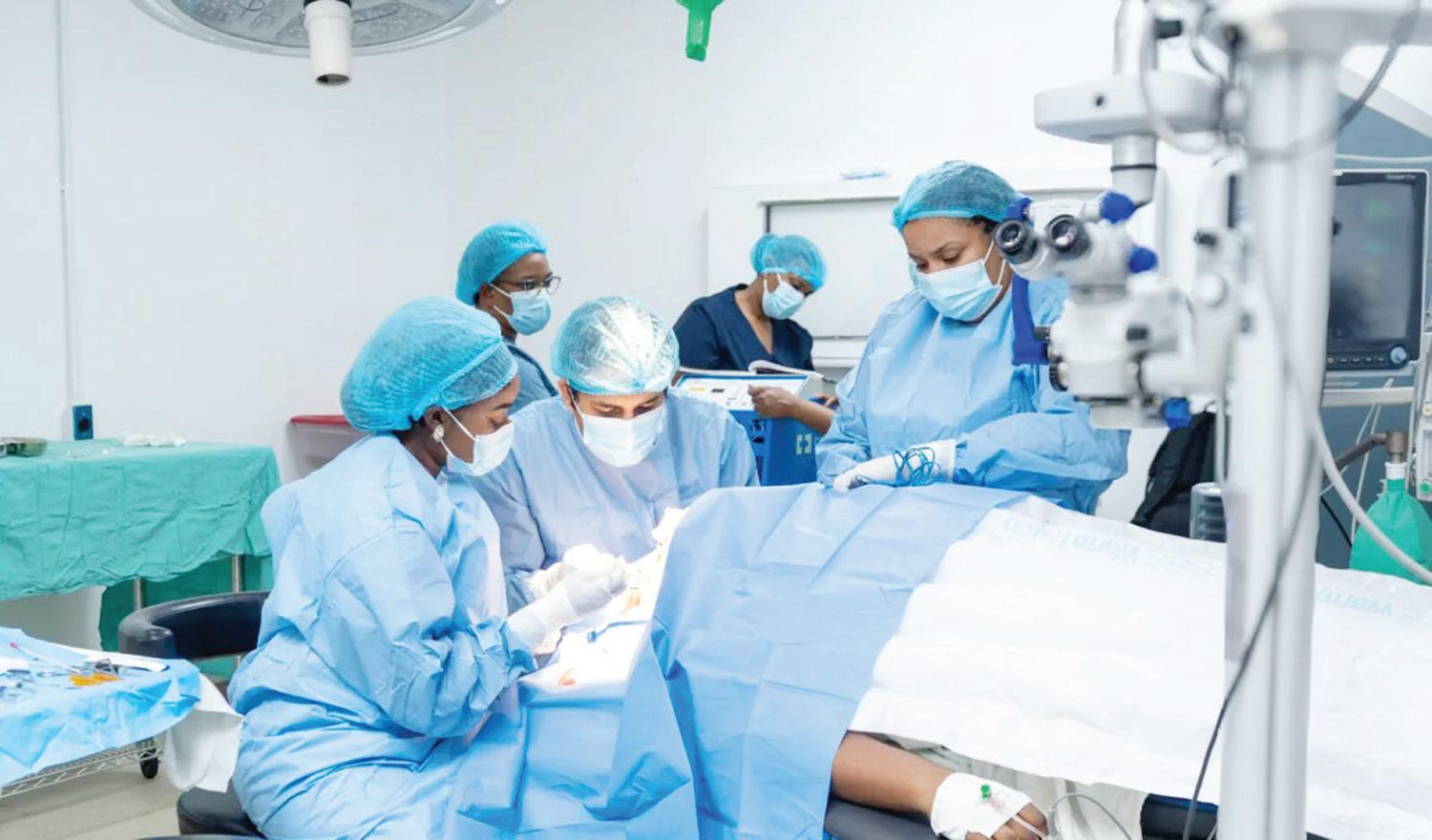
GUYANA’S public healthcare system has made a major advancement in specialised eye care, with the first-ever scleral-buckle surgeries completed at the Georgetown Public Hospital Corporation (GPHC).
The procedures were carried out during a week-long surgical collaboration between the World Eye Mission and the Ministry of Health, from February 9 to 13.
The project brought together local expertise and international support to deliver advanced, sight-saving interventions to patients.
The collaboration was led by Guyanese ophthalmologist Dr Arlene Bobb-Semple, the country’s only practising retina specialist, alongside visiting U.S-based retina surgeon Dr Krishi Peddada, who participated through the
World Eye Mission.
Over the five days, a total of 11 complex retinal surgeries were performed, including two scleral-buckle procedures, a first for Guyana’s public sector. Scleral-buckle procedures are a type of eye surgery used to repair retinal detachment by placing a flexible, silicone band (the “buckle”) around the outside of the eyeball.
This technique is critical in repairing retinal detachments and can be used alone or in combination with other advanced procedures to treat severe or recurrent cases.
The achievement signals a significant expansion in GPHC’s surgical capabilities, reducing the need for patients to seek costly treatment overseas.
It also reflects years of investment in local expertise
Guyanese ophthalmologist
and infrastructure, with Dr Bobb-Semple playing a central role in developing retina
services since joining the hospital in 2018 and introducing complex vitreoretinal
surgeries locally in 2021.
With no local ophthalmology subspecialty training
programme, such advancements are made possible through a combination of overseas training and strategic international partnerships.
Missions such as this not only deliver immediate care but also provide handson training and knowledge transfer to local medical teams.
T he initiative forms part of a broader push to modernise Guyana’s healthcare system, ensuring that highly specialised, sight-saving treatments become more accessible to citizens. With continued development, procedures such as scleral-buckle surgery are expected to become routine within the public-health sector. (DPI)
IN keeping with the government’s promise to improve access to mining data, the Ministry of Natural Resources is proud to announce the release of 2025 datasets.
Miners can now view airborne geophysics grids—magnetic, radiometric, and gravity—collected under the Guyana Mineral Advancement & Prospecting Strategy (GMAPS). These map layers can be downloaded from the Guyana Geology and Mines Commission (GGMC) website free of cost.
The data released covers over 12,000 square kilometres (over 37,000 line kilometres) of Guyana. It also contains an additional 22,000 square kilometres (over 135,000 line kilometres) of legacy data from 2o to 30 years ago that have been reprocessed to the same standards as the new 2025 data. Altogether, it is enough data to encircle the earth 3.5 times.
Speaking on the importance of this initiative, Minister of Natural Resources the Hon Vickram Bharrat, reminded that the last major mining mapping/
bulletin was done in 1968.
As per the government’s manifesto promise to arm miners with accurate, actionable and accessible data, Minister Bharrat said industry stakeholders can look forward to strengthened resource management as new opportunities for growth are unlocked. He said, “By making these updated datasets openly accessible and in a user-friendly manner, our government is empowering small-and medi-
um-scale miners to engage in sustainable mining while avoiding high exploration risks. It also strengthens Guyana’s attractiveness to international exploration companies and investors.”
Minister Bharrat further noted that the release of this data demonstrates a

commitment to ensuring the nation’s mining activities remain compliant with the Low Carbon Development Strategy (LCDS) 2030. Notably, the data were
acquired by Global Venture Consulting, a private natural resource consulting firm based in Florida, USA. It was hired by the Ministry of Natural Resources in 2025 to conduct the exercise which will span four years. Global Venture is also working alongside two other industry specialists, AGF and Xcalibur Smart Mapping, to complete this assignment.
Regarding activities planned for 2026, Chief Executive Officer (CEO) of Global Venture Consulting, Emily King, said this will include detailed ground geological mapping, targeted geochemical sampling, structural interpretation, and field validation of high-priority targets in key areas.
King said the programme will further strengthen Guyana’s Mineral Inventory while continuing training and capacity building for GGMC staff and local professionals.
The CEO underscored that this work is especially important for small and medium-scale Guyanese miners as it arms them with data that can lower opera-
tional costs. In this regard, she highlighted that the magnetic, radiometric, and gravity layers—available in accessible formats that can be used in platforms such as Google Earth— allow miner s to better understand rock types, structures, and potential mineralised zones before investing in equipment and field operations.
Through GMAPS,
King said the government is ensuring that Guyanese miners have access to the same foundational geological information used by international companies, helping them compete, grow, and contribute to national development
For more information, miners can visit the GGMC website at https://www.ggmc.gov. gy/. (MNR)


THE evolving trajectory of Guyana’s health sector reflects a deliberate national commitment to establishing health care as a fundamental right for every citizen. This shift is not occurring in isolation; it is being financed and driven by sustained public investment made possible through increased national revenues, particularly from the oil and gas sector and a clear policy focus on modernising healthcare infrastructure and services.
Over the past several years, budgetary allocations to health have expanded signifi-
cantly, rising from approximately G$53.5 billion in earlier years to over G$161 billion by 2026. This substantial increase signals more than routine sectoral growth. It represents a planned decision to convert economic gains into long-term human development, ensuring that the benefits of national prosperity translate into tangible improvements in the well-being of present and future generations. A central feature of this transformation is the move towards preventive and data-driven care. Tens of thousands of children have already undergone com-
prehensive screenings and more than 100,000 are expected to benefit from permanently recorded baseline medical data within the expanding digital health architecture. This approach establishes a lifelong continuum of care, allowing health conditions to be detected early, monitored consistently and managed before they escalate into more serious complications.
The implementation of the National Electronic Health Record System marks a foundational reform in this regard. By digitising patient information across public-health in-
stitutions, the system is designed to reduce waiting times, eliminate inefficiencies and ensure continuity of care regardless of where services are accessed. Such integration strengthens the patient-centred model that the health sector is now seeking to institutionalise.
Technological advancement forms another key pillar of this vision. The integration of artificial intelligence (AI) in diagnostic imaging, the introduction of robotic-assisted procedures and the expansion of nationwide telemedicine services are intended to bridge longstanding disparities
in access, particularly for residents in remote and hinterland communities. Complementing these initiatives are new regional hospitals and specialised centres for oncology and neurological rehabilitation, which collectively enhance the country’s capacity to manage complex medical conditions locally.
Equally important is the strengthening of the health-care workforce through expanded training programmes and new educational institutions, ensuring that the infrastructure being built is matched by the human resources required to operate it
effectively.
Taken together, these investments and reforms illustrate a coherent national strategy to ensure that quality healthcare is not contingent on location, income or circumstance, but is available as a guaranteed public good. By aligning increased fiscal capacity with forward-looking health policies, Guyana is laying the foundation for a system in which every child born today can reasonably expect to grow up within a modern, preventive and technologically advanced health-care environment.

HERE are some expressions of mine and these reflections have been informed by academic enquiries over decades.
1- I believe European civilisation has an in-built, race superiority instinct.
2 - I think American culture and American society have serious flaws that will forever deter me from wanting to live in the US or have even a holiday. 3 - There is Jewish thinking in Israel that sees the Palestinian people as an inferior race. 4 Germany has an in-built dislike for the Russian race. 5 –
The Japanese and South Korean peoples see the Caucasian race as superior to other races and that explains their obsession with Europe and the U.S. 7 - I am not particularly impressed with the Arab character. 8- The African people in Guyana have been deceived by African leaders. 8 – My research leads me
to think that Guyanese Indo-Saxons who are Christian have a natural disdain for Hindus and Muslims and darkskinned Indians. 9- I believe the Holocaust occurred under Nazi Germany, but I don’t believe there is any proof that Hitler ordered it and I think the nature of the Holocaust has been wildly exaggerated because of the invincible global power of super-rich Jewish corporations and Jewish-owned globally influential media. All those topics enumerated above I have ruminated on over 37 consecutive years of being a newspaper columnist, television commentator, and podcast interviewer. I would like to know which part of the constitution in Guyana and which law in Guyana restricts me from offering the opinions listed above? Why can’t I come to those conclusions if I believe in them?
There are nine viewpoints listed above and not one of them denigrates any race or religion or culture. If I believe there is a South Korean mentality that holds to the view that the Caucasian race is superior to other races, where are the words in that observation that advocates hatred against the South Koreans. Free speech must always be separated from hate speech and that is a sharp distinction the Ethnic Relations Commission has to make. In the Leonard Craig case, the ERC has not made that distinction, thus, if it continues along the pathway that it has embarked on with Craig, then it will curtail free speech in this country.
The ERC informed Craig that a religious person from the Christian denomination has complained against him for a statement he made on the PPP platform during the 2025 elections campaign

last August. Here is what Craig had said, “From erection to resurrection, the PPP will take care of you.”
The complainant has argued that the use of the Christian term, “resurrection” is insulting to the Christian religion. The word, “resurrection” is not a Christian term and can be found in ancient Hindu, Egyptian and ancient Greek texts long before Christ was born.
Secondly, resurrection is a grammatical item that has been used millions of times over hundreds of years in social- science writings, literature, politics, and journalism. The use of it in those areas has absolutely nothing to do with the Christian religion. I offer an example: the Democratic Party in the US should know that the resurrection of Kamala Harris is impossible. What has that got to do with Christianity?
There is more about
the ERC’s action that calls into question its credibility. Craig only knew that the ERC had summoned him through other people telling Craig they saw the summons on Facebook. When Craig contacted the ERC, he said the relevant official he spoke with told him they tried frantically to get in touch with him and because of failure to do so they put his name on Facebook.
The ERC may not be telling the truth. The ERC has a Public Relations Officer named Shiv Nandlall. It is Nandlall the ERC commissioners turn to when they want information, because it is Nandlall’s job to know about the crucial and sensitive dimensions of Guyanese society. But did the ERC commissioners ask Nandlall?
Last week, Mr Nandlall rang me to enquire if the ERC’s work could be highlighted on the
Freddie Kissoon Show. This is the second time in six months Mr Nandlall has made that enquiry of me. Mr Nandlall had to know that the co-host is Craig. If he didn’t have Craig’s mobile number, he knew he could have asked me for it. The ERC has to know that Craig is a weekly columnist with the Guyana Chronicle. No one in the Cabinet of the government, in the police force and the army would refuse to give a serious, constitutional body such as the ERC the cell number of a person if the ERC says it wants to talk to that person. So, the ERC did not call the Guyana Chronicle. What a mess!
DISCLAIMER: The views and opinions expressed in this column are solely t hose of the author and do not necessarily reflect the official policy or position of the Guyana National Newspapers Limited.

TODAY, my intention was to deal with the decision by the Ethnic Relations Commission (ERC) to issue a public advisory which claims that they were unable to reach me after multiple attempts. Given my pervasive availability, it has to be a blatant lie.
I believe the ERC is more interested in publishing names for form and spectacle than they are about substance and justice. That said, I have a personal Facebook page which I will use to discuss this matter so I wouldn’t have to waste column space to deal with this sort of frivolity. Frivolity in terms of the subject and circumstance. However, the implications and natural corollary of their actions have profound consequences for free speech and the protection of the fundamental rights of the individual. In that sense it’s a big deal and I intend to treat with
this matter in that way.
That said, I cannot waste more space on the subject.
The subject on which I’m interested in offering a quick commentary is Guyana’s growing stature on the international stage. A few weeks ago, the day immediately following the capture of Maduro, I opined on the Freddie Kissoon Show that in the atmosphere of uncertainty in Venezuela, President Ali needs to seize the moment to have America reiterate its support for our territorial integrity and that this subject should be expressly and unconditionally interwoven into any deal or demands the USA will make on Maduro’s successor.
I advocated for President Ali to get Rubio on a call post haste and where possible seek a meeting with Donald Trump. I do not know if my comments had any bearing whatsoever on the President’s actions and
I will not even remotely venture into an egomaniacal territory, except to say that it probably makes me a good analyst or interpreter of international geopolitical current affairs. Because, within 48 hours of those comments, the President made a call to the US Secretary of State Marco Rubio. It must be noted that Rubio accepted the call without hesitation, reservation or condition.
Once it was announced that the call was made, a bunch of uninformed opposition-aligned know-it-alls flooded social media to comment that the president breached international protocol and offended sacred principles of international diplomacy. The argument being that the President lowered the esteem of his office by corresponding with a person who is not a head of state. I do not want to use unkind words like


dunce or intellectual nitwit to describe these individuals, but they are begging for it.
I recall a few years ago the President made a presentation at the UN referring to the country formerly known as Turkey by its new official name, Türkiye (pronounced Tur-ki- yea), they referred to him as a ‘dunce.’ I immediately took to social media to educate and set the record straight. As it turned out, they were the uninformed bunch and they were loud about their lack of knowledge and didn’t even know that they didn’t know. In like fashion, they criticised the president for reducing the presidency to the level of a Foreign Secretary and suggested it should be the Minister of Foreign Affairs who should be the interface. It probably should not be, and, whether we like it or not, nations do have geopolitical tiers. For example, the G12 Nations and the OECD countries are in a tier and has geopolitical recognition and strategic importance that the majority of other countries do not have. The world is divided and tiered based on military might, economic stature, population size or historical ties. Guyana is simply not on the level of geopolitical importance, economic
stature, military capability or population size with the US. To remotely suggest that President Ali is on the same geopolitical plain with Trump is simply absurd.
Even if Ali and Trump were geopolitical equals, it still made sense to call Rubio, simply because a friendly relationship had developed between the two gentlemen. And in the heat of an invasion of Venezuela, it was strategic commonsense for the President to ring up his friend, exchange salutations, get a general feel of the diplomatic temperature and a sense of the priorities concerning the region inside the Whitehouse. This is useful information that our Minister of Foreign Affairs may be unable to extract, given the nature of these engagements.
One boldface critic of President Ali said that any PNC president will “NEVER” lower the esteem of his office and consent to meet with the Secretary of State. Then I pulled up and posted information that confirmed that while David Granger was president the U.S. never accepted a call at the level of the Secretary of State, instead, he could only manage to get an Undersecretary who has responsibility for the Latin American region.
This past week, we saw reg ional leaders lining up to get even a few fleeting words with Rubio. This is because they understand international relations that these opposition comics don’t. They understand that to get the attention of Rubio is a major geopolitical achievement for small states.
Soon President Ali will have a direct face-to-face meeting with President Trump. Many Guyanese presidents before him met with US presidents, but it was almost always on a sideline engagement either at the UN or Summit of the Americas. A specially arranged direct meeting with a sitting U.S. president at his office is a major diplomatic achievement for a small country such as Guyana. This is an indication of the rising stature of Dr Ali and a major growth of our geopolitical importance. By the end of his second term, President Ali for sure will go down as the most consequential President in our history.
DISCLAIMER: The views and opinions expressed in this column are solely those of the author and do not necessarily reflect the official policy or position of the Guyana National Newspapers Limited.

THE Ministry of Housing and the Central Housing and Planning Authority's priority remains the delivery of
According to the ministry, new contracts to complete the works will be issued shortly. It added that Minister
in Stewartville, approximately 100 are impacted — specifically Lots 254–266 in Stewartville East; and Lots 433–472,
noting that allottees are eagerly awaiting access as they pursue better living conditions for their families.
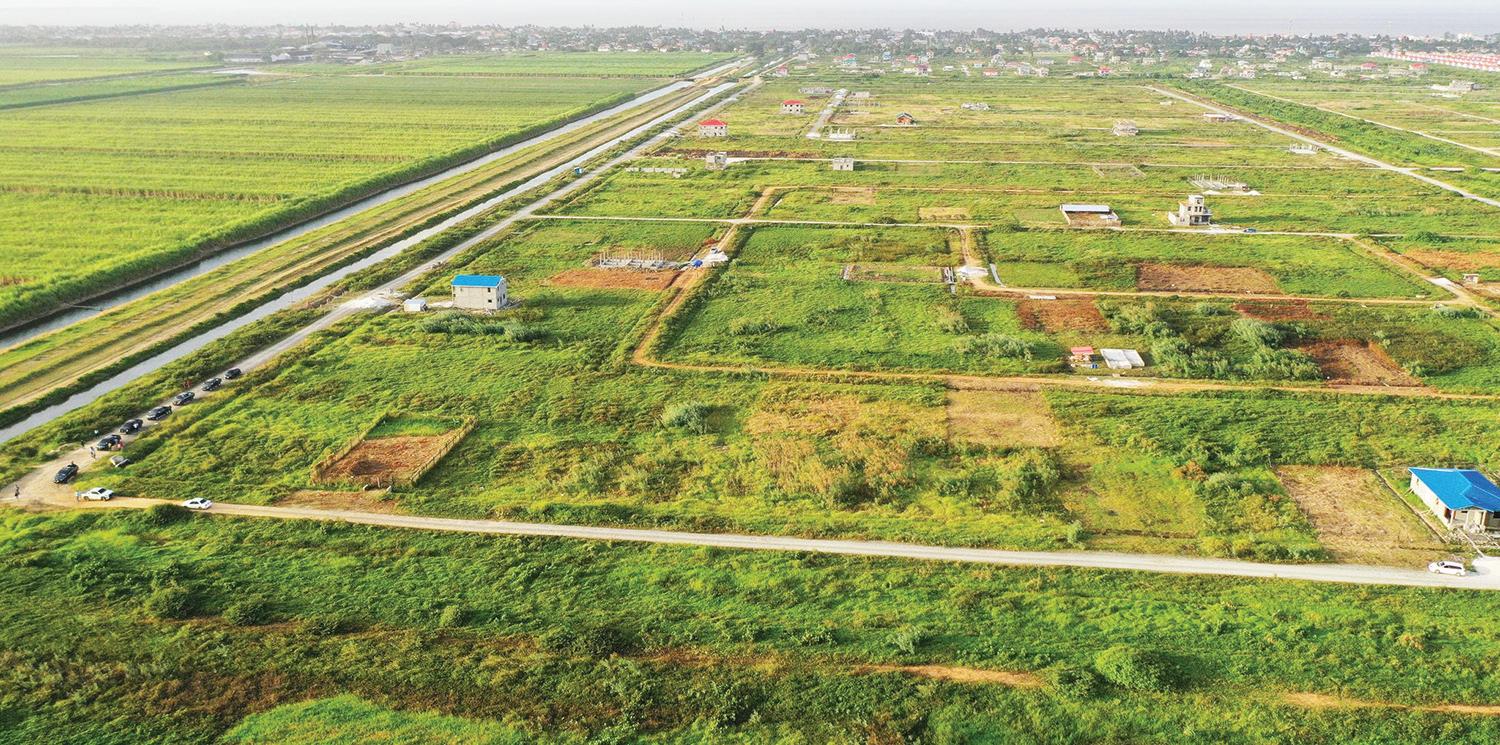
serviced house lots to Guyanese families, and as such, underperforming contractors responsible for infrastructure works in sections of Stewartville East and West, Region Three, have been terminated and the works re-tendered.
The ministry made this disclosure in a press release issued on Sunday in which it was highlighted that the focus remains on ensuring the programme is back on track.
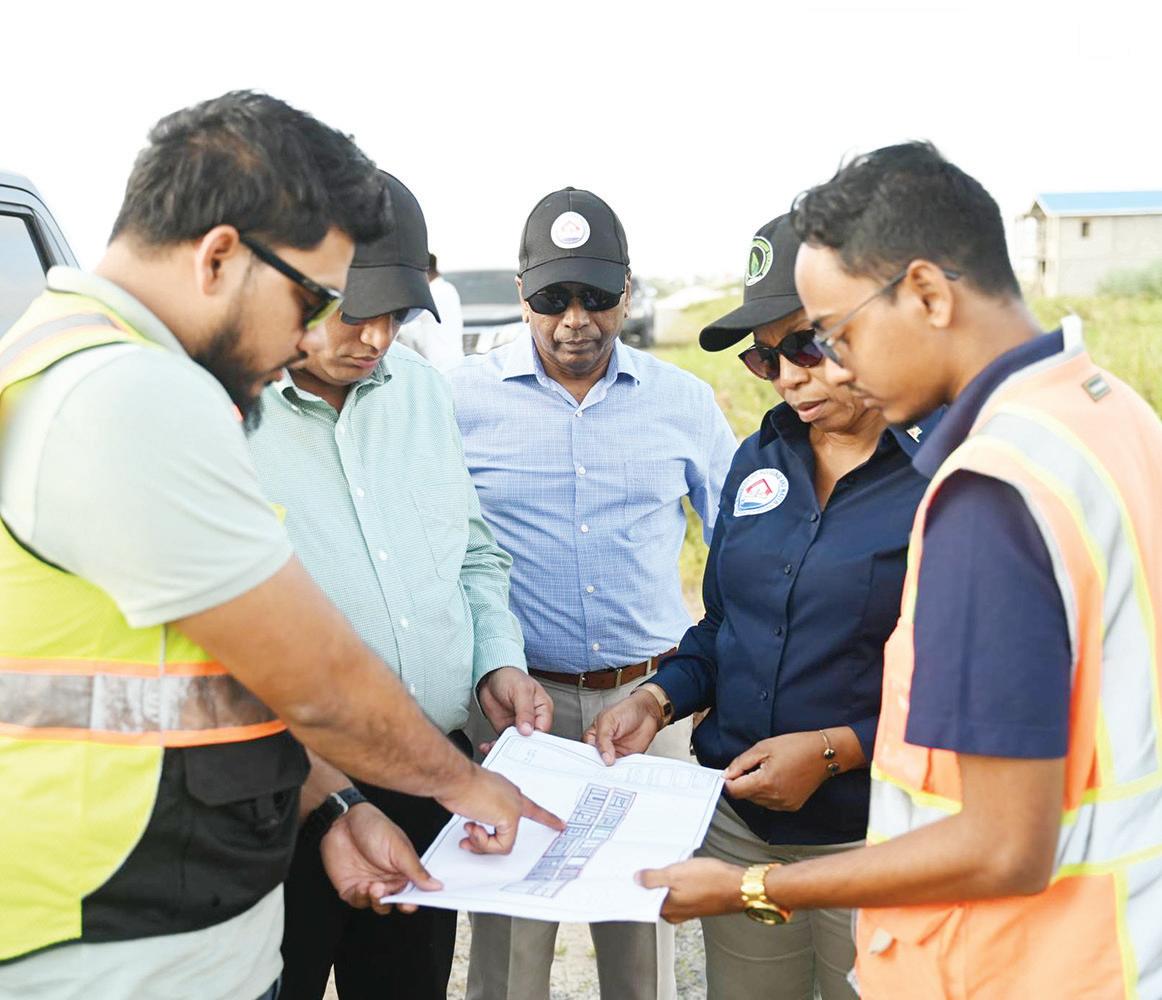
of Housing Collin Croal, Minister within the Ministry, Vanessa Benn, Permanent Secretary, Mr. Bishram Kuppen, and technical staff visited the area on Friday to assess works.
During the visit, Minister Benn noted that while many allottees have access to their lands, and some have already begun constructing their homes, a number of them remain affected by the delay in infrastructure works. Of the nearly 1,000 house lots
662–680 and 715–744 in Stewartville West.
The minister emphasised that the ministry is closely monitoring contractors to ensure timely delivery of infrastructure. Underperforming contractors have been repeatedly engaged on their obligations, and were reminded that failure to improve will result in termination.
She underscored that the housing programme is ultimately about improving lives,


THE Ministry of Public Works is intensifying its nationwide campaign to clear abandoned vehicles, encumbrances, and encroachments from road shoulders.
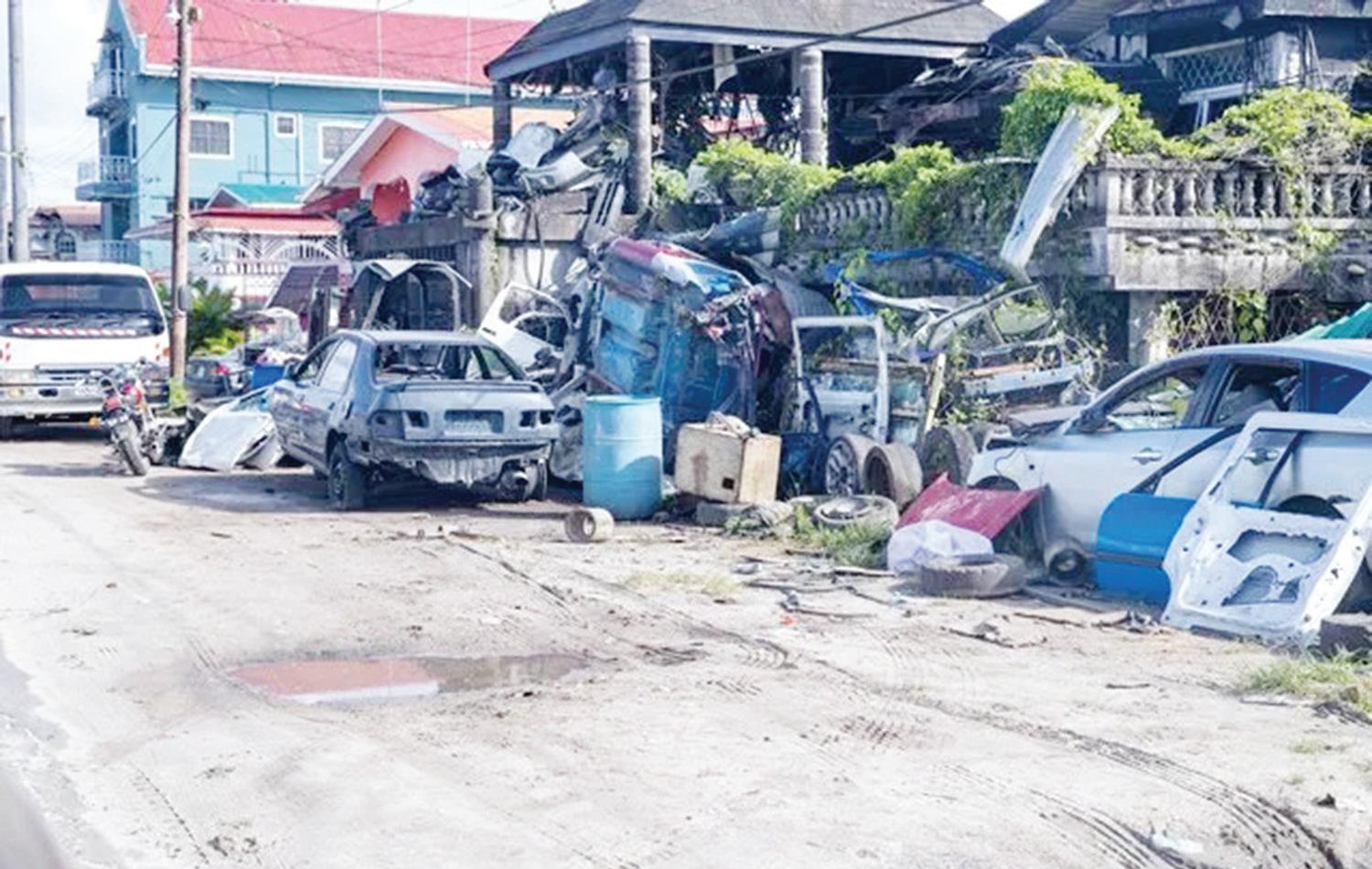
Some of the derelict vehicles that were removed by the Ministry of Public Works
The Minister of Public Works Bishop Juan Edghill has warned that the government will no longer tolerate ‘stubborn’ individuals who jeopardise the safety of citizens.
The ministry is notifying offenders in person and on social media, giving them the chance to remove their items. If they don’t comply, the ministry will take and impound the items, charging a removal fee.
Minister Edghill recently stated that parapets do not belong to
individuals or businesses. He added that these encumbrances are not only an eyesore but can also serve as hideouts for criminal activity, threatening the safety of residents within the communities. In addition to the removal of derelict vehicles, the Minister addressed the growing issue of businesses encroaching onto road shoulders and pedestrian walkways. Such practices pose dangers to pedestrians, who are forced to walk in the path
of moving vehicles due to blocked footpaths.
The ministry will continue to remove all encumbrances and encroachments wherever violations occur, as part of its commitment to road safety and orderliness. Guyanese also have a role to play in reporting these cases to the ministry through its recently launched hotlines. Citizens can WhatsApp 624-2964 to file a report, and contractors can contact the ministry on 624-2965.
(DPI)

IN Latin America and the Caribbean, undernourishment decreased for the fourth consecutive year, according to the 2025 Regional Overview of Food Security and Nutrition: Statistics and Trends released on Sunday.
The report states that undernourishment affected 5.1 per cent of the popula-
reaching an average prevalence of hunger of 3.8 per cent, with a decrease of almost one percentage point between 2022 and 2024.
Mesoamerican remained relatively unchanged at 5 per cent, as did the Caribbean at 17.5 per cent. This last result is explained by the prevalence of undernourishment in Haiti (54.2 per cent in the 2022-2024
“The region managed to reduce the prevalence of hunger and food insecurity, but significant inequalities in access to and affordability of food and healthy diets persist. In addition, we must address, through a comprehensive and intersectoral approach, the rising levels of over-
tion in 2024, down from a peak of 6.1 per cent in 2020. This means 6.2 million fewer people are experiencing hunger in the region.
The yearly report highlights that there are already four countries in the region (Brazil, Costa Rica, Guyana and Uruguay) with a prevalence of hunger below 2.5 per cent, while two others (Chile and Mexico) are very close to this threshold, and five are now below 5 per cent (Argentina, Barbados, Colombia, Dominica and Dominican Republic).
South America recorded the largest improvement in recent years,
triennium).
Moderate or severe food insecurity affected 25.2 per cent of the population in the region in 2024. This is below the global estimate of 28 per cent and it also shows a steady decline since peaking at 33.7% in 2020. However, the gender gap remains significant, with prevalence 5.3 percentage points higher among women than men.
Despite improvements, over 33 million people still face hunger, 167 million experience food insecurity, 181.9 million cannot afford a healthy diet, while 141 million adults live with obesity.
diet at both global and regional levels. In 2024, the cost of a healthy diet increased 3.8 per cent in Latin America and the Caribbean, making it the region with the highest cost globally, estimated at USD 5.16 per day adjusted for purchasing power.
“While the region has made progress in reducing hunger, significant gaps persist. Women and rural communities continue to
experience higher levels of food insecurity than men and urban populations. These findings should serve as a clear wake-up call to redouble efforts and direct investments toward those who need them most. Supporting rural development and the people who produce food is essential to strengthen food security, build resilience, and ensure sustainable growth”, said Rocío Medi-
na Bolívar, IFAD Regional Director for Latin America and the Caribbean.
Despite the rising cost of a healthy diet, affordability has improved. In 2024, 15.4 million more people were able to afford a healthy diet compared to 2021, when unaffordability peaked at 197.3 million. Still, 27.4% of the population in LAC, 181.9 million people, could not afford a
weight and obesity. FAO is supporting countries in generating data for food security and nutrition and evidence to make better decisions, as well as implementing and evaluating policies and actions to eradicate hunger and reduce malnutrition in all its forms,” said FAO Assistant Director General and Regional Representative, Rene Orellana Halkyer. Latin America and the Caribbean continue to feel the effects of the COVID-19 pandemic, supply disruptions and geopolitical conflicts that have intensified food price inflation, pushing up the cost of a healthy
healthy diet in 2024.
“Although food security shows advances in Latin America and the Caribbean, the Regional Overview 2025 exposes deep inequalities between subregions, within countries, and between women and men. We cannot speak of real progress while gaps continue to leave millions behind, especially women. WFP is committed to reaching those in greatest need, from emergency response to strengthening social protection, school feeding, and resilience initiatives”, said the Regional Director of World Food Program, Lena Savelli.
Nutrition indicators show uneven advances.
For instance, anaemia affected 19.9% of women aged 15 to 49 years in the region in 2023. While this prevalence remains considerably below the global estimate (30.7 per cent), anaemia rates have increased steadily in the region since 2014.
At the same time, obesity among adults in the region doubled since 2000, reaching 29.9 per cent in 2022, almost twice the global estimate of 15.8 per cent.
“Unhealthy food environments, characterized by the high availability of ultraprocessed products and limited access
to healthy foods, continue to drive high prevalence of overweight and obesity in the Americas,” said Dr. Jarbas Barbosa, PAHO Director. “PAHO is working to transform food systems through fiscal measures, marketing regulations, and front-ofpackage warning labeling to make healthy diets more accessible, affordable, and sustainable, helping prevent obesity and diet-related noncommunicable diseases.”
Among children under 5 years of age the prevalence of stunting stood at 12.4 per cent, remaining consistently below the global estimate over the last 25 years. Today, one

third of countries with available data are on track to achieve the 2030 target on stunting. Likewise, the prevalence of wasting in the region was estimated at 1.3 per cent in 2024, and most countries have already achieved the World Health Assembly 2025 child wasting target.
Regarding overweight, the prevalence among children under 5 years of age has increased steadily since 2000, reaching 8.8% in 2024, above the global estimate. As a result, the region is not on track to achieve the 2030 target to reduce and maintain this prevalence under 3 per cent.
"Important gains in reducing stunting reflect sustained investment and coordinated action for children’s wellbeing,” said Roberto Benes, UNICEF Regional Director for Latin America and the Caribbean. “At the same time, the region faces a complex nutrition challenge. While undernutrition persists in vulnerable populations, overweight and obesity rise steadily, including among children. Addressing malnutrition in all its forms, from stunting, wasting and micronutrient deficiencies to overweight and obesity, requires strengthened health, nutrition, educa-
tion and social protection systems that ensure every child has access to affordable, diverse and nutritious diets.”
The Regional Overview of Food Security and Nutrition 2025 is a joint publication of the Food and Agriculture Organization of the United Nations (FAO), the International Fund for Agricultural Development (IFAD), the Pan American Health Organization/World Health Organization (PAHO/WHO), the World Food Programme (WFP), and the United Nations Children’s Fund (UNICEF). (PAHO)

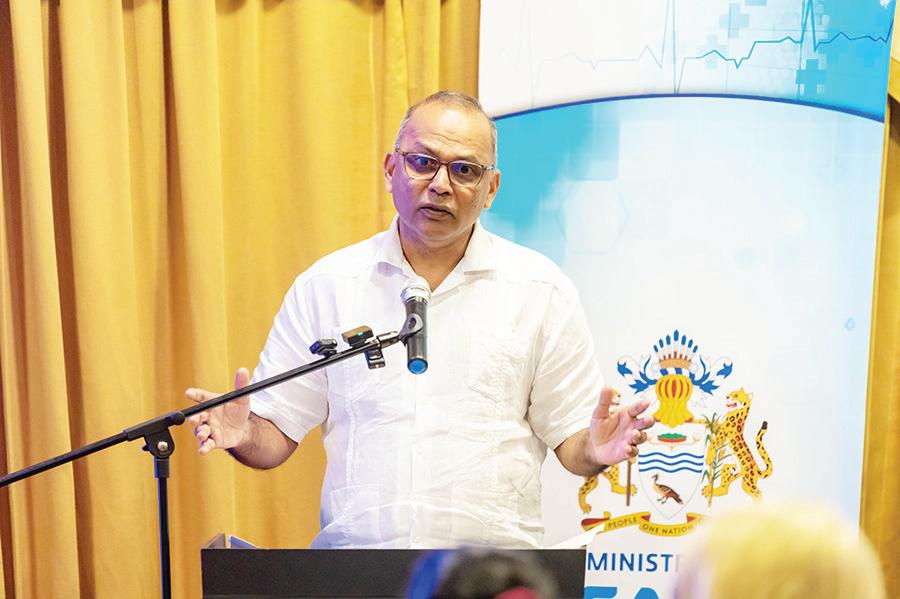
Dr Frank Anthony has made an appeal for men across Guyana to make greater use of the national health voucher programme, noting that low uptake undermines efforts to detect chronic diseases and prostate cancer, early.
Dr Anthony made this known while speaking at the recent signing of a memorandum of understanding (MoU) between the Ministry of Health and private service providers, during which he noted that programme data shows that men account for just 36 per cent of adult voucher
utilisation, compared with the women’s 64 per cent.
“When we look at the adult voucher, the men hardly come in,” the minister said, adding, “Only about 36 per cent were men, and that is a big problem.”
He stressed that the imbalance is especially concerning, given that prostate cancer is the most common cancer affecting men in Guyana.
Against this backdrop, he noted that prostate-specific antigen (PSA) testing is included in the adult laboratory voucher and plays an important role in early detection.
“One of the tests that we put on this voucher is the PSA... While it’s not a direct marker on its own, if it is elevated and we see other symptoms, it gives us a good indication, and once we find that, we are able to do a biopsy,” he said.
To this end, he noted that increased screening has already allowed health authorities to diagnose more men earlier and bring them into treatment, thus improving outcomes. However, he warned that many men continue to avoid routine testing until symptoms become severe.
“By the time some men come to us, the
disease has already progressed,” he said, while adding, “We want to catch these things earlier.”
Apart from prostate cancer, Dr Anthony said that voucher data has revealed widespread undiagnosed
chronic illness among men. Of the 37,612 people who accessed HbA1c testing, 8,440 recorded very elevated results, indicating diabetes or poor glycaemic control, with many patients unaware they were at risk.
“Quite a few of them probably didn’t even know they had a problem,” the minister said, as he noted that using the vouchers allows authorities to identify what is going on and bring people into care.
As such, he said the ministry hopes to boost male participation through various means and address issues earlier.
“We want more men to get these vouchers and get themselves tested,” Minister Anthony said. “If we get people earlier, we can prevent these conditions from progressing.”


THE construction of a heavy-duty vehicle park at Golden Grove is progressing as part of a strategic push to improve public safety and protect Guyana’s infrastructure.
On Thursday, Housing Minister Collin Croal and Minister within the Ministry of Housing Vanessa Benn visited the East Bank Demerara site. The facility is being developed by the Central Housing and Planning Authority (CH&PA) to manage the surge in heavy-duty vehicles driven by the country’s rapid construction boom.
The project aims to clear trucks from public roadways and residential areas, where roadside parking has caused significant congestion and damaged
road shoulders.
The approximately 14-acre site is currently undergoing sand-filling and levelling works. Contractors were reminded to maintain required standards and adhere strictly to established timelines to ensure timely completion of the project.
Upon completion, the ministry will engage truck owners and operators, particularly those without adequate private parking facilities, to utilise the space.
While highlighting the broader context of national development, Minister Benn noted, “With development moving at such a fast pace, we must ensure we have the facilities in place to support it.”
In addition to the Golden Grove proj -
ect, parking infrastructure is progressing at the Diamond Regional Hospital. Patients, healthcare workers and visitors will soon benefit from improved access as two new parking lots are being constructed along the hospital’s northern and southern boundaries.
The government has recently invited bids for additional truck-parking facilities in Regions Three, Four, Five and Six.
The facilities will be constructed at Meten-Meer-Zorg Phase Two in Region Three, Hermitage to Wales in Region Five, Hope to Enmore in Region Four. Smithson Place in East Canje, Berbice, Number 75 Village on the Corentyne in Region Six will also benefit. (DPI)

AS the countdown to the sixth annual ‘We Lift’ Women’s Expo begins, Deputy Permanent Secretary of the Ministry of Human Services and Social Security Arianna Beharry, has revealed that more than 400 women-owned businesses have been registered for the activity
struction and women in transportation.
“Literally anything you're looking for you can find it right there at We Lift and the important thing to mention, everybody that[sic] is presented at We Lift, all those exhibitors, all their products is [sic] a hundred per cent Guyanese,” she expressed.
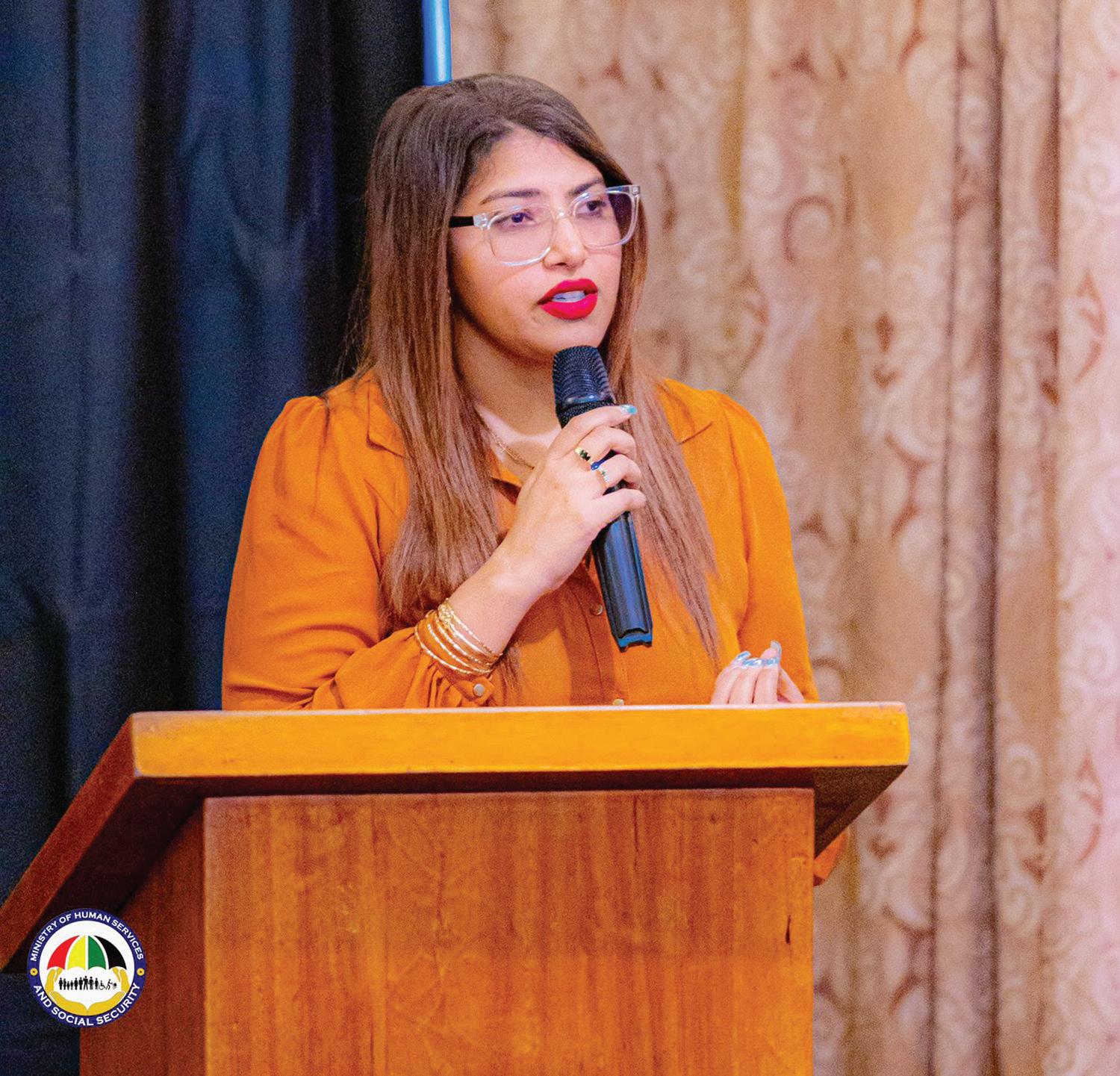
According to Beharry, there are quite a few investors who are still here from the recently concluded Guyana Energy Conference.
She emphasised that the expo is the perfect opportunity to expose these women-led businesses to these potential partners, she said.
Providing a sneak peek into the agenda for this year’s expo, Beharry revealed that on March 6, which will be the first day of the expo, at 10:00hrs there will be an opening conference.
strengthen their commercial capacities.
Officials say the programme continues to play a key role
which will be held this weekend.
This year, under the theme, ‘Let Her Bloom,’ the expo returns to the Arthur Chung Conference Centre, where the first iteration was held in 2021 with only 75 women.
Beharry in a recently broadcasted interview underscored the progress and growth of the expo from its inaugural launch in 2021 to present.
She stated that businesses participating in this year’s expo vary from beauty and cosmetics, to candles and soaps, fashion, agro-processing, food and beverages, and non-traditional business areas such as con-
The We Lift Expo is a step up from the yearround support given by the ministry through various training opportunities for women aiming to upskill to gain employment, or women in business. This is offered through the Guyana Women’s Leadership Institute (GWLI) at Cove and John on the East Coast of Demerara, home of the Business Incubator and the Women’s Innovation and Investment Network (WIIN).
We Lift allows women in business to gather in one space to network with investors, form bonds and connections, and meet with, and introduce their services or products to new clients.
“So, it will look at like empowerment of teams, women in various sectors like [sic] the oil and gas sector and so forth. And you have the experts from the various areas and our sponsors as well, being a part of that panel. When that panel discussion is over, then we will have the official opening of the expo,” she said, adding:
“So, we're looking at officially three o'clock. Just in case for any spillovers, you know how it goes. And to have the expo on the Friday to open at three o'clock and we're going to go until about nine. But we really don't try to set a time there because it really depends on the foot traffic,” the PS said.
For Saturday and Sunday, the expo will run as per normal, opening from 16:00hrs.
The expo is one of the ministry’s flagship programmes and it has been designed as a supportive ecosystem where women entrepreneurs can showcase products and services, build partnerships and
in advancing economic empowerment and gender equality by creating pathways for women-led businesses to grow and compete at higher levels, both locally and internationally.



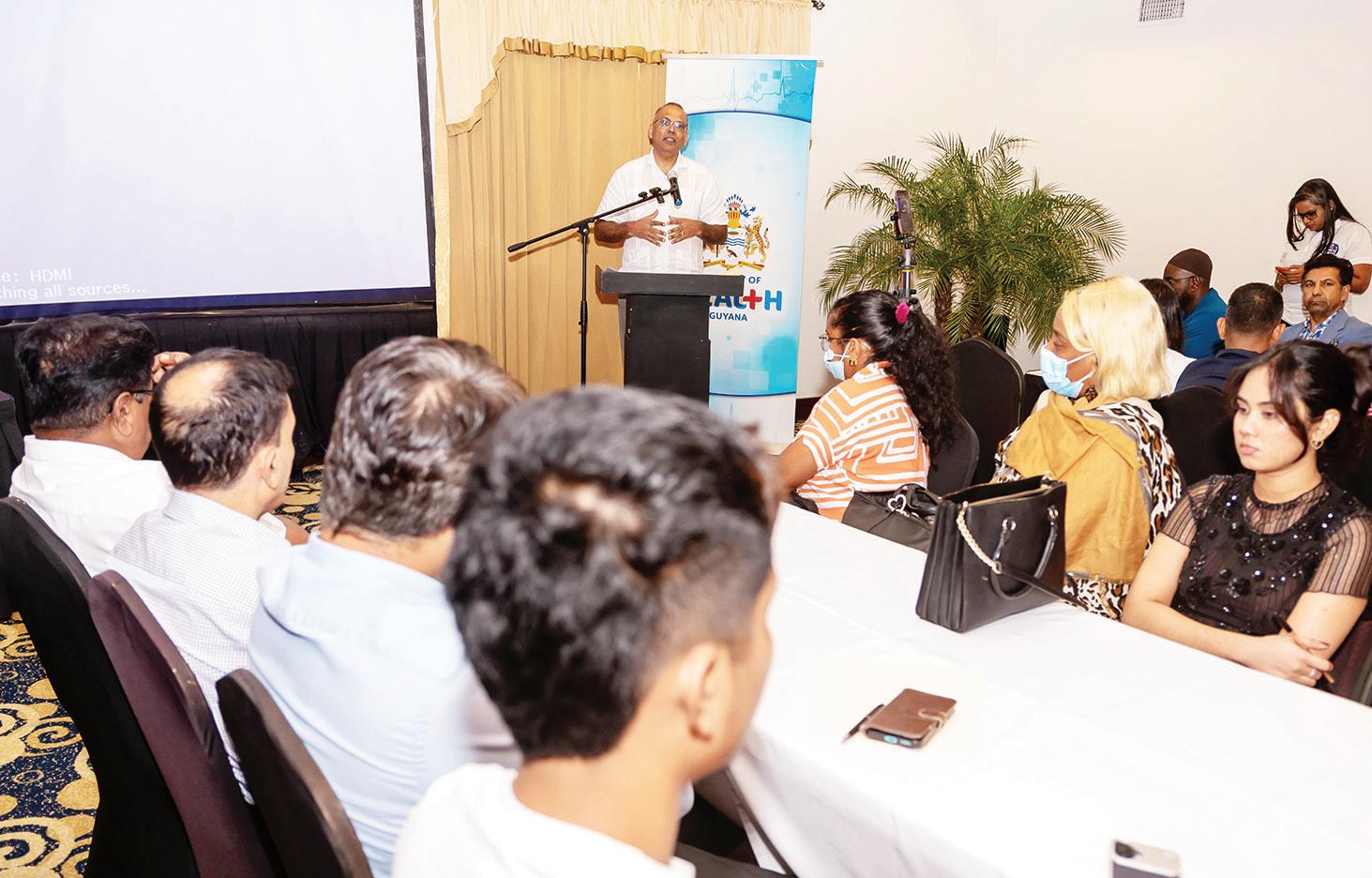

Data from the country’s national health voucher programme is shaping evidence-based healthcare planning
DATA generated through Guyana’s national health voucher programme is playing a central role in shaping the country’s evidence-based healthcare planning.
This is according to Minister of Health Dr Frank Anthony, who recently stated that this data allows the Ministry of Health to identify disease trends earlier and further design targeted interventions in this regard.
“These vouchers are very important, not just because of the testing, but because of what we are able to do with the results,” he said He noted that the health authorities are able to analyse what is going on in certain areas and further ensure the relevant care reaches them. “From the data, we are able to analyse what is going on in our population and reach out to people, bring them into care and manage the problems that they have,” he added.
Against this backdrop, the minister said that over the past two years, more than 461,000 vouchers have been processed across eye care, laboratory testing and cancer screening.
The volume of results, he added, now allows the ministry to stratify data by region, sex, locality and disease type, providing insights that were previously unavailable at a national level.
One area where the data is already influencing policy is chronic-disease management.
“Because we have this information, we can now
bring them into care and work with them before the disease progresses,” he stated.
The data have also highlighted links between long-standing diabetes and kidney failure, prompting the introduction of new medications aimed at delaying the onset of renal disease in high-risk patients.
Additionally, cancer detection has similarly benefitted from the programme’s analytical capacity, even as eye-care screenings have led to the identification of cataracts and glaucoma, while laboratory data have supported earlier diagnosis of prostate cancer through PSA testing.
HPV screening results have informed the expansion of vaccination strategies and follow-up care for women at risk of cervical cancer.
“This is not just a transactional relationship,” Dr Anthony told health-care service providers.
He added, “The utilisation of what we test and how we use that information is what is helping us to do our work better.”
To this end, he said that the continuous flow of data is also shaping the future direction of the programme itself, including proposed additions such as ultrasound services and expanded diabetic eye screening, based on demonstrated public need.
“If we are able to get people earlier, using the information that we now have, we can prevent many of these conditions from progressing,” he said.
IN observance of World Wildlife Day today, the Guyana Wildlife Conservation and Management Commission (GWCMC) on Sunday hosted a Wildlife Fair at the Guyana Zoological Park, in the Botanical Gardens, Georgetown.
This activity gained the attention of persons of all ages, who went out to see and learn more about wildlife, and how we can protect it.
World Wildlife Day 2026 was held under the theme, ‘Medicinal and Aromatic Plants: Conserving Health, Heritage and Livelihoods.”
Speaking with the Guyana Chronicle, GWCMC Communications Officer Deuel Hughes said the Wildlife Fair was one of the GWCMC’s main activities to celebrate World Wildlife Day this year.
The fair, he said, was an opportunity to raise awareness about the world’s wild animals and plants, and to promote positive actions towards our wildlife.
He explained that this



Commission, Iwokrama, the Environmental Protection Agency and also Conservation International are displaying their work.
We also have a live animal display by a couple of our exporters, persons that normally export wildlife from Guyana and persons actually having a chance to interact and to touch these animals,” he said.

year’s theme seeks to bring to light the fact that medicinal plants are part of our heritage, they look after our health and build/provide livelihoods for many persons.
The activity also attracted several local businesses that traditionally make products from medicinal and aromatic plants.
“They are displaying their products and also selling them. We have agencies here showcasing their work. So, agencies such as the Environmental Management Consultants, Guyana Geology and Mines Commission, Protected Areas
These animals included snakes, caimans, turtles, tortoises, and even some mammals such as kinkajous and sloths.
Further, he said “Those are available for persons to hold and touch, and the entire fair basically seeks to, as I mentioned, foster positive attitudes towards wildlife, all right, because of how important our wildlife is here in Guyana. We want persons to understand and to appreciate them and that's the main objective of the fair.”
In addition to educational and business booths, the fair had other side attrac-
tions including face painting, games and activities, and a craft corner.
According to Hughes, coming up for the GWCMC is a Wild-a-thon series from March 8 to 18, 2026. He related that this event will run in every region throughout that period.
The 2026 Wild-a-thon
series is expected to change the way persons think about human-wildlife interactions and change our understanding of wildlife's role in their life.
The runs and post-run conversations and interactions are set to emphasise the importance of all wildlife, including birds and
plants, to human well-being. The runs will be held every day except for March 14, 2026.
During the run, participants will engage in conversations about wildlife and promote the culture of movement and the outdoors.
The 2026 series will
have two primary goals: to enhance education around wildlife importance and protection in Guyana, and to inspire Guyanese youth to explore movement to enhance health and well-being.
Persons can visit https://wildathon.com/ for more details.





MINISTER for the Public Service, Government Efficiency and Implementation, Zulfikar Ali, has said that the implementation of the national electronic ID (E-ID) system that will facilitate a more coordinated approach to public service delivery is on track.
The minister provided this update at the 2026 Tech Conference by the Guyana Manufacturing and Services Association (GMSA) and the American Chambers of Commerce (AMCHAM) of Guyana held recently.
“E-IDs will allow for biometric verification and validation of individuals through a single identifier that will enable more efficient interactions with all agencies across government and even within the private sector,” the minister said.
He noted that the national E-ID card will be used in conjunction with the My Guyana Citizen Portal, which will offer a single gateway for every citizen to access key government services such as filing tax returns, applying for mining permits, applying for board certificates and a lot more.
“It is evident therefore that maximising accessibility to services, enhancing the quality of that service and being able to effectively deliver that quality of service to the wider populace is the driving factor behind government's digital-agenda push,” the minister said.
There are two types of E-ID cards: one for citizens and another for resident non-citizens. The resident non-citizen card will be issued to persons who have valid work permits.
This publication previously reported that this year, several initiatives will be advanced towards the realisation of Digital Guyana, ensuring that client and user experience with government agencies is both timely and responsive.
The GovConnect app will offer online scheduling of appointments and queue management to reduce waiting times, while the Citizen Connect App will allow the public to submit complaints or concerns to the government, while ensuring accountability in the resolution of issues.
The Citizen Connect app is set to be launched today (Monday). The mobile application is designed to give every citizen a direct voice in governance, making it easier for reporting of grievances to be made, track progress and receive timely updates.
Additionally, AskGov, another initiative on the cards, will be a 24/7 AI assistant that answers questions and guides users through government transactions.
The general objective is to improve the delivery of public services to every citizen, regardless of where they reside, through the decentralisation of government services.
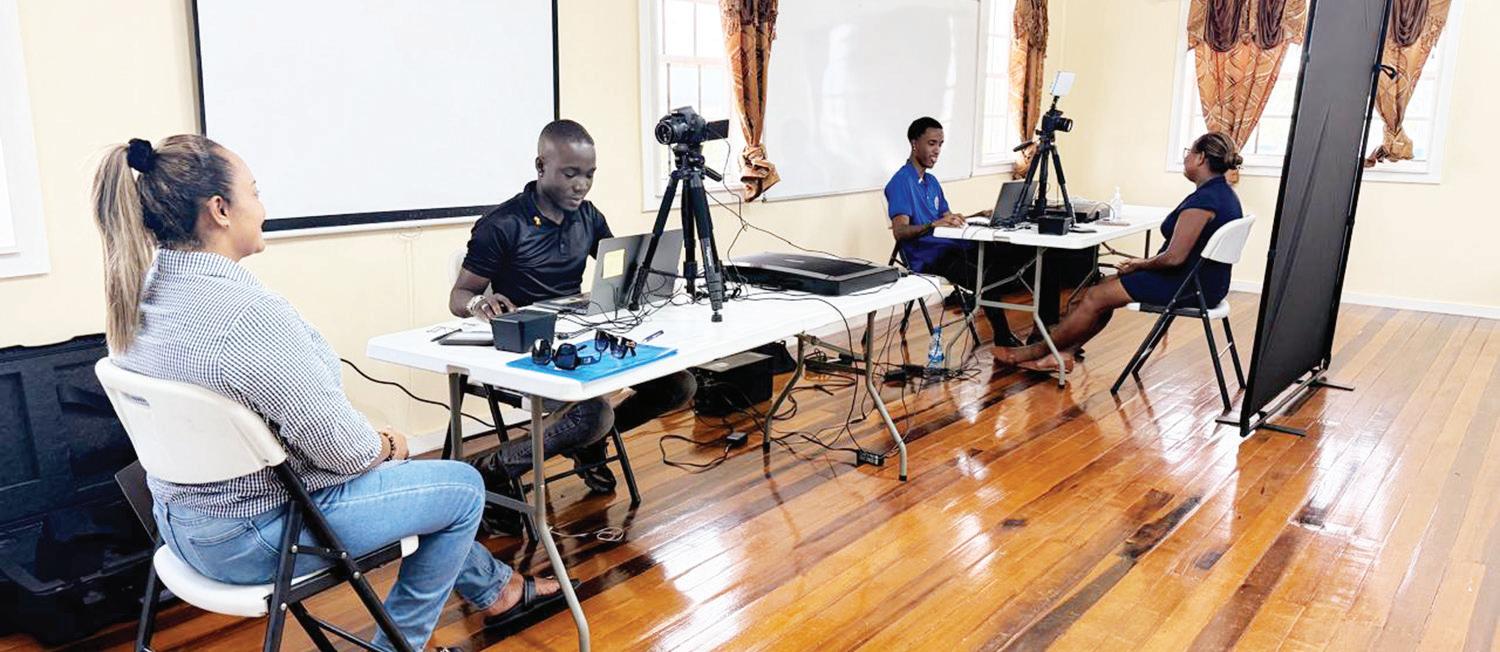


“ON behalf of Cricket West Indies, I extend warm congratulations to Shai Hope and our team for a commendable campaign at the ICC Men’s T20 World Cup,” a statement from CWI said.
“While we are disappointed that our journey concluded at Eden Gardens
in Kolkata against the India national cricket team,” it went on to say, “the tournament, as a whole, reflected growth, belief and togetherness. Winning five of seven matches and advancing to the Super 8s is a testament to the preparation and commitment of this group.
“Most encouraging was
the spirit of resolve and fight displayed throughout the competition, a spirit that was needed more than ever. That determination and pride in representing the region strengthened confidence across the Caribbean and reminded us of the character of West Indies cricket.
“Today, we are proud of
clair, who hit a four and six in 12, was dismissed by fellow Berbician Leon Swammy off a ball that kept a bit low and hit the bottom of his bat as he played across the line.
Earlier, GDF were kept in shackles by frugal bowling from Sinclair, who opened the bowling with off-spin alongside medium pacer Carlos LaRose.
But it was Man-of-thematch, left-arm spinner Aryan Persaud who made the breakthrugh when he bowled Rockael Reddy (7) at 26-1.
LaRose dismissed Tomanni Ceaser (16) a run later before Persaud had Garfield Benjamin lbw for a duck to leave the score on 34-3.
Leon Andrews departed without scoring at 34-4, before Persaud trapped Kwasi Mickle lbw for a duck at 36-5.
Left-hander Javid Karim offered some resistance with a 57-ball 30 with three fours, but when he looked to hit First-Class medium pacer Renaldo Ali-Mohamed for consecutive boundaries, he was taken at mid-off at

Only Zameer Nazeer, who was caught and bowled by left-arm spinner Devon Lorde for 20 with three fours, put up any fight before he was last out.
Watched by a large gathering who looked at India beating the West Indies on TV and local game live, Persaud had figures of 10-4-10-4, while Lorde had 2-2 from 3.1 overs.
Meanwhile, Police and Demerara Cricket Club (DCC) finished on top of their respective groups, and were scheduled to play in Qualifier 1 at DCC.
The winner of that game would have advanced directly to the final, while GCC would oppose the loser in Qualifier 2 for a place in the final.
DCC officials stopped the contest from being played yesterday because Andrew Lyght Jnr. is reportedly banned from the Queenstown venue due to an incident that happened over a year ago.
However, Lyght, the son of the late DCC, Demerara, Guyana and West Indies opener Andrew Lyght, was previously a member of DCC before joining the Police team. Interestingly, Lyght Jnr. was seen at DCC on several occasions this year, and was not an issue.
A Georgetown Cricket Association (GCA) Executive told this newspaper yesterday that he was surprised the game was not played.
“We had excellent weather and an available venue today (yesterday) and this was a petty decision. We will replay the game sometime over the weekend, and, hopefully, the Police ground would be available. These things
our men in maroon, and appreciative of the dedication of the backroom team led by Head Coach Daren Sammy. Their collective effort has laid a strong foundation for the work ahead.
“We will regroup, we will work, and we will compete again with even greater unity and purpose.”
(From page 31)
are frustrating to the GCA, since it delays the completion of our tournaments.

ENGLISH RACING TIPS
IRISH RACING TIPS LEOPARDSTOWN
ivenotout 13:30 hrs Mento
RACING
SOUTHWELL 10:15 hrs Sea Thrift 10:45 hrs Smurfette 11:15 hrs Jefferey's Cross 11:45 hrs Afancy Getaway 12:15 hrs Tread Carefully 12:45 hrs Classical Sting KEMPTON 10:07 hrs Charles Darnay 10:37 hrs Magnificent Mel 11:07 hrs Big Bard 11:37 hrs Lady Dora Mae 12:07 hrs Iconic Times 12:37 hrs Spanish Voice 13:10 hrs Eulalia 13:40 hrs Rosemary's Rose WOLVERHAMPTON 12:50 hrs Belle Of KT 13:25 hrs Perola 14:00 hrs Feancesi 14:30 hrs Sisters Im The Sky 15:00 hrs Classy Clarets 15:30 hrs Insuspence 16:00 hrs Papa Don't Preach 16:30 hrs Three On Thursdsy
March
(2) Who was declared Man of the Match? Answers in tomorrow’s issue
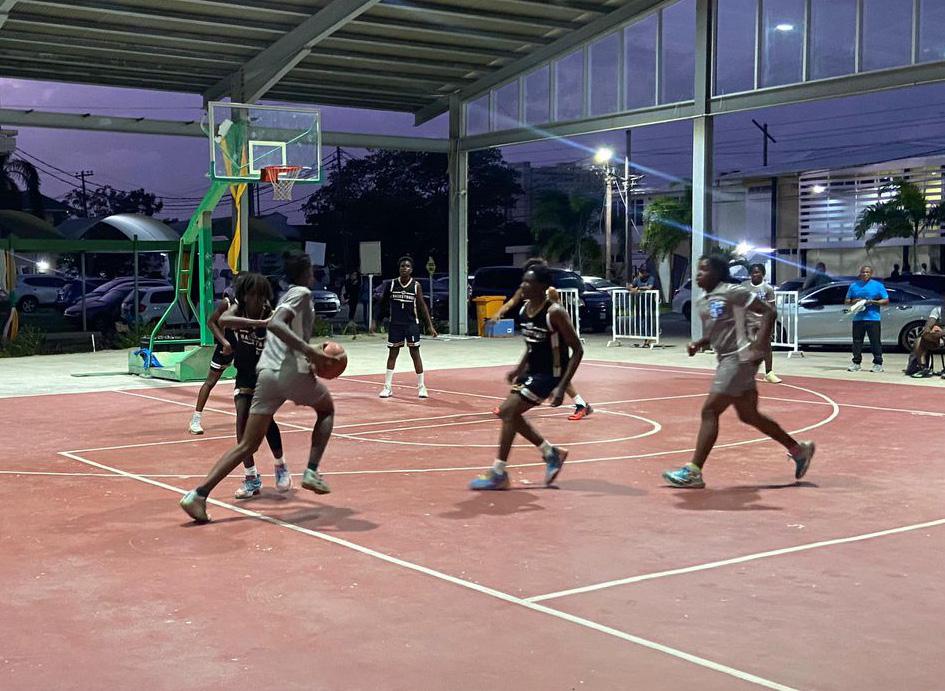
QUEEN’S College and the Government Technical Institute (GTI) captured wins when action continued in the Schools Basketball League at the Burnham and UG Courts.
On Friday, Queen’s College came out strong after tip off, offensively outscoring St. Stanislaus 10-4 after the first period, and 10-6 after the second quarter to top those 20-10 at the half.
A rejuvenated Saints tried desperately to pull it back in the third, but the period ended 10-10, which meant their deficiency had remained.
The final quarter saw Saints pulling out all the stops to outlast QC in the final quarter, outpacing them to win the quarter, 20-14, but it was too little too late, as QC managed to hold off enough to clinch the victory by two points, 44-42.
The win sees QC top the league table with 5 wins and 2 losses for 12 points ahead of GTI.
Meanwhile, GTI put on a solid showing at home to defeat Marian Academy in the coaches organised league.
GTI playing Marian Academy at the Burnham hard courts dominated all but
1 quarter to win handsomely, 61-42.
They led 15-8 at the end of the first quarter, but were pulled back as Marian produced the goods in the second quarter to make it 22-18 and keep them at bay.
GTI responded like champions, tipping the third period 24-11 to extend their lead to 32-29
They would follow up in the fourth quarter, outscoring their opponents 15-9 to win the contest 61-42.
It is GTI’s fourth win with 2 losses for 11 points, with President’s College third with 5 wins and a loss.
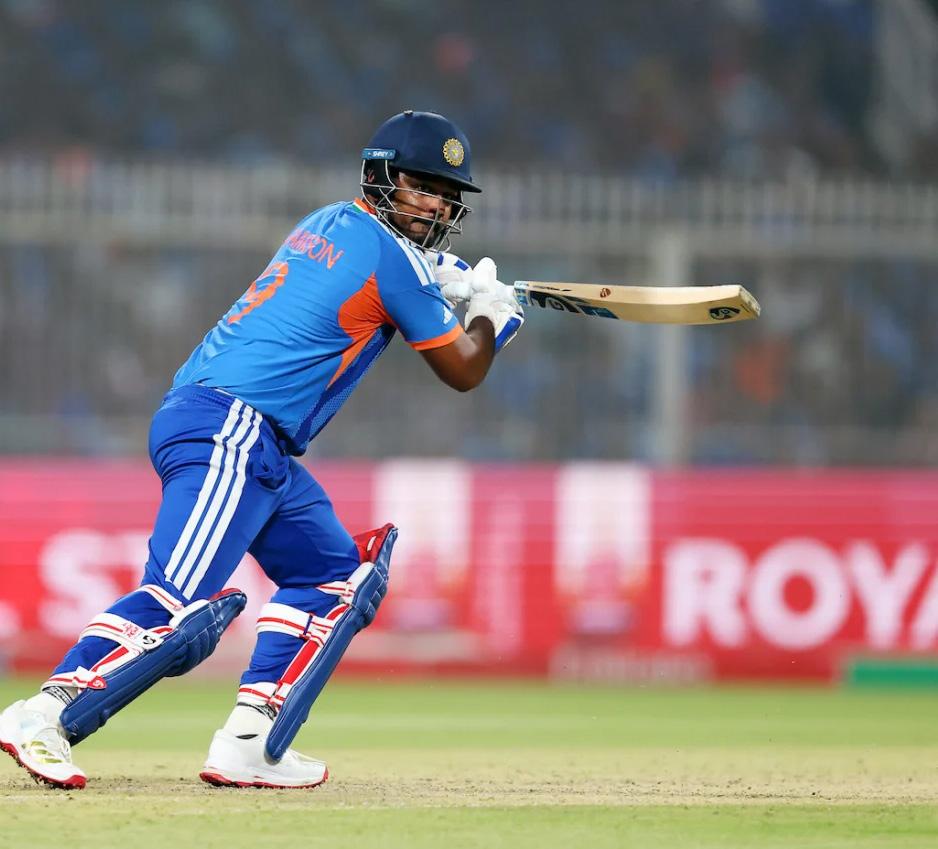
CMC – Sanju Samson produced one of India’s greatest ever batting performances at a T20 World Cup to power his side to a clinical five-wicket victory over West Indies and keep their hopes of defending their title alive.
Playing in only his third match of the tournament, Samson belted an unbeaten 97 off 50 balls as the home side finished on 199 for five in 19.2 overs in response to the West Indies’ competitive total of 195 for four in 20 overs.
The win sent them through to the semifinal stage, where they will face Group 2 winners England on Thursday in Mumbai.
Billed as a showdown between David and Goliath, the contest did not disappoint the over 50, 000 fans who packed into Eden Gardens.
The West Indies’ surprise
decision to drop out-of-form opener Brandon King and replace him with Akeal Hosein, saw all-rounder Roston Chase opening the batting for the first time in his international career.
While Chase survived a run out chance when he was just one, and a dropped opportunity on 14, he looked fluent during a 68-run opening partnership with captain Shai Hope.
Hope on the other hand, struggled throughout his innings until he was bowled by a quicker delivery from spinner Varun Chakravarthy after scoring 32 off 33 balls. Shimron Hetmyer hit two sixes and a four in racing to 27 off just 12 balls, before he was undone by a delivery from Jasprit Bumrah that grazed the inside of his bat on the way through to the wicketkeeper, to leave the Windies 102 for two in the
tyne 28 minutes into the encounter.
A second-half brace from Matthew Dorris, which came in the 47th and 79th minutes settled any further nerves as they finished strong to move on to the next round.
Also at the Scott’s ground, New Amsterdam Technical
Institute defended home turf as they took a 3-1 victory over the Government Technical Institute.
Amare Ceasar and Dane Singh scored in the 23rd and 28th minutes, respectively, to put New Amsterdam ahead. Caesar returned after the second half resumption to
12th over.
Bumrah struck again two balls later, outfoxing Chase with a slower delivery that he could only chip to cover where captain Suryakumar Yadav took a simple catch to dismiss him for 40 off 25 balls, laced with five fours and one six.
When Sherfane Rutherford was caught behind off the bowling of Hardik Pandya for 14, the West Indies were in a spot of bother at 119 for four in the 15th over.
However, Rovman Powell and Jason Holder shared an unbroken partnership of 76 runs that ensured the regional side finished with a flourish.
They would have been disappointed not to have gotten over the 200-run mark, but the last two overs bowled by Arshdeep Singh and Bumrah only yielded 20 runs.
(From page 31)
score a blinder in the 48th minute to make it 3-nil, and all but confirm their place in the semis.
A late goal from GTI’s Kevin David threatened as they sought to make a comeback, but that effort was short-lived, as NATI ended the contest 3-1.
Holder ended on 37 not out from 22 balls with three sixes and two fours, while Powell was unbeaten on 34 off 19 balls, inclusive of three fours and two sixes.
Unlike the West Indies, India got off to a flying if not prosperous start in their run chase.
Abhishek Sharma and Samson clobbered 29 runs off the first three overs, before the former was caught by Hetmyer running back from deep backward square leg off the bowling of Hosein for 10.
Ishan Kishan hit two
fours in his brief knock of 10, but pulled a delivery from Holder straight into the hands of Hetmyer on the deep square leg boundary, to leave the home side 41 for two in the fifth over.
Samson, however, continued to attack, hitting Gudakesh Motie for two fours in the eighth over and followed up by smashing Romario Shepherd for a six and four in the next over to move to 48.
He then reached his first half century of the tournament off 26 balls by slapping Motie for four through point.
Together with his captain, they added 58 runs in six overs to keep India in the ascendancy at 99 for two in
the 11th over.
And when Shamar Joseph removed Yadav for 18, Samson found a useful partner in Tilak Varma, with the two putting on 42 runs in four overs.
Holder broke the partnership by getting rid of Varma for 27 off 15 balls, and when Joseph returned to dismiss Pandya, India required 17 runs from 10 balls.
Shivam Dube hit Joseph for two boundaries to bring the equation down to seven runs off the final over, before Samson fittingly ended the match by clobbering Romario Shepherd for a six and four off the first two balls, to spark wild celebrations.



THE Cyril Potter College of Education (CPCE) and St Stanislaus College were crowned champions of the National Schools Volleyball Tournament at the National Gymnasium over the weekend. In the male division CPCE needed three sets to get past St Stanislaus College 17-11, 1710 and 11-6 in their contest. They then comfortably beat Queens College to take the title after winning in straight sets.
THE Guyana Football Federation (GFF) wishes to address the incident that occurred this evening during our national team’s fixture in the Concacaf U-20 Men's Qualifiers in Curaçao. In approximately the 86th minute of the match, the referee issued a red card to a player from Anguilla. Following this decision, there was a sequence of hostile verbal exchanges and jostling between players of both teams. During this period, an Anguillian player ran into a group of players and appeared to have struck a Guyanese player, which precipitated a broader altercation involving several players.
As a result of the esca-
lation, the match was abandoned. Multiple players from both teams were subsequently issued red and yellow cards. We understand that an official investigation into the matter is ongoing, and we await confirmed details from the relevant authorities.
The GFF can confirm that all Guyanese players and staff have returned safely to their hotel, and there have been no reports of any serious injuries arising from the incident.
The Guyana Football Federation remains committed to the principles of fair play, respect, and discipline that underpin the game. We will provide further updates as more verified information becomes available.
In other games on day two, President’s College (PC) won their clash with ‘Saints.’
Also picking up a win was President’s College ‘A’ team, who won against Bishops in two sets to 1,17-15, 14-17 and 6-11, while Annandale Secondary lost to St Roses 14-17 10-17.
The female category saw St Stanislaus College taking
the national title after a brutal showing over the two days of competition.
‘Saints’ continued their winning ways from the opening day with a crucial win 1711 17-5 to take home the title.
The final day of action saw CPCE getting the better of President’s College ‘B’ team 17-6 and 17-5.
Bishop’s High School then lost in straight sets to PC ‘A’ team 5-17, 10-17
The two-day competition, organised by the Guyana Volleyball Federation was sponsored by the Ministry of Culture, Youth and Sport and the National Sports Commission.
The School Volleyball Competition features the likes of Bishops High, St Roses High, President’s College, St Stanislaus College, Annandale Secondary School and the Cyril Potter College of Education.
WEDNESDAY will see explosive knock-out football action as four of the country’s best teams vie for a chance to capture the inaugural Elite league Cup trophy.
Leading the charge will be reigning Elite League Champions Slingerz FC, who were the final team to earn their place in the semi-finals with a dominating 7-1 thrashing of Monedderlust FC on Saturday evening at the Guyana Football Federation National Training Centre.
Meanwhile, Wednesday’s semi-finals round at the NTC will see Slingerz facing another top side, Western Tigers.
Slingerz played flawless in their encounters against Monedderlust and Ann’s Grove United to top Group ‘A’, while Western Tigers, despite a loss to GDF, qualified as the best second-place side in Group ‘C’.
The other semifinal will feature the GDF and the Guyana Police Force (GPF).
The soldiers, who were unbeaten in Group ‘C’, will meet the men in blue who topped Group ‘B’ after beat-

ing Santos and Den Amstel in their group.
Slingerz’ put on a show on Saturday for their adoring supporters as they left Monedderlust bruised and battered with an overwhelming 7-1 performance.
The usual suspects were
responsible for their success, Darren Niles, Raushawn Ritch, and Kemar Beckford, the trio scoring braces each, while Curtez Kellman scored the other goal.
Monedderlust’s Delwin Fraser scored the consolation goal in the 7-nil victory.
The league featured nine elite league sides competing in the round-robin/knock out competition.
The competitions see the winner collecting a million dollars, with $700,000 for second place, and halfa-million for third place.
Bounty Farm Handicap Squash tournament…
By Sean Devers
THE six-day Bounty Farm-sponsored Handicap Squash attracted a record number of new participants and culminated at Georgetown Club yesterday after the previous five days were held the National Racquet Centre on Woolford Avenue.
The rapid improvement of Rising (Beginners) category was very pleasing while top players tested their fitness and temperament with handicaps as much as 18 negative points as the battled opponents of a lesser skills set.
Mary Fung-A-Fat who defeated Alex Arjoon 10-15, 15-6, 15-0 and Ashley Khalil
who beat Ashante Smith 152, 13-15, 15-2 were among the final winners in party-like atmosphere.
Results from yesterday:
Nicholas Mohamed def.
Jadah Hughes 15-14, 1015, 15-13
Rising
Aaran Sargeant def. Eva Thakurdin 15-7, 15-6
Rising
[3] Jude Gobin def. Nyela Glasgow 15-11, 15-6
Open
[4] Emily Fung A Fat def. Jibril Alli 6-15, 15-14, 15-9, Open
Kristian Viapree def. Kristina Cheeks 15-8, 15-13
Rising
[5] Fola Cadogan def. [2]
Azaria Proffit 15-10, 15-7
Rising
Samara Sukhai def. [4] Javon Daziel 15-6, 15-9
Elite
Kirsten Gomes def. Taylor Fernandes-Henry 1511, 15-8
Open
[8] Lester Lewis def. [5] Egan Bulkan 12-15, 15-9, 15-6
Elite
Ashley Khalil def. [4] Ashante Smith 15-2, 1315, 15-2
Open
[7] Blake Edwards def. [3] Ethan Bulkan 15-10, 11-15, 15-13
Elite
Mary Fung-A-Fat def. [3] Alex Arjoon 10-15, 15-6, 15-0
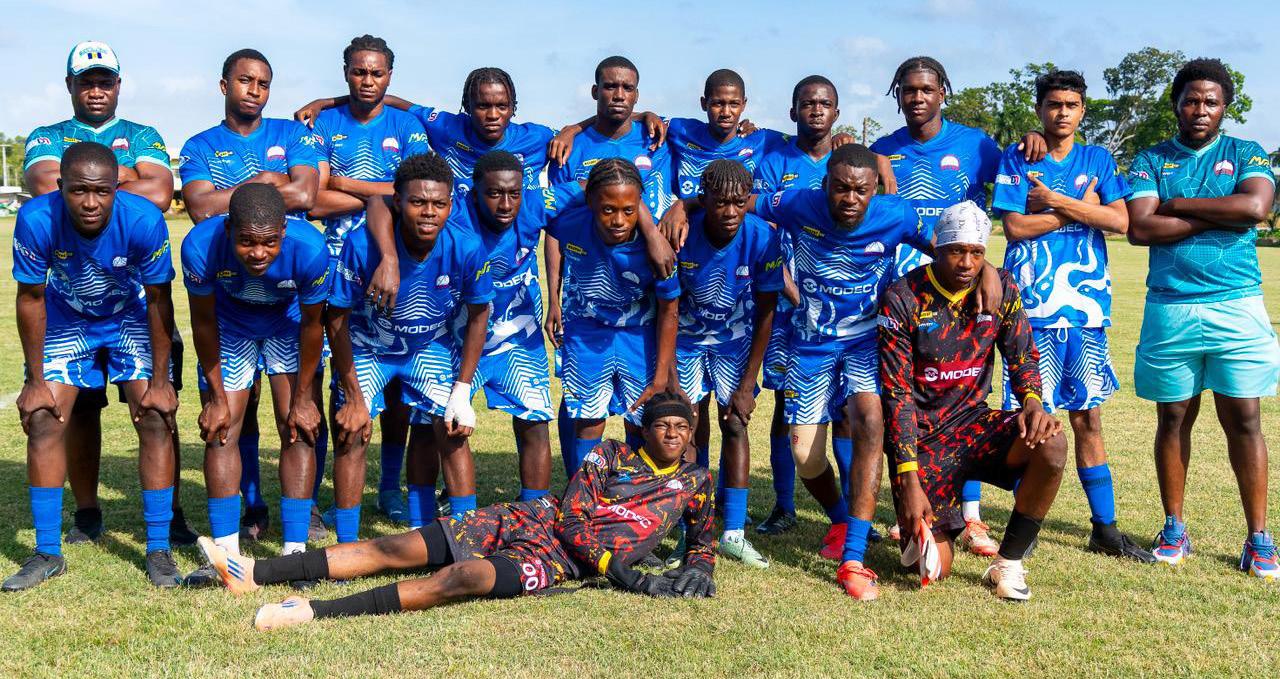
ESSEQUIBO and Mahaicony Technical Institutes delivered a superb showing in the quarter finals stage of the MODEC sponsored Tertiary Schools Football Competition played on Sunday at the Queen’s College grounds.
Mahiacony Technical Institute claimed a 2-1 win over Linden Technical Institute.
Mahaicony’s Omar Williams and Younce Francis scored within minutes of each
other in the first half after an early goal by Linden’s Dexter Milo.
The second half produced no change in the scoreline as Mahaicony took the narrow victory.
Meantime, University of Guyana had no answer for Essequibo Technical Institute who eased their way into a 2-nil victory. also at the Queen’s College Ground.
Essequibo Technical Institute’s goal scorers were Ja-
maal Smith, who hit the back of the net in the 30th minute before a second half goal from DeAngelo Davidson sealed their berth.
Over the weekend at the Scott’s ground in New Amsterdam, Berbice, Upper Corentyne Industrial Training Centre ensured they advanced with a 3-nil defeat of Port Mourant Technical Institute. Joshua Marshall scored the opener for Upper Coren-

Players in the ‘RISING’ category were impressive with raw talent throughout the six days of competition
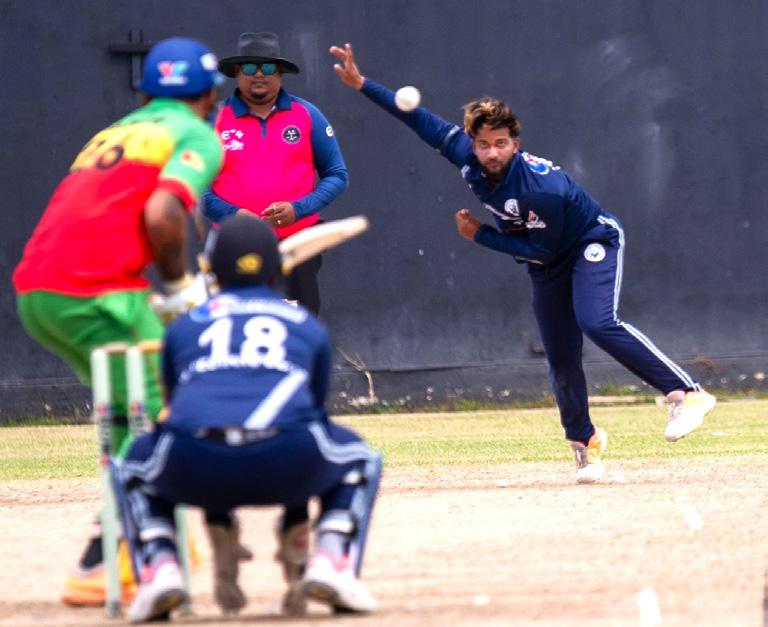
Man-of-the-match left-arm spinner Aryan Persaud had 4-10 for GCC yesterday at Bourda (Delano Williams photos)
By Sean Devers
UNDER a cloudless sky at the historic Georgetown Cricket Club (GCC) at Bourda, the hosts mauled the Guyana Defence Force (GDF) by nine wickets in their Eliminator of the Dave’s West Indian 50over First-Division cricket tournament yesterday.
The soldiers elected to bat on good track and fast and well-manicured Bourda and were shot for a paltry 91 in 33.1 overs.
GCC responded with 93-
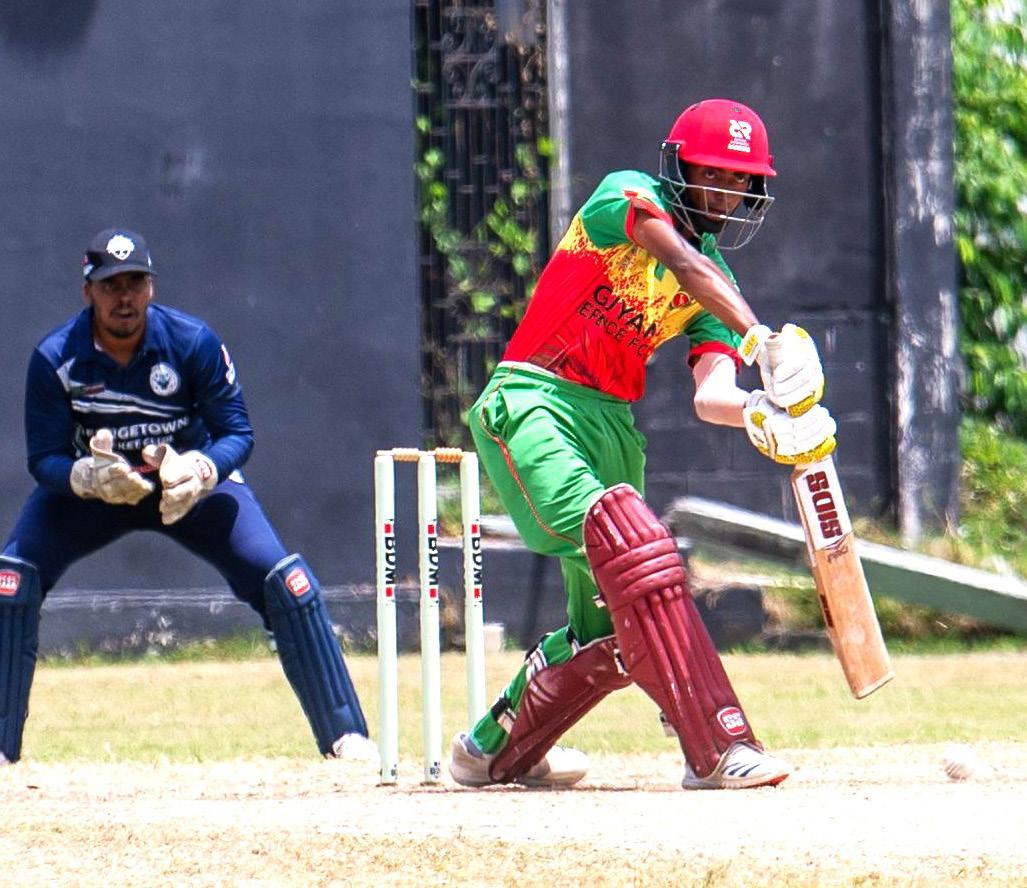
yesterday
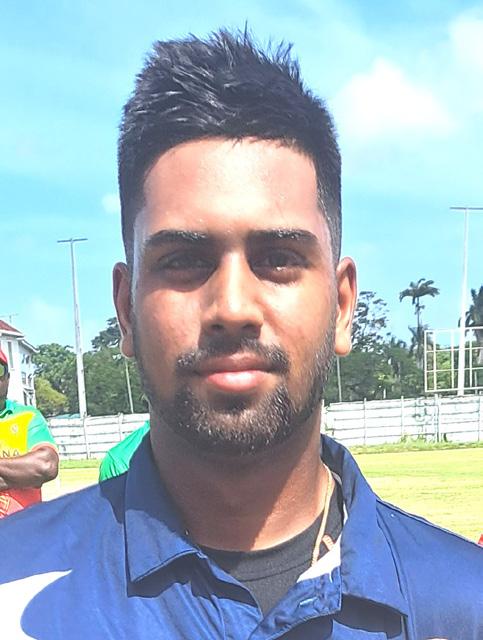
1, with former West Indies youth player Mavindra Dindyal hitting boundary over cover with three runs to get.
Dindyal was unbeaten on 48 from 32 balls in an attractive innins decorated with eight boundaries, inclusive of three sixes.
Dindyal joined FirstClass left-hander Matthew Nandu, who played the supporting role with an unbeaten 24 from 36 balls with a couple of fours.
This was after West Indies Test player Kevin Sin-