


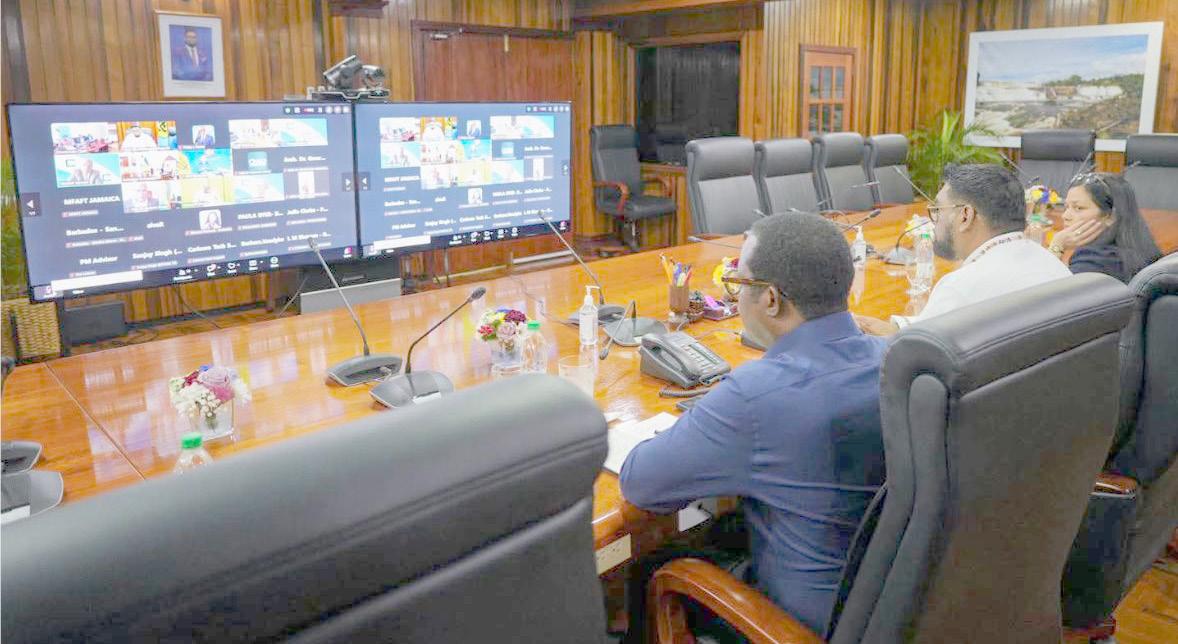
President Dr Irfaan Ali, on Tuesday, joined fellow Heads of Government of CARICOM for the Second Meeting of the Prime Ministerial Sub-Committee on Climate Change and the Climate Finance Agenda, as well as the Sixteenth Meeting of the Prime Ministerial Sub-Committee on the CARICOM Single Market and Economy (CSME)
Every child on school registers eligible for ‘Because We Care’ cash grant —Education Minister affirms, says no child has been denied payment

President, Dr Irfaan Ali, on Tuesday, met with a group of young professionals to discuss the many development opportunities currently available in Guyana and the exciting prospects that will be unlocked through the soon-to-be-operational Guyana Development Bank (Office of the President)


Sonia Parag, on Tuesday, sought to reassure parents and guardians that every child listed on the register of a public or private school for the 2026–2027 academic year is entitled to receive the government’s “Because We Care” (BWC) cash grant.
In a Facebook statement, the minister said eligibility extends to every child who is registered to either begin or continue schooling during the upcoming academic year.
“Every single child on the school’s register in the public and private school systems will receive the BWC cash grant. That is, all those who are registered to begin or continue school for the 2026-2027 year,”
she said.
Parag also disclosed that, based on records available to the Ministry of Education, no eligible child has been refused the grant.
The minister added, “Our records thus far reflect that no child who is found to be on a school’s register has been denied their cash grant.”
She urged parents and guardians seeking clarification about eligibility or payment issues to contact the Ministry of Education, stressing that it is the only authority responsible for administering the programme.
The clarification comes as the nationwide distribution of the “Because We Care” cash grant continues across schools throughout

Guyana.
Under this year’s programme, each eligible child is receiving a $60,000 “Because We Care” cash grant, a $5,000 school uniform grant and the newly introduced $20,000 transportation grant, bringing the total assistance to $85,000 per child.
The government announced during the presentation of the 2026 National Budget that approximately 206,000 children enrolled in public and private schools are expected to benefit from the increased allocation.
The initiative is projected to inject an additional $2 billion into households, bringing the total value of transfers under the programme to an estimated $12.4 billion.
The “Because We Care”
initiative was reintroduced by the People’s Progressive Party/Civic (PPP/C) administration in 2020 and has been expanded annually through successive increases in the cash grant and the introduction of additional education support measures. The programme is intended to assist parents and guardians with back-toschool expenses while improving access to education by helping families meet the cost of uniforms, transportation, stationery and other school-related necessities.
Distribution of the grants began on Monday and is continuing at schools nationwide in accordance with schedules established by the Ministry of Education.

THE government will fully digitise the Guyana Lands and Surveys Commission (GLSC) within the next four years, President Dr Irfaan Ali has announced, describing the agency as the “intersector” on which virtually every major development project in the country depends on.
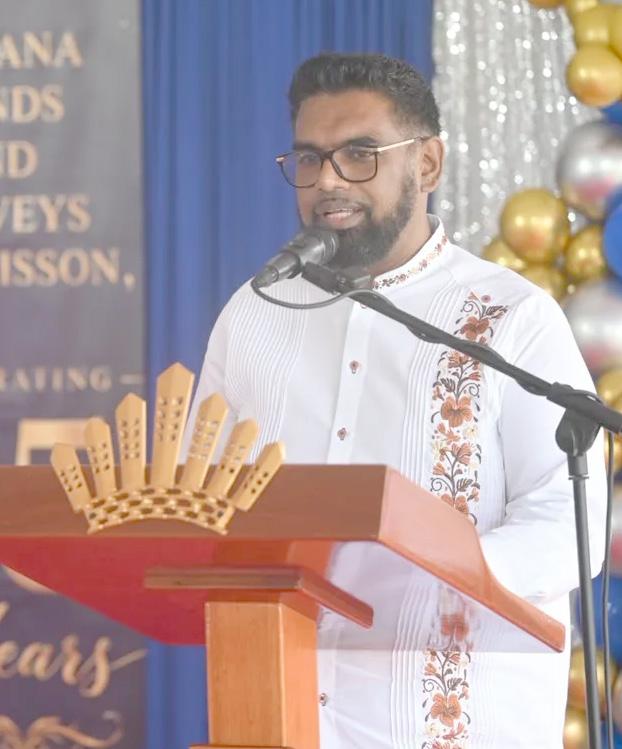
Speaking at the 25th Anniversary and Awards Ceremony of the GLSC on Tuesday, President Ali said the commission is being deliberately reshaped into a system-based, people-centred and service-led institution, with modern technology at the core of its operations.
“The objective in the next four years is to deliver an agency that is fully digitised, and one in which we will fully implement the most advanced technology to help our work here in every department, in every aspect of our work, and that is critical
as we advance the work of the commission,” he said.
The President stressed that the GLSC’s work is often undervalued because it takes place before the visible construction.
He insisted that its imprint is found in every major national project from housing schemes to highways and industrial investments, stressing that land administration underpins all aspects of development, including roads, bridges, hospitals, schools, housing, agriculture and investments.
“Before a road is built, land must be identified and surveyed before a housing scheme development can begin. Boundaries must be established and records prepared before an investor commits resources. There must be certainty about land ownership and land
use before communities can expand,” he said adding: “There must be proper planning and management of land resources.
In other words, development begins with land. An effective land administration is what transformed land from a physical asset into an engine of economic growth and social progress.”
Dr Ali said the government’s vision is for a modern, efficient, transparent and citizen-centred land administration system, driven by accurate data and strong geographic information systems (GIS).
“We want a system where information is readily accessible, where records are increasingly digitised, where services are delivered more efficiently, and where
decisions can be made using accurate and reliable data,” he said, adding: “We want stronger geographic information systems to support planning and development across the country; one of greater certainty and security of tenure for citizens, farmers, businesses, and communities.”
Modernisation, he cautioned, will require significant investment, technology, training, retraining, retooling and policy reform, as well as a clear vision and institutional discipline
The President underlined that the GLSC must be fully aligned with Guyana’s national development priorities, including the Low Carbon Development Strategy (LCDS) and the emerging global biodiversity alliance, given the complexity of balancing rapid economic expansion with sustainable land stewardship.
“The nation’s future is not built only by the proj-
ects you can see; it is also built by the institutions that quietly make those projects possible.
For 25 years, the Guyana Lands and Surveys Commission has been one of those institutions. It has helped provide a foundation upon which communities are built, investments are made, and opportunities are created,” he said.
THE Ministry of Tourism, Industry & Commerce and the Guyana Tourism Authority (GTA) announced ExxonMobil Guyana as a strategic partner for the second edition of ORIGINS: Guyana Fashion Festival, reinforcing the government’s commitment to advancing Guyana’s creative industries and positioning the country as an emerging destination for fashion and cultural tourism.
According to a press release, scheduled for July 3-5, ORIGINS: Guyana Fashion Festival is the country’s premier fashion event, bringing together designers, models, makeup artists, artisans and creative entrepreneurs in a celebration of Guyanese talent, culture and innovation.
Following a successful inaugural edition in 2025, this year’s festival will place an even greater emphasis on professional development,

market access and international engagement. As a Strategic Partner, ExxonMobil Guyana’s support will contribute to the Festival’s long-term vision of developing Guyana’s fashion industry through capacity building, greater market access and increased inter -
national engagement. The programme will extend beyond the runway, with workshops, masterclasses and panel discussions designed to strengthen business and technical skills in areas including brand development, digital commerce, export readiness and sustainable production.
The support will also help create new opportunities for local designers by strengthening connections with regional and international buyers, collaborators, media and industry leaders, while expanding the visibility of Guyana’s growing fashion sector.
Honourable Susan Rodrigues, Minister of Tourism, Industry & Commerce, said the collaboration reflects the Government’s broader commitment to developing the country’s creative economy through meaningful publicprivate partnership.
“The Government of Guyana is committed to creating the conditions for our creative industries to thrive as part of a diversified and resilient economy. Through initiatives like ORIGINS, we are investing in the Orange Economy by creating opportunities for local designers, entrepreneurs and creatives to develop their skills, expand their markets and showcase their work on a larger stage. Partnerships with the private sector, such as ExxonMobil Guyana, are essential to this vision. Together, we are strengthening an ecosystem that supports innovation, generates economic opportunities and po-
sitions Guyana’s creative talent as a valuable contributor to our national development.”
Director of the Guyana Tourism Authority, Kamrul Baksh, said ORIGINS continues to evolve into a platform that celebrates Guyanese creativity while creating lasting opportunities for the country’s fashion industry.
“ORIGINS is about celebrating the creativity that exists right here in Guyana and giving our designers the platform they deserve. Fashion tells the story of who we are, our people, our heritage and our identity.
“With the support of partners like ExxonMobil Guyana, we’re able to create more opportunities for local talent to learn, connect and share their work with new audiences, while strengthening Guyana’s appeal as a destination where culture and creativity are part of the visitor experience.”


THREE Rivers Initiative, in partnership with Slingerz Family Entertainment, has opened registration for the DJ Spin Camp, a free, five-day creative learning programme for young people aged 15–18.
The camp runs August 10–14, 2026, from 9:00hrs to 15:00hrs at Leonora Stadium, West Coast Demerara, according to a press release.
Organisers say the camp will give participants hands-on exposure to DJ equipment, music mixing, sound performance and teamwork, while building creative confidence and discipline.
The curriculum covers the basics of DJing, mixing and transitions, music selection and rhythm, performance skills and sound culture, delivered in a supportive and energetic learning environment.
Leading instruction and mentorship will come from

Professor Arthur Craig of Virginia Tech, Associate Professor of Practice in the university’s Academy of Transdisciplinary Studies and Programme Director of VTDITC: Hip Hop Studies. Professor Craig, a DJ since 1997 and member of the Table Rok Crew, will serve as the camp’s techni-
cal and cultural facilitator.
Craig brings experience in higher education, youth mentorship and community cultural programming; since joining Virginia Tech in 2016 he helped build VTDITC, a programme that has hosted more than 1,300 events and received multiple awards.
“This camp is about more than music,” said Candice Ramessar, Coordinator of Three Rivers Initiative.
“It is about giving young people a structured space to build confidence, learn a creative skill, work as a team, and see themselves as capable, disciplined, and talented. Music has always been a powerful part of Guyanese culture, and this camp gives young people a chance to be part of that tradition while learning modern creative and technical skills.”
Three Rivers Initiative frames the DJ Spin Camp as part of a wider strategy to support youth development, STEAM learning and practical skills-building.
Slingerz Family Entertainment will contribute as a community partner, providing practical DJ and sound-system experience, mentorship and youth engagement.
The organisers emphasise that the partnership connects structured training with Guyana’s community-rooted music culture, giving local creatives equipment, mentorship and a proper platform.
Spaces are limited and organisers are encouraging early registration. The camp is free; transportation assistance to Leonora will be provided on a needs basis.
Young people aged 15–18 can register via the online form or contact organisers: Registration form: https://docs google com/forms/d/1mv5EHOdpW8zCPaW6B8FtzZ7c2Y1N0gJ5Ia3kJMZk8Ag/edit; and WhatsApp: 604-2216 or 641-6467.
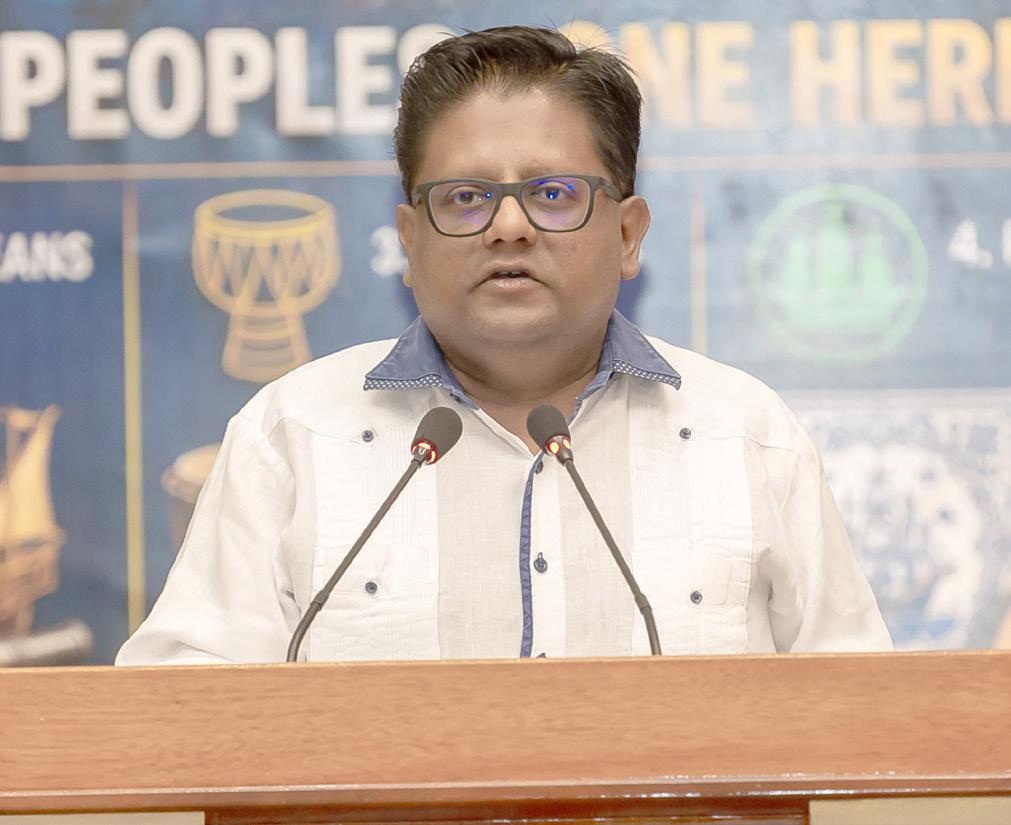
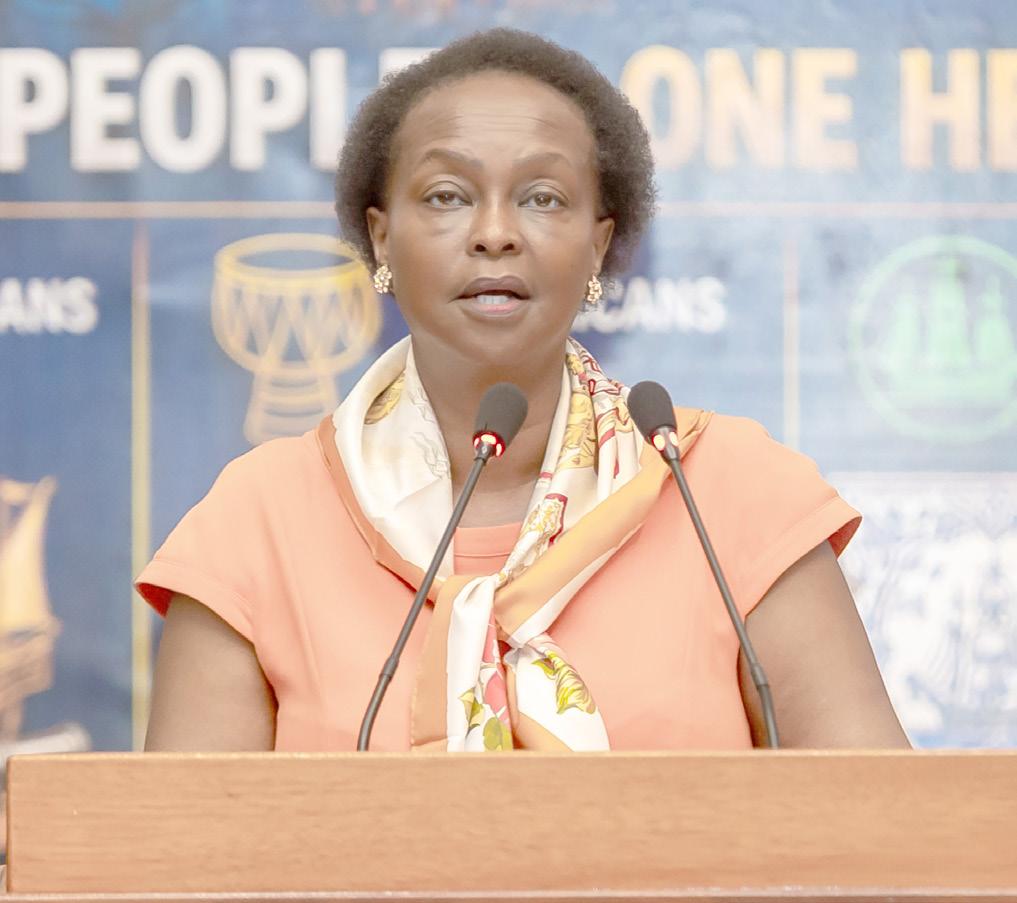
FINANCE Minister Dr Ashni Singh has hailed Guyana’s ethnic, religious and cultural diversity as its “greatest source of strength”, urging citizens to celebrate the country’s hard-won cohesion and reject attempts to turn differences into division.
Addressing the Ethnic Relations Commission’s (ERC) national symposium at the Arthur Chung Conference Centre on Tuesday, Dr Singh praised generations of Guyanese who, despite arriving through “force and deception” and enduring “terrible hardship”, forged what he described as a “richly and beautifully diverse kaleidoscopic tapestry” that is modern Guyana.
Held under the theme, “Unity, Diversity and the Path Forward,” the symposium brought together stakeholders from across all sections of society to promote dialogue, national unity and social cohesion.
“All of our ancestors arrived and laboured for generations, centuries, and decades. I believe that it is fair to say that they managed collectively to forge a really remarkable and diverse Guyana, and it is a diversity that we must not be shy to flaunt and to celebrate,” the minister said.
Dr Singh noted that, while modesty is a personal virtue, nations must be prepared to acknowledge and speak confidently about their successes, especially where ethnic harmony is concerned.
“All of our ancestors arrived and laboured for generations, centuries, and decades. I believe that it is fair to say that they managed collectively to forge a really remarkable and diverse Guyana, and it is a diversity that we must not be shy to flaunt and to celebrate,” he added.
The Finance Minister said Guyana stands out internationally for the extent to which people of different ancestry, different ethnic origin, different religious persuasions and different denominations live, work, study and worship together cohesively.
He stressed that the People’s Progressive Party/Civic (PPP/C) Government, hold an “unshakable view” that diversity is central to Guyana’s development trajectory.
“We in the Peoples Progressive Party/Civic Government are of the firm and unshakable view that Guyana’s diversity is a source of tremendous strength for our
country and the strength that we have every intention of leveraging, of protecting and of deploying in the collective national good,” he said.
Dr Singh tied this position to President Ali’s “One Guyana” platform, which he described as a deliberate effort to highlight the country’s oneness while ensuring that every single Guyanese person is able to participate in, contribute to, and benefit from the economic transformation that is underway.
While urging Guyanese to recognise and celebrate the gains already made, the minister noted that efforts to promote cohesion are far from being completed and called for honesty in confronting remaining challenges.
“We need to be frank about separating rhetoric and sound bites from reality. We have a duty to work to ensure that our diversity continues as it has been in the past, that our diversity continues to be the source of strength, that it has been over the generations that preceded us, and that we continue to build on this instead of becoming a source of division and weakness,” Dr Singh said.
He added that political leaders in particular bear a responsibility not to foster and promote suspicion, but to promote cohesiveness in all that we do.”
Dr Singh also commended the Ethnic Relations Commission and its successive cohorts for their work since being established through the 2001 constitutional reforms, lauding Tuesday’s symposium as part of that ongoing effort to safeguard Guyana’s ethnic harmony as the country enters a new phase of economic and social transfor-
mation.
‘HARNESS YOUR DIVERSITY’
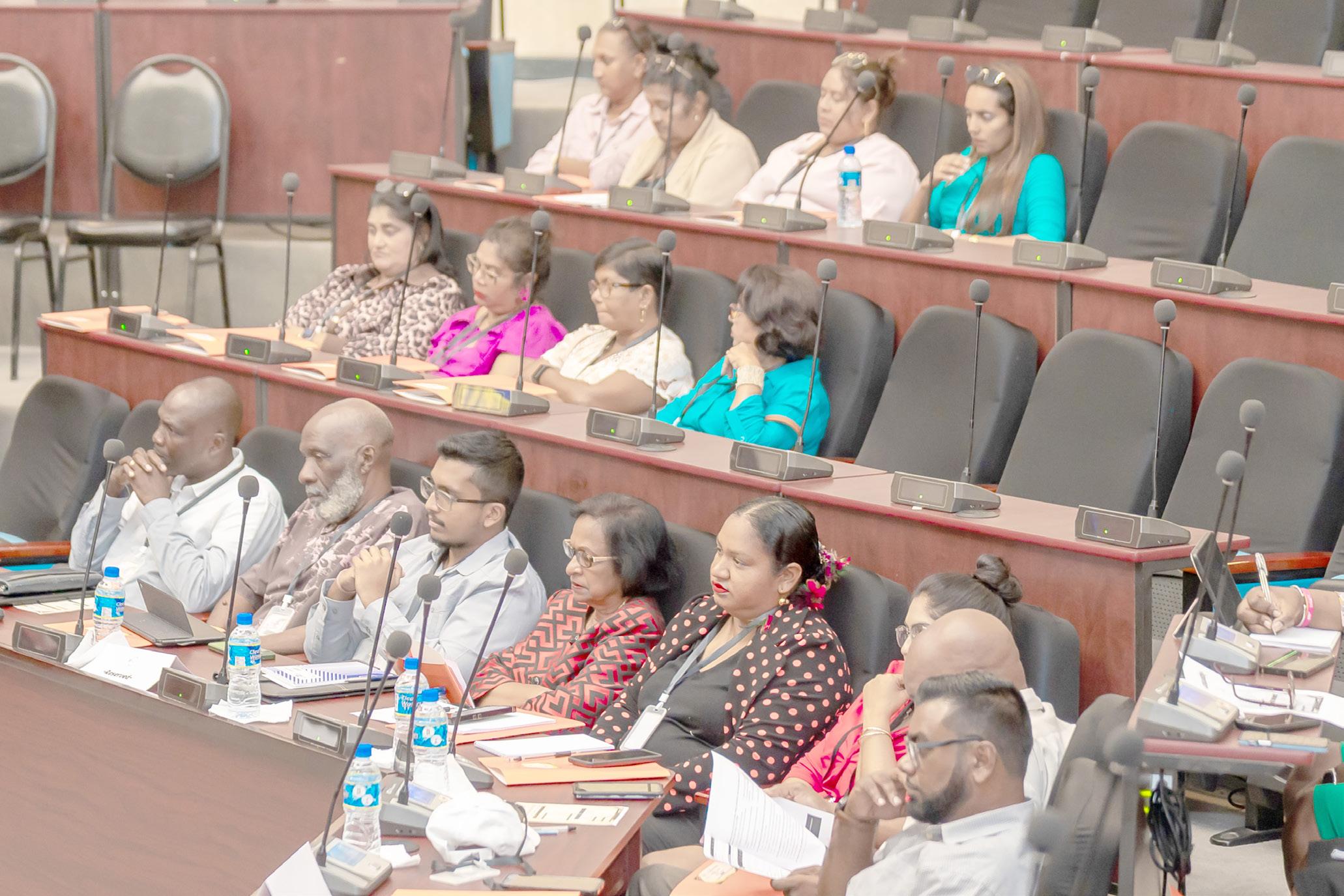
Meanwhile, United Nation’s Resident Coordinator, Jean Kamau urged Guyana to invest deliberately in social cohesion, inclusive insti-
tutions and civic education, warning that unity cannot be taken for granted.
She said the UN, through its forthcoming Cooperation Framework for the Caribbean (2027–2031) and the CARICOM-UN Framework for Action, would continue to
support Guyana’s efforts to strengthen inclusion, human rights and social resilience.
“Guyana’s story is still being written. The next chapter will be defined by, will not be defined by ethnicity alone, but by the choices made today about the kind of society fu-
ture generations will inherit,” she said, adding: “The opportunity before Guyana is not simply to manage diversity, but to harness it as a source of strength, creativity, and national progress.”
She further proposed five practical lessons for Guyana’s path forward.
These include expanding interaction across communities, especially among young people; investing in education and civic education that promote shared citizenship; strengthening public dialogue to counter misinformation and divisive narratives; building institutions that are trusted, inclusive and accessible; and nurturing a shared national vision in which diversity is celebrated as an asset.
“The question is not whether differences exist. The question is, how do we choose to engage with these differences, and whether we can transform them into a source of collective strength,” she said.


THE success of International Building Expo 2026 is not just about great attendance figures or the number of exhibitors under one roof.
It is a physical manifestation of Guyana’s ongoing transformation, the growing confidence in its housing sector and the government’s determination to make homeownership more accessible to thousands of citizens.
The four-day event at the National Stadium, Providence attracted over 50,000 visitors and has further cemented its place as one of the country’s premier national exhibitions.
The wide array of participants, from government agencies and private developers to financial institutions, small businesses and ordinary citizens, underlines the pivotal position housing and construction now occupy in the broader development agenda of Guyana.
Perhaps the most significant outcome of the expo was not the exhibition but the direct provision of services to citizens under the Ministry of Housing’s “Dream Realised” initiative.
One of the most significant steps in providing security of tenure to thousands of families is the distribution of more than 2,100 certificates of title, more than half of which were uplifted during the event.
For many beneficiaries these certificates are not mere documents, they are the legal basis on which subsequent generations can build wealth, stability and opportunity.
In addition, the issuance of upwards of 1,000 house lots on the East Coast of Demerara and the processing of agreements of sale for over 700 prospective home owners on the West Coast are signs that the government’s housing programme is moving from promises to tangible delivery.
With many countries around the world struggling to provide affordable housing, Guyana’s continued efforts to increase access to homeownership is to be applauded.
The distribution of over $17 million in subsidy vouchers for steel and cement highlights the importance of targeted interventions to support low- and middle-income households. Such initiatives help bridge the gap between owning land and building a home, allowing beneficiaries to transition
from aspiration to reality.
The other important thing is the growing partnership between the public and private sectors that the expo showed.
The housing and construction market in Guyana remains strong with over 350 exhibitors in attendance.
Developers, suppliers, contractors, financial institutions and entrepreneurs all showed their willingness to invest in the growing economy and urban landscape of the country.
The revival of the Building Expo seminars after a break is commendable too.
Talks of sustainable urban planning, climate resilience, smart housing technologies and emerging construction innovations are a welcome shift to ensuring that Guyana’s development is not just fast, but also strategic and sustainable. With the country continuing to urbanise, such conversations will be increasingly important.
The presence of small businesses, cultural shows and family-oriented activities underscored the expo’s transformation from a traditional trade show to a truly national event that engages citizens from across
industries and communities.
But the success of an undertaking of this magnitude is never the work of a single ministry or an individual.
The coordinated efforts of government agencies, private companies, volunteers, exhibitors, emergency services, media organisations and cultural coordinators demonstrate the spirit of collaboration needed to host events of national importance.
The housing sector will remain one of the most important indicators of whether the unprecedented economic growth Guyana is experiencing will translate into better living standards for ordinary citizens.
The International Building Expo 2026 has demonstrated that the country not only has the ambition to build more houses, but also the institutional capacity, private sector confidence and public enthusiasm to build stronger communities.
The question is: how do you keep this going? If the accomplishments showcased at Expo 2026 are maintained and built upon, the dream of homeownership will inch closer for thousands of Guyanese families in the years to come.
LINCOLN Lewis’ attack on Ambassador Carolyn Rodrigues-Birkett’s candidacy for Secretary-General of the United Nations says far more about his lingering political frustrations than it does about the Ambassador’s qualifications.
Mr. Lewis attempts to cloak his argument in lofty language about democracy, justice, and impartiality. Yet the irony is impossible to ignore.
Ambassador Rodrigues-Birkett belongs to a political movement that spent decades resisting authoritarianism and fighting for the restoration of free and fair elections in Guyana. The PPP/C did not inherit democracy, it struggled for it against a political system that many Guyanese still remember all too well.
It is, therefore, astonishing to watch individuals who remained silent during periods of internationally condemned elections suddenly reinvent themselves as guardians of democratic morality. Guyanese are not suffering from historical amnesia.
Mr. Lewis praises diplomats such as Dr. Mohamed Shahabuddeen and Rashleigh Jackson. Their intellect and accomplishments are unquestioned. However, history also records
that they served under a regime widely criticised for electoral manipulation and democratic suppression.
Mr. Lewis cannot conveniently separate diplomacy from political context when discussing the past while demanding that Ambassador Rodrigues-Birkett be judged entirely through a partisan political lens today.
The truth is simple, Ambassador Rodrigues-Birkett has one of the strongest diplomatic resumes ever produced by Guyana. She has represented Guyana with distinction at the United Nations, served at the highest levels of multilateral diplomacy, and helped guide Guyana during one of the most consequential periods in its modern international history, including its successful tenure on the UN Security Council. Her professionalism, discipline, and command of international affairs are internationally recognised.
Mr. Lewis’ attempt to portray her as “partisan” because she publicly defended the elected Government of Guyana is equally disingenuous. Diplomats are appointed to represent states and governments. That is literally their job. By Mr. Lewis’ absurd standard, almost every major international diplomat in the modern era would be disqualified from global office.
What truly weakens his argument, however, is his reliance on the same tired racial and political grievances that have been recycled for years without credible evidence. Guyanese voters themselves increasingly rejected these narratives during the 2025 elections, reducing the once-dominant opposition into political irrelevance and internal fragmentation. The public has grown weary of attempts to weaponise race, grievance, and victimhood whenever democratic outcomes prove politically inconvenient.
Even more revealing is Mr. Lewis’s selective outrage. He condemns Ambassador Rodrigues-Birkett for supporting her government, yet remains remarkably silent about opposition figures who openly undermine state institutions, attack international partners, and spread reckless narratives that damage Guyana’s reputation abroad. Apparently, “impartiality” only applies selectively.
His comparison with Barbados Prime Minister Mia Mottley is also intellectually weak. Prime Minister Mottley is not a candidate, Ambassador Rodrigues-Birkett is.
The real question is whether she possesses the competence, temperament, and international standing required for the office. Her record answers that question decisively and clearly shows
that she is eminently qualified.
What appears to trouble Mr. Lewis most is not Ambassador Rodrigues-Birkett’s qualifications, but the reality that Guyana today commands growing international respect and influence and it is because of the current leadership currently in government.
A country once dismissed as small and insignificant now plays an increasingly important role in regional and international affairs. That reality clearly unsettles sections of the old political establishment that remain trapped in grievance politics and Cold War nostalgia.
The international community will judge Ambassador Rodrigues-Birkett based on decades of diplomatic service, competence, and integrity and not on partisan bitterness published in local newspapers.
Mr. Lewis is entitled to his views.
But Guyanese should recognise this letter for what it truly is, not an objective assessment of a diplomat’s qualifications, but a political broadside rooted in resentment toward the very democratic forces that transformed Guyana.



ONE of the longest existing characteristics of moral hypocrisy is the Burnham factor in Guyanese politics.
The PNC and the WPA, without exception, meaning every admirer and supporter of Burnham, put Burnham in front of every PPP president. You can describe the demonic power intoxication of Burnham to these people that makes all CARICOM heads, past and present, look like angels and you will get nowhere.
The moral hypocrisy comes into play when they tell you about PPP presidents, past and present. Two books have just been released that describe Burnham’s cruel and incredible power intoxication.
One is Russell Rickford, “A Proxy Africa: Guyana, African Americans and the Radical 1970s.” Please see my review of this book for Sunday, June 21. The other is Moses Bhagwan’s autobiography, “Enter the Political Kingdom: A Guyanese Political Memoir.”
So, we have in Guyana, politicians and political activists that glorify Burnham and are insanely barefaced to criticise past and present PPP presidents whose governance does not contain even one percent of Burnham’s horrible dictatorship. The current manifestation of moral hypocrisy making the rounds in Guyana revolves around Charrandass Persaud and Vincent Alexander.
The world has Google as a priceless research source. Google what the PNC, AFC, WPA and all other opposition aligned personalities have said about Persaud when as part of the ruling party, he voted against his own party in a vote of no-confidence (NCV) in 2018. Without exception, all of these voices have described Persaud’s vote as morally outrageous.
Here is their reasoning. Persaud was part of a party that he had an obligation to. If he didn’t like where his party was going or what it was doing, he had an obligation to discuss his feelings with his party or the morally right thing to do was to resign. But to vote against it while being a sitting MP for that party was morally wrong. There was nothing in the constitution or the laws of Guyana that could have prevented Persaud from voting against his own party.
The Speaker of the House at the time did not rule Persaud’s vote as illegal. Guyana’s highest court, the Caribbean Court of Justice, ruled that the NCV was proper and there was no violation by Persaud. The widespread condemnation of Persaud by the all-opposition parties rested on a single plank – the moral factor.
From December 2018 when the NCV was passed to this day, July 2026, if you ask all PNC, APNU, WPA, AFC, and their associates

how they feel about Persaud’s vote, they will say harsh things about him. The window of moral hypocrisy has been openly wide at the moment by the anti-anti-Persaud crusaders over the GECOM Commissioners originally appointed by the PNC.
I recall three years ago, Vincent Alexander was on the Freddie Kissoon Show and he used the moral obligation argument against Persaud. Now Alexander has been persistent in his attitude that opposition GECOM Commissioners cannot be removed because their permanence is guaranteed by the constitution.
It is an absorbing situation. Persaud was in his right to vote the way he saw it but his moral obligation to his party should have been the determining factor in how he voted.
Alexander is not touching the issue of moral responsibility to the main opposition party whose leader is the Opposition Leader. PNC and WPA officials are not raising the question of the moral duty to Guyana by the three GECOM Commissioners from APNU.
Where is the relevance of the moral duty on the part of these three Commissioners?
You don’t have to look far to find it. The 2025 election results gave birth to a new opposition in parliament and a new Opposition Leader. This opposition says we want three
commissioners of our choice to represent us in GECOM. Is that the morally right thing to say?
What about the moral argument that Alexander and company should allow WIN to select its commissioners because it is the opposition, and the opposition is entitled to have three representatives in GECOM to adumbrate its interests?
So, at the moment, there is a moral caricature. GECOM meets and three commissioners put forward the agenda of WIN. But WIN is saying we do not want you to make recommendations for us. We want people we feel more psychologically comfortable with to be our spokespersons in GECOM.
The moral caricature gets bigger and uglier when GECOM meets because three men in GECOM will be speaking for WIN, and those three men have not had consultation with WIN and do not want such consultation. In this crazy situation where does moral obligation lie? I guess Persaud and Alexander need to have a debate.
DISCLAIMER: The views and opinions expressed in this column are solely those of the author and do not necessarily reflect the official policy or position of the Guyana National Newspapers Limited.

WHILE sharing global attention that’s shifted from the uncertain search for Peace in the Middle East to the frantic search, rescue and recovery efforts in Venezuela after its twin June 24, 2026 earthquakes, Guyana’s President and fellow Caribbean Community (CARICOM) leaders are also readying for their 51st Heads of Government meeting in Saint Lucia next week. For obvious reasons, the age-old GuyanaVenezuela border controversy is not likely to be on the cards at the July 5-8 Saint Lucia summit.
But contentious issues like Trinidad & Tobago (T&T) Prime Minister Kamla Persad-Bissessar’s insistence that CARICOM Secretary General Dr Carla Barnett’s reappointment last February in St. Kitts and Nevis (SKN) was either irregular or illegal, will be inescapable.
The CARICOM conference in Saint Lucia comes ahead of the Commonwealth Heads of Government Meeting (CHOGM) to be held November 1-4 in Antigua & Barbuda.
An international reparations conference in Ghana (June 17-19) launched a joint ‘Manifesto for Enlightenment of Humanity’ – an upgraded version of an original CARICOM 10-Point Plan (TPP) outlining their common goal of having Britain, France and other European nations that profited from the transAtlantic Slave Trade atone, in cash and kind, for their roles in centuries of commission of the Gravest Crime Against Humanity.
The African Union (AU) and CARICOM are closely watching the political situation unfolding in the UK ahead of the CHOGM, now that a general election may be closer-than-ever in Britain, which heads the Commonwealth of mainly former British colonies worldwide – especially Africa and The Caribbean.
Next week’s CARICOM summit is likely to focus on regional issues of immediate urgency, including a common response to Venezuela’s latest plight, Guyana’s insistence that regional partners treat its businesses equally and continuing efforts by the US and European union (EU) to impose immigration policies that don’t seem to treat CARICOM nations fairly.
Incoming CARICOM Chair, Saint Lucia’s Prime Minister Philip J. Pierre, is as concerned about global developments -- near and far -- as his regional peers, but has often signalled that his emphasis during his sixmonth stint in the chair will be “to do all I can to bring CARICOM closer to the people.”
Pierre told local journalists he simply wants to see CARICOM leaders “communicate more” -- like their predecessors did in the 1980s and 1990s.
In his latest such appeal last week, the incoming Chairman said: “I simply wish we [Heads of Government] would pick-up the phone and call each other more regularly, like it used to be in the old days…”
The theme for the 51st CARICOM Heads of Government Meeting is: “From Resilience to Renewal in a Changing World.”
But, while not under-playing the import
of regional issues highlighted by and in the regional press, Pierre is also interested in ensuring his colleagues pay more attention to “urgent matters that affect the region’s people – like Climate Change, Environmental and Sustainable Development issues…”
The incoming Chairman holds lead responsibility for Sustainable Development (including Environment, Climate Change, Disaster Management and Water) within the CARICOM Quasi Cabinet.
In this regard, with the region’s water resources facing increasing challenges, he’s developed a passion for advocating “water harvesting” – simply collecting water from rooftops, “instead of allowing it to be sucked into the ground.”
H e ’s also guided and coordinated regional action on climate resilience, ocean governance, disaster risk management and water security, while advancing the Community’s advocacy in global environmental decision-making.
Other achievements include adoption of the CARICOM Environment and Natural Resources Policy Framework in 2025.
The Framework forms part of the Caribbean Community Single Market and Economy (CSME) architecture and provides a regional basis for co-operation among member-states in the protection, conservation and sustainable use of natural resources to support economic development.
Demonstrating his ability to link the dimensions of development to target the pressing needs of the Region, in the Foreword to the Policy Framework, Prime Minister Pierre notes: “I believe that our youth play a crucial role in promoting environmental sustainability.
“ I also believe that the environmental sector offers many opportunities which, when coupled with relevant skills and training, can allow young people to secure sustainable livelihoods in sectors that are linked to nature and the environment, including Environmental Sciences, Agriculture and Tourism.”
The incoming chair may also have some notes to exchange with colleagues on fiscal prudence in difficult economic times, from how his administration has consistently protected citizens from the ongoing effects of the constantly-rising costs of fuel and cooking gas.
For example (at a calculation rate of US $1 = EC $2.71):
One imperial gallon of gasoline remains at EC $16.75
A 20lb. cylinder costs $34.00 -- instead of $69.40 (Government absorbing $35.46 of the costs);
A 22lb. cylinder costs $38.00 -- instead of $76.41 (Government absorbing $38.41 per cylinder); and
A 100lb. cylinder costs $288.50 -- instead of $347.32 (Government absorbing $58.82 per tank)
Monthly sittings of the nation’s parliament (House of Assembly and Senate) also

normally feature legislation lowering taxes or removing Value Added Tax (VAT) on essential food items and building supplies -- even cutting taxes on outstanding payments to government by 50%.
On the international stage, Prime Minister Pierre advocates for climate justice, economic fairness and stronger regional co-operation within forums such as CARICOM.
According to the CARICOM Secretariat’s website: “His diplomatic approach emphasises partnership, mutual respect, and the advancement of shared interests among small island states.”
The Conference kicks-off at 06:30hrs on Sunday July 5, with the 19th CARICOM Road Run/Walk in Gros Islet, when and where professional and amateur athletes from Member -states and Associate Members will compete The opening ceremony at the Sandals Grande Saint Lucian Resort in Gros Islet is also on Sunday -- and the conference starts Monday, July 6 at the same venue.
DISCLAIMER: The views and opinions expressed in this column are solely those of the author and do not necessarily reflect the official policy or position of the Guyana National Newspapers Limited.


THE Communist Party of China (CPC) had nearly 101.29 million members as of the end of 2025, according to a report issued Tuesday ahead of the Party’s 105th founding anniversary.
The number increased by more than 1.01 million, or 1 percent, from the end of 2024, said the report released by the Organization Department of the CPC Central Committee.
The CPC had over 5.43 million primary-level organizations as of the end of 2025, up by 181,000, or 3.4 percent, from the end of 2024.
The CPC was founded on July 1, 1921. The composition of the CPC membership continued to improve in 2025, according to the data. By the end of 2025, members with a junior college education or above exceeded 59.76 million,
accounting for 59 percent of the total, up 1.4 percentage points from a year earlier.
Women made up 31.5 percent of the membership, while members from ethnic minority groups accounted for 7.8 percent, up 0.6 and 0.1 percentage points, respectively.
Workers and farmers remained the largest segment of the Party, representing 32.4 percent of its total membership.
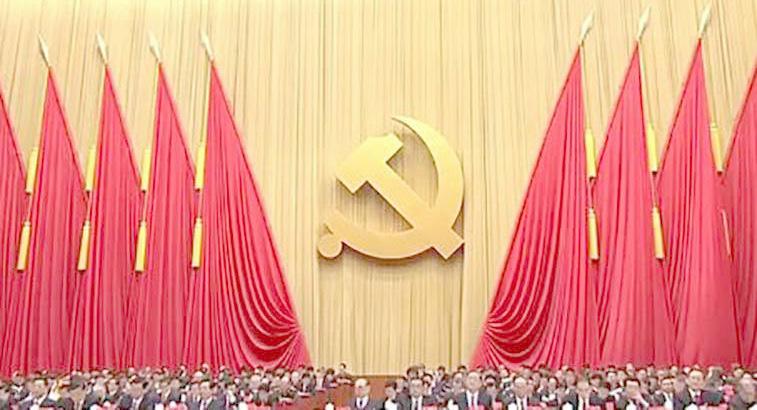
AS the Communist Party of China (CPC) marks its 105th anniversary, its journey represents a mission of resilience, innovation and strong leadership. Staying true to its founding aspiration, the CPC has led one of the most far-reaching modernization transformations in human history.
Against the backdrop of a weak country that suffered
from foreign humiliation, poverty, and failed attempts to save the nation, the CPC was founded in 1921 with a mission to seek happiness for the Chinese people and rejuvenation for the Chinese nation. The CPC united and led the Chinese people of all ethnic groups in working tirelessly to achieve national independence and the people’s liberation. In the following
decades, the CPC has continued to lead China’s journey toward prosperity, strength and a better life for its people.
Under the leadership of the CPC, China has grown into the world’s second-largest economy, made major advances in science and technology, significantly improved people’s living standards, and become an important force of stability

and certainty in a turbulent world. As the world’s largest developing country, China is pushing ahead on all fronts toward basically achieving socialist modernization by 2035.
What makes the CPC capable of leading the nation to achieve sustained development outcomes? The answer lies in its defining qualities, namely its people-centered
mission, its organizational, mobilization and executive capacities, its learning and innovation ability, its openness and vitality, and its commitment to self-reform.
Together, these qualities help explain the underlying logic of China’s rise.
Unlike parties that primarily represent particular groups or interests, the CPC has always put the people
first, responded to their concerns and needs, and worked to improve their well-being. These deep-rooted, inseparable flesh-and-blood ties with the masses provide the CPC with an inexhaustible source of strength.
As a service-oriented political party, the CPC makes decisions and sets
From page 10 policies based on the fundamental interests of the people.
Through decades of continuous efforts, especially eight years of targeted poverty alleviation, China has achieved the historic feat of eradicating absolute poverty and building a moderately prosperous society in all respects. Public well-being is also reflected in the establishment of the world’s largest education, social security and healthcare systems. Both urban and rural residents in China enjoy a life much more convenient than ever before, thanks to remarkable infrastructural improvements in transport, power and telecommunications.
Unlike other political systems that are often plagued by partisan gridlock and the pursuit of electoral gains, the CPC maintains a long-term perspective and carries a blueprint through to the end. The five-year plans, which have guided national development since 1953, stand as a testament to this strategic consistency -- a key reason for China’s rapid development and a sharp contrast to the policy volatility often observed in Western democracies.
The CPC’s strength lies in its institutional architecture, which features the centralized, unified leadership of the CPC Central Committee, its local committees, over 5.43 million primary-level organizations, and over 101 million members nationwide. This system gives the Party a formidable capacity to mobilize and unite the 1.4 billion Chinese people to work toward a common goal. It also ensures an effective mechanism for cultivating high-caliber cadres through
local and grassroots work experience, so as to advance the cause of the CPC.
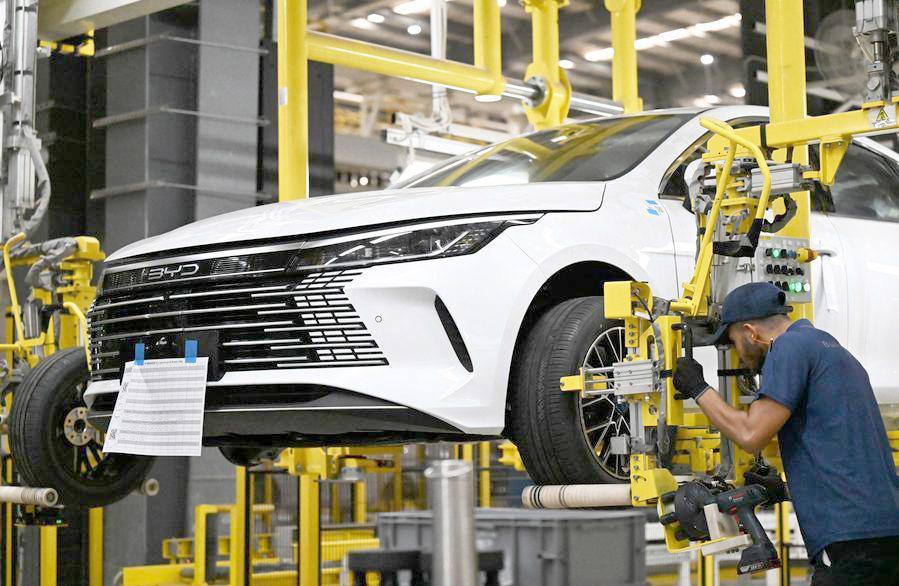
The CPC is a dynamic organization that constantly adapts to changing times. It is not bound by rigid dogma, but has developed as a learning and innovative party that integrates the basic tenets of Marxism with China’s specific realities and fine traditional culture. Scientific political theories enable the CPC to grasp the overarching trends of human development and always stand at the forefront of the times. The CPC’s innovation-driven strategy has accelerated the country’s industrial upgrade and fostered new growth drivers for the high-quality development of the Chinese economy.
Just as it requires a skilled blacksmith to forge good steel, the CPC’s leadership ability is inextricably tied to its continuous self-reform.
The CPC is clear-minded about the dangers and risks it faces, such as detachment from the people and corruption. With a zero-tolerance approach to corruption, the CPC has pursued full and rigorous self-governance. In 2025 alone, disciplinary watchdogs launched investigations into 181 officials registered at and supervised by the CPC Central Committee. Nationwide, they handed disciplinary or administrative penalties to 983,000 individuals involved in corruption. Since the 18th National Congress of the CPC in late 2012, the Party has carried out a series of study and education campaigns to maintain its advanced nature and purity.
The CPC is open-minded and has a global vision, making China’s development increasingly integrated with the

rest of the world. The Party has championed the building of a community with a shared future for humanity. In an era marked by geopolitical tensions and global challenges, China firmly pursues true multilateralism and adheres to the path of peaceful development. Through its global initiatives on development, security, civilization and governance, the CPC has contributed significantly to global peace, stability and prosperity.
The CPC’s 105th anniversary coincides with the 90th anniversary of the victory of the Long March of the CPC-led Red Army. The spirit demonstrated by that epic military maneuver, including a firm belief that a just cause will surely prevail, fearlessness in the face of any difficulties, a commitment to seeking truth from facts, and a steadfast reliance on the masses, will continue to empower the CPC to march forward and navigate any challenges.
With a clear sense of mission, a strong executive capacity and a commitment to shared development, the CPC is certainly capable of leading China to achieve new victories on today’s Long March: advancing the great rejuvenation of the Chinese nation on all fronts through a Chinese path to modernization, and working with the rest of the world for a better future

ADDITIONAL video evidence was tendered on Monday as paper committal proceedings continued at the Georgetown Magistrates’ Court.
The exhibits included closed-circuit television (CCTV) footage from the scene of the deadly October 2025 Mobil Service Station bombing, as well as recorded police interviews with two of the accused.
The matter is being heard before Acting Chief Magistrate Faith McGusty, who is examining the prosecution’s evidence to determine whether there is sufficient material to commit the four accused to stand trial before a judge and jury in the High

in Demerara.
Among the exhibits presented were surveillance recordings from the Mobil Service Station at the corner
of Regent and King Streets, Georgetown, where the fatal explosion occurred on October 26, 2025.
The court also briefly
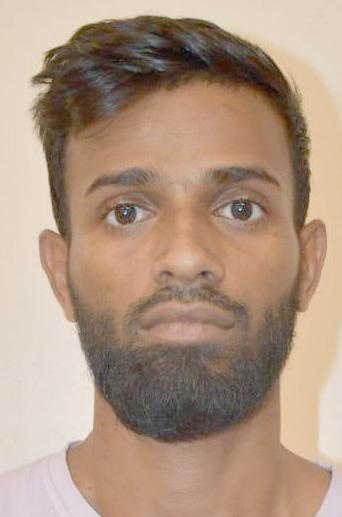
viewed video-recorded interviews conducted with the alleged mastermind, Venezuelan national Daniel Alexander Ramirez Poedemo, and


the second accused, fellow Venezuelan national Alexander Bettencourt.
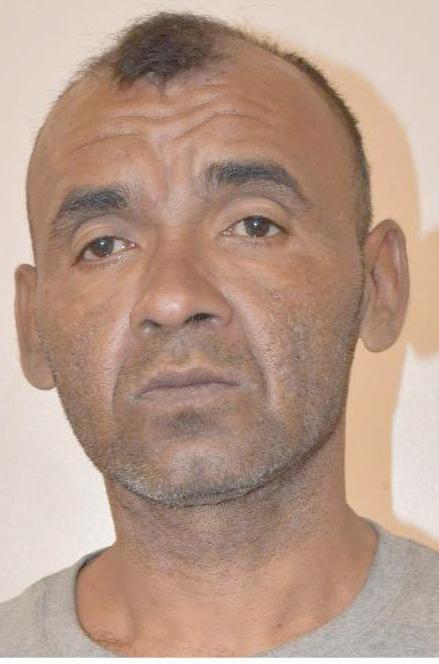
Poedemo, Bettencourt and Venezuelan national Jhonny Boodram, along with Guyanese-Venezuelan Krystal LaCruz, are jointly before the court in connection with the alleged terrorist attack, which claimed the life of six-year-old Soraya Bourne and injured several others relatives.
Following Monday’s proceedings, the matter was adjourned to Thursday, July 2, 2026, at 1:30 p.m. The four accused remain on remand and are represented by counsel.
Paper committal proceedings in the case commenced on June 8 and resumed on June 11, before being deferred to Monday.
During the process, the court conducts an extensive review of the prosecution’s evidence without hearing live testimony.
The magistrate is considering written statements, documentary evidence, forensic reports, including deoxyribonucleic acid (DNA) reports prepared by forensic experts in India, and other exhibits to determine whether a prima facie case has been established against the accused.
More than 100 statements were tendered when the proceedings opened, including evidence from eyewitnesses, police investigators and other persons connected to the investigation.
The October 26, 2025, explosion destroyed parts of the Mobil Service Station and caused extensive damage to nearby buildings and vehicles. It has been described as one of Guyana’s most serious national security incidents in recent years.
Poedemo faces a terror-


ism charge under Section 3(1)(a) of the Criminal Law (Offences) Act, which alleges that he placed and detonated an explosive device with the intent to threaten Guyana’s security and sovereignty or to strike terror among the public, resulting in the death of the child.
Bettencourt, Boodram and LaCruz are charged with aiding and abetting Poedemo in the commission of the alleged terrorist act.
Investigators have relied on surveillance footage, forensic analysis and numerous witness statements during the probe, with some forensic samples also being sent to India for advanced testing.
All four accused remain on remand. The proceedings follow months of legal developments arising from the investigation.
In April this year, Guyanese nationals Ramesh Pramdeo and Wayne Correia were discharged after Magistrate Alisha George, sitting at the Leonora Magistrates’ Court, upheld a no-case submission and
ruled that the evidence against them was insufficient.
However, their former co-accused, Venezuelan national Jennifer Rodriguez, was committed to stand trial in the High Court after the court ruled that the prosecution had established a prima facie case against her.
Rodriguez, who remains on remand, is ex -
pected to stand trial at the next practicable sitting of the Demerara Criminal Assizes.
The current proceedings focus on the remaining four accused, with Acting Chief Magistrate McGusty expected to determine whether the evidence presented is sufficient to commit them to stand trial in the Demerara High Court.
Senior Police Legal Ad-
From page11
visor Mandel Moore is appearing for the prosecution, while the four accused are represented by their respective attorneys.
The government has previously indicated that it intends to seek the death penalty under Guyana’s anti-terrorism legislation, which provides for capital punishment where a terrorist act results in the loss of life.

THE Guyana Power and Light Inc. (GPL) has waived a G$1.6 million capital contribution for the electricity connection to a new facility being constructed by the Youth for Hope Not-for-Profit Foundation in Yarrowkabra, reaffirming the company’s commitment to supporting community development and youth empowerment across Guyana.
The waiver represents a significant investment by GPL in a project that will provide expanded opportunities for young people through mental health programmes, education, mentorship and skills development, the utility company said in a press release on Tuesday.
The Youth for Hope Notfor-Profit Foundation, founded by Amar Ram, has been at the forefront of initiatives aimed at empowering young people and fostering positive community engagement in prisons, notably the Lusignan and Timehri prisons.
GPL’s decision to waive the capital contribution reflects the company’s ongoing commitment to supporting
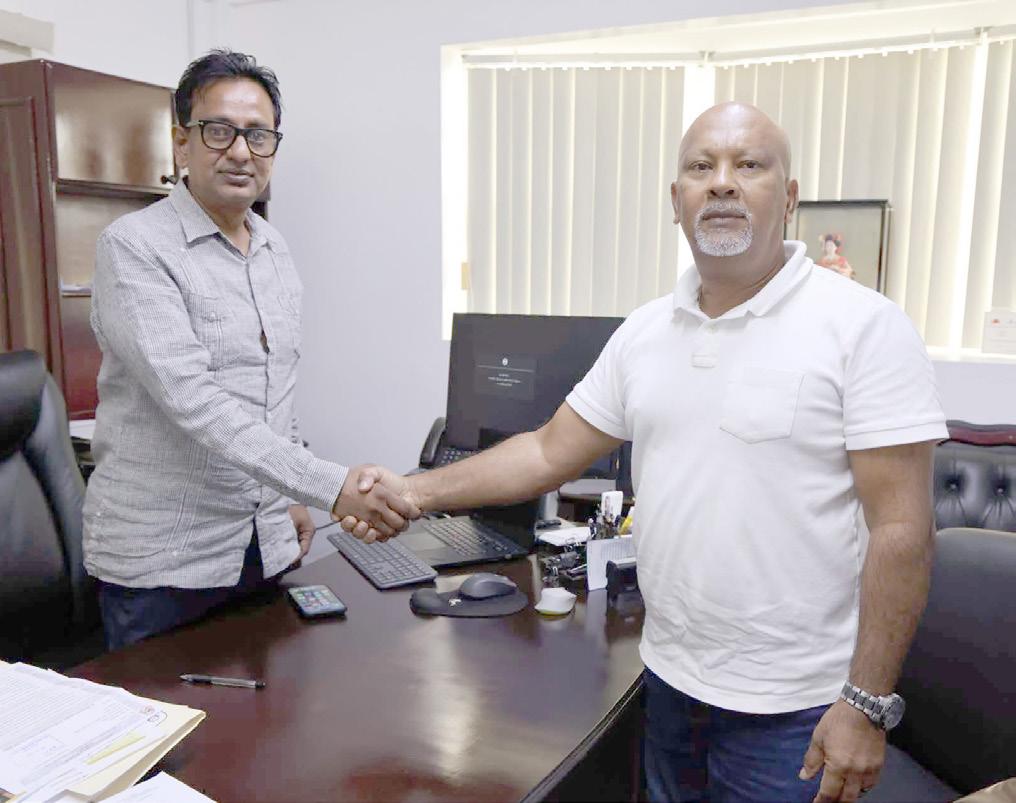
GPL has waived $1.6M capital contribution for NGO’s Yarrowkabra facility
initiatives that promote sustainable community development and improve the quality of life for all Guyanese.
Founder of the Youth for Hope Not-for-Profit Foundation, Amar Ram, welcomed GPL’s contribution, describing the waiver as a significant boost to the project and an example of how public and community partnerships can create lasting social impact.
The Yarrowkabra facility is expected to benefit hundreds of young people
through a range of programmes focused on mental health, education, leadership development, life skills, mentorship and community engagement.
As Guyana continues to grow, GPL remains committed to working alongside organisations that are making a positive difference in communities, ensuring that development extends beyond infrastructure to include meaningful investments in the nation’s people.

RESIDENTS of the Herstelling/Little Diamond area will receive their cash grants as scheduled despite a fire that damaged part of the Herstelling/Little Diamond Neighbourhood Democratic Council (NDC) building, Minister of Local Government and Regional Development Priya Manickchand assured during a site visit on Tuesday.
The minister visited the NDC compound to assess the damage caused by the blaze and to reassure residents that the cash grant distribution exercise, originally scheduled to be held at the nearby Providence Nursery School, would proceed without disruption.
According to the Ministry of Local Government and Regional Development, the
distribution exercise will now be conducted in the undamaged section of the Herstelling/Little Diamond NDC building, ensuring that residents can access their grants as planned.
During her visit, Minister Manickchand met with members of the Guyana Fire Service who responded to the incident, teachers attached to the Providence Nursery School, NDC staff, and a security guard who attempted to extinguish the fire before emergency personnel arrived.
The minister commended the efforts of the firefighters and all those who responded to the emergency, singling out the security guard for his swift and courageous actions.
“The security guard demonstrated remarkable courage and commitment in
attempting to contain the fire before the arrival of emergency responders,” the ministry said in a statement.
The fire also caused minor damage to Providence Nursery School, resulting in the temporary closure of the institution while authorities assess the extent of the damage and undertake the necessary repairs.
Officials said the Ministry of Local Government and Regional Development is working closely with the relevant agencies to evaluate the damage and restore normal operations as quickly as possible.
The ministry reiterated its commitment to ensuring the uninterrupted delivery of services to residents while recovery and restoration efforts continue.

Minister of Local Government and Regional Development, Priya Manickchand visited the NDC compound and assessed the damage caused by the blaze and to reassure residents that the cash grant distribution exercise, originally scheduled to be held at the nearby Providence Nursery School, would proceed without disruption
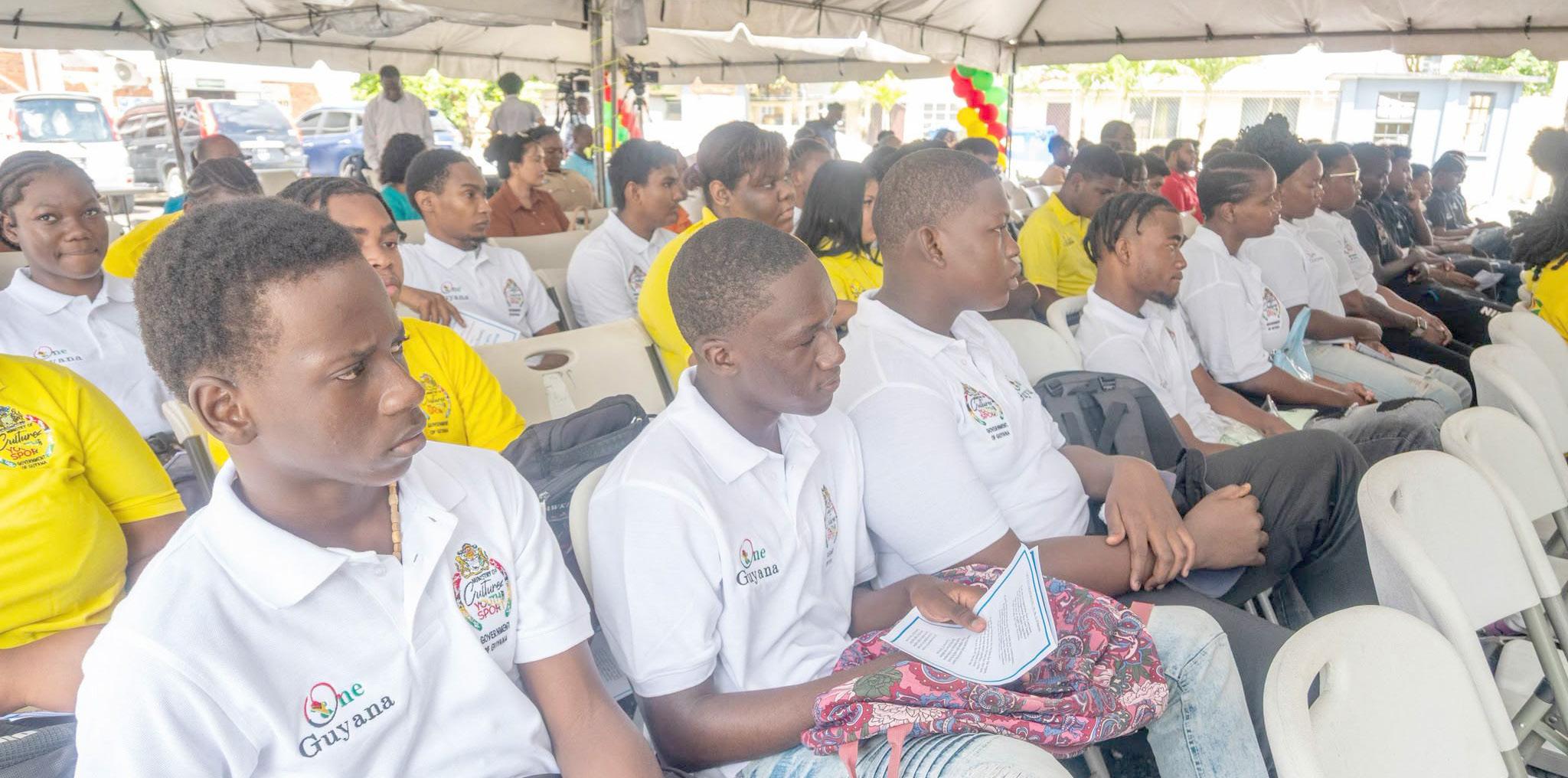
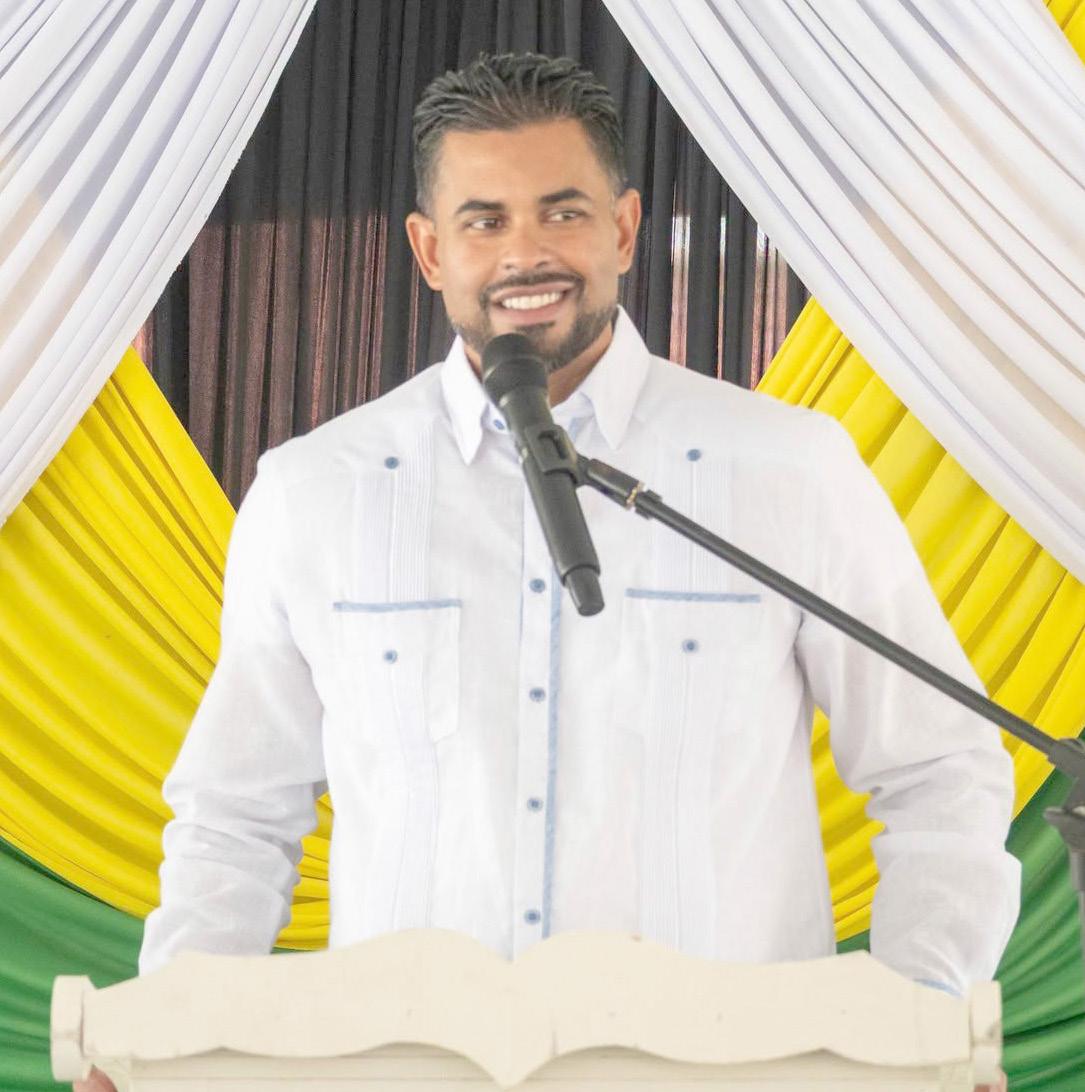
MINISTER of Culture, Youth and Sport Charles Ramson Jr. on Monday officially launched the sixth edition of the Youth Entrepreneurial Skills Training (YEST) Programme, urging participants to embrace second chances, reject self-imposed limitations and equip themselves with the technical skills needed to capitalise on Guyana’s rapidly expanding economy.
The programme, which opened at the Georgetown Training Centre, is designed to prepare young people for employment and entrepreneurship through competency-based technical training in trades that are in high demand across the country.
Delivering the keynote address, Minister Ramson said the initiative is about far more than obtaining certificates, stressing that the ultimate goal is to equip participants with practical, lifelong skills that will improve their quality of life.
“We don’t just want you
to leave here with grades; we want you to leave here with the skills, because that is what the labour market respects,” he told the new cohort.
The Minister noted that certification is only the starting point, explaining that skills development continues throughout one’s career and
serves as the foundation for personal and professional advancement.
The opening ceremony was attended by senior officials of the Ministry, a move Ramson said reflected the government’s serious commitment to the programme.
He also commended Director of Youth and Member of
Parliament Suresh Singh for his leadership and dedication in ensuring the initiative’s continued success.
Ramson highlighted significant reforms made to the YEST programme over the past four years, explaining that what was once a nine-month course has been transformed into an inten -

sive four-month, competency-based curriculum aligned with the standards of the Council for Technical and Vocational Education and Training (CTVET).
Addressing concerns raised about the shortened duration, the Minister pointed to his own academic experience, noting that he completed a law programme intended to take three to four years in just two years without compromising the quality of his education.
According to him, the programme has been strategically redesigned to meet the needs of Guyana’s evolving labour market, with specialised training being offered in welding, electrical installation, plumbing, carpentry and masonry.
He said these disciplines were selected because of the country’s unprecedented construction boom and the sustained demand for skilled workers.
Drawing on his training in the oil and gas sector, Ramson said he had anticipated the labour shortages now facing Guyana and noted that the large number of foreign workers currently employed in technical fields demonstrates the significant opportunities available to qualified Guyanese.
“The more time you spend in institutions does not benefit you if you are not using it to gain specialised skills,” he said, adding that practical industry experience often provides greater value than extended classroom instruction.
The Minister projected that, based on the country’s current economic trajectory under the leadership of President Dr. Mohamed Irfaan Ali and the People’s Progressive Party/Civic (PPP/C) admin-
istration, demand for skilled workers in the construction and technical sectors is expected to remain strong for at least the next 15 years.
Highlighting the earning potential available, Ramson shared the story of a young female boxer who completed an apprenticeship through the ministry and later secured employment as a welder, earning approximately $500,000 per month.
Responding to criticism of the programme, Ramson acknowledged that no initiative is without challenges but maintained that its success should be measured by the lives it changes.
He recalled his own experience at bar school in Nottingham, where nearly one-quarter of his class did not complete the programme, saying that setbacks are common in education but should never discourage those determined to succeed.
“We can identify problems and be critical of outcomes in any situation because there is no perfect programme,” he said. “But what must be perfect is your intention and belief in the ability to change lives. Even if it’s just one life being changed, it is still doing more than the critics.”
In closing, Ramson encouraged participants to use the programme as an opportunity to leave past failures behind and chart a new path for themselves.
“I too have been ridiculed in the past... But I’ve learned their negativity does not determine my future, and the limitation of their horizon doesn’t limit my horizon. Have a greater vision for yourself that is far greater than anyone else’s vision for you. Be limitless,” he said.
CLOSING productivity gaps and increasing yields in key crops would unleash the potential of agriculture in the Americas to play a decisive role in the development of sustainable aviation fuels (SAF) and the decarbonisation of international air transport.
This was the argument advanced by the Inter-American Institute for Cooperation on Agriculture (IICA) and the Pan American Liquid Biofuels Coalition (CPBIO) at the 2026 Argus Biofuels & Feedstocks Latin America Conference, one of the region’s main meetings on biofuels, renewable raw materials, and energy transition, held this year in São Paulo, Brazil.
Agustín Torroba, IICA International Specialist in Biofuels and Renewable Energies and Executive Secretary of the CPBIO, took part in two panel discussions along with representatives of industry, international organisations, companies, and industry specialists that focused on the opportunities for scaling up the production of sustainable aviation fuels and the challenges involved.
Torroba stressed that agriculture should be understood as an environmental resource for decarbonisation, and not as an obstacle to the energy transition.
“Closing the gaps in agricultural productivity is one of the most concrete ways of making SAF a reality. Improving yields for the six main crops used for biofuels –maize, sugarcane, wheat, soybeans, palm, and rapeseed – would make it possible to produce more than 512 million cubic meters of sustainable aviation fuels, more than the 449 million cubic meters that the IATA estimates will be needed by 2050 to meet the goal of net zero emissions. This would allow us to expand the supply of raw materials without incorporating
more farmland, turning agriculture into a true environmental resource for the decarbonisation of aviation,” he said.
The panel members also discussed the need to adopt a pragmatic vision for the development of SAF, based on affordable, abundant, and sustainable raw materials. Attention was drawn to the potential of the agro-industrial chains already consolidated in the region, such as those of corn, sugarcane, vegetable oils, fats, and ethanol.
The experts also underscored the role that the HEFA and ATJ technological pathways, currently among the most advanced for the production of SAF, can play in allowing the integration of the oil, fat, and alcohol chains of the Americas into the new renewable aviation fuel markets.
For IICA and the CPBIO, the Americas offer unique structural advantages for contributing to the global energy transition. The availability of natural resources, the accumulated experience with liquid biofuels, the installed industrial capacity, and the technical expertise developed over decades position the region as a strategic player for the development of sustainable aviation.
However, transforming this potential into concrete investments calls for the development of clear rules, comparable methodologies for measuring the carbon footprint, and economic signals that would speed up the commercial deployment of SAF on a global scale.
Representatives of CPBIO member organisations, including Uruguay’s ALUR and Paraguay’s BIOCAP, also took part in the event, sharing experiences related to the development of sustainable raw materials, certification, competitiveness, and the regional integration of biofuel value chains. (IICA)

Agustín Torroba (center), IICA International Specialist in Biofuels and Renewable Energies and Executive Secretary of the CPBIO, took part in the panel “Feedstock Edge – Unlocking Ethanol, UCO & Vegetable Oils for Global SAF,” where representatives of industry, international organizations, and companies discussed the opportunities for scaling up the production of SAF from renewable raw materials and the challenges involved

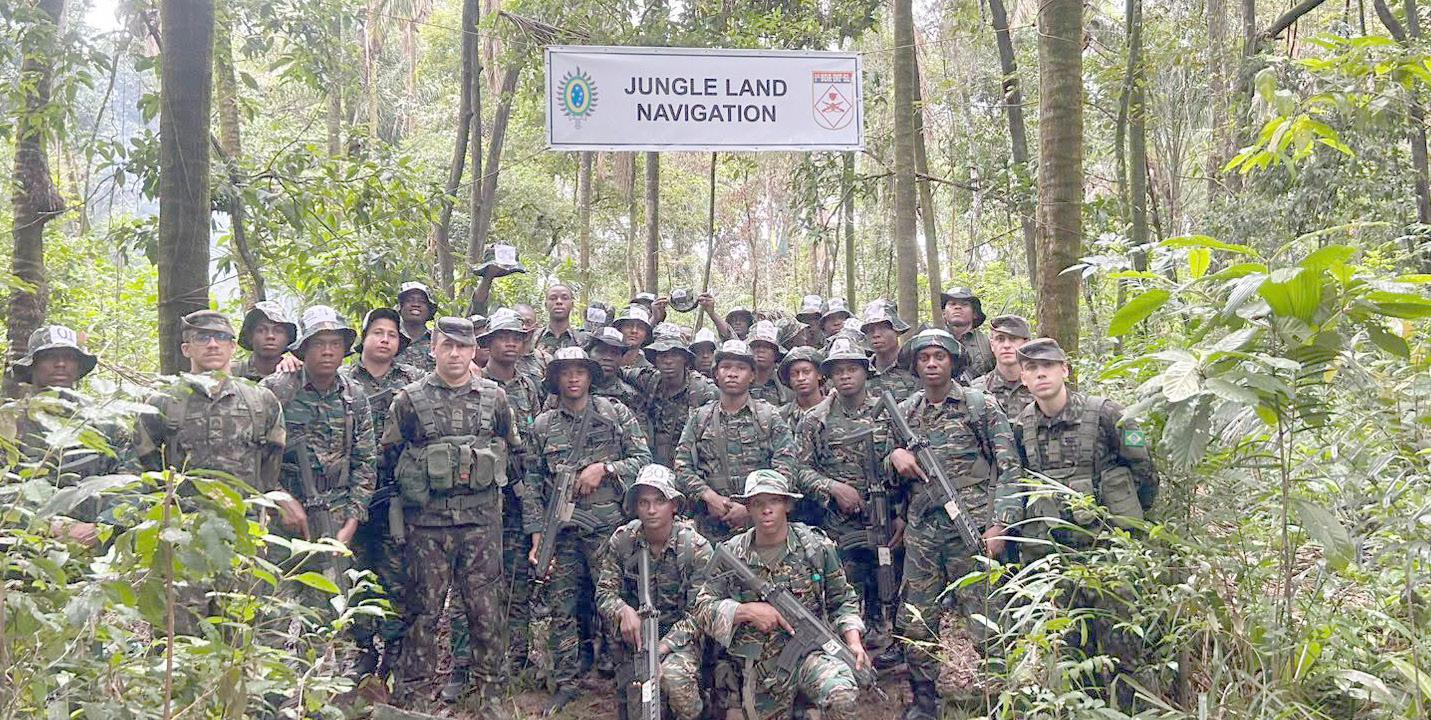
TWO officers and 28 other ranks of the Guyana Defence Force (GDF) have successfully completed an intensive Jungle Life Training programme in Brazil, further strengthening the longstanding defence partnership between Guyana and the Federative Republic of Brazil.
The five-day training exercise was conducted by the Brazilian Army’s 1st Jungle Infantry Brigade in Boa Vista as part of the XXIX Regional Military Exchange Meeting (RRIM), an initiative aimed at enhancing operational cooperation and strengthening the capabilities of both armed forces through the exchange of knowledge and professional expertise.
According to the GDF, Brazil hosted the first phase of the programme during the first semester of 2026, while the Guyana Defence Force is expected to host the reciprocal phase of the exchange later this year.
The Guyanese contingent, comprising ranks from the Infantry Battalions
and the Special Forces Battalion, received specialised instruction in several key areas of jungle warfare, including combat shooting, jungle navigation, immediate action drills, communications during jungle operations, explosives, tactical emergency medical care, military planning and briefing procedures, as well as demonstrations of operational equipment and techniques used by the Brazilian Army.
The training was designed to strengthen both individual and collective operational proficiency while improving interoperability between the two defence forces. It also exposed participants to the doctrine, operational procedures and best practices employed by one of the world’s leading jungle warfare forces.
The exchange programme forms part of a broader defence relationship between Guyana and Brazil that spans several decades. Over the years, both countries have maintained close cooperation through
jungle warfare training, professional military education and operational exchanges.
Brazilian military instructors have also played a significant role in supporting the development of the GDF’s jungle warfare capabilities through instructional duties at the Colonel Robert Mitchell Jungle and Amphibious Training School at Makouria.
As neighbouring countries sharing the Amazon region, Guyana and Brazil continue to place emphasis on military cooperation to strengthen regional security, improve preparedness for jungle operations, protect the Amazon ecosystem and support efforts to combat transnational crime along their shared border.

The GDF said the successful completion of the training reflects the Force’s continued commitment to developing a highly trained and professional military while deepening strategic partnerships with regional allies through meaningful military cooperation. Two officers and 28 other ranks of
THE Guyana Livestock Development Authority (GLDA) has strongly rejected allegations that the Onverwagt Abattoir is non-functional, underutilised due to corruption, or abandoned, describing the claims as false and politically motivated attempts to undermine public confidence in the country’s agriculture sector.
In a statement issued through the Ministry of Agriculture, the GLDA said the Onverwagt Abattoir remains fully operational and continues to provide slaughtering and related services to livestock farmers across Guyana. The authority disclosed that the facility has produced a total of 112,000 kilograms of beef to date, with butchers being charged a fee of $3,000 per animal for slaughtering services.
According to the GLDA, cattle processed at the abattoir were supplied primarily by farmers from Regions Four, Five, Six, Nine and Ten, while smaller quantities originated from Bon Fin, Brazil, through approved importation channels.
“The claims that the Onverwagt Abattoir is not functioning, is underutilised because of corruption, or has been abandoned are completely false,” the authority stated, adding that the allegations were intended to create unnecessary alarm and discredit ongoing efforts within the agriculture sector.
The agency explained that, like any public facility, the utilisation rate of the abattoir is influenced by factors such as market demand, seasonal livestock supply and the business decisions of producers. It noted that the Government has continued to invest in livestock infrastructure and support systems rather than allowing facilities to deteriorate.
The GLDA also dismissed allegations that livestock are dying across the country without intervention
from the authority, describing such claims as a “gross distortion of reality.”
The authority said it maintains an active veterinary surveillance programme and provides a range of services, including disease monitoring, vaccination campaigns, extension support, diagnostic testing and emergency re -
billions of dollars allocated to drainage and irrigation systems, farm-to-market roads, livestock development programmes, black giant poultry initiatives, genetic improvement projects, veterinary services, shade houses, aquaculture, agricultural mechanisation and direct support to farmers nationwide.

sponse interventions.
According to figures provided by the GLDA, its surveillance department has delivered services to 1,137 farmers over recent months, while 34,076 animals benefited from animal welfare interventions and relief efforts.
The authority expressed concern over what it described as attempts by political actors to exploit challenges facing the livestock industry for political gain, arguing that legitimate concerns should be addressed through established reporting channels to allow for proper investigation and response.
The statement further highlighted what it described as significant investments made by the Government under the leadership of Agriculture Minister Zulfikar Mustapha to expand and modernise the agriculture sector.
These investments, according to the GLDA, include
The authority said these initiatives have contributed to increased agricultural production, improved farmers’ incomes and strengthened national food security, while positioning Guyana as an emerging regional leader in agriculture.
Reaffirming its commitment to transparency and accountability, the Ministry of Agriculture urged individuals with credible evidence of wrongdoing to utilise the appropriate investigative and regulatory channels rather than resorting to what it termed “reckless accusations” for political purposes.
The GLDA said it remains committed to working with livestock farmers, strengthening veterinary services, investing in modern agricultural infrastructure and building a resilient agriculture sector that benefits all Guyanese.



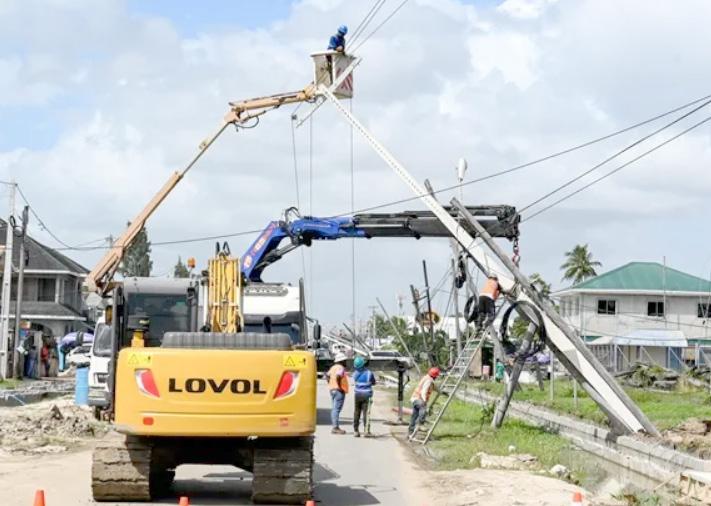
THE Ministry of Public Utilities and Aviation has begun implementing punitive measures to reduce damage to public utilities caused by construction activity and traffic accidents.
Speaking on the Starting Point Podcast on Sunday, Minister of Public Utilities and Aviation, Deodat Indar, said the move comes as the country experiences unprecedented growth with construction taking place across multi-
striking utility poles and cranes coming into contact with power lines.
Thus, the government is incorporating penalties into contracts, requiring contractors to take greater responsibility when working near public utilities.
“We are going to put it in the contracts, punitive measures. You have to take care when you are using equipment next to utilities that affects everybody else,” he said.
Alongside the new
ple sectors.
He added that while the rapid expansion is seen as a sign of progress, it has also increased the risk of damage to electricity and water networks.
“The answer to that is it is a collective problem. It requires collective effort,” Minister Indar said.
The minister explained that the volume of ongoing projects means that contractors, heavy-duty equipment, and utility infrastructure are often operating in close proximity.
He estimated that 99 per cent of power outages not attributed to scheduled or publicly announced maintenance are caused by external factors, including excavation work, vehicles
contractual requirements, the ministry has also pursued legal action against those responsible for damaging public infrastructure.
Minister Indar recalled one incident in which a crane operator triggered a nationwide disruption after operating too close to transmission infrastructure.
The outage, he said, caused repeated failures while engineers attempted to restore the system and resulted in extensive damage to electrical equipment at Garden of Eden.
“We charged them $30 million for the damage. We are taking them
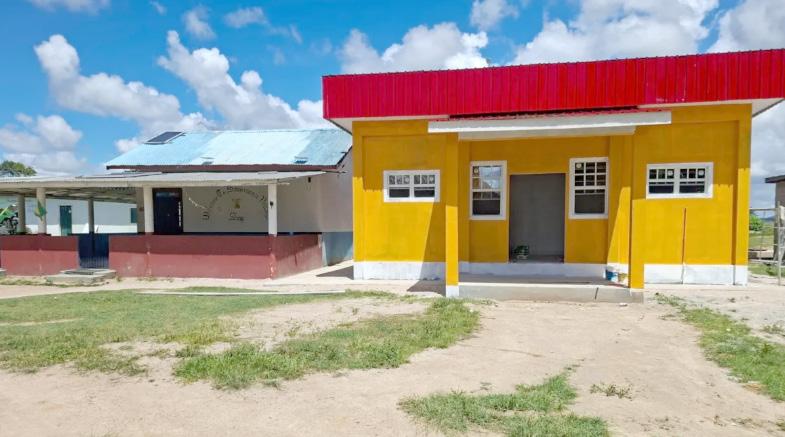
A new $10 million meat centre, now 99 per cent complete, is set to create employment opportunities while providing a reliable market for livestock farmers in Sawariwau Village, Central Rupununi, Region Nine.
The project was financed through the Ministry of Amerindian Affairs’ capital allocation and is expected to transform the livestock processing within the community.
During an interview with the Department of Public Information (DPI) on Tuesday, Toshao of Sawariwau Village, Bernardine Fernandes, said the facility represents a significant milestone for the community, which has benefited from steady government investments over the years.
“It is a step forward for our community. If you look back five or ten years, we never had these kinds of opportunities happening in our village. Now our young people have a chance to work and build a future right here at home,” Fernandes said.
The meat centre will primarily process and sell beef, which accounts for
about 90 per cent of the village’s meat production, while chicken and mutton will also be available.
According to the Toshao, the facility will create employment opportunities for young people, particularly women, while providing local cattle and sheep farmers with a dependable market for their livestock.
He noted that climate change has made food production more challenging, making the investment even more important for strengthening food security in the village.
“Before, people came into our village and offered whatever price they wanted for our cattle and sheep.
With this meat centre, our farmers will be able to process and sell their own meat right here in the village, giving them greater control over their products and a better return for their hard work,” Fernandes explained.
The meat centre builds on previous community investments, including a village shop established through a Presidential Grant.
Toshao Fernandes also
From page 20 to court,” he said.
In another case, a contractor was charged $8 million after damaging utility infrastructure in a backlands area.
The minister stressed that these actions have contributed to a reduction in incidents.
He said the government intends to strengthen accountability by ensuring contractors bear the financial cost of the damage they cause.
The Guyana Power and Light (GPL) and Guyana Water Incorporated (GWI) have also been recovering costs from contractors whose work disrupts essential services.
The public utilities minister stated that when excavators rupture water mains, entire communities can lose water pressure, leaving residents without service while repairs are carried out.
Although he acknowledged that the majority of contractors operate responsibly, stronger enforcement is necessary for those who fail to follow safety procedures. (DPI)
welcomed the government’s continued support, noting that ongoing engagement with various ministries has helped advance priority projects for the community.
He expressed gratitude to the Ministry of Amerindian Affairs for financing the initiative, saying the investment reflects the
government’s commitment to improving livelihoods and expanding economic opportunities in hinterland communities.
When operational, the meat centre is expected to improve residents’ access to fresh meat while strengthening the local economy in Sawariwau Village. (DPI)

THE University of Guyana (UG) and the Embassy of the People’s Republic of China recently strengthened their longstanding partnership with the launch
of a China Book Corner at the university’s Turkeyen Campus, followed by a vibrant celebration of the 2026 Chinese Dragon Boat Festival that showcased
the depth of cultural and educational ties between the two countries.
The twin events, led by University of Guyana’s Vice-Chancellor, Professor
Paloma Mohamed Martin and China’s Ambassador to Guyana, Her Excellency Yang Yang, brought together students, faculty, diplomats and invited guests in a

demonstration of the growing collaboration between Guyana and China in the areas of education, culture and international exchange.
The activities commenced at the University of Guyana Library with the official unveiling of the China Book Corner, a dedicated section established through a donation of books from the Chinese Embassy. The collection features publications on Chinese governance, poverty alleviation, modernisation, democracy, the rule of law, environmental protection and the country’s vision for global development.
Speaking at the unveiling ceremony, Professor Mohamed Martin underscored the importance of education and cultural exchange in fostering international understanding and co-operation.
“The understanding of ourselves as a global community is the cornerstone of any progress towards peace and stability in our world,” she said. “Today, we celebrate not only our friendship with China but also our acknowledgement of its achievements and the importance of ensuring that our students and our country develop a deeper understanding of one of the world’s oldest civilisations.”
The Vice-Chancellor noted that relations between Guyana and China continue to expand through shared experiences in education, culture, literature, travel and people-to-people connections. She also expressed appreciation for China’s ongoing support to the university, including previous contributions to campus development.
Professor Mohamed Martin said the establishment of the China Book Corner would enrich the university’s academic resources and provide students with greater opportunities to explore Chinese history, culture and development.
Ambassador Yang described the initiative as another milestone in the strengthening partnership between the embassy and the University of Guyana.
“Through these books, I hope you can better under-
stand the real China, not only its achievements but also its challenges,” the Ambassador said.
She noted that despite differences in size and population, Guyana and China share common aspirations, including improving the quality of life for their citizens, advancing development, promoting innovation and respecting cultural diversity.
University Librarian, Dr Simone Bernard, welcomed the donation, describing it as a valuable addition to the institution’s resources.
“The book donation will enable us to expand the horizons of our users, giving them access to new ideas, cultures and opportunities,” Dr Bernard said.
Following the launch of the China Book Corner, students, staff and guests gathered at the Education Lecture Theatre for the Chinese Dragon Boat Festival Food and Culture Celebration, hosted by the Embassy of the People’s Republic of China and the University of Guyana through the Confucius Institute.
The event attracted a large audience and featured traditional Chinese performances, cuisine and cultural presentations aimed at deepening appreciation for Chinese heritage and customs.
Director of the Confucius Institute, Al Creighton, provided an overview of the Dragon Boat Festival, also known as the Duanwu Festival, explaining its historical and cultural significance. He noted that the festival commemorates the life and legacy of Chinese poet Qu Yuan and is traditionally observed through dragon boat races and the sharing of symbolic foods.
Addressing attendees, Professor Mohamed Martin welcomed the opportunity to expose the university community to the richness of Chinese culture and cuisine and thanked Ambassador Yang and the Chinese Embassy for facilitating the event.
Ambassador Yang highlighted the role of food as
page 23
a bridge between cultures, noting that the dishes showcased during the celebration represented various regions of China, including Cantonese dim sum and wontons, as well as northern Chinese baozi and soy milk.
She also pointed to similarities between Guyanese and Chinese culinary traditions, emphasising the importance of food in fostering social connections and
From page 22
strengthening communities. The celebration concluded with cultural performances by the Confucius Institute and opportunities for attendees to sample a variety of traditional Chinese foods and beverages while participating in interactive cultural activities, further reinforcing the enduring friendship and co-operation between Guyana and China.

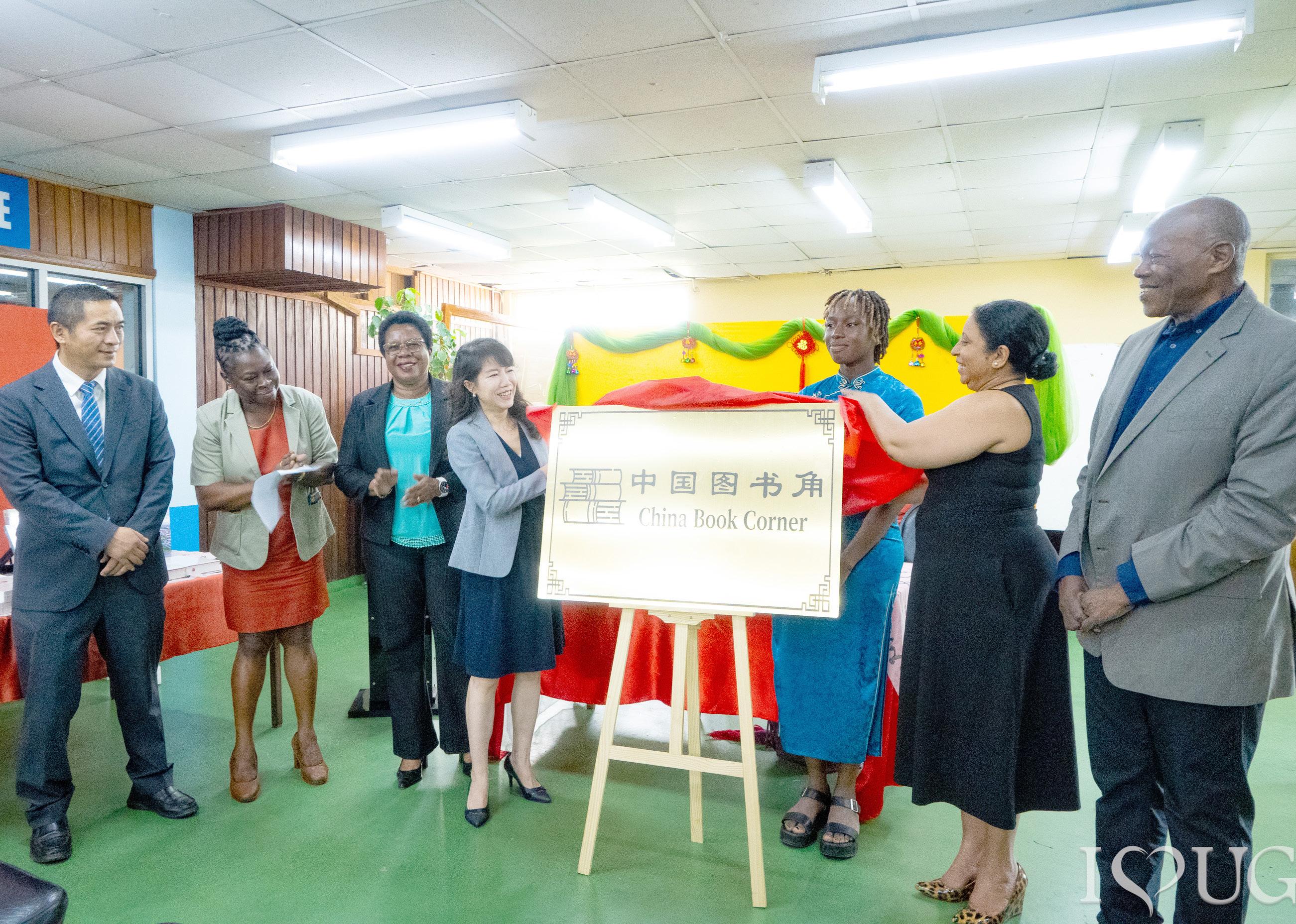
University of Guyana’s Vice-Chancellor, Professor Paloma Mohamed Martin, and China’s Ambassador to Guyana, Her Excellency Yang Yang, remove the ceremonial covering to officially unveil the China Book Corner signage at the University of Guyana Library, Turkeyen Campus. They are joined by senior members of the University of Guyana, representatives of the Embassy of the People’s Republic of China in Guyana, and a student of the University during the unveiling ceremony on Monday, June 15, 2026
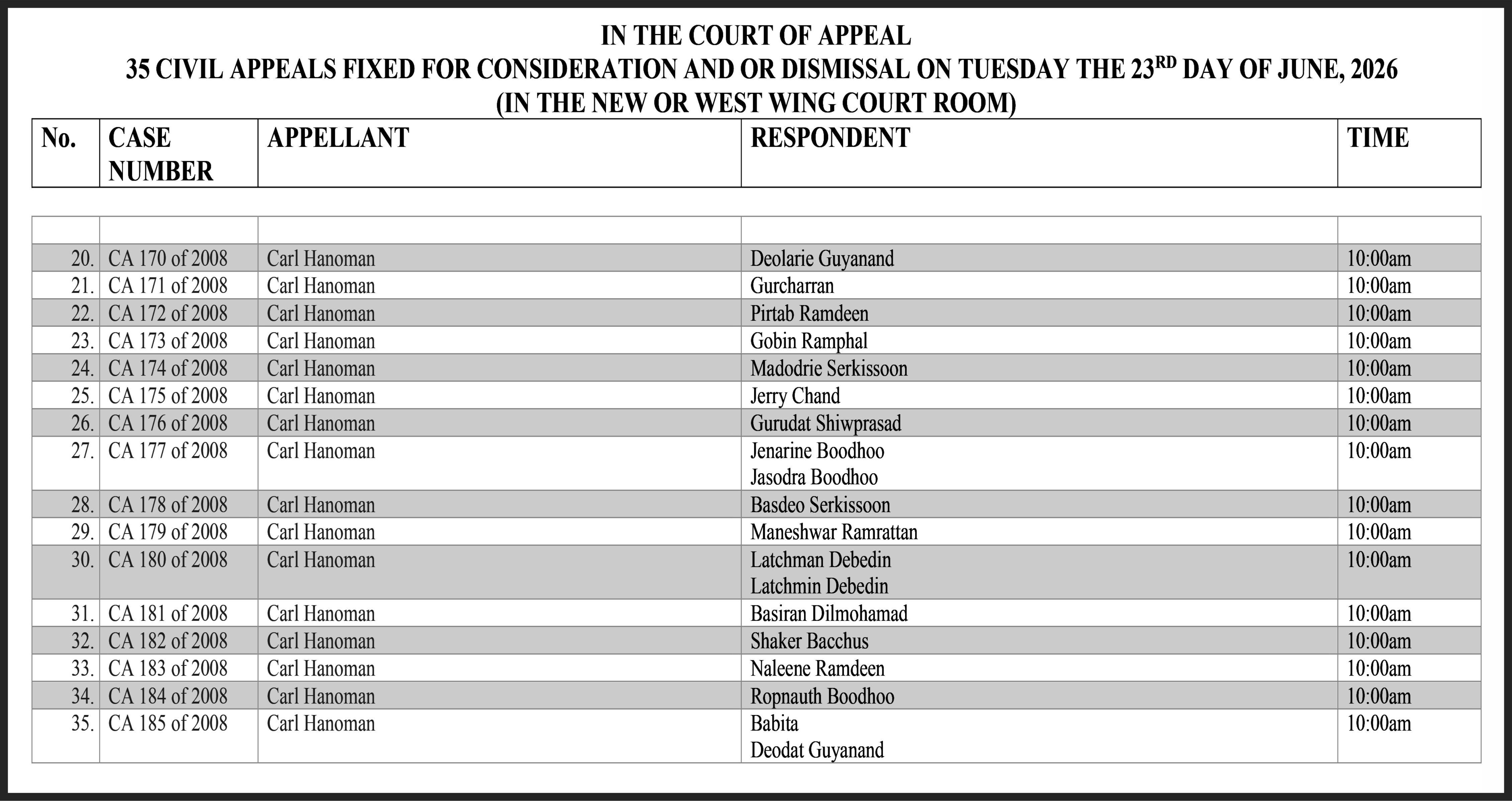

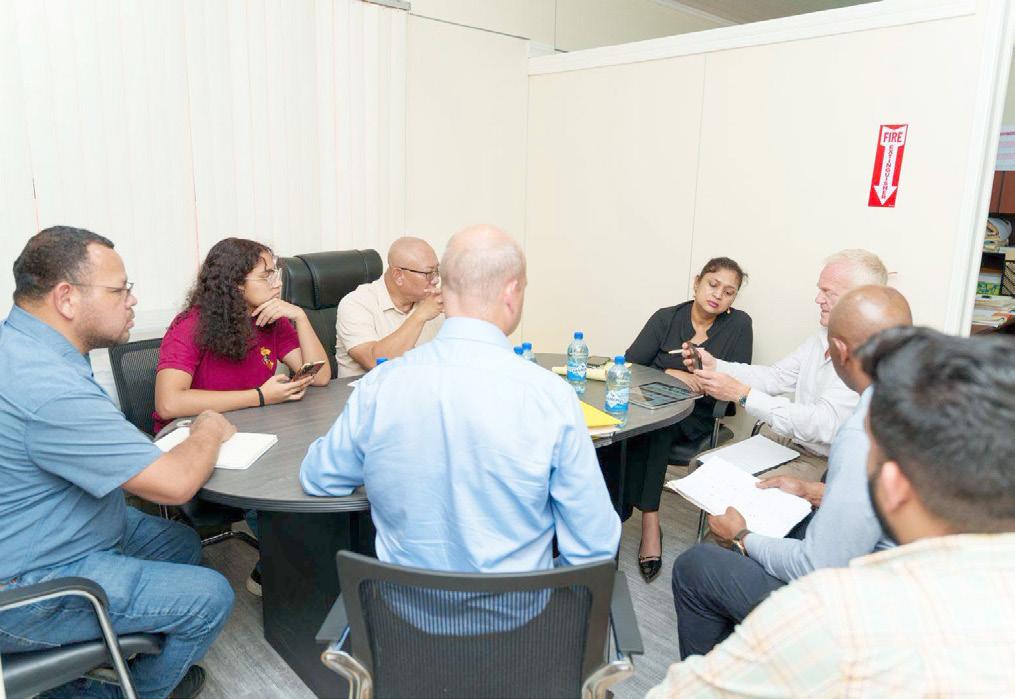
Minister of Local Government and Regional Development, Priya Manickchand, met with technical personnel from the King’s Foundation to review preliminary concepts and discuss strategies for modernising one of Georgetown’s most iconic commercial and cultural landmarks
THE Ministry of Local Government and Regional Development is advancing plans for the revitalisation of the historic Stabroek Market and its surrounding areas, with officials emphasising a people-centred approach aimed at transforming Georgetown into a more functional, accessible and attractive capital city while preserving its cultural heritage.
The initiative moved forward on Tuesday as Minister of Local Government and Regional Development, Priya Manickchand, met with technical personnel from the King’s Foundation to review preliminary concepts and discuss strategies for modernising one of Georgetown’s most iconic commercial and cultural landmarks.
According to the ministry, discussions centred on creating a revitalised urban environment that better serves vendors, businesses, commuters and visitors, while enhancing the overall experience of those who live, work and travel within the city.
Officials also explored broader opportunities to improve public spaces, promote sustainable urban development and strengthen Georgetown’s appeal
as both a commercial hub and tourism destination. Particular emphasis was placed on ensuring that future development initiatives remain inclusive, protect existing livelihoods and respond to the evolving needs of the capital’s residents and stakeholders.
The proposed revitalisation of Stabroek Market forms part of a wider vision for Georgetown’s urban renewal, balancing modernisation with the preservation of the city’s distinctive historical and architectural character.
During the meeting, Minister Manickchand reaffirmed the government’s commitment to a consultative planning process, stressing that communities and stakeholders will play an integral role in shaping the future of the project.
She noted that safeguarding the historical significance of Stabroek Market and the surrounding urban landscape remains a key priority as planning advances.
The Ministry of Local Government and Regional Development said it will continue to engage relevant stakeholders throughout the planning process and will provide additional updates as the initiative progresses.








ON behalf of Cricket West Indies, I wish to commend Captain Hayley Matthews, Head Coach Shane Deitz, the players, support staff, and the entire West Indies Women’s team for their performance at the 2026 ICC Women’s T20 World Cup.
While we are naturally disappointed not to have advanced to the final, there is every reason to hold our heads high. Reaching the semi-finals of a World Cup is a significant achievement that reflects the talent, commitment, and fighting spirit that this team has consistent-
ly displayed throughout the tournament. It further shows that we remain among the elite teams in world cricket.
I salute Captain Hayley Matthews for her steadfast leadership throughout the tournament, and I also recognise the invaluable contributions of every member

of the squad and support staff. Success at this level is always a collective effort, and this team has once again shown the strength of the culture being built within West Indies women’s cricket.
To our players, thank you for your passion, your determination, and for being supreme ambassadors of our region.
The entire Caribbean stands with you today, just as we have throughout this campaign, and we look forward with great optimism to what lies ahead.
Cricket West Indies remains fully committed to investing in the continued development of our women’s programme, ensuring our players have every opportunity to compete consistently for global honours.

ENGLISH RACING TIPS
EPSOM
12:20hrs Imperial Cult 12:50hrs Shemiyla Star
13:22hrs Amazing Journey
13:57hrs Alma Latina
14:32hrs Sarangpur
15:07hrs Just Adair
16:42hrs Mission Command
SOUTH AFRICA RACING TIPS FAIRVIEW
08:10hrs Priceless Treasure
08:45hrs Heliotrope 09:20hrs Daffodil Delight
10:00hrs Susurrando 10:35hrs Queen Of Jazz
IRISH RACING TIPS
FAIRYHOUSE
12:05hrs Scandi Noir
12:40hrs Lady Kelly
13:10hrs Spirit Of Eagles
13:45hrs Mo Anam Chara
14:20hrs K Bear
14:55hrs Bella Colombia
15:30hrs Pleased
QUIZ CORNER (Wednesday July 01, 2026)
Today’s Quiz:
(1) Which WI has recorded the highest maiden Test century to date?
(2) Who is second on this list? Answers in
Bevon Jacobs has joined the Desert Vipers for the ExxonMobil Guyana Global Super League 2026 (GSL), where he is expected to play a key role as a finisher.
The 24-year-old, who made his New Zealand debut in the shortest format last year following a stunning season in the domestic Super Smash for Auckland in 2024/25, has already enjoyed successful stints with the Antigua and Barbuda Falcons in the Caribbean Premier League (CPL), the Quetta Gladiators in the Pakistan Super League, and MI Emirates in the DP World ILT20. He was also included in the Mumbai Indians squad for the Indian Premier League.
Speaking on Vipers Voices, Jacobs discussed how he had shaped his game to become an effective finisher.
“I think in T20 cricket, the game is always fast-paced no matter where you are batting,” he said.
“The most difficult part about being a middle order or lower middle order finisher is you never really know how
many balls you are going to face. Sometimes you can get caught up in wanting to maybe take an extra ball to settle in, but often you do not get that luxury. You come in at seven, for example, and you have got six balls left in the innings.
“My role then is just to say, ‘What is the most impact I can create in this game?’ Then it no longer becomes about milestones, like fifties, half-centuries, centuries, all that sort of stuff. It is more about what impact can I bring to the game?
“And leaning on the experience of the other guys, I think helps me a lot. And just having that role clarity and being able to talk to someone like Daryl Mitchell out in the middle and just being like, ‘Okay, mate, what do you want from me here?’ Or ‘I am thinking this,’ and just bouncing those ideas off each other.
“I think (that approach) is really helpful for my game. And obviously that filters back down into Auckland cricket for when I play the Super Smash. But I think it is about making as much impact in as little time as possible
CMC – Guyanese all-rounder Keemo Paul has been added to the West Indies squad ahead of the upcoming second Test match against Sri Lanka on Friday.
The 28-year-old is expected to join the squad ahead of Wednesday’s training session as the regional side finalise preparations for the final Test at the Sir Vivian Richards Stadium.
Paul has played three Test matches for the West Indies, with his last appearance being in 2019 against England. He has scored 96 runs at an average
of 16 and has also taken six wickets with his medium pace.
The West Indies lead the two-match series after winning the opening match by an innings and 217-runs.
WEST INDIES SQUAD: Roston Chase (captain), Jomel Warrican (vice-captain), John Campbell, Tagenarine Chanderpaul, Joshua Da Silva, Justin Greaves, Kavem Hodge, Shai Hope, Amir Jangoo, Alzarri Joseph, Shamar Joseph, Brandon King, Anderson Phillip, Keemo Paul Kemar Roach, Jayden Seales.
because it is not often that I am going to get 40 balls to bat.”
Jacobs added that preparing to be a finisher went beyond match-day tactics. He said he also trained with that mindset in the nets, knowing he may be needed to attack from the first ball and find the boundary immediately.
“Sometimes it (training) does look like that because realistically, that (hitting boundaries from ball one) is the way it is going to be. Obviously, you try and warm up a little bit first but sometimes in the nets you do just go in there and say, ‘What is my field, I have got six balls here, this is a scenario, this is
how many runs I need and can I make it happen?’
“Every now and again, the game is obviously going to ask you to improve in different ways, whether that is a change in technique in some area or maybe adding a new shot into your game. But yes, sometimes with power hitting, the training can be just as simple as going in there and seeing if I can hit the first ball for six.”
The Kiwi batter admitted that one of the toughest parts of being a finisher was accepting the possibility of failure, as the role often required a high-risk approach.

(FIFA) - After 120 minutes, Paraguay overcame four-time world champions Germany on penalties to progress to the Round of 16 at the FIFA World Cup 2026™.
Gustavo Alfaro’s men put in a defensive masterclass that largely nullified Germany’s attack despite ceding the Europeans the lion’s share of possession. Germany circulated the ball over and over in the first half seeking a way through the Paraguay defence, but time
and again Leroy Sane, Florian Wirtz and Kai Havertz were shut out by Orlando Gill and Co.
With time winding down in the first half, La Albirroja took the lead against the run of play after one of their few corners of the match. The outswinger was punched away by Manuel Neuer, but Paraguay recycled the ball before Matias Galarza swung in a beautiful cross that a wide-open Julio Enciso headed home.
Germany came out more inspired after the break and quickly levelled through Havertz, who headed in a cross from Wirtz on the left wing. As the half progressed, Germany pushed for a winner and Paraguay sat deeper and deeper, waiting for a counterattacking opportunity that never came.
Julian Nagelsmann threw on all of his attacking options in an effort to avoid penalties, and Germany thought they had scored the winner through Jonathan Tah, however the goal was
called back for a foul by Waldemar Anton on Gill.
Germany elected to shoot first in front of their own fans, but it went wrong right from the off. Gill saved Havertz’s penalty and after a back and forth with multiple missed opportunities, La Albirroja sealed the victory through Jose Canales’ cool finish.
The South Americans will take on the winner of France v Sweden in Philadelphia on 4 July.
(FIFA) - Morocco booked their place in the FIFA World Cup 2026™ Round of 16 after edging past Netherlands in a highly dramatic penalty shootout on an emotional night for Cody Gakpo at Monterrey Stadium.
The Dutch forward opened the scoring, just two days after announcing the loss of his unborn son, before Morocco rallied to force extra time and prevail on spot kicks.
The Netherlands dominated the opening exchanges, but Morocco went closest
to breaking the deadlock after 20 minutes, when Neil El Aynaoui’s header from Achraf Hakimi’s corner forced Bart Verbruggen into a stunning reaction stop. The Atlas Lions threatened again in first-half added time, but Ismael Saibari was unable to reach Hakimi’s teasing back-post cross. Hakimi continued to prove a thorn in the Netherlands’ side as he raced up the right flank and rattled the upright early in the second half. The Morocco captain carved out another opportunity moments
later, but Micky van de Ven raced back to make a superb recovery challenge.
Ronald Koeman sent on Teun Koopmeiners and Wout Weghorst in a bid to wrestle back the initiative. The changes had the desired effect as Weghorst won an aerial challenge to free Crysencio Summerville, who sent Gakpo through for an emphatic finish under the advancing Yassine Bounou.
The Oranje looked to have done enough until Morocco substitute Issa Diop
rose highest to head home Chemsdine Talbi’s left-wing cross and force extra time. Verbruggen produced a sensational point-blank save to deny Soufiane Rahimi as the clock ticked down. Bounou then became the hero in the shootout, saving from Summerville after both teams missed twice from the spot, before Saibari converted the decisive penalty to book a Round of 16 clash with World Cup co-hosts Canada in Houston on 4 July.
SATIF Murtaza and Bjorn Williams emerged as the top athletes on Sunday at the St. Stanislaus College Auditorium in the Intermediate and Master’s Championships hosted by the Guyana Amateur Powerlifting Federation.
Murtaza came out on top as the best Male Intermediate Classic athlete. He won the 93 kg Men’s Junior Raw Classic Title with a total of 542.5 kg and then went on
to capture the 93 kg Men’s Open Classic Title.
Bjorn Williams was the best Male Master’s Classic Powerlifter after winning his 105 kg men’s Masters 1 classic title with a squat of 245 kg, a bench press of 160 kg, and a deadlift of 282.5 kg for a 687.5 kg total.
One of the day’s biggest winners was Charlotte Charles, who won the 69 kg
Women’s Open Classic category and Masters 1 Classic Class.
She also went on to break the Women’s Masters 1 Classic squat record and captured a new total record with 352.5 kg.
Bisram Sukhram won the Men’s Masters 1 Classic deadlift record after winning the 74 kg Men’s Open Classic class with a total of 482.5 kg, beating out the likes of Nichous Sukhram and Shafeek Case who
finish in that order.
Sukhram also claimed the 74 kg Men’s Masters. 1 Classic Title.
After the dust was settled, Primal Fitness was the top gym out of the 13 that competed on the day.
Primal Fitness ended with 28 points. Exodus Gym was the next best team with 13 points, followed by Hulk Fitness Gym with 12 points.
(FIFA) - Erling Haaland was Norway’s hero once more with the goal that put his country into the last 16 of the FIFA World Cup™ for the first time since 1998.
With his fifth goal of this FIFA World Cup 2026™ and 60th for Norway overall, Haaland ended the resistance of a Côte d’Ivoire side who had fought back into the game through Amad Diallo’s splendid second-half equaliser, ensuring it is Stale Solbakken’s side who advance to a meeting with Brazil in New York/ New Jersey on 5 July.
It was Emerse Fae’s Côte d’Ivoire, playing their first World Cup knockout match, who carried the greater early threat in this
tightly contested Round of 32 tie. Their menace from the flanks had been a feature of their group games and after left-back Ghislain Konan had shot into the sidenetting, their two wingers combined for the best opening of the first half-hour. Yan Diomande delivered a precise cross to the far post to Nicolas Pepe but from close range, he cushioned his volley back into the six-yard box – rather than goalwards – and Kristoffer Ajer cleared. Instead, it was Norway left winger Antonio Nusa who provided the breakthrough. Collecting on the left side of the penalty area, he moved the ball onto his right foot, stealing a yard from Pepe, and then bending a brilliant
shot into the far corner for his first goal at these finals. A prominent question before the match was whether Côte d’Ivoire’s defence could contain Haaland. He had one touch in the opening quarter. Yet, with Norway’s tails up, he might have doubled the lead when connecting with Alexander Sorloth’s knockdown after 41 minutes but Ibrahim Sangare made the block.
As Côte d’Ivoire chased an equaliser, Orjan Nyland saved Pepe’s near-post effort yet it was the introduction of Diallo that put the wind in their sails. After clearing off the line from Torbjorn Heggem, Diallo scored a magnificent equaliser at
the other end. Bursting into the box on a give-and-go with Pepe, his quick feet took him past two white shirts before an emphatic strike past Nyland. A goalscorer off the bench against Ecuador he had now repeated the trick. Yet Haaland would have the final word, stabbing the ball in from close range from Patrick Berg’s low cross to maintain his fantastic scoring run at his first World Cup.
Even then, the drama was not done as Diallo embellished his impressive cameo with a terrific free-kick that drew an equally spectacular Nyland save to ensure Norway held onto their lead this time.
CMC – West Indies Women produced a sub-par performance with both and ball to slump to an embarrassing eight-wicket defeat to Australia Women in the first semifinal of the ICC Women’s T20 World Cup here on Tuesday.
In a forgettable World Cup for the regional side’s batters, they were well below their best yet again after being sent in to bat at Kennington Oval, only mustering a paltry 125 for seven in their 20 overs.
Beth Mooney then struck an unbeaten half century, while Player-of-the-Match
Ashleigh Gardner capped off an impressive showing with a knock of 35 not out, as the six-time champions breezed to 127 for two in just 13 overs.
With the win Australia booked their spot in Sunday’s final, where they will face either England or South Africa.
It also ensured the Aussies continued their dominance over West Indies Women, with the win being their 18th in 20 T20Is between the two sides.
Captain Hayley Matthews emphatically drove the first ball of the match from left-arm pacer Lucy Hamilton through cover for four and struck spinner Sophie Molineux for successive boundaries to start the third over to give the Windies a good start.
Her opening partner Qiana Joseph, however, struggled to score against a well-planned Aussie attack that dared her to score through the onside.
Joseph could only muster six runs from her first 16 balls, and after a prom-
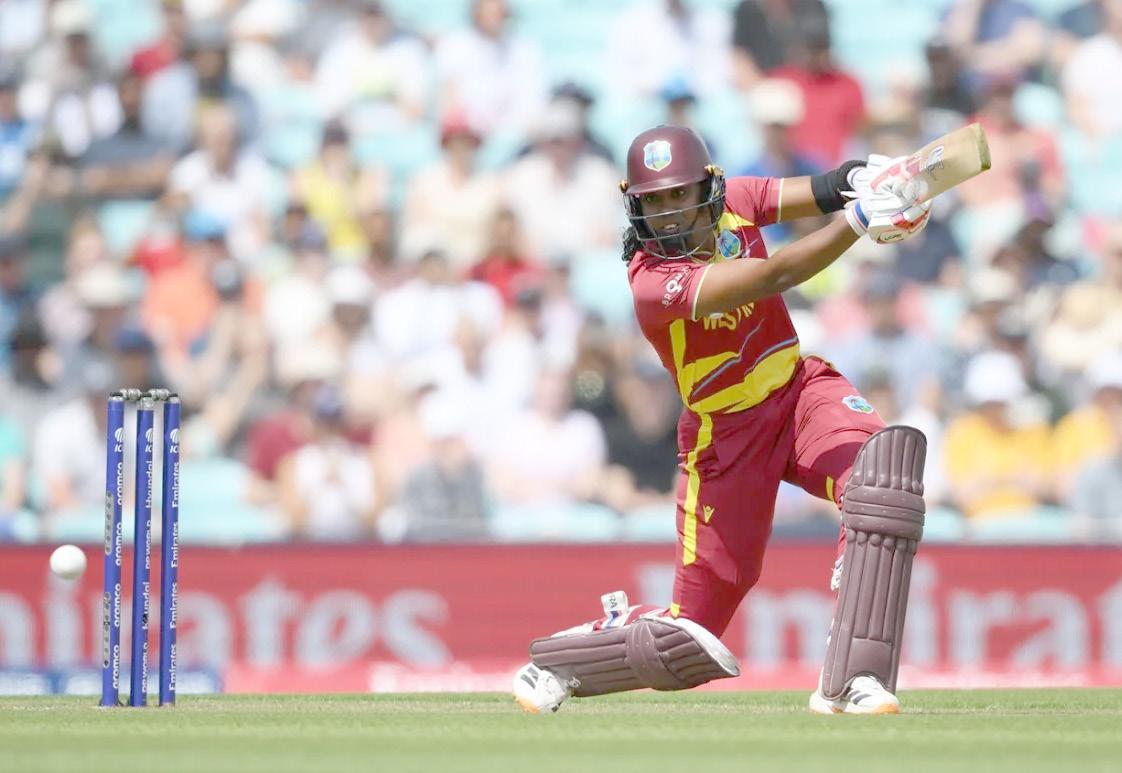
Hayley Matthews crashes one through the off side•Jun 30, 2026•ECB/Getty Images
ising start of 25 without loss after three overs, the Windies ended the powerplay on 35 without loss.
With the pressure building, Matthews was bowled for 30 off 28 balls trying to hit Georgia Wareham out of the ground to make the score 47 for one in the ninth over, and eight runs later Joseph’s miserable innings of 16 off 22 balls came to an end when she swept Molineux into the hands of deep midwicket.
Stafanie Taylor only survived two balls before Gardner had her caught at midwicket for a duck, and three balls later she had Jahzara Claxton caught at cover
without scoring to reduce the Windies to 59 for four in the 11th over.
Chinelle Henry made 10 before becoming the second of Molineux’s victims and Shemaine Campbelle’s fighting innings of 22 off 25 balls eventually ended when she was dismissed by Georgia Wareham to make the score 83 for six.
The Windies only got up to their eventual total thanks to the efforts of Deandra Dottin and Jannillea Glasgow, who were able to blast 41 runs off the last four overs.
Dottin, who had to be lifted for medical attention moments before the start
of the match, batted at number eight and hit an unbeaten 26 off 16 balls with four fours, while Glasgow scored 15 off 13 balls before being dismissed off the last ball of the innings.
Gardner was the pick of Australia’s bowlers with 2-13, while Wareham took 2-17 and Molineux 2-30.
Australia then got off to a speedy start in their run chase with Georgia Voll and Mooney putting on 29 runs inside three overs.
Henry gave the Windies hope by bowling Voll for 16, but Mooney maintained the momentum by hitting Karishma Ramharack for two boundaries in the fourth over.
Matthews accounted for the wicket of Phoebe Litchfield by way of the lbw route after she was intially given not out, but from 43 for two the Windies would reap no more success.
Mooney moved into the 40s by smashing Claxton for four fours in the sixth over, as Australia ended the powerplay at 63 for two.
Ellyse Perry retired hurt after picking up an injury, but shortly after Mooney brought up her half century off 39 balls to keep her side in control.
Mooney and Gardner shared an unbroken partnership of 63 in six overs, with Gardner ending the contest by flicking Aaliyah Alleyne for four off the last ball of the 12th over.
Mooney ended on 61 not out off 36 balls with eight fours, while Gardner was unbeaten on 35 off 20 balls with four fours and one six.
CMC – West Indies head coach Daren Sammy has maintained that batting coach Floyd Reifer’s expertise and dedication is one of the main reasons behind the team’s batting improvements. The West Indies produced a record-breaking batting performance against Sri Lanka in the opening Test on their way to registering an emphatic innings and 217-run victory on Sunday, their first Test win in almost two and half years.
Amir Jangoo scored a brilliant 233 and captain Roston Chase made 194, with the two sharing the largest ever sixth-wicket partnership in Test cricket history of 401 runs.
Floyd Reifer
Their efforts helped the Windies post a mammoth total of 626 for nine declared – the first time the regional team scored over 600 runs in an innings since 2012.
Speaking in an interview on Tuesday, Sammy said Reifer’s impact could not be denied.
He said while Reifer had been criticised heavily in the past for the team’s batting woes, there had been significant improvement in the last few years in all formats because of his efforts.
“It’s a combination of Floyd Reifer and the willingness of the players, the work ethic of the players. We’re here to prepare them as coaches, but buying in to the preparation, buying into the
different aspects and techniques and areas of improvement and committing to the work.
“But I have to single out Floyd Reifer for that. He gets a lot of flack when we’re not batting well, the cameras focus on him all the time, but he has never faltered. He’s been strong in his messaging, his work ethic is amazing, and he continues to put in the work with the batters, so I’m going to give him his flowers,” Sammy said.
“Just seeing in the Test arena and even in the One-Day International format as well, the amount of hundreds we’ve had over the last three years, it’s been slow but it’s progress and that’s what we’re about, trying to build on progress.”

S ee story on page 34

S ee story on page 33


West Indies players walk back after a big defeat to Australia in the semi-final•Jun 30, 2026•ICC/Getty Images