Read an opinion piece on the harmful nature memeification of serious political issues can have.
PAGE 6

FEATURES
Explore how parent infidelity impacts childrens’ mental wellbeing and confidence.
PAGE 16
Henry M. Gunn High School
Read an opinion piece on the harmful nature memeification of serious political issues can have.
PAGE 6
Explore how parent infidelity impacts childrens’ mental wellbeing and confidence.
PAGE 16
Henry M. Gunn High School
Editor’s note: In order to minimize the appearance of a conflict of interest, The Oracle worked with an outside journalism adviser in the reporting of this story.
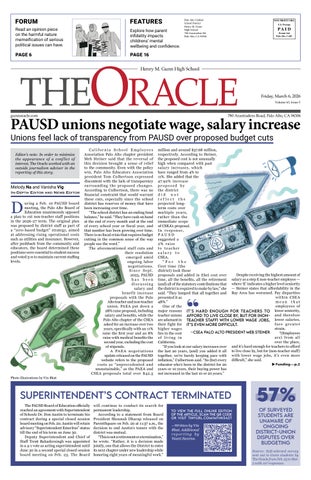
During a Feb. 10 PAUSD board meeting, the Palo Alto Board of Education unanimously opposed a plan to cut non-teacher staff positions in the 2026-27 term. The original plan was proposed by district staff as part of a “zero-based budget” strategy, aimed at addressing rising operational costs such as utilities and insurance. However, after pushback from the community and educators, the board determined these
California School Employees Association Palo Alto chapter president Meb Steiner said that the reversal of this decision brought a sense of relief to the community. Even with the policy win, Palo Alto Educators Association president Tom Culbertson expressed discontent with the lack of transparency surrounding the proposed changes. According to Culbertson, there was no financial constraint that would warrant these cuts, especially since the school district has reserves of money that have been increasing over time.
“The school district has an ending fund balance,” he said. “They have cash on hand at the end of every month and at the end of every school year or fiscal year, and that number has been growing over time. There is no fiscal crisis that requires budget cutting in the common sense of the way people use the word.”

The aforementioned staff cuts and their resolution emerged amid ongoing labor negotiations.
Since Sept. 2025, PAUSD has been discussing salary and benefit increase proposals with the Palo Alto teacher and non-teacher union. PAEA put down a 28% raise proposal, including salary and benefits, while the Palo Alto chapter of the CSEA asked for an increase over two years, specifically with an 11% raise the first year and an 8% raise with medical benefits the second year, excluding the cost
A PAEA negotiations update released on the PAUSD website refers to the proposed costs as “unprecedented and unsustainable,” as the PAEA and CSEA proposals total over $42.5
million and around $37.68 million, respectively. According to Steiner, the proposed cost is not unusually high when compared with past salary increases, which have ranged from 4% to 11%. She added that the 47.92% increase proposed by the district did not reflect the projected longterm costs over multiple years, rather than the immediate scope of CSEA’s proposal. In response, PAUSD suggested a 2% raise to teacher salary to CSEA.
“For the first time (the district) took those proposals and added in (the) cost over time, all the benefits, all the retirement (and) all of the statutory contributions that the district is required to make by law,” she said. “They lumped that all together and presented it as 48%.”

One of the major reasons teacher unions are adamant in their fight for higher wages lies in the cost of living in California.
“If you look at our salary increases over the last 20 years, (and) you added it all together, we’re barely keeping pace with inflation,” Culbertson said. “So (for) every educator who’s been in the district for 20 years or 10 years, their buying power has not increased in the last 10 or 20 years.”
Despite receiving the highest amount of salary as a step E non-teacher employee — where ‘E’ indicates a higher level seniority — Steiner states that affordability in the Bay Area has worsened. Pay disparities within CSEA mean that employees of lower seniority, and therefore lower salaries, face greater strain.
“(Employees are) from all over the place, and it’s hard enough for teachers to afford to live close by, but for (non-teacher staff) with lower wage jobs, it’s even more difficult,” she said.
The PAUSD Board of Education officially reached an agreement with Superintendent of Schools Dr. Don Austin to terminate his contract during a special closed session board meeting on Feb. 20. Austin will retain advisory “Superintendent Emeritus” status till the end of his term on June 30.
Deputy Superintendent and Chief of Staff Trent Bahadursingh was appointed in a 4-1 vote as acting superintendent until June 30 in a second special closed session board meeting on Feb. 23. The Board
will continue to conduct its search for permanent leadership.
According to a statement from Board President Shounak Dharap released on ParentSquare on Feb. 20 at 11:37 a.m., the decision to end Austin’s tenure with the district was mutual.
“This is not a retirement or a termination,” he wrote. “Rather, it is a decision made jointly, one that allows the District to enter its next chapter under new leadership while honoring eight years of meaningful work.”

The Oracle: What is Intro to Proofs, and how far into planning it are you?
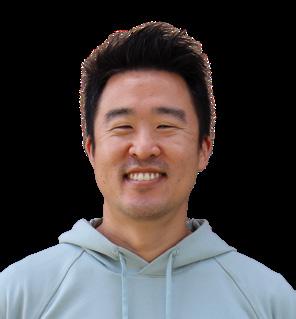
Daniel Hahn: Intro to Proofs is a senior-level math elective. Three quarters of the class are going to cover the ideas of proof and developing arguments and logic. And then the last quarter will be some calculus review and learning some Multivariable Calculus topics. Right now, we’re in the very early stages of just laying out pacing and the topics that we want to cover. We’ve established the textbooks, so we do have an outline of what we’re going to cover, but in terms of how we do it, and the classroom activities and stuff, that’s still to be determined.
68%
of surveyed students think that intro to proofs is a positive addition to the gunn math curriculum
Source: Self-selected survey sent out to Gunn students by The Oracle from Feb. 25 to Mar. 2 with 91 responses.
A conversation about Intro to Proofs, a new senior math course to be offered in the upcoming school year
TO: Why is Intro to Proofs only offered to seniors?
DH: We just don’t want to be in a situation where people are taking this class as 11th-graders or 10thgraders, and then it just starts the whole process up again, where we need to come up with more classes. I think the math offerings are robust enough for people to fill up their schedule for four years. This is true for over 90% of our students with AP Statistics and Applied Math Honors and now Intro to Proofs. So we have the four-class sequence plus three electives. I don’t want to create a situation where people are just rushing through for the sake of rushing through.
TO: How might Intro to Proofs impact student math course selection?
DH: There is the element where we do need to balance the wishes and the wants for different groups of people. I think there is a need for another math course, because we have a substantial number of students that are done with AP Calculus BC and that are left to their own devices in terms of finding another math class. That doesn’t mean that it doesn’t do away with the risk of having people feel
TO: How does Intro to Proofs’ difficulty compare to other math class
DH: There are students that do really well in algebra one, (but) then they struggle in geometry, and there are students that struggle with algebra (but) then they do really well in geometry, because (the two concepts are) different. There are different fields of math. And so overall, just roughly the difficulty should be about the same, maybe compared to Analysis Honors. I’ve heard people say that Analysis H is a harder class than BC Calculus, and that’s because in Analysis, we were able to push the limits a little bit and tailor it to Gunn students, whereas BC Calculus is a nationally standardized curriculum. And so when, generally, when people have gone through Algebra 2/Trig H and Analysis H and have really grown and made themselves really strong in math, then they get to calculus, it actually feels a little bit like a pressure relief. Proofs, we’re not sure. I think it’s maybe a little bit tougher than calculus. That would just be my guess. But the thing that’s going to make it challenging is the fact that it’s a different way of thinking. Multivariable Calculus, by comparison, is just adding on to regular calculus and thinking the same way.
—Compiled by Ezra Rosenberg. Edited for clarity. Photos by Vin Bhat and Maryam Maskatia.
15% ofsurveyedstudents
are the most beautiful, elegant, abstract and theoretical (math topic). It gives you the foundation for all the other math (topics) there.”

“(Using that structure), we’d then ultimately lead to you having the skill of fine-tuning a proof rather than there being a timed assessment,” Hlasek said.
The math department will expand its course offerings with the addition of Introduction to Proofs Honors, a new elective, in the 2026-27 school year. This senior-only course aims to help students explore math beyond traditional algebra and calculus-centered topics, with topics including proof by disjunction, quantifiers and formal logic. The class also introduces multivariable calculus concepts in the final quarter, justifying the prerequisite of being concurrently enrolled in an AP calculus class to ensure preparedness.
Developed by math teacher Misha Hlasek and Math Instructional Lead Daniel Hahn, the curriculum is focused on the reasoning and structure behind mathematical reasoning, concepts that aren’t typically taught until college.
“The other math electives (at Gunn) include Applied Math H and AP Statistics, both of which are very real-world,” Hlasek said. “That is not what proofs are. Proofs
The course is also designed to bridge the gap between high school math and college proof courses.
”
“Some (college proof courses) will just dive into the math, hoping that you will observe the proof techniques from what’s going on,” Hlasek said. “We want to give you a foundation so that when that happens to you in college, you can be like ‘Yeah, I know what that is.’”

The curriculum is based around Daniel J. Velleman’s textbook “How to Prove It: A Structured Approach.” In it, topics ranging from derivation techniques — such as contradiction and induction — to set theory are covered.
We Want to give you a foundation so that When (you take proof courses) in college, you can be like ‘yeah, I knoW What that is.’
math teacher misha hlasek
Unlike other weighted courses in the traditional math pathway, this class will emphasize a revision-based learning system that shifts focus away from performance under pressure, aligning the course structure more closely with the problem sets-heavy approach used in the Applied Math elective.
The book was specifically selected for its unique stepby-step approach to explaining proof systems and mathematical argumentation.
“One thing I really really like about it, and I haven’t seen it anywhere else throughout my own studies, (is that) it has a scratch work section, which shows what it actually looks like when a person sits down and starts thinking about proof,” Hlasek said.
Intro to Proofs replaces the onceexpected Multivariable Calculus course
after contentious discussions over whether adding another advanced class would increase academic pressure for students. According to Hahn, surveyed honors students reported feeling less obligated to take Intro to Proofs than Multivariable Calculus.
“Comparing this class to Multivariable Calculus, the number of students that said they would be pressured to take Intro to Proofs was far less,” he said. “(The) pressure to take Multivariable Calculus if it was offered was upwards of 86% in the Honors lane, which was more confirmation for me that it would be the wrong direction to take (for) the math department.”
Junior Hanting Liu, who first heard about the elective from Hlasek in class, signed up during course selection to strengthen his skills in more abstract areas of math.
“I heard that this class will cover the more theoretical side of math, which is different and something I want to improve on,” he said. “I’m mainly taking this class for myself (rather than for college) so that I can explore and learn something new.”
Funding—p.1
Public Information Officer Lynette White, responding on behalf of then-Deputy Superintendent Trent Bahadursingh and Chief Business Officer
Charen Yu, said increasing staff salary allocations could create financial pressure if new revenue sources — such as state funding or local revenue — do not increase accordingly.
“If the increase is supported by new revenue (for example, state or federal
funding or local revenue), then it does not add to debt,” White wrote in an email.
“However, if spending exceeds ongoing revenue and the district relies on ending fund balance to cover the difference, that can create financial strain.”
According to additional resources on the PAUSD website, the total cost of employing a staff member is comprised of their salary — which includes money for medical, dental and vision aid — and statutory benefits, such as pension,
Medicare, unemployment insurance and worker compensation. Teachers are also given a stipend based on their educational level.
If the district were to agree with the increase, they would have a negative ending fund balance of $59 million by the end of the 2026-27 fiscal year and $395 million by the end of the 2029-30 fiscal year, according to the website under “Impact of Current Proposals.”
“A budget increase only impacts debt if
it is not supported by sustainable revenue,” White added. “Responsible budgeting means aligning ongoing expenses with ongoing funding so we maintain financial stability over time.”
As of now, Steiner has emphasized that the staff unions aim to keep communicating with the district, and that continuing negotiations is a priority. A new budget for the 2026-27 school year is set to be presented at a future board meeting.

780 Arastradero Rd.
Palo Alto, CA 94306
(650) 354-8238
www.gunnoracle.com
Editorial Board
Editor-in-Chief
Sylvie Nguyen
Ma naging Editors
Yu-Ming Liu
Ya-An Xue
News
Vin Bhat
Sarah Grupenhoff
Vanisha Vig
Forum
Kaylee Cheng
Claire Jittipun
Melody Song
Features
Gwen Domine
Lena Duggan
Eanam Maor
In-Depth
Roy Lao
Melody Na
Sports
Yael Gottesman
Olivia Lee
Lifestyle
Anne Dong
Ezra Rosenberg
Vaani Saxena
Social Media
Vaani Saxena
Photo Editor
Mars Ezakadan
Graphics Editor
Azuki Radhakrishnan
Staff
Business/Circulation
Eanam Maor
Graphics Artists
Vin Bhat
Kai Knutson
Sophie Kou
Michael Lu
Alexandra Liu
Sahana Mahadevan
Nina Pankov
Photographers
Inaaya Ahmed
Vin Bhat
Evelyn Chow
Maryam Maskatia
Nicole Mok
Victor Peng
Laura Wang
Chloe Wu
Reporters
Arjum Ahluwalia
Annabel Brown
Mayher Dulani
Athena Gao
Ellen Kim
Yuji Song
Fiona Wu
Noa Zeitlin
Cici Zhang
Michelle Zhou
Adviser
Kristy Blackburn

Vin Bhat and Melody Song News Editor and Forum Editor
The PAUSD Board of Education addressed a variety of concerns, including the recent student suicide, police presence in the board room, a new board policy on potential U.S. Immigration and Customs Enforcement involvement and a reduced parcel tax during the Feb. 10 board meeting.
committee, the council is considering closing the Churchill Avenue crossing in response to Austin’s request and community support.
“We have a plan to conduct a rigorous analysis that will take approximately 60 days,” she said. “The city and Caltrain have met with staff from the California Public Utilities Commission on steps needed to evaluate whether a closure is feasible. It is the CPU that has the final say on whether a street crossing a railroad track will be closed.”
Board members and student board representatives unanimously agreed to the necessity of closing the Churchill Avenue Caltrain crossing following the recent Paly student death by suicide on Feb. 3.
The board opened its meeting with a moment of silence in memory of the student. Board President Shounak Dharap acknowledged the multiple student suicides that have occurred at the rail crossing over the past year and pledged action.
In his Friday update on Feb. 6, thenSuperintendent Dr. Don Austin urged City Manager Ed Shikada to order the closure of the Churchill Avenue rail crossing. According to Austin, the rail crossing continues to provide trauma to Paly students.
“The Caltrain horns, crossing arms, bells, and the constant rumble of trains have become unavoidable reminders and triggers for students who attend nearby schools and pass through this area daily,” he wrote.
To gain community feedback on the initiative, a listening session will be conducted on March 12 at the district office.
The board voted to place a measure to renew the district’s parcel tax — a Californiaspecific flat tax per plot of land used to fund education — at a reduced rate of $800 per parcel, down from the current $904.92, on the June midterm ballot. If approved by voters, the renewed tax would continue funding district programs and operations, though at a lower revenue level than the current rate.
Board members said they voted to choose the lowest renewal option discussed, citing concerns that they would rather have a lower tax charged than a higher tax that would potentially not pass.
the CAltrAin hOrns. . . hAve beCOme unAvOidAble triggers fOr sudents whO Attend neArby sChOOls.
The Palo Alto City Council approved a $1.6 million contract with Orion Security for Track Watch at four at-grade crossings within the city during its Feb. 23 meeting. The district will join the city in the contract to contribute $854,157, a little over half of the total.
then-suPerintendent dr. dOn Austin
Public commenters, including former board member Todd Collins, spoke in support of a reduced need for a higher parcel tax because of the district’s declining enrollment and rising perpupil funding. According to data from the California Department of Education, district enrollment has fallen 18% since the 2014-15 school year.
public comment, questioning whether current spending levels justified renewing the tax at a higher amount.
“PAUSD now spends almost double per student what it spent a decade ago,” she said. “Despite this, student achievement has declined. Instead of supporting ambition and access, the district has created a culture that treats motivated students as a problem. When achievement gaps (widen), it is reasonable for the community to ask, ‘Where is the return on this extraordinary level of spending?’”
The board also clarified the recently created and implemented Board Policy 1445, “Response to Immigration Enforcement,” which prohibits staff from preventing immigration enforcement from entering school facilities, including school buses and campuses, unless a warrant is issued. Dharap stressed that the policy does not allow staff to physically intervene for safety purposes.
The Board Policy Review Committee developed the policy amid recent immigration enforcement activity nationwide. School Board Representative senior Angelise Chang said the policy is intended to provide the strongest protections possible for students while remaining in compliance with federal law.
Officers from the Palo Alto Police Department attended the meeting after district officials received statements from an individual that Dharap said was a potential safety threat. Dharap did not specify the nature of the threats.
Additionally, Mayor Vicki Veenker ordered the revival of the Rail Ad Hoc Committee.
According to City Council member Julie Lythcott-Haims, who serves on the
“You now have more funding per pupil than your predecessors ever dreamed of: over $35,000 per pupil,” Collins said in his comment. “But things have changed. Today, enrollment is 15% lower than it was.”
Community member Edith Cohen also spoke against raising the parcel tax during
“The district was made aware of statements by an individual that contained language that I believe posed a potential threat to the safety of the people in this room,” he said at the start of the meeting.
Chang said the messages were directed towards the district generally and were not related to any specific agenda item.
If you are worried about yourself or a friend, contact:
• National Suicide Prevention Lifeline at 988
• National Suicide Prevention Hotline at 1-800-273-8255
• Gunn Wellness Center
• suicidepreventionlifeline.org
• A therapist, doctor or school counselor
If the threat is immediate, call 911. Additional resources are also available through the Trevor Lifeline LGBTQ+ Crisis Support at 1-866-488-7386.
6, 2026—
“I loved this issue. All (of) the content is either really fun, inspiring or relevant. This is the first Oracle issue that I finished reading, and I’m glad I did.”
—Esther Li, 11
“(I) enjoyed the graphics.”
—Eason Lu, 12
“(I would like to see) advice from upperclassmen on lesser-known classes as course selection continues.”
—Penelope Zeineh, 11












Far from perfection: Mistakes don’t define one’s worth, capabilities

Yuji Song Reporter
Standing in the front of the classroom with thirty pairs of eyes on me, I could feel the sweat slowly dripping down my neck and my heart pounding hardly against my chest. The night before, I had spent maybe ten minutes in my bed, whispering Shakespeare lines to my ceiling. I convinced myself that I was ready with my most common phrase, “Whatever, what could go wrong anyway?”
But it did.
The measly ten minutes of preparation the previous night caught up to me when my name was called. A dreadful wave engulfed my mind, and I could feel every drop of my blood rushing to my brain with chills of nervousness, as if my body knew I was not prepared enough. The floor felt magnetized to my shoes as I struggled to shuffle to the podium. But I had no choice. It was not a situation that I could easily walk away from or “come back” to, a norm that I am accustomed to. The only path to the front of the class was a daunting realization for me that I could not reverse back in time to do things differently. I was given a week to memorize the passage, and in my head, I knew that was enough time to deliver a polished speech, leaving no room for excuses.

Choosing a new elective can feel like both a personal and academic gamble before the course selection deadline, a decision compounded by pressures of doubling down on the same subject year after year to build a cohesive resume. However, specializing early often shuts the wide-open door to new, truer passions. Instead, high schoolers should branch out and pursue things they have never tried before, both for psychological benefits and selfdiscovery.
Long-standing trends of branding oneself with a particular focus are rooted in the college application process. Many admissions officers adhere to the “depth over breadth” mantra when reviewing applicants, rewarding higher scores to students who show sustained commitment to one subject rather than diverse involvement across many, according to the National Association for College Admission Counseling. The rigidity of this expectation prompts students to find their specialty as early as freshman year. Admissions officer Daniel Berkowitz of Cosmic College Consulting reveals that the system was not always this way. Before, many could enjoy high school with a diverse pool of activities and classes, but this proves not to be the case today. In the 1900s, “well-rounded students” who committed to varied pursuits were more commonly admitted to top
schools. But as high school graduation rates and the rising popularity of pursuing higher education rose, a more selective checklist for applicants emerged. For admissions officers, comprehensive knowledge and love for something is considered more valuable because it indicates a desire to continue building upon it as a major or career. However, when worth is solely based on how colleges perceive you, it enforces an unhealthy message: If you haven’t already invested years in something particular, it is “too late” to make it meaningful.
Overspecialization can be explained through psychology. A 2024 study by Fitri Ayu Kusumaningrum of Universitas Islam Indonesia found that among the surveyed adolescents, 22.9% struggled with identity foreclosure, characterized by the refusal to explore alternative experiences and committing to new decisions such as their future careers. Identity foreclosure can arise when parents, peers or mentors make assumptions about their future or force their own expectations on the individual. Ironically, high school is when the most exploration should occur, yet students miss this point when avoiding new opportunities. According to a WebMD article by Nicklya HarrisRay, identity foreclosure can also cause anxiety. Applied to high school, this closed mindset keeps students confined to what they already do well. The instinct to stick to our strengths limits us over time. Comfort turns into constraint, and growth in unexplored areas stalls.
Feeling uncomfortable when out of your element proves beneficial for character development. A 2023
study by Psychology Today found that while 41% of people felt fear when breaking out of their comfort zone, 70% felt courageous because facing their anxieties motivated them to keep going. Learning to overcome these initial fears is an important life skill that translates beyond college applications — courage is used in everyday life, relationships and setting boundaries, just to name a few. Not only that, but also struggling through something difficult is ultimately more rewarding than constantly thriving in one area. In the grand scheme of things, learning life skills and mental self-care is more important than overworking time and time again in the name of achievement.
None of this is to say depth lacks value. In fact, it does reflect discipline. The problems arise when specialization is driven not by a genuine enthusiasm for learning, but by seeking recognition. What gets dismissed as a lack of focus when someone diversifies their activities and interests is often simply risk-taking that requires bravery and catalyzes skills you cannot master without determination. So, when you look at the club list or your parents ask about your summer plans, step into the shoes of a beginner. Exploration may not always translate neatly onto an application, but it does mirror self-confidence and a fuller selfunderstanding. After all, you’ve been a beginner at the very thing you’re gifted at now — who says you can’t do it again?
I stood there like an engraved statue rooted to the floor, glancing at the ceiling like last night, hoping the sentences would magically appear. The silence became louder, and I could only hear the awkward coughs and impatient clicking of my teacher’s pen.
Trying to piece my memory together, I finished the speech with frequent pauses, paraphrasing and skipping lines. Convinced that I labeled myself as the embarrassing kid who didn’t memorize her speech, I avoided eye contact, feeling like my world just fell apart. But something strange happened that day.
I thought forgetting my speech in front of my class was like a mark of embarrassment tattooed across my forehead. But during lunch, no one mentioned it. My classmates acted like nothing had happened as if their classmate fumbling was like a leaf falling on the ground.
To everyone else it was just three minutes of their life, but why did I care about it so deeply? I think I’ve always tied my worth with my performance. Forgetting my lines felt like a curtain was lifted and everyone could see a version of me that wasn’t prepared among my classmates’ countless perfect speeches before me. School is a prime example of chasing perfection from the polished presentations to straight A’s. It’s the same for social media where videos are curated and edited to aim for a purpose for the audience. The absence of mistakes perpetrates the lie that perfection is standard, and we start to set that impossible standard for ourselves.
We don’t see people messing up enough. Making mistakes in public. So when it does happen, it feels like an isolating outcast and not something to simply shrug off and move on.
The reality is that we treat every minor mistake we make as catastrophic, an irreversible diversion from our usual routine. Framing imperfections as trivial doesn’t necessarily mean forgetting about our feelings. Truthfully, I was embarrassed. But that day didn’t change or define anyone’s opinions on me. It was just a small mistake, and it really was “whatever, what could go wrong,” because nothing did.

Following the surge of social media platforms in the early 2000s, the internet popularized memes. British evolutionary biologist Richard Hawkins coined the phrase, meme, in his 1976 book, “The Selfish Gene.” In it, memes refer to units of cultural transmission, a contemporary equivalent to genes. Today, memeification, or the act of turning people, events or concepts into memes, desensitizes users to topics — such as politics, war and perspectives on controversial issues — that are frequently circulated in the media and among online
defense mechanisms, and it encourages them to laugh at uncomfortable affairs. Accordingly, people repackage tragedies into humorous, bite-sized content, eliminating others’ responsibilities to understand and process the political landscape. For example, footage of the IsraelPalestine conflict is often tagged as #WorldWarIII. Although this hashtag doesn’t explicitly promote harm, it sensationalizes a millenia-old conflict.
Generally, memes are composed on the fly, and the fast-paced nature of regurgitating templates fosters a breeding ground for misinformation. According to a 2025 Reuters study, platforms such as Facebook, X and YouTube have overtaken TV and designated news apps as the primary source of media for the majority of U.S. citizens. This suggests that people mainly rely on memes for information — information that does not go through verification.
Additionally, memes are weaponized by political
this inaction, social media users tend to succumb to instant gratification. In a 2014 study published by Bucknell University, researchers found that “the need for round-the-clock connection not only makes people more impatient, but it also robs them of time for quiet reflection or deeper, more critical thinking.” Consequently, people are encouraged to accept the status quo instead of lobbying to improve it. In a 2015 study conducted by the Journal of Social and Political Psychology, users considered memes to be “a tool for enhancing protest and provoking social change.” Reposting memes may feel like participation, but it often substitutes tangible involvement, such as inperson protesting, for slacktivism, or online activism. Humor isn’t inherently harmful — memes constitute a coping mechanism for many. In fact, according to a 2023 study conducted by the National Library of Medicine, there is a negative correlation between humor and perceived stress. However, humor can become maladaptive.









Mayher Dulani Reporter
In a world as polarized as it is today, members of opposite political parties tend to radically approach debates with a competitive mindset. Individuals often focus on defending their personal beliefs in these political debates. In reality, listening with intention is more beneficial in conversations. Debate culture should be about preserving empathy and reaching a mutual understanding, especially in sociopolitical issues.
A study done in 2021 by the National Academy of Sciences suggested that the tone used to communicate determines the outcome of the conversation. A collaborative mindset will allow more free will for participants to share their thoughts openly, setting the conversation up for success. In comparison, aggressive approaches often result in individuals feeling attacked and less motivated to reach a potential solution. According to a Pew Research study in 2019, 6 in 10 Democrats claim they find political conversations with opposite party members stressful and frustrating, up from 53%. The verbal hostility is readily present between political parties. It causes rejoinders made in arguments to be taken as offensive hits to the ego rather than feedback to accept in a positive manner. In order to produce productive results, members should listen with intention to reach a compromise.
The $1.2 trillion 2021 Senate Infrastructure deal is an example of bridging partisan divide with mutual understanding. During the legislative process, Democrats and Republicans initially disagreed over social spending and tax concerns. A group of ten senators, five from each party, repositioned the bill’s focus with select concerns from both parties: physical infrastructure — such as roads, highways and ports — from Republicans and climate change initiatives

lawmakers moved away from disregarding each other’s views and stopped trying to prove one’s point was superior. Instead, members from both parties highlighted areas which would benefit all of them. Compromise is what debate culture should be about. By listening with empathy and intention, rather than political animosity, understanding develops. The members choosing an open perspective, hearing and taking both concerns into consideration, set up a positive atmosphere for discussion, and the voting results reflected their flexibility.
“This is what it looks like when elected leaders take a step toward healing our country’s divisions rather than feeding those very divisions,” Senator Kyrsten Sinema (D-Ariz.) said after the vote.
Approaching a conversation in which mutual respect and acceptance of one another’s concerns successfully leads to healthy contradictions where common ground is also acknowledged. During the 2020 Utah gubernatorial election, opposing party candidates Democrat Chris Peterson and Republican Spencer Cox partnered to produce a joint video. In the video, the candidates exchange phrases of acceptance and understanding, such as “shared identities” and “friendships that unite instead of divide,” further influencing a positive impact on citizens and a decrease in political animosity.
Collaborating and expressing empathy to reach a mutual understanding is essential in a debate atmosphere. This is not to state that all debate settings must be reworked, but rather a sign to reconsider the way we approach conversations and all parts of life –with an open mind and empathy.
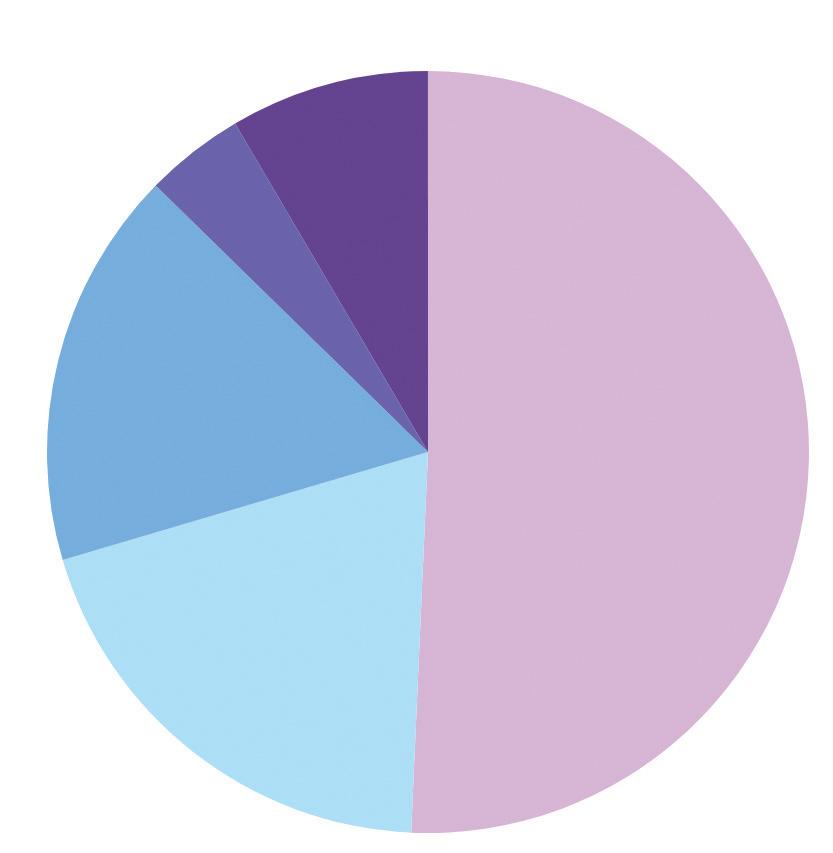
82.4%
of students believe contempt toward opposing political parties is prevalent or very prevalent on social media
Forming
requires active empathy, reflects one’s morality

Sarah Grupenhoff News Editor
Empathy was a pillar of my elementary education. The concept wove throughout my classes, from the fictional cautionary tales during read-alouds on the rug to the lived experiences of injustice I learned about in history lessons. We were taught to imagine ourselves in someone else’s place.
In a place like Palo Alto, where a bubble of privilege protects us from many of the immediate repercussions of national government decisions, empathy is what drives us to continue caring — to oppose something happening beyond the bubble because we are morally against the cruel treatment of other human beings. The past year of Donald Trump’s second presidential term has felt like a test of this deeply ingrained value that serves as a guiding hand in our moral compass. Do we care about injustice even when it is not affecting us directly?
Such a question has become harder to ignore as political campaigns increasingly lean openly on prejudice, when rhetoric targets entire communities and when politicians normalize justifying human rights violations. Political opinions, then, are reflective of more than just the policies you support; they establish what morals you align with and where you stand in instances that threaten life and liberty.
Online, the stakes are constant, with social media as one of the most formidable enemies of empathy. More and more people document and post the government’s crimes against citizens. Video footage of the murders of innocent people like Renee Nicole Good and Alex Pretti spreads like wildfire. Inevitably, violence has become part of scrolling, risking blending into the background. With that constant exposure, social media conditions an emerging desensitization to the inhumane. But just because something appears to be overwhelmingly present and “normal,” that does not mean it is justified. Battling this war on empathy requires active efforts to pause. To promote independent formation of opinion, based not on what the TikTok comment section thinks or what parents or friends think is okay, but on what we actually believe about what we have just witnessed. Only through an empathetic lens can we truly realize the moral weight of it all, recognizing the human cost behind each clip.
Social media has also largely amplified political platforms’ worst of the worst: the loudest voices, riddled with bigotry, representing the popular or even “correct” opinion. Volume and repetition begin to masquerade as consensus. This only affirms the importance of developing personal viewpoints, especially because in politics, the loudest voice in the room is often using volume to compensate for the lack of moral reason within their stance. Tapping into our empathy is vital in filtering out all of this noise and realizing that, having reached a point where the very lives of human beings are put up for debate, the “popular” opinion should not factor into determining what is right.
It may seem tempting to take the easy way out. “I’m not political” is a convenient refuge that many fall back on. But in the current era of extrajudicial killings and tearing families apart, political apathy equates to moral apathy. This only helps maintain the status quo: a conditioned indifference to denying people basic rights and dignity. While Palo Alto may appear to have some special sort of immunity to the consequences of national tensions, taking a “neutral” stance to dull urgency and avoid confrontational disagreement is still harmful, particularly to those outside of the bubble who cannot afford such an illusion. Voting decisions should not come with leeway for bending the morals you claim to uphold. Tolerance makes you partly responsible for the continuation of what you are supposedly against. In other words, if you are not condemning it, then you are condoning it.
So instead of fleeing from political conversations, face them head-on. Allow empathy to shape your moral awareness and voting choices, because how we think about these issues — what we question, what we excuse, what we defend — will carry over not just to the
In-depth Editor and Forum Editor
ollowing the 2014-15 suicide cluster — a group of deaths that occur within a certain time period — at Gunn, students wanted visible, communal ways to honor classmates, including holding memorials on campus, planting trees in remembrance and raising the flag at halfmast. Yet most of these proposals were not compliant with postvention guidelines, according to former Gunn Wellness Coordinator Joanne Michels.
This scenario is emblematic of the framework that guides response to tragedy in a district experiencing student death by suicide. Policies governing memorials, media coverage and official communication are designed to protect vulnerable students and mitigate suicide contagion — in which exposure to suicide increases the risk of copycat behavior. PAUSD’s decisions to disclose or withhold information surrounding the death are also made in accordance with the wishes of the student’s family. Both students and administrators describe similar hopes: to help the community grieve, process and heal. But while the district takes many factors into account, including clinical guidance and family privacy, some students say they feel dissatisfied with the level of candor in acknowledgment of the deaths and following actions. This disconnect suggests an ongoing need for not only greater transparency, but also clearer education about why PAUSD suicide and mental health responses are structured as they are. Without a clearer understanding of the rationale,
and confused about why we couldn’t take actions in certain ways,” Michels said.
Instead, the district sought alternative methods that would offer comfort without amplifying the visibility of deaths. The policies also included ensuring sensitivity in communication with families and collaboration within the district for students with mental health needs, according to Michels.
“As a school, we talked about opening up a certain part of the library for mental health resources and providing an extension of Sources of Strength (to talk) about stories of resilience and positive coping strategies (that) amplify those stories and help with the healing process,” she said.
Sources of Strength was an evidence- and discussionbased mental health program at Gunn that dissolved during the pandemic.
The same prevention principles that guide memorial policies also inform how student suicide is portrayed and reported. Evidence-based guidelines caution against detailed or sensationalized coverage. A 2015 CDC report investigating Santa Clara County suicide rates found that media coverage of the 2014-15 cluster “departed from the accepted safe suicide reporting guidelines.”
In response to findings like this, Stanford’s Media and Mental Health Initiative created Tools for Evaluating Media Portrayals of Suicide in partnership with the Santa Clara County Suicide Prevention team, which provided research on best practices for reporting on campus suicide.
alongside campus staff to assess whether the writer felt prepared for publication and whether adequate support systems were in place before, during and after release. These precautions were not intended to limit student expression, but to ensure protection.
“What we were really clear on is that storytelling could be therapeutic, but it’s not therapy,” Michels said. “(Suicide) could be a very sensitive topic, and there’s a lot of visibility when you put yourself out there. We wanted to ensure that the right supports were in place.”
Before formal support expanded, students initiated early, action-oriented responses to tragedy. The website Henry M. Gunn Gives Me Hope shared affirming messages from students, teachers and community members. The Tumblr blog “A Titan Is” featured students voices on identity and belonging. Students also formed a mental health club, Reach Out Care Know, which organized peer volunteers to sit in the library for conversation and informal support throughout the day.
The Wellness Center’s opening in 2016 signaled a move toward developing permanent resources and programs. According to former Wellness Commissioner Meghna Singh, its placement was deliberate to normalize help-seeking. The center was situated along the same path students would take for physical health services or activities in the Student Activities Center, so students were not singled out by their route to the Wellness Center.
“They were physically changing the campus so that
76.0%of9thand11thgrade studentsatgunnhave afriendtheiragewho helpthemwhenthey arehavingahardtime Source:CaliforniaHealthyKidsSurvey,2023-2024:Main Report


catered specifically to Gunn, and students often faced long waitlists due to understaffing, according to Director of Mental Health and Wellness Dawn Yoshinaga.
According to California Healthy Kids Survey data collected from Gunn over a fifteen-year time period, the percentage of students who report knowing where to go for help when they have a problem has remained about the same. The percentage of students reporting chronic sadness or hopelessness also remained steady, hovering near 30% for juniors and 20%–30% for freshmen. These figures indicate that while the number of mental health programs have increased, student understanding of how and when to access support may not have shifted substantially. In fact, CHKS data shows that the number of Gunn students who have seriously considered suicide has fluctuated but remained consistent, staying in the 11%–18% range.
Efremova said that even when resources exist, uncertainty about how they function can discourage students from seeking help.
“A lot of people who are struggling with mental health are

It’s a barrier if students need to explain themselves. So I (remind) teachers during staff meetings, over email and sometimes one-on-one.”
As for confidentiality concerns, she said there is a misunderstanding among students about how privacy works in therapy, especially involving parents.
“You have at least three sessions where you can come in where parents are not notified,” she said. “If you decide to go past those sessions, hopefully you’ve gotten a taste of therapy and know that parents aren’t really that involved, and you feel comfortable getting their consent.”
Because the age of consent for therapy is twelve, Ramos said the Wellness Center allows students to consent for themselves in certain cases, but she has found it rare for students to be uncomfortable asking for parental consent after three sessions.
Ramos also said that some students are hesitant to go to therapy because of mandated reporting. All adults at Gunn are mandated reporters, but some students may overestimate its jurisdiction. According to Ramos, the only two things staff must report are abuse and imminent danger to oneself or someone else.

“If we’re worried for your safety within the next 24 hours, that
towards getting some assistance,” he said.
English teacher and ROCK advisor Paul Dunlap said academic culture can also lead to students taking stress and a heavy workload as signs of success.
“A losing battle is (when) students almost compete about who’s busiest, who’s most stressed, who sleeps less, who has more tests,” he said.
When stress and jokes are normalized, students may be less likely to interpret warning signs as cause for concern in moments of crisis for themselves and each other. This brings the importance of clear education about the ways to seek support to the forefront.
In the evolving landscape of suicide prevention, the Palo Alto community continues to foster resilience and well-being. Last September, the City of Palo Alto approved a contract between the district and Project Safety Net, a community network of volunteers that provides youth mental health services through education, training and collaborations between schools and community organizations.
Last year, Vice Mayor Greer Stone also spearheaded a contract between the city and the mental health and suicide prevention nonprofit Jed Foundation. The partnership is meant to unite the district and the city’s suicide prevention efforts, with the foundation serving as a consultant to provide analysis, identify gaps and improve efficacy.
Gunn has also taken steps in effort to support suicide prevention on campus. From Sept. 8 to 9, 2025, SEC hosted
• Listening sessions are being organized with student leaders. These will occur later in March.
• Schoolwide Suicide Prevention Curriculum is planned for April and May.
• Students will be invited to register for the sixweek Teen Mental Health First Aid training held virtually at Gunn, starting in April. Look for an invite on Schoology, later in March, put out by Wellness Coordinator Michelle Ramos. Information from Dr. Wendy Stratton’s Schoology post on March 4
Editor’s note: Forum Editor Melody Song also serves as the Gunn Wellness Commissioner.
• Gunn Wellness Team: gunnwellnessteam@pausd.org
• Disrict Mental Health and Wellness website: tinyurl. com/PAUSDwellness
• National Suicide Prevention and Mental Health Crisis Hotline: 988
• For serious and immediate safety concerns, call 911 or PAPD at 650-329-2413

Warning signs of mental health struggles and substance abuse do not look the same for everyone, and some often go unheard or unnoticed. For freshman Pandora Gallusser, that reality has encouraged her to listen more closely. Initially taking the Teen Mental Health First Aid Training due to her interest in psychology and mental health, she became more aware of her surroundings, noticing shifts between peers’ mental health from middle school to high school. During the program’s scheduled PRIME sessions, she practices what to say when peers seem withdrawn, how to recognize warning signs and how to guide someone toward professional help or trusted adults.
“I would say that people might tend to assume that mental health challenges only happen to specific people,” she said. “But what we learned is how common (mental health struggles) are and how (they) could affect pretty much anyone.”
Roughly 4 in 10 teens nationwide experience loneliness or struggle with mental health, according to the Center for Disease Control and Prevention. Behind that statistic are the students navigating these challenges in their daily lives. For Gallusser, this widespread issue calls for action. Entering the class with this mindset and the basics of mental health awareness, Gallusser learned how to discuss hard and sensitive topics.
”carried herself before the training.
“(There is a misconception), (that) talking about it increases the (likelihood for harm), but we learned that that’s not actually the case and that more open conversations can actually help more,” Gallusser said.
Although Gallusser hasn’t yet found herself in a situation where she needed to use the first aid skills directly, she still views the knowledge as something valuable to carry with her.
“So far I haven’t really had to use the skills I learned through the program, but I feel like, even so, it’s definitely good to know and keep as a part of your tool kit, because it can definitely come in handy, especially over the years and in many different circumstances,” she said.
Currently, the program is offered every semester during PRIME with Planned Parenthood representatives and remains optional. Gallusser says that it could have a positive impact on students as they are able to take initiative and action if others are in need of help.
Some next StepS I’ll take iS overall becoming more aware and obServant of people around me and checking in on them more.
freShman pandora galluSSer
“After taking the course, I feel more confident in my ability to observe my surroundings and identify people who seem to be struggling,” she said. “After (being) given clear action steps during the program, I feel like I learned how to support people better.”
The emphasis on responsible, harmminimizing steps stood out. Her training equipped students to dispel stereotypes and misconceptions, some of which she

To many, Palo Alto is a town defined by opportunity and high-achieving schools, but sophomore Eleanor Nguyen sees another side to the coin: a need for strong peer support. Behind the innovation and technology hub that outsiders initially perceive, the discussion of mental health has been at the forefront of school board meetings and in the community.
”Seeing the opportunity to drive change, Nguyen enrolled in Teen Mental Health First Aid Training, a sixsession program where she learned how students can support one another without taking on responsibilities meant for a professional.
mental health — specifically, the concept that mental health is a quick fix and is similar to physical health issues.
I think my underStanding about mental health haS changed becauSe there are a lot more SignS that you might not notice
Sophomore eleanor nguyen
“I think a lot of people think it might be like a disease,” she said. “But we called it ‘mental health challenges’ in the course because it’s not exactly like a sickness. If you have a cold, you can take medicine and feel better, but mental health is a lot about talking and opening up about your struggles, being able to relate to other people or just feeling some kind of validation in your own feelings.”
“I feel (that the training is) pretty important, and it could definitely be really beneficial for a large amount of students to take so that we can all support one another,” she said. “Especially with the challenges specifically in this community and the reputations of the schools, I think (my experience) could definitely be really helpful.”
The training has shaped how she moves through her daily life — not as the eyes and ears of her school, but as a friend who knows to listen, when to reach out and when to support others.
“Some next steps I’ll take is overall becoming more aware and observant of people around me and checking in on them more, if I feel like someone ever needs help,” she said.
“I think it’s really important (to use the skills we learned) so that you can help (others) get help, because in the program we don’t actually learn how to ‘(fix)’ our friends (or) diagnose them — we’re obviously not professionally trained,” she said. “But we are able to spot warning signs and then refer them to professional help if we think they might be struggling with something or if they open up to us.”
Inside the classroom, the instructors guided discussions after students completed their online prework, including videos and slides. The training challenged Nguyen’s perceptions of what depression and typical warning signs look like when a peer is facing mental health challenges.
“I think my understanding about mental health has changed because there are a lot more signs that you might not notice or warning signs,” she said. “I think taking this course has really helped me not just see it at surface level but more deeper.”
During the course, Nguyen learned about the misconceptions surrounding
Nguyen felt the training was empowering and that it gave her good tools to use, though some of the discussions covered in the training were challenging to navigate.
“I think the most challenging part was talking about a lot of hard to talk about subjects like suicides, but I do think that it’s still very important to learn about, especially because they are a really big deal when someone’s life is taken away because of how they were feeling and the challenges they were facing mentally,” she said.
The training has helped raise her own awareness of mental health in her community and led her to check in more often with those around her.
“(After taking this course), I will be checking in with my friends more often and see if I see any warning signs and ask them if maybe they wanna talk to a therapist or maybe just like a counselor,” she said.
—Written by Lena Duggan

To sign up for Teen MenTal HealTH firsT aid Training:
• Keep an eye out for a Schoology update from Wellness Coordinator Michelle Ramos in mid-late March.
• Register using the provided information in the update for the six-week program led by Planned Parenthood.


Sophomore year is often measured by grades and deadlines. But for senior Ava Rapoport, it was measured in distance. During one semester of sophomore year spent studying in Israel, Rapoport stepped outside what she describes as Palo Alto’s “bubble” in search of something less predictable.
“I think in Palo Alto there’s kind of a bubble, especially since there’s so much pressure at Gunn with grades and other aspects, so I wanted to try something different,” she said.
The idea of attending this exchange trip wasn’t new for her family, with her siblings having been on the same path of studying abroad.
“I decided to go at the beginning of freshman year because my three older sisters all did the same semester in Israel,” she said.

Sophomore Eli Zeitlin has always been drawn to first days, from the unfamiliar taste of a new dish to the disorientation of landing in a foreign country. It has always been easy, yet nothing quite prepared him for stepping off a plane in Taiwan for an exchange program armed with fewer than 15 words of the language.
“Especially when my Chinese was bad, I would just spend like hours in a day just sitting and listening to people speak Chinese, (which was) basically just gibberish to me,” he said.
Zeitlin arrived in early September determined to learn Chinese.
“From my experience living in another country and learning Spanish there, I know that the best way to learn a language was to just go to the country,” he said. “So I figured, if I can do (an) exchange (program) to Taiwan, then I’d come out with much better Chinese.”
Between his attempts to work with the language barrier and the societal differences, even Zeitlin’s naturally social persona found itself quieter than normal.
“I’m used to making friends pretty easily, but when I can’t speak the same language and if there’s different cultural stuff, I’m a whole different person basically,”
In Israel, Rapoport traded Palo Alto’s familiar routines for a new day-to-day life shaped by smaller classrooms and experimental learning. She spent mornings in smaller classrooms with 5 to 10 students, since everyone followed different class schedules. In the afternoons, learning often took place outside a conventional classroom, with students traveling throughout Israel on trips called “tiyuls” that combined
he said. “I don’t have a full Chinese vocabulary at all, especially when I first got there, so it wasn’t as easy to match someone’s energy.”
With time, however, the adjustment softened. As his Chinese words came more readily, so did friendships. It was important for Zeitlin to show interest in even the smallest things while making new friends, such as one friend who convinced him to download a video game.
“I wasn’t really interested in (the video game) at all, but I thought I should download and learn how to play this game, just so we would have more to talk about,” Zeitlin said. “He was really excited to teach me about it, and I also discovered that he was a Rubik’s Cuber, so we bonded over that too.”
Throughout his experience, Zeitlin speaks most warmly about his memories with his host family.
“My host brothers were very good at English, so we’d have all sorts of great conversations,” he said. “It was always a lot of fun to have a bunch of kids to sit with and talk with every single night.”
By the end of the exchange, what he carried home was not improved fluency alone, but something else in his pocket: tolerance and appreciation for discomfort.
“I think my exchange trip to Taiwan has given me appreciation for doing things that are really difficult and doing things that are uncomfortable,” he said.
—Written
exploration with history lessons. Some places that students visited included going on hikes or going to different museums.
Beyond the academic differences and the coursework, Rapoport began to reconsider what success meant in the new school system. She noticed that grades carried less cultural weight.
“I felt like the teachers cared more about your actual learning than the grades that you were getting,” she said.
Living abroad required her to become more independent, and in the process, she grew into it.
“(Studying abroad) was easier in that there was less pressure, but also more difficult since I didn’t have my parents telling me to do work, so I had to take that upon myself,” she said. “It’s kind of like in college, where you have to be more independent and get yourself motivated to do your work in general.”
Some of Rapoport’s most memorable moments came not from the classroom, but from conversations with locals, particularly as her visit to Israel came during the Israel-Hamas war.
“Since I went during the war, it was really interesting to see their perspectives,” she said.
“When you see the war from the outside and online versus in person, it’s different.”


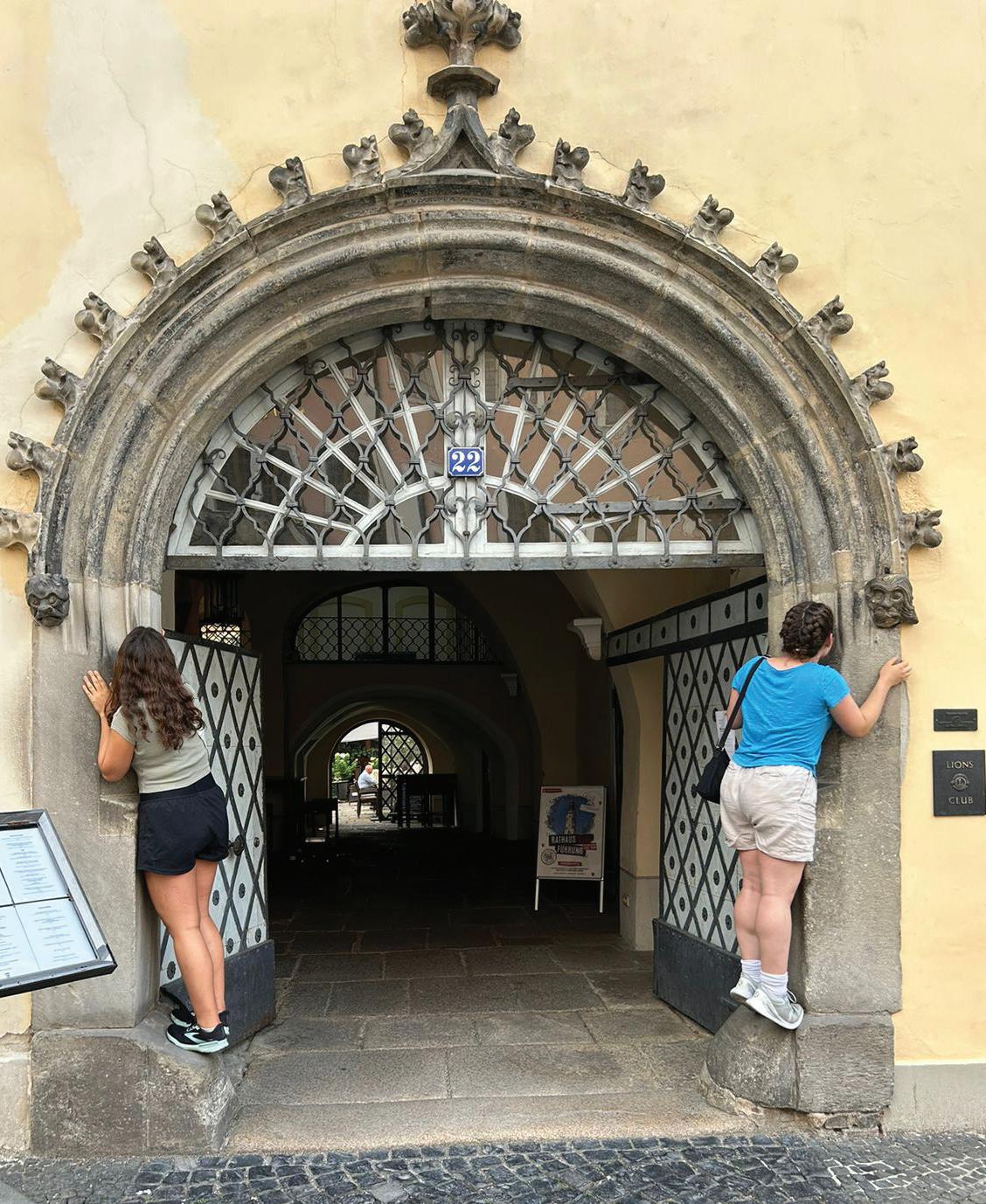
After spending a month studying abroad in Berlin last summer, junior Penelope Zeineh remembers not only landmarks, but immersion in Germany’s culture, society and language.
“I decided to go because I like learning about German culture, and I’ve been to Germany a few times before, so traveling there is always fun,” she said.
Zeineh first learned about the opportunity to study abroad with the Council on International Educational Exchange from both her German teacher and school counselor. With the AP German Language and Culture exam just around the corner and having time in her summer schedule, the decision felt natural.
Although she had been to Germany before, the exchange trip still offered new perspectives. A large part of her daily life was navigating Berlin’s public transportation system, which revealed differences in pace and independence compared with that of the United States.

“I think some of the big culture shocks were how big the train and bus systems were compared to cars,” she said.
With global travel more accessible than ever, studying abroad has become a popular way for high school students to expand their horizons and explore the world. For many students, it is more than just a trip: It is an
opportunity to immerse themselves into a completely different way of life. Yet, the language barrier proved less formidable this time around.
“I already spoke German pretty well,” she said. “But for words that I didn’t know, I would just use Google Translate.”
Her daily routine in Berlin unfolded on both bus and train commutes. Mornings meant navigating public transit to class, attending morning classes and participating in afternoon activities before returning home from dinner.
“I don’t really have any regrets, but next time I’d carve out more time to hang out with friends while we were there,” Zeineh said.
When Zeineh looks back on her month in Germany, she remembers the important skills and habits it reshaped. Zeineh found that the experience improved her adaptability and problem-solving capabilities.
What lingers most, though, are the friendships, which Zeineh still remembers fondly. She still texts some classmates today, with the miles separating them reduced by glowing screens and memories.
For students who are considering a similar leap, her advice is less logistical than philosophical: arrive open-minded and embrace challenges.
“You’re going to find a great group of people and lifelong friends, so go into it with an open mind,” she said.
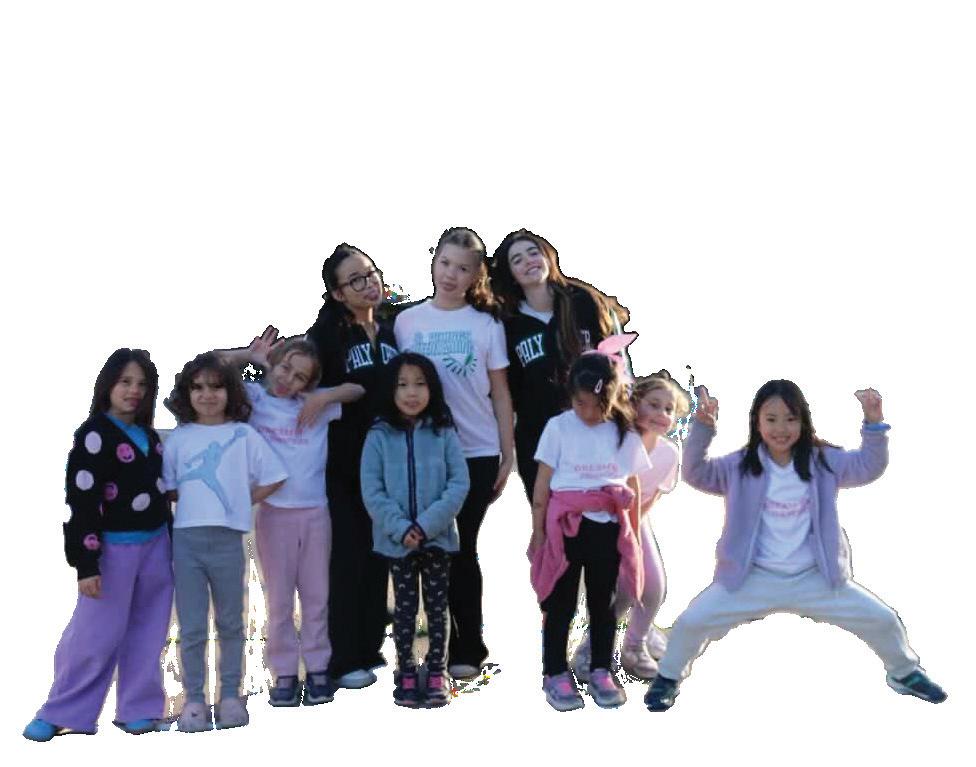
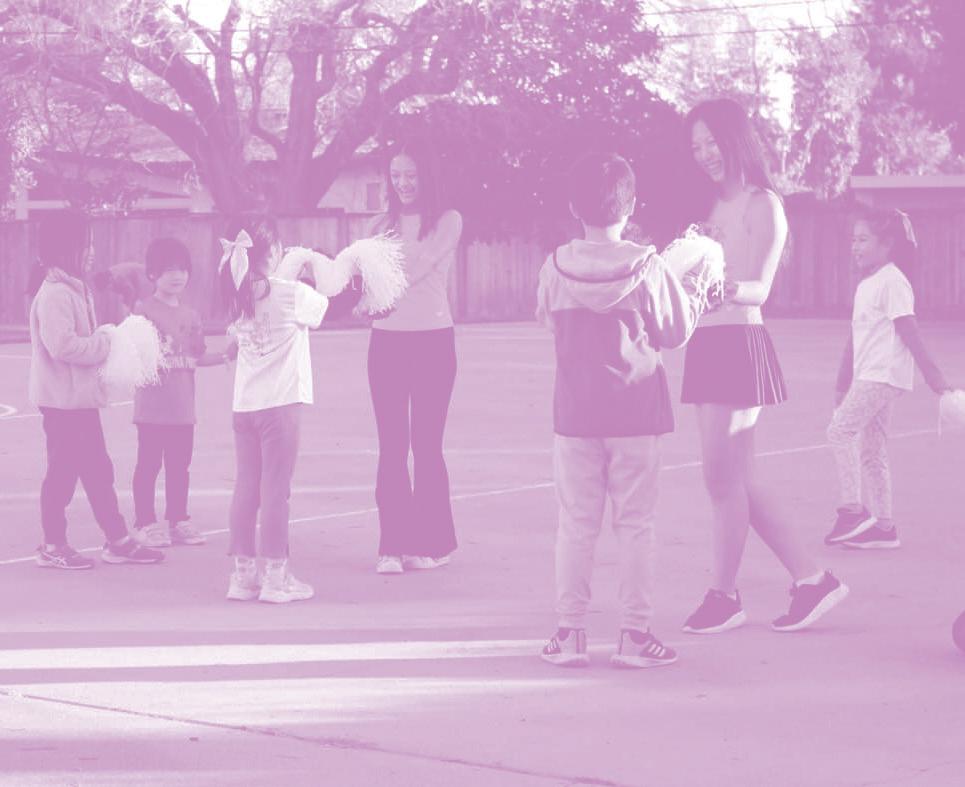
With “California Girls” blasting on the speaker, the sun warming the grass and kids jumping around to learn the choreography, the famed lyrics have never been more true: “Toned, tanned, fit, and ready/Turn it up ‘cause it’s gettin’ heavy”. The high-energy environment is precisely why this DreamxDancers class was dance instructor senior Lauren Murakami’s favorite memory.
DreamxDancers is a student-led nonprofit providing accessible jazz, cheer and ballet classes to the youth and sharing dance culture with the community. CEO Ayaka Sonehara and COO Alisa Sonehara, her sister, originally founded this organization to share their passion of dance with the next generation of students. This year, they are donating 50% of their profits to MedShare, a global healthcare nonprofit.
A typical Saturday afternoon class has around 10 elementary school-aged students and begins with icebreakers, stretches, and interactive techniques to teach the dance moves. After a game halfway through class, students perform the dance they’ve learned to an audience.
the students and their instructors that makes volunteering for DreamxDancers all worth it.
“One time after class, these kids were really really excited about the dance and they were like ‘You guys did so good!’ and they gave us a cookie,” Alishahian said. “I didn’t know where they had the cookie the whole time but they just whipped it out and gave it to us.”
Murakami reflected on a similar experience when a student gave her and Alishahian handmade stickers as a gift.
“(These interactions) really make my time here as an instructor and being in a nonprofit so rewarding because you get to meet these kids who look up to you from a dancer’s perspective,” she said.
(These inTeracTions) really make my Time here as an insTrucTor and being in a nonprofiT so rewarding because you geT To meeT These kids who look up To you from a dancer’s perspecTive.
dance insTrucTor senior lauren murakami
For dance instructor sophomore Vivian Wang, this is the best part.
“My favorite part is at the end (when) kids are really proud they’re performing, and then the parents are smiling and taking videos, and it’s just so fun and so rewarding,” she said.
Even though the dance moves are relatively straightforward for the seasoned dance instructors, these classes don’t come without their challenges. For dance instructor senior Lilia Alishahian, the surprise-factor of working with young children is always difficult.
“We are unsure of how prepared we are for a dance class, because even though we have done the choreography prior, I feel nervous having a live audience to teach to,” she said. “Sometimes they just ask really out-of-pocket things and we have to figure out how to respond to that.”
Despite these issues, it’s the connection between
Murakami reflects on her own dance journey, reminiscing on her love for dance when she was her students’ age.
“I love to see (the kids) grow throughout the classes and just be able to see how much they love dance and how much they love performing,” she said. “I kind of like to see myself through them.”
For both Wang, Murakami and Alishahian, this experience has translated into lessons and useful skills for their own dance journeys on the cheer team at Gunn.
“This changed my perspective on cheer a bit because honestly the kids are doing a lot better than I thought they would,” Wang said. “In my mind, I thought (of cheer) as something for teenagers but it’s a lot more universal and inclusive than I thought.”
—Written by Kaylee Cheng

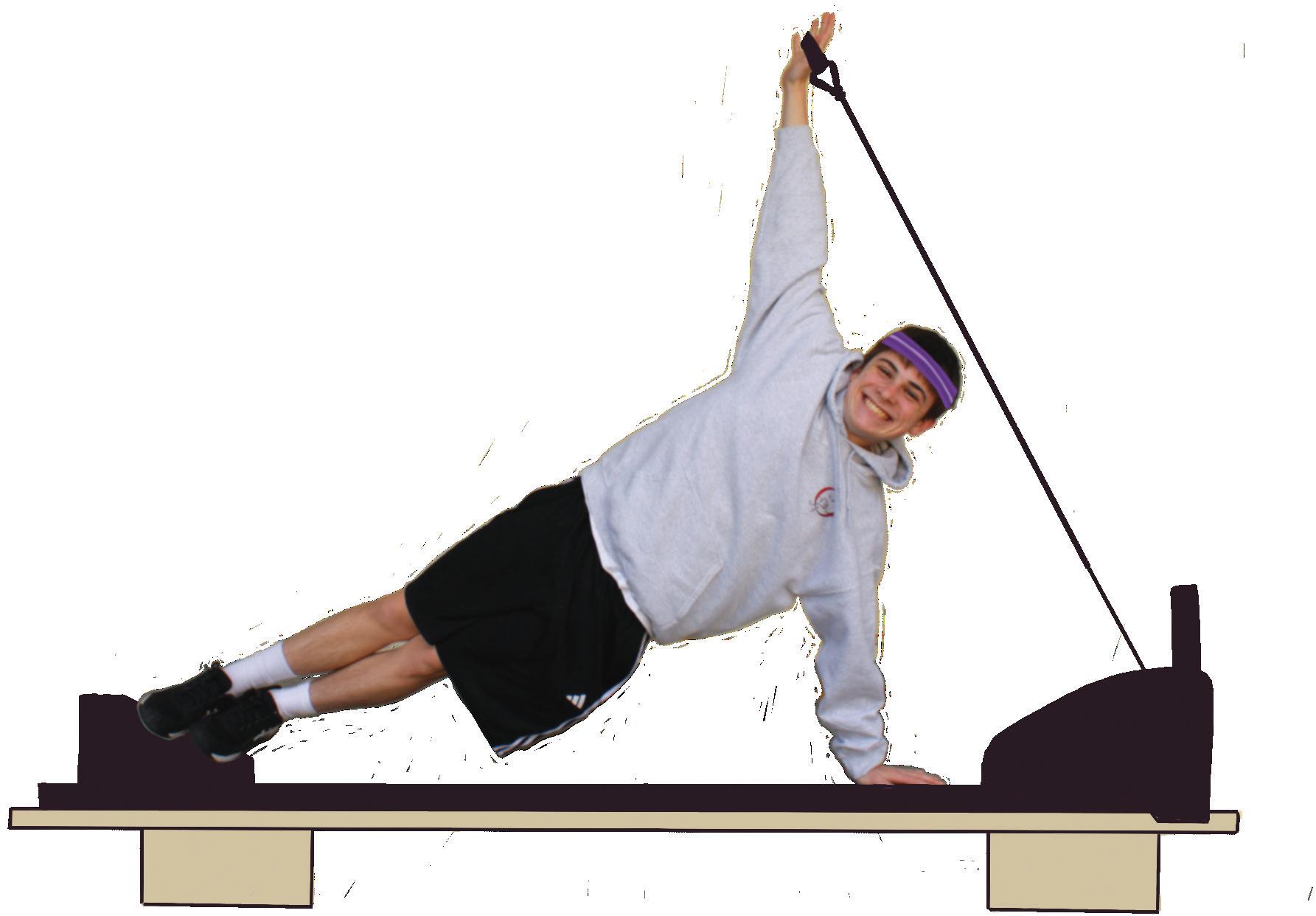
In the midst of the rainy winter months, we found ourselves looking for a new athletic challenge. Instead of continuing with our own sports or trying to be gym rats, we turned to a lighter and trendier activity: become Pilates princesses.
Pilates, named from its creator Joseph Pilates, is a mind-body exercise method that increases flexibility and reduces injury risk machine-based activity. It’s practiced by over 12 million people worldwide. We were
Nevertheless, after some much needed corrections from the instructor and following the lead of the people next to us, we started to get the hang of it. Don’t get too cocky once you start getting in the flow of things, though. One second, you’re doing an exercise that you could do all day, and the next you’re discovering new muscles all over your body that are a pain to have to move.
The reformer allows for a wide range of exercises, many of which are similar to those in the weight room, such as bicep curls and tricep pulldowns. Our set was composed of triceps, biceps, abductors and core exercises. Unlike some other training regimens, Pilates is unique in its focus on control. At the end of the sets we were often instructed to do “pulses,” which were small, controlled, repetitive movements. We found that maintaining our balance was key: It turns out it’s very easy to fall over with two loose ropes in hand

For 40 minutes, there’s no time to focus on anything going on outside of the studio. All
your concentration goes into doing the exercises, listening to the instructor and comparing your abilities to the middle-aged women around you. It is nice to just live in the moment, albeit a moment filled with excruciating core soreness (or other description of lactic acid filling the muscle). If it helps, time goes by very fast when hours get sliced into minutes get sliced into short workouts.
Pilates isn’t for everyone. This is just one of those books, though, that you can’t judge by its cover. It’s worth trying Pilates at least once.
The Milan crowd roared after queer U.S. figure skater
Amber Glenn’s flawless free skate launched her from thirteenth to fifth place at the 2026 Winter Olympics in Italy. Some spectators also raised a particularly brightly-colored fabric: the all-inclusive LGBTQ+ flag. Throughout competitions, many athletes promoted awareness for the LGBTQ+ community with their platform.

A record number of LGBTQ+ athletes participated in this year’s Winter Olympics, with at least eight openly queer athletes competing on Team USA across figure skating, hockey and more. Notably, Glenn — the first queer female skater to win Olympic
make sports communities more inclusive.
As more athletes come out, representation in sports media has also increased significantly. Recent popular media like TV show “Heated Rivalry,” released in 2025, spotlighted the struggles that queer athletes face in team sports. Lead actors Hudson Williams and Connor Storrie were torch bearers for the Olympic Torch in Milan, and fans credit the show for opening up conversations about queer athletes in hockey, a sport in which LGBTQ+ athletes often face discrimination.
At Gunn, the Hidden Opponent Club is dedicated to athlete well-being. Club secretary and varsity track and field hurdler junior Trevor Reyes believes that the shift in attitude towards queer athletes has been increasingly positive in recent years as more professional athletes come out.
“The attitude (towards LGBTQ+ athletes) has definitely changed as countries evolve,” he said. “People are becoming more open about it, and people are speaking up more. I think (as athletes, we) are breaking down stereotypes, (which) encourages more people to be more comfortable with themselves in certain sports.”

Gender Sexuality Alliance Club Co-President and varsity softball player senior Claudia Wolff de Tourreil adds that the Gunn athlete experience for LGBTQ+ athletes has improved over the years.
“In my three years at Gunn, (attitudes towards queer athletes) have become a little more positive in the teams I play on,” she said. “I think that the connection and community within a team is a big factor in how inclusive it is to (LGBTQ+ athletes), so it depends from year to year on a team and how that culture is going to feel, but it has (generally) gotten more inclusive.”
For varsity soccer player freshman Jeremiah Magallon Obeso, there is a lack of guidance for athletes playing at the high school level as a transgender athlete.
“In my experience here (at Gunn), I haven’t really gotten any advice from sports coaches (as a transgender athlete) to choose which team I’m willing to play on,” he said. “My parents usually tell me to just choose the one I want (to play on), but I don’t think there’s a lot of support from the school itself.”
While there are no official policies prohibiting athletes from participating in sports based on their sexual orientations, athletes still face general prejudice from
fans or other athletes within their sport or team.
“Teams are supposed to be very supportive of one another and work together, but being out as an LGBTQ+ person in a team can feel very isolating knowing that you’re ‘different’ from everyone else no matter what you do,” Reyes said.
In a press visit to the Milan Olympic village on Feb. 7, the International Olympic Committee announced a policy expected to place stricter restrictions on transgender women if they have received gender-affirming treatment or surgery, a move that many feel seems to follow Trump’s policies. This would be the IOC’s first universal policy on transgender athletes which would affect all sports included in the Olympics.
For Magallon Obeso, the IOC’s announcement did not come as a shock but was frustrating nonetheless.
“The gender someone was born as shouldn’t be used by others to limit how someone can perform to their highest level,” he said. “I think (transgender women) should be allowed to compete because if everyone is working their hardest, then anyone can be anyone without gender restrictions.”

As federal and committee-level policies increase limitations, smaller sports communities offer valuable advice to support LGBTQ+ athletes locally. According to Wolff de Tourreil, coaches and fellow athletes need to work together in order to build a more inclusive community so that LGBTQ+ athletes can fully enjoy the benefits of sports.
“Just because someone has a different experience than you doesn’t mean that their experience is any less valid,” she said. “It’s important to be inclusive on those teams since you do spend so much time together and have to work closely together.”
—Written by Michelle Zhou
Roaring crowds, defeated champions and victorious “Cinderella” underdog teams define March Madness, the 68-team National Collegiate Athletic Association Men’s and Women’s Division 1 basketball tournaments. Behind the tournament’s chaos is the math behind countless bracket predictions: Before the tournament, millions of fans predict who will win each of the 63 games in a ranked bracket layout competition, each aiming for perfection.
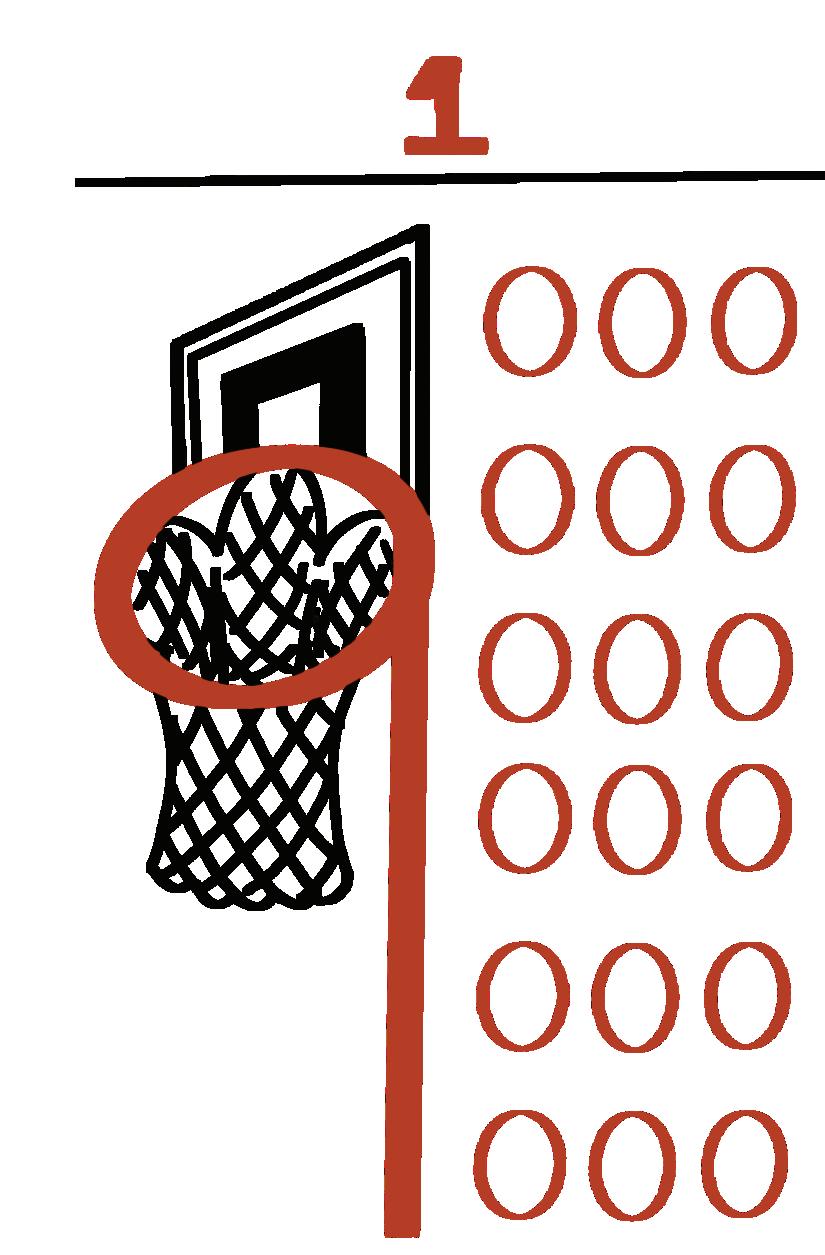
But a correct bracket is nearly impossible. The theoretical odds of a perfect March Madness bracket, with random selection of winners, are 1 in 9.22 quintillion. Even if utilizing in-depth analysis of the collegiate game, many factors eliminate most brackets halfway through the first day. Particularly, underdog “Cinderella” teams unexpectedly rise to victory against high-ranked teams early on. The fact that a single game decides who is eliminated and who moves on to the next round also introduces volatility, devastating brackets.
While using math can aid in sports analytics, math teacher Gopi Tantod believes victors in March Madness are extremely hard to foresee because of players’ variability. Calculating each athlete’s expected success in the team cannot always accurately predict players’ conditions and how they will work together on game day.
“It’s about who works with whom, and who can rebound off of each other,” she said. “You can do the analytics of (each athlete), but I don’t know if it would give you an accurate read (of who will win).”
As a Stanford D-1 women’s basketball point guard, Shay Ijiwoye helps prepare strategies for her team to work together efficiently and increase their odds against any opponent. Behind these strategies is another layer of mathematics, as prime defense requires forcing the opponent into low-scoring shooting positions. Offensively, analytics on where each athlete best shoots from play a deep part in predicting opponents’ patterns and building the best game strategy.
“(Predicting) and then dictating what an opponent does is kind of like one huge equation,” Ijiwoye said. “You’re trying to figure out how you can get (them) to do
what you want them to do.”
As complex strategy increases the stakes, so does viewership. In fact, women’s basketball has experienced
The chances of predicTing a perfecT march madness brackeT are less Than:
record-breaking audience engagement in recent years, due to a shift in societal interest. Ijiwoye believes that March Madness offers an important platform to represent female athletes and empower the next generation, especially in a male-dominated field.
“When people think of March Madness, they mainly only think about men,” Ijiwoye said. “I think it’s so cool how people are paying more attention to the women’s side, and for people to see (all the different avenues towards professional women’s leagues).”
March Madness not only inspires female athletes but also offers a valuable time to bond with family. Girls varsity basketball point guard freshman Stella Kitch grew up playing and watching basketball with her dad and brothers. For Kitch, March Madness uniquely brings the basketball community together.
“My brothers sometimes come home (from college) to watch March Madness with us,” she said. “(The basketball community) is the kind of place where I can forget about all the stress of school, just hang out with my teammates, play (and watch) a sport I love.”
While the odds of a perfect bracket may not be in the predictors’ favor, the basketball community only grows stronger from the unpredictable chaos of March Madness. According to Ijiwoye, viewers bond over their March Madness predictions and favorite teams.
“Sending our (personal) stories is what makes (March Madness) even better,” Ijiwoye said. “When you have the personalities behind (the game), and you understand the different stories of people, people have empathy towards that. (The chaos of March Madness) is really refreshing, especially in the world we live in today.”
—Written by Athena Gao
In the United States, spring announces itself not only with warmer days and blooming flowers, but with the familiar sight of Girl Scout Cookie booths lining sidewalks and storefronts — a seasonal ritual that has become quintessentially American. Although this program has endured since 1917, just five years after the organization was initially founded, it has evolved over the years from modest local bake sales into a nationwide enterprise funding leadership development for millions of girls. In 2026, Girl Scout troops offer nine flavors for $6 to $7 per box: Thin Mints, Caramel DeLites, Peanut Butter Patties, Trefoils, Peanut Butter Sandwich, Lemonades, Adventurefuls, Caramel Chocolate Chip and Exploremores.
In 1917, the Girl Scouts of the Mistletoe Troop in Muskogee, Oklahoma baked and sold homemade cookies at their local high school cafeteria to raise money for troop activities, laying the groundwork for what is now the largest girl-led entrepreneurial program in the world. This idea gained traction in the 1920s after Chicago regional director Florence E. Niel publicized a sugar cookie recipe in The American Girl magazine, suggesting troops across the United States organize their own sales. Throughout the decade, the girls baked the cookies themselves and packaged them in wax paper bags, selling each dozen doorto-door for 25-35 cents.
In the 1930s, the Girl Scouts revolutionized cookie sales by commercializing and streamlining their production process. In 1933, the Girl Scouts of Greater Philadelphia Council made sales at Philadelphia Gas and Electric Company’s windows, and a year later, they made the first commercially baked Girl Scout Cookie sales. By 1936, in response to growing demand while also aiming to use cookie sales as means to develop the young girls’ marketing skills, Girl Scouts licensed commercial baker Keebler-Weyl Bakery, then Southern Biscuit Company and Burry Biscuit, to produce cookies for nationwide troop sales.

After experimenting with dozens of
licensed bakeries — and even a hiatus to sell calendars instead of cookies during World War II — Girl Scouts transitioned to only ABC Bakers and Little Brownie Bakers in the 1990s, which remain the organization’s sole manufacturers today. As a result, many flavors are sold under two names depending on the supplier: Caramel deLites are Samoas from Little Brownie Bakers, Peanut Butter Patties the same as Tagalongs and Peanut Butter Sandwiches also known as Do-si-dos.
The dual-bakery system both created discrepancies in branding and shaped the evolution of flavors over time. Simple sugar cookies in the program’s earliest years advanced into three original varieties by the 1950s: Sandwich (Peanut Butter Sandwich), Shortbread (Trefoils) and Chocolate Mints (Thin Mints). The introduction of chocolate-coated mint cookies was a pivotal turning point in flavor development, establishing what would become the organization’s perennial bestseller.
However, not all new flavors were as successful as Thin Mints. Over 50 cookie flavors have been discontinued due to declining sales or shifting production strategies, such as the caramel-pecan Juliettes, fudge-dipped shortbread Thanks-A-Lots, limited-edition 2023 Raspberry Rallys and lemony powdered sugar-covered Savannah Smiles.
More than a century after the first batch of Girl Scout Cookies were sold, these cookies represent more than a seasonal indulgence. Annual sales serve as opportunities for young girls across the country to develop entrepreneurial and life skills like goal setting, money management, and interpersonal communication. In that sense, the evolution and expansion of flavors mirrors the purpose of the organization itself: to promote innovation and growth rooted in opportunity.

Many have seen the images of bright, multi-hued powder staining white clothing, but they may not know the significance behind it. It is the celebration of Holi, a Hindu holiday also known as the “Festival of Colors.” Holi is primarily recognized as the arrival of spring and the triumph of good over evil, but it is rooted deeper in the eternal love of ancient Hindu deities Radha and Krishna. The legend says that Krishna, being jealous of the tone of Radha’s skin, applied color to his face to change it. Over time, this legend evolved into the use of the powders seen in many Holi festivals. The powders, called Gulal, were originally made from natural substances — berries, turmeric, flowers and other plants ground up to create color. Today, most of the powders thrown at people during celebrations are made of chemicals.





— Written by Anne Dong
Caramel DeLites, formerly known as Samoas, are a classic cookie made for coconut lovers. Flavors of caramel, chocolate and coconut melt in your mouth, as the soft texture gives way to small bites. Caramel DeLites are the perfect treat to satisfy your sweet tooth.
Exploremores are the newest edition to the Girl Scout Cookie line-up, and frankly, they were disappointing. The cookie was stale and the filling was lacking. Exploremores were supposed to have notes of chocolate, almond and RockyRoad, but ultimately, I couldn’t distinctly taste anything. Don’t waste your money.
—Written by Vaani Saxena
Peanut Butter Sandwiches: I weep for the peanut-allergic among us. While many would be quick to say that Peanut Butter Sandwiches are simply bland Nutter-Butters, it is precisely the cookie’s uncloying nature that makes it edible and even enjoyable in large quantities. My only complaint would be that the cookie tastes more of peanuts than of peanut butter, although that’s hardly a dealbreaker.
As a devout acolyte of Rocky Road ice cream, I hereby decree that Exploremores should be considered sacrilege. Bearing little to no resemblance to the ice cream in flavor, Exploremores leave an off-putting aftertaste, with a stale texture — neither crunchy nor soft. Perhaps it was a bad box, but either way, I’m done exploring.
—Written by Roy Lao
Through the variety of cookie flavors that we tried, a few stood out, both those enjoyable and those unimpressive. On the other hand, the notorious classic Thin Mints have a familiar and nostalgic taste, but one you could never get sick of. The thin and crispy chocolate cookie is rich and smooth with a perfect balance of sweetness and harmonious essence


Celebrated over two days, Holi is synchronized with the lunar calendar, causing its dates to vary. This year, Holi begins on the evening of March 3.
Sophomore Nia Sharma’s family celebrates Holi by attending a social media-planned event with Bay Area community members to throw powder and share meals.
“Everyone brings food, and food is a really big thing in India — it’s how you show your love,” she said. “It’s just a really big community bonding kind of thing.”
However, Holi is more than just the opportunity to welcome spring and have fun: It is a chance to reconnect with her Indian heritage alongside others who celebrate and respect the culture.
“It kind of feels like you’re pulling the whole Indian community together to celebrate this really happy event,” Sharma said. “I really love Holi because a lot of other Indian holidays are (typically celebrated by family), or more like even (by close friends). I love how (Holi) is
really just everyone in the community.”

The most disappointing cookies were the Lemonades. With a dry and crumbly shortbread cookie and a subpar, artificial lemon outer layer, one bite requires three sips of
In an effort to avoid prejudice on the basis of being “too Indian,” Sharma’s parents didn’t raise her to celebrate many Indian holidays — only Diwali and Holi. While it may have prevented bullying, it also led to Sharma feeling
“I definitely wish I knew more about my heritage,” she said. “I wish I grew up celebrating more events and


knowing more about my culture in general, but I’m really glad that I do get to celebrate Holi and Diwali because those are two of the biggest holidays in India.”
Senior Tilak Thiyagarajan enjoyed Holi the most as a child, but the event remains an enjoyable festivity growing up.
“It’s tradition — you’ve done it for a while, and for kids it’s just fun because you get to throw color,” he said. “Even the parents will run around and put color on the kids. I think everyone’s transported back to childhood.”
Diversity Commissioner senior Elijah Williams helped plan Gunn’s annual Holi event, an effort to bring awareness to Hinduism and cultural holidays celebrated by members of the Gunn community.
“The point of it is to bring people and families who celebrate that culture to feel welcomed at Gunn,” he said. “Sometimes those cultures aren’t necessarily fully represented at Gunn, so events like these are really helpful for getting people to feel more welcomed (on campus).”
Much of the importance of the event comes from the inclusion of every person, regardless of whether or not they typically participate in Holi.
“Even if people who are working on the event or somebody who comes to the event doesn’t necessarily celebrate the holiday, having that welcomeness to it shares a knowledge of the culture,” he said. “It’s a further step into inclusivity at Gunn.”
— Written by Gwen Domine
1. More, Spanish
2. Prefix denoting height
3. Brat’s stocking stuffer
4. North Pole worker
5. Starring role
6. Primary
7. “You get a car! You get a car! Everybody gets a car!”
8. Endangered marine mammal (2)
9. Put down
10. Shrek, e.g.
11. Banana skin
12. Hosp. areas
14. Study of words
18. Gobble up
22. “Mamma __!”
24. Delivery vehicle
26. Foundation
27. “Becoming” author
28. Secure, as a ship’s line
30. Civil rights icon Parks
Beauty parlor
43. Bro or sis
44. Rummage (through)
45. Picture 46. St. Louis landmark 48. __ Scotia
49. Give the green light (2) 51. French for “yes” 52. Street __, reputation
53. Poorly lit
55. “Obviously!”
57. One true love
62. Pixar clownfish
65. Large crowd
66. Upgrade from a tropical storm
69. Choir section
70. Simple poetry rhyme scheme (created with letters)
71. Field goal attempt
72 __Hopkins University
73. For fear that
74. Gunn AP Bio teacher
31. Egypt’s capital
33. “Take a __” (“Another time?”) (2)
34. “What’s in __ me?” (2)
35. Figure out
36. Work, as dough
39. Spelman or Howard, for short
42. Unnecessary
47. Stayed out of sight
50. Phone card
54. Taj __
56. Prefix with cycle
57. Go it alone
58. Surg. specialty
59. Japanese noodle
60. Toothpaste holder
61. Taylor Swift’s most recent tour
63. Postal delivery
64. A single time
65. Pilgrimage to Mecca
67. Squeaky animal
68. Squeeze (out)
Finished the crossword? Come to P-115 during lunch or 5th period with your completed puzzle to collect a prize!
The day technically starts at 9 a.m., but let’s be honest: For a second-semester senior, that’s more of a suggestion than a rule. The alarm goes off, gets silenced with confidence and then it’s back to bed for an hour, with the calm understanding that first prep exists for a reason (and even if it doesn’t, they don’t really have to go to first period).
Driving into the parking lot is when the morning truly begins. A kid in either a shiny BMW — obviously not self-funded — or their mom’s minivan cuts off everyone while blasting trap music as if it’s not the earliest hour of the morning. Honking feels like too much effort, so most seniors just accept it.
Every senior enters the lot convinced that today they will finally get a front spot. They never do. The outcome is always illegal parking in admin or visitor spaces hoping no one will notice.
Only then does the most important part of the morning begin: car rotting. Seats recline. Phones come out. Seniors sit motionless, mentally preparing for the battlefield that is school. This continues peacefully until awkward eye contact is made with campus security cruising by on a golf cart. That single glance triggers immediate evacuation.
On campus, seniors are easy to identify. Backpacks are extinct. Tote bags and kiddie packs now carry crumpled worksheets, a pen that doesn’t work and an abandoned letter of truancy.
In class, effort operates strictly on the principles of “How low can my grade be in order to pass?” and “If I don’t submit this assignment, how much will my grade go down?” The goal is to stay above a cool 62%, not excellence.
At the same time, the repetitive background noise echoes a tale as old as time: college apps. A new student just shared their commitment post on the school’s college decisions Instagram page, launching a buzz of conversation between peers. For every person celebrating an acceptance, there’s another nervously refreshing their portal half excited and half fearful for what the future holds.
Seniors watch underclassmen film TikTok dance videos under the bright red and white Wellness Center staircases as they walk to their next class, observing this phenomenon the way archaeologists observe ancient civilizations — with mild fascination, deep exhaustion and the realization that this was once them.
During brunch and lunch, large portions of the senior class migrate off campus to the Starbucks on El Camino. This is not skipping — it is simply relocating the learning environment! Being late to the next class just means they were very focused on their “work.”
Finally, last period ends. The bell rings, and seniors run. Embarrassment doesn’t exist anymore. They’re too tired to care about that. It is a full-speed escape attempt to beat Gunn parking lot traffic (especially since they didn’t get a good spot in the lot).
But they never do. Within minutes, the entire senior class is trapped in the same stagnant line of
forward in silence, united by a single thought: After four years, Gunn still isn’t done holding everyone hostage Outside of school, students’ social calendars pile up with strange, “coming-of-age” events that define their senior year. Senior skip day, senior bonfire, senior assassin, and of course, prom. The conversations are louder, digital camera photos are taken more often and every once in a while someone says something like, “Wait, this is actually the last time we’ll all be here.” The moment usually lasts about five seconds before someone makes a joke, but its weight is felt by all. The end of senior year is approaching faster than we thought, and although our futures seem uncertain, there’s also a quiet excitement in realizing that everything ahead — new cities, new people and slightly more responsible versions of ourselves — is just around the corner.

he first time senior Jonathan Miller (name changed to protect the student’s identity) saw the word “homewrecker” was in sixth grade, when he caught a glimpse of a text sent from his mother to his father. At that age, he was unaware of how this foreign word would change his family completely. Later, he learned that his father was having an affair, and his mother had already known, shielding her sons from a sadness she had largely been carrying on her own. After finding out, Miller didn’t speak to his father for a year.
“It was a very depressing time for her,” Miller said. “The person she had been married to for 23 years had decided to cheat on her. My mom explained to me that it was difficult, especially not being able to show how sad she was to my brother and me because she didn’t want it to rub off on us.”
Today, Miller says he looks to move past the experience, even if the way to healing means learning to live with what changed over time.
“I don’t see (the effect of the situation) in a bad way because I try not to let the past impact (me),” he said. “I would say (it) caused me to be a little less sensitive. I feel like things that used to bother me just don’t anymore, and I lost a lot of joy for things I used to enjoy, which could be good or bad.”
Infidelity is often defined as a breach of trust — whether romantically, emotionally or sexually — within a committed relationship. Frequently in such situations, children observe changes in family dynamics before understanding what is truly happening, according to marriage and family therapist Natalie Shahar.
Miller’s mother initially sheltered him from the full story about his father’s infidelity. But even without details, he sensed instability.
“I could notice patterns with him, like spending less time with (the family and) his mood switched, like he would get really angry really easily,” he said.
Miller’s experience reflects a situation many students say they have seen within their own families or social circles. In a student poll sent to Gunn students with 96 responses, 1 in 4 students reporting knowing at least one person whose parents have participated in infidelity, not including other forms of parental conflict such as misusing money, chronic disrespect or stonewalling — a persistent refusal to communicate or interact.
his father, he mentions that his brother has struggled much more with the family situation, being on ongoing difficult terms with his father and needing to release his emotions through conversations much more frequently.
“(My brother) is really sensitive, so it was a very difficult time period for him,” he said. “I’ve already forgiven my dad, but I think my brother still holds some grudges against him, because they seem to fight a lot more than I do (with him).”
This range of emotional responses largely stems from what psychology teacher Warren Collier calls “observational learning” or the acquiring of behaviors, skills and attitudes by watching others. Conflict resolution, for example, is one process that, when modelled in a certain way, can have long lasting impacts on children’s development.
“Children learn from their parents, not just what the parents are directly teaching them, but also what they see happen in the household,” he said.
An attachment style is the way people relate to others in relationships. According to the American Psychological Association Dictionary of Psychology, they can be broken into Secure and Insecure styles. Shahar says that immediate and long-term mental impacts in children after discovering parental infidelity ranges widely, depending on the child’s attachment style.
“You can see children who are over-pleasers because they don’t want to create more challenges in the family,” she said. “(Others) actually do the opposite (and) become very defiant and angry at the world because they feel so unsupported. (Others) withdraw and become more depressed. (Some) become more anxious and develop (those) anxious attachment styles and relationships in their lives.”
From his experience, Miller believes that many other characteristics are involved in how one is impacted by their familial struggles.
“All of it matters, like (a person’s) friend group, even them being the first child,” he said.
When children witness betrayal or persistent conflict in their parent’s infidelity-affected marriage, trust and perception in their own relationships are often reshaped.
“Children can sometimes have long-lasting trust issues if they see their parents divorce, separate or have frequent conflicts,” Collier said.
While Miller says he doesn’t consciously struggle because of what happened, he notices patterns on how the experience has influenced his approaches to navigating his social circle.
“I lose trust pretty easily,” he said. “I’m pretty selective with the people I tell things to and I feel like I find it hard to trust people.”
up in issues regarding their parent’s infidelity, with their parents’ dishonesty and actions significantly altering internal bonds.
“There could be cases where the child feels very much deceived,” she said. “It creates a sense of (not) knowing what was real (or) authentic. If their parents have been lying to them, the child can start questioning themselves (and) it can create a real rupture in that attachment and the bond with the parent.”
Miller remembers a neighbor telling him he had seen his now-stepmother entering their house. When Miller confronted his father about it, he was met with anger and denial.
“It was just worse that I knew that he was lying at that moment,” he said. “So I (thought) like ‘How many other things could he have lied about to me?’”
Although their relationship has not fully returned to what it once was, Miller says he’s learning to cope with the situation in his own way.
“I kind of just tried my best to avoid myself from everything,” he said. “I feel like that probably plays a role in who I am now because I feel like a lot of people talk to their parents about stuff, (but) I’ve never really been able to do that.”
This effect on children is not exclusive to infidelity but also attributed to a range of parental conflict and parenting styles. While teaching the Social-Emotion Development segment of the AP Psychology curriculum, Collier makes his students reflect about the traits of their parents and parenting styles. He says this allows for children to not repeat the mistakes their parents made and allow for healing.
“That’s a really, really important question for children to ask themselves eventually, (because) if we just autopilot through life, then we usually just end up repeating (our parent’s negative behaviors),” he said.
For a similar reason, Shahar recommends therapy or counseling as a tool for teenagers in many of these cases in order to better understand the situation and one’s feelings regarding it.
“I think especially with teenagers, when there is so much embarrassment and shame involved, having a safe space where they can talk through and express all their range of emotions, (whether) it’s guilt (or) anger (or) pressure, (is huge),” she said.
Shahar says that this form of healing is not limited to talk therapy, but can include other outlets such as art and music.
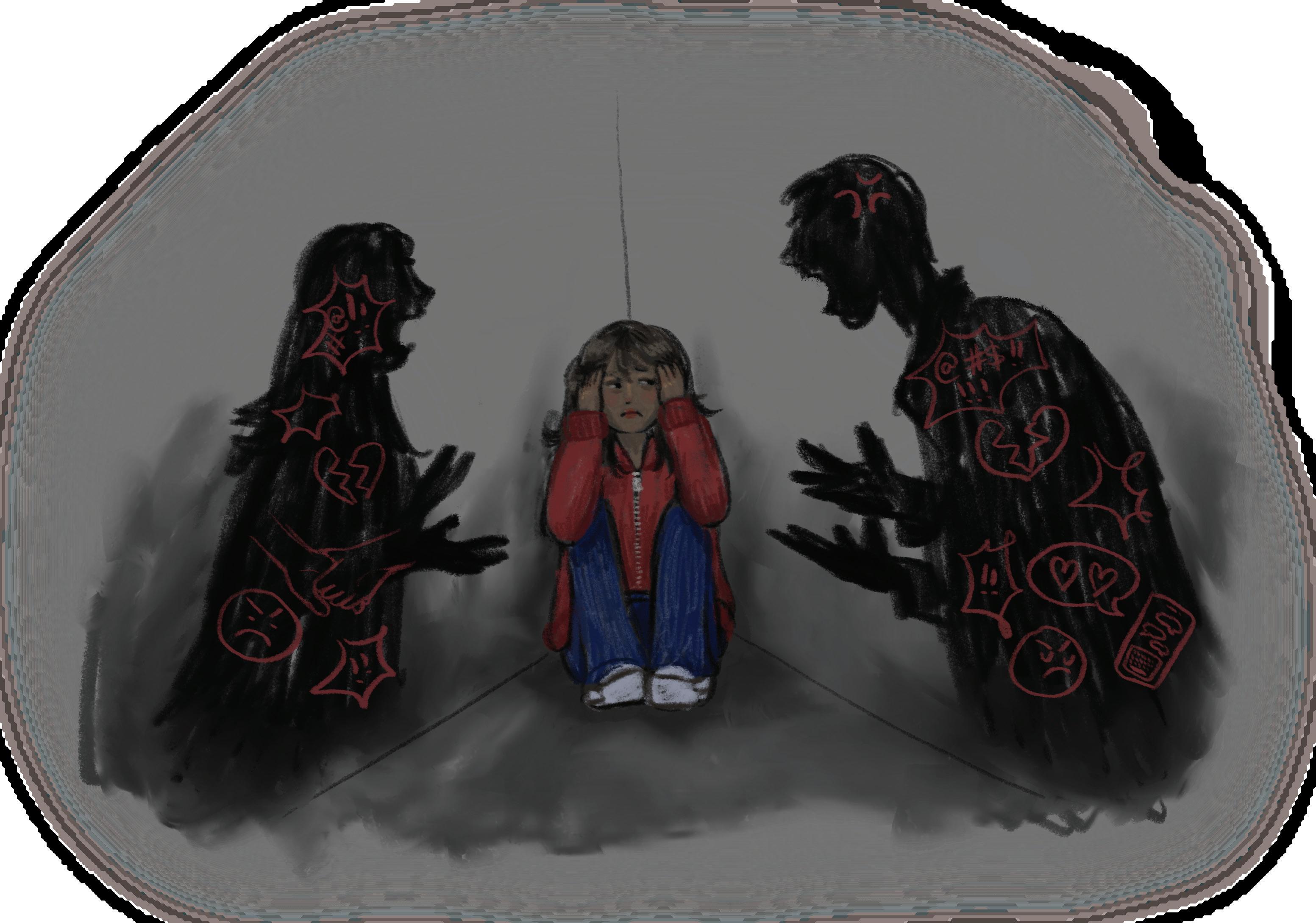
—Written by Eanam Maor