Why Do Dogs Have Different Eye Colors? Unraveling the Mystery of Our Four-Legged Friends' Eyes

Have you ever noticed that no two dogs seem to have the same eye color? Some have deep brown eyes, while others have striking blue ones, or even two different colored eyes This variety in eye color isn't a coincidence; it's the result of complex and fascinating genetic factors
Melanin Pigment: The Primary Eye Color Determinant
The main reason dogs have different eye colors is melanin pigment Melanin is a pigment found in the bodies of mammals, including humans and dogs. It plays a crucial role in determining the color of skin, hair, and of course, eyes This pigment is located in the iris, the part of the eye that controls the pupil and is what we see as eye color.
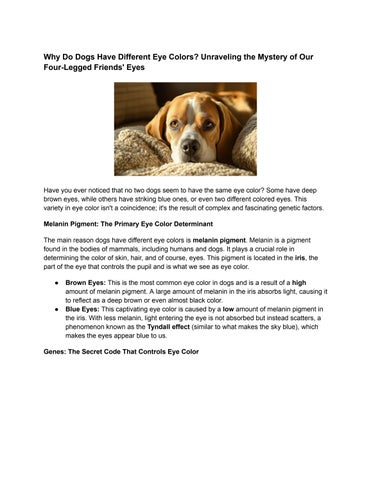
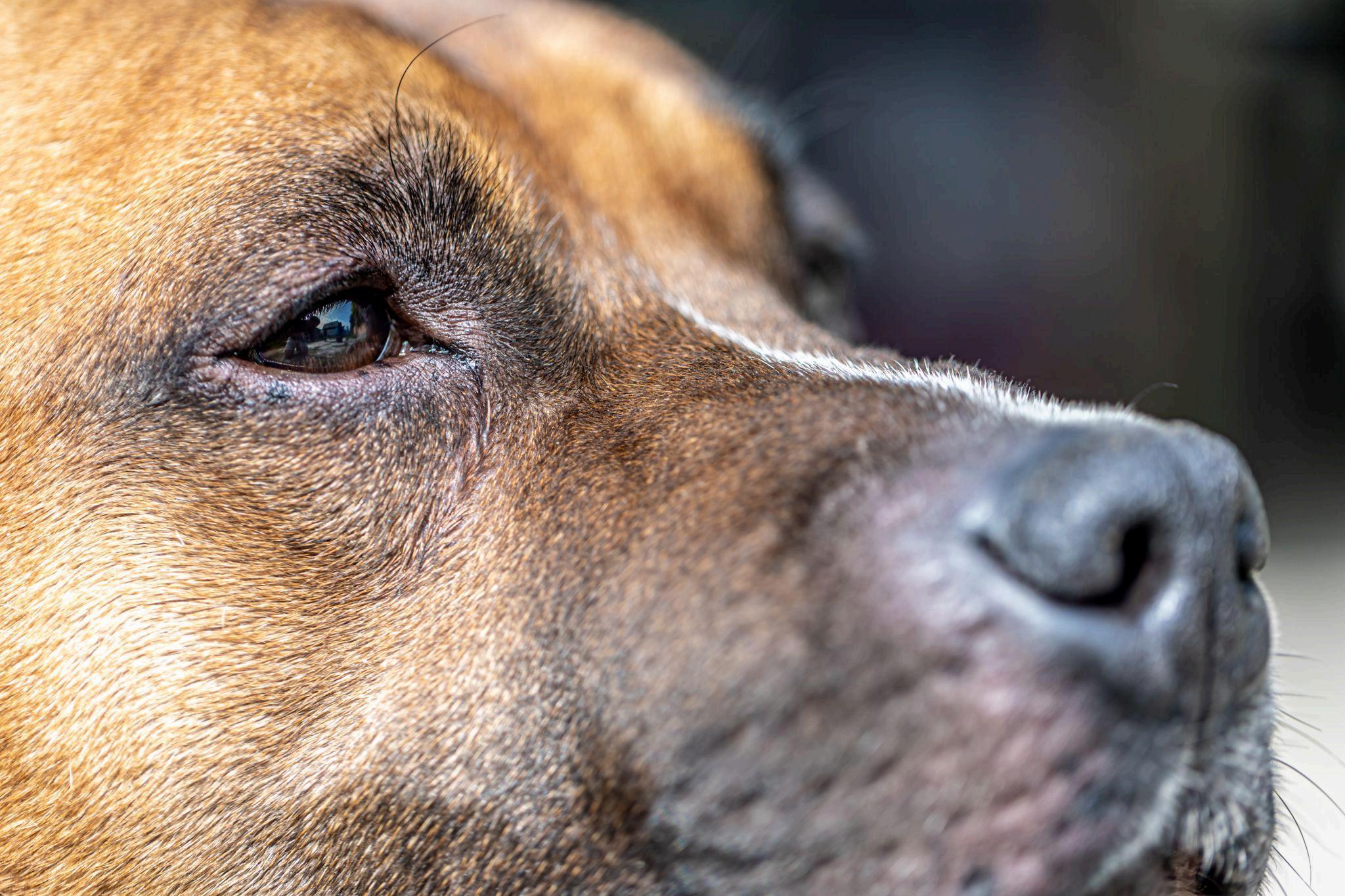
● Brown Eyes: This is the most common eye color in dogs and is a result of a high amount of melanin pigment A large amount of melanin in the iris absorbs light, causing it to reflect as a deep brown or even almost black color.
● Blue Eyes: This captivating eye color is caused by a low amount of melanin pigment in the iris With less melanin, light entering the eye is not absorbed but instead scatters, a phenomenon known as the Tyndall effect (similar to what makes the sky blue), which makes the eyes appear blue to us
Genes: The Secret Code That Controls Eye Color
A dog's eye color is controlled by several genes, particularly those that regulate the production and distribution of melanin The most prominent genes in determining eye color are the Merle and Husky Blue genes.
● The Merle Gene (M Locus): This gene is often found in breeds like Australian Shepherds, Shetland Sheepdogs, and Catahoula Leopard Dogs. The Merle gene reduces the amount of pigment in the coat and iris, resulting in a marbled coat pattern and causing the eyes to be blue or even two different colors
● The Husky Blue Gene (H Locus): This gene is highly associated with the eye color of Siberian Huskies It doesn't affect coat color but specifically reduces the amount of pigment in the iris, leading to various eye colors, including blue
● The Piebald Gene (S Locus): This gene causes white spotting on a dog's coat, but it can also affect eye color In some cases, the pigment doesn't fully reach the eye, resulting in blue or two-colored eyes
Heterochromia: The Unconventional Two-Colored Eyes
Another interesting phenomenon is heterochromia, or having two different colored eyes. This can occur in many dog breeds, such as Siberian Huskies, Australian Shepherds, and Border Collies This condition is caused by an imbalance in melanin distribution, leading to two distinct colors, like one blue eye and one brown eye, or even a mix of colors within a single eye.
In conclusion, the diverse eye colors in dogs are not just a matter of aesthetics. They are a fascinating result of intricate genetic mechanisms, including the amount of melanin and the action of various genes This is what gives each dog its unique and captivating look, a trait we can further appreciate by understanding its scientific basis.