Environmental Stewardship Guide
Environmental Stewardship Guide – Handbook Edition. First edition.
Gulf Savannah NRM
www.gulfsavannahnrm.org
First published 2026
© 2026 Gulf Savannah NRM. All rights reserved. Except as expressly provided in the Copyright Act, no part of this publication may be reproduced, distributed, stored in any retrieval system or transmitted by any means (including electronic, mechanical, micro copying, photocopying, recording or otherwise) without prior written permission from the publisher, Gulf Savannah NRM.
Disclaimer
All efforts have been made to ensure that material presented in this publication was correct at the time of printing and published in good faith. Gulf Savannah NRM does not accept liability for the use of information within this publication.
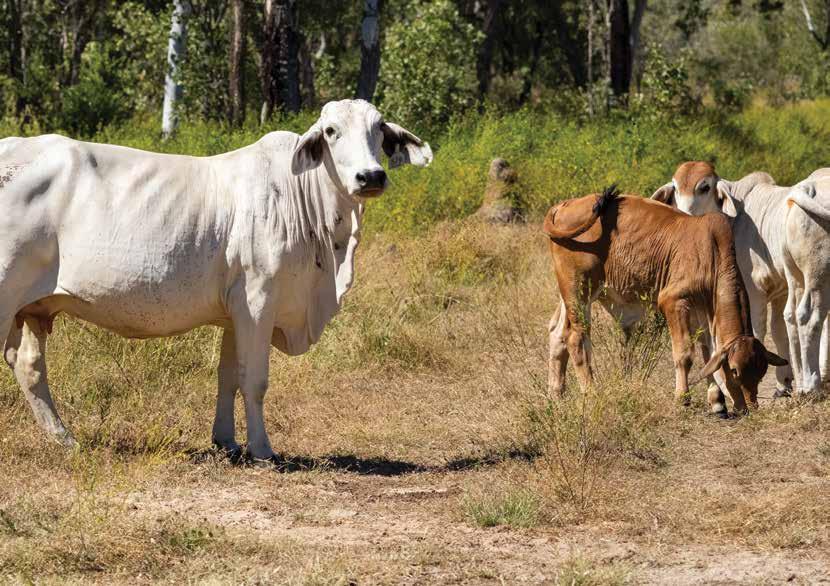
Cover: Cattle caught on camera in the Gulf. Photo: Julie Nicolosi.







Introduction
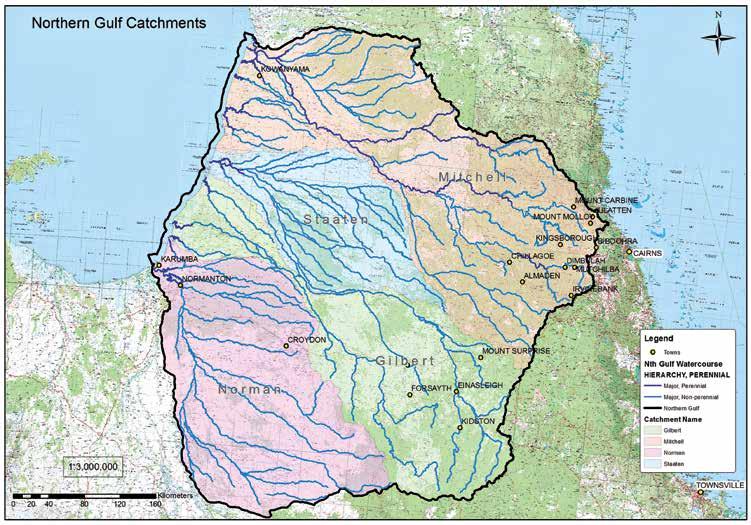
Developed by Gulf Savannah NRM, this handbook is structured around six environmental categories and indicators of national sustainability frameworks from the cotton, grains and beef industries, and the Australian Agricultural Sustainability Framework (AASF). The content has been shaped through direct input from local producers and growers, and reflects the conditions of the region’s variable rainfall, low fertility soils, long dry seasons and large-scale grazing and isolated cropping systems.
For producers, sustainability must deliver tangible business value, whether through productivity gains, cost reductions, access to better finance conditions or premium markets. Significant investment in collecting baseline and long-term data and benchmarking exercises will be essential for farmers to understand and determine the value of their natural capital, and the economic and environmental costs and benefits of sustainable practices.
The purpose of this handbook is to help producers identify a few low-cost practices which align with environmental sustainability goals set by industry frameworks, that can be adopted into operations management. It also encourages consideration of additional practices that will add value for the property, production system, and business, which could further improve sustainability outcomes. The aim is to support actions that deliver environmental benefits while also strengthening long-term productivity and profitability. The six components of environmental sustainability in this handbook include, soil, water, biodiversity, greenhouse gases, chemical use management and biosecurity.
In the north, far north and north-west of Queensland, broadacre cropping is playing a valuable role in some agricultural farming operations, particularly where it complements existing beef production. Integrating cropping into pastoral systems of the region has the potential to lift productivity, manage risk, and improve resilience. However, the value is not just in crops turning a profit on their own. The real gains are seen when the whole system — pasture, crops and cattle — is more productive, more drought-resilient, and more financially viable.
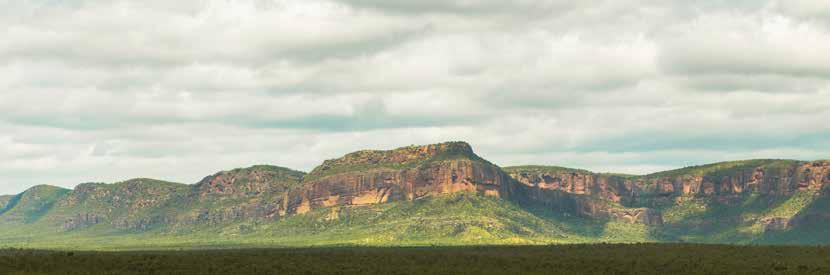
Mt Mulligan (Ngarrabullgan) from the skies. Photo: Eden Manzur. 5
Sustainability Best Practices
Best Management Practices to Start the Environmental Sustainability Path
The following legend indicates which of the six components of environmental sustainability benefit from the practice and which industry the practice is relevant to. A dark symbol indicates the component benefits from the practice.
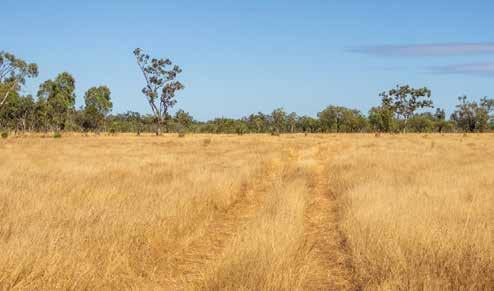
Native savanna pasture with good grass cover showing minimal bare soil, typical Northern Gulf landscape.
Managing Soils for Beef
What, Why & How?
A key principle and indicator of soil health in extensive grazing systems is ground cover. Ground cover is an indicator of function and health of soil, as well as the features of ground cover such as pasture composition for biodiversity. Ground cover includes all materials that protect the soil surface from direct exposure. This includes living pasture plants such as grasses, legumes and forbs, along with dead plant material, leaf litter, mulch, fallen bark, manure, and surface rocks22. Ground cover levels depend on several factors including soil type, slope, vegetation communities, seasonal conditions, and management practices.
In pasture systems, ground cover serves as the foundation for soil stability and productivity22. Productive pastures require the retention of ground cover in the form of perennial pastures to support physical integrity, chemical balance and biological activity. Nutrients cycle in the soil through plant growth and death, natural sequences of growth phases. Soil is physically opened by vigorous tap and lateral roots, while being held together by feeder roots and root hairs. The microbial activity of soil is fed by the organic material supplied to the soil by the pasture plants and vegetation. Other functions of ground cover include insulating the ground from cold/hot weather, protection from rain/wind erosion, and increasing water infiltration through reducing speed of water run-off.
Best Management Practices
Forage Budgeting
A forage budget is a practical tool used to estimate the carrying capacity of cattle while still maintaining ground cover at the point of break in the dry season (referred to as green date or wet date by popular calculation methods)13. It involves calculating how much feed is available (supply), and calculating feed demand of the herd for the duration of the grazing period using a standardised unit for classes of livestock (demand).
When used consistently, forage budgeting can support
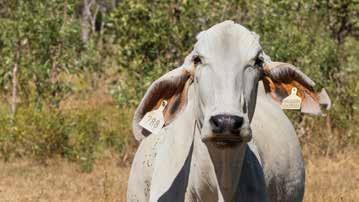
Cattle on Country.
Photo: Julie Nicolosi.
decision making processes around herd size, herd productivity, carrying capacity and pasture quality management. It allows producers to match stocking rates more closely to available feed. This in turn supports land condition and helps avoid the need for supplemented or emergency feeding during dry spells.
Ultimately, effective forage budgeting helps producers make clearer, more confident decisions in tough seasons, and build long-term grazing resilience.
A few equations for starting a simple forage budget procedure:
Days of grazing = (green date) – (current date)
Demand = [(AE/Head x No# Head) x Days]
Supply = [TSDM/ha – (Waste(%) x TSDM(kg) + Unpalatable DM(%) x TSDM) + (Anticipated Growth(kg))/ha] – (Desired
Residual DM(kg))/ha
AE (Adult Equivalent) of the herd is calculated by identifying the separate classes and how many head of the class there are, then multiplying each class by the AE. To find AE values appropriate for your operation, you can look up ‘Future Beef Forage Budget’ in your preferred browser and select the link to the future beef website page “Forage Budgeting and Pasture Utilisation”.
Alternatively, McLennan, McLean, and Paton’s (2020) Redefining the animal unit equivalence (AE) for grazing ruminants and its application for determining forage intake, with particular relevance to the northern Australian grazing industry, includes easy-to-follow tables of AE values.
HELPFUL HINT – See the MLA Feedbase Planning and Budgeting Tool, a digital tool for forage Budgeting. For more information visit etools.mla.com.au/fbrp/#/data/entry/simplepasture-1

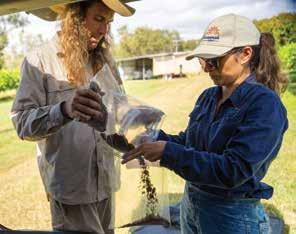
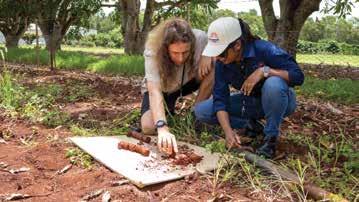
Gulf Savannah NRM project staff Jessica and Lachlan taking soil samples. Photo: Eden Manzur.
Wet Season Spelling (Extensive Rotational Grazing)
Wet season spelling (WSS) is the practice of destocking a paddock during the growing season, typically from November to April. This gives native pastures, especially 3P species (persistent, palatable, and productive), the chance to grow, recover, and set seed without grazing pressure.25
In the early wet season, perennial grasses rely on stored root energy to initiate new growth. When grazed at this sensitive phase25, plants have limited opportunity to replenish their reserves, reducing their resilience and effectiveness in producing viable seed. Over time, this leads to a shift from desirable grasses to less palatable species and invasive weeds.
The productivity of Northern Gulf grazing systems depends on the condition of pastures. Once desirable pasture plants lose dominance, they can be slow to re-establish dominance. Wet season spelling is a proven, low-cost strategy that supports land condition recovery and pasture quality with minimal need for additional infrastructure. This approach is valuable for properties where land condition can be rebuilt through natural processes.25
Water Point & Supplement Distribution
Around 80 percent of grazing activity is concentrated around water and supplement points, with pressure dropping sharply beyond the three-kilometre radius of a water supply. The result is localised land degradation, and heavy utilisation of the pasture within the 3km radius of a watering point. This pattern is consistent regardless of paddock size or stocking rate. Distance to water should be accounted for when determining a paddock’s carrying capacity, as only land within a grazing range of water points is effectively utilised20 . Placement of water and supplements can improve how cattle move through the landscape and reduce pressure on heavily utilised areas.
Key aspects to consider in water point and supplement locations are distance from a boundary and/or another water point, the type of water source (a pipeline and trough, a dam, a bore with a trough, etc.), method of water transportation and elevation to boundary and/or the next water point.30
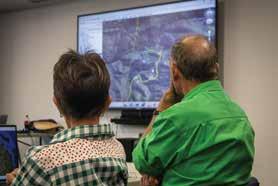
Right: Gulf Savannah NRM Mapping & Tracking workshop hosted in Georgetown.
Photo: Lydia Strohfeldt.
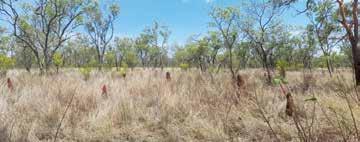
Left: Ungrazed paddock showing tall regenerating native grasses.
Planning of water placement before installation can increase pasture utilisation in under utilised areas. Mapping software such as Avenza Maps, Google Earth Pro, or LongPaddock’s MyForage to name a few free and accessible options, can provide a visual aid to the planning while including measuring tools for greater accuracy to the development plans. Mapping current infrastructure allows for the identification of gaps in water distribution and areas of interest for monitoring pasture utilisation. Visual displays of spatial data can play an important role for daily operations beyond the office and is not limited to supporting infrastructure developments.
Pasture species monitoring is one effective way of evaluating pasture and land management.
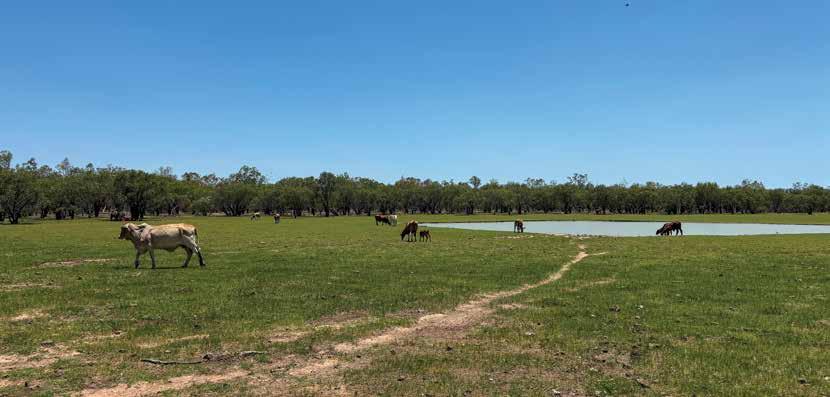
A consideration for soil health near water points: sacrificial areas due to high traffic pressure from cattle. Photo: Julie Nicolosi.
Managing Soils for Crops
What, Why & How?
Soil fertility is the capacity of the soil to support healthy plant growth by supplying the nutrients, water, and structure crops need. It is shaped by a mix of factors, including nutrient levels, organic matter, soil biology, pH, and the soil’s ability to hold and deliver nutrients9. Managing fertility well starts with understanding what your soils already have, what your crop requires, and how to close that gap without wasting inputs or degrading long-term soil function.
Managing soil fertility in the Northern Gulf region means understanding and balancing nutrient supply to meet crop needs while sustaining long-term soil function. Given the region’s rainfall variability, limited access to irrigation, and extensive production systems, effective fertility management
focuses on making the most of naturally available nutrients, building soil organic matter, and applying external inputs efficiently and only where needed.
Managing fertility is particularly important in the Northern Gulf due to the region’s diverse and often constrained soil profiles. Nutrient limitations, combined with unpredictable rainfall and long dry seasons, mean that crops must make the most of every opportunity for growth. Without a clear fertility strategy, producers risk losing valuable nutrients through leaching in intense rainfall events or erosion during the dry season. By taking a targeted and adaptive approach to soil fertility, matched to seasonal risk, crop requirements and soil conditions, producers can improve yields, reduce unnecessary input costs, and build more resilient, biologically active soils9.
Best Management Practices
Soil Testing
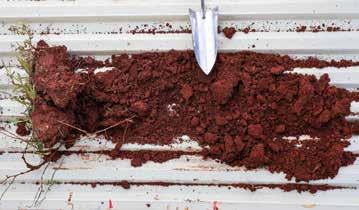
Soil testing is a definitive way to establish a baseline for expected productivity and yield potential. Understanding the haves and have nots of the soil in a field can determine what is the most economically beneficial crop, input and management system for the growing season9. Factors that can be monitored include physical integrity (physio-chemical), macro- and micro- nutrient availability/supply, and biological function. There are numerous guides available online to explain soil test results, what they mean for productivity and aid in recommendation of inputs to improve productivity,
A sample of soil.
Photo: Julie Nicolosi.
however it is also beneficial to employ a consulting agronomist to assist in developing a management plan for fertility and soil health.
Maintaining Ground Cover
Maintaining ground cover in cropping systems protects soil structure, improves water use efficiency, and supports longterm productivity11. Ground cover includes both living plants and retained plant residues. In the Northern Gulf, where rainfall is seasonal and soils are often low in fertility and organic carbon, ground cover plays a vital role in reducing erosion, conserving moisture, and preserving productive capacity.
Ground cover can be maintained through practices such as minimum or zero tillage11, continuous or double cropping, and residue retention. These practices are commonly used in
both irrigated and dryland systems, though their timing and reliability vary. In dryland systems, maintaining year-round cover is constrained by limited soil moisture. Even short periods of bare soil can result in losses of moisture, topsoil, and organic matter.
Residue retention means leaving plant residue after harvest, such as stalks, leaves, and roots, on and in the soil during the fallow season. Depending on the system, this might be partial or full retention, and it can involve standing stubble, loose trash, or both. In minimum tillage systems, stubble is often left in place to protect the soil and support soil health between crops.
Residue retention does not mean all residues must remain undisturbed. Management approaches can vary depending on the next crop, equipment, and paddock needs. The key is maintaining enough organic cover to protect soil structure, and feed and protect microbial activity.
Gulf Savannah NRM soil testing workshop in Walkamin. Photo: Julie Nicolosi.
Minimum tillage cropping allowing cover crop growth. Photo: Julie Nicolosi.
Conservative / Minimal Tillage
Reducing disturbance preserves plant residues, protects soil structure, and retains surface moisture. Minimum and zero tillage systems reduce the reliance on mechanical weed control and soil compaction management which also reduces planting and management costs11/31. Soil compaction is a result of excessive traffic compaction and the degradation of organic carbon in the soil. Minimum tillage and zero tillage support the building and retention of organic carbon in soils which not only reduces the cost for crop establishment but also contributes to improving yield potential for the soil (increased nutrient availability and water holding capacity of the field).
Technology Adoption
There has been a significant industry investment for cropping in technology to advance efficiency and reduce operational costs of production in marginal operating situations. From NDVI monitoring of plant growth and phase, rate controlling for fertiliser application accuracy, self-driving units for traffic control minimising soil compaction, all the way to artificial intelligence identifying non-crop plants and applying herbicide to prescribed areas of impact. As with all technology in agriculture, the adoption curve describes the cost limitations in early commercialisation, however with research and observing the needs of an operation, there can be situations suitable for integration when the cost benefit can be realised.
Traffic control (lane tracking, auto-steer and turn systems, etc.) reduces vehicle related compaction, and aids in managing the efficiency of machinery operating costs (fuel
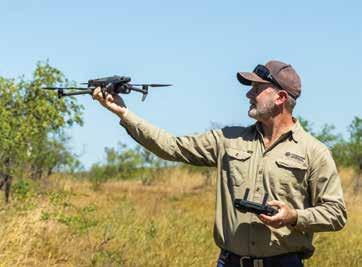
use and limiting human error.
See & Spray reduces input use which reduces an input cost.
Rate controllers for fertiliser can optimise the crop evenness which supports crop uniformity in growth and yield.
All of these are a benefit to efficiency and efficacy in production and economics, while contributing to an environmentally sustainable production system. To learn more about these technologies, talk to your preferred machinery supplier about what is available and how it can benefit you.
Richard Marver of Contour Consulting. Photo: Julie Nicolosi.
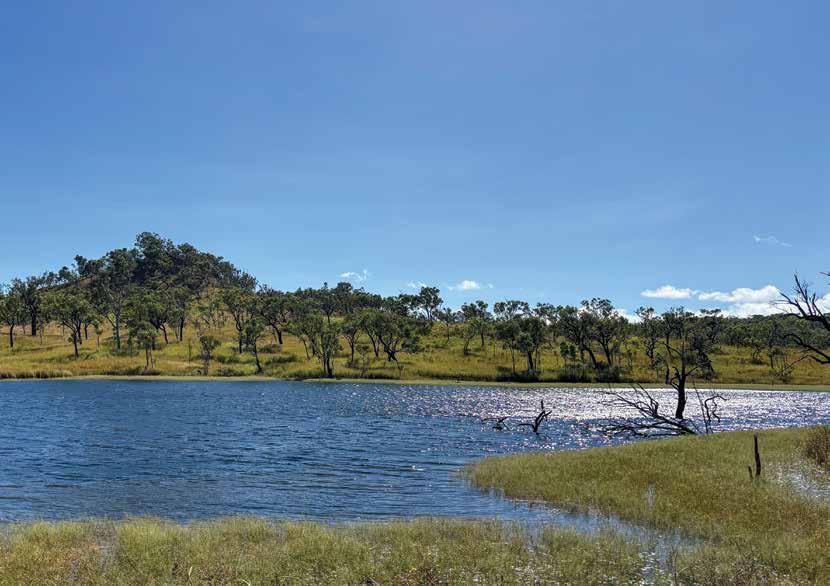
Livestock dam in the Forsayth region. Photo: Julie Nicolosi.
Water Efficiency and Quality in Beef
What, Why & How?
Water efficiency in beef production means ensuring cattle have access to enough clean water with minimal waste or loss. Water quality refers to how safe and suitable that water is for animal health and productivity. Together, these two factors affect animal performance, operational costs, and the condition of the land and waterways. Water is one of the most important resources for running cattle in northern Australia.
With highly variable rainfall and long dry periods, keeping cattle supplied with clean, reliable water is central to both animal performance and the long-term sustainability of the business. Good water quality supports feed intake, weight gain, and overall animal condition. If cattle are forced to drink poor-quality water, intake and productivity decline, and the risk of disease rises27. Efficient use of water is as important as quality. Planning infrastructure to reduce losses and make the best use of available supplies is critical for business viability and for protecting natural systems in northern Australia.
Building water infrastructure that aligns with long-term carrying capacity of the property can benefit water use efficiency and animal productivity via pasture utilisation distribution. Use past data and property mapping to guide the placement of troughs, design of dams, and inclusion
of backup systems. The distribution of water impacts on operational expenses and animal productivity, and the balance in sustaining land productivity for economic benefit drives the importance of sustainability in managing water.
Strategic fencing of selected surface water points, combined with providing stock water through troughs, can reduce erosion, maintain water quality, and limit the risk of animals becoming bogged. Stirring up silt and contaminating water
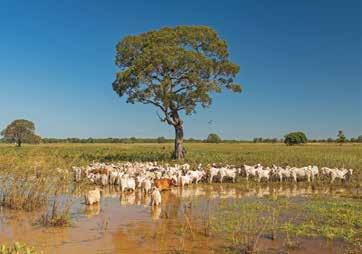
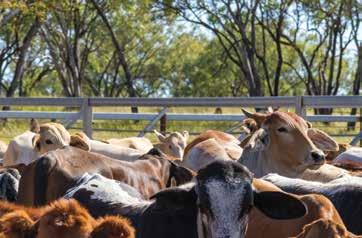
Cattle clustered at a water point.
can also be an issue for dams27. Solutions include fencing and installing off-stream watering points using gravity-fed or solar-powered pump systems or providing hardened ramp access to allow safe drinking without trampling and damaging dam edges. These approaches help protect both stock and the long-term quality of water resources.17
Best Management Practices
Water Quality Testing
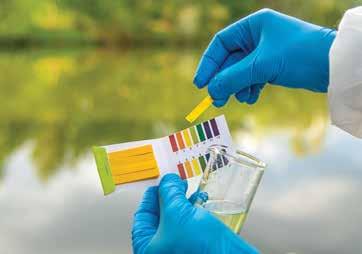
Water quality, at least with regard to chemical composition, is primarily related to total dissolved solids (salinity) and nitrate content. Testing during dry spells and after major runoff events is important because water quality can change quickly, with higher salinity and algae risk in dry conditions, and increased turbidity, contaminants and supply failures after rain. A simple field kit can guide regular checks, while lab testing may be needed for unknown issues.17
Check for:
• Salinity (EC/TDS) – high levels affect intake and performance.
• pH – extreme values can deter drinking.
• Blue-green algae, heavy metals, or contaminants from runoff.
Blue-green algae (cyanobacteria) blooms are most likely to occur when weather conditions are warm and nutrients in the water are abundant. They can be a serious threat to cattle in Northern Australia, leading to poisoning and death.
Protecting Bodies of Water (Natural and Constructed)
Fencing cattle out of surface water and reticulating water by pump or gravity to troughs prevents contamination and protects water quality. Where full exclusion is not feasible, a single hardened access ramp can be installed so cattle drink at one controlled point only. When protected from erosion and stock damage, dams and excavated tanks can offer longterm water security with minimal operational requirements. In extended dry seasons, surface water is often the first limiting resource, and a dam’s design, condition, and access arrangement can determine whether it remains usable or becomes a liability.17
Water testing.
Fencing cattle out of surface water and reticulating water by pump or gravity to troughs prevents contamination and protects water quality.
Clean, cool water supports intake, rumen function, growth and reproduction. As a rough rule of thumb, cattle drink about 10 percent of their body weight per day. Demand rises sharply in hot and humid periods, particularly when cattle are grazing dry, fibrous pasture and requirements are even higher for lactating or newly introduced animals. Salt and urea blocks also increase water intake, especially in the dry season, and may contribute to rising pressure on water points.
As the dry season progresses, evaporation concentrates salts and other dissolved solids, and shallow storages are more prone to turbidity and faecal contamination; together these factors reduce palatability, decrease intake and increase disease risk. Warm, nutrient-rich conditions also increase the likelihood of blue-green algae, which can be fatal.
Unrestricted stock access can further degrade water quality through fouling, pugging and sediment disturbance and trampling and grazing out vegetation. Restricting stock access prevents or reduces dung and urine entering the water directly allows vegetation to establish on banks and margins, creating a filtration buffer.17
Strategic fencing of selected surface water points, combined with providing stock water through troughs, can reduce erosion, maintain water quality, and limit the risk of animals becoming bogged. Stirring up silt and contaminating water can also be an issue for dams. Solutions include fencing and installing off-stream watering points using gravity-fed or solar-powered pump systems or providing hardened ramp access to allow safe drinking without trampling and damaging dam edges. These approaches help protect both stock and the long-term quality of water resources.
Water Efficiency and Quality in Crops
What, Why & How?
Water efficiency in cropping is optimising the use of available water to target high yields while limiting waste, runoff, and environmental damage. Most cropping in north-west and far north Queensland is rainfed, so the focus is on capturing and storing soil moisture through rain infiltration and limiting runoff. Where irrigation is available, careful management of both water quality and application volume is important for managing yield potential and production costs.5
For rainfed systems, water efficiency means capturing as much rain as possible in the soil and using it for crop growth, while minimizing run-off. Run-off contributes to water erosion, which takes fine soil particles which are most valuable to soil moisture and nutrient capacity, and subsequently increases additional water and nutrient needs
and reduces yield potential. Irrigation systems have an additional level of complexity to manage water quality and efficiency, with balancing water application to meet plant demand and water quality.5
Run-off from cropping can also contribute to water quality complications downstream of the paddock. The fine sediment lost to run-off will have nutrients which are bound to the soil particles, which not only reduces field fertility, but also leads to nutrients entering waterways. Additional nutrient loss (greater than that which would occur naturally) can lead to environmental impacts downstream, such as increased soluble nitrate/nitrites or potassium levels which impact on aquatic animal health or stimulating weed growth with the additional nutrient levels. Minimising run-off is both economically beneficial for crop productivity and environmentally beneficial for ecosystem stability.
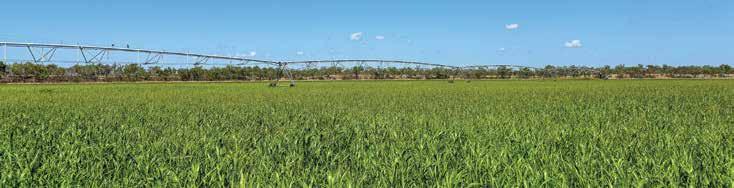
Ooralat pivot. Photo: Julie Nicolosi.
Best Management Practices
Irrigation Technology
In irrigated systems, installing flow meters or automated water controllers can help monitor water use and improve application efficiency. These tools can be supported by soil moisture probes and irrigation scheduling software such as IrriWeb, which uses local soil type, crop growth stage, and weather conditions to schedule irrigation. The system can predict daily crop water use and plant available water, helping guide timing and application rates. Together, these technologies support timely, targeted irrigation that reduces waste, avoids waterlogging, and helps prevent nutrient leaching or soil compaction.9/29
Drainage Design
Infiltration and drainage infrastructure refers to constructed works that manage how water moves across and enters the soil. Infiltration works such as swales, contour banks and basins slow runoff and spread water, so it soaks in. Drainage works such as diversion banks, grassed waterways, and channels move excess water safely off vulnerable areas without causing erosion.
Soil behaviour is not uniform. It reflects the material the soil formed from, the local climate, the landscape position, the influence of plants and soil life, and the time the soil has had to develop. Because these factors can change over short distances, water infiltration and storage can vary markedly within a single paddock. Without management through tools such as infiltration and drainage infrastructure, heavy rain is often lost as runoff or trapped in shallow compacted layers, limiting root growth and access to stored moisture.29
Poor infiltration and ponding reduce yield and increase the risk of erosion, compaction, input losses, and early moisture stress, even when overall rainfall appears adequate. Much of the intense wet-season rainfall can be lost as runoff, stripping bare ground and washing away valuable topsoil and nutrients, rather than being stored in the soil. Poor drainage reduces crop vigour, delays operations, and damages soil structure. In wet seasons it also increases the risk of nutrient loss and erosion. Well-designed drainage infrastructure helps remove excess water, protects soil condition, and supports more reliable yields. By slowing and spreading runoff, these systems allow water more to soak in and recharge the soil profile, supporting stronger crop performance from deeper, more reliable moisture reserves.9
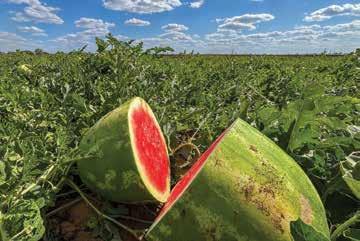
Watermelon crop. Photo Julie Nicolosi.
Biodiversity
Managing for Biodiversity in Beef
What, Why & How?
In extensive grazing systems biodiversity coexists within the productive landscape. This includes perennial grasses and scattered trees, as well as mammals, insect life, bird populations and soil biota. Incorporating these ecosystem processes into the production system is critical for maintaining long-term productivity and resilience. For producers, biodiversity strengthens the feed base and supports grazing resilience. Diversity in the landscape supports the key processes that keep ecosystems functioning. Above-ground diversity of vegetation supplies nutrients and organic matter that return fertility to the soil34. Varied plant root structures improve how rainfall infiltrates and is stored in the profile, while below-ground diversity drives healthy soil biology and structure. Together, these processes sustain soil fertility, reduce runoff, and support pasture recovery and growth. At the same time, diverse vegetation provides shade, shelter, and food for native wildlife. Well-managed grazing landscapes are better able to cope with drought, fire, and flooding, while also contributing to broader ecological stability.24
Practices that improve or maintain land condition also support biodiversity. Managing total grazing pressure, using fire appropriately, and targeted weed and feral animal control all help to preserve native vegetation, groundcover,
and soil function. Different native animal species rely on different conditions. Some thrive in recently burnt or lightly grazed areas; others prefer long-unburnt, denser cover. Many need both open ground for foraging and dense cover for shelter or nesting. Varying management across a property, through varying grazing intensity and spelling between paddocks, allows sensitive areas to recover and helps maintain species that would otherwise decline under uniform pressure.
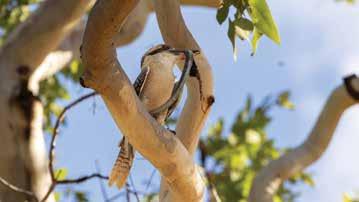
Kookaburra catches a snake out in the Gulf.
Photo: Julie Nicolosi.
Best Management Practices
Maintain Good Land Condition
Practices that improve or maintain land condition also support biodiversity. Managing total grazing pressure, using fire appropriately, and targeted weed and feral animal control all help to preserve native vegetation, groundcover, and soil function. Land in good condition not only supports a wider diversity of plant and animal species, it also provides more consistent feed, reduces erosion risk, and limits the spread of invasive weeds.26
Promote Habitat Diversity
Different native animal species rely on different conditions. Some thrive in recently burnt or lightly grazed areas; others prefer long-unburnt, denser cover. Many need both open ground for foraging and dense cover for shelter or nesting. Varying management across a property, through varying grazing intensity and spelling between paddocks, allows sensitive areas to recover and helps maintain species that would otherwise decline under uniform pressure. Cool patch burning and maintaining some large, infrequently burnt refuge areas, creates a mosaic of habitat types that support greater species diversity.33
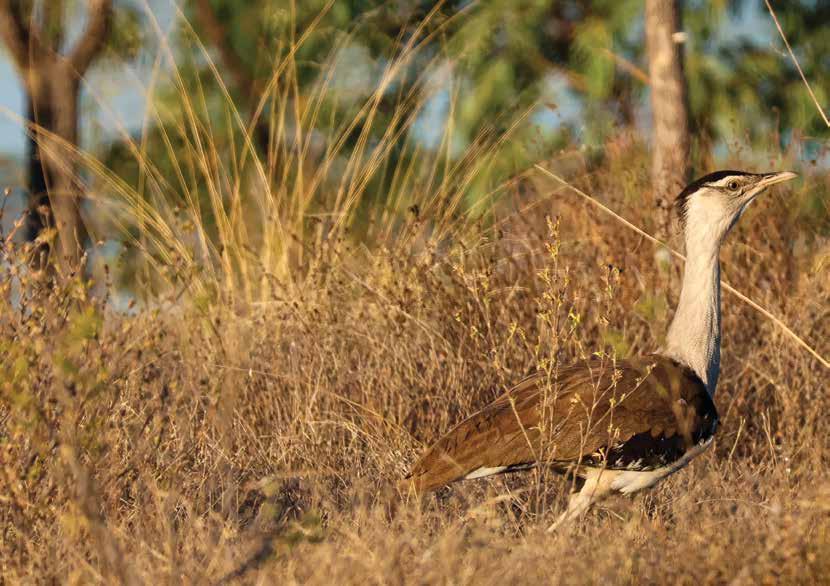
Australian bustard spotted near Georgetown. Photo: Lydia Strohfeldt.
Managing for Biodiversity in Cropping
What, Why & How?
Protecting biodiversity in and around cropping areas helps to safeguard both agricultural production and the natural systems that support it. Native vegetation, remnant woodlands and riparian zones can provide a range of important ecosystem services for crops, including natural pest control from predatory insects, bats and birds, improved crop yields and soil fertility from native pollinators and soil organisms, erosion control, carbon storage and sequestration and enhanced water retention from vegetation.6 In the Northern Gulf region, protecting biodiversity also means safeguarding the local environment and ecological processes that cropping systems also depend on. Native pollinators are critical not only for crop productivity but also for the reproduction of many native plant species. Diverse vegetation communities protect water quality, provide habitat for wildlife, and ensure the long-term functioning of savannahs, wetlands and riparian areas (CRDC & CottonInfo 2025).
Protect riparian land from clearing or disturbance within 30 metres of the high bank. Riparian land is particularly vulnerable to over-clearing, uncontrolled grazing, weed invasion, chemical spray drift, erosion and floods. Riparian land supports diversity for plants and animals due to the availability of water, varied habitats, and more favourable microclimates.6 Many native species rely on these areas for food, shelter, breeding and safe passage, they also provide critical refuge during droughts and fires. Healthy riparian
vegetation protects waterways with shading and cooling for aquatic habitats, supply organic matter, and create habitat for animals.
Biodiversity in cropping, like grazing, includes the life below the surface of the soil. Crop rotation, ground preparation and weed management all contribute to soil microbial activity and health. The disturbance of soil through cultivation increases oxygen content which causes accelerated decomposition of organic materials (causing boom-bust cycles in microbial colonies). Though they can be a pest, weeds can also be beneficial to soil health (microbial colonies) when managed for biodiversity, as organic material deposition is sustained for extended periods, also providing refuge for beneficial and pollinator insects between crops.
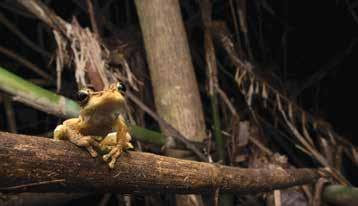
Kuranda tree frog (Litoria myola).
Photo: Edward Evans.
Best Management Practices
Crop Rotation
Crop rotation is the practice of growing different crop types in sequence on the same field over time. Rather than planting the same crop for consecutive years, a rotation alternates plant families and crop functions, such as a broadleaf legume one season followed by a cereal the next. In mixed beef–cropping enterprises, rotation can also include forage or pasture phases. Rotation looks ahead over several seasons, lining up crops so they support each other, rather than choosing each crop in isolation.34
Rotating crops supports soil and plant layer biodiversity and helps to break weed, pest and disease cycles that typically build when one crop type is grown continuously. A legume phase followed by a cereal is a simple and well-recognised way to reduce disease pressure on the cereal and support nutrient dynamics, because legumes can contribute nitrogen to the system, while cereals use nitrogen efficiently within their season.19
Crop choices and rotation length need to align with wet–dry seasonal patterns and narrow planting windows. These factors will strongly influence what is possible in rotation, especially in rain fed systems and when heavy wet-season rainfall delays ground access and shortens the planting window.
For many enterprises, broadacre cropping is being developed alongside existing cattle operations to improve drought resilience. Rotations should therefore fit livestock feed demand, labour availability and infrastructure rather than aiming to match southern or fully grain-focused rotation
models.
All rotations have strengths and weaknesses. The aim is to select a sequence that performs acceptably across profitability, soil condition, disease and risk rather than maximising one outcome at the expense of others.34
Integrated Pest Management
Integrated Pest Management or IPM is a strategy that combines multiple pest control methods rather than relying solely on a singular method. It includes biological controls, cultural practices, physical methods, and chemical options. The goal is to manage pests and disease pressure on productivity while reducing risk of pest or disease gaining resistance to the method of control.14
By combining different control options and focusing on long-term prevention, IPM helps protect beneficial insects,
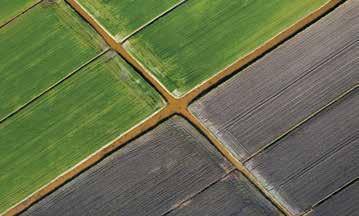
Farmland with irrigation ditches.
delay pesticide resistance, and keep pest populations below economic thresholds. The aim is to manage pest and disease in a crop in the most economically sustainable way, for both current and future crops, which flows over into environmental sustainability. These decisions will influence the impact the crop has on surrounding ecosystems.14/18
IPM offers a way to break the pest life cycle. By preserving beneficial species and using chemicals only when economic thresholds are met, it supports more stable pest control, reduces input costs over time, and contributes to long-term farm resilience. In regions like Northern Gulf, where pest lifecycles can extend across seasons, adopting IPM is also a key tool for managing resistance and reducing environmental impact.14
Protected/Offset Areas
Riparian areas are the strips of land that run alongside rivers, creeks, wetlands, and waterholes. Conservation areas can be any part of the property with high ecological value that is managed differently to the rest of the property to conserve its values, whether it is a rocky escarpment that supports rare plant species, a remnant patch of vine thicket, or a lightly grazed area that provides habitat for threatened fauna. These areas may not always be economically productive for grazing or cropping, but like riparian zones, they often support biodiversity and ecological processes that benefit the health and productivity of the wider system.21
In northern Queensland’s extensive grazing systems, managing riparian and conservation areas is about managing pressure, not access. With the large size of many northern properties and the extensive river and creek systems they
contain, full fencing as a management tool is rarely practical. Conservation areas can present similar challenges of being large, scattered, and located within working paddocks where access is still needed for mustering, weed control, or fire management. As a result, both riparian and conservation areas are best managed at a broad scale using management planning and flexible strategies to reduce pressure rather than intensive infrastructure.
In savannah woodlands and grasslands, riparian and adjacent floodplain areas are often the last perennial green cover across the landscape as the dry season advances. Riparian vegetation plays several key roles in keeping waterways and surrounding areas healthy. The diversity of vegetation and soil microbes in riparian zones help to retain
Integrated pest management demonstration site hosted by Jennings Farm in Mareeba.
Photo: Lydia Strohfeldt.
structural integrity and stability of the waterway, while dense groundcover slows runoff and traps sediment that would otherwise reduce water quality.6
Healthy riparian areas also slow floodwaters, support steady river flows, and protect groundwater levels and quality. They provide shade and shelter for livestock, act as windbreaks, and store carbon in vegetation and soils. Beyond production benefits, riparian areas often hold cultural, recreational, and educational value, contributing to the overall wellbeing of both the land and the people who manage it.6
Start by mapping rivers, creeks, and drainage lines, along with in-stream pools and wetlands that hold water through, or well into the dry season, as well as other features such as rocky outcrops, escarpments, vine thickets, and known habitat for less common species. Pay particular attention to areas with permanent water, cultural significance, or visible signs of degradation such as bank collapse or weed spread.
Rather than trying to protect full lengths of watercourses, focus on short, high-value sections, spring-fed or refuge waterholes, and steep banks, as these areas will benefit most from protection. Temporary or semi-permanent fencing can be used where necessary, particularly during the wet season when the risk of damage is highest.
The Queensland Wetland Maps viewer is a practical tool for locating and mapping wetlands, springs, and waterholes on your property. Other datasets, such as Matters of State Environmental Significance (MSES) and Regional Biodiversity Values (RBV), can show where high-value ecological zones occur across Queensland, but these are primarily designed for planning. If you want to confirm how these layers relate to your property, your local NRM group, or DPI extension officer can help interpret the data and ground-truth the most sensitive or high-priority areas for management.
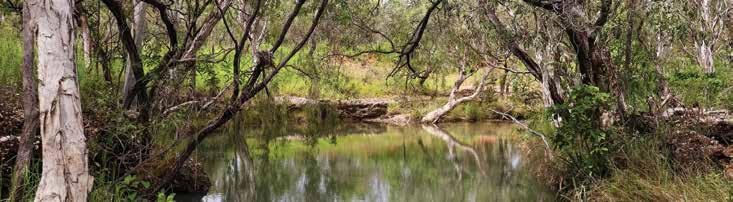
Riparian edges in Brooklyn Sanctuary. Photo: Ashley King.
Greenhouse Gas (GHG)
GHG Emissions in Beef
What, Why & How?
Managing greenhouse gas emissions in northern beef systems is about improving productivity and efficiency. The main source of emissions is methane (CH4) produced during digestion through a natural process called enteric fermentation. In this process, microbes in the rumen break down feed and release methane as a by-product. Methane typically contributes 80–90 percent of the total emissions from grazing enterprises, with smaller amounts coming from manure, fuel use, fertilisers and vegetation change.
Cattle in northern regions often emit more methane per head than those in temperate areas because tropical grasses are generally lower in energy and protein, particularly during the dry season when feed quality declines. As a result, growing animals take longer to reach market weight and breeders may only produce a calf two years out of three. In both cases, they spend more time emitting methane, resulting in higher emissions per kilogram of beef produced.16
Enteric methane is the single largest source of agricultural greenhouse gas emissions in Australia making up around 70 percent of agricultural emissions and 11 percent of total national emissions.12 More than two-thirds of that coming from cattle. The livestock sector contributes a relatively small share of national GDP, which means it is classified as emissions-intensive in Australia’s emissions accounting. This
classification puts northern beef producers, like all grazing industries, under increasing pressure to demonstrate how emissions are being managed. From an industry perspective, there is a growing expectation from markets, regulators, financiers, and supply-chain customers that producers will manage and reduce emissions and climate risk.16
Reducing emissions does not always mean running fewer cattle. Instead, the focus is on lowering emissions intensity by improving productivity and efficiency. This means
Cattle in the yard. Intensified activity intensifies emissions.
Photo: Julie Nicolosi.
improving land condition, breeder genetics and production efficiency, and achieving shorter turn-off times. The aim is getting more beef per unit of methane produced. Reducing emissions in northern systems is done through herd and land management practices that improve growth rates and reproductive performance. These actions reduce the total time animals spend on the property and reduce emissions per kilogram of beef, while also improving profitability.12
Best Management Practices
Completing Industry Emissions calculator
Run a basic carbon account every few years to track whole-of-farm emissions and identify changes over time using free tools such as the such as the Primary Industries Climate Challenges Centre (PICCC) Greenhouse Accounting Framework (GAF) Tools, (Sheep and Beef Greenhouse Accounting Framework). Regular emissions accounting helps identify emission hotspots, track the impact of management changes, and support access to market or finance opportunities that require evidence of emissions performance.
Primary Industries Climate Challenges Centre website link to the industry relevant GHG accounting framework tools and calculators. https://piccc.org.au/resources/Tools.html 32
The calculators require information that is described in the following section, herd productivity tracking.
Herd productivity tracking
Herd productivity tracking involves monitoring indicators of productivity. These include but are not limited to; birth dates and weights, weaning weight rates and dates, first calf, pregnancy test dates and results, immunisation dates and records, supplement dates and rates, as well as progressive weight tracking in replacement heifers, steers and dry cows. There is also data that can be captured through DNA sequencing (Estimated Breeding Values, EBVs), however the commercial access to such data is relatively expensive. In the future, EBVs will contribute to replacement heifer and bull selection across large-scaled commercial herds. The
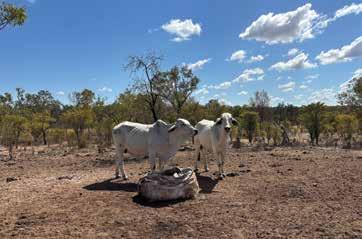
Cattle with lick bag. Photo: Julie Nicolosi.
key details to start with are: estimating calving windows and times, numbers of calves, the weaning rates, tracking the age of the herd and the average weights of the class groups. There is an example of the beef H-GAF calculator below for a seasonal format, most suited to extensive grazing systems.32
Explore the Primary Industries Climate Challenge Centre’s Greenhouse Accounting Framework (GAF) tools to measure and manage emissions across your production system. Access the latest beef, sheep and cropping calculators by scanning the QR code, or visiting: https://piccc.org.au/resources/Tools.html

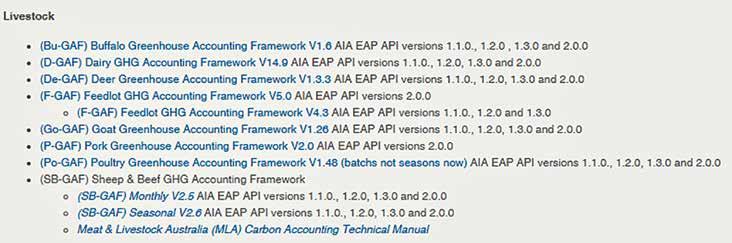
Examples of tools available via the Primary Industries Climate Challenge Centre (PICCC).
GHG Emissions in Cropping
What, Why & How?
Most on-farm emissions come from nitrogen fertilisers and the combustion of petroleum products. Nitrogen fertilisers and diesel fuels contribute nitrous oxide to the atmosphere which has a warming impact greater than carbon dioxide (CO2), with current values placing it at around 265 times stronger. Across Australian grain production, most emissions occur on farm.4 Fertiliser and lime release the largest share, followed by emissions as crop residues decompose, and then fuel use during planting, spraying and harvest. The amount released changes from year to year depending on decisions about fertiliser timing and placement, soil moisture, rotations, traffic and tillage, and how well ground cover is maintained.4
Cropping produces fewer national emissions than livestock, but grain and fodder systems are still considered emissionsintensive because a large share of their emissions occur on farm. Markets, financiers and supply-chain buyers are now looking more closely at fertiliser use, fuel use and soil management as part of their own climate targets.4
For most growers, the same actions that support good production also influence emissions. Improving nitrogen efficiency, protecting soil carbon, maintaining groundcover and reducing unnecessary machinery passes. These approaches also support business resilience by reducing the impacts of climatic losses of fertiliser and organic material stocks.4
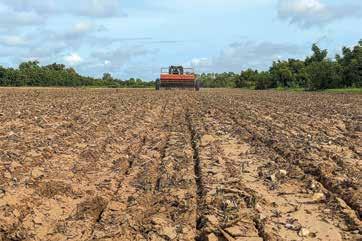
Understanding where emissions come from helps target effort to the parts of the system where changes are likely to make the most difference.
Consistent records of fertiliser use, fuel and energy consumption, crop area, yields and residue handling support good management and provide the core information needed for emissions estimates and changing market expectations around sustainability.
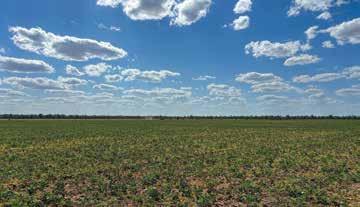
Sown crop. Photo: Julie Nicolosi.
Best Management Practices
Efficient Use of Nitrogen
Nitrogen fertiliser is the largest source of emissions in cropping, so the timing, rate and placement of nitrogen all influence how much is taken up by the crop and how much is lost. In northern systems, this is complicated by the wet season. Extended rainfall and limited ground access often mean nitrogen must be broadcast mid-season, sometimes by air. This is a practical and necessary option in many years, but it also increases the importance of getting rates and timing as close as possible to crop demand.9/7
Applying nitrogen in smaller, well-timed splits helps match uptake and reduce losses where conditions allow. Banding fertiliser rather than broadcasting, using stabilised or inhibited products, or including legumes in rotation can further reduce losses without compromising yield.
Soil testing provides the basis for sound nitrogen decisions, especially when mineralisation patterns change with rainfall and temperature. In areas prone to waterlogging or compaction, small adjustments in timing and placement can make a noticeable difference to both crop performance and emissions.

Tracking Emissions with a Basic Carbon Account
Run a basic carbon account every few years to track whole-of-farm emissions and identify changes over time, using free tools such as the such as the Primary Industries
Climate Challenges Centre (PICCC) Greenhouse Accounting Framework (GAF) Tools, Cropping and Cotton Greenhouse Accounting Framework. Regular carbon accounting helps identify emissions hotspots, track the impact of management changes, and support access to market or finance opportunities that require evidence of emissions performance.32
Chemical Use Management
Chemical Use and Management
What, Why & How?
Chemical use management covers herbicides, insecticides, fungicides, veterinary treatments, and other agricultural products used in day-to-day operations. It covers every stage of use including how products are purchased, stored, mixed, applied, and disposed of, as well as how equipment is cleaned and maintained and how usage is recorded.1 Across both cropping and grazing systems, chemical management protects people, animals, and the environment while maintaining the effectiveness of the products while meeting market and regulatory requirements.
The focus of environmental stewardship is not whether chemicals are used, but how they are managed. That includes selecting the appropriate product for the job, applying it as instructed, and storing it safely to protect people, stock, and the environment.
Best Management Practices
Record Keeping
Recording chemical storage and use is important for both environmental and economical purposes. Chemical records should contain dates of purchase, dates of use, date of manufacturing, label name, APVMA approval code, crop/ purpose, and expiry date. The necessity of managing a chemical’s fit for purpose state is important for meeting
production standards around chemicals. Recording applications to crops is also important for chemical compliance in grain and fibre production and marketing.1
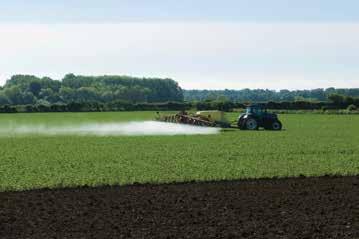
Tractor with crop sprayer.
Biosecurity Management
Biosecurity Management in Beef
What, Why & How?
Biosecurity involves protecting livestock and land from both exotic and endemic diseases, pests, and weeds. A biosecurity management plan focuses on two main tasks: reduce risk of a disease, pest or weed entering and establishing itself on a property and reduce risk of spread through herd and paddocks. This includes how you manage introduced stock, visitors, vehicles, feed, feral animals and boundaries as part of normal business.28
At industry level, biosecurity programs aim to prevent and contain emergency animal diseases that can cause major stock losses, damage markets or affect human health and the environment. In northern Australia, this includes preparing for serious threats such as foot-and-mouth disease and lumpy skin disease in neighbouring countries by increasing awareness and implementing surveillance.28
Biosecurity is part of day-to-day risk management, not just a response to major disease outbreaks. While a biosecurity plan does help prepare a business for exotic or notifiable disease events, it is the simple, routine practices that make the biggest difference, such as quarantining new stock, maintaining vaccination programs, and monitoring for feral animals and invasive weeds.28
Best Management Practices
Biosecurity Planning and Procedures
A good place to start is with a farm biosecurity plan. Templates are available through the Livestock Production Assurance (LPA) program and MLA and can be adapted to suit any grazing enterprise. A plan does not need to be complex, but it should start by identifying key risks such as new cattle, imported feed sources, shared equipment
Steer with skin condition.
Photo: Julie Nicolosi.
or machinery movements, and then set out simple steps to prevent problems or detect them early. Procedure guides should include preventative and curative measures for diseases, weeds, pest animals and invasive species responses.28
Quarantine procedures and infrastructure can provide a safe system for introducing new livestock without introducing potential disease, pest and weed risk. Livestock can carry different strains of bacteria and viruses which could be spread through your existing herd. With quarantine, you can allocate a period for the new animals to pass an infectious period and also be vaccinated to prevent potential infection from the existing herd. Pests and weeds can be transported by new livestock, particularly if they have travelled in from another region. Quarantine protocols allow for pest life cycles to pass and treatment of pests to eradicate their population before introducing the existing herd. There is also the ability to ensure livestock pass any weed seed which may survive digestion to not spread the weed into weed-free areas. A quarantine protocol also contains the monitoring area for potential incursions to a smaller, more manageable area for early detection of a pest or weed.28
Vaccination programs are a first line of defence in preventing economic impact from common diseases of livestock. Though some extensive grazing operations may not be able to accommodate full regimental injections due to herd sizes and logistical limitations, there are still systems and implementation strategies for vaccine programs that can suit individual property needs. Vaccine programs can include immunisation protocols for whole of herd, introducing new livestock, cull and sale bound livestock and young animals.
You can discuss details of an appropriate vaccine program to suit your property with your local livestock extension officer from the Department of Primary Industry.28
Vehicle and equipment clean down facilities are as important in beef production as they are in cropping. Though some towns may provide facilities for vehicle wash down to reduce the spread of weeds, not all towns do, and in the case of northern Queensland the towns can be few and far between. For properties beyond the accessible reaches of a public wash down facility, the required facilities to implement a cleaning bay can be relatively simple to establish. For the most up to date information on design and requirements, you can lookup the ‘Come Clean, Go Clean’ campaign on the Department of Primary Industry website.
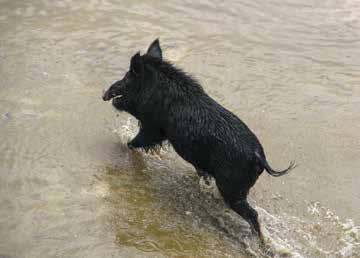
Feral pigs are one of Australia's most invasive species, posing biosecurity threats to both meat production and crop farming.
Photo: Lorraine Rocca.
Biosecurity Management in Cropping
What, Why & How?
Biosecurity for cropping involves minimising the risk of introducing disease, pests and weeds to a farm and across the wider region. In the context of Northern Gulf, where cropping areas are expanding in a predominantly grazing landscape, biosecurity is protecting crops from the threat of pest and disease while also avoiding impact on surrounding agricultural enterprises.10
The core elements of farm biosecurity are simple. It starts with assessing the risks, staying alert to early signs of pests or weeds, putting basic hygiene steps in place, and keeping clear records. A farm biosecurity management plan is your tool to safeguard your property and production system.
A biosecurity breach, such as the introduction of a new weed, pest or disease, can reduce yields, increase production costs and put market access at risk. Implementing biosecurity planning and procedures is a first step towards managing biosecurity risks.8
Best Management Practices
Biosecurity Plan and Procedures
Establishing a biosecurity plan and procedure is a great first step that is cost effective and practice changing for reducing biosecurity risks while increasing awareness and preparedness. A biosecurity plan is made up of a series of lists for risks and their impacts, and then standardised
practices for preventative measures and curative/treatment measures. One key area for biosecurity management in crops where risk is most manageable is in hygiene of both inputs and machinery.10
Hygiene practices in cropping are generally focused on inputs and machinery as they are controllable factors. For inputs, buying seed with a purity test and applicable disease-free certification is a first line of defence from introducing new weeds and crop diseases. These can be requested through your supplying agent or seed distributors. The same can be requested for fertilisers which could possibly contain
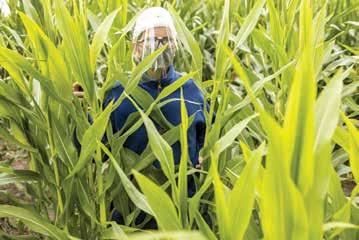
Researcher in field.
contaminants. Contamination of fertilisers is not limited to synthetic fertilisers with impurities, but also organic fertilisers which may contain biological contaminants. Being aware and having appropriate measures for preventing introducing pest and disease can reduce the risk of a biosecurity problem arising on your property.8
Curative measures for disease, pest and weed incursions require a detection system to first identify a breach. The utilised method in crop production areas around the world is crop inspection with a dedicated bug/pest scout, often a consulting agronomist. For much of the northern Queensland region, access and the remote nature of the production areas contribute to a limited access to consulting services, so producers must be vigilant to crop symptoms and common pests. There are generally a substantial number of resources that can assist with identification, as well as support from the relevant government department.8
Machinery hygiene is managed through wash down procedure and inspections. This includes tractors and vehicles, as well as implements and attachments. The provision of dedicated wash down facilities and procedural guides for cleaning can reduce the spread of weeds, diseases and pests. You can contact either your local government office or the state biosecurity office in the DPI for guidance in what equipment, infrastructure and consumable supplies will best suit you needs.8
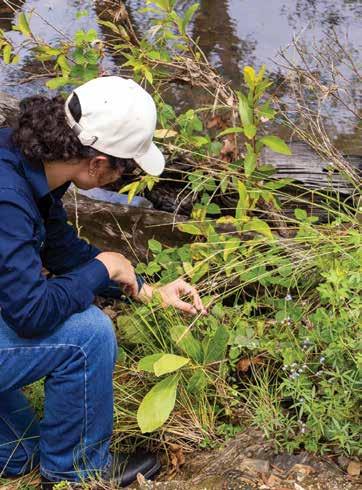
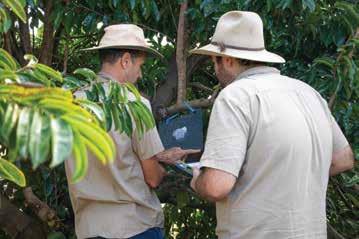
Gulf Savannah NRM Project Officer Mia Beki assesses siam weeds in Brooklyn Sanctuary.
Photo: Ashley King.
Sources
1 AgSafe. (n.d.). Home: Your leader in product stewardship. https://www.agsafe.org.au/
2 Ash, A. J., Corfield, J. P., & Ksiksi, T. S. (2001). The Ecograze Project: Developing guidelines to better manage grazing country. CSIRO Sustainable Ecosystems and Queensland Department of Primary Industries.
3 Australian Cotton. (n.d.). Background: Biodiversity. https://australiancotton.com.au/assets/downloads/Background_ Biodiversity.pdf
4 Badgery, W., Simmons, A., Eckard, R., & Grace, P. (2024). Reducing GHG emissions in cropping systems – Responding to drivers for change. GRDC Grains Research Update, Wagga Wagga & Goondiwindi. Grains Research and Development Corporation. https://grdc.com.au/resources-and-publications/grdc-update-papers/tab-content/grdc-update-papers/2024/02/reducing-ghgemissions-in-cropping-systems-responding-to-drivers-for-change
5 Barr, R., Cossani, M., Hayman, P., McDonald, G., Oliver, Y., Sadras, V., Verburg, K., & Wilksch, L. (2023). Water smart farming manual: Strategies for optimising water use efficiency in grain growing systems. Grains Research and Development Corporation.
6 Capon, S., Smith, R., & Reid, R. (2023). Managing riparian ecosystems: A handbook for the cotton industry. CottonInfo. https:// cottoninfo.com.au/sites/default/files/2020-12/RES_LMHB%20Final.pdf
7 CottonInfo. (2022). Northern Australia broadacre cropping manual. https://cottoninfo.com.au/sites/default/files/inline-files
8 CottonInfo. (2025). Biosecurity. Retrieved November 15, 2025, from https://www.cottoninfo.com.au/biosecurity
9 Cotton Research & Development Corporation, & CottonInfo. (2025). Australian cotton production manual 2025. https://crdc. com.au/publications/australian-cotton-production-manual
10 CRDC, & CottonInfo. (2024). Come clean go clean: A fact sheet outlining the 4-step wash-down guide for machinery, vehicles and equipment. https://www.cottoninfo.com.au/publications/come-clean-go-clean
11 Dang, Y. P., Page, K. L., Dalal, R. C., & Menzies, N. W. (2020). No-till farming systems for sustainable agriculture: An overview. In Y. Dang, R. Dalal, & N. Menzies (Eds.), No-till farming systems for sustainable agriculture. Springer. https://doi. org/10.1007/978-3-030-46409-7
12 Department of Climate Change, Energy, the Environment and Water. (2023). Livestock emissions framework for feed technologies: Factsheet. Australian Government. https://www.dcceew.gov.au/sites/default/files/documents/livestockemissions-framework-feed-technologies-factsheet.pdf
13 Desert Channels NRM. (2013, May 6). Forage budget – Introduction [Video]. YouTube. https://www.youtube.com/ watch?v=gl-W_txoh0E
14 Department of Primary Industries. (n.d.). IPM information. IPM Guidelines for Grains. https://ipmguidelinesforgrains.com.au/ ipm-information
15 Fisher, A., & Kutt, A. (2007). Biodiversity and land condition in tropical savanna rangelands: Technical report. Tropical Savannas CRC.
16 FutureBeef, & Department of Agriculture and Fisheries Queensland. (2015). Northern grazing carbon farming – Integrating production and greenhouse gas outcomes (AOTGR1-198 final report). DAF Queensland.
17 FutureBeef. (2022). Water requirements for cattle. https://futurebeef.com.au/resources/water-requirements/
18 GRDC. (2024). IPM checklist: A step-by-step guide for a sustainable grains industry (CES2204-001RTX). Grains Research and Development Corporation. https://grdc.com.au/resources-and-publications/all-publications/publications/2024/ipm-checklist
19 Hochman, Z., Navarro Garcia, J., Horan, H., Whish, J. P. M., Bell, L. W., et al. (2021). Design of sustainable dryland crop rotations: 26 scenarios for Australia’s grains zone. Environmental Research Letters, 16(6), 064015. https://www.cabidigitallibrary. org/doi/pdf/10.5555/20220511599
20 Hunt, L. P., McIvor, J. G., Grice, A. C., & Bray, S. G. (2014). Principles and guidelines for managing cattle grazing in northern Australian savannas: Stocking rates, paddock size and water points. The Rangeland Journal, 36(2).
21 Lind, L., Hasselquist, E. M., & Laudon, H. (2019). Towards ecologically functional riparian zones: A meta-analysis to develop guidelines for protecting ecosystem functions and biodiversity in agricultural landscapes. Journal of Environmental Management, 249, 109391. https://doi.org/10.1016/j.jenvman.2019.109391
22 Long, D., & McDonald, W. (2005). Maintaining groundcover to reduce erosion and sustain production. NSW Department of Primary Industries. www.dpi.nsw.gov.au/__data/assets/pdf_file/0018/162306/groundcover-for-pastures.pdf
23 Lord, B. (2020). Resilience strategies for small landholders, Part 1: Grazing land management and pasture recovery [Presentation]. Healthy Land and Water & FutureBeef. https://futurebeef.com.au/wp-content/uploads/2020/05/Grazing-landmanagement-and-pasture-recovery-PDF-3.92-MB.pdf
24 Mayes, J., Sullivan, S., Oxley, T., MacDonald, N., & Golding, R. (Eds.). (2009). Cattle and land management best practices in the Katherine region. Northern Territory Government, Department of Regional Development, Primary Industry, Fisheries and Resources.
25 McLaughlin, J., Steele, K., & Corbett, E. (2020, August 31). Wet season spelling in the Northern Gulf. Northern Gulf Resource Management Group. www.southerngulf.com.au/wp-content/uploads/2021/01/Wet-Season-Spelling-Narrative-02-09-2020.pdf
26 Meat & Livestock Australia. (2006). Grazing land management: Sustainable and productive natural resource management. MLA.
27 Meat & Livestock Australia. (2015, October 30). Managing water in the dry – Northern Australia. MLA News & Events. https:// www.mla.com.au/news-and-events/industry-news/archived/2016/managing-water-in-the-dry--northern-australia/
28 Meat & Livestock Australia. (2025). Farm biosecurity. https://www.mla.com.au/research-and-development/biosecurity/farmbiosecurity/
29 Northern Territory Farmers Association. (2022). Northern Australia broadacre cropping manual 2022 edition. Northern Territory Farmers Association.
30 Partridge, I. (1999). Managing grazing in northern Australia: A graziers guide. Queensland Department of Primary Industries.
31 Poggoli, B. (2024, June). “We can save more (money) on crop establishment with less ground work. Fuel, machinery hours and labour costs.” [Personal communication].
32 Primary Industries Climate Challenge Centre. (n.d.). Tools. https://piccc.org.au/resources/Tools.html
33 Radford, I. (2012). Responses of savanna animals to fire. Department of Environment and Conservation. https://library.dbca. wa.gov.au/FullTextFiles/C18795.pdf
34 Wolfe, H., & Cregan, P. (2013). Smart rotations: Farming systems for the future. In J. Pratley (Ed.), Principles of field crop production (4th ed., pp. 294–320). Oxford University Press. https://cdn.csu.edu.au/__data/assets/pdf_file/0019/4310650/ Chapter7_Wolfecregan.pdf
07 4092 1088
Block H, 28 Peters Street, Mareeba 4880
gulfsavannahnrm.org
Gulf Savannah NRM
gulfsavannahnrm
For a digital version of this handbook, please visit Gulf Savannah NRM’s website.