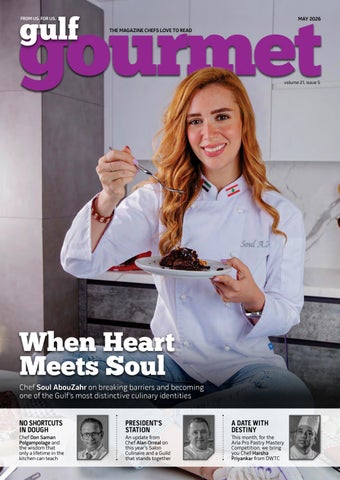
Chef Soul AbouZahr on breaking barriers and becoming one of the Gulf’s most distinctive culinary identities
SHORTCUTS
Chef Don Saman Polgampolage and the wisdom that only a lifetime in the kitchen can teach

An update from Chef Alan Orreal on this year's Salon Culinaire and a Guild that stands together

This month, for the Arla Pro Pastry Mastery Competition, we bring you Chef Harsha Priyankar from DWTC

Dear Fellow Members, Chefs, Ladies, and Gentlemen,
We have to start this month with something difficult. The Salon Culinaire will not be taking place this year. We know what that means to many of you. We know how many early mornings, how many failed attempts and rebuilt dishes, how many hours of stubborn practice go into preparing for that competition. The Salon is not just an event on a calendar. Having to step away from it this year hurts, and we are not going to pretend otherwise. But the pain of this news is not carried by chefs alone. The judges, the sponsors, and partners who commit resources long before a single dish is plated. The marshals who give up days on their feet to keep everything running with fairness and precision. The organizers and the entire team behind the scenes, who stay ready to sort logistics, manage schedules, and chase a hundred details that no one in the room ever sees. All of them were looking forward to it.
What makes it harder is that the world has been shifting in ways that none of us fully control, and sometimes those shifts land on things we love. We accept that. Acceptance is not defeat. It is the first honest step toward finding what comes next. We are also aware that last month's issue carried the full rules and guidelines for the Salon Culinaire, and many of you may have already started planning around them. We are sorry for that. If you have any questions or need any clarity, please do not hesitate to reach out to us directly at emiratesculinaryguild@gmail.com.
The UAE has responded to this period the way it tends to respond to hard moments, with a grounded calm. The leadership here has built something over decades that shows up in the people, a sense that things will be handled, that no one faces difficulty completely alone.

Within the Guild specifically, what we have seen has moved us. Chefs reaching out to each other. Older members make time for younger ones without being asked. People sharing opportunities, sharing knowledge, sharing a meal. Community is one of those words that can start to feel hollow when used too often. But what we are describing is that, in hard times,, this culinary community has brought people closer together.
Moving forward to the silver lining. This issue features inspirational stories of people who have faced pressure and come out more fully themselves on the other side. We have Chef Soul AbouZahr, who has built one of the Gulf's most recognizable culinary voices, captivated television audiences, and broken barriers to achieve her culinary dream. Then there is Chef Saman, whose wisdom does not come from a book; it comes from decades in the industry.
For the Arla Pro Pastry Mastery Competition this month, we feature Chef Harsha Priyankar of the Dubai World Trade Center, who brings us a chocolate raspberry creation that is as precise in technique as it is beautiful in finish.
And then our op-eds and industry insights section, this issue brings together some of the most honest voices we have had in these pages in a while. These are people thinking carefully about where this industry is, what it needs, and what each of us can do about it. We think you will find yourself underlining things.
To our partners and members … Thank You! That is not a formality. In a period when pulling back would have been the easier choice, you stayed present. You kept conversations going, showed up for events, and continued to back the work this Guild does. We do not take that lightly, and we will not forget it.
Speaking of showing up, the March Guild Meeting at the DWTC was one of those evenings that showed us why all of this matters. The room was full. We are not alone in this. That feeling is worth more right now than almost anything else we can offer each other.
We invite you to explore past issues https://issuu.com/gulfgourmetmagazine and emiratesculinaryguild.net to stay updated on events and news. If you have not already, follow us on social media to see what chefs around the world are creating, and perhaps connect with someone who inspires you. As always, if there is something you would like to see in a future issue, send us an email. Let us know what matters to you, what stories you want told, and what lessons you have learned along the way. If you have any questions about the events, please reach out to us at emiratesculinaryguild@gmail.com
Hold each other close this month. Cook well. And know that this culinary community, which is your community, is not going anywhere.
Culinary regards, Alan Orreal

On a difficult announcement, a community that holds together, and the stories that remind us why we do this.
A word on where the industry stands and what this moment asks of
Chef Saman was never intimidated by the heat of the situation. Four decades in the kitchen have given him various lessons, and the most surprising is that empty shelves are the beginning of a better dish. And that is just the start…
Chef Tarryn-Leigh Green describes how collective action and empathy have brought the
Chef Helen Morris on delayed moves, GCC uncertainty, and eating her way through it
Seaweed is becoming the ocean’s most consequential wager. Marine Biologics' Sally Aaron calls it one of the most underutilized ingredients, and their highperformance seaweed powder backs that up.
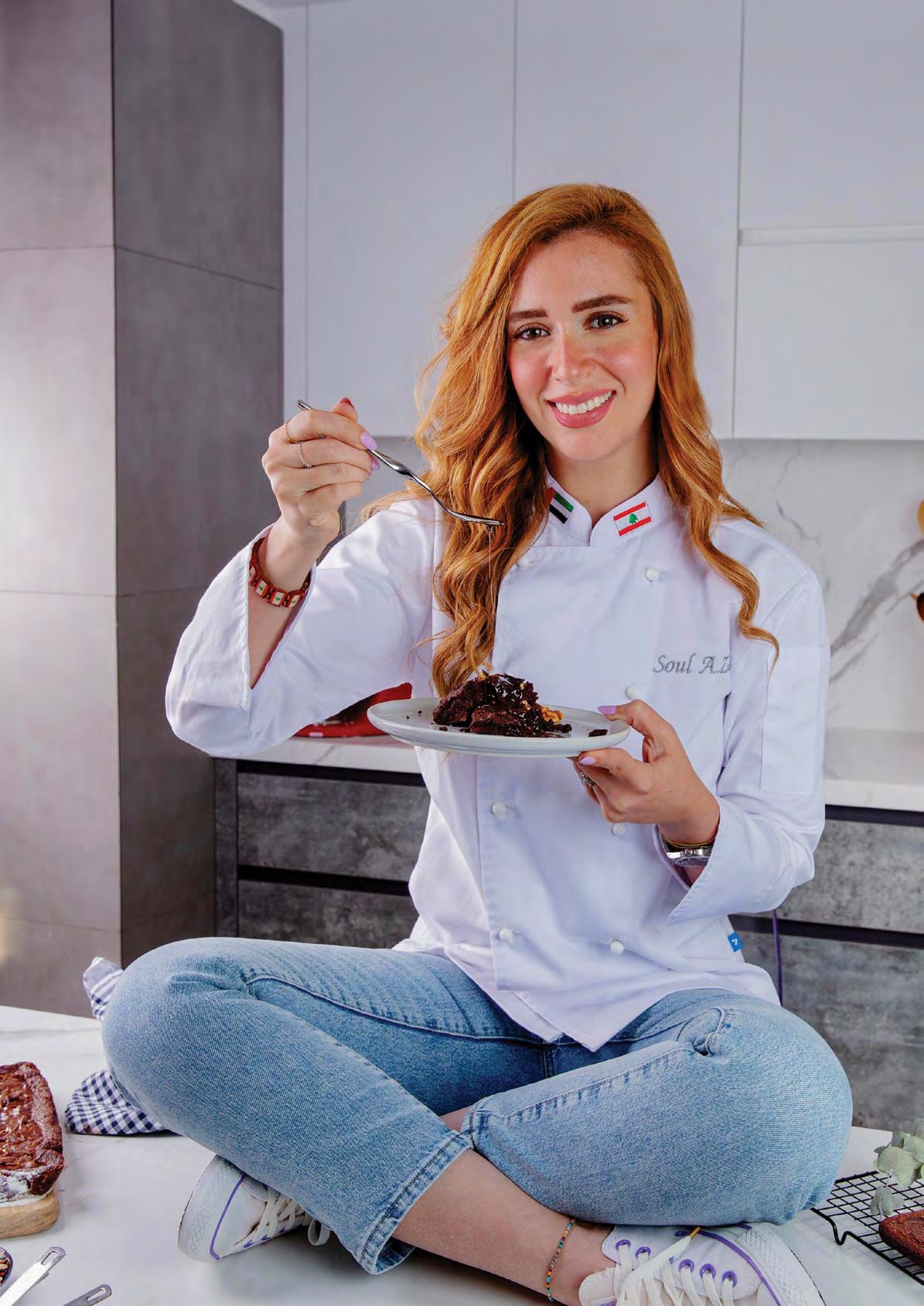
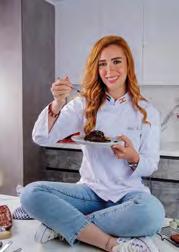
Most people who study criminology learn to read a scene. Chef Soul AbouZahr reads a menu. She perfected brownies, captivated audiences on several television series, and built one of the Gulf's most distinctive culinary identities. Meet the chef who is breaking barriers.

They say if you are not facing obstacles, you are not on the right path. Right now, many of us are on the right path…
The SHIVRA Series: Beyond the Pass
Chef Monal Malhotra recalls the béarnaise sauce that changed everything and the mentor who taught him that almost-right is never good enough
Convenience or Compromise?
What the culinary industry risks losing in the readymade era, writes Chef Carl Shi
Shipping of Boxed Meat and Its Role in the Proper Aging of Beef
How boxed meat is shipped and why temperature and vacuum packaging matter by Sulemana A. Sadik
In the United Arab Emirates, something remarkable is happening
Chef Christophe Prud'homme on how the UAE is shaping the future of its food culture
This month, for the Arla Pro Pastry Mastery Competition, we bring you Chef Harsha Priyankar of the Dubai World Trade Center
Images from last month's gathering at the Dubai World Trade Centre
Membership Directory
A listing of all the leading food, beverage, and equipment suppliers in the region
Simon Says
Simon Martin, Executive Chef at Kerry Taste & Nutrition (Food Service) explores the food trends reshaping the region's dining landscape.



P R OF E S S ION A L










































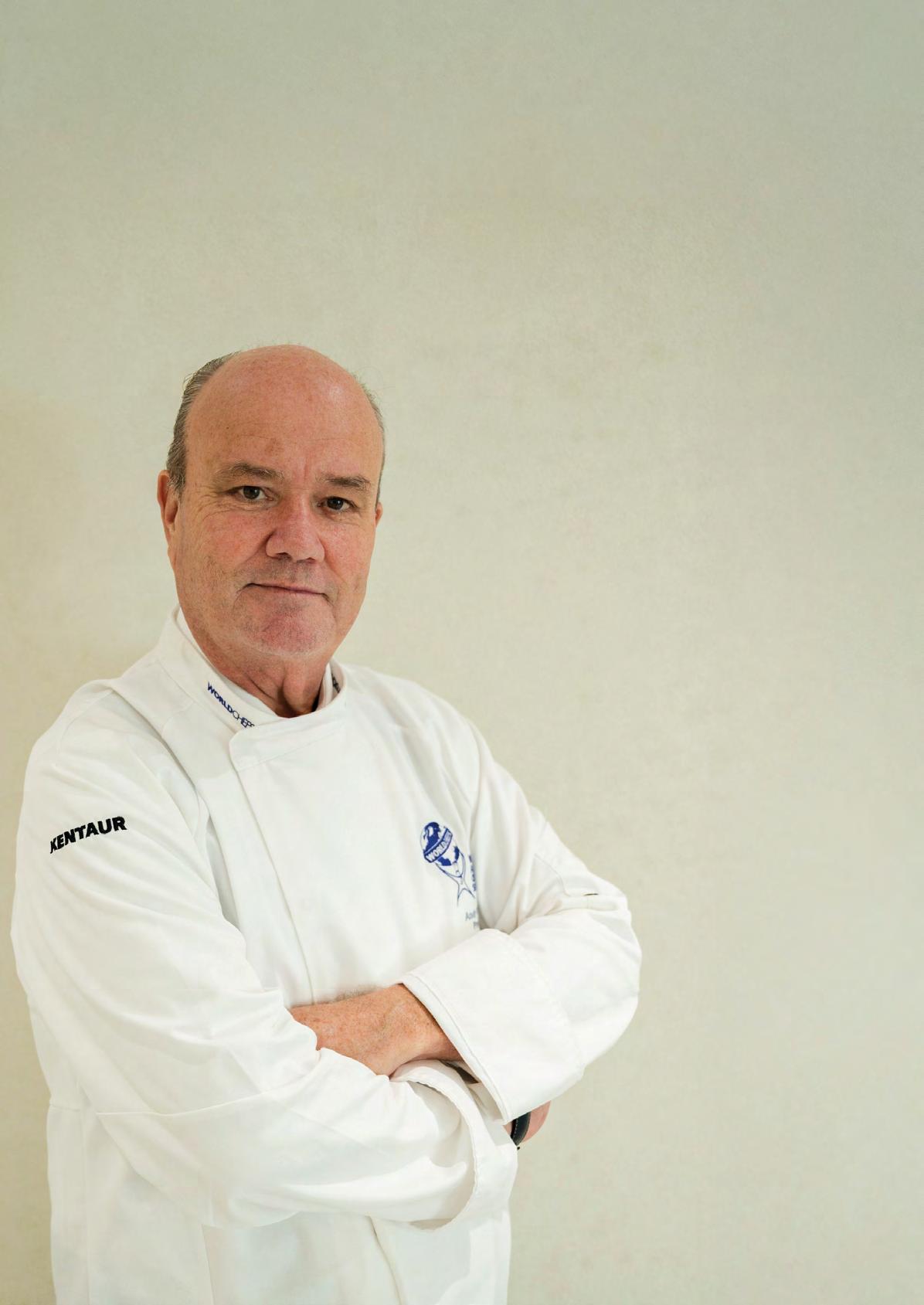
Amidst the current uncertainty in the Middle East, we want to extend our heartfelt best wishes and our hopes for a swift return to stability. We stand firmly with our corporate partners and believe that, now more than ever, our strength lies in coming together as a community. Please stay safe. We look forward to brighter days and a successful year ahead.
Andy Cuthbert President of Worldchefs
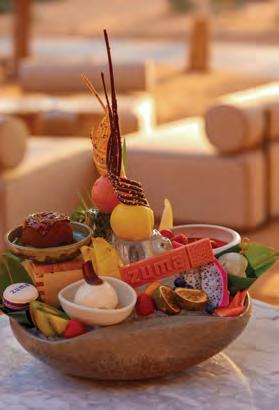
Zuma Ras Al Khaimah pop-up extends season into 2027
Following the success of its second season, Zuma Ras Al Khaimah will remain open at The Ritz-Carlton Ras Al Khaimah, Al Wadi Desert through to April 2027. The extension reflects strong demand from both UAE residents and international visitors drawn to the brand's signature contemporary Japanese cuisine in one of the region's most striking natural settings.
Zuma Ras Al Khaimah offers a distinctive interpretation of the brand’s globally recognised dining concept, translating its signature contemporary Japanese cuisine and vibrant atmosphere into a setting defined by natural beauty and tranquillity.
The menu continues to showcase Zuma’s most iconic dishes, from freshly prepared sushi and sashimi to signature robata plates.
With this extended run, Zuma Ras Al Khaimah further cements its place as a compelling reason to venture beyond the city.
Isabel Mayfair, a fixture of London's dining scene for nearly a decade, makes its international debut in Abu Dhabi at The Galleria, Al Maryah Island, Abu Dhabi. The opening marks a partnership between London-based BNF Hospitality and UAE-based Fuse Holding, combining international experience with local insight.
“Our aim with Isabel has always been to bring people together over exceptional food, drink and experiences. We always want our restaurants to be part of their communities, as we have a peoplefirst approach to everything we do,” said Scottie Bhattarai, CEO of BNF Hospitality. He further added, “When presented with the opportunity to expand this vision internationally, Abu Dhabi made the most sense. It’s a city with a strong cultural awareness and sensibility, thoughtfully balancing a respect for history and tradition with a contemporary, global outlook. It is a privilege for us to bring the brand to the capital of the UAE.”
Yoann Grillet, CEO of Fuse Holding shared, "Isabel Mayfair is, above all, a feeling. It's the hush that falls over a room when the lighting is just right, the warmth of a table shared with the people who matter, the quiet thrill of knowing you're somewhere that has been cared for down to the smallest detail. Isabel has always been more than a restaurant; she is a way of gathering.”
The menu, led by French chef Vincent Visinet, takes an ingredient-led approach, balancing simplicity with precision and drawing influence from across the Mediterranean. While a selection of London’s signature dishes are reinterpreted, Visinet will establish a distinct culinary identity shaped for Abu Dhabi. With an excursion along the
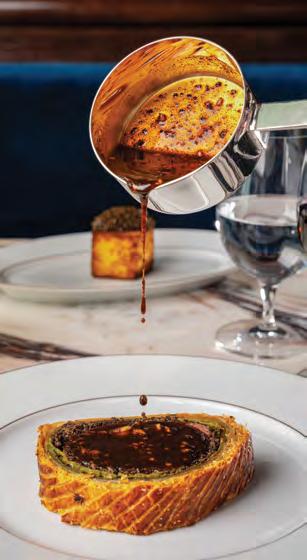
Mediterranean coast, the menu begins with delicate bites such as Croquetas filled with onion and leek béchamel, brightened with lemon paste and pickles. Starters celebrate freshness, from a Vegetable Tartlet layered with cooked, raw and pickled produce to a vibrant heirloom tomato salad, elevated with verbena-infused consommé.
Signature mains continue the narrative with dishes such as Carabineros paired with a reduced head jus, kaffir lime and a potato roll with nori, alongside a classic Beef Fillet Wellington encased in golden puff pastry with mushroom duxelles and veal jus. To conclude, desserts offer a balance of elegance and indulgence, including a Red Berry Pavlova with confit and sorbet, and a standout extralarge Pistachio Madeleine designed for sharing, served warm with pistachio diplomat cream.
FIRSTLINE, a new hospitality technology platform designed to turn guest influence into measurable business growth, has officially launched in Dubai, introducing a performance based model created specifically for high end restaurants and hospitality venues.
Launching first in the UAE, FIRSTLINE is built at the intersection of technology, business intelligence and modern consumer behaviour. The platform enables venues to unlock measurable revenue through customer engagement, social influence and loyalty mechanics that are directly tied to performance.
As customer acquisition costs rise and traditional influencer marketing becomes increasingly inefficient and difficult to measure, restaurants are actively seeking more accountable and performance driven alternatives. FIRSTLINE responds to this shift by offering a model where marketing, loyalty and revenue are directly connected.
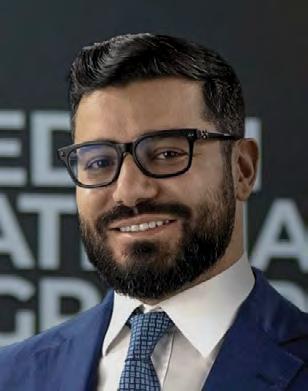
Unlike traditional marketing or loyalty tools, FIRSTLINE does not introduce additional cost layers. Loyalty is funded through existing revenue allocation, and when redeemed, is processed back as revenue within the venue, creating a self-sustaining economic loop.
Backed by Freedom International Group, an Austrian company with USD 2.5 billion in assets under management and a focus on pharmaceutical, technology, hospitality and financial services. Freedom International Group has committed up to $10 million to support the platform’s expansion and partner venues through launch activations, premium content production, ambassador programmes and sustained marketing initiatives designed to generate measurable traffic, visibility and guest acquisition.
Narek Sirakanyan, CEO of Freedom International Group explained that hospitality today is no longer just about attracting guests, it is about understanding and amplifying the behaviour that already exists within your clientele. He said, “With FIRSTLINE, we are turning private influence into a structured and measurable growth channel, while giving venues full control over how they invest and scale."
The global foodservice market is entering a phase of steady, moderate growth, approaching a value of €2.98 trillion in 2025, according to Deloitte’s Foodservice Market Monitor 2026, shared with TUTTOFOOD. Global growth reached +2.2% in 2025 compared to 2024, with performance driven primarily by Europe (+6.0%) and Asia-Pacific (+3.8%).
“Foodservice is entering a new phase shaped by evolving consumption models and supply chain complexity,” said Antonio Cellie, CEO of Fiere di Parma. “In this context, TUTTOFOOD, Southern Europe’s leading food business platform,
helps turn market insights into concrete business opportunities by connecting international suppliers with over 4,000 top buyers, supported by a Buyers Program organized in cooperation with the Italian Trade Agency”.
Meanwhile the UAE’s foodservice sector, valued at €16 billion in 2025, reached +1.6% compared to 2024, and is projected to grow a further +4.2% throughout 2030, compared to a stable global outlook.
This trend is driven by the rise of the Quick Service Restaurants (QSR) model in the country, which is positioned to increase by + 5.3% over the next 5 years.
“In recent years, foodservice growth has been shaped by two main dynamics: the expansion of formats, with QSR playing a pivotal role, and the increasing penetration of chain operators, which are proving particularly effective in combining service, quality and customer experience,” said Tommaso Nastasi, Deloitte partner and Value creation service leader.
The QSR category is expected to be one of the fastest-expanding segments in the period ahead, along with Street Food, with North America and AsiaPacific driving global growth fueled by these two models.
To get your chef or company related news featured in this section, email editor@gulfgourmet.org
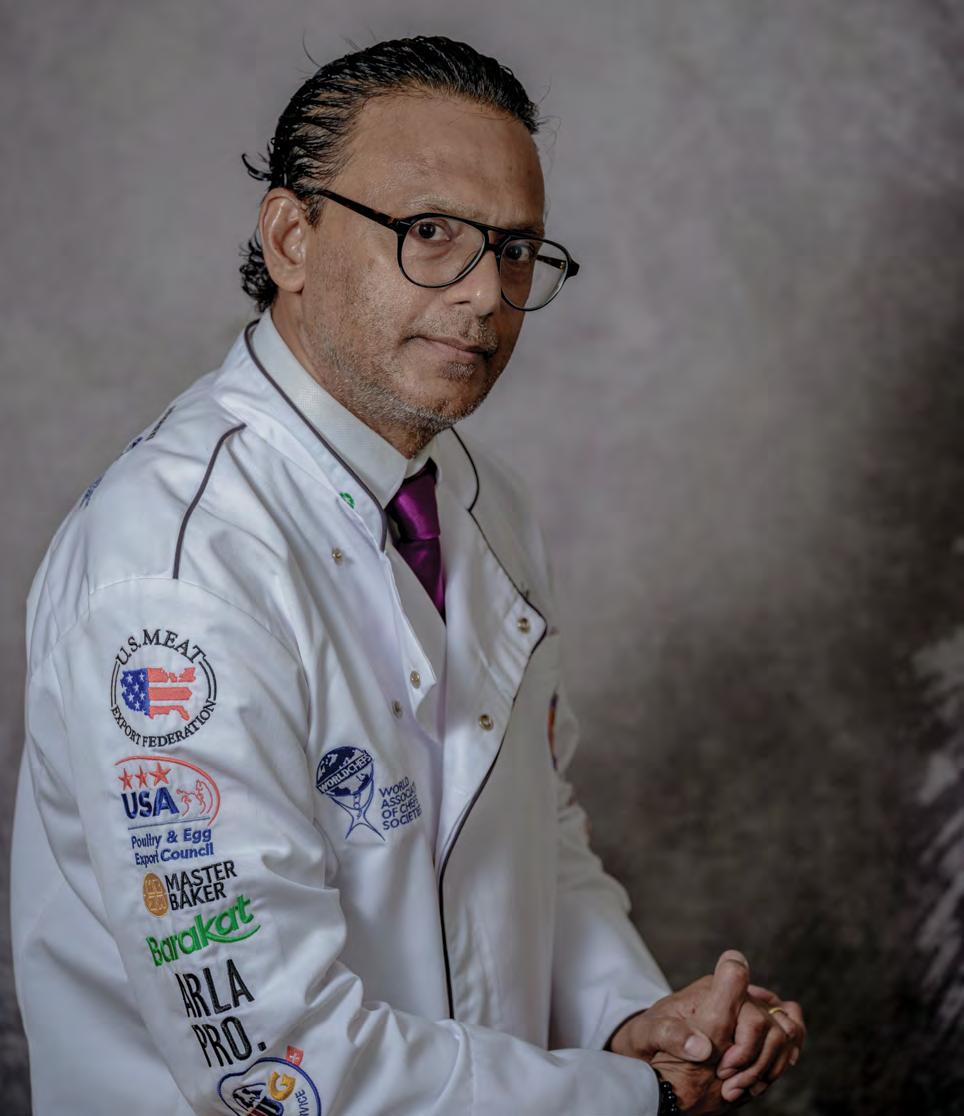
When there was no shortcut, he found a way. When there was no custard powder, he made one from scratch. Chef Saman Polgampolage Don was never intimidated by the heat of the situation. Four decades in the kitchen have given him various lessons, and the most surprising is that empty shelves are the beginning of a better dish. And that is just the start…
Bread is the oldest story in food. It predates restaurants, recipes, and culinary schools. It is, at its most elemental, with flour, water, and time. It is the knowledge carried forward when nothing else remains. It is also, as Chef Don says, a life's work. The Sri Lankan-born bakerpastry master has spent more than four decades with his hands in dough, training chefs, baking from scratch, and managing production. The world around him has changed beyond recognition. The flour, he will tell you, remains the same.
For the past three years, Chef Don has been overseeing bakery and pastry operations as Technical Advisor and Business Development Manager at Bakemart. It is the latest chapter in a career that has taken him from five-star hotel kitchens to retail industrial production floors and into the competitive arena of pastry competitions. By any measure, his career arc is unusual.
Be it technical, business, or culinary, every aspect of the food industry I have been part of. I never changed my career,” he says. “I have always been into food.”
More than 40 years later, he still traces everything back to where it began, in Colombo, one of the island's beating hearts, where he first stepped into the food industry in the early 1980s. He started as a waiter, then a kitchen helper, and eventually became a professional chef. But there is more to the story. He was just six years old when he lost his father.
In a household of twelve children, he was the youngest, surrounded by doting older siblings who looked after him. At the center of everything was his mother. She cooked, she cared, she held the family together, and she was always there beside young Don.
“Being the youngest, I received special treatment. My family sent me to a private school. But I was not a diligent learner,”
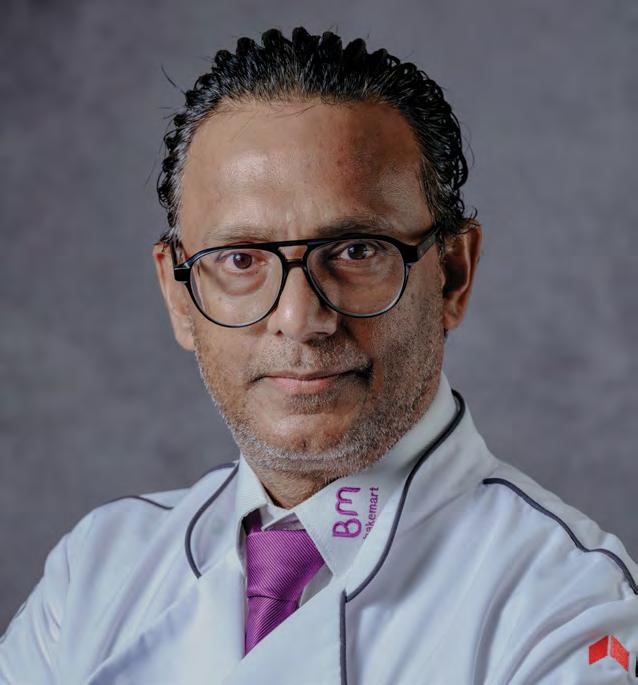
Bread carries history, survival, and knowledge when everything else disappears
he admits. “I attempted my O Levels and did not return for a second sitting.”
After school, direction came through the kitchens. At 19, he joined a friend’s catering company, working on private events and wedding functions. “I was exploring and got involved in catering. But the inclination towards cooking happened because of my mother.”
His mother passed away nearly 30 years ago, but her presence remains. He can still taste her food: sitting on the floor, cooking the traditional way, grinding spices by hand, making everything from scratch. The lessons she passed down
were not ones that could be measured or mapped. “ Whenever a whole chicken came into the house, it was my job to cut it and help with cooking. That is how I learned,” he says, smiling. “Not from books. Not from school. Just by being there at home, with my mother.”
His first professional footing into baking came in 1982 at Hotel Golden Topaz. One morning, while he was busy cutting vegetables for the mise en place, a senior baker summoned him and handed him a 50 kg flour sack. “This was my first encounter with flour,” he recalls. “At first, I worked alongside him, then on my own, day after day, mixing 50 kilos by hand on a broad wooden table. Warm water, yeast, a pinch of sugar, and hard work.”
By 1983, he had joined the Galadari Meridian in Colombo. Working in the buffet section, he entered the world of professional kitchens,rotating through all sections of the kitchen. There, he got used to the pace and structure of professional service, helping with banquets, the hot kitchen, and daily operations. “Experience is what makes it stick. That is how you remember everything. An equally
important lesson I learnt there was on cleaning. With limited cleaning staff, chefs were responsible for maintaining their own stations after service. That is a critical part of training,” he emphasizes. “You must understand every aspect of the work,” he says, adding that many culinary graduates now focus narrowly on cooking while neglecting fundamental kitchen practices, such as cleaning their own workspace.
Watching young chefs climb the ladder at breakneck speed, he cannot help but compare their journey to his own. “They are not learning anything,” he says bluntly. “They want to jump the queue. They start with little experience and expect to earn big money overnight.”
By the time he arrived in Kuwait in 1987, he was already earning a strong salary, built on years of hands-on experience. “
I accepted a role at Le Méridien Kuwait, rising steadily through the ranks from Commis to Chef de Partie, then Pastry Sous Chef,” he says, noting his progress was interrupted by the outbreak of the Iraq–Kuwait invasion in 1990.
For six months, he remained inside the hotel, watching as the city changed around him. When it was finally time to leave, the journey home unfolded slowly and uncertainly: a bus ride, a refugee camp, passage through Jordan, and eventually a flight back to Colombo
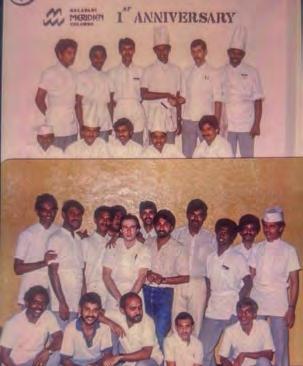
There are no shortcuts in baking, only understanding ingredients and process
after 6 months back to Le Meridien Kuwait till 1993.
A move to the UAE in 1993 followed soon after, arriving, as the best opportunities do, through a relationship built years earlier. His mentor from Colombo had remembered him, and when the pre opening team for Novotel Dubai was being assembled, a phone call opened the door. “I joined the pre opening team as Executive Pastry Chef. At that time, it was the first Novotel Dubai that opened,” he recalls.
Over the years, he worked across multiple establishments, including Sofitel Al Hamra in Jeddah, before returning to the UAE, this time as part of the pre opening team at Continent Hypermarket Deira City Center. “In 1995, I joined Continent Hypermarket (rebranded to Carrefour). It marked the beginning of nearly two decades in retail experience. In that period, I opened bakery operations across the region: Carrefour Ajman, Mall of the Emirates, Carrefour Avenues in Kuwait, and Qatar Villaggio, Landmark Mall & City Center as a Category manager & Bakery trainer in Qatar. Hotel life is enjoyable, you work with your own ideas, creativity, artistic expression,” he reflects. “Retail is a massive production. The scale was staggering.”
At peak operations, he led teams of up to 45 staff, producing everything entirely in house. When his career shifted from artisanal baking to industrial-scale baking, he did not abandon what he knew best. It was where the old cliché of sticking to your strengths rang truest.
He found another purpose in teaching recruits who had arrived from the checkout counters and trolley bays, introducing them to the fundamentals of professional baking."My idea was to give proper training to people," he says. “That meant teaching them how to make things from scratch. That foundation came in handy during periods of supply disruption. “For example, if there was no custard powder available, they knew what to do. Milk, sugar, flour, corn flour, eggs, you make it yourself.”With thousands of customers passing through bakery doors each day, there was no margin for interruption. “We cannot say no,” he says simply. “You have to work around it.”
Starting in 2014 as a Bakery Pastry Consultant, Business Development expert, and Technical Advisor, he applied the same philosophy, which brought him to the leading bakery products distributor in the Gulf, Middle East & European markets. “Bakemart is a subsidiary of the Al Marai Group, where I now work as a Technical Advisor and Business Development Manager, but I also assist with sales and marketing,” he explains. “There are sales teams, and for each of them, I collaborate to provide technical guidance. If they go for a client meeting, I go with them."
His role is practical and demonstrative, showing how products perform, how they bake, and how they should be used. “I show them how it works, how to bake it,” he says, smiling. “I am a baking person at heart.”
For young chefs, he has seen an all-toocommon plight: being at the disposal of ready-made products; he advises them to make the most of their skills. Today, a young chef can walk into any hotel kitchen, reach for a box of custard powder, add water or milk, and be done with it. In our generation, everything was from scratch. When no bread improver was available, we found the solution by using Vitamic C,” he adds, explaining the
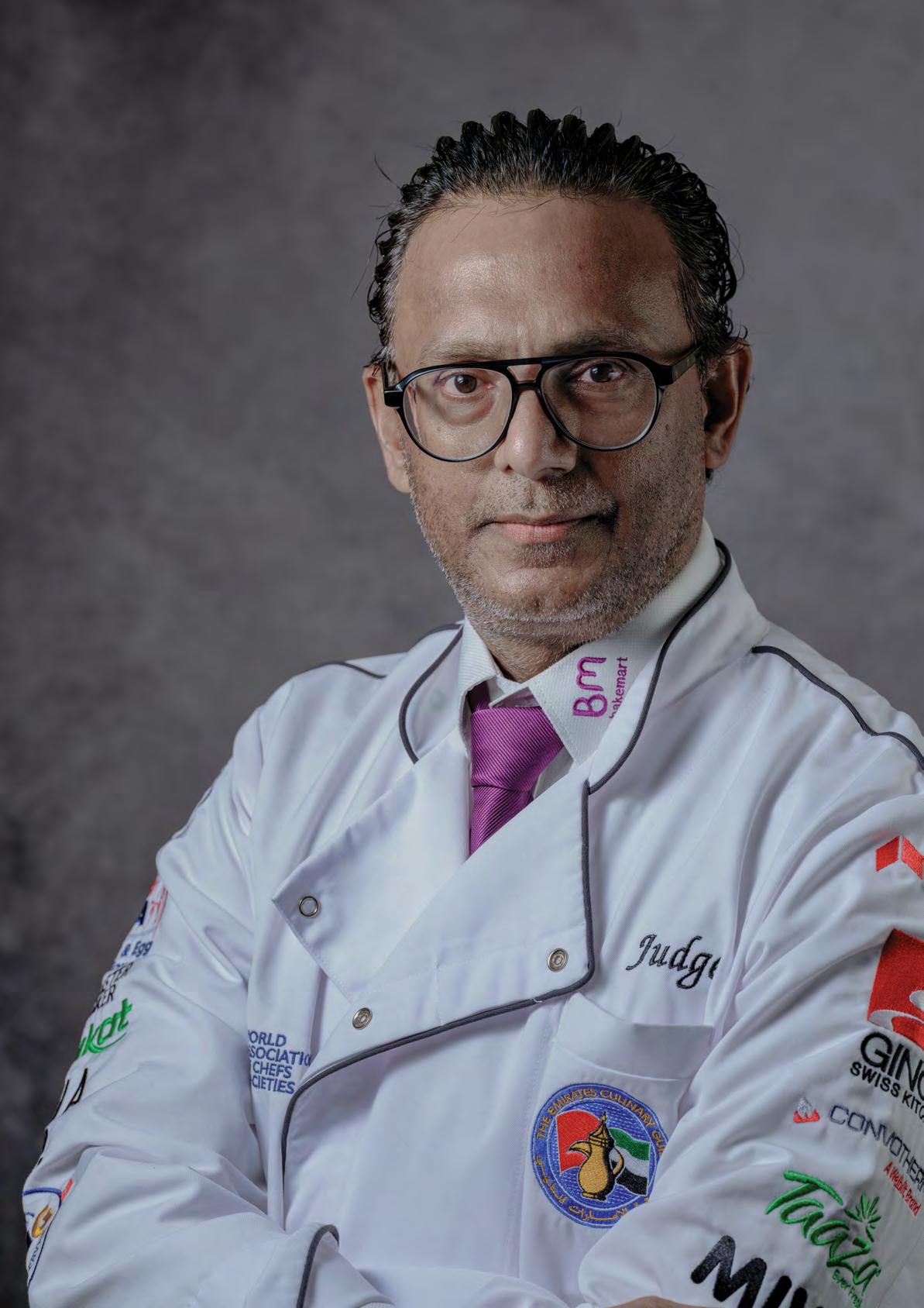
A baker never wastes dough; leftovers become tomorrow’s better bread
analogy of how people turn to vitamins or orange juice when they catch a cold. “It is simple. Weak flour needs help; it needs improvers. Without sufficient strength, the bread will not retain its structure and can collapse after baking or slicing. But before any of the commercial improvers existed, we still managed. Sometimes it was calcium powder and water. Sometimes it was just an experience. Regardless, bakers understood their dough well enough to work without shortcuts.”
That is the part he feels younger chefs are too quick to skip. Back then, people did not have the luxury of phoning it in. They learned by repetition, by failure, by fixing what went wrong with their own hands. “ Try to understand making from scratch. Basic flour, basic sauce, basic dough. From one basic dough, you can do many things.”
When judging bakery and pastry competitions, he places weight on creativity, taste, timing, and cleanliness. Different cake categories, mousse, gateaux, or larger showpiece cakes are judged on different aspects, but the basics always matter.
But before any of that, he asks them to respect the recipe. Whatever the competitor has written down is the
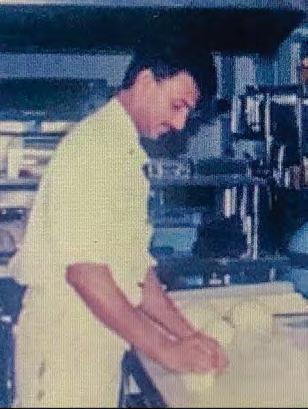
Success requires discipline, practice, feedback, and genuine enjoyment of the craft
standard by which their dish will be measured. He has seen too many competitors lose points because what they described and what they delivered simply did not align.
“First, follow the rules and regulations carefully. Second, practice multiple times. Decide early what you want to create, then repeat it until it becomes second nature. Third, share your work and seek honest feedback before & after competition. And finally, enjoy it. In that one hour, you should be enjoying your time.”
As sustainability shifts from a nice to have to a seat at the head of the table in hospitality, Chef Don’s take on food waste is equally practical and also seeps into the competition he judges. Food Waste, he stresses, is never an afterthought. "You want to prepare one dish, but you end up wasting the equivalent of two or three. That is where points can be deducted.”
A lot of that mindset, he says, came through his time at Carrefour, where production planning left no room for excess. “If the plan called for one hundred pieces, then one hundred pieces were produced, no waste, not even a single portion of dough. Every batch followed a calculated recipe. If you want smaller quantities, you use the first recipe. Follow it, and you will get 75 pieces. It is all controlled.”
Even dough trimmings were never
discarded. Leftover dough was placed in a covered container and stored in the chiller for use the following day, which improved the bread’s flavor and fermentation. He has caught young chefs discarding leftover dough more times than he can count, and his retort has always been the same. “A baker never throws away dough. It goes into a container, covered, ready for the next mix. "That is your mother dough," he says.
His metaphor is telling. He explains it through memory. "I remember my grandmother making Hopper Batter left in the pot overnight. It was never wasted; it was tomorrow’s bread. Fermentation works exactly the same way,” he explains. “People understood this naturally before we started looking for shortcuts.”
Another sustainable practice he pushes for both professional kitchens and competition settings is the use of local produce. “Support local farmers. People spend so much money importing ingredients when you can get vegetables fresh every day. You can still create beautiful food. You do not need to spend more money. Go back to your roots.”
His family has been his anchor through it all. Chef Don is happily married and the father of a 20-year-old son, now in his second year of higher education. Family life is a steady constant amid the movement and demands of his career.
As he begins to look toward the later stages of his working life, several personal projects are taking shape. Among them are ventures aligned with the culinary industry, including handcrafted wooden service ware for the culinary industry, as well as plans to spend more time on his own land, developing a small-scale micro herb farm in the future.
For a man who has never left anything that goes to waste,not dough, not experience, not even a single good idea, the next chapter is already rising. ■







TRUSTED BY PROFESSIONAL CHEFS GLOBALLY FOR 50 YEARS
Rooted in heritage and inspired by innovation, DWTC Hospitality reimagines Emirati cuisine through contemporary creativity and locally sourced ingredients.
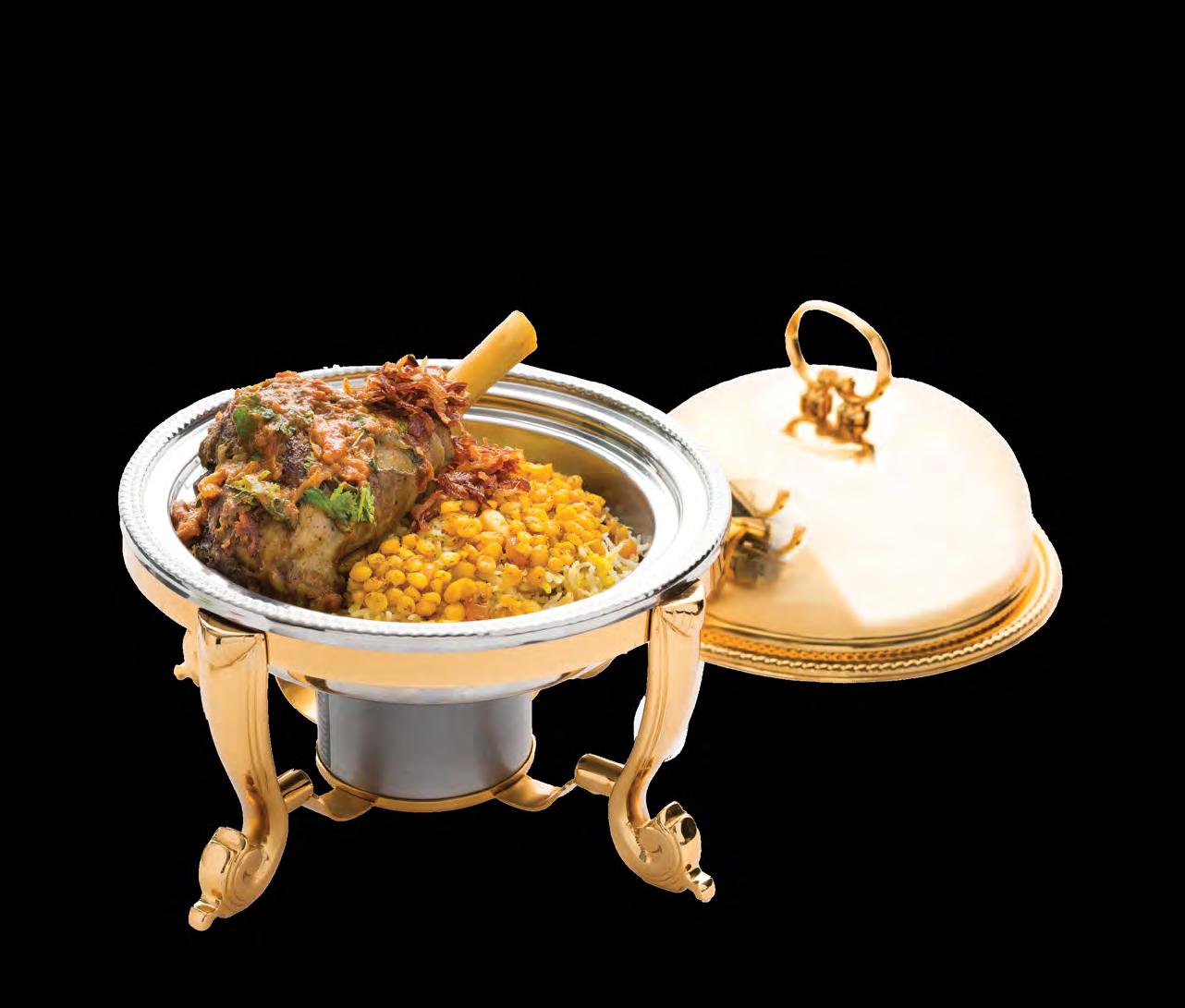
From intimate moments to world-class events, every experience is thoughtfully crafted to leave a lasting impression.
dwtchospitality.com 800DWTC (3982)
Chef Tarryn-Leigh Green describes how collective action and empathy have brought the UAE’s culinary professionals closer
There is something powerful that happens when people come together, not out of convenience, but out of necessity, out of care, and out of a shared belief that we are stronger together. Over the past two months, we have seen this unfold across the UAE in a way that feels both humbling and deeply inspiring.
At a national level, the leadership of the UAE Government has been nothing short of exceptional. In a time when uncertainty could have easily taken hold, they asked for trust, patience, and unity. And as a community, we responded. Not perfectly, not without moments of concern, but with a collective commitment to stand together and uphold the values that make this country so unique.
What has been achieved in such a short space of time is remarkable. There is a quiet confidence that now runs through our cities, something you can feel as you move through your daily life. Walk through any neighbourhood, drive down any main road, and you will see it, flags raised high, not just as symbols, but as statements of pride, resilience, and belief. Whether Emirati or expat, there is a shared sense of belonging that has been strengthened through this experience.
For me, what has stood out just as strongly is what has happened within our more personal, more specialised communities. These are the spaces where the impact is felt most directly, where challenges are not just observed but lived. And yet, these are also the spaces where the response has been the most human.

Attending last month’s gathering with the Emirates Culinary Guild was a moment I will not forget. As President Andy described it, it was inspiring, and I could not agree more. But beyond that, it was deeply heartwarming. Here was a room filled with individuals, each carrying their own pressures and uncertainties, some facing far greater challenges than others, and yet there was no sense of isolation. There was connection, there was support, there was a willingness to show up for one another.
That is what community truly means. Not just celebrating together when things are easy, but standing shoulder to shoulder when they are not. It is in these moments that the true strength of a community is revealed.
We find ourselves once again navigating a challenging period, and it would be easy to feel overwhelmed. But if the
In uncertainty, trust and patience become our greatest strengths
past weeks have shown us anything, it is this. The UAE has an incredible ability to adapt, to protect, and to rise. And our industries, particularly hospitality and food and beverage, have always been built on resilience, creativity, and an unwavering commitment to people.
This will pass. It always does.
And when it does, it will move quickly. Opportunities will return, momentum will build, and those who are ready will be the ones who thrive. So my message is simple. Be brave, be patient, and be kind, both to yourself and to those around you. Do what you can, when you can. Support where you are able. Ask for help when you need it.
Because this is not just about getting through. It is about how we choose to show up while we do.
If we continue to lead with trust, empathy, and a genuine commitment to one another, we will not only come out the other side but also come out stronger, more connected, and more grounded in what truly matters.
And that is something worth holding onto. ■
Chef Helen Morris on delayed moves, GCC uncertainty, and eating her way through it
Following on from my last article, I shared plans for a big move back to the UAE, preparing to say goodbye to Qatar, a place I have grown deeply fond of. Life felt full in the simplest, most meaningful ways, sitting along the Doha Corniche, watching the world drift by, then heading home to a comforting meal (Butter chicken at that time) and the quiet realization that life, in that moment, was genuinely good, and I am very fortunate.
Then, as we have all experienced, everything shifted suddenly and unexpectedly. In a matter of hours, the situation across the GCC changed, bringing uncertainty that many of us had not anticipated. While daily life in Qatar, the UAE, and the rest of the GCC continued with a sense of safety and stability, there were undeniable changes beneath the surface.
Explaining this reality to family and friends abroad was not easy. Their concern was completely understandable, yet it was difficult to convey that leaving immediately did not feel necessary or even possible given airspace restrictions
Finding comfort in food when life shifts
at the time. Many of us shared that same tension, balancing the emotions of the moment with the reassurance of being in places that continued to look after us.
This is not the space to unpack the full complexity of those events, but it feels important to acknowledge their impact, especially during this period of ceasefire. The hospitality industry, in particular, has once again felt the ripple effects. We have seen it before during the pandemic: changes to employment, uncertainty around roles, and the very real human impact behind those shifts, and what the future may look like.
And yet, there is something important to hold onto. The word resilience may feel overused, especially after the past
few years, but in this case, it still rings true. The GCC has shown time and again an ability to adapt, support, and move forward. It is part of what makes so many of us consider these places home. The lifestyle, the opportunities, and the sense of security create a deep loyalty and a belief that, even in challenging moments, these countries will emerge stronger.
On a personal note, the recent changes have delayed my move into an exciting new role in the UAE. I am now set to begin in the coming weeks, albeit remotely for the time being. It is not quite how I imagined starting this next chapter or how I would leave Qatar, and I do miss the energy of being present with a team, because that is where the real
magic happens. Still, there is a sense of anticipation and appreciation in being able to move forward, even if the path looks a little different from what was expected.
So, here I am back in the UK for a few weeks, and naturally, my priorities have shifted, eating my way through it.
The UK is currently experiencing a full-blown creative renaissance, with paint splattered here, pottery wheels spinning there, and glass delicately blown or etched into something I would absolutely knock over. So, in the spirit of cultural enrichment, I signed up for a Sunday afternoon session of Paint ‘n’ Sip. Let us just say my artistic style leans more to abstract confusion than a gallery-ready masterpiece. But like any good amuse-bouche, it was merely a prelude to the main event - The Food!
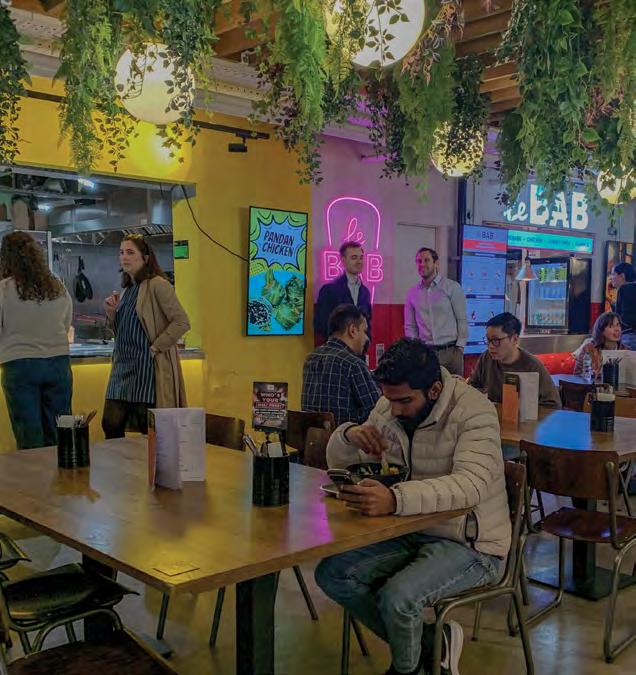
Post-painting, we made our way to the Produce Hall in Stockport, a 160+ year-old building that has lived many lives from a fish market, meat market, cheese haven, sweet shop, and even a library. Now, it has been beautifully reimagined into a vibrant food hall, serving up a tasting menu of independent vendors. Think of it as a curated dégustation of global street food, all under one historic roof, with a strong side of community spirit.
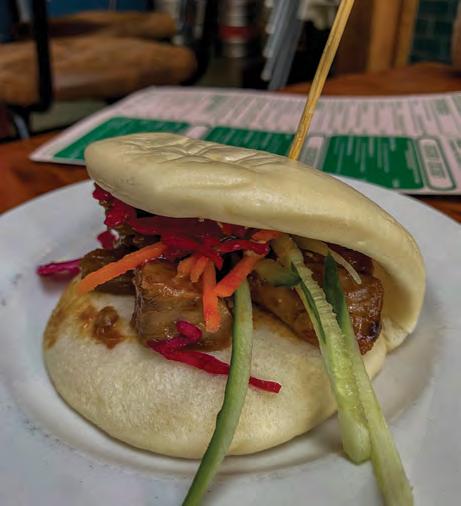
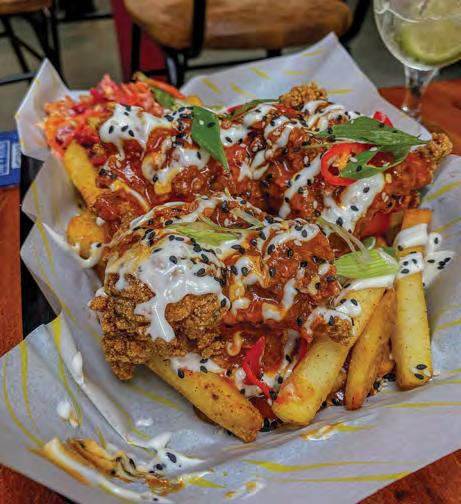
Now, let us get to the good stuff, what hit the table. First up, duck bao buns. Pillowy, cloud-like buns (a masterclass in fermentation and steaming) hugging rich, succulent duck that practically melted on contact. A perfect balance of texture and flavor, honestly, I had happily signed a long-term lease with that dish.
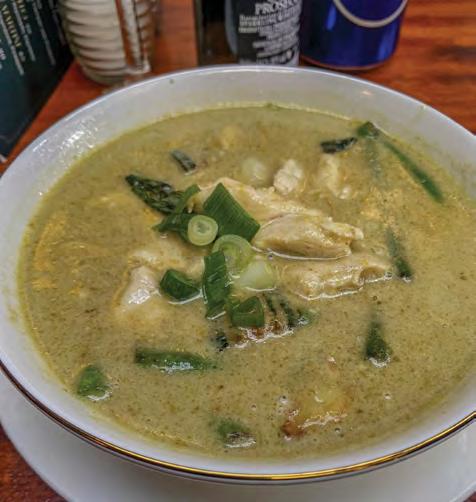
Then came the Thai curry, my culinary soulmate. Thai cuisine, for me, is all about that delicate equilibrium, fragrant aromatics, layered spice, and a sauce so luscious it should come with a warning label. This one was delivered. Not the kind of heat that knocks you sideways, but the slow, lingering warmth that gently reminds you it is still there hours later. A beautifully executed flavor profile
Even in uncertainty, we hold onto the belief that better days are quietly taking shape
that I genuinely considered ordering a second portion ‘for later’, which we all know never actually means later.
Now, across the table, there is a salt bag for chicken and fries. Not typically my goto, but I respect the craft. Crispy-coated chicken and fries tossed with spices in a brown paper bag, essentially a DIY seasoning distribution system. Shake, toss, enjoy. There is something quite theatrical about it. I tried it, but this would not be my choice; the recipient of this chosen dish devoured it in a millisecond.
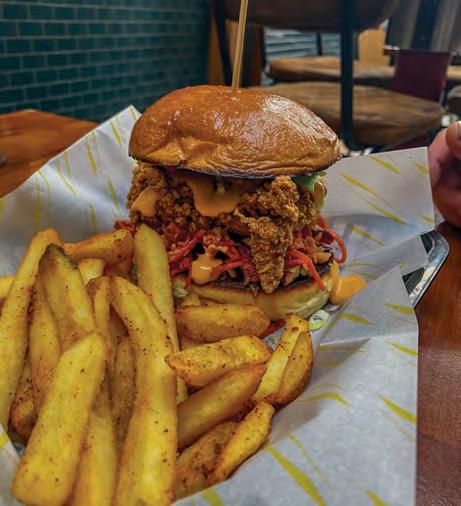
Then we move into burger territory, a mighty buttermilk chicken burger,
alongside a BBQ and garlic variation from the same vendor. Burgers are not usually my headliner, but this one clearly stole the show in looks. Reports from the field (there was definitely no offer for a small taste here!) confirmed crispy, juicy chicken, well-balanced saucing, and a structural integrity that held up under pressure (no small feat for a loaded burger). Also, judging by the eater's silence, it is always a good sign.
Not to be outdone, two plates of deep-fried halloumi with tzatziki. Now, I usually team grilled halloumi, give me those charred edges, but this version held its own. The real star, however, was the tzatziki, properly seasoned, herbaceous, and thankfully not the watery afterthought it so often becomes. A refreshing counterpoint to the richness of the cheese.
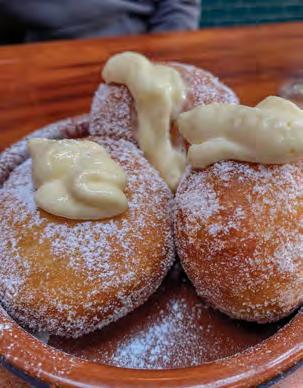
However, I have a small critique for the Produce Hall - where are the sweet treats? Every good meal deserves a sweet finale. The only option on offer was Bomboloni from the pizza stand, but thankfully, they delivered. Light, airy dough, generously filled with silky pastry
cream, and dangerously moreish. The kind of dessert where you say, ‘just one’ and immediately regret that limitation.
Five people, five completely different cravings, and every one of them is satisfied. That is the beauty of a food hall, a culinary orchestra where everyone gets to choose their own instrument. At peak times, the place is buzzing and borderline impossible to move around in, but that is exactly the point. It feels alive, exactly as a community space should.
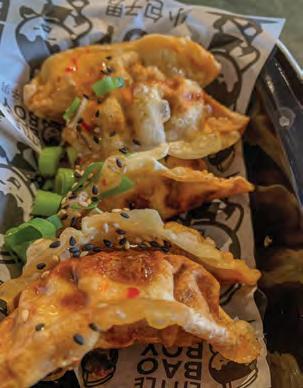
Next stop, London. A flying visit, a tight schedule, and of course a strategic lunch stop on Bond Street. And yes, I found myself in yet another food hall. At this point, it is less coincidence and more personal branding. With an overwhelming choice of vendors, I made a beeline (unsurprisingly) for a special meat bao bun. Clearly, I have a type of duck gyoza. Order placed, buzzer in hand (the modernday dinner bell), I settled in for some premium people-watching. Food halls are fascinating examples of business lunches, friend catchups, solo diners, and many more, all coexisting in a shared culinary ecosystem. The buzzer goes, always slightly aggressive, and off I go.
The bao bun? Not quite as on par as its Stockport counterpart, slightly denser, the filling is a touch on the dry side, but still packs good flavor. The gyoza, deepfried to golden perfection, was enjoyable, though the honey chili sauce leaned a
bit too heavily on the sweet side, tipping the balance just a fraction off center. One minor nag, the music. For a midweek lunch, it was less background ambiance and more accidental nightclub. But, impressively, no one seemed fazed, proof that good food and good company can override almost anything (within reason).
There is something undeniably special about these food hall spaces, whether housed in centuries-old buildings or sleek industrial settings. They bring people together through a shared love of food and social interactions, offering both variety and informality. It is dining without the pressure, but with all the flavor. And people watching galore.
Next time, I will be diving into the
humble sandwich, yes, really. Inspired by a recommendation in Marylebone, I may have found something worth writing home about. Prepare yourselves, this could get emotional. We Brits love a humble sandwich.
And as for me, I am hoping to be back in the UAE soon, ready to explore what has changed over the past couple of years and, more importantly, to taste my way through it all once again. For now, my diet starts next week... oh wait, I have four food outings planned, maybe the following week then.
Until next time, keep your plates full, your curiosity hungry, and never underestimate the power of a really good meal to turn any day around. ■
From bioplastics in Oslo to AI-processed powders in San Francisco, seaweed is becoming the ocean’s most consequential wager. Marine Biologics' Sally Aaron calls it one of the most underutilized ingredients, and their high-performance seaweed powder backs that up
By Shreya Asopa
Seaweed is the new face of the Blue Revolution. As we move through 2026, seaweed has officially transitioned from a niche superfood or a brittle garnish in Japanese cuisine into a multi-billiondollar functional juggernaut.
Buoyed by a global commercial seaweed market projected to crest at USD 15.40 billion by 2035 and an urgent global need for carbon sequestration, a wave of startups is tapping into the ocean’s latent potential.
The 2026 culinary landscape is witnessing what the James Beard Foundation calls "Souped-Up Seaweed". High-end kitchens are moving beyond the pedestrian use of nori sheets. The culinary cognoscenti are exploring the bitterness and depth that seaweed adds to concentrated stocks and even desserts.
Acclaimed chefs are leaning into the idiosyncratic character of individual species. Dulse is being used as a finishing spice to provide a savory, briny sparkle to raw preparations like crudo. The world’s first Kelp burger by AKUA is dubbed a carbon-negative burger and has gained a huge following for its umami taste and ethical vision. Sea grapes, the green caviar, are celebrated for their crunchy, succulent texture, appearing in everything from salads to sushi.
The clearest sign that seaweed has matured beyond its niche is the breadth of sectors it now occupies. In Oslo,
B'ZEOS began with an edible seaweed straw and has since pivoted to flexible, eco-friendly packaging derived from seaweed biomass, backed by the PlastiSea EU Grant. Seaweed, with its natural film-forming properties, is increasingly being considered by multiple companies as a credible solution to replace plastic. The textile dye industry is one of the most chemically polluting on the planet, and SeaDyes, which recently secured £200,000 through Scottish Enterprise's High Growth Spinout Program, is developing seaweed-based dyes that could fundamentally shift that equation.
Meanwhile, Seacork Studio is crafting acoustic panels from seaweed, and Miha Biotech is creating innovative bandages from seaweed extract that help burns heal without scarring. Even the energy sector has skin in the game. Seaweed biomass is a compelling alternative feedstock, and researchers
are developing biotechnology to convert it, including hydrothermal liquefaction processes that have already demonstrated proof of concept for seaweed-derived biofuel.
On the ingredients side, innovative companies like SeaWith in South Korea are harnessing seaweed-based biotechnology to craft cultivated beef. Ingredients such as Agar-Agar and Carrageenan (made from red seaweed), already staples in making gels, jellies, and thickeners, are inspiring a wave of innovators eager to follow suit.
At San Francisco’s Future Food-Tech event this past March, a small booth drew onlookers jostling for the chance to sample what appeared to be a frappuccino-style beverage. It was, in fact, a drink made from a sensory-neutral powder derived from brown seaweed, a proprietary ingredient called SeaTex, processed through an AI engine of Marine Biologics’ own devising, MacroLink. The ordinary-looking cup, it turned out, contained an extraordinary proposition.
“Seaweeds grow in the ocean and have a different composition from terrestrial plant life because the conditions in which they grow are so different. We take advantage of that unique composition of seaweed. SeaTex is a complex mix of polysaccharides, proteins, and minerals in a single ingredient. The combination of the compounds in SeaTex is what enables a unique, clean label approach to protein stabilization in high-protein beverages,” says Sally Aaron, COO at Marine Biologics.
That molecular complexity, rather than being refined away, is exactly what Marine Biologics preserves. The patent-pending powder is engineered to help brands remove the typical gums and buffers used to stabilize proteins. “SeaTex works through mechanisms simultaneously. Its carbohydrate fraction builds viscosity and a physical suspension network, its protein component provides surface activity that stabilizes individual particles, and its mineral content contributes natural buffering capacity and ionic interactions that favor stability. It is the combination of these fractions working together that gives you the performance,” adds Aaron.
For the professional kitchen, the perennial nemesis has long been the sensory after-effect of traditional hydrocolloids. Gums such as guar and gellan may be serviceable for suspending proteins, but they leave behind a slimy film on the palate that chefs, with considerable disdain, have come to deride as industrial.“Xanthan and gellan create a rigid, linear gel structure that coats the mouth and lingers. SeaTex's brown algae polysaccharides build body and suspension without the elastic snap-back or slimy film,” explains Aaron. “On palate release, SeaTex clears cleanly. It breaks down as you swallow and doesn't coat your mouth the way xanthan does. You can describe it as "silky" rather than "gummy." The texture feels more natural than a typical refined hydrocolloid system.”
The competitive case against established commodity ingredients is equally pointed. Corn starch, by comparison, requires chemical treatment to achieve
REFERENCE:
May 2026 Gulf Gourmet

Seaweed is rapidly transforming from niche ingredient into a powerful global industry
comparable functionality, which is the kind of processing asterisk that cleanlabel buyers are no longer willing to accept. "SeaTex is a functional texturizer and, from this standpoint, does not compete with soy but rather enables soybased food formulation. Corn starches mainly provide viscosity. In order to provide comparable functionality to SeaTex, starches have to go through chemical modification, which does not imply a clean label,"notes Aaron.
Performance and clean-label credentials, however, are only half the equation. The other half is consistency. Seaweed's biochemical composition shifts with the seasons and varies by geography, making it historically unreliable as an industrial input. This is where MacroLink comes into play. Marine Biologics' proprietary AI engine is purpose-built for ingredient design, predicting how
a given seaweed input will perform as a functional ingredient, compressing clean-label ingredient discovery from years to months."We understand the product parameters that drive our unique functional performance. Our sourcing requirements ensure proper alignment with composition to deliver our unique functionality," says Aaron.
In the professional kitchen, that consistency translates directly into confidence. Sally explains that SeaTex excels in high-heat processing, implementing UHT or retort pasteurization, and achieving good performance in bakery, dairy, soups, and sauces.“SeaTex is sensory neutral when used. It is stable over a pH range of 3.5 to 10. It is particularly well-suited for plant-based and vegan menus that require an alternative for fat and lipid binding and structuring,” adds Aaron.
What is unfolding across the seaweed sector is a structural realignment and belated acknowledgment that the ocean has been offering solutions that the food and materials industries have spent decades and billions trying to manufacture from scratch. The companies profiled here represent only a fraction of the activity now concentrated around a single marine organism. Chefs are building menus around its flavor. Engineers are building supply chains around its chemistry. Investors are building portfolios around its potential. And underneath all of it, in the cold, nutrient-rich waters where it has always grown, seaweed remains what it has always been, abundant, regenerative, and indifferent to the clamor being made about it above the surface. ■
> Future Market Insights, Commercial Seaweed Market Size, Share & Growth 2025 to 2035; (https://www.futuremarketinsights.com/reports/commercial-seaweed-market)
> James Beard Foundation "Souped-Up Seaweed" James Beard Foundation, Top Restaurant Food Trends for 2026, January 9, 2026; https://www.jamesbeard.org/stories/toprestaurant-food-trends-2026
> AKUA Kelp Burger, world's first, carbon-negative EcoWatch, Tasty, Carbon-Negative Kelp Burgers Are 'Everything That's Right With the Food System'; https://www.ecowatch. com/akua-kelp-burgers.html
> B'ZEOS, seaweed packaging B'ZEOS, B'ZEOS Origin Story & Founders, December 18, 2023; https://www.bzeos.com/post/b-zeos-origin-story-founders
> SeaDyes £200,000 funding, Scottish Enterprise The James Hutton Institute, March 14, 2026; https://www.hutton.ac.uk/seadyes-enters-company-creation-phase-ofhigh-growth-spinout-programme
> Seacork Studio, acoustic panels from seaweed Seacork Studio official website https://www.seacorkstudio.com
> Miha Biotech,seaweed-based wound bandages F6S Company Profile https://www.f6s.com/company/mihabiotech; https://www.mihabiotech.com
> SeaWith,seaweed-based cultivated beef, South Korea Green Queen, South Korea's SeaWith to Cut Lab-Grown Meat Costs by 30% with New Supply Deal; https://www. greenqueen.com.hk/south-korea-seawith-lab-grown-meat-cultivated-beef-cost-3d-bio-tissues
I believe in fusion only when the cultures and cuisines being merged are fully respected
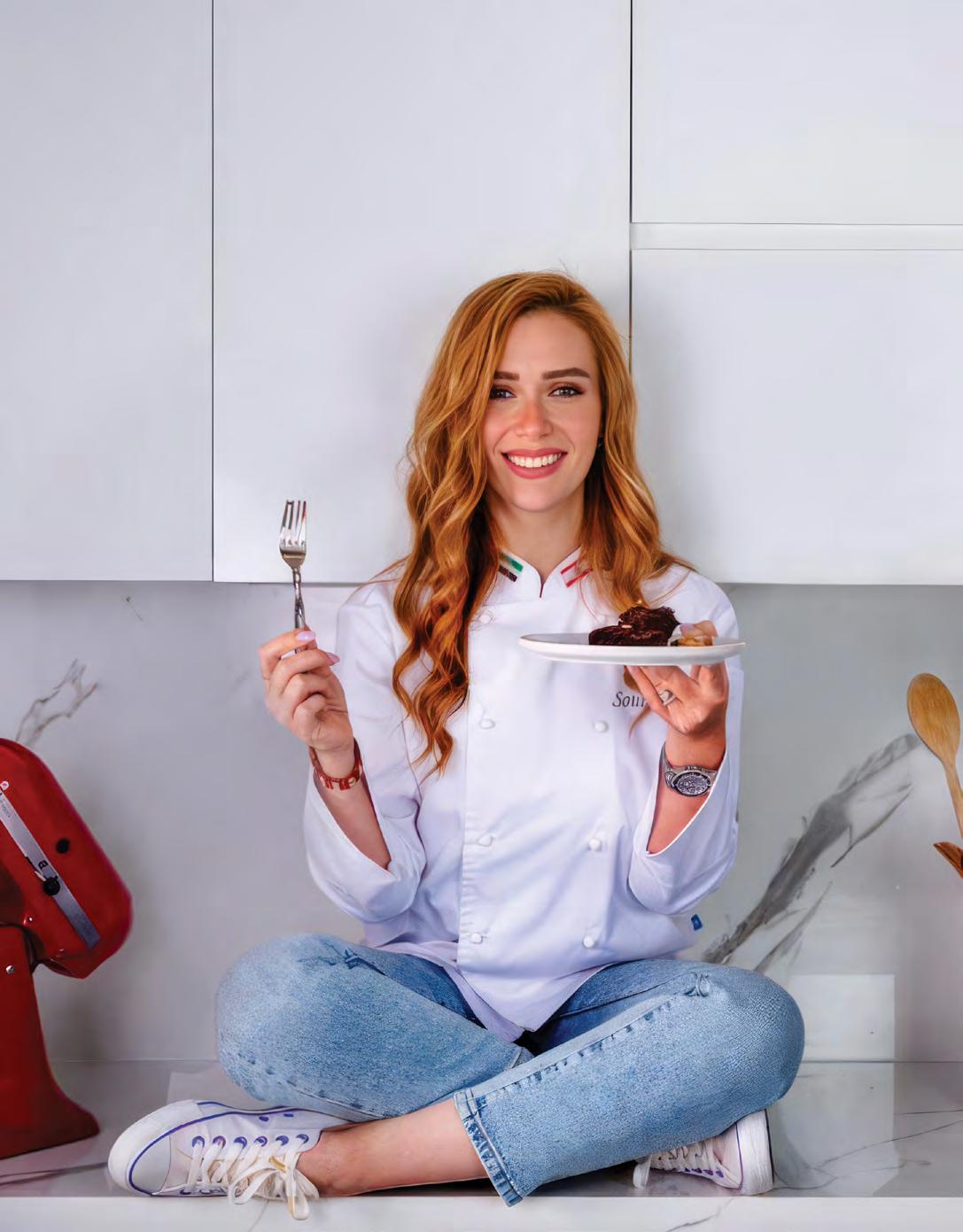

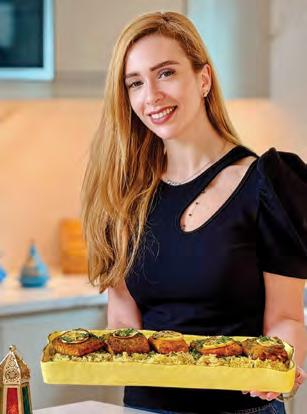
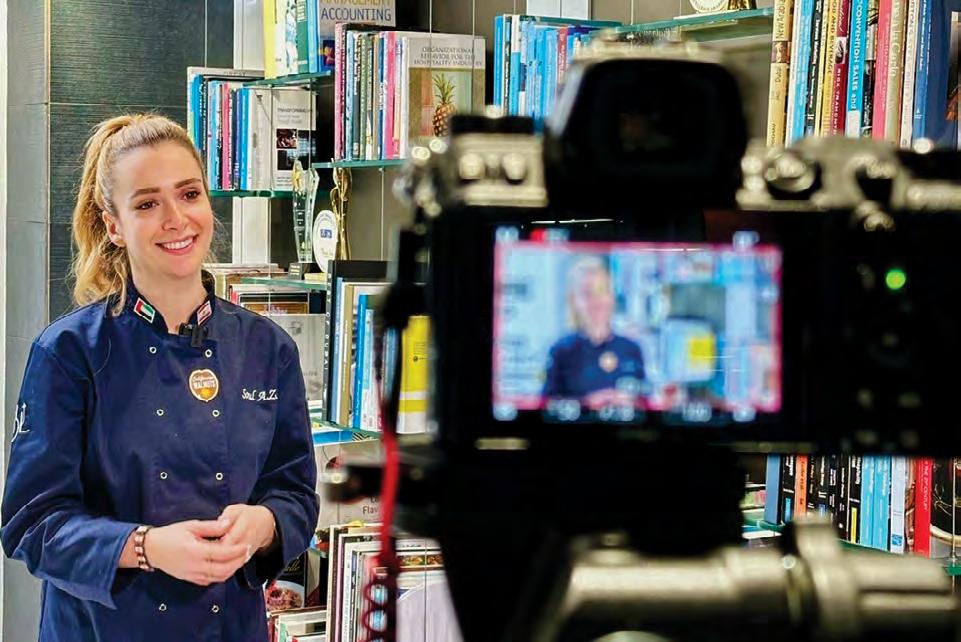
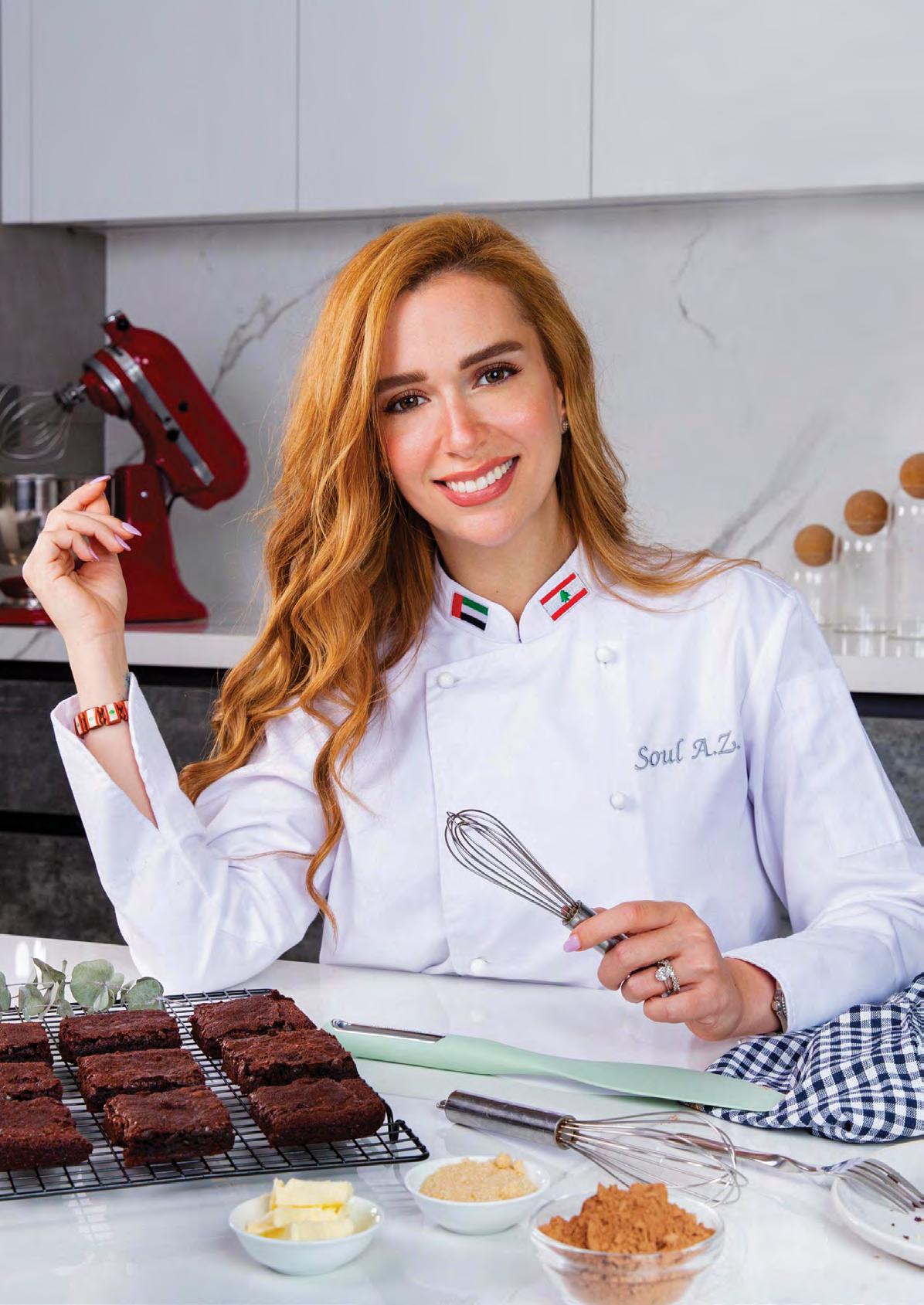
Most people who study criminology learn to read a scene. Chef Soul AbouZahr reads a menu. She perfected brownies, captivated audiences on several television series, and built one of the Gulf's most distinctive culinary identities. Meet the chef who is breaking barriers
"Find something you are passionate about and keep tremendously interested in it." Julia Child lived by those words. So does Chef Soul AbouZahr. Ask her who she would share one meal with in culinary history, and she laughs before the question is finished. "Oh my god, that is very tough," she says. She leads with her heart before her head; the name arrived before the thinking was done. "Julia Child. I cannot think of anyone else who would make my heart race if I were sitting with her at the table," says Chef Soul. For her, Child is more than a culinary icon. Her books were among the first her father gave her. The first female celebrity chef. The first woman with her own television show. A chef in whom she sees something of herself.
Chef Soul came on the culinary radar not with a single viral moment, but with years of compounding work. Catering, brownies, teaching, and filming. Until one day, the sum of it was impossible to ignore.
The origin story, however, is not what you would expect. She grew up in a family that loved food. But loving food and supporting a daughter who wanted to cook professionally were two very different things. When she first said she wanted to be a chef, nobody took it seriously. At the time, no one imagined
You can keep the criminology degree. This culinary one is mine, and it defines me
how prescient those words would turn out to be. She did not let it go. Through high school, she remained adamant, and it was only then that her parents realized she was serious. Their response was to steer her in another direction, and by her own admission, it worked. "I ended up completing a bachelor's degree in Psychology from the American University of Beirut, followed by a master's in criminology and forensics in the UK," she recalls.
Exhibit A: Culinary Degree
An honest-to-a-fault woman who would eventually build a career on transparency and identity, she was, unwittingly or not, already becoming herself. Criminology by day. Studying for culinary school on weekends.
As they say, you do not love because you love despite. She knew, even then,
that the culinary world she was stepping into would not be easy, particularly back home in Lebanon. Bold and unapologetic in hindsight, it was at the time anything but.
"I remember walking into my father's office, fresh from graduating with my master's degree. I handed him the certificate, the one he knew about, and then produced another. You can keep the criminology one. This culinary one is mine."
Looking back now, she holds no bitterness. Her parents, she says, are among her biggest supporters today. They watch her TV shows, attend her events, and show up for every competition. The resistance of those early years, couched as it was in the rhetoric of the importance of stability of what a young woman was supposed to become, was never about doubt. It was about love.
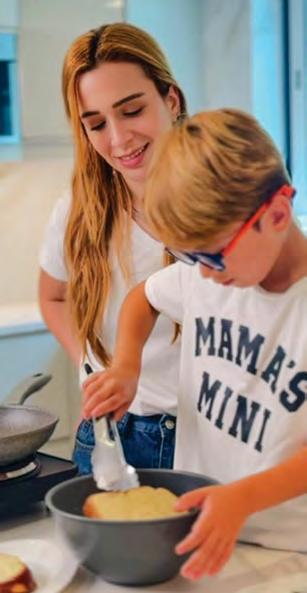
"I am a mom now, so I kind of understand it. My son is six years old, already writing his own recipes and replicating my recipes. He was five when he wrote his first recipe, and the dish turned out to be delicious.”
Born in Lebanon, she had an upbringing anything but ordinary. The real education happened on the road with her father, a lawyer who traveled extensively for work. "Those trips made me experience different cuisines. My father loved food and always insisted on trying everything. Unusual ingredients, unfamiliar textures, flavors from cultures I could not yet name. I would go back home with those memories and try to replicate those dishes with a Lebanese touch to it."
Though she holds both Lebanese and Canadian nationalities, she makes no mistake about where her soul is rooted.
Underlining that, her food will always carry a Lebanese note. Mediterranean cuisine, Spanish, or Italian, there will always be something distinctly hers, that Lebanese touch, running through it.

Find something you are passionate about and stay deeply, consistently interested in it
And that brings up the word that gets thrown around a lot in food circles. Fusion.
"I do not ruin a cuisine just to call it a fusion or a twist. I believe in fusions only if both cultures, or whatever cuisines you are merging, are respected fully."
What bothers her is not fusion itself. It is what social media has done to it. The chasing of shock value. "People think that the more jarring the ingredients are, the more it means it is going to get them views. But the result is actually slaughtering both cuisines." She points to tahini and chocolate as an example of a fusion done right, two things nobody saw coming that somehow make complete sense together. But chocolate and fresh coriander or cilantro? She shakes her head. Some things, no amount of creativity can save.
Soul in Her Cooking
The premise of her ventures has always been to turn simple ingredients into
something unforgettable. Soul Brownies takes its memo of being feel-good very seriously. Not trendy, not aesthetic, not algorithm-friendly. Just genuinely, consistently good. The way her grandmother's kitchen always was.
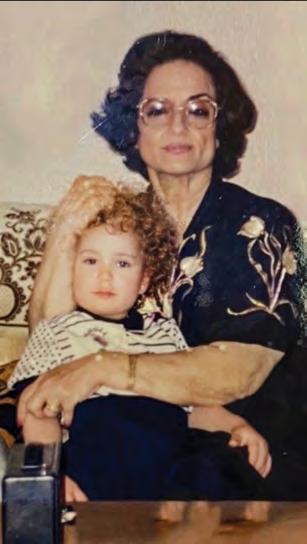
“My maternal grandmother had her specialty chocolate cake for birthdays, events, and all the special times we spent together. Now I know they were brownies, but she did not. Brownies were not famous back then. She called it fudgy chocolate cake. Gooey chocolate cake. Over time, I knew the recipe by heart. I did not need the book anymore,” she shares.
By 12, she was selling them at school bake sales. Taking orders for birthday parties, fundraising, and anniversaries. Things turned when she got married and relocated to Jeddah, where she started her home business, selling brownies and teaching food from home. "So I did what came naturally, which was making brownies. I printed a logo from Google. Put it on A4 paper. Sold from home in boxes. And people came back for more," she smiles. Dubai came later, and with it, the formal steps to make it the brownies official.
When it was time to register her business, the name came from the people. "I remember thinking, people have me saved on their phones as Soul Brownies. They do not know my name. Just the Soul Brownie Lady. Then it became just Soul."
The fruit of the matter, as it turns out, was never an empire. It was a grandmother's cake. Everything else simply followed.
Building arguably one of the most impressive careers in her field did not come without its obstacles."I wanted to be a chef. I wanted the title. I never thought about what would come with it. It was the belief of becoming a good chef."
Her success as a female chef in a maledominated industry, she explains, was
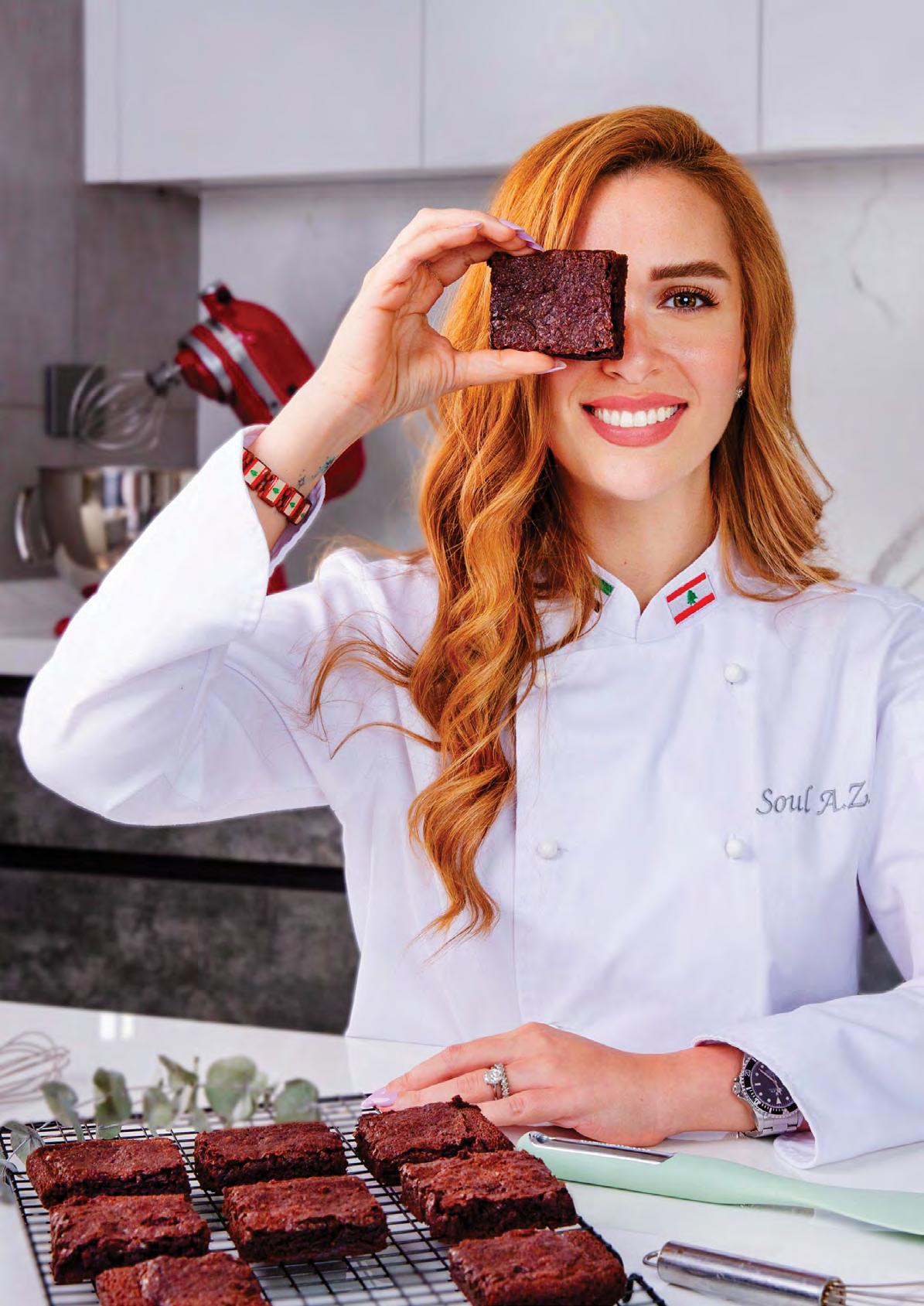
I wanted to be a chef. I wanted the title. I never thought about what would come with it. It was the belief of becoming a good chef
built in large part on the support of men, her husband, her father, and her brother, equally. The TV show came through a male friend. So did many of the events, the opportunities, the invitations to simply come and learn.
"Of course, my mom has supported me since day one. But when I entered the field, I was attacked in a different way. Female peers who read my arrival as a threat. Some women were jealous. ‘Why me, not her?’ Male gatekeepers who wanted to know who she thought she was.”
She acknowledges the schadenfreude. The suspicion, the sideways looks, the whispered questions, and spending considerable energy explaining herself before finding her footing.
Despite its prickly situations, the industry also offers mutual support, she observes. Here at the Guild, she sees Chef Tarryn, Chef Andy, Chef Andrea,
and male or female guild members all supporting each other. She advocates for women to be allowed in the field, to receive equal pay, and to be respected during their periods or pregnancy.
In a rambunctious world of algorithms and artificial identities, she cuts straight to it. "Today, everybody goes on Instagram, they see your portfolio, they want to see who you are and who you have worked with besides going through your resume."
I’m not building a social media brand—I’m building a personal identity rooted in authenticity
"I am not all in for a social media brand. I am all in for having a personal brand and identity."
Not a bevy of fawning admirers she is after. What she vouches for is real skill and real recognition.
With social media, she says, there is a lot of unfairness. You might be better than someone, but you don't get the algorithm right. "If you are successful on social media, it does not mean you
The resistance I faced early on wasn’t doubt—it was love, expressed through fear and protection
are successful in real life. There is more to everybody."
With her warmth and bravado, her brand identity has become a parable for authenticity.
She has made a kind of peace with it, though not the resigned kind. Being successful on social media does not mean being successful in real life. "The recipes I post are 10 percent of my knowledge. I cannot show you all my skills on a reel. And I am not waiting for you to rate me. There is a very big difference between real and reel."
Her family has been her greatest support. Her parents, brother, and his family, and husband are her backbone. A small unit, she says, in every win, every loss.
Her mother, in her own words, is her recipe generator. The mother who once looked at her and said you are so beautiful, you should not be in the kitchen, now fires off links and ideas by text.
"She is my personal ChatGPT."
Her husband is a lawyer, as are her father and brother. A clan of lawyers, she says, and she is the lone chef among them. Someone had to break the pattern.
Except her husband is not entirely outside the kitchen. He competed in a world food championship for burgers. Made the top three. "He is really good on the grill. Really good with meat. Really good with barbecuing. He is just not a chef." She pauses just long enough to make the distinction count. "At home, he handles the barbecue, and I handle the flavors."
Her husband, she says, is not just a kitchen supporter. If she needs to travel for work, he takes time off. No negotiation, no resentment. Just go.
"It is a blessing to have someone like him."

Be kind, be genuine, and push through— people will talk, but that should never stop you
An intergenerational script she did not know she had inherited. Her grandmother's recipe, then hers. And now a six-year-old boy, already convinced of his own celebrity, already in the kitchen, already writing his recipes.
"My husband always said there were two of us, my father and I, who were exactly alike. Now he says there are three, because my son is turning out just the same. Which means he is surrounded by all three of us. Three generations,” she laughs. She says it like a woman who has won something. She has.
Ask her about the future, and she answers the easier question first. What it will never be. A restaurant? Never, she says firmly. Everything else? That is now up in the air, and the first takeaway is that she is entirely comfortable with that uncertainty.
She has consulted enough restaurants, built menus, and watched good concepts fold within six months to know what the business actually costs. "It breaks my heart, especially when it happens to be a good concept. Imagine if it were mine. My money. My life." She is also, she says plainly, not ready to leave her son for the hours a restaurant demands. Not yet. So for now, she is going with the flow, working out what comes next.
And what has come is Kitchen Tales, airing on Fatafeat, a food network channel running under Discovery and OSN.
"This year marks its 20th anniversary," she says. She cannot help but chuckle at the irony of fate. "When I was a kid, this channel aired for one year as a trial, and I was obsessed with all the recipes and the chefs. A year later, it was shut down. So I literally begged my father to buy the channel so I could cook every episode for free to save it. Fast forward, and one day the channel called me for an interview, and I was completely surprised." She shares it with jubilation, the full circle of it still not entirely believable to her.
She Googled what to expect. Prepared for questions. Showed up with her hair and makeup done, ready for a television interview. They opened the fridge and told her to make something.
"I was sweating. I did not know what to do. Then the director told me to forget the cameras, forget the microphone, and cook as I do in my own kitchen. That was it."
The show opened doors she had not planned for. Last May, it brought her to a Guinness World Record. Six chefs, the world's longest cheese platter, and her name in the record books.
No doubt, because she works from the heart, she does not follow recipes. All the inspiration, she says, comes from three very specific places.
"The first is in bed, right before I close my
eyes, and I am ready to sleep. Crazy ideas come up. Sometimes I write them down, sometimes I just wake up in the morning and elaborate on the recipe. The second is having my coffee in the car on the way to work. That is the time when all the recipes, all the speeches, everything in my life comes together. And then finally the shower, because it has to be peaceful moments without anyone saying "mama, mama, mama, mama." She laughs. We all know that feeling.
She pulls from restaurants too, sitting across a dish she enjoys, quietly reverseengineering it, already thinking about what she would change. Social media. Other recipes. Anything that gives her something to push against.
“Everything lives in my head,” she says, pointing towards it. “Which means the chocolate cake recipe I give you today will be different from the one I give you tomorrow, because by tomorrow, I may decide to add cardamom.
"My food is always going to be different."
She is set to wrest her own space in the culinary world entirely on her own terms. And that has, of course, happened with the support of the whole circle around her.
"There is the Guild, a community that champions the culinary industry and
PASS OR PLATE?
What started as my grandmother’s chocolate cake quietly grew into something much bigger than me
puts more importance on it. They feel that being a chef is a great achievement and not a punishment. The Women's Culinary Chapter was another great opportunity for me to shine and to have a nicer community of friends around me."
Before she goes, she turns to whoever might be watching, reading, or deciding whether to step into the culinary world. "Be kind. Be genuine. Push through. People are going to say bad things about you. But when you are supported and you are kind, you will get places."
She pauses, thinking of these lessons. Then simply says.
"I am living my cooking dream,” she concludes. And as she says it, you believe her completely. The television
shows, the record books, the brownies that built a brand, all of it fades for a moment when her eyes light up talking about what she might add to tomorrow's recipe. That is the thing about Chef Soul AbouZahr. The best dish is always the next one. ■
They say if you are not facing obstacles, you are not on the right path. Right now, many of us are on the right path…
Afew weeks ago, I called a colleague for breakfast. He had just lost his job. The hotel closed. He received his final salary, and by the time it hit his account, the bank had already deducted the loan repayment. We sat for three and a half hours. I did not have the right words. I sat with him the way you sit with someone when words are not the point. And what kept surfacing was memory. The hours. The early mornings. The question of whether any of it had been worth it.
I did not know how to write this. But I think that is exactly why I had to try.
I graduated in 1981.
My first job was as a breakfast cook. Every morning, I left the house at 3 am. Arrive by 4:10. Set up the omelette station for 130 guests. My shift was supposed to end at 2 pm. I never left at 2.
I stayed to learn butchery and the cold kitchen. Not because anyone asked me to. Because I wanted to know. Later, in Switzerland, I used to finish my hot kitchen shift and walk downstairs to work with the butcher until eight at night. It was all because of my curiosity.
Then, back in 1989, I had applied for a job at Hilton Al Ain when I first met Chef Chang Cey Wien. When I interviewed for a sous chef position, the interviewer asked if I had any questions. I had two. First, I asked, ‘As sous chef, am I allowed to come to the kitchen at night to check on the night shift?’ He looked at me and said, ‘You've got the job.’ I said… wait, I have a second question. I am not strong in pastries. Can I be taught bread and bakery here,
We stayed not because we had to, but because we wanted to grow
even in my position? He said yes. They had five candidates, and they chose me.
At that time, I was not thinking about long hours or working beyond my shift. I was hungry to work on my skills. The old guard wore long hours like a badge of honor. Early in, late out. But that made us resilient enough to handle situations with huge volumes to cater to and limited manpower. We can adapt quickly. Now, younger cooks are calling it out, and honestly, they are not entirely wrong. I have heard it said plainly, “Why should I destroy myself the way you did, and then watch you still struggling at sixty?” That is a fair question.
But here is what I want to say. We worked those hours because we were hungry to learn. There was no YouTube, no sixty-second recipe, no online course. If you wanted to know how to break down a lamb, you found the butcher chef and stayed after your shift. That was the school.
And what those hours gave us was not a certificate. It was tolerance for difficult kitchens and harder days. It helped us with the knowledge that you have survived hard things before. And when the crunch came in the times of wars, COVID, now, that depth became the muscle we needed.
So here is what I am realizing. Sometimes now, some of us work longer hours so that our mates can rest. So that when they come back, there is a kitchen to come back to. That is not exploitation. That is empathy. That is a team choosing to carry each other.
The long hours are not an obligation. They are a choice, something you offer when you want to learn, or when someone needs you.
I hope the younger generation never has to take those two buses at 3 am to set up an omelet station. Technology has given you gifts we never had. Use them. But hold onto something no algorithm can replicate. Improvise and adapt. AI will optimize your schedules and predict your inventory. But it will not stand with you when your home is tested. It will not cover a shift, so a colleague can breathe or help you when you are laid off.
Let me be honest about what we are seeing. Colleagues leaving to the Philippines, to India, to Egypt because
The craft teaches you to keep going, even when things feel uncertain
they cannot stay anymore. Chefs I know personally are sitting at home, not knowing how to pay rent. (No tourism, no business, no money. End of the day. No income. We have to say that honestly before we say anything else.)
I am not writing this to be dramatic. I am writing this because if I pretend it is not happening, I become useless to the people it is happening to.
For those who are going through tough times, I will not give you philosophy and call it wisdom. During COVID, many of us experienced that phase. What got us through was the simple decision to keep showing up, even when showing up meant doing whatever it took to stay connected to the craft.
It is okay to fail. You will hear this on the internet too. If you are not failing at something, you are probably not trying to accomplish anything that matters. But the chefs who last, after wars, pandemics, and the devastation of an empty hotel, are the ones who stayed connected to their craft, their colleagues, and each other.
I want to end this with a note about the evening that stayed with me.
The Emirates Culinary Guild Monthly Meeting at DWTC on April 14th was what we all needed in these tough times. At a venue that has always been a crossroads of ideas, stories, and learning, we had the opportunity once again to share history, cross experiences, and remind ourselves that we are here for each other, to help, to advise, or just listen to someone’s heart as a community.
This is not the first time the Gulf has been challenged, and by the almighty’s grace, we will build ourselves again.
When I looked around the meeting room, I saw chefs who have called this country home for decades, and young cooks who arrived last year. Standing together with optimism that quenched all the apprehensions about the future. To Chef Alan, Chef Georg, and Chef Andy, thank you for your words that night, and for holding this community together. To my colleagues on leave, we are holding your place. To the UAE, guild
members, and supporters, thank you for your support. And to every young cook reading this, you do not have to suffer to earn your stripes. But sometimes staying a little longer, not because you have to but because someone needs you, is one of the most beautiful things a human being can do.
That is the legacy worth carrying. From my hands to yours.
- A chef who still remembers the 3 am buses. And would take them all over again. ■
Chef Monal Malhotra recalls the béarnaise sauce that changed everything and the mentor who taught him that almost-right is never good enough
When I moved from Delhi to Bombay (now known as Mumbai) a month after getting married, I had a carefully curated list of things I was worried about. Finding a place to live. Figuring out the local trains. Not looking completely lost in a city where everyone seemed to already know exactly where they were going, why they were going there, and probably also what they had have for dinner when they arrived.
As it turned out, I had worried about entirely the wrong things, which is a special talent of mine that I have managed to carry into adulthood.
My real problem was discovering, on the very first day, that I was significantly less good than I thought I was. Not slightly off. Not in need of minor calibration. I mean the kind of gap that makes you wonder if the version of yourself you had been carrying around in your head had been filed incorrectly from the beginning. That was my actual welcome to Bombay, and it was delivered not by the city but by a béarnaise sauce.
I had never been to Bombay before the move. Delhi was home in every real sense: I knew it, I understood it, it made sense to me, and it had the good manners to make sense back. Bombay was something else entirely. Loud, fast, and completely indifferent to the fact that I had just arrived, was newly married, and was doing my absolute best impression of someone who had everything sorted. Inside, the questions were considerably less calm: Where do
I live? How do the trains work? Why is everyone walking like they are already twenty minutes late for something that happened yesterday?
But the excitement was genuine, because I had landed a job at The Oberoi Towers, in their fine dining French restaurant, Café Royal. For a young chef, this was a very big deal indeed. The kind of place that could genuinely shape your career, or, as I found out fairly quickly, take one look at who you think you are, raise a quiet eyebrow, and suggest with some diplomacy that you might want to start again from the very beginning.
The kitchen was unlike anything I had worked in before. It had the particular quiet of a place that takes itself seriously, where the standards did not need to be explained or announced because they were simply there, in everything, in the air itself. Nothing slipped through unexamined. Not almost right, not nearly there, not good enough for now. Absolutely right, or not acceptable. Those were the only two items on the menu, and the kitchen had been running that way long before I arrived and had no plans to introduce a third option in my honour.
I knew within the first hour that this was going to be uncomfortable.
My first day was on the sauces section. The morning started with breakfast room service, which I navigated without any visible catastrophes, and I considered this a minor personal triumph of the sort that deserved at least a quiet internal
celebration. Then came setting up the station for lunch: four soups, seven sauces, the full spread. I moved through it all with the quiet confidence of a man who genuinely believed he knew what he was doing, which, I would shortly discover, is a very particular kind of confidence.
By 11:45, everything was arranged neatly in the bain-marie. I stepped back and surveyed the station. It looked good. Organised. Professional, even. I felt the specific calm satisfaction of someone who believes the situation has been thoroughly handled, which, as anyone who has ever felt that way knows, is usually the moment the situation prepares to introduce itself properly.
The sous chef, Chef Karve, arrived to check the station. He went through everything one by one, tasting and checking and saying very little, calm and methodical in the way someone is calm when they have done this a thousand times and have absolutely no intention of lowering the bar simply because a new person has arrived from Delhi with good intentions and a confidence that had not yet been stress-tested.
Then the containers started coming out, one by one, each one emptied with a short explanation and the same line at the end: “Do it again, Chef.” Five containers in total. Two soups, three sauces, all to be remade before lunch, which was not very far away at all.
Then he got to the béarnaise. I had genuinely believed it was fine. I had made béarnaise before, and béarnaise and I were, I thought, on reasonably good terms, the kind of professional relationship built on mutual respect and moderate success. Chef Karve looked at it for a moment and said, with complete composure, that it was “hot mayonnaise with some bits and pieces.”
If you have never had your cooking described quite like that in a professional kitchen, in front of colleagues you have known for less than a day, I can tell you that it is a formative experience. There was no shouting, no drama, no theatrical moment designed to make a point. Just a quiet, accurate description of what I had produced, and somehow that was considerably worse than any shouting could have been, because there was nothing to argue with, nothing to defend against, and nobody being unkind. They were simply not going to send that sauce out. The humiliation was total, efficient, and delivered at room temperature.
And that was how the Do It Again era of my life began.
Before the Answers Were Easy to Find These days, a young chef in a similar situation has options. Look it up, watch a video, find a forum, send a voice note to someone who will talk you through it in real time while you both pretend it is a casual conversation and not an emergency. Back in those days, there was none of that. No Google, no YouTube, no patient digital voice explaining in reassuring tones exactly where the emulsification had gone wrong and what you might try instead. Just the stove, and the expectation that you would keep going until you got it right, however long that took.
I would not pretend I handled it with grace. I felt embarrassed. I felt exposed. I felt like the gap between the chef I thought I was and the chef I actually was had just been measured publicly, and it was not a small gap. It was the
The internal compass is earned only by doing it again until it’s right
kind you could not argue your way around, and once you would see it, you will not forget it.
But Chef Karve was not doing any of it to make a point about me personally. He was not being unkind and he was not enjoying himself at my expense. He was simply maintaining the standard of the restaurant, a standard that had existed long before I arrived and was not going to shift because I had a stressful morning and could have done with a moment of encouragement. My job was to meet it, not my version of it, not my best effort under the circumstances, but the actual standard. That is a hard thing to accept when you are young because you feel very strongly that effort should count for something, that someone should at least acknowledge you tried really hard and were operating under pressure. Great kitchens are not especially moved by that argument. They want to know if the food is right.
What came next was just repetition. The same preparations, done again and again, corrected again and again, until they were right. It was not glamorous. Some days it was genuinely tedious in the way that all important things occasionally are. But it was the thing that actually built the chef in me, not theory, not enthusiasm, not the confidence I had arrived with, but the daily, unglamorous requirement to do it again until it was right.
And quietly, without me fully noticing, something shifted. The sauces started
coming out right the first time. The corrections got fewer. The judgement got sharper. What had felt like pressure started to feel like rhythm, and I was not just cooking to a standard anymore but starting to own it, to know before anyone tasted it whether it was right or not.
That is the thing no shortcut can give you. The internal compass, the one that tells you before the spoon reaches anyone’s mouth, only gets built one way: through repetition, correction, and the refusal to let almost-right be good enough.
About ten days in, during a mise en place check, Chef Karve went through everything methodically, looked at me, and said there was nothing to do again. No applause, no speech, no ceremony of any kind. Just the clean, quiet absence of a problem. And it was, without any exaggeration, one of the best moments of my entire career, because by then I understood exactly what it had taken to get there.
I also understood something else, which was that this experience was going to follow me everywhere I went: not as a bad memory, but as a standard, a voice in the back of my head for every kitchen I ever ran, every menu I ever built, every team I ever trained. Is it right? Or do we do it again? Those two questions, it turns out, are the foundation of everything worth doing properly.
I never again compromised on the quality of what went out of any kitchen I worked in. Not because someone was watching, not because I was afraid of getting caught, but because I had learned through that kitchen, through Chef Karve, through five overturned containers and one memorably insulted béarnaise, that the right way is the only way worth bothering with.
The best mentors I have had in my life rarely gave speeches. They just made me do it again, and again, and again, until getting it right stopped feeling like effort and became simply the only way I knew how to work. ■
Ihave spent much of my life in professional kitchens, and one thing I have learned very early is this. A kitchen always tells the truth. It tells the truth about standards, discipline, leadership, and skill. You can walk into a kitchen and quickly feel whether it is built on control and craft, or simply surviving service by service. That truth shows itself in the bench setup, the way food is handled, the team's calmness, the quality of prep, and the confidence behind the pass.
Today, when I walk into many kitchens, I see another truth becoming harder to ignore. More and more of the work is already done before it reaches the chef. Vegetables arrive pre-cut. Sauces or the basic stocks come pre-made. Proteins are pre-portioned. Pastries come par-baked and only need finishing. Entire parts of the old kitchen routine are now arriving in bags, boxes, and vacuum packs. In many operations, this is no longer the exception. It is becoming the norm.
I understand why. This is not a fantasy issue or an emotional complaint about the past. The industry is under pressure. Labour is harder to find. Wages are rising. Teams are less stable. Training takes time, and time costs money. Operators want speed, consistency, and fewer mistakes. In that kind of environment, convenience products look like a practical solution. In some cases, they are. They save time. They reduce prep pressure. They help service flow. They make output more predictable. I am not blind to those benefits, and I am not against convenience itself.
But the longer I stay in this industry, the more I feel we need to ask a harder question. At what point does convenience stop supporting the kitchen and start quietly weakening it?
That, to me, is where the real issue begins. I came up through kitchens where
standards were not negotiable. Cleanliness was not a slogan. It was a habit. Discipline was not something discussed in a meeting. It lived in daily behaviour. You learned by doing the hard work properly, again and again, until the standard became part of who you were. You trimmed properly. You labelled properly. You tasted constantly. You kept your station clean. You respected the product. You repeated the basics until they became instinct. That was how you built a chef.
It was never only about cooking. It was about learning judgment. When a young chef breaks down vegetables every day, they start to understand yield. When they make a stock from scratch, they learn depth, patience, and extraction. When they properly prepare sauces, they learn about texture, balance, reduction, correction, and consistency. When they portion meat by hand, they learn control, cost awareness, and respect for the ingredient. These are not small tasks that can be dismissed as old-fashioned labor. They are the building blocks of culinary thinking. They are how chefs develop real confidence.
This is why I worry when too much of that process disappears.
A kitchen can become faster through convenience, but speed is not the same as strength. A team may know how to open, heat, plate, and serve, yet still lack the deeper knowledge that gives a kitchen resilience. And resilience matters, because real kitchen life is never as smooth as a product brochure suggests. Deliveries are late. Suppliers make mistakes. Product quality shifts. Covers jump unexpectedly. Menus change. Guest complaints happen. Equipment breaks. In those moments, a kitchen does not survive because everything arrived perfectly pre prepared. It survives because someone in the kitchen has the judgment to recover.
That judgment comes from understanding food beyond the packet.
A chef who has properly developed their skills can adapt when things go wrong. They know how to substitute. They know how to rebalance a sauce, recover a prep issue, repurpose ingredients, or rethink a dish when a supply problem hits. They do not panic because they understand the product from the ground up. But if a kitchen becomes too dependent on ready-made systems, that flexibility starts to shrink. The operation runs smoothly only as long as every external part keeps working exactly as planned. Once the system shifts, weakness shows.
To me, that is one of the greatest hidden risks of the ready-made era. It does not always fail loudly at first. It weakens capability quietly.
There is also something deeper happening, and I think the culinary industry needs to pay attention to it. Convenience does not only change workflow, but it also changes how people see the role of the chef.
When more of the work is outsourced upstream, it becomes easier for management to assume that kitchen skills matter less than they once did. The chef can start to look less like a creator of value and more like a controller of output. That may sound like a small shift in language, but it has serious consequences. It affects how businesses hire. It affects how they train. It affects what they pay for. It affects whether they invest in proper development or
simply expect the kitchen to assemble whatever has been purchased elsewhere.
Over time, that kind of thinking reduces the profession. I have sat in enough meetings to recognise the pattern. The kitchen is discussed in terms of food cost, labor percentages, variances, supplier pricing, and output. Of course, those things matter. I understand business reality very well. But what often gets lost is the fact that a strong chef is not just producing plates. A strong chef builds systems, trains people, protects quality, controls risk, reduces FW, and holds standards together under pressure. Those contributions are very real, but they become less visible when the kitchen is increasingly built around convenience.
That is why I think this issue is not only operational. It is cultural. If the industry continues moving in one direction, we may create kitchens that are easier to run in the short term, but weaker in the long term. We may produce staff who can execute a fixed routine, but cannot think far beyond it. We may gain consistency, but lose depth. We may reduce training time, but also reduce the quality of the profession itself.
I am not saying every kitchen must return to doing everything from scratch. That would be unrealistic. Modern hospitality is too varied for that kind of simple argument. A large hotel, a small café, a hospital kitchen, a catering operation, and a fine dining restaurant all face different realities. Convenience has its place, and sometimes it is very useful. The problem is not convenience alone. The problem is overdependence without reflection.
If a kitchen uses convenience strategically, that is one thing. If it starts relying on convenience because core skills are no longer present, that is something very different.
The distinction matters. Used properly, convenience should support the brigade. It should reduce unnecessary pressure, assist consistency, and allow the team to focus on higher-value tasks. But the kitchen should still know what it is doing. It should still understand the fundamentals behind the product. It should still work without the shortcut
A kitchen always tells the truth about standards, discipline, and skill
if needed. That is the real test. If the convenience disappears tomorrow, does the kitchen still know how to cook?
That question says a lot about the strength of the operation. There is also a quality issue here that I do not think we should ignore. Consistency can be useful, but consistency alone does not create excellence. Food can be portioned perfectly, heated evenly, and plated neatly, yet still feel flat. Guests may not always say it directly, but they can sense when food has lost something personal. In serious hospitality, people are not only paying for predictability. They are paying for judgment, care, detail, and craft. They want to feel that someone in the kitchen actually understands the food, not just the process of pushing it out.
This becomes even more important in premium environments where the guest experience is built on more than basic satisfaction. In those settings, the kitchen must still be able to offer something distinctive, thoughtful, and alive. If convenience becomes too dominant, there is a danger that many venues start producing food that is technically acceptable but increasingly similar. It may be efficient, but it no longer feels rooted in culinary identity.
There is another irony in all this. Convenience is often sold as a solution for efficiency, and sometimes it is, but it can also create its own limitations. More packaging, less flexibility, fewer opportunities for cross-utilization, and a greater dependence on supplier formats all come with a cost. When raw ingredients are understood properly, chefs can often move surplus creatively, manage yield more intelligently, and adjust production with more freedom. A heavily convenience-based kitchen may have less room to do that because the product has already been fixed into one form and one use. So while convenience may reduce
one kind of waste, it can also reduce the kitchen’s ability to think resourcefully.
From my own perspective as both a chef and a researcher, I keep coming back to the same point. The industry must be careful about what it normalises. When shortcuts become routine, routine becomes culture. And once culture shifts, it becomes much harder to rebuild what has been lost.
This is not nostalgia. I am not arguing that the past was perfect or that every old kitchen method should be preserved just because it is old. Some change is necessary. Some progress is genuinely helpful. But progress should make the profession stronger, not emptier. It should help chefs work better, not quietly reduce what it means to be a chef.
To me, the best kitchens of the future will not be the ones that reject convenience, nor the ones that surrender to it completely. They will be the ones who know how to balance both. They will use modern tools intelligently while still protecting the craft, judgment, and discipline that make a kitchen truly professional. They will know what can be simplified and what should never be handed away. They will understand that speed is valuable, but capability is more valuable still.
That is the balance I hope the culinary industry does not lose sight of. Because once a generation of chefs is trained without enough depth, the consequences will not appear only in one dish or one service. They will show up later in weaker leadership, poorer adaptability, less confidence, less creativity, and a profession that no longer fully understands its own value.
Convenience has a role in modern kitchens. I believe that. But it should remain a tool, not a replacement for skill. The kitchen should still be a place where chefs are built, where standards are shaped, and where real capability is passed on. If we allow the ready-made era to slowly turn chefs into finishers rather than professionals, then the industry may gain speed, but lose something much more important.
And that, in my view, would be a compromise far too costly to ignore. ■
Sulemana A. Sadik on why knowing the difference between lean and marbled cuts is the first step to getting the best from both
Beef quality is often discussed in terms of marbling, tenderness, and flavor.
One of the most noticeable visual differences when selecting beef is the contrast between lean cuts and heavily marbled cuts. While both have their place in the culinary world, understanding how these characteristics affect flavor, cooking methods, and eating quality helps chefs and consumers make more informed choices.
The main difference between lean and marbled beef is the amount of fat within the muscle, known as marbling.
What Is Marbling?
Marbling is the thin white lines of fat you see inside the beef muscle. Unlike the fat on the outside, which you can cut off, marbling runs through the meat and is important for flavor, tenderness, and juiciness.
During cooking, this intramuscular fat slowly melts, lubricating the muscle fibers and enhancing the overall eating experience. This is why highly marbled beef is often associated with premium quality and exceptional tenderness.
Breeds such as Wagyu are particularly well known for their high levels of marbling, while many traditional cattle breeds produce leaner beef depending on genetics, feeding programs, and management systems.
Characteristics of Lean Beef
Lean beef contains less intramuscular fat and appears darker and more uniform in color. While it may not have the richness associated with highly marbled beef, lean beef still offers several advantages.
Many lean cuts are naturally high in protein and lower in fat, making them attractive for consumers seeking healthier dietary options. Cuts such as topside, eye round, and certain sirloin portions fall into this category.
However, lean beef requires careful cooking techniques. Because it contains less internal fat, it can become dry or tough if exposed to excessive heat or overcooking. For this reason, lean cuts often perform best when cooked gently, sliced thinly, or used in slow-cooking methods that help maintain tenderness.
Characteristics of Marbled Beef
Marbled beef, on the other hand, is prized for its rich flavor and exceptional tenderness. The fat dispersed throughout the muscle acts as a natural flavor carrier, creating a more succulent and buttery eating experience.
When cooked, the melting fat enhances juiciness and helps protect the muscle fibers from drying out. This is why marbled cuts such as ribeye, striploin, and Wagyu steaks are often considered ideal for grilling or pan-searing.
In high-end restaurants and steakhouses, marbling is often a key factor in evaluating beef quality and determining its grade.
The level of marbling in beef directly influences the way it should be cooked.
Lean beef benefits from moderate cooking temperatures and careful attention to doneness. Overcooking can quickly lead to moisture loss and reduced tenderness.

Marbled beef, however, is more forgiving during cooking because the fat provides natural protection against dryness. This allows chefs greater flexibility when grilling or searing steaks at high temperatures.
Knowing these differences helps both chefs and home cooks choose the best cooking method for each type of beef.
Choosing the Right Option
Choosing between lean and marbled beef comes down to what you like, your nutrition goals, and how you plan to cook it.
Some consumers appreciate the bold flavor and luxurious texture of highly marbled beef, while others prefer the lighter profile of lean cuts. Both offer valuable culinary opportunities when handled correctly.
Many factors affect beef quality, including genetics, diet, aging, and processing. Marbling is just one of the most obvious signs of good eating quality.
Whether lean or highly marbled, understanding the cut and applying the appropriate cooking method ensures the beef performs at its best.
In the end, the appreciation of beef lies not only in its appearance but also in knowing how to handle it properly to bring out its full potential. ■
Chef
At a time when many parts of the world are navigating uncertainty, the UAE continues to move forward with clarity, ambition, and cohesion. It is not only a place of growth, but a place of vision, where people, cultures, and ideas come together to build something meaningful.
Having lived and worked in this country for many years, I have witnessed this evolution firsthand. What makes the UAE unique is not only its capacity to adapt, but its ability to create. To transform challenges into opportunities, and to turn diversity into strength.
Today, this dynamic is clearly visible in the way the country approaches food, agriculture, and sustainability.
For a long time, the region was defined by its reliance on imports. That reality is adjusting progressively . Across the Emirates, local production is developing with confidence and intelligence. From the richness of its seas to the innovation of its farms, a new ecosystem is emerging, one that values quality, traceability, and responsibility.
This is not simply about producing locally. It is about building identity.
The “farm to fork” approach is becoming more than a concept; it is gradually shaping a new mindset. Producers, chefs, educators, and hospitality professionals are beginning to reconnect. There is a growing understanding that the future of gastronomy lies in this connection in knowing where products
come from, how they are grown, and how they are transformed.
Education plays a central role in this transformation.
Culinary schools, training institutions, and professional organizations such as the Emirates Culinary Guild are key in bringing people together, structuring knowledge, and creating bridges between generations. They are nurturing talents who are not only technically skilled but also aware of sustainability, nutrition, and the cultural value of food.
This new generation is essential. It carries a different vision of gastronomy: one that is more responsible, more connected, and more meaningful.
The UAE offers a unique platform. It is open to new ideas and can integrate global influences while developing its own identity. The country does not replicate; it reinterprets.
Among the inspirations that naturally resonate within this evolution is the Mediterranean approach to food and lifestyle.
More than a diet, it is a philosophy. It is based on balance, simplicity, and respect for products, for seasons, and for people. It promotes plant-forward cuisine and the use of natural ingredients. This way of eating is both healthy and convivial.
Applied to the UAE, this inspiration becomes particularly powerful.
It encourages us to look at what the country already offers local fish,
regional vegetables, emerging farms, and artisanal productions and to build a modern, coherent culinary approach rooted in these resources. Not by copying, but by adapting. Not by importing, but by interpreting.
This is where the real opportunity lies.
By connecting local production, education, and hospitality, the UAE has the potential to define its own model, one that reflects its environment, its culture, and its ambitions. A model where gastronomy becomes a tool for well-being, sustainability, and cultural expression.
This is not about trends. It is about direction.
And the direction is clear: building a future where people remain connected to the land, to each other, and to the values that define meaningful food.
As professionals, educators, and guests in this country, we all have a role. We must support this movement and contribute with integrity. Together, we can help shape a vision where gastronomy inspires, unites, and evolves. ■
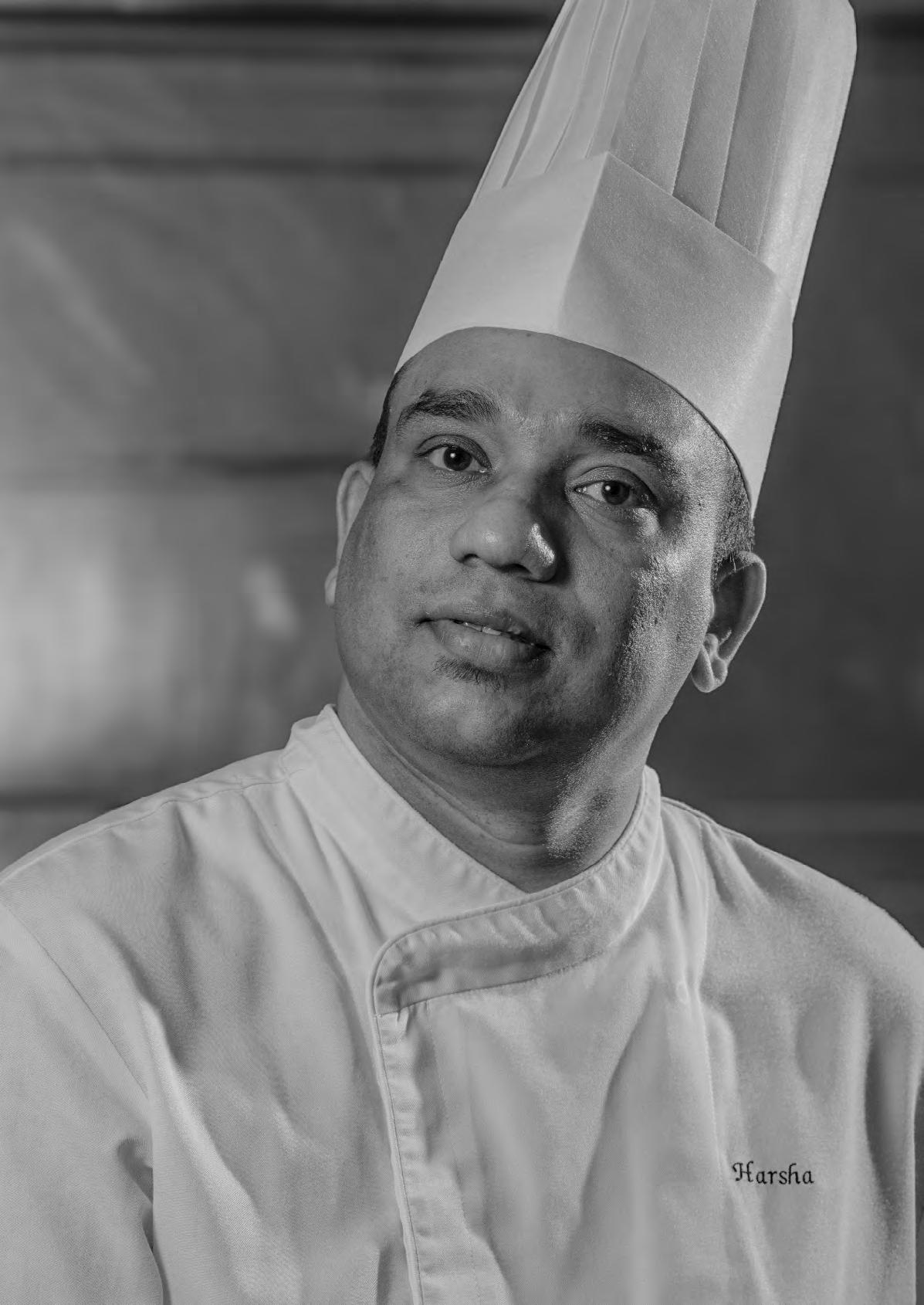
The kitchen is the real classroom— you learn by doing, not just by reading

This month, for the Arla Pro Pastry Mastery Competition, we bring you Chef Harsha Priyankar of the Dubai World Trade Center, a three-time Salon Culinaire medallist with big dreams and the skill to match
Some things are meant to be. When Chef Harsha Priyankar left Colombo for Dubai four years ago, he arrived with a suitcase and a dream to prove himself. Today, he is working at the busy kitchen at the Dubai World Trade Center, handling weddings, exhibitions, and outside catering, and has already won medals at the Salon Culinaire. Among all the dishes he makes, there is one dense with dates, covered in warm caramel, that he saves for every visit home to his wife and seven-yearold daughter in Colombo. We sat down with the first commis pastry chef, who measures success in layers, and found out how a boy from Colombo is turning sugar into ambition.
What does a typical day look like for you here?
It has been four years since I started working here. As a first commis, responsible for daily food preparation and assigned duties to meet the set standards and qualities. I come in at eight in the morning, and the shift is around thirteen hours. I specialize in the pastry section. We do weddings, exhibitions, outside catering, and big functions. Some days I bake; other days are focused on plating. I assist the senior chefs in food production, helping prepare
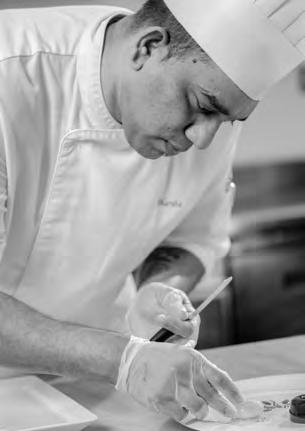
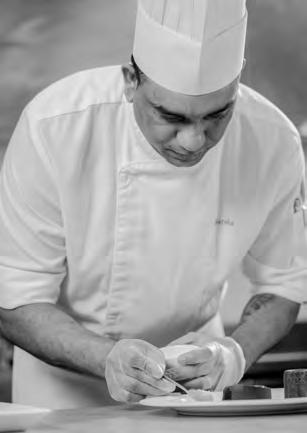
I want to grow through competition, not just collect medals along the way
dishes according to recipes, quality standards, and presentation guidelines. Every day is different and exciting.
So the kitchen was your real classroom. What did those early years actually teach you?
Everything basic and important, how to layer a cake properly, making all baking items, cakes, muffins, cupcakes, how to set a buffet, and most of all, how to work with a team. You cannot do anything alone in this profession. That lesson came very early.
And then Dubai called. How did that happen?
A friend of mine was already working here as a sous-chef at the World Trade Center. There was a vacancy, and he called me. I trusted him, packed up, and came. That was four years ago, and I have not looked back. Over the years, I worked hard on the assigned tasks and was promoted to 1st commis.
You have three Salon Culinaire medals: gold, silver, and bronze. What has competition taught you? That was 2024, my first time entering. I
made HUG tartlets. I did not really know what to expect. When they gave me the gold, it was a big moment. It gave me the confidence to keep entering and keep pushing myself. I also won silver and bronze in later competitions. Silver was for a plated dessert. Then last year, 2025, I entered with a lava cake and got bronze. Each time I try something a little different, a little more challenging. I want to grow through the competition, not just collect medals. My competition strategy has been about choosing something you can execute perfectly in 1.5 hours. Not the most complicated item, the most consistent one. Perfection under pressure. Chef Dwiyanti guides me a lot. The whole team supports me.
You mentioned the whole team. Tell us about the people who have kept you going.
So many people have helped me along the way. Chef Georg Hessler, Chef Tarek Mouriess, Chef Eric Menard, Chef Shyju Varghese, Chef Pritish Kumar, Chef Dwiyanti Cintaningrum, the whole team here at the World Trade Center. I am very grateful for every one of them. And of course, my wife, my daughter, and my brothers back home in Colombo. Without their support and sacrifice, none of this would mean anything.
What did you make for the Arla Pro Pastry Mastery Competition?
A raspberry chocolate Texas cake with a mixed fruit center, a date cake with hot caramel sauce, and an ice cream on the side. The date cake is my favorite. I make
I don't rush success. I take each step carefully and make sure I learn
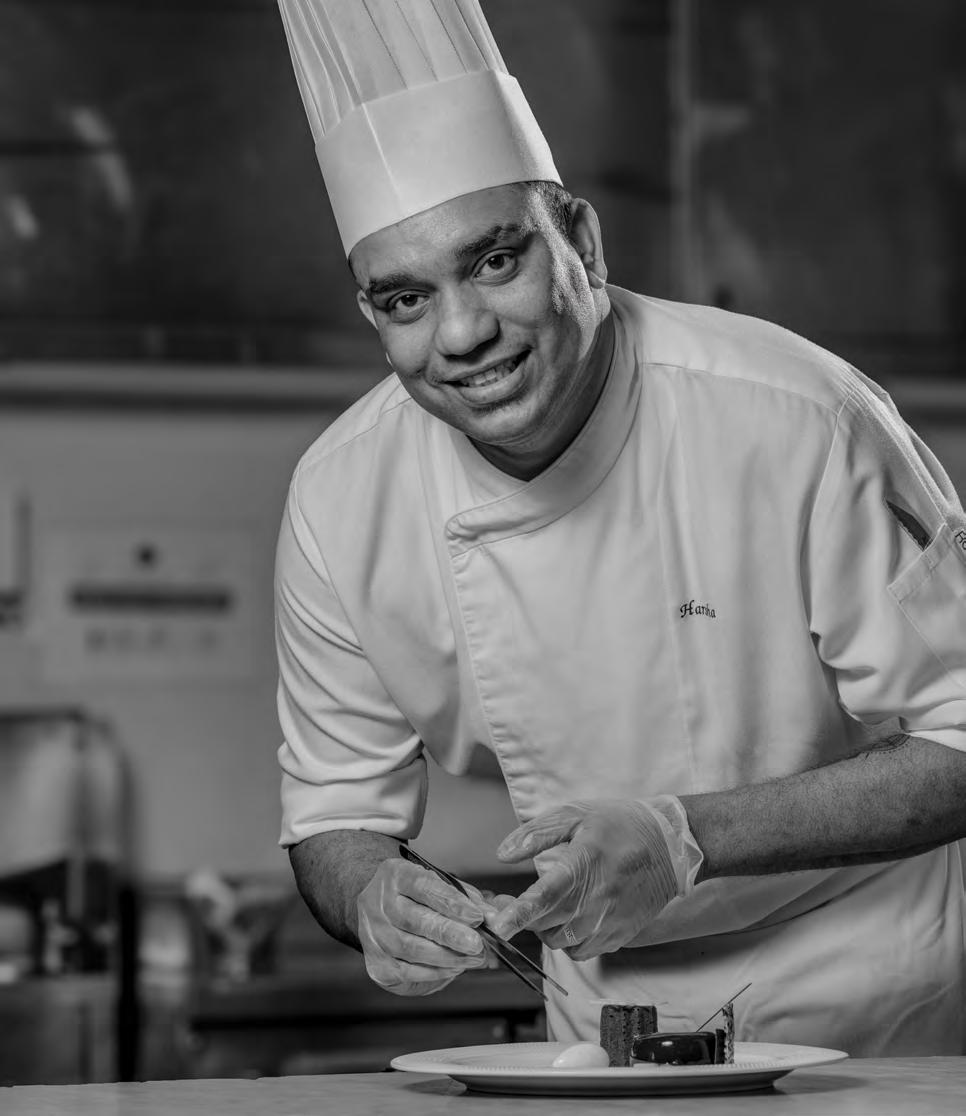
it for my family whenever I go home on vacation, too. It is full of flavor and different elements.
Your wife and daughter are still in Sri Lanka. What keeps you going when you are far from them?
My daughter is seven. I think about her every day. My plan is to reach sous-chef level and then bring my family here to be with me. That is the real target. The
medals and the promotions all feed into that one goal.
What is the secret to being a truly great pastry chef?
Knowledge and experience together, not one without the other. You have to know not just how to make something, but also how to present it and handle the whole process from start to finish. Be artistic, but also know the whole process. Like an
all-rounder in cricket. You cannot be weak anywhere. Practice, listen to feedback, and try to do things the correct way.
Where do you see yourself ten years from now?
I want to manage a hotel one day. That is the big dream. But first, sous-chef. Then we will see. I do not like to rush. I want to do each step properly. I am still learning, and I am happy about that.
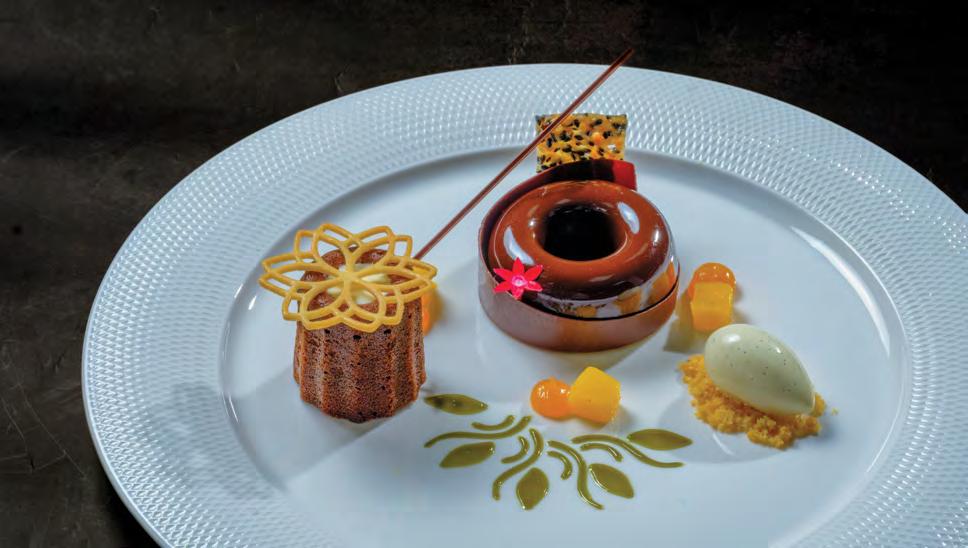
Chocolate Sponge
Sugar 572g
Flour T45 382g
Baking powder 190g
Cocoa powder 4g
Vegetable oil 120g
Eggs 400g
Milk 718g
Arla Pro Whipping cream (35%) 718g
Method
Preheat the oven to 180°C.
Combine all dry ingredients with eggs and oil, whisk for 6 minutes.
Add milk and cream, mix for 2 minutes.
Bake for 15 to 16 minutes.
Raspberry Fruit Mousse
Raspberry puree 250g
Raspberry inspiration chocolate 500g
Gelatin 10g
Arla Pro Whipping cream (35%) 700g
Vanilla bean 1 pcs
Method
Boil puree and add gelatin.
Fold in raspberry inspiration chocolate.
Fold in whipped cream and set in molds.
Hazelnut Feuilletine Crunch
Praline paste 170g
Feuilletine 250g
Raspberry inspiration crunch 250g
Method
Mix everything together and spread onto a chocolate sponge.
Fruit Center Puree
Diced fruits
Gelatin
Method
Mix puree, invert sugar, and pectin NH.
Add lime juice and diced fruits.
Remove from heat and add gelatin
Date Cakes
Chopped Dates
Soda
Sugar
Boil water, dates, and baking soda. Let cool.
Add eggs, brown sugar, flour, and oil. Mix to a smooth paste.
Bake at 160°C for 20 minutes.
Sesame Tuille
Heat butter, milk, sugar, and glucose.
Add flour and sesame.
Rest the mixture overnight.
Bake at 180°C until golden brown.
Vanilla Sauce Arla Pro Cream (35%)
Add Arla Pro Cream, milk, and vanilla.
Add egg yolk and sugar.
Cook until mixture reaches 80°C.
Vanilla Ice Cream
Pro Whipping Cream (35%)
Boil milk and Arla Pro Cream, add milk powder, vanilla, sugar, and stabilizer.
Add egg yolk and mix well.
Cook at 75°C.
Cool mixture, then churn in an ice cream machine until set.
Transfer to a container and freeze until needed.

The smart touchscreen interface allows easy programming of hundreds of recipes, ensuring that every product comes out identical, batch after batch.
Compact, powerful and effortless to maintain, Prática ovens are built for demanding environments that value reliability above all.
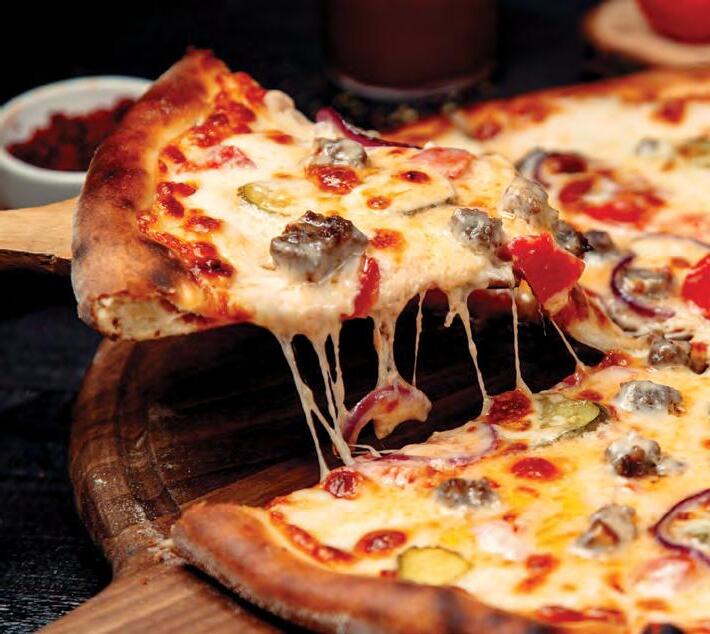
Prática’s high-speed ovens are engineered for professionals who refuse to compromise. Using a unique combination of impinged hot air, advanced microwave technology and direct radiant heat, they deliver exceptional texture and colour — even on frozen products — in a fraction of standard baking time.
With a fully vent-less catalytic system, no external hood is required, giving you maximum flexibility in tight kitchens or high-volume retail points.

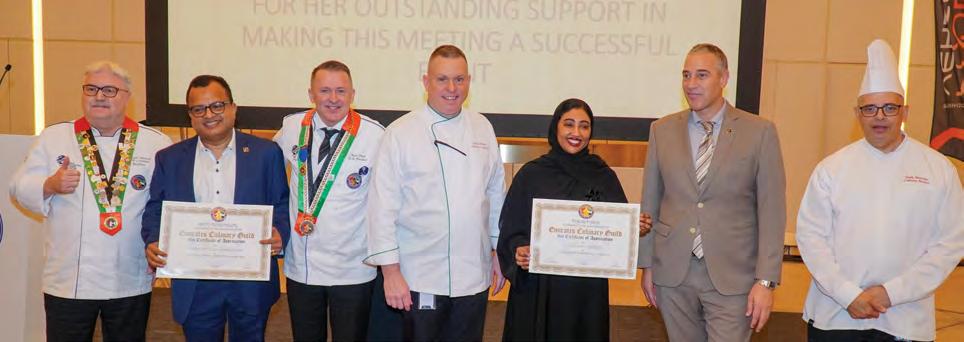
The March Guild Meeting took place at the Dubai World Trade Centre, bringing together the UAE’s vibrant chefs’ community. Sincere thanks to the DWTC team for their exceptional support, including Sethu Menon, SVP – Operations, Venue Management & Business Support (Venue Management Main); George Hessler, Executive Chef; Tarek Mouriess, Chef de Cuisine; Hajar Faraj, Manager – Planning & Operations; Vincent Egels, AVP – Events, Venue Commercials (All Outside Catering Sales); and Shyju Varghese, Executive Sous Chef. Their efforts played a key role in making the event a success.
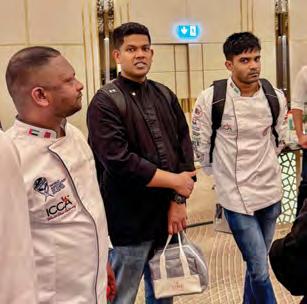
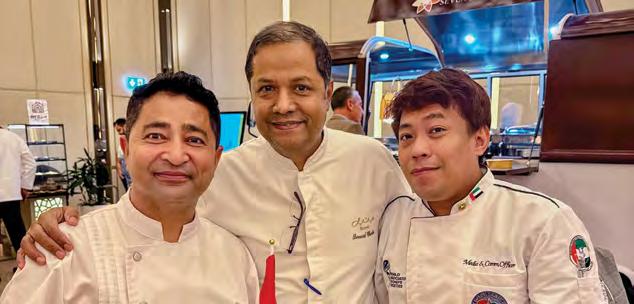
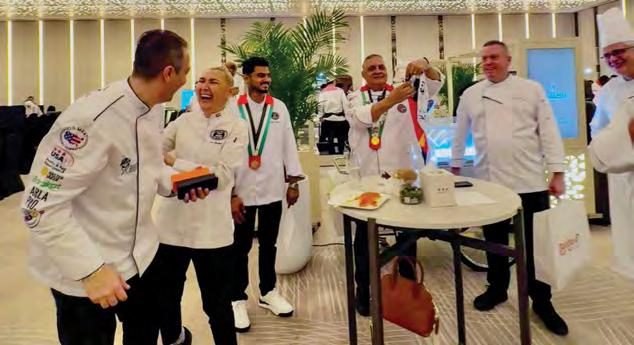
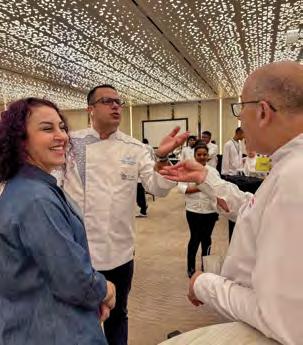
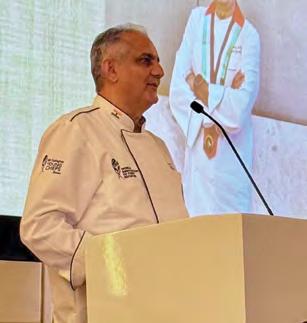

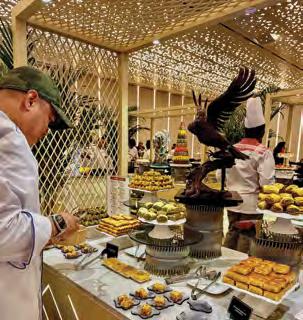
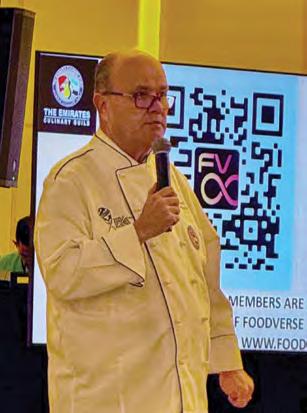
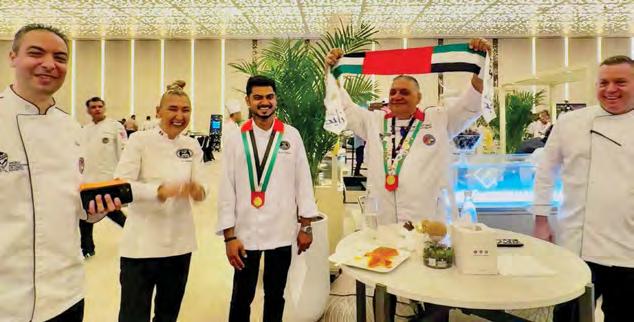
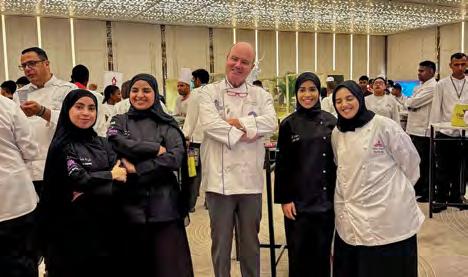
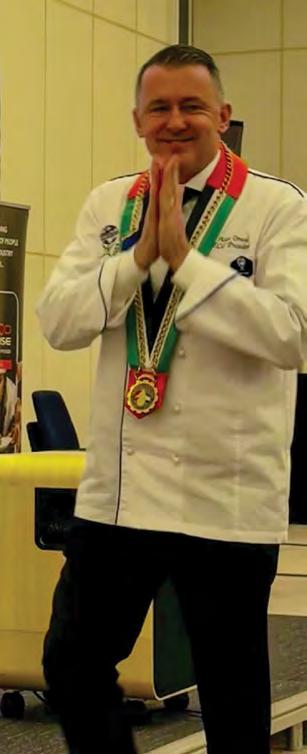
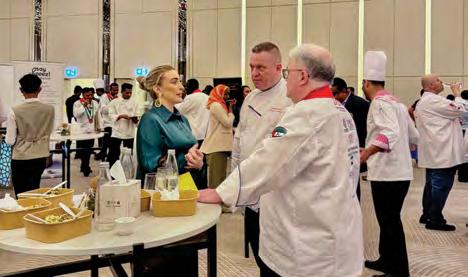
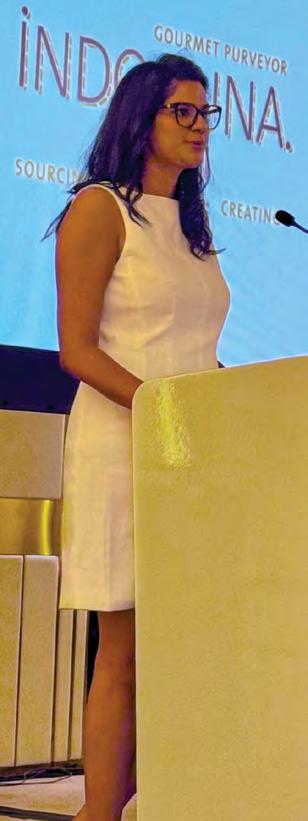
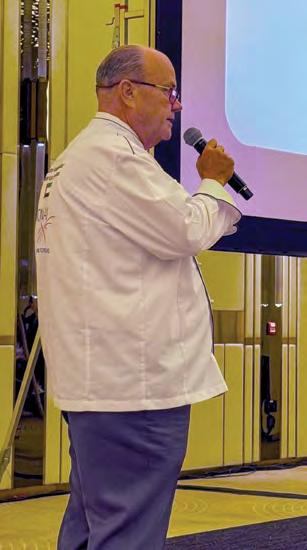
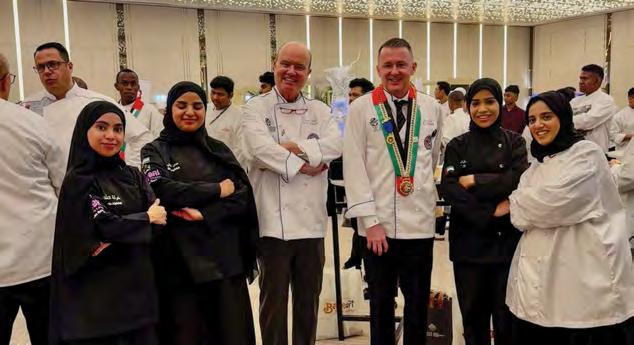
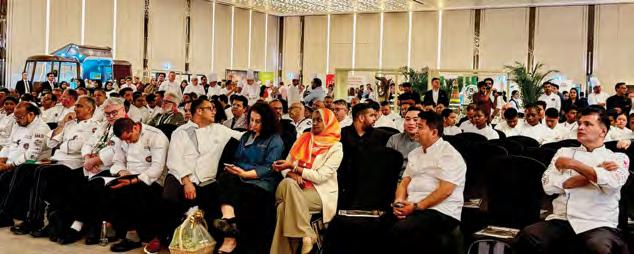


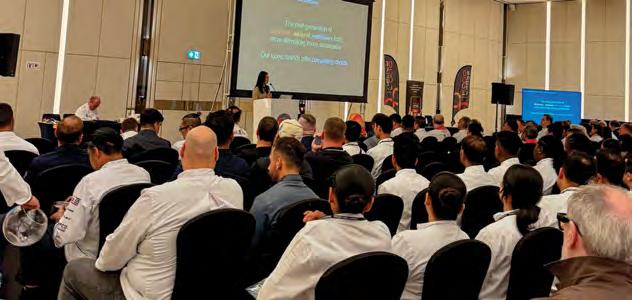

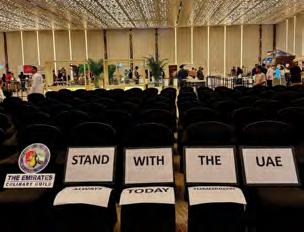
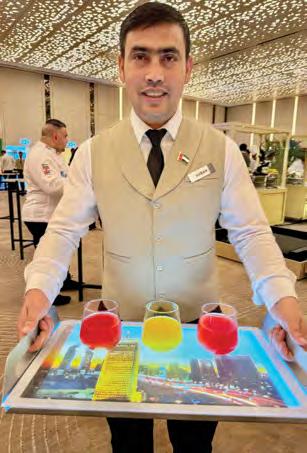
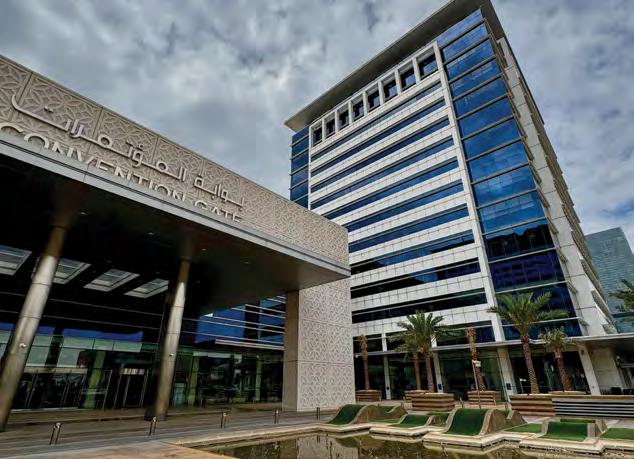
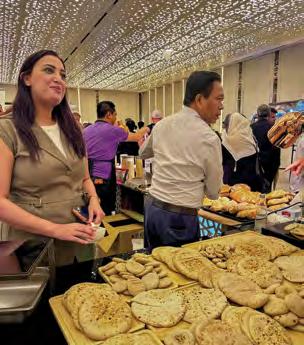
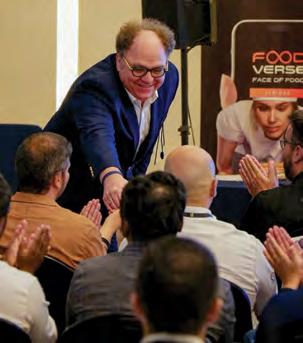
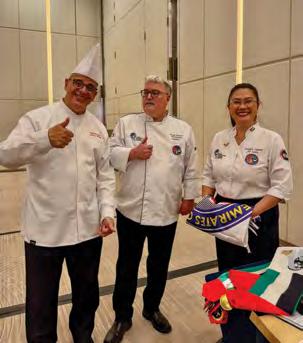
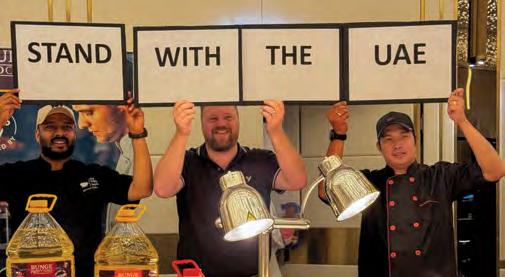
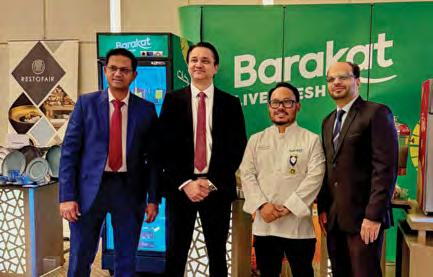
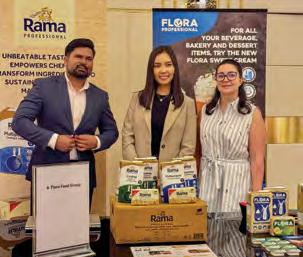
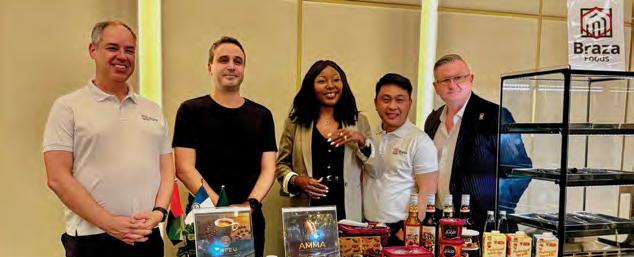
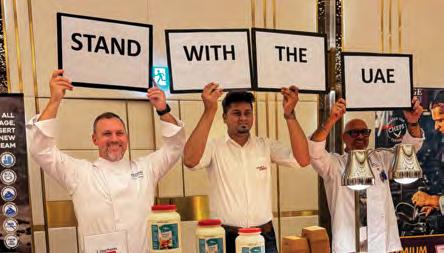
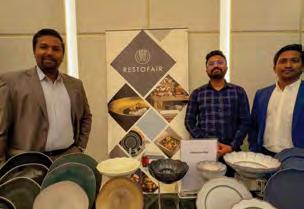
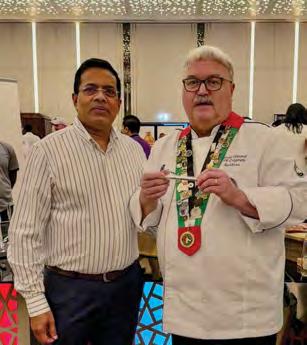
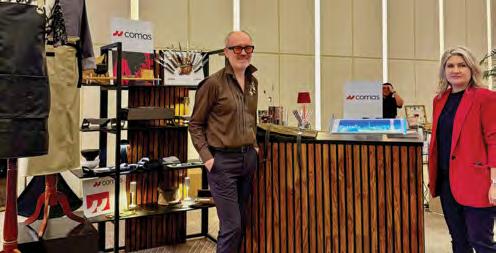
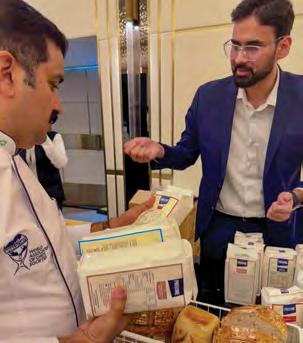

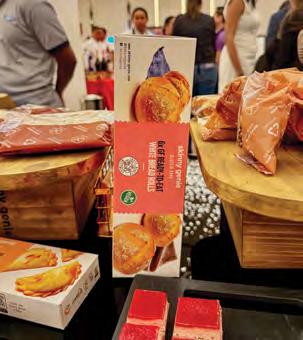
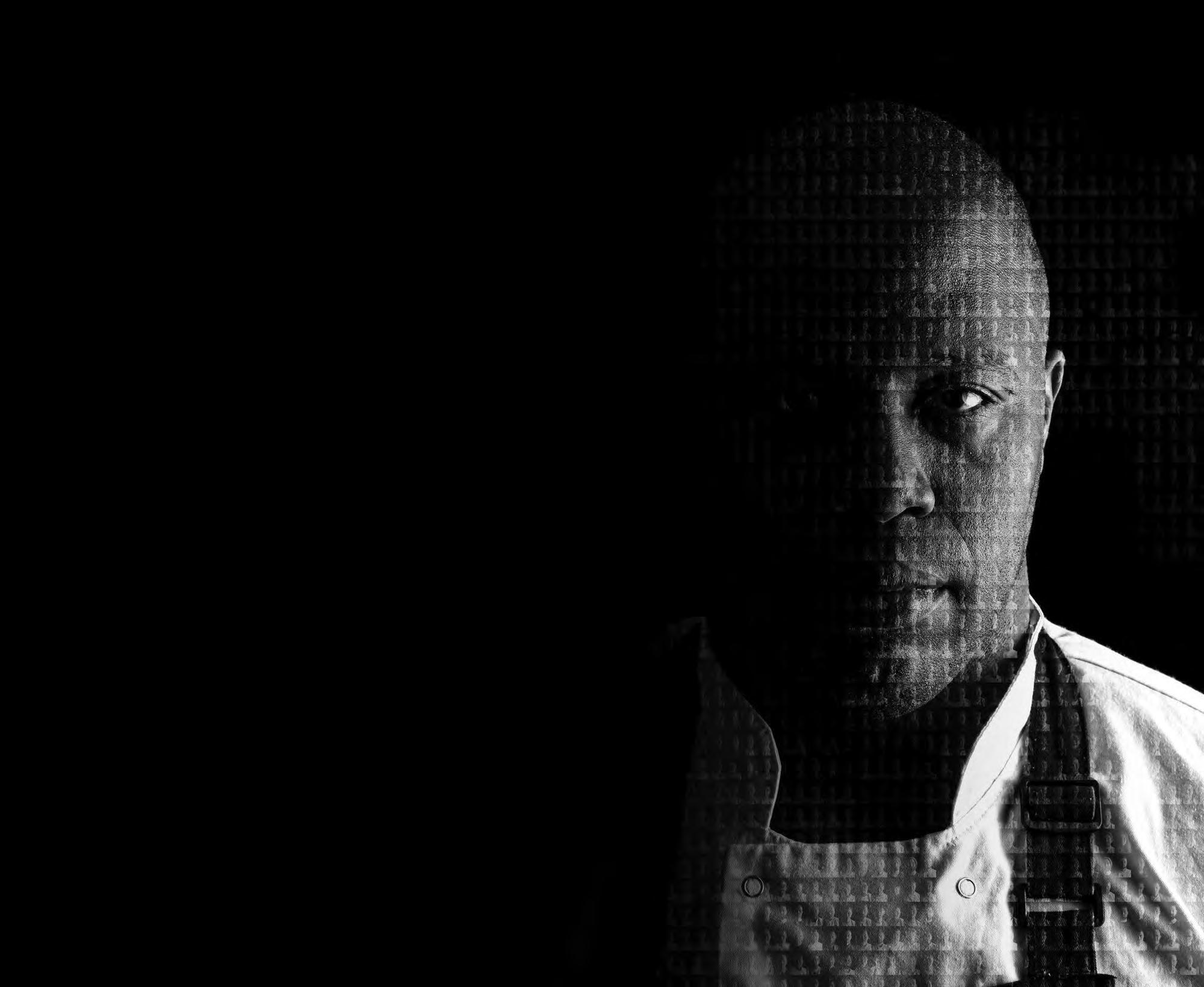





Agthia Group PJSC
Sasha Kannan, Category Development Manager Tel: +971 56 177 87 86, sasha.kannan@agthia.com, www.agthia.com
Al Chef
Ranin Bakhitt, Marketing Manager
Tel: +971 4 357 0320, Mob: +971 50 687 0224 ranin.b@alwholesale.ae, www.alcheftohome.com
Al Wholesale
Ranin Bakhitt, Trade Marketing Manager, Mob: +971 50 6870 224, ranin.b@alwholesale.ae, www.alwholesale.ae
Alaska Seafood Marketing Institute (ASMI) Manjusha Jambhekar, Overseas Marketing Representative – MENAWA, Tel: +971 4 357 7979, Mob: +971 55 5333740 manjusha.m@focusmworld.com, www.alaskaseafood.org
Alliance Abroad International
Zama Nkabinde, Talent Acquisition Manager, Mob: +971 52 2339 779, znkabinde@allianceabroad.com, www.allianceabroad.com
Alto Shaam, Inc
Gabriel Estrella Talentti, Director of Sales, Tel: +971 4 321 9712, Mob: + 971 50 8531 707 gabriele@alto-shaam.com, www.alto-shaam.com
Americana Foods
Laurent Stevenart, Plant Based Food Director, Mob: +971 52 1354 732, lstevenart@americana-food.com, www.americanafoods.com
Arab Marketing and Finance, Inc. (AMFI) Simon Bakht, Tel: +961-1-740378 / 741223 / 751262, SBakht@amfime.com
Arla Foods
Rachna Amarnani, Marketing Specialist, raamy@arlafoods.com, B7 Building Digital park Dubai Silicon Oasis, Industrial Area Dubai www.ArlaPro.com, www.arlafoods.com
Bakeart Specialists Bread and Bakery Products Trading LLC
Imad Nehmeh, Director, Mob: +971 52 2278 7026, Tel: 35799355480 info@bakeart.ae, www.bakeart.ae
Bakemart FZ LLC
Syed Masood, Director of Sales Mob : +971 55 609 7526, Tel: +971 4 56708 masood@bakemart.ae, www.bakemart.ae
Barakat Group of Company
Kenneth D’Costa, Managing Director Neil Ranasinghe, Head Culinary Innovation Tel: +971 4 8802121
Cuisine Solutions Middle East LLC FZ Juan van Huyssteen, Company GM Mob: +971 52 926 5628, jhuyssteen@cuisinesolutions.com, www.cuisinesolutions.com
Dawn Foods B.V
Lila Mebarki , Managing Director AMEAP Mob: +971 4 883 1757, info@Dawnfoods-ameap.com, www.dawnfoods.com
Diamond Meat Processing Co.L.L.C
Kamparath Suresh, Assistant General Manager Business Development, Mob: +971 50 655 4768 wnedal@siniorafood.com, www.almasadubai.com
dmg events
Hassan, Tel: +971 4 4380355, Mob: +971 56 8360993, aysehassan@dmgeventsme.com, www.thehotelshow.com
Eco Choice Group of Companies
Hadiba Ahadzada, Admin, hadiba@alwholesale.ae Ph: 058 254 0160, (04) 357 0320 Al Qusais Industrial Area 1 - Dubai, UAE www.ecochoicegroup.com
Emirates Snack Foods
Marwan Husseini / Vincent Lobo, Head of Sales – Food Service / Creative Head Mob: +971 56 5267 181, +971 55 3692 344 marwan.husseini@esf-uae.com vincent@esf-uae.com, www.esf-uae.com
Essity Hygiene and Health AB Ozge Osmanoglu, Customer Marketing Activation Manager MEIA, Mob: +971 52 7571 486 ozge.osmanoglu@essity.com, www.torkmeia.com
Faisal Al Nusif Trading Co. L.L.C
Thomas Das, Managing Director Tel: 04 3391149, thomasdas@fantco.net, Web: www.fantco.net
Farm Fresh
Feeroz Hasan, Business Development Manager
Al Quoz, P.O Box 118351, Dubai, UAE Office No : +971 4 3397279 Ext: 253 Fax: +971 4 3397262, Mob: +971 56 1750883
Farzana
Fariborz Khadem Pour, Head of Food Service, Mob: +971 55 8846 293, Tel: +971 4 3200 101, fariborz@farzana.com, www.farzana.com
Flora Food Group
Lisa Blake, MENA Brand Manager Mob: +971 55 857 9607, +971 55 857 9607 Lisa.blake@florafg.com, Flora Professional
Foodtech Group FZCO
Attila Petö, CEO, Mob: +971 58 511 3734, attila.peto@foodtech.ae, www.foodtech.ae
FSEP Catering Equipment Trading LLC
Shivani Rawat, Office Manager Tel: +971 4 8851 610 info@fseprof.com, www.fseprof.com
German Icecream Factory
Boris Mueller, Mob: +971 50 108 9030 boris@drmuellers1969.com www.drmuellers1969.com
Greenhouse Foodstuff Trading
Edgard Abounader, UAE Sales Manager –HORECA, Tel: +971 4 8170000, Mob: +971 56 442 4608, Edgard.Abounader@greenhouseuae.com, www.greenhouseuae.com
Ginox Swiss Kitchen
Tiziana Ricottone, Personal Assistant & Communications Manager, Mob: +971 50 5091 689, tiziana.ricottone@ginoxgroup.com, www.ginoxgroup.com
Hamid and Kumar Enterprises LLC
Sunil Ahluwalia, General Manager, Tel: +971 4 3474712, +971 4 3474571 dry@hkfoodgroup.com, www.hkfoodgroup.com
Harvey and Brockless Foodstuff Trading LLC
Julie Caulton, Sales Director, Tel: +971 4 272 5524, +971 50 507 7539 Julie.caulton@harveyandbrockless.co.uk, www.harveyandbrockless.co.uk
Here-O Donuts and Coffee, LLC
Andrew Mason, CEO, Tel: +971 4 547 7591, +971 52 906 3574 andrew@hereodonuts.com
HK Enterprises Era Jain, Marketing Manager, Mob: +971 56 6589 246, era@hkfoodgroup.com, www.hkfoodgroup.com
Hospitality by Dubai World Trade Centre
Georg.Hessler, Director Culinary Operations, Tel: 04 3086571, Georg.Hessler@dwtc.com, https://www.dwtchospitality.com/en/
HUG AG
Riyadh Hessian, 6102 Malters / , food-service@hug-luzern.ch, www.hug-luzern.ch, fb/hugfoodservice Distribution UAE and Oman: Aramtec, PO Box 6936, Al Quoz Industrial Area No. 1, Near Khaleej Times Office, Mob +971 507648434, www.aramtec.com
IFFCO
Mary Rose Lopez, Associate Customer Service Manager, Mob:+971 506719882, 065029025 / 6264 mlopez@iffco.com, www.iffco.com
Indoguna Dubai LLC / Indoguna Productions FZCO
Anoop Kumar Varma, Director - Sales & Commercials, Ana Elena Saenz, Regional Business Development Manager, Mob:+971 55 573 7035, +971 58 246 9330 anoop@indoguna-dubai.ae, ana@indoguna.ae, indogunadubai.com, indogunaproductions.com
IRCA MEA TRADING LLC
Shairra Mae Bartirzal-Periales, Trade Marketing Manager, Mob:+971 54 515 4430, shairra.bartirzal@irca.eu, www.ircagroup.com
JM FOODS LLC
Rajan J.S. / Maikel Cooke / Grace Renomeron Management, Tel: +971 4 883 8238, sales@jmfoodgulf.com, www.jmfoodgulf.com
Johnson Diversey Gulf
Marc Robitzkat Mob: 050 459 4031, Off: 04 8819470 marc.robitzkat@jonhnsondiversey.com
KAPP
Kerem Uner, Sales and Marketing Director Tel: +90 53 2599 9638, kerem.uner@kapp.com.tr, www.kapp.com.tr
Kerry Taste & Nutrition MENTA
Simon Martin, Executive Chef Tel: +971 52 450 0845 simon.martin@kerry.com, www.kerry.com
Lakeland Dairies
Zayna Ahamadeen (UK), Anubhav Sethi (UAE) Tel: Zayna: +44 7386658747 Anubhav: +971 50 785 9324, zayna.ahamadeen@gmail.com, anubhav.sethi@lakelanddairies.com, https://lakelanddairies.com/
Lowe Refrigeration LLC
Mark Wood, General Manager Tel: +971 4 8829440, Mob: +971 52 8693695 mark.wood@lowerental.com, www.lowerental.com
Masterbaker Marketing FZCO
Sagar Surti, CEO, sagars@uae.switzgroup.com Jayakrishnan, Sales Manager, jkrishnan@uae.switzgroup.com Ravi Bhambhani, Business Development Manager, ravib @uae.switzgroup.com Pratiba Krishnan, Marketing Manager, pratibak@uae.switzgroup.com
Meat & Livestock Australia
Damon Holmes, Business Development Manager, Tel: +971 52169 4743, dholmes@mla.com.au, www.lambandbeef.com
MEIKO Middle East FZE
Jay Dhanrajani, Sales Manager Tel: +971 4 3415 172, jay.kumar@meiko.ae, www.meiko.ae
Meyer Group Ltd
Anjana Vaswani Kavasseri, General Manager Middle East, Tel: +971 50 5950 772, anjana@meyeruk. com, www.meyergroup.co.uk
MIWE Middle East FZE
Wilhelm Tittes, General Manager office@miwe.ae, +971 4 333 1198
MKN Maschinenfabrik
Kurt Neubauer GmbH & Co.KG
Elias Rached, Regional Director Sales Middle East & Africa, Tel: +971 4 358 4000, Mob: +971 50 558 7477 rac@mkn-middle-east.com, www.mkn.com
Nestle Middle East FZE
Elie Lteif / Luma Karadsheh, Culinary Advisor / Commercial Development Manager, Mob: +971 55 4427 010, 55 3437 632 (Elie) elie.lteif@ae.nestle.com, luma.karadsheh@ae, www.nestleprofessionalmena.com
Nina Pita
Mario Nehmeh, Sales manager, Tel: +971 50 9347 930, mario@ninapita.com, www.ninapita.com
The Pavilion Food Processing LLC
Roshan, Business Head, Mob: +971 55 995 5039, +971 55 995 4354 roshan@pavilionfoods.com, https://pavilionfoods.com
Peachtree Foods ME
Manisha Dissanayake, Regional Sales Manager, Mob: +971 50 6416 139 mesales@popcakesa.co.za, www.popcakesa.co.za
Pear Bureau Northwest
Nina Halal, Director Mob: (Lebanon) +961 3664088, (UAE) +971 58284 0008, halal@cyberia.net.lb
Potatoes USA
Victoria Hassani, Managing Director, Mob: +971 50 1013 541 potatoesusa@gmadubai.com, www.usapotatoes.com
RAK Porcelain
Sadik Variyathodi, General Manager, Mob: +971 50 4868 141, +971 4 3335 474 sadik@rakrestofair.ae, www.restofair.ae
Restofair RAK LLC
Sadik Variyathodi, General Manager Mob: +971 50 4868 141, sadik@rakrestofair.ae, www.restofair.ae
Robot Coupe
Chandrakanth Pathi, Area Manager-UAE Tel: +971 54 4894896, pathi@robot-coupe.com, www.robot-coupe.com
Safco International Genera Trading Pankaj Chanta / Naresh Khushalani, Corporate Head Pastry & Bakery / Marketing Manager, Mob: +971 55 899 0183, +971 870 2000, chef.pankaj@safcointl.com/naresh@safcointl, www.safcointl.com
Silal Food & Technology
Aparna Joseph, Omaima Abdalla , Manager Marketing & Branding, Marketing Officer Tel: +971 2 614 4467, Mob: +971 52 650 3454 ajoseph@silal.ae, oabdalla@silal.ae, www.silal.ae
Skinny Genie
Miraida Kasymbekova, Sales Manager Mob: +971 56 177 0301 salesmanager@skinny-genie.com, www.skinny-genie.com
Sounbula Mills
Karim Al Azhari, Ceo & Owner Sounbula Mills karim@sounbulamills.com
May 2026 Gulf Gourmet
Taaza Group Companies LLC
Ms. Krishna Vijith, Chief Executive Officer Tel: +971 56 2829 002; +971 4 2828 993 krishna@taaza.ae, www.taaza.ae
The Deep Seafood Company LLC
Shibu Abdul Jabbar, Chief Operating Officer, Tel: +971 2 673 34 45, Mob: +971 55 233 66 88 shibu@thedeepseafood.com, www.thedeepseafood.com
Tork Essity Hygiene and Health AB
Ozge Osmanoglu, Tel: +971 4 551 5907, Mob: +971 52 757 1486 tork.meia@essity.com, www.Torkmeia.com
Tramontina
Saniya Sarguru, Marketing Coordinator, Mob: +971 54 995 8033, Tramontina.ae
UNOX Middle East DMCC
Matthew Roberts, Managing Director Tel: +971 4 5542146, Mob: +971 52 304332, info.uae@unox.com, www.unox.com
Upfield Middle East Limited FZCO
Marwan Abi Daoud, Flora Professional Regional Lead Culinary Chef AMEA Mob: +971 50 796 6264 marwan.abidaoud@florafg.com,
USA Cheese Guild
Angelique Hollister, Senior Vice President, Global Cheese Marketing, Tel: 703 528 3049, ahollister@usdec.org, https://www.usacheeseguild.org/
US Meat Export Federation
Bassam Bousaleh, Tel: +971 50 3589197, +971 50 358 9197 Bassamb@ams-me.com
USA Poultry and Egg Export Council Inc (USAPEEC) Jena Gress, Global Marketing Manager Tel: 14048823920, www.usapeec.org
US Poultry
Andrew El Halal, Marketing Manager Mob: (Lebanon) +961 3200332, (UAE) +971 52 135 1405 andrewh@amfi-me.com
VITO AG
Mark Marquez, Mob: 971 56 2431303 info@vito.ag, www.VITO.ag
Welbilt
Rakesh Tiwari, Mob: +971 56 406 1628, rakesh.tiwari@welbilt.com

Date of Application: .................................................
Family Name: First Name/s: Ms/ Mrs/ Mr/ Other:
Nationality: Civil Status: Date of Birth: dd/mm/yyyy
Employee/ Business Owner: Name of Business: Designation:
Work Address: Email Address: Contact Number:
SENIOR:
(Above the rank of chef de partie/ senior chef de partie on executive chef’s recommendation).
MEMBER:
(Below the rank of chef de partie 29 years old and over).
AED350 joining fee/ AED150 renewal fee
Includes certificate; member-pin, member medal and ECG ceremonial collar
AED150 joining fee/AED75 renewal fee
Includes certificate; member-pin, member medal and ECG ceremonial collar
YOUNG MEMBER: (under 28 years) Free
Includes certificate; member-pin
Declaration to be Signed by Applicant:
I wish to join The Emirates Culinary Guild in collaboration with The Women’s Culinary Chapter.
I have read the ECG Constitution and By-laws. I agree to be bound by the requirements of the constitution. If elected, I promise to support the Guild and its’ endeavours to the best of my abilities.
Signature: .....................................................
Proposed By: Signature: ..............................
Seconded By: Signature: ..............................
For Official Use Only
Remarks:
Payment Received?
Certificate Given Pin Given Medal & Collar Given
Approved by President: Signature: ..............................
Approved by Chairman: Signature: ..............................
Note: The membership is only applicable to those who are working in the UAE as professional chef or with a background related as Chef in the hotel and restaurant industry.
The WCC is in collaboration with the Emirates Culinary Guild, which is a member of the World Association of Chef’s Societies

Simon Martin, Executive Chef at Kerry Taste & Nutrition (Food Service), shares how the food world is bouncing back with bold new flavours and a comforting return to classics
Welcome back to Trends Express. Without further ado, let's jump on board the "Trends Express" and see what's hot and appearing in our region. Remember, "LIKE IT, BUY IT, SNAP IT, SHARE IT."
They are not complicated, but just a few simple ingredients will rock your culinary planet…
For many of us, these latest times in the food industry are challenging, as hospitality numbers plummet. Restaurants have vacant stares, and incomes are cut. However, it is not all doom and gloom. Strong resilience, government support, and players with long-term strategic goals will see our industry bounce back like a “Phoenix from the flames”.
It appears in trends that the Gen Z’s
have a language of their own that’s becoming mainstream across food and beverage globally , and SWEET + is growing by this, I mean SWICY ( sweet + spicy), SWOKEY (sweet + Smokey), SWALTY (sweet + salty ), SWANGY (sweet + spicy +Tangy), and SWAVERY (sweet + Savory). I know it sounds like a tongue twister, and I really have not made it up… we are seeing this across snacks, retail, food service, casual dining, fine dining, and beverage. All products and ingredients are adapted to regional availability. Think about Tamarind, chocolate BBQ sauce…or Maple syrup glazed smoked brisket… OMG, the thought is making me open the fridge in search of one of the combinations I can create now…I am tempted to make a delicious marmalade-and-pastrami toasty with some Cheetos thrown in for texture… MMMMM ;)ITS AMAZING
Meanwhile, as menus get smaller to ease supply chains and boost productivity across the region, we are seeing the rebirth of simple French classics. SMALL PLATES DONE WELL Bistro food from the 1970’s is awakening … the simple Oeuf Mayonnaise (mustard mayo dressed hard-boiled egg with anchovies and roasted sweet pepper garnish), Blanquette of veal, Steak frites with a bearnaise sauce. Even floating Islands (every child will crave these lightly poached Meringues on a cream anglaise). What is not to like? Although the Anglo-French twists on Knafeh French toast, Merguez sausages served with roasted peppers, and Labneh are my favorites. Have you seen any Bistro dishes lately? Have you tried a good quiche Lorraine or maybe a scrumptious French onion soup?? LET ME KNOW….
Two Morning staples seem to have merged, and it is doing the rounds of influencers, combining Sweetness, tart acidity, and bitterness to make an exciting beverage trend SUN_RISE
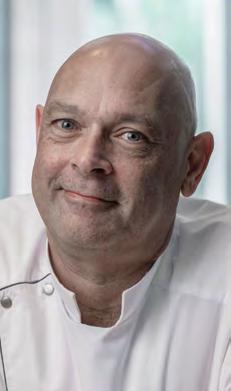
COFFEE or JUICE AMERICANO, yes, you have guessed it, espresso and orange juice mixed served over ice. I tried the enhanced versions with tonic water and, for that morning kick-start, a pinch of cayenne pepper. The citrus cuts through the coffee, making it Instagrammable. Not only does it deliver antioxidants, Vitamin C for immune support, and caffeine for energy …. I am SOLD.
This month, I have been trying some old favorites in the form of cornflake milk … and brown bread ice-cream. Nostalgic but good; however, the highlights of the month have been a Rendang Boa bun, or sitting with all the Deliveroo and Noon riders’ early morning roadside, with Keema dosa and Dal Fry… sometimes the company makes a meal, and these are the real food heroes of our industry.
Finally, looking at trends, our corporate partners at the Emirates Culinary Guild are also helping define the landscape of trends with their visions. Their foresight to make their latest products available to us at our monthly meetings reflects both innovation and current market trends. Stay ahead of the curve, talk to them, and try their products. Join them and us in driving the trends in our region.
Kerry Foodservice provides custom-made solutions (coatings, sauces, beverages, etc.) and branded solutions such as Chef’s Palette and DaVinci Gourmet to global and regional chains, QSRs, and casual diners across the region.