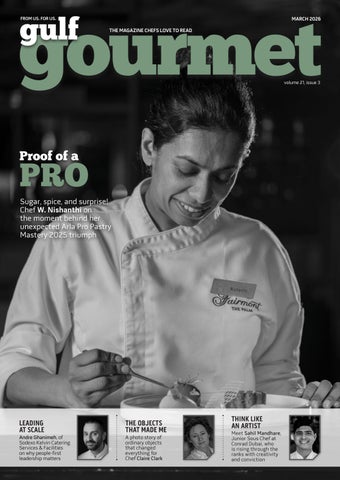
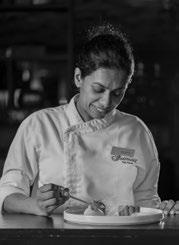
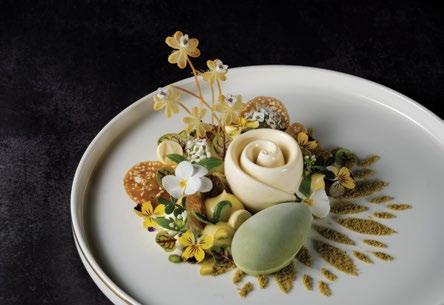
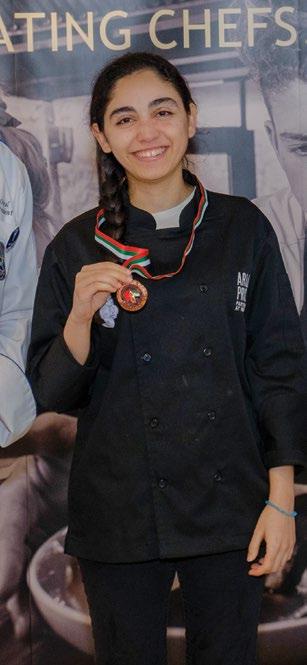
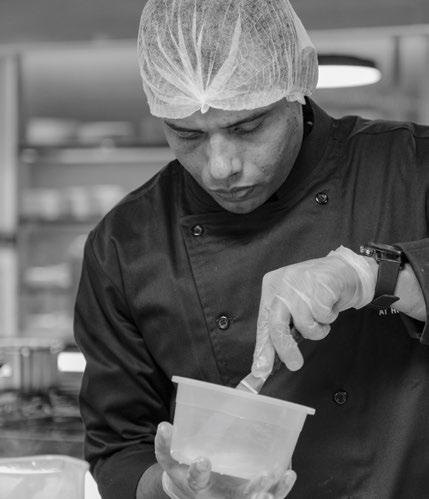
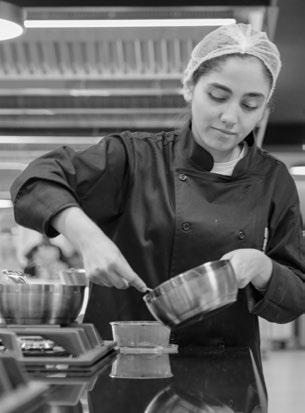
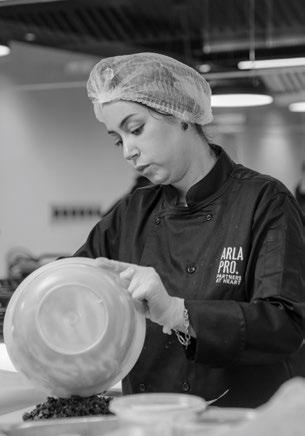
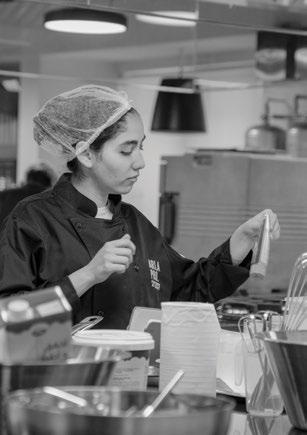
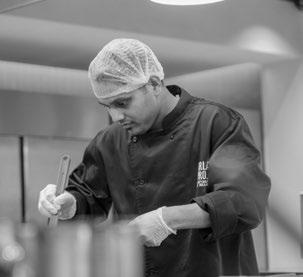
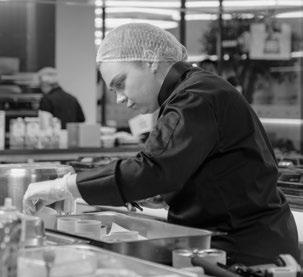
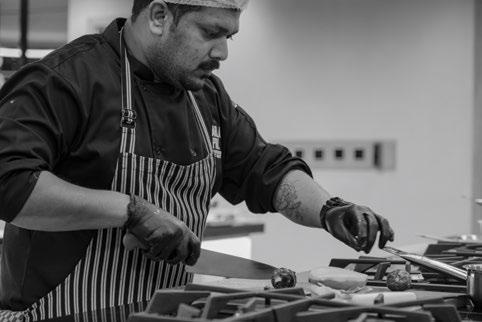
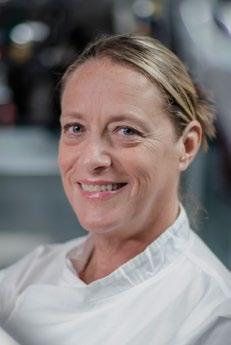
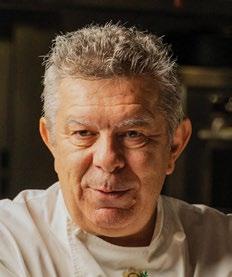
Sugar, spice, and surprise! Chef W. Nishanthi on the moment behind her unexpected Arla Pro Pastry Mastery 2025 triumph
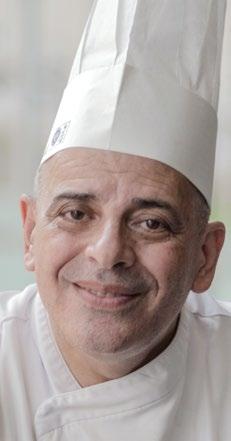
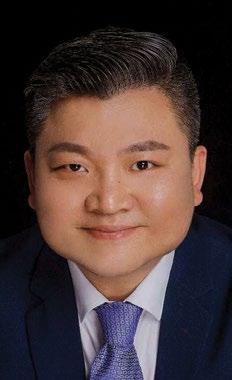
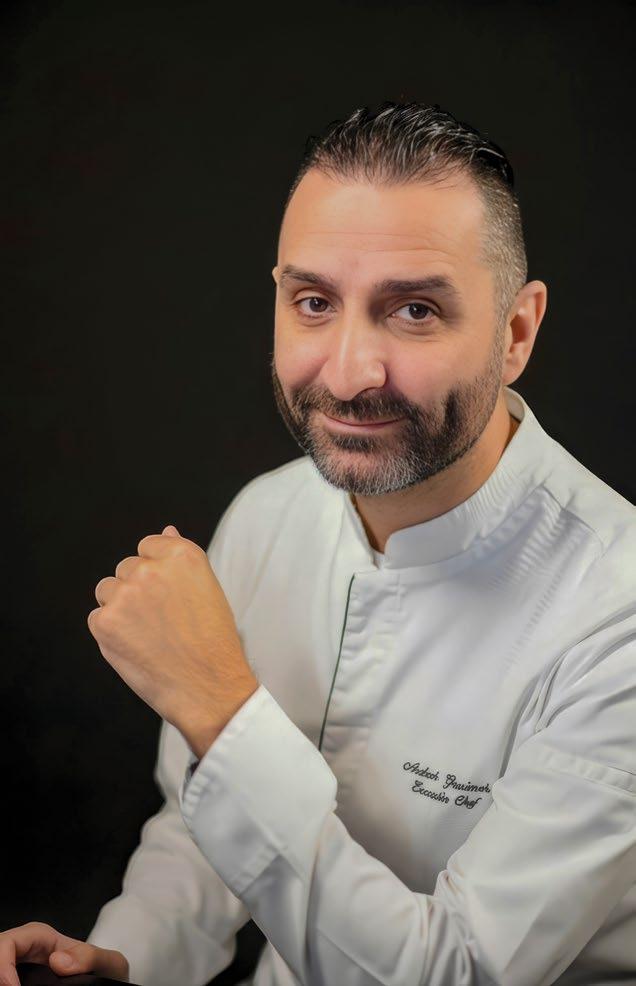
Andre Ghanimeh, of Sodexo Kelvin Catering Services & Facilities on why people-first leadership matters
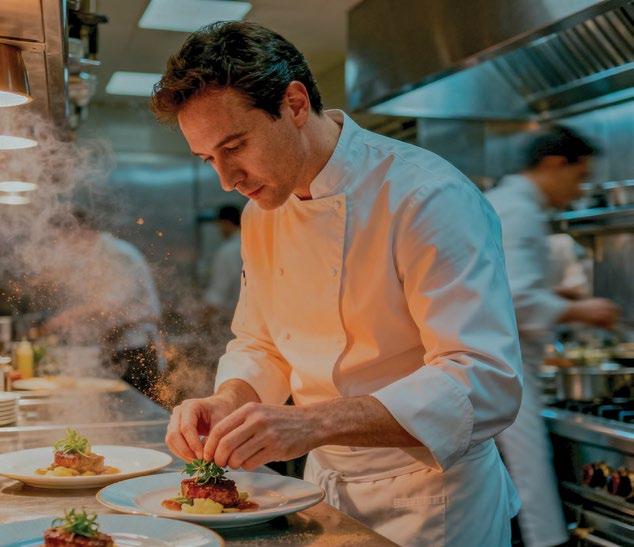
A photo story of ordinary objects that changed everything for Chef Claire Clark LEADING AT SCALE
THE OBJECTS THAT MADE ME
THINK LIKE AN ARTIST
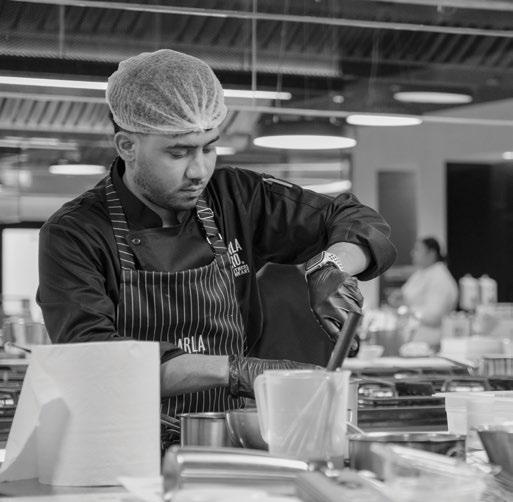
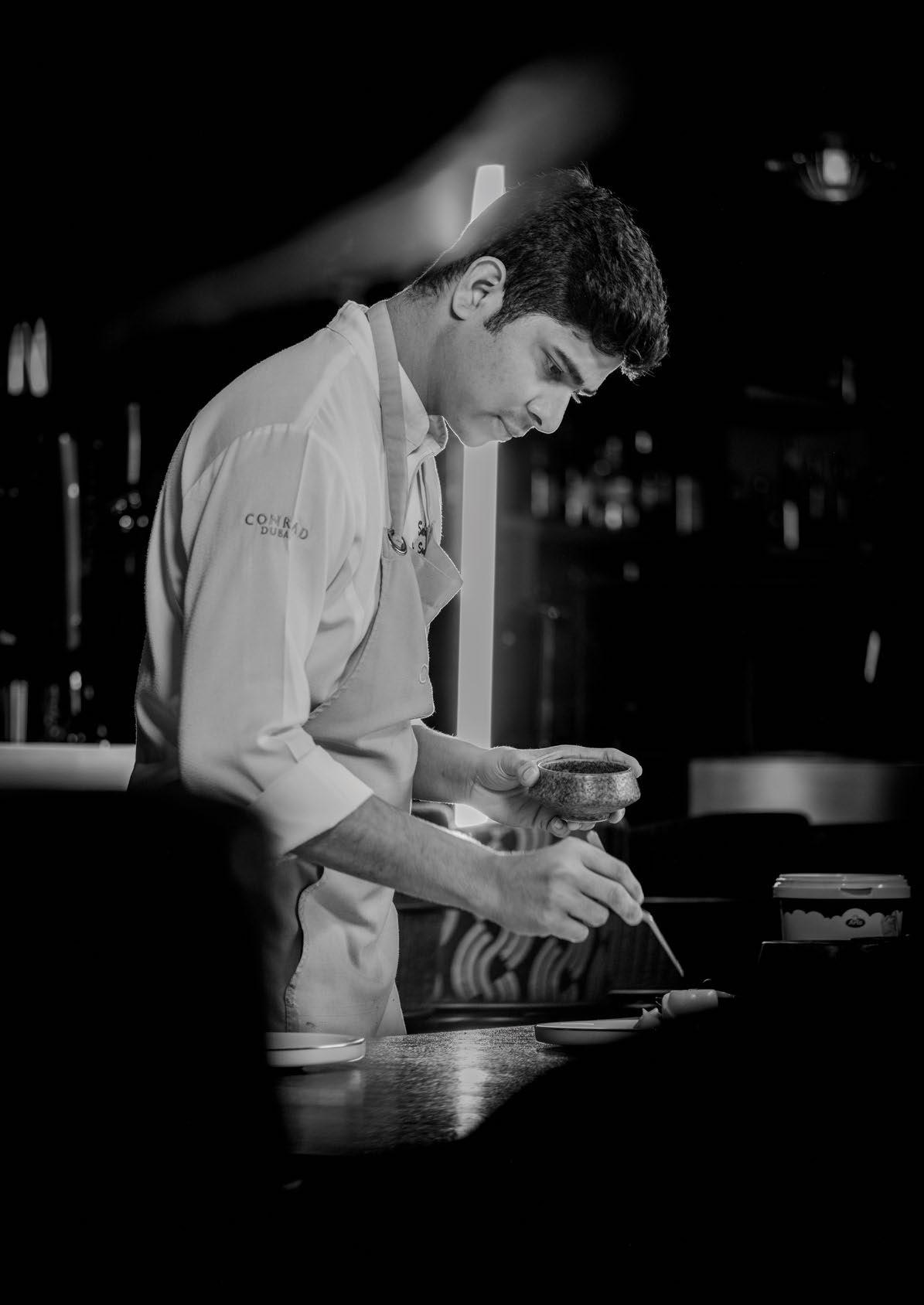
Meet Sahil Mandhare , Junior Sous Chef at Conrad Dubai, who is rising through the ranks with creativity and conviction
with us. This event would not have been possible without the support of the Emirates Culinary Guild members, Arla Pro, our valued partners and supporters, and the ICCA team. Thank you for helping us deliver another
We are also pleased to share that the rules and regulations for the upcoming Salon Culinaire competition will be published in our next edition. So stay tuned!
This issue is a celebration of pastry. As the saying goes, life is short…eat
dessert first. From inspiring pastry stories to innovative creations, this edition is filled with dessert inspiration and creative pastry excellence. Do take a moment to explore our features, follow the journeys of chefs pushing boundaries, and immerse yourself in the traditions and heritage. Keep an eye out for more exciting updates as we approach July. As always, we are passionate about sharing stories, the small details, and the patience it takes to get the dish just right. If you have ever chased the creative glaze or admired one, this one is for you.
We invite you to explore past issues https://issuu.com/gulfgourmetmagazine and emiratesculinaryguild.net to stay updated on events and news. If you have not already, follow us on social media to see what chefs around the world are creating, and perhaps connect with someone who inspires you. As always, if there is something you would like to see in a future issue, send us an email. Let us know what matters to you, what stories you want told, and what lessons you have learned along the way. If you have any questions about the events, please reach out to us at emiratesculinaryguild@gmail.com
Here’s to chasing gold medals… and the perfect glaze. Stay sharp, stay sweet, and always save room for dessert.
Culinary regards, Alan Orreal
Made
childhood stove. A worn recipe notebook. A teacup. A photo story of ordinary objects that changed everything for Claire Clark
Gulf Gourmet takes a closer look at the high-stakes contest held at ICCA and the standards set at the judging table
Chef Tarryn-Leigh Green asks why hospitality wages are so compressed in the UAE, and why it hits women harder
Educator, hospitality lifer, and unapologetic sauce enthusiast, Chef Helen Morris, on how a burger changed her mind and her move back to the UAE for a regional game-changer
Shreya
What does genuineness mean in a fast-paced world?
Chef Tarek Mouriess explains about sincerity in hospitality and how small, thoughtful gestures can create a big impact
The memories we treasure most are born from acts of generosity, writes Chef Christophe Prud’homme
Common Sense to Recognition
Chef Carl Shi on the hidden value of chefs in daily routines and judgment (Pt. 2)
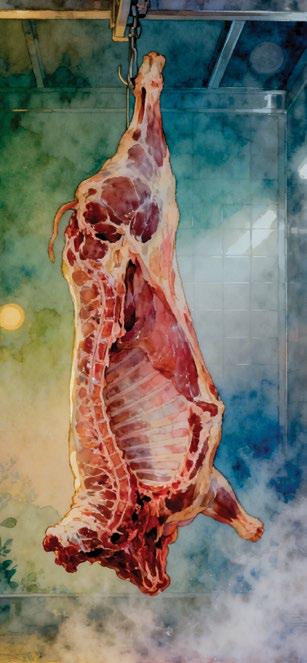
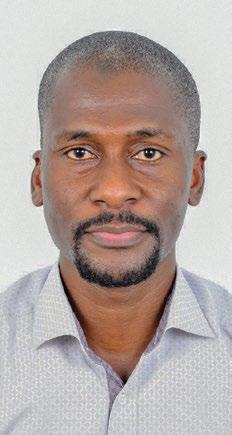
Every Cut
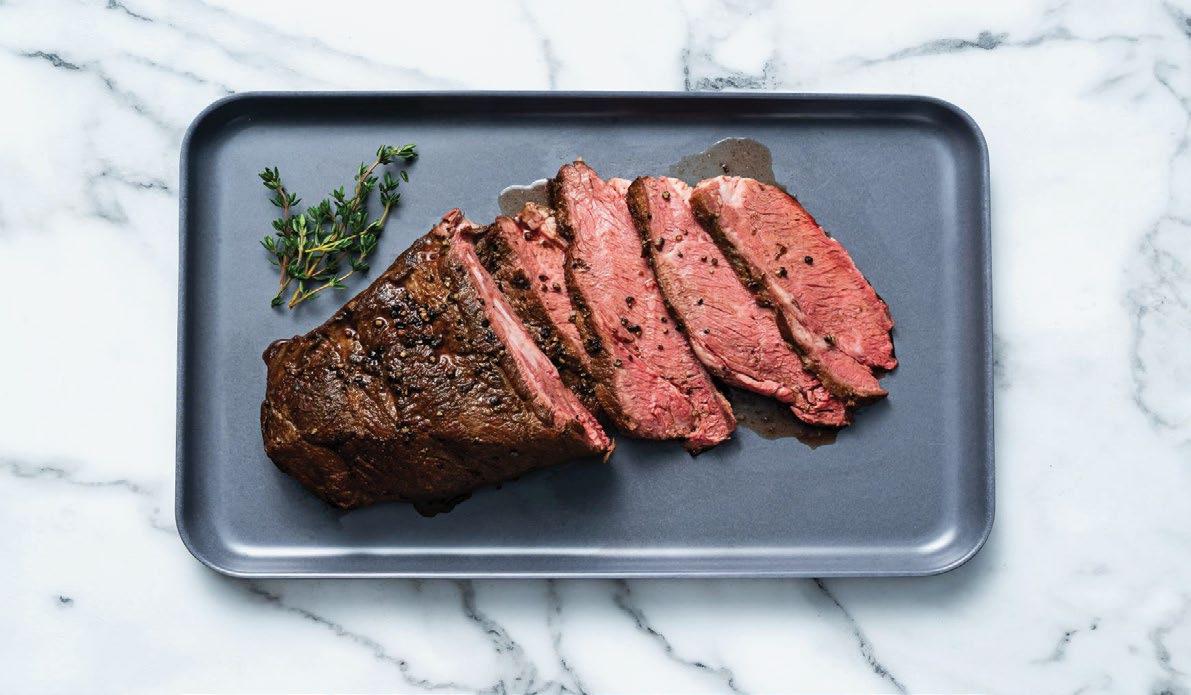
Sulemana A. Sadik on unlocking the value of a full beef carcass
at Scale
Andre Ghanimeh, the Executive Chef of Sodexo Kelvin Catering Services & Facilities explains why people-first leadership are the real engines of highvolume culinary success
Think Like an Artist
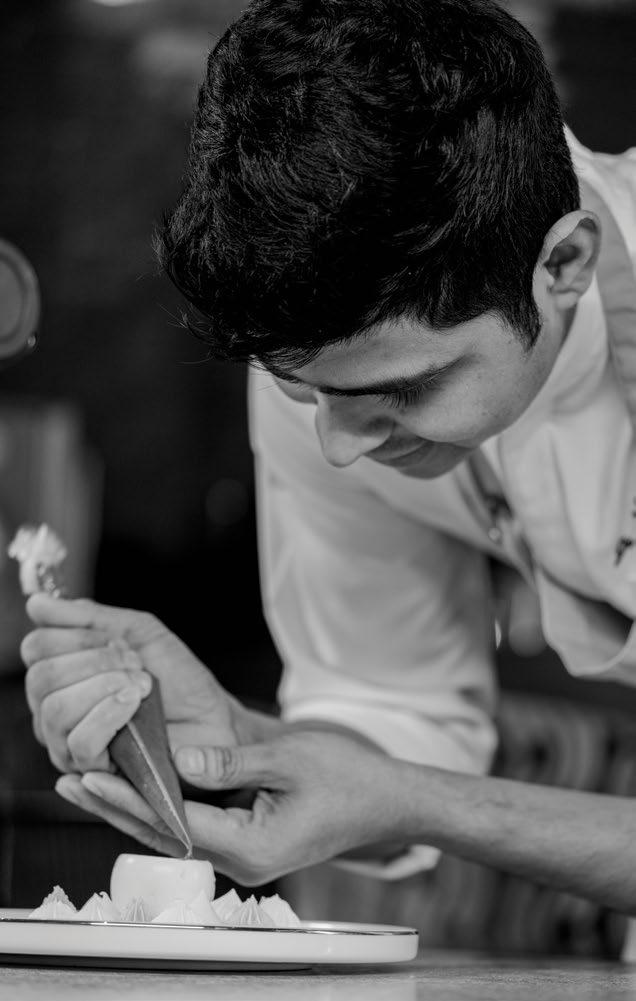
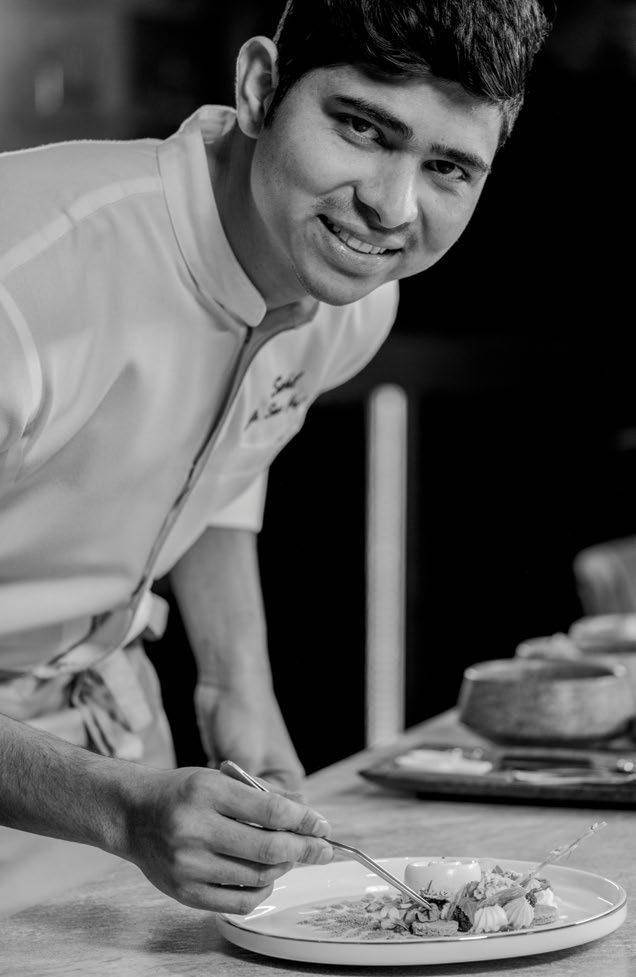
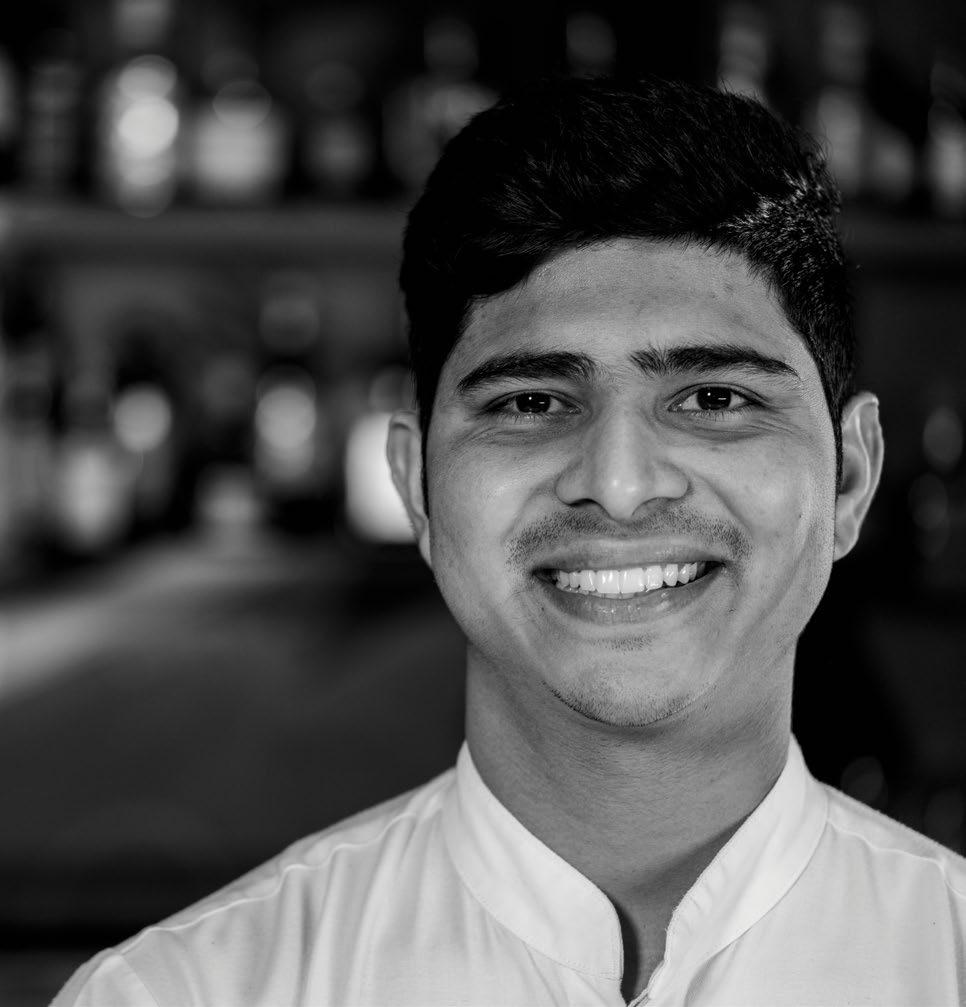
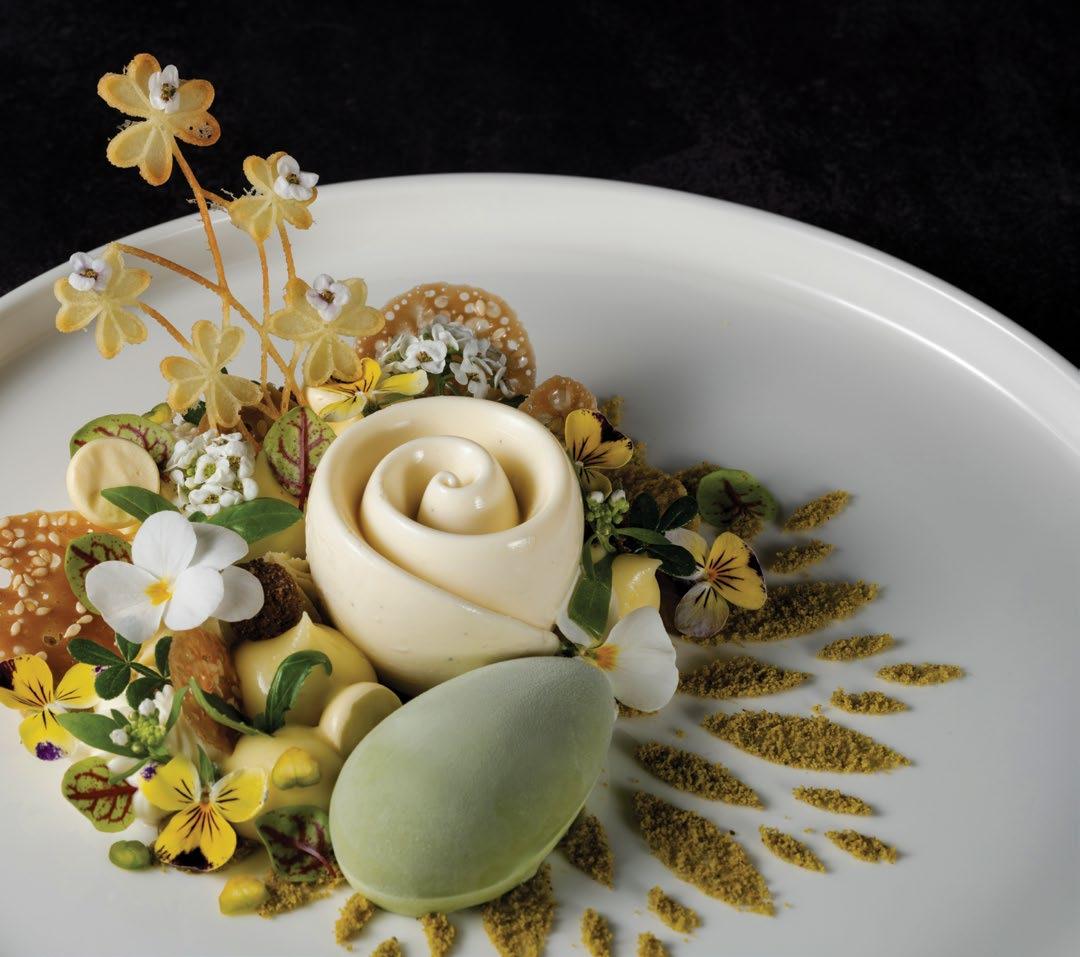
Meet Sahil Mandhare , Junior Sous Chef at Conrad Dubai, who swapped farm life for the pastry kitchen and is rising through the ranks with creativity and conviction
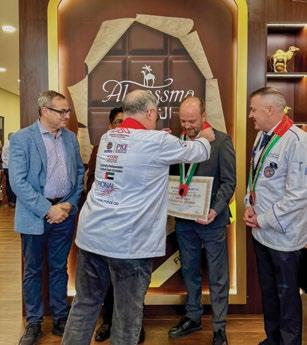
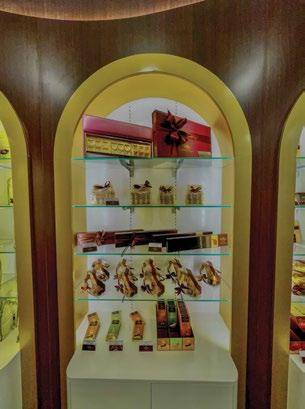
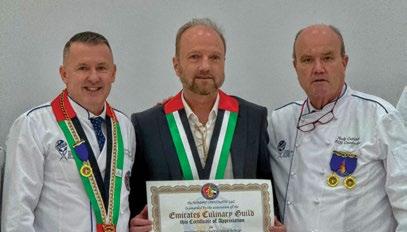
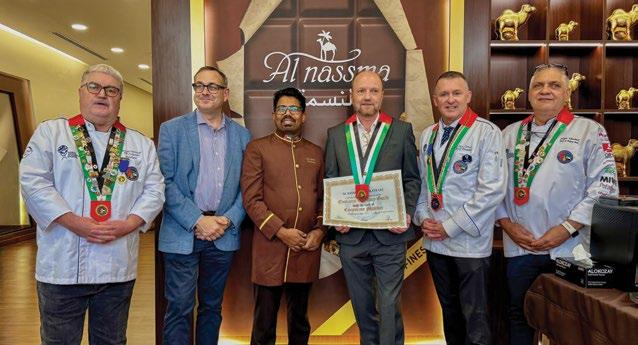
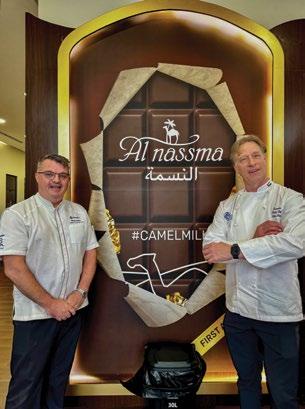
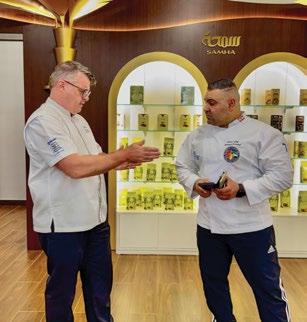
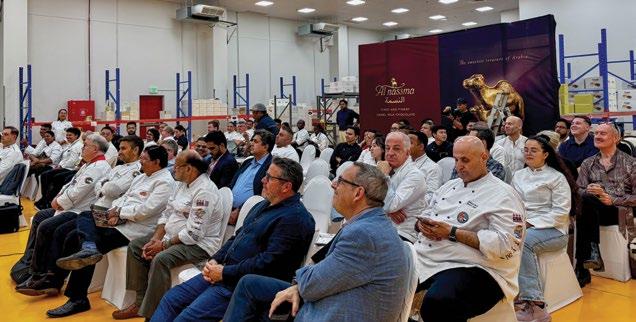
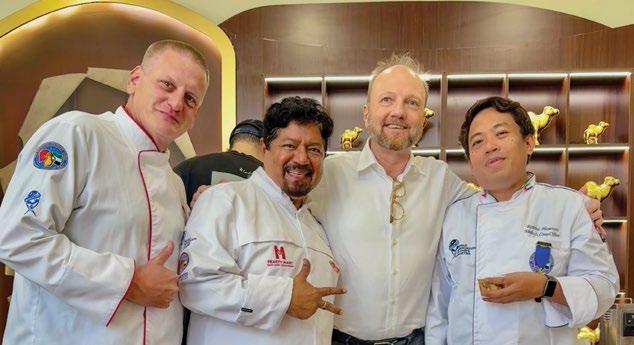
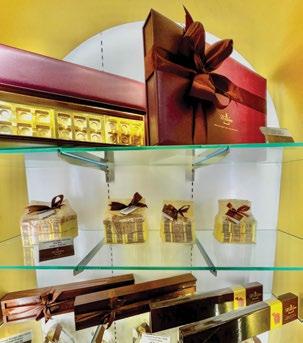
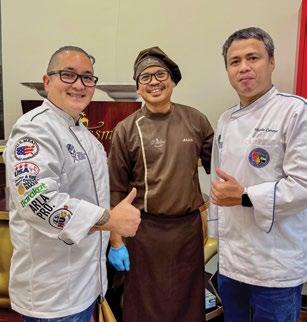
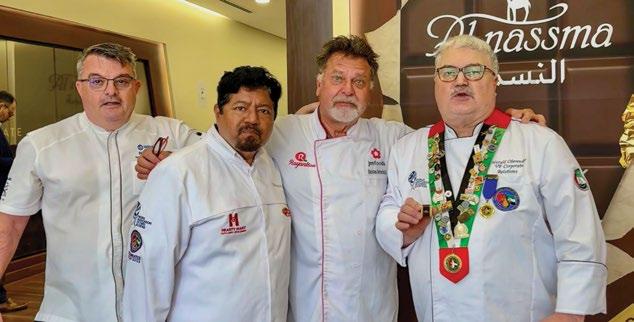
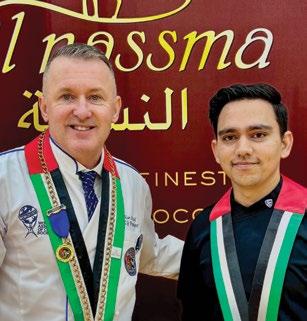
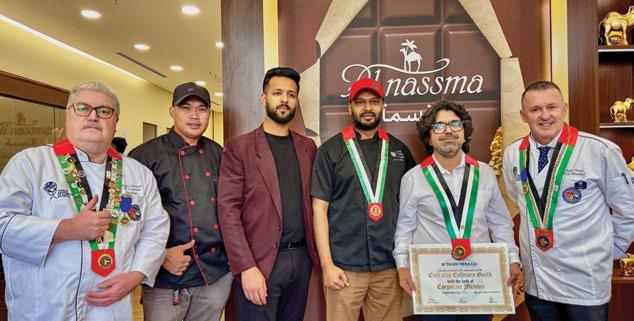
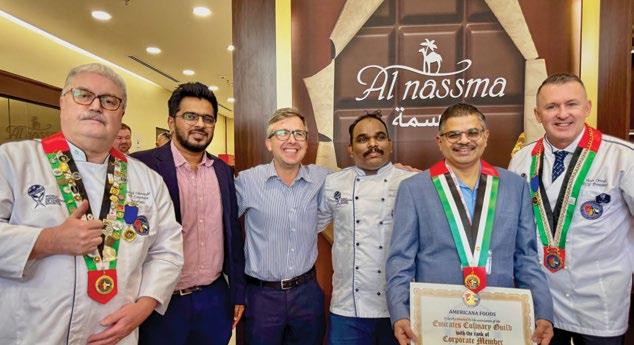
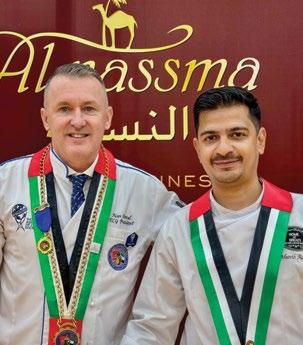
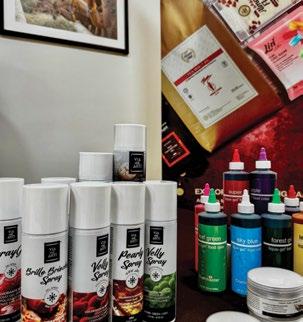
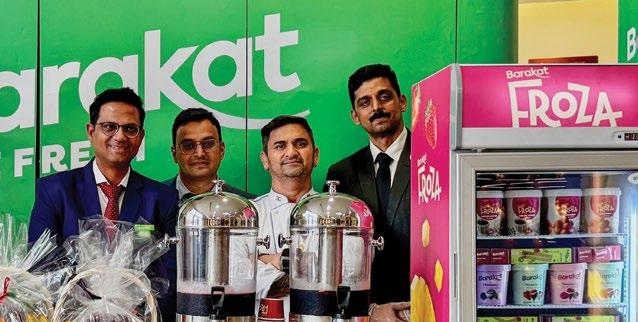
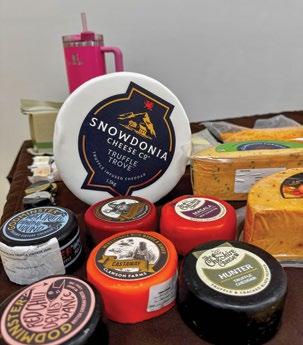
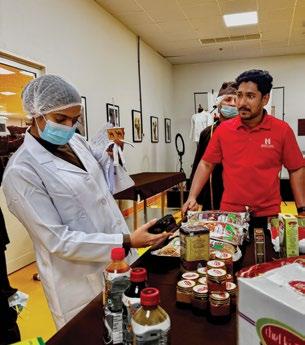
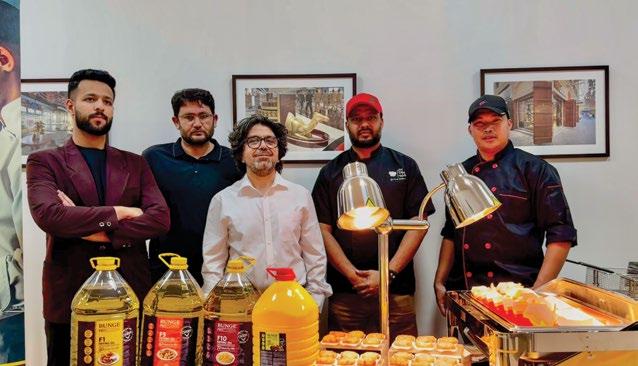
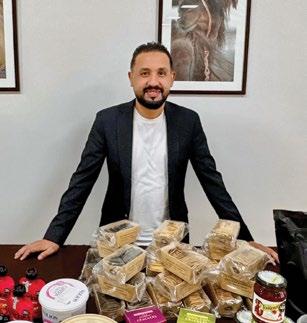
Pictures from the the Emirates Culinary Guild February meeting held at the Al Nassma Chocolate LLC Factory in Umm Al Quwwain
A listing of all the leading food, beverage, and equipment suppliers in the region
Says
Simon Martin, Executive Chef at Kerry Taste & Nutrition (Food Service) explores the food trends reshaping the region's dining landscape
friends of the guild
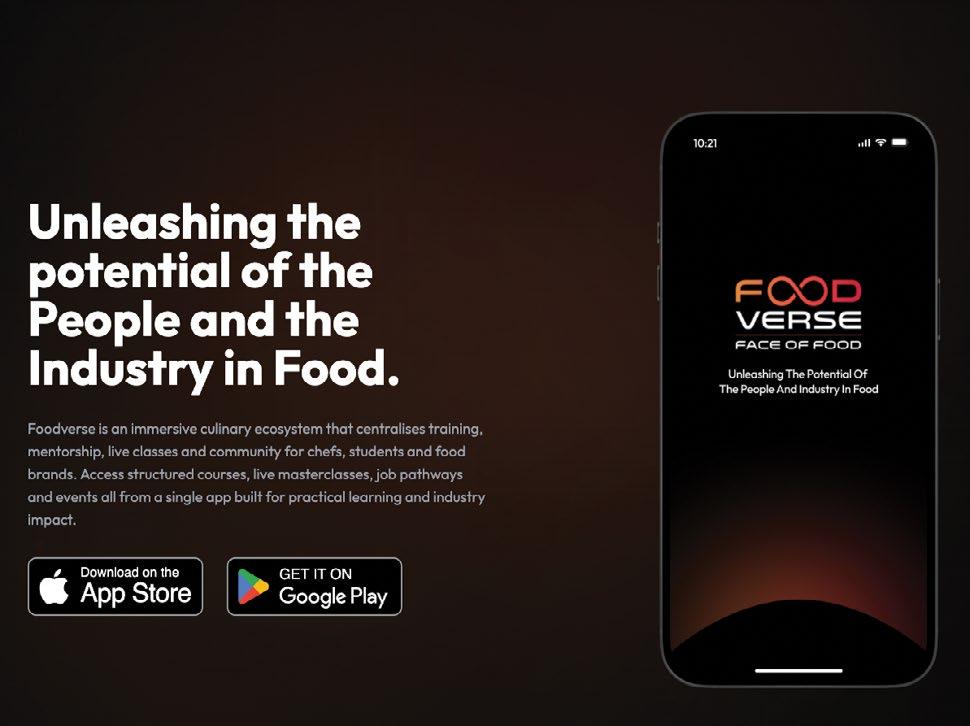
Foodverse Events
A Holistic Ecosystem Powering Culinary Engagement
The success of Foodverse Compete proved something important: large-scale culinary competitions can be managed with transparency, precision, and credibility when supported by purposebuilt digital infrastructure.
But competition execution is only one layer of a culinary event.
Registrations, exhibitor management, sponsor activations, communication flows, session engagement, payments, and reporting are equally critical to delivering a successful experience. Yet these components often continue to operate on independent, disconnected systems. That gap defined the next evolution of Foodverse.
Introducing Foodverse Events, a fully integrated, end-to-end event ecosystem designed to deliver structure, flow, and engagement within a single unified platform.
As a mobile-first solution, Foodverse Events brings the entire event journey into one structured environment. Within a single system, organisers can:
Manage registrations, dynamic pricing tiers, and secure payments.
Issue smart digital badges with QRbased validation.
Enroll individual participants and bulk delegations while preserving verified identities.
Generate invoices automatically with built-in audit trails.
Monitor attendance and session
participation in real time.
Access structured reporting and analytics without manual compilation.
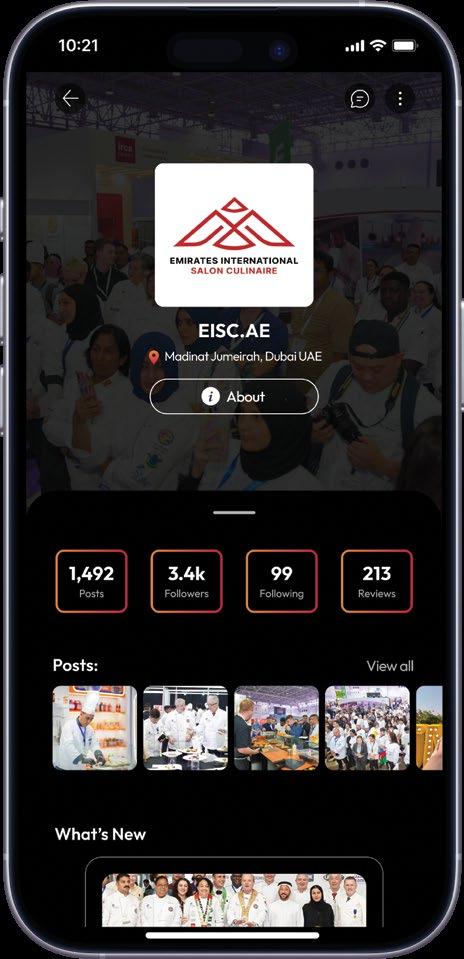
Activate exhibitor pages and communication tools from one central dashboard.
Tangible Value for Every Stakeholder
Beyond operational efficiency, Foodverse Events delivers measurable value across the entire culinary community.
For Exhibitors and Sponsors
Dedicated MyBooth digital pages that function as discoverable, brandable storefronts.
Product uploads and structured promotional outreach within defined engagement limits.
In-app visibility formats and
targeted notifications.
Exportable analytics providing measurable ROI and sponsor performance insights.
For Competitors and Chefs
Seamless integration between competition participation and personal digital profiles.
Real-time results and verified digital certificates.
Engagement history that remains accessible beyond the event.
Visibility that extends beyond the competition floor.
A Global Rollout Begins Foodverse Events will make its
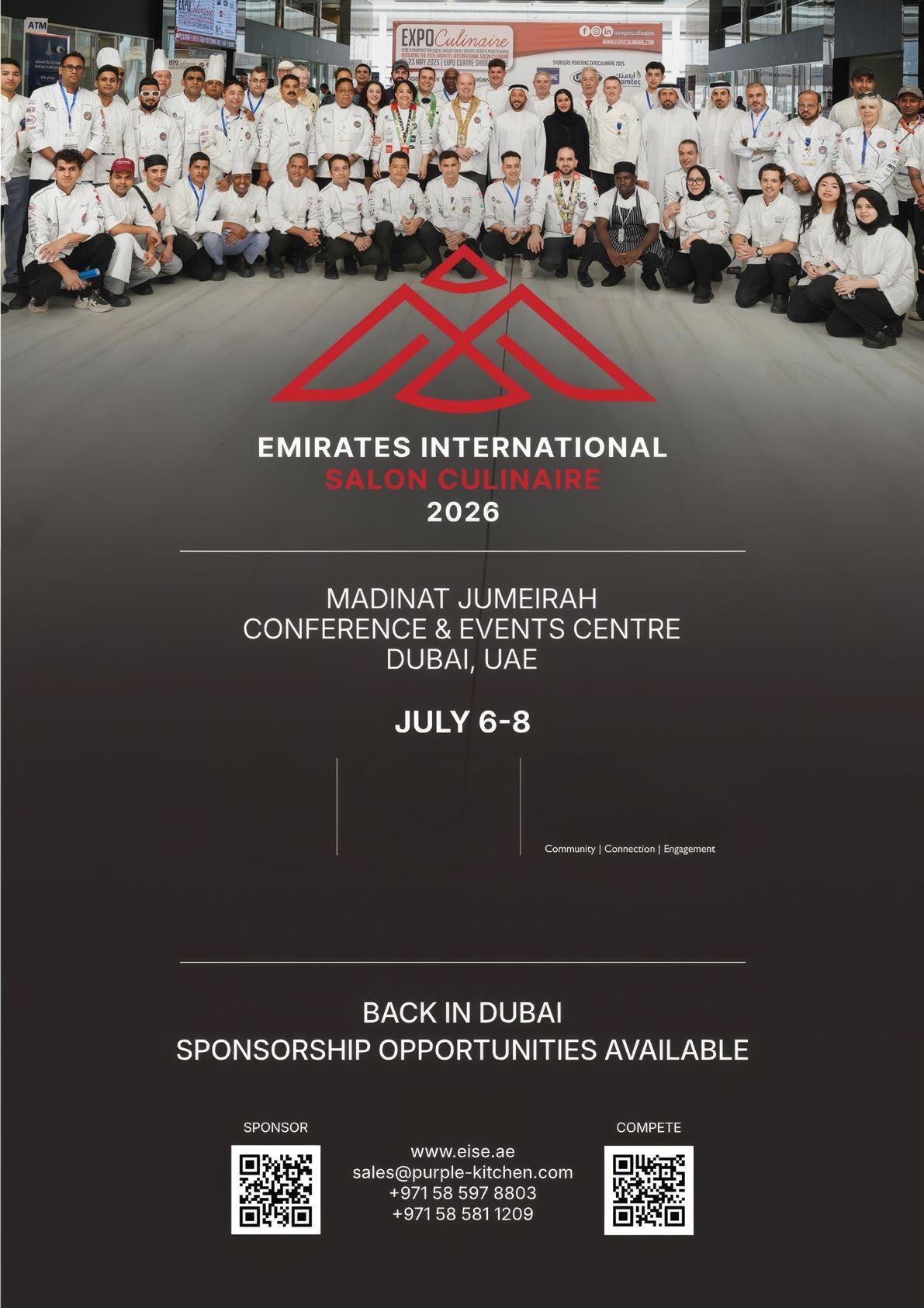
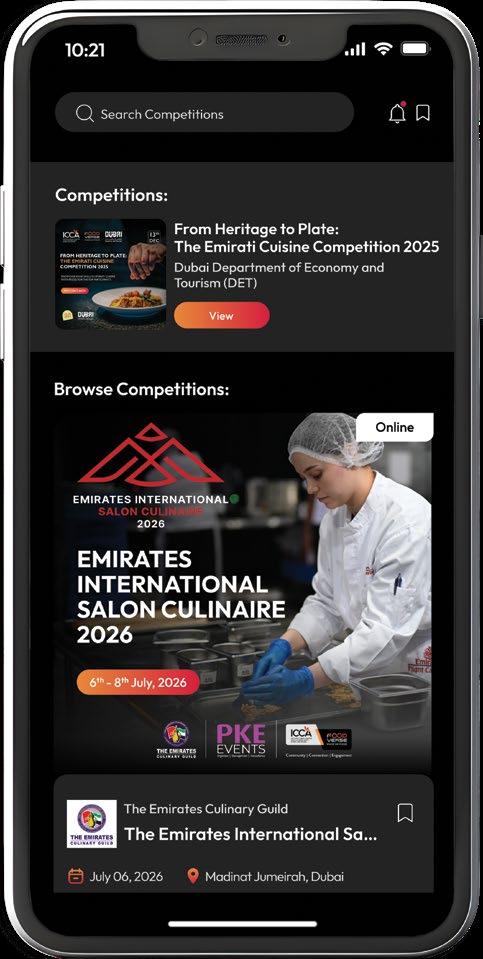
international debut at the Worldchefs Congress & Expo 2026, introducing the integrated platform to a global audience of culinary leaders. It will then power the broader infrastructure at the Emirates International Salon Culinaire in Dubai from July 6–8, where Foodverse Compete will manage the competition framework, while Foodverse Events will support the entire event experience.
As global culinary gatherings expand, stakeholders are no longer satisfied with visibility alone; they expect accountability, structured data, and measurable outcomes.
With Foodverse Events, the
infrastructure surrounding competitions is no longer fragmented. It is unified, scalable, and built to match the ambition and credibility of modern global culinary events.
Foodverse - The Face of Food
Download the app on the Play Store and App Store
The Objects That Made Me
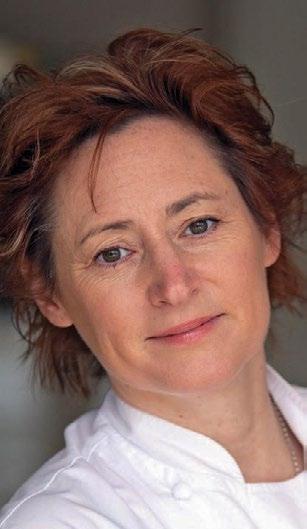
The childhood stove. A worn recipe notebook. A teacup. The palette knives she still reaches for today. Each of these ordinary objects changed everything for Claire Clark. The international pastry chef pens a reflection on the tools, memories and objects that defined her pastry life
By Claire Clark, Edited by Shreya Asopa Photographs courtesy of Jodie Hinds, Craig Martin and Jean Cazals
Long before the awards and global recognition, Claire Clark learned the fundamentals of baking in her mother’s kitchen, absorbing lessons in patience that would later steel her for the world’s most demanding environments. From Claridge’s and The Wolseley in London to California’s French Laundry, once named the best restaurant in the world, working alongside threeMichelin-starred chef Thomas Keller, she built her career at the sharp end of pastry.
Regarded as one of the finest pastry chefs in the world, Chef Claire is the first and only woman to receive the prestigious Meilleur Ouvrier de la Grande Bretagne (MOGB), and a two-time Pastry Chef of the Year. She is the author of 80 Cakes
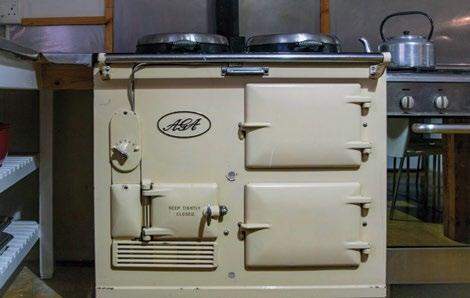
Cooking with my mother at the Aga is a memory that lives in my heart like a gentle, glowing fire. I would fetch coal to stoke the ovens that heated our home, and together we would cook at a vast, worn Victorian wooden table, using the produce we grew ourselves in the orchard and garden. Money was tight, but the love and creativity we poured into every dish made the kitchen feel abundant.
The ovens were temperamental companions. We baked meringues slowly overnight in the warming oven until they turned golden and crisp on the outside, marshmallowy within. The main oven, unpredictable in its heat, was reserved for choux paste; if it was too hot, the eclairs had to wait for the coal to cool; the side oven, gentler, nurtured sponge cakes and fruit cakes. Every routine was honed over years: juggling coal, reading heat, and coaxing perfection from unpredictability.
Drop scones and crumpets bubbled on the solid top, and
From Around the World, and has appeared as a judge on the BBC’s Bake Off: Crème de la Crème. Today, she guides as a London-based consultant while training the next generation through The Claire Clark Academy, established in partnership with Milton Keynes College in 2017.
But her story is not only told through medals or titles. It lives in the objects she has held onto.
A recipe notebook stained with years of use. A palette knife given by a mentor. A silver teapot packed into suitcases across countries. A clothes peg that recalls one of the most formidable periods of her career.
In this photo essay, she shares a personal account of the objects that stayed with her and the roles they played in making her into an acclaimed pastry chef.
chocolate for dipping eclairs melted patiently in the warming oven overnight. Jams, jellies, and marmalade were boiled in a gigantic pan on the solid top, filling the kitchen with aromas that still linger in my memory. That Aga taught me patience, intuition, and the beauty of slow, careful cooking.
Photo by Magda Ehlers
I am English, and there is one ritual I turn to again and again, no matter the place or the circumstance: a pot of tea. It is not only a drink, but it is a pause, a comfort, a small ceremony that soothes, wakes, grounds, and restores. Tea has carried me through long shifts, celebrations, and pensive moments.
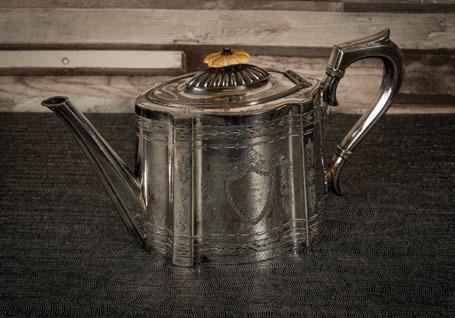
I am particular about my tea. It must be Earl Grey, preferably loose-leaf from Fortnum & Mason, brewed in a silver teapot and poured into fine china, never a mug. There is a rhythm in making it — the weight of the pot in my hand, the aroma rising, the gentle swirl of leaves. Each cup has a little story, a note of calm in a busy world.
I have carried this ritual across the globe, from Barbados to California, the Maldives to New Zealand, Singapore to Japan. Wherever I am, my silver teapot, Earl Grey leaves, and china cup are my anchors. Even the most stubborn coffee drinkers have been converted with a perfectly brewed cup. On a good day, tea makes me smile; on a bad day, it eases my worry. It is one of life’s simple, sustaining pleasures, a friend I can always rely on.
Mastery is in the details. A steady hand and precise stroke build the foundations of every creation.
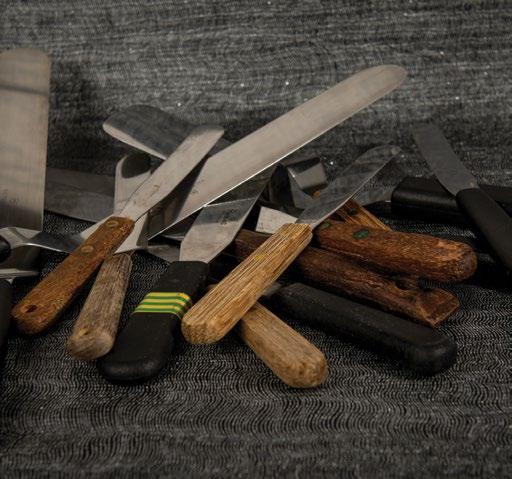
Chefs cherish knives, but for a pastry chef, it is the humble palette knife that becomes an extension of the hand and the heart. Stepped, level, wide, thin, long, short - each one has a purpose, each one a story. I have a palette knife that has been with me since college, given to me by my mentor, Prof John Huber. It has disappeared and returned more times than I can count.
This simple tool is my companion in creating exacting layers, spreading, masking, and levelling. With it, I have guided countless students and apprentices, demonstrating the flow of a long, even stroke or the lightness needed to glide over a sponge. A palette knife instills patience, precision, and care. I am grateful for the skills I have developed over the years, but even more grateful for the chance to pass on knowledge through touch, guidance, and shared memory.
A recipe is not just instructions; it is your daily guide, your creative anchor.
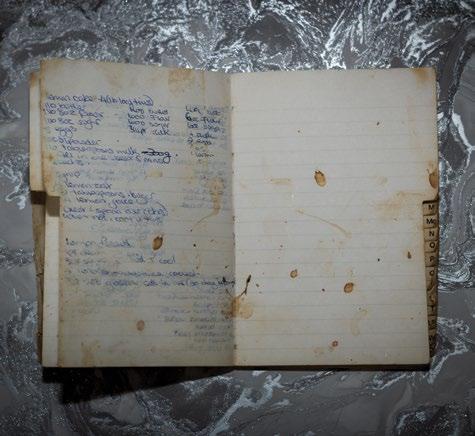
Where would a pastry chef be without their recipes? In a muddle! My oldest recipe book from 1983 looks like it survived a war. No cover, pages stuck together, encrusted with years of flour and chocolate. I suspect it even fell into a pot of chocolate sauce once. Half of it is illegible, but I could never be without it. I have about ten of these battle-scarred recipe-book beauties. Once, I asked a friend to type them up. She turned them into an Excel spreadsheet, and I hardly recognized my own recipes. All the love and nuance lost!
Every scribbled note about water, grams, marginal notes, and temperature matters. These books are our bibles in a world of sugar and heat. They are where science meets artistry, and discipline becomes creativity.
Photo by Craig Martin
Photo by Craig Martin
Photo by Craig Martin
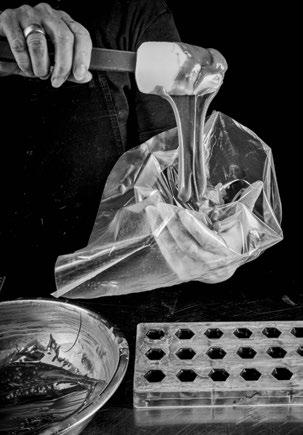
Pipe every day, and excellence follows Being a pastry chef is about mastery over every element of your work: time, ingredients, technique, team, and self. Piping teaches repetition, discipline, and tenacity. To create thousands of perfectly even eclairs, macarons, or decorations, you must pipe the same shape, the same size, and the same amount, every single time, with speed and finesse.
Piping is learned through touch, feel, and observation. I managed to control my bag, angle, pressure, and flow, and to work cleanly, swiftly, and efficiently. My hands are small, so I often refill more frequently than others might,
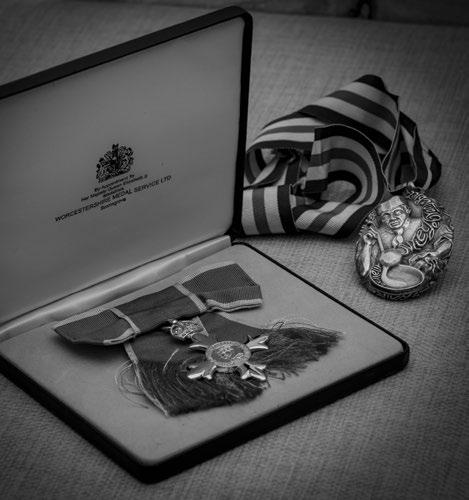
Some medals are given; others are earned. The two I treasure most fall into the latter category, especially my MOGB, the UK’s equivalent of the French Meilleur Ouvrier de France (MOF), now called the MCA (Master of Culinary Art).
The MCA is the highest culinary honor in the UK, awarded only to chefs who demonstrate mastery, creativity, and skill at the very top of their craft.
I became the first-ever recipient, and I was a girl. I spent days baking and making chocolate-and-sugar centerpieces, pushing myself further than I thought possible. On the last day, my chocolate centerpiece fell, and I had to rebuild it.
At one point, I felt so faint I had to sit down. Still, I kept going, for myself and for those who believed in me before I believed in myself.
squeezing from the middle when needed, yet I can achieve accuracy that equals or surpasses anyone. Every day spent piping builds muscle memory, patience, and confidence.
I also discovered that piping is a way to teach. Guiding students, commis chefs, and apprentices, I found that showing them the feel of the bag, the right level to fill it, and the hand placement often communicates more than words actually could. To master piping is to master control, and in that mastery lies the joy of seeing exactness and beauty emerge from your own hands. It is meditation, and an indispensable skill for anyone who aspires to create in pastry.
From the beginning, I was not the obvious candidate. My college lecturer told my parents I would never make it: too shy, too quiet, lacking talent. But my parents told me to follow my dreams. I was fortunate to work under Chef Peter Kromburg and Head Pastry Chef Ernst Bachman at The Intercontinental in London, and to study under Prof John Huber. They believed in me, corrected me, and guided me.
Through them, I came across others who nurtured my growth: Sara Jayne Staines, Brian Turner, and John Williams. These mentors from The Academy of Culinary Arts gave me opportunities, encouragement, and belief that changed my life. I am a success story of the Academy, not because of medals alone, but because of the people who believed in me. Without them, I would not be the confident, driven pastry chef I am today.
In addition to the medals I earned through competition, I was honored to receive an MBE in recognition of my contribution to the culinary industry. While the MOGB tested my skill and perseverance, the MBE acknowledged the work I have done to support and inspire others in the field I love.
This commitment continues through the Academy of Patisserie of Excellence, which I established to pass on the knowledge, guidance, and encouragement that others shared with me. It is my way of supporting the next generation of chefs, to ensure the skills and standards of our craft continue, and to create a community of support like the one I was fortunate to receive. Just as I was supported by those who believed in me, I now have the privilege of helping others believe in themselves.
To young chefs chasing a dream: believe in yourself. Seek out those who believe in you. They are out there. Follow your dreams, never give up, and always do your best. In the end, that is all anyone, including yourself, can ask.
Photo by Jodi Hinds
Photo by Craig Martin
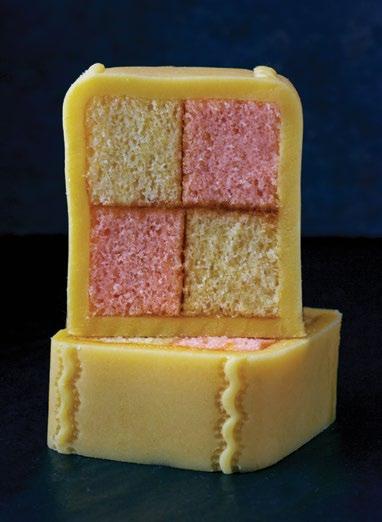
BATTENBERG
The cake that teaches teamwork
If I were a cake, I would be a Battenberg. From my early days at The Ritz Hotel, I learned that this classic cake is about precision, patience, and collaboration. No tins were used. Only two trays: one for the yellow sponge, one for the pink. Each quarter was trimmed and lined up like little soldiers before being jammed together into perfect squares, stacked and encased in a rich, decadent marzipan shell.
I am pretty, I am powerful. I am classic, trusted, and regal. I command attention, neat, lavish, perfect in every way. But I cannot exist alone. I rely on the other three squares - each must be perfect, each must fit precisely,
for the whole to shine. Alone, I am incomplete. Together, we are a masterpiece.
This is teamwork in its sweetest form. Being a good pastry chef is also about leadership, understanding, and care. You must know your team, what drives them, and what guidance they need. Praise, direction, reassurance, and even a firm corrective word at the right moment are all ingredients in building a strong, cohesive team.
When a team comes together and clicks, it is magical. Like the perfect Battenberg, every piece aligned, every chef’s skill combined, the result is greater than the sum of its parts. Then it is the best cake you will ever create, and the most fulfilling reward a pastry chef can experience.
Respect the ingredient, observe it, and it will reveal its magic in your hands
Chocolate has always been my passion, my playground, and my greatest teacher. Photographer Jodie Hinds captured this image, focusing on the hands as the heart of the story. These hands show the memory of repetition, the confidence that comes with mastery, and the marks of years spent perfecting a craft. Their lines and movements tell the artist’s story, showing skill, and creativity minus the words.
Under the guidance of my mentors Ernest Bachmann and Prof John Huber, I learned to temper chocolate
without thermometers, relying on intuition, observation, and respect for the ingredient. Its weight, viscosity, crystallisation, and temperature spoke to me.
Before modern moulds, centrepieces were made by hand, and shaping chocolate felt almost meditative. Once, a photographer sprayed me with warm, silky, molten chocolate for a photo shoot. It was a blissful and indulgent moment that captured the joy of working with chocolate. Every curve, every shine, and every tempered bar teaches patience, understanding, and love for this magical ingredient.
Photo by Jodi Hinds
Photo by Craig Martin
Photo by Jean Cazals
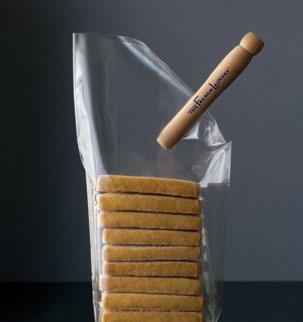
Some photographs hold more than an image. They carry a history. This one does that for me. A simple clothes peg and a piece of shortbread, objects that, together, capture my time at The French Laundry in California, one of the most admired restaurants in the world, and without doubt the defining job of my career.
The peg became synonymous with the restaurant, a reference to its origins as a steam laundry. Functional and unpretentious, it speaks to a place where nothing exists without purpose. The shortbread is more personal. It is my mother’s recipe, still served as a parting gift to guests. Something so simple (flour, butter, sugar) travelled from my childhood to the tables of one of the world’s greatest dining rooms. That a small piece of home became part of every diner’s experience remains one of the most meaningful achievements of my career.
At the heart of The French Laundry is its creator and chef-owner, Thomas Keller. Without question, he is the passion behind the restaurant’s enduring success. His vision was shaped by the food, culture, discipline, generosity, humility, and an uncompromising respect for craft.
The French Laundry was not an easy place to work. You had to be a certain kind of person to belong there: generous, resilient. There was no room for ego. No room for ‘I’. Only ‘we’. The restaurant functioned through the absolute dedication of every individual doing their job to the highest possible standard. Nothing was accidental. Nothing was ever out of place. At times, it felt as though everyone shared the same meticulous, obsessive attention to detail, and that was precisely the point.
From front of house to the kitchen, from pastry to the care of the grounds,
the entire operation moved like a perfectly tuned machine. It felt almost military. Standards were exacting. You were always alert, always striving, always expected to give more than you thought you had.
For me, it was the hardest role I have ever held and the most extraordinary. I learned not only about technique and leadership, but about myself. Under Thomas Keller’s guidance, I felt mentored, valued, and accepted. I found my place within the team. I would never have imagined that one day I would become Head Pastry Chef there, working alongside such a driven and committed team.
There were remarkable highs: the restaurant holding three Michelin stars, and a collective sense of achievement. There were also sacrifices. I missed my family. The intensity was consuming. Yet within that pressure came moments of connection and belonging that I have never experienced before, or since.
We were not just colleagues. We were a family. Looking back now, that photograph says everything. The peg and the shortbread represent heritage, excellence, and warmth. The French Laundry shaped me profoundly, both as a chef and as a person.
In the end, what I carry with me most is the understanding that excellence is never accidental; it is built daily through discipline and generosity, a philosophy embodied by Thomas Keller and lived by every person who passed through The French Laundry. It was a rare privilege to be part of something so exacting and so deeply human. ■
Photo by Craig Martin
Photo by Jean Cazals
Proof of a Pro
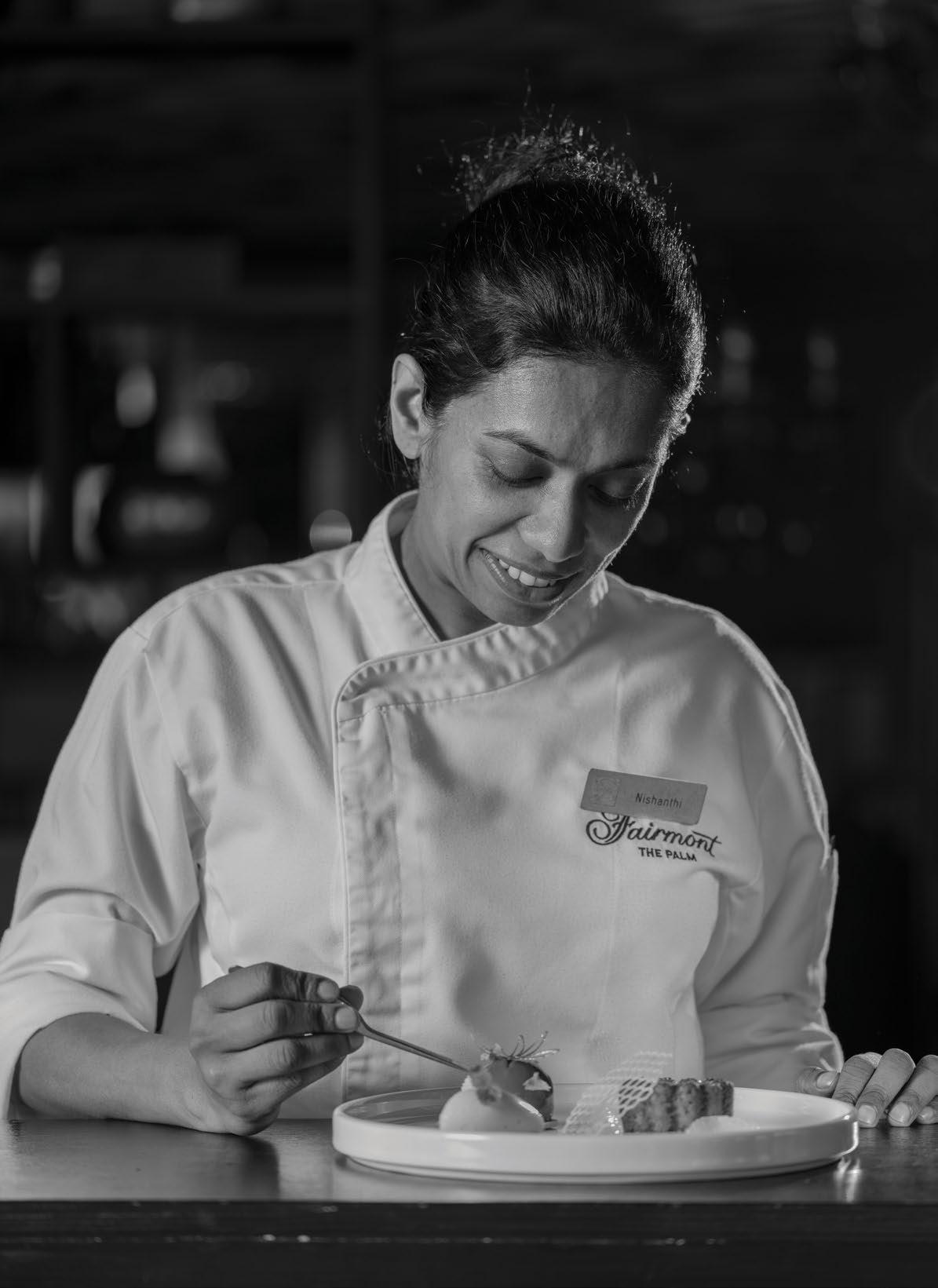
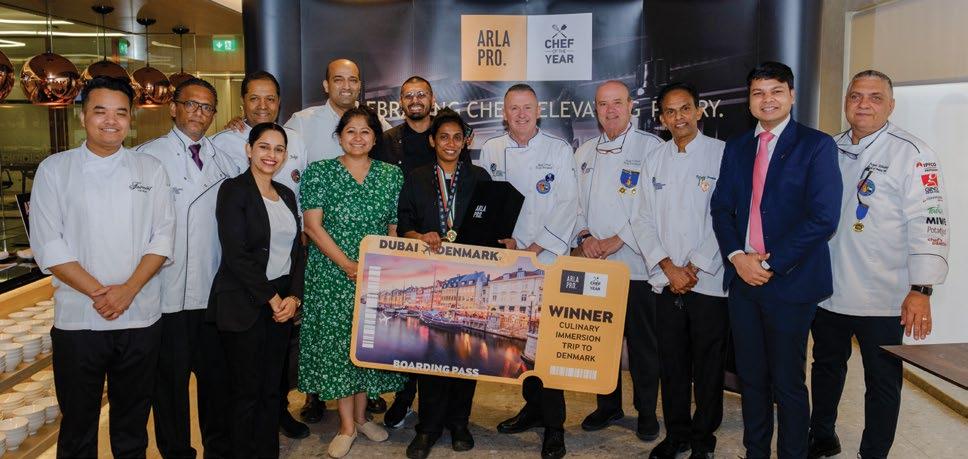
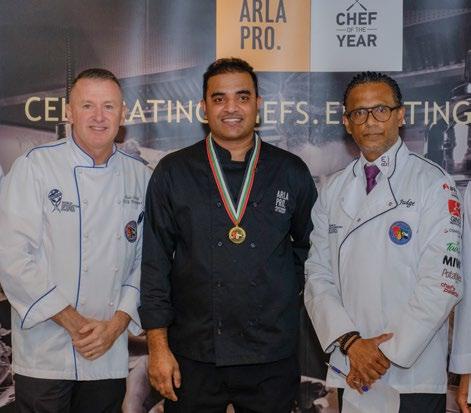
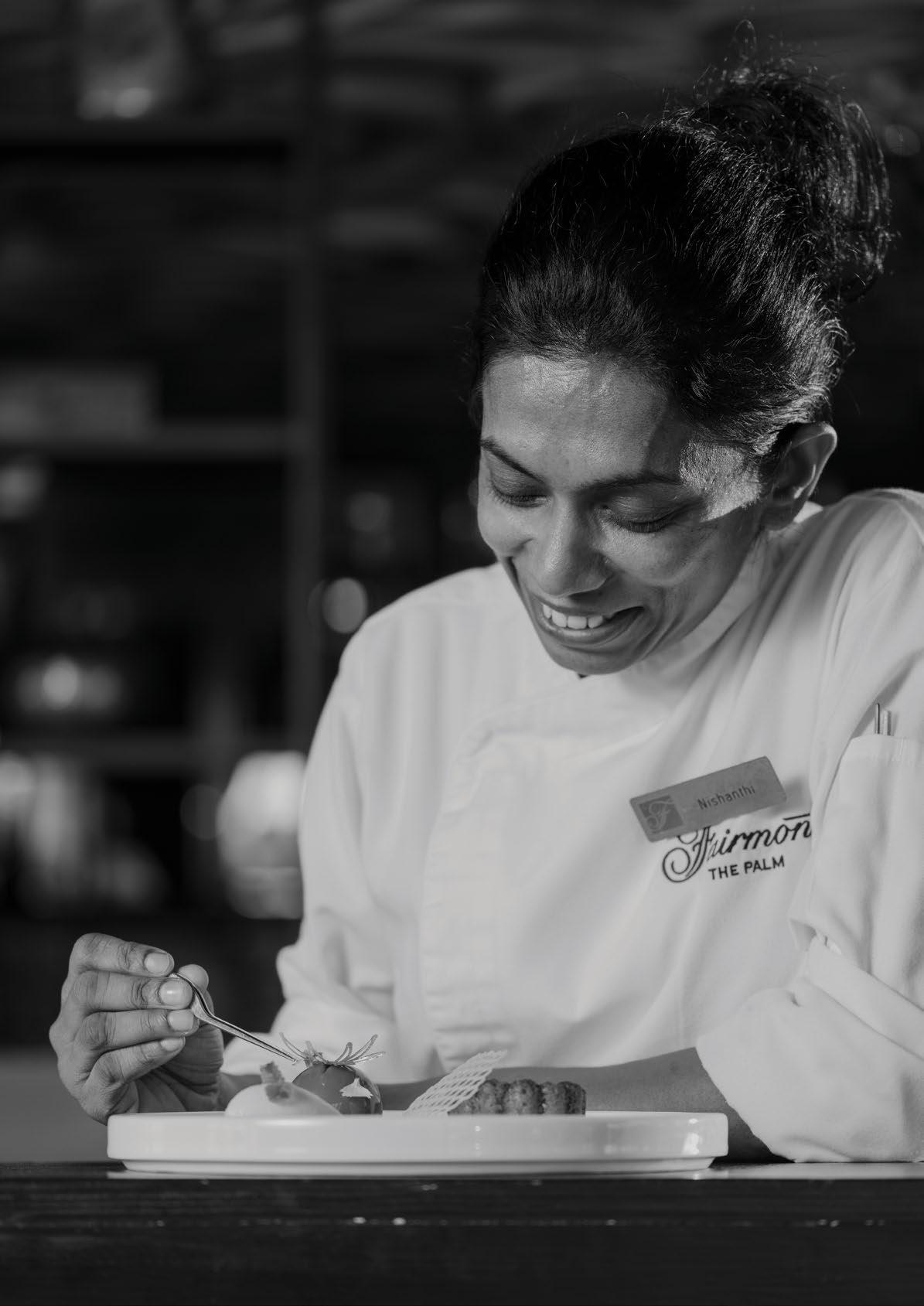
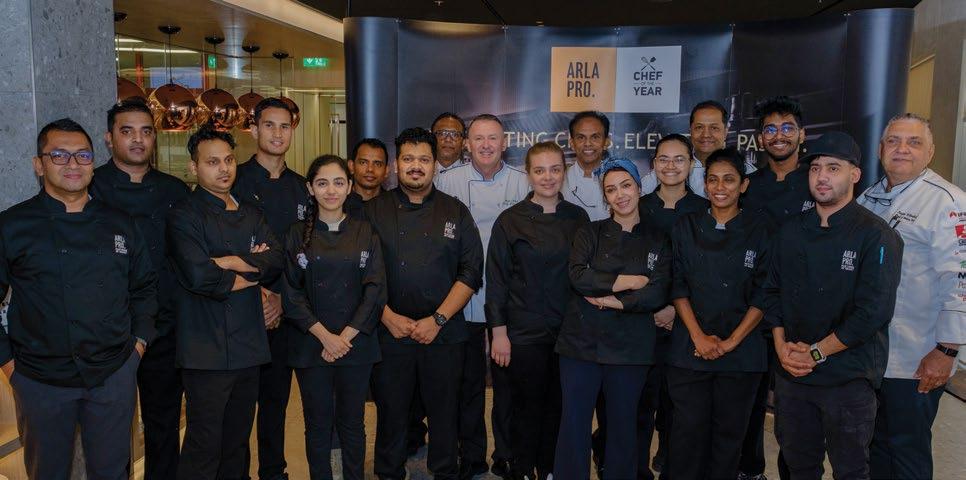
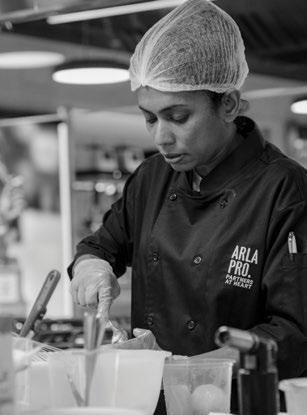
A near-withdrawal, a few days of preparation, and a gold-winning plate, Chef Nishanthi’s victory at the Arla Pro Pastry Mastery Competition defied expectation. Gulf Gourmet takes a closer look at the highstakes contest held at ICCA and the standards set at the judging table
No talent, however extraordinary, grows in isolation. The world is full of gifted people who never became great because no one believed in them with enough conviction to vanquish their self-doubt. Mentorship is that missing variable. It changes the way a person sees their own ability. And sometimes, it pushes someone who never imagined standing in a competition kitchen not only to compete but to walk away with the gold.
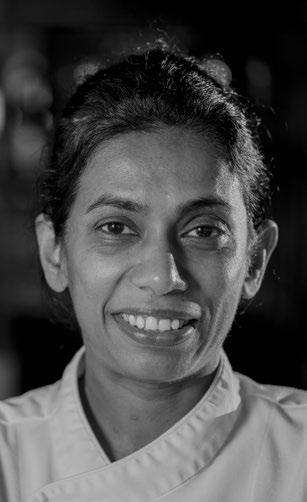
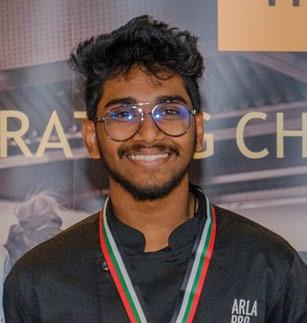
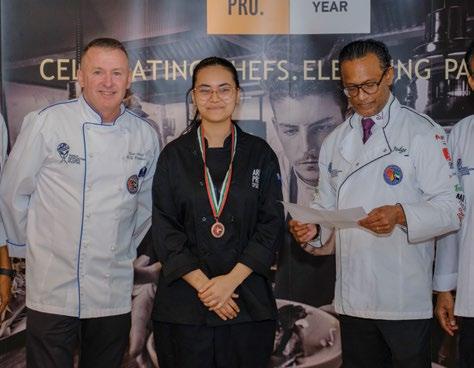
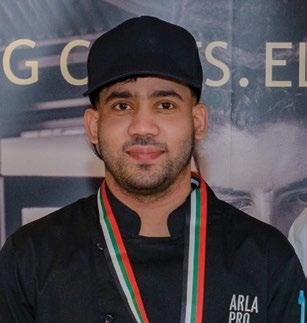
The bronze and silver medalists were being called out one by one. Chef Nishanthi stood listening. Her stillness was taut with anticipation. She had already assumed she was not among the winners. Suddenly came the heartstopping moment. Chef W. Nishanthi was named the winner of the Arla Pro Pastry Mastery Competition 2025.
“I did not even have words. I just thought ....Oh my God! I have gold,” Chef Nishanthi told Gulf Gourmet, her disbelief as fresh as the moment itself.
Just a few days before, competing was the last thing on her mind. As chef de partie at Fairmont The Palm, she was knee-deep in assisting the team
Mentorship is the missing variable. It changes the way a person sees their own ability
with the pastry production during the holiday season.
Tired and ready for a break, she had already booked a vacation blissfully unaware that the dates would collide with the grand finale. ”It was my husband, Chef Hillary, who asked me not to pass this chance slip away and give it my best shot.”
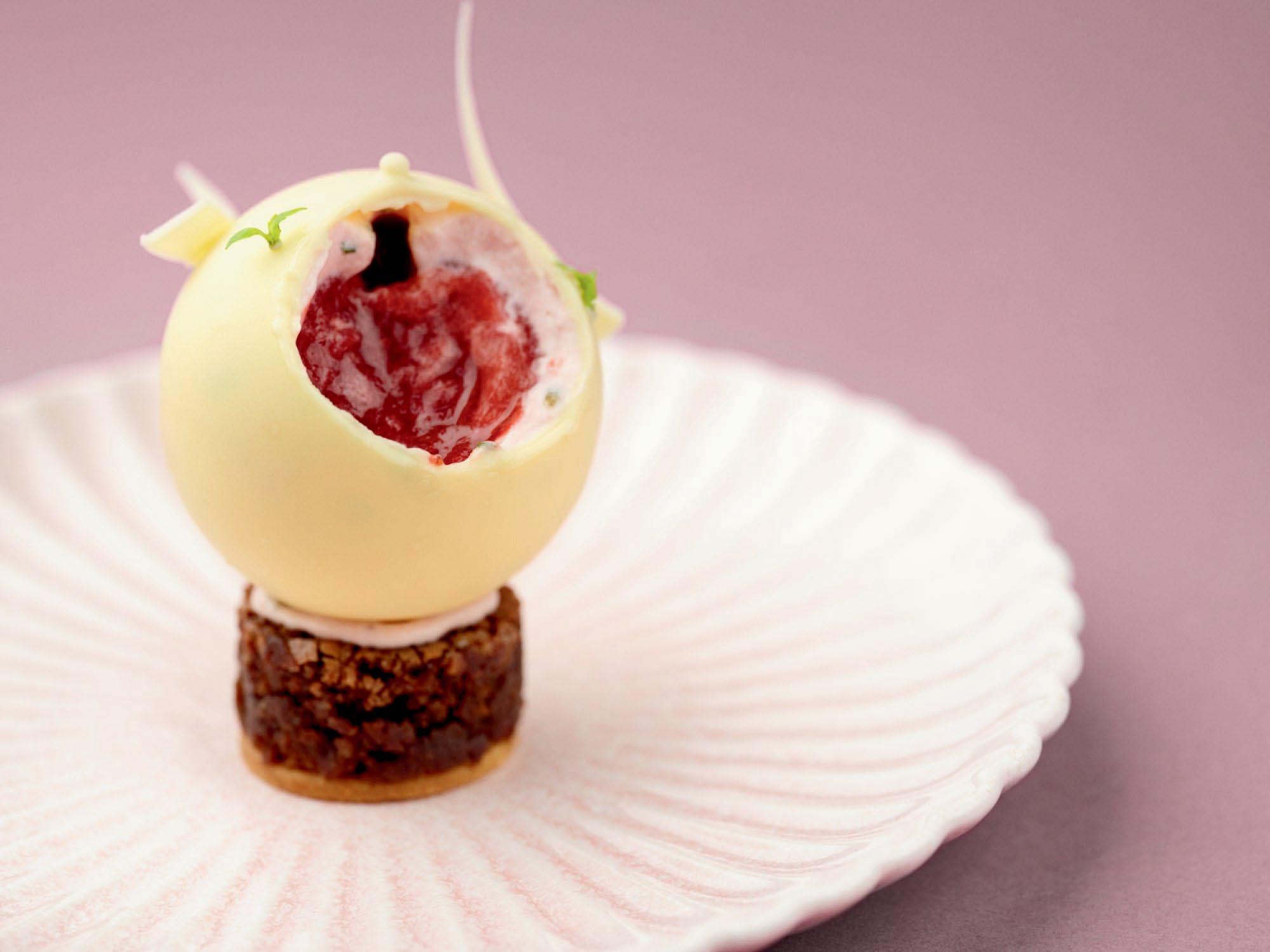
And so she did. She returned from her vacation at the tail end of January with four days to prepare and the pressure already bubbling over. The finale dish vision of warm honey and orange cake with banana passion cremeux, caramelized banana, and frozen mango cheese crumble stood fully formed in her mind. Hot, cold, and frozen elements worked together to create balance on the plate, but now she had to adapt to the strict competition window. That adaptation turned out to be the real test.
“The main element, the honey cake, usually needs four hours to rest in the chiller. But in the competition, I had to make sure it was set within the time limit, so I had multiple attempts to make it perfect, adjust the temperature, and the timing to get it right under pressure,” she says on the final stretch
of preparation took on an almost fanatical focus.
The mango ice crumble presented its own reckoning. The flavors fell flat, the plate failed to impress, and with just two days left, the situation looked bleak. “My mentors directed me to make the dish stand out. So, the presentation and flavors were reworked. The team tasted the final version and cleared the plate,” she grinned. “That is when we knew the dish would work.”
Chef Nishanthi’s win came with a long roll call of gratitude. Behind the scenes were mentors and teammates who checked in on tastings and helped her practice. “Chef Darren Androw, Chef G. Sukhathankar, Chef Anil Rahul, and the HR team supported me. My pastry team at Fairmont The Palm did something I will never forget. They came in before dawn on competition morning and made me tea. It was such a small thing, but it meant everything. My husband, Chef Hillary, believed in me from the very beginning and never let me doubt myself. My parents always supported me. And all chefs I have worked with over the years, Chef Smith, Chef Dilip, Chef Sanjaya, Chef Alison, Chef Karol, Chef Nishantha, Chef Sudath, Chef Kanishka, and Chef Hudson, I am grateful to each of them.”
Competition is the great equalizer; it is where you find out where you really stand
Familiarity helped too. The competition unfolded at the International Centre for Culinary Arts, the same institution where she had formerly earned her pastry diploma. It felt, in the best possible way, like home to her. “I am thankful to Chef Dammika Herath and
Chef Uwe Michel, Mrs. Shanaaz Raja, and Mr. Sunjeh Raja, who opened the door to ICCA. That is where my journey began. Going back there made me realise how far I have come.”
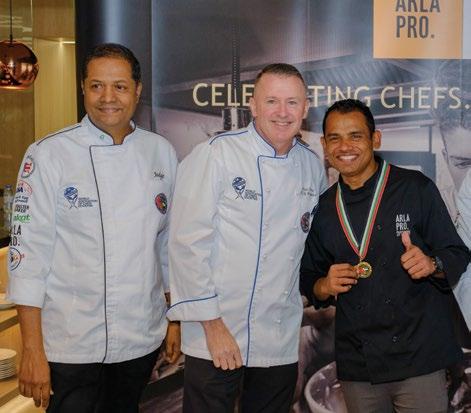
The coordination behind it all did not go unnoticed. “It was extremely well organised,” said Amaresh Bhaskaran, Associate Publisher of Gulf Gourmet.“A chef’s creativity can only shine when the stage and ingredients are set just right. With the support of Arla Pro products and the world-class ICCA venue, the event proved to be a red-letter day for the region’s culinary scene.”
Among the judges was Masterbaker Jurgen Ellenbeck, weighing whether the pastry had real crumb and character. He notes that serving a dessert in a hotel kitchen is worlds apart from presenting one in competition. “In service, something can taste good, and that is often enough. But here, you need to showcase your skills. We have to see what you can put together, all the elements as per the brief. We expected clean work, strong execution, and presentation,” explains Chef Jurgen. In other words, the proof had to be in the pudding.
For those who fell short, he offered not disappointment but direction. Feedback, he said, is what brings chefs back stronger.
Practice is the most important thing. It helps refine the dish and manage time
“ It is a rare opportunity for chefs to step outside the daily service and see their cooking from a different vantage point entirely. If you cook day in and day out at your hotel and your chef says, ‘It’s good, it’s good,’ you are still flying blind. Competition like Arla Pro Pastry Mastery is the great equalizer; it is where you find out where you really stand,” he says.
Competitions like this also require courage, and Chef Jurgen is unequivocal about this. “If you come to compete, you are already a winner. Learn new skills, read the competition brief carefully, and train, and train some more.”
For Nishanthi, the advice lands close to home. “Practice is the most important thing. It helps refine the dish with new
PARTICIPANT NAME
A chef’s creativity can only shine when the stage and ingredients are set just rightç
ideas and manage time. It was during those last practice sessions with my mentors that the idea for the live espuma presentation and the crumble work came together.”
Speaking about the competition itself,
MEDAL
W. Nishanthi Gold
Janaka Ranjith Kumara Herath Mudiyanselage Gold
Piyumal Deshapriya Ranathunga Gold
Alena Hladkevich Silver
Samiulla Khan Silver
Dheeraj Singh Silver
Saniya Samur Bronze
Mulyatna Bronze
Chamidu Bronze
Chandu Ahangama
Luat Pyll Araullo
Nesrine Skender
Dhewneka
Bronze
Bronze
Bronze
Bronze
she described it as life-changing. “I never thought I would win,” she admitted. “This competition helped me find myself. I started to believe it too, that I am talented. Competitions like this give you a platform. A big thanks to Arla Pro for this opportunity.” With the win comes a visit to Denmark, and she is already looking ahead. The trip will offer an exchange of knowledge, a chance to observe, absorb, and return sharper. “ I am excited to learn more about chocolate, explore Danish pastry traditions, and bring that learning back to the team,” she adds.
When Nishanthi stepped up for her gold, it was a win for mentorship as much as for talent. As the saying goes, iron sharpens iron. ■
We Need to Talk About Hospitality Wages
Chef Tarryn-Leigh Green asks why hospitality wages are so compressed in the UAE, and why it hits women harder
Across conversations within The Women’s Culinary Chapter, one theme surfaces with uncomfortable regularity: salaries. Or more precisely, the lack of them. As a business owner in the UAE hospitality sector, I understand first-hand the genuine costs employers face when hiring staff: visas, medicals, housing allowances, transport, uniforms, insurance, recruitment fees, onboarding, and the perpetual risk that an employee may leave before the end of their visa cycle. These costs are real, material, and are often used to justify tight salary bands.
But what is equally real is this: too often, those costs are being quietly subsidised by the people doing the work. It is not unusual to see qualified chefs offered AED 2,500 per month. In a country where rent, transport, food, and basic living expenses are high, this figure is not simply low; it’s unlivable. Now onto that layer, 10–14-hour shifts, split duties, intense physical labour, mental pressure, and the emotional demand of service. It becomes clear why skill shortages persist. Salaries at this level don’t just discourage talent; they extinguish passion.
Hospitality, like teaching or healthcare, is a profession rooted in vocation. People enter it because they care. And industries built on care have a global history of underpaying the very people who make them work. In the UAE, this problem is exacerbated by a structural mechanism of wage compression. Employers benchmark against what the market currently pays, not what the role actually requires. Housing and transport allowances are factored into the package, masking how little take-home pay exists. Role scopes expand, a CDP performing Junior Sous responsibilities, a Sous Chef covering Head Chef duties,
and all without commensurate salary movement. The result is a workforce doing more, for longer, for less.
And this is where the gender dimension becomes impossible to ignore. Women are disproportionately affected by compressed wages for several reasons. They are statistically less likely to negotiate aggressively at the offer stage. They are more likely to be assessed on fit and attitude rather than technical competence. They often carry additional family or care responsibilities that make late shifts, split shifts, or live-in arrangements impractical, which can unfairly label them as less flexible or less committed. Safety considerations around late transport and accommodation also have a part in role selection and earning potential.
When wages are already compressed, any of these factors pushes women further down the earning scale. Ironically, the industry then wonders why retention is low and why experienced professionals leave the region.
From an employer’s perspective, the frustration is understandable. Investing in recruitment only to lose people is
costly. But the accepted regional solution of holding salaries down to protect against that risk is self-defeating. It creates the very churn it aims to prevent.
What keeps people in roles is not fear of visa penalties. It is feeling seen, valued, and able to grow. In my experience, when businesses invest in training, mentorship, and clear internal progression pathways, staff engagement changes entirely.
When annual salary reviews are the norm rather than the exception, when promotion from within is real rather than a theoretical promise, and when people can see a way to increase their earnings without resigning, loyalty follows.
The widely accepted idea that the only way to get a pay rise is to move companies is, frankly, bizarre. It increases employers' costs through repeated recruitment cycles, visa processing, and onboarding. The money spent replacing staff could be used far more effectively to retain and develop them.
So, this is a challenge to business owners and senior leaders in hospitality: Break the cycle.
Pay people what their roles are actually worth, not what the compressed market has normalised. Build structured pay progression into your business model. Invest in your people with the same seriousness you invest in equipment, fit-outs, and marketing. Make internal opportunities tangible, not dangling carrots.
When pay honestly reflects the value of the work, passion is restored, talent stays in the industry, and both women and men can build sustainable careers in hospitality, rather than surviving in one that quietly underpays them. ■
Food, Connections, and Unexpected Opportunity Served on a Plate:
Educator, hospitality lifer, and unapologetic sauce enthusiast, Chef Helen Morris, on how a burger changed her mind and her move back to the UAE for a regional game-changer
Qatar International Food Festival (QIFF) came, saw, and, by all accounts, conquered. Visitor numbers were strong, the buzz was real, and social media was awash with people clutching burgers the size of small pillows. Did I go? No.
Between a calendar that looked like a competitive game of Jenga, a run of truly pathetic cold nights (which no one in the UK believes, despite my photographic evidence of temperatures and thick jumpers), and a mild case of festival fatigue, I gave it a miss. I also read a few reviews about the food, and it seemed this year’s unifying culinary vision was… burgers. Lots of burgers. With a side of Middle Eastern favourites. Which is all well and good, but it did not exactly ignite a desire to put on my WINTER coat and venture into the night like some food-seeking polar explorer.
Let me be clear: I respect a good burger. I do not crave one. Rarely do I wake up thinking, “You know what would complete me today? A juicy burger and bun.” My enthusiasm politely stayed at home, under a blanket, minding its own business.
That said, High Joint in Dubai did derail my indifference to burgers. In the name of research (and student consultancy support, clearly very noble reasons), I caved and ordered one. And oh myyyyy. The bun. The burger. The garnish. The sauce. I am a big sauce fan, dry food is unnecessary suffering, and this was a
Hospitality gets into your bloodstream. It rewires your brain
thing of beauty. Suddenly, I understood the obsession. Not fully. Let us not get carried away. But occasionally enough to experience a rogue burger craving. Sometimes accompanied by loaded fries, which are not my natural habitat, but these were next-level fries. I devoured them with zero shame.
Still, my true food loves remain Thai, sushi, and a really, really good butter chicken. To be honest, I would do
anything for Chef Felix’s butter chicken. A superior creation from his days as an employee catering chef. Stunning. Iconic. I am writing this now and desperately want butter chicken. Perhaps that is my next article, The Foods I Crave and the Emotional Spiral That Follows.
But instead, I have been thinking about hospitality. And opportunity. And why I continue to defend this industry like a bit unhinged relative at a family dinner who refuses to let it be criticised without context.
Those of us in hospitality or, like me these days, slightly in but often passing on knowledge, tend to love it deeply. Properly love it. It is more than a job; it is a personality trait. It gets into your bloodstream. It rewires your brain. You will never eat in a restaurant again without mentally assessing service flow, table turns, lighting, and whether the server has been properly trained.
I hear people bashing hospitality as a career path all the time, and I usually find myself jumping in with, “Yes, but…”
Yes, it is tough.
Yes, it has warts - some big ones.
Yes, it eats weekends, sleep, social lives, and occasionally your will to live. BUT…
Of course, it is not all rosy. Anyone who says otherwise is either lying
or still in their induction week. But, it important but, if you seek out the right opportunities, in the right places, with the right people (and let us be honest, salaries that actually match expectations), this industry can give you a career that is rich in experience, friendships, and moments you will talk about for years long after you have moved on. The gems are there. They exist. And they often reward you in ways you do not immediately see at the time.
Which brings me neatly to connections.
I have spoken before about how far connections can take you in this industry, and not the transactional kind. I mean the real ones. The people who know your work, your values, and your worth when you are not in the room. The ones who say your name when it matters.
So here I am, sitting at my table overlooking the Doha Corniche, writing this and realising that I am really going to miss this place when I leave in April. I love Doha. I love its relaxed vibe, its compactness, and how refreshingly people-friendly it feels as a city, and it is definitely pocketfriendly for the GCC. Do not get me wrong, the hospitality market here is tough. Qatar does not yet have the tourist numbers to sustain the sheer abundance of eateries fully, which is a shame because there are so many genuinely good ones quietly doing excellent work.
So, you might reasonably ask, “Why on earth are you leaving if you love it?” Trust me, that question has woken me up at 1 am, 3 am, and 5 am more than once, and at times occupied my working day.
In late November, I received a message about an opportunity I might be interested in and whether I would like a private chat. I am always pleased to chat unless it is before 8 am, in which case I am emotionally unavailable. At the time, I was blissfully ignorant. Happy in Qatar. Not looking and not planning. Certainly not mentally packing boxes or contemplating a new role. Then,
I defend this industry like a slightly unhinged relative at a family dinner
metaphorically, there was an almighty thud on my door. An opportunity knocked like it owned the place.
Suddenly, I was as excited as a kid in a sweet shop. I had not felt this energised about a role in a couple of years. Cue sleepless nights, endless “what if” and “should I” conversations (mostly with myself, and I am excellent company), and three interviews later… I accepted a new role back in the UAE.
So yes. I am coming ‘home.’
And the connection? My name was mentioned by what I can only describe as an F&B powerhouse. Someone I deeply respect and, frankly, put on a pedestal. Honestly, even if I had not landed the role, that single gesture, that
acknowledgement, would have felt like all my birthdays rolled into one. I would have been happy for life. That is the power of reputation. And of people who genuinely back you when you are not in the room.
So, there it is. I am heading back to the UAE to take on a role that brings me back to hotels, where it all started, with a strong focus on training and education, which is very much my sweet spot. It is everything I love rolled into one. A big project. A regional gamechanger. Something that will genuinely change the landscape of one particular emirate. Official announcement coming soon. Watch this space.
Until then, a reminder: connections matter. I will be building a team, and yes, I will be searching LinkedIn and my contacts to find you.
For now, I am sitting on the Corniche wall (the weather was far too good to stay indoors), writing this, smiling at what lies ahead, and feeling deeply grateful for what has been a remarkable journey in Qatar.
Now, if you will excuse me… I need butter chicken.
See you in the UAE soon! ■
The Food Dialogue
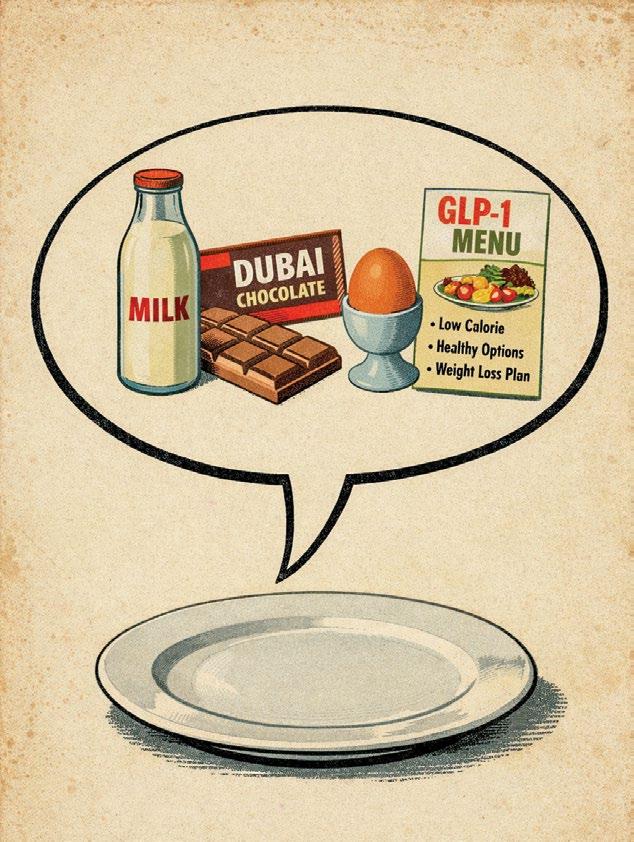
Three months into 2026. A pistachio chocolate bar born in this region is still breaking the internet. Courts are already ruling on what you can call your oat drink. Beans can replace eggs. And somewhere, a chef is losing his mind over a menu named after a weight loss drug.
Welcome to FoodTech 2026, and yes,
it is only
March
By Shreya Asopa
In 2026, food is more than taste. We load it with meaning around health, identity, sustainability, hunger and convenience. The ecosystem is shifting rapidly, and we are only sampling what is ahead…
Are we arguing about what counts as milk?
Yes. And it just escalated to a courtroom. Earlier this year, the UK Supreme Court ruling blocked a major oat drink brand from using a generational slogan that referenced the word "milk." It basically told them they could not trademark or use the slogan "Post Milk Generation." The court found, unanimously, that the term was too ambiguous under retained agricultural law, where dairy language belongs exclusively to animal-derived products.
The dairy industry welcomed it, saying it helps provide clarity on how dairy terms can and cannot be used in branding and marketing. The oat drink brand saw it differently, arguing the ruling creates an uneven playing field that solely benefits Big Dairy.
Legal experts across the plant-based industry are watching closely, with many suggesting this could trigger a wave of similar challenges across European and Gulf markets, where food labelling frameworks are actively being reviewed.
What a brand can and cannot say on a package is about to get a lot more
Food in 2026 is more than taste — it is meaning
complicated. On the other side of this debate, a new high-protein pea milk carrying 2.5 times the protein of almond milk just entered the market. While lawyers argue over words, food scientists are busy making the products harder to dismiss.
Food 2.0
Is the food industry becoming like fast fashion?
Pretty much. Gen Z forward Food brands are not just racing against competitors anymore. They are racing against a scroll. What once took months from concept to shelf is now measured in weeks, pushed by social media trends. Semi-automated production, smarter forecasting tools, and a Gen Z consumer hypes are making innovation cycles compress dramatically.
As one analyst noted in a Fi Global interview, "There is a great deal of pressure now on industry to react quickly to consumer trends, because six months down the line, it can be very difficult to create value out of a concept. A good example of this is Dubai chocolate.”, said Manuel Leckel, Senior Account Consultant, from Euromonitor International said in an interview with Fi Global.
The window is short, and the noise is loud. What started as a niche Middle Eastern treat became a global sensation overnight, driven entirely by TikTok. Brands worldwide rushed to create their own versions. In the GCC, the original product became something more than a viral moment, reaching the world.
For the UAE, a market that has long acted as a test bed for global food launches, this acceleration is both an opportunity and a pressure. Distributors, retailers and food entrepreneurs here are increasingly expected to move at the speed of the feed.
The UAE Is Betting Big on Food Security Tech
Where does the UAE sit in all of this?
Right at the centre. The UAE’s third annual FoodTech Challenge, which concluded at Abu Dhabi Sustainability Week in January 2026, drew over 1,200 submissions from 113 countries. The four winning technologies focused on precision agriculture for arid climates, AI-powered crop monitoring, agricultural waste-to-soil conversion, and natural coatings to reduce food spoilage.
Past winners of the challenge have raised over USD 48 million in followon funding and launched more than 50 pilot projects across the UAE and beyond. It is positioning the UAE as the place where climate-resilient food solutions get tested and scaled to the wider Global South.
On the other hand, the cloud kitchen
sector is also growing. A Gulf-based cloudkitchen platform recently raised USD 50 million in growth funding to expand its brand portfolio across the region, with the business already profitable and operating more than 200 locations. The cloud kitchen model, once seen purely as delivery infrastructure, is evolving. Operators are now building and owning food brands themselves, cutting out the traditional restaurant layer entirely.
The Ozempic Menu Problem GLP-1 drugs are changing how people eat. Is this changing restaurants, too? Yes, and it is causing tension. As drugs like Ozempic and Mounjaro change how people eat and how much they eat, some restaurants are adapting. They are changing menus, offering smaller portions, and creating dishes marketed as GLP-1-friendly.
A well-known celebrity chef made headlines for his response: “If I ever hear the word ‘Mounjaro menu’ again, I will flip my lid.”
Who is right?
Probably both sides. Consumers in 2026 are looking for food that delivers health benefits and also offers novelty. A shrinking-portion drug-adjacent menu does not tick many of those boxes. But dismissing the GLP-1 shift entirely ignores that these medications are changing how tens of millions of people experience hunger. And that number keeps growing. The winners would not be the ones cutting calories. They will be the ones delivering nutrient density, protein, and real flavour.
REFERENCE:
Are we arguing about what counts as milk?
March 2026
And what else is interesting?
The egg replacer market. For years, plantbased egg alternatives meant compromise in texture; binding was inconsistent, and bakers knew it. That is changing. A new wave of plant protein concentrates, from pulses like faba beans to more unexpected sources, is now mimicking the binding and foaming properties of eggs with an accuracy that would have seemed ambitious four years ago.
The most recent signal is that in February 2026, the Plantible Foods, the US-based company, received an FDA ‘No Questions’ letter for its Rubi Protein, derived from Lemna (duckweed). RuBisCO is one of the most abundant proteins on earth. The fact that it is only now entering the food system says a lot about foodtech, science and how regulatory frameworks can move. That door is now open.■
> The Guardian. (2026, February 11). Oatly banned from using word 'milk' to market plant-based products in UK. The Guardian. (https://www.theguardian.com/business/2026/ feb/11/oatly-banned-from-using-word-milk-to-market-plant-based-products-in-uk)
Food 2.0
> Fletcher, A. (2025, September 26). FI Global Insights. (n.d.). Consumer trends in the fast-changing F&B innovation space [Interview]. FI Global Insights. (https://insights. figlobal.com/diet-health/consumer-trends-in-the-fast-changing-f-b-innovation-space-interview-)
The UAE Is Betting Big on Food Security Tech
> The FoodTech Challenge: https://www.foodtechchallenge.com
> Sharma, H. (n.d.). UAE cloud kitchen leader Kitopi raises $50 million in growth capital led by EvolutionX. UAE Startup Story (https://uaestartupstory.com/news/uae-cloudkitchen-leader-kitopi-raises-50-million-in-growth-capital-led-by-evolutionx)
The Ozempic Menu Problem
> Sudakov, M. (2026, February 18). Gordon Ramsay tells us his biggest restaurant pet peeves in 2026 [Exclusive interview]. Tasting Table.
What does genuineness mean in a fast-paced world? Chef Tarek Mouriess explains about sincerity in hospitality and how small, thoughtful gestures can create a big impact
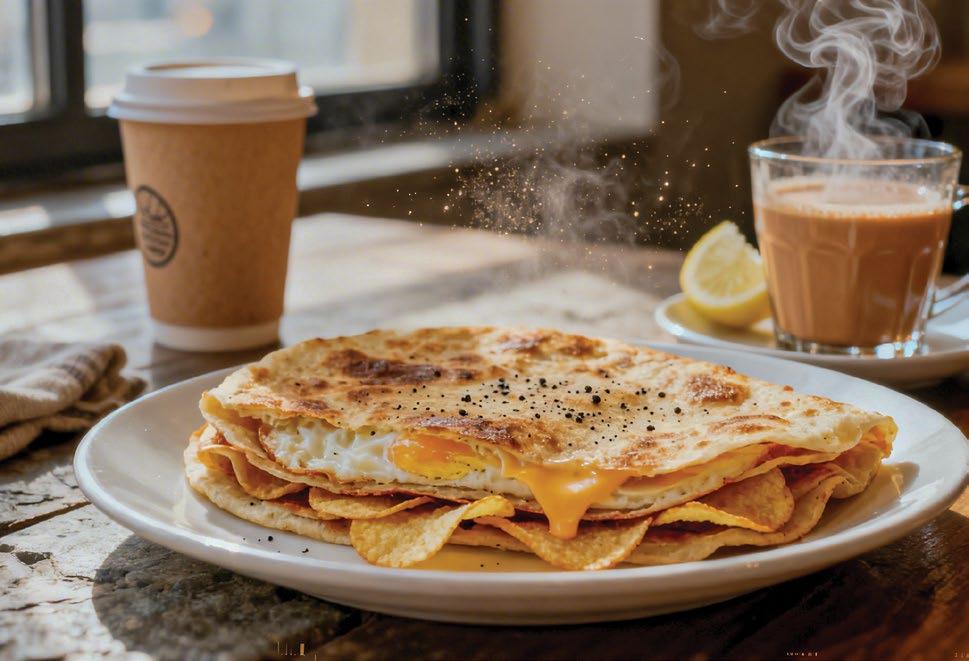
It was an ordinary morning. I had just dropped my friend off at the main bus terminal in Al Jafiliya and decided to treat myself to a small indulgence with a cup of tea. Having not eaten anything for the last sixteen hours, I needed something in my stomach. And so, I walked into Karakccino cafe. A smiling server approached, and I placed my order for a chai and asked if they had an egg parata. And this beautiful, genuine human being looks at me and says, “I have my special Omani egg paratha. It is my special. What I eat.”
Now, hold on. Let me paint you the full picture here. It is early morning. I am hungry. And this server is offering me his special. HIS special. The thing HE eats. It is not just any other menu item; he was sharing a part of himself. The humble parata arrived with cheese, eggs, black pepper, and a hint of Omani chips.
After I paid, he was SO happy. Not said not the scripted “thank you, sir,” but it was the happiness that makes you feel like you just made someone's morning. What mattered was the genuineness with which the meal was offered. No upselling, no pretense. A small, sincere gesture of hospitality.
But it gets better. I decided to sit down there for a while, and then I ordered a sulemani chai. When he brings me the cup of tea, he says, “By the way, you do not need to return the cup. You can keep it for yourself.”
In the end, people may forget many things, but they never forget someone who was unmistakably real
Wait. WHAT?
He is giving me the CUP. As a souvenir. For free.
It was a good deal. I walked away full, had a paratha, two excellent beverages, a free cup, and a story I will never forget.
How many people in our lives make an effort like this? To offer something special? To show their real quality? Not upselling. Just genuine human connection. How many people in our kitchens, in our teams, with our colleagues, actually surprise people by adding value without expecting anything in return?
This guy has not gone to culinary school. He has not done a master's degree in sales. But the talent is here. The genuineness is here. And that is what I want to talk about. How genuine are we nowadays? It is an endless search trying to find people who are genuine.
I had tears in my eyes sitting there. TEARS. Over a paratha. Because that is where genuineness lives, in these small, unexpected moments.
Are we genuine in our recipes? Are we genuine when we give advice? Are we genuine when we have conversations? Not conversations to persuade. Not conversations to show off. But conversations to learn. To share.
Everybody is just waiting for someone to appreciate them. We are all starving for genuine connection. You are not an AI. You are a human being. So keep your genuineness.
You are acquainted with people for mere seconds, minutes, or hours. You are not permanent to one another. So during that time of familiarity, why bring negativity? Why not be genuine?
I had tears in my eyes because I remembered the days when we, as chefs, would sit together for an hour, sharing family meals. A big bowl of curry. Rice. Hummus. Pasta while connecting and learning from one another. We did not cook anything special, we just... ate together. That chef's table was a lesson in community, mentorship, and genuineness. Today, we rarely see that. Sandwiches are grabbed quickly, and connections are fleeting. The candle of authenticity is flickering.
What do you actually gain from not being genuine? Nothing. Absolutely nothing.
But when you ARE genuine? You get remembered.
Imagine this: someone tells a woman on the bus, “You have done your makeup beautifully.” She will go home and tell someone about it - This teen girl, whom I did not even know, told me I was beautiful today. That server who genuinely recommended his favorite sandwich to an old man? He will remember that conversation. “I told him about my special sandwich today, and he actually bought it.”
You. Get. Remembered.
I had a group of Nepali students who had just completed their training. When they returned home for vacation, I was floored watching what they did! Climbing mountains in Kathmandu, bungee jumping into lakes, and immersing themselves in nature. After nine months of training, the first thing they did was reconnect with their roots. Genuineness also lives in the places and values that bring us back to ourselves.
When you are genuine and honest about what you are doing, you do not feel this weight on your shoulders. You feel at ease.
An acquaintance that lasts seconds can shape perception for years
The absence of genuineness can also be revealed in the smallest moments.
When I was invited to the opening of a new restaurant, I attended it with a colleague who recognized someone there who had once worked with a former associate of his.
Smiling, he said, “Oh, I know your boss. We worked together years ago.”
Without hesitation, the man replied, “Oh, he is an idiot.”
I stood there stunned.
You have just met someone who shares a professional connection with you, someone who could open a door, offer
insight, maybe even become an ally. And this is what you choose to lead with?
Negativity? Judgment?
That moment said more about him than it did about the person he criticized.
Here is the problem. People underestimate the power of brief encounters. An acquaintance that lasts seconds can shape perception for years. You might meet someone on the right day, at the right moment, and with a single sentence, you can build a bridge or burn it before it even exists.
Yes, being positive all the time is not easy. But making a conscious effort not to bring negativity into a room costs nothing. Choose your words carefully. Very often, they are your first introduction.
Let people encounter the real you. It is simply the courage to be honest in how you speak, act, and show up for others. When you are genuine, there is no mask to maintain. And in the end, people may forget many things, but they never forget someone who was unmistakably real. ■
The Taste of Memory
The memories we treasure most are born from acts of generosity, writes Chef Christophe Prud’homme
Last month, we spoke about the art of giving to others and giving to ourselves. Giving time, attention, and care.
Giving as a way to change, to move forward, to reconnect with what really counts. And without realizing it, what we give is exactly what becomes a memory.
This month continues with that same journey, but from another angle. Because memories are not separate from giving, they are born from it, formed by it, and held with us over time.
Memories, memories...keep bringing them to life as much as you can.
Vegetables, fruits, local produce, and organic or simply honest food are available everywhere in the world. Yet each place gives them a different character, a different emotion. To see them displayed, to feel their texture, to smell their freshness awakens something immediately.
Appetite, of course, but also creativity, curiosity, and emotion. Our eyes and senses fill long before the first bite. These sensations are souvenirs from childhood, still alive around us, still waiting to be brought back to light.
Aren’t we lucky? Wherever we are, wherever we travel, food is present. It adapts, it transforms, it tells a story of culture, climate, and people. Through food, well-being takes many forms, yet the crux remains the same: nourishment of both mind and body. and soul.
And yet, we rush.
We live busy lives, stressed, overbooked, constantly cutting corners. Meals
become rushed moments, then fast solutions, then habits disconnect from meaning. Food turns into fuel rather than experience, speed rather than pleasure.
That is precisely why we must sometimes stop and return to the basics. To remember who we are and how we grew up.
Smelling.
Enjoying.
Preparing.
Cooking.
Baking.
Harvesting.
From farm to fork.
There is great satisfaction in reconnecting with these simple acts. They ground us. They help us recall our roots. They reconnect us with a version of ourselves that knew patience, anticipation, and gratitude. This appreciation is not nostalgia; it is balance. It puts today’s priorities into perspective.
This responsibility is personal, but it is also collective. We carry it for ourselves, and we carry it for the generations that follow. Children learn not only from what we say, but from what we practice. The time we take. The care we show- the value we place on quality and sharing.
Time passes. Generations pass. But
instances of happiness must be preserved and transmitted.
Think of a large, beautifully set table. Family and friends gathered around. Laughter burst into the room. Stories overlap. Dishes are being passed from hand to hand. An incredible aroma wafted from the oven, filling the house with warmth and anticipation. These times are not insignificant. They shape memory. They create identity.
Visits to farms and markets have the same power. They ignite souvenirs we may not even realize we carry. The pride of a farmer delivering the best of daily work speaks louder than words. Beyond commerce, there is purpose: to protect quality, to respect the land, to pass on heritage. It is a mission driven by responsibility as much as by passion.
Memories of eating well, living well, and sharing well bring emotion back into our lives. They tell us that well-being is not about perfection, but about intention. About taking the time…even for a few hours, to choose carefully, to prepare thoughtfully, to share generously.
A few hours before this holy month, let us not forget to enjoy. To pick the best. To share not only food, but memories. Around the world, these times look different, taste different, smell different, but their meaning is remarkably the same.
The world keeps moving forward. Progress never stops. But some things stay essential. We never forget those beautiful moments. Those images. Those smells.
They stay with us. They define us. And they always bring us home. ■
From Common Sense to Recognition
Chef Carl Shi on the hidden value of chefs in daily routines and judgment (Pt. 2)
While the first part explored how chefs’ discipline, systems, and leadership turn resources into reliable performance, making them strategic assets whose value goes unseen, this next part sheds light on what that value looks like day to day, and why it matters for kitchens, teams, and businesses alike.
Chef’s Value
Start with the most visible contribution. The chef protects the promise on the plate. Product value is not only flavour. It is consistency, timing, temperature, portion control, and the confidence that the guest will receive the same standard every visit. That reliability is built through systems. Standard recipes. Taste checks. Proper prep methods. Clear storage routines. Coaching at the pass. Quiet corrections during service. When guests return, that return business is not luck. It is designed.
This is also where the pre-portioned and pre-packaged trend becomes relevant again. Convenience can stabilise delivery, but it can also reduce skill development if the operation forgets what is being outsourced. A capable chef uses convenience wisely, without losing the ability to build a dish from fundamentals. That balance protects quality when supply changes, when standards slip, or when the menu needs to evolve.
A chef also builds people. In a tight labour market, this matters more than ever. Technique can be taught, but standards and mindset must be trained into daily behaviour. Clean work. Calm service. Responsibility. Teamwork.
Quality and consistency drive repeat guests. Repeat guests drive stability
When training is strong, productivity improves. Errors drop. FW becomes easier to control because staff handle food correctly and plan prep properly. Turnover slows, reducing recruitment costs and preserving consistency.
This is where many businesses misunderstand the kitchen. They see labour as a cost, but they ignore that the chef is building capability inside that cost. When the chef is strong, the team becomes stronger. When the chef is weak, the business pays through turnover, poor execution, and constant rework.
Guests rarely see the machinery behind smooth service. Prep lists, ordering rhythm, production plans, station setup, par levels, timing maps for banquets. This is where the chef’s contribution becomes invisible, but it is also where performance is created. A chef designs a workflow that reduces chaos and increases control. Mise en place that matches the menu. Stations built for speed and accuracy. Routines for storage and rotation. Cleaning discipline that is consistent, not occasional. When a kitchen runs smoothly, people assume it is easy. Smooth service is never an accident.
Process is also where resilience is built. A good chef plans for the moment the unexpected happens, a late delivery, a staff shortage, or a last-minute function change. The kitchen still needs to perform. That ability is not only operational. It is business protection.
Profit is the area where chefs are often reduced to one question. Are you on budget? Budget matters, but a chef's contribution goes beyond food and labour costs. A capable chef protects profit through yield control, portion discipline, menu design, and smart purchasing. This includes building relationships with the food supplier for reliability and consistent quality, not only price. More importantly, a chef protects revenue. Quality and consistency drive repeat guests. Repeat guests drive stability. That is why the chef should be involved in strategic decisions. The chef understands the connection between product standards, guest trust, and long-term income.
Risk reduction is rarely celebrated, but it is priceless. Food safety failures,
allergen mistakes, and compliance issues can damage a venue overnight. A chef reduces risk through systems and daily supervision. Labelling discipline. Separation of raw and ready-to-eat foods. Temperature control. Allergen procedures are followed during service, not just written down. When kitchens rely more on pre-processed and outsourced items, risk becomes more complex, not less. Traceability matters more. Storage and handling matter more. Allergen cross-contact risk increases if controls are weak. In this environment, chef oversight is not optional. It is essential. If a business wants stability, risk is not a side issue. It is a core performance area. And chefs are often the frontline guardians of that stability.
Chefs shape brand identity. Prestige is not only about awards. It is what people remember and repeat.
A chef builds a culinary direction that fits the concept and holds steady under pressure. In a hotel, that direction must align with the property positioning across outlets, banquets, and room service. When the kitchen aligns with the brand promise, guests feel it.
Brand value also shows up in small things. The care in the garnish. The consistency of the buffet. The quality of staff meals that keeps morale stable. The way the kitchen handles special requests. These moments create trust, and trust becomes reputation.
Taken For Granted
So why is this still underestimated? One reason is that a chef's value is often tacit. It lives in judgment and routine. Another reason is that many outcomes are preventative. When a chef prevents incidents, the business sees nothing happen. No complaint. No refund. No bad review. The absence of problems is treated as normal rather than recognised as managed performance.
There is also an academic language gap. Operators speak in financial reporting.
quietly diluting it and then wondering why standards slip across the sector.
When the chef is strong, the team becomes stronger
Chefs speak in service reality. Academia speaks in theory. If the chef is not placed at the centre of analysis and the chef's contribution is not translated into measurable business outcomes, the chef's value remains underdescribed and underrecognised. The cost is real. It affects authority, investment in training, and the development of the next generation of chefs.
This is why I believe it is time for the culinary industry and the academic world to join together. We need to write this down properly. Not only as stories, but also in an academic way that can be taught, cited, and used in decision-making. If we keep treating chef contributions as common sense, they remain unmeasured. If it stays unmeasured, it stays easy to ignore. The timing matters. The industry is changing quickly due to labour pressures, convenience trends, sustainability requirements, and evolving guest expectations. If we do not document chef capability now, we risk
I want to see research that focuses on chef-led outcomes. Training and retention. Operational consistency. FW reduction through better planning and production. Risk reduction through food safety culture. Profit protection through menu engineering and procurement discipline. These areas are measurable, and they matter. I also want chefs included as contributors, not only as participants. Chefs hold knowledge that is rarely captured in formal language. That knowledge deserves proper documentation, because what is written can be taught. And what is taught becomes industry standard.
I am writing this from the middle of two worlds. I still carry the discipline of the kitchen, and I also carry the curiosity of research. The more I look at hospitality performance, the more I believe the chef is not a background function. The chef is a strategic asset. If we want chefs to be recognised as true contributors, we need to stop treating their value as assumed knowledge. We need to name it, describe it, and document it. Then we need to use that language in boardrooms, in classrooms, and in kitchens, until the industry finally treats chef capability the way it treats any other competitive advantage. ■
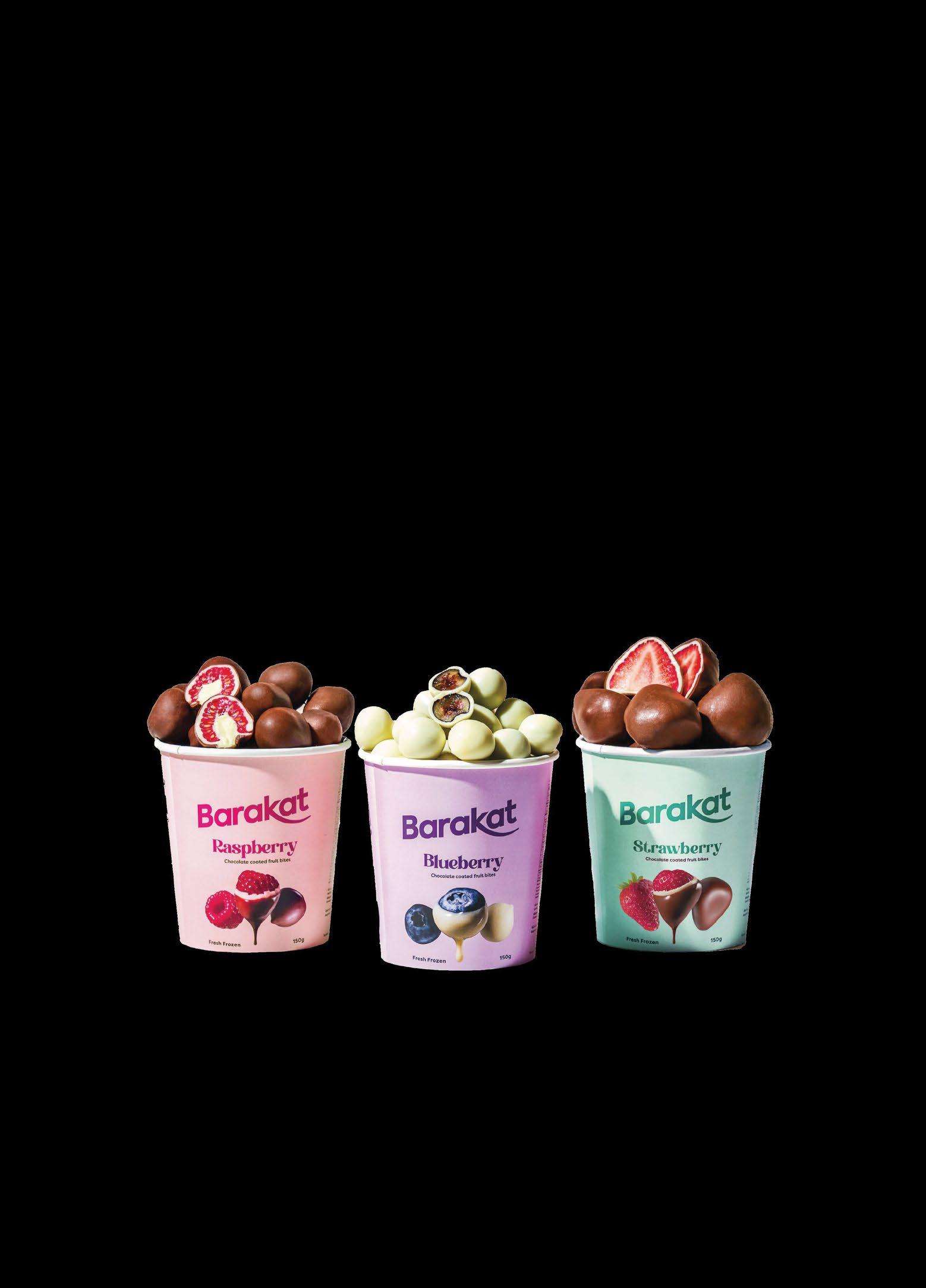
Nature's Indulgence, Perfected.
Chocolate coated fruit bites
Maximizing Every Cut
Sulemana A. Sadik on unlocking the value of a full beef carcass
In the world of beef, every cut tells a story from the prized tenderloin to the humble shank. Yet, unlocking the true value of a carcass goes beyond knowing the names of the cuts; it requires understanding yield, reducing wastage, and uncovering innovative ways to turn every part of the animal into profit.
A beef carcass is broadly divided into the forequarter and hindquarter, separated at the 12th and 13th ribs. The forequarter houses the chuck, brisket, rib, and shank, while the hindquarter contains the loin, round, and flank. On average, a carcass yields about 60–65% of its live weight as consumable meat, though breed, feeding, and butchery techniques influence the final numbers.
Grain-fed animals tend to produce slightly higher yields of marbled, premium cuts, whereas grass-fed
animals offer leaner meat with less intramuscular fat.
Yield
vs. Wastage
1. Primal Cuts
Chuck (26–28% of carcass): Ideal for slow cooking and ground beef. Minimal wastage comes from trimming sinews and fat, which can be managed with skilled cutting.
Rib (8–10%): Ribeye and prime rib are high-value cuts. Precision trimming preserves yield whilst ensuring premium quality.
Loin (14–16%): Includes tenderloin and striploin. Careful deboning and trimming retain maximum value.
Round (18–20%): Lean, versatile cuts for roasting or mincing. Over-trimming here can unnecessarily reduce yield.
2. Secondary Cuts & Trimmings
Less glamorous portions, shank, flank, and plate, are often overlooked. But they can be transformed into ground beef, burgers, stew meat, or valueadded products, pivoting potential waste into revenue.
By-products & Offal
Organs, bones, and fat have traditionally been underutilized. Proper processing can convert them into stocks, tallow, pet food, and specialty items, adding 5–10% additional value to the carcass.
Custom Orders: Knowing client preferences cuts down waste and ensures every cut is sellable.
Aging & Storage: Dry-aging or wetaging enhances tenderness and flavor, increasing the value of premium cuts while minimizing spoilage.
Every cut tells a story, but profit lies in understanding the whole animal
Value-added Products: Secondary cuts and trimmings can be used to make burgers, meatballs, or ready-to-cook portions, turning potential loss into profit.
By-product Utilization: Bones, fat, and organs should be used to make stocks, tallow, or specialty products rather than being discarded.
Maximizing the value of a beef carcass is both art and science. It calls for a deep understanding of the animal, precise butchery, and a mindset that sees potential in every cut. By reducing wastage and creating value from secondary cuts and by-products, companies can increase profitability, improve sustainability, and deliver superior products to the market. Even the cuts that appear ordinary contribute effectively if handled with knowledge, care, and strategy. ■
Leading at Scale
Gatekeeping Has No Place in Chef Andre Ghanimeh’s World. The Executive Chef of Sodexo Kelvin Catering Services & Facilities explains why knowledgesharing systems and people-first leadership are the real engines of highvolume culinary success
In large kitchens, mistakes accumulate faster than recognition. Success, in that context, is a series of synchronies. Most chefs learn this the hard way, by tasting the consequences- few stop to account for the mechanics behind the movement.
Chef Andre Ghanimeh knows this better than most. In kitchens where thousands of plates must leave the pass each night without fail, there is one truth Chef Andre has come to embrace: great food alone does not sustain high-volume success; great leadership does.
Sodexo Kelvin Catering Services & Facilities Management is one of the UAE’s leading institutional catering and facilities management companies, delivering over 100,000 meals daily, translating to more than 36 million meals annually across the country.
Headquartered in Abu Dhabi, the company operates a diversified portfolio spanning offshore and onshore energy projects, government and defense contracts, education, healthcare, corporate dining, retail concepts, and large-scale camp operations.
In these settings of large-scale operations, culinary excellence requires creativity and the ability to execute reliably at scale, day after day. It is within this framework that Chef Andre, the Executive Chef of Sodexo Kelvin Catering Services & Facilities, operates as part of a broader structure driving systems, standards, and long-term capability building.
He works across menu governance, production systems, training frameworks, quality assurance, cost control, and cross-functional coordination, supporting operations that span multiple segments and tens of thousands of meals per service cycle.
“In institutional catering, you are not designing food for a single restaurant or a single audience,” he explains. “You are building repeatable systems that
At scale, success is not about artistry alone — it is about systems that work every single day
work across cultures, skill levels, and operating conditions.”
People Before Product
Unlike hotel kitchens, institutional catering draws from a highly diverse workforce, often with uneven formal training.“Knowledge has to be built from scratch. Young chefs are like sponges. You have to give them the right. You have to give them a chance to prove themselves. Let them express their creativity,” he explains.
Leadership, in his view, has little to do with hierarchy. “You cannot succeed without a good team around you,” he says. “And you cannot build that if you do not listen to them.”
In practice, this means giving his cooks direct channels to him. “I always tell my team, ‘Come and talk to me, about work, about challenges.’ Even department heads can make mistakes or make imperfect calls that can affect the operation. And if someone is not giving their hundred percent, the whole team suffers. Open communication helps everyone work effectively together.”
According to him, a positive kitchen is predicated on dynamism. Ergo, he rotates his cooks across shifts and sections to preclude their confinement to a singular identity. “In large operations, no single role can be a bottleneck,” he explains. “Rotation builds confidence and operational continuity. This mindset is critical when managing catering across offshore assets, remote camps,
government facilities, and high-volume central kitchens, where interruptions are not an option,” he clarifies.
Leadership as Infrastructure
Most chefs will tell you they learned to cook from their mother or grandmother, but for Chef Andre, it all started in front of the television. “There were no food bloggers then, and the chefs on television would give cooking tips and answer questions. It fascinated me. I also wanted to be that person who could help anyone, anytime, with any dish,” he reminisces. What followed was his graduation from Ecole Hôtelière and CLET University in Lebanon, after which he launched his career in Lebanon’s luxury hotel sector, taking on roles at Mzaar Intercontinental Resort and Habtoor Grand Resort before bringing his expertise to the GCC market.
In Dubai, he led key roles in the catering scene. At Bouffage Catering Services, he rolled out creative menu strategies for retail and supermarket operations. As Group Head of Culinary for Ghassan Aboud Group, he led multiple venue openings while maintaining efficient operations and controlling food costs. He has also overseen large-scale catering projects as Production Manager at Intercat Hospitality and Operations Manager, managing services for major UAE attractions including Atlantis the Palm, Hilton group, Marriott group, Blue Ceasars, Rotana group, One & Only, and Miral Group Abu Dhabi Ferrari World, Warner Bros, and Sea World.
Chef Andre’s career, from luxury hospitality in Lebanon to senior leadership roles across the GCC, has ultimately converged on one principle: that culinary leadership in institutional catering is infrastructure, not artistry. “You can love food,” he says, “but at this scale, what matters is foresight, systems, and people.”
In his current role, that philosophy underpins an operation feeding over 36 million meals every year, long after the
excitement of creativity has faded and only execution remains. “The results speak for themselves. Across Sodexo Kelvin’s portfolio, the company has achieved over 60 million Lost Time Injury–free (LTI) work hours, reflecting the maturity of its safety culture, operational discipline, and governance frameworks. Major projects such as Hail and Ghasha have recorded landmark safety milestones, underscoring the company’s ability to operate at scale in some of the region’s most complex and high-risk environments.”
Great food may start a kitchen, but great leadership sustains it
“Every day brings something new to learn,” he says. “Recently, the Hail and Ghasha development project was awarded the 15 million safe work hours trophy. We also have one million safe work hours across all our projects. I am proud of the team.” Years of behindthe-scenes work did not go unremarked.
In 2025, Chef Andre was also awarded Gold Recognition for Executive Chef of the Year in Institutional Catering at the Middle East Chef Excellence Awards.
The Mechanics of Menu Planning
Menu development, in Chef Andre’s practice at Sodexo Kelvin, begins with context before creativity. Each segment, whether healthcare, education, defense, or energy, carries its own regulatory, nutritional, and operational constraints. His methodical process begins with working closely with operations, QHSE, and nutrition teams to ensure menus are regulation-compliant, nutritionally balanced, operationally executable at scale, and cost-controlled without compromising quality.
“In healthcare and education, food has a clinical and developmental role,” he notes. “Taste matters, but safety and compliance come first. Food waste is rigorously tracked using the latest technology, with waste measured at both production and service points. Data informs corrective action, recipe adjustments, and training priorities. This also reinforced Sodexo Kelvin’s broader sustainability objectives.”
You cannot talk about menu planning without discussing food waste. His team uses the Leanpath system to track waste, not just in the kitchen but also at service points. “What is left at the end of the day gets weighed and logged. Everything. Five eggs. Two hundred grams of rice. By the end of the month, you see it all. If waste goes up, it has to be explained. Inside the kitchen, too, we weigh it all, be it vegetable peels, onion skins, potato trim, or even chicken skin. Once you see it, it is easier to reduce. We weigh the peel, then work to bring the percentage down.”
While technology supports operations, Chef Andre remains pragmatic. Automation is introduced to reduce risk, improve consistency, and protect workforce safety, such as in bulk handling, egg processing, and grain
sorting, rather than chasing novelty. “When you are producing tens of thousands of meals a day, manual inefficiencies become systemic risks. This aligns with Kelvin’s investment philosophy and scaling only what can be controlled, audited, and repeated,” he says.
Knowledge only grows when it is shared. Gatekeeping has no place in his kitchens. A chef willing to teach and learn, he says, will grow faster than one who hoards information. “Senior chefs shall drop the old mindset of guarding recipes. Nothing can be hidden anymore,” he laughs. “You can find anything, even with ChatGPT.” He also encourages young chefs to explore multiple sections before choosing where to specialise. “Catering is different from hotels, hotels differ from banquets, and banquets differ from healthcare or labour kitchens. Each teaches something different,” he says.
Asked about trends for 2026, and he does not overthink it. “I am not big on social media. I do watch competitors, but I pay closer attention to consumer behaviour. In the coming year, my focus is on certifications, food safety, high-end events, broader cuisines, and healthier menus. Everyone is also learning sous vide. Classic techniques are coming back.”
Choosing a single dish is not easy for him. When your day revolves around constant tasting, the idea of comfort food rarely comes with a quick answer. “On any given day, I taste multiple cuisines. In our central kitchen, we work with Arabic, Bangladeshi, Burmese, Chinese, Indian, Filipino, Pakistani, Moroccan, Egyptian, and Syrian food. Imagine tasting all of this in one day,” he says with a grin. “That is part of the job.”
After a long day of food tasting across different sections, he often finds that by the time he gets home, he has little appetite to eat. Instead, he makes time for cardio with his Pet Alpha, a Siberian Husky, who eagerly awaits his return to release pent-up energy. This daily routine, he explains, helps him to stay
in shape and also offers a chance to unwind. Above all, family comes first for him, and he cherishes those moments of connection with his loved ones.
On the horizon, there are also some outof-the-box ideas, like writing a book and possibly starting a small food venture.
Many people fall in love with their work through passion alone, chasing the thrill of doing what they love. But work, over time, has a way of separating passion from responsibility. What lasts is not the thrill of enthusiasm, but the ability to think ahead. For Chef Andre, the romance of cooking is different. It lives in the hues of menu planning by
Leadership in large kitchens is infrastructure, not ego
anticipating needs, taking responsibility, and thinking about the people who bring it to life, streamlining systems for a sustainable kitchen. Beyond the easy rhetoric of passion lies a field of maths, method, and patience, where Chef Andre makes culinary magic happen. ■
Think Like
AN ARTIST
Meet Sahil Mandhare, Junior Sous Chef at Conrad Dubai, who swapped farm life for the pastry kitchen and is rising through the ranks with creativity and conviction
Some chefs follow recipes. Others create them. And then there are those who begin with a story. For Sahil Mandhare, Junior Sous Chef at Conrad Dubai, dessert is not simply a course — it is narrative, expression, and art.
“Every dessert should tell a story. It should taste special, look appealing, and reflect the idea behind it. Storytelling is important. You should think like an artist. The story comes first — then we build the dessert around it,” he shares.
At just 26, Chef Sahil carries responsibilities that many chefs work years to attain. He currently oversees the hotel’s coffee lounge, ISLA, curating refined, small-batch creations that balance visual elegance with layered flavour.
“These are not mass-produced desserts,” he explains. “They are carefully considered. Ideas come through collaboration, trends, and creative direction.”
Once ISLA’s dessert preparations are complete, his role expands across restaurant service and large-scale banquets — environments where precision and consistency are essential.
“If my team needs support, I am there. Guests request changes, and I handle them. Plating, timing, feedback — everything matters. If something feels off, I speak directly to the guest and improve it immediately.”
The contrast between plated desserts and banquet production demands versatility. Plated desserts allow complexity — multiple textures, temperatures, and components that must harmonise perfectly. Banquets, however, require exact uniformity at scale.
“In banquets, consistency is nonnegotiable. Every plate must look identical. We rely on measured recipes, precise cutting techniques, and
dessert that reflects both creativity and sustainability.
You should think like an artist — the story comes first
calibrated equipment to ensure balance and uniform presentation.”
Passion on a Plate
For the Arla Pro Pastry Mastery Competition , Chef Sahil created a
His entry, Passionate Pistachio, layers Conrad Dubai’s signature burnt cheesecake with bright yuzu citrus notes, balancing richness with acidity.
A practical mindset guides his creativity.
“We bake lemon rye sourdough inhouse. If slices are left over, they are never wasted. We rehydrate them into a crumble. I also incorporate edible flowers grown in-house to give the dessert a sense of place.”
This philosophy of mindful creation — where artistry meets sustainability — mirrors Conrad Dubai’s commitment to thoughtful culinary craftsmanship.
From Farmland to Fine Dining
Long before professional kitchens, Sahil’s childhood unfolded amid farmland and open skies near Raigad, India. His father worked the land, and
life revolved around harvests, seasons, and the rhythm of nature.
“We grew everything — rice, mango, cashew. Now we are trying dragon fruit. I still go back, plant trees, reconnect with my roots.”
The youngest of five siblings, he began cooking alongside his mother and
sisters. Hospitality was not always the plan. After initially studying science, he pivoted to hotel management — a decision that changed his trajectory.
During industrial training at Renaissance Mumbai Powai Lake, pastry captured his imagination. After graduation, he began as a commis chef, steadily building his foundation. A short tenure at The Ritz-Carlton Bangalore followed, before an opportunity brought him to Dubai.
He joined Mövenpick Hotel Jumeirah Beach, where he managed pastry production before moving to Conrad Dubai — a turning point in his career.
“It was here that I met my mentor, Chef Praveen. That changed everything.”
Under Chef Praveen’s guidance, his growth accelerated.
“You can see the evolution in my work over the past two years. Chef Praveen pushes us to aim higher, set ambitious goals, and keep learning. Every day feels like creating something new.”
Trailblazing the Pastry Path
Despite being early in his career, Chef Sahil has already stepped into a sous chef role — a testament to his discipline and drive.
Asked about the “secret” to becoming a strong pastry chef, he dismisses the idea entirely.
“There is no secret. Be honest with yourself. Trust the process. Trust the
Dessert is not simply a course; it is narrative, expression, and art
One day, I want people waiting to see what I create next
person teaching you. The rest follows.”
Leaving home to pursue ambition came with sacrifice. He was the first in his family to move abroad for work.
“My parents were hesitant at first. Now they are proud. When neighbours see my posts online, they call them. That motivates me.”
Grounded yet ambitious, he dreams beyond today.
“I want to become someone others look to for trends. One day, I will become an executive chef — maybe even a
celebrity chef. I want people waiting to see what I create next.”
The hunger is clear. And culinary storytellers rarely remain in a single chapter for long.
About Conrad Dubai
There is no secret. Be honest with yourself. Trust the process
Located in the heart of Dubai’s commercial and cultural district, Conrad Dubai is a contemporary luxury hotel offering elevated hospitality experiences across dining, wellness, and events. Home to award-winning restaurants including Ballarò, ANÁSA, ISLA, and the Laurent-Perrier Lounge, the hotel combines refined service with innovative culinary craftsmanship. Conrad Spa further complements the guest experience with curated wellness rituals, including its signature Moroccan Hammam treatment. ■
Passionate Pistachio
Passionate Pistachio Assembly
Baked Burn Cheesecake
Pistachio Powder
Yuzu Whipped Ganache
Passion Whipped Ganache
Pistachio Whipped Ganache
Lemon Cream
Tuile
Sesame Tuile
Passion Meringue
Pistachio Praline
Sorrel Cress
Edible Flower
Basil Cress
Dehydrated Lemon Rye Crumble
Blanched Pistachio
Kinome Leaves
CHEESECAKE MIX
Cream Cheese, Arla Pro 710g
Caster Sugar 240g
Liquid Whole Egg, Pasteurized 250g
Vanilla Extract 10g
Flour T45 30g
Whipping Cream, Arla Pro 350g Method
In a mixing bowl, combine cream cheese and caster sugar. Mix using the paddle attachment until smooth.
In a separate bowl, combine liquid whole egg, whipping cream, flour, and vanilla extract using a hand blender.
Slowly add the egg mixture to the cream cheese mixture while mixing in the machine.
Once fully combined, remove from the mixer and pour into a baking ring.
Bake at 220°C for 20–25 minutes.
LEMON RYE VANILLA CRUMBLE
Butter, Unsalted (Arla Pro) 100g
Granulated Sugar 100g
Flour T45 50g
Dehydrated Lemon Rye Bread Crumb 100g
Almond Powder 50g Method
Slice the lemon rye bread thinly and dry it in a dehydrator. Once fully dry, blend into powder.
Combine butter, granulated sugar, flour, dehydrated lemon rye bread crumb, and almond powder. Gently mix by hand
to achieve a crumbly texture (do not overmix).
Spread onto a tray and bake at 180°C for 10–12 minutes.
PASSION WHIPPED GANACHE
Whipping Cream, Arla Pro 300g
Glucose Syrup 30g Trimoline 30g
Passion Inspiration Chocolate 510g
Whipping Cream, Arla Pro (Cold) 900g Method
Heat the first quantity of whipping cream, glucose syrup, and trimoline until it reaches a boil.
Pour over the passion, inspiration chocolate. Wait one minute, then blend using a hand blender.
Add the remaining cold whipping cream while blending.
Pour into a container and cover with cling film, touching the surface.
Store in the chiller for 12 hours.
Whip before use..
YUZU WHIPPED GANACHE
Whipping Cream, Arla Pro 300g
Glucose Syrup 30g Trimoline 30g
Yuzu Inspiration Chocolate 510g
Whipping Cream, Arla Pro (Cold) 900g Method
Heat the first quantity of whipping cream, glucose syrup, and trimoline until it reaches a boil.
Pour over the yuzu inspiration chocolate. Wait one minute, then blend using a hand blender.
Add the remaining cold whipping cream while blending.
Pour into a container and cover with cling film, touching the surface.
Store in the chiller for 12 hours.
Whip before use.
PISTACHIO WHIPPED GANACHE
Whipping Cream, Arla Pro 500g
Pistachio Paste 80g
Gelatine Leaves 8g
White Chocolate 600g
Whipping Cream, Arla Pro (Cold) 800g Method
Soak gelatine leaves in cold water.
Heat the first quantity of whipping
cream until it reaches a boil.
Pour over the white chocolate. After one minute, blend using a hand blender and add the softened gelatine leaves.
Add the remaining cold whipping cream and pistachio paste while blending.
Pour into a container and cover with cling film, touching the surface.
Store in the chiller for 12 hours.
Whip before use.
LEMON CREAM
Lemon Purée
Lemon Zest
Caster Sugar
Gelatine Leaves
Butter, Arla Pro
March 2026 Gulf Gourmet
Method
Heat lemon purée and lemon zest to 60°C.
Temper with the whole egg and caster sugar mixture.
Return to heat and cook to 82–85°C.
Remove from heat and add softened gelatine leaves.
When cooled to 50°C, blend in the butter until smooth.
SESAME TUILE
White Sesame 20g
Florentine Mix 20g Method
Dust florentine mix using a round stencil.
Sprinkle white sesame on top.
Bake at 180°C for 6 minutes.
Store in an airtight container with silica gel.
TUILE
Butter, Arla Pro 50g
Egg White 50g
Icing Sugar 50g
Flour T45 50g Method
Melt the butter and combine the butter, egg white, icing sugar, and flour until smooth (no lumps).
Rest the mixture in the chiller for 15–20 minutes.
Spread on a tuile mat and bake at 180°C for 6 minutes.
Unmould immediately after baking and allow to cool.
Store in an airtight container with silica gel.
PASSION MERINGUE
Passion Purée 150g
Egg White Powder 10g
Caster Sugar 100g
Maltodextrin D12 50g Method
Combine passion purée and egg white powder and begin whipping at medium speed.
When 40% whipped, slowly add caster sugar and maltodextrin.
Whip to full volume and pipe medium drops using a round nozzle.
Dehydrate for 2–3 hours. ■
The Guild Meet
The Emirates Culinary Guild held its February meeting at the Al Nassma Chocolate LLC Factory in Umm Al Quwwain. We extend our sincere gratitude to the company's founder, Martin van Almsick, for his hospitality.
Arab Marketing and Finance, Inc. (AMFI) Simon Bakht, Tel: +961-1-740378 / 741223 / 751262, SBakht@amfime.com
Arla Foods
Rachna Amarnani, Marketing Specialist, raamy@arlafoods.com, B7 Building Digital park Dubai Silicon Oasis, Industrial Area Dubai www.ArlaPro.com, www.arlafoods.com
Bakeart Specialists Bread and Bakery Products Trading LLC
Georg.Hessler, Director Culinary Operations, Tel: 04 3086571, Georg.Hessler@dwtc.com, https://www.dwtchospitality.com/en/
HUG AG
Riyadh Hessian, 6102 Malters / , food-service@hug-luzern.ch, www.hug-luzern.ch, fb/hugfoodservice Distribution UAE and Oman: Aramtec, PO Box 6936, Al Quoz Industrial Area No. 1, Near Khaleej Times Office, Mob +971 507648434, www.aramtec.com
IFFCO
Mary Rose Lopez, Associate Customer Service Manager, Mob:+971 506719882, 065029025 / 6264 mlopez@iffco.com, www.iffco.com
Indoguna Dubai LLC / Indoguna Productions FZCO
Anoop Kumar Varma, Director - Sales & Commercials, Ana Elena Saenz, Regional Business Development Manager, Mob:+971 55 573 7035, +971 58 246 9330 anoop@indoguna-dubai.ae, ana@indoguna.ae, indogunadubai.com, indogunaproductions.com
Date of Application: .................................................
Family Name: First Name/s: Ms/ Mrs/ Mr/ Other:
Nationality: Civil Status: Date of Birth: dd/mm/yyyy
Employee/ Business Owner: Name of Business: Designation:
Work Address: Email Address: Contact Number:
Type of Membership: (please tick)
SENIOR:
(Above the rank of chef de partie/ senior chef de partie on executive chef’s recommendation).
MEMBER:
(Below the rank of chef de partie 29 years old and over).
AED350 joining fee/ AED150 renewal fee
Includes certificate; member-pin, member medal and ECG ceremonial collar
AED150 joining fee/AED75 renewal fee
Includes certificate; member-pin, member medal and ECG ceremonial collar
YOUNG MEMBER: (under 28 years) Free
Includes certificate; member-pin
Declaration to be Signed by Applicant:
I wish to join The Emirates Culinary Guild in collaboration with The Women’s Culinary Chapter.
I have read the ECG Constitution and By-laws. I agree to be bound by the requirements of the constitution. If elected, I promise to support the Guild and its’ endeavours to the best of my abilities.
Approved by President: Signature: ..............................
Approved by Chairman: Signature: ..............................
Note: The membership is only applicable to those who are working in the UAE as professional chef or with a background related as Chef in the hotel and restaurant industry.
The WCC is in collaboration with the Emirates Culinary Guild, which is a member of the World Association of Chef’s Societies
Culinary Trends Express
Simon Martin, Executive Chef at Kerry Taste & Nutrition (Food Service) explores the food trends reshaping the region's dining
Welcome back to Trends Express. Without further ado, let's jump on board the "Trends Express" and see what's hot and appearing in our region. Remember, "LIKE IT, BUY IT, SNAP IT, SHARE IT."
They're not complicated, but just a few simple ingredients will rock your culinary planet...
As we reflect on this past holy month, some great trends have gone viral. In fact, one of the biggest on TikTok is the “DUBAI TACO”; this apparently uses beef spiced with cardamom, cinnamon and coffee. Cooked like a smash burger and sometimes served in a paratha with cheese sauce, ketchup and jalapenos… WOW! a real cultural fusion….and to go with this, the DIRTY DIET COKE, a diet soda with coconut syrup, fresh lime juice, and double (heavy cream). It is
SODALICIOUS !! Will this see the rise of messy/dirty mocktails, indulgent mocktails, and memory-invoking mocktails? Are you following any of these trends? If so, have you tried them?
SWICY has evolved into FRICY. What is that I hear you say, well SPICY was sweet and spicy, now we have FRICY,fruity and spicy, think pineapple and black pepper, mango chili, or even yuzu kosho. These (although not new to dwellers of the hemisphere) are now going global, and this adventurous mashup balances sweet and acidic fruity notes with heat-driven spices to create addictive, refreshing flavours that dance in your mouth. Why not try to elevate your fruit chaats? Chamoy on fish is a personal go-to for me. FRICY is moving beyond street food into mocktails, snacks, and breakfast bowls, offering a multi-dimensional experience that surprises, tingles, and lingers… Speaking of which, look out for the new “Hot Honey Nut Loops” in the cereal shelves at your retailer. It is actually very, very good…
When was the last time you watched NETFLIX? Or should I ask what do EMILY IN PARIS, STRANGER THINGS, HAPPY GILMORE 2, SQUID GAMES, and BRIDGETON have in common? These all have off-screen experiences, allowing
landscape
fans to taste the world of their favourite cult show. From the McBaguette, to popcorn, sodas, chocolate bars, and pizzas from both home-grown brands like VOCCA chocolate or Maestro pizza, to corporate food giants. How would you leverage this? Would a movie pack in a room service menu work, or play a movie in the restaurant whilst serving food from the movie? What are your thoughts on this craze? I thought Ted Lasso biscuits. Or could loaded stranger things fries with banana ketchup and crisp onions work?? This trend is here to stay, and as an industry, we should embrace it, enhance it, and evolve it.
This past month has been very exciting when it comes to tasting some amazing foods and a few not-so-amazing ones. Wagu, Foie gras Nigiri was pure delight. Tavuk Gogsu, a Turkish dessert made from milk sugar and chicken breast, was very intriguing, and the less said about the oyster ice cream on cola chocolate cake, the better. Nostalgia took over with Rabbit and mustard stew, followed closely by deep-fried Mars bar (a childhood treat)… What is your nostalgic dish?
Finally, looking at trends, our corporate partners at the Emirates Culinary Guild are also helping define the landscape of trends with their visions. Their foresight to make their latest products available to us at our monthly meetings reflects both innovation and current market trends. Stay ahead of the curve, talk to them, and try their products. Join them and us in driving the trends in our region.
Kerry Foodservice provides custom-made solutions (coatings, sauces, beverages, etc.) and branded solutions such as Chef’s Palette and DaVinci Gourmet to global and regional chains, QSRs, and casual diners across the region.