
TWO DECADES. COUNTLESS STORIES. ONE PASSION
TWO DECADES. COUNTLESS STORIES. ONE PASSION
The Emirates Culinary Guild, in partnership with ICCA Dubai and Foodverse, launches a four-month culinary showcase this June
In line with the United Arab Emirates government as a resilient, determined country, the Emirates Culinary Guild stands with the UAE and the hospitality industry. The Emirates Culinary Guild is proud to announce a four-month culinary competition in association with ICCA Dubai, Foodverse.
The competition named Salon Classes 2026 is a collection of culinary competition classes inspired by Emirates International Salon Culinaire, which is the guild's premier world-class culinary and gastronomy competition and event.
Salon classes 2026 shall take place at the prestigious International Centre for Culinary Arts, ICCA Dubai, located in Dubai Knowledge Park.
The competition takes place on the last Tuesday of every month from June to September, which will give a four-day
culinary extravaganza for chefs, bakers, pastry chefs, butchers of the UAE and gastronomy enthusiasts the opportunity to show their skills on this platform of excellence.
Since 1991, the Emirates Culinary Guild has put on this celebrated show yearly, eagerly anticipated not only locally but also regionally and further afield through international participation in the team culinary competition.
This Salon Culinaire will feature partners of the industry showcasing their excellence that makes Dubai the Centre of global gastronomy. Feature events shall include education from the various culinary and hospitality institutions from the United Arab Emirates participating together to showcase and inspire a future in the career of hospitality.
Powered by Foodverse, the Culinary
Guilds tech partner platform and super app will be utilized to bring to participants, competitors, industry partners, collaborators, general audience, and influencers real-time updates and a 365 turnkey marketing and social media platform pre and post the event, keeping this event alive for the future between the yearly editions.
The World Association of Chefs Societies will be present during the culinary competition to officiate, with members of its leadership team attending. They will also meet with the industry. The current President, who is a resident and well-known Dubai F&B leader, will be at the show. This will make this event of international importance.
For further information, please contact emiratesculinaryguild@gmail.com and login to the Foodverse app www.foodverse.io ■
email editor@gulfgourmet.org
Dear Fellow Members, Chefs, Ladies, and Gentlemen,
In this issue of Gulf Gourmet, we celebrate 20 years of promoting culinary excellence, innovation, creation, and skills building through the pages of our award-winning magazine. These 20 years have seen us showcase talent and global cuisines from across the world and right here at home in the UAE. As in the past, we will continue to celebrate, seek out new learnings, and share and promote Arabian hospitality at its best.
Congratulations, Gulf Gourmet! None of this would have been possible without our incredible members, partners, supporters whose belief in what we do has kept these pages alive. You all are the heart and soul of the Emirates Culinary Guild, thank you for your loyalty and passion. A special thank you also to the experts, chefs, and food enthusiasts who share their op-eds and insights with us; your voices give this magazine its richness. Behind every issue is a team responsible for production, layout, design, photography, and writing, thank you for your commitment. None of this exists without the support of everyone.
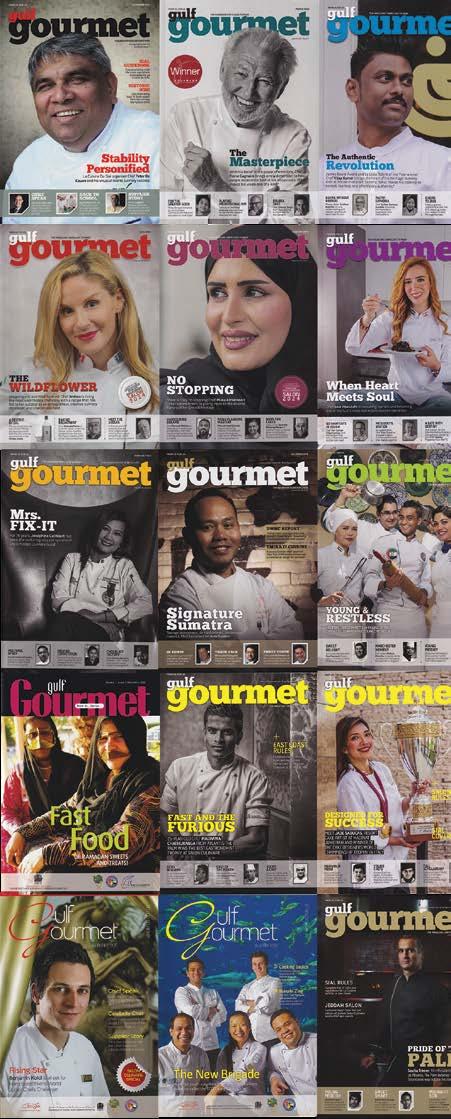
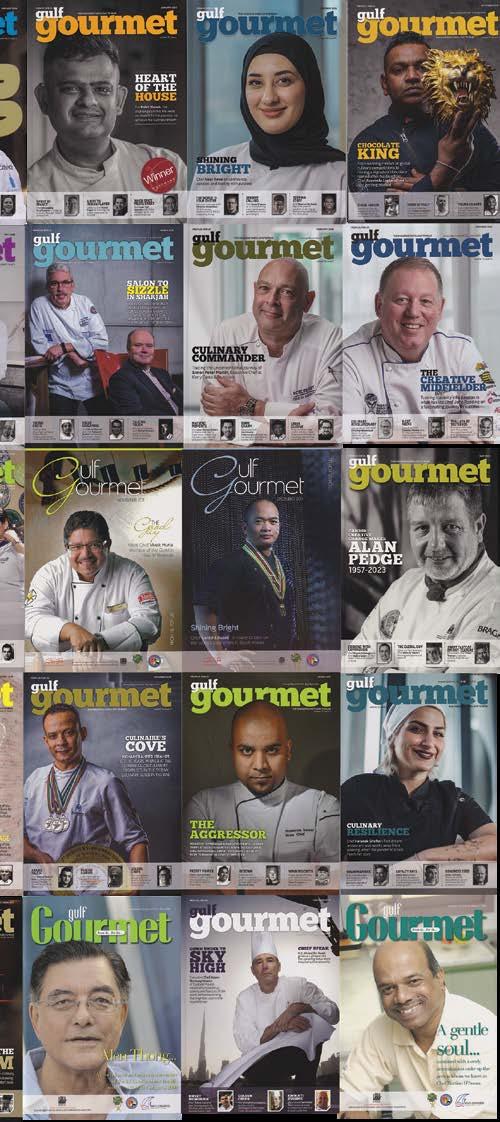
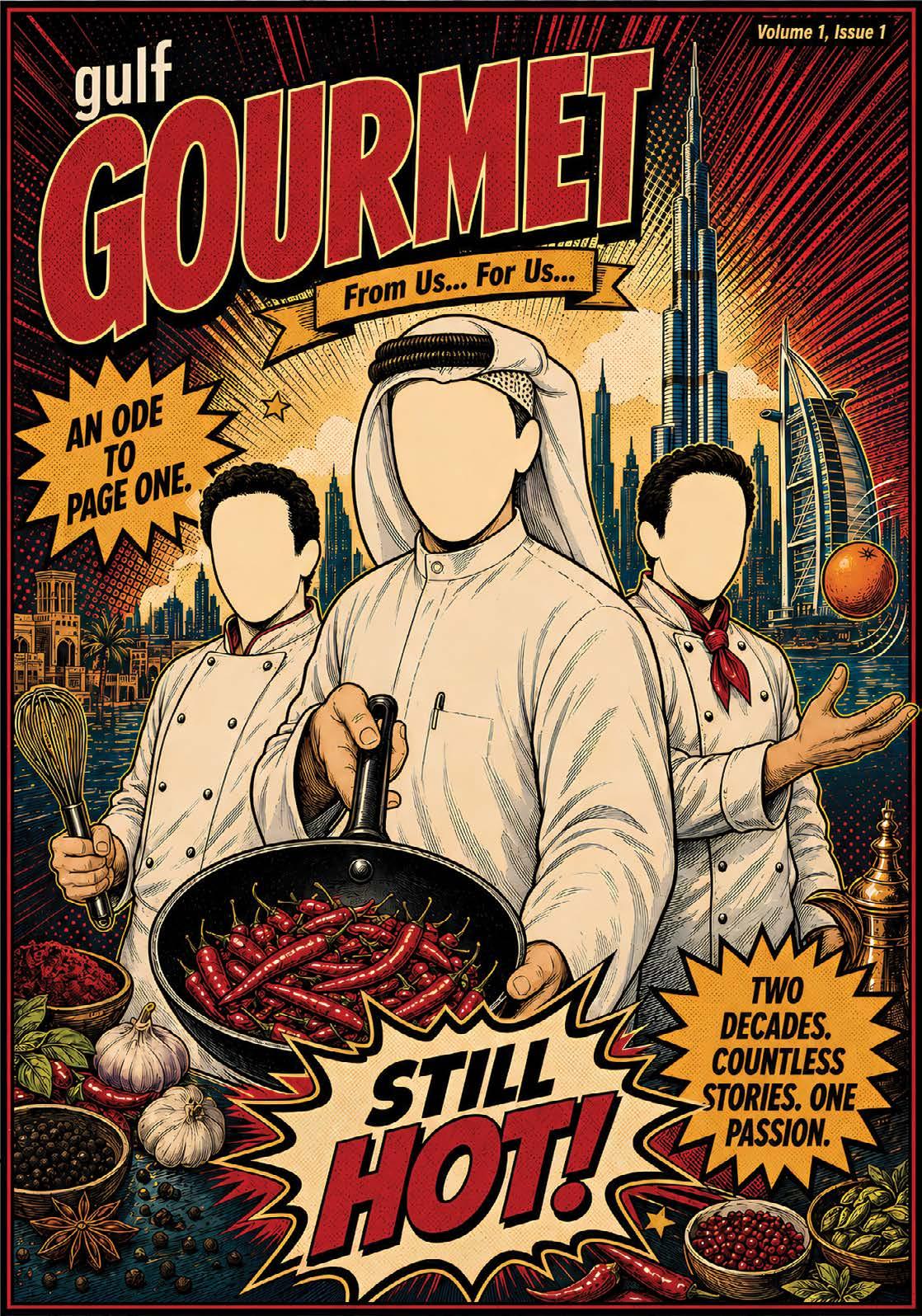
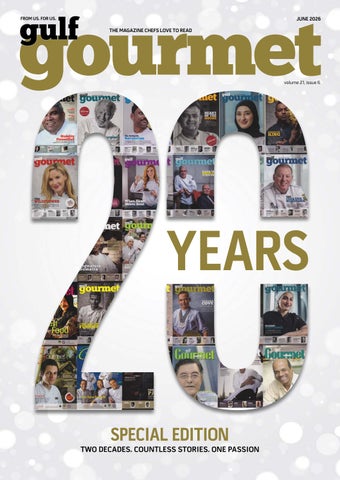
This issue is itself a unique tribute to Gulf Gourmet. Within these pages, you will find our very first cover, all the different covers across the years with their own stories, and special tributes on how far this journey has come.
Last month was also exciting. We had the honour of attending the Worldchefs Congress & Expo 2026 in Newport, Wales. The WACS conference was an excellent several-day experience, full of culinary inspiration, education, and networking amongst peers from across the world. Held every two years,
it is always a wonderful expression of culinary excellence, and it was wonderful to experience the beautiful Welsh countryside alongside exceptional food and hospitality. A great time was had by all, including the young chefs who attended the Billy Gallagher Young Chef Forum. 34 young chefs from across the world, worked, networked for four days and also explored the markets of Cardiff, and created memories that will last a lifetime.
I am also pleased to share an exciting development for our culinary community. We are proud to announce Salon Classes 2026, a four-month culinary competition series presented in association with ICCA Dubai, Foodverse, and the Emirates Culinary Guild. The competition will take place on the last Tuesday of every month from June through September, creating another opportunity for chefs, bakers, pastry chefs, and culinary professionals across the UAE to showcase their skills and be part of our vibrant culinary community. For further information, please contact emiratesculinaryguild@gmail.com or log in to the Foodverse app at foodverse.io
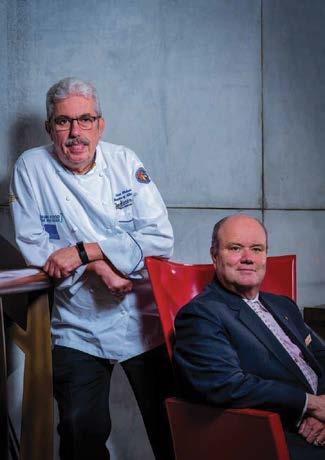
This issue also features two seasoned culinary leaders from the Dubai World Trade Centre. Culinary Director Chef Georg and Executive Chef Chef Eric have decades of experience and composed mastery that only comes from years at the top of their craft. These two remarkable chefs continue to inspire everyone around them.
Dive into our past issues at issuu. com/gulfgourmetmagazine and visit emiratesculinaryguild.net to stay updated on events and news. If you are not already following us on social media, come see what chefs around the world are creating and perhaps

connect with someone who inspires you. Our inbox is always open, tell us what stories you want told and what you would love to see in a future issue. For anything events-related, reach us at emiratesculinaryguild@gmail.com
The culinary world has changed enormously over these past 20 years. There is no gatekeeping. Kitchens that once guarded their secrets now open their doors. Chefs who once worked in silence now lead conversations on culture, sustainability, and the way the world eats. Ingredients once considered exotic are now celebrated on tables across the globe. Fusion, heritage, tradition, innovation, their amalgamation is our greatest creation.
At the end of the day, it all comes back to one thing: our love for food. That is what will move this industry and this magazine forward. Always has. Always will. Congratulations to everyone who has been part of this remarkable adventure. The best, as they say, is yet to come.
Culinary regards, Alan Orreal

Emirates Culinary Guild Announces
A heartfelt note from President Alan Orreal as Gulf Gourmet marks 20 extraordinary years of culinary storytelling.
the
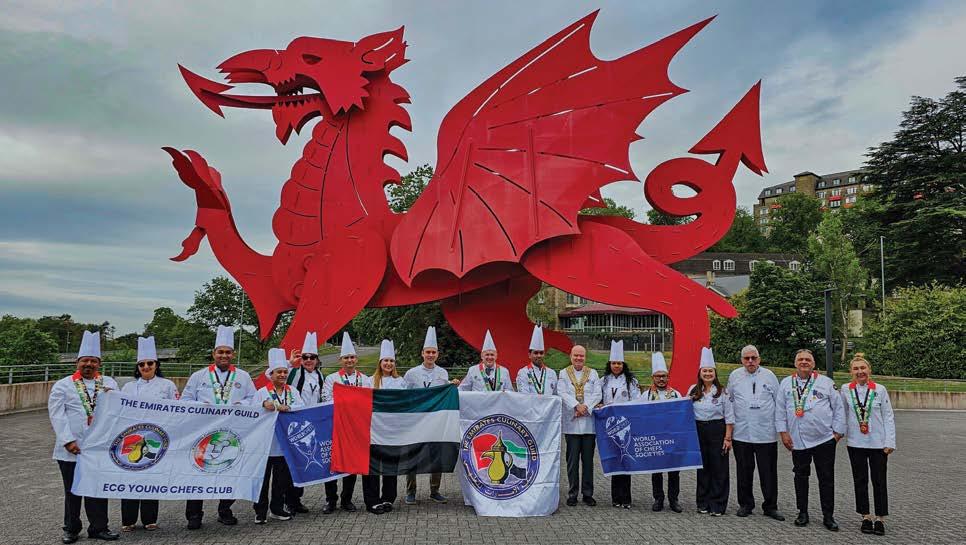
from the Worldchefs Congress & Expo 2026 that took place in Wales, where the Emirates Culinary Guild team joined culinary leaders from across the globe.
Chef Tarryn-Leigh
two decades of from us, for
Who decided that at a certain age, you stop? Chef Tarek Mouriess finds his answer in 20 years of
Chef Helen Morris shares her latest eating adventures, from a chef who made Umm Ali on request to a cabbage dish in Birmingham that changed everything.
Chef Georg Hessler and Chef Eric Menard stand side by side as the culinary masterminds behind DWTC's most extraordinary services.
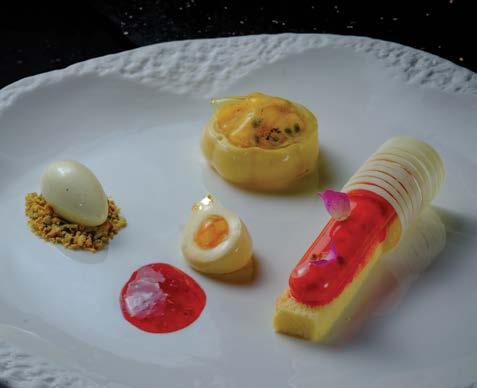
Chef Ramaiya Ashok Raj talks about years of flour on his hands, four continents of dough in his memory, and a rise so complete it needs no crown to prove it.
Chef Monal Malhotra revisits his first overseas assignment, all fired up, excited, and completely convinced he was ready for whatever the world could throw at him.
Why does the same dish taste different depending on who I share it with? writes Chef Mohammad Ameri
Understanding how boxed meat is shipped from expert Sulemana A. Sadik
A listing of all the leading food, beverage, and equipment suppliers in the region.
Simon Martin, Executive Chef and Innovation Consultant, shares the latest trends shaping our region for 2026.





















P R OF E S S ION A L










































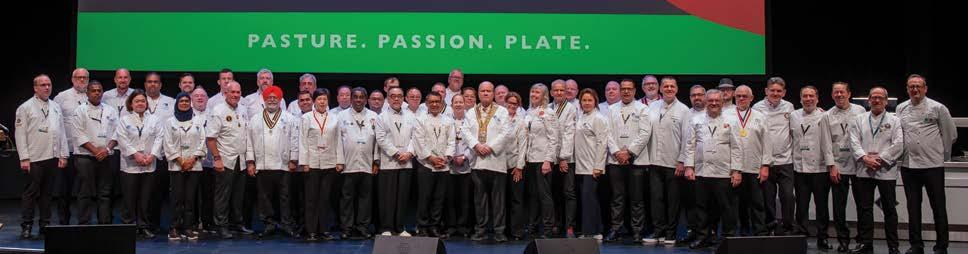
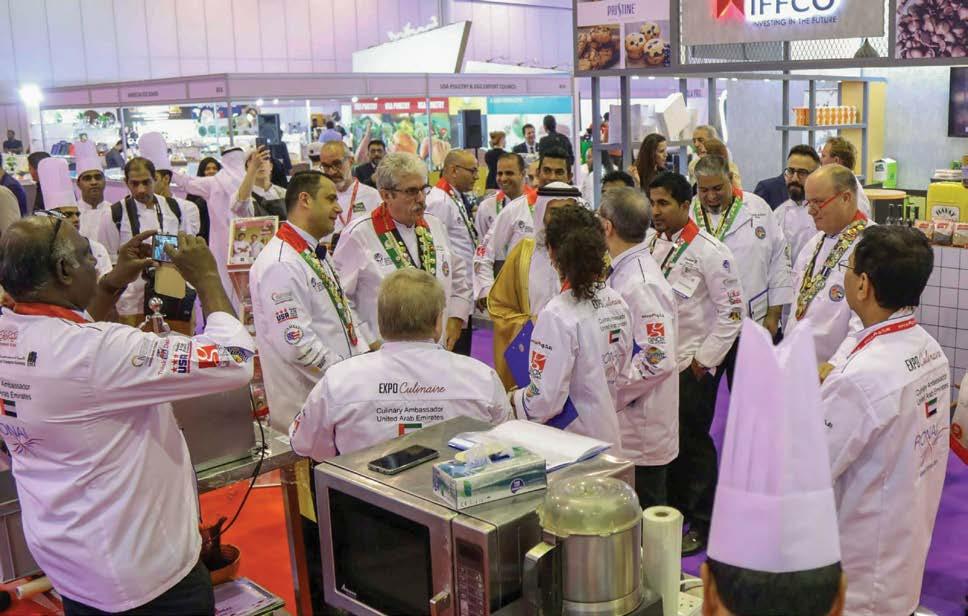
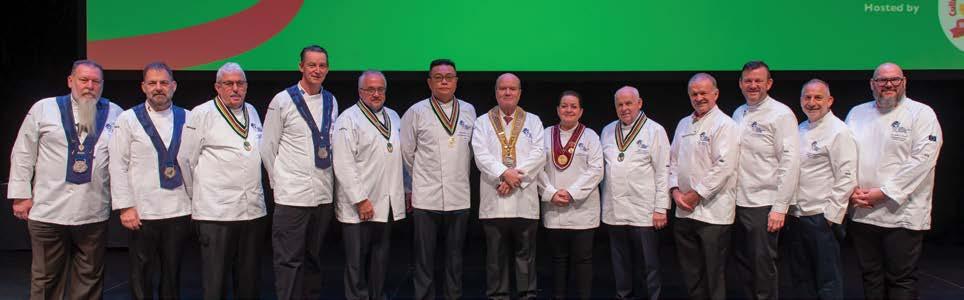
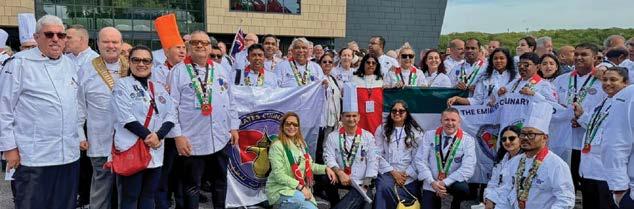
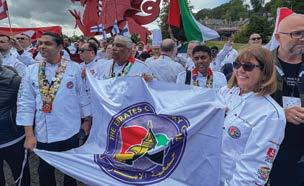
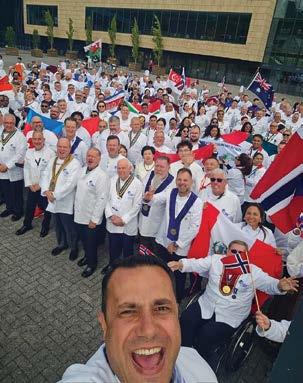
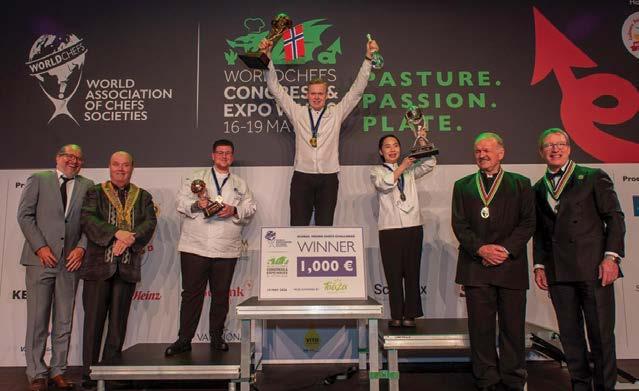
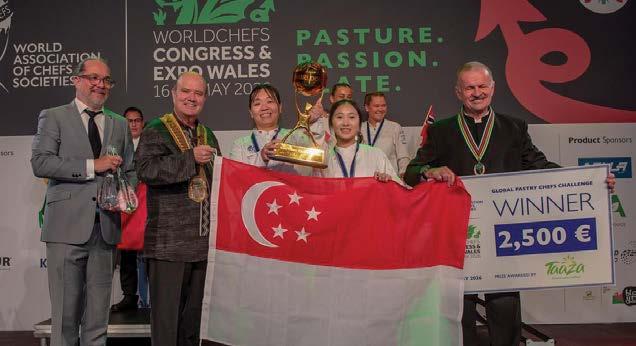
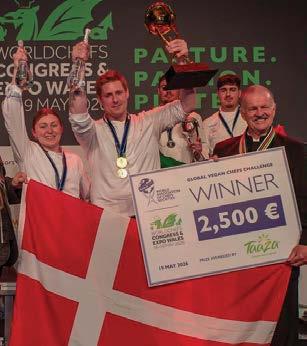
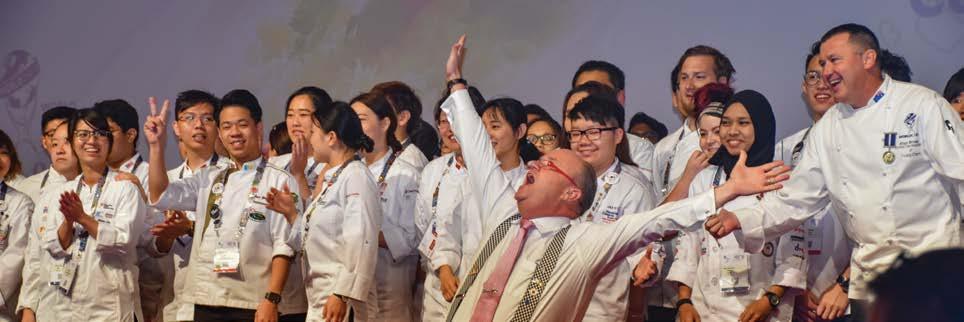
Last month, the culinary world gathered in Newport, Wales, for four momentous days of competition, dialogue, and culinary excellence. The Emirates Culinary Guild marked the occasion by presenting anniversary pins to delegates in readiness for the centenary congress planned for 2028
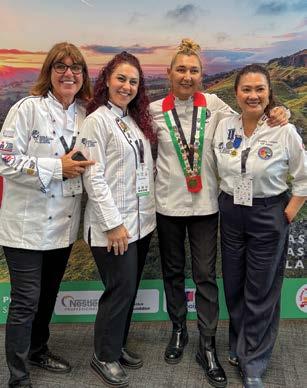
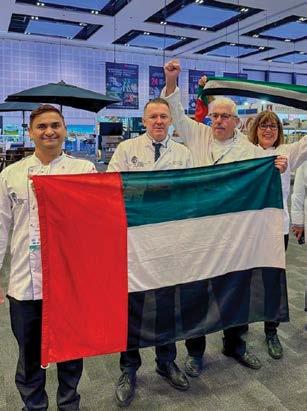
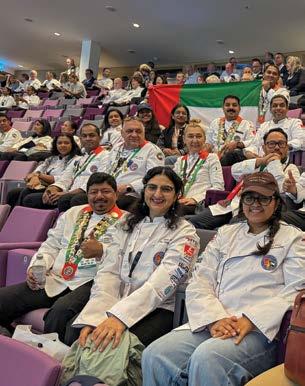
The 41st biennial Worldchefs Congress & Expo took place from May 16–19, 2026, at the International Convention Center Wales (ICC Wales) in Newport, Wales. Under the leadership of Emirates Culinary Guild President Chef Alan Orreal, a delegation of 30 chefs and their families journeyed to Wales, taking part in four days of industry dialogue, camaraderie, and competition.
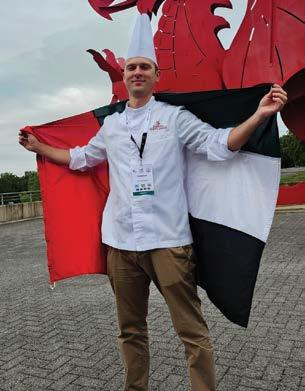
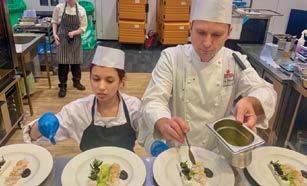
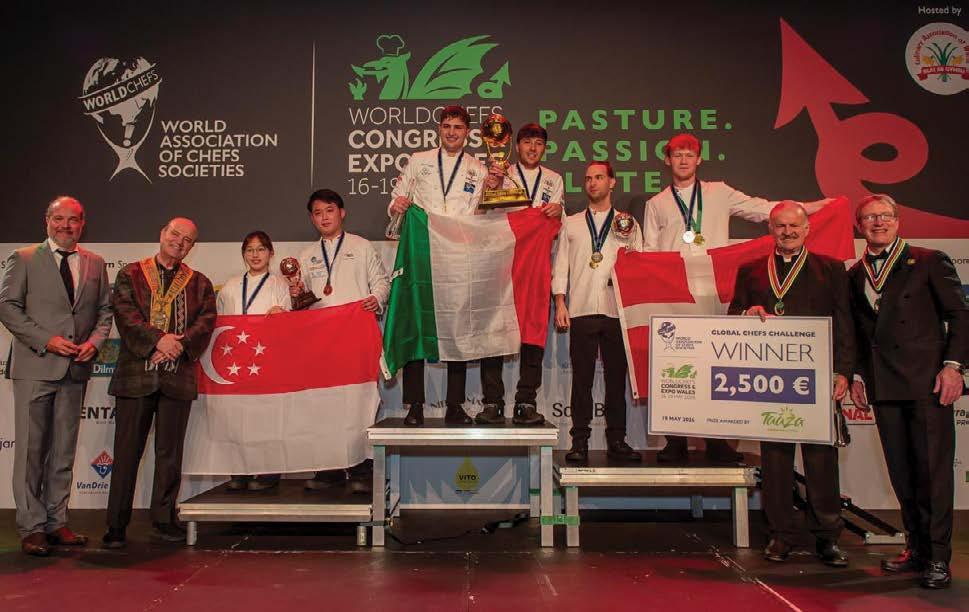
One of the standout moments came in the Global Chefs Challenge Finals. "Chef Yury Evfimenko from Emirates Flight Catering represented the UAE, the Middle East and Africa Region, competing alongside the best in the world and making us incredibly proud," said Andy Cuthbert, President of Worldchefs and Past President of the Emirates Culinary Guild.
Chef Andy Cuthbert was seen on stage addressing the global body of Worldchefs, delivering updates, and engaging with delegates. "I enjoyed every moment of this Congress as much as any other delegate," he said. "It was a wonderful gathering of our global culinary family."
A memorable gesture came from the Emirates Culinary Guild team, which donated special 100 anniversary pins to fellow delegates in readiness to the upcoming centenary of the Worldchefs Association. "The pins were very warmly received by presidents and delegates from around the world. It was a beautiful way to start building excitement for what will be a landmark milestone,” noted Chef Andy.
The food was equally impressive. Chef Andy noted that the Welsh cuisine throughout the congress was nothing short of fantastic, with much of the
credit going to Chef Peter Fuchs, Group Culinary Director at The Celtic Collection and ICC Wales. “A familiar face to the UAE culinary community, Chef Peter worked in the region in the early 1990s before making his mark in Wales. Chef Peter did us proud with the culinary offerings and the tremendous support he gave to Chef Yury and our entire delegation. We were very lucky to have him alongside us," added Chef Andy.
Looking ahead, the Worldchefs Congress will next convene in Paris, France, in October 2028, a historic occasion marking the association's 100th anniversary. "Paris in 2028 will be something very special. The 100th anniversary of WACS is a moment for our entire global community to celebrate, and the UAE will absolutely be part of that,” added Chef Andy. The bell is bound for Paris, and the UAE will be there. ■
Chef Tarryn-Leigh Green on why the beauty of food may lie somewhere beyond the plate
Irecently came across a quote from Lisa Shaffer, The Creativity Therapist, that stopped me in my tracks: “Food is one of the few art forms that disappears the moment it succeeds.”
What a beautifully honest statement.
As chefs, we spend our lives creating something designed to vanish. We pour hours into refining flavors, balancing textures, and perfecting presentation, only for it to be consumed in minutes. Gone. Finished. Reduced to a memory.
And yet, perhaps that is exactly what makes food so extraordinary.
Whilst food may be impermanent in its physical form, its emotional permanence is incredibly powerful.
A single aroma can transport someone back to childhood. A taste can unlock nostalgia. The texture of a dish can remind someone of home, family, or comfort. Food holds emotion in a way few other art forms can.
It is sustenance at its core, but at its finest, it becomes storytelling.
What fascinates me most about food is that it carries lineage whilst still allowing individuality. A grandparent’s recipe may be passed from generation to generation and yet never recreated exactly the same way twice.
There are simply too many variables. The season may have changed. The ingredients may come from a different source. The oven may run hotter. The chef may be tired, inspired, or emotional. Even the way a dish is plated can alter the experience.

Food is wonderfully human in that sense. An artist may have their work copied or forged, but food can never truly be duplicated from one day to the next. There will always be subtle differences. Tiny fingerprints left behind by circumstance, environment, and emotion.
And perhaps that is something our industry needs reminding of. Hospitality is synonymous with hard work, long hours, and stress. We spend so much time navigating procurement issues, operational pressures, staffing challenges, and the relentless pace of service that we can lose sight of the beauty behind what we do.
The craft is overshadowed by the mechanics of running a business.
But beneath all of that, we are artists. We chose this path because we loved creating. We loved the emotional food
Proper ageing begins long before premium beef reaches the kitchen
evokes and the ability to bring people together, comfort them, and create memories through flavor.
It is important not to forget that. Because beyond the supplier delays, and operational fires we put out daily, there is still something meaningful about standing in a kitchen and creating something with our hands that has the power to make somebody feel something.
Food is layered and complex, yet simple at the same time. A bowl of soup can represent survival. A birthday cake can become a tradition. A family recipe can preserve heritage.
What a privilege it is to work within a craft that exists so universally across the world whilst remaining entirely unique to every culture, family, and individual.
So, the next time you prepare a dish, pause for a moment and truly take it in.
Because no matter how many times you make that recipe, this exact version will never exist again.
Your masterpiece is fleeting, and perhaps that is precisely what makes it art. ■

Gulf Gourmet has told the stories of the hospitality industry through the people living it every day. Two decades later, the magazine is still honest, evolving and always from us, for us .
By Shreya Asopa
"There is no greater agony than bearing an untold story inside you," said Maya Angelou. I read that line years ago. It never left. It is the reason I write. Somewhere out there is a person sitting on a story that deserves to be told, and the thought of it dying with them, unheard, unread, feels like a tragedy I cannot make peace with. That is what brought me to Gulf Gourmet And Gulf Gourmet, as it turns out, had no shortage of stories worth telling.
Three years in, and the education has been unsparing. The Salon Culinaire coverage, with its electricity and its invisible army of marshals, partners, and chefs who never take a bow but hold the whole thing together. The op-eds and expert voices that shift your perspective on an industry that never sits still. The women of the Guild, fierce and accomplished, making ambition look elegant rather than loud. And then the Gourmand Cookbook Awards 2025, when Gulf Gourmet was named the best magazine in the world. That was a moment for every single person who had ever put a word, a photograph, or a page together for this publication.
And then there was the food-tech beat. I did not expect that one to get under my skin the way it did. But here is the thing about covering food innovation for long enough. You stop being surprised that it is happening and start being surprised by how fast. Who would have thought cultivated meat would go from a lab curiosity to a commercial conversation within a few years? Or grow dairy in a lab without a single animal?
For young chefs this matters more than most people are telling them. Dubai, as always, gets there first. AI powered food waste technology, robotic kitchen assistants, precision fermentation, fusion, tech. It is here. The chefs who understand this space today will write the menu of the next decade. I say this not to alarm anyone. But because the stories

The chefs who understand this space today will write the menu of the next decade
I worked on made me excited for what is ahead. A Finnish startup growing protein out of thin air. An Estonian company turning sawdust into edible oil. A British food-tech firm making chocolate from fava beans. These are not science fiction plots. These were conversations with real founders with their vision already on shelves and in test kitchens.
It is always humbling to be handed a story that is bigger than you. It was Aquin who first introduced me to the Emirates Culinary Guild. The Guild's loyalty to this magazine, in a world that moves fast and forgets faster, is rare. Since then, every story assigned has been an education.
When Amaresh, the Associate Publisher of Gulf Gourmet and keeper of two decades' worth of memories, asked me to write about the 20 years, I said yes before my brain caught up with my mouth. Then, as I sat down at my desk and thought….how? How do you put twenty years of passion into ten pages? How do you compress decades of late nights, first drafts, editorial arguments, community, friendship, food, and the chefs behind it all into something that fits between these covers? Most daunting of all, how do you do justice to the people who gave it their best years and their best words? To be honest, the thought of compressing these years into ten pages was debilitating.
Faced with this challenge, I did the only thing a writer knows how to do. I went looking for the people who lived it. With Amaresh guiding me to the right doors, I spoke to the magazine's founding fathers, the editor, the designer, and the chefs who have been part of the magazine since its inception.
I asked them to remember. Lucky for me, they did.
It all started with a conversation
20years ago, I remember sitting at the restaurant of what was then the InterContinental (now the Radisson Blu Deira Creek) alongside Yamini, Amaresh, Chef Uwe and myself, discussing the layout, direction of the magazine of the Emirates Culinary Guild and the tagline from us, for us.
Over the years, this chef's magazine has elevated itself in every way. The layout, concept, and stories have grown bigger and more compelling, with stronger, more interesting sponsors and more prestigious partnerships. It is really amazing to see where we are today, recognized among the finest publications by Gourmand.
The magazine has become a great platform for sharing what is happening across the industry for chefs, and one of the finest compliments I have received is that we are perhaps the only publication using a magazine to connect the hotel industry and chefs to the happenings of the ECG, sharing education, knowledge and professional growth.
Congratulations to Gulf Gourmet and the entire team for doing an amazing job and working on wonderful stories. Even when we open it today and see long-time supporters still featured in its pages, sharing their expertise, it is well- appreciated. We look forward to another 20 years and many more celebrations together. with Gulf Gourmet
Josephine Cuthbert, Vice President Administration & Affairs


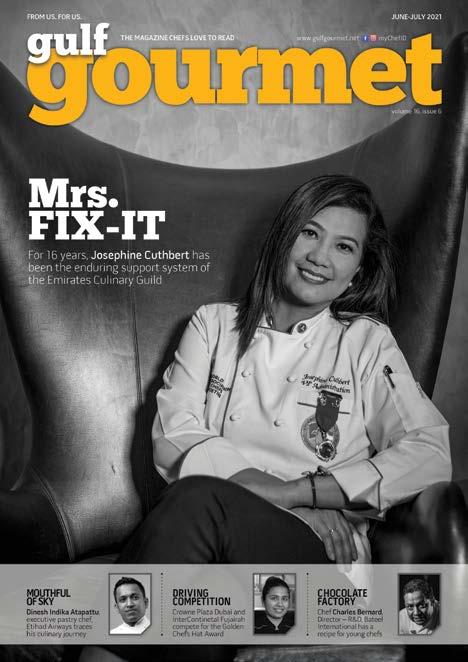
The June-July 2021 issue of Gulf Gourmet broke with tradition to honour Josephine Cuthbert, a rare and deserving tribute to the non-chef who has kept the cogs of the Emirates Culinary Guild turning smoothly behind the scenes.
This special edition, presented in a bold new art style, honoured Uwe Micheel, Andy Cuthbert, and the late Alen Thong, who gave over two decades to empowering UAE culinary talent.
The magazine featured the story of Salon Culinaire finding its new home in Sharjah, where over 900 competitors gathered in pursuit of medals, learning and glory.



20years ago, the Emirates Culinary Guild thought about starting a small newsletter for its members and partners. 20 years later, what started as a great idea and with some passion from many people, including Amaresh, who is still the driving force behind the Gulf Gourmet, the magazine has grown into something far bigger. It has become a worldrecognized culinary publication, winning an award for the best culinary magazine in the world in 2025 by Gourmand World Cookbook Awards. At the same time, it continues to serve the chefs of the United Arab Emirates through the Emirates Culinary Guild, along with its partners and the industry as a whole.
Not just exclusively for members, the magazine is one of storytelling from the global gastronomy world to local stories while also highlighting Emirates Culinary Guild chefs in every issue.
The platform gives our partners an opportunity to promote their products, but it also gives them storytelling opportunities around education, technology and topics that interest not only young chefs, but chefs of all levels and food enthusiasts as well.
The magazine has gone from strength to strength. Its monthly print run has grown from 1,500 copies to more than 3,500 copies during the Emirates International Salon Culinaire, the Guild’s annual culinary competition.
The magazine features six to eight international contributors each month, covering topics ranging from beef quality and mental health to pastry recipes, food waste, and managing our kitchens better. In general, it offers fantastic information and inspiring ideas for young chefs and food enthusiasts to read and learn from.
We are very proud of the Gulf Gourmet magazine and grateful to our partners and supporters over the years, as well as to the small team of Amaresh and Shreya, who are behind the production, writing, and photography of the magazine. We will continue to publish the magazine with pride, share it across our social media platforms, digital channels, and distribute hard copies amongst the industry throughout the United Arab Emirates.
On behalf of the Emirates Culinary Guild, we really do thank
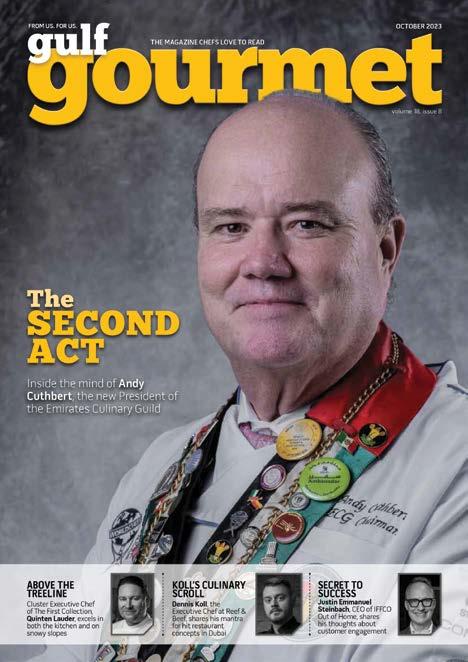
A man of many chapters celebrated Andy Cuthbert as he stepped into his role as President of the Emirates Culinary Guild, a story of big dreams, love of food, early mornings washing dishes, and the connections along the way that brought him to where he stands today.
our readership and our membership for their support over the last 20 years in making the Gulf Gourmet magazine something truly special, truly inspiring and as it was always set out to be - from us, for us.
Andy Cuthbert, ECG Coordinator, Past President, President Worldchefs
The first person I called was Chef Uwe Micheel, who, in many ways, made all of this possible. Chef Uwe is not a man who sits still. He tells me this himself, almost as a disclaimer, minutes into our Zoom call. He had landed in Germany the previous afternoon and was leaving again in two days. Ten trips already, and we are only in the fifth month of the year.
"My wife says she was married to the children," he says, laughing. "I was married to the hotel. Now we are catching up." He is unhurried, despite the schedule that would exhaust most people half his age.
He is now Assistant Vice President of Worldchefs. Before that, he was honorary Past President of the Emirates Culinary Guild. When he first joined in 1993, nobody could have predicted the decades of leadership that would follow. General Secretary, then Chairman, then Guild’s President for 24 years. And somewhere in the middle of all of that, he helped start a magazine.
"It was not called Gulf Gourmet in the beginning," he says. "It was a salon culinaire magazine used to communicate the rules and regulations, and introduce the judges. We were very small,” he recalls.
The internet was, as he puts it, "much, much less" back then. “Chefs needed something they could hold. Something that would find them. Chefs are not good communicators at all," he says, with the frankness of someone who has spent three decades trying to fix that. The magazine was his answer.
Then in 2005, a meeting changed everything. He sat down with Amaresh and Yamini, the past editor, and the three of them decided to print a proper magazine. “One day, I met Amaresh, Yamini (past editor) and the three of us decided to print a proper magazine with faces and voices that the community could see themselves in. From the first day, we had a vision.” What emerged was a melange of education, community and culinary identity. And that vision had a tagline. Four words that have held through evolution. From us, for us. "Whatever we decided, whatever
You need to have a few people who have the magazine in their heart. Not in the fist
transformation we went through, we always came back to it."
Even when bigger publications came knocking over the years. The Guild turned them all down. "Because we wanted to stay true to our tagline," he says simply. It was never about money. It was about ownership. About a community speaking for itself, in its own voice, on its own terms.
The magazine grew in reach and ambition, welcomed new contributors and new conversations. But through it all, one person stayed. "We were lucky that Amaresh was with us all the time. Whenever other people left, he always stood with us. We are grateful to him,” reflects Chef Uwe.
On the question of print versus digital, Chef Uwe is pragmatic rather than precious. "My generation, when I have my coffee in the morning, I want the magazine in my hand. I do not want the phone." He laughs. "My son says, ' Why do you waste paper?" But he understands the shift. The young generation, he says, connects with the magazine when their own picture is in it. When their friends are in it. That is the currency of attention now, and he is clear-eyed about it.
The future of the magazine, he believes, lives with the young. “We need more stories about young chefs who are full of talent but without the financial means to travel and learn. About the need to make the industry exciting again for a generation that has more options and less patience than any generation before them.” Gulf Gourmet, he believes, has both the platform and the responsibility to tell that story.
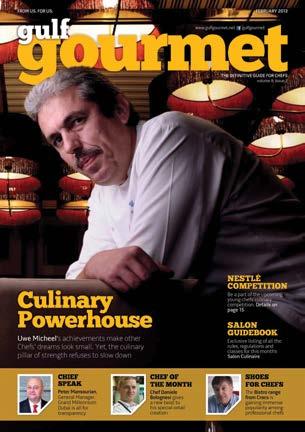
This cover put the spotlight on Chef Uwe Micheel, telling the story of the hard work and passion that made him renowned as a chef extraordinaire. He is now Assistant Vice President of Worldchefs. Before that, he was honorary Past President of the Emirates Culinary Guild. When he first joined in 1993, nobody could have predicted the decades of leadership that would follow. General Secretary, then Chairman, then Guild’s President for 24 years. And somewhere in the middle of all of that, he helped start a magazine.
"You need to create excitement," he says. "The young generation needs to think, next week Gulf Gourmet is coming, I need to have a look, send me the link. That excitement. That is what we need to build."
Before we finish, he says something that stays with me long after the call ends.
"The magazine was always a communication tool between chefs. Not to make money. To connect people. To make a difference. I hope the magazine will keep going. I do not know how long I will be around. But I hope the magazine is around when I am not."
And then, as if thinking out loud, he says the most beautiful thing. "You need to have a few people who have the magazine in their heart. Not in the fist. As long as you have that, the magazine will stay alive.
Topiece the origin story together more fully, I also spoke to another founding father of the magazine. Chef Mike Lee, the first President of the Emirates Culinary Guild, joined me on a call from the UK on a crisp morning.
He is over 80 now. Life is a bit slower, he says. When he is in France, he is always in the kitchen. Friends come for dinner, groups of six, sometimes more. A couple of years ago, he catered a 60th birthday for 70 people. Then his wife's 60th birthday a year later. "One of the last major banquets I have done," he says, adding the love for cooking never goes away.
And in many ways, the magazine sprang from that same love for the culinary world. It all began with a phone call, when Chef Mike was tasked with helping launch a culinary competition. And the magazine, in its earliest form, was born not from editorial ambition but from the entirely practical necessity of funding that very first culinary competition in the UAE. They had been given 30,000 dirhams for the exhibition. They went out and sold 60,000 dirhams more in advertising, half pages, full pages, to suppliers and hotels who wanted to be seen. "It was a brochure first, then something more, then eventually the magazine. It was very much Middle Eastern. And they picked it up a notch, then another, and now it is what it is. I am proud of the evolution of the Guild and the magazine," he adds.
From local competition to regional force, to a magazine that the world noticed
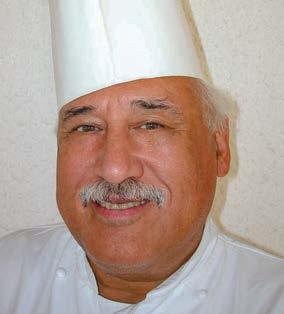
From local competition to regional force, to a magazine that the world noticed. The career that ran alongside all of this was, by any measure, remarkable. Chef Mike spent years designing international menus and buffets, including cooking for the royal family and major events.
And then there was also the dinner for Prince Charles and Princess Diana. "They had come to Dubai. So my team was assigned to look after their breakfast, drinks, whatever was needed. When the Royals invited the Sheiks back to the beach palace for dinner, I designed an English menu. A crown of lamb racks bent and joined together into the shape of a crown, stuffed, roasted, then pushed around the table on a small trolley for twenty people."
These are the stories that live in the margins of a culinary life. The ones that never make it into a magazine, but reveal the most honest things about the person behind it.
Whenever he returns to Dubai, people come up to him. Junior chefs, now executives, want to say hello and thank him. "I do not know what for," he says, with humility in his voice. "But it is a privilege when I go back. People remember. They come over, and they say thank you. Seeing their success and gratitude, I realize those moments in the kitchen lived on far beyond any single meal or magazine page."
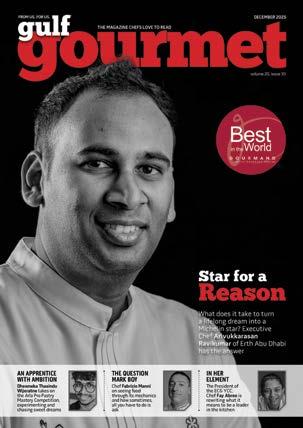
This cover celebrated Chef Arivukkarasan Ravikkumar of Erth Abu Dhabi and his Michelin star journey.
While working on this issue, we received the news that Gulf Gourmet had been named the Best Magazine in the World by the Gourmand Awards. Some issues just have that energy.
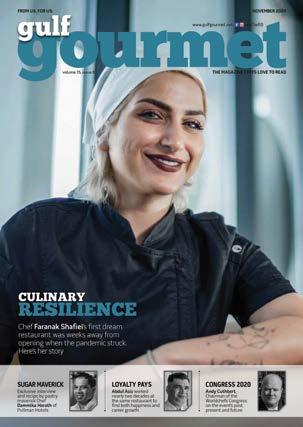
Days away from her dream, Chef Faranak Shafiei found herself blindsided by a pandemic. That is when she proved what it takes to stay afloat when everything fell apart, in one of Gulf Gourmet 's most unique and personal cover stories.
To better understand the magazine's early days, I spoke with Chef Andreas Kurfurst (also known among community as Chef Andy) who was featured in Gulf Gourmet way back in 2007.
Currently living in the Philippines, Chef Andy is retired but still giving back to the community, sometimes as a
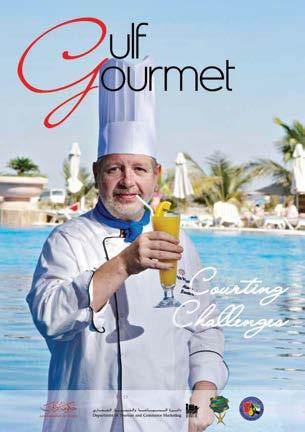
There are covers Amaresh still remembers instantly. The very first one. The shoot with Chef Uwe Micheel, huge studio lights, heavy camera gear. "It was the first independent magazine cover I had complete control over." Then there was the late Chef Alan Pedge. Amaresh travelled to Abu Dhabi for the shoot when Chef Alan casually suggested jumping into a swimming pool fully clothed for the cover image. "I thought he was joking. Next thing I know, he jumps." The photograph became one of my favourite covers,” he recalls.
guest lecturer at culinary schools and sometimes guiding young chefs. It has always been this way with him. Known for transforming inexperienced kitchen porters into executive chefs, he believes success comes through hard work and consistency. " There is no overnight success. You become a master only when you do one thing ten thousand times. Then you can do it in your sleep, and it is consistently good,” he says.
Chef Andy came to Dubai in the nineties, at a time when the chef community was, in his words, second to none. "Everybody knew everybody. If I had a big function next week and needed dishes, I would make two calls. Somebody would bring them. That kind of thing, you do not see anywhere else in the world. This was only Dubai." He laughs at the memory.
"I grew up in Germany," he says. "You have magazines about movie stars, musicians, bands. And now here is this magazine, produced in Dubai, featuring people you actually know, like Chef Alen Thong and Chef Andy Cuthbert. It was like being on the cover of Time magazine. A lifetime thing." Even the 2007 feature stays vivid in his memory. Amaresh came to his house for the interview, to take the pictures. "We felt like stars. It was really amazing."
It was through marshaling that Chef Andy first found his way into the pages of Gulf Gourmet. He had been the vice president and chief marshal of the Guild, showing up behind the scenes at the culinary competitions. "There I was, in the picture of the magazine, for the first time, even before the cover," he says, still pleased by the memory.
What he did not know then was the ripple he was creating. When Gulf Gourmet ran its Quote Marshal series, several chefs credited him as the person who inspired them to get into
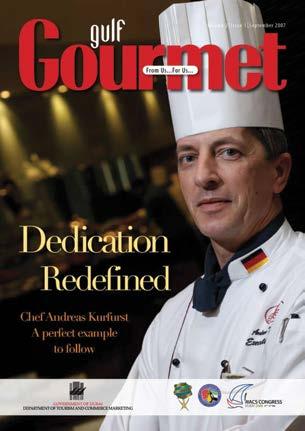
Chef Andreas Kurfurst graced the September 2007 cover, recognised for his dedication to his team, his craft, and the Emirates Culinary Guild.
marshaling. "I want to push the younger generation. So they become even better than me one day."
The most important thing a mentor can offer, he believes, is not just technique or knowledge, but the visibility of genuine passion. "I love what I am doing, and I am not afraid of showing that. That is important as a teacher."
But of all the stories Chef Andreas carries from those years, there is one that stopped me mid-conversation, one also featured in his 2007 cover story. In 1996, he was part of a team that made the world's longest cake for the 25th anniversary of the United Arab Emirates. " I made 15,000 sugar flowers, all handmade. Every member of the Emirates Culinary Guild team showed up and worked together. On the day of the celebration, thousands of people lined the sides of the table, and when the dignitaries cut the cake, the crowd broke through the barriers, descended on it, and within ten minutes, it was gone. Just gone," he laughs. The reason, it turned out, was a rumor that had spread through the crowd. Hidden inside the cake were 250 gold coins and 25 Mercedes car keys. "That got the public," he says, still laughing.
Digging through the competition covers from some of the Guild's earliest editions, I also spoke to Chef Ulrich Jablonka, who appeared on one of the magazine's early covers as a young chef who won the Middle East Junior Chef competition. Today, he is the General Manager at The Silk Lakehouse Hangzhou, Shangri-La Signature and Shangri-La Hangzhou.
Sending him the cover picture brought back many memories. "I do remember that moment quite vividly. The photo was taken in the upper area of the Burj Al Arab, near the sail, overlooking the city. It was a remarkable setting, and at the time, it felt both surreal and very humbling to be featured in that way," he says.
At the time, Chef Ulrich was still early in his career, competing alongside some of the region’s strongest culinary talent. He had already won the German Championship and represented Germany at WorldSkills, and for a while, he believed that phase of competitive cooking was behind him. But the Middle East Junior Chef competition pulled him back in.
"To find myself once again among so many talented participants in the Middle East, and then to be recognized in this
way, felt very special and, in many ways, unexpected. It was also only possible because of the people around me who encouraged me to participate, supported me throughout the process, and saw potential in me that I may not have fully recognized at the time. Their belief and guidance played a significant role in my development," he shares.
What stayed with him most was the pressure of the days leading up to the final announcement. "Surrounded by such strong competition, I was quite certain that winning would be out of reach. That moment of uncertainty is something that stayed with me, because when the result was announced, it was both surprising and rewarding," he remarks.
Being featured in Gulf Gourmet around the same time became part of that memory, too. For Chef Ulrich, the experience was an important lesson on stepping into something new. "The greatest value lies in the participation itself, in the willingness to challenge yourself, to learn, and to grow. Winning is never something that can be guaranteed, but development always is. If I could share one thought, it would be not to participate with the sole goal of winning, but rather to become better
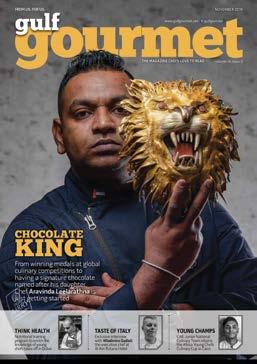
Chef Aravinda Leelarathna was featured for his phenomenal rise from dreaming of a life in the military to becoming one of the most decorated pastry talents on the global competition stage.
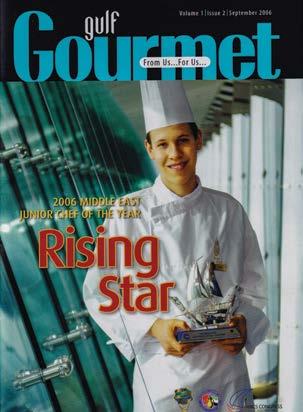
The September 2006 cover celebrated Chef Ulrich Jablonka as the 2006 Middle East Junior Chef of the Year, a young talent whose rise to the top announced, from the very beginning, that he was one to watch.
through the experience. The rest, in many cases, will follow naturally."
And if he could go back and say one thing to the young chef standing in that competition hall all those years ago? "Stay patient, stay curious, and never underestimate the importance of people. Without a strong team beside you and the support of trusted leaders, both success and sustainable growth become significantly more challenging. Talent will open doors, but it is empathy, listening, agility, and the willingness to keep learning that will define your journey in the long term."
This cover brought an exclusive conversation with Emirati Chef Muna Almansoori, a woman on a mission to change the way the world sees Emirati cuisine.

When Amaresh Bhaskaran, the Associate Publisher of Gulf Gourmet, speaks about the last 20 years, the conversation moves the same way the magazine probably did for the last twenty years; fast, slightly chaotic, full of side stories, unfinished thoughts, memories jumping timelines, names, kitchens, covers, chefs, friendships.
"It all started with me quitting engineering," says Amaresh. "I was a computer engineer but I never pursued it. I was in Perth, Australia, completing a degree in photography. Before Gulf Gourmet, I had a job at a newspaper publication in Dubai, where I shot everything from Bollywood celebrities to nightlife columns and random street assignments. I came back with a camera and no idea what I was going to do," he recalls.
Then came a phone call from Yamini. She needed a photographer for a brochure she was creating before the launch of Gulf Gourmet. They went to Chef Uwe Micheel’s hotel and shot dishes for what would become the magazine’s first promotional material.
"I was a wide-eyed kid," Amaresh says. "Ready to shoot anything."
A week later, the magazine idea was
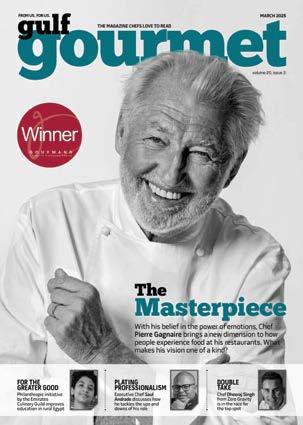
The legendary Pierre
graced our cover with a wisdom that life should not only be long but rich in experiences.
It felt like a full circle moment. But honestly, it also feels like the beginning
approved. For him, Gulf Gourmet gave him stability, but more importantly, direction. Food photography slowly became part of his identity. "This job pushed me into major food projects later. A lot of my career came from this magazine."
Then came 2011. The magazine had paused. Summer break had bought them some time, but the next issue still needed to happen. Amaresh remembers sitting with Chef Uwe one evening, talking late into the night, when he found himself saying, almost casually, that he would take it on. Chef Uwe called him the next day and handed him the magazine.
The first person Amaresh called was Aquin George, an editor and close friend from his newspaper days. What followed was, by any measure, téméraire. Two people, no business plan. "We were unbelievably naive. We used to look for food companies and walk in asking for advertisements." Most of the time, they got rejected. But over time, they learned the business side of publishing.
Aquin handled the business and technology side, while Amaresh contributed from the client and business perspective. Despite their diametrically opposite styles, the two aligned with each other and under the guiding hand of Chef Uwe they closed deal after deal. The magazine ambled rather than marched, growing organically through relationships and trust rather than strategy and spreadsheets.
What comes through strongest while speaking to him is that Gulf Gourmet was published through relationships, trust of the Guild, long meetings in kitchens, and people who cared about keeping it alive.
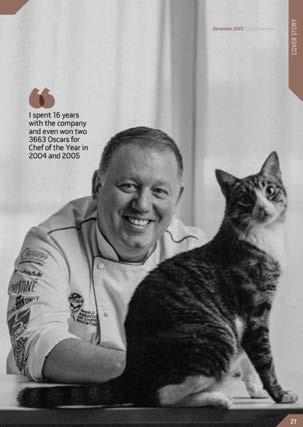
This cover captured Chef John Redding in his most natural element. Football was always close to his heart. Like a midfielder on the pitch, he became the person who connects the team, and keeps everything flowing. True to his personality, the shoot took an impromptu turn when mid-shoot, Olive (Amaresh's cat) jumped onto the table while Amaresh was taking a photograph and made herself part of the frame.
“I remember my frequent seven-minute meetings with Chef Uwe at Radisson Blu Dubai Deira Creek. Coffee was waiting on the table, and whatever he said he would do, he did. Sometimes he would solve problems behind the scenes without even telling me. He is like my Dubai dad,” he smiles.
20 years is a long time to keep anything alive. People leave, or circumstances change. But somehow, the magazine kept finding the right people at the right time.
“Today, we run the magazine with Shreya Asopa and Vahiju PC. They are the backbone of Gulf Gourmet's current phase. We have changed things slowly. But the idea stayed the same, people from the industry speaking for themselves. That shift eventually led Gulf Gourmet to one of its biggest moments yet, winning the Gourmand Award 2025 for Best Magazine in the World. It felt like a full circle moment," he says. "But honestly, it also feels like the beginning." ■
Contentideas and words on a page mean nothing without someone to bring them to life visually. For Gulf Gourmet, that credit goes to Art Director Vahiju PC, a man who has spent sixteen years turning the pages until they finally breathe.
When I ask him about his journey with the magazine, the first thing he mentions is gratitude. "I started my journey with Gulf Gourmet from the September 2011 issue. What I remember most is the learning phase, understanding how a food magazine should feel, and how to balance visuals with content. It was new, but exciting. I am also thankful to Aquin George, the former editor, who gave me the opportunity to work with Gulf Gourmet in the beginning," he says.
Back then, the energy was chaotic in the best way. Tight deadlines, last-minute edits arriving just when everyone
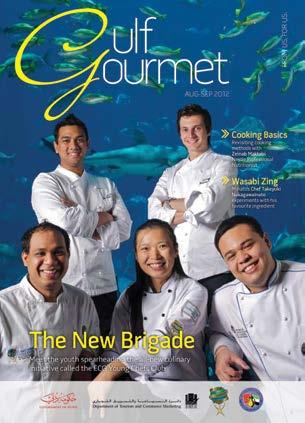
The August-September 2012 cover introduced the world to the ECG Young Chefs Club, celebrating the young brigade of culinary talent in the UAE who built a platform for themselves, by themselves.
Food itself is already visual. The design should support it without overdoing it
thought the issue was done. "We always managed to make it work as a team, even under pressure," Vahiju recalls.
And then came the covers, the most arguedover part of any magazine. "We have always focused on keeping the covers clean and relevant to the story. No cover is ever just one person's decision," he says. "Everything comes together through discussion." The magazine has evolved considerably over time, shifting from image-heavy layouts to more content-driven pages. "Food itself is already visual. The design should support it without overdoing it."
Looking at where design and food media are heading, he believes in more thoughtful storytelling, both visually and in content. "Design can support that by staying clean and readable. Readers can expect more clarity and better visual flow in the upcoming editions. The current team is very professional, and our work together has helped the magazine evolve while maintaining its identity."
When I ask what advice he would give to chefs trying to tell their stories visually, his answer comes without hesitation. "Keep it simple and honest. Good visuals do not need to be complicated. Whether it is a menu, social media, or a book, clarity and consistency matter most."
Maybe that is also the reason Gulf Gourmet has lasted this long. Beneath every layout, there is still a human take on negative space that no algorithm can hold together.
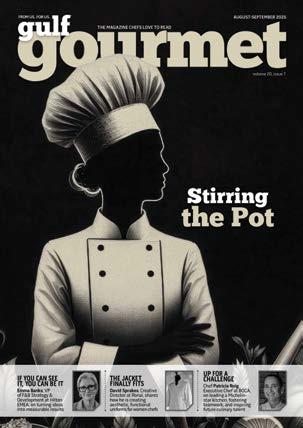
For the first time in over a decade, the cover steps back from the individual to celebrate the collective, a striking silhouette representing not one woman but every woman stirring the pot.
They say you cannot step into the same river twice. But listening to people revisit a chapter of their lives they had not touched in years, that rule felt breakable. Because something about Gulf Gourmet defies that logic. It keeps pulling people back.
These are not just interviews. They are proof. Gulf Gourmet has always been about undoing expectations about narrative. 20 years of Gulf Gourmet are the songs that become us, the stories that stayed, the voices of change. It is a community that chose, again and again, to put the stories on the page. To believe that the culinary world of this region deserved a voice that was its own.
The honest answer to how you put 20 years into ten pages is that you cannot. They exist only in the telling. So for this assignment, I may have fallen short as a conduit. But I won as someone who finally understood what from us, for us, really means.
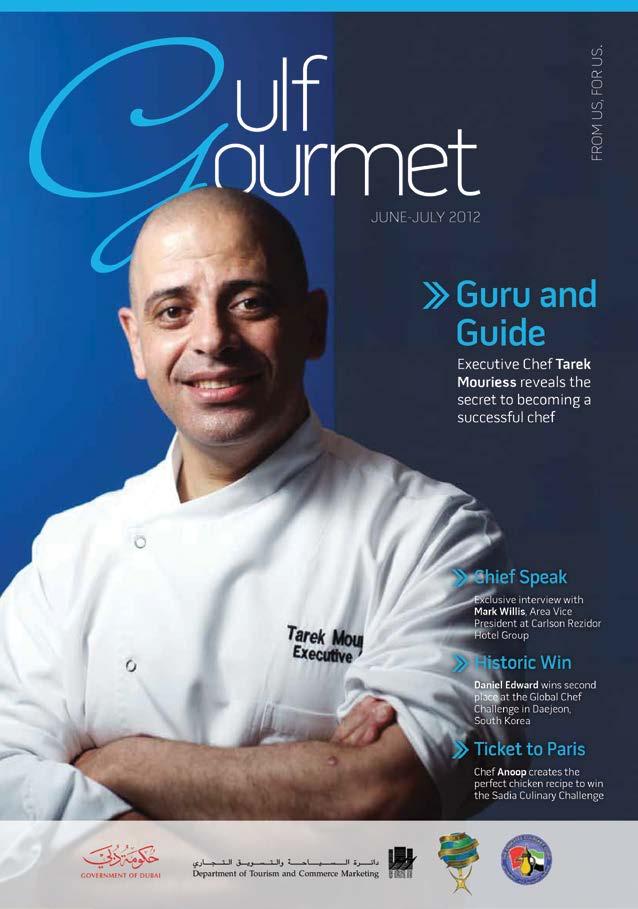
Who decided that at a certain age, you stop? Chef Tarek Mouriess finds his answer in twenty years of Gulf Gourmet…
It was 6:45 in the morning. I was walking to the metro station, my mind already turning over the day ahead, when I saw a Filipina lady, late fifties, maybe sixty, in full uniform, her bag slung over one shoulder, searching inside it. Looking for her keys, I think. She was unhurried. And she had this look on her face that I can only describe as eager. Eager, like her day ahead too, was something she had been waiting for.
I thought about her family back home. I thought about what it takes to still put on that uniform, still carry that bag, still show up. Who decided that at a certain age, you are supposed to slow down? Who wrote that rule? And why did we all agree to follow it?
That woman inspired me more in thirty seconds than many conversations have in thirty years. She did not know she was talking to someone asking the same question about himself.
I have been in this industry for a long time. Long enough to know that the kitchen cares about what you bring to it. Long enough to feel the years. I have watched young cooks become masters, and masters become legends, and legends become the faces we look for in the pages of this very magazine. And that morning, watching her, it struck me that Gulf Gourmet is turning twenty this year. I am not young either. And neither of us is done. And neither is the magazine done.
Twenty years. I was one of the people there near the beginning. I remember
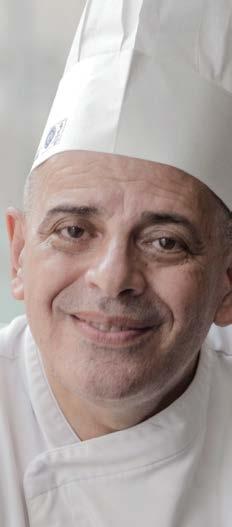
Twenty years means someone chose, every single month, to remember
my photo in those early pages, back when the magazine smelled new, and the industry felt like it had no ceiling.
In those days, we waited for it the way a previous generation waited for Cuisine from New Zealand or Thuriès Gastronomie from France. Gulf Gourmet
gave us something different. We could open it and see our colleagues. See what our chef community was doing, who had arrived, who had grown. It was ours. By chefs, for chefs, written from inside the kitchens and the banquet halls and the competition floors. What started as recipe pages and glamorous plating has become something I never expected. We have articles on sustainability, on education, and on what it means to be human inside this industry. That is not a small thing. That is growth.
And growth, I have also learned, has nothing to do with age. What is the barometer for when someone should stop? We talk about retirement like it is a finish line, like the body sends you a notification at 65 that says... enough. You are done. But I look at my Instagram, and I see a man who is over 100 years old, and he is cooking. Just cooking, because that is who he is.
I am not saying nobody should rest. Rest is sacred. But rest should be a choice, not a sentence handed down by a system that has decided your value based on a number. Think about what we lose when we push people out too early. Think about the knowledge that walks out the door with them. If you took every article in this magazine, every word about the meat, about the pressure, about the love of this work, about travels and recipes, and bound it together, you would have a guidebook for how to live a good life in this industry.
Gulf Gourmet understood this before most of us said it out loud. It kept making space for those voices. It
The magazine became a kind of record of food and people. Of a community
is given space to the young chefs who come with ample talent, to the experienced ones who have seen the region transform, and the ones who remember when Dubai was one road and a taxi ride to Jebel Ali cost ten dirhams on a weekday and fifteen on a weekend.
I have to be honest with you. When I think about twenty years of Gulf Gourmet, my heart does something unexpected. There are chefs in those pages who are no longer with us. Their photographs are still there, still printed, still real. The magazine became a kind of record of food and people. Of a community. This region has changed in ways that are almost impossible to explain to someone who was not here to see it. Gulf Gourmet was present for it all. It looks like Jurassic Park DNA, the living record of who we were, who we are, and who we are still becoming.
That is not something you close when it turns twenty. And here is the thing about a magazine that endures: it instructs the future. Most industries move too fast to look back. 20 years means someone chose, every single month, to remember. To show up with something worth saying even when the industry was in crisis, even when the region was holding its breath, even when nobody was sure what came next. That memory becomes the next generation's foundation. You cannot build on ground that does not exist. I have been thinking about what that kind of commitment actually costs. Not money. Not resources. Commitment of belief.
That the stories happening inside these kitchens, all of it, is worth documenting.
I have learned that age is a state of mind. Enthusiasm is not the property of the young. The world is full of people who are not finished yet. I think about the chefs who have been in this industry for years and still talk about food as if they'd discovered it yesterday. Still curious. Still arguing about technique. Still standing in the market at 6am picking produce like it is the most important decision of the day, because for them, it is. Age did not take that from them. They did not let it.
Gulf Gourmet has made that same decision, issue after issue, year after year. It could have coasted. It could
have repeated what worked and called it consistency. Instead, it kept asking harder questions.
And I think the best thing I can say about it is that it reads like someone who wants to be in the room. Who believes the conversation is worth having. Who thinks there is still something worth saying and is not afraid to say it.
That is rarer than people think. After twenty years, that is not a small thing.
That is everything.
Chef Tarek has been a contributor to Gulf Gourmet since its early years. He writes about food, life, and the moments in between.





Chef Helen Morris shares her latest eating adventures from Ras Al Khaimah and beyond, from a chef who made Umm Ali on request to a cabbage dish in Birmingham that changed everything
Well, what can I say? Life clearly enjoys keeping things interesting. So here I am, back in the UAE, staring out of my window at what can only be described as a very ambitious dust storm disguised as a construction site. Cranes everywhere. Diggers everywhere. Men in hard hats everywhere. If beige had a personality, it would be my current view. And yet, beneath all the dust and traffic diversions, there is a genuine buzz here in Ras Al Khaimah. The Emirate has big plans, and you can see them unfolding in real time: new roads, residential developments, retail spaces, and, of course, hotels, all appearing at a pace that feels mildly aggressive.
I am currently based near Al Marjan Island, which feels surreal because I remember coming here years ago with friends for girls’ staycations. Back then, it was relatively quiet. Fast forward to now, and I barely recognize it. New hotels are already operating, while others are popping up faster than my appetite at brunch.
Thankfully, the staycation market seems to be keeping many of these properties alive and, more importantly, keeping people employed. Some hotels have temporarily “closed for refurbishment,” which, as we all know in hospitality, can mean anything from replacing carpets to a full existential crisis.
Naturally, within two weeks of arriving, I had already tested two hotels. Strictly for research purposes, of course. My bank account may disagree. First stop: Hampton by Hilton Marjan Island. I booked an all-inclusive overnight stay for just over 700 AED, and honestly? Absolute bargain. In today’s hospitality world, that barely covers parking, a lite bite, and an overpriced mocktail.
Now, the dining options were understandably scaled back. The all-day dining restaurant was the only option available rather than the full collection of outlets, but there was still plenty of variety, and importantly, the food was genuinely good. The service, however, was what stood out. From check-in onwards, the team had exceptional memory recall. By lunch, they knew exactly what I wanted to drink. By dinner, they knew my preferences. By breakfast, I half expected
someone to ask if I would like my life choices reviewed alongside my omelet.
And then there was a dessert drama. I was devastated, perhaps too dramatic a word, but accurate nonetheless, to discover there was no Umm Ali on the buffet. I made my disappointment known in a subtle way, as if discussing a national tragedy, to the chef, who seemed really happy that I knew Umm Ali. The following day, the chef personally arranged for one to be made for me. Delicious! That, ladies and gentlemen, is service. It is so simple. Excellent food and beverage offering, lovely balcony room, engaged service staff, and a chef who understood the emotional significance of dessert. I will absolutely be back.
Next stop: Rove Al Marjan Island. The new kid on the block, having opened last year, is full of tempting offers on stays and dining packages. The food was good. The drinks were good. Service was efficient and relaxed, much less formal than Hampton's, but exactly what you would expect from the brand. And the bed? Spectacular. The pillows? Criminally comfortable. I slept so well, I briefly considered asking if I could move in permanently. However, and this is where things went downhill, I discovered there was a Choithrams in the lobby. This was deeply problematic. What started as “I will just grab a bottle of water” quickly escalated into multiple visits involving
crisps, chocolate, random snacks I did not need, and several “holiday treats” that apparently became essential.
By checkout, after room charges, drinks, and my repeated supermarket misdemeanors, I realized my supposedly budget-friendly stay had somehow become more expensive than Hampton’s all-inclusive package. This is why I cannot have nice things; self-control goes out of the window when the snacks appear.
Next on my list is Anantara Mina Al Arab Ras Al Khaimah Resort, and while things remain relatively quiet, I fully intend to continue my highly demanding staycation research. It is a sacrifice, but someone has to do it. I will keep you posted.
Restaurant-wise, many of the places I have been desperate to try still are not fully open, which feels personally offensive. At the moment, I am craving one thing with alarming intensity: a proper Greek salad. Not the sad versions with three olives and suspiciously dry feta. I am talking about proper Greek salad. Which means next week I am heading to Dubai in the hope that Mythos Kouzina & Grill can solve my current crisis. Also, on the list? 3Fils, because it has been far too long, and frankly, I miss it.
As I write this, I have just eaten a chicken paratha from Shayak Cafeteria, apparently a local favorite with branches in Dubai. And honestly? It was gloriously shameful. Breaded chicken. An aggressive amount of sauce. Questionable but delicious plastic cheese sauce. All folded into grilled paratha. It arrived looking like regret and tasted like happiness. I will not make a habit of it. Probably. Definitely not tomorrow.
Now, before returning to the UAE, I made a trip back to the UK before things officially resumed here. And yes, I did spend time in my hometown, where I regularly flex about having three butchers, a baker's, an elite pie shop, and now an excellent coffee, cocktail, and bubbles bar practically on my
If someone placed me in a room with nothing but this dish and a fork, I would happily disappear for several days
doorstep. It is a hard life. But instead of discussing my local indulgences, let us talk about Birmingham.
Now, Birmingham and I have a complicated relationship. I am not entirely sure why, because objectively, it has fantastic shopping, beautiful architecture, and an outstanding food scene. It also boasts five Michelin stars while Manchester continues to be snubbed, and frankly, I am still not over it. So, I hopped on a train to Birmingham to meet a friend for lunch at Plates by Purnell's.
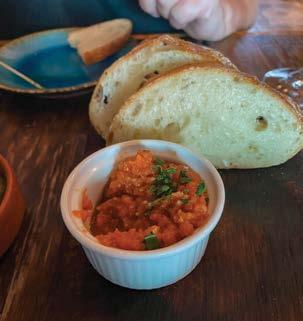
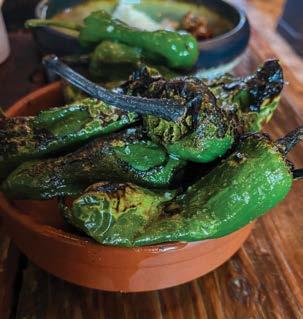
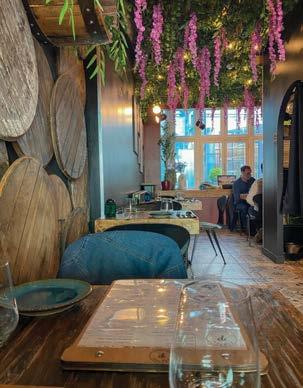
Chef Glynn Purnell closed his Michelinstarred restaurant in October 2024 after 17 years, a move he described as incredibly difficult, following significant drops in bookings and increased costs. But Plates? Plates feels like a brilliant reinvention. A cozy 28-seat restaurant serving modern Spanish-inspired dishes in a far more relaxed setting. And what a meal. We started with pan con tomate because obviously. Then came Serrano ham with whipped goat’s cheese and glazed pear, which nearly made me emotional. Padron peppers
arrived alongside crab croquetas and sticky special belly skewers with apple and black pudding. The skewers? Outstanding. Properly cooked, deeply flavourful, and exactly the kind of dish that makes you stop mid-conversation. Then came the star of the show. Patatas bravas. Not your average holiday version that tastes vaguely of ketchup and disappointment. These were exceptional. And then, because apparently the kitchen had no intention of allowing us to recover, the Hispi cabbage arrived with chipotle glaze, lime mayo, and parmesan.
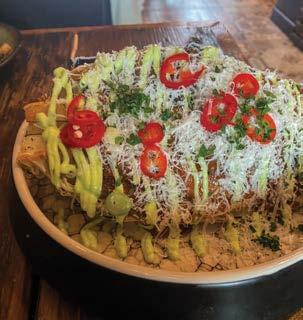
Listen carefully. This cabbage changed me. If someone placed me in a room with nothing but this dish and a fork, I would happily disappear for several days. Chef Purnell has done something very smart here. The concept feels accessible, relaxed, and focused on flavor rather than unnecessary theatrics. Simple food done exceptionally well will always win. Always.
So yes, my diet has been postponed indefinitely once again. My gym motivation remains missing somewhere between Ras Al Khaimah and Birmingham.
And my favorite hobby continues to be eating my way through absolutely anywhere I happen to land. Frankly, there are worse personality flaws to have.
At this point, we were defeated. Absolutely defeated. We had ordered with our usual “eyes bigger than our stomachs” confidence and paid the price. There was no room whatsoever for dessert, not even one tiny churro, which for me is usually the universal sign that I have truly hit capacity. I looked longingly at the dessert menu like someone watching an ex walk away, knowing full well it simply was not meant to be. Honestly, I am still thinking about those churros and wondering if I need to make a return trip purely for closure.
Until next time, I will be somewhere between a hotel buffet, a restaurant waiting list, and convincing myself that ordering dessert is always research. ■
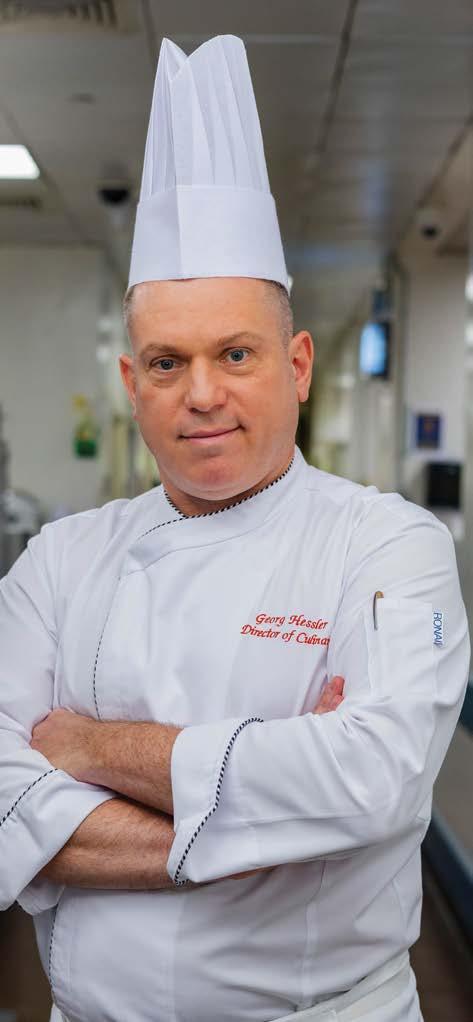
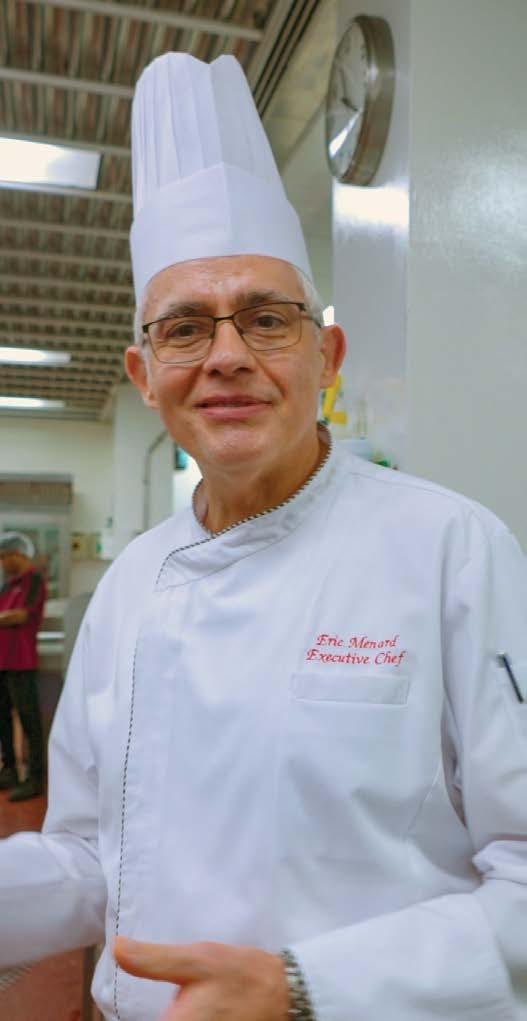
Chef Georg Hessler and Chef Eric Menard took winding, wildly different roads to the same kitchen. One cooked from the Amazon to Antarctica. The other raised millions for charity through a menu. Now these two reckoning forces stand side by side as the culinary masterminds behind DWTC's most extraordinary services.
This is how some of the world's greatest events get their finest course.
By Shreya Asopa
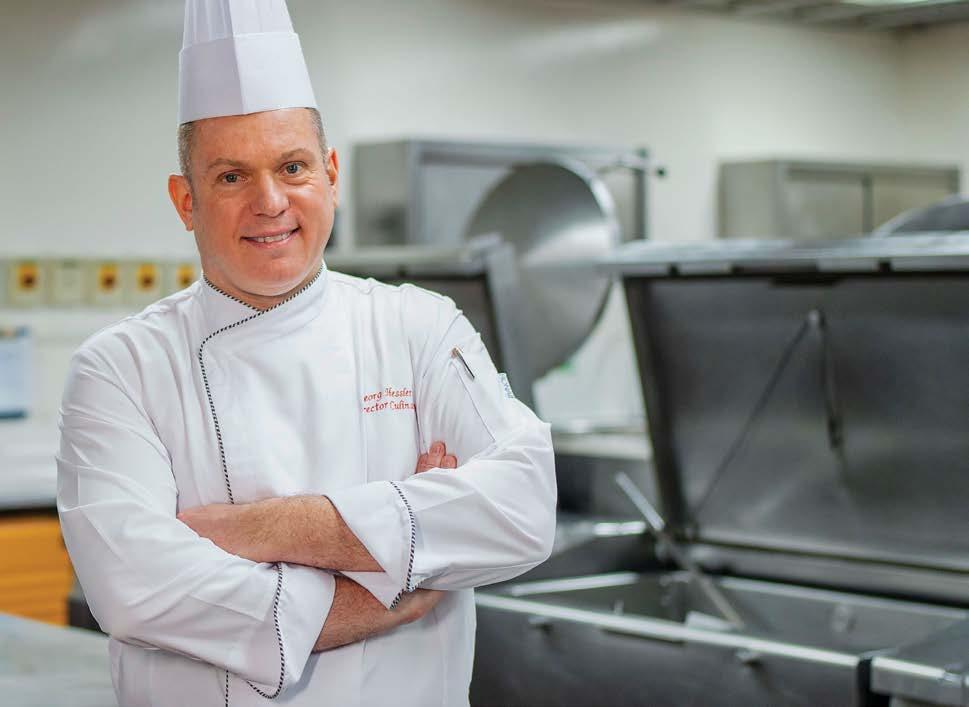
Few chefs have actually seen the world. Fewer have cooked their way through it. Chef Georg Hessler , Culinary Director of the Dubai World Trade Centre, has sailed almost every sea, cooked near icebergs with glee, and built a brigade that he proudly calls family
There is a world map on the wall of Chef Georg Hessler's office. Pin any place on it, he tells you, and a culinary adventure story follows, a real one, with crocodiles in it. Dressed in his uniform, glasses on, with a manner that is equal parts serious and easy-going, Chef Georg has been the Culinary Director at DWTC since 2022. "The role covers all culinary operations at DWTC, the expanding Dubai Exhibition Centre, soon to be among the largest in the world, and an operation in Abu Dhabi, where Emirates Palace Kitchen by Dubai World Trade Centre looks after the Presidential Palace, private and corporate events, and more. It is a humongous operation," he adds.
The foundation of every great team is trust
To oversee an operation of this scale, you need the right team. There is a permanent brigade of 148 chefs in Dubai alone, with numbers swelling during major events such as GITEX, the Dubai Airshow, royal dinners, summits, and exhibitions. Add to that the Abu Dhabi operation, and the figures speak
for themselves. Directing this culinary symphony is no walk in the park.
So how does one keep a team like that together? "The foundation of every great team is trust. Everyone is different in the way they deal with their work, everyone brings something different to the table, and that is the secret sauce behind culinary success."
But feeding thousands is never simple, particularly when it comes to waste. Chef Georg and his team are quick to tackle this with AI-driven waste management systems. "AI helps us manage better in terms of what to avoid, where we are overproducing, weighing the waste. You
toss the leftovers, and the system records exactly what has been thrown away, right down to the last kernel of corn."
Their operations form a constellation of indoor and outdoor events, and innovation is what holds it together. "What we need is a mobile system that tells us exactly what has been wasted. Once you have that visibility, the picture becomes clear. You know where you have overproduced and what needs to be changed on the menu."
Sustainability, for Chef Georg, begins closer to home. "Be it using local produce, supporting local farms and dairies, or cutting down on imports, we bring all of this into everything we do." Food security and sustainability, in his view, feed each other. "Sustainability becomes possible because of food security. I do not need to fly or ship things in if I have them locally. We were sustainable before we even knew the word."
Getting Chef Georg to pick a favorite dish from the DWTC menu is a losing battle. "I cannot single out just one dish. I love our barbecue meats, but we do so much here, there are fusion dishes, reinventions of classics, oriental and subcontinental flavors. There are so many great dishes, from German to modern Australian to Middle Eastern classics. A mix of heritage and innovation."
But what matters most is not what is on the plate. It is who is in the kitchen. "Skills and talent are great, but attitude is everything. I have worked with people who never complain, always step up, and have a real love for what they do. That enthusiasm is priceless."
He does not sugarcoat the realities of kitchen life. Every chef, at some level, is playing in pain. "You miss holidays, birthdays, and big family moments. But the ones who shine bring a positive attitude and a willingness to learn."
The culture at DWTC speaks for itself.
The foundation of every great team is trust
"Competitions? I do not even have to push them. 50 to 60 chefs sign up right away. I have never seen that kind of excitement anywhere else. It is not about showing off. It is about asking: what did they do differently? How can I get better? The competition is with yourself, not with others."
Mentorship is knitted into the fabric of the kitchen. Senior leaders invest in the next generation, guiding them, taking interns to markets, teaching them how supply chains work, and showing them how to spot fresh fish and real vegetables. "We give them something back, not just a job."
Years later, some of those chefs still reach out. "That is what it is about. Because one day, they will be the ones running the show."
He knows this better than most, what it means to be on the other side of that: young, curious, and figuring it out far from home. Originally from Germany, Chef Georg has cooked his way across North America, South America, the Caribbean, Europe, Asia, and Australia. "My parents were not in hospitality. My dad was a structural engineer, and my mom was an interior designer. No one ever pushed me to be a chef. I guess my grandfather had a bakery, but even that did not really nudge me. I simply had it in the back of my mind that I wanted to become a chef, work on a ship, and travel the world. Maybe that was the kickoff," he recalls.
So much globetrotting. Ask Chef Georg about his most inspiring experience, and he does not hesitate. "It was those 11 years on a cruise ship. Not many people
know that French Polynesia is a tiny spot on the map just below Hawaii. But for me, it is unforgettable."
Working on a Regent Seven Seas cruise ship was no easy gig. "It is not as easy as many think. But once you have two to three years behind you, it becomes a great space to work." For over a decade, he sailed the world, docking in India, Sri Lanka, Africa, South America, and up the Amazon. Each port brought new flavors, new cultures, and new ways of seeing food. "You taste everything. You see everything. That is what shapes you."
Some experiences bordered on the surreal. Desert camps in Namibia. Jungle barbecues along the Panama Canal. Cookouts in Antarctica or culinary escapades across Oman and Bahrain. Every place, every event, had a story. "I remember, we did a shore-side barbecue at Gatun Lake in the Panama Canal, and the crocodiles came out of the water. He says, conjuring the image in his memories. "Guests were standing there with their plates. We told them there were crocodiles behind them. They thought we were joking, but we were not," he laughs.
After the cruise ship, the journey took him through senior positions in three Michelin-starred restaurants, fivestar hotels and resorts. Every kitchen, he learned, demands an elasticity of language, of tone, of everything a leader brings into the room. "What matters most is chefs who have experienced diverse cultures and cuisines, who have cooked across the world. If you have never been outside your own backyard, you will never understand how to talk to everyone. That is what I look for in young chefs, too."
The peripatetic life, however, had a different kind of reward waiting. Chef Georg's love story began at sea. He met his wife, a traditional Tahitian dancer, on a cruise ship in the South Pacific. Their oldest son was born in Tahiti; the younger two in Australia. The difference
shows at the dinner table. "My oldest loves island ceviche with coconut and lime. The Aussie kids are all about fish and chips and burgers."
He does not push his boys toward the stove. "Do it as a hobby, not a career, unless you cannot imagine doing anything else." What matters most is freedom. To let them find their own path, just as his parents once did for him.
After a long day in the kitchen, he trades his apron for time outdoors. Inspiration, he explains, comes from moving through the world. "Travel is my way to relax. And that is where a lot of my inspiration
comes from. Local food cultures, such as Mediterranean cuisines, are full of lemons, bay leaves, and olive oil. All those details become part of your own food story."
The future, for Chef Georg, is ingrained in the earth. "We are planning to return to my wife's island one day. We have land, vanilla plantations, papaya, mangoes, and pineapples. The idea is to get back to basics and work the land together."
Until then, the group he belongs to keeps him rooted. His admiration for the Emirates Culinary Guild is as laudatory as it is sincere. "Chef Andy, Chef Alan, Chef Harald, they do an incredible job
of bringing chefs together. We meet monthly, share ideas, and support each other through good and bad times. That feeling of community keeps us on our toes. It is not only about the work. It is about friendship, about knowing that you are not alone in this industry. Sometimes all it takes is a few hours of joy and shared stories to remember why we do what we do".
A cartographer of cuisine, a builder of brigades, Chef Georg Hessler has spent a lifetime feeding the world. What sustains him, it turns out, is the table he shares with others. That, more than any accolade, is the measure of the man.
“Chase the knowledge. Do not chase the money.” Chef Eric Menard means it. Audacity, tenacity, and a stubborn faith in the process are what have brought the Executive Chef of Venue Operations at the Dubai World Trade Centre to where he stands today. No wonder, then, that every detour he has ever taken has led somewhere extraordinary
“S
oy sauce”, says Chef Eric, but then pauses, like he owes the answer a little history. "If my personality were an ingredient, it would be soy sauce. Why? Because it is versatile. I can use it across countless dishes." It is, as the answers go, an apt one. The more you learn about him, the more you see that he is adaptable, elevating everything he graces without ever stealing the show.
The Executive Chef, who handles Venue Operations and Production Kitchen, understands that creativity and commerce must find common ground to accommodate what the client expects. With each client arriving with their own vision, he works to match their expectations. “We want to give something that people will remember,” he says. “Because at the end of it, cuisine
Food is a channel that brings people from all around the world together
is about nourishing. And pastry is about giving someone a smile on their face.”
Bringing those two things together within the demands of a budget and a brief takes patience and a team that is as invested in the vision as the client is.
Leading a brigade of 120 is not, Chef Eric will tell you with complete honesty, something he walked into effortlessly.
“I have to be honest. It was a bit of a learning curve. I had a bumpy road the first few months. I had to adjust myself, adjust to the team and understand the whole operation.”
The people in that kitchen, he notes, are seasoned veterans. And so the adjustment ran both ways. “It was about giving feedback. Listening to their ideas. Trying new things together. Hands-on when necessary. You have to be tactful,” he explains.
Cooking for ten is one thing. Cooking for ten thousand means creativity and consistency must never waver. “The good thing about pastry is that it is about formulas. Once the formula is done, you do not have to taste it again because it works on science. Pastry is a beautiful, scalable, reliable science. The recipe will
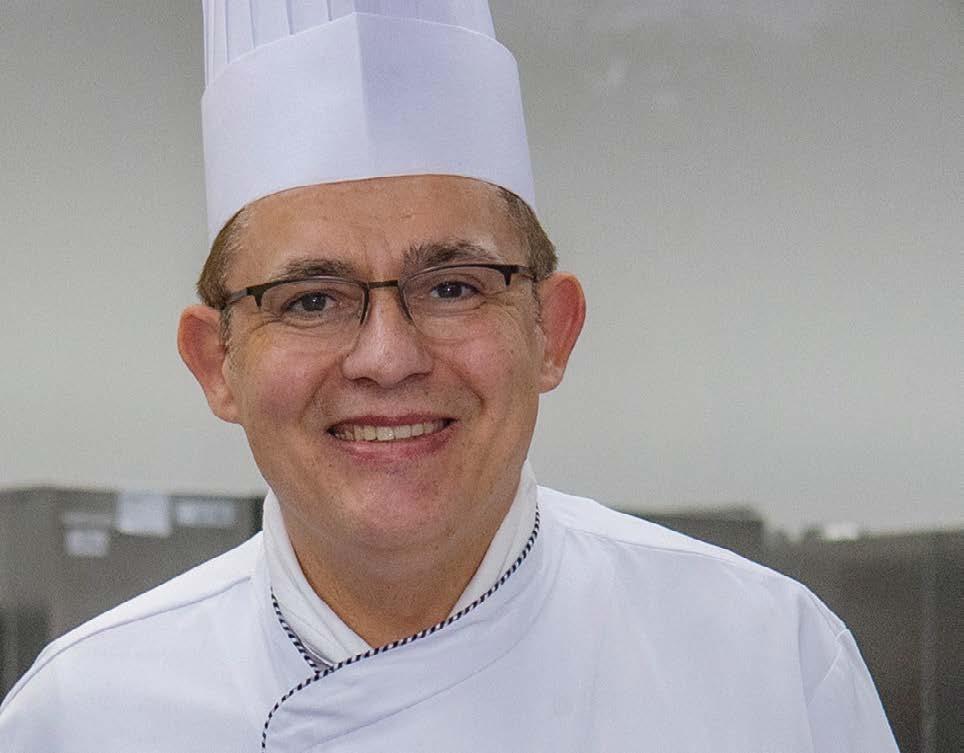
be the same. You just multiply. That is the beauty of pastry.”
Consistency, then, is baked into the domain itself. Creativity, however, is another kettle of fish. “Creativity is a very personal thing. Whether you have it or you do not. How far you are willing to go with it depends on experience, on courage, on how much you are willing to try.”
It seems like only yesterday when he recalls his childhood. He grew up on the outskirts of Paris in a modest family. Where most chefs trace their passion to a parent’s kitchen, Chef Eric’s story is less a single origin. His inspiration came in fragments, first from his grandmother, then from small chores he did for his mother.
“I knew quite early that I wanted to be a chef. I think I was eight. My mother used to ask me to work on a good cut of beef, sometimes tenderloin. Making sure I put the right condiment, the right seasoning, and a bit of garlic inside the meat before baking. Making
If you know the foundation, if you know artisan bakery, if you know pastry, you will be able to do it
sure it was cooked nicely.” He smiles at the memory. “Or maybe it was the old French cooking shows on television that made me curious about the culinary world.”
But the path forward was not straightforward. There was no vacancy at culinary school, some difficulty at home and for a while, he found himself in a kind of in-betweenism, neither fully in the culinary world nor entirely out of it. A work placement at a charcuterie shop in the suburbs of Paris changed that. “I also
got the bug from there. That is where I knew I had to qualify as a charcutier.” Chef Eric is, in this sense, a living paradox; the accidental path turned out to be the right one all along.
That decision led him to earn the Certificat d’Aptitude Professionnelle (CAP) in Charcuterie from the Académie de Paris, followed by a CAP in Catering and Pâtisserie from CEPROC.
The career that came after never stayed still. Paris. Melbourne. Helsinki. London. Canberra. Each city, a different kitchen. Each kitchen, a different him.
So which one changed him the most? “I have to deconstruct the journey,” he says, almost smiling at the complexity of his own answer. “It is very personal. What makes a chef is the people you meet, the places you go.”
If pressed, he names Australia. “Australia influenced me a lot in my approach to cuisine. I got very lucky to meet so many
different people from around the world. Through them, I learned different flavors, different techniques. I got ideas from them. And I am grateful for that.”
Australia also gave him the courage to bet on himself. In Canberra, he bought a patisserie with a rich history and clientele. “When you buy a shop, you buy the clientele value, but it does not mean the client will stay with you. I was a newcomer.”
What he brought was a brazen move of modern French patisserie that asked something of its audience. He took the leap anyway. Braving the odds with nothing but word of mouth. “It is organic. The only problem is that it is very slow. But it works,” he adds.
He supplemented the patisserie with catering, allowing him to bring both sides of his training, pastry and cuisine, into full expression. For eight years, he pushed until he found the edges of what he was willing to give. “I got to know my limits, which is a good thing about business. You get to know how far you can go, as a professional and as a person. It is good for the soul.”
From that chapter completed, a new world opened. The role of Executive Chef at the National Gallery of Australia brought structure, and then the Gulf found him through taskforce commissions and grand-scale events.
From there, the path wound back to Melbourne, to Crown Casino, where a role as Pastry Chef de Cuisine waited, as if it had always been his. And then, in 2023, Chef George, who had known Chef Eric for years, made a call. And Dubai became home.
“This industry is about the people you meet. Every time you meet them, they help on your journey. The right person, at the right moment, can redirect the entire arc of a career.” He knows this better than most.
For someone whose career spans
This industry is about the people you meet
continents, his advice to young chefs is almost disarmingly grounded. “The times are different. The tools are different. The way you learn is different. But in the end, the basics are the same. What has changed is patience. Money is important. But do not chase the money straight away. Chase the knowledge. There is no shortcut around it. Only after the foundation is built does everything else start to follow. Then you can negotiate better, because you get good at what you do. And you get noticed.”
He has championed many causes in his career, the current being the artisan bread program at DWTC. In a world seduced by speed and convenience, he has chosen the opposite direction. “Artisan is a responsibility. It is more about getting the message across. It is that little organic thing that has to be given to every stakeholder we can reach within the trade center.” And so, quietly, a small bakery was established, dedicated to values. The response was immediate. “It was very well received. It is about reviving the craft.” The message is aphoristic in its simplicity: some things are worth doing slowly, by hand, with intention.
What troubles him most is that a kitchen bereft of basics is a kitchen that has lost its soul. “With reels and everything, it all gets diluted,” he says. “If you know the foundation, if you know artisan bakery, if you know pastry, you will be able to do it. Nowadays, they all open boxes, and skills get lost along the way. Many young chefs do not know what to do anymore. They know how to make a lemon curd, but the basic skill of lining out a tart properly is all gone.”
He does not condemn convenience. “But every pre-formed shell is a small piece of muscle memory left unexercised. And muscle memory, in pastry, is everything.”
His answer is characteristically gentle. “If you have a bit of time today, make it a little exercise. Practice by hand. Do not forget what you learned at school.”
Another poignant cause in his career was using the power of food to do good. Contributing to events like the Million Dollar Lunch at Crown Casino Melbourne, which raised over $2.7 million for charity, changed the way he thinks about food entirely. “I realized how the artistic world and food can connect. Food is a channel that brings people from all around the world together. Negotiations, the biggest decisions are made around food,” he says, acknowledging the ineffable power of a table to move people toward each other in ways no other setting can.
For someone commanding a brigade of chefs every day, Chef Eric’s idea of a perfect day off is, by his own cheerful admission, gloriously undramatic. “Sometimes, I just want to watch a movie and relax. Or read a book, or sometimes go for a walk. I also collect stamps, having been doing that since childhood,” he says about his rare hobby. “When it comes to movies, I like watching Top Gun and Rocky, and when it comes to books, Jules Verne. I love Tintin,” he smiles.
The future is a question he sits with rather than answers. Unlike those with life mapped to the decade, he keeps no such blueprint. “I live day by day. Each day is a treasure. I mean, look at Chef Pierre Gagnaire, the energy, the refusal to slow down is a benchmark. I wish I could be like him one day. Still doing what I love. With the same passion,” he says, adding his only hope is to stay in kitchens.
A small wish, but a consequential one. And his eyes leave no doubt, he is nowhere near finished with what he loves. ■
His name says it all. Ashok , the one without sorrow; Raj , a king. Years of flour on his hands, four continents of dough in his memory and a rise so complete it needs no crown to prove it
He does not look 52. That is the first thing you notice. The second thing you notice is the way he speaks of bread with a freshness that years of heat have never reduced in him. Chef Ashok Raj has spent over two decades in professional kitchens across Dubai, Abu Dhabi, and the United States, handling volumes that would stagger most. For all of it, when he sits across from you, he is a man completely at home in his own story.
Born in Kalutara, a coastal town in Sri Lanka's Western Province, he was not a kitchen child prodigy. There were no precocious soufflés at age ten. What existed was friendship, curiosity, and a bakery. "My friend worked in a bakery, like a home baker. And sometimes I worked there part-time and gained some experience. This created my interest in pastry and bakery," he recalls.
Upon finishing his schooling, he surrendered to the gravitational allure of the bakery. He soon entered the kitchens of Kandalama and Bentota Beach Hotels. Four formative years as a commis pastry chef laid solid ground in the furnace of Dubai's hospitality industry.
"Some of my friends were already in Dubai’s hospitality industry, and so I followed. In 2006, I joined the Sheraton Jumeirah Beach Hotel as a commis chef in pastry and bakery. The Crowne Plaza came next. "There, I had the chance to learn pastry techniques from Executive Pastry Chef Sami Harouni. He was a great mentor," he says, on how the right mentor can swing the learning door open wider than you ever imagined it could go.
He then built his career across different establishments, including Sharjah Grand Hotel and Al Ghurair Rayhaan by Rotana, and rose to the rank of head baker. The learning never stopped there. Three times, he stepped into the Salon Culinaire arena, chasing what competition could teach him that the kitchen could not. "I once won a Bronze Medal for Open Showpiece and Bread
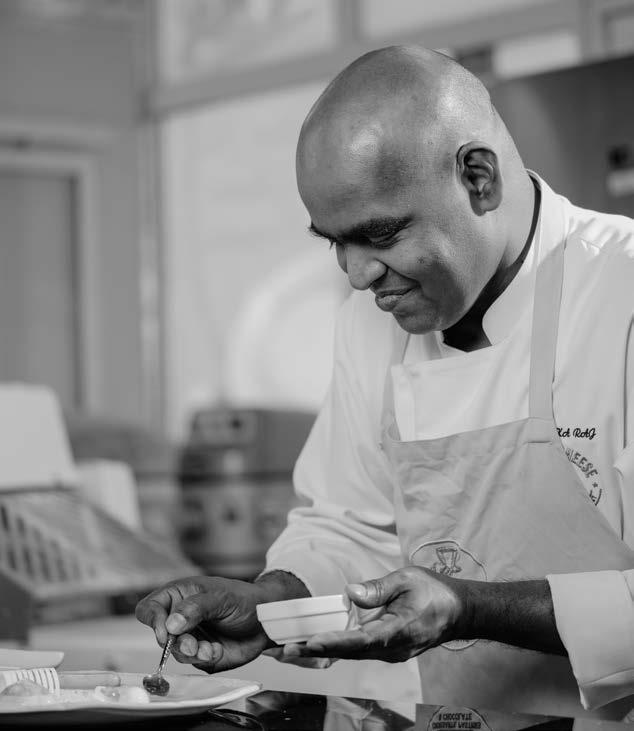
The Japanese philosophy of making things with care changed everything
Loaves, and merit certificates from the Dubai Young Chef Competition in 2013. I learned many things. Because I always like to learn. I am still learning."
There are culinary chapters in a career that rewrite everything that comes before them. For Ashok, that chapter was spelled in katakana for the Yamanote Atelier, the Japanese artisan bakery and patisserie in Dubai where he served as Head Baker for 5 years."The Japanese pastry and bakery both have different systems. All the pastries are very sweet and soft. The bakery, techniques, culture, style is also different altogether,” he says of the bakery that had reverence for
texture, delicate plating. For Chef Ashok, whose hands had learned European and Middle Eastern traditions, the Japanese philosophy of monozukuri (the art of making things with care) was a recalibration of those skills.
"In 2022, I went to the United States to join Princess Cruises. I worked across three restaurants, assisting the teams at Sabatini's (Italian), Salty Dog Gastropub (casual dining), and Crown Grill (specialty dining). We served around 3,000 guests a day. The same menu, the same standard, replicated across every service. And hygiene was number one. Everything had to be controlled. There was discipline and special standards," he adds.
Every guest brought their own world with them, and so he absorbed a vocabulary of cultures through bread. Hard sourdoughs and rye loaves from Germany, bread that demands to be torn, that resists slightly before yielding. Japanese milk bread, the opposite, collapsing at a touch into softness. French pastry with its accuracy.
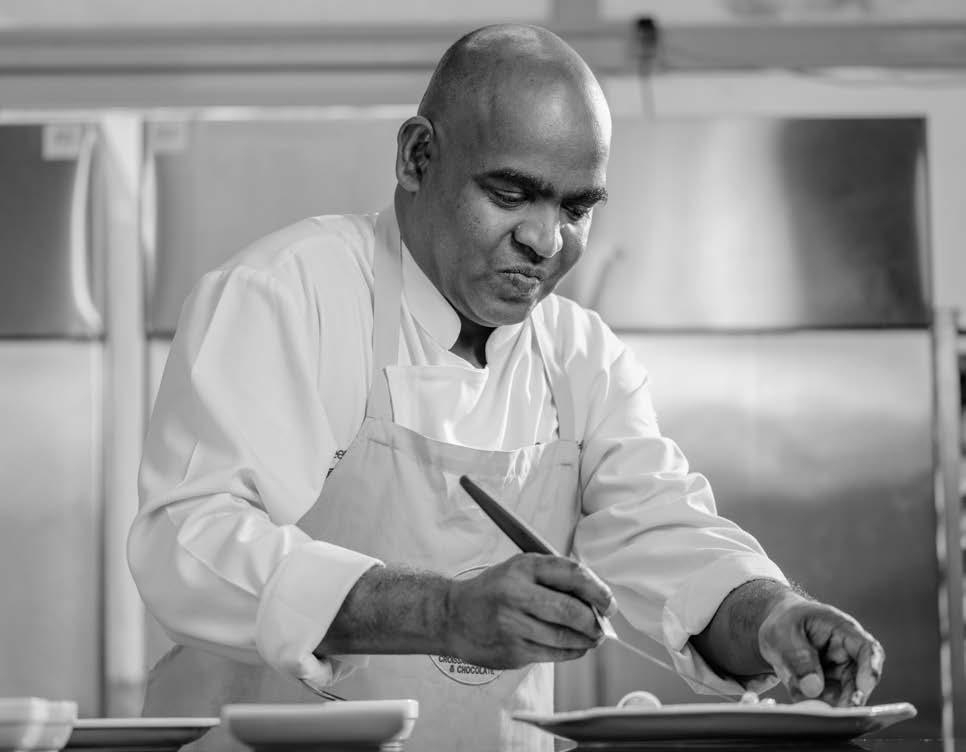
American baking, sourdough, cornbread, the art of pizza, and dough fermentation. He did all of it. "It was one of the most extreme kitchens I had ever worked in. The pastry galley was small, and the production demands of feeding thousands were inverse to the space. That is where you learn to think quickly and to think in systems," he notes.
But the ship exacted a cost. "It was so hard. There was no day off. Really good salary, something you cannot get elsewhere. But you work every day, and the time zone means you cannot reach your family. It was challenging," he says.
After eight months, he returned to shore. Back to Sri Lanka, where he spent some months doing, as he puts it, with a slight widening of the eyes, nothing. But the UAE called again. For the past eight months, he has been handling pastry and bakery production at Do'r Cake Studio and Pizzeria in Ajman as Head Chef. "It is a pastry, bakery, and pizza studio, owned by Chef Dammika Herath. We supply
The art of baking lies in care, control, and consistency
pastry and bakery products to hotels, as well as bulk and standard orders. Every day is about learning. We want Do'r to become the best bakery-pastry space, known worldwide," he says. Beside him through much of this chapter has been Chef Dammika, whom he calls his friend, mentor, supporter, and the force always pushing the team forward, even as Do'r is still young and not calcified into something the world cannot ignore.
For the Arla Pro competition, Chef Ashok Raj has made a dish which he describes as layers of distinct elements, assembled into something new. "It is a Raspberry Panna Cotta and Mango Passion Tart with
Caramelized Pear. I used Arla Pro cream cheese as the base, and the mango and passion fruit add acidity and brightness. The caramelized pear also adds texture. And it is healthy," he explains.
His family is a support. At home, his wife handles the kitchen. And sometimes, when he is back from work, he cooks for them too. "I will do the fancy stuff that I have been learning, and then I will make it for them." His two sons are his entire world. The elder is 13, plays cricket competitively, and is already in an under-15 New Zealand team. The youngest is six, still deciding what the world is made of.
Chef Ashok has spent his life perfecting pastry, tallying grams, but life has always thrown its share of lemons and imperfections. He seems remarkably at peace with leaving this one just as it is. "I feel satisfied. You do not want everything in life to be perfect," he concludes. And is it not the sweetest thing of all? ■
(Mango, Passion, Raspberry, Pears And Vanilla, Pistachio)
Raspberry Whip Ganache
Raspberry Puree
150gm
White Chocolate 1450gm
Cream (Arla Pro) 520gm
Gelatine 11gm
Method
Boil the raspberry puree.
Soak the gelatine leaves in cold water.
Add the gelatine to the puree off the heat.
Pour the mixture over the Sao Palme white chocolate.
Stir to melt the chocolate.
Add the cream and mix well.
Raspberry Glaze
Raspberry Puree 250gm
Sugar 300gm
Water 250gm
Gelatine 6gm
Pectine 20gm
Lemon Juice 10gm
Method
Boil the raspberry puree, water, and sugar.
Add Pectin and mix well.
Soak the gelatine leaves in cold water.
Add the gelatine to the mixture.
Lastly, add the lemon juice and stir well.
Mango Compote
Fresh Mango 10gm
Mango Puree 15gm
Passionfruit Puree 10gm
Lime Zest 1gm
Gelatine 3gm Method
Cook all ingredients together.
Add the gelatine after cooking and mix well.
Raspberry Sauce
Raspberry Mango 20gm
Raspberry Puree 10gm
Sugar 4gm
Vanilla Beans 1 piece Method
Mix all ingredients together and bring to a boil.
Mango Passion Panna Cotta
Mango Puree 25gm
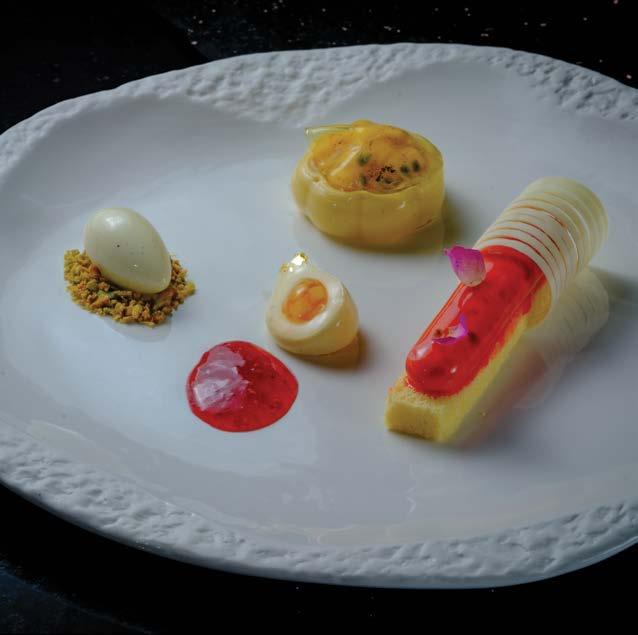
Passionfruit Puree 10gm
Cream (Arla Pro) 120gm
Milk 80gm
Sugar 20gm
Gelatine 6gm
Method
Boil the mango puree, passionfruit puree, Arla Pro cream, milk, and sugar together.
Soak the gelatine leaves in cold water.
Add the gelatine to the mixture and mix well.
Pistachio Crumble
Pistachio Nibs 50gm
White Sugar 5gm
Egg white 1gm Method
Mix all ingredients together.
Bake at 170°C for 7 to 8 minutes.
Pear Mousse
Pear 200ml
Sugar 10gm
Gelatin 2gm
Arla Pro Cream 150gm
Method
Heat the pear puree with sugar.
Add the soaked gelatin.
Let the mixture cool down.
Add Arla Pro whipping cream and set in a mould with pear compote.
Vanilla Sponge
Butter (Arla Pro) 250gm
Sugar 250gm
Whole Egg 275gm
Liquid Milk 200gm
Arla Pro Cream 200gm
Flour 320gm
Baking Powder 4gm
Baking Soda 4gm
Vanilla Essence 1gm Method
Preheat the oven to 180°C.
Mix butter and sugar.
Add eggs bit by bit.
Add the milk and cream.
Lastly, add all the dry ingredients.
Vanilla Ice Cream
Cream (Arla Pro) 100gm
Glucose 10gm
Sugar 20gm
Egg Yolk 25gm
Vanilla 2gm
Vanilla Beans 2gm
Ice Cream Stabilizer 2gm Method
Boil all ingredients except egg yolk together.
After boiling, add the egg yolk and chill the mixture.
Churn the chilled mixture in an ice cream machine.
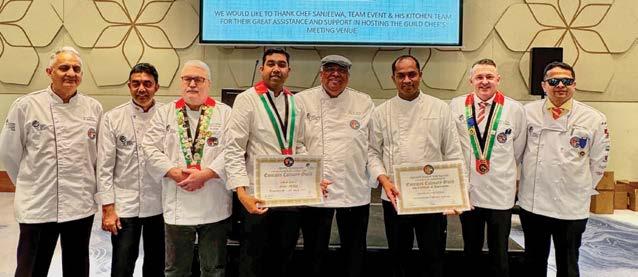
We’re grateful to the team at Crowne Plaza Abu Dhabi - Yas Island by IHG for hosting the Guild Meeting on May 12, 2026, with special thanks to Chef Chamil Sanjeewa , the events team, and the kitchen team, who were fantastic in their support.
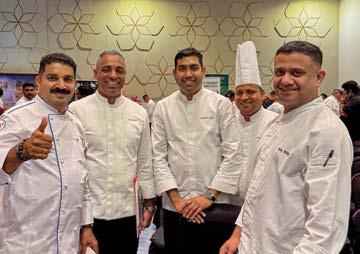
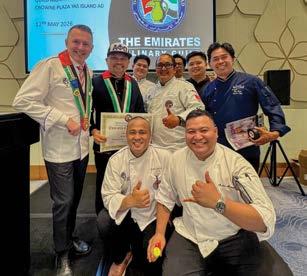
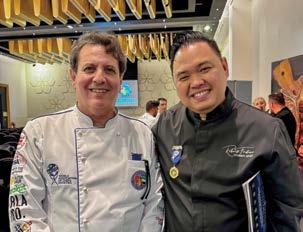
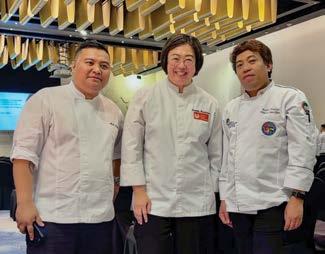
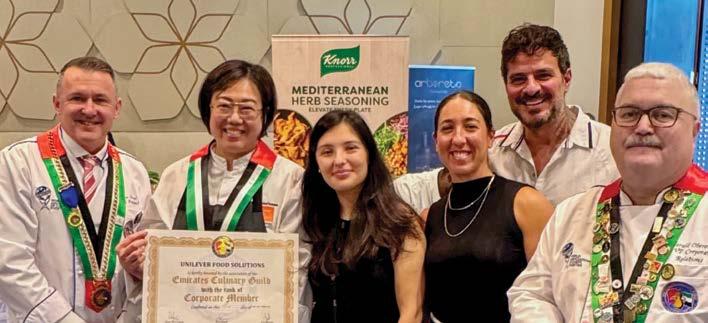
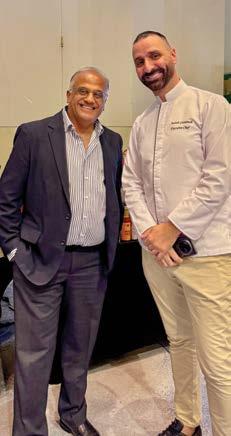
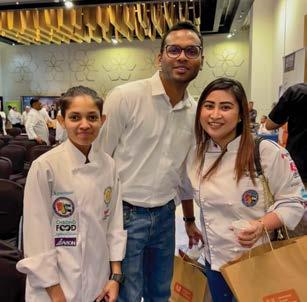
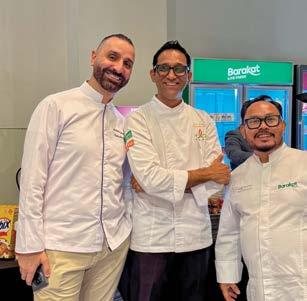
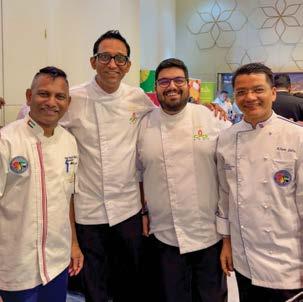
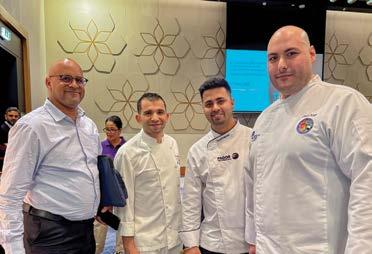
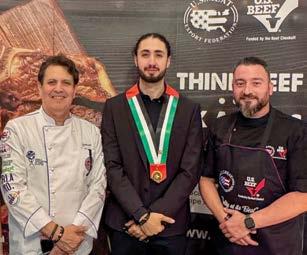
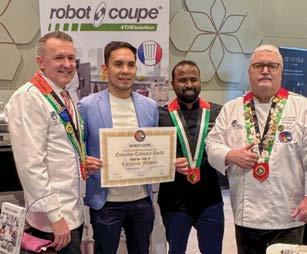
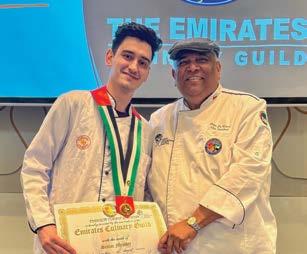
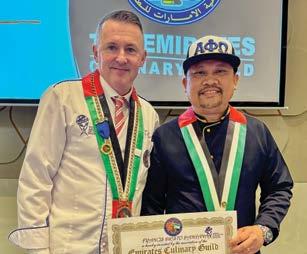
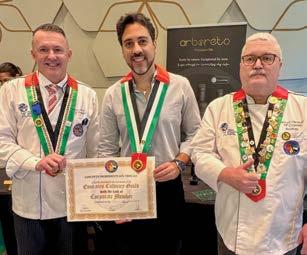
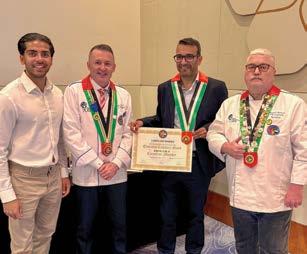
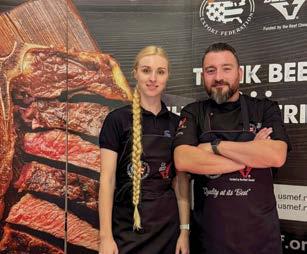
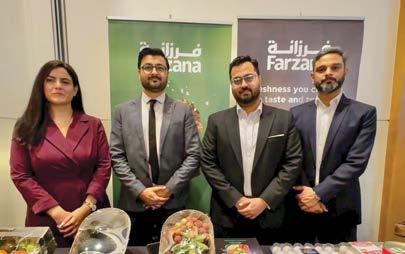
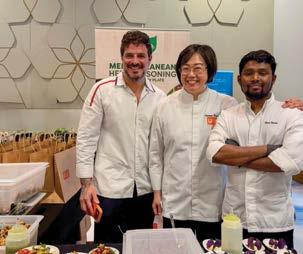
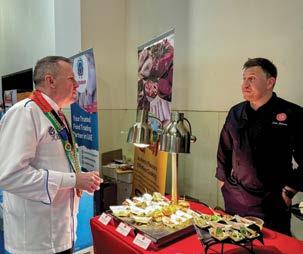
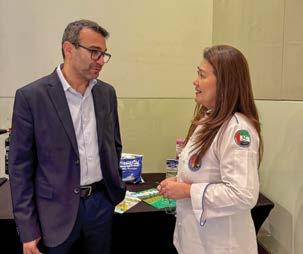
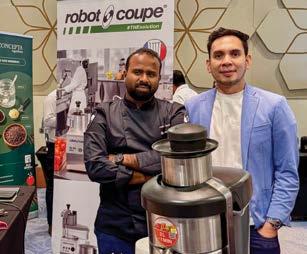
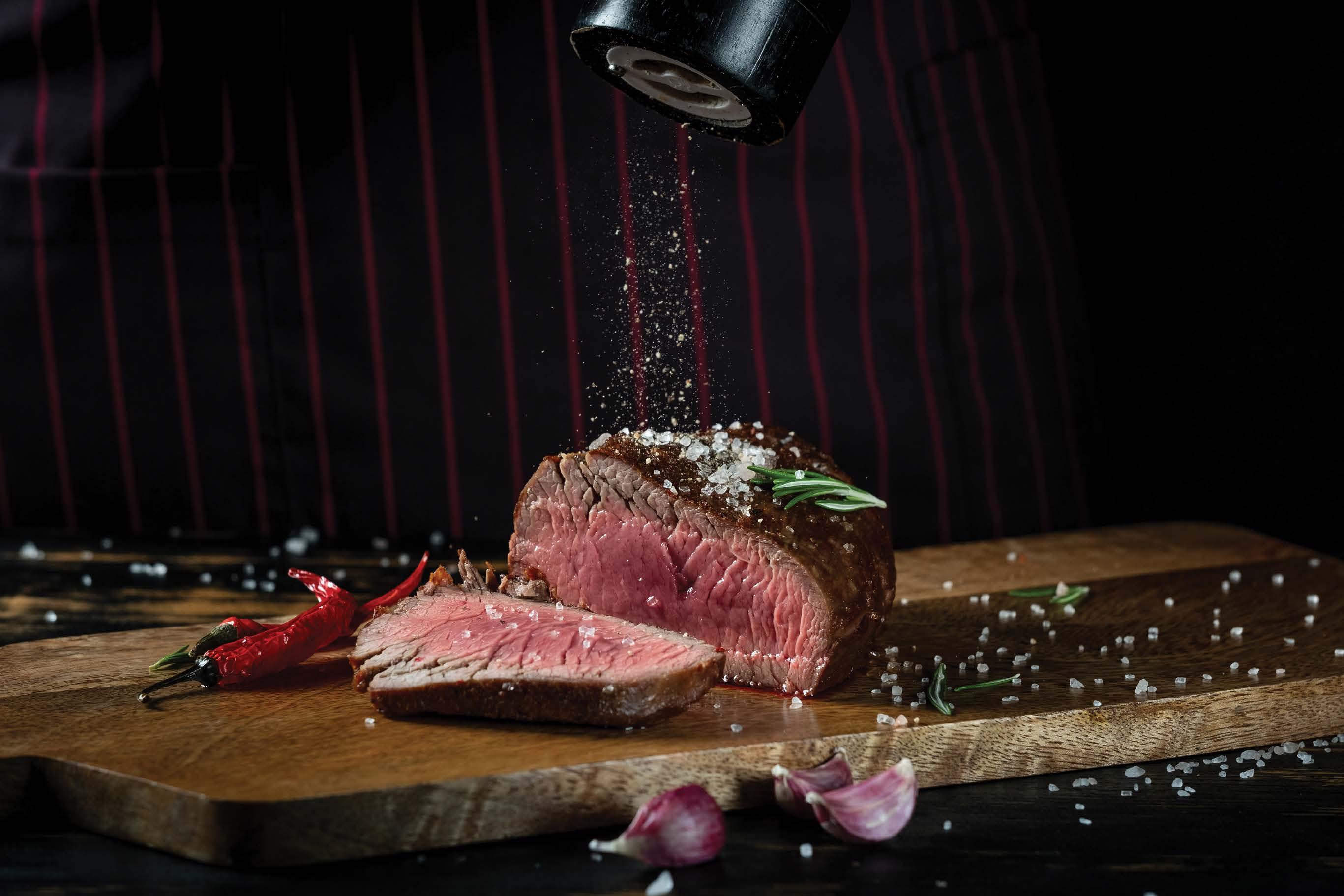

Chef Monal Malhotra revisits his first overseas assignment, all fired up, excited, and completely convinced he was ready for whatever the world could throw at him.
Not bad for someone whose only overseas experience up to that point was on-the-job training across four amazing beach hotels in Mombasa, Kenya, though let us be honest, Mombasa had spoiled me rotten with its warm ocean breeze and abundance of helping hands.
Bahrain was a different story altogether.
I started work at a good, upmarket 300room hotel that was perpetually buzzing, busy in a way that made you realize very quickly that the luxury of surplus manpower I had grown up with in Indian hotels was firmly in the rearview mirror. Here, the buck stopped with you. Completely, entirely, and without negotiation. If you were assigned a job, you finished it without any senior, assistant, or helper coming to help. Just you, your knife, and whatever courage you could scrape together.
One week into the new job, I was flat out managing the lunch buffet with one hand while fielding a barrage of à la carte orders with the other, because the entire Air India crew had apparently decided to wake up at the same time and order breakfast simultaneously. My immediate boss walked up, handed me a clipboard with a function sheet, and informed me matterof-factly, as though he was asking me to pass the salt, that there was an Indian function in two days. Full-blown Indian menu. Sixty guests. And since I was Indian, it would surely be “a piece of cake.”
A piece of cake. Sure.
I scrolled down the menu. The dishes were all familiar because I had eaten most of them on numerous occasions. Butter Chicken. Dal Makhani. The
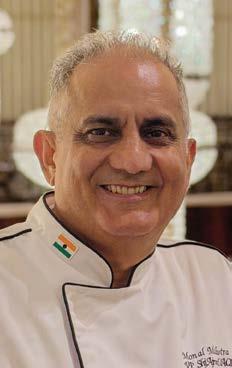
There was nothing, just books, brains, and determination
works. What my boss had conveniently overlooked was that my entire career had been spent in Continental kitchens, specializing in French cuisine, having worked in some of the finest French restaurants in India. I could coax a perfect beurre blanc out of thin air, but this menu was uncharted territory.
The first feeling was pure, unfiltered panic.
I finished my pending work in a kind of numb, autopilot mode, and then slowly pulled myself together and switched gears from panic mode to problem-solving mode.
Now, here is the thing about 1992 that the younger generation simply cannot
appreciate: there was no internet. No Google. No YouTube tutorial with a cheerful chef walking you through the recipe in twelve minutes. No AI to politely tell you the seventeen different ways to make a proper korma. There was nothing, just books, brains, and determination.
I needed cookbooks.
And I needed them fast.
After my shift, I flew out of the hotel, flagged down a taxi, and headed straight to Manama, the commercial heart of Bahrain, on what can only be described as a culinary rescue mission. I found a couple of bookstores. Most of the Indian cookbooks were for home cooks, and while lovely, they were not quite going to cut it for a sixty-cover function. And then I found it. A cookbook with an entire section of recipes written by actual hotel chefs. I looked up at the sky and thanked the universe. Almost every single dish on that menu was right there in those pages.
I rushed back to my accommodation and spent most of the night hunched over pieces of paper, carefully writing down every single recipe. By the time I was done, my pockets the next morning looked like a student carrying hidden notes into an examination hall, papers stuffed everywhere, each one a lifeline.
Back at the hotel, I sorted my daily work, quietly planned my attack, and the moment I had a window, I sat down and put together the full market list for the function ingredients, spices, everything. Handed it to my Chef with one firm request: these need to arrive today. By 4pm, I was standing at the receiving bay, inspecting vegetables and spices with the focus of a man whose reputation depended on every single item in that
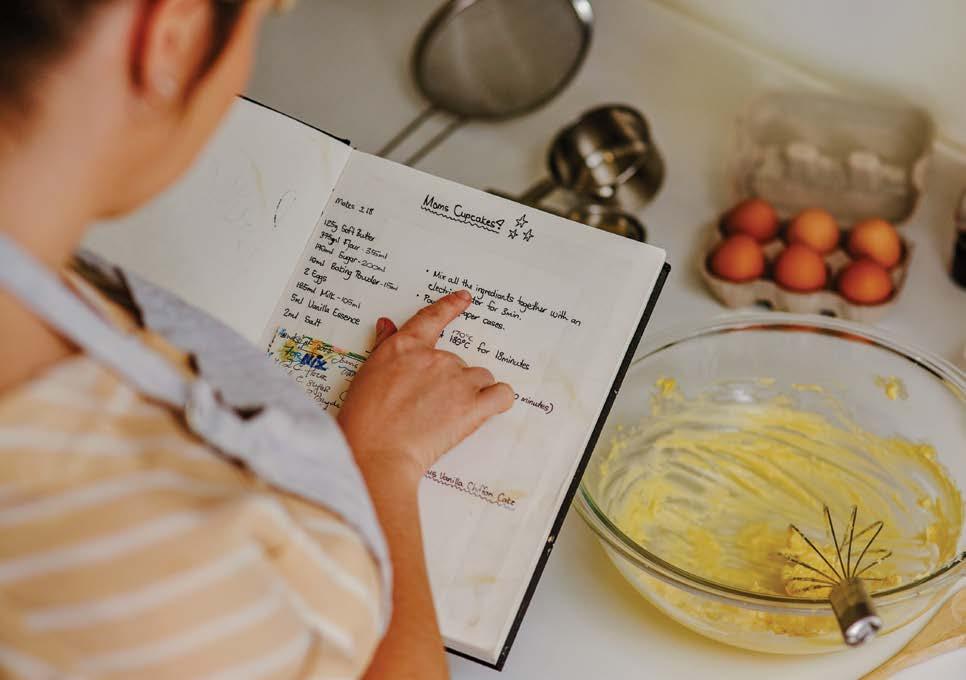
delivery because it did. The meat and chicken, which I had the foresight to ask the butcher to defrost that morning, were already laid out neatly in the butchery chiller.
Looking at it all laid out in front of me, something shifted. This is doable.
That shift is the moment ROOTS was built around.
I got to work cutting, chopping, making the basic gravies and sauces, cooling them, packing them neatly into stainless steel containers, and filing them on a dedicated rack in the walk-in chiller. The spices were decanted, labeled, and arranged on the shelf beside the cooking range like soldiers ready for battle. By ten that evening, after close to fifteen hours on my feet, the mise en place was done, the prep was done, and I walked back to my accommodation with a quiet smile and the satisfying ache of a day well spent.
The big day arrived. First, the daily work gets done and out of the way. By three in the afternoon, I turned to face the function. And yes, the
panic tried to creep back in, because this was a paid guest event, and failure simply was not an option. So I did what any chef alone in a kitchen does. I talked to myself.
You know how to cook. You have worked in great hotels. You have tasted some of the finest Indian food in India. These recipes were written by professional chefs. YOU CAN DO IT
And slowly, surely, dish by dish, it began to happen.
The real surprise. I started adding my own touches. French techniques quietly sneaking into an Indian kitchen. Instead of simply dropping cream and butter into the Butter Chicken and Dal Makhani, I was emulsifying the butter slowly into the finished dish, a French instinct that transformed the texture into something silkier, richer, and deeply satisfying. The garnishes were not just scattered on top; they were arranged deliberately, almost artistically, bringing à la carte plating sensibility to buffet dishes. It was, frankly, a little beautiful.
I pulled the Banquet Manager aside and asked him to bring the host over to
see the buffet before the guests were let loose on it because you never get a second chance to make a good first impression, and I wanted these dishes to be feasted on with the eyes before a single spoon was lifted.
The event was a huge success. The host sent back a proper, oldfashioned handwritten letter, expressing how much every single guest had enjoyed the meal. He noted that while each dish stayed true to its roots and flavor, there was something different about them, something extra, in the best possible way. He just did not know it was the French within the Indian chef that had made all the difference.
This was, without question, one of the biggest milestones of my culinary journey so far, eclipsing even the “Do It Again” moment I had treasured from my time at the Oberoi Towers in Mumbai. Because that day in Bahrain, it wasn't someone telling me, "Do It Again."
This time, it was “You Do It.”
And I did. ■
Why does the same dish taste different depending on who I share it with? writes Chef Mohammad Ameri
Ihave a vivid memory of a bowl of lentil soup. My grandmother made it on cold afternoons, and for years I believed it was the best soup in the world. Then, about two years ago, I found her recipe and made it myself, with the same lentils, spices and proportions. It was fine. Perfectly fine. But it was not the soup I remembered.
That gap between the memory and the reality pushed me toward a question I could not shake: how much of what we taste is actually in the food, and how much is in us?
Chasing that question leads quickly into an interesting tangle of biology, psychology, and culture. The tongue detects certain chemical signals. The brain assembles those signals alongside smell, texture, temperature, and a lifetime of associations into something we call flavor. And somewhere in that process, a bowl of lentil soup becomes either ordinary or extraordinary because of what we bring to the table.
This article tries to untangle some of that. I start with the basics, what taste is, how it differs from flavor, and where umami fits in and then move into the more personal territory of memory, emotion, and a set of informal tastings I ran to test some of these ideas in practice.
Taste, in the strict sense, is what happens when a dissolved substance contacts the taste receptor cells clustered in the papillae of the tongue. Those cells send electrochemical signals to the brain, which interprets them as one of the recognized taste qualities.
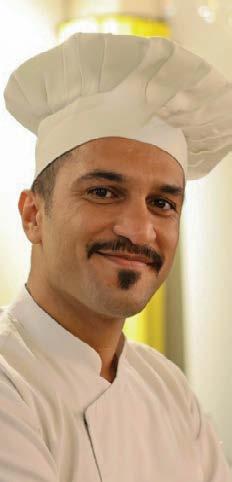
How much of what we taste is actually in the food, and how much is in us?
For most of the twentieth century, Western food science worked with four: sweet, salty, sour, and bitter. These were considered the corners of a complete map. Then in 1908, a Japanese chemist named Kikunae Ikeda sat down to a bowl of dashi, the clear broth made from kombu seaweed and noticed that it had a depth he could not account for with any of the four categories. It was not sweet, salty, sour or bitter. He isolated
the compound responsible: glutamate. He called the sensation umami, from the Japanese word for delicious savory and spent years trying to convince the scientific community it was real.
Specific umami receptors on the tongue were not confirmed until the early 2000s, but the evidence is now solid. Umami is the fifth basic taste, and it shows up wherever glutamate concentrations are high: aged cheeses, ripe tomatoes, fermented soy, slowcooked meat, anchovies, mushrooms. It is not a flavor in itself so much as a signal that protein is present and it has a particular quality of lingering and deepening the other tastes around it.
Some researchers have proposed additional candidates like fat taste (oleogustus), starchy taste, and kokumi (a sense of richness and mouthfulness) but none has yet met the threshold for official recognition as a basic taste. The field is still open.
If taste is what the tongue does, flavor is what the whole brain does. It is an integrated perception built from taste signals, yes, but also from retronasal olfaction (the smell of food that travels up the back of the throat while you chew), from texture and temperature, and from what neuroscientists sometimes call top-down processing, the expectations, memories, and emotional states you carry into every meal.
The dominance of smell in flavor is something most people have experienced without naming it. Pinch your nose and eat a piece of apple and
a piece of onion. You will get sweet and savory, but you will not reliably tell them apart. Release your nose and the difference is immediate. The flavor of a food is mostly its smell, experienced from the inside.
This is why a blocked nose during a cold makes food taste; bland; the taste receptors are working fine, but the olfactory contribution to flavor has been cut off. Gordon Shepherd, a neuroscientist at Yale, argued in his book Neurogastronomy that flavor is not a property of food at all, it is a construction of the brain, assembled fresh each time we eat. That framing changed how I think about the whole subject.
This one surprises people. Spiciness feels so immediate and so located in the mouth that it seems like it must be a taste. But the receptor responsible - TRPV1, activated by capsaicin, the compound in chili peppers, is a pain and heat receptor, not a taste receptor. It also responds to actual heat above about 43°C, which is why eating something very spicy and something very hot feels similar: your body is running the same alarm.
Capsaicin does not dissolve in water, which is why drinking water after eating chili does almost nothing. It dissolves in fat and in ethanol, which is why milk, yogurt, actually helps.
What makes spiciness interesting from a flavor perspective is what it does around the edges. At moderate levels, it increases saliva production, warms the palate, and seems to heighten the perception of other tastes. Cultures that cook with chili extensively Mexican, Indian, Korean, Sichuan Chinese are not just tolerating pain; they are using
REFERENCE:
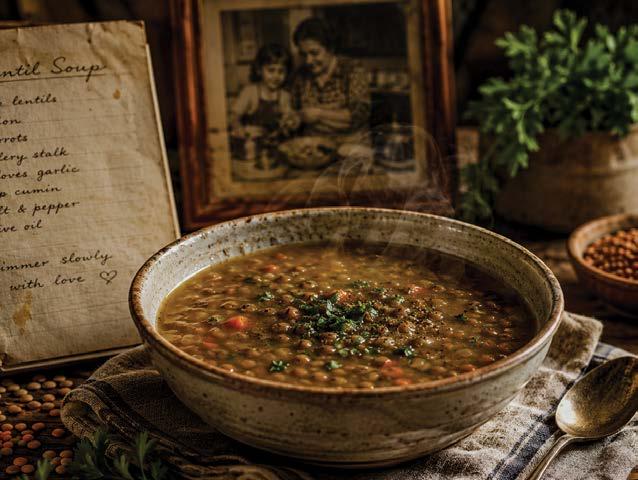
If taste is what the tongue does, flavor is what the whole brain does
capsaicin as a tool to reshape the whole flavor experience of a dish.
That Is Not There
The lentil soup problem I described at the start has a name in the literature: context-dependent flavor perception. The flavor you remember is not just the chemical composition of the food, it is that composition plus the context in which you experienced it, processed together and stored as a single memory.
The olfactory system has an unusually direct anatomical connection to the hippocampus and amygdala, the structures involved in memory formation and emotional processing. This is thought to explain why smell-triggered memories tend to be vivid, emotionally loaded, and old. The phenomenon is
sometimes called the Proustian memory effect, after the famous passage in which the narrator of In Search of Lost Time tastes a madeleine dipped in tea and is flooded with childhood.
But the effect runs in both directions. Just as a flavor can retrieve a memory, the memory can alter the flavor. In a much-cited 2008 study, participants rated a wine as significantly better when they were told it was expensive, even though the wine was identical in both conditions. The expectation reshaped the perception. This is not a cognitive error, it is the brain doing what it is supposed to do, integrating all available information to produce the most useful interpretation of experience.
For anyone who cooks for others, this has a practical implication: the setting, the story, and the emotion around a meal are not extras. They are ingredients. ■
Mohammad Ameri is a professional chef with over 15 years of international experience. He is also a food science researcher with international certifications in nutrition, food safety, and Codex Alimentarius, focusing on the intersection of gastronomy, health, and the neuroscience of taste perception.
> Mouritsen, O. G., & Styrbæk, K. (2014). Umami: Unlocking the Secrets of the Fifth Taste. Columbia University Press. (pp. 54, 98–102, 180–185)
> Shepherd, G. M. (2012). Neurogastronomy: How the Brain Creates Flavor and Why It Matters. Columbia University Press.
> Plassmann, H., O’Doherty, J., Shiv, B., & Rangel, A. (2008). Marketing actions can modulate neural representations of experienced pleasantness. Proceedings of the National Academy of Sciences, 105(3), 1050–1054. — The wine price study.
> Ikeda, K. (1909/2002). New seasonings. Chemical Senses, 27(9), 847–849. — English translation of Ikeda’s original umami paper.
What appears to be a simple logistics operation is, in fact, an engineered maturation process. Understanding how boxed meat is shipped and why temperature and vacuum packaging matter is non-negotiable for anyone handling premium beef, writes Sulemana A. Sadik
The global meat industry has evolved significantly over the past few decades, particularly in the way beef is processed, packaged, and transported across international markets. One of the most important developments has been the widespread adoption of boxed meat systems combined with vacuum packaging technology. This innovation has not only improved the efficiency of global meat distribution but also played a crucial role in the natural ageing of beef, enhancing tenderness, flavor, and overall eating quality.
Understanding how boxed meat is shipped and how this process contributes to proper ageing is essential for professionals within the meat trade, the hospitality sector, and culinary professionals who rely on consistent quality and performance from their protein products.
Boxed meat refers to primal and subprimal cuts that have been processed in modern meat plants, vacuumpacked, and packed into cartons for transportation rather than shipping entire carcasses or large beef quarters. This method emerged as a more efficient way to handle meat logistics, particularly for export markets.
In a boxed meat system, carcasses are broken down at the processing facility into standardized cuts such as striploins, tenderloins, ribeyes, rump caps, chuck rolls, and other primals. These cuts are

Weeks of controlled maturation transform boxed beef into a more tender product
then vacuum sealed in high-barrier plastic packaging, placed in cartons, and stored in temperature-controlled environments before being shipped through refrigerated supply chains.
This approach provides several advantages. It improves hygiene, reduces handling, optimizes storage and freight efficiency, and ensures better traceability throughout the supply chain. However, beyond these logistical advantages, vacuum-packed boxed
meat also creates ideal conditions for wet ageing, a process that significantly enhances beef's eating quality.
Ageing is a natural biochemical process that occurs in beef after slaughter. During this period, naturally occurring enzymes in muscle fibers begin to break down connective tissue and structural proteins. This enzymatic activity gradually improves tenderness and develops the characteristic flavor associated with high-quality beef.
Traditionally, ageing was achieved through dry ageing, in which large cuts of beef were hung in controlled environments for several weeks. While dry ageing produces distinctive flavors, it requires strict environmental control and results in significant weight loss due to moisture evaporation.
Wet ageing, on the other hand, occurs when vacuum-sealed cuts are stored under refrigerated conditions. Vacuum packaging removes oxygen from the environment, creating a stable, hygienic environment that allows the meat's natural enzymes to continue tenderizing without exposure to air.
The shipping of boxed meat plays a direct role in facilitating this wet ageing process.
The Role of Vacuum Packaging in the Ageing Process
Vacuum packaging is key for proper meat ageing during transport. Removing oxygen from packaging slows aerobic
bacterial growth, extends shelf life, and maintains the product’s safety.
In this oxygen-free environment, natural proteolytic enzymes begin to break down muscle proteins such as actin and myosin. This process gradually softens the muscle structure, resulting in improved tenderness.
In addition, vacuum packaging helps retain the meat's natural moisture. Unlike dry ageing, where evaporation leads to weight loss, wet ageing maintains yield while still benefiting from enzymatic tenderization. This is particularly beneficial for both suppliers and chefs, as it ensures product consistency and minimizes unnecessary trimming losses.
Another characteristic associated with vacuum-packed meat is what is commonly referred to as “confinement odor.” When the package is first opened, a temporary aroma may be present due to the anaerobic environment within the sealed bag. However, this odor dissipates quickly upon exposure to air and does not affect the product's quality or safety.
Careful temperature control is vital for proper ageing during transit. The cold chain must be maintained consistently from the processing plant through to the final destination.
Typically, vacuum-packed beef is stored and transported at temperatures between 0°C and 2°C. This temperature range is optimal for slowing bacterial growth while allowing enzymatic activity to continue at a controlled pace.
International shipments, particularly those originating from major beefproducing countries such as Australia, the United States, and South America, often spend several weeks in refrigerated containers before reaching their destination markets. During this transit time, the beef continues to age naturally within the vacuum packaging.
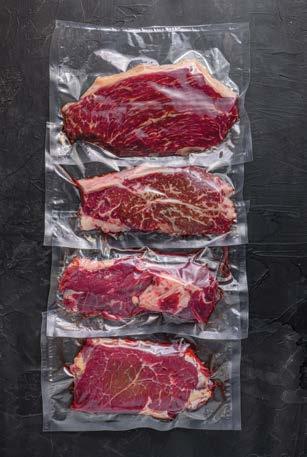
By the time the product arrives at its destination, it may have already undergone 30 to 60 days of ageing, depending on the shipping duration and storage conditions. This extended ageing period contributes significantly to the tenderness and flavor development that chefs and consumers expect from premium beef.
For chefs, restaurateurs, and food service professionals, the boxed meat system offers considerable advantages beyond logistics. One of the most important benefits is consistency.
Because the ageing process begins immediately after processing and continues throughout transportation, the beef often arrives in markets already matured and ready for culinary use. This eliminates the need for long in-house ageing programs, which require specialized facilities and careful monitoring.
Additionally, boxed meat systems provide precise portion control and standardized specifications, allowing chefs to receive cuts that meet exact requirements for marbling, weight range, and trimming standards. This predictability simplifies menu planning and ensures consistent dining experiences for guests.
From a cost management perspective, boxed meat also reduces labor requirements in kitchens and butcheries since the primary breakdown has already
been completed at the processing plant under strict quality assurance standards.
The boxed meat system has revolutionized the international meat trade by improving efficiency in transportation and storage. By shipping trimmed primals instead of entire carcasses, processors maximize container space and reduce freight costs. This efficiency ultimately allows highquality beef to reach distant markets while maintaining competitive pricing.
Moreover, integrating vacuum packaging, cold chain management, and modern logistics ensures the product remains protected throughout its journey and benefits from the ageing process.
This combination of technology and natural enzymatic development has transformed boxed meat shipping from a simple transportation method into a crucial stage in the production of highquality beef.
The shipping of boxed meat represents one of the most important advancements in the modern meat industry. What began as a logistical improvement has become an integral part of ensuring consistent quality, safety, and consumer satisfaction worldwide.
Through vacuum packaging, strict temperature control, and extended refrigerated transit, boxed meat undergoes a natural wet ageing process that enhances tenderness and flavor without compromising yield or food safety.
For chefs, suppliers, and meat professionals, understanding this process provides valuable insight into why properly handled vacuum-packed beef often performs exceptionally well in the kitchen. By the time it reaches the plate, the product has already benefited from weeks of controlled maturation, a testament to the careful coordination of science, logistics, and industry expertise that defines the modern global meat supply chain. ■

Agthia Group PJSC
Sasha Kannan, Category Development Manager Tel: +971 56 177 87 86, sasha.kannan@agthia.com, www.agthia.com
Al Chef
Ranin Bakhitt, Marketing Manager Tel: +971 4 357 0320, Mob: +971 50 687 0224 ranin.b@alwholesale.ae, www.alcheftohome.com
Al Wholesale
Ranin Bakhitt, Trade Marketing Manager, Mob: +971 50 6870 224, ranin.b@alwholesale.ae, www.alwholesale.ae
Alaska Seafood Marketing Institute (ASMI) Manjusha Jambhekar, Overseas Marketing Representative – MENAWA, Tel: +971 4 357 7979, Mob: +971 55 5333740 manjusha.m@focusmworld.com, www.alaskaseafood.org
Alliance Abroad International
Zama Nkabinde, Talent Acquisition Manager, Mob: +971 52 2339 779, znkabinde@allianceabroad.com, www.allianceabroad.com
Alto Shaam, Inc
Gabriel Estrella Talentti, Director of Sales, Tel: +971 4 321 9712, Mob: + 971 50 8531 707 gabriele@alto-shaam.com, www.alto-shaam.com
Americana Foods
Laurent Stevenart, Plant Based Food Director, Mob: +971 52 1354 732, lstevenart@americana-food.com, www.americanafoods.com
Arab Marketing and Finance, Inc. (AMFI) Simon Bakht, Tel: +961-1-740378 / 741223 / 751262, SBakht@amfime.com
Arla Foods
Rachna Amarnani, Marketing Specialist, raamy@arlafoods.com, B7 Building Digital park Dubai Silicon Oasis, Industrial Area Dubai www.ArlaPro.com, www.arlafoods.com
Bakeart Specialists Bread and Bakery Products Trading LLC
Imad Nehmeh, Director, Mob: +971 52 2278 7026, Tel: 35799355480 info@bakeart.ae, www.bakeart.ae
Bakemart FZ LLC
Syed Masood, Director of Sales Mob : +971 55 609 7526, Tel: +971 4 56708 masood@bakemart.ae, www.bakemart.ae
Barakat Group of Company
Kenneth D’Costa, Managing Director
Neil Ranasinghe, Head Culinary Innovation Tel: +971 4 8802121
Concepta Ingredients General Trading Ltd.
Samuel Sabará, Owner & CEO Tel: +971 4 552 7029, +971 55 662 1539 samuel.sabara@conceptaingredients.com, www.conceptaingredients.com
Cuisine Solutions Middle East LLC FZ
Juan van Huyssteen, Company GM Mob: +971 52 926 5628, jhuyssteen@cuisinesolutions.com, www.cuisinesolutions.com
Dawn Foods B.V
Lila Mebarki , Managing Director AMEAP Mob: +971 4 883 1757, info@Dawnfoods-ameap.com, www.dawnfoods.com
Diamond Meat Processing Co.L.L.C
Kamparath Suresh, Assistant General Manager Business Development, Mob: +971 50 655 4768 wnedal@siniorafood.com, www.almasadubai.com
dmg events
Hassan, Tel: +971 4 4380355, Mob: +971 56 8360993, aysehassan@dmgeventsme.com, www.thehotelshow.com
Eco Choice Group of Companies
Hadiba Ahadzada, Admin, hadiba@alwholesale.ae Ph: 058 254 0160, (04) 357 0320 Al Qusais Industrial Area 1 - Dubai, UAE www.ecochoicegroup.com
Emirates Snack Foods
Marwan Husseini / Vincent Lobo, Head of Sales – Food Service / Creative Head Mob: +971 56 5267 181, +971 55 3692 344 marwan.husseini@esf-uae.com vincent@esf-uae.com, www.esf-uae.com
Essity Hygiene and Health AB Ozge Osmanoglu, Customer Marketing Activation Manager MEIA, Mob: +971 52 7571 486 ozge.osmanoglu@essity.com, www.torkmeia.com
Faisal Al Nusif Trading Co. L.L.C
Thomas Das, Managing Director Tel: 04 3391149, thomasdas@fantco.net, Web: www.fantco.net
Farm Fresh
Feeroz Hasan, Business Development Manager Al Quoz, P.O Box 118351, Dubai, UAE Office No : +971 4 3397279 Ext: 253 Fax: +971 4 3397262, Mob: +971 56 1750883
Farzana
Fariborz Khadem Pour, Head of Food Service, Mob: +971 55 8846 293, Tel: +971 4 3200 101, fariborz@farzana.com, www.farzana.com
Flora Food Group
Lisa Blake, MENA Brand Manager Mob: +971 55 857 9607, +971 55 857 9607 Lisa.blake@florafg.com, www.floraprofessional.com
Foodtech Group FZCO
Attila Petö, CEO, Mob: +971 58 511 3734, attila.peto@foodtech.ae, www.foodtech.ae
FSEP Catering Equipment Trading LLC
Shivani Rawat, Office Manager Tel: +971 4 8851 610 info@fseprof.com, www.fseprof.com
German Icecream Factory
Boris Mueller, Mob: +971 50 108 9030 boris@drmuellers1969.com www.drmuellers1969.com
Greenhouse Foodstuff Trading
Edgard Abounader, UAE Sales Manager –HORECA, Tel: +971 4 8170000, Mob: +971 56 442 4608, Edgard.Abounader@greenhouseuae.com, www.greenhouseuae.com
Ginox Swiss Kitchen
Tiziana Ricottone, Personal Assistant & Communications Manager, Mob: +971 50 5091 689, tiziana.ricottone@ginoxgroup.com, www.ginoxgroup.com
Hamid and Kumar Enterprises LLC
Sunil Ahluwalia, General Manager, Tel: +971 4 3474712, +971 4 3474571 dry@hkfoodgroup.com, www.hkfoodgroup.com
Harvey and Brockless Foodstuff Trading LLC
Julie Caulton, Sales Director, Tel: +971 4 272 5524, +971 50 507 7539 Julie.caulton@harveyandbrockless.co.uk, www.harveyandbrockless.co.uk
Here-O Donuts and Coffee, LLC
Andrew Mason, CEO, Tel: +971 4 547 7591, +971 52 906 3574 andrew@hereodonuts.com
HK Enterprises Era Jain, Marketing Manager, Mob: +971 56 6589 246, era@hkfoodgroup.com, www.hkfoodgroup.com
Hospitality by Dubai World Trade Centre Georg.Hessler, Director Culinary Operations, Tel: 04 3086571, Georg.Hessler@dwtc.com, https://www.dwtchospitality.com/en/
HUG AG
Riyadh Hessian, 6102 Malters / , food-service@hug-luzern.ch, www.hug-luzern.ch, fb/hugfoodservice Distribution UAE and Oman: Aramtec, PO Box 6936, Al Quoz Industrial Area No. 1, Near Khaleej Times Office, Mob +971 507648434, www.aramtec.com
IFFCO
Mary Rose Lopez, Associate Customer Service Manager, Mob:+971 506719882, 065029025 / 6264 mlopez@iffco.com, www.iffco.com
Indoguna Dubai LLC / Indoguna Productions FZCO
Anoop Kumar Varma, Director - Sales & Commercials, Ana Elena Saenz, Regional Business Development Manager, Mob:+971 55 573 7035, +971 58 246 9330 anoop@indoguna-dubai.ae, ana@indoguna.ae, indogunadubai.com, indogunaproductions.com
IRCA MEA TRADING LLC
Shairra Mae Bartirzal-Periales, Trade Marketing Manager, Mob:+971 54 515 4430, shairra.bartirzal@irca.eu, www.ircagroup.com
JM FOODS LLC
Rajan J.S. / Maikel Cooke / Grace Renomeron Management, Tel: +971 4 883 8238, sales@jmfoodgulf.com, www.jmfoodgulf.com
Johnson Diversey Gulf
Marc Robitzkat Mob: 050 459 4031, Off: 04 8819470 marc.robitzkat@jonhnsondiversey.com
KAPP
Kerem Uner, Sales and Marketing Director Tel: +90 53 2599 9638, kerem.uner@kapp.com.tr, www.kapp.com.tr
Kerry Taste & Nutrition MENTA
Simon Martin, Executive Chef Tel: +971 52 450 0845 simon.martin@kerry.com, www.kerry.com
Lakeland Dairies
Zayna Ahamadeen (UK), Anubhav Sethi (UAE)
Tel: Zayna: +44 7386658747 Anubhav: +971 50 785 9324, zayna.ahamadeen@gmail.com, anubhav.sethi@lakelanddairies.com, https://lakelanddairies.com/
Lowe Refrigeration LLC
Mark Wood, General Manager Tel: +971 4 8829440, Mob: +971 52 8693695 mark.wood@lowerental.com, www.lowerental.com
Masterbaker Marketing FZCO
Sagar Surti, CEO, sagars@uae.switzgroup.com Jayakrishnan, Sales Manager, jkrishnan@uae.switzgroup.com
Ravi Bhambhani, Business Development Manager, ravib @uae.switzgroup.com Pratiba Krishnan, Marketing Manager, pratibak@uae.switzgroup.com
Meat & Livestock Australia
Damon Holmes, Business Development Manager, Tel: +971 52169 4743, dholmes@mla.com.au, www.lambandbeef.com
MEIKO Middle East FZE
Jay Dhanrajani, Sales Manager Tel: +971 4 3415 172, jay.kumar@meiko.ae, www.meiko.ae
Meyer Group Ltd
Anjana Vaswani Kavasseri, General Manager Middle East, Tel: +971 50 5950 772, anjana@meyeruk. com, www.meyergroup.co.uk
MIWE Middle East FZE
Wilhelm Tittes, General Manager office@miwe.ae, +971 4 333 1198
MKN Maschinenfabrik
Kurt Neubauer GmbH & Co.KG
Elias Rached, Regional Director Sales Middle East & Africa, Tel: +971 4 358 4000, Mob: +971 50 558 7477 rac@mkn-middle-east.com, www.mkn.com
Nestle Middle East FZE
Elie Lteif / Luma Karadsheh, Culinary Advisor / Commercial Development Manager, Mob: +971 55 4427 010, 55 3437 632 (Elie) elie.lteif@ae.nestle.com, luma.karadsheh@ae, www.nestleprofessionalmena.com
Nina Pita
Mario Nehmeh, Sales manager, Tel: +971 50 9347 930, mario@ninapita.com, www.ninapita.com
The Pavilion Food Processing LLC
Roshan, Business Head, Mob: +971 55 995 5039, +971 55 995 4354 roshan@pavilionfoods.com, https://pavilionfoods.com
Peachtree Foods ME
Manisha Dissanayake, Regional Sales Manager, Mob: +971 50 6416 139 mesales@popcakesa.co.za, www.popcakesa.co.za
Pear Bureau Northwest
Nina Halal, Director Mob: (Lebanon) +961 3664088, (UAE) +971 58284 0008, halal@cyberia.net.lb
Potatoes USA
Victoria Hassani, Managing Director, Mob: +971 50 1013 541 potatoesusa@gmadubai.com, www.usapotatoes.com
RAK Porcelain
Sadik Variyathodi, General Manager, Mob: +971 50 4868 141, +971 4 3335 474 sadik@rakrestofair.ae, www.restofair.ae
Restofair RAK LLC
Sadik Variyathodi, General Manager Mob: +971 50 4868 141, sadik@rakrestofair.ae, www.restofair.ae
Robot Coupe
Chandrakanth Pathi, Area Manager-UAE Tel: +971 54 4894896, pathi@robot-coupe.com, www.robot-coupe.com
Safco International Genera Trading
Pankaj Chanta / Naresh Khushalani, Corporate Head Pastry & Bakery / Marketing Manager, Mob: +971 55 899 0183, +971 870 2000, chef.pankaj@safcointl.com/naresh@safcointl, www.safcointl.com
Silal Food & Technology
Aparna Joseph, Omaima Abdalla , Manager Marketing & Branding, Marketing Officer Tel: +971 2 614 4467, Mob: +971 52 650 3454 ajoseph@silal.ae, oabdalla@silal.ae, www.silal.ae
Skinny Genie
Miraida Kasymbekova, Sales Manager Mob: +971 56 177 0301 salesmanager@skinny-genie.com, www.skinny-genie.com
June 2026 Gulf Gourmet
Sounbula Mills
Karim Al Azhari, Ceo & Owner Sounbula Mills karim@sounbulamills.com
Taaza Group Companies LLC
Ms. Krishna Vijith, Chief Executive Officer Tel: +971 56 2829 002; +971 4 2828 993 krishna@taaza.ae, www.taaza.ae
The Deep Seafood Company LLC
Shibu Abdul Jabbar, Chief Operating Officer, Tel: +971 2 673 34 45, Mob: +971 55 233 66 88 shibu@thedeepseafood.com, www.thedeepseafood.com
Tork Essity Hygiene and Health AB
Ozge Osmanoglu, Tel: +971 4 551 5907, Mob: +971 52 757 1486 tork.meia@essity.com, www.Torkmeia.com
Tramontina
Saniya Sarguru, Marketing Coordinator, Mob: +971 54 995 8033, Tramontina.ae
Unilever Food Solutions
Joanne Limoanco, Executive Chef Tel: +971 52 540 8305, joanne.limoanco@unilever.com,
Ilim Ozgule, Arabia Marketing Lead, Mob: +971 58 861 9785 llim.Ozgule@unilever.com
Christian Roumy, Demand Creation Lead, Mob: +971 56 226 6236 christian.roumy@unilever.com, www.unilever.com
UNOX Middle East DMCC
Matthew Roberts, Managing Director Tel: +971 4 5542146, Mob: +971 52 304332, info.uae@unox.com, www.unox.com
Upfield Middle East Limited FZCO
Marwan Abi Daoud, Flora Professional Regional Lead Culinary Chef AMEA Mob: +971 50 796 6264 marwan.abidaoud@florafg.com,
USA Cheese Guild
Angelique Hollister, Senior Vice President, Global Cheese Marketing, Tel: 703 528 3049, ahollister@usdec.org, https://www.usacheeseguild.org/
US Meat Export Federation
Bassam Bousaleh, Tel: +971 50 3589197, +971 50 358 9197 Bassamb@ams-me.com
USA Poultry and Egg Export Council Inc (USAPEEC) Jena Gress, Global Marketing Manager Tel: 14048823920, www.usapeec.org
US Poultry
Andrew El Halal, Marketing Manager Mob: (Lebanon) +961 3200332, (UAE) +971 52 135 1405 andrewh@amfi-me.com
VITO AG
Mark Marquez, Mob: 971 56 2431303 info@vito.ag, www.VITO.ag
Welbilt
Rakesh Tiwari, Mob: +971 56 406 1628, rakesh.tiwari@welbilt.com

Date of Application: .................................................
Family Name: First Name/s: Ms/ Mrs/ Mr/ Other:
Nationality: Civil Status: Date of Birth: dd/mm/yyyy
Employee/ Business Owner: Name of Business: Designation:
Work Address: Email Address: Contact Number:
SENIOR:
(Above the rank of chef de partie/ senior chef de partie on executive chef’s recommendation).
MEMBER:
(Below the rank of chef de partie 29 years old and over).
AED350 joining fee/ AED150 renewal fee
Includes certificate; member-pin, member medal and ECG ceremonial collar
AED150 joining fee/AED75 renewal fee
Includes certificate; member-pin, member medal and ECG ceremonial collar
YOUNG MEMBER: (under 28 years) Free
Includes certificate; member-pin
Declaration to be Signed by Applicant:
I wish to join The Emirates Culinary Guild in collaboration with The Women’s Culinary Chapter.
I have read the ECG Constitution and By-laws. I agree to be bound by the requirements of the constitution. If elected, I promise to support the Guild and its’ endeavours to the best of my abilities.
Signature: .....................................................
Proposed By: Signature: ..............................
Seconded By: Signature: ..............................
For Official Use Only
Remarks:
Payment Received?
Certificate Given Pin Given Medal & Collar Given
Approved by President: Signature: ..............................
Approved by Chairman: Signature: ..............................
Note: The membership is only applicable to those who are working in the UAE as professional chef or with a background related as Chef in the hotel and restaurant industry.
The WCC is in collaboration with the Emirates Culinary Guild, which is a member of the World Association of Chef’s Societies
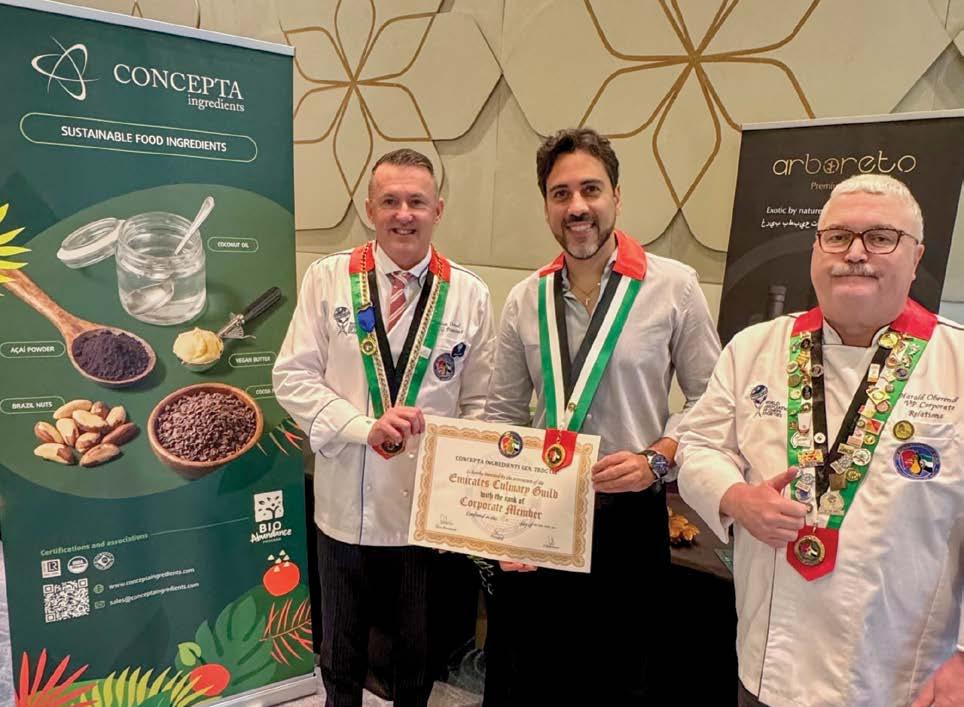
Concepta Ingredients is a supplier of premium natural ingredients sourced from Brazil’s exceptional biodiversity, with more than 30 years of company heritage rooted in Brazil. Operating in the United Arab Emirates through its local entity, Concepta Ingredients General Trading Ltd., the company brings to the regional market a curated portfolio of over 50 products like cold-pressed oils, butters, powders, and specialty ingredients drawn from the Amazon and other unique Brazilian ecosystems.
Concepta serves the food and beverage industry through a dual model: a B2B division dedicated to chefs, restaurants, hotels, catering operations, and ingredient manufacturers across the UAE and the wider GCC region; and Arboreto, its premium retail brand featuring three flagship cold-pressed

oils — Açaí, Brazil Nut, and Passion Fruit — designed for the discerning consumer and HORECA channel.
The portfolio is anchored in three pillars that define the company’s value proposition for professional kitchens: provenance, sustainability, and culinary functionality. Through its Bio Abundance Program, Concepta works with sourcing partners across the Brazilian Amazon to ensure ethical procurement, traceability, and the long-term preservation of native plant species. Every product carries a story of biodiversity, responsible sourcing, and Brazilian craftsmanship.
In the UAE, Concepta has established a strong operational footprint with local distribution, customer service, and dedicated B2B account management.
The company is certified to FSSC 22000 for food safety, holds both UAE Halal certification (UAE National Mark) and Brazilian Halal certification (Fambras). Concepta collaborates with leading UAE foodservice partners including Futurelog, Rezfood, Bello Massi Foods, Waynik, Chef2Ched and Safco International.
By joining the Emirates Culinary Guild as a Corporate Member, Concepta Ingredients reinforces its commitment to the UAE’s culinary community — introducing chefs to ingredients that elevate creativity, support sustainable sourcing, and connect the kitchens of the Emirates with the rich agricultural heritage and biodiversity of Brazil. ■
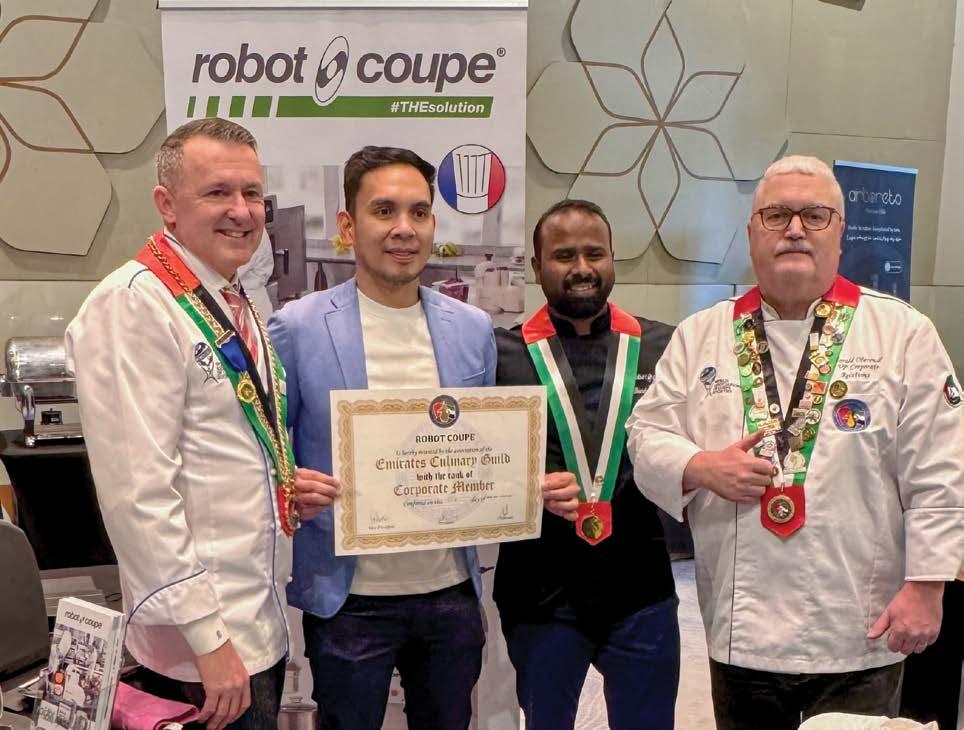
Robot Coupe has been shaping the evolution of professional kitchens for decades, driven by a clear purpose: understanding and responding to the real demands of gastronomy. Inventor of the commercial food processor, the company has continuously transformed preparation processes, redefining efficiency, precision, and consistency in professional culinary environments.
From haute cuisine to large scale foodservice, Robot-Coupe’s solutions are developed to support demanding workflows, combining performance with reliability. Each machine is designed to handle a wide range of applications, from refined preparations to intensive processing, while respecting ingredients, textures and presentation.
Innovation is embedded in every stage of development. Through ongoing dialogue with culinary professionals, Robot Coupe anticipates evolving techniques and adapts its technologies accordingly. The goal is not only to optimize productivity, but also to open new creative possibilities in the kitchen, reducing repetitive tasks and enhancing operational flow.
As a leading manufacturer, Robot-Coupe maintains rigorous production standards, ensuring reliability and longevity across its entire range. Its reputation is built on precision engineering, user-focused design, and a commitment to excellence that has made it a trusted name in kitchens across the globe.
In 2026, Robot Coupe further advanced its innovation strategy with the launch of a new Kitchen Blender range in the UAE, featuring X Flow technology. By optimizing fluid circulation within the bowl, X Flow enhances blending homogeneity and process stability. Developed for professional kitchen environments, the range reflects Robot Coupe’s focus on consistency, durability and controlled performance, in line with the evolving standards of contemporary culinary and beverage practices.
More than a manufacturer, Robot Coupe stands as a partner in culinary progress, supporting professionals worldwide with solutions that streamline preparation, elevate craftsmanship and help kitchens perform at their best, service after service. ■
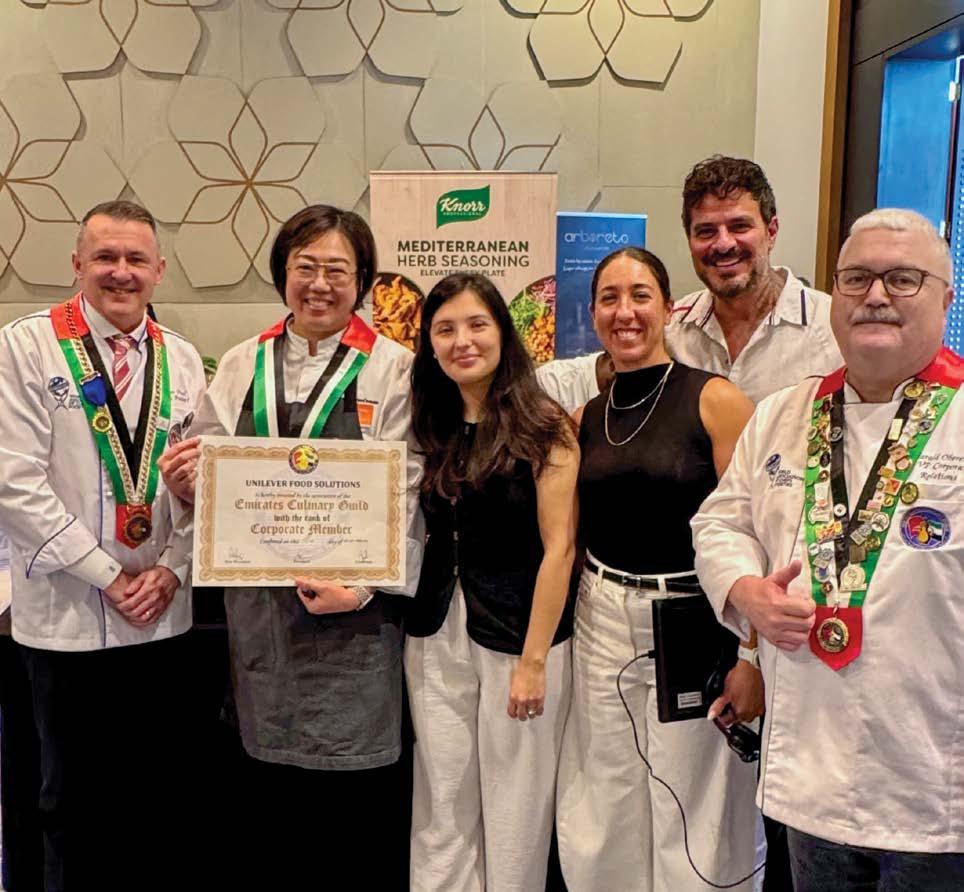
Unilever Food Solutions is a business built by Chefs, so we know what you face every day in the kitchen. Everything we do is focused on making your life a little easier.
Drawing from their extensive experience in professional food services, our team of over 250 professional Chefs operates in 76 countries and powered by two leading heritage brands: Hellmann’s and Knorr Professional.
We create solutions that balance great
taste, convenience, and nutrition with a consistently high standard. Our chefs help source the best ingredients, develop quality products, create inspiring ontrend recipes, and provide training and support. Thus, ensuring that our sales team is equipped with all the knowledge they need in order to better serve you.
Dining trends and customer expectations are always changing, and it can be an ongoing struggle to keep up. We make it easy to stay inspired and confident with the latest trends, recipes, ideas, and innovative techniques. Check out local trend setters and get insights from chefs around the world to keep you ahead of the pack.
Signup at www.unileverfoodsolutionsarabia.com to get access to latest industry trends, recipes and other valuable resources! ■
Simon Martin , Executive Chef and Innovation Consultant, shares the latest trends shaping our region for
Welcome back to Trends Express. Without further ado, let us jump on board the "Trends Express" and see what is hot and appearing in our region. Remember, "LIKE IT, BUY IT, SNAP IT, SHARE IT."
They are not complicated, but just a few simple ingredients will rock your culinary planet…
Just look around at what this region can do best, the tallest building, the biggest observation wheel, the longest zip wires, the world’s best hotels, etc. Yes, you are getting the picture. So think of EXTREME FUSION FOOD, and only here can we make Japanese food with local ingredients. Think Hokkaido scallops with three lentil hummus and spiced Mapo jam…..!!!, or a Rendang Bao. Do not just think savory, why not try strawberries with Loomi, Sweet Caramel Popcorn, and Caviar, or dare I say White chocolate with Madras curry powder? We are definitely seeing the rise of fun, playful, extreme menus, all with a narrative to seduce your taste buds and tempt you to cross the boundaries of safe fusion food into a world of psychedelic flavors that dance on your palate.
Mouthfeel is also King presently. The past few years have been all about the CRUNCH and the CRISPY textures delivering an audible delight. BUT these are now moving to the back of our minds as CHEWY takes center stage. This is in the form mainly of MOCHI , and we see it appearing from Mochi fried chicken to Mochi donuts. This soft, bouncy, elastic, chewy glutinous rice paste is showing up not only in cafes, bakeries, and fine-dining restaurants but also in retail. Locally, we also see it in bread
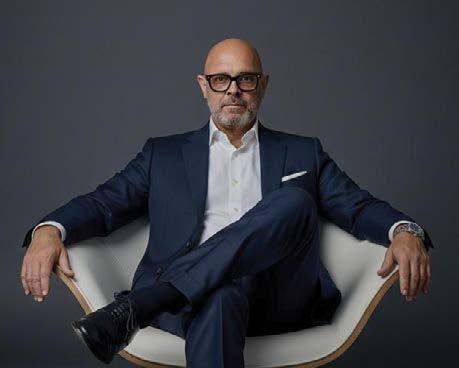
and beverage.
☺
As we look all the time to enhance our customers’ experience in terms of taste, texture, and value, whilst meeting their expectations, we are seeing the rebirth of HYBRID MEATS before you ask. nothing done in a lab by men in white coats, but this is mixing a blend of traditional animal protein with a plant ingredient like peas, soy, or even mushrooms, reducing carbon footprints and benefiting from higher fiber, lower cholesterol, and fewer saturated fats. Bringing the juice, bite, and textures to the meaty flavors we seem to crave, whilst leveraging cost efficiency. Yes, we saw this pre-COVID when we called it Blended Burgers/ Meat. This time, it is getting bigger and better, helping us all win over our customers with enhanced-tasting foods. Suddenly, I am dreaming of koftas and super savory Lahm Bi Ajeen, those bite-sized delights we all love.
When was the last time you thought